This did not happen to me (although it could have done) but to an FAO colleague that spent time in Ethiopia doing consultancy work. I repeat the story as he told it to me a few years later, when I was working in Rome.
The fellow had just completed his work and, as it is customary in Ethiopia, he was given a good farewell party and he was presented with a few gifts. As he was returning to Rome for debriefing, he was also asked to take a few letters and small parcels to Ethiopian relatives living in Italy.
The protagonist of the story also stayed at the Harambe Hotel like us. As it happened to us also, he was given a room that he found smelling too strongly and asked to be moved to another one. After checking a couple of rooms, he picked the best available and decided to go for dinner to be ready to get up early the following morning as getting through the “necessary” procedures at Bole Airport demanded time and lots of patience.
The guy came back to his room after dinner and he had the impression that the smell in the room had increased but he could not be bothered to ask the reception to give him another room so he opened the windows to the chilly Addis air and went to sleep.
The following morning, he took a taxi to the airport, happy to leave the smell behind as it was still strong in the room. The taxi was one of the blue and white Lada cars that were probably imported “en masse” from the then Soviet Union years before. Most of them were in some degree of deterioration. The one he took, apart from a worn upholstery and dirty floor mats, it also smelled bad!
Without any problems he got to the airport and went through all the required moves until, eventually, he could relax and seat at the waiting lounge for a while, until he could feel the same smell again! At first he thought it was still in his nostrils but soon he realized that it was not and that it was coming from somewhere at the lounge. Before he could do much about it the flight was called and he boarded, found his seat and literally passed out until he was woken up for breakfast, a couple of hours from his destination.
The plane landed and, while removing his bag from the overhead compartment he felt a wet patch in it and when he smelled his hand, trying to identify the cause of the spill, he recognized the familiar smell that had followed him throughout his journey. So, as discreetly as he could, he inserted a hand into the bag and soon contacted the wet culprit. It was one of the parcels that had given to him by someone in Bedele!
He disembarked and, as soon as he could, he removed the stinky packet and -to his horror- discovered that it was a chunk of an Ethiopian bovine that had kept him company while making its presence felt all the way through his journey!
He immediately contacted the airport authorities in Rome to hand over the smelly meat to be destroyed. This took quite a while and afterwards, to add insult to injury my friend, a veterinarian, was given an ear full about the dangers of bringing beef into Italy as well as not travelling without checking what you carry with you. The latter, an issue that has become critical nowadays!
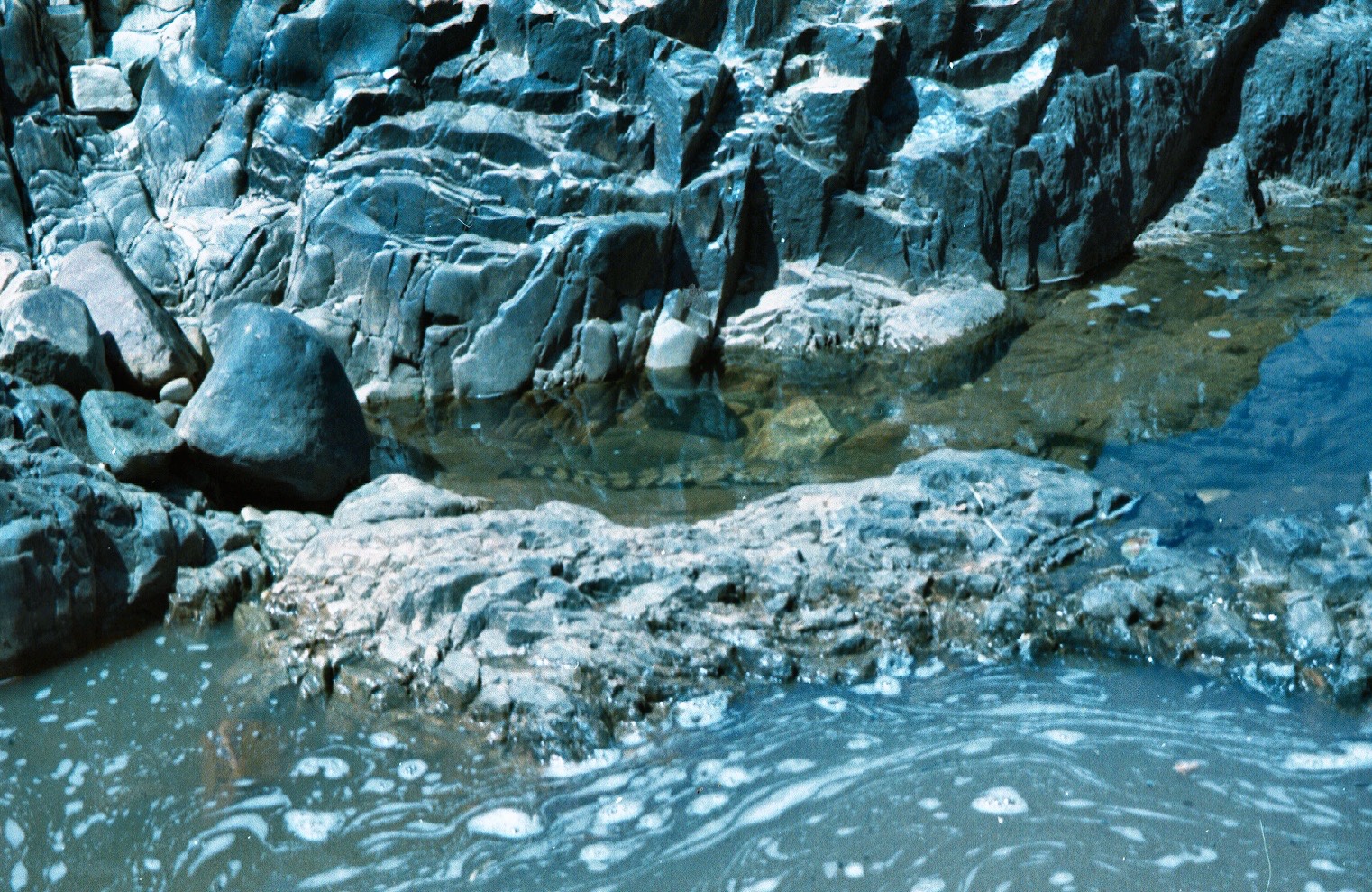
While writing about our Ethiopia days, I found this finding. Let’s see if you can see it. I think it is pretty easy but…
? ? ? ? ? ? ? ? ? ? ? ? ? ?
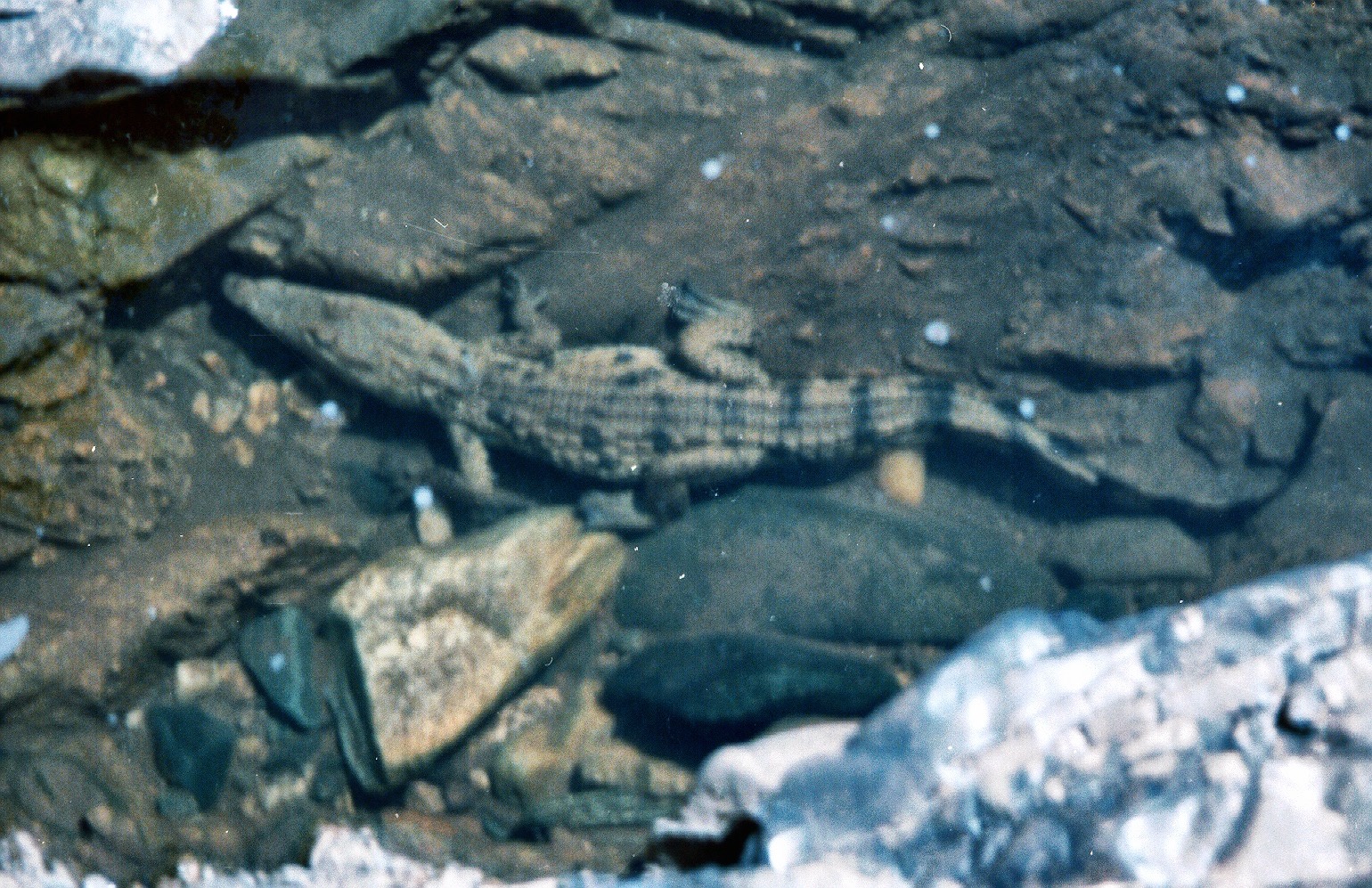
To take this close-up I needed to climb the rocks that are seen behind the croc in the previous picture as to at a safe distance from the “sleeping” beast. That is the reason why the head is pointing to the opposite side in the second picture.
Recently it has been discovered that, as it had been observed in other animals, crocodiles are able to sleep with one-half of their brain at a time, a phenomenon known as unihemispheric sleep. During this kind of sleep the eye neurologically connected to the ‘awake’ hemisphere remains open while the other eye is closed [1].
I was not able to check the condition of its eyes to tell what was it really doing but, in the light of the research mentioned, to ascertain its status would have demanded a close inspection that I had no intention to do and I am quite happy not to know!
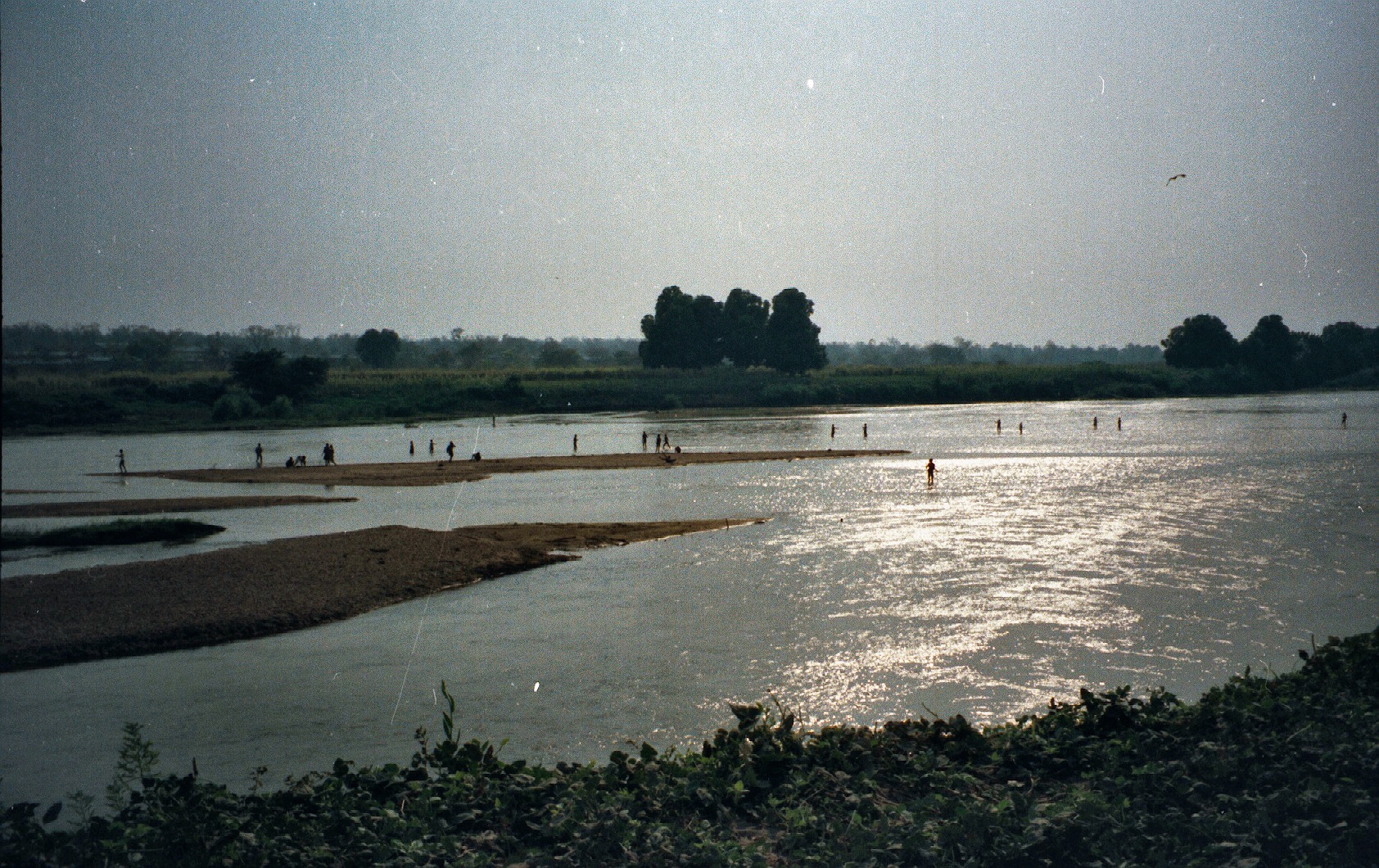
As soon as you got closer to Gambela it became clear that you were entering a totally different environment. Located at the confluence of the Baro River and its tributary the Jajjabe, the city was just over 500 metres in elevation, hot and humid with an average yearly temperature of 27°C and 1200mm of annual rainfall (see also: https://bushsnob.com/2020/09/22/tick-hunting/)
The bridge over the Baro river at the entrance of Gambela. Credit: T U R K A I R O, CC BY 2.0, via Wikimedia Commons.
At the time, apart from the original Nilotic Anuak and Nuer inhabitants, there were a large number of people from the highlands (Amhara, Oromo, Tigrayan, etc.). Some of them were those who still remained after being brought there by the controversial resettlement schemes being driven by the Government at the time.
These people were moved from their homeland during or after the famine and many, as soon as they could, abandoned their resettlement schemes to get back to their homes, often traveling thousands of kilometers risking the stern measures that they could expect if caught.
The Anuak and Nuer were by far the predominant ethnias. The former built their villages along the banks and rivers of both south-eastern South Sudan as well as south-western Ethiopia. Their population is today estimated between 250 and 300 thousand people. Their subsistence economy largely depended on their rivers as they grew their crops in the riverbanks and they also keep some cattle. During the dry season they fished and hunted the animals that came to drink.
The Nuer are a larger population of about 2 million, concentrated in the Greater Upper Nile region of South Sudan (where they are the second largest ethnic group) and Ethiopia. They are nomadic pastoralists who herd cattle for a living.
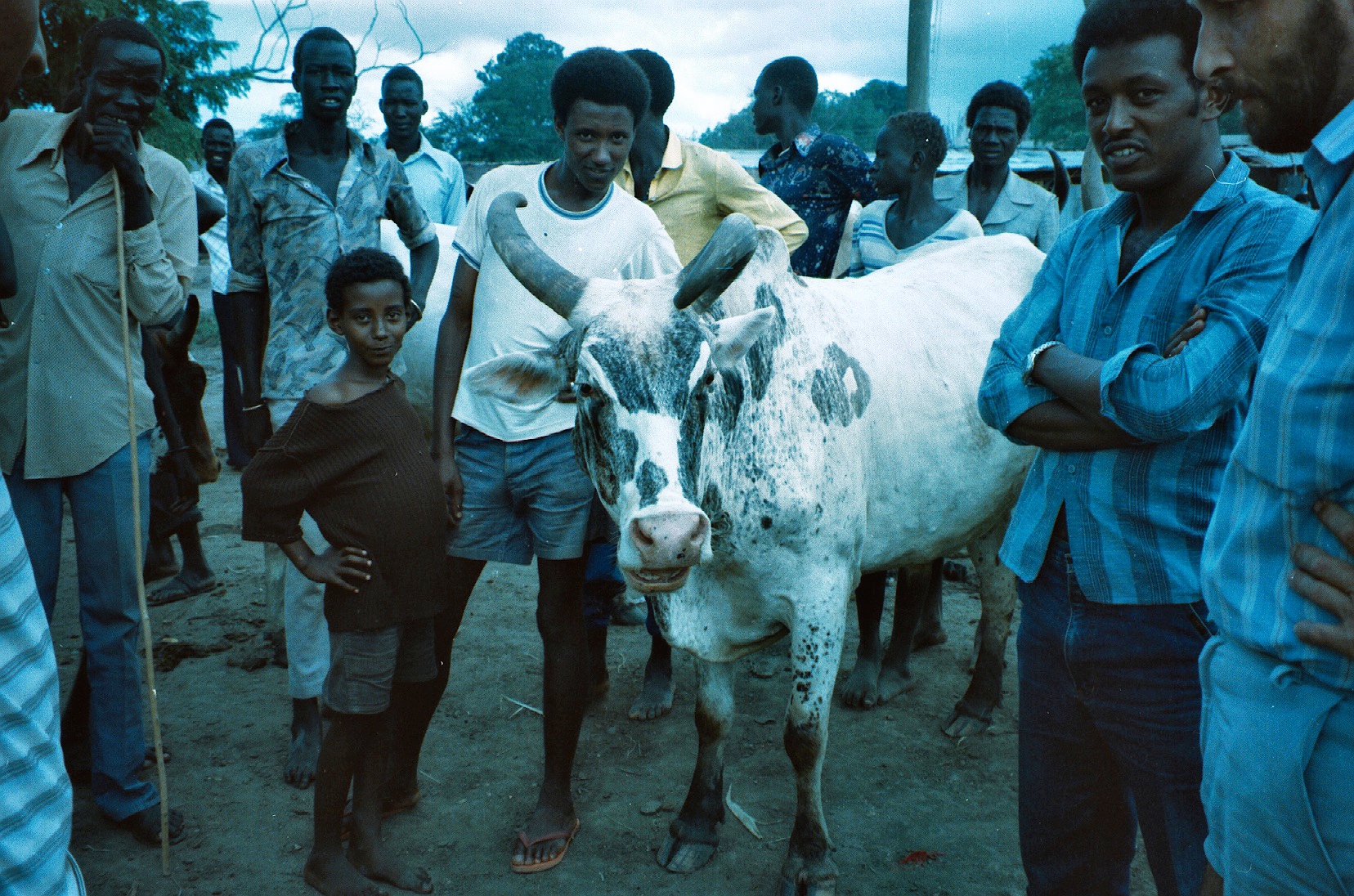
An ox being admired for its hide and special horns.
Their cattle serve as companions and define their lives being of the highest symbolic, religious and economic value. So, their lives revolve around their cattle, although some horticulture is also practiced. Their relationship with their cattle is complex and it has been studied by several anthropologists [1] [2].
Although they eat meat and some of their cattle under certain circumstances, their diet primarily consists of fish and millet. We met many of them and most showed long scars in their foreheads. They get these markings (gaar) as part of their initiation into adulthood.
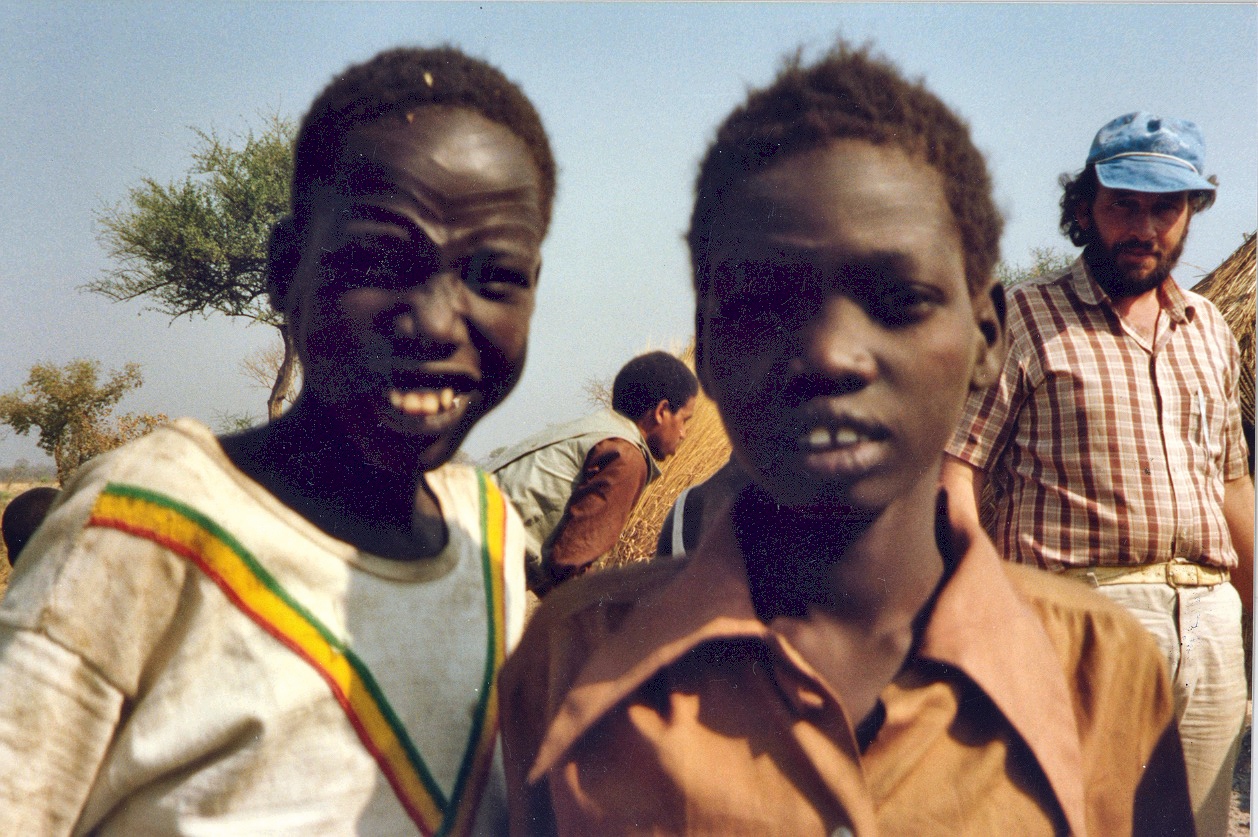
The most common pattern among males consists of six parallel horizontal lines which are cut across the forehead with a razor and applying ash for them to protrude afterwards. Dotted patterns are also common among some Nuer groups and among females. Several of the ethnias in Africa do this and the Dinkas, also from Sudan, also have scars that follow different patterns.
Nuer youngsters and the bushsnob (with a blue cap at the back…).
While travelling in Gambela, the scars on the foreheads were useful to distinguish among Nuer and Anuak and to greet them accordingly: male to the Nuer and dereyote to the Anuak.
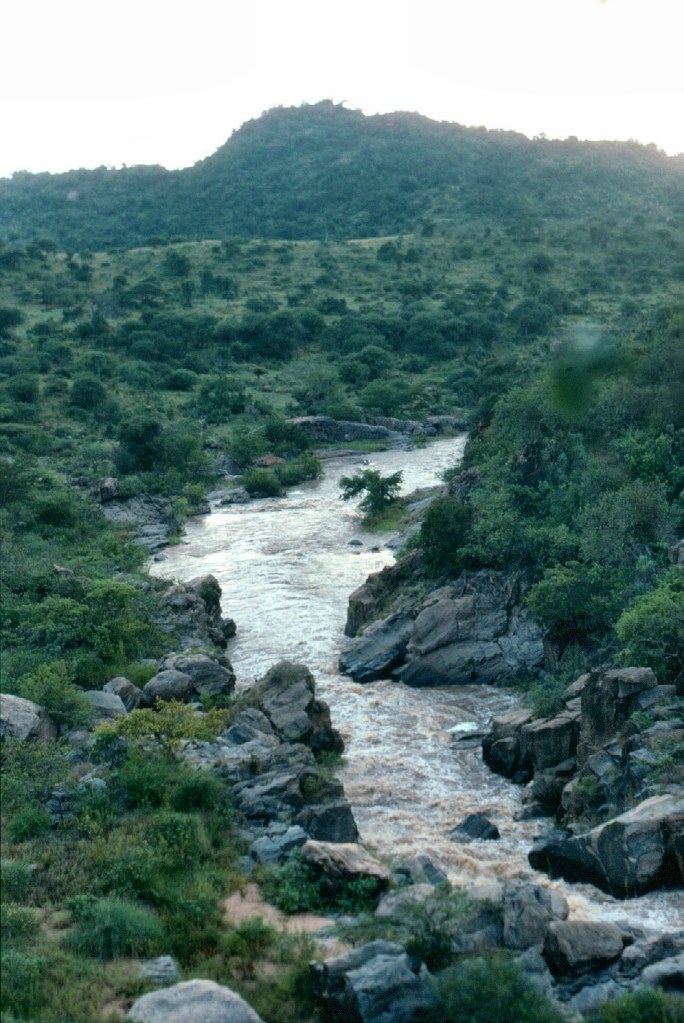
We soon learnt that Gambela could be either very dry or very wet, depending of the season. The trip was tough as we usually travel from the Bedele height to Gambela following the curvy murram road behind a convoy of a couple of dozen relief lorries that were almost impossible to overtake safely.
Another view of the river carving its way through the hills.
The Baro river while running fast, still up in the mountains.
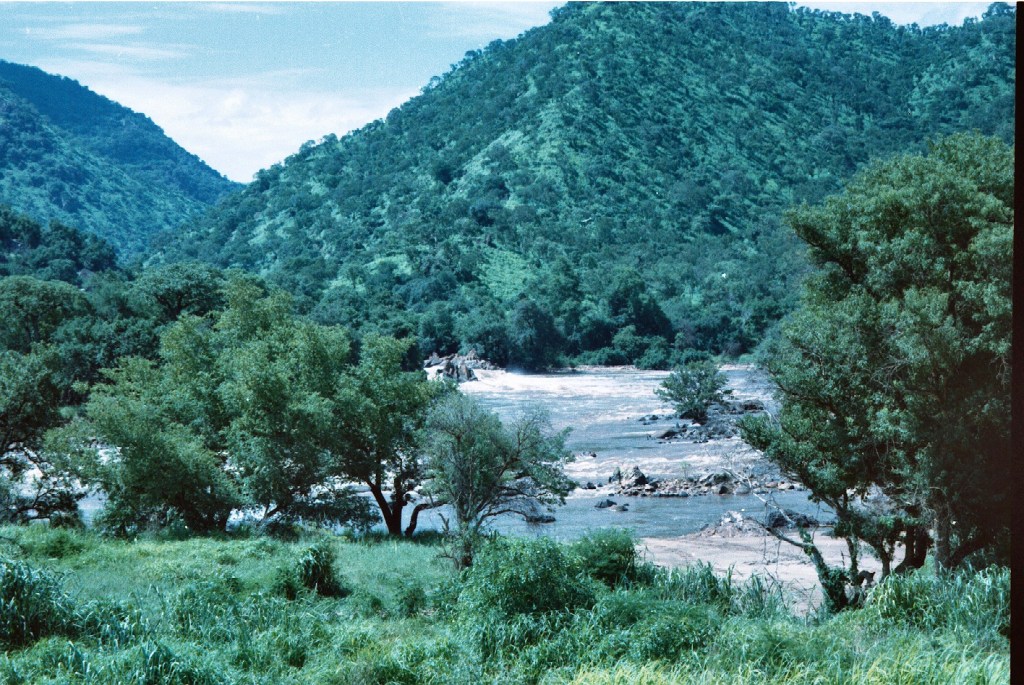
The Baro river getting to the lowlands.
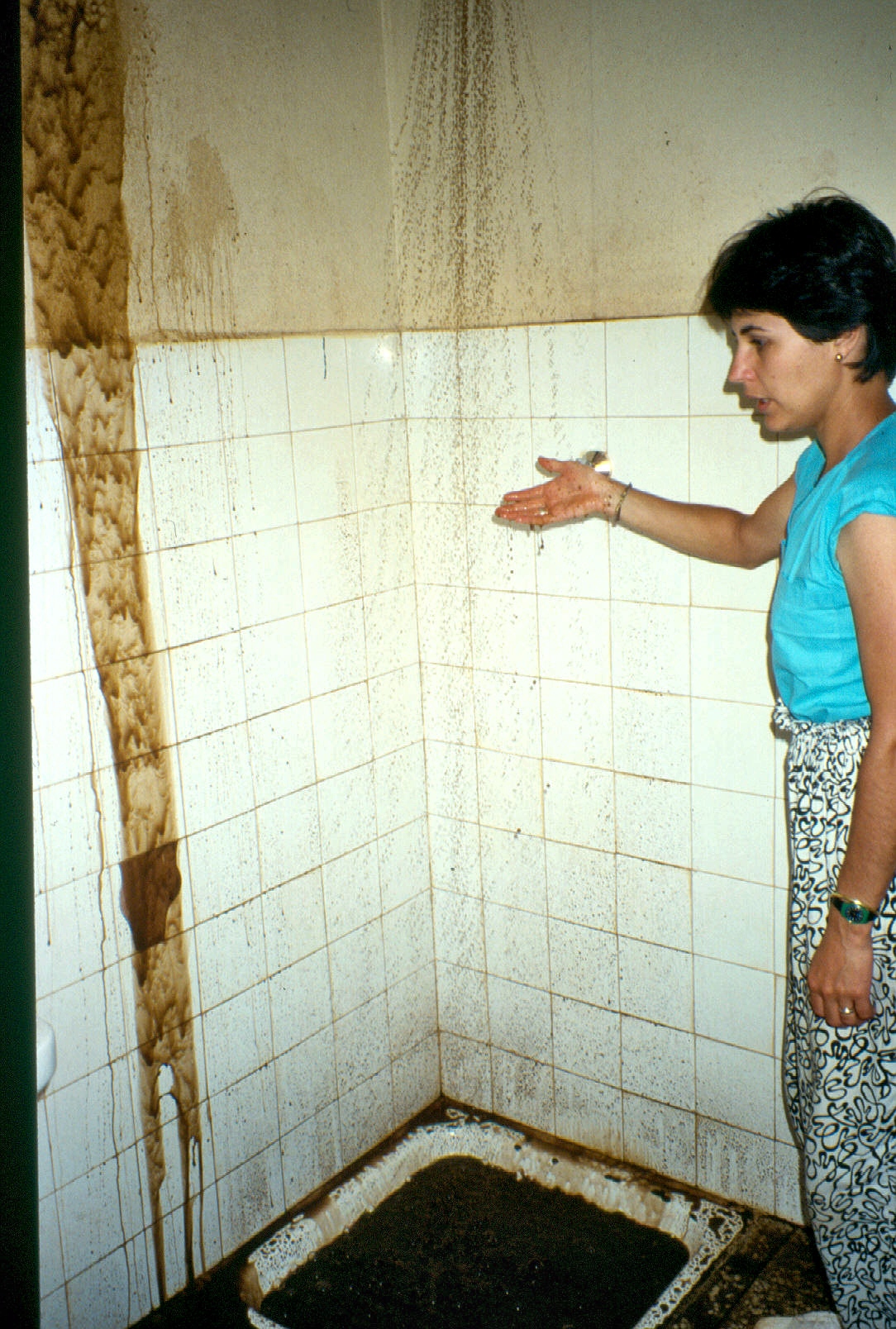
We swallowed lots of dust, an experience I do not wish to repeat, particularly when the hotel in Gambela did not offer the best washing facilities to the disgust of Mabel.
Mabel trying the shower at the Gambela hotel!
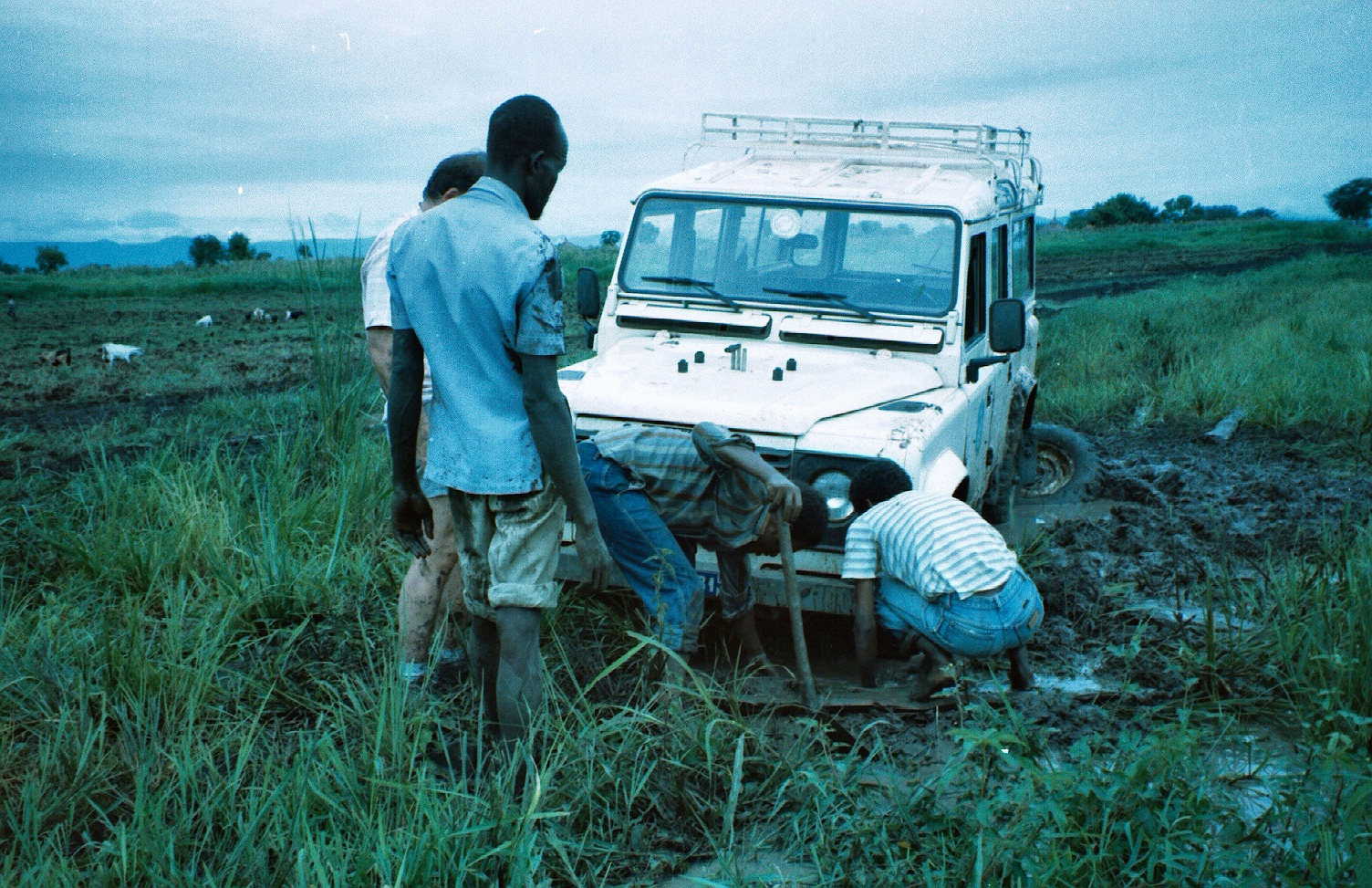
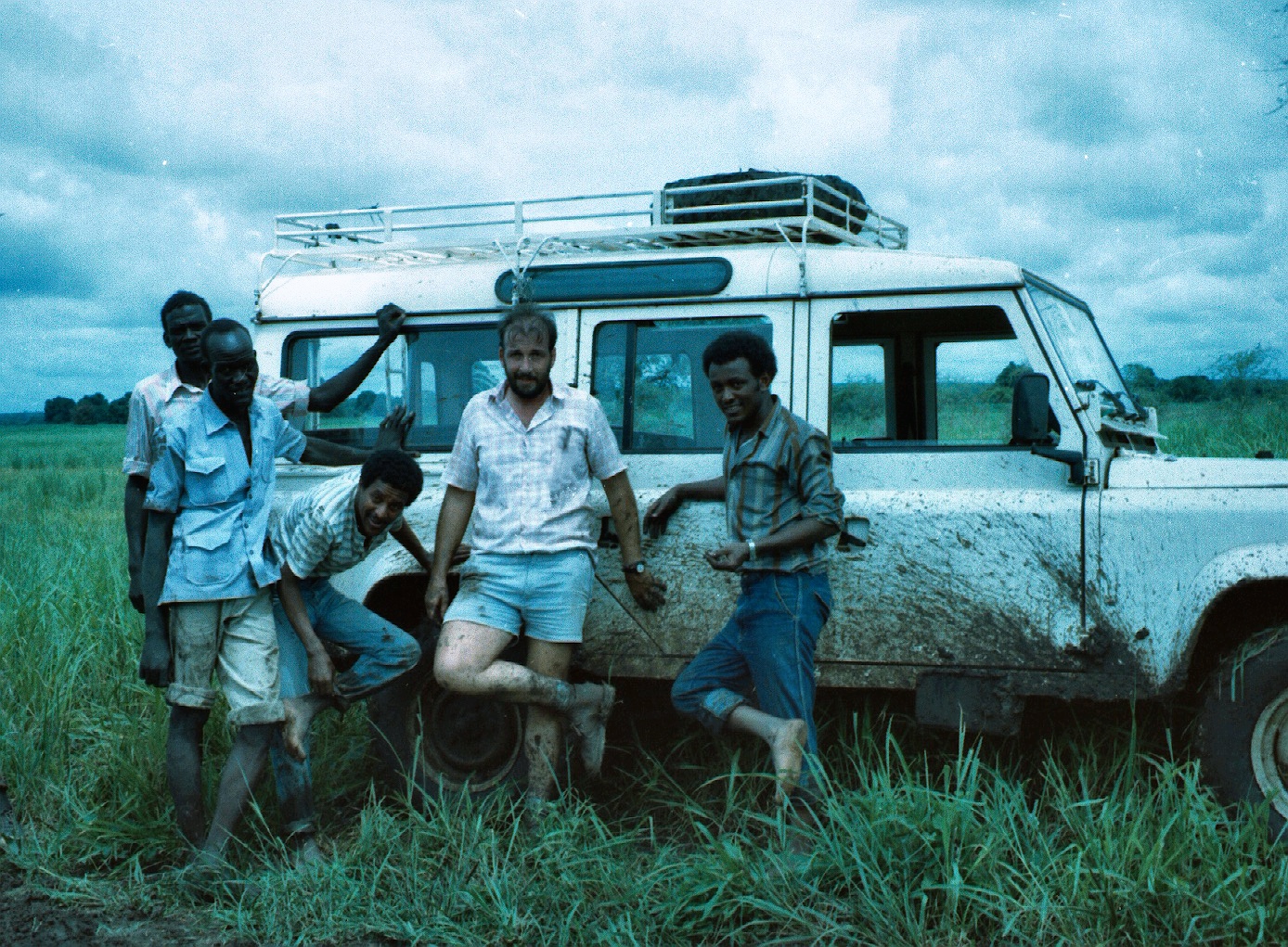
Worse than the dust was the black mud during the rainy season and getting badly stuck whilst trying to get to our study cattle was not rare. Getting stuck is usually a nuisance but doing it with a LWB Land Rover demanded lots of work in order to pull it out. In no time, the tire grooves would get stuffed with sticky mud and just turn without gripping anything! Only lifting the wheels would do and, if trees were around, the winch would save us! I noted then that the Nuer would work hard at digging while the job was clearly below the people from the highlands that mostly watched! I had the excuse of being the driver.
Hard at work!Finally tired but out of the mud!
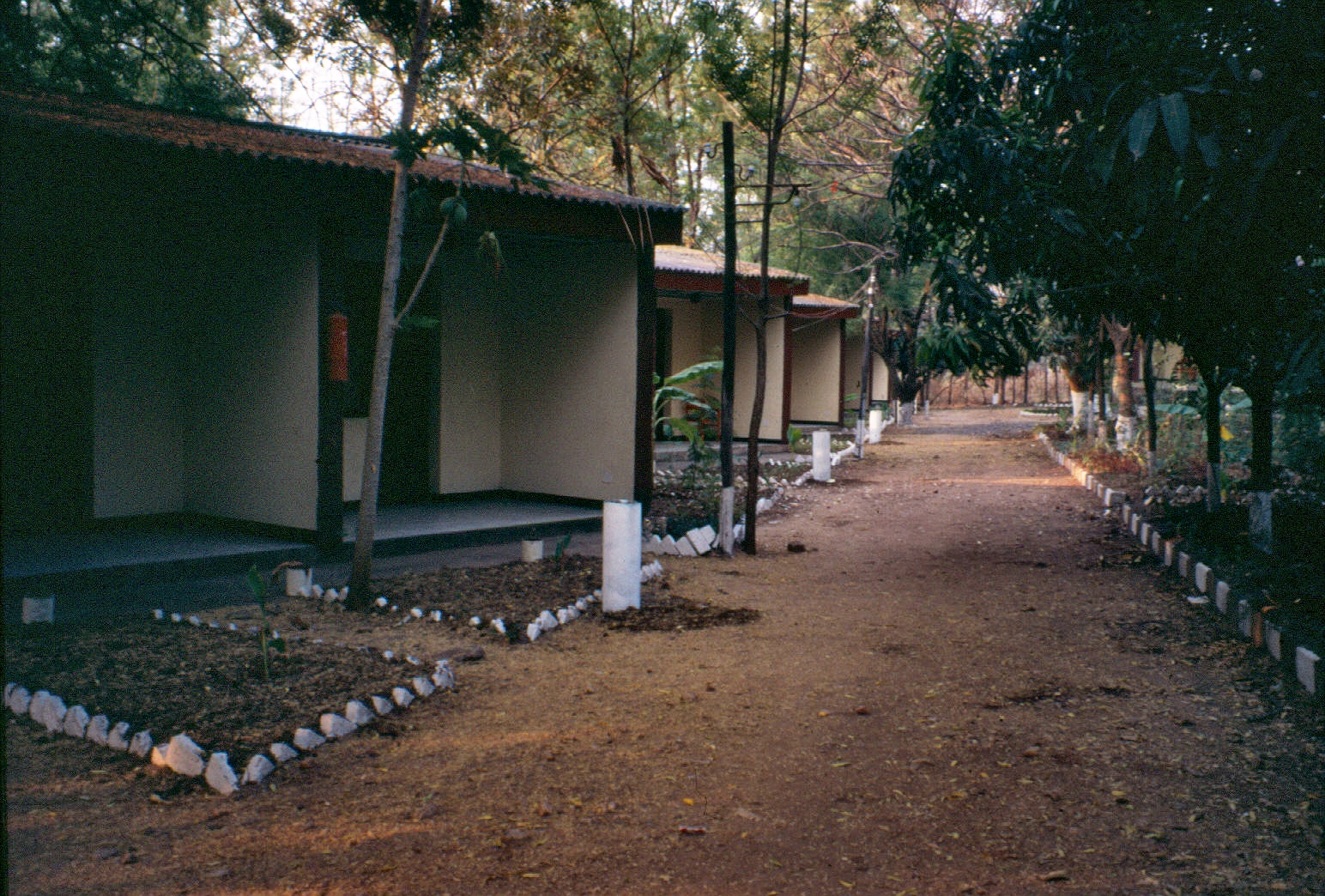
So, on arrival to Gambela we would find a bungalow at the only hotel suitable for ferengi (foreigners) that offered reasonable rooms and, as I mentioned and showed you above, reasonable showers with muddy water!
Gambela hotel.
Life in Gambela during the hot days happened by the river and we also had the impression that not much mixing between ethnic groups took place, the highlanders staying on one side while the Nilotic would stay in their own river patch.
During the night people came out from their houses and we saw quite a lot of movement in the streets and lots of youngsters, probably Nuer, playing volleyball and basketball in a few fields that were scattered around town. By the way, basketball courts were very common in Ethiopia, probably as common as football fields, probably the influence of past efforts from USA churches?
As some of our Ethiopian veterinary colleagues were educated in Cuba, they knew a number of Cuban human doctors and other technical assistance personnel that were working in the area. We met some of the doctors that had interesting stories to tell and I still remember their amusement when telling us that no operating table was long enough for the Nuer with the consequence that their legs were always sticking out and interfering with their movements!
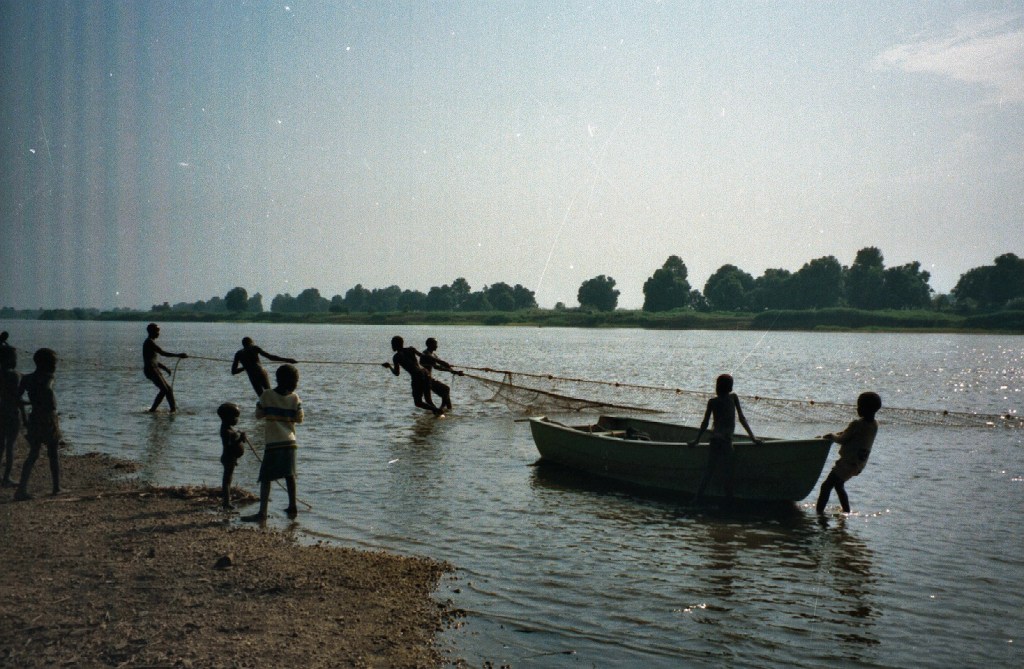
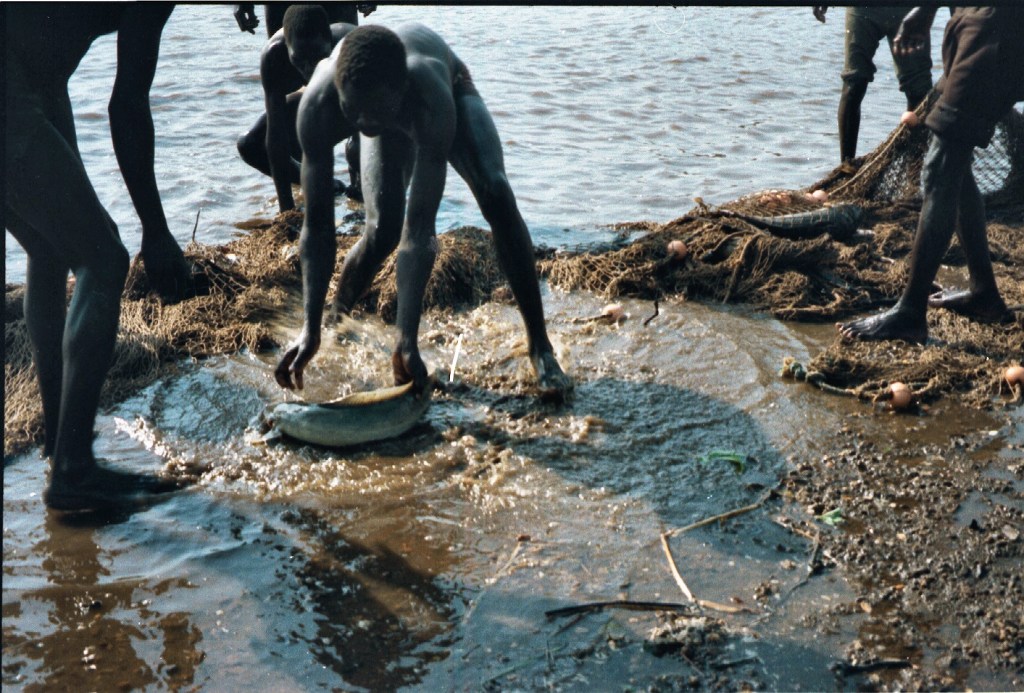
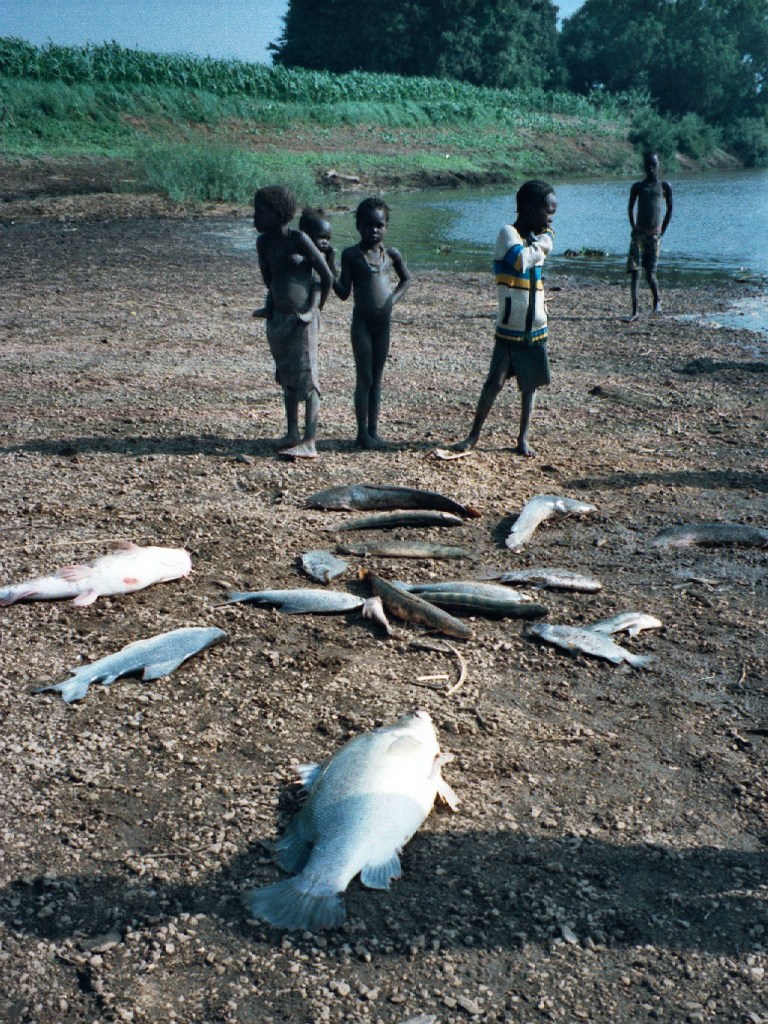
We also met a young Ethiopian that worked assisting the Anuaks with their fishing activities and, one day we accompany him to his working area nearby to watch people fishing. This was a great experience as we saw the wealth of fish that the Baro river offered.
Bringing the catch.
2 Catching the fish.
Some nice fish were caught.
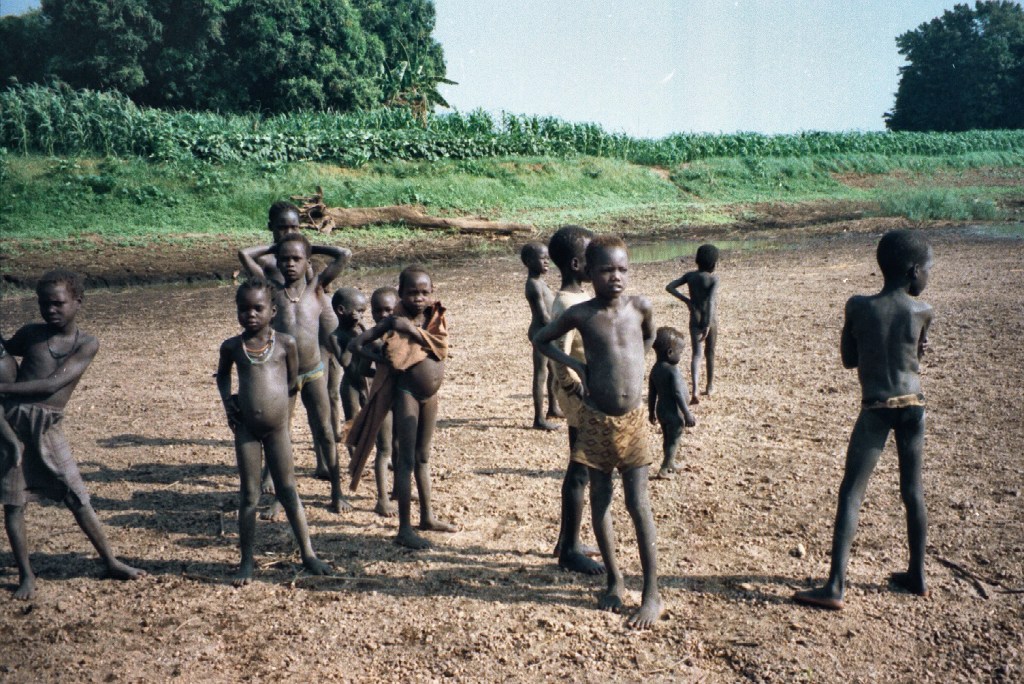
A sample of the fish caught with onlookers!
The young crowd was very interested in us!
Holding the guns while the fishing went on.
Among the memories I have was to see some medium size greyish catfish being treated wth utmost respect by the fishermen. When I asked the reason why these were not touched, a fish was placed on one of them and it immediately died! These were electric catfish! I had a good look at them just in case I would hook them in future. These were most likely Malapterurus electricus, a fish found throughout the Nile basin and capable of delivering an electric shock of up to 350 volts that they generate from an electric organ that, in the case of the catfish, runs the entire length of its body [3].
The visit to the fishing community planted the idea in my mind that we could also fish so during the next visit we took one afternoon off and tried to fish. We searched for a spot a distance away from Gambela, trying to avoid the overfished areas near the town, and chose a large rock (away enough from the water) from where we tried our luck for Nile perch or anything that would like to take a chunk of meat. Unfortunately, after a couple of hours we still got nothing and, after watching a few rather large crocodiles swam past, we decided to go back to our hotel before dark.
The Gambela river where we fished.
The crocodiles reminded us again of the dangers lurking in the African rivers and the risks that the local people exposed themselves while living close to rivers. The chain of thought made me remember the story of an American that was taken by a crocodile while entering one of these rivers, but I could not remember where it had happened.
Then I remembered that I had read about this in an amazing book written by Peter Beard called “Eyelids of Morning” that presents a rathe gruesome account of the incident that I thought then had happened in Lake Turkana, the area the book deals with. Once back in Bedele I looked for the story in the book and, to my surprise, the incident had taken place in Gambela!
In 1966, a young Peace Corps volunteer by the name of William Olson had gone to Gambela with a group of colleagues and they decided -unwisely- to go for a swim in the Baro river. Mr. Olson was taken by a rather large crocodile that was later shot and his remains recovered [4]. So it was that we were probably fishing at a spot near where this accident had happened but, luckily, we did not consider a dip in the river despite the intense afternoon heat.
[1] Evans-Pritchard, E. E. “The Sacrificial Role of Cattle among the Nuer.” Africa: Journal of the International African Institute, vol. 23, no. 3, 1953, pp. 181–198. JSTOR, http://www.jstor.org/stable/1156279. Accessed 15 Nov. 2020.
[3] Electric fish have specialized organs in their bodies, made up of specialized muscle cells called electrocytes. To regulate electrical discharge, they also have a special trigger organ known as the pacemaker nucleus, a specialized group of neurons in the fish’s brain. When the fish wishes to produce an electric current, it triggers the pacemaker nucleus, which sends a signal to the electrocytes initiating electrical discharge. The electrocytes then use transmitter proteins to move positive sodium and potassium ions out of the cell, building up an electrical charge. The individual amount of electricity generated per electrocyte cell is small. However, when millions of electrocyte cells function simultaneously, an electric fish is capable of building up charges of hundreds of volts… Electric catfish have electric organs that line their entire body cavities. (From: https://www.leisurepro.com/blog/explore-the-blue/electric-fish-produce-charge/). More details on the electric catfish: https://animaldiversity.org/site/accounts/information/Malapterurus_electricus.html
After the usual long journey, we were arriving in Addis and seeing the city from a distance while already preparing to enter it and finally get to the Harambe hotel. Our friend and colleague Solomon was coming with us and we agreed that we would drop him in town so that he could get home as early as possible.
While looking at the city we saw several jet planes and helicopters flying over it. We had seen planes flying during other journeys and this was not strange as we imagined that new pilots were trained all the time to go to the war with Eritrea. However, we realized that that day, Tuesday the 16 of May of 1989, the traffic was denser than usual but did not think more about it.
We did not think much (rather celebrated!) the thin traffic we met when entering Addis as this would enable us to reach our destinations earlier. So, we entered the usual way, I believe through Sudan road straight to the hotel. About a block away from it we saw a vehicle parked in the middle of the street that blocked our way.
It was not a normal vehicle but a tank! Perhaps it was our imagination but we saw it moving its turret while we approached it. I am not sure if you have been aimed at by a tank, but I believe we were in its sights so, without thinking, I veered rather violently to the left into the next street to get away from it.
The view from our room at the Harambe hotel. The green building is the Ministry of defense, the heart of the coup.The same view after a heavy hailstorm.
While moving through the empty street I heard Solomon saying “Julio, this is not normal”, “something is happening in Addis that we do not know” and he added nervously “we better find a place to stop so that you can spend the night”. Luckily Solomon knew that the Wabi-Shebele hotel was on that road and that was exactly the place we headed for.
We arrived at the hotel after a couple of minutes and, luckily but not surprisingly, they had rooms available. I offered Solomon to stay there but he wanted to go home and thanked me for the offer but declined. He knew the city, he said, and would manage to get home without problems.
While checking in I noted that, before leaving us, he was having a very animated talk with the receptionists and concièrges. After checking in, a quick talk to Solomon, in Spanish, enlightened us on the situation. Mengistu had gone to the then East Germany and some army officers had attempted to take control of the country. “He will return and I fear for the coup leaders” he said before leaving us.
We saw Solomon leaving not without misgivings as the situation was clearly not safe. We decided to offload the car and moved to our room, located on the second floor, facing the street. While unpacking I turn on my short-wave radio to the BBC world service and, when the news come, we learnt that the information that Solomon had given us was correct: a coup d’état was indeed taking place.
As soon as we knew about the coup we started hearing sporadic shooting but nothing too serious, so we went down to the first floor to have our dinner.
We were very few people dining that night. The dining room had large windows through which you could see the street below and, at the start of the evening things appeared calm with the exception of the sporadic gunfire, now farther away, that continued unabated. At some time we were all peering through the windows when we heard heavy vehicles moving through. It was a lorry convoy carrying troops that, of course, we could not tell on which side they were!
We finished eating, still listening to the BBC, and we decided to go up to our room as we could not do anything but wait and see. We did not have much to wait. By midnight, gunfire became more frequent and the caliber of the guns increased! There was also lots of heavy weaponry being moved in front of the hotel and I could see through a slit in the curtains that there were a few tanks moving as well.
I did not wake Mabel up to avoid her getting too worried but she surprised me by sitting on the bed saying “these are tanks!” and going to the window to watch them. She was, in fact, calmer than me!
While the coup progressed, we stayed put at the hotel until, I believe through a phone call from FAO, we were told that the United Nations personnel were all concentrated at the Ghion hotel from where developments were being followed to decide whether to evacuate us or not. We were at the wrong hotel and we needed to move as soon as possible to join our colleagues!
The following day (probably the 18th or the 19th) things appeared calm, so we decided to go for it. The drive was risky as it involved crossing the centre of town, where some fighting could still be going on. However, we needed to get through and hoped that the UN identification in our vehicle would be of use.
I drove straight to the Ghion without caring too much for the roads’ way, right or left as the roads were almost empty of civilian vehicles but littered with rocks that needed to be negotiated slowly. We did not meet any military personnel but needed to avoid a few damaged military vehicles while we also saw some of the human casualties on the street.
Luckily, we arrived at the Ghion safely and we were immediately “ticked” in the list of personnel by the security officers. We were some of the last arrivals if not the last ones!
It was explained to us that we needed to wait and see how things evolved and, if they escalated, we may need to be evacuated to Nairobi. So, we were given a room and told to rest and wait for news. That evening, over dinner, we met a number of colleagues we knew and shared the dinner table with them, getting up-dated on what was actually happening.
Oddly, our new hotel’s location was of concern as it shared its grounds with the National Palace, the place where the Head of Government stayed and a strategic target for the rebels! This meant that we could see armoured vehicles criss-crossing the grounds. “Guys, there is a lot of heavy agricultural machinery moving around” said a colleague with a chuckle while pointing at a number of tanks manouvring through the hotel lawn. A comment I will not forget!
We had some sketchy information and learnt that Mengistu had already returned and was defeating the rebels although the situation was still uncertain. Interestingly, at lunch and dinner times there were SW radios at every table, and they were all tuned to the BBC News so we had a truly stereo effect as the same radio was all over the dining room!
We stayed at the Ghion for a few days and we were still there on 24 May as I remember watching the European Cup Final from the Camp Nou in Barcelona that A.C. Milan of Italy defeat Steaua Bucarest of Romania 4–0. The match was watched by a large UN crowd that started dispersing when Mengistu regained control of the country later on.
We returned to Bedele alone as we did not have any news of our colleague Solomon. Luckily, he turned up a few days later, unharmed and as cheerful as usual. Although he added more information on the events, it was only much later, when we were already outside Ethiopia, that we understood what had taken place.
Briefly, a while before May 1989 the Government had suffered two major military defeats at Afbet in 1988 and Shire in 1989 where thousands of troops and weapons had fallen in the hands of the Eritrean People Liberation Front. In addition, before the Afbet defeat Mengistu executed the commander of the forces. This resulted in additional loss of moral in the army and marked the start of the decline of the Government.
It was this demoralized army that took its chance in Mengistu’s absence and staged the coup of the 16 May 1989 that we had lived through. The coup was defeated within three days (something we did not know for certain at the time). Two of the leaders died during the fighting while some others were executed later in 1989 and a large number arrested. Solomon had been correct with his concern for the coup leaders!
Despite Mengistu’s victory, the coup left the army command very weak as the new generals lacked combat experience and the end came in 1990 when the Ethiopian People’s Revolutionary Democratic Front (EPRDF) forces advanced on Addis Ababa from all sides, and Mengistu fled the country and was granted asylum in Zimbabwe.
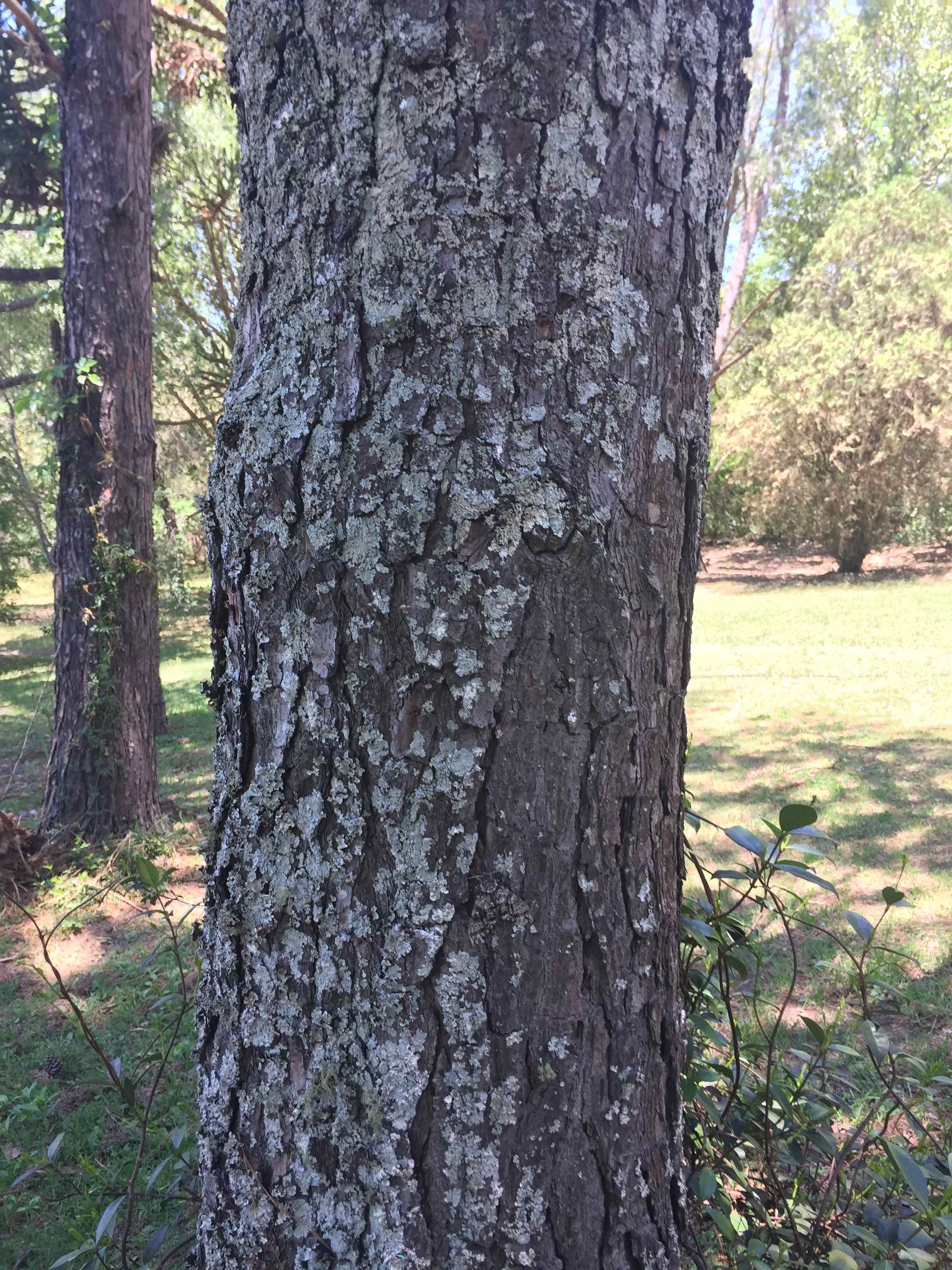
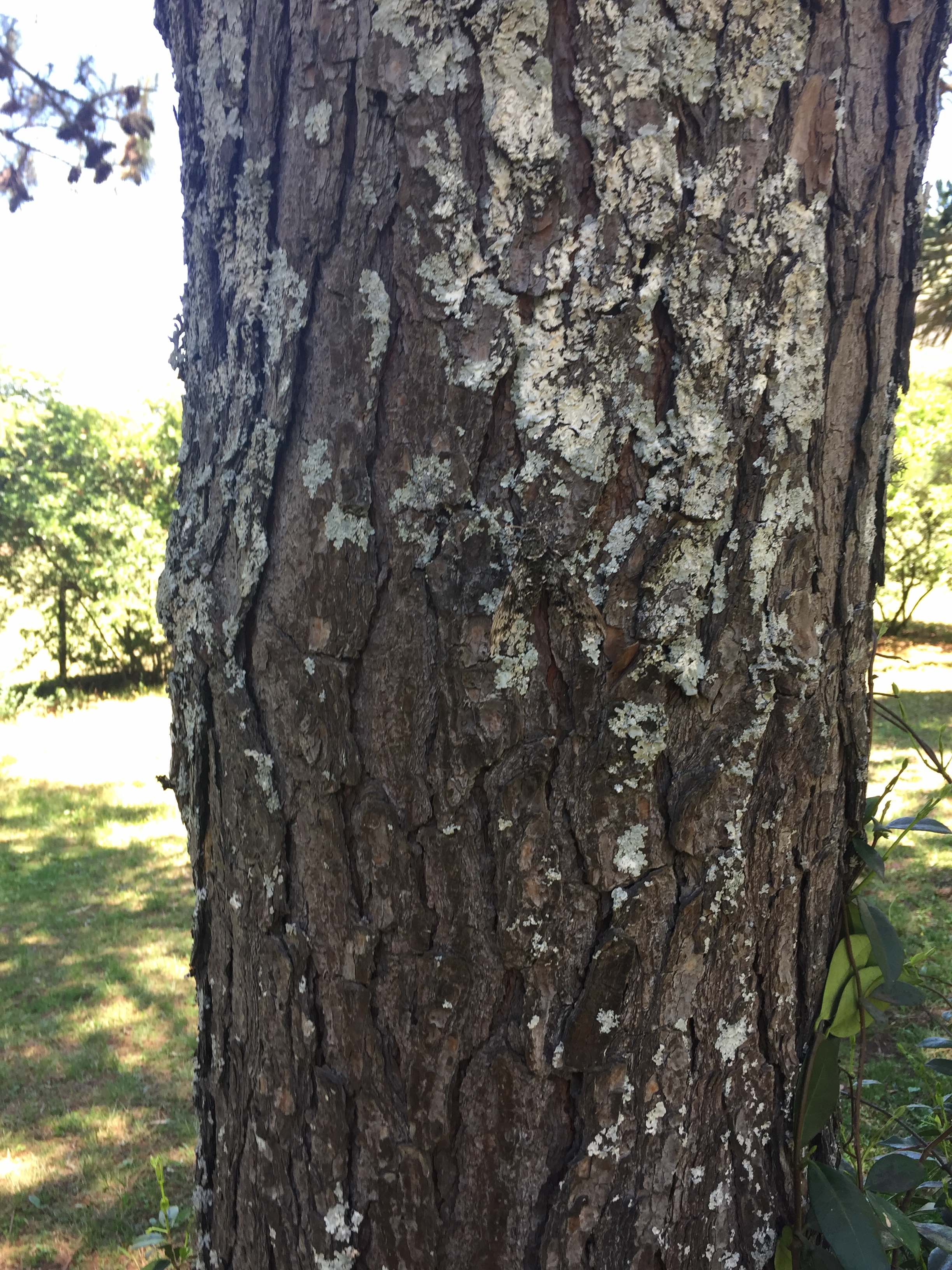
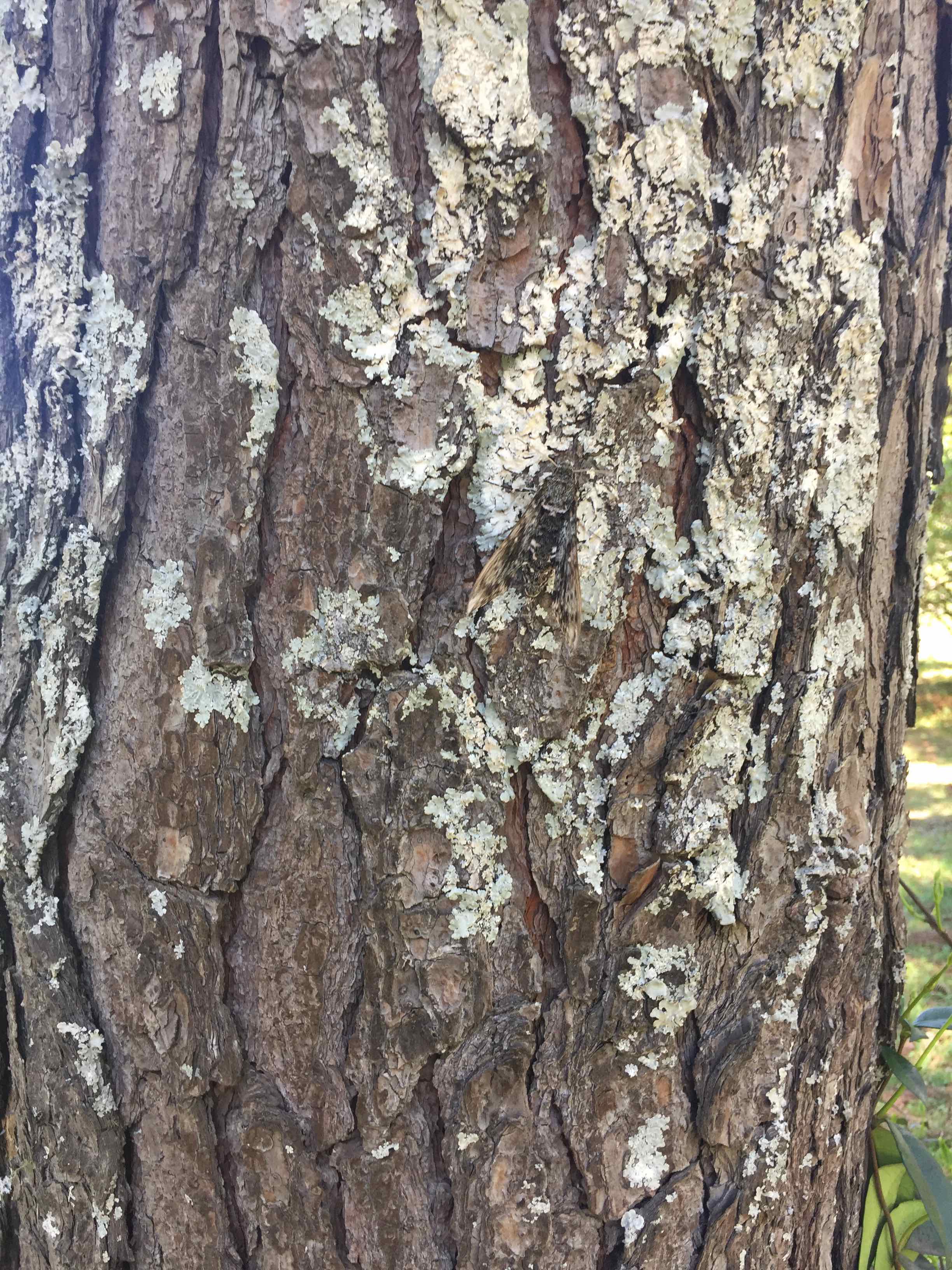
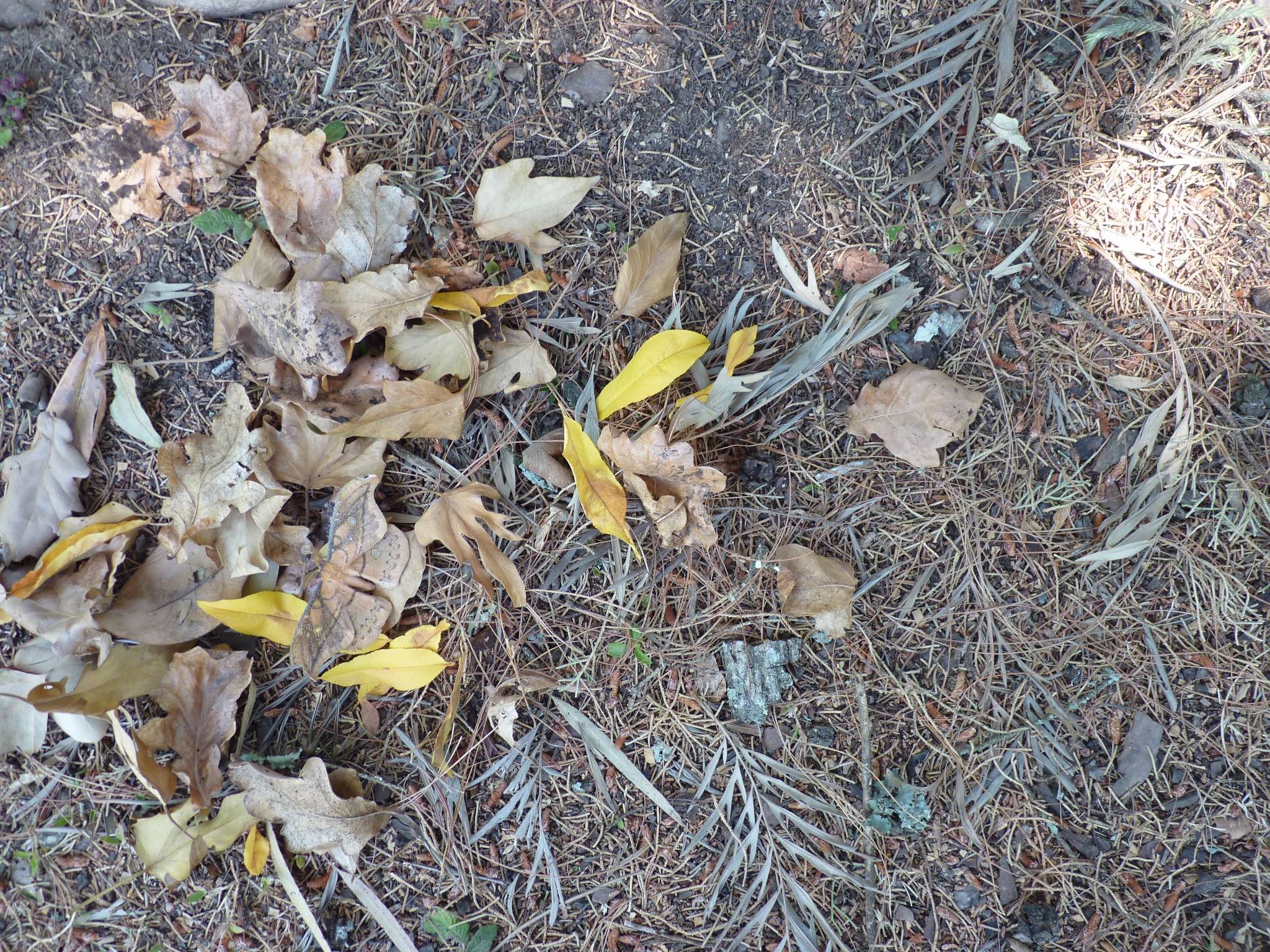
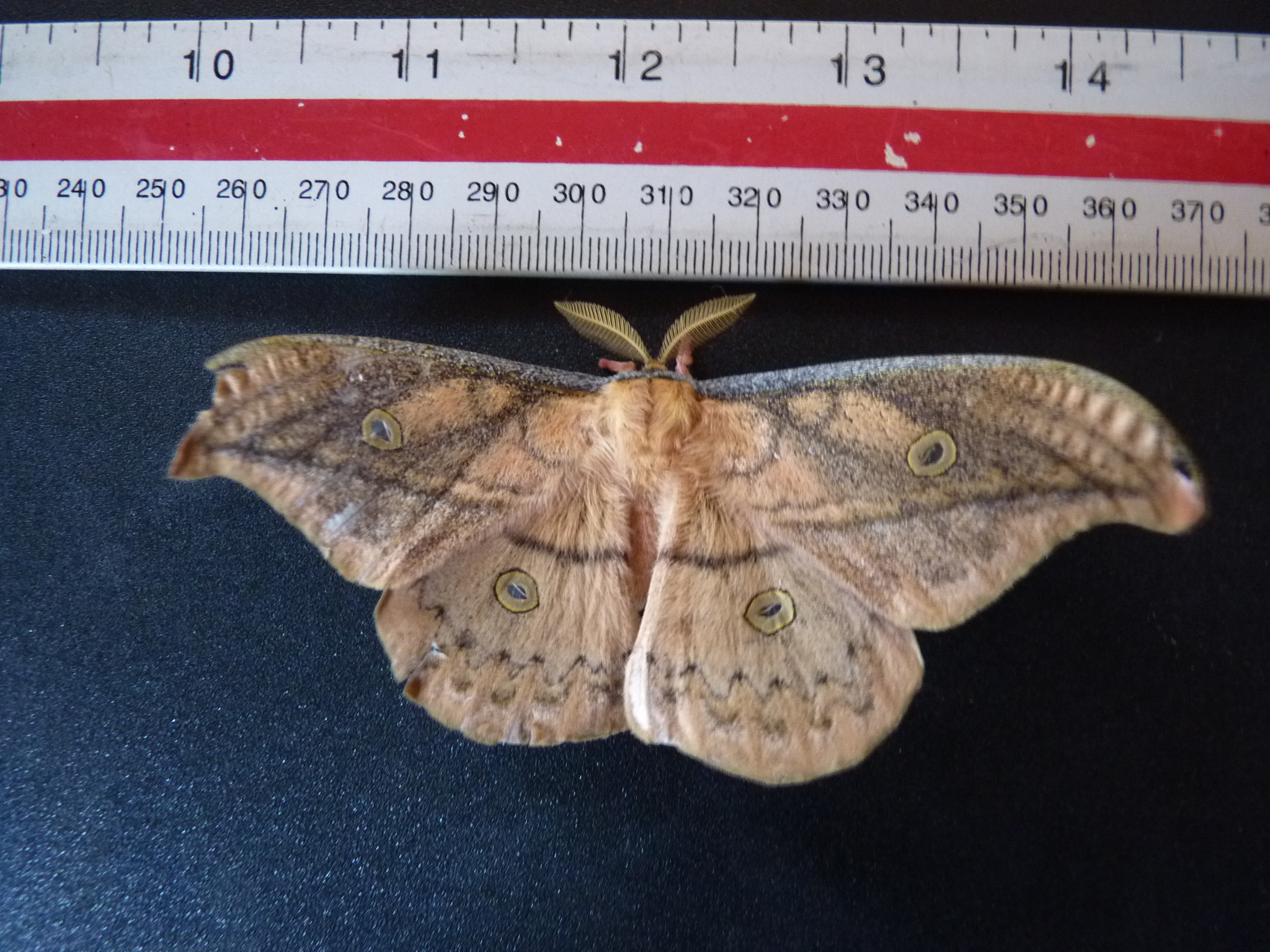
With the warmer weather small beasts started appearing and you get surprised by them more often. This is the case of this one I found on the ground this morning that was very well camouflaged. Can you spot it?
? ? ? ? ? ? ? ? ? ? ? ? ?
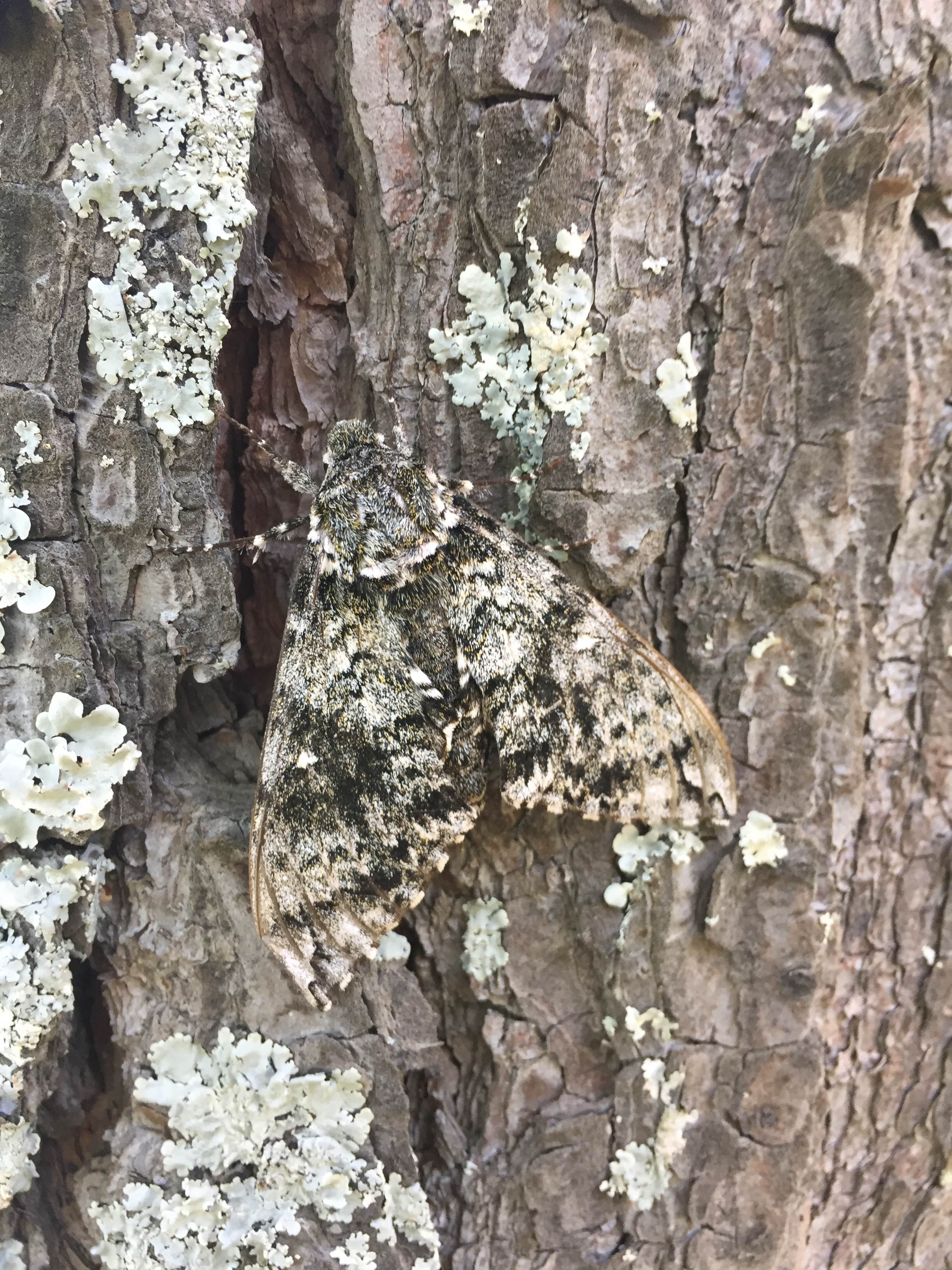
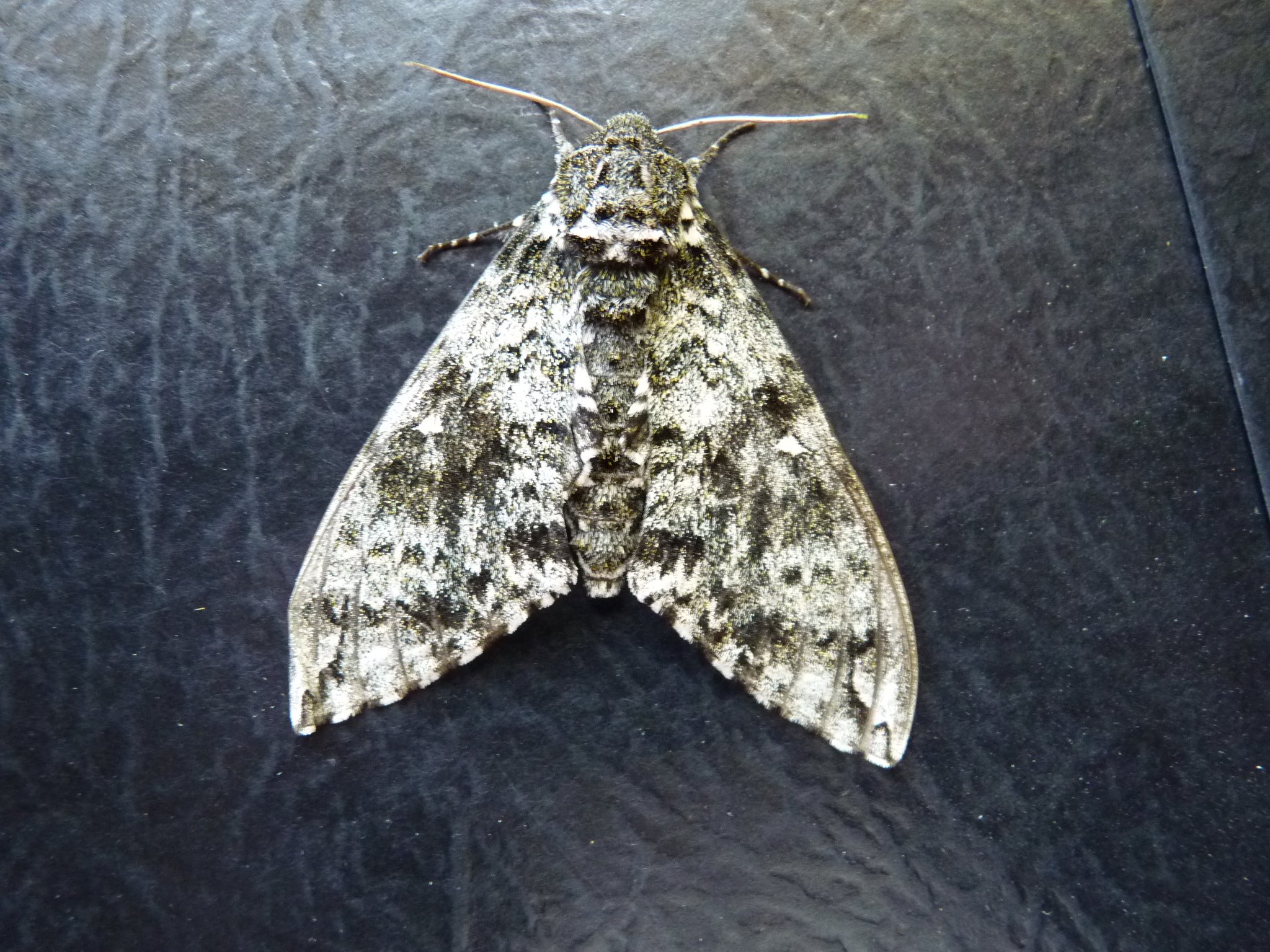
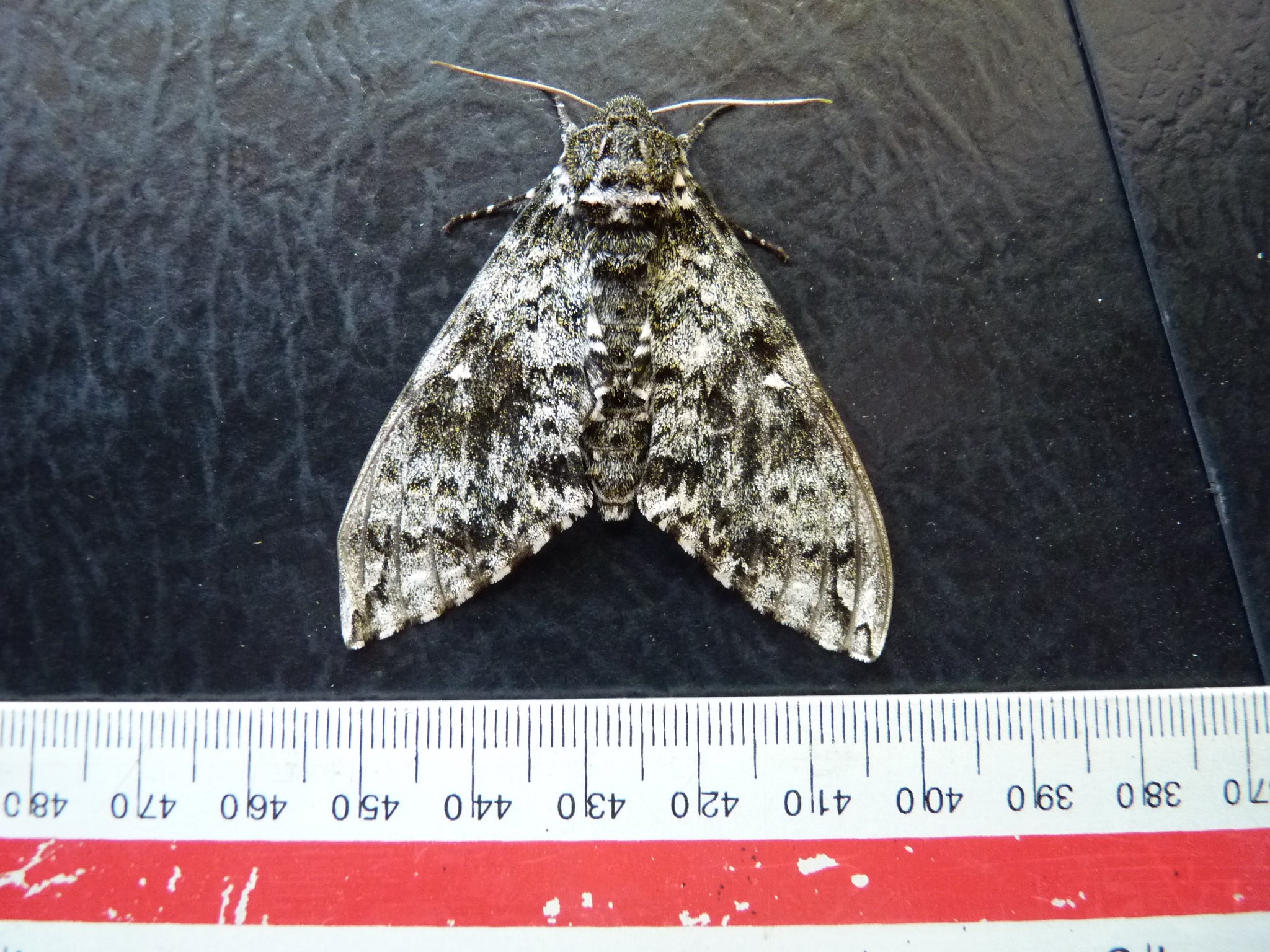
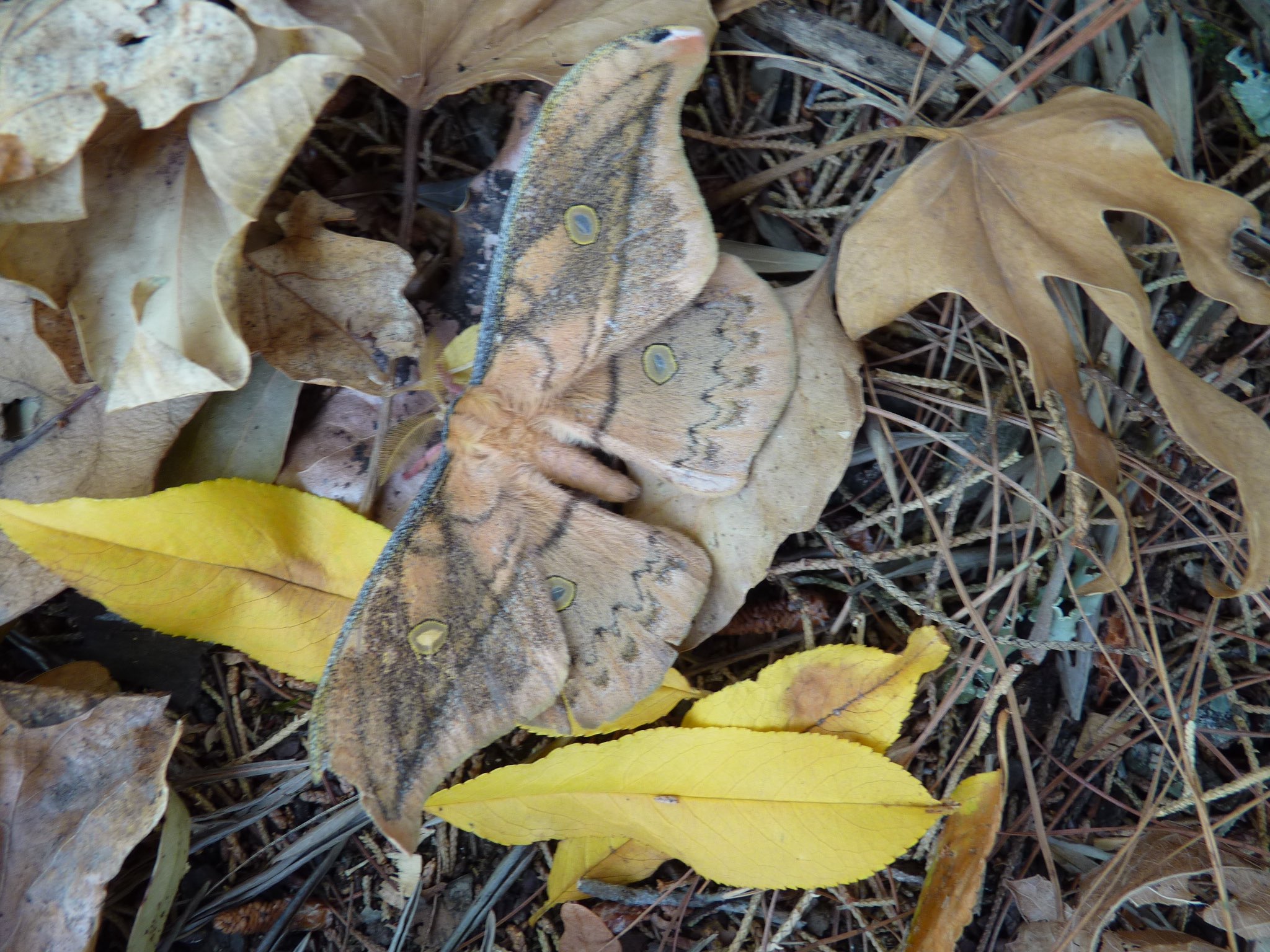
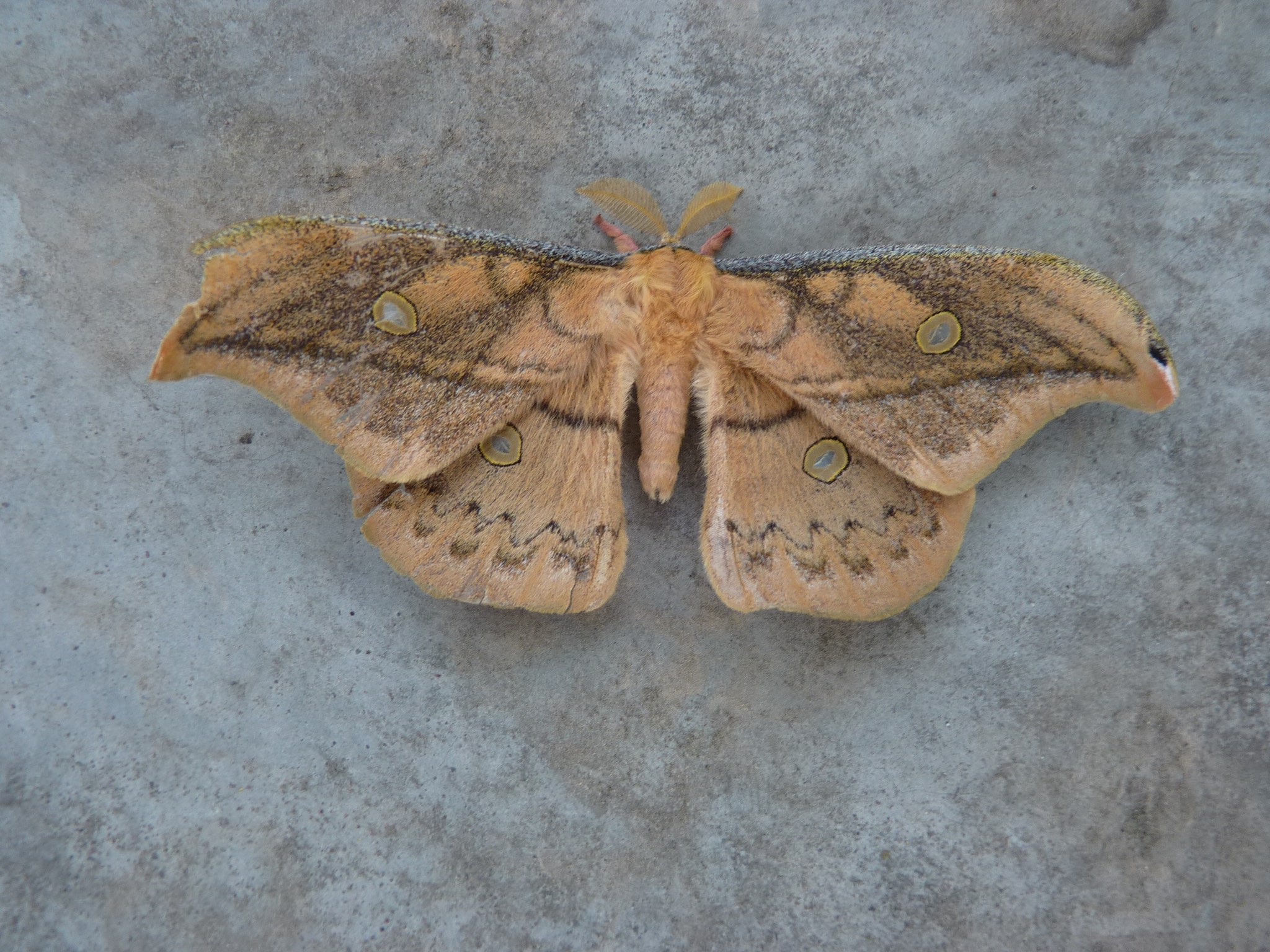
At 12 cm wingspan this is a rather large moth of a species unknown to me but not less beautiful! A couple of other pictures for you to admire.






 A Bushsnob out of Africa
