Month: November 2021

The day the Zambian soccer died

Eight goals to seven was the result of a nerve-raking one hundred and twenty minutes of a soccer final that defined the 2012 African Cup of Nations against Ivory Coast on 12 February 2012. Other African countries have other sports apart from soccer. Not Zambia. In this friendly central African country soccer is almost the only sport that people talk about. So, it is understandable that the whole country went into a long and wild celebration. It was in fact a national catharsis.

I was not there to see and participate in the celebrations, but I was in Lusaka almost twenty years earlier when, on 28 April 1993, Zambia woke up with the news that they no longer had a soccer team! Known as the Chipolopolo, they were a very promising Zambia national team. At the 1988 Olympic Games in Seoul, they had thrashed Italy 4–0!

They had departed the day before to face Senegal for an Africa Cup of Nations qualifier but never arrived. The Zambia Airforce plane the Football Association of Zambia had commissioned developed engine trouble and it crashed after taking off from Libreville, less than a kilometre from the shoreline of Gabon.

All thirty people on board perished, including eighteen players, the team coach, support staff and plane crew. Luckily, two players were spared this tragic end. They were Chipolopolo’s captain, Kalusha Bwalya (Kalusha) that was traveling directly from The Netherlands (he played for PSV) and Charles Musonda (playing for Anderlecht), injured.

Somehow, I missed the bad news until I arrived at the FAO office and found an abnormal somber atmosphere and several of the usually cheerful people crying while most had red eyes. It was Angie, a young secretary that broke the news to me “The Zambia soccer died yesterday” she said with intense sadness. I was stunned as I was following the good results of the Chipolopolo and it had become (and still is) my favourite team in Africa. I realized that this was probably the biggest tragedy that independent Zambia had suffered.

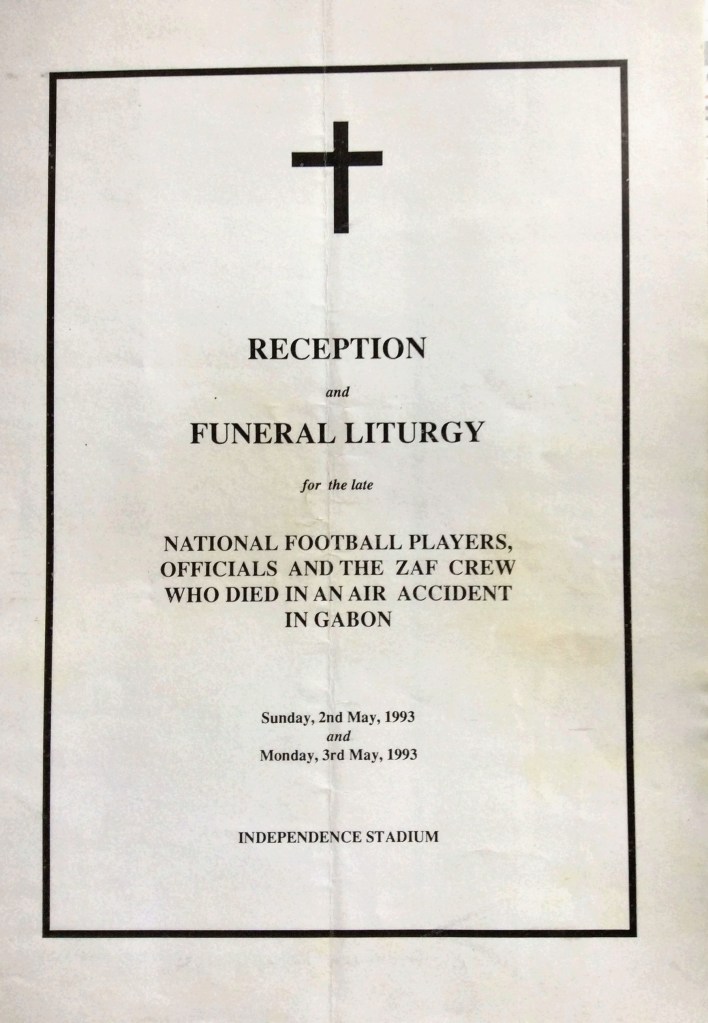
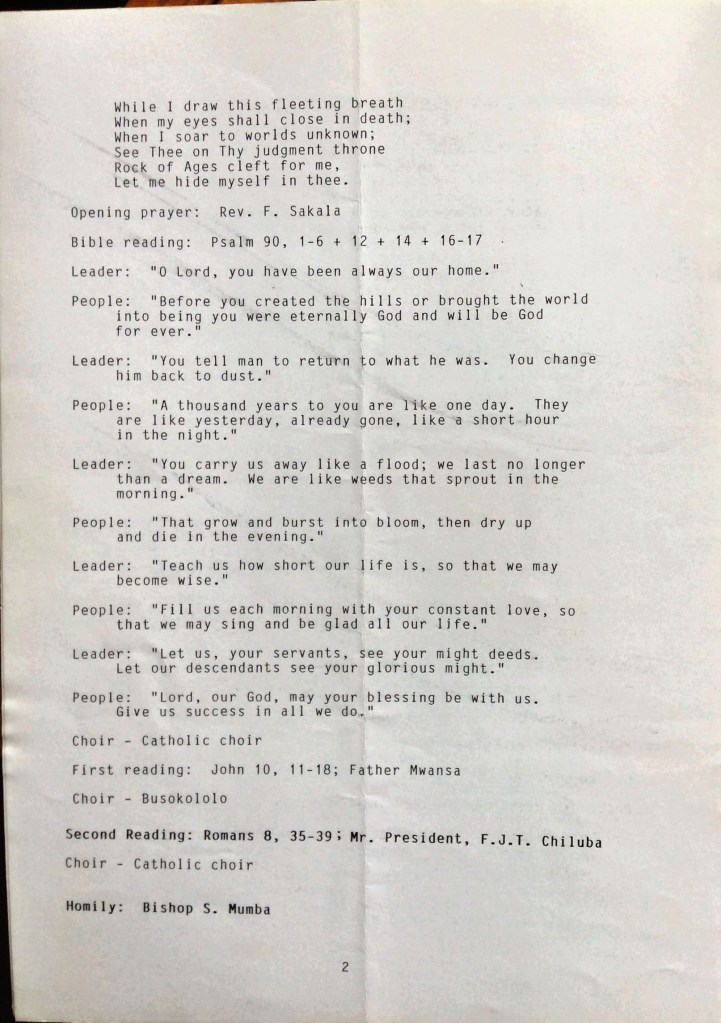
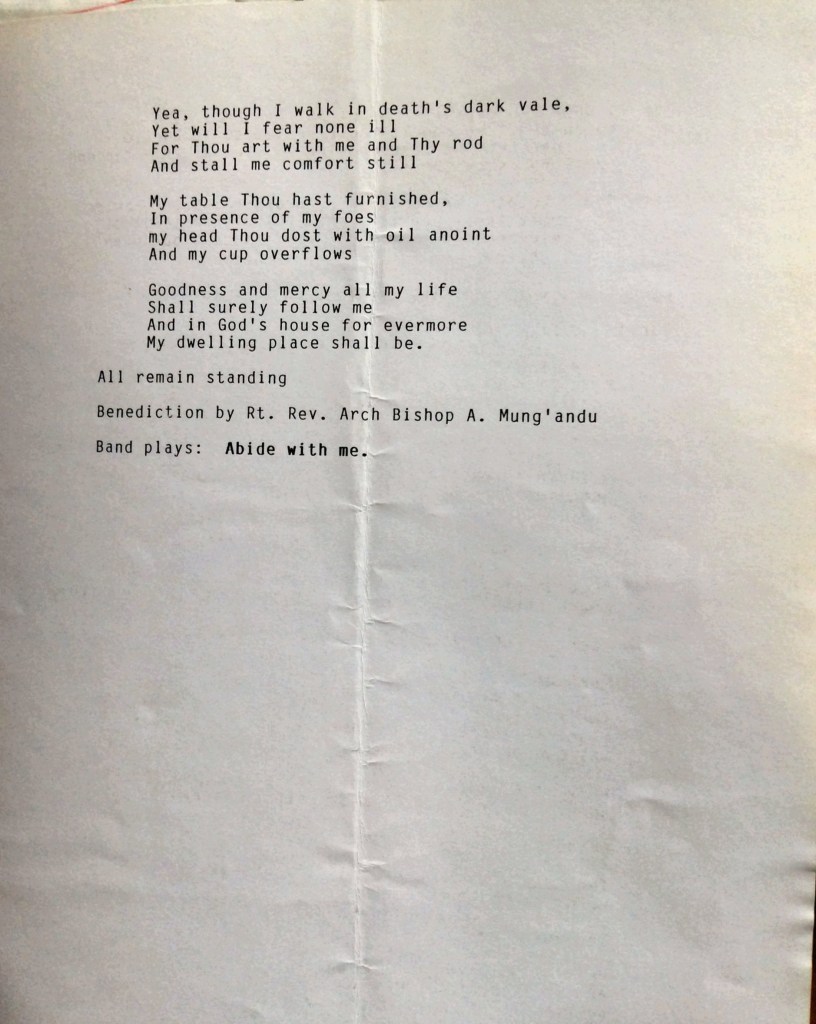
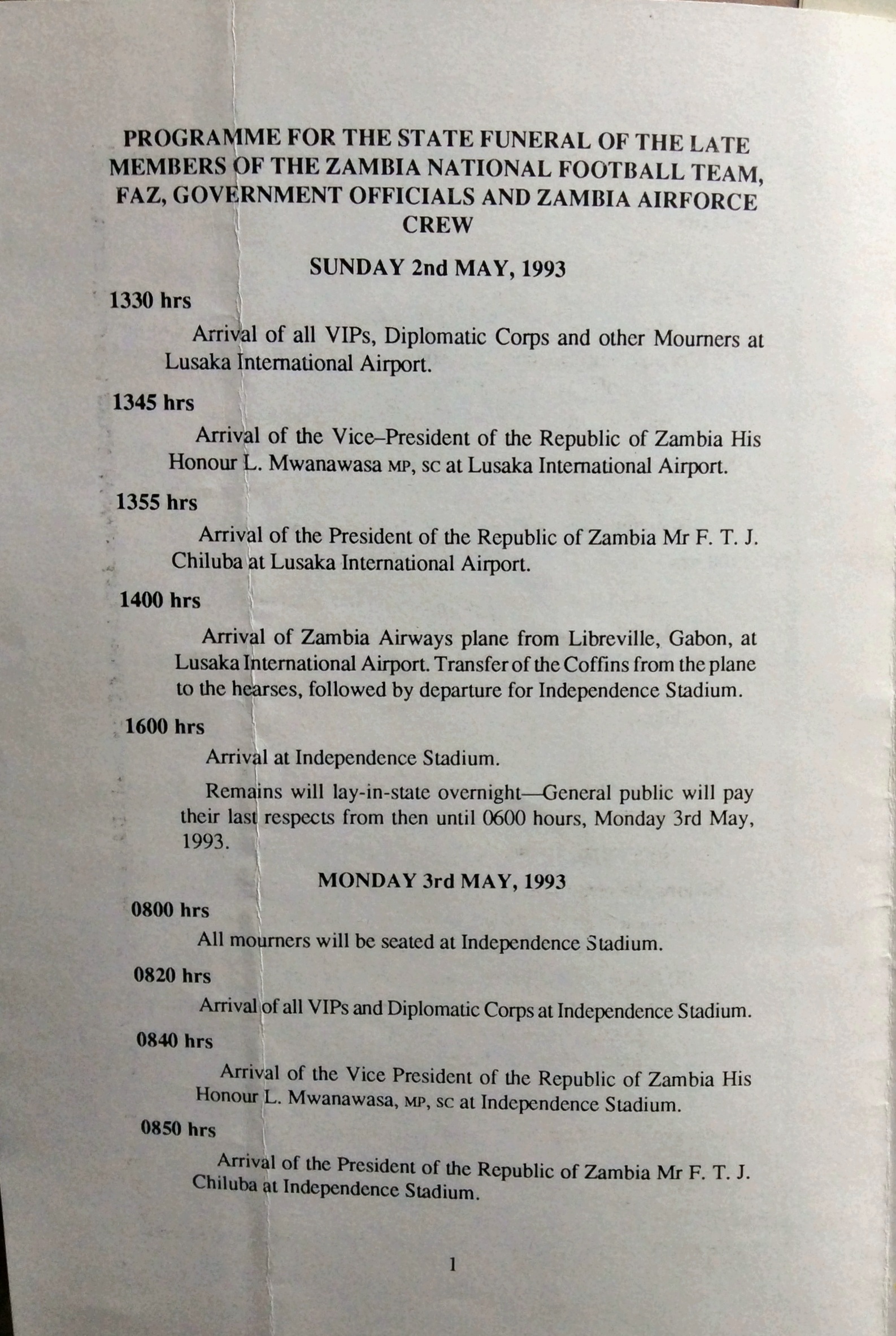
So it was that I attended a two-day funeral, the saddest job of my entire career. The ceremony took place at the soccer Independence Stadium on 2 and 3 May 1993. Below, I include the programmes of both the State Funeral and Liturgy as well as the list of the deceased.

The first day, several national and invited political and religious authorities were the main protagonists of the morning events with gloomy speeches while we waited for the arrival of the deceased. Once this took place, the coffins were lined up around the field. After that was completed, the grief-stricken relatives and friends entered in groups crying, mourning aloud, and sobbing while they slowly moved towards the coffin where their dead relative was. It was a truly emotional time, and it was difficult to stop one’s own tears. It marked the beginning of a long vigil that would continue until the following day.

The second day was another highly moving affair. We were invited to walk past the thirty coffins (already surrounded by relatives and friends) to pay our respect. After this, carrying the coffins, we all walked outside the stadium to the burial site where today a monolith commemorates this tragedy at a place known as “Heroes’ Acre”.

During the course of events, I had a chance to give my condolences to Kalusha who, not surprisingly, looked completely devastated and exhausted as he was there for the whole time of mourning.

Despite the tragedy, a new side was swiftly assembled. Led by Kalusha and with a great attacking playing managed, against all predictions, to reach the 1994 African Cup of Nations final against Nigeria but lost despite having scored first. Despite the setback, the new Zambian team returned home as national heroes.

With the passing of time Kalusha coached the Chipolopolo team in the African Cup of Nations in 2006. He resigned after the elimination of the team early in the tournament. However, he could finally lift the African Cup of Nations in 2012 when he was the President of the Football Association of Zambia, a good ending for Kalusha’s illustrious soccer career.

Trip notes

Recently, our friend “Pinkshade” found notes from the past that included info on what we had seen on our safari to Ngorongoro and Manyara in 1988. As she puts it “It doesn’t seem exhaustive but it reveals the most that we saw at that time… including the (most probably) Black-bellied bustard and the Eulophia welwitschii (terrestrial yellow orchid)! And, the bonus is a map drawn by the warden himself to help us to find the spots! Historical piece!!! To which, very disrespectfully we added some of our notes!”

Ngorongoro & Manyara safari – Fauna and Flora lists – February 1988 (with 4WD, XRay, Khanga, ScoutSpirit and PinkShade)

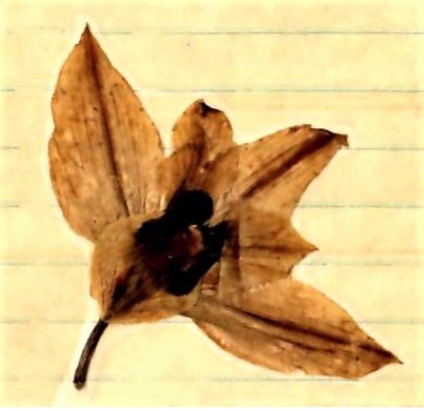
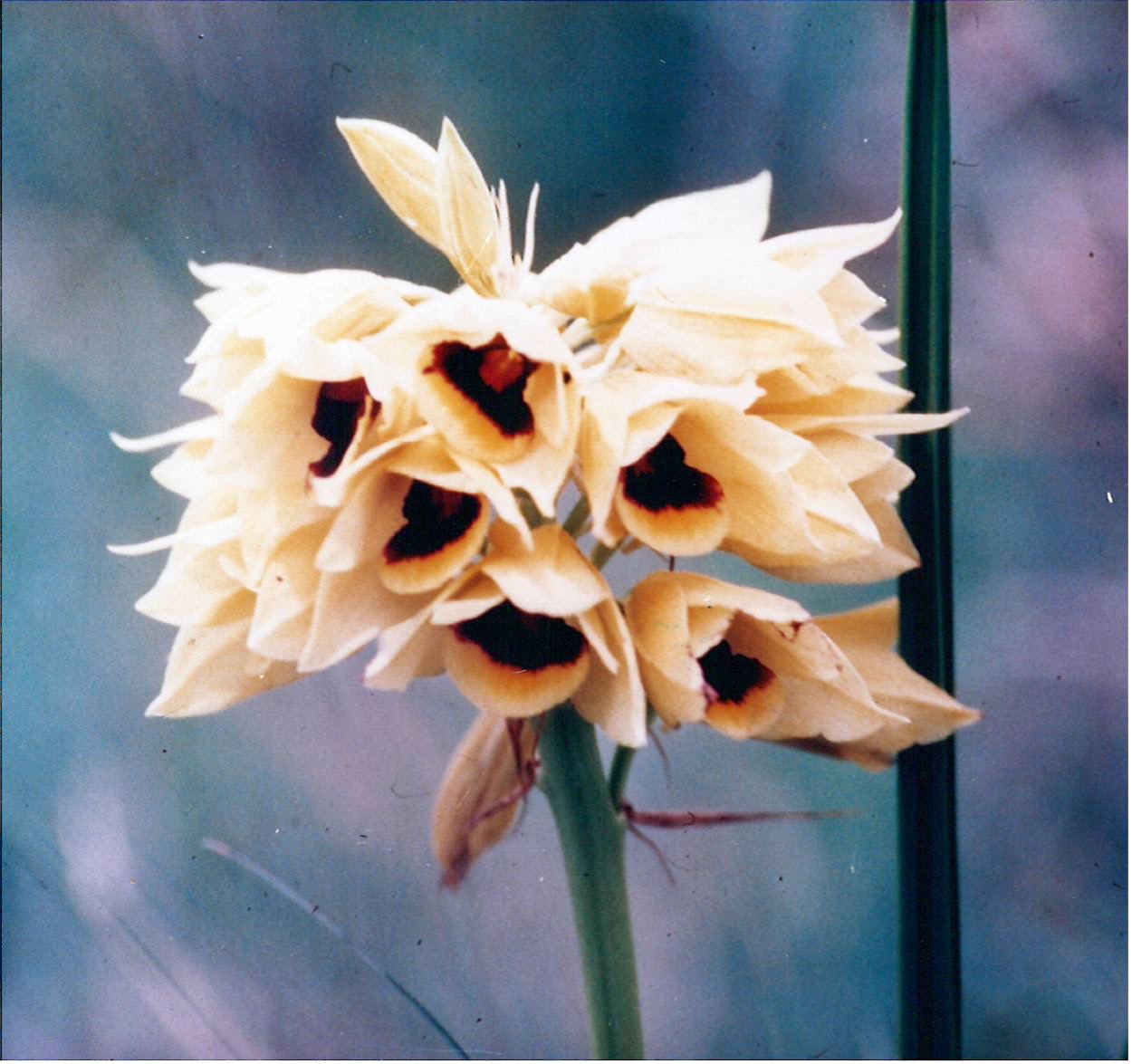
Dried flower of a terrestrial orchid (probably Eulophia welwitschii), cf. picture below.

List of birds:

  • Grey heron
  • Black-headed heron
  • African sacred ibis
  • African spoonbill
  • Yellow-billed stork
  • Lesser flamingo
  • Abdim’s stork
  • Saddle-billed stork
  • Marabou stork
  • Cape teal (or Cape Wigeon)
  • Red-billed duck (or Red-billed real)
  • Spur-winged goose
  • Maccoa duck
  • Egyptian goose
  • Francolin (undefined)
  • Kori bustard
  • Black-bellied bustard (cf. photo in post)
  • Grey crowned crane
  • Spur-winged lapwing (or Black-winged plover)
  • Blacksmith plover
  • Pied avocet
  • Speckled pigeon
  • Mousebird (undefined)
  • European swallow/Hirundo rustica (migration)
  • White stork (migration)
  • Lark (undefined)
  • Fisher’s sparrow lark
  • African stone chat
  • Olive thrush
  • Fiscal (undefined)
  • Tropical boubou
  • Yellow bishop
  • Superb starling
  • Black Kite

Only seen at Manyara:

  • Hamerkop
  • Greater flamingo
  • Knob-billed duck
  • Long-crested eagle
  • African harrier hawk
  • Pale chanting goshawk
  • Crowned lapwing
  • Namaqua dove
  • White-browed coucal
  • Lilac-breasted roller
  • European roller
  • Striped kingfisher
  • Little bee-eater
  • Hornbill (undefined)
  • Ground hornbill
  • Wagtail (undefined)
  • Red-headed bluebill
  • Long-tailed paradise whydah
  • Weaver (undefined)
  • Red-billed oxpecker
  • Pied crows

List of mammals:

  • Warthog
  • Hippopotamus
  • Giraffe
  • Eland
  • Wildebeest (gnu)
  • Kongoni
  • Grant’s gazelle
  • Thompson’s gazelle
  • Buffalo
  • Grant’s zebra
  • Impalas
  • Black rhinoceros (4 individuals)
  • Elephant
  • Golden jackal
  • Spotted hyena
  • Lion (a big group and some scattered ones)

Only seen at Manyara:

  • Black-backed jackal
  • Baboon
  • Dik-dik

List of plants:

  • Euphorbia kibwezensis
  • Heliotrope (undefined)
  • Cycnium tubulosum
  • Hibiscus (undefined)
  • Hibiscus aponeurus
  • Pavonia gallaensis
  • Crossandra subacaulis
  • Commicarpus pedunculosus
  • Crinum macowanii
  • Commelina sp.
  • Eulophia welwitschii (?), terrestrial orchid (cf dried flower above and picture here-under)

Our picture of Eulophia welwitschii (?), to be compared with: http://pza.sanbi.org/eulophia-welwitschii

Only seen at Manyara:

  • Baobab
  • Euphorbia candelabrum
  • Datura stramonium
  • Lippia sp. (white)
  • Crotalaria agatiflora (Canary bird bush)
  • Spathodea campanulate (African tulip tree)
  • Kigelia Africana (African sausage tree)
  • Gloriosa superba
  • Erythrina abyssinica (Coral tree or Flame tree)
  • Calotropis procera (Sodom apple)
  • Solanum incanum
  • Solanum sp.
  • Scadoxus multiflorus (slightly north of the aera)

I thank Pinkshade for her contribution!

Night action

Insecurity in Lusaka during the 90’s was prevalent and, apart from daylight robberies like the ones I mentioned [1], there was the threat of house break-ins during the night, something that worried us a lot. There were rumours of armed gangs and shooting could be heard almost every night. Some of these were house owners that would deliberately shoot in the air as a way of advertising that they were armed. We also learnt that robbers were very brutal with the watchmen that often got killed trying to stop them.

The second part of my earlier post “The bowtie country” [2] describes our security arrangements in our house. In addition, we learnt that a neighbourhood watch [3] was active in our area so we were quite confident that we would have peaceful nights.

Our dogs did not bark much and certainly did not sound like the dogs that woke us up one day in the middle of the night. “Something is happening! The dogs are barking differently” were the words said by Mabel that woke me up. I immediately left the bed and, in the dark, I went to look through the window facing the front gate of the house.

What I saw was rather worrying. The dogs were furiously barking at the gate and, as there was no reason to expect friends at that time of the night, I assumed that they were robbers. So, as agreed with our watchman (Mr. Nelson), I blew the whistle for him to retreat while pressing our alarm button. Immediately, I also reported the incident to the UN security.

Despite the dogs’ fury, I saw a few men climbing over our wall, so I reacted fast and tried to get my shotgun just in case while Mabel continued watching the developments. As I did not (and still do not) like guns, I had dismantled it in the three pieces that I could detach [4] and stored it inside a trap in the ceiling, not a very convenient place from where to retrieve it in the dark of the night! Eventually I got a chair to climb on and retrieve it.

Despite its potential gravity, in retrospect the scene was quite funny. While in the bedroom Mabel kept watch peering through the window at the outside developments, I frantically tried to assemble the gun without success, getting my fingers pinched in the process and spending a few of my swear words in both Spanish and English. Outside, we heard a metallic bang and saw a man attempting to climb the front gate followed by another bang and the man disappeared. I was still messing with the gun.

Suddenly the dogs stopped barking and calm was restored. Then, we saw Mr. Nelson walking towards the gate holding his catapult, ready to shoot!

The calm did not last long as a couple of minutes later the security team, alerted by us by pressing all available buttons, arrived and climbed over our wall and gate in an impressive show of force. We were saved and I was still holding the three shotgun pieces in my hands while following the events!

We let the security team know that we were well and, after a thorough search around the house and garden, when they were satisfied that no one was hiding anywhere, they left us to attempt a return to our rudely interrupted sleep.

The following morning there was a lot of excitement among our employees as, while all the action took place, they were of course hiding themselves in various places around their living area. It transpired that Mr. Nelson, despite our instructions to join them in hiding, was the hero of the night by confronting the aggressors with his catapult! He shot his rounded clay balls at them (explaining the loud bangs we heard when the balls hit the metal entrance gate). I had seen youngsters at Lutale killing bushbabies with a catapult, so he probably hit one or more of the attackers as well!

So it was that the Bible-reading and veteran Mr. Nelson became our hero from that day on and that I put my shotgun for sale!

[1] https://bushsnob.com/2021/08/10/car-robbery/

[2] https://bushsnob.com/2021/03/20/the-bowtie-country/

[3] A neighborhood watch is a group of people living in the same area that support the local police to reduce crime.

[4] I now learnt that what I had in my hands were the stock, the fore-end and the barrel that are meant to latch together.

Diplomatic duties

As I mentioned in an earlier post, after a while of being in Zambia the FAO Representative (FAOR) left his job due to sickness and I was given the temporary task of keeping the office going until the replacement arrived. Unfortunately, the newcomer took about one year to arrive, so the additional work burden lasted longer than I anticipated. It was clear that my other colleagues (some senior than me) had skilfully avoided this added burden! Despite this, it gave me a taste of this different kind of work that would help me in the future.

Luckily, the office had very capable people able to run the show on their own. However, rules indicated that someone had to be finally responsible and needed to sign the important documents. My added duties required two visits to the FAO office, mornings, and afternoons or, if my activities kept at my own project office, the work would be brought to me. So, there was no escape.

In addition, as the name indicates, I also needed to represent the institution in various events. That was a trickier job that I was not really prepared for. Again, Mabel, the FAOR’s secretary was very experienced and helped greatly. However, when the time came, I was the one that needed to perform the work [1].

I will not describe the exciting work of signing paychecks, official documents and attending management meetings but focus on some instances that stuck in my mind for different reasons.

In the early 90s South Africa, the main commercial partner of Zambia, was moving towards the end of apartheid and there was a strong diplomatic drive with its neighbours. Mandela had been released from prison in February 1990 and so it was that I attended several political events when President Kaunda and later Chiluba hosted famous personalities such as de Frederick de Klerk, Winnie Mandela and others, a new experience for me to see politics firsthand by participation rather than reading the papers. I can assure you -as you probably guessed- that my presence there had no impact on the on-going negotiations!

Support to Zambia and the region through projects was one of the important activities of FAO in Zambia. One of these was the launching of some support to COMESA. I was told that I would meet its Secretary General (SG) thirty minutes prior to the meeting so I had no time to prepare my speech! I had a mild panic as I was not familiar with the project.

When I asked for my speech to one of the FAO officers assisting me, she replied jokingly “a good FAOR always has a speech ready for any occasion!” As I did not belong to that selected group my shaky participation was nothing compared with the relaxed approach that the SG had. The latter was Dr Bingu wa Mutharika, later to become the President of Malawi.

I attended many functions and received many visitors during that year but only two of these activities still occupy a place in my mind. The first one was on the occasion of FAO’s donation of motorboats to the Fisheries Department. As usual, the ceremony involved me speaking first according to the protocol followed by the key speech by the Minister of Agriculture and Fisheries.

My speech was as usual a mediocre one and then, to my relief, I could sit, relax and listen to the Minister’s response. Then, I noted that there was something wrong. The Minister handed some papers to one of his aids and, by the way he spoke, it was apparent that he was not happy. Nevertheless, he gave his improvised speech, still better than mine. Later on, I learnt that his earlier displeasure followed the receipt of a speech for another event but, being a politician he pulled it through!

The second meeting involved the visit to the FAO Office of an Ambassador from one of FAO’s donor countries. Already before the meeting I knew that something was wrong just by hearing loud voices an afterwards looking at the face of my secretary!

The Ambassador marched into my office, hardly greeted me, sat down and without any introduction said “I can accept that a project manager gets involved in some additional activities but that he runs a petrol station is too much!” he uttered, clearly and justifiably angry, I thought.

Completely taken aback I asked him to give me more information so that we could deal with the situation. He mentioned a name that I did not know located at a city we had no activities! So, I explained this to him.

The Ambassador looked at me in shock, perhaps thinking that I was covering up the issue he was reporting! He then hesitated and asked me if he was in another UN agency office. When I explained that he was at FAO, without further ado, he stood up, muttered an almost inaudible apology, and marched off as brusquely as he had come! A few days later he rang me to formally apologize and to tell me that the issue had been solved.

There was still one final sad function I attended but I will tell you about it in a future post.

[1] In these instances I always remembered the phrase that Oscar Bonavena, a heavyweight Argentinian boxer once said: “You have a manager, a masseur who softens your body, you even get advice from the promoter, some of them take more money than the boxer himself; but the truth is that when the bell rings, they take away your stool and you’re on your own.”

Marriage agency

The origin of HIV/AIDS and what led to its emergence remain largely without a clear answer although it believed to have originated in West-central Africa from where it spread to the rest of the continent following the various rivers that feed the Congo River that flows past Kinshasha in the now Democratic Republic of the Congo. From there the disease spread and, by the time we got to Zambia it was a fully blown pandemic made worse by the prevailing poor living conditions and precarious health care.

While we were in Kenya and Ethiopia, we had only heard of HIV/AIDS, mainly as a disease of West Africa. So, it was with some surprise that we learnt that the disease was very serious in Zambia, and we were warned about it by almost everyone we talked to. Our main concern at the time was the need of a blood transfusion that was believed to be extremely risky.

HIV/AIDS was already prevalent throughout the country and the situation in Lusaka was bad. It was enough to drive past the cemetery to see that it had expanded several-fold with mainly shallow graves. Sadly, many of the Zambians working for the Government with the project were among those that suffered the disease and died while we were there while others passed away after we left.

The epidemiology of the disease was not yet fully understood at the time, or at least I was not aware of some details. In particular, there was a debate about the possible role of biting insects in its transmission. For this reason, Bruno and I were quite concerned while counting ticks on cattle being bitten by flies that would move among the people working with us! Luckily, later it was confirmed that insects were not involved in its transmission.

Planning for the imminent arrival of our children and following the advice of our doctor, we started searching for a nanny. Understandably, the number one consideration at the time was that she was negative for HIV/AIDS. Luckily this happened with the first one we found and that was how Annie came to our lives.

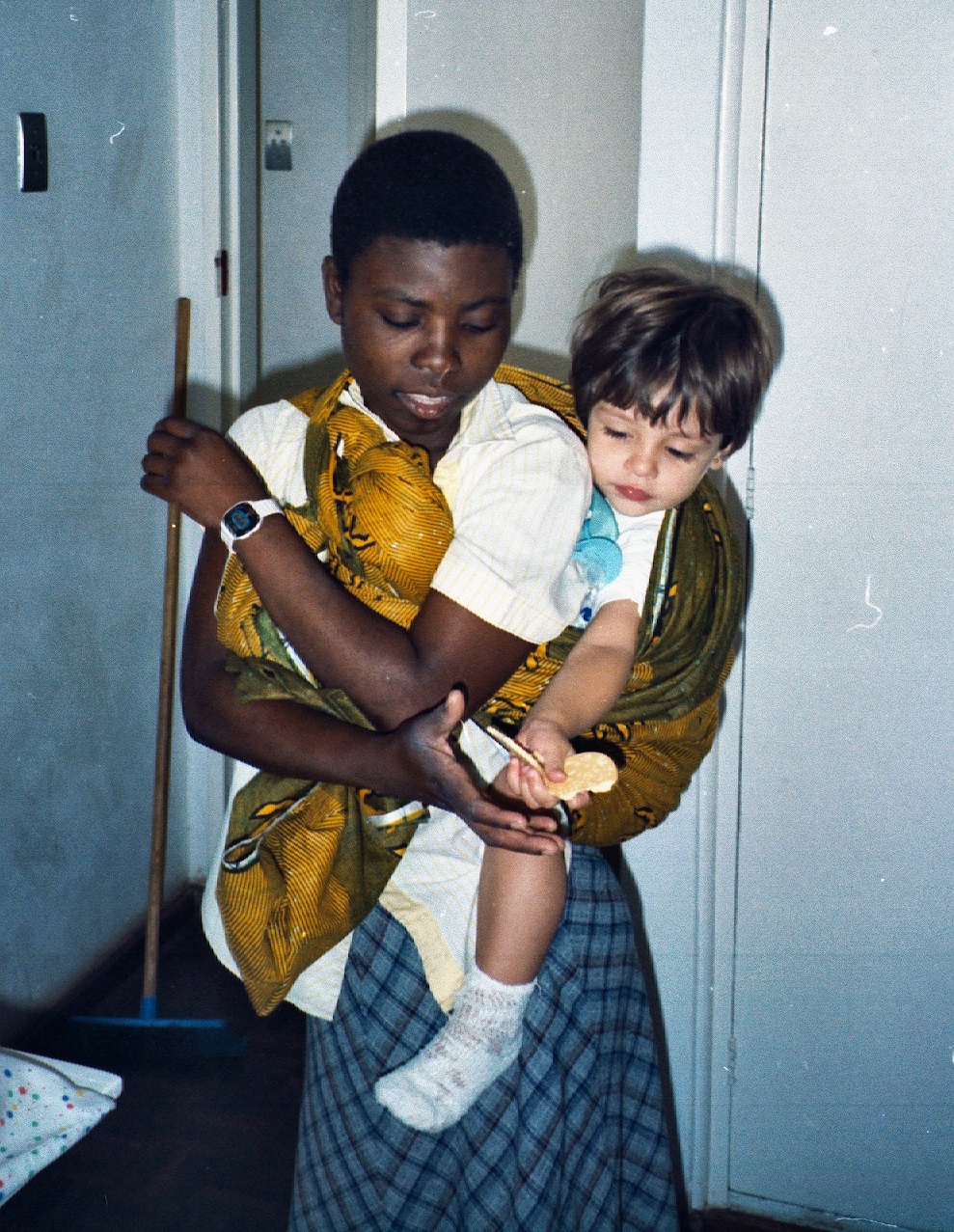
Annie with Flori.

She lived outside our house for a while until we decided that it was safer for her to stay with us. The arrangement worked well for a few months, but, as anything you do, it can have unexpected and even surprising consequences.

One morning, we saw the wife of Emmanuel (our cook) to walk towards the gate loaded with bags and personal effects. Aware that this was not normal, we called Emmanuel to ask if there was anything wrong. At first, he evaded our questions but eventually he admitted that he was having an affair with Annie and that his wife learnt about it and decided to leave.

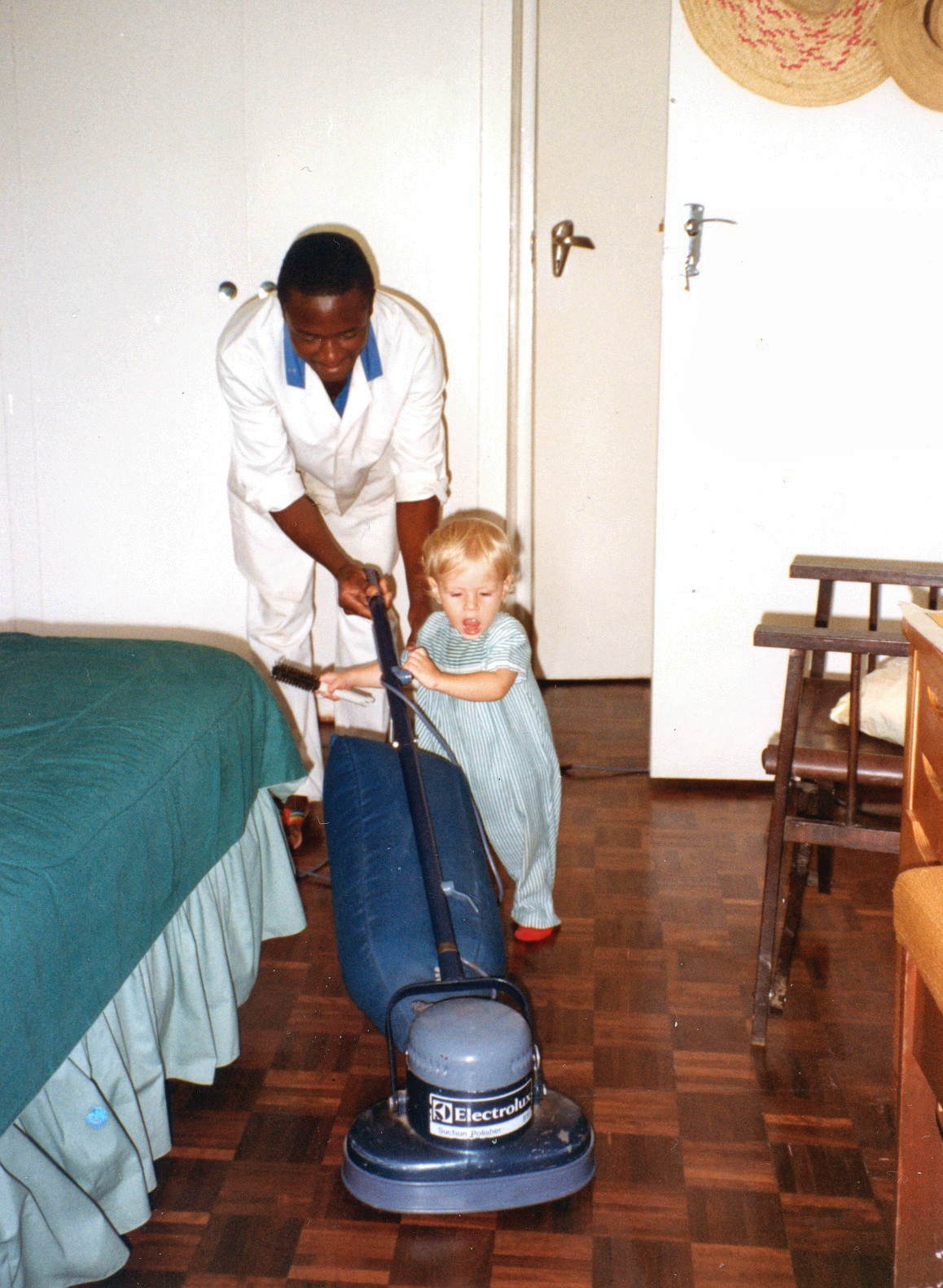
Emmanuel teaching our son Julio to “drive” the vacuum cleaner.

We were quite upset about the whole thing as our well-intentioned keeping of Annie had broken an on-going partnership. On the positive side, though, it was the absence of children. The situation was made more worrisome as Annie seemed to be very young although that did not seem to be a concern among Zambians at the time.

So, feeling like marriage agents we agreed to the situation to continue as we truly needed both! This was, as far as we know, a good move. They were still together when we got in touch with them several years back and Emmanuel was working as a photographer in Lusaka. They had married and had several children. The first born was a girl called Mabel and one of the boys was known as Julio. So, we are still remembered in Lusaka!