Bush stories and anecdotes

The heart of the blog, where I present observations, accounts, funny stories, etc.

Kenya memoirs – Buying cattle

Once it was decided that my experimental work in Kenya would take place in Muguga and Intona ranch in the Transmara, I needed to get cattle. I was lucky that there were suitable animals available at the Kenya Veterinary Research Institute (KEVRI) at Muguga that I could select for my work there but I still needed to get the necessary animals for Intona.

Experimental cattle Isolation unit copy

The Muguga animals came from the KEVRI herd.

As I needed young cattle with no exposure to ticks and tick-borne diseases [1] I needed to go North where I could find them in an environment that would not allow the ticks to thrive. The purchased cattle would also have to be acceptable by Joe Murumbi [2] the owner of Intona ranch as, after the trials were completed, the cattle would remain there. That was not an easy choice! However Alan, helpful as usual, suggested that I bought Boran cattle from a ranch at Laikipia in Northern Kenya. He had purchased animals from there earlier and found them suitable. He immediately put me in touch with Godfrey, a rancher that bred Boran in Laikipia and I arranged with him to get there to chose about 30 young cattle.

Within a couple of days I had visited the farm and bought the animals. I also arranged that I would come to collect them a few days later, as soon as I could get transport organized. After my return I made enquiries among the veterinarians at KEVRI and found a lorry company that was prepared to go to Laikipia and then carry them all the way to Intona in the Transmara, a journey of about 700km that was not straight forward.

I would accompany the lorry throughout the trip to make sure that it would get there and to make sure that the cattle were well treated. I agreed with the company’s owner that I would get an experienced and responsible driver that knew the route and I also checked the vehicle to make sure -as far as I could- that it was in good nick and that it was suitable for the number of animals that we needed to transport.

I prepared the trip very carefully as I was spending a lot of my budget on this purchase. The final plan was that I would travel with Tommi, my Maasai herdsman (see the “Angry Maasai” post) and Mark, a young Kikuyu that I had also employed to assist me with the cattle work. They would keep me company, help with the cattle as well as performing communication duties on KiSwahili, Kikuyu and Maasai languages, just in case!

I planned a conservative itinerary that, leaving very early from Muguga would see us all the way to the ranch at Laikipia (260km), load the cattle and proceed as far as Nyahururu (160km) to spend the night there. During the following leg of the trip we would get to Kericho (170km) to spend the second night and finally travel from there to Intona via Kilgoris (110km). It was the “long way” to get to Intona (the normal one being through the Rift Valley, via Narok and Lolgorian) but, apart from the two ends -Laikipia and Intona- the roads were tarred and the loaded lorry would face less risk of a breakdown.

Despite all the planning, the departure got delayed! The lorry did not turn up on time and when it did, about an hour late, the driver handed me a letter. It was short: the experienced driver was sick with malaria so they had sent me a replacement! The new driver was praised and the company owner was also apologetic. Despite this “bad omen”, it was all set so I decided to continue with the planned operation.

Despite our late start we managed to get to the ranch, load the cattle and get back to Nyahururu. It was night by the time we drove into this highlands town as, to our late departure a rather bizarre incident delayed us further. While on the road about 50km after leaving the ranch through a dirt road I was in the front when, suddenly the lorry came to a grinding halt while flashing its headlights. I immediately turned back to see what the matter was and, as soon as we drove past the lorry, my heart sunk. There was no tailgate and we were being watched by a few Boran cattle about to jump off the back of the lorry! That would have been a disaster as in that part of the country there are no fences and probably the animals would have run away!

Luckily, before they could estimate the jumping height, Tommi and Mark were on them and managed to stoped them and to hold them onboard while I retraced our steps to look for the gate. I found it about 200m behind the truck. The securing bolts had vanished. I loaded the large and heavy gate as well as I could into the back of the Land Rover and drove back. Without hesitation, with the use of the ubiquitous piece of wire, it was soon secured back in its place. It was now probably safer than before, particularly against theft as it would be impossible to open it without a long struggle!

Our night at Nyahururu was very cold as usual but -luckily- uneventful. Despite the low temperature I did get up at midnight to make sure that truck and animals were still there. As usual the hotel’s watchman was sleeping and as usual immediately woke up to report that all was well. Feeling really cold I went fast back to bed and slept soundly until morning.

We left early for our second leg that would take us to the beautiful tea-planting area of Kericho. All was going well until we had a puncture. We told the lorry to go on as we were sure to catch up with it after the wheel change. So, as soon as we fitted the spare we moved on expecting to find the truck anytime. However, as we drove for a while we realized that although by then we should have found the truck, we had not! Eventually we entered Kericho “truckless” and worried!

We fruitlessly drove around Kericho, not a very large town then, and, empty-handed, decided to retrace our way for a few kilometres. Still no truck! As there were no cellphones, we had no way of communicating with our lorry so it was a despondent group that checked in our hotel that evening. We had no idea of what had happened and we could only hope that we would find the truck in the morning. We guessed that the driver must have gone past Kericho in the hope of covering more distance while he could but this was pure speculation.

I would not lie to say that my dreams were of cattle counting as I did not sleep very well that night. I blamed myself for not stopping the lorry to wait for us to change our wheel. Anyway, the night eventually over we set off towards Kilgoris, still searching for our lost truck! The more I drove without seeing the lorry, the more the idea of cattle theft became fixed in my brain but I kept quiet, hoping that I was wrong.

After driving to Kisii without luck, my hope of ever seeing the lorry started to fade fast! We got to Kilgoris and drove all over this small town and failed again to get any results. As Kilgoris was (and probably still is) a quiet Maasai town, we thought that a cattle-loaded lorry would be the town’s main attraction. Those who Tommi asked had not seen anything so we were convinced that the lorry had not been there!

We were parked at the Kilgoris “plaza” finding out how to get to the Kilgoris Anti Stock Theft Unit of the Kenya Police to report the incident when we heard a loud engine noise and our lorry (with our cattle still on it) suddenly arrived! I was so relieved to find it that I felt no longer any anger and I knew that I would be close to the lorry for the last 20km to Intona!

The driver was clearly as comforted to find us as we were to see him! He explained that, after overtaking us, he decided to pass Kericho and spend the night at Sotik, 50km further on, as this would save him travel time. He admitted that this was a mistake and he felt truly sorry. I accepted his apology and decided that it was time to move off towards Intona. We still had the final distance to cover through an often muddy track and I wanted to reach the place before nightfall to offload the cattle so that they could rest, eat and drink after such a long journey.

Luckily the road was passable and we managed to reach the ranch still with some minutes of daylight left that enabled us to see that all animals were in good condition despite their three-day ordeal.

They soon settled at the ranch to the constant admiration of our Maasai neighbours and visitors as well as some hitches [3]. They were not beautiful animals but an essential part of my field work.

I had never felt as exhausted in my entire life than that night at Intona ranch. Luckily I had a comfortable bed at a nice house to spend the night and recover.

field-100nn-test-intona-copy

The Boran cattle enjoying the green grass at Intona. The ear bags were part of a test to assess their resistance to ticks.

t-mara-intona-ranch-j-murumbi-1-copy

Murumbi’s house at Intona, where I spent the night.


[1] The Brown Ear Tick Rhipicephalus appendiculatus vector of theileriosis caused by Theileria parva.

[2] See: “Joseph Zuzarte Murumbi” under pages in this blog. https://bushsnobinafrica.wordpress.com/joseph-zuzarte-murumbi-1911-1990/

[3] See: “The cattle are gone”. https://bushsnobinafrica.wordpress.com/2014/07/19/the-cattle-are-gone/


Buying a car

By the time I completed my FAO “Andre Mayer” assignment I was already involved in collaborating with other colleagues of the International Centre of Insect Physiology and Ecology (ICIPE) on the on-going work on the resistance of cattle to tick infestations. With Robin we had achieved good results so ICIPE was interested in the continuation of my work. As I enjoyed both, being in Kenya and the work I decided to stay as a research scientist of the Tick Programme, still led by Matt. Some time afterwards Matt became Deputy Director until his untimely and sad passing on 3 August 1985.

The end of the FAO assignment not only meant writing a final report but also the return to the local FAO Office in Kenya of our beloved VW kombi. At the time we lived in Tigoni, 30 km far from Nairobi, and a car was a necessity for my wife to get to her job at the Commercial Office of the Embassy of Argentina in Nairobi and for me to get to Muguga from where I would be working. ICIPE did not offer cars to its employees and all cars were managed through a car pool that I would only be able to use for field trips when booked in advance.

n kinangop safari rally kombi

Our kombi during the rains.

We required a car that would not only be able to do our daily “rat race” but also to be able to take us and, more importantly, bring us back from the many safaris we had in mind! So, after considering the ideal and the possible we decided to go for a short-wheel base Series III Land Rover. Both series II and III Landies were common in Kenya at the time and I have had ample opportunity to test them during my many trips to Intona without a hitch.

We needed to find the car fast, before handing back our kombi so we immediately started to check the classified adverts in the Nairobi newspapers. For a few days we only saw vehicle offers that were either too expensive for us or suspiciously cheap to be in the desired condition. Eventually, after about a week of searching, we found an advert that offered one, very reasonably priced, considering that it was a 1975 model and that the price included a number of useful camping items!

We phoned the seller and agreed for a visit the following morning, as we were rather anxious to get the car. At the agreed time we were driving through Lenana road near the Hurlingham area looking for the car, when suddenly there it was, being washed by the house’s gardener. We drove in and walked straight to the car. The gardener greeted us and allowed to have a good look at it. It was a real beauty and I would not let it go. While I was sitting inside looking at the gear levers, another car drove in and I thought “Oh dear, there comes another buyer with more money!”.

It was a lady and she came straight towards us. “Who are you?” she said. Her tone rather unfriendly I thought. “I am interested in the Land Rover and, as we agreed with your husband, I believe, we came to have a look at it” I replied. “I am not married and the car is not for sale!” she replied still rather curtly. At that moment I realized that our anxiety to find the car we needed had got the best of us and, seeing the car, we drove in without looking at the house number! Feeling foolish (yes, another time!) and after apologizing profusely to the now calmer lady owner, we departed in haste. I regretted tha the gardener may have got an “ear full” because of our carelessness.

Apart from being upset at our mistake I was feeling rather disappointed as I really liked the car and I was fully aware that the possibilities that the one we were to see would be in a similar condition would be rather difficult. However, now carefully checking the house numbers, we drove a couple of blocks down the road and found the right house.

This time the owner was waiting for us and brought us to the car while telling us that they were selling it as they were returning to the UK and would not take the car as it was a left hand drive (LHD) model, designed to drive on the opposite side of the road. That was a disadvantage that explained its low price. Aware of this shortcoming we decided to look at it as we were there. It looked like a well-kept car, worth having.

My wife and I held a short consultation and decided that, considering our situation, the car would be suitable and arranged to get our mechanic to check it the following day. He confirmed that it was sound so we bought it. The price (Stg 1,500) included two petrol tanks and two jerry cans, various mechanical tools, a roof rack where a tailor-made mattress would fit perfectly and then it would be covered by a frame with a thick canvas that would be a veritable, though home-made, rooftop tent and one that would shelter us a few times on safari.

The issue of being a LHD never bothered us as, not being a fast car, the difficulties of overtaking at speed were rare. The car only misfired once after crossing a flooded river and its ignition system dried by the ubiquitous “fundi”, it went well again. I still have the jerry cans and the roof canvas. Unfortunately, the mattresses flew off undetected during one of the crossings of the Mara plains during an ill-fated journey during which -heavily loaded for some reason- also the back door failed as it popped open scattering all our belongings for a stretch of road until I managed to stop the car to collect them!

It was still a success at sale time when leaving Kenya in 1989 to go to Ethiopia. We sold for twice what we had paid for. The only time when we have made money for one of our used vehicles!

mabel on l rover...

My wife looking for footprints.

Land Rover Kakamega forest

Being cautious at a Kakamega forest bridge.

turkana safari 6

On the way to Koobi Fora in Turkana with Else and Paul.

turkana safari

Again, during the trip to Koobi Fora with Paul’s Land Rover.

turkana safari 3

Stuck on arrival at Koobi Fora lake shore and being pulled out by Paul.

northern frontier 1

Through Amboseli dry lake. Well, rather wet that time, hence the picture to show this rather unusual situation!

Land Rover M Mara with Mc on top

The great experience of riding on the roof!

jj y mc en amboseli 8.45.15 PM

Young wife and Bushsnob posing on the Land Rover!


Rude plants

While living in Bolivia, in the early part of this century, someone told me a story of the war when Bolivia lost its exit to the Pacific Ocean to Chile. It was apparently during this conflict that a Bolivian General[1], aware that his chances of winning the war were dimming, tried to cheat the incoming Chilean ground forces by dressing the cactuses present in the area with the uniforms of the Bolivian army, pretending that his men were more numerous than they really were! The ruse failed and we all know that Bolivia is now a landlocked country!

I have had the story in my mind since then and recently, when I tried to confirm it by Google for this post, I failed to find any reference to it! In any case, it is a good way of starting to tell you about one of the most emblematic plants that populate parts of the Andean Puna[2], the Cardones [3]. We had a chance to see many of them during our trip to Cachi (Salta Province) that traversed the Los Cardones National Park.

IMG_3099 1

A view over the Los Cardones National Park. Amazing place!

P1180021 1

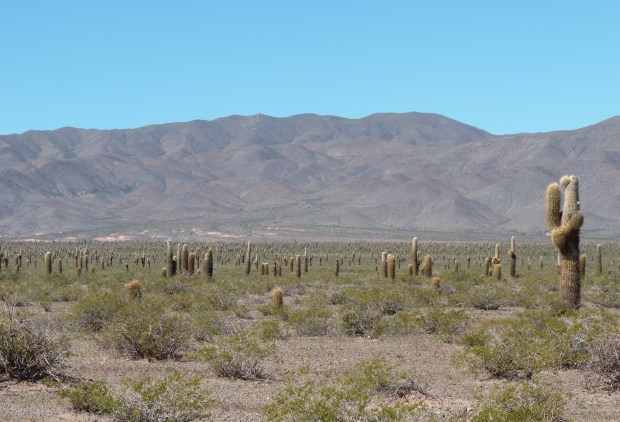
A Cardon forest as far as the eye can see.

The park has an area of 65,000 hectares and it was created in 1987, to preserve a sector of Andean biomasses including the Puna, Pre-Puna and related dry forests. It ranges in altitude from 2,700m (Tin-Tin valley) to 5,000m (Malcante hill). Although it only gets an annual rainfall of less than 200mm, its aridity does not stop many plant and animal species to thrive there, too many to mention here but well described elsewhere [4].

Apart from the cardones there are other interesting finds in the area. In the plant world the Jarilla (Larrea divaricata) provides the cardones with needed shelter for them to grow under its protection until reaching suitable size to continue its growth alone.

P1180017 1

A cardon growing under the protection of a Jarilla.

Another amazing plant found at higher altitudes is the haermaphroditic Yareta (Azorella compacta) also known as pasto de piedra [5].This plant is literally a vegetable stone whose leaves develop into an extremely compact and hard mat that reduces heat loss in order to survive. The result is a very rare plant that looks like a giant moss. Of extremely slow growth, some of the specimens in the Puna are estimated to be over 3,000 years old! Unfortunately, because of its slow growth and its traditional harvesting for firewood, it is becoming scarce.

The guanaco (Lama guanicoe) population is not as large as I expected and we only saw three or four groups of these special camelids. Their observed scarcity is apparently the consequence of the competition for food from thousands of feral donkeys (Equus asinus) that once got established there and continue to multiply despite past efforts to control them through culling schemes that will need to be reinstated to give the guanacos a chance to expand. Unfortunately, my pictures of both guanacos and donkeys are still in the deep recesses of my now comatose hard disk!

20170219_140917

Guanacos ahead!

Puma (Felix concolor) are present and they predate on the young of both guanacos and donkeys. Luckily, they are seen with certain regularity and the park is one of the areas where the visitor can, if lucky, spot these beautiful cats.

The dead from both donkeys and guanacos are fed upon a number of scavengers among which the condor (Vultur gryphus) is the most prominent and best known. These veritable flying colossus of about one metre in height have a wingspan of three metres or, to be more graphic, a line of about a dozen school children standing side by side! With such wings they can only be superb flying birds, capable not only to cover great distances but also to reach amazing heights.

P1180181

A condor flying overhead.

I was pleasantly surprised to be able to spot (of course after my wife!) quite a number of condors flying high in the very blue sky. Showing similar skills to African vultures, condors are not easy to spot on the ground as they inhabit and nest in difficult terrain. I am proud to announce, though, that I was able to contribute to our condor observations by spotting a far away nest with a fledgeling! I made sure that my companions noted this but, as usual, my effort was largely ignored.

cropped-p1180023-2.jpg

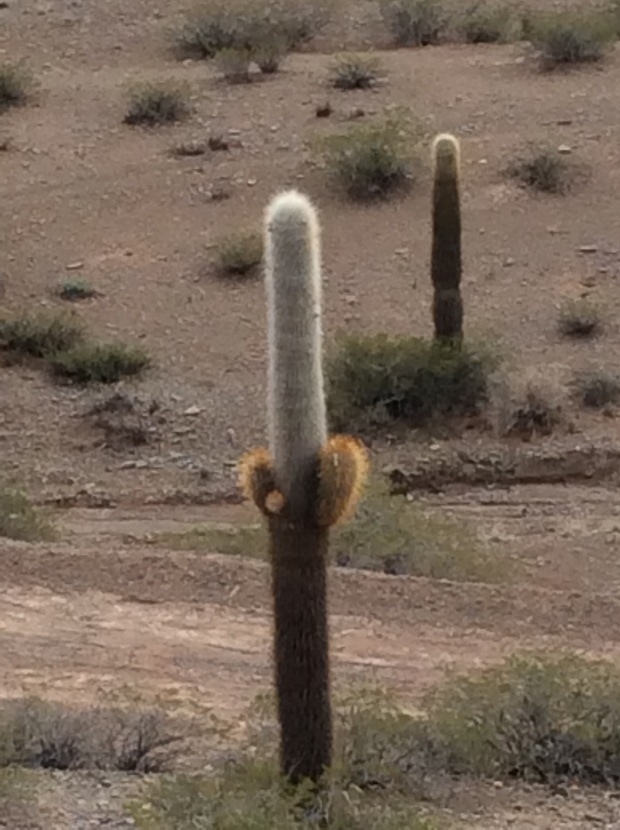
Although mammals and birds are really fascinating, the cardones were the real stars of the show for me. These very thorny plants are everywhere and they can occur singly, in groups or form true forests that reach as far as the eye can see. Although the majority were very rude by showing me their middle finger, some were polite and welcoming. Admittedly the latter were very few! Clearly, nature comes in all shapes and moods!

IMG_3115 1

A rude cardon!

IMG_2953

Exasperated by so much plant rudeness the bushsnob attempts at giving some back…


The cardones start their life under the protection of the Jarilla bush and they produce their first flowers at about fifty years old. These white flowers are known locally as “pasacana” that gives the species name to the plants. The flowers are eaten by animals and people and it is estimated that when the plants reach 3m high they are three hundred years old so some of the ones we spotted must have been much older, probably near one thousand and I never stop from being amazed when watching such creatures that can exist for such a long tie and still look like they would continue being there for another millennium.


[1] I was told that it was President Melgarejo.

[2] Basically a very dry, cold, high and silent area by the Andes mountains.

[3] Spanish for cacti of the species Trichocereus pasacana.

[4] Chebez, J.C. (2012). Noroeste. Guia de las Reservas Naturales de la Argentina. Editorial Albatros. pp. 88-93.

[5] Spanish for stone grass.


Apunado [1]

I am well aware that one of my numerous weaknesses is not being able to handle heights. I am not talking about vertigo here but high altitude and the absence of O2. During our five years spent in the Bolivian highlands we realized that our family has two clear gene lines when it comes to live in high places. While I am pathetic, my wife does not bat an eyelid when it comes to highness.

While there we also had ample time to discern that the genes ruling altitude resistance are passed independently to your offspring. Our son inherited his mother’s altitude resilience while our daughter had the bad fortune of getting, among several of my bad traits, the one of very low altitude tolerance!

We were of course oblivious to this pairing until we arrived to La Paz in 2001. While my wife and son enjoyed a quasi-normal daily life, my daughter and I acquired a greenish skin tinge and felt sick most of the time until we reached a kind of equilibrium at 3,400-3,800 m in La Paz where we spent most of our time. The situation improved remarkably when we discovered that sleeping with a window opened increased the oxygen content of our bedroom although the temperatures decreased dramatically.

However, as soon as our travels took us to higher places such as Potosí at 4,070m our precarious balance got tilted in favour of the altitude and our discomfort would come back. It was enough for us to see the “Cerro Rico [2]” in the distance to start feeling unwell! Conversely and to our great annoyance, wife and son continued with their usual unresponsiveness to altitude!

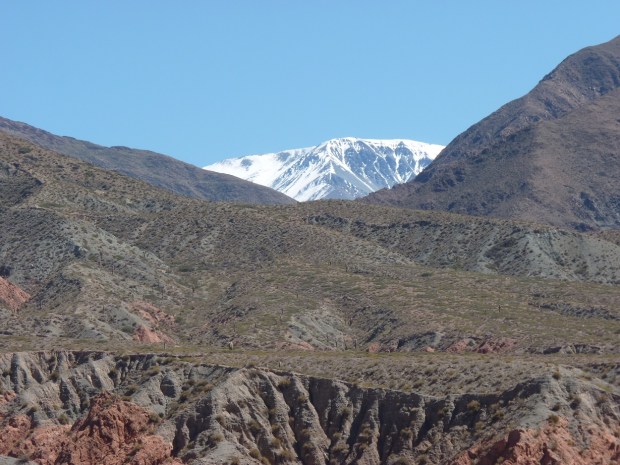
During our recent trip to the Calchaqui valleys in Salta I had a “reliving” of that experience. We drove from our farm in the Gallinato (1,300m) to Cachi. This meant a climb to areas of higher altitude that crosses a really picturesque area and the road goes through a number of mountain passes and climbs to finally reach the Puna. On the way we passed through the Los Cardones National Park [3] (3,350m) to finally reach Cachi, a nice village in the confluence of the Cachi and Calchaqui rivers, located at 2,300m and framed by mountains, including the “Nevado de Cachi” [4] above 5,000m.

P1180023 (2)

Going through Los Cardones National Park.

P1180067 1

The Nevado de Cachi from the distance.

It was after the 180km drive, and parking the car at the hotel that I felt the start of my predicament and I had difficulties reaching the reception! The headache came without warning, suddenly and, although it was not the worst I had suffered, it was bad enough. Together with a general feeling of malaise comparable to that of a strong cold, it lingered on for the rest of the day and you could not ignore it. The combination was not conducive to enjoying my stay and by dinner time I felt truly dreadful!

P1180120 1

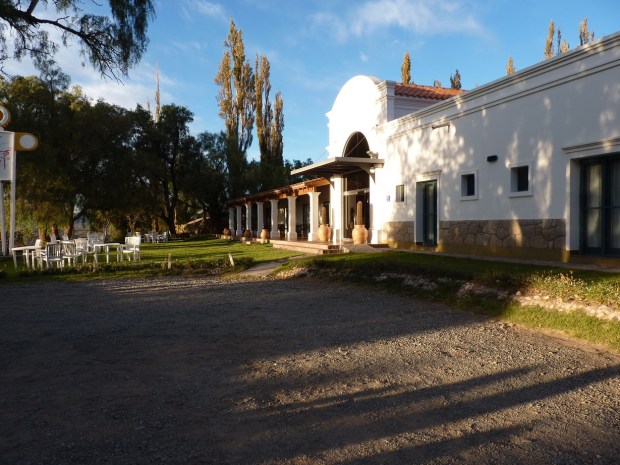
I was already apunado when I arrived at the hotel entrance in Cachi.

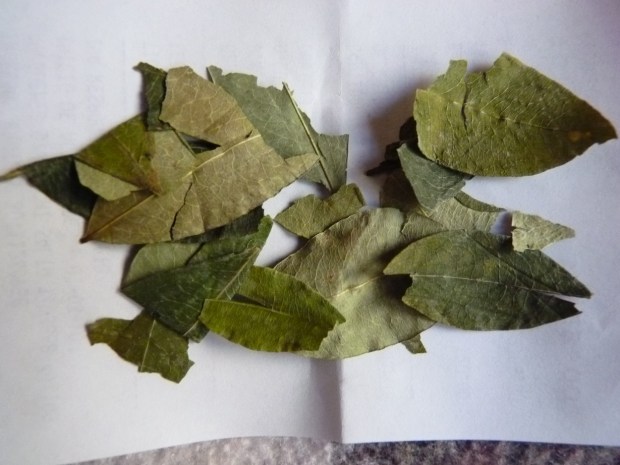
It was time to consider the options at my disposal. Remembering old advice from Bolivia I decided to have a light dinner in the shape of a garlic soup (I could refrain from kissing my wife good night for once!). In addition, I discussed my predicament with the locals and they advised me to chew coca leaves -legal in these parts- as this would make me feel much better.

P1180127 1

Coca leaves for chewing.

Of course I knew of coca, having supervised alternative development projects in Bolivia aiming at substituting coca growing for other forest-related activities. I am also aware of the controversy that surrounds the issue of coca and cocaine so I was reluctant at first. However, I had already seen large number of people “coqueando”[5] in Salta so I decided to take the plunge and chewed the dose I was recommended to take: about four leaves! Regrettably, the only clear effect I noticed was that my tongue went to sleep before the rest of my body and I could not detect or see any advantage in the chewing!

Disappointed by the lack of reaction of my organism to the “hoja milenaria”[6] I decided to cut my losses and retire to bed well before my companions. While walking to my room I went through the ABC of altitude sickness control: sleep alone, eat little, walk slowly and drink lots of water. It was then that I realized that the latter was the obvious cause of my trouble as, during the long drive I had –for some reason- not drank the water amount that I normally take.

I reached he room and drank as much water as I could hold. I also took one gramme of paracetamol for the now splitting headache and went to bed. Sleep came immediately and –luckily- the following morning I was as good as new. I returned the remaining coca leaves to the hotel management with thanks and I managed to feel well for the rest of the holiday and explore the attractions of the area in good health while drinking profusely to avoid being apunado again!


[1] In Spanish, someone with altitude sickness.

[2] Rich hill in Spanish. Potosí‘s landmark from where the Spaniards extracted tons of silver, activity that continues today.

[3] The park is named after the cardon cactus, Echinopsis atacamensis.

[4] Snowy mountain of Cachi in Spanish.

[5] Chewing coca leaves.

[6] Millenary leaves in Spanish, another name for coca leaves.

Spot the beast 23

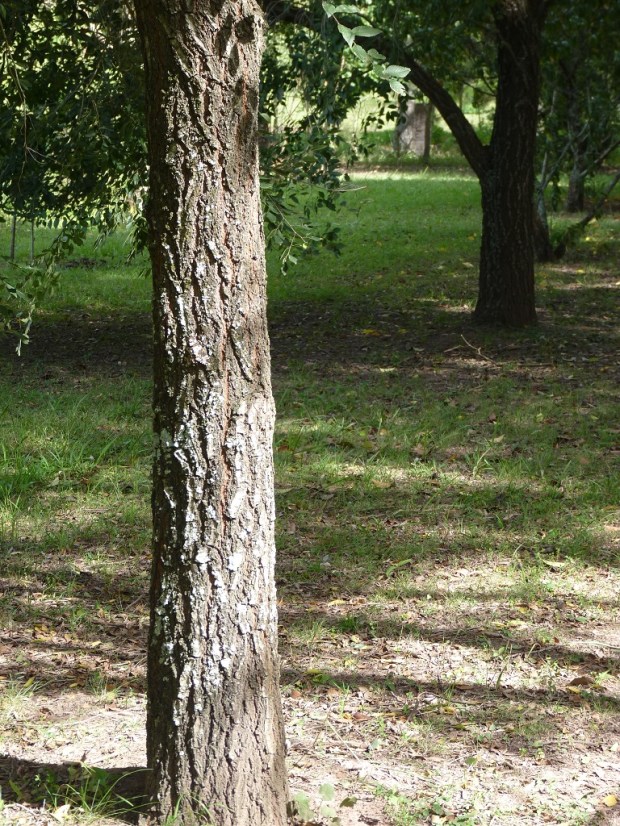
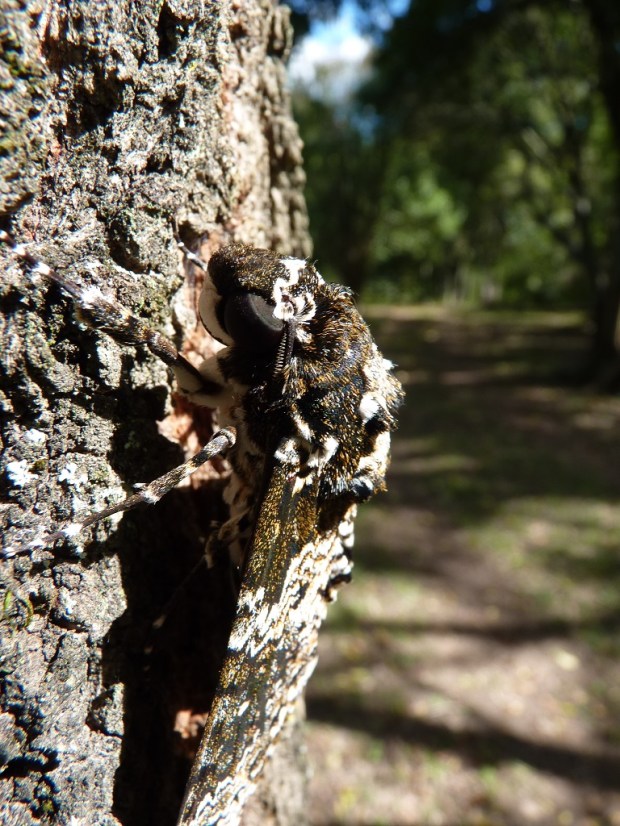
A difficult one this time. I doubt that you will manage it without hard work… Or maybe you see it?

P1170800

???

???

???

???

???

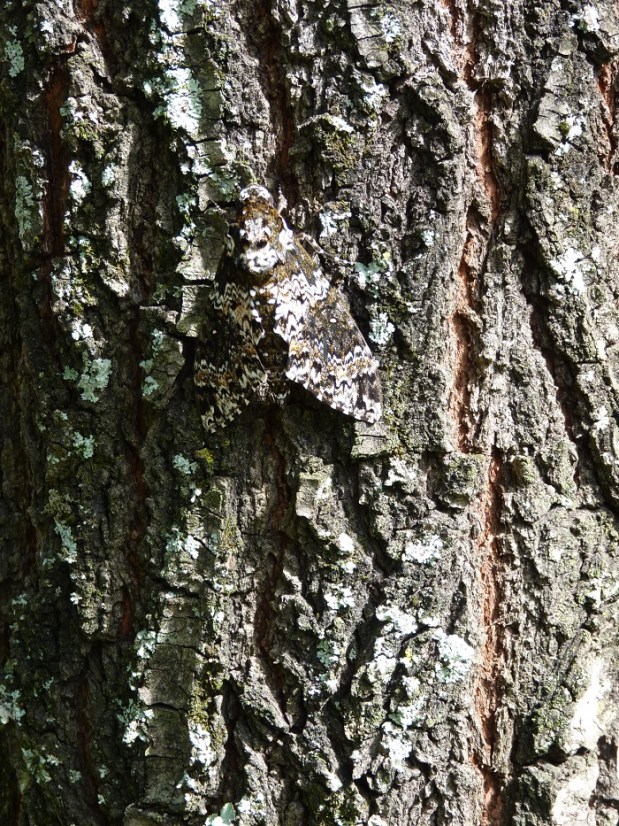
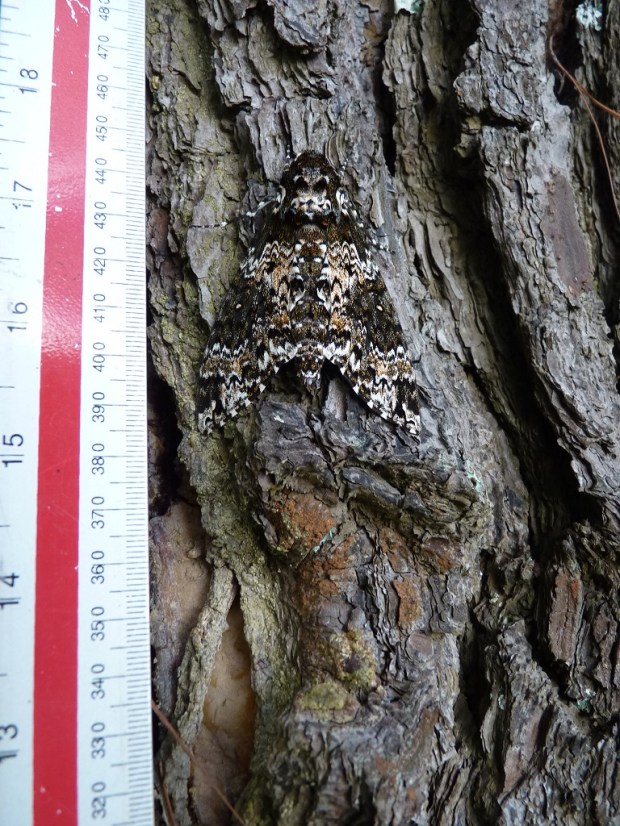
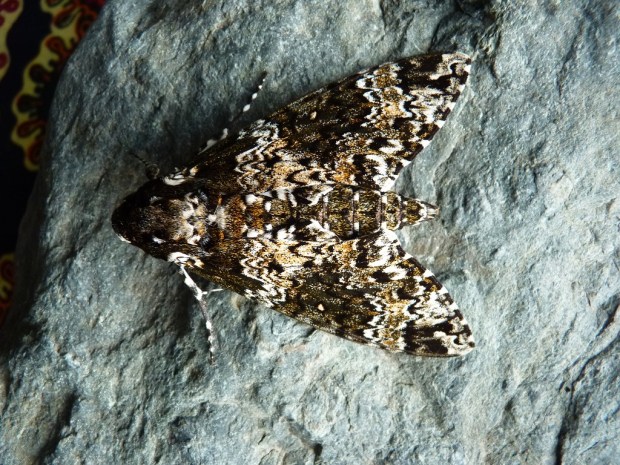
Another amazing beast revealed:

P1170801 - Copy1

Great camouflage of the moth on pine bark! Below are some other pictures of the insect for you to appreciate it better.

P1170798 - Copy

P1170808 - CopyP1170796

Capybara smuggling

John was the Head of the Department of Applied Zoology at the University College of North Wales when I was studying for my MSc in Animal Parasitology in Bangor. He was a very kind and patient man that supervised and supported my Dissertation. During that time we met often to discuss my work.

We talked a lot about South America and Uruguay as he was curious to learn about my part of the world. It was during one of these conversations that he expressed his interest on capybaras as he was amazed at the existence of such a giant rodent. He was so keen on these animals that he asked me if I could get him a skull! I took note of his wish but I did not have much chance of getting one for him, away from South America. Even if I would have been there, capybaras are rare in Uruguay.

After a few days I remembered my uncle Lito in Salto, Uruguay. Years earlier he had studied architecture somewhere in the UK. When he came back to Uruguay, he became a very successful architect as he brought in new designs and techniques. His main hobby was to navigate the Uruguay River. With his wife they traveled extensively not only up and down the main river for many years and they also explored a number of its tributaries. It was during one of these trips that they discovered a beautiful spot up the Guaviyú River, one of the tributaries, south of Salto.

He got permission from the ranch owners to camp in the spot at will and he spent a lot of his annual holiday time camping in the woodlands. After retirement he prolongued the time he spent there to a couple of months every year. Luckily I had a chance of joining him at the camp a couple of times and we enjoyed fishing and walking while talking about several issues. I recalled that he once mentioned that there were capybaras in the area.

jc and capyb in hole

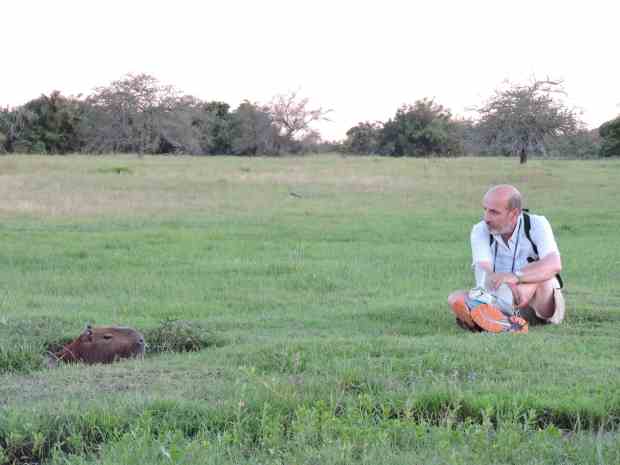
The Bushsnob waiting for his turn to enter the bathtub.

So, as uncle Lito offered my only chance for a capybara, I decided to write to him asking if he knew whether it would be possible to get one. I knew that it was a very long shot and I soon forgot all about it. I was really busy writing and typing my work (no word-processing computers in those days!) and damaging my back in the process.

While studying at Bangor, we stayed at Llanfairfechan, a small village nearby where, luckily, we have found Elsie, a great landlady that adopted us as family. So I was rather concerned when one day the usually placid Elsie came in a very agitated state to tell me that the Postman had brought something for me that she thought required my presence!

Curious, I followed her downstairs. The postman had an unwrapped brown paper in his hands that I could see had been a parcel once upon a time. He then said: “I believe this is for you” and presented me with the remains. “It was open for Customs inspection”he said before leaving.

After thanking him I focused on the open package, It contained a very white skull and a letter and it was definitely addressed to me! As soon as I saw the incisors I immediately recognized the large rodent skull and realized that my uncle Lito had done it and I had John’s dream in my hands!

The letter from uncle Lito explained that, after a few days of receiving my request, he had found a dead capybara while wondering in the woodlands. As this was too good an opportunity to ignore, he had collected the skull for me. Afterwards he had consulted a vet friend who recommended him to clean it by boiling it. This he did until the bone was clean until he judged that it was safe to send it to me!

Capybara

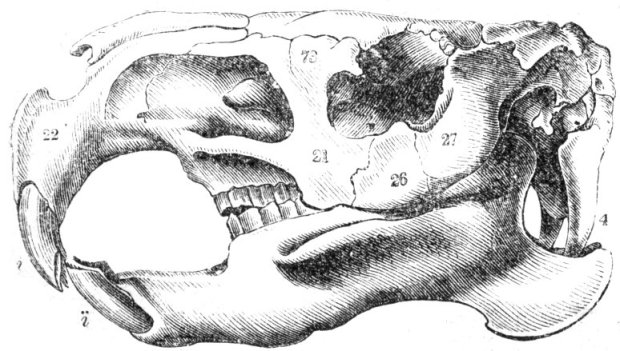
A capybara skull. Source: Illustrierter Leitfaden der Naturgeschichte des Thierreiches, 1876. Original caption: “Fig. 29. Kopfskelett des Wasserschweines (Hydrochoerus capybara. Erxl.) i obere Schneidezähne, ï untere Schneidezähne.” Translation (partly): “Skull of a capybara (Hydrochaeris hydrochaeris), i upper inscisor, ï lower incisor”. Originator: Unknown.

I took the skull to John the following day and explained him the situation as well as recommending him to boil it again to be on the safe side. At first he looked at the bone blankly until he realized what it was and then he was extremely surprised and pleased to have it and, for the first time he actually embraced me to thank me, a rare occurrence as physical contact is not usual among British people.

The following day back home I was still typing when the landlady came again to tell me that the postman was at the door again! “What is is this time”, I thought while following her to the door. This was a “deja-vu” as the same man was there! This time he handed over a small sealed plastic bag that, on later inspection, contained the lower jaw! Now the skull was complete and John was even happier when he received the missing part.

I recommended him again to boil it and eventually the complete skull was proudly displayed in his office.

Easter Sunday

Easter Sunday started a beautiful day so our plans to show our friends Pepe1, Rosa and Alex -newish in town- some of the lesser known areas around Carmelo was possible. The idea was to visit Conchillas, a small town about 40 km to the south-east that happened to be the birthplace of my wife! After that visit we would wander around looking for a nice place to have a picnic. I had such a spot in mind but I was not sure that it would be feasible as I had last been there about 10 years before.

Conchillas is a special small town of about 500 inhabitants. It is special because it was, unusually for Uruguay, started by the British in the 1880s as a supplier of sand and stone for the building of the new port in Buenos Aires. The latter is located at about 40 km across the River Plate. After studies by the English company C.H. Walker and Co. Ltd. that discovered the Conchillas’ sand and stone deposits, the company started to develop the area bringing their own employees. Long stone houses were built and the Evans family -owner of the shops- even minted a special currency for the Walker Company to pay its workers. This unique currency would be used by them to buy goods from the company’s stores but it was also accepted in the rest of Uruguay!

After WWII -in 1951- the company sold the entire town, including its dwellers!, to two Uruguayan businessmen that, eventually sold the houses to their occupants and the public areas to the municipality.

We had a chance to visit the town and its cemetery where we could see the various tombs of the earlier British dwellers, including that of Mr. Evans himself!

After this cultural exercise it was time for driving in the countryside to find a picnic spot. I had an idea that I needed to test so I aimed for the place by driving through a road that follows the oriental margin of the River Plate in a north-westerly direction. I was aiming for a small stream where I guessed would be a suitable area to spend the afternoon.

I knew the Las Limetas2 stream from the 60s when we visited it for the first time while in High School. We had come back in later years while on holiday in Uruguay but I had not been there for at least 10 years and I had not really gone beyond looking at the stream from the small low bridge.

A surprise awaited. A new high bridge had been built as the old had been destroyed by a flood. The land around the new bridge had been cleared leaving a flat space where a picnic could take place. While the chairs and table were organized, I decided to explore the stream.

I knew a small secret: the place is well known by yielding fossils and to find some was my objective. Although I had no difficulty in finding petrified sea shells, I intended to surprise our friends with some special surprise: Glyptodon remains.

Glyptodons were large armadillo-like mammals that lived in this area during the Pleistocene epoch3. They were large mammals with a round shell that could reach the size of a small car. Glyptodons were buried in the area and sometimes they became visible in the sediment that formed the river banks. Pieces from the skeletons would detach and they would be found in the stream bed and surrounding area.

Extinct_animals_(Page_170)_BHL20384753 - Copy

A complete Glyptodon. Credit: Lankester, E. Ray [Public domain], via Wikimedia Commons.

Different fossilized remains can be found but only the carapace plaques known as osteoderms are unequivocally from Glyptodons to the uninitiated. So I rolled up my trousers and waded up and down the river while my friends thought I had gone crazy! After a while I realized that there were no osteoderms to be found. However I was encouraged to see fresh tracks of capybara and coypu at the sandy shores.

I was about to abandon my wet search when I spotted an odd looking stone that I picked up. It was a petrified bone that, although I do not know for sure, I believe to have come from a Glyptodon limb. Although it was not an osteoderm, I was relieved that I could impress my friends with the find as I could always make a good story.

Satisfied after my fossil-hunting as I had something to show for it, I re-joined our friends and proceeded to explain my “madness” to them and to show them my priceless discovery. Although I really made an effort to impress, my glory was short lived as everybody was enjoying the lovely sunshine and about to have lunch and hardly listened to my story. After a while I decided to stop pretending to be a fossil hunter and tossed the bone aside to join them in their conversation and food. We had a great (and fossil-less) day together.


2  The only meaning of “Limetas” I found was “a fat and short bottle with a long neck”.
3  It lasted from about 2,588,000 to 11,700 years ago.

Spot the beast 22

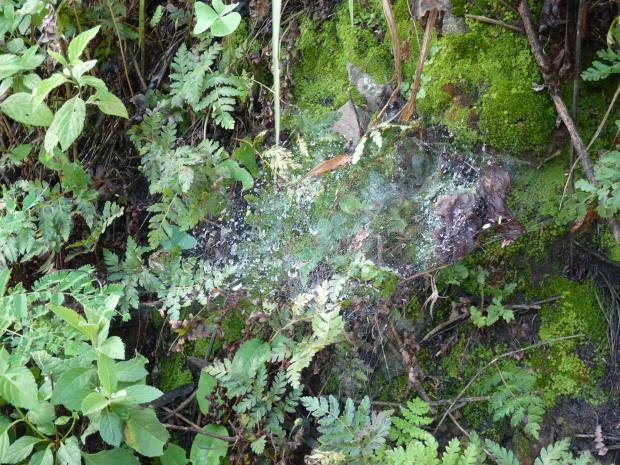
As usual, during a walk we spotted this sight that offers a hidden beast that I thought I would put to you to discover. See if you can see it.

Spot the spider copy

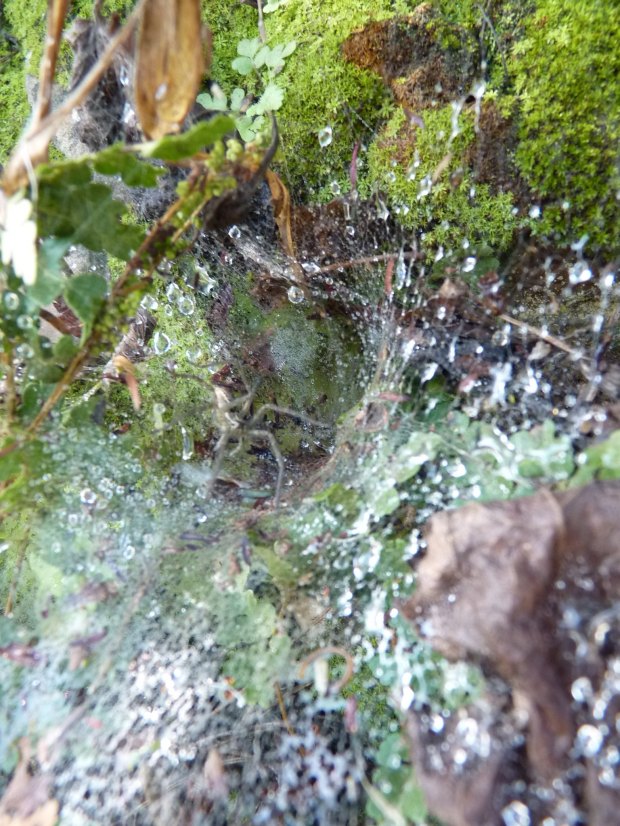
Being helpful, I can tell you two things: (i) I really liked the morning dew drops on the web and (ii) do not jump to conclusions too fast…

Here it is.

?

?

?

?

?

Spot spider revealed copy

The “spider” you spotted on the right of the picture was either a dead one or an old exoskeleton of the real one that was located deep inside the web tunnel!

Homely bats

In my earlier post I mentioned that we built some bat houses. The idea started with my daughter that somehow is very partial to bats. Together we had observed these unique mammals flying around in the farm at dusk and we thought we could attract them into small houses to avoid them getting in our roof.

We Googled for bat houses or bat boxes and found a large number of ideas. Finally we settled for a simple design taken from a page such as http://picphotos.net/plans-for-building-a-bat-house-to-control-bugs/ and built one as a test case adding our own modifications such as the addition of an inner layer of cork for insulation against the cold and a piece of cloth at the bottom as a landing pad.

A few months later when we returned to Salta, we were delighted to note that about half a dozen bats had moved in! Being ambitious I built a second house following the same concept and the well-known premise “if it works, do not mend it or improve it”! Again, it got inhabited fairly soon after opening its doors to the bat community.

After a couple of years I noted that the first box only had one bat left in residence and I thought “they are clever and moved to the newer house and probably a grumpy old bat was left behind!”

Then a few days ago I noted that the last resident bat of the old box had gone. Its inner cork lining had detached from the sides and it was probably interfering with the bat movement so I decided to remove it to have a look and re-position the box at a better place in relation to the house and the prevailing winds. While unhooking it I noted that the bat was still there but hanging on outside the box and that for this reason I had missed it.

After opening the box, when I pulled the cork lining I disturbed a number of bugs that, when I exposed them to the light, rapidly withdrew to the darker recesses of the box. “Hmm, I thought, negative phototropism”, remembering my high school days!

IMG_2156 copy

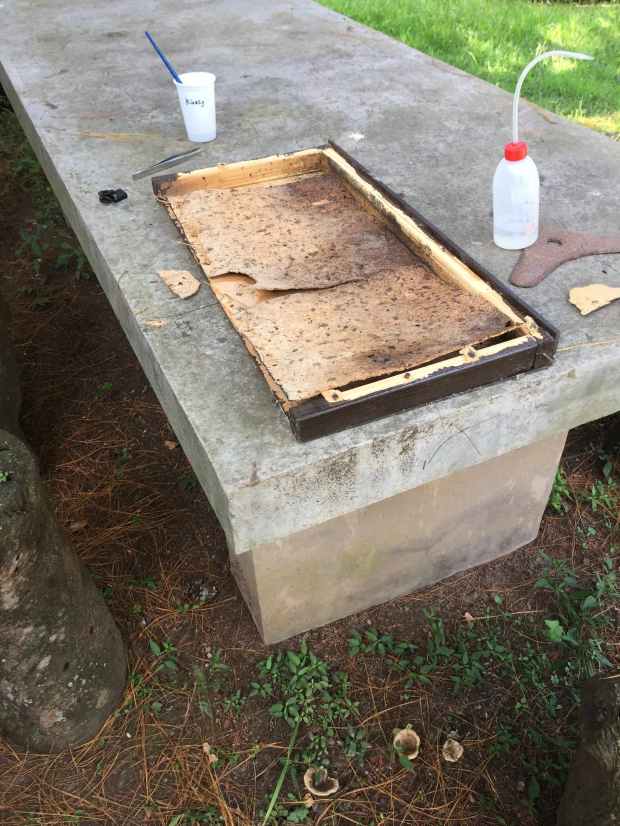
The old box opened for servicing. One of the walls have been removed to show the cork lining. The bugs were underneath.

Thinking that the situation was worth further investigation I prepared to catch some of them to identify them at a later stage, if possible. While rummaging around the house finding some alcohol, a catching jar, forceps and a brush I was thinking that I had found a colony of pseudoscorpions, really interesting arachnids that I have found earlier living in the bat guano at the Suswa caves in Kenya. I still have the memory of entering the cave with my wife and Paul and finding thousands of bats inside while we walked on their soft guano that was truly hutching with pseudoscorpions!

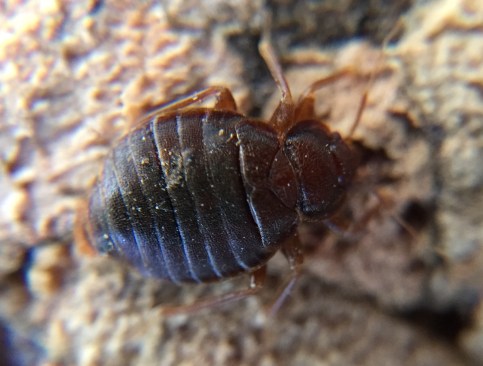
In the opened bat box there were many bugs but without pincers! I could see clearly different instars, from reddish brown adults to yellowish showing a darker gut content that reminded me of old blood. After a while I could count their legs and decided that I was watching insects and then I realized that they were bugs of some sort! I confirmed my suspicion when I took pictures of them and even saw the eggshells like those of animal or human lice.

I was lucky that my children had given me a set of VicTsing Clip 12 X Macro+ 24 X Super Macro lenses that enabled me to take the 12X to 36X magnification pictures of the bugs with my cell phone.

Adult lice 1 copy

I then realized that the bug infestation in the box had reached such an intensity that the bats must had felt very uncomfortable and decided to move out, away from their tormentors!

All this is still hypothetical, as I have not yet identified neither bats nor bugs with any degree of scientific rigour! However, my educated guess is that the bats are Big brown bats (Eptesicus furinalis), based on work done in the area[1].

The identification of the bugs was more difficult as not much is known (and available to me) on bats’ ectoparasites in Argentina! Again Google’s existence proved very valuable. Bat bugs do exist and one species that has been described for the Americas is very similar to the ones I observed. These are the Eastern bat bugs (Cimex adjunctus).

They are closely related to the infamous Bed bugs (Cimex lectularius). So what? you would ask. Well, I made the mistake of informing my wife about this close bat bug -bed bug relationship and she was not amused that I had been “playing” with them. As a consequence I had to shower carefully before I was allowed in bed!


[1] Moschione, F.N. (2014). Relevamiento de Fauna. Finca El Gallinato, La Caldera, Provincia de Salta. Informe Relevamiento 2013-2014. 55pp.

Cheeky birds

We try to get our farm house’s surrounds as bushy as possible by planting as many trees, shrubs and plants as they would grow. We have had many failures as last years we had severe frosts that took care of many of the tender trees we planted such as jacarandas, bombax, fig trees, olives and others.

20170209_153430 copy.jpg

Luckily the past two years have been benign in terms of temperature and we have witnessed an almost luxurious growth of almost every seedling we have planted. Knowing the place, we are ready for the next bad winter that will even things out again!

In the meantime we are enjoying the Crataegus and Cottoneaster in fruit at the moment that are attracting several species of fruit-eating birds such as the Plush-creasted jays (Cyanocorax chrysops) and the occasional Toucan (Ramphastos toco)! Apart from plants we have placed several artificial nests that have been occupied at various times by different occupants such as House wrens (Troglodytes aedon), Saffron finches (Sicalis flaveola), Sayaca tanagers (Thraupis sayaca), rufous-bellied thrushes (Turdus rufiventris) and others. As bats were seeing perched under our verandah, we also built a couple of houses for them after Googling for modern designs.

We also feed the birds and the Plush-creasted jays are constant visitors to the feeding plates together with the Rufous-collared sparrows  (Zonotrichia capensis). In addition we also have the visit of Gray-necked wood-rails (Aramides cajaneus) that have a running battle with the plush-crested jays for the dominance of the plates.

Despite their rather small size the Rufous-collared sparrows are by far the cleverer though. They are fearless of humans and although the jays let you realize when the birdseed is finished the sparrows come to let you know that they are hungry!

P1170473 copy

This year they overstepped the mark and for the first time they dared to come inside the house in search for food. I knew that they were known for doing this at the rural kitchens in Uruguay but it had not happened at our farm yet.

P1170532 copy

One evening we heard strange noises near the place we normally seat to read and talk and to our surprise a sparrow was walking about the house, tic, tic, tic their small jumps on our dry cow hides while walking about in search of dead or dying moths, an abundant source of food at our house as they tend to mass in the lights during the night and enter the house all the time.

After chasing and feeding on moths for the first few days, the bird discovered the small container with broken maize seeds that I used to fill the bird feeding plates, the  bottom half of a large soda bottle. It did not take long for it to get inside and pick the best morsels!

After a couple of days of visits, a second bird came and the pair went straight for the kill, getting inside the maize seed container without any delays.

They are now so confident that they either walk in or even fly in and out of the house depending on their desire for food! They have also got used to enter either from the back or front doors or, if they so wish to fly through the house avoiding us at the last millisecond but giving us some frights by brushing themselves against our faces!!

They are now part of the household inhabitants and we hardly noticed them, except when the time comes to clean their tiny droppings from the floor.