After our arrival we had a few weeks to adjust to our new work and life as they were both very different from what we were used to. Regarding the work, it was clear that the project personnel were eager to work hard to recover any lost time and I tried to organize the various jobs that were pending.
Luckily, like most educated Ethiopians, everybody in the project spoke English and, as I mentioned earlier, a few also spoke “Cuban”. As my knowledge of Amharic was zero, this was very good for me! I was surprised to hear some words in Amharic that I somehow understood! These were clearly mechanically related: pompa (pipe), formaggio (cheese), kariberēteri (carburetor), pamipi (pump), tubo (hose), pīsiteni (piston), batirī (battery), jaki (jack), moteri (engine), wīnidowisi (winscreen), goma (tire), sipaneri (spanner).
The explanation I was given is that the Italians brought the first motor vehicles to Ethiopia and, as Amharic did not have words for car parts, they adopted them from Italian. I was not a mechanic and, unfortunately, I could not find similarities with the words used in animal health!
To compensate for this handicap, I tried to learn greeting people like the Ethiopians. Just to give you an example, Tena yistilign. (ጤና ይስ ጥልኝ) was roughly “hello” for both, male and female. The reply would depend on your gender, dehna neh? for a male or dehna nesh? for a female. This phrase is then repeated several times while the two people embrace each other. In my experience the number of times the greeting takes place, the voice and back-slapping volumes increased with the affection shown. As you can imagine, my efforts in doing this were pathetic although much better than my attempts at traditional dancing!
Although English was spoken by the educated Ethiopians, farmers spoke their local dialects or languages such as Tigrinya (Tigray Region and parts of Eritrea) and Oromo language (West Ethiopia and parts of Kenya) to name just two of several existing ones. Government personnel and educated people speak Amharic, a Semitic language and the official working language of Ethiopia. Written Amharic was an impossible job for me but could not help being fascinated by the typewriters that would produce such writing!
Advert on Covid 19 in Amharic. Credit: US Centers for Disease Control. Public Domain.
We gradually got organized and soon, through contacts with our laboratory colleagues, we employed Woletu, a mature Amhara lady that came to help us with the house chores. Coming from Jimma, she deeply disliked Bedele and the “primitive” people that lived in it! She found a place to stay in Bedele and became a good asset for us and someone we missed on departure.
Woletu (left) with tigger and visitor enjoying a cup of tea.
Regarding the food, we realized that we could get honey from a local farmer, a great development, considering where we were. So, we travelled to the farm and were greeted warmly by the seller that, to show this made us sit down and poured honey on a small and concave wooden table. We noted that, apart from the honey, we could see lots of white grubs in it.
We exchanged looks with Mabel and proceeded to eat the honey with our fingers, carefully avoiding the grubs. This surprised the farmer that insisted that we ate them as they were considered a great delicacy. I took one and it tasted very salty, contrasting with the honey’s sweetness. Mabel -being a beekeeper- could not refuse and took them as naturally as possible. the first I took was the only one as I refused them repeatedly, surely offending our host.
Eventually, we moved to a small hut that was the man’s store where we could see a number of bags that I could not help noticing them smeared with what looked like dried blood. He heaved one of them out and gave it to us. It was a goat skin filled with honey, including its legs! So, after paying (I am sure very well), we drove home with our cargo, about 30 kg of honey, more than we could eat for as long as we were in Bedele!
Our shopping was quite dirty as it contained dirt, twigs, dead bees in all stages of development, fragments of wax, lots of goat hairs and chunks of charcoal. The latter no doubt a testimony of the honey extraction method of burning one end of the hollowed trunk (the hive) to get the bees out! We filtered the goat’s contents for days on end. We started with straining it through a sieve with a small mesh to remove the larger “impurities” first and then through a cheese cloth and then, again, through another finer mesh cloth. The result surprised us, it was superb-tasting honey, “certified” by Mabel, the expert!
Although landlines phones existed in Bedele, they did not work so the arrival of a lorry looking for us was indeed a surprise. To our delight, it carried the second shipment of our personal effects.
This was a great improvement to our living conditions as it contained not only furniture and clothing but also some “familiar” food that we bought in Kenya with good forethought. We could now stop camping in the house! Luckily our tailor-made furniture fitted as it was meant to do and we started to live a more comfortable life with armchairs, bookshelves and even my own desk and chairs so that we could return the ones we had borrowed from the laboratory.
We could also stop using the cats’ travel box as our shared bedside table, abandon our camp beds and sleep on a proper mattress, something the cats immediately grasped and started to enjoy.
Cats enjoying the new bed.
Although Internet existed at the time, it was non-existent in Ethiopia and even if it would have been there my “advanced” Zenith computer could not have been able to handle it! So, our only source of information from events outside Ethiopia was a short-wave radio where I had all the possible BBC frequencies stored in its memory.
Through the radio we followed world events that included the withdrawal of the Soviet forces from Afghanistan, the melting of the Iron Curtain and the dissolution of the Soviet Union, the election of George W. Bush as President of the US and the blowing-up of the Pan Am Flight 103 over Lockerbie, to name a few.
We soon realized that medical facilities in Bedele were very basic, but we did not worry about that! We did learn of the existence of several Cuban doctors, the closest being in Metu, about 115km away towards the west. Eventually we met the doctors and learnt that all our needs would have been covered although, luckily, we did not need them.
There were no cinema or theatre in Bedele. We attended a crowded theatre function at the Bedele Social Hall. It was in Amharic and, although Solomon kindly translated for us to Spanish, we missed a lot of the meaning so, without a TV, most of our time was spend reading and listening to opera as I already mentioned. The Good Book Guide, a British company that would send a monthly catalogue from where to order books (sadly closed in 2015), was an amazing source of great selected books.
We were now settled in Bedele and it was difficult to travel to other parts of the country except Addis that we visited frequently for many reasons, both personal and working. It was from Addis that we got most of our food, mail (both private and project) and our film needed to be sent to New York by the UNDP pouch for developing!
The great time of opening the mail at Bedele!
Project activities allowed us to travel within the three provinces of the project and we could also do day or weekend trips around Bedele and I will be describing some of those in future posts.
As soon as the people in the station saw us arriving, they immediately came out to greet us, and they did their best to make us feel at home. They were all mortified when they learnt about our experience with the Bedele town Administrator and his -luckily failed- attempt at “capturing” Mabel. It was at that time that, judging by the veiled criticism we heard, we realized that not all Ethiopians were in favour of Mengistu’s regime. We found this rather unexpected.
Luckily, almost everybody at the station spoke English well as Ethiopian professionals do. Senior administrators, veterinarians and technicians from the laboratory lived in the remaining five bungalows while the lower ranks stayed at Bedele town. Another -pleasant- surprise was that a few of the professionals spoke “Cuban” Spanish, the consequence of their education at the “Isla de la Juventud” (Youth Island) in Cuba where many children from countries in Africa and other continents were sent to be educated.
It was really a weird situation to talk in Spanish with my two counterparts Sileshi and Solomon but, somehow, it gave as a sense of more closeness in such a remote place. While most people at the laboratory communicated in Amharic both spoken and written, farmers and folk people in south-western Ethiopia spoke mainly the Oromo language or their local dialects, all of them impossible to understand and learn in the short time we had in Bedele.
Apart from Jan and Janni, the Dutch couple from the next bungalow, we had other neighbours such as Wolete from Tigray, a technician working with trypanosomiasis that was to become a great neighbour and friend. She and her husband cared for a young girl called Meredith (Meredit?), an orphan that they were looking after. They shared their house with another couple.
Wolete spinning wool.Learning to spin wool.The bushsnob also tried… but decided to continue working with ticks and TBDs!The daughter of our neighbours was shy! But her eyes said a lot.
Ibrahim, the Director of the laboratory occupied the fourth bungalow and the remaining two were shared by the various veterinarians.
Our bungalow seemed in good order. It had electricity and running water, two very important facts to start with. It had a sitting and dining area, two bedrooms and a toilet. We proceeded to install the cooker, fridge and music system, our only electrical appliances until the rest of our stuff would arrive later on. We also prepared the largest bedroom for us while the second became my office and it would also serve as a guest room.
Although there was little room separating our house from the others at the back, we were fortunate to have the last bungalow and it opened to the laboratory campus towards our front. This was earlier referred to as our large garden by my Zimbabwean colleague and it was a good description as beyond the campus you could actually see a long way away in the distance the smoky hills of higher lands.
With François looking at the beautiful Didessa river valley.
People at the station kept chickens to eat and to get fresh eggs and it was quite common to witness a white-tailed mongoose (Ichneumia albicauda) chasing them between the houses, followed by the owner trying to defend it, not always successfully!
Cattle, sheep and goats also roamed through the station as the gate was open during the day and they had little difficulties to enter and enjoy the relatively abundant grass of the campus as compared with the overgrazed land around town. While the sheep were quite well behaved, the goats were a pest and they would eat anything, including our bananas and mangoes, even climbing on our vehicles to get them!
Sheep walking past with natural oxpecker tick control inluded.A goat getting at the bananas and later denting the bonnet of the car.
Settling in was easy as there was little to do after work, apart from going for a cup of coffee to one of the coffee shops in the village that the Ethiopians always paid for! There were a few restaurants in Bedele and the favourite of the laboratory was really a family house where you could eat. Basically, you would be the only customers and they would accommodate you in their red plush armchairs in their living room and they would bring the food that our colleagues ordered. Usually this was doro fanta (injera, mutton and egg chilly stew) although, occasionally (to our relief) we could get kitfo (raw meat and butter with chilly), our favourite. Injera in this land was not the white and tasty we tried in Addis but a rather dark and sour variety that took a while to get used to eat it without getting severe stomach burn. However, we got used to eat it after a while.
There were other, rougher, eating places that we avoided after our first experience. We went there on an exploratory visit and we were guided to the kitchen to choose our food. While this was good as far as the injera went as we could see it being baked, we were then directed to a rather large cauldron where a kind of thick stew was boiling and from where we should help ourselves.
Injera oven. The dough is poured under the top cover.
We were getting ready to dip the large spoon in the simmering mass when we froze. A large cow eye was floating on the surface staring at us before it sunk back into the stew probably to join the second one and other organs that “grow in the dark”. We politely declined the food offer and went to our usual and safer place.
It was soon clear that it would be difficult to spend money in Bedele as there were no shops, with a few exceptions such as the butchery and the usual Saturday market. Mabel has just refreshed my memory regarding the former. It was reached through a track that, during the rains, required 4WD. It was located among a number of eucalyptus trees, a shack with a small glassless window through which some very dark looking (and rather stinky) meat chunks were hanging from hooks attached to the wall.
The butcher was an old man that had a couple of young assistants busy hacking at a freshly killed ox and hanging pieces of on a long pole from where the numerous customers were selecting their share. Purchases were paid in cash in Birr, no credit cards accepted!
The place was clearly a combined abattoir and butchery, judging by the number of bones scattered around it. However, it was nowhere as spectacular as the main slaughterhouse in Addis that had true bone mountains.
The bone “mountains” at the Addis Slaughter house. Credit: Magnus Franklin. CC-BY-NC-SA 2.
It took a great effort to get the cuts we wanted as there were not only communication issues (the butcher and or helpers would only speak Oromo) and the way we cut eat was also rather different. Eventually, through a combination of sign language and pointing out directly to the carcass we got a few chunks hacked off for us.
As expected, the meat was very tough, and we needed to cut it very thin to prepare something that our “civilized” teeth could bite through. After a couple of attempts of visiting the butcher, we decided to bring any further meat from Addis.
The local market did not offer any great spending possibilities either. Apart from lively livestock sales, we could find a few tomatoes and onions as well as Oromo potatoes (Coleus edulis) and false banana or ensete (Ensete ventricosum) used for kocho [1]. The former is a special variety of potato that was found only in Welega province. Its shape is similar to that of a human finger, thin and elongated and widely consumed in Oromia. We had them steamed or boiled but failed to leave an impression.
Buying tomatoes at the market was another challenge to Mabel. The peasant women would sit on mats with about four to five tomatoes each and there was no way of convincing them from parting from all their tomatoes! So, we needed to visit about ten women and buy one or two from each to get the amount we were after! I am not sure of the reasons for this selling strategy but our presence prompted lots of talking and arguing!
After the first couple of weeks we realized that we would need to grow our own vegetables and bring most of our food from Addis or Jimma as the rest of the people did. Mabel also decided that a “survival” garden was on order and immediately she mobilized friends both in Italy and Great Britain to urgently supply her with the needed seeds.
I have already described her achievements in an earlier post published in September 2013 [2] and I recommend you to read it after the present one, if interested.
So, with the passing of time, life at Bedele became rather nice and we spent long hours reading and listening to music. In anticipation of long nights Mabel had bought several tapes of the most famous opera that we enjoyed very much in the evenings. Apart from quiet nights, there was also quite a bit of socializing with neighbours at our or their houses.
Wolete, Mabel and the Bushsnob In Bedele listening to a Jan funny story.
Meredith and Mabel holding Winand, Jan and Janni’s son.
Social life. Clockwise: Mabel, Wolete, Jan, unidentified and Janni.
[1] The Gurage people chop the ensete’s flesh into a paste, and then shape it into a dough-like mass that gets wrapped in the plant’s leaves and buried in the ground to “mature”.
Although my work was the reason for us to have come to Bedele, I will try not to bore you with descriptions of technical issues that are beyond the scope of this blog. However, some general background information is relevant to place the stories that will follow in context. After all, all anecdotes I will describe took place as spin offs of the project.
FAO had technically supported the building and equipping of the laboratory through earlier projects that, unfortunately, were not able to complete the work as could be seen by a number of large crates at the entrance of the laboratory as well as the parts of an incinerator that were scattered in the field surrounded the buildings.
At the time of my arrival, FAO was still supporting the laboratory implementing two projects with UNDP funding, a tsetse and trypanosomiasis and a tick and tick-borne disease project, ours. Both projects worked towards the control of these parasites and there was good collaboration between us all along. Jan, my Dutch colleague and neighbour headed the tsetse project and he spent most of his time in the bush while I travelled to our field sites but also had work to do at the laboratory.
The tick and tick-borne disease project had a number of veterinarians and technicians that would work with me. Among the vets there were Sileshi (my main counterpart), Solomon and, later Assefa. There were also a number of able and devoted technicians that supported the work that I will not mention as some names escape me now.
It did not take long for surprises to start to pop-up. As in any project hand over, I had a thorough inventory of the project’s equipment. This included a list of the project vehicles, regarded as “hot items” by the FAO and UNDP administrations. In the list there were five vehicles but I only found four in Bedele and I was informed that the provincial Administrator in Jimma has taken possession of one of them for his use.
As this was unacceptable, I planned a visit with the Director of the Bedele Laboratory and my counterpart to meet the Administrator, all of us determined to recover it. Eventually we were given an “audience” by the Governor of the Kaffa province in Jimma to present our case. We were made to wait for a while before the meeting with an Administrator as the Governor was too busy to see us.
To my surprise, things went very smoothly, and in a few minutes, we had the assurances of the car’s return. Unfortunately, it could not be done the same day as the car needed to be serviced but the following week. Of course, I never saw the car again despite repeated assurances that it would be returned a few “next weeks”!
I duly reported its “disappearance” in the project inventory, something that failed to create any queries neither in FAO nor UNDP! We still had four 4WD to do our work and we believed that they would be enough, provided that we managed to get them in good working order. I soon learnt that this was not as straightforward as it sounds as we will see below!
The Ethiopian Government worked on Saturday mornings, something I had not realized until I arrived in Ethiopia the second time. However, to compensate for this extra half a day, there were “political meetings” every Wednesday afternoon. As myself was not expected to participate I cannot say what was discussed there. So it was that on Wednesday after lunch I was alone in the laboratory.
Our project’s working area were the three south-western provinces of the country namely Kaffa, Illubabor and Welega. Apart from capacity building on tick and tick-borne diseases we had two main objectives: (i) to collect and identify tick species from domestic animals from as many locations as possible (tick survey) and (ii) to monthly monitor the number of ticks on groups of cattle (that had been selected and identified by the project) to assess the numbers of the various species of ticks present and get an idea of their seasonal abundance (population dynamics).
Tick counting.We were very popular, particularly with the children!Tick work often took place in wet conditions!
From the start it was clear that the project staff were devoted to the work and they -to my relief- had kept the population dynamics work going and the data collection had been kept as scheduled by my predecessor. This was great news. Unfortunately, the same could not be said about the tick survey that had suffered as it was more difficult to justify getting the needed inputs to carry it out.
A practical training session on tick taxonomyA lecture to animal health personnel from the three provinces.
So, we needed reinforce our tick survey while keeping our monthly observations going as we needed as much data as possible to draw meaningful conclusions. For that we needed fuel to visit the various places and this was one of our major problems as it was severely rationed.
Often, I needed to visit the Bedele Administrator to persuade him to let me have the needed fuel to carry out the work and I remembered feeling “victorious” walking away with a 20 litre coupon of petrol! Luckily, after a few months Total introduced their own petrol coupons and these helped a great deal to get the needed fuel.
For about one year, things run smoothly, and it was time for us to go on home leave as, because of the UN duty station hardship classification, we were entitled to go out of the country once per year. We had a very good break but, on return, I faced a bit of a crisis when I was tersely informed by the laboratory’s administrator that one of our vehicles had been “borrowed” by President Mengistu and his entourage while touring the west of Ethiopia.
While to stop this would have been impossible for anybody, the fact that the car never came back was very worrisome. The situation was indeed delicate as it involved the highest authority of the country and one that had a rather ruthless reputation, so I decided to let it rest for a while. This was a good decision as, eventually we learnt that the car had hit a buffalo and overturned on the way to Gambela and that it had been abandoned but that we were allowed to recover it!
As there were no car workshops in Bedele, to service or repair our cars, we needed to find the car, towed it back to Bedele and then to Addis, a journey of several hundred kilometres. A rescue party was sent, and the car was brought to the laboratory. It was our best Land Cruiser and it looked like a “banana”, rather twisted after it roll. Luckily it could still be towed had been badly damaged, and it had a banana shape although it could still be towed.
We decided to invest some of our meagre project resources to repair it and it was eventually taken to Addis on a lorry and we got it back a couple of months later when I went to collect it and immediately detected that it would never ride as well as before and that it gained a new trait, its inability to stop dust from entering all over the place!
After two years of work we managed to complete the work expected from us both on tick identification and population dynamics. Despite our efforts, UNDP stopped funding projects by implementing agencies like FAO and our effort was not continued despite the need for it that still remained. Luckily, we did manage to get some limited funding from the Danish Government to look at tick-borne diseases but not enough to keep international personnel so we departed after a very interesting spell in Ethiopia that I will go through in the next few posts.
To get petrol for a journey in a war economy was not just filling up at a petrol station. It required the application for petrol coupons and getting them through a heavy government bureaucratic process as these were treated like golden sovereign coins by the Ministry of Agriculture’s administration.
Once that was achieved, a travel permit was necessary. Personal details were passed to the administration and that took a couple of days to be processed. Finally a small paper written in Amharic with a few stamps and signatures was given to me and we were ready to go.
Before departure, we were warned of a dangerous behaviour of pedestrians in some areas of Ethiopia where people would cross the road in front of your car at full speed apparently for no reason and, apparently, wishing to kill themselves. However, the real motive was the belief that thesepeople were closely followed by some kind of “evil spirit” and by the tight crossing the spirit would get ran over and therefore the person would be cleansed. Another extra precaution to be taken for the journey to the little known.
We loaded our Hilux pick-up and departed early in the morning as I knew that the journey was a long one. The cats in their double travel box were placed on the back seat and it left little space for anything else apart from a few clothes bags and the cool box with our lunch and drinks.
The back was also packed chock-a-block with all the rest of our essentials. These included fridge and cooker as well as food stuff to last us for a month, cutlery and crockery, camp beds, bedding, camping chairs, music centre and other essentials that were required to spend a couple of months until the rest of our belongings arrived. We also took a couple of water jerry cans and, during the journey, made up a list of items we still needed but that we were not sure to find in Bedele.
We selected a Saturday for our journey and realized, too late, that it was a bad choice as Saturdays were market days and there were lots of people moving about, particularly on the road we were using. Although the large crowds thinned somehow as we left Addis, they reappeared whenever we approached some of the populated areas such as Wolkite, Woliso and, further on, Jimma.
The road to Bedele, near Addis.
The trip followed the main road west of Addis, a rather busy and new road for us so our progress was slow. This was not helped by the habit of people to walk on the road –as seen in India- and the number of livestock that was free ranging. Of interest were some moving grass mounds that turned out to be donkeys heavily loaded with teff straw and grass to feed the abundant and free ranging livestock. There were many and they did not seem to obey orders very well, forcing us to hoot very frequently and take evasive action.
Loading!Near Bedele.
The landscape was rather denuded from trees and the fields were being planted with teff (Eragrostis tef) the main crop of Ethiopia from which the injera I described earlier is made of. Farmers were busy planting and lots of them were seen on the fields. Then in a field we saw a circle of about twenty adult people crouching holding hands in a circle. We slowed down and, to our surprise, we witnessed our first and only communal defecation we have ever seen! Whether this is a common occurrence or something rare I cannot say!
The Ethiopian revolution was celebrated with colourful arches spanning the length of the road. These were rather substantial near Addis but they started to diminish in hierarchy as we moved on and, although approaching Jimma they revived, again, from there to Bedele these were almost absent or rather poor efforts that suggested to me that the revolution was not a priority in the interior.
Passing through Wolkite, on the way to Bedele.Some of the beautiful large houses at Wolkite.
We arrived to Jimma late afternoon and decided to spend the night there at one of the few hotels available, I believe that it was called the Jimma Hotel. It was a rather basic facility but suitable for our needed rest. Dinner had a rather limited menu that consisted of chicken and chips or spaghetti with tomato sauce. We chose the latter, a clear consequence of the years of Italian occupation of parts of Ethiopia. We were the only commensals so the waiters literally fought to serve us and you needed to be careful as they would take away items from your table before you had finished with them!
Unfortunately, the pasta was not memorable but, tired and hungry, we were somehow satisfied and decided to retire early. On arrival to our room, Mabel remembered that she was told that the beds in some of these hotels had more wildlife than the countriside! So, apart from bringing the cats to our rooms, we slept inside our sleeping bags not before she attacked all invisible creepy crawlies with a white insecticide powder from our FAO medical kit that I hoped it was not DDT! In any case, it must have been effective as we slept like logs, hopefully not because of its fumes.
Mabel controlling insects by physical means!
The following morning, after a simple breakfast, we had a tour of Jimma, looking for fuel that was severely rationed. Eventually we arrived at one petrol station that took our Government fuel coupons and we left the asphalt to take the 140 km of the rather rough road to Bedele that would become familiar to us.
We drove for about two hours through farmland and then the landscape became forested and I knew that we were close to Bedele. We crossed true forests of large and ancient flat top acacias (Vachellia abyssinica) and we could see the coffee bushes thriving under their shade. We were arriving to the true origin of the arabica coffee!
After our afternoon arrival we needed to present ourselves to the political authority of Bedele to who we handed over our travel permit. The man examined our paper carefully and, after a while, he declared “your wife is not included in the permit and I need to ‘capture’ her and keep her at the police station”. I reacted strongly explaining that we were coming to live at Bedele and to work for the United Nations. The man seemed unimpressed by my arguments and remained unmoved, clearly full of his own importance!
Becoming rather worried I left Mabel with the political guy and drove to the veterinary laboratory to explain the situation to the Director who was really mortified by the situation and, immediately, came to our rescue. Luckily, after a short discussion (in Amharic), the Director announced that we could go with him and that we would go to the police the following day and inform them of our arrival.
We thanked the political administrator profusely for his understanding and left with the Director who took us to our bungalow and left us to unpack and organize our house before nightfall.
As agreed, the following morning I visited the police station accompanied by the Director and the Administrator of the laboratory. There we met with the political delegate of the previous day. A protracted discussion followed and, eventually, the Director (who was the only person that spoke English) explained to me the outcome.
The meeting had decided that Mabel’s omission from the Travel Permit was a serious mistake but also that we were allowed to stay. I was recommended to make sure in future that we were both included in our travel permits. I agreed wholeheartedly knowing full well that it was an impossible task but I was happy that I could now focus on my work.
After my mission in Bedele I accepted the FAO offer, not without trying, fruitlessly, to negotiate a better contract with my employer, the International Centre of Insect Physiology and Ecology (ICIPE), a last ditch attempt to stay in Kenya.
So, it was just a matter of a few weeks before this new life experience would start. I would travel to Rome for a two-week briefing session in order to get information on the technical approaches as well as the more boring administrative procedures as well as to finalize my contractual arrangements.
In Nairobi, I gradually disengaged from my activities with regret as our work in northern Kenya on the selection of cattle for tick resistance was going well. Mabel resigned to her position at the Commercial Office of the Argentinian Embassy and was now in charge of our own administrative arrangements regarding our future life “out in the sticks”. She started by having meetings with our architect friend who, kindly, drew a house plan following which she ordered the needed appliances and the additional and tailor-made furniture to complement what we had bought for our Nairobi flat. She also put together a “camping pack” that would be sent immediately so that we could have the essentials to live in Bedele until our main shipment arrived. Mabel would also organize the latter while I was briefing in Rome.
We decided to take our two cats with us as we were rather attached to them. Both were neutered when we got them, Inky, a talkative Siamese female and Tigger, a lazy and rather fat marmalade. They got on well as long as the latter did not challenge the authority of the smaller but tougher Siamese. They required a number of health certificates to enter Ethiopia and this also took some of Mabel’s time. The animals also needed to be carried in a cage of certain dimensions that needed to be made as the current plastic ones were not available in Kenya at the time.
Tigger.
Inky.
Our cats.
It all sounds complicated, but we were young and enthusiastic at that time!
The next task was to order a personal vehicle and we chose a short wheelbase Land Cruiser (short ambulance type) that we ordered through the United Nations system. It would arrive in Assab (then still an Ethiopian port in the Red Sea) with an approximate delivery time of three months. Luckily, keeping in touch with the Veterinary and Economics Unit of the University of Reading (where I was a student in 1981), yielded more fruits. I followed their advice and ordered the latest available laptop, the revolutionary Zenith ZWL-183-92 with one 3.5-inch floppy disk drive of 720KB and an amazing hard disk drive with a capacity of 10MB! This was the latest in portable computers at the time and I was very pleased to get one although I paid the equivalent of the best laptop of today!
I already had some experience of briefings in Rome but this time it was more comprehensive and time-consuming. I learnt that the project I would be leading was funded by the United Nations Development Programme (UNDP) and that I would need to have close contacts with them, apart from the Government of Ethiopia and the FAO. I also learnt about how to keep accounts and how and when to submit them as well as when and how to write the various kinds of reports required.
The briefing done; it was an Alitalia flight that took me to Addis Ababa (Addis). The moment I landed I realized that Mengistu’s communism was much farther from Moi’s capitalism than the physical distance that separated Nairobi from Addis. Bole International airport was really a military base used by civilian planes. Military planes and camouflaged “machinery” parked there were certainly not for agriculture development! There were armed soldiers all over and the natural good natured Kenyan welcome was totally absent. “Not a good start” I thought and had a shade of regret at having left Kenya.
Gratefully, finding people waiting for me at the airport lifted my spirit. The atmosphere was not only tense at the airport but throughout Addis, and I learnt that a curfew was in place in Addis between 23:00 and 06:00 hours. I realized that it would demand considerable adjustment to enjoy our new country. Two years could be a long time if you did not like the place.
The Ethiopian dynasty started in the 2nd century BC and together with Rome, China and Persia, the Aksum Empire was regarded as one of the four great world powers of the 3rd century BC. Additionally, Ethiopia and Liberia were the only African countries that were never colonized and that retained their sovereignty as recognized independent countries. Ethiopia was also one of only four African members of the League of Nations.
This history forged a nation of proud people. Apparently, or so they told me themselves, when God created mankind it prepared its clay model and put it in the oven to bake. Unsure of what he was doing he removed before it was ready and thus the white race was created. Aware of this, when he baked the second model, he left it too long with the consequence that it got over-cooked and created the black race. It was only during his third attempt that God got the timing right and created people of the right colour: the Ethiopians!
Mengistu Haile Mariam had overthrown Haile Selassie in September 1974 and he had masterminded the Ethiopian Red Terror of 1977–1978 that killed hundreds of political opponents and secure him in power. From 1987 he had been the President of the People’s Democratic Republic of Ethiopia, the country we had arrived to. It was a country undergoing a civil war with the province of Eritrea that had separatist intentions. This would be our first experience at living in a country at war and ruled by a ruthless leader!
I returned to the Ghion hotel to started work while waiting for Mabel that, together with our cats, was arriving from Nairobi in a couple of days. I negotiated with the hotel to be able to keep the cats (in the toilet!) and proceeded with introductory meetings and project reviews to prepare for the work that was expected.
Eventually Mabel arrived and she took over the arrangements for the trip to Bedele as there was pressure for me to move there as early as possible. She also kept the cats under control as agreed and made sure that they did not got lostin Addis. Commercial cat food as we now see all over was non-existent and we had to do with cooking rice and some meat for them, courtesy of the hotel.
We walked in Addis to get a feel for the place and noted a few new things. First, the white and blue taxis most of which were Lada (like the Fiat 124) and very numerous, as well as the shoe-polishers that congregated around the public offices. At that time, we were told that the “Bedele people” meaning Jan and Janni (our Dutch colleagues) always stayed at another hotel called Harambe so we moved there and this hotel became our centre of operations from then on although it had some shortcomings as I will describe later.
Addis from the window of our room at the Harambe hotel after a heavy hailstorm.
Although the name of the hotel meant freedom in Ki-Swahili it did not go well with the atmosphere in the country at the time. However, being a commonly used word in Kenya, at least the name reminded us that we were still in East Africa! The change also meant a repeat of the negotiation of our cats’ stay while we prepared our trip to Bedele. The negotiations were tougher than in the Ghion but eventually we reached an agreement, they could stay for free, provided that they remained inside our room. Although we got the permission, this time without the option of a garden as we were several floors up.
At the Harambe we eventually met Jan, the other FAO worker with who we would be sharing our stay in Bedele. He was coming to Addis at regular intervals to get food and other issues related to his project work. We compared notes and I appreciated his advice but also decided that I would keep an open mind and see by myself how the stay there would be and handle it accordingly.
Although I immediately got a project car, we decided to walk as I needed a few days to “adjust” to driving on the right-hand side of the road. We did walk a lot as it was very safe to do so despite the overwhelming attention we got from the multitude of beggars that will constantly surround you and follow you all the time in the streets, particularly near the hotel areas.
Poverty in Addis at the time was extreme, a lasting consequence of the most severe famine that affected Ethiopia from 1983 to 1985. This sad event took the lives of 1.2 million people, internally displaced 2.5 million and left 0.4 million as refugees and 0.2 million orphans. The beggars were so insistent that, as soon as you were spotted leaving your hotel on foot, they will swarm around you asking for food but also holding you from your arms and clothes.
The situation almost invariably developed in the appearance of a youngster that would take it upon himself to chase beggars off by brandishing a stick, hoping to get a tip from you! At first, we refused such service but soon we noted that it was impossible to stop it so a boy self-appointed himself as our guard and he will wait for us outside the hotel and join us as soon as he spotted us.
Although the majority of the people dressed either in European or traditional Ethiopian clothes, we noted that many men worn kaki or blue uniforms (Kaunda suit type). These were Government workers although, interestingly, women did not wear uniforms or at least we did not see them.
A few men dressed in darker blue suits with a “Mao-style” collar. These were the senior political authorities that were clearly feared. We were always treated with the outmost courtesy, but it was clear that we were dealing with people belonging to a proud nation and proud themselves almost to the point of arrogance.
Looking for sources of food to take to Bedele, we realized that markets were our main hope although private shops were in evidence in the Kazanchis area, near the hotel, where there were private shops, particularly one that we called “Solomon’s” that was a well stocked and expensive store where we could get what we needed.
The humongous “Mercato” was also an option that we explored and immediately realized that it would be a good choice for the future but not for the present as it was an unknown area for us, and hygiene was not top of the agenda. In fact, Mabel made a mental note to return to it wearing rubber boots!
Both, Kazanchis and Mercato offered amazing jewellery shops that never failed to call our attention, particularly the gold and silver trinkets. Among the latter, the variety of crosses to be worn as pendants was incredible. We decided to leave those more superfluous items for later and to focus on accumulating the necessary items to survive in Bedele.
Ethiopians are very proud of their traditions and they like to share them with you. Among these, food, drink and dance are important. So, before too long we were invited to dine at one of the traditional restaurants in Addis Ababa: the Addis Ababa Restaurant, on the road to Sidist Kilo from St. George Church. In Addis the location of places was described as street numbers were not used.
This restaurant was a large and popular place with lots of tables and little light, served by women clad in traditional dress and where our hosts guided us through the menu as it was all new to us.
Ethiopian cuisine [1] mainly involves spicy vegetable and meat dishes, usually in the form of a stew known as “wot” (or wat) served on “injera“, a large rounded and flat pancake-like sour bread of about half a metre in diameter and accompanied with rolled strips of injera of about 10 cm width. Injera is made of “teff” (Eragrostistef) an annual grass native to the northern Ethiopian Highlands, similar to millet and quinoa but with a tiny seed of less than 1 mm diameter. Teff is thought to have originated in Ethiopia between 4000 and 1000 BC. It grows in harsh environments ranging from very dry to waterlogged soil and its best production takes place at about 2000m altitude. The grain is rich in minerals and has a has a high protein content with an excellent amino acid composition.
Injera oven. The dough is poured under the top cover.
We sat around what looked like a small hut replica made of straw, colourful and tightly woven. We were informed that this was a “mesob“, where our food would be placed. I could not help wondering how this would happen with such a shape. Once seated, the appearance of a basin of water and soap for handwashing anticipated the importance of our hands for eating and, watching our hosts, the right hand was the one to be used. If we needed more information to confirm our suspicions, there was no cutlery!
The mesob now “topless” to show where the food is placed.
While we waited for the food to arrive, we sought some advice on eating techniques, but, before we got an answer, food arrived on a large tray, a very short time after ordering. The top of the mesob was then removed and the food placed on the flat top that had been hidden below. It was spectacular: a large rounded tray covered in injera with a several mounds of different foods, smelling of spices and steaming. “This is doro wot ” said Ibrahim pointing at a large portion in the centre with some obvious chicken eggs in it.
We learnt that several kinds of “wot” exist, depending on the area, ingredient availability, etc. The most common being the chicken stew we got known as “doro wot“. In poorer places where there are no chickens “doro fanta” (doro: chicken; fanta: instead of) was served. It contains the egg, but the meat is mutton, a cheaper substitute. This, I would learn later, was the staple food in Bedele.
They had also brought “kitfo” and “kocho”. The former is a dish of minced raw beef, marinated in “mitmita” (powdered seasoning mix orange red in colour that generally contains ground African bird’s eye chili peppers, Ethiopian cardamom, cloves, and salt). Kitfo cooked lightly rare is known as “kitfo leb leb“, that became our favourite. Kitfo goes with Kocho a grey paste prepared from chopped and grated Ensete [2] pulp that I believe is buried for a while to mature.
We were informed that the way food was presented was mainly for tourists as traditionally such dishes would not be served together very often.
We watched the Ethiopians cutting small pieces of injera with which they would envelop the stew and any suitable side dishes and then placed it in their mouths. A simple procedure in the able hands of our hosts but full of failures and accidents in ours, accompanied of some polite remarks on how to improve and even laughter from those Ethiopians that had a Latin influence from Cuba. The best help came in the shape of a “goorsha“, an expression of friendship through which a person would strip off a piece of injera, roll food in it and then place it in the other person’s mouth. Although the procedure took us by surprise, we truly appreciated it.
Food was rather spicy and some of it rather hot, so we needed to drink a lot. Although a number of excellent local beers and some wines existed, local brews were very popular. “Katikala” and “araki” are inexpensive local spirits that are very strong and illegal but that night we tried “Tej“, a rather potent honey wine with an alcohol content that ranges from 7 to 11 %. and another local drink: “Tella“, a home-brewed beer with a smoky flavour due to the addition of bread darkened by baking and the use of a fermentation vessel which has been smoked by inversion over smouldering wood. Tella had a lower alcohol content, between 2-4%. Both tej and tella were good, provided that clean water was used in their preparation. Later on, during our stay we would, sometimes, suffer the consequences of the use of unclean water…
Regarding the work, I attended several meetings with my organization’s representative, UNDP and the Veterinary Department. It was clear that the work was behind schedule and very urgent reporting was essential in order for UNDP to release the funds needed for the work to continue. This meant that my work baptism was to spend long days with Ibrahim, the Director of the Bedele Laboratory writing various reports on a project I did not yet know! The assistance of the Director was invaluable, so we managed to persuade UNDP to release the funds. Despite this, it was evident that the project was already considered as a “problem” by UNDP, a fame that remained till the end!
After a week in the Harambe hotel we learnt that our accelerated shipment including camp beds, bedding, crockery and other essential stuff had arrived so we could now travel to Bedele carrying not only the cats but all the gear that would enable us to camp in our bungalow until our larger consignment arrived.
Enquiries on our main shipment with the rest of our personal effects (also handled by the government’s cargo company) revealed an undetermined delay and, worse news, I was informed that I needed my own arrangements to take the stuff to Bedele as they did not offer that service. Luckily, another FAO project had a lorry that was authorized to take it all the way to Bedele.
Finally the time for our journey to Bedele arrived but I noted that the planned date did not match the one my colleagues referred to. Eventually I understood that the Ethiopian (Ge’ez) calendar was based on the older Alexandrian or Coptic calendar and it was about seven years behind ours. The year had twelve months of 30 days each plus five days (six days on leap years), which comprise a thirteenth month. Finally, we agreed on a departure date and agreed to get a conversion calendar. This was, fortunately, easy to buy and it became indispensable as also all official correspondence was not only in Amharic but dated following the Ge’ez calendar!
Before leaving, we got our Government petrol coupons (as petrol was rationed) and our travel permit that I was (again) unable to read, started with the title የጉዞ ፈቃድ (Tavel Permit) and all the rest! We loaded the car with our camping gear, food to last us for a month, our two cats and the following morning we headed west where, if all went well, we would spend two years of our lives.
As mentioned earlier [1] it was 1987 and we were still enjoying our work and life in Kenya. However, it was becoming evident that our modest savings would never secure our future, so we started looking for better opportunities. Regrettably, we could not find suitable work in Kenya, otherwise we would probably still be residing there today!
In mid 1988 a great opportunity with FAO appeared in Ethiopia at a place called Bedele of which neither we nor most of our friends had ever heard of before. Most but not all. Jim [2] however, had and immediately told me that Bedele was in western Ethiopia and also that it was “out in the sticks”, not a very encouraging start!
Later on I learnt that Andy, a tick expert from Zimbabwe -working in Nairobi- had just been in Ethiopia for a consultancy that included a short visit to Bedele itself. He confirmed that it was far from Addis Ababa and rather remote, but an interesting place where not much work on ticks and tickborne diseases had been done although the need for it was there.
When I asked him about the living conditions, he mentioned that he had stayed at the station where I was going to live -if I accepted the offer- for two years and mentioned that the area was very beautiful. “Do the bungalows have a garden” I asked, “the whole of Ethiopia will be your back garden!” was his reply. That left me rather concerned!
As the need for my services was rather urgent, before accepting the long-term position and while we prepared to leave Kenya, I offered to travel to Bedele to familiarize myself and to supervise the on-going work. I also carried the “Family terms of reference” that included the evaluation of our future accommodation, availability of supplies and other critical issues to survive in a remote place. Regarding the house, I was to draw a plan that, back in Nairobi, would be submitted to an architect friend so that we could take the relevant furniture and appliances.
So it was that I arrived at Bole airport in Addis Ababa on a two-week consultancy mission. The change between Kenya and Ethiopia was very dramatic as I was entering a country where a civil war had been raging from September 1974 when the Marxist Derg removed Emperor Haile Selassie from power and Eritrea had started fighting for its independence.
Bole looked like a military airport being used by civilian flights, mainly Ethiopian Airlines. There was no “yambo” welcome or smiling faces anywhere but armed soldiers with surly faces! I had arrived to my first communist dictatorship led by Mengistu Haile Mariam, a ruthless leader.
A (bad) view of Addis Ababa.
Addis Ababa from the window of our room in the Harambe Hotel.
Realizing that things would be different I was very happy to be greeted by people from FAO. They took me to the Ghion hotel where I would stay until I traveled to Bedele, a small town in Western Ethiopia where FAO had built a Veterinary Diagnostic Laboratory with a focus on trypanosomiasis and tickborne diseases.
So it was that, after the necessary protocol meetings that took a couple of days, I had the necessary travel permit that would allow me to travel to Bedele. The letter was written in Amharic and I could only hope that it gave the right information about my trip as the only thing that I could understand was my name! However, when I realized that the country’s Chief Veterinary Officer and the Director of the Bedele Laboratory were traveling with me, I relaxed.
We left early in the morning and traveled very slowly in a westerly direction. Getting out of Addis Ababa was indeed a complex operation as there was no clear exit road and people used the tarmac to walk to their destinations with their livestock, sharing the road with the motor vehicles. Our speed increased somehow once we left the city as the people numbers decreased for a while (only to increase near every populated area!). Despite this, almost permanent hooting was required in order to advance.
Driving from Addis Ababa to Bedele on a Sunday required patience!There is a donkey somewhere under the leaves!
The trip took us through rather barren land dominated by teff fields [3] and the occasional trees, very occasional. The latter were really what remained of them after most of their branches had been chopped for fuel and only a green tuft remained, something I had not seen before.
Teff with yellow meskel flowers (Bidens macroptera or pachyloma?) in the forefront of the picture.
Goin through the Woliso area in Gurage country.
Houses in Woliso.
Near Jimma, the capital of the large Kaffa province and about 350 km from Addis Ababa, the landscape became greener and trees became more abundant. That coincided with the end of the tarmac and the start of a consolidated but very rough and dusty road, from where we continued towards Bedele, located in the province of Illubabor. We reached Bedele after a long 140 km journey from Jimma and, by the time we got there, presented our travel credentials for clearance by the local member of the Government and found food and accommodation, we were really tired and we slept soundly!
The following morning was cool and sunny and this enabled me to appreciate that Bedele was mainly a one street town set up in a rather well forested area. Bedele, also known and “Buno Bedele” was reputed to be the origin of the coffee and you could easily see the beautiful flat-top acacias with the coffee bushes growing under their shade.
During my visit I learnt that the work was mainly following an already on-going routine that required the collection of ticks from cattle at different locations both to get to know the species and to understand their population dynamics. The study was led by a scientist that had suffered a severe health problem and needed to be evacuated and unfortunately was unable to return.
I realized that I could handle the proposed work and hoped to stimulate other research activities and, hopefully, attract more funding to continue the work beyond the two years planned.
During the visit I met the Ethiopians that would work with me and I was impressed about their dedication as they had kept the work going despite having remained on their own for a few months by now. I accompanied them when they went to their study sites and I realized that Ethiopia was a really special place, difficult but full of new things for me that I judged we would enjoy.
During that time, I also leant that Jan and Janni, a couple from The Netherlands working on trypanosomiasis also lived at the station and we would share our time there although they were on holiday during the time of my visit. Our house was next to theirs and when I saw it I understood fully Andy’s remarks that my garden would be “the whole of Ethiopia”!
Our two-bedroom bungalow, the same as the remaining seven others, had a small kitchen, a sitting area and a toilet that included a shower two bedrooms. I duly measured all rooms and made a floor plan that hoped it would be useful to plan our future house. Supplies, however, looked a more complicated affair. Petrol was rationed and, apart from good coffee, food was available at a basic butchery and the Saturday market. Clearly we needed to prepare for “importing” our foodstuff from Addis Ababa at regular intervals.
Although the work offered both positive and negative aspects, after the visit I judged that the former outweighed the latter and I decided that we should give this new adventure, both professional and personal, a try and our adventures there will be the subject of the following posts.
[3] Eragrostis tef, native of the Horn of Africa, is a cereal grass with tiny seeds of less than one millimeter of diameter. It is cultivated for its tiny seeds “injera“, a sourdough-risen flatbread is made and also for its straw to feed livestock.
I remember at least two year-end holidays spent in the Maasai Mara.
The fact that we camped outside the reserve gave us some liberties and sometimes we returned late to camp. That particular Christmas eve we were ending our game drive and looking forward to our Christmans eve dinner when we bumped on a group of six lionesses walking through the plains, clearly hunting.
As this offered a great opportunity because of the number of game present in the area, I managed to convince Mabel that it was a good idea to follow them for a while to see whether we could watch a kill. She reluctantly agreed.
After following them for a while, darkness fell and we realized that, oh surprise, we were lost again!
Unable to return to camp we decided to continue with our plan and kept following the lionesses and, to avoid interfering with the hunt, we kept the lights of the car off and navigated under increasing darkness until we only had the moonlight. We did switch our lights on sporadically to see where we were going and to avoid losing our quarry.
Suddenly the lionesses started trotting and soon we lost them. My attempt at finding them took us through some stony ground until we came to one where the bottom of our car touched the rocks and we got stuck on rocks!
Getting out of the car to jack it up was not an option so I revved the engine and moved the car backwards and forwards until with a metal tearing noise the Land Rover jerked backwards and we were free.
We were now alone as the lionesses had continued with their hunt and disappeared into the thicket! It was clear that our optimistic project had come to its (natural) end and we had no idea where we were!
Wisely for once, we decided that setting up our small tent and sleep in the open surrounded by lions (and other beasts of the darkness!) was out of the question so the decision was taken to slowly look for a flat piece of land, stop the car and settled down for our Christmas eve night.
Searching the car we found water and a panettone [1] baked by Mabel! We did not wait for midnight to celebrate Christmas but opened our bottle of water and toasted while we cut slices of panettone that we finished. After our improvised dinner we started listening to the lions roaring around us, probably also celebrating a successful hunt that we had just missed to witness. We thought that, after all, it was a good way to spend the night!
Panettone. Credit: Codice1000 at Italian Wikipedia [Public domain]
Things started to lose their glamour when the time came to sleep as we did not carry blankets or sleeping bags with us so it would be a chilly night. I had ceded the front bench of the car to Mabel and I tried to find sleeping room at the back of our short wheel base Land Rover, an impossible task despite throwing out all hard objects through the back door. Despite this, there was still very little room there and, after trying a foetal position and then sitting with my back against the front seat without luck I must have passed out as I woke up with the first light.
But our troubles were not yet over!
It was a lovely Christmas day and we soon realized that we had driven inside the reserve and had spent the night at an area we knew and from where we could see the Mara Serena Lodge.
The Mara Serena lodge.
And then we got our Christmas presents: a female black rhino came walking slowly towards us, followed by a really small calf, very cute and playful. I believe that it had been named “Toto” (child), one of the attractions of the reserve at the time.
A female back rhino and her calf, the same sight that we found in the Maasai Mara on Christmas morning.
Unfortunately for us, with the rhino came the reserve rangers that were guarding it 24/7 and they drove straight at us as we were rather obvious and there was no way that we could have driven into the park to be there at that time in the morning! We told them that we had lost our way the day before and decided to spend the night where we stopped. Luckily, they understood our explanation of how we ended up there and pointed us the way back towards the area we had left our camp.
We wished each other a Merry Christmas and parted our ways, they keeping an eye on the rhinos and we, stiff but happy at the way that Christmas had finally arrived although we did not see our lion hunt.
The following year we decided to have a comfortable Christmas holiday and we started early to save to be able to spend it at Kitchwa Tembo, the tented lodge close to the Mara River bridge where I used to get help with punctures and fuel while traveling up the Oloololo escarpment on my way to Intona ranch.
So, when the time arrived we booked seats in the daily flights between Nairobi and the Maasai Mara that were carried out by means of an Airkenya Douglas DC 3 plane that would take about 45 minutes to complete a journey that by road would take the best of one day!
A Douglas DC3 taking off. Credit- Arpingstone / Public domain
We boarded the plane at Wilson airport and we sat really looking up so when the plain started taxiing I immediately started thinking how could the pilot see the runway looking up! Luckily, once we started our take off the tail came up very rapidly and we became horizontal, and a few seconds later we were noisily airborne.
Our route took us over the Ngong Hills – former home of Karen Blixen, of Out of Africa fame – and then beyond the edge of the Rift Valley, magnificent views. After a while the pilot announced that we were flying at 10,500 feet and drinks were offered. Conversation was difficult as the two engines were quite noisy but it was a small price to pay for our first flight in an antique plane!
We approached the narrow paved strip at Musiara and the strong shiver indicated that we had lowered our landing gear and a smooth touchdown followed. Ten minutes later, after loading more passengers the plane hopped a few kilometres over the river to the Kichwa Tembo strip where, after checking that no animals were on the runway, we landed and boarded open vehicles that took us to our tent.
Walking in camp was “interesting” as a number of old male buffalo resided in the camp, probably seeking protection from lions so we were given a strong warning not to walk alone in the evenings but get one of the “askaris” to accompany us. These were Maasai warriors employed by the camp for this purpose.
Christmas Eve at the camp was quite different from the one we spent the previous year. The festivities started early with loud shouts of “elephant!, elephant!” by the staff while we were getting ready to have a cup of tea before our afternoon game drive. We rushed to a prudent distance and witnessed how a young female elephant and her calf walked among the now empty tables pulling table cloths and spilling crockery all over the garden until, clearly satisfied, they walked away leaving behind a devastated garden.
The incident, we were told, was quite common and the solicitous staff quickly re-assembled the tables and, soon and “elephantless” we could have our tea drinking. Once we finished, we went looking for game. This was a new experience as, for once, I could spend all the time looking for game rather than driving. The friendly guides knew the area and they showed us all the usual game, including elephants, lions and buffalo. We returned at sunset and enjoyed good showers and got ready for dinner.
We ate while waiting for midnight and we were treated to a great singing and dancing show by the camp staff that managed to create a really merry atmosphere, fun to watch and to participate. It was funny to see the staff of the lodge in Maasai costumes dancing around.
Eventually we celebrated Christmas with a glass of champagne and retired to our extremely comfortable tent, escorted by our usual askari that was now himself after having been a great dancer earlier.
Later that night we had high drama as it was obvious that lions also wished to celebrate the Season holidays in style and, apparently, they had gone for a buffalo. We heard the struggle and bellows of the “victim” for quite a while until silence returned and we assumed that the buffalo was a goner.
We anticipated an interesting game drive the following morning prior to our return flight but, although we found a pride of lions, we did not find a dead buffalo so we assumed that the animal -if that was what happened- had managed to escape!
Too soon the time came for our departing flight and we boarded the plane, together with other fellow tourists. Our return trip to Nairobi essentially retraced our outward journey and it was rather spectacular to see our approach to the Rift valley wall that, luckily, we climbed and soon we landed with tires squeaking on the Wilson’s tarmac runway. Our “antique” flight was successfully over.
Unfortunately, in 1992 one of Airkenya’s DC-3 was damaged in a landing accident at Musiara, luckily without any victims. Although that plane was not repaired but rather shipped back piecemeal by road to Nairobi, the service continued until 1997 when the DC3s were replaced by newer planes.
[1] Panettone is an Italian type of sweet bread loaf usually enjoyed for Christmas and New Year in many Latin countries. It required a well processed dough and it contains, among other possibilities, candied fruits, raisins and various nuts. It is served in wedge shapes, vertically cut, accompanied, in Uruguay, with cider, prosecco or champagne.
There were lots of topi (Damaliscus lunatus jimela) and kongoni (Alcelaphus buselaphus), also known as hartebeest, roaming the Maasai Mara and they would calf at the same time as the wildebeest so we would see them with their newly born calves while looking for the wildebeests giving birth.
During the course of darting wildebeest we removed snares whenever we saw animals with them.
On one of these occasions we saw a very young kongoni, probably one or two days old that was not only on its own but also very restless. Through the binoculars we saw that it carried an arrow on its forehead! It was most probably a Maasai arrow that was shot from behind the animal and entered the top of the skin of its head going through and it was hanging on its face, bothering him.
As Paul judged the animal too young for darting we decided to catch it to remove the arrow! The idea was to chase it with the car until we were close enough to jump out to grab it and remove the offending weapon. As the car we were driving only had seats at the front, we decided that Mabel (wisely not too interested in our antics!) would stay enjoying the sunshine on some nearby rocks.
We then removed the doors and we were ready for action and started to approach our target slowly. The strategy was to get close to the small calf and then -again- I would jump on it, immobilize it and then remove the arrow. We thought that it would tire fast and enable us to ghrab it.
After a while pursuing it we realized that our “tiring hypothesis” was wrong and the calf had much more energy than we anticipated. We would drive close to it but, just before I could jump on it, it would accelerate again or do a zig-zag movement that would leave us facing in another direction.
We drove an inordinate time, up and down the plain and we were close to get it a few times but it will always avoid us at the last second. drove up and down and passed in front of Mabel a couple of times. Eventually, during one of these turns it entered a rocky area where its mother had gone and we could no longer follow it. So, defeated we returned to collect Mabel.
She was not amused. During our absence she stopped following our fruitless activity not to place herself under the sun but to keep an eye on some lions that she had spotted some distance away so she remained very still to avoid attracting their attention. She had tried to stopped us while we passed by by shaking her arms and she was not amused when we told her that we thought she was greeting us!
I mentioned earlier that our friend Paul was working on animal diseases at various places, including the Maasai Mara Game Reserve where he was investigating the epidemiology of Malignant Catarrh fever. Apart from collecting placentas [1] he was also collecting blood samples to ascertain the presence of antibodies against this disease among the wildebeest population.
When I had time on my way to Intona ranch via the Maasai Mara or over weekends we joined him to spend time together enjoying the bush, which also included enjoying helping him with his work!
Taking a blood sample while Mabel looks on.
Clearly, to bleed the animals there was the need to immobilize them and this was done by firing a dart that in fact was a flying metal syringe that, on impact with the animal, would have a tiny detonation that would push the anesthetic into the animal. Although interesting, the procedure had risks as an accidental inoculation to a human was life-threatening and a syringe loaded with the antidote was prepared every time we went out.
The effect of the immobilizing drug was very fast and the animal would lie down within a few minutes. During that time, we needed to follow the animal until it started to slow down and finally stopped and became recumbent. Then, there was no need for much holding, as it did not struggle.
After finishing the work and removing the dart, we would apply a gentian violet spray to help with the healing of the small wound as well as to alert us that the animal had already been captured. Then we would inject the antidote intravenously and we literally jumped back as the animal will immediately recover, stand-up and move off as if nothing had happened! This was essential when darting animals in a place notorious for its large predators that were always on the prowl.
Hungry lioness.
A hyena carrying the remains of a wildebeest.
Some of the threats present…
Although I had a chance to dart a few animals, I mostly drove as the work needed a two-person team to be performed. I needed to learn how to drive in order to come within “shooting” distance of the animals. You needed to come obliquely as not to start them and then stop the car to allow the shooter to do the job. Breaking a branch or even a twig was sufficient to have to start all over again!
A dart placed at the right spot.
The shoulder was your target. Being in the centre of the animal you would still hit the neck if it went back or the flank if it happened to go forward. Although this sounds simple, sometimes the dart would go over or under the animal or it would jump and the dart would miss it. A missed shot meant an interruption of the work until the dart -usually half-buried in the grass- was recovered. Project resources were limited and a dart was costly. Luckily they had a coloured flight stabilizers that helped locating them.
Although the work proceeded smoothly, there was one instance when things did not go as planned.
At a time that most of the wildebeest had traveled to the Serengeti, there was a need to get some samples despite the low number of animals present. The work involved a lot of searching until individual animals were found and then approached for them to be darted.
After a lot of hard work we managed to dart one adult male that we processed fast to continue looking for others. We covered a lot of bush but found that the animals were particularly jittery and difficult to approach. Eventually we got a female and continued trying to the last one for the day.
During mid-afternoon we found another male, we darted it and started to follow it waiting for it to go down. After a while -surprised- we saw that it would not go down as expected. We followed it and then when it turned we saw the gentian violet spray we had left on it when we had darted earlier!
Clearly, the animal was still under the influence of the antidote and the new dose of tranquilizer would only slow it down but it was not enough for it to lie down. We were in a fix as we could not leave it in that condition and more tranquilizing drug was not advisable.
Desperate situations demand desperate solutions so I volunteer to ambush it by hiding behind a bush while Paul drove it towards me. I thought it would require the same effort as holding a young steer, something I had done this before so I estimated it doable. After all, I only needed to hold it for a sufficiently long time to allow Paul to come and help me, overpower it and remove the dart.
We found a suitable area with woodlands on both sides and I hid behind some bushes with some rocks behind me (to prevent unwanted visitors surprising me) and waited. Although I did not see the car, I heard it coming closer so I got ready for the animal to walk in front of me and then jump to get it.
To my surprise, before I could move, quite a large head (much larger than I expected) was sniffing me! Despite my surprise I reacted by grabbing the animal’s neck hoping to keep it still. As I started being dragged over the plains of the Maasai Mara I realized that I had underestimated the strength of a male wildebeest, even a drugged one!
I soon lost my footing and remained hanging from my embrace of its rather muscular neck. The neck of a wildebeest from a car window is one thing but to actually try to span it with your arms while the creature runs, although groggy, is another one.
After about three leaps, my grip slackened and I ended up grabbing one of its front legs. My hold was rather short-lived as I was now under the beast being dragged, stepped on and knocking me against all ground irregularities. I let it go and stayedlying on the ground recovering from the ill treatment received.
I was not really hurt but a bit knocked and soon recovered and sat-up to wait for Paul while removing a few thorns from my arms and legs. Paul took a while to come as he was laughing so much at the scene! I understood his mirth as it must have been quite a funny act to watch!
Despite what I thought it was a brave attempt, the problem remained. The wildebeest was still groggy and vulnerable and it carried a valuable dart! We needed another plan as the animal was trotting just a few metres from us. So, plan B was hatched that would involve my cattle-lassoing skills I had acquired in Uruguay.
With the car’s towing rope I improvised my lasso and placed myself between the front of the car and the bull bar where I could keep in place while I could use both hands as I could not use a lasso with only one. I was a bit unstable on my perch but decided that it will have to do. As a precaution I tied the end of the improvised lasso to the bull bar.
As soon as the car approached the beast I threw my improvised lasso until, after the third or fourth try, I managed to get it from the horns. That was not my idea as I aimed for the neck but it will have to do. Seen that the lasso was firm I signalled Paul to slow down and stop. The animal continued trotting as far as the rope allowed it and then, gradually, we pulled it to bring it close and finally managed to extricate the dart, spray it again (this time on the other side as well) and, with some difficulty but with the aid of a wire, remove the lasso from its horns.
A rather dishevelled bushsnob posing with the exhausted wildebeest, waiting until it recovered fully.
The title does not refer -luckily- to a new extravagant car rally but a tale of a French couple, friends of Paul, who arrived from Paris in the morning and that same night they were camping in the Maasai Mara, after driving all the way from Nairobi!
By chance, we arrived that same afternoon and found them looking rather bewildered after enduring not only the overnight flight but, the long rough ride afterwards following Paul’s rather ambitious programme! The camp this time was a few km downstream from the Mara Buffalo Camp -where we usually camped- and only a faint track led to it. It was a nice place, the Mara river very close and the Oloololo escarpment, the same I climbed every time I needed to go to Intona, at the back.
Paul was busy with his field work, so we came at the right time for him and we agreed to take care of the French contingent the following morning. In any case, they managed to speak some English and we knew some French words from our high school so we were sure that we would understand each other as, after all, both our languages branched off from Latin.
We waited to start our morning drive until the French were ready, which was earlier than I expected. So, soon after sunrise we set off hoping, as usual, that we would be lucky with our game drive. The wildebeest migration was in full swing and I planned to drive in the general direction of Governors Camp and be back for lunch.
By then we knew how to enter into the reserve through the “back door” and also, through Paul, we also knew the general area where the wildebeest were grazing at that time. Finding the wildebeest increased the chances of meeting large predators, particularly lions and that is what most first time visitors to the Maasai Mara wish to see.
The drive was slow as everything was new for our guests and we needed to stop for them to take snapshots of most animals that for us were rather commonplace but we understood how they felt and happily obliged. After a while we spotted the first wildebeest and soon we could see the expected large herds. We stopped to take the view in and continued driving slowly, following the woodland’s margins where the cats could be hiding.
After going for about an hour Mabel spotted a lioness. We were lucky and we stopped to watch it and to take a few more pictures. The lioness was quite active and obviously hunting so we joined her in watching the wildebeest stopping the car at a prudent distance and searching for more lions that we suspected should be around.
The lioness watching the wildebeests.
We whispered to our visitors what we thought it may happen next and we waited. After a few minutes she stood up and, undetected, walked towards the grazing wildebeest and hid in long grass, still looking towards the wildebeests. We kept scanning the surrounding area and soon we caught a glimpse of another lioness some distance away.
It seemed that the lions were coming from several directions, preparing an ambush. We calculated where the hunt could take place and slowly drove towards it still leaving a wide berth for the animals to move without interference. We switched off the engine and stopped, being the only witnesses of what was happening.
We did not have to wait too long before the what it was a peaceful scene transformed itself into a chaotic one when suddenly the bush burst with wildebeest running in all directions around us and some of them nearly bumped our car in their zest to run away! Luckily there was no dust and we spotted five or six lionesses chasing wildebeests.
Some followed wildebeests that had run into the woodlands but a couple of them run in the open. Soon we heard the agonic bleats of a wildebeest and I drove straight to the area while I heard shouts of “oh là là”, “quelle chance!” and other expressions of amazement by our Gallic visitors.
We were also excited as to watch a hunt is not an everyday event, even in the Maasai Mara, and we watched as two lionesses were busy suffocating a wildebeest by a hold in its throat while other lions, that had chased other wildebeests and failed, were trotting towards the ongoing kill. Soon, not only the females we had seen earlier but the whole pride, including adult males and young of different ages, were vying for position at the carcass and as often happens, started licking the dying animal and even feeding.
A few shots of the kill as it progressed. I point out to the tail of the lioness!
After a few minutes a couple of cars arrived but we were well placed and we spent about an hour watching the lions feast in all detail. As usual, fights broke out when the dominance of some individuals was challenged and the stronger took “the lion share”! We watched the scene mesmerized for a long while until the meat starting to run out.
Although the arrival of a few spotted hyenas and black-backed jackals was interesting, we resumed our drive I thought “after this, what else can we find that is more exciting?” but continued searching hoping that the visitors, that 48 hours earlier were in busy Paris had arrived for the first time in África and watched what some people that live there for years never manages to find!
We realized that lunchtime had passed unnoticed and we, unanimously, decided that we were not hungry so we agreed to drive following the Mara River to get to the hippo pools that were not too far. There we spent time observing hippos and the huge crocodiles that shared the pools with them. Judging by their girth, the latter were benefitting from the wildebeest presence and their frequent river crossings.
Engrossed watching animals we did not notice that a storm had gathered and we were somehow surprised to note the first raindrops. After a while the sight of the pools were obscured by the rain. Although it was a welcome thunderstorm, I knew that the kombi, although with a good clearance, did not have 4WD and therefore it was not a mud-wise vehicle. So, I took the decision to return to camp before it was too late, strongly suspecting that it was too late already!
I knew that the roads would soon be very sticky and as it started to get dark, I regretted that we have not paid more attention to the time and the weather. We moved a few kilometres back still under the rain and there was a lot of thunder and lightening. Things were not getting any better.
Rapidly, the road became a quagmire that forced me to gradually slow down to avoid skidding off it. Eventually I was forced to engage second and first gear as the going became laborious and I knew by previous experience that we were in trouble. We continued, just, and eventually the black cotton soil stopped us while the rain did not show signs to stop.
A quick and rather wet inspection revealed that one of the back wheels was stuck while the other spun uselessly. Under heavy rain I got one of the French to stand on the fender to get the wheel to grip while Mabel and the French lady pushed. I moved at full throttle with the French guy hanging on for dear life and splattering the “pushers” with black mud until I reached a drier, higher spot. I waited for the helpers to clean up and get back in the car to resume our journey. Luckily it was not too cold.
We continued to move on, push, wait and go again for a while and we managed a few more kilometres before we were stuck again and now, it was dark and we needed the car lights to see the road. I noted that our friends were not so excited leaving the car to push in the dark! Their fears were justified and now the “m” word started to be heard very frequently!
Somehow, we had enough adrenaline to keep us going and I managed to get the car up to a good speed, more than it was prudent but necessary to keep our momentum. At that time, we met a line of wildebeest on the road and I needed to slow down to avoid a head-on collision. I managed to avoid all of them but one. This particular beast came running from the side and hit us with one of its horns, leaving a deep dent all along the kombi, a scar that remained there from then on as a reminder of that trip!
Luckily, the rain decreased and the risk of getting stuck diminished but we realized that we were lost! Being dark did not help to find our bearings (we are hopeless at finding places, anyway) as we had passed a number of bush tracks any of which could have been the correct one. Then we realized that the storm was now our best ally. Every time that there was lightning we could see Oloololo escarpment and we knew that it ran parallel to the Mara river and that the camp was close to the river!
So we drove in that general direction, hoping to come to some known terrain, a difficult thing at night. Then, Mabel spotted a beam of light in the sky that we could not read at first but then Mabel speculated that it was Paul with his strong torch trying to pinpoint the camp for us.
We decided that a light meant human inhabitants so, without any arguments, we headed for the light. At some stage we recognized the track that led to our camp and we arrived a few minutes later, soaked wet, muddy and very tired.
After washing ourselves as well as we could and getting dry clothes, we met for a quick dinner heated under the tent’s flysheet as the rain was still falling on and off. Paul had heard an engine and thinking that we could be the only ones driving at night, decided to shine the torch saving us from an otherwise sure night in the bush.
As we had all gone through a lot over the last 12 hours and we started to mix languages, we decided that a camp bed was needed and we retired to our tents, still under the rain. Fortunately, our tents have kept the rain outside so soon we fell sleep with the memories of the day still fresh in our minds.
Regrettably we needed to return to Nairobi the following morning but not before sharing a good breakfast with Paul and his friends during which, well rested and calmer we re-lived our experiences, and we agreed that we had lived through a very lucky day indeed.
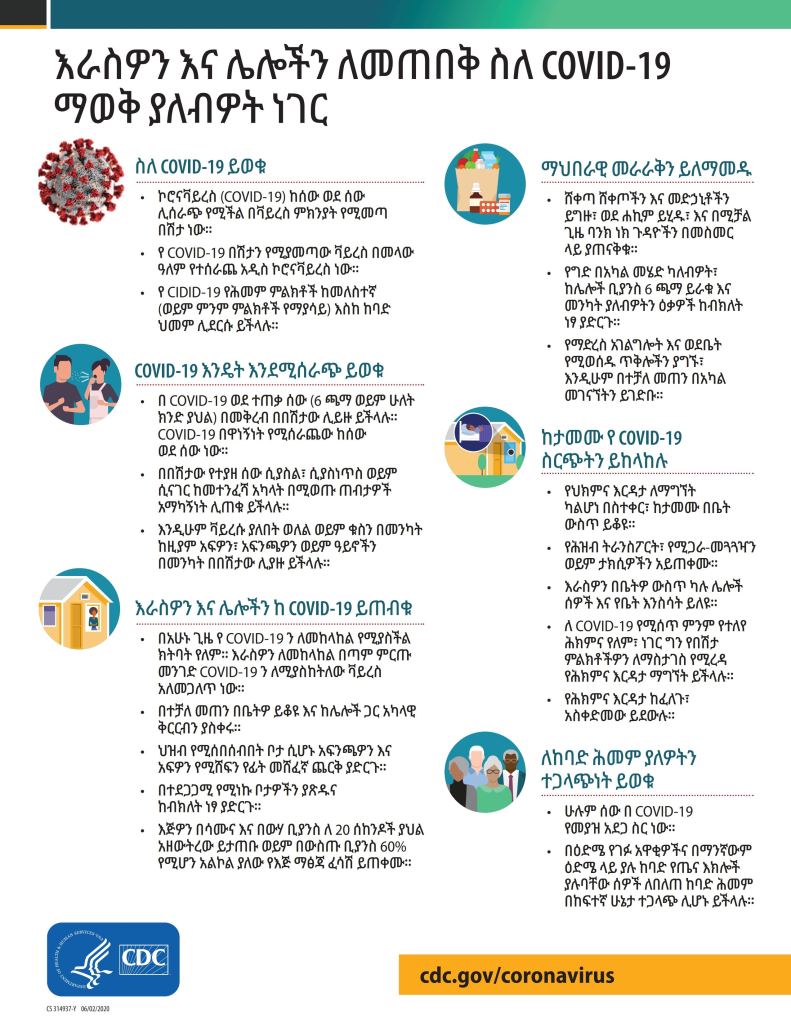
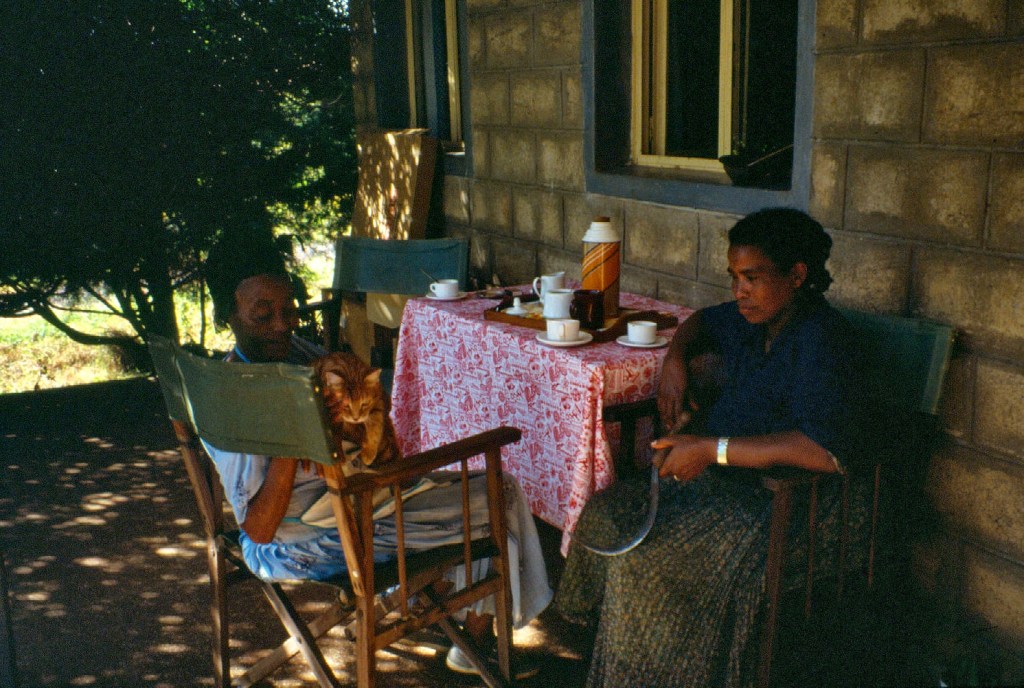


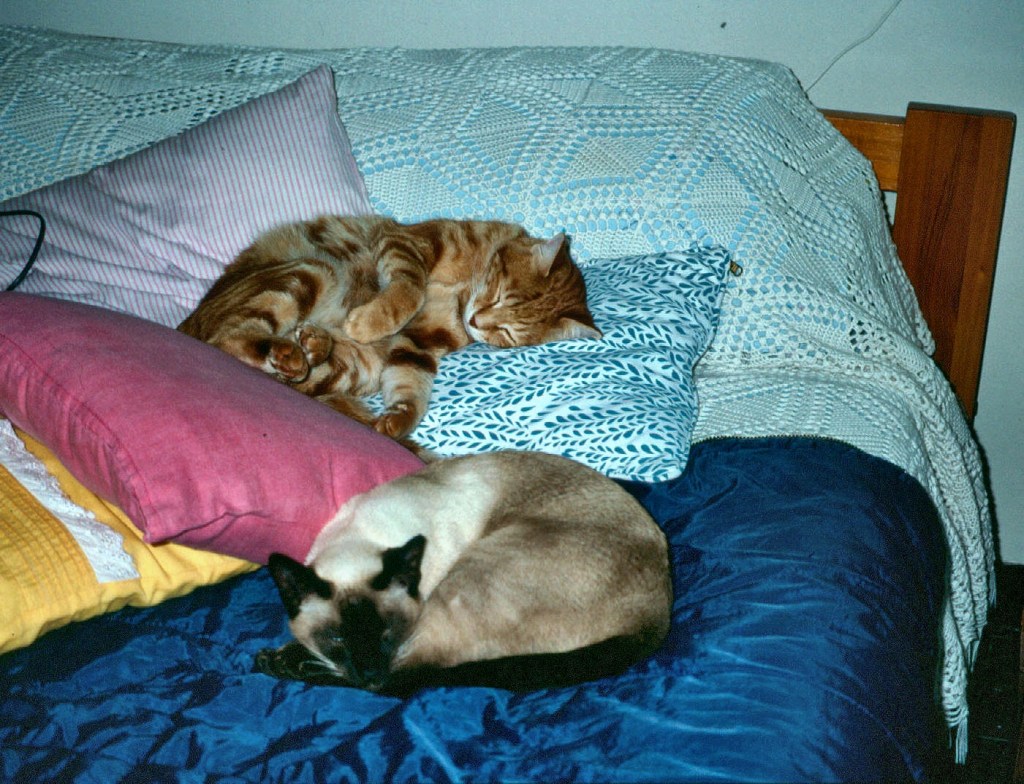
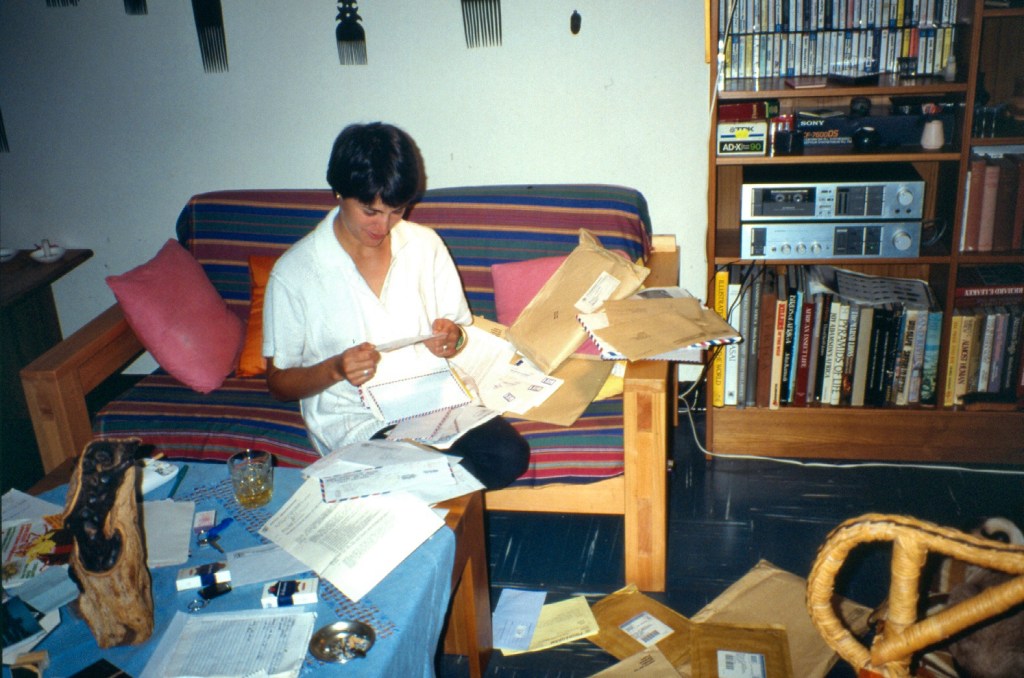
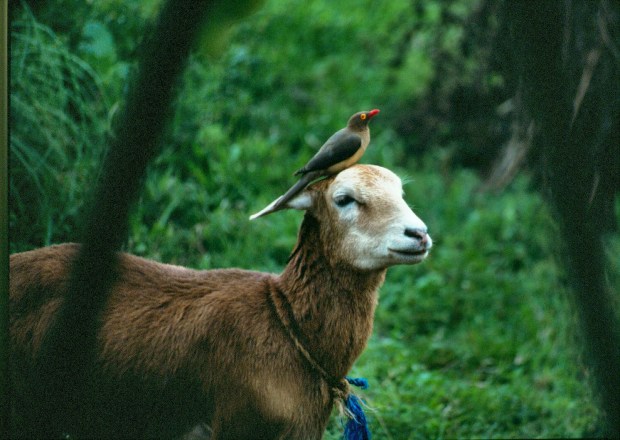
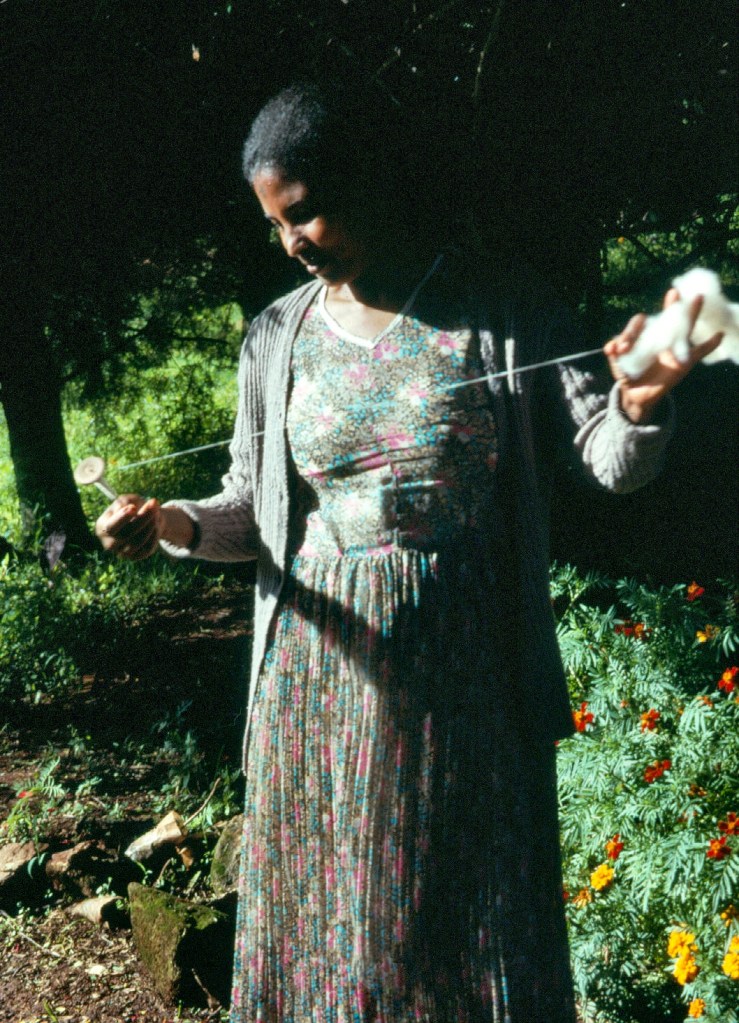

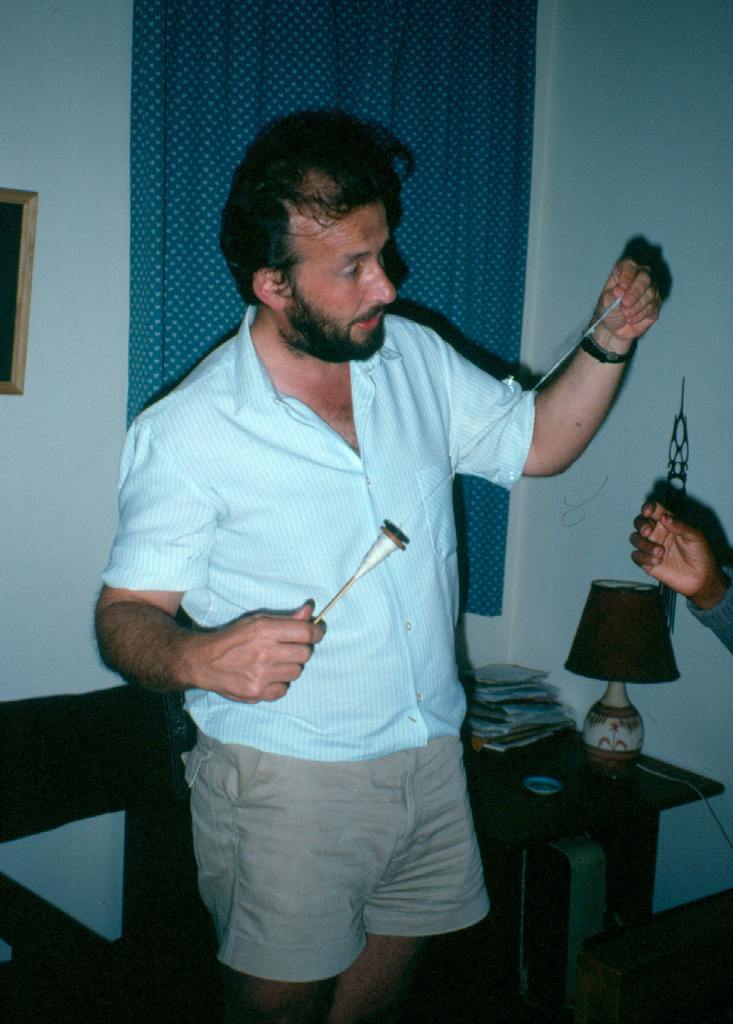

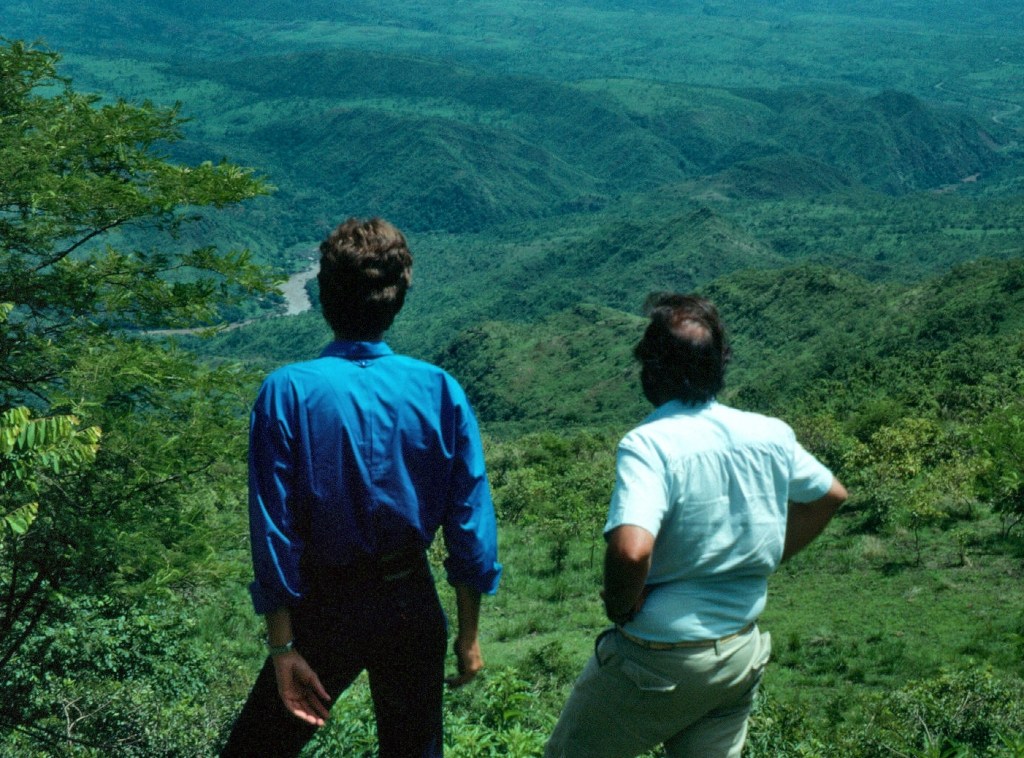
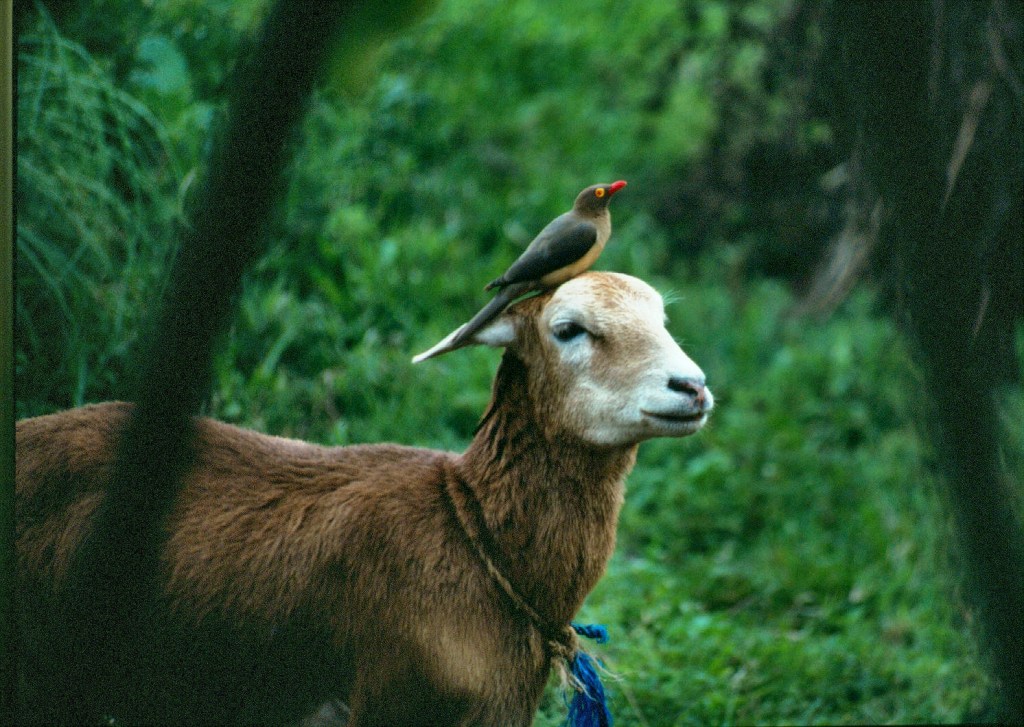
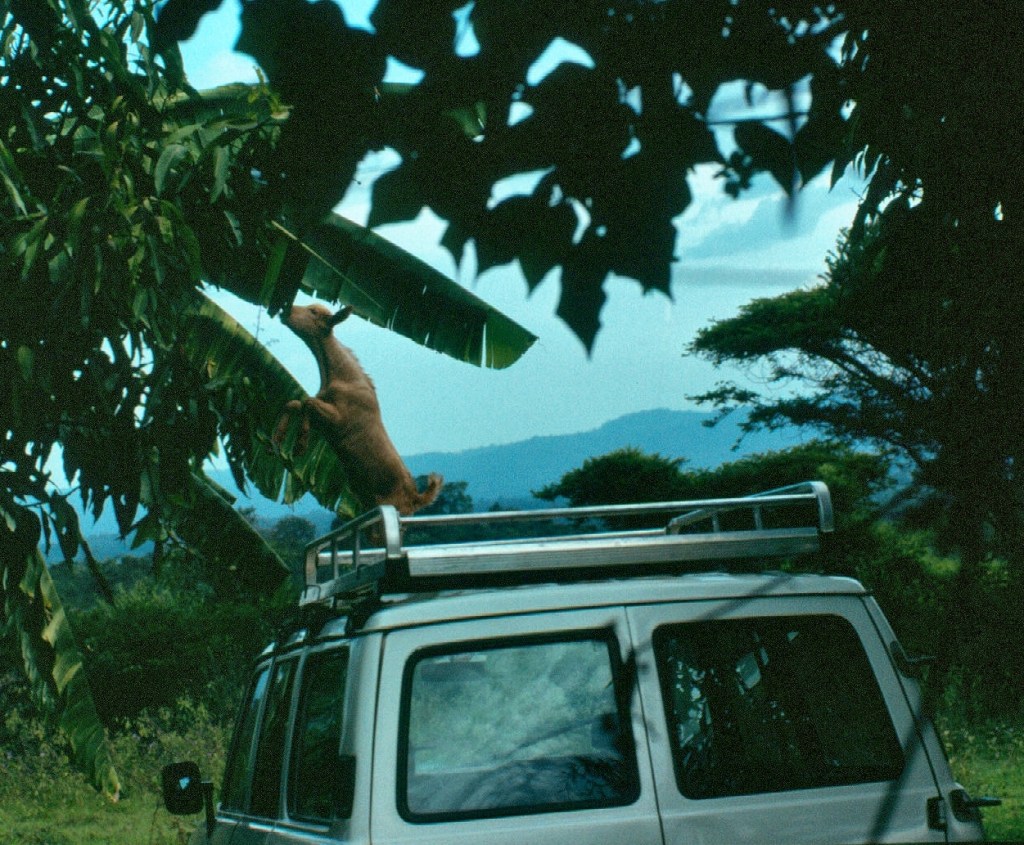

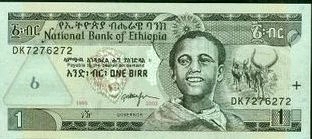

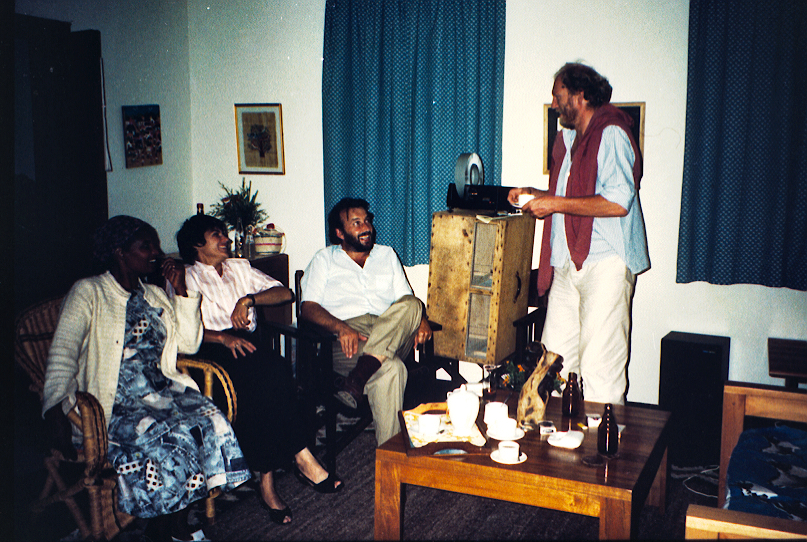
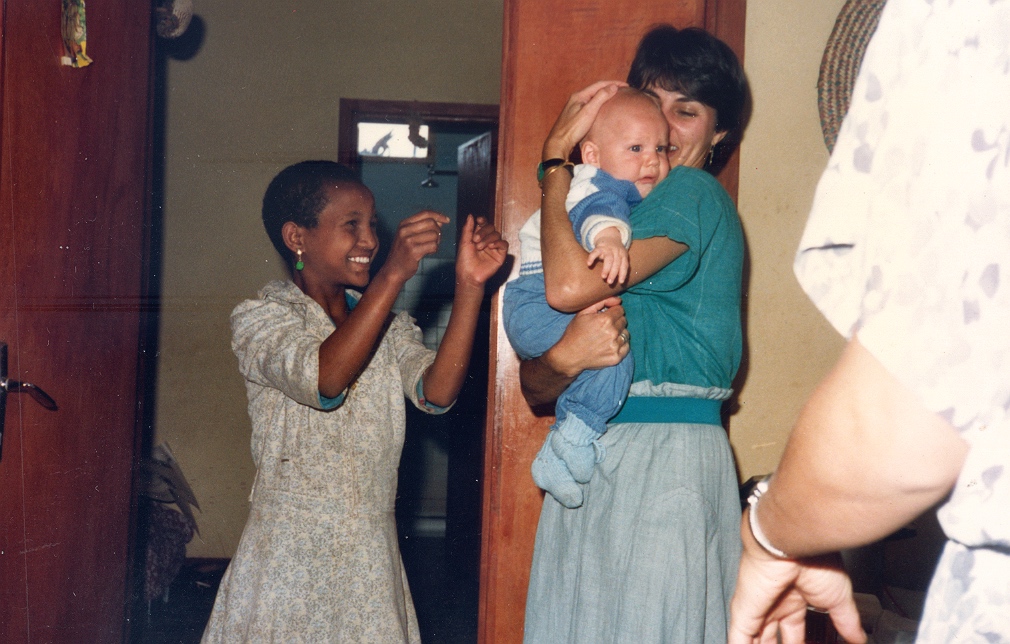
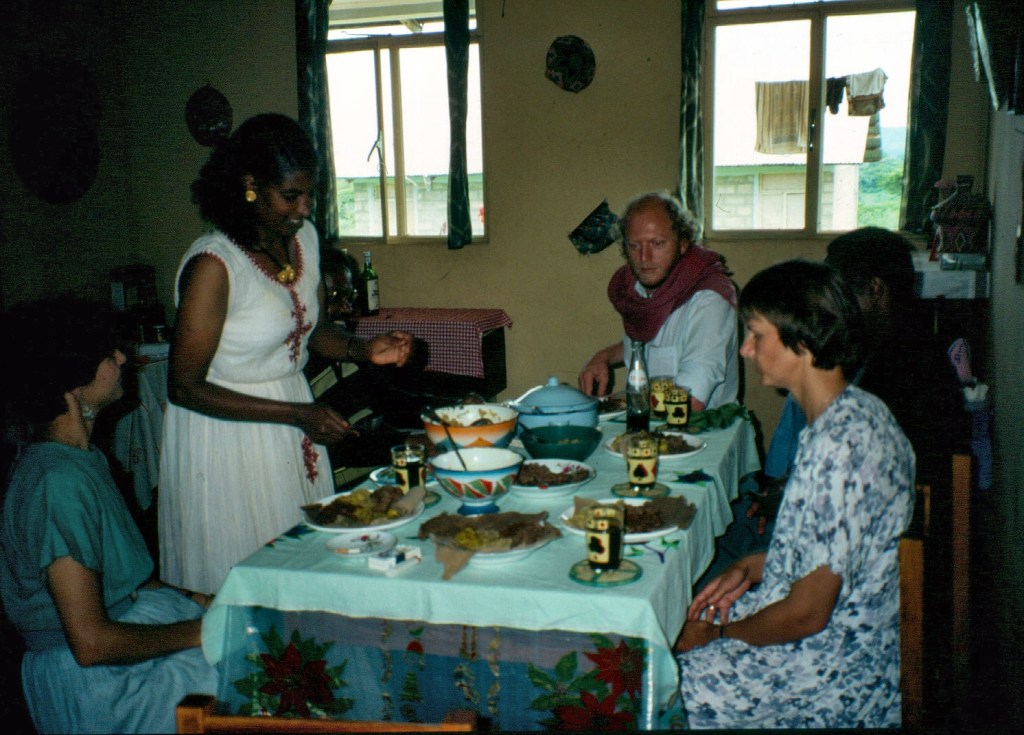

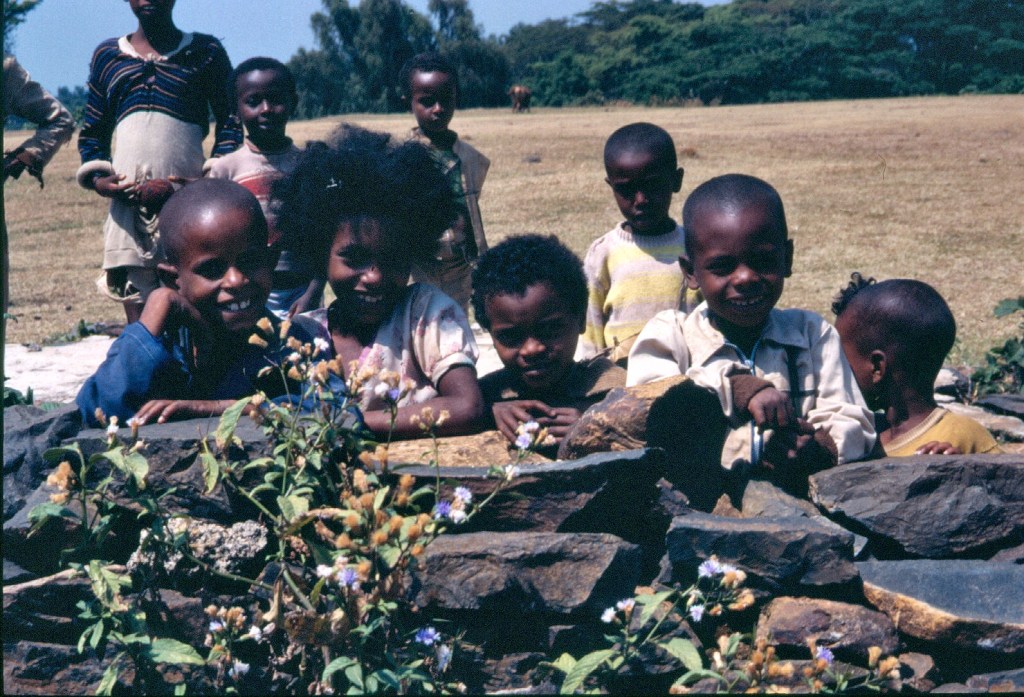
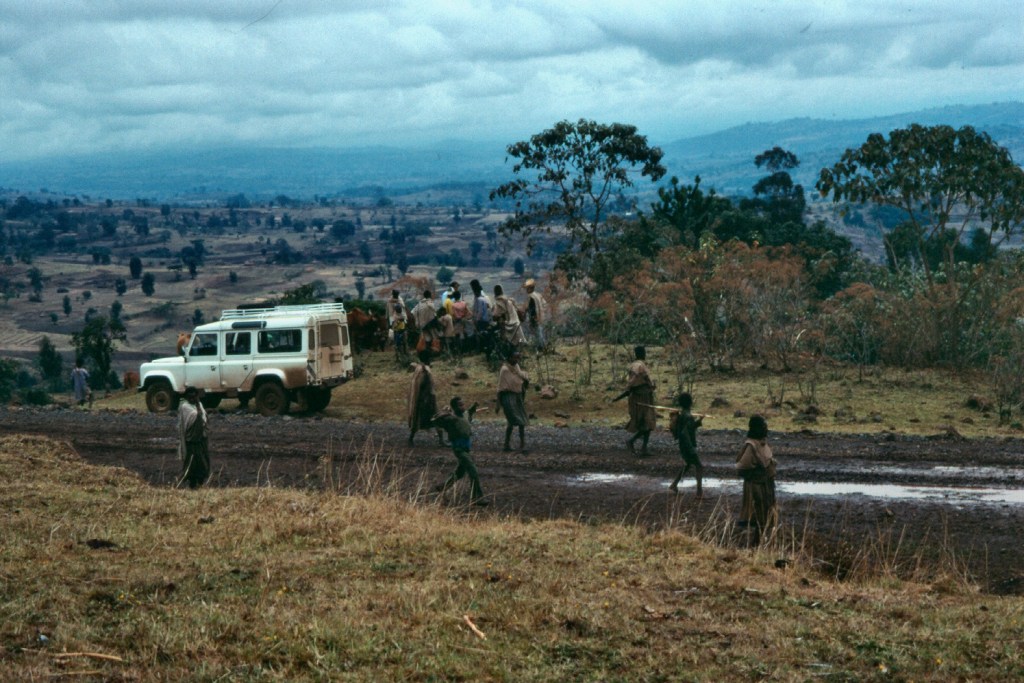
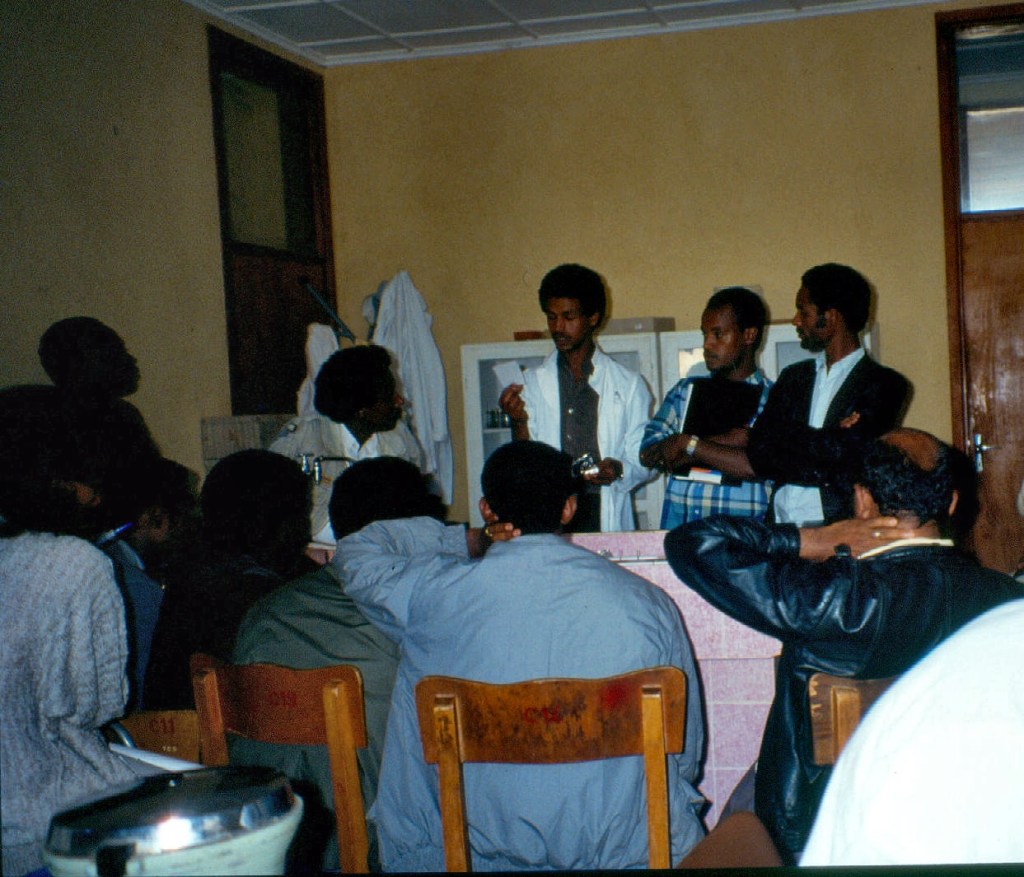
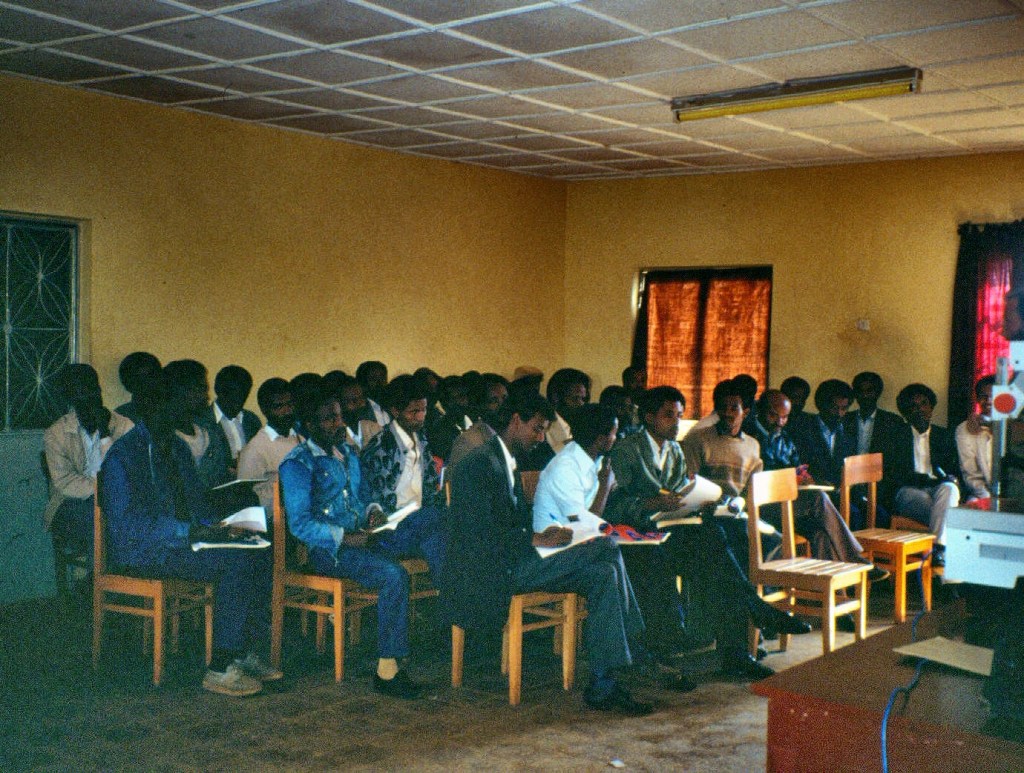
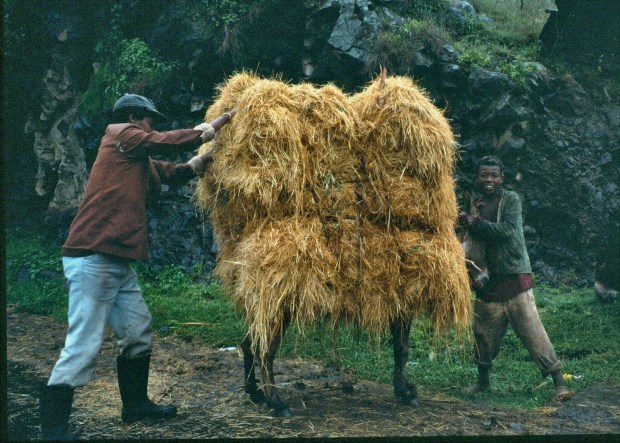
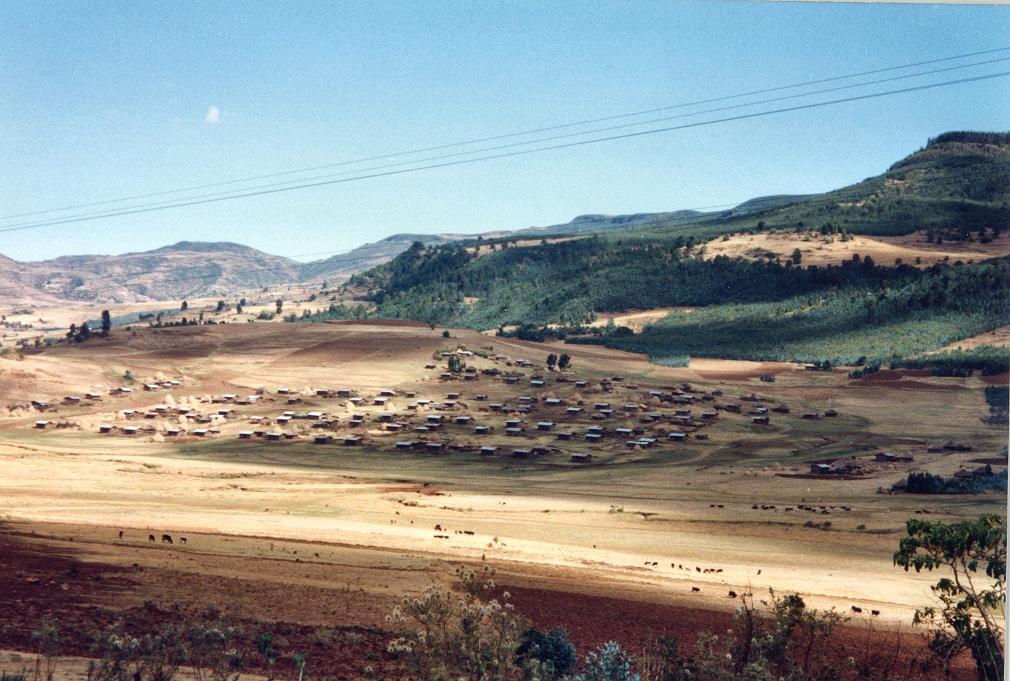
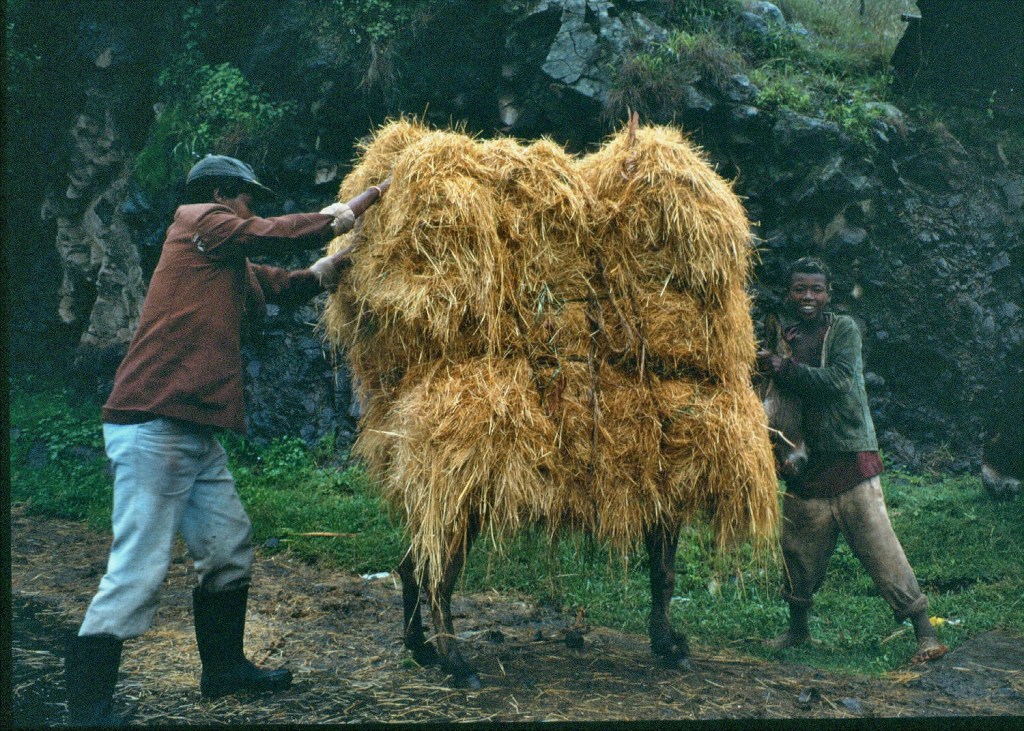
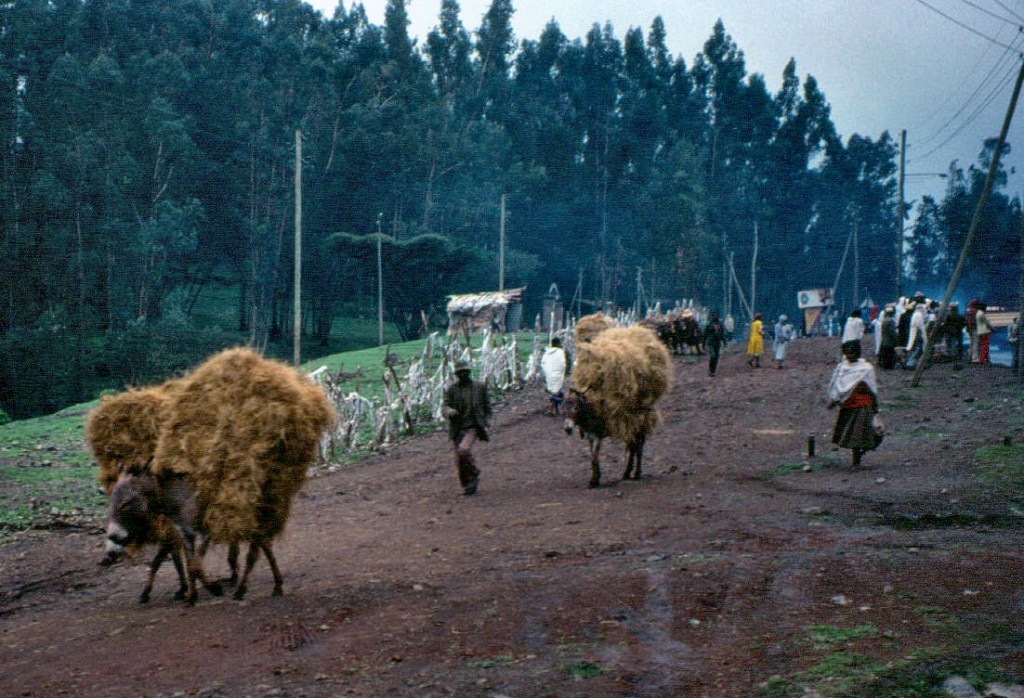
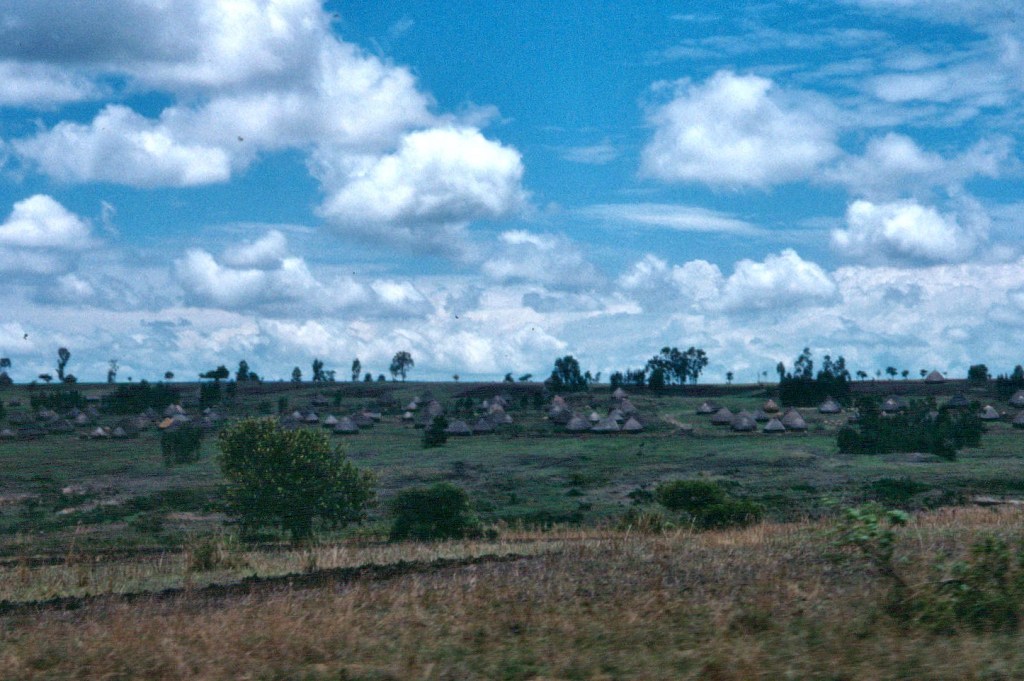
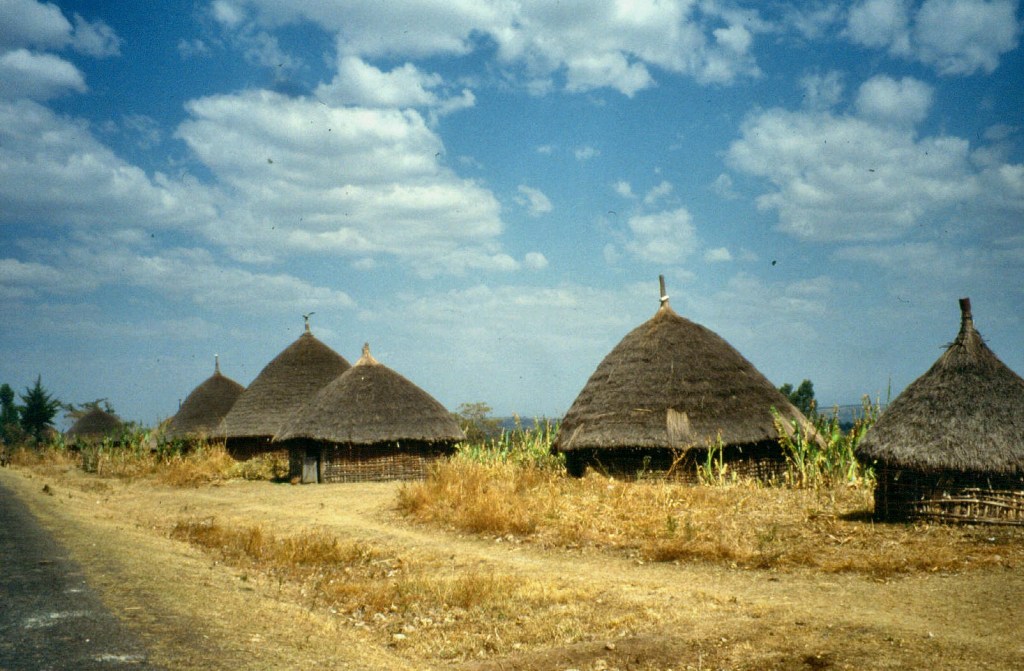
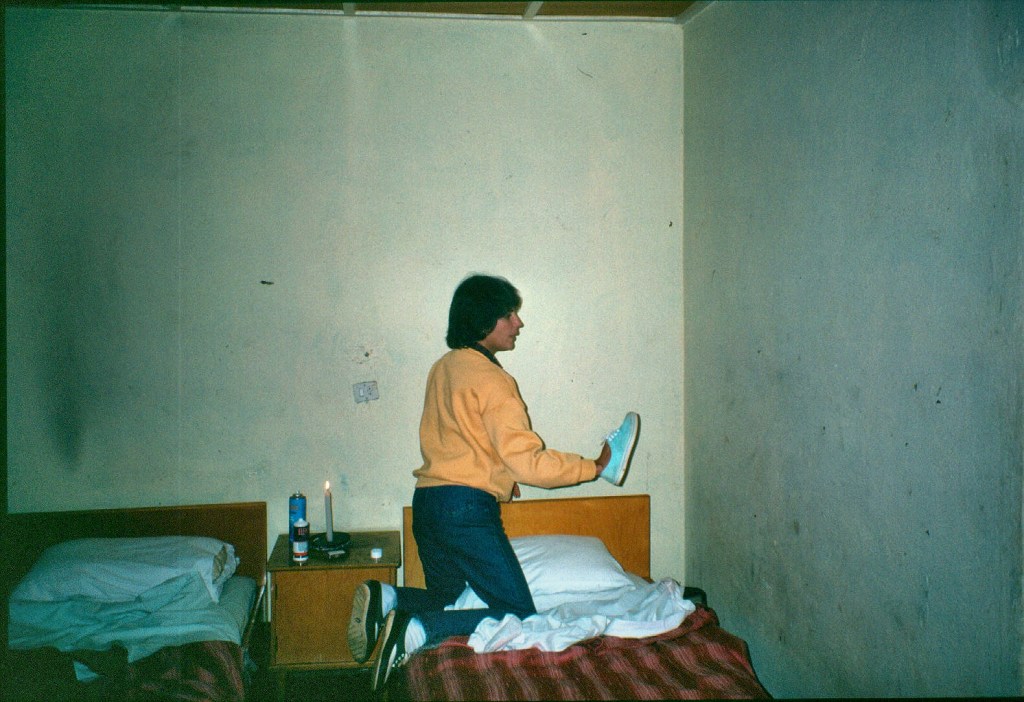
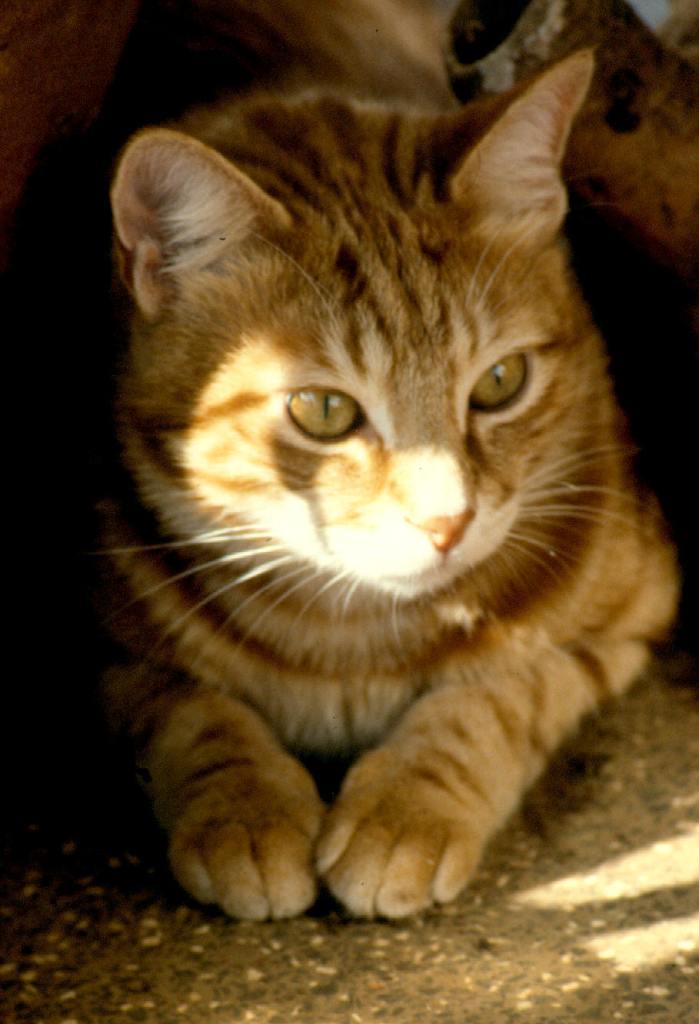
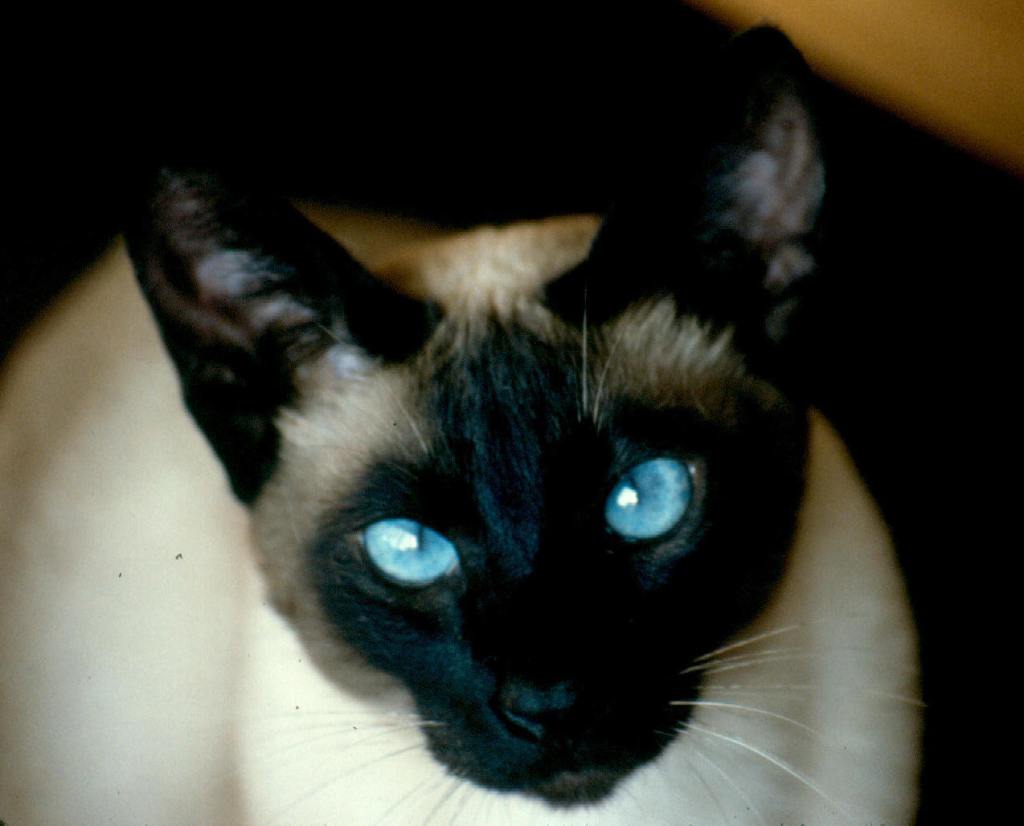
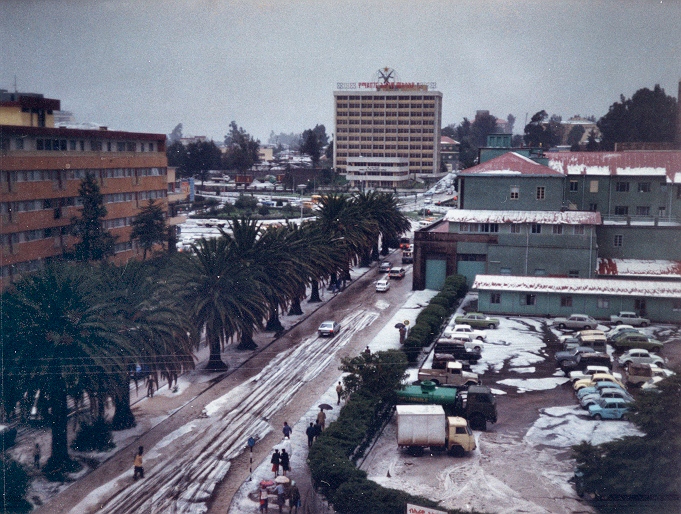
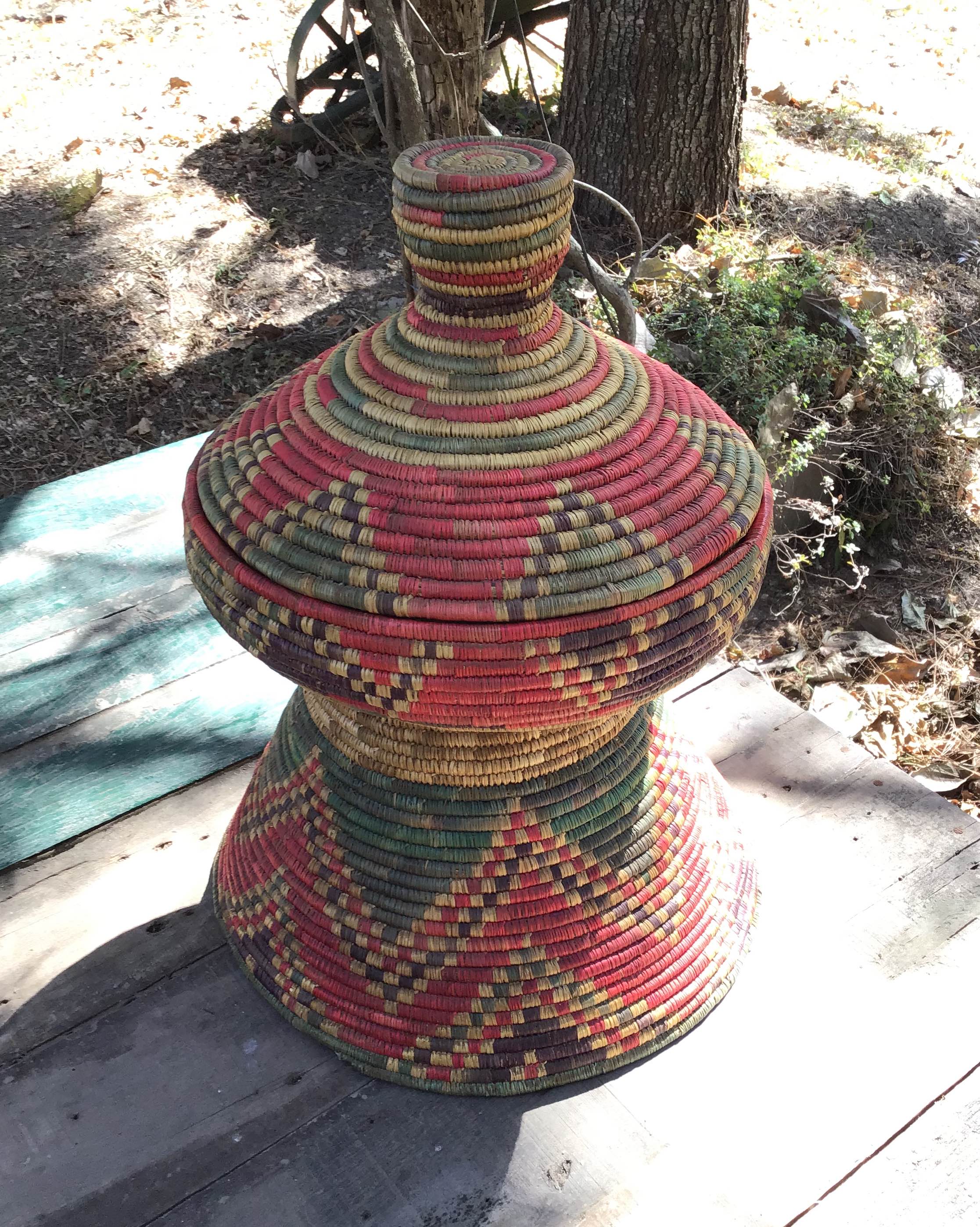


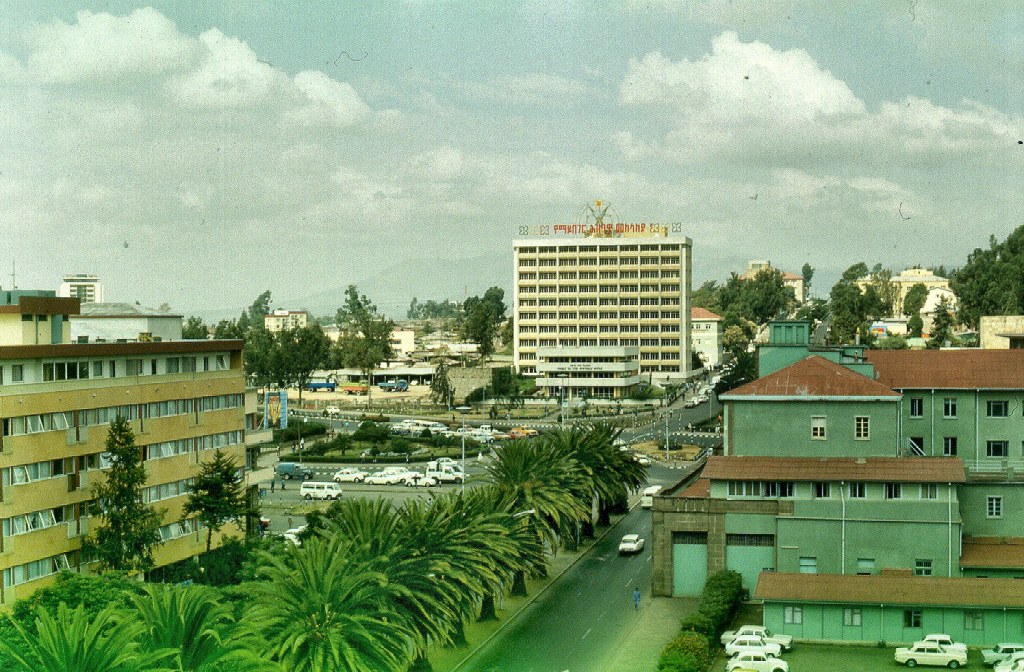

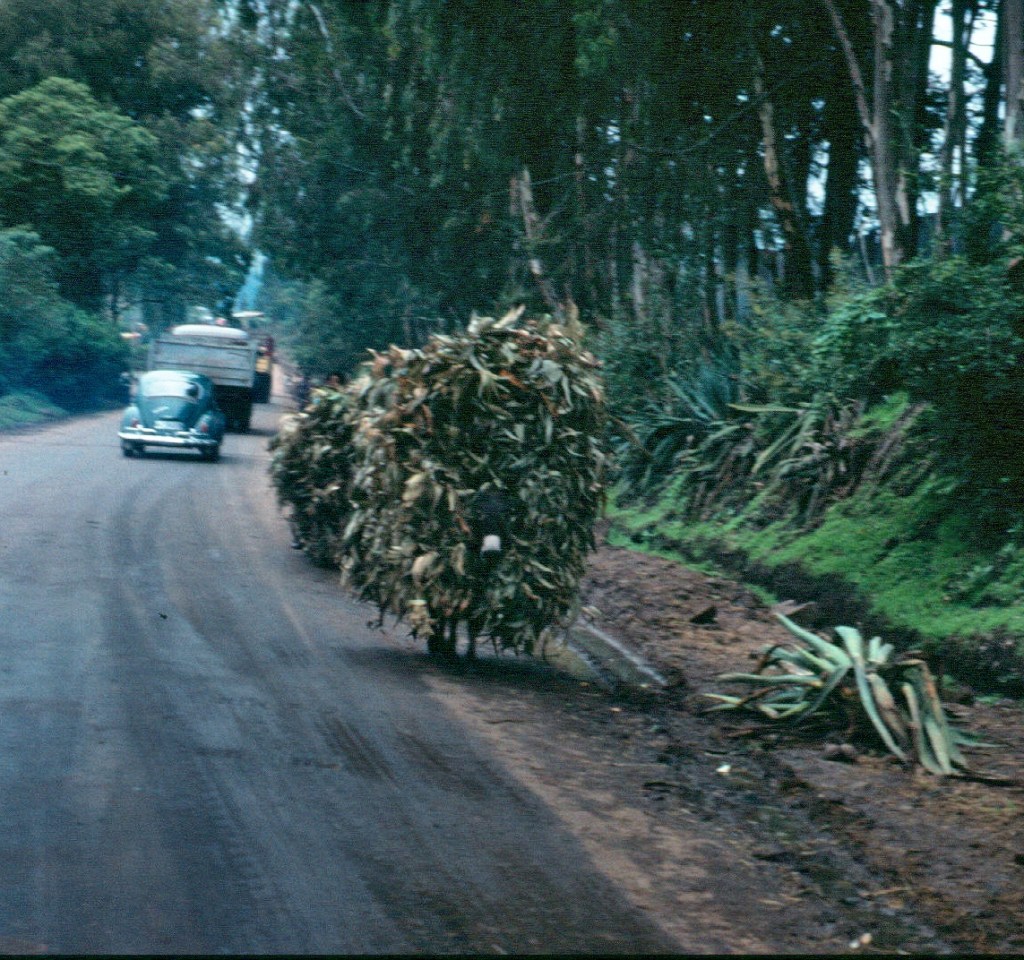


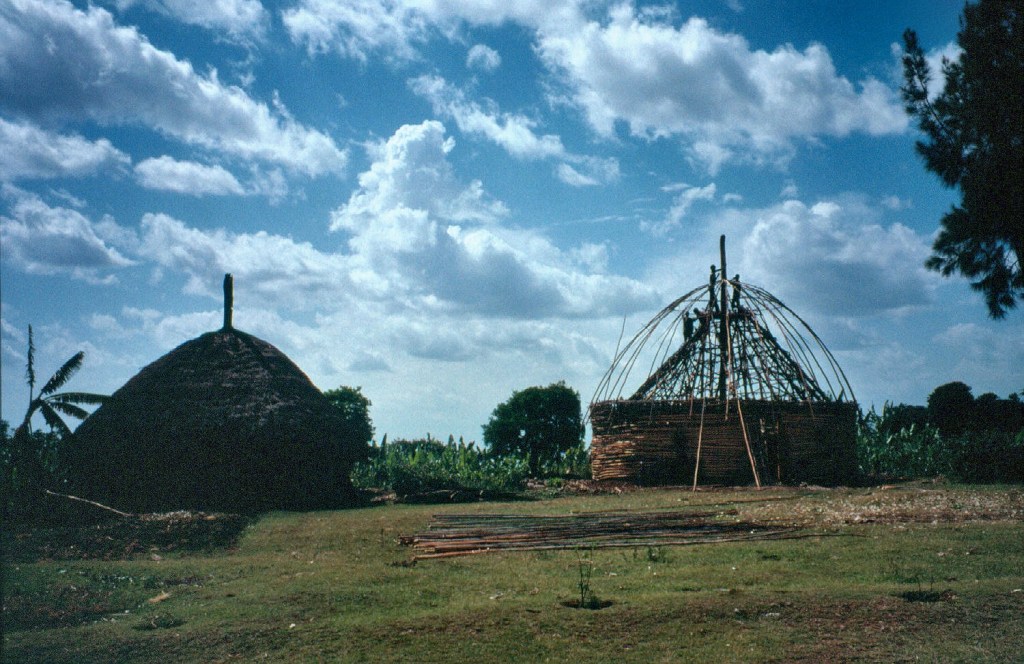

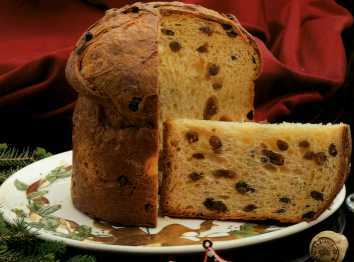
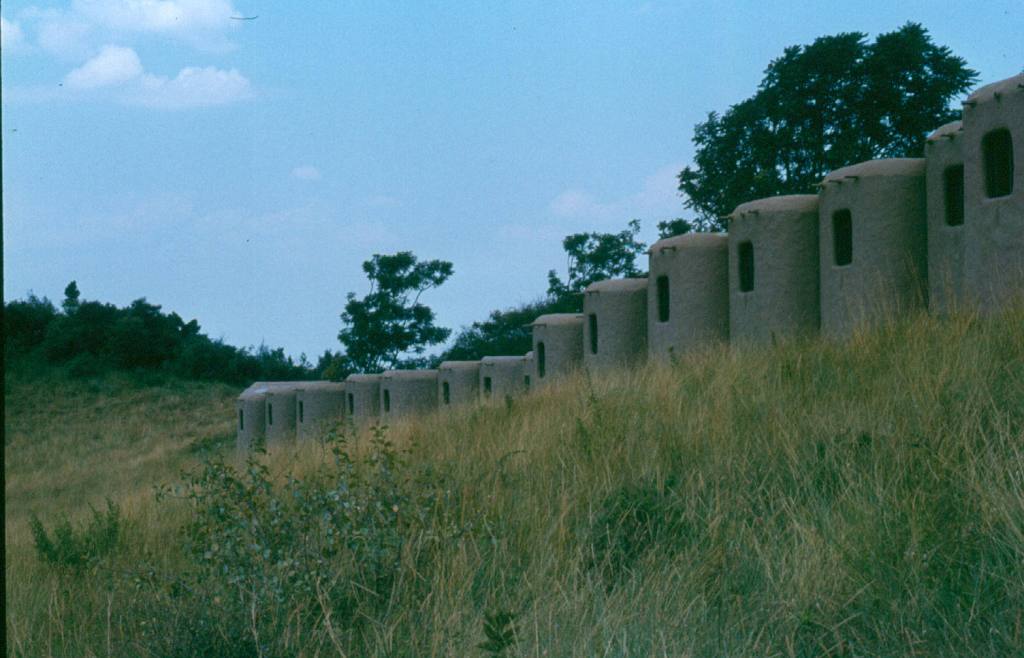

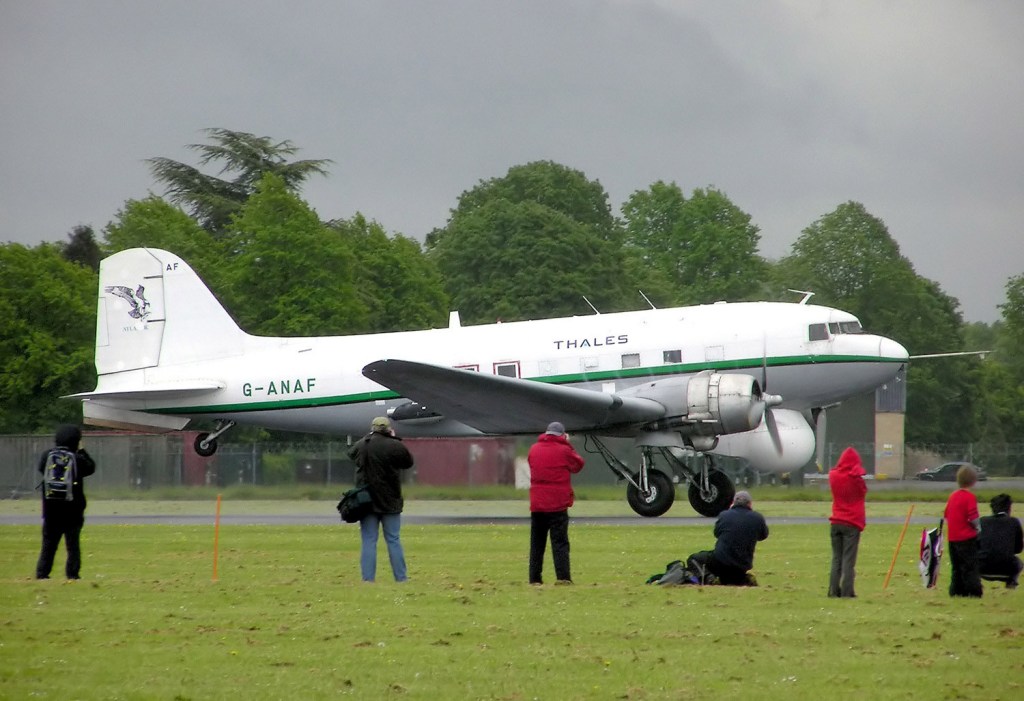
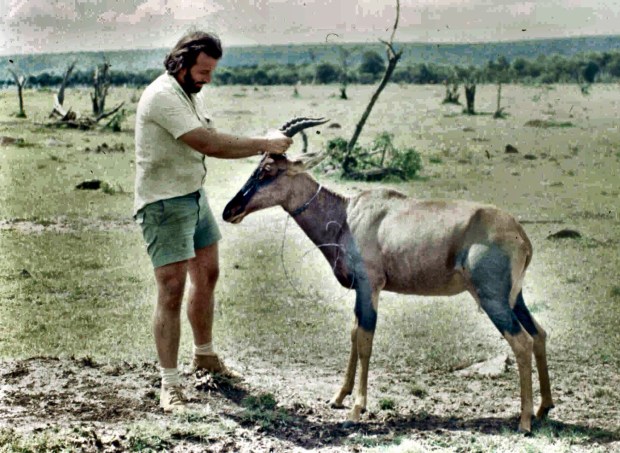
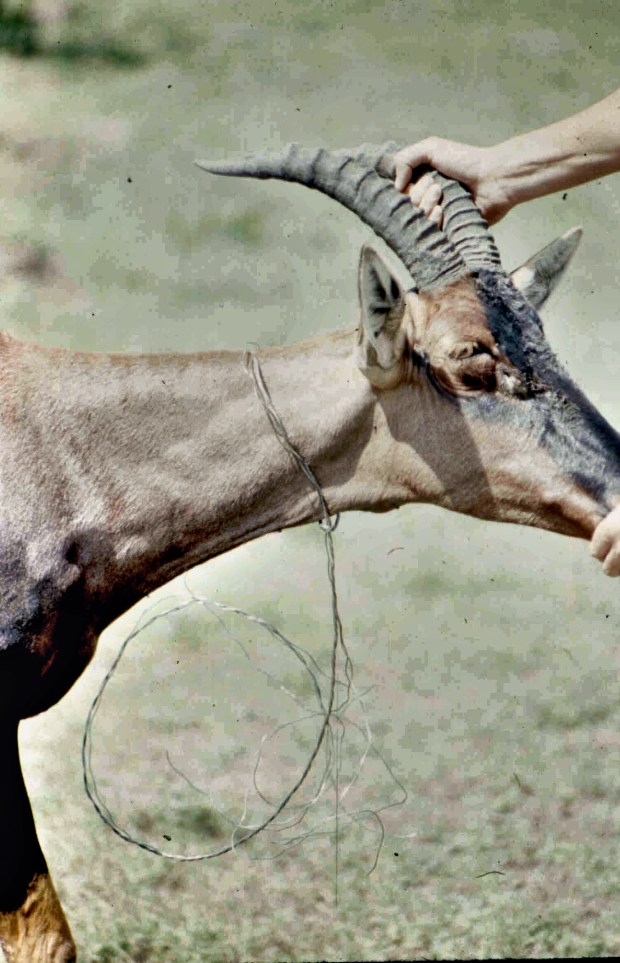
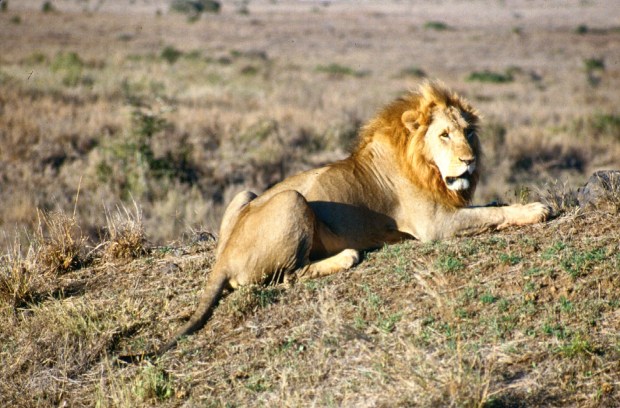
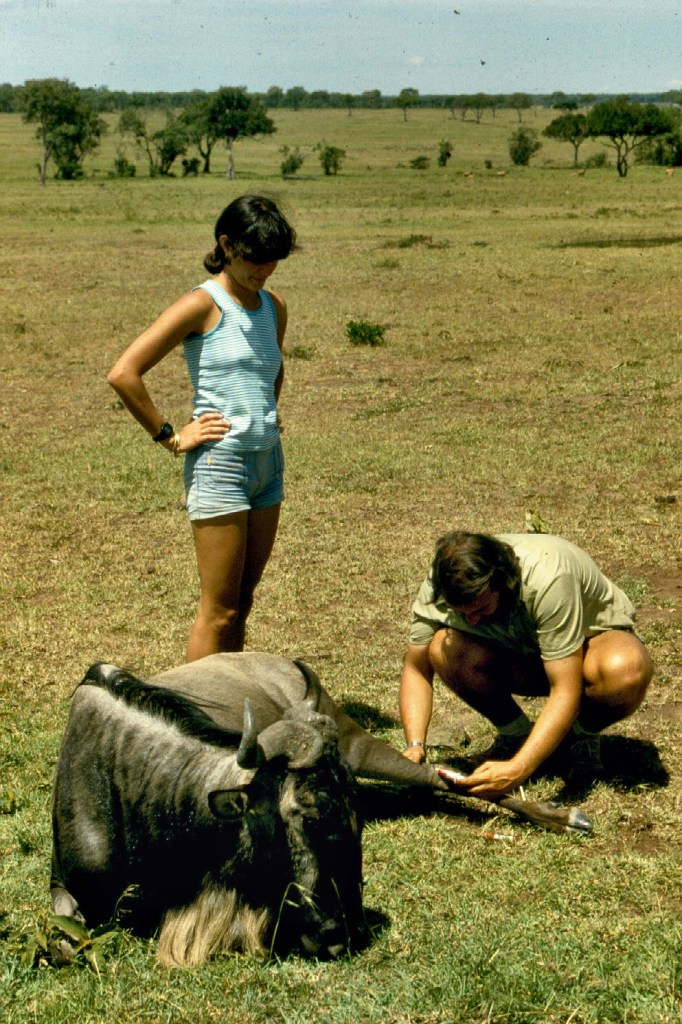

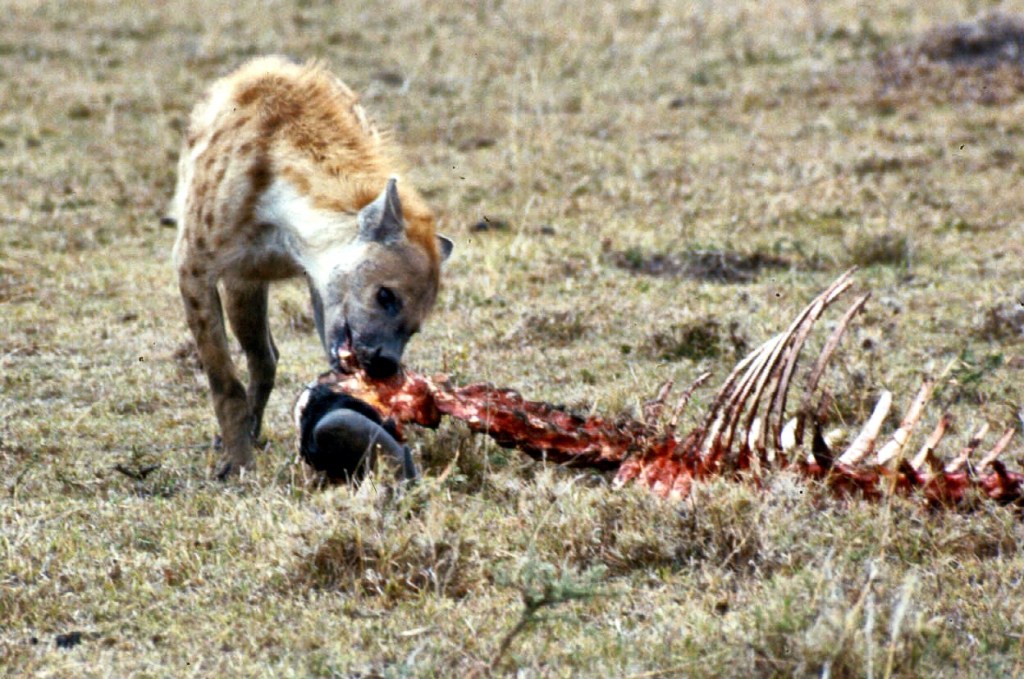
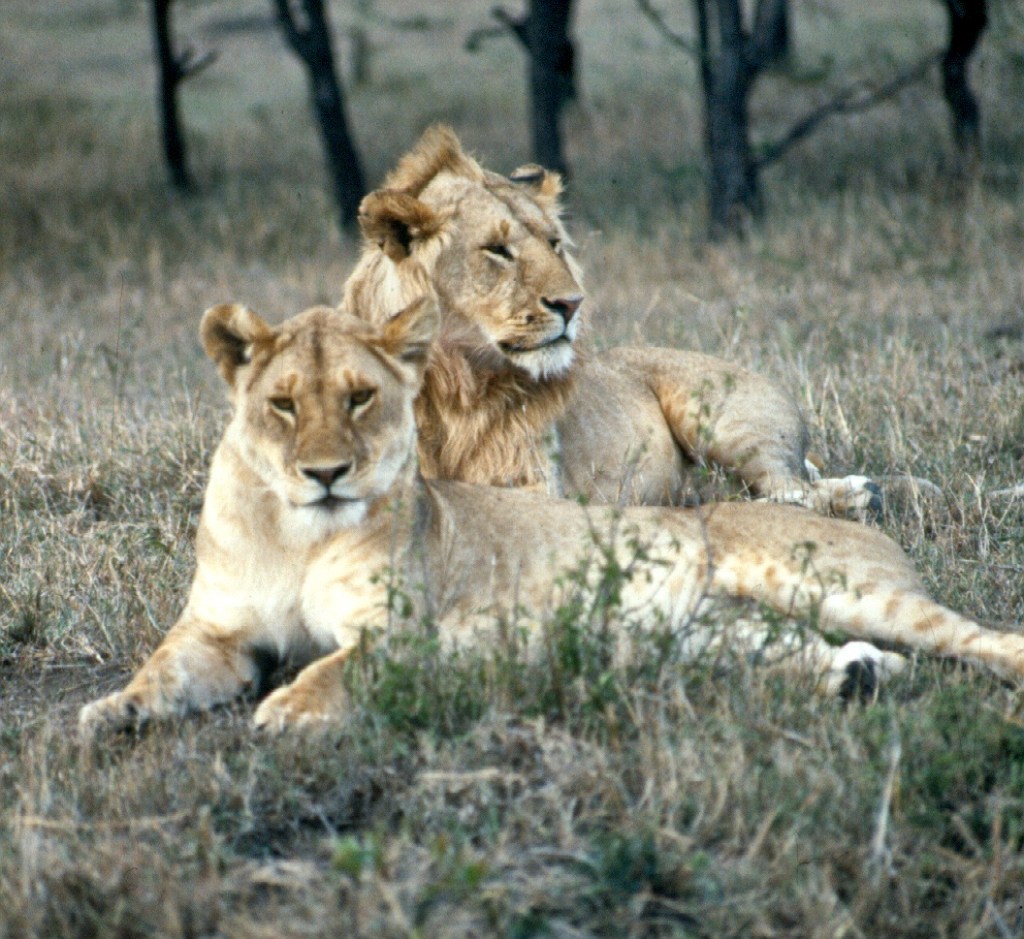
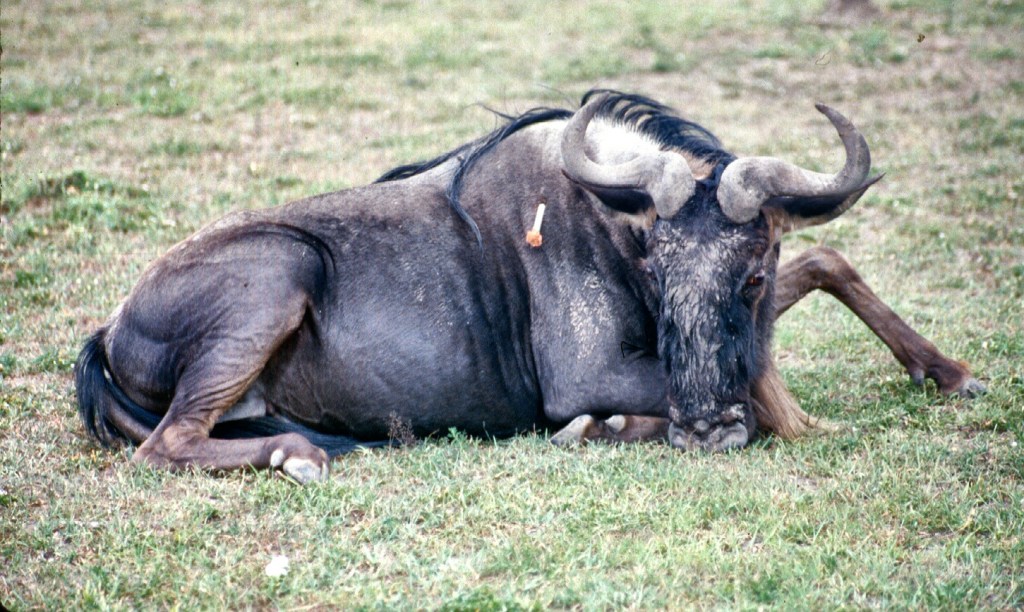
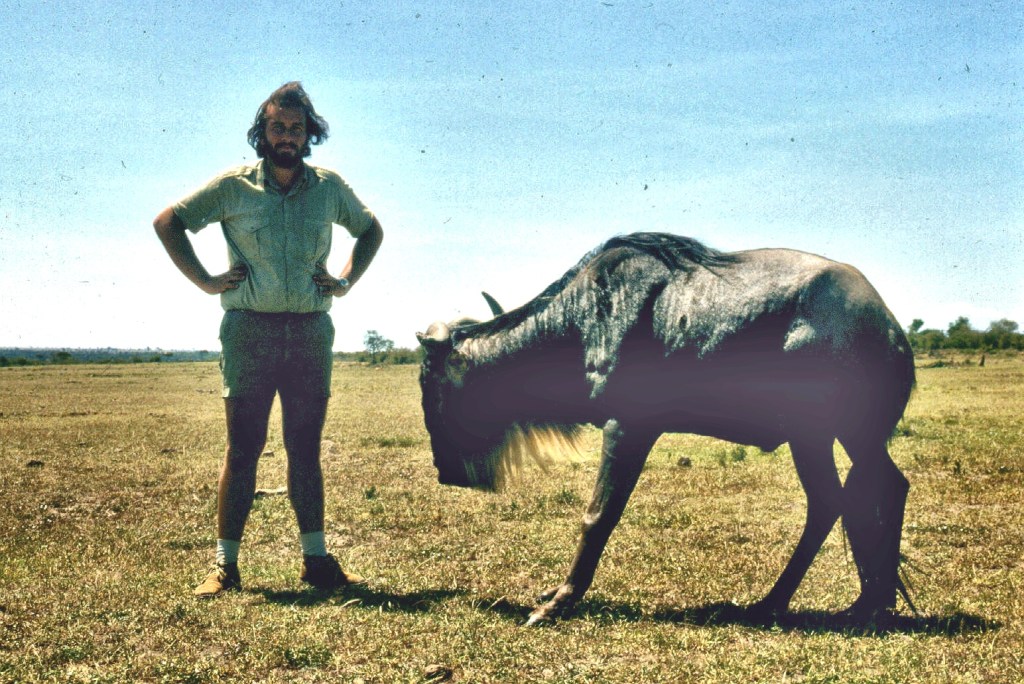
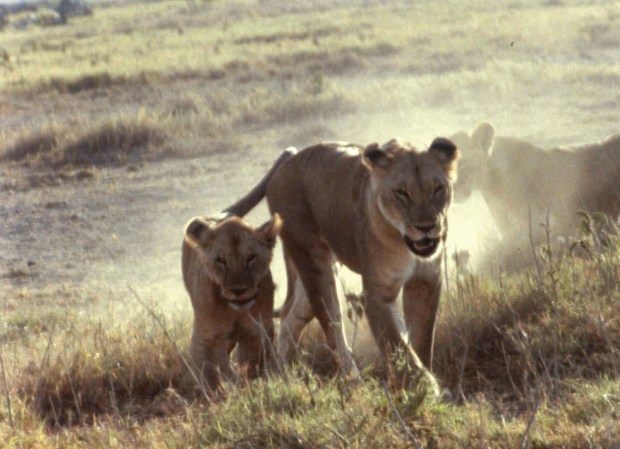

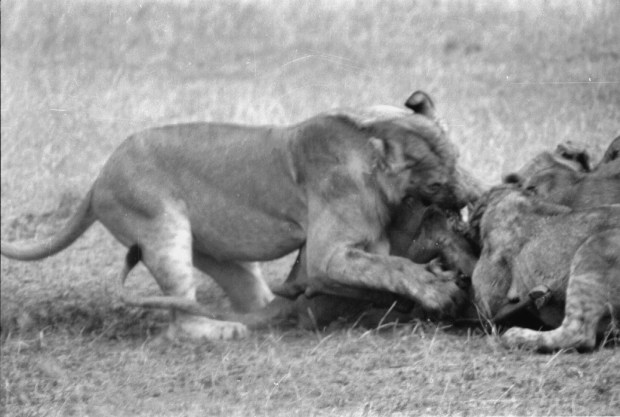
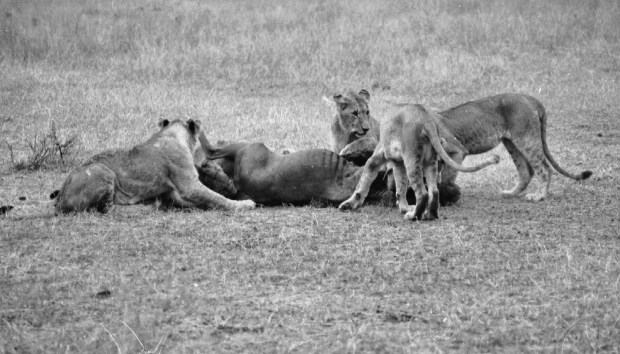
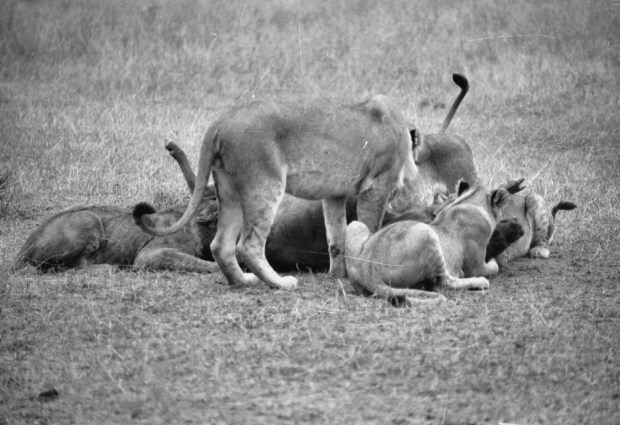
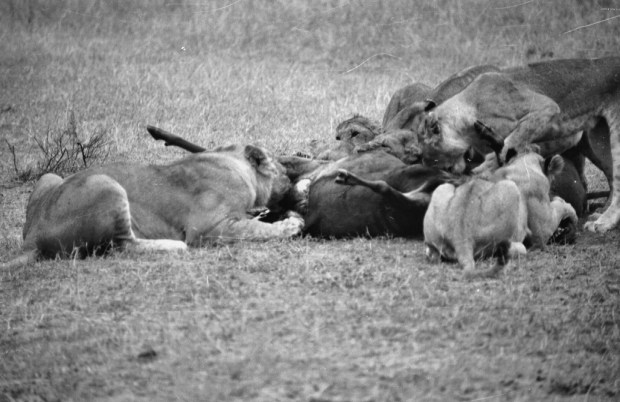
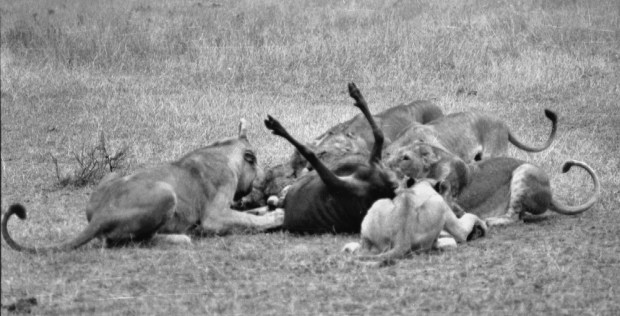
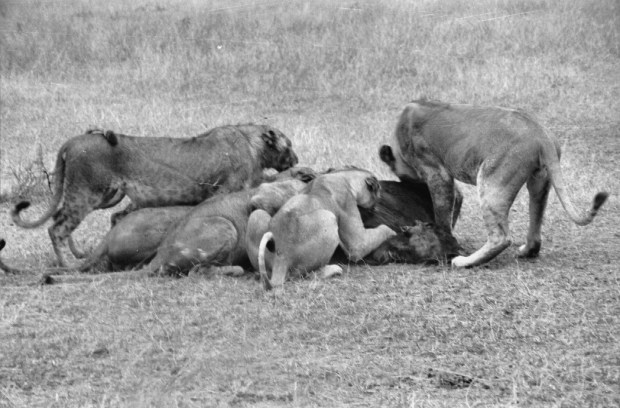
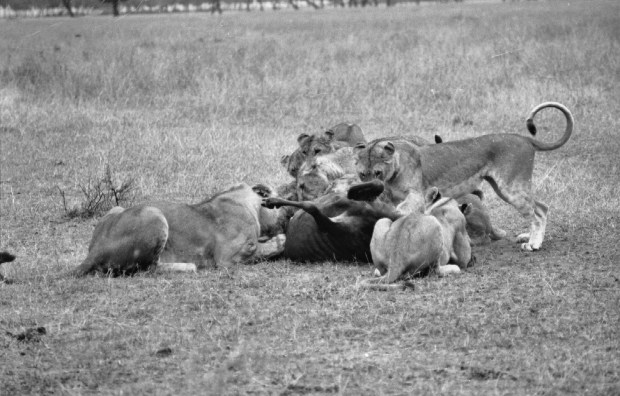
 A Bushsnob out of Africa