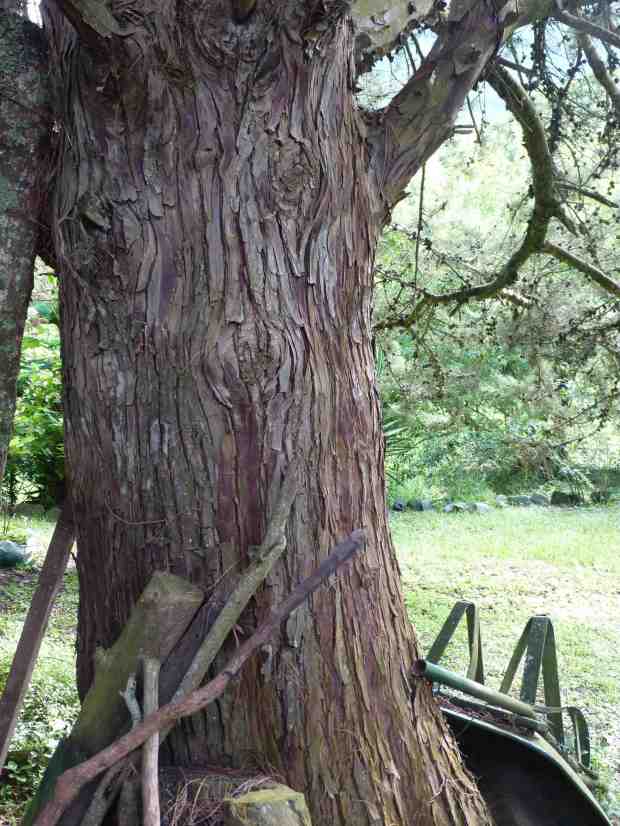
I consider this “Spot” a tough one. Once again it shows the amazing camouflage that some creatures have developed to survive. Look for it!
?
?
?
?
?
?
?
?
?
?
?
?
?
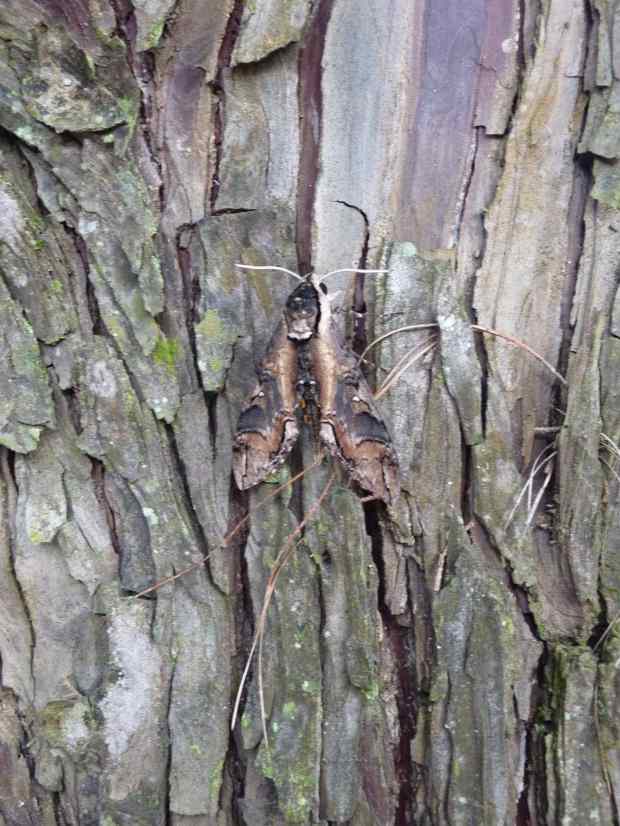
Its colours do not matter once it is able to fly off!
I consider this “Spot” a tough one. Once again it shows the amazing camouflage that some creatures have developed to survive. Look for it!
?
?
?
?
?
?
?
?
?
?
?
?
?
Its colours do not matter once it is able to fly off!
This took place while walking up the hill in Itiyuro in search of the macaws. See my earlier post.
For a change I spotted this little fellow running and then lost it when it stopped. After a while searching it moved again at the time that we were almost about to abandon our search.
I am sure that you will find it.
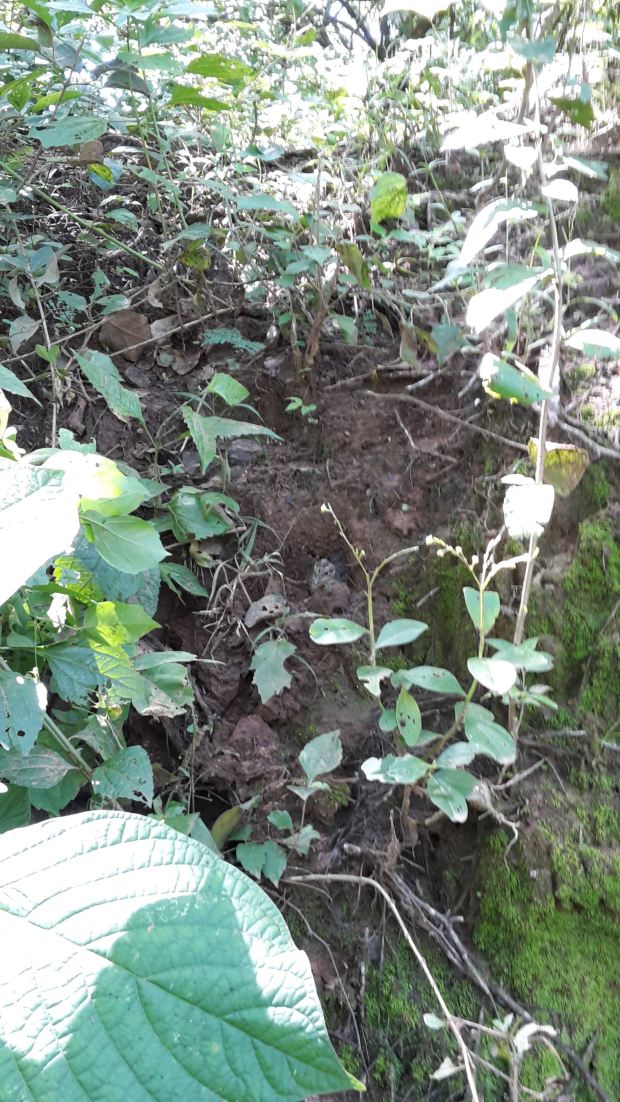 ?
?
?
?
?
?
?
?
?
?
?
Just in case you did not spot it, I took a couple more pictures as it was really a nice youngster although we could not identify it.
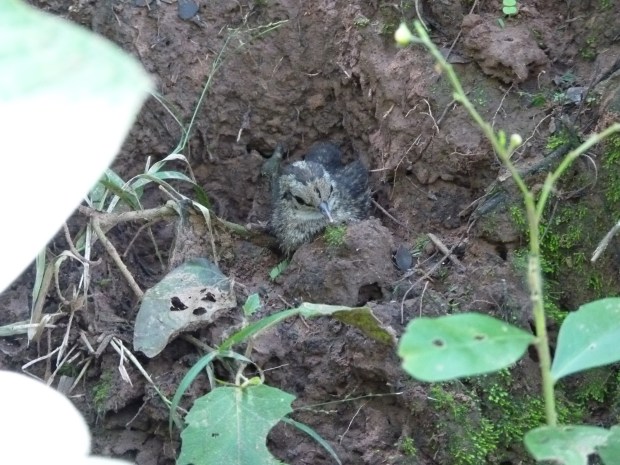
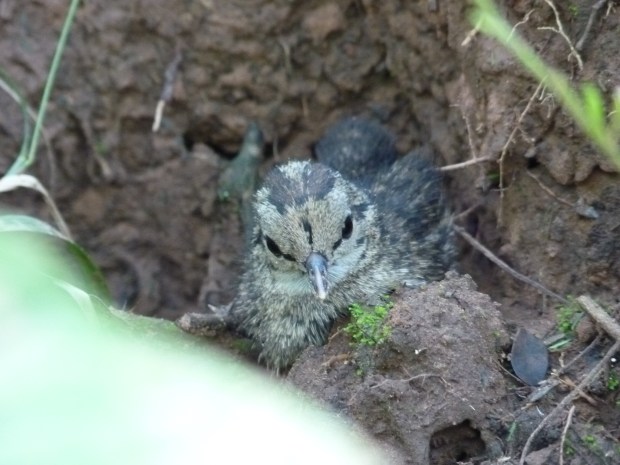
After a quiet spell in South America, enjoying social and rural life, we traveled to the very north-eastern tip of Argentina to a place called Itiyuro-Tuyunti dam, invited by our farm neighbours.
While I write a couple of posts about the trip, I thought interesting to present you with this easy “Spot the beast” to keep you busy…
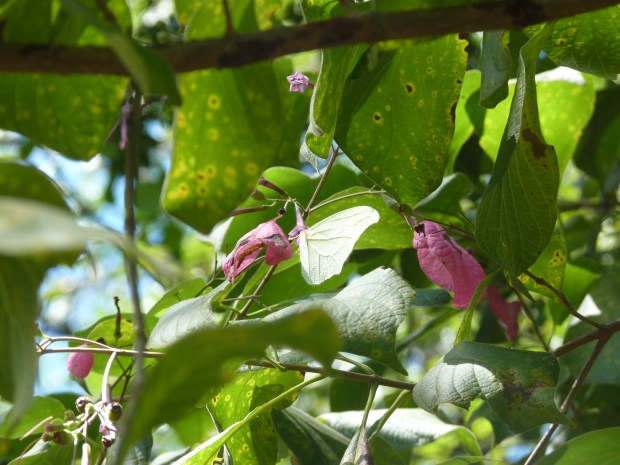
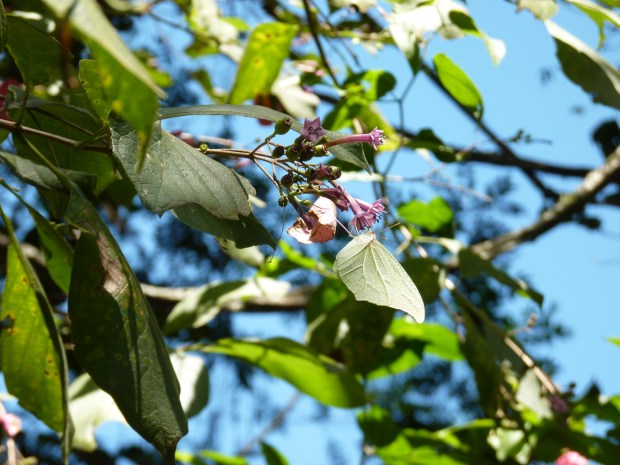
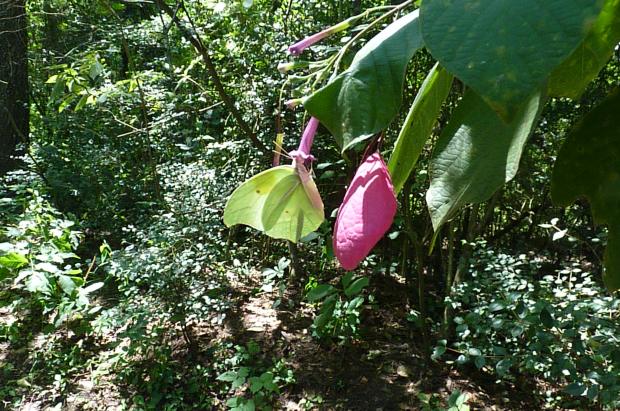
We came across this rather beautiful beast while walking through the subtropical forest and it was often feeding on this particular plant that has these interesting flowers. The butterfly is probably Anteos clorinde or Sulfur spot. While the external part of its wings resembles a green leaf, its interior is white with a yellow spot on its upper part. The internal coloration is mainly seen while flying as it closes its wings when landing.
It is a fairly large butterfly of about 85mm that flies strongly during the times of sunshine over open spaces and forests. It is often observed near wet areas where they congregate to drink and get mineral salts.
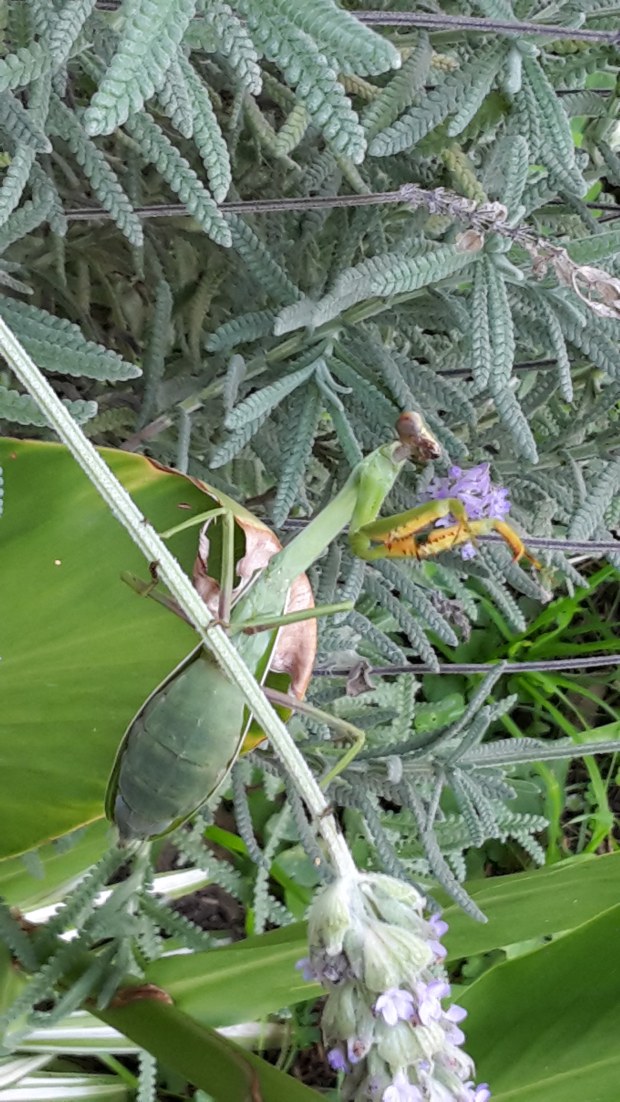
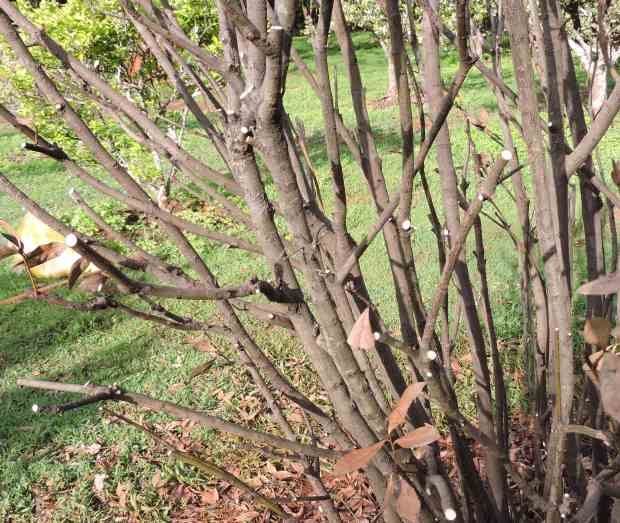
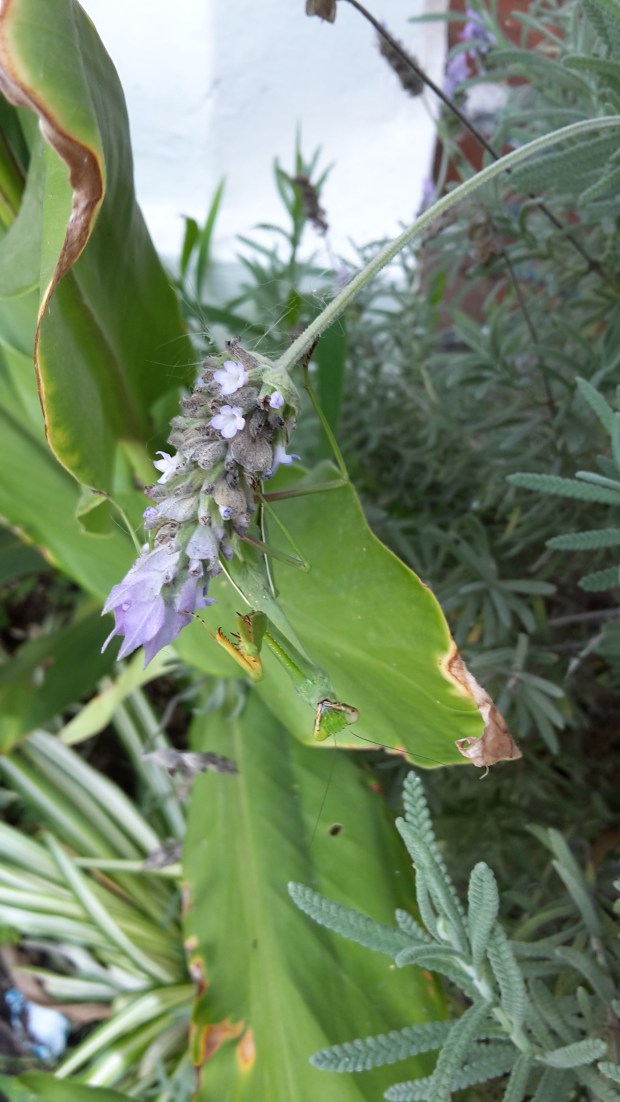
From the rather prolific garden in Harare for you to find:
?
?
?
?
?
?
?
?
?
?
?

A young praying mantis doing its job in insect control.
Closely related to cockroaches and termites, there are over 2,400 species of mantises -both flying and flightless- worldwide. They feed on other insects but not necessarily all of them damaging to agriculture!. Larger species can even hunt small reptiles and birds and about 30% of wild males get cannibalized by their sexual partners.
They have flexible necks that enables them to turn their heads 180 degrees, a feat that no other insect can do and, although they have two large and bulging eyes, they only have one “ear” located in their abdomen so their hearing is limited.
From the garden, again. See if you can spot it…

?
?
?
?
?
?
?
?
?
?

It had to be one of the garden chameleons as we observed them for days before we left Zimbabwe.
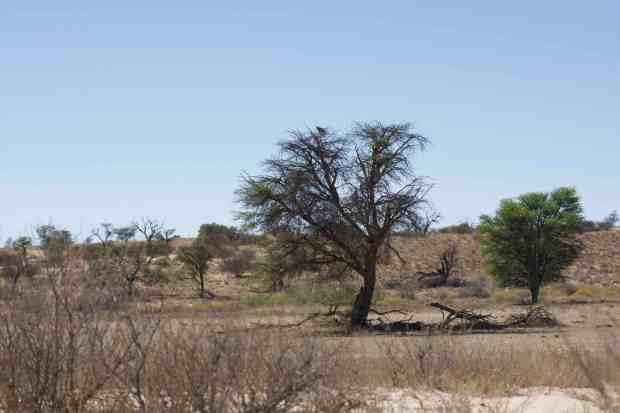
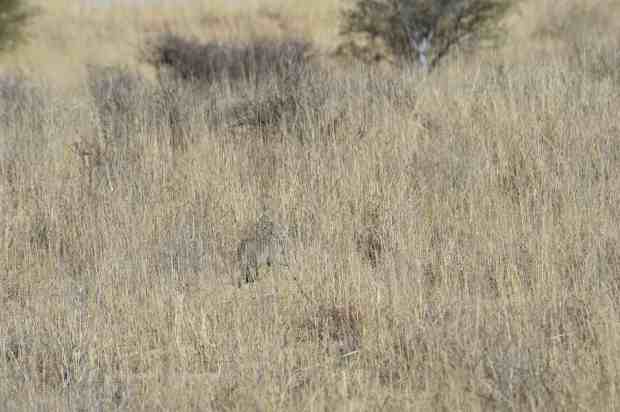
We found this beast while driving from Twee Rivieren to Nossob while heading towards the Mabuasehube area of the Kgalagadi Transfrontier Park. Although we did not have time to spare, we stopped and watched.
See if you can find it and identify it…
?
?
?
?
?
?
?
?
?
?
A zoomed version looks like this:

We found four African wildcats (Felis lybica kafra) that morning. Here is another one, also quite difficult to see as it moved away from us through the tawny grass.
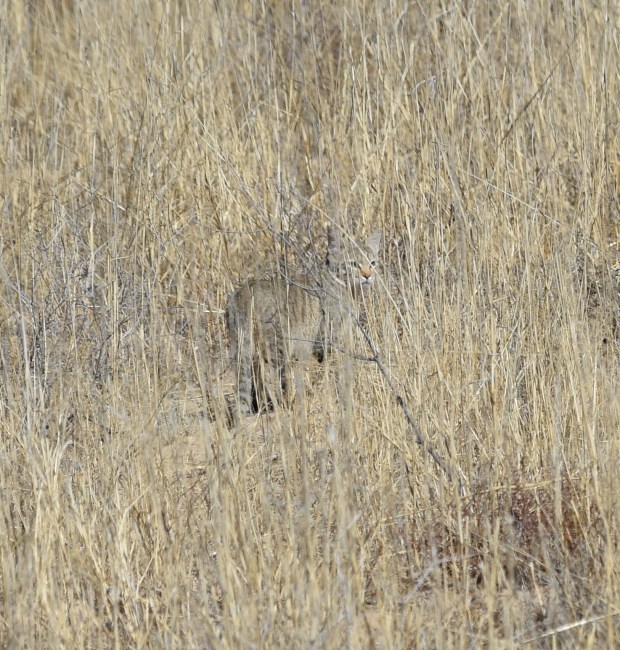
A close-up.
It is the second time we see these interesting cats. Earlier last year we had a fleeting encounter with one while staying at Mopane rest camp in Kruger National Park.
Of interest is that these cats are threatened not by poachers or poisoning but by their tendency to interbreed with domestic cats anywhere near human habitations threatening the genetic purity of this subspecies!.
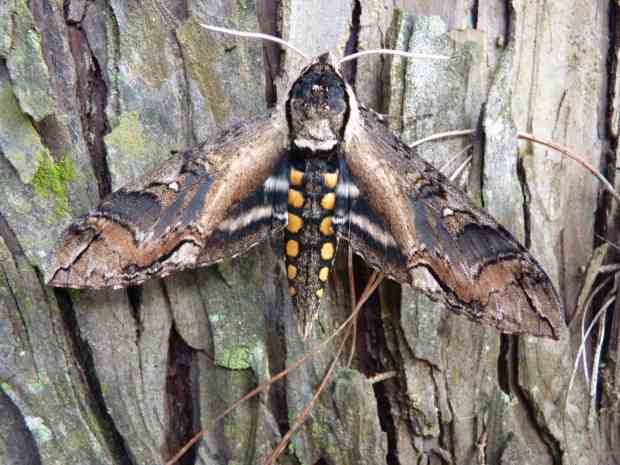
Regarding the post on the moth I published yesterday (Spot the moth 34) , I am now able to name it as the Mealy hawkmoth (Platysphinx piabilis). This moth feeds on plants of the Fabaceae family such as Peawood (Craibia zimmermanni), Giant Umzimbeet (Millettia sutherlandii), Cork bush (Mundulea sericea) and Pterocarpus spp.
My thanks go to Mr. Roy Goff that helped with the identification. Roy manages a great moth identification site: http://www.africanmoths.com/index.html that I find a great help.
Here is another picture of the moth for you to enjoy.

Reference
http://www.africanmoths.com/pages/SPHINGIIDAE/SMERINTHIINAE/platysphinx%20piabilis.html
Today, while walking in the garden (in fact I was assisting Stephen, our caretaker, to unblock some drain pipes) I came across this beast. As I thought it had potential, I placed it among some of the leves where I found it. Here it is:

Another view:

?
?
?
?
?
?
?
?
?
?
?
?
?
And here it is. Quite a beautiful hawkmoth (I believe)!


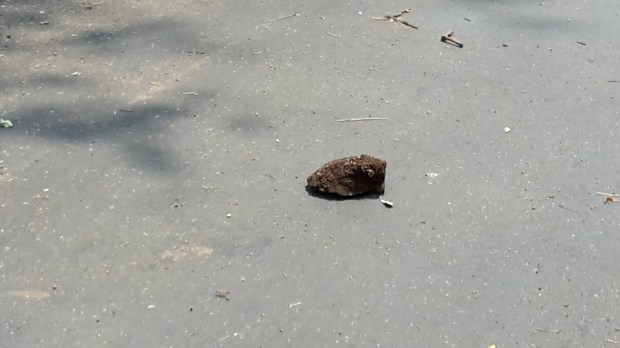
Now, this one is really tricky… We spotted around Shingwedzi Camp in the Kruger National Park last October. See if you can spot it…
?
?
?
?
?
?
?
?
?
?
?
?
A better view may help?

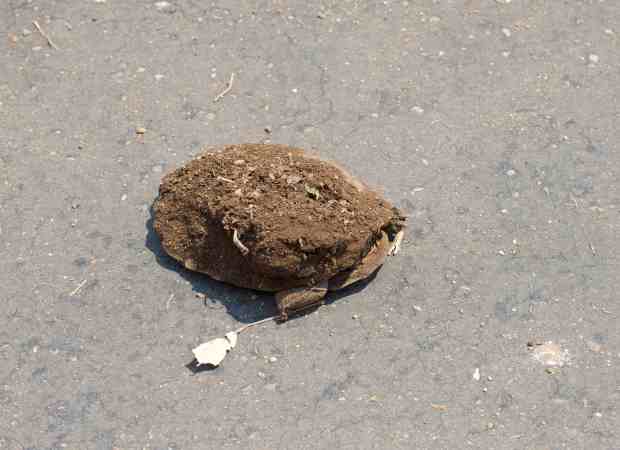
OK. I reveal it below:

It was a different pot the beast!
I imagine that the terrapin had been buried somewhere safe and moist waiting for the rains and we found it moments after it re-emergence while crossing the road to get to the river.
And then, after the photo opportunity, it just continued on its way.
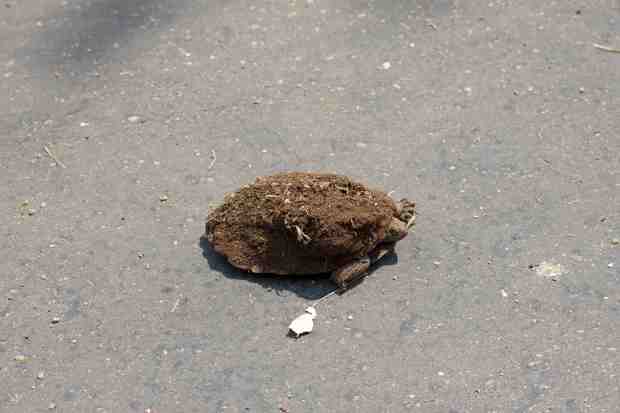
An easy “beast” for you to find.
?
?
?
?
?
?
?
It moved and it became very obvious.
 You would agree with me that it is a beautiful and useful mantis!