Africa

Kenya: the Beginnings[1]

Recovered from my curry dinner and rested I met Matt, my future supervisor. My first impression was that he did not take much notice of his personal appearance. He was tall with stooped shoulders, going bald and had somewhat bowed legs. He wore khaki gray trousers, a long-sleeved shirt, a green cardigan and Clarks shoes (always the same model that he never changed[2] for the years I was with him!) and, at first sight, he seemed friendly and direct but also demanded respect. He spoke with a strong Glaswegian accent that took a while for me to get used to.

We had a cup of coffee and talked for a while and then he invited me for a tour of Nairobi as he said “Julio, we can talk while we see the city and tomorrow I will take you to Muguga House where you will stay for the time being”. I was delighted, as I had no transport. So we spent most of the day together and I got a valuable briefing on important issues for my future. Most importantly, I liked him and I thought then -I believe correctly- that he also liked me in his own way.

Matt had been born in Scotland 58 years earlier and graduated as a veterinarian in Glasgow. After working in Pakistan (he was very proud of his Urdu), in the 60’s he moved to Tororo in Uganda to work on African Animal Trypanosomosis[3]. His important findings on the epidemiology of this deadly disease placed him in a prestigious place in the parasitology world, particularly in the African context.

His success prompted FAO to hire him in Kenya to spearhead a very large programme to develop a protection method against another cattle scourge in East Africa: Theileriosis [East Coast fever (ECF) or Corridor Disease], caused by a blood parasite -somehow similar to Malaria- known as Theileria. Those were the days of the early East African Community composed by Kenya, Tanzania and Uganda. The Brown Ear Tick (Rhipicephalus appendiculatus) is ECF’s vector[4] inoculating cattle (and other wild animals) with the Theileria parasites from its salivary glands, and, most of the time killing the susceptible animal. Some wild animals such as African Buffalo survive the infection and become “carriers” of the parasite, a kind of storage for the disease that can jump again to cattle through the ticks as the latter feed on different hosts.
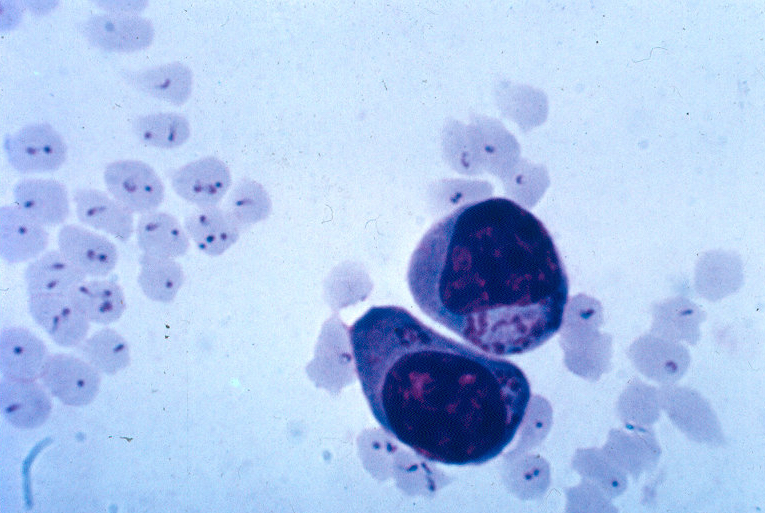
Theileria schizonts (inside cells with nucleai) and infected erythrocytes.
Theileria schizonts (inside cells with nucleai) and infected erythrocytes.

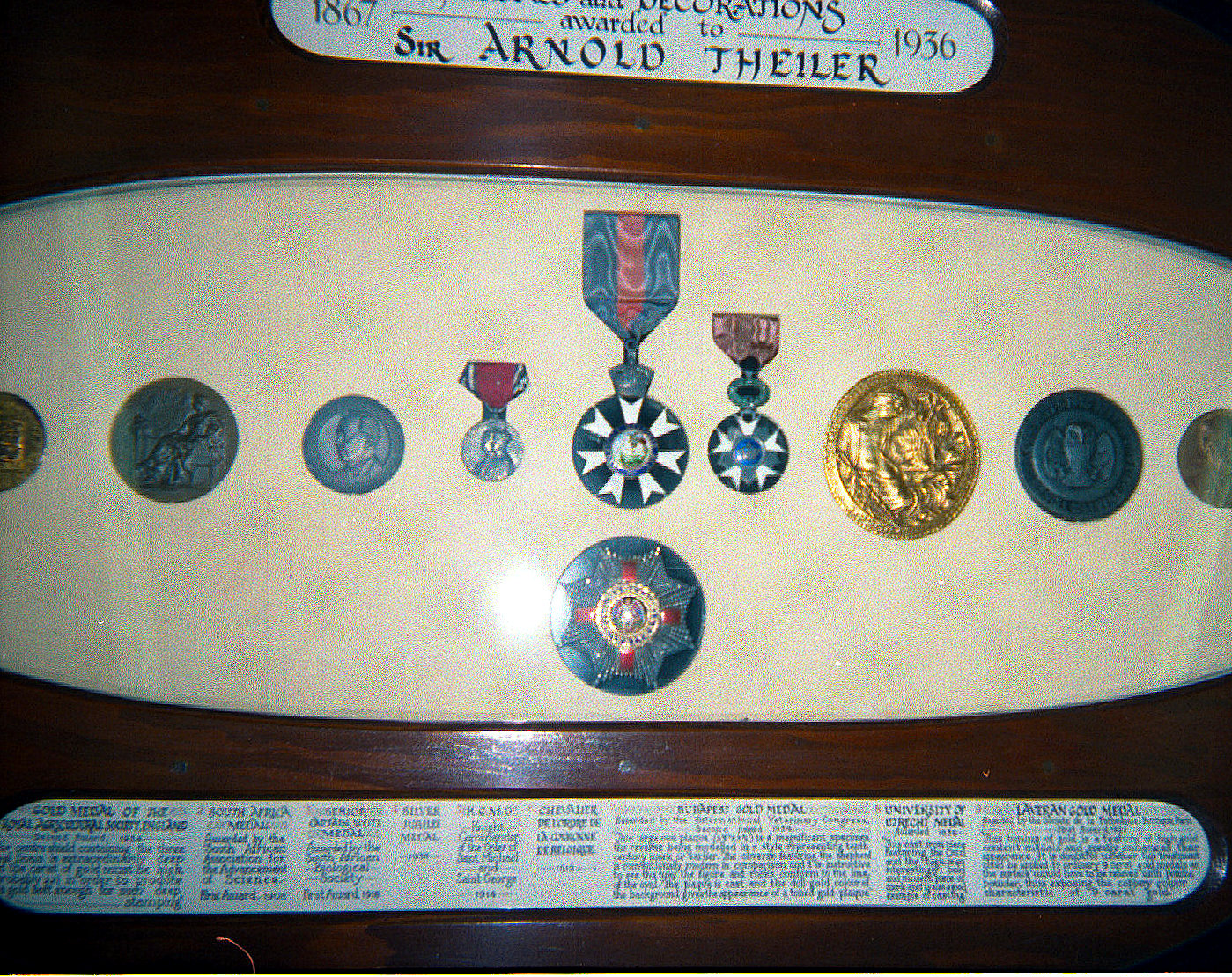
Theiler's condecorations for his outstanding work.

Theiler’s condecorations for his outstanding work.

Clearly, Matt’s main contributions to the programme were to keep a very diverse scientific team working together for years and to achieve its goal. (Later, I learnt that he was a strong leader and heard several stories of rather vehement programme meetings where participants came to blows and chairs flew but I am not able to confirm them).

It was clear that he had managed to successfully “translate” his research in Trypanosomosis to ECF. Success started when the programme managed to reproduce the disease artificially by injecting a known number of ECF infective units extracted from the tick vector[5]. This achievement enabled the programme to develop an efficient system to work with the disease that, after more than ten years of research, culminated in the development of an immunization method: a mix of Theileria types[6] that, when inoculated to an animal together with the right antibiotic (tetracycline), would produce a very mild disease and result in the animal becoming immune practically for life[7].
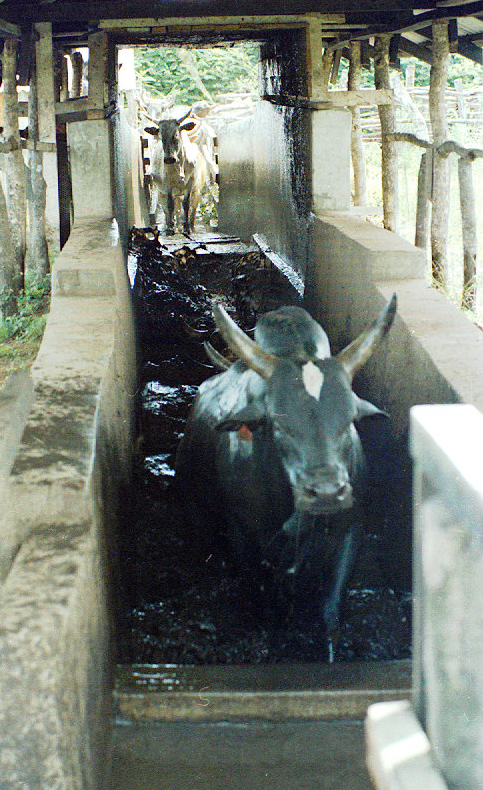
Cattle being dipped with acaricides.

Cattle being dipped with acaricides.

Until the development of this immunization method, the only way to keep cattle in ECF endemic areas was by “cleaning” the animals with insecticide-like chemicals known as acaricides[8] dissolved in water as often as twice a week! In theory, the new immunization method would remove the need for intense acaricide treatment with beneficial effects for both the animals and environment.

Despite the advances in ECF immunizations, the ticks would still be there and have an impact on the animals as parasites. I was a small cog in this rather complex parasite-vector-host system and my mission was to quantify the effects of the ticks themselves on productivity and their economic impact. I had 30 months to achieve this! Clearly Matt’s over-optimism had permeated the project proposal, as I later discovered was true for most proposals he developed…
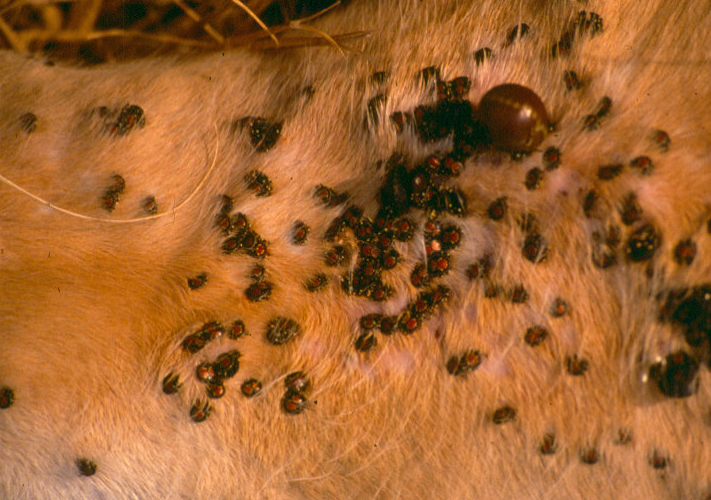
Heavy tick infestation, mainly Amblyomma spp.
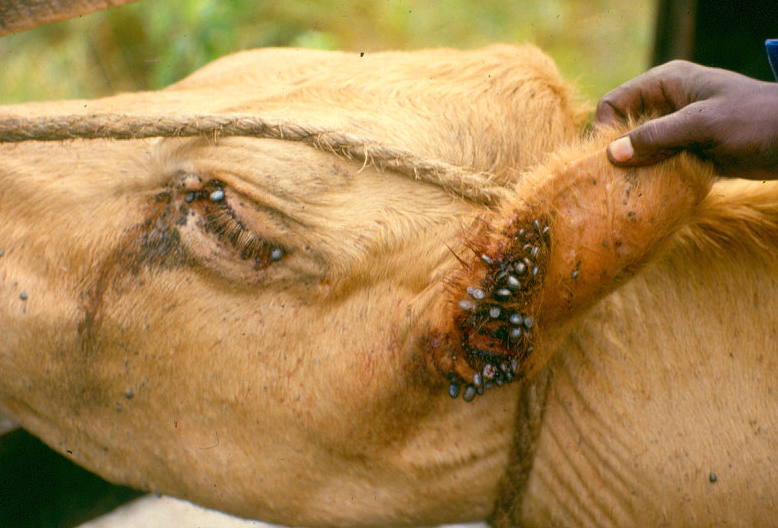
Heavy tick infestation, mainly Amblyomma spp.

Brown Ear ticks
Brown Ear ticks

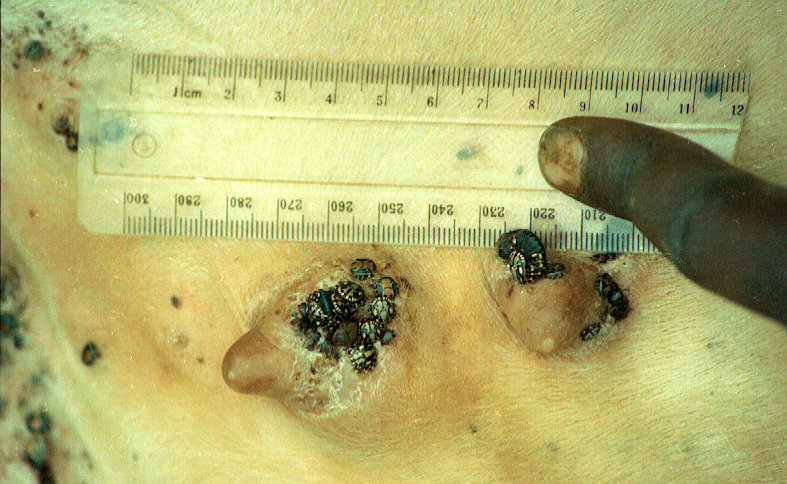
Amblyomma cohaerens (gold) and A. variegatum (orange) tick infestation.
Amblyomma cohaerens (gold) and A. variegatum (orange) tick infestation.

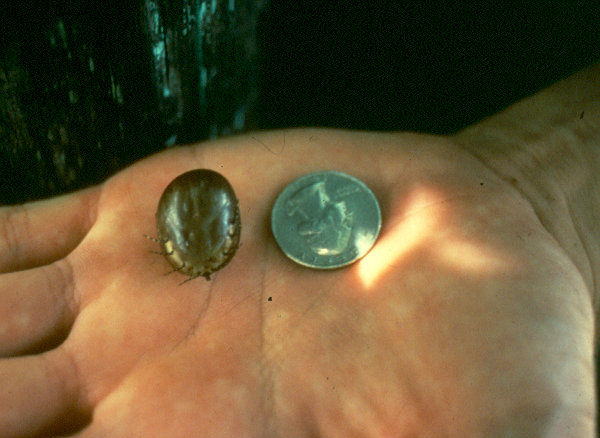
The size of a tick!

The size of a tick!

Matt, at the timenow retired from FAO, was the Director of the Tick Programme ofat the International Centre of Insect Physiology and Ecology (ICIPE). The ICIPE would host me as an FAO Fellow attached to the Tick Programme so he was my direct supervisor. . I was seconded by FAO to the latter, hence his role as my boss. The Tick Programme was working on the ecology of the Brown Ear Tick as well as searching for a “vaccine” against the Brown Ear tick vector. “Julio, we have a laboratory in Muguga and good relations with the veterinarians working on ECF there, so we will succeed”, he said. I listened with interest, accumulating questions and anxieties!

He was very excited with my arrival. I recall him saying “Julio, you are at the right place at the right time” while lighting another Sportsman cigarette (he was a heavy smoker), adding “Most of the important work on theileriosis is taking place in Muguga!”. In fact I was a bit too early but I did not know this yet! He explained that the work of the now finished FAO programme still continued and the immunization method was being laboratory and field-tested in various places in Kenya, mainly Muguga[9] and the International Laboratory for Animal Diseases (ILRAD)[10]. “Julio, the key word is collaboration” Luckily, because of his past work he had lots of connections with people working in ECF in Kenya.

Almost immediately he mentioned Alan as one of his main allies. A Northern Irish parasitologist that as Matt put it: “has green fingers with parasites”. You will work closely with him, as he is the man behind ECF immunization. “He is waiting for you at Muguga!” he said. He added, “Robin, our tick ecologist -on leave now- is also there. He knows everything you need to know on the ticks so you will be OK”. I noted that Muguga would be an important place for me!

We drove around Nairobi and he showed me some of the key spots: the FAO Office near Bishops Road, the ICIPE HQs at Chiromo, ILRAD and the Veterinary Laboratory, both located at Kabete and other useful places in town. He never stopped talking about work! We did not drive to Muguga (about 30 km north of Nairobi). He promised to take me there the following day.

I soon realized that Matt was an “ideas man” and that I was part of one of them! He believed that my fieldwork was possible and had agreed with FAO to host my research. I also learnt that there were a number of knots yet to be untied for me to do my job. The place where I would work was the main bone of contention but Rusinga Island was still top of the options. My preoccupation increased!

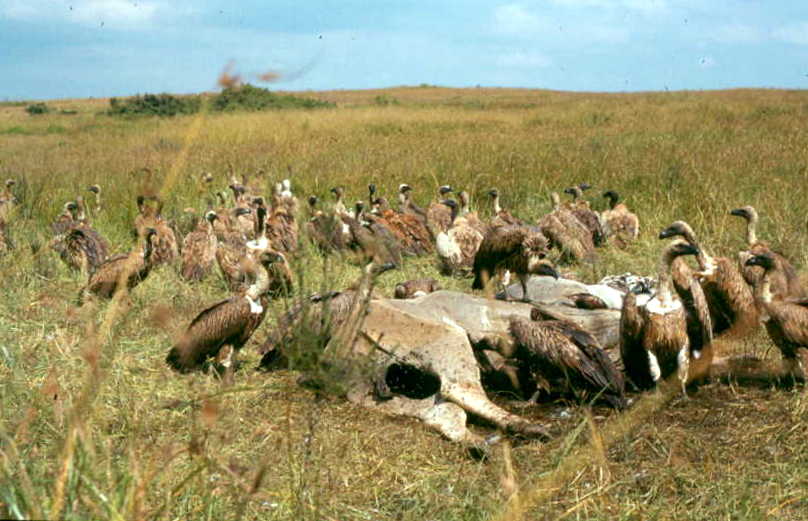
Lunchtime was approaching and Matt proposed to have lunch at the Nairobi National Park. I happily obliged. So, after stopping at a duka[11] to buy samosas[12] and two packs of milk we drove to the Park. We soon got there and we drove almost straight to the Viewing Platform without stopping to watch anything! Matt had seen all or did not care about wildlife! I took some hurried pictures of what I could during the short stoppages he did or from the moving car. It was the first “real” wildlife I had seen! We stopped for a herd of giraffes and drove past vultures at a kill and had our lunch while taking in the view extending into the Athi plains and beyond. It was my first picnic in the bush at a beautiful location! Matt continued talking about work, his enthusiasm unabated!
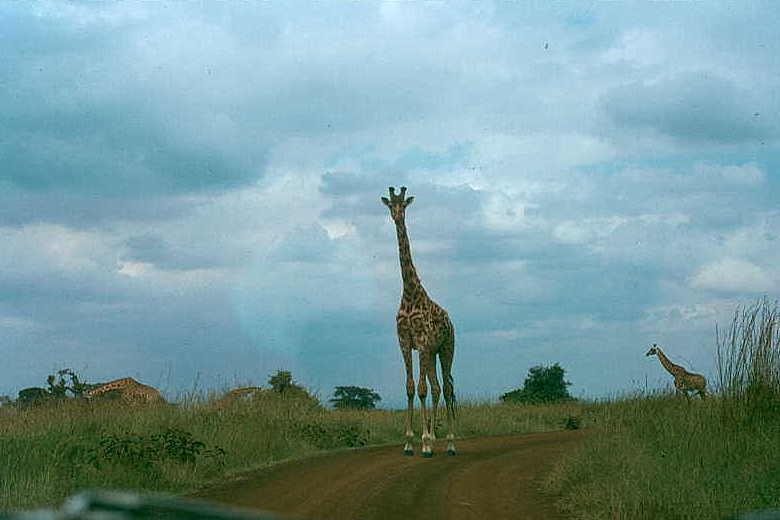
My first giraffe at Nairobi National Park.
My first giraffe at Nairobi National Park.

I took this picture of vultures at a carcass while driving past!

I took this picture of vultures at a carcass while driving past!

Occasionally he would digress to his other passion in life: fly-fishing. He loved it and never missed an opportunity to practice it. He explained that he was building dams at his house in Tigoni -an area North of Nairobi where many British lived- so that he could keep his own trout. “Julio, I can catch them from my verandah” he said while mimicking casting his fly towards the plain! I was also a fisherman but knew little about fly-fishing so I limited myself to polite and rather useless comments! He promised to take me to his house to show me the dams and to introduce me to his family. Clearly aware of my rather useless comments regarding fly-fishing he never invited me to join him!

At the end of the day Matt dropped me off at the hotel and we agreed that the following day he would collect me in the morning and take me to Muguga, my future “home”. I was tired, both physically and mentally. Although I had gained valuable information I had also accumulated many questions that I needed answers to. Being young and rather anxious, I needed to rest, relax and think. I had entered a new world with new places, new people and a different working methodology. I was beginning to realize that my work would come with a few trials. Despite this, I never regretted my choice as I loved the Kenya atmosphere and I was hopeful that things would work out in the end, despite my present doubts.

[1] This post follows “Africa – Arrival”.

[2] He may have several pairs of the same model!

[3] At the time Glasgow Veterinary College was strong in East Africa.

[4] Similar role to the mosquito in malaria.

[5] Until then ECF was only caused by applying live ticks.

[6] Theileria parasites vary in different areas.

[7] This method known as “infection and treatment” is still today the only practical method available to us, despite years of high-powered and costly scientific research.

[8] Ticks are acari. Acaricides are very toxic chemicals.

[9] The Kenya Veterinary Research Institute (KEVRI) of the Kenya Agriculture Research Institute (KARI) was located at Muguga.

[10] Now the International Livestock Research Institute (ILRI).

[11] The local name for a shop that in the “old” days was mostly owned by Indian migrants.

[12] A fried triangular pastry filled with minced meat, mutton or chicken, heavily spiced and chilly-hot.

Police Road Block (Tanzania)

There is nothing unusual about a police roadblock in Africa. I have dealt with many in different countries and in different situations. Luckily I never got fined or needed to bribe my way through. The occasion I have been closest to a fine was driving between Muguga and Nairobi in the early 80s. I was caught in double radar trick. This is a simple, crafty and frequently practiced manoeuvre that involves placing two speed traps separated by a few km. You pass one and then, thinking that you escaped, you speed away only to be caught by the real thing a few km further on. On that occasion the policeman had even written the fine but I still managed to get off the hook, I do not know how or why he let me go! A colleague in Kenya said I manage to say the right words in most situations, and my own family fully agrees! I do not know!

In 2010 I went to Arusha for a meeting to discuss a cattle vaccine that was very successful among the Maasai of Tanzania. The meeting over we had the Saturday free as I was flying out on the Sunday. So, we decided to go for a drive to enjoy the countryside, to visit some Maasai manyattas where my veterinary friends needed to do routine check-ups at and end with a visit to the snake park, nothing too exotic.

We left in Beppe and Lieve’s ancient but still serviceable Nissan Patrol with Lieve driving and Beppe as our navigator. I was in the back seat, chatting away with them, trying to catch up on several years of news. After a few km driving towards Moshi we came to a police road block. “Nothing unusual” I thought and my companions agreed, remarking: “They are always here”. There were several cars queuing and also quite a few police officers in sight.

After queuing for a few more minutes, a polite police officer approached and he explained that they were performing a roadworthiness inspection on vehicles “today we are looking at fire extinguishers” he declared. The exchange of looks and a few familiar Italian words in the front seat indicated to me that we may not be within the expected roadworthy condition. After all, the car was quite old and I have never come across anyone who checks their fire extinguisher at regular intervals. It is just there, normally at the feet of the passenger. Well, in our case it was not even there!

Calmly we all argued with the policeman that this was not a very useful check-up, that we were vets in a great hurry to deliver a calf and other plausible excuses that we could think of at the time. No results. The police stood his ground and continued to demand to see our fire extinguisher. Calmly, Beppe got out of the car and walked slowly to the back. Lieve and I waited; we could only talk to each other in English so we remained silent. Noise of objects being shifted around came from the back and, after a while we could here Beppe’s “ecco!” (Italian for “I found it”) and we relaxed a bit. Beppe closed the back doors and walked with the extinguisher towards the police, smiling. “Here it is, bwana” and then added “it is a bit old but still good”. What an optimistic remark! It was a rusty cylinder, once red, with arather defaced label, consequence of many years of dust rubbing against the car tools and the jack. We all nodded our approval and waited for the outcome.

The policeman, unmoved, had a look at the piece of rust and declared that it was totally unsuitable and, worse still, that we could not drive the car until we acquired a new one that followed the Tanzania road specifications that we clearly ignored. There was apparently no “fine and go” involved but a prohibition of movement on the spot! We pleaded in various ways to no avail and then got rather frustrated with the situation and asked what the solution was, fearing the possible bribe. “You can buy a new one” he announced. “But where?” we said in a pathetic choir and added, “there is no shop/petrol station here”. “You can buy one from me now” he said. We looked at each other and could not help a chuckle but kept our straight faces as much as we could. We asked the cost and tried to bargain but it was not possible so we asked him to bring it while we collected the money.

Beppe was still outside, holding our rusted tool while the policeman walked towards the sentry box, and opened the door. We could not believe our eyes: the box was full to the brim with extinguishers!. He picked one and came back to offer it to Beppe. The latter, in a last ditch attempt of avoiding buying the item at an inflated price proceeded to compare the kind of fires that each could put out in what I thought was a probably unfruitful but clever and brave attempt, nonetheless. It was clear that he had hatched the plan while we waited for the policeman and had spent a great deal of time reading the damaged label. He held both in his hands and explained that both could put off petrol, plastic and electric fires but that ours could also stamp out fabric fires! Beppe grasped the opportunity and declared “Mine is better than yours as it can control more kinds of fires”

For the first time the policeman showed hesitance and Beppe seized his chance: “no need to buy an inferior product” he declared with aplomb and conviction. The policeman recovered fast and suggested that we checked the functioning of our rotten tool. Beppe removed the safety pin and pressed the trigger. Nothing happened. He tried again and, again, he got nothing. A third attempt that involved violent shaking of the extinguisher and hard pressing produced about 3 cm of a substance resembling yellow toothpaste! Without saying another word, Beppe threw the rusted cylinder into the nearest ditch, collected our money, counted it, paid, got the new cylinder, gave the policeman a handshake and quietly got in the car. “Let’s go” was the only thing he said. We went and, for a long while none of us had anything to say and then we all burst out laughing.

We moved on with a new extinguisher towards an enjoyable day together.

Landing Rights

An article by Kamal Paul in the Sunday Times of the 20th of November 2011 describes his experience on board a Comtel Air plane from Amritsar in India to Birmingham. The plane landed in Austria for a stopover. Once on the ground the passengers were informed that, in order to take off again, they needed to pay Euro 23,800 for the fuel and landing tax. He was then requested by a stewardess to collect the money from the fellow 179 passengers so that they could take off again and get to their destination. This account reinforces the authenticity of a story I heard in the early 90s about the fate of a Zambia Airways DC 10 on a flight from Lusaka to London.

Lusaka in the 90’s was a place of lots of socializing and we were frequently invited for lunch on Sundays. The weather was very suitable for outdoor activities so it was a highly enjoyable time.

During these gatherings I heard many stories. One, told by the pilot himself stuck in my mind until today. George, I believe his name was when we met him, was a retired commercial pilot. He started bush flying and gradually built a career until he became a pilot for Zambia Airways. At that time ZA was the flag airline of the country and, I believe, it was Government-owned.

To compete in the international routes with the likes of UTA and British Airways, ZA leased three McDonnell Douglas DC10’s that did the route to New York, London and other European and Asian destinations. George was one of the pilots that flew this aircraft. The flights were successful as they offered good prices, most likely subsidized by the Government. The situation was not sustainable and the inevitable happened: ZA ceased operating in 1995 and several of its planes were impounded at several airports where the company had debts.

George told us about an experience he had during one of the many times he flew to London in the early nineties, just before the company closed down. He was flying a DC10 with its full passenger capacity as was normal on these flights. As is routine, at some prudent distance he established contact with the control tower of the London airport (probably Gatwick at that time, I do not recall). He informed the airport of the coordinates of the flight and eventually requested permission to land.

To his shock, the control tower refused to let him land as the company had a large accumulated landing fees debt. Apparently the management of the company had been warned about the situation and the consequences that they would face if attempting to land there. Although very upset with ZA, there was no time for recrimination as a fast solution was necessary.

He pleaded with the tower and explained that he had a full plane and that, although the fuel would be sufficient to divert to another airport, he did not have the necessary authorization to do so. He waited for a reply with bated breath!

Eventually the control tower asked him if he had a credit card, as they could allow him to land by charging the landing fees to his card. Aware that it would take him months to recover the money, he realized that he had no option but to agree and eventually managed to land as planned.

Luckily for him, he was reimbursed before the company ceased to operate!

The Year of the Pangolin

Normally you do not organize a bush outing to find pangolins, although some people may do (maybe me… the bush snob?), you never know! So, I have never seen one, not even a footprint. As someone that grew up in the land of the gauchos, I have often come across armadillos, so being the pangolin the nearest mammal to look somehow like them in Africa, you may understand my interest in finding one. Besides, they are extremely interesting animals about which -and their conservation status in Africa- I know very little. The CITES cites (sorry about the pun) them in Appendix 2: “species that are not necessarily threatened with extinction, but may become so unless trade in specimens of such species is subject to strict regulation in order to avoid utilization incompatible with the survival of the species in the wild.”), not very encouraging if you wish to find one.

What is a pangolin? It is a a very small mammal -if compared with an elephant- but about the size of a hare, covered with large scales and suited with a longish scaly tail and a very long tongue (but very long compared with his body length) that he needs to get hold of his deeply dwelling termite and ant diet. It rolls into a ball if in danger and this may offer some protection against many predators although I do not see it surviving hungry large ones or humans.

The pangolin has another piece of bad luck, it is highly regarded in African culture and when one is found, it is given to Chiefs and other important authorities, including Heads of State. In addition, they are killed for their meat and scales throughout their range. You would agree with me that their present and future does not look good.

Clearly, the chances of finding and observing one (I prefer to observe rather than to photograph) look rather bleak. This was the opinion I formed after many years traveling in the bush, day and night. However, this may not be the case. Recently we visited the Hippo Pools camp in the shores of the Mazowe river (this will be the subject of another post) in the Umfurudzi Park (www.umfurudzipark.co.zw/). This jewel of a camp (and park) are doing well and, while returning from our stay, a park brochure offered the possibility of “Pangolin Tracking”. Although it does not specify the nature of these, the name gives me hope!

To add to the coincidence, a few weeks later, reading the Harare News of June 2014 I came across an article describing a trust that -among other projects- does work to protect pangolins in Southern Africa!  It is known as the “Tikki Hywood Trust” (www.tikkihywoodtrust.org).  In their web page I learnt that there are eight species worldwide and that they are the most traded animal in Asia these days. A bit more web research taught me that there are three pangolin species in Africa: Giant Ground Pangolin (Manis gigantea), African White-Bellied Pangolin (Manis tricuspis) and the Common Pangolin (Manis temminckii) distributed throughout Africa (http://www.awf.org/wildlife-conservation/pangolin). Three species, and I have not seen one individual!!!

My pangolin hopes are now up and,  who knows, 2014 may be the Year of the Pangolin for me!