birds

What on earth!? (28)

I watched “Scarface”, a movie with Al Pacino and Michelle Pfeiffer (among others) about 40 years back while still in Kenya and, just to confirm that I am getting to the fossil state, we rented a video from a library somewhere in Nairobi.

As I have forgotten the plot I decided to have another go at it as I found it in Netflix. As often happens, after a while, I started remembering it and, somehow, after the first hour, I was loosing interest. I was about to stop it when I was surprised by what I heard! This was not another of the rarther abundant bad words in the movie but some other sound that I found, somehow out of place!

The scene in question takes place in Cochabamba (Bolivia) when Tony Montana (Pacino) is discussing a drug deal with Alejandro Sosa (Paul Shenar) the producer of the cocaine. While they are finalizing the deal, seated in Sosa´s mansion, between a few “f” words, I, somehow, heard the call of a bird with which I am very familiar with.

Nothing wrong with that you may think. However, the bird, as far as I know, only occurs in Africa!

Below I embedded the relevant part of the movie that, luckily, it was already selected by “Popcorn Picks”, a YouTube video channel to who I give credit (I would not know how to extract a piece of a movie).

I regret thatr this is a rather violent moment of the film and, to avoid you watching this, I recommend you to go almost to the end (5:54) in the clip below and then, again around 5:57 just when Sosa tells Tony “I only tell you one time, don´t f… with me Tony”.

Despite other background noises and the music, I believe that I hear the call of the red-chested cuckoo or rain bird (Cuculus solitarius), also known in South Africa as “”Piet-my-vrou”, an onomatopeic name that mimicks it call that you can hear below:

Embedded from YouTube (credit: Birding with Lynette Rudman).

In my surprise, trying to see where this part of the movie was filmed, I consulted https://www.imdb.com where abundant information on “Scarface” is found. I learnt there that the scene in question was filmed at 656 Park Lane, Santa Barbara, California, USA, not an area where you expect to find a rain bird. However, another cuckoo, the yellow-billed cuckoo (Coccyzus americanus), is present there but its call is totally different.

I admit that I can be mistaken but I find this an unusual and interesting find for being totaly unexpected. So, how could we explain it? I see a few options, including that what I heard was just a combination of other bird sounds that, somehow, mimicked the rain bird. Another, more likely, is that one of the aviaries (there are a few in Santa Barbara) or a private individual nearby was keeping a red-chested cuckoo. The final possibility is that the film makers used background sounds from their sound library, irrespective of its origin.

I just consider this as an unusual event that we would probably never unravel but I will appreciate any ideas or information you may have.
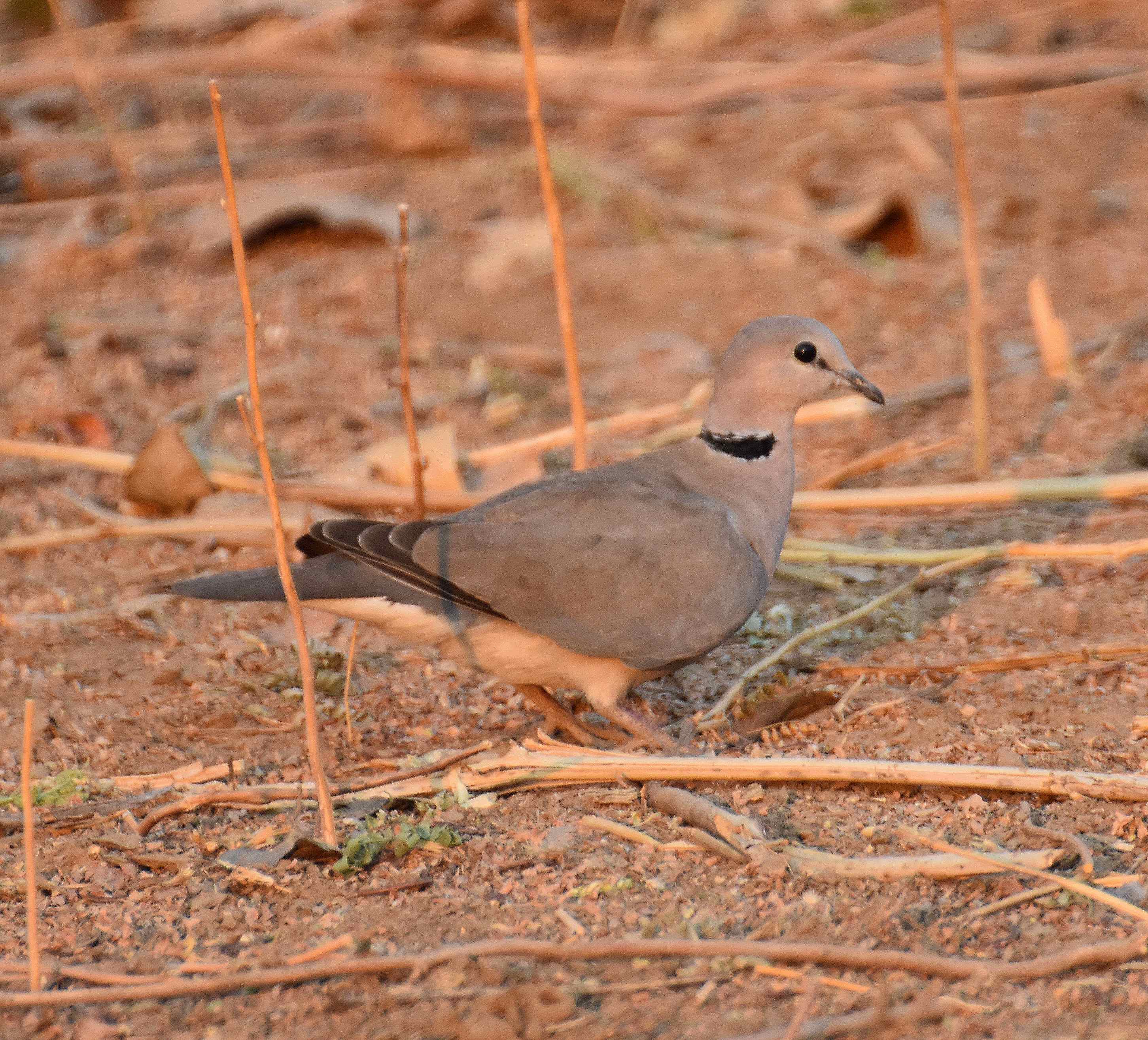
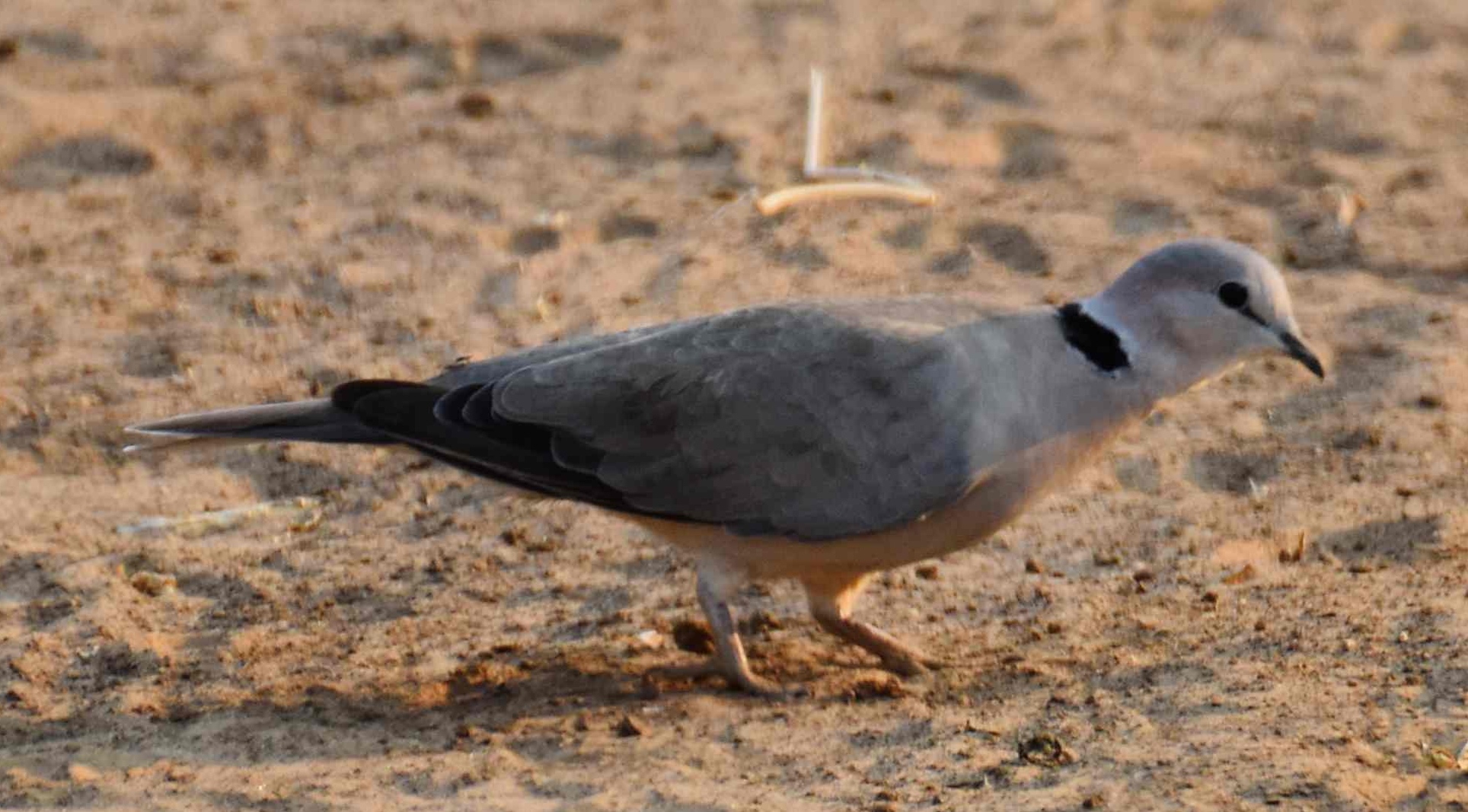
Leucistic dove?

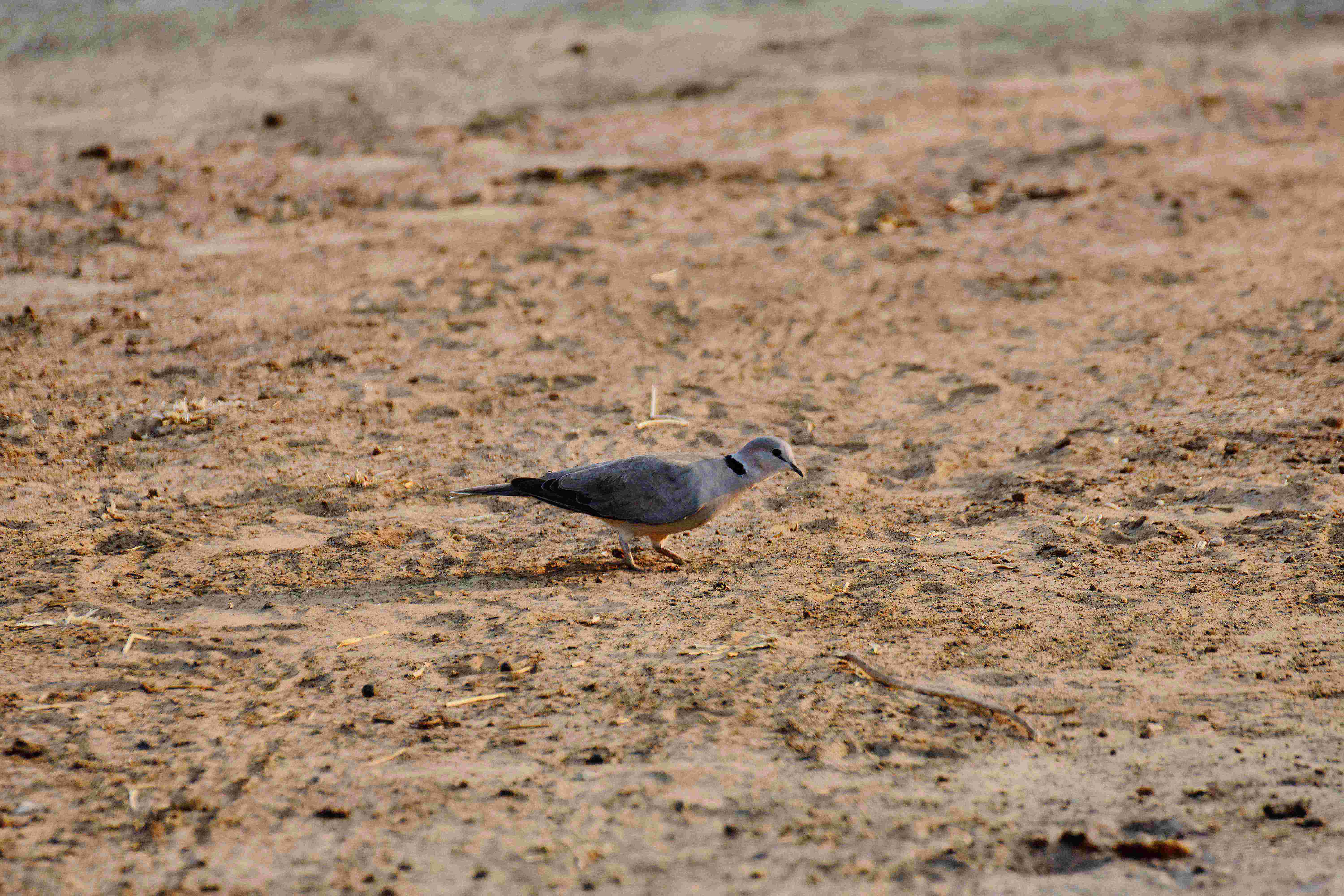
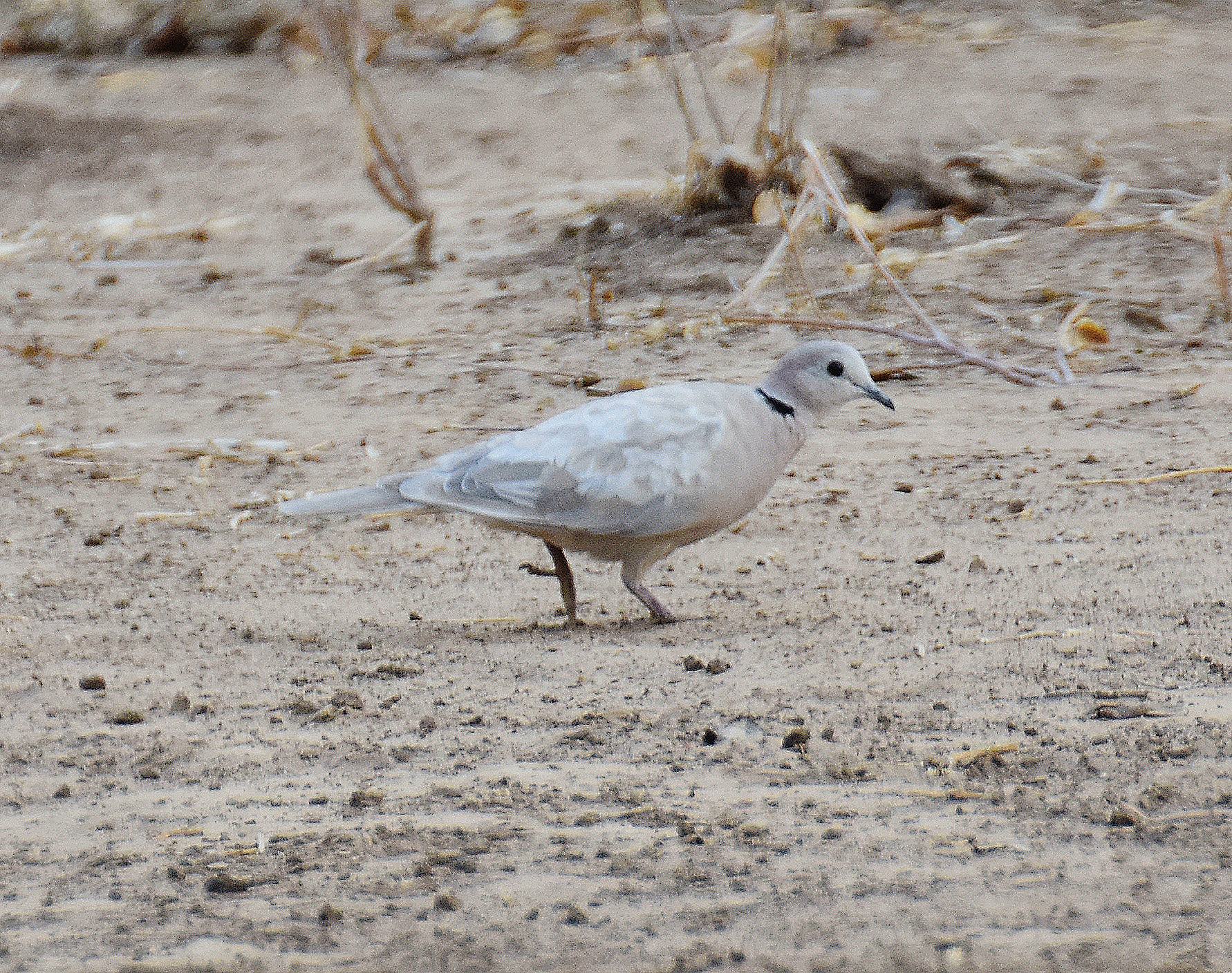
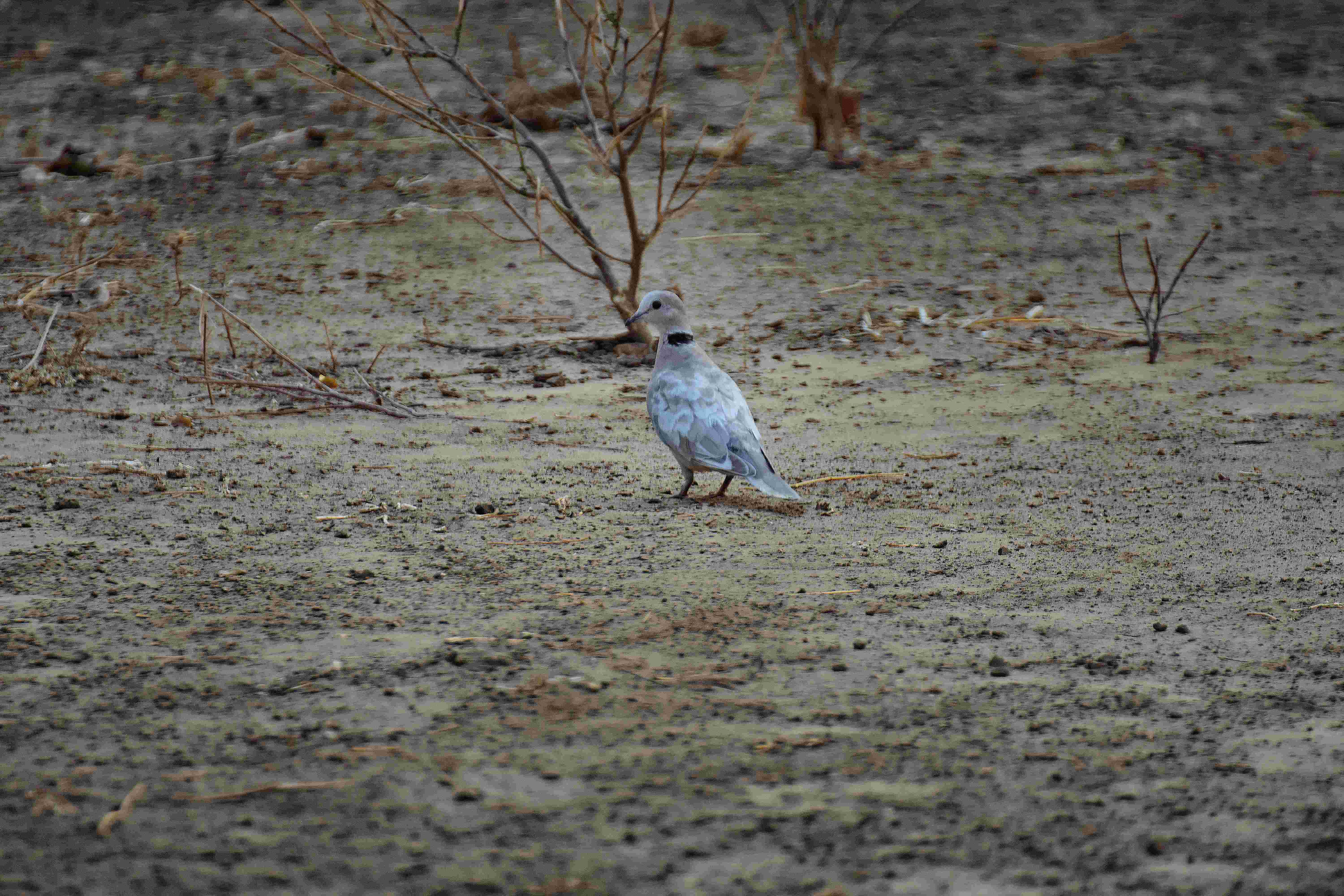
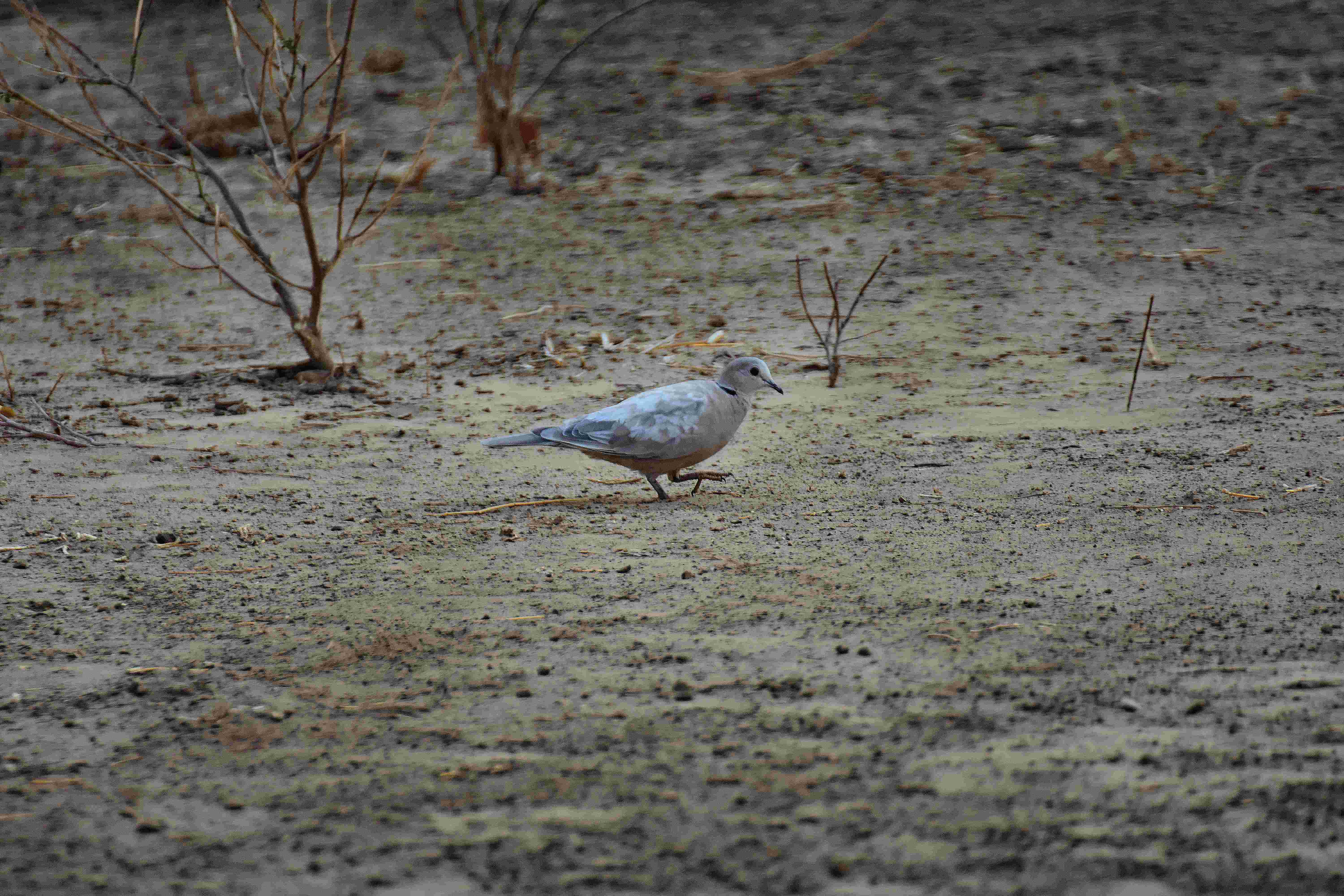
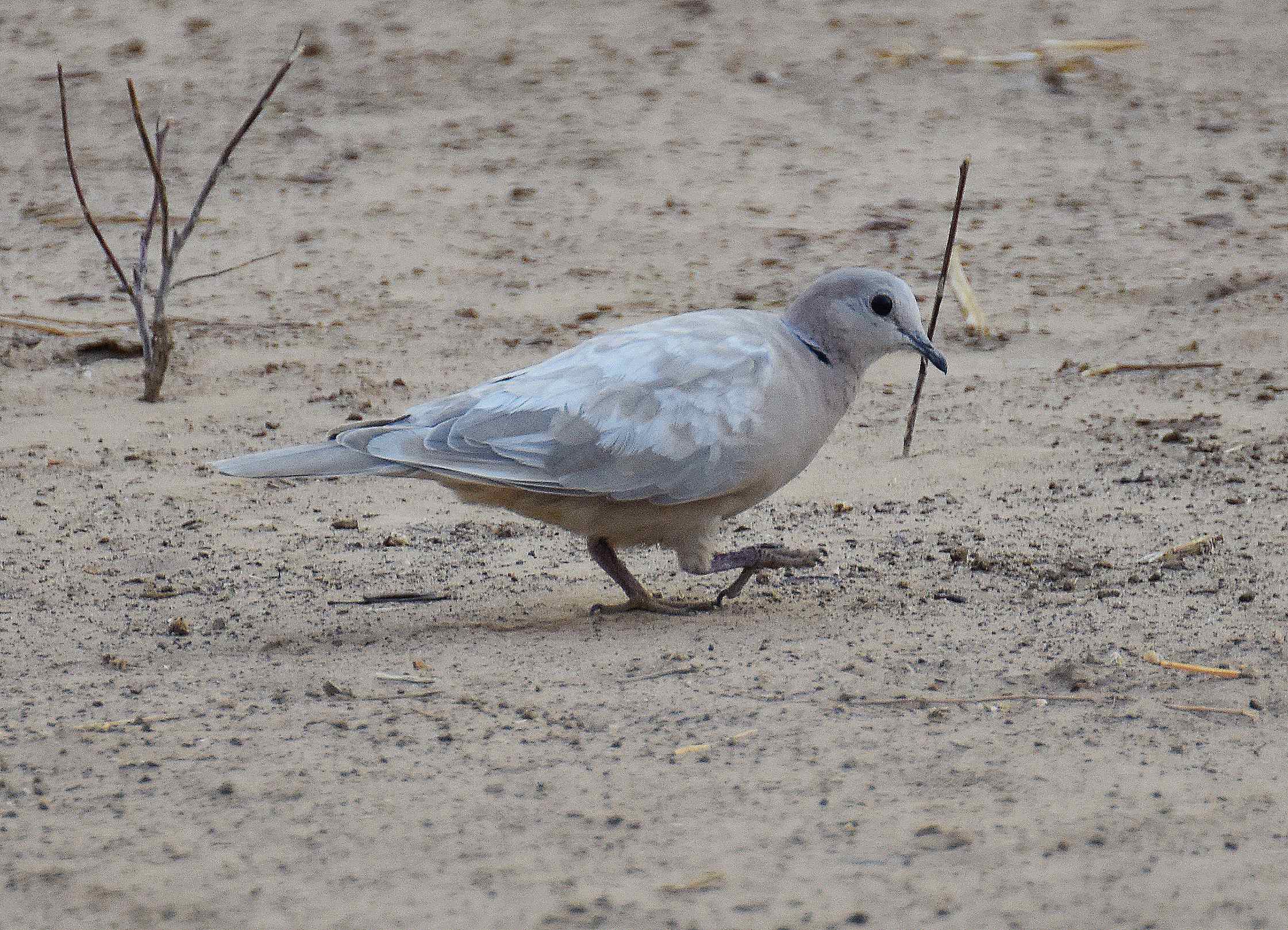
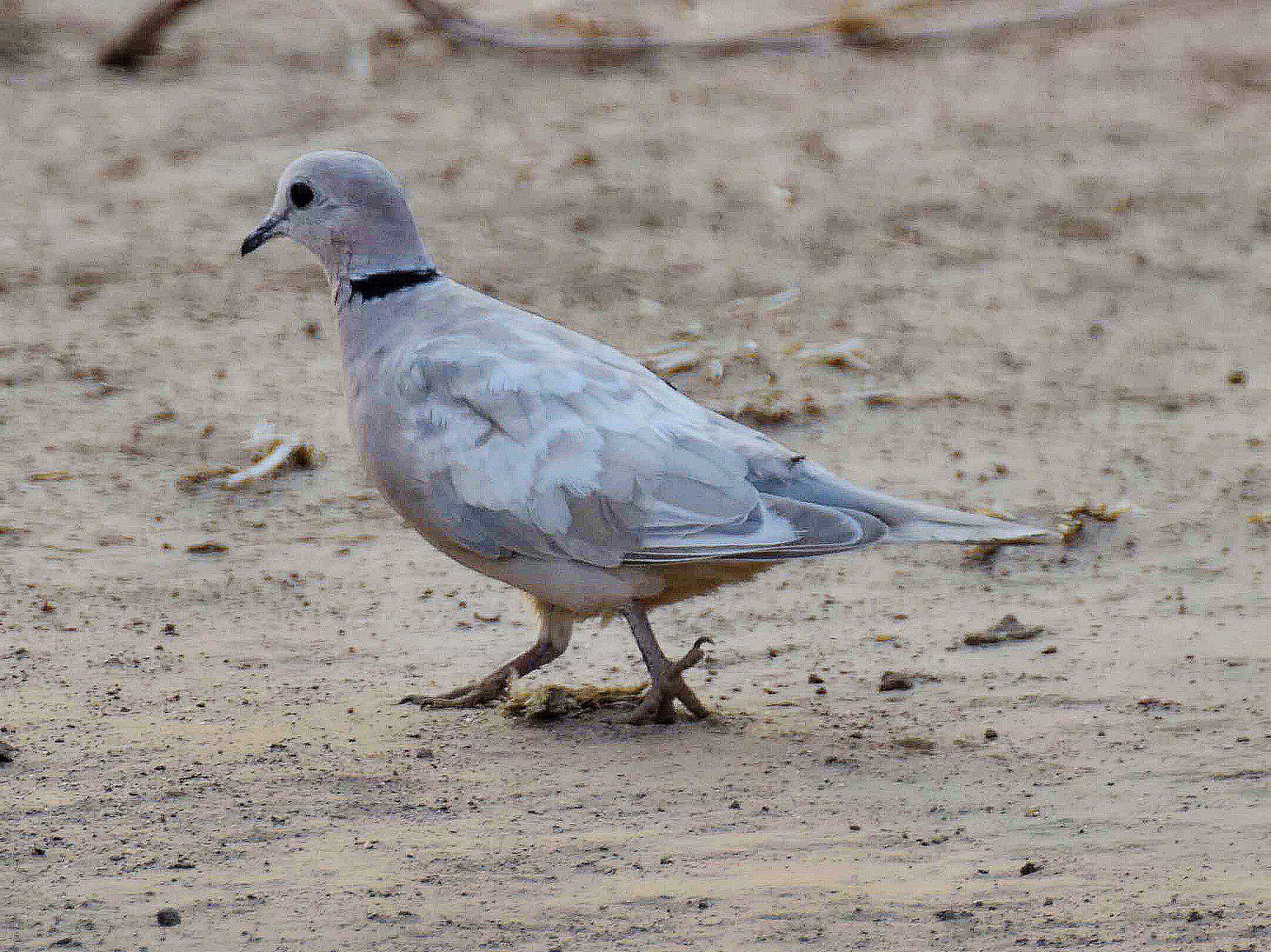
Several species of doves occur in Mana Pools National Park in Zimbabwe. Some of them such as the Ring-necked Dove (Streptopelia capicola) is frequently ignored because of its abundance.

During one of our visits to the park in September 2018, among a flock of these doves we spotted one that did not quite match the expected bird, so we looked at it more carefully.

From a distance, its plumage appeared paler that its companions and it looked “washed” in certain areas of its body.

We had seen leucism before (See: https://bushsnob.com/2017/01/05/odd-bird/) and I have described the phenomenon as follows: “Animal coloration can deviate from the standard, from complete melanism to albinism. Leucism (leukism) is one of the intermediate forms defined as a phenotype resulting from blemishes in pigment cell differentiation during development with the consequence that the entire animal or patches of its body being white as they lack the cells capable of making pigment”.

I believe that what we observed this time is a case of “dilution”, a condition where the plumage colour often appears ‘washed out’ (i.e. ‘diluted’). In dilution, melanin cells are present (unlike in leucistic birds) but produce less pigment than normal. Clearly, humans need to classify everything!

Instinct vs. curiosity

After our time at Kennedy One and Main Camp, it was time to have some more comfort so we headed for Robins Camp, to the relief of our visitors. It was nice to be back to a very nice place with welcoming staff and to be able to relax without the chores of camping, particulalry cooking and washing-up!

Robins Camp at dusk.

The bats that inhabit the tower were there although we did not spot the dwarf mongose group that we had seen earlier. We had our compensations as we watched other interesting birds in the camp and nearby.

During our earlier visit to Hwange National Park (HNP) after the Covid pandemic (See: https://bushsnob.com/2022/04/03/zimbabwe-post-covid/) we visited a place known as the Salt pan and we were lucky to have a glimpse of a rather shy cheetah family that took off as soon as they saw us. We also “discovered” a salty water dam with several interesting water birds. Grey herons were the dominant species but there were also little grebes and the beautifully brittle stints with their very long and thin pink legs that seem to be unable to support even their very light weights. So slender the legs are that the water is almost still when they wade through.

At the time we also found a small family of hyenas and many vultures perched on the trees surrounding the dam, a sign that kills were frequent there.

So, during our present trip, the first morning at Robins Camp we started early and headed for the Salt pan.

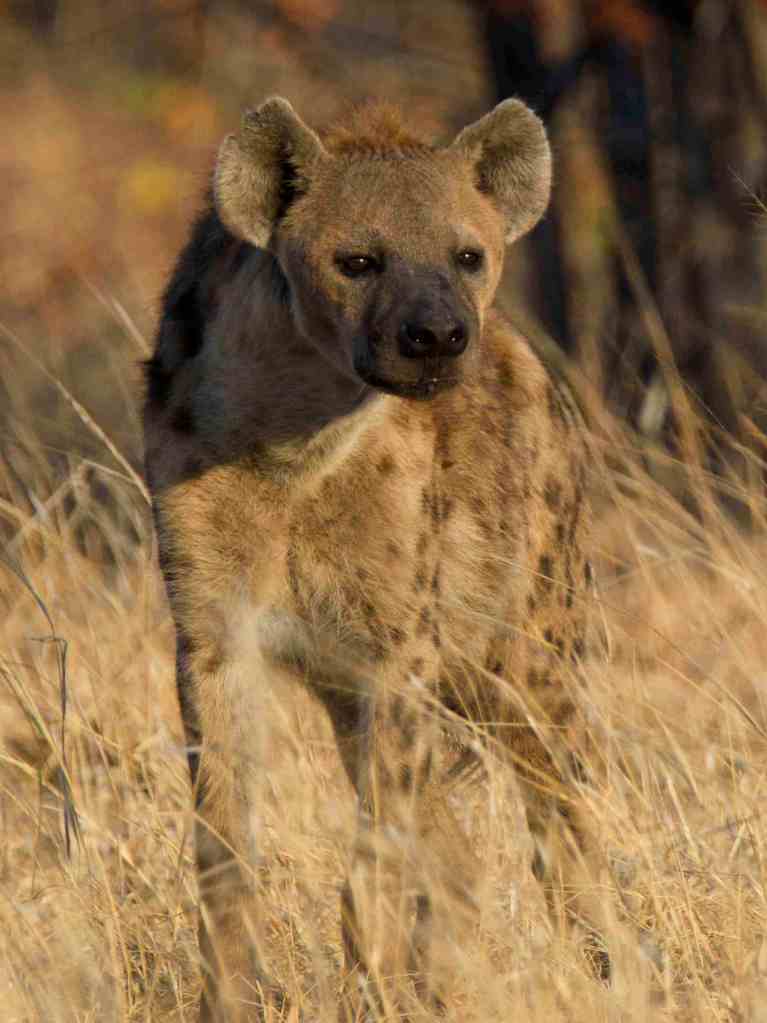
Three of the adult spotted hyenas.

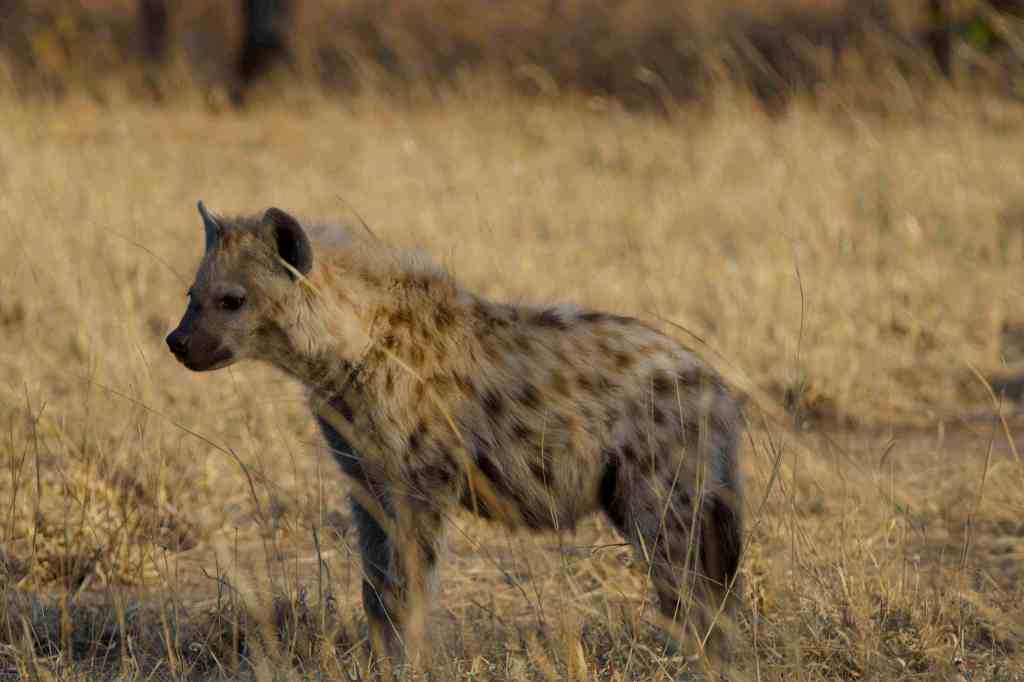
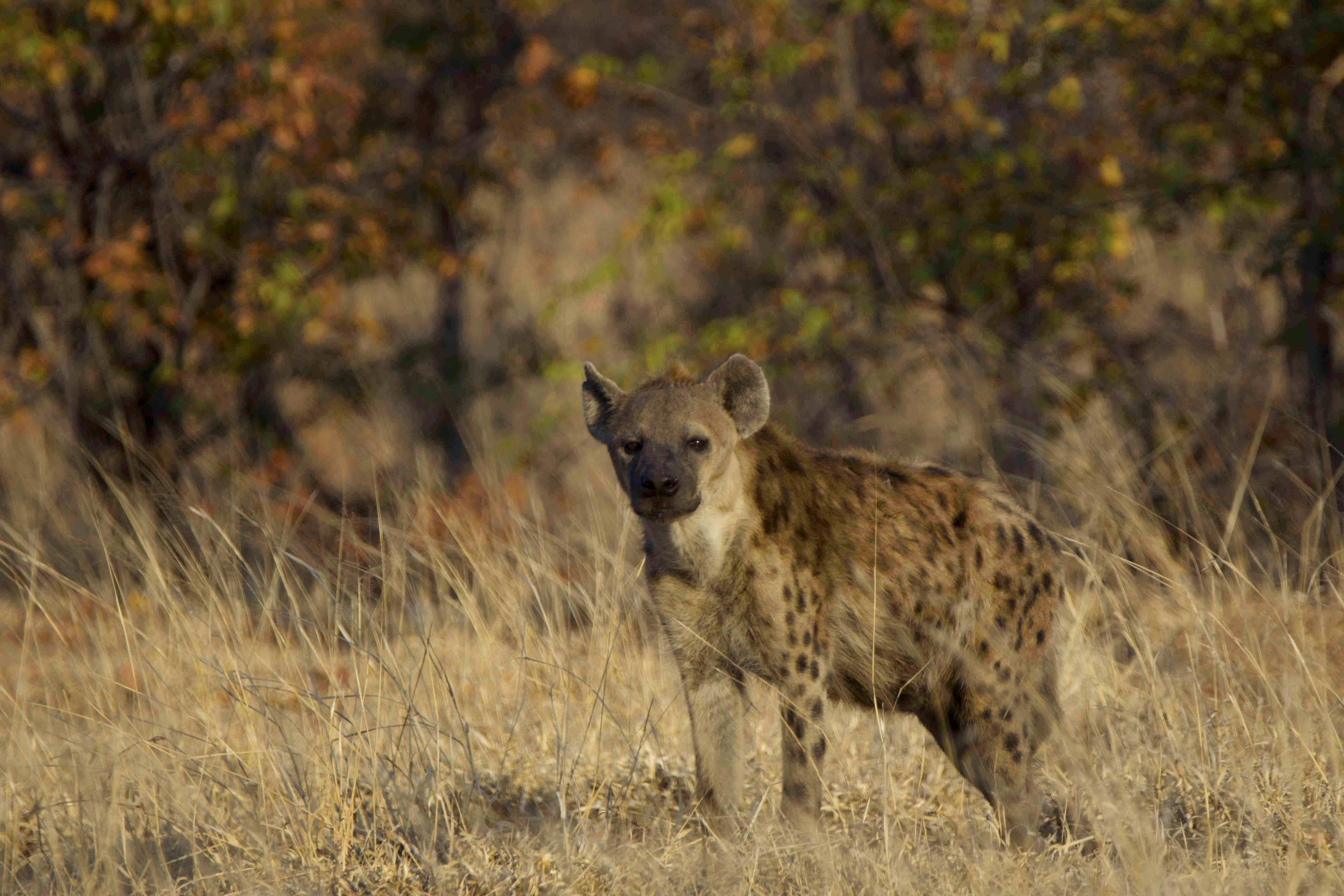
This time we did not see the cheetah but, on our way to the pan, we met with a group of spotted hyenas composed of seven adults and two youngsters, the largest group we have seen so far in HNP and Zimbabwe. As they are one of the favourite animals of our daughter Flori, we stopped to watch.

One of the hyenas was probably carrying a chunk of meat and moving away from us never to be seen again. The rest of the adults continued walking and they tolerated our presence. We have had literally hundreds of daylight encounters with spotted hyenas over the years and they have always been rather unconcerned by our presence, keeping a considerable distance from us, either on foot or inside our car.

Although one of the young hyenas continued walking with the adults, the second either did not hear the adults‘ warning or it was an “infant terrible”, so it stayed behind, rather curious of our presence. At first it stopped to watch us but, not totally satisfied, it decided to come to have a close look at our car and its occupants. It approached us while loudly sniffing the air until it stopped at about one metre from us.

It remained there watching us intensively until, perhaps following some inaudible signal from the rest of the clan, it started to move towards the adults and we thought our close encounter was over but suddenly, it retraced its steps and repeated its exploration of the car a second time. Clearly satisfied with what it found and not showing any sign of concern, it finally moved back to the adults and the group moved off leaving us with the beautiful image of a young and curious animal.

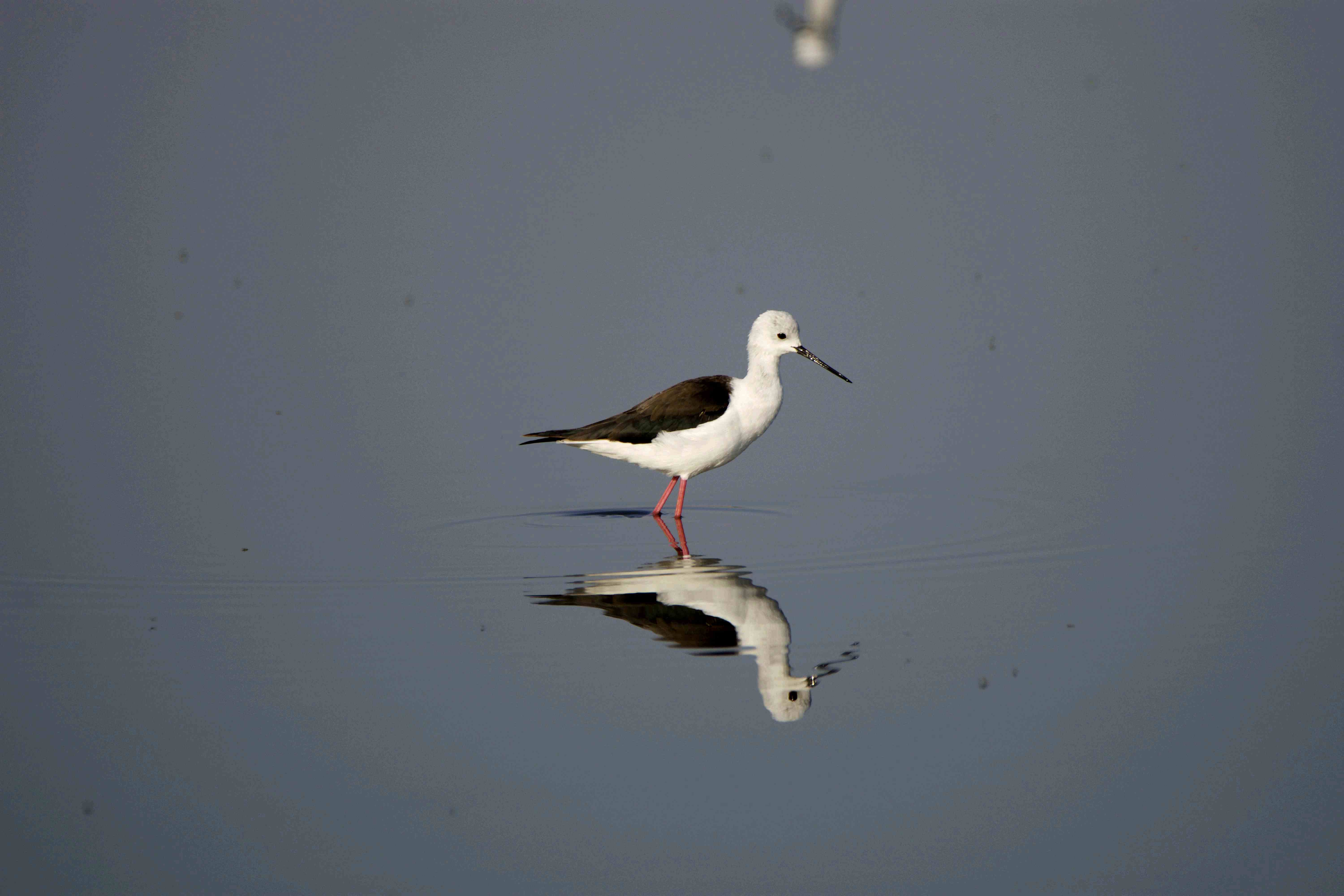
We then continued our journey to the Salt pan area and found some interesting water birds such as grey herons and stilts, among others. There were a couple of dozen grey herons at the dam and we saw at least two pairs nesting there.

All pictures by Julio A. de Castro

Trip notes

Recently, our friend “Pinkshade” found notes from the past that included info on what we had seen on our safari to Ngorongoro and Manyara in 1988. As she puts it “It doesn’t seem exhaustive but it reveals the most that we saw at that time… including the (most probably) Black-bellied bustard and the Eulophia welwitschii (terrestrial yellow orchid)! And, the bonus is a map drawn by the warden himself to help us to find the spots! Historical piece!!! To which, very disrespectfully we added some of our notes!”

Ngorongoro & Manyara safari – Fauna and Flora lists – February 1988 (with 4WD, XRay, Khanga, ScoutSpirit and PinkShade)

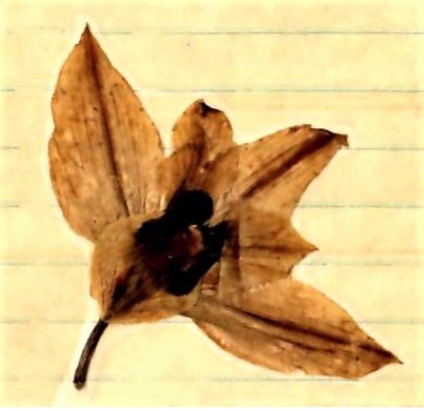
Dried flower of a terrestrial orchid (probably Eulophia welwitschii), cf. picture below.

List of birds:

  • Grey heron
  • Black-headed heron
  • African sacred ibis
  • African spoonbill
  • Yellow-billed stork
  • Lesser flamingo
  • Abdim’s stork
  • Saddle-billed stork
  • Marabou stork
  • Cape teal (or Cape Wigeon)
  • Red-billed duck (or Red-billed real)
  • Spur-winged goose
  • Maccoa duck
  • Egyptian goose
  • Francolin (undefined)
  • Kori bustard
  • Black-bellied bustard (cf. photo in post)
  • Grey crowned crane
  • Spur-winged lapwing (or Black-winged plover)
  • Blacksmith plover
  • Pied avocet
  • Speckled pigeon
  • Mousebird (undefined)
  • European swallow/Hirundo rustica (migration)
  • White stork (migration)
  • Lark (undefined)
  • Fisher’s sparrow lark
  • African stone chat
  • Olive thrush
  • Fiscal (undefined)
  • Tropical boubou
  • Yellow bishop
  • Superb starling
  • Black Kite

Only seen at Manyara:

  • Hamerkop
  • Greater flamingo
  • Knob-billed duck
  • Long-crested eagle
  • African harrier hawk
  • Pale chanting goshawk
  • Crowned lapwing
  • Namaqua dove
  • White-browed coucal
  • Lilac-breasted roller
  • European roller
  • Striped kingfisher
  • Little bee-eater
  • Hornbill (undefined)
  • Ground hornbill
  • Wagtail (undefined)
  • Red-headed bluebill
  • Long-tailed paradise whydah
  • Weaver (undefined)
  • Red-billed oxpecker
  • Pied crows

List of mammals:

  • Warthog
  • Hippopotamus
  • Giraffe
  • Eland
  • Wildebeest (gnu)
  • Kongoni
  • Grant’s gazelle
  • Thompson’s gazelle
  • Buffalo
  • Grant’s zebra
  • Impalas
  • Black rhinoceros (4 individuals)
  • Elephant
  • Golden jackal
  • Spotted hyena
  • Lion (a big group and some scattered ones)

Only seen at Manyara:

  • Black-backed jackal
  • Baboon
  • Dik-dik

List of plants:

  • Euphorbia kibwezensis
  • Heliotrope (undefined)
  • Cycnium tubulosum
  • Hibiscus (undefined)
  • Hibiscus aponeurus
  • Pavonia gallaensis
  • Crossandra subacaulis
  • Commicarpus pedunculosus
  • Crinum macowanii
  • Commelina sp.
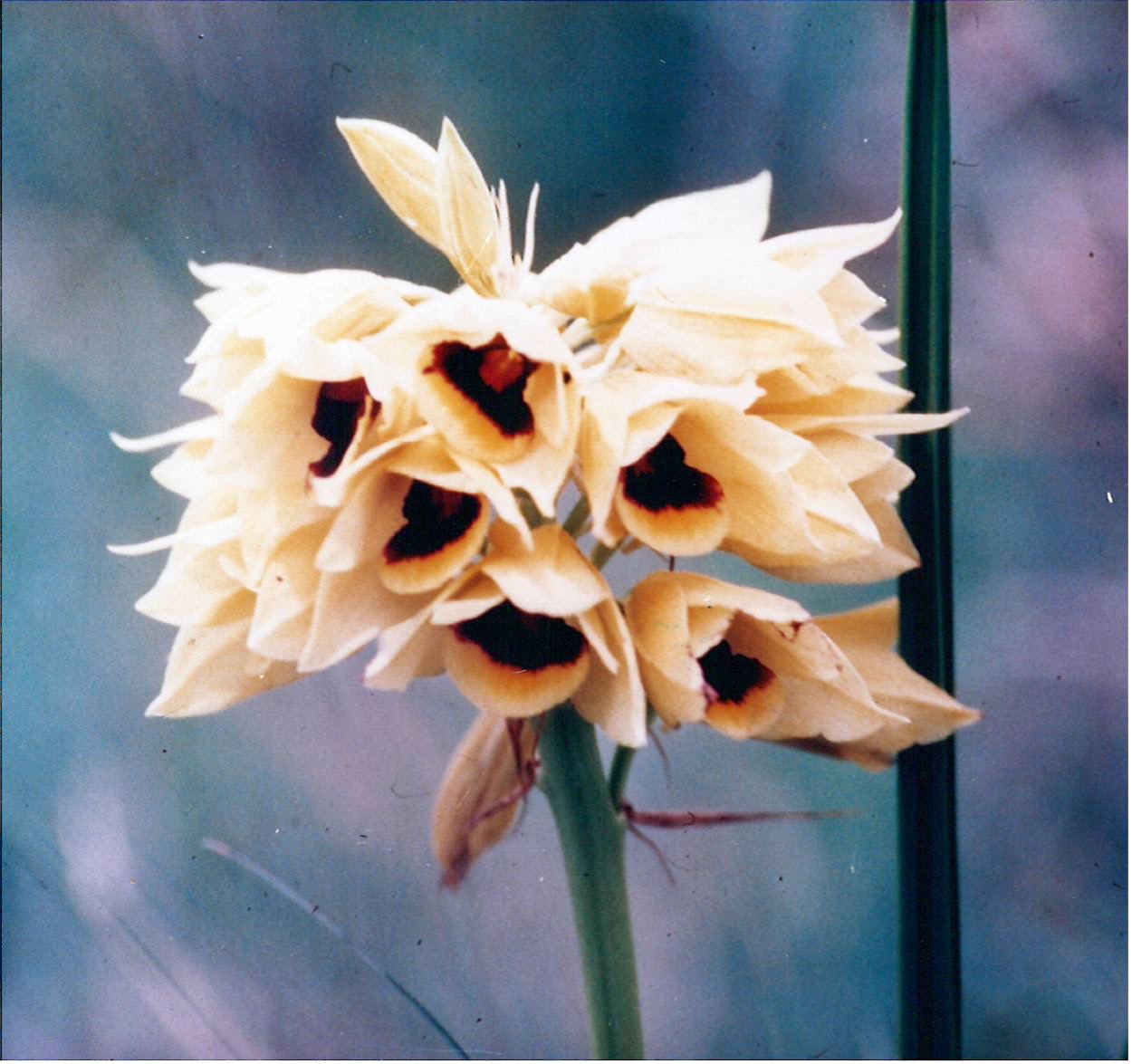
  • Eulophia welwitschii (?), terrestrial orchid (cf dried flower above and picture here-under)

Our picture of Eulophia welwitschii (?), to be compared with: http://pza.sanbi.org/eulophia-welwitschii

Only seen at Manyara:

  • Baobab
  • Euphorbia candelabrum
  • Datura stramonium
  • Lippia sp. (white)
  • Crotalaria agatiflora (Canary bird bush)
  • Spathodea campanulate (African tulip tree)
  • Kigelia Africana (African sausage tree)
  • Gloriosa superba
  • Erythrina abyssinica (Coral tree or Flame tree)
  • Calotropis procera (Sodom apple)
  • Solanum incanum
  • Solanum sp.
  • Scadoxus multiflorus (slightly north of the aera)

I thank Pinkshade for her contribution!

Spot the beast 59

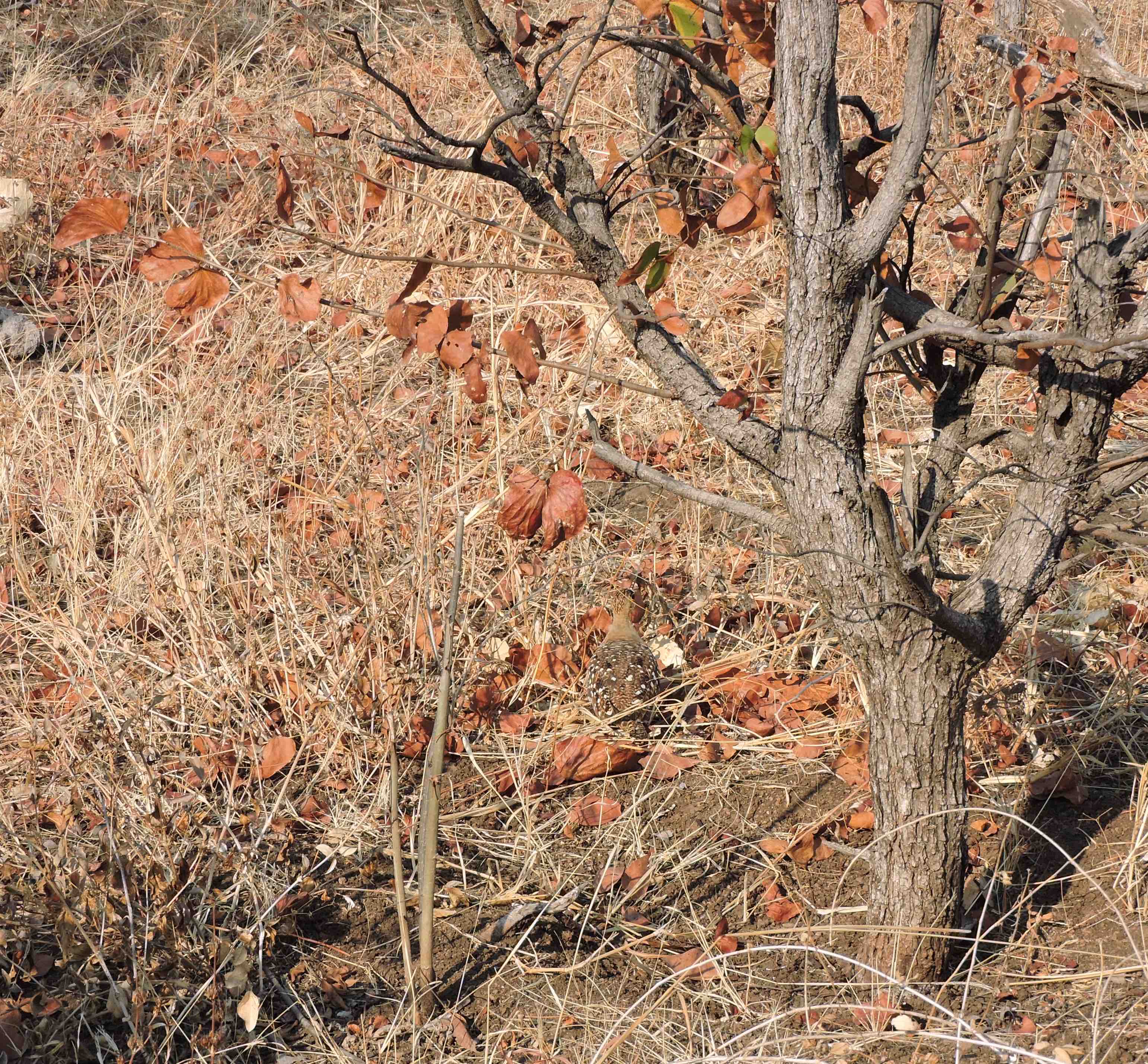
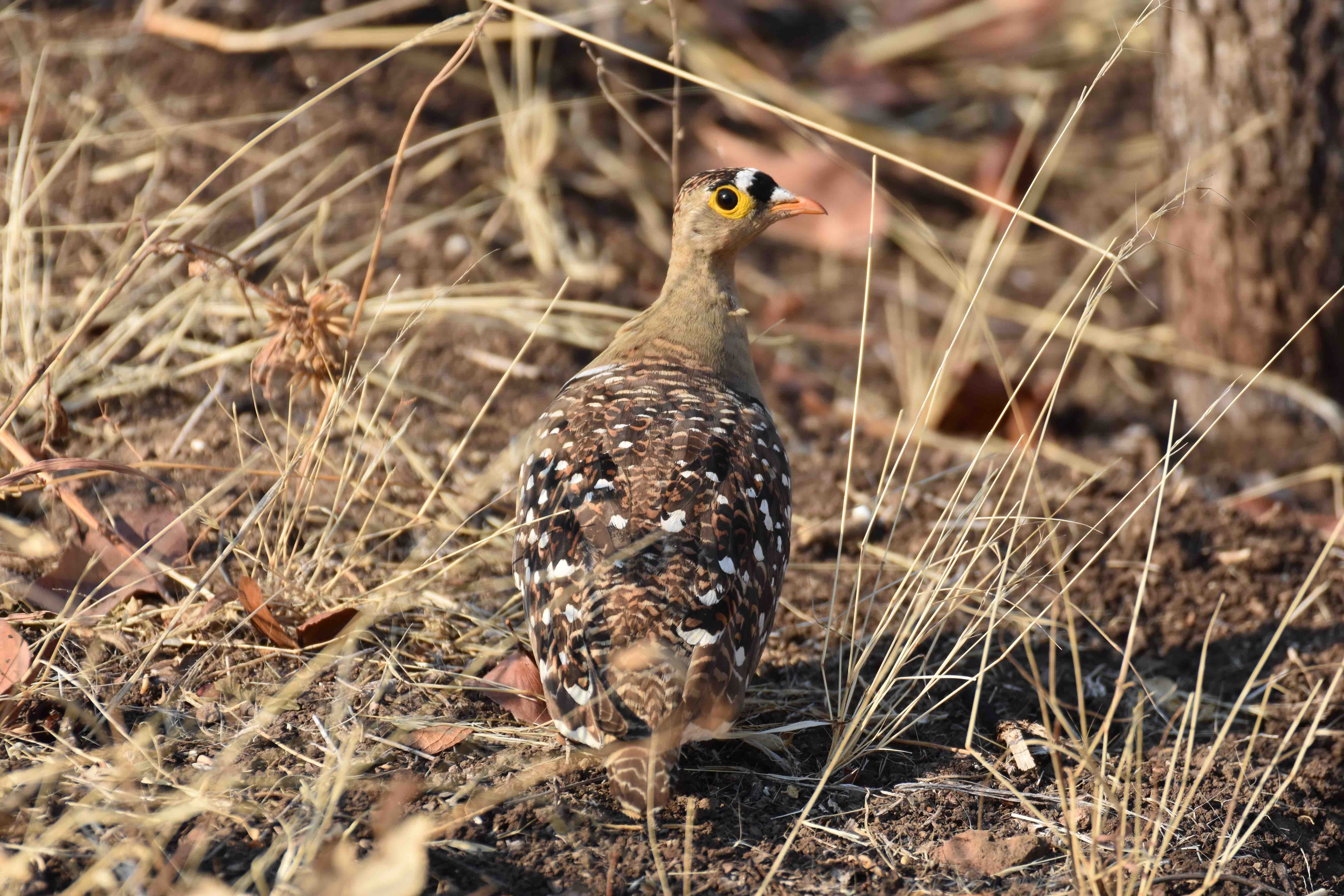
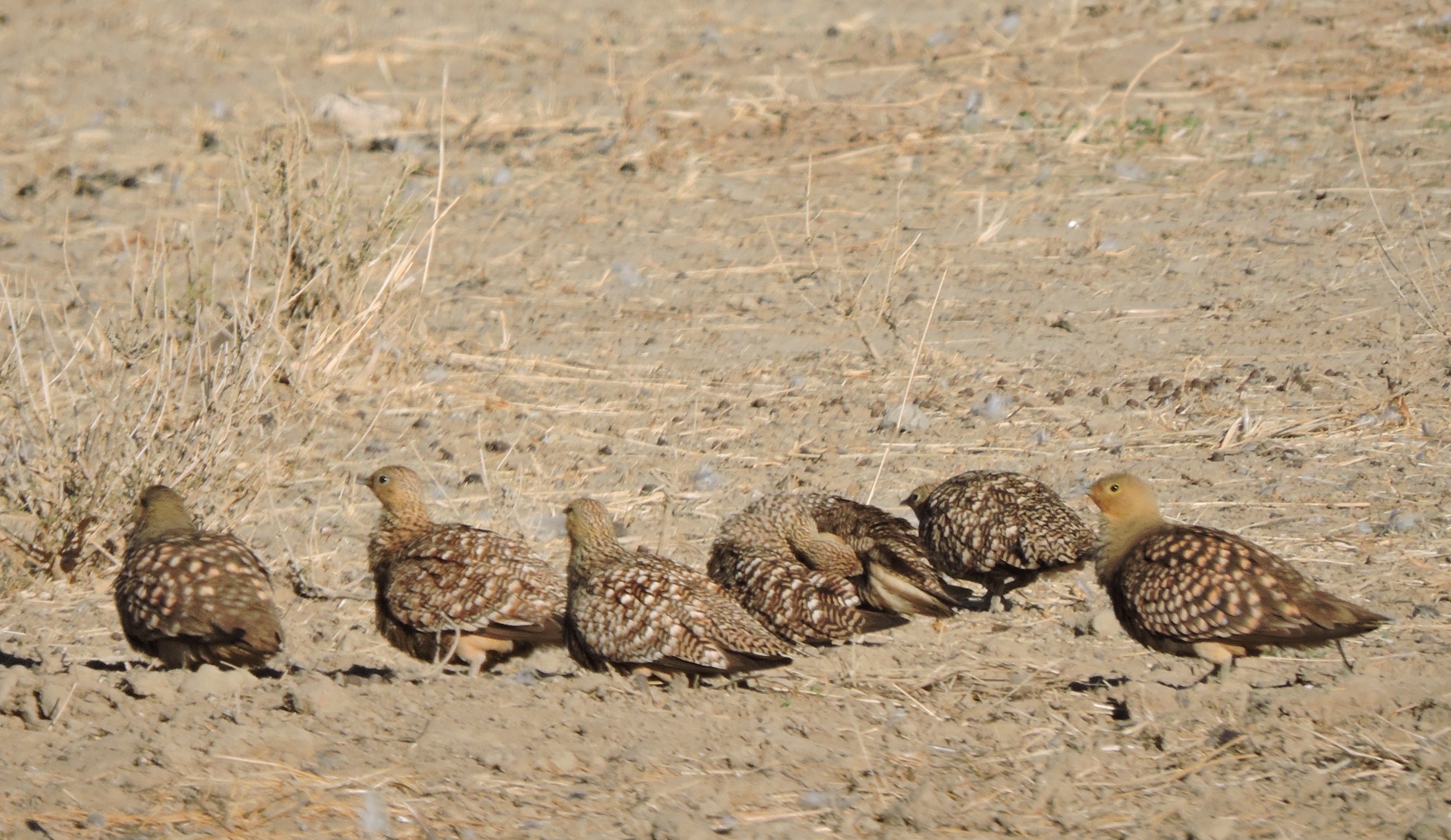
“An insconspicuos species that is easily overlooked during the day…” [1], I present you with this beast for you to find.

DSCN2324 copy

?
?
?
?
?
?
?
?
?

DSC_0053 copy

Not difficult to find in the picture but the Double-banded Sandgrouse (Pterocles bicinctus), a lovely bird, is not easily seen as their camouflage blends it with its environment in an amazing way. This bird was sotted slowly crossing the road and moving into the grass by the road.


[1] Roberts VII Multimedia Birds of Southern Africa. iPhone and iPad Edition. Version 2.4


Spot the beast 47

DSCN1714 copy

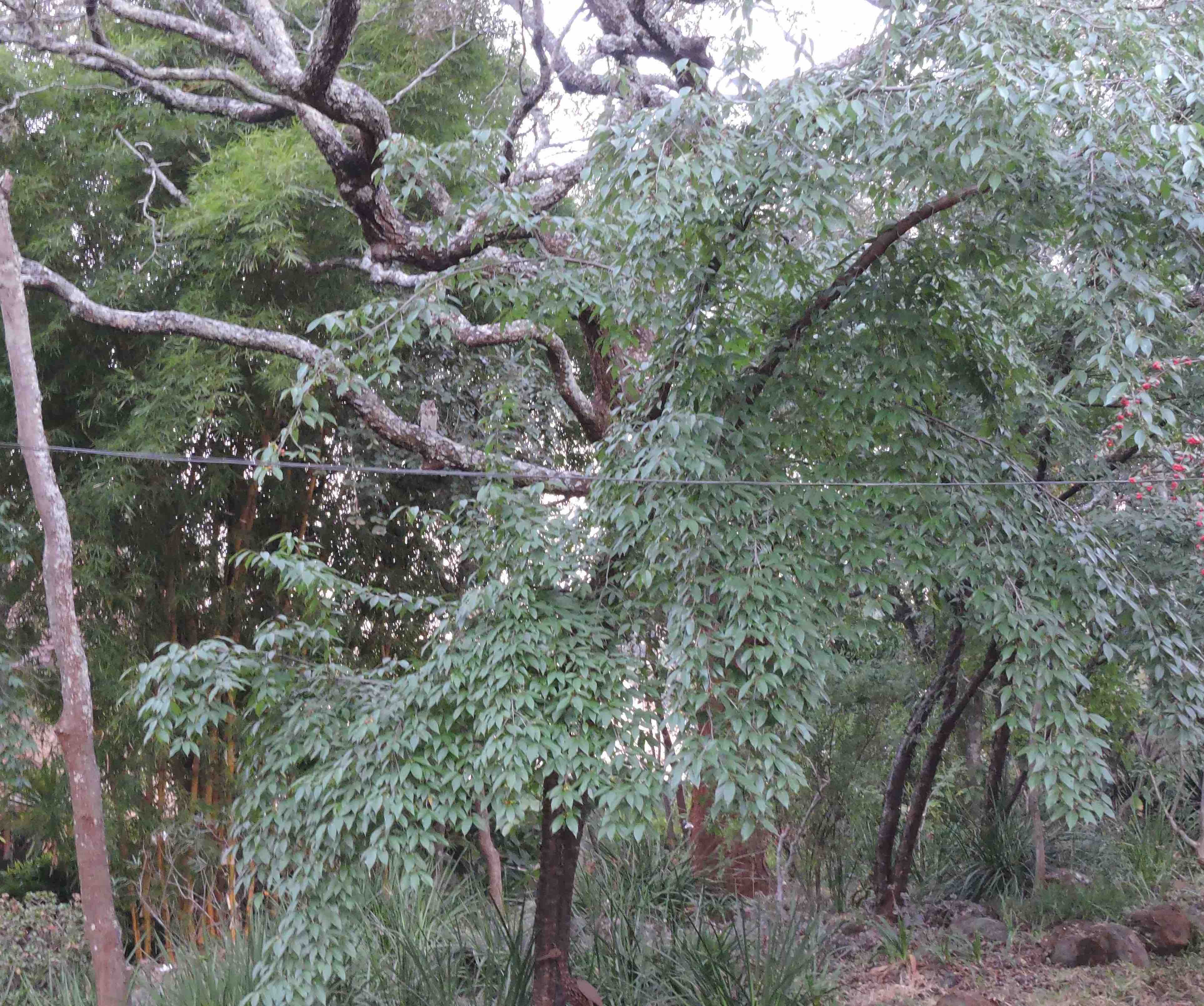
Today, while walking in the garden, we spotted this beast. It is not easy to see as it was already late when I took the pictures…

If you do not see it, follow the telephone wire…

?
?
?
?
?
?
?
?
?
?
?
?
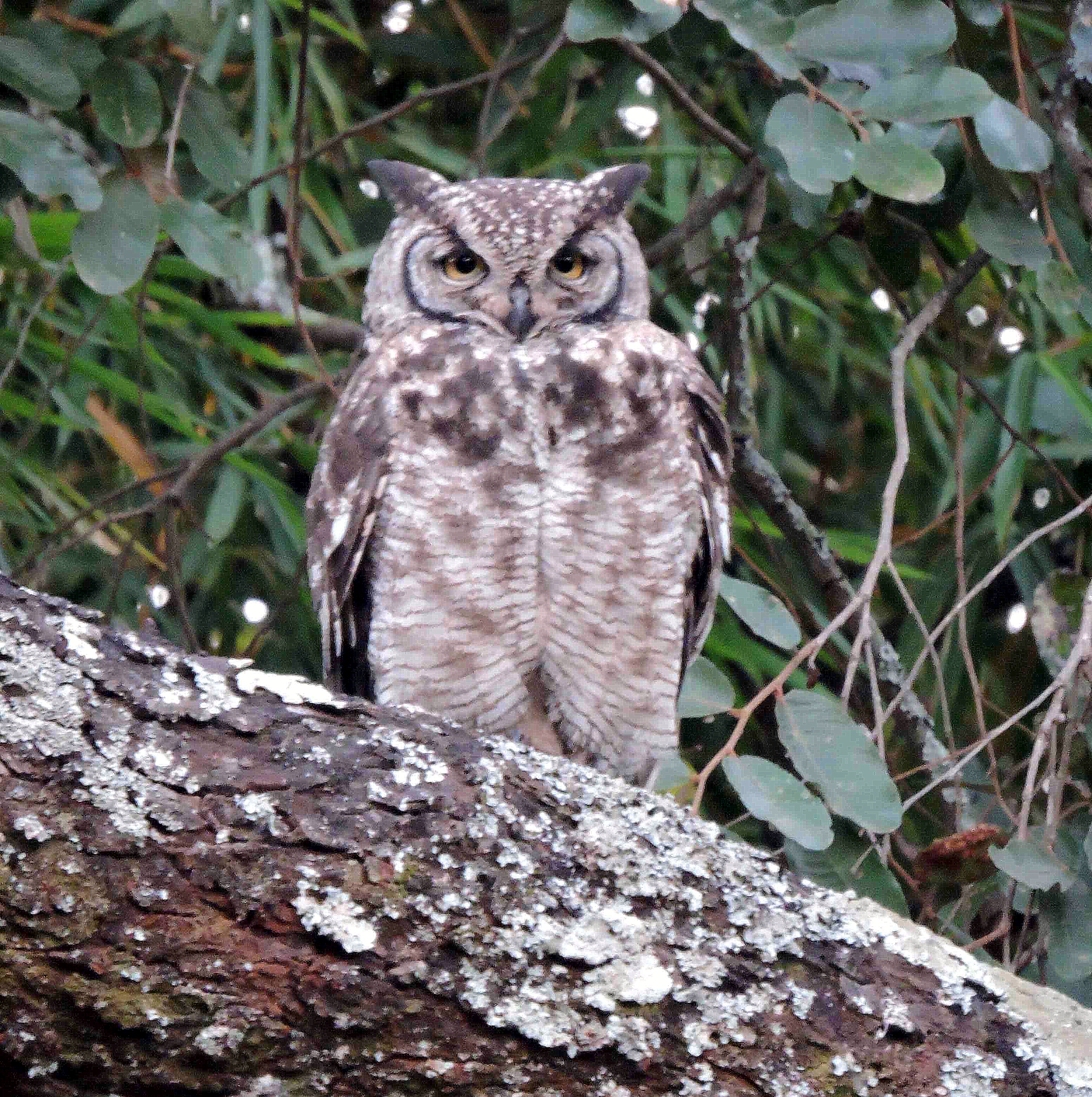
In any case, here it is. What I believe to be one of our rat control team: a Spotted Eagle-Owl (Bubo africanus). We did have years back a lady tenant that used to rehabilitate injured owls so perhaps this is one of their offspring? Whatever, it is amazing to have them in the garden!

DSCN1713 copy

Regret that the image is a bit blurred but these are crepuscular birds and pictures are  challenge!

Spot the beast 40

This took place while walking up the hill in Itiyuro in search of the macaws. See my earlier post.

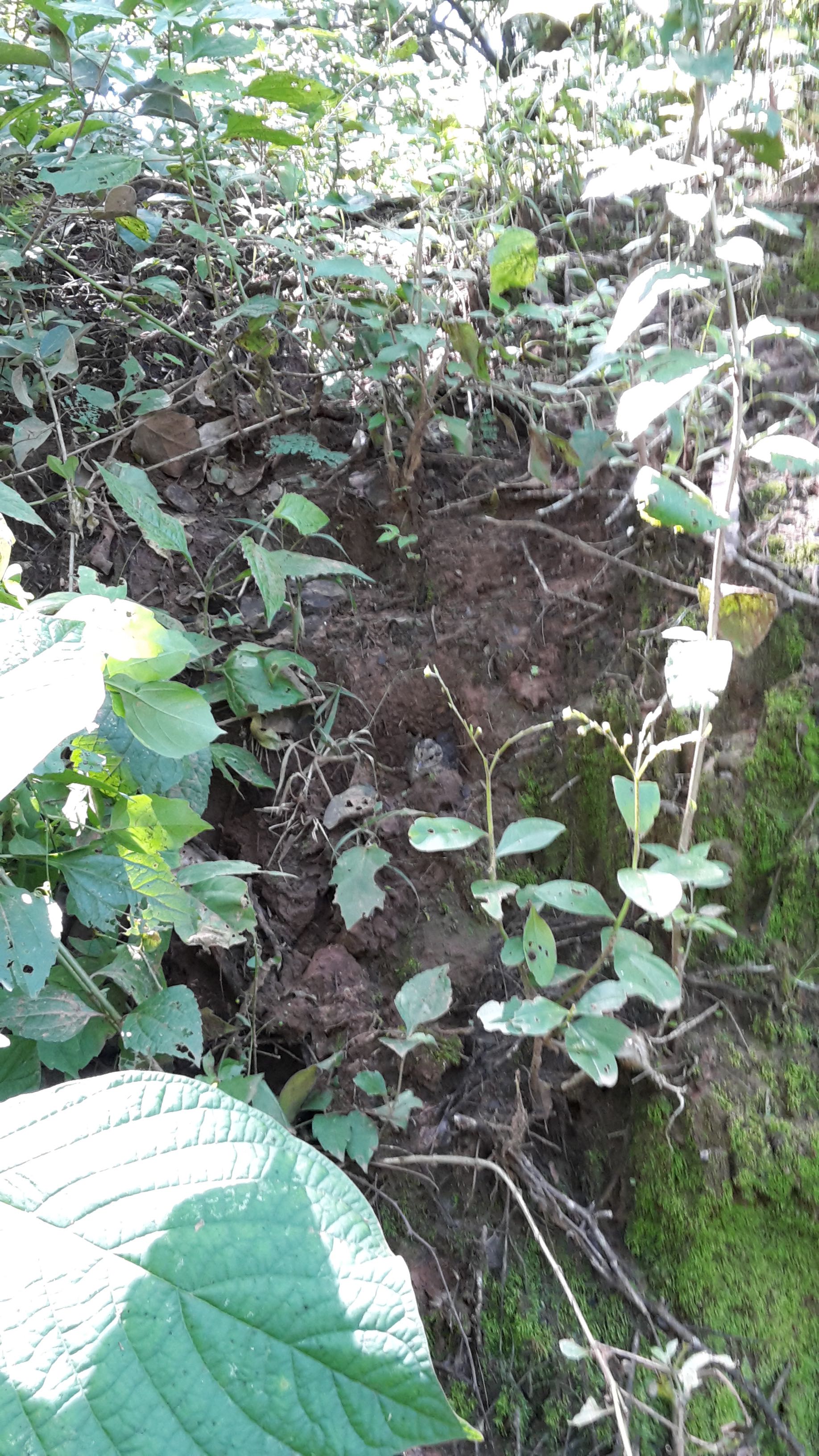
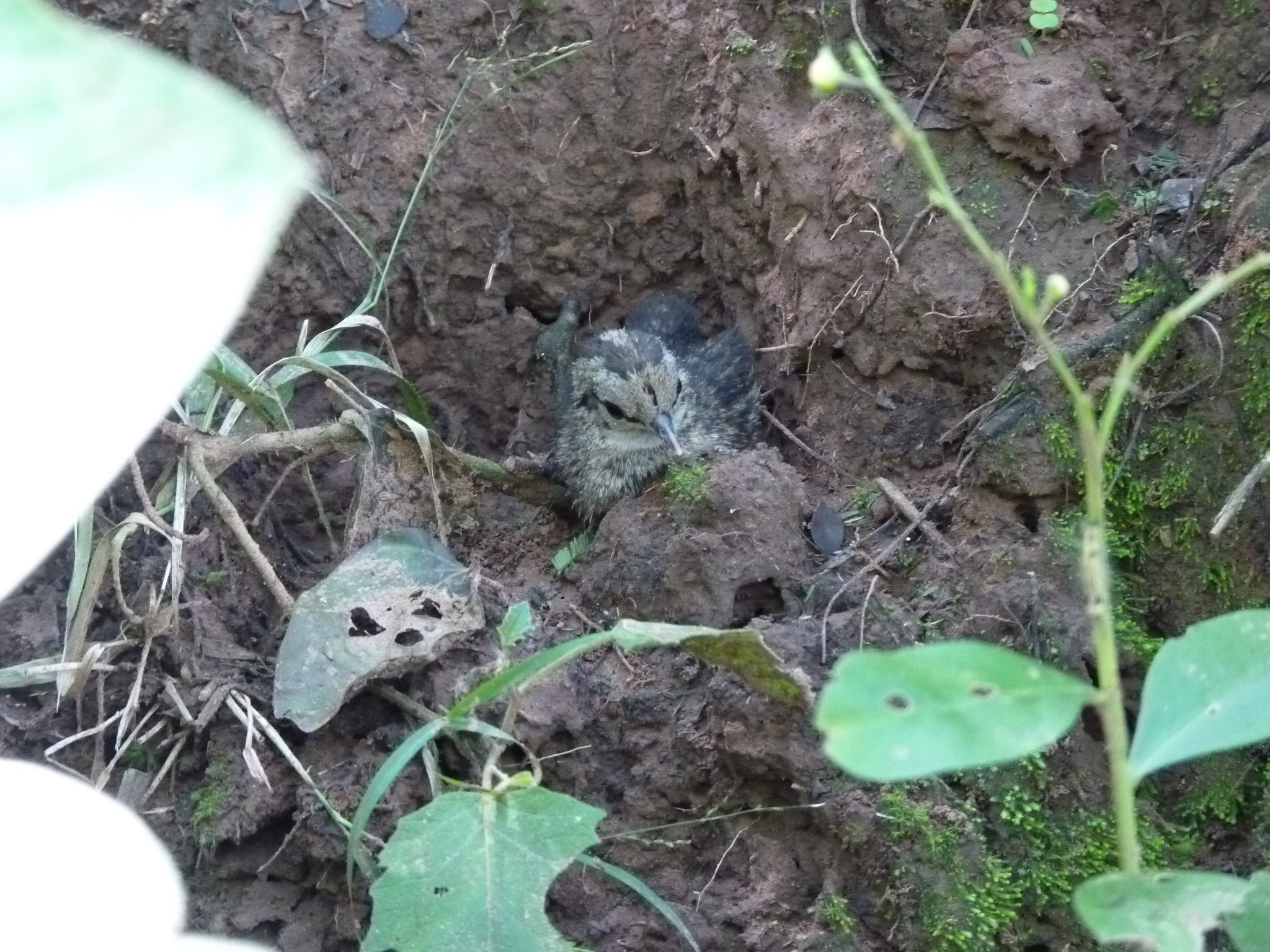
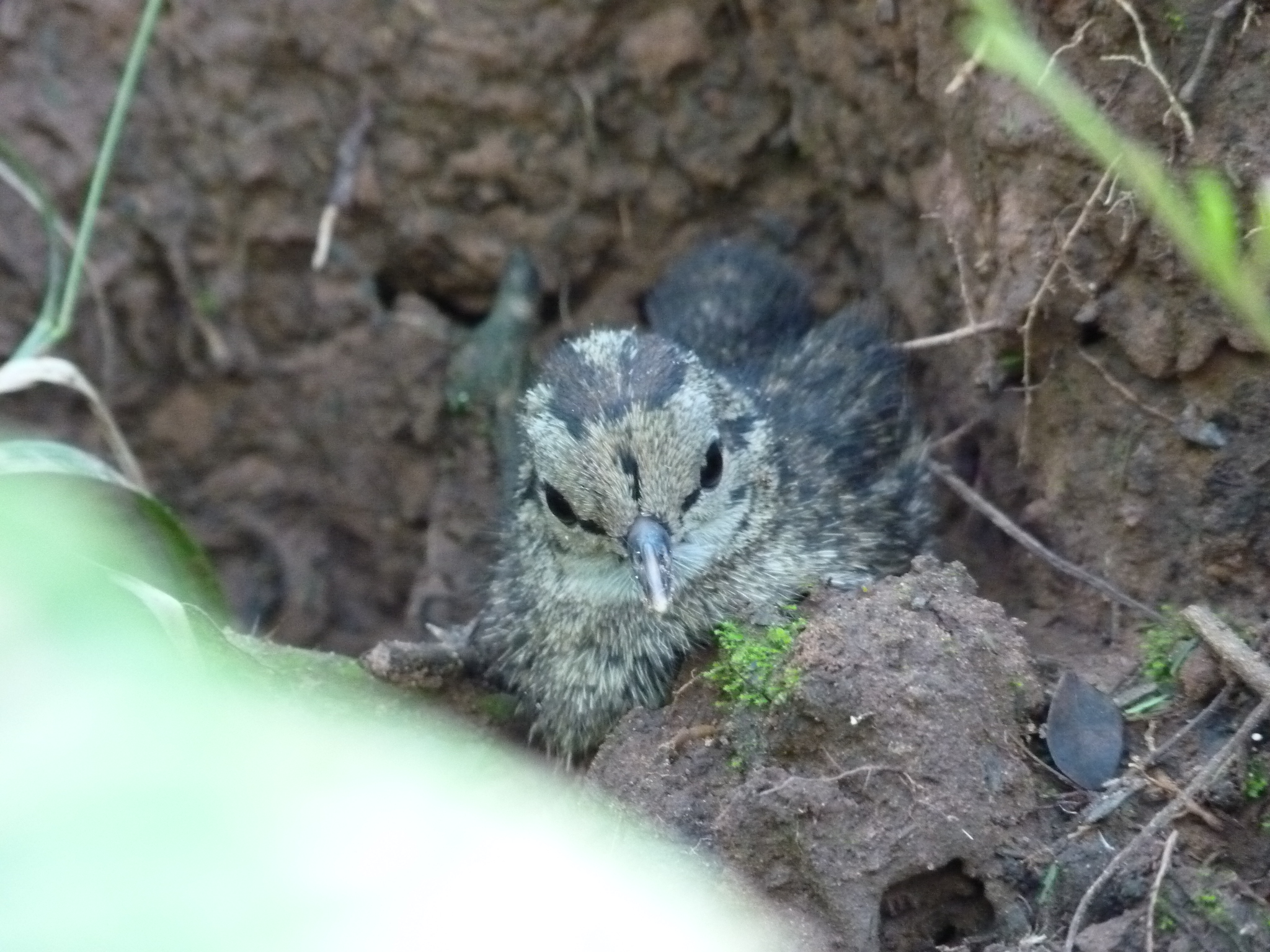
For a change I spotted this little fellow running and then lost it when it stopped. After a while searching it moved again at the time that we were almost about to abandon our search.

I am sure that you will find it.

20180331_121041 copy ?
?
?
?
?
?
?
?
?
?

Just in case you did not spot it, I took a couple more pictures as it was really a nice youngster although we could not identify it.

P1180957 copy

P1180960 copy

Cheeky birds

We try to get our farm house’s surrounds as bushy as possible by planting as many trees, shrubs and plants as they would grow. We have had many failures as last years we had severe frosts that took care of many of the tender trees we planted such as jacarandas, bombax, fig trees, olives and others.

20170209_153430 copy.jpg

Luckily the past two years have been benign in terms of temperature and we have witnessed an almost luxurious growth of almost every seedling we have planted. Knowing the place, we are ready for the next bad winter that will even things out again!

In the meantime we are enjoying the Crataegus and Cottoneaster in fruit at the moment that are attracting several species of fruit-eating birds such as the Plush-creasted jays (Cyanocorax chrysops) and the occasional Toucan (Ramphastos toco)! Apart from plants we have placed several artificial nests that have been occupied at various times by different occupants such as House wrens (Troglodytes aedon), Saffron finches (Sicalis flaveola), Sayaca tanagers (Thraupis sayaca), rufous-bellied thrushes (Turdus rufiventris) and others. As bats were seeing perched under our verandah, we also built a couple of houses for them after Googling for modern designs.

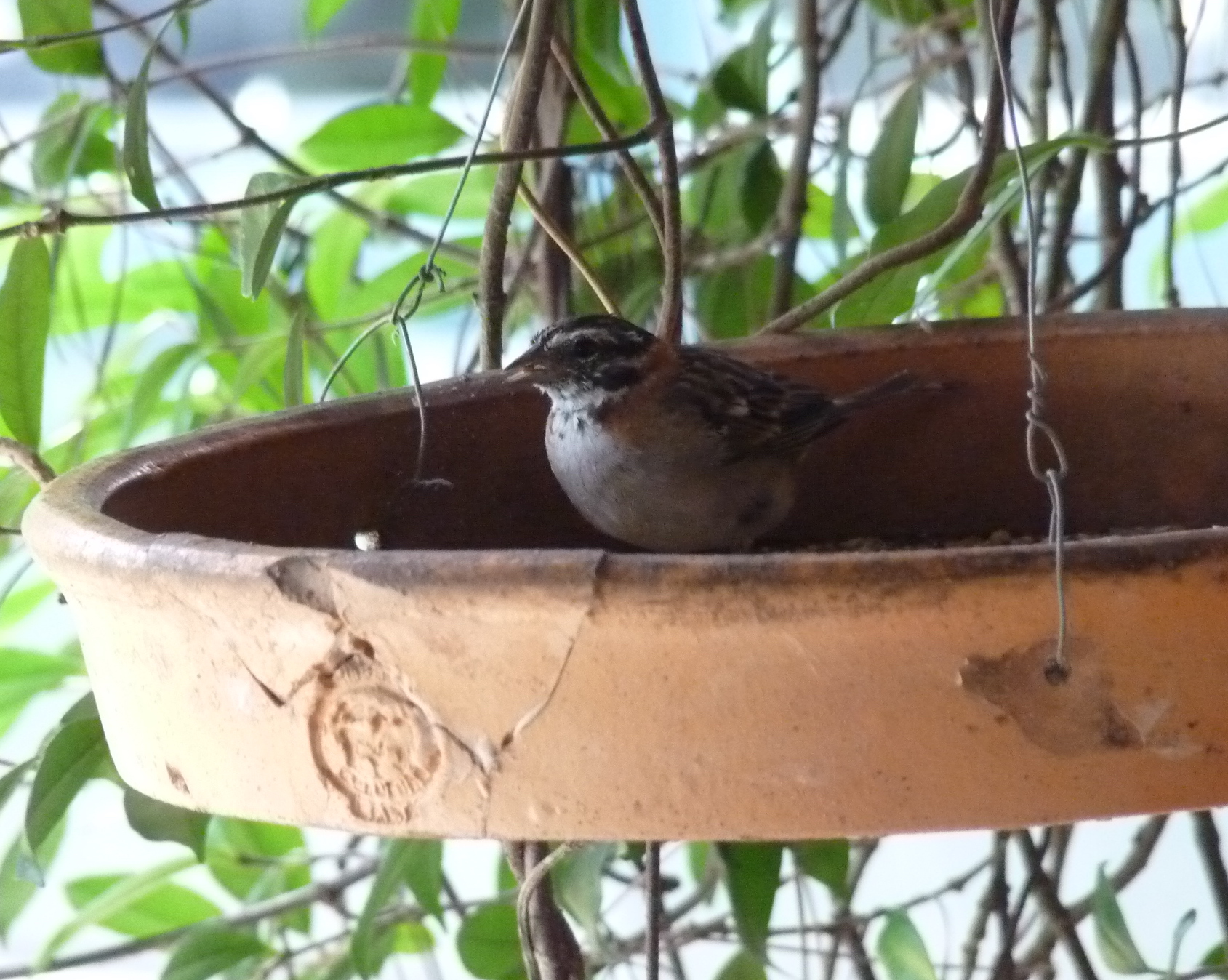
We also feed the birds and the Plush-creasted jays are constant visitors to the feeding plates together with the Rufous-collared sparrows  (Zonotrichia capensis). In addition we also have the visit of Gray-necked wood-rails (Aramides cajaneus) that have a running battle with the plush-crested jays for the dominance of the plates.

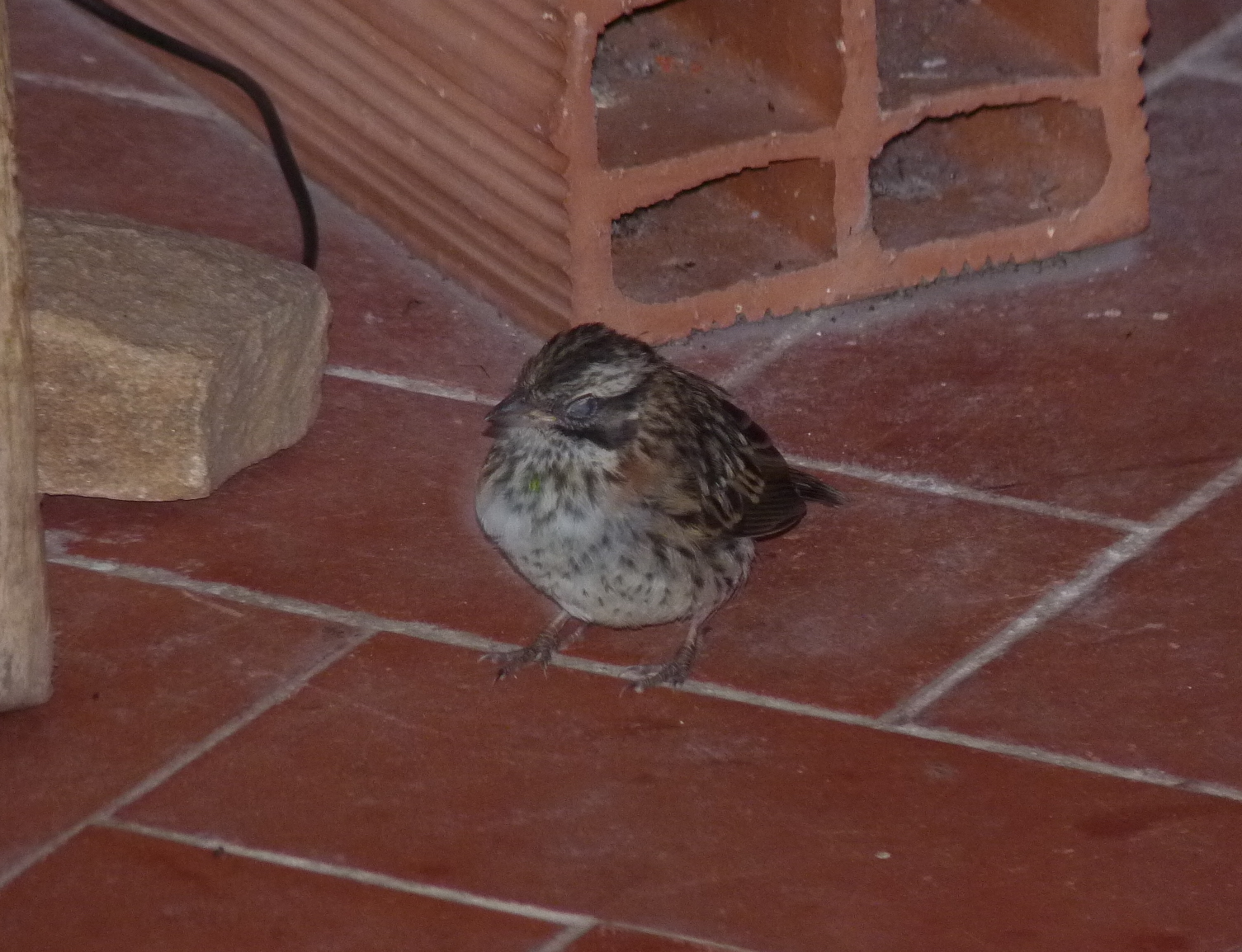
Despite their rather small size the Rufous-collared sparrows are by far the cleverer though. They are fearless of humans and although the jays let you realize when the birdseed is finished the sparrows come to let you know that they are hungry!

P1170473 copy

This year they overstepped the mark and for the first time they dared to come inside the house in search for food. I knew that they were known for doing this at the rural kitchens in Uruguay but it had not happened at our farm yet.

P1170532 copy

One evening we heard strange noises near the place we normally seat to read and talk and to our surprise a sparrow was walking about the house, tic, tic, tic their small jumps on our dry cow hides while walking about in search of dead or dying moths, an abundant source of food at our house as they tend to mass in the lights during the night and enter the house all the time.

After chasing and feeding on moths for the first few days, the bird discovered the small container with broken maize seeds that I used to fill the bird feeding plates, the  bottom half of a large soda bottle. It did not take long for it to get inside and pick the best morsels!

After a couple of days of visits, a second bird came and the pair went straight for the kill, getting inside the maize seed container without any delays.

They are now so confident that they either walk in or even fly in and out of the house depending on their desire for food! They have also got used to enter either from the back or front doors or, if they so wish to fly through the house avoiding us at the last millisecond but giving us some frights by brushing themselves against our faces!!

They are now part of the household inhabitants and we hardly noticed them, except when the time comes to clean their tiny droppings from the floor.


Easy pickings

Last September, after a few early morning drives at the Kalahari Transfrontier Park, we took it easy for a couple of days, visiting the waterholes late in the mornings and afternoons. The day before our departure from our last camp, Twee Rivieren, I suggested to go for an early drive but my wife preferred to continue relaxing so I went on my own. It was a bad idea as, somehow, the whole camp shared this thought and the only road out of the camp was a dust cloud, despite the 50kph speed limit.

Aware that the morning had not started as I dreamt, I drove slowly until I found a waterhole to stay and wait for the travelers to quiet down as it usually happens. I stopped after about 20km at the Rooiputs waterhole. I was alone there and, as expected, soon the traffic died down and I could enjoy some dustless tranquility.

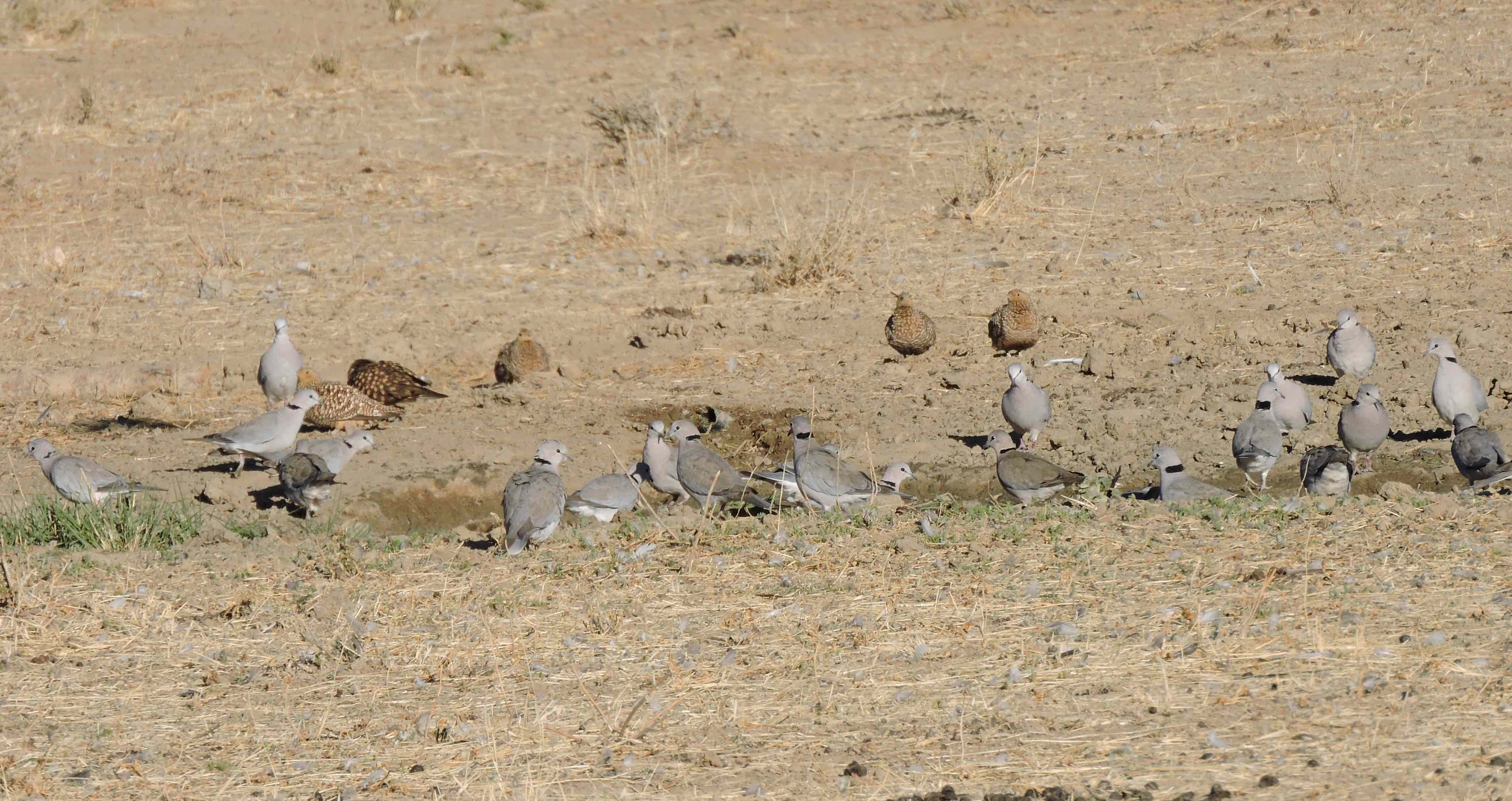
Apart from a few gemsbok staying a couple of hundred metres from the water and a lone jackal that was clearly mice-hunting in the dunes at the back, the waterhole had been completely taken over by birds. I spotted a good number of Namaqua sandgrouse on the ground and decided to take a few pictures of them.

dscn0019-8-36-37-pm-copy

The trees around the water were laden with small birds, mainly red-billed queleas, sociable weavers and red headed finches among others.

There were also a great number of laughing doves and ring-necked doves. The latter were in such numbers that it was like a curtain of moving birds that often obscured the water source as they flew in and out.

dscn0002-3-24-26-pm-copy

Hundreds of doves were “queuing” on the nearby trees to get to the water. Most of the time the available water was literally covered with birds and every now and then an explosion of birds flying in all directions followed a perceived threat. Often these were false alarms and the scared birds returned to drink immediately.

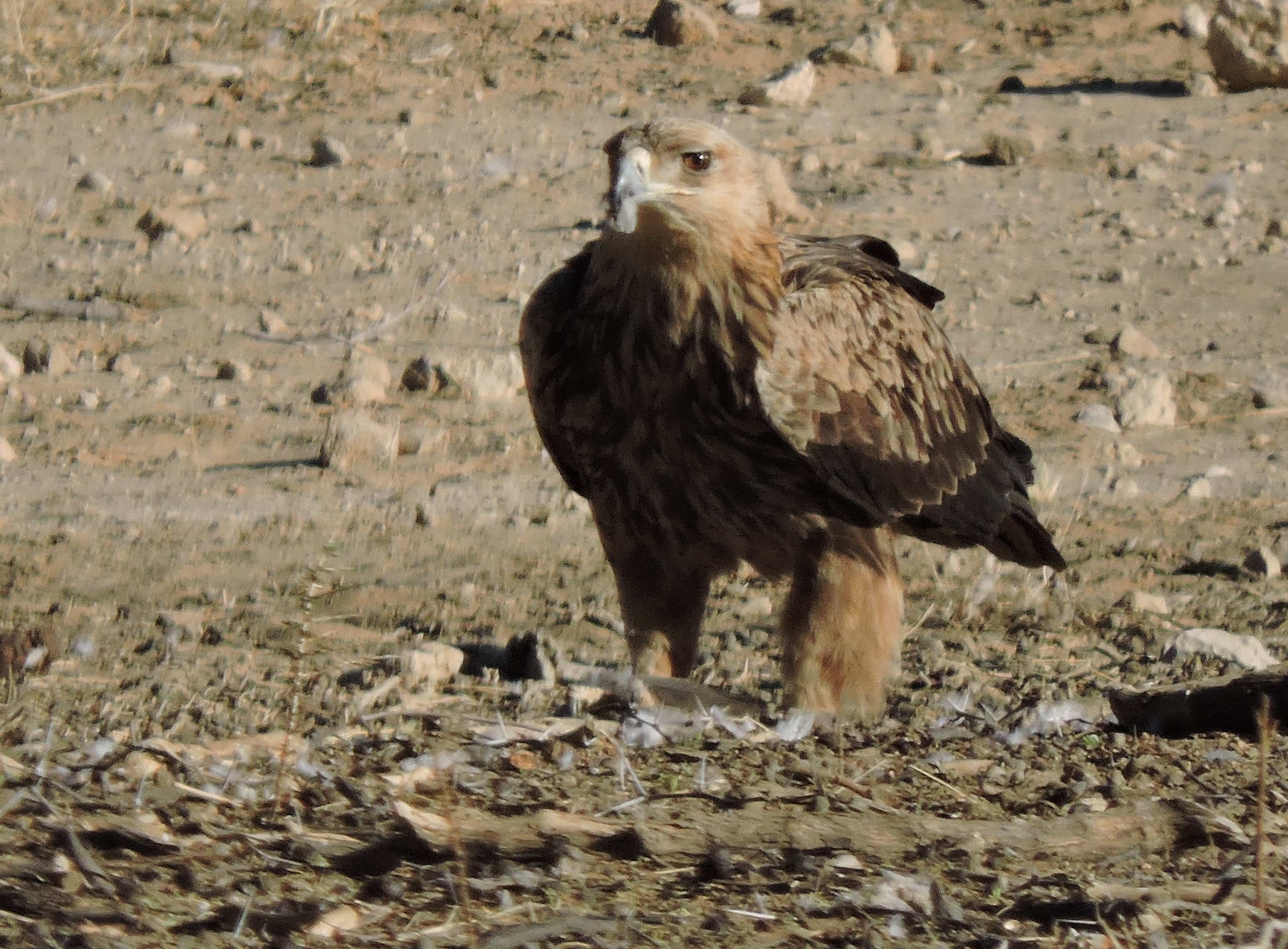
It was following one of these bird explosions that I saw a tawny eagle in the midst of the doves. When I spotted the eagle it had already caught a dove and it soon landed to eat it. “This is incredibly easy”, I thought and decided to stay there and wait for more action. When it finished eating it flew away but I was sure that it would come for more. It did.

Unexpectedly, the eagle did not return at great speed, just flew above the doves, lost altitude and then it entered the “dove cloud” and, almost effortlessly, grabbed another dove with its talons and landed to pluck it and eat it!

dscn0009-8-34-43-pm-copy

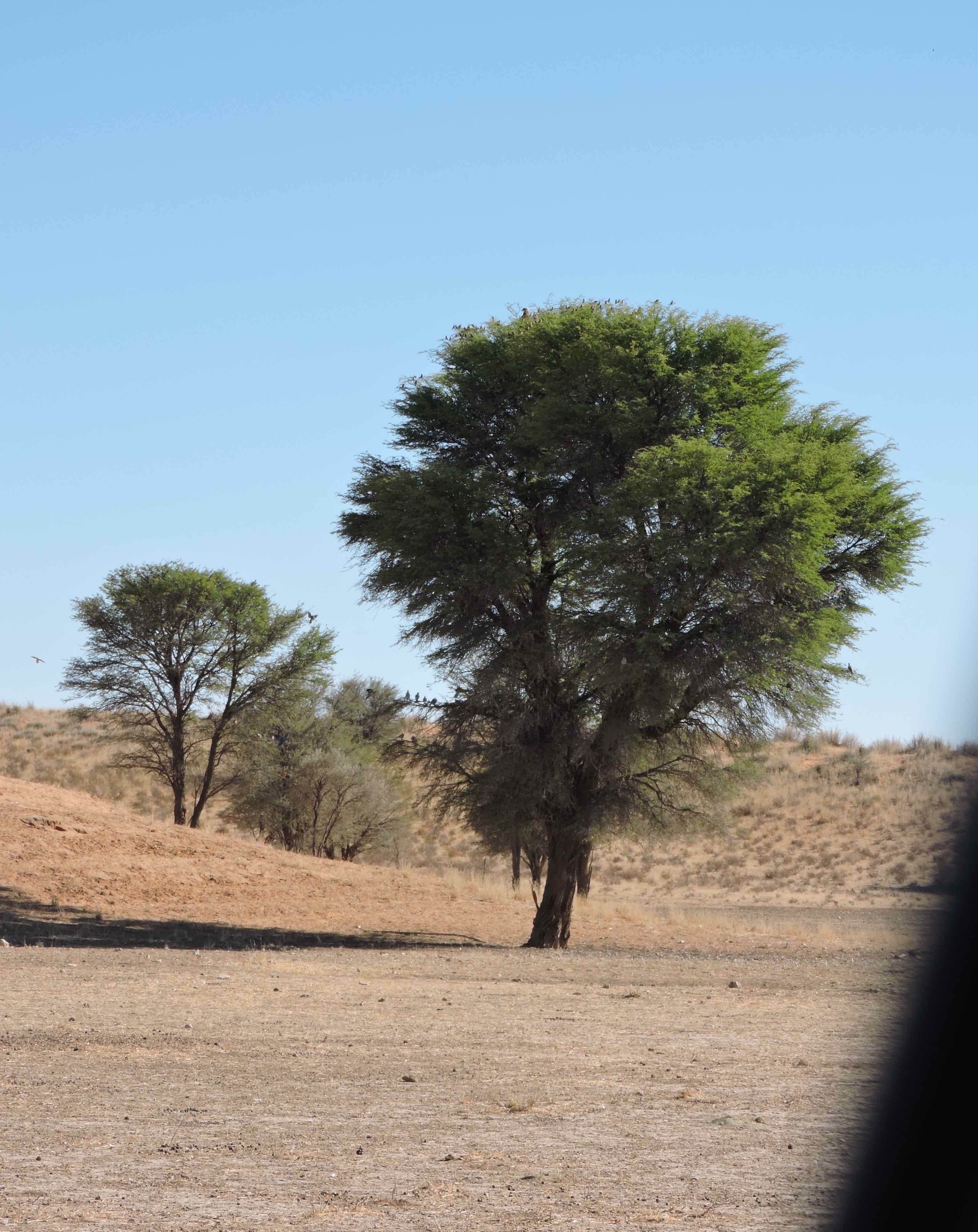
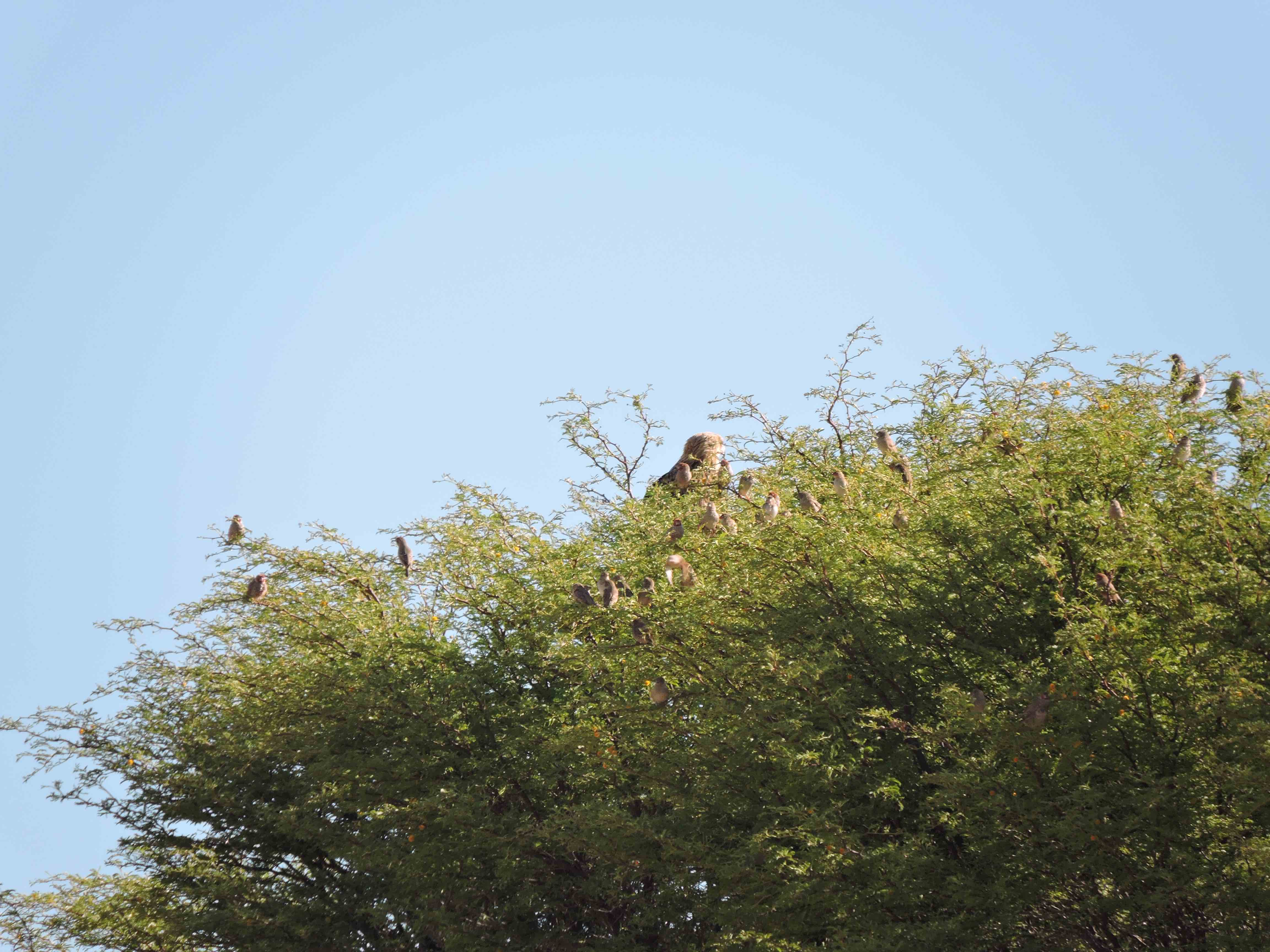
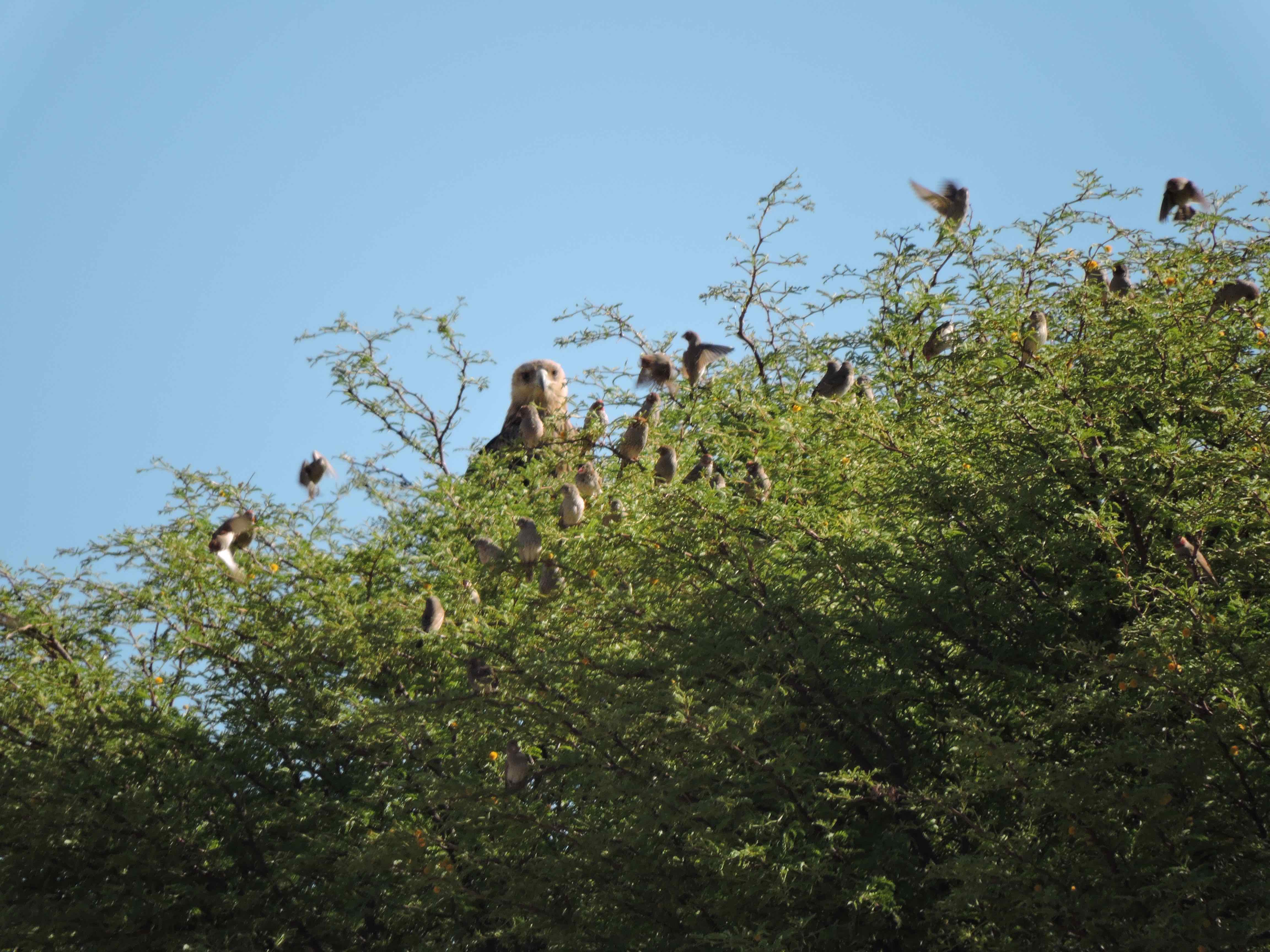
It all happened too fast for me and I only managed to take pictures of the raptor feeding about twenty metres from me. After eating, the eagle flew away again and landed on top of a nearby tree followed by a large retinue of small birds busy mobbing it.

dscn9900-8-45-15-pm-copy

dscn9895-8-44-50-pm-copy

dscn9892-8-44-50-pm-copy

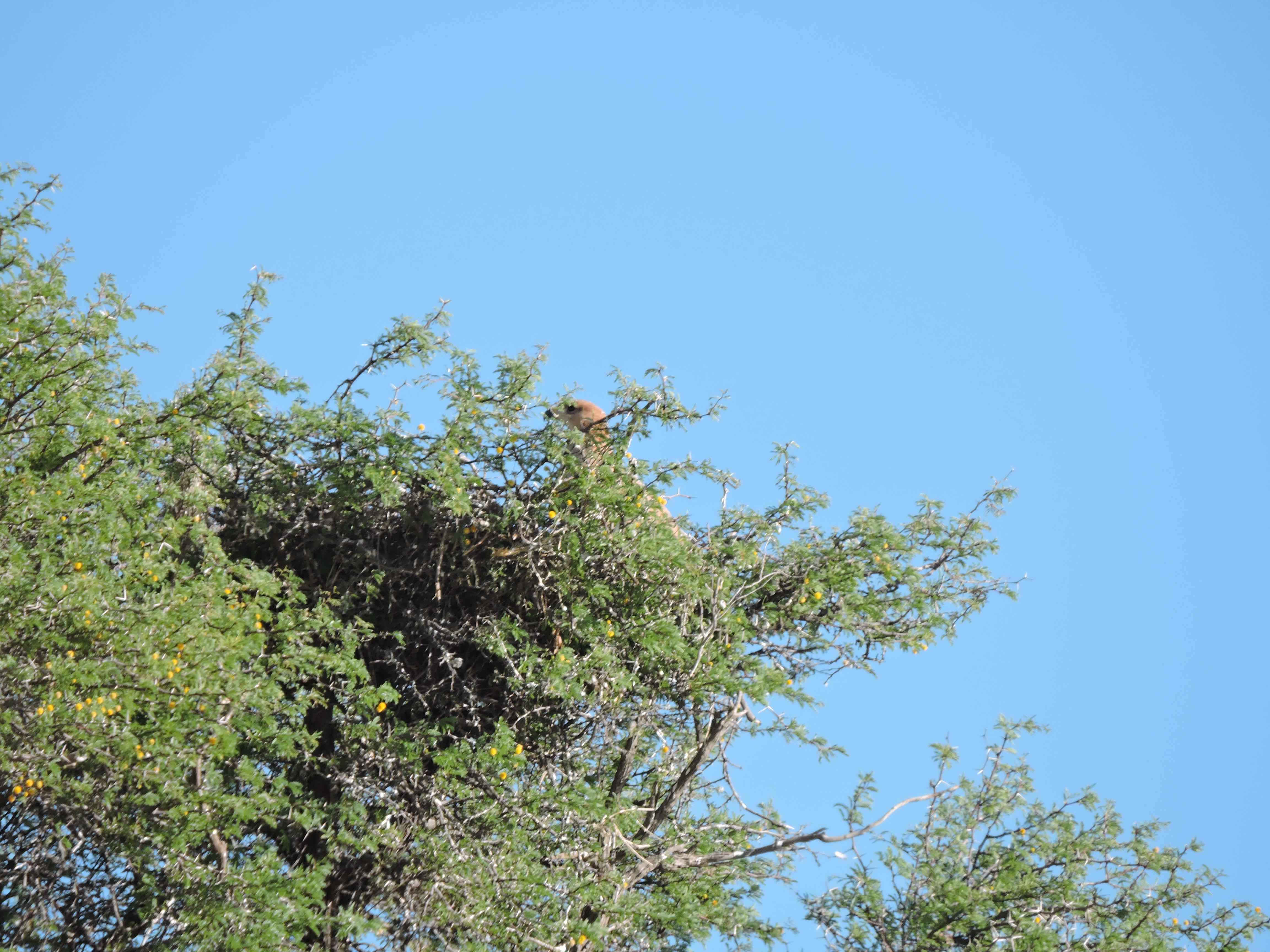
I continued watching the birds’ drinking dynamics when, after about ten minutes, the eagle (or another one?) repeated the operation and, again, caught another dove! After its third dove, the eagle flew to the same tree and then I saw a second eagle. Further inspection revealed that the clever eagles were nesting about fifty metres away, taking advantage of the easy pickings that the waterhole offered them!

dscn0079-copy

As they only need to fly a few hundred metres a day to get a full crop and feed their fledglings, I started wondering -like with the Scottish pigeons of my earlier post-about eagle obesity!

Luckily, my fears were dispelled as the next time one came for another pigeon it looked really mean and I did not detect any accumulation of fat round its waist!


Mana[1] Pools safari

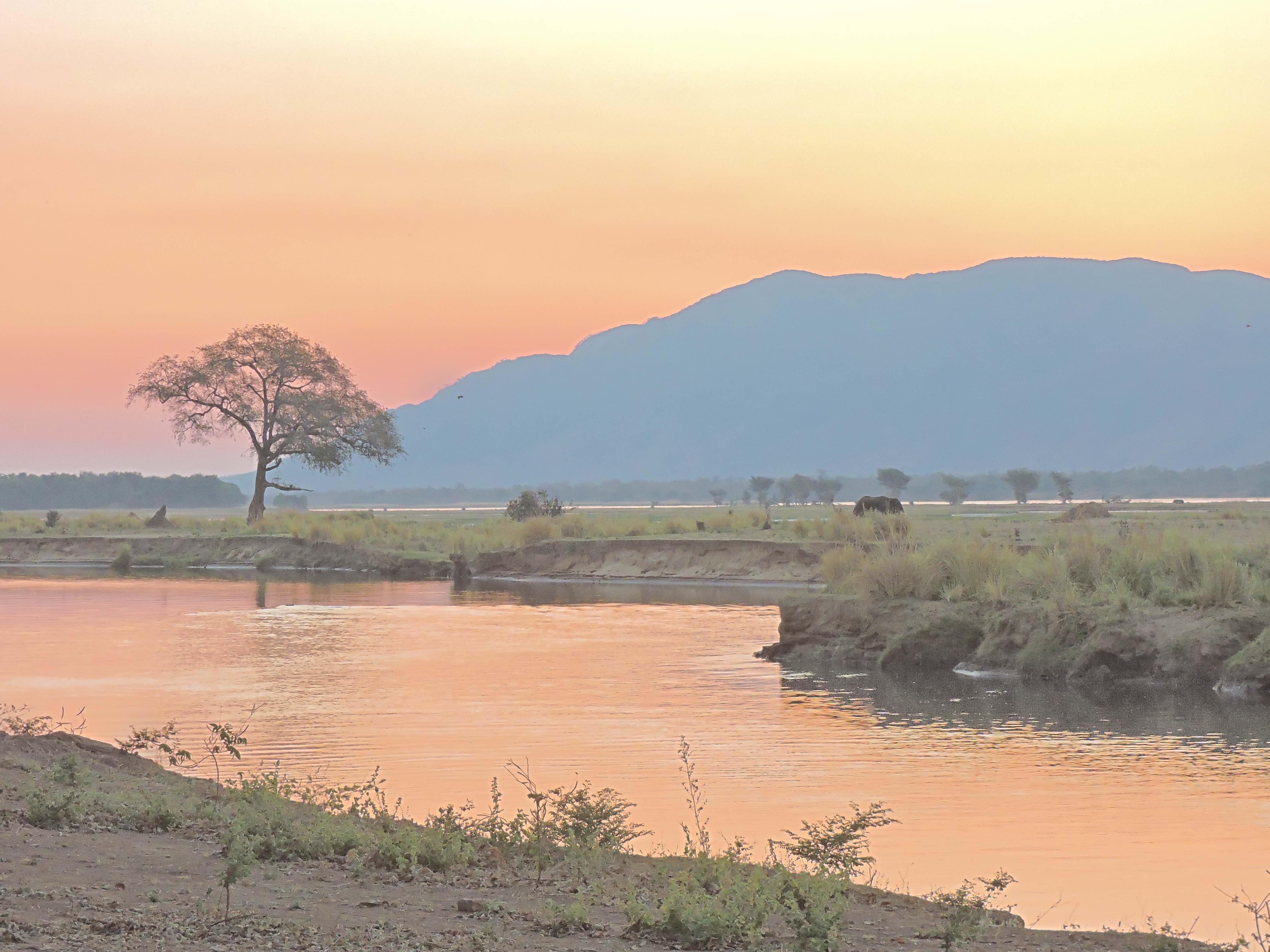
Mana Pools National Park is found in the middle Zambezi valley. It extends from the Zambezi river in the North (Zimbabwe-Zambia border) to the summit of the Zambezi escarpment 50 km to the South. The park includes the river itself, a broad area of acacia and mahogany woodland on a belt of alluvial terraces. Although this is the area where most of the animals congregate during the dry season and therefore the most visited, the Park also includes large areas of mopane and jesse-bush (Combretum celastroides) and the rocky hills that flank the Zambezi valley. The Park and adjacent areas are regarded by many as the finest wilderness area in Zimbabwe.

Sunset at Mana Pools.

Sunset at Mana Pools.

This was our second visit this year as we had been in Mana. At that time it was cold and the animals, particularly the elephants, were still spread around in the park and therefore less abundant by the river. The absence of elephants then was largely compensated by sightings of wild dogs, lions and a leopard near our camp site.

This visit was different. It was much warmer and, as the dry season had advanced, the animals were indeed massing in the northern part of the park where water and grazing are still available. We stayed at Chitake One and at Gwaya private camp sites so we enjoyed a true wilderness feeling by being alone. Without doubt the elephants were the main actors during our visit and I hope to be able to describe the various events in an amenable way for you to enjoy.

[1] “Mana” in Shona means Four, describing the four pools that the Zambezi river left behind in its meandering.