garden

Spot the beast 16

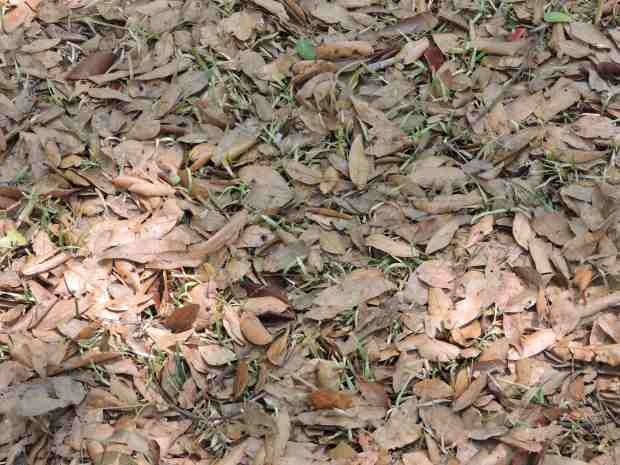
The rain offers numerous blogging opportunities on the “spot the beast department”! Here is another one for you to find (Only look at the next picture below if you cannot find it!)

DSCN9914 12.17.44 PM copy

?

?

?

?

?

?

?

?

?

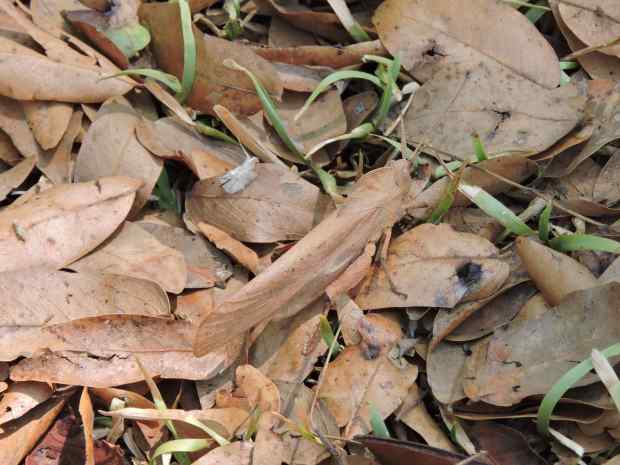
DSCN9912 12.17.44 PM copyIt was difficult but it was spot on in the center of the picture! It had a sad expression also!

It is the flap-necked chameleon (Chamaeleo dilepis) the most common sub-Saharan chameleon.

Of least concern according to the International Union for the Conservation of Nature, I have the impression that their numbers are declining, at least in urban Harare. Some attributed this to the proliferation of security electric fences that, apparently, can kill them.

The flap-necked chameleon lays 10-40 eggs in a hole dug in soil. The latter take an amazing 10–12 months to hatch! A very long time if we compare it with other animals such as the Nile crocodile that takes 90 days! To watch the hatching of the perfectly formed and miniature young is simply amazing.

Luckily, this rainy season we have found a few so the situation may not be as bad or the frequent electricity cuts had yielded some benefits!

Spot the beast 15

While walking on the dried leaves of the Msasa trees (Brachystegia spiciformis) also known as zebrawood, I came across this “beast”. I spotted it because it moved. Can you see it?

dscn9941-copy

OK. I agree that it was tricky so here you have a larger version.

dscn9942-copy

Rain!

There is a great song by Lady Blacksmith Mambazo called Rain, rain, beautiful rain[1] that, as many of their songs, I strongly recommend! But it is only when you have two successive extreme dry seasons such as the ones we have gone through in Zimbabwe that you really understand the song!

I already described the seriousness of the drought at the Kruger National Park[2] and things are equally bad further north, in Zimbabwe and Harare where we are.

When we bought our house in the 90’s, we had a good borehole as well as water from the Harare Municipality. Today, the latter is erratic and, as a consequence, over the years many people have sunk boreholes and now there are thousands. As a result, the underground water table is no longer where it was and, probably the deepest end of our own old borehole is 30 meters above the water level! We have dug for water four more times since the original hole dried early in the XXI Century but we have only managed to extract grey stone dust!

Following our failures with various reputed rhabdomantists, in 2013 we decided to change our water management strategy. We gradually moved from water-thirsty plants to succulents and cacti and we buy water from the many suppliers that bring it to your house. Our swimming pool is now a water reservoir -and toad breeding ground- that we fill with the rainfall from the roof of the house (when it rains!) and take showers standing on a basin to collect and use the grey water for watering a few selected plants!

The availability of water is gradually decreasing and many of our plants and trees are no more and others are just surviving from year to year. We have lost pecans, almonds, mulberries and avocados to mention a few. Luckily, we still have a few fruit trees left although their production is near zero. The indigenous trees are still doing well, despite the clear impact of global warming.

But enough of bad news as the rains have just arrived a few days ago, precisely on 10 November. You remember the date now as rain is becoming really critical!

As usual, just before the rains our children’s leopard tortoise “George” (or Georgina?) made an appearance only to disappear again soon afterwards, as usual. In addition, the chameleons materialized out of nowhere, following their own clock, just before the rains. At this time the number of birds increased dramatically as drinking water was really scarce. Miraculously, as soon as the rains came, many species disappeared and we remained with the resident ones that are here the year round.

Another amazing phenomenon is the “greening” speed of the brown grass in our “lawn”! I can assure you that it becomes green in a few hours after the first rain drops. I often think that it is like watching lyophilized grass being reconstituted in front of one’s eyes!

Together with the greenery some interesting insects appear. Among others, the termites immediately start preparing their chimneys and, although they wait before “exploding”, they do so after a couple of days with when they detect that the ground has reached the adequate humidity for them to dig themselves.

The millipedes[3], known locally as tshongololos[4], are the next to make an appearance after spending the dry spell in chambers dug underground. They appear in all sizes, from 2-3 cm to 10-12 cm and are very fond on fruits and cucumber. They live up to seven years in the wild and they need to moult frequently as their calcified exoskeleton does not expand. They have about 270 legs and they carry some specialized mites[5] that clean their bodies.[6]

Apart from the animal life, the rains also create an explosion of colour as the plants and trees suddenly revive. The show starts with the flowering of the exotic jacarandas that turns Harare purple just before the rains. Soon the time of the flamboyant trees come and, the moment the rains start, the frangipanis become really outrageous not only in terms of colour but also by adding their wonderful scent to the garden.

img_3234-copy

If the rains are good, our garden will become so green that it will make you forget the drought until next year when we hope that we will have a “normal” one although these are nowadays the exception!


[1] If you wish to hear it, it is at this link: https://www.youtube.com/watch?v=iUH7PM0-cpI

[2] https://bushsnobinafrica.wordpress.com/2016/10/03/hippo-drama/

[3] Subphylum: Myriapoda; Class: Diplopoda.

[4] It means “steam train” in the local language.

[5] Neomegistus julidicola Trägärdh 1906 (Acari, Mesostigmata)

[6] They are extremely interesting creatures and, if interested, you could read more about them here: http://www.earthlife.net/insects/diplopoda.html

Cool birds

October is usually Harare’s hottest month with a maximum and minimum temperature averages of 29oC and 15oC respectively[1]. Surface water is very scarce so the garden birdbaths surprise you with their visitors.

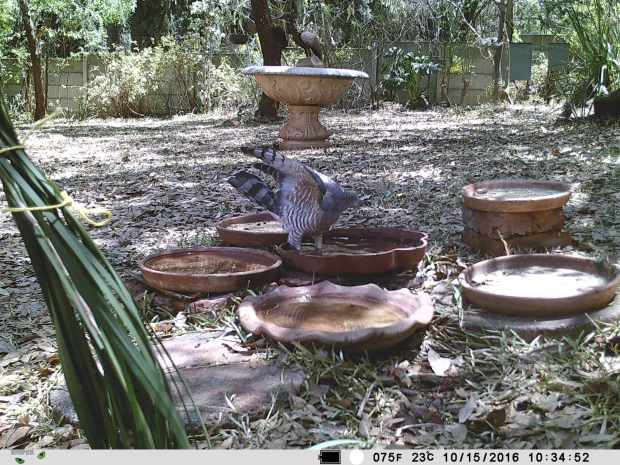
Among the guests there are a few small birds of prey that are not “regulars” but that come sometimes: the Lizard Buzzard (Kaupifalco monogrammicus) and the Gabar goshawk (Miconisus gabar).

dscn9991-copy-2

The Lizard Buzzard standing in the water.

While at the water I noted that they both behaved in a similar fashion. Apart from drinking (the Gabar Goshawk also bathed), both species spent a long time (over thirty minutes two or three times a day on the days observed) standing on the water baths during the hot hours of the day, around midday.

dscn9903-copy-3-52-35-pm

The Gabar Goshawk standing in the bird bath, having had a bath.

Was it a coincidence or did they find relief by the freshness of the water in their legs?

I subsequently learnt that birds lower their temperatures through a variety of different mechanisms[2]. The bare skin on their legs and feet helps them to dissipate heat. Water birds stand in the water, presumably to enhance the cooling[3]. Some birds such as vultures and storks also use urohidrosis, the habit of urinating/defecating on their bare legs to cool down by evaporative cooling.

It seems likely that both birds were using the water of the bird baths to cool down their legs and feet and in this way, as the water birds, increasing the cooling effect of their bare skin.

Interestingly, since I wrote these observations[4], two more birds of prey had come and both species had stood with their feet in the water: an African cuckoo hawk, (Aviceda cuculoides) and what I believe to be an African Marsh Owl (Asio capensis)[5].

pict0226-copy-2

The more recent observation of the African Cuckoo Hawk (landing on the water) and the African March Owl below. These  4 pictures were taken with a Camera trap.

[1] World Weather Online 2016. Harare Monthly Climate Average, Zimbabwe. Accessed on 10/10/2016. http://www.worldweatheronline.com/harare-weatheraverages/mashonaland-east/zw.aspx

[2] Mayntz, M 2016. How Do Wild Birds Keep Cool in Summer? Accessed on 10/10/2016. http://birding.about.com/od/birdingbasics/a/howbirdskeepcool.htm

[3] Shriner, J 2012. 15 Unusual Ways Some Birds Beat the Heat. Accessed on 10/10/2016. http://www.birdinginformation.com/15-unusualways-some-birds-beat-the-heat/

[4] de Castro J. (2016). Feet bathing as a cooling down mechanism in two species of birds of prey. Biodiversity Observations 7.77: 1–2. URL: http://bo.adu.org.za/content.php?id=270. Published online: 22 October 2016

[5] Identification to be confirmed as the pictures of the owl have been taken with a camera trap late at night.

An ambitious Hammerkop!

We allowed plants to take over our water reservoir (former swimming pool) hoping that they would slow down the evaporation. Whether water plants do this is probably debatable but they did enable the African clawed frogs (Xenopus laevis) to multiply really well.

DSCN9354 copy

As the frogs are happy to stay in this small “wetland”, the population reached large numbers and, although they devoured all the guppies placed there for mosquito control, the population has not yet crashed. They are also tolerated as they are rather quiet, unlike other visitors we have had in past years.

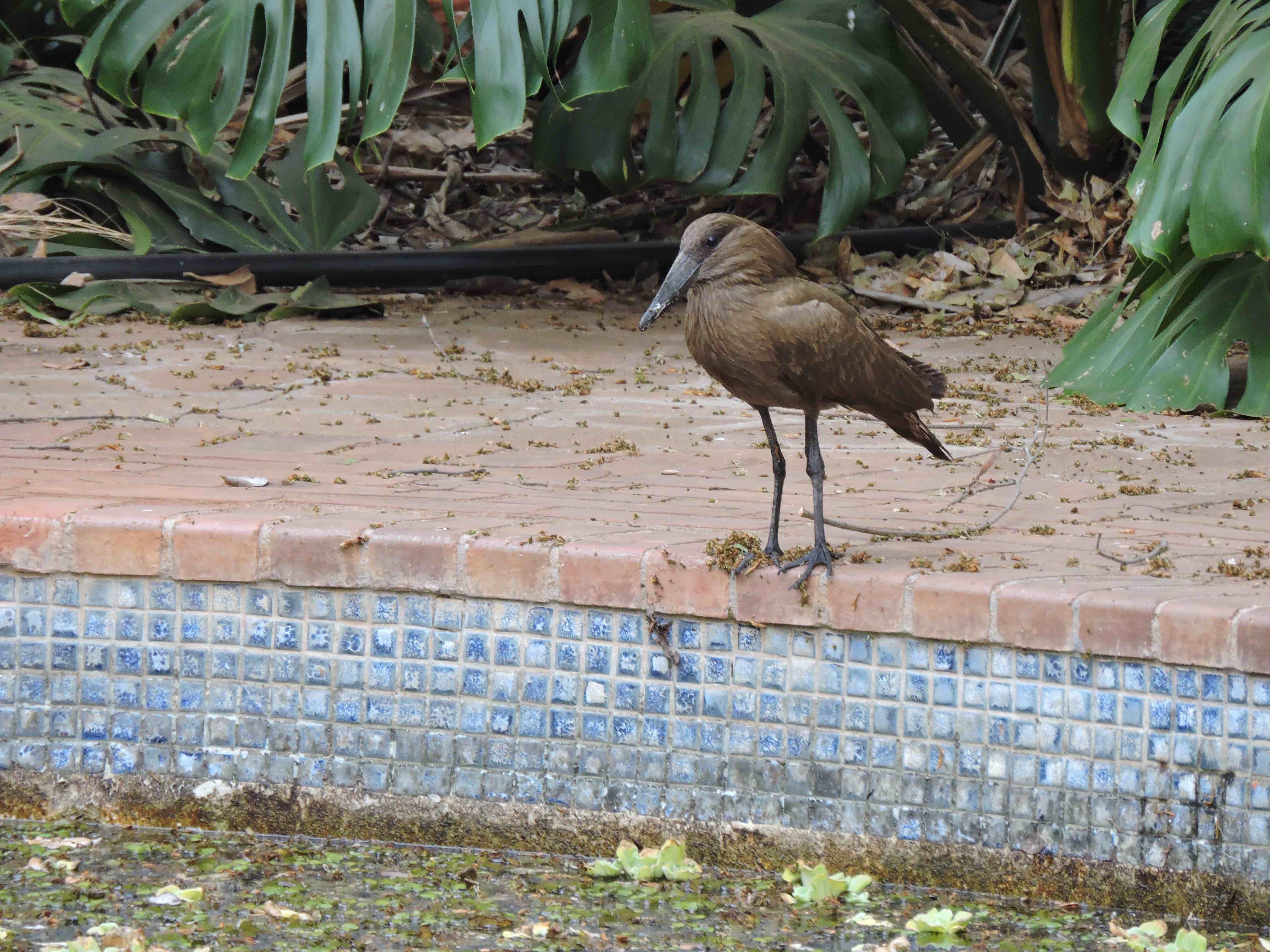
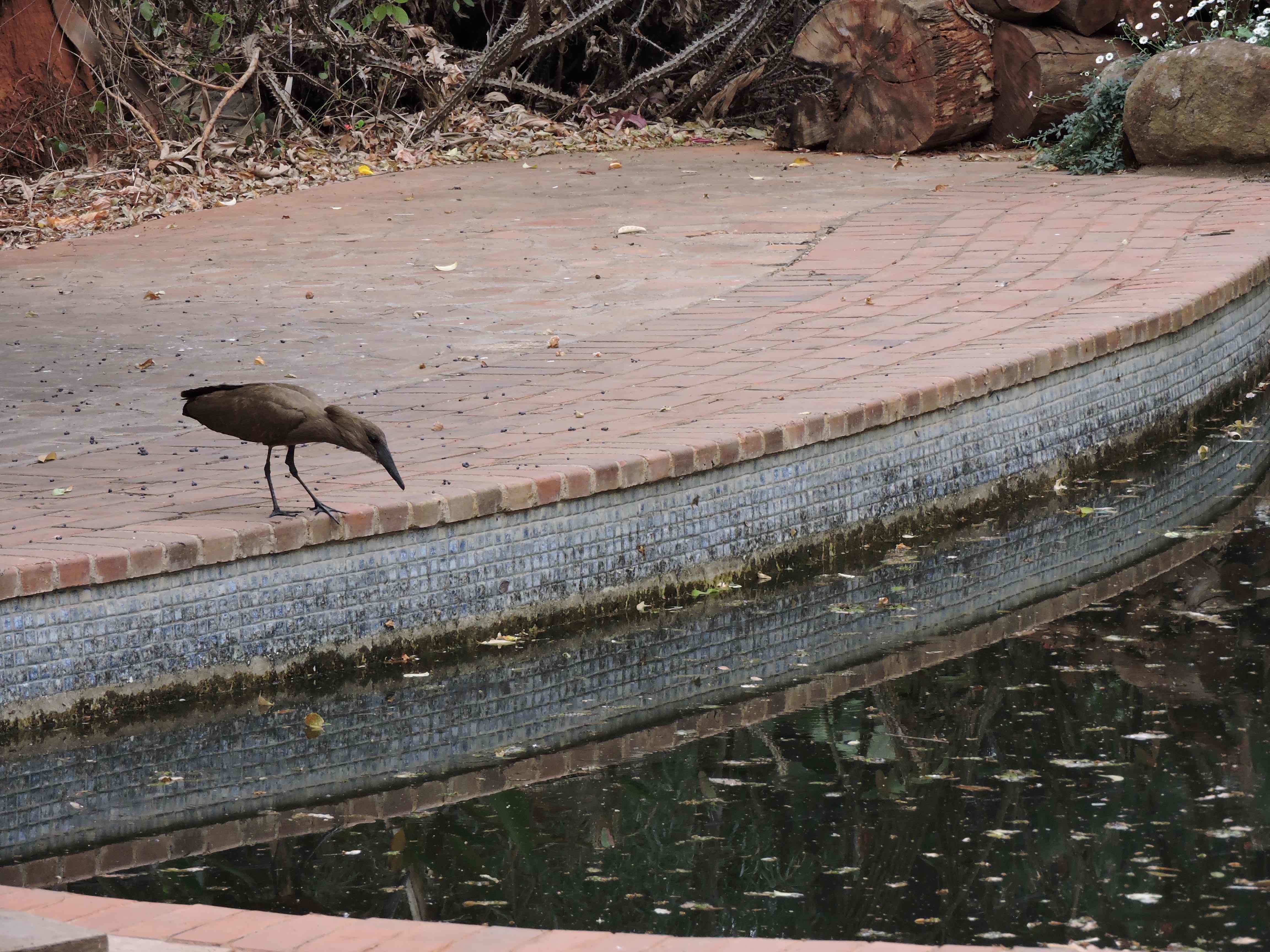
Luckily, attracted by the “fast food” on offer at least one (I am not good in identifying individual birds yet…) hammerkop[1] became a frequent customer. It walks around the pool stalking the frogs that it catches them often. It is nice to have these birds in the garden and we hope that some of them will eventually come and nest here as there are a few trees that would be able to hold one of their humongous nests.

On a Sunday in January last, before we went for lunch to a nearby place, a hammerkop arrived. It was late morning and it perched by the pool’s edge with its sights fixed on the water plants, undoubtedly waiting for its prey. We watched it for a while but it did not move so we left it to find its food while we found ours.

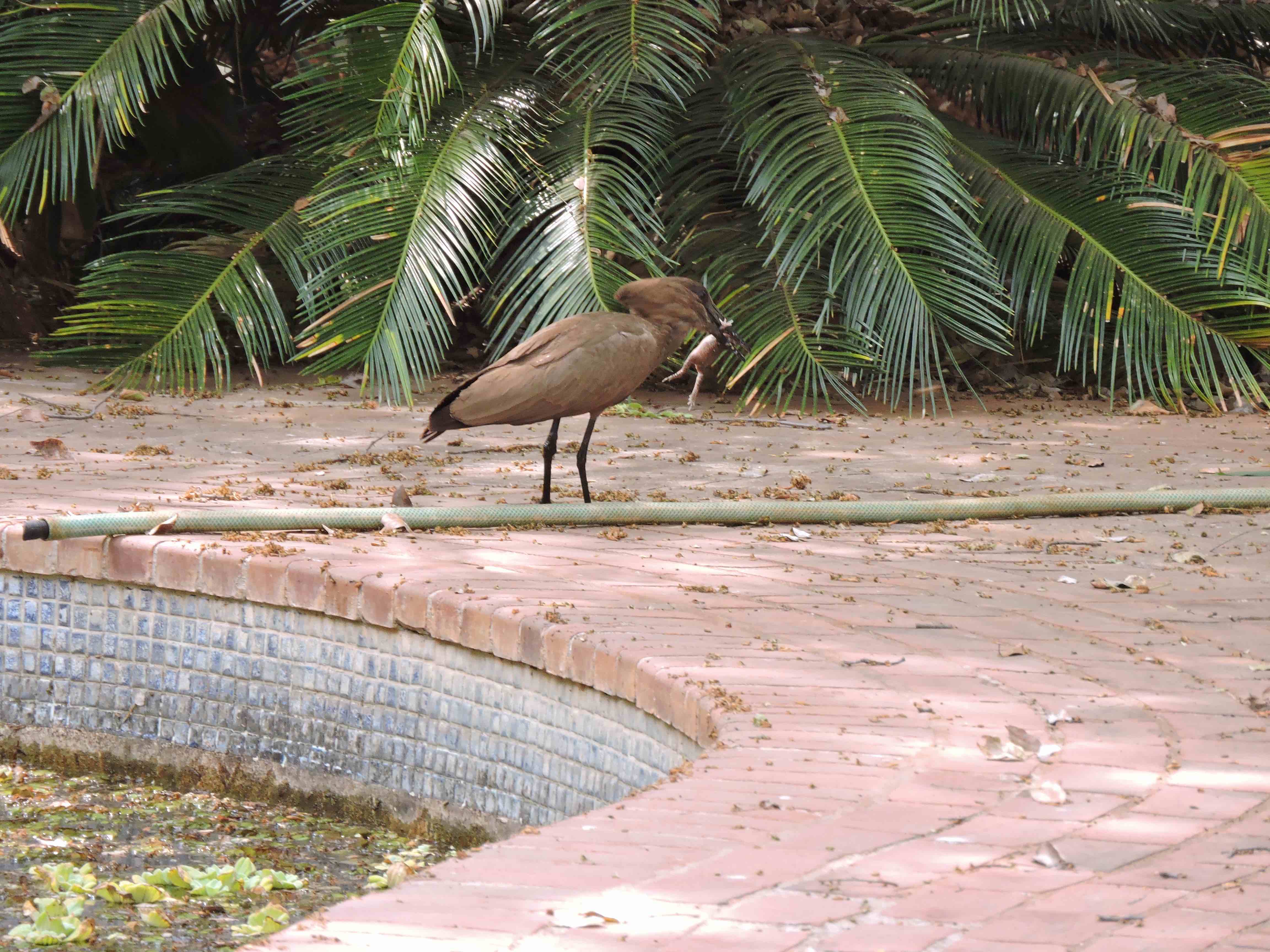
After a nice lunch we returned home (for a siesta…) and found the hammerkop still there. It had caught a frog larger than anything I had seen before. It was already dead and the bird was busy “hammering” it against the floor. It seemed that the technique was to break its bones to be able to swallow it and it was really going for it!

We watched the bird “tenderizing” the frog for about one hour until it was totally limp. At that stage the hammerkop attempted to swallow it a couple of times and failed so it decided to wet it and try again but it was still a “mouth full” and it was not able to gobble it up completely so, after swallowing about half, it was forced to expel it out or it would have choked!

Eventually, after wetting it again, the bird had another swallowing attempt that nearly succeed but clearly the frog was larger than its throat so it came back out again. This time the bird, probably fed-up (my interpretation!), just dropped it in the water and left!

I thought that this was a real waste of a meal and, to avoid the toad rotting inside the pool, I fished it out to dispose of it. While getting it I noticed that despite all the hammering the carcass received, the skin was not broken anywhere, an indication that the rather large beak of the hammerkop is not used for piercing and also that it was “all or nothing”!


[1] Scopus umbretta

Garden and gadgets

As I mentioned earlier (see: https://bushsnobinafrica.wordpress.com/2015/06/19/drones-in-the-bush/), we did get an improved drone as soon as prices dropped. Although my son immediately managed to fly it, I am still building my confidence after the earlier mishaps! However, as this contraption almost flies by itself, I believe that with a bit of practice I will soon manage. I will report on “droning” in a future post.

In addition to the drone, I have improved on my camera and bought a Nikon Coolpix P600 with a 60X optical zoom. I chose this (in fact my daughter did…) because it is powerful while being quite light. We are already loaded with binoculars to add more weight! Not being a pro, it is good enough to capture what I see although I have always believed that there is no substitute for your eyes! To this I added a tripod and downloaded an App that enables you to take pictures wirelessly using my smartphone.

Going almost beyond my mental capability I also got a camera trap! Its increasing use worldwide has made these affordable so I decided to get one as well to top up my gadget bag that already contains a number of goodies such as UV torch, normal torches, battery boosters for phones, video camera, night vision googles and binoculars.

They both have been a great success so far.

The very day I got the camera trap -brought from the USA by my son- I set it up in the garden and I have done so for a few nights over the last couple of weeks. Although It is not meant to take high resolution images, its pictures are good enough to identify animals, provided that you point it in the right direction!

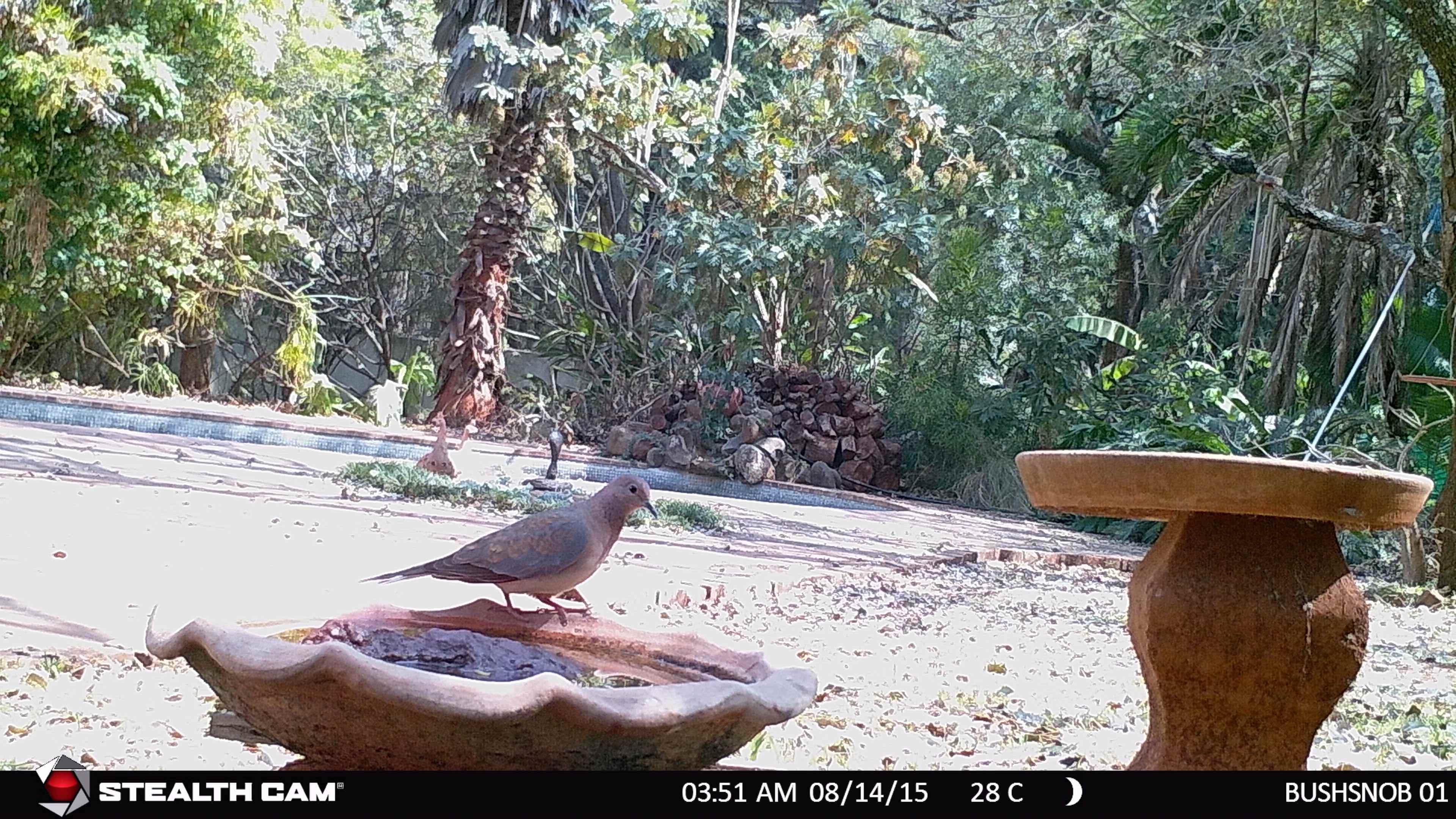
Through the pictures and videos it took during the day I managed to confirm some of the birds visiting our bird bath and feeding table as well as to detect some new ones. So far we had mourning dove, forked-tailed drongo, dark-capped bulbul, kurrichane thrush, white-browed robin chat, yet unidentified weavers and fire finches, blue waxbill, variable sunbird and purple crested lourie. In addition, leaving the camera overnight confirmed the crepuscular habits of both robin chats and drongos.

A laughing dove.

A laughing dove.

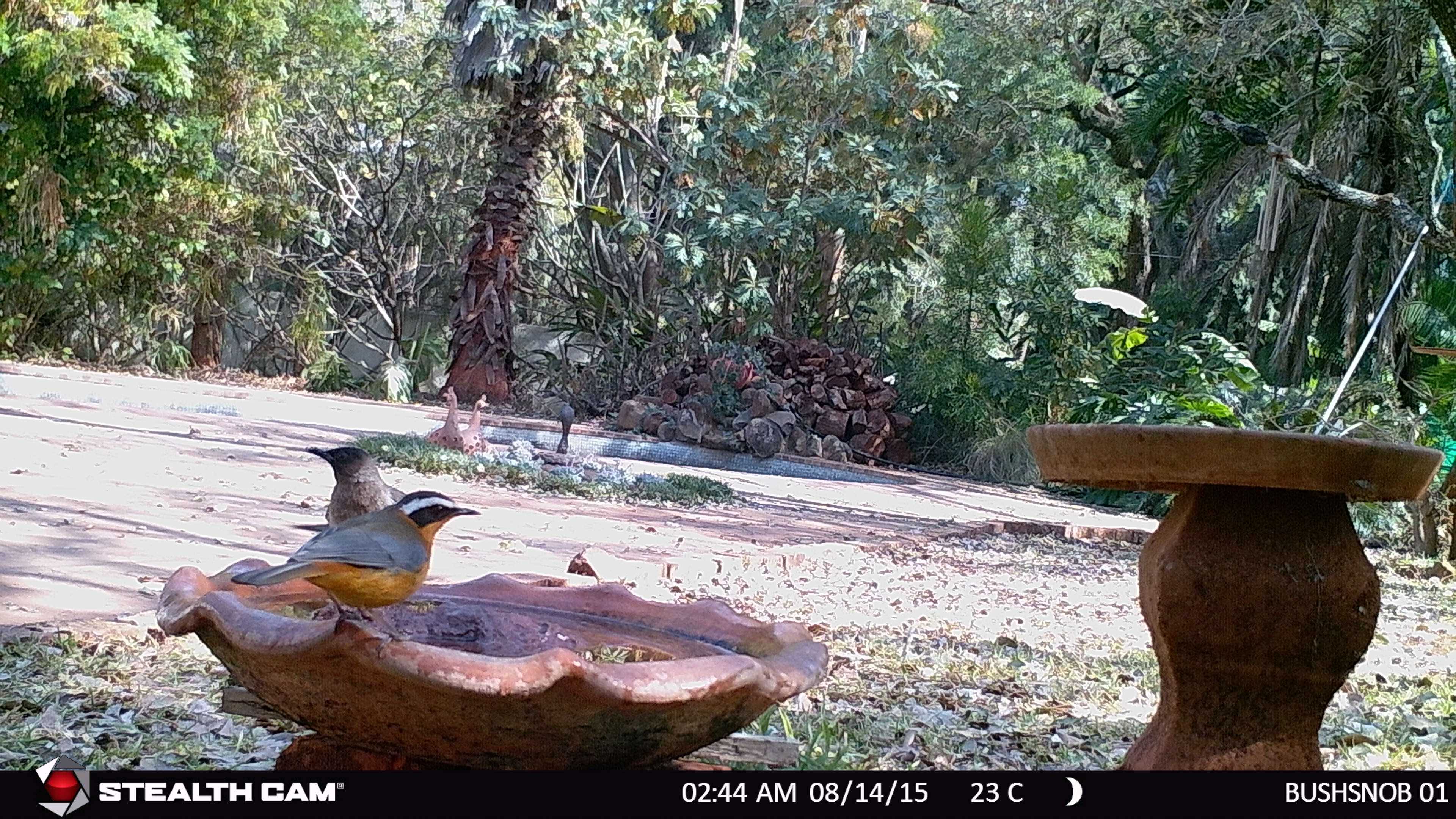
A robin chat and bulbuls.

A robin chat and bulbul.

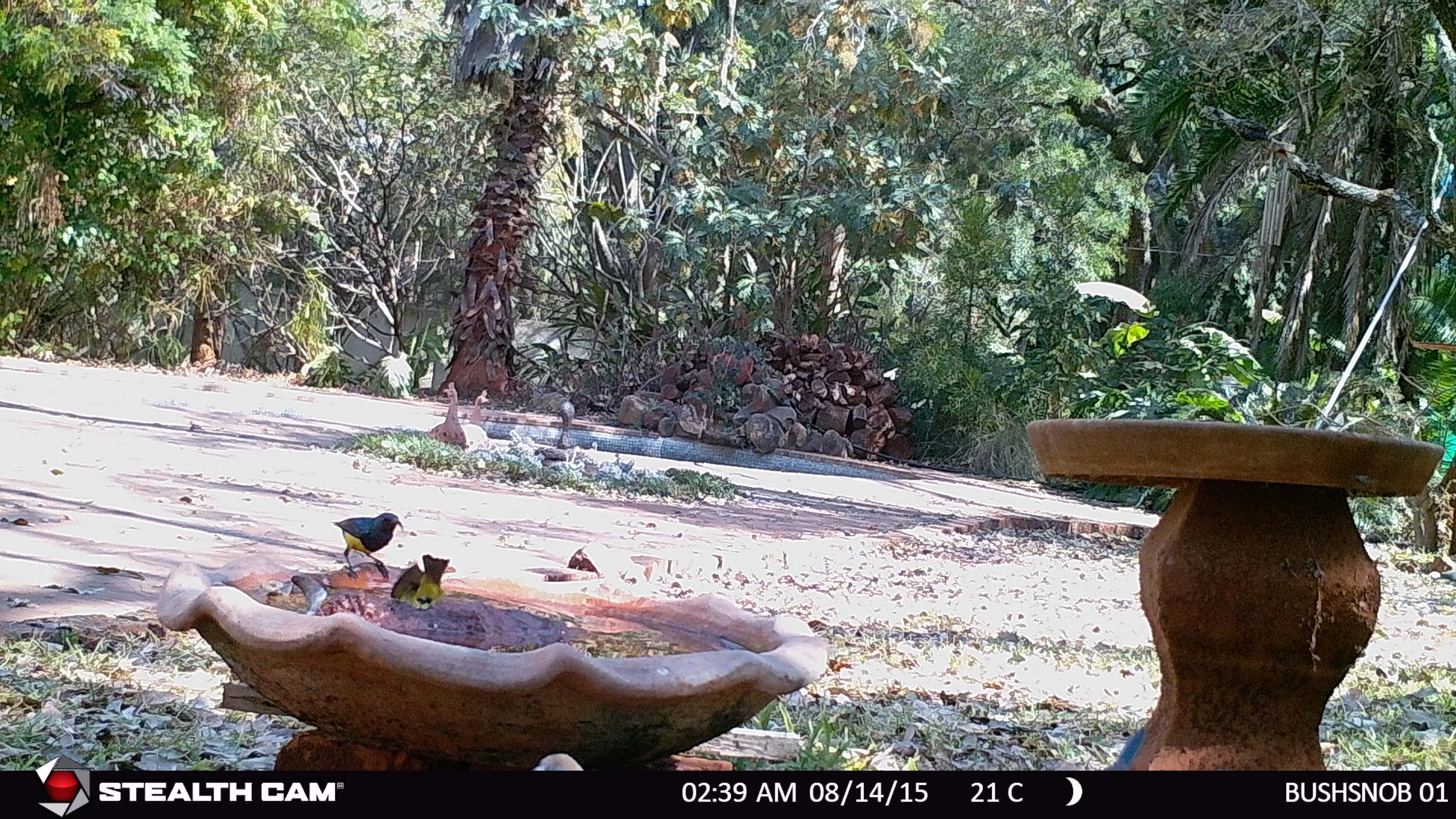
A pair of variable sunbirds.

A pair of variable sunbirds.

A close-up of a purple-crested lourie.

A close-up of a purple-crested lourie.

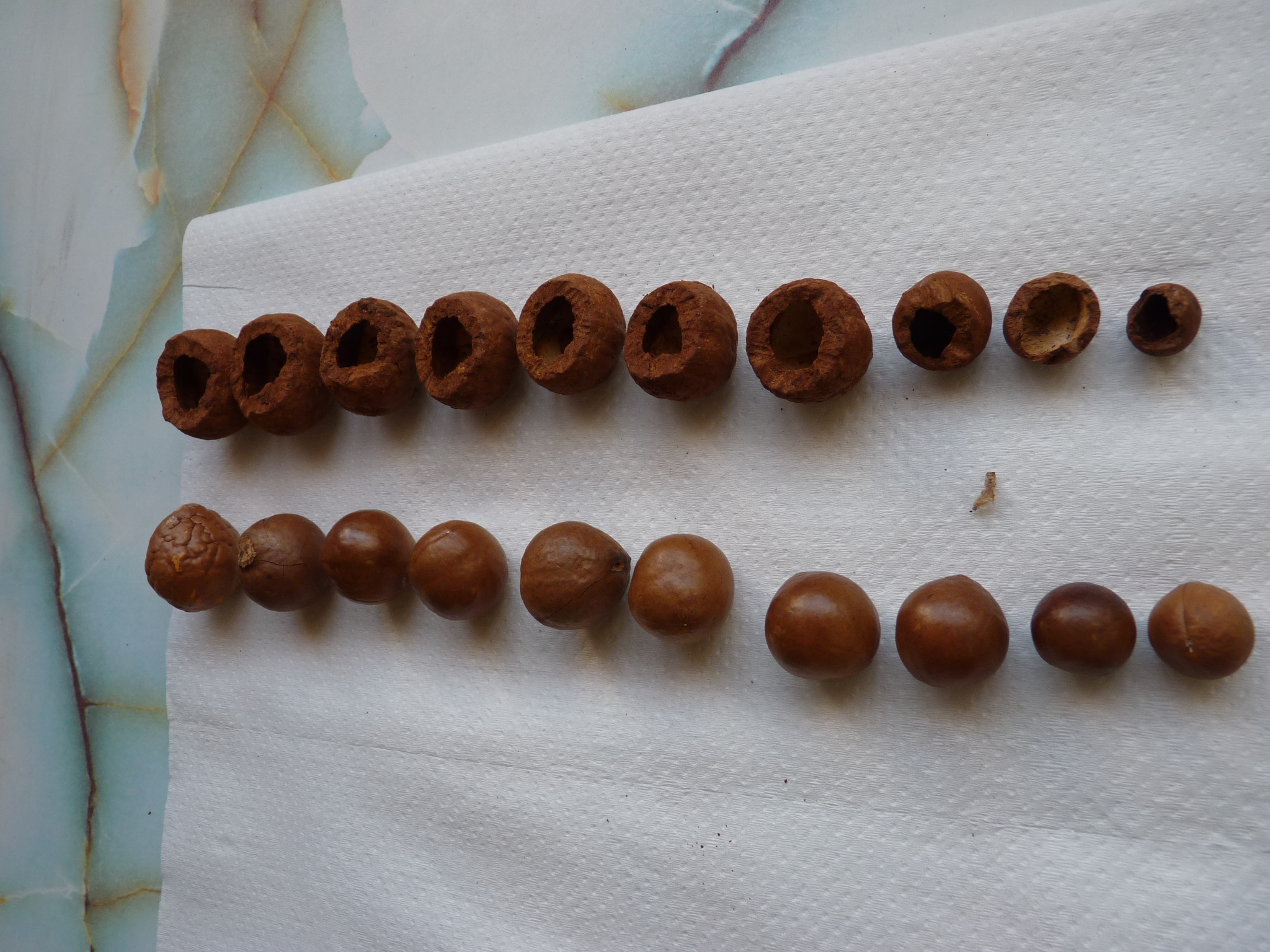
I also did some detective work in connection with the unravelling of a garden mystery: the nocturnal disappearance of the bird seed from the feeding table! I managed to expose the culprits that were no others than the suspected African Giant Pouched Rats (Cricetomys sp. Ansorgei). They were already high on the possible culprit list as we had evidence of their presence through large fresh burrows and macadamia nut shells found in the adjacent areas. If you have tried to crack one of these nuts, it will give you an idea of the gnawing power of these animals!

Macadamia nut husks (top) and whole nuts (bottom) to show the way the rats eat them.

Macadamia nut husks (top) and whole nuts (bottom) to show the way the rats eat them.

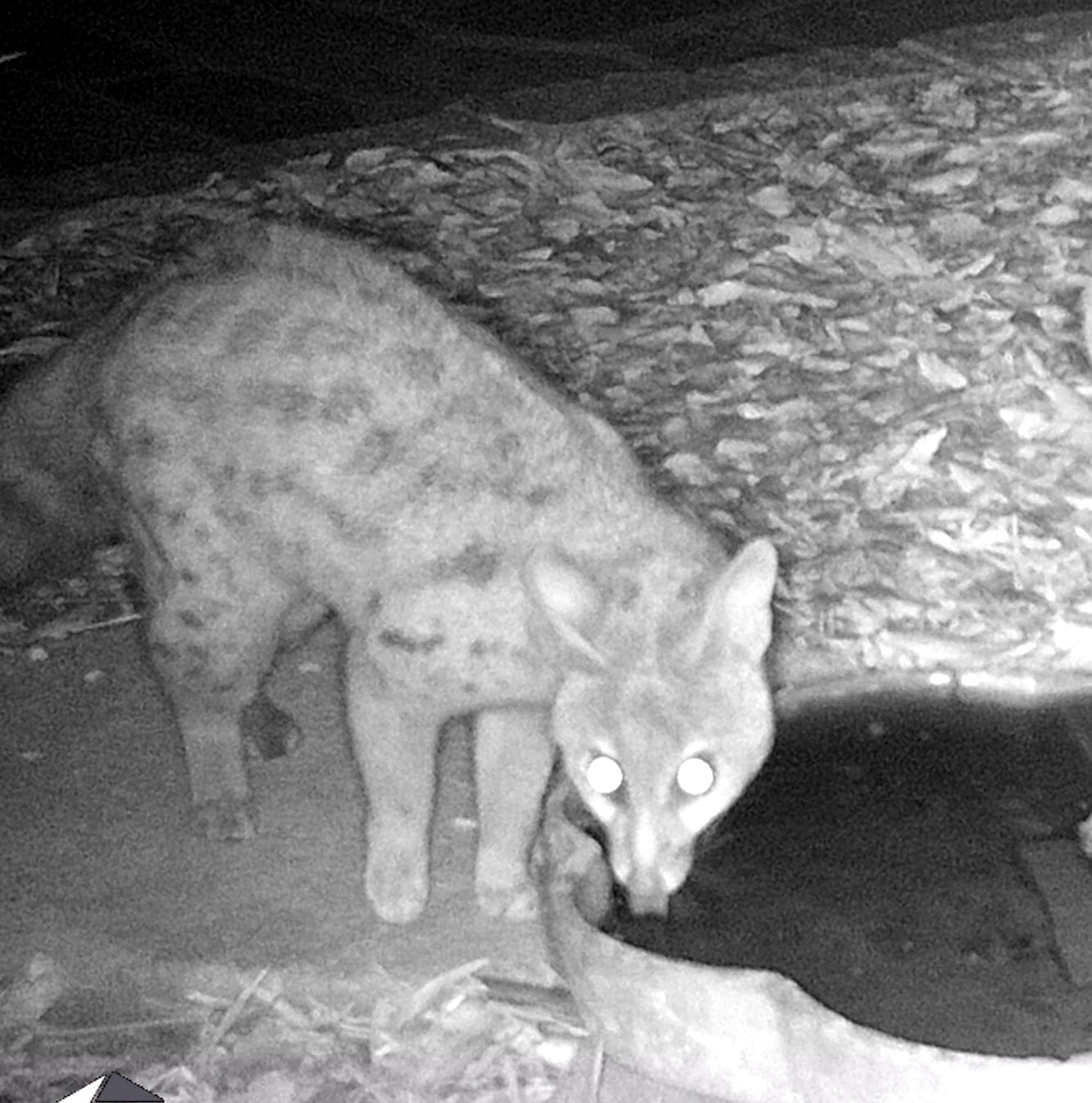
In addition to finding the somehow expected rats, we came across another animal that came as a surprise as Nature will not disappoint you if you look for new things! One of the nights we were after the bird seed-eating culprits an African civet (Civettictis civetta) came by for a drink! Consulting the Internet I learnt that they do move into urban environment and that they also climb on house roofs!

The African civet drinking.

The African civet drinking.

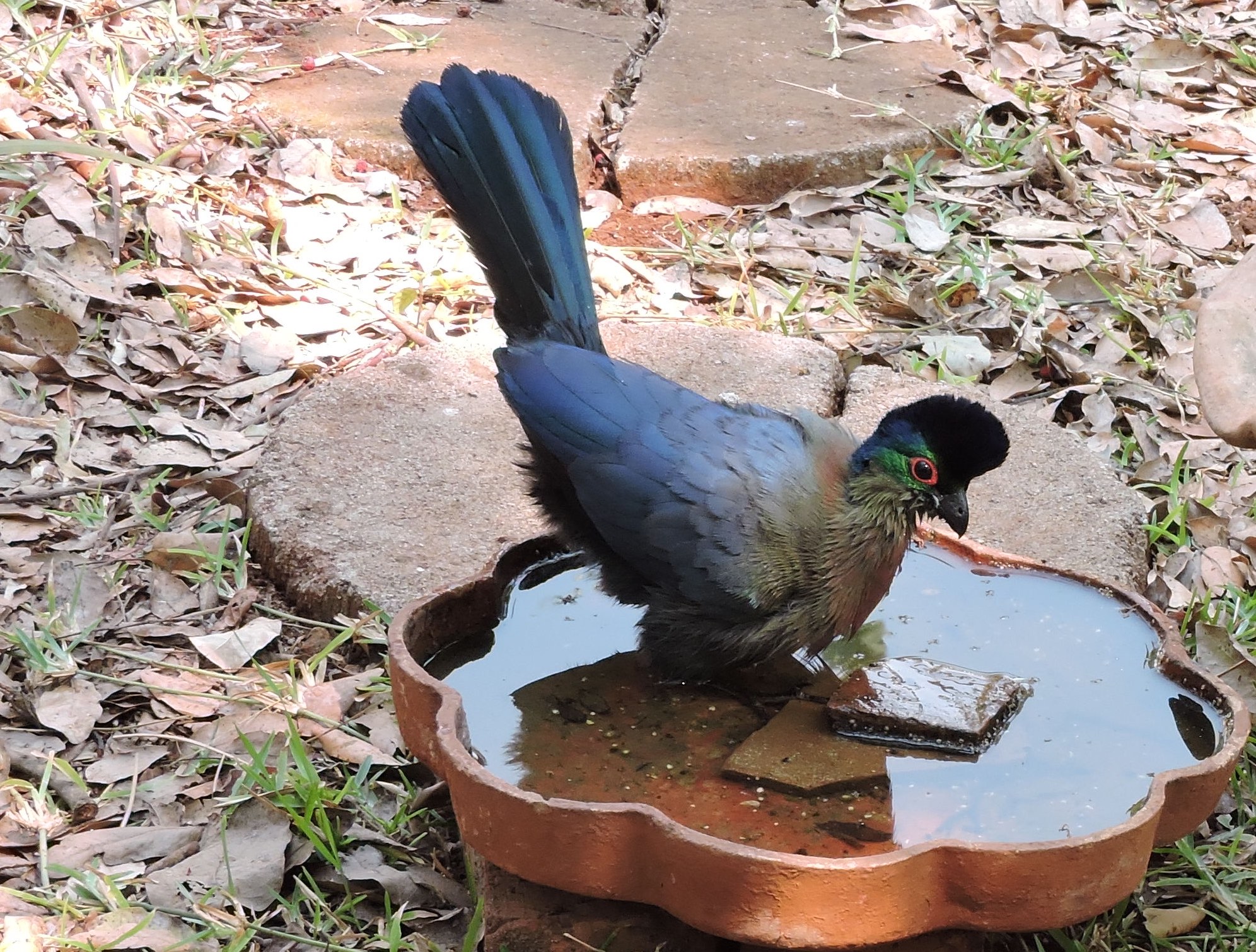
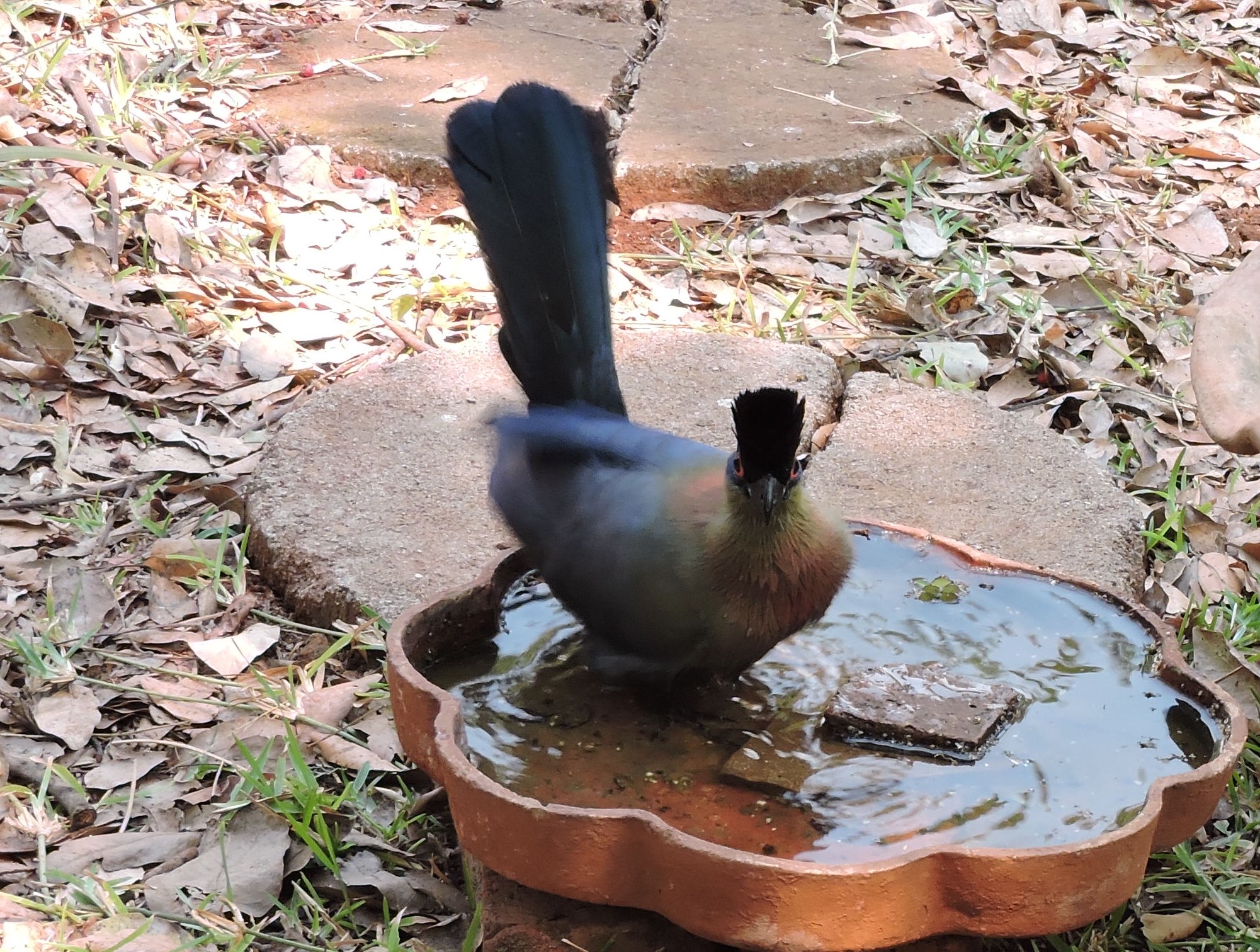
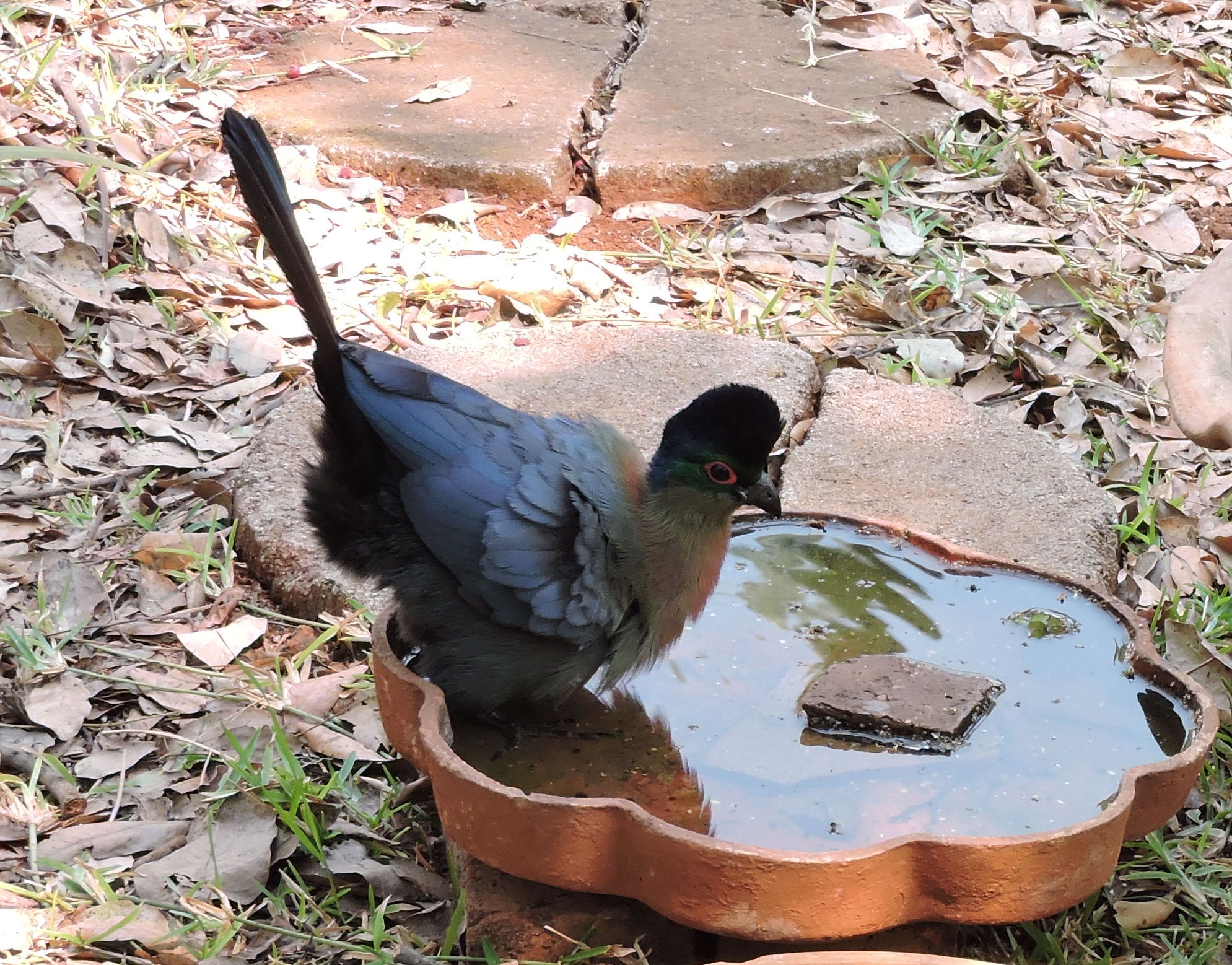
Having detected the birds and animals present in the garden, it was time to use the tripod and remote control on the Nikon camera and attempt to document some of the visitors with a better resolution. This I am doing at the moment and learning.

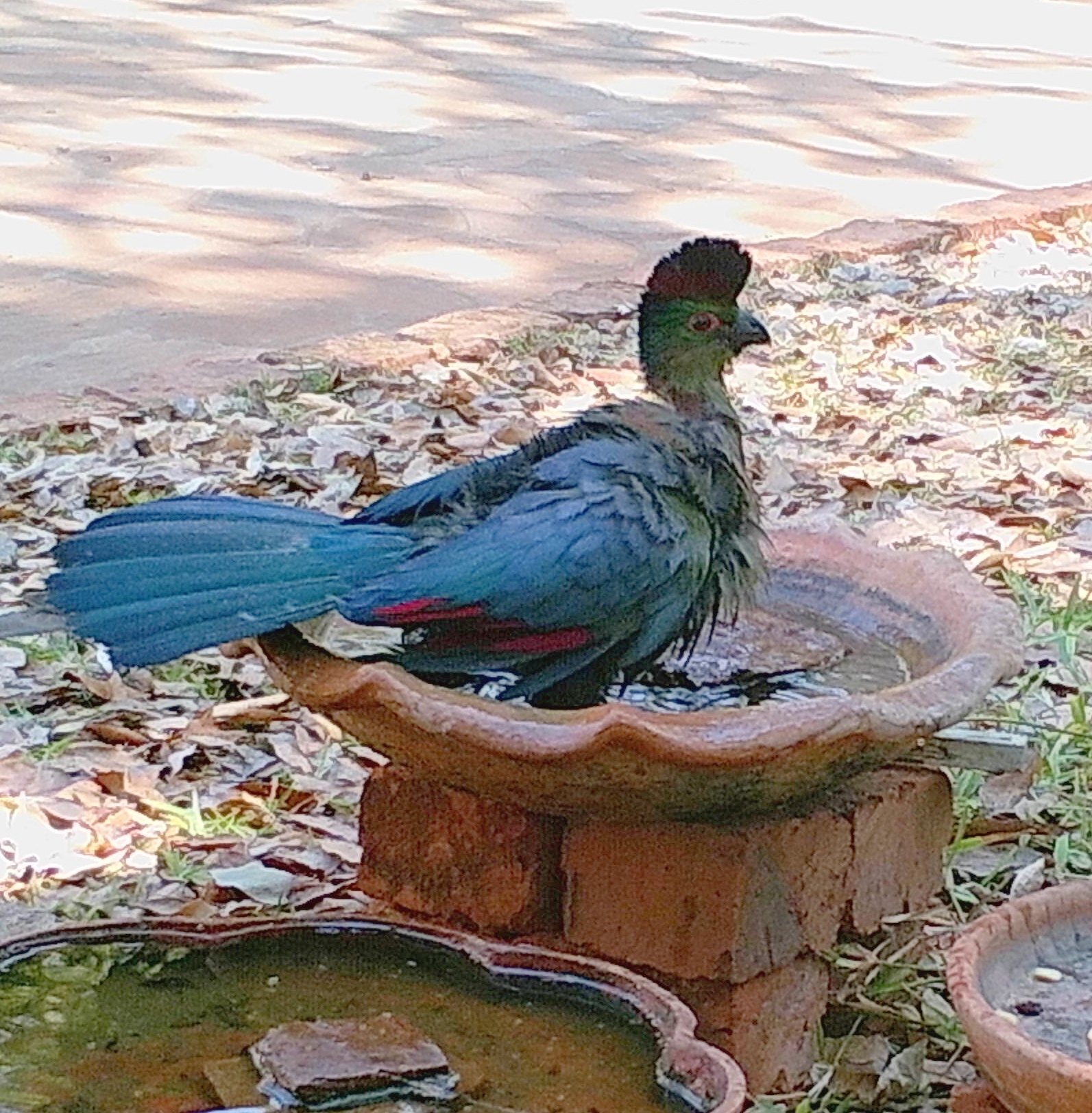
Better pictures of the lourie taken with the Nikon camera and remote control device.

Better pictures of the lourie bathing taken with the Nikon camera and remote control device.

DSCN9334 copy

DSCN9333 copy

DSCN9331 copy

The louries have always been in the garden but always high on the trees. It is only recently that they have decided to come for a dip in the birdbath. The hamerkop comes often to decimate the toad population in our water storage tank (read swimming pool).

The hamerkop taking up position by the pool.

The hamerkop taking up position by the pool.

Stalking toads.

Stalking toads.

Gotcha!

Gotcha!

I need to take advantage of the present dry conditions prevalent in Harare so when the rains come later in the year the animals will disperse.


Note: this post has not been checked by my Editor.


Added on 5 September 2015: Although I identified the night cat-like visitor as an African civet, subsequent Internet search makes me think that it could in fact have been a genet. I am trying to get another picture to clarify the situation.

Flowers and Spiders

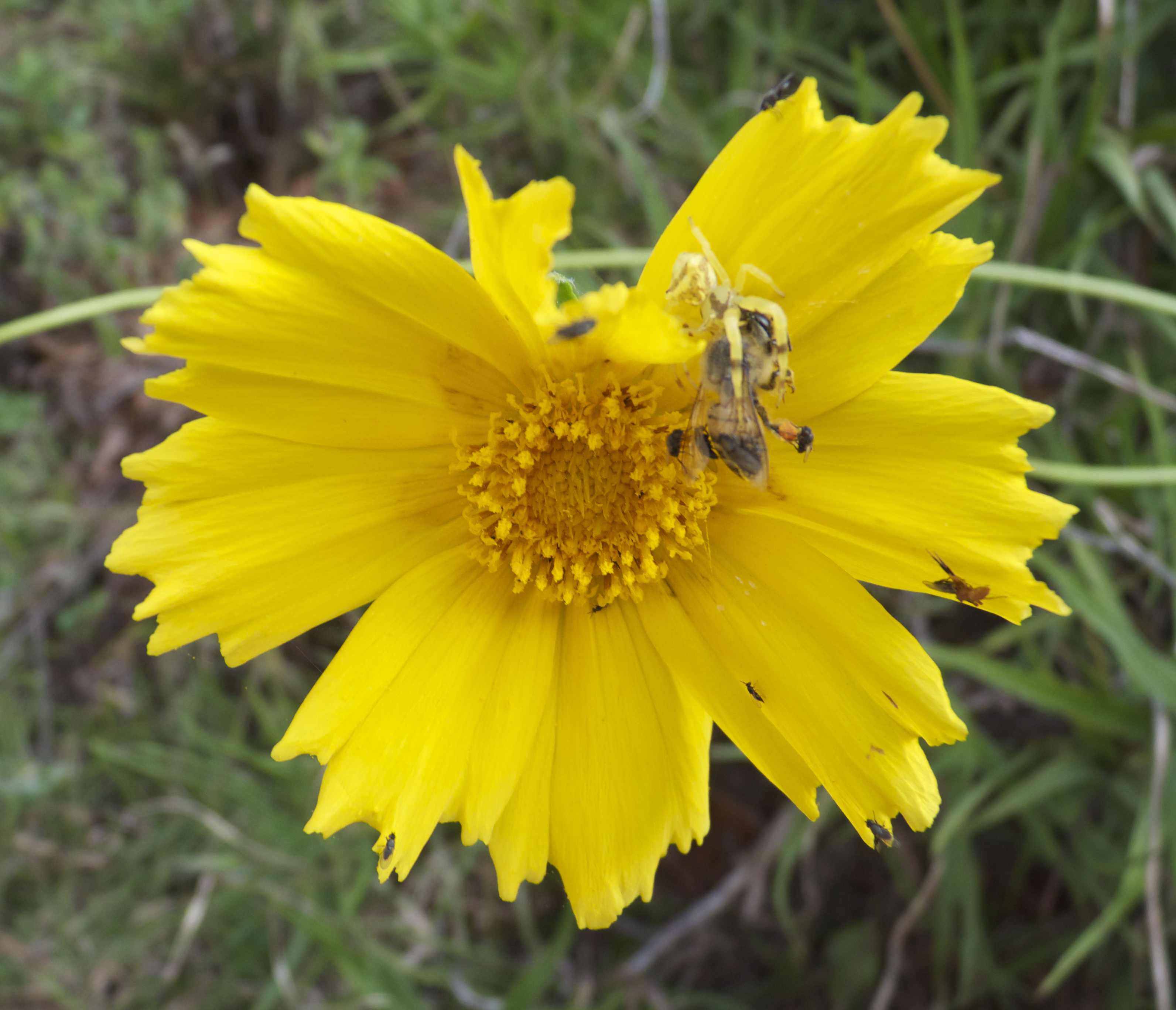
The yellow spider holding the bee. The small flies can be seen in different areas of the flower and the small male spider with its fly prey is on the right of the flower.

The yellow spider holding the bee. The small flies can be seen in different areas of the flower and the small male spider with its fly prey is on the right of the flower.

Walking in the garden I saw a bee collecting pollen on a yellow flower. Nothing strange about that you may think as there are beehives all over the place. However, about four hours later, the bee was still there and it was there still the following day. Clearly, further investigation was required.

Upon closer inspection I could see that  the now dead bee was being held by a rather small yellow spider, mimicking perfectly the colour of the flower and now busy sucking the bee’s body juices. Interestingly, there were also tiny flies on the flower, attracted by the mini carnage and, on further observation, a very small brown spider had caught one and it was also feeding on it. When disturbed, it left the fly and moved to the underside of the flower. My hasty conclusion was that the small spider was a commensal, taking advantage of the flies attracted by the dead bee.

After a bit of research and reading, the picture got clearer. The larger spider was a female Yellow Crab Spider (Thomisus sp.). This is not a rare spider so I was a bit disappointed. Then the following question was: what would it do when the flower dies as there were no other similar flowers nearby? It seemed rather obvious that the survival chances of such a brightly coloured animal would not be too good! I learnt a bit more about this as well! Once the flower dries, the spider moves off and it is able to change colour again to camouflage itself to its new surroundings. The wonders of nature strike again!

Oh, by the way, the tiny spider sharing the flower was not a commensal but the male spider that, in view of the size difference, I am sure it does well to inhabit the other side of the flower. That is exactly what I would do…