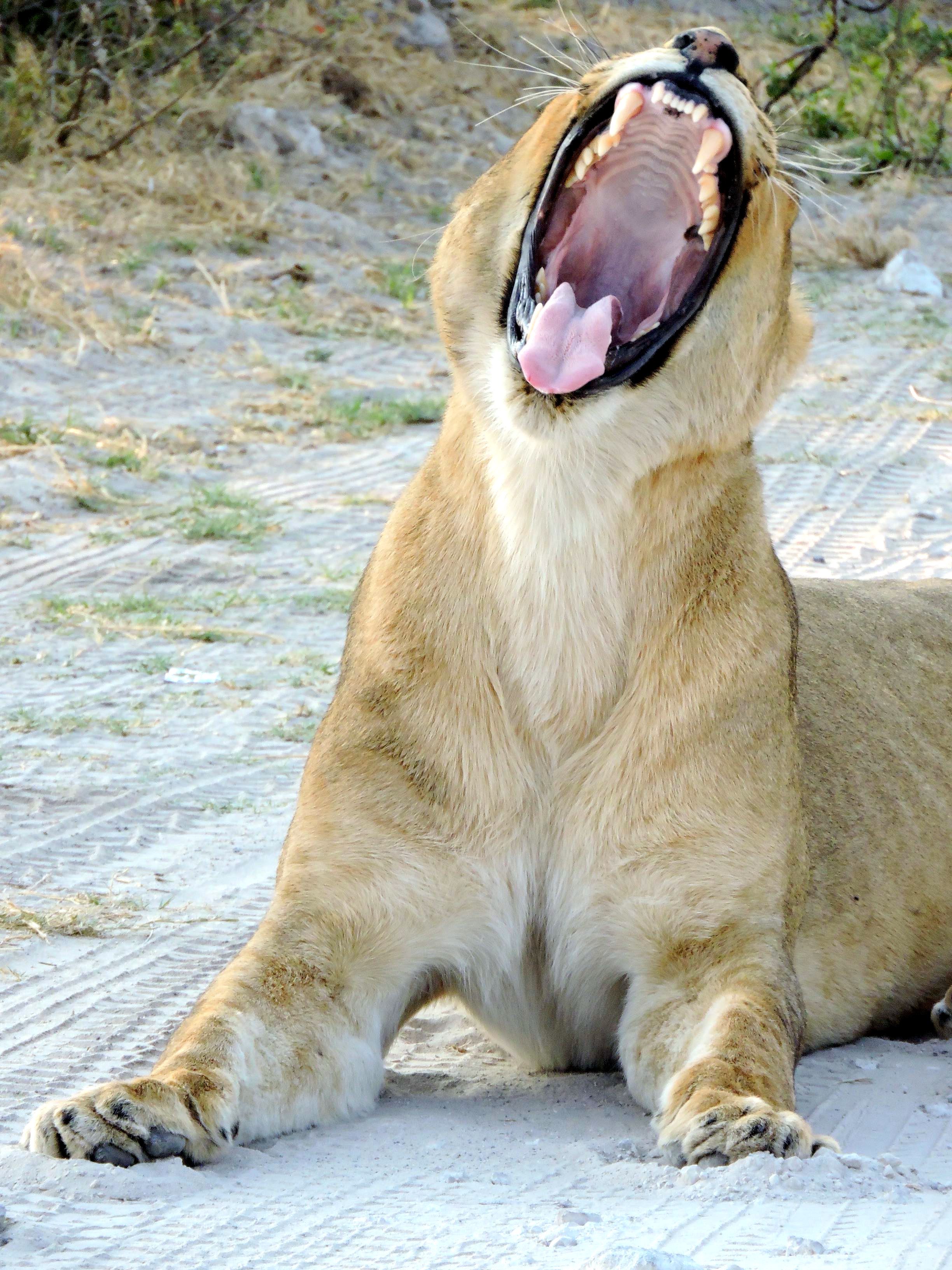
lions

Manes

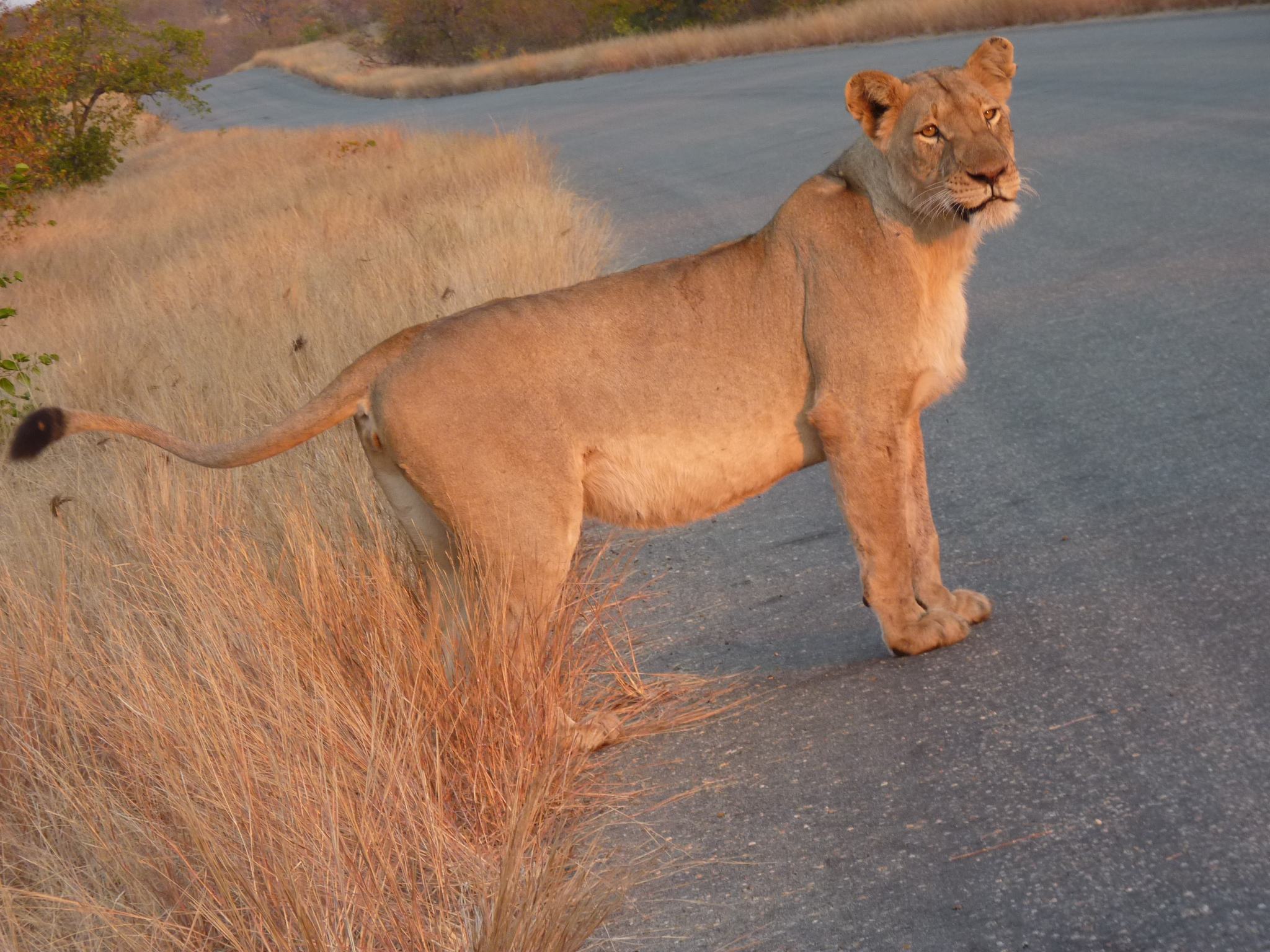
The mane of the lion is one of the indisputable dogmas with which we grow and, together with a giraffe and an elephant, a male lion with its mane is one of the first animals we learn to recognize as young children. Further, as we grow Panthera leo, it is one of the first creatures of which we understand sexual dimorphism when we learn that the lionesses do not have hair!
DSCN0007 9.19.55 PM copy 7.34.34 PM 7.35.55 PM

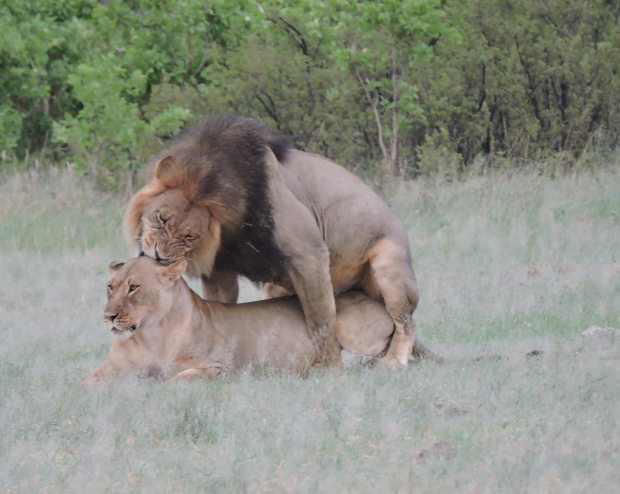
An heterosexual lion couple.

Well, my lion world has been shattered from now as the above is no longer true, well, at least it is not always true!

On 22 April 2016 I saw a photo posted on Instagram by @INSTA_BOTSWANA of two male lions mating. Although surprised, I am aware of the existence of homosexual behaviour in some animals and have observed it in giraffes where, apparently, it is quite frequent. However, I had no knowledge of this behaviour taking place among lions.

Still thinking about the picture I was about to move to the next image when its caption called my attention. The mating animals were in fact members of the opposite sex! Thinking that this was even more interesting, I followed up the issue and learnt that a few days earlier a similar picture had become “viral” in the social media and was extensively discussed.

I confess that I am skeptical about these kind of news and my first thought was that the original picture had been modified. To my surprise, lionesses with long hair have been observed both in captivity and in the wild. A well-known example is Mmamoriri that is part of a pride that resides somewhere in the Northern part of Chief’s Island in the Moremi Game Reserve.[1]

Scientists believe that the quality and abundance of the mane reflects the health of the animal: a thick, dark one shows a vigorous and healthy animal. In addition, females prefer these strong males to perpetuate their genetic material in future generations.

So, what is the reason for a female to grow a mane? Geneticists believe that the emergence of these “tomlions” is due to a disruption of the embryo at conception or during more advanced stages of the pregnancy when the foetus gets exposed to higher than normal levels of male hormone. Whatever their genetic origin, the maned females survive very well. Further, their deceiving appearance is advantageous in keeping intruder males away from the pride and hyenas away from kills!

Fortunately, an investigation is underway to address this phenomenon and it is likely that we will have interesting findings in the near future.[2]

This story would not be complete without mentioning that the opposite phenomenon -maneless lions- also occurs albeit more frequently and better known and studied. Such males are known from Benin (Pendjari National Park), Senegal, Sudan (Dinder National Park) and the first white lion of Timbavati in South Africa had no mane.

Without much doubt the most famous maneless lions were also man-eating ones. Two of them stopped the construction of the railway in the Tsavo River in Kenya for nine months and killed more than a hundred workers since March 1898. “The Man-eaters of Tsavo” written by Lt. Col. John Henry Patterson, who was in charge of the work and shot them, is a fascinating read! The book is also the subject of a 1996 movie “The Ghost and the Darkness” (Paramount) with Val Kilmer and Michael Douglas as the main protagonists, a poor substitute for a good read!

The area where these true human carnage took place is today part of the Tsavo National Park and, luckily, during one of our safaris to Tsavo East National Park in the 80’s, we were fortunate to find one of the possible descendants of these lions and attest that their manes are very scarce!
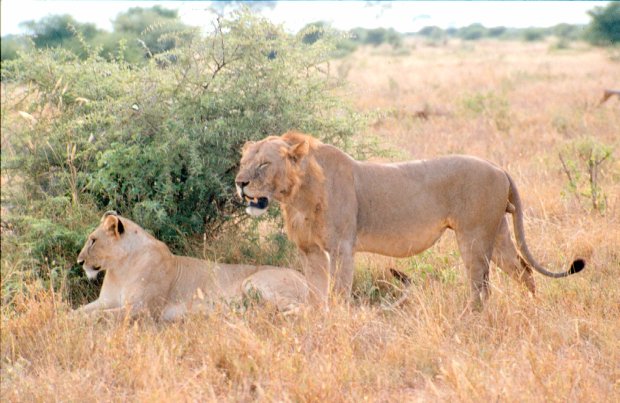
lions maneless male and fem T East

A “maneless” lion with a normal female at Tsavo East National Park.

The “baldness” in these lions is attributed to an adaptation to the thorny vegetation in the park as their hair could interfere with their hunting. As their colleagues in Tsavo West that live in a similar environment have normal manes, I personally believe that their baldness, as in humans, is due to high levels of testosterone that may also explain its aggressive reputation.


[1] http://africageographic.com/blog/unravelling-the-mystery-of-mmamoriri-the-maned-lioness/

[2] http://voices.nationalgeographic.com/2012/10/09/weird-wild-rare-maned-lionesses-explained/


Note: A similar article in Spanish was published in the “Muy Interesante” web page and it can be found here: http://www.muyinteresante.es/naturaleza/articulo/hay-leonas-con-melena-521461839096

Lions suckling

A letter about unusual lion behaviour in the Serengeti National Park[1], brought back memories of our own observations in the Maasai Mara Game Reserve, Kenya, in the 1980’s.

P1120930 copy.jpg

A picture of the letter to Getaway.

As it can be seen above, the letter describes that, a couple of tourists on a photographic safari, witnessed a lioness kill a wildebeest cow and her calf. Afterwards the lioness suckled the cow, then consumed the calf and returned again to suckle and lick the milk from the now dead female.

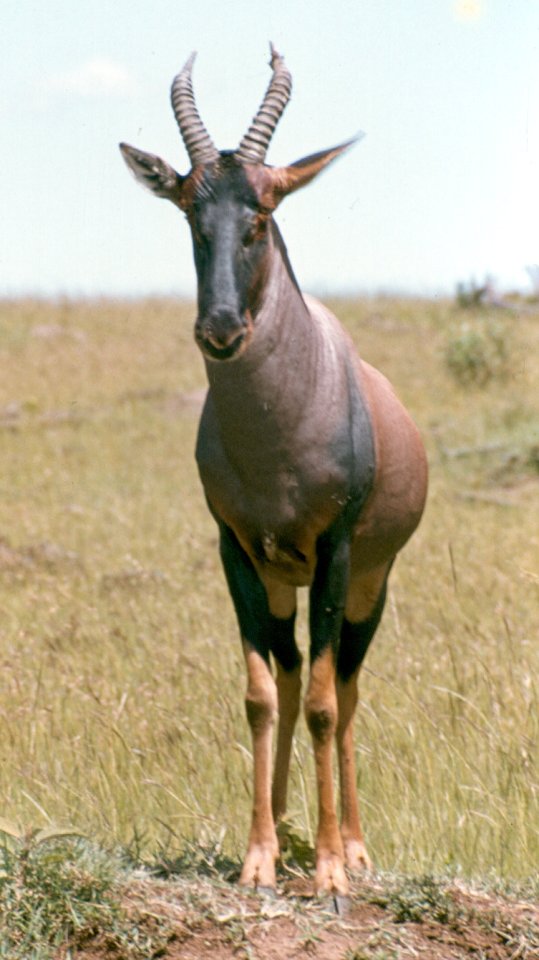
While in the Maasai Mara one evening we witnessed a lioness kill a topi[2]. While the lioness was busy strangling the animal, two cubs appeared on the scene and, without hesitation, went directly to the Topi’s udder and suckled the animal for a few minutes.

Topi m mara

A Topi in their typical “watching” stance.

Eventually the animal died and the cubs stopped suckling and joined the mother at eating it. We did not see he lioness suckling.

lioness and cubs other copy

The cubs we saw suckling were larger than this one.

The explanatory reply from Brian Jones, a very knowledgeable person on raising lions at the Moholoholo Wildlife Rehabilitation Centre (South Africa) among other activities, confirmed that lions do lick carcasses, a fact that I can also corroborate through personal observations. As he made no mention of the suckling of prey by lions, I decided to write to Brian to let him know of our own observations and somehow reinforce the tourists’ observations. The following is a record of our exchange:


16/11/2015

From:              Julio de Castro <juliojdecastro@gmail.com>

To:                  Moholoholo <moholorehab@wol.co.za>

Dear Mr. Jones,

Reviewing old magazines I saw your comment of a couple of years ago (Getaway, May 2013, p.13) to a sighting of a lioness suckling and licking a wildebeest female in the Serengeti National Park.

In the 1980’s, while working in Kenya, one evening in the Maasai Mara we witnessed a lioness kill a Topi. While the lioness was busy strangling the animal, two cubs appeared on the scene and, without much hesitation, went directly to the Topi’s udder and suckled the animal for a few minutes. Eventually the animal died and the cubs stopped suckling and joined the mother at eating it. I do not recall if the death of the female Topi coincided with the cubs stopping to suckle. The cubs were about 6 months old or older (not suckling babies).

I have also witnessed lions licking wildebeest and zebra prey (mainly in the abdominal area) but I believe that there are two different phenomena, one is the deliberate suckling of a female prey and another is the licking of a dying/dead animal, including males.

I hope you find this interesting and look forward to your comments.

Kind regards.

Julio de Castro

http://www.bushsnobinafrica.wordpress.com


19 November 2015

From:              Moholoholo <moholorehab@wol.co.za>

To:                  Julio de Castro <juliojdecastro@gmail.com>

Good morning Julio,

Thank you very much for your e–mail.

So interesting to hear of your experience witnessing the cubs trying to suckle from the Topi – really amazing!!!

Probably the smell of milk and I’d say the Topi must have had a youngster!!

Yes the licking of a dead animal is normal. I  have often seen even cheetah licking their pray before eating!! I have a few tame Cheetah and they lick my friends on their arm, I tease them by saying “they always lick their prey before they eat them” (ha, ha).

Thank you so much for sharing your experience, it always a story I can tell to other folk.

All the Best

Brian


I thank Brian for his time to reply and his valuable contribution. Please visit http://www.moholoholo.co.za/ to see the valuable work that the Centre performs.


[1] Koetze, R. Unusual sighting. Getaway (Letters), May 2013, p.12.

[2] The Topi (Damaliscus lunatus jimela) and the Tsessebe (D. lunatus lunatus) are sub-species of D. lunatus.

An antisocial lion!

Bush lions are normally tolerant of vehicles, even the open tourist ones. The only aggression we have seen was related to times when mating was taking place and the male normally leaves no doubt about how close you should be! The situation can be different on foot when the utmost care is needed where these cats are concerned to avoid accidents.

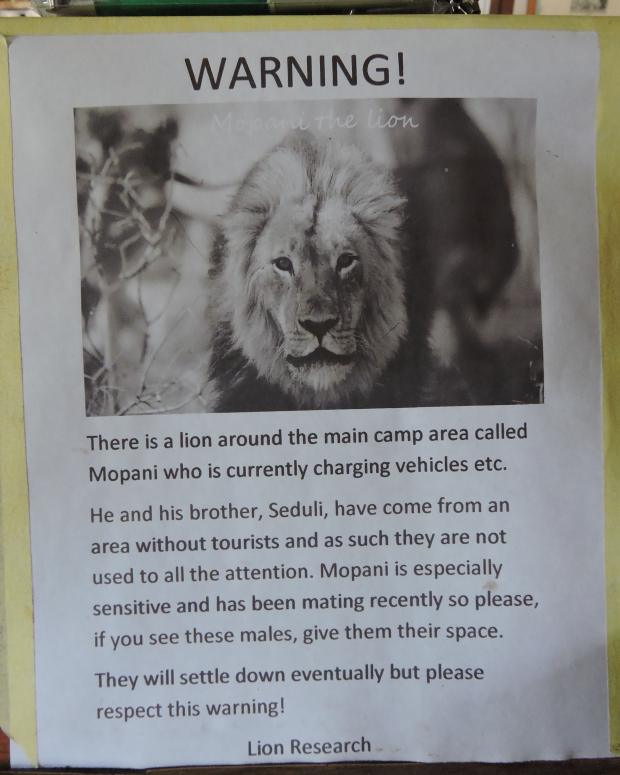
While checking in at Main Camp in Hwange National Park, we were warned of the existence of a new lion: Mopani[1]. The lion, explained a sign placed at the booking desk by the “Lion Project”, came from an area devoid of tourists and it was aggressive, charging vehicles! Siduli, another male, and two females accompanied it. We were also shown a video taken from a tourist vehicle being chased by Mopani and learnt that one of the females was in heat and mating with one of the males. We thought that Mopani’s progeny was assured and planned to keep our distance from him!DSCN9991 9.04.30 PM copy

The lions had taken residence around the Main Camp area so we were delighted at our luck, as we were sure not to miss them! “Cecil may have gone but in comes Mopani!” was our thought!

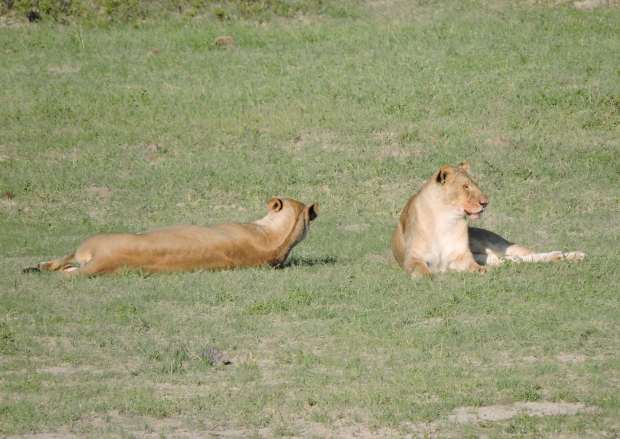
Although recently arrived from a longish trip, the possibility of spotting one of our all time favourite animals made us drop our luggage at the lodge and drive off in search of lions. We found the two females at Dom pan. They were clearly different: a paler one and a darker one. The latter appeared to be the older of the two.

DSCN9902 copy.jpg

After watching them for a while, a male came out of the bushes and greeted the darker one while the other moved away a short distance. Were we about to witness some mating? Not so as Mopani, who we assumed was the dominant male, only rubbed heads with the female and then moved off in the direction it came from, leaving the female pair alone until the day ended and it was time to get back to our lodge before the mandatory return time of 18:30hs.

DSCN9996 9.04.30 PM copy.jpg

We did not need to plan our next day activities as finding the lions again and spending time watching them was the only option! As a friend of mine says, “we slept in a hurry” and we were up before 06.00hs. No need for alarm clocks! We drove straight to Dom pan, as we believed that they would not have gone very far from there. On our way we realized that several migratory bird species were present at Hwange at the time. These were Crowned Cranes, Abdim and Woolly-Necked Storks, African Kites and Amur Falcons to name but a few!

We had little time for bird watching as the lions had killed a young elephant at Dom pan during the night and the two lionesses were feeding on it! After this find, most of our activities during the visit centred round Dom pan where we spent a lot of our time. We watched the lionesses feeding and interacting for several hours and I present you with a number of pictures and a video, as these are better than words. We only left them to return to the lodge for lunch and a rest.

When we came back during mid-afternoon, only the paler lioness was by the carcass. A search of the surrounding area revealed two lions laying together a few hundred metres from Dom. They were the mating pair: the darker female and a male that, to our surprise carried a radio collar. As we doubted that Mopani had one, it could only be Siduli. Clearly the lion that acts most ferociously towards cars is not necessarily the dominant when it comes to affairs of the heart! It was then clear that the male we had seen the day before was Siduli and that Mopani was hidden from view somewhere! But where?

Luckily my wife was with us as, if there was someone that could spot it, it would be her. And spot it she did, to our amazement, again! The wild-looking Mopani had been lying low under some bushes, unseen by anyone (except my wife) until then. It remained unobserved by our fellow game-spotters with the exception of another lady that clearly shared my wife’s eyesight. We thought it better that it remained unseen and got used to cars if it is to remain in a tourist area so we did not reveal its whereabouts.

As Mopani was still not willing to socialize and remained sulking under a bush, we focussed on the others. Mating in lions is a long-lasting affair as the pair remains together and mating takes place often for a few days, while the female is still receptive to the male[2]. This was clearly the case, as they remained “occupied” for the rest of the time we were at Hwange. That left the other lioness guarding the elephant carcass and Mopani hidden from view! After a while it was time to move off.

We drove to the Nyamandlovu pan as our daughter is very partial to elephants. Despite the abundance of drinking water all over the area, we were extremely lucky to witness the visit of a herd of about fifty animals that, as usual, appeared suddenly as if the product of a magic tree-to-elephant metamorphosis. The result was about one hour of one of the greatest shows on earth: elephants enjoying life at a water hole! There were about five family groups, each led by a matriarch and composed of its progeny, including some really young and tiny babies that were the centre of our attention.

The elephants not only drank but also entered the water where many were seen frolicking about and playing as only elephants are able to do among wild animals! It seemed to us that the latter were at risk of drowning while entering the water with their huge siblings and that they were under even more danger while swimming among them! Somehow they managed to keep their tiny trunks above the water and their mothers were extremely protective and they were always in close contact and ready to assist them!

The three resident hippos felt very uncomfortable at this sudden disturbance and two moved to the very centre of the pan while the third moved to the shore where it put up brave stance against the elephants, only to return to join the others as it was not at all respected by the excited pachyderms! Again, a picture gallery and videos are better than my limited power of description to let you know what took place.

The elephants’ joyfulness in the water delayed our return so we only drove past Dom pan, catching a glimpse of the lions who unwittingly startled a herd of 30 odd elephants intent on drinking from the pan, who retreated in a cloud of dust as soon as they caught sight of the lionesses. We arrived late at the gate where we were told off by a rather grumpy lady game ranger! The justification for our tardiness did not go far with her, clearly used to all sorts of excuses from people arriving late to camp!

The following morning, as expected, the lion pair continued their courtship, the pale female was still guarding the carcass and about fifty vultures (white-backed, white-headed, hooded and lapped-faced) were waiting on the side-lines for her to leave it. While in waiting, the Lappet-faced vulture was seen having a snack by pulling and cutting the dry tendons and sinews from an older dry elephant carcass that other vultures also shared once it opened up the hard bits!

Mopani, the antisocial, still preferred to remain out of sight! We can only hope that he starts turning into a more car-tolerant lion by accepting their presence as part of his daily life. Who knows, maybe one day he could become Cecil’s successor.


[1] To name wild animals or not to name! This is the question… for which I have no clear answer!

[2] Both leopards and lions have the same mating procedure. They can mate as often as every fifteen minutes for up to five days. This is the consequence of weak sperm and mating-induced ovulation.

Chitake

Chitake Springs are located in the southern part of Mana Pools National Park, about 50 km from the Zambezi river. During the rain the Chitake river flows into the Rukomechi river and the latter feeds the Zambezi. From the end of the rains in April these rivers dry up leaving only the springs as the sole source of water for a large area around them. The springs flow intermittently and at least once every 24 hours for some geological reason deep inside the earth. This natural wonder, therefore, attracts many animals both, prey and predators, from many kilometres around.

As if this would not be a sufficient attraction, this general area has important deposits of dinosaur bones. In particular, fossils of Coelophysis rhodesiensis are present as well as mega-prints (90 cm in diametre!) of the herbivore Brachiosaurus aswell as Allosaurus‘s footprints. This is apparently important as it shows that the Chitake area was also an area of prey-predator interactions during the Jurassic period! As interesting as this may sound, we did not search for these but it may be the subject of another trip!

We first learnt of Chitake through sad news. In late 2010 Pete Evershead was killed by lions while having a shower in the evening. Other friends that visited a couple of ears ago talked of animals walking very close from their roof tent. This left a very strong impression in them and they were very excited when they told us that they survived Chitake!

We were fortunate to get a booking in Chitake 1 campsite, by the actual springs. As this is a wilderness area (not even the entry road to the springs is signposted!) to camp there means to be on your own as there are only two campsites for private users in addition to one for tour operators. You also need to be self-sufficient in all needs, including water.

There is only one track -the entry road- that extends to the baobab hill (where Chitake 2 campsite was before it was moved to a nearby place) so this is not a place for game drives but a true wild bush experience where you sit and wait for the animals to come to the water when it flows or you walk if you know what you do!

The place sounded In addition, being older has made us more cautious so, not having a roof tent, we decided that we could sleep inside the car. We rehersed the flattening of the seats to convert it, if not in a double bed, into a reasonable place for a couple to sleep. We organized our belongings so that they could be placed in a small tent, on the front seats and on the roofrack. We were satisfied with the arrangements and ready to go…

Almost at the last minute we invited another couple to join us. Tom and Chizuki had never visited Chitake despite having lived in Zimbabwe from the late 90s so they seized the opportunity. They agreed with our idea of sleeping inside their car and we arranged to meet a couple of days before our departure to finalize the details. At that meeting it transpired that they could not convert their car into a bed so we all agreed to camp in the normal way. I was relieved as we have always slept in tents, even in places where animals were in large numbers in Kenya, reserving the car for “in extremis” situations… I will cover these in future posts.

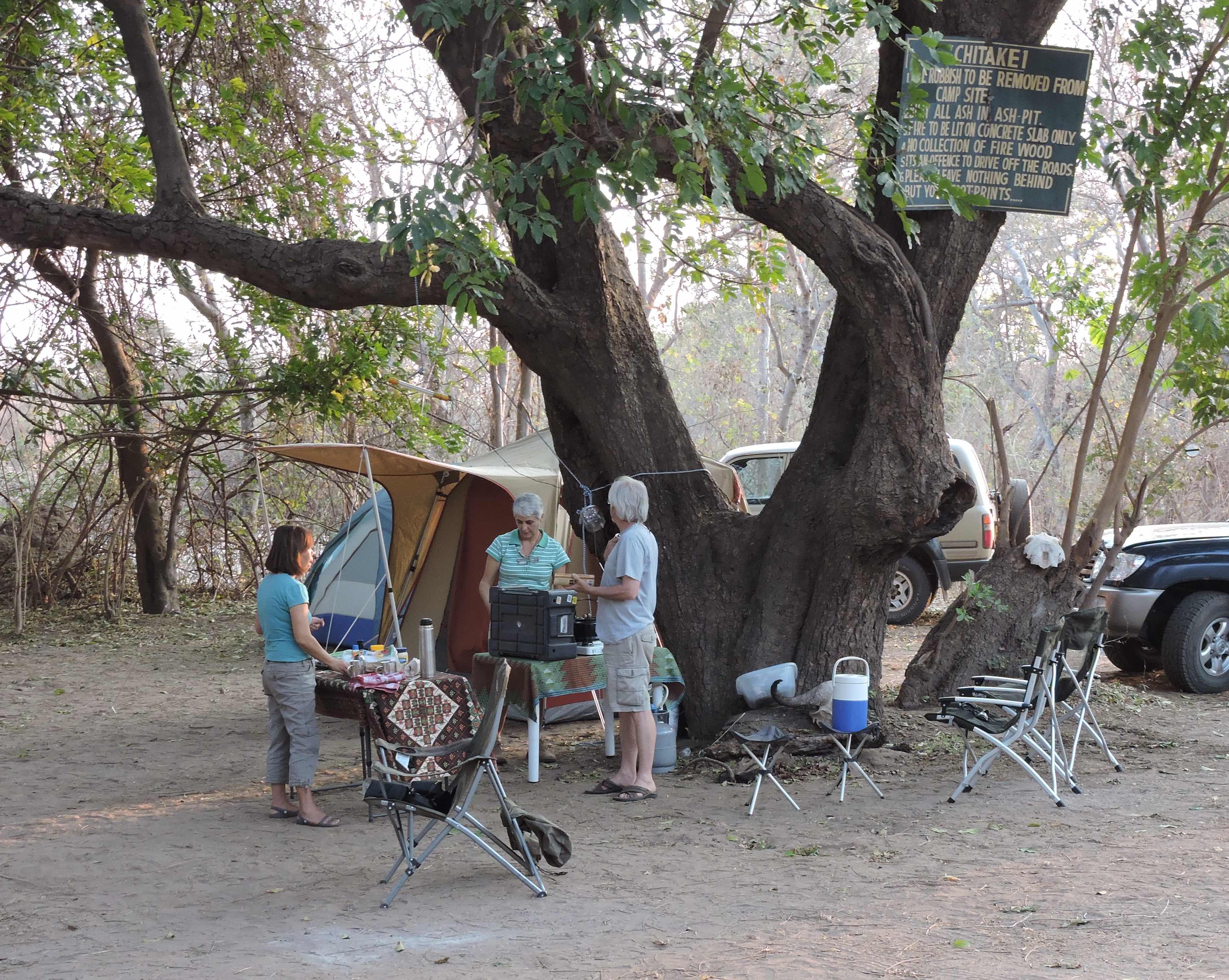
Our camp and occupants.

Our camp and occupants.

We arrived to Chitake in mid afternoon and set up camp early so we would be well prepared for the night, having the lions always in the back or our minds! After we were satisfied we explored our surroundings on foot and saw that the springs were about 100 metres from us and they were flowing.We sat in the dry river bed and waited. In one moment there was nothing at the water and then as if by a miracle, a group of elephants, buffalo or impala would be drinking! As night fell, the water was still flowing and the animals still coming down to drink.

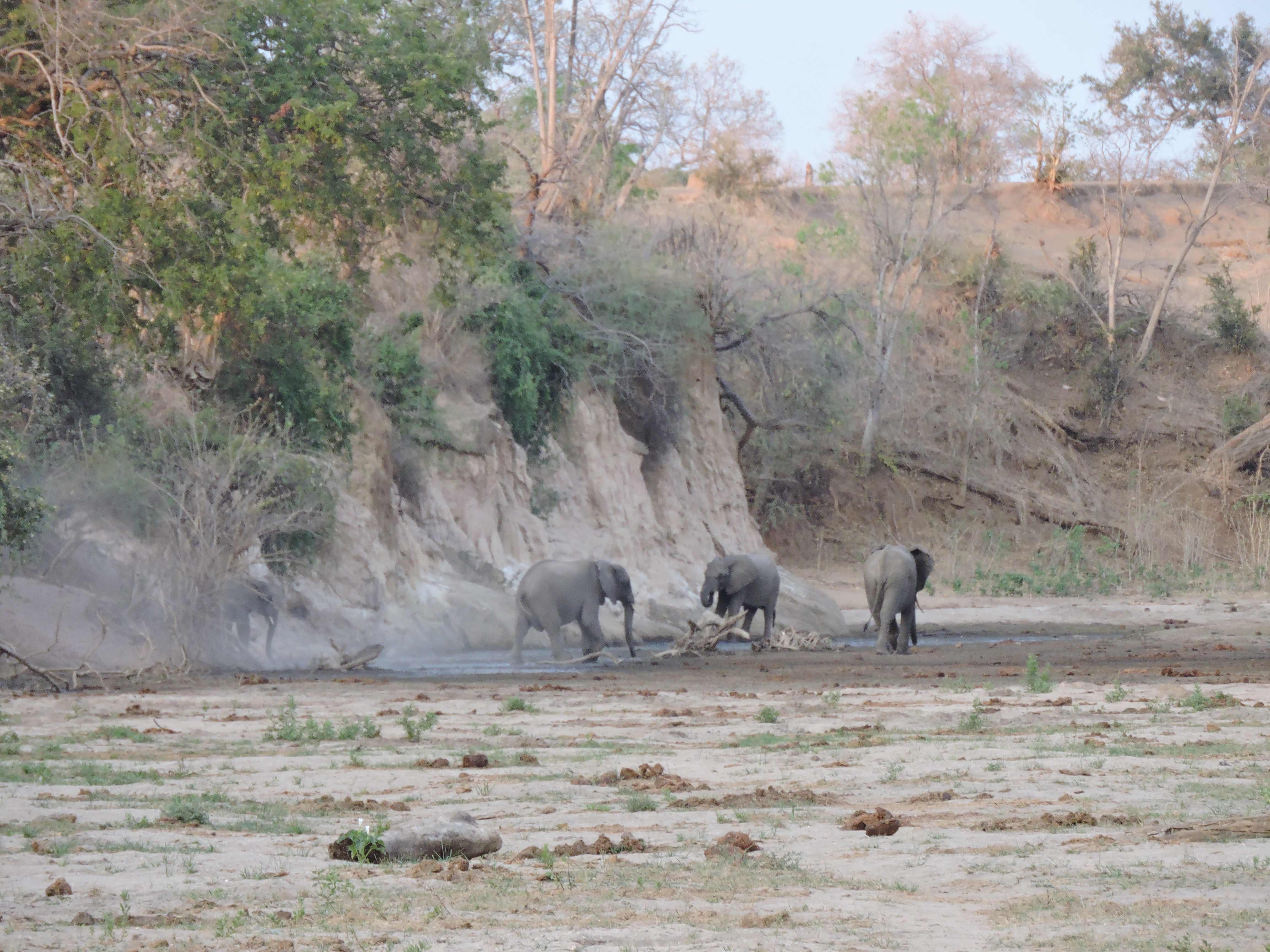
The elephants suddenly appeared (and disappeared!).

The elephants suddenly appeared (and disappeared!).

After an early dinner we retired to our tents for a well deserved rest. Lions did roar as expected. They were far from us, probably following the buffalo some place else. We slept well, being careful when getting up for pit stops during the night. The morning after saw us all happy to see that the four of us survived our first night at Chitake and decided to celebrate this with a good -and healthy- breakfast!

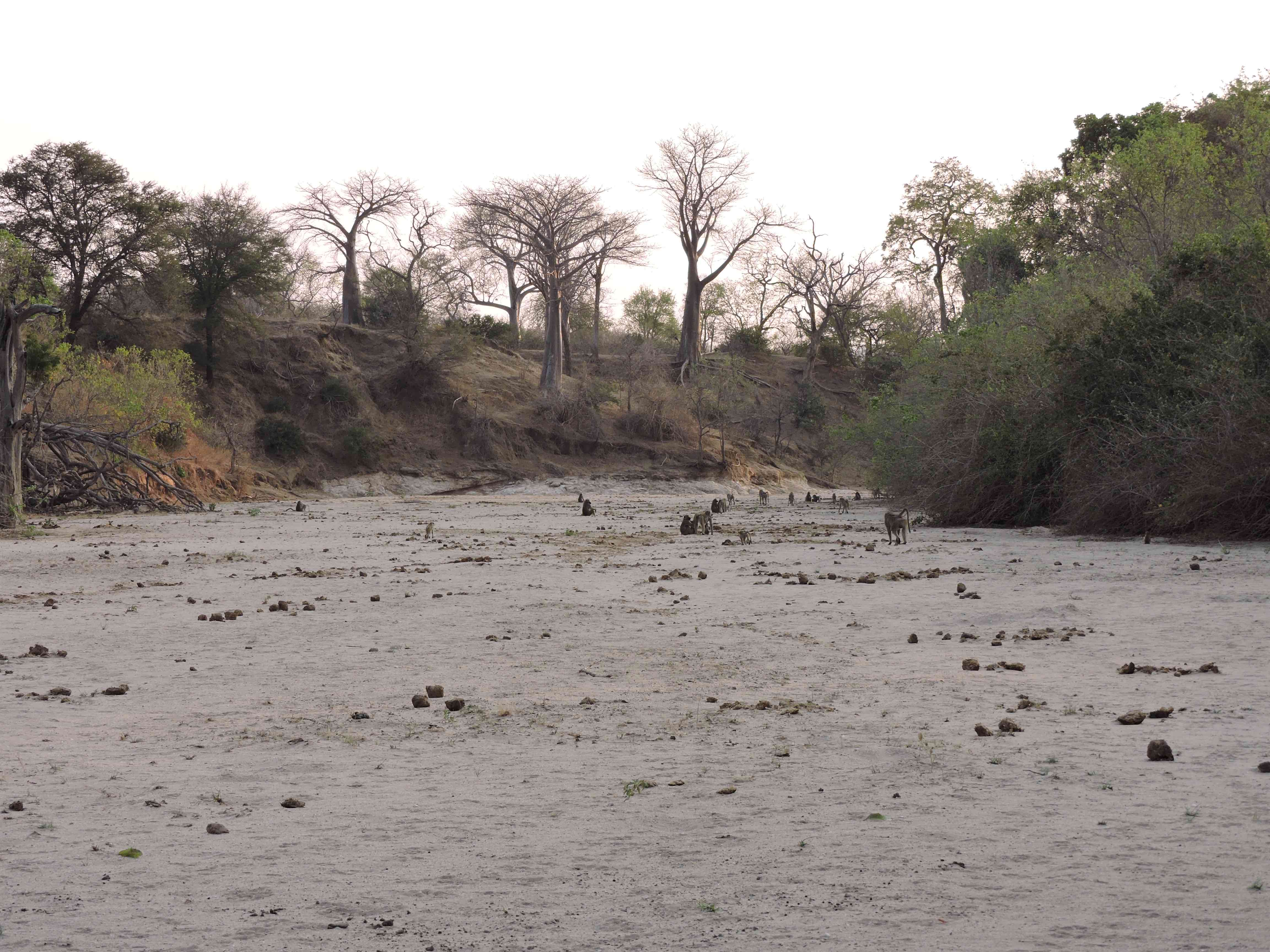
The water had stopped flowing during the night so only baboons were walking in the dry river bed.

Sand and baboons.

Sand and baboons.

We decided that we would do a bit of exploring so we went to the actual springs where we could see a number of different footprints and a couple of carcasses (one buffalo and one elephant) that were responsible for the rotten smell that we could sometimes feel, depending on the wind direction. We then crossed the river and drove for a few km until reaching the baobab hill.

After spending some time with the baobabs we returned, crossed the river again and drove on towards the exit as we had seen an open area where we thought cheetah may be found. We saw the usual warthogs and the ubiquitous impala. Then our friend Tom amazed us by spotting a painted/wild dog lying down at about 100 metres from the car! An amazing sighting. In fact there were three of them.

Then he spotted a few more heads under another bush nearby! When the heads became full dogs, we realized that there were pups, six of them and half grown. At some point they all trotted towards the adults and the latter stood up for the usual greetings. We counted five adults and six pups. After their profuse greeting they all dashed off as if starting a hunt although we did not see any possible prey. We tried to follow them but lost them almost immediately. Giving up on the painted dogs we drove on to the junction with the main road and started going back to camp.

The dogs were again at the same spot! Surprised we stopped to watch and confirmed that there were the same! While watching, again, all pups dashed off as if on a hunt, followed by one or two adults and, after a while, got back to the starting point. This exercise was repeated three times. The observation was a topic of discussion for a while as some thought it was a kind of hunting rehearsal while others -including myself- thought that the pups were just being either hungry or hyperactive!

After that interesting encounter we got back to camp to face another night at Chitake, now more relaxed as we had survived the first!

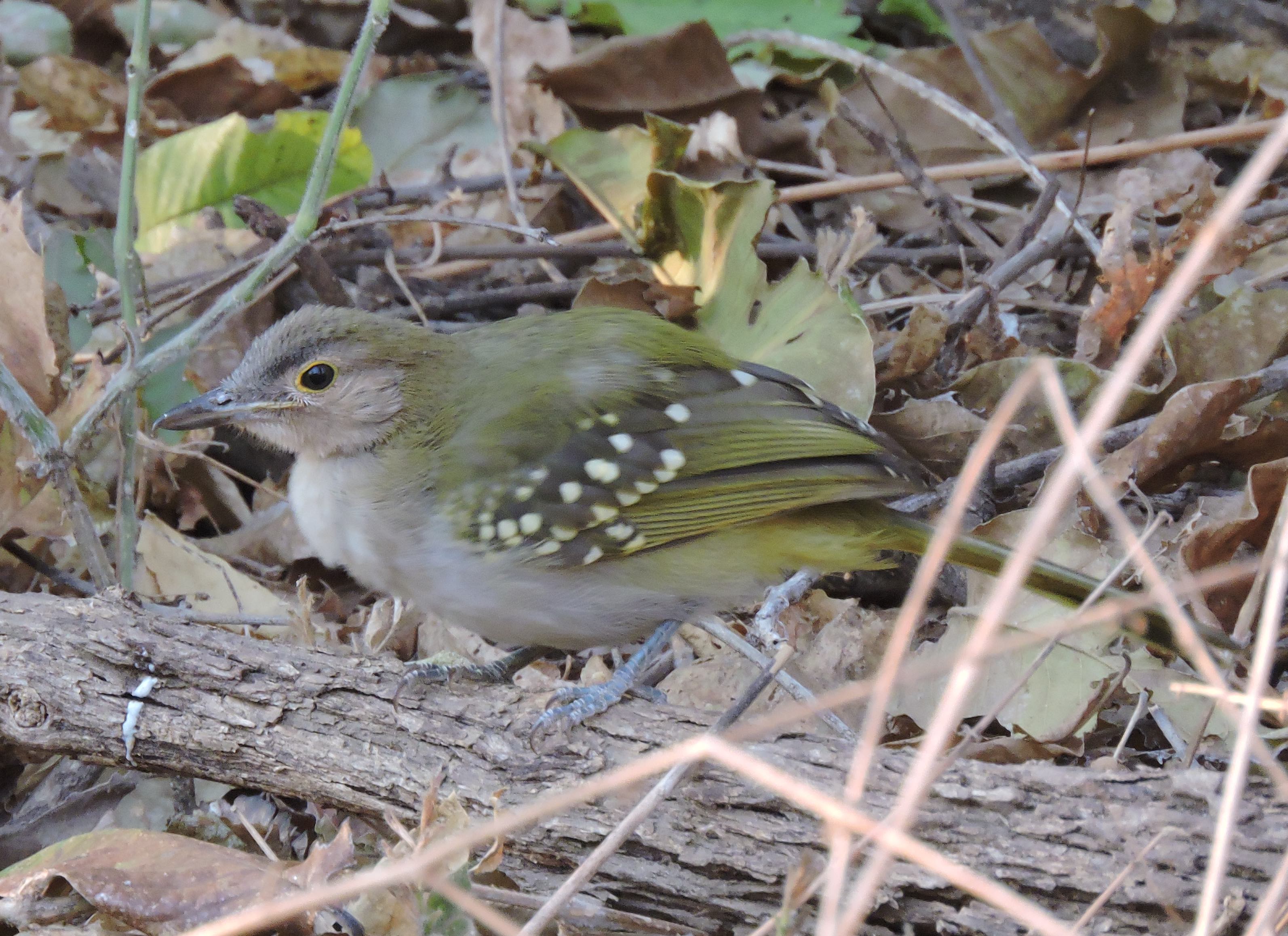
A "Chitake special"! An Eastern Nicator looking for insects in the undergrowth.

A “Chitake special”! An Eastern Nicator looking for insects in the undergrowth.

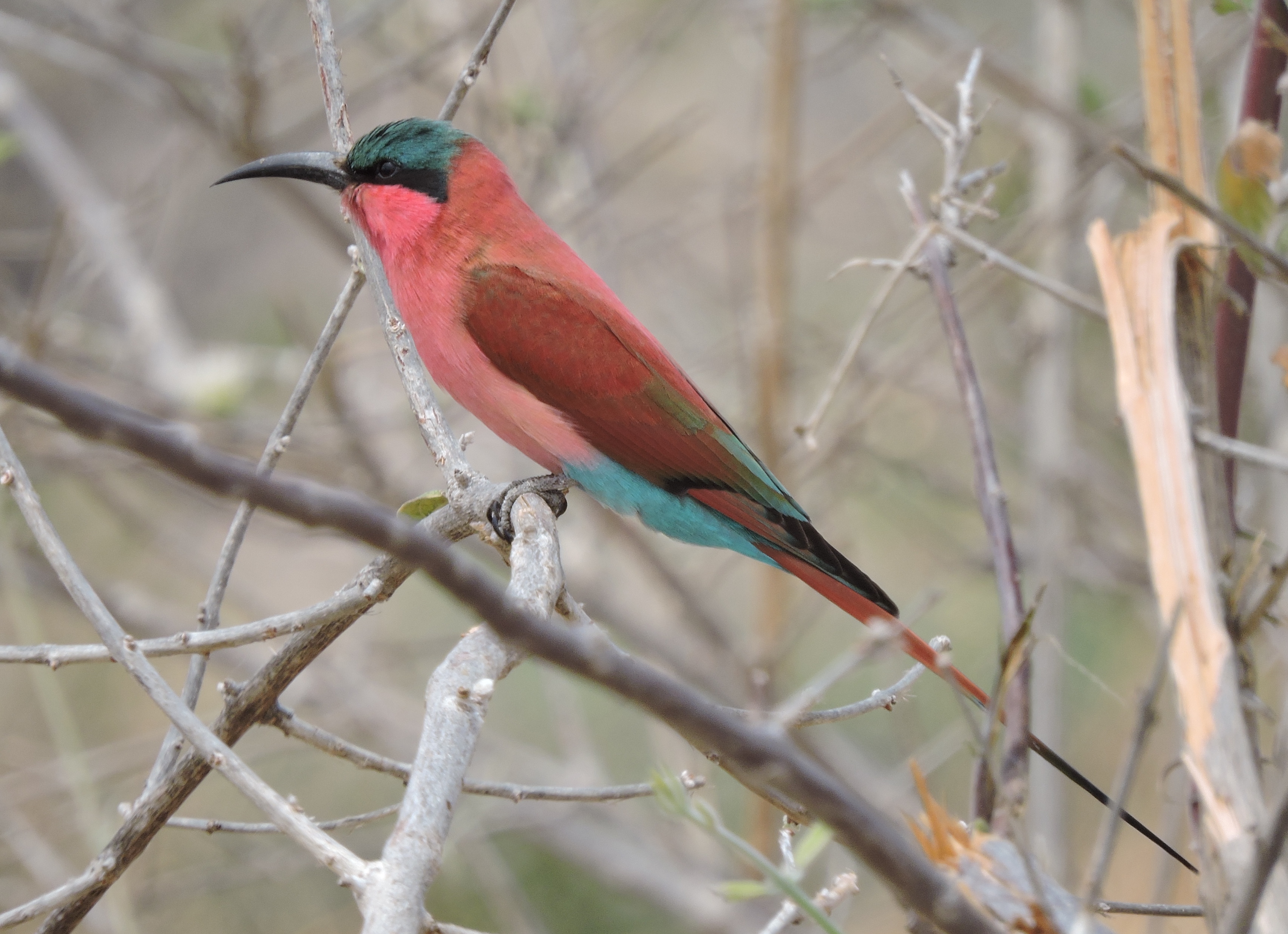
A carmine bee-eater.

A carmine bee-eater.

Mana[1] Pools safari

Mana Pools National Park is found in the middle Zambezi valley. It extends from the Zambezi river in the North (Zimbabwe-Zambia border) to the summit of the Zambezi escarpment 50 km to the South. The park includes the river itself, a broad area of acacia and mahogany woodland on a belt of alluvial terraces. Although this is the area where most of the animals congregate during the dry season and therefore the most visited, the Park also includes large areas of mopane and jesse-bush (Combretum celastroides) and the rocky hills that flank the Zambezi valley. The Park and adjacent areas are regarded by many as the finest wilderness area in Zimbabwe.

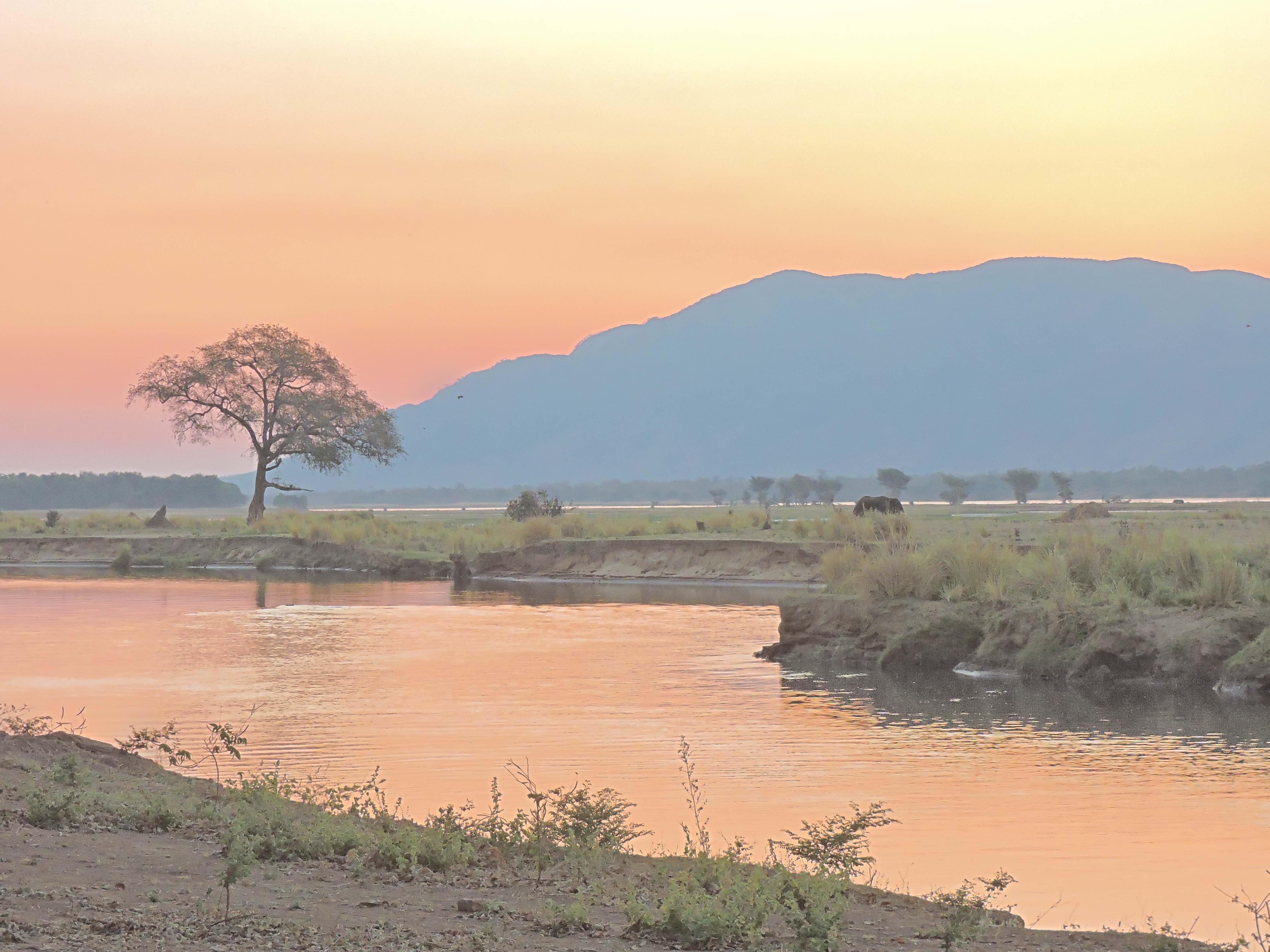
Sunset at Mana Pools.

Sunset at Mana Pools.

This was our second visit this year as we had been in Mana. At that time it was cold and the animals, particularly the elephants, were still spread around in the park and therefore less abundant by the river. The absence of elephants then was largely compensated by sightings of wild dogs, lions and a leopard near our camp site.

This visit was different. It was much warmer and, as the dry season had advanced, the animals were indeed massing in the northern part of the park where water and grazing are still available. We stayed at Chitake One and at Gwaya private camp sites so we enjoyed a true wilderness feeling by being alone. Without doubt the elephants were the main actors during our visit and I hope to be able to describe the various events in an amenable way for you to enjoy.

[1] “Mana” in Shona means Four, describing the four pools that the Zambezi river left behind in its meandering.

Encounter with lions

We left Masuma dam and its elephant parade and got to Main Camp, only to discover that our lodge was still occupied by the previous guests from South Africa. It seems that the latter rule in Zimbabwe and they appear to show little respect for the local regulations and arrangements. After a three-hour wait, we finally managed to move into our lodge and settled down with the apologies of the Park manager but not from the interlopers!

We enjoyed the area, particularly the outstanding Nyamandlovu pan and viewing platform that, as usual, was very popular with the elephants. However, as we had just enjoyed a private elephant act, we did not spend much time at the pan and instead looked for other forms of excitement.

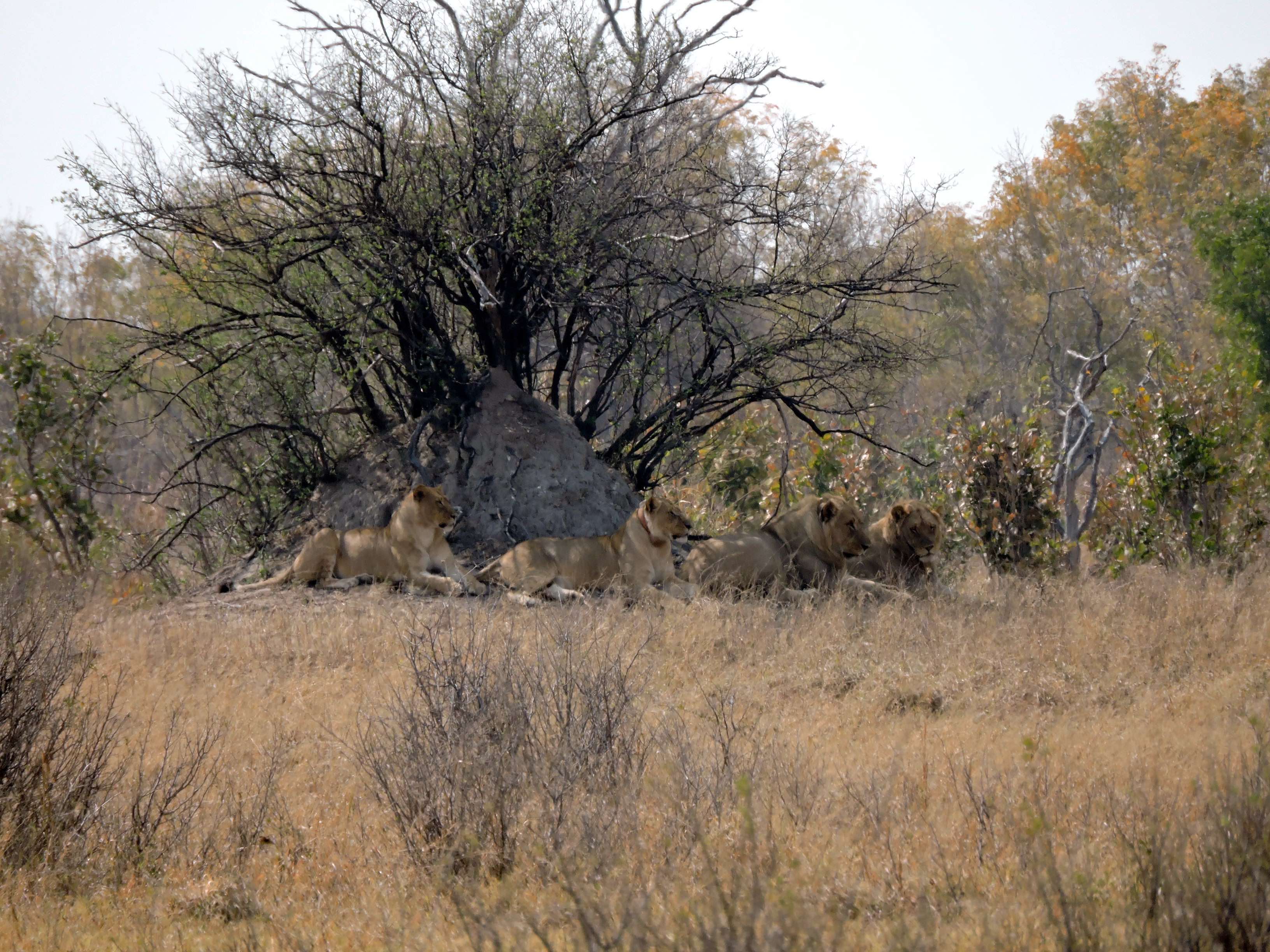
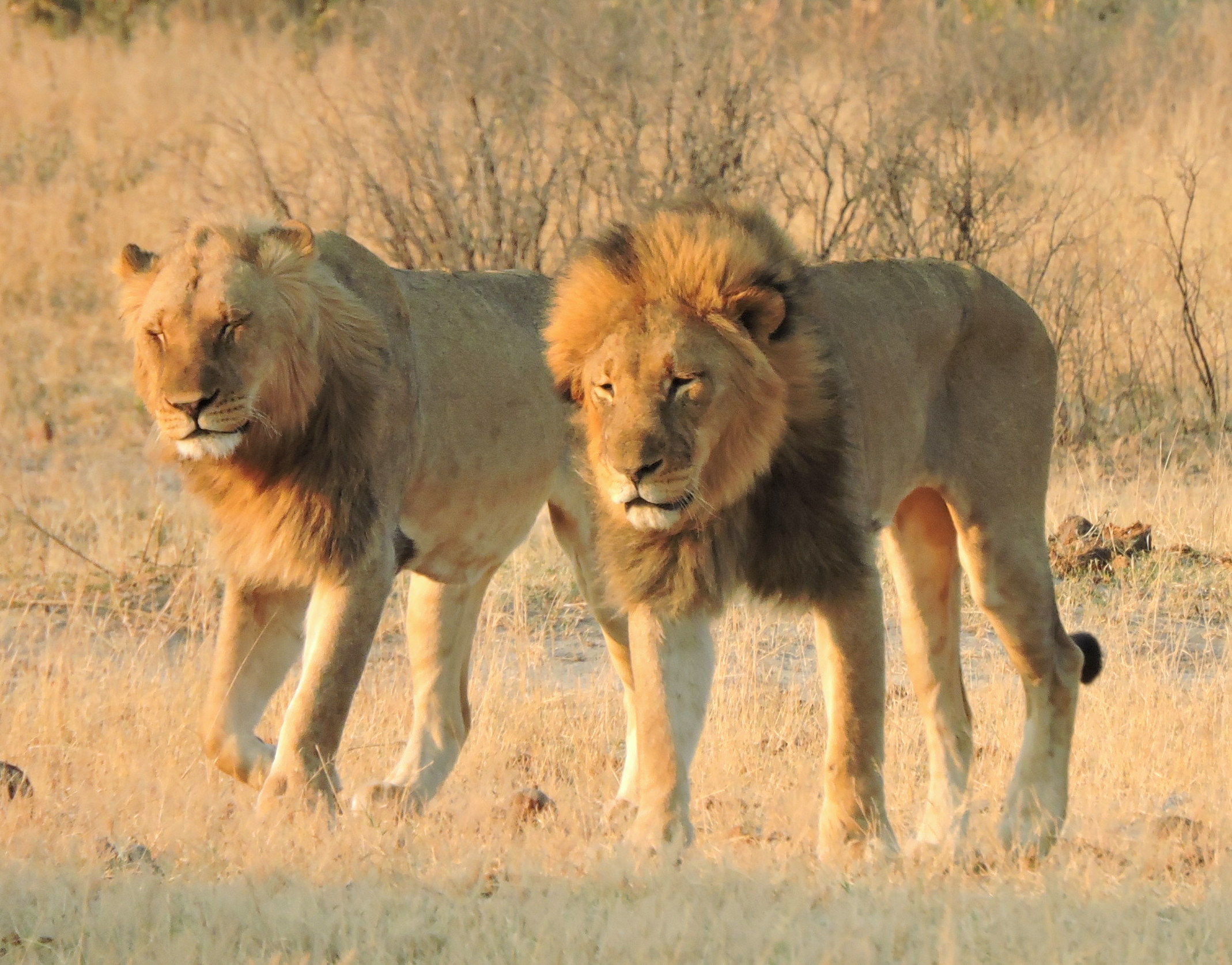
During one of our game drives a helpful fellow traveller proudly informed us that there was a lion pride on the prowl near the Dom pan nearby. Finding them did not take long (all credit to my wife, again!) and we watched them trying to see how many they were. After a while counting heads, legs and tails we concluded that they were one adult male, two younger males, three females and two cubs.

We spent some time watching the lions to see how many they were.

Counting lions.

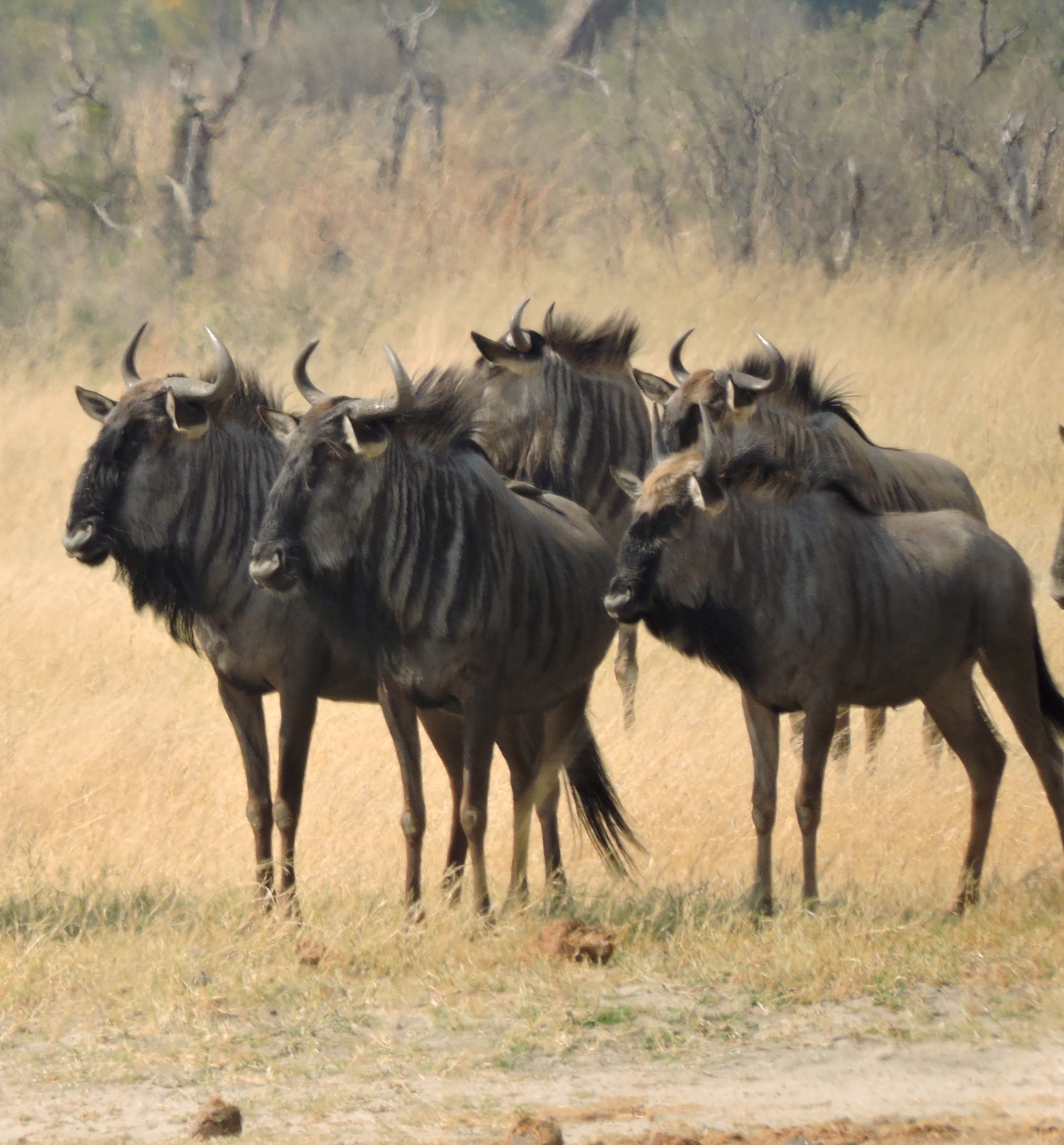
Although it was mid morning they were alert and clearly looking for prey. They moved towards Nyamandlovu pan and positioned themselves at a vantage point that enabled them to see the pan and, more interestingly, a small herd of wildebeest grazing in the dry grasslands, surrounding the pan. The lions kept a keen eye on potential prey but they seemed to ignore the wildebeest, to our surprise, as they would have been the obvious target.

The wildebeest did not take their eyes from the lions!

The wildebeest did not take their eyes from the lions!

As we waited, elephants walked in the background ignoring the lions and vice versa. Only when a couple of young adult female elephants, unaware of the lions’ presence, walked straight at them, was there a sign of fear when they quickly bolted and ran tail up while the lions stood up, preparing for a possible withdrawal. It seemed to us that the lions were not keen on the wildebeest but attentively watching something else that we could not see.

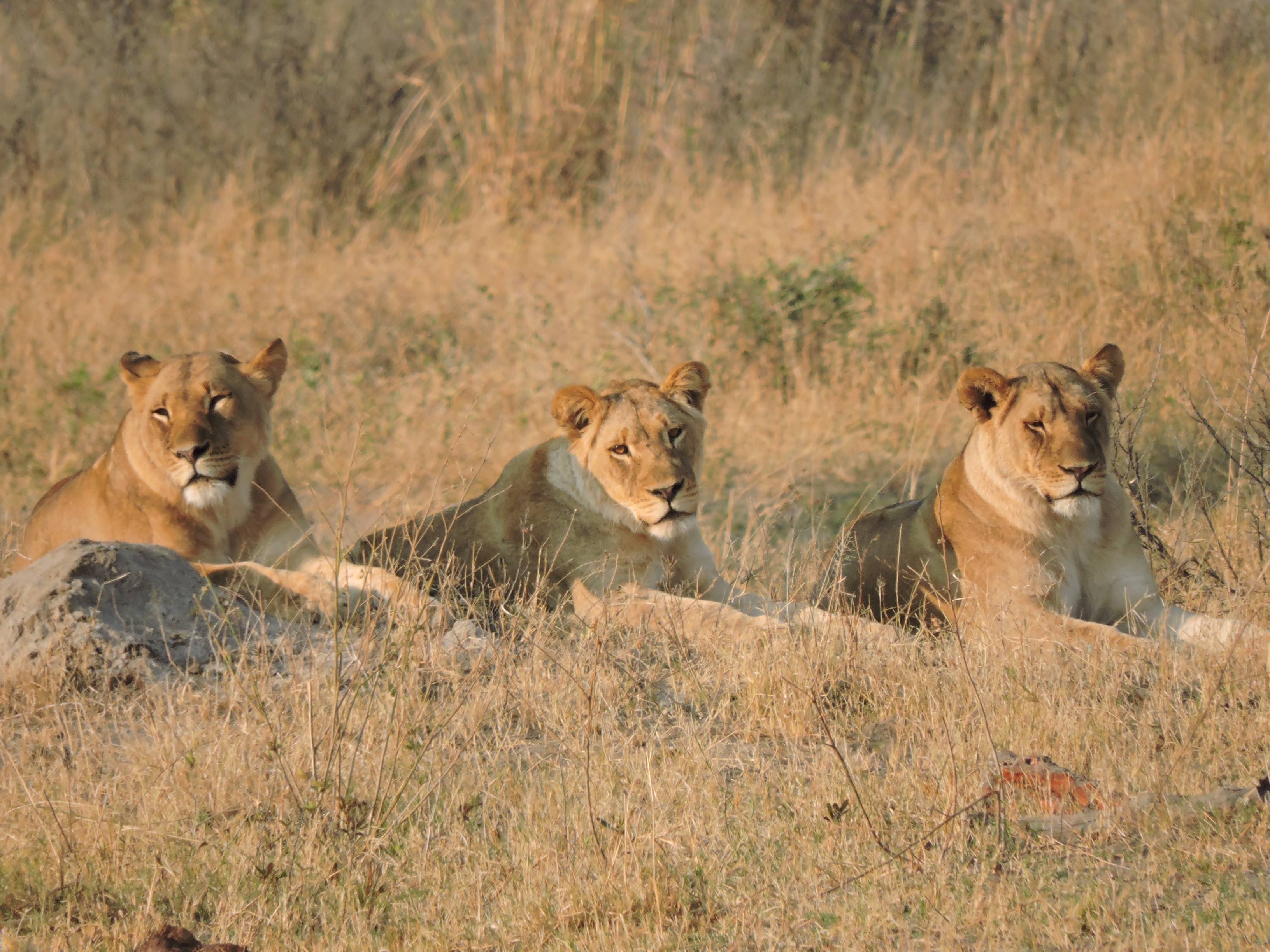
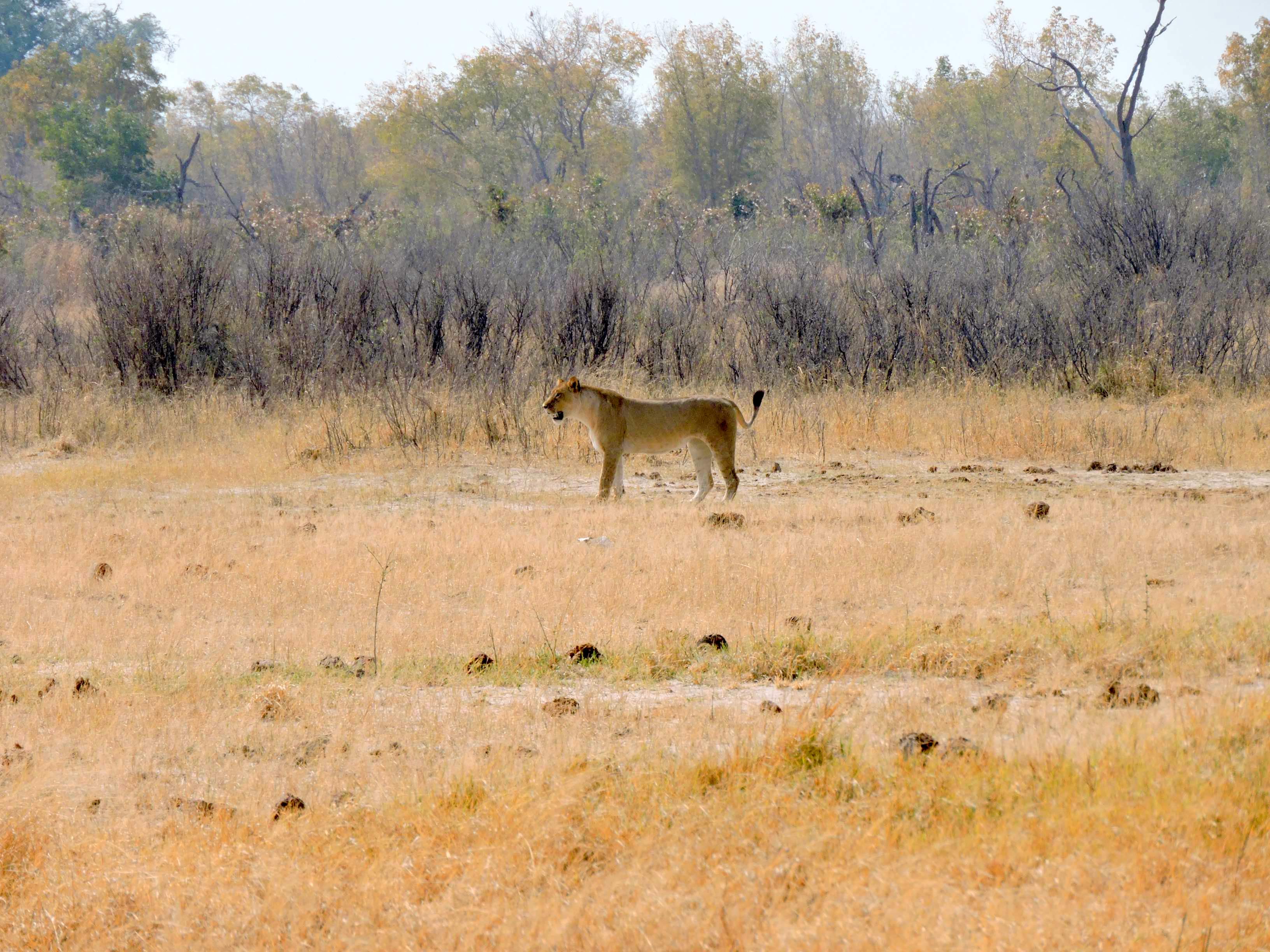
The three lionesses prior to the failed hunt.

The three lionesses.

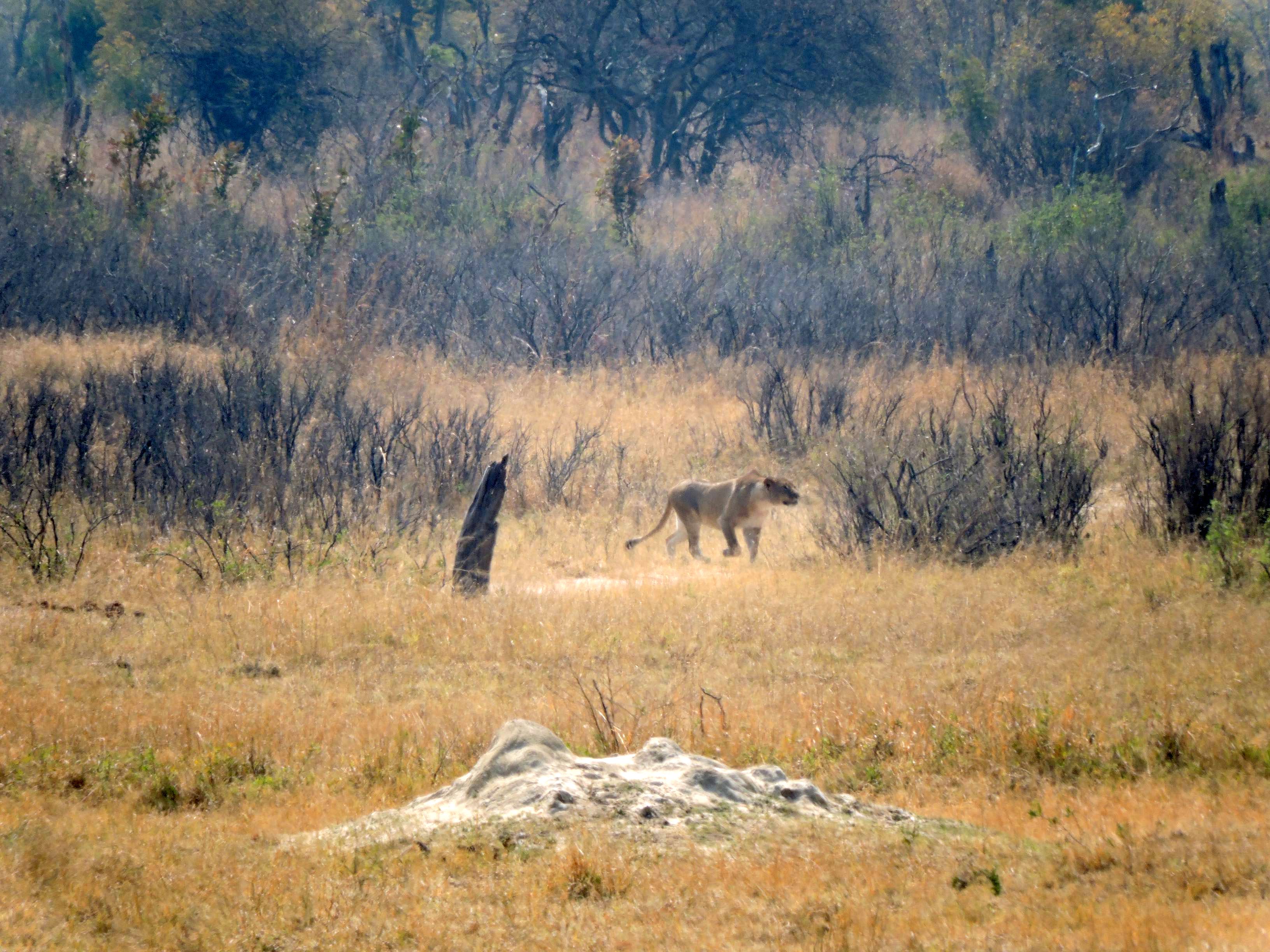
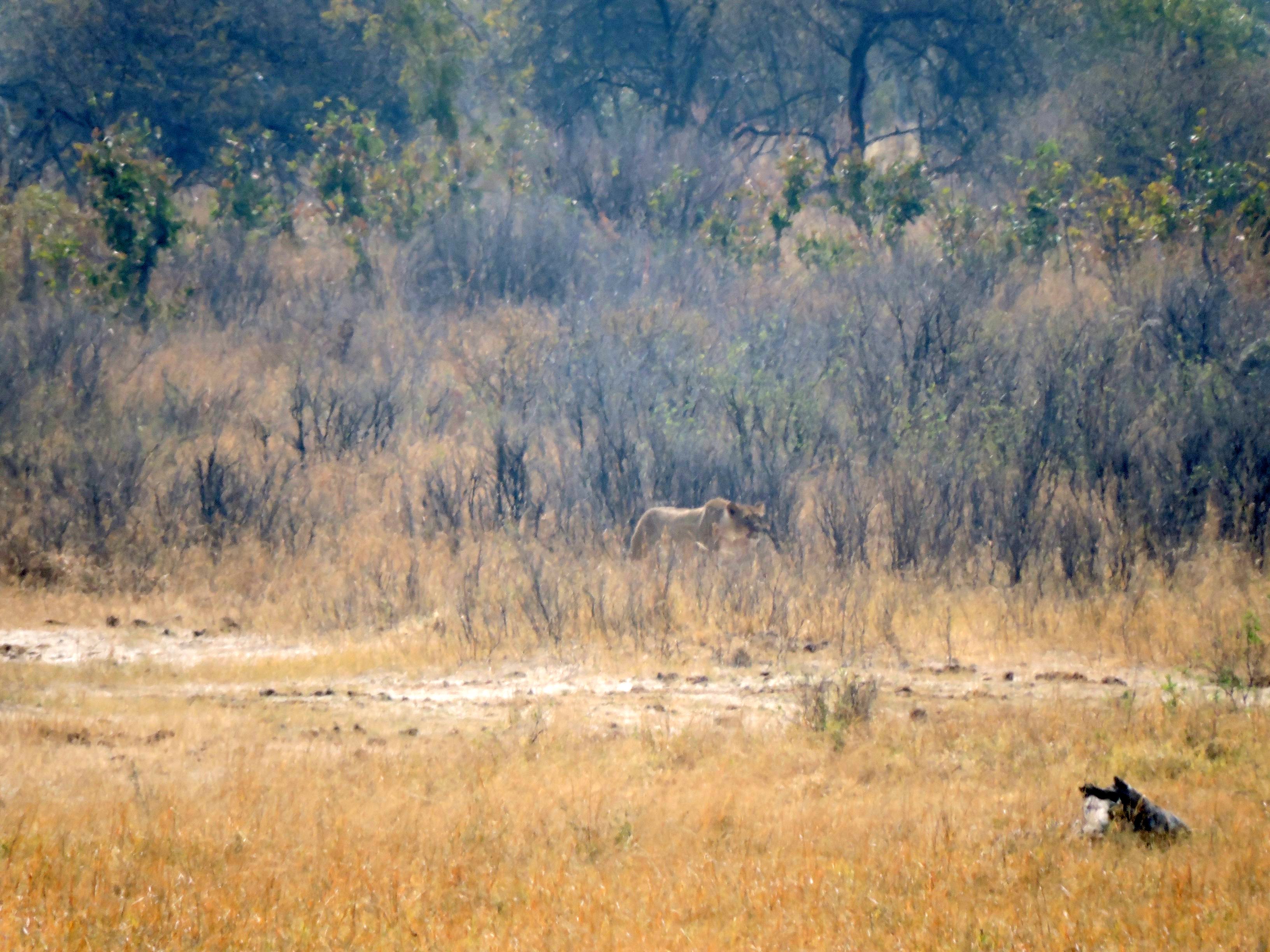
Suddenly one lioness stood up and started to walk with the clear “hunting gaze”: keeping her neck stretched straight out in line with her back and her head always leveled, despite walking over irregular terrain.

One of the lioness starts the hunt.

One of the lioness starts the hunt.

She is stalking somthing we did not see!

She is stalking something we did not see!

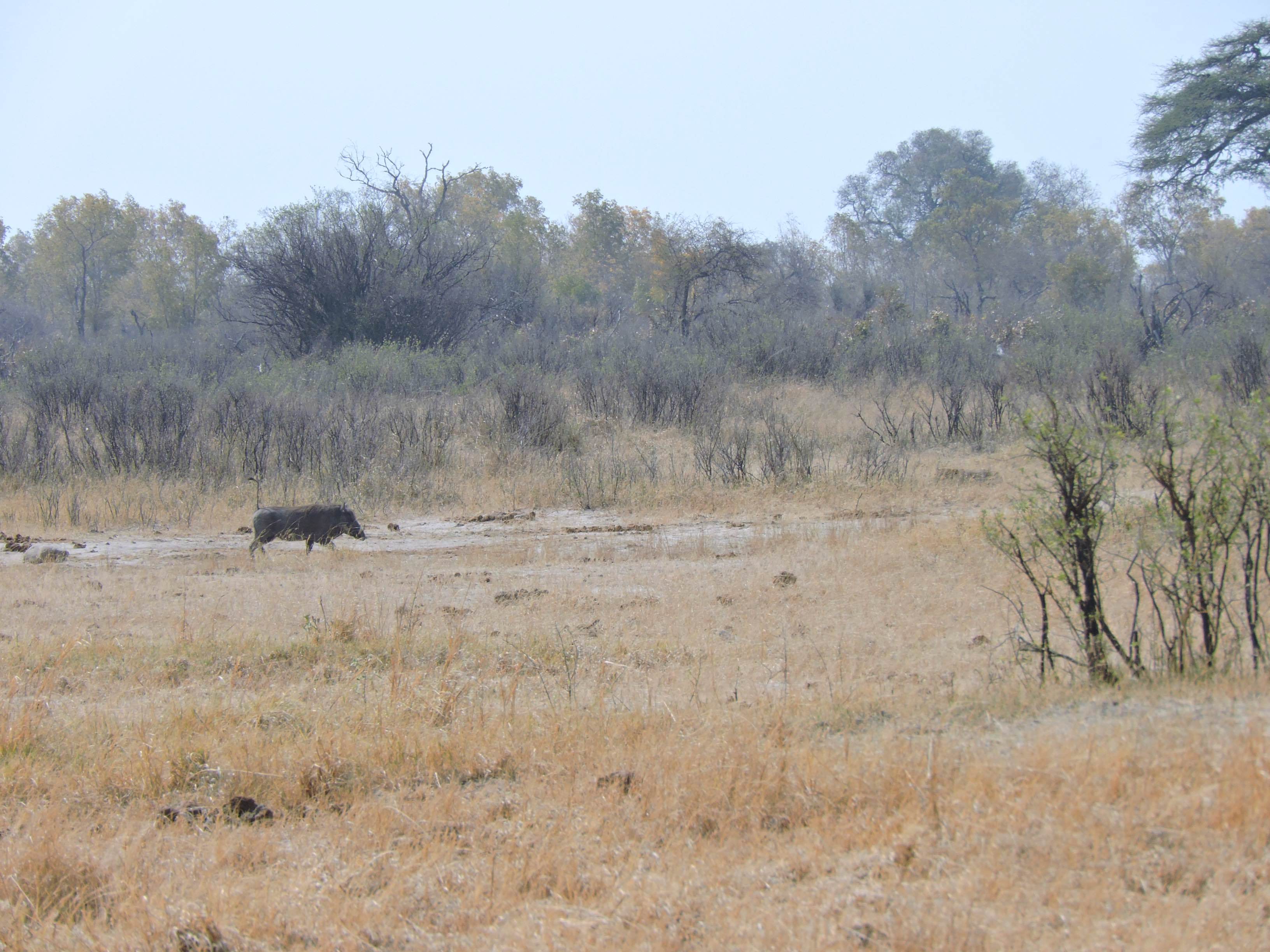
While watching her we lost sight of the other two and we realized that a hunt was on although we still did not see the prospective victim! We prepared ourselves for action and suddenly a couple of warthogs came running across the field, moving very fast and away from the visible lioness.

The warthog sees her and runs away!

One of the warthogs running away.

She went for them running at full speed for a short distance but quickly gave up the chase, as the warthogs at full speed were too much for her. While the warthogs disappeared, two more heads popped up in the grass in front of us. Something had failed in the ambush! Perhaps the warthogs smelled the lionesses or, as they looked young, they did not have the necessary skills to shut the trap. Whatever the reason for the failure the exercise proved to be too much and the females went back to the group and proceeded to do what lions do best: rest and sleep! We left them there hoping to find them again later.

The lioness gives up the hunt.

The lioness gives up the hunt.

They were still there in the afternoon and, only when the day cooled down did they move into the bush where we lost them. Luckily they passed very close to us and we managed to take a few good pictures before they disappeared.

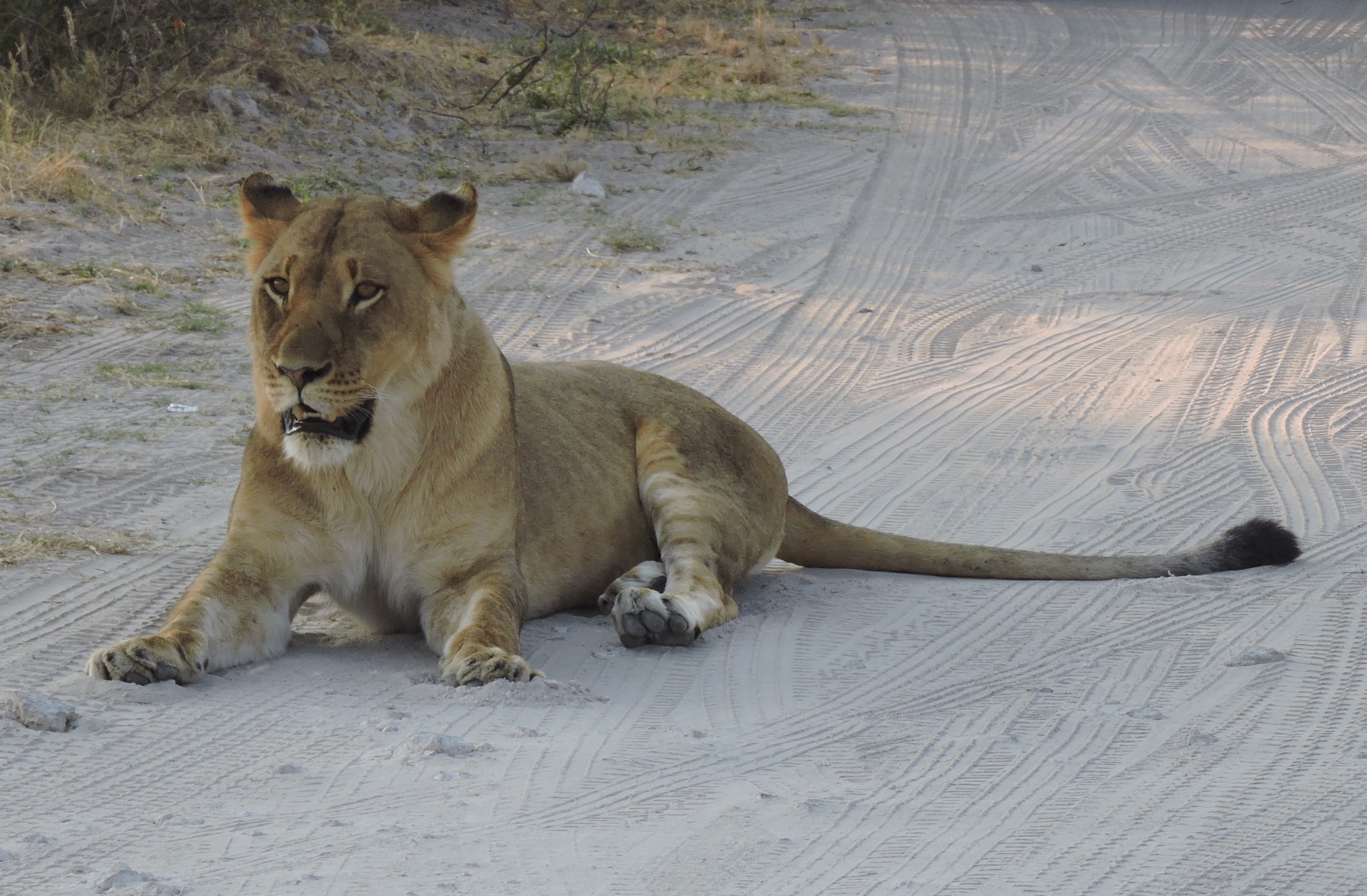
Resting on the road.

Resting on the road before moving off.

Showing us her "tools"...

Showing us her “tools”…

An older male joins in.

Two of the males moving off.

Smells of the wild

A picture of an “engorged” lion cub resting belly-up posted recently on Facebook by my son reminded me of an elephant kill we witnessed together in Mana Pools in October 2013 when that picture was taken.

Apart from being a wonderful wilderness place teeming with wild animals, Mana Pools offers a number of add-ons. Apart from being allowed to walk unaccompanied in a park where the “Big 5” are present, the presence of the mighty Zambezi river adds an unsurpassed touch of beauty to the area.

In addition, camping there is an experience on its own as -like in the good old days- there are no fences or trenches separating you from the wild inhabitants. Camping in these conditions increases solidarity among fellow colleagues and information on the “state of the wild” circulates freely. In Mana Pools it is usual to have- in addition to the harmless buck- hyenas, buffalos and elephants of all sizes walking about at all times.

I vividly remember a nocturnal incident with an elephant. My wife and I shared a tent while our daughter had her own a few metres away. It was late at night and we could hear the breaking of branches around us as the elephants fed. Suddenly we heard loud elephantine intestinal rumblings followed by the unmistakable noise of heavy droppings being dropped! Judging by the direction of the noise we guessed that her tent could have been compromised by the event. Before I could ask her about the situation I heard her “Phew, that was close!” and went on to say, “It just missed my tent but I can smell it very well!” So could we although a few more metres separated us from the “object”.

Under these conditions of proximity with wild animals it is not surprising to have visitors at your camp bearing news such as “There are a few lions near the ablution block at the end, so refrain from using it tonight” or “we have just spotted a leopard walking near the entrance”.

Fellow campers also share their sightings and experiences in a friendly atmosphere.

The elephant incident I described above brings me to the issue of the wild life experience and the importance of the senses in it. Smells -together with the natural shine and subtle sounds of a live animal- are among the details wildlife documentaries are not able to transmit! It is common to drive or walk in the bush and be literally assaulted by different smells, both pleasant and otherwise.

October 2013 saw the whole family camping at Mana Pools and in the evening after our arrival we learnt that lions had killed a young elephant in the Mucheni area. This is apparently not surprising in Mana Pools where lions are skillful at killing elephants. Quite excited, the following morning we drove there as early as we could. The area of the kill was easy to find as, unusually for Mana Pools, there were a few vehicles watching the scene. A young elephant had indeed been killed the day before and it still had food to offer the lion pride that was resting next to it. We counted around 16 animals of all ages.

As it is common in these instances, satiated lions were lying all over the place, trying to take advantage of the little shade available. As the morning heat increased the vying for shade became more intense and, to add a touch of reality, the foul smell also gradually augmented. When a kill is available lions tend to gorge on meat to the point of becoming uncomfortable. It is therefore not difficult to understand that to have such a large number of individuals quite close to us multiplied the final outcome of their digestion and its vapours! I sharply recall our desperate spluttering every time the wind shifted and one of the lions rolled over as well as the family’s diving into the car through its roof hatch in an attempt to escape a particularly fetid eruption…

The situation was rather smelly, so much so that this was one of the few times when watching the scene through a documentary would have been preferred! So, being nice to you I present an odourless picture gallery as well as videos for you to enjoy. I am aware that seeing a kill is never pleasant but these are wild lives!

Kruger National Park Report

Nothing much to report on the journey from Louis Trichardt to the Kruger National Park (Kruger). On arrival at Punda Maria gate, a helicopter flying overhead brought home the reality of Kruger these days when special measures to curb rhino poaching are being taken. Despite this, a few hundreds have been killed this year. Let’s hope that the Park will get on top of the situation. Kruger is the last rhino (both black and white) stronghold left in the world.

Roads are good and we were in Sirheni Bushveld Camp with time to spare. The camp is small with no electricity but this time we knew about it beforehand! After spending a quiet night and enjoying the peace of the place, it was time to continue our trip. We left for Shimuwini Bushveld Camp where we had a great time on a previous trip with friends. There was more water this time so the animals were less concentrated in the riverine area. However, the hippos were still there and the birdlife good as usual.

In the morning we planned to do a drive along the Letaba river near the camp and to continue to a point where the river crosses the road, as it is an open expanse which apart from being beautiful, allows one to see far and spot interesting things. On the way there we could see a number of cars parked on both sides of the road in the distance indicating an interesting find.

When confronted with these situations in the Kruger, the bushsnob has a “car rule” to predict the situation and take appropriate action. It is as follows:


       CAR NUMBER            REASON

ACTION

1 (often parked sideways or in the middle of the road) birdwatcher Check bird being watched
1 (well parked, usually a small saloon or city SUV) first time visitors watching any animal they come across Drive past with eyes closed or looking the other way
2-5 (any type) buffalo, giraffe, zebra, etc. Check as it may be interesting and cars tend to depart after a few minutes
5-10 (any type) elephant, rhino Same as above
<10 (any type) lion kill, leopard Avoid the area by taking any available and legal measure and return at lunchtime or late afternoon
Sizeable queue or large number leopard kill, Parks or Police check point Check with binoculars, if Police present, continue, otherwise as above and return at lunchtime or late afternoon

In this particular instance there were more than 10 vehicles and lion kill “or above” was diagnosed. We joined the queue and, from where we were, we could see a buffalo carcass and at least one lion resting under the bushes. We were keen to see the kill as we knew that to bring a buffalo down normally takes the combined efforts of several lions. We waited patiently for the cars ahead of us to move -maintaining “strict bush etiquette”- but, as there was no movement we decided to move on to the rest of the park which was consequently less crowded!

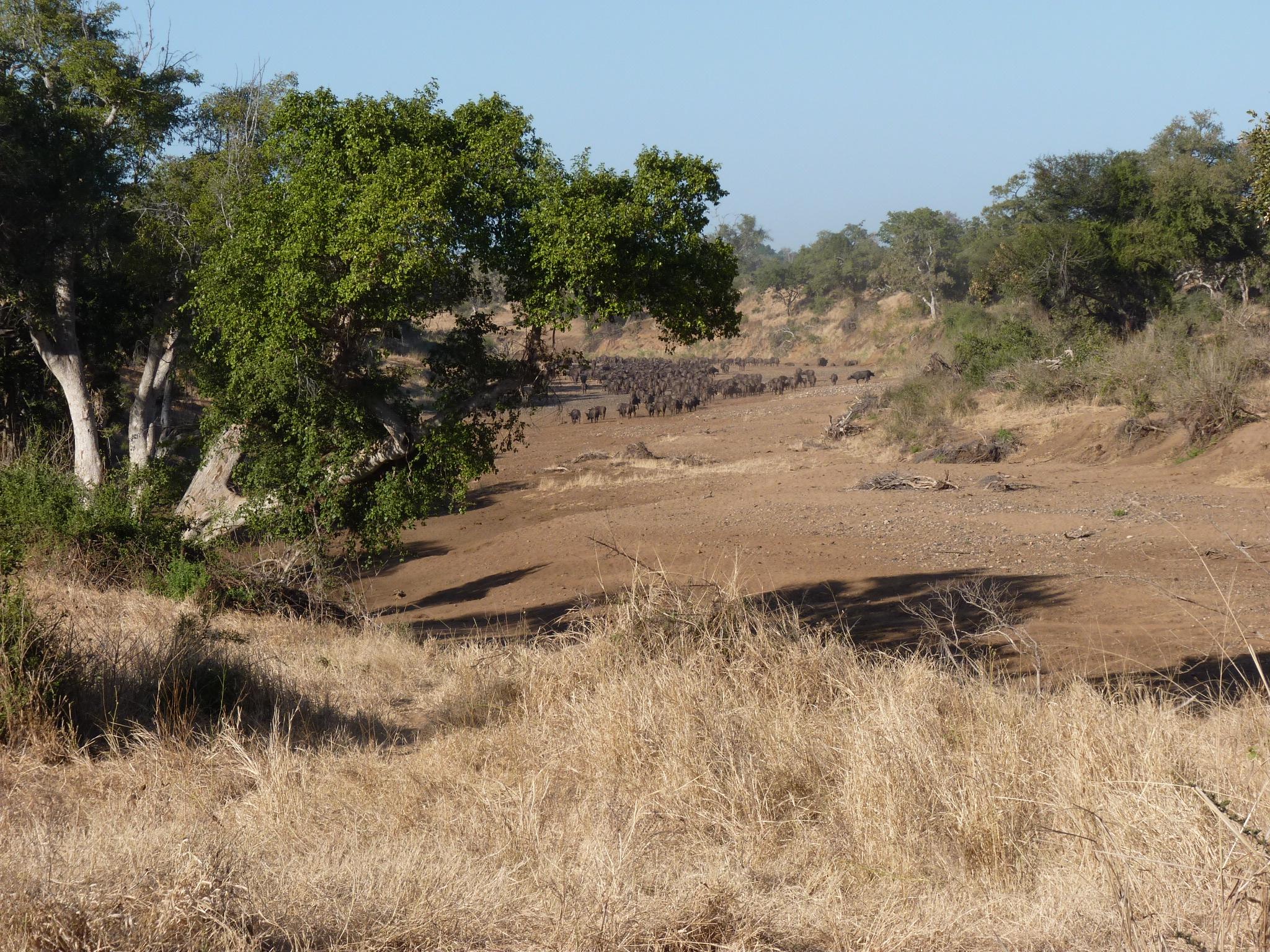
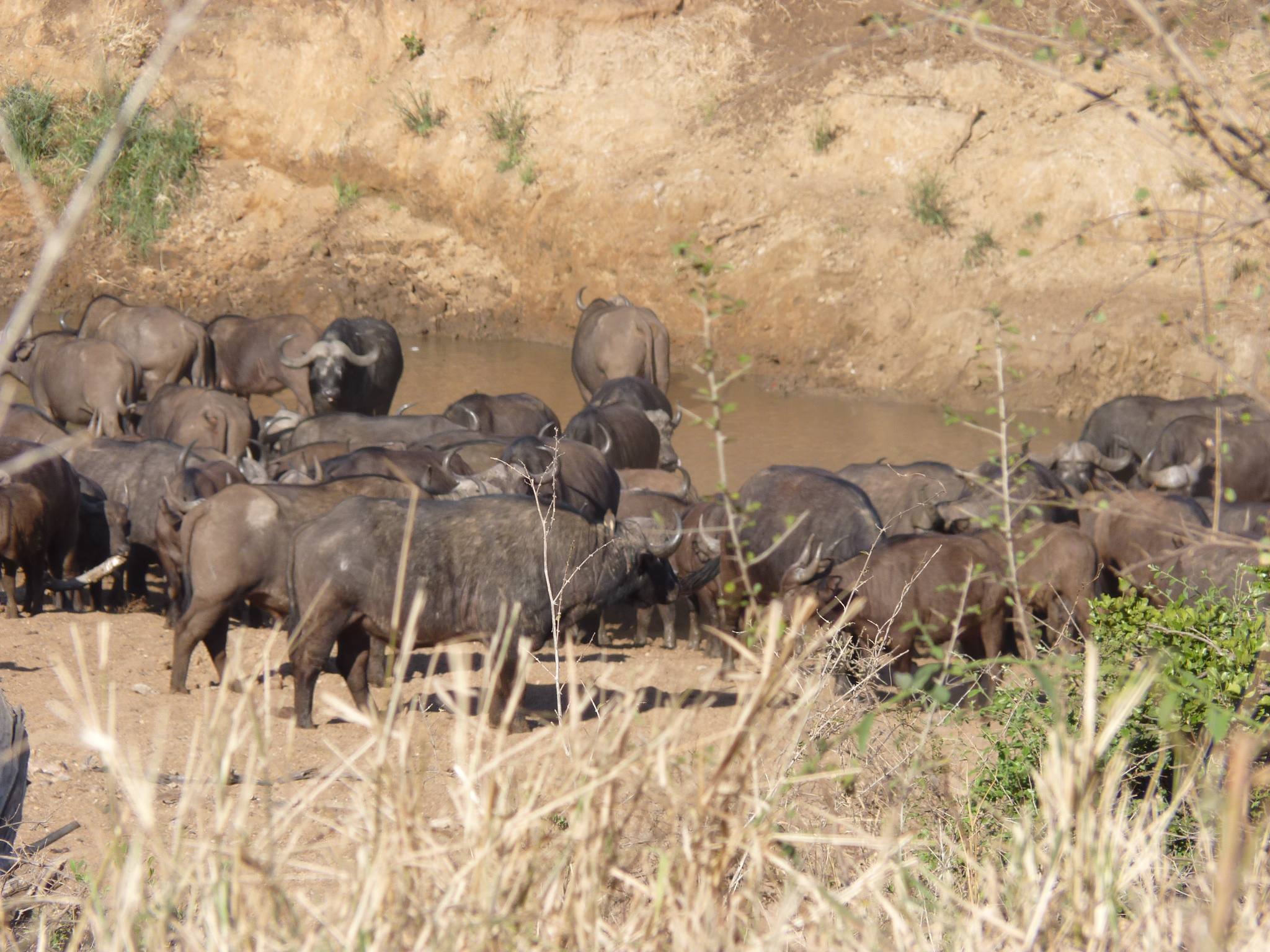
Our idea was rewarded when we came to a Letaba tributary where buffalo were going down to the riverbed. On arrival there may have been one hundred animals but they were still coming down. After about 20 minutes there were what I estimate to have been over one thousand and the number kept increasing for a few minutes. It was one of the largest herds we have seen.

A large herd of buffalo while moving on the river bed.

A large herd of buffalo while moving on the river bed.

Part of the herd while drinking.

Part of the herd while drinking.

Although rather bovine in their behaviour, buffalo transmit a sense of wildness and power that, to me, no other herbivore does. Although I have not yet seen them confronting lions, I have seen them in close proximity while helping a friend to dart them for his research and they were dangerous!

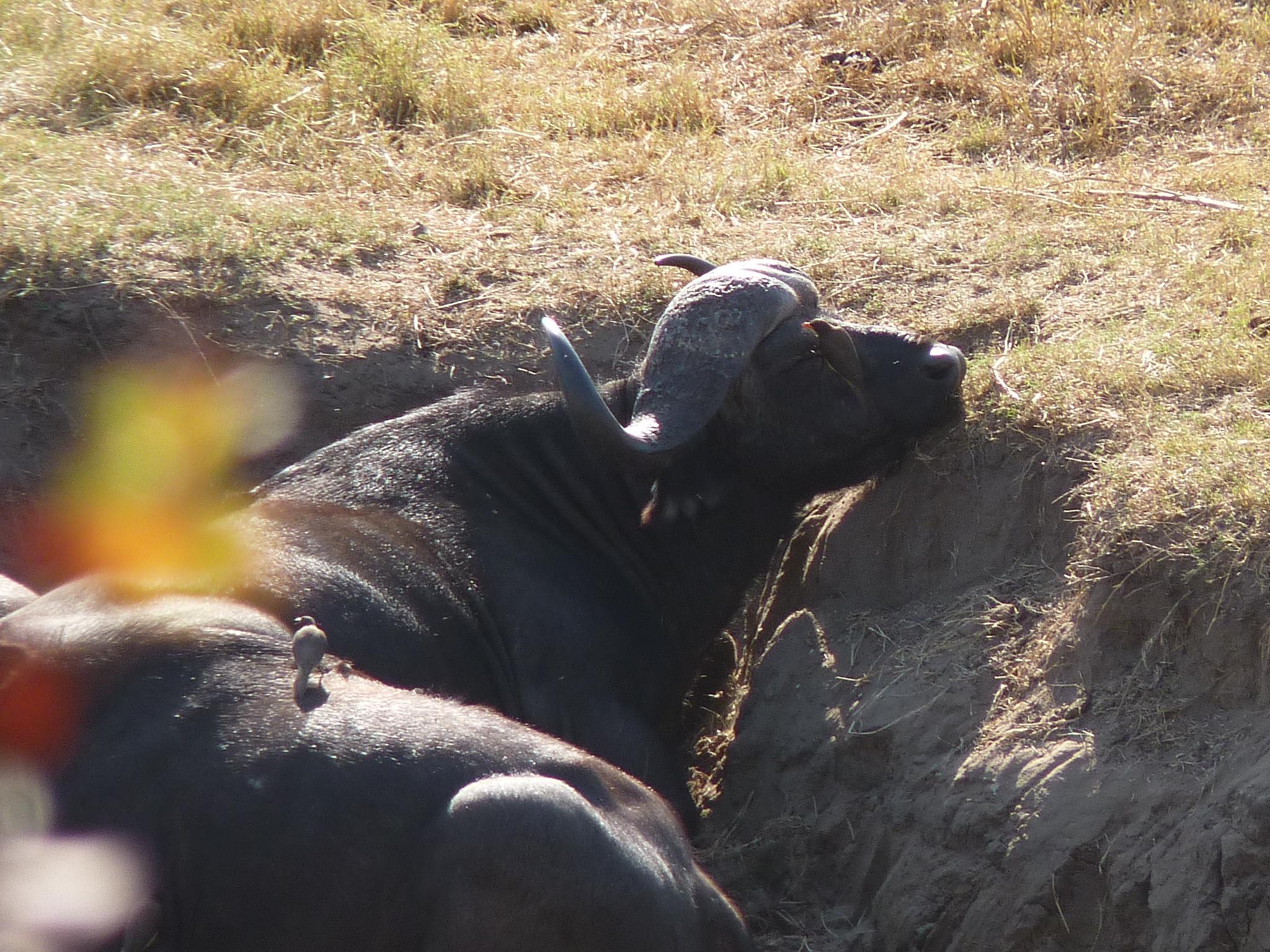
This buffalo was having a comfortable "siesta" while the oxpeckers did their job!

This buffalo was having a comfortable “siesta” while the oxpeckers did their job!

Seeing buffalo always brings back the story of a colleague working on tsetse flies in Kenya. One day he was checking his tsetse traps in the Nguruman escarpment and a lone male suddenly charged him from nowhere, forcing him up a tree to save himself. He was lucky on two accounts: there was a “climbable” tree nearby and the buffalo did not wait for him to fall down in order to trample him to death. It was a hairy moment and what was most interesting was that he said that the rush of adrenalin allowed him to climb and stay up in the tree without problem despite not being the fittest guy in Kenya. What was really tough was getting back down, as the tree was very thorny!

Later in the morning we hoped to see the kill again on our way back to camp but, unbelievably, there were still a lot of cars so we just had a look while driving by and not much had changed. We decided not to bother and try again in the evening as the proximity of our camp would enable us to stay just a bit longer than the others… By the time we were ready to return to the kill the famous tire had totally deflated… Not being part of the Ferrari F1 team, it took us a few laps to change the wheel and we were late! We still left as we estimated we had about 15 min of watching time!

We got to the kill and there were still cars! “Do not worry, none of the cars belong to our camp so they must leave by 17:00 hs to get back in time for the gate closing time of 17:30 hs”. We waited and waited and no one was moving by 17.20 hrs! The usual “these people know something we do not” was pronounced by one of us and we decided to re-check the gate closing times again and it clearly said “July: 17.30 hs” and then we realized that it was 1 August and closing time was now 18:00 hs. By the time we realized this, cars had started to depart and we did get our 20 minutes or so of “only the lions and us” where some observation took place and pictures were taken!

The young lion feeding on the buffalo.

The young lion feeding on the buffalo.

A closer view of the lion feeding.

A closer view of the lion feeding.

What did we see? The carcass was half eaten and one youngish male was inside it tearing pieces off. Another male was resting under the shade, together with 3 lionesses and 2 cubs. One of the lionesses looked uncomfortable and decided to go for a walk towards the river, surely to drink and soon a second one followed her. A few vultures were waiting patiently up in a nearby tree. And then it was also time for us to abandon the spot to get to our camp in good time.

One of the lionesses with a full belly on her way to the river.

At dusk, one of the lionesses -with a full belly- decided to go to the nearby river for a drink.

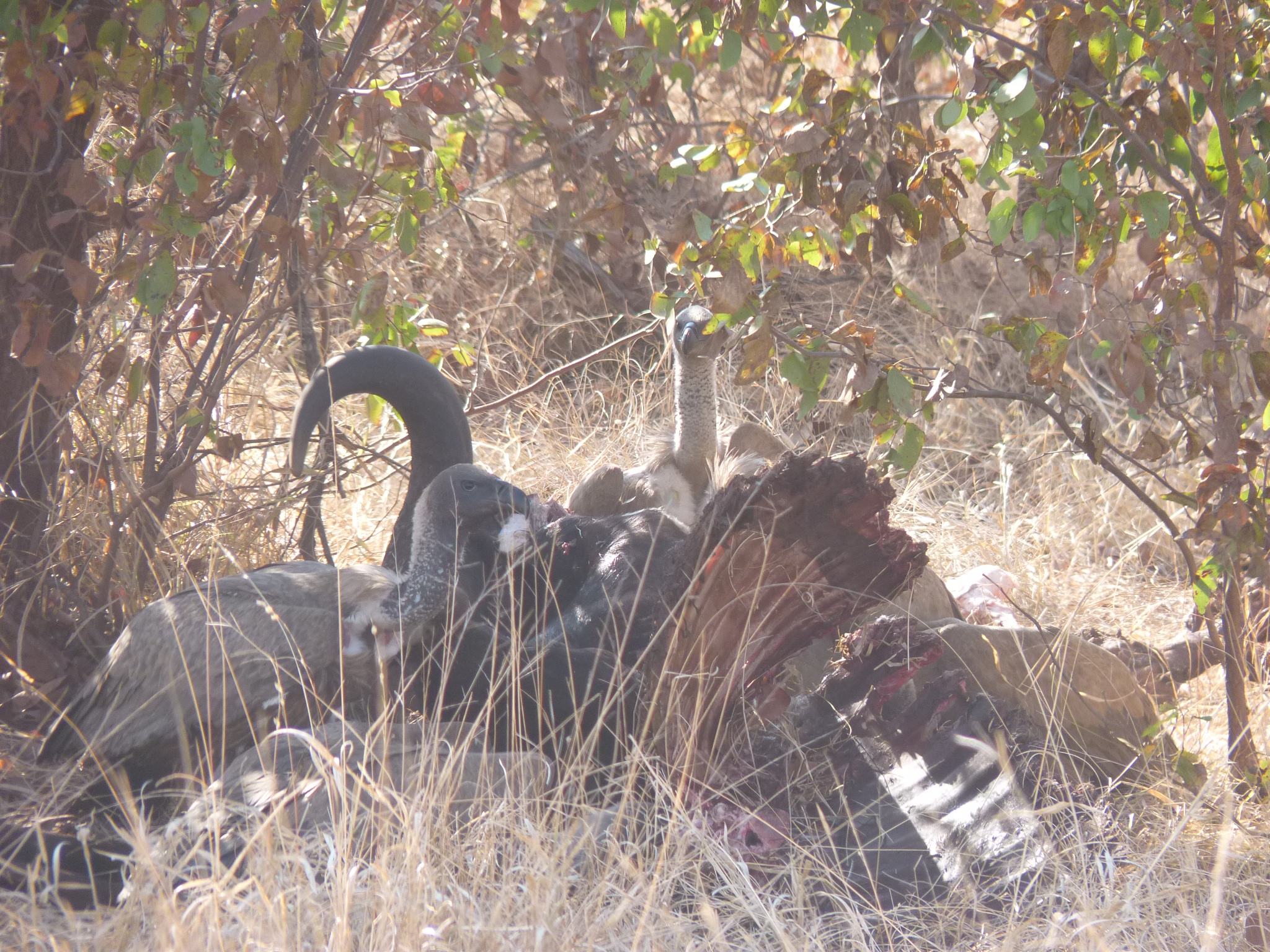
The following morning, en route to Letaba, the only carcass visitors were vultures and no lions were seen. Yes, you guessed right ours was the only car so we parked it sideways blocking the road and watched the birds!

Only the vultures remained the following morning.

Only the vultures remained the following morning.