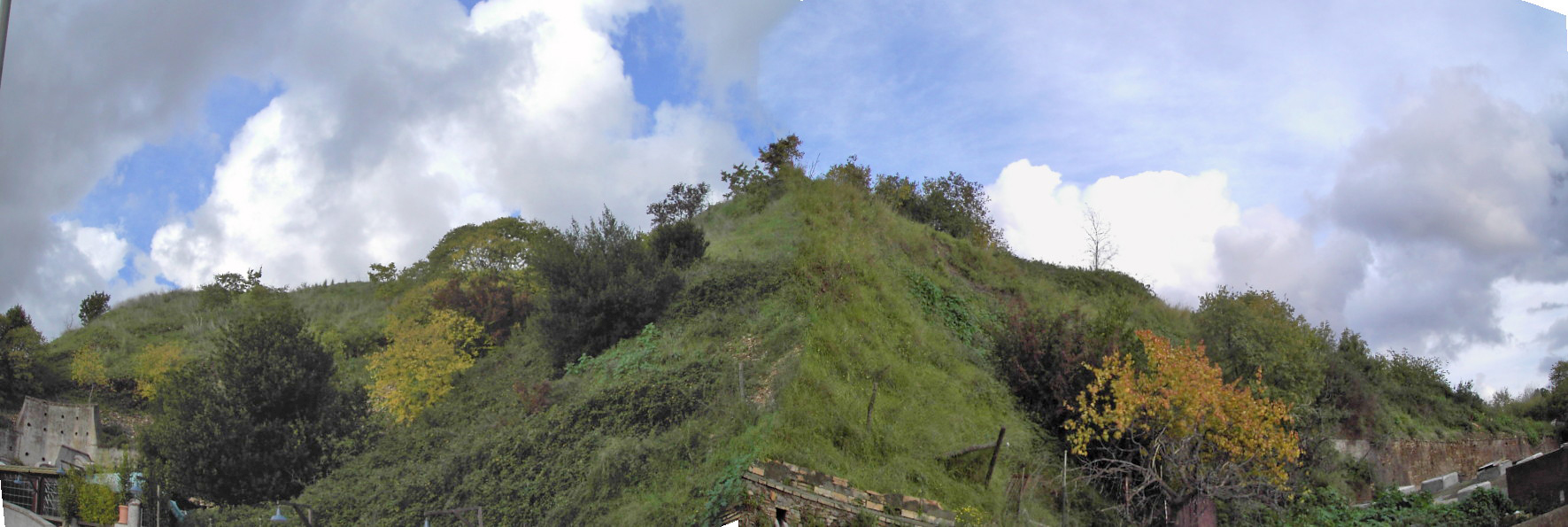
Testaccio hill. Picture credit: Public Domain, File:Testaccio monte dei cocci 051204-12-13.JPG. Lalupa assumed (based on copyright claims).
Rome is known for countless features, both human made and natural. Among the latter there are the famous Seven Hills namely Aventine, Caelian, Capitoline, Esquiline, Palatine, Quirinal and Viminal, in alphabetical order.
Although there are others such as the Vatican, Pincian, Janiculan and the Sacred Mount, these are not counted among the traditional Seven Hills, being outside the boundaries of ancient Rome.
There is even a man-made hill, the object of this post: the Testaccio.
This peculiar hill is made almost totally of fragments of ancient Roman pottery, nearly all discarded amphorae dating from the time of the Roman Empire. It covers an area of two hectares at its base (one kilometre circumference and 35 metres high). It was built with an estimated 53 million amphorae, and it is located a short distance away from the east bank of the River Tiber.
The amphorae used were mainly of one kind that carried 70 litres of olive oil, and it is estimated that they had contained 6 billion litres! The olive oil that the amphorae carried came from several places, mainly the Guadalquivir region of modern Spain, Tripolitania (Libya) and Byzacena (Tunisia).
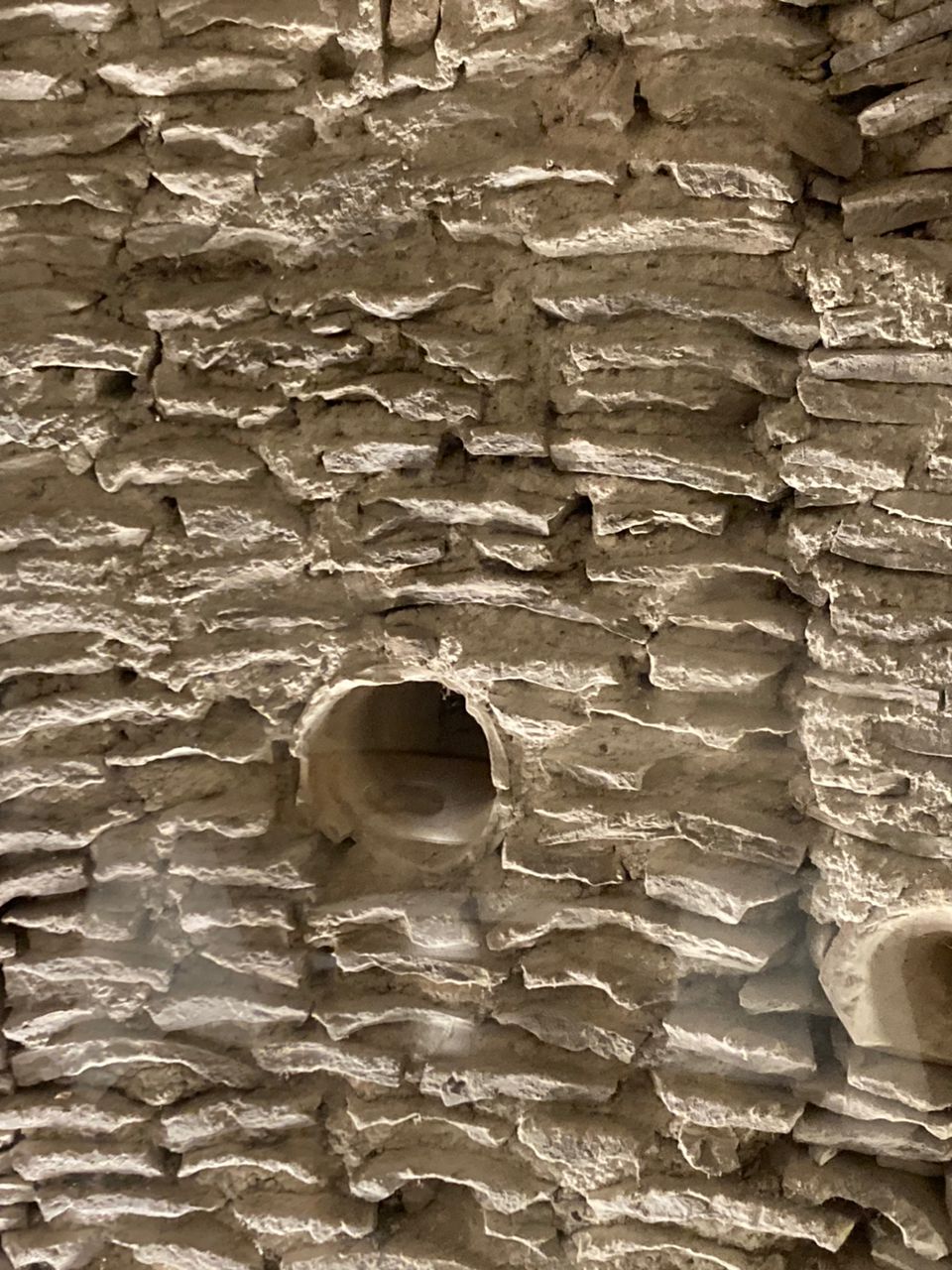
The hill is not the product of haphazardly discarding broken amphorae, but it was purposedly designed as a series of terraces supported by the less damaged amphorae and filled with sherds for stability. The amphorae were probably difficult to recycle or reuse after a while as the oil would have permeated them rendering them useless.
During the Roman Empire Testaccio was an important trade centre where workers building the slaughterhouses in the area settled. Today, the area is known for its good food, and it is one of the places we frequent when in Rome we feel like a good meal.
But it was not the food nor the hill´s architecture that roused our curiosity. Not even the fact that, in 1849, a gun battery was placed there by Garibaldi to defend Rome against the French! It was the surprise we got while walking towards a restaurant on a hot evening when a very cold air stream hit our legs.
We stopped and looked around to identify the air conditioner, doubting that there would be one which there was not, of course. Instead, with the light of our cell phones we found a hole in the earth from where the cold stream of air came from.
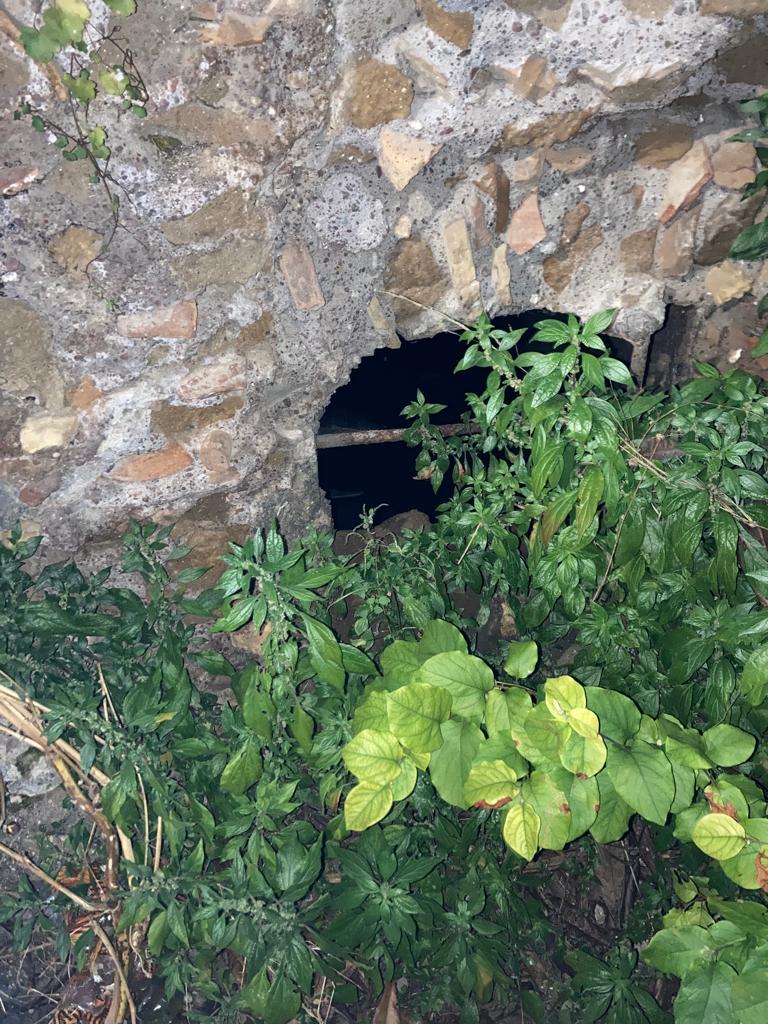
We debated how that could be and thought that there may have been a cold underground water current such as the ones I described earlier that cooled the air (See: https://bushsnob.com/2017/07/16/the-nasoni-of-rome-1/).
The doubt persisted for a whole year until we returned to Testaccio for another meal, this time earlier. Showing the discovery to a friend, we met a kind gentleman staying at the bottom of the hill that offered us to climb it, an offer that we agreed to take up at another time. When we asked him about the cold air blowing from that hole, he invited us to enter a courtyard nearby and there was also a door through which more cold air was blowing and then a window and other places as well.
Then the truth of the situation was revealed and some of its use and probably economic relevance became clear. The hill´s innards were “discovered” to have strong cooling attributes that are believed to be caused by the ventilation produced by its porous structure. This made it ideal for storing wine during the heat of the Roman summer, and caves were excavated for that purpose.
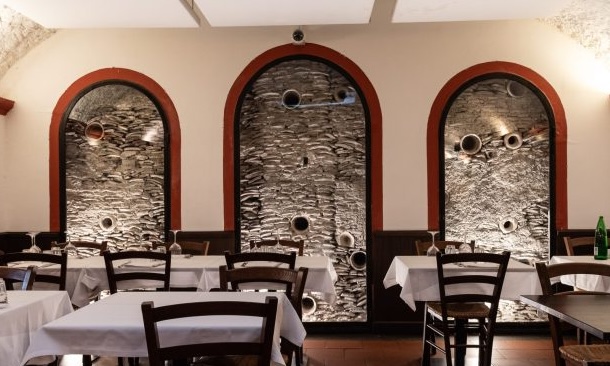
Some restaurants have windows that show the hill structure and probably also serve as coolers for both patrons and probably the wine stored there as well.
 A Bushsnob out of Africa