Zambia

Spot the beast 52

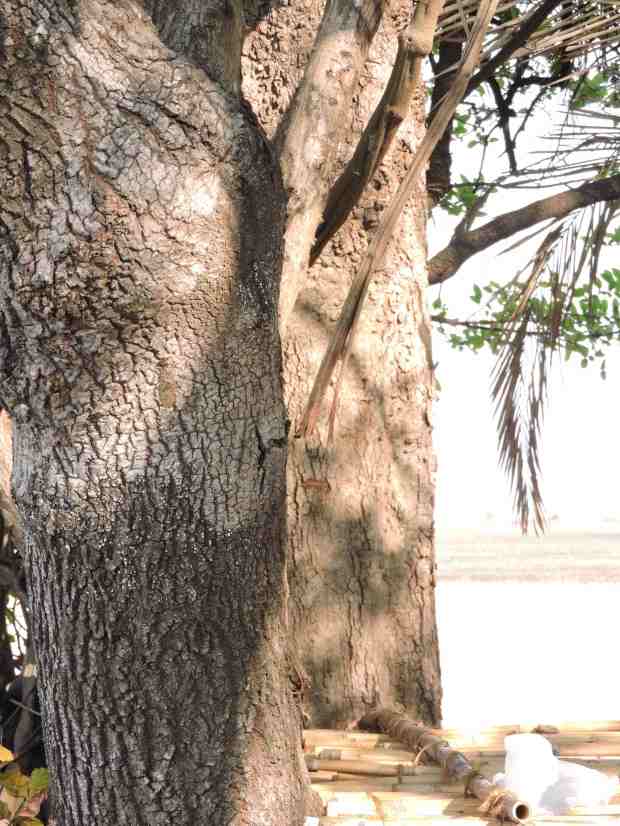
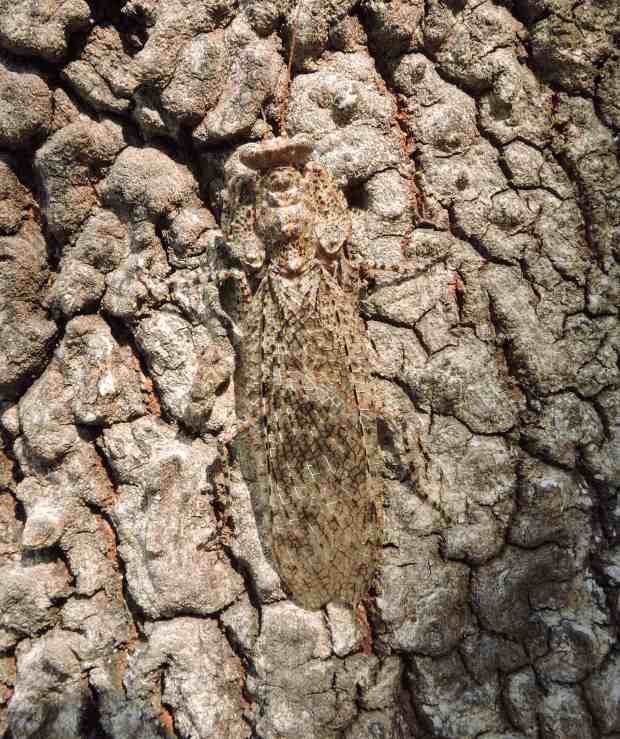
This beast flew into our campsite at Nsobe, Bangweulu wetlands, Zambia so you know you are not looking for a mammal (maybe a bat?)… Anyway, look for it on the second picture as it will be hard to find it in the first one!

DSCN2680 copy

The Nsobe campsite where the beast was detected.

DSCN2681 copy

The beast is there somewhere…

It is not easy! So I reveal it below…

?
?
?
?
?
?
?
?
?
?
?
?
?
?

DSCN2683 copy

It was a “super flat” Praying mantis, always a great find.

Secret insect life at Bangweulu

Often, apparently insignificant details reveal interesting facts when sometime is spent following them up. This was -again- the case while camping at the Nsobe campsite at the Bangweulu wetlands during our prelude to attempting to find the Shoebill storks.

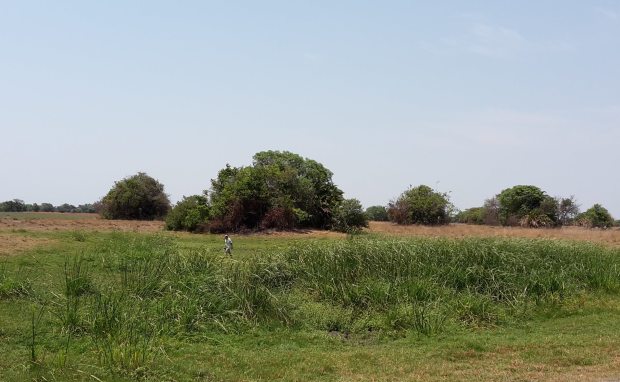
As -aware of the differences- the landscape reminded me somehow of that of Intona Ranch in the Transmara of Kenya in the 80’s [1], I decided to look at some of the tree islands surrounding the one we were camping at. The similarities ended as these, although around termite mounds, were composed of different trees.

20181009_103523 copy

The Bushsnob walking about in the Bwngweulu wetlands looking at the tree islands.

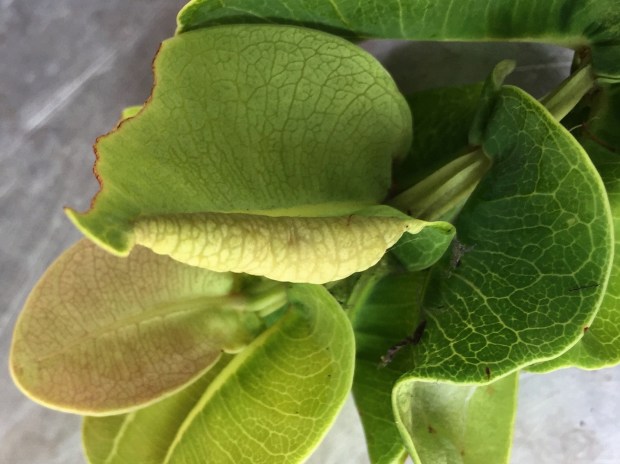
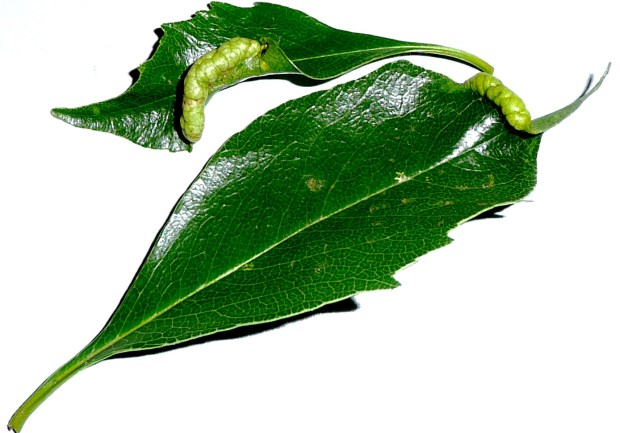
In one of the bushes nearby I observed that some leaves were yellow while others were just their normal shape and green. A better look showed that the yellow parts were in fact an enlarged part of the leaf itself. I thought it was probably a viral or fungal infection but, in any case, I collected a few for opening up as I was curious.

IMG_3863 copy

Close-up of the malformation (gall).

Auranticarpa_Leaf_galls-1-

Similar lesions of Thryps infestation. Credit: Mr Thrips (Talk | contribs). [2]

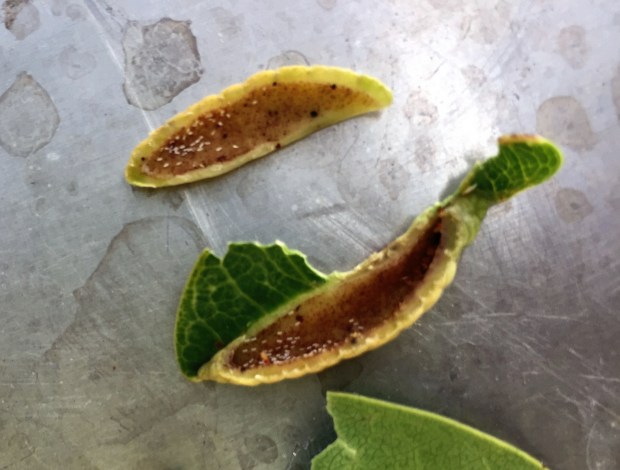
I cut them lengthwise and found some tiny insects inside the galls!

IMG_3859

The capsules opened lengthwise to show their contents.

Luckily I had with me a “super macro’ lens given to me by my son (he likes gadgets!). This lens is applied to the cellphone camera and give you enlarged macro pictures like the ones I showed in from our bat house in Salta, Argentina [3].

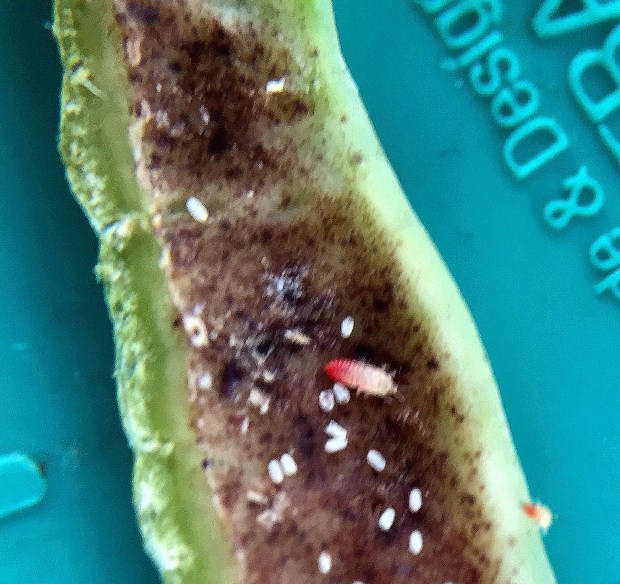
Through the camera I could see an adult (black) insect, several white eggs and what looked like larvae or nymphs of the black insect walking about. In addition there was a large white insect that I assumed to be the female lying eggs according to its pulsating movement under the macro lens.

IMG_3825 copy

Adult (black) with nymphs and eggs.

IMG_3819 new

Eggs and a nymph (reddish abdomen).

As I had no clue of what these could be, on return to Zimbabwe I resorted to the very helpful Plant Protection Research Institute of the National Research Council of South Africa as they had helped me in the past with insect identification and information. As usual, the reply came the next day and it was very revealing!

The host plant was identified as probably a Water berry tree belonging to the Syzygium (Family: Myrtaceae). It is likely to be Syzygium cordatum but I am not sure. In any case, the “leaf roll” or gall was the plant’s response to a kind of insect known as Thryps (Order: Thysanoptera), of which I have not heard before but later learnt that are important agriculture pests!

Adult Thryps have sucking mouthparts that cause damage by feeding on a plant’s fluids. The leaves respond curling tightly inwards developing the capsule I found. This structure protects the immature Thryps to develop and eventually disperse.

What I thought was an egg-laying female seems, according to the South African colleagues, a Hover fly larvae predating on the Thryps so there was also some drama going on in the dark!

IMG_3843 copy

The suspected female was apparently a Hover fly larvae possibly predating on the Thryps.


[1] See: https://bushsnob.com/2015/06/01/intona-ranch1/

[2] From https://thrips.info/wiki/Thrips_and_galls. Thryps and galls by Laurence Mound, CSIRO Ecosystems Sciences, Canberra.

[3] See: https://bushsnob.com/2017/04/02/homely-bats/


Acknowledgement: Elizabeth Globbelaar and Michael Stiller of the Plant Protection Research Institute of the National Research Council of South Africa provided not only identification of plant and insects but also great information without which this post would not have been written.

Safari to Zambia

Sometime ago our friends Lola and Frank, yes, the same friends we shared our safari to the Mabuasehube area of the Kgalagadi last year [1], invited us to join them for a safari in Zambia. Among the items in the agenda were visits to Kasanka National Park and the Bangweulu wetlands. The latter has been in my wife’s bucket list for 30 years, since our time in Zambia. I have somehow resisted this idea but I was now cornered and agreed, although rather reluctantly. I argued against it on the following grounds:

(i) We had visited Kasanka in the 90’s and it failed to impress at the time;

(ii) It was too early for the fruit bat migration (although I accepted that the rare Sitatunga) and,

(iii) It was too late for the Shoebill stork sightings in the somehow dreaded Bangweulu swamps.

My objections quickly dismissed, we were on and I joined in with the needed arrangements and we departed in early October, as planned.

As the experience we underwent was rich and varied, I will present it in three main sections covering Kasanka National Park and our return after the Bangweulu wetlands, the search for the Shoebill stork in Bangweulu and, finally, our findings at Bangweulu. I will also post smaller observations, including the already posted “Ticks from Trees”.

IMG_3886 copy

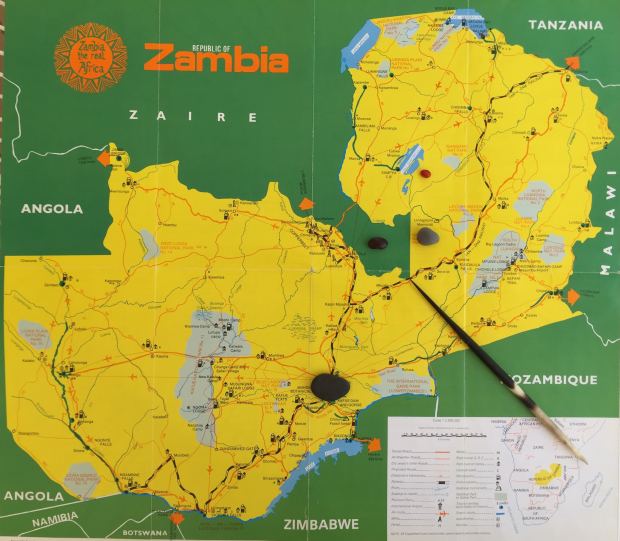
Map of Zambia showing lake Kariba and Siavonga in the South and Lusaka (large pebble).   The kidney shaped seed indicates the Congo Pedicle that divides Zambia into two lobes. The tipof the porcupine quill shows the area where we drove next to the DR Congo. The pear-shaped and red seeds indicate Kasanka NP and the southern part of the Bangweulu swamps, where we were.

[1] See: https://bushsnobinafrica.wordpress.com/2018/01/09/camping-dangerously/

Ticks growing on trees!

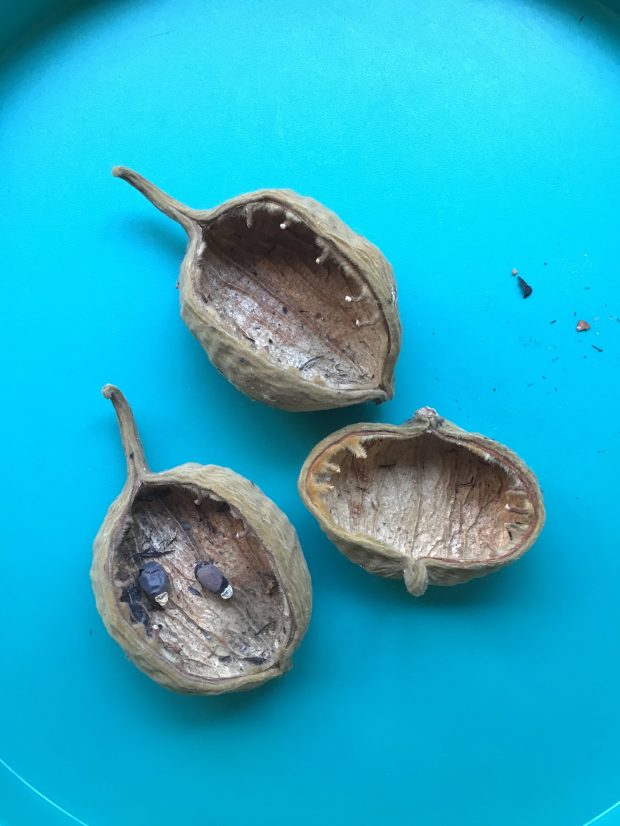
I devoted my scientific life to study ticks in Africa. For this reason, Sterculia africana, the Tick tree or African star-chestnut caught my interest during our recent trip to Zambia.

We had seen this tree at Kariba, Zimbabwe and collected some “ticks” from it. I somehow remember the sight of the tree and driving from lake Kariba to Lusaka I stopped to have a look and managed to collect some of its interesting fruits. Unfortunately, grass burning had taken place and it was difficult to find the nicest seeds (ticks).

IMG_5184 copy

Three fruits of the Tick tree.

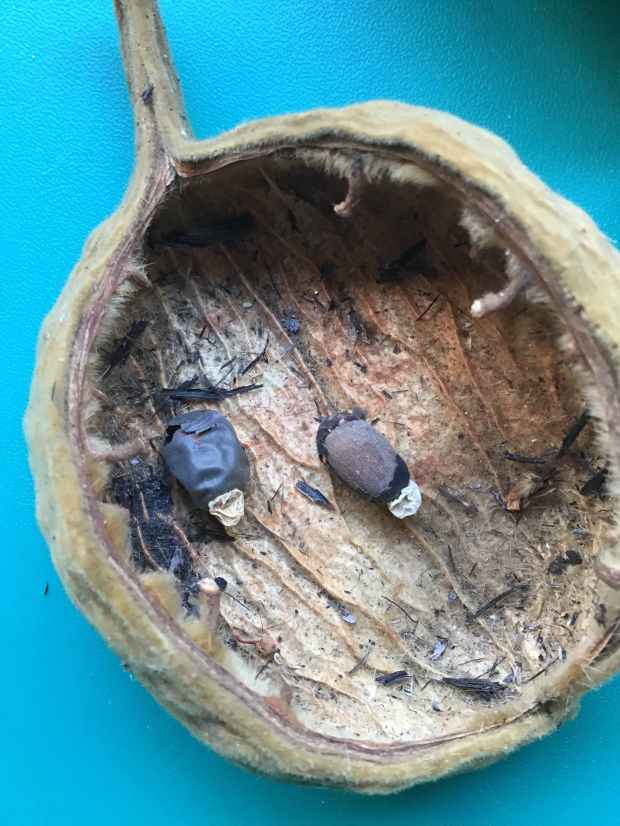
A small to medium size tree of dry areas with a smooth silver-white papery bark, it produces bunches of yellowish flowers marked with reddish lines. The fruits are boat shaped of up to 140mm long with tapering ends of a golden velvety appearance. They are loaded with blue-grey seeds that, amazingly, resemble engorged female ticks.

IMG_4459 copy

Two “ticks” collected from the ground and placed inside the dry fruits.

IMG_9420 copy

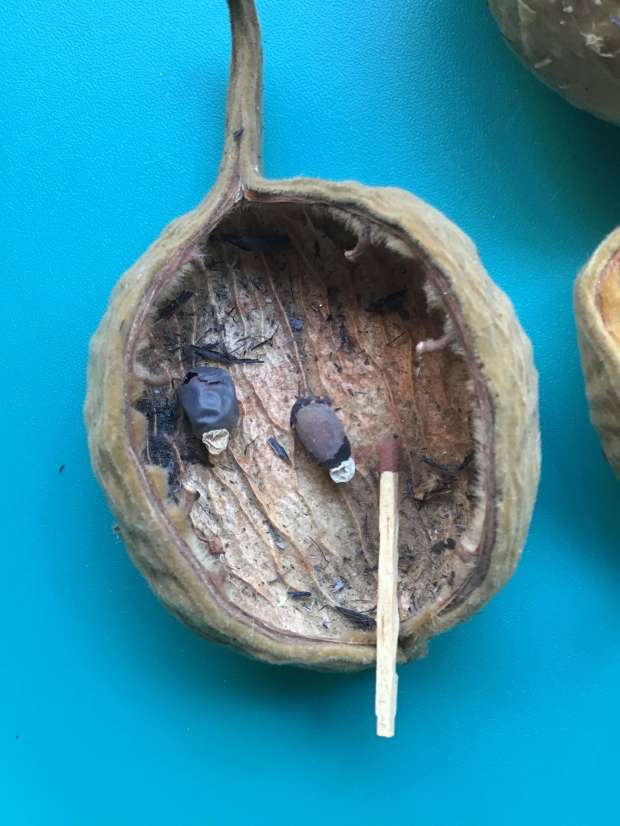
The fruits and “ticks” with a match for a scale.

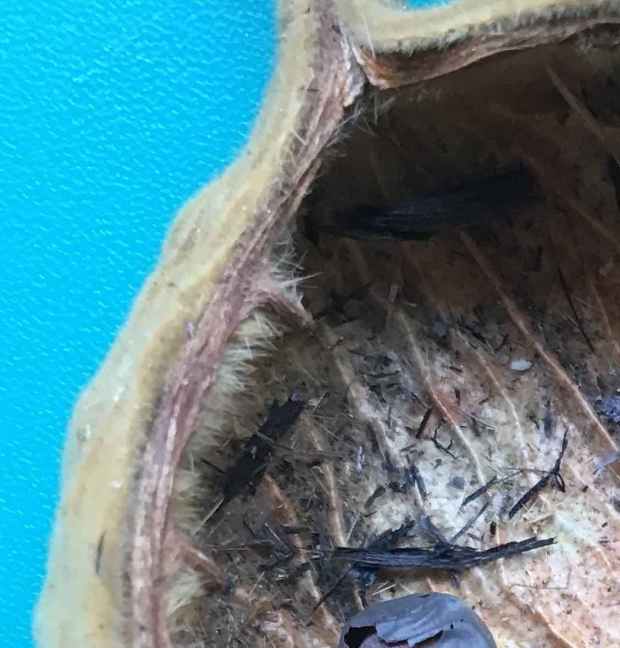
The “ticks” are attached among hairs which, I forgot, are extremely thin but able to embed easily in the skin. Once lodged, they are very irritating as I learnt (again) this time. Luckily, I managed to remove them and was able to use my fingers (again) to write this post.

IMG_4459 copy 2

A close up to show the nasty hairs.


Harvesting from the effort[1]

The following is a concise account of my working life. More details can be found in the “Pages” section of this blog. The intention of this short account is to set the seen for the next historical posts that will deal only with episodes that took place during these years and that I consider to offer some interesting aspect worth mentioning.
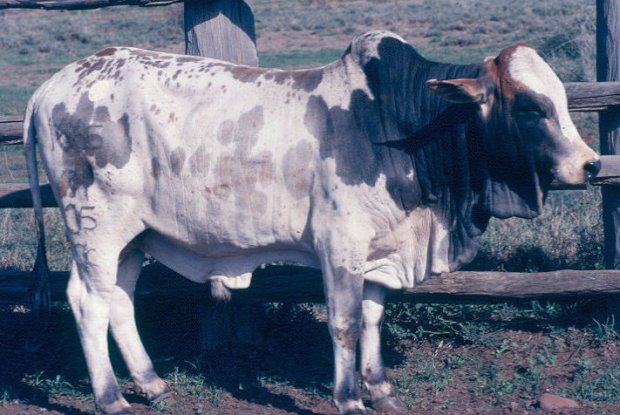
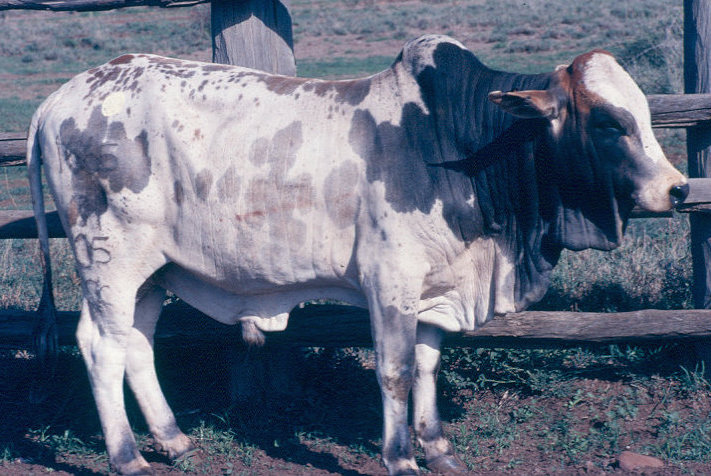
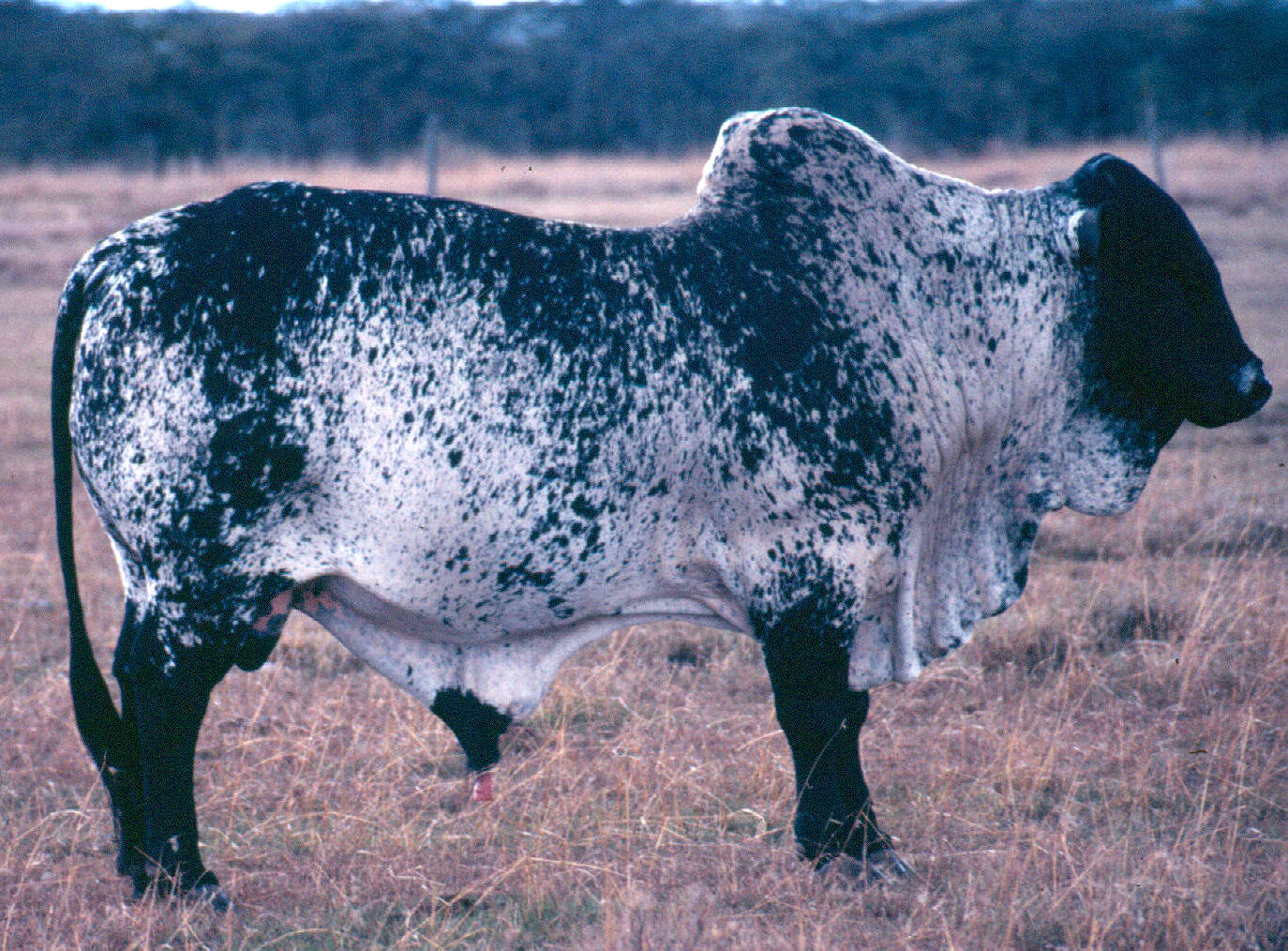
A Boran young bull at Mutara ranch, Kenya.

A Boran young bull at Mutara ranch, Kenya.

Boran young bulls at Mutara ranch, Kenya.

The work at Muguga and Intona described earlier (give link) yielded fruit and I was able to publish the results in good scientific journals, together with my co-workers, Matt, Alan and Robin included. My research added some knowledge to a large regional programme on ticks and tickborne diseases that FAO had initiated at the time of my arrival in Kenya and that covered several countries in East, Central and Southern Africa.
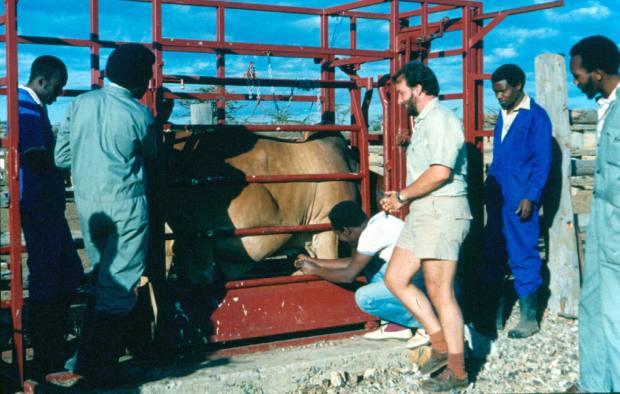
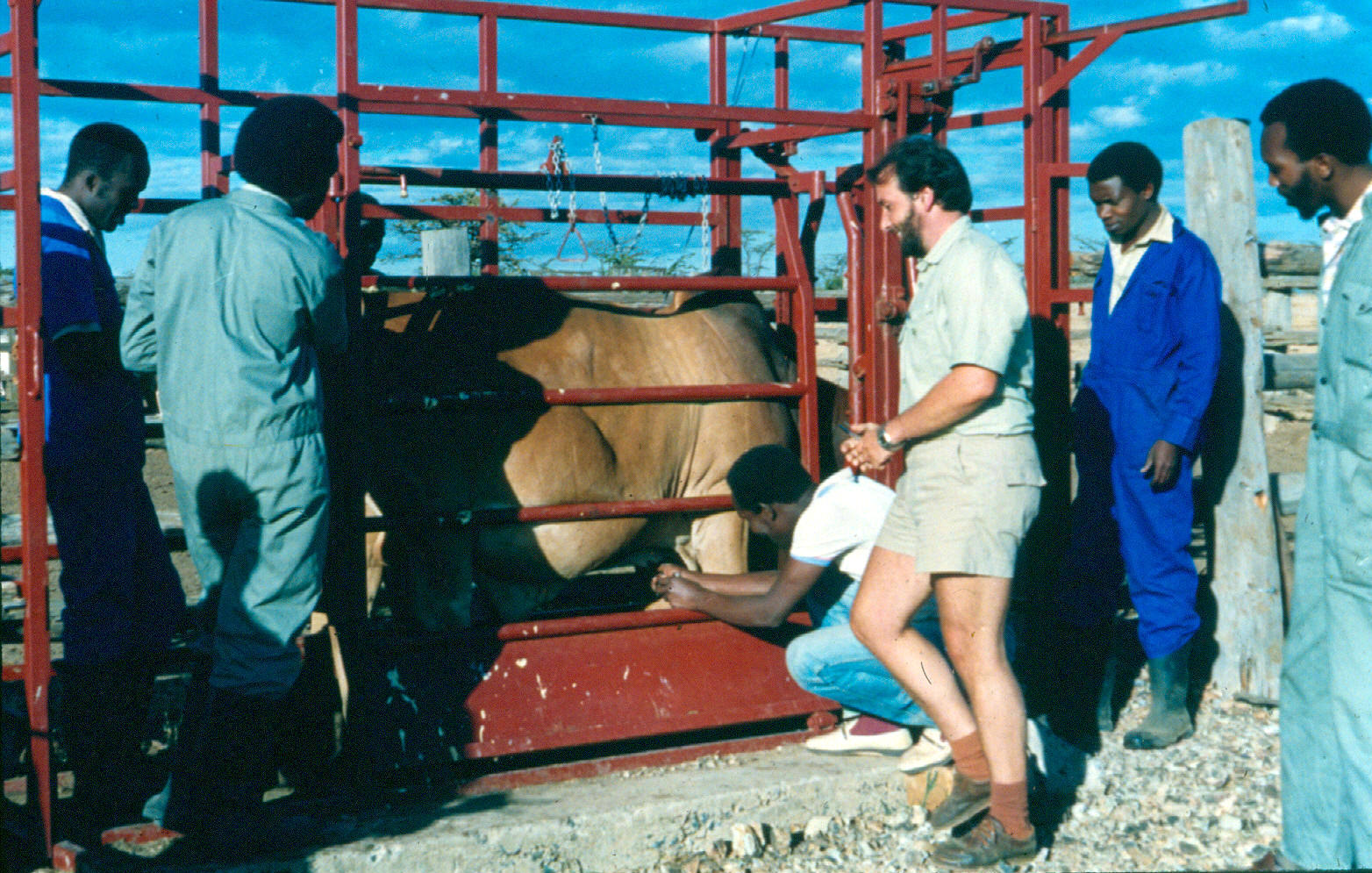
Mutara tick selection work.

Mutara tick selection work.

Once my fellowship ended, although I had a lot to learn yet, I had somehow found a niche for my work at ICIPE and, with Matt’s blessing, I joined the Tick Programme as a scientist. My work on tick impact had ended and now my work would have to fall within the Tick Programme’s goals and funding. The main target was to control ticks using the cattle resistance to them. I had come across this fact while doing my research as some animals showed resistance while others not.

At that time I also decided to start my PhD studies as an external student with my former Department of Applied Zoology at the University of Wales. Four years of hard work were in front of me, as I needed to work and study, not an easy feat! I was lucky to be surrounded by knowledgeable colleagues and to find a great supervisor, the late Ian Herbert from the Department.

While working on my PhD I got involved with the work on ticks and tickborne diseases on-going at Muguga and I also continued with field work at Intona. Later on we started more work at Mutara Ranch, then the Boran cattle stud for Kenya, where we started work on selection of cattle for tick resistance that sadly needed to be abandoned for lack of resources. The initial study got published and this added to my growing reputation in the tick world. I completed the PhD in 1986 while still in Kenya.
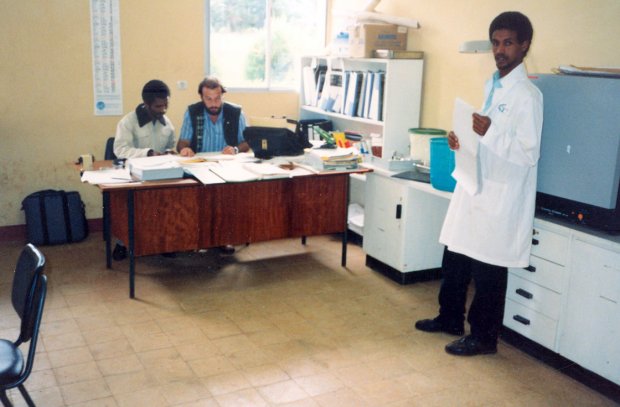
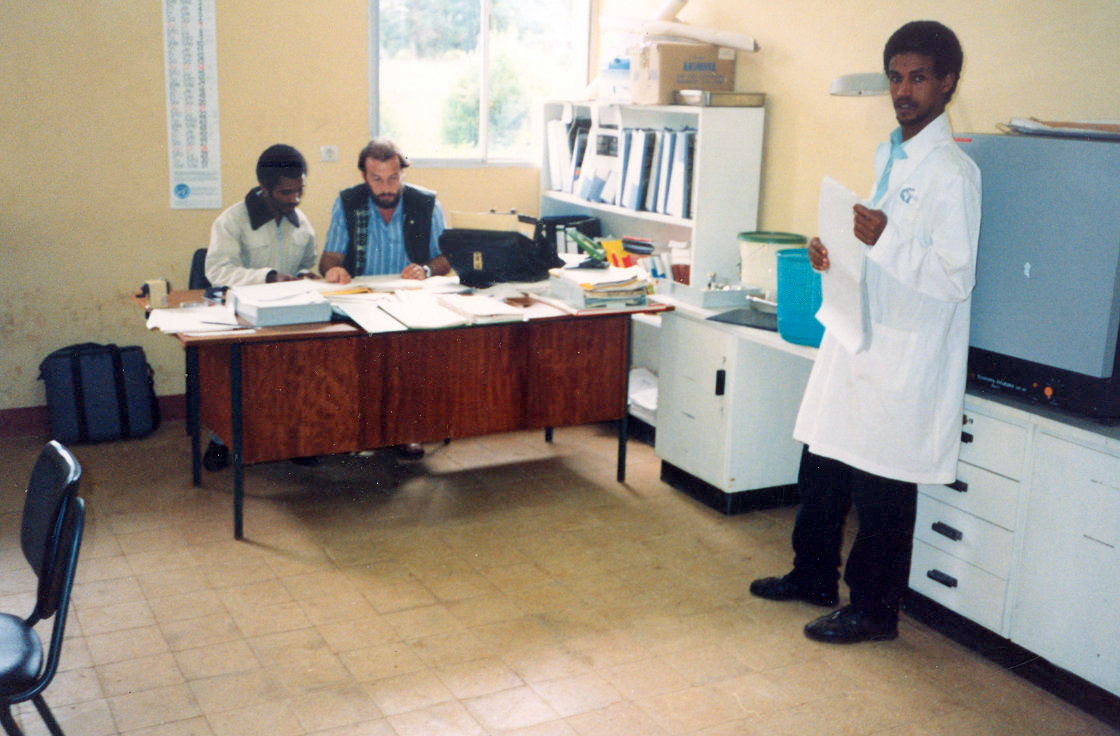
The laboratory at Bedele, Ethiopia.

The laboratory at Bedele, Ethiopia.

In 1988 FAO offered me a position as a Leader of the Ethiopian component of their regional tick and tickborne disease programme I mentioned above. I accepted the offer as it had very favourable conditions but left ICIPE and Kenya with a heavy heart after so many years of enjoying life and work there.
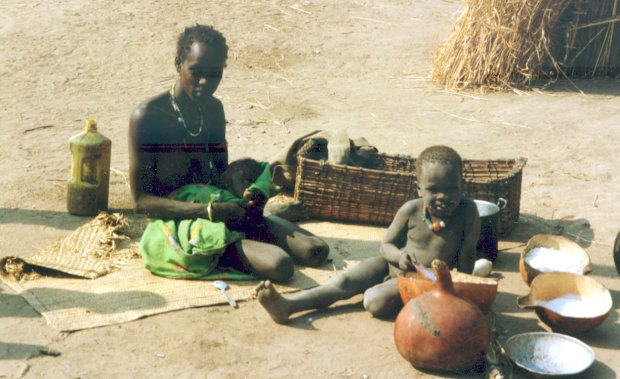
Villagers at Gambela, West Ethiopia.

Villagers at Gambela, West Ethiopia.

Ethiopia was a big change as we arrived in a country at war with Eritrea and under a comunist regime led by Mengistu Haile Mariam, a ruthless leader. My duty station was Bedele in West Ethiopia, still green and wooded with a rainfall of about two thousand mm per year! It was a remote place where FAO has assisted the Government in building a Veterinary Diagnostic Laboratory. Bedele’s main claim to worldwide fame is ob being the place where coffee originated from.

The work was more routine than challenging and it required the collection of ticks from cattle at different locations both to get to know the species and to understand their population dynamics. My assignment there lasted under two years as I was replacing another tick officer that needed to be evacuated with a severe heart condition. Despite the political and economical difficulties the country was going through, the work was completed and, as the possibilities of continuing the work were not there, it was tie to move on.
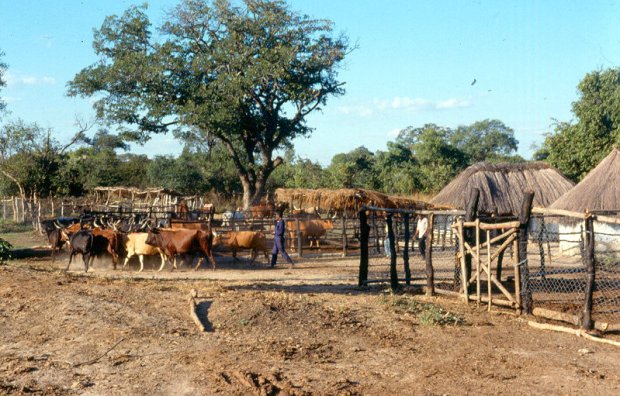
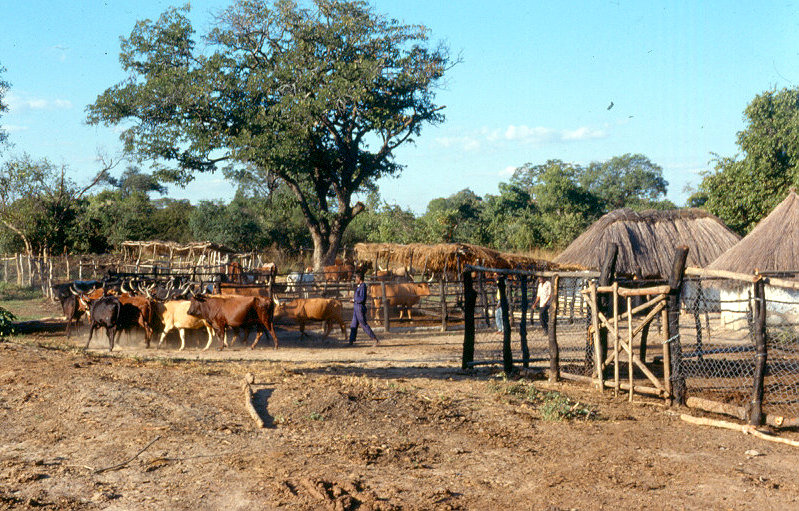
The project site at Lutale, Central Province of Zambia.

The project site at Lutale, Central Province of Zambia.

I was transferred to Zambia where I was to continue a long-term trial on the effects of ticks on traditional cattle productivity both of milk and beef under different tick control regimes: no control, intensive control and “strategic” control. The latter meant to treat only to prevent tick numbers from building up. The trial run for three years and it was completed successfully. It was during this time that our children were born and our lives changed!
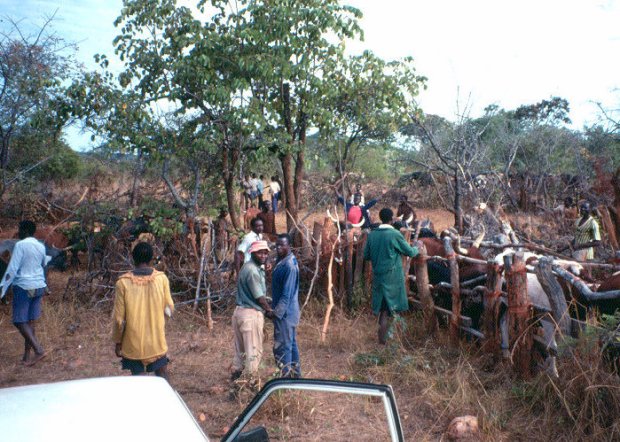
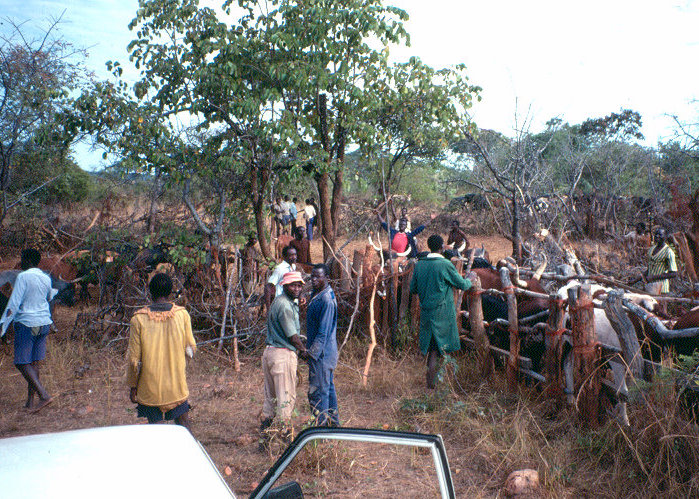
Cattle work in Southern Province, Zambia.

Cattle work in Southern Province, Zambia.

After three busy and productive years in Zambia the regional programme was going through important changes. Its coordinator based at FAO HQs in Rome was about to retire and more funding was coming in to continue the work for another phase of four years. Somehow I landed the coordinator’s job and moved to Rome in a move that removed me from scientific work and converted me into an international bureaucrat!
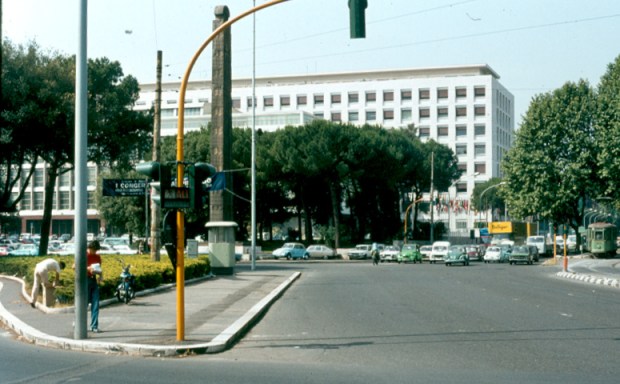
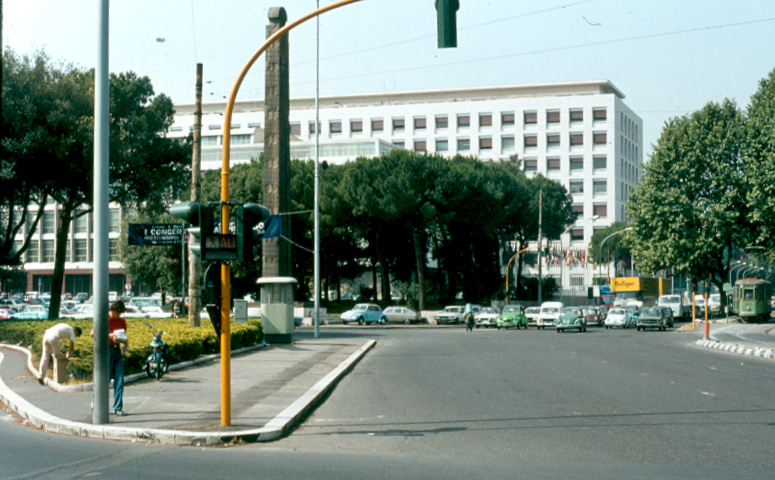
FAO in the 90s. Please note the Axum stele that was returned in 2005.

FAO in the 90s. Please note the Axum stele that was returned in 2005.

After a few months in Rome, once the “glamour” of the job waned, I realized that I needed to get back to the field as the work I was doing did not appeal to me.

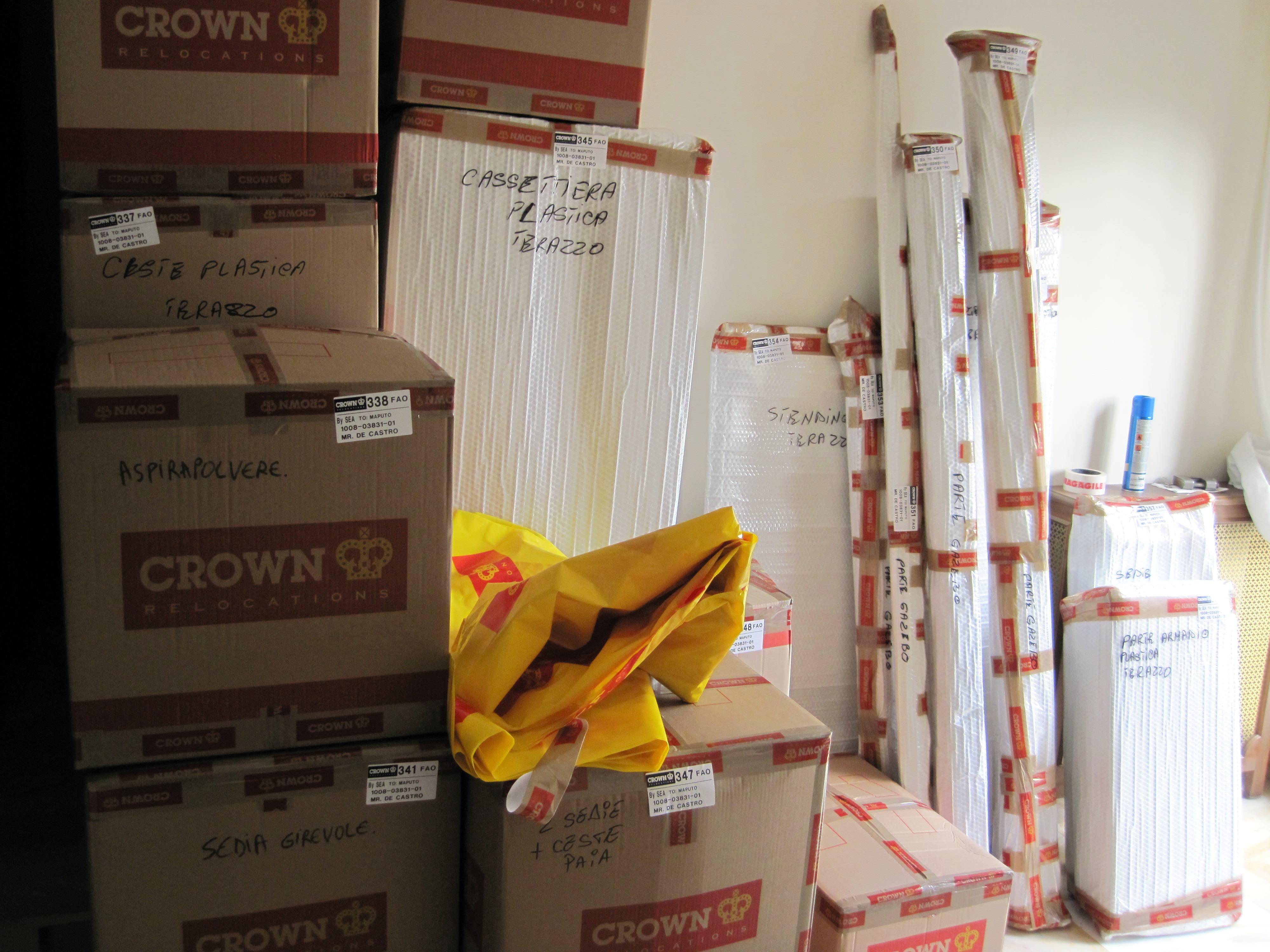
Mudanza a Hre copy 2

Moving again! This time to Zimbabwe.

The opportunity to move to the field -again to Africa- presented itself in 1997 and I did not hesitate! We moved to Harare, Zimbabwe where I took up the role of sub-regional animal production and health officer, an even broader professional role as it also involved animal production. As compensation, however, the job was restricted to Southern and Eastern Africa. Although it was not “hands on” scientific work, it was closer to the action than what I was doing from Rome!
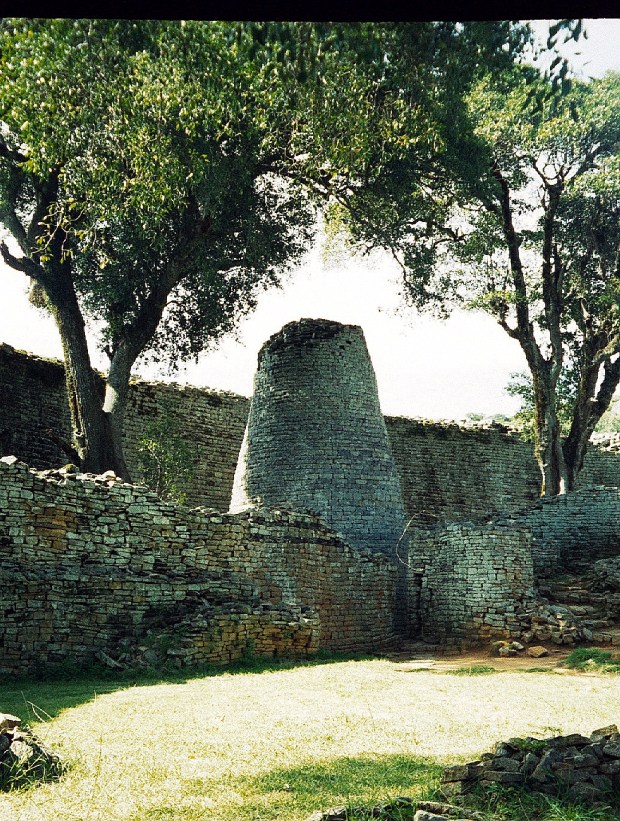
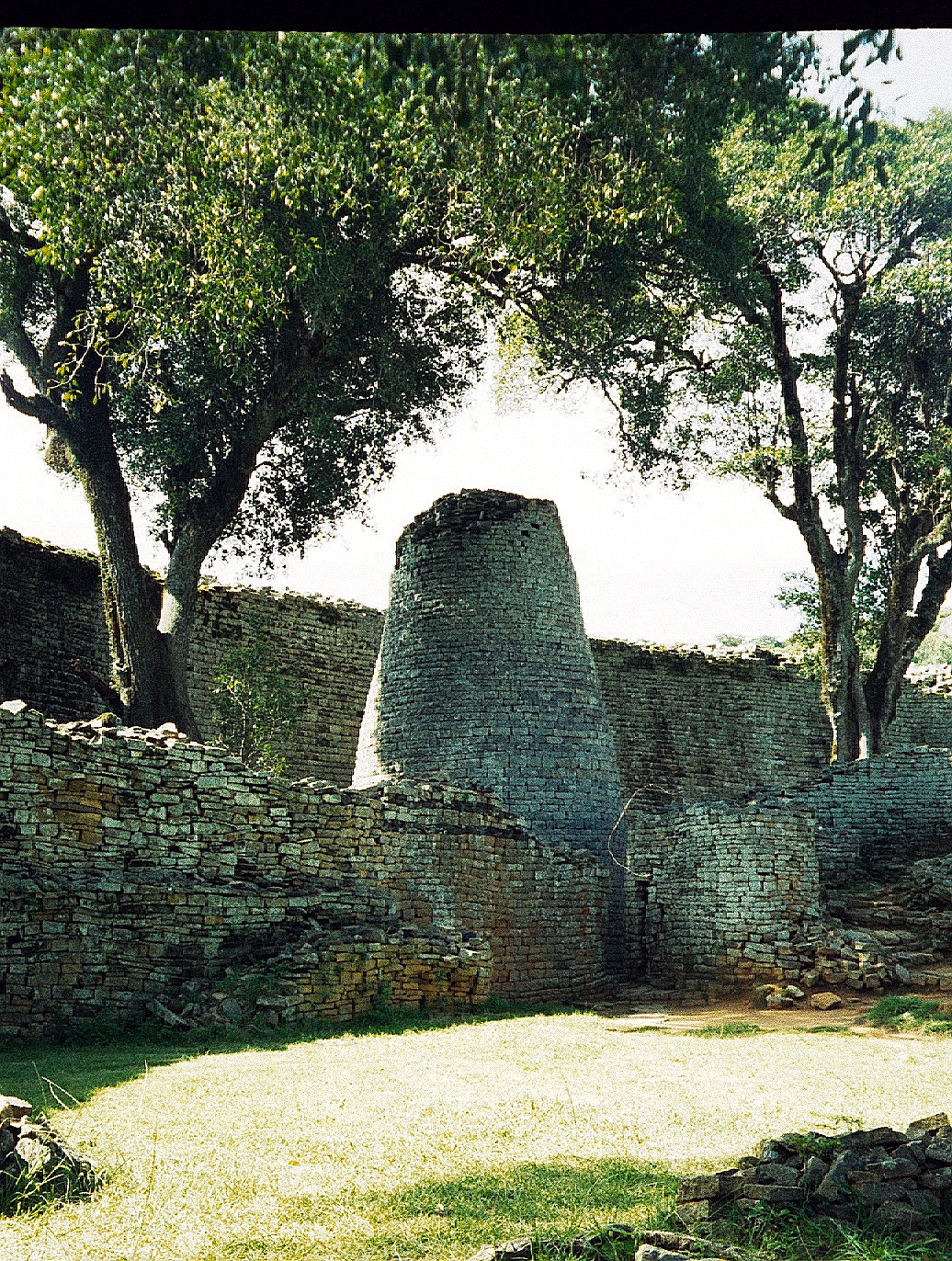
Great Zimbabwe ruins, Zimbabwe, 1998.

Great Zimbabwe ruins, Zimbabwe, 1998.

After four years in Harare I realized with regret that I needed to move to get a career improvement. At the end of 2000 I put my name for a FAO Representative job and succeeded getting designated FAOR in Bolivia so in mid 2001 we left for La Paz, Bolivia. This would be my first assignment in a Spanish-speaking country and it also meant becoming the head of an office with a large multi-sectorial programme and several employees both in the office and in the field. In addition, as the representative of the organization in the country I also carried a political role having to develop strong links with the host government.
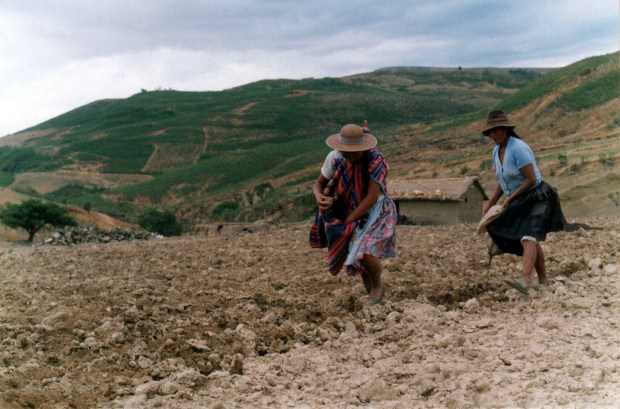
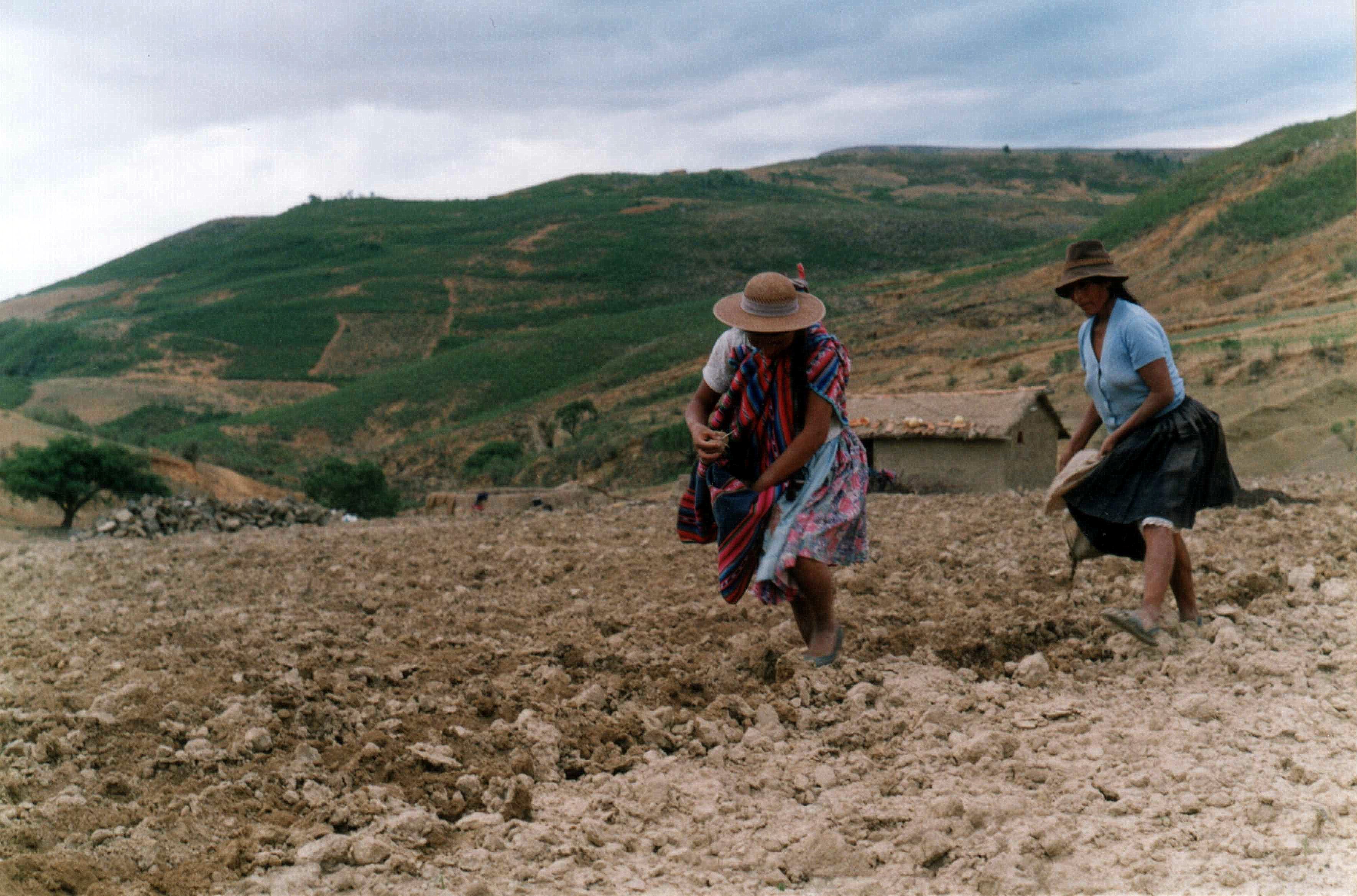
Sewing in Bolivia.

Sewing in Bolivia.

Market street of La Paz, Bolivia.

Market street of La Paz, Bolivia.

I worked in Bolivia for five incredible years and, in 2005 I returned to Rome, again as a technical expert to continue working on animal diseases, in particular I returned to ticks and TBD. Again I did not find this assignment enjoyable and, after four years I had had enough of desk work and it was either another field post or retirement!
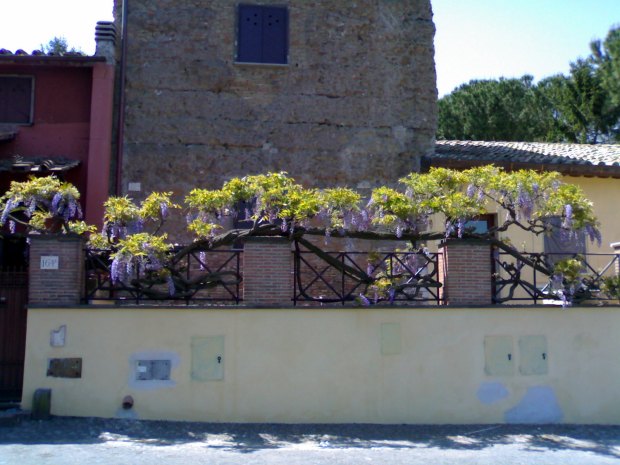
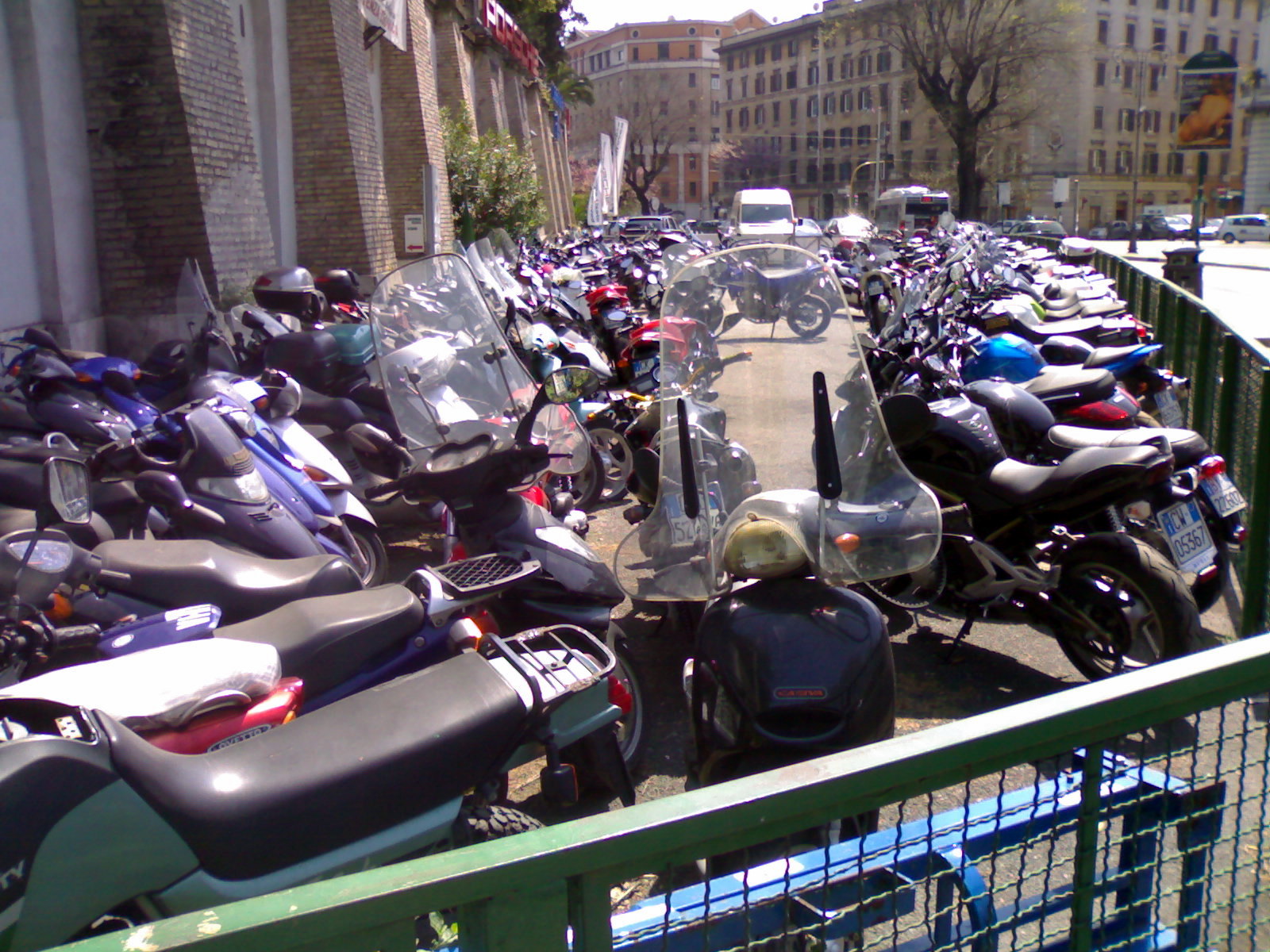
The Appia Antica road, Rome.
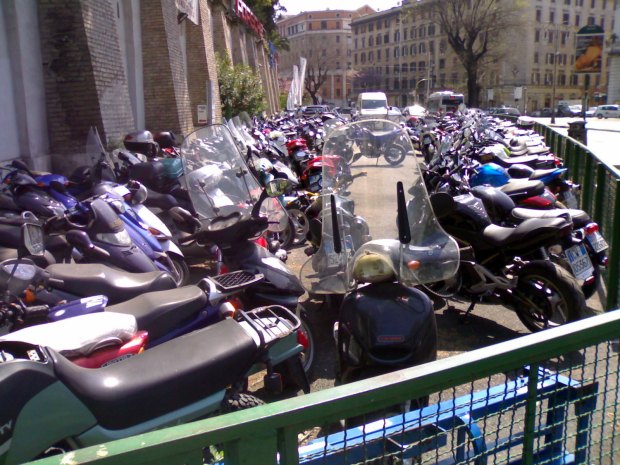
The Appia Antica road, Rome.

Rome, 2009!

Rome, 2009!

Fortunately I was selected for the position of FAO Representative in Mozambique where I worked until my retirement, from mid 2010 to the end of June 2013 when I reached 62 years, the mandatory retirement age of the United Nations.

Time to move to Mozambique.
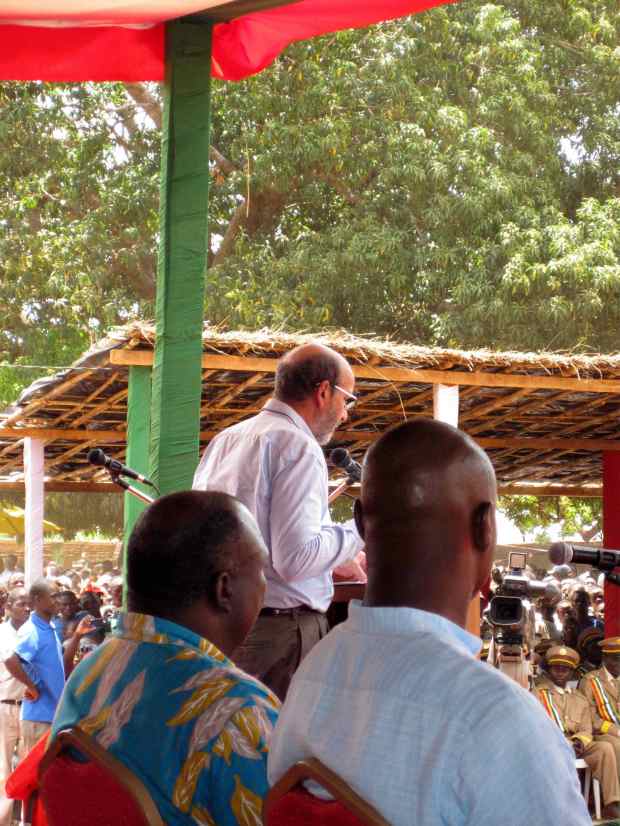
Time to move to Mozambique.

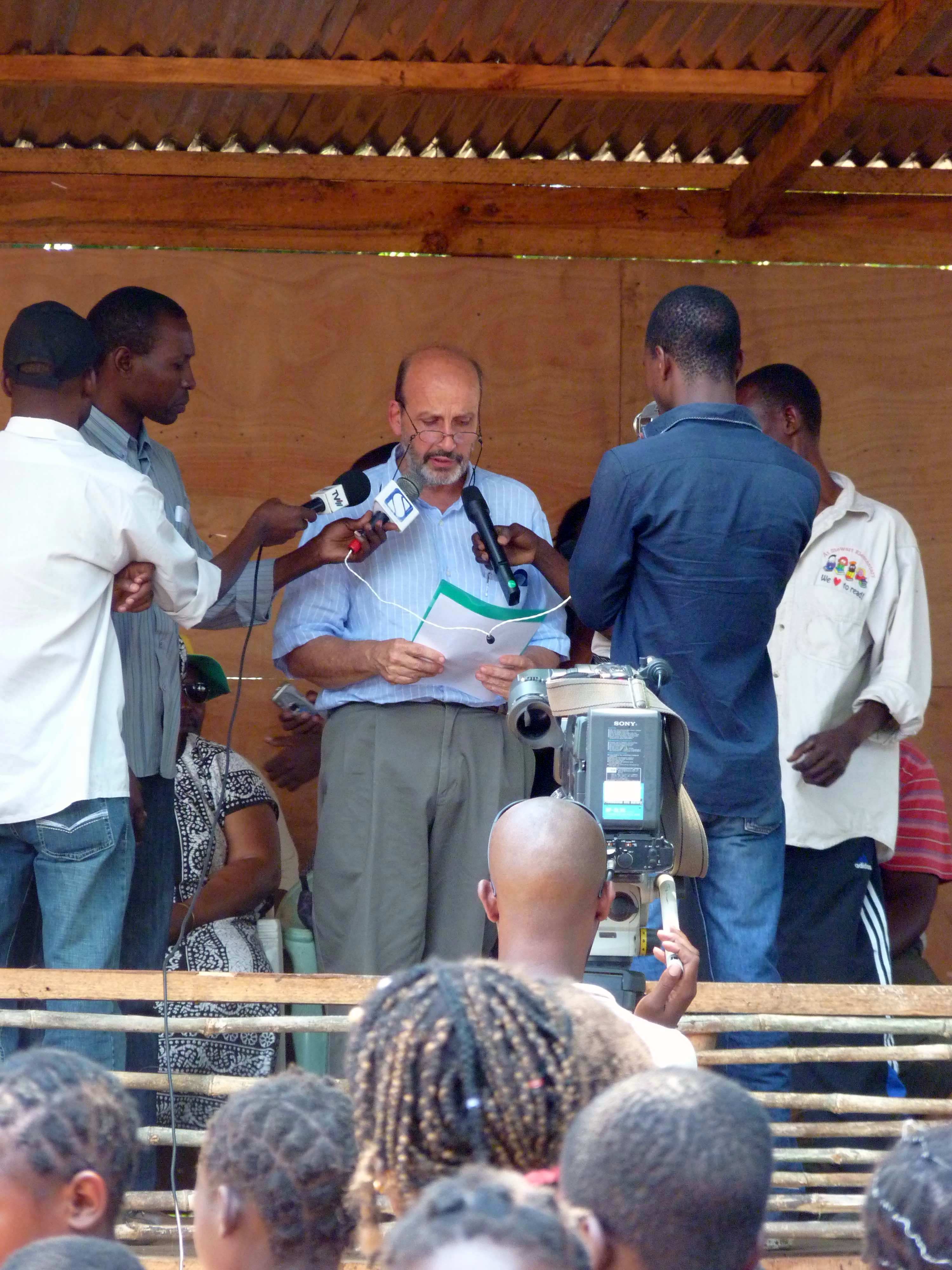
Speaking on World Food Day in Mozambique.
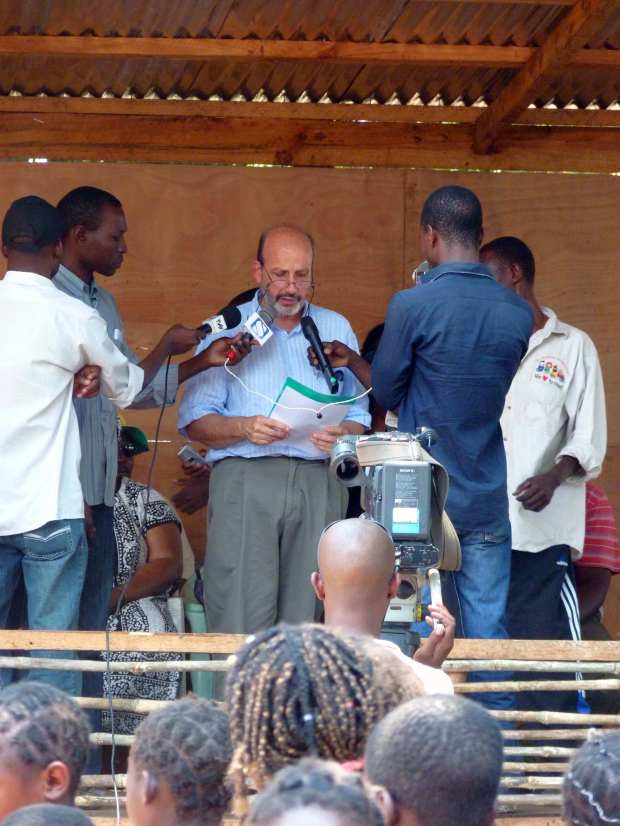
Speaking on World Food Day in Mozambique.

Interviewed by the press.

Being interviewed by the press.

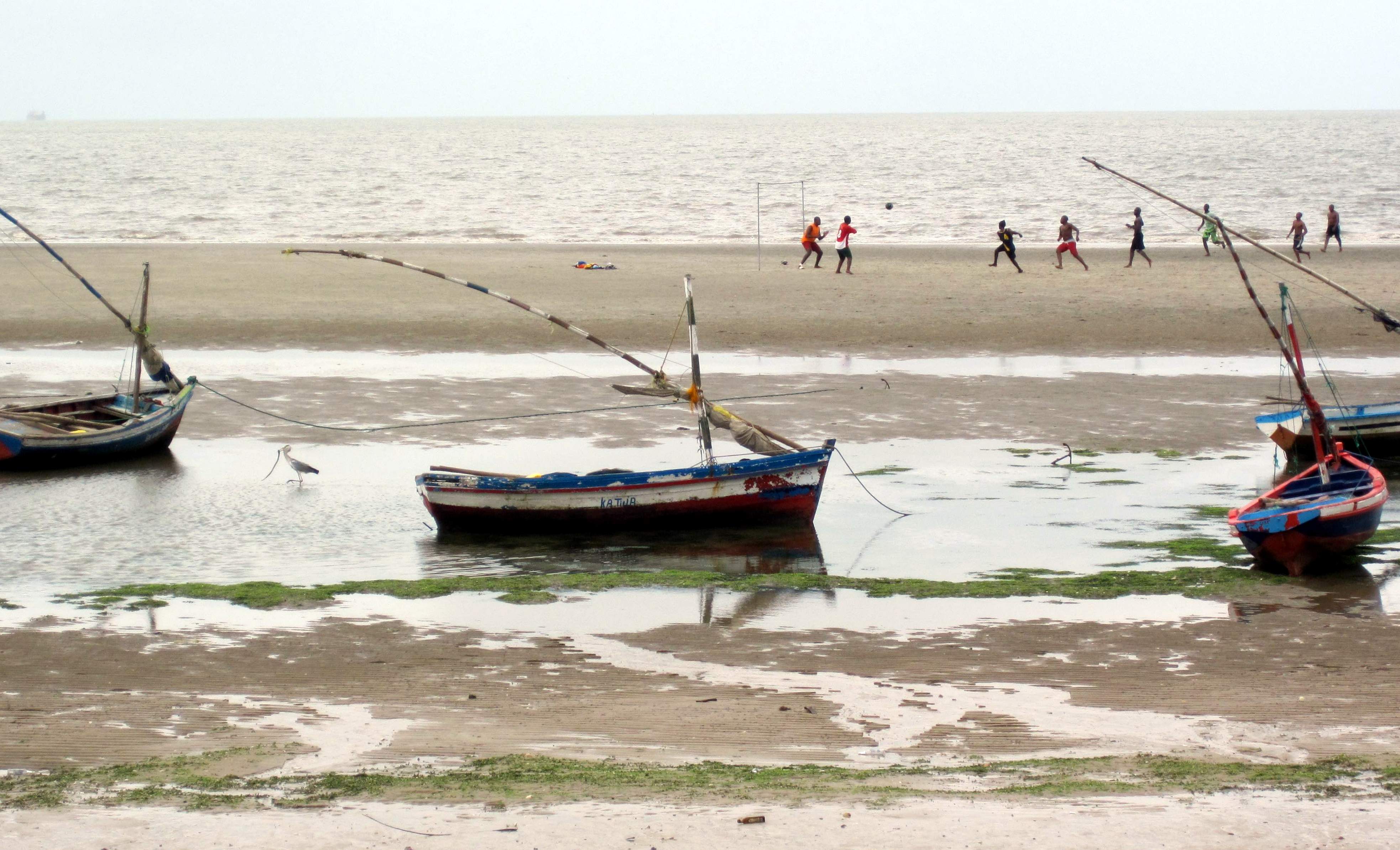
Maputo's beach in Mozambique.

Maputo’s beach.

Needless to say that I write in first person but my life has been shared with my wife and later my children. She has been a main support throughout and the kids added their part!

I hope you enjoy reading what I have to say.


[1] This post follows “Life and work in Kenya: Intona”.
Landing Rights

An article by Kamal Paul in the Sunday Times of the 20th of November 2011 describes his experience on board a Comtel Air plane from Amritsar in India to Birmingham. The plane landed in Austria for a stopover. Once on the ground the passengers were informed that, in order to take off again, they needed to pay Euro 23,800 for the fuel and landing tax. He was then requested by a stewardess to collect the money from the fellow 179 passengers so that they could take off again and get to their destination. This account reinforces the authenticity of a story I heard in the early 90s about the fate of a Zambia Airways DC 10 on a flight from Lusaka to London.

Lusaka in the 90’s was a place of lots of socializing and we were frequently invited for lunch on Sundays. The weather was very suitable for outdoor activities so it was a highly enjoyable time.

During these gatherings I heard many stories. One, told by the pilot himself stuck in my mind until today. George, I believe his name was when we met him, was a retired commercial pilot. He started bush flying and gradually built a career until he became a pilot for Zambia Airways. At that time ZA was the flag airline of the country and, I believe, it was Government-owned.

To compete in the international routes with the likes of UTA and British Airways, ZA leased three McDonnell Douglas DC10’s that did the route to New York, London and other European and Asian destinations. George was one of the pilots that flew this aircraft. The flights were successful as they offered good prices, most likely subsidized by the Government. The situation was not sustainable and the inevitable happened: ZA ceased operating in 1995 and several of its planes were impounded at several airports where the company had debts.

George told us about an experience he had during one of the many times he flew to London in the early nineties, just before the company closed down. He was flying a DC10 with its full passenger capacity as was normal on these flights. As is routine, at some prudent distance he established contact with the control tower of the London airport (probably Gatwick at that time, I do not recall). He informed the airport of the coordinates of the flight and eventually requested permission to land.

To his shock, the control tower refused to let him land as the company had a large accumulated landing fees debt. Apparently the management of the company had been warned about the situation and the consequences that they would face if attempting to land there. Although very upset with ZA, there was no time for recrimination as a fast solution was necessary.

He pleaded with the tower and explained that he had a full plane and that, although the fuel would be sufficient to divert to another airport, he did not have the necessary authorization to do so. He waited for a reply with bated breath!

Eventually the control tower asked him if he had a credit card, as they could allow him to land by charging the landing fees to his card. Aware that it would take him months to recover the money, he realized that he had no option but to agree and eventually managed to land as planned.

Luckily for him, he was reimbursed before the company ceased to operate!