Month: September 2018

Picnic in the Rift Valley

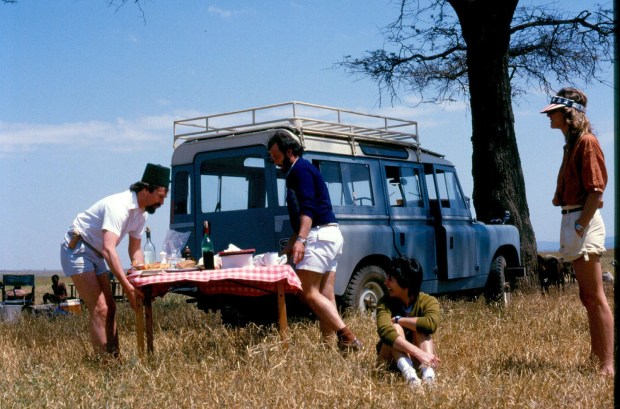
For months Paul mentioned the idea of going for a picnic to the Rift Valley. He claimed that along the Narok road there were a number of large acacias that would offer the necessary shade while we could not only enjoy watching game but also looking across this vast depression presided by the Longonot and Suswa volcanoes.

Rift valley from Kinangop

The Great Rift Valley seen from the Kinangop area.

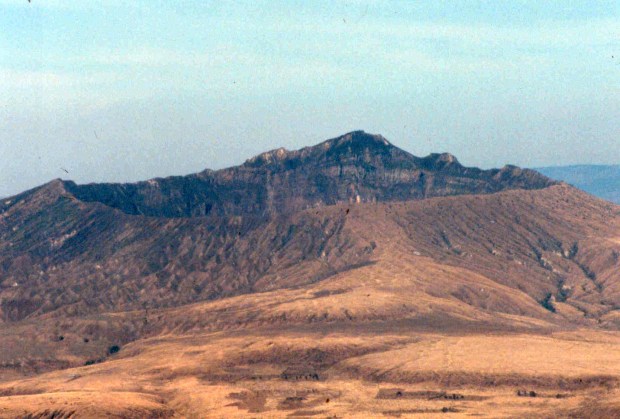
rift longonot 2

Mout Longonot.

Eventually we were convinced and one Sunday morning we gathered at Paul’s house to travel to the chosen picnic area. Apart from Paul and us other participants were Timothy and his fiancée Jill and a few other friends that filled Paul’s long-wheel base Land Rover. We were not only humans in it as Timothy (the egg cleaner of my earlier post! [1]) decided to take along his red setter called Bitch despite our advice to the contrary!

So, we took the rather dangerous old Naivasha Rd. down the Kikuyu escarpment and eventually branched off towards Narok. Once at the bottom of the Great Rift Valley we started looking for the appropriate spot.

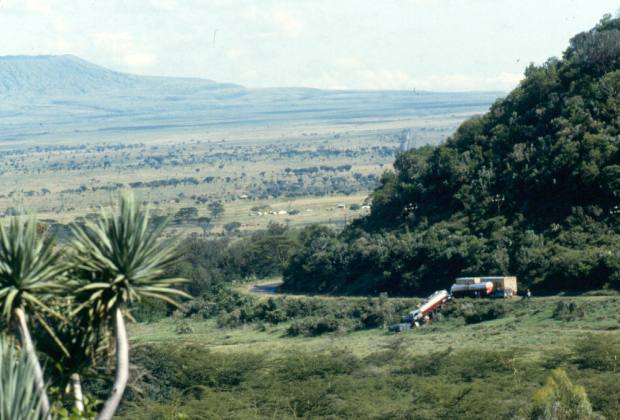
lorry on naiv road...

An accident along the Kikuyu escarpment near the bottom of the Great Rift Valley. A frequent occurrence then.

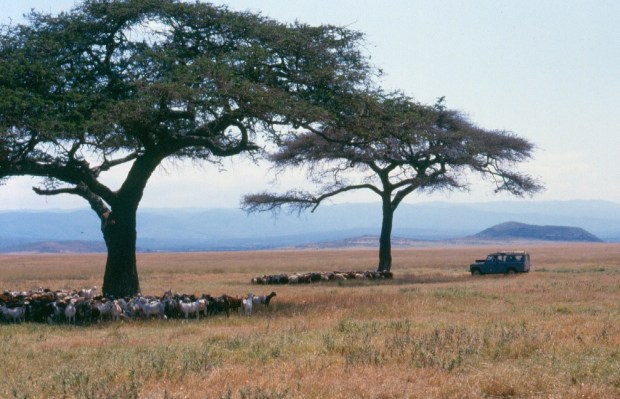
After a few km we spotted the “selected” trees and headed for them across the dry savannah where a few Thomson’s and Grant’s gazelles stopped browsing to briefly watch us and try -unsuccessfully- to determine our intentions (we were not entirely clear either!) but soon decided to ignore us. As we got closer to the special trees we noted -with some concern- that they had already been booked: flocks of sheep and goats were stationed under all trees we saw!

Picnic Narok rd copy

The occupied trees…

Aware that coexistence with small ruminants over a picnic would be rather difficult we set off to find the owners of the animals to negotiate with them for one tree. We soon found them nearby as they left one of the trees to meet us. A small committee left the car to meet with them and then, the unexpected struck!

The moment we open the car doors, Bitch took off at full speed! And behind her Timothy also departed trying to stop her shouting “Bitch, stop! Bitch, stop!” to no avail. Bitch had spotted game animals and she would not miss the opportunity to get one!

As we stopped hearing Timothy’s shouting first and then watched his silhouette disappear in the horizon, we decided to focus on our negotiations with a pair of Maasai boys that felt rather intimidated by us!

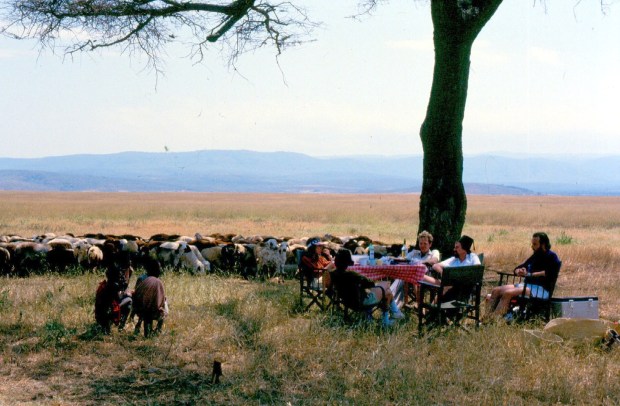
rift valley picnic 1 2

After a while the herdboys could not resist their curiosity and the flocks also came in!

Despite our language barrier they soon understood our request and agreed to release one of the trees for us to have our picnic.

Bitch and Timothy quickly forgotten we started to get ourselves comfortable and assembled our temporary “al fresco” banqueting area. As the tree had been used for generations of Maasai livestock it did not only reeked livestock but also its soil was composed by tons of compacted dung! So much for the idea of the shady tree!

Luckily we noted that the shade was starting to cover some of the adjacent grassy area so we placed our table and chairs where we calculated the shade would be as time went by and we were prepared to follow it.

rift valley picnic 2

The picnic area being moved following the shade.

After an exploratory walk in the surrounding area we finally settled down to drinks and some food. The chat was animated and we did wonder about Bitch and Timothy’s whereabouts (for a few seconds!). Luckily, about an hour after lunch we saw a speck on the horizon and a debate started of whether it was Timothy or some other Maasai people. After a while, through the binoculars, we identified Timothy. He eventually arrived, walking slowly and carrying the dog on his arms (not because of love for the dog or because it was injured but because he did not have a leash and he was fed-up with the dog running away every time she spotted a moving animal!)

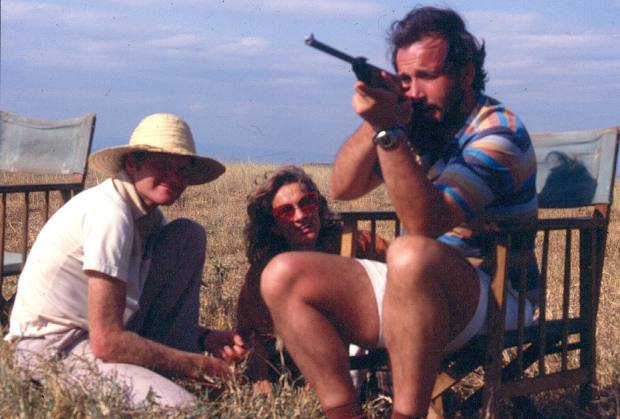
While we waited for Timothy to recover and while he locked Bitch inside the car, we decided to engage ourselves into some target shooting (some of us still believed then to be “white hunters”!!!). Paul kindly sacrificed an old white enamel plate that we placed on the tree as our target. Then we lined up all chairs so that we would shoot from a similar distance.

rift valley picnic 1

The Bushsnob failing to ht the target watched by female participants already chuckling.

As good gentlemen (?) we started shooting from a short distance to give the ladies an opportunity to hit the plate before we moved farther away and things became more difficult. So, the shooting started. Surprisingly, all the men missed the target and most women except my wife that had rarely handled a gun in her life (but has good eyesight!).

After declaring her winner of the first round -with badly hidden embarrassment- the men took the decision of moving further back in the belief that they would recover from the earlier setback. We all missed again but, when the turn of my wife came, we all heard the “ping” of the lead shot hitting the plate! Beginning to feel uncomfortable with the state of affairs we moved back quite a long distance for the final round.

Do I need to tell you that the only “ping” we heard again came from my wife’s shot? After that the men suddenly lost interest on the shooting and developed a sudden curiosity for birds. The ladies had a good laugh and celebrated among themselves.

So a great picnic day ended leaving us with the memories of Timothy chasing his dog and my wife hitting the bull’s eye every time! The latter event is still remembered today by the participants, almost forty years later!


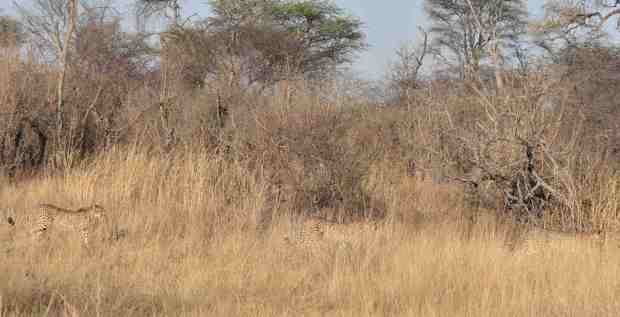
Spot the beast(s) 50

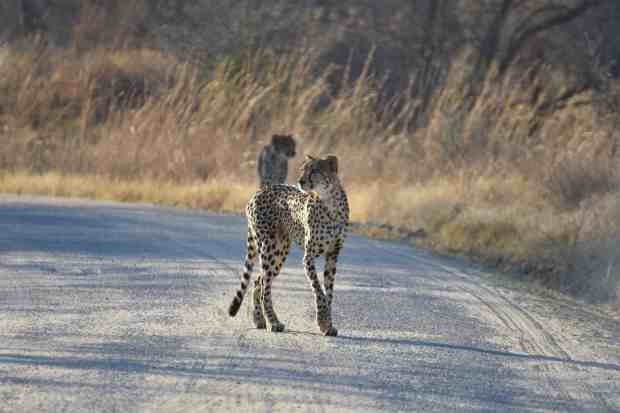
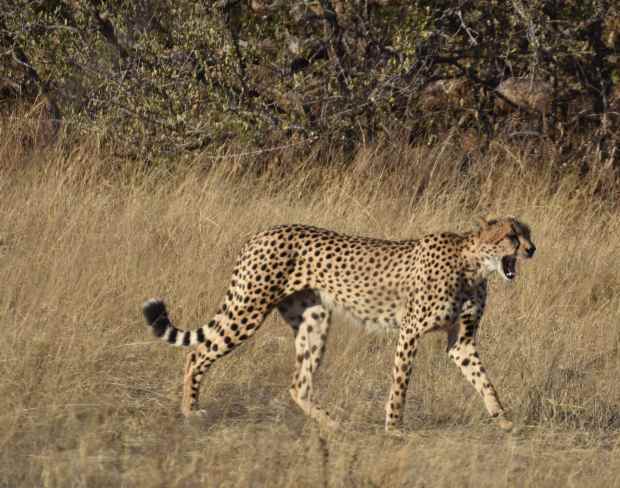
During our recent visit to Hwange National Park we found these beasts. See if you can see them all…

DSC_0457 copy 2

Credit: JA de Castro.

?
?
?
?
?
?
?
?
?
?
?
?

DSCN1942 copy

Credit: JA de Castro

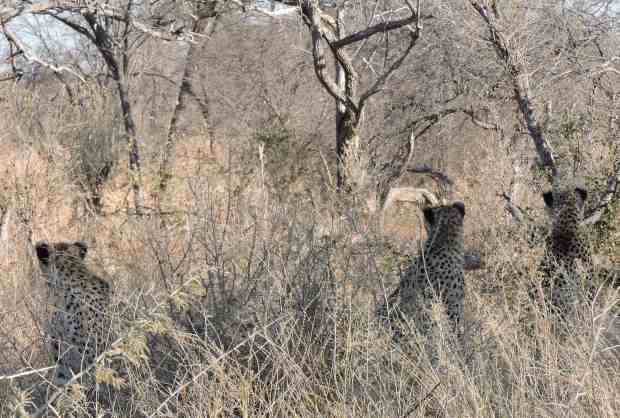
This view will clarify any doubts you may have. This trio blocked our road while driving from Hwange Main Camp towards the Nyamandhlovu pan. They eventually moved to the thicket and that is the time we took the first picture.

It is an easy “spot” but one that I hope you enjoy in view of the beauty of the beast!

DSC_0421 copy

The light was good and the picture came out very nice! Credit: JA de Castro.

DSC_0436 copy

Calling its mates. Credit: JA de Castro.

Grabbed at Chitake

DSCN2423

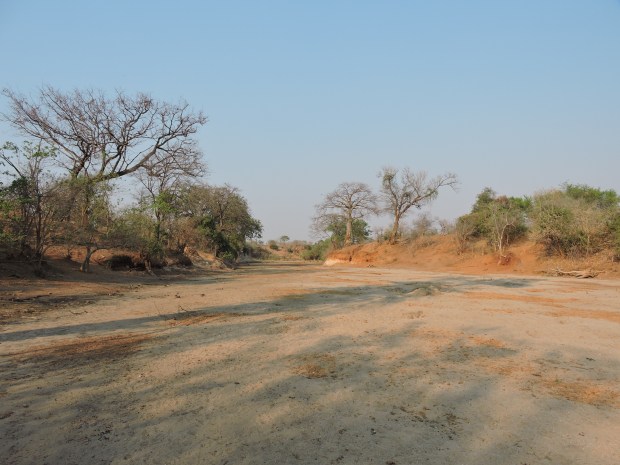
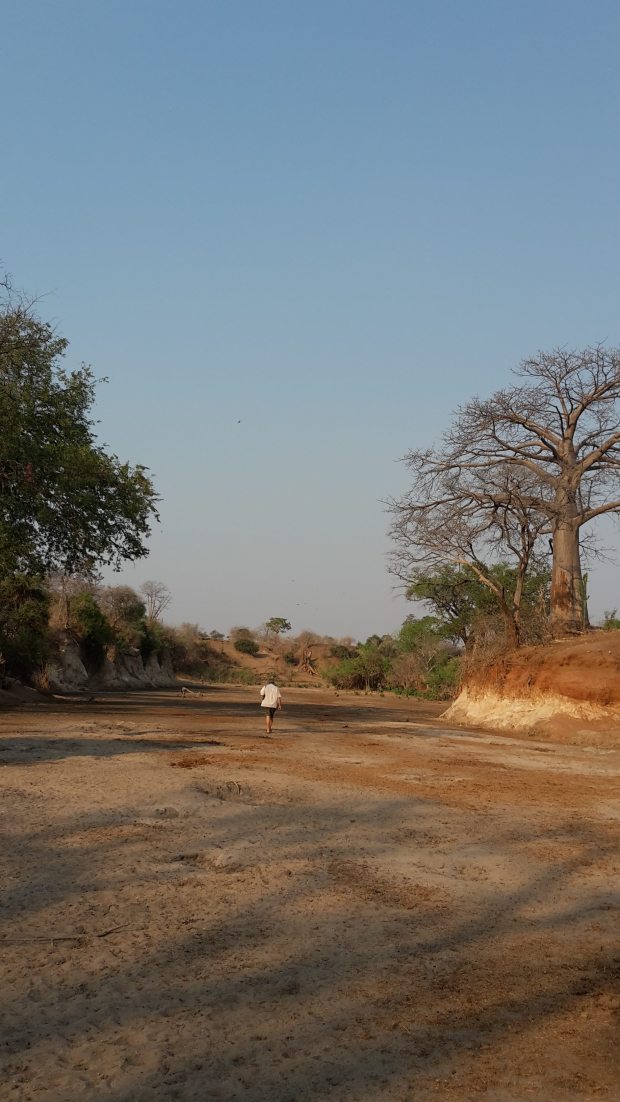
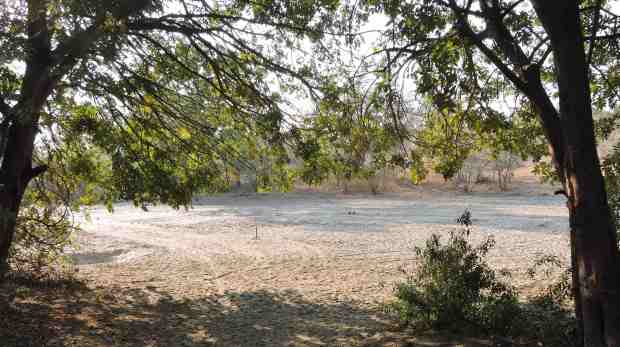
General views of the Chitake springs

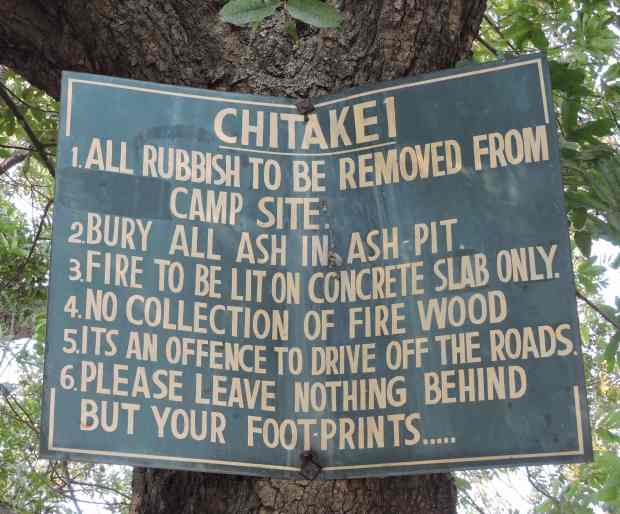
We returned to the Chitake springs in the Zambezi valley exactly three years since our first visit [1]. This time we went alone, my wife and I and, luckily again, we managed to secure the very sought after Campsite 1 (we booked it one year ahead of time!).

DSCN2353 copy

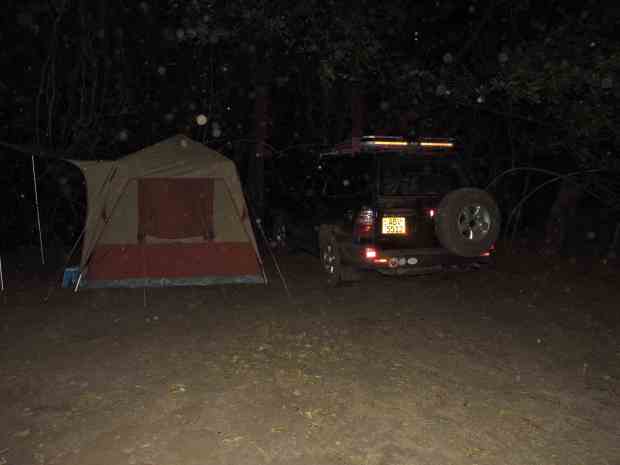
Aware of the “fun nights” that you spend in this amazing place, we prepared ourselves for any eventuality taking our “heavy duty” tent and planned to park our car near one of its entrances as our emergency exit, following the advice of our son, a bit worried about the “oldies” being alone in the wilderness!

The Chitake river with its springs is one of the wildest areas left in Southern Africa. There are only two campsites open to the public (although we learnt that a third campsite can be booked at Nyamepi in Mana Pools). There is also a campsite for tour operators near Chitake 1. This arrangement ensures that you are unlikely to see many people around! In addition, most of the exploring is done on foot so no much driving needed either.

20180915_161445 copy

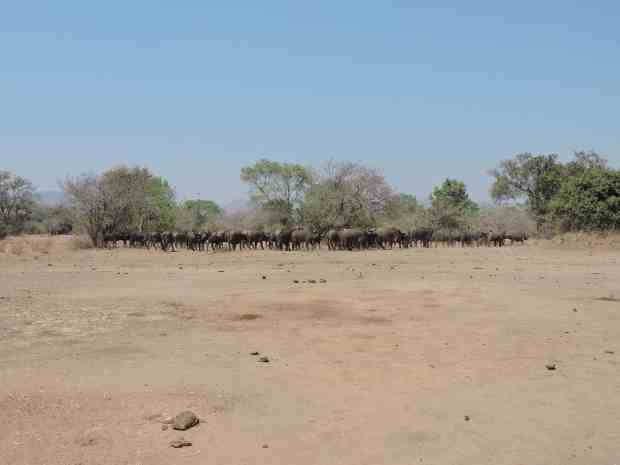
The fact that water seeps from the ground on a daily basis supports a population of game animals that dwell nearby. There are numerous buffalo, zebra, greater kudu and impala that in turn feed predators such as painted dogs, hyenas, leopards and lions. In addition there is a substantial elephant presence that files daily along the dry riverbed towards the water source.

DSCN2371 copy

Buffalo at Chitake.

Campsite 1 is about two metres from the usually dry river bed and to be there waiting for “events” is an unforgettable experience that not all are prepared to take. We have camped all our lives and taken precautions in Kenya and other “open” camping places.

DSCN2355 copy

The access to the river from Chitake 1.

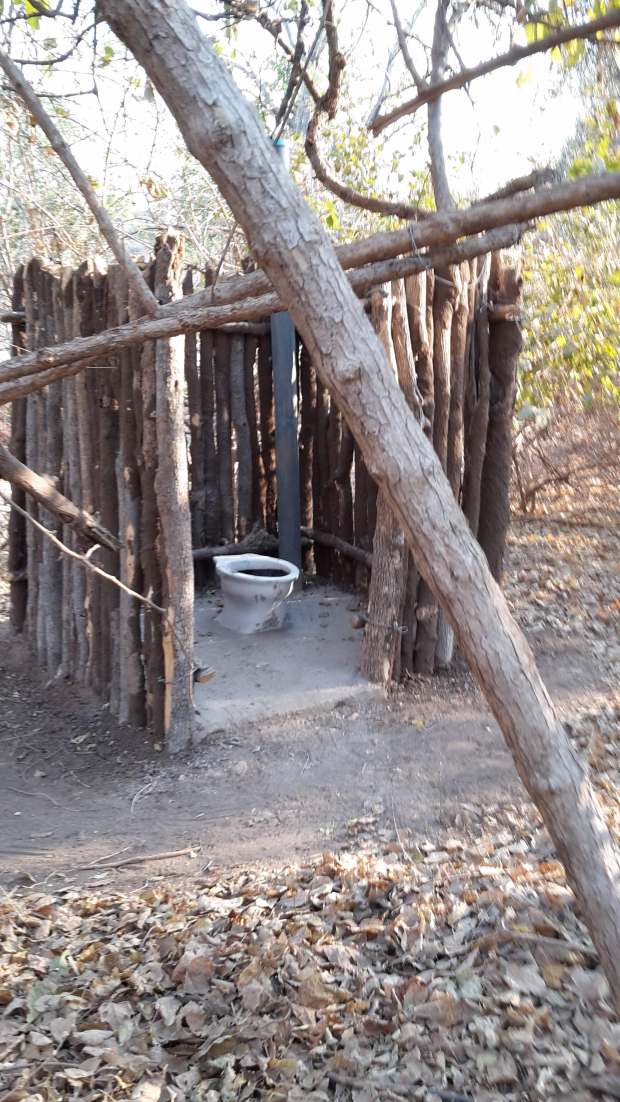
We did not feel endangered and we knew that the only possible cause of problems would be the lions that were present in the area and we know that they respect tents. Our main concern was about the time you spend at camp in the dark as the camp is surrounded by thick bush. In particular nocturnal physiological needs were a worry as we needed to reach our long drop a few metres away!

20180915_161110 copy

Our possible nocturnal target…

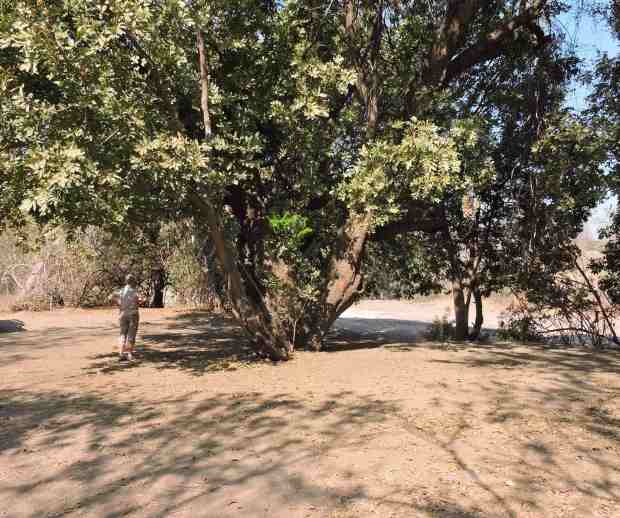
We arrived in the afternoon and spent some time to locate our camp in a spot as safe as we thought possible within the camping area.

DSCN2345 copy

Considering the camping options.

As we had food already prepared, we were in for an early night. We set up our camera trap to “see” what was lurking in the dark around us and went to sleep. The night passed off rather calmly at camp although we heard the elephants walking nearby on the way to the water and the hyenas calling early during the night. We were probably tired and sleep came easily.

DSCN2352 copy

The camp. The car was kept near the tent exit.

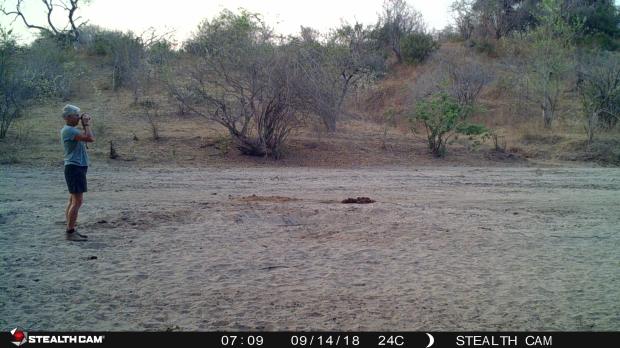
We were up early the following morning and all appeared well. We checked the camera trap and confirmed that there was life around our camp.

After that we decided to have breakfast prior to a short game drive as there are not many roads around the area. Then we noted that our 5-litre water container had disappeared! It was one of these supermarket transparent bottles that we had as a back-up in addition to the 40lts we had brought as Chitake does not offer any.

Although we searched the surrounding area, we failed to find the bottle! We could only speculate on the possible culprits. We discarded human interference, as thieves would steal more valuable stuff from the camp. We rejected the baboons as they do not move at night. That left us with the hyenas as the possible culprits. We heard them and saw their footprints at camp. In addition, we had had encounters with them earlier in Kenya and they can get very cheeky! We decided that the latter were likely to be the culprits but the enigma remains.

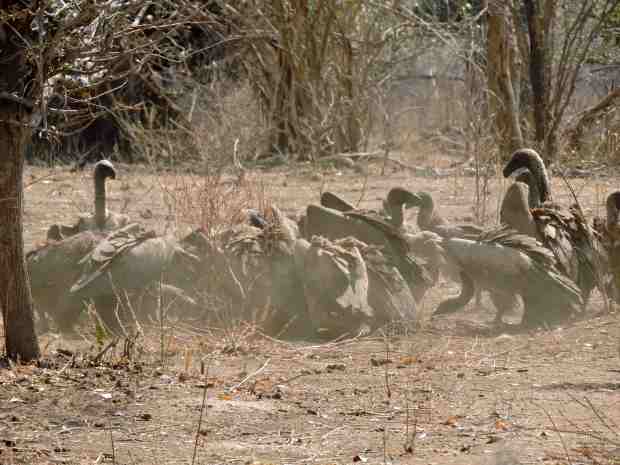
Our short morning drive took us to a bunch of vultures feeding on the remains of an impala that had clearly been killed earlier that morning. About twenty White-backed were scuffling for the few remaining meaty bits while a couple of Lappet-faced waited for their time to tackle sinews, tendons and the like.

DSCN2365 copy

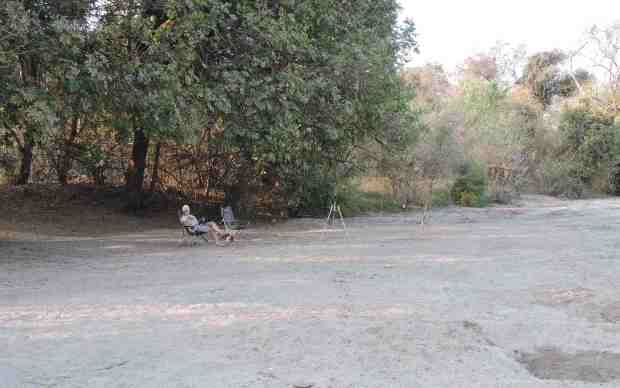
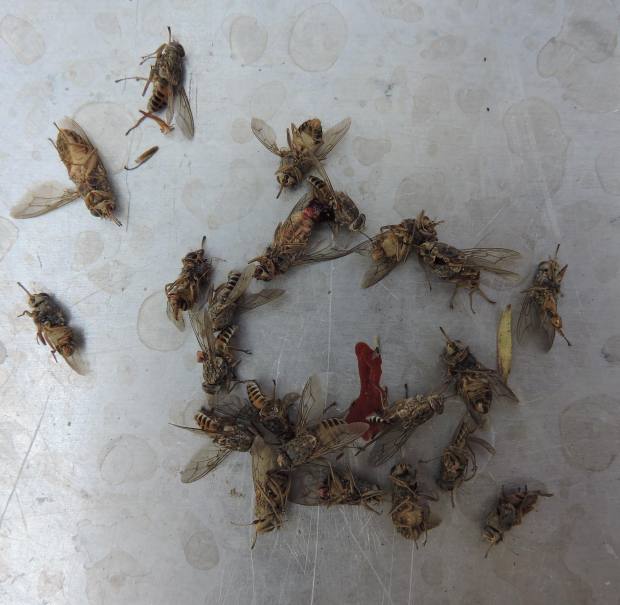
The rest of the day remained peaceful, contemplating the various animals coming down to drink at the springs from our camp chairs located at the riverbed that -luckily had good shade. While there we were assaulted by tabanids and tsetse flies so we needed to use large amounts of repellent and still we got hammered!

DSCN2349 copy

My wife contemplating the springs from the shady riverbed.

DSCN2373 copy

Tsetse and other biting flies collected from the floor of the car.

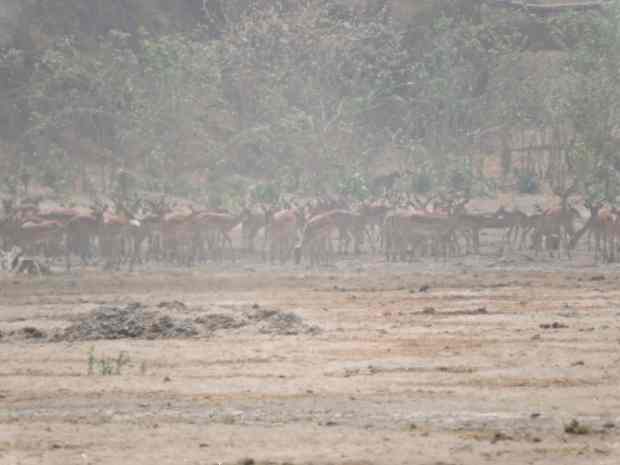
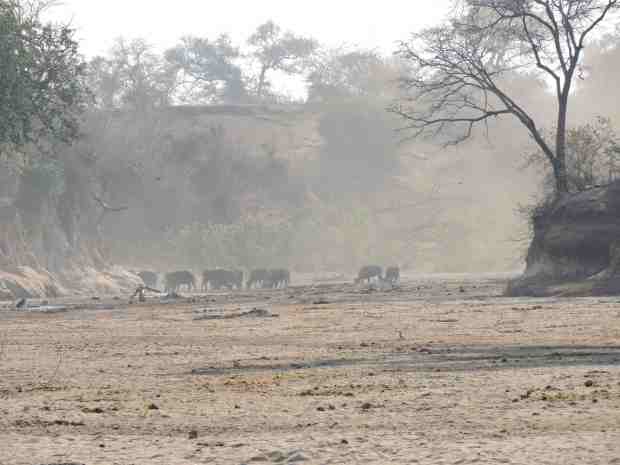
Hundreds of impala came to drink in the morning and they were joined by small groups of greater kudu and zebra. When we saw a large dust cloud rising behind the gorge where the springs are, we knew that the buffalo had arrived and they were soon at the springs satiating their thirst. Quite a sight!

DSCN2401 copy 2

A herd of impala in the distance (the shadow at the back that looks like a predator is in fact a baboon)

DSCN2358 copy

After the dust settle we could see the buffalo drinking.

As usual the day went fast and it was soon time to prepare for the evening. We were encouraged by the relative quietness of the earlier night and hoped to sleep well.

We were mistaken…

There were some early indications of trouble when, as soon as it was dark, several hyenas started to call from different places along the river. When we heard them laughing we knew that they had become excited for some reason, probably a kill although we were in no condition to discover the cause!

From the tent we started hearing elephant movement. We spotted several family groups walking rather nervously and trumpeting frequently showing that they were also nervous. As it was getting late we retired to our tent. I went to sleep soon afterwards as I have a reputation to live up to!

The next thing I remember was that something grabbed my ankle and it was shaking and pulling me! For the few hundredths of a second (or less, I do not know) that it takes to move from being sleep to some kind of alertness I thought I was a goner and that the dreaded time of being taken by a wild beast had finally come. My wife’s voice brought me back to reality: “There is a leopard there!” I muttered “Where?” thinking that it was inside the tent and taking me! I then realized that she was responsible for holding my foot on her third attempt at waking me up!

The picture soon became clear. With one hand she was keeping the torch light on the leopard through the tent window while, with her free hand, she had been shaking me for a while to alert me about the leopard sighting!

I must admit that it took me a while to recover from the severe fright and once I made sure that all my organs were functioning as expected -including my eyes- I looked where I supposed to and stared at the disappearing leopard’s eyes on the riverbed, a few metres away.

My rude awakening took place after 3 am and we were still awake listening to the sounds of the wild after an hour. I then learnt that my wife had not slept much as the leopard(s) had been calling every once in a while and she had been trying to locate them on the riverbed (from the tent of course!). In addition there were some noisy little mice digging under the tent that she tried to fend off by hitting them through the canvas as well as hearing the monotonous calls of the Fiery-necked Nightjar (Caprimulgus pectoralis) in the distance. This bird is capable of up to 110 repetitions of its call believed to say “Good Lord, deliver us” before stopping![2].

The following morning, as expected, we were not up early. After a leisurely branch we did spend time examining the abundant spoor at the riverbed but we did not detect any signs of a kill. We confirmed that the leopard(s), as my wife mentioned, had walked up and downstream. We also found plenty of hyena and painted dog spoor as well as lots of new signs of elephant over their “highway” to and from the springs.

STC_0024 copy

Checking for activity and spoor at the dry river bed after the long night!

DSCN2460 copy

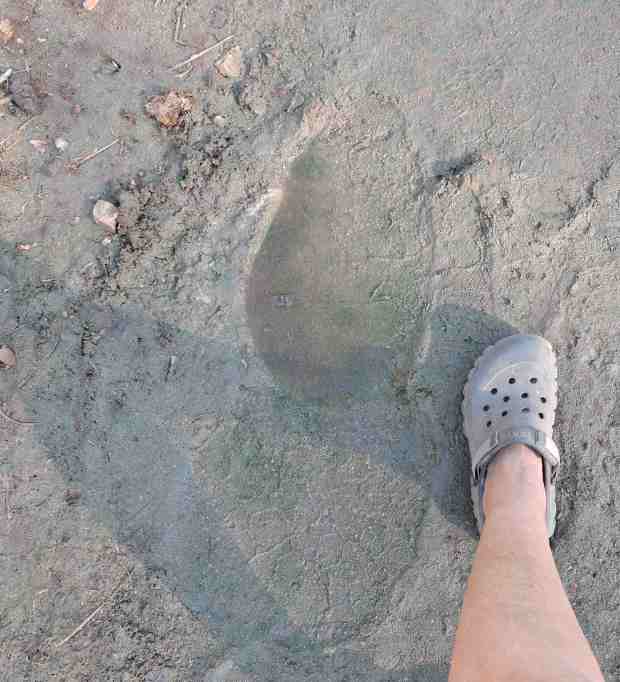
Elephant footprints next to the Bushsnob’s Croc.


The camera trap pictures showed hyenas as well as several elephants walking during the night.

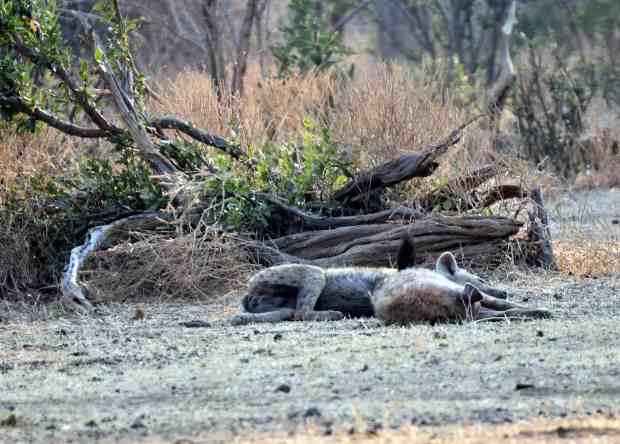
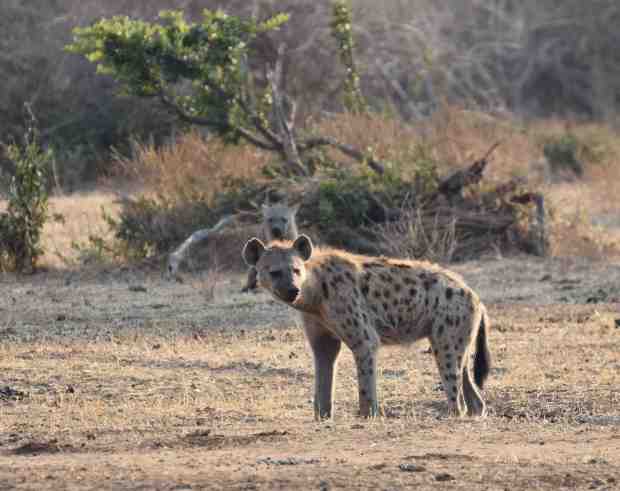
Later on, while exploring the area by car, we found a group of five hyenas resting under a shade. The same as us they were suffering from sleep deprivation as they were clearly some of the culprits of the noisy night resting!

DSC_0112 copy

DSC_0082 copy

We spent the rest of the day exploring the river bed on foot and luckily, it appeared that all animals -including us- were drained from the previous night as the last night we spent at Chitake was peaceful and my wife recovered her lost sleep while I did my usual trick of instantly dozing off.


[1] See https://bushsnobinafrica.wordpress.com/2015/09/23/chitake/

[2] Roberts VII Multimedia Birds of Southern Africa. iPhone and iPad Edition. Version 2.4. Southern African Birding.


Lake Magadi

The rotten egg smell of the ostrich egg post [1] brought back memories of lake Magadi and its malodourous beauty.

After a few months in Kenya we got to know a few people interested in nature and we connected with them immediately. Most were working around Nairobi (Kenya Agriculture Research Institute, Muguga and the International Laboratory for Research in Animal Diseases, Kabete). We were all agriculture or livestock specialists that shared an interest in nature.

A sunny Sunday we were invited to a day trip to lake Magadi. We knew nothing about the place so, after some enquiries, we learnt that it would be a picnic at the lake and that bird watching would be high in the agenda. We had not done any bird watching as such in our lives so we lacked binoculars, bird books, etc. but we accepted so we could start learning new ways.

At the time we did not know it but, after this first expedition, we visited the lake frequently. It was an ideal one-day outing from Nairobi in view of the relative short distance from Nairobi(106km), the picturesque nature of the journey and the wildlife that could be seen both en route and at the lake itself.

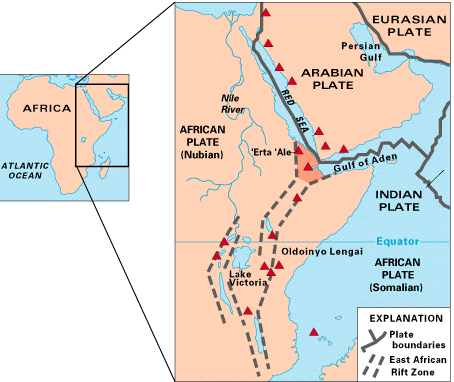
Lake Magadi, nested at 580m of altitude is close to Lake Natron in Tanzania and it is located in a volcanic rock fracture in the Rift Valley, itself a gigantic fault that runs for about 6,000km from Lebanon in the North to Mozambique in the South.

EAfrica rift

The Great Rift Valley. By USGS (http://pubs.usgs.gov/gip/dynamic/East_Africa.html) [Public domain], via Wikimedia Commons.

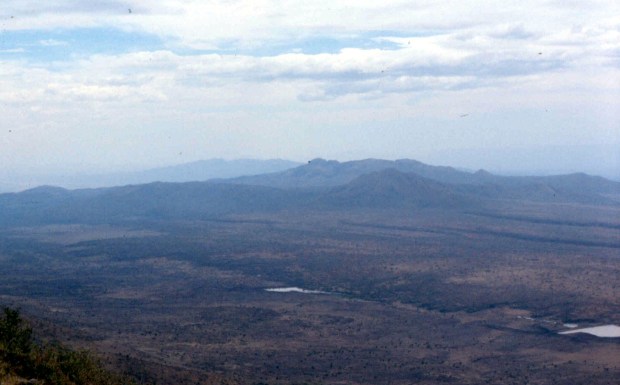
We left Nairobi early following the lake road that skirted the Ngong hills, a true landmark where Karen Blixen’s farm was located (now her homestead is a museum). The moment you had the Ngong hills on your right, the immensity of the Rift Valley opened up in front of you. A rugged succession of hazy mountains gradually took your eyes to the bottom of the valley and, on a clear day, the amazing view of Kilimanjaro with its snow in the equator will frame the postcard vista.
view from ngong hills

The spectacular view of the Rift Valley from the Ngong hills.

From there you started a descent that traversed Maasai country while getting increasingly dry and hot. Manyattas peppered the area and encounters with Maasai going or coming from watering points with their cattle were a common occurrence. I recall our friend Paul -later on- saying that the road would made an ideal cycling trip because of its downhill trajectory towards the lake.

A few km before arriving to the lake, Tony, one of our friends, stopped the car for a bit of exploring. Apparently, during an early visit, they had “discovered” some fossilized elephant remains that he wished to show us. Some of us followed him looking for the bones while others spotted some interesting bird and immediately forgot everything else and focused on the feathered creatures. This was my introduction to the rather focused birdwatchers ethnic group!

We did found the elephant bones. I thought they were rather disappointing but kept the opinion to myself! The stop was good to drink lots of water as the temperature was now well above 30oC and we were still quite a distance from the bottom of the valley and it was not yet lunchtime. Although some of our co-travellers had iced cold water (freezing the jerry cans prior to the journey) we drank ours at ambient temperature (no coolbox yet in that trip!). This became our normal water temperature while on safari, as it would give us independence from fridges and ice.

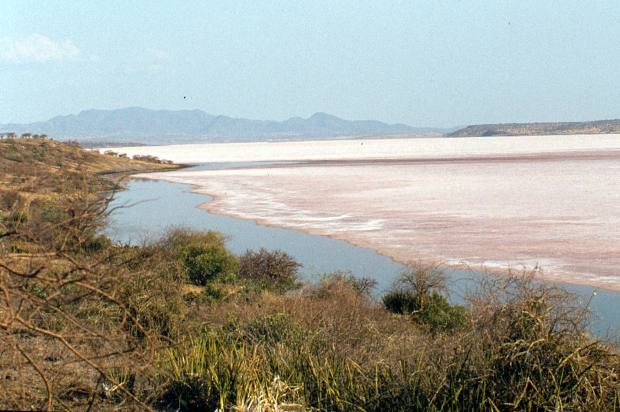
We continued our trip and, suddenly and surprisingly, we viewed a large flat pink expanse below us. We were looking at the lake and, as it was the dry season, it was almost totally covered in white and pink soda.
magadi 1

Subsequent visits during wetter times showed a much “lake-like” lake, despite the scarcity of its yearly rains, an average of 470 mm per year [2]. During this time, a thin (less than 1m) layer of brine covers much of the saline pan, but this evaporates rapidly leaving a vast expanse of white and pink salt that cracks to produce large polygons.

We came to the entrance gate already hot and smelling the strong sulfur gases that emanated from the lake and that would be a constant whenever we visited it. The gate was in fact the entrance to the Magadi Soda Company where we registered our arrival. Further on we also re-registered our intended route at the Magadi Police station, a mandatory requirement in case you got lost (we have to pass by again on the way out for our names to be stricken off the register so that a search party was not sent for us).

The lake is saline and alcaline and covers around 100 km2 being in reality a pan. The water precipitates vast quantities of trona (soda ash, also known as sodium carbonate) to a depth of up to 40m. From these large deposits the soda ash is extracted and used mainly in glass-making, chemicals, paper, detergents, and textiles. The Magadi Soda Company (now part of the Tata company) was created in 1911 to exploit this wealth.

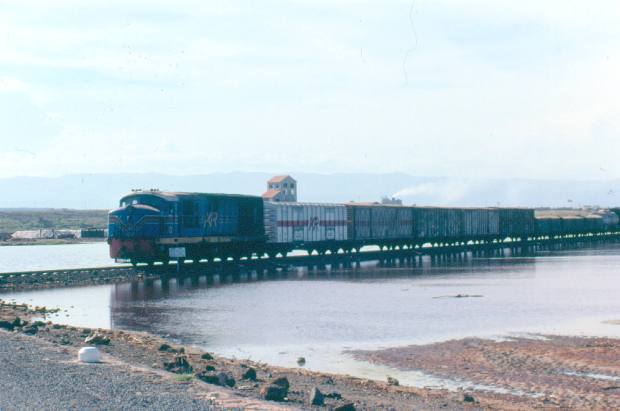
Luckily for the company, the trona deposits are recharged mainly by saline hot springs that reach temperatures of up to 86 °C and their exploitation -at least during the early days- did not have a significant impact on these deposits. During our times in Kenya the soda ash was being carried by railway to Kilindini harbour in the Indian Ocean from where it would get exported.
magadi 2 2

Only once we found a train leaving the Malawi Soda facility.

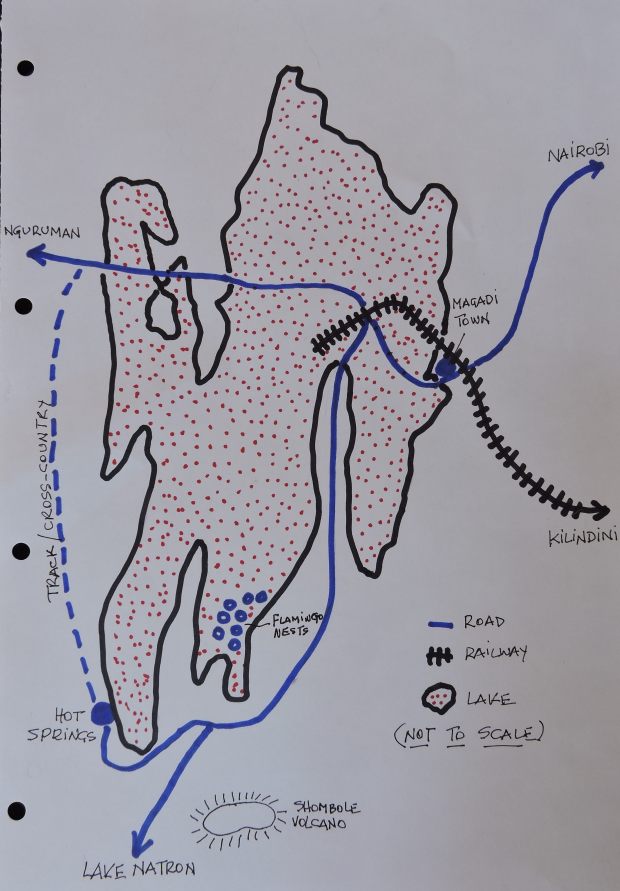
The plan of our first trip was to do the “trip around the lake” that started crossing the first causeway with open water and then follow the road until we entered some bush cross-country driving to rejoin the road and return to Magadi town again.
DSCN1821 copy

A basic map of Lake Magadi showing in blue the trip around the lake.

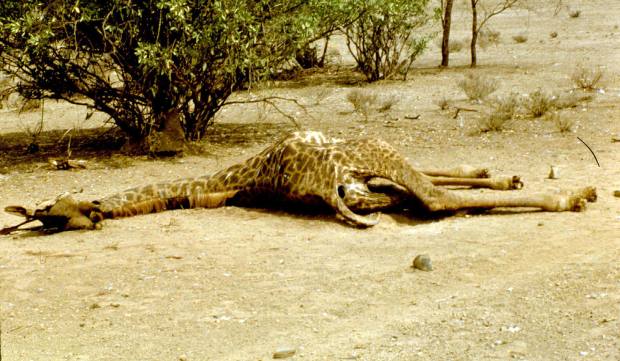
It was during this part of the journey that we came up to our firs giraffe carcass, blocking the way. Its cause of death unknown but already as dried as biltong!
dead giraffe magadi round the lake rd

The dry giraffe.

Lake Magadi hosts a great variety of water birds, including flamingoes, yellow-billed storks, different egrets and herons as well as smaller ones, including the interesting avocets. See [3] for some of the birds that can be found there. I do not recall whether we saw the Chesnut-banded Sandplover or Magadi Plover (Charadrius pallidus venustus), restricted to almost only lakes Natron and Magadi but our friends probably did. If not very spectacular, it was a rather unique little bird that we spotted in subsequent visits.

magadi yellow billed storks fishing darkened

A pair of Yellow-billed storks fishing in lake Magadi.

Apart from birds the lake and surrounding area is also home to Wildebeests, Somali Ostriches, Beisa Oryx, Zebra, Grant’s gazelles, Gerenuks and of course Giraffes among other species of herbivores and browsers. But these are not the only interesting animals that inhabit the rather inhospitable lake Magadi!

In its hot springs some special fish find their living despite the high temperature and salinity of the water! Alcolapia grahami a species of the Cichlidae family has adapted to live in this rather harsh environment. It is not the only case as another three species inhabit Lake Natron a few km to the south in Tanzania: Alcolapia alcalica; A. latilabris; and A. ndalalani. Of interest is that there is no overlapping among the species present in each lake.

The now vulnerable A. grahami, most commonly seen in the southern shoreline hot spring pools where the water temperature is less than 45°C, have developed the ability of excreting urea instead of the usual ammonia of the teleost fish as they are not able to diffuse ammonium into such an alkaline media. As they feed on cyanobacteria of high N2 content, this is -apparently- important. They also have the greatest metabolic performance ever recorded in a fish, in the basal range of a small mammal of comparable size [4]. They are also an important indicator organism for global warming.

Coming back to our trip, after our stop for Police registration, we moved on and passed by the company’s brown golf course. It was interesting to see golfers moving about on a brown and grassless course where the holes were places with “browns” and a few dust devils thrown in as well! Since its establishment in 1931 this unique 9-hole course where you drive over donkeys and cows. It does not charge fees and it is open year round!
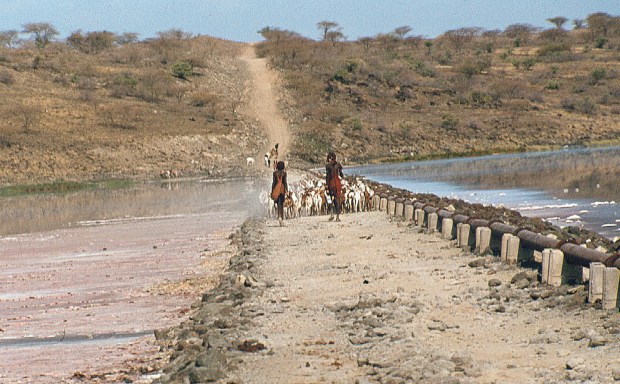
Maasai Magadi causeway.tif

Maasai boys driving their sheep and goats through one of the lake’s causeways.

It soon became clear that day that lake Magadi is one of the hottest and least hospitable places on earth. The water is undrinkable for humans and animals quench their thirst at selected areas where salt contents are low. We soon run out of water but, luckily, we found a water trough for cattle use on our way back from where we replenish our water and had a badly needed and refreshing wash!
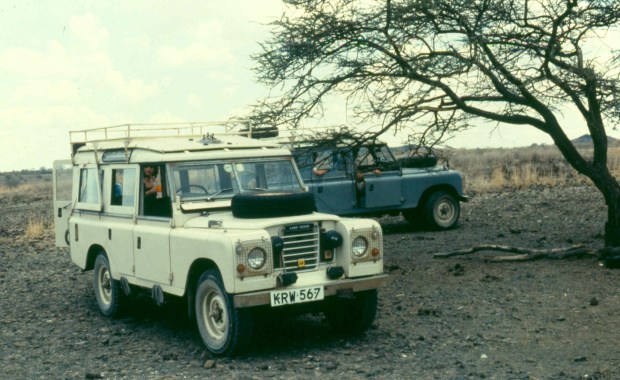
Magadi tony and bock LRs

Stopping for the water trough.

While on the issue of water, years later, while having a picnic under one of the few acacia trees present around the lake, a Maasai elder approached us quietly and asked for some water. Without hesitation, one of our friends gave him a glass that the old man guzzled. Surprising all of us the man spat the water and started to jump while trying to hold his teeth, and shouting what we could understand as “baridi, baridi, baridi sana [5]!”

Without thinking, our friend had given him a glass of water from the frozen water can and the poor man, clearly used to drink water 40 degrees warmer, could not take it! After a few seconds he burst out laughing at the event while water at ambient temperature was supplied to him. This time he enjoyed it and he stayed with us for the rest of the picnic, sharing our food.

After our welcomed encounter with the cattle trough it was time to return to Nairobi. The heat had been intense and we felt really “desiccated” so it was with great relief that we took the road back that now climbed to the coolness of Nairobi where we arrived after night fall.

It was the introduction to one of our favourite weekend outings during the several years we spent in Kenya.
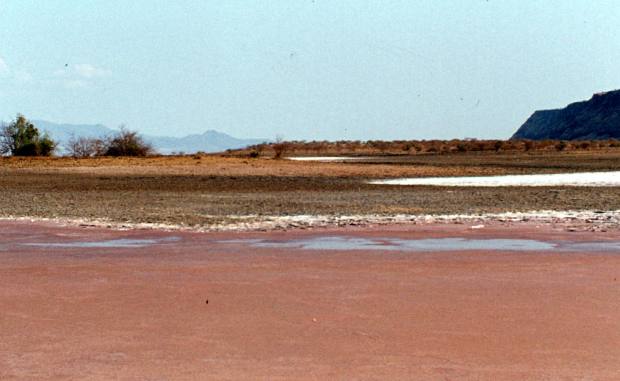
magadi

Magadi landscape 1

Magadi landscape 3


[1] https://bushsnobinafrica.wordpress.com/2018/08/17/ostrich-eggs/)

[2] https://en.climate-data.org/location/103801/

[3] Resident birds: Lesser Flamingo, Greater Flamingo, Chestnut-banded Plover, Speckled Pigeon, Eastern Violet-backed Sunbird, Somali Golden-breasted Bunting, Cut-throat Finch, African Mourning Dove, Red-billed Firefinch, Red-billed Quelea, Yellow-spotted Petronia, Chestnut Sparrow, Yellow-billed Oxpecker, Slate-coloured Boubou and Blue-naped Mousebird. Fischer’s Sparrowlark, Chestnut-bellied Sandgrouse and Greycapped Sociable-weaver. Visitors; Black-winged Stilt, Little Stint, Little Egret, Grey-headed Gulls, Yellow-billed Stork, Cape Teal, African Spoonbill, Kittlitz’s and Spur-winged Plover, Curlew Sandpiper, Common Greenshank and Pied Avocet.

[4] Wood, C. M. et al. Mammalian metabolic rates in the hottest fish on earth. Sci. Rep. 6, 26990; doi: 10.1038/srep26990 (2016).

[5] “Cold, cold, very cold” (In KiSwahili).
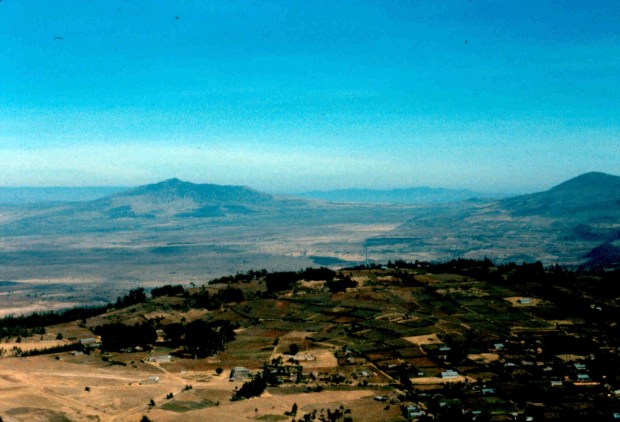


Spot the beast 49

This is a tough one. We spotted this beast during our recent safari to Hwange National Park.
DSCN2139 copy ?
?
?
?
?
?
?
?
?
?
DSCN2138 copy

I know, it was a difficult one… We did not see much more of these three young lions during the several hours we waited for them to move! They were two young males and a female, probably siblings laying under the shade of a fallen thorn tree.

So that you do not think that we are amazing spotting game, we found them following the instructions of other fellow travellers who saw them walking towards the tree!

Below is another picture of one of the young males watching us for a few seconds, all they did to “amuse” us!

DSCN2133 copy