Author: bushsnob

Kruger National Park refugees

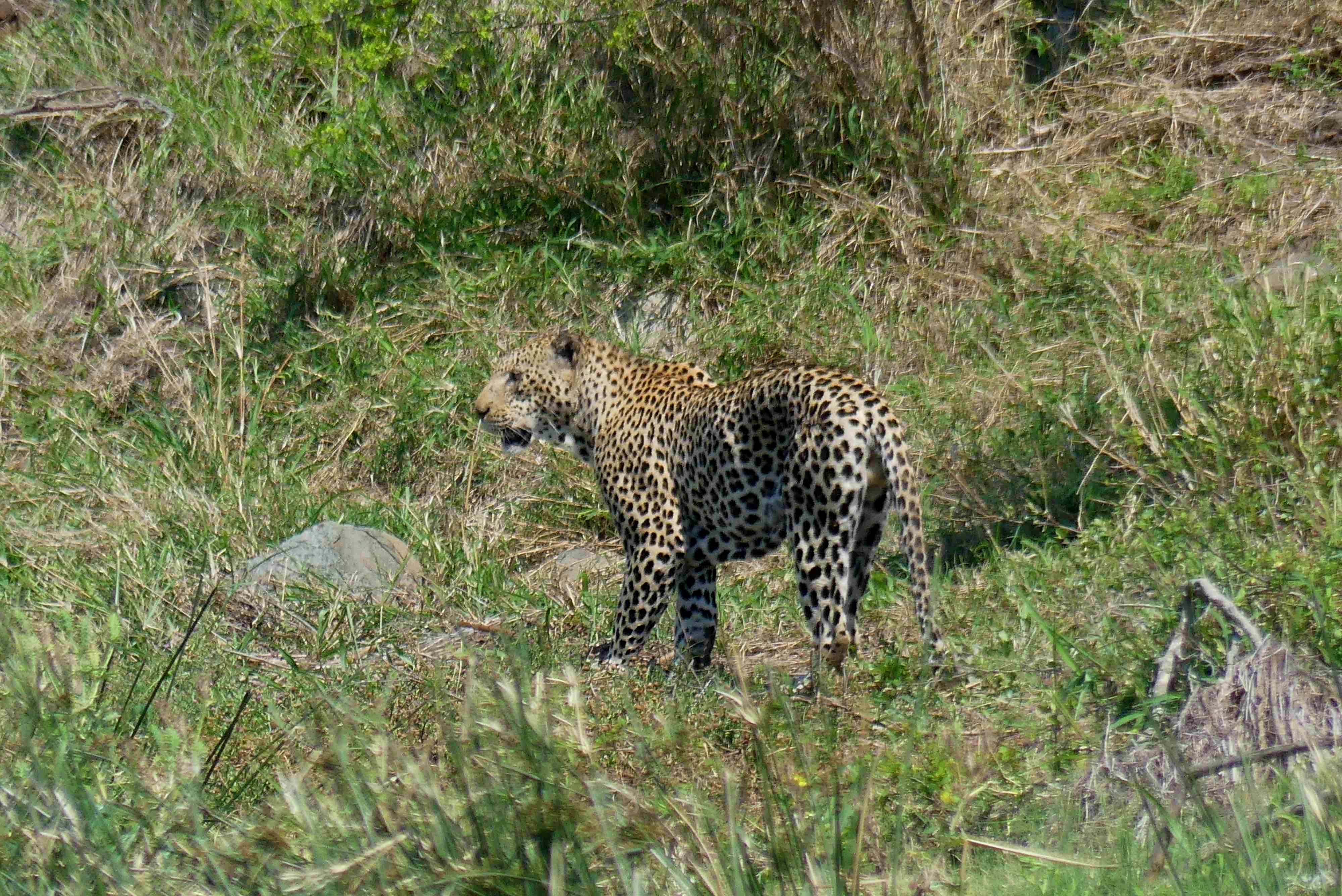
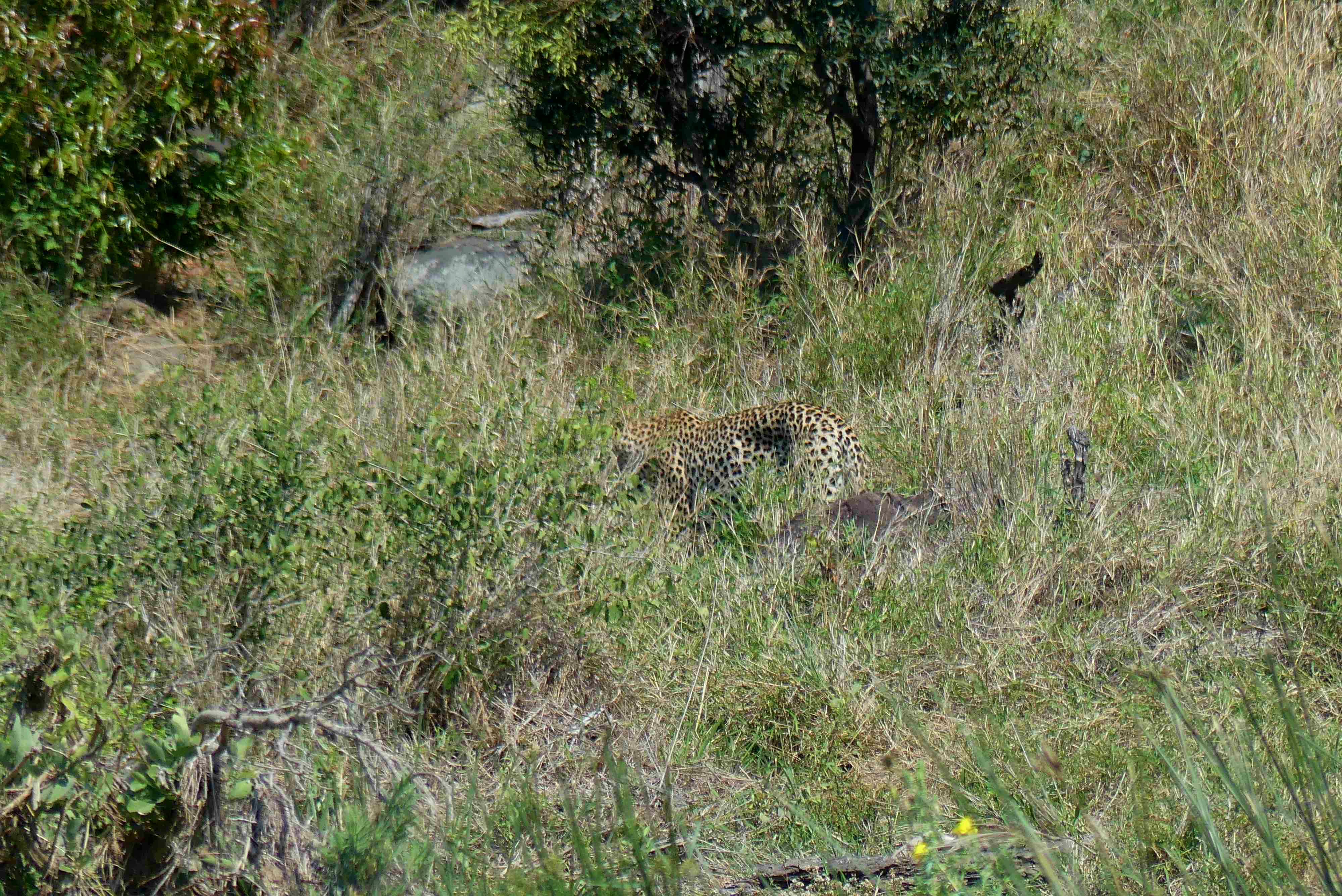
We arrived to Bateleur Bushveld camp on a really hot day. We had booked four nights there as we remembered that it was a really nice and quiet place where, although game was not plentiful, sightings of leopard were good and there was one residing near the camp and often seen by visitors.

The ranger in charge of the camp confirmed that the female leopard was still there and that she now had two cubs so our expectation of spotting them grew significantly. We would not have bothered as, to our disappointment, we never even heard the beast.

Although extremely hot, we did enjoy our game drives and had fun watching and taking pictures of the birds and small mammals coming to drink from the bird bath as the place was bone dry. Some of the birds that came were Grey lourie, Crested barbet, African black-headed oriole, Starlings, babblers, laughing doves, cordon blue waxbills, African red finches, yellow, red and grey bill hornbills and others. We also had genet (at night in the camtrap), squirrels and dwarf mongooses during the day.

African Black-headed Oriole.
A Glossy starling.
Gray lourie or Go away bird.
African firefinches and Cordon bleu waxbills enjoying a waterbath.

An African waxbill enjoys a bath.

A dwarf mongoose at the water.
A curious dwarf mongoose watching us from cover.

The second evening we noted an accumulation of cloud towards the west (I know because the sun went down there!) and the following morning we detected a few dried raindrops on the car. We were quite surprised as we are at the dry season. The day started to get cloudy and after sunset an amazing storm built up, also on the west with lots of thunder and lightning.

Later that evening the skies opened up and it rained for the whole night and the following morning! I got up and found that the wind had taken away a tray where we had hanged some of our clothes to dry and I found them, together with a towel buried in the mud. Our front veranda had about 7-8 cm of water that needed to be brushed away before it entered our bungalow and to enable us to we move about.

But that was not all. The temperature must have dropped 20 degrees and with the strong wind it became very cold. Luckily we had rented a two bedroom bungalow so we retreated to the second bedroom and organized it to have our meals there, just like flood refugees!

We left the following day, still under some rain and saw that the previously very dry landscape now had lots of water accumulated in places that were dry and dusty the day before. We estimate that the rainfall must have been about 50mm, what I consider a very unusual downpour for the season.

Needles to say that the day after the rains the animals switched from survival to rainfall mode and disappeared from the crowded areas where they were up to the day before so, finding them became very hard, a situation that would last until we left the park.

Guineafowls

I have always intended to write about guineafowls, but I was waiting to have reasonable pictures as I find them notoriously difficult to photograph. Like most ground birds, they are always foraging on the move and, in addition, you take the pictures from the car above them and the angle often spoils the shots.

I googled “guineafowls” and learnt that there are six main species. Two, the White-breasted and the Black guineafowls (Agelastes spp.) inhabit West Africa and the Plumed guineafowl (Guttera spp.) live in the humid forests of Central Africa. The remaining three species are found in the areas we have spent part of our lives: East and Southern Africa.

The Helmeted guineafowl (Numida spp.) is the most common of all the species and it inhabits all of Africa. This is the species that people are keeping in their homes all over the world but that still are not completely domesticated as they nest wherever they see fit. They are also the easiest to see while on safari as they are one of the common birds spotted in most wildlife areas. The occur in large flocks and they are predated upon by several carnivores, both birds and mammals.

(Pics by Patricia Ruiz Teixidor)

The Vulturine guineafowls (Acryllium spp.) inhabits Central and East Africa. They are the largest and they also live in flocks. They have strong beaks, and they look truly powerful, particularly when standing erect and they can be aggressive. They look superb with a bunch of long neck feathers striped black, white, and blue. They have red eyes and their head is bare blue and resembles that of a vulture.

We have been fortunate to see them in Kenya, at the north in the Samburu National Park and, more recently in Tsavo West National Park.

The Crested guineafowl (Guttera spp.) is found in East and Southern Africa (and probably other places). We have spotted them in the Chitake area of Mana Pools National Park (Zimbabwe) and near the Maputo Elephant Reserve in Mozambique. They also live in flocks and have a beautiful dark plumage with an interesting head feather arrangement.

This was the species I did not have good pictures of until were visited Punda Maria Rest Camp at the Kruger National Park recently. As usual, Mabel spotted a group resting under some bushes while walking through the camp and she promised to take me there.

We failed to find them and my hope of taking a few pictures of them was dimming when, luckily, on the last day, while walking towards the waterhole viewing platform, we found a group of about a dozen calmly walking through the campsite adjacent to it! I took my chance and managed a few pictures and a video of these.

So, that completed the guineafowl trilogy so I can now focus on other birds!

Elephants!

I did not recall from our earlier visit about ten years ago that Punda Maria Rest camp in the Kruger National Park had a waterhole! Probably, at the time we visited the park was not as dry as it was when we were there now and the animals were not so numerous. This time, buffalo and elephants came to drink at all times and we heard the elephants loud and clear from our tented accommodation.

Of all large mammals that I had seen visiting water sources, elephants are the most fun to watch. So, I took some pictures and videos of their activities. Apart from me, a baboon also enjoyed the elephants´show.

Elephants are unique when arriving at the water as they hurry to get there, almost letting themselves being carried out by their emotions!

So, upon arrival their priority is to drink after having spent the whole day feeding in the hot bush.

After their thirst is quenched, the shenanigans start and they are mainly performed by the youngsters that can be quite funny. In the video below, the small elephant enjoys a dip among the adults that are very careful not to trample it. I like the leg scratching although I did not realize it when I filmed it!

This elephant was a bit of a bully (although I could not see if it was a bull!) and it spent lots of time parked on this spot, practicing how to stand on a stool like circus elephants did years back.

This scene reminds me of two neighbours gossiping over the fence between their houses!

This youngster was determined to drink from the place the adults did but its trunk or legs or both were too short.

And so it was that the action continued at night as there were many elephants that needed to drink!

Blond warthogs?

One morning, I decided to explore the Dzundwini loop. Dzundwini is a hill that dominates the rather flat area around the Punda Maria. It is located 15 km east of the camp and it is 600 metres above sea level, a rather obviouos feature while doing the loop.

After driving about three kilometres I came to an open area where I could see many elephants together with impala, nyala, a couple of old male buffalo and some warthogs. There was water there!

I found a very large tree and parked under it to enjoy its wonderful shade and observe the animals. Then, I noted a couple of signs next to it. Reading them I learnt that ¨… next to a hollow that holds water in the rainy season, is a giant sausage tree (Kigelia africana). For centuries the shade of this tree has been used as a meeting place [for] by the locals living in the area especially when visitors passed through, and before Punda Maria Camp was completed in 1919, JJ Koetzer, the first game ranger posted to the far north, resided in the area at the base of Dzundwini…” I was under that very tree!

I spent about an hour watching the interactions between the various animals at the water, particularly the very relaxed nyala. Three bulls were very close to where I parked and they were totally unimpressed by my arrival. However, they did not appreciate the service offered by the red-billed oxpeckers that were immediately chased off.

After a while, the peace of the place was disturbed by an elephant incident. At first I thought it was a dominance issue but, after watching the video (below), I believe that it was the response of a female to the advances of a bothersome young bull.

Watchiing the elephants I saw a number of animals drinking at the back. There were lots of baboons, nyala and impala. However, when I checked them with the binoculars, I noted that a couple of what I have taken for impala in the distance were in fact warthogs.

A male warthog showing its tusks and warts.

“Wait a minute” I thought, “this is not the usual warthog colour!” They were blond! Although they were well beyond what my camera can handle (and did not come close despite my wait) I took a few bad pictures for this post.

My best shot.
From left to right: a nyala bull, an impala, a “blond” warthog and a baboon.
A “blond” and normal warthogs at the back.

Pondering about the reasons for this colour difference, wallowing in “blond” mud could responsible, the same way that in Tsavo National Park in Kenya elephants are stained red because of the colour of the mud there. However, there were other warthogs that showed their usual colour and this challenges this assumption (although it is probably the most likely case).

Another conceivable reason could be that these warthogs suffer from phenylalanine or tyrosine deficiency and they cannot produce the right skin pigment but a reddish-brown one that requires less amount of these aminoacids. This phenomenon takes place in other animals but I have no elements to judge whether it its the case here.

Finally, I do not believe that these are a different variety due to genetics but I give them the benefit of the doubt and call them, for the time being, the blond warthogs of Dzundwini, another reason to visit this beautiful corner of the Kruger National Park.

A lucky mistake…

After being forced to cancel our 2020 trip to Kruger National Park because of Covid, we finally got organized and travelled to the park for a North to South journey through its wilderness.

We entered via Punda Maria gate and our first impression was that the park was very dry and that it would be a challenge for the animals to survive. Soon we found many elephants and buffalo that made us forget the three-day journey from Harare.

We were distracted by one of the elephant groups when we made the mistake. We missed the turning to the Punda Maria Rest camp (1) where we were booked for the night. We drove on and passed yet another dry water course but Mabel spotted something black and red. We immediately stopped and reversed to have a second look.

There were Southern Ground Hornbills (Bucorvus leadbeateri), two adults and one youngster, at first sight, drinking from the mudhole. After unpacking the binoculars and the camera, Mabel realized that they were not behind a mud mound but a buffalo that had become buried in the mud and died. Later, a meat eating animal had opened the carcass and it appeared that the hornbills were feeding from the buffalo carcass.

We could not see if they were taken scraps of meat from the dead animal or feeding on its grassy gut contents or on the insects that were present.

The three hornbills. Two parents (red heads) and a youngster (grey head).

So, we then got to a junction with the road to Pafuri towards the north and needed to turn around to get to Punda Maria. We drove back for about 20 kilometres. However, it was a lucky mistake.

A few days later we visited the place again and, to our surprise, the hornbills were still there. We also noted a pair of fish eagles that were diving at the hornbills and picking up something from the ground. There were lots of dying and dead catfish in the mud and both hornbills and fish eagles were feeding on them.

Feeding on dead catfish.
The fish eagles.

Nothing goes to waste in nature!

(1) The name was given in 1919 by the first ranger to be posted to the area, Captain JJ Coetser. He mistakenly named his post Punda Maria in the belief that this was the Swahili name for Zebra, the first big game he saw on arrival. The correct Swahili name is actually ‘punda milia’ (meaning Striped Donkey). When the error was pointed out to him, he chose to retain the name, in honour of his wife, Maria, who bore him 12 children. (Extracted from https://www.krugerpark.co.za/Kruger_National_Park_Lodging_&_Camping_Guide-travel/punda-maria-camp.html)

What on Earth?! (19)

Mercedes is a nice city of the Corrientes Province in Argentina. We usually spend one or two nights as our first stop on our way from Uruguay to Salta, another Argentinian province where we have our small farm.

Apart from spending the night and rest after the long drive from Carmelo, we look for “chipas”, a local and delicious buns made with casava flour and cheese that we usually consume very fast during the next day of the journey.

Chipás. Credit: https://thespicechica.com/

It was while walking towards one of our favourite bakeries that we noted a rather discrete plaque on a wall:

This was a rather unusual find that indicated that Yuyo Figuerero (Yuyo) was related to a company called NADA or, as this Spanish word means “nothing”, not being a professional, he was taking the meek of those who are! The example below are the type of plaques that usually indicate a place where professionals live and/or work:

I could not find a company called NADA in Argentina so I became more convinced about the idea that it was a clever joke! But I needed a proof and other issues took over this story.

Recently, searching among my pending work I found the Yuyo file and decided to Google “Yuyo Figuerero” and, eventually, I found a site in Facebook named “Yo admiro a Yuyo Figuerero” (I admire Yuyo Figuerero) (1) through which I got some information and, more importantly, I found someone called Mora Figuerero that I assumed was his daughter.

I immediately contacted her and, although being busy, she took the time to answer my message and my questions. An interesting life story emerged!

Yuyo Figuerero is now 92 years old and still going strong for his age (a few days back he announced that he would only dress with country clothes!). He was the only son of a medical doctor and his mother was part of a numerous family, known to be fun-loving. A shy boy, Yuyo went to Buenos Aires to study medicine, but he got “distracted” by the nightlife there, a strong temptation during the 50´s where famous names such as the “Los Panchos” (2) and Eydie Gormé (3) who he befriended, the same as some of the vedettes from the  “Teatros de Revista (4) were at their zenith of fame.

As expected, Yuyo did not finish his medical studies (probably this was the origin of the plaque!) and returned to Mercedes to manage the family´s land. He re-connected with his old friends and relatives. It was a time of abundance and big parties and Yuyo and friends would create different funny shows to animate them.

Unfortunately, most of his friends have passed away but Yuyo continues active on Facebook (5) a great way of learning about the history of Mercedes and his life.

In 2010 as part of the celebration of the International Men´s Day, Yuyo was given a Special Mention by the Municipality of Mercedes. He was among several important personalities that “… have stood out in different spheres of society, leaving an imperishable work or trajectory, serving as examples of work, perseverance and responsibility” in the town history. A just recognition to a really special man!

I wish him well and will continue to admire his sense of humour!

Pictures courtesy of Mora Figuerero.

(1) https://www.facebook.com/groups/159880660711133

(2) See: https://en.wikipedia.org/wiki/Los_Panchos

(3) See: https://en.wikipedia.org/wiki/Eydie_Gorm%C3%A9

(4) Revista (French: revue) is a dramatic sub-genre of comedy that combines music, dance and short theatrical scenes or humorous or satirical sketches. The revue combines elements of burlesque, vaudeville, extravaganza, and musical comedy, but is distinguished from all of these by its erotic charge and dramatic simplicity. See: https://es.wikipedia.org/wiki/Revista_(g%C3%A9nero)#:~:text=Revista%20(en%20franc%C3%A9s%3A%20revue),o%20sketches%20humor%C3%ADsticos%20o%20sat%C3%ADricos.

(5) See: https://www.facebook.com/yuyo.figuerero

https://fb.watch/mOK9gOY8rA/

Bush mystery

If, like us, you prefer to camp at rather remote locations, getting a good cell phone signal is an important issue. I remember it not being a problem during our earlier bush adventures but life has changed.

We need to stay in touch with our children, check on the latest world news (I wonder what for!) and, for some people like me, listen to a few talk and sport shows on the internet radio. Other communications options do exist but to get a satellite phone is very costly not to consider buying its airtime. Recently, I was given a new gadget called a “satellite link” that enables your cell phone to send text messages, a bit like what we do with WhatsApp but via a satellite. However, I have not tried yet as it does not seem to function in this latitude.

However, not all is lost as you can still, by some miracle of the cell phone signals, get communication (albeit sometimes precarious) from some areas in the bush. Interestingly, these are very precise locations and, usually, associated with trees.

We came across the well sign-posted cell phone bench, under a large tree, at Sirheni Bush camp in the Kruger National Park where people would sit to talk on the phone. At Mandavu dam in Hwange National Park, the exact location of the signal was marked by a shampoo container that had been cut to allow the perfect fit of a cell phone. If you moved one metre in any other direction your signal was gone!

More recently, we found the best example, so far, of one such places located at Chishakwe Safaris at the Save Conservancy in the Zimbabwe low veldt. In this case it was a large baobab that was clearly advertised and also offered a dead tree trunk where you could sit on to enjoy your conversation!

Needless to say that I have thought about how this takes place and I still cannot find a clear explanation. I believe that the tree could act as a screen where the signal would, for some reason get “trapped” there. The fact that this “phone tree” was a leafless baobab destroyed one of my theories that the leaves had something to do with it!

Even more difficult to explain is the finding of really specific signal areas like the one I described of the cut shampoo container! I have searched Google for an answer and did not find any. More recently, I have consulted some experts in communications and I am waiting for their reply.

Furry foes

When camping in Africa we are all exposed to nature and learn how to manage. While this allow us to come in rather close contact with interesting animals, some can be a problem or even a menace. I am not referring here to poisonous/venemous? snakes or large mammals but to the primates, particularly the baboons!

Admittedly, they are often entertaining and their babies can look very sweet. The truth is that baboons can be ruthless killers and they do not hesitate to snatch a vulnerable prey. I have seen them killing doves at waterholes and newly born gazelles, despite their mother´s efforts to defend them!

They are intelligent animals, always watching your movements in the campsite, ready to pounce on you and snatch that only pack of butter that was meant to last for the whole stay!

Do not be delluded thinking that baboons will keep away from you while you are in the camp. I recall that many years ago, while visiting Mzima springs in Tsavo West National Park, Mabel found herself surrounded by vervet monkeys showing such aggressive behaviour that required the two of us to tackle them to make them leave us alone!

We suffered an unforgettable and rather violent encounter with a rather large male baboon that has left an indeleble mark on us, particularly on a newcomer to Africa that was one of our group (see: https://bushsnob.com/2019/10/06/a-visit/). Whenever she sees or hears a baboon, regardless where it is, she collect a handful of stones!

We have also witnessed major disasters such as baboons demolishing a tent in Serondela camp in Chobe NP because the people went for a game drive and left their food inside!

In more recent history, monkeys and baboons have been ruthless with us while camping in Mana Pools to such a point that we always leave someone in camp when we go game viewing.

However, nothing matches the experience of some fellow campers whose tent was broken into and emptied of the food that they was to last them… It was a strong tent made of thick canvass but it still was not apt to resist a troop of baboons. They were lucky that we had some spare food that we gave them that helped them to survive the planned stay.

Despite my dislike of baboons, what we saw with my late brother an early morning at Mana mouth in Mana Pools National Park has left an indelible memory linked to him and baboons. On that ocassion we approached a very large acacia tree by the Zambezi river that was completely packed with baboons, probably over a hundred of them of all sizes. It was an amazing sight but, before we could get ready for what could have been a great picture of a “baboon tree”, the hairy mass stirred.

What followed was one of the incredible sights that the bush has for its lovers. The whole troop decided to come down the tree simultaneously. The tree rapidly emptied itself from its load as they descended down all branches converging at the main tree trunk into a giant furry snake that would crumble the moment it reached the floor, its pieces running in all directions, panic stricken!

The sight did not last more than 10-15 seconds but it made as forget out campers’ dislike for baboons and we now look at them more kindly than before. Al least until they come for our camp yet again!

Sandwiched by ellies

After a few years we returned to the Gonarezhou National Park, now run by the Frankfurt Zoological Society under an agreement with the Zimbabwe National Parks. We drove to Mabalauta through the Masvingo road and turned off at Rutenga and continued towards the Sango border post until the Mabalauta entrance. The road was rough!

After our three nights at Mabalauta we drove North through the park to the Tented camp at Chipinda Pools.

Although we heard lion, leopard and hyenas at night, we did not see any and we also missed the wild dogs that are meant to be present in the area. Although the Mabalauta area was rather disappointing from the game side, the views were very beautiful from the area around Simiwini, at Buffalo bend. The latter rest camp has also been renovated and it looks very well maintained, still keeping its wonderful baobabs, impala lilies and herd of nyala.

We drove along the river and had a couple of picnics by the river at the Manangani picnic site and also drove to Rossi pools and searched -fruitlessly- for Wright tower. Later, when re-fueling at Makonde we learnt that it had been demolished as it was crambling and it was considered unsafe. I hope that the park authorities have kept the sign that would welcome the visitors to the tower.

The sign in Wright’s tower.

Rossi pools is now also a campsite and we were very disappointed to find a party of South Africans with at least four 4×4 plus large trailers that occupied the whole area, including the supposedly public (from 6 to 18hs) viewing platform. So, after squeezing through cars, tables and people, we reached the viewing platform, only to find it full of their gear. When finally we managed to position ourselves and try to watch the pool we had to greet more people seated below the platform! We left in a hurry!

There are five large and shady campsites at Mabalauta with a good ablution block with lots of hot water although 2 showers and 2 toilets appeared to be hardly enough for a fully occupied camp but probably it is not full very often as it seemed to be a stopover place.

The drive to Chipinda Pools was long, rough, dusty and largely devoid of game. The tented camp at Chipinda was very comfortable and without frills (as such a place should be!). The four permanent tents had a great view over the Runde river from where we watched, not only mammals but also lots of birds. There were at least two resident genets that were seen every night. The first night, the smell of our BBQ attracted a spotted hyena that suddenly and silently came for a close inspection of our dining area. Luckily, these powerful carnivores rarely bother campers.

We drove to the Chilojo Cliffs and, although we knew them from previous visits, they still impressed us like the first time. The views of the river from the top of the cliffs were vast and beautiful with several elephants dwarfed by the height and distance to look like fleas.

On the way and coming back we crossed the Runde river at the Fishan causeway.

We had some difficulties with one of the cars to negotiate a causeway that were solved when 4WD was engaged!

At another crossing we had a more exciting time as the river was deeper and the wading route less clear. However, Patricia, my son’s girlfriend, performed as an expert during her first ever river crossing experience!

After a while our road back to camp was blocked by elephants with many infants and they formed a compact group, still on the road. Aware that time was passing, we reversed a while to see if this would relax the atmosphere but no great changes in behaviour were detected.

To make matters more complicated, another group placed themselves at our back, cutting any possibility of further backward movement. We were sandwiched by the elephants and truly stuck so we decided that our only (forced) option was to wait and watch. We did this for well over an hour until we noticed a slow movement towards the river guided by the older animals.

It was then that we realized that there were about 50-60 elephants in front of us and 20 at the back. We believe that their behaviour was probably protective to the youngsters.

Eventually, the road was clear and we managed to go through with some trepidation but unscathed! It was now too late to get back to camp in time so we got ready for a reprimand or worse, a fine for driving at night. It was indeed dark when we arrived at one of the internal gates that was -reasonably- closed. We thought we would have to spend the night there but soon a ranger came out of the darkness and, after asking our destination and checking with the park office by radio, after a while, we got authorization to continue. Later we noted that we were followed by a car and we realized that we were being escorted back!

We arrived with no further problems and no questions were asked!

To end this post, below I present you with a video and a picture slideshow of the sites and animals we saw during this great safari.

Prof Chris Barnard’s Farewell

The second post on Dr. Barnard by bewilderbeast.org. Grateful for your agreement to post them.

bewilderbeast's avatarBewilderbeast Droppings

At the airport yesterday I saw a new book on Professor Chris Barnard by James-Brent Styan: ‘Heartbreaker’.

It’s fifty years since the world’s first heart transplant and the famous surgeon and playboy is in the news again, as people use the anniversary to look back afresh . .

A while ago I had found Aitch’s 1983 diary. Her entries to record her overtime as a cardiovascular perfusionist assisting during heart ops had abbreviations likes “palliative VSD 1.5hrs; MVR 1.5hrs; CVG”.

One of her entries in December was ’17h00 Wed 14 Dec Farewell for CNB, Nurses Lounge, Clarendon House’. I knew that CNB meant Christiaan Neethling Barnard as she worked with him at the time. She would run the heart-lung machine to oxygenate the blood while he and the other surgeons worked on the patient’s heart.

I had time before my flight so I thought I wonder if they have…

View original post 67 more words