Although I prefer red wine, I must recognize that beer is the most popular drink around here.
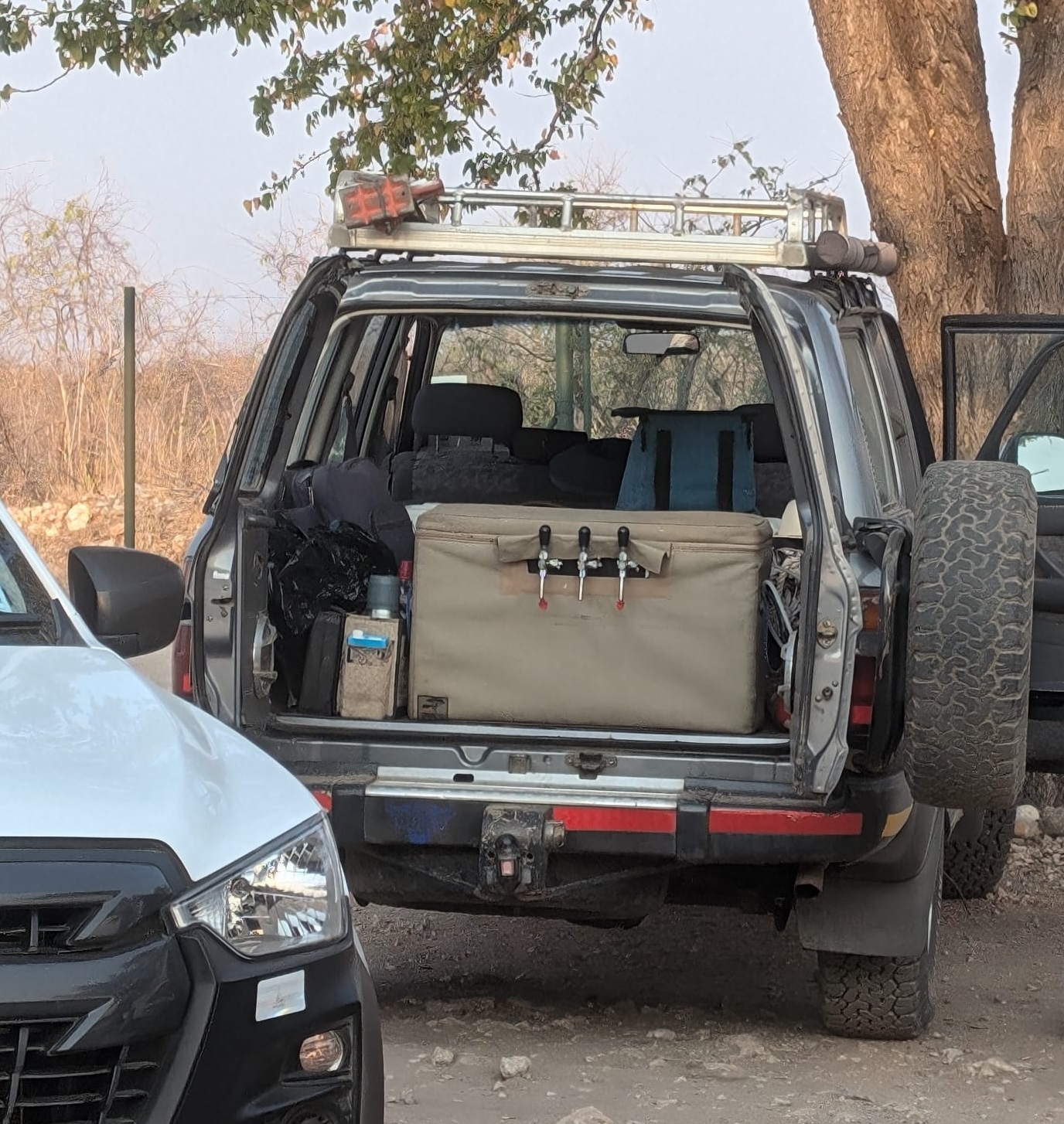
Wherever I have fished or gone on safari, beer drinking accompanies these activities. So I have seen a few different scenarios of it happening on boats and cars to the point that someone once told me while fishing in the Zambezi that in fact they were “beer drinkers with a fishing problem”!
Despite the above, what we saw during our recent visit to Masuma still surprised us as we consider it the most advanced system so far.
Picture by J.A. de Castro
Clearly, these visitors had their priorities right and used the available space appropriately!
We learnt later that the beer was home made and, according to our specialists, of very good quality.
Zimbabwe´s ingenuity is well known and surprising!
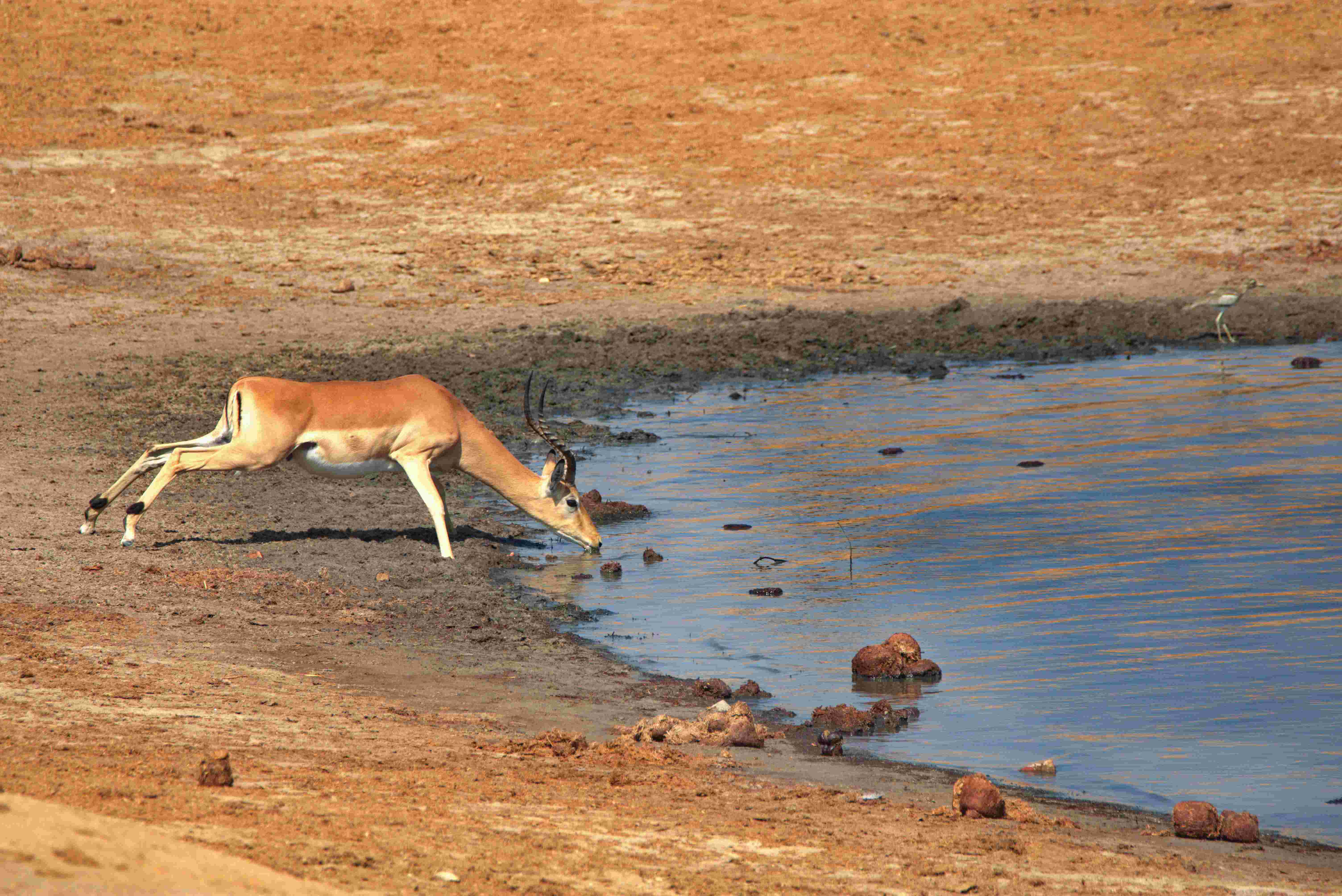
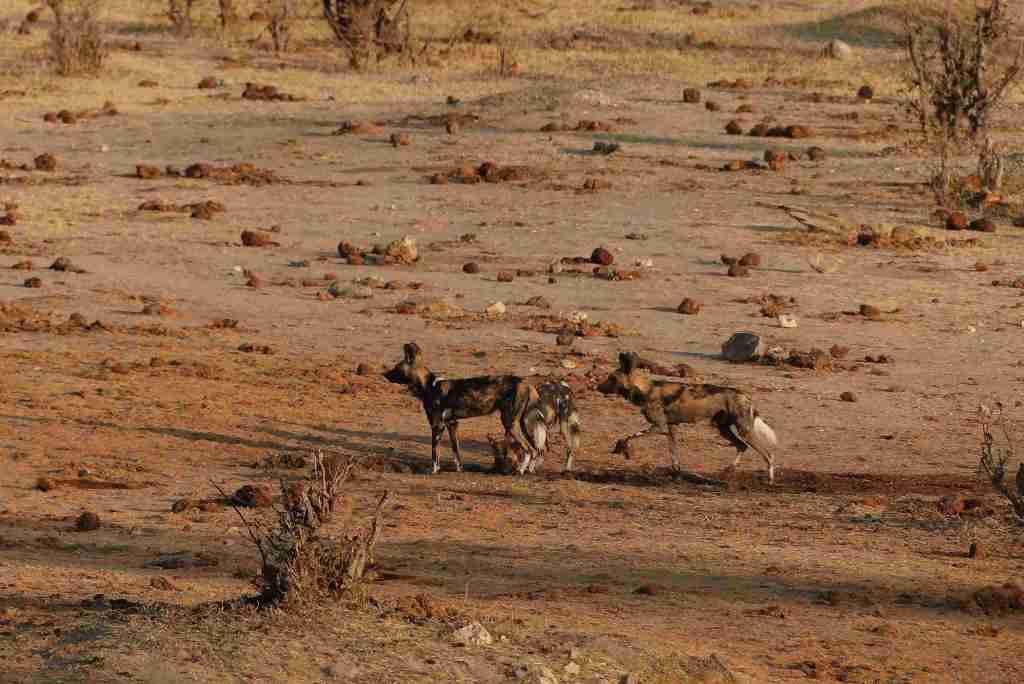
Following the episode I narrated in the earlier post, after losing the second impala to the crocodiles, the painted dogs went back to the hill behind our camp and we did not see them again. This did not really matter to us as the action, as we expected, had now moved to the dam!
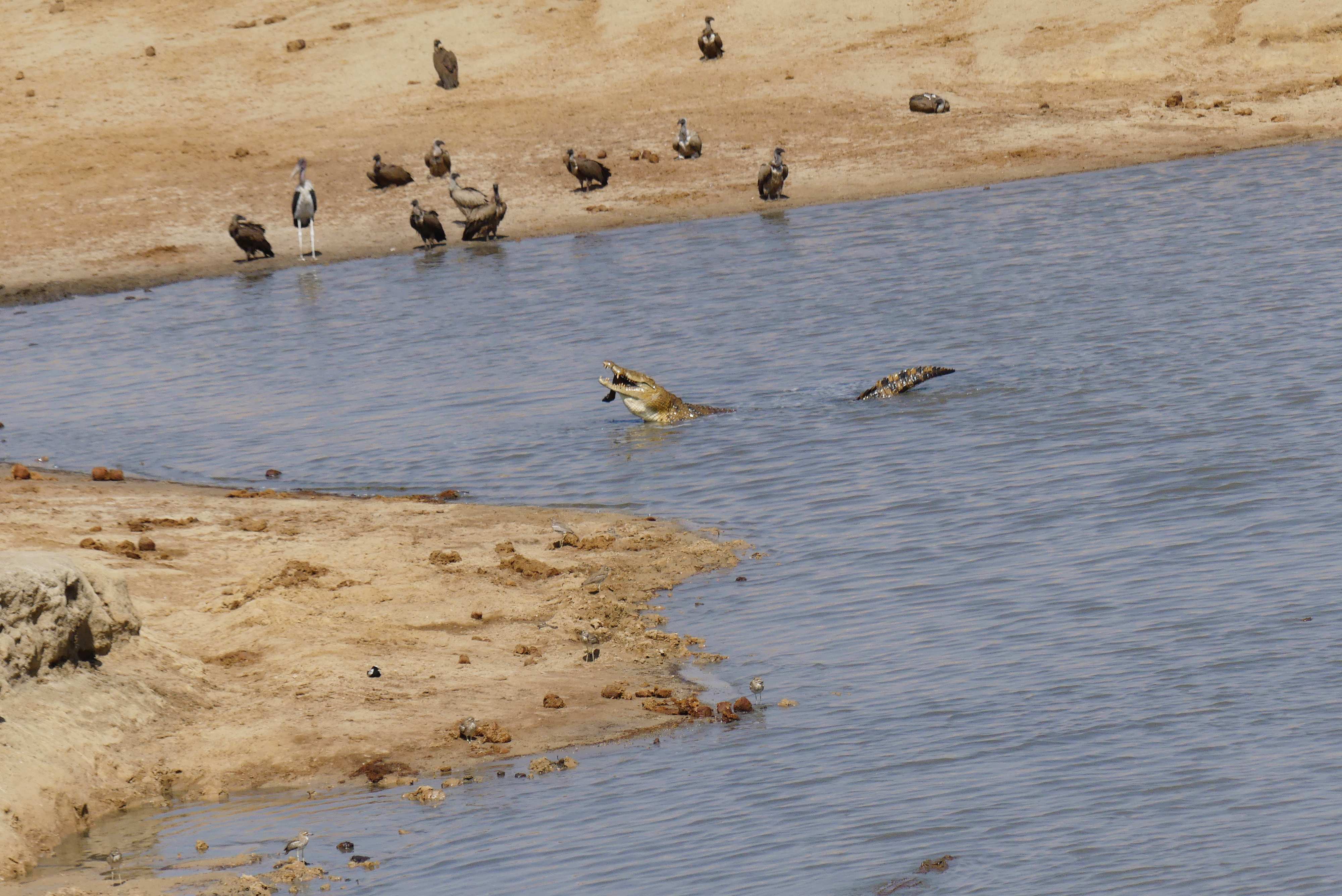
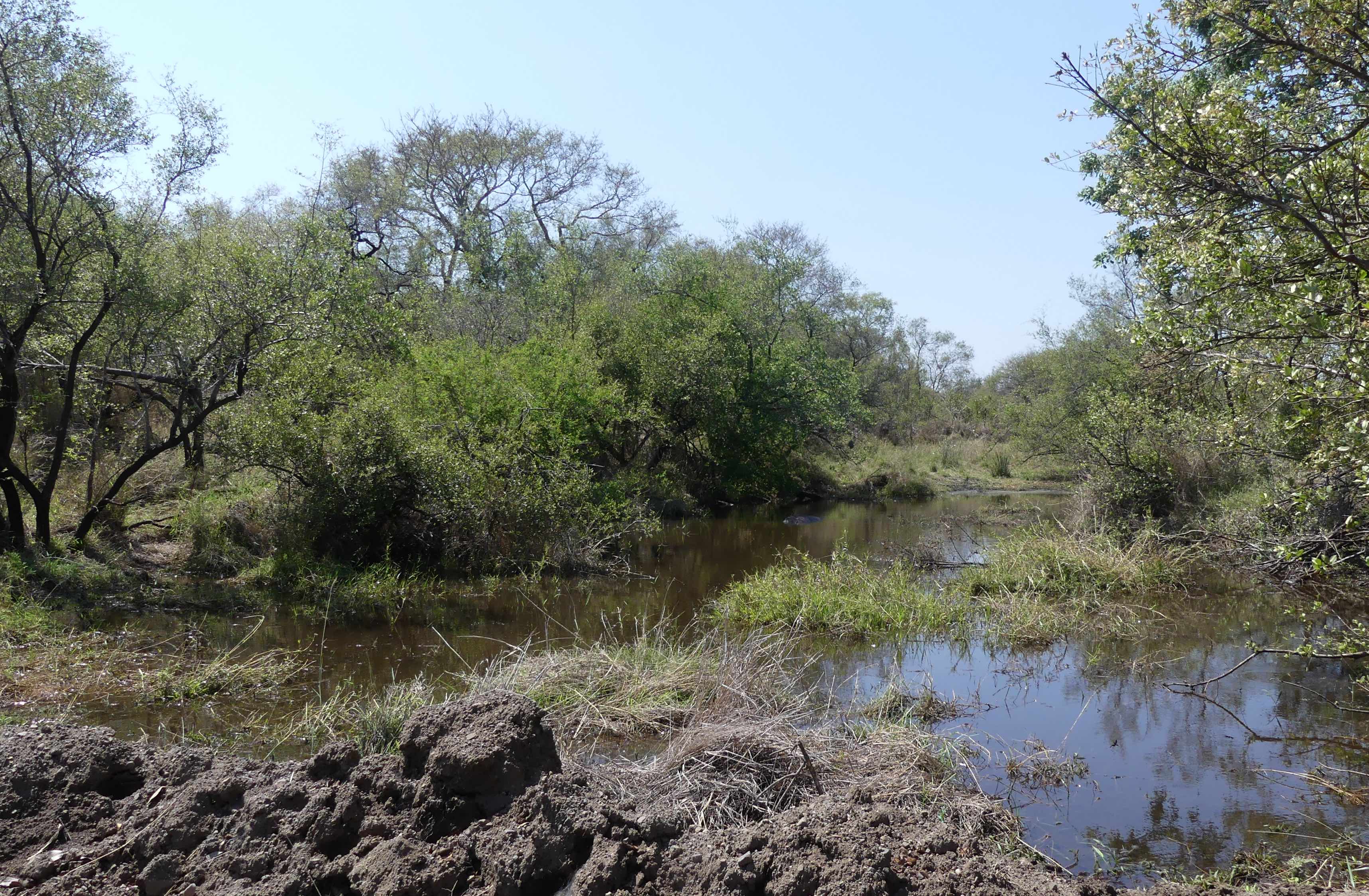
I had described earlier in a series of posts what happened at Masuma when the crocodiles catch one of the animals that come here to drink [1]. We did not need to wait for too long for the battle between crocs and hippos to begin.
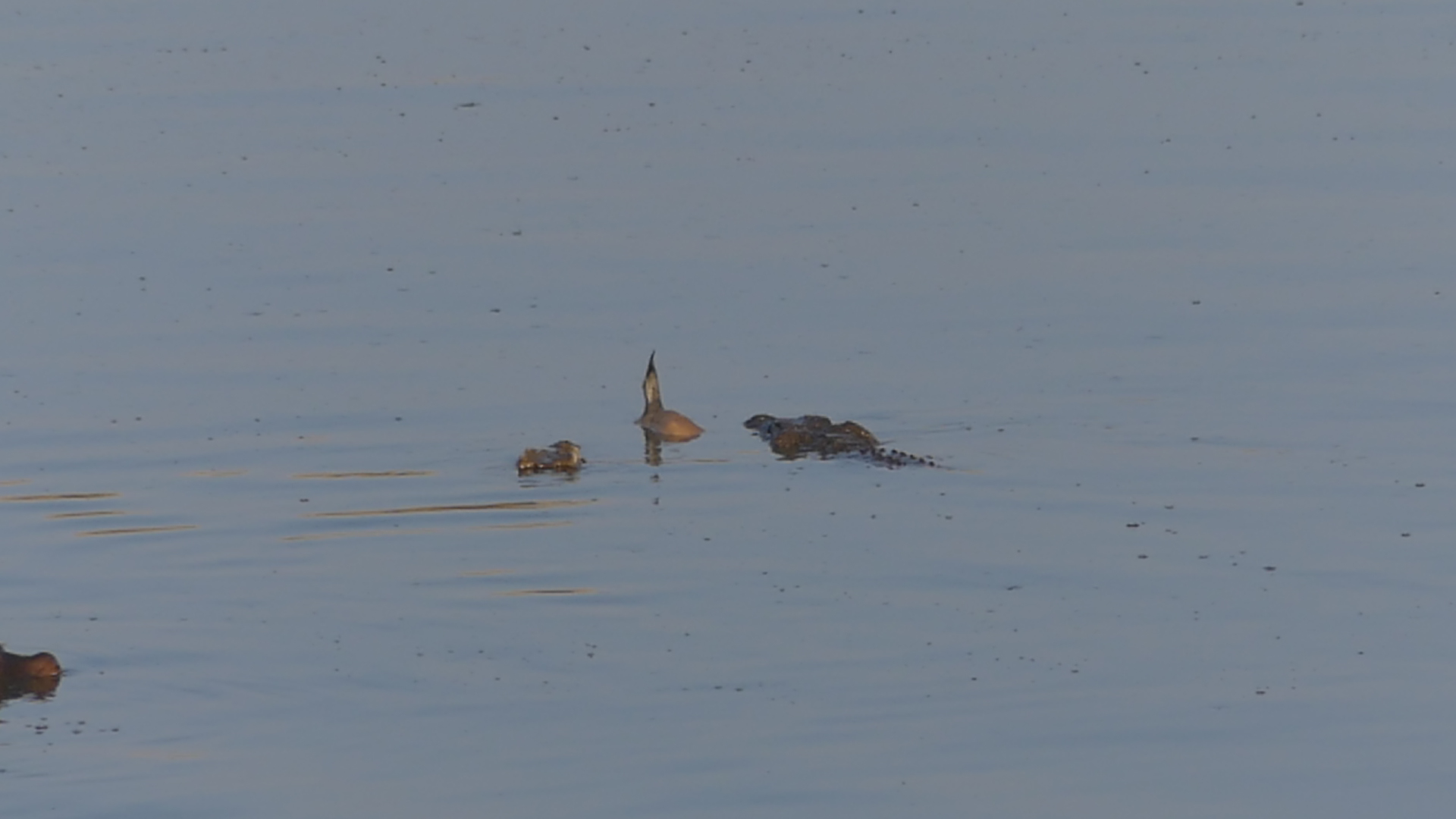
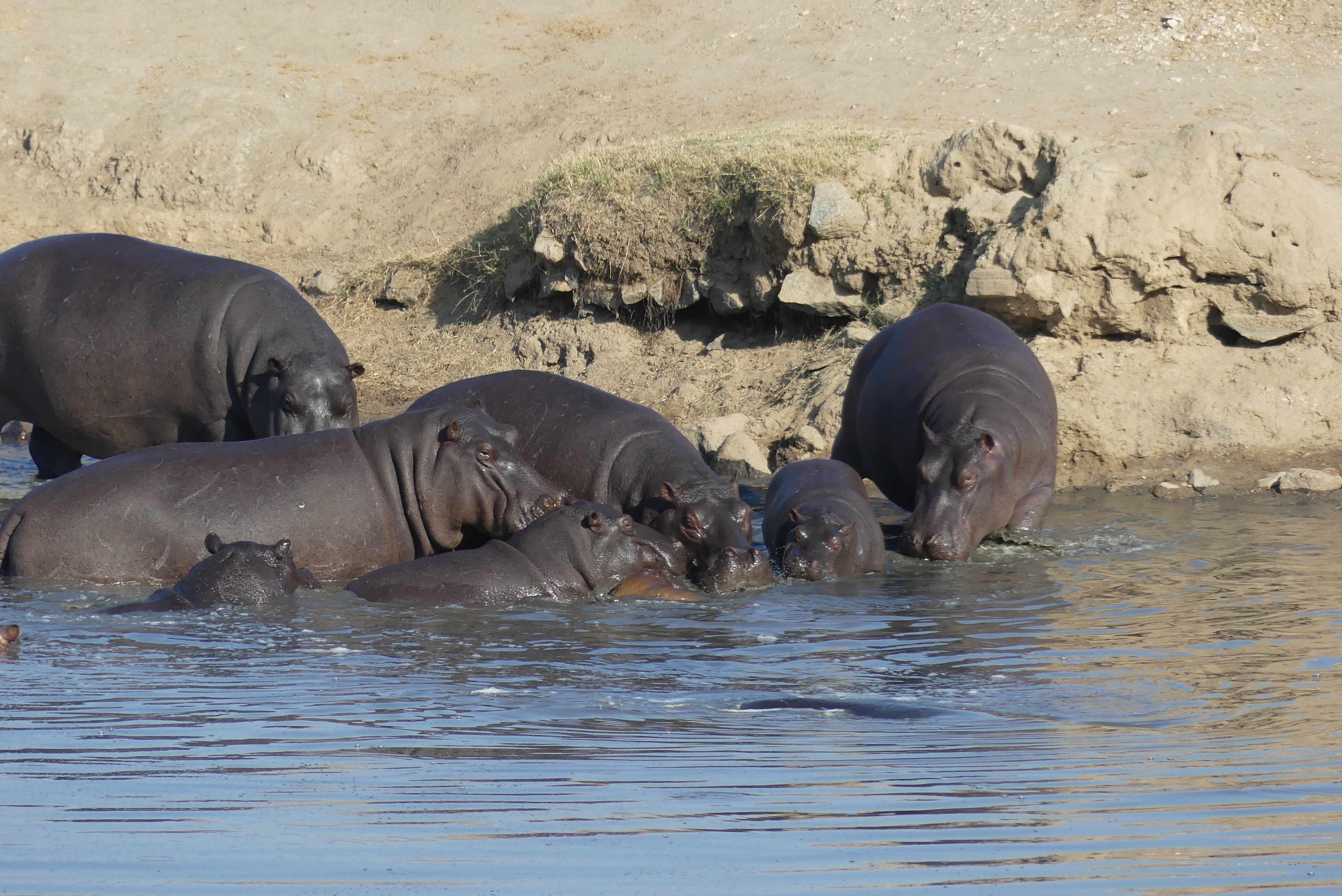
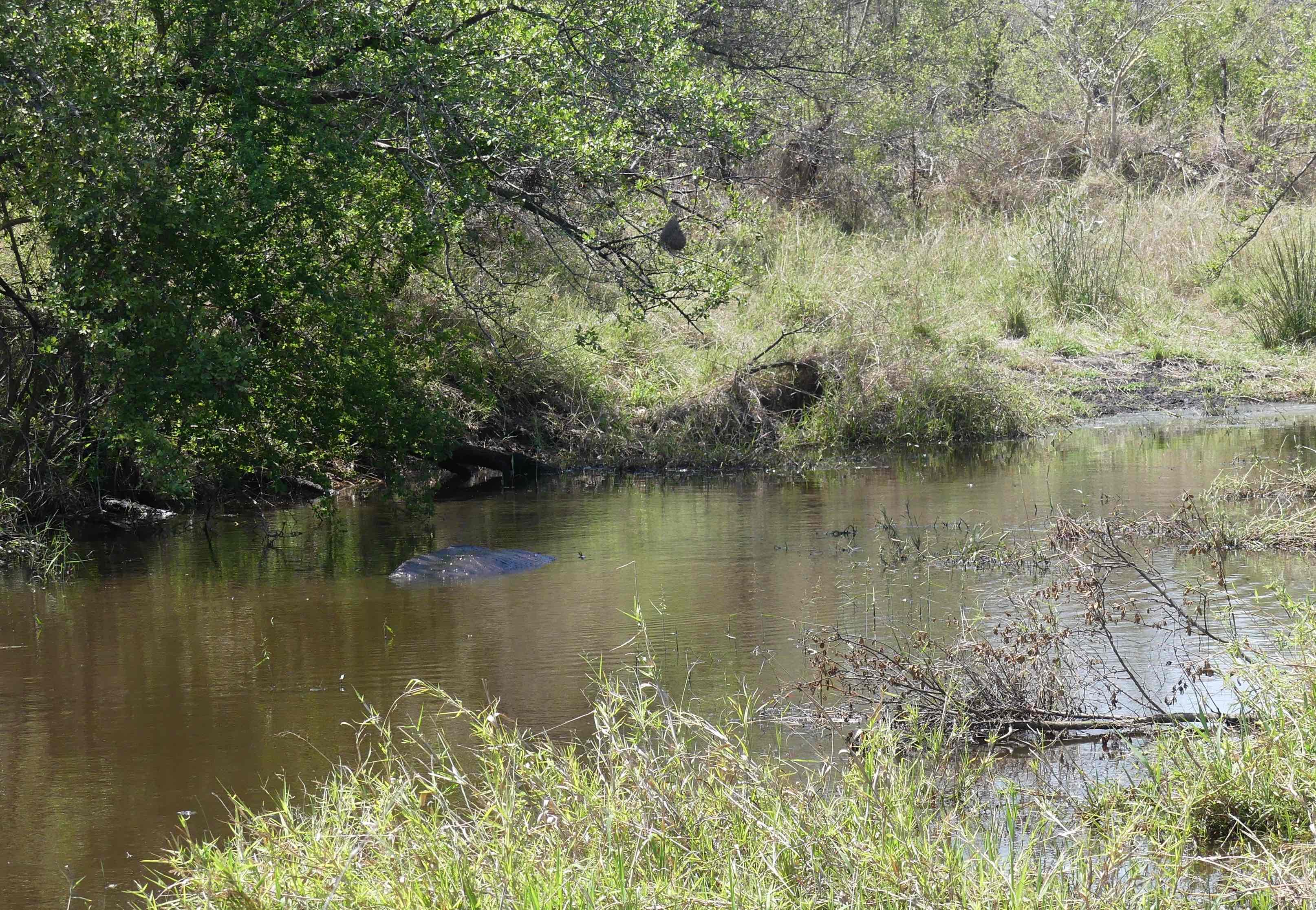
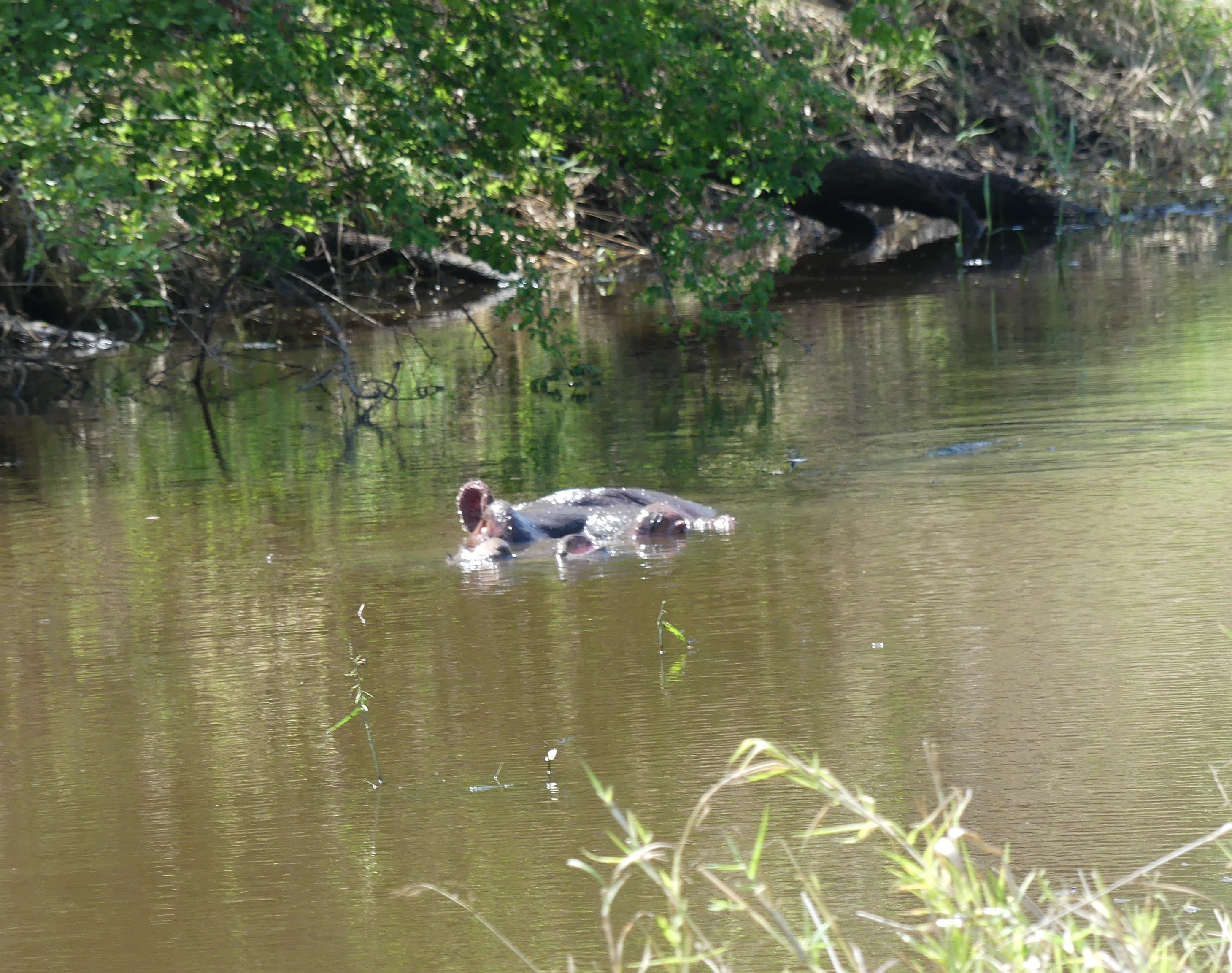
As soon as the roughly twenty hippos at the dam detected the crocs with their prey, two groups were formed by those interested in fresh meat. They seemed to have decided to tackle a dead impala each. The crocs that held them had been seen earlier doing the classical spinning maneuver, which is known as the “death roll’ a violent rotation on the longitudinal axis of the body to break their prey into pieces that they can then swallow.
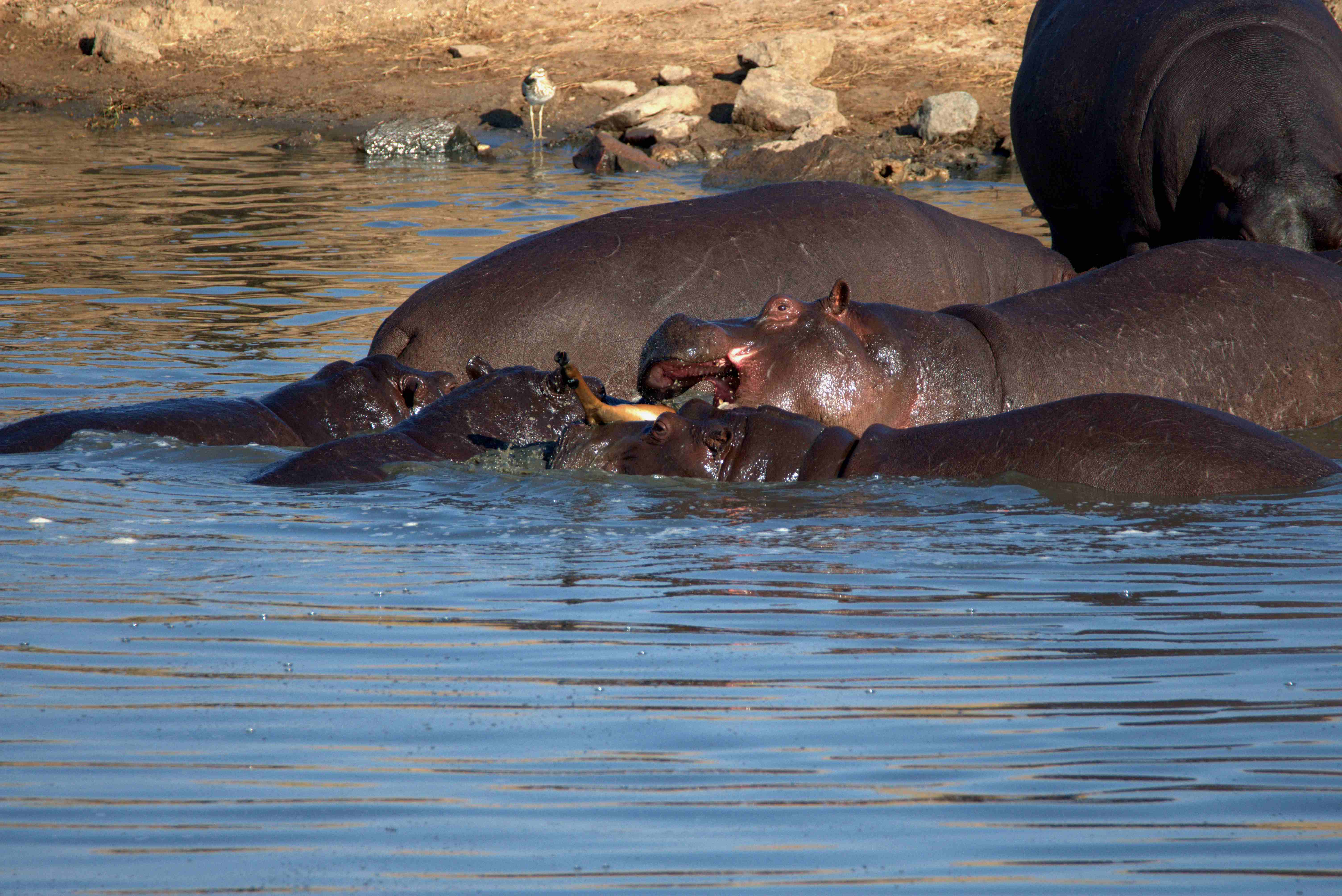
The crocodiles faced a massive challenge when the hippos got into contact with them and tugs of war followed that were partly responsible for tearing the impala carcasses to be shared between reptiles and mammals.
Lot of agitation took place while hippos and crocs tugged at the impala carcasses. Joseph Dudley (pers. comm.) had told me that he believed that, although hippos would eat meat, they were probably unable to open the carcass themselves as their mouths are not good for this task (they do not seem to be too suited to grazing either!).
Hippos of different ages were observed eating various soft tissues and also attempting to eat the impala legs, I believe, without luck.
I end with three videos showing some of the action we witnessed.
I have somehow neglected writing posts as I have resumed writing a novel I had shelved years back. This activity has taken more time than I thought and I am now determined to finish it to resume other writing projects, including the blog.
Despite the above, we still travel to the bush and, a few days back we had the visit of friends and relatives with whom we travelled to our favourite spot in Zimbabwe, Masuma dam in Hwange National Park, where what we saw brought me back to the blog.
It is rather amazing how cold it can get at night in Hwange. We had already experienced this earlier and came prepared. However, I still needed to put on my polar jacket to be able to gain some warmth. In any case, we survived.
The night before our visitors had agreed on an early game drive and I heard them departing the camp at about 06:00hs. I like to get up early so by 06:30hs I was at the viewing platform where I met the two ladies in charge of the camp, doing the daily cleaning before other toursits arrive. The dam was quiet and the sun was starting to warm things up so, seeing the prevailing peace, I decided to go back to the camp (about 50 metres towards the back) to make myself a cup of coffee.
I had just put the water to boil when one of the ladies came running to tell me that “the painted dogs have chased an impala into the dam and a crocodile ate it!”. Cursing my coffee idea and after shouting “wild dogs” to my frozen wife (she came in a flash, happy to leave the cold tent!), I run back to the dam. As expected, I could not see anything apart from the usual pod of about twenty hippos that were still where I had seen them earlier.
It was an upset Bushsnob that my wife found when she appeared. “I cannot believe what I missed” I said, “for a cup of coffee!”. Sensing the mood, she went out of the viewing platform to have a better look as we could still hear the dog calls coming from the nearby hill at the back of the camp!
Then, the amazing thing happened. As if a second take was needed by some nature director, galloping sounds came from the hill behind the camp and another female impala jumped into the dam again and started to swim away from the dogs. I managed to get the camera in video mode and register the last seconds of the impala’s life as well as the amazing sight that it was calm again a few seconds after the event! (please note that it shows a scene that some may find too strong!).
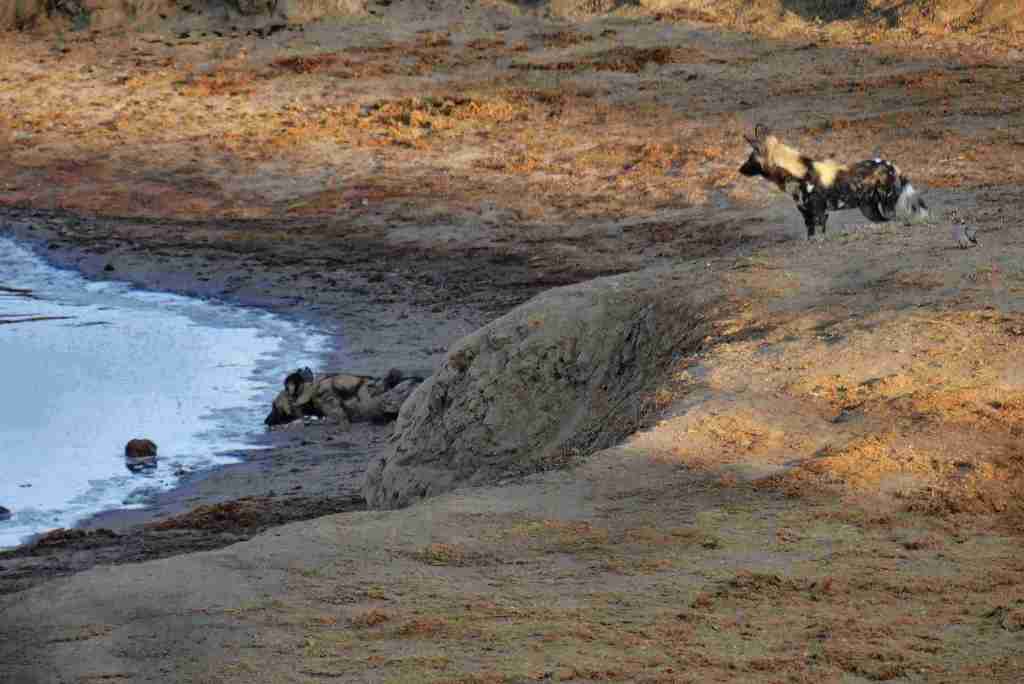
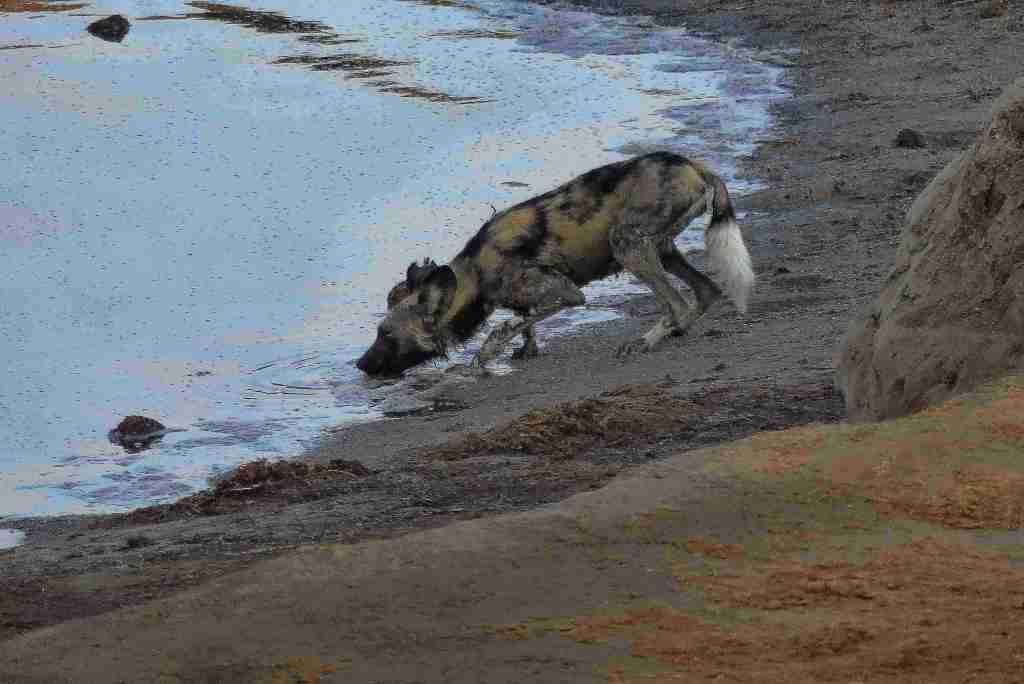
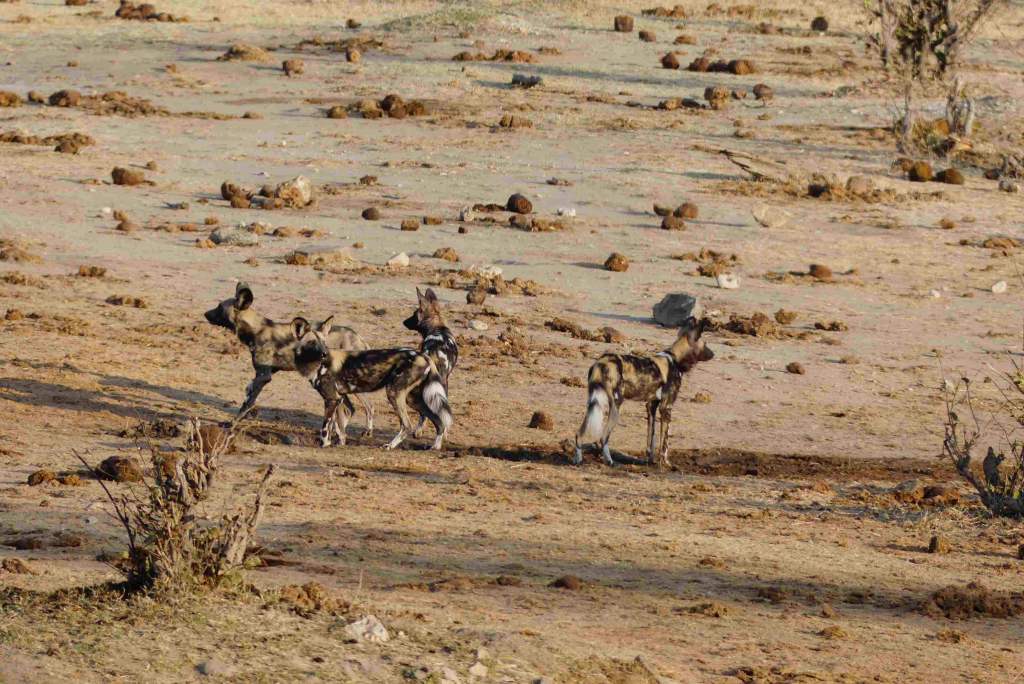
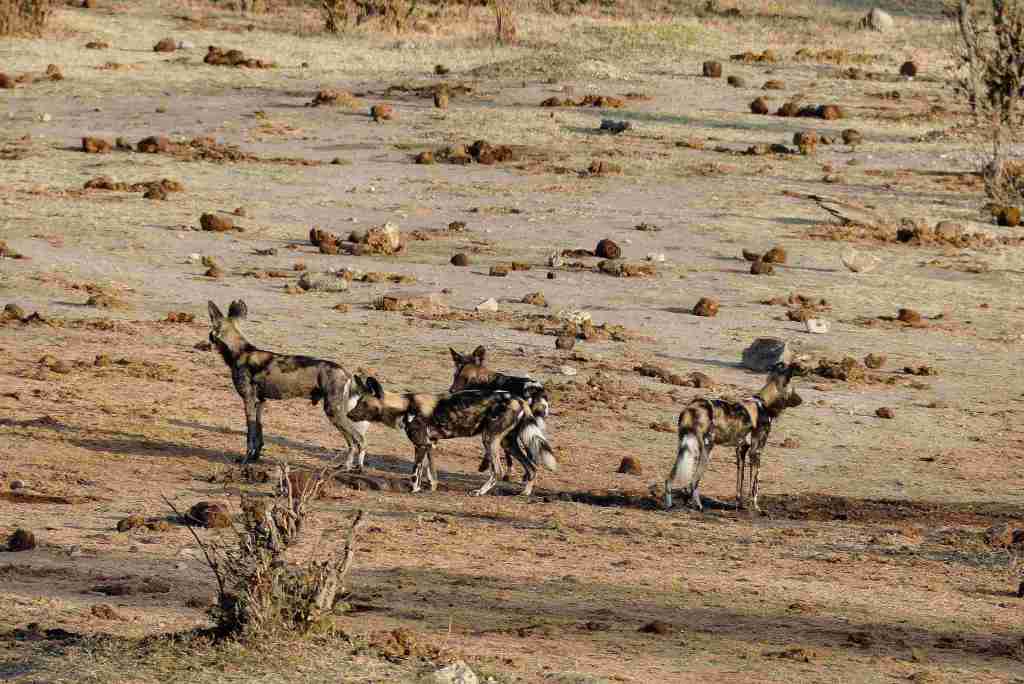
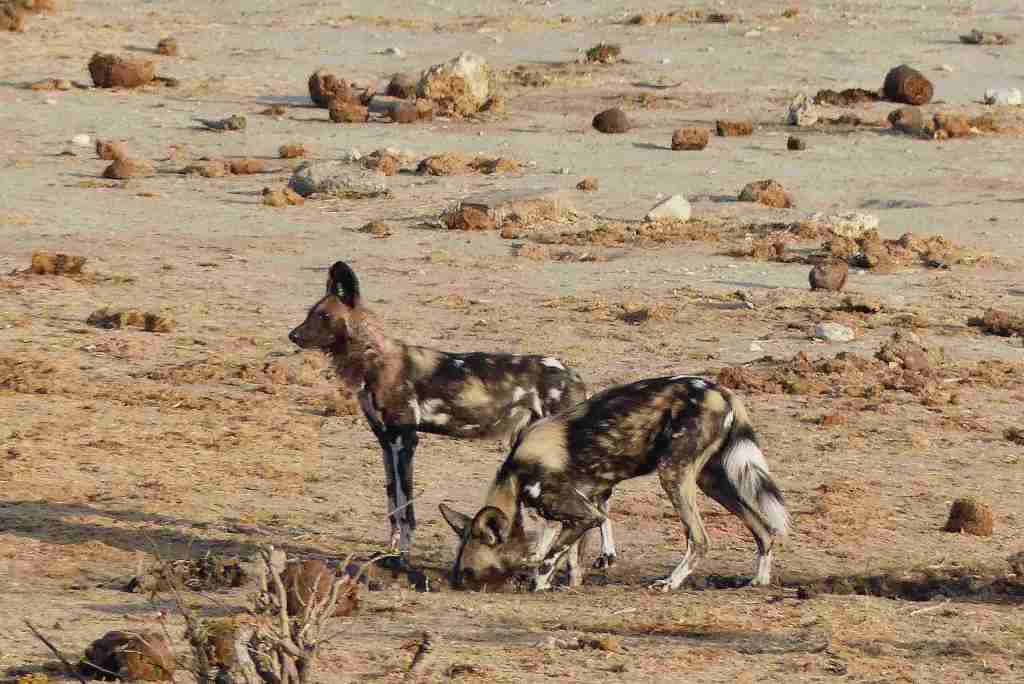
After recording the impala´s demise, I focussed on the disappointed wild dogs (about eight of them) that had worked hard for a meal and twice lost it to crocodiles. They were watching the water and, after some of them drinking, they departed again to find another prey and we did not see them again.
The above sequence shows the dogs after arriving to the dam, contemplating their prey disappearing!
Do I need to add that the early birds that had gone for the game drive and seen the usual herbivores were rather surprised and disappointed when they hear our news on return?
I have already mentioned the existence of large toads known as “rococos” or “cururús” (Rhinella schneideri) that frequent our farmhouse in Salta, Argentina, feeding from the great number of insects attracted by the light [1]
They look impregnable but that is misleading as they do have enemies and one that is a specialist: the toad-eating snake (Xenodon merremii) known locally as “sapera” (“sapo” is toad in Spanish so the name indicates that it feeds on them). Harmless to humans, we see these snakes rarely but we had one residing on the roof of the house for many years.
The snake captures the toad that defends itself by puffing itself up to no avail as the snake is able to puncture and deflate them to be able to swallow them.
This morning, while walking around the neighbourhood we found a toad-eating snake that had caught a large toad. Unfortunately, it was killed by a car while crossing the road.
Although the images can be found disturbing, I decided that it was an interesting find, worth writing about.
Last October, the Kruger National Park (KNP) was rather crowded because of the South African school holidays, to the point that most camps were full, and so were the roads, particularly in the south. We had booked Skukuza Rest Camp for a couple of nights so that we could see this camp and drive to one of our favourites, Lower Sabie Rest Camp on the shores of the Sabie River where we had spent some good hours while in Mozambique.
At the KNP most visitors follow a clear movement pattern. By about 18 hours they are preparing their braai (barbeque). They eat and go to bed early so, by the following morning they get up very early and go out for game drives or to move to another camp. We saw car queues waiting for the gate of the camp to be opened!
So, we rarely go out that early and just choose our route and follow it. Of course, if we find a group of cars, we stop to watch. The game drive to Lower Sabie was packed with cars so, after reaching it, we decided to turn around so that we could, at least, have a decent lunch at Skukuza.
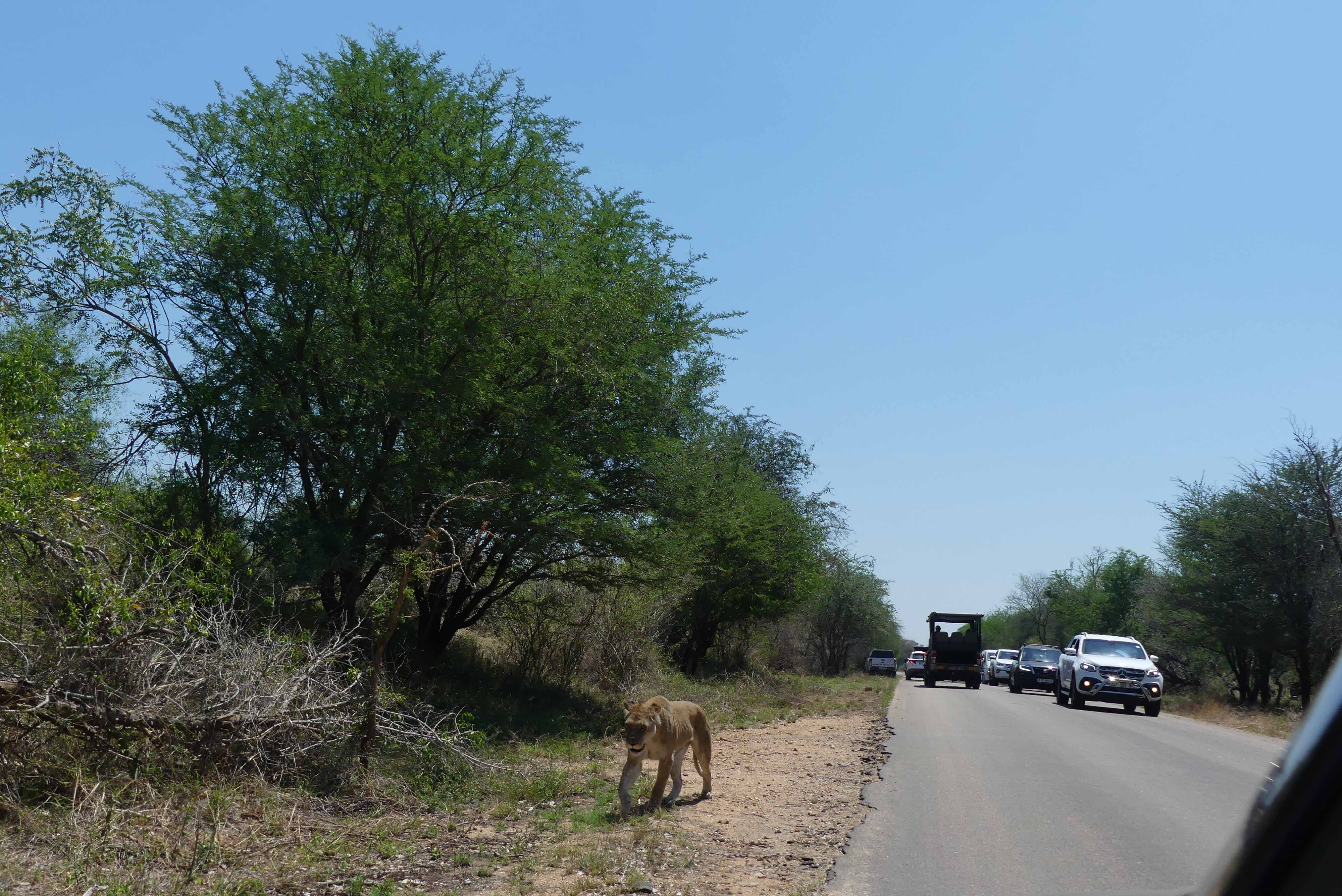
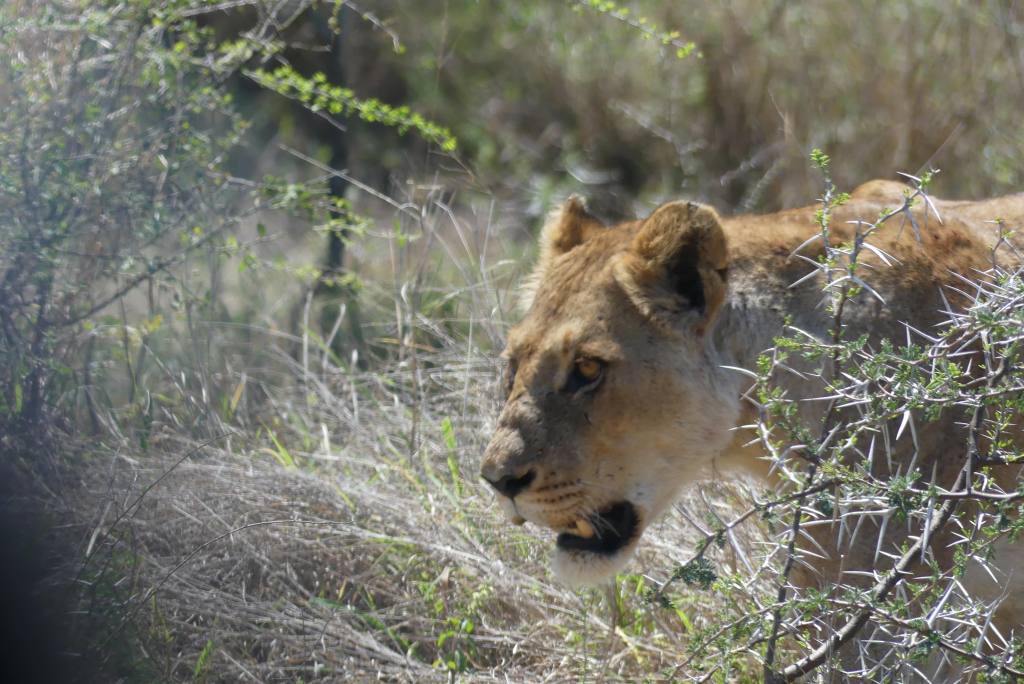
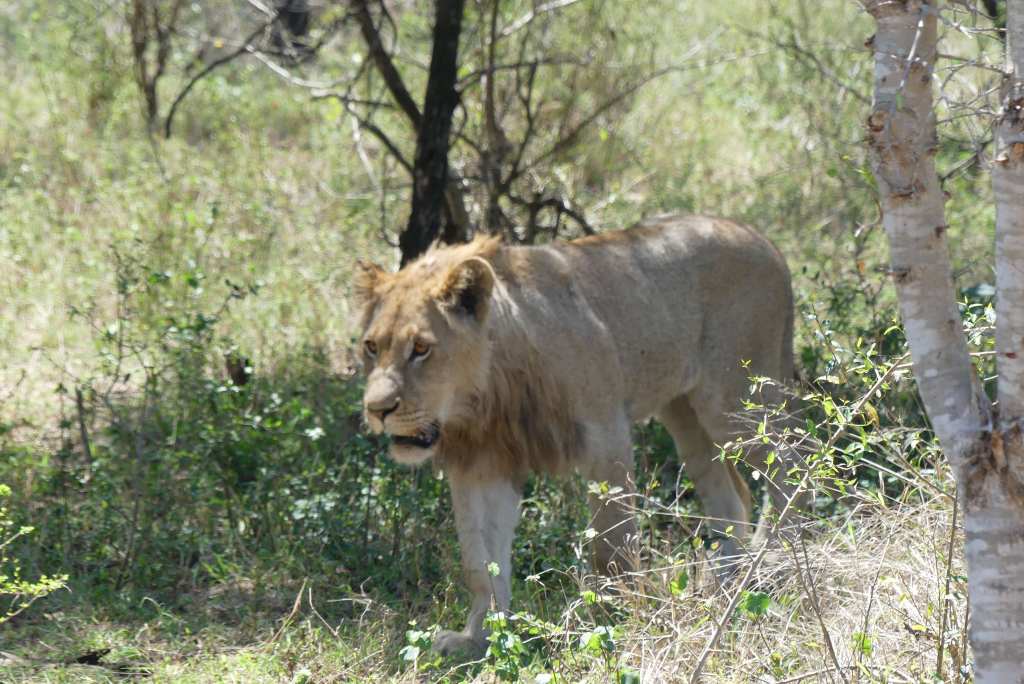
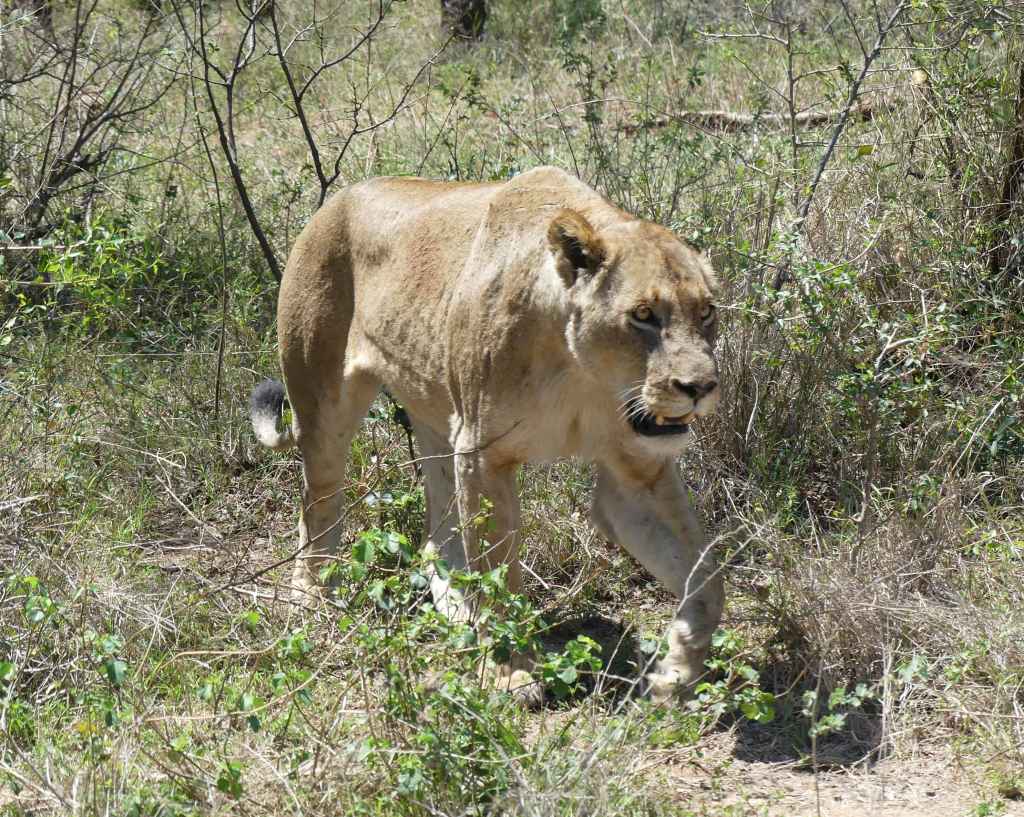
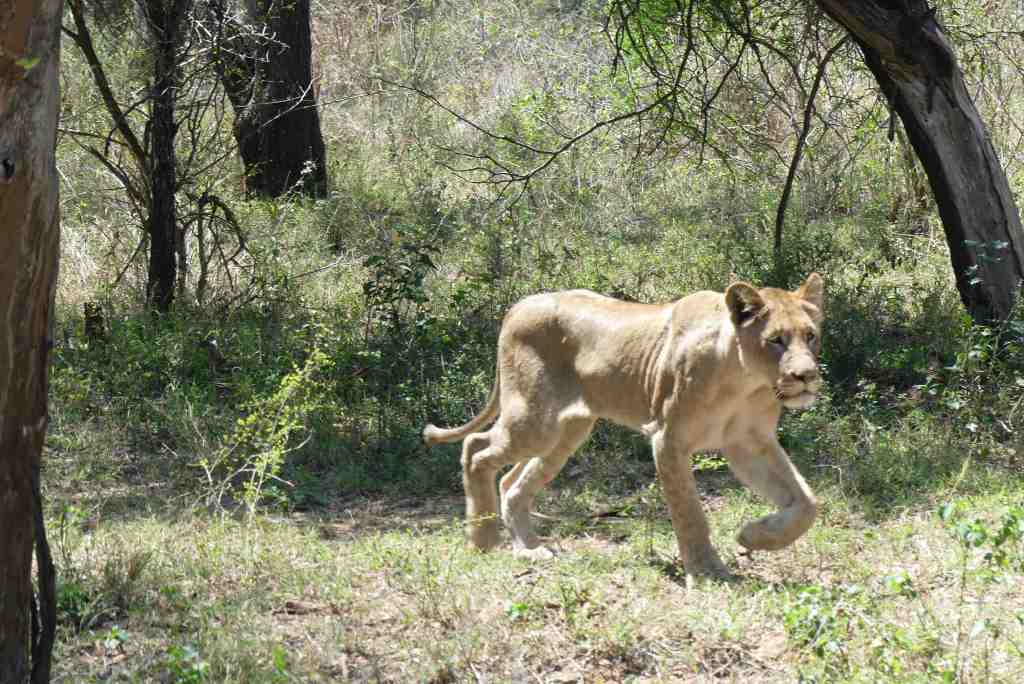
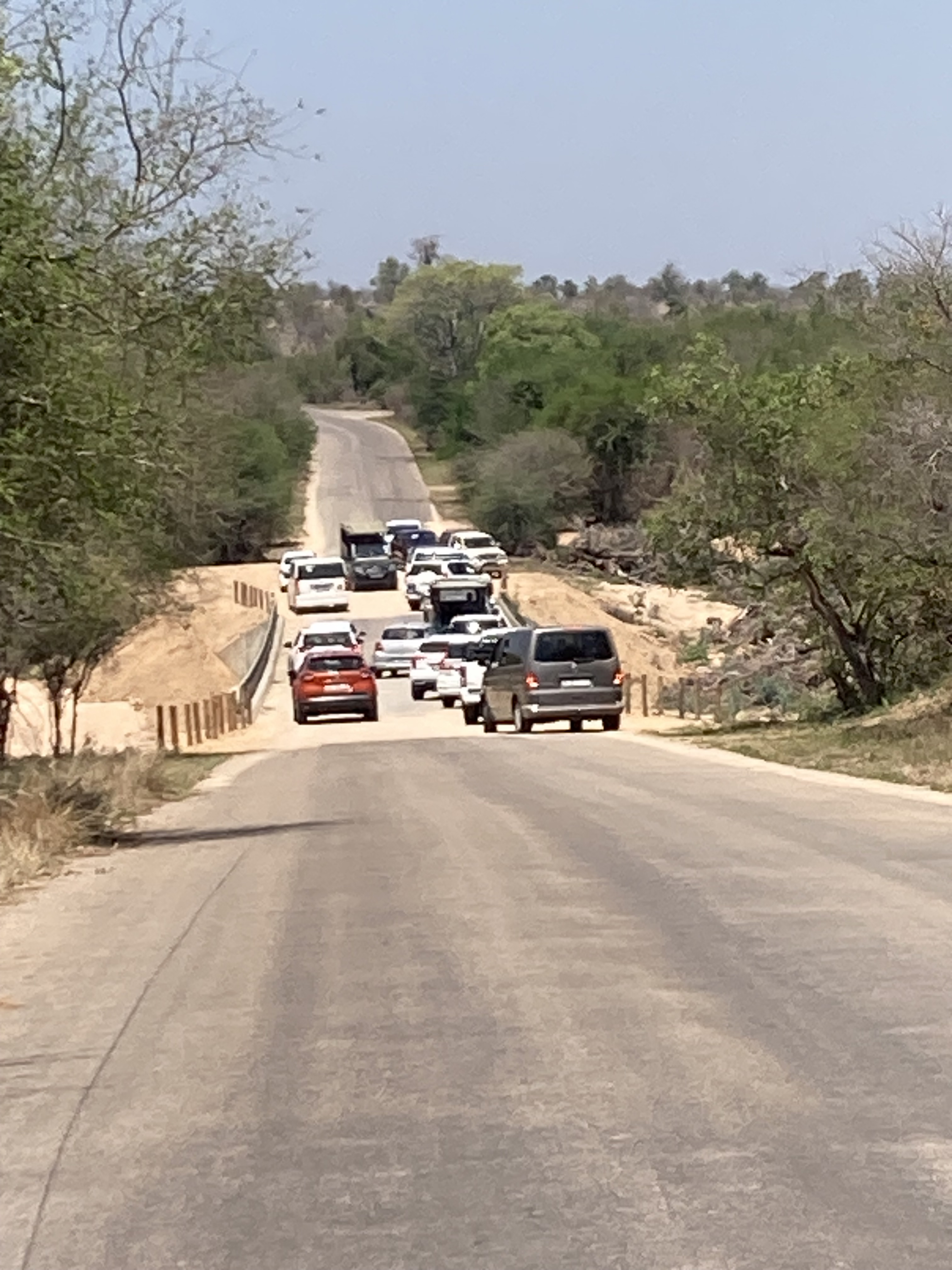
We were driving back (me complaining about the number of people and cars, as usual!) when we found ourselves facing a car convoy coming towards us. In front of the cars, a lioness was coming so, without having been involved in the affair, we were enjoying a close-up of the animal as all the other cars truly chasing her, stopped because of our presence!
The first lioness followed by the cars.
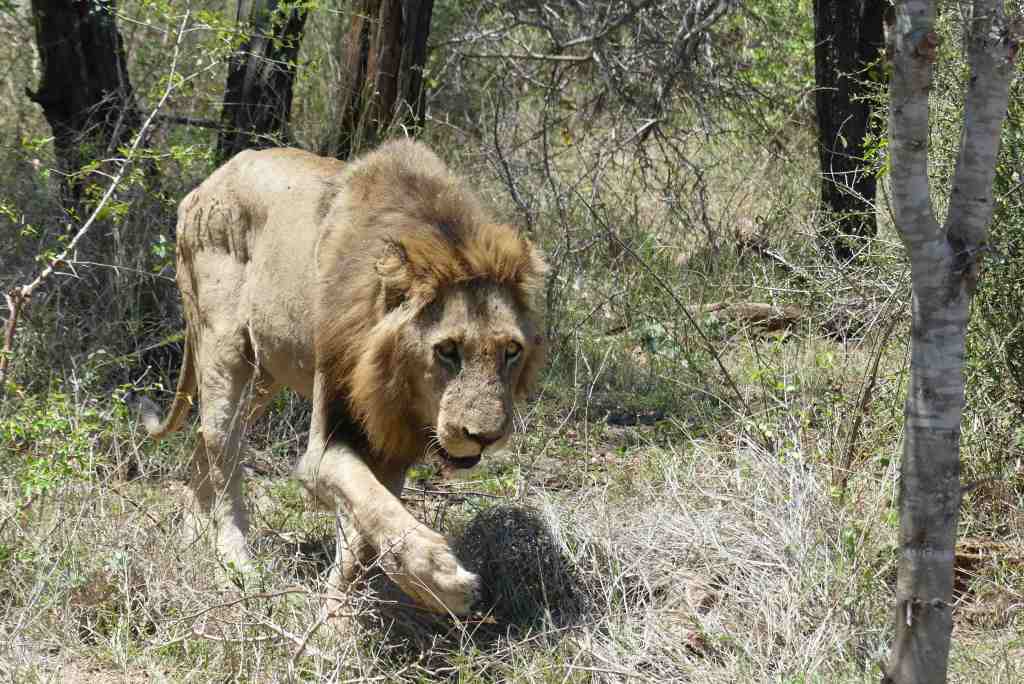
This gave the lioness some respite and she relaxed and walked within a couple of metres from us. Surprised, we watched and took a few rushed shots of her. Once the lioness disappeared, we stayed put, waiting for the road block in front of us to clear. Then we saw another tawny shape heading for us and, for the next 10 minutes we had a parade of ten more lions walking in front of us until the last one, a rather thin-looking adult male brought the rear.
After the last lion passed, we continued on our way while everyone else continue folloowing the lions to the river behind us.
The lion went towards the river and everybody followed.
It was a most surprising find that made our journey back more jolly and gave us good conversation during our lunch.
By the time that we were moving from Skukuzwa Rest camp to Satara Rest camp (90km) we had come three times a few minutes too late to spot a leopard. This is the way it happens with most carnivores so we still had a few more days so we still hoped to see one.
The plan was to stop at the Tshokwane Picnic site for a lunch break, before continuing our journey. We had stopped there a few years back and spotted a leopard on the opposite side of the river that we could watch for a while before it moved off into the thicket. We hoped that we could do it again!
Already before we entered the picnic site we realized that a lot of people have had the same idea and it was rather full, particularly with families with small children as it was school holiday time. Not only we realized that leopards would be a few kilometres away from the site but also that it would be difficult to find a table.
We persevered and found a reasonably shaded table that I occupied while Mabel went to collect our breakfast from the car.
Having “suffered” them in all the camps and picnic sites we had stayed during the trip, we were very aware of monkeys and we did not leave anything unattended, or the car open to neutralize their attempts at stealing our food.
Despite this, as soon as Mabel got out a banana that she was planning to cut, an undetected but vigilant Vervet monkey jumped from the tree above, bounced on the table, grabbed the banana and disappeared in a couple of seconds!
That did it. After swearing profusely to the monkey in several laguages, we had a change of plan, packed our food and left while we could hear other people having their own “monkey wars”. We would find a quiet place where we could enjoy our breakfast.
About five kilometres towards Satara we came to a loop road going to the Orpen dam and we took it.
After about four kilometres we crossed a small stream with running water and decided to turn around and park at a shady spot facing the stream where a couple of blacksmith plovers were feeding. We had a relaxed breakfast free from monkeys and also largely free from other people as only two cars drove past towards the dam.
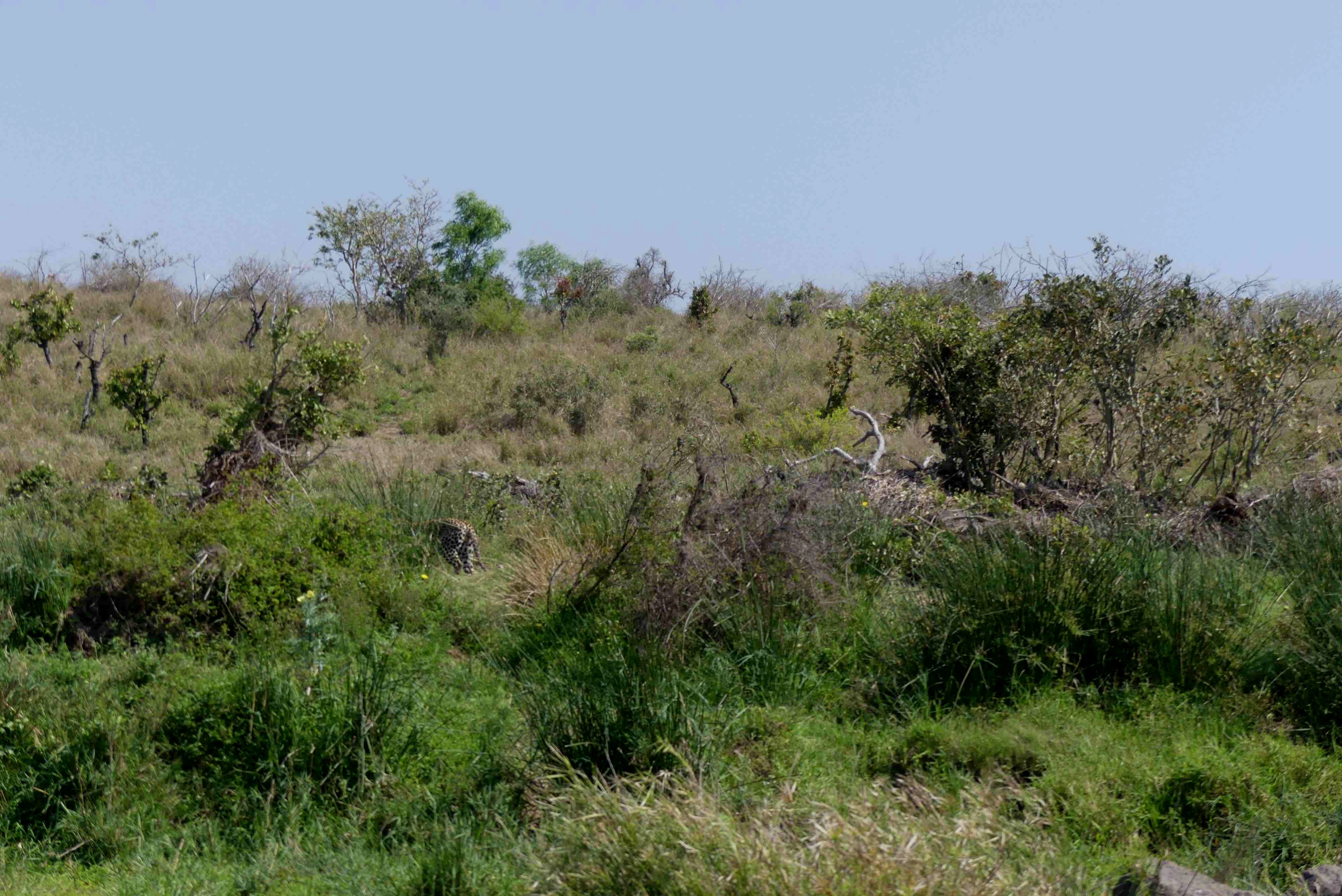
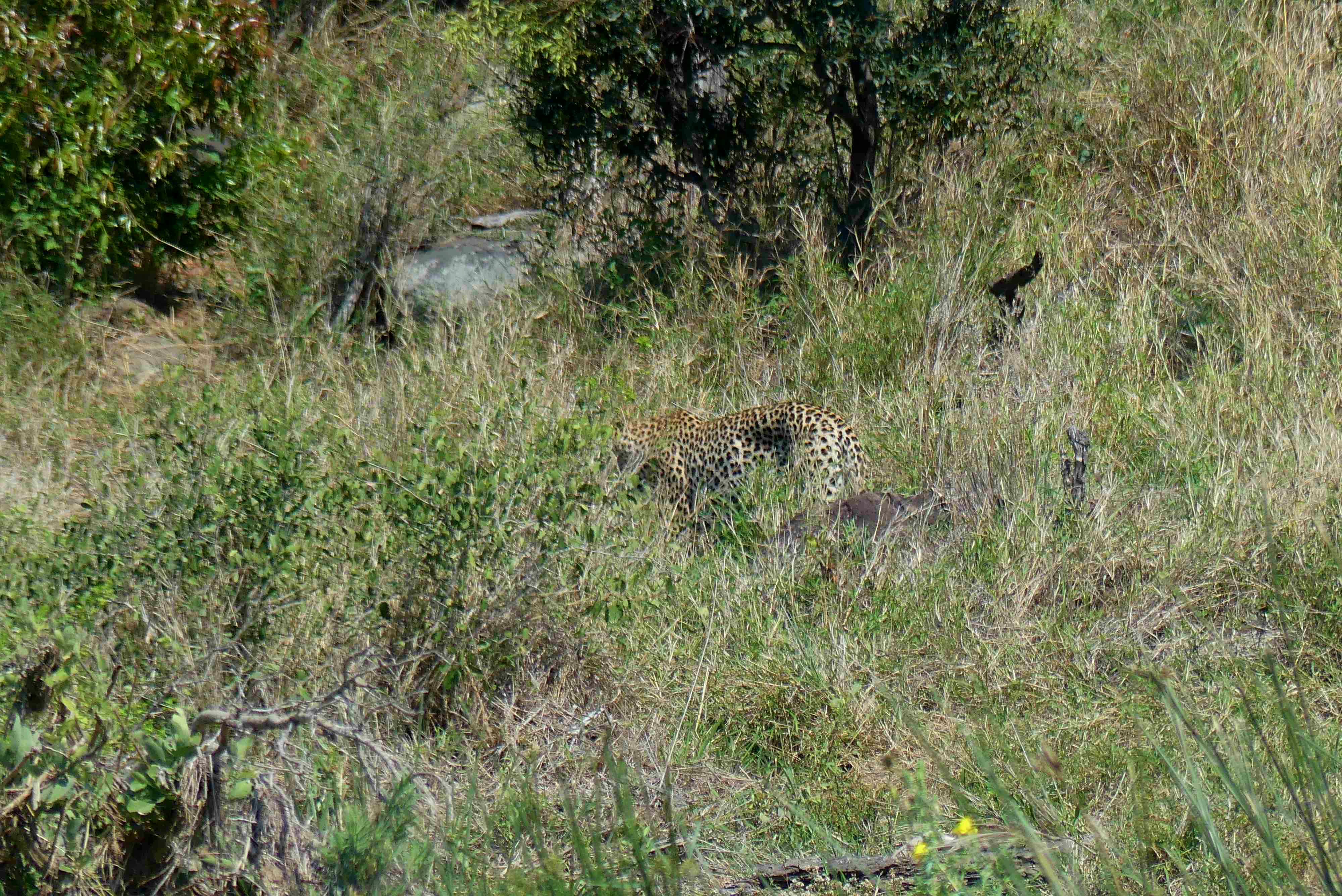
Then, as it usually happens, when you are not ready, a leopard appeared! A large male walking leisurely following the course of the stream and marking its territory as it went. I grabbed the camera and shot to the moving feline that was walking through the thicket abot 50m from us and managed only a view of its rear end!
My first picture of the leopard´s rear end.
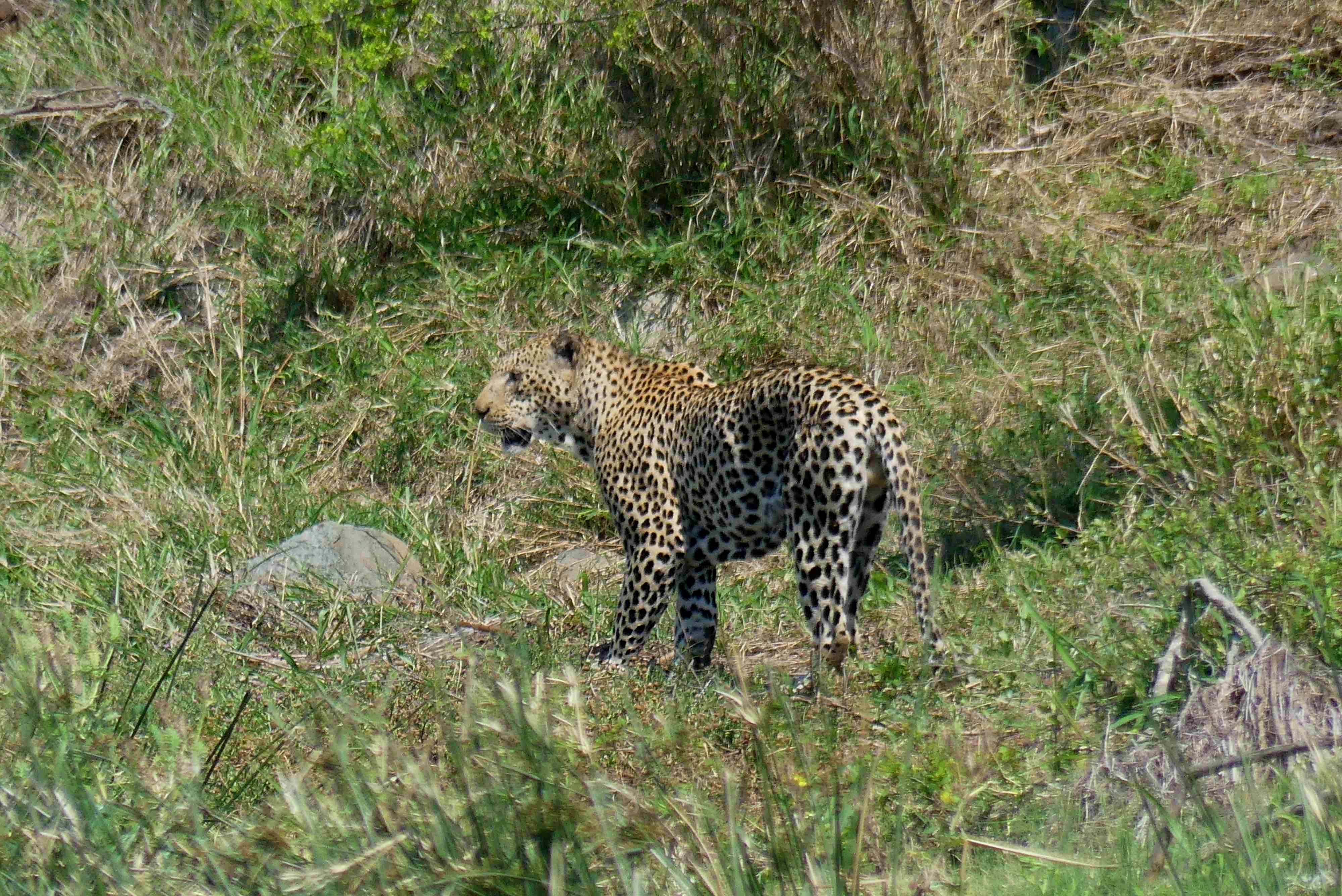
Luckily, it stopped at a clearing and I got one bad picture of the whole animal, at least to prove that we saw it!
The leopard paused and I took my chance.
And then it was gone and we thanked the monkey for stealing our banana!
We arrived to Bateleur Bushveld camp on a really hot day. We had booked four nights there as we remembered that it was a really nice and quiet place where, although game was not plentiful, sightings of leopard were good and there was one residing near the camp and often seen by visitors.
The ranger in charge of the camp confirmed that the female leopard was still there and that she now had two cubs so our expectation of spotting them grew significantly. We would not have bothered as, to our disappointment, we never even heard the beast.
Although extremely hot, we did enjoy our game drives and had fun watching and taking pictures of the birds and small mammals coming to drink from the bird bath as the place was bone dry. Some of the birds that came were Grey lourie, Crested barbet, African black-headed oriole, Starlings, babblers, laughing doves, cordon blue waxbills, African red finches, yellow, red and grey bill hornbills and others. We also had genet (at night in the camtrap), squirrels and dwarf mongooses during the day.
African Black-headed Oriole.
A Glossy starling.
Gray lourie or Go away bird.
African firefinches and Cordon bleu waxbills enjoying a waterbath.
An African waxbill enjoys a bath.
A dwarf mongoose at the water.
A curious dwarf mongoose watching us from cover.
The second evening we noted an accumulation of cloud towards the west (I know because the sun went down there!) and the following morning we detected a few dried raindrops on the car. We were quite surprised as we are at the dry season. The day started to get cloudy and after sunset an amazing storm built up, also on the west with lots of thunder and lightning.
Later that evening the skies opened up and it rained for the whole night and the following morning! I got up and found that the wind had taken away a tray where we had hanged some of our clothes to dry and I found them, together with a towel buried in the mud. Our front veranda had about 7-8 cm of water that needed to be brushed away before it entered our bungalow and to enable us to we move about.
But that was not all. The temperature must have dropped 20 degrees and with the strong wind it became very cold. Luckily we had rented a two bedroom bungalow so we retreated to the second bedroom and organized it to have our meals there, just like flood refugees!
We left the following day, still under some rain and saw that the previously very dry landscape now had lots of water accumulated in places that were dry and dusty the day before. We estimate that the rainfall must have been about 50mm, what I consider a very unusual downpour for the season.
Needles to say that the day after the rains the animals switched from survival to rainfall mode and disappeared from the crowded areas where they were up to the day before so, finding them became very hard, a situation that would last until we left the park.
I have always intended to write about guineafowls, but I was waiting to have reasonable pictures as I find them notoriously difficult to photograph. Like most ground birds, they are always foraging on the move and, in addition, you take the pictures from the car above them and the angle often spoils the shots.
I googled “guineafowls” and learnt that there are six main species. Two, the White-breasted and the Black guineafowls (Agelastes spp.) inhabit West Africa and the Plumed guineafowl (Guttera spp.) live in the humid forests of Central Africa. The remaining three species are found in the areas we have spent part of our lives: East and Southern Africa.
The Helmeted guineafowl (Numida spp.) is the most common of all the species and it inhabits all of Africa. This is the species that people are keeping in their homes all over the world but that still are not completely domesticated as they nest wherever they see fit. They are also the easiest to see while on safari as they are one of the common birds spotted in most wildlife areas. The occur in large flocks and they are predated upon by several carnivores, both birds and mammals.
(Pics by Patricia Ruiz Teixidor)
The Vulturine guineafowls (Acryllium spp.) inhabits Central and East Africa. They are the largest and they also live in flocks. They have strong beaks, and they look truly powerful, particularly when standing erect and they can be aggressive. They look superb with a bunch of long neck feathers striped black, white, and blue. They have red eyes and their head is bare blue and resembles that of a vulture.
We have been fortunate to see them in Kenya, at the north in the Samburu National Park and, more recently in Tsavo West National Park.
The Crested guineafowl (Guttera spp.) is found in East and Southern Africa (and probably other places). We have spotted them in the Chitake area of Mana Pools National Park (Zimbabwe) and near the Maputo Elephant Reserve in Mozambique. They also live in flocks and have a beautiful dark plumage with an interesting head feather arrangement.
This was the species I did not have good pictures of until were visited Punda Maria Rest Camp at the Kruger National Park recently. As usual, Mabel spotted a group resting under some bushes while walking through the camp and she promised to take me there.
We failed to find them and my hope of taking a few pictures of them was dimming when, luckily, on the last day, while walking towards the waterhole viewing platform, we found a group of about a dozen calmly walking through the campsite adjacent to it! I took my chance and managed a few pictures and a video of these.
So, that completed the guineafowl trilogy so I can now focus on other birds!
I did not recall from our earlier visit about ten years ago that Punda Maria Rest camp in the Kruger National Park had a waterhole! Probably, at the time we visited the park was not as dry as it was when we were there now and the animals were not so numerous. This time, buffalo and elephants came to drink at all times and we heard the elephants loud and clear from our tented accommodation.
Of all large mammals that I had seen visiting water sources, elephants are the most fun to watch. So, I took some pictures and videos of their activities. Apart from me, a baboon also enjoyed the elephants´show.
Elephants are unique when arriving at the water as they hurry to get there, almost letting themselves being carried out by their emotions!
So, upon arrival their priority is to drink after having spent the whole day feeding in the hot bush.
After their thirst is quenched, the shenanigans start and they are mainly performed by the youngsters that can be quite funny. In the video below, the small elephant enjoys a dip among the adults that are very careful not to trample it. I like the leg scratching although I did not realize it when I filmed it!
This elephant was a bit of a bully (although I could not see if it was a bull!) and it spent lots of time parked on this spot, practicing how to stand on a stool like circus elephants did years back.
This scene reminds me of two neighbours gossiping over the fence between their houses!
This youngster was determined to drink from the place the adults did but its trunk or legs or both were too short.
And so it was that the action continued at night as there were many elephants that needed to drink!