Recently I saw an interesting article (1) regarding a fungus known as Massospora that infects cicadas. It destroy their abdomen. So what? you may think. The interesting thing is that, despite the damage, the cicadas continue flying around but now under the control of the fungus, like insect zombies! The fungus grows in the abdomen while the goes about its business.
But this is not all!
More bizarrely, the fungus makes male cicadas to imitate the females’ mating behaviour so that they attract healthy potential mating males that get infected by contact, increasing the transmission of the disease.
This news reminded me of a find I have photographed in Salta, Argentina a while ago but since forgotten where I thought I have found a “abdomenless” one. A long search through my computer files followed and I managed to find the pictures that I took in 2018. (Below the “cicada” with what I thought to be the fungal infection).
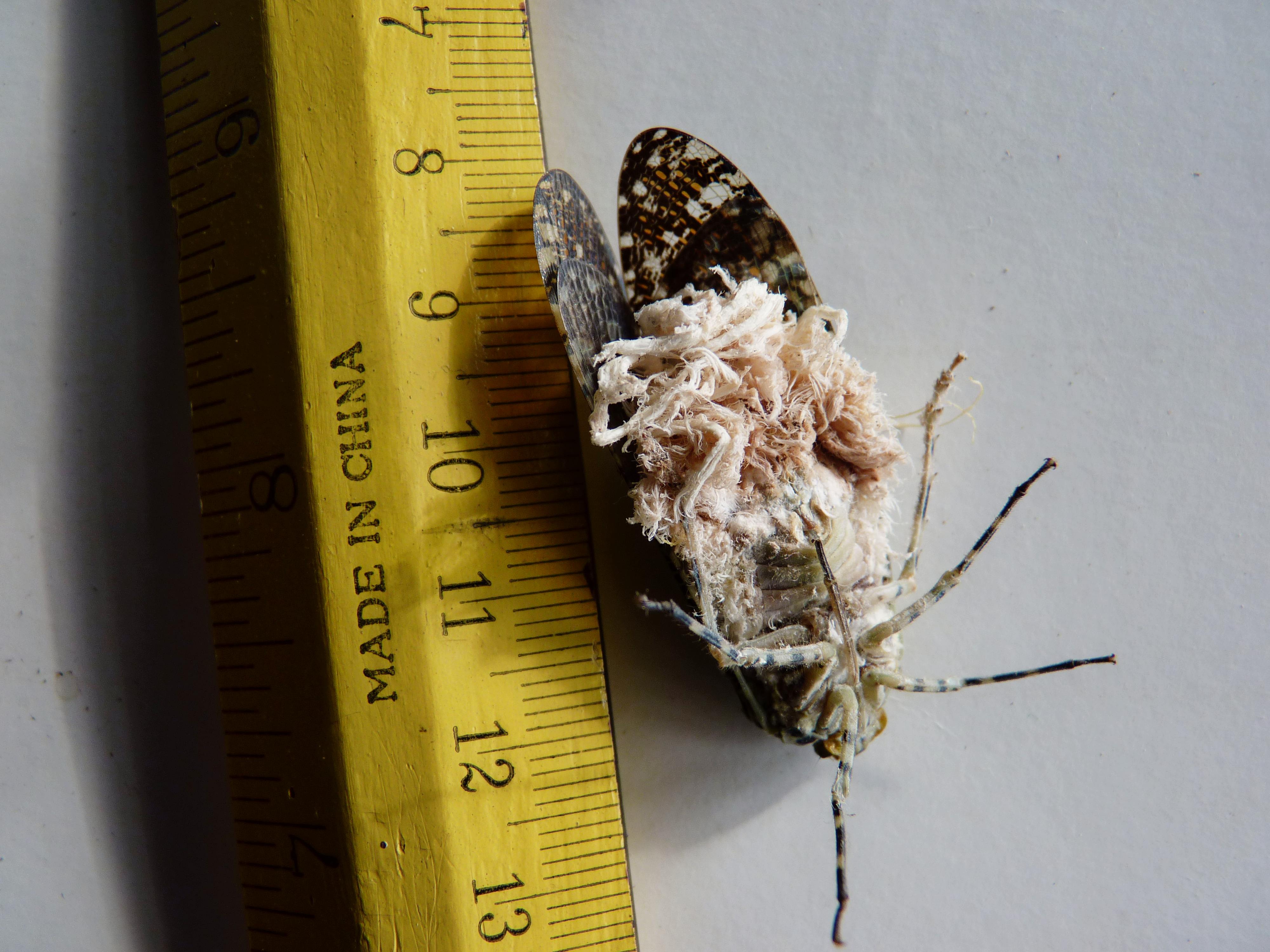
After a careful search and comparing pictures, I realized that the “cicada” from Salta was not affected by the fungus. Still, I thought that there was something very wrong with its abdomen! Obviously my interest was spurred and I spent more hours than I had planned trying to clarify what I have found years back.
I was wrong on all counts but what I could put together was still interesting.
First error: what I thought it was a zombie cicada was in fact a planthopper and what I took for the fungal infection that destroys its abdomen, were filamentous wax strands produced by special glands. The insect would release the filaments as decoys to protect itself from predators allowing it to escape. Something comparable to the lizards dropping their tails to distract our cats or dogs.
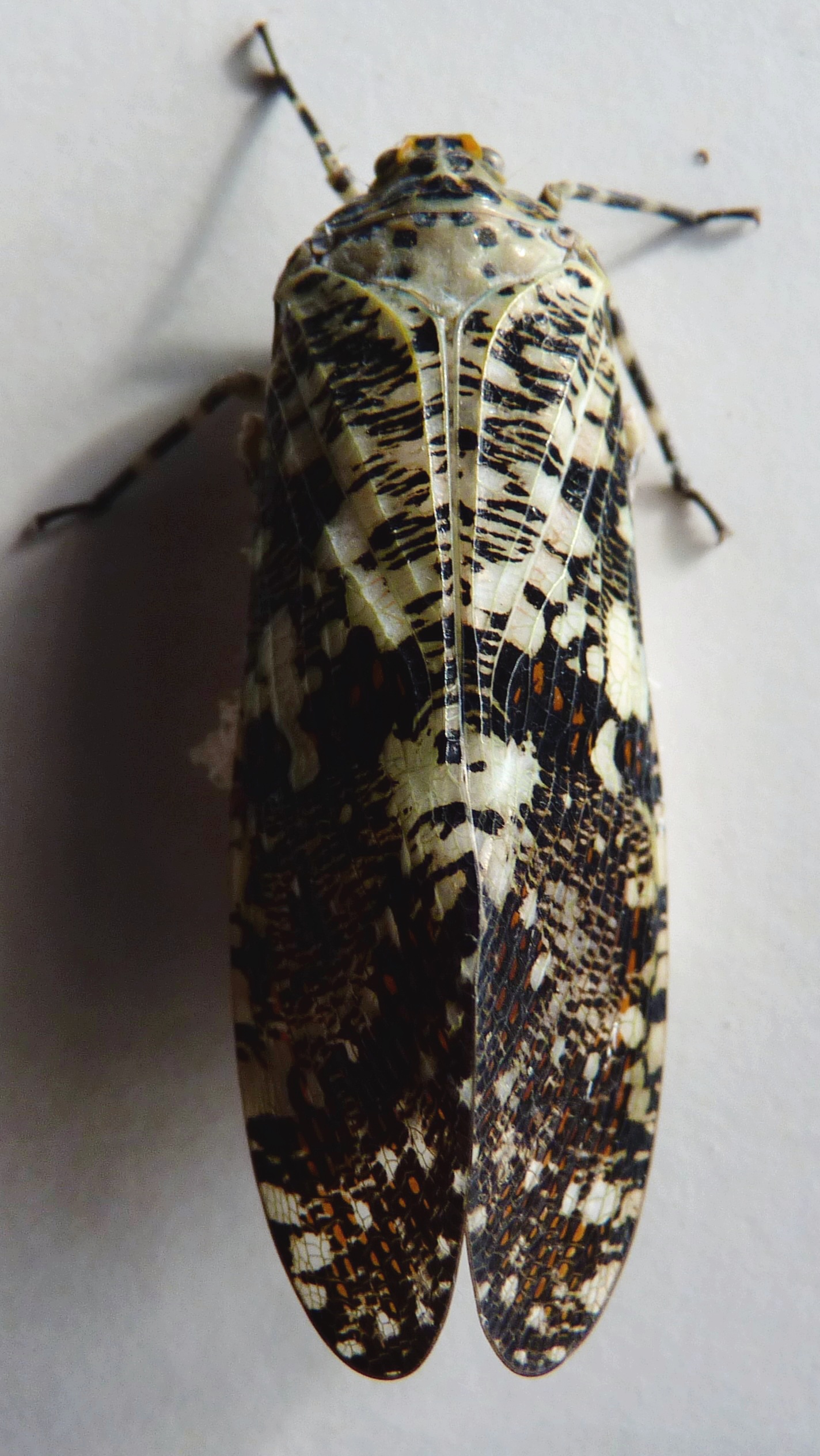
So, my find was a perfectly normal planthopper, possibly Phenax variegata, a species belonging to the family Fulgoridae that lives on tree trunks in South American forests and feeds on plant sap.
Second error: While taking pictures of the insect I had noted (and forgotten since) that there was something else that had called my attention. The planthopper was carrying two tiny grubs of about 4 millimetres long attached to its body. After another long search, I found that there is a very rare kind of moth that are unique in that their caterpillars, instead of feeding on vegetable matter, parasitize planthoppers. This is what I believe I found!
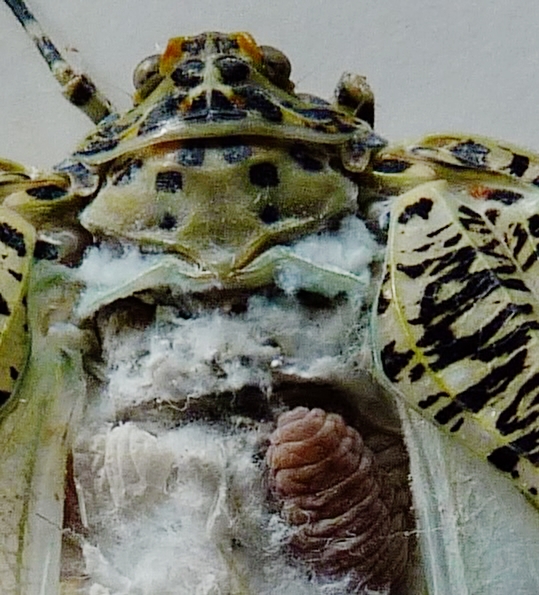
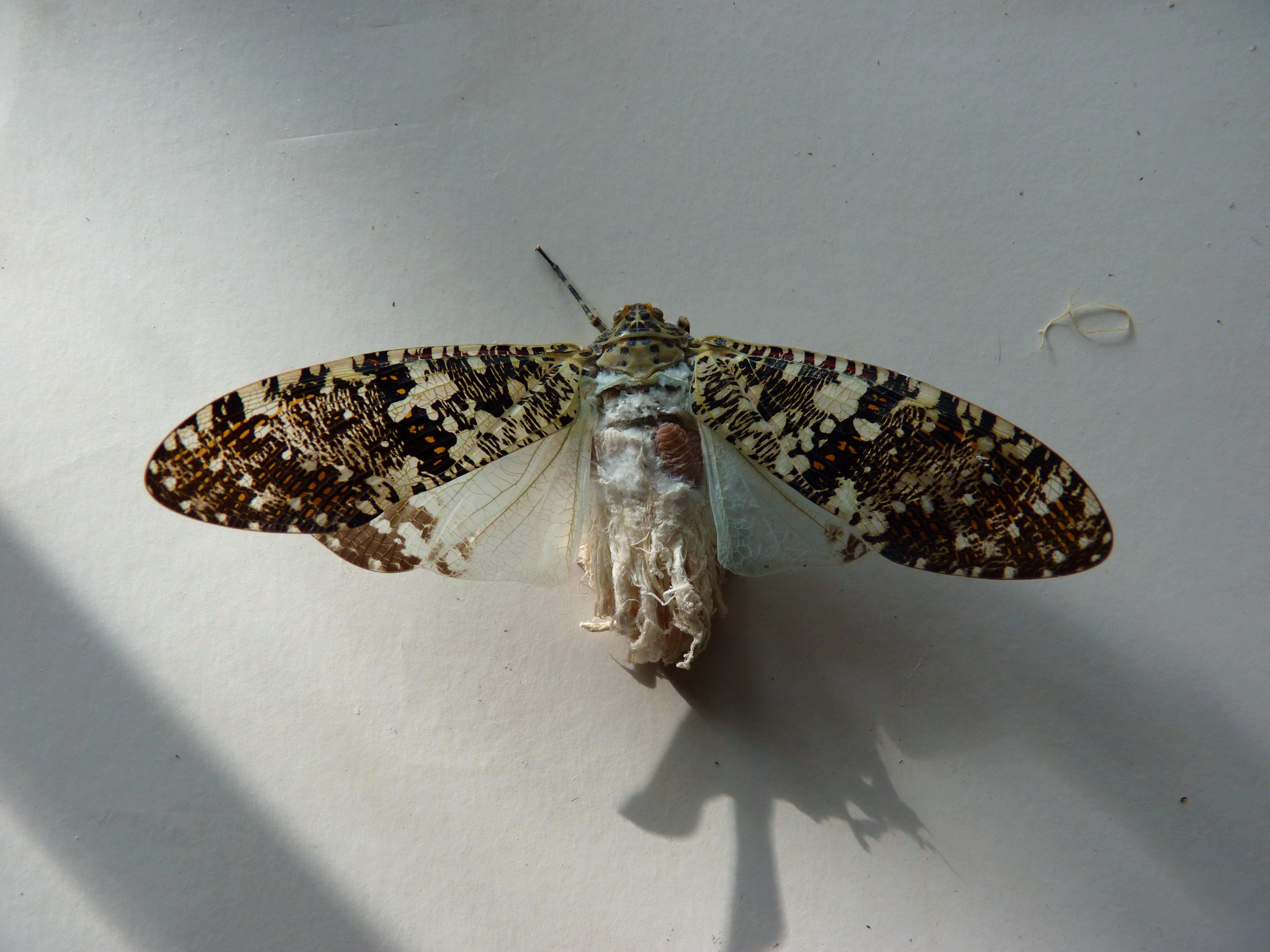
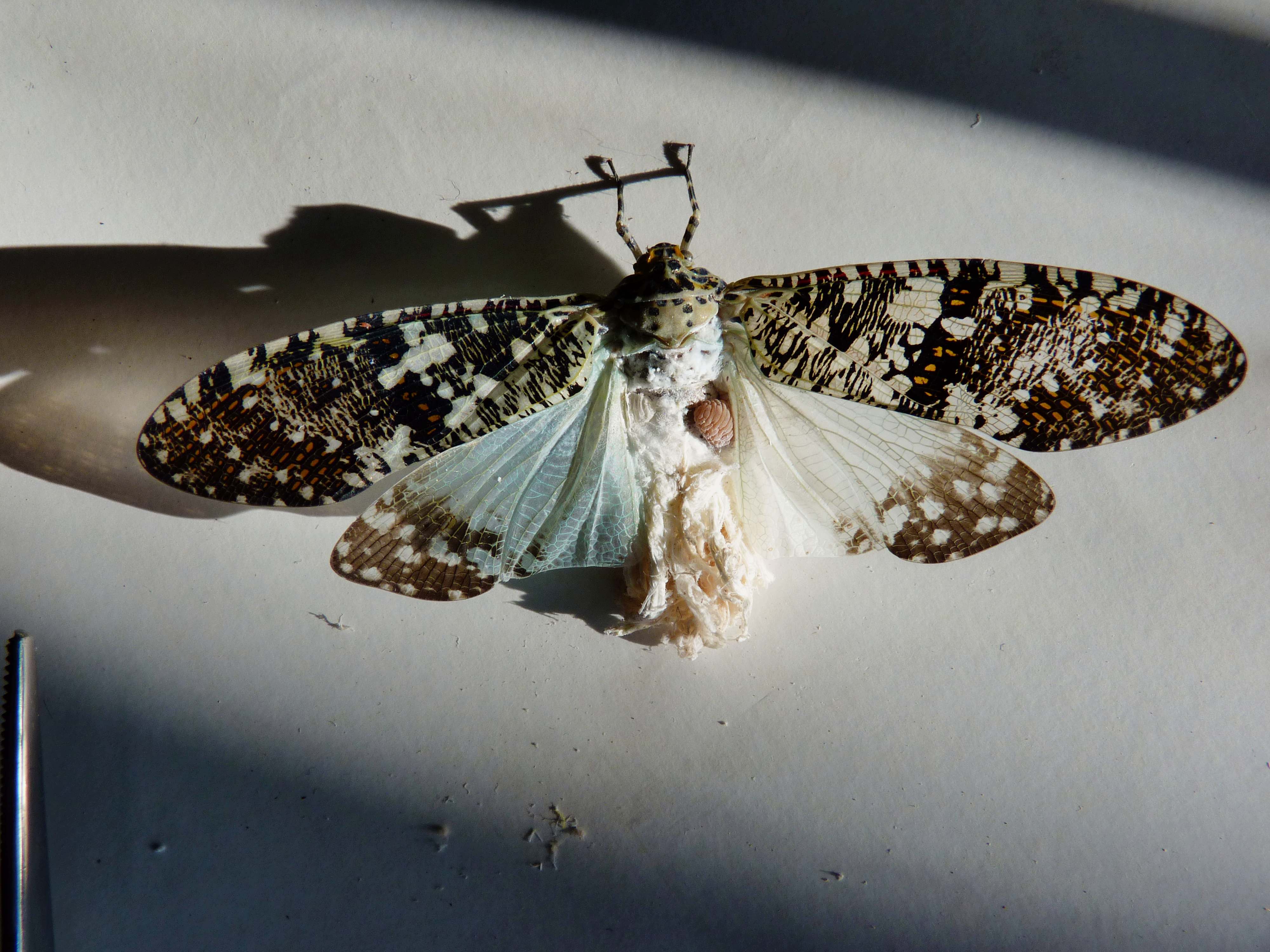
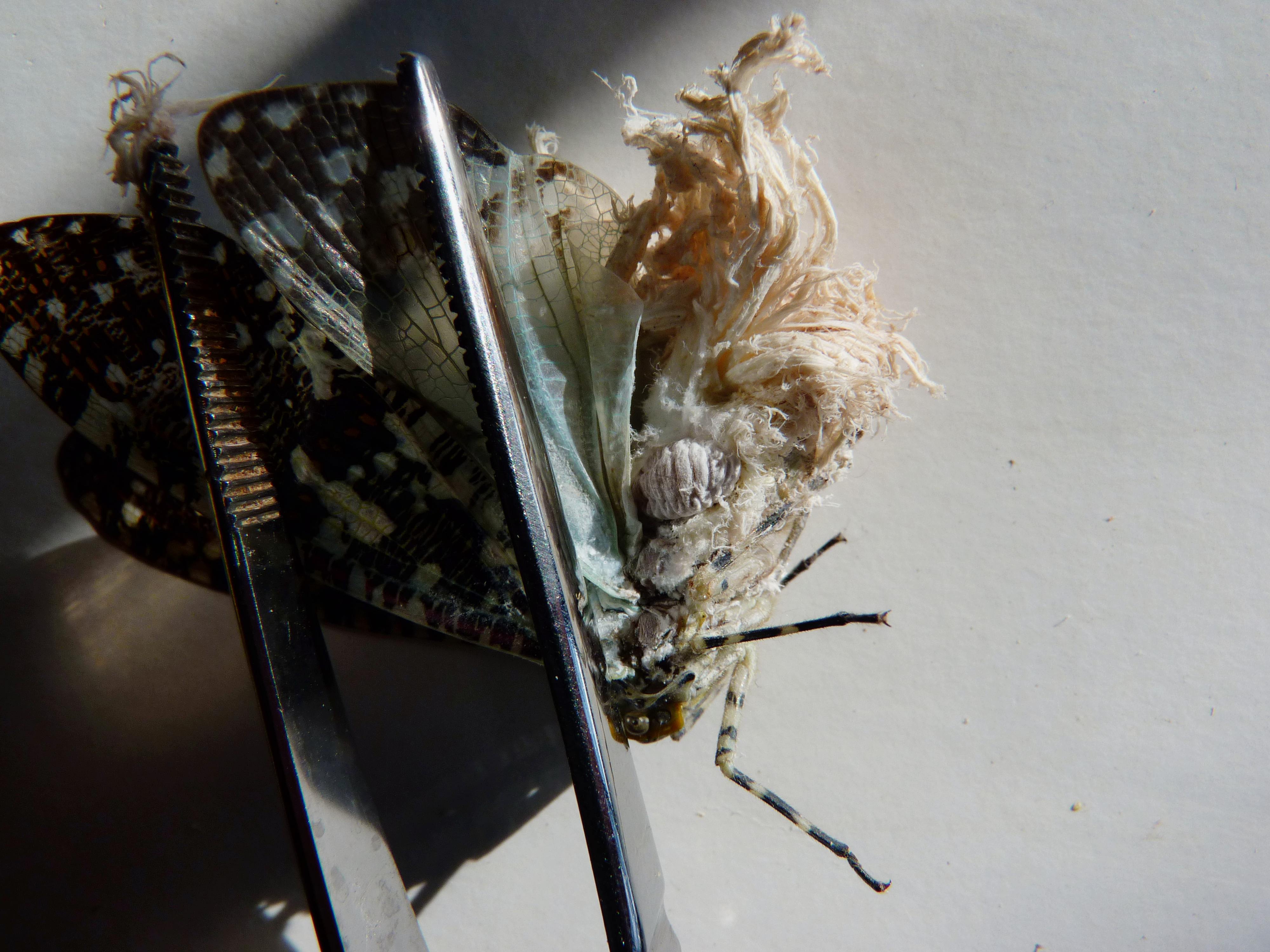
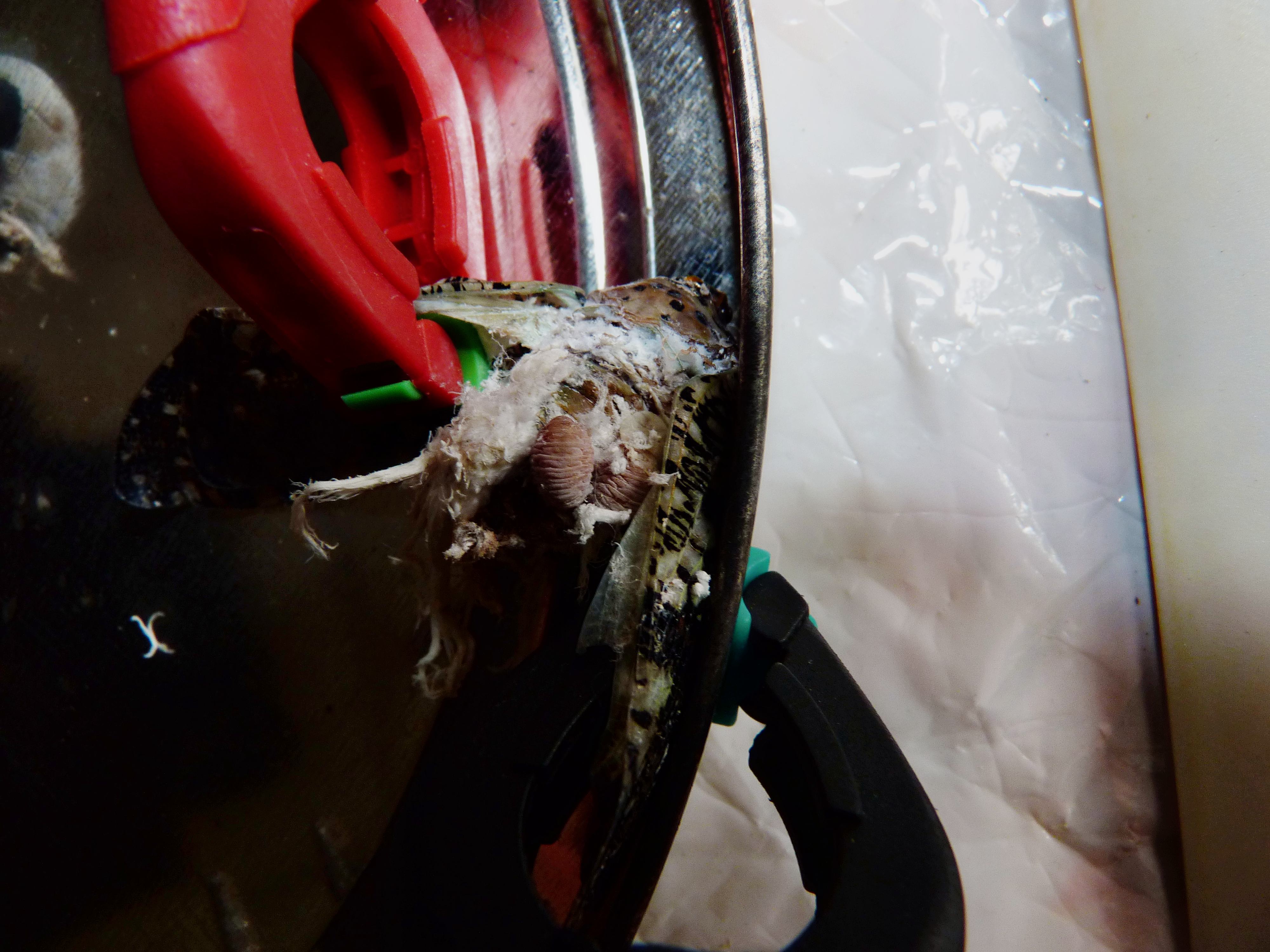
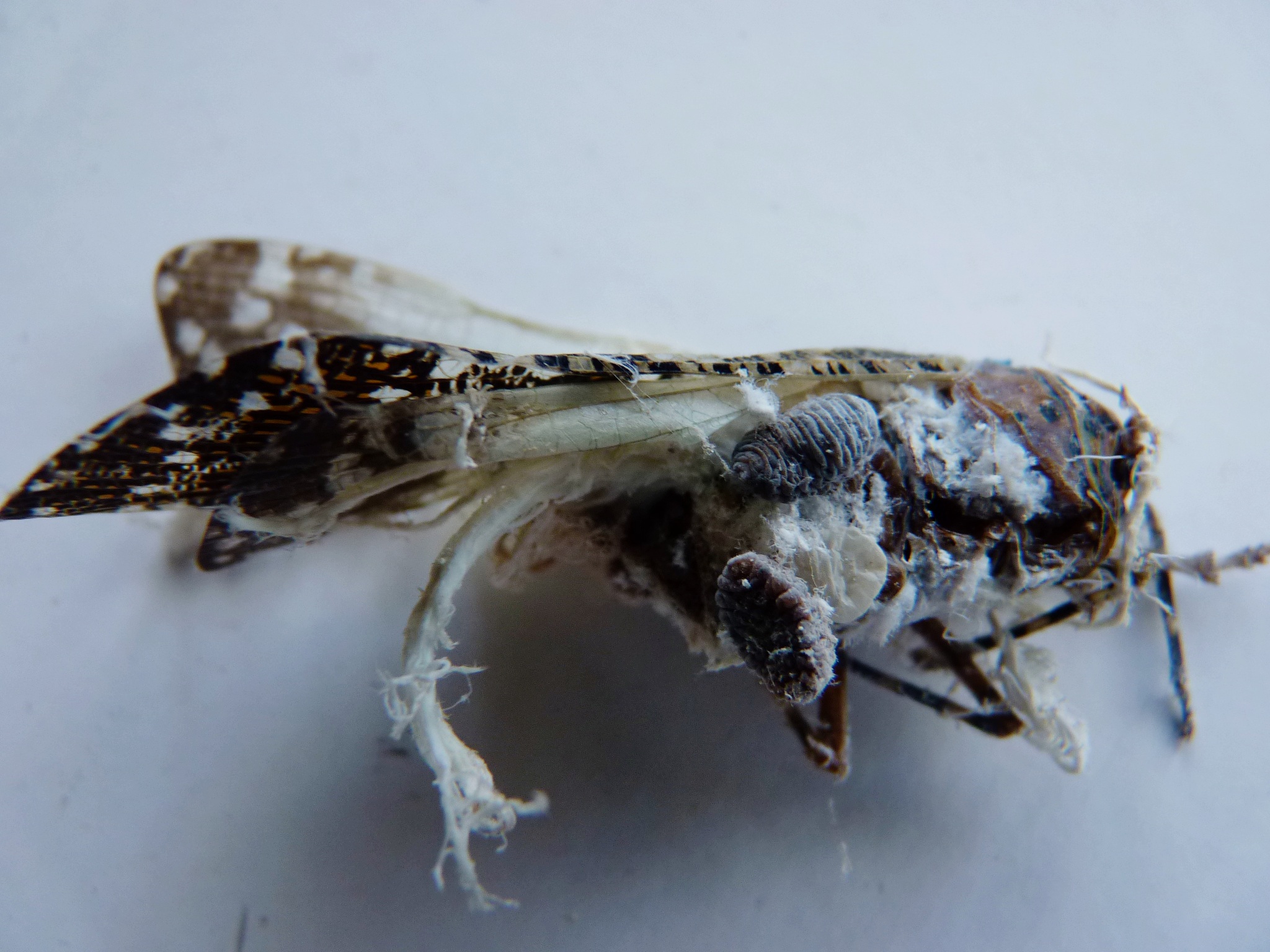
They belong to the Fulgoraecia genus within the family Epipyropidae. (Dorsal and ventral views below).

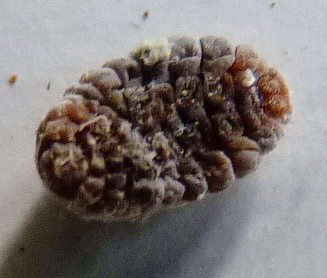
So, although I did not find a planthopper zombie, I came across a kind of “vampire” moth that sucks the haemolimph of the planthoppers!
I am aware that the title of the post is very dramatic but these days you need it to attract readers!
It would be good if someone with more entomological knowledge than me would see this small post and perhaps correct my observations.
(1) https://edition.cnn.com/2020/08/03/us/zombie-cicadas-west-virginia-fungus-scn-trnd. Read on 16 August 2026.

