Driving near the red rocks in the Bateleur rest camp area of the Kruger National Park, we stopped for a deserved leg stretch and were welcomed by this sight:
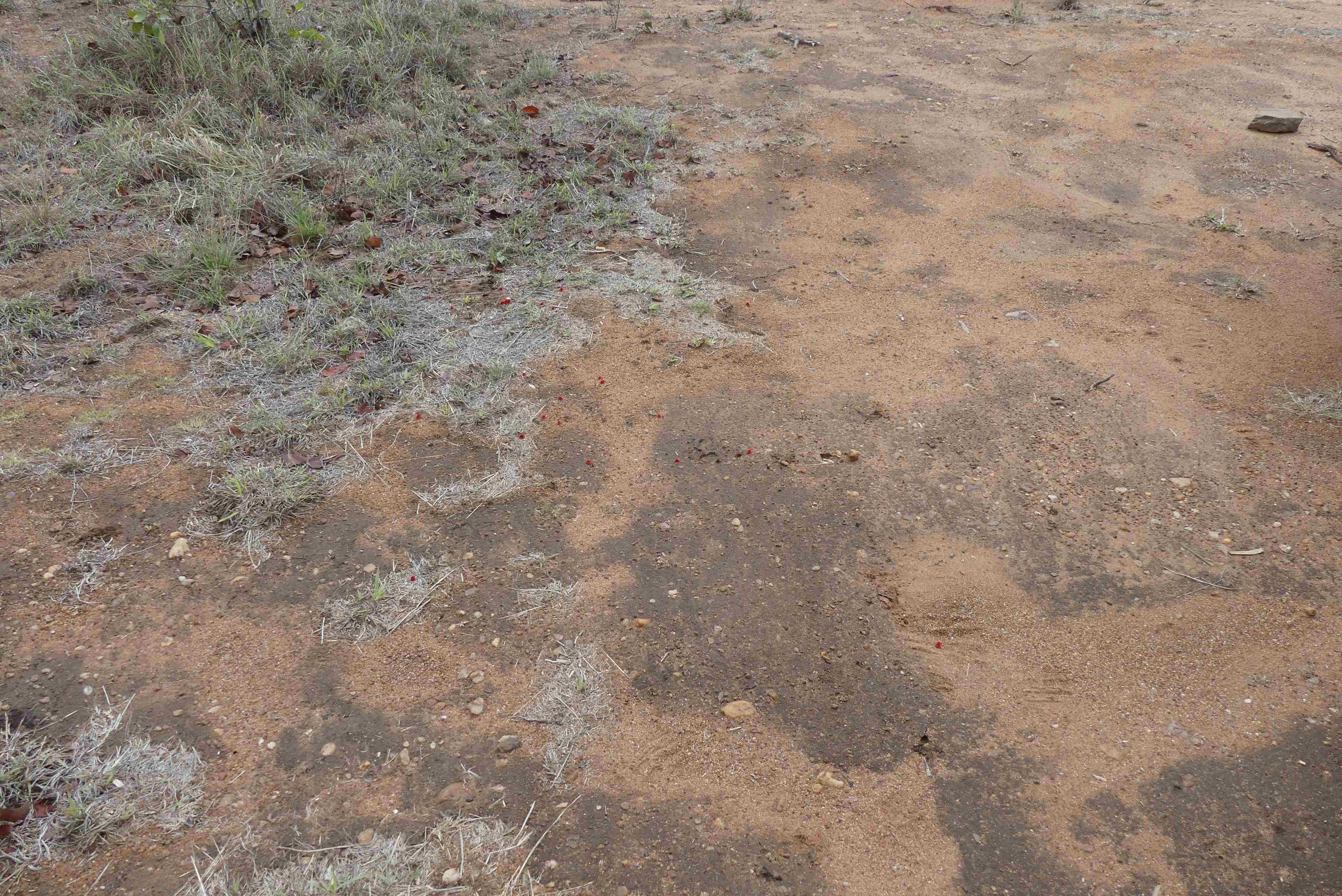
It is difficult to spot anything, I know. However, if you look very carefully, you may see some tiny red dots on the ground. These are gian red velvet mites that, after the rains, have come up in numbers to feed and, I imagine mate and multiply.
?
?
?
?
The following videos will give you an idea of what they are (set the videos to high resolution to enjoy them better).
I also took some pictures:
Giant red velvet mites in Kruger National Park are probably Dinothrombium tinctorum. They are among the most striking invertebrates in the soil ecosystem. These arachnids are famous for their vibrant coloration, which serves as an warning to predators that they are toxic or unpalatable.
Biologically, they are distinguished by their relatively large size—up to 12 millimeters—and a dense coating of fine, velvety hairs. As larvae, they are ectoparasites, attaching themselves to insects like grasshoppers and beetles to feed on their hemolymph. However, as they mature into nymphs and adults, they become active soil-dwelling predators, hunting for small invertebrates, particularly termite workers and insect eggs.
Their behavior is highly seasonal and weather-dependent. Often referred to as “rain mites,” adults spend most of their lives buried deep underground. They emerge en masse just after heavy tropical or desert rains to engage in a synchronized, elaborate courtship ritual. Males create intricate “love gardens” of spermatophores on twigs and grass, guiding females to them using silken trails. As vital predators, they help regulate subterranean pest populations, maintaining the delicate balance of soil health.


Wow, what a beast! Well spotted and thank you for these captivating infos!
LikeLike
Happy that you enjoyed it. I have seen them before but not that many! Keep well.
LikeLiked by 1 person