Tusker

An elephant in New York

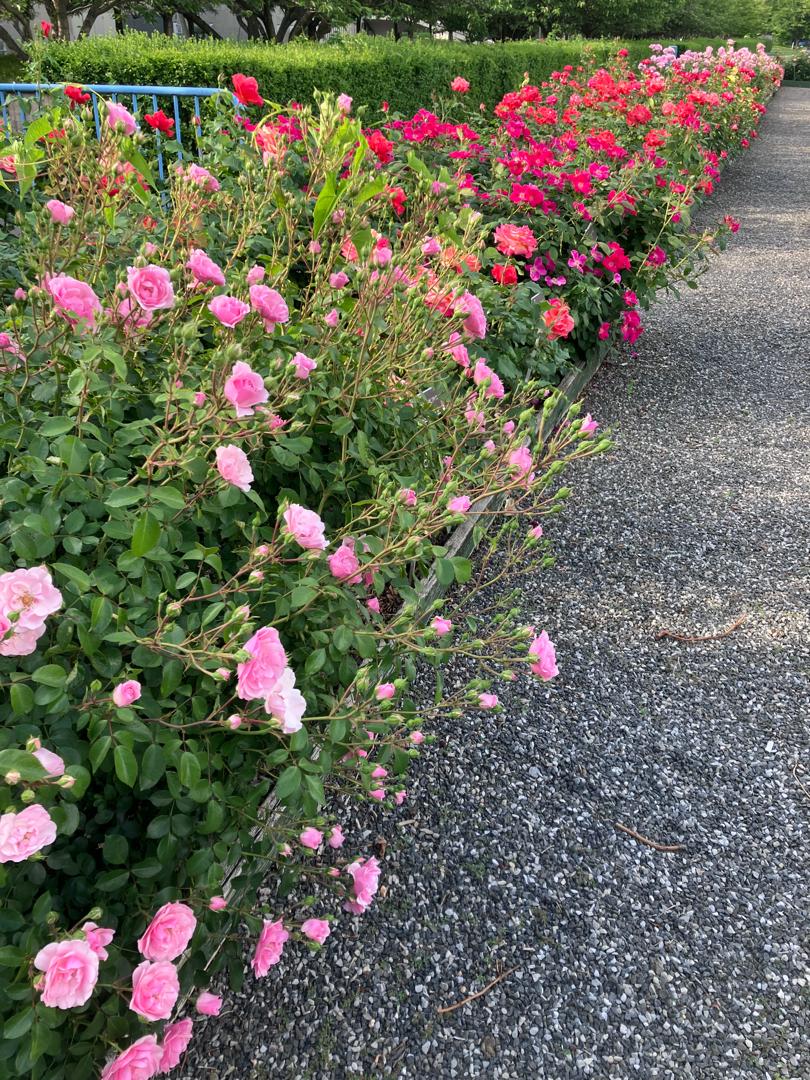
We went for a visit to the United Nations Headquarters (UN HQs) in New York and, after visiting the building we went to admire the sight and scent of the roses at the garden and the view. Then it happened. Our trained eyes spotted a large elephant among the bushes and then they opened wide when it started moving towards us! Immediately, King Kong came to mind…

Well, that start for the post was only to attract the readers’ attention!

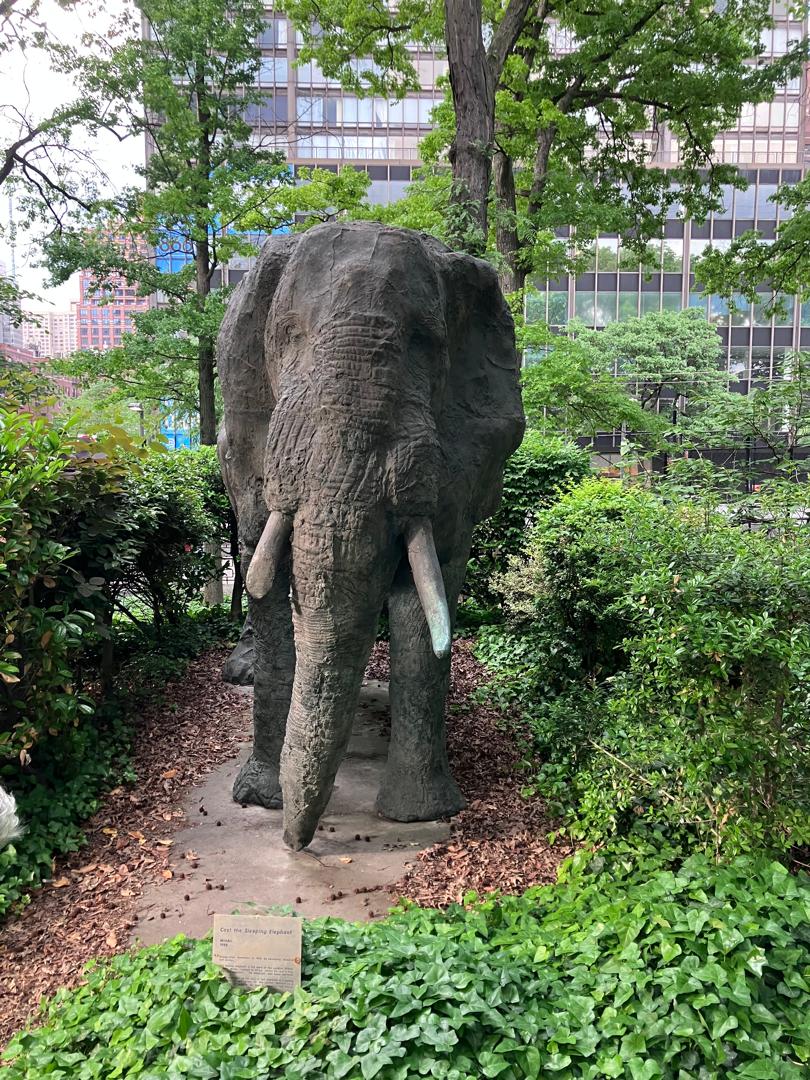
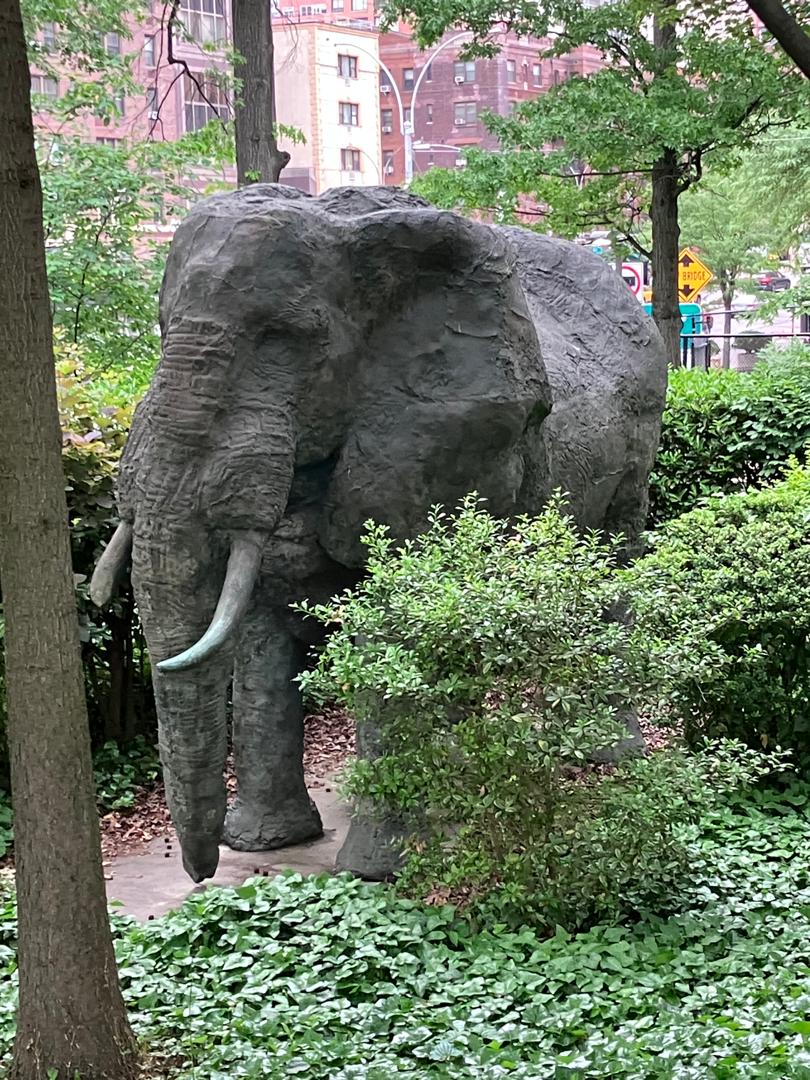
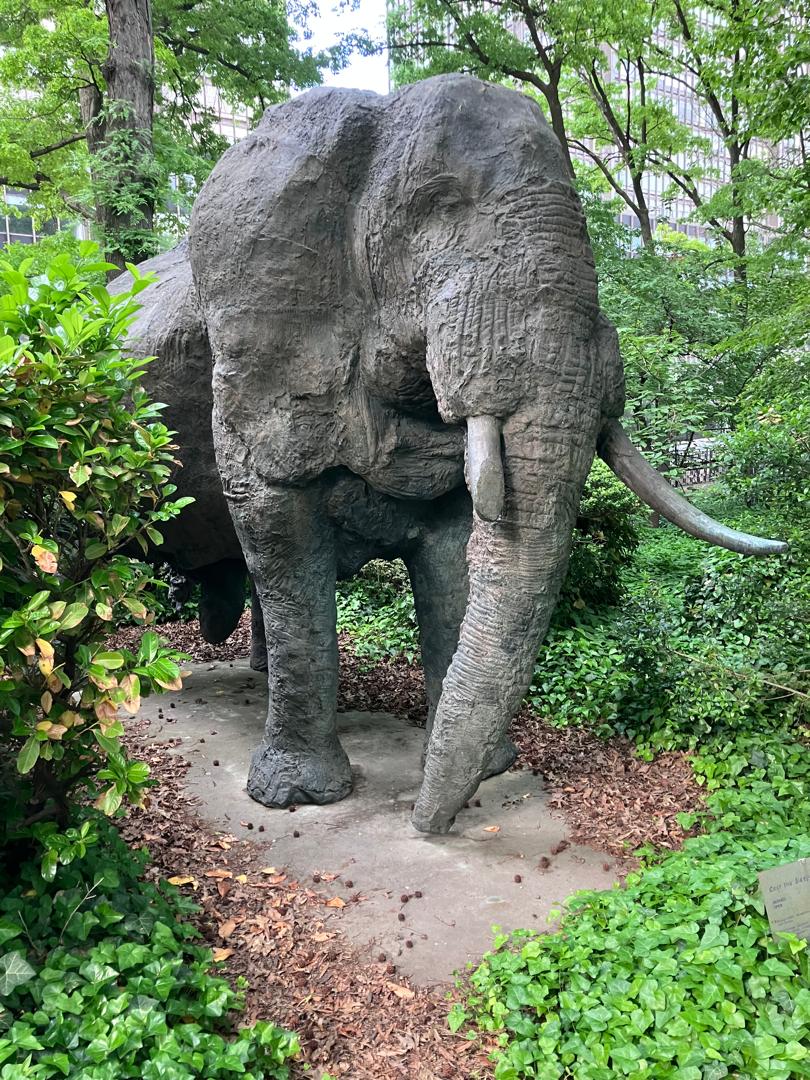
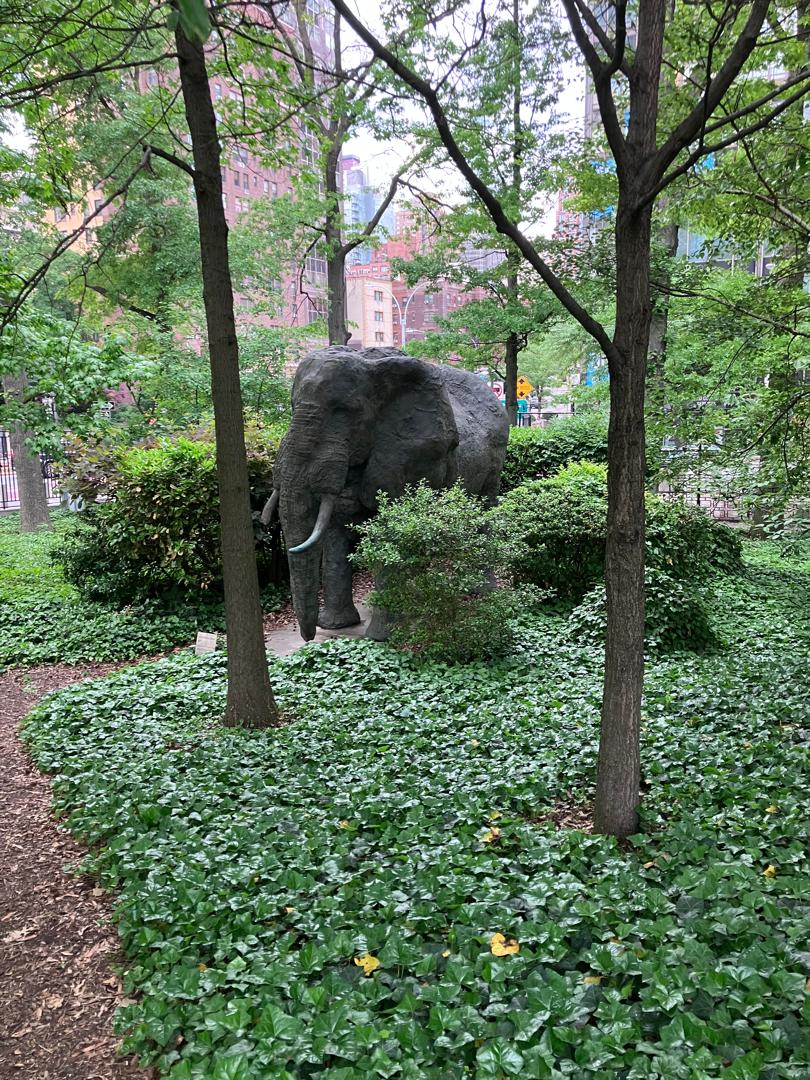
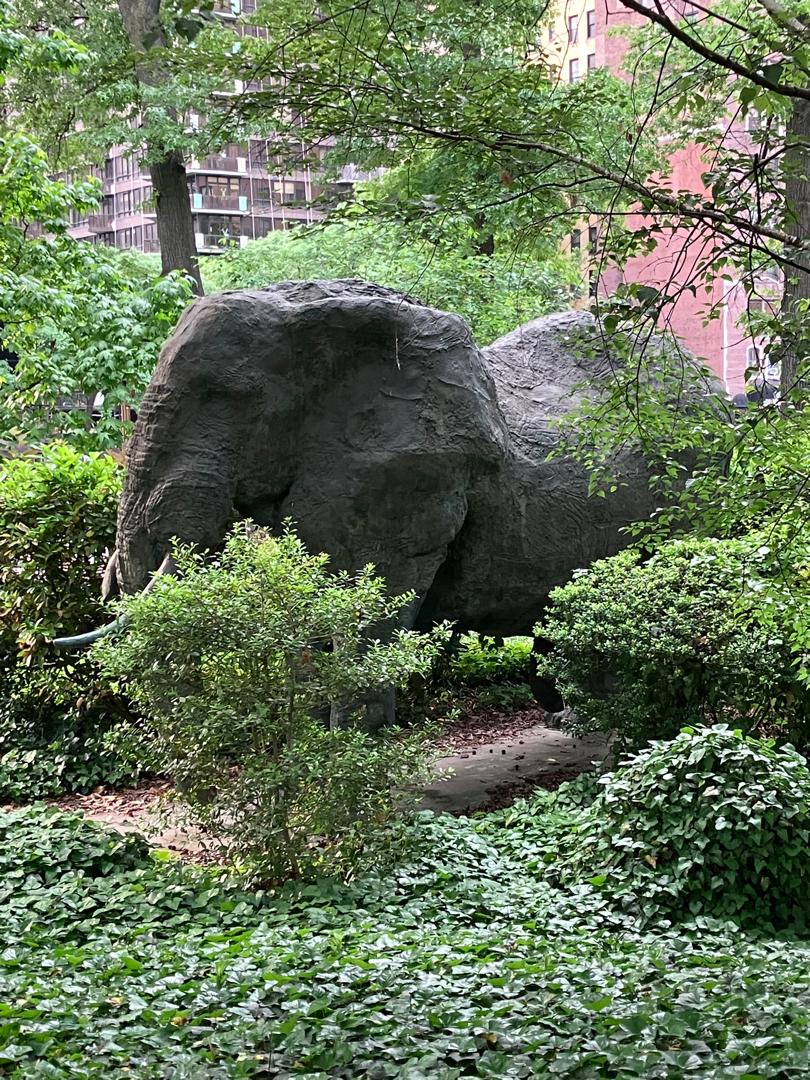
However, a life size of a bull elephant does exist and it stands at the UN HQs. It is a bronze cast donated jointly by Kenya, Namibia, and Nepal. Although it seems logical to me that Kenya and Namibia would do such a thing, Nepal was more surprising. However, I should have known that the country has over 200 wild elephants and another 250 captive ones (1). In addition, Nepal has a “wildlife diplomacy” an important part of the country’s soft-power foreign policy (2).

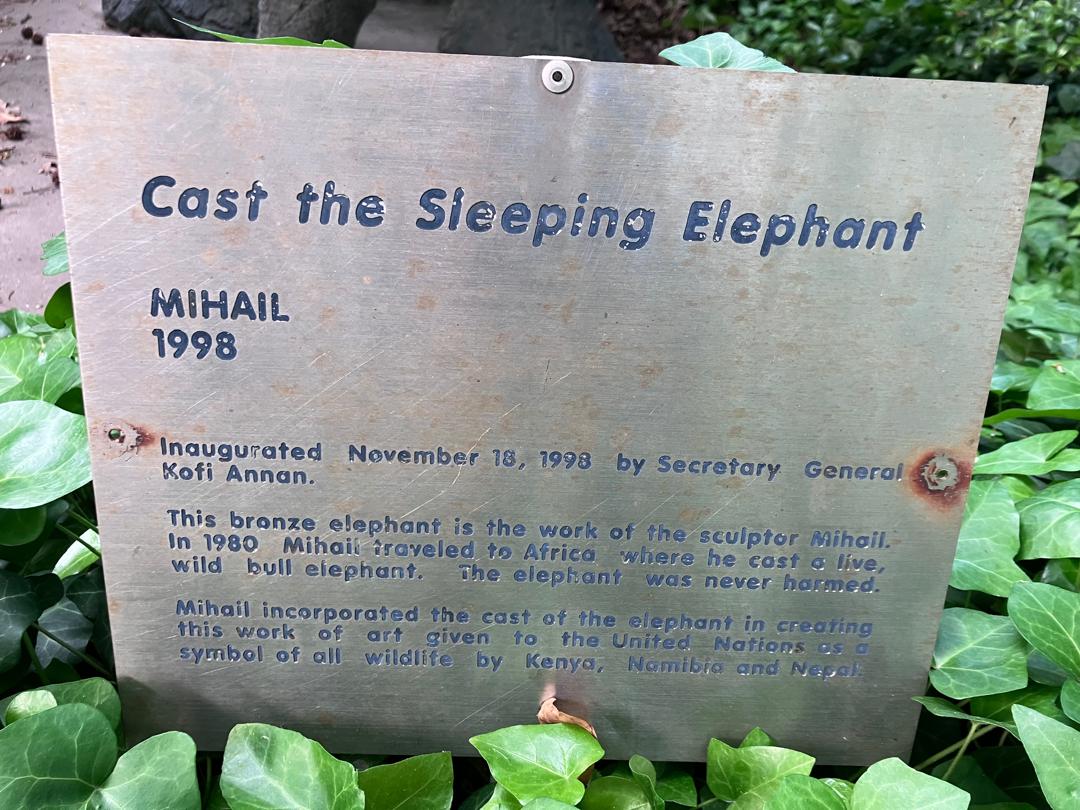
Mihail Simeonov (3) hatched the rather outlandish idea of casting a sleeping elephant in Africa and the account of the events that followed is based on his publication (4).

About 1978, he created the Cast the Sleeping Elephant Trust. The founding document explores “…the philosophical and practical implications of man’s dominance over Nature and the need to readdress and to completely rethink that link to Nature.” The interested reader can find more information in Mihail´s publication.

For the next couple of years, until the cast was actually made on 19 March 1980, Mihail gradually managed to get Kenya´s permission to do the job there. Subsequently, he convinced Kelco, a division of the Merck Corporation, to donate one thousand pounds of alginate, the paste used by dentists to prepare teeth moulds amonmg other medical uses. This was important as other cast methods were not suitable for various reasons and Mihail did not wish to harm the animal.

After overcoming several other issues, Mihail travelled to Kenya where, with Kenyan government support, a suitable wild bull was found at Ol Pejeta (5) and tranquilized. After 2 hours of 20 people working, the cast was completed and the elephant walked away unharmed.

After 5 more years the work was completed and the plaster version exhibited at a gallery in New York. Finally, in 1986, Kenya agreed to donate it to the United Nations. Namibia joined Kenya two hours after its independence and, later, Nepal also agreed to join in.

A number of proclamations from the author and the donor governments on the right for the elephants to exist for eternity ensued and the bronze elephant weighing over 3 tonnes was finally completed at a foundry in NY and, after considering other options, transported by flat bed truck to the UN HQs to be finally placed at the northwest corner of the North Garden.

But there was a snag: the size of the elephant penis!

This subject was treated at a meeting of the Secretariat on 17 November 1998, just one day before it was going to be unveiled. A senior official was worried about the size of the penis and its possible negative impact on children visiting the UN so, eventually, after abandoning the idea of plastic surgery on the offending part, it was decided to dissimulate it by planting bushes around the statue to hide it from view! This work actually ended minutes before its inauguration by SG Kofi Annan on 18 November (6), more than 28 years after the casting took place.
(1) https://www.researchgate.net/publication/398959917_Asian_elephants_and_their_status_in_Nepal_a_review#fullTextFileContentRetrieved on 21 May 2026.

(2) https://diplomatnepal.com/feature/wildlife-diplomacy-shifting-from-rhinos-to-elephants/ Retrieved on 21 May 2026.

(3) https://en.wikipedia.org/wiki/Mihail_Simeonov

(4) https://www.scribd.com/doc/33842662/CAST-THE-SLEEPING-ELEPHANT Retrieved on 21 May 2026.

(5) https://www.olpejetaconservancy.org/ Retrieved on 22 May 2026.

(6) https://press.un.org/en/1998/19981118.sgsm6800.html#:~:text=A%20former%20Governor%20of%20Brazil’s,up%20and%20ask%20for%20peanuts. Retrieved on 21 May 2026.
Matlakusa

You will recall that on 20 August 2014 I published a post titled “A tusk task” (https://bushsnobinafrica.wordpress.com/2014/08/20/a-tusk-task-2/) where I presented the finding of ab elephant bull that, as far as I could tell, had not been identified before. I called this animal the “Balalala tusker” as we saw it near the Balalala area at Kruger National Park.

A month later in “Unraveling the tusker mystery” (https://bushsnobinafrica.wordpress.com/2014/09/21/unraveling-the-tusker-mystery/). I reported that I got confirmation that what we had seen was indeed a new tusker that “will definitely escalate him to the top of the list when the time for the naming review comes and hopefully at that time he will be confirmed as a new bull and named“.

The naming process took a while during which I kept asking the Emerging Tuskers Project (ETP) of the Letaba Elephant Hall of the Kruger National Park for progress but I had no news for over two years. When I was starting to lose hope, on 28 June 2017, I received an e-mail from the ETP that I reproduce below.

Dear Julio,

I am sure you are convinced by now I had forgotten you. I am sorry this process took so long… I finally got the media release and approvals done and I can formally tell you now that your bull is named Matlakusa. 

It proved quiet an interesting story in the end, as once we had identified your bull as a new bull, we noted that with one of our other new bulls some of the submissions characteristics matched your bull better and we actually managed to split these sightings far more accurately after the great series of images you and another contributor provided so it actually helped link the two new bulls and discover a completely new bull and a new area for him as well.

Below is the link to the website as well as the info for Matlakusa (this is a summary of the info that is on file with the project), if you have any further questions please do not hesitate to contact me.

https://www.sanparks.org/parks/kruger/elephants/tuskers/emerging.php#matlakusa

Origin of Name: ‘Matlakusa’ from tlakusa, in Tsonga meaning to ‘raise, lift up’, this is a large open pan and bore-hole, alongside the eastern border, southeast of Malonga in the Kruger National Park and links to this bull’s large home range. 

Range: Northern and Far Northern KNP. 

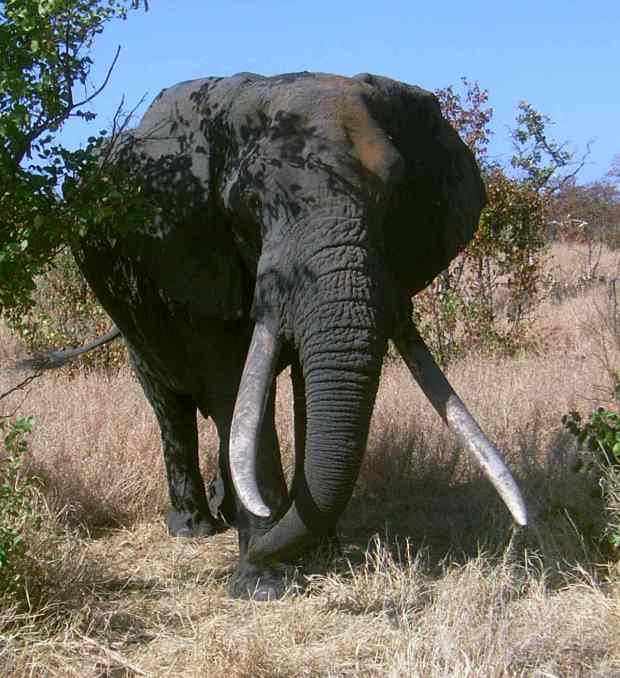
Special Features: This bull’s ivory closely resembles that of Xindzulundzulu, that it is fairly symmetrical, straight and widely splayed with a shallow curve from a side profile. The left ear holds the defining characteristics that separate these two bulls, there is a R5.00 sized hole in the tip of the lobe as well as an area of damaged cartilage at the top give a large v-shaped ‘collapse’ in the ear. A very small u-shaped notch and two R0.20 holes are visible on the middle of the lobe but only at close inspection and with the ears extended. The right earlobe had a R0.50 sized hole towards the bottom of the lobe that has recently been torn and is now a u-shaped notch with a small hole towards the inner lobe above this. Other than this the lobe is fairly clean edged. A small protrusion of skin is visible on the trunk at the top adjacent the left tusk. Visible from a side profile is a growth on the left foreleg behind the leg just above the joint.

General: Initial images of this bull from Joël and Di Roerig were identified as Xindzulundzulu due to his ivory shape. Later in 2014 a full series of images submitted by Julio de Castro [1] between Shingwedzi and Balalala created a dilemma as at the time as Xindzulundulu was known to only be local to Shingwedzi and a new bull was suspected. Additional images by regular contributor Frans van Achterbergh submitted showing his left and right side allowed the defining characteristic’s to be seen and to be able to determine that there were in fact two separate bulls. This revelation allowed two previous sightings one of which was by Ian & Deirdre Outram and the other by Forum member Lion Queen both in 2012 that were both previously thought to be Xindzulundzulu but could not be confirmed as the locations did not make sense and defining characteristics in these images were not very clear. However the receipt of the 2014 submission with clearer images could confirm these identifications. Several other images placed with Xindzulundzulu’s monitoring file could now also be separated out as being those of Matlakusa and in 2015/6 it was decided that sightings of him were sufficient to name the bull confirming his status.

Kind Regards

Kirsty Redman, Interpretive Officer, Nxanatseni Region, Kruger National Park, South African National Parks.

As you can imagine we are delighted that our contribution assisted the ETP to identify Matlakusa and separate it from Xindzulundzulu as a new tusker.

new-tusker-cropped

Matlakusa showing off its ivory!

We look forward to find Matlakusa again during our next safari to the KNP next week. We hope that Matlakusa will continue to live its peaceful life for many years to come and that its ivory stays with it, where it belongs!

[1] the Bushsnob.