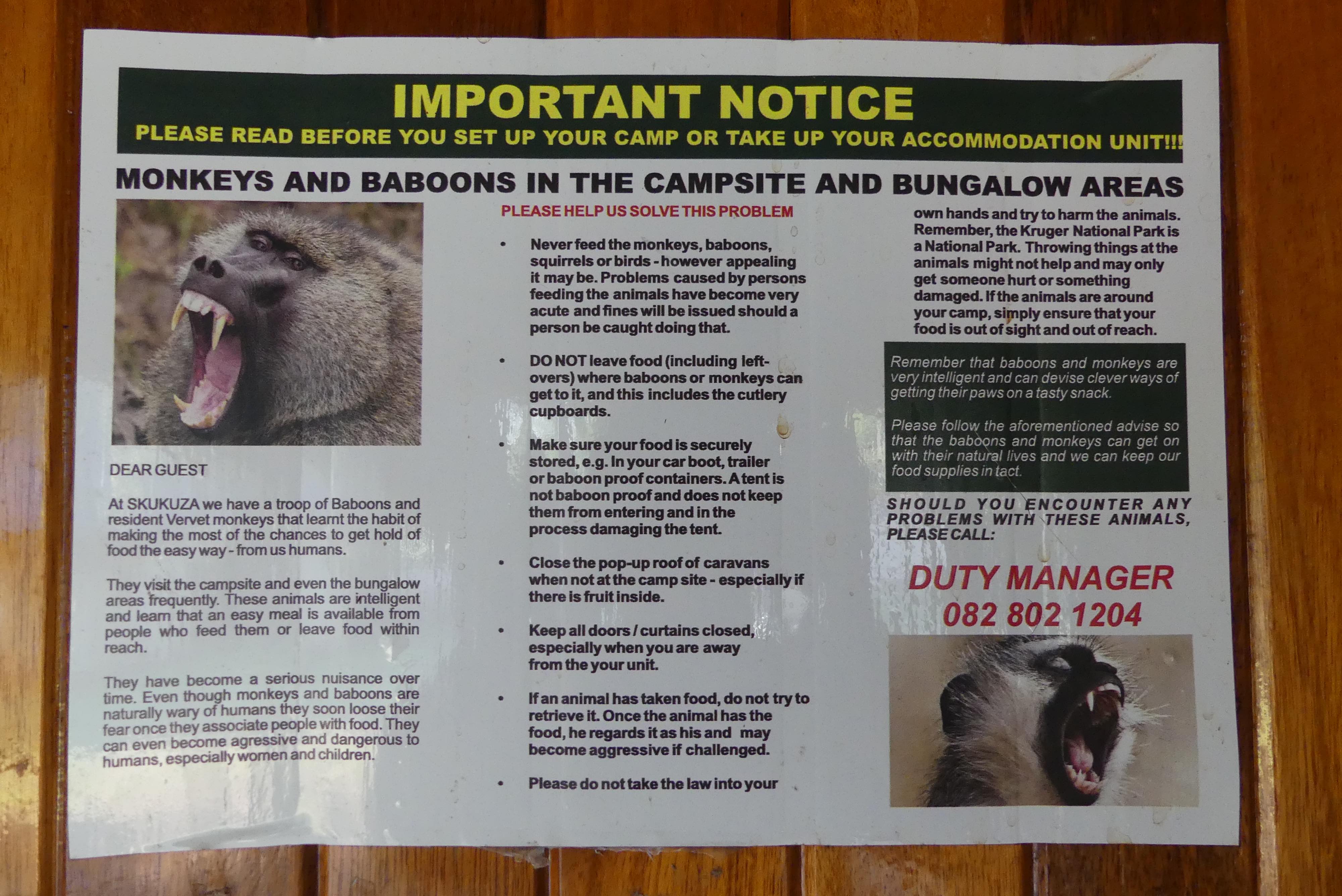
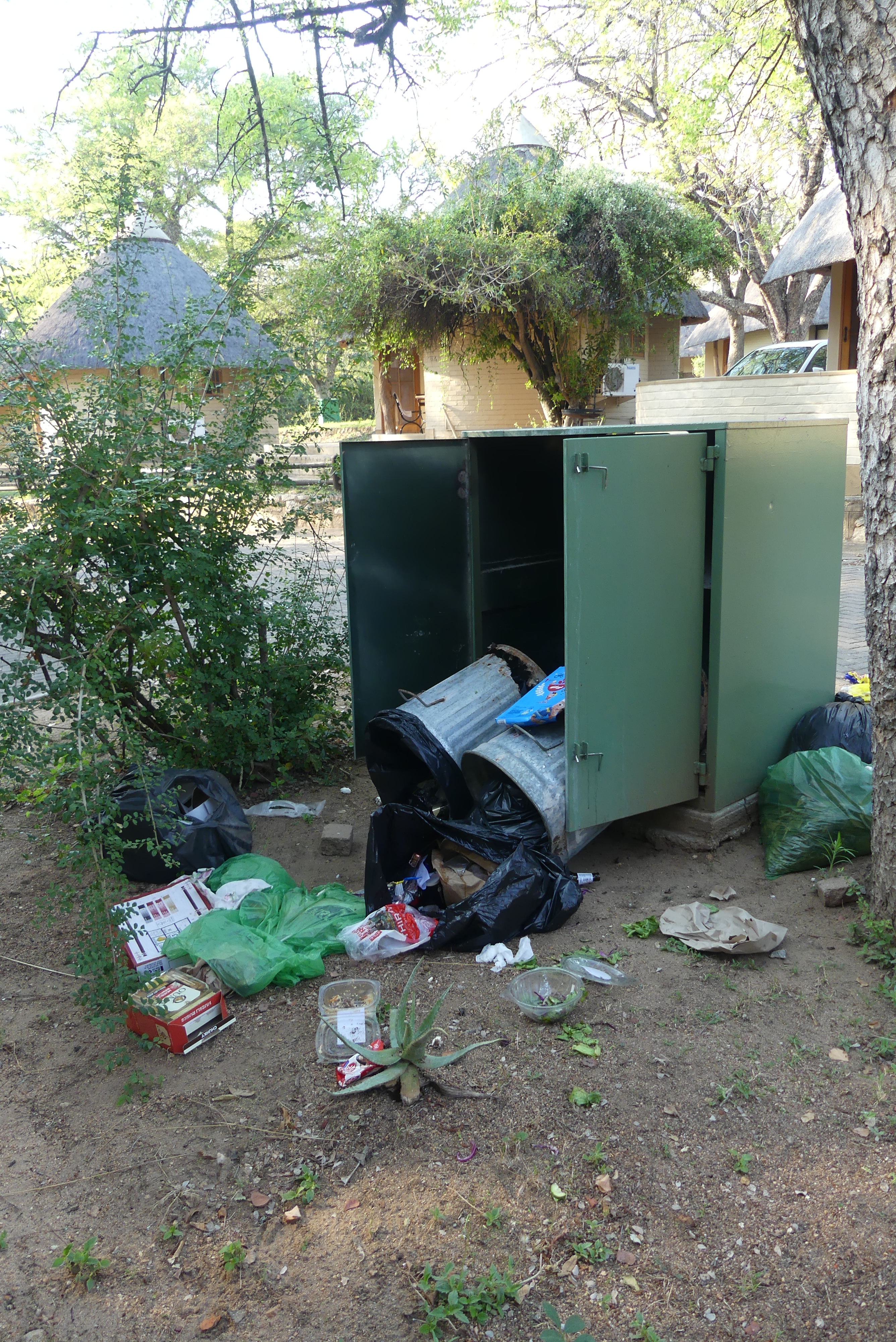
The worst problem while camping or staying at lodges in southern Africa are not the lions or the elephants but the vervet monkeys and the baboons.
The Kruger National Park has taken a number of measures to protect the visitors including leaflets and extra locks in the doors as well as reinforced rubbish bins.
Some of these measures work but some do not.
The problem is getting more serious as baboons, apart from raid your car, tent or bungalow looking for food they increasingly use their brute force to open doors, fridges and “animal-proof” dust bins!
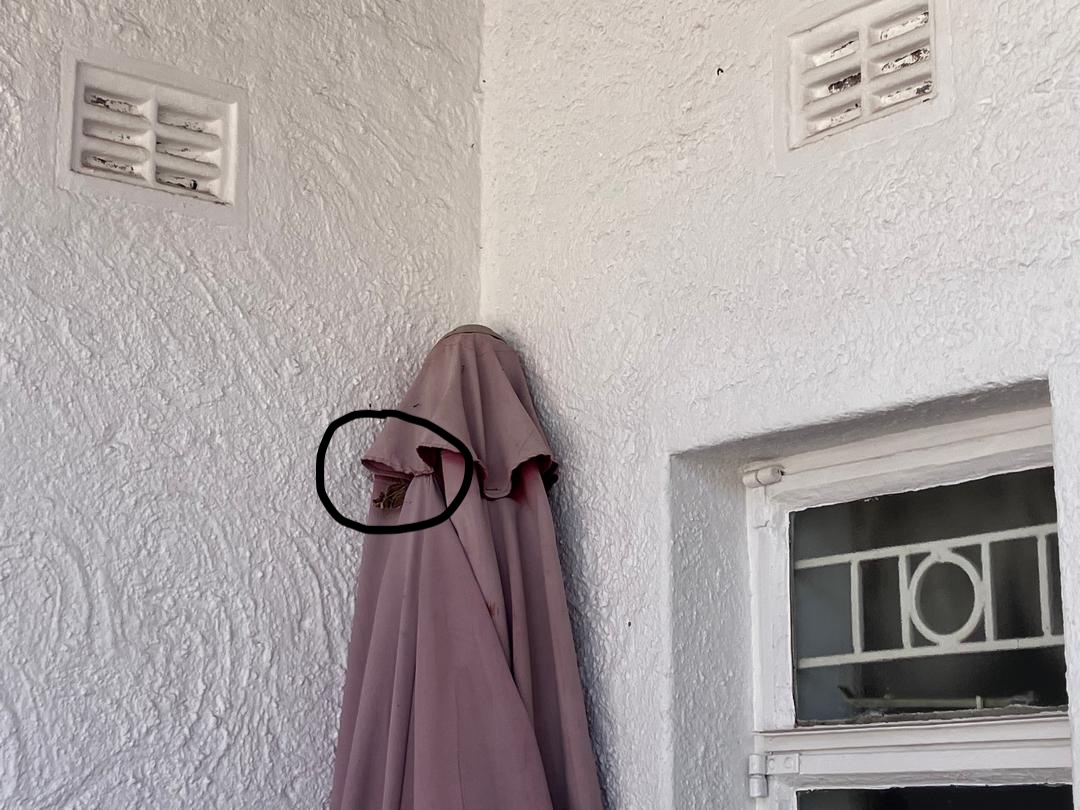
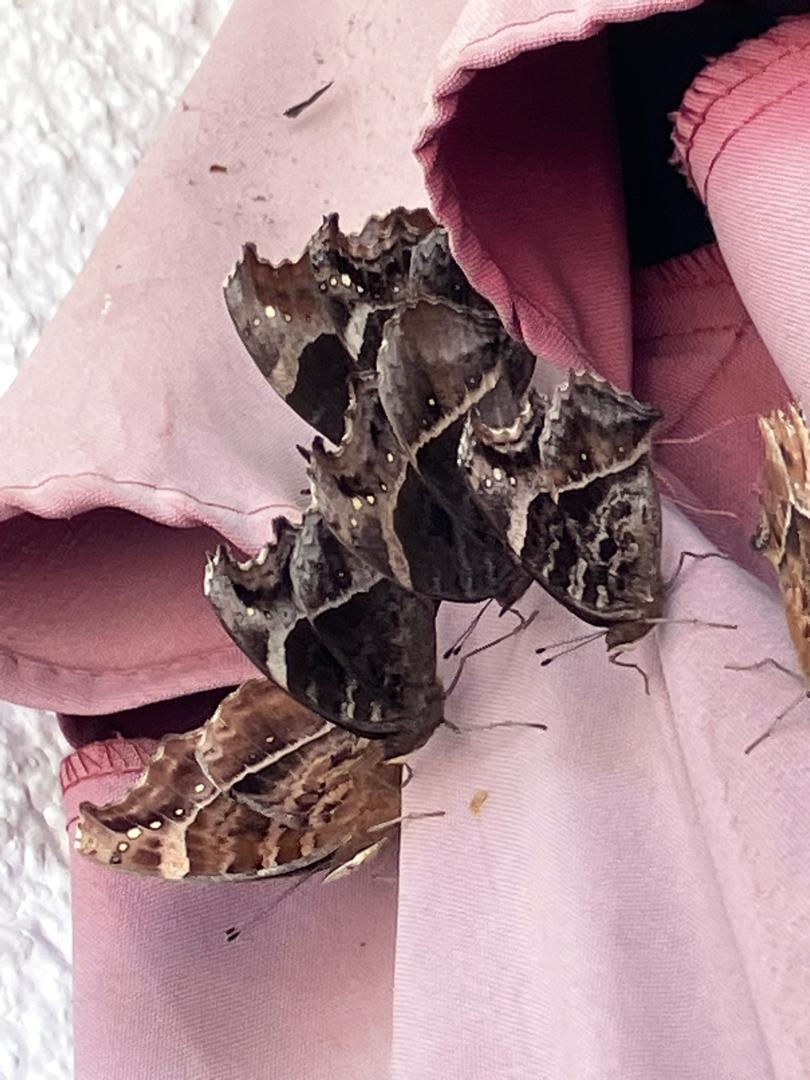
There is a very old garden umbrella at a corner of our patio. Nothing special to us. However, although our patio offers different possible habitats (shader, more humid, sunnier, etc.) it seems to be special to butterflies that congregate only there.
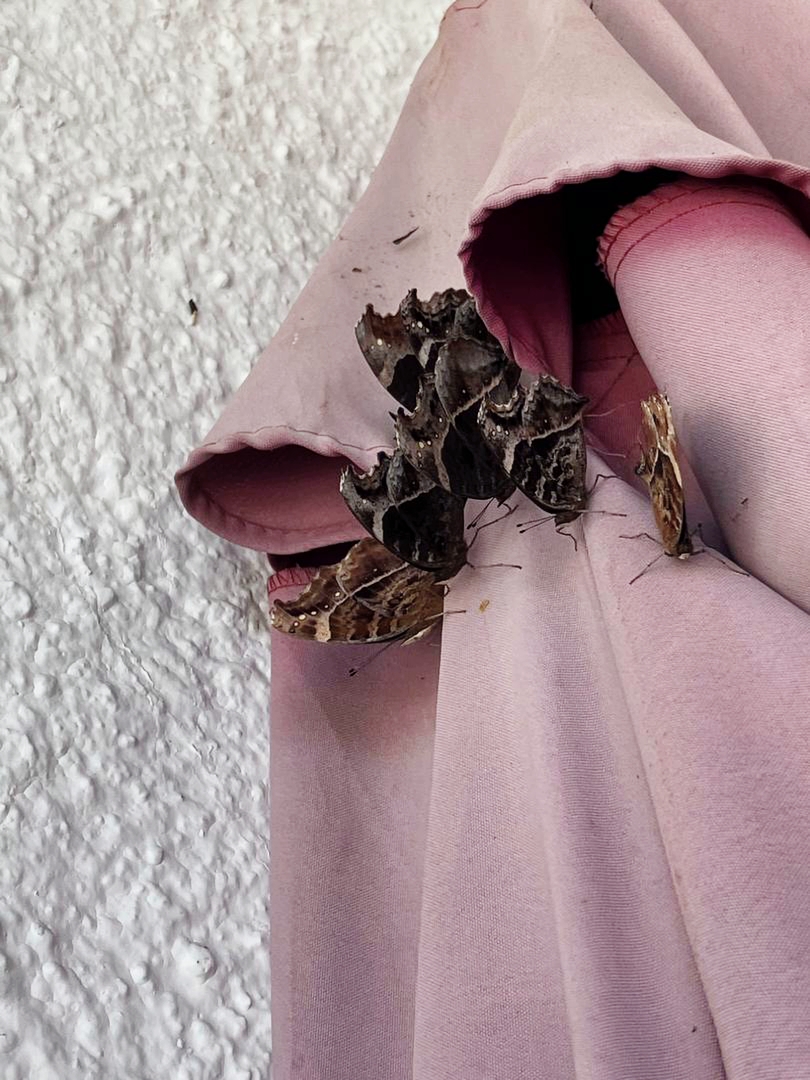
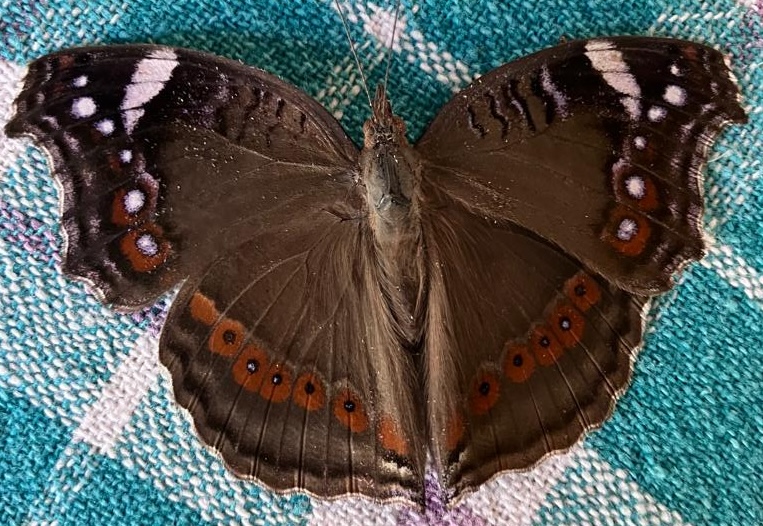
The Garden Commodore or Garden Inspector (Precis archesia) a common butterfly exhibits aggregation behaviour, believed to obey to seasonal changes and survival. They tend to overwinter in large groups during the cooler winter months (April to August), apparently to conserve heat (I am not sure how they do this). In our case, the numbers perched on the umbrella vary between 6 and 12 and they are the dry season type.
They like enclosed, dark, or shielded environments to cluster together and they are seen aggregating inside houses behind curtains or tucked away inside garden tool sheds.
Dry season form.
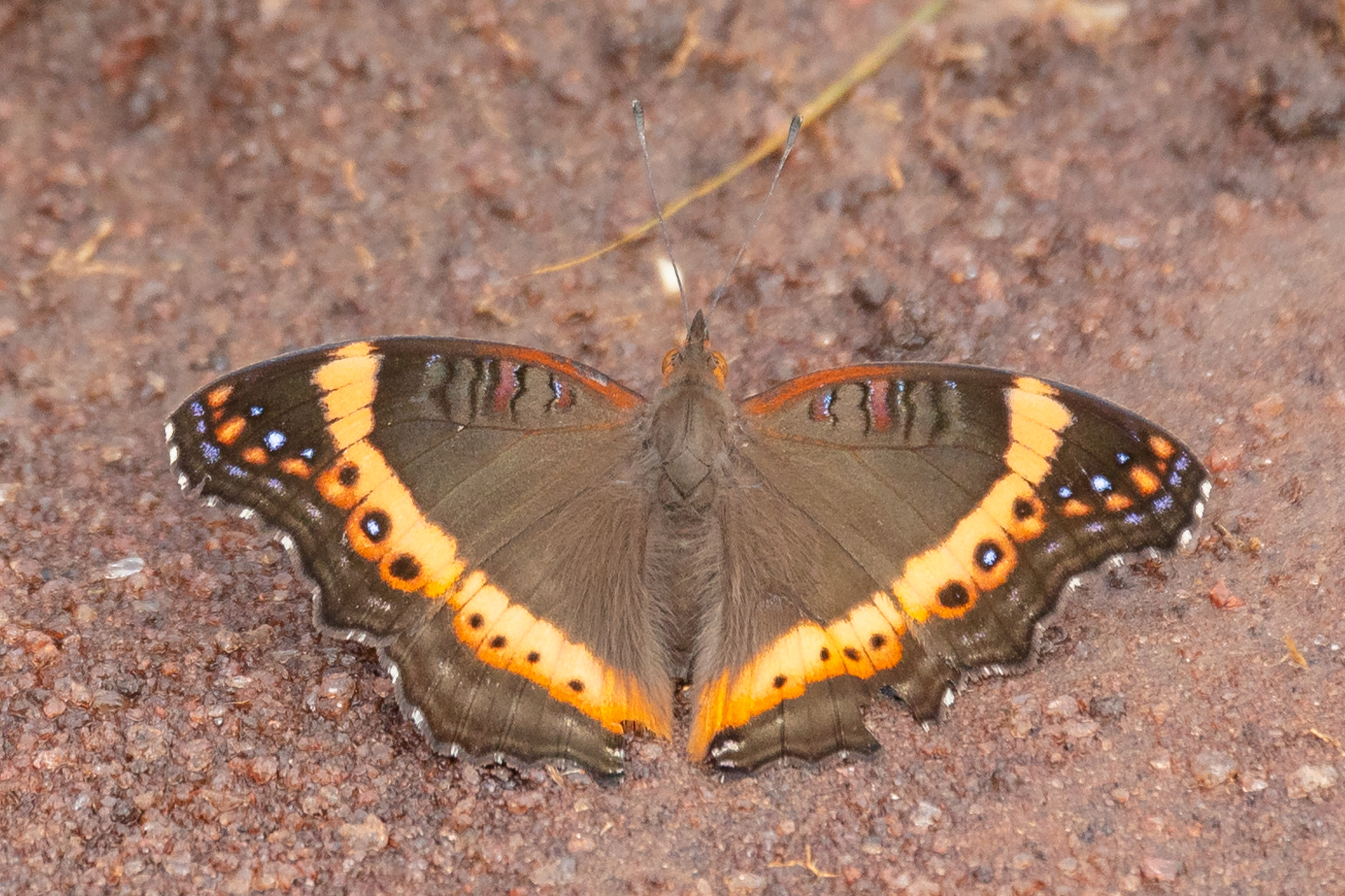
The temperature they experience during they pupal stage determines which colour pattern and wing shape the butterflies will have. The colours are so different as to make you think that they are different species.
The wet season variation is shown below. The picture credit is of Diego Delso, delso.photo, License CC BY-S
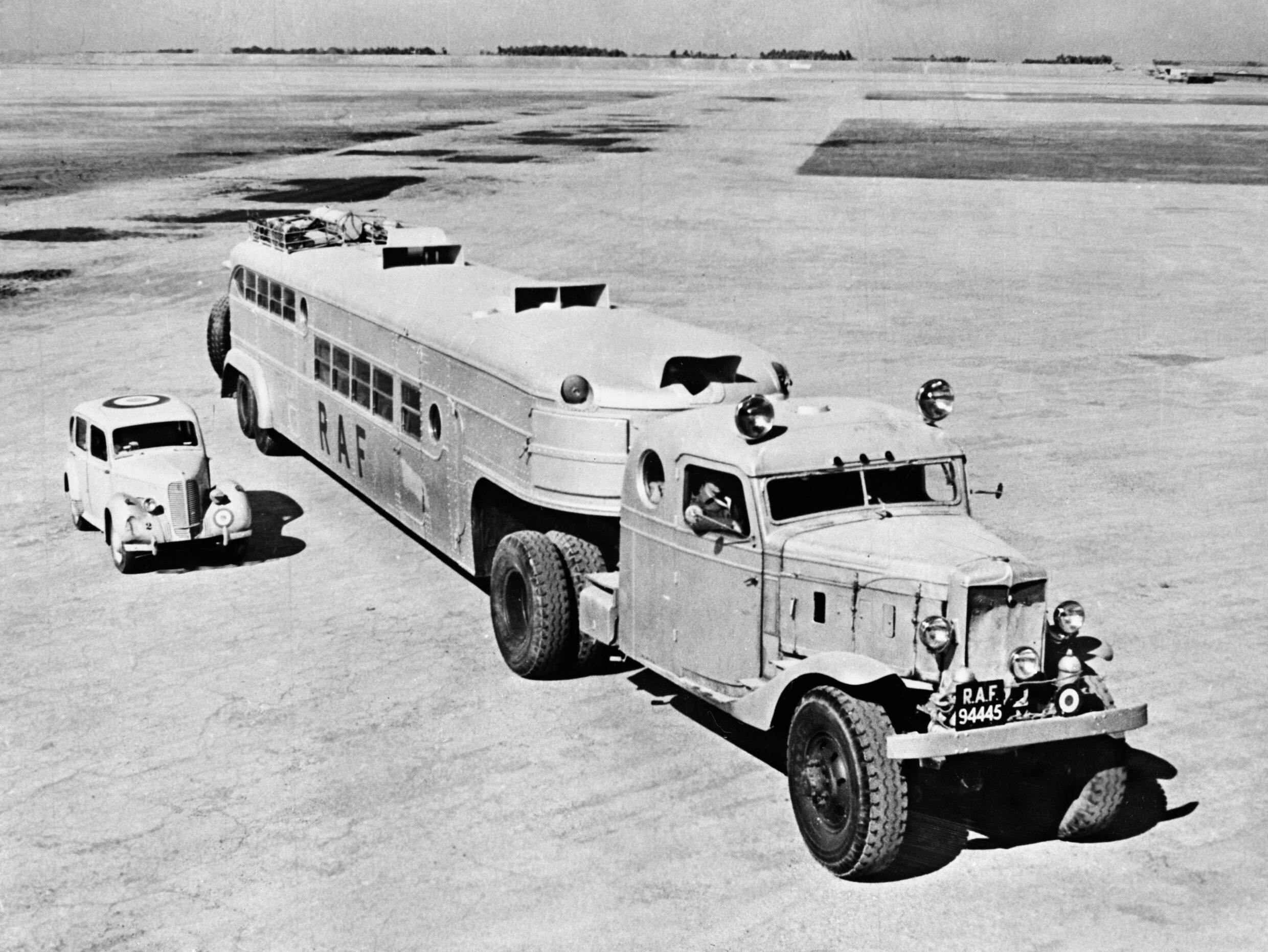
I remember these “lorry-buses” as a common feature in Zimbabwe in the 90´s. A heavy-duty tractor unit (horse) pulling a large passenger coach as a trailer.
I always found them an interesting vehicle and I managed to get a bad picture of one the other day, before they disappear forever!
Checking on their origin and history, these buses were born in the 1920´s in Europe and North America to economize on the cost of moving people based on the principle that it was cheaper to pull rather than carry a weight! They became very popular during WWII as factories were making military vehicles and truck “horses” (tractors) were available. To this, passenger “boxes” were attached. Below is an example of a similar vehicle used by the Royal Air Force at the time (Royal Air Force official photographer, Public domain, via Wikimedia Commons).
Before being adopted in Zimbabwe, the idea was widely used in South Africa as early as the 1950´s and then it came to Zimbabwe in the 1980´s. They were used to transport migrants to major cities and the state-run Zimbabwe Omnibus Company (ZUPCO) moved thousands of workers daily from townships to industrial areas.
Three main features secured their long-term use: (i) the possibility of replacing only the truck (horse) in case of breakdown by unhitching the passenger trailer and attaching it to another one or even a commercial truck; (ii) their resisteance to some of the rough roads and; (iii) being a practical and low cost answer to vehicle shortages.
Note after publication: I have just learnt from WordPress that this post unlocked an achievement as being a Palindrome Post!!!
Recently I saw an interesting article (1) regarding a fungus known as Massospora that infects cicadas. It destroy their abdomen. So what? you may think. The interesting thing is that, despite the damage, the cicadas continue flying around but now under the control of the fungus, like insect zombies! The fungus grows in the abdomen while the goes about its business.
But this is not all!
More bizarrely, the fungus makes male cicadas to imitate the females’ mating behaviour so that they attract healthy potential mating males that get infected by contact, increasing the transmission of the disease.
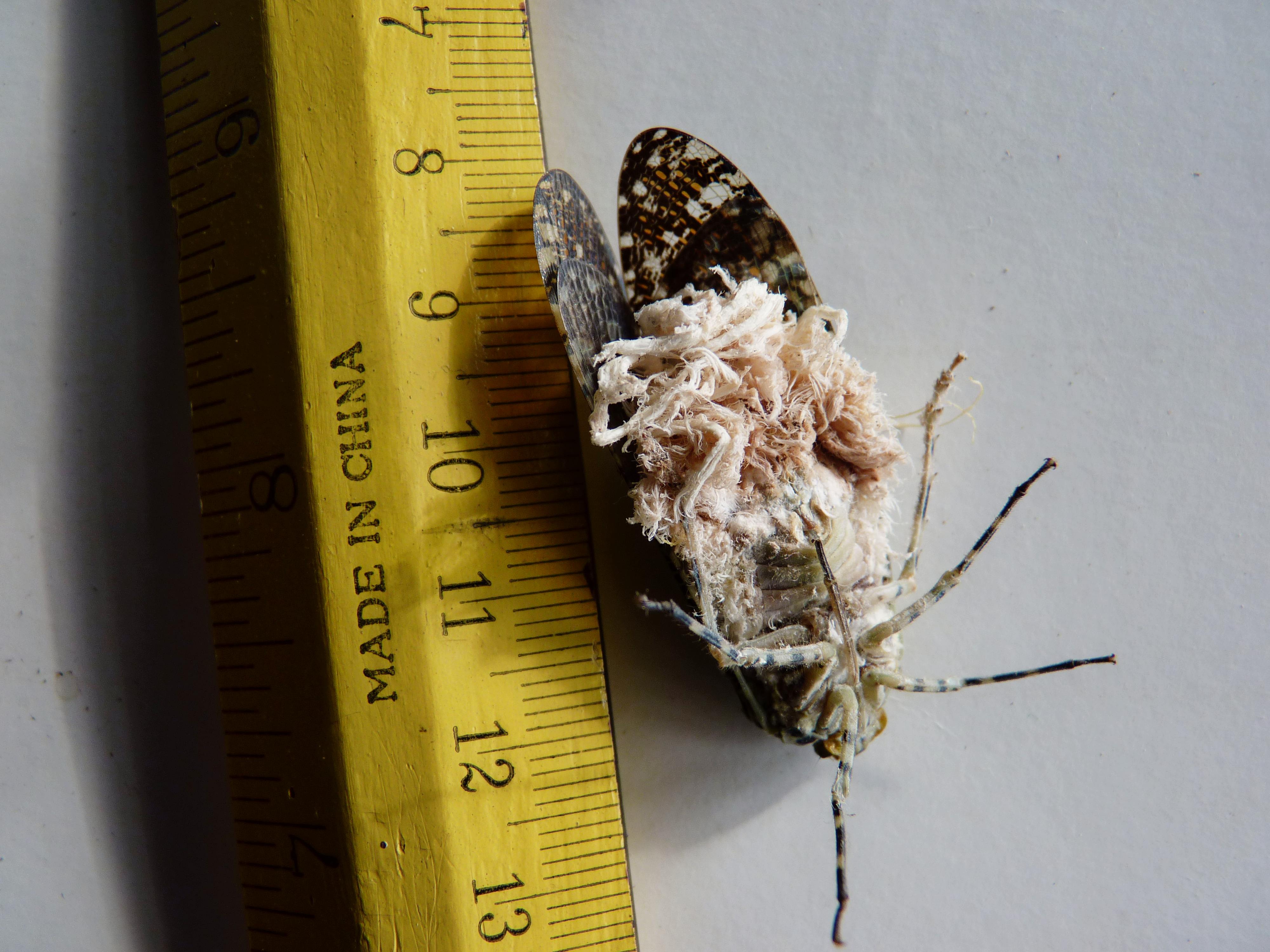
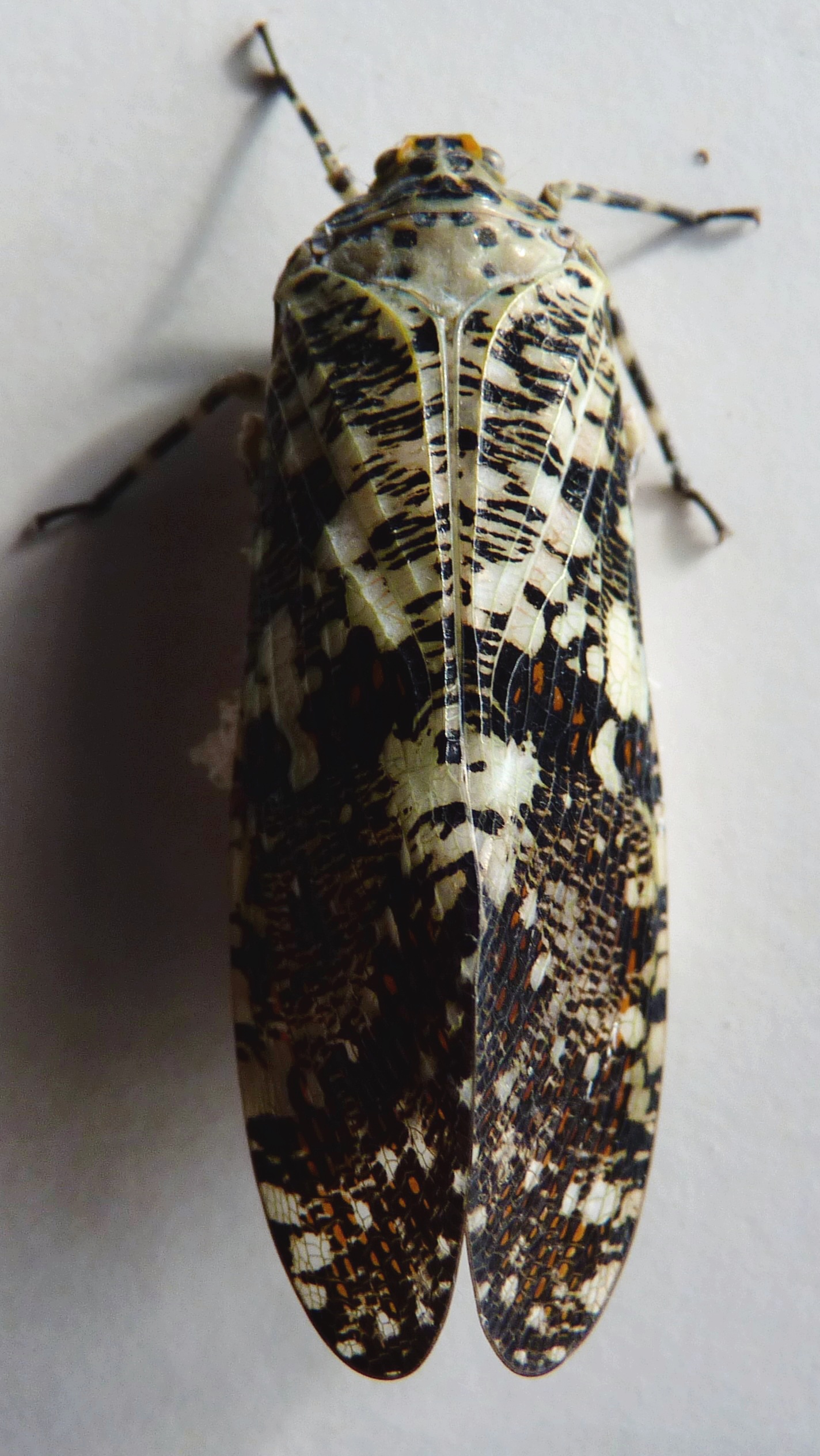
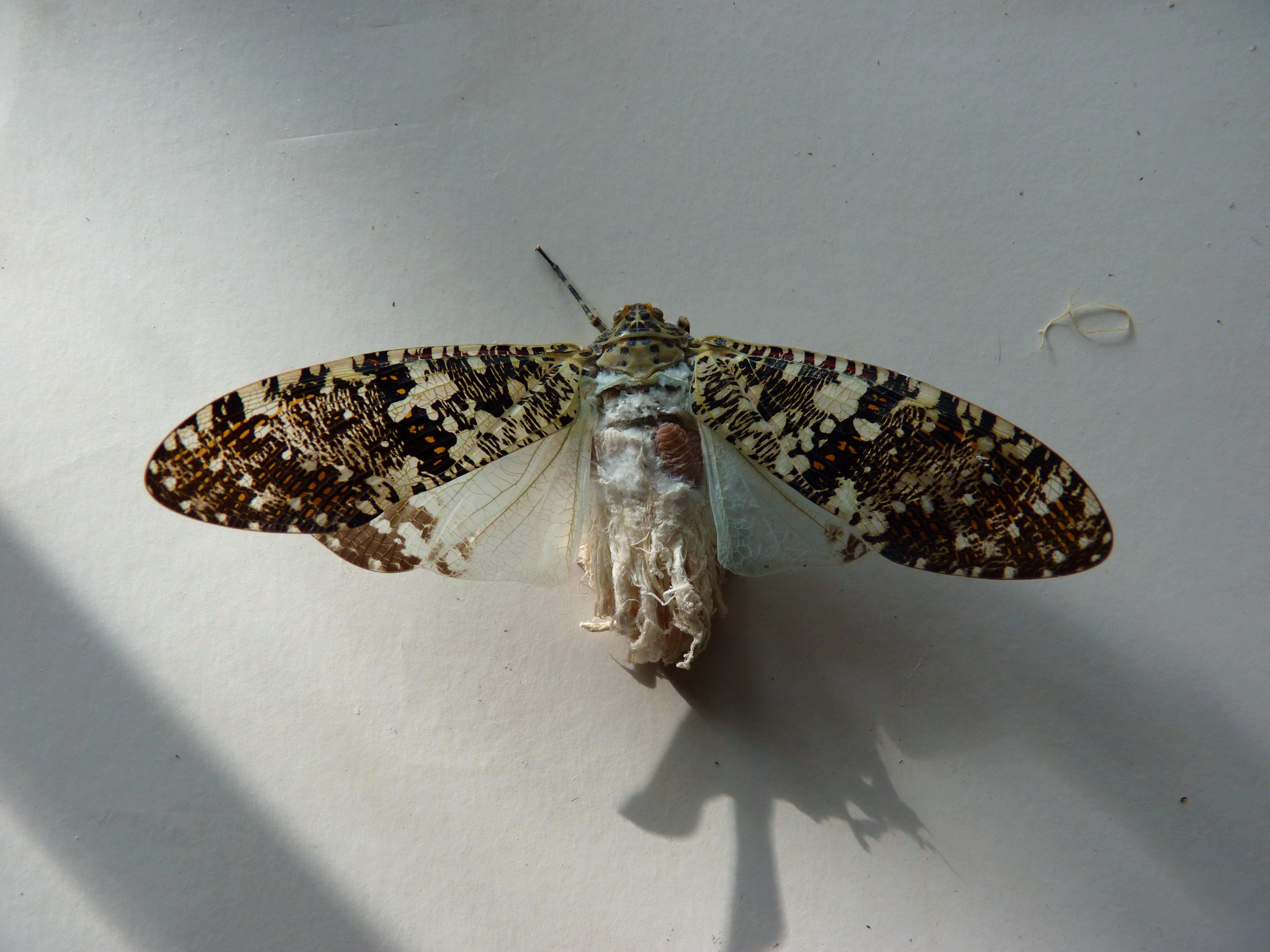
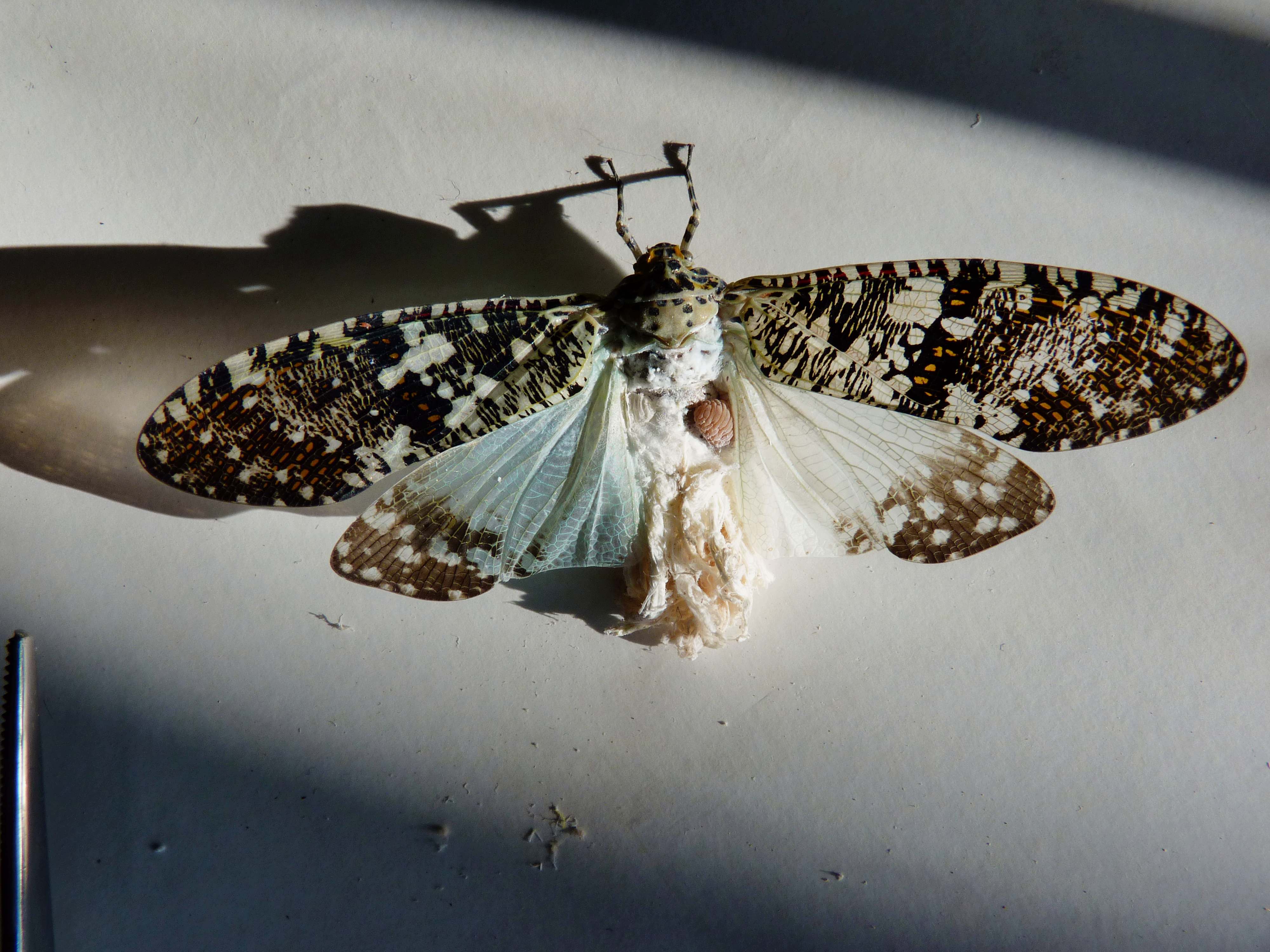
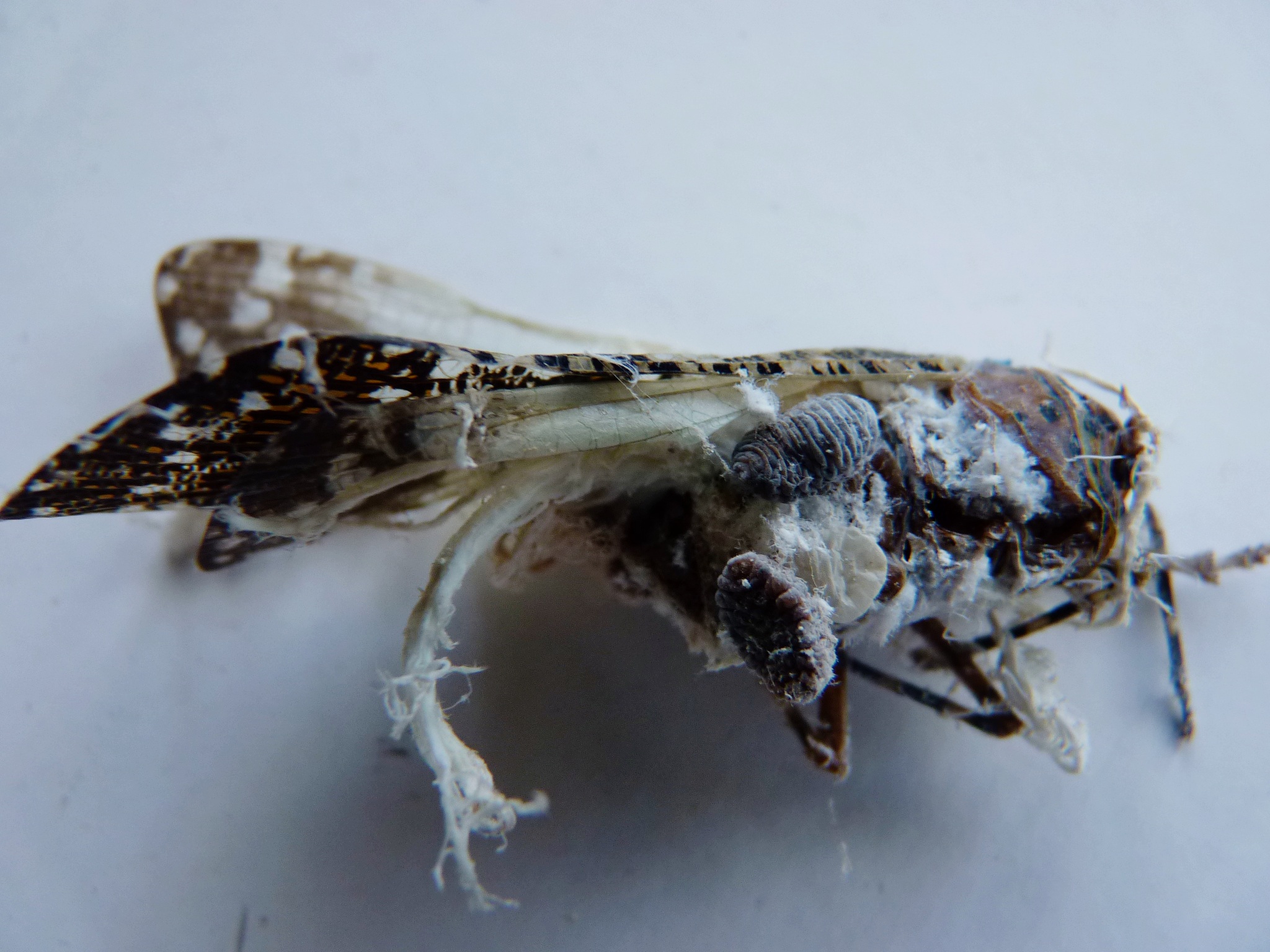
This news reminded me of a find I have photographed in Salta, Argentina a while ago but since forgotten where I thought I have found a “abdomenless” one. A long search through my computer files followed and I managed to find the pictures that I took in 2018. (Below the “cicada” with what I thought to be the fungal infection).
After a careful search and comparing pictures, I realized that the “cicada” from Salta was not affected by the fungus. Still, I thought that there was something very wrong with its abdomen! Obviously my interest was spurred and I spent more hours than I had planned trying to clarify what I have found years back.
I was wrong on all counts but what I could put together was still interesting.
First error: what I thought it was a zombie cicada was in fact a planthopper and what I took for the fungal infection that destroys its abdomen, were filamentous wax strands produced by special glands. The insect would release the filaments as decoys to protect itself from predators allowing it to escape. Something comparable to the lizards dropping their tails to distract our cats or dogs.
So, my find was a perfectly normal planthopper, possibly Phenax variegata, a species belonging to the family Fulgoridae that lives on tree trunks in South American forests and feeds on plant sap.
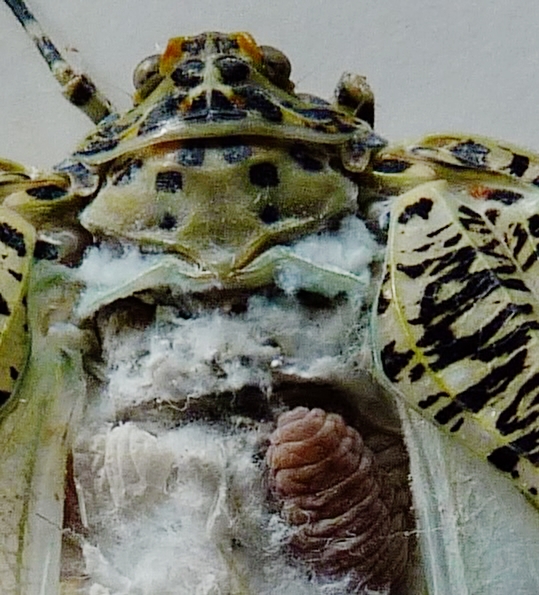
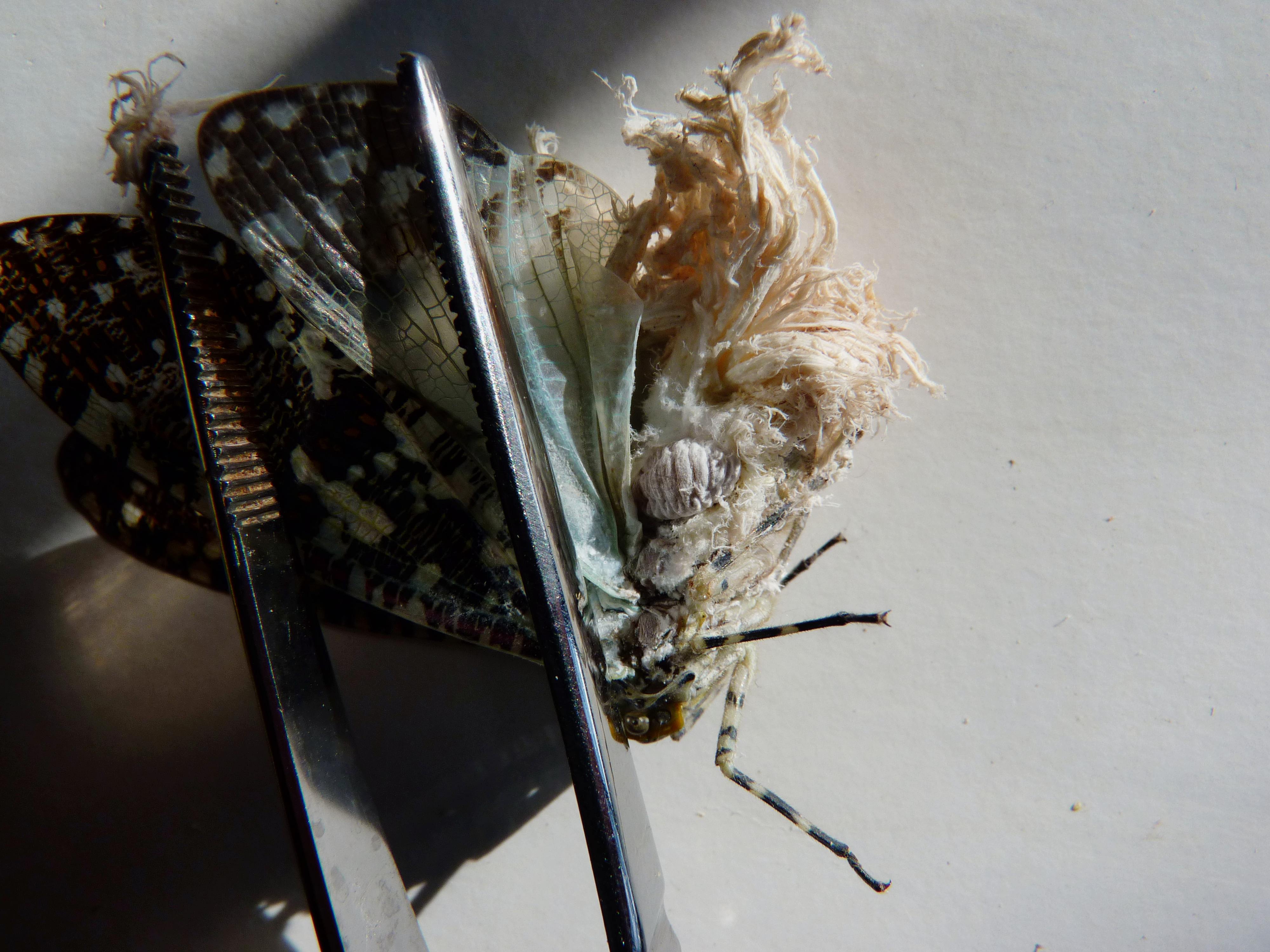
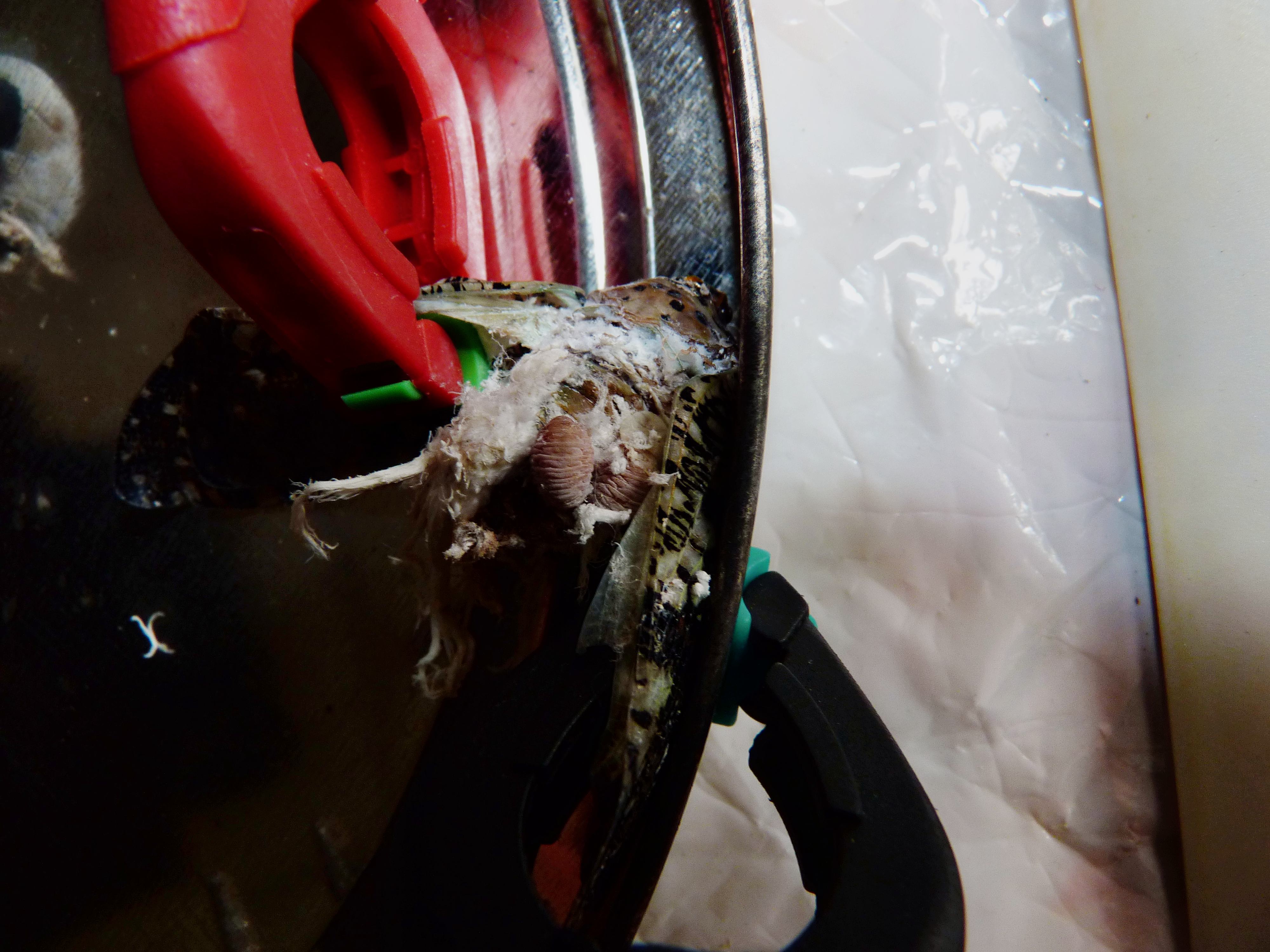
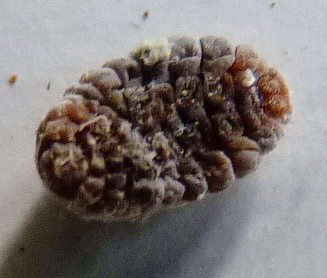
Second error: While taking pictures of the insect I had noted (and forgotten since) that there was something else that had called my attention. The planthopper was carrying two tiny grubs of about 4 millimetres long attached to its body. After another long search, I found that there is a very rare kind of moth that are unique in that their caterpillars, instead of feeding on vegetable matter, parasitize planthoppers. This is what I believe I found!
They belong to the Fulgoraecia genus within the family Epipyropidae. (Dorsal and ventral views below).
So, although I did not find a planthopper zombie, I came across a kind of “vampire” moth that sucks the haemolimph of the planthoppers!
I am aware that the title of the post is very dramatic but these days you need it to attract readers!
It would be good if someone with more entomological knowledge than me would see this small post and perhaps correct my observations.
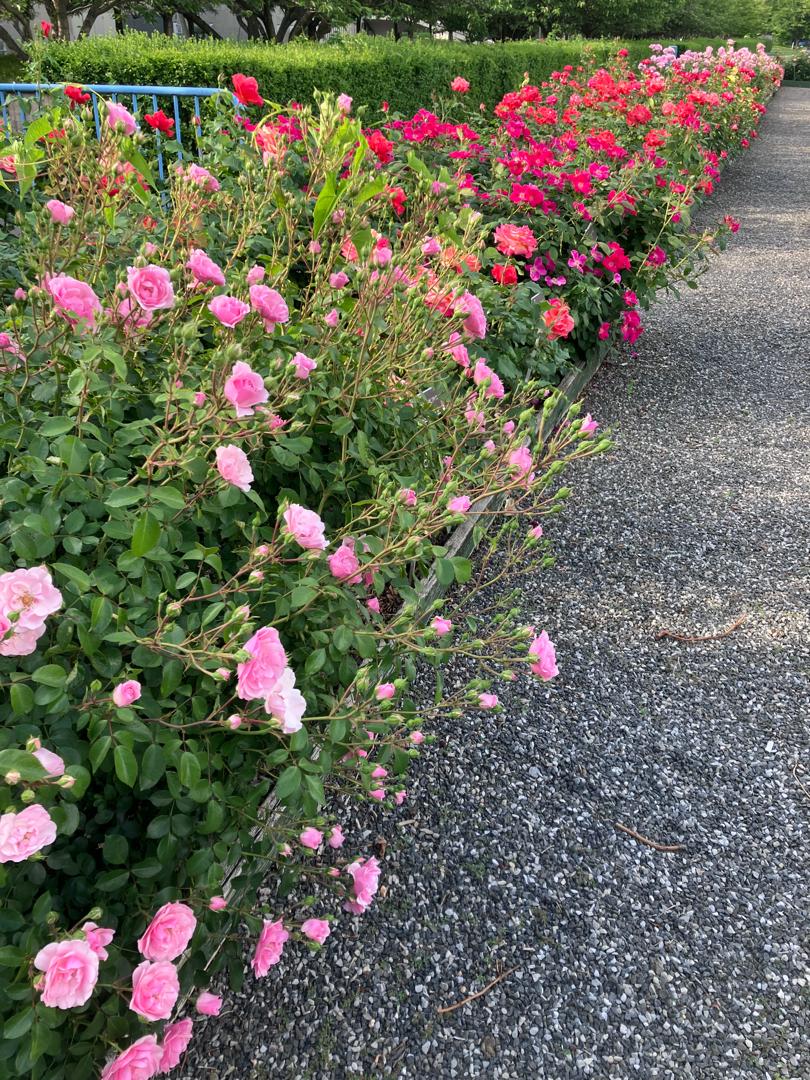
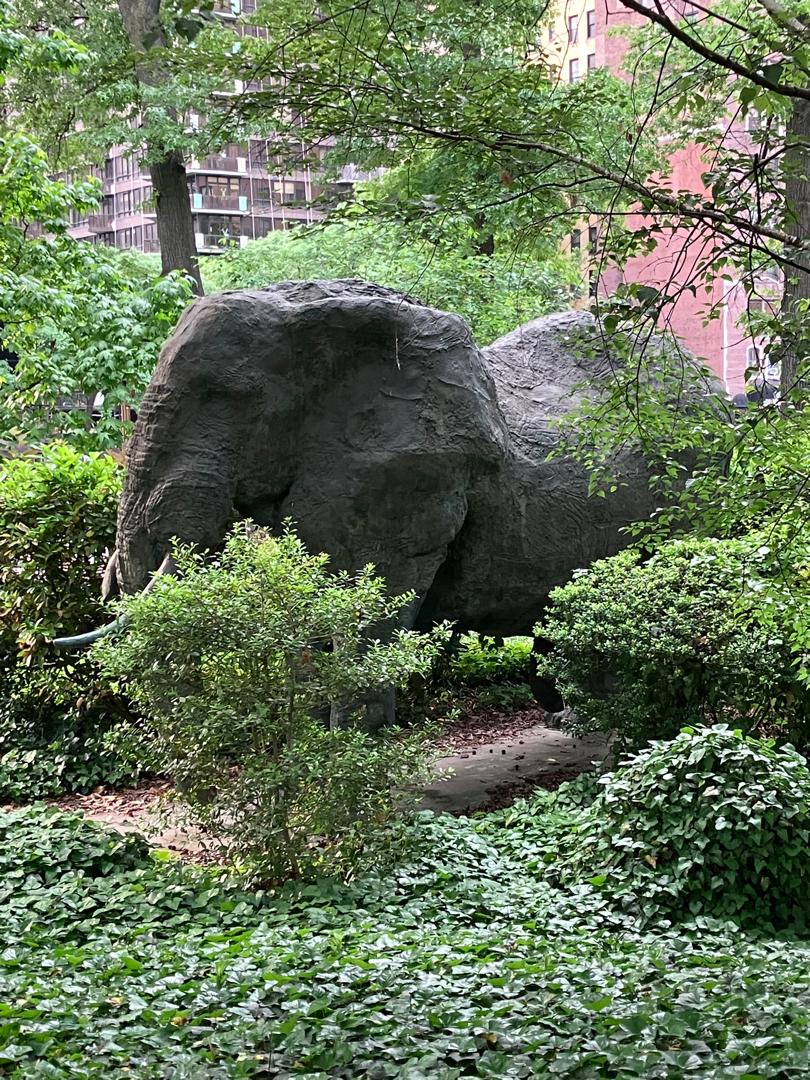
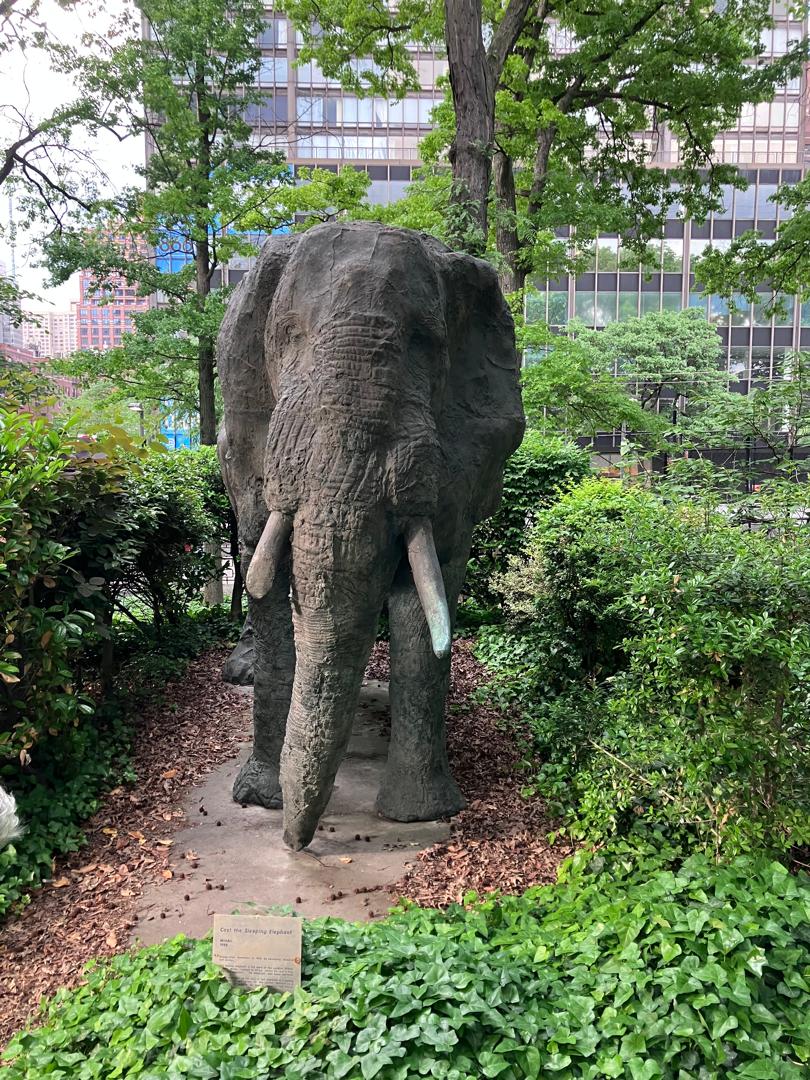
We went for a visit to the United Nations Headquarters (UN HQs) in New York and, after visiting the building we went to admire the sight and scent of the roses at the garden and the view. Then it happened. Our trained eyes spotted a large elephant among the bushes and then they opened wide when it started moving towards us! Immediately, King Kong came to mind…
Well, that start for the post was only to attract the readers’ attention!
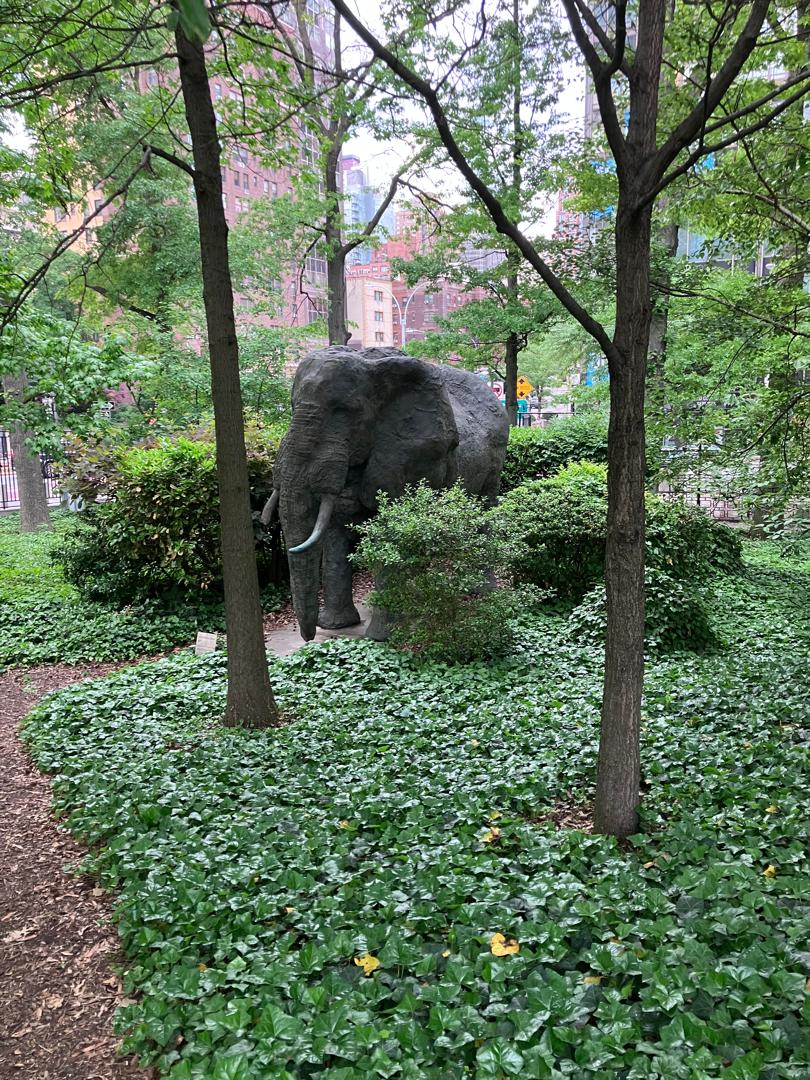
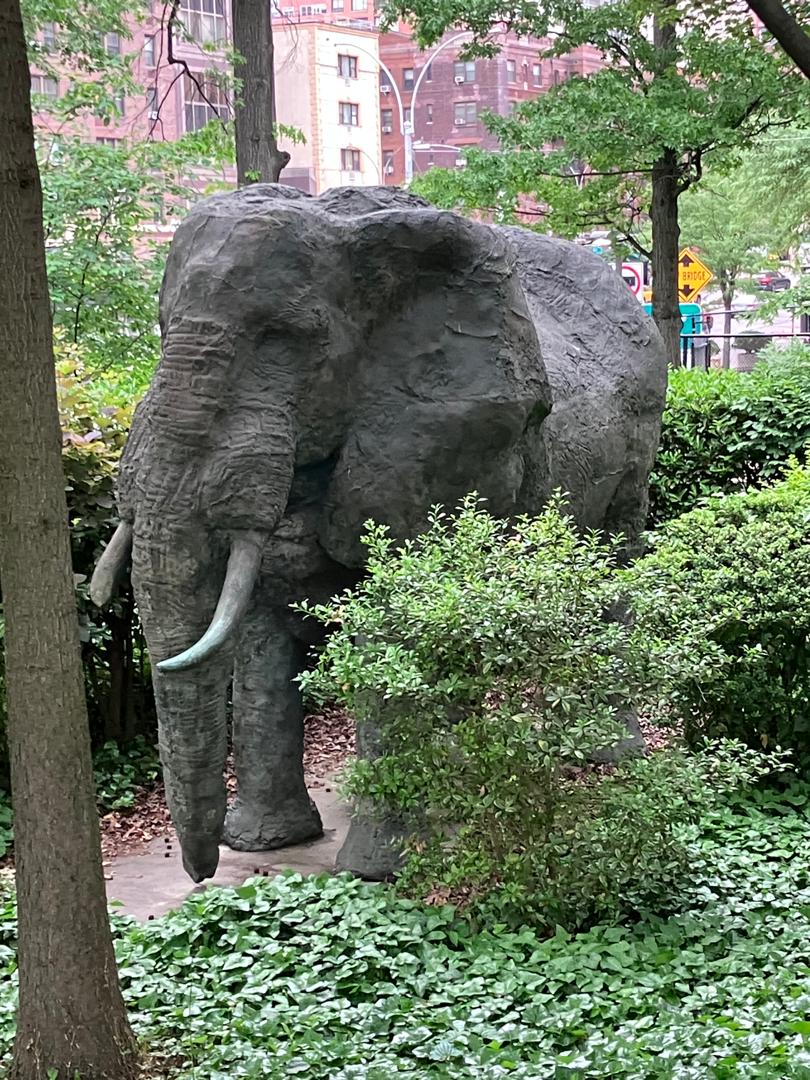
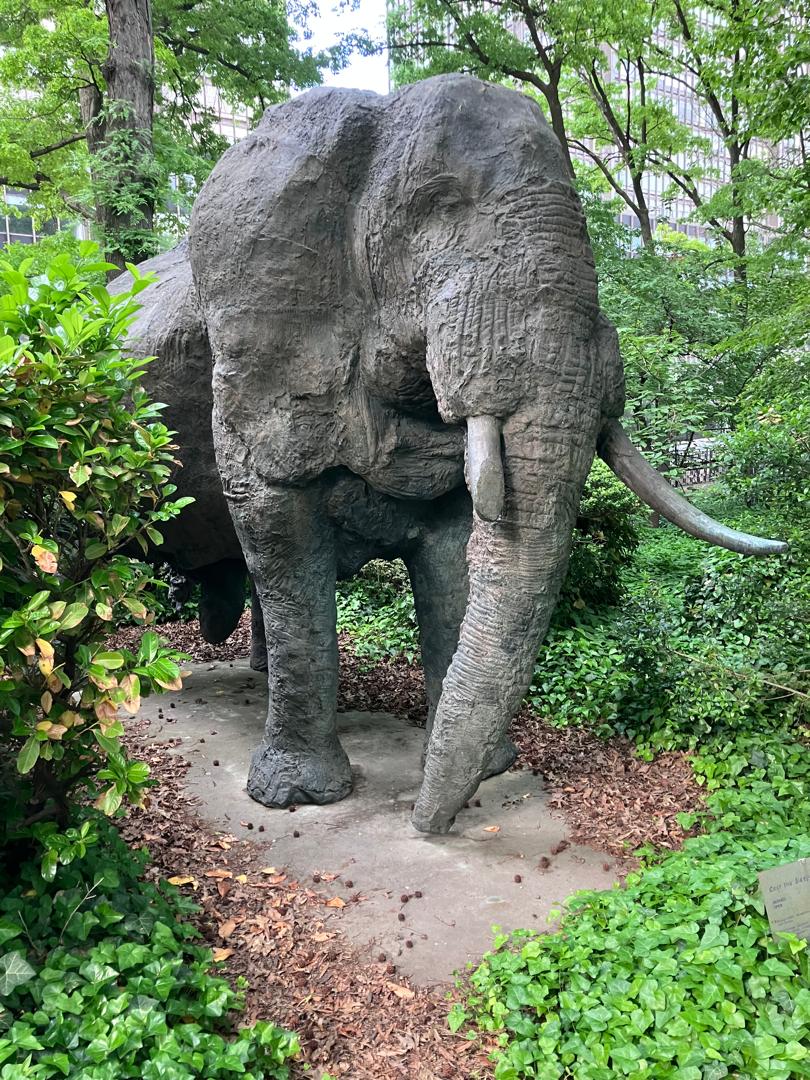
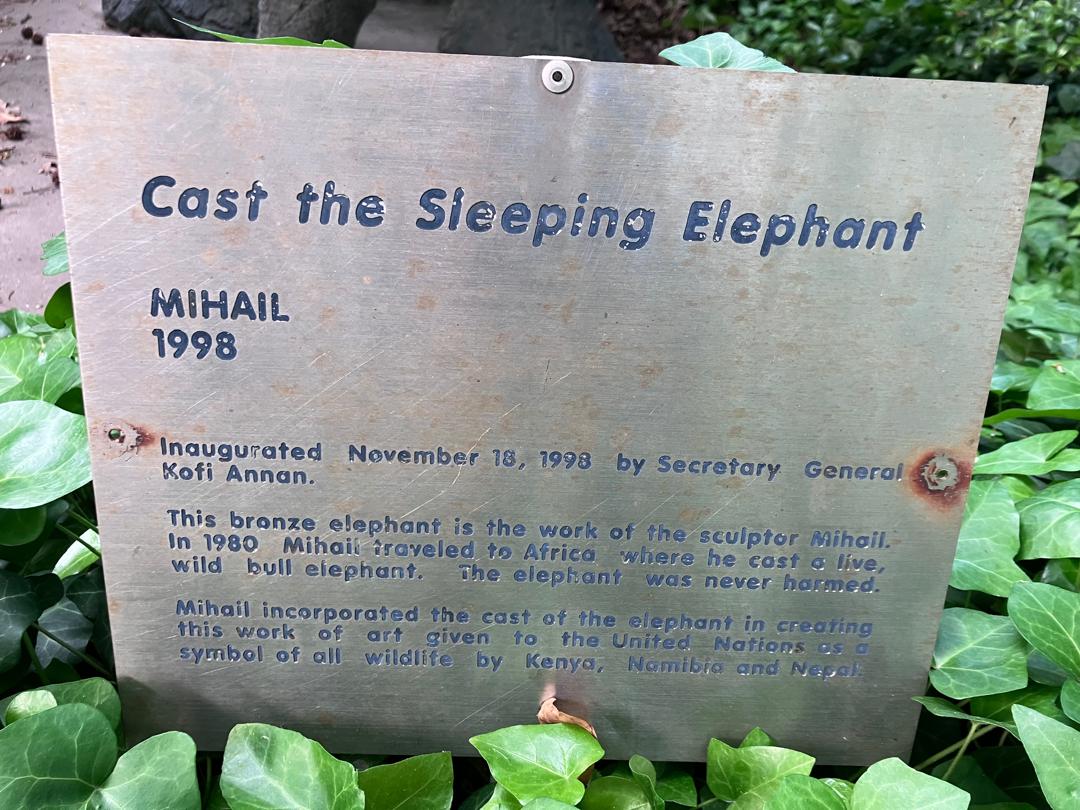
However, a life size of a bull elephant does exist and it stands at the UN HQs. It is a bronze cast donated jointly by Kenya, Namibia, and Nepal. Although it seems logical to me that Kenya and Namibia would do such a thing, Nepal was more surprising. However, I should have known that the country has over 200 wild elephants and another 250 captive ones (1). In addition, Nepal has a “wildlife diplomacy” an important part of the country’s soft-power foreign policy (2).
Mihail Simeonov (3) hatched the rather outlandish idea of casting a sleeping elephant in Africa and the account of the events that followed is based on his publication (4).
About 1978, he created the Cast the Sleeping Elephant Trust. The founding document explores “…the philosophical and practical implications of man’s dominance over Nature and the need to readdress and to completely rethink that link to Nature.” The interested reader can find more information in Mihail´s publication.
For the next couple of years, until the cast was actually made on 19 March 1980, Mihail gradually managed to get Kenya´s permission to do the job there. Subsequently, he convinced Kelco, a division of the Merck Corporation, to donate one thousand pounds of alginate, the paste used by dentists to prepare teeth moulds amonmg other medical uses. This was important as other cast methods were not suitable for various reasons and Mihail did not wish to harm the animal.
After overcoming several other issues, Mihail travelled to Kenya where, with Kenyan government support, a suitable wild bull was found at Ol Pejeta (5) and tranquilized. After 2 hours of 20 people working, the cast was completed and the elephant walked away unharmed.
After 5 more years the work was completed and the plaster version exhibited at a gallery in New York. Finally, in 1986, Kenya agreed to donate it to the United Nations. Namibia joined Kenya two hours after its independence and, later, Nepal also agreed to join in.
A number of proclamations from the author and the donor governments on the right for the elephants to exist for eternity ensued and the bronze elephant weighing over 3 tonnes was finally completed at a foundry in NY and, after considering other options, transported by flat bed truck to the UN HQs to be finally placed at the northwest corner of the North Garden.
But there was a snag: the size of the elephant penis!
This subject was treated at a meeting of the Secretariat on 17 November 1998, just one day before it was going to be unveiled. A senior official was worried about the size of the penis and its possible negative impact on children visiting the UN so, eventually, after abandoning the idea of plastic surgery on the offending part, it was decided to dissimulate it by planting bushes around the statue to hide it from view! This work actually ended minutes before its inauguration by SG Kofi Annan on 18 November (6), more than 28 years after the casting took place.
First sighting.Bushes have grown by now.A view of the offending part.
Before I describe the events of the title, I wish to explain why I have been absent from the blog. Luckily, it was not a health issue but a literary one.
A few years back, I hatched the idea of writing a historical fiction novel, without realizing what kind of work this implied. In short, the result was that all my spare time was taken by the writing as I needed to get fully immersed in the work to be able to make sense of it! Fortunately, although is not yet completed, the novel is suffciently advanced by now and, while the editor works on the final touches, I have some spare time to get back to my neglected blog. (If I manage to publish the novel I will let you know!)
So, here we go.
As every year at this time, we are spending time in Salta at our small “wildlife” farm. We have had sustained rain for the last week and yesterday there was a break and we went out to explore the surroundings and to assess any damage the rain may have caused to our entrance road,. We also needed to see if the small stream that usually looks harmless but gets quite lively with the rains, had damaged our fording place.
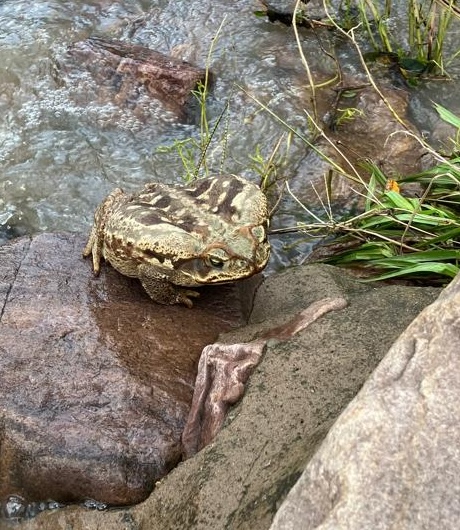
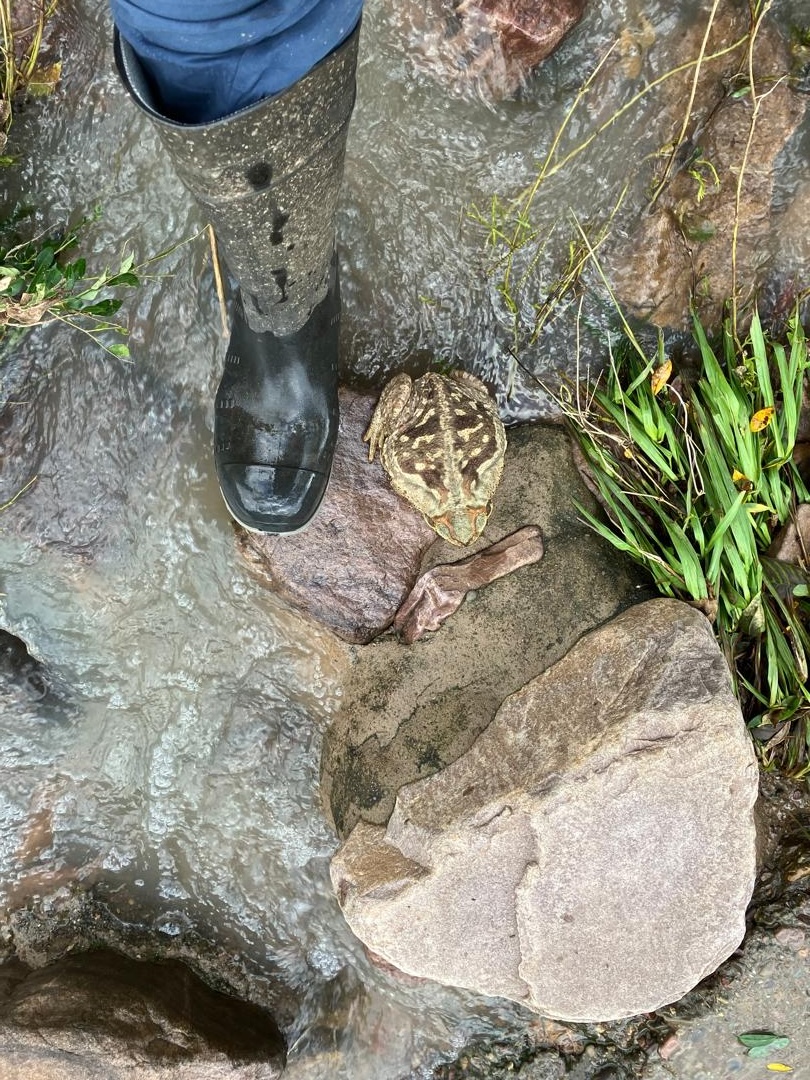
The water was still running quite fast but our road had suffered no damage. While checking it, we came across a sight we do not see very often.
The toad was there for a purpose, probably to get some insects. As soon as we looked another way, it quickly disappeared.
After this distraction, we decided to check our water well as, when there is a lot of rain, the water surges up submerging the pump and ruining it.
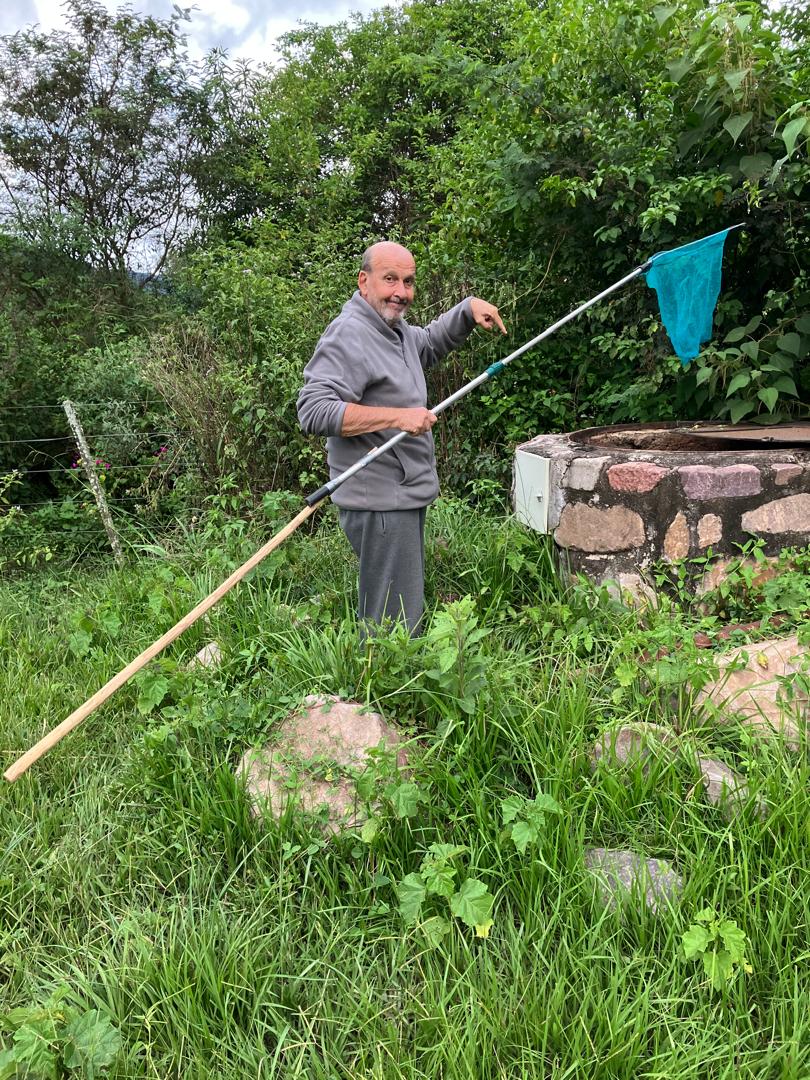
Luckily, the pump was still way above the water but, we found another unexpected event. A small snake, probably a brown “culebra” (Paraphimophis rustica) had fallen in the water and it was swimming around without much chance of claimbing the vertical and smooth wall.
A rescue operation was organized.
After a tricky “fishing” exercise, the snake was finally retrieved and released.
I watched “Scarface”, a movie with Al Pacino and Michelle Pfeiffer (among others) about 40 years back while still in Kenya and, just to confirm that I am getting to the fossil state, we rented a video from a library somewhere in Nairobi.
As I have forgotten the plot I decided to have another go at it as I found it in Netflix. As often happens, after a while, I started remembering it and, somehow, after the first hour, I was loosing interest. I was about to stop it when I was surprised by what I heard! This was not another of the rarther abundant bad words in the movie but some other sound that I found, somehow out of place!
The scene in question takes place in Cochabamba (Bolivia) when Tony Montana (Pacino) is discussing a drug deal with Alejandro Sosa (Paul Shenar) the producer of the cocaine. While they are finalizing the deal, seated in Sosa´s mansion, between a few “f” words, I, somehow, heard the call of a bird with which I am very familiar with.
Nothing wrong with that you may think. However, the bird, as far as I know, only occurs in Africa!
Below I embedded the relevant part of the movie that, luckily, it was already selected by “Popcorn Picks”, a YouTube video channel to who I give credit (I would not know how to extract a piece of a movie).
I regret thatr this is a rather violent moment of the film and, to avoid you watching this, I recommend you to go almost to the end (5:54) in the clip below and then, again around 5:57 just when Sosa tells Tony “I only tell you one time, don´t f… with me Tony”.
Despite other background noises and the music, I believe that I hear the call of the red-chested cuckoo or rain bird (Cuculus solitarius), also known in South Africa as “”Piet-my-vrou”, an onomatopeic name that mimicks it call that you can hear below:
Embedded from YouTube (credit: Birding with Lynette Rudman).
In my surprise, trying to see where this part of the movie was filmed, I consulted https://www.imdb.com where abundant information on “Scarface” is found. I learnt there that the scene in question was filmed at 656 Park Lane, Santa Barbara, California, USA, not an area where you expect to find a rain bird. However, another cuckoo, the yellow-billed cuckoo (Coccyzus americanus), is present there but its call is totally different.
I admit that I can be mistaken but I find this an unusual and interesting find for being totaly unexpected. So, how could we explain it? I see a few options, including that what I heard was just a combination of other bird sounds that, somehow, mimicked the rain bird. Another, more likely, is that one of the aviaries (there are a few in Santa Barbara) or a private individual nearby was keeping a red-chested cuckoo. The final possibility is that the film makers used background sounds from their sound library, irrespective of its origin.
I just consider this as an unusual event that we would probably never unravel but I will appreciate any ideas or information you may have.
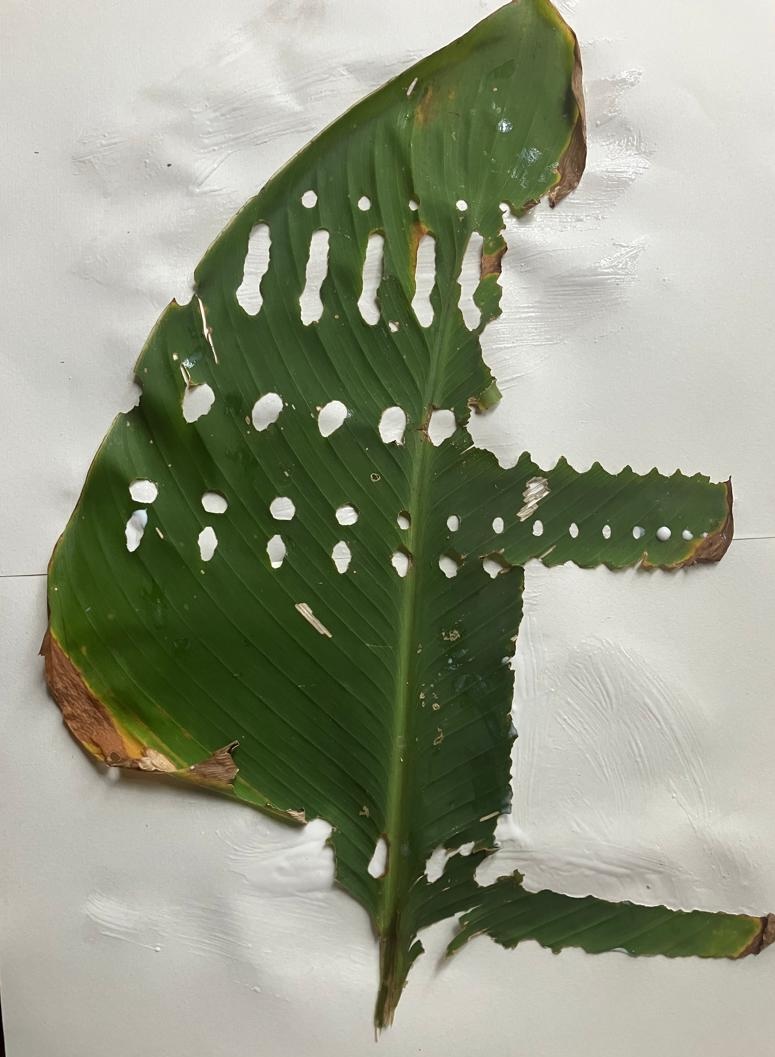
It took a few hours but then the answer for what appeared to be a botanical mistery was finally found. The leaf was chewed by some beast before it opened fully, while it was rolled up and tender!
I promise you that the revelation came to me after a short late summer siesta under the wisteria but I am still embarrassed that I did not think of the explanation earlier!
While walking through our garden around the house in the small farm we have in Salta, Argentina, avoiding spiderwebs, I entered an area of thicker vegetation that I usually avoid. There there are a number of wild and garden plants. Among these, the Indian shot (Canna indica) is a very common plant in this area and, as many others, its leaves are eaten by a number of insects such as caterpillars, leaf-cutting ants, grasshoppers and others that are rather abundant in this part of the world.
We are used to loose plants to insects and fruits to birds but we take it as “sharing” as we like the birds and we do not use pesticides, except to control mosquitoes.
We have seen many eaten leaves but nothing like what I found today:
As much as I thought how this leaf was eaten in such a pattern, I have failed and I am embarrassed to admit that a caterpillar with the hicups is the only one that makes sense to me at the moment!
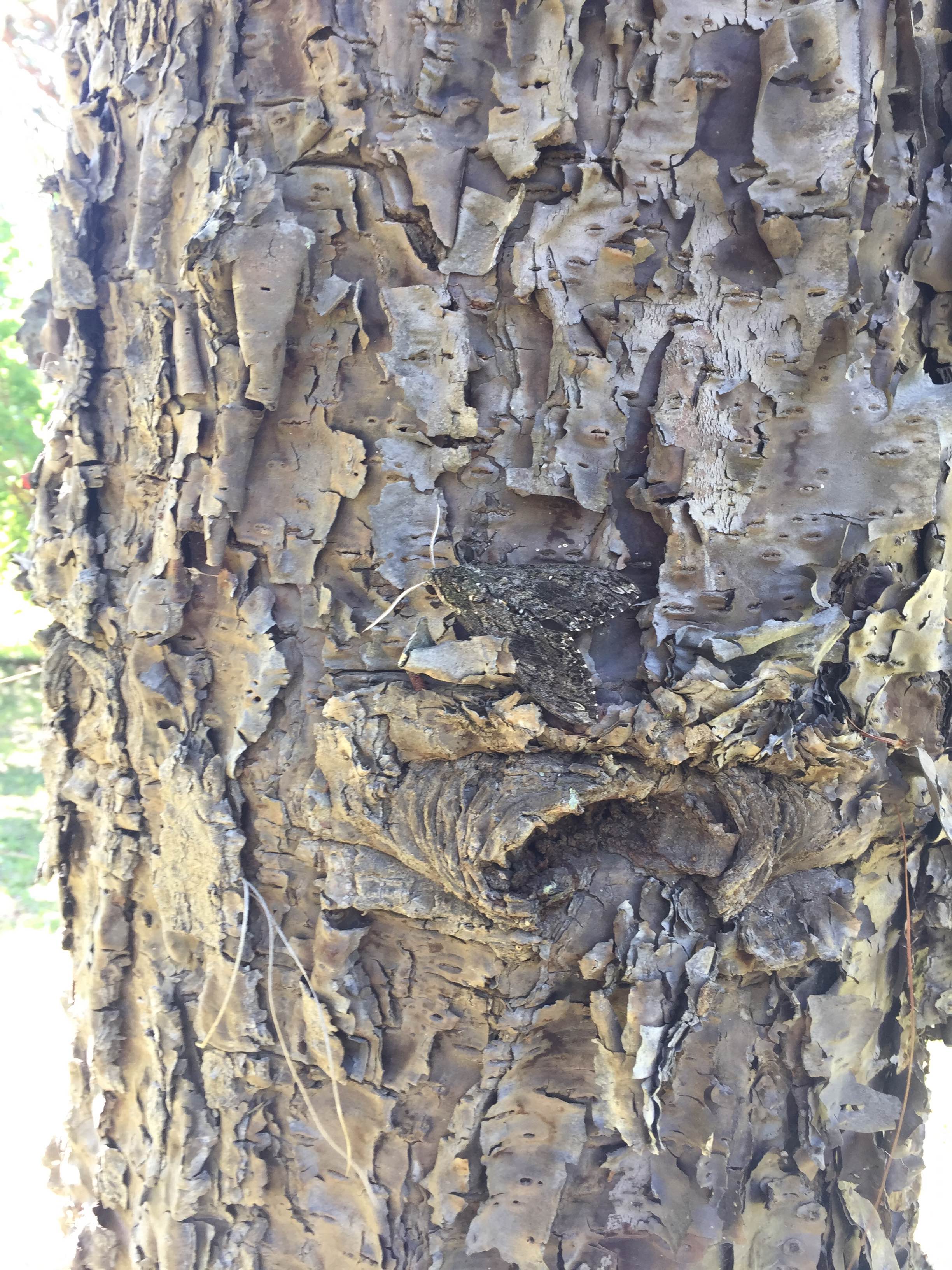
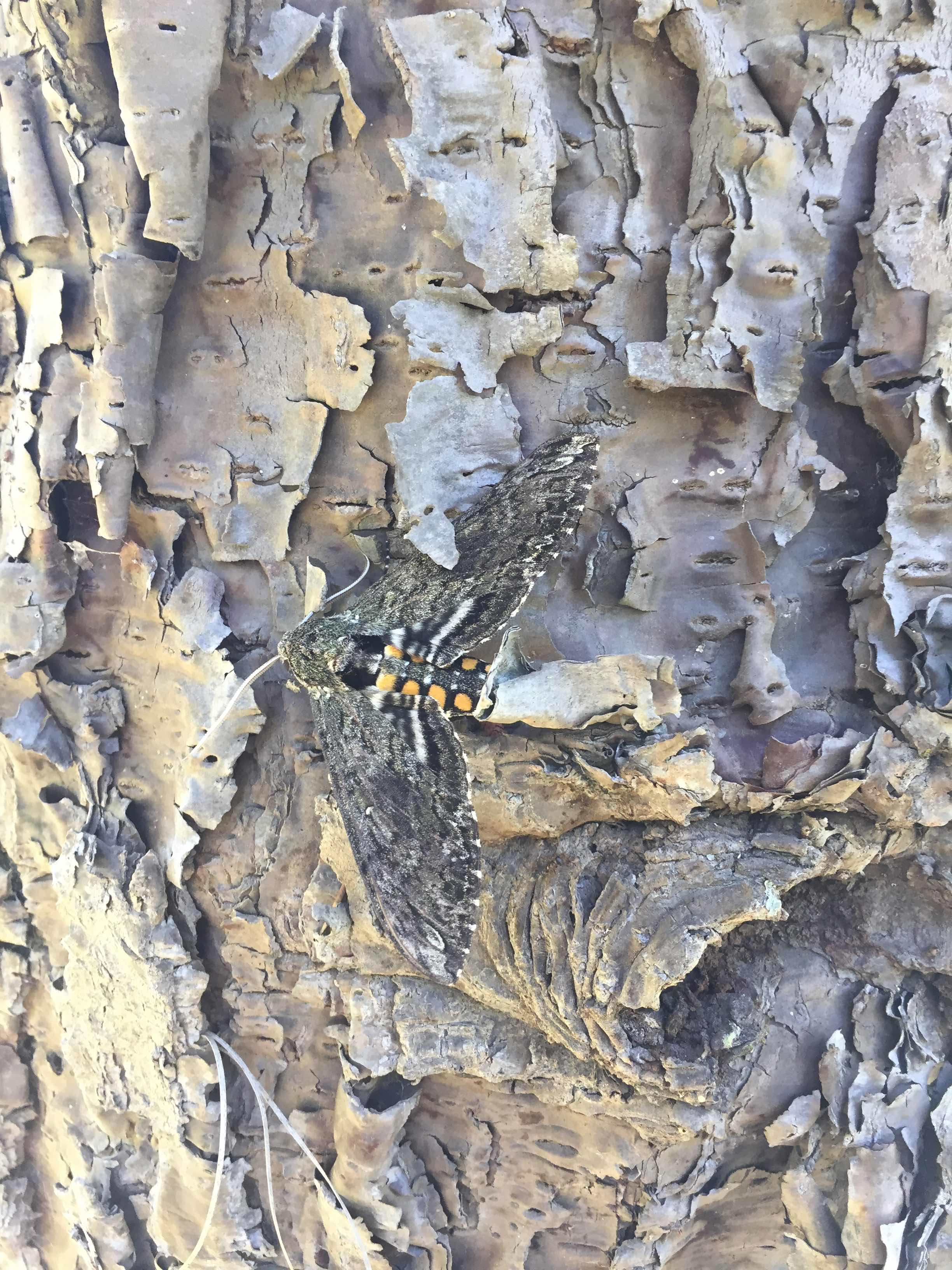
I have not published a “Spot” for a while. I found this one that I found in our farm in Salta, Argentina a while ago and that went “unspotted” until today! Can you see it?
? ? ? ? ? ? ? ? ? ? ? ? If its antennae did not give it away, the colour of the inner part of the wings will now!