Bush stories and anecdotes

The heart of the blog, where I present observations, accounts, funny stories, etc.

Camera recovered

As mentioned in the “Besieged” post of 5 October 2015, I had some difficulties retrieving the camera from its strategic location by the Zambezi as walking to do so offered some animal-related challenges!

Eventually, through a flash commando operation -with my wife watching my back!- I managed to get it and below are the results.

STC_0126 copy

STC_0142 copy

STC_0155 copy

STC_0182 copy


A hippo coming out of the river to feed at night.


Another one returning.


Leaving the river in early morning.


Waterbucks returning from drinking.


Besieged

While staying at Gwaya camp I explored its surroundings on foot to find a spot where I could place a camera to record what took place when we were not at camp and also to know which animals moved about at night. This camera is my latest gadget and an excellent source of entertainment!

I chose a spot, about two hundred metres upriver,  where two game paths led to the Zambezi.river. The path seemed well trodden and I believed that animals would come down to drink there as, after negotiating a couple of dried mud steps (carved by wild users!), the river could be accessed in relative safety for a drink.

The following morning I got a few videos that confirmed that animals did use the paths. However, I had placed the camera too close to the passers by and the results did not convince me. I decided to move the camera to another place from where a wider view of the spot could be obtained. I returned to camp very satisfied but cautious as I needed to walk round a group of elephants to get back! These elephants are always there so it was no great deal to avoid them as they are tolerant of humans.

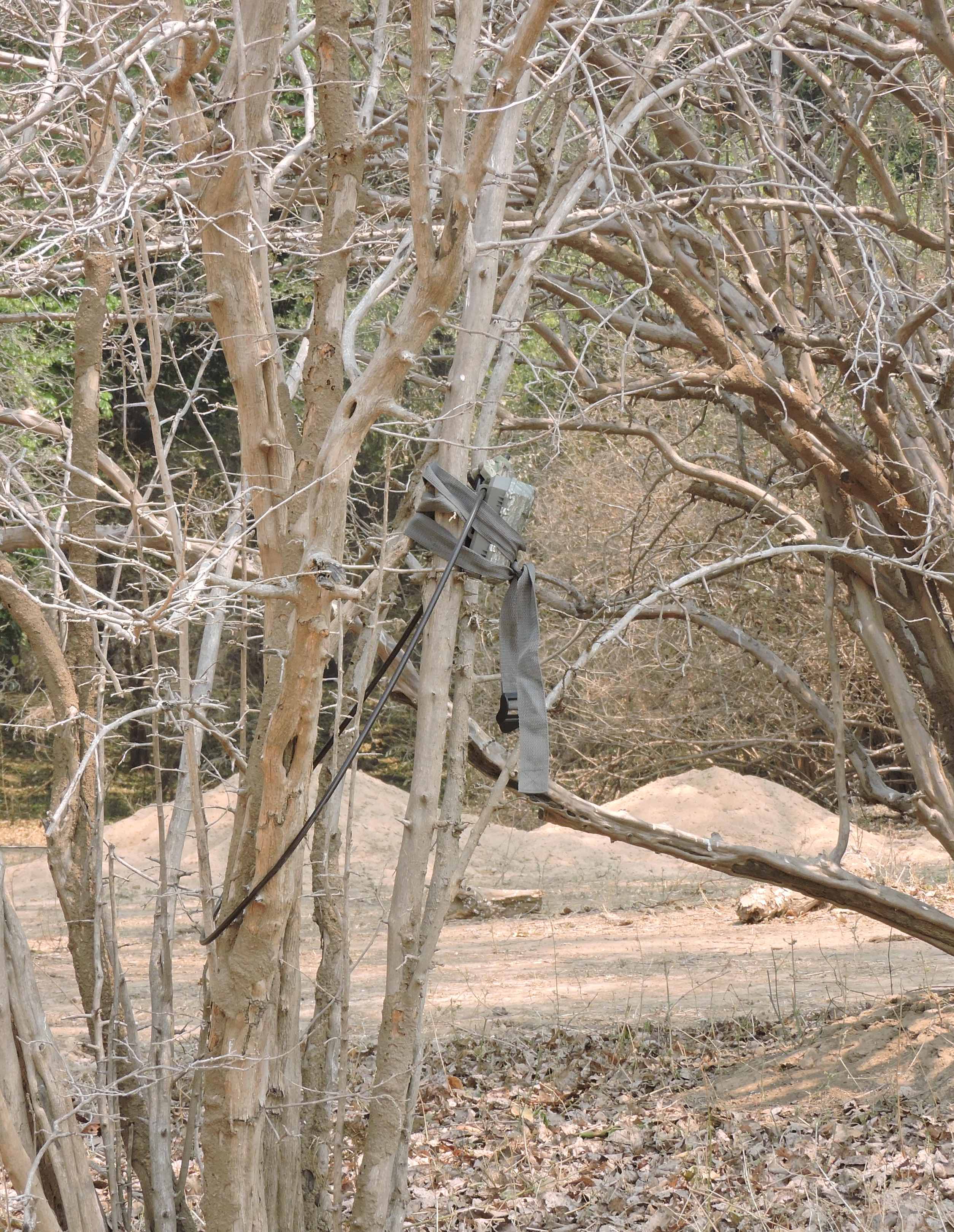
The camera in position.

The camera in position.

DSCN6778 copy

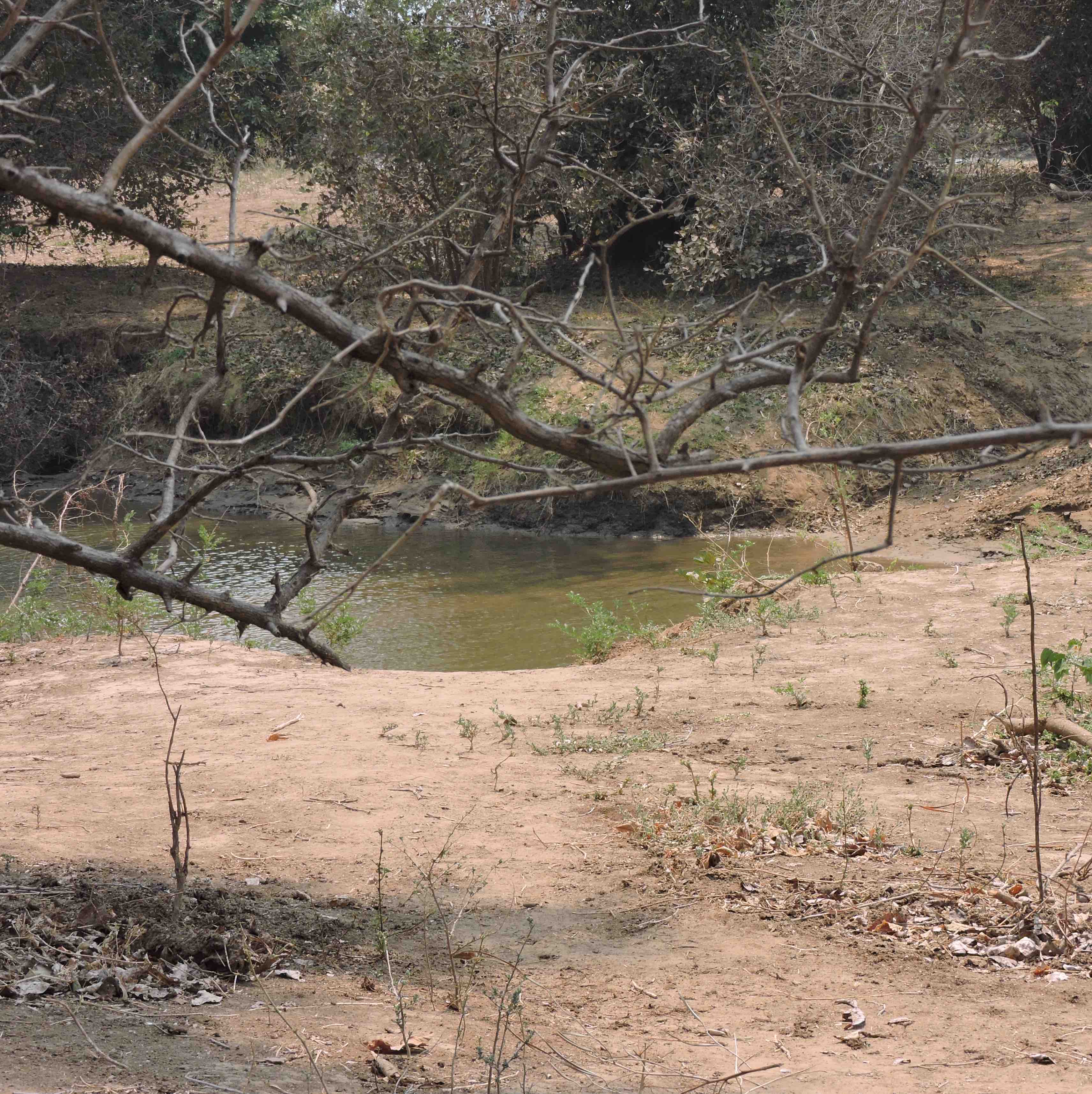
The view from the camera towards the Zambezi.

The plan was to return to the camera the following morning to download the information from the memory card and then decide what to do next.

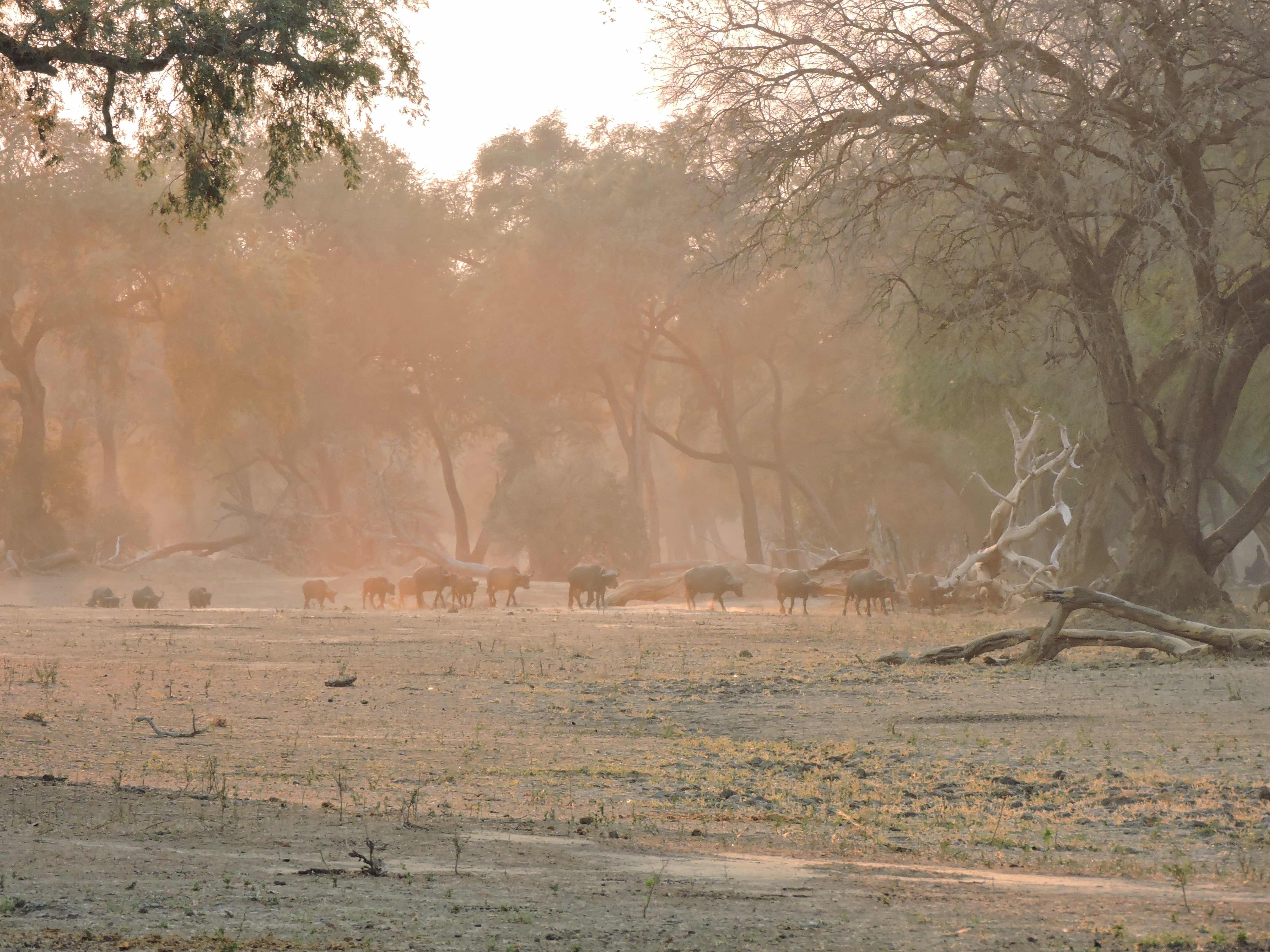
Early next day we spotted a very large herd of buffalo  moving towards the Zambezi about one thousand metres from our camp (as the bird flies). “Mmmm,  retrieving the camera will be tricky!” I thought and it was not difficult to reach the decision of leaving it where it was for the time being!

The buffalo marching towards the Zambezi, a few hundred metres from us.

The buffalo marching towards the Zambezi, a few hundred metres from us.

It was a hot day so, after lunch a siesta was a must! I am not sure if I slept or passed out because of the heat but the result was good as I felt rested and, when the temperature started to decrease, we moved off for a drive, towards the buffalo. We spotted them immediately as soon as we came close to the main road. They were spread out, still in the same area.

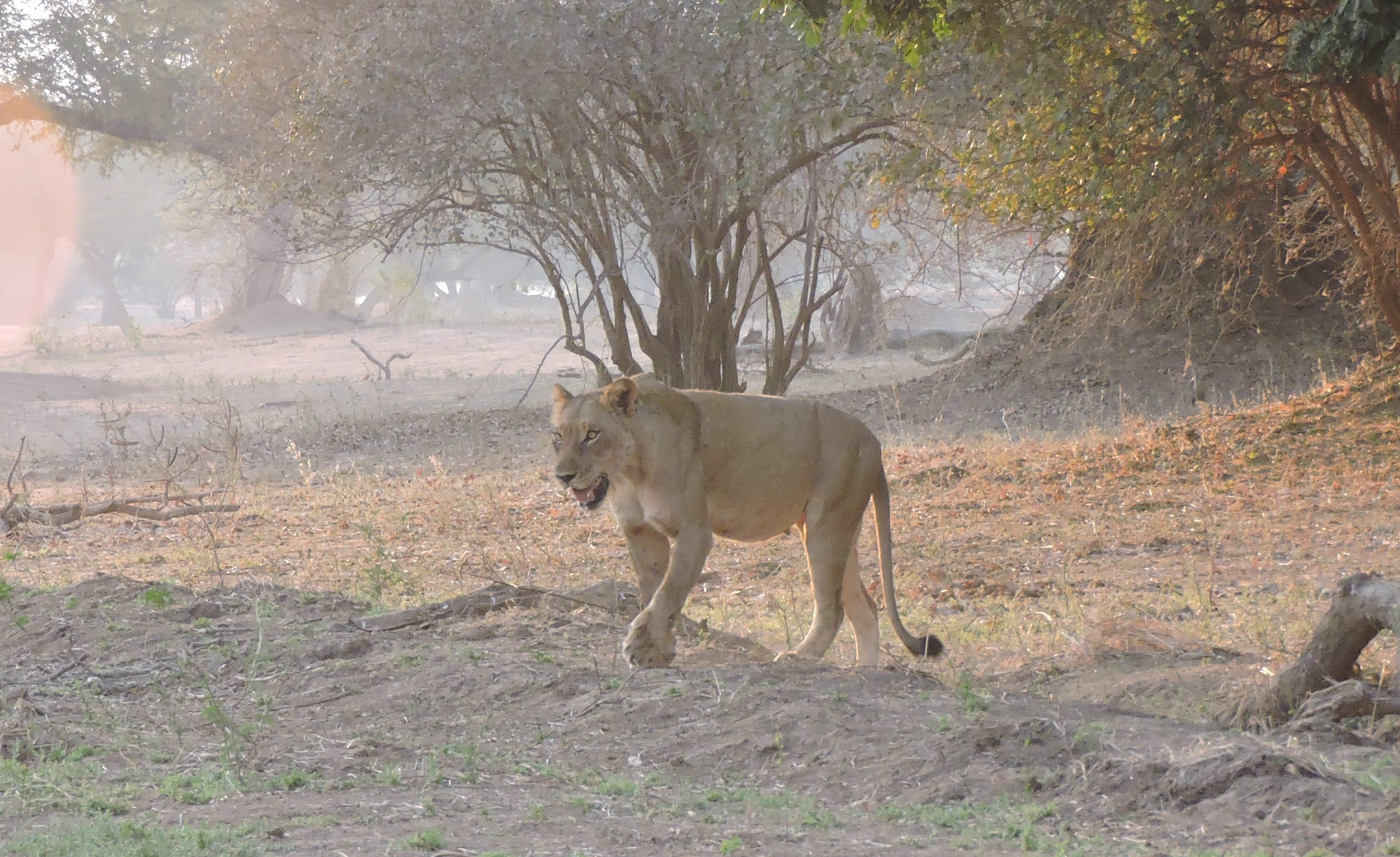
We watched them for a while while making comments like : “if it is true that lions prey on buffalo, now is the time to find large cats”. We then noted a car parked under a tree, watching the buffalo like us. Or so we thought… When, after a while, we overtook them they pointed out to the side of the road. We had just missed a lioness lying one metre from the track! It was an elderly animal -probably sick- and it was panting heavily. We came back to apologize for having driven between the lioness and the other car, and were told that there were more lionesses and cubs in the thicket, about two hundred metres from us! So much for our game spotting skills!!!

After looking intensively at all possible bushes from different angles we did spot the group. They were four lionesses and three cubs. They had clearly fed recently as, particularly the cubs, had greatly dilated bellies! So we now had elephants, buffalo and lions (three of the big five!) around our camp!

Lioness moving back to the thicket after drinking.

Lioness moving back to the thicket after drinking.

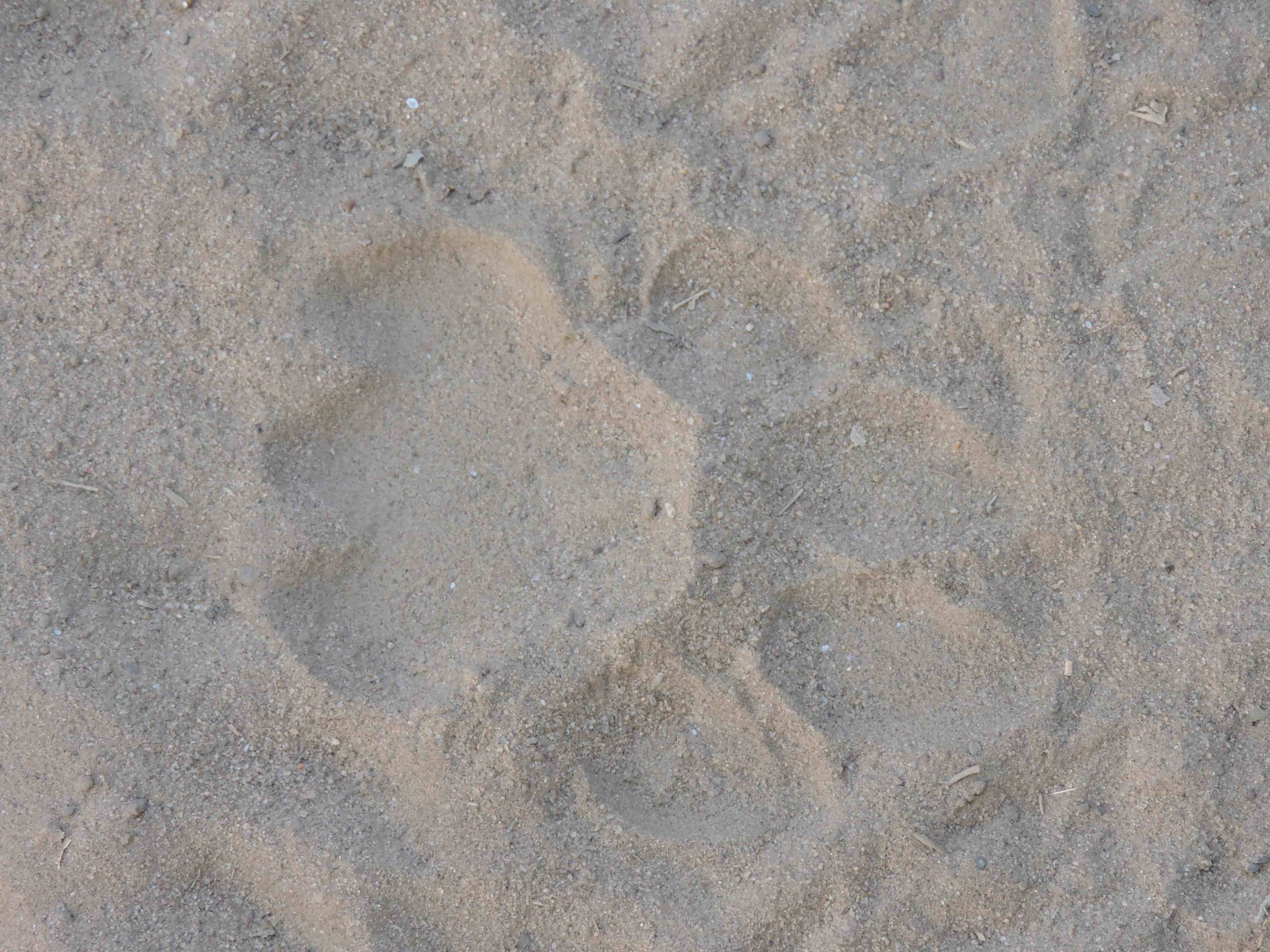
Lion spoor around our camp.

Lion spoor around our camp.

As elephants are very tolerant and the lions had fed, my main concern were the buffalo. The latter had now spread all over the surrounding bush. Clearly the camera would remain in its current location until the animal siege to our camp was finally lifted!

I did eventually managed to retrieve the camera and got some interesting takes that I will present to you in a separate post.

Gwaya Camp, Mana Pools, Zimbabwe. September 2015.

Talking ants

Our first stop during our afternoon game drive from Gwaya after setting up camp came quite soon. In fact, we stopped while we were still in the campsite grounds. I did a kind of emergency stop to the surprise of my companions that were still settling down for the drive. Startled, they looked around but could not see nothing so, I am sure, they waited for one of my jokes as I do have a reputation! After a while I heard “This is one of your jokes right?” coming from Tom, but I was (quite) serious.

The only picture of the ants, taken by my wife.

The only picture of the ants, taken by my wife.

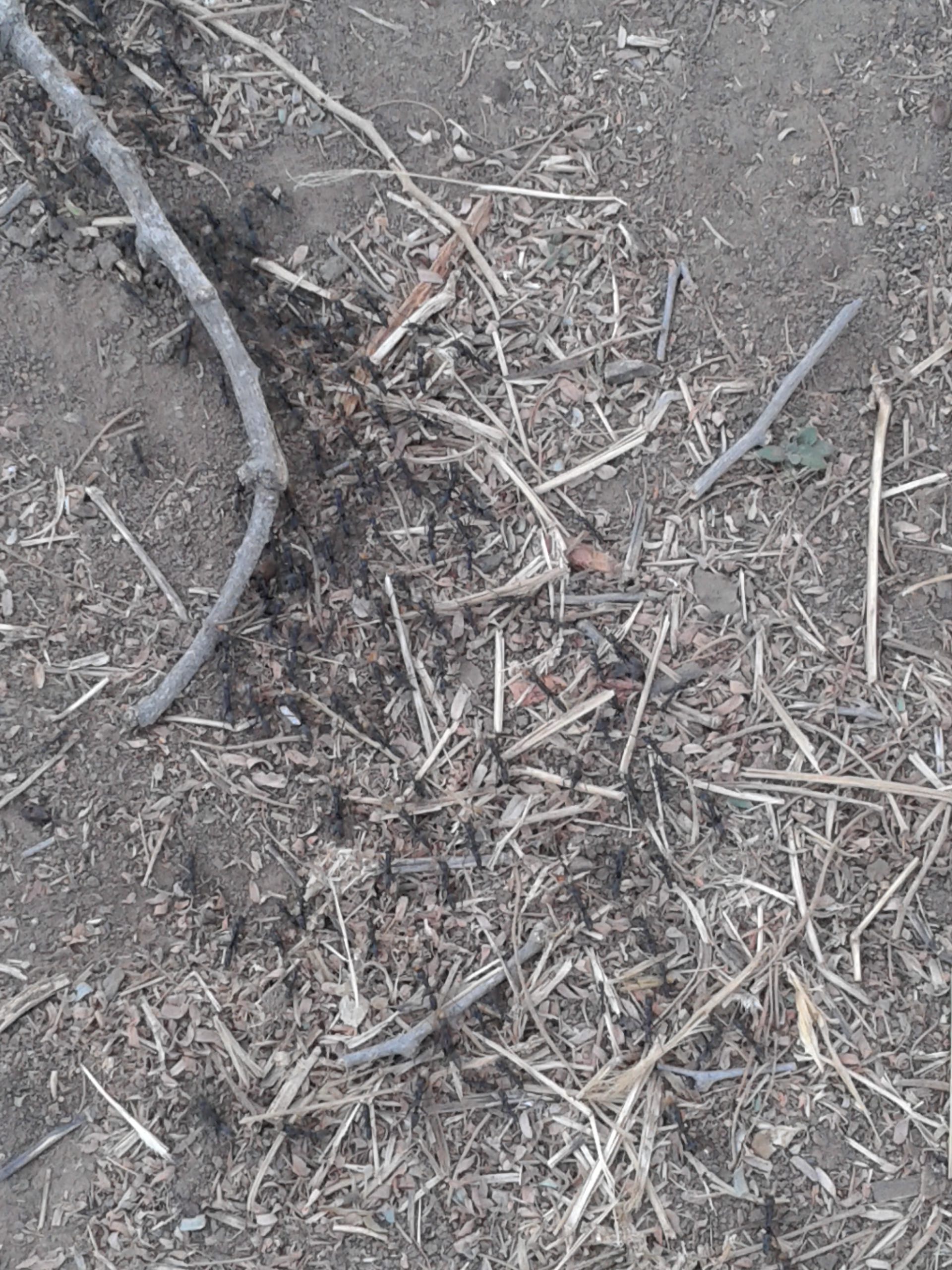
I had spotted a column of Matabele ants[1] crossing the track. We had seen these ants in action earlier in Zimbabwe while entering termite nests and, after a while, emerging with bundles of termites in their jaws, both workers and soldiers! These are specialized ants as they feed exclusively on termites, leaving their colony “en masse” to search for termite nests where they will all enter and attack the nest carrying their victims back to their colony. They normally raid at dawn and dusk so we were probably seeing an evening raid returning home empty-jawed.

When disturbed these ants emit a high pitch squeaking sound that we have not heard from others such as the safari ants or siafu (Dorylus sp.) of East Africa or the leaf cutting ants we have in South America. For this reason, when the ex President of Uruguay Pepe Mujica mentioned that ants whispered in his ear while spending two years at the bottom of a well during his prison sentence, I had no difficulty in believing his words!

The ones we found were carrying their eggs and young and there were not more than three hundred individuals, organized in a thick column. They were moving like an army and entering a hollow dead tree trunk, probably their nest. At the time of the observation I was reading Conn Iggulden’s Genghis Khan series and their behaviour reminded me to the Mongol raiding tactics!

When we were about to leave them to spend the night in their nest we noticed about twenty ants bringing the rear. At first we thought that these were the old and injured, struggling to keep up. But their behaviour seemed odd! They were not moving slowly or lacked any legs! They were performing an activity that was part of their moving strategy. They were clearly following the trail of the group but they were picking up sticks, leaves and other debris and moving them slightly as if trying to “restore” the path they group had trodden to its original condition!

As this seems far-fetched, perhaps they were just either erasing their earlier pheromone trail or releasing new ones to indicate their presence to other creatures?

Once these “strugglers” reached the hollow trunk, they also got inside to join the others. They were in for a hungry night.

September 2015, Mana Pools, Zimbabwe

[1] Megaponera analis, one of the world’s largest ants are named after the fierce Matabele warriors.

Sand lovers[1]

As Tom and Chizuki were departing in mid-morning we left for an early drive to be able to return to camp in time for them to pack up. Lions had roared from the direction of Mana mouth so that was our destination.

The tracks in the area are reasonable with the occasional dry river crossing that normally do not offer any real challenge to a 4WD vehicle. The exception being some that actually have water, sometimes quite a lot of it making for fun driving (for me and daughter) and unnecessary risk-taking for my wife and son! Yes, the family is clearly split between wise and unwise (according to the wise) or boring and fun, according to us!

Because of his work, my father travelled daily to the rural areas of the Colonia Department in Uruguay from the 1940’s until his retirement in the 80’s. He did ford many watercourses during his time and he stated that “where there is water there is no mud underneath” so he would venture into the water without hesitation. He will drive forwards in his Willys Jeep when the water was reasonably low or plunged backwards when it was very deep. In this way he would open the water with the back of the car and the engine (petrol at the time!) would not get wet!


A river crossing with water at Mana Pools in July 2015.

Going back to our game drive towards Mana mouth, after a km or so of the river crossing we found a Land Cruiser pickup, probably the best bush vehicle there is. So good that in Mozambique they call them AKM in reference to the indestructible AK47 assault rifle (in Mozambique they know about this!). The pickup was not moving and there was someone standing next to it. We soon realized that they had just got stuck in the sand.

There is nothing wrong with getting stuck in the bush. However, they somehow had managed to do so in a patch of sand about two metres long! We waited for a few minutes, convinced that the car would move as soon as 4WD was engaged. Despite this, nothing happened and it only got deeper into trouble. Aware of the worsening situation we got out of our car and introduced ourselves to the lady standing and watching. She looked cool -with a Coke in hand- and clearly quite amused with what was taking place!

The driver was somewhere under the car frantically digging sand from under the wheels. “If you have a rope handy, I can pull you out”, I offered getting a smile from the lady and a grunted “no thanks” from somewhere below the car while sand continued flying out from under the car. After a couple of minutes we spotted him and realized that he was wearing the uniform of a tourist guide. His face was red showing an “I am upset and worried but do not want to show it” expression!

In view of the negative, we stood and watched the driver excavate more until he was satisfied and jumped on the car, clearly not enjoying being observed by some amateur tourists! He managed to get some action. The car jerked forward giving us some hope but it got lower into the sand. When this happened, the driver -wearing a very red face by now- jumped out again, still ignoring us, and proceeded to get under the car again to move more sand and enlarge the hole that, by now, had acquired an unnecessary large size!

We looked at the lady and she shrugged her shoulders so we quietly got back in our car and, aware that our time was short, drove around the “obstacle” and continued on our way. While passing by the pickup we said adios to the lady who shouted, “look, they are leaving”, and quickly added, “they are really going!” in the direction of a bottom wearing kaki shorts! The latter remained indifferent while the digging continued, probably for quite a while.


[1] Zimbabwe 2015, Mana Pools.

Harvesting from the effort[1]

The following is a concise account of my working life. More details can be found in the “Pages” section of this blog. The intention of this short account is to set the seen for the next historical posts that will deal only with episodes that took place during these years and that I consider to offer some interesting aspect worth mentioning.
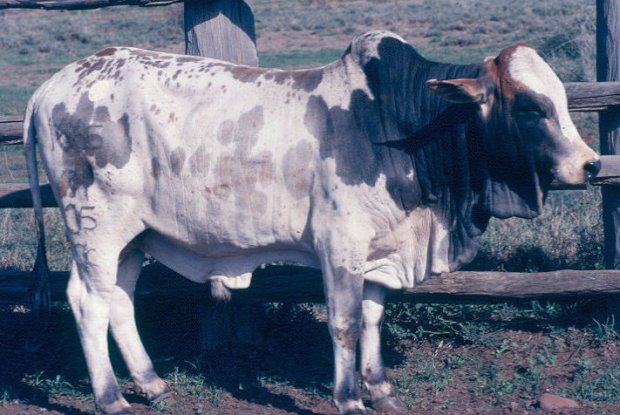
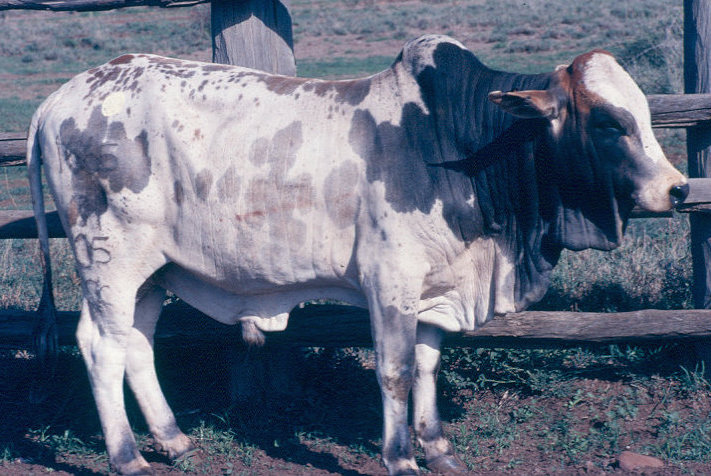
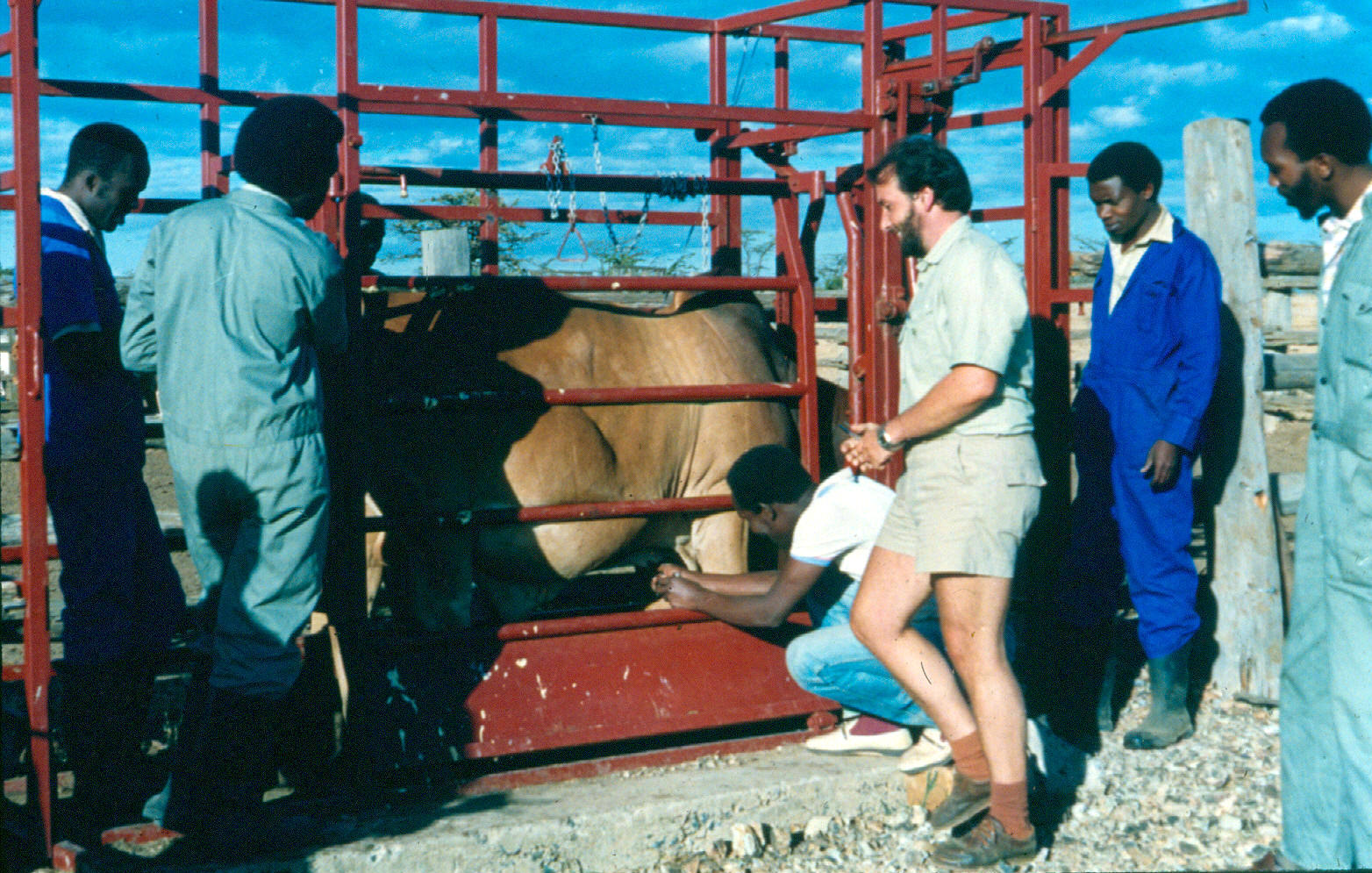
A Boran young bull at Mutara ranch, Kenya.

A Boran young bull at Mutara ranch, Kenya.

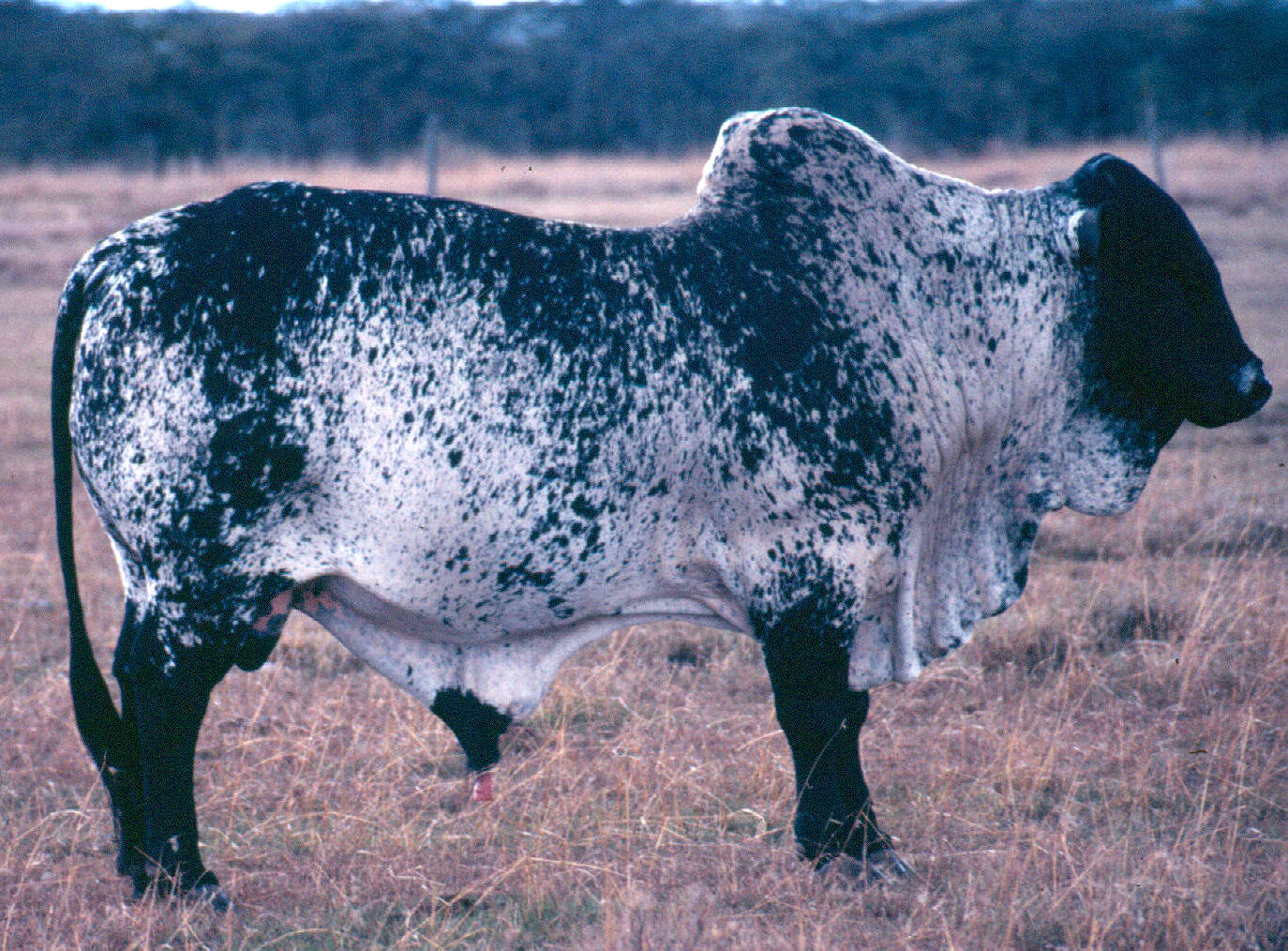
Boran young bulls at Mutara ranch, Kenya.

The work at Muguga and Intona described earlier (give link) yielded fruit and I was able to publish the results in good scientific journals, together with my co-workers, Matt, Alan and Robin included. My research added some knowledge to a large regional programme on ticks and tickborne diseases that FAO had initiated at the time of my arrival in Kenya and that covered several countries in East, Central and Southern Africa.
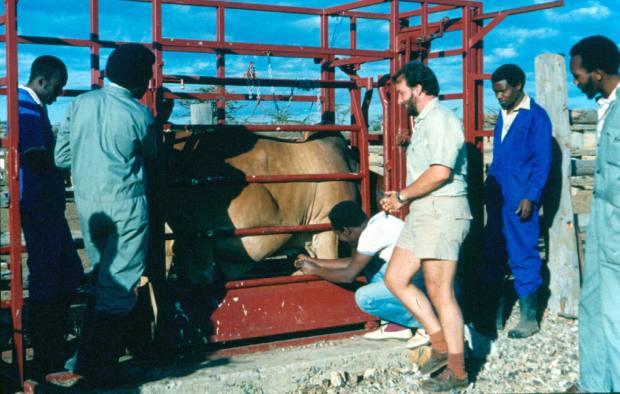
Mutara tick selection work.

Mutara tick selection work.

Once my fellowship ended, although I had a lot to learn yet, I had somehow found a niche for my work at ICIPE and, with Matt’s blessing, I joined the Tick Programme as a scientist. My work on tick impact had ended and now my work would have to fall within the Tick Programme’s goals and funding. The main target was to control ticks using the cattle resistance to them. I had come across this fact while doing my research as some animals showed resistance while others not.

At that time I also decided to start my PhD studies as an external student with my former Department of Applied Zoology at the University of Wales. Four years of hard work were in front of me, as I needed to work and study, not an easy feat! I was lucky to be surrounded by knowledgeable colleagues and to find a great supervisor, the late Ian Herbert from the Department.

While working on my PhD I got involved with the work on ticks and tickborne diseases on-going at Muguga and I also continued with field work at Intona. Later on we started more work at Mutara Ranch, then the Boran cattle stud for Kenya, where we started work on selection of cattle for tick resistance that sadly needed to be abandoned for lack of resources. The initial study got published and this added to my growing reputation in the tick world. I completed the PhD in 1986 while still in Kenya.
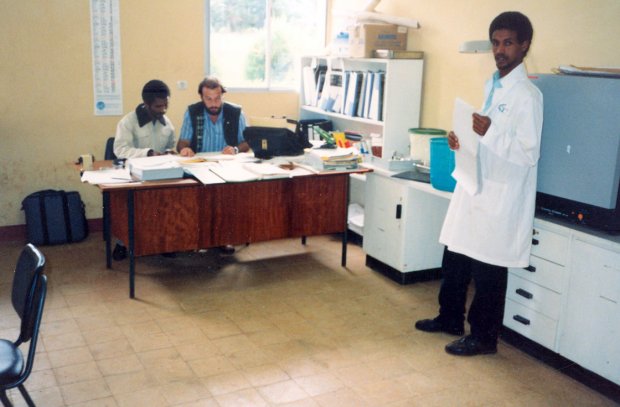
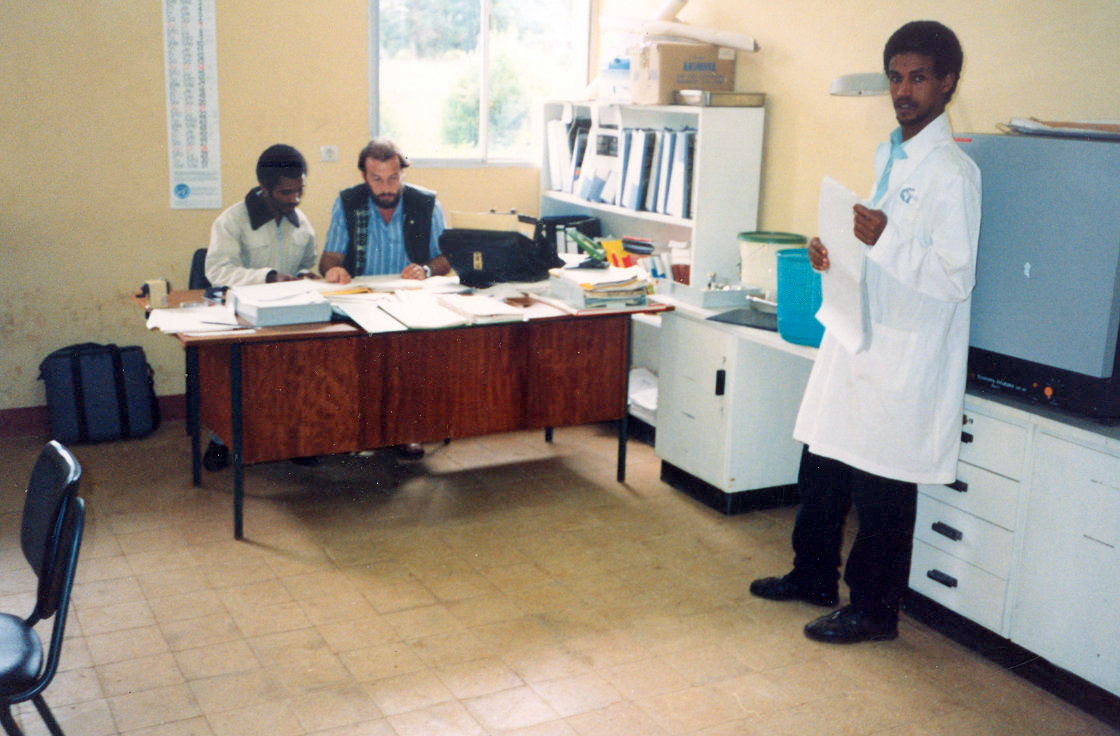
The laboratory at Bedele, Ethiopia.

The laboratory at Bedele, Ethiopia.

In 1988 FAO offered me a position as a Leader of the Ethiopian component of their regional tick and tickborne disease programme I mentioned above. I accepted the offer as it had very favourable conditions but left ICIPE and Kenya with a heavy heart after so many years of enjoying life and work there.
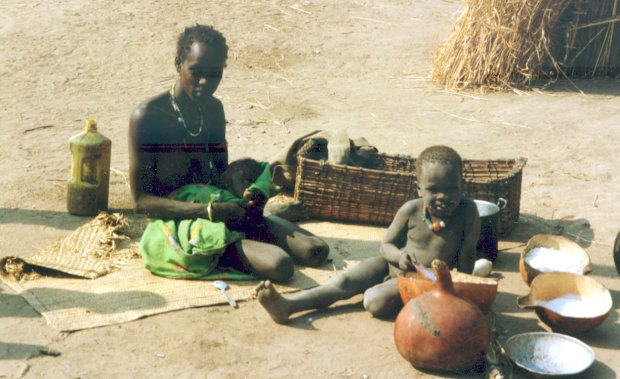
Villagers at Gambela, West Ethiopia.

Villagers at Gambela, West Ethiopia.

Ethiopia was a big change as we arrived in a country at war with Eritrea and under a comunist regime led by Mengistu Haile Mariam, a ruthless leader. My duty station was Bedele in West Ethiopia, still green and wooded with a rainfall of about two thousand mm per year! It was a remote place where FAO has assisted the Government in building a Veterinary Diagnostic Laboratory. Bedele’s main claim to worldwide fame is ob being the place where coffee originated from.

The work was more routine than challenging and it required the collection of ticks from cattle at different locations both to get to know the species and to understand their population dynamics. My assignment there lasted under two years as I was replacing another tick officer that needed to be evacuated with a severe heart condition. Despite the political and economical difficulties the country was going through, the work was completed and, as the possibilities of continuing the work were not there, it was tie to move on.
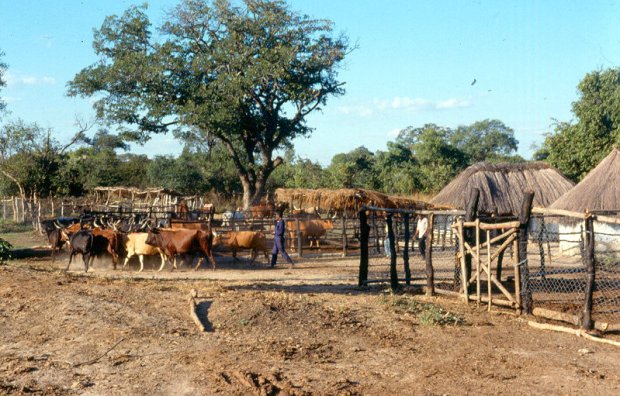
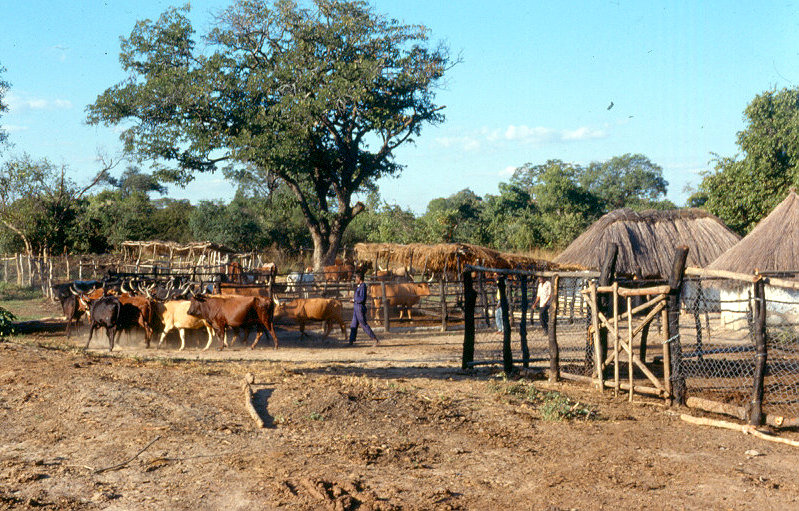
The project site at Lutale, Central Province of Zambia.

The project site at Lutale, Central Province of Zambia.

I was transferred to Zambia where I was to continue a long-term trial on the effects of ticks on traditional cattle productivity both of milk and beef under different tick control regimes: no control, intensive control and “strategic” control. The latter meant to treat only to prevent tick numbers from building up. The trial run for three years and it was completed successfully. It was during this time that our children were born and our lives changed!
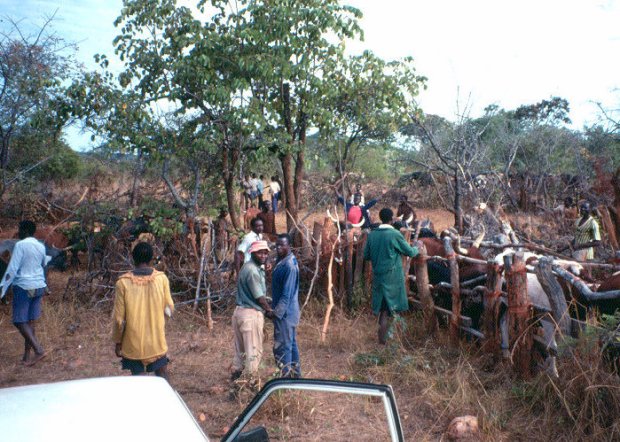
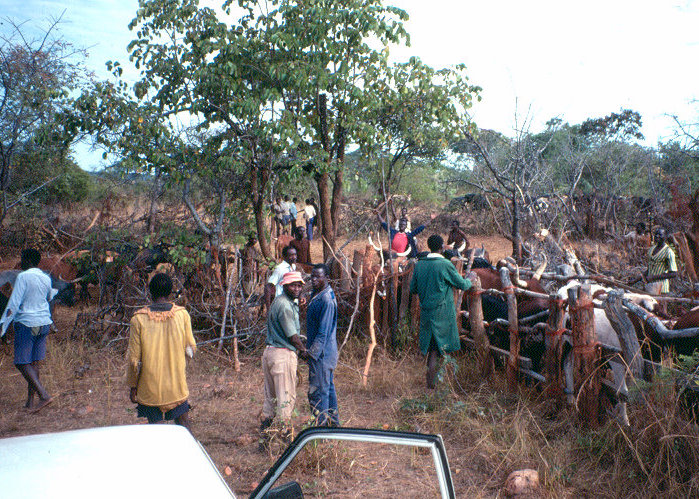
Cattle work in Southern Province, Zambia.

Cattle work in Southern Province, Zambia.

After three busy and productive years in Zambia the regional programme was going through important changes. Its coordinator based at FAO HQs in Rome was about to retire and more funding was coming in to continue the work for another phase of four years. Somehow I landed the coordinator’s job and moved to Rome in a move that removed me from scientific work and converted me into an international bureaucrat!
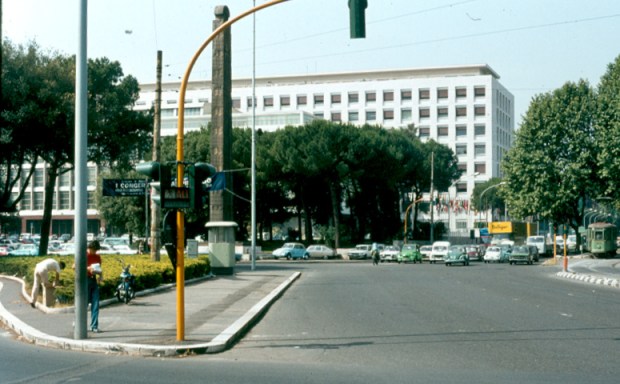
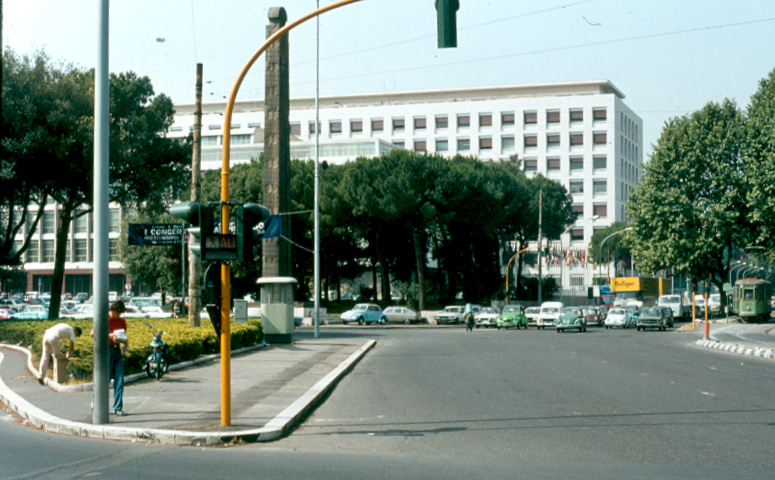
FAO in the 90s. Please note the Axum stele that was returned in 2005.

FAO in the 90s. Please note the Axum stele that was returned in 2005.

After a few months in Rome, once the “glamour” of the job waned, I realized that I needed to get back to the field as the work I was doing did not appeal to me.

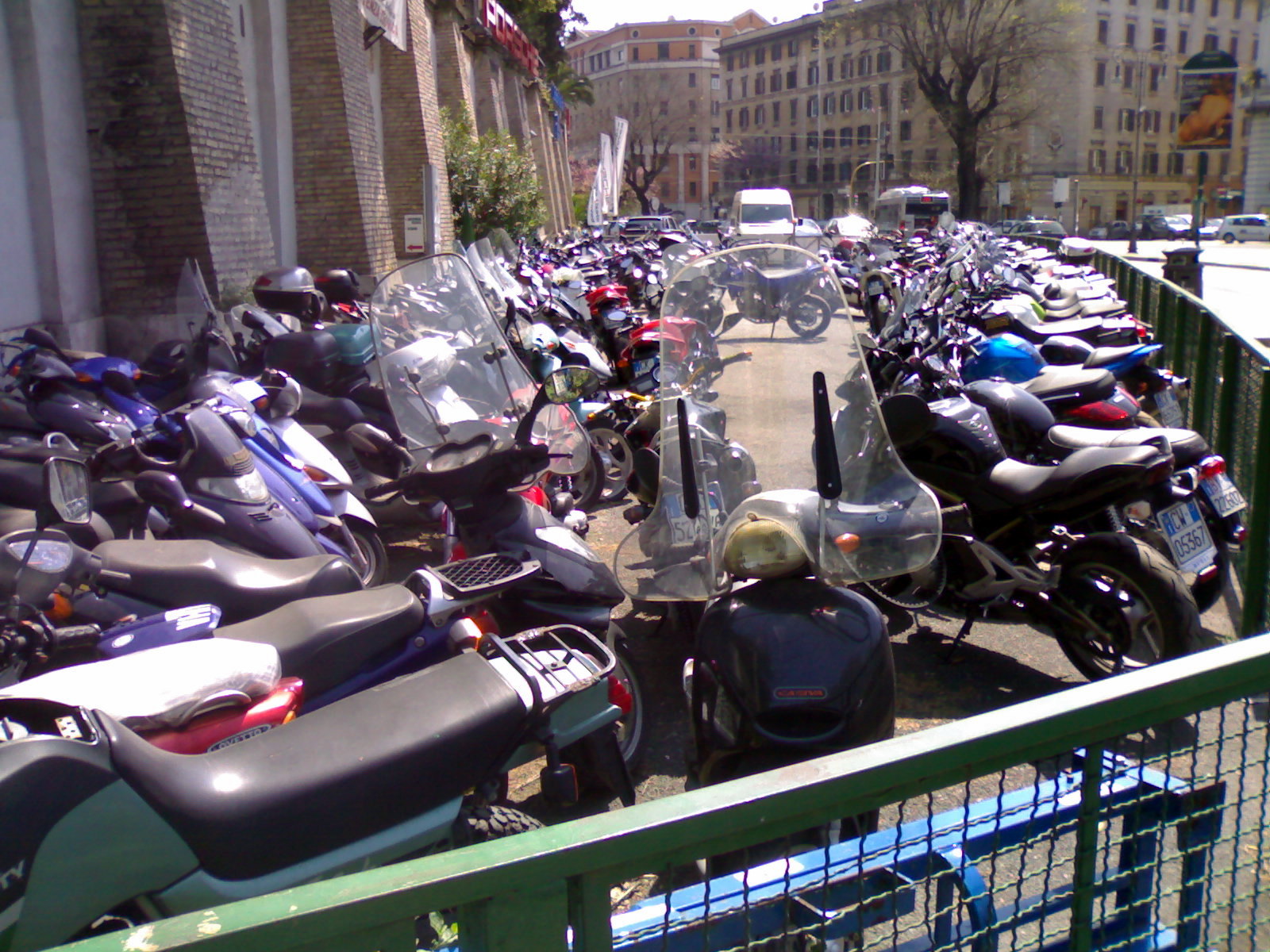
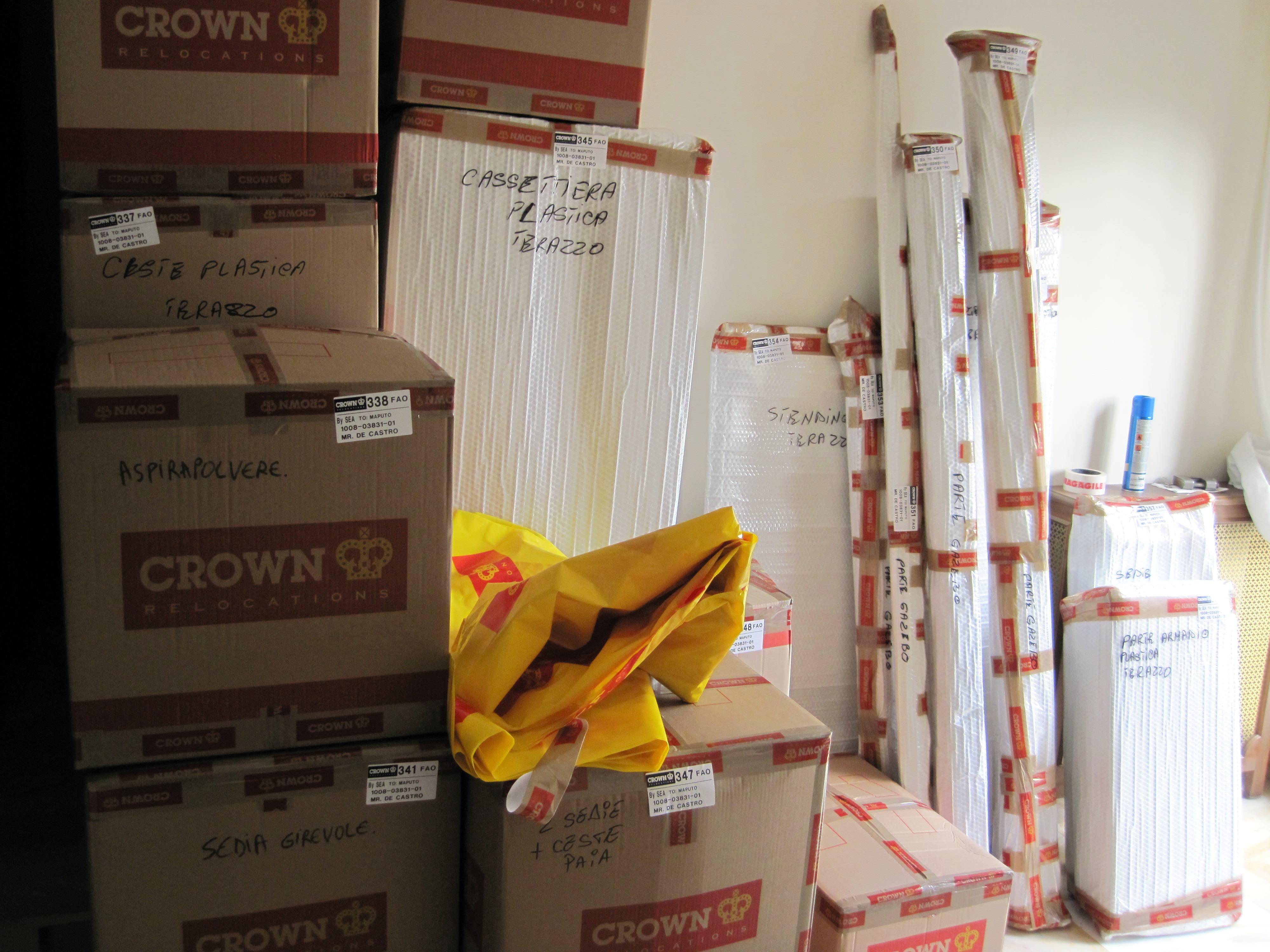
Mudanza a Hre copy 2

Moving again! This time to Zimbabwe.

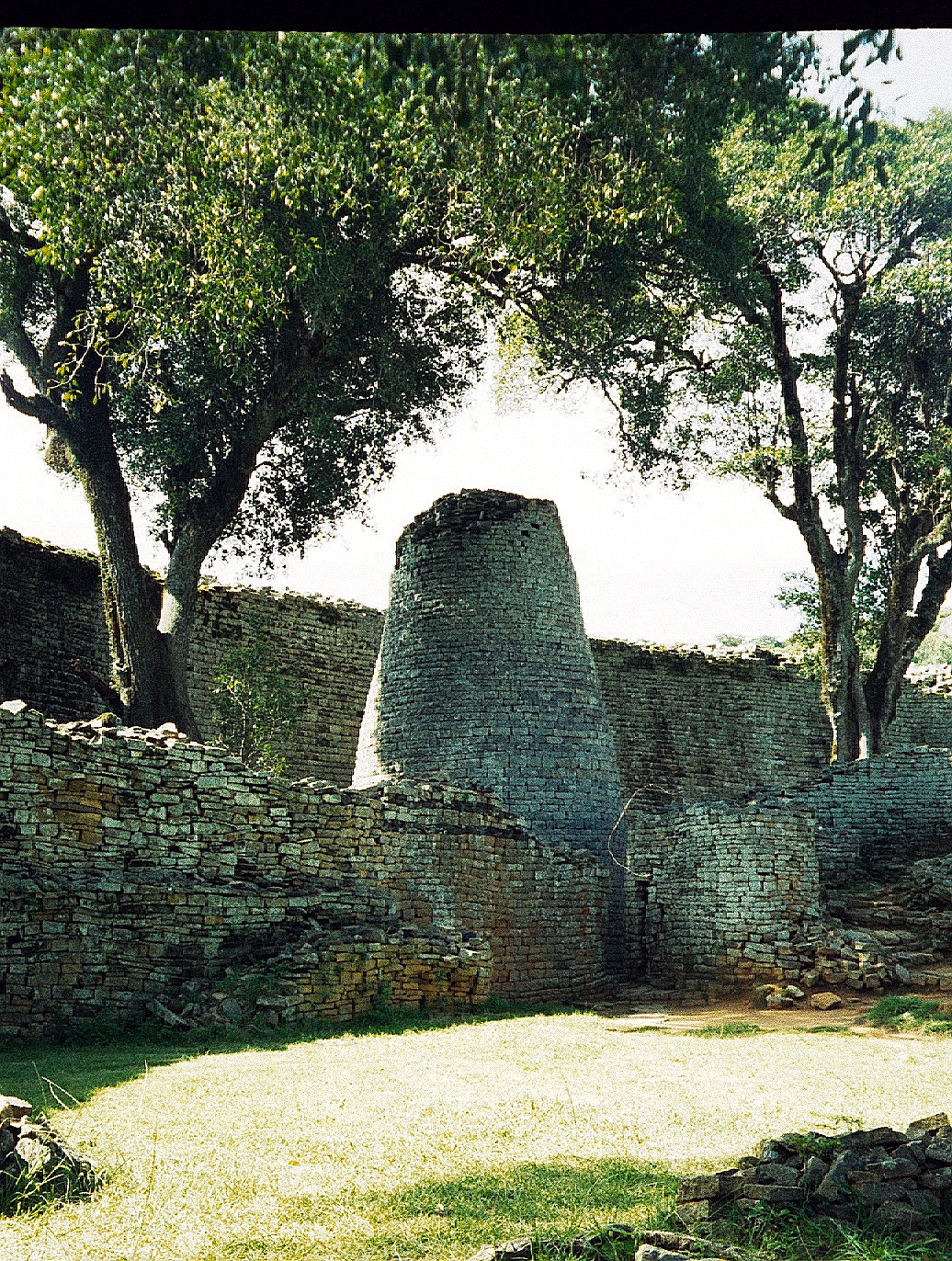
The opportunity to move to the field -again to Africa- presented itself in 1997 and I did not hesitate! We moved to Harare, Zimbabwe where I took up the role of sub-regional animal production and health officer, an even broader professional role as it also involved animal production. As compensation, however, the job was restricted to Southern and Eastern Africa. Although it was not “hands on” scientific work, it was closer to the action than what I was doing from Rome!
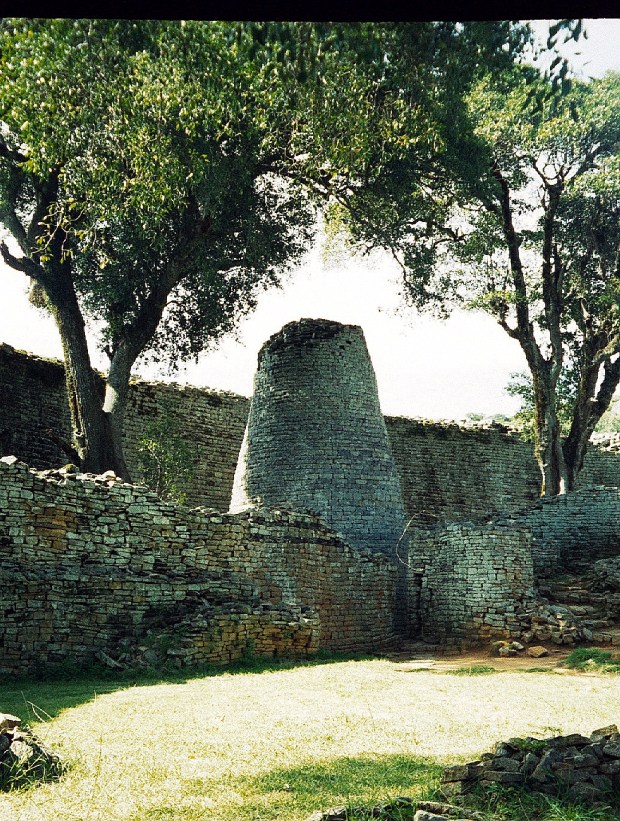
Great Zimbabwe ruins, Zimbabwe, 1998.

Great Zimbabwe ruins, Zimbabwe, 1998.

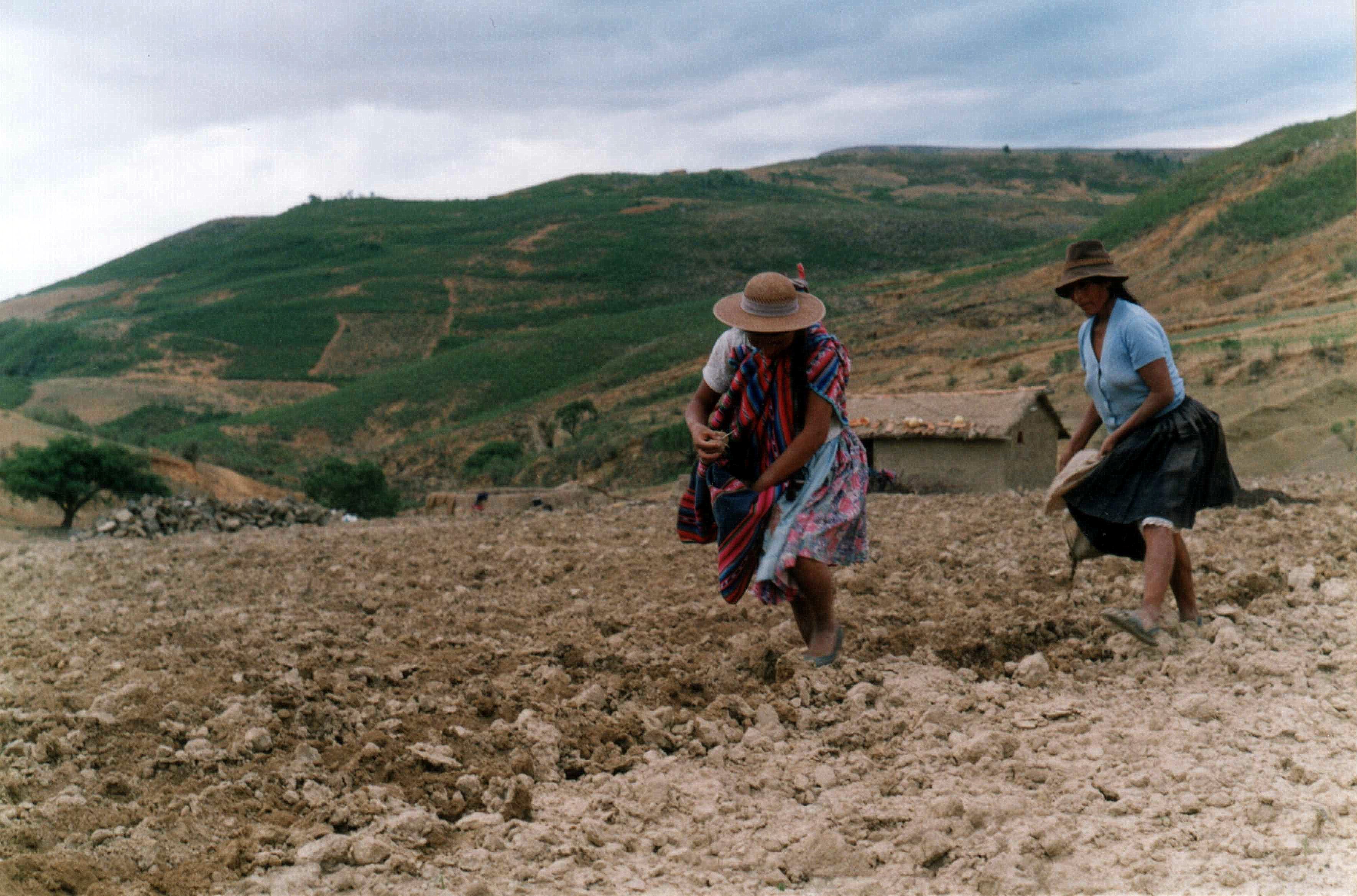
After four years in Harare I realized with regret that I needed to move to get a career improvement. At the end of 2000 I put my name for a FAO Representative job and succeeded getting designated FAOR in Bolivia so in mid 2001 we left for La Paz, Bolivia. This would be my first assignment in a Spanish-speaking country and it also meant becoming the head of an office with a large multi-sectorial programme and several employees both in the office and in the field. In addition, as the representative of the organization in the country I also carried a political role having to develop strong links with the host government.
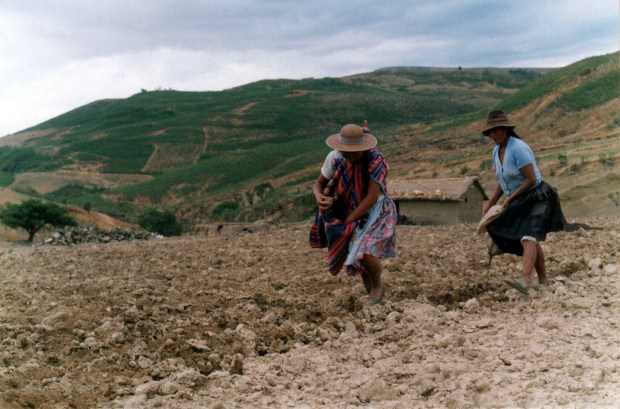
Sewing in Bolivia.

Sewing in Bolivia.

Market street of La Paz, Bolivia.

Market street of La Paz, Bolivia.

I worked in Bolivia for five incredible years and, in 2005 I returned to Rome, again as a technical expert to continue working on animal diseases, in particular I returned to ticks and TBD. Again I did not find this assignment enjoyable and, after four years I had had enough of desk work and it was either another field post or retirement!
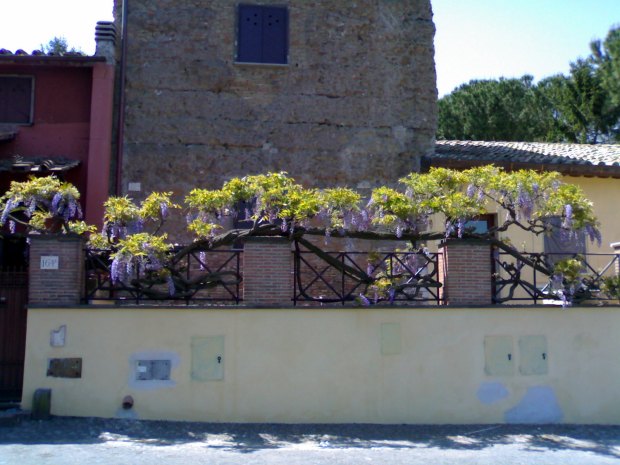
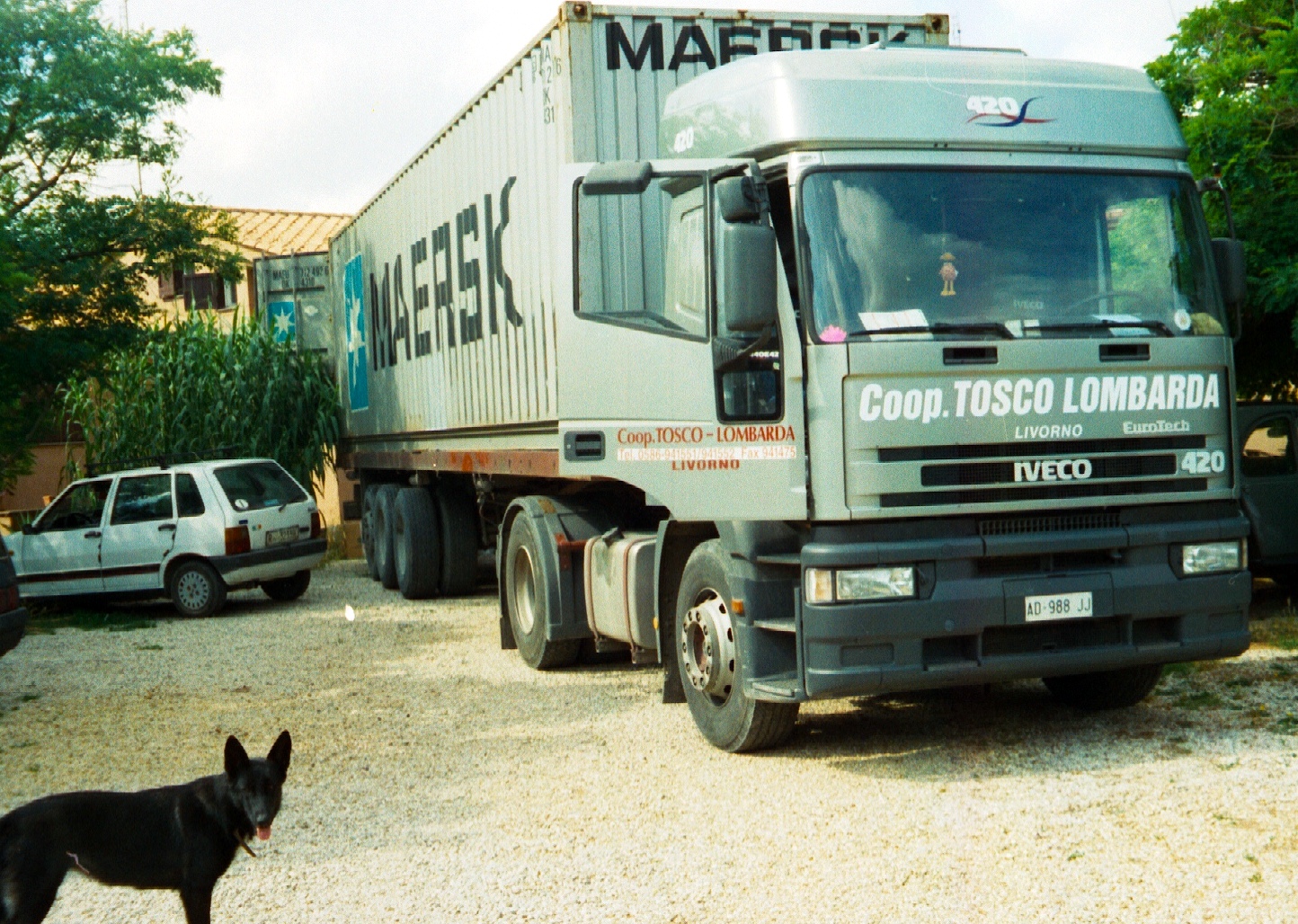
The Appia Antica road, Rome.
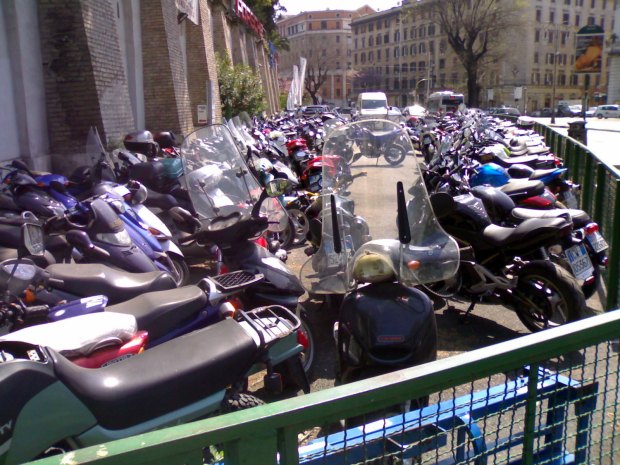
The Appia Antica road, Rome.

Rome, 2009!

Rome, 2009!

Fortunately I was selected for the position of FAO Representative in Mozambique where I worked until my retirement, from mid 2010 to the end of June 2013 when I reached 62 years, the mandatory retirement age of the United Nations.

Time to move to Mozambique.
Time to move to Mozambique.

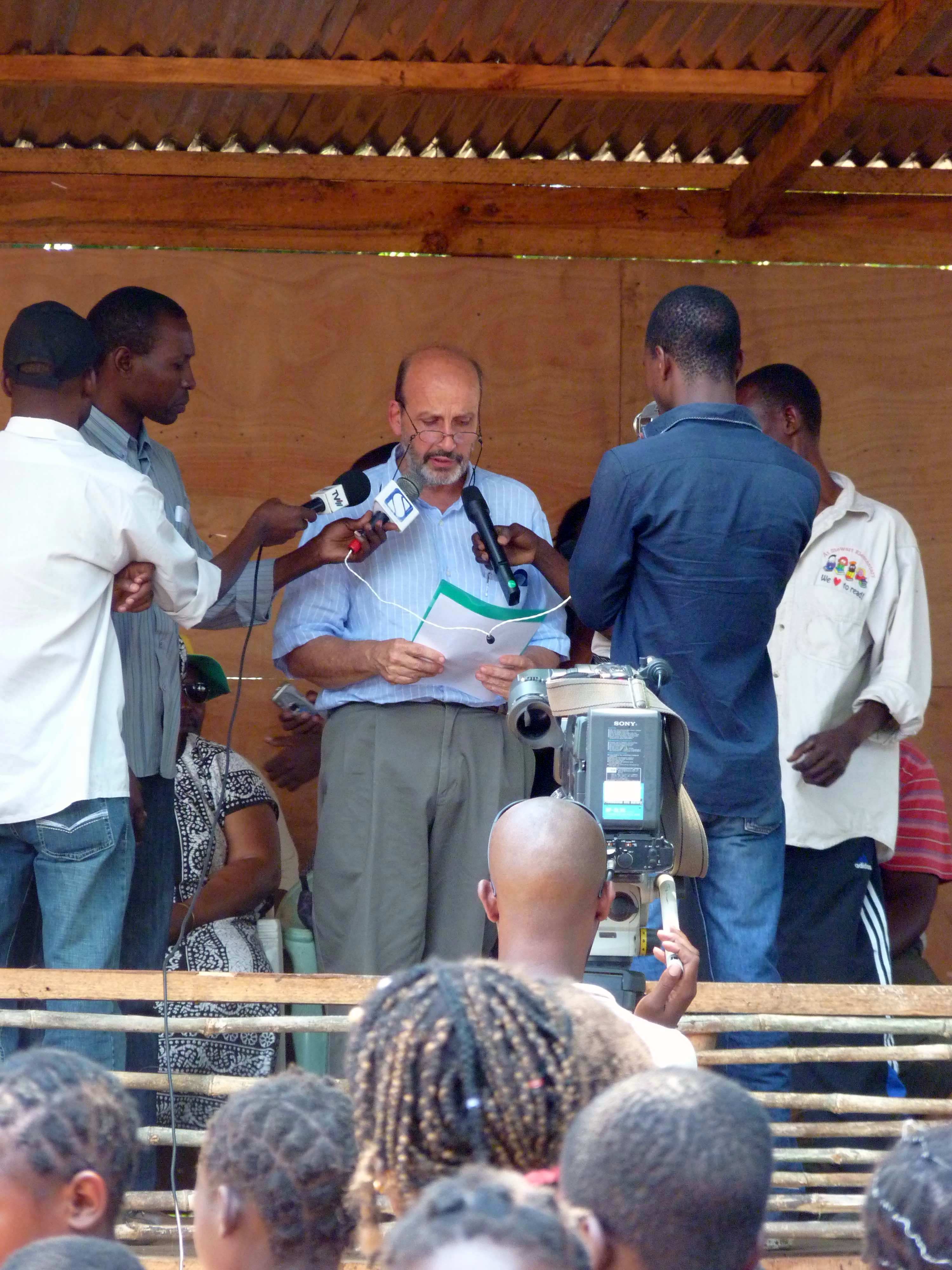
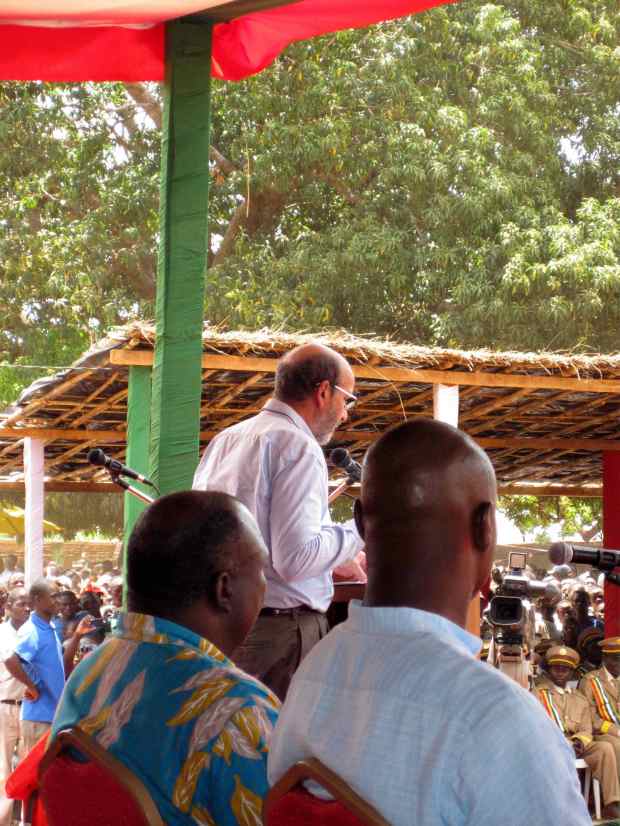
Speaking on World Food Day in Mozambique.
Speaking on World Food Day in Mozambique.

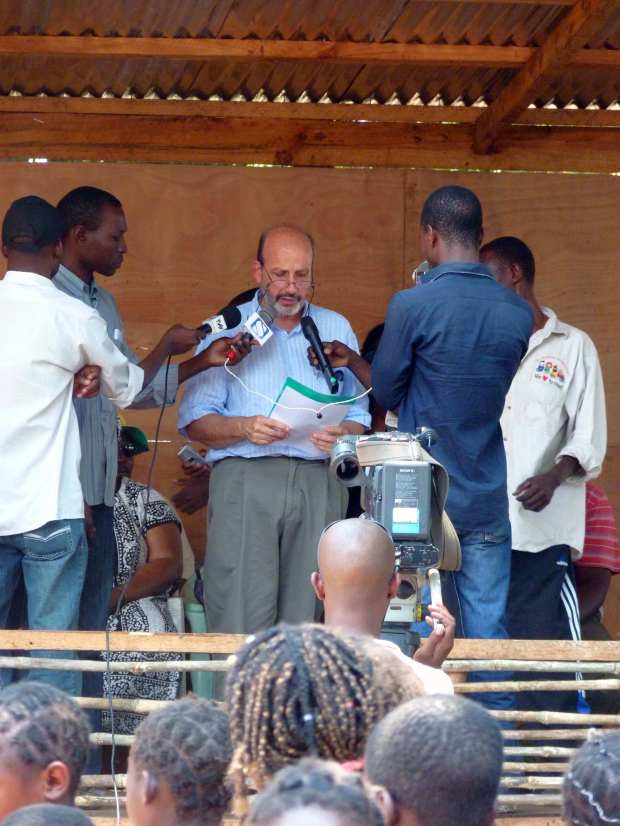
Interviewed by the press.

Being interviewed by the press.

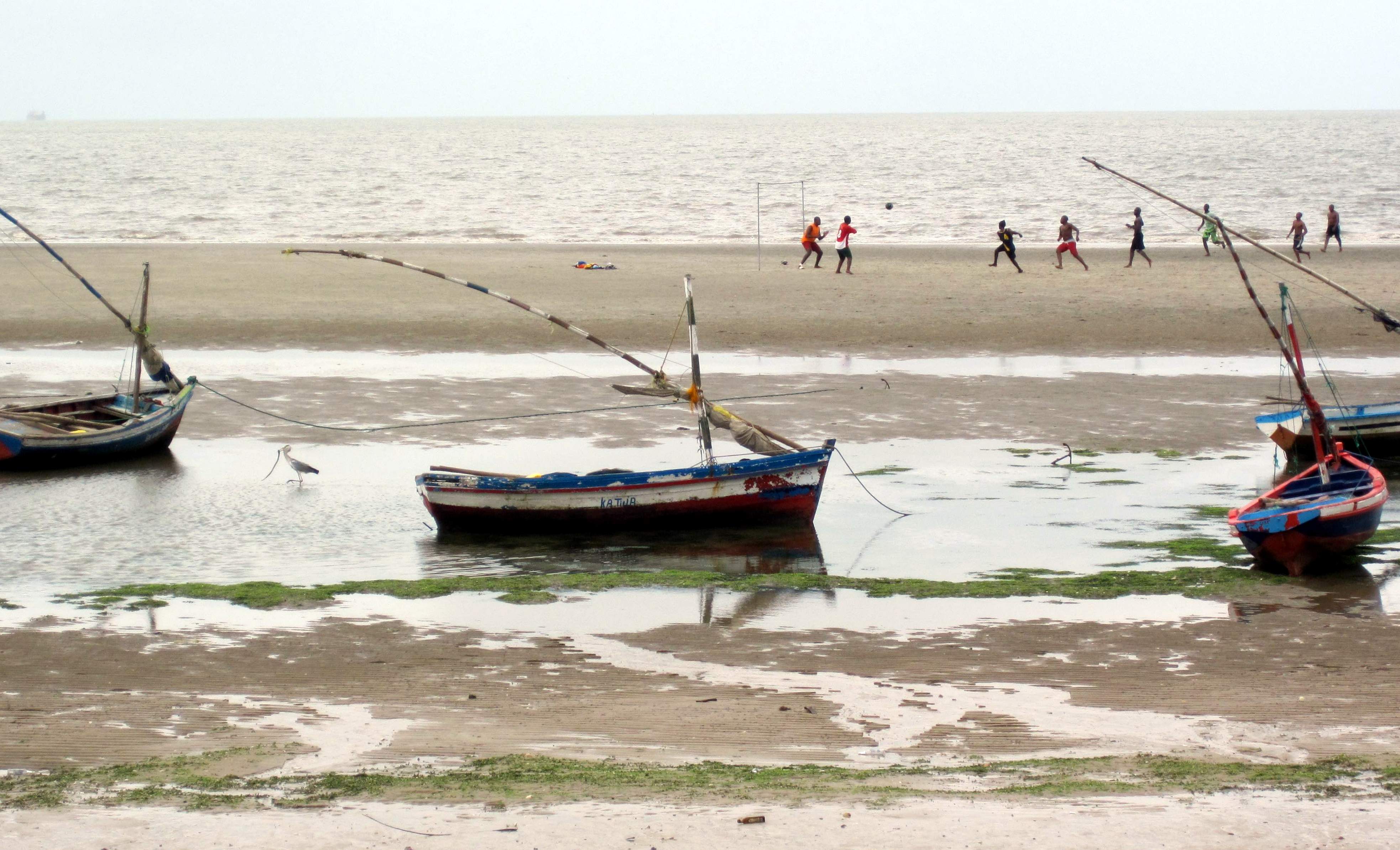
Maputo's beach in Mozambique.

Maputo’s beach.

Needless to say that I write in first person but my life has been shared with my wife and later my children. She has been a main support throughout and the kids added their part!

I hope you enjoy reading what I have to say.


[1] This post follows “Life and work in Kenya: Intona”.

Zambezi sentinels

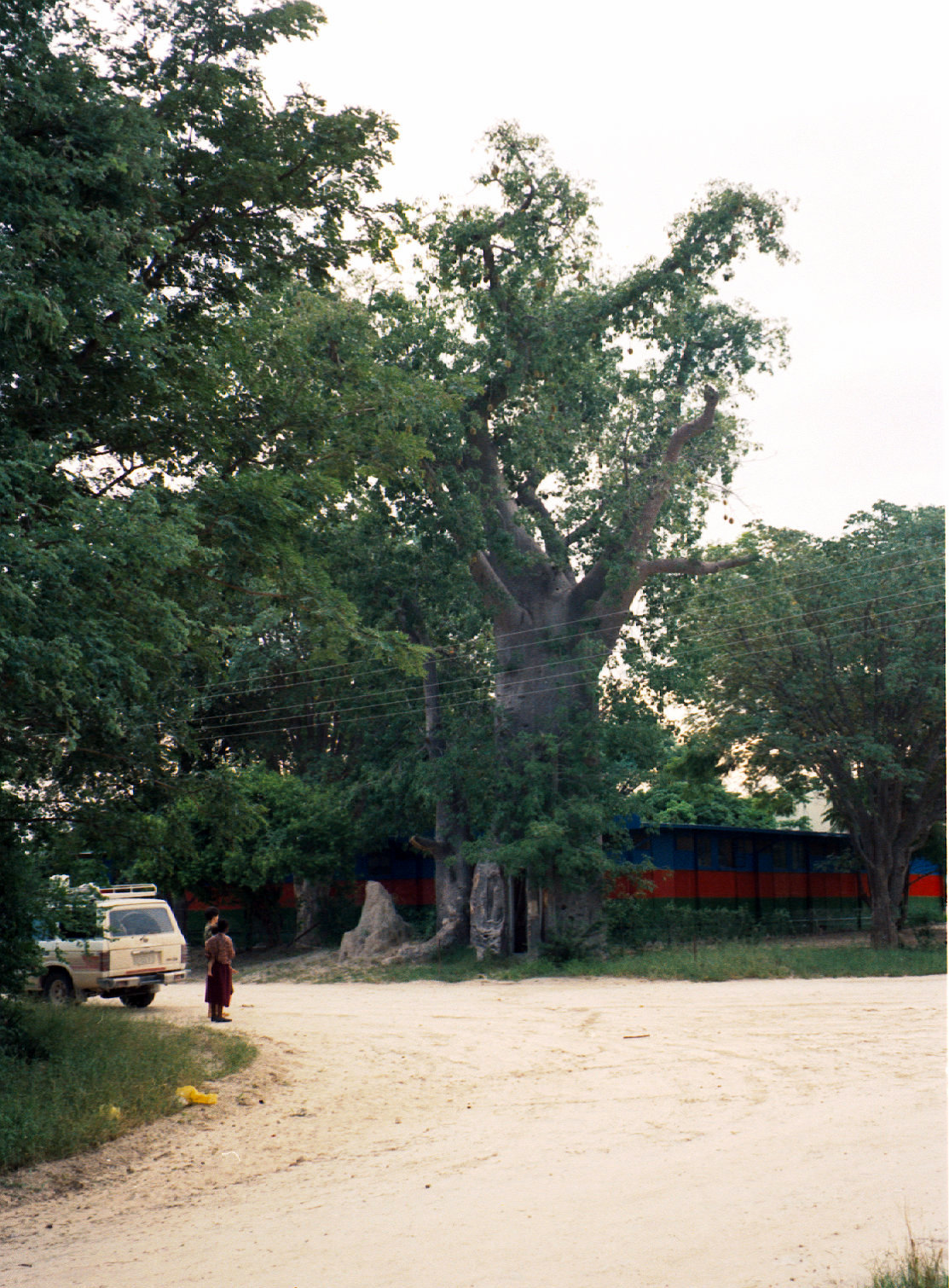
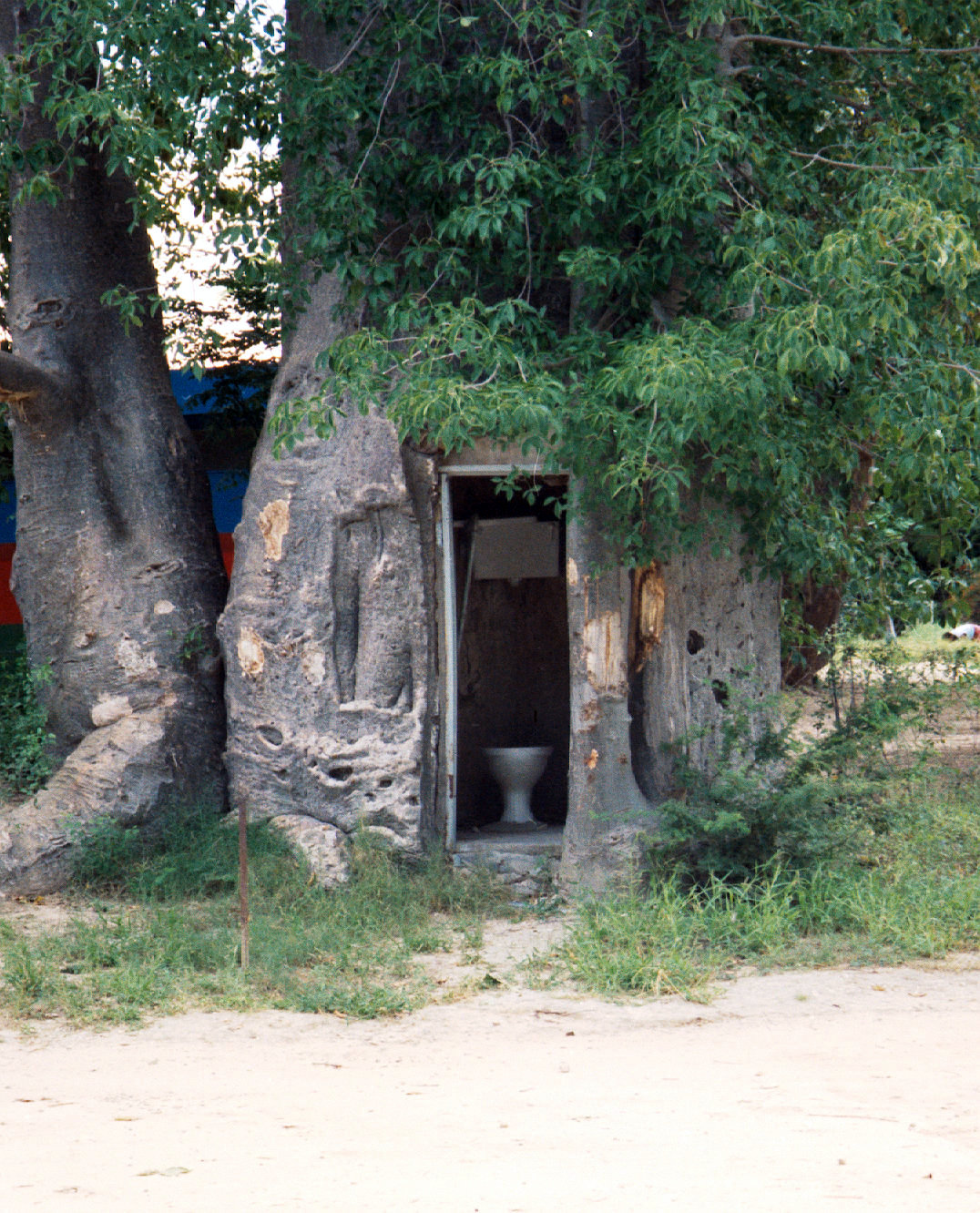
All baobabs are special but there are a number of “famous” ones. Clive Walker[1] highlights a number of them, some well known, some less but all interesting. I am sure most people keen in Africa and its nature have read or heard about Baines’, Green’s and Chapman’s baobabs in Botswana, the Pioneer’s baobab and the “Big tree” in Zimbabwe, the Sagole and Sunland giants in South Africa and the Toilet tree of Namibia to name some. We were lucky to visit Katima Mulilo in Namibia at a time that the toilet was still there and it was one of the unforgettable sights of our travelling life.

The "toilet baobab" at Katima Mulilo, Namibia.

The “toilet baobab” at Katima Mulilo, Namibia.

A close up of the "toilet baobab" at Katima Mulilo, Namibia.

A close up of the “toilet baobab” at Katima Mulilo, Namibia.

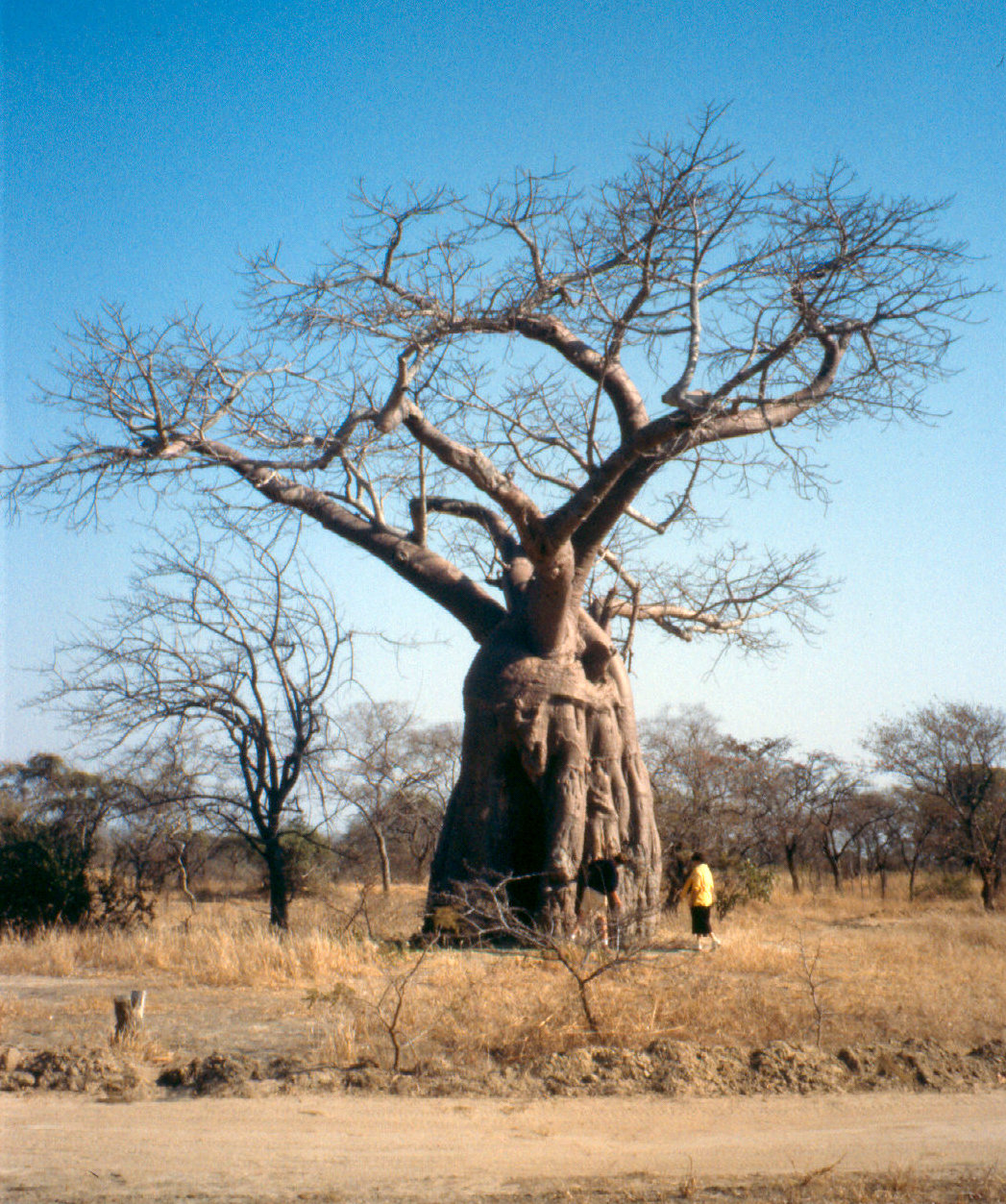
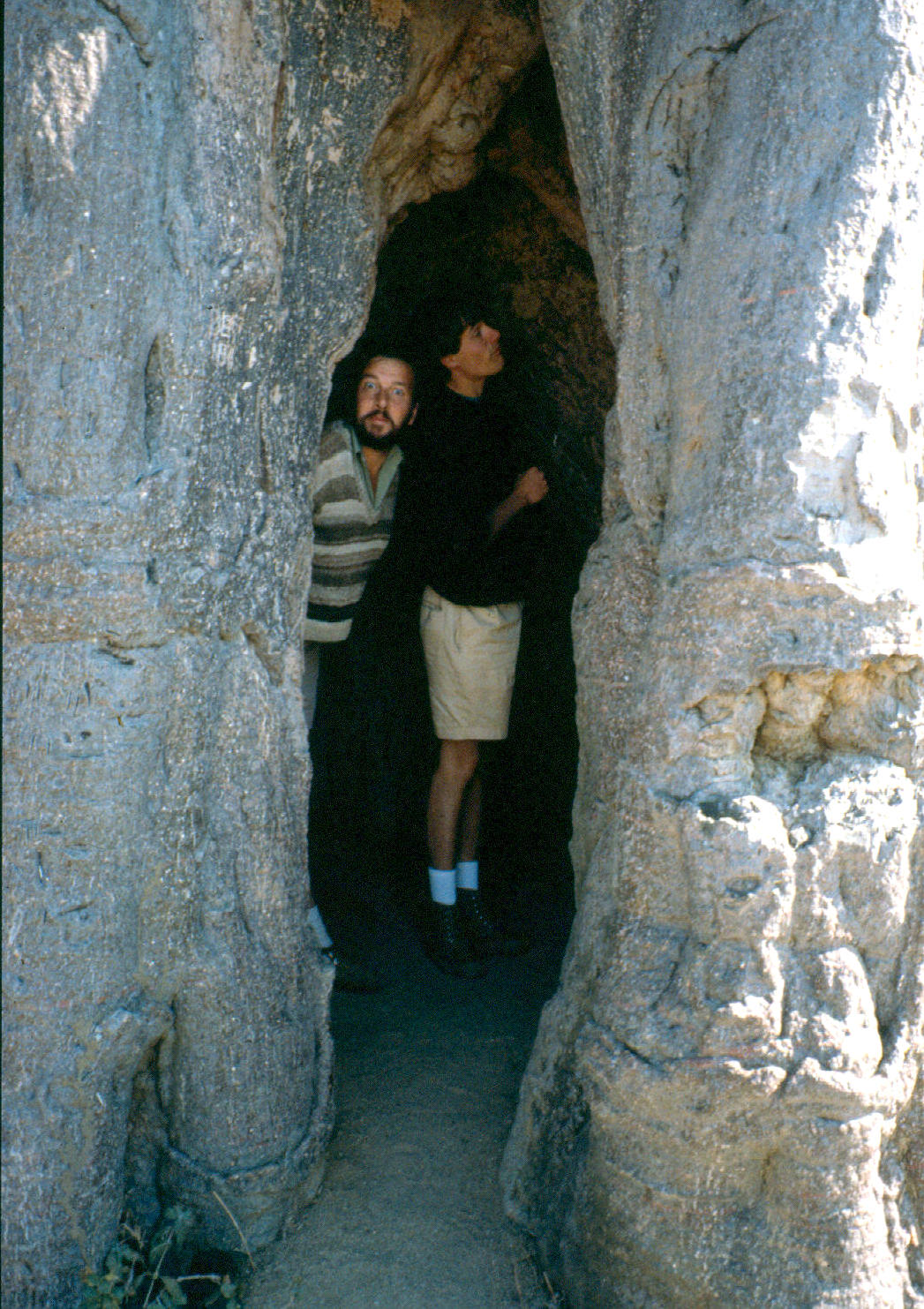
However, all baobabs that you see are special in their own way and have their own special features. I recall the sorrow felt by Carlo, an Italian friend that came for a safari to Gonarezhou, when he saw the damage elephants do to these wonderful trees. There was also a large baobab at Lochinvar National Park in Zambia that had its own cave!

The Lochinvar baobab and my daughter.

The Lochinvar baobab and my daughter.

The Lonchinvar baobab with a young bushsnob and Bruno in attendance.

The Lonchinvar baobab with a younger (and sillier) bushsnob and my friend Bruno.

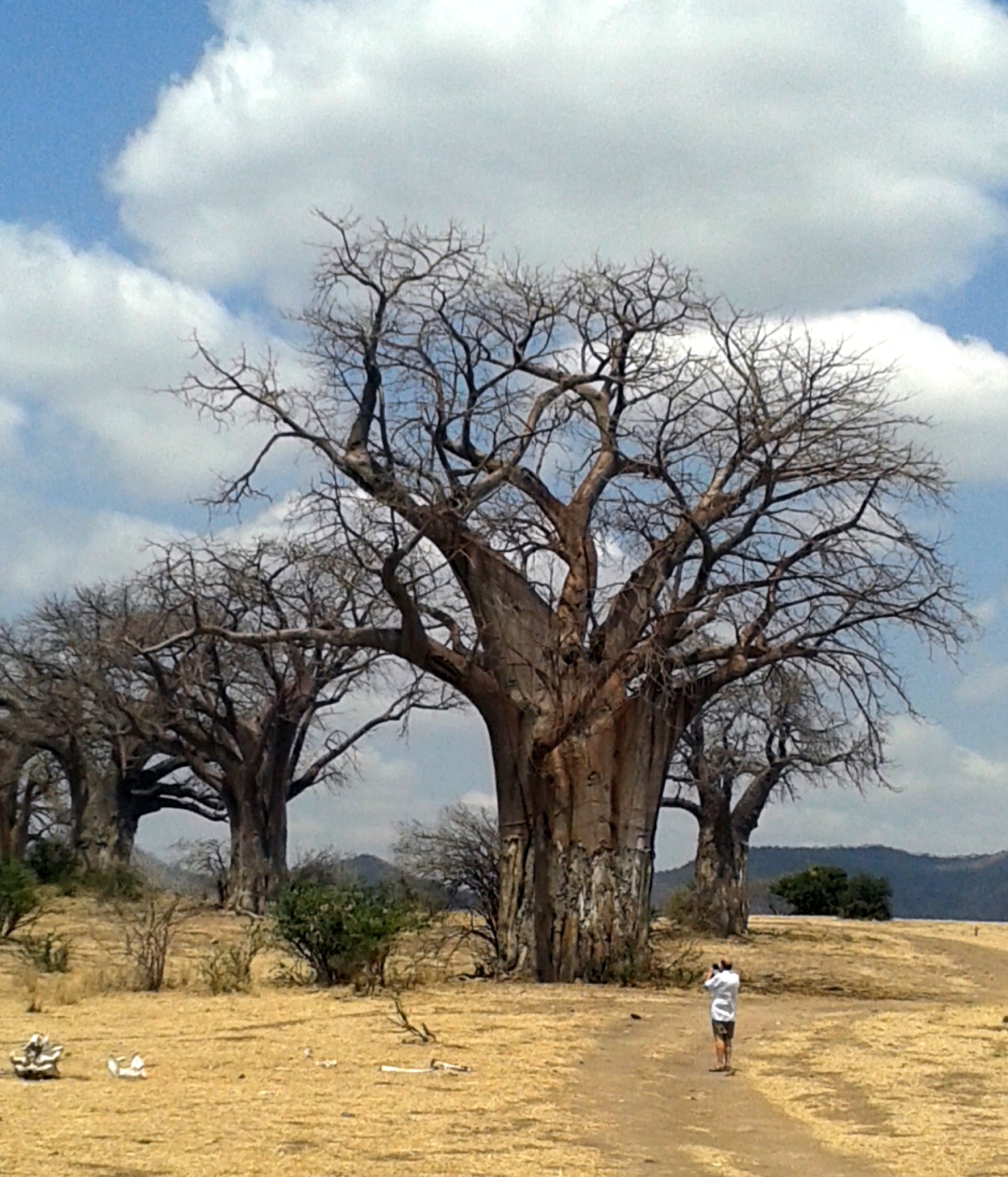
Apart from the group of baobabs named after Baines, probably the better known, there are other groups such as the Prison trees in Botswana and the Baobab hill in South Africa. We discovered another one. Well, perhaps we just found it after many before us…

20150914_113034 copy

DSCN9447 copy

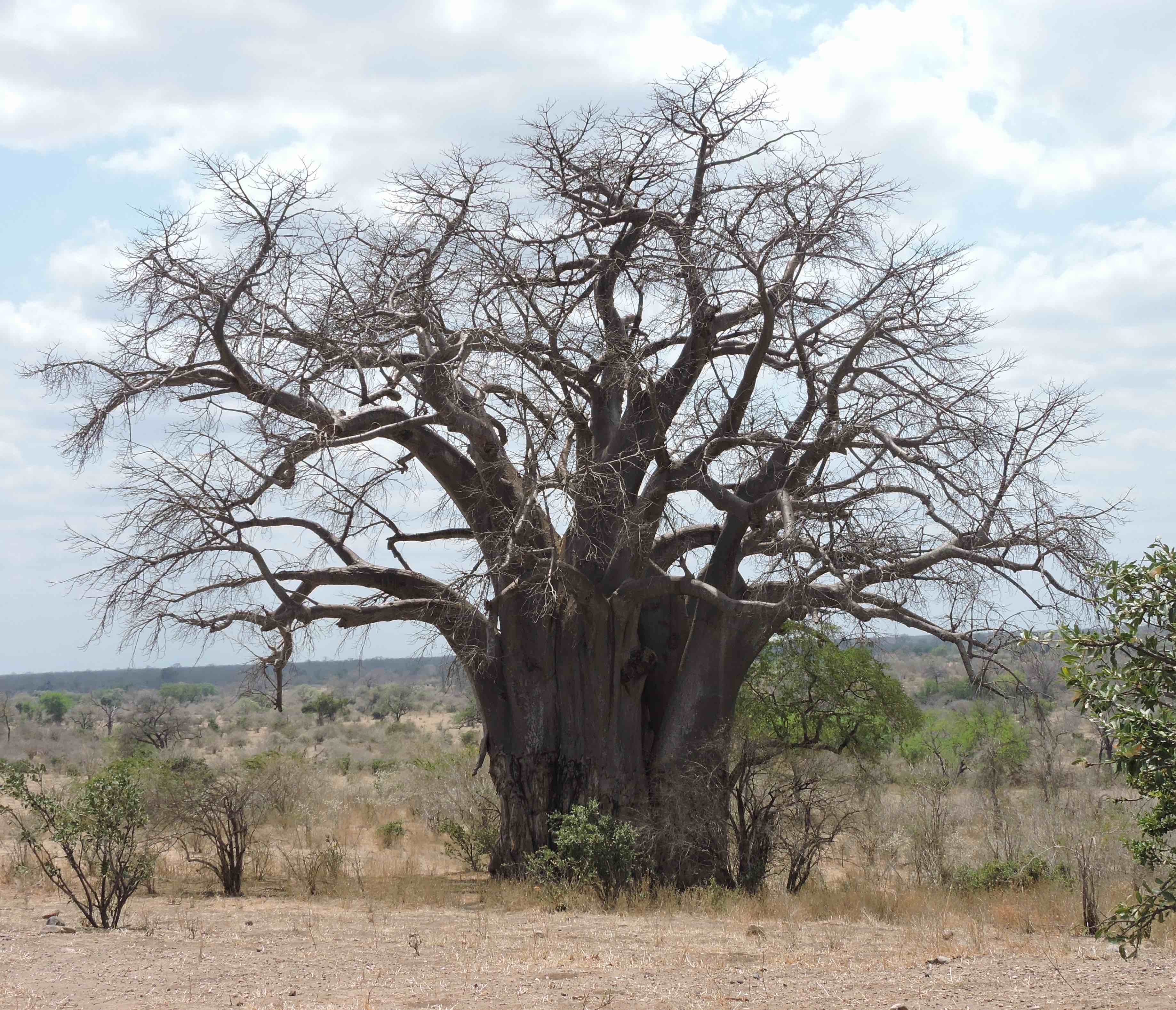
A fine baobab.

A fine baobab.

DSCN9441 copy

20150914_113212 copy

Signs of elephant damage are clear at the base of the trunk.

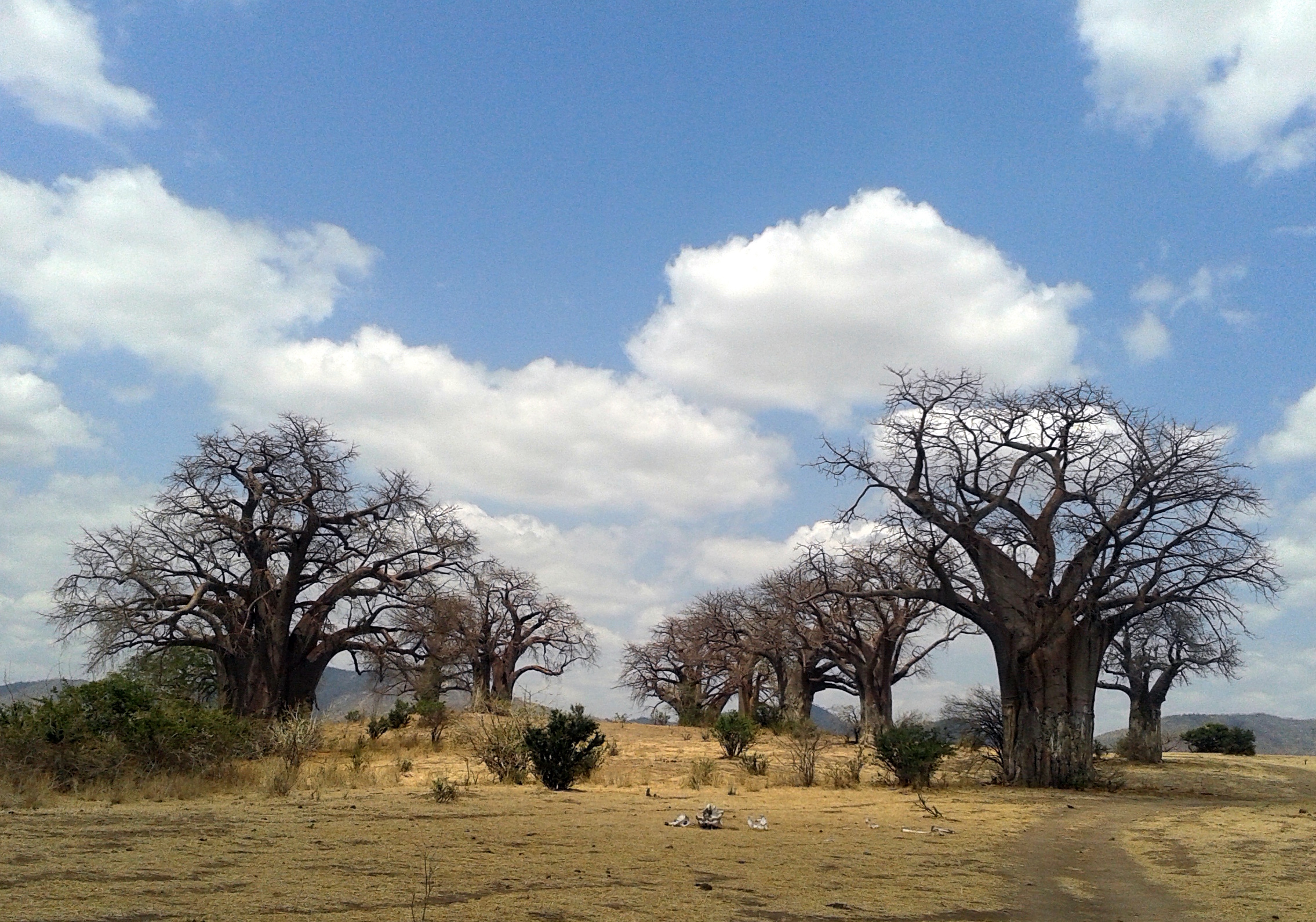
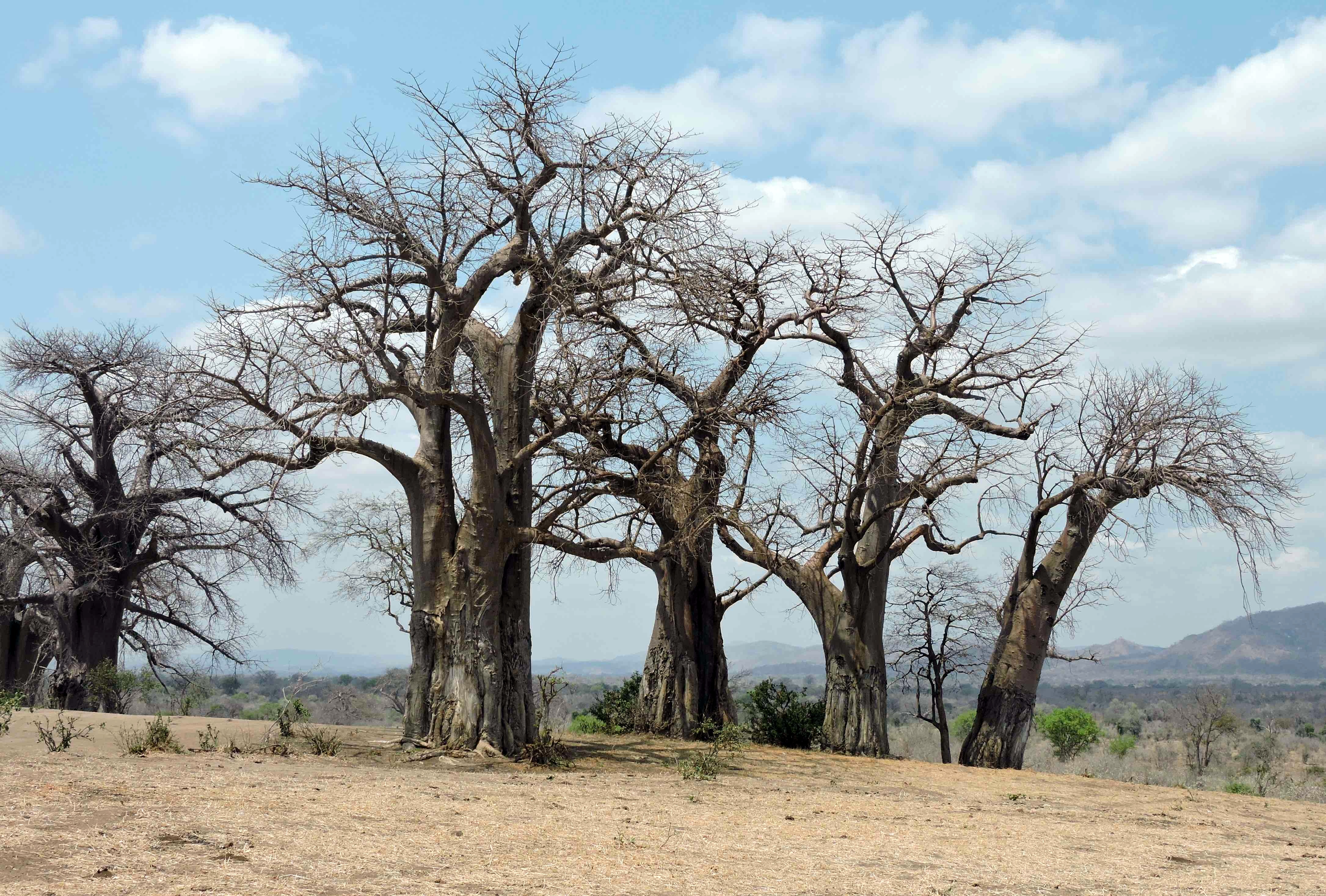
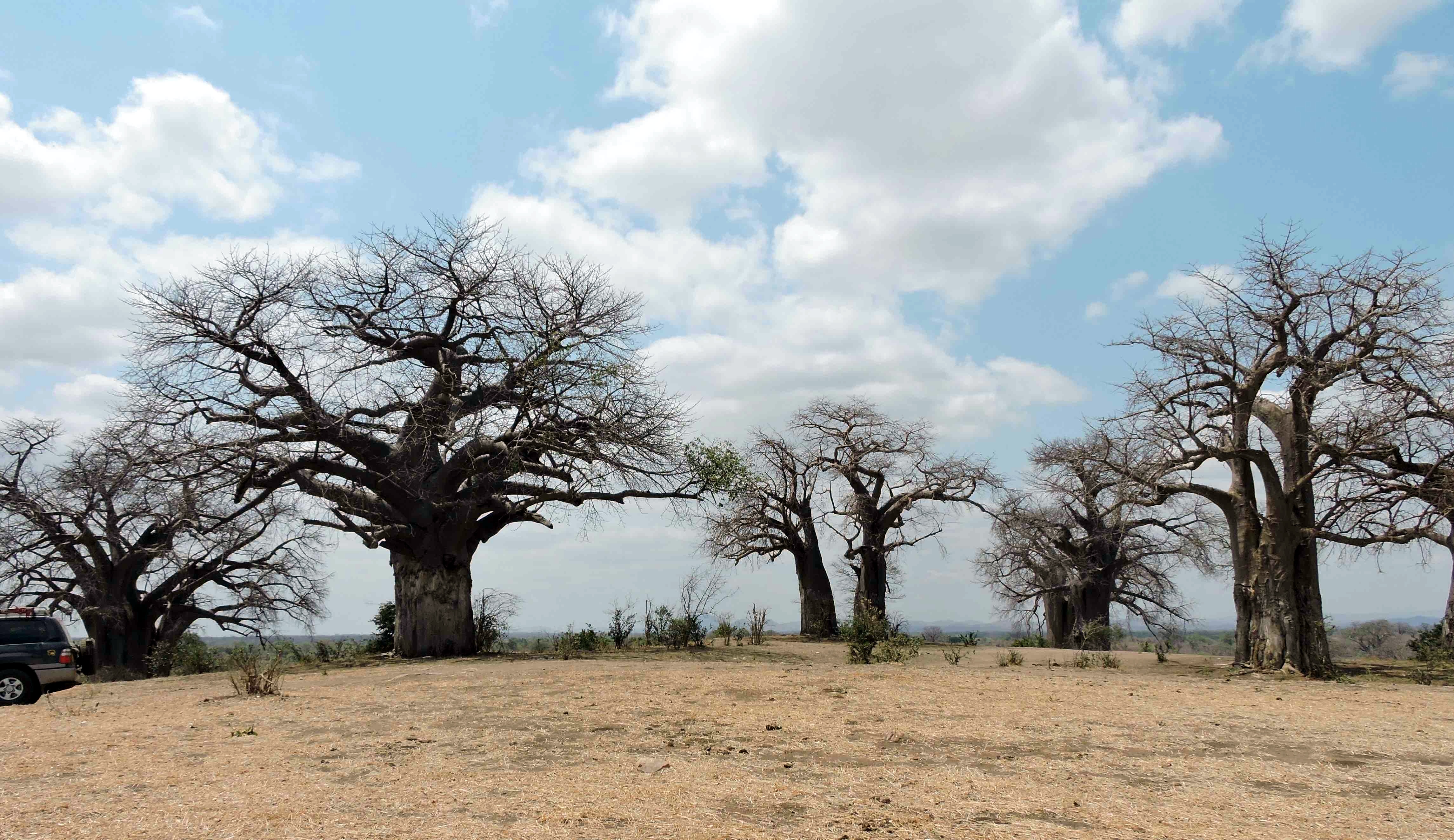
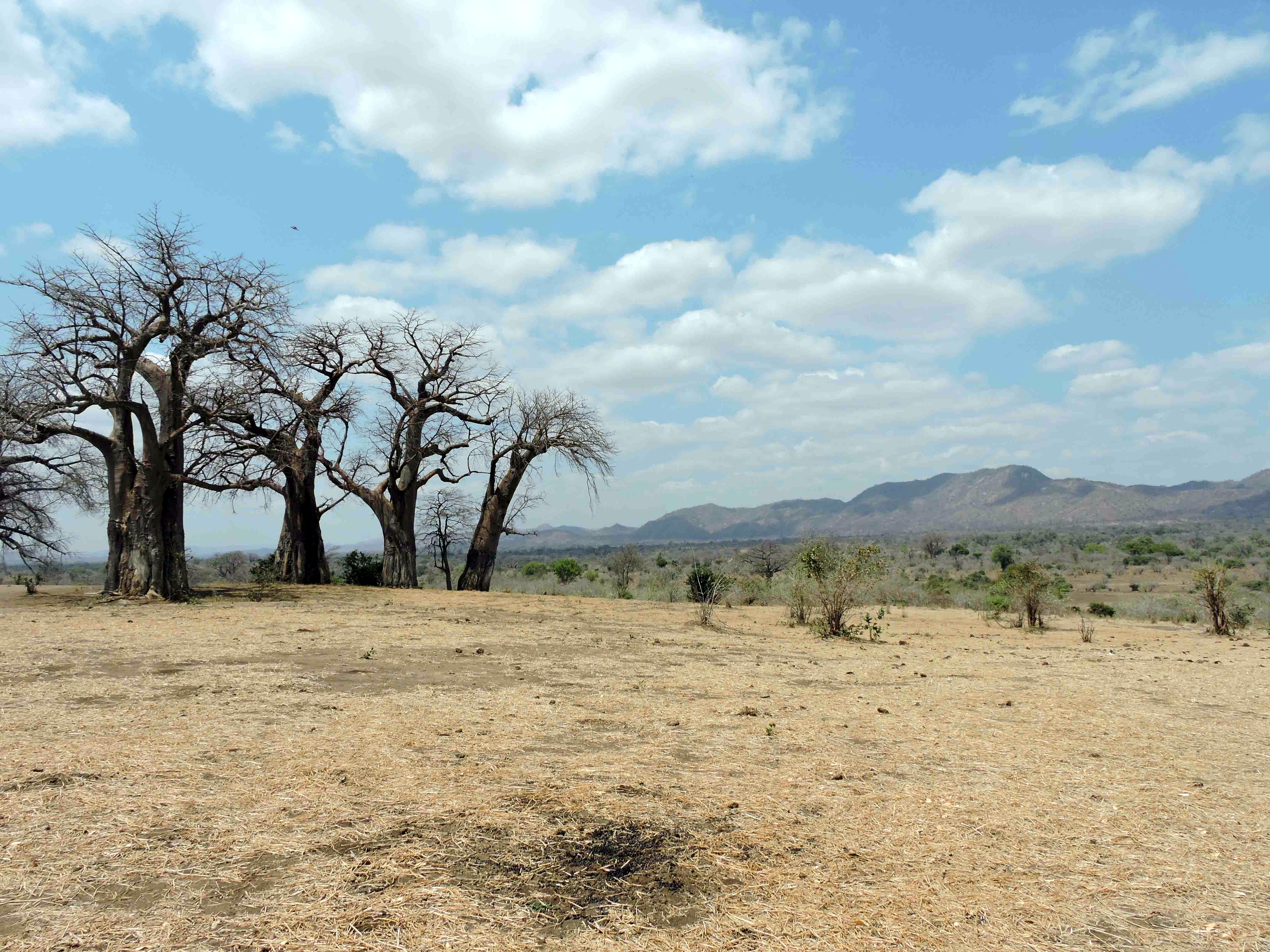
In my post “Chitake” I mentioned that on the morning of the second day we went for a drive and found a hill with baobabs. This was the location of Chitake 2 campsite[2] and -I believe- the place where Mr. Evergreen was killed by the lions. This windswept hill, apart from the trees, offers stunning views of the middle Zambezi valley, all the way to the escarpment.

DSCN9440 copy

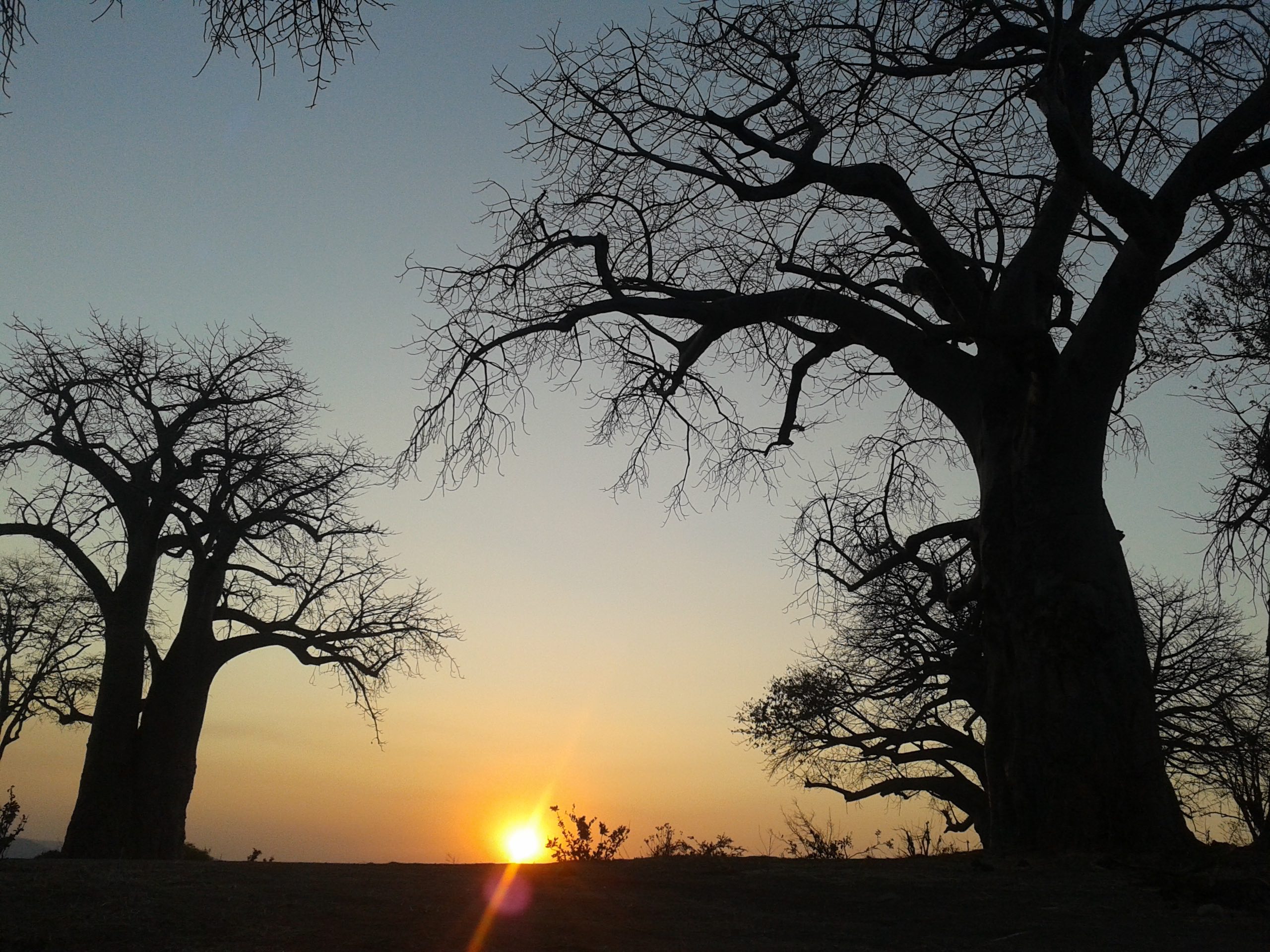
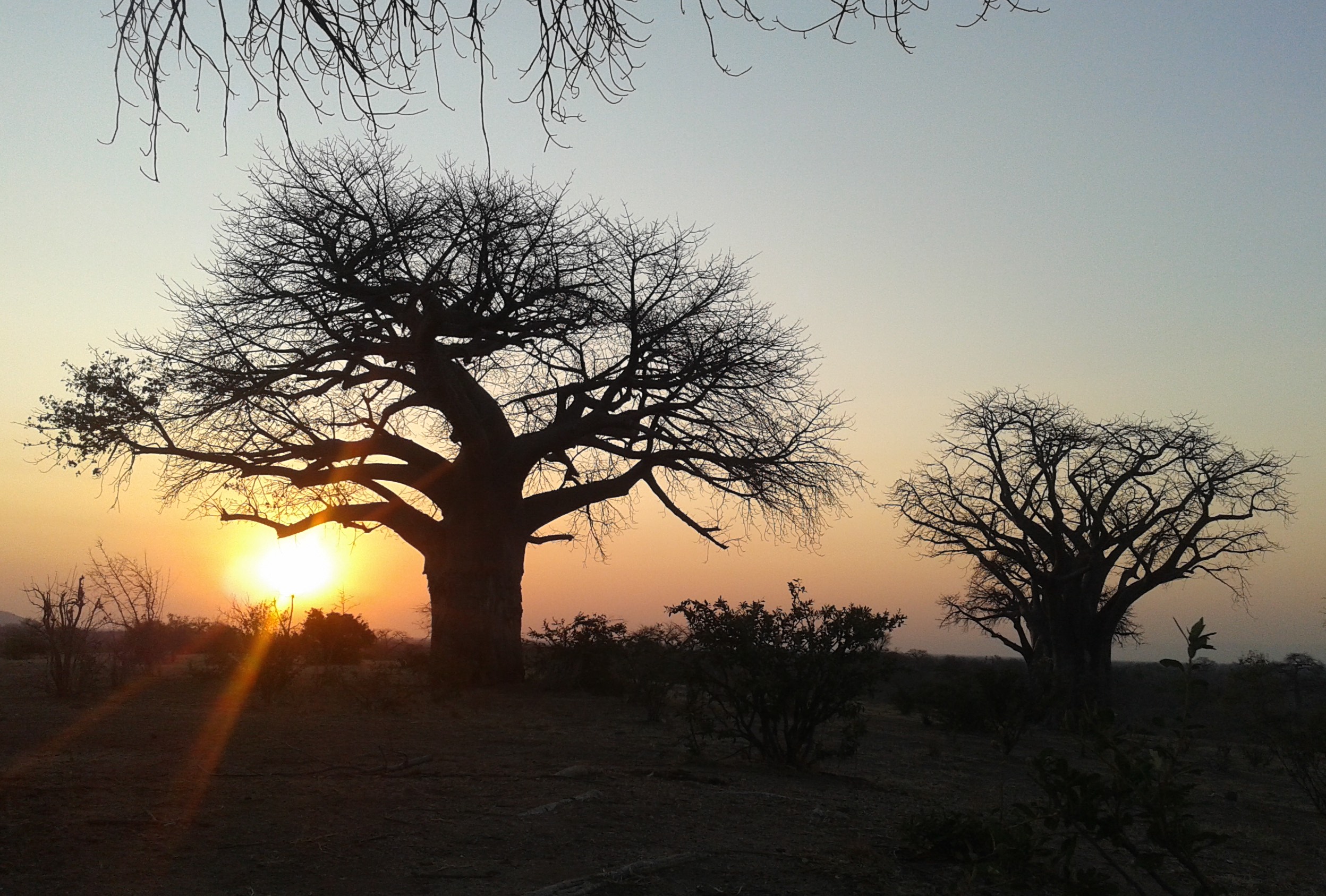
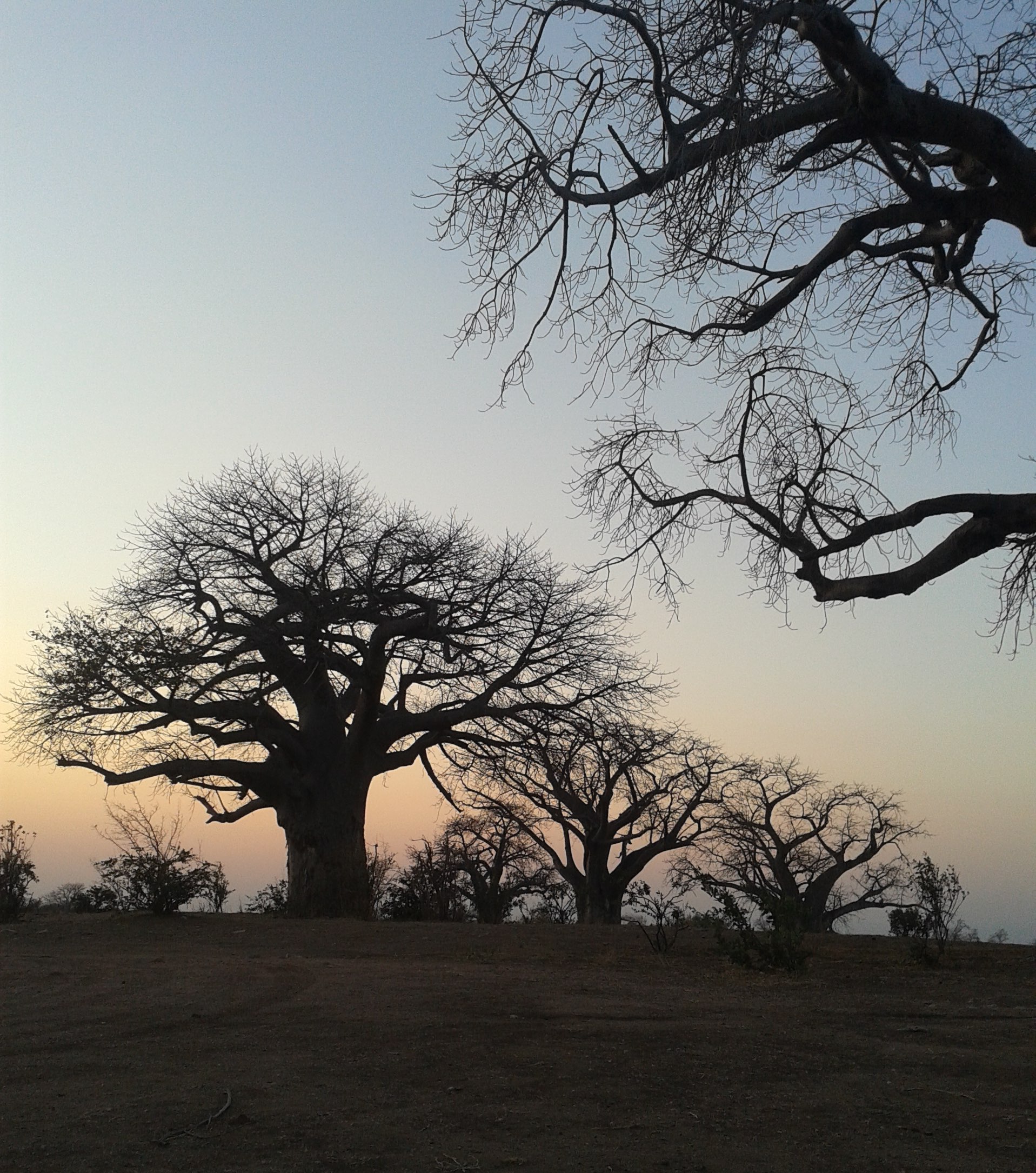
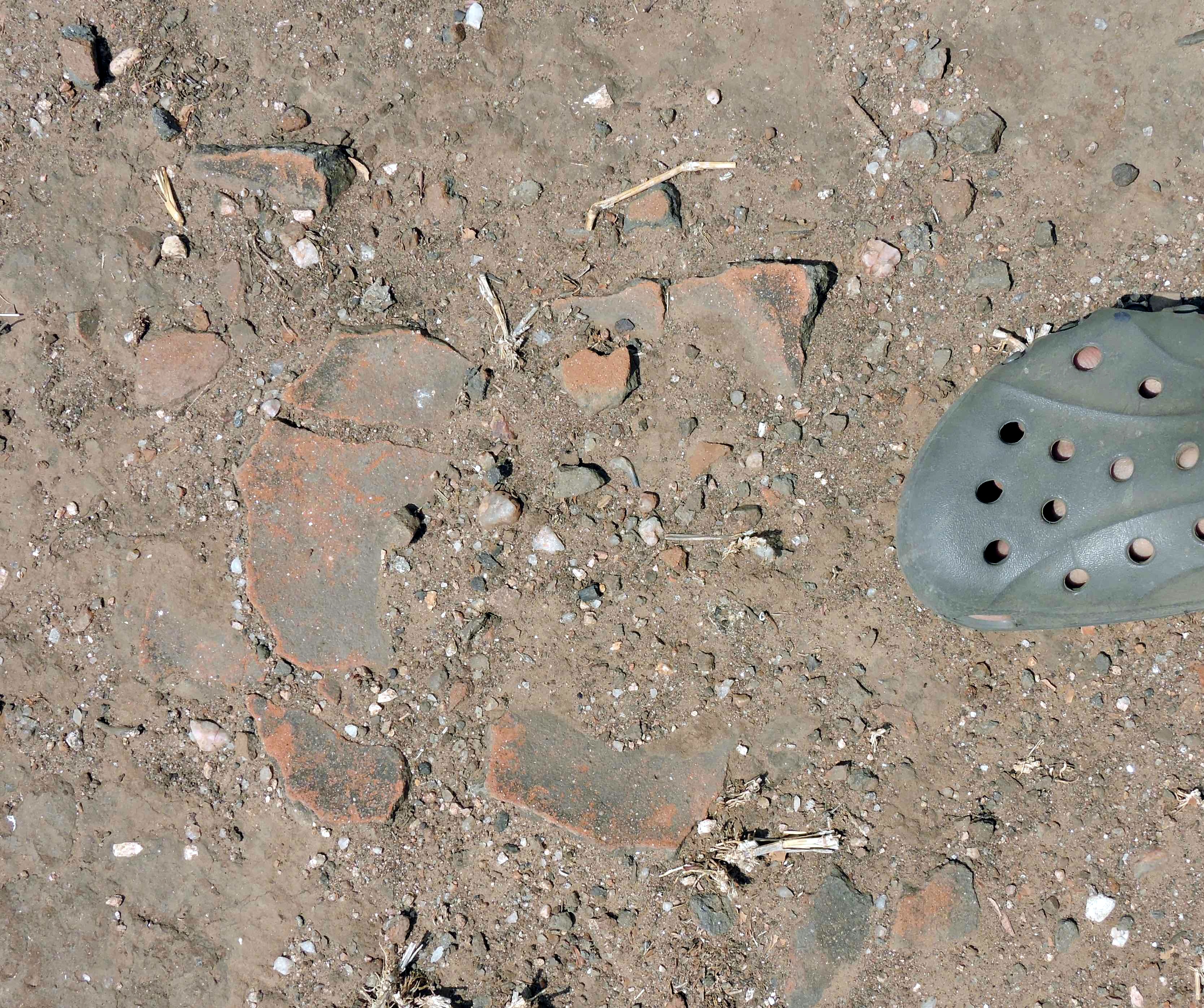
The trees stand like sentries to the valley below and I would be surprised if it did not have some religious connotation to the early inhabitants of the area. It may be that the pottery fragments we found among them may have something to do with this but it is difficult to say, as we were not able to estimate their age or origin. A least to be there at sunset was a wonderful moment.

Some of the broken pottery found.

Some of the broken pottery found.

20150914_174617 copy

20150914_174449 copy

20150914_174853 copy

Searching the Internet I learnt that these baobabs, that are not in Walker’s book, are known as the “Twelve Apostles” but I was not able to find out more information about them. What I can say, though, it is that we counted thirteen! Was Mary Magdalene not counted?

Clearly this gives us an excellent excuse to revisit the place to do a proper baobab census!


[1] Walker, C. (2013). Baobab Trails. An artist’s journey of wilderness and wanderings. Jacana Media (Pty) Ltd. South Africa. 287p.

[2] The campsite is now at another place with more protection from the wind.

Chitake

Chitake Springs are located in the southern part of Mana Pools National Park, about 50 km from the Zambezi river. During the rain the Chitake river flows into the Rukomechi river and the latter feeds the Zambezi. From the end of the rains in April these rivers dry up leaving only the springs as the sole source of water for a large area around them. The springs flow intermittently and at least once every 24 hours for some geological reason deep inside the earth. This natural wonder, therefore, attracts many animals both, prey and predators, from many kilometres around.

As if this would not be a sufficient attraction, this general area has important deposits of dinosaur bones. In particular, fossils of Coelophysis rhodesiensis are present as well as mega-prints (90 cm in diametre!) of the herbivore Brachiosaurus aswell as Allosaurus‘s footprints. This is apparently important as it shows that the Chitake area was also an area of prey-predator interactions during the Jurassic period! As interesting as this may sound, we did not search for these but it may be the subject of another trip!

We first learnt of Chitake through sad news. In late 2010 Pete Evershead was killed by lions while having a shower in the evening. Other friends that visited a couple of ears ago talked of animals walking very close from their roof tent. This left a very strong impression in them and they were very excited when they told us that they survived Chitake!

We were fortunate to get a booking in Chitake 1 campsite, by the actual springs. As this is a wilderness area (not even the entry road to the springs is signposted!) to camp there means to be on your own as there are only two campsites for private users in addition to one for tour operators. You also need to be self-sufficient in all needs, including water.

There is only one track -the entry road- that extends to the baobab hill (where Chitake 2 campsite was before it was moved to a nearby place) so this is not a place for game drives but a true wild bush experience where you sit and wait for the animals to come to the water when it flows or you walk if you know what you do!

The place sounded In addition, being older has made us more cautious so, not having a roof tent, we decided that we could sleep inside the car. We rehersed the flattening of the seats to convert it, if not in a double bed, into a reasonable place for a couple to sleep. We organized our belongings so that they could be placed in a small tent, on the front seats and on the roofrack. We were satisfied with the arrangements and ready to go…

Almost at the last minute we invited another couple to join us. Tom and Chizuki had never visited Chitake despite having lived in Zimbabwe from the late 90s so they seized the opportunity. They agreed with our idea of sleeping inside their car and we arranged to meet a couple of days before our departure to finalize the details. At that meeting it transpired that they could not convert their car into a bed so we all agreed to camp in the normal way. I was relieved as we have always slept in tents, even in places where animals were in large numbers in Kenya, reserving the car for “in extremis” situations… I will cover these in future posts.

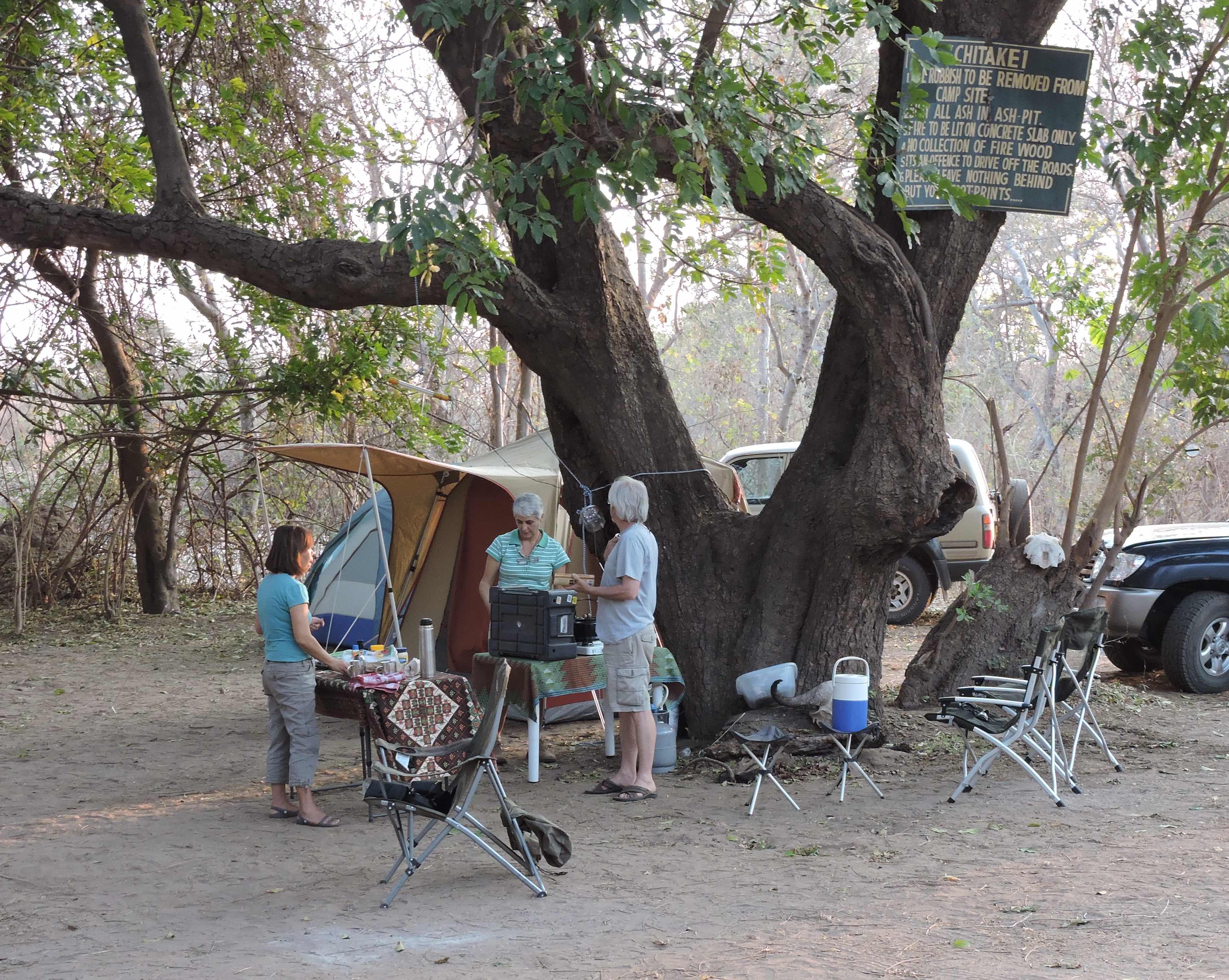
Our camp and occupants.

Our camp and occupants.

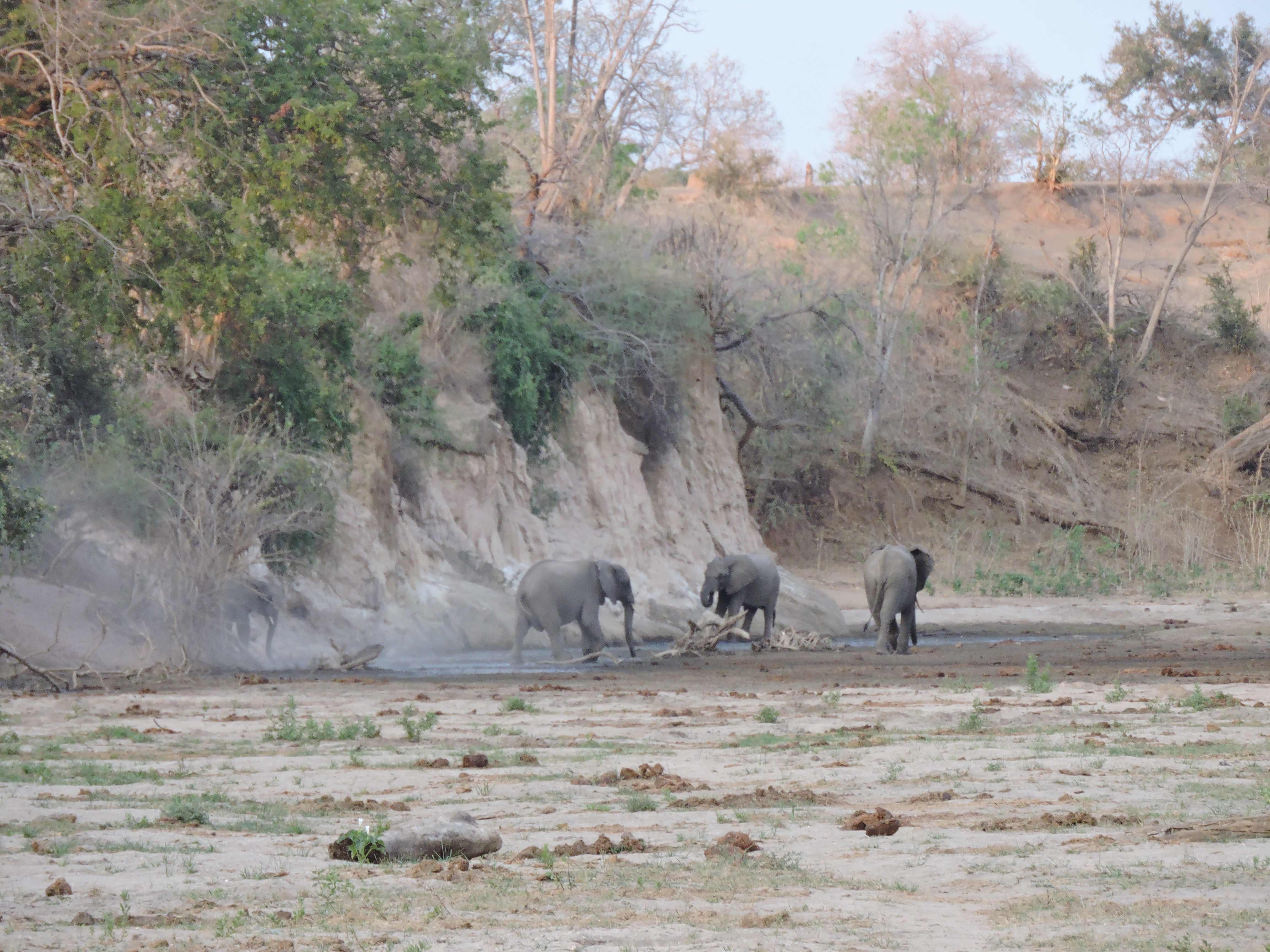
We arrived to Chitake in mid afternoon and set up camp early so we would be well prepared for the night, having the lions always in the back or our minds! After we were satisfied we explored our surroundings on foot and saw that the springs were about 100 metres from us and they were flowing.We sat in the dry river bed and waited. In one moment there was nothing at the water and then as if by a miracle, a group of elephants, buffalo or impala would be drinking! As night fell, the water was still flowing and the animals still coming down to drink.

The elephants suddenly appeared (and disappeared!).

The elephants suddenly appeared (and disappeared!).

After an early dinner we retired to our tents for a well deserved rest. Lions did roar as expected. They were far from us, probably following the buffalo some place else. We slept well, being careful when getting up for pit stops during the night. The morning after saw us all happy to see that the four of us survived our first night at Chitake and decided to celebrate this with a good -and healthy- breakfast!

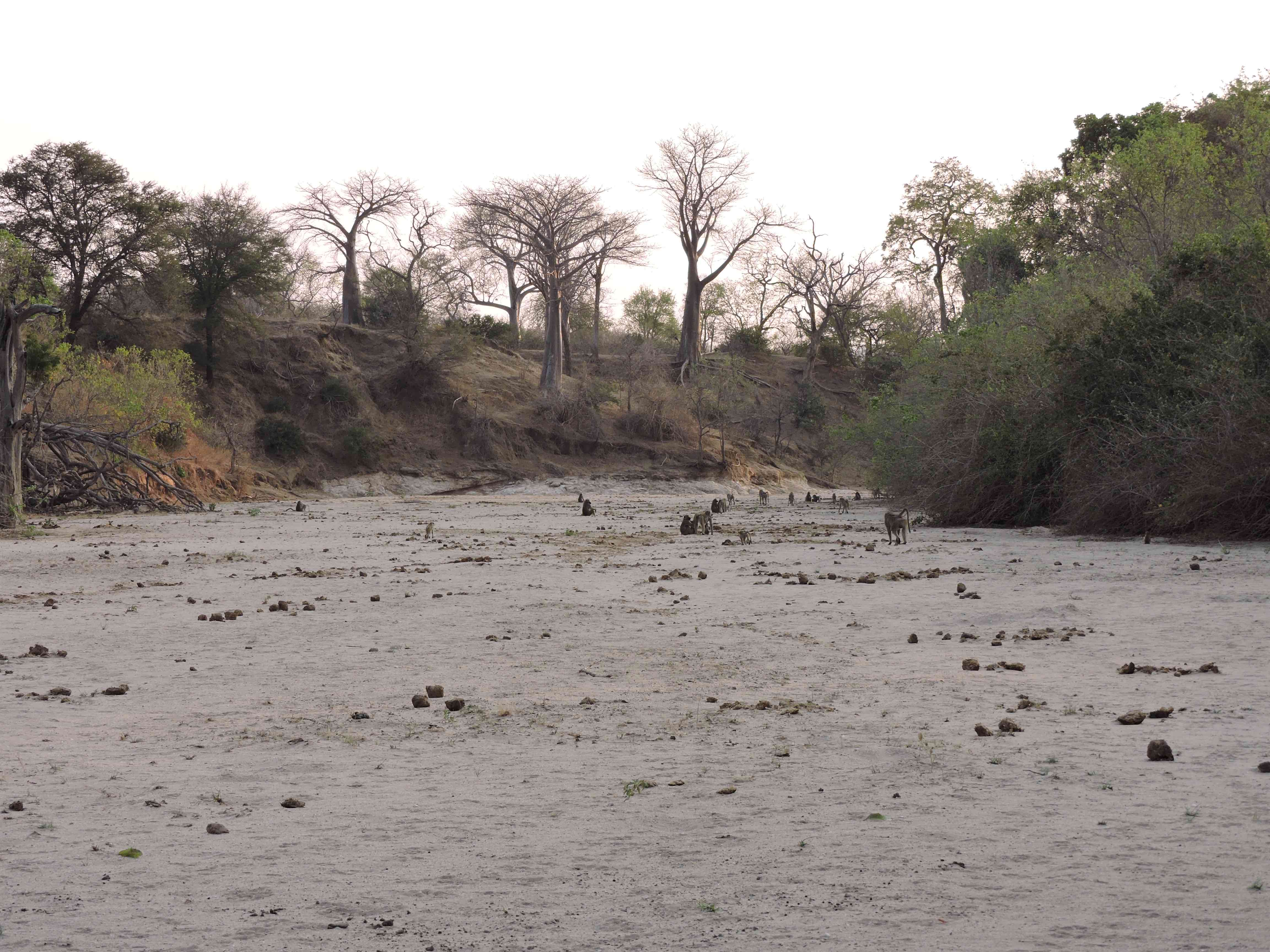
The water had stopped flowing during the night so only baboons were walking in the dry river bed.

Sand and baboons.

Sand and baboons.

We decided that we would do a bit of exploring so we went to the actual springs where we could see a number of different footprints and a couple of carcasses (one buffalo and one elephant) that were responsible for the rotten smell that we could sometimes feel, depending on the wind direction. We then crossed the river and drove for a few km until reaching the baobab hill.

After spending some time with the baobabs we returned, crossed the river again and drove on towards the exit as we had seen an open area where we thought cheetah may be found. We saw the usual warthogs and the ubiquitous impala. Then our friend Tom amazed us by spotting a painted/wild dog lying down at about 100 metres from the car! An amazing sighting. In fact there were three of them.

Then he spotted a few more heads under another bush nearby! When the heads became full dogs, we realized that there were pups, six of them and half grown. At some point they all trotted towards the adults and the latter stood up for the usual greetings. We counted five adults and six pups. After their profuse greeting they all dashed off as if starting a hunt although we did not see any possible prey. We tried to follow them but lost them almost immediately. Giving up on the painted dogs we drove on to the junction with the main road and started going back to camp.

The dogs were again at the same spot! Surprised we stopped to watch and confirmed that there were the same! While watching, again, all pups dashed off as if on a hunt, followed by one or two adults and, after a while, got back to the starting point. This exercise was repeated three times. The observation was a topic of discussion for a while as some thought it was a kind of hunting rehearsal while others -including myself- thought that the pups were just being either hungry or hyperactive!

After that interesting encounter we got back to camp to face another night at Chitake, now more relaxed as we had survived the first!

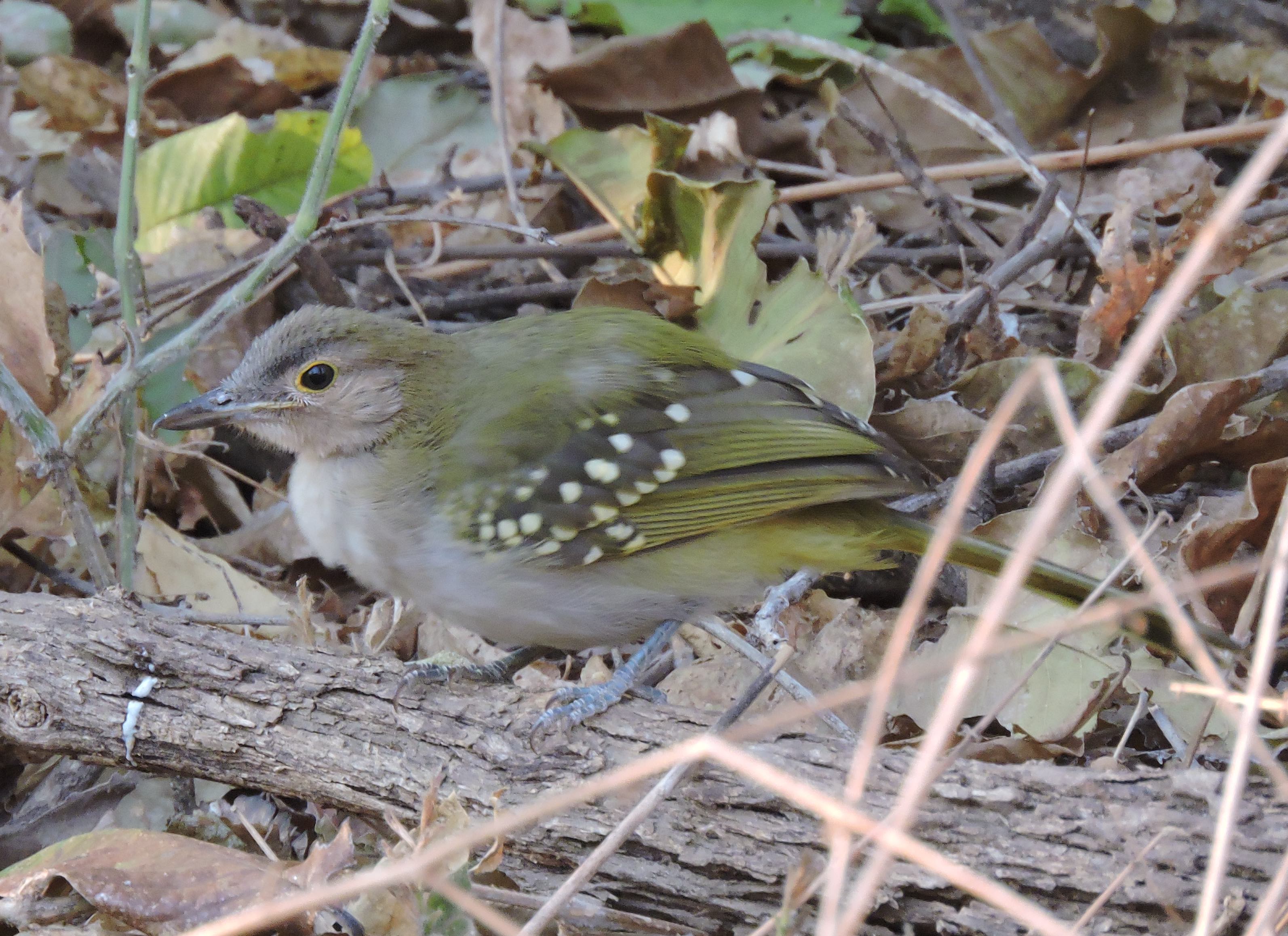
A "Chitake special"! An Eastern Nicator looking for insects in the undergrowth.

A “Chitake special”! An Eastern Nicator looking for insects in the undergrowth.

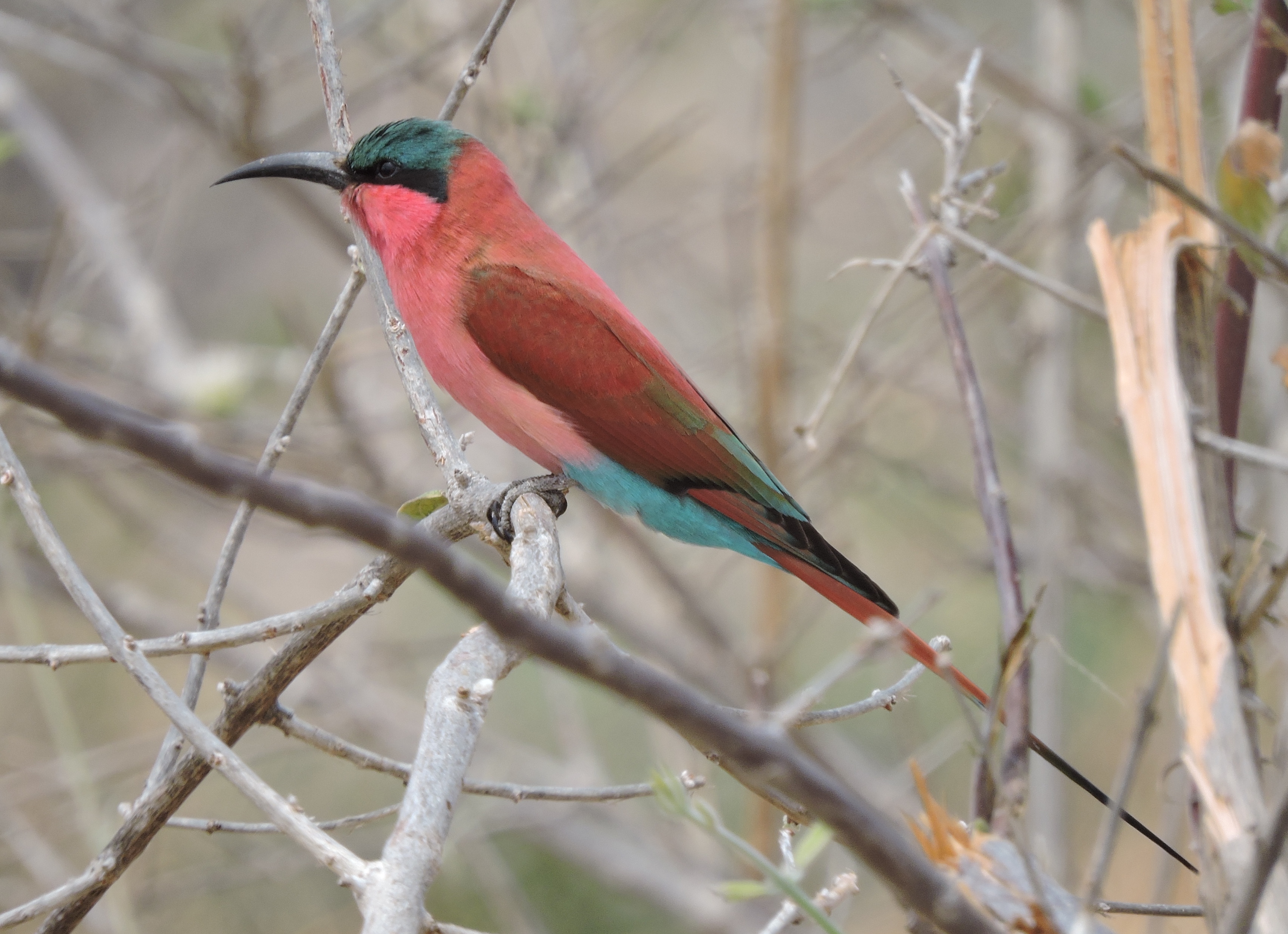
A carmine bee-eater.

A carmine bee-eater.

Mana[1] Pools safari

Mana Pools National Park is found in the middle Zambezi valley. It extends from the Zambezi river in the North (Zimbabwe-Zambia border) to the summit of the Zambezi escarpment 50 km to the South. The park includes the river itself, a broad area of acacia and mahogany woodland on a belt of alluvial terraces. Although this is the area where most of the animals congregate during the dry season and therefore the most visited, the Park also includes large areas of mopane and jesse-bush (Combretum celastroides) and the rocky hills that flank the Zambezi valley. The Park and adjacent areas are regarded by many as the finest wilderness area in Zimbabwe.

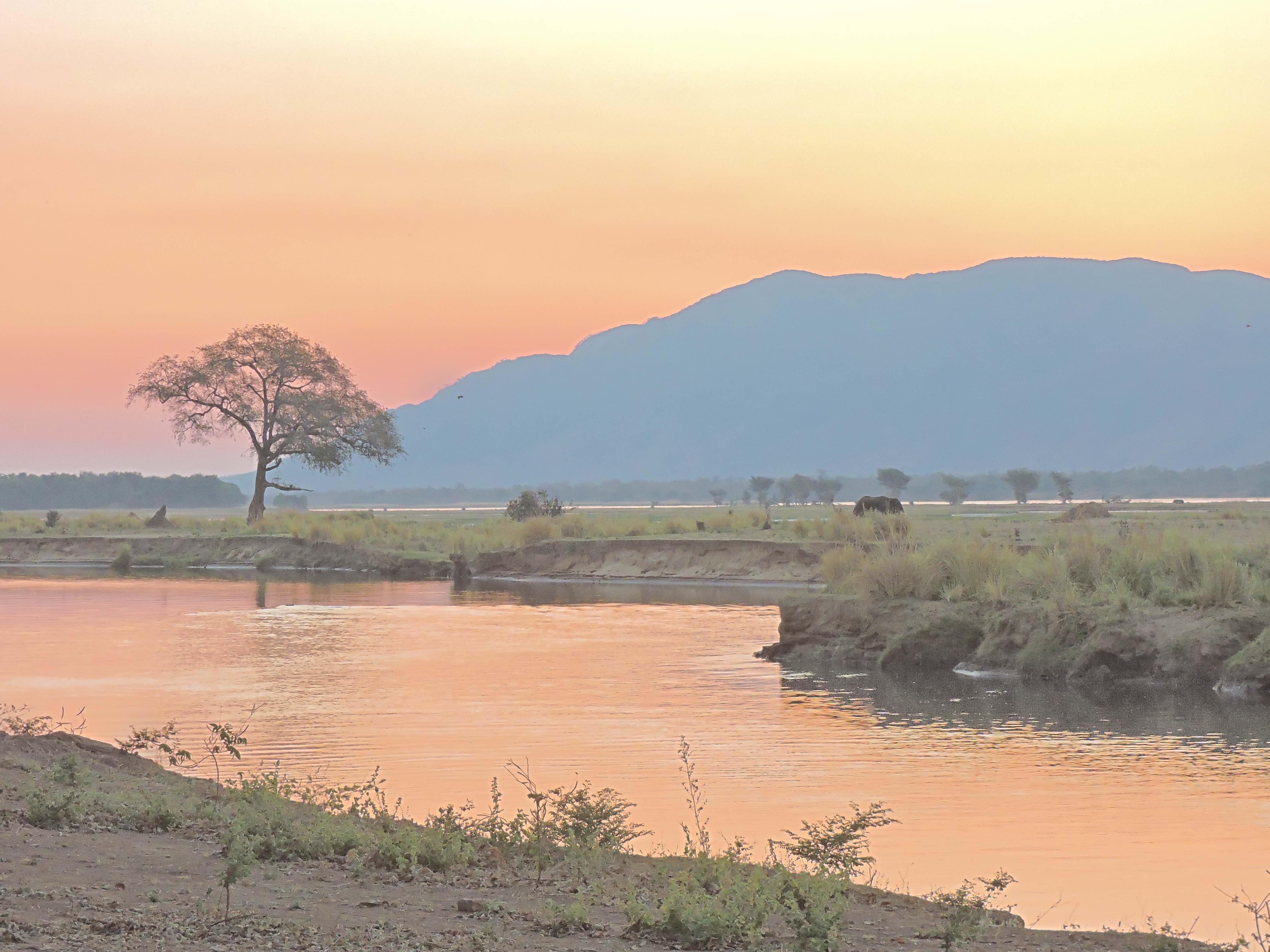
Sunset at Mana Pools.

Sunset at Mana Pools.

This was our second visit this year as we had been in Mana. At that time it was cold and the animals, particularly the elephants, were still spread around in the park and therefore less abundant by the river. The absence of elephants then was largely compensated by sightings of wild dogs, lions and a leopard near our camp site.

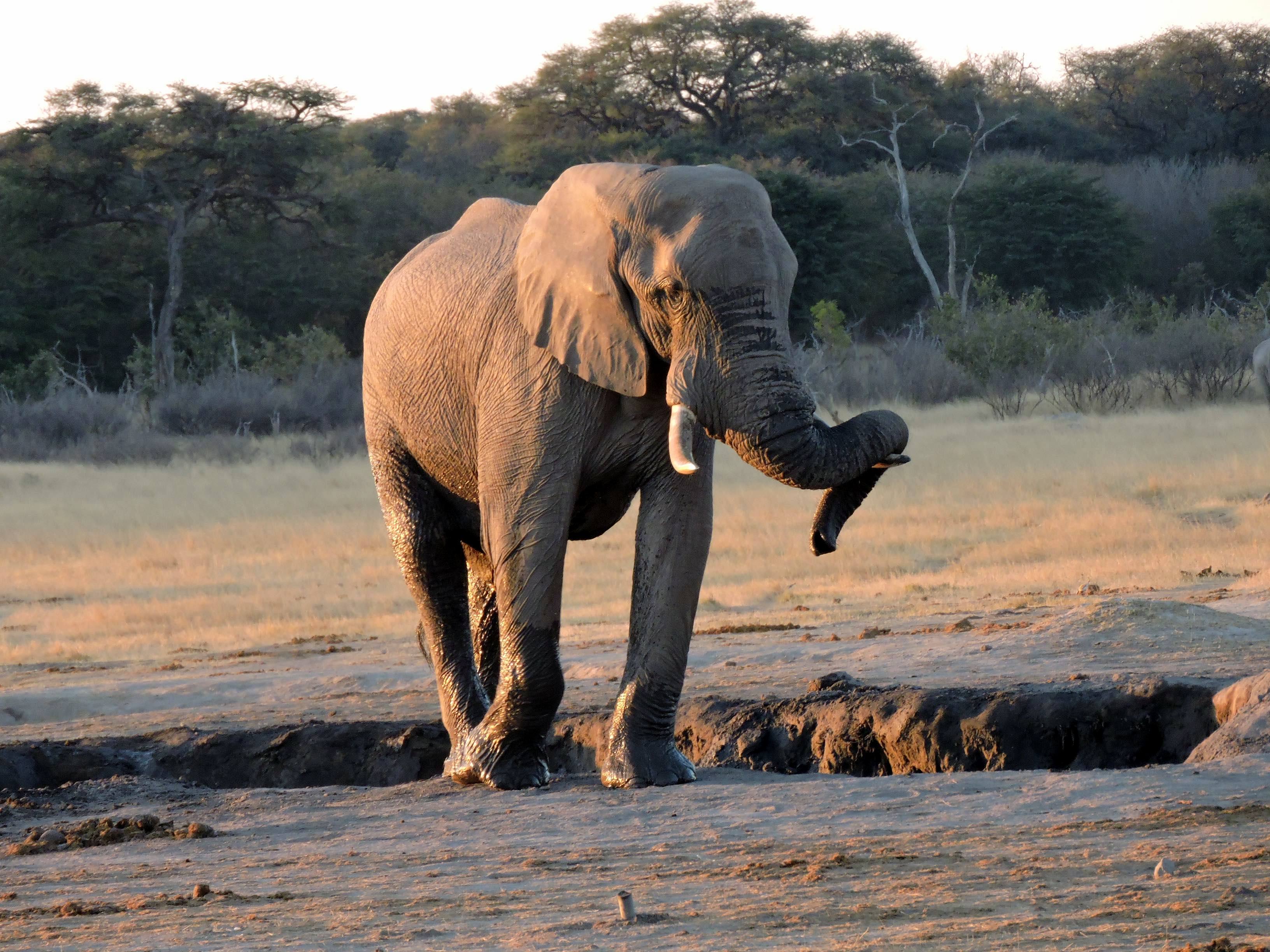
This visit was different. It was much warmer and, as the dry season had advanced, the animals were indeed massing in the northern part of the park where water and grazing are still available. We stayed at Chitake One and at Gwaya private camp sites so we enjoyed a true wilderness feeling by being alone. Without doubt the elephants were the main actors during our visit and I hope to be able to describe the various events in an amenable way for you to enjoy.

[1] “Mana” in Shona means Four, describing the four pools that the Zambezi river left behind in its meandering.

A new five

Kruger National Park in August was busy and we just managed to get a couple of cancellations that matched with our son’s visit as well as our annual medical check-up in Nelspruit, a hang up of our days at Maputo.

The park, even with low occupancy rates, is normally busy as it offers a large number of beds to the visitors in the various rest camps and other available facilities. For this reason, it is extremely difficult to find a corner where you can be on your own. Imagine how it was in August when the park is full!

It is interesting to note that visitors move a lot within the park and its roads are busy. Some entering or leaving the park, some moving from one camp to the next and most of them looking for animals, mainly for the big five! The consequence of the latter is that, once you find one of them, there will be a constant flow of cars that would watch the animal in question for a few minutes and then move off, in search of the next one! I have already covered this issue (see: https://bushsnobinafrica.wordpress.com/2014/08/07/kruger-national-park-report/)

We were aware of this situation and decided to leave the big five for the next visit and focus on exploring a few less used roads and to improve our bird watching skills. In this department, I am pleased to inform you that we managed 99 species, about one fifth of the total number of species of the park!

Fishing was not in our plans as this is forbidden in the park. However, we crossed many rivers where wildlife can be observed! Normally this includes water birds and other creatures that come to drink or nibble tender grass associated with water. So we always stop and watch at river crossings!

One of the best places is the bridge over the Letaba River on the H1-6 road where you are allowed to get out of the car and have a look around while stretching your legs.

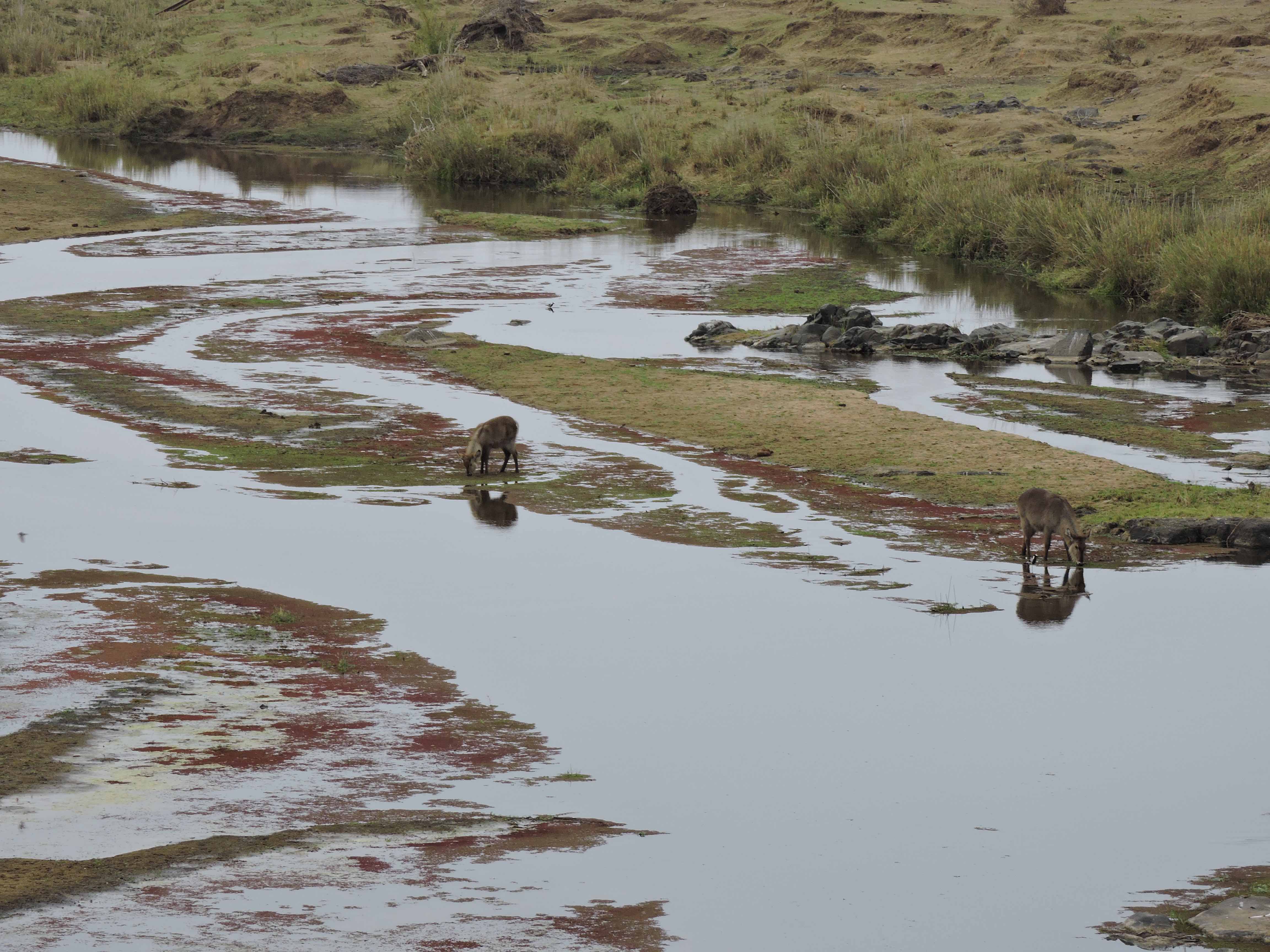
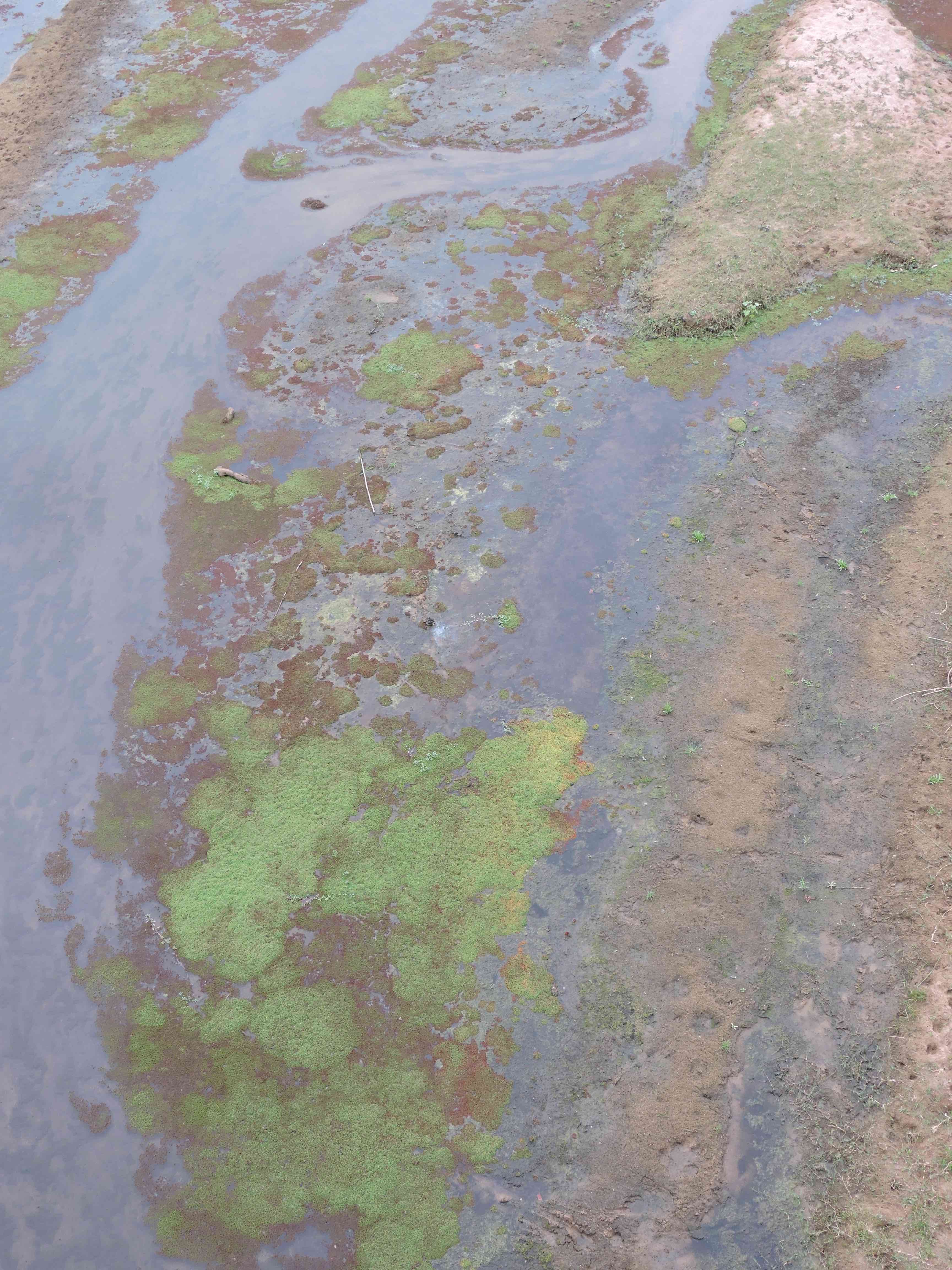
The Letaba River from the bridge.

Waterbucks drinking by the Letaba River bridge.

We have seen many interesting things in this place so it is an obligatory stop where we usually spend some time. You just need to be patient, unlike most motorists that drive past, some of them quite fast!

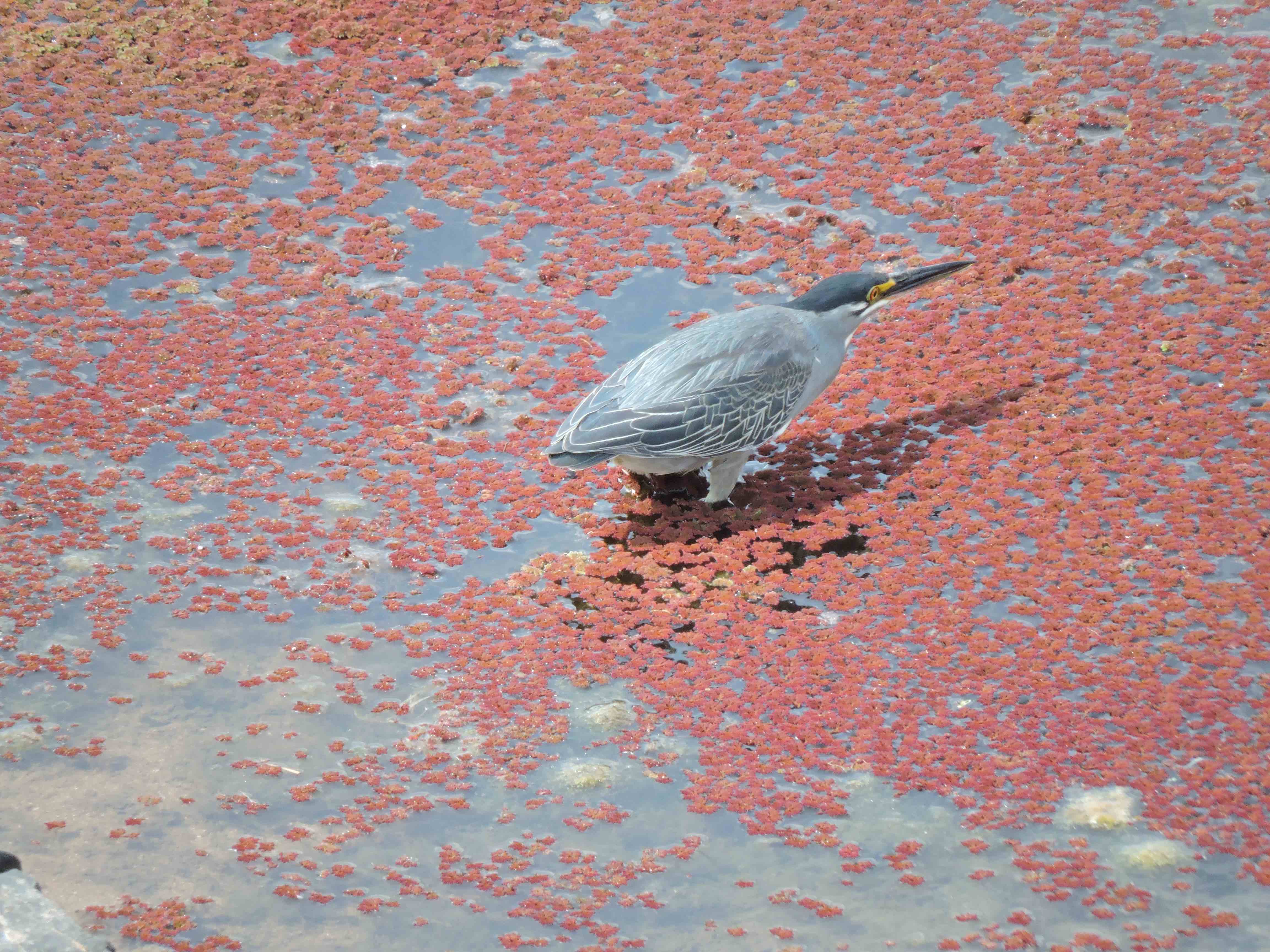
Green-backed heron fishing.

Green-backed heron fishing.

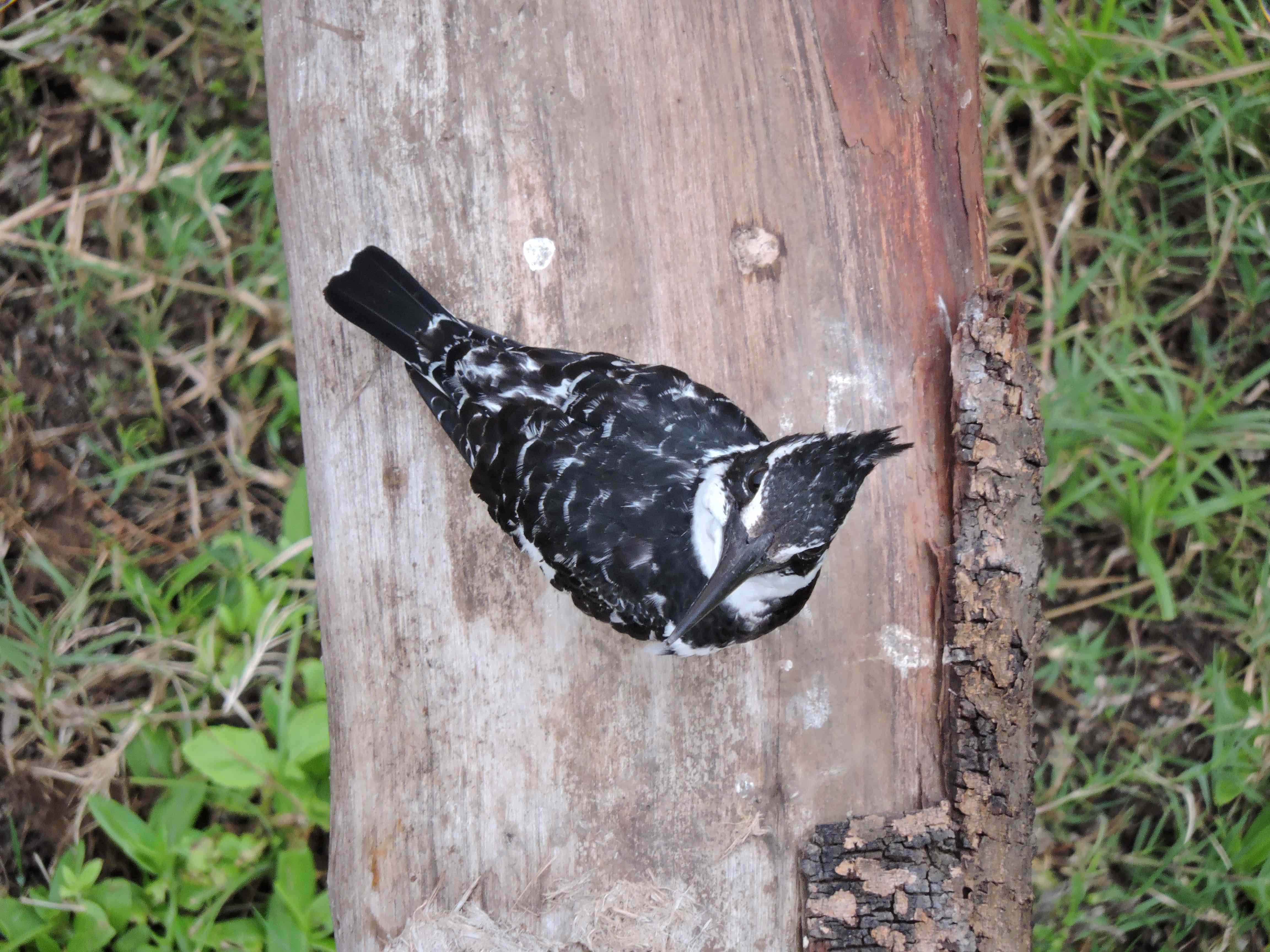
We surprised this pied kingfisher from the bridge.

We surprised this pied kingfisher from the bridge.

As soon as we got out we were literally hit by the pungent smell of bats, stronger than we remembered. The stink seemed to be emanating from the bridge’s cement joints, together with the bats’ high pitch calls. Although we tried hard, we failed to see them through the cracks so we investigated the outside of the bridge, also unsuccessfully. We were engaged on this task when we heard splashes in the shallow water so we forgot the bats that were not cooperating and went to look for the fish.

The area preferred by the fish.

The area preferred by the fish.

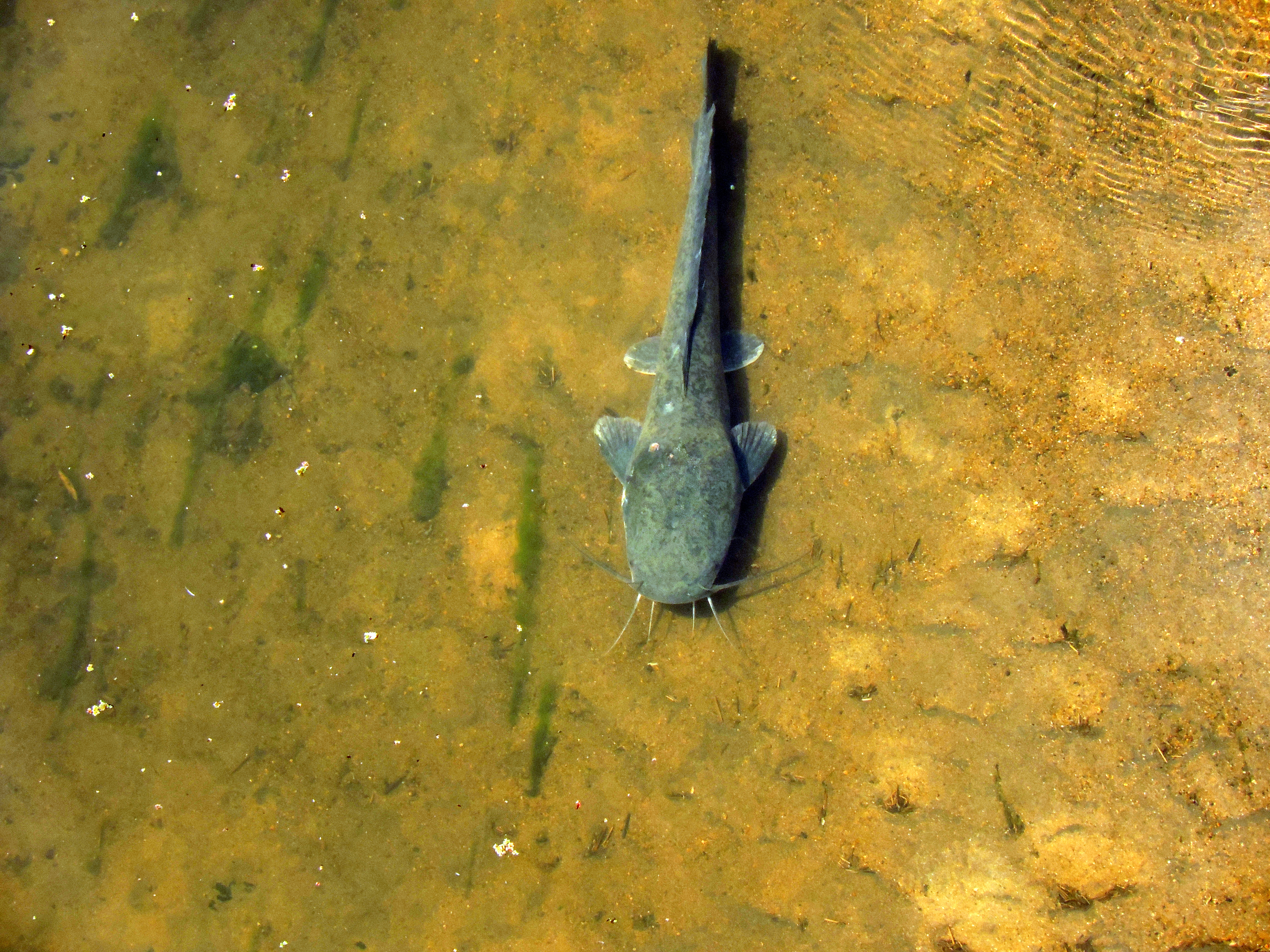
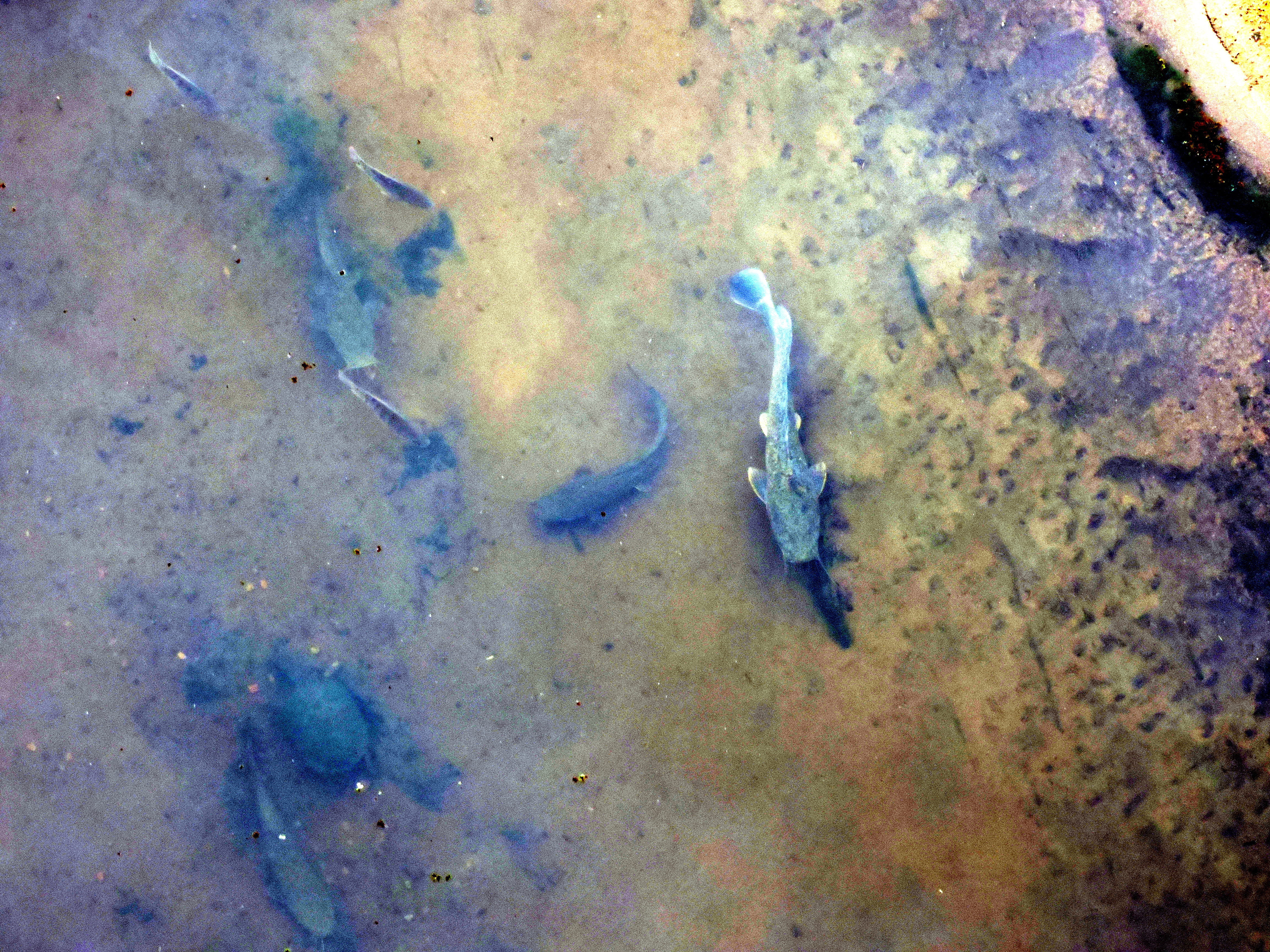
These were shoals of tilapia feeding on the water plants. There were many fish of various sizes. While watching the tilapia feeding we came across a lone and slender fish lying immobile a couple of metres away from the tilapia. It was a tiger fish sunning itself but clearly waiting for prey. Further watching revealed a few catfish as well. The latter were more abundant when we looked at the river on the other side of the bridge. There we saw several catfish of various sizes lying at the bottom of the river, all pointing in the direction of the current and being disturbed by the occasional terrapin passing by.

Interestingly, having polarized sunglasses helped me to see the fish clearly while my companions needed to strain their eyes until I decided to share my glasses with them (just before they tossed me over the rails!). Photography was, however, another matter as we did not have a polarizing filter and our attempts at taking pictures through my sunglasses proved fruitless!

Despite the bad results, we did take a few pictures that were forgotten in the memory card until we returned to Harare. Then, when sorting out the photos of the journey I saw a bunch of what appeared to be uniformly brown images. They were our “fish pictures” and the fish seemed to be immersed in murky water and only just visible! I tried a few of the options that Picasa offers and failed. I was about to delete them when I pressed the “I am feeling lucky” option and then as if by a miracle the fish became very clear as if the command would have sucked out the water!

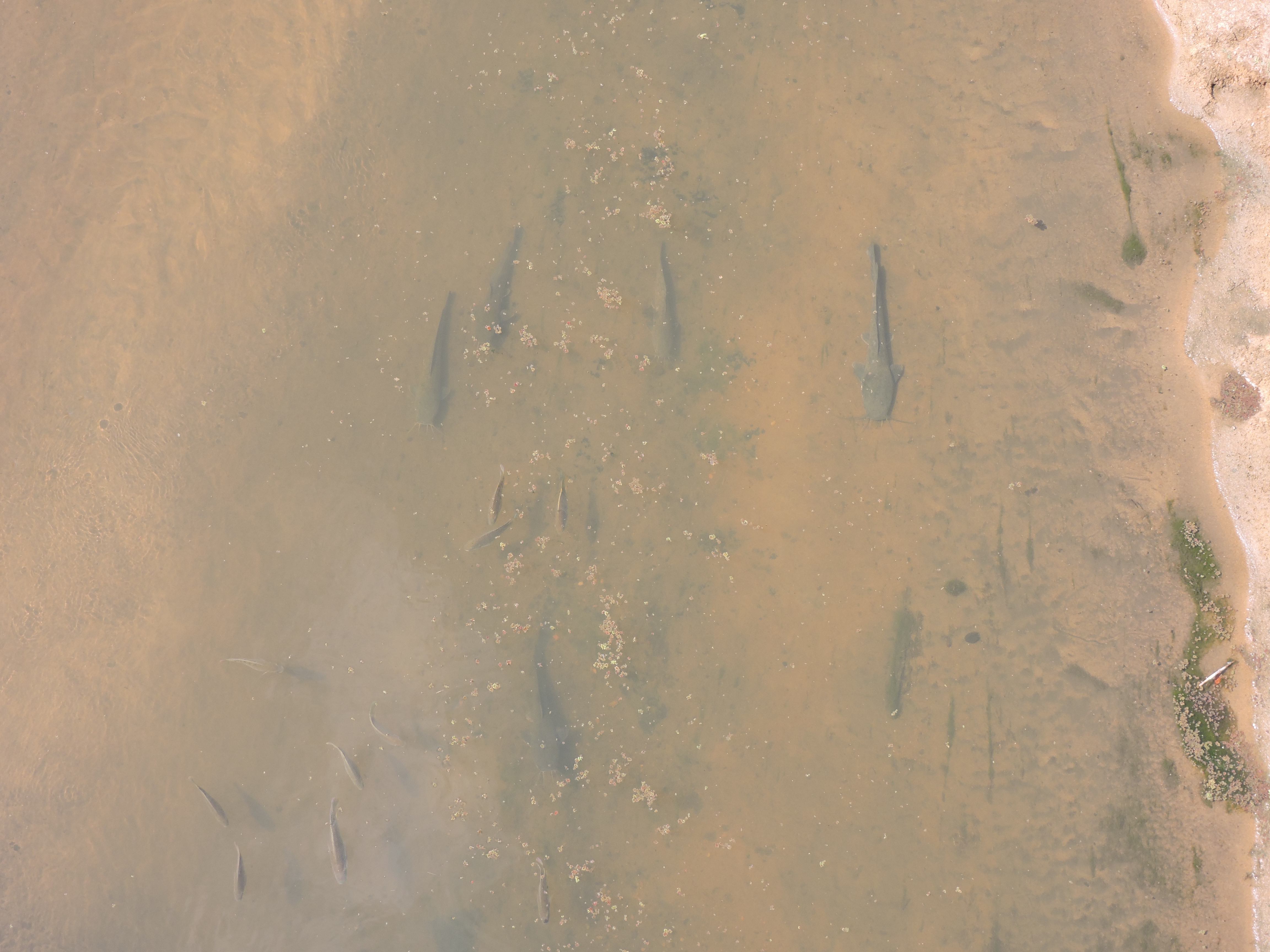
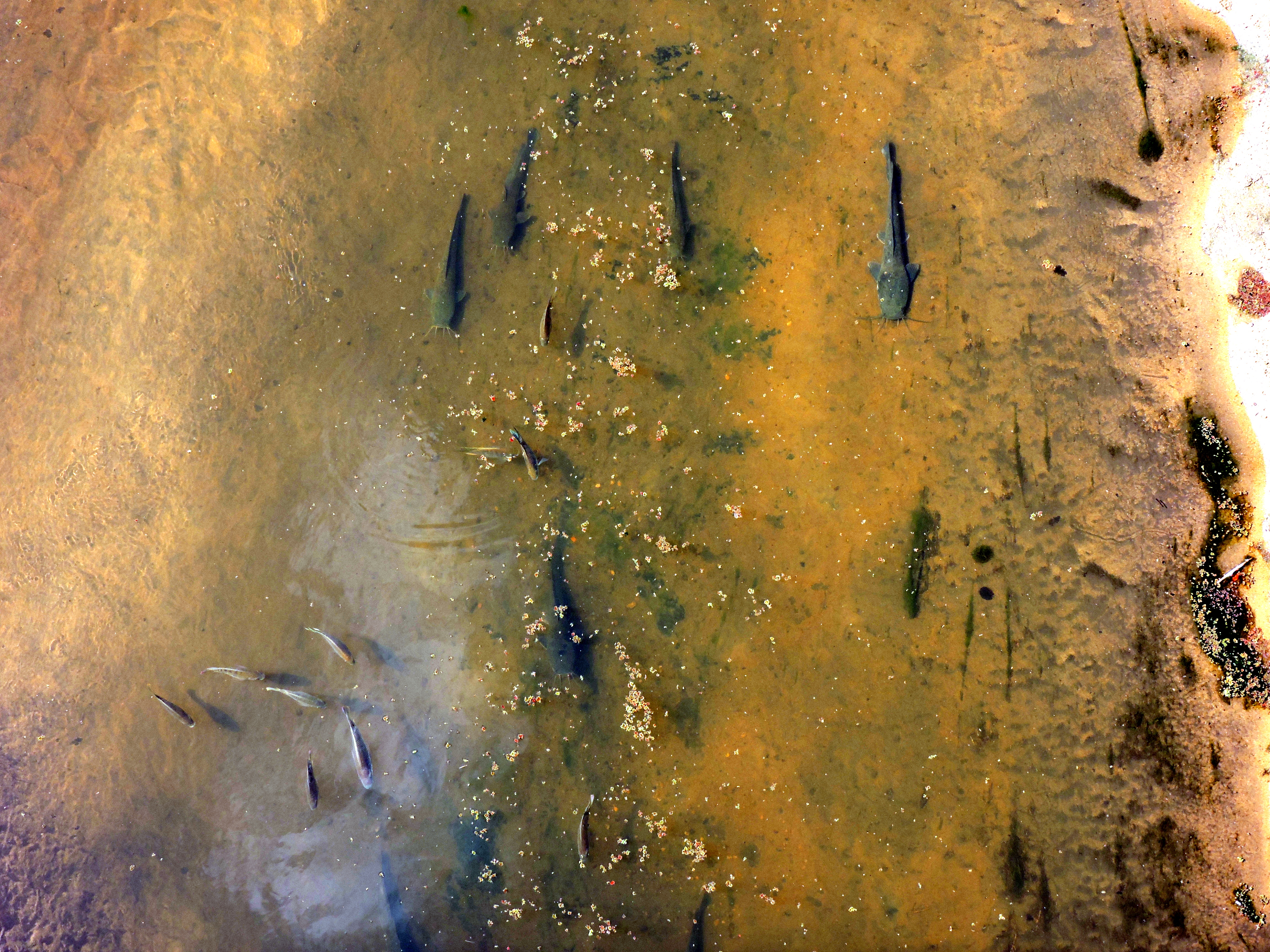
I present you with an example of a non processed cloudy picture to show you what they really looked like as well as some of the processed ones as I believe are worth viewing as they are a demonstration that not only the big five are worth watching.

The fish to the naked eye.

The fish to the naked eye.

The picture above after the "magic" of Picasa!

The picture above after the “magic” of Picasa! Catfish are seen at the top while the tilapia are on the bottom left.

A large catfish.

A large catfish.

Catfish disturbed by a terrapin.

Catfish disturbed by a terrapin.

The tiger fish stalking.

The tiger fish stalking.

Before I end this post I would like to propose a new group of animals to be seen in Africa: the “Slippery Five”. I propose the crocodile, the hippo, the python, the catfish and the terrapin as its members in an attempt at persuading visitors to pay more attention to the water courses and its inhabitants -both outside an inside the water- in the national parks!


Ngweshla cold

“Is it too hot in Africa?” is the question I get asked most often by people in Latin America. They have the image of lush forests and the very hot places of Central and West Africa, white man’s grave. I think they do not believe me when I tell them that Southern Africa can be bitterly cold at times. Frankly, I was also surprised when, on arrival, I found how cold it could get!
Muguga and Nairobi in Kenya and Addis Ababa in Ethiopia were cold, the latter very cold but Lusaka, technically in Southern Africa, was rather warm, sometimes even too warm. It was while living in Lusaka that we organized our first safari to Sinamatella in Hwange National Park in early 1991. We camped there during a weekend of July and it was so cold that we had to ask the game rangers to lend us blankets to outlast the bitterly cold nights. I We were there with our baby daughter and I still remember my wife’s concern of not being able to keep her warm! Survive we did but, clearly, we forgot about it.

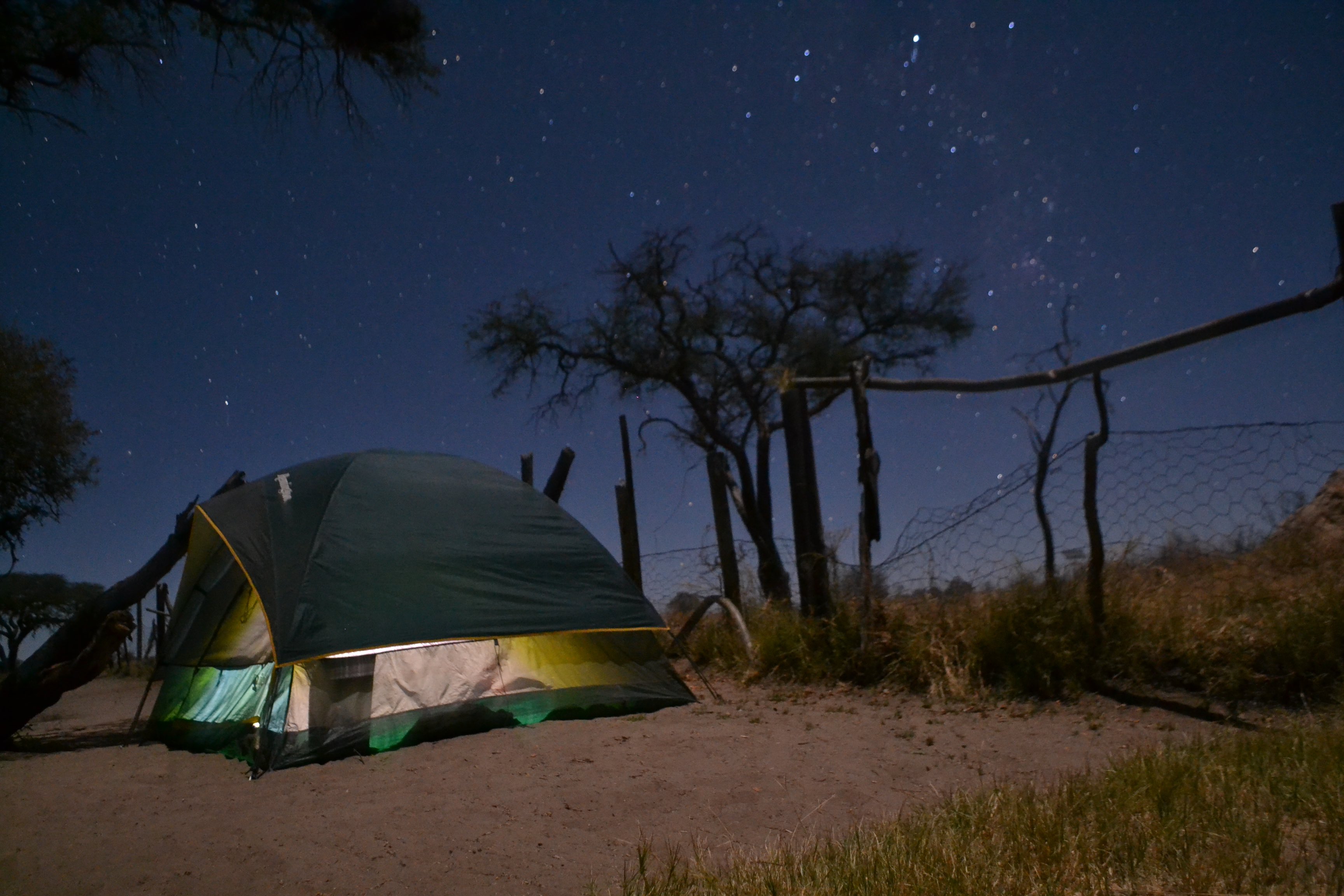
In comes Ngweshla Picnic site, located in the Sinamatella area, during July! As we were moving through various camps we took small tents so that we could assemble and disassemble them without too much trouble. I hasten to add also that our new nylon tent was “untested” as we had just bought it for the trip.

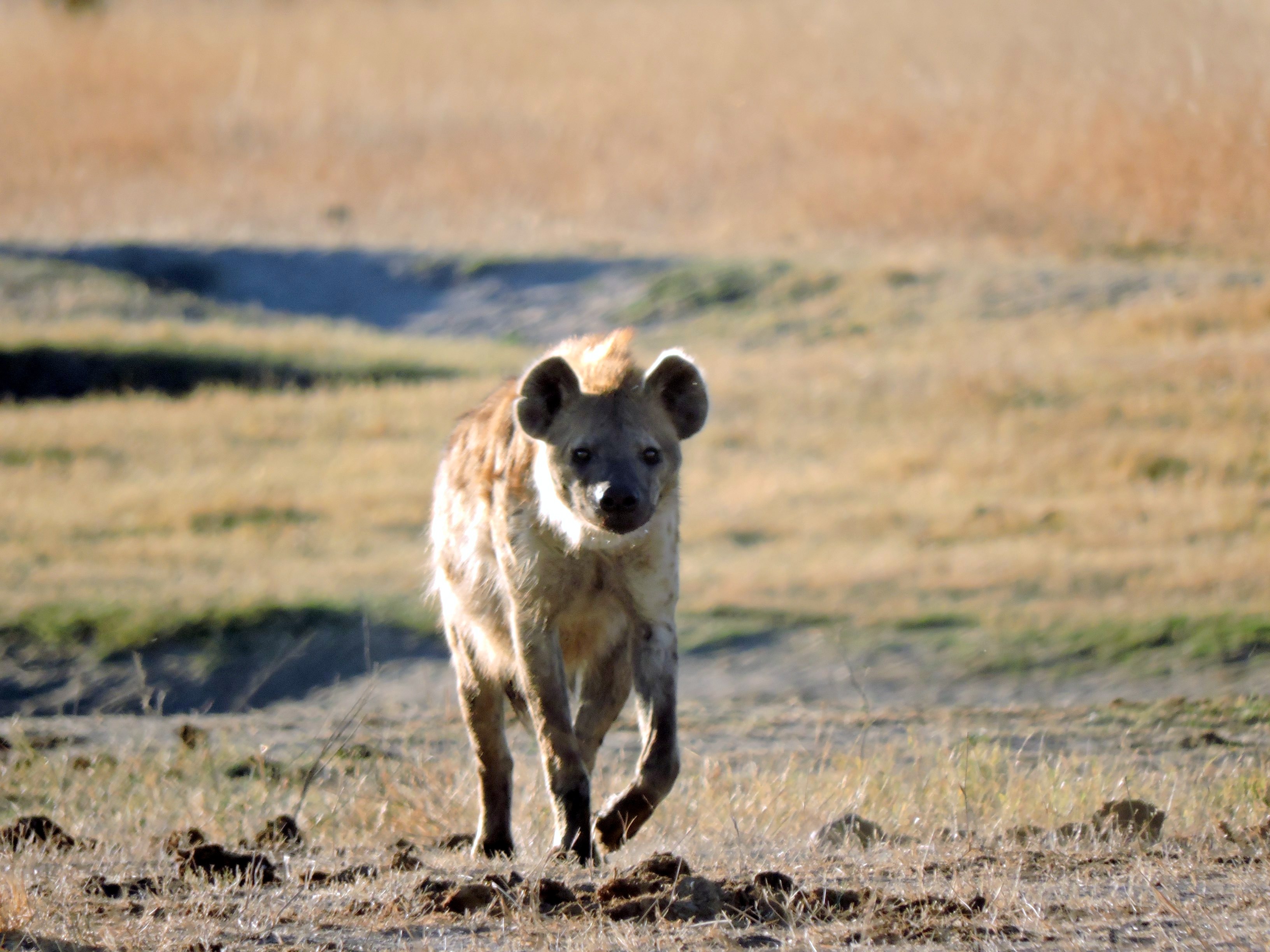
It was warm when we set up our camp after arriving at Ngweshla in the late morning. After lunch we went on a game drive to explore the area and, although we planned an earlier return, as usual we got delayed following a hungry-looking hyena on the prowl. The sun was setting by the time we got back to camp and there was a chill in the air already. Stupidly we had forgotten to organize our campfire so we did not bother and planned a quick dinner and an early night instead.

The hyena moving.

The hyena moving.

Elephant antiques delayed us...

Elephant antics further delayed us…

DSCN7680 copy

DSCN7679 copy

DSCN7678 copy

A truly funny stand off!

A truly funny stand off. The jackal looks really tiny!

By the time we had our dinner it was clear that it would be a cold night so we skipped showers and we went to bed early as the tents seemed to be the only warm place at the time. Following the routine I got into my soft pile inner bag and then into the 15°C sleeping bag. I normally sleep in my underwear but, this time, I left my socks on as a special measure! My wife, more cautious, was well covered in her pajamas and even a polar hat!

One of our small tents.

One of our small tents.

If there is one thing I am good at it is sleeping even on the floor with a thin mattress! So waking up in the middle of the night came as a surprise. The latter turned into mild panic when I could not feel my legs. I quickly went through the list of conditions that can leave you paralyzed from the waist down and, before I completed it, I realized that I was suffering from leg numbness due to cold or, put into more simple terms, I was frozen from my butt down, mainly at the back of my legs!

“This is ridiculous” I thought and proceeded to adopt a foetal position placing the warmer front of my leg against the cold back of the other in quick succession. This seemed to work at first but, although I regained the feeling in my limbs, they ended up warmer but far from ideal. My butt remained sub-zero. I beat it with my hands and, painfully, it also warmed up albeit slowly. The situation was bad as I was still far from being warm enough to go back to sleep.

While considering my predicament the little warmth I achieved clearly activated other organs apart from my brain and I felt the need to fulfill nature’s call! “This is great”, I thought while holding on and hoping against hope that I would go back to sleep. All this was taking place while listening to my favourite podcast of the “Two Mikes” in TalkSPORT as there is no Internet at Ngweshla. The topic at the time was how, Rod Stewart’s new wife, concerned about the impact of tight jeans on his reproductive gear, forced him to have cold baths to preserve them! I removed the earplugs immediately as this was not the kind of talk that a person in my current condition needed. Bathing in cold-water gave me uncontrollable shakes and this was not conducive to my bladder control!

To avert a wet disaster inside the tent I summed up my courage and left my tepid bags and put a jumper on and then placed my partially mobile lower extremities into my jogging pants. I was ready to face the cold so I proceeded to open the two tent zippers gently so as not to wake my wife up. My mind focused on my bladder control, I forgot to take a torch, a very useful thing when walking around a campsite at night as the moon was long gone!

Luckily my legs responded somehow and I made a mad rush to the toilet. It was evident that the outside temperature was unbelievably low although I was in no condition for estimates! In the dark and with my bladder nearing bursting point, the slippery step prior to entering the toilet was not in my mind. Earlier in life I had suffered the consequences of the lack of grip of my otherwise very comfortable Crocs clogs and this drawback was re-confirmed as soon as I landed on the smooth tiles of the toilet entrance. I am sure that my semi-numb legs contributed to me losing my footing to land on my cold bum. Luckily there was a buffalo skull placed next to the step for decoration and, providentially, it interrupted my mad bum race!

Miraculously I was unharmed and managed to relieve myself in time. The adrenaline burst of the fall had managed somehow to offset the cold I was feeling and I was slightly warmer by the time I re-entered the tent when I heard “hua wash fat nush” coming from the direction of my wife. I asked her to repeat her message as she was speaking through her nose, the only organ she had outside of her “cocoon”. She was keen on knowing what the noise had been and I reassured her that a buffalo had not mauled me but that I had fallen on the skull of one but survived!

After comparing notes on the temperature situation both inside and outside the tent with her and agreeing that it was in fact freezing I re-entered my sleeping bag, this time fully dressed with the addition of a sleeveless jacket wrapped around my bump not only to stop it from re-freezing but also as an added cushion to alleviate its soreness! Fortunately I felt much better all round despite my tender derriere and I managed to go back to sleep.

The following morning there was no early morning game drive and we remained inside the tents until the sun was up and strong. When we surfaced from our tent we met our son sunning himself. He also froze to death in his tent, despite his recently ended five years in Edinburgh.

Do I need to tell you that the next two nights we slept fully dressed and that I took my torch with me when going to the toilet at night?