Opinion and comments

Topical issues such as conservation, extinction of game, etc.

On Plane Travel

As announced, the Bushsnob has moved continent (if not hemisphere) and is now in Latin America, more precisely in Uruguay. This feels like an achievement considering the rather grueling plane trip endured to get here. Nothing wrong with the flying itself but a lot to be desired on the issue of room on board!

I was taught at school -and confirmed later through various reliable sources- that slaves were packed and transported in ships in the most atrocious of conditions and I fully support the end of the slave trade.* I do believe in racial equality but surely that does not mean that to show it, individuals of all races should be packed tightly together on a plane!

The amount of personal space available on board is so small that it is becoming almost inexistent! The real issue, however, is where does this stop? I am sure that engineers are currently busy trying to find ways of packing more passengers per cubic metre! Are profits so small that stuffing 20 more passengers makes such a difference? Or is it greed?

Whatever the reason, it seems that human air transportation is moving towards modern slavery so perhaps “Ecoslave” could be an appropriate name for the lowest air travel variety? It brings in the “Eco” for ecology and economy as well as the egalitarian tight human packaging.

I am aware that plane configuration varies between airlines and that my comment may not apply to all. However, there seem to be some general rules: (i) the further south you travel, the poorer the service and, (ii) the larger the plane, the less individual space available. Although our flight to Africa last April was acceptable on a smaller Airbus A330, the return on a much larger A340 was very uncomfortable.

Trapped in a narrow seat made of materials with sharp ends, you are completely dependent of the passenger in front of you. The moment he/she decides to recline the seat (as is their right as a flyer) this will not only change the angle of your video screen but also spill whatever plastic food and drink you had been given! In addition, gone are the 2 cm of knee room you cherished to keep the blood in your ageing arteries from clotting and the normal leg ageing process accelerates for the hours you have to endure the trip.

As if restraint by folding seat would not be enough, your plastic table also aids in keeping you clasped-in until the remains of your meal are withdrawn. As a rule, turbulence starts at the time when drinks and food are served, so clasped-in time can be rather long (sometimes as long as the time your food takes to be digested!).. I sometimes believe that pilots have a “Turb” knob that they turn with relish to keep passengers from moving too much!

After the turbulence subsides, you eat your meal and, while waiting for freedom from the clinching table to arrive in the form of the withdrawal of your tray, a fleeting thought that says “toilet” appears in your pressurized brain. While still waiting for your corset to be removed, this thought becomes a more urgent “TOILET” until your stewardess, aware of your agonic look, finally removes your tray. She does this with the same smile that she would have when telling you to remove your shoes before using the slide in a sea landing!

What comes next is a challenge to your physical and mental strength. You need a toilet but your legs are numb so a waiting period accompanied by vigorous massage to re-establish blood circulation is required. Once you regain the feeling in your legs it is time for the next step: the exit from your seat. To achieve it, you move sideways keeping your legs on the floor and your torso behind the seat in front of you, avoiding hitting your head against the bottom of the overhead luggage compartment and also to annoy the occupant in front of you. A contortionist act worthy of Houdini!

Once in the passageway you try to walk naturally towards your target while counting the minutes you can still hold on! Your innards freeze when you see the queue and this actually helps you wait, at least for a short while. Then, to distract your mind from your urges, you look around. What you see if the final blow to your already impoverished situation: while your plane section (seats 41 to 60) is packed chock a block, passengers in the other ones are comfortably sleeping across three seats! You swear at the stupidity of being clever while choosing your seat and promise yourself -knowing that you will never dare to do it- that next time you will go to the airport and get your seat allocated there.

Your angry thoughts are briskly interrupted as the toilet door opens and it is your turn! The relief that follows is so great that -like I am told happens during childbirth- all is forgotten afterwards and you face the return to your clamp with renewed enthusiasm. After all, you only have another eight hours to go!


* Disclaimer: I am in no way making light of the slave trade or the circumstances endured by slaves, but rather over dramatising an event that I experienced (in true Bushsnob fashion!)
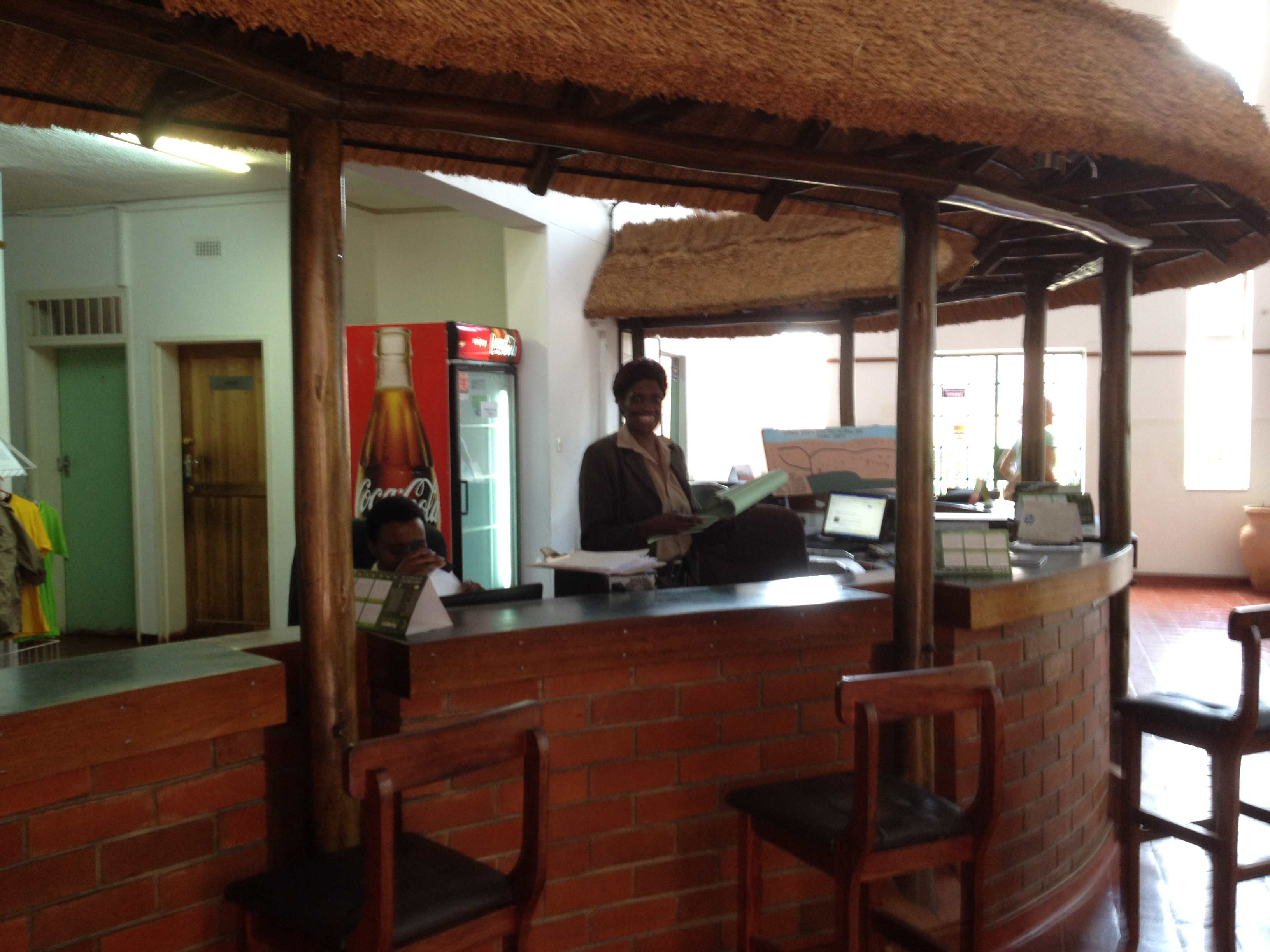
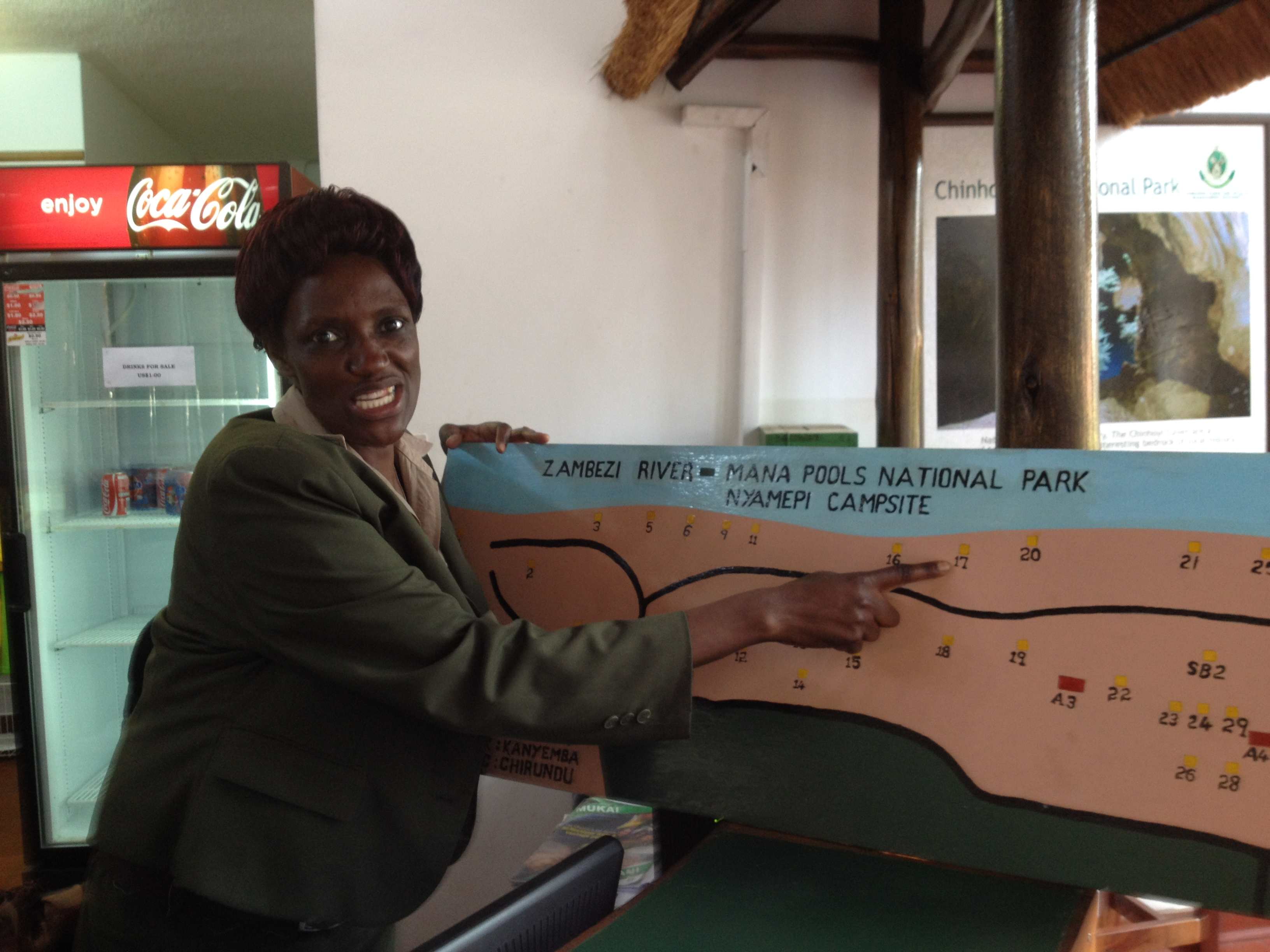
Christine, the booking wizard!

The booking office of the ...

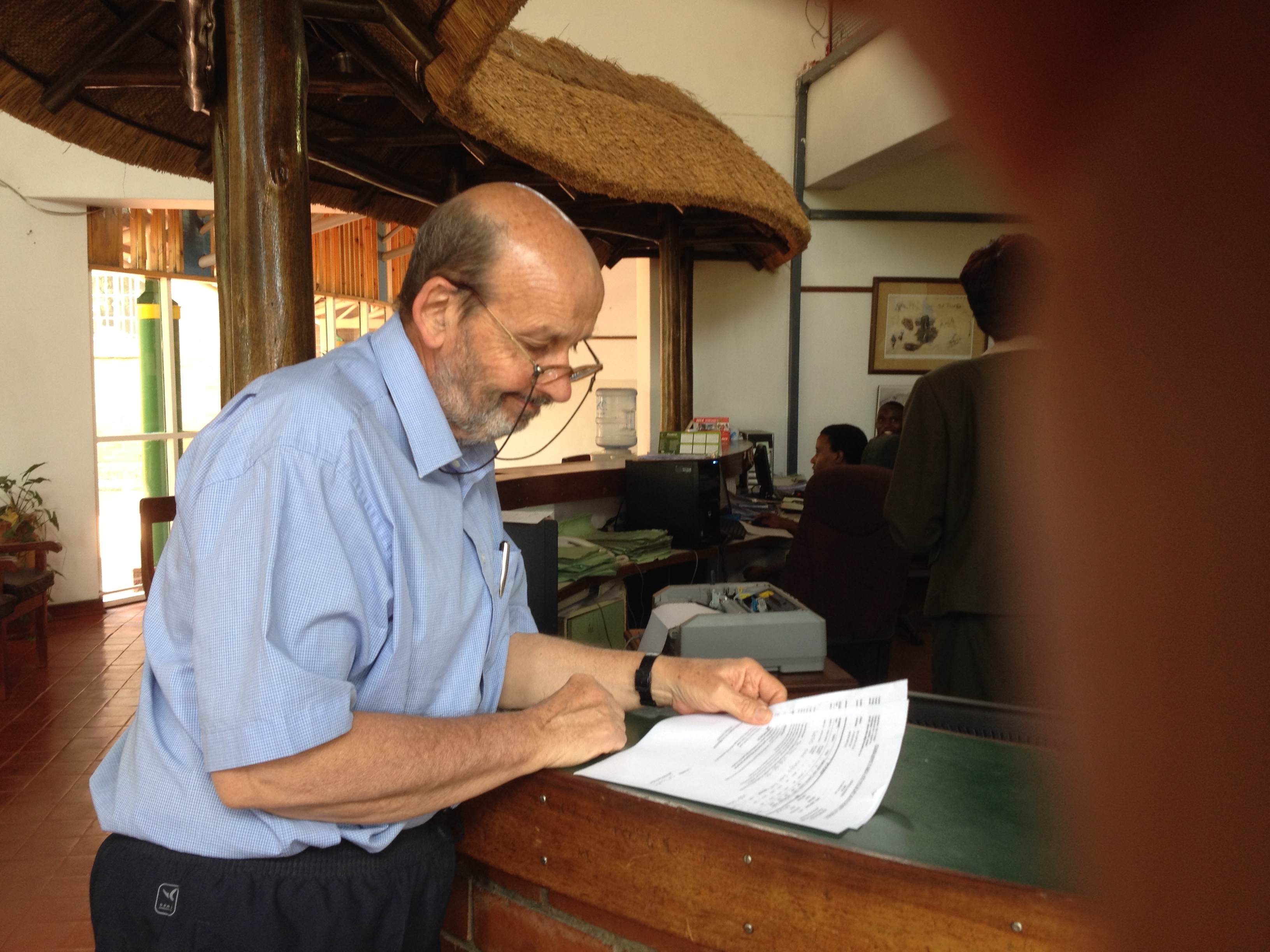
The booking office of the Parks and Wildlife Management Authority in Harare.

More important than the right preparations, adequate bookings are the key to a successful safari. There is nothing worse than arriving at your favourite place and finding that you are double booked or that you “are not on our list”.

Worse still is dealing with a booking office with staff that just do a routine job and are completely indifferent to the client across the counter and their expectations. Unfortunately, this occurs more frequently than necessary, and even efficiency does not compensate for it.

Luckily, people booking at the office of the Parks and Wildlife Management Authority (PWMA) in Harare, Zimbabwe need not worry!

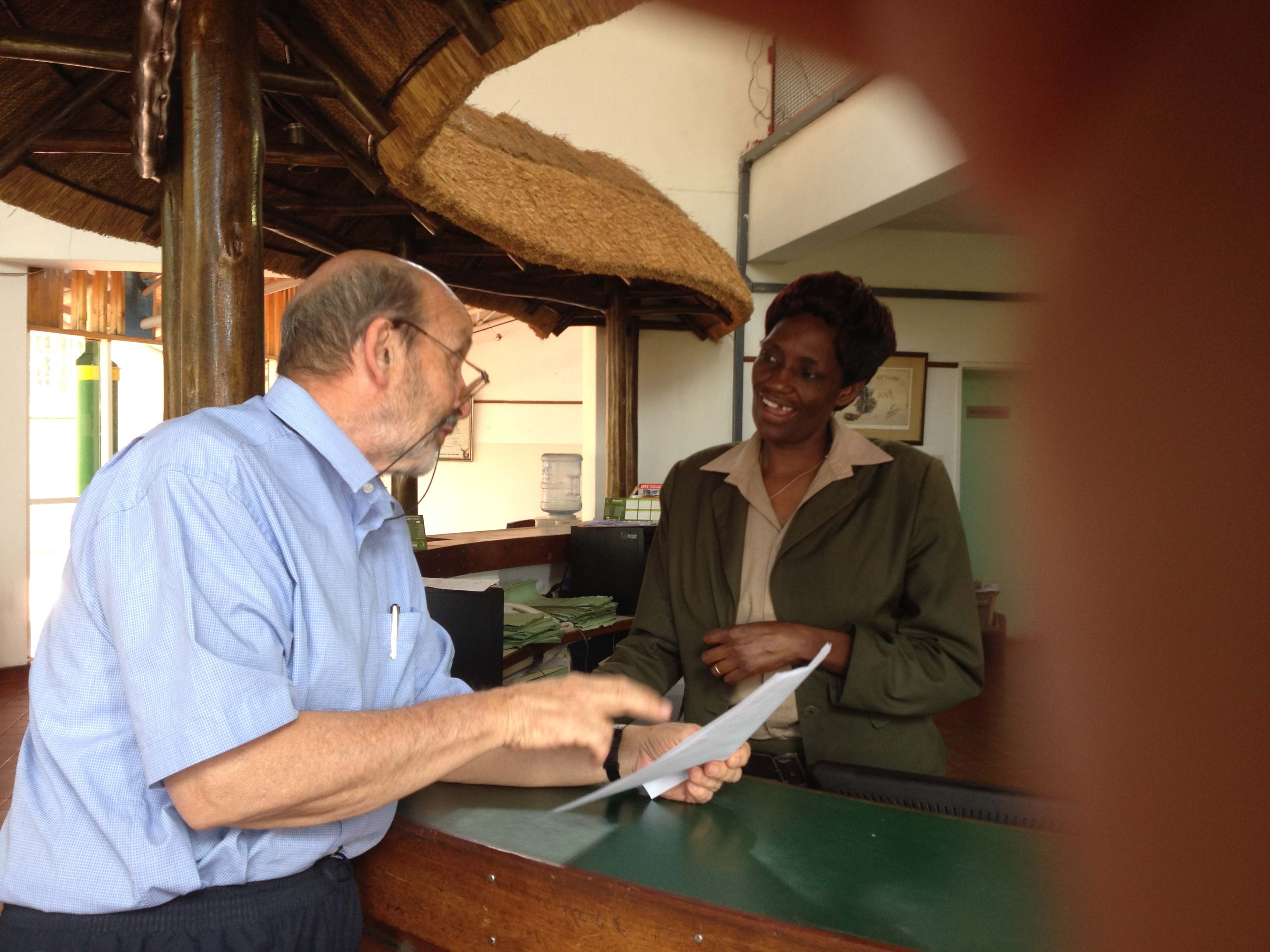
Christine is officially called a “Reservation Agent” but I would rename her as a “Reservation Friend”! With her team (Audrey, Peter and Catherin) she is always ready to assist and look -in the renowned large green accommodation books- for the place you wish, always with a smile, even when her telephone is constantly ringing and she is dealing with several issues at the same time.

This is the best campsite. I recommend it!

This is the best campsite. I recommend it!

She knows about the facilities offered, condition of the roads and best times to visit. She also acts as a guide, recommending the best places available and not hesitating to tell you their drawbacks and or advantages.

This is not too good...

This is not too good…

... a solution is found!

… a solution is found!

Married, a mother of two (boy of 28 and girl of 25) and recently a grandmother, Christina has been helping guests to get bookings to the wonderful places in Zimbabwe for the last 26 years. I would go as far as saying that she is the “face and voice” of the PWMA to the outside world.

Christine at work.

Christine at work.

Today I was there booking several places for both 2014 and 2015 and had a chance to enjoy her sense of humour and efficiency so I thought I would document my experience in the blog for all to know that here you will find a service like no other!

Thank you Christine and, please, do not scare me by talking about retirement again!

Dry season in Harare

The on-going world cup has taken over my life for the last couple of weeks so, when there was a two-day match break I waited for the sun to get warm and then I came out to look at the garden. This is how these reflections were born.

Our house is located in a dry suburb of the city and, although over the years we have invested in sinking five boreholes (yes, five!!!), we have failed to find water. In addition to being a difficult area for underground water, I am told that the water table has gone even deeper with overuse. What’s more, the public water supply -very good in the 90s- has collapsed to the point that we only had one day of water last year! We also need to buy drinking water by the 20 litre container. However, there is optimism in the shape of the on-going water works that will hopefuly improve the situation.

Despite this drawback we are still convinced that this is a small problem compared with the assets that Harare and Zimbabwe bring to our lives! You just need to learn to live with it and find alternative solutions. In these situations I always recall a work colleague who, when we were going through a relief operation over a very severe flood crisis, said that when the official markets collapse, the informal ones take over in an amazingly short time. This is the case of the Harare water market.

Over the years of water shortage, many services have ben developed and perfected and are now on offer. Water diviners, borehole drillers, water pump sellers, experts on water volumes, drip irrigation, water tanks and piping are some of the services available. We can order our water by cellphone and it comes very fast as the competition is tough. You can even place a “water order” through the net!!! USD 100 buys you 10,500 litres (the 500 litres are a bonus for our loyalty!) that lasts us for about six weeks with rather careful use. We are six people in the house: two of us and our housekeeper and his family.

Water used for washing and showers is recycled in the garden. Believe me, this does not actually create great difficulties, apart from collecting the water from the basins into buckets that later go into the garden. We shower standing in basins and this water follows the same fate. While doing this, I always wonder what the world be like if all water-privileged people like us would do the same!!! I am sure that this sounds alien to many but it is basic to me and very doable.

As we like to grow our own veggies and keep alive some favourite plants, we also need to collect roof water during the rainy season that lasts roughly from November to March with about 800mm of rain fall. So, nylon tubes connect our gutters to the swimming pool that are normally rolled up but extended every time the first drops fall. The pool, once a pristine blue, now looks brown and hosts water plants and guppies, the latter to control the mosquito larvae. The water is too cold for swimming anyway…

The swimming pool is now our water reservoir.

The swimming pool is now our water reservoir.

Now it is back to me in the garden. As it is normal during June and July it is a chilly morning although not as cold as it will be in a few days when the prediction is for 5°C. I noticed that the garden is now almost totally brown, except for the vegetable garden that looks like a green oasis, almost dazzling! Brown is the dominant colour in most of Harare now, except for those houses that boast green lawns where drilling has yielded results. However, plants and animals are adapted to the dryness and they have accumulated nutrients to enable them to respond immediately to the first rains. I will tell you about this when it happens.

Leaves  from the msasa trees (Brachystegia spiciformis) rain on me, invaluable mulch for our soil that helps to keep the little humidity left. In contrast, the succulent plants, particularly the aloes, are thriving and even flowering! However, the real beauty I see is the yearly arrival of the birds, attracted by the bird baths and the seeds dished out to them in the garden. Two species appear around this time: the purplecrested louries (Tauraco porphyreolophus) and the blue waxbills also known as cordon blues (Uraeginthus angolensis).

They could not be more different! The former are rather large and green and blue with the purple crest that gives them their name, looking almost black under normal light. Often described as “furtive” while flying between trees flashing the most amazing crimson reflections of their primary wing feathers while in flight, being almost scary at dusk! At this time of the year they come to feed on the little red berries of the cotoneaster bushes (Cotoneaster spp.) that they cannot resist. They are so fond of them that they risk abandoning the security of the tree canopy to get at them. Unfortunately I have not been able to take a worthy picture as they are quite shy, mobile and difficult to approach. I will keep trying and post any decent picture I get.

The first blue waxbills in our garden.

The first blue waxbills in our garden.

The cordon blues, conversely, are tiny (12cm from tip of beak to tip of tail, the latter being about one third of the bird!) and as their name indicates, they have a pale sky blue face, breast and tail with brownish-grey upper parts. They start to come singly and pairs are formed. Later on there will be flocks walking through the dry grass in search of tiny grass seeds and some of them will nest among the papyrus in the garden only to move away at the onset of the rains.

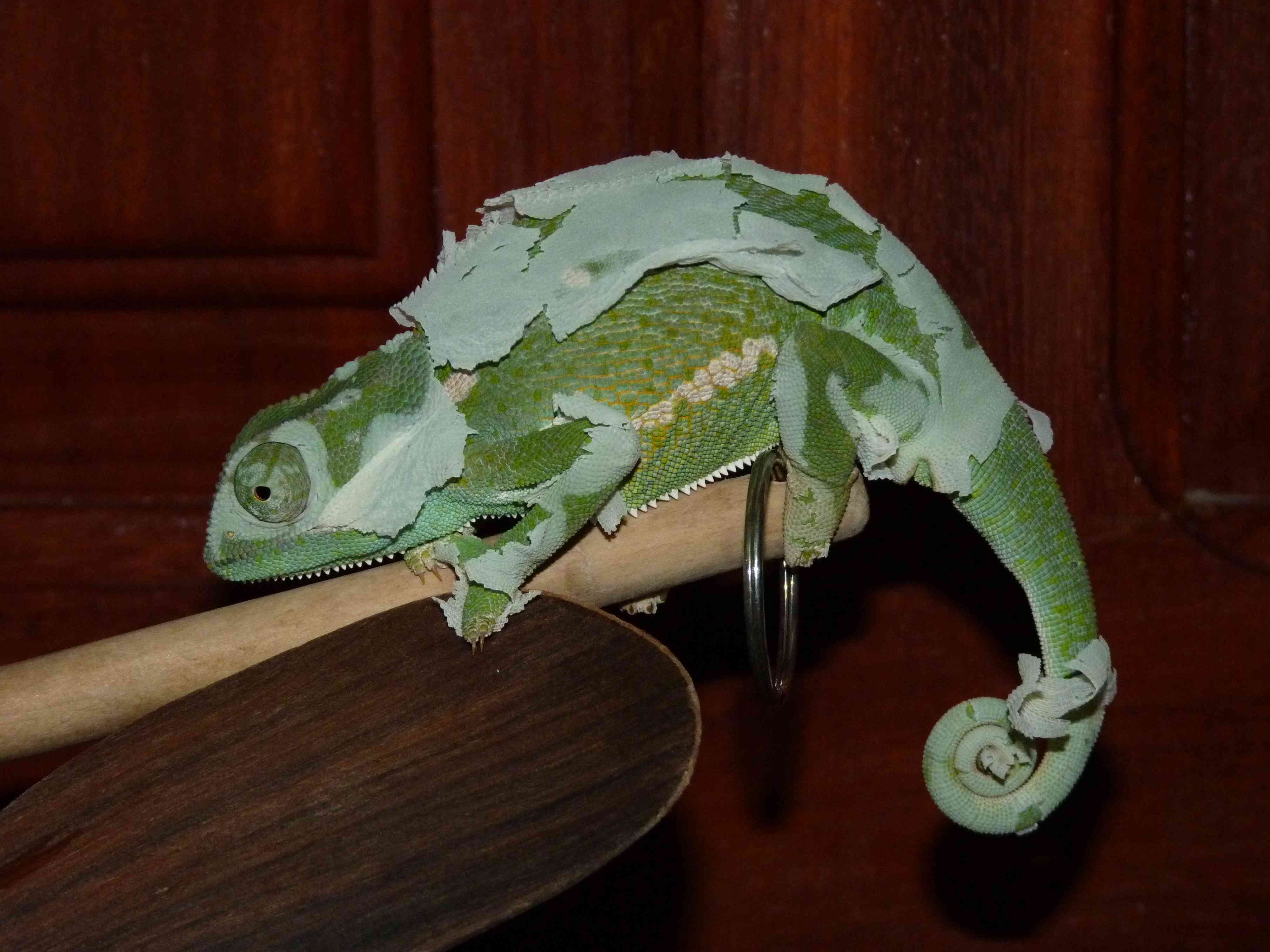
While there is an increase in the bird population, other animals are now very hard to find as they resort to a quiet life until the warmer weather comes back. This is the case of Mr. Brown, our leopard tortoise  (Geochelone pardalis) who slows down during the winter dry months to re-emerge at the time of the rains. Although whether this can be defined as proper hibernation is debatable, a marked reduction in activity takes place and he is not visible for a while. Another species conspicuous for their absence now are the flap necked chameleons (Chamaeleo dilepis) that probably brumate (chameleon hybernation) or at least also -like Mr. Brown- slow down and become hard to find.

Chamaleon shedding its skin.

Chamaleon shedding its skin.

Although we still have a few weeks of cold weather, eventually it will get warmer and, if we are lucky, we will witness baby chameleons -tiny replicas of their parents- bursting out of the ground from the eggs buried in the ground by the females. We will wait, observe and report accordingly.