Out of Africa

A WWII relic

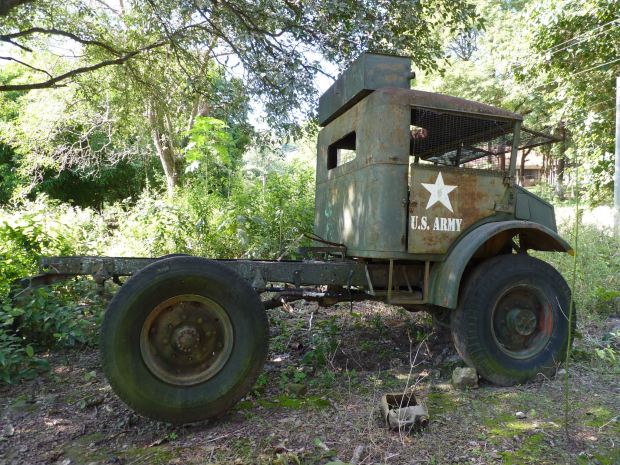
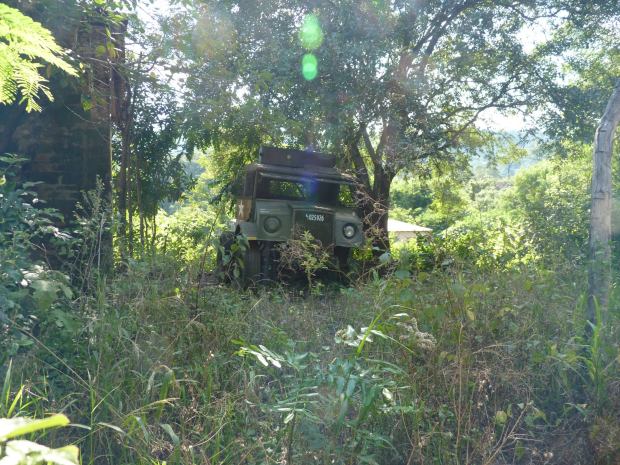
On the way back from our macaw walk [1] Oscar mentioned that there was an old truck parked nearby. Curious we agreed to get there and -as usual- do a bit of “controlled trespassing” to investigate.
P1190027 copy1

First view.

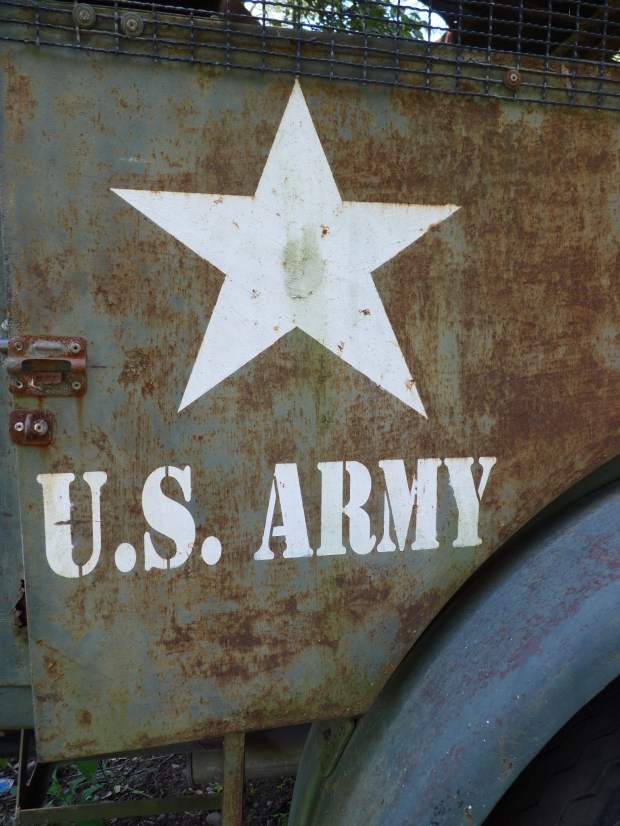
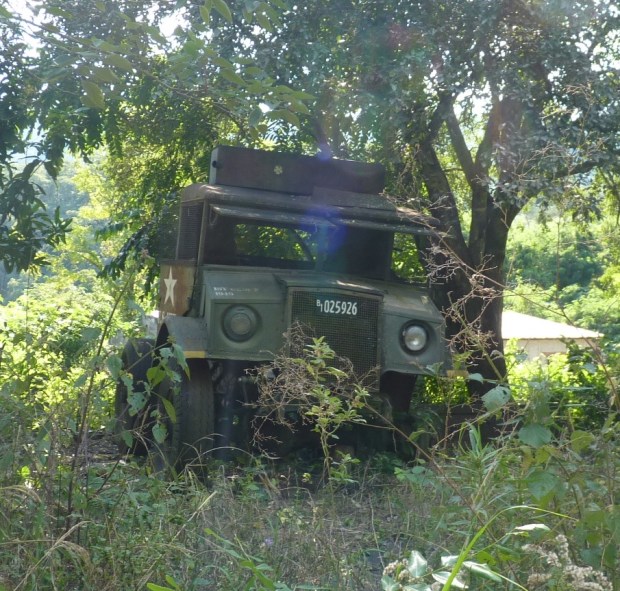
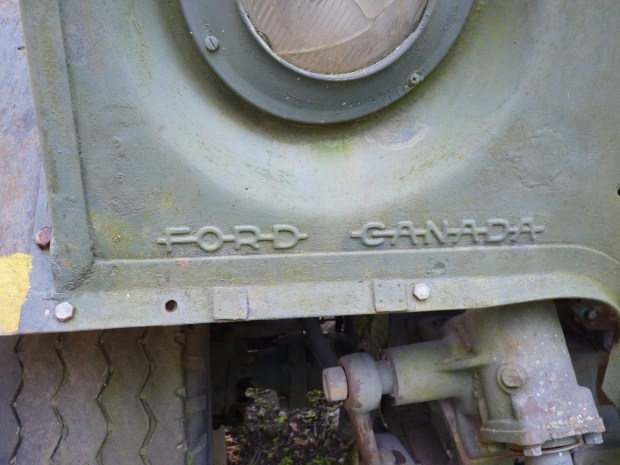
The truck was still there and it still showed its original painting as well as its make: Ford Canada.
P1190027 copy

P1190014 copy

P1190010 copy

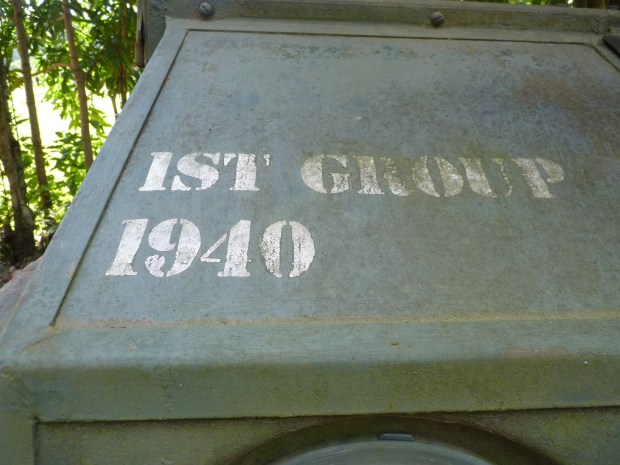
P1190013 copyP1190015 copyAlthough the truck showed the signs of time, it still was quite well preserved. Surprised, I took a few pictures and went to the Internet in search of answers. This is what I found mainly via Wikipedia [2].

I believe that it is a Canadian Military Pattern (CMP) truck. This truck was produced in large numbers and several types in Canada during World War II. Standard designs following British Army specifications for use by the armies of the British Empire and allies were prepared before the beginning of the war coincident with the rise to power in Germany of Hitler and the Nazi party in 1933.

By 1939, mass production in Canada of CMP military vehicles was on the way and the Canadian-built vehicles were to serve widely in the forces of other countries. At the outbreak of World War II, Canada’s large and modern automobile industry was shifted over to the production of military vehicles out-producing Germany. Truck production was focused on a broad range of medium-capacity vehicles.

Over 500,000 CMP trucks were manufactured in Canada. They were right-hand drive and they formed the basis of a wide variety of different truck types and armoured vehicles.

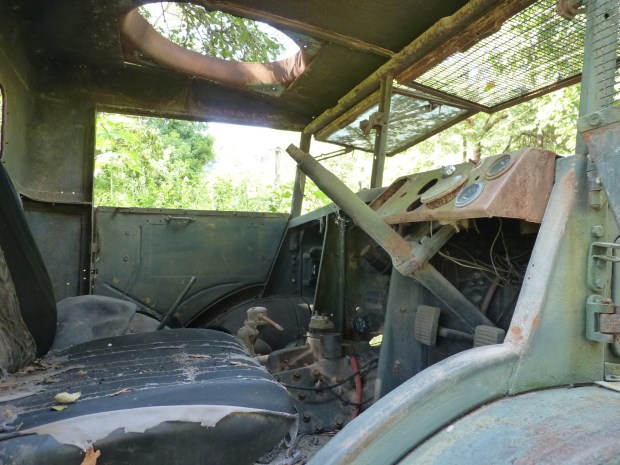
All the CMP cab designs had a short, “cab forward” configuration that gave them a typical boxer-nosed profile, a design required for a more efficient transport by ship. Internally the cab had to accommodate the comparatively large North American engines and it was generally cramped.
P1190011 copy

P1190025 copy

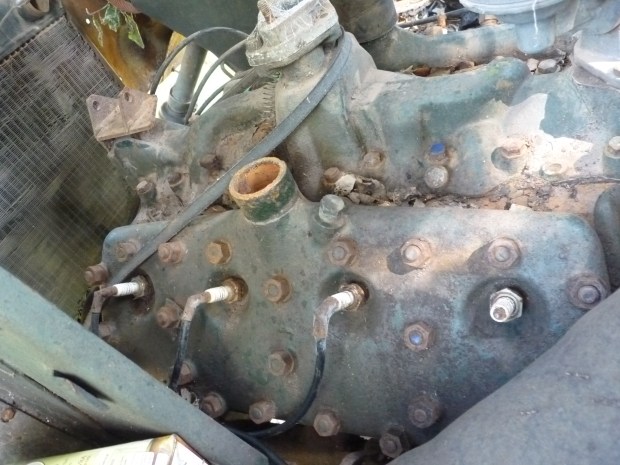
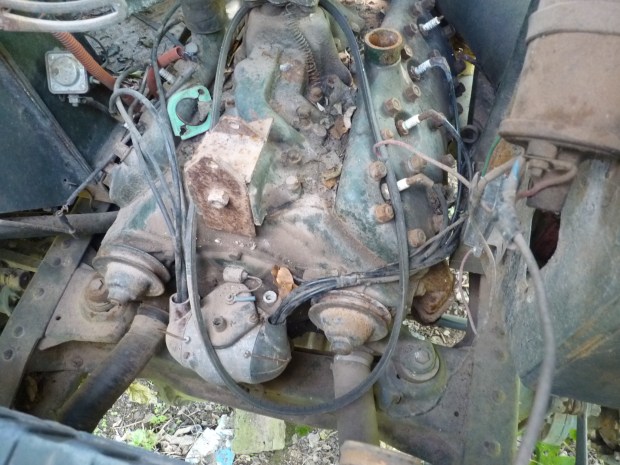
Eight cylinder engine.

P1190021 copyNewly manufactured, or as modified war surplus, CMP trucks were widely used after 1945 in several European armies and around the world, among them in Argentina. CMP trucks were adapted after the war for a variety of civilian roles including forestry, grain transport, fire-fighting trucks, and snow-ploughs.

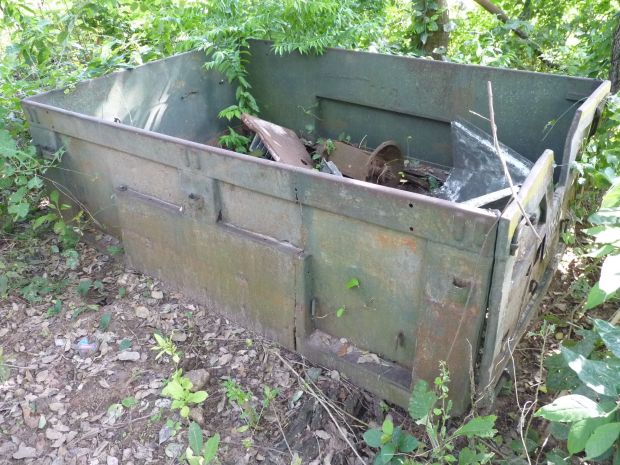
Focusing on our find, while I wait for a response from the experts available in the web (if it ever comes!) I would classify our find as a Ford CMP truck of the cargo type as its back part was resting nearby.
P1190019 copy

Summary of technical specifications:

Ford F15. 3 ton 4×4 Cargo produced by Ford Canada. Designed in 1936–1940. Produced in 1940–1945. Service history: From 1940. World War II. Engine: Ford 239 239 cu in (3.9 L) petrol V8, 95 hp (71 kW). Wheel 4×4. Speed 50 mph (80 km/h)

Now, how did it get to Itiyuro?

Although the Argentine Army is listed among the world armies that got CMP trucks [2] they would have been re-painted with the proper livery and they would have had special Army number plates.

The answer to the origin of the truck relates to oil prospection work in the area [3].

Oil had been detected near Tartagal (Northern Salta) in the 17th Century although interest for its extraction only started in the mid 1920’s through the arrival in Salta of the Jersey Standard Oil Company (SOC), attracted by the area’s potential.

The SOC finally started to extract oil industrially from 1926 but soon slowed down its intervention as the Government YPF moved in. During 1938-9 extraction by SOC declined as the YPF’s increased and by the late 1940’s, in view of the poor production of its wells, the SOC withdrew from Salta.

It is possible that the truck is one of the few remnants in the Itiyuro area left by the SOC or one of its engineers that brought the truck as a war surplus. I am not sure that we will know but, anyway, it was an interesting find.


[1] http://www.bushsnobinafrica.wordpress.com/2018/04/10/safari-to-itiyuro/

[2] https://en.wikipedia.org/wiki/Canadian_Military_Pattern_truck. Consulted on 6 April 2018.

[3] Benclowicz, J.D. (2011). Aportes para la Historia del Norte de Salta. Conformación y desarrollo de las localidades de Tartagal y General Mosconi durante la primera mitad del siglo XX (Contributions to the History of Northern Salta. Formation and Development of the Towns of Tartagal and General Mosconi in The First Half of the Twentieth Century). Andes vol.22 no.1 Salta ene./jun. Consulted on 6 April 2018.
 

Jaguarundi

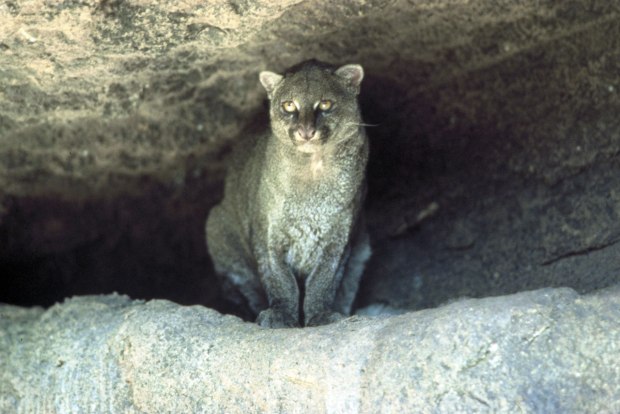
A Herpailurus yaguarondi known locally as yaguarundi run in front of our car on the way to the Itiyuro-Yuyunti dam. Although I will soon describe the actual “expedition” that too us to that most northerly part of Argentina, I thought that t”he jaguarundi that crossed the road” offers a good opportunity to focus on this species that I ignored until a couple of years back.

This small cat, also known as eyra is native to southern North America and South America. It is, so far, doing quite well according to the information from the IUCN Red List that gives it the Least Concern status. However, its long-term future only seems assured in the large reserves of the Amazon basin. [1]

The jaguarundi stands low on the ground with a body length of 50-70cm and a rather long tail (30 to 60cm). The ears are short and rounded and the coat varies from blackish to brownish-grey (grey phase) or foxy red to chestnut (red phase) and litters can have individuals of various colours in them.

Jaguarundi-tob-2007-01-09.jpg

Picture credit: Halvorsen, Gary [Public domain], via Wikimedia Commons

Unlike other cats found in the region, jaguarundis are mainly diurnal and therefore more likely to be spotted. Although they can climb trees they spend most of the time on the ground where they hunt for almost any small animal they can catch such as rodents, reptiles and birds. They are, however, able to capture larger prey such as rabbits and opossums and they had seen also feeding on fish.

Mostly solitary their home range is very variable, from a few to almost one hundred square kilometres. Their call is also variable and they can purr, whistle, yap and chatter! They can even chirp like birds!


jaguarundi

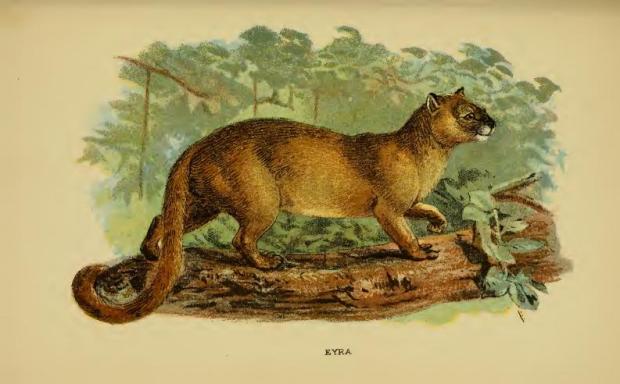
Drawing credit: Wyman & Sons Limited – Lloyd’s Natural History: “A hand-book to the Carnivora. Part 1, Cats, civets, and mongoose”[1] by Richard Lydekker.

So, a very little known but not less interesting small cat that has been observed in the area of our farm although we have never seen it. No doubt that after this brief sighting we will keep our eyes open for them.


[1] https://en.wikipedia.org/wiki/Jaguarundi. Consulted on 7 April 2018.


Snake attack… [1]

There are two important venomous snakes in the Gallinato area of Salta where our small farm is located: the Cascabel (South American rattlesnake, Crotalus durissus) and the Yarará (crossed pit viper, Bothrops diporus) [2]. The former’s venom is neurotoxic while the latter’s can cause severe tissue damage although, contrary to general belief, it is not often a cause of death. (See: https://en.wikipedia.org/wiki/Bothrops_alternatus).

Enoc, a boy of eight was returning from school after lunchtime with his brother Angel and his father Juliano, our caretaker. When fording a small river, the boy either stepped on or near a snake of about 120 cm. The snake reacted angrily and bit him. “I saw the snake going for him and heard him shouting that he had been bitten” Juliano told me later, and then he added “I hit it with a couple of stones but it hid under some large stones. I left it as I thought that taking Enoc to the nearest clinic was more important”.

P1180806 copy

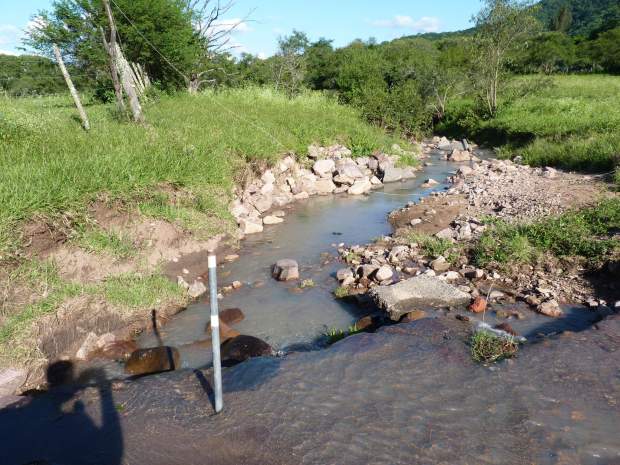
The small river crossing showing the stone at the centre of the picture used to step across. Tee snake was above my shadow.

P1180807 copy

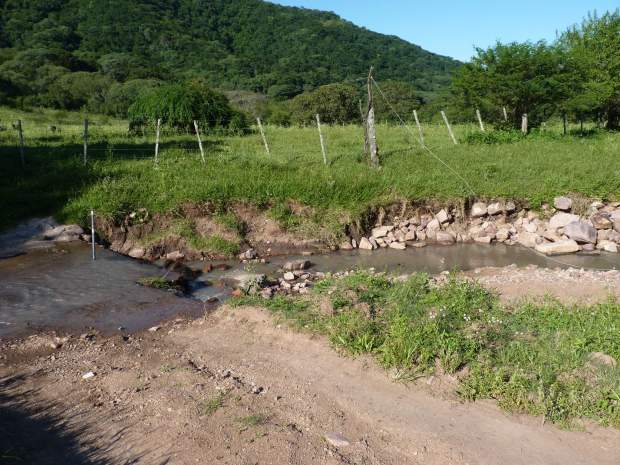
Another view of the crossing.

Juliano, wisely, calmed the boy, ran to his house, got the boy in his car and drove straight away to the public clinic. He was also shrewd enough to stop at the Police post located 5km from our farm to report the accident. In turn the Police radioed the Vaqueros [3] clinic and, by the time of Juliano’s arrival an ambulance and a Doctor were on standby! The boy was taken immediately to the Hospital Público Materno Infantil in Salta city  for treatment.

While this was taking place we were returning from the city of Salta after having dealt with pending administrative issues as well as getting some essential farm supplies. We were near our farm already when we got a recorded message from Juliano telling us of the accident. We immediately turned around and tried to get in touch with him. I was concerned about the availability of anti-snake bite sera at the Vaqueros clinic (I was unaware that Enoc was on his way to the large hospital in Salta!).

We failed to talk to him but we met him at Vaqueros and collected him to follow the ambulance. Bea, Enoc’s mother was already with him and over the phone we learnt that he was stable and -apparently- well. The hospital has an emergency unit to deal with these kinds of problems so I should. Juliano believed that a yarará was the responsible snake but was not sure.

We managed to get into the emergency room (against the rules). Enoc was calm and already they had given him all needed medication for snakebite. I expected to be told to leave the room any minute so I had a quick look. His vital signs were normal (great relief!) Further, a rapid look at his leg revealed that he had been bitten just below the right knee and, apart from some small amount of dried blood I failed to see any fang marks but only a small scratch. Then, as expected, I was told to leave!

The conclusion was that the snake failed to take hold of him, perhaps because of him wearing long sweat pants. The medical personnel were very keen on the identification of the snake so we drove back to the farm to look for the culprit. Unfortunately, we failed to find it and informed the hospital accordingly. We learnt that the boy would be kept under observation for 24 hours but he was stable.

The following day in the afternoon I went again to look for the snake and this time I found it. It had died, probably from Juliano’s stoning and it had been already partly eaten, probably by a fox that had pulled it out of its final resting place and had a “snack_e”.

P1180810 copy

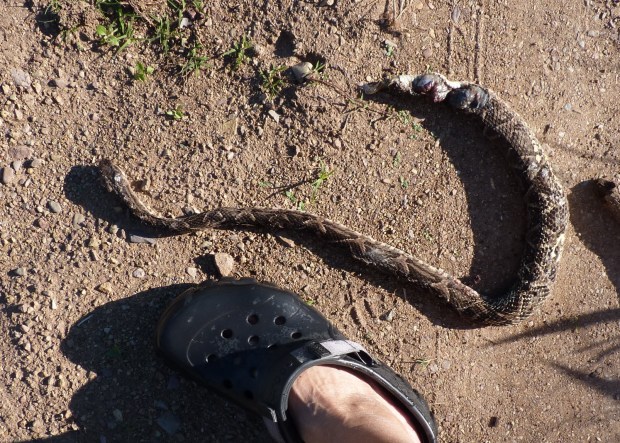
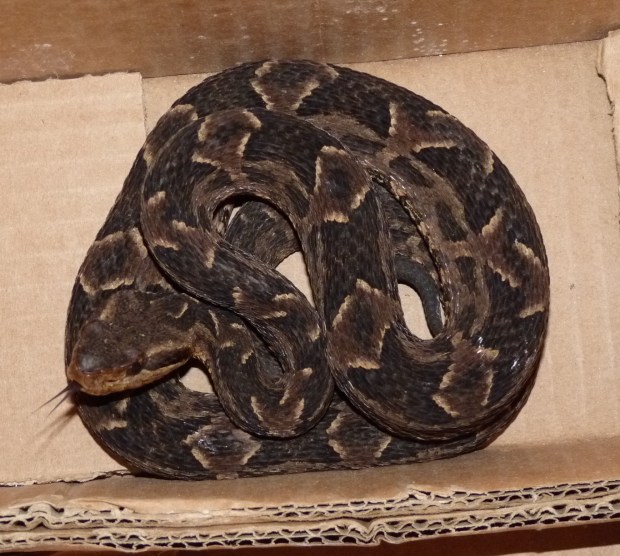
The rear end had been eaten but, the marks were not those of a yarara! It was a rattlesnake!

P1180825 copy

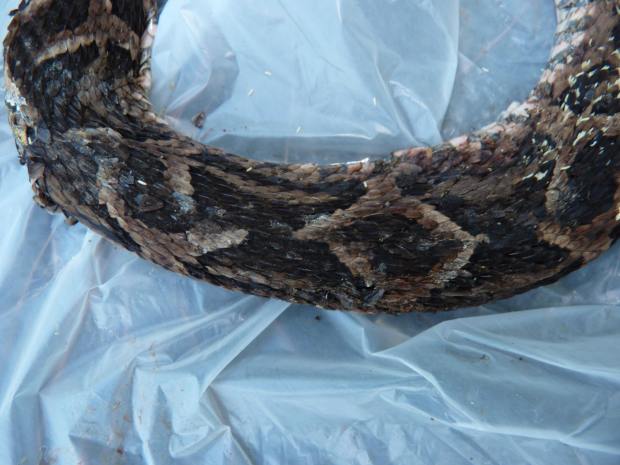
The dead snake markings.

P1150720 copy

The markings of an earlier rattlesnake caught at the farmhouse and later released far away (See: https://bushsnobinafrica.wordpress.com/2016/04/07/rattled/). 

I immediately informed Juliano of this but by then the boy had been discharged from hospital as he continued to be healthy.

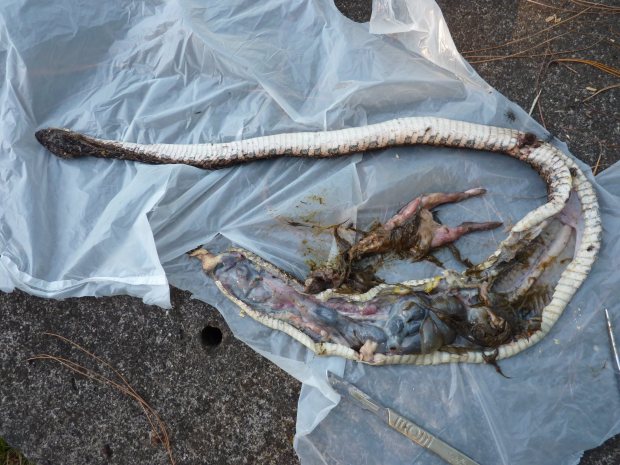
As the snake had a clear bulge, I spent a bit of time doing a post-mortem that revealed that it was busy digesting a large rat that it had caught a couple of days earlier. My conclusion was that it was sunning itself digesting its meal when Enoc stepped on it or too close for comfort and this prompted the snake’s reaction.

P1180818 copy

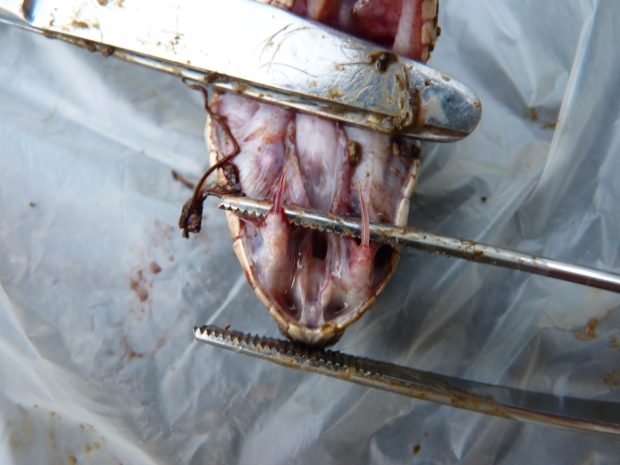
The fangs that failed to reach their target!

Luckily the incident ended well but I still I wish to highlight the excellent public health coverage that exists in Salta where after an accident such as this not only there was an ambulance on stand-by to take the patient to the specialized hospital but also that it was immediately given the correct treatment and kept under close medical supervision until the doctors considered that he was out of danger!

Liking snakes but being a coward, I am buying myself a pair of wellingtons that I plan to wear from now on instead of my usual sandals!


[1] This event took place about ten days ago but, because of communication “challenges” I am only able to publish it today.

[2] Moschione, F.N. (2014). Relevamiento de Fauna. Finca El Gallinato, La Caldera, Provincia de Salta. Informe Relevamiento 2013-2014. 55pp.

[3] Vaqueros is the small town located about 10km from the farm on the way to Salta city on the national road No. 9.


Note: for those of you curious to see the stomach contents of the snake, I place the picture below. I warn you that some may not wish to see it and hence I place it here.


P1180815 copy


Snow in the Chaco

Crossing the Chaco region of Argentina on our way to Salta is rather hot and monotonous as we are dealing with a rather straight road that goes on for a few hundred kilometres across this semi-tropical area of the country.

While driving we were talking about the news and pictures received from our daughter and our friend Lola from Rome where we learnt that snow had fallen a few days back. We agreed that we were lucky to be mostly in warm climates, away from winters most of the time!

We were in the middle of the discussion when we passed an area where, maybe because of the subject we were discussing, it was snowing!

P1180758 copy

P1180756 copy

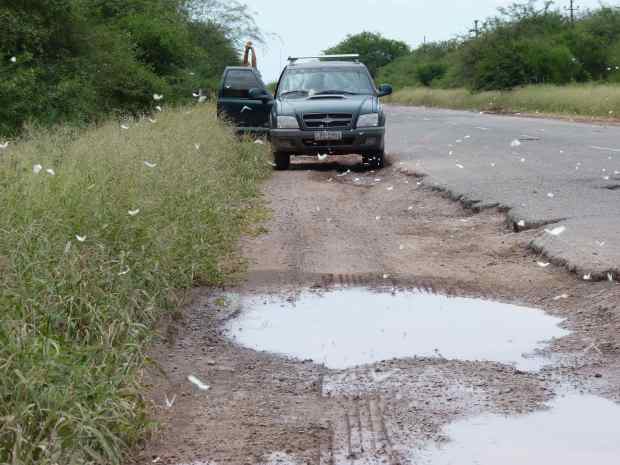
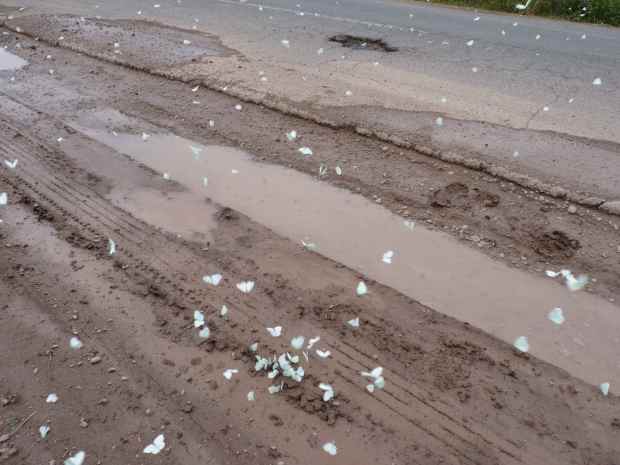
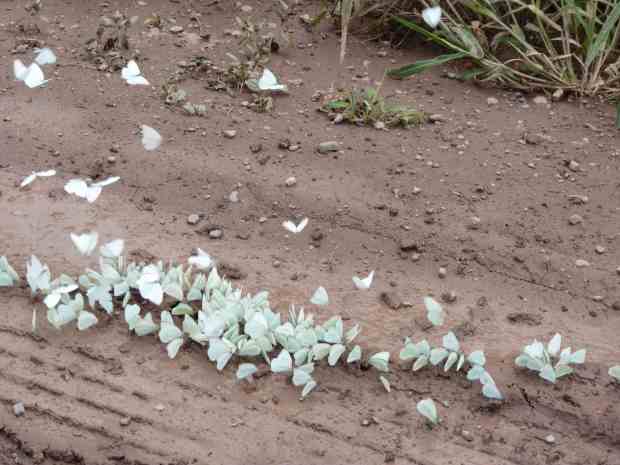
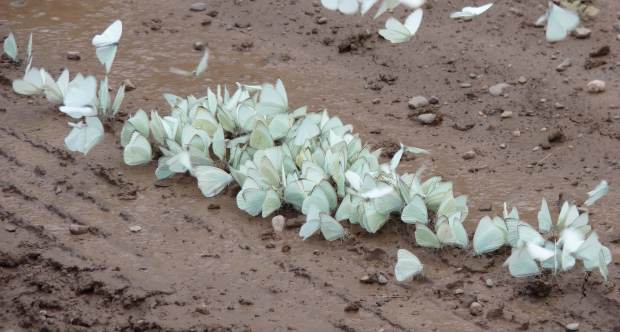
Or so it seemed to us for a few seconds until we realized that we were crossing an area populated by millions of white butterflies known locally as “pilpintos”.


P1180755 copyP1180752 copy

Apparently, these butterflies appear after the rains and live rather short lives and mainly stopped in the rain puddles to recharge water and salts.

We were happy to realize our error and continue on our way to our summer South American hiding spot!


The nasoni of Rome [1]

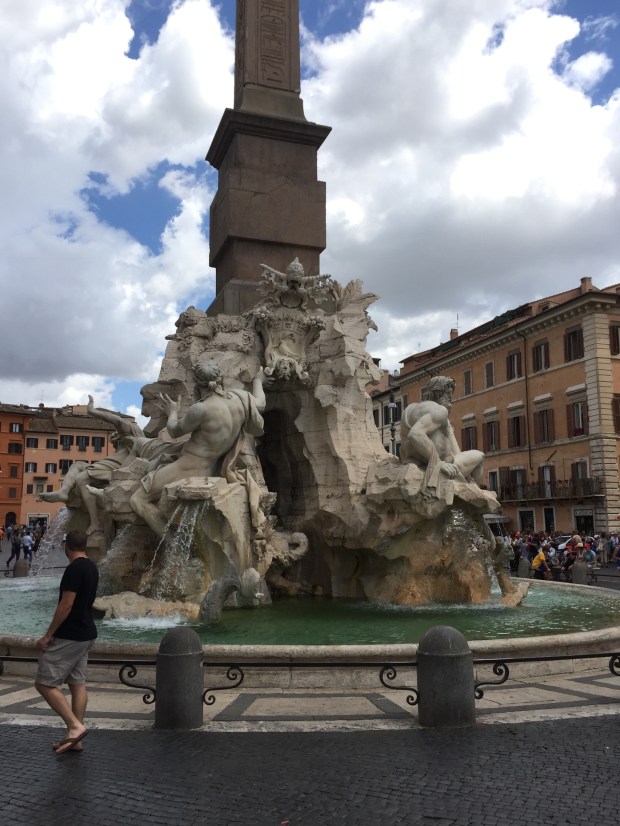
Rome is packed with attractions, some of them world famous and others less so but not less interesting. We have all heard about or visited some of its famous fountains such as the Trevi fountain, Turtle Fountain at Piazza Mattei, Fountain of the Frogs at Piazza Mincio, the big fountain on the Janiculum Hill and the Fountain of the Four Rivers at Piazza Navona to name some of the better known.

IMG_4794

The fountain of the four rivers, Piazza Navona.

While the above have great cultural and ornamental value there are other water fountains that, although not great looking, serve the purpose of delivering free ice-cold water to the city inhabitants and visitors. These are the small drinking fountains that are found all over Rome supplying water non-stop.

There are 2,500 drinking fountains scattered all over the city, and almost 300 of them are inside the city walls. Although there are a few exceptions, they mainly follow a standardized model known by the locals as nasone/a because of the drinking spout on its side.

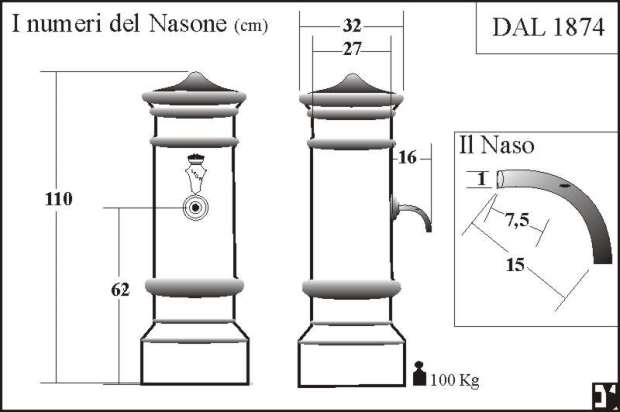
FdmNasoneProgetto

Technical drawing of a drinking fountain. Scheda Tecnica del Nasone Fontanella di Roma. Released into the public domain by its authors via Wikimedia Commons.

These simple but clever contraptions allow the water to run continuously through their “noses” but blocking the end of the spout sends water in an arch that is ideal for drinking as well as for surprising the unaware visitor with a summer splash!

The 100 kg and 100 cm high nasoni are in place from 1874. They are made of cast iron and marked with the ubiquitous S.P.Q.R. that, in Latin, means Senatus Populus Que Romanus (the Senate and the People of Rome), the official city “logo” that also appears in many public buildings.

Most drinking fountains are found near the outdoor markets and plant and flower vendors and it is very common to see their water overflowing buckets and other containers placed under their water stream. The purity of the water is assured by the Azienda Comunale Energia e Ambiente (ACEA) [2] through over 250,000 tests a year [3].

Nasona_a_via_annia_faustina_1 (1)

Picture of nasona by User: Lalupa (Own work) [Public domain], via Wikimedia Commons.

A novelty for us during this visit to Rome was the discovery of the “nasoni maps” put together by various organizations such as the ACEA itself that presents the public with a map of the nasoni in the historical centre of the city and beyond. [4]

IMG_4346

A “special” nasone with a bottom plate that enables pets to drink!

The constant flow of almost ice-cold drinking water the year round in Rome through the nasoni (and even the non-drinking water from the fountains) has always been a mystery for me. Writing this post I learnt that the water comes from the Peschiera reservoir through a 130 km aqueduct that runs deep underground. Although the underground element would be important for the coldness of the water, there should be something else keeping it so cool. I did not find a clear answer until our friend Donatella told me that the water is always moving and therefore it has no time to warm up. I believe that she hit the nail on the head and solved the mystery to my satisfaction!

The 16 million cubic metres of water that flow into the nasoni‘s drains and other fountains everyday are -apparently- recycled for watering gardens, cleaning factories and other non-drinking purposes so it does not go to waste. However, it is an immense volume of water! So, trying to get an idea of the amount that has gone through Rome’s drinking fountains since their establishment in 1874 I did a quick and dirty calculation:

143 years x 2500 nasoni x 16,000,000 litres/day x 365 days = 2,087,800,000,000,000

or two quadrillion, eighty-seven trillion, eight hundred billion litres or 2,088 cubic km of water yielded. Frankly, the result did not tell me much as the volume was impossible for me to grasp! So, as usual in these cases, I looked for a comparison and found that such an amount of water would have almost fill up lake Victoria with its 2,700 cubic km! I am not sure that this assessment is any use to anyone but at least it lays my mind to rest until I start working on the next post!


[1] A man with a big nose. Nasone/nasona are the masculine/feminine nouns and nasoni the plural.

[2] Municipal company for Energy and Environment

[3] https://www.acea.it/

[4] https://www.acea.it/it# or http://www.colosseo.org/nasoni/inasonidiroma.asp


Christina O

Back in Rome after our Sorrento trip we went to stay with our friends Donatella and Carlo at their Appia Antica house, always a great pleasure and one that we always look forward to do. Although back in Rome my mind was still set on finding out what the two vessels anchored at Sorrento were!

IMG_2598 copy

The “mystery vessels” anchored near Sorrento.

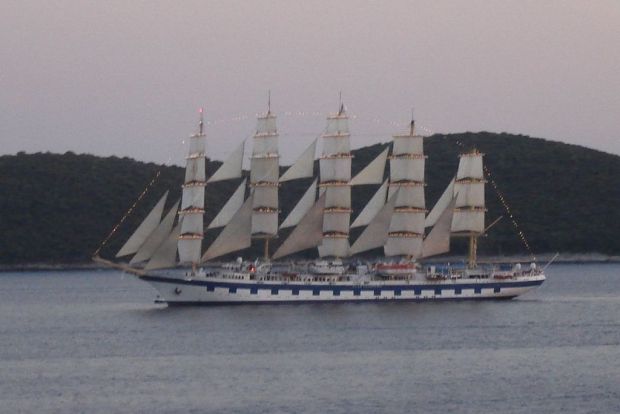
I remembered that I had used a ship-tracking web site [1] to follow a cargo ship bringing a car from Japan to Mozambique and I decided to give it a try to see whether it would help me to identify them. Bingo! As soon as I checked for the activity around Sorrento, it was easy to find them as they were the only two stationary vessels at the time. Their names were the Royal Clipper and the Christina O so, I immediately searched the web and this is what I found.

The Royal Clipper is a passenger cruise ship operated by Star Clippers to carry passengers on holiday around the world. In autumn and winter it visits the Caribbean while in spring and summer it sails from Barbados to Lisbon and Rome and then it does Mediterranean itineraries departing from ports including Lisbon, Rome and Athens.

1024px-SV_Royal_Clipper2

Photo by Orlica (Own work) [Public domain or Public domain], via Wikimedia Commons.

The ship is interesting as it has a steel hull and five tall masts in a design that follows that of the Preussen, a famous five-mast German sailing ship built in 1902 and known by sailors at the time as the “Queen of the Queens of the Seas” that unfortunately was lost in 1910 at Crab Bay after a collision. The Royal Clipper is the largest “true sailing ship” built since Preussen and the largest square-rigged ship afloat [2]. It carries over one acre of sails (5202 m2) operated mechanically by a rather small crew for its size!

1024px-SV_Royal_Clipper

Photo credit: by Orlica (Own work) [Public domain or Public domain], via Wikimedia Commons.

The interesting information that I got about the more spectacular of the two ships encouraged me to continue my naval mystery-solving work. What I found for the Christina O was extremely interesting although I must admit that even before checking the web, being from the “baby boomer” generation, I have guessed what yacht it was although not its many features and history.

The Christina O is today a private yacht that once belonged to Aristotle Onassis, the billionaire Greek-Argentinian businessman. It is considered as one of the most legendary yachts afloat with an amazing history, full with high society life, politics and romance. It was aboard this yacht that Ari (as Onassis was known) and Maria Callas, had their colourful and stormy romance that lasted for over ten years.

Embed from Getty Images

Maria Callas still is perhaps the most famous soprano the world enjoyed and she earned the nickname of “La Divina” (the Divine) for her singing style. Her relationship with Ari ended and then he married John Kennedy’s widow Jackie, a long-time friend and their wedding took place onboard of the yacht. Previously, the Christina (the name that Ari gave the yacht) hosted the wedding celebrations when Prince Rainier of Monaco and actress Grace Kelly wed in 1956.

The super yacht was a symbol of great power at the time of Ari’s life It had many important visitors and a few really illustrious ones including, apart from Callas and Jackie, Winston Churchill, Richard Burton, Bette Davis, Greta Garbo, Grace KellyElizabeth Taylor, Marilyn Monroe, Rudolf NureyevFrank Sinatra, and John F. Kennedy!

Embed from Getty Images

Onassis next to the original Christina.

The yacht was originally the HMCS Stormont, a Canadian anti-submarine frigate launched in 1943 that, after serving as a convoy escort during the Battle of the Atlantic and being a support ship at the Normandy landings, was purchased in 1954 at scrap value of US$34,000 by Onassis who subsequently re-named it Christina after his daughter and spent USD 4 million to convert it into probably the most luxurious super yacht of its time!

HMCSStormont

HMCS Stormont: Picture taken by an employee of the Canadaian Government, and greater than 50 years of age [Public domain], via Wikimedia Commons.

After Ari’s death, Christina -his daughter- donated the Christina to the Greek government as a presidential yacht. Then the yacht got its third name: Argo but, regrettably, it was allowed to deteriorate until it was purchased in 1998 by fellow Greek shipping magnate John Papanicolaou who spent USD 50 million to recover it re-naming it Christina O in honor of the by then deceased Christina.

Among other amenities, the Christina O was fitted and still has a master suite (now known as the Onassis suite), eighteen passenger staterooms, and numerous indoor and outdoor living areas, all connected by a spiral staircase. The aft main deck has an outdoor pool with a minotaur-themed mosaic floor that rises at the push of a button to become a dance floor. There is also a helipad on the promenade deck. At 99 metres long she is still among the top 50 largest yachts in the world.

Since Papanicolaou’s death in 2010, Christina O was rented for private charters and cruises and in 2013 was placed for sale at a price between USD 21 and 32 million [4]. Despite all the money invested on the yacht it has not been sold because of its overhead expenses.

In 2005 she was placed for charter with Camper & Nicholsons International, the oldest yacht brokerage company in the world. At present Christina O cruises the Mediterranean during summer, clearly including Sorrento! while in winter the yacht travels to the Caribbean. It costs €560,000 (Approximately USD 592,500) per week plus its expenses.

I am rushing to book it for next year, trusting that I will get sufficient friends to join us on our next visit to the Mediterranean…

Embed from Getty Images


[1] https://www.vesselfinder.com/?imo=5076705

[2] http://www.guinnessworldrecords.com

[3] https://www.yachtcharterfleet.com/luxury-charter-yacht-23156/christina-o.htm

[4] http://www.independent.co.uk/news/world/europe/aristotle-onassiss-yacht-christina-o-put-up-for-sale-8682877.html

If you are still interested on more details on the Christina O, this page is useful: http://www.mychristinao.com/


Sorrento

After our brush with history and ruins, it was time for a bit of hedonism so we headed for the Amalfitan coast and Sorrento in particular. To visit the latter was my idea as I had nice memories of an earlier visit we did in the 90s. It was a slightly more relaxed Bushsnob at the steering wheel but only because of the impeccable navigation of my daughter and the crisis control of both her and my wife!

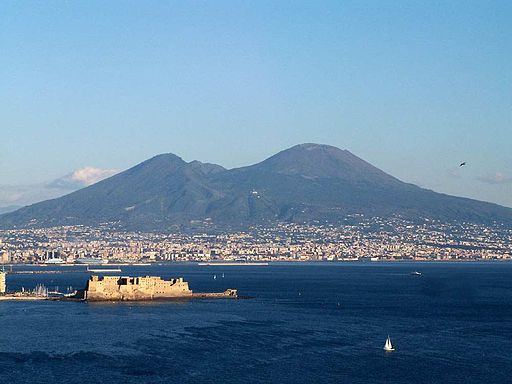
512px-Naplesbay01

The mighty Vesuvius. Picture credit: Jeffmatt at English Wikipedia [Public domain], via Wikimedia Commons.

Eventually we turned off the main road and I drove the final part through a stretch of road only suitable for one Ape[1] at the time, unaware of whether it was a one-way path while praying that no other car or even an Ape would come the other way! After 2 km of suspense and after pruning a few trees, we arrived and I even managed to park the car out of the way under the direction of our host. The road was suitably called Via Nastro Verde (Green Ribbon road) as it was framed by all sort of trees, including the famous Sorrento lemons, the raw material of the not less known Limoncello.

Airbnb described the flat as being located on the hills above Sorrento with an easy access to the town via a path downhill. The place was at a farm and the view of the bay of Naples breathtaking at first and, once you manage to regain your wits, very interesting.

IMG_2597 copy

The view of the Bay of Naples from our window.

Close to lunchtime, after having exhausted the ample supply of hazelnuts and cherries left by our host we judged that our settling in was over and it was time for exploration. The Bushsnob agreed to scratch his siesta and to accompany the other members of the party for a descent to Sorrento, so far a nice sight well below us. We looked for and found the path so we started our descent. Somehow, a friendly brown dog got attached to us and, although we attempted to chase him away, it somehow liked us and stuck to us.

The path was as well signposted as steep as it consisted of 2 km of steps. Although it was tough on the elderly, we managed to negotiate it quite well, guided by our recently acquired guide dog that -insanely in my view- kept running down and and then up the steps all the time, making me feel even more tired. Once we reached town with our knees trembling but still functional, things improved and our eyes could be lifted from the path to look around.

The first thing we noted was that the dog was still with us! Feeling guilty but realizing that trying to chase it away was not an option we decided to put up with its company for the rest of the day if necessary and that if this persisted, we would bring it back to our hilltop whatever our means of transport. The dog meantime was clearly unaware of our plans and, after walking for a couple of blocks, it found his own lowlands relatives or acquaintances and joined them to spend the rest of the Saturday in good company.

Somehow relieved that the dog issue resolved itself, we wandered around the city that, being a Saturday and in summer, was rather crowded and we were surrounded by shoppers at all times. My Sorrento memories already started to crumble during the first couple of hours!

Having tested the way down and found it hard on the knees we firmly decided that going up the hill at night was not an option. We then decided that our return would be by bus so, in mid afternoon, we walked to the station only to find that the last bus to our destination was departing in a couple of hours as it was a weekend. Clearly, we would travel back by taxi as an early dinner was not on the cards.

After spending some time at the central and popular Piazza Tasso and visiting the 14th century Saint Francis church, we decided to explore the Marina Grande to find a place for a seafood dinner by the sea as -wisely- we judged that the closer Marina Piccola from where all ferries operate would not be the right place, somehow.

As usual in Italy, lots of people had similar thoughts to ours with the result that Marina Grande’s restaurants were rather full when by the time we arrived. After having a look at the offer, the fact that Sophia Loren was a patron of the Di Leva Five Sisters restaurant clinched our decision and we took a table next to the beach. Although Sophia was not there at the time (she was clearly unaware of our presence), we were served by one of the sisters who knew her and we even managed to meet another three of the sisters. Both food and service were excellent. Curiously, a later look at Trip Advisor showed that the restaurant only had 2.5 stars and some very rude remarks by mainly foreign customers!

Dinner and ice cream over, a taxi was called and off we went, all the way up the hill to our flat. Of course we did not know that the way back for vehicles was over 20 km so we needed more money to pay for the taxi than for a dinner for three! So the result of the first day at Sorrento was not good and by the time I went to bed I had no hopes for a fun Sunday!

As usual I woke up early and spent a long time watching the sea below us and following the ferries coming and going to destinations such as Naples and Capri. Then I noted a large yacht anchored a few hundred metres from the Marina Piccola. Although I did not have binoculars -for the sake of travelling light- I could see that it was some kind of a luxury yacht such as those that belong to the royal families and I decided that it belonged to one of them.

Sunday was a relaxed day and, as expected, did not offer anything special apart from a “mongrel-less” walk down to town, an early dinner and a bus return for a Euro 1.50 fare! The second day at the city did nothing to improve my sinking feeling that Sorrento is not what I thought it was. Later on, talking to friends we learnt that weekends are not the best time to visit the place so I got somehow more enthusiastic but not enough to return there for a while.

The following morning, the day of our departure, I -again- got carried away with sea contemplation and immediately noted another vessel that had arrived during the night or early morning. It had lots of masts so I decided that it was one of the many tall ships that tour the world that had decided to join us at high-living. It added more interest to the already superb view.

My contemplation was cut short when I realized that it was time for our trip back to Rome as we had a time to return our car. Not all was lost though as in Rome we would spend a couple of weeks in the company of our daughter and good friends although only part-time as they are working.

It was an uneventful return journey, but the view of the Bay of Naples -the highlight of the visit- and the images of the ships anchored at the bay stayed in my mind. I then decided that I would investigate them further but you will need to wait for the next post to find out if my efforts borne fruit…


[1] The Piaggio Ape (bee in Italian), is a three-wheeled light commercial vehicle produced since 1948 by Piaggio and now by Piaggio India. It is a common vehicle used by Italian farmers as it allows them to negotiate very narrow roads.


Dry coral revisited

In June 2015 I presented you with a post on some amazing collection of succulents we found in Rome, more precisely at the Istituto Salesiano San Callisto. (1)

Over the years, while staying in Rome, we have been lucky to stay with friends that live at the Appia Antica so, a walk through the Saint Callistus catacombs was an almost daily affair getting to the centre of the city. While so doing, this veritable dry coral garden was there to be admired so I thought I would share a few pictures with you.

Although I noted the absence of a few of the plants I pictured two years back and flowers were not as abundant -probably because of the dry conditions that prevail in Rome- a few others have taken their place and the collection is still beautiful.

This slideshow requires JavaScript.


(1) https://bushsnobinafrica.wordpress.com/2015/06/08/caput-mundi-a-waterless-coral-reef/

Vesuvius

Broad sheets of flame were lighting up many parts of Vesuvius; their light and brightness were the more vivid for the darkness of the night… it was daylight now elsewhere in the world, but there the darkness was darker and thicker than any night.”

Pliny the Younger, 79 AD.


Once you approach Naples it is hard not to notice the Vesuvius now -luckily- a dormant volcano. So we decided to risk an “unexpected” eruption and decided to stay two days at Herculaneum and then two more at Sorrento, the start of the Amalfi coast.

We were comforted about the safety of the area when our landlord at Herculaneum told us -on arrival- that the weather was very beautiful so no eruptions to spoil things would take place! Now relaxed because of this important piece of local knowledge, we decided to explore both excavation sites. Of course, the fact that the eruption was now settled did little to help me to be a relaxed driver!

The Vesuvius erupted on 24 August 79 AD after being dormant for about 800 years. We know the exact date because a Roman called Pliny the Younger. Happened to be there and write about it. We even know that after lunchtime the mountain started to throw ash and stone thousands of metres up into the sky that later, because of the wind, landed on Pompeii and surrounding areas causing severe damage. Herculaneum, meanwhile, was only mildly affected but people started to flee in panic. It is hard to imagine what went on during these terrible hours.

That night, while Pompeii was being destroyed, the first wave of ash and very hot gas, known as a pyroclastic surge (1) hit Herculaneum at over 150kph. The area suffered six more of these phenomena that buried the city, causing little damage to most structures and leaving these and victims almost intact.

The intense heat is believed to have been the cause of death (rather than suffocation as previously thought). The temperature reached at least 250°C and, even at a distance of ten kilometres from the volcano, and this was enough to cause the instant death of all residents, even if they were sheltered within buildings.

After two days it was all over and not only Herculaneum and Pompeii but the whole region was buried under a thick layer of ash, lava and rock.

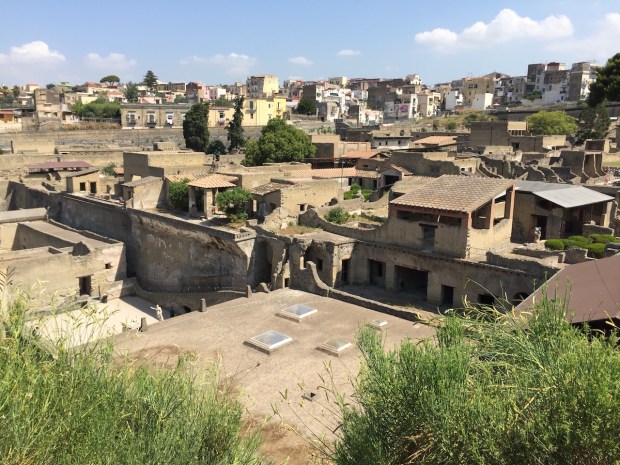
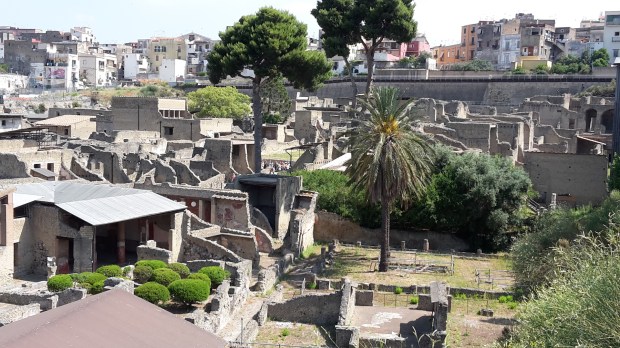
Although we arrived a couple of millennia afterwards, to see what the excavations had revealed. To see Herculaneum from above was breathtaking and really dramatic.

IMG_2478

An overall view of Herculaneum before entering the excavation.

20170609_104402

Another view with the present dwellings in the background to appreciate that the actual Herculaneum village was buried deep and that the remains extend beyond what was excavated.

We spent a day at Herculaneum during which wife and daughter walked it all and saw the various houses, thermal baths, etc. Although I was with them for a while, ruin-watching saturates me after a while. Yes, I openly admit my cultural shortcomings so I soon left them to it and withdrew to a shady spot to read a book hoping for a siesta that did not take place because of tourists’ annoyance, a common problem in popular areas.

IMG_2549

A group of people that got trapped by the eruption near the river.

After a good night rest during which I recharged my archeology batteries, we drove to Pompeii, now the bushsnob a slightly more relaxed driver that, with the help of my co-pilot daughter (also ex ed in chief) managed to navigate the tortuous way to Pompeii in the best style of the rally driving teams!

It was then easy to find our meeting place with our guide. Perhaps influenced by my absence during part of the previous day visit we had decided to have a private guide for a couple of hours to focus on the key areas and then to have the place for ourselves to explore self-guided (or for the bushsnob to indulge in a self-siesta…). It was much more crowded as Pompeii is a much larger and very popular. The decision was a great success and even I managed to last the entire guided course without getting distracted or bored!

20170610_102726

The much larger -and crowded- Pompeii.

IMG_2569

A group of visitors contemplate a mosaic replica!

IMG_2571

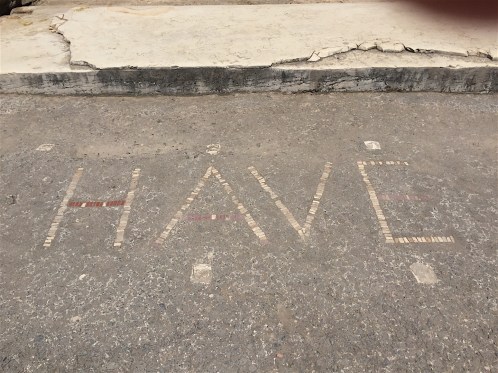
Not the verb “to have” but HAVE for “HAVE CAESAR”

IMG_2575

Because of the type of volcanic activity, human remains are better preserved and more “dramatic” at Pompeii.

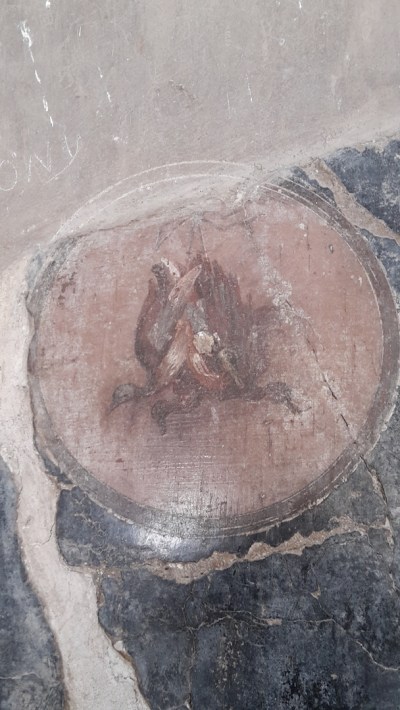
To me the highlights of the two paces were the mosaics and frescoes that are still well preserved in many of the excavated houses and baths. Apart from the famous dog of Pompeii, now protected by a glass encasing, there are numerous other examples of mosaic-rich floors and walls that really called one’s attention. Further, careful watching can turn an apparent oil stain on a wall into a lovely small fresco.

20170609_122204

A second looked of an “oil stain” on a wall reveals a lovely fresco of a bunch of ducks.

IMG_2553

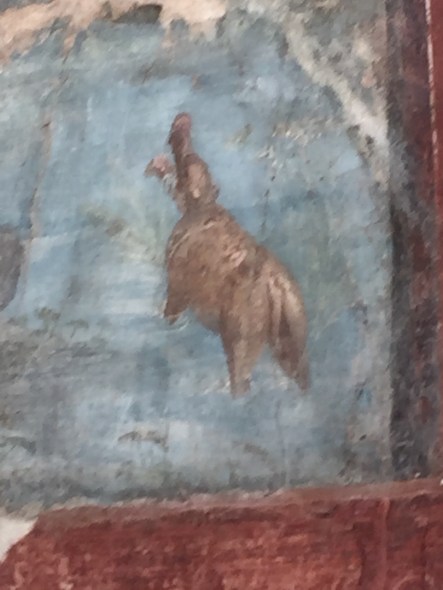
A fresco depicting what I believe is an angry hippo that reminded me that these animals were known at the time.

Then, our archeology task well completed, it was time to enjoy Sorrento, or so I thought as, somehow, we overlooked the fact that we were getting there during the weekend, a time we later learnt, better to be avoided in this city. But this is the next post.


(1) A pyroclastic surge is a fluidized mass of turbulent gas and rock fragments which is ejected during some volcanic eruptions. It is similar to a pyroclastic flow but it has a lower density or contains a much higher ratio of gas to rock, which makes it more turbulent and allows it to rise over ridges and hills rather than always travel downhill as pyroclastic flows do.

Car rental drama

We took the opportunity of the presence of our offspring in Italy to join them for a break of our retirement routine and visit that wonderful country. Although most of our time was spent with our good friends Donatella and Carlo, we also had time to explore a bit of what the Italians know as “the most beautiful country in the world” not without reason.

So, after considering the various travel options for our Southern Italy outing, the family decided to take the plunge renting a car with the bushsnob as the driver. Although I have enjoyed driving in Italy during our earlier periods in Rome, I was more reluctant to accept the responsibility now. I tried to argue that I had not driven in Italy for over 6 years, that I needed time to re-adjust to the Italian traffic and that it would get worst as you move down South. Even mentioning my advanced age and its accompanying shortcomings failed to make a dent on their resolve.

So, a car was hired and I drove!

We planned to visit Herculaneum (Ercolano) and Pompeii (at the request of wife and daughter) and Sorrento, my favourite place in Italy at my request.

Once driver-designate, I revealed to them that I still had an Avis Preferred card, a relic from my days of work-related flying with British Airways (BA). Avis and BA had an agreement that yielded miles to your membership to the airline’s reward programme. So we went for Avis and, from decision day onwards, aware of my new responsibility, I started to watch the Roman traffic with the consequence that a knot started to develop in my stomach!

We booked a Fiat 500, well in advance. We chose it for being an economical car, but also -very importantly- to be small enough to go through the many narrow and often windy roads found in Italy, not to mention parking!

Finally the 8 June came and we were kindly taken to our car-collecting point at the Via Laurentina -chosen for easy exit from Rome- to collect the vehicle and to start our odyssey or at least that was the way it felt to me. My nerves were barely under control when we arrived to the office. We proceeded to wait for our turn as the lady in charge was dealing with another customer. Walking up and down inside the small office was also a tall and black-bearded man on the cellphone, rather agitated, arguing and gesticulating wildly.

We saw no change after having been there for a while although the attendant had seen us. Suddenly she announced that we were better off going to the bar next door to have a capuccino as she had a foreign customer to finish with as well as another serious problem to solve as the morning had not started well. The bearded man was apparently the serious problem. Slightly taken aback we obliged and took advantage to stay a bit longer wth our friend Donatella for a while longer, always a pleasure.

We estimated 20 minutes as sufficient time to solve the on-going issues and we returned to the office. Despite this, the bearded was still there and we were still ignored! As we waited for the second time, we heard that, despite the bearded man booking the car of his choice well in advance and given Avis clear specifications on the colour, make and model of what he needed, they had offered him another, quite different one!

A few minutes of evesdropping later we obtained more information. The bearded man wanted a white Mercedes coupe and Avis presented him with a grey station wagon. He was indignant and would not accept the swop! I thought he was just being difficult but then we learnt that what he was renting was his wedding car and it became obvious that his future wife was at the other end of the phone and she was not taking another car for her most important day!

After about an hour, finally the bearded man to be married departed with instructions to take the station wagon to another office in the centre of town where someone would replace his station wagon for the right car. Although the story sounded very convincing and the bearded man to be married accepted it, I had doubts on its outcome.

While this exchange went on, the knot in my stomach was worsened by the misgivings that we were facing a difficult morning at Avis Laurentina and also that it was getting rather late! I was not disappointed…

When our turn finally came we produced our booking and needed documents. Very soon we were informed that we would not have the car we booked but another one that luckily, as the seller put it, belonged to a much more expensive class, was larger, more comfortable and as a special favour, it would not cost us more! Instead of our Fiat 500 we she offered a Nissan Juke, something I never heard of until that moment. We tried to explain to the attendant that we had booked the Fiat 500 because of it being smaller, etc. But she would not take any of our reasons and she repeated three times that what she was offering was a better deal, a fact that was beginning to irritate us.

After a while, realizing that it was either the Juke or nothing, we decided to accept the change as it was now getting really late and our friend could not wait for us anymore! So, after a quick inspection we said farewell to Donatella and signed up for the “improved” offer while the lady continued repeating that it was a better deal!

Luckily the drive through Southern Italy went very smoothly and later, when returning the car we learnt that the bearded man to be married did become the bearded man married after all and that, apparently, he got the right car, eventually!