Out of Africa

Flying bill

I mentioned earlier that our farm was placed at the foot of the Andes. Being more specific, it is part of the Yungas, a name derived from yunka in Aymara. It is defined as a stretch of forest on the eastern slopes of the Andes that is a transition zone between the latter and the lowland eastern forests extending from Peru to northern Argentina. A warm, rainy and humid area the Yungas are also a corridor through which many animal species move from North to South and viceversa.

The first time I saw the bird on this occasion was during one of our daily morning walks, I tried to immediately alert my wife about it as she was busy on the cellular phone “whatsapping” the children, taking advantage of the existence of a phone signal. “Hornbill” was the first word that I uttered and almost before I said it I recognized that I was not in Africa and realized what it was. “Toucan” I managed after it had flown away so my wife looked up, searched the surrounding forest and the sky and then turned her looks on me to see if I had finally succumbed to some retirement-related terminal brain melting.

Honestly, its flying style really reminded me of a Silvery Cheeked Hornbill (Bycanistes brevis), that other magnificent African bird: a burst of wing flaps and then gliding.

It was indeed a Toco toucan (Ramphastos toco), also known as the Common toucan or Toucan, the largest and best known species in the Toucan family (yes, the one of the “ancient” beer commercials). We knew they occurred in the area as we had seen them once some years back, feeding on some bitter tangerines in our garden.

The Toco toucan feeding on the Hawthorn berries.

The Toco toucan feeding on the Hawthorn berries.

Swallowing a berry.

Swallowing a berry.

Further search indicated that it is a non-forest bird with a large distribution in the continent and that our farm is located in the southernmost limit of its present distribution. The latter is apparently expanding as forests decline! It is a fruit-eater and it uses its bill to pluck them from trees. It -surprisingly for me- also eats insects, frogs, small reptiles and even small birds, including nestlings and eggs!

Finally yesterday it landed on our garden as the red ripe Hawthorn berries were too much of a temptation for eat. It was then that, through the glass of our kitchen window, I managed to photograph it as best as I could and to take a video before it flew off, leaving us wanting!

For the next few days I will keep an eye for it and try to get better shots.

Stoned hummingbird

I was a young boy when this event took place. My father’s work as a Government’s Agronomist constantly demanded his presence in the rural areas. His responsibilities, among others, included pest control, crop storage monitoring and the development of farmers associations and cooperatives.

He used to tell us stories of his jeep Willys getting stuck while driving over swarms of locusts and I used to accompany him while inspecting wheat plantations for True armyworm (Pseudaletia adultera), locally known as “lagarta”.

It was autumn and the harvest of winter crops had been completed and the depots were full to the brim with wheat. His main job was to monitor the humidity of the grain to prevent post-harvest losses due to the normally high humidity levels prevalent in southwest Uruguay.

That day he needed to visit the large depot of a Farmers’ Cooperative in Tarariras, a small agricultural town in the Department of Colonia. Being a young boy, I usually played around while my father did his duty. I was a rather active youngster so the workers tried to keep me entertained while my father was busy. Not an easy task…

On that day, one of the workers who knew me gave me a bottle of a known local methylated spirit made of dark green glass with a stopper made of a maize cob, and announced that it contained a surprise. I did not see anything and was consequently unimpressed, as an empty bottle did not mean much to me. Before I could ask, the Manager of the cooperative who, together with my father were watching said, “Have a good look as there is something inside that I am sure you will like”. I strained my eyes and made out a tiny object rolling inside.

I removed the cob and gently shook the bottle until I managed to get the object out and on my hand. It was a wet and shiny green feather ball that on closer inspection became a dead hummingbird that still felt warm to the touch. It was a sad sight and I was not too impressed with the “present”. Before I could react though, the bird moved slightly and I realized that it was breathing and apparently asleep!

A Glittering-bellied Emerald hummingbird pictured at an artificial feeder in Colonia Carlos Pellegrini, Corrientes, Argentina.

A Glittering-bellied Emerald hummingbird pictured at an artificial feeder in Colonia Carlos Pellegrini, Corrientes, Argentina.

It was the common Glittering-bellied Emerald hummingbird (Chlorostilbon lucidus). Its slumber was explained by the alcohol vapours still present inside the bottle. So, suddenly, I was the new “owner” of a drunken miniature bird and became responsible for its welfare.

Close-up of the Glittering-Bellied Hummingbird.

Close-up of the Glittering-Bellied Hummingbird.

A second one lands on the feeder.

A second one lands on the feeder.

Another view of the bird with an unidentified one with its back to the camera..

Another view of the bird with an unidentified one with its back to the camera..

I held the bird on the palm of my hand where it rolled backwards and forwards until I was able to accommodate it better with a piece of cloth to stop its rolling. Once settled I spent the rest of the day holding it on my open palm being careful not to drop it as it was a very small bird.[1]

When my father’s work was done, it was time to get back home and I was still holding the bird. So I travelled the hour that it took to get home holding the bird and watching it as its efforts to regain normality became more and more frequent. By the time we arrived it was already over its alcoholic haze and it was ready to go.

So, as soon as I left it alone outside and it got familiar with its surroundings it hopped to a small branch to preen itself (and recover from the hangover?) and soon flew away.

[1] An adult bird of this species weighs between 3.5 and 4.5 g while a normal Bic biro weighs 9.0 g !!!

Picture credits: Mariana Cardoso.

Water cows

After our trip to the Iberá wetlands reported earlier in this blog, my mind remained on the fishing, as I almost could not remember when the last time I caught a fish worth lying about was!

A very simple armchair exploration showed me that the above-mentioned wetlands drained into the Paraná River, via the Corriente River. Further investigation revealed that in this area there is a town called Esquina in the Corrientes Province where people go fishing! I had heard about this place before but never gave it sufficient attention as it is closer to Buenos Aires than other fishing spots in the region and my belief is that large cities and fishing do not go together.

Arriving back to Esquina.

Esquina.

So, taking advantage of the need to travel from the Andes foothills to Carmelo, our town in Uruguay, I decided to explore the Esquina area with a view to go fishing there in the future.

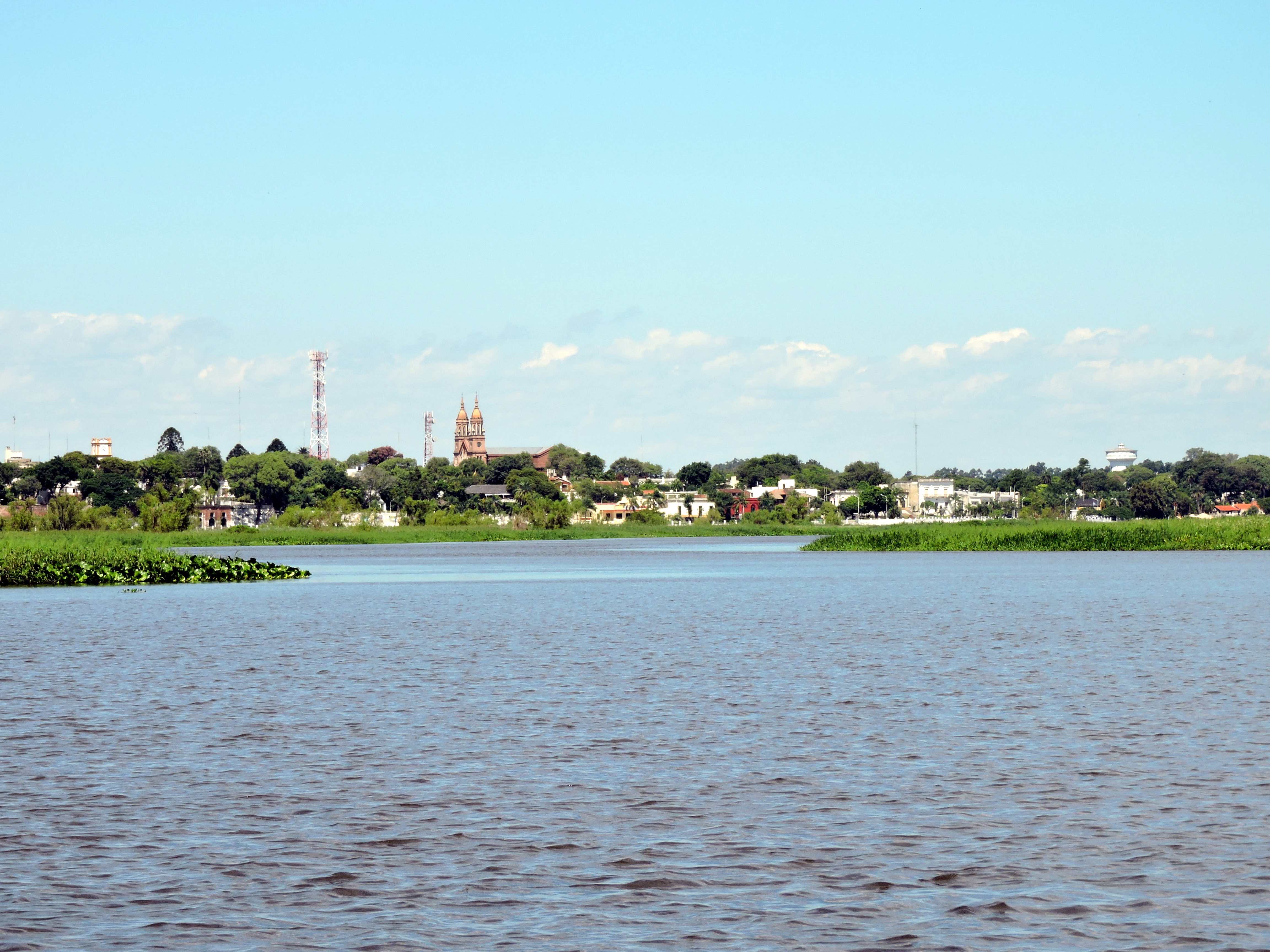
Esquina, founded with the name of Santa Rita de la Esquina del río Corriente started its life in 1785 when fifteen families of which six were of Italian origin settled in the area. It is located on the left (eastern) margin of the Paraná River, about 670km North from Buenos Aires. Predominantly a cattle-rearing area it is also known for its watermelon production!

The city still maintains the air of a colonial town where its low houses -of Italian influence- are shaded by large trees. Esquina’s main attraction resides in its riverine location where it enjoys the calm waters of the Corriente River delta that connects to the Paraná -located further West- through a man-made channel.

Enough history and back to our trip!

The town can accommodate up to two thousand visitors. This large bed availability for a city of 26,000 people is explained by its hosting of street carnivals in January and February and the Fiesta Nacional del Pacú (National Pacú Festival), a fishing competition that attracts around 25,000 visitors, in May of each year. So, in view of this situation we did not book in advance and left the choice of accommodation to an in situ choice.

Casa del Puerto B&B.

Casa del Puerto B&B.

It did not take too much time to find a place to stay, the very nice “Casa del Puerto” that offers reasonable B&B and its lawns end at the river. Seeing the beauty of the riverfront, exploration turned into action and it was not long before a fishing trip was booked for the following day while we spent the rest of the afternoon walking about town and resting, after the rather long journey.

Fishing started at 07:00 hours when our guide José came to meet us at the hostel’s small jetty. All was taken care of and we agreed to fish in two stages, morning and afternoon with time in between to avoid the heat of lunchtime and have a siesta to recharge our batteries. We left with high hopes, as the setting was clearly fishing-friendly!

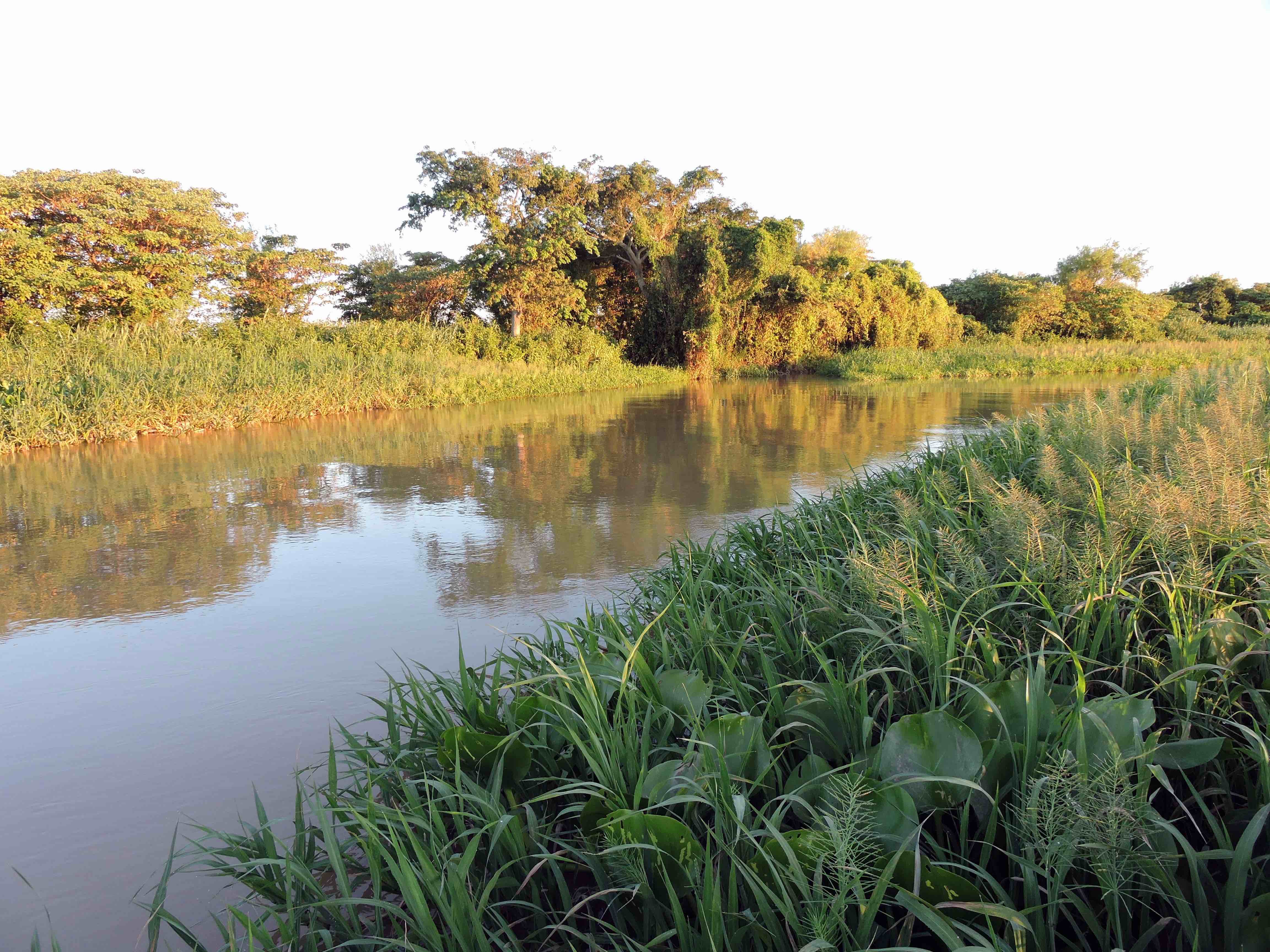
A channel in the delta of the Corriente River.

A channel in the delta of the Corriente River.

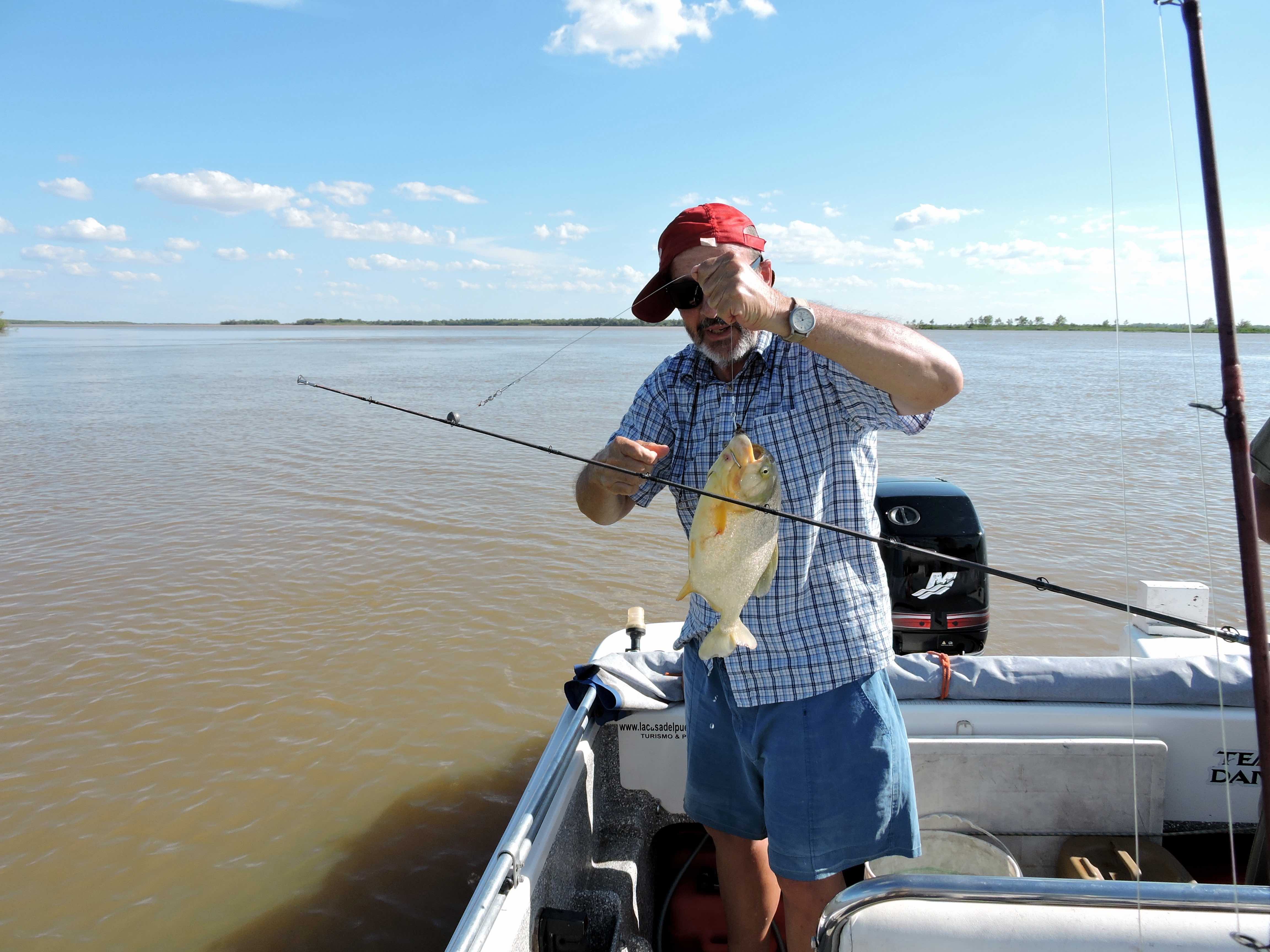
Despite the predictions by the hostel owner and our guide, fishing did not live up to our expectations and none of the “Big Three” Dorado, Surubí and Pacú were caught. To save you reading time, we did fish three “Palometas” (also called “Piranhas”) of the Serrasalmus genus (probably S. aureus) and one “Patí” (Luciopimelodus pati).

Our fishing efforts.

Our fishing efforts.

The bushsnob with a pati.

The bushsnob with a pati.

The bushsnob with a "palometa".

The bushsnob with a “palometa”.

The affair was rather disappointing and we remained with the doubt of whether it was a strike of bad luck or the area has too many fishing enthusiasts! Although we fear the latter, we will come back to find out and report accordingly.

Despite the poor fishing, boating through the various channels of the Corriente River delta was a beautiful experience. We saw many water birds and even managed to spot one capybara, a sign that they are either very shy or few as hunting goes on in the area.

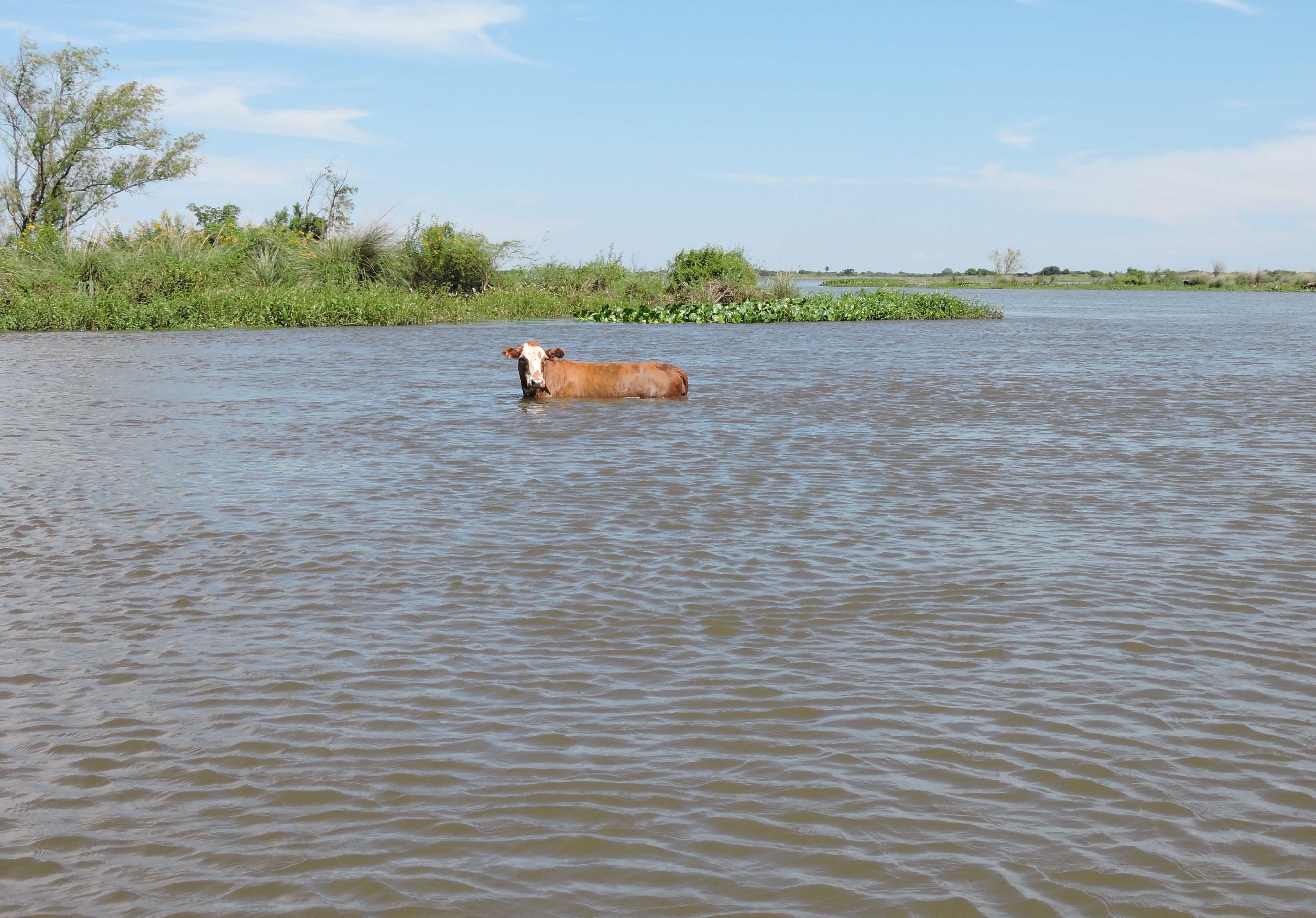
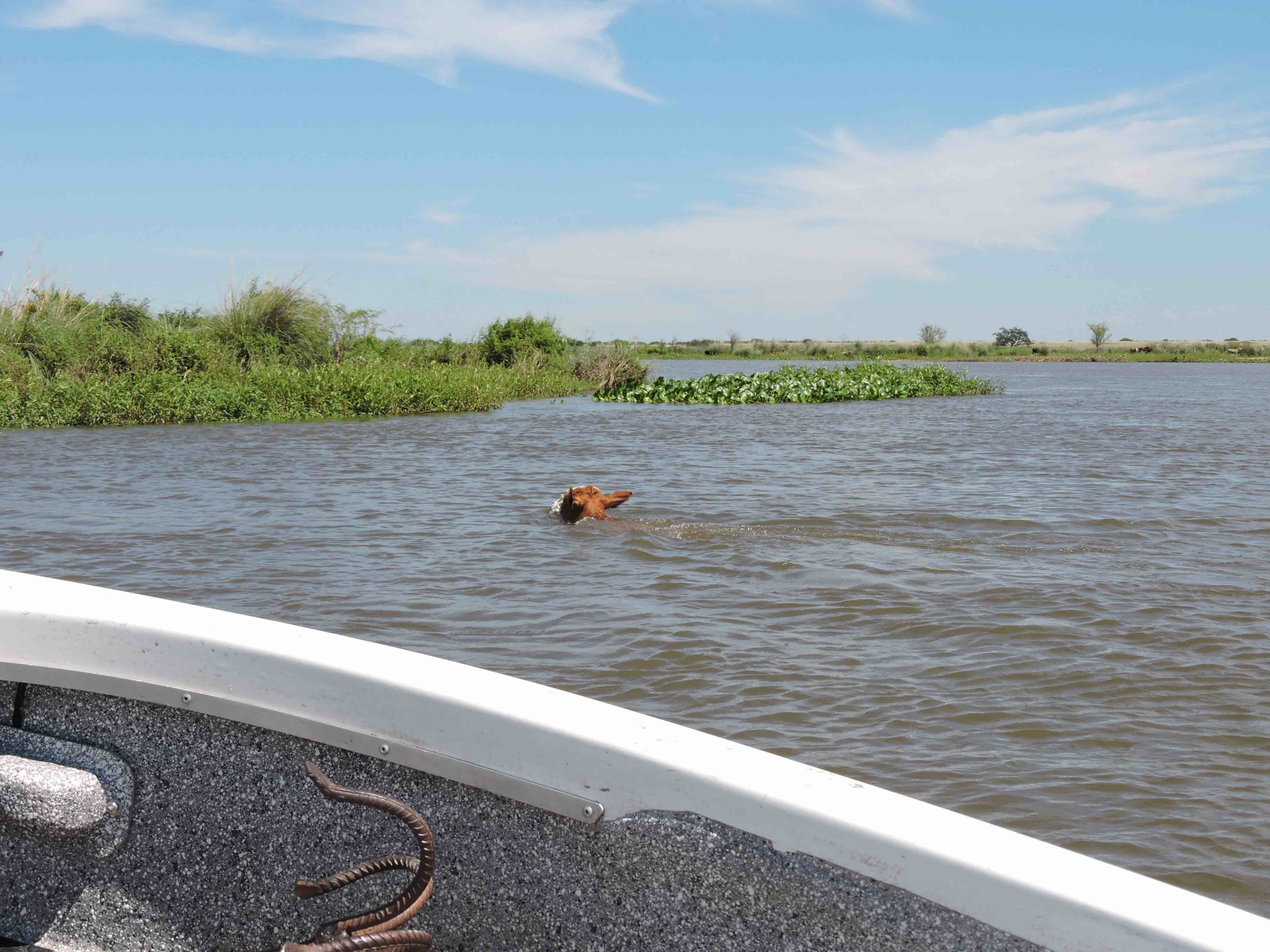
And then, while cruising through the channels, we saw it! A large head bobbing in a channel ahead of us that, for a few seconds, brought us back to an African river! We were aware that hippos in South America are still confined to Colombian rivers and it was not a semi-submerged capybara or tapir head either! It was a humble cow swimming to move from island to island in search of greener -or different- pastures. Clearly, to be a successful cow in the area you need to be a good swimmer!

The water cow...

The water cow…

The cow in shallow water.

The cow in shallow water.

We watched and followed the “water cow” for a while and learnt from José that, although the animals are used to water, when floods come cattle still need to be evacuated to dry land to save them from drowning. Further, I could also appreciate the difficulties of rearing cattle in such an amphibian environment and pondered the difficulties of mustering the cattle and the need for good (water) horses as well!

Swimming to safety.

Swimming to safety.

ALmost on dry land.

Almost on dry land.


An Amphibious Land Rover

I mentioned earlier that I worked as a veterinary practitioner in Uruguay for four years after my graduation in 1975. It was after a couple of years of this work that the events narrated here took place.

It was a luminous autumn day that, as usual, started very early with a mate breakfast[1] before going to work at the clinic. The latter, as most clinics in Uruguay, was a mix of agro-business (belonging to a third party) with our clinic attached to it. At the time we were three partners, myself being the newest.

The shop was a popular meeting place, close to the main bank and it was normally busy. Apart from customers seeking to purchase agriculture-related products as well as getting advice on veterinary issues from us, there were friends and hangers-on all the time. That morning was not an exception and, when I got there, Gerardo, one of my partners was talking animatedly with one of the visitors, Pozzo, a well known farmer from a neighbouring farming area.

The topic of conversation was the then-current situation of the River Plate which was undergoing an extreme low tide that, according to a veteran like Pozzo, had not been seen since he had “use of a memory” as he put it. Pozzo was known as a colorful character reputed to eat eighteen fried eggs for breakfast among other colourful stories attached to his name!

Clearly the situation was interesting and I suggested that, once the business of the day was dealt with, we should go and investigate. Pozzo said he would join us, as he wanted to see what the Carmelo coastline looked like at low tide. So, before lunch the three of us climbed in my car and left for the beach, located a few kilometres away. At the time I had bought a 1959 Series II SWB Land Rover, after trading in my first car, a beautiful red and black voiturette Chrysler 1931 that was too expensive to run on paraffin leave alone petrol!

On arrival at the beach it was clear that the situation was extreme and I had never seen a sight like that before. There was no water for at least a couple of kilometres into the river where only wet sand could be seen except for the navigation channel where the river was still “wet”! Spectacular situations require equally remarkable responses… and I rose to the challenge! For some reason I hatched the idea of going down to the beach and then to drive all they way to Conchillas to surprise my wife -then my girlfriend- with a glorious and an unexpected virgin voyage after 30 kilometres of beach drive!

With the agreement of my eager companions we set off driving over wet sand for a few kilometres without stopping, looking for possible Spanish galleons carrying gold that sunk during the conquest… Of course we found no trace of them but found a large and shallow lagoon where several rather large fish had become temporarily trapped. They were bogas (Leporinus obtusidens) a good fish both to catch and to eat. We watched their futile swims towards the normally deeper areas that ended in them almost coming out of the water! It was a unique sight as these were large fish, apparently doomed. After watching their comings and goings for a while we left to continue our journey.

The way ahead looked clear, apparently all the way and we felt encouraged to go on. So we climbed back to the car and I engaged first gear. The car did not move forward but rather down, or at least its rear end did. I revved the engine but -of course- made matters worse by sinking further into the wet sand. We got out to inspect the situation and realized that we were in a tight spot, particularly bearing in mind that the front wheel transmission in my ancient Land Rover had become somehow disconnected some time back and I had not repaired it!

So, it was a matter of digging and pushing, which we did for a while. After each attempt the car would move a bit and then sink again. We were in trouble! As if being stuck was not enough of a problem, we heard Pozzo say: “I think the tide is coming in”. As I revealed before, he had a reputation for being witty so we did not pay attention to his words and kept on digging frantically.

After a few minutes I could see that not only was he correct, but also that the water was coming in remarkably fast! After a few more attempts the water reached the wheels and the sand became liquid rendering all our efforts totally futile. As the loss of the car became a certain probability I reacted and decided to look for help ashore. “I will go and find a tractor to pull us out” I said not before agreeing with my companions that they would take out all movables from the car, preparing for the worst. I ran to the shore and, very luckily, found someone driving a tractor cutting bulrushes, taking advantage of the lack of water. My hopes increased when I realized that I knew him. A mixture of the absurdity of the situation and my heavy breathing due to the running did not help my explanation. Eventually he understood and agreed to have a look.

My heart sank when he announced that it was too risky to enter the water to pull the car because he could also get stuck in the river as the bottom would be very soft. I insisted but he steadfastly refused so I gave up. I believe that my dismay helped in his decision to take me in the tractor to seek further help. We drove up the steep bank to see if the owner of another tractor would dare to go in as they had a larger tractor.

Luckily the owner was there. This time I did not need to explain much as, before our eyes and into the river we could see my Land Rover being progressively denuded of its movable parts by my trip companions. “There is no way we can pull it with a tractor” he said and added, “If we get stuck, we lose everything!” Somehow my mind moved to what story I was going to tell the insurance company about how I lost the car and then the idea of bringing a wreath every year to the spot also came to mind but it was quickly discarded as superfluous!

“I will try to pull it with horses” the voice of the farmer brought me back from my total loss-related thoughts. “What?” I just managed. “Yes” he said, “I have horses and a pulling harness. I think the horses will pull it out”. He called a couple of workers to bring three horses, the harness and ropes and, before ten minutes had passed we were going down the bank towards the “sinking” Land Rover.

The situation was now desperate! The water has come in fast and it had already covered the wheels. My companions had been waiting, wondering whether I was coming back. We entered the water and walked towards the car with the horses. The car was a pathetic sight as all movable items were no longer there and the water was now covering the engine and flowing inside it! Realizing that time was not on our side we got to work fast and harnessed two of the horses to the submerged bumper. A guy sat on the bonnet with the reins and I sat under water behind the wheel as, although the engine was flooded, there was still a need to steer! A horse was kept in reserve and all other hands got ready to push.

Despite my strong reservations about success, we agreed to push and pull at the count of three. What happened next was unexpected. Under the strength of the horses the Land Rover rolled forward with ease and moved to the triumphant shouts of my rescuers! “Do not stop now!” I shouted, my adrenaline flowing while seated in water to up to my breast steering and watching the back of the farmer on the bonnet that was controlling the horses, our real saviours. Stop we did not and, eventually, we managed to get the car on dry ground and away from the highest tide line mark to a safe zone. I was a happy man and, at the same time amazed that two horses could move a stuck car so easily. Later I realized that the increase in water depth helped greatly in making the car lighter.

News moved fast and, by the time our rescue was over and we were wondering what to do next, my father had come and witnessed the action. Being a photographer, he took the only picture I have of the event that I present you with here. It is a bad scan of the print he took but I hope it shows the absurd situation I got into and, luckily, out of.

The speck in the background is the semi-submerged Land Rover then there is open water and in the forefront an extensive area of water covered with bulrushes.

The speck in the background is the semi-submerged Land Rover then there is open water and in the forefront an extensive area of water covered with bulrushes.

The aftermath was an anticlimax! My father towed us back to Carmelo where we arrived after dark and straight to the mechanic. After dropping the car and when we were alone, as expected he lectured me on my lack of prudence!

In addition to the failure to achieve the feat -and impress my girlfriend- I also suffered financial humiliation when the time came to pay the bill for the car repair!

[1] Mate is a traditional drink where hot water is drank after sucking it through ground dried leaves of yerba mate (Ilex paraguariensis) with the aid of a bombilla (metal straw) from a calabash gourd (mate).

See also  http://en.wikipedia.org/wiki/Mate_%28beverage%29 for more details.

Wet butterflies?

Most of the time we have been “rained in” at our farm in Salta with only the occasional sunny spell, reminiscent of our time in Bedele, Ethiopia or worse, the UK! Well not as bad as the latter… The longest sunny spell lasted twelve hours but the normal sun appearances were a couple of hours long!

Butterflies were totally absent during the rainy spells and, as soon as the sunshine appeared, they were out in full force almost magically! Watching this event a few times the question of the title came: where are they when it rains? One theory was that they hatched with the sunshine but it was discarded, as they were too fast to respond! The idea of sheltering themselves against the rain gained strength but where?

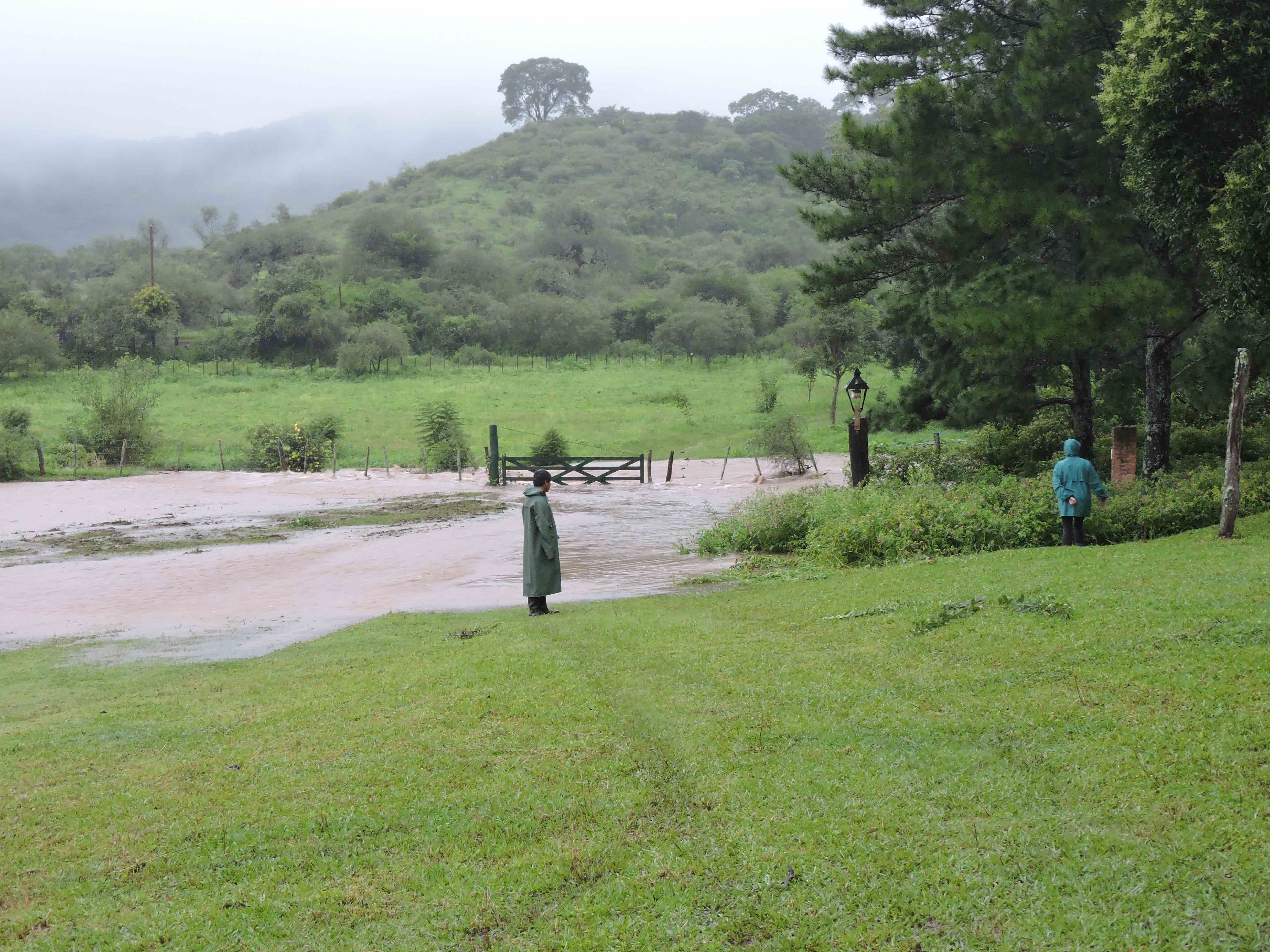
As often happens, an answer came out of a spin off from another observation. The rain was so much that our river flooded, stopping us from leaving the farm.

Inspecting the flooded farm.

Inspecting the flooded farm.

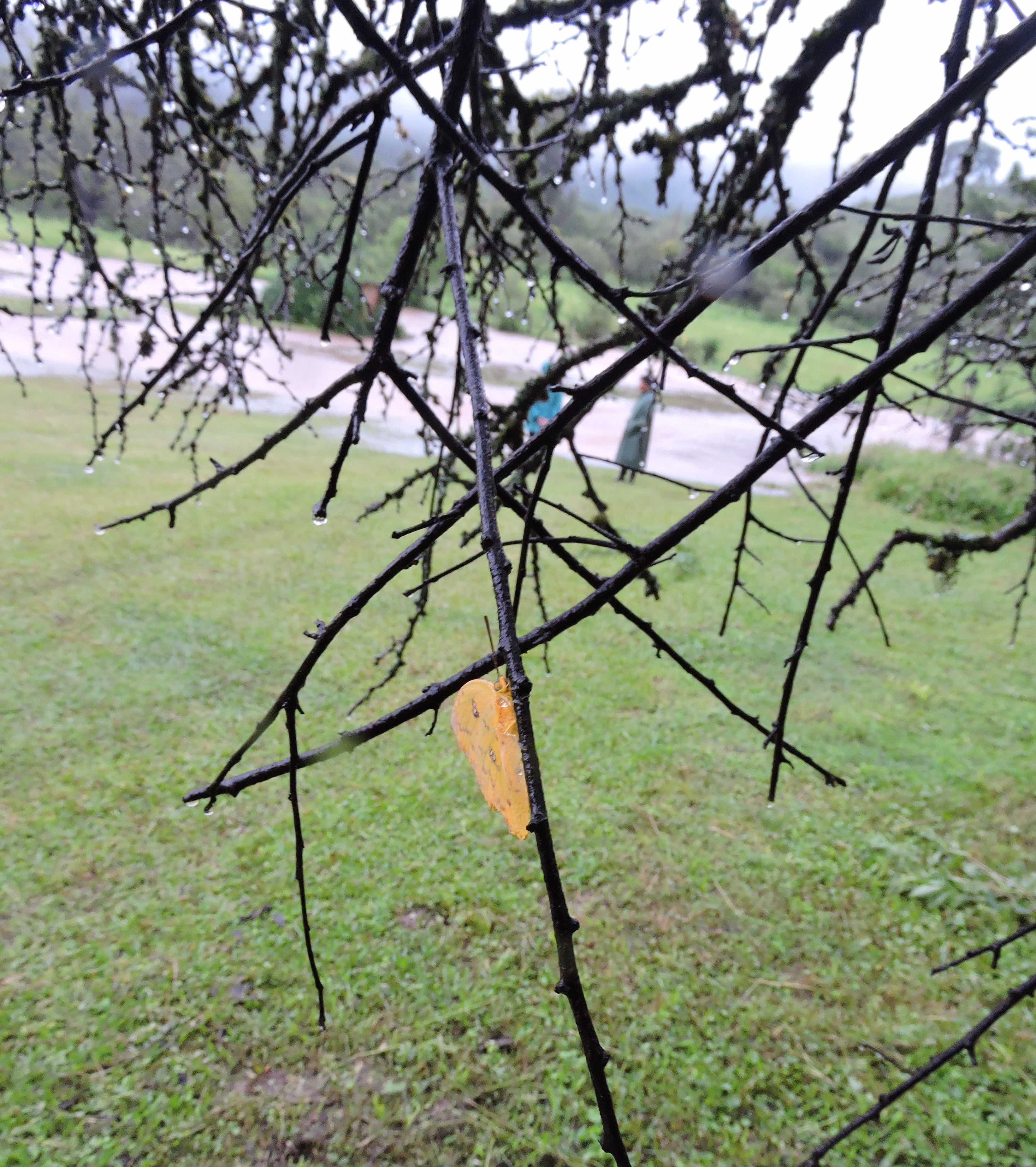
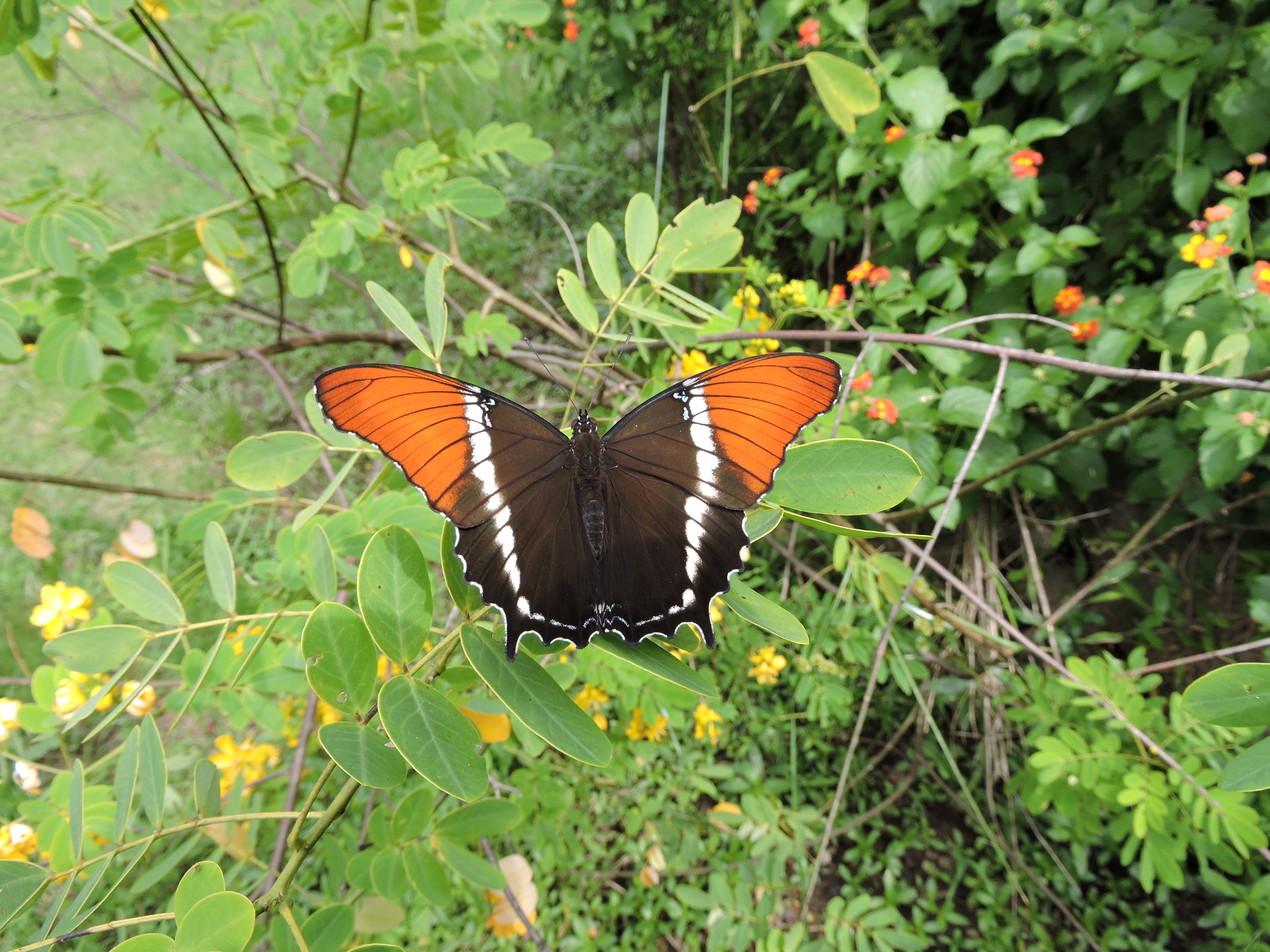
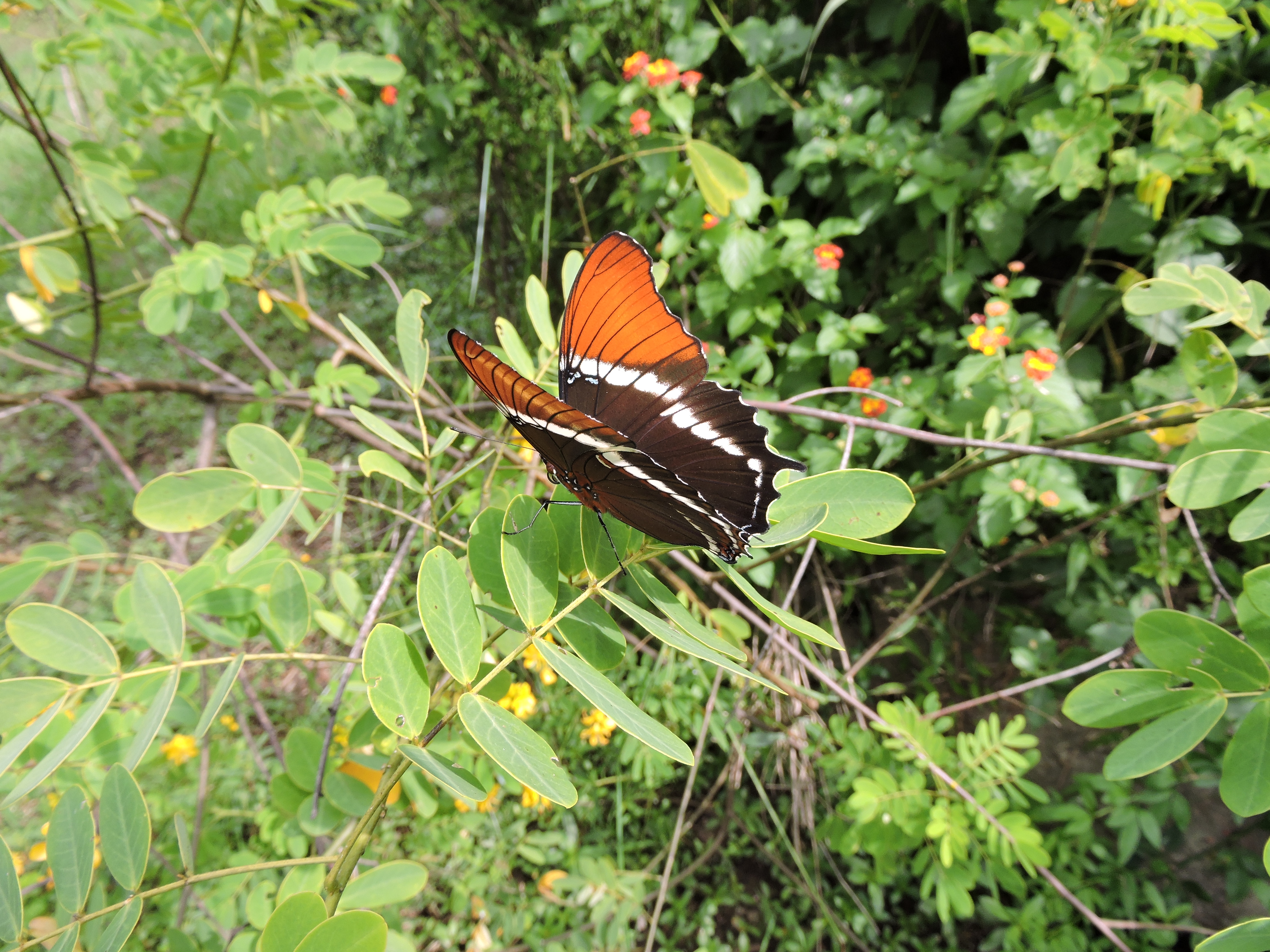
While taking stock of the situation under the rain, I could not fail to see a large orange spot in a tree. Closer inspection revealed a large butterfly hanging upside down. On closer inspection I noted that it had aligned its body to the branch above it and it was perfectly protected from the raindrops.

The butterfly perfectly aligned under the thin branch.

The butterfly perfectly aligned under the thin branch.

Unfortunately my camera would refuse to focus on the insect, as there were raindrops and small branches interfering with its electronic “brain”. Unfortunately it moved off before I could take a better shot.

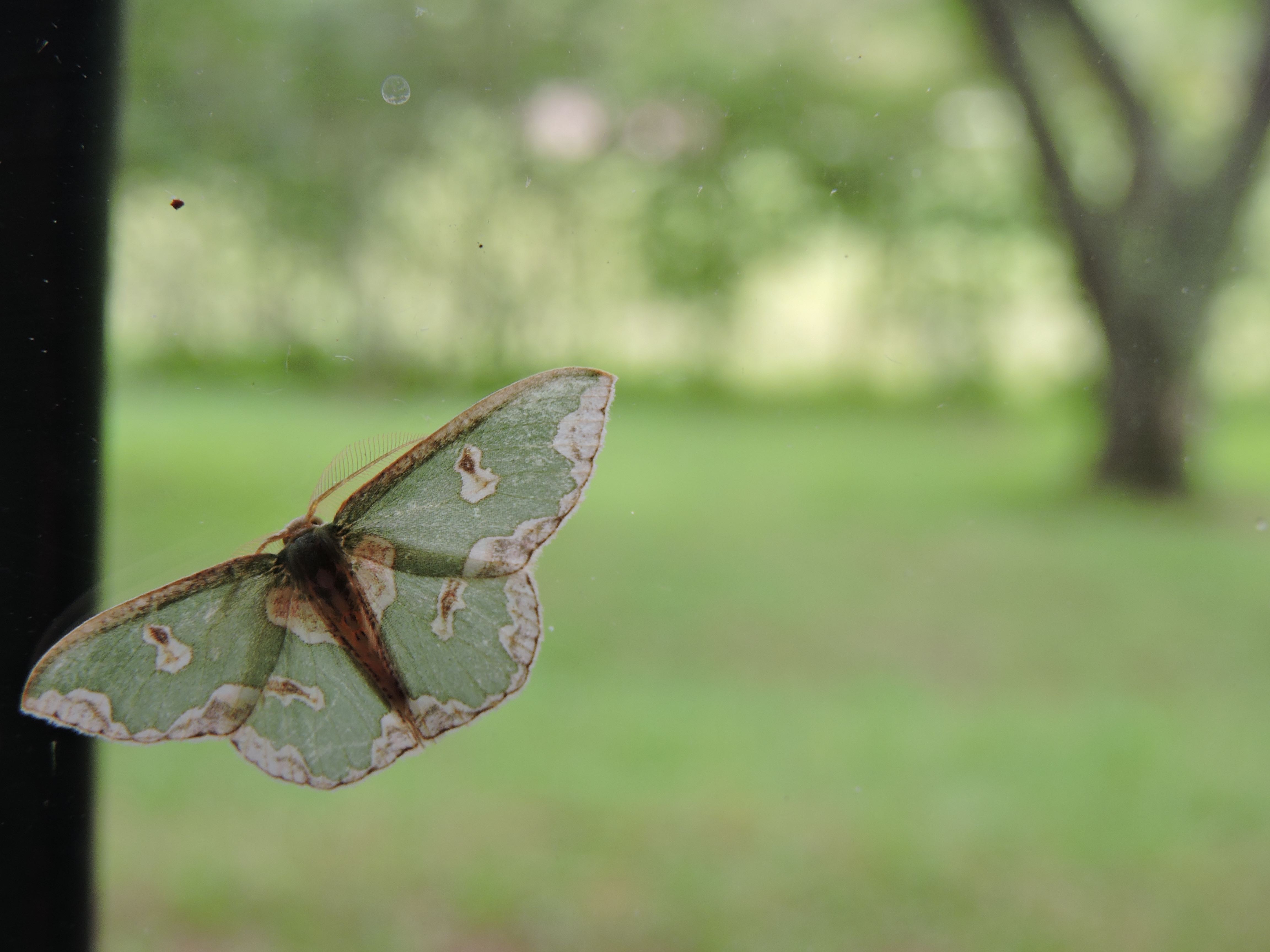
Although you may think that this was a clever ruse from the yellow butterfly, it was really nothing compared with the two shown below that found shelter inside our house!

Safer inside the house and looking out.

Safer inside the house and looking out.

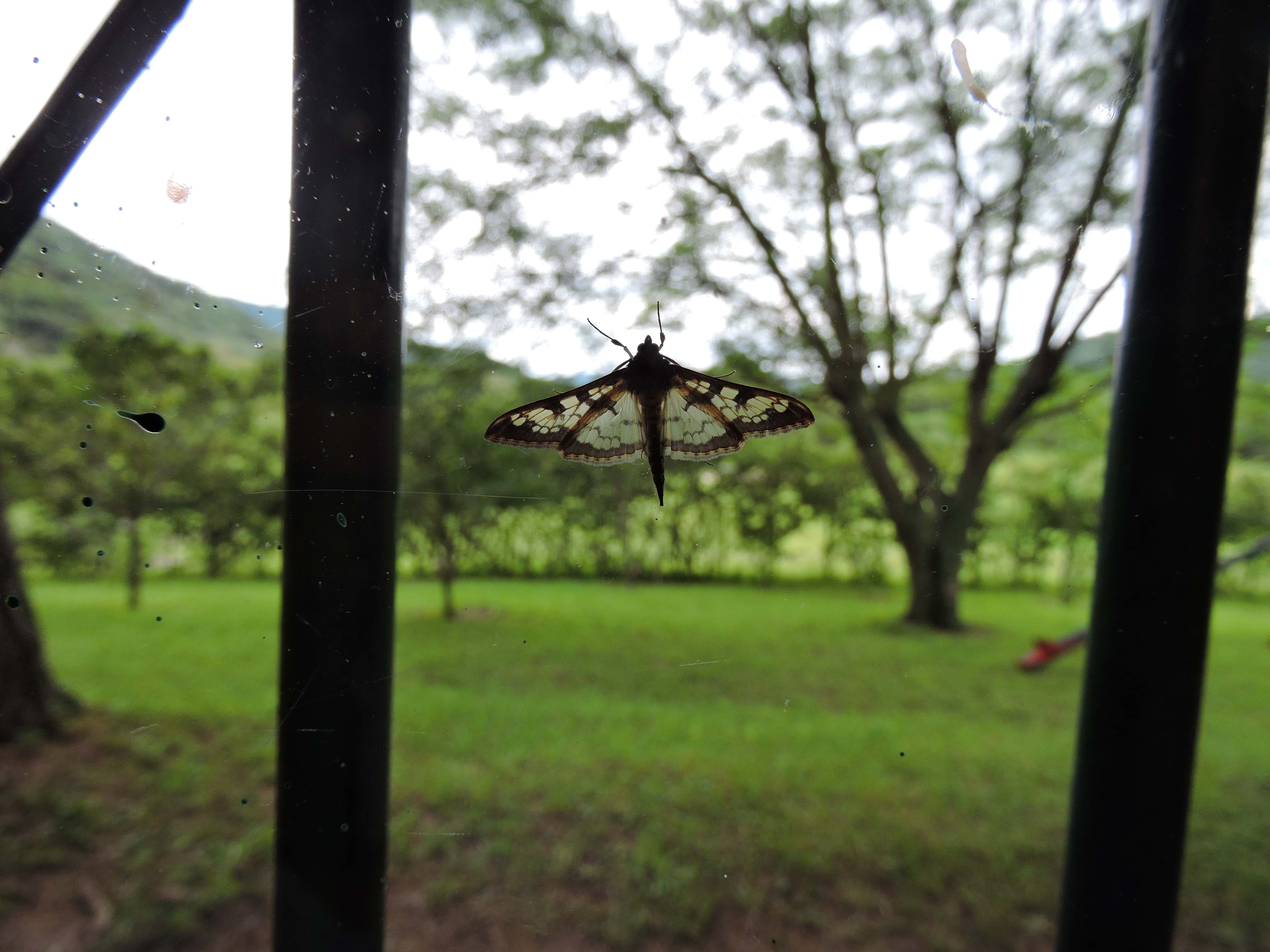
Another clever moth!

Another clever moth!

Camouflage

As I mentioned earlier butterflies and moths are a prominent feature at our farm in Salta. As we are going through a long wet spell, I have taken the time to take pictures of some of the examples of camouflage that I have observed.

Rather than extending this over a few posts as I had done in the past, I decided to collect a few pictures for you to see five real finds that illustrate how Nature designed some of its creations to aid them in their survival. Have a look!

slick moth on leaves cropped

Grasshopper from far

Moth on bark cropped and small

DSCN4289 copy

Moth on Paradise leaves

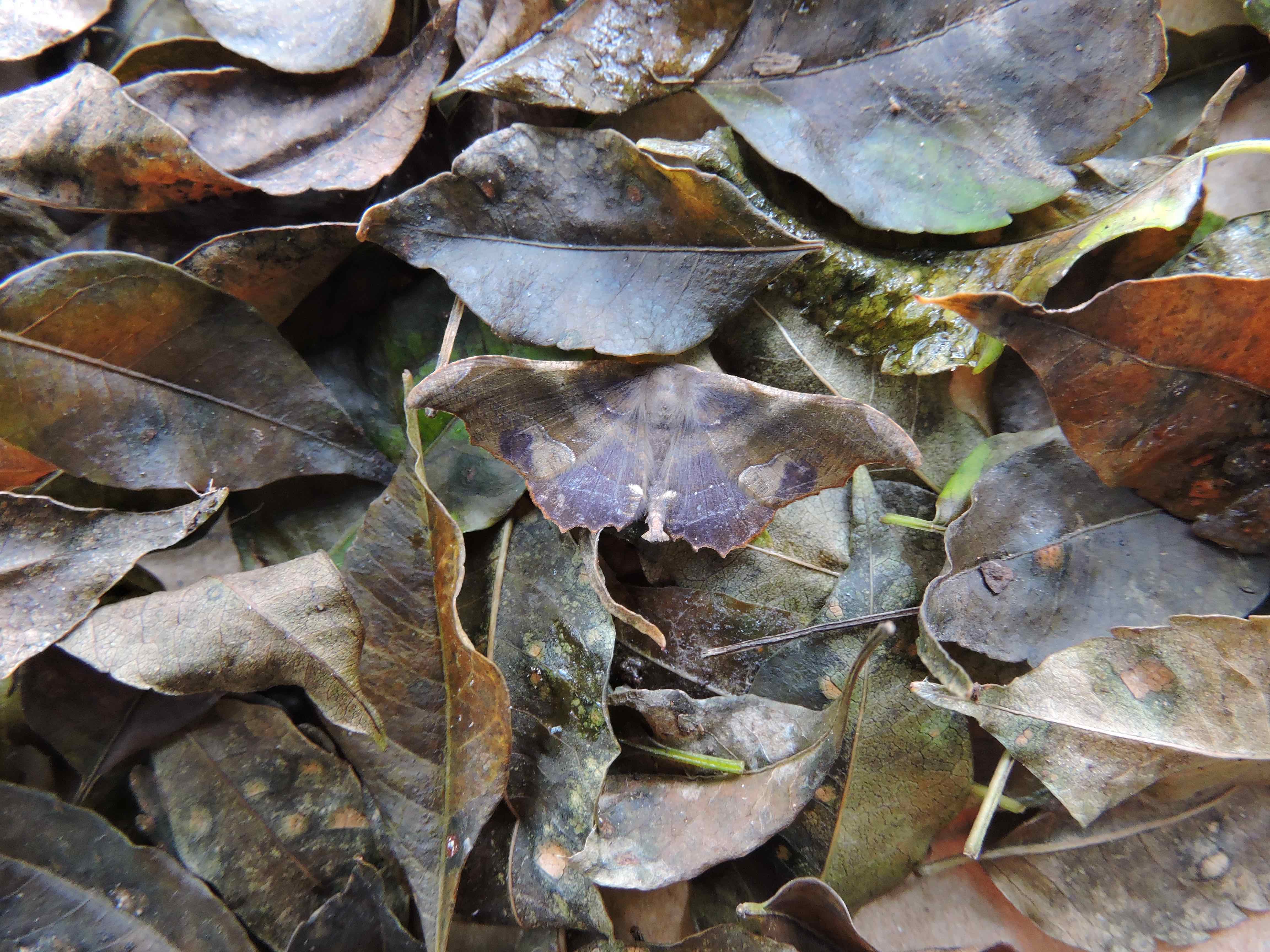
Several moths and butterflies come to our verandah light at night and I am taking pictures of them for a possible checklist. A number of them mimic leaves or tree bark. I then hatched the idea of collecting dry leaves from the garden and release a number of live moths on them hoping that they would stay on the leaves. Well, I can assure you that it was not easy!

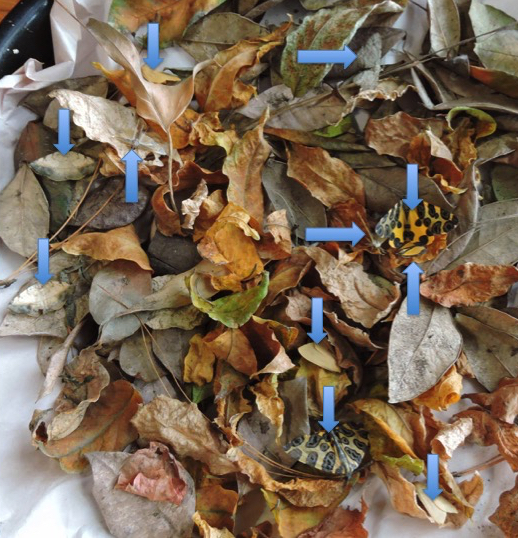
However, after a few trials and frustrations I managed to get one shot for you to “admire” and spot the moths. To help you finding them I can tell you that there are more than one but less than fifteen![1]

Moths on leaves

I will reveal all creatures in the next post, hopefully this Saturday…

[1] I am learning to insert arrows to point them out.

Flying Gems

When I saw jewels flying I thought that hypoxia had accentuated my natural brain decay. Even under these circumstances I was quite surprised!

It all happened while practicing the “walking to keep fit” arrangement that my wife and I performed daily, weather permitting. Of course you have already guessed that they were butterflies and that unlike García Marquez in his masterpiece One Hundred Years of Solitude, I failed to convey the proper message. For this reason, this post is mainly about the photographs I took of what was flying around during a few days walking in and around our farm at the Andes foothills[1].

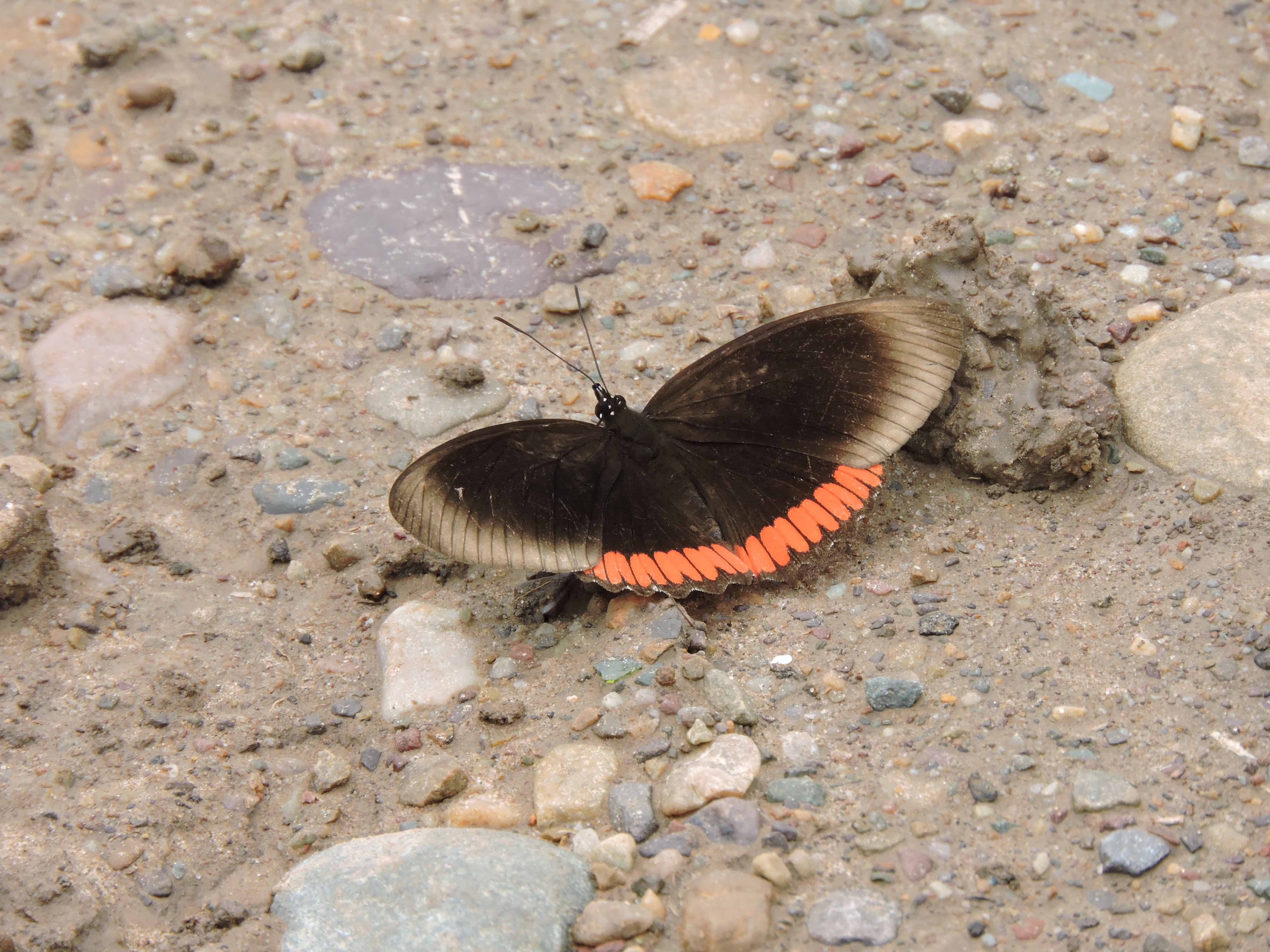
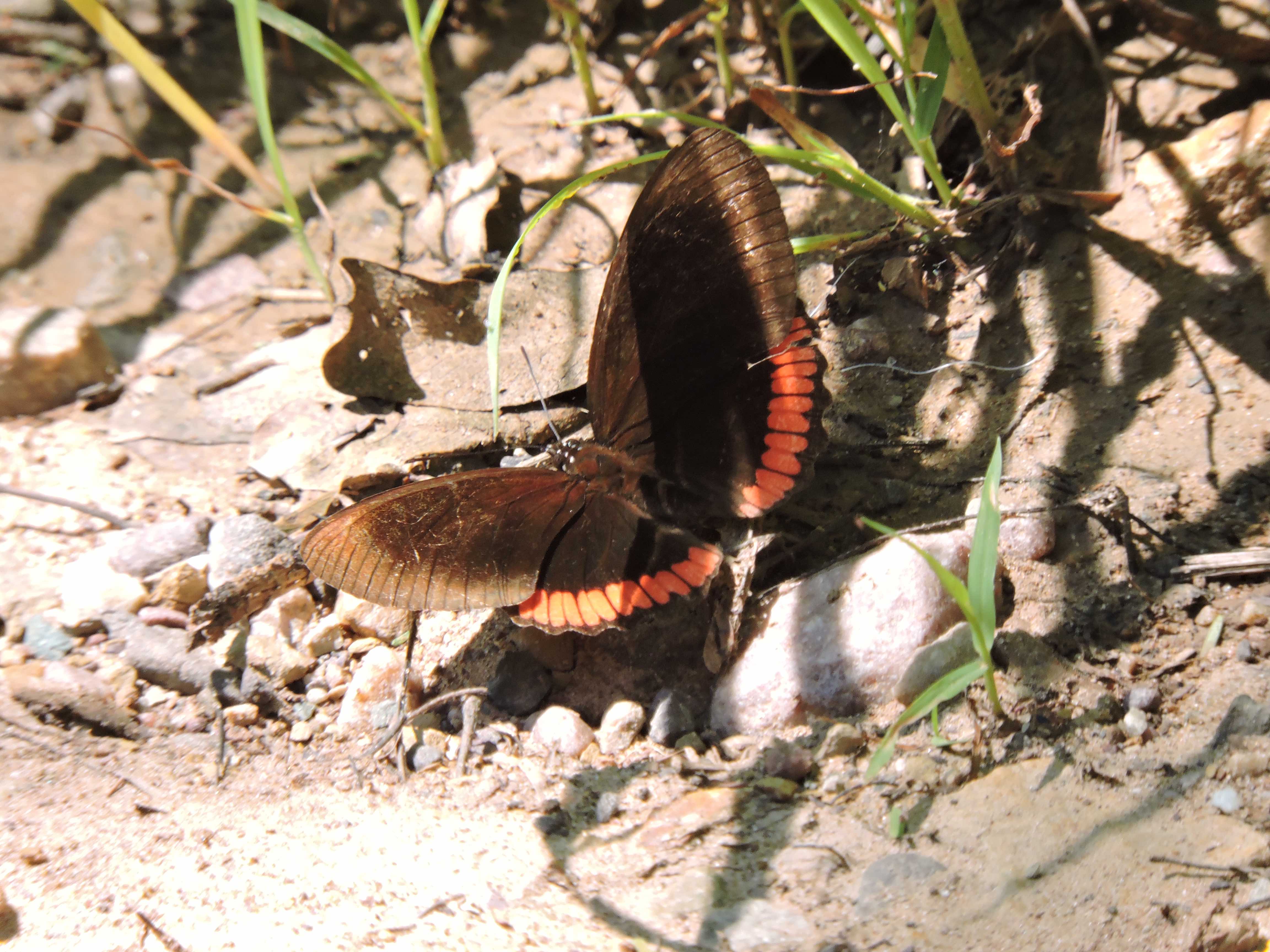
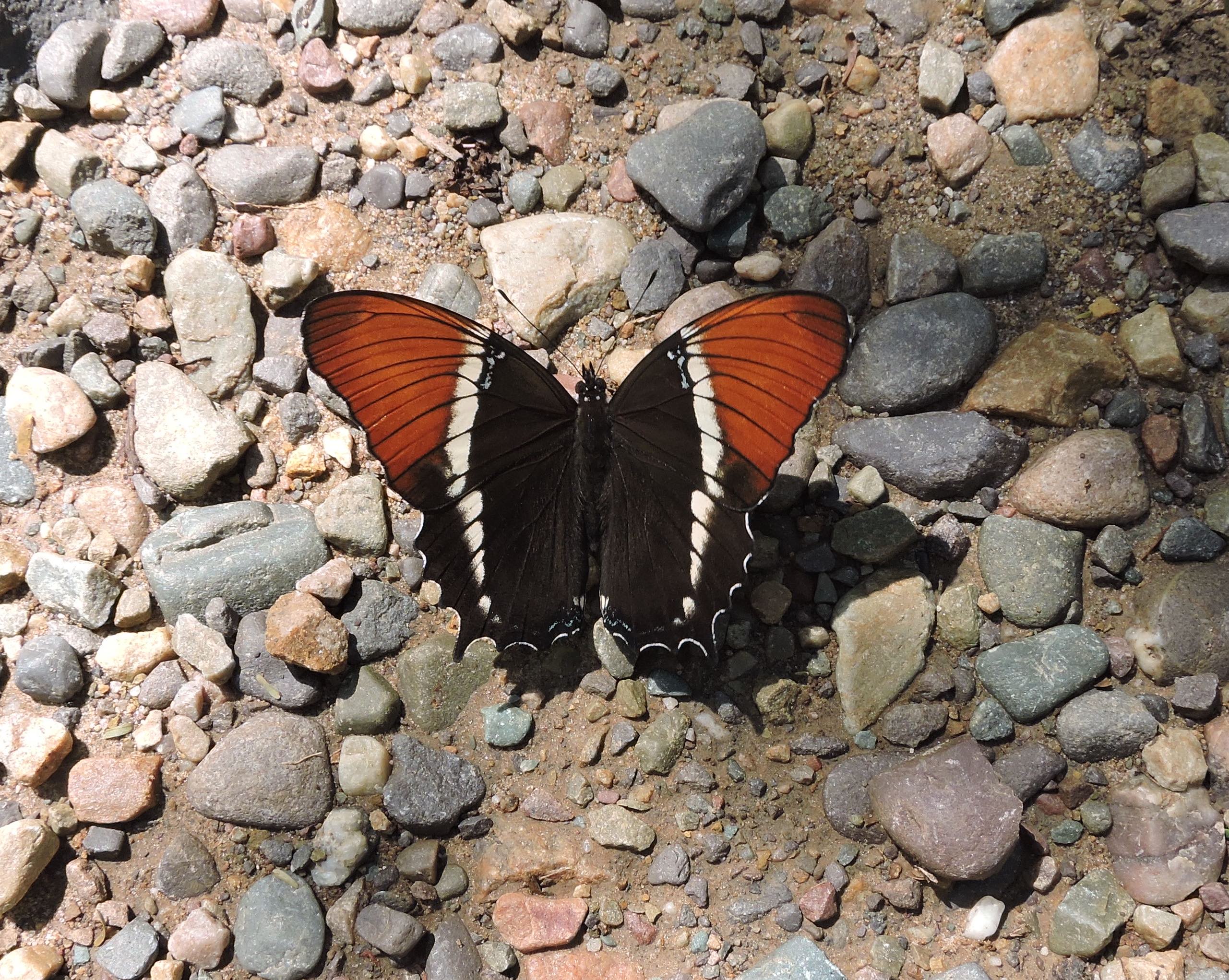
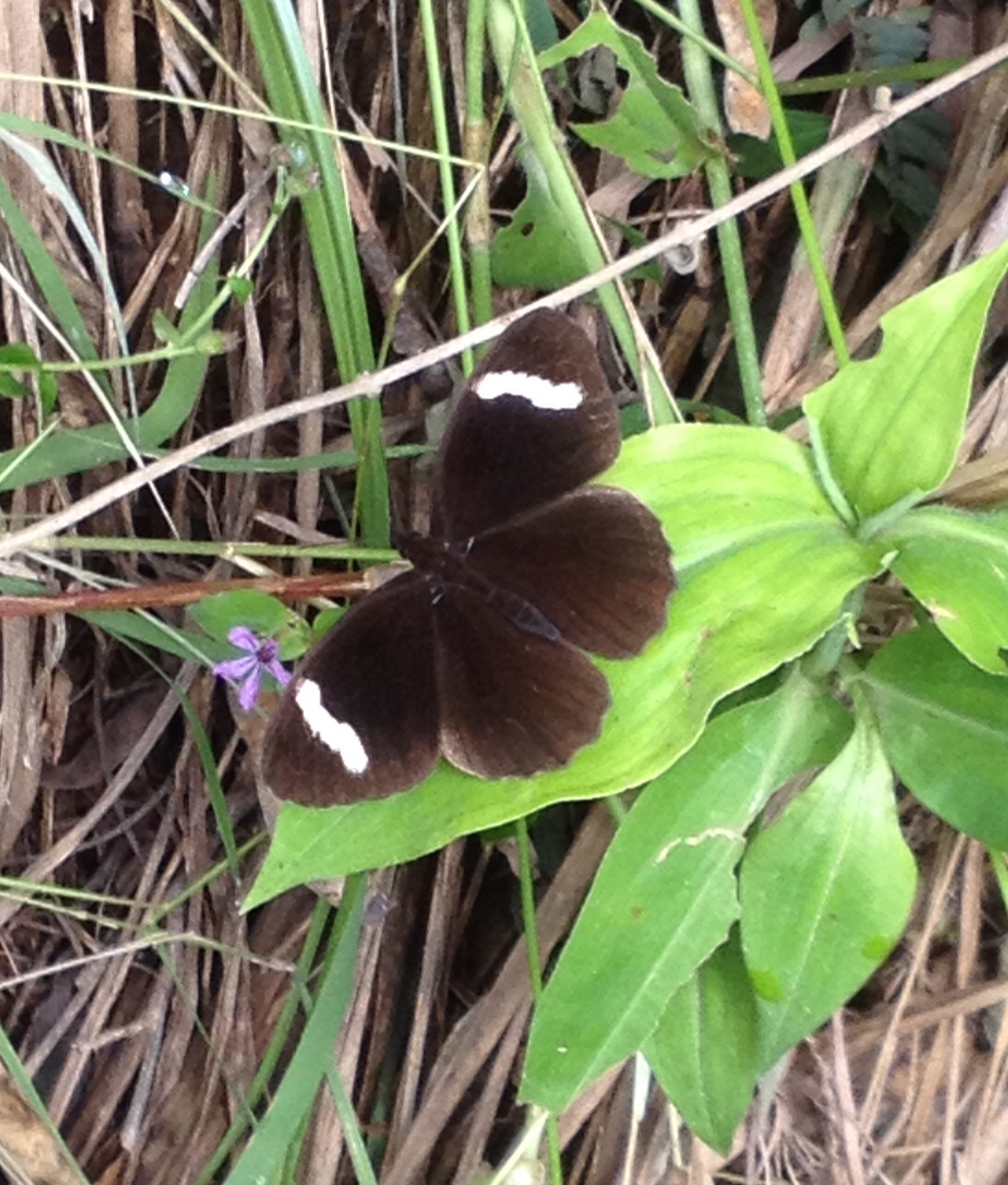
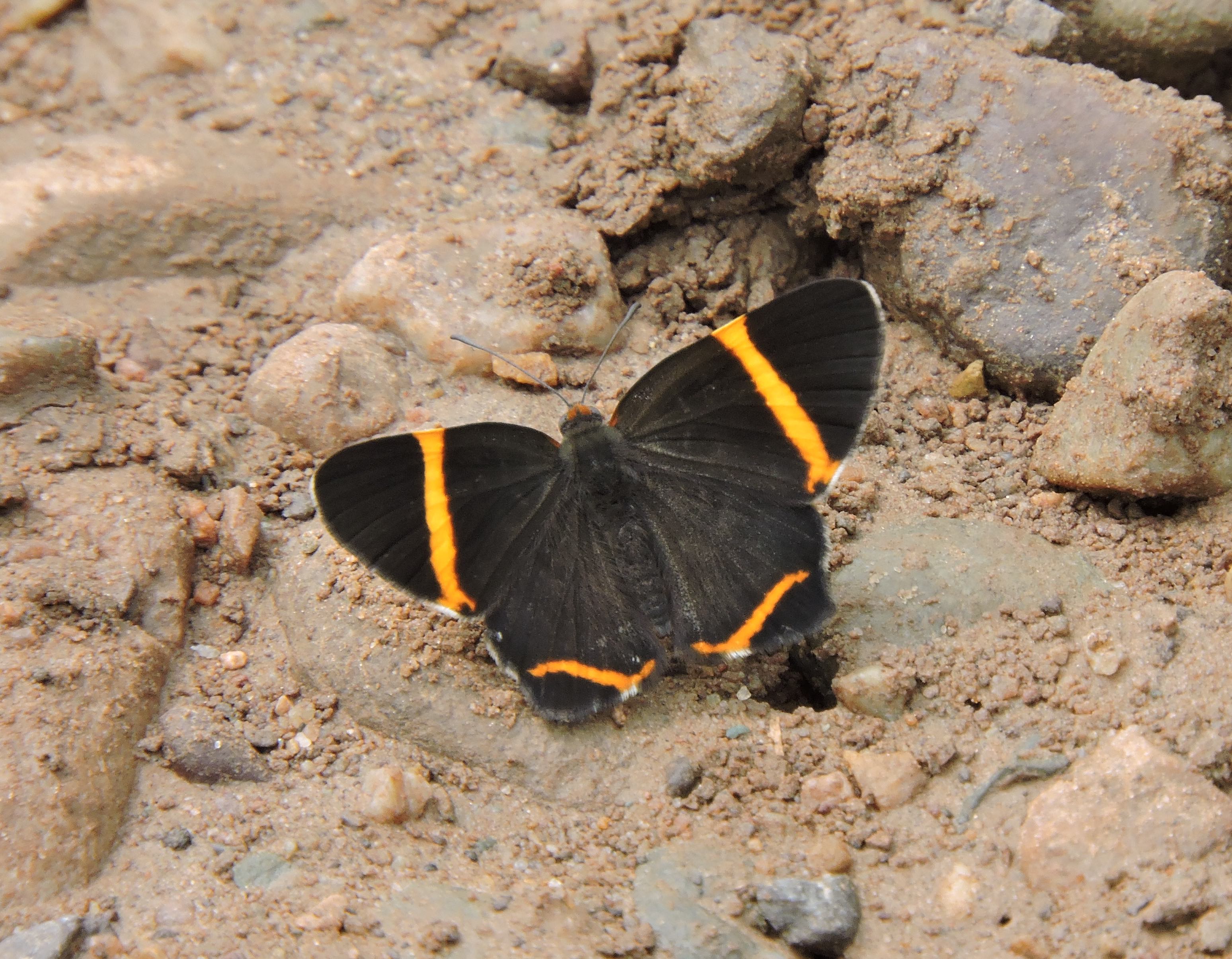
The first one that caught our attention was the Crimson-banded Black (Biblis hyperia nectanabis), very mobile and tricky to capture. These are the best I got:

Crimson black 2 small

Crimson black 1 small

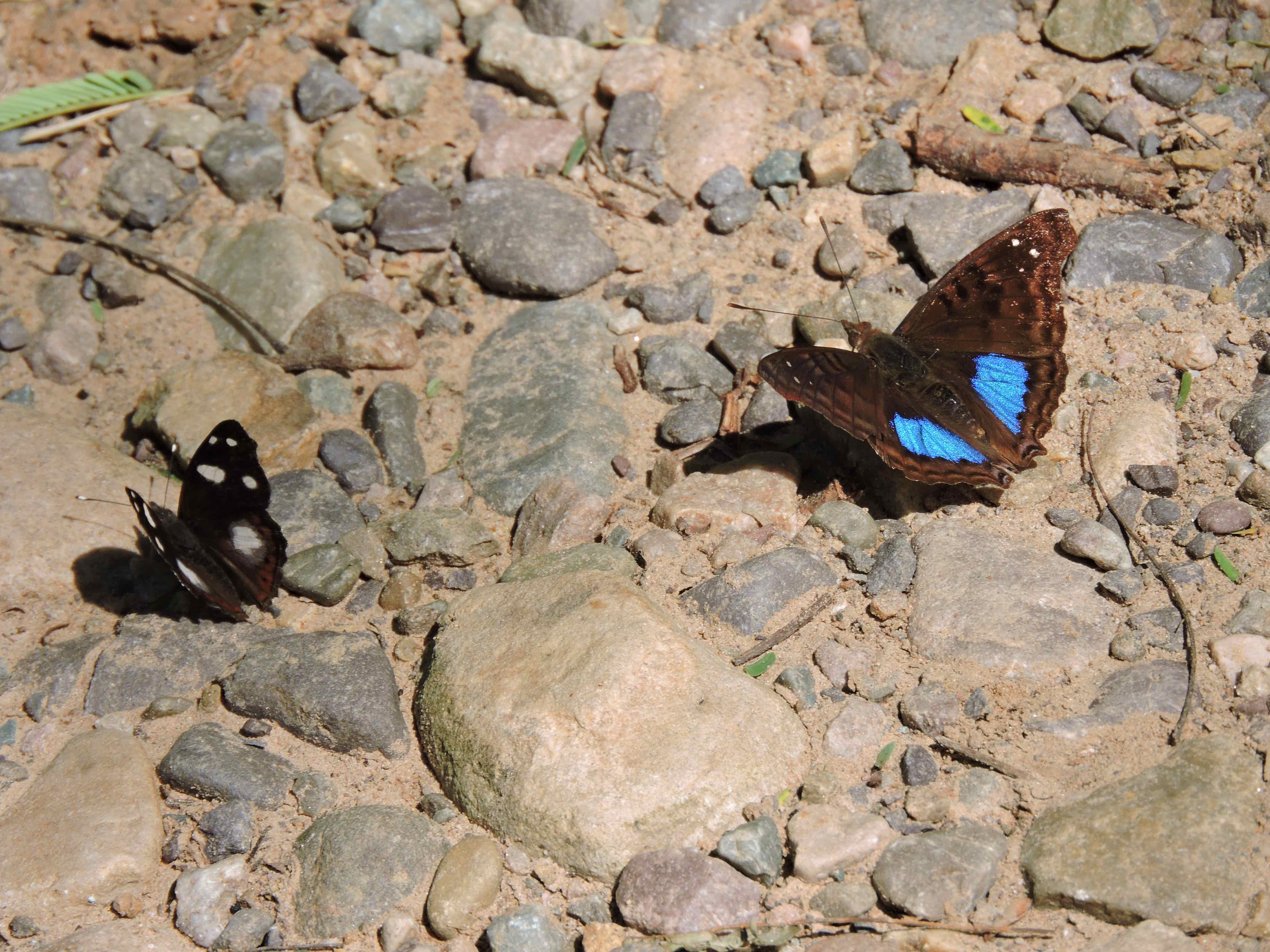
We could also not fail to notice a few others that, with their fair share of beauty, immediately attracted our attention. These are shown below:

Dark Malachite 3 Dark Malachite 3 crop Dark Malachite 2 Dark Malachite 2 crop Dark Malachite 1 crop

Five pictures of Dark Malachite (Siproeta epaphus epaphus)

Yunguena Sapphire and hooked small

Yungueña Sapphire (Doxocopa cyane burmeisteri) on the right and Hooked Small (no Latin name)

Fuegan Fuegan open Fuegan open crop Fuegan -2- crop

Fuegian (Mechanitis lysimnia elisa)

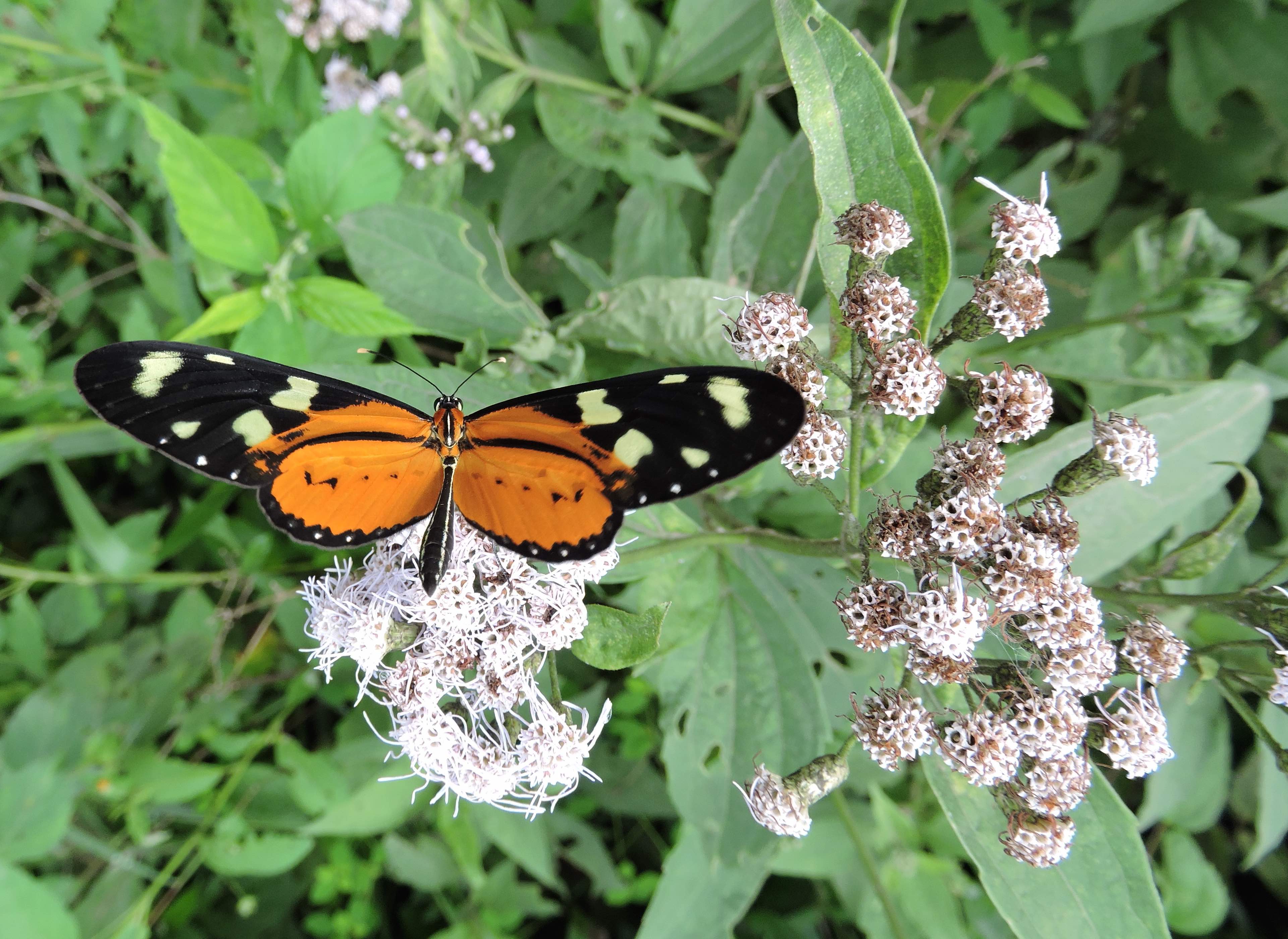
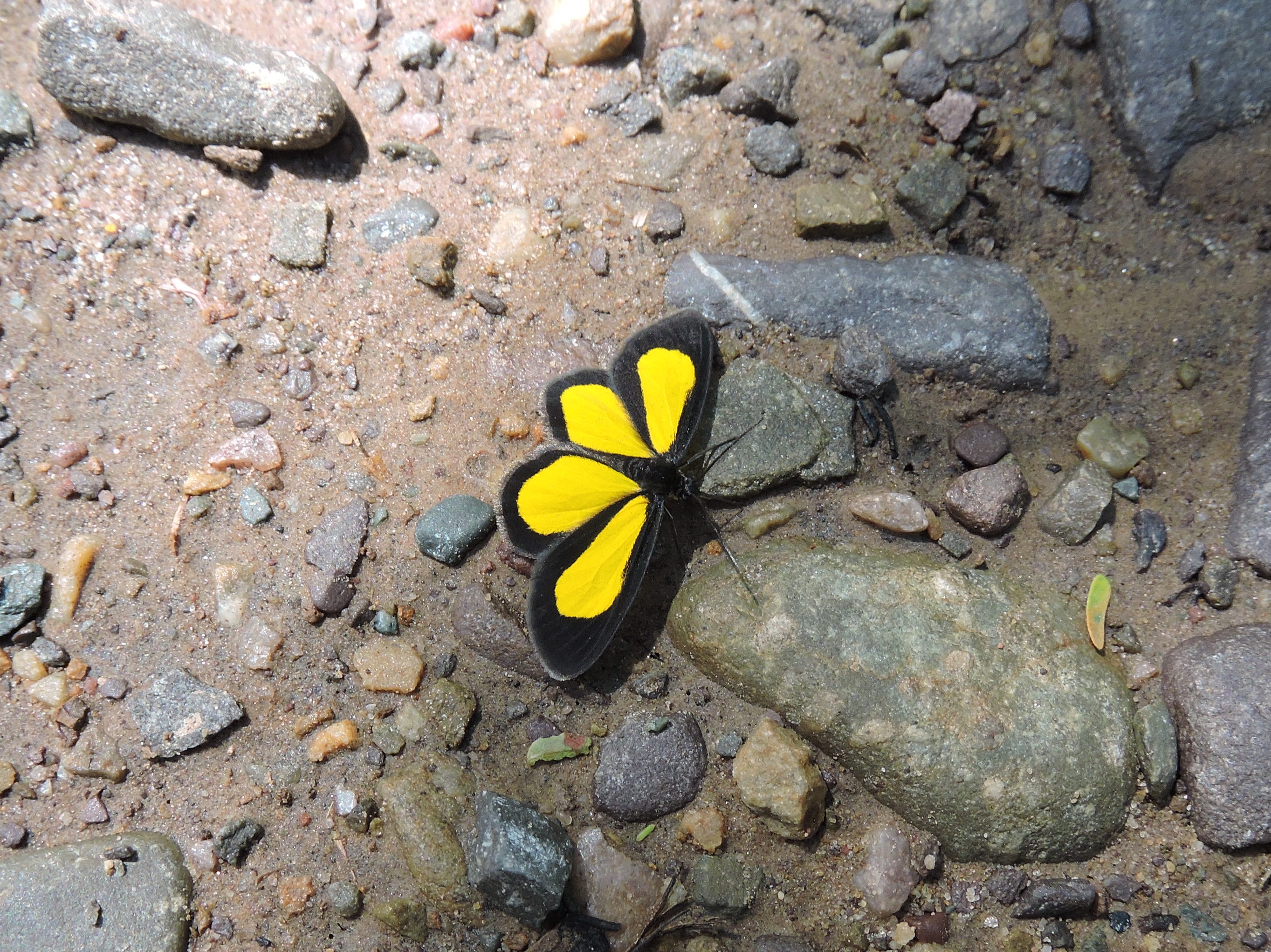
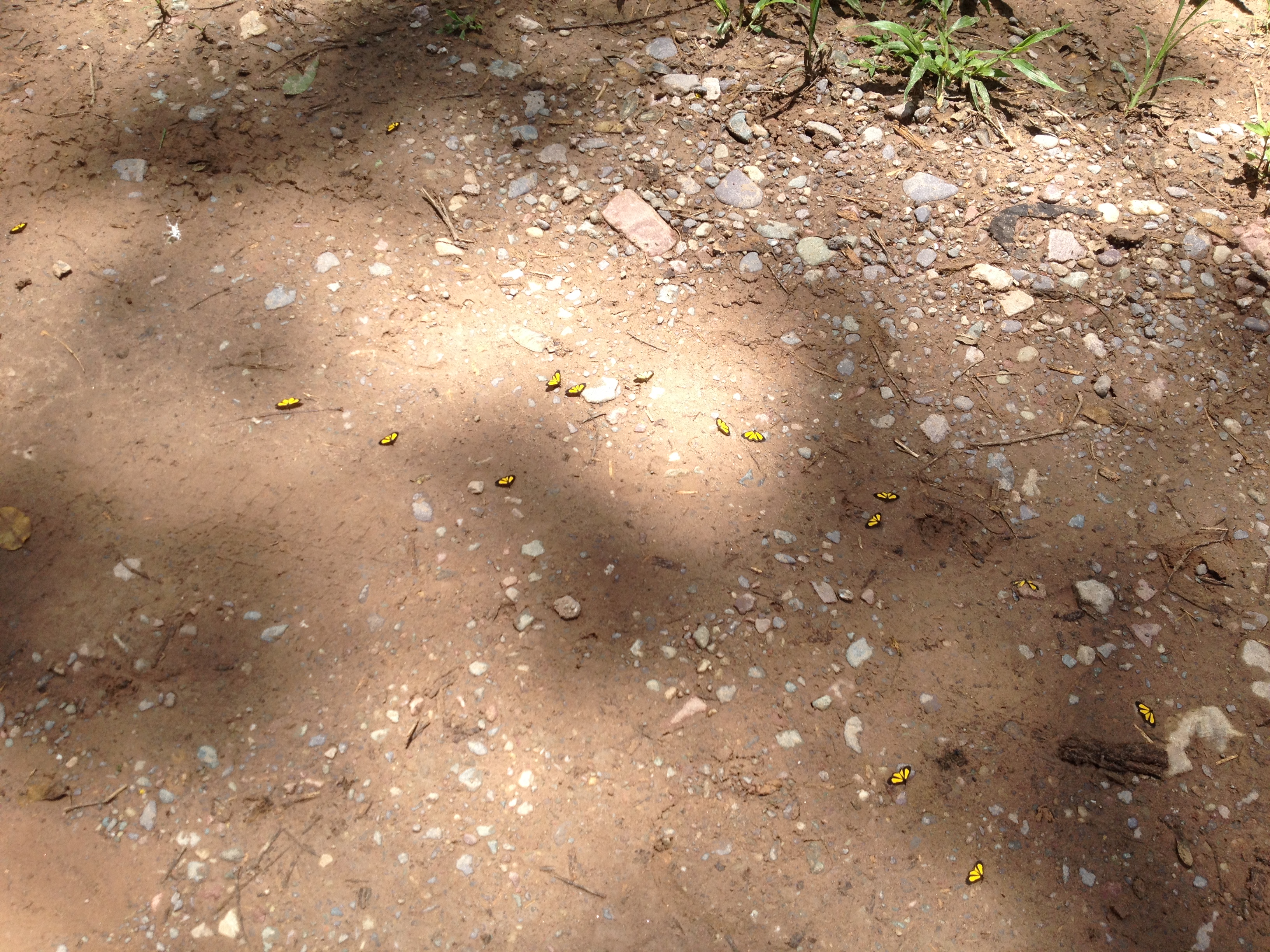
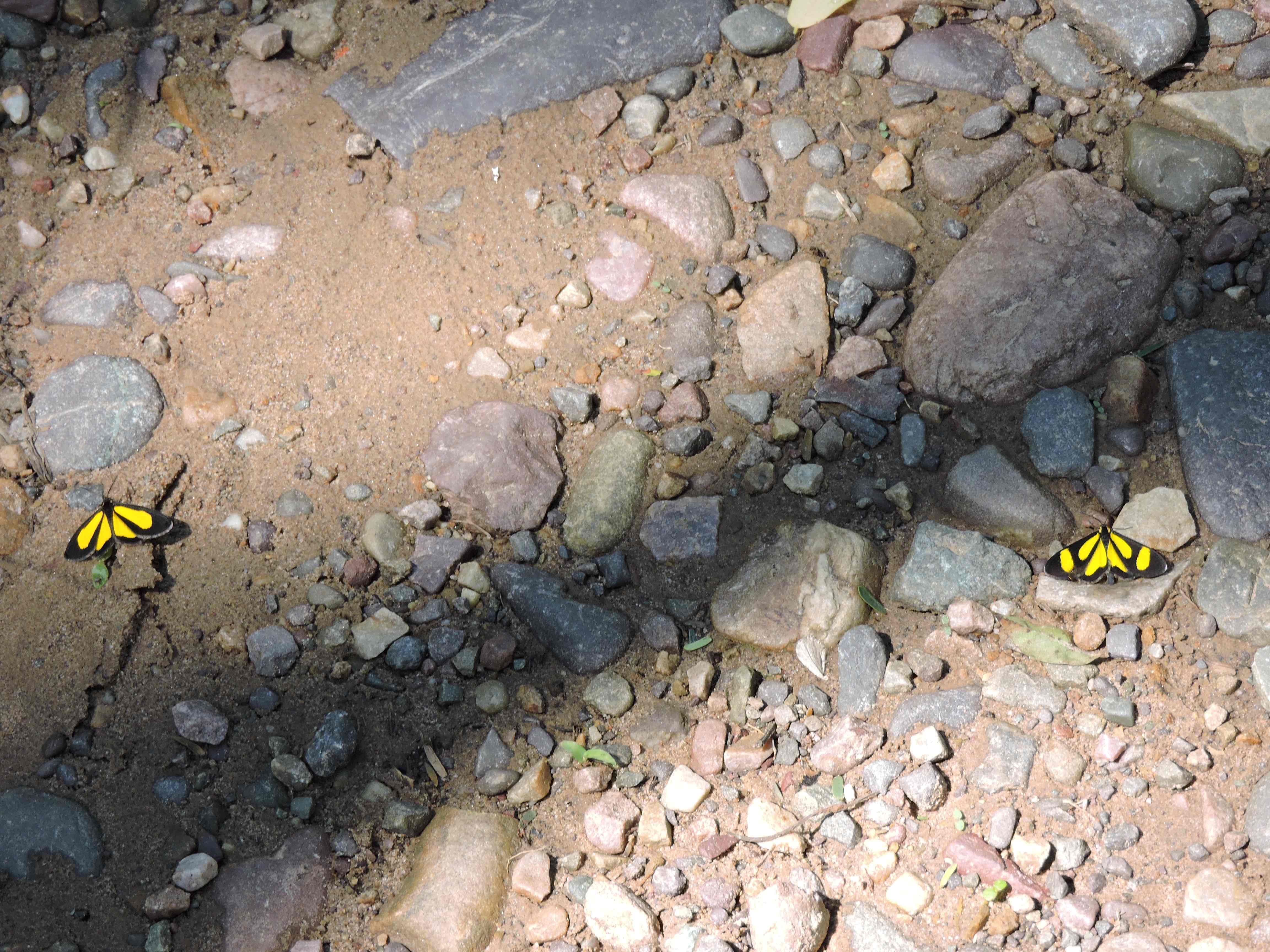
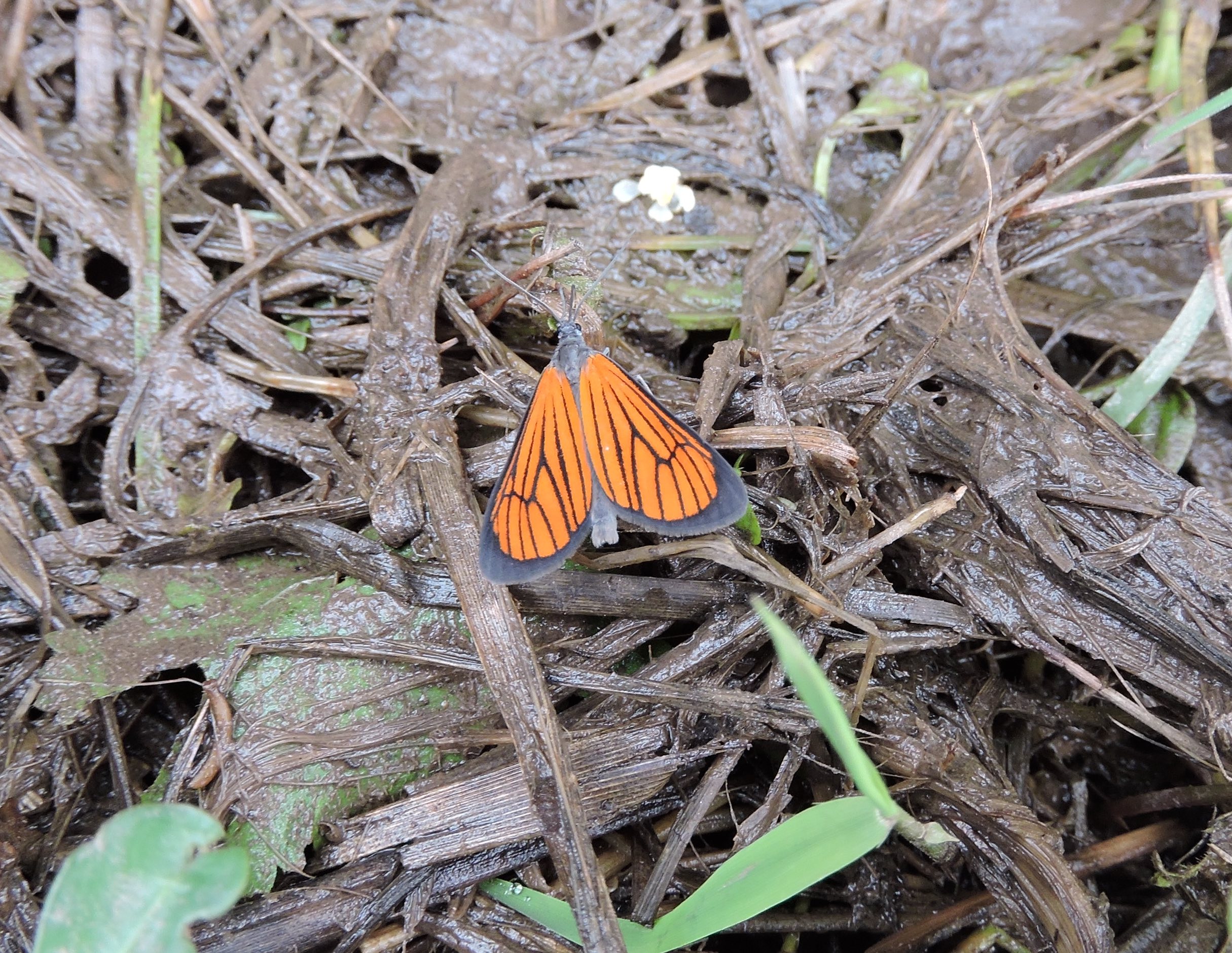
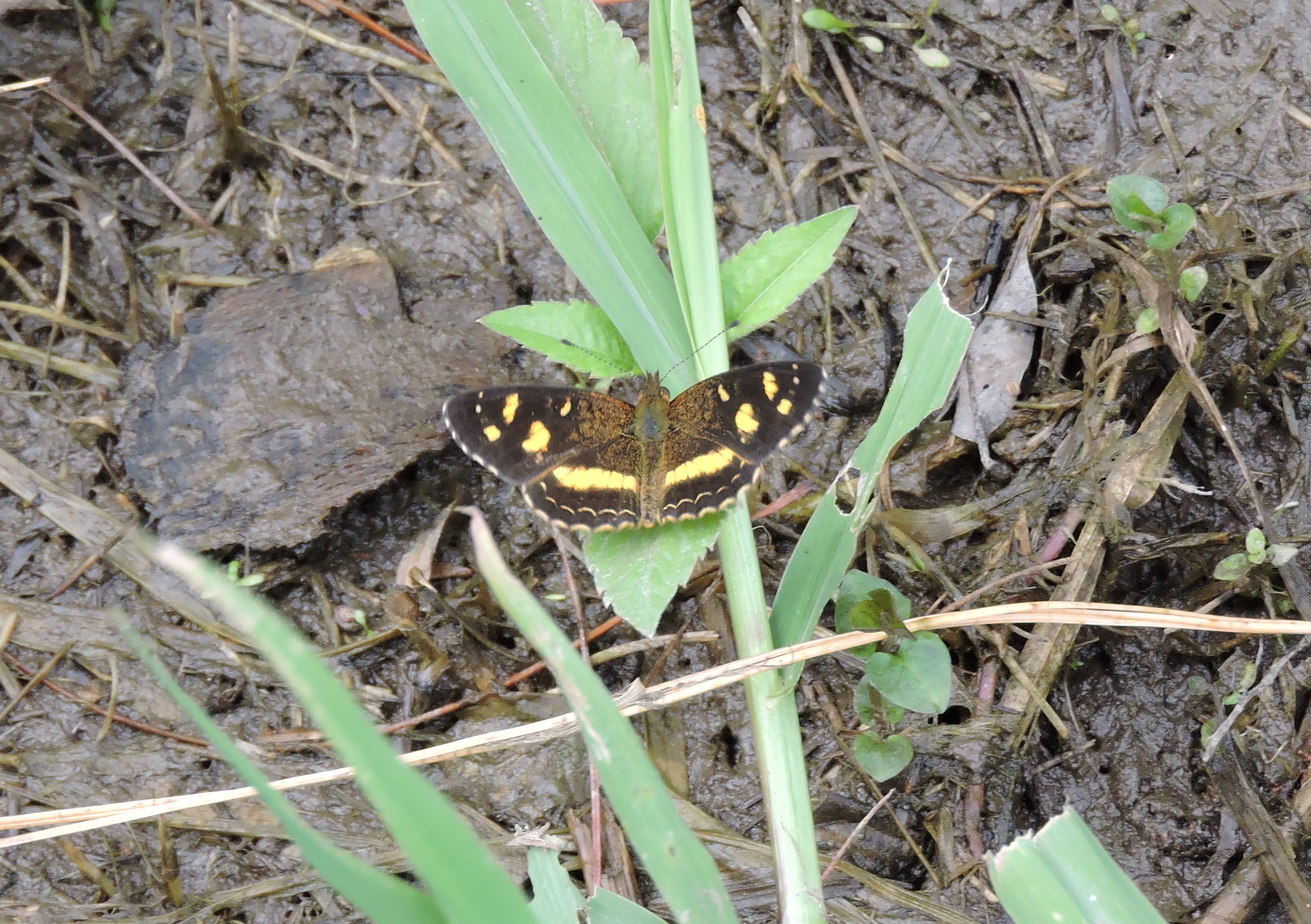
Once the most obvious (and larger) species were noticed, a number of others were noted such as a large number of very small black and yellow ones lying flat on wet areas. Closer inspection revealed two similar types occurring together as well as a rather delicately ornate orange one, also sharing the wetter and shady areas.

Black and yellow unknown cropped Black and yellow group Black and yellow different from each other small Orange small unknown crop

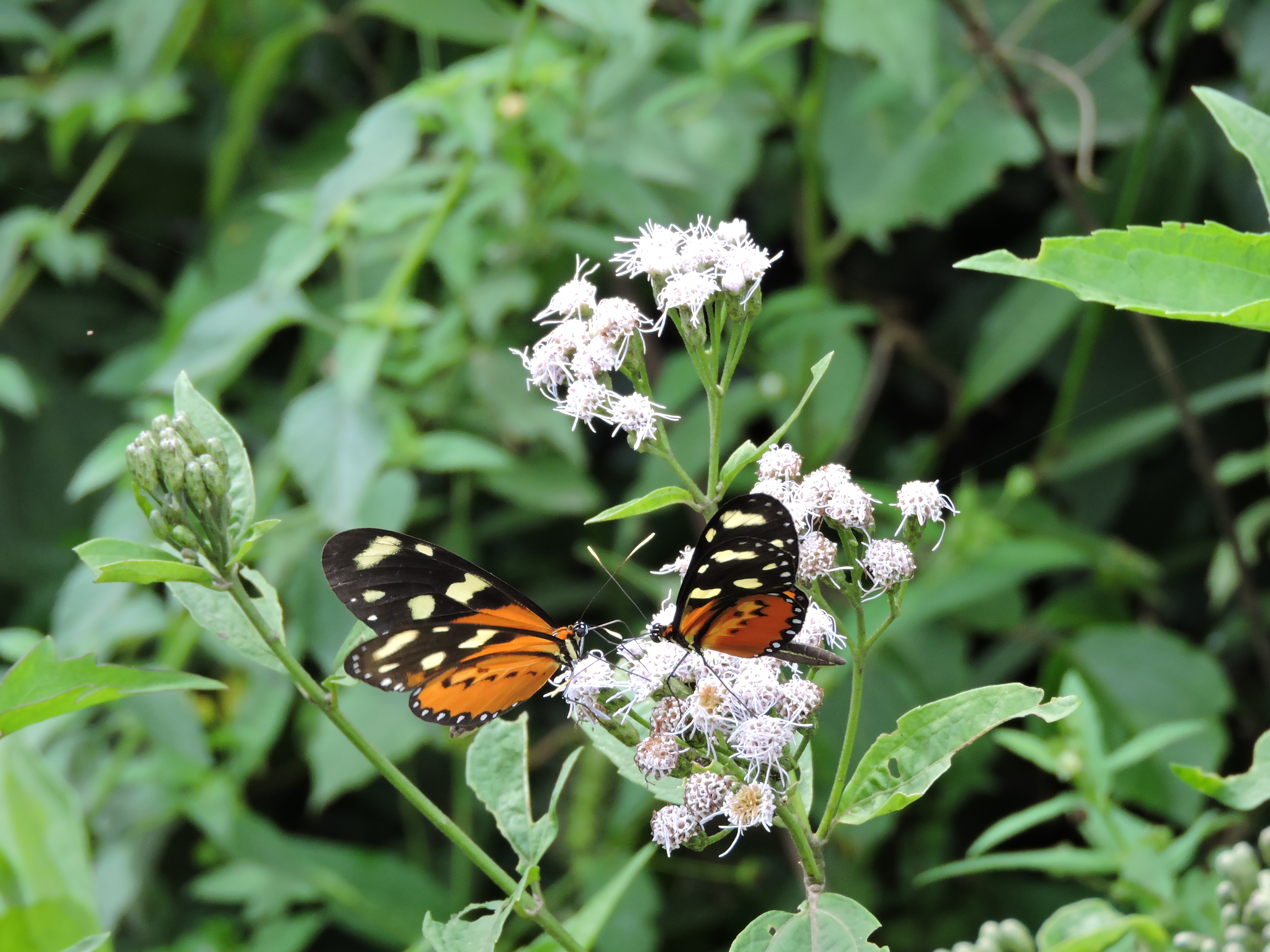
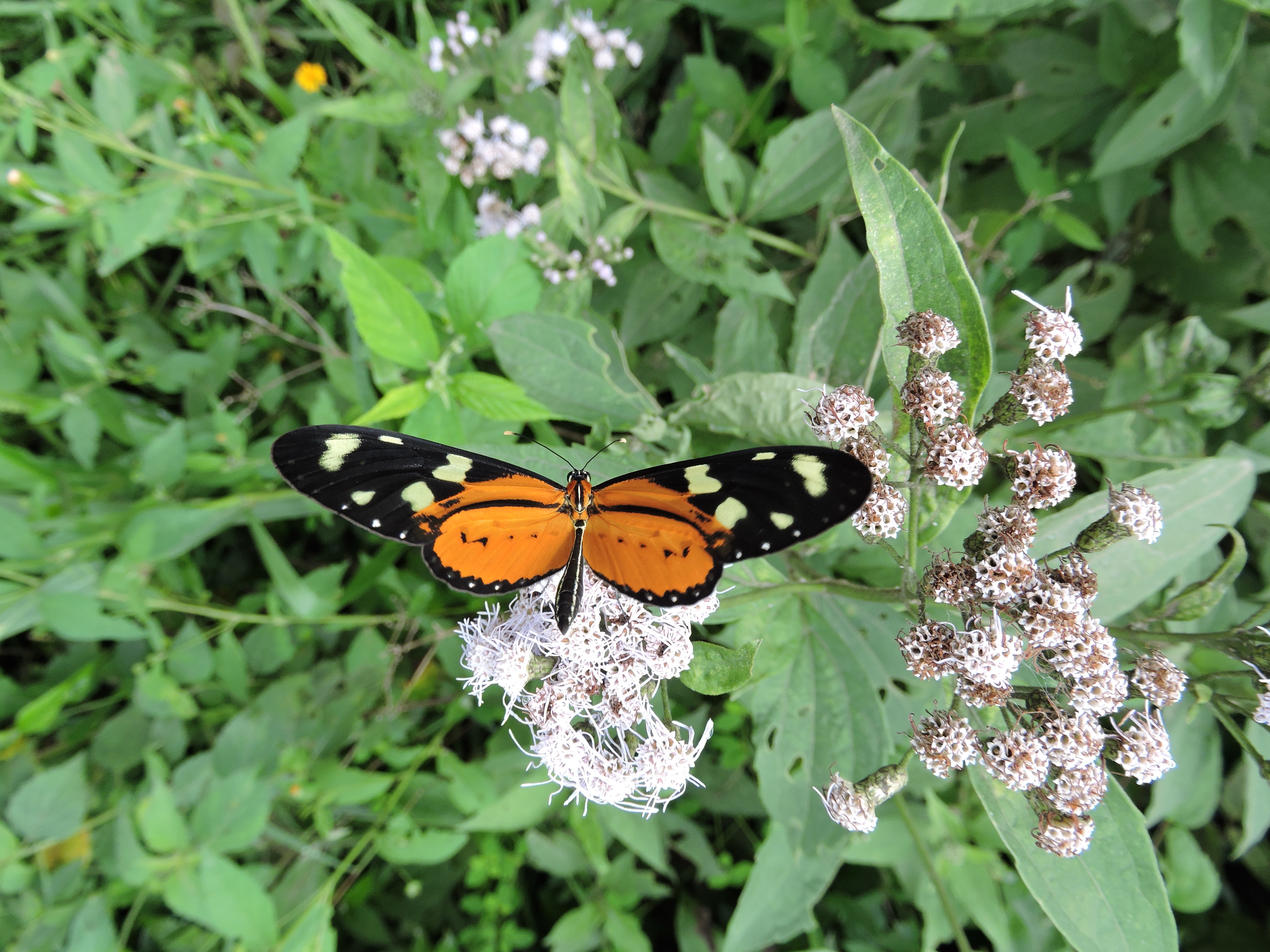
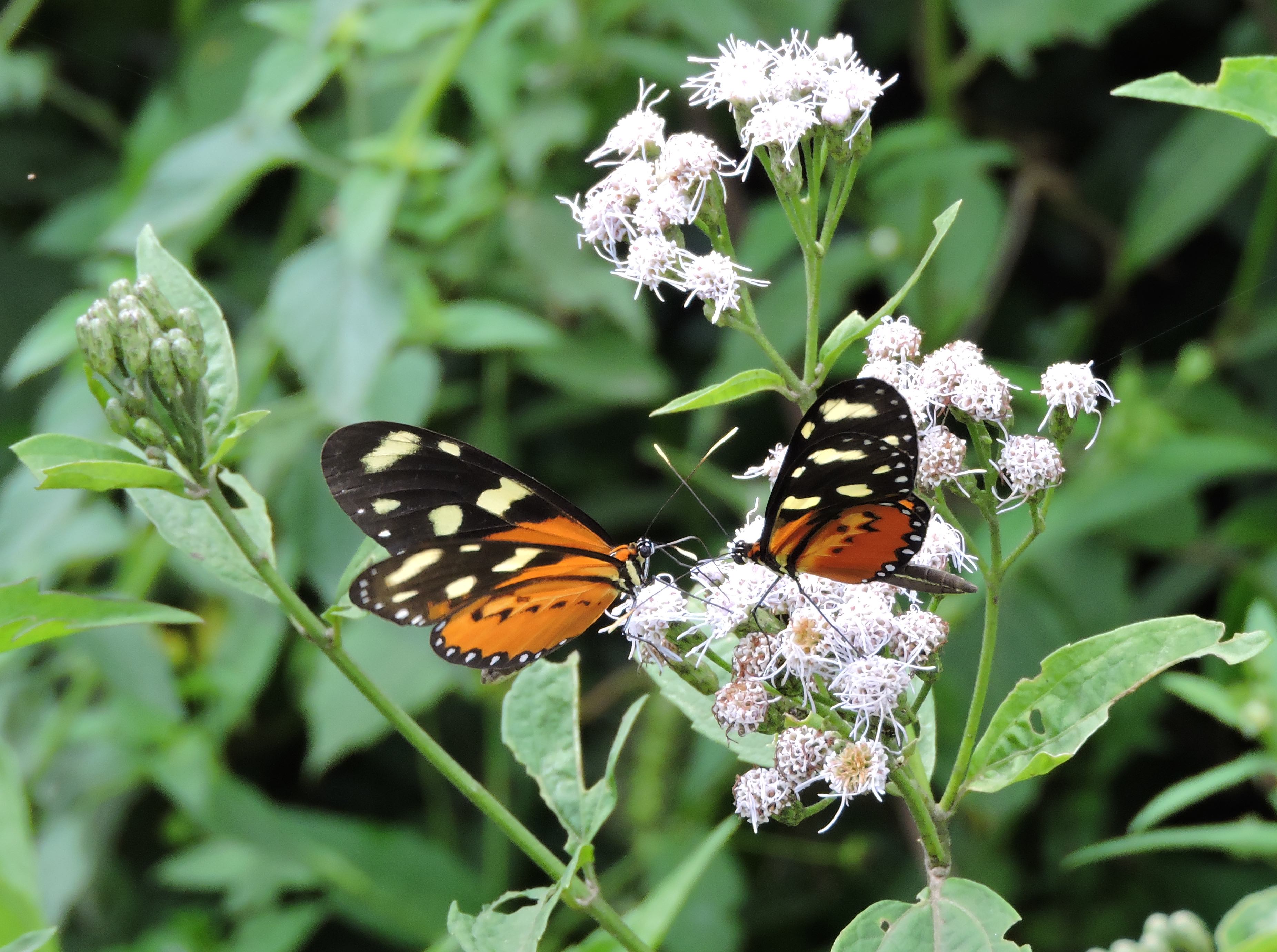
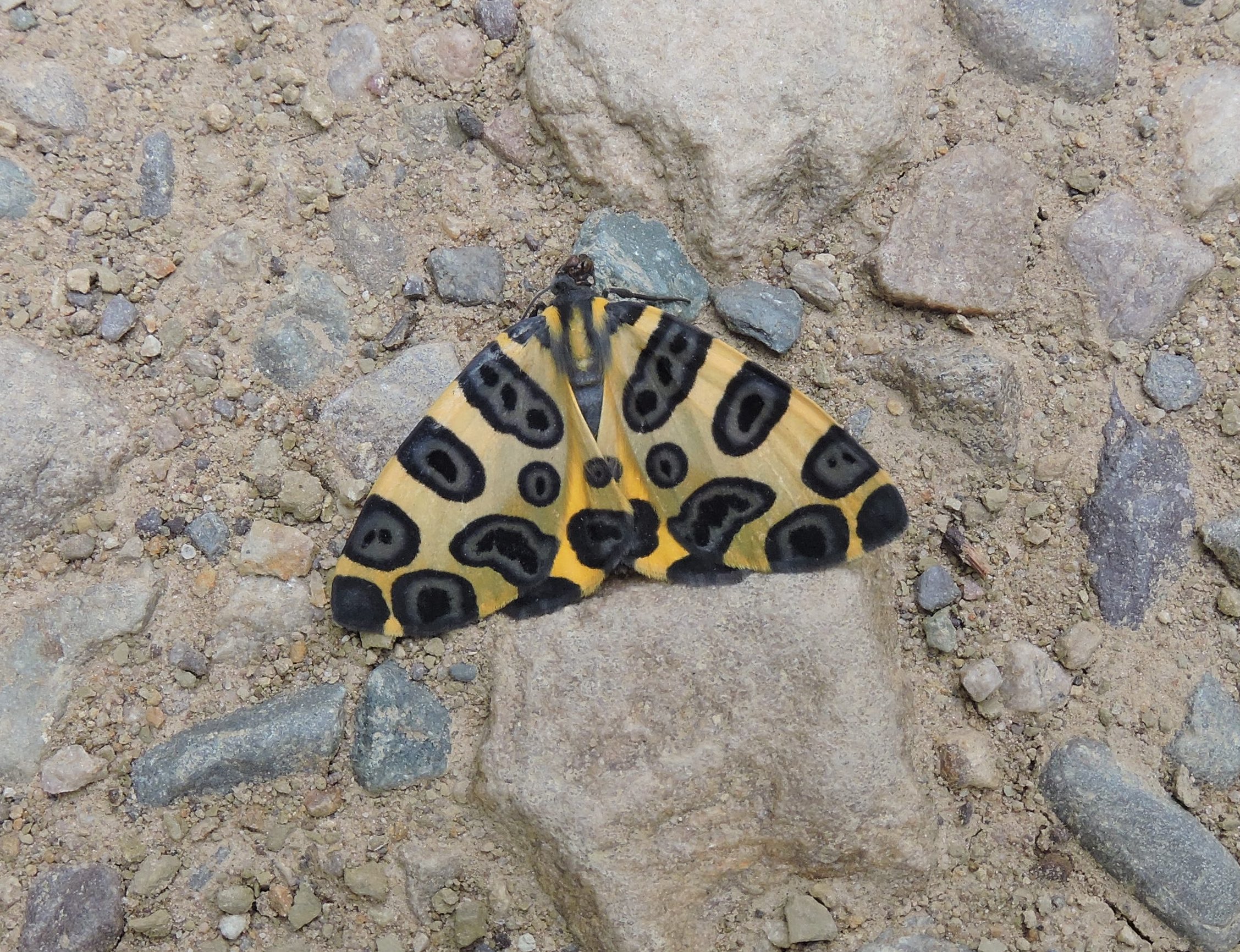
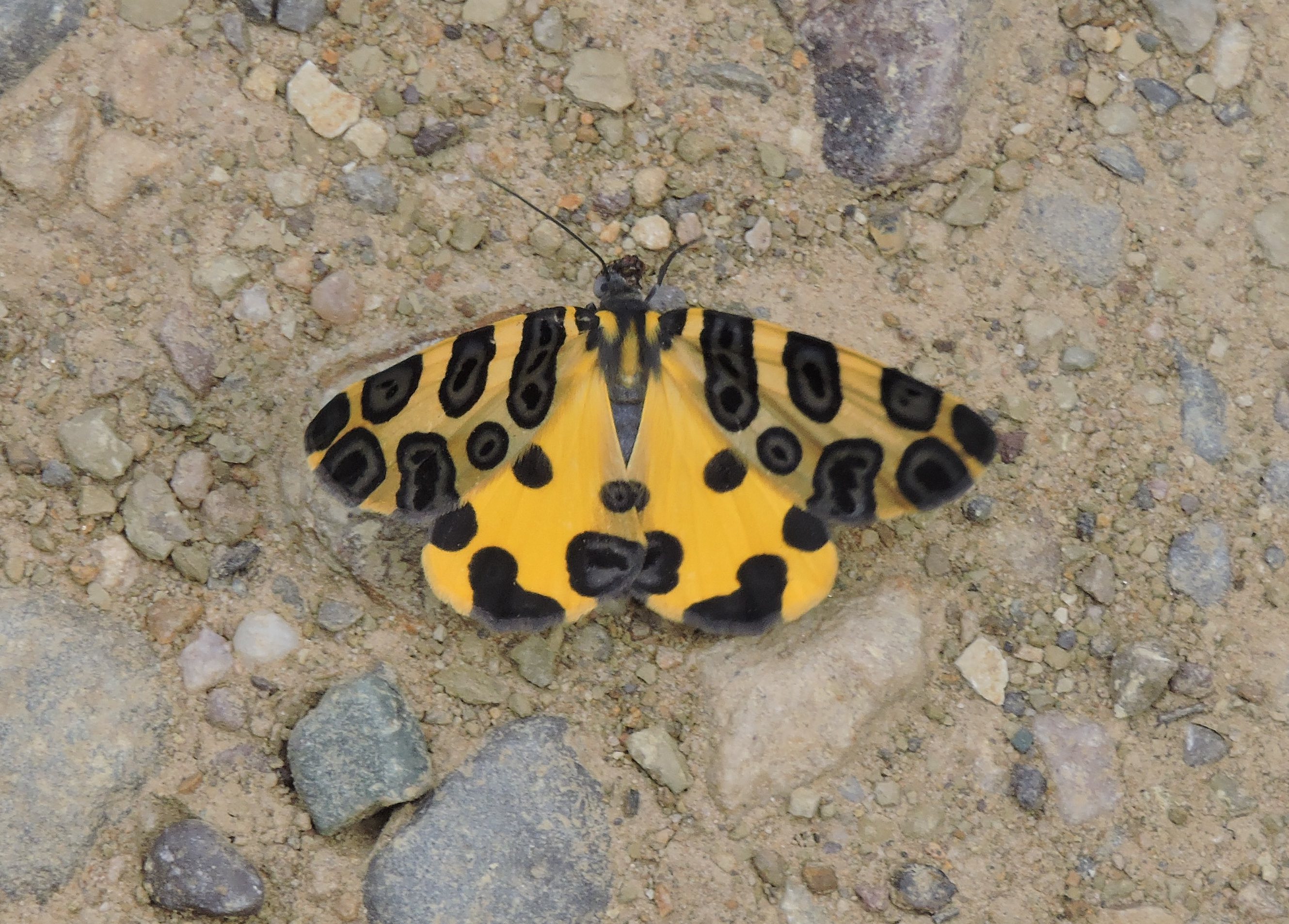
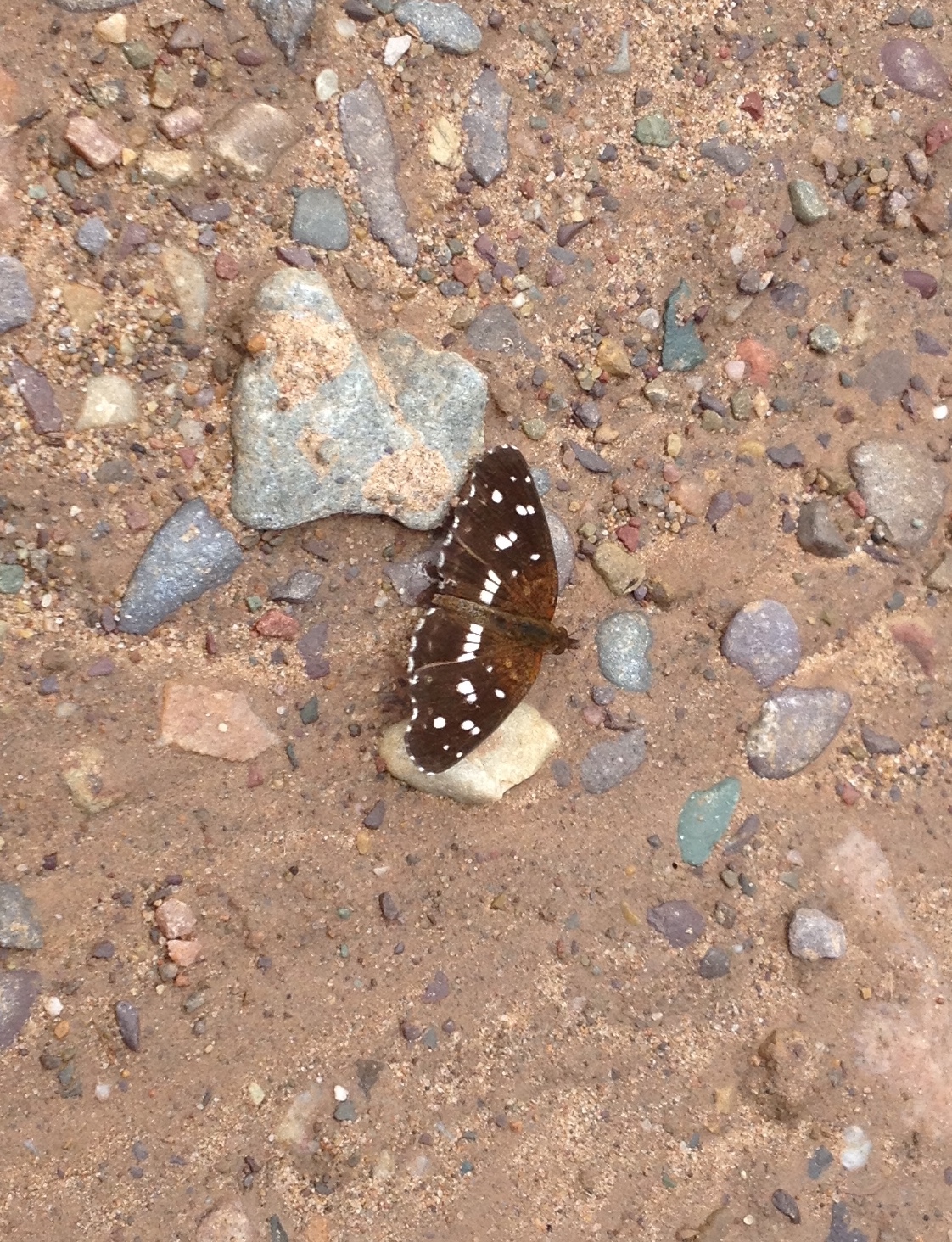
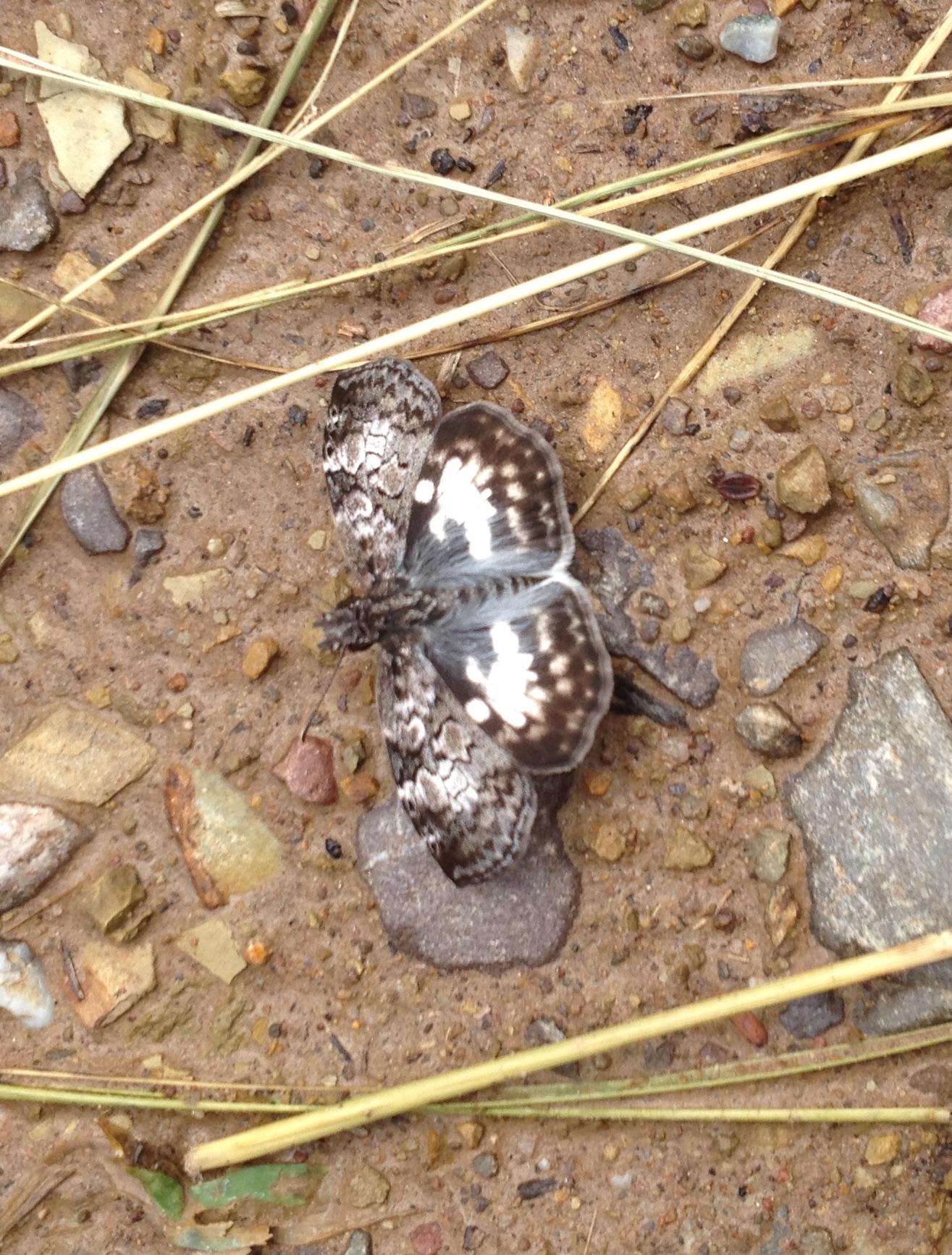
Several other species were noted. The following ones are the most colourful, although as the video below also shows, there are large number of others that we had not had time to photograph at this point. Regarding their identification, what I know about them is included in the caption of the pictures.

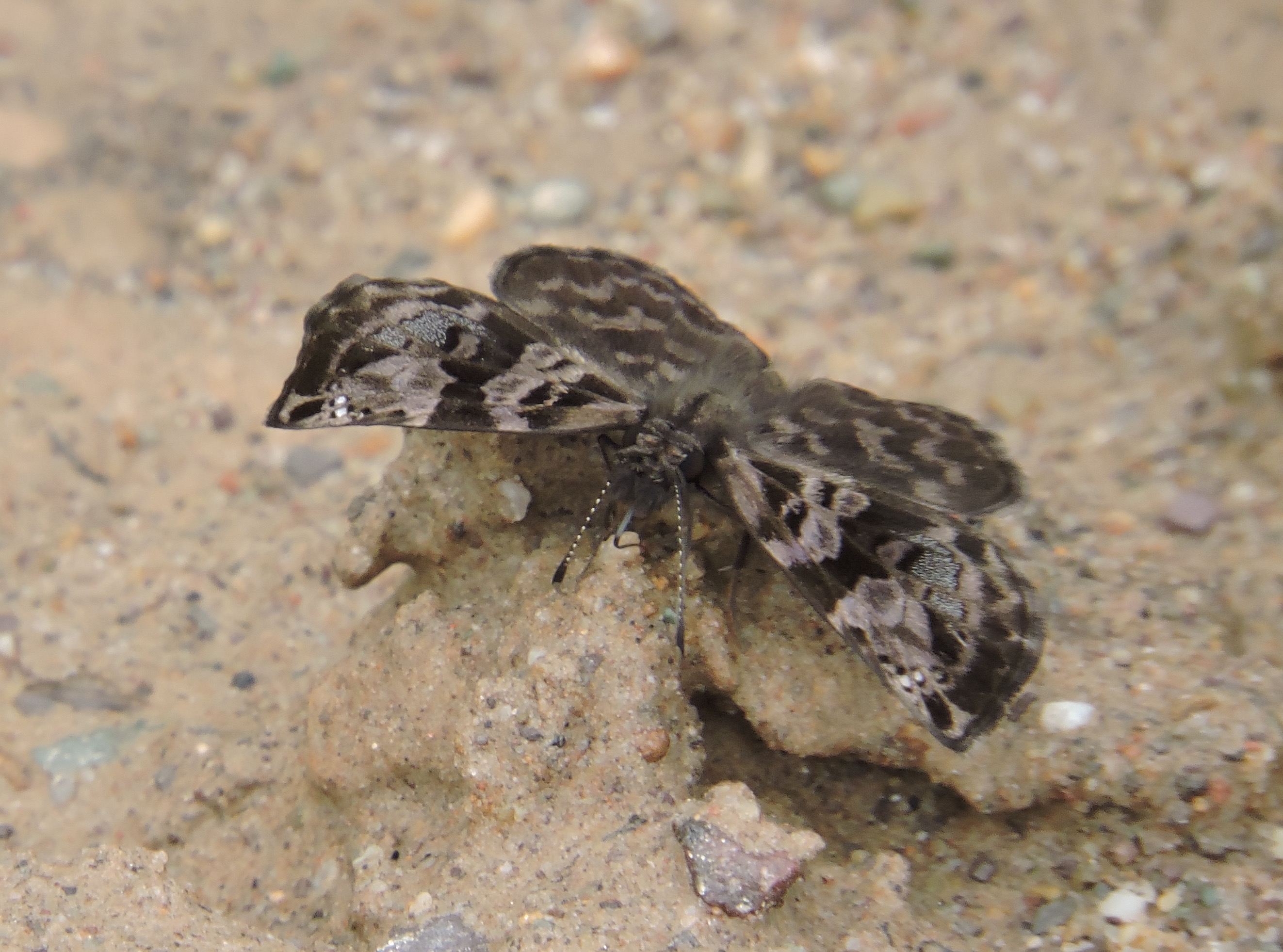
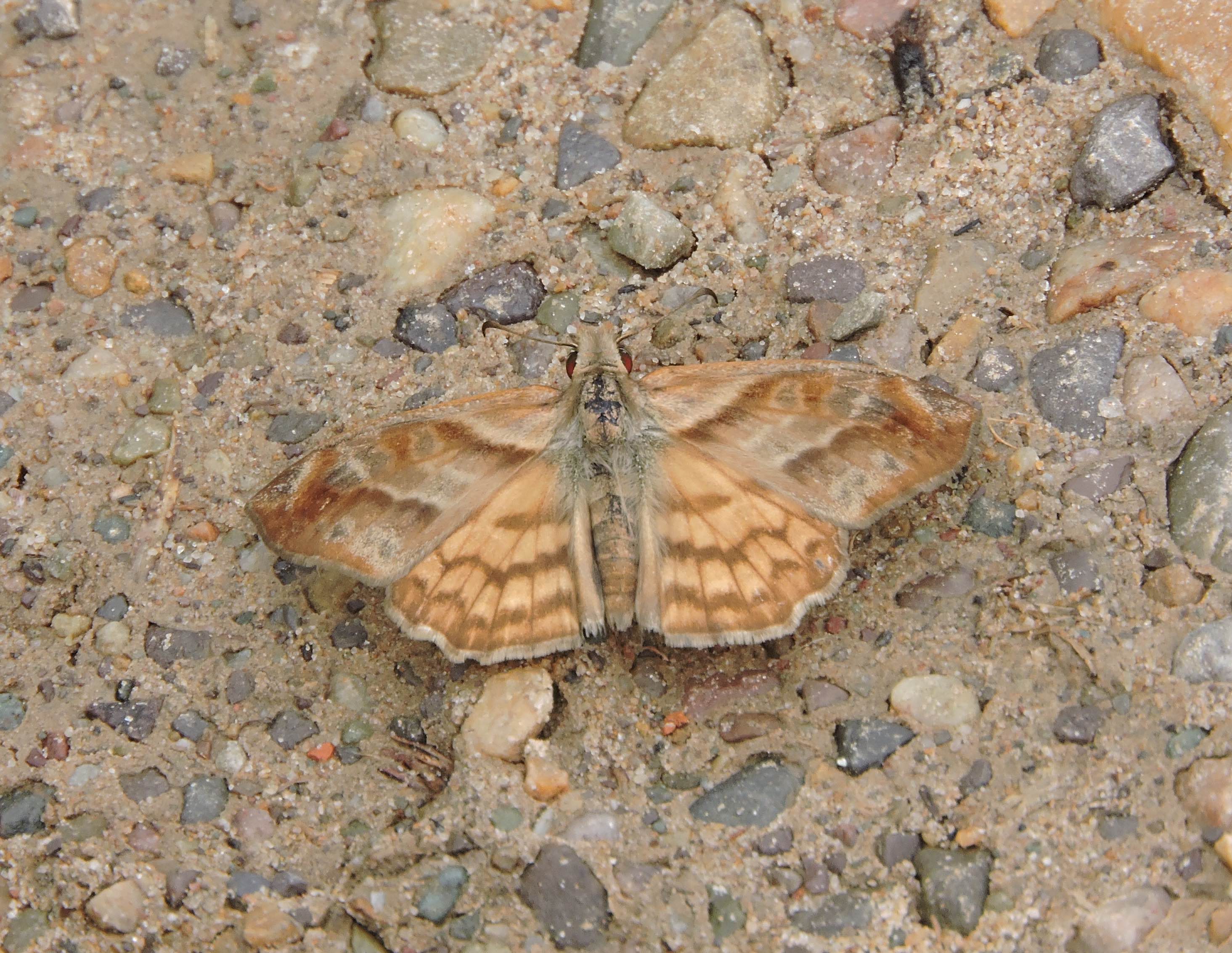
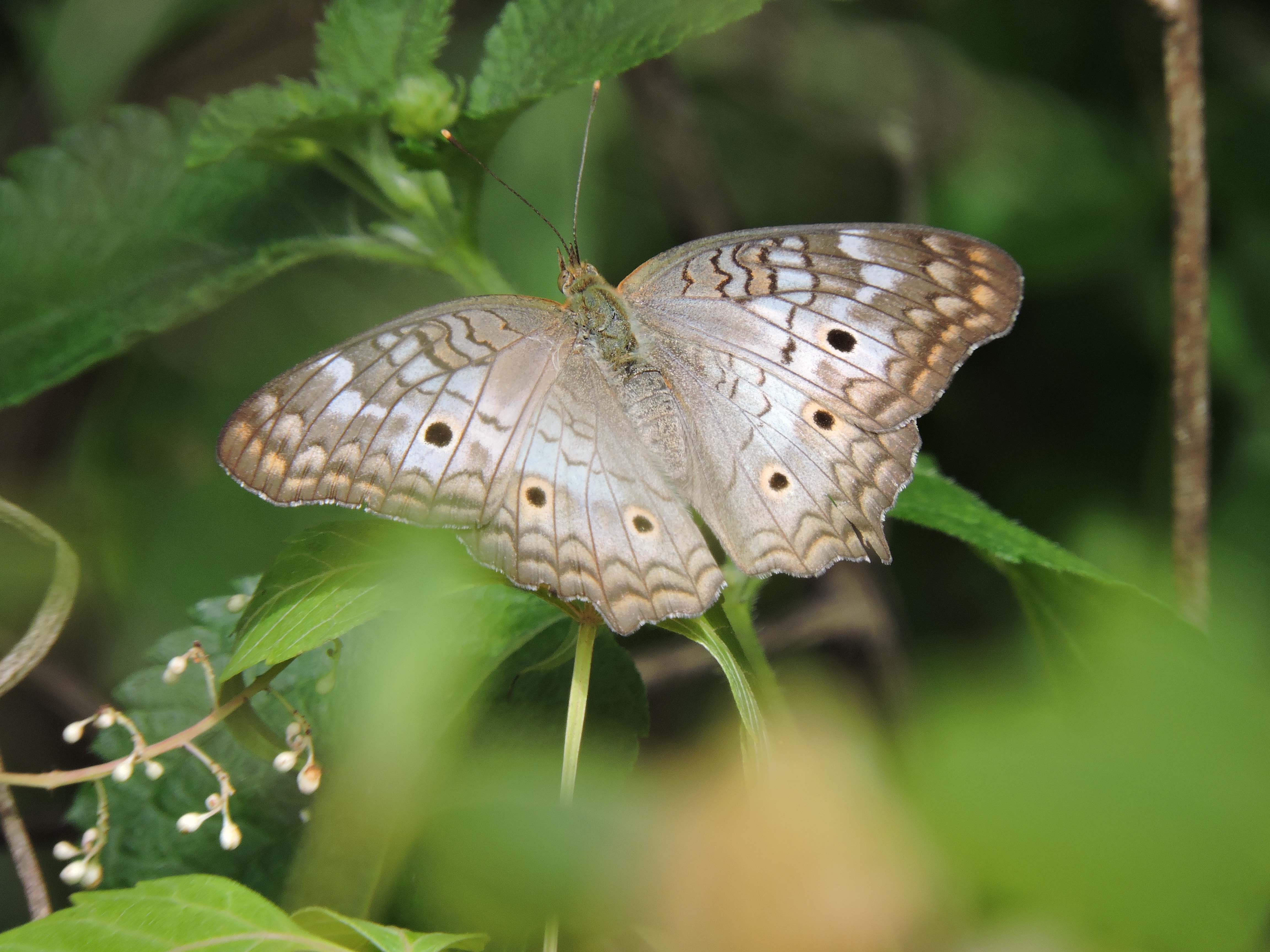
Leopard 1 crop Leopard 2 crop Dark brown and white small Catula other Catula brown crop Brown and white crop Black wing folder crop Black and orange cropped Beige cropped Ashgray

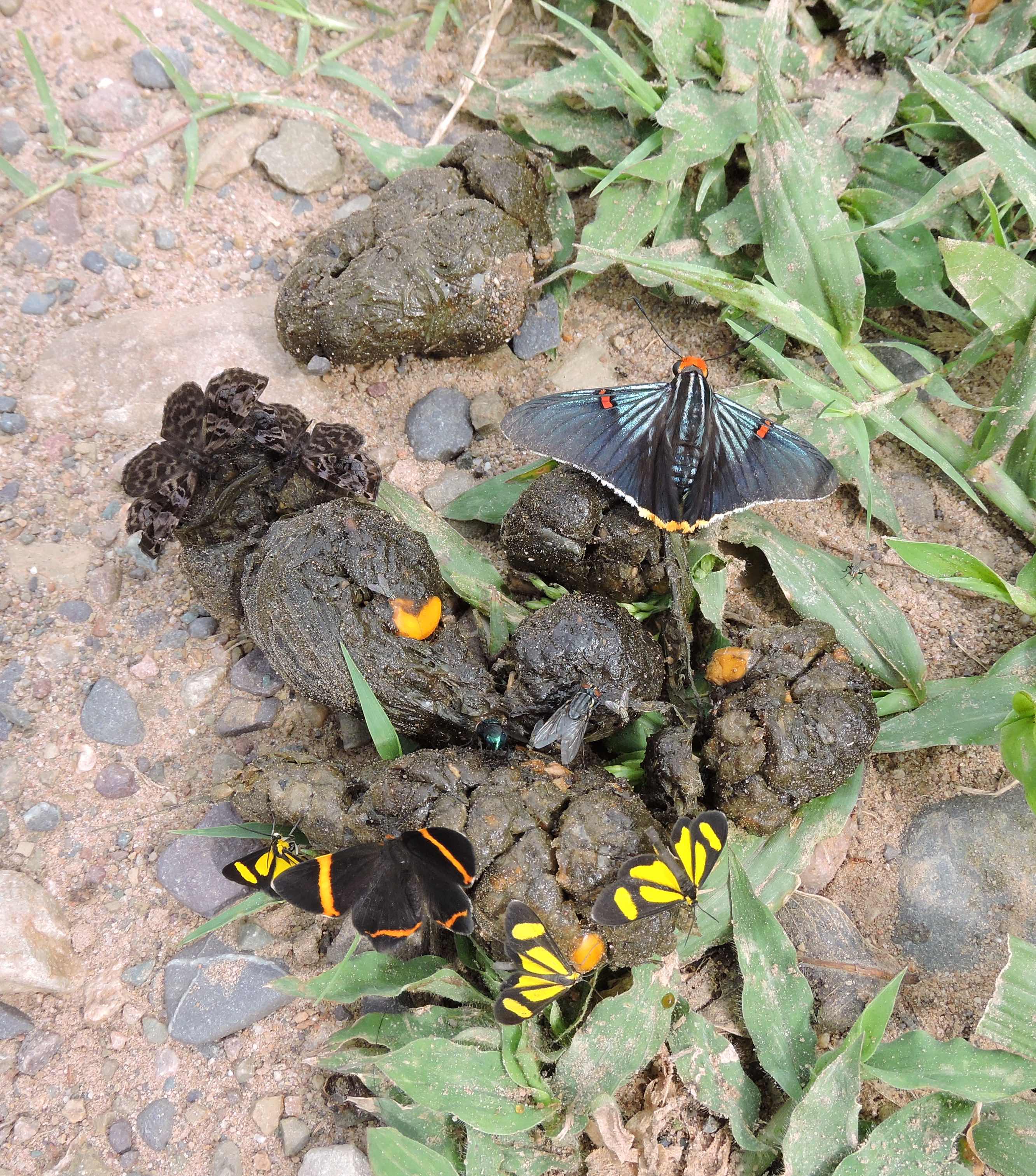
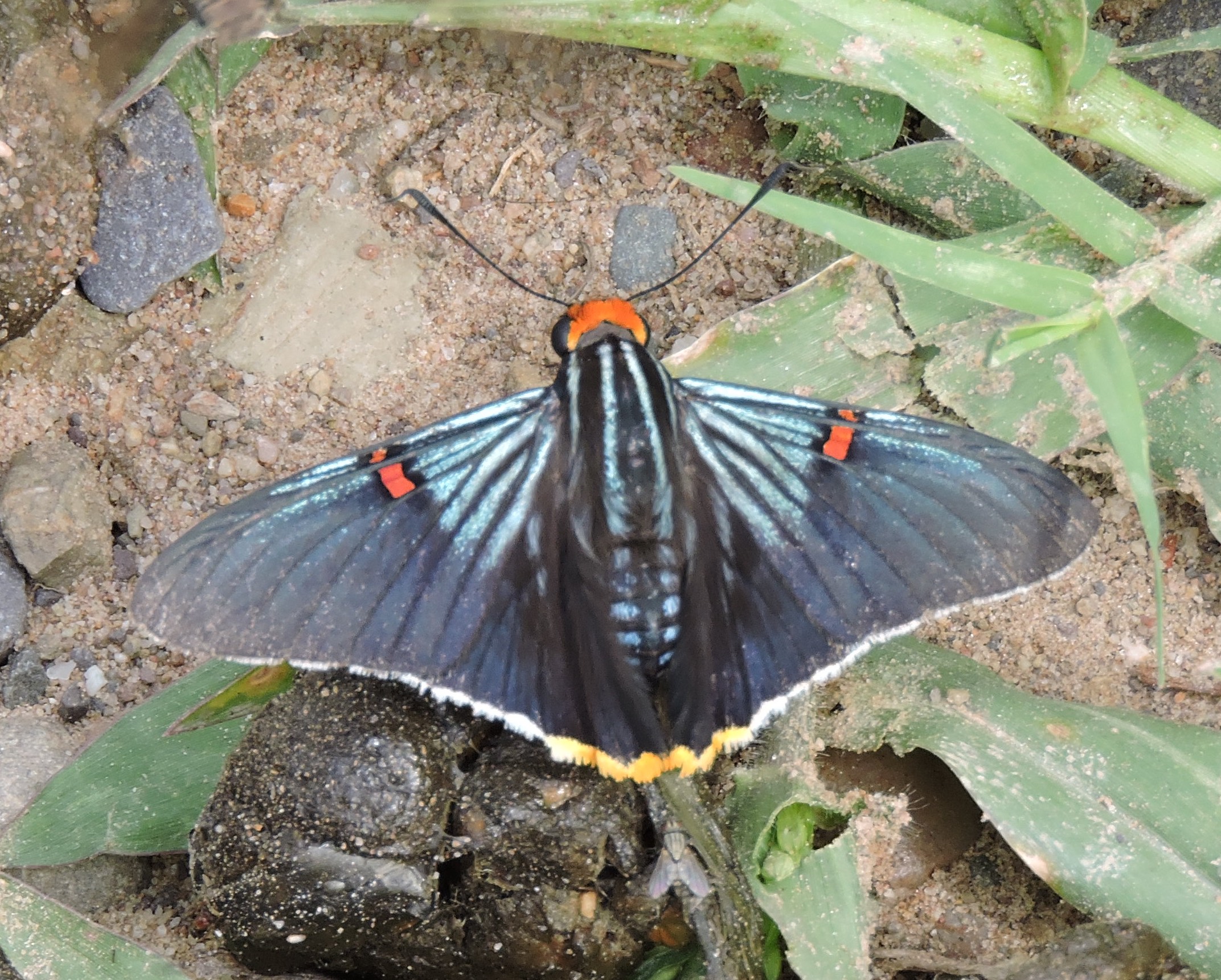
After a few days of rambling along our roads, we thought we had seen most of what was on offer and we were just checking for the odd one that had escaped our attention so far, mainly small ones. Wrong again! After a rainy night, sunshine greeted us the following morning. Clearly the conditions for butterfly (and other insect) activity were optimal and they were out in numbers. Close to the start of our walk we found fresh faeces, probably from a pig (regrets to the fainthearted but this is nature’s “reality show”) that had a mixed population feeding on them. But what really caught our attention was a rather large and hitherto new winged creature, with iridescent blue wings with red markings.

Various insects attracted by faeces. The obvious iridescent blue butterfly/fly called our attention.

Various insects attracted by faeces. The obvious iridescent blue butterfly/fly called our attention.

A close-up of the butterfly/fly.

A close-up of the butterfly/fly.

Although at first sight we mistook it for a butterfly, its direct flight and red bulgy eyes made us suspect that it is probably more related to flies than butterflies. Further investigation on this weird and beautiful creature is on its way and it will be reported.

In the meantime, in the rare moments of calm between more research, blog writing and farm chores, I am reading García Marquez to see if I can find the precise words for the next post as butterflies and moths are still being found!

[1] I regret to inform the readers that I am only able to identify a handful of them as there is no available guide and no Internet access. I will follow up when possible and complete the information later.

A Fishing Expedition

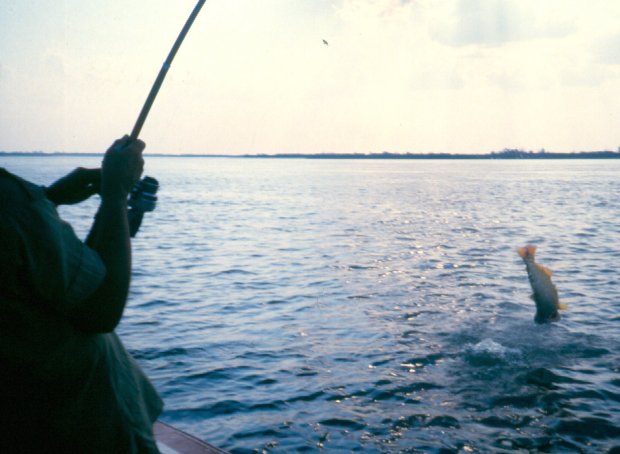
Playing a Dorado before bringing it in.

Playing a Dorado before bringing it in.

While in Kenya, we shared a few fishing trips with our friend Paul, a great fisherman and our undisputed “African Bush Mentor”. We fished together at Sasamua dam for trout, lake Naivasha for bass and lakes Victoria and Turkana for Nile Perch (and Crocodiles…)[1]. It was unavoidable that we would talk about our fishing dreams: sea fishing for Paul and fishing in Corrientes, Argentina for us, among other more whacky ideas.

Although I knew Paul from the beginning of our stay in Kenya, our friendship started when he invited me to spend some time in the Maasai Mara Game Reserve while he was doing research on Malignant Catarrh, a disease of cattle (particularly Maasai cattle) transmitted by wildebeest. I still remember clearly sitting at a knoll in the reserve waiting for a Wildebeest calf to rush to the site in order to get samples from the placenta! The trick was to be faster than the hyenas and other predators!

The idea of a fishing trip to the, to us almost mythical, Paso de la Patria in Corrientes slowly took shape while siting by campfires. Eventually we made the decision but it was regrettably postponed when Argentina and Britain decided to go to war for the Falklands/Malvinas Isles in 1982. I followed the short-lived war from the safety of Kenya alongside the British as there was a strong team of British Overseas Development Administration[2] veterinarians working at the Kenya Veterinary Research Institute in Muguga and I was collaborating with some of them.

I still remember one morning in early May 1982 when the Argentinian cruiser Belgrano was sunk by a British submarine. The following day a drawing of a sinking ship with the words “Belgrano” written under it appeared on a blackboard in the staff room. It clearly provoked someone who, a few days later, wrote “HMS Sheffield” under the same drawing, announcing the sinking of the British ship by the Argentinians! In retrospect, it was a very sad time.

Finally and thankfully the war ended and we resumed our fishing conversations that included the planning of the trip to Corrientes. Although the decision had been taken, the actual dates were repeatedly postponed because of working commitments on both our parts. Finally in late 1984 we started to get our act together and on 9 October I wrote to a couple of fishing operators found in an Argentinian fishing magazine asking for information on fishing in Paso de la Patria. We had learnt through experience that -at least for the first time- it was advisable to fish with someone who knew the rivers well.

Only one answer came back and it arrived rather fast, on 24 October. It was from Mr. Coco Barthe’s PIKIPÉ (the acronym of his company) who informed us that currently in January of each year -the time we could travel- there was a ban on Dorado, Pacu and Manguruyú[3] as this was their reproduction period. However, “catch and release’ was possible. As this is our normal practice it did not offer any problems. We read and re-read the letter! The fishing seemed to be excellent and the sizes of the Dorados caught could not be believed. Needless to say that this information was thrilling to us and, although we allowed for some fisherman’s exaggeration from Coco’s part, it still sounded amazing.

He also gave us useful details on accommodation and transport options as well as other fishing details. The key information for us were the costs involved. Thankfully (for us!) Argentina was at the time undergoing one of its recurrent economic crises so costs were affordable and we decided to go for it. January 1986 was fixed as “F Day” so we were committed!

Although today it seems almost incredible, at that time there were no available faxes or electronic communications so all arrangements were done through the Post Office and airmail letters between Nairobi and Paso de la Patria took about three weeks! Emergencies were dealt with by telegramme or telephone calls, the latter a rather expensive method reserved for extreme situations.

Several letters were exchanged from October 1984 until my last one of 4 Dec 85 when I announced our arrival at Corrientes on 6 Jan 1986 on Aerolíneas Argentinas AR 774 at 18:45. We had booked fishing time from the 8th to the 11th. This encompassed the services of a boat and a guide, with other related expenses such as petrol, lures, bait, etc. at an additional cost. Accommodation was arranged -by Coco- at what was then the only hostel in Paso de la Patria. It offered individual air-conditioned chalets under shady flamboyant trees. The place also offered meals at reasonable prices.

Suddenly we hit a serious snag! Carried away with our enthusiasm for the trip we somehow overlooked the fact that Paul was British and the latter had beaten Argentina in the Falklands/Malvinas war. Although more than two years had elapsed since the end of the conflict, relations between the two countries were still tense and the granting of a Visa for a British national seemed difficult not to say impossible!

As we only realized this at the eleventh hour, we had a panic as this threatened to derail the whole project! While considering our options, we wrote to Coco to contact the Ministry of Foreign Affairs in Argentina. This he did but the news was still bad: no Tourist Visas were being given to British nationals! There was a hope though: a Business Visa and Coco, of his own decision, wrote a letter to the Minister informing him that Paul was coming for a visit to discuss the possibility of bringing Kenyan clients to Argentina for tourism, fishing and hunting!

We also took action locally. The Latin American community in Nairobi was small and we all knew each other. Among our friends were Argentinian Diplomats, we met with them and they promised to help. Luckily, our two-pronged approach worked and we were told that Paul could get a Tourist Visa and there was no need to go for Coco’s white lies. If not the first, he was probably among the first British nationals entering Argentina after the war. We jumped this fence and we were ready to go!

Paul arrived in Uruguay after we had been there for a couple of weeks and, after spending a few days in Carmelo -our town- we met in Montevideo and from there we flew to Corrientes as planned. Coco was waiting to take us to our hostel in Paso de la Patria, about 45 km towards the Northeast. We travelled in his car, an enormous mustard-coloured Chevrolet “Chevy” with an equally large engine, showing some wear and tear and being rather noisy with a boot that required a laborious intervention with a large screwdriver to pop it open.

The following day -7/1/86- we needed to exchange money so Coco took us to the bank in Corrientes only to learn that bank employees were on strike. However, we managed to get some money to see us through for a few days and pay the hostel. We did have credit cards so we were not too concerned at the time. While travelling to the city with Coco, we asked him if it would be possible to go and watch wild animals somewhere. He agreed and promised that late in the afternoon he would take us for a boat ride on the Paraguay River, where we could see some interesting birds as well as animal’s footprints. Now, that was exciting!

Paso de la Patria in January is very, very hot! Nothing moves from about 12:00 to 16:00hs as the heat is just unbearable. We put on our air conditioner and decided to stay inside, away from the furnace. We never thought about Paul’s ideas. In an act only explained by the maxim “Only mad dogs and Englishmen go out in the midday sun” he decided to go for a walk! Luckily he was an intelligent Englishman and returned after only a few minutes, rather suffocated!

Eventually the time for the excursion came and we were picked-up by Coco and his teen son, towing a very large and magnificent boat with an enormous engine (150HP) placed on a large 4-wheeled trailer. Coco had borrowed the boat from a good friend. “We need a fast boat for the trip I have in mind” said Coco. Things were looking good, we thought, while sharing excited and satisfied looks and comments in anticipation. We all jumped on the Chevy and went to the river. This was our first real look at the mighty Paraná River that, in Paso de la Patria, is about four km wide. Its width and the strength of its rather clear water were the features that called our attention. There were sand banks, sandy beaches and islands all over.

The Paraguay river joined the Paraná in the Cerrito Island, a place we could see in the distance. That was the start of our adventure up the Paraguay. With the fading light, the river and its environs was a beautiful sight. Coco informed us that the water was very low and clean for the season and the fishing excellent.

While we were lost in contemplation we had glimpses of Coco maneuvering the Chevy into position and dextrously reversing the trailer into the river, something that could have taken me at least an hour to do. This drew our attention for a while and we also saw him unhooking the trailer from the car in order to immerse it sufficiently to release the launch.

Our attention went back to the river as we could see splashes and ripples created by fish all over the river and, to our surprise, an osprey fishing. Coco’s voice brought us back to the boat launching. We saw him standing with the water above its waist. He was clearly under great strain holding the trailer. His son was frantically trying to unfasten the boat. Somehow this took longer than anticipated or the teenager did not know exactly what to untie. Regardless, the end result was that Coco, the trailer and the boat were going deeper into the river while he kept shouting instructions to the increasingly ineffective and nervous youngster!

Eventually, successfully released, the boat floated free and, to the relief of all, the son brought it to the shore, smiling. We prepared to board our first Paraná adventure. But we were not there yet… The release of the boat meant that the weight of the trailer was solely on Coco. We could see the strain in his head and shoulder muscles and he muttered something like “I cannot hold this much longer” while moving to chest depth. “Hang on Coco” we shouted while running towards him. However, before we could reach him we witnessed the final and uneven battle between Coco and the mighty Paraná. Abruptly his body relaxed and we saw his empty hands above the water “Shit” he exclaimed, “the trailer is gone!” a rather obvious statement but something I would have also said!

Once we recovered from our disbelief, we felt pity for Coco and then tried to guess where the trailer had gone! We had just witnessed the loss of an expensive-looking trailer, probably forever! Coco was very brave about it, considering that probably more than our fishing trip’s revenue was “gone with the river” before the fishing even started and, without one word of lamentation, he prepared the boat and off we went.

Our itinerary took us across the Parana river towards Paraguay and we entered the Paraguay River. While the Paraná’s water was very clean, the smaller Paraguay was very flooded, running fast and muddy and full of floating plants and trees. Clearly the rains were in full swing up river. Into the Paraguay we went, always at very high speed, navigated by Coco who seemed to be enjoying the ride as much as we were and had clearly forgotten the trailer by then.

The boat was really fast and the ride exhilarating. Then, at about 100 metres we saw a humongous full tree coming towards us at speed. Our mild surprise at Coco not taking evasive action became an alarm call as the behemoth was almost upon us. Coco was unruffled and, before we could scream in pre-death desperation Coco avoided it at the last second swerving violently to the right only to resume our course. A nervous calm was restored when another fishing Osprey was sighted and pointed out by Coco. The next floating forest colossus that tried to kill us was avoided the same way so we relaxed a bit and endured the following ones in a much calmer way as the situation seemed normal. We did disembark to see some Puma footprints but the general feeling was of relief, as at least on the way back the trees would be travelling in our direction!

We were soon back in the Paraná and we travelled downriver for a while as Coco wanted us to see how, for a few km, the two rivers go side by side without mixing and with a clear line separating them in similar fashion to the White and Blue Niles near Khartoum. Back in Paso de la Patria Coco left the boat at the small harbour and took us to our hostel where we talked a lot about the lost trailer and the boat ride.

So that was the start of our river adventure in Paso de la Patria and the fishing would only begin the next day at 06:00hs!

As Paul and I scribbled some notes day by day, I will start each fishing day with these in Bold and then add my own recollections.

Day 1. 8/1/86. Trolling above rocks. 8+ kg, 15+ kg, 3 of 5-6 kg, 4 of 5-7 kg. 115 HP Mercury engine. Moreno. After a good night’s sleep (aided by the air condition again) we were up and about at 05:00hs, excitedly waiting for the start of the actual fishing. As the hostel was actually on the river, we walked to the harbour to meet our guide. Coco and son were also there with a grappling hook, trying to retrieve the sunken trailer. Our guide presented himself as “Moreno” and he was indeed dark skinned. He was quiet but friendly so we were happy with him and looking forward to sharing the boat with him for the next few days. He explained that today we would be going for large Dorados and this would mean mainly trolling over rocks where water moves fast and Dorado wait for their prey.


The Paraná River has a number of game fish that attract fishing lovers from all over the world. The Dorado is the King of the river as it is a very strong fish that, when hooked, fights to the bitter end with spectacular jumps and runs that very often result in the fish going away. Apart from the Dorado, the Surubí (Pseudoplatystoma corruscans) is also sought, as it is a very large fish attaining up to 80kg although these are now rare. When hooked they resist by swimming away and, because of its weight, they are difficult to reel in until it tires. Finally, there is a third fish, the Pacú, who takes dough and or fruits. It can also reach a large size and it offers a good fight as, being a wide-bodied fish, it swims sideways, making its recovery very difficult.


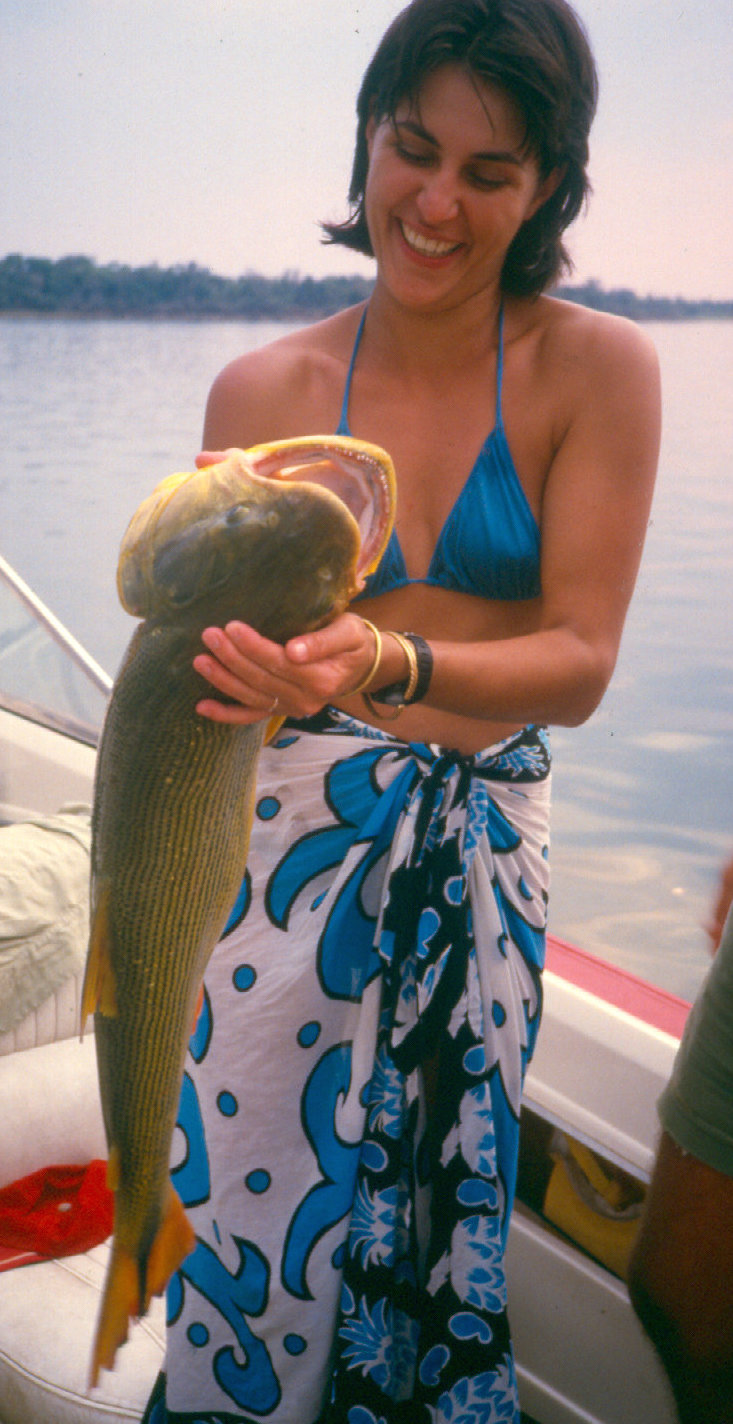
We left Coco throwing his hook and headed for our eagerly anticipated fishing trip. From previous experience we knew that trolling can be tedious so we prepared for a long wait after we put two rods in the water. Moreno manoeuvred the boat through fast running water, trying to get our lures to pass where the Dorados were poised for ambush. This was risky and we had a couple of snags. The first strike happened after 30 minutes and during the course of the morning we experienced the best fishing I have ever had. We caught about ten Dorado, a couple of which were above the 12-14 kg mark and the largest -as usual caught by my wife- that struggled bravely for a while to bring it in! We all fished as we took turns but none of us was left wanting!
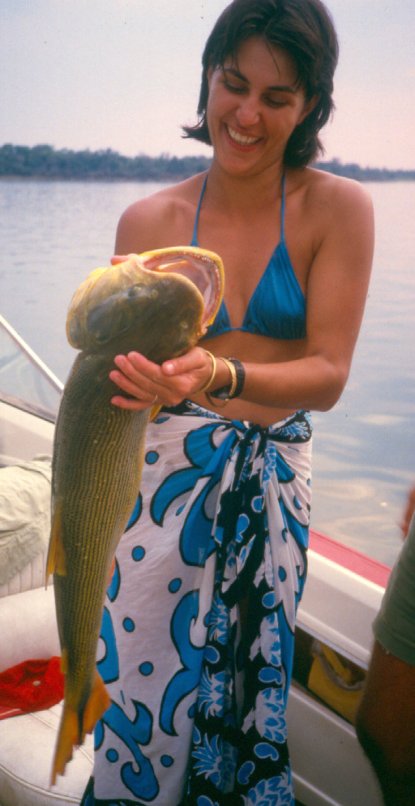
A good fish caught by my wife.

A good fish caught by my wife.

By lunchtime the sun was too strong and, despite our willingness to continue, we returned to the shade of the hostel for a cool shower, a light lunch and a siesta. This time we managed to persuade Paul to lie down. At about 16:30hs it was time to go to the river again but there was no sign of Paul. We decided to call him and he gave a feeble reply. After a while he came out of his bungalow and said “Good morning!” in his cheerful way. We burst out laughing at his confusion but, at the same time, we knew that he had rested well as this is a common mistake one makes after a good siesta! We congratulated him for having achieved this despite his Anglo Saxon origins!

The shorter trolling of the afternoon complemented the morning’s success and rounded up an excellent day that ended up dining with Coco at a local Parrillada (BBQ place) sitting “al fresco” to enjoy the fresh evening air while partaking of typical roasted beef and insides. We praised the fishing to Coco’s delight while Coco informed us that the trailer was still under water!
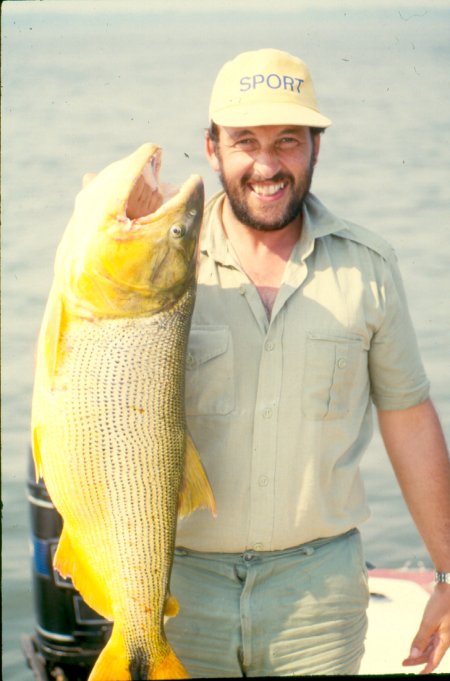
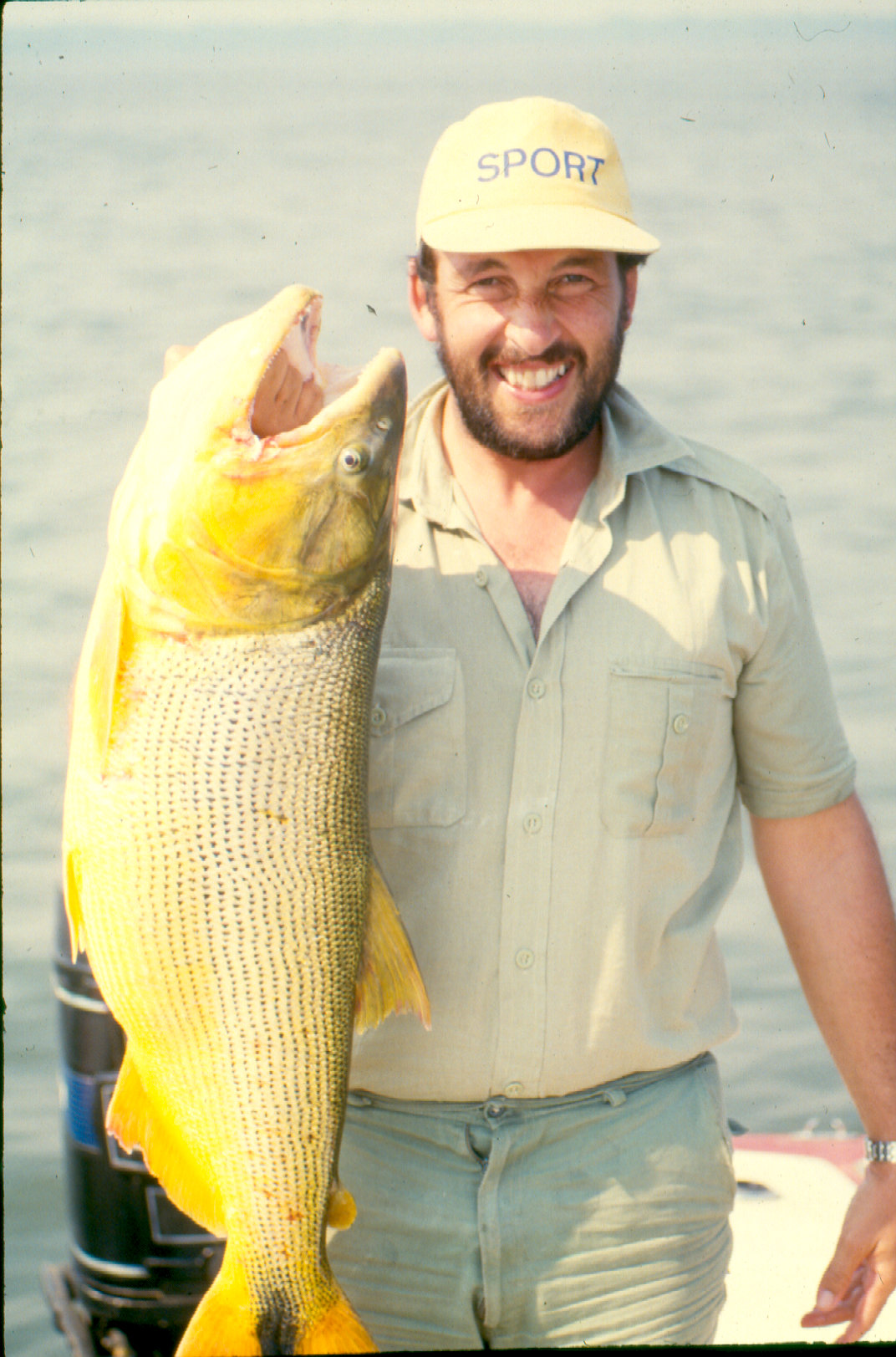
The largest Dorado I have fished.

The largest Dorado I have fished.

Day 2. 9/1/86. AM Itatí trolling, 6+kg (tumour) eaten, 12+kg, 7+kg, 7+kg, Basilica, shopping, grilled fish on island, swimming, finger chewing. PM hit the Sábalo, initially with lures, then anchored upstream letting bait drift down. Six Dorado 5-7 kg. The excellent fishing we had the day before had lowered our anxiety level. However, Moreno still wanted us to enjoy the day so he took us up the river towards Itatí, an area well known for its submerged rocky formations where Dorado and Surubí are found. The fishing was similar to the previous day but we caught less fish. In my enthusiasm for a picture my finger inadvertently ended up in the mouth of one. As these fish have a reflex that causes them to clamp their jaws shut when touched, my finger suffered the consequences of a “Dorado chew” and it was kept in its toothy mouth until it decided to open its mouth; attempting to pull my finger out would have ended badly! We noticed that one of the Dorado caught had a large tumour on its side and it was chosen to be barbecued.

Itati small

Satisfied with the fishing, at about 11:00 we docked at Itatí to buy salt and lemon for our lunch. A small village, Itatí is well known because of its Basílica to the Virgin Mary that attracts great displays of devoutness to the wooden image of the Virgin. The walls of the Basilica are literally covered both inside and outside with ex-votos or votive offerings. Its small size and its design are apparently unique for the region. It can hold up to nine thousand people and its 88 metre high dome is the highest in South America and it can be seen from a long distance away.

Later on we visited the local market where Paul bought traditional trinkets and we got a mate made of Ilex paraguayensis, the wood from the bush that produces yerba mate, the typical drink of the region and a bombilla[4] with the effigy of the Itatí virgin on it.

Itatí done, we boated to a lone sand bank/island where the Dorado was quickly barbequed by Moreno with only salt and lemon. It was a good fish, its usually dry white meat quite juicy and even tasty to me (I must confess that fish is not my dish!). While the fish was cooked we bathed and swam to keep fresh. With lunch finished, it was time to go back to the hostel to recover.

In the afternoon, as the river was low and very clean and the sun rays were at the right angle, fish could actually be seen near the surface, something that I had not thought possible. There were huge shoals of thousands of fish. They were the herbivorous Sábalo (Prochilodus lineatus) Moreno informed us. They are the natural prey for the Dorado. It was almost at the same time that we all said that the situation somehow reminded us of the wildebeest vs. predators in the Maasai Mara Game Reserve!

The idea was to fish a few Sábalo in order to use them for bait and let the chunks of silvery flesh drift down with the current waiting for the Dorado to find them. The issue was the catching of the Sábalo. No problem said Moreno as he was preparing a single hook with a weight that he threw into the river and retrieved by pulling it strongly. By the second pull he foul-hooked the first fish to Paul’s horror “He is foul-hooking them” he said with a derogatory tone. “That is the way” I replied. “Very unsporting” came Paul’s reply.

Soon we had a couple of fish in the boat and fillets were distributed among the three of us. We threw them and let them drift for about 60 metres. As soon as we stopped the line from going out, we could feel the gentle pulls of small fish nibbling the bait. “These are the small fish, be attentive as the Dorado will hit next”. He had not finished the sentence when each of us had a Dorado running with our fillets! Although we had many bites and lots of fun, the result were just a handful of Dorado as lots of them took the food away and left us with an empty hook. We liked this way of fishing and agreed with Moreno to repeat it the following day.
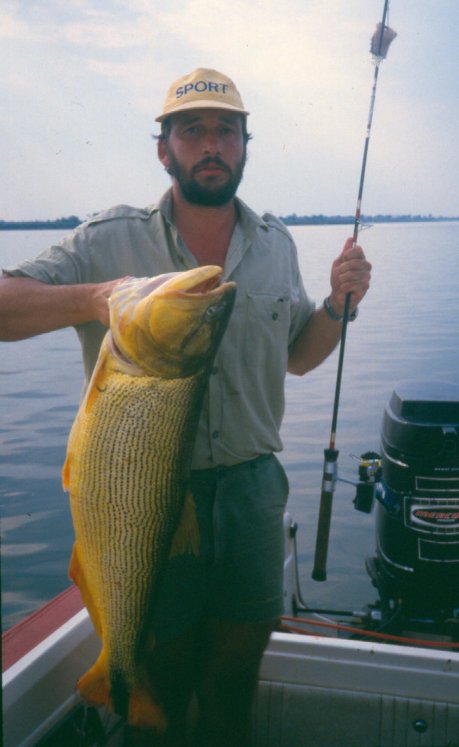
Another Dorado caught with Sabalo bait.

Another Dorado caught with Sabalo bait.

Day 3. 10/1/86. AM Back to Sábalos. Shoal feeding. Catch several (6) Sábalo by foul hooking. 1 Sábalo of 3+kg. Dorado – 8. PM 3 more Sábalos. Dorado feeding well, another 12-15 Dorado 2.5 – 8+ kg. Many fish lost. Amazing fishing. Amazing sunset. Cicadas. Back early because of wind. (I added: Fantastic Dorado hunting and feast over Sábalo). As agreed, we went straight for Sábalo fishing. I was surprised to see Paul being the first attempting to foul-hook Sábalo but refrained from make a rude comment as he was enjoying it like a child! The climax for him came when he got a rather large fish of about 3 kg that gave him an almost a harder fight than a larger Dorado. While we fished for bait, we witnessed a spectacle that delayed our fishing for a long while.
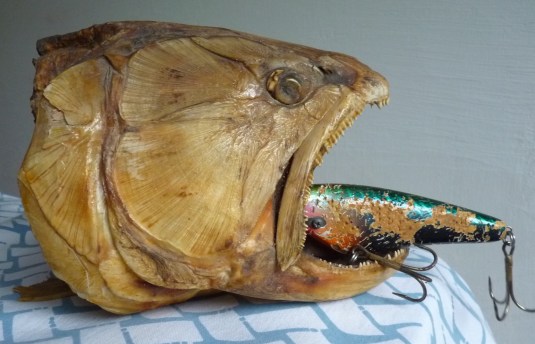
They have a large mouth.

They have a large mouth.

The Sábalo shoals were, again, all over the place, shining silver as they rolled in the clear water. There were thousands of them feeding on the clay riverbanks. At frequent intervals you could see and/or hear splashes: Dorado attacks! They seemed to be cruising among the shoals and striking at the Sábalo. Paying closer attention we could actually see the dynamics of the hunt on the surface but we could not agree if they were hunting in packs or whenever a Sábalo was caught several Dorado congregated to feed. This was the only time I have ever witnessed this amazing event, despite having returned to fish there several times by now!

Regarding the fishing, the fun continued and it was increased when we decided to change to very light gear. This meant that we needed to play the fish for a long time before they were sufficiently tired to bring them in. It also resulted in fish swimming in all directions, passing under the boat, jumping behind you only to return the moment you turned around. Fishing people bumped into each other and several times we nearly pushed each other into the water as a result of our excited movements. Soon we were exhausted and decided to call it a morning. We all agreed that it was great fun even when it resulted in substantial loss of equipment! We thanked Moreno profusely for his guidance.

The afternoon outing started with a very loud Cicada choir that, according to Moreno, indicated the brewing of a storm. We repeated the same fishing approach and witnessed more Dorado kills. Even Moreno was impressed in his quiet way! Then the wind picked up and while Nature was putting together a most beautiful sunset it was time to return as a heavy storm was indeed brewing. We managed to get back just before a small tornado hit Paso de la Patria with the usual consequences of broken branches and other light damage.
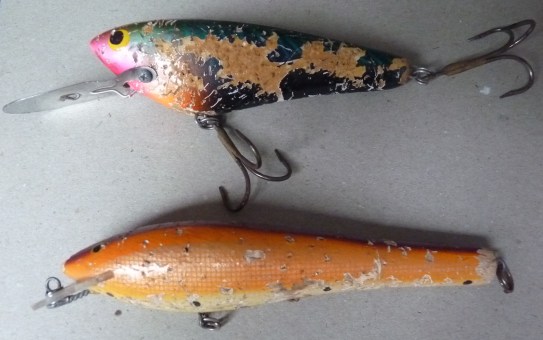
The condition of the lures after a day fishing!

The condition of the lures after a day fishing!

Day 4. AM Topadoras in the river. Dionisio Romero (“Moreno”). Went 56km up river, past Itatí. Tried for Surubí and hooked one Dorado 4kg – lost (JJC). Then tried Pacú no luck. 11:30 Went for big Dorado from Itatí stones. Hooked Dorado (big) and the steel trace gave in but recovered although damaged. The storm calmed down at dawn and all we were ready to go. As we had had sufficient Dorado fishing by then, we focused our interest in attempting to catch Surubí and Pacú while travelling around. An outstanding feature of travelling upriver was the densely forested river margin in Paraguay and the amazing noise that Black Howler Monkeys make early in the morning.

We travelled many km to get to places where our target fish could be caught but failed to find them. On our way back we tried the Itatí stones again and hooked some large Dorado that we could not get out. In the afternoon we accepted an invitation from Moreno to cross into Paraguay to visit the shops, as it was cheap there. Not knowing really what to expect, we accepted.

After boating along the Paraguay River for a distance we entered into a tributary and docked near a large wooden building on stilts. It looked as a makeshift contraption and we looked at each other anticipating time wasted. We climbed the stairs and entered. Our surprise was huge at finding all the electronic equipment you could dream existed and wished to buy as well as all the alcohol and cigarette makes and amounts you wanted. Although we wasted time as we did not buy anything, it was an amazing find in the middle of nowhere. Clearly smuggling was involved!

We had come to the end of our fishing trip and we had a final meeting with Coco to whom we needed to explain that we could not pay in cash for the fishing as our travellers cheques from Kenya could not be cashed in Argentina but that we could pay him with a credit card. He mentioned that he did not have the means yet to accept credit cards so we agreed that we would send him the payment once we were back in Kenya. This was the coronation of Coco’s bad luck with us: he lost the trailer and, at the end of our safari, did not get any money from us! However, he continued to be a friendly and helpful host.

So, the following day it was time to catch our plane from Corrientes to Buenos Aires and he was there to pick us up. Unknown to us, the time for departure had been anticipated. At first we did not think much when we saw a plane approaching the Corrientes airport while parking Coco’s car. The truth became clear when we arrived and the plane was taxing its way to the departure area and, when we were explaining the situation to the check in desk we heard the engine noise and it was gone.

We were told that there was some hope for us as the plane stopped in Resistencia before continuing to Buenos Aires. We rushed our farewells to Coco and took a taxi to Resistencia, faster and safer than the Chevy! Despite our mad rush, it was a “deja vu” in Resistencia and we had to book another later flight from Resistencia. Not a great problem really. While at the airport we met an Australian lady tourist visiting family in Asunción that had not been allowed on her plane, as she did not have a Visa for Paraguay. As she was having communication problems we assisted her and, in the process, ended up inviting her for lunch! Naturally we went to a BBQ place in Resistencia where we went through the normal carnivorous diet of the region to her horror!

Eventually we walked with her to the Paraguayan Consulate where she got the Visa and placed her on a bus to Asunción. We were still in time to get to the airport and, this time without snags, leave for Buenos Aires with the best fishing memories ever!
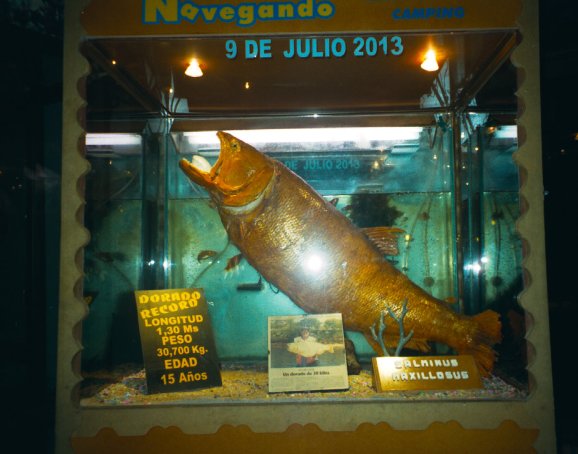
The record of Dorado: 30.7kg!

The record of Dorado: 30.7kg!


[1] Some of these trips deserve a separate account that will come, eventually.

[2] Now the Department for International Development.

[3] Salminus maxillosus, Piaractus mesopotamicus and Paulicea luetkeni respectively.

[4] Mate is the main traditional drink from this region of South America. The dry ground up leaves of the yerba mate plant (Ilex paraguayensis) are placed into a container and hot water poured on it. The infusion is then sucked up through the bombilla, a metal drinking straw with a bulbous strainer at the end.

A Challenging Encounter (with art)

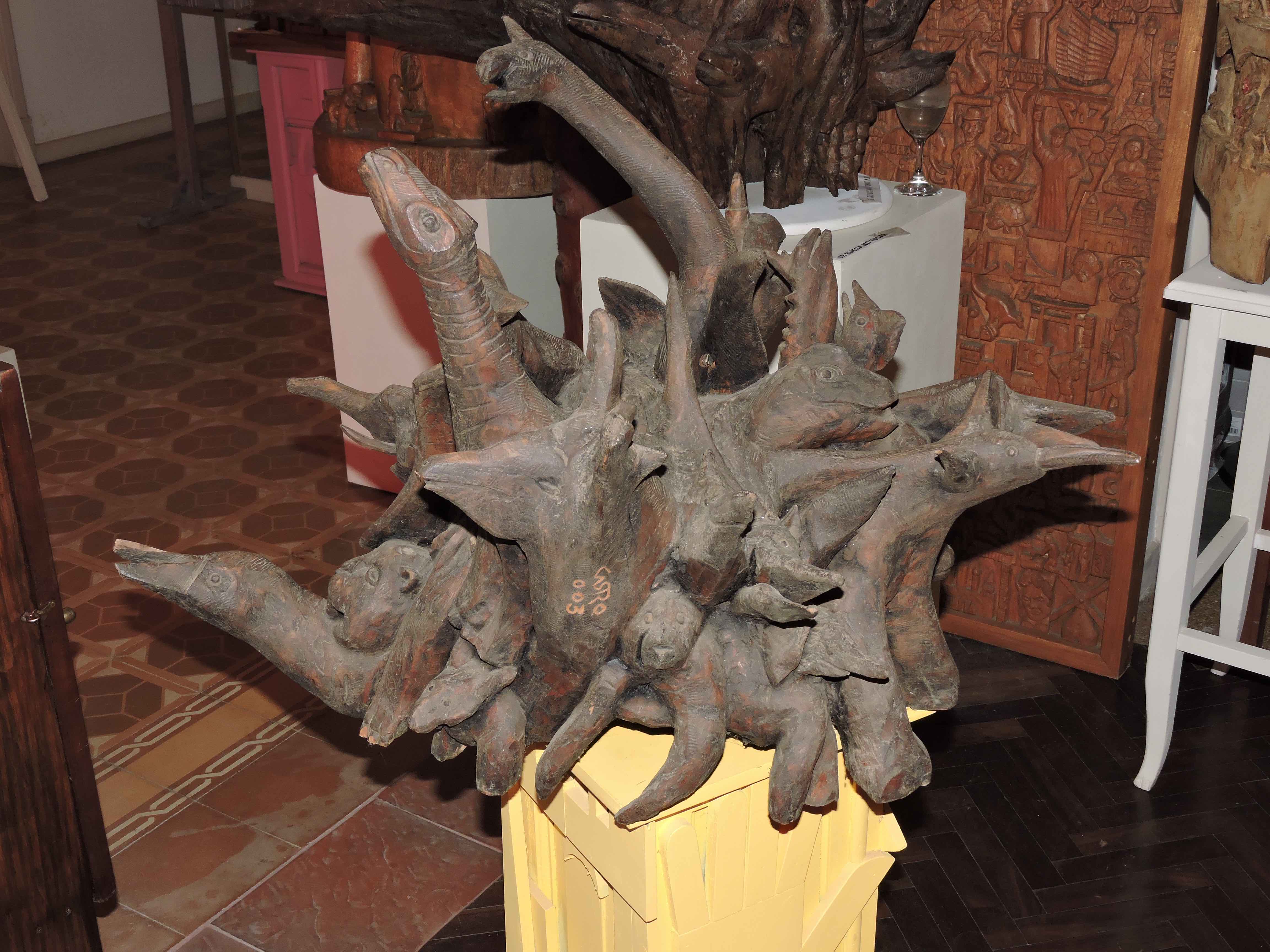
This animal "salad" was made with wood pieces. Included because my blog is on wildlife!

This animal “salad” was made with wood pieces. Included because my blog is on wildlife!

Restoring my family house in Carmelo, Uruguay is an important ingredient -together with blogging- prescribed by my children to delay the dreaded brain paralysis and avoid terminal boredom due to retirement. The closest hardware shop became a very frequented place as I was constantly looking for tools and materials needed for the task. To my satisfaction, I discovered that a new shop had been opened just fifty metres from my house and I visited it

The shop -that also sells house ware and ornaments- belongs to José (Pepe) and Rosa Castro. The latter takes care of it and deals with customers. They have a teenager son called Alexandro. After a few visits I met Pepe and we gradually got to know each other. He was -rather unusually- interested in my life in Africa and I listened to what he did. We lied to each other a lot and we knew it! One day Pepe convinced me to linger a few minutes so he could show me his work. I luckily accepted and I was privileged to gain a glimpse of his life’s achievement.

Noah's Ark.

Noah’s Ark.

I am aware that by writing this post I am completely deviating from the usual wildlife-related topics and that I am entering a territory I know little about. I hope you find this interesting. In any case, I promise you that my next post will be on the usual nature-related subject (what else?).

Pepe was born in Pontevedra, Spain 75 years ago and arrived in Uruguay in 1957. He worked as a cabinetmaker (“ebanista” in Spanish) in some of the finest furniture makers in Montevideo for many years while he studied technical and artistic drawing and various painting techniques. He started sculpting in 1965 and he gradually increased his output until his retirement when his life became almost solely focused on his work. More details can be found

http://www.escultorjosecastro.com/index.

As a veterinarian and a scientist the understanding of art is not my thing and not even several years in Rome managed to change this too much. For this reason I like what I like but I can also appreciate the work that goes into creating works of art! In Pepe’s case, despite being “brain-impaired” when it comes to art, I not only like a lot of what he did (and does) but also appreciate the work involved in achieving it!

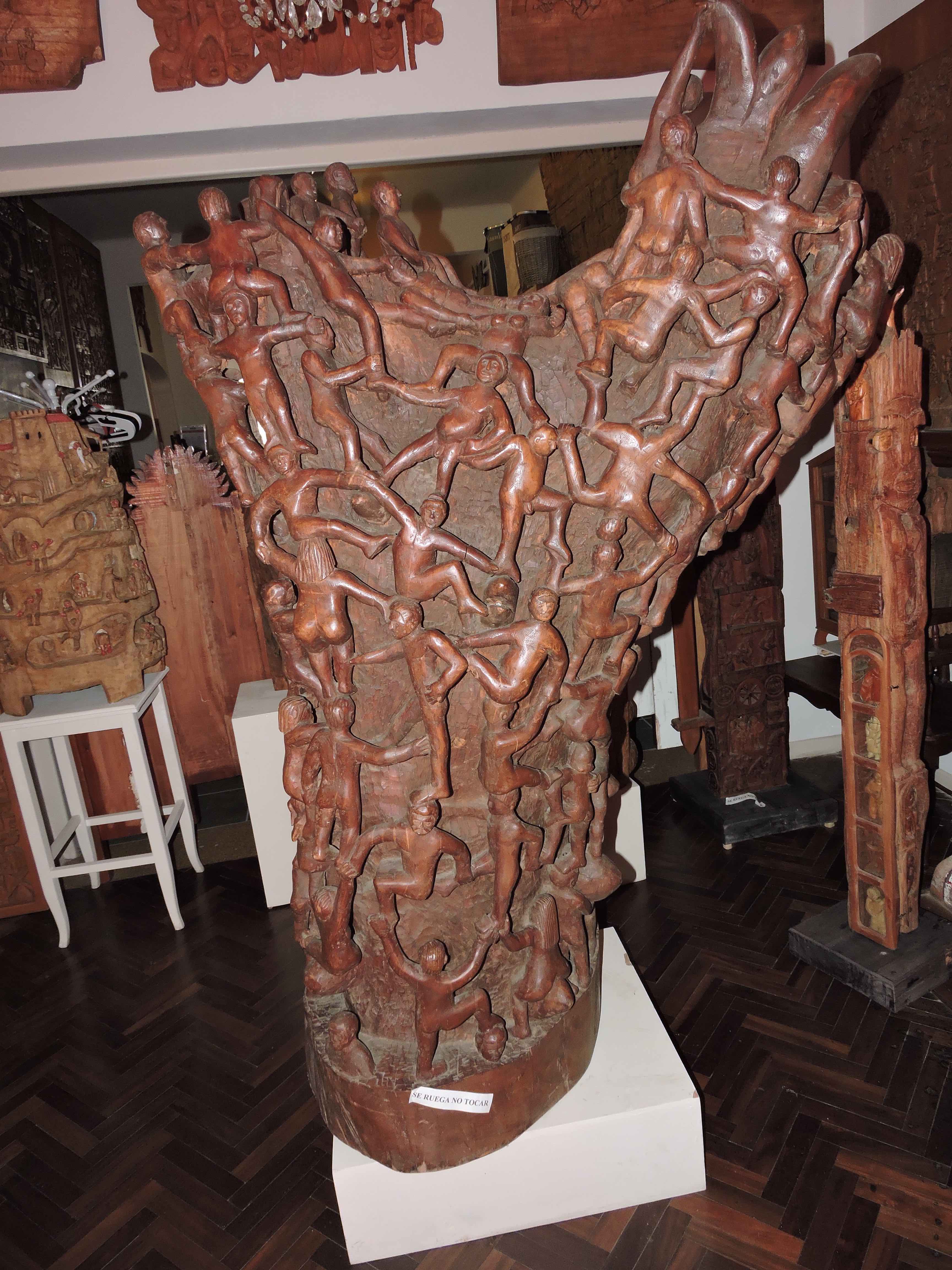
What can I say? Its title is "Climbing".

What can I say? Its title is “Climbing”.

I learnt that, so far, Pepe has created over eight hundred pieces (carvings, artistic chairs, wood panels, boxes and other items) and I could see several styles although I am unable to comment or seriously criticize them!

HIs creativity outruns storage space!

HIs creativity outruns storage space!

Fortunately, as he got to know me, he started to show me his work and to explain it to me. To be able to look at art with the creator showing it to you is out of this world and I felt -aware of the possible differences- like a friend of Picasso being able to question him about details of his masterpieces!

Pepe explaining a work about Carmelo.

Pepe explaining a work about Carmelo.

Pepe describing another piece.

Pepe describing another piece.

Pepe has exhibited his work several times, he has been the subject of interviews and published accounts of his work also exist. Leafing through these I learnt that his style of work is defined as “Baroque” and that many of them deal with his life experiences and/or tell a story. Some of his works are so elaborate and full of detail that it takes several examinations to fully take in their meaning and detail.

Several pieces represent episodes of Pepe's life. This is a "haunted" house he secretly visited as a child.

Several pieces represent episodes of Pepe’s life. This is a “haunted” house he secretly visited as a child.

Since meeting him I have now talked to Pepe a great deal and also watched him working. Although he appears lighthearted and funny most of the time, when it comes to his work he transforms himself into a different man, guided by his inspiration and aims for almost impossible perfection! However, he transmits his mischievous view of life into his work that often has a jocose element in it that can become satiric in several of his works (keep reading!).

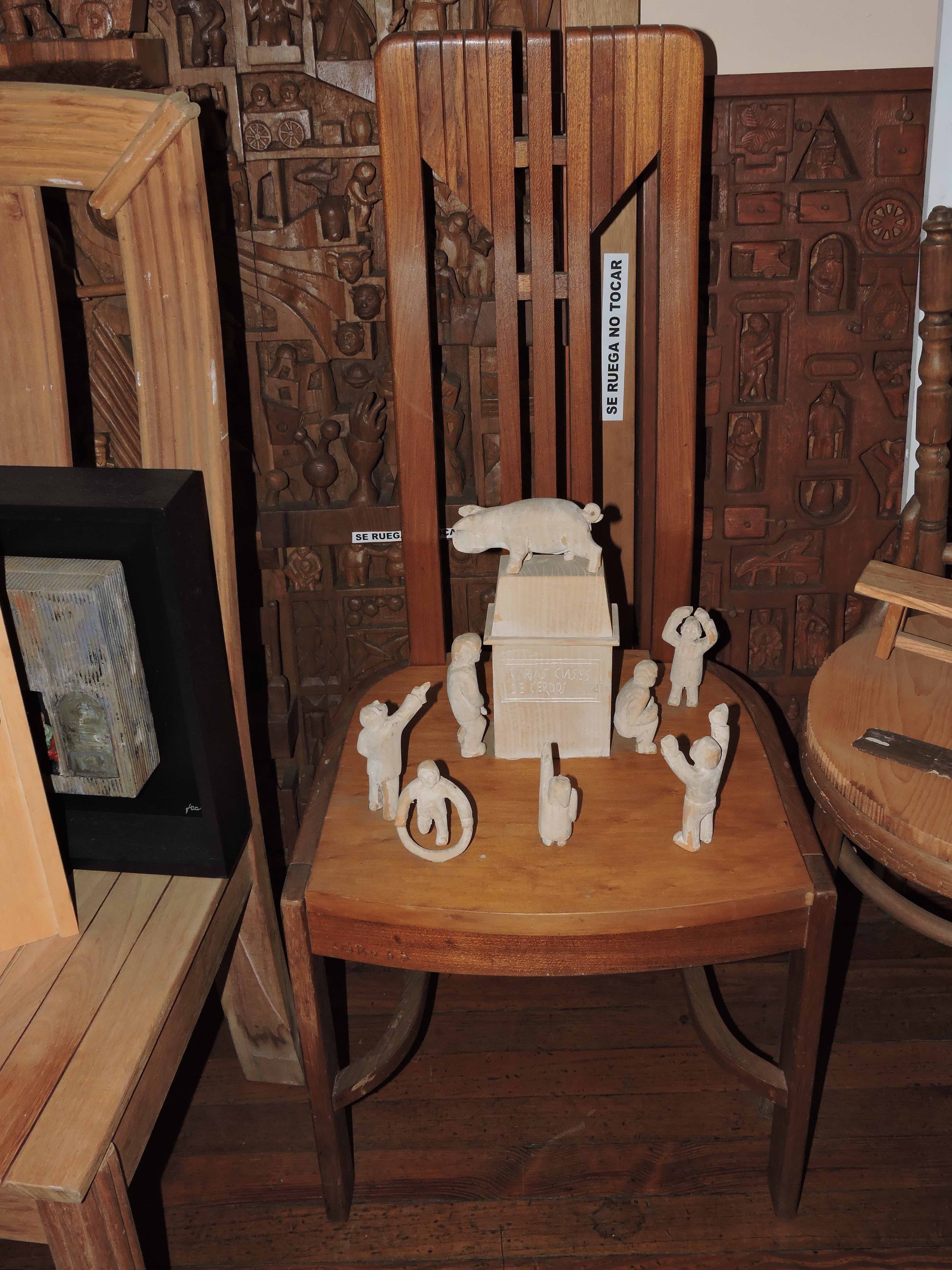
A great chair is not enough for Pepe.

A great chair is not enough for Pepe.

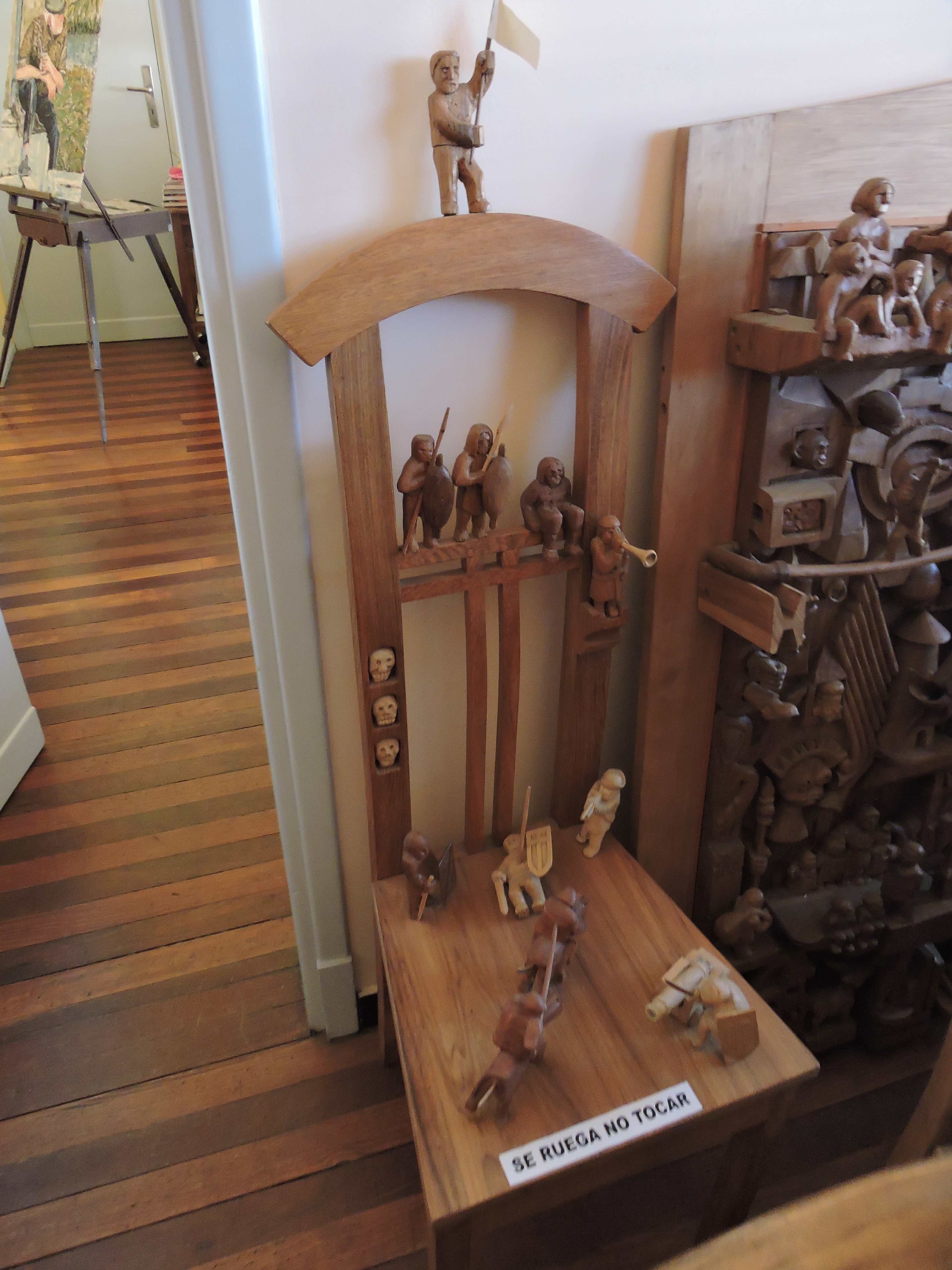
Not just a beautifully crafted chair...

Another example of a chair according to Pepe…

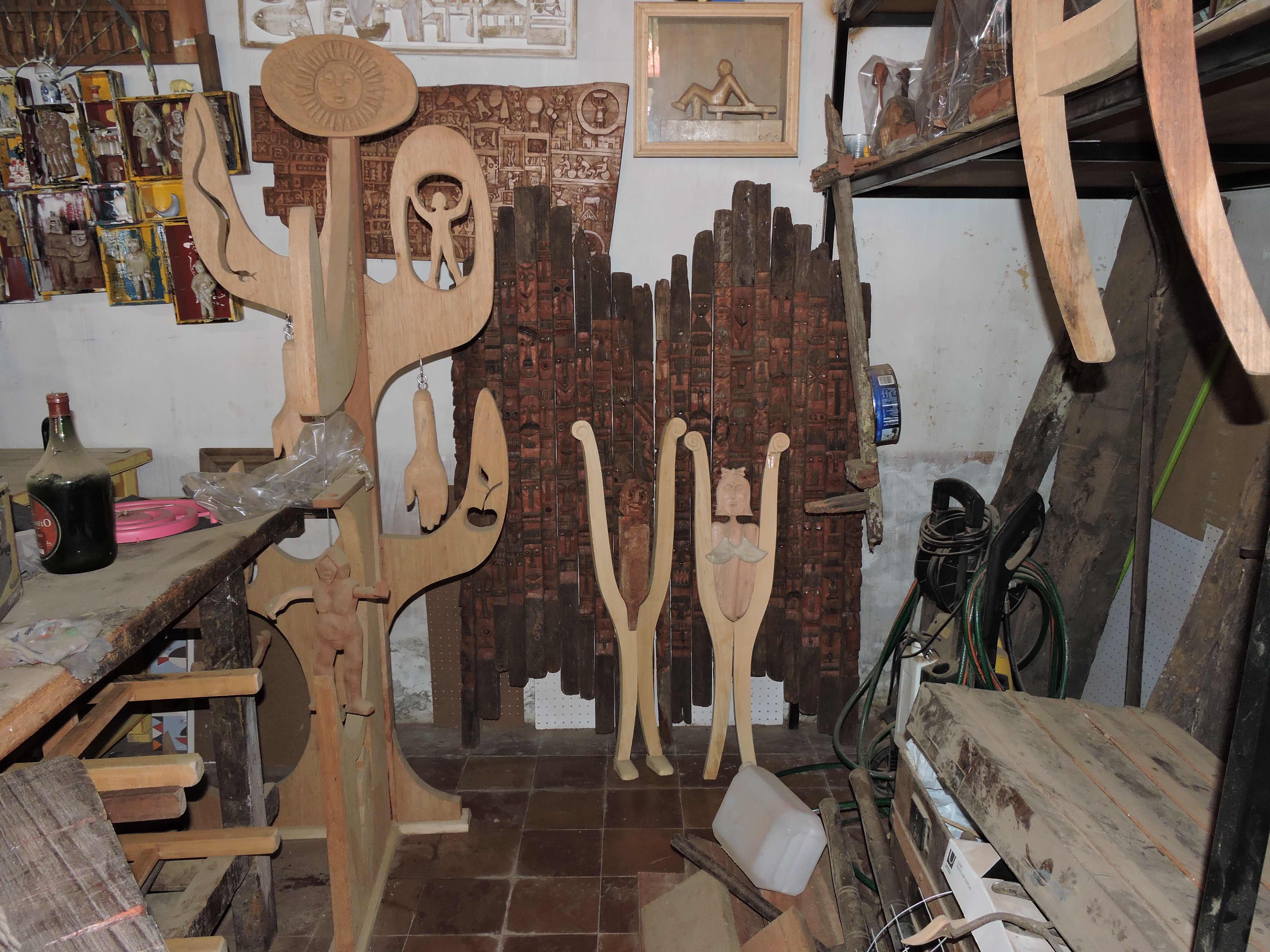
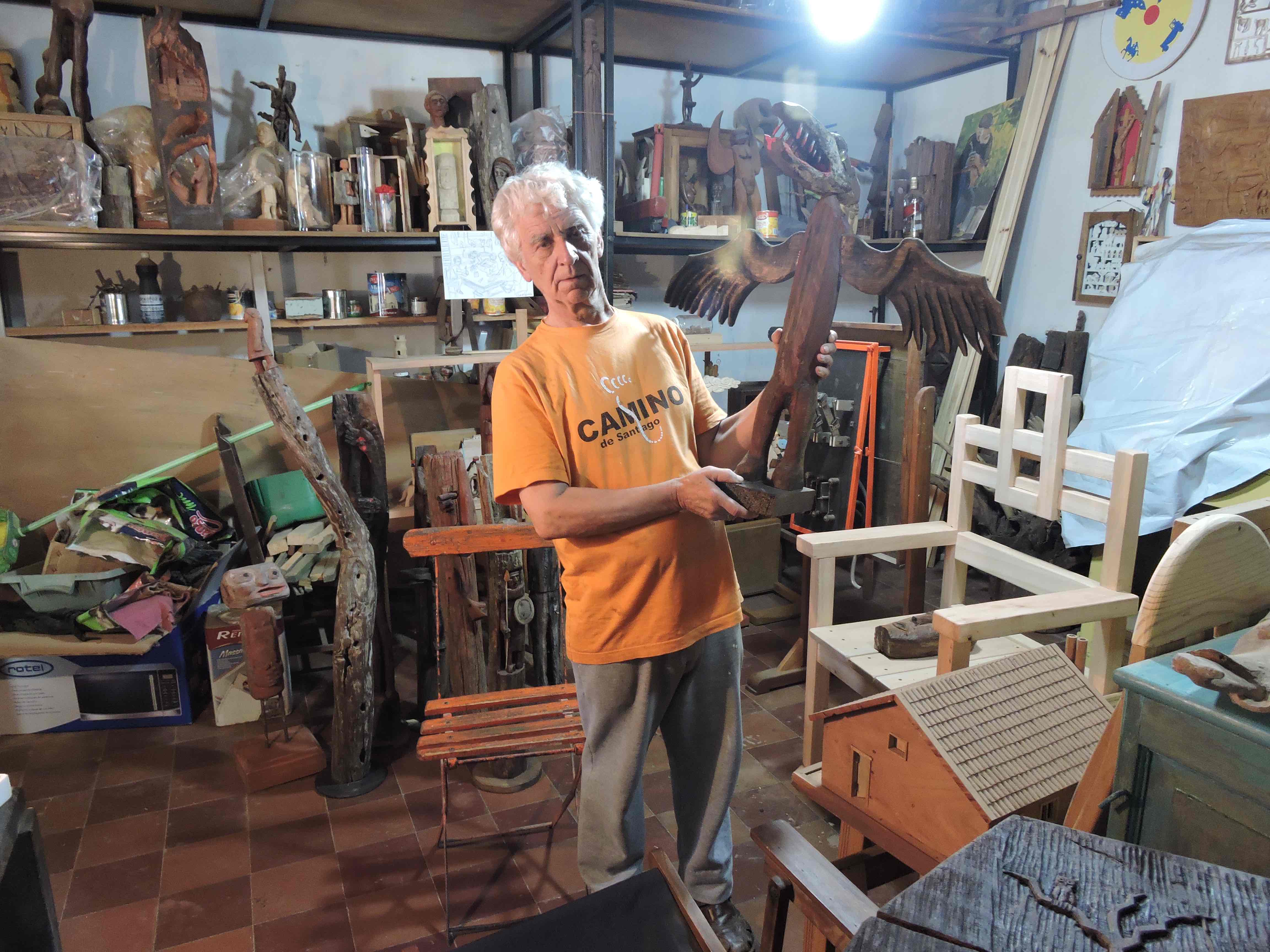
One day he called me, as he had to show me “something”. He took me to his workshop and, seeing it for the first time, I was really impressed. It is inside his “Cave” as he calls his workshop, that Pepe becomes the artist. “It is here that I feel really comfortable, it gives me pleasure, I have fun, I play”. This is his secret kingdom and where his ideas get transformed into art. It is also here that he keeps a vast collection of carpentry tools that are his pride and joy and are worth seeing.

Pepe's tool collection.

Pepe’s tool collection.

Once inside the Cave I noticed many pieces of wood and roots of several types, origins and shapes that are patiently waiting until Pepe decides to gives them the life or death he “sees” for them. In some, the final output is starting to emerge as Pepe works his way through them.

Inside his "Treasure Cave".

Inside his “Treasure Cave”.

I spotted a large tree trunk base with its roots still attached, to which he has wrapped carved branches and sticks of different colours. Questioned about it he said “I am looking at it and considering several options. I do not know yet. I have about ten ideas. The one on the surface at the moment is to place dwarfs peering through its holes. I do not know yet but it will be something creepy”.

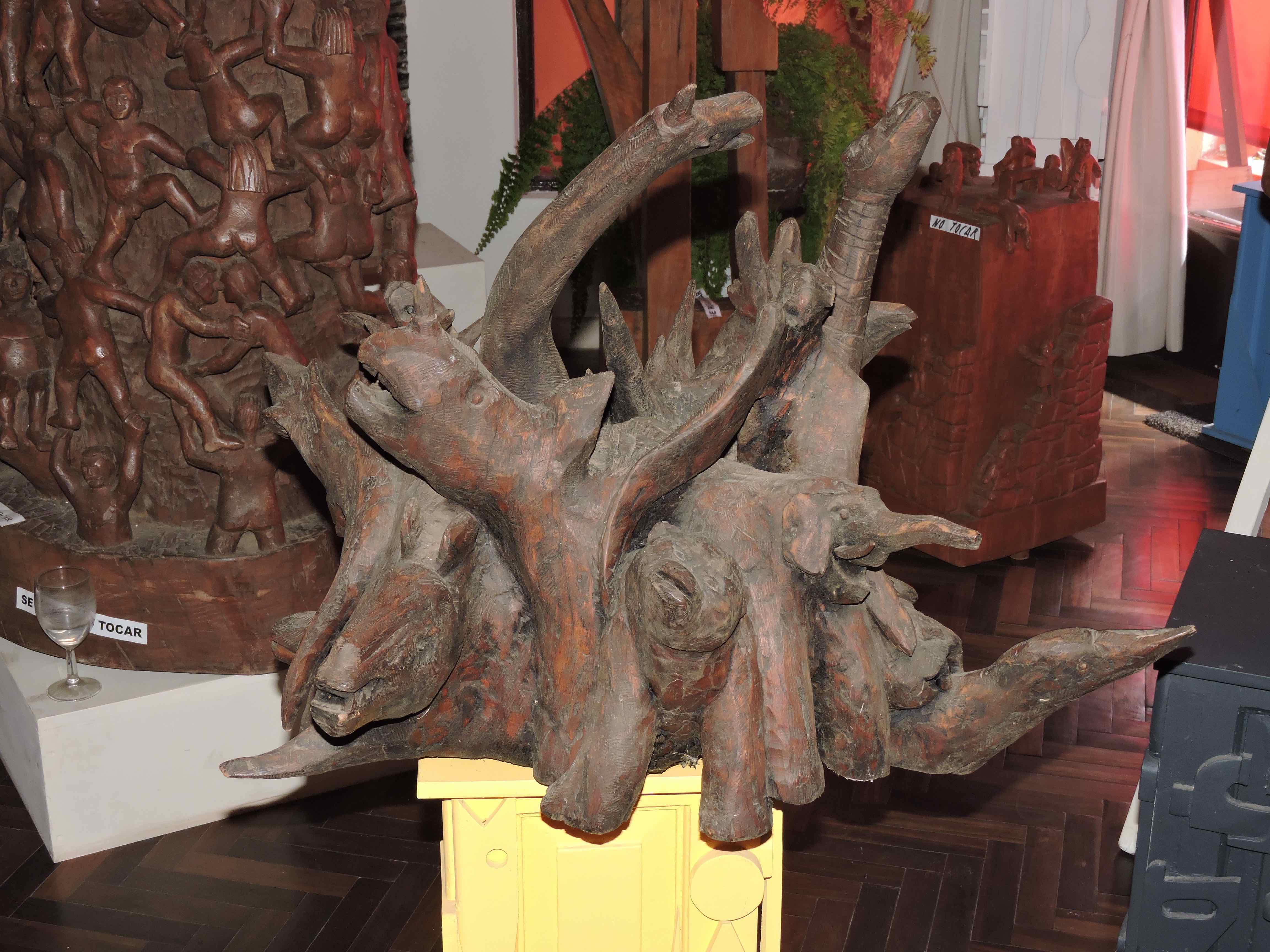
Then he picked up another piece and starts to showed it to me. “Look” he said, “there is a tail here and a leg there” and suddenly, but only for a fleeting moment, I began to see what he saw. And then he said, “it is not a normal animal, it is some kind of a creature” and then he loost me again as I stayed with the tail and the leg and my conventional animal! Only then I managed to recognize the burnt and dirty dried fig tree we collected together!

A simple dried and half-burnt root (collected together) starts to gain shape.

A simple dried and half-burnt root (collected together) starts to gain shape.

When I told him, he laughed and moved on to show me the twelve “special” dining chairs he is making or his on-going depiction of the execution of another creature in the electric chair. “The victim will not be normal, it will be a being or something but I do not yet know” he said, and then added “it will be tied to the chair”.

"I do not know, it is a monster of some kind"

Pepe showing me another piece. The electric chair project to his left.

We walked through his house where his finished work is displayed. He said, “When the conditions are right, I would like to start a Foundation where not only I can display my work but also teach the young generations”. I can only silently hope that he succeeds and promise myself to help him in achieving his dream. Watching his finished works I can see that -like other artists- he can do what I consider to be “conventional” and beautiful sculptures as well as wonderful chairs that he decorates with his own unique creations of many shapes and forms.

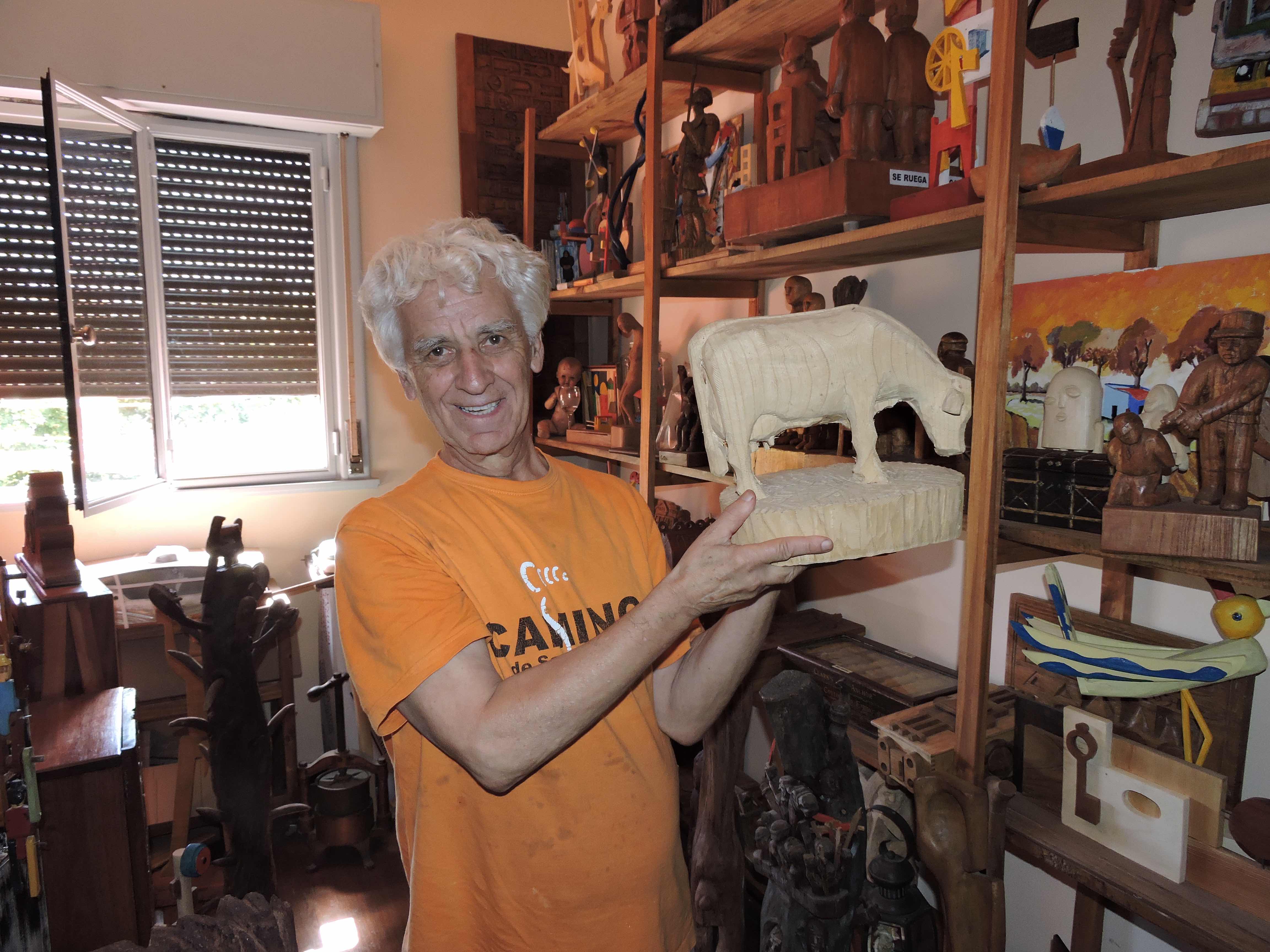
As he knows my animal preferences and he picked a simple cow from a shelf to explain that he left it partly undone so that people could see it in different ways. It is however clear that he put great detail into it as, for instance, the milk vein is clearly there!

"Do not bother me, it is just a cow"

“Do not bother me, it is just a cow”

Some of his work I can understand (and admire) straight away (although more careful observation reveals more detail). Among these is the “Babel Tower” and “Noah’s Ark”. Even the clear animal suffering that “Extinction” depicts is evident to me as its subjects really reflect the agony of their fate! Other work passes over my head and it is only after Pepe’s patient explanations and comments that I start seeing things and interpreting what he means.

Extinction.

“Extinction”

Extiction.

“Extinction” from another angle.

I see several styles, elaborate carvings, combinations of wood and paint -my favourites- and others. Clearly “Climbing” at its near two metres tall is one of his greatest achievements but there are others that although smaller are no less magnificent: wooden boxes that fit into each other like Russian dolls, colourful wooden “cubistic” jigsaw puzzles made of wood trimmings, old silk thread cabinets filled with carved world famous figures many of whom you can easily recognize as you do with the five Uruguayan politicians that he wickedly calls “Four Politicians”!

Some works follows the options that a piece of wood offers, but in others the wood follows what Pepe wants to get out of it. I think this simply depends on the mood and will power he has on the day he chooses to work them!

We talked so much and I became so engrossed in his work that I got back home brain dead but happy to have spent time with him and to have a few -rather poor- pictures to illustrate the post. However, I also notice that I never saw what he wanted to show me in the first place! I decided to visit him the next day.

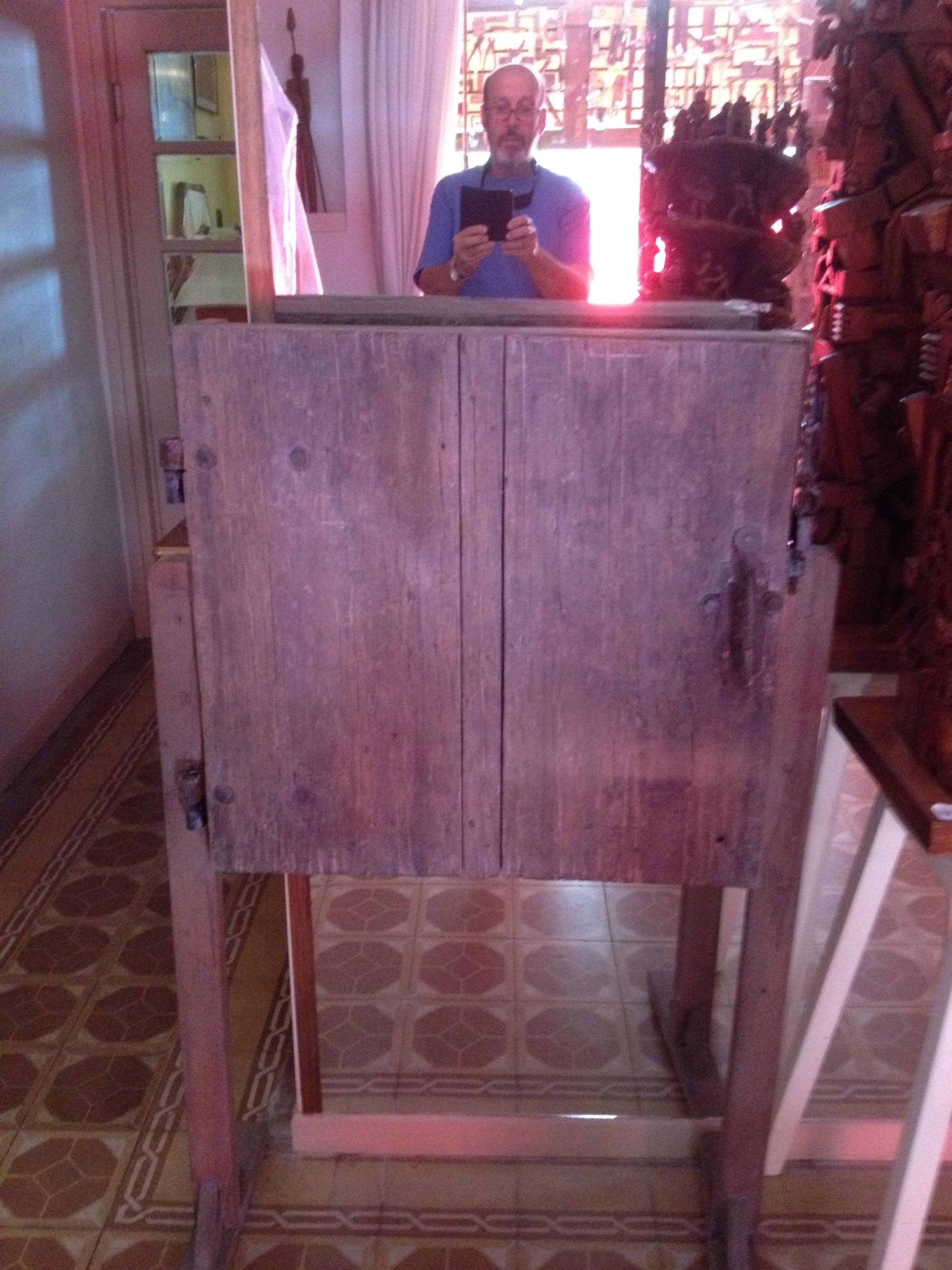
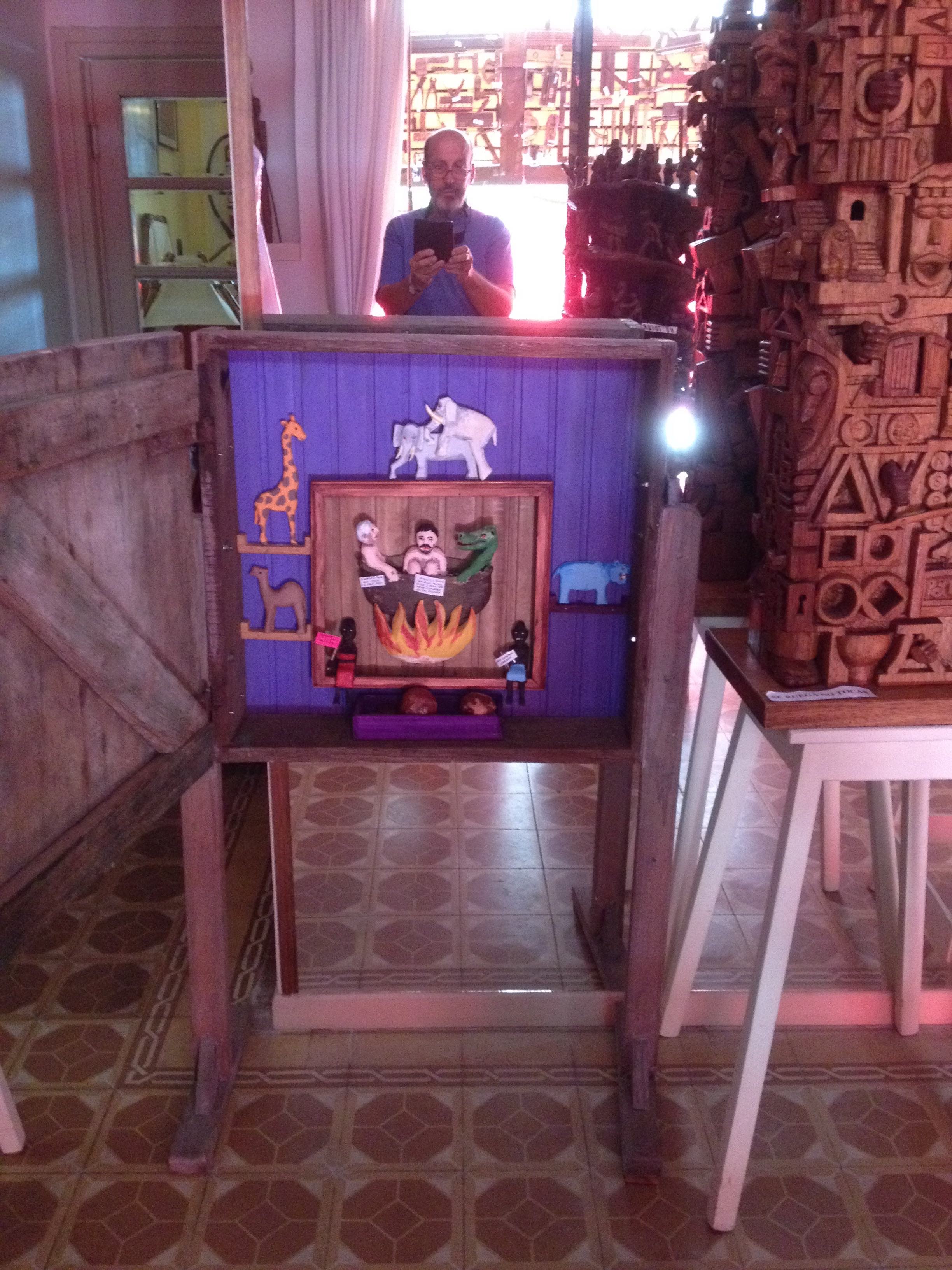
So the following day I returned and he showed me the piece. It is a wooden cabinet and when he starts opening it his wicked side takes over and, before I see it, I understand. I am in it, together with him and a crocodile inside a cauldron and surrounded by animals and African people. Somehow all my pestering of Pepe about Africa has curdled into art, even if clearly tongue in cheek. I am proud of being part of his work, although shown in rather uncomfortable circumstances… However, I now join the ranks of Don Quijote, Jesus, God and the Devil among others depicted in his works!
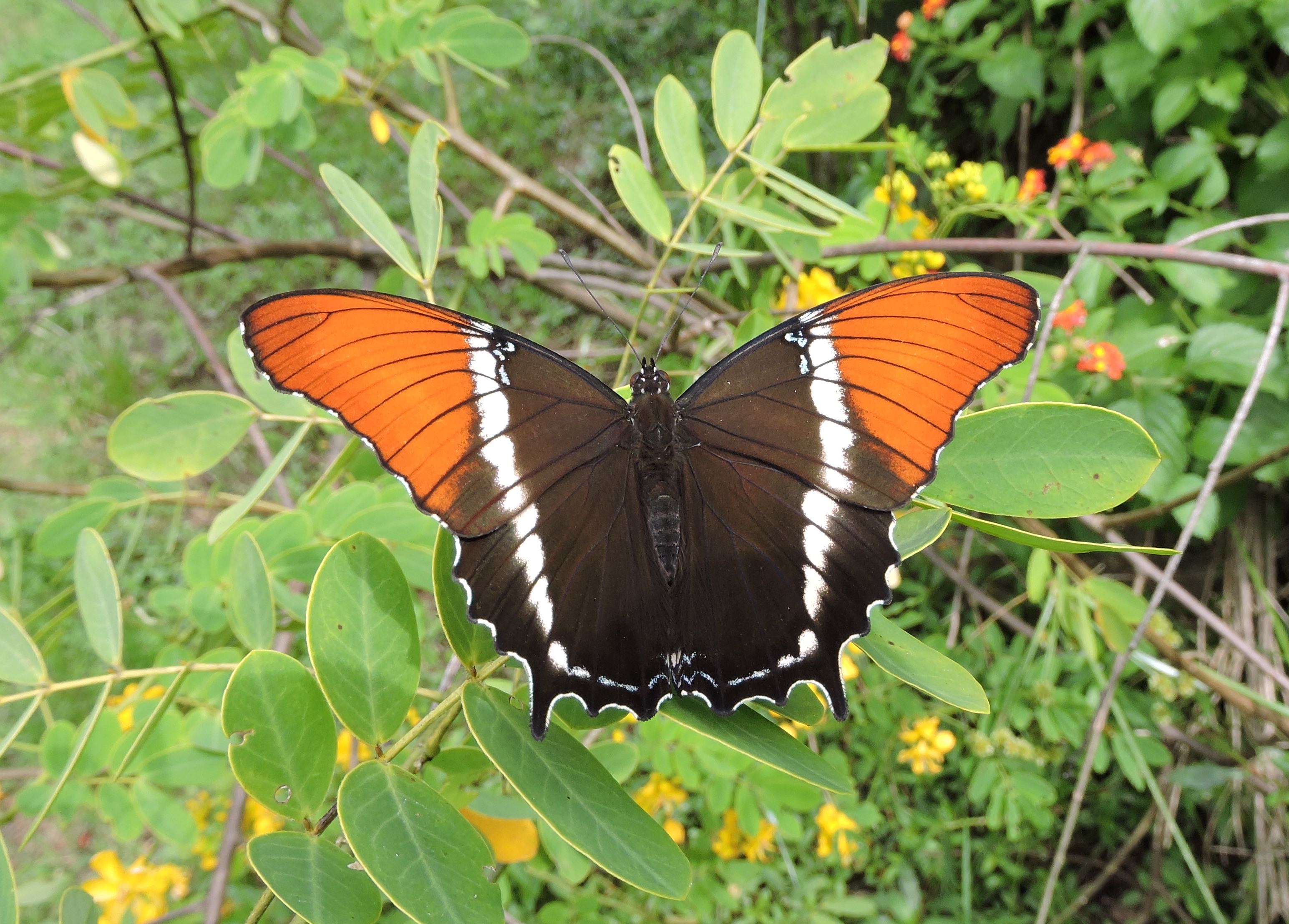
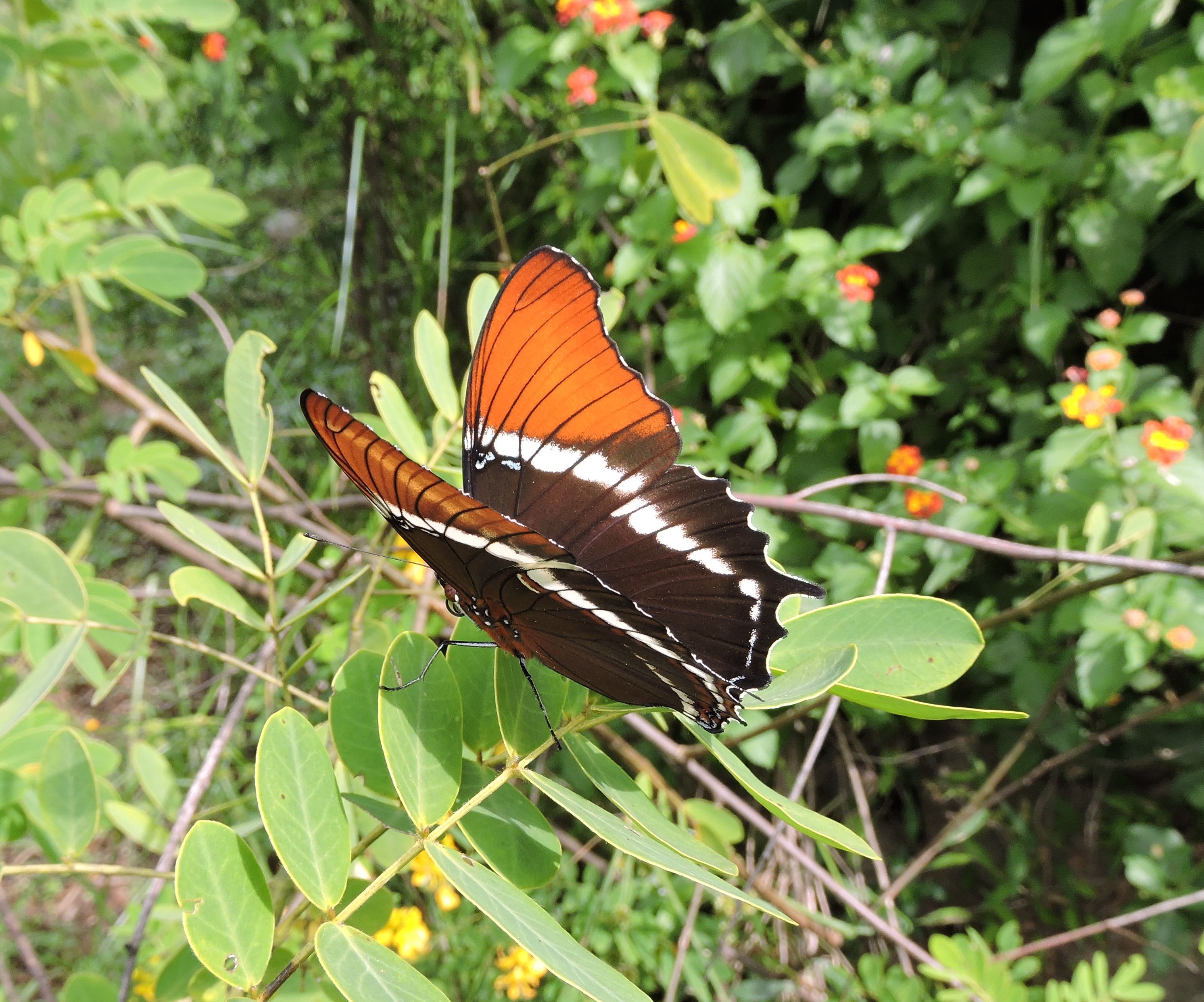
A simple old cabinet...

A simple old cabinet…

The cabinet open reveals its sinister contents...

Opening the cabinet reveals its sinister contents… (The Bushsnob is also shown above for reference purposes)