Safari

Moremi

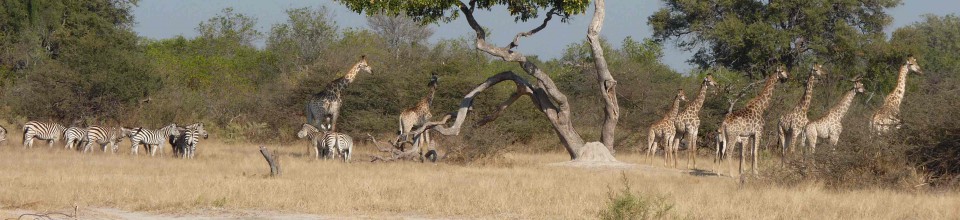
cropped-giraffe-and-zebra-small.jpg

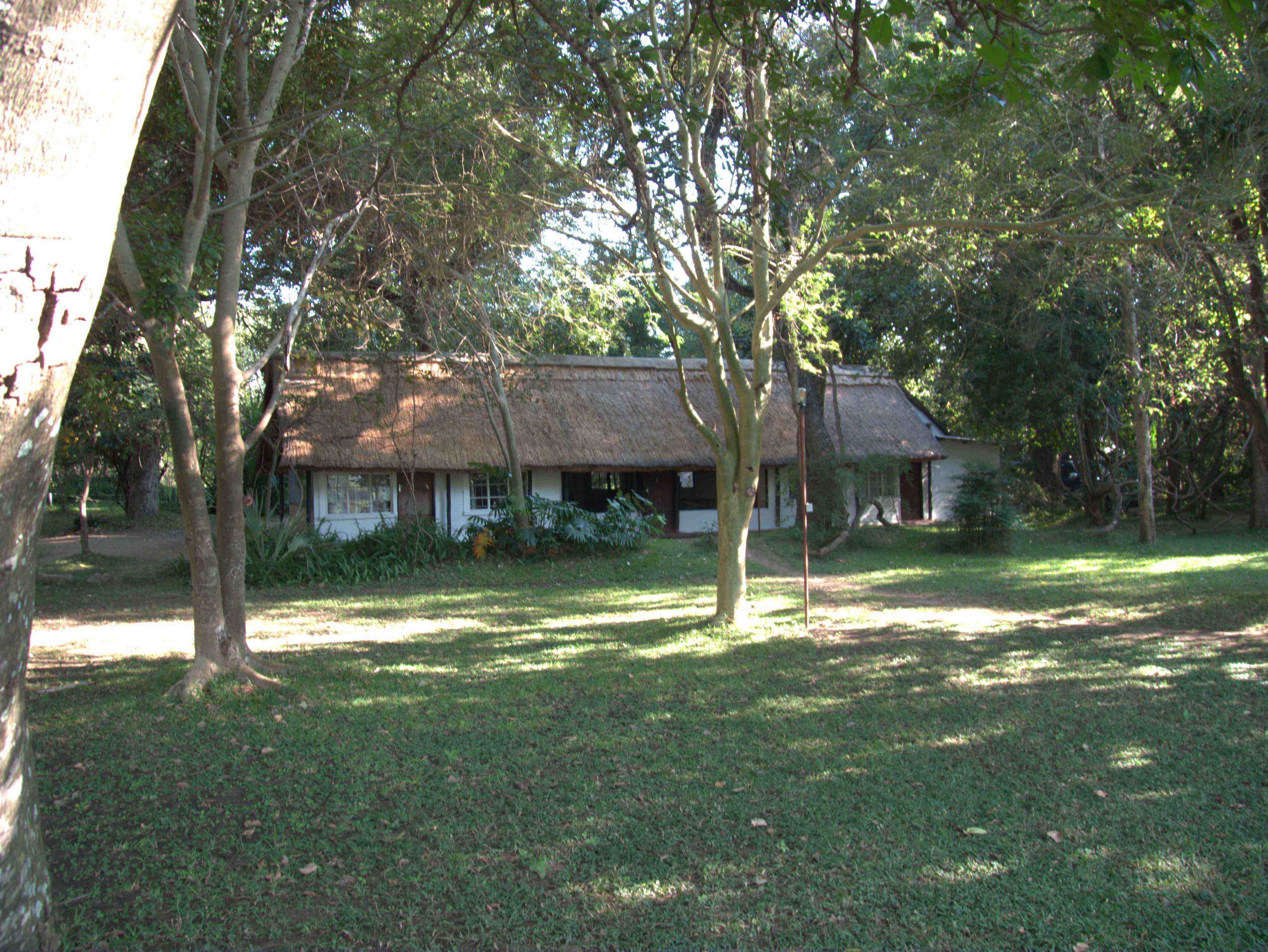
We arrived at the South Gate Camp in Moremi Game Reserve after re-stocking fuel and food at Maun. At the gate we learnt that our 1999 map was outdated! So we bought an updated one as a new area of the reserve, the Black Pools, Mogogelo area adjacent to the camp, had been opened to the public after our map was printed! This was good news as other known places looked quite far from us.

The campsite followed the same general lines of Nxai Pan with similar anti elephant fields in place. Fortunately the only stinkbugs present were those coming out of our car and unfolded gear that lived rather ephemeral lives, being rapidly consumed by the various birds that were attracted to them; clearly birds without taste!

The area around the camp was drying up but there were still a number of roads that we could not cross so there was a lot of turning around and/or looking for alternative routes. This was further complicated by differences between our new map and the reality of the drives that got us “lost” a few times with the result that some time was wasted finding the right way. Often when this was finally found, it was still blocked by the water and not fordable! This served as a reminder that this was a real safari and not a smoothly presented wildlife TV or video!

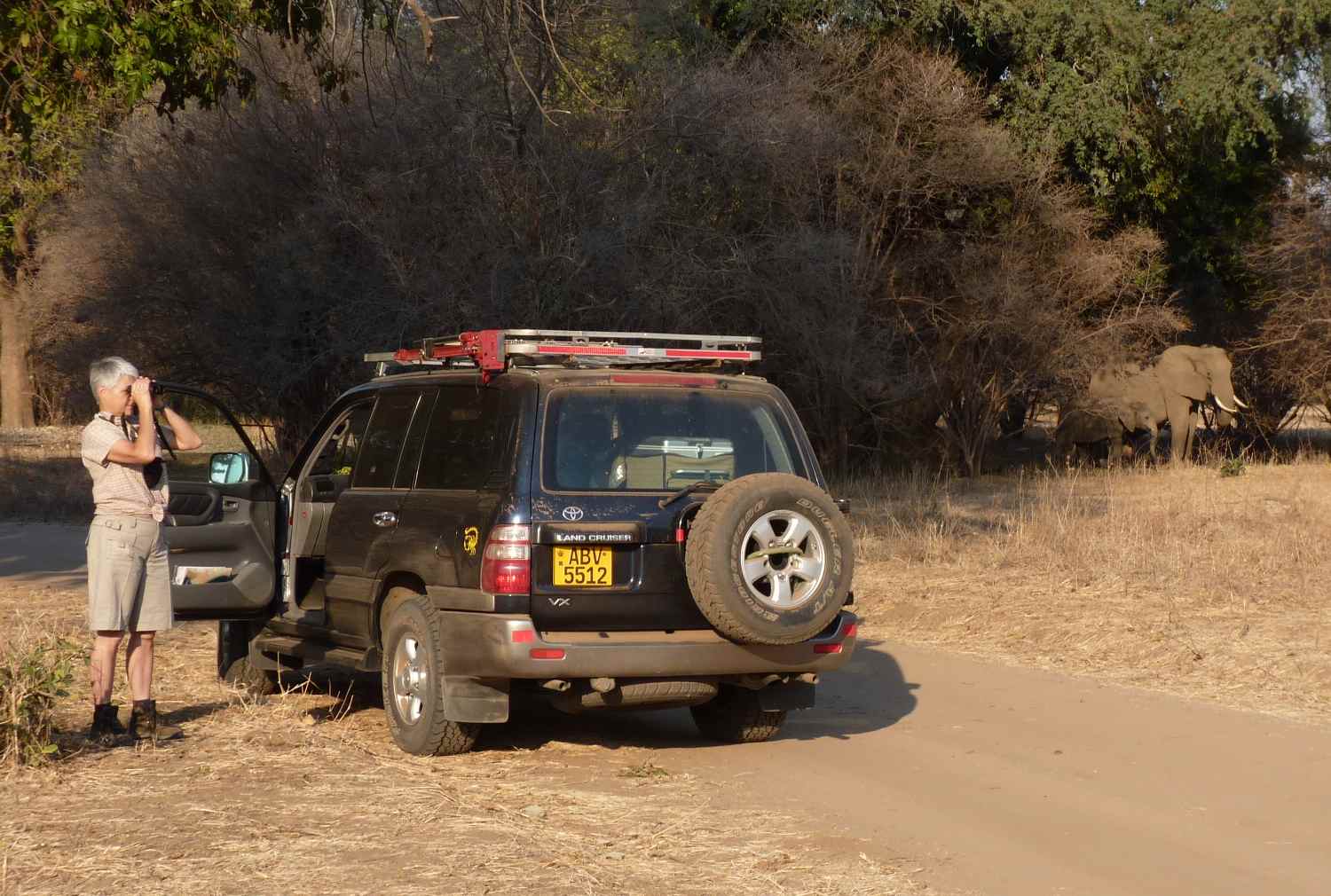
As water was still rather plentiful, the animals were scattered around the area, particularly the elephants. We did not see many predators although we heard lions and hyenas every night. We also found five hyenas on our way Khwai camp. An interesting find were the abundant Southern Lechwe (Kobus leche), the first ones we had seen since our days in Zambia in the early nineties. This is an interesting antelope that is found in marshes feeding on aquatic vegetation and seeking refuge from predators by going into rather deep-water areas. There they have an advantage as the skin of their legs is greasy and repels water. This fact gives them an advantage as it prevents them from getting water logged, which would slow them down in case of a needed exit.

Birds and mammals provided some amusement at the almost empty campsite and luckily, this time it did not smell. We did have the expected evening visits by spotted hyenas but they kept a polite distance from our tents. A Lesser Bush baby (Galago senegalensis), a tiny mammal of about 35 cm (tail included) and weighing about 150g was also seen every night. First we would hear its ‘louder than life’ screeching and, shining the torch in its general direction, we would spot its comparatively enormous eyes! Even so it was tricky to see it as it was busy jumping between trees, achieving almost impossible leaps for such a miniature animal and behaving more like a furry frog or perhaps a winged insect!

Redbilled woodhoopoes (Phoeniculus purpureus), White Helmetshrikes (Prionops retzii) and several Hornbills species also provided us with hours of entertainment. Both the Redbilled (Tockus erythrorhynchus) and Southern Yellowbilled (T. leucomelas) hornbills were present; the latter were particularly daring. These birds gained movie notoriety after Alan Root produced his documentary of the female raising her chicks while locked inside her nest, fed by her mate. A few of them hung around our camp and one, clearly a narcissist, spent a long time in front of the car window, trying to chase himself away in a prolonged and futile territorial dispute (with himself) that had no possible outcome, except possibly cracking the glass!
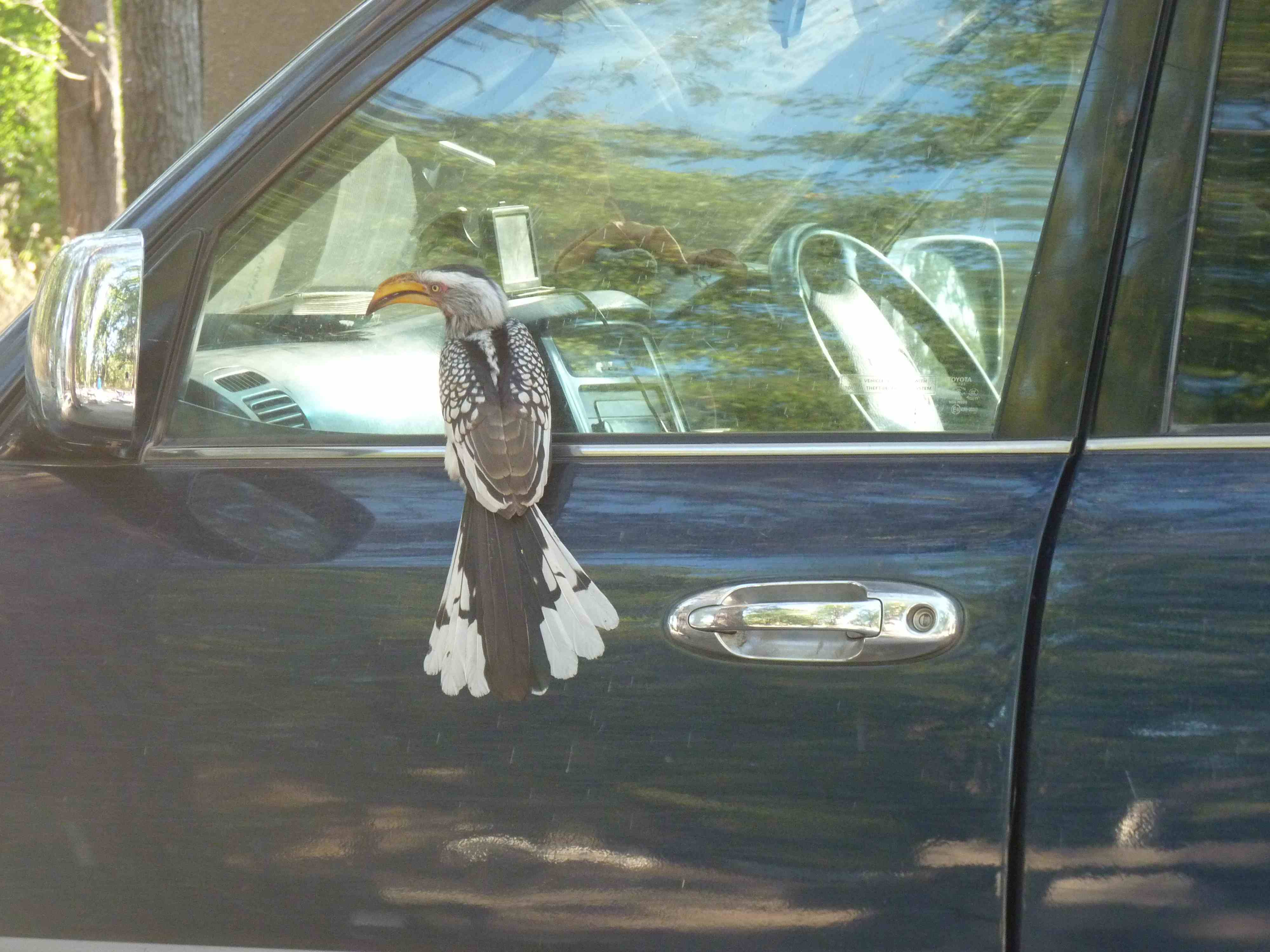
hornbill on glass small

The Yellowbilled hornbill chasing himself away…

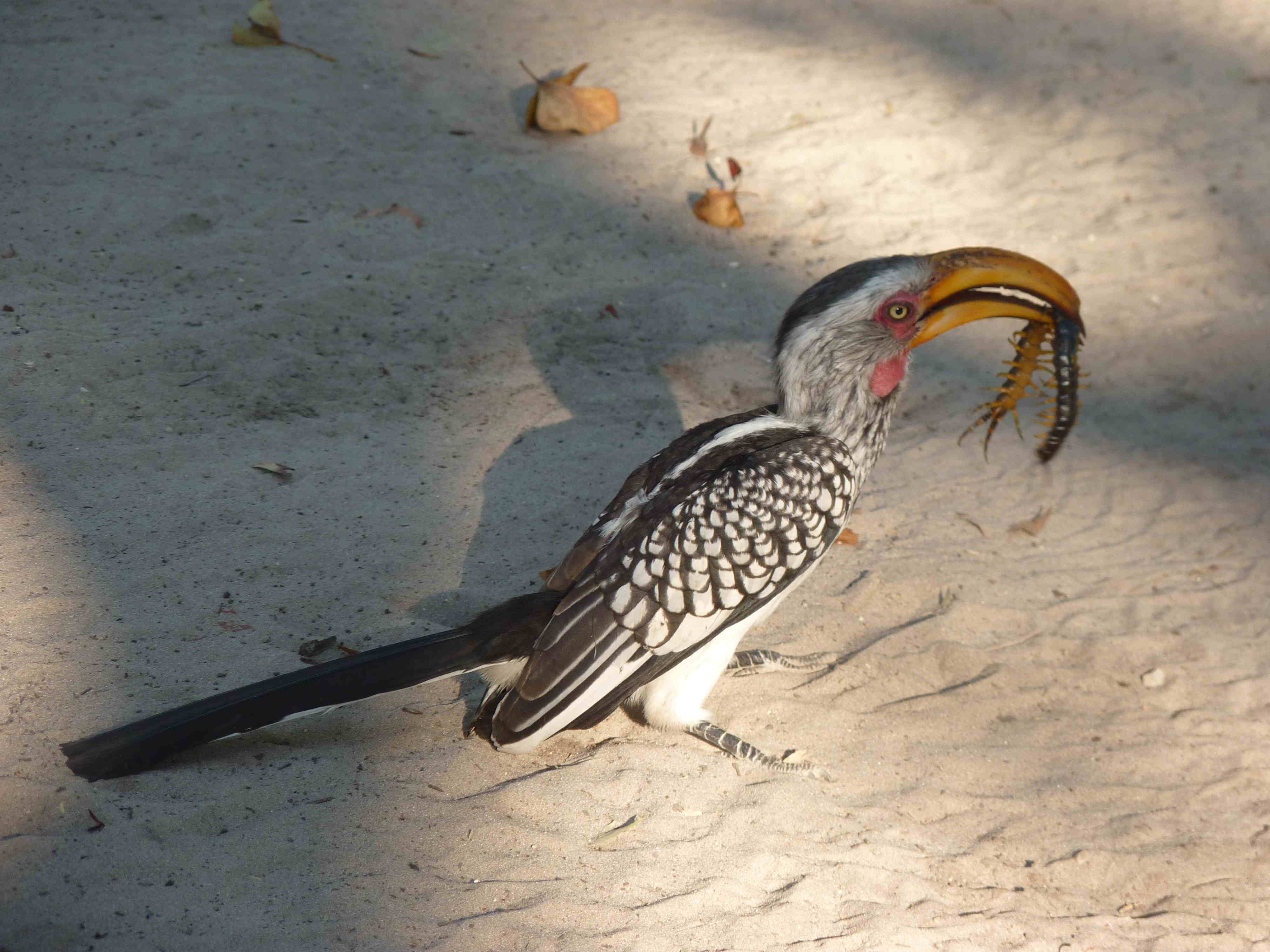
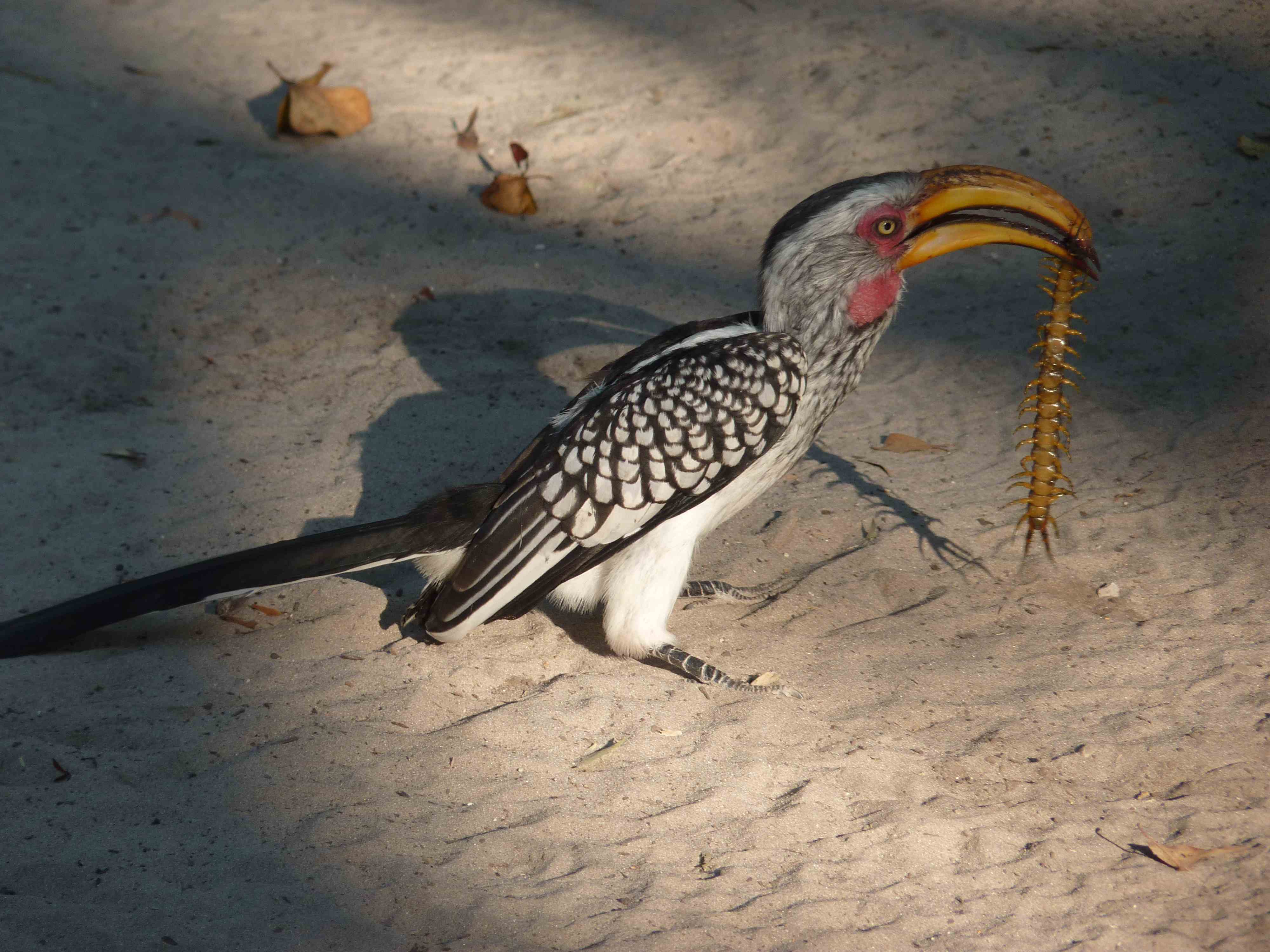
The hornbills kept landing at our table and trying to snatch morsels from us during meal times. However, just to show that they were not human-dependent, at some stage a Red-billed hornbill caught a rather large centipede that became a coveted prize among several contenders. Finally it became the property of a Yellow-billed that proceeded to batter it out of existence and to swallow it, not without difficulty.
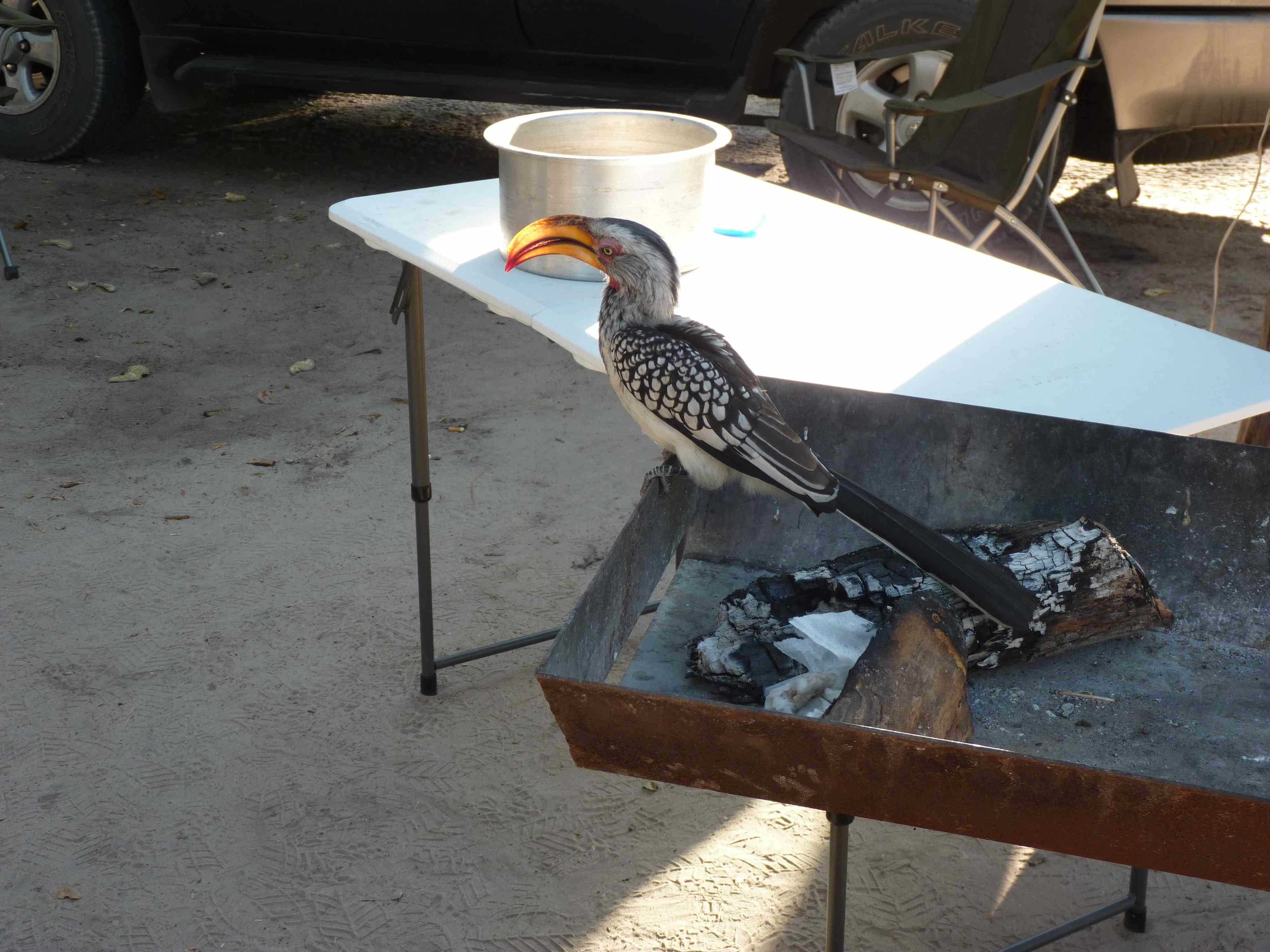
hornbill at camp 2 moremi small

Visiting.

Hornbill with centipede at Nxai camp site small

Yellowbilled hornbill bashing the centipede.

Yellowbilled hornbill bashing the centipede.

Our record of this area of Moremi will not be complete without mentioning that we were fortunate enough to see a group of Wattled cranes (Grus carunculatus). The Sassol Birds of Southern Africa guide describes these birds as “enormous”, rare, resident and endangered. I hasten to add that they were also shy and solitary, keeping their distance from other inhabitants of the swamps.
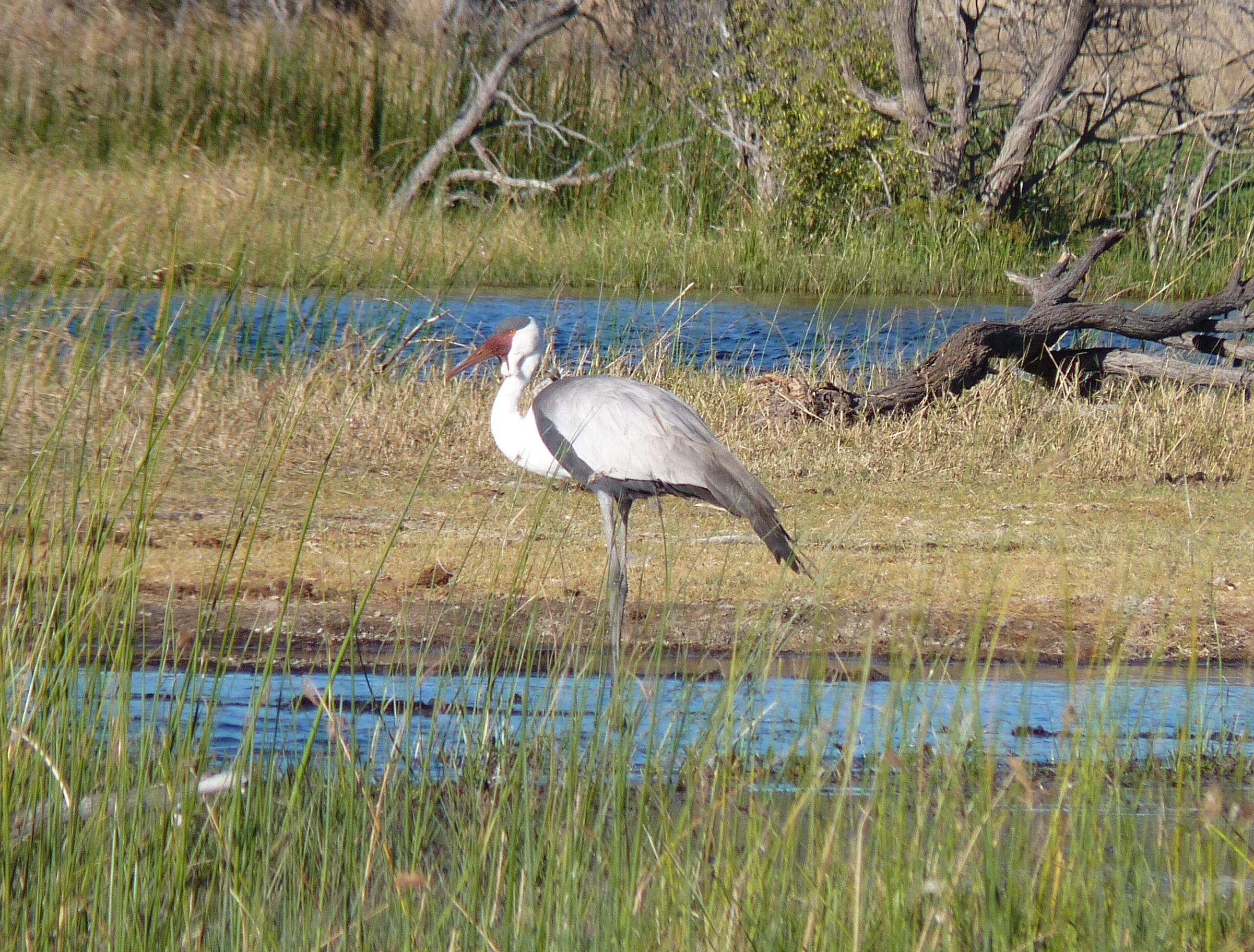
crane cropped and small

A solitary wattled crane.

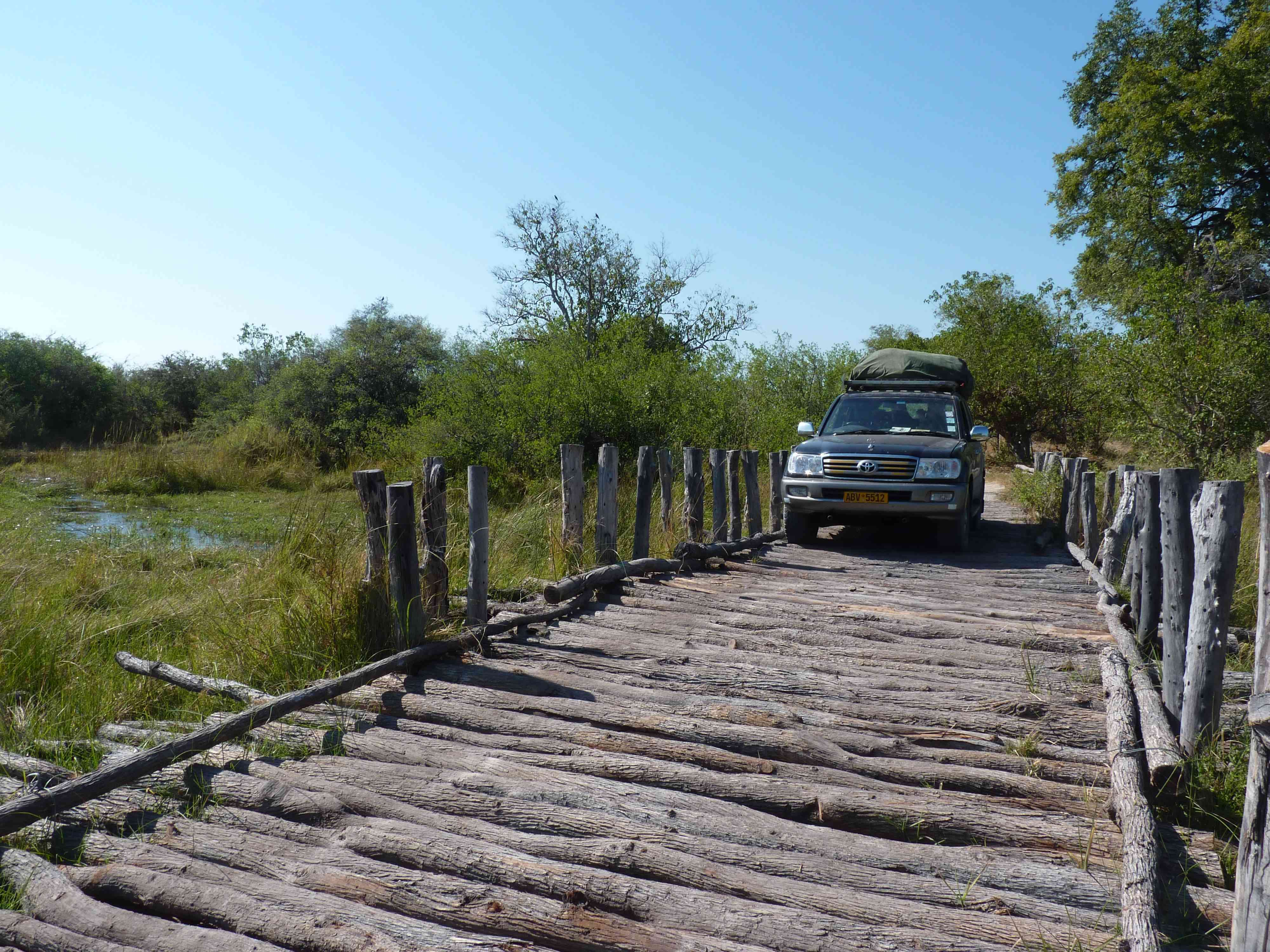
The trip to Third Bridge did not offer anything special apart from two bridges (First and Second) made with trunks that enabled us to ford the various channels before arriving to the mythical Third Bridge. We also learnt that there is a Fourth bridge beyond the Third! There seems to be a bit of a lack of imagination in naming but there may be a reason -unknown to me- for this nomenclature. At some stage we were quietly watching a beautiful herd of Greater kudu when a car stopped next to ours and someone shouted “Hi, nice place but there are no ‘hanimals’!” And then as the now scared Kudu bolted he added, “Oh, there they were some!” We bit our tongues and did not tell him off as he deserved! Later on we found them buried in the sand, being helped by an angry tour operator who needed to extricate them in order to continue his own trip!moremi bridge small
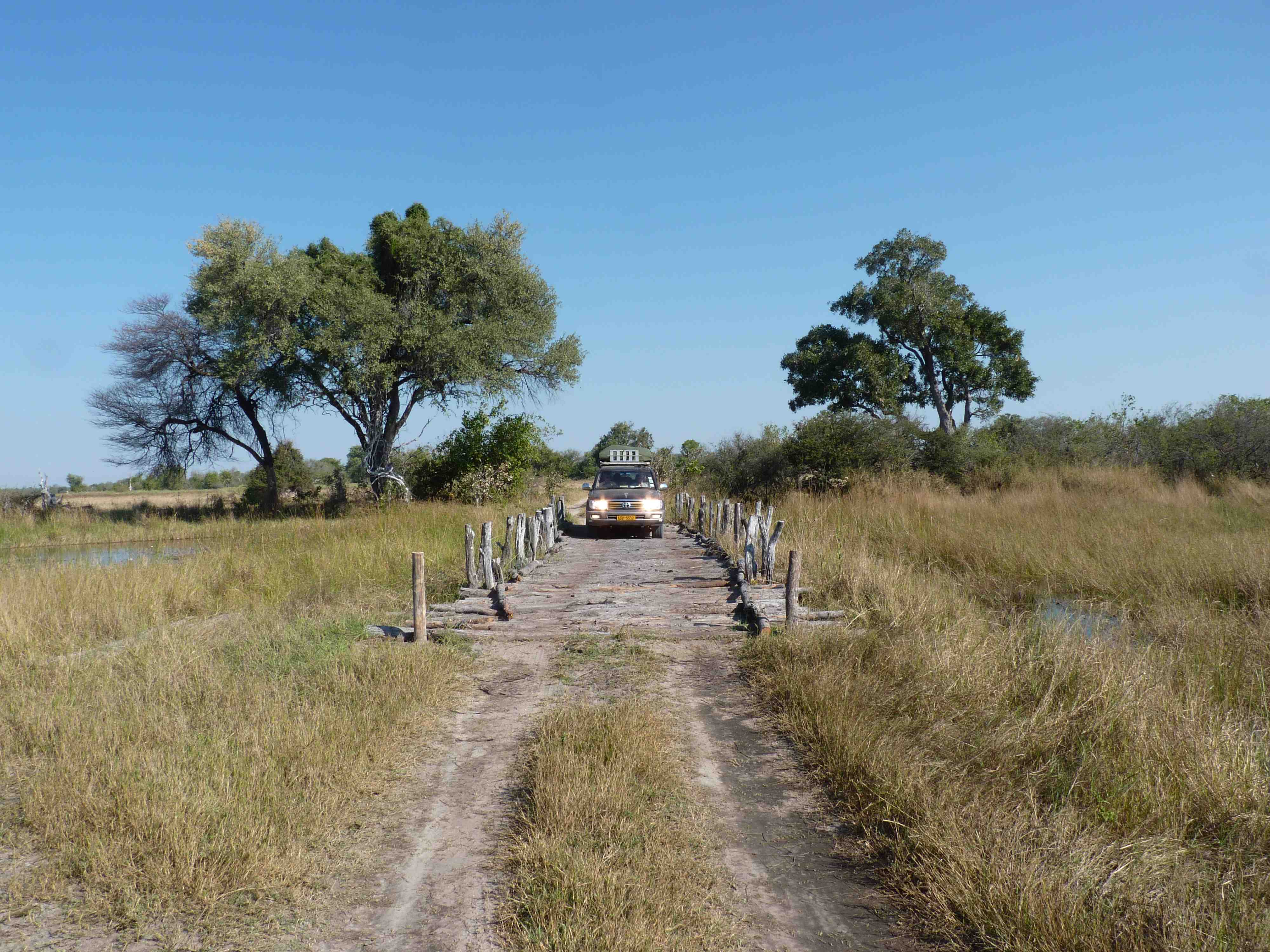
Crossing a bridge on the way to Third Bridge.

Bridges on the way to… Third Bridge.

While game watching we kept bumping into someone in a pickup with a very impressive camera array. We saw him (or rather his cameras) while watching the tree Cheetahs and later on while he was, in his own words, “getting the definitive picture of a roller”! We ended up talking to him and exchanged cards. Then we learnt that his name was Paul Souders and that he was 2013 Wildlife Photographer of the Year! Allow me to recommend his web site if you wish to see wonderful photographs at http://www.worldfoto.com/ and http://photoboy.com/2013/10/15/hudson-bay-canada-2/ where his winner picture can be found.
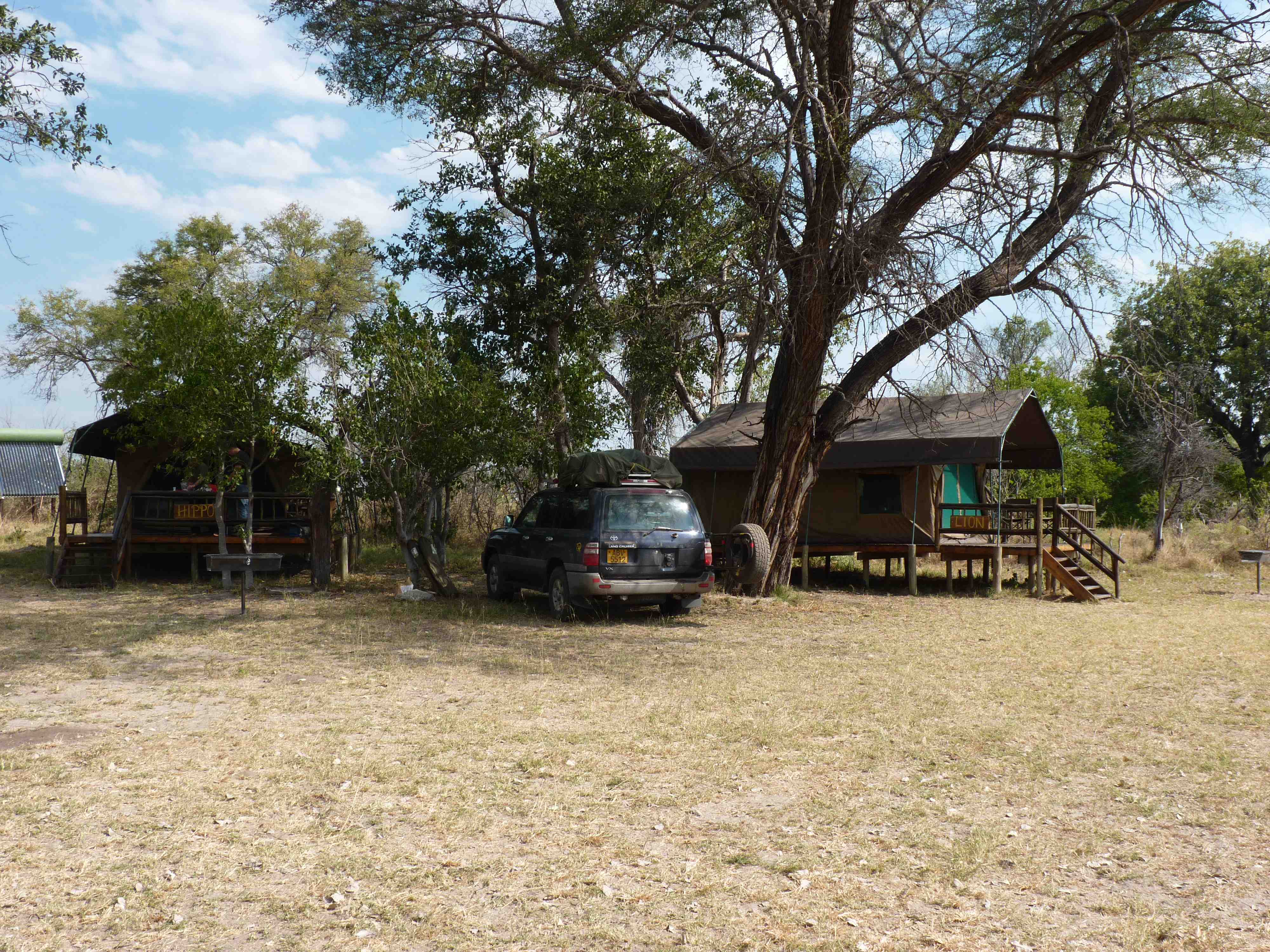
Our tent at the Third Bridge tented camp.
Our tent at the Third Bridge tented camp.

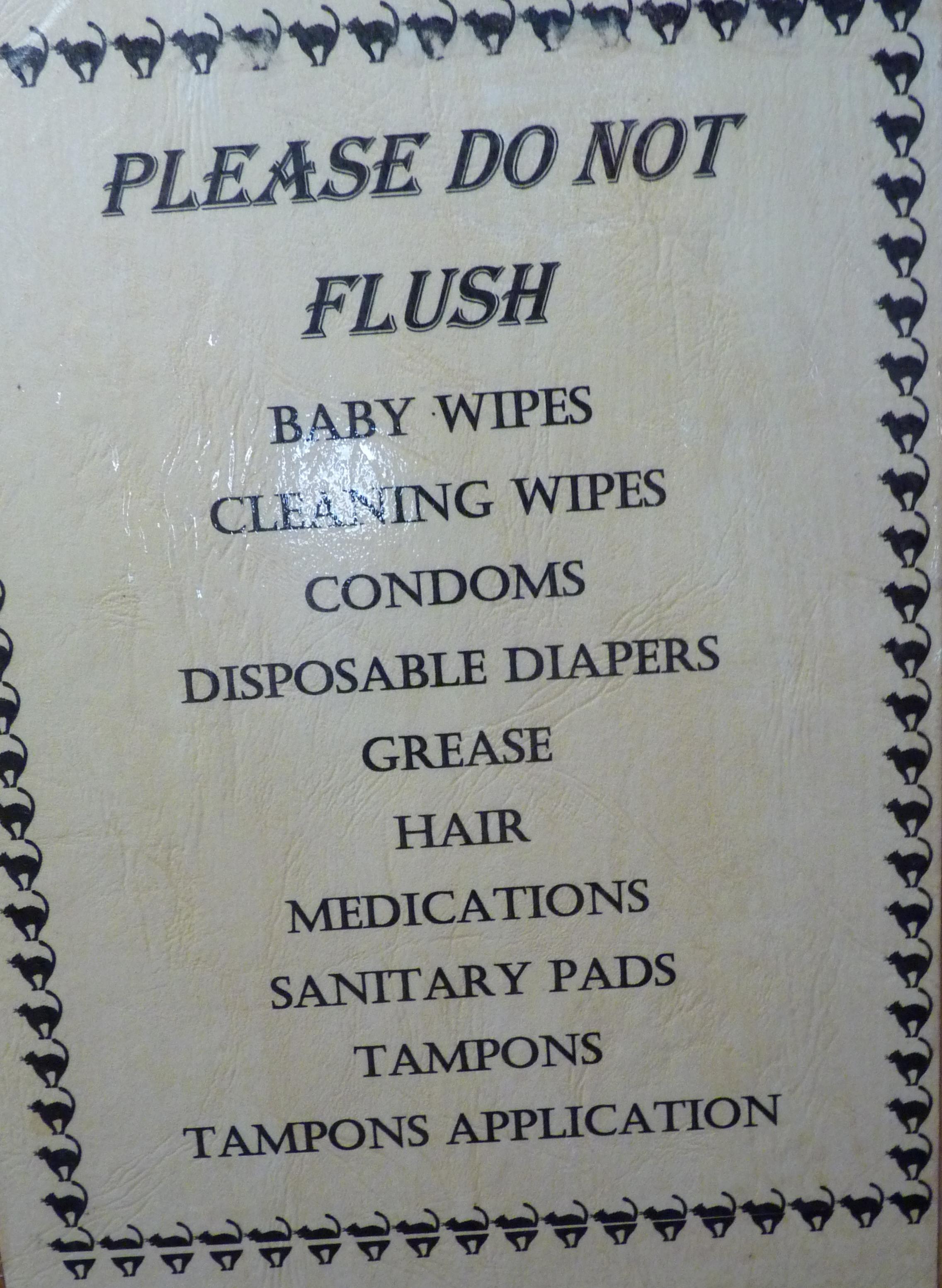
The sIgn from the Third Bridge tent. Do people really throw all this down the toilet?

The sIgn from the Third Bridge tent. Do people really throw all this down the toilet?

On the second night, we were returning to our camp rather late and before crossing the Third bridge to get back to camp, we had to stop and queue as a group of about 10 painted dogs got there before us! As the water runs over most of the bridge, the dogs were hesitant to cross (we learnt later that there is a crocodile at the bridge).
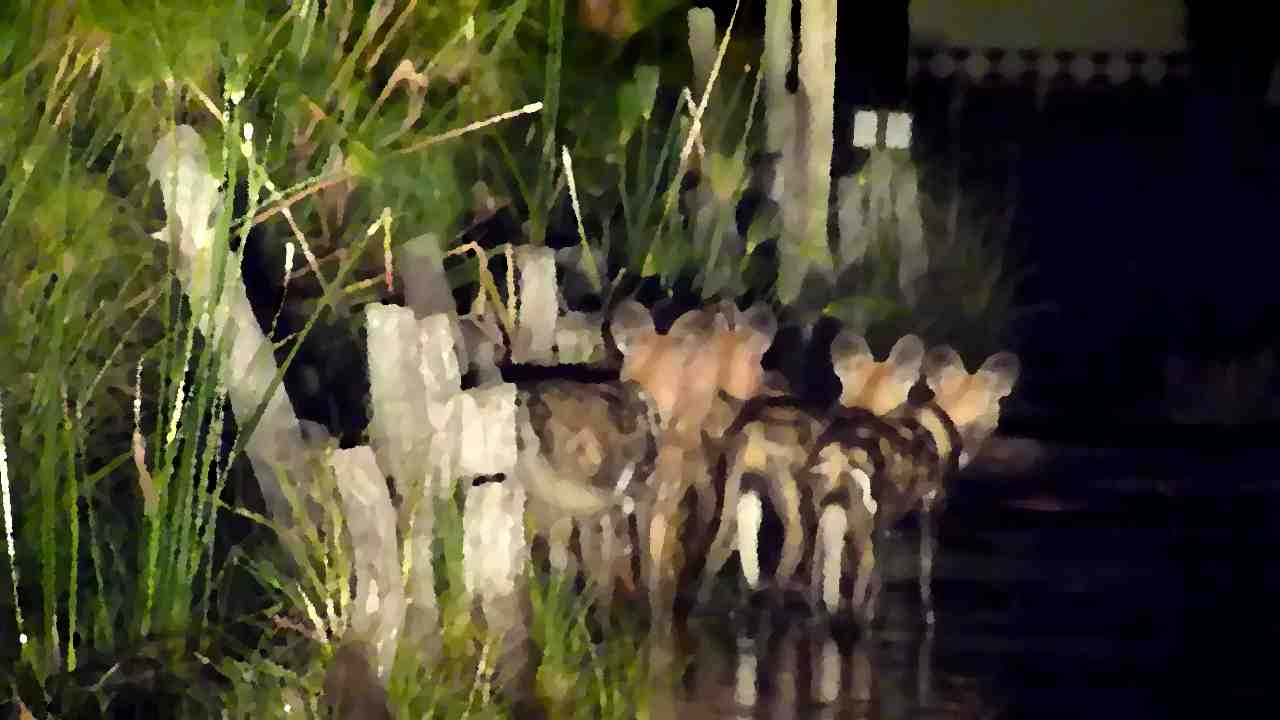
Painted dogs at Third Bridge. It was a very poor picture taken with the car lights so I smudged it to try to be "artistic"...

Painted dogs at Third Bridge. A bad still from a video taken with the car lights so I smudged it to try to be “artistic”…

After several minutes of goings and comings and not without a few jolts and recoils, one dared to take the first leap into the water. Soon all others followed and rapidly vanished into the dusky bush so fast that a car that came a minute after us did not see anything! Such as the nature of a real safari, a few minutes or even seconds can make a difference between a memorable sight or just MMBA (Miles and Miles of B… Africa)!


Note: All pictures by Julio A. de Castro

De-bugging

cropped-baines-baobabs-panoramic-june-14-small.jpg

Moremi Game Reserve has been on our list of “places to visit before dying” for several years. Although in 1999 we visited Botswana, we had limited time and focused on Makgadikgadi Pans National Park and then flew into the Okavango delta where we stayed at a camp known as Oddballs.
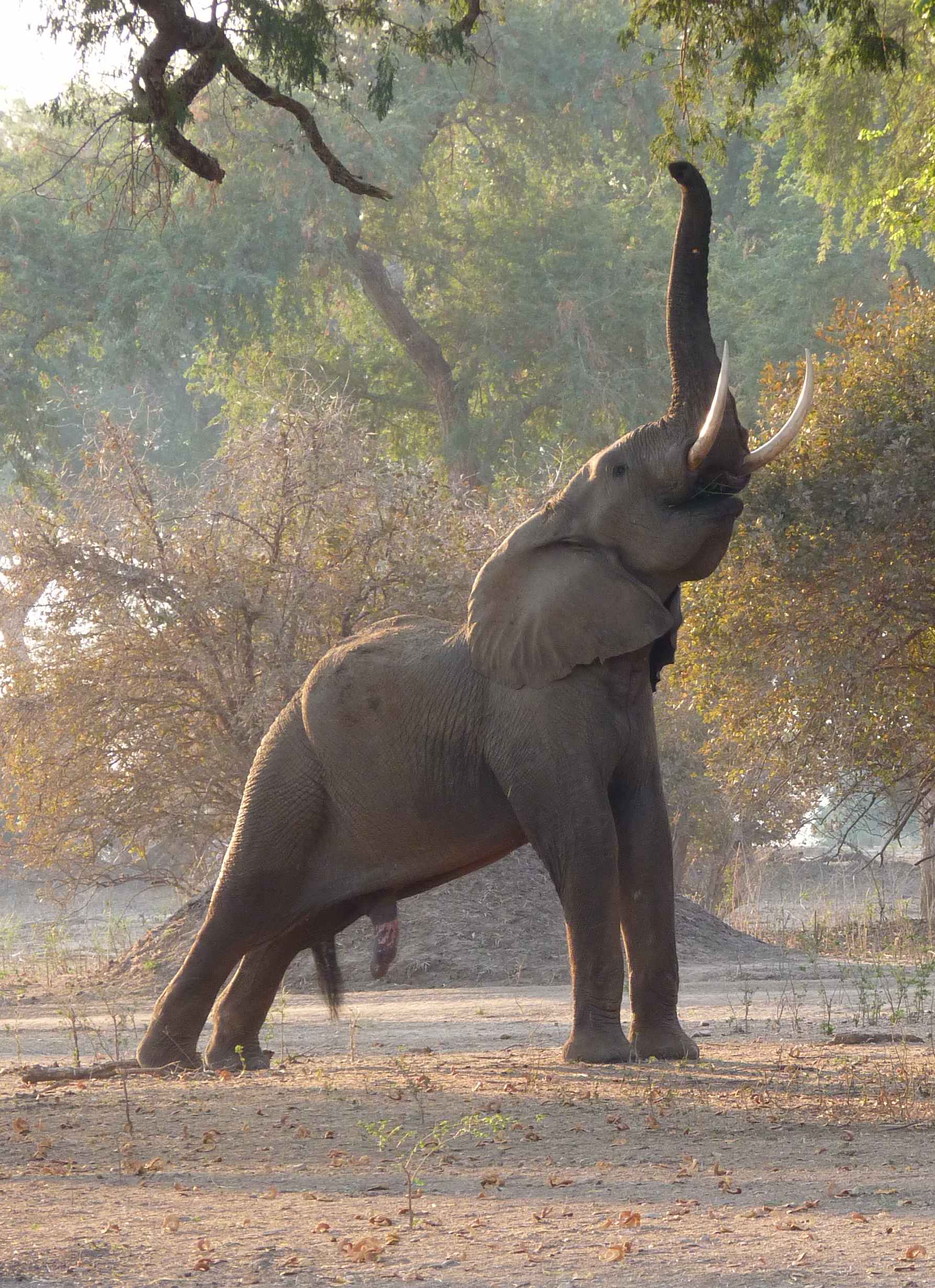
Fifteen years later in May 2014, and taking advantage of our son’s holidays, we re-visited Botswana with the main objective of seeing Moremi Game Reserve. We made an additional effort to adjust our accommodation to the itinerary of the President of Botswana, as his visit to the area coincided with ours and, for some reason (perhaps justified?) he had priority over us!

Our itinerary was:

Nxai Pan National Park, South Camp (29 – 31 May).

Moremi Game Reserve, South Gate Camp (31 May – 3 June) and Third Bridge Tented Camp (3 – 5 June). The earlier post “Tree Cheetahs” is part of this visit.

Makgadikgadi Pans National Park, Khumaga Camp (5-6 June).

As the trip was long, we included two nights at Nxai Pan. We remembered the place because of the very large baobabs known as Baines’ baobabs, found on an island in the saltpan with not much else!

Regrettably, during our trip we lost one of the camera’s memory cards so many pictures are lost to humanity!

An innovation during this trip was that the Department of Wildlife and National Parks of Botswana (the Department) has tendered the management of its camps to different private companies. While this may be good for the maintenance of the camps and other reasons important to the Department, booking and paying becomes cumbersome. In our case, we had to pay three different companies to secure our bookings! (here I will insert link to Department’s page with info on bookings)

Coming from Zimbabwe, the entrance to Nxai Pan is 65 km from Gweta. We registered at this first gate where we learnt that the President had been there in the morning and that he had left already, leaving a good impression among the staff there! After negotiating another 37 km, most of which over deep sandy tracks, you arrive at the final entrance gate. A note referring to this road on the Department’s web page puts things into perspective, so I should have been prepared:

“The sandiness of this track should not be underestimated and only 4×4 vehicles should attempt the journey, engaging 4-wheel drive before negotiating the deep sand – carrying a spade is also wise!”

Wisely we did carry a still uninitiated spade and arrived at South Camp without problems. The place was well shaded and all facilities were excellent.

When it was time to use the ablution blocks, we encountered a surprise. They were protected by a field of hundreds of cement blocks aligned at a 10 cm distance from each other. Each block ended in a 5 cm sharp iron spike. We had seen similar but simpler arrangements of concentric stones to deter elephants from damaging trees. However, this was an advanced version, almost resembling anti-personnel barriers seen in WWII pictures! As the use of showers and toilets was essential, crossing them was imperative! (pic of baobab with stones?)

Careful exploration of the barrier revealed a slightly wider gap, large enough to plant our feet toe-to-heel and make slow progress, taking care not to lose our balance. This was challenging enough during the day. At night it became a potentially mortal field where all senses needed to be focused on the task to avoid falling to what it looked like sure maiming!

We arrived at the campsite quite late and after putting our tents up (and surviving the visit to the ablution blocks) we went to the nearby water hole for a quick look. This is perhaps the focal attraction of Nxai . It is near the campsite, in the heart of a large grassy plain and dotted with umbrella thorn trees. Here, several animal species can be seen, drawn by the availability of water.

Nxai Pan’s is at its best during the rain season when a multitude of animals congregate there (including large numbers of springbok) and various species reside there permanently. Although it was the dry season, we were lucky enough to see a pride of lions made up of two adult lionesses with five cubs, together with two adult males. They were well fed and being their usual lazy selves, totally ignoring possible prey such as giraffe, zebra and greater kudu that came (in numbers) to drink.

Unknown to us, a surprise was waiting for us back at the camp. As earlier we were focused on the “spike-crossing”, we had not noticed that the camp was crawling with small stinkbugs. Although they were rather nice looking with a combination of brown and orange, crushing them released their strong and rather pungent odour. To our great consternation, there were hundreds of the smelly things!

P1090861 stinkbug cropped and small

A green relative of the campsite invaders. Their pictures were lost with the camera card.

To make matters worse, like most insects, being attracted to light is in their genome! Protecting your glass of wine, cooking pots and dinner plates from their dive-bombing became a high priority, as there was not much else to be done about their presence! Despite our efforts, some drowned or got burnt to death in our pots. Fortunately no unexpected crunchy bits were found in our food!

Unlike dinner, achieving a stinkbug-free sleep was infinitely more complicated! The first alarm was sounded by our son when he discovered that they were getting inside the tents, despite the tight zippers: “my tent is full of bugs!” he said with a touch of exaggeration and adding a few epithets that I omit for the sake of the under-aged readers.

I was very pleased in my sleeping bag -having successfully negotiated the ablution spikes at night, so I decided to weather out the bug storm. I did so by adopting the ostrich trick of burying my head deeper in the bag, trusting that my poor sense of smell would not betray me. My companions did not join me in the use of this tactic, being of different genetic make up (my wife) and having inherited a lot of that (my son).

Although I believed it to be a fruitless procedure and told them so, they proceeded to methodically review all their belongings to remove the invaders from their clothing and shoes. This required a prolonged de-bugging session that was painstakingly achieved. They then proceeded to extract all the bugs from the tent. As this was all done with the aid of light and torches, it was a near never-ending exercise as new bugs kept getting in while others were being extracted.

Eventually an equilibrium that favoured the humans was achieved, the lights were turned off and calm was restored while I tried to keep first my chuckle and then my rude remarks to myself. The calm did not last too long as I heard my son say: “Shit, I just crushed another bug!” and opening the zipper to take it out. We spent a “perfumed” night, some of us resigned and others fighting the bugs to the bitter end!

Despite the rather “bugged night”, the following morning we left early for Baines’ baobabs. They were painted in 1862 by Thomas Baines, a famous painter and explorer of the last century during his journeys through southern Africa. Today, the same scene that entranced Baines is still there, unchanged as these trees take hundreds of years to grow! Perched on the edge of the large Kudiakam pan, dry for most of the year, they preside majestically over the salty flat span surrounding them. However, if the rains are good, the place becomes an island in a large sheet of water where water lilies appear, along with abundant waterfowl life. Needless to say that the place looked the same as in 1999…

Baines' baobabs in 1999.

Baines’ baobabs in 1999.

You get to the baobabs after driving a couple of hours over sand dunes on a rather rough and undulated road that eventually delivers you to the open area of the pan where you immediately spot the clump of trees in the distance. Luckily some pictures taken with the cell phone survived and I include them in this post.

The trees are rather dark and coppery, standing quite close to each other. One of the colossi has fallen but it is still growing on its side! I must confess that I did not count them and, judging by Baines’ own account of his discovery, he was not very precise either after seeing them for the first time when he wrote:

“… five full sized trees and two or three young ones were standing, so that when in leaf their foliage must form one magnificent shade. One gigantic trunk had fallen and lay prostrate, but still losing none of its vitality, sent forth branches and leaves like the rest.”

After watching a Secretary bird in search of snakes, a rather rare sight in this latitude, the trio of “stinkbug-wise” campers returned to the camp later in the evening. After an excellent shower to rid ourselves of the dust collected during our drive, and a hearty pasta dinner to settle us down, we soon were in our tents without bothering too much about our smelly foes.

The bugs were a real nuisance while we disassembled our camp, as the beasts contrived to find their way into all the folds of our tents, empty bags, chairs and any item that offered a crevice to be filled. It took a lot of work to remove them and, despite our efforts, we carried a few fragrant reminders of Nxai Pan with us to our next destination: South Gate at Moremi Game Reserve.


Note: Header picture by Julio A. de Castro.

Tree war

Fig tree and tusker.

I said earlier that I am not a botanist and I am interested in the animal rather than the plant world. However, a visit to Mana Pools National Park would not be complete without spending time “tree-watching” . Here I present some facts that I trust you will find of interest.

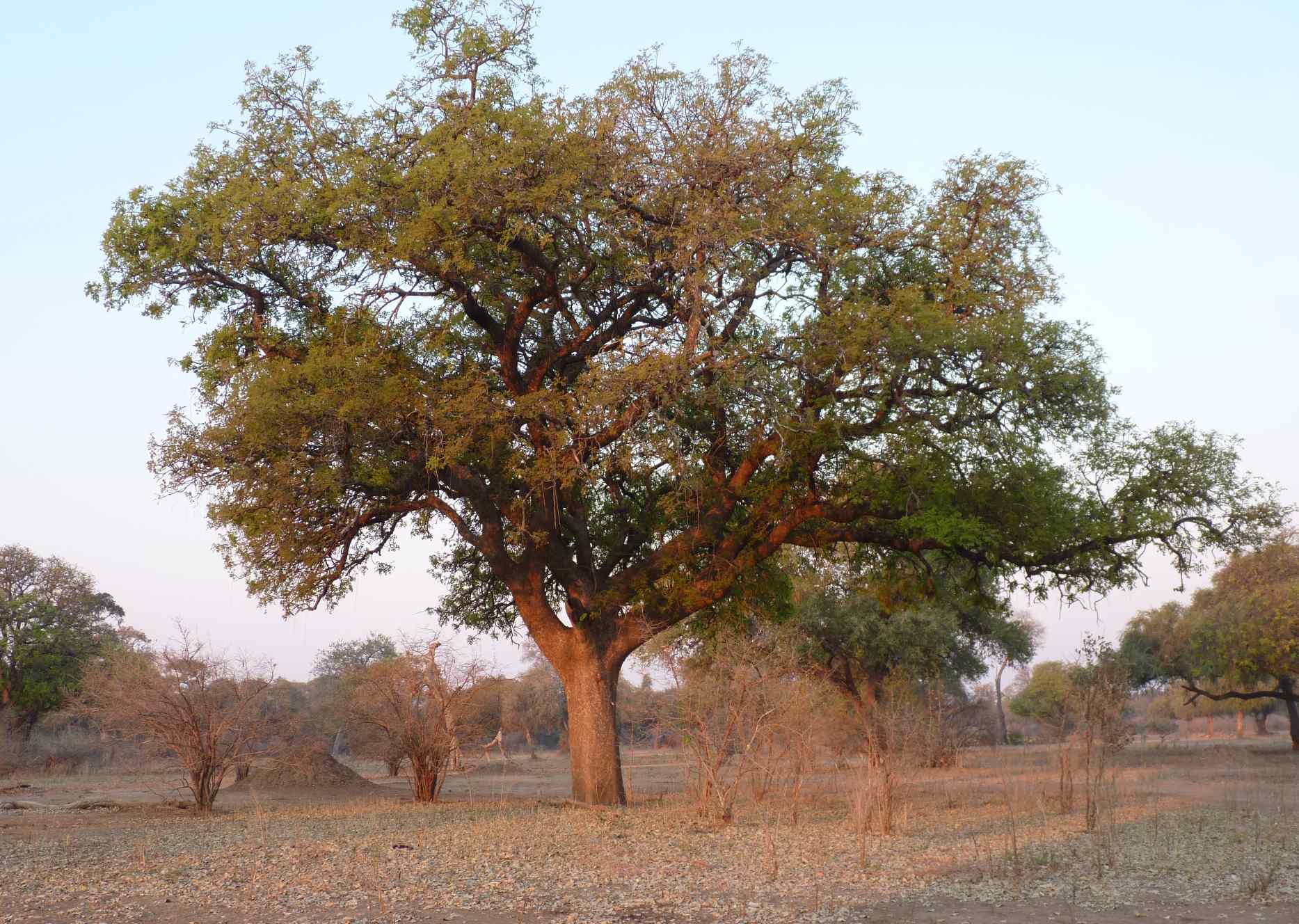
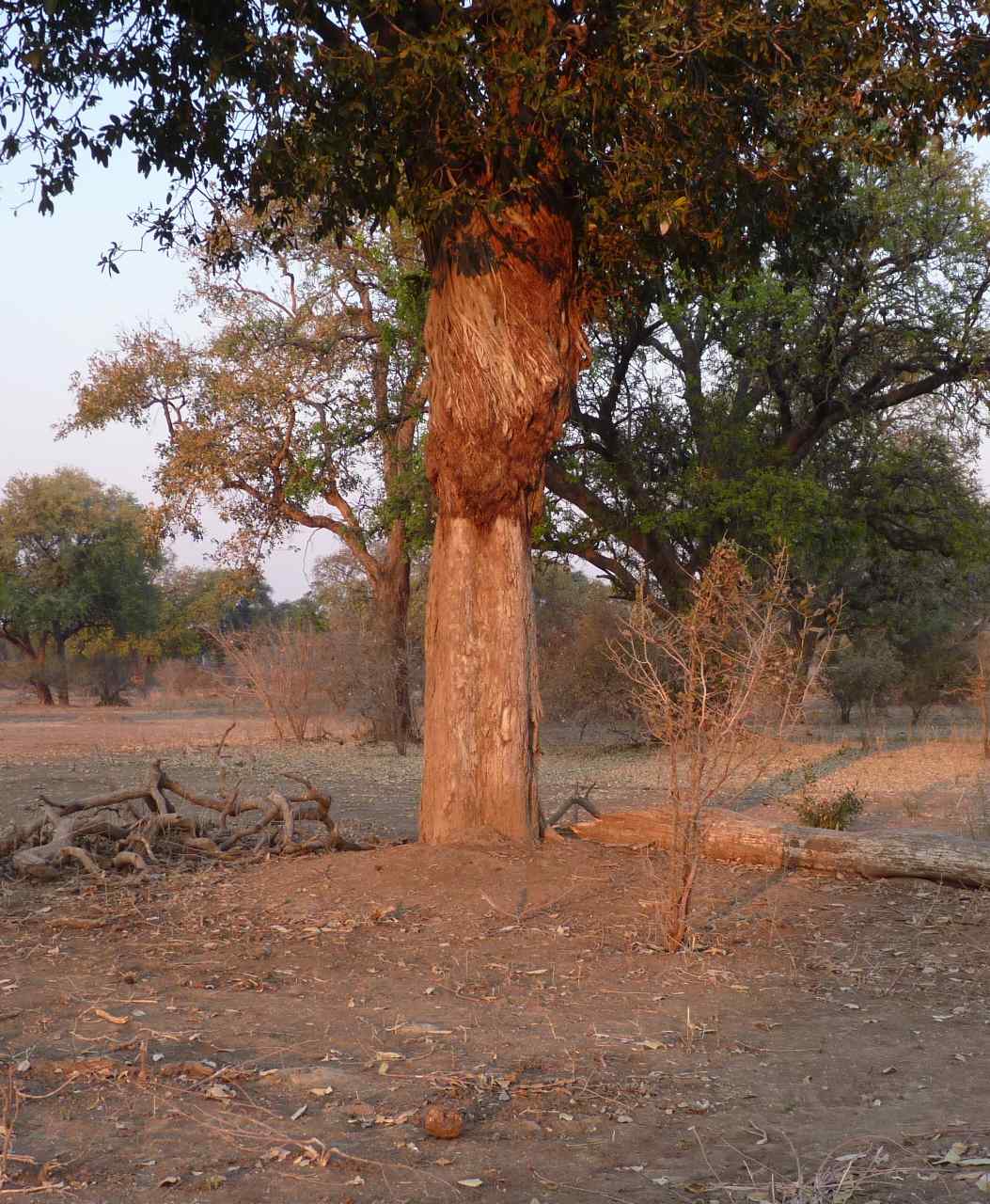
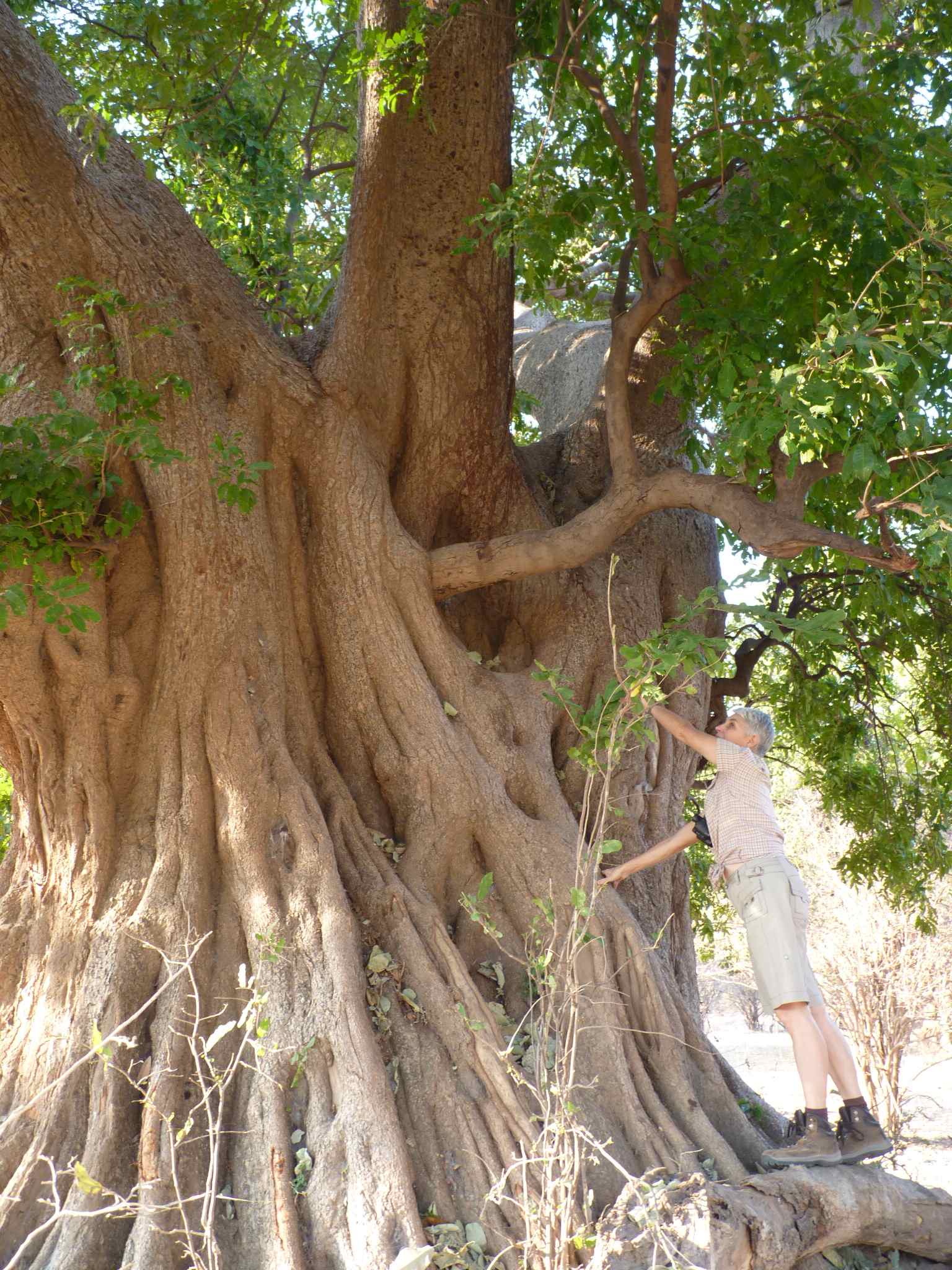
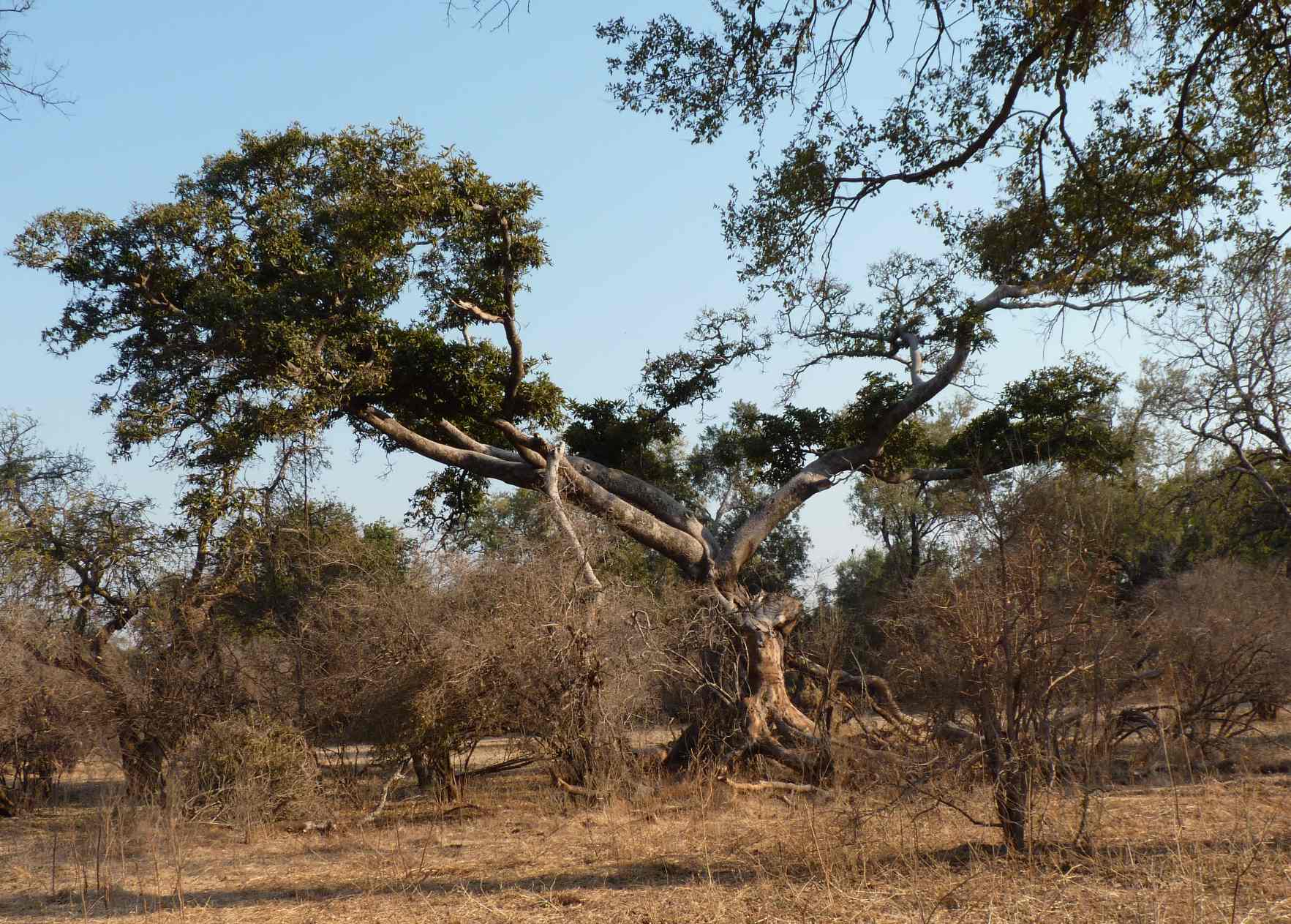
It’s difficult to describe the various Mana Pools’ habitats. They range from clumps of green Natal mahogany (Trichilia emetica), Sausage trees (Kigelia africana) and Zambezi fig trees (Ficus bussei) to the rather sparsely populated Apple ring acacia (Faidherbia albida) woodlands, not to mention the areas of dense bush (known in this region as “jesse”) found further inland in the hillier parts. The result is an amazing, if rather fragile, bio-diverse habitat that many animals share, including more than 300 bird species. The above pictures, hopefully give you a better idea of what I fail to describe!

Although the experts list many tree species, the uninitiated (like me) feel attracted by the most striking ones. The Apple ring acacia trees are the main species of the riverine Mana Pools’ woodlands scattered all over the flat plains. They are large trees that, with time, develop a characteristic knobby trunk and as mentioned in an earlier post, they produce pods rich in protein that constitute important food for the animals during the dry season. Regrettably, a friend told me that for some reason they have stopped multiplying. This is rather surprising as the seeds are found all over the place.

Apple rig Acacia woodlands.

Apple ring Acacia woodlands.

The large Sausage trees were beginning to produce their strings of strongly scented dark red flowers. Many animals, including monkeys, also consume them. I remember seeing buffalo sniffing the ground for long periods at dusk at the campsite in Mana Pools on an earlier visit and to wonder what they were doing. It was only after a while that I realized that they were feeding on the Sausage tree flowers that had dropped to the otherwise dusty ground. Its fruits -rather large sausages weighing up to several kg- develop later on during the year, and various animals such as baboons, elephants and hippos consume them, while people also use them in beer brewing.

The Natal mahogany are large, dark green trees whose crowns in Mana Pools show a characteristic bottom foliage with an evenly trimmed horizontal lower edge, which is an example of the wild art of the master topiarist-browsers that feed on them, among whom are impala and greater kudu.

Can a human achieve such perfection?

Can a human achieve such trim?

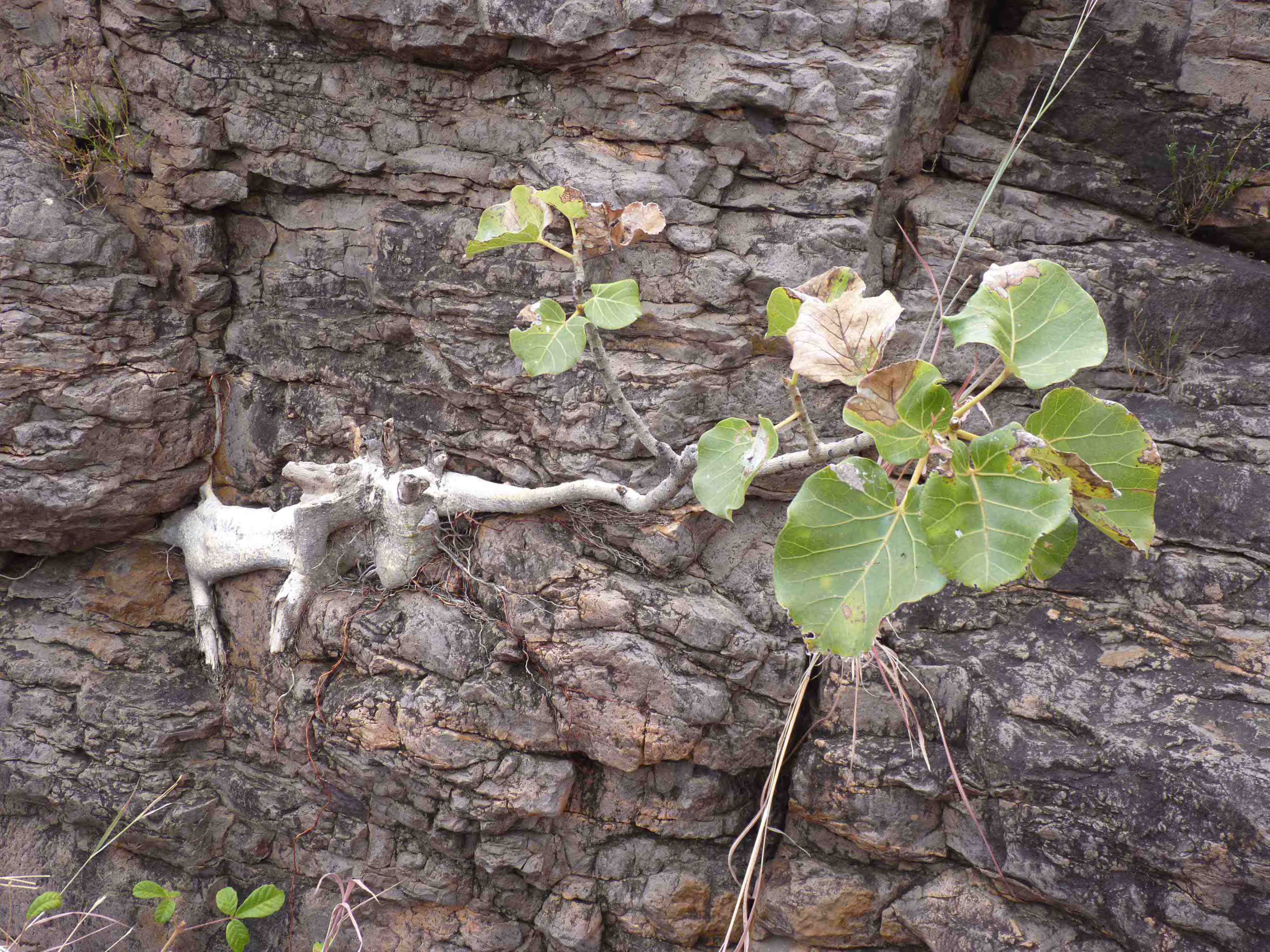
All trees complement each other to achieve this beautiful landscape. However, and perhaps surprisingly to the reader, there is a silent and long-term tree war being waged while we watch… I am not talking about Lord of the Rings’ Ents but rather a combination of several battles being fought by stationary trees since time immemorial. It all starts with a bird or monkey feeding on a fig and dropping its seeds in a suitable place up a tree, where a hollow filled with soil allows germination to take place.

One more tree...

One more tree…

Good eyes are needed to spot the "baby" Zambezi fig tree...

Good eyes are needed to spot the “enemy”…

The birth of a Zambezi fig tree.

A further close-up reveals the birth of a Zambezi fig tree.

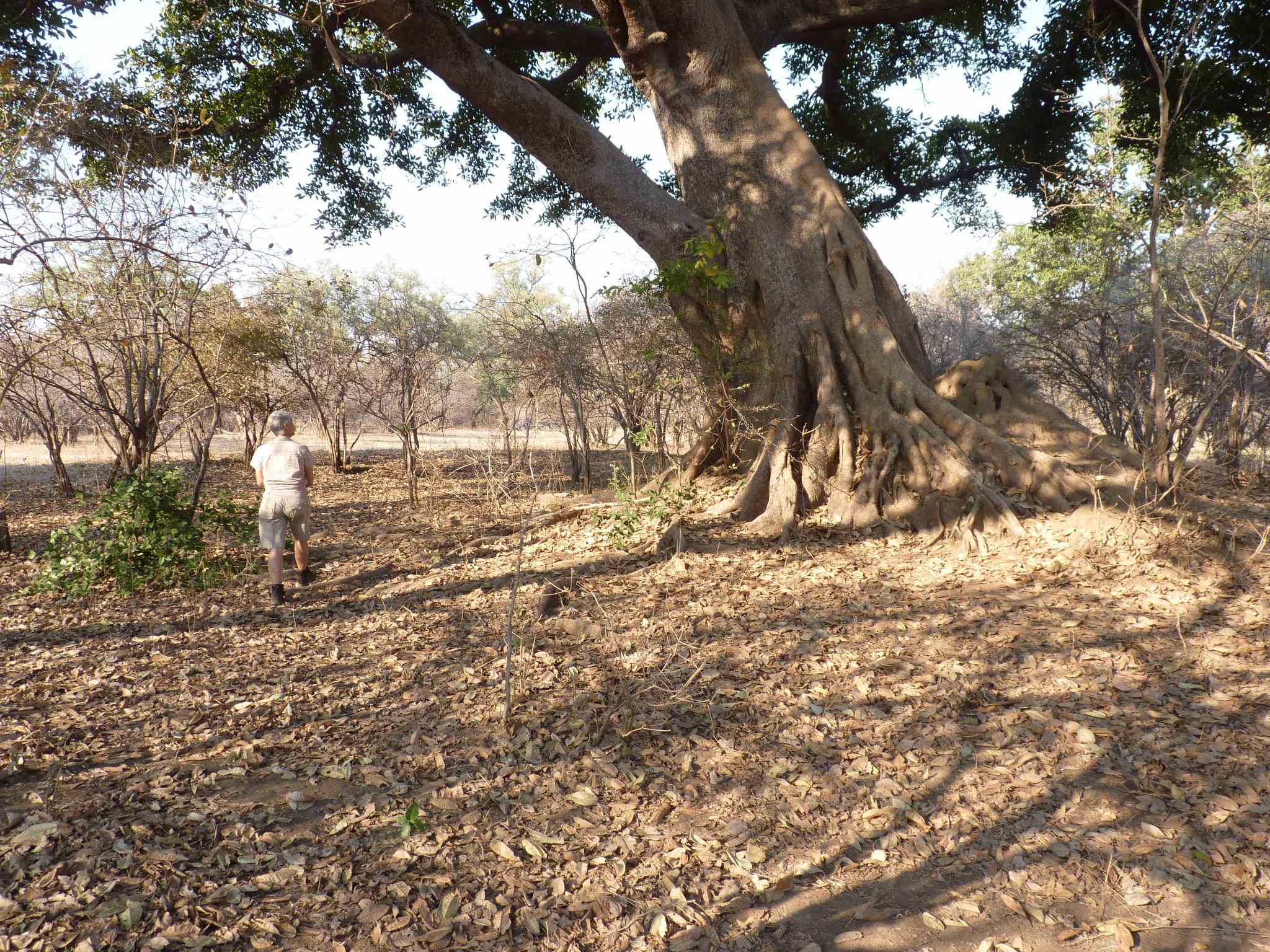
Soon, an innocent-looking two-leaf seedling appears. After consolidating itself, it starts sending down aerial roots that surround the host tree and that will eventually reach the ground to bury themselves, becoming true roots. The fig tree uses the host to gain support and structure in its growth; the host is like a guiding stick similar to those used to support grapevines or tomato plants. In their quest for support and with their uncanny ability to survive in the most unlikely places, fig trees produce natural sculptural Masterpieces that occasionally damage ruins, which is an entirely different problem.

Fig tree growth can even crack rocks and buildings.

Fig tree growth can even crack rocks and buildings.

At some stage during the battle, it seems as if the two trees coexist naturally, adding great beauty to the forest. However, the process continues inexorably and the invader eventually strangles the host tree. This is purely mechanical as the pressure applied is such that it has the same effect as if the host tree would be ring-barked, interrupting the flow of water and nutrients between roots and the rest.

Watching a fig embrace. The branch on the left belongs to the host tree.

Watching a fig embrace. The host tree is still strong and visible on the left.

Luckily for some (in rare cases) animals may come to the rescue. The aerial roots are eaten by elephants and, in this way, these animals become an unwitting ally of the host tree, halting the growth of the fig and saving the host tree at least for a while.

A closer view of the fig tree being browsed and stopped from engulfing the host tree.

A closer view of the fig tree being browsed and stopped from engulfing the host tree.

However, this is an exception and the usual outcome is that the Zambezi fig tree becomes established, winning another battle.

A battle going on. The branch on the right, above my wife, belongs to the host tree being engulfed by the fig tree.

The branch on the right, above my wife, is what remains of the host tree.

A very large Zambezi fig tree.

Fig trees are beautiful shady trees with a great canopy that extends further than most trees, considering the size of their main trunk. This is often their weakness as, being soft, they often crack and fall which leads to the death of the tree.

A collapsing fig tree.

A collapsing fig tree.

Despite these battles that rage silently in plain sight, we should not worry as the outcome is by no means the doom of the striking Mana Pools woodlands!

On silent feet

cropped-zebra-and-trees-morning.jpg

To write these lines I needed to sit down and in so doing, I sat on a snake! Luckily any concerns you may have about my derrière are unnecessary as said snake was made of rubber. Yes, I know, I should not be playing with toys at my age but some of us are take longer to mature!

Baboons and vervet monkeys are a menace while camping in Africa, and Mana Pool’s lodges are no exception to the rule. We learnt that rubber snakes are a good deterrent so we alwayscatter a few around our area while on safari. They work well and we have had fun watching monkeys perform panicky gravity-defying summersaults while screaming in terror after spotting them! I will come back to the topic of monkeys and camping in the future, so for now I turn back to Mana Pools.

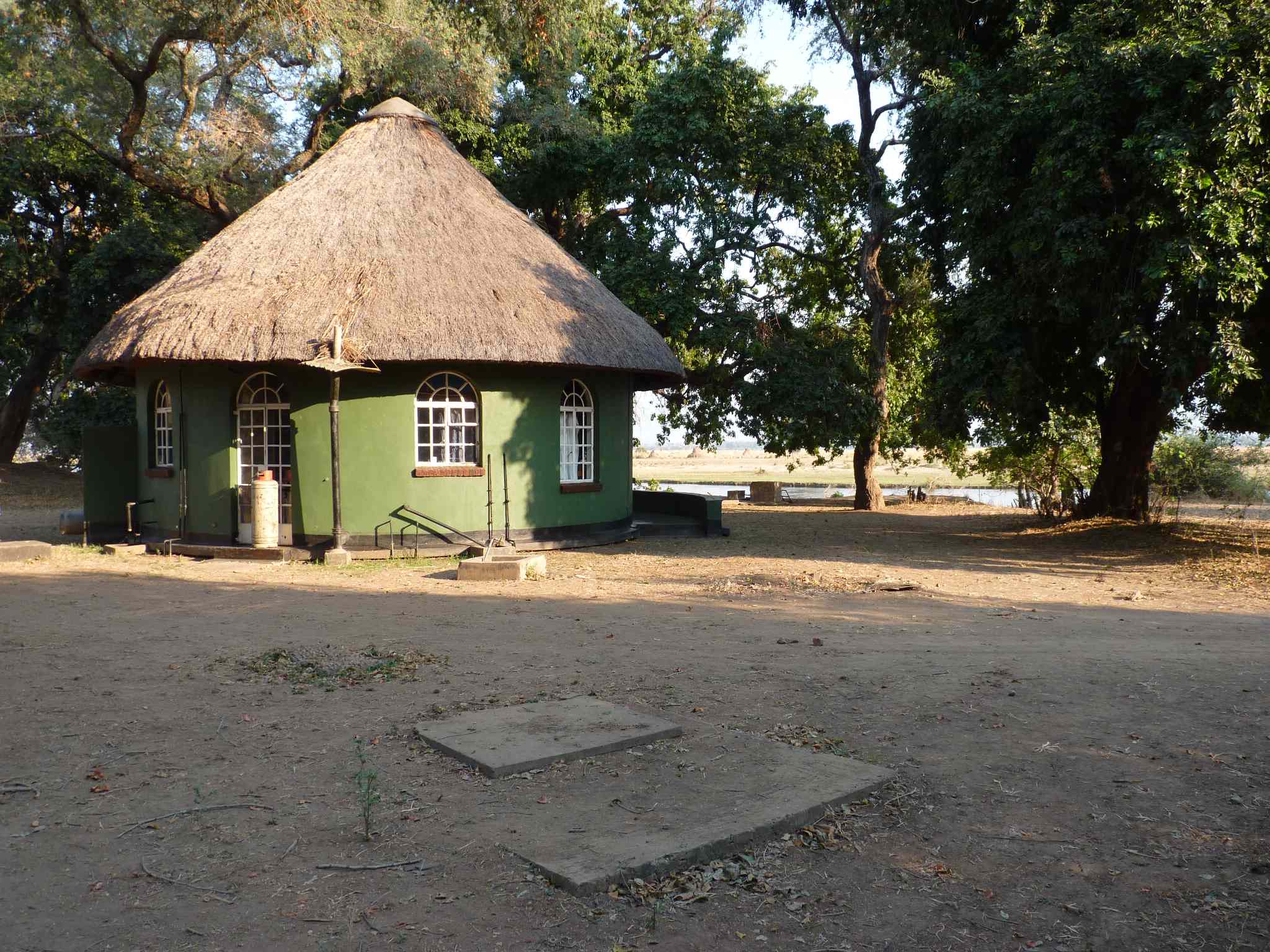
In my earlier post I mentioned that in Mana Pools you are able to go about freely on foot. Funnily enough, you often come into much closer contact with wild animals while in your lodge or campsite than when walking in the bush. The former (named by the Zimbabwe Parks & Wildlife Management Authority) is a small house with one or two bedrooms, a kitchen and a toilet.

Mbuvvee? , our lodge.

Mubvee, our lodge.

Solar lamps provide lighting and there is a freezer, a gas cooker and a BBQ place. The ubiquitous Tanganyika boiler -firewood operated- provides ample hot water while the vervet monkeys and baboons come free of charge!

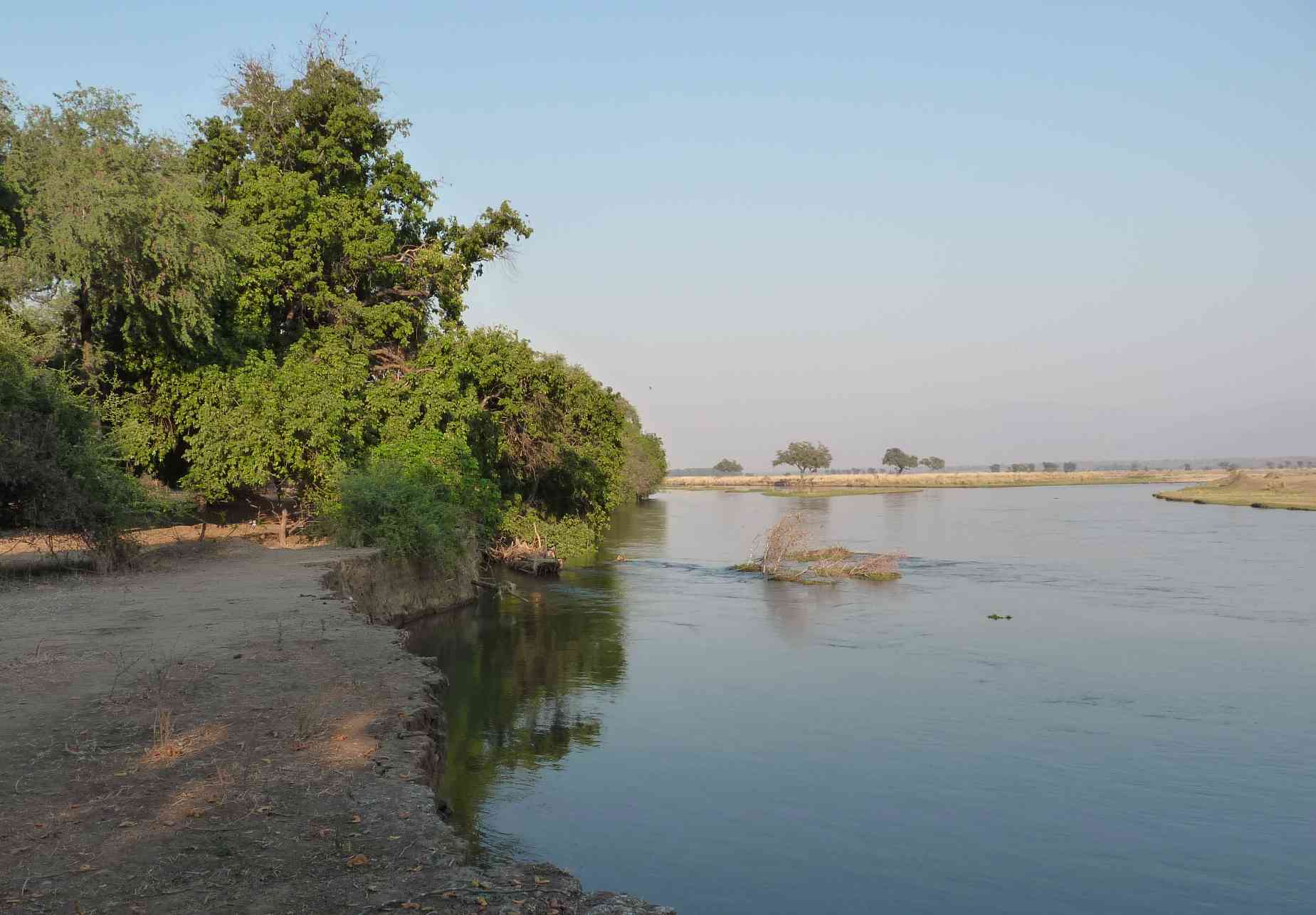
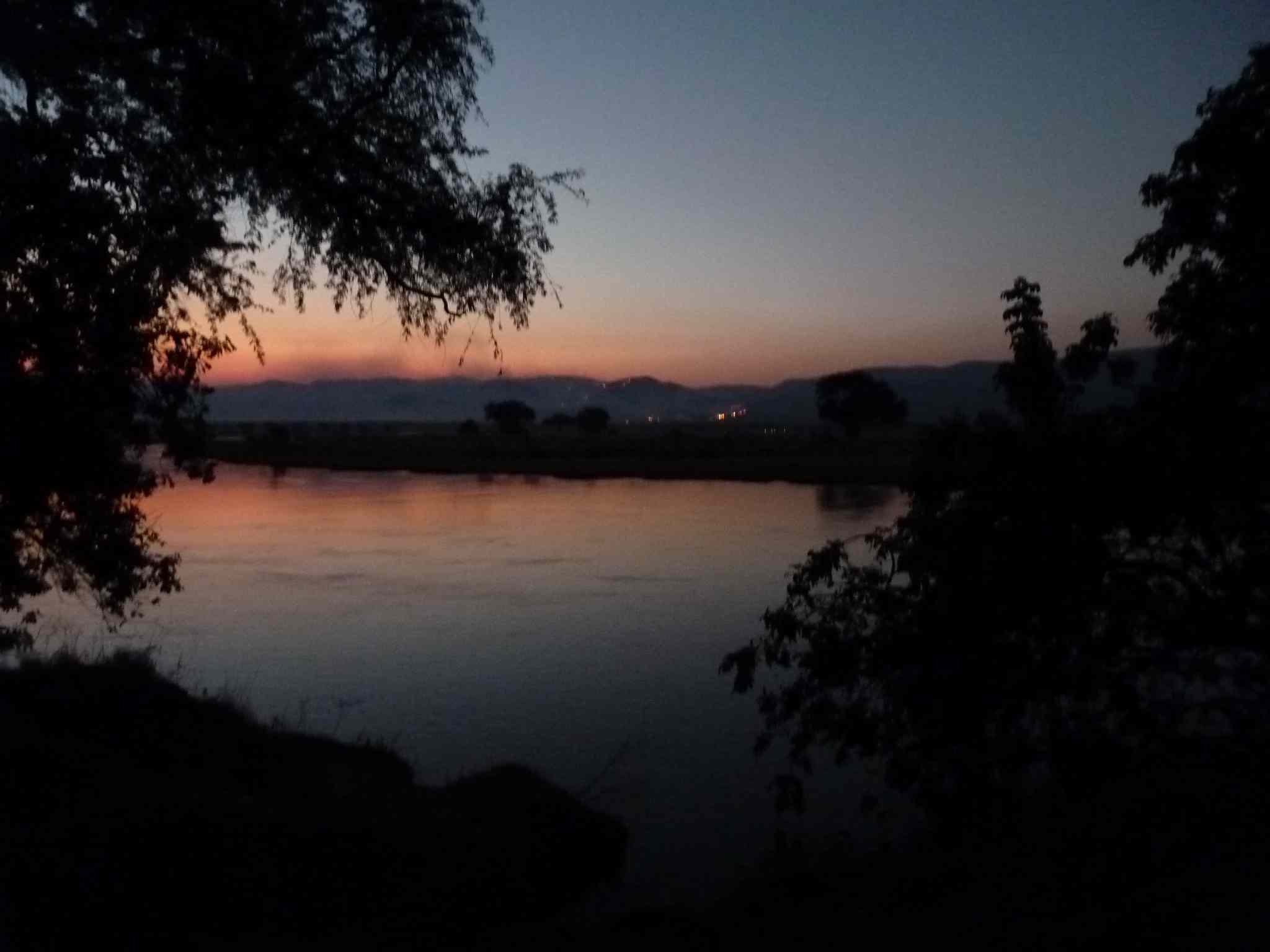
The lodges are well positioned, only a few metres from the river bank providing great views of the Zambezi. The sunsets over the river were spectacular as usual.

The Zambezi river from the lodge.

The Zambezi river seen from the lodge grounds.

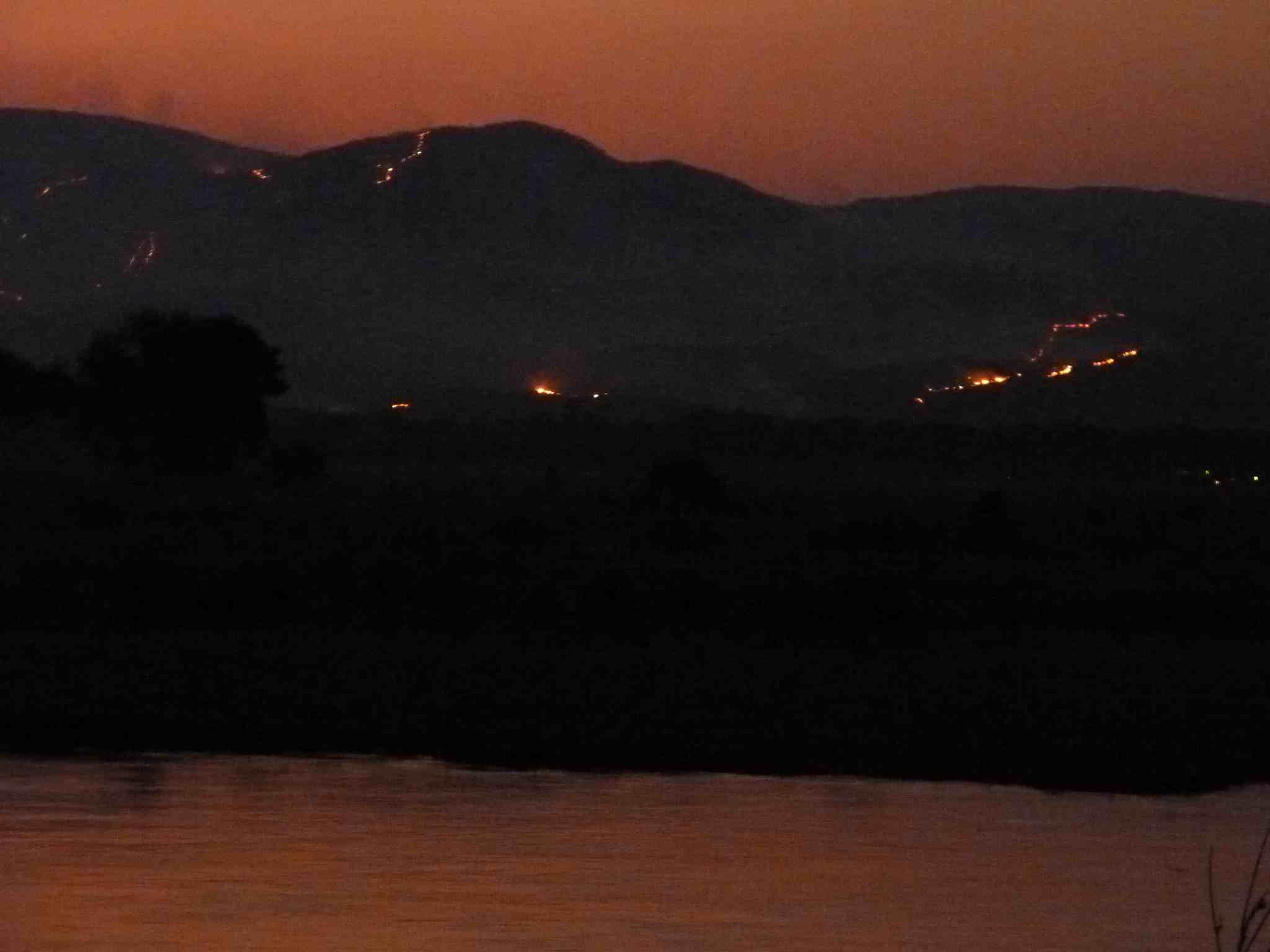
At the time of our visit the sundowns were made even more dramatic by the bush fires raging on the mountains opposite us, across the river in Zambia. Most nights the hills were decorated with crisscrossed fire garlands that devoured the dry brush voraciously and added drama to the view.

The sunset and bushfires.

The sunset and bushfires.


A bad picture of the burning hills.

A view of the burning hills (apologies for the bad picture).

Usually we are at the lodge in the morning (before leaving for a walk or game drive), lunchtime (when you are not in the bush) and in the evening (always). It is during these times that you have the closest encounters with wild animals.

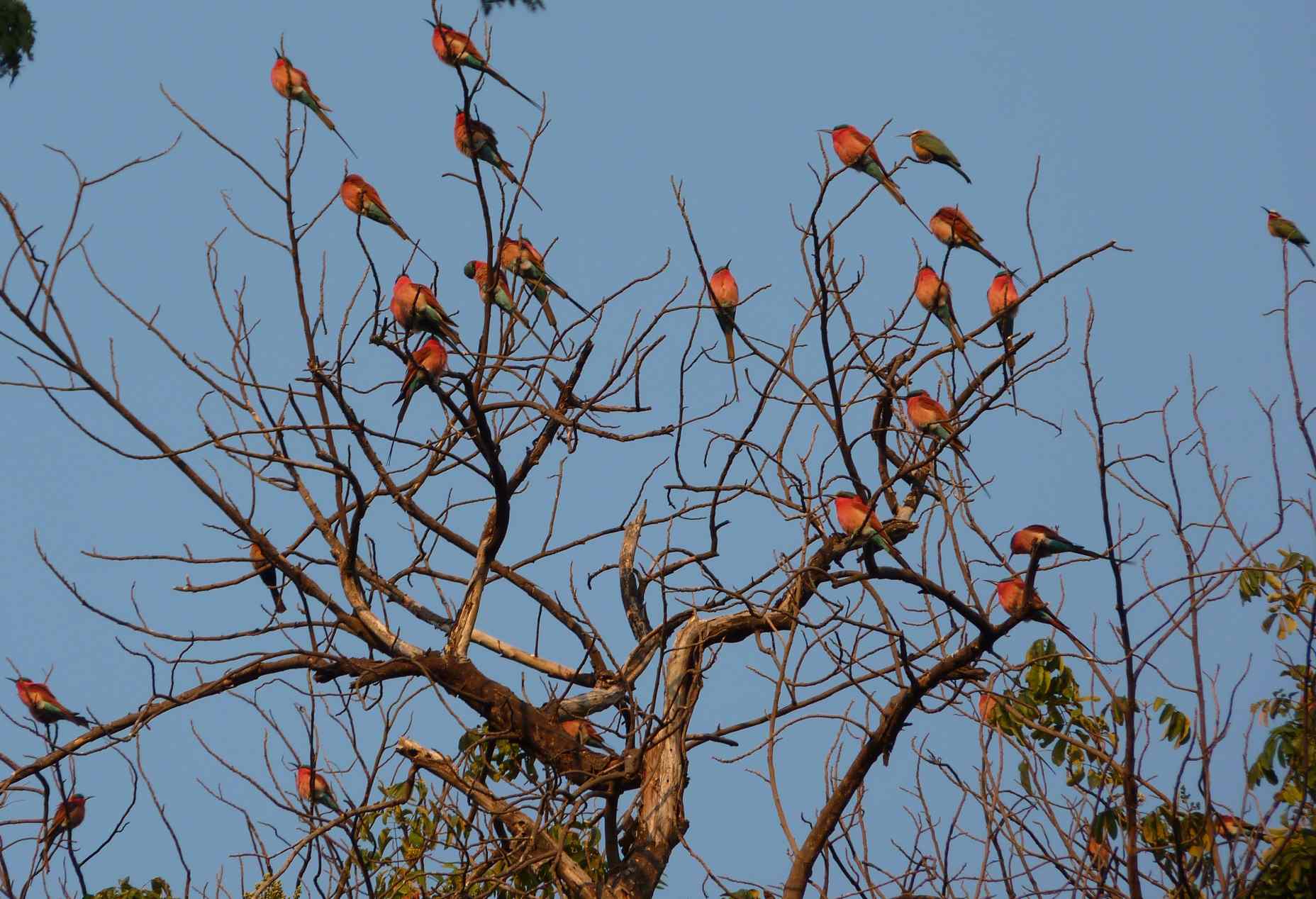
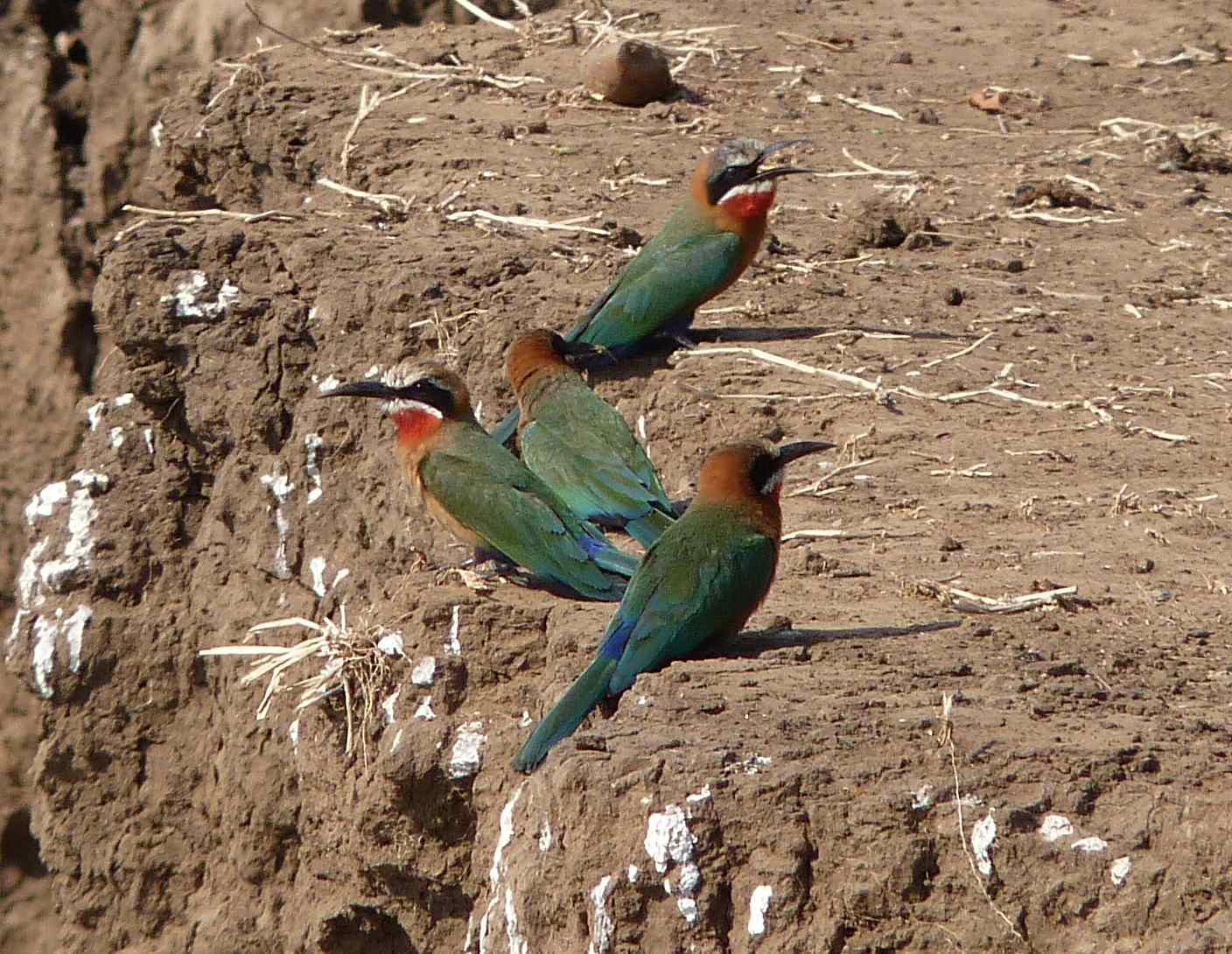
In the early mornings we were woken up by loud birdcalls that made going back to sleep rather difficult. The din came from the goings on of a colony of white fronted bee-eaters (Merops bullockoides) that had their burrows in the banks in front of our lodge. With them were also a large number of the much bigger southern carmine bee eaters (Merops nubicoides), adding more colour to the scene while basking under the morning sun in the treetops above our lodge (a magnificent sight).

Southern carmine bee-eaters basking in the sun.

Southern carmine bee-eaters basking in the sun (please note the smaller white-fronted bee-eaters on the right of the picture).

The white-fronted bee-eaters were very active and most likely involved in courting and nesting. A bit of reading when we returned to Harare revealed that mixed colonies of these two species are common. I also learnt later that these birds are colonial but also cooperative. The latter means that many individuals of both sexes play a role as helpers* and that they may switch from breeder to helper and back to breeder many times over a lifespan.

White fronted bee-eaters at the bank.

White fronted bee-eaters at the river bank. Their borrowed nests are below.

Every morning the carmine bee-eaters, after being sufficiently warmed by the sun, flew off for the day on unknown errands, and returned in the afternoon. Unfortunately I could not tell if these birds were also nesting in the banks but I suspect so.

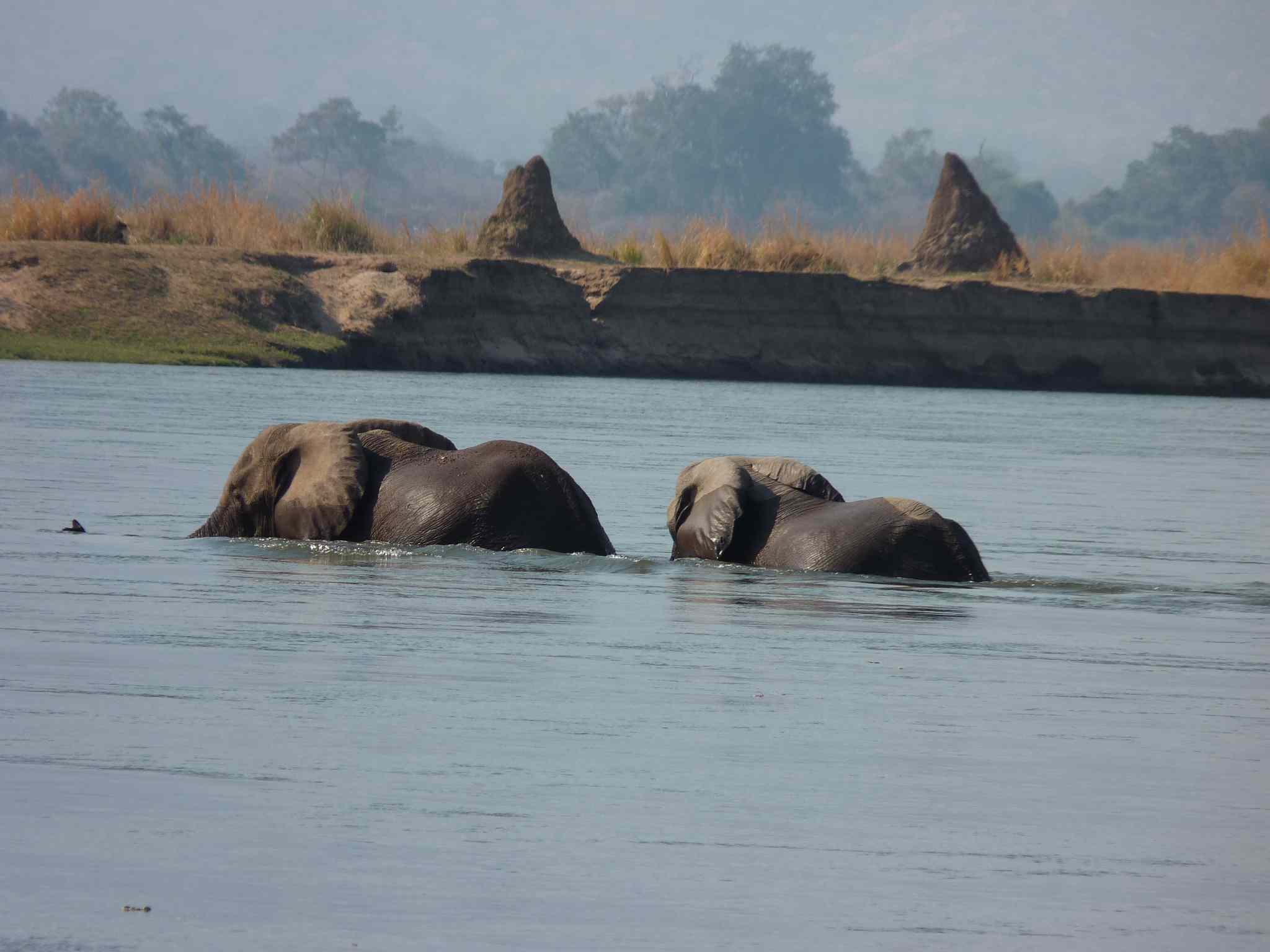
The proximity of our lodge to the water’s edge provided us with a continuous parade of animals without having to move too much. These included some really huge crocodiles as well as buffaloes, hippos and elephants: they were on both sides of the channel that ran in front of the lodge. It was wonderful to see elephants wading to reach the opposite shore only to return once they ate their fill of their favorite vegetation.

Elephants crossing the channel.

Elephants crossing the channel (note the two termite nests in the background).

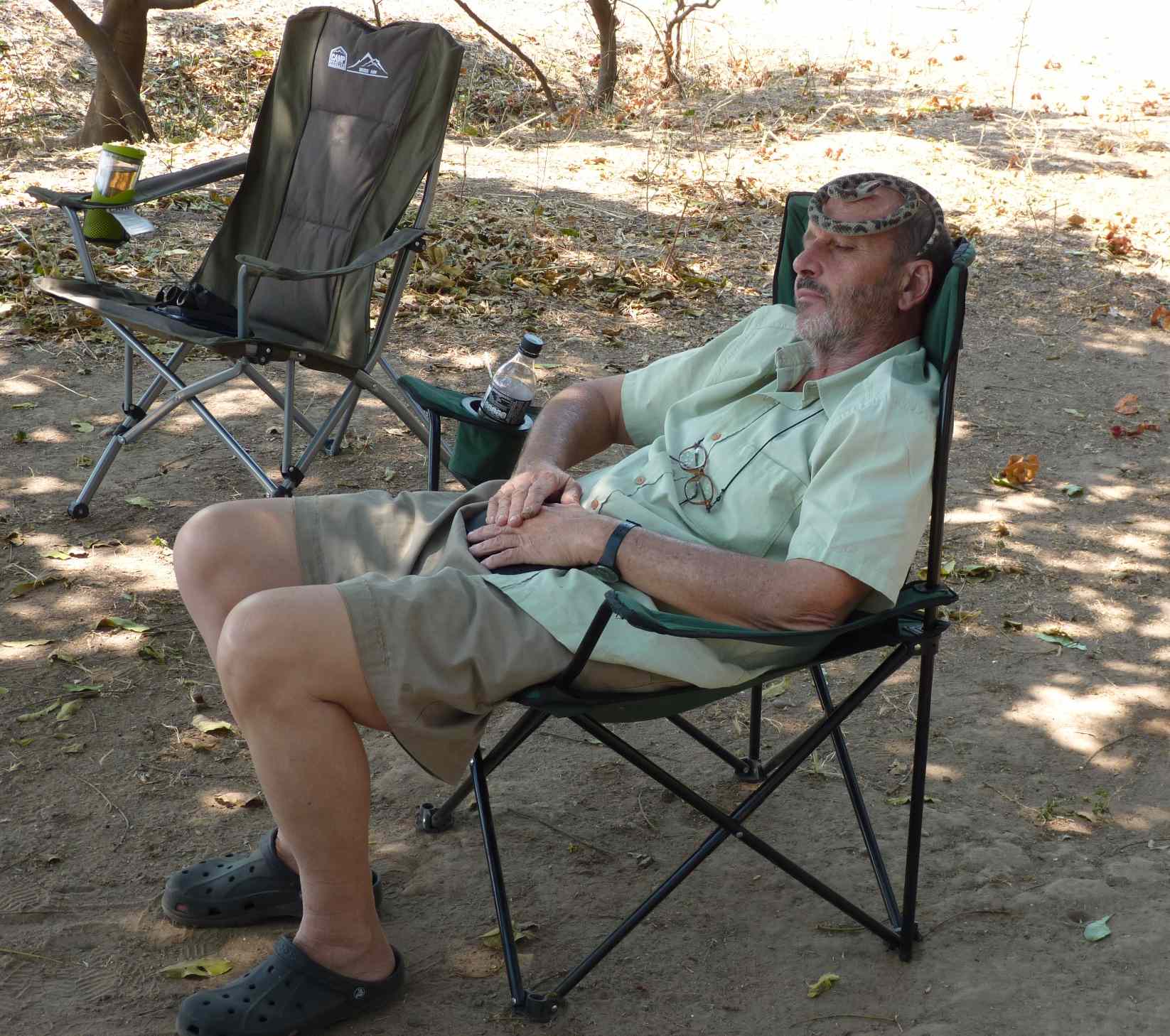
It was during the first lunch hour -a bit too hot to go looking for animals- that, after a light salad lunch, I prepared myself for my usual short siesta. I placed myself under the shade of an acacia tree that provided ample shade (and pods!) and prepared myself for sleep while reading my book. It was warm but there was a soft breeze, which resulted in the perfect cool spot. These were ideal conditions and I was even prepared for a monkey-attack, just in case…

The bushsnob prepared for a "monkey-proof" siesta!

The bushsnob prepared for a “monkey-proof” siesta!

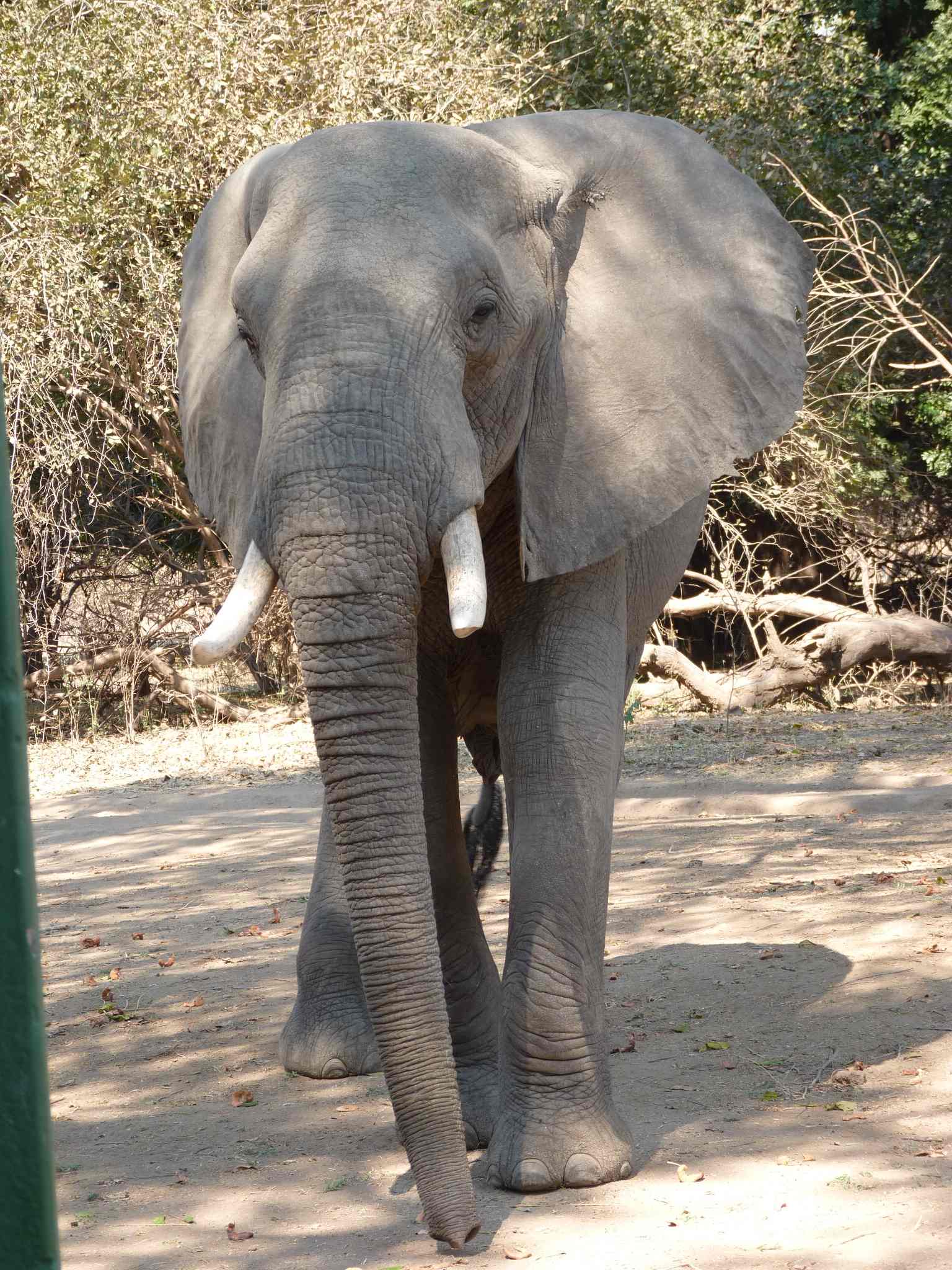
It all started with my wife becoming very agitated at the exact moment that I had duly dropped my book (on my face) and entered the “drifting off” stage of my nap! Her alert call brought me back to life. Before I could proffer my -I am sure expected- complaint, I heard a soft “Don’t move and look” I knew then that I should do as I was told! My eyes were filled with an elephant!

Thankfully its attention was solely on the Acacia pods.

Thankfully, its attention was solely on the Apple ring Acacia pods.

I froze -purely out of fear rather than bushsnob wisdom- as the elephant was three metres away from me and still approaching! I immediately noticed that, although very close, it was after the pods on the floor and oblivious to its surroundings including me! With a super human effort, given my panic-driven semi paralytic state, I lifted my feet off the ground as it could have otherwise, unintentionally stepped on my bare feet (ouch…). The sight mesmerized me! Finally, it came to about a couple of metres and looked at me “Now I am history” I thought. However, it simply raised its head as if saluting me and continued with its feeding, slowly ambling past with the only heralds of its presence the crunching of pods, the rattle of those discarded and the occasional soft huffs of its trunk as it searched for more.

It was coming in my direction...

It was coming in my direction on silent feet…

The amazing thing about elephants is that despite their size, you will not hear them unless they want you to. While walking on tarmac elephant footpads make a whisper-like ‘chuff’, similar to the sound produced when one brushes a hand over the fabric of a pillow; on dusty earth they are virtually silent. At night, they silently walk through your campsite while browsing without disturbing anything. Finally, although I often trip over the tent ropes, I have never had an elephant doing so day or night!

As my knees had suddenly turned into jelly, I did not move, even after it passed and not even when my wife’s “order” was issued: “That was close! Get up quick and take a picture of it before it goes away” When I managed to collect all my wits and do a mental inventory of the condition of my various body parts, it was too late and I could only see its backside moving off. Although we have had these kind of encounters before this was a very close one and it is quite an experience to be literally “face to trunk” with a fully-grown male elephant! The siesta was abandoned, this time for a good reason!

This was not the only occasion that this happened during our stay at Mana Pools but I describe it to you so that you have an idea of our interactions with wildlife at the park. More than one tusker visited us everyday and a few family groups walked around the lodge during the day and night. They were even rude enough to try to spoil our BBQs!

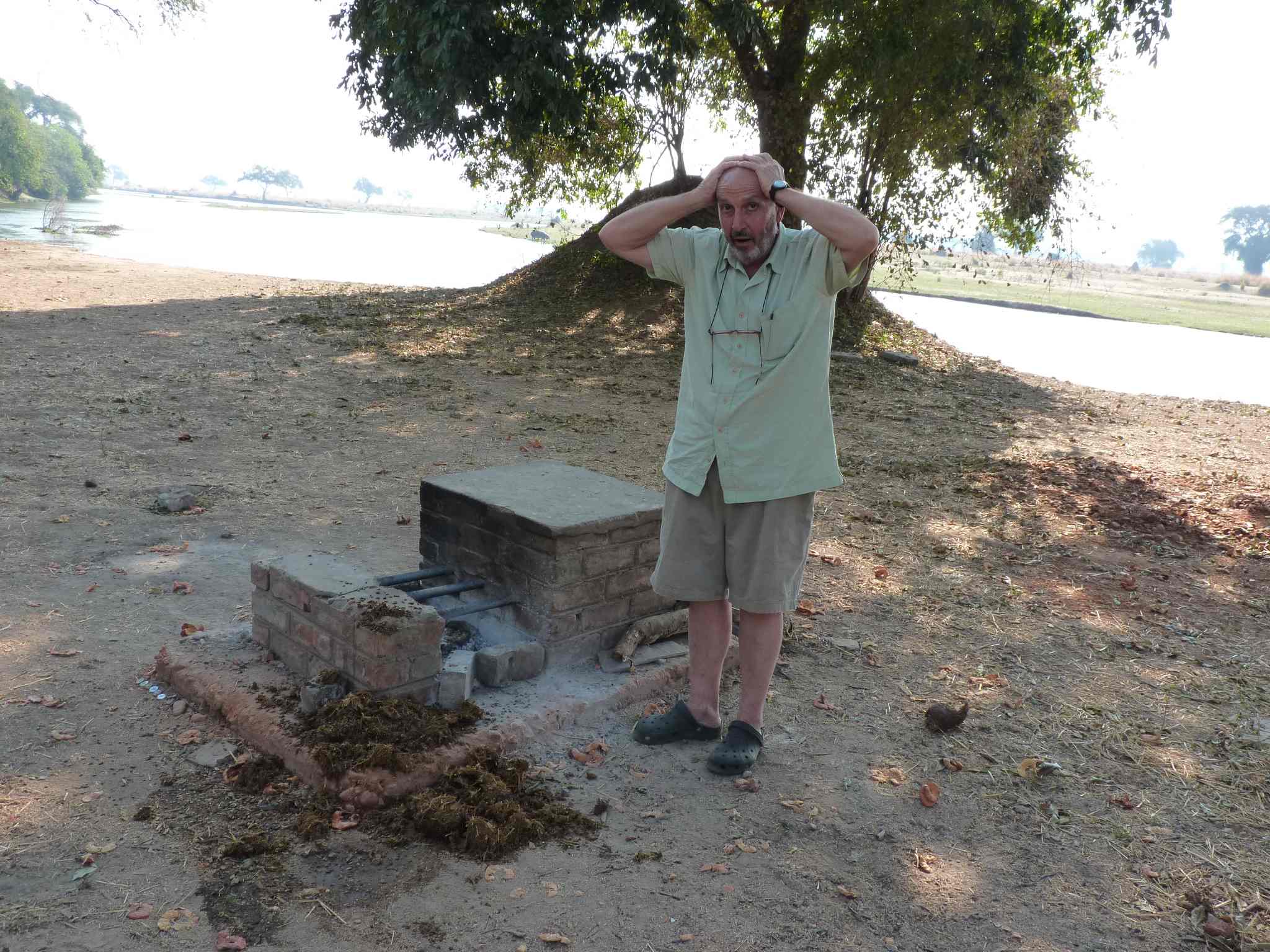
The bushsnob just discovered the bomb dropped by the "terrorist" elephant and he is horrified thinking on cleaning the mess.

The bushsnob just discovered the bomb dropped by a “terrorist” elephant and he is horrified thinking on cleaning the mess (the faeces were almost pure Apple ring Acacia seeds!).

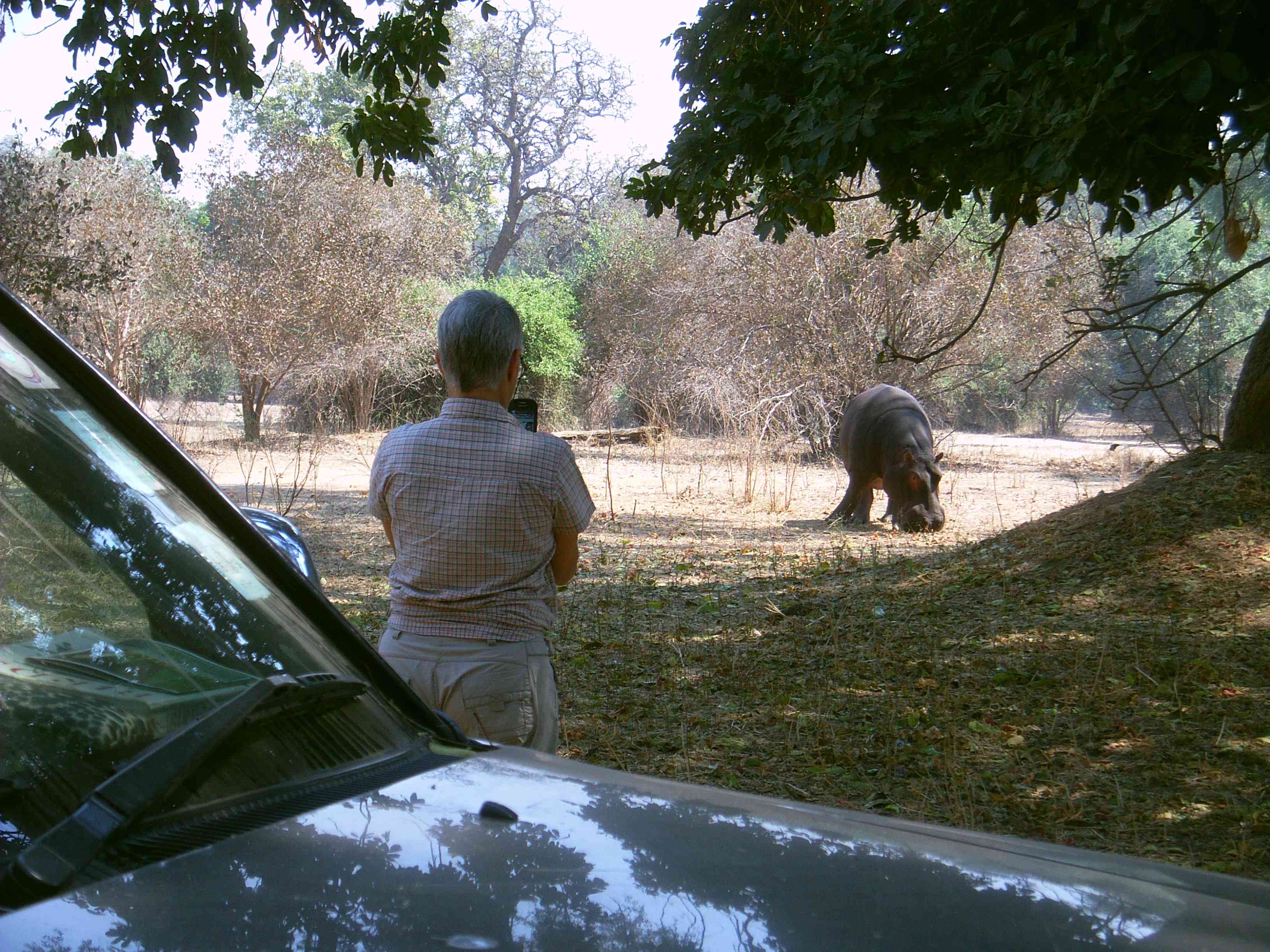
In addition to the pachyderms, a lone hippo kept us company everyday as it fed on the pods. It would arrive after sunset and we would hear it chomping while it walked about. Although it occasionally entered the circle of light provided by our lamps, it preferred to stay in the dark. This meant that every now and then, we would have to locate it as it was an additional hazard while walking around our lodge (particularly when going to the BBQ area or the water boiler) to avoid the danger of bumping into it!

My wife keeping an eye on our hippo visitor during a day visit.

My wife keeping an eye on our hippo visitor during a rarer day visit.

A least one spotted hyena also did its food-run every evening. We did not think that hyenas were around as we did not hear them but they were afoot operating silently in the darkness! The lions were, quite to the contrary, rather close and very loud. They were heard, as my wife put it, “all night long” and a lioness and two cubs passed by while the occupant of our next-door lodge was having his morning coffee!

* Birds (normally juveniles and sexually mature young birds of both sexes) that remain in association 
with their parents and help them raise subsequent broods.

The unseen painted dog

We arrived at Mana Pools National Park (Mana Pools) at about 15:00 hours after a six hour drive from Harare. Just before the turn off to get into the final stretch of rough dirt road, we stopped at the edge of the escarpment to take in the hazy view of the Zambezi valley below, always a beautiful sight, and one that is full of anticipated adventure. The view was even hazier than usual, as this is the season of bush fires that add a blue tint to the horizon.

The view of the Zambezi valley from the main road.

The view of the Zambezi valley from the main road.

The stop to contemplate the view had to be brief as we still had about two hours of driving to get to the park. As soon as we started the escarpment’s steep descent we came across a queue of lorries parked on both sides of the road. The normal sightings involve slow moving lorries either struggling uphill or burning brakes downhill, so this kind of mass convergence was not normal. We drove through the narrow “lorry tunnel” very slowly, passing around 60 lorries before we came to the reason for the queue. An unfortunate driver had lost control of his truck while going downhill and crashed at full speed against a rocky bend. The accident was recent as the rescue of the occupants’ was taking place as we passed by. This was a stark reminder of the dangers associated with driving.

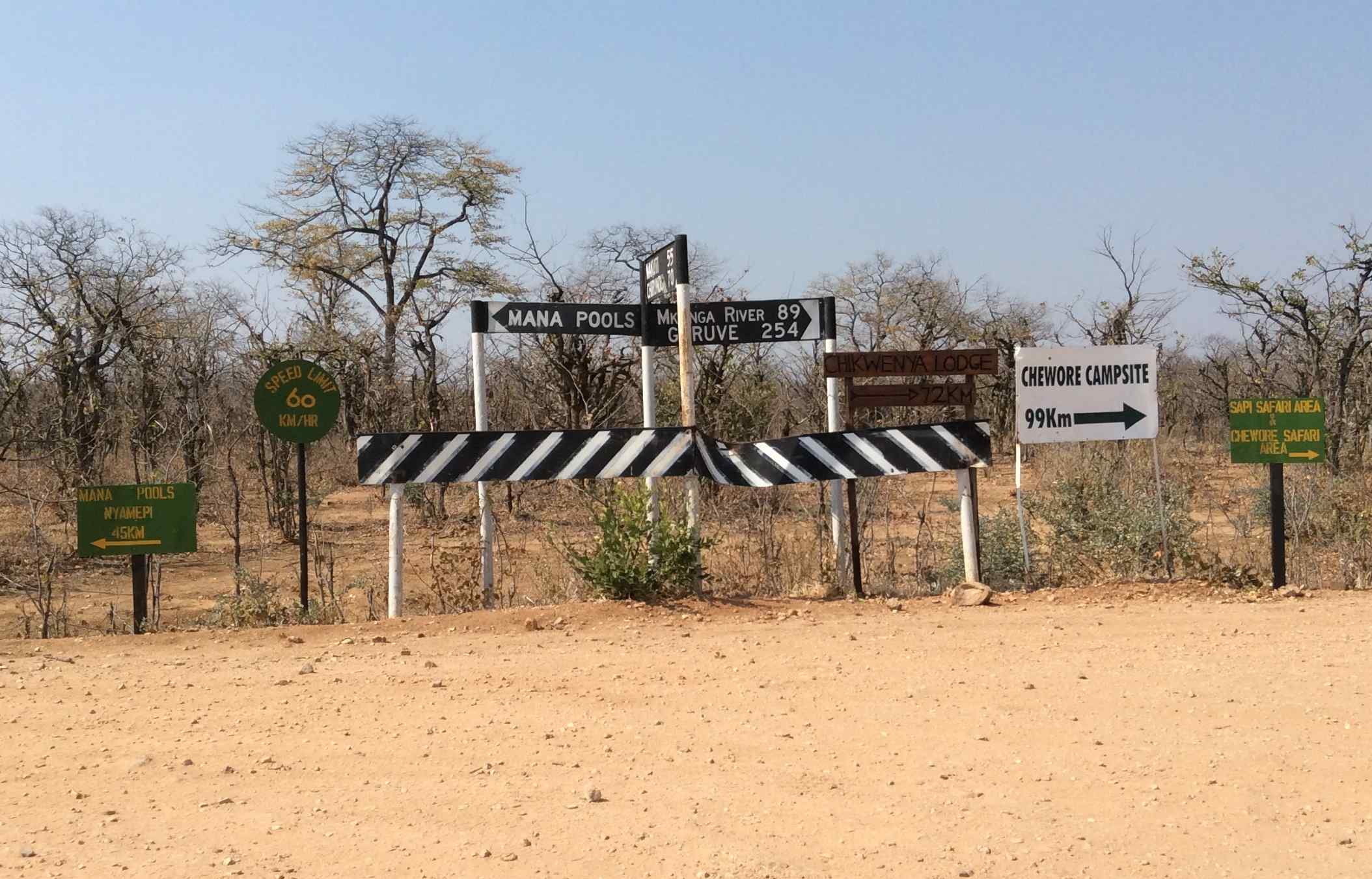
The turn off into the rough road leading to Mana Pools came as a relief after witnessing such a mishap. We drove on and, after 80 km of dirt road; we arrived at Mana Pools, a UNESCO World Heritage site of similar standing to the Great Barrier Reef, the Tower of London or Yellowstone National Park. The recent book “Mana Pools” by Gregg Robinson presents excellent pictures and describes the park in great detail. What more can I say not being a poet but rather a humble veterinarian!

The road to Mana Pools.

The road to Mana Pools.

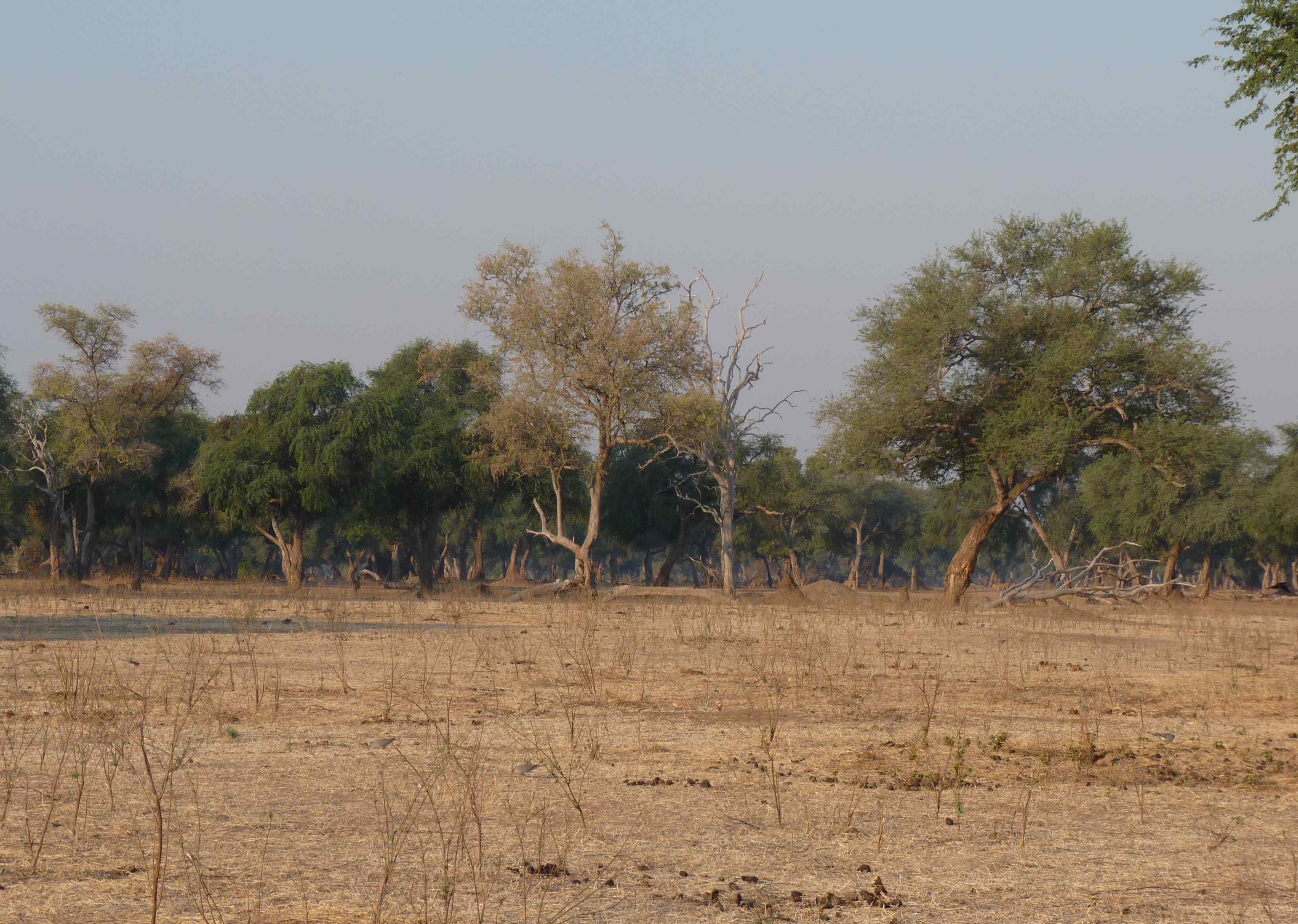
Mana Pools is a place of unique natural beauty. The Zambezi River, with its hilly background, forms its northern border and the area to the South is a flat wooded expanse where earlier river meanderings have left a number of separate pools that give the park its name. This is where game abounds and, because of the nature of their habitat they can be spotted at a distance, similar to the East African parks.

The Mana woodlands in the afternoon.

The Mana Pools woodlands in the afternoon.

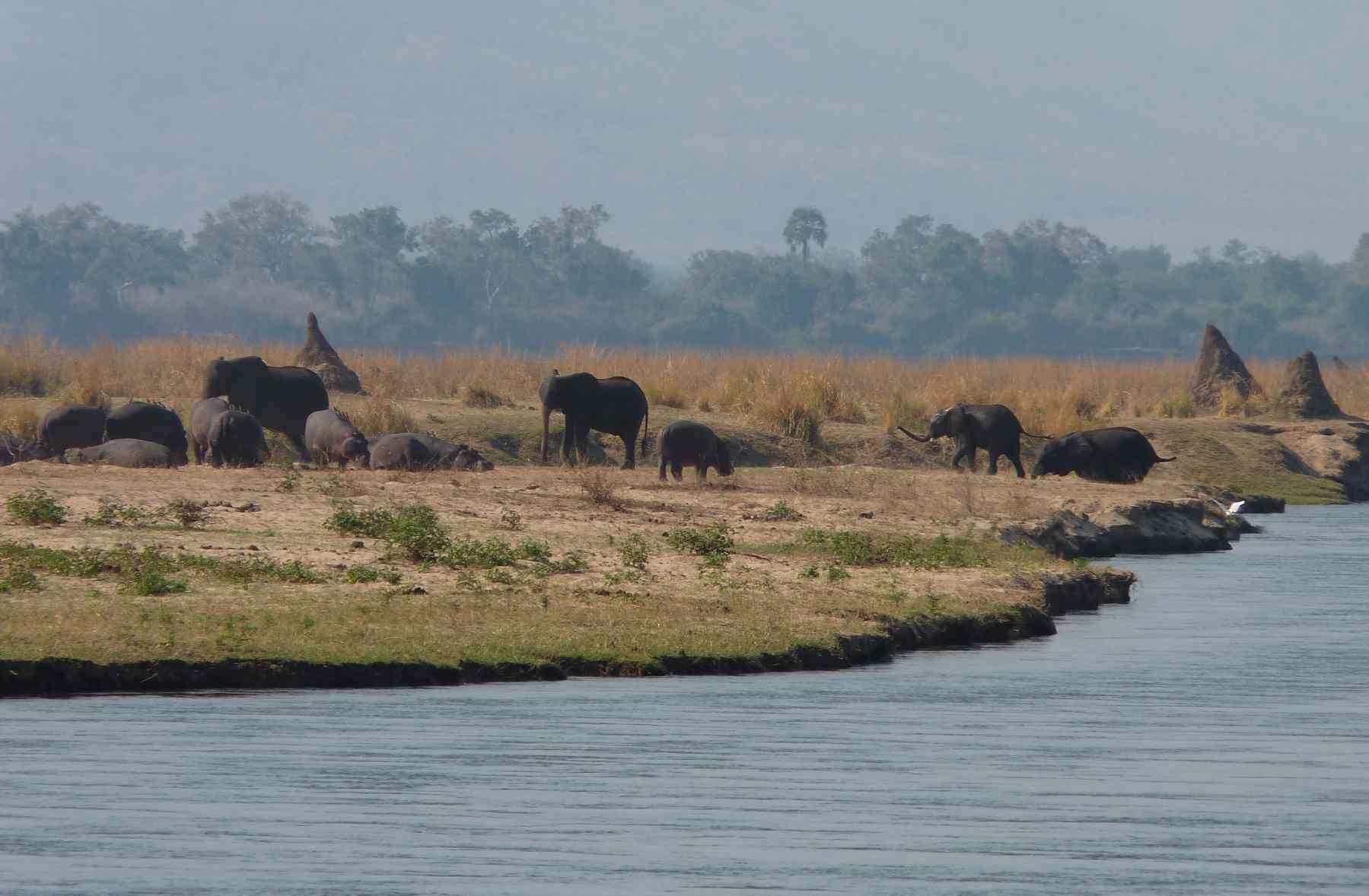
In addition to its magnificent and ancient trees and its abundant wildlife, Mana Pools is -I believe- the only national park in Africa where you can leave your car and walk on your own despite there being dangerous animals at large. We know of two prides of lions and a pack of painted dogs that live in the area, not to mention numerous hyenas, several buffalo herds, many elephants, the occasional leopard, crocodiles and hippos, among others.

elephants and hippos

Hippos and elephants sharing the grazing area in the banks of the Zambezi River.

You may be surprised at this unusual and seemingly dangerous freedom but it works well due to a combination of animal tolerance and human caution. So, you are able to leave your metal cage and walk around freely! However, we must never forget that the animals we see around us are wild and as such, require the utmost respect and caution from us. Walking away from the protection of your car demands extreme prudence at all times, along with being aware of your surroundings, the direction of the wind, where you place your feet along with being able to read other important signs and, most importantly: to remember where you parked your vehicle!

The beauty of leaving your car.

The beauty of leaving your car.

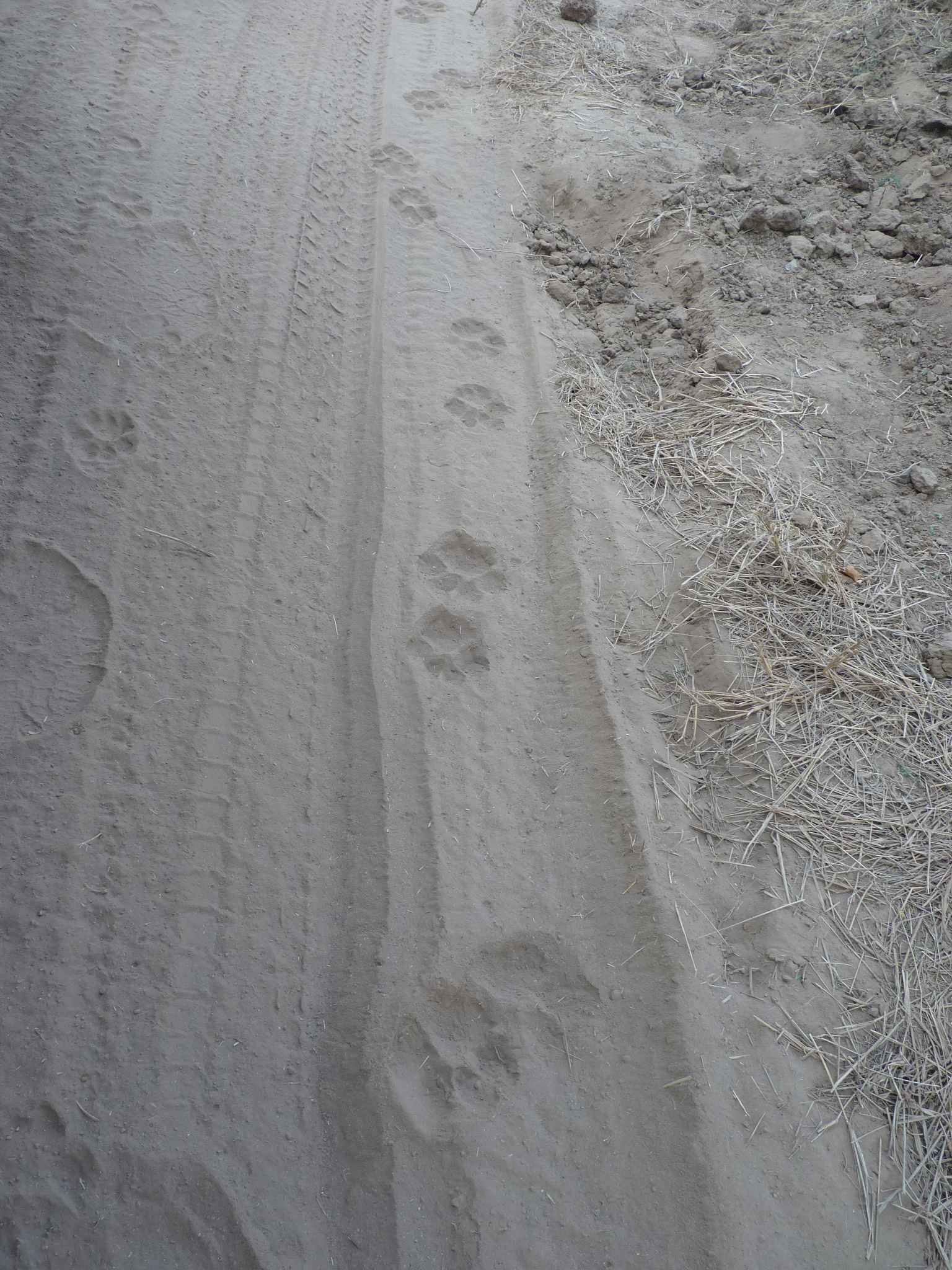
We found lions on our first day, ten minutes after leaving our lodge! There were two: a young male and an adult female. They were just visible in the bush, near Chisasiko pool. We stopped the car and joined other people already there having their morning coffee while watching the lions, a rather unique experience! The opinions were divided on whether they had or would hunt. To us they looked alert as if looking for prey but it was difficult to guesstimate!

Lion paw marks on the dusty road.

Lion paw marks on the dusty road before they entered the bush.

While the lion conversation was going on, a new vehicle arrived. It was a group of tourists with a professional guide in his late fifties, known to some of the people present. As usual, the excited crowd informed him of the lions’ location. What followed next was as unexpected as it was shocking! He, followed by his unknowing clients and another staff member with a gun, walked straight towards the lions, doing exactly what you must not do! What happened next was as predictable as it was unnecessary: the lions moved off! The group then turned back and left!

The ... pool, where the lions were.

The Chisasiko pool, where the lions were.

“He is after a fat tip from his clients” was my angry and rather loud comment and then I heard my wife’s lapidary “poor man, it is sad that at his age he has to do this to get some extra money!” The latter was followed by another remark from a lady in the group “he left it a bit late!” Anyway, seeing that the situation had been modified by human folly beyond immediate recovery, we pushed on with the idea of coming back later as we knew that, despite the interference, the lions would remain in the area.

However, finding lions only ten minutes into your safari changes the situation as you become somehow “dependent” on what they will do next! Afterwards, while driving you wonder if they are hunting, moving or whether other lions have joined them (which means you could miss something unique!). We also made a mental note of their proximity to our lodge!

During our stay we were rewarded by nice sightings of buffalo, eland, greater kudu, waterbuck and zebra among others. We also saw a trio of fish eagles engaged in a loud territorial dispute and a proud saddle bill stork mother with her two grown offspring, although no male was around.

The saddle bill storks.

The two young saddle bill storks (left) and their mother. A hamerkop and a baboon complete the picture.

We did see the lions a few more times in the general area of the Chisasiko pool, but they did not hunt and on the final day they moved off towards the mouth of the Mana river, probably stalking a buffalo herd that resides in that area. We also spotted a pair of Selous mongooses and two side striped jackals (Canis adustus). Our general impression was that the park has a good animal population.

We also attempted to visit a new water hole, recommended by a friend as a good place for a “sundowner”. Equipped with the right ingredients for such occasions, we drove following a path that was clearly a firebreak with the anticipation of reaching a quiet place where animals would come to drink. Unfortunately, after driving about 10 km we came to a wide sand river with very broken and steep banks. There were very recent and deep wheel marks in the sand showing that someone else had tried to find the waterhole and got severely trapped in the deep sand. The story was reinforced by the warm ashes of the campfire they had lit while spending the night by the car! We decided not to risk the crossing!

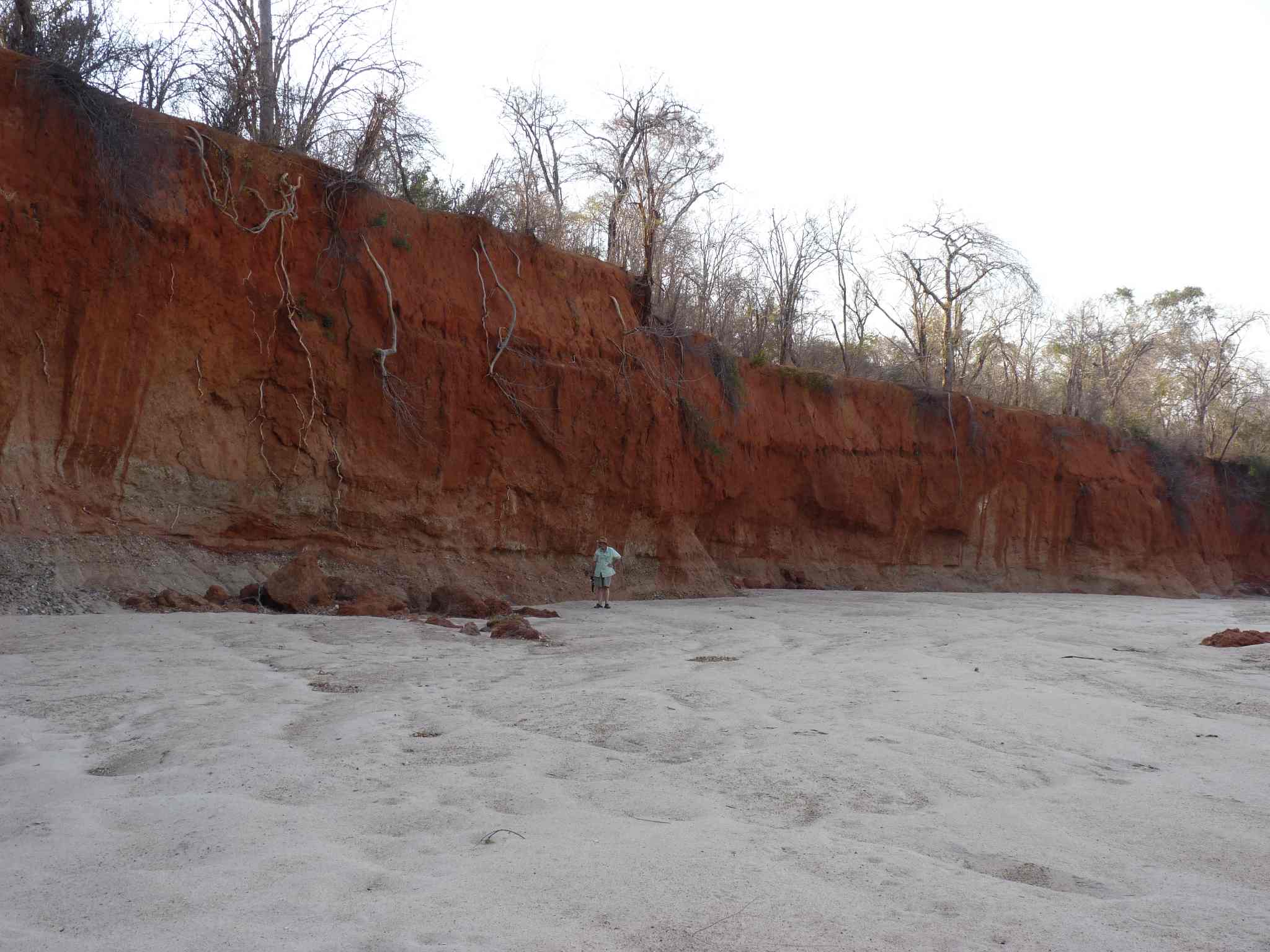
The river was a lovely place to have a drink anyway. We also enjoyed a nice walk on the dry riverbed framed by rather high cliffs made of red soil, where trumpeter hornbills feeding on wild figs could be seen. We will come back next time for another attempt at crossing the river.

Walking by the red cliffs in the sandy river bed.

Walking by the red cliffs in the sandy river

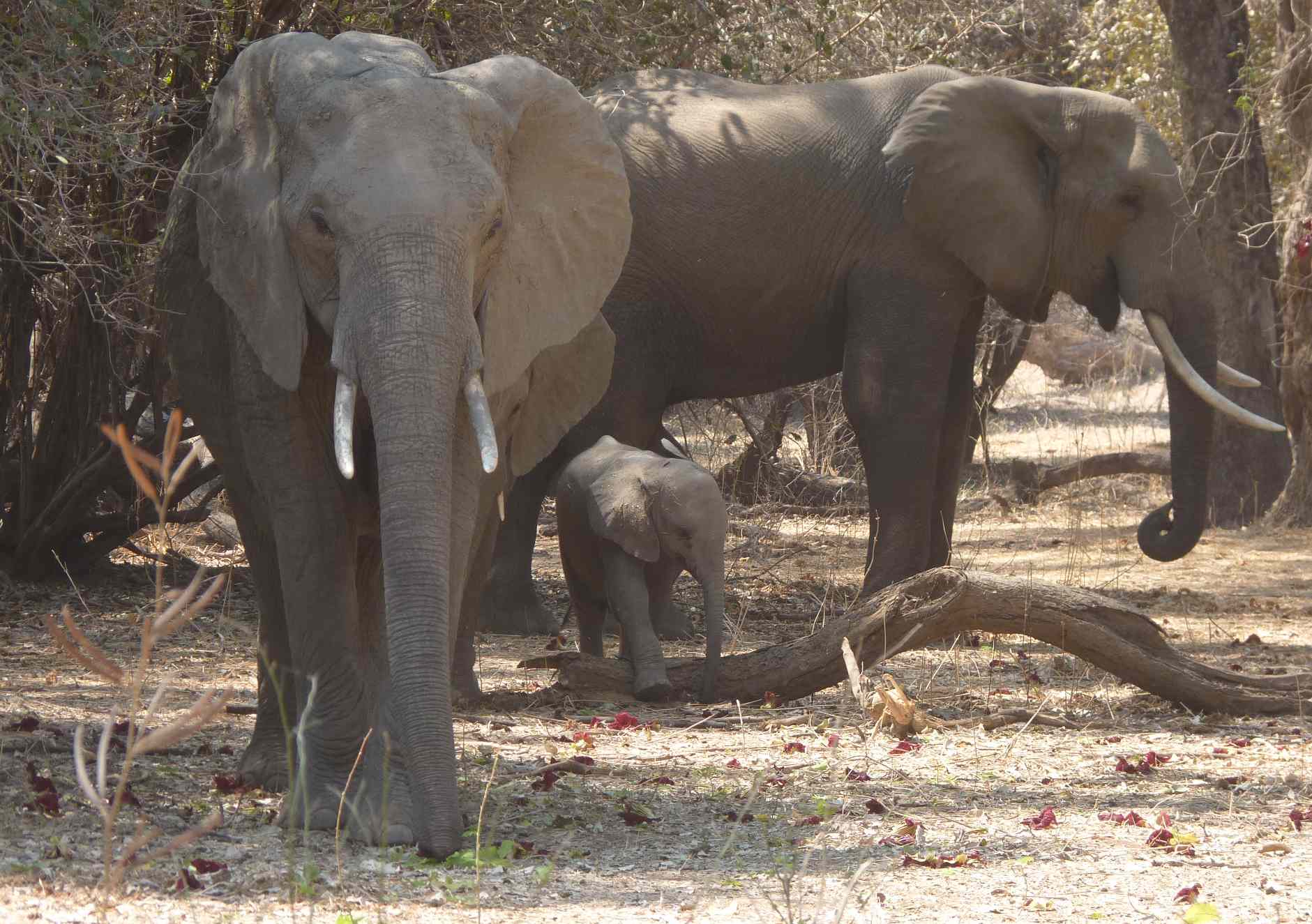
Elephants were numerous throughout the park. Young animals were in abundance. We also saw a number of adult tuskers. The latter do not carry heavy tusks of the type we saw in Kruger and described in my earlier post.

All feed on pods!

A small group with a young one. Note the Apple ring acacia pods on the ground.

Although I will focus on the Mana trees in one of the next accounts, one tree is a major protagonist in Mana: the Apple-ring Acacia (Faidherbia albida). It is the main tree of the Mana riverine plain forest and it produces a spiral shaped pod eaten by most herbivores in the park and it constitutes a valuable source of food in the dry season.

The elephants are very fond of these pods and at this time of the year they can be seen feeding on them all the time, wherever the trees are. To watch this activity is rather engrossing so we stopped often to watch them as they pick them up from the floor using their trunks as vacuum cleaners! However, as usual, the best are difficult to get! The tastier pods are those still high up in the trees!

Pod collecting at full stretch.

Pod collecting at full stretch.

Aware of this, elephants will go to great efforts to reach them and, with patience; you may be able to watch them doing it. This was, fortunately, our case as we came across several pod-eaters that stopped at nothing to get these treats!

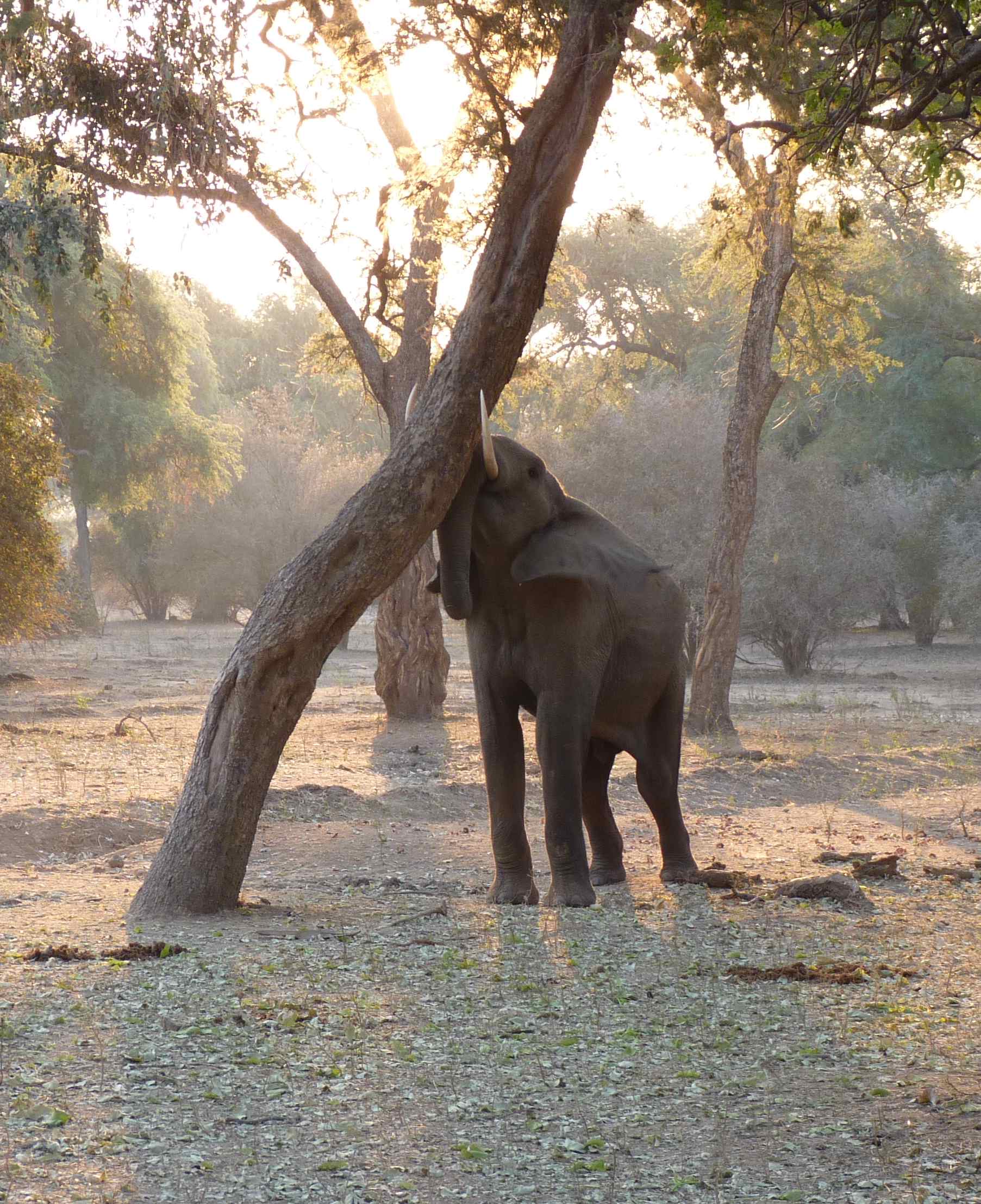
During the second day of our stay we found a particular tusker that “agreed” to put on a show for us. He was dealing with a rather tall tree, so he stretched to the highest possible extent in order to reach the place in a wild circus-like act, and brought down branches full of pods. After finishing them and unable to get any more, he changed tactics by leaning his head against the tree trunk and proceeding to head-butt it vigorously, which provoked a “pod rain” that it subsequently picked up from the floor.

Shaking the tree.

Shaking the tree.

As the tusker moved off in search of other tasty trees we also moved off, still looking for elephants. As we were driving slowly, we were overtaken by another vehicle that, we found parked by the road after a while. We stopped and asked its sole occupant if he had seen the lions. “Not today” he replied, “I have been here for three days and only saw them the first day” he added. We volunteered what we knew about the current lions’ location and asked “Any painted dogs*?” as we knew that these carnivores are often seen in Mana.

We could not believe his reply: “Do you mean other dogs apart from the one that we just saw crossing the road in front of your car?” “Are you serious?, we did not see anything!” my wife’s response came immediately. The reply came: “OK then, apart from the one I saw and you didn’t?” he said, clearly enjoying the moment and with a nice touch of humour. “We did not see it!” we confessed rather sheepishly, as it seemed unbelievable to us that this could have happened. He then added “I see them often as I am part of a painted dog conservation project that works here!”. Our embarrassment was somehow lessened as he had a “trained eye” for dogs!

Talking to him we learnt that the dogs are present in Mana around the “Mucheni” area and that the one he saw (and we didn’t!) was probably a male of a new pair that had just come from the Rukomechi area. We also learnt that the alpha male of the local Mana pack was missing and, although there could be several reasons for his absence, it is possible that it has died. We thanked him for the information but, despite it, we failed to see them during our safari. Our only consolation was that, although we did not see one, it was in the same place at the same time as us!!!

As a last attempt to save face, I tell you that we had seen painted dogs on a previous occasion in Mana Pools. We were on a game drive with my daughter/Editor when we spotted a pack on the road. There were about 16 dogs and they were moving rather fast. Taking advantage of the freedom of Mana Pools we parked the car in a hurry and followed them on foot, together with a group of tourists.  It was very exciting as they caught an impala just before we got to them and they were feeding on it. Regrettably, the scene was interrupted by my loud talking -being a bushsnob- and the weird noise my camera made every time I switch it on! The picture below was taken at that time.

A couple of the wild dogs seen during an earlier visit.

Wild dogs seen during an earlier visit.


* Lycaon pictus is commonly referred to as African wild, cape or hunting dog and African painted dog, among other names. I use "Painted dogs" as this is the name used by the project in Zimbabwe.

Hippo Pools revisited

We were frequent visitors to Hippo Pools Wilderness Camp after we discovered it in 1998 and we were there a few times between then and 2001 when we departed to work in Bolivia. Our children were small at the time and it was an ideal and safe place for them to enjoy nature while getting bush-smart. We have fond memories of the time we spent at the camp, particularly the bush walks that were always enriching due to interesting findings and observations.

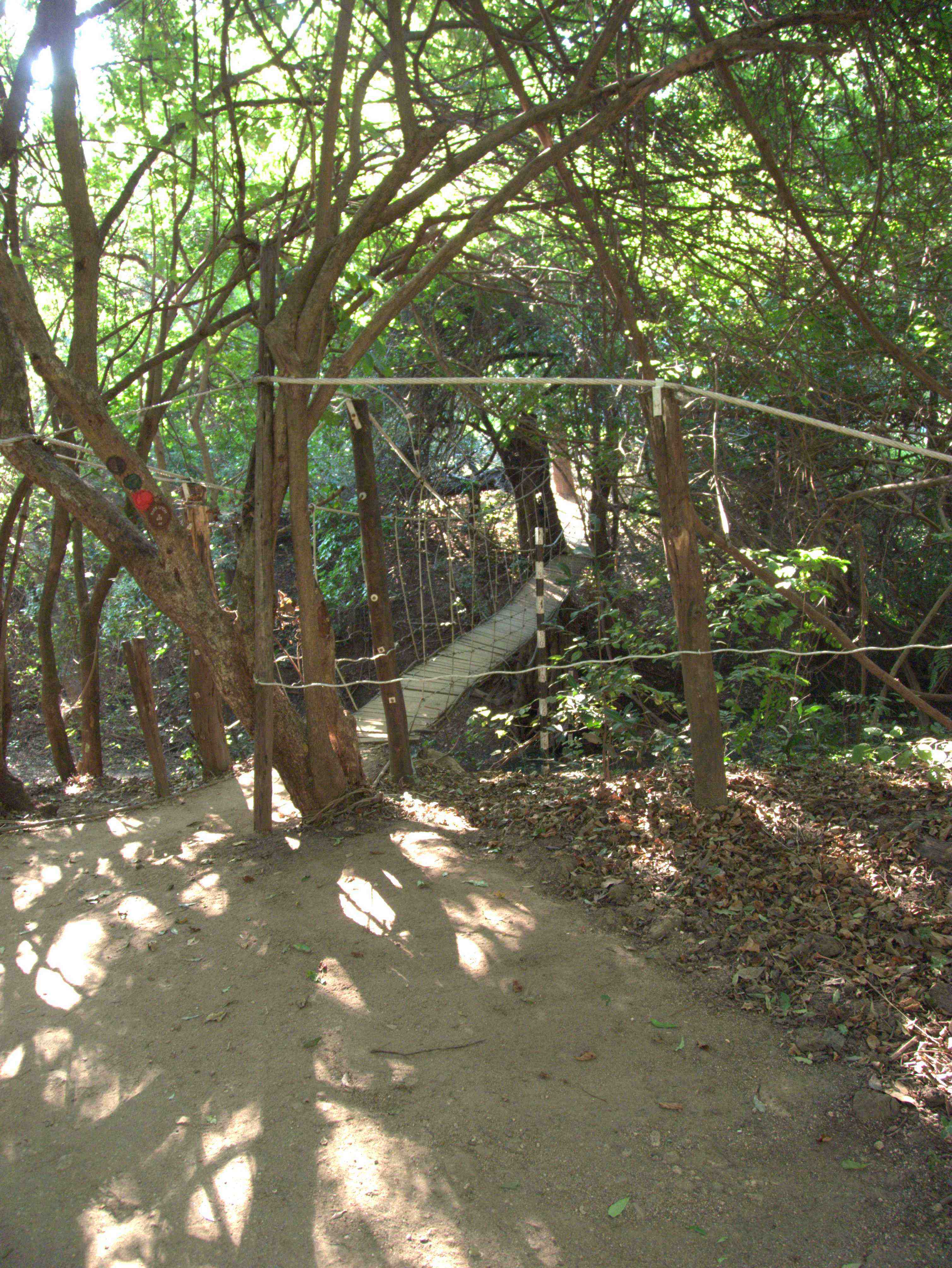
A hanging bridge spans the weir. The red dot on the left of the picture indicates one of the walking paths.

A hanging bridge spans the weir. The red dot on the left of the picture indicates one of the walking paths.

It was a pleasant surprise when, through the Ndeipí magazine of Harare, we learnt that Hippo Pools Wilderness camp was still there today. So we decided to give it a go and, unavoidably, compare it with the place that we remembered from 15 years ago. As we were not sure of what we would find there (or whether we would find the place…) we decided on a cautious two-night stay with the option of future visits if we liked it.

We have many good memories of time spent there but one of our walks along the river is perhaps the one most remembered. You will see why if you read on. For some reason, our daughter has a special sense that enables her to find snakes. That day was no exception. The twig snake (Thelotornis spp.) was in her territory, probably on the lookout for a lizard or perhaps a careless bird when we came along. In our daughter’s absence, we would have probably missed it as most people do because it was living up to its name and perfectly mimicking -yes you guessed right- a twig!

I am sure that the fact that this particular snake has binocular vision enabled it to get a very good view of our daughter and it was probably more frightened than her! However, our daughter was about nine years old and the snake was at about her eye level so, despite it being small, it looked threatening to her as it was swaying to  perfect its deception and remain unnoticed. Of course, nothing happened as we walked past but I still remember our daughter’s fright which soon evolved into outrage over the incident. As usual I did not improve things when I mentioned that it was very poisonous and that its bite could be lethal if it gets you with its back fangs!!!

The Mazoe river in front of the camp.

The Mazoe river in front of the camp.

The camp, now part of the Wilderness Africa Trust, is located about 150km from Harare in the Umfurudzi Safari Area, on the margins of the Mazowe river.  It has been functioning for over 30 years now, always under the good management we remembered. We learnt that the Trust has several projects to support the local communities and wilderness and wildlife conservation. The Trust employs over 75 people from the nearby communities, being one of the main sources of employment in the area.

View of the chalets and facilities.

View of the chalets and facilities.

To get there you need to drive out of Harare through Entreprise Road and, after 21 km take the left turn into Shamva Road and drive about 120 km and then turn right just after the entrance of Madziwa Mine until you find a sign for Umfurudzi Safari Area, pass Phoebus and Amms mines, report at the National Parks gate and from there you need to drive about 19 km to the camp. More precise details are available from the booking office.

The charming area where the camp is situated is held by the Trust through a concession by the Zimbabwe Department of National Parks and Wildlife. The interested reader can find more details of the work of the Trust @ http://www.wildernessafricatrust.org.

The camp remains roughly as we remembered, perched on a high bank of the Mazowe river (about 2 metres above the waterline) under magnificent indigenous trees that provide great shade to enjoy the well-kept lawn below. Several tree species are present and labeled carefully. We saw tamarind, sycamore fig, sausage tree and marula, to name but a few of the outstanding ones. Having been a tick expert I wanted to see the tick tree again (Sterculia africana) and pick some of its engorged tick-like seeds but time did not allow us to get to it as it requires a longish walk. It will be found next time, together with the large baobab (18-metre trunk circumference) that also requires some walking to get to. I understand that about 200 tree species have been identified in the area and they are all tagged, a great way to learn about trees. The camp has a tree nursery where you can buy trees as well. Regrettably, the pink flowered jacaranda was “out of stock” but there will be some in future, we were told.

Accommodation consists of self-catering chalets, cabins and tents scattered along the river shore with nice views over the river itself and the Garura Eco-Tourism area and well spaced so that privacy is ensured. There is also a good campsite further down the river. A salt lick in front of the camp attracts newly introduced animals that can be observed from the camp. An A-frame chalet is also located on the other shore. You are taken there by boat but there is also a vehicle crossing that looked a bit risky to me!

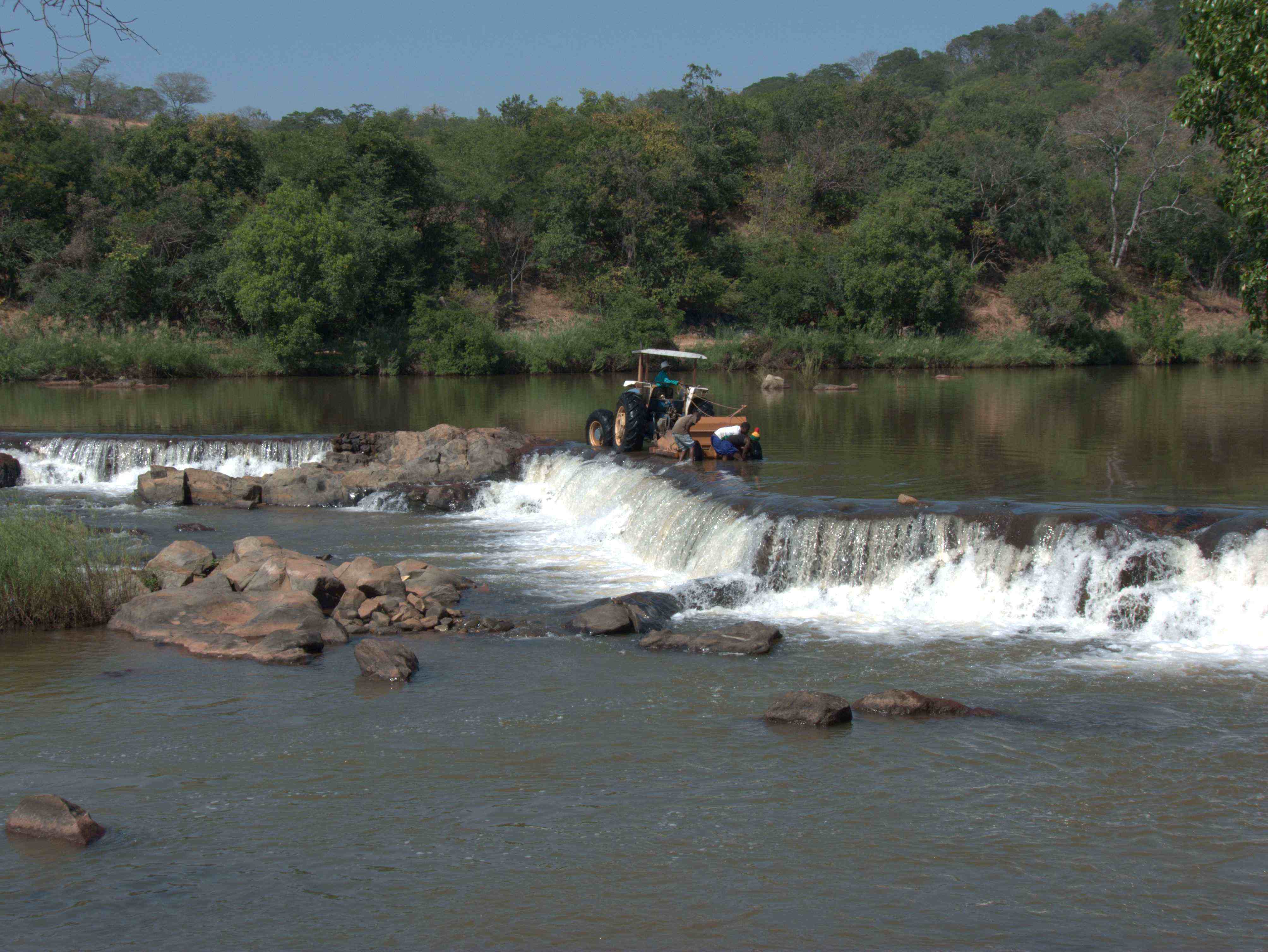
Repairing the causeway.

Repairing the causeway.

Coming back to the accommodation, we stayed in the Marula chalet. It is comfortable with an ample sitting room, fully equipped kitchen and several bedrooms that can be rented according to the number of people in the party. In addition all chalets have barbeque facilities close to the river and firewood is available at a small cost. (After I started writing this post I found -by chance- some of the old invoices dating from 1998 and 1999 showing that we have stayed at the Acacia and Marula chalets.)

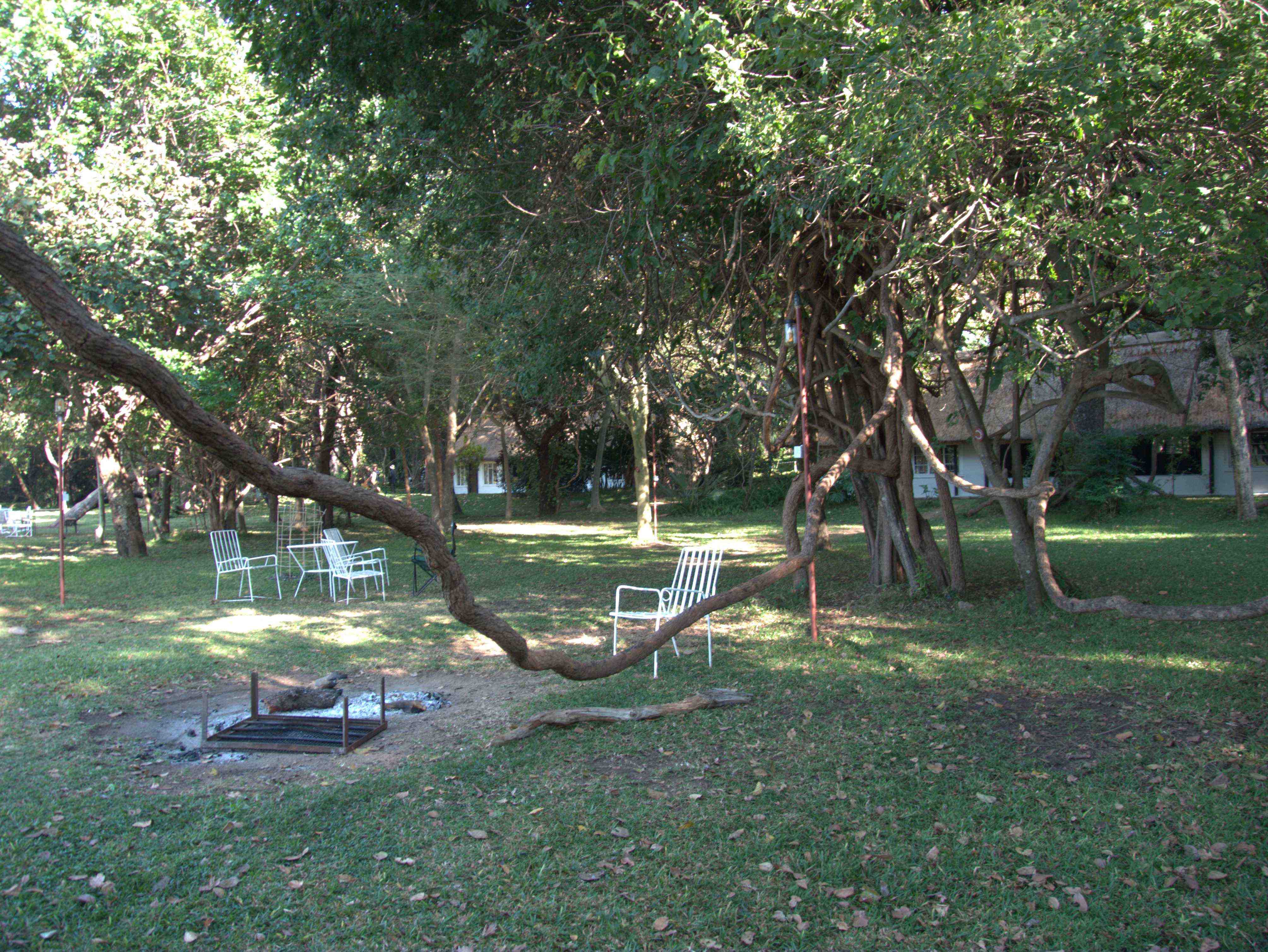
The "Marula" chalet with a view to the park-like setting.

The “Marula” chalet with a view to the park-like setting.

The camp is also a very good area to spot birds. The current list includes 340 species and is being updated and reviewed. Specials include the crowned eagles that nests in the area and there is a walk available for those who wish to observe them. Narina’s trogon is often sighted at camp and it was there when we visited. There is also a very interesting variety of insect life in the camp, worth investigating.

Although guided walks are available for a fee, there are six main colour-marked paths that take you to different interesting places in the surrounding area and the distance you walk really depends on you as some are quite long and they are also connected. Apart from the river walk (both up and downstream) and the eagle nests and baobab already mentioned, you can walk to San Bushmen paintings, a natural salt lick, freshwater springs, sacred places and gold workings to name a few.

An interesting rock formation...

An interesting rock formation…

Other activities on offer, at an additional cost, include (depending on the season), horse riding, game night drives, evening sundowners at the viewpoint, canoeing, guided walks and a tour of the local village. In addition there is now a dam with a hide and a beautiful rock swimming pool. The sunset seats remain one of the attractions for those wishing to spend the end of the day in style! Fishing is good at the camp and surrounding area and bream, chessa and tiger fish are frequently caught. We were informed that recently bass and Tilapia nilotica have also been caught. Earthworms can be obtained at the camp.

A large and rather yellowish crocodile is often seen swimming past or basking in the sun  on one of the islands in front of the camp. The latter are known as Heathrow and Gatwick because herons land there to spend the night.

On Sunday morning, while breaking our fast and enjoying the river view, we had an unexpected visitor in the shape of a monitor lizard, probably a Varanus niloticus that came looking for food morsels and walked slowly between our feet continuously flicking its tongue, trying to detect chemicals, a phenomenon known as “tropotaxis”. Searching the web I learnt that monitors are quite intelligent reptiles.

The monitor lizard was after food and it got really close.

The monitor lizard was after food and it got really close.

Allow me to digress for a moment and tell you that I do not believe that its intelligence is the reason for the “court terror” created by a rather large monitor at Binga in 2010 as reported by the ZimEye of April 29, 2010 (http://www.zimeye.org/giant-monitor-lizard-causes-court-terror/). On that day a large “calm” monitor with “a raised head” took to the witness box at the Magistrate court causing everyone to vacate the room!

I come back to the Hippo Pools account to inform you that we also had activity at night in the form of some “kitchen visitors”. We learnt about them when saucepans and other crockery fell and woke us up. Our search found nothing and we were told -the following morning- that bush babies were responsible for the din although it could also have been a genet. Continuing on the mammals, five hippos have taken up residence in front of the camp and three more dwell further down the river, all part of a stable population. Sable antelope, giraffe, zebra, greater kudu, waterbuck, bushbuck and small antelope can be seen, some visiting the salt lick on the other side of the river.

An addition to the Umfurudzi Safari Area since we last visited  is the introduction of buffalo and elephant as well as other game species. These, however, do not reach the camp concession area as there is a game-proof fence that keeps them away. The lions that used to be around the concession in our earlier visits and of which we saw footprints down the river are no longer. However, there are some in the hills of the Safari area and we heard them very far away during the night so we can confirm that they are there!

On the down side, monkeys, malaria y bilharzia are present so precautions are necessary. Malaria is of course worse during the wet season and bilharzia parasites are likely to be in calm water that in any case needs to be avoided as there is also the risk of crocodiles.

To end this short account, we were -as before- very comfortable at Hippo Pools and at the same time surprised that it still remains one of the quite affordable, beautiful and lesser-known places in Zimbabwe. We will most certainly come back!

(Written in June 2014, published in August 2014)


Green eyes in the wild

cropped-p1090883-eyes-cropped.jpg

My wife has beautiful green eyes and she has always been very careful with them, looking after them all the time. I noticed this and -being myself- could not avoid mentioning this to her early on during our married life as I thought she was exaggerating… She is a very tolerant lady and patiently but firmly explained that her eyes were her most important asset. I did not ask again and made sure that her eye drops were always handy!

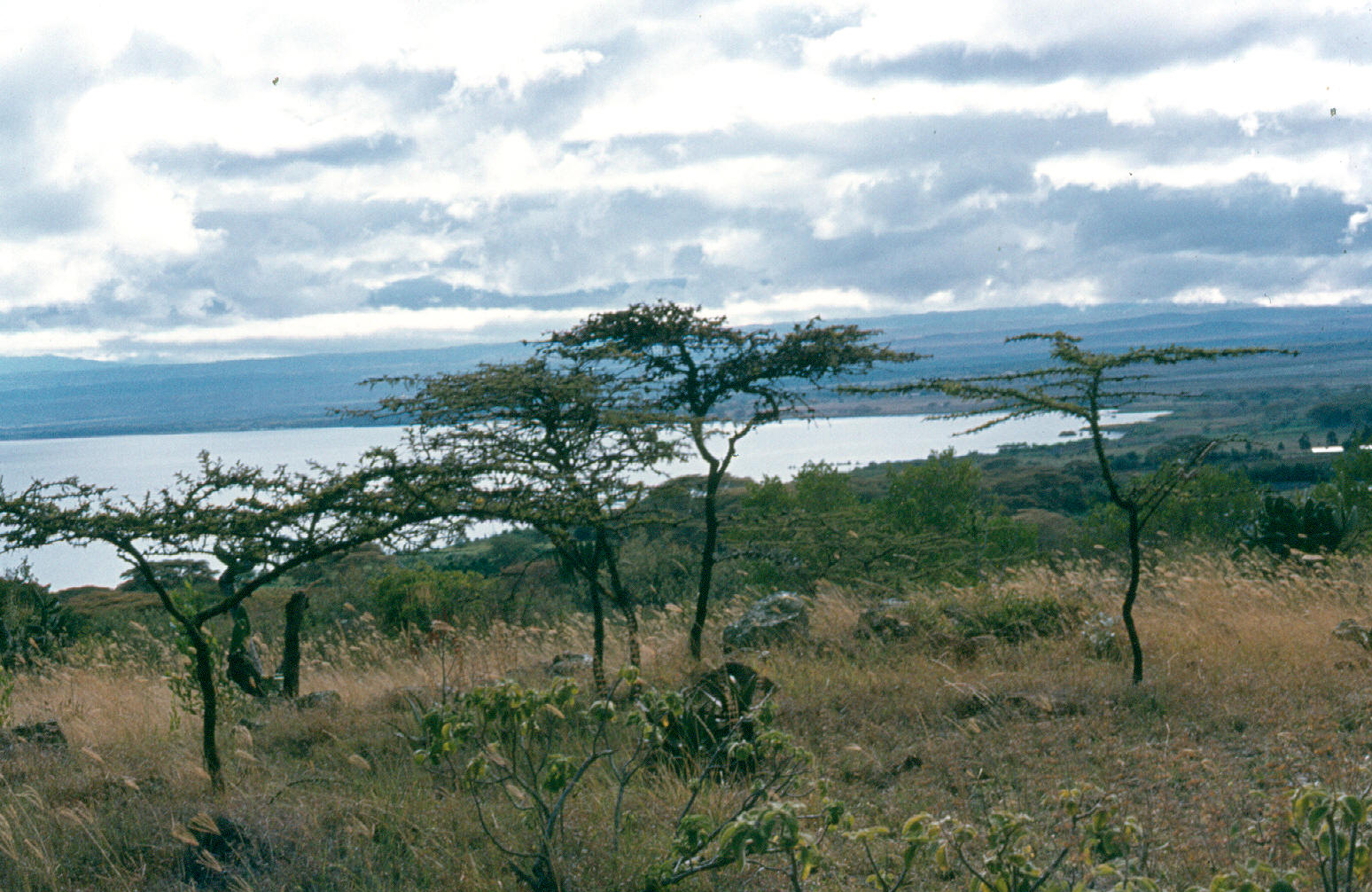
Lake Naivasha in the distance.

Lake Naivasha in the distance.

While in Kenya in the eighties, on a Saturday we decided to travel to lake Naivasha to spend the weekend at the lake shore at Fisherman’s camp (http://www.fishermanscamp.com/) on our first outing to the area. It was a beautiful drive down the Kikuyu escarpment, passing by the Longonot volcano and the little church built by the WWII Italian prisoners.

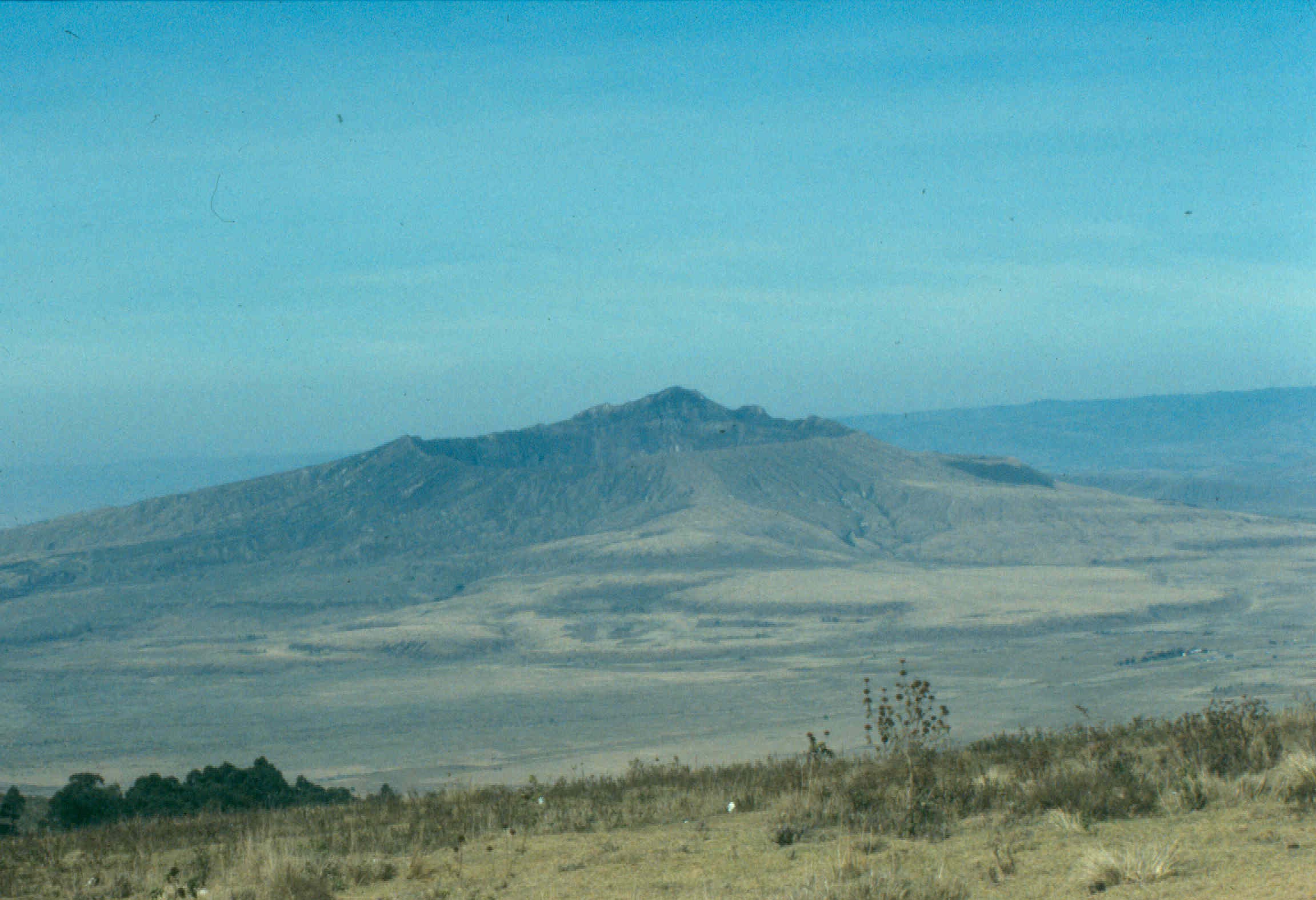
Longonot Volcano.

Longonot Volcano in the Rift valley.

Then, the magnificent Rift Valley came into view, with lake Naivasha glimmering in the far end (see first picture, above). Once at the bottom of the valley, we crossed Naivasha town and then followed the lake shore road for about 20 km to reach the camp. At the time the road crossed mainly private farms and cattle ranches.

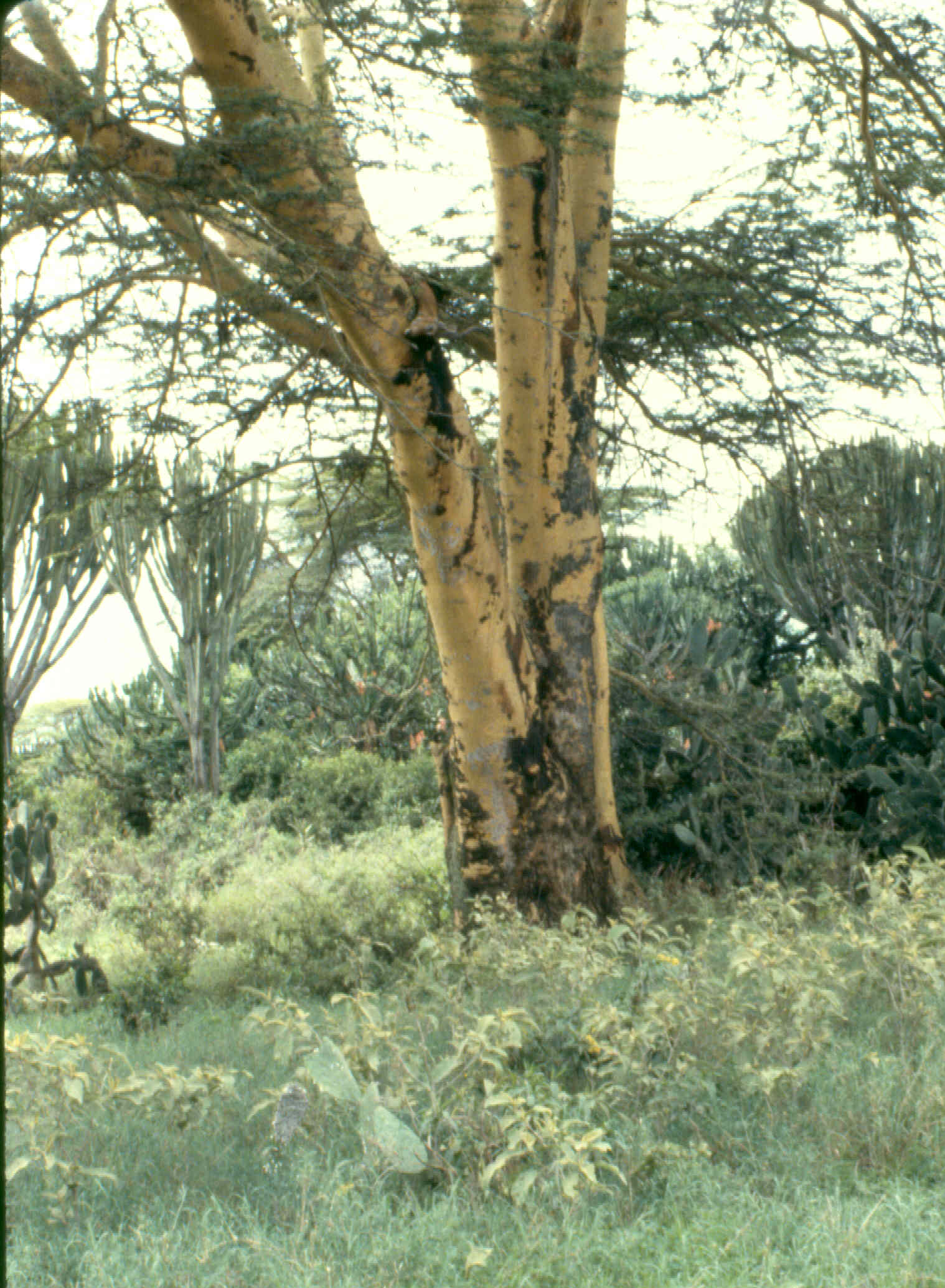
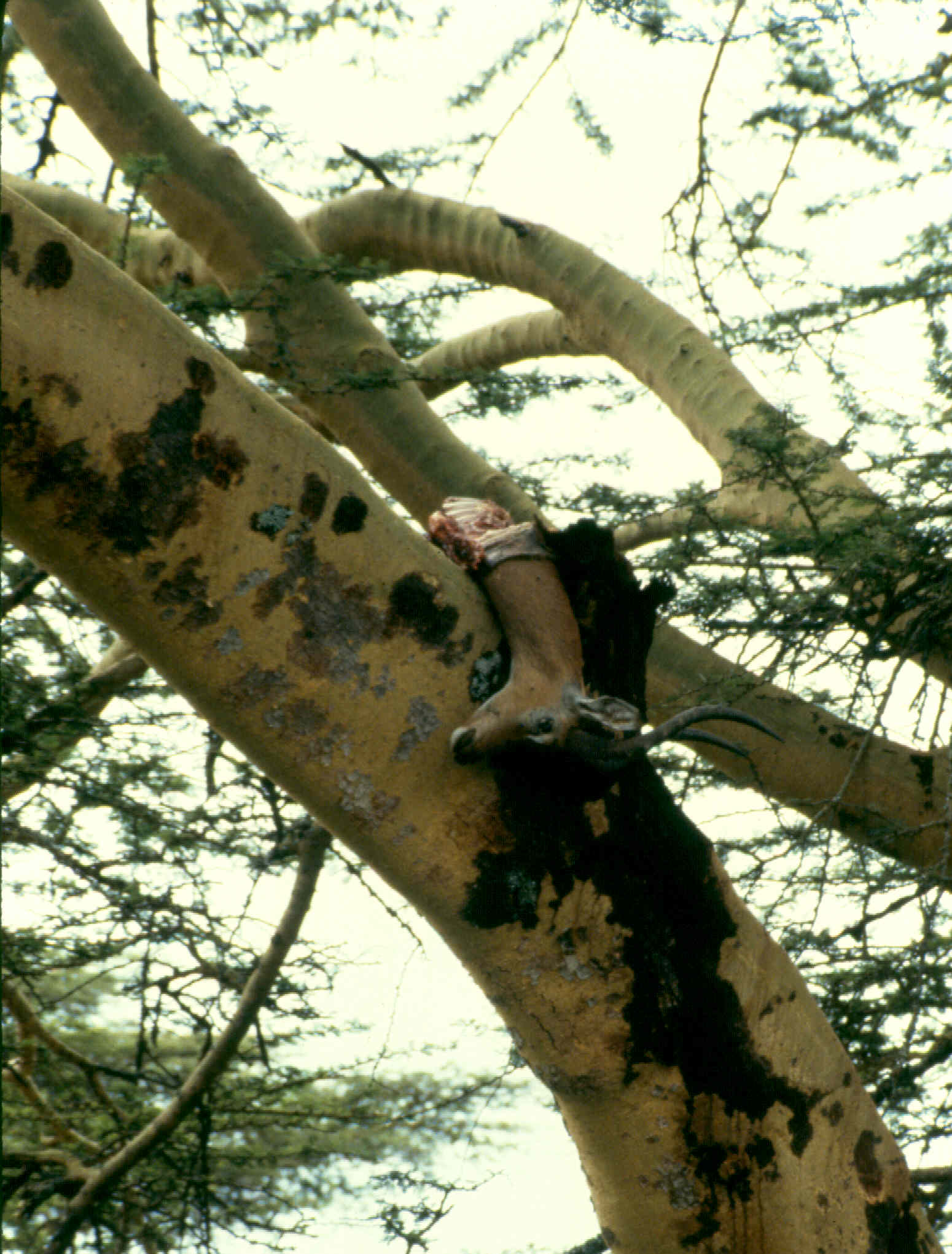
It was mid-morning and I was enjoying the drive in our loyal Volkswagen kombi, taking in the great landscape when I heard: “There was an antelope up a tree!” announced in a rather calm way. I did not react immediately as it was a ridiculous announcement. I was about to ask my wife to pour some more water on her head as it was clearly overheating when she reacted to my indifference with “I am not joking, there is an antelope there!!!” She was pointing at a yellow barked acacia about 100 m from the road, on our right. I stopped the car and looked. I could see the acacia well but that was that. I reversed, still incredulous, until I parked in front of the tree. Following the directions given and with the aid of my 8 x 40 binoculars I managed to identify the head and neck of a male impala placed across a branch.

A view of the tree with its unlikely inhabitant. Please note that this is already a close-up view!

A view of the tree with its unlikely inhabitant. Please note that this is already a close-up view!

The expected “I am glad that you believe me now” followed. My immediate thought was that it was either placed there by a farmer to attract and kill a leopard or by a leopard! Neither were visible nearby as we were alone on the road. As the situation clearly demanded further investigation, we got out of the car and walked to the tree. Although half eaten, the impala was quite fresh and it was probably killed and placed there the night before. The question was solved -at least to our satisfaction- by finding deep claw marks up the tree trunk where the reddish inner part of the trunk was visible where the yellow and velvety bark had been removed!

On closer inspection, the impala was clearly visible.

On closer inspection, the impala was clearly visible.

After taking pictures we proceeded to the camp with great excitement and speculated on the finding. Our holiday break now clearly influenced by the find, we agreed to return to the tree at dusk to see if the impala owner would come back to the kill. We kept our secret and at about 18:00 hours we set off to sit and wait by the tree. We were prepared for a long wait so we took our dinner and drinks with us, parking the car at a secluded place to avoid being too noticeable to passers by. None of the cars or pedestrians that happened to pass by ever saw anything! To my eyes that knew that the kill was there, this now seemed impossible!

Our wait lasted until midnight but to our disappointment, the leopard did not come back. Tired of the wait, bored and sleepy, we returned to the camp. We spent a great Sunday exploring the lake shore until it was time to get back to Nairobi before dark.

The carcass was no longer there when we passed by in mid-afternoon. Further inspection of the tree trunk showed additional paw marks and bits of  fur were also found in the bush nearby.

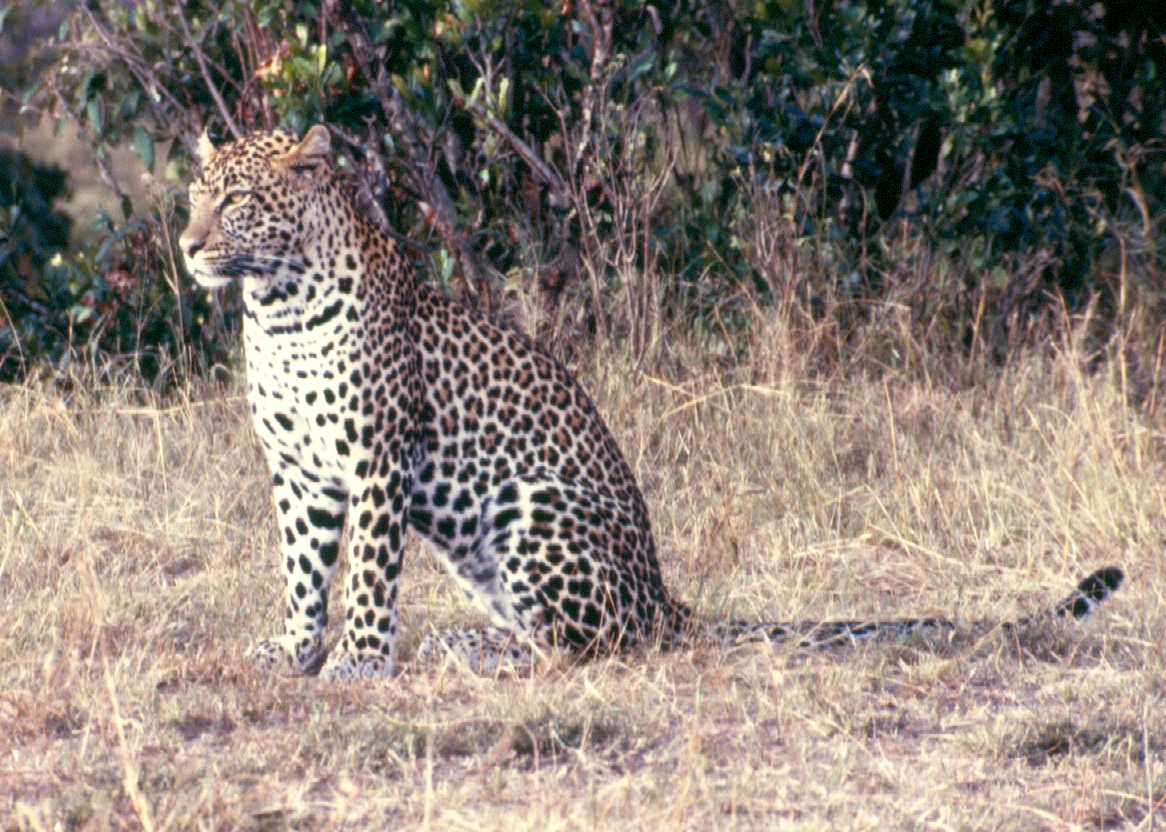
The secretive East African leopard pictured at the Maasai Mara Game Reserve.

The secretive East African leopard pictured at the Maasai Mara Game Reserve.

This was the first demonstration of my wife’s keen eyesight. I have shared safaris and game viewing with lots of people and I can assure you that she rates among the best! If there is an animal on a game drive, she will find it!

(Written on 2 July 2014 and posted on 24 August 2014)

A tusk task

First of all I must admit my culpability. Being a bushsnob I have always preferred to find and watch carnivores -read cats and more specifically lions- to the detriment of herbivores or browsers. This was my mind’s status quo until October last year when, accompanied by a friend -who happens to be a pachyderm specialist but who had nothing to do with what happened- we visited Hwange National Park. Well, perhaps my friend had something to do with it as he suggested that we stayed at Main Camp, a place we had always avoided in the past as we thought it would be too popular and “touristy”.

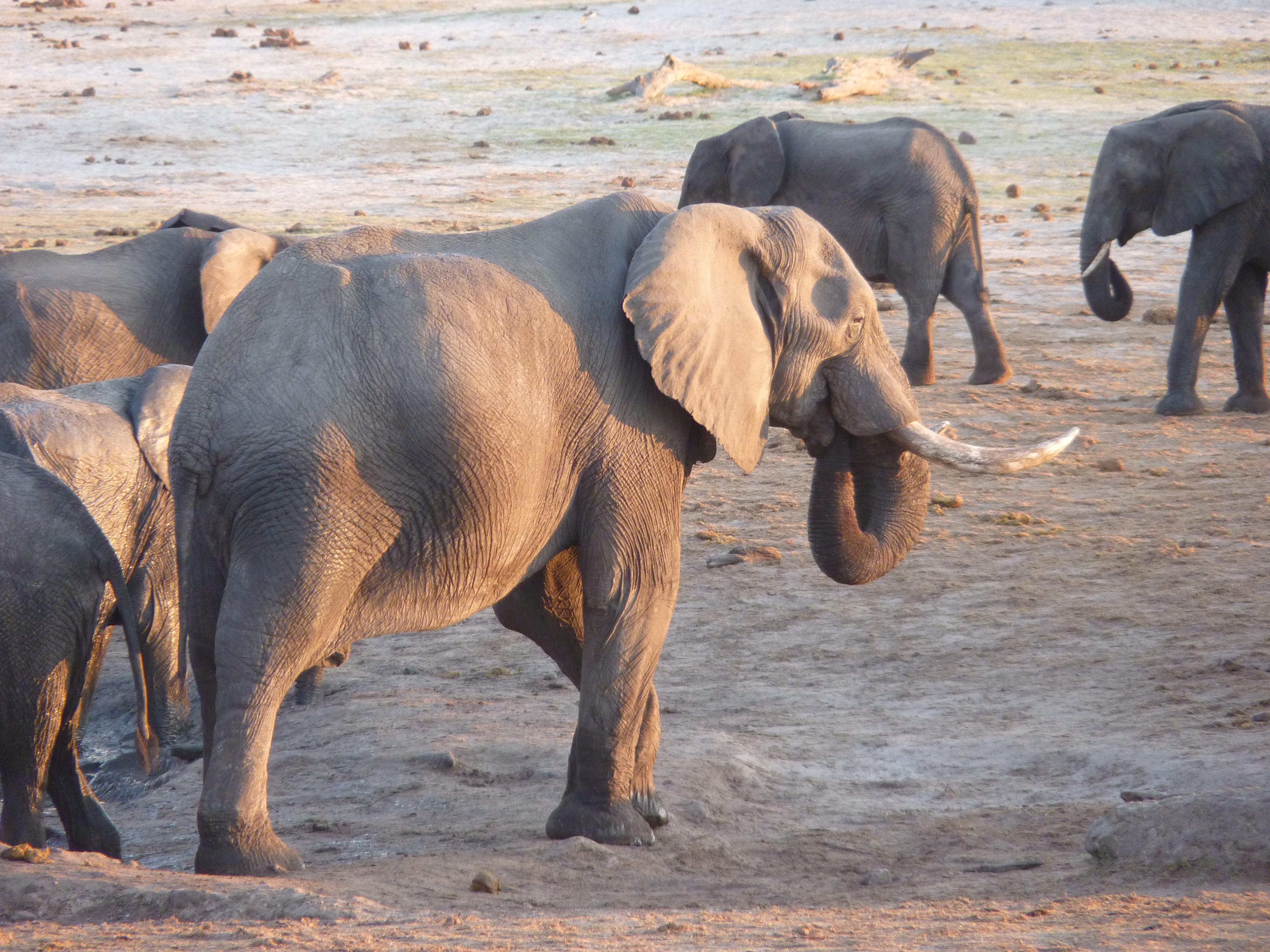
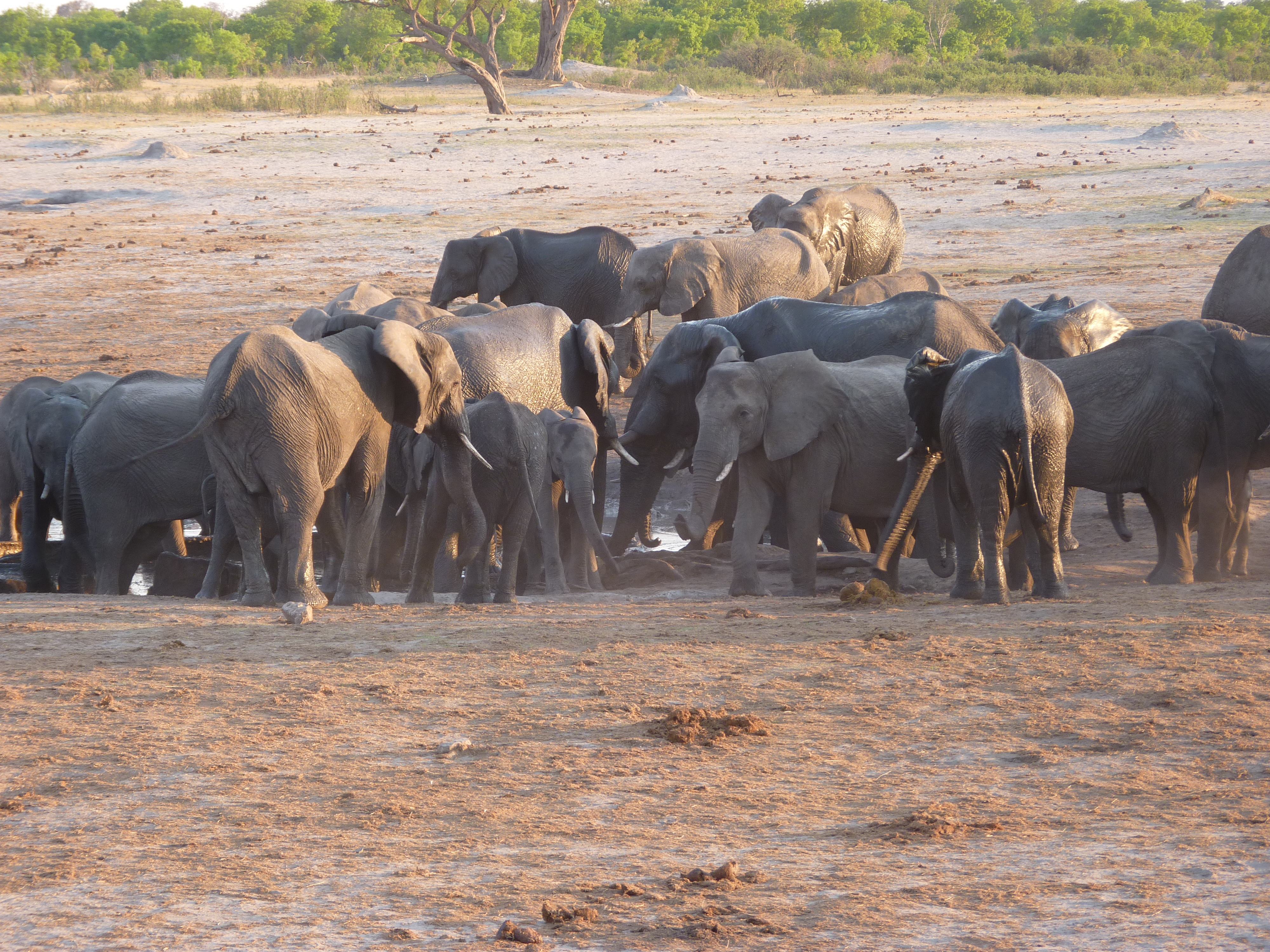
The reason for that visit was that my friend needed to better understand what had happened with a reported elephant poisoning at the Park but this is besides the point as we were only his “escort”. Taking advantage of the outing we visited several waterholes where water is pumped in for the animals, as the Park is extremely dry in October. No wonders then that elephants were there in large numbers, particularly in the afternoons. To give you an idea, on one of the days, from 16:00 to 17:00 hours we counted about 750 new elephants coming to the waterhole and they had been coming in and out from about 15:00 hours and continued until we left at sunset.

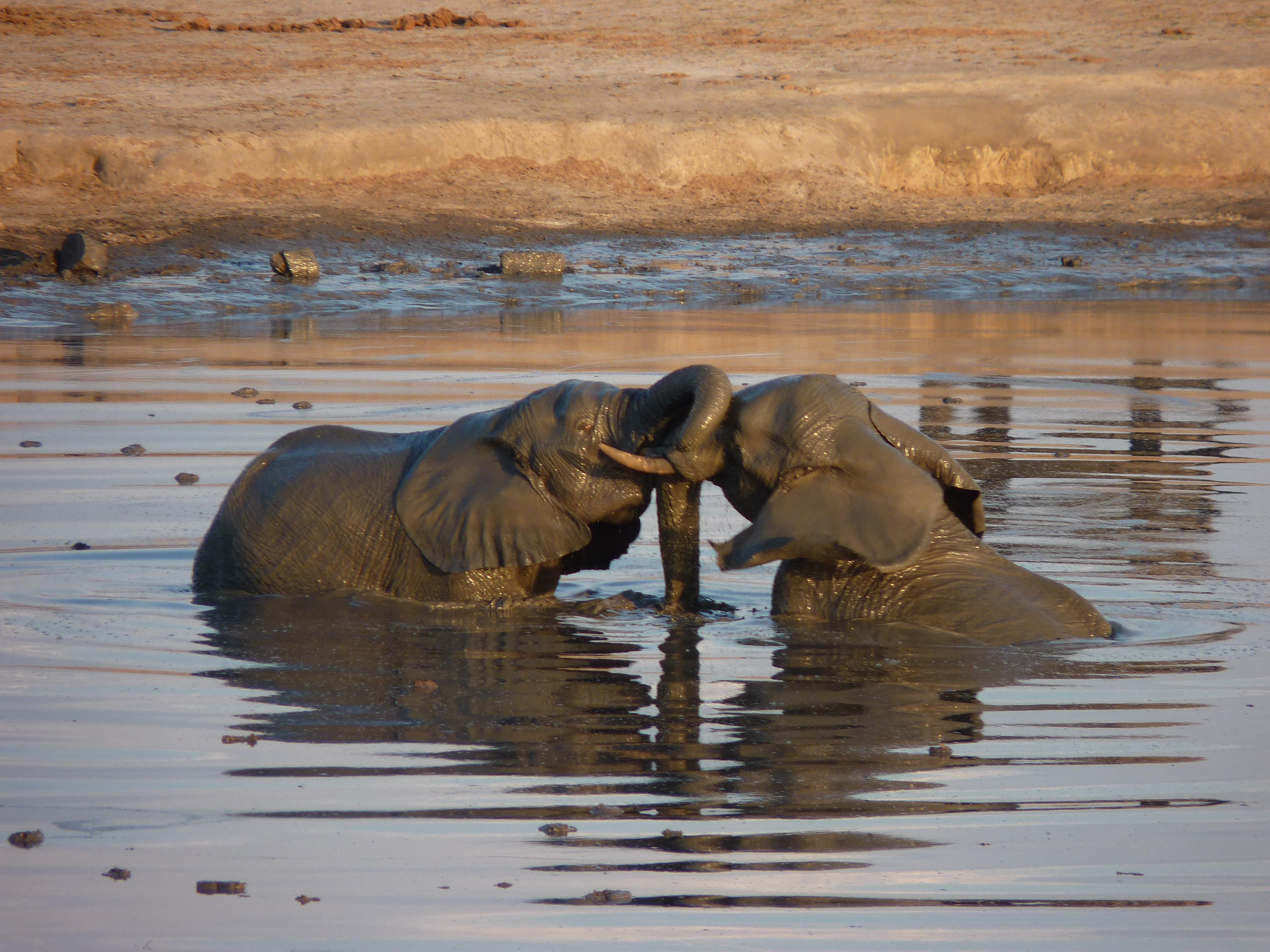
The family groups of up to 25 animals would appear from the mopane tree forest moving gently at first and gradually accelerating towards the water until some would break into a fast walk and even what could be defined as a run, in “elephantine” terms. They would get into the water and drink their fill, then go in and start to bathe and frolic about. Lost babies were particularly entertaining, as they would run around crying until they found their mothers again. Babies, again, would get stuck in mud or would not be able to climb out of a hole until they were embarrassingly pushed or lifted out by a helpful soul or managed to extricate themselves. Teenager equivalents would mock charge anything, including the people at the platform!

The bulls would come either alone or in groups of three or four and they kept their gravity and walked to the watering hole with determination, showing mutual respect and deference to the females. The need for water was probably stronger than any sexual drive at that particular time.

tusker wange waterhole

A bull after drinking its fill.

It was not only the numbers we saw but also the amusement they provided. The waterhole was muddy and there was elephant dung floating all over. After some time, we detected that at the centre of the pool there were two adult hippos and a baby that seemed to be “tolerated” by the pachyderms, with the exception of the curious elephant teenagers that would -I tend to believe deliberately- annoy them by getting close and mock charge them as well. The hippos, clearly outnumbered, took to this philosophically, probably because they clearly had no other position to adopt!

elephants palying hwange waterhole

Some rough games took place!


elephants playing hwange waterhole

And matching the youngsters’ strength.

Confronted with this “elephant water kingdom” all other game just stood by and watched, as they had no chance of getting close to the waterhole. This “happy hour” rendered even the presence of two large male lions obsolete and they had to console themselves drinking from the small pools created by leaking pipes.

As the pair of lions were close to where the cars were parked, careful calculations between human walking speed vs. lion charge speed took place before returning to our vehicles as the lions refused to move away! In addition to this, believing that several primates walking together looked more threatening, we bunched up together to return to the car. It worked!

The male lions drinking in the periphery.

The male lions drinking in the periphery.

The clean water inlet at the hole was where most adult elephants congregated to take advantage of the best water. There were clearly more bodies than the space could accommodate! Despite this and although there was pushing and some grunting, no loud trumpeting or fights broke out showing that the pecking order was well maintained. Of course the larger males had the “elephant share”…

The most popular drinking place was where the fresh water entered the waterhole.

The most popular drinking place was where the fresh water entered the waterhole.

So, this “great show on earth” did somehow increased my interest in elephants and watching them, to the delight of both my wife and daughter who, as usual, saw the light long before I did! It was this “elephant loving” bushsnob who came to Kruger National Park at the end of July 2014. Here are the consequences of this new-found love!

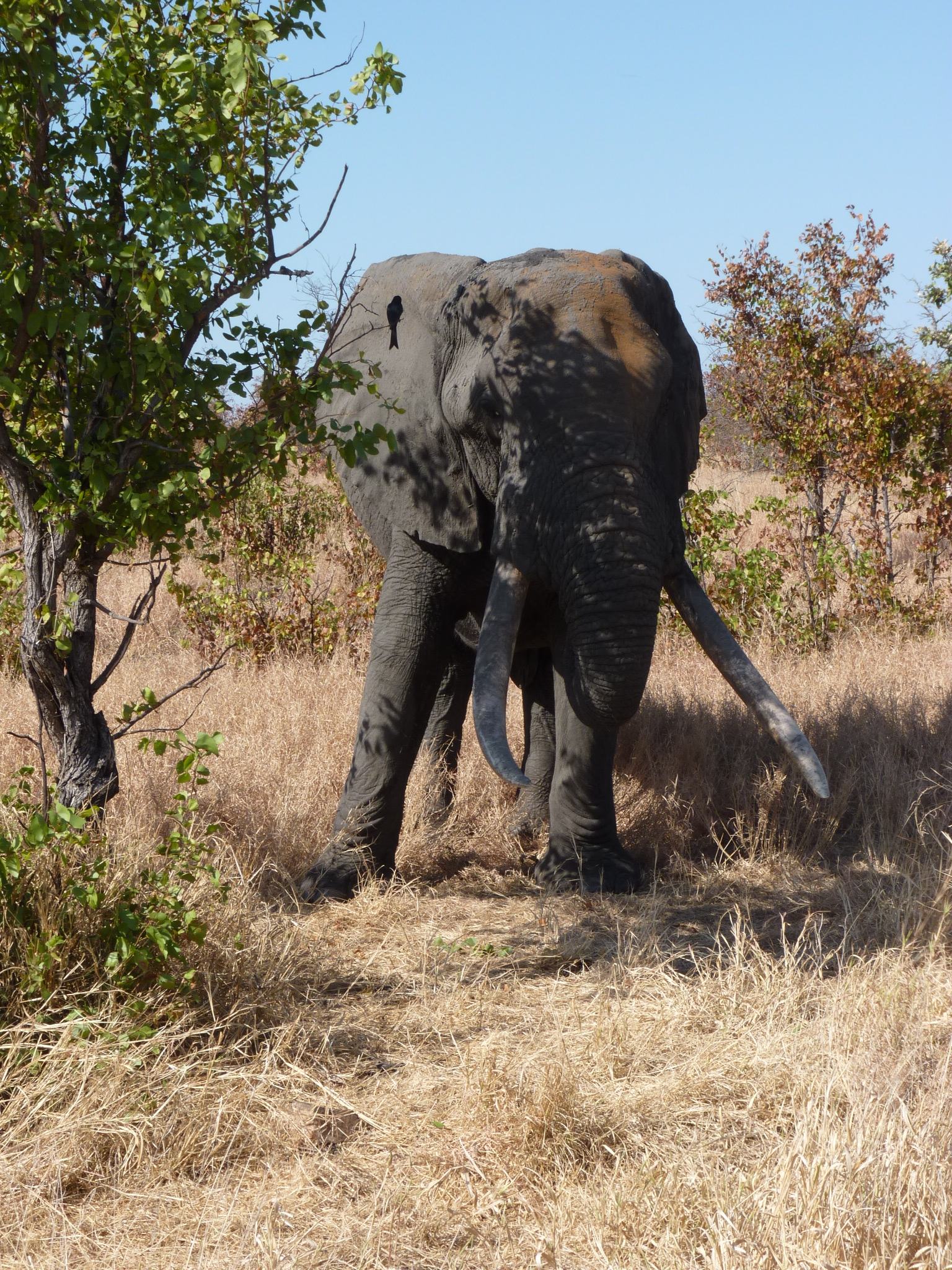
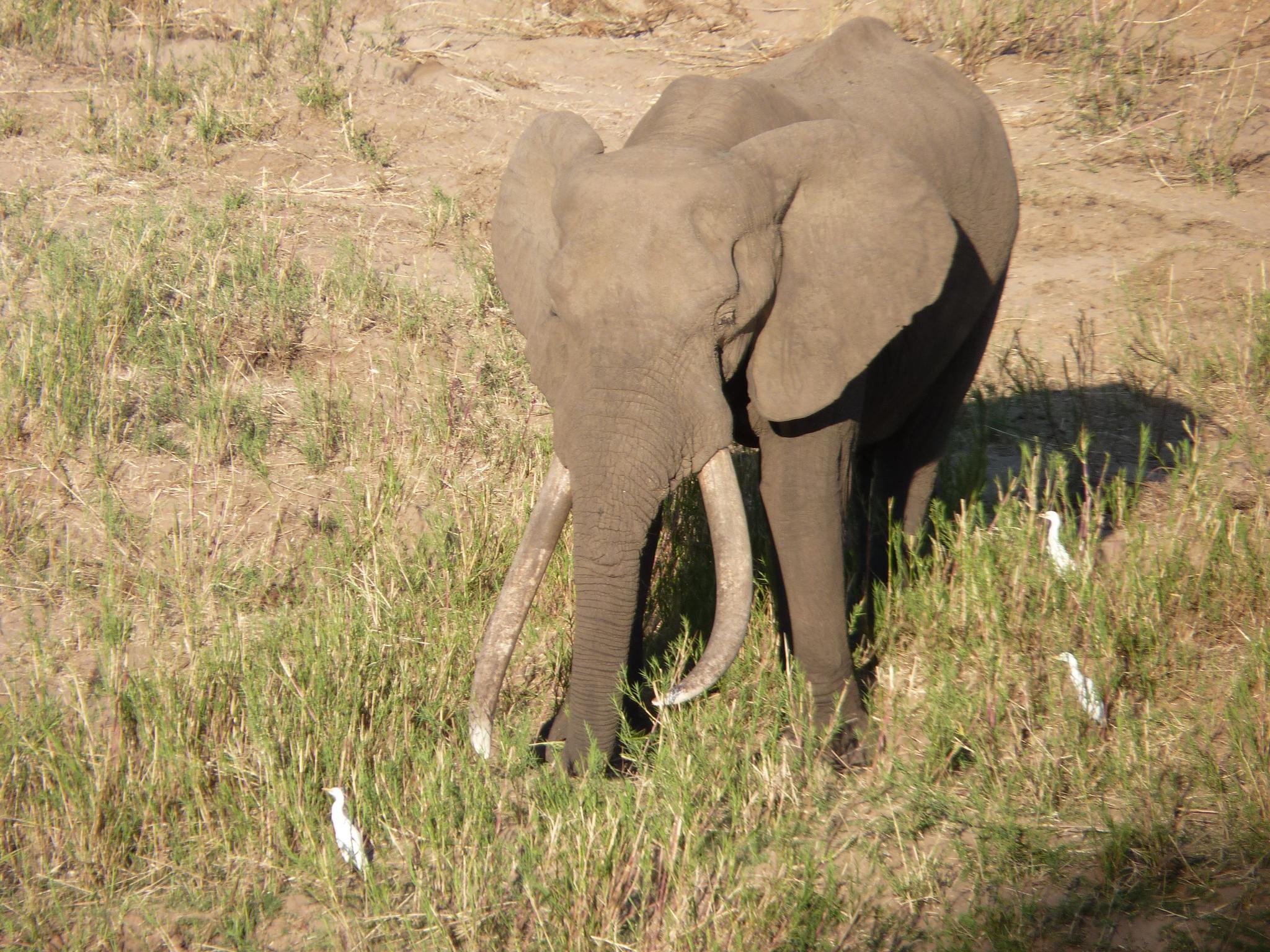
On our way to Letaba Rest Camp from Shimwini Bush Camp, in the proximity of the Babalala picnic site, we met a male elephant with the largest tusks we have seen. It was -for the weight of ivory it carried- a comparatively small animal. Despite its slow but steady retreat we managed to take a few pictures.

The Babalala tusker.

The “Babalala” tusker.

We talked about it during the rest of the journey and remembered Ahmed, the Marsabit tusker of mythical fame in Kenya that died in the seventies. Apparently his descendants are still deep into the forest!

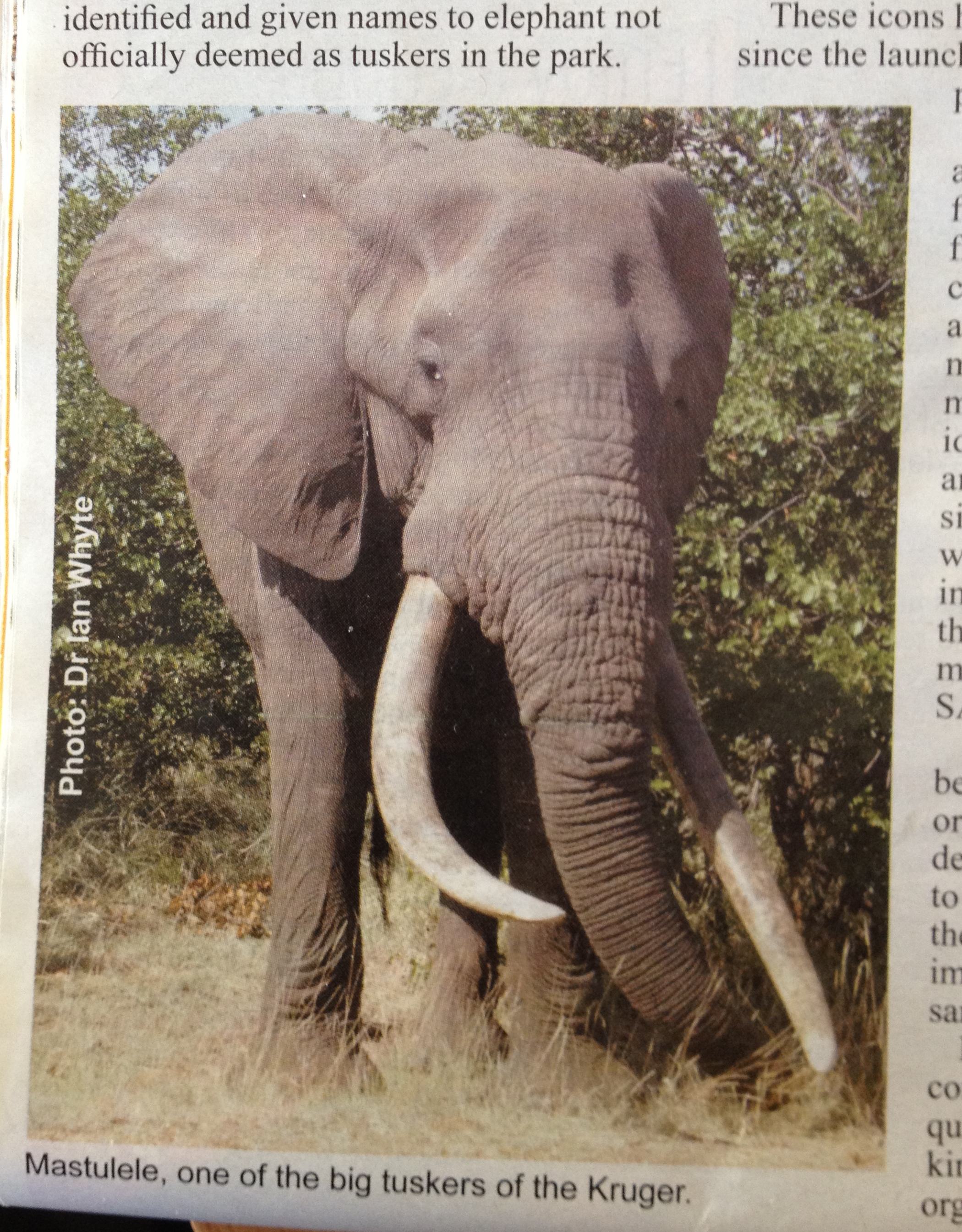
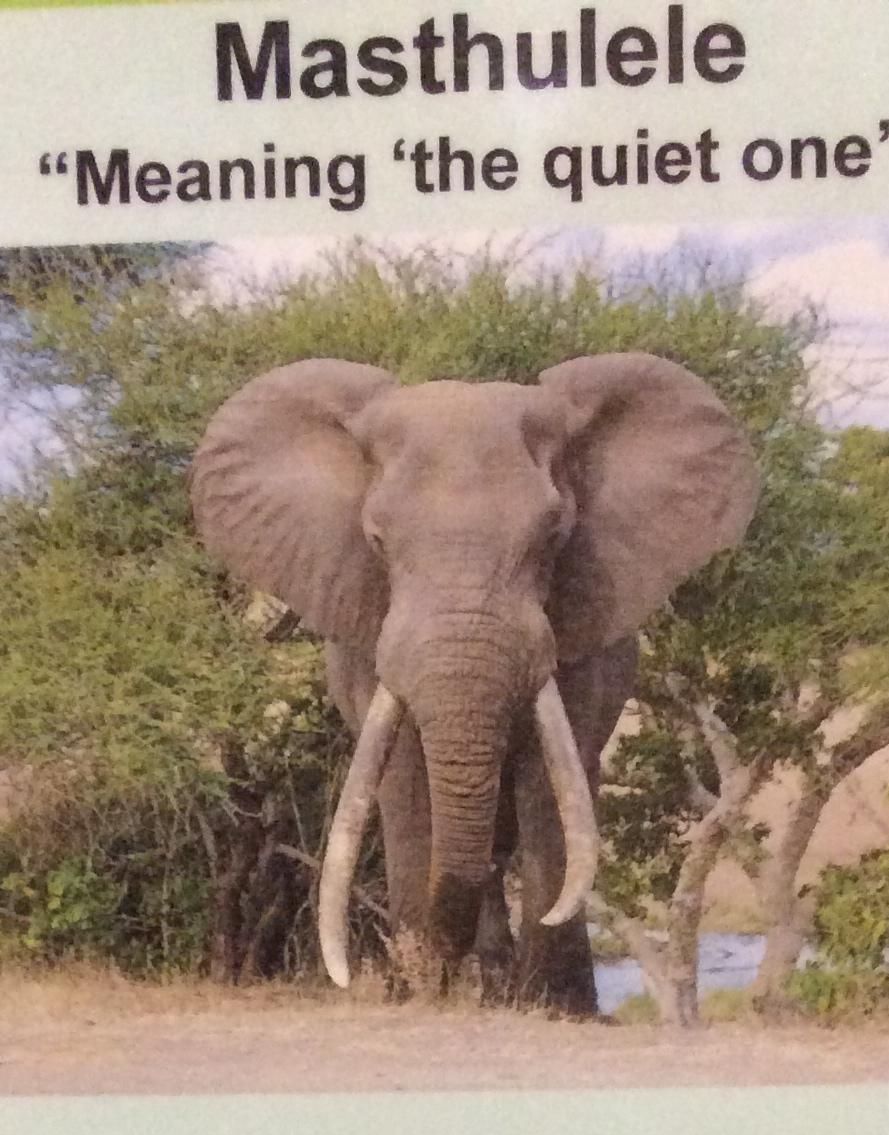
Once in Letaba, while shopping for dinner, I picked up a free copy of the SANParks Times of June 2014. Leafing through it a picture of a tusker called my attention. In my “tusker ignorance” it looked remarkably like the “Babalala” animal that we had seen earlier! Its name was Masthulele and the photo was part of an article on a tusker identification and naming initiative being carried out by the South African National Parks. The project is based in the Elephant Hall at Letaba. We visited the place on a previous trip and found it a great place to learn about elephants as it has amazing exhibits. I still remember that when time to leave came, a friend and my daughter hid in it to be able to spend more time looking at its beautiful display!

“Look at our elephant” I told my wife with some degree of puzzlement and enthusiasm at having found such an interesting animal. She agreed with me that they were very similar. I decided that a follow up was required and made a mental note to visit the Elephant Hall in the morning to seek more information. I went to sleep thinking about how privileged we were to have seen such a great animal…

Masthulele depicted in the SANParks Times article.

Masthulele depicted in the SANParks Times article (my photo of the newspaper).

After our early morning game drive I went to the Hall. Unfortunately the person in charge of the “tuskers project”, Kirsty Redman, was on leave but I was directed to a board where the main living tuskers of the Kruger are shown with brief details about each animal. Of course Masthulele was among them. The name means “the quiet one” in Tsonga. It was named in recognition of Dr. Ian “Masthulele” Whyte, a retired Kruger researcher. Its home range was described as very large. The board also said that the elephant was often seen near Letaba Rest Camp. Regarding its special markings, it has “spotless” ears but it has a scarred trunk, product of some earlier squabbles with other males.

And then the surprise came! There were two “Masthuleles”, the one in the newspaper had a curved right tusk and the one at the Hall had a curved the left one! So, which one was Masthulele then?

Masthulele as it appears in the Elephant Hall at Letaba (my picture).

Masthulele as it appears in the Elephant Hall at Letaba (my picture of the poster at the Elephant Hall).

Being confused and close to a nervous breakdown (well maybe I am being a bit too theatrical here and a bit too muh of the drama queen my daughter lovingly calls me…) and in the absence of advice I decided to go for the only practical solution at my disposal: buy a copy of the booklet “Kruger Legends-. Great Tuskers of the Kruger National Park” and check Masthulele’s information. The book indicated that Masthulele was probably the “largest known and named tusker in Kruger at present (2012)”. It reiterated the information about home range and scarred trunk. Then it got interesting: it said that the tusks are also distinctive, its left tusk curving above the right one and both are fairly symmetrical in length, as Kruger tuskers are. Furthermore, the picture in the newspaper was exactly the same as the one in the book (both credited to Dr. Whyte himself!) but the former was the mirror image!

I felt great relief when I managed to solve the “two Masthuleles mystery”. However, I still had the unidentified “Babalala” tusker that -this time truly- looked like a mirror image of the real Masthulele. It was alive and in my pictures! The “Babalala” tusker was -to us at least- a rather small animal with its right tusk curved and shorter and the left tusk long and somehow pointing down and outwards!

This was getting interesting and required careful examination of the living tuskers! However, as it was time for the afternoon game drive, the decision was postponed until the evening. The drive took us along the Letaba river and, after a few km we spotted a bull elephant feeding by the road. It had medium sized tusks of fairly equal size. It was clearly a younger animal and a “tusker in the making”.

As you can rightly guess, I was now very “tusk-aware”! When the bull decided to cross the road towards the river we spotted a hitherto unseen animal with large tusks. As it was feeding calmly I managed to take several pictures of it. While taking the pictures I realized that the elephant was in fact Masthulele itself! That, to me, settled the issue as the pictures I saw at the Hall and in the book and the live animal in front of us clearly matched and somehow confirmed the existence of its “mirror image”.

Masthulele seen at the Letaba river (my picture ).

Masthulele seen at the Letaba river two days later (my picture ).

In the evening I carefully checked all living tuskers depicted in the book against the pictures of the “Babalala” elephant and I could not find a match. I then gave the task to my wife and she could not either! So we had an unidentified tusker! However, I was sure that it was a known animal in view of its quiet disposition and very noticeable tusks!

Back in Harare I did an Internet search and found at least four bulls that at first sight look like the “Babalala” tusker according to http://www.tuskersofafrica.com/. These are: Manyeleti, Masasana, Mavalanga and Shabakhadzi. Not being an elephant identification expert, I am putting the case to the tuskers project to seek their views and an answer that I will communicate to you.

For the time being, the tusker mystery still stands!

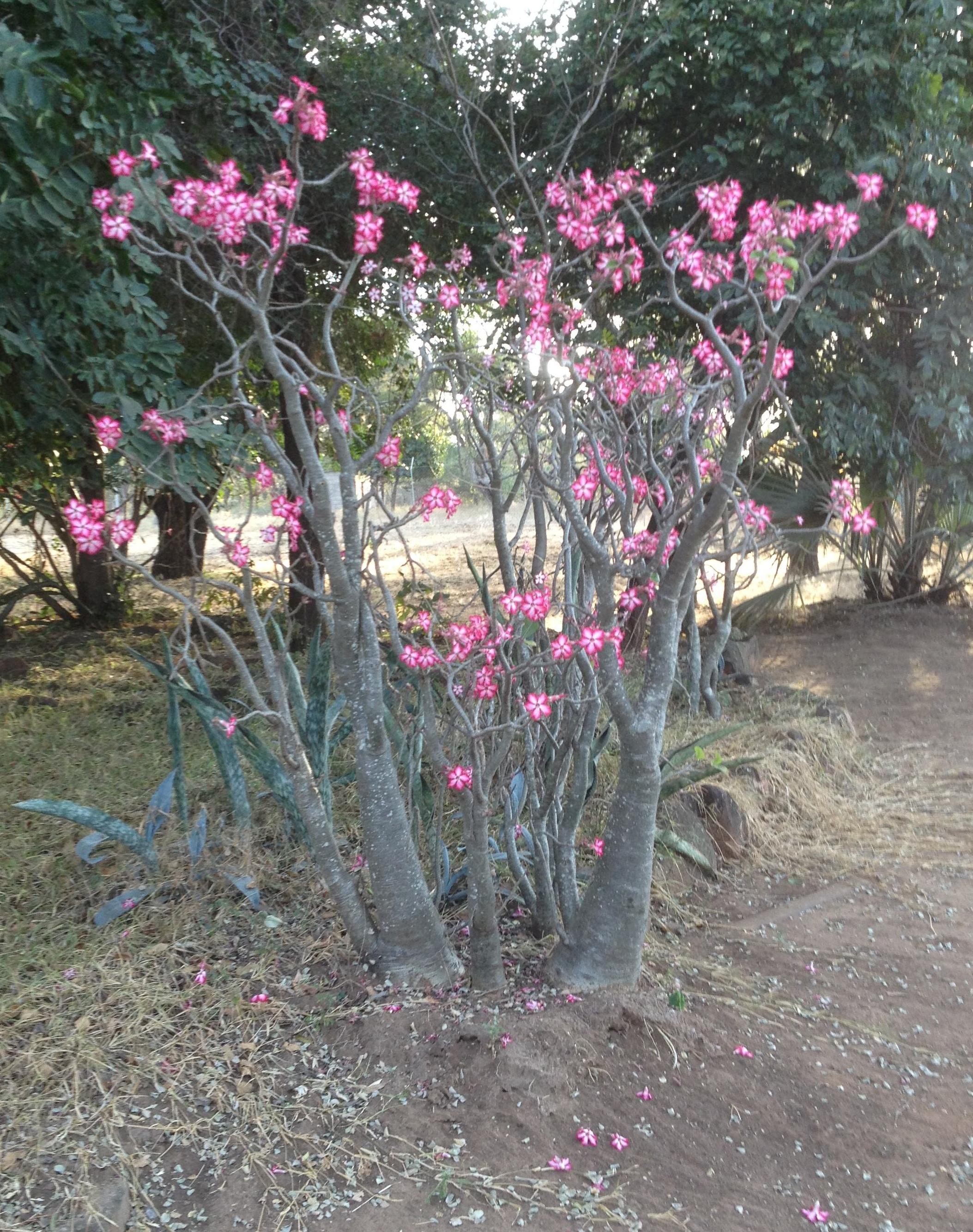
The desert roses at Swimuwini Rest Camp were spectacular.

The desert roses at Swimuwini Rest Camp were spectacular.

From Gonarezhou to South Africa

29/7/14 – After another good night’s sleep we were up and ready to go by 08:30 hours. We set off towards Rutenga and the dreaded Beitbridge, the infamous border crossing. We said farewell to our nice and helpful camp attendant Fungisai Shava and co-workers. The weather was chilly and there was a tenuous drizzle.

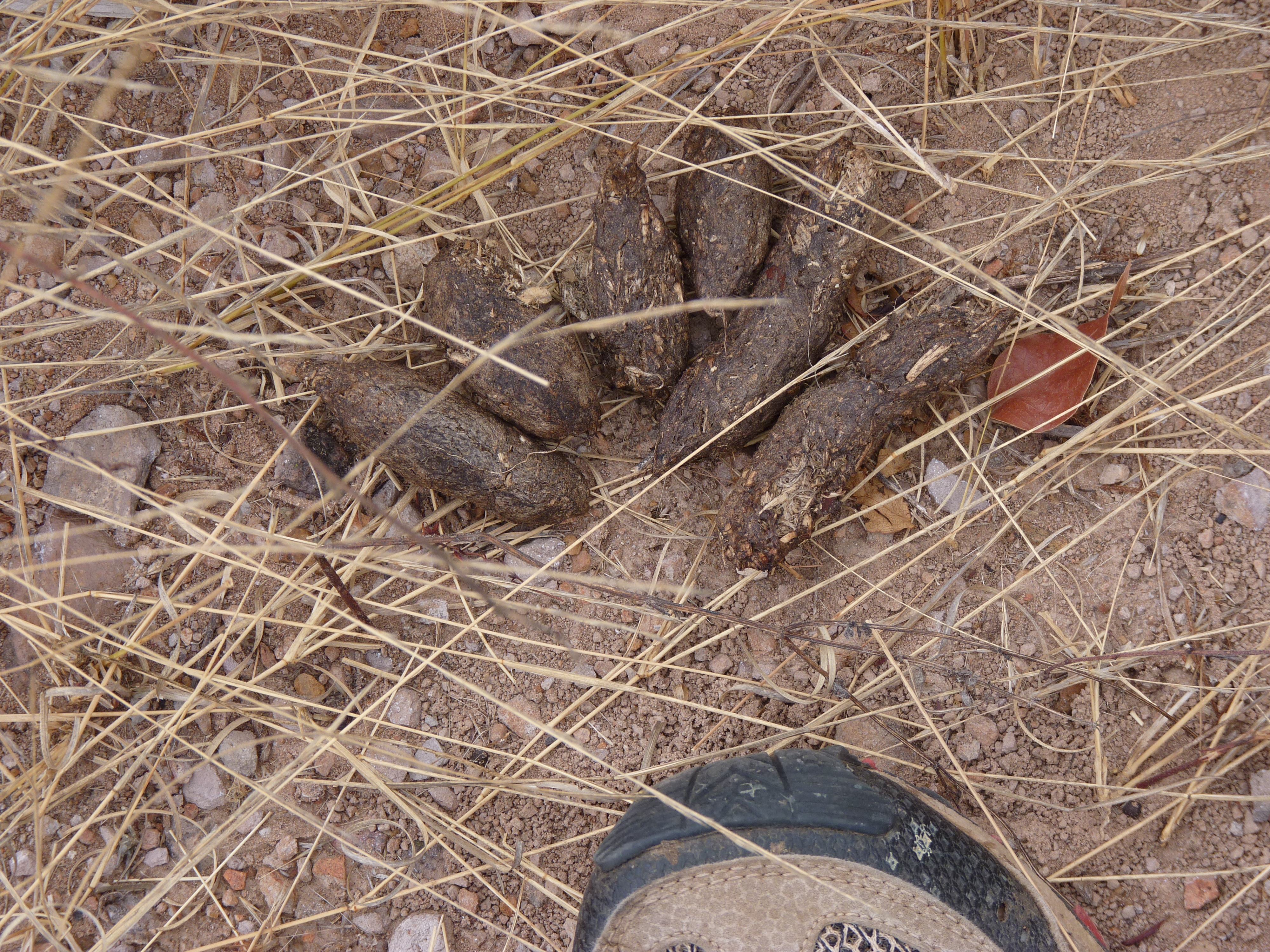
At some distance from the camp we started coming across elephant paths and fresh spoor and, while speculating about the reasons, we came across a small road leading to a pan with lots of water. I believe it to be Nyamugwe but it requires confirmation. Despite its water abundance and plentiful traces of elephants, it was completely devoid of mammals. Clearly the trend in the area is for most animals to move at night. It was then back to the main road without another stop as time was passing

Copious elephant spoor took us to this pan that was empty.

Copious elephant spoor took us to this pan that was empty.

This rubbing tree trunk confirmed that elephants visited the pan, probably at night.

This rubbing tree trunk confirmed that elephants visited the pan, probably at night.

Before leaving Harare my wife learnt through the Bambazoke Nhasi web newsletter that the Tourism Authority of the Zimbabwe Government offered a free service to assist you at the border crossing as this can, sometimes, take several hours. I am not a good queue person and the ones at border posts are not my scene as I get upset and do not enjoy them at all. This time, however, we had already pre-booked the Tourism Authority assistance and made an appointment for 14:00 hs at the border. We had names and cell phone numbers so with this helpful “shield” the border crossing was out of my mind!

We drove back to Rutenga through the dirt road where, again traffic was absent although this time we met 100 per cent more traffic than before: one pickup, loaded with cotton. We did hit a number of rather large potholes but reached the asphalt unscathed, only dusty.

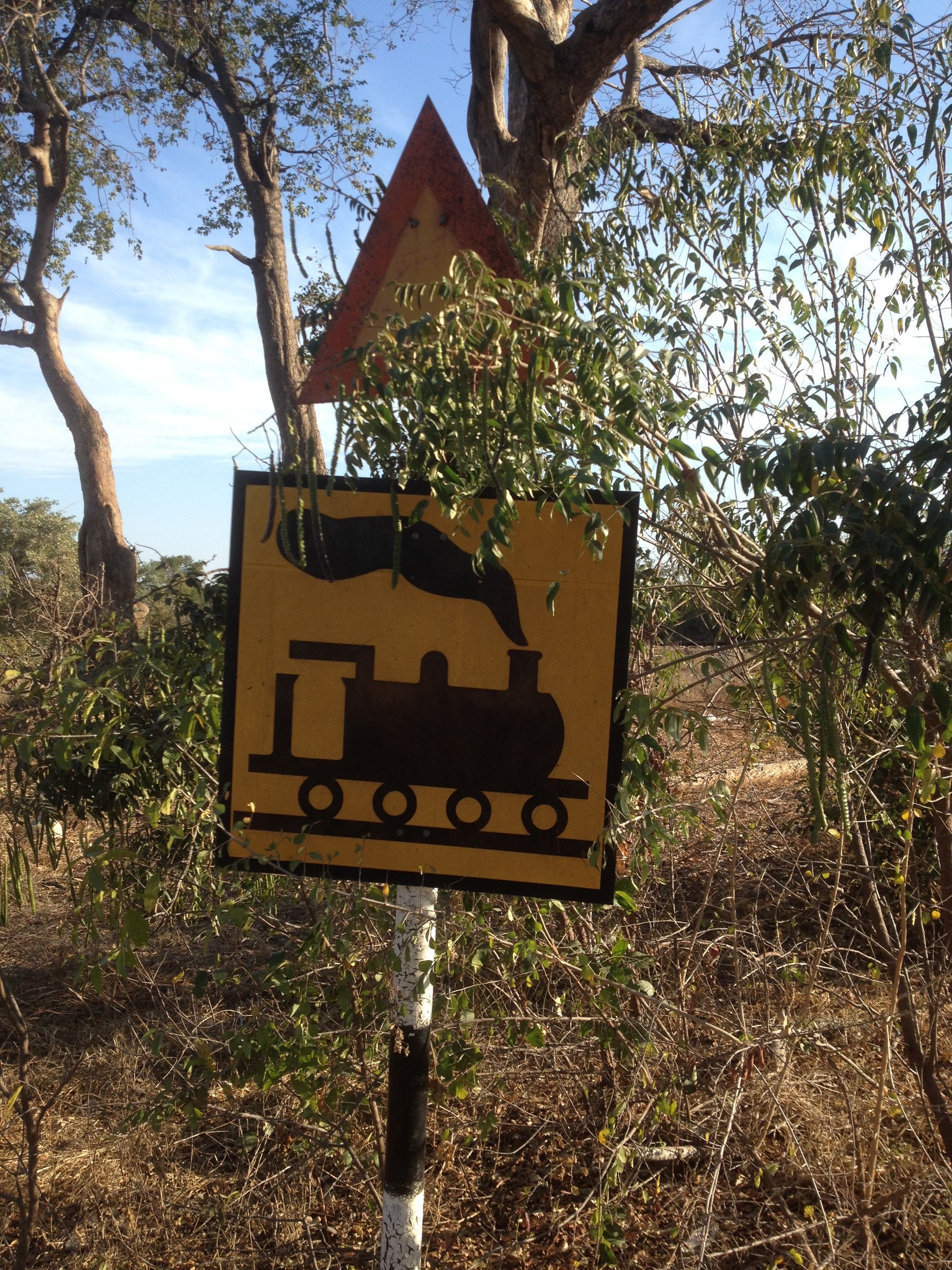
Leaving Mabalauta the railroad is crossed prior to reaching the main road.

Leaving Mabalauta the railroad is crossed prior to reaching the main road.

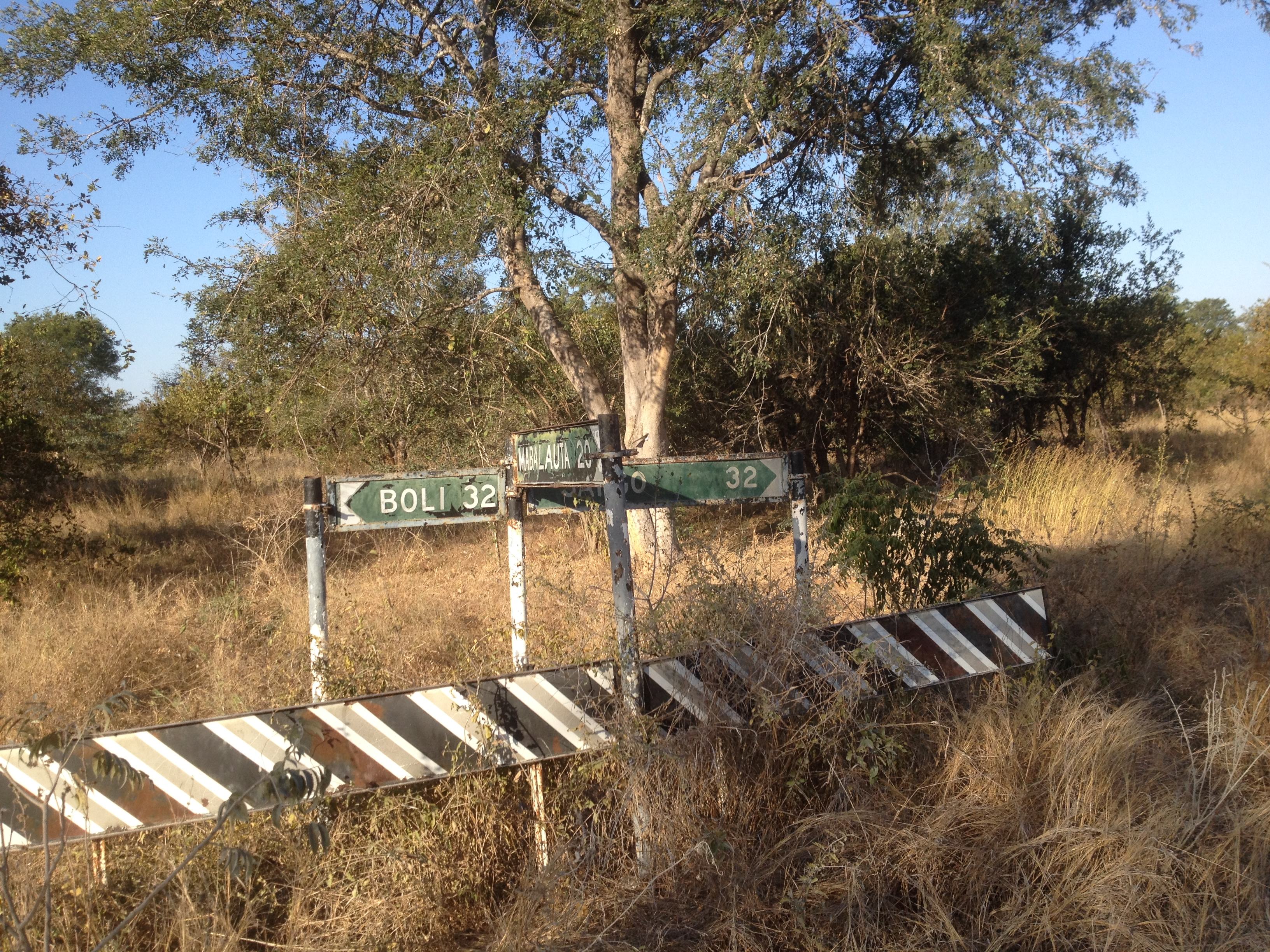
The first road junction leaving Mabalauta.

The first road junction leaving Mabalauta. Rutenga (via Boli) to the left and Mozambique to the right.

As agreed, about 40 kilometres from Beitbridge, I called Tourism and I was told that there was a person already at the border and, after contacting him we agreed to talk later at the border itself. Not what I expected for a supposedly “excellent service” I thought but kept the reflection to myself as we continued. About one hour later, already in Beitbridge, as agreed, we phoned again only to be told that the person was busy with other clients and he could not be with us! All of a sudden the “border terror” assaulted me big-time on hearing the bad news and I did not want to cross. Luckily my wife persuaded me to attempt it while I was thinking of plan B, a deviation through Botswana!!!

Gathering my wits as well as I could I entered the buildings and was welcomed by no queues! “We are in the wrong place” I said, and went to ask at a window but, relief of all reliefs, we were at the right spot and, five minutes later, yes five minutes later, we were through immigration, customs, police and free to go! The same happened on the South African side: 10 minutes (because of the use of a more advanced computer system!) and off we went. No need to search for psychiatric backup but only to drive on! So easy was it that I kept waiting for something to go wrong for a few kilometers after the border but nothing did…

As we crossed so fast we now had extra time on our hands and decided to push on to Louis Trichardt as we find Musina -like most border towns- rather unattractive and even unsafe. So we happily drove on and got to Louis Trichardt by mid-afternoon, with sufficient time for some shopping for our sojourn to Kruger National Park and hoping to find a nice place to stay. As we did not know the town, I decided to ask a customer in the supermarket for a hotel and she sent us to one nearby that was clean and quiet, she said.

It was a small pub with four rooms that looked OK but that really was not. The place was being refurbished so parking space was severely reduced and the hot water was very limited and finished before both of us could have our showers. Food came in small portions, particularly my wife’s quarter chicken that was as she defined “quarter pigeon”! In addition, the floor of the dining room shook and squeaked very badly when patrons and waiters walked by and making knife and fork use a real hazard. The waitress also squeaked not to be left out! That they served us the best mashed sweet potato that we ever tasted, I am afraid, was not sufficient to offset all other inconveniences.

I was sure that such an easy border crossing could not end well! Next time I will contact Psychiatrics Anonymous to prepare me for both: bad borders and poor quality hotels!

Gonarezhou National Park Safari Diary. Day 3

The 28th started cloudy again by the time we were up, about 08:00 hs. Footprints interrupted our exit from Swimuwini again. This time there were African Wild Dogs’ footprints. They were inside the grounds of our rest camp, just before the gate! Although we strained our eyes in all directions, we did not see them and moved on. We have often seen these animals in the proximity of humans. In fact, the first pack we ever saw was resting at the football field in Mana Pools National Park in Zimbabwe.

Today our goal was the Samalema gorge. We traveled in the opposite direction of yesterday, i.e. up river (see Map page for directions). On the way we stopped at Makwakwani picnic site where more open rock pools could be seen. Further towards the gorge we saw the reasons for the lack of electricity and the earlier Chef’s disappointment.

The cut wires.

The cut wires.

We were told by Fungisai, our lady camp attendant, that Samalema gorge was the place where people born with defects would be thrown to their deaths a long time ago. I will try to check this but I must add that it lent an element of drama to our visit and the expectation of a dramatic canyon in my mind.

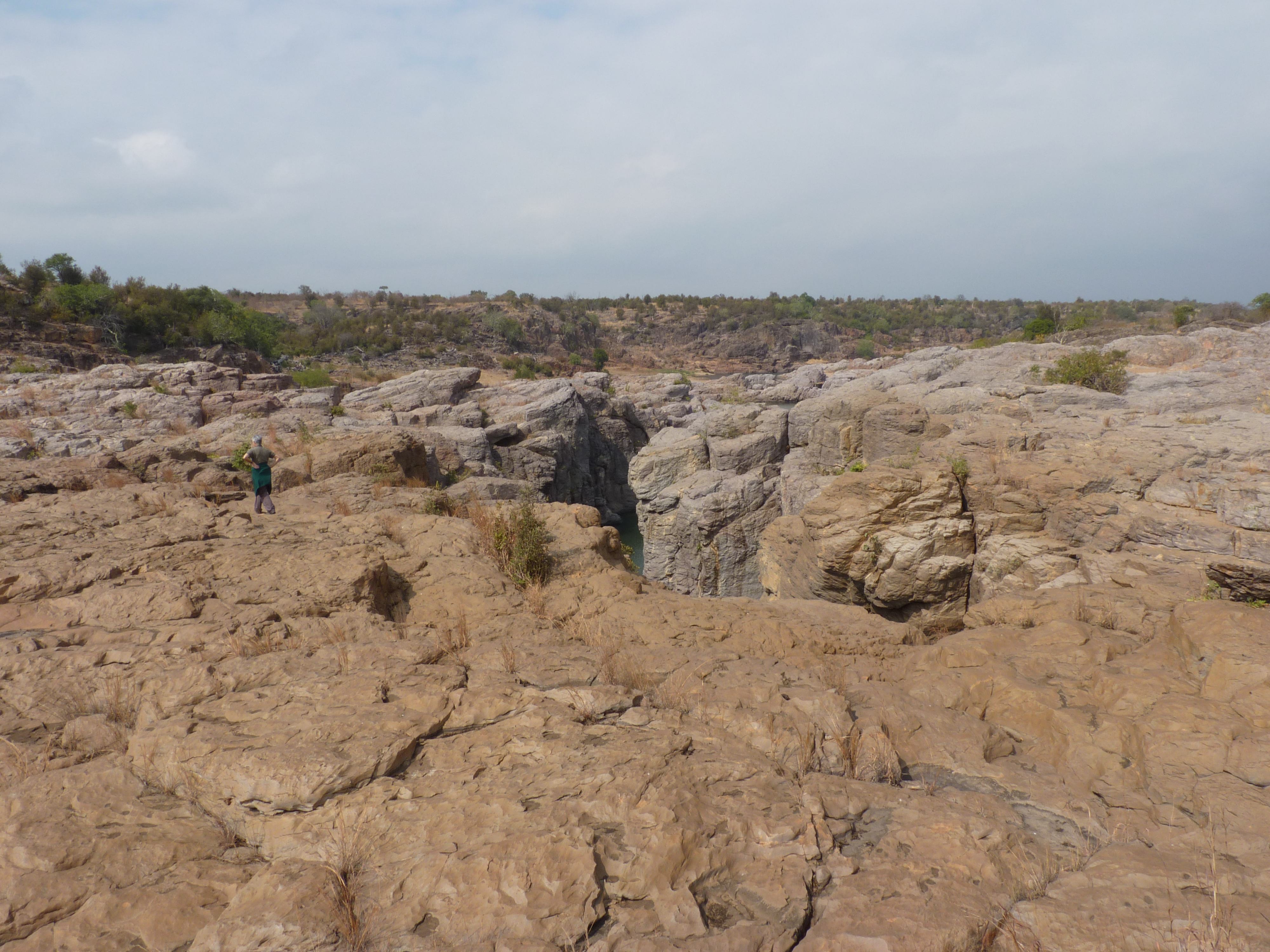
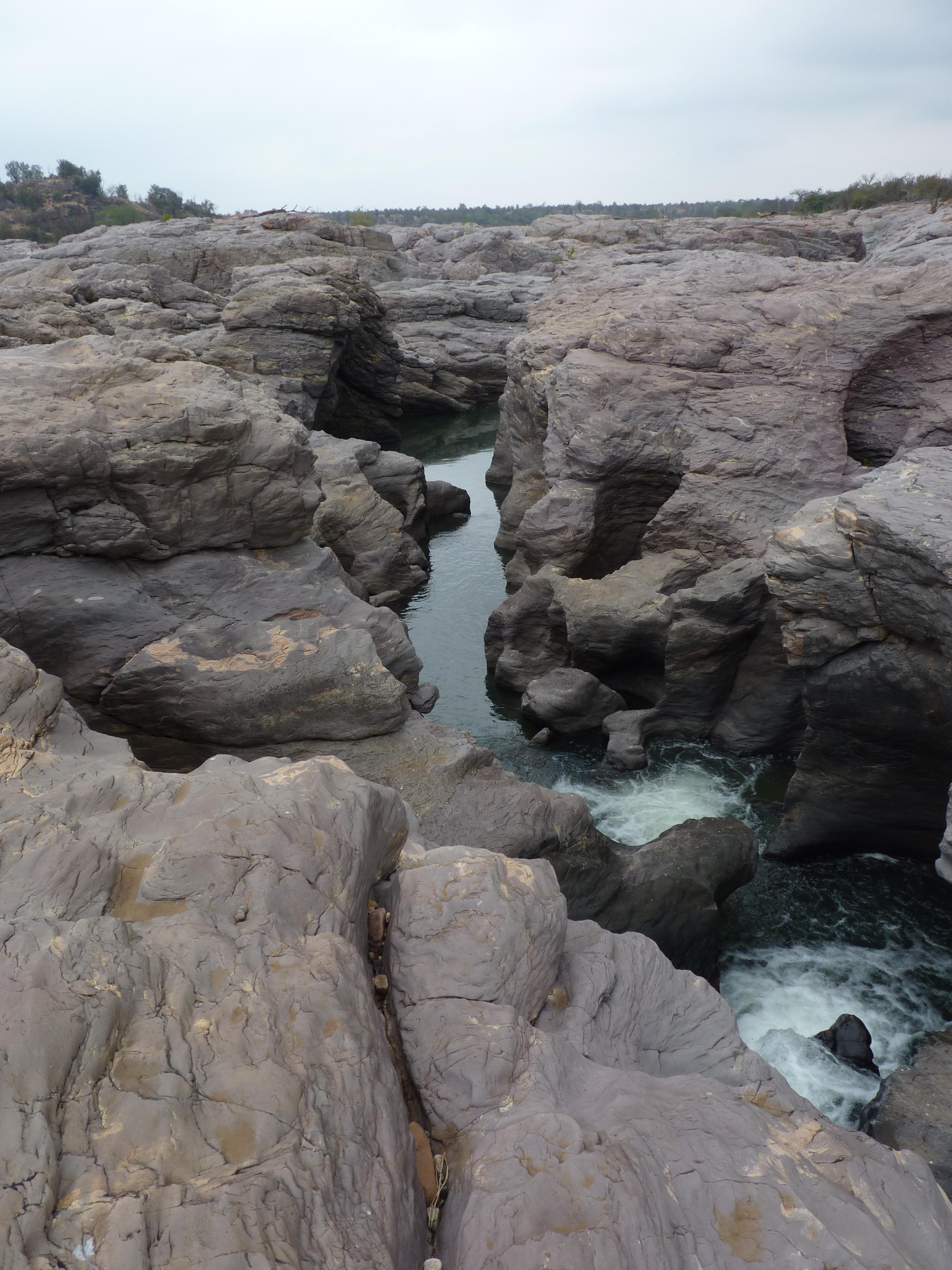
The first view of Samalema gorge.

The first view of Samalema gorge.

On arrival the place looked like a rocky field with very little water and a total absence of the expected high cliffs from which people could be thrown to certain death to the river below! It felt like an anti-climax. A trunk ladder was placed to bridge the height from the viewing platform to river level so we decided to investigate. As the ladder looked rather rickety, we opted for the wiser, if a bit longer, bush detour that took us there over stony but firm ground

The gorge started to open up as we walked on.

The gorge started to open up as we walked on.

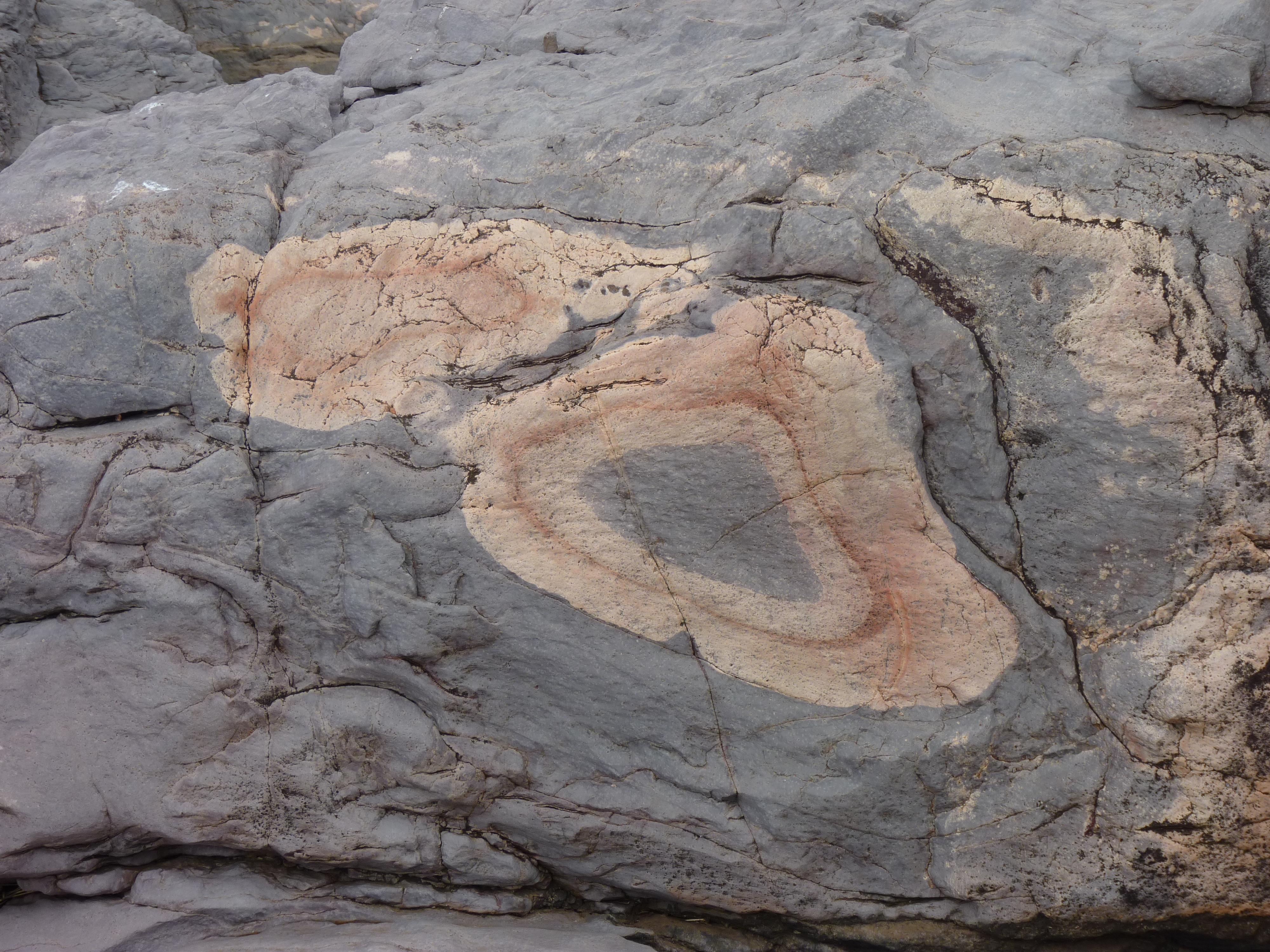
The rocks were predominantly brown and very smooth and, as we approached the river, water-carved formations started to appear that complicated our walk and soon began to be quite hard as we needed to negotiate bolder after bolder. I was relieved when my wife went in front as I still had present in my mind the information about people been thrown into the gorge for being born with deformities and I was wondering if being a snob was one of the criteria to get the “definitive” push! My fears were far from allayed when it started to drizzle, transforming the rocks into soap!

The gorge starting appearing as we walked on.

The beginning of the gorge.

Another view of the gorge.

Another view.

We continued walking and discovered that the river had excavated its way among the rocks and carved the most beautiful arabesques imaginable. There were perfectly rounded pools, bridges, pyramids and sculptures of all kinds, the types that only water can help nature to create. The crystal clear water ran through and formed a number of waterfalls and rapids that added to the overall beauty, contrasting with its sacrificial history!

Some of the rock formations.

Some of the rock formations.

Nature's rock art.

Nature’s rock art.

We did not see many animals there though. A couple of Egyptian geese, Cinnamon-breasted rock buntings, African pied wagtails and Water dikkops were the only visible inhabitants of the rocks. We did not see much fish activity either but saw a terrapin in the distance down river and another very close and very dead.

By the time we got back to the starting point a couple of hours later, we were knackered and needed to rehydrate and have a deserved cup of coffee before going back to the rest camp for a light lunch and a siesta. While walking towards the car we found some animal dung that we could not identify and that I present to you to see if anyone is able to tell me the “creator”.

Unknown spoor at Samalema gorge. The shoe is there for sizing.

Unknown spoor at Samalema gorge. The shoe is there for sizing.

It was on the way back that we came “face to face” with a tusker by the side of the road. None of us expected each other so, before I managed to completely stop the car, the elephant was already crashing into the bush, tail up. It ran for about 50 metres and then it stopped as suddenly as it had started. I was pleased that it decided to run in the opposite direction from us! It remained completely still for about 20 minutes, showing us only its rather wrinkled rear end. Suddenly, the posterior defecated and it slowly moved off. That was it, our only elephant (bottom) sighting, which although a good thing, left us wanting.

The afternoon drive down river was a re-visit to the jackals and we had the magnificent views of two giraffes coming to clench their thirst in the water pools of the sandy riverbed. When it comes to drinking, nothing beats the giraffes in wariness as -neck down- they are very vulnerable. After a long while they finally get to the drinking position after moves worth of a a contortionist!

Giraffes coming to the river bed for a drink.

Giraffes coming to the river bed for a drink.

A bunch of vultures were perched on a dead tree in the middle of the sandy river. They took off after a while and so did we as cooking on the fire waited for us and this takes longer than normal. Although the showers were there for the taking, we declared ourselves clean and, this time bat-free, we fell asleep early and soundly.

The vultures took off when they saw us stop the car.

The vultures took off after a while.