Safari

Gonarezhou National Park Safari Diary. Day 2

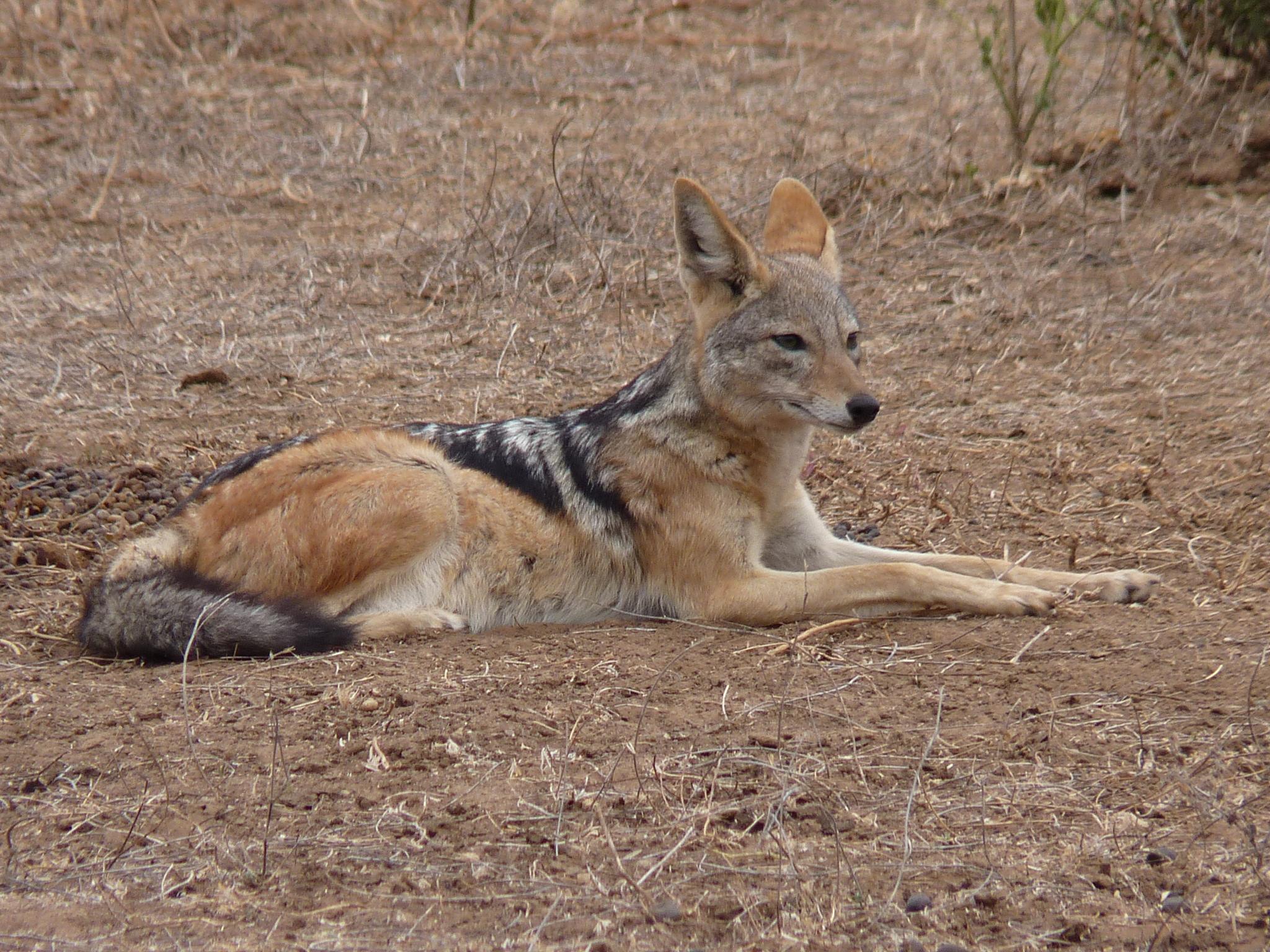
Jackals are intelligent animals, often overshadowed by larger predators. This one was very relaxed but did not miss detail!

Jackals are intelligent animals, often overshadowed by larger predators. This one was very relaxed but did not miss detail!

27/7/14 – The Day of the Jackal

The 27th dawned unusually overcast. No lions roared last night and if they did, they went unheard as the Harare-Mabalauta drive knocked us out and we only managed to leave the bed at about 07:30 hs, not a really early start for a game drive! However, being the sole occupants of the camp spares you from being criticized by any snob colleagues… So, without any pressure we went off after a coffee.

A herd of buffalo were finishing their morning drink and heading back to the bush to feed. The sighting of buffalo never fails to transmit a feeling of things wild and tough. Although cattle-like in their herd behavior, they are reputed to be among the most dangerous bush animals. I have heard and read many stories of people finding themselves in trouble when they come across the lone males that have been chased off from the herd. A colleague, while tending tsetse traps, was chased and treed by one; once up the tree, luckily, the buffalo went away. However, very often they are alleged to hang around waiting for the “victim” to fall asleep and drop so that they can trample or gore them. The problem my friend faced after the buffalo left was climbing down a very thorny tree that he only noticed after his adrenaline level went back to normal.

We had not driven 50 metres from the camp gate when we came across some rather large and familiar paw marks on the sandy track. The lions were very close to camp and we felt bad for sleeping deeply as they must have roared well! There was at least one animal and it had walked towards the camp and its pen gate, over our yesterday’s tire marks. It looked as if it had gone down to the river for a drink. We set off with recharged enthusiasm following the watercourse and its incredible vistas.
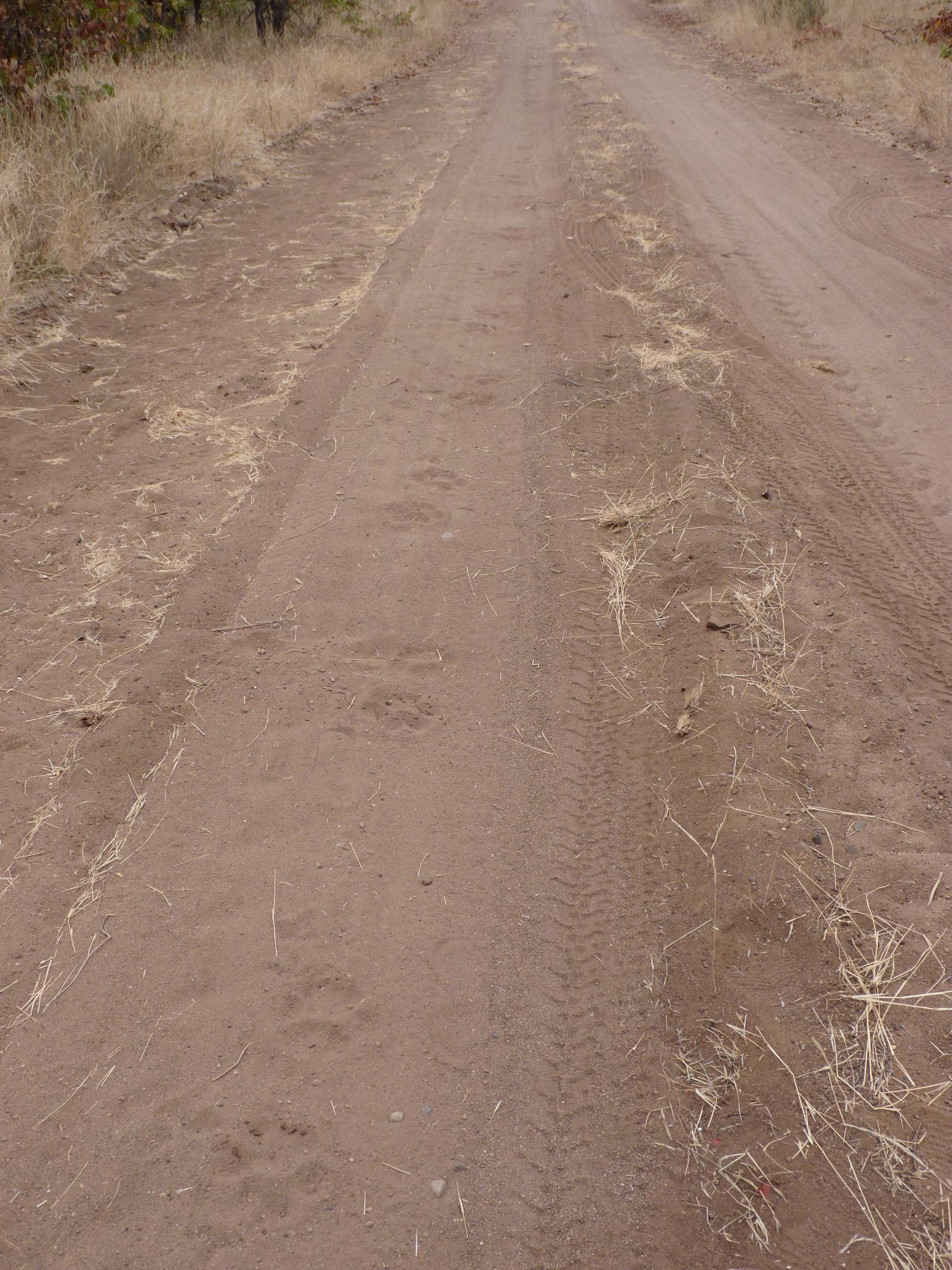
Lions had walked on the sand, close to the entrance of the rest camp.

Lions had walked on the sand, close to the entrance of the rest camp.

After about two kilometres we were surprised to find five jackals. One of them looked pregnant. Four slowly moved off but one remained all the time lying down, relaxing and returning our stare from time to time, its ears moving in all directions as not to miss anything. If they had a kill or were coming from one, we could not tell.

This jackal looked pregnant.

This jackal looked pregnant.

We continued on our way and saw lots of impala and some greater kudu. Although there were signs of elephant all over, we did not see any. As our earlier experiences in the park showed, it is difficult to see elephants here as they are wary of humans and tend to move at night. The sign found at Mankonde Pool encapsulates the situation clearly. It is located inside a tower of about five metres high. It says:

mankonde pools sign small

Walking around various view points, taking in the views, and walking in the dry river bed accompanied by serious stone collecting and birding took quite a bit of our time. While walking we saw hyena tracks, both footprints and the whitest spoor I have ever seen. We also saw leopard prints and what we thought were wild dog paw marks as well. All spoor looked rather fresh and we kept looking around in case the owners were still nearby and hungry!

Elephant spoor was all around us during our walks in the river beds.

Elephant spoor was all around us during our walks in the river beds.


Hyena dung turns white after a while because of its high calcium content. This one was very white!

Hyena dung turns white after a while because of its high calcium content. This one was very white!

We visited Muwatonga and Rossi pools. We confirmed that the former still remains our favourite spot. There, you can sit on a comfortable natural rock balcony about four to five metres from the river and take in the view. At this spot the river runs gently through rocks and wide deep pools of crystal clear water are formed. Here the crocodiles cannot hide. They are either basking in the sun or -still clearly visible- under water. The water transparency also allows you to follow shoals of tilapia of various sizes cruising slowly or just basking themselves while the fast streamlined tigerfish dart by in groups of three or four.
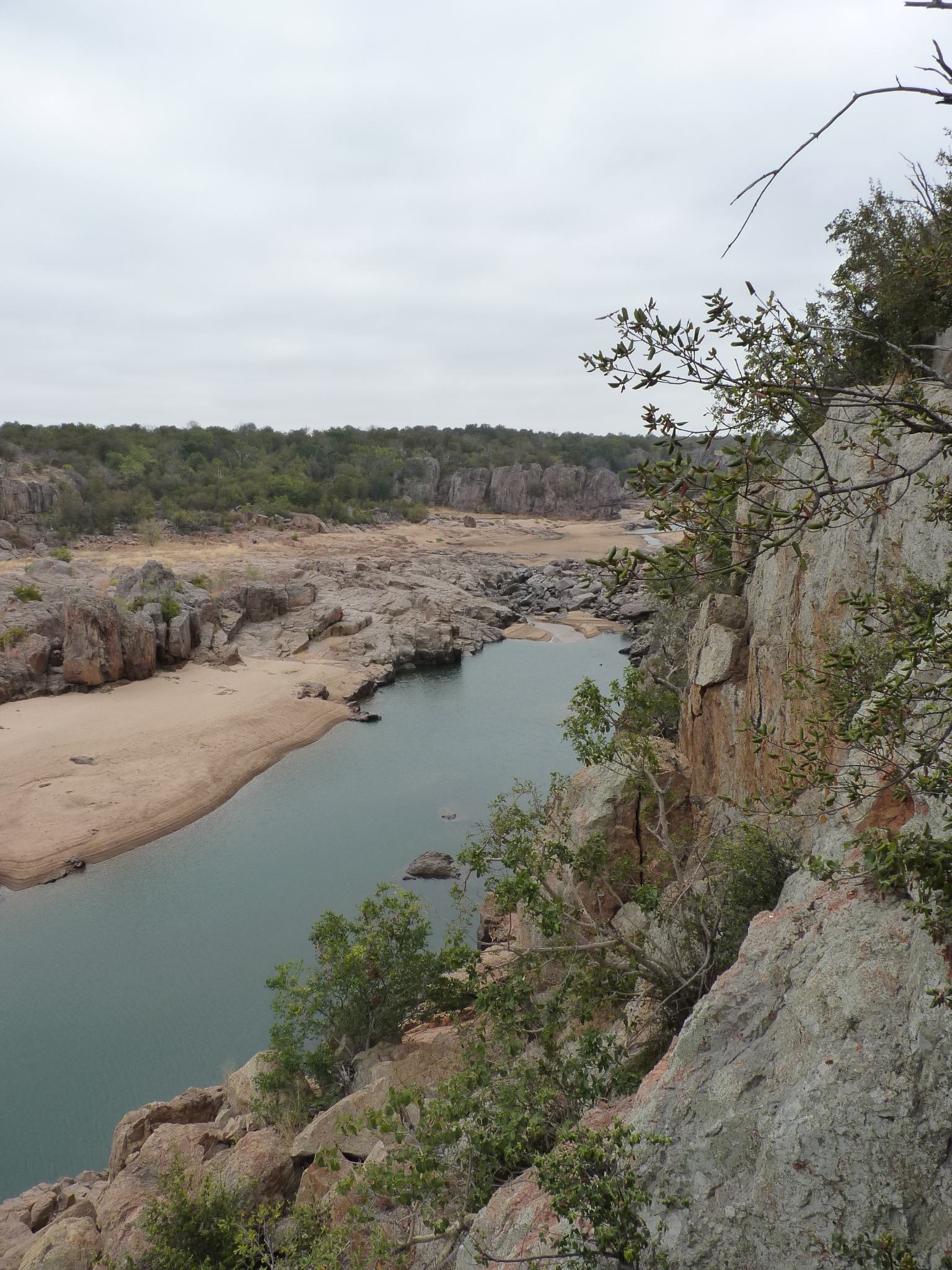
With its crystal clear water, Muwatonga pools are our favourite.

With its crystal clear water, Muwatonga pools are our favourite.

The frequent splashes heard and seen indicated that this is far from a peaceful pond but rather one where mistakes are paid for with loss of life. It is not rare, after a commotion is herd, to see a crocodile gulping down a fish outside the water only to submerge again when he is done. The sight is another reminder of the danger of crocodiles and the need to walk at a good distance from the water’s edge.

Crocodiles in Gonarezhou are also partial to quelea-eating. It works like this: like its insect colleague the locust, the quelea birds live in flocks that sometimes form “swarms” of many thousands flying in coordination pretty much like the starlings in the European skies. When they need to drink they land on the branches overhanging the river. As they keep landing, the birds that landed first have a quick drink and fly away to avoid being pushed under water by the sheer weight of those coming behind them that subsequently take their place. The branches get more and more crowded as more birds land, to quench their thirst.

While the birds accumulate, the crocodiles, knowing this phenomenon and remembering what they did yesterday, converge under water towards the key areas. Then, all of a sudden, the water explodes and a crocodile jumps out of the water shutting its mouth on the branch. Then for a second or two, it hangs there and then keeping its mouth firmly shut, it slowly slides gently down the branch, leaving no trace of birds or tree leaves. It then lands in the water and swallows its mouthful of prey, together with the green salad. This activity goes on for as long as the birds come to drink and, despite taking place every day, the birds still keep coming back in huge numbers, no doubt driven by thirst and short memories!

Aiming for the Malipati end of the park we continued our trip. On the way, the bird chorus suddenly got louder, giving the impression of a synthesizer being used (very similar to the “Cher effect’ in her Believe song!). We had just entered an area of cellphone signal and WhatsApp was doing its best to deliver accumulated messages to my wife’ telephone.
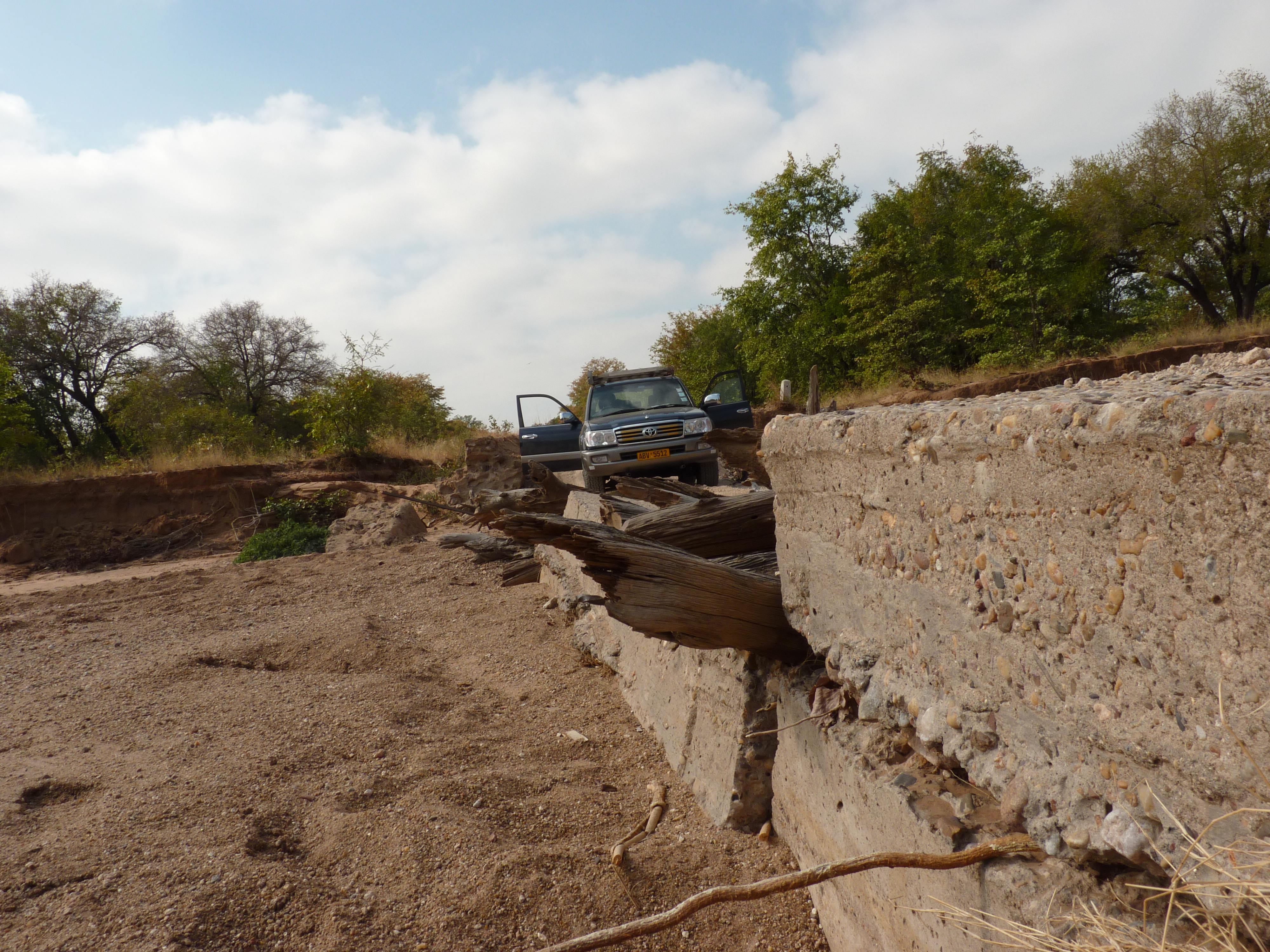
The road offered a few challenges.

The road offered a few challenges.

The drive ended at the bridge over the Mwenezi at the Malipati entry point. It was Sunday afternoon and some young women were relaxing and fishing under the bridge using porcupine quills as floats. The latter were working well as, after asking the usual “any luck?” question, they produced a couple of nice tilapia that I am sure ended up at their table that night. They were family of the National Parks staff posted at Malipati.

This tree will probably not be here for long.

This tree will probably not be here for long.

After a full day in the bush and with fresh memories of the wonderful river views, we slowly returned to camp. Oh yes, I forgot to mention that the right back tire was flatter but I think it was because of all the stones collected! After our shower failure of the night before, we took our revenge. Few things compare to a bush shower coming from a Tanganyika boiler and this time was no exception.

The bat came back to our chalet. This time it landed inside our empty bath, unable to climb its slippery sides and, again, it needed our assistance to fly off into the night.


Gonarezhou National Park Safari Diary – Day 1

We are back and trying to catch up with all issues left on departure and the new material!

I will be writing and posting information as it becomes available and cleared by my Senior Editor.

I start with reports on the time spent at Gonarezhou in a diary form and then a few entries on Kruger National Park.

Please note that I could not post before as there were technological challenges that, in the absence of my son I could not solve!


The first view on arrival at Swimiwini Rest Camp.

The first evening view of the Mwenezi river on arrival at Swimuwini Rest Camp.

26/7/14 – Harare to Mabalauta

We left Harare at 07:30 hs and drove through Masvingo to the turn off at Rutenga. As it was a Saturday the traffic was light, and the lack of lorries to and from South Africa was particularly welcome! The road from Rutenga to Mabalauta was rough but it did not offer any specific difficulties apart from the dust. Fortunately it was just a question of leaving it behind as there were no cars in sight for the entire journey and very few people on the road. Obviously, there is not much traffic going through to Mozambique via Sango!

We got to the Chipinda Pools junction at 15:00 hs, after 86 km. At this point you can branch off to the northern area of the park, which is larger and better known by us. So we drove on and, after a further 32 km we turned into the Mabalauta entrance road to the right, leaving the road which would have taken us to the Mozambican border about 20 km further on.

We got to Mabalauta at about 16.00hs to check in. At this point we were casually informed that Swimuwini Rest Camp, our destination, had no electricity as the power line had been cut a couple of days earlier. Now, if you have had the mixed pleasure of being with us on safari you should know that good food is normally an important part of the deal. As this usually involves cooking, the absence of electricity was a blow to my wife, the Chef (in haste I add that this title only applies in the kitchen territory…). A potentially major culinary crisis was in the making as she was highly displeased.

The issue wasn’t the lack of electricity, but rather the fact that we had not been forewarned in order to adjust the menus! The staff, seeing the unfolding drama, added that there was firewood and that everybody cooked on the fire! The Chef just looked on… Trying to defuse the bomb I changed the subject asking about game occurrence, trees, plants and flowers but only partially succeeded. In hindsight, I probably did more damage than good when I mentioned that hot water may not be available either! Another fulminant look came my way.

Again, the staff came to my rescue stating that the firewood would be free and that there would be assistance available. As for hot water, it was true that the chalet would not have any but we could shower at the ablution blocks which was supplied with hot water by a Tanganyika boiler. We moved on, taking part of the crisis with us!

By the time we got to the rest camp things were better as plan B was developed and whatever remaining crisis residue there still was dissipated on arrival, as the view of the camp was beautiful. Its nine bungalows were nestled on high ground and three or four of the chalets had their private -and very large- baobab tree. As if this were not enough, the place had an abundance of desert roses that happened to be in full bloom, marvelous pink brush strokes in the otherwise brown landscape.

VIew of Swimwini Rest camp small and cropped

A few chalets come with “baobab en suite”

The chalets were well equiped and the ones at the front had a magnificent view over the sandy Mwenezi river that runs in front of the camp. Several water channels were still running, cutting through the sandy banks. There were reeds where the water was more permanent with abundant water bird life and fish along with noticeable frog activity (quite vocal at night).

We were the only guests. Nyala was the name of our house and, although it did not come with its baobab tree, it overlooked the river with an ideal overhang for watching the action in the sand, about three metres below. And action there was but closer to home! As the Chef was inspecting the fire cooking facilities and taking control of the situation, a loud crashing noise came from the river, followed by a rather large animal that avoided her at the last possible second and bounded away. Recovery of her wits took a while (we have learnt that this time increases with age!) and, despite the shake she was still able to identify a Nyala derriere that, judging by its dark hue, was a male of the species. It was a narrow miss and we then understood the reason for the name of our chalet! It was a relief that there were no casualties and that there was no need to change the chalet’s name in my wife’s memory!

The male Nyala resident at the rest camp.

The male Nyala resident at the rest camp.

The Tanganyika boilers were glowing and beckoned us to the shower place after sunset. Despite the blaze and to our great disappointment, only a lukewarm trickle came out of the showers so we abandoned the project. The following morning we learnt that rather than a technological hitch it was human error: someone had forgotten to open the mains water tap!

Apart from the male nyala that hung around the camp looking for protection, we saw some impala, baboons and warthogs. They all seemed to come in XXL sizes. To end the evening, a small bat landed on my wife’s shoulder while she was coming back into the house and it refused to move until it was persuaded to climb on a towel and allowed to fly off. Bats have great difficulties taking off from the ground and need to climb to the appropriate height and then launch themselves from that height in order to become airborne!

The bat on my wife's shoulder.

The bat on my wife’s shoulder.

A final look around revealed that the right rear tire appeared to be a bit deflated but we agreed that not much could be done until the morrow so we went to bed, dusty and “shower less”. The latter is my preferred option on safari as I am a morning shower person. The Chef was not at all amused though…


Kruger National Park Report

Nothing much to report on the journey from Louis Trichardt to the Kruger National Park (Kruger). On arrival at Punda Maria gate, a helicopter flying overhead brought home the reality of Kruger these days when special measures to curb rhino poaching are being taken. Despite this, a few hundreds have been killed this year. Let’s hope that the Park will get on top of the situation. Kruger is the last rhino (both black and white) stronghold left in the world.

Roads are good and we were in Sirheni Bushveld Camp with time to spare. The camp is small with no electricity but this time we knew about it beforehand! After spending a quiet night and enjoying the peace of the place, it was time to continue our trip. We left for Shimuwini Bushveld Camp where we had a great time on a previous trip with friends. There was more water this time so the animals were less concentrated in the riverine area. However, the hippos were still there and the birdlife good as usual.

In the morning we planned to do a drive along the Letaba river near the camp and to continue to a point where the river crosses the road, as it is an open expanse which apart from being beautiful, allows one to see far and spot interesting things. On the way there we could see a number of cars parked on both sides of the road in the distance indicating an interesting find.

When confronted with these situations in the Kruger, the bushsnob has a “car rule” to predict the situation and take appropriate action. It is as follows:


       CAR NUMBER            REASON

ACTION

1 (often parked sideways or in the middle of the road) birdwatcher Check bird being watched
1 (well parked, usually a small saloon or city SUV) first time visitors watching any animal they come across Drive past with eyes closed or looking the other way
2-5 (any type) buffalo, giraffe, zebra, etc. Check as it may be interesting and cars tend to depart after a few minutes
5-10 (any type) elephant, rhino Same as above
<10 (any type) lion kill, leopard Avoid the area by taking any available and legal measure and return at lunchtime or late afternoon
Sizeable queue or large number leopard kill, Parks or Police check point Check with binoculars, if Police present, continue, otherwise as above and return at lunchtime or late afternoon

In this particular instance there were more than 10 vehicles and lion kill “or above” was diagnosed. We joined the queue and, from where we were, we could see a buffalo carcass and at least one lion resting under the bushes. We were keen to see the kill as we knew that to bring a buffalo down normally takes the combined efforts of several lions. We waited patiently for the cars ahead of us to move -maintaining “strict bush etiquette”- but, as there was no movement we decided to move on to the rest of the park which was consequently less crowded!

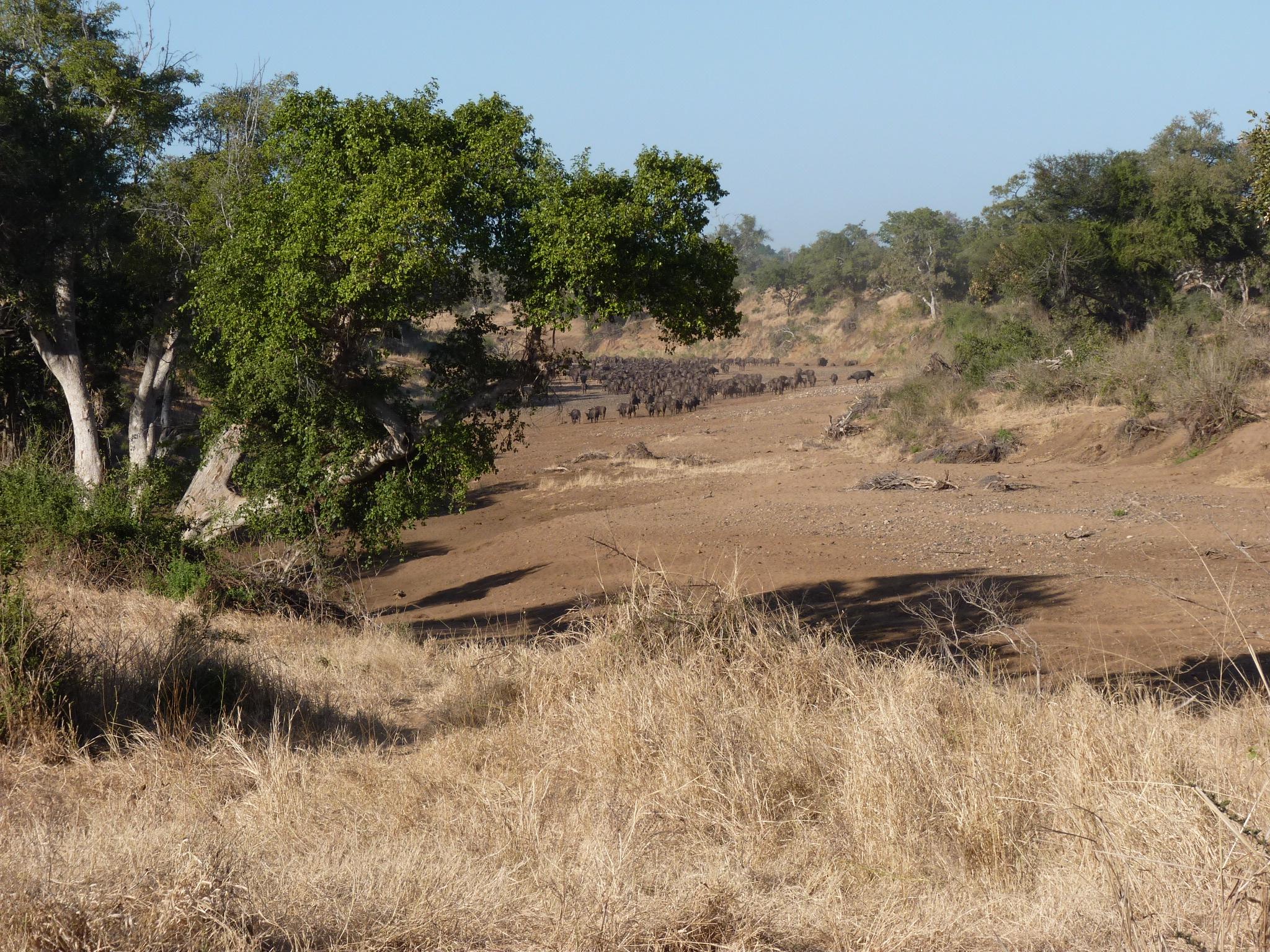
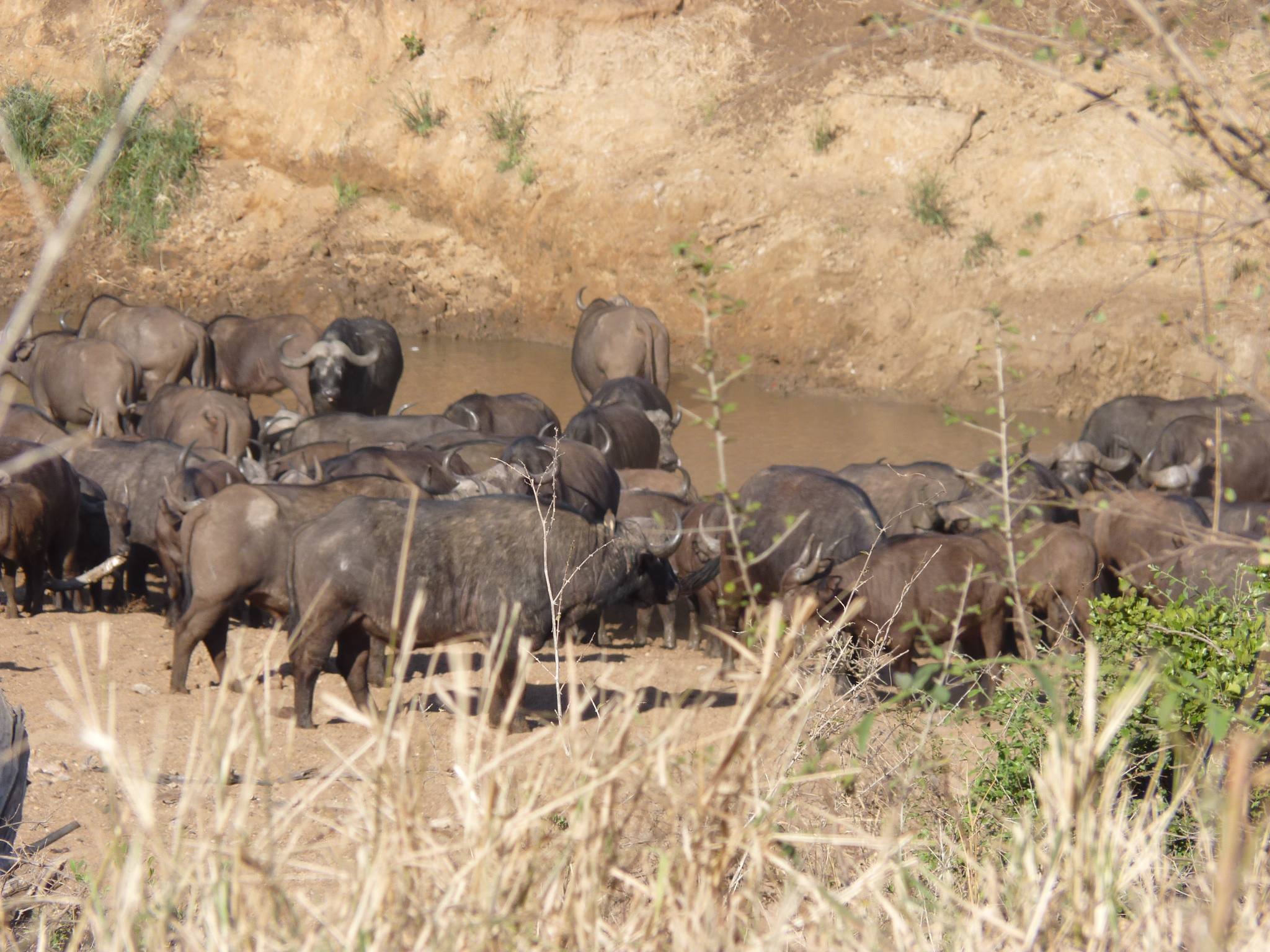
Our idea was rewarded when we came to a Letaba tributary where buffalo were going down to the riverbed. On arrival there may have been one hundred animals but they were still coming down. After about 20 minutes there were what I estimate to have been over one thousand and the number kept increasing for a few minutes. It was one of the largest herds we have seen.

A large herd of buffalo while moving on the river bed.

A large herd of buffalo while moving on the river bed.

Part of the herd while drinking.

Part of the herd while drinking.

Although rather bovine in their behaviour, buffalo transmit a sense of wildness and power that, to me, no other herbivore does. Although I have not yet seen them confronting lions, I have seen them in close proximity while helping a friend to dart them for his research and they were dangerous!

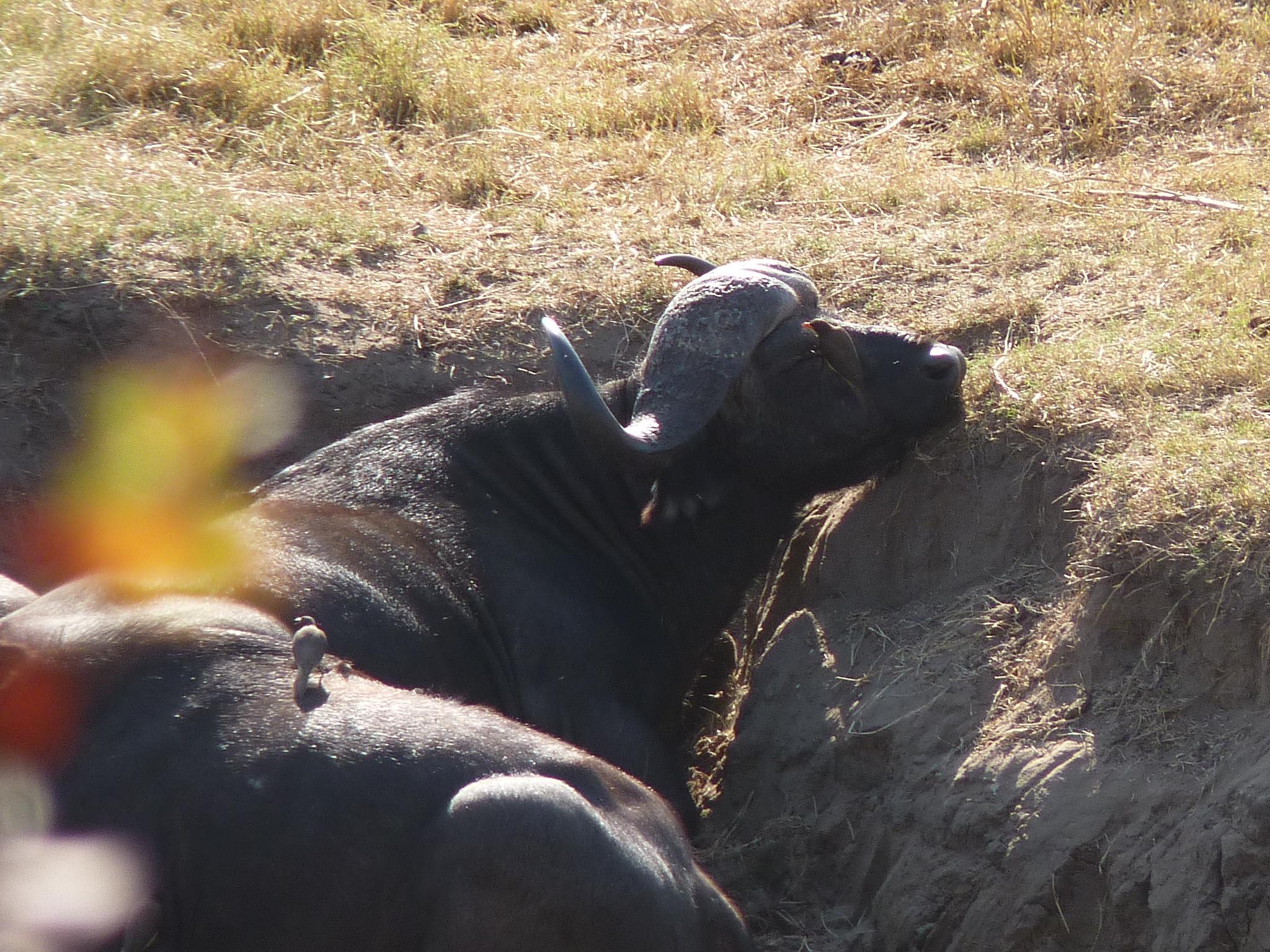
This buffalo was having a comfortable "siesta" while the oxpeckers did their job!

This buffalo was having a comfortable “siesta” while the oxpeckers did their job!

Seeing buffalo always brings back the story of a colleague working on tsetse flies in Kenya. One day he was checking his tsetse traps in the Nguruman escarpment and a lone male suddenly charged him from nowhere, forcing him up a tree to save himself. He was lucky on two accounts: there was a “climbable” tree nearby and the buffalo did not wait for him to fall down in order to trample him to death. It was a hairy moment and what was most interesting was that he said that the rush of adrenalin allowed him to climb and stay up in the tree without problem despite not being the fittest guy in Kenya. What was really tough was getting back down, as the tree was very thorny!

Later in the morning we hoped to see the kill again on our way back to camp but, unbelievably, there were still a lot of cars so we just had a look while driving by and not much had changed. We decided not to bother and try again in the evening as the proximity of our camp would enable us to stay just a bit longer than the others… By the time we were ready to return to the kill the famous tire had totally deflated… Not being part of the Ferrari F1 team, it took us a few laps to change the wheel and we were late! We still left as we estimated we had about 15 min of watching time!

We got to the kill and there were still cars! “Do not worry, none of the cars belong to our camp so they must leave by 17:00 hs to get back in time for the gate closing time of 17:30 hs”. We waited and waited and no one was moving by 17.20 hrs! The usual “these people know something we do not” was pronounced by one of us and we decided to re-check the gate closing times again and it clearly said “July: 17.30 hs” and then we realized that it was 1 August and closing time was now 18:00 hs. By the time we realized this, cars had started to depart and we did get our 20 minutes or so of “only the lions and us” where some observation took place and pictures were taken!

The young lion feeding on the buffalo.

The young lion feeding on the buffalo.

A closer view of the lion feeding.

A closer view of the lion feeding.

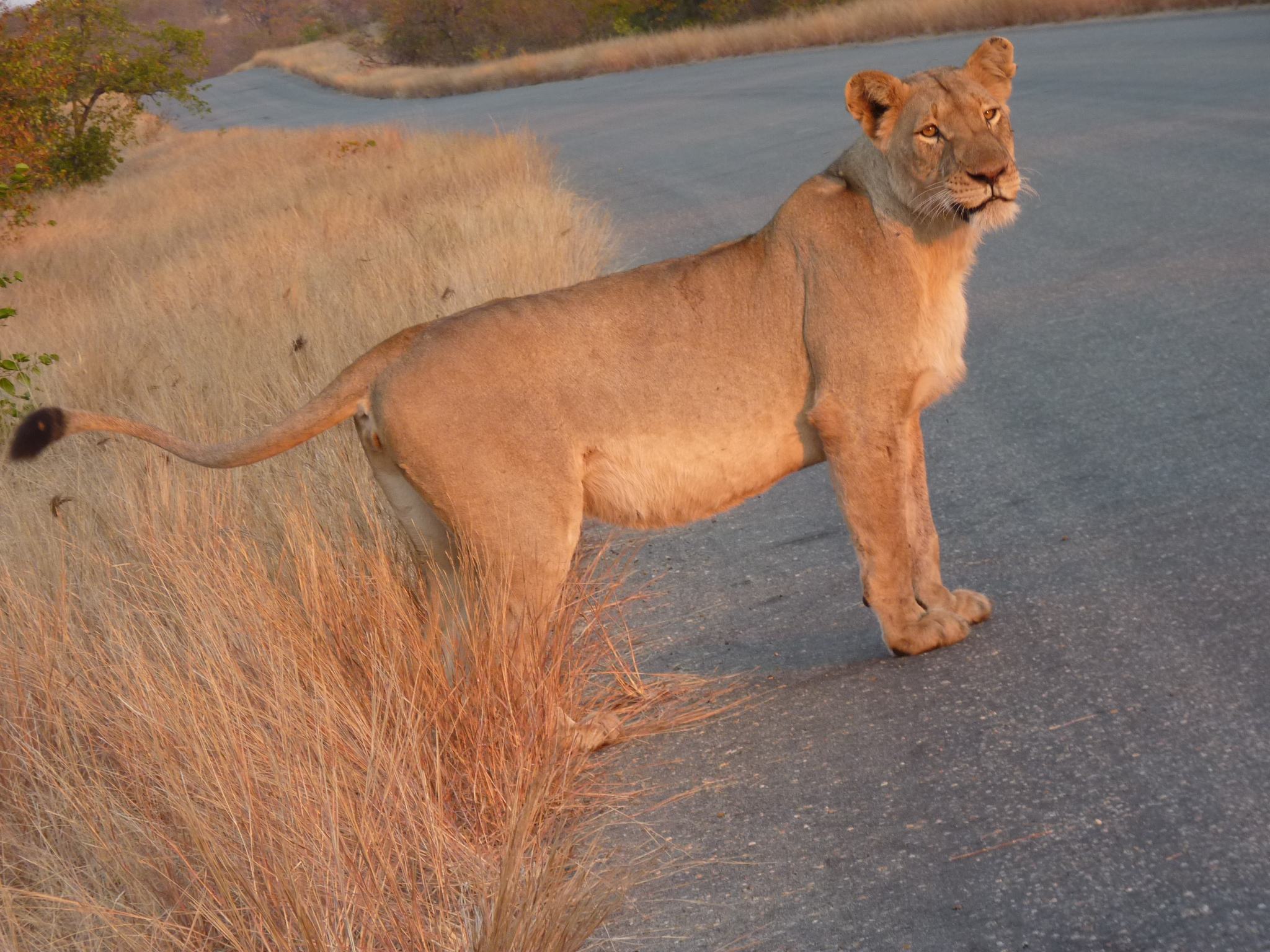
What did we see? The carcass was half eaten and one youngish male was inside it tearing pieces off. Another male was resting under the shade, together with 3 lionesses and 2 cubs. One of the lionesses looked uncomfortable and decided to go for a walk towards the river, surely to drink and soon a second one followed her. A few vultures were waiting patiently up in a nearby tree. And then it was also time for us to abandon the spot to get to our camp in good time.

One of the lionesses with a full belly on her way to the river.

At dusk, one of the lionesses -with a full belly- decided to go to the nearby river for a drink.

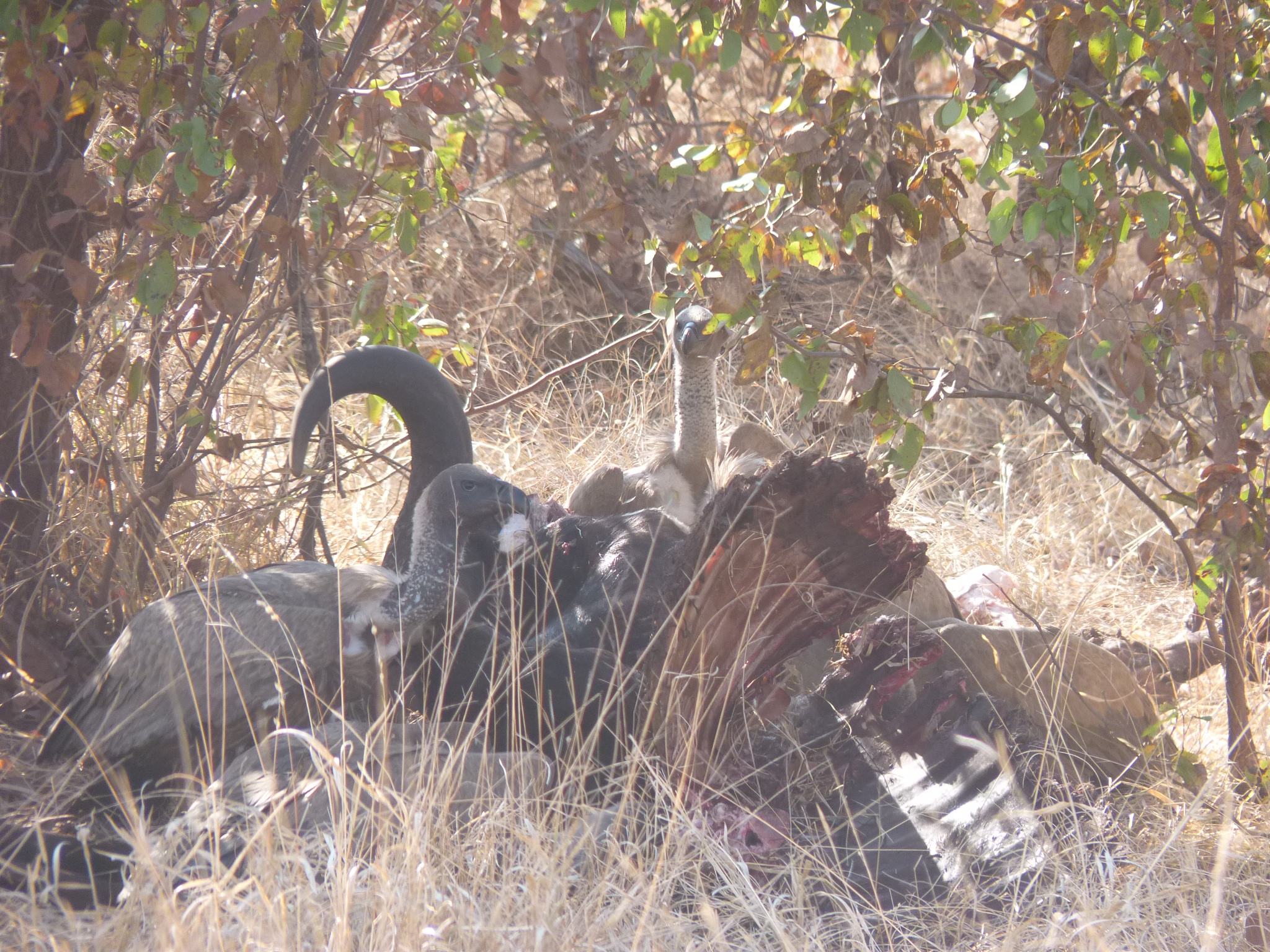
The following morning, en route to Letaba, the only carcass visitors were vultures and no lions were seen. Yes, you guessed right ours was the only car so we parked it sideways blocking the road and watched the birds!

Only the vultures remained the following morning.

Only the vultures remained the following morning.