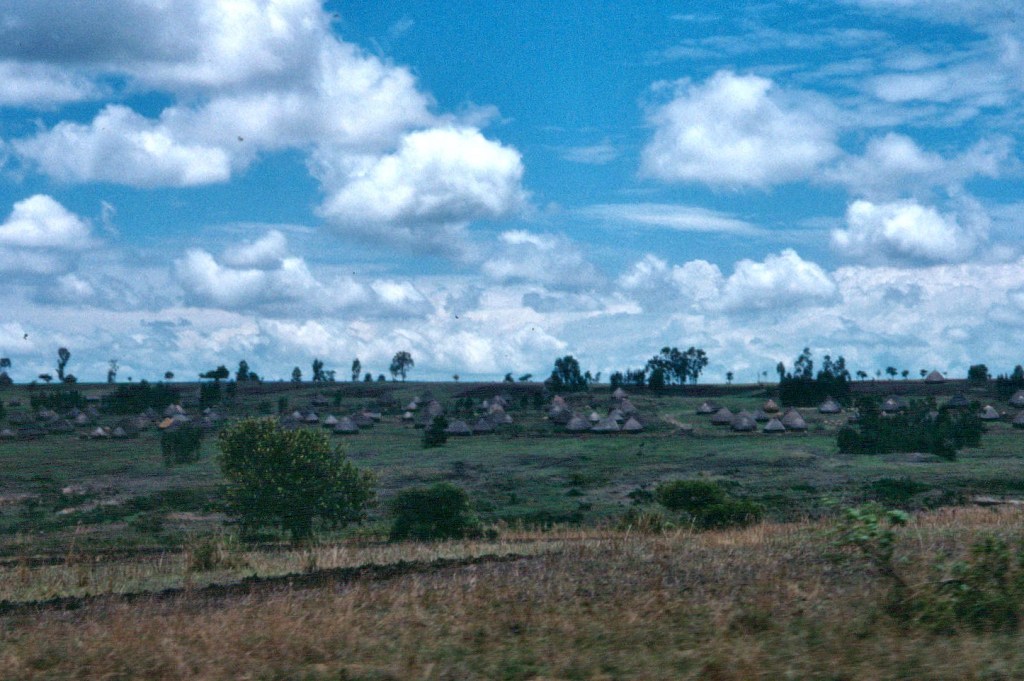
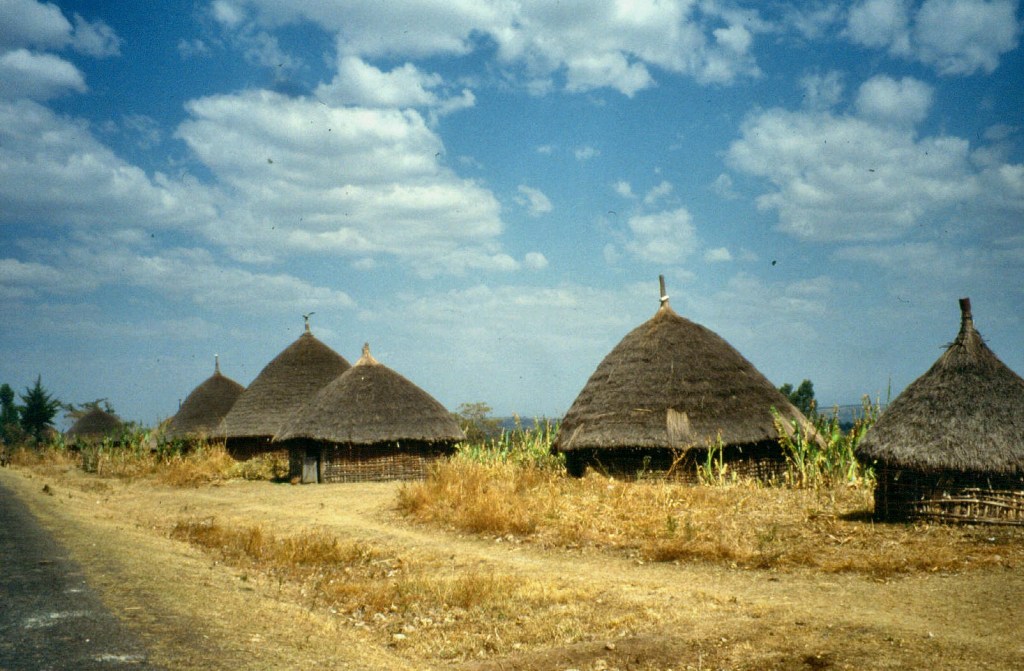
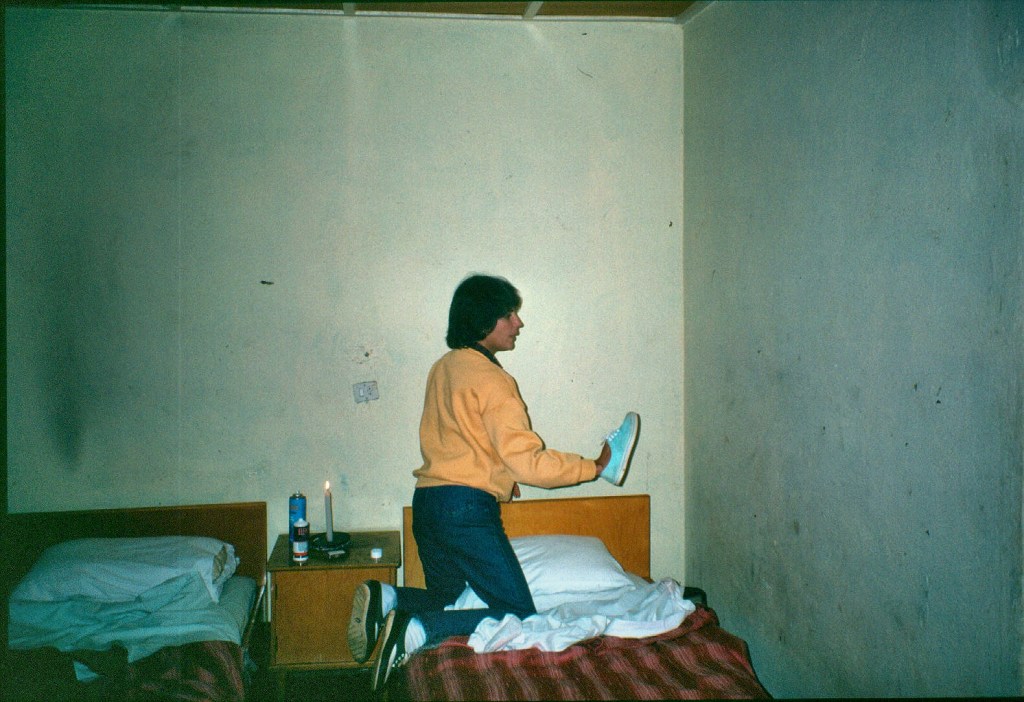
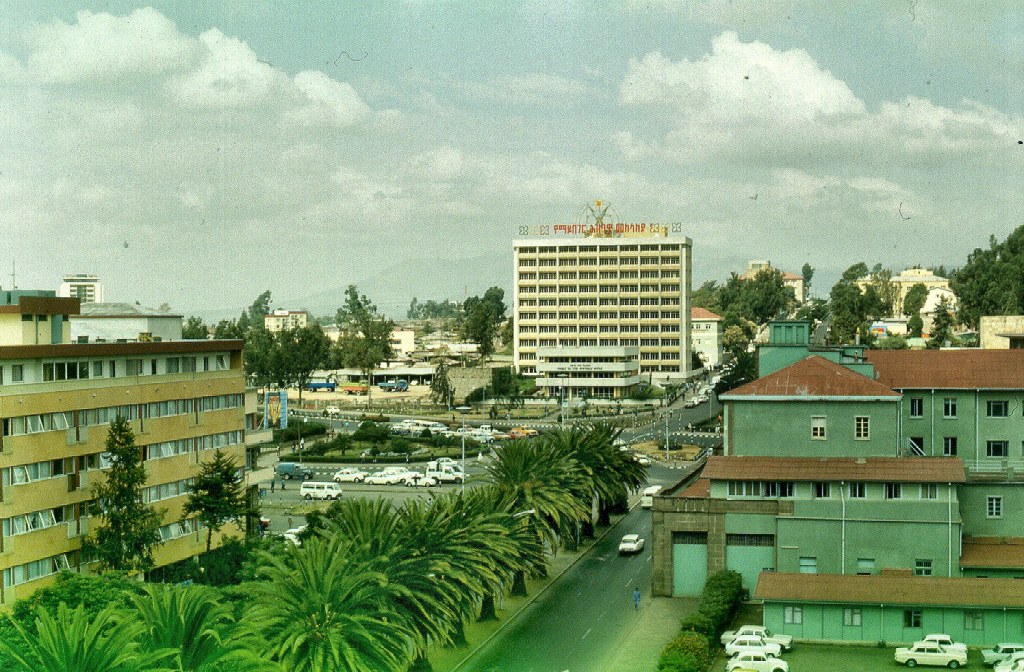
Safari

Life in Bedele

As you have probably realized, we were not following the Bedele social scene for several reasons that you can also guess, language and cultural differences, isolation at the laboratory and the feeling that not much was happening.

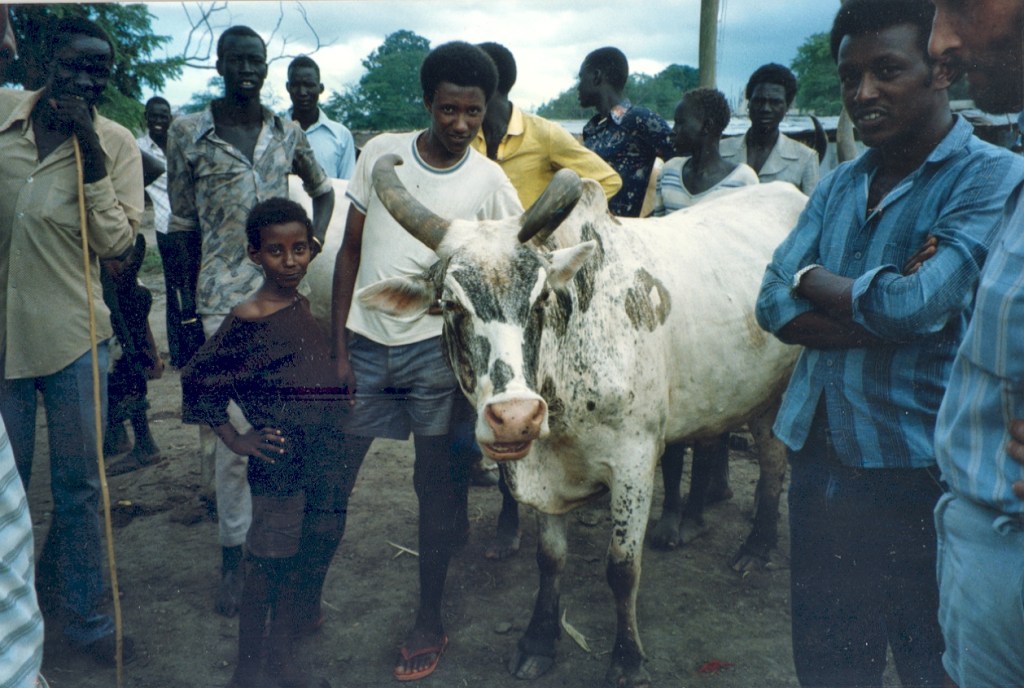
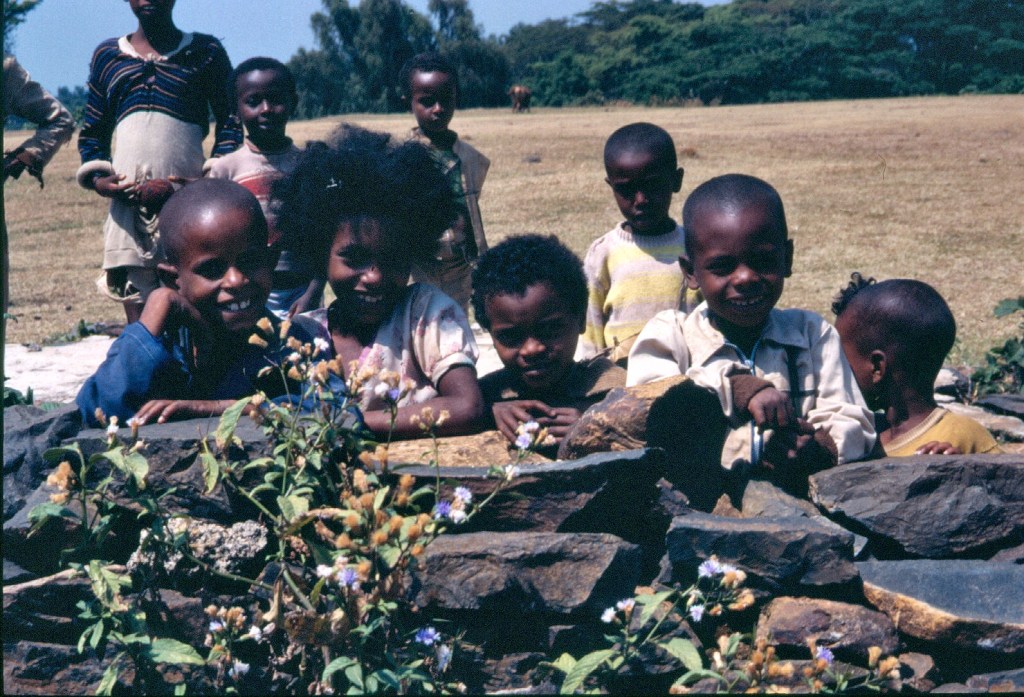
The weekends that we did not go out exploring the surrounds, we visited the farmers market and bought what we could find there while having a look at the various activities that went on there, in particular the livestock sales as there was a lot of loud haggling and discussion going on that was quite entertaining for a veterinarian. It was also new to us that farmers would arrive to the fair riding a mule or a horse but we soon learnt that for many villages this was the only way to move around.

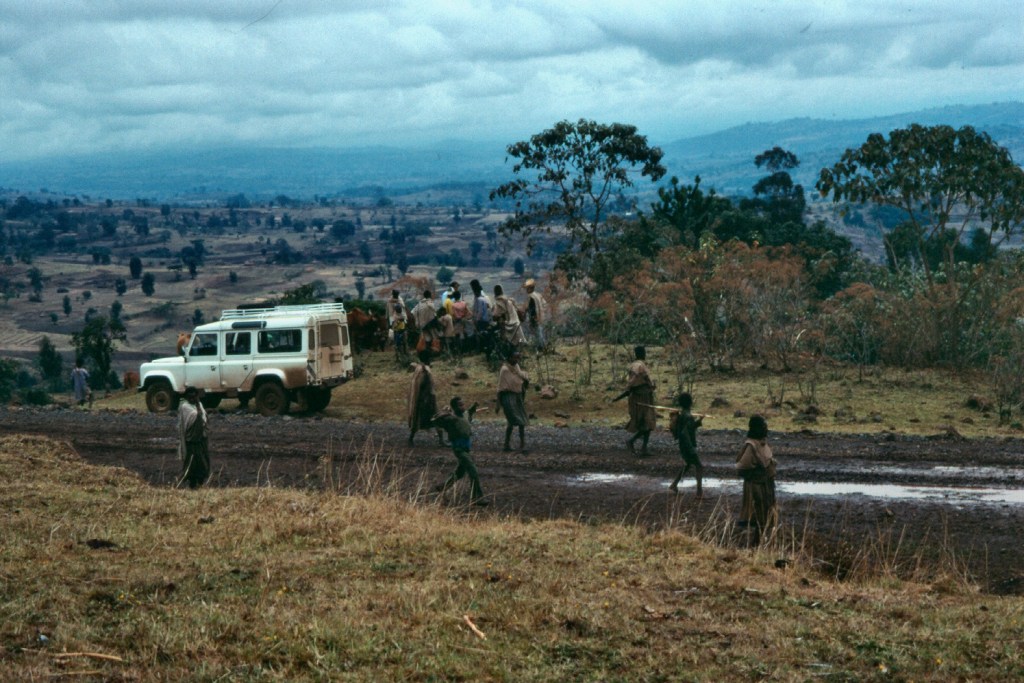
One time, while leaving Bedele in one of our weekend escapades, we noticed an aid lorry parked a few kilometres outside the town that we thought was being offloaded there “unofficially” and, as expected, when we were spotted, all activity ceased. However, we suspected that some of the relief food was siphoned out for other “beneficiaries” although we did not know who!

Following on the above, with the passing of time we discovered a second market. One that did not function in the open air but under a roof and that offered numerous food and food-related items, clearly coming from what we had seen earlier on the road. There was flour from origins as different as Canada, Italy and Argentina and cooking oil of different kinds, including olive oil from Europe. We also saw bags and bags of chocolates and high energy biscuits of the type that are consumed while on a climbing expedition and literally hundreds of humanitarian eating and drinking kits still in their original plastic wrappings showing their unsuitability for the recipients.

Although the large food items were likely to be those diverted from lorries, the other stuff was most likely traded by the refugees themselves that did not need them or did not know what to do with them! This market, until it burnt down a while later, was an important source of food for the Bedele inhabitants that were able to get some stuff that was otherwise unavailable. So not everything was lost!

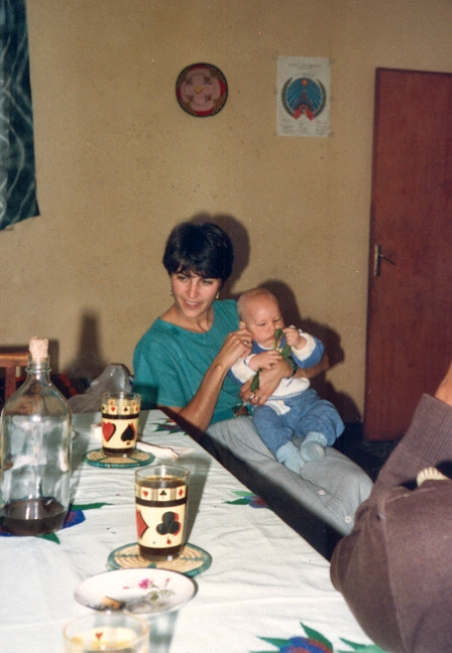
Most of our news were related to life in the laboratory and our neighbourhood. Among these, the birth of Jan and Janni’s son Winand in The Netherlands was great news and their arrival to the laboratory was a motive of great joy. He was the object of attention of everybody, in particularly of the resident ladies, including Mabel, that took turns to look after him.
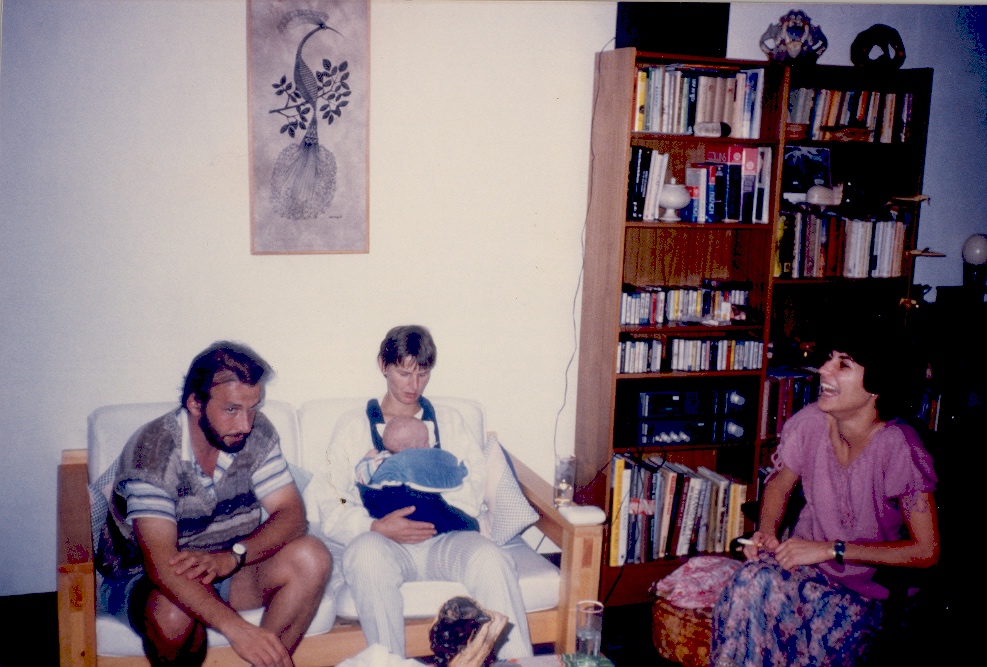
Entertaining Janni with the recently arrived Winand
Mabel and Winand after a few months.

We did have a number of visitors from abroad. The first one arriving was Giuseppe, an Italian veterinarian with an interest on tsetse and trypanosomiasis that came to work with Jan for a while. Although we saw him briefly, our meeting was the start of a friendship that lasts until today. Later, our friends and safari companions from Kenya François and Genèvieve also came and with them we did a bit of sightseeing, mainly around Bedele that we all enjoyed.

With Geneviève and François enjoying the Didessa valley.
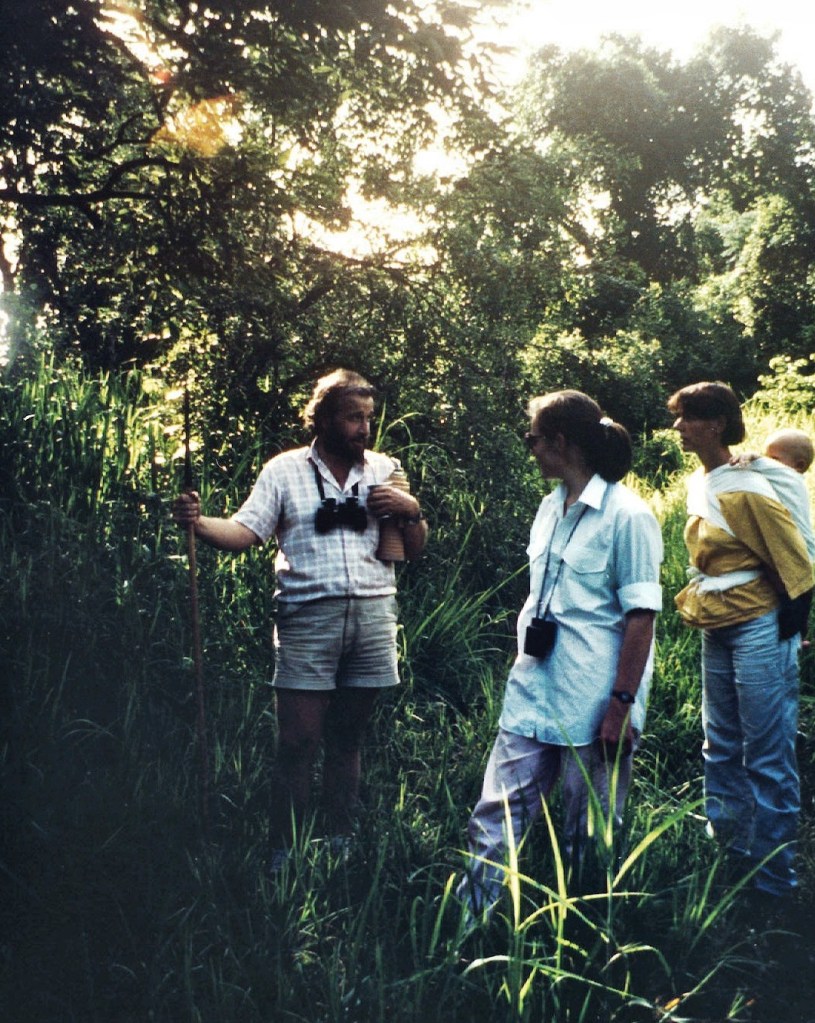
Geneviève and Mabel sharing a mate in the bush. Mate is a traditional drink of southern Latin America. For details see: https://en.wikipedia.org/wiki/Mate_(drink)

Finally, towards the end of the project Paul, my FAO backstopping officer came to see the work and to assist me with the writing of a project extension to continue the work although we knew that UNDP had no intention of continue funding it as I explained earlier. However, we did write a new project and, eventually, we got some funds from the Danish Government to continue the activities, particularly on tick-borne diseases.

Although mostly unknown to us, some events that took place in Bedele were rather dramatic.

There was a great commotion at the laboratory when a serious accident took place on the Metu road just outside Bedele and, of course, we all went to see what had happened. As, while we were getting there all was said in Amharic I was not entirely clear of what had happened, so I went fearing to find lots of casualties.

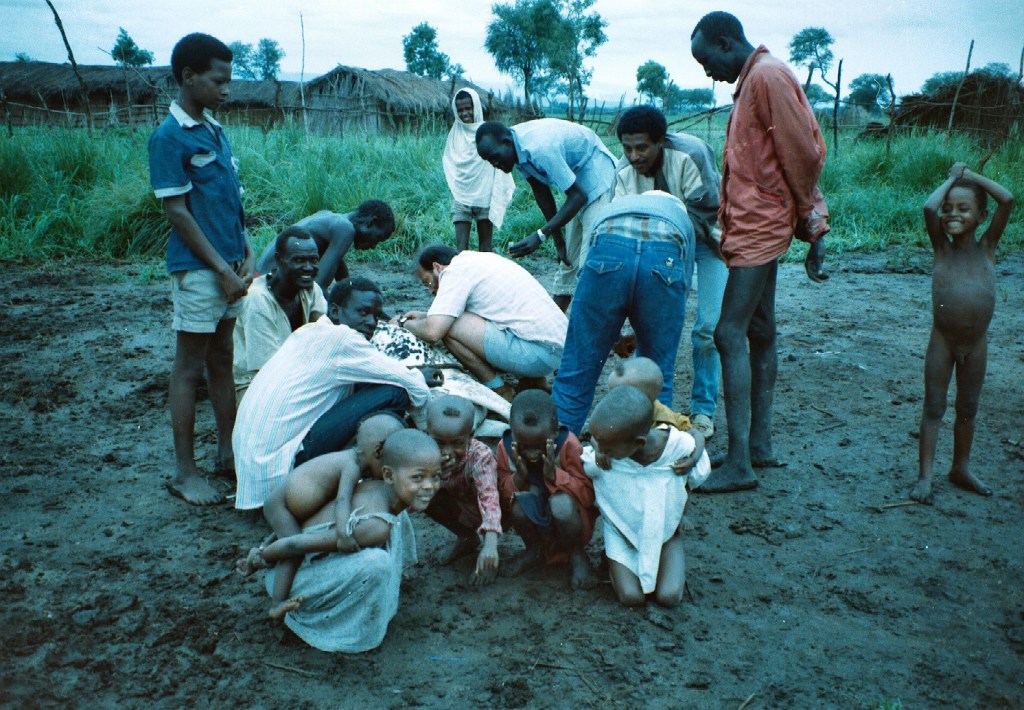
Although there were fatalities, luckily, there were not humans! A bus full of passengers had hit a cattle herd and it had killed eight of the animals and their bodies were strewn along the road. It was a sad incident but with a note of humour as well. We spotted our butcher already negotiating with the owner of the animals to buy them cheap! Of course, we made sure that we did not buy meat for a few days afterwards as its toughness would have been more than the usual chewy nature!
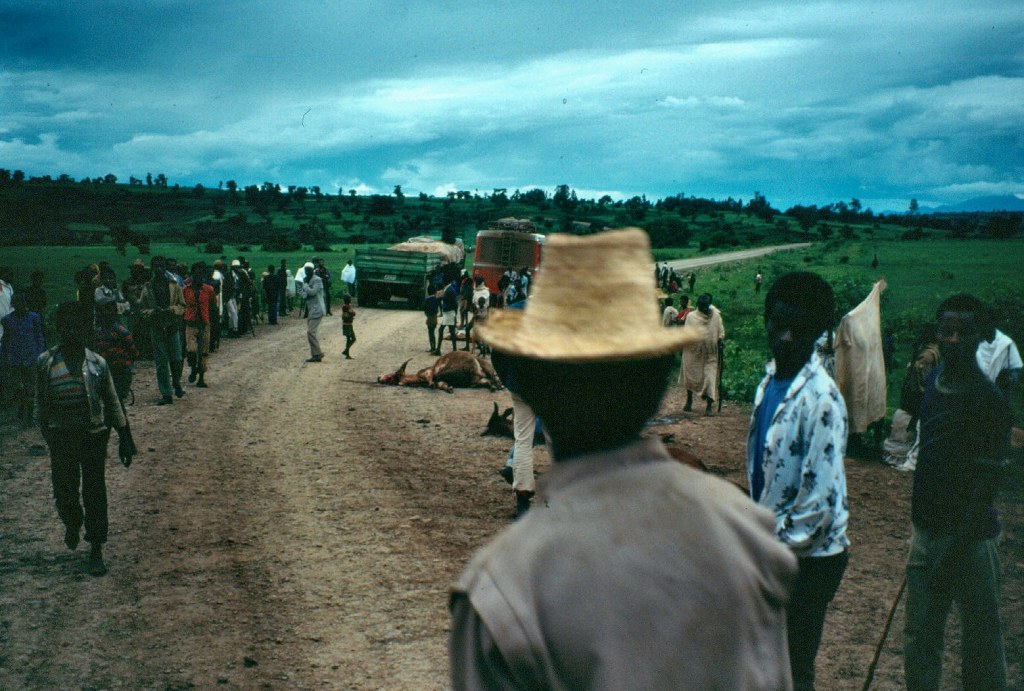
The cattle massacre! The culprit bus is ahead, ahead of the green lorry.

Although far away from Bedele, the civil war permanently influenced our lives beyond the travel restrictions and shortage of fuel that I described earlier.

One day we drove through Bedele and there was hardly anyone in town. Surprised I asked what was the reason, but I did not get a clear reply. I was told that people were at some religious ceremony at another town and other stories. Unconvinced, I went back to the laboratory and discreetly asked one of my trusted colleagues at the project. “Bedele people had learnt that the military are coming soon to recruit soldiers and the young men are hiding in the forest” he said and then added “they do not wish to go to fight in the north!”. This event was repeated a couple of more times and I do not know how many people were really recruited. However, there must have been some success as the army training camp near Jimma was always busy!

The war also complicated the lives of the Ethiopians working at the laboratory, so they needed to be extremely careful when voicing any political opinion. We accepted an invitation to eat spaghetti at a neighbour house one day. Dinner was a pleasant affair but, as the evening advanced, tension arose between the host and one of the commensals over the political situation. To our dismay the discussion got hotter and the host got rather vehement on his attack to the Government to the open (quite rare I must say) dislike of the visitor.
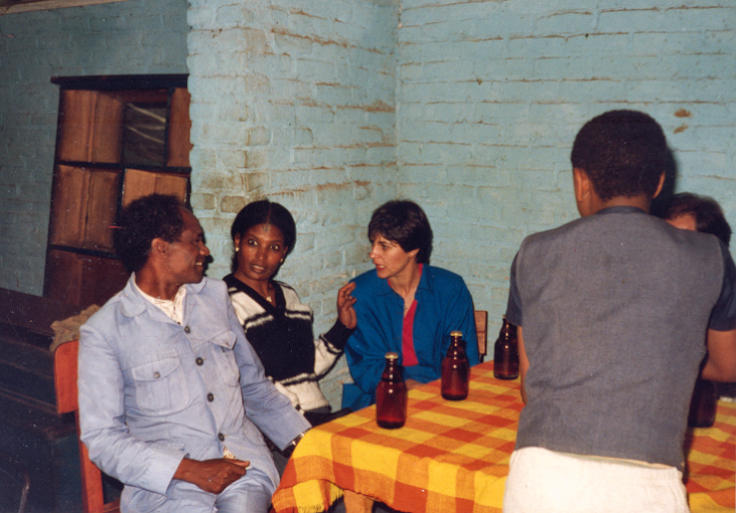
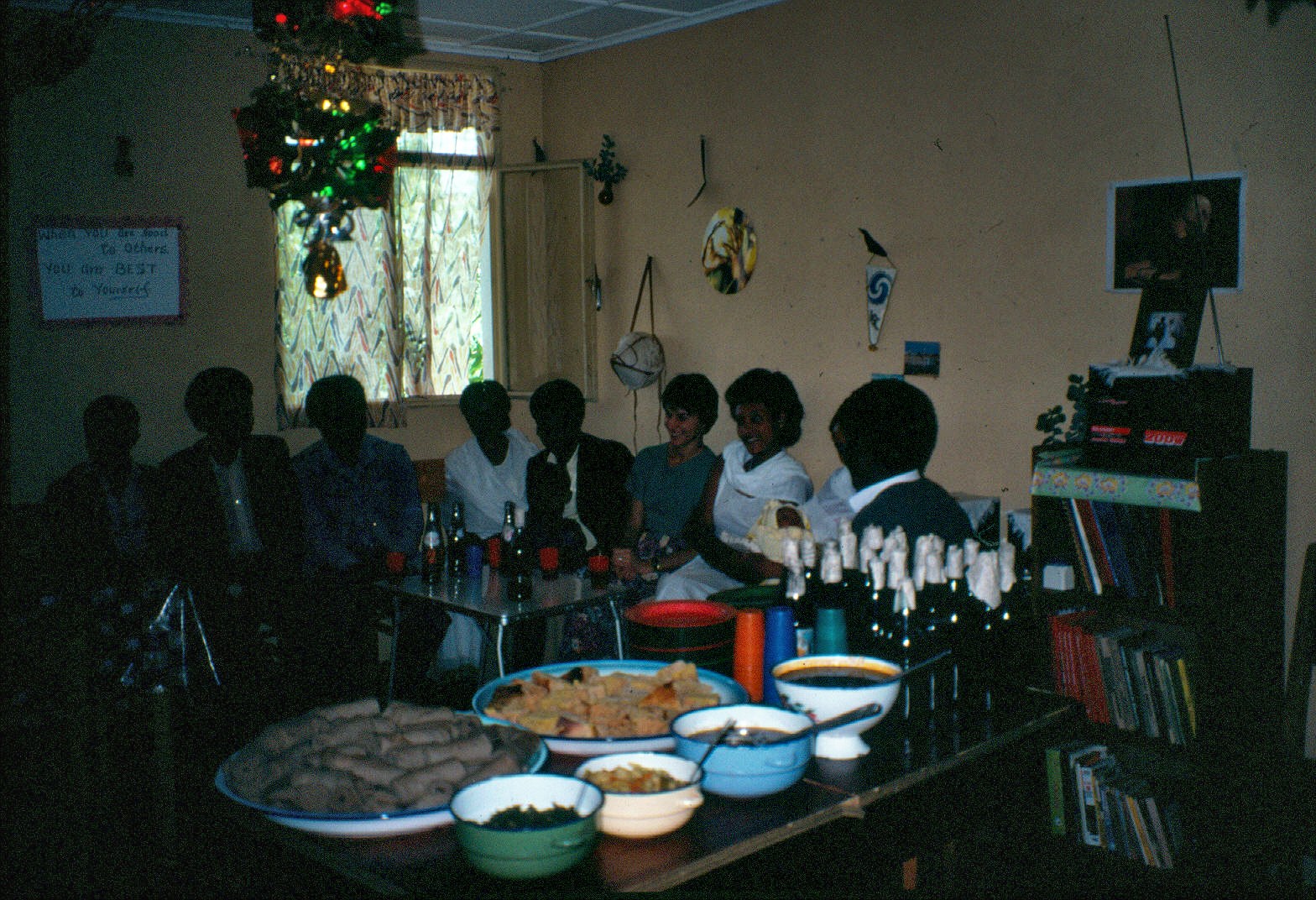
Aware of the situation we retreated as soon as we deemed it to be polite and the meeting ended without much more ado but clearly on a wrong note. Although we talked about this for a few days, we soon forgot it.

However, after a few weeks we learnt that our host -that happened to be a nurse- was mobilized by the army and sent to the war front! Luckily, he survived the time he was there, and we saw him again before we left the country although it was apparent that he had suffered, both physically and mentally, the time spent at the war front.

The other time when I felt the difficult situation of the Ethiopians that did not agree with the regime was when one of my counterparts from the project and myself were traveling to Rome for a meeting. My colleague managed to get the innumerable clearances needed in time and, finally we found ourselves on board of the Ethiopian Airways plane to Rome.

Aware of his concerns, once we entered the plane and found our seats I said casually “Now you can relax”, “Not until I see Addis from above” was the reply I got. I thought that he was exaggerating but, as if by some kind of magic act, two people looking like plane clothes police or secret service boarded the plane and walked down the aisle towards us.

I noticed that my colleague became very quiet and quite pale but, luckily, it was not him they were after! So, when the plane took off, he regained his usual cheerful ways and only then he looked relaxed. I must confess that I thought that, once out of the country, he would not return with me to Ethiopia but I was wrong and we continued working together until the end of the project.

Sometime in 1989, the construction of the Bedele beer factory started and we had the arrival of a Czech engineer that was in charge of the building. He became “forengi” number six (counting baby Winand of course) in Bedele and we saw him sometimes although we left a good while before the now well known “Bedele Beer” started to come out of the production line.
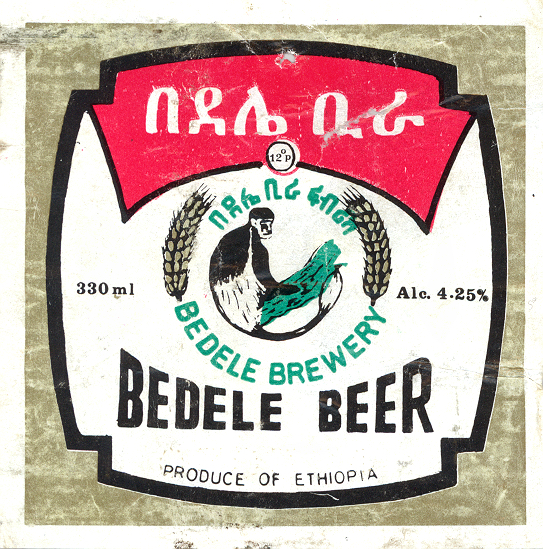
The first label. I like the Black and white Colobus displayed in it as it was very common around Bedele.

Tick hunting

Our tick (and later tick-borne disease) studies took us to different places of south-western Ethiopia “officially”, so we took advantage of these trips to get to know the area we were living. In our selected sites (Arjo, Bedele, Metu, Gambela and Fincha’a) the project had purchased some cattle from the local farmers, and they were keeping them for us to assess tick numbers at monthly intervals.

Fincha’a was located 295km north of Bedele, after driving through Arjo. This was a long drive that we did a couple of times. At 2300m Fincha’a was a rather cold and also damp place.

Working at damp Fincha’a.

The latter was probably explained by the existence of a dam that, for a while after its inauguration in 1973, was the largest hydro-electric project in the country. The visit I recall took place during the rains and it rained all the time we were there! This did not help our work nor our potential sightseeing!

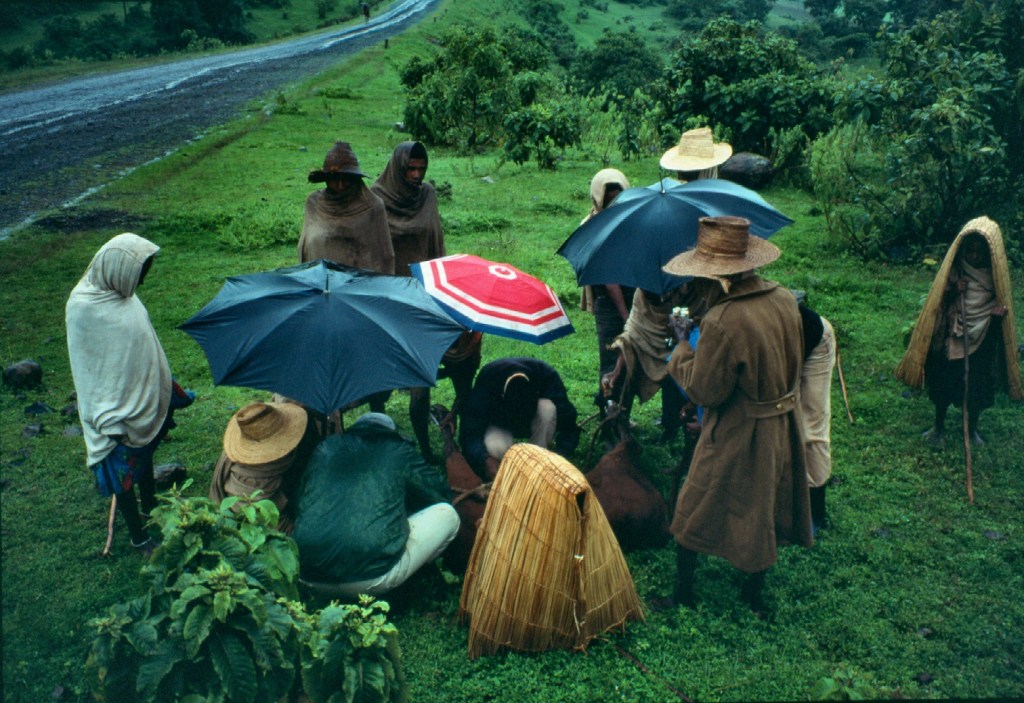
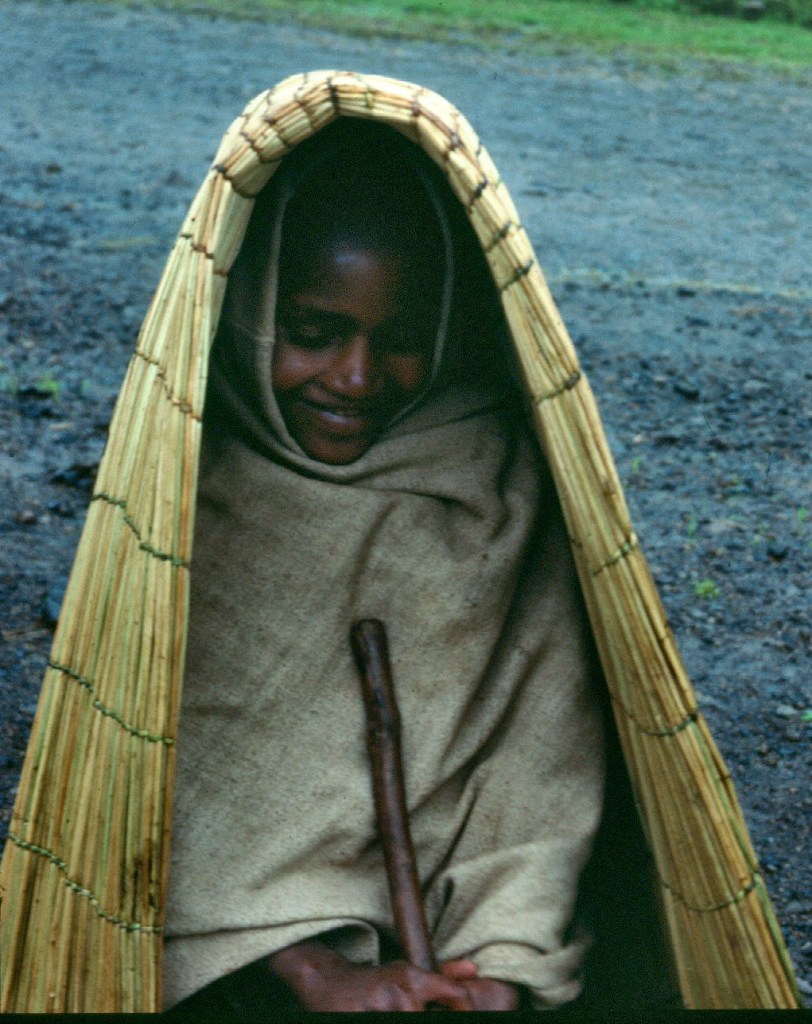
A shy boy under a reed “raincoat”.

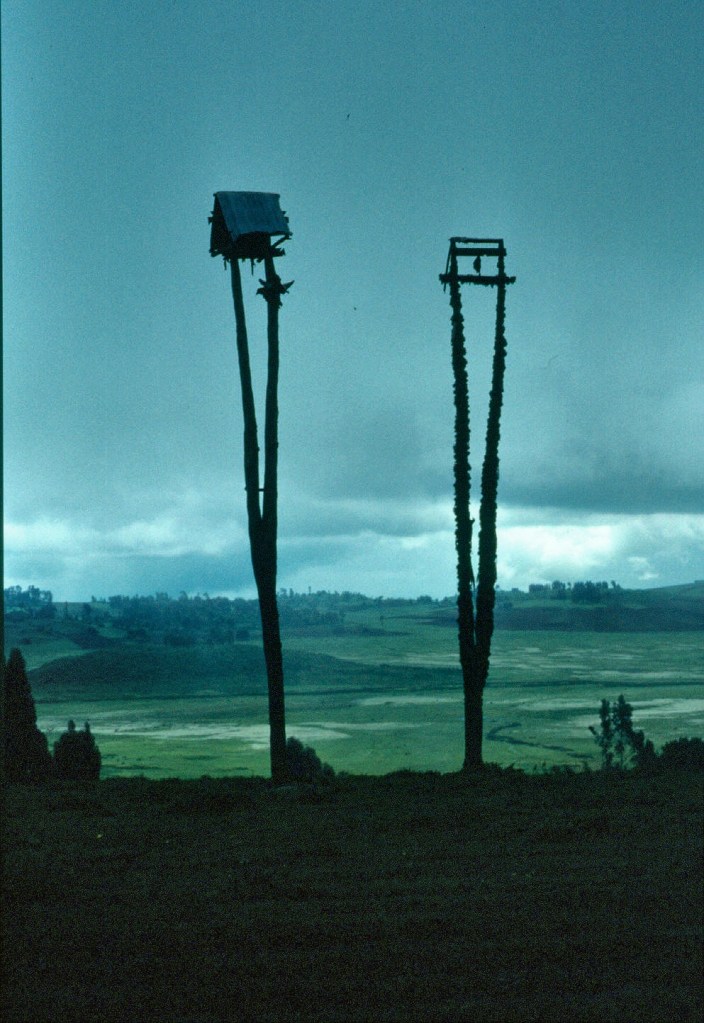
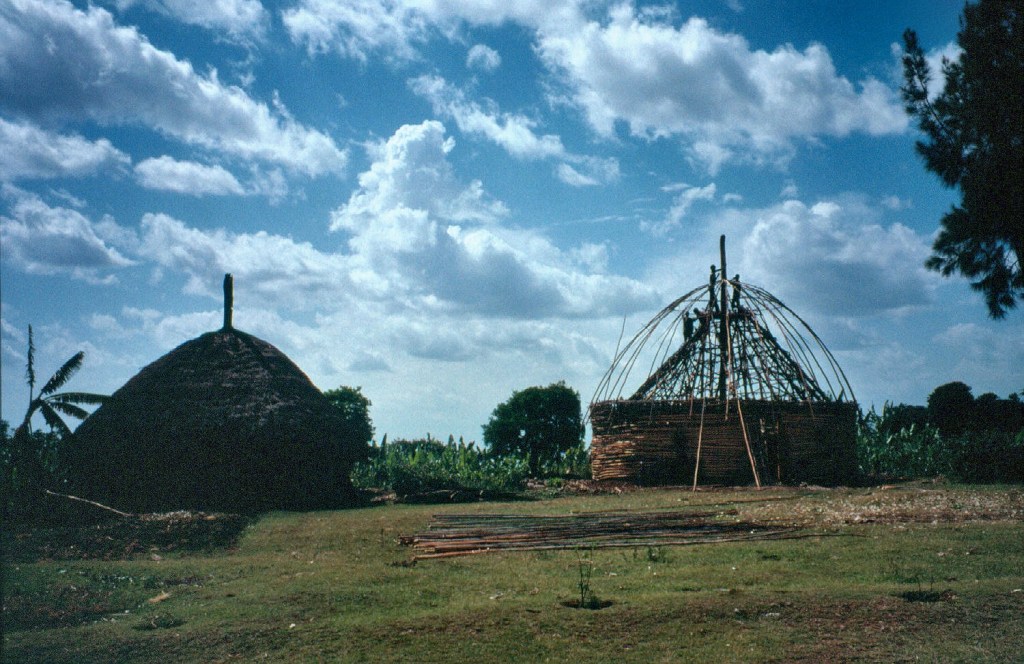
Despite the bad weather, along the road leading to the town we started seeing tall structures built with very long wooden poles and erected by the side of the road. On the top they had a little house and we were very puzzled by them, guessing that they had some religious significance but unsure of their real meaning.

The structures near Fincha’a.

We got to Fincha’a under rain and, while we checked in our rather basic hotel, my colleagues went to arrange for the tick work to be carried out the following day. The hotel was a basic affair to put it mildly with walls that enabled the sounds from the three rooms on each side of us to be heard! However, aware that that was the best hotel (and probably the only one?), we decided to make the best of it.

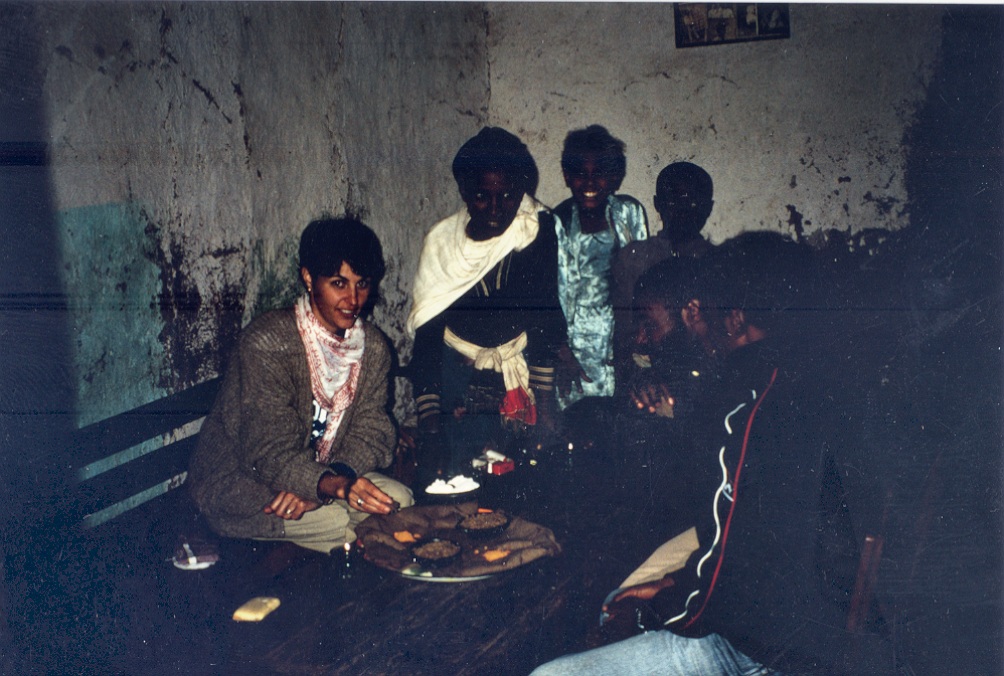
The hotel did not offer dinner so that we had to venture on the street to find an eating place and we ended up at a small restaurant where we were the only customers! Luckily it was a really warm place both because of the welcome we got from the family that owned it and thanks to the cooking that was taking place inside. Soon, after chasing the chickens away from the room, we joined in the kitchen activities and learnt a few things.

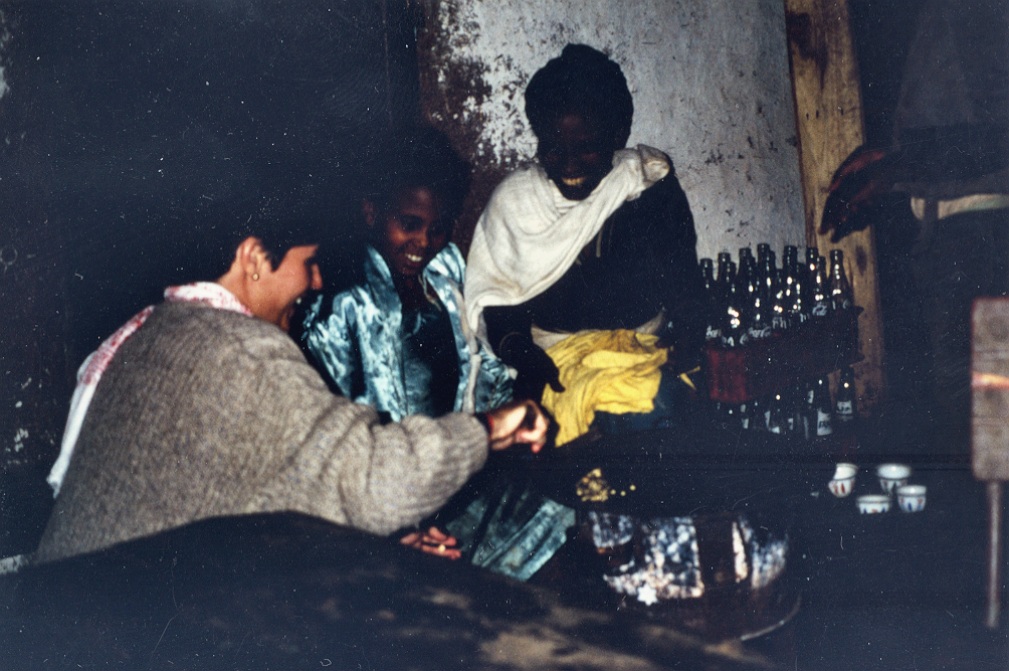
Mabel trying their hand at cooking under supervision.
Dinner arrived.
Mabel grinding the coffee after dinner.

Apart from food-related information, the lady informed us that the tall wooden structures we had seen were erected by local hunters that would travel east towards the Nile to hunt and, on return, they would build these “shrines” where the buffalo skulls would be placed on display to show their ability. I haste to add that I have not been able to confirm this information beyond what I was told at Fincha’a.

We ate hot (both temperature and taste) local food and had a reasonable night sleep. The following morning, we did our work under rain (not a very pleasant activity as the water runs down your back…) and we were soon on our way back to Bedele, looking forward to our warm and dry bungalow.

We also often travelled East, following the B50 road that, at the time, I did not know it had a name! After about 115km from Bedele we arrived at Metu where we did not stop until we discovered that there were some Cuban doctors working at the Metu hospital.

Passing through Metu.
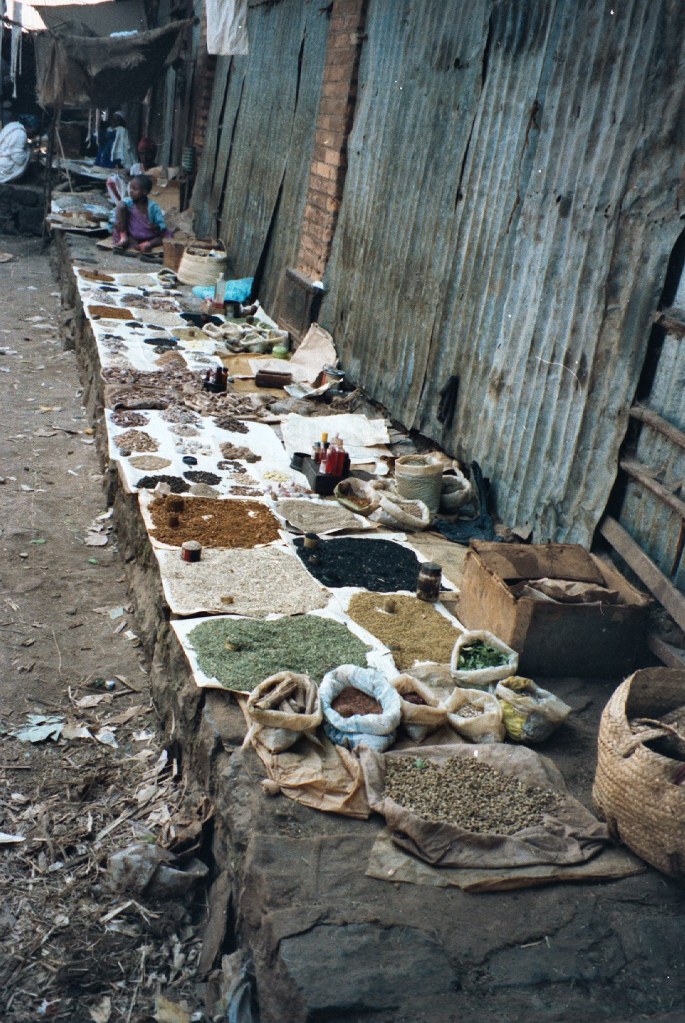
Spices at Metu market.
Assorted goodies.

They were part of the well-known contingent of doctors from the island that are found in many places in Africa, often in areas that no one else wishes to be! We learnt that among them many specialities were covered and this boosted our confidence in case of a health problem as the facilities that existed in Bedele were rather limited. Luckily, we only visited them socially and we did not need their services.

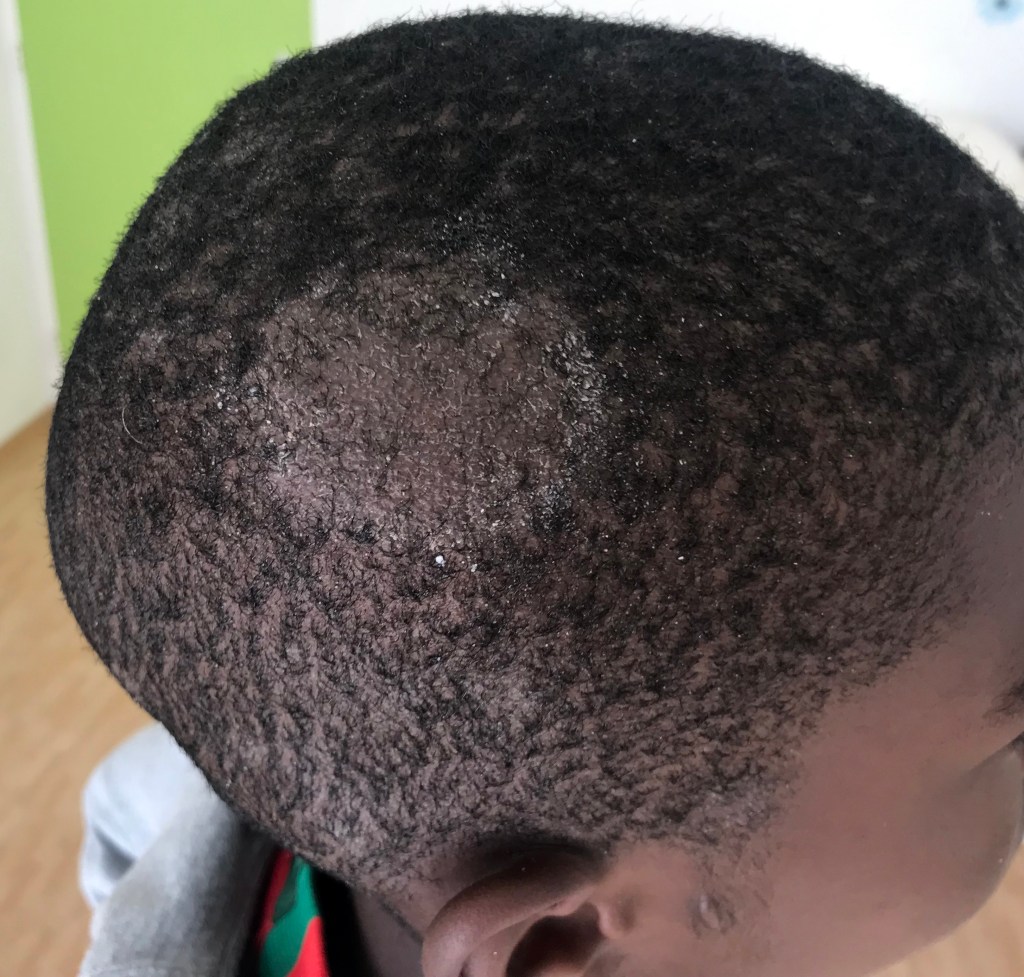
Their presence was clearly justified judging by the number of people suffering from serious diseases that we found on the road. Apart from the blind being led by holding sticks by young relatives, many young boys and girls showed cases of tinea (ringworm) and scabies. These were mostly treated with Gentian violet with the consequence of lots of purple-stained heads around! Goitre was rather common and even severe cases of elephantiasis could also be seen.

Following the road to the south-east we would come to Gore, a larger town that became known as it was the capital of Ethiopia for a short while. It happened during the Italo-Ethiopian war fought between 1935-1937. In 1935, the Italians attacked from their colonies of Eritrea and Somalia without declaring the war. After conquering Aduwa, they seized Aksum [1] and then moved on Addis forcing Emperor Haile Selassie to leave the country (taking the gold of the Ethiopian Central Bank with him!).

Before leaving he ordered that the capital of Ethiopia to be moved to Gore and appointed his cousin Ras Imru Haile Selassie as Prince Regent during his absence. The latter fell back to Gore to reorganise and continue to resist the Italians but his efforts were fruitless and Gore was occupied at the end of 1936. Ras Imru, with his forces trapped between the Italians and the Sudan border surrendered and he was flown to Italy and imprisoned on the Island of Ponza. So that was Gore’s claim to fame although the town did not have much to show for its history.

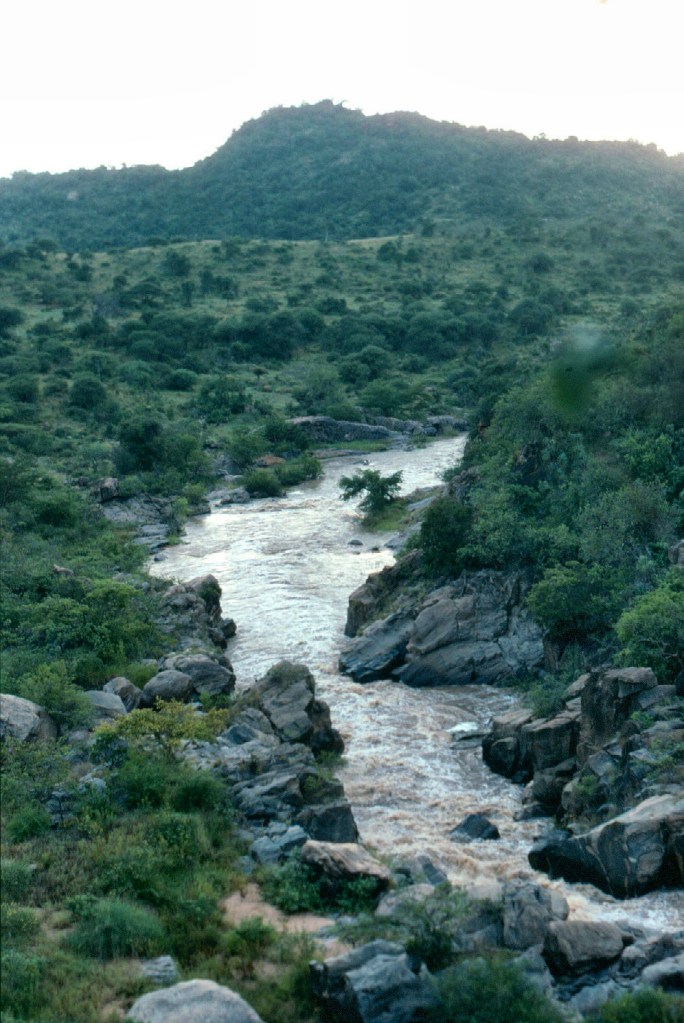
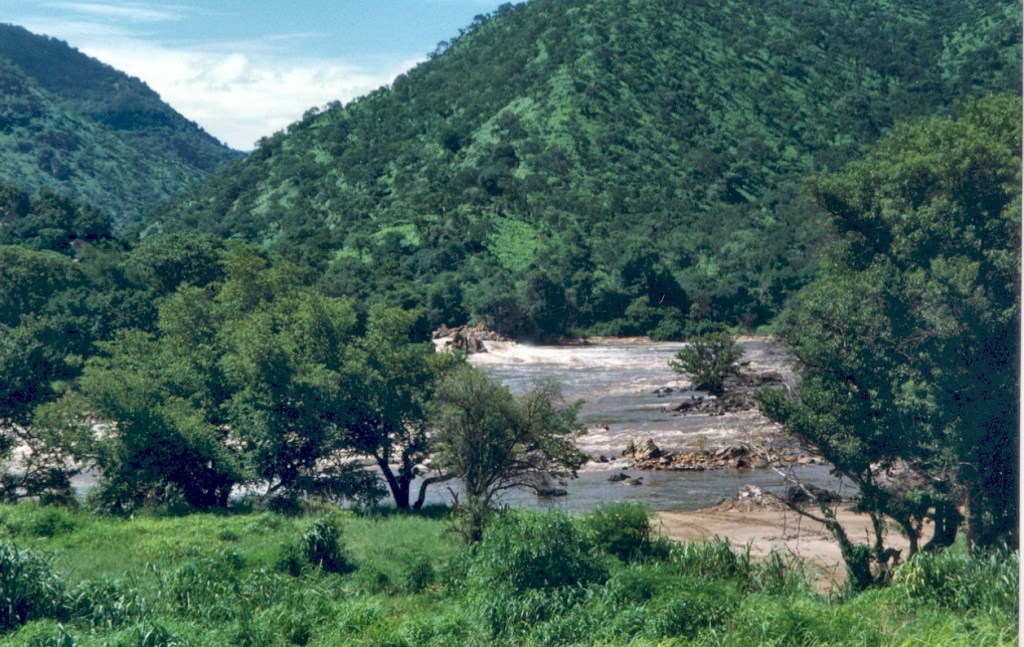
Leaving Gore behind, we would drive another 150km west on a wide, dusty and mostly downhill road full of curves following the course of the Baro river towards the Sudan border. The road offered magnificent scenery where we often stopped to stretch our legs and have a look a the rather clean waters of the river.

The heavy relief lorry traffic aiming for the refugee camps in the border with Sudan did not help our progress. Going towards the refugee camps in the Gambela area loaded, they would come back with the trailers “piggy-backed” on the same tracks, the first time I saw this really clever saving technique.

Eventually, full of dust and rather edgy with the road and its traffic, after crossing a large bridge over the Baro river, we would arrive to the town of Gambela, a completely different seen when compared with where we were coming from as Gambela, at 526m was a tropical area, particularly when arriving from Bedele located at almost four times that height!

The bridge over the Baro river in Gambela. Credit: T U R K A I R O / CC BY (https://creativecommons.org/licenses/by/2.0)

Gambela, located at the confluence of the Baro river and its tributary the Jajjabe was founded because of its location on the Baro river, a tributary of the Nile, which was seen by both the British and Ethiopia as an excellent highway for exporting coffee and other goods from the fertile Ethiopian Highlands to Sudan and Egypt.

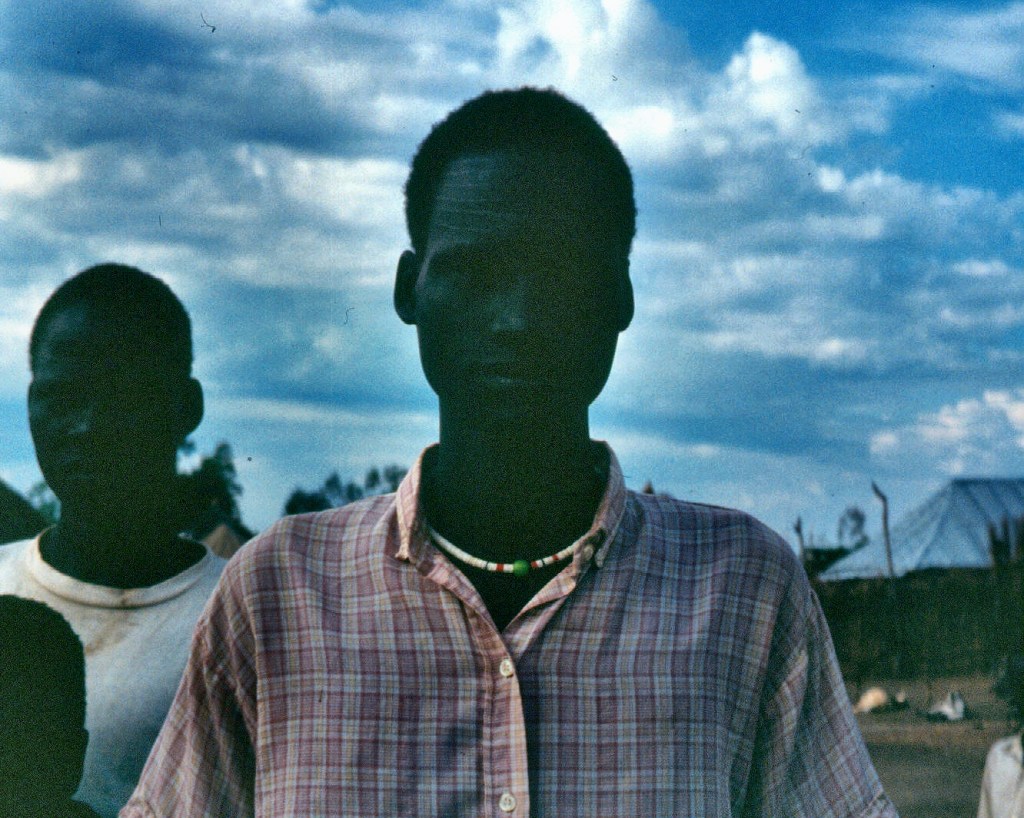
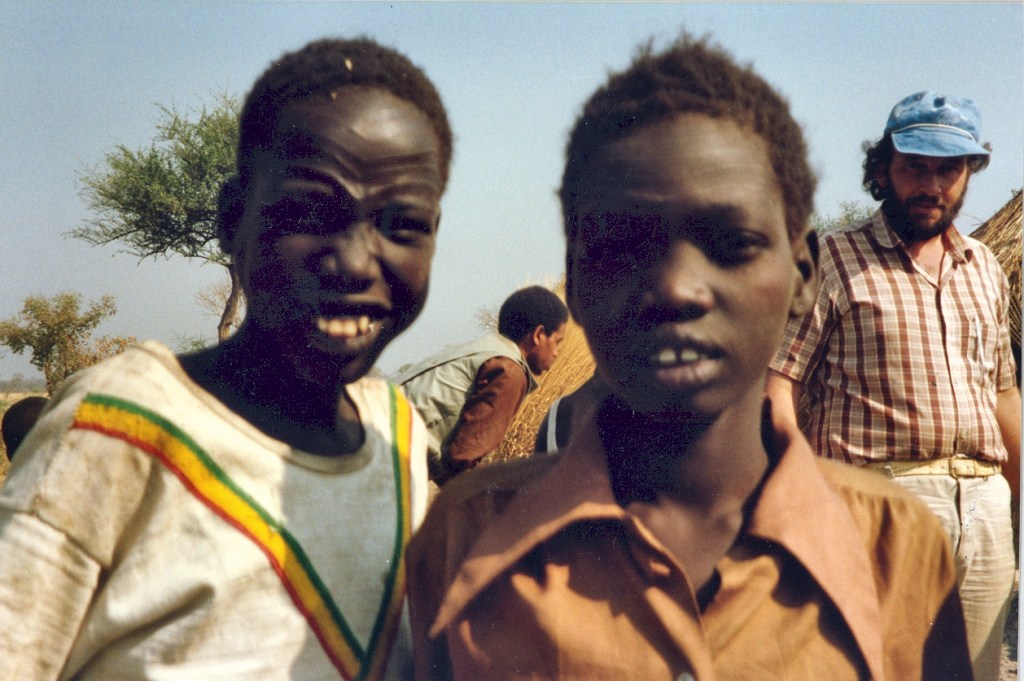
Already while crossing the river it was apparent that everything was different but most of all the people that inhabited the area. Although there were some from the highlands, most of them as a result of the ruthless resettlement schemes, this was the territory of the Anuak and the Nuer, people that we had not seen before in the country.

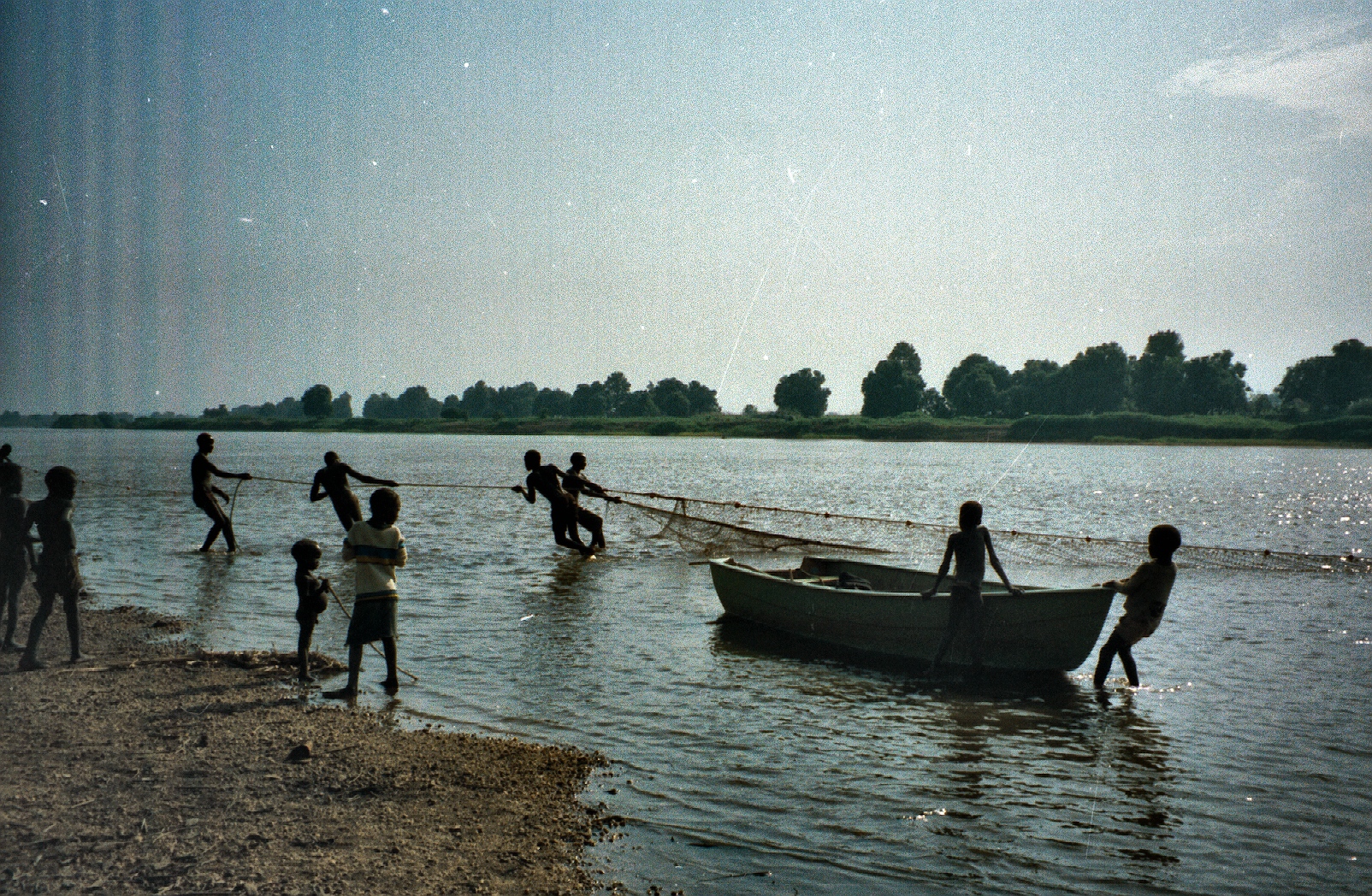
The Anuak belong to the Luo Nilotic ethnic group. They are primarily found in villages situated along the banks and rivers of southeastern South Sudan as well as southwestern Ethiopia, especially the Gambela Region. Group members number between 250,000 and 300,000 people worldwide, many of them following Christianity. The Anuak are an agricultural people, although most families keep some livestock. They are keen on fishing and they set up temporary fishing villages in times of fish abundance.

Anuak fishing in the Baro river.

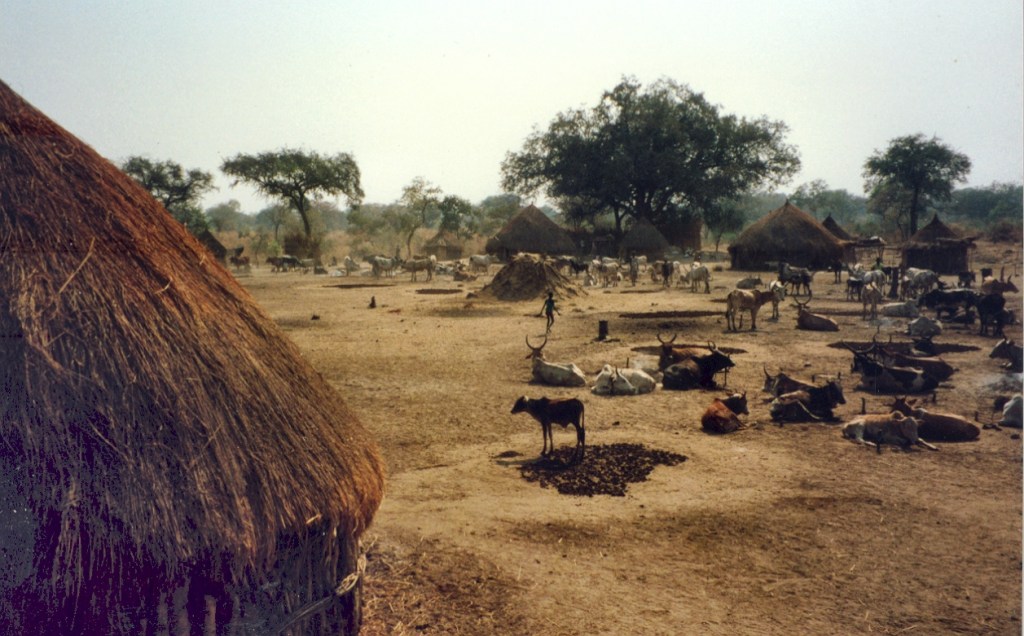
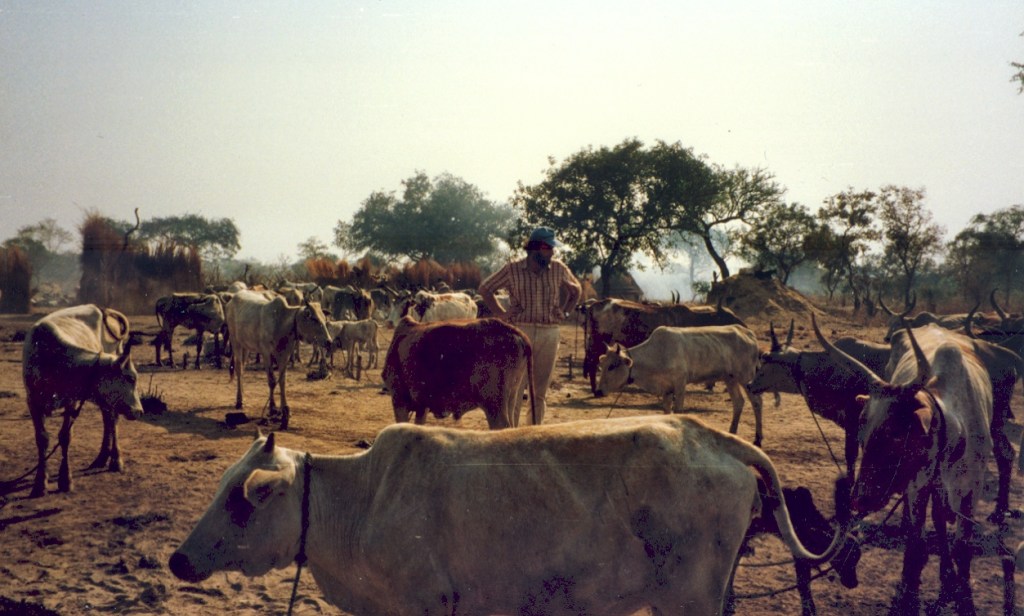
The Nuer are also of Nilotic origin and inhabit a similar area than the Anuak. Their language belongs to the Nilotic language family and they are closely related to the better known Dinka ethnic group. They are pastoralists who herd cattle and the cattle define their way of living.

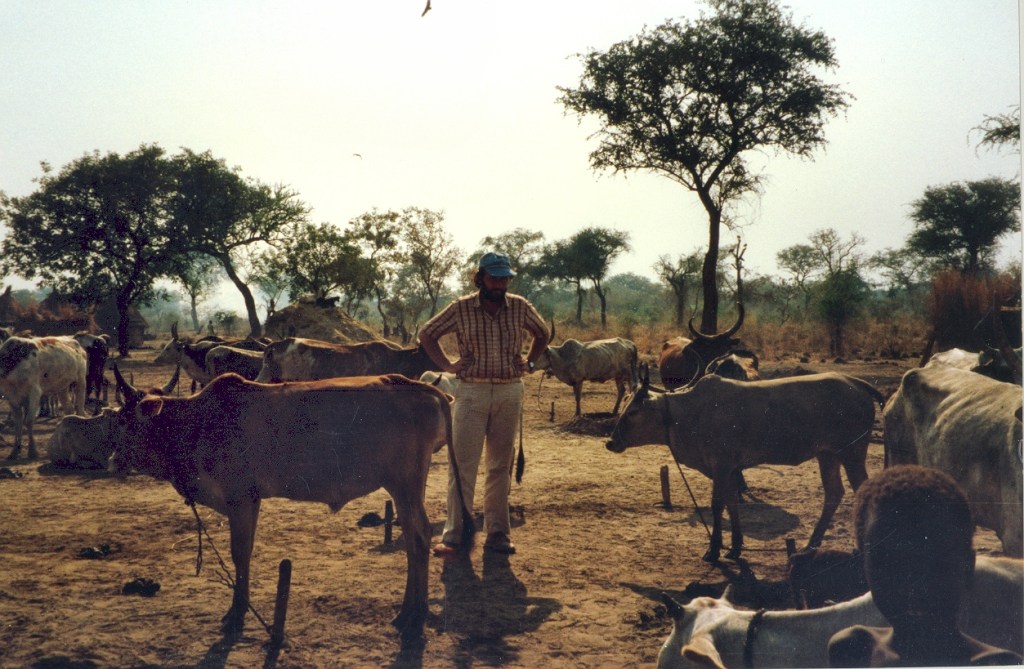
Both races are very tall [2] and we often watched them in amazement playing basketball at night (too hot during the day) in the local open courts in Gambela thinking that they would be sought after by the National Basketball Association (NBA) and not knowing that they had done so. Manute Bol, a Dinka of 2.30m (one of the tallest players in the history of the NBA), had been playing for the Washington Bullets since 1985!

About to start working. The picture shows a rather tall gentleman on the right!

The Nuer receive facial markings (called “gaar”) as part of their initiation into adulthood. These consist of scarification that varies within their subgroups, the most common among men being six parallel horizontal lines cut across the forehead although dotted patterns are also common. The scarifications helped me to distinguish people from the two groups and enabled me to greet them properly in their language, “male” to the Anuak and “derejote” to the Nuer.

I will come back with more experiences from Gambela in future posts.

[1] Italian soldiers found one of the Axum obelisks (stelae) (King Ezana’s) fallen and broken in three sections, one of about fifty obelisks in the city of Axum at the time of the discovery. In 1937, it was taken as war booty and moved to Italy after being cut into five pieces and transported by truck to Massawa from where it was shipped to Naples. It was then taken to Rome, where it was restored and erected in front of the Ministry of Italian Africa (later the headquarters of the FAO) where I saw it (pic is already in Media and I found it looking for Rome). It was eventually returned to Ethiopia in 2005.

[2] See: Chali, D. (1995).  Anthropometric measurements of the Nilotic tribes in a refugee camp. Ethiopian Medical Journal 33: 211-7. Among other things, the study concludes that “…The mean height of Dinka men (176.4 +/- 9 cm) and Nuer men (175.7 +/- 9 cm) were significantly higher than that of Anuak men (171.7 +/- 8 cm) and Shilluk men (172.6 +/- 6.1 cm). This study confirms that the Nilotics in Southern Sudan have slender bodies and are amongst the tallest in the world and may attain greater height if privileged with favourable environmental conditions during early childhood and adolescence, allowing full expression of the genetic material…”

Ethiopian coffee

Coffee, Coffea arabica, comes from Ethiopia and its first records can be found as early as the 9th century in the Oromia region, more exactly in the former Keffa province (1).

Coffee plant drawing. (C)Guy Ackermans 2005. Credit: Franz Eugen Köhler / Public domain

In Bedele, located in the Ilubabor province next door, we were able to see ancient coffee plantations under flat top acacias from where coffee was harvested and sold locally and to stockers that would come to buy and take it to processing plants. To see these bushes covered with white flowers so close to the laboratory invited us to often walk through the plantations to enjoy the view and their amazing scent.

Coffee bushes in Brazil. Credit: FCRebelo / CC BY-SA (http://creativecommons.org/licenses/by-sa/3.0/); https://upload.wikimedia.org/wikipedia/commons/6/68/Coffee_Flowers_Show.jpg

In 2006 it was estimated that Ethiopia produced a substantial amount of coffee (estimated at 260,000 metric tonnes) of which one half was consumed in the country, a lot of coffee! So, as expected, coffee drinking was a daily habit with most Ethiopians and we often drove out of the laboratory for coffee breaks. I must say that my Ethiopian colleagues always insisted in paying the bill! Although Italian-style coffee machines existed at the Bedele coffee shops, the coffee we drank was made following the traditional style.

In Addis we saw the traditional and colourful coffee ceremony being performed for tourists by beautifully dressed and nice-looking ladies seating on loose reeds or grass spread on the floor, often adorned with yellow flowers (probably Meskel flowers –Bidens macroptera– when available) while frankincense smoke rose from a small burner while the coffee was roasted on a larger one and then grounded and boiled. We made a point to return to the hotel to participate more closely in this lovely tradition.

We did not need to do this as, luckily, our good neighbour and friend Wolete (Lete) invited us to her house one afternoon with the purpose of having a cup of coffee! We immediately accepted and we were at her house (about forty metres away) on the dot. As soon as we left our house, we smelled the frankincense that reminded us of the catholic church ceremonies of our Uruguayan childhood, and we followed it to Lete’s house. Frankincense is an aromatic resin obtained from trees of the genus Boswellia.

Frankincense. Credit: snotch / Public domain.

Lete and her husband were waiting for us wearing traditional white garments from Tigray, both looking very handsome. Lete had put on a long dress and she was wearing her massive gold earrings and pendants. They were really pleased and honoured by our coming. On the veranda and inside the house, the floor had been covered with reeds and a small burner was already releasing the frankincense fumes that were quite dense and strongly aromatic.

We sat around on low chairs or on cushions on the floor while Lete, as expected, performed the ceremony. She sat down after we had done so and started to thoroughly wash the green coffee beans that she then dried over the charcoal burner. She then proceeded to roast the beans over the while explaining the procedure to us.

The smell of coffee slowly started to break through the frankincense to create a unique combination until it became the dominant aroma. Lete stood up and walked around the room with the coffee so that we could smell it and apprecite its quality. She then moved the grains to a mortar and started to grind the beans very gently. I could not help noticing that she was using an exploded mortar bomb as a mortar! “How appropriate”, I thought while pointing it to Mabel. “This one comes from the war in the north” she explained, “and it is really useful” said Lete smiling.

A close-up of our host wearing her traditional white dress and gold ornaments.

While the grinding was taking place a coffee pot –known as “jebena”- was put to heat up and the ground up coffee placed inside for boiling. After a while Lete proudly announced that the brew was ready and proceeded to pour the dark brown liquid into small handless cups called “si’ni” placed on a tray. She poured the coffee from some height filling each cup while announcing “this is the first coffee, and we call it “awel”. It was strong and dense and it left a thick deposit behind, similar to the better known Turkish version of coffee.

While we drank the awel Lete refilled the jebena and put it to the boil again. Once we finished, Lete offered the second coffee called “kale’i”, a lighter version, more to our taste. The process was repeated a third time and the “baraka” (to be blessed), the third and thinner brew, was produced.

We had our coffee with sugar and eating popcorn, but it could also be drinking while eating a flat bread called “ambasha” or peanuts.

Luckily, we established good relations with Lete and her husband and we were lucky to be invited a few times to enjoy coffee with them and to admire her performing this ritualized form of drinking coffee that had been developed in the area we were staying, by the south western Ethiopian people, a real treat!

(1) For more info, see http://www.ethiopianspecialtycoffee.com/history.htm

The Didessa river valley

Once we realized that traveling beyond the project area required permits and fuel that was not easily available without almost begging it from the Bedele Administrator, we decided to spend our time exploring the area around Bedele.

The way to Arjo.

After a few trips we discovered that the road leading to the near town of Arjo crossed the Didessa river and its lovely valley and we chose it as our prime destination for day trips and we spent several Sundays there, birdwatching, walking, fishing or just relaxing with a picnic.

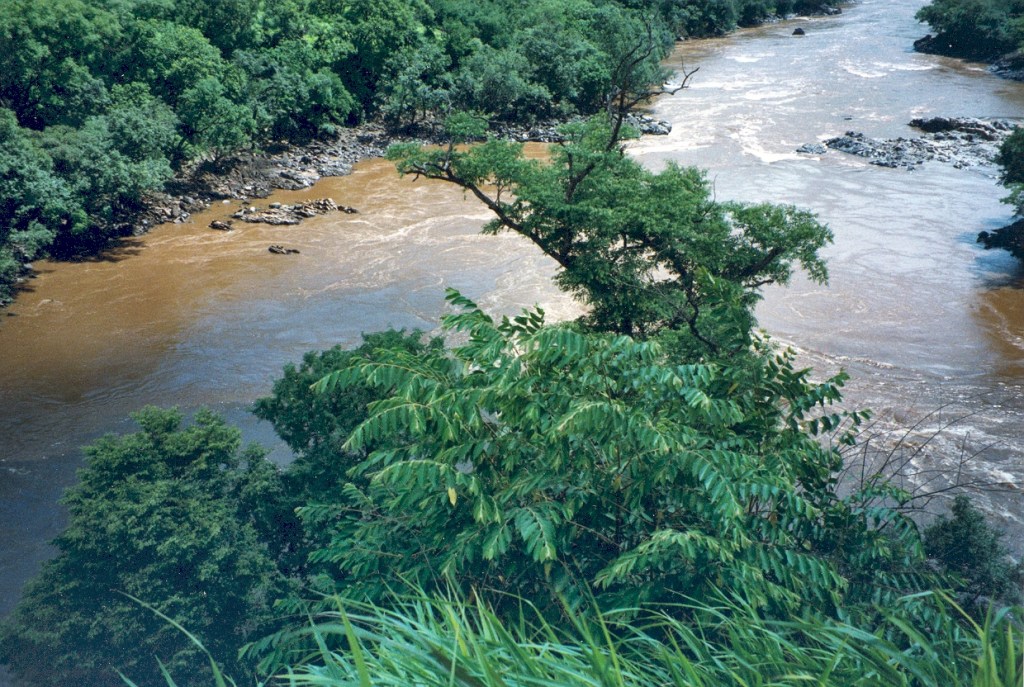
The beautiful Didessa river.

The road to Arjo was one of the roads that crossed the Didessa, the other one being the road between Jimma and Bedele that crossed it again near the town of Agaro. However, this trip was much further, and the road was quite busy.

The Didessa river is a tributary of the Abay River. It originates in the mountains of Gomma, flowing towards the northwest to its confluence with the Abay. It drains about 19,630 square kilometres and in the early 1900 it was a favourite place for elephants, attracted by the young shoots of its abundant bamboo forest.

Although there were no elephants left when we were there, the river still had hippos that we used to see often although they clearly did not like to see us, rather wary of humans as they were not protected inside a national park!

Our initial visit was after the first rainy season that we spent in Bedele and we went for a picnic with Janni and baby Winand (her son). It was a very quiet affair that opened up our appetite to return on a more adventurous approach.

One of our first visits to the Didessa.

We did this soon afterwards and learn a few things.

Being adventurous, we decided to enter an unmarked track that seem to follow the river with the hope that we would get closer to it at some stage while we kept an eye for wildlife. While driving we noted that the road was getting softer and that the tsetse flies were becoming more abundant as we advanced.

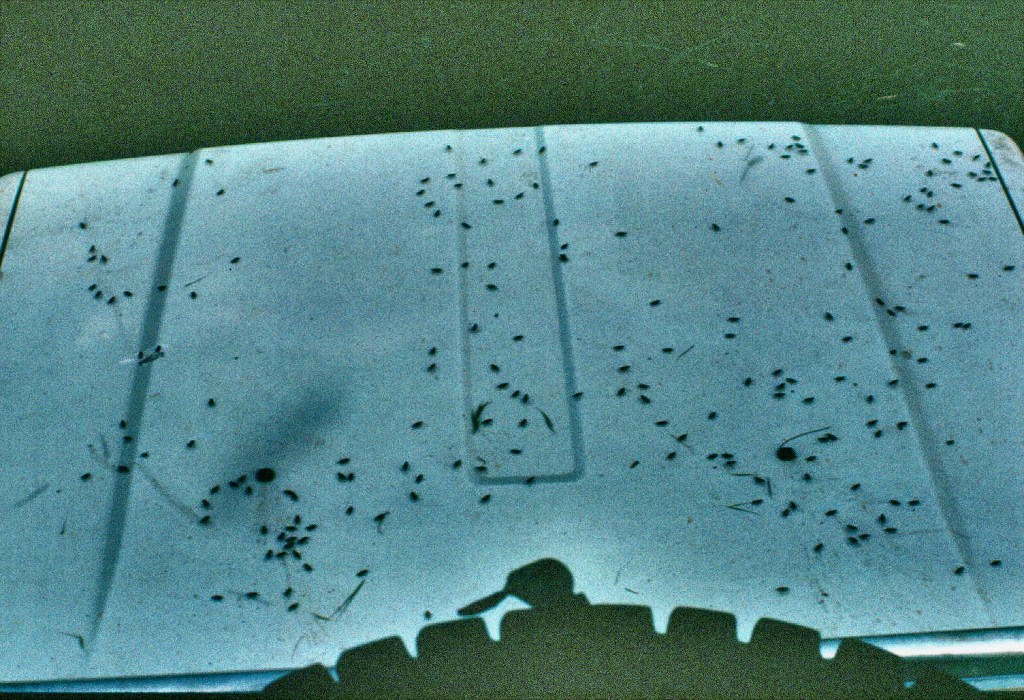
A close-up of the tsetse flies.

As the road was now a swamp and the tsetse flies were becoming too numerous for comfort, despite the heat we closed the windows while looking for a place to turn around to avoid having to reverse all the way back!

Tsetse flies were quite abundant!

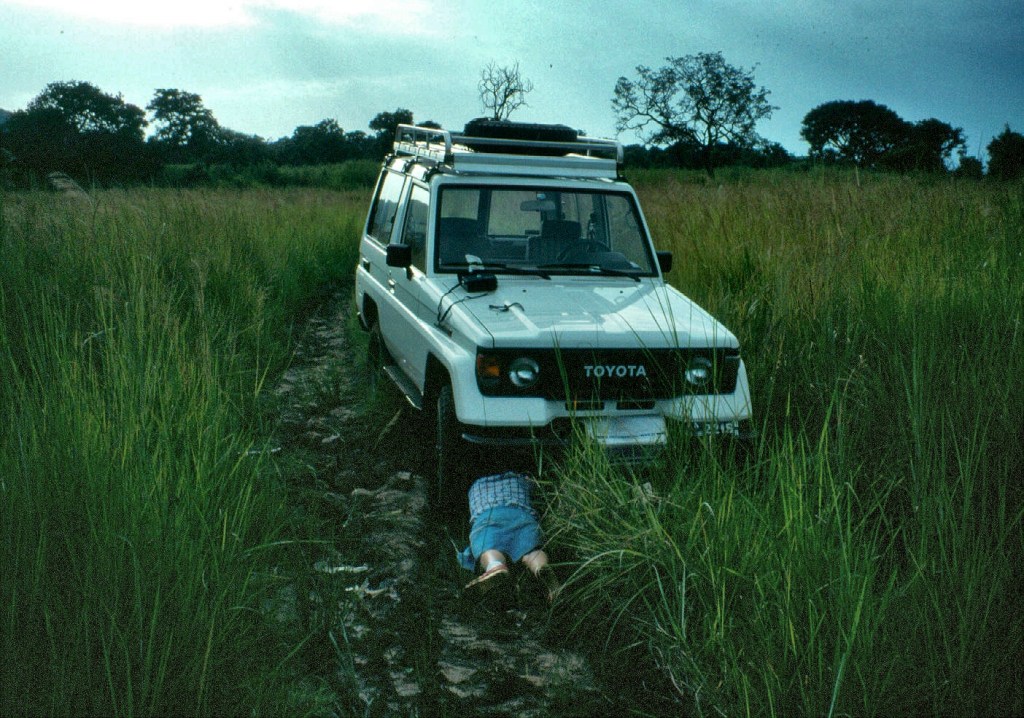
Although we just escaped death by exsanguination by the flies, the road kept worsening and eventually, we could not go forward anymore. We were stuck in wet black cotton soil, a bad medium to get buried in!

Stuck and trying to get out.
The situation getting worse!

After digging a couple of hours and lifting the car to use the spare wheel to at least have one wheel on a firm surface, the car moved, and we managed to reverse fast miraculously keeping to the track as I am a bad driver on reverse gear. Luckily, soon we were on firmer ground and we were able to turn around and depart from this truly mud trap.

Reversing to get out of the mud.

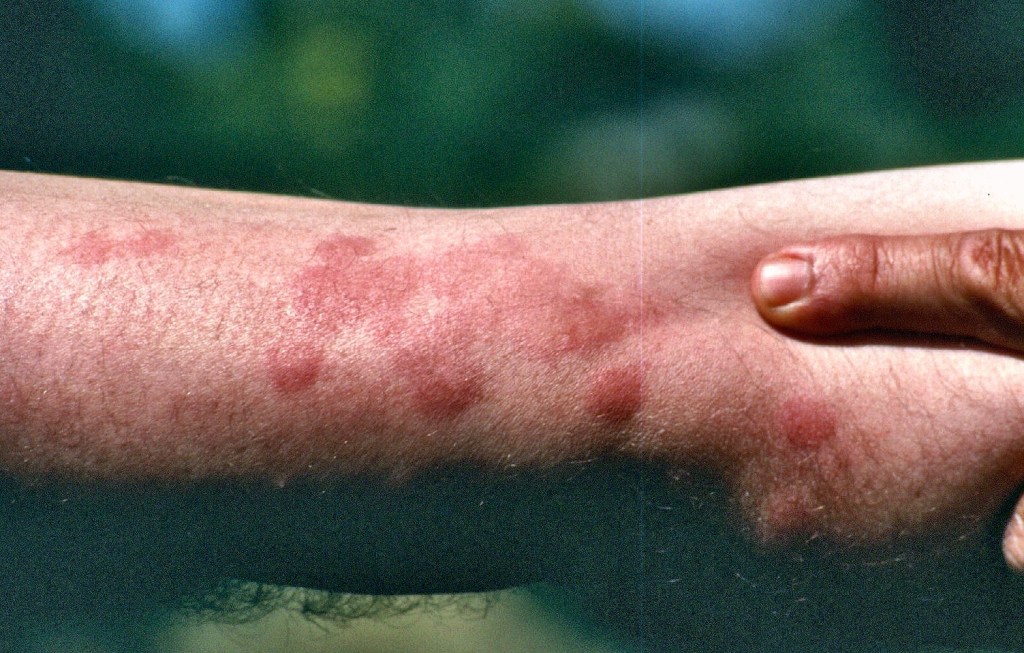
Although we got out of the mud, we did not escape the flies and we were beaten really bad, something that reminded me of a similar situation in the Nguruman mountains of Kenya that I described earlier (see https://bushsnob.com/2019/07/01/the-nguruman-escarpment/).

Tsetse bites were quite bad.
More bites.

That day we decided that we would stick to the main road that, in any case was wild enough as there was almost no traffic, apart from a few horse riders or the occasional group of people bringing a sick or dead person from the rural area to the Bedele clinic or cemetery, depending on the circumstances. Life for the farmers was very tough!

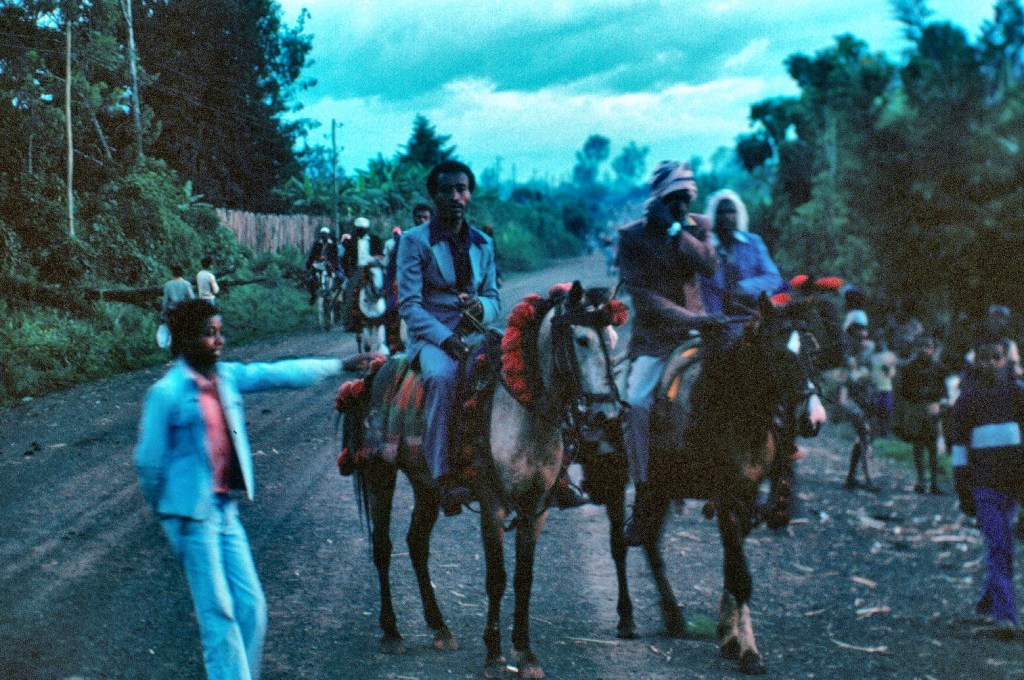
Riders going to a celebration.
People walking on the Arjo road, probably taking a dead villager for burial.

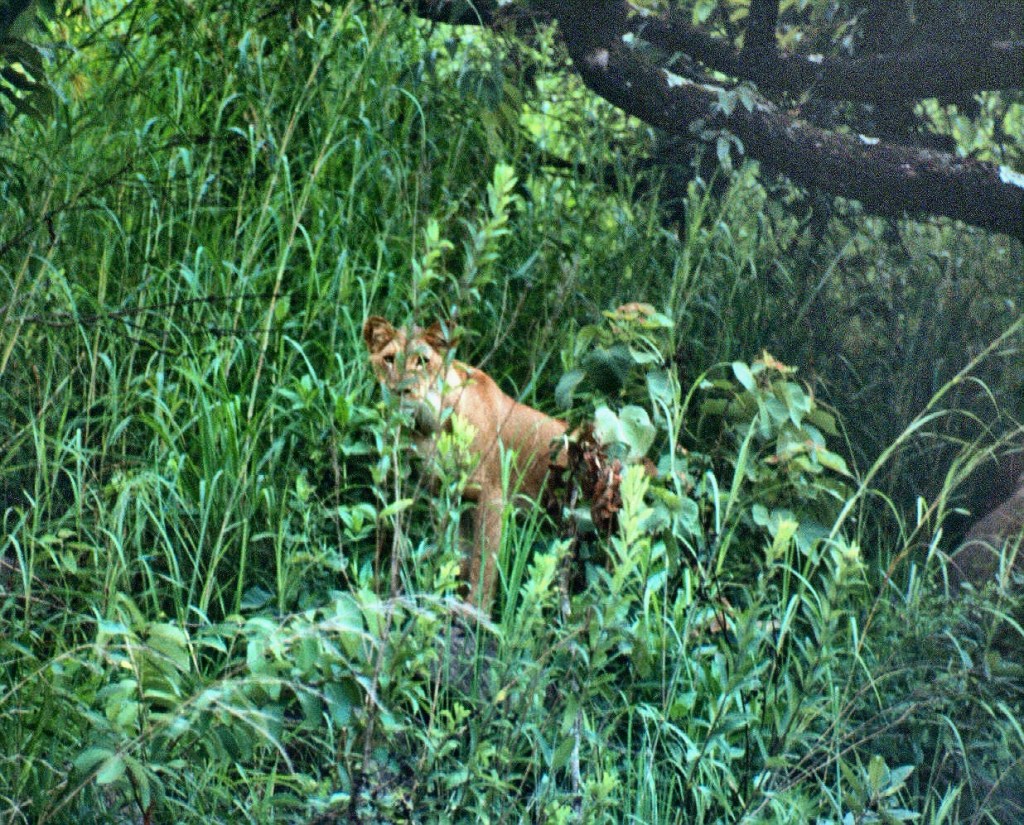
It was on that road that on two occasions we met some of the true “wild” lions we had seen. The first time Mabel spotted a lioness and when we returned to the spot a while later, -very luckily- we found a female and two cubs. We were truly impressed as we did not expect to find them in that area despite the presence of some large tracts of forest. I am sure that there were not many wild lions in that area of Ethiopia at the time!

Some of the forested areas goint to Arjo.
Luckily I managed to photograph a lioness before it disappeared in the thicket.

Arjo was also one of the project’s tick observation sites and we would cross the bridge quite often when going to our tick sites. Every time we crossed it, I made a comment to my Ethiopian colleagues that we should try our hand at fishing one day.

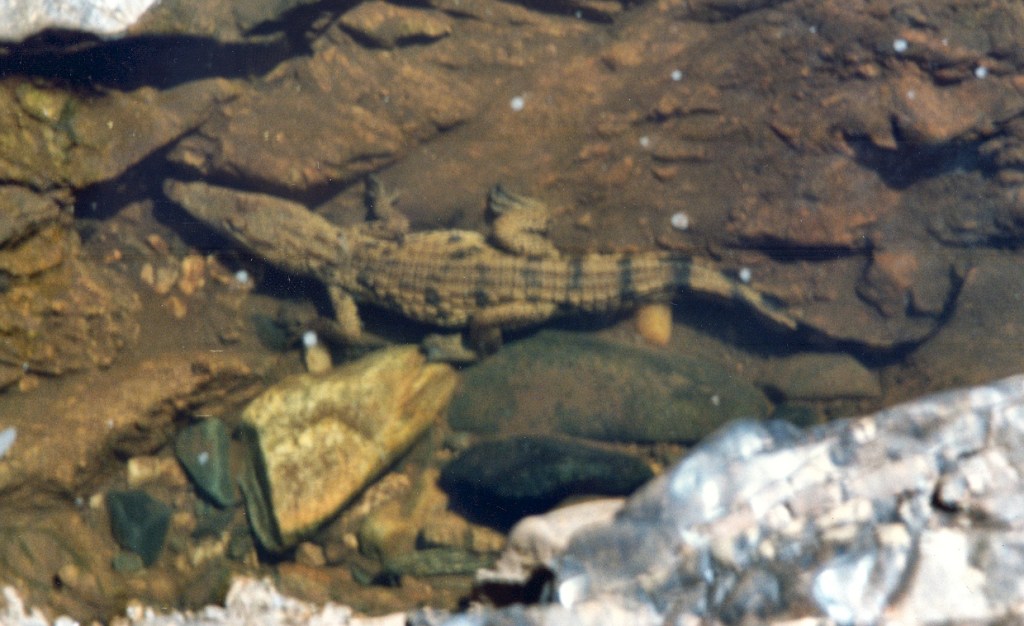
So, the fishing day arrived once the rains were over and the level of the river had gone down to enable us to reach a place below the bridge from where we could throw our lines. I only had beef as bait and that was what we used as I did not know what to expect. I hoped that crocodiles were not abundant!

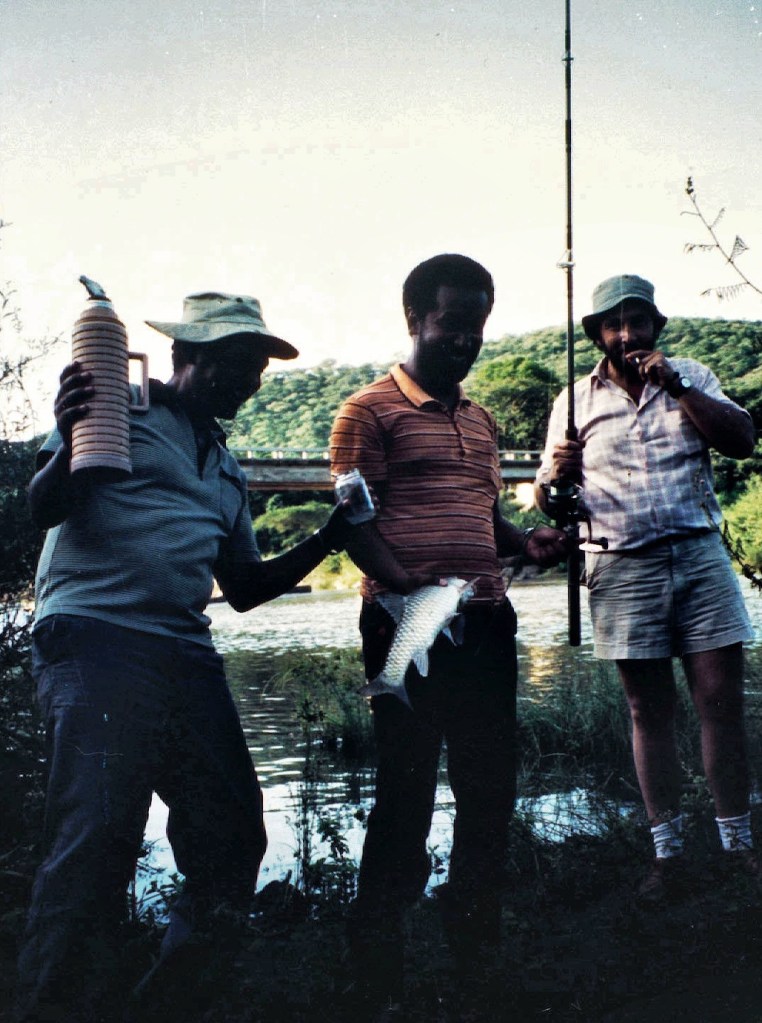
The fishing expedition included Solomon, both of us and Tilahun, another veterinarian working with the tsetse and trypanosomiasis project. He was probably the most enthusiastic of the group! We casted our chunk of meat down the river and waited while we talked and enjoyed a good picnic. Fish were quiet and fishing was quickly forgotten until one of the reels started to scream and Tilahun got it and, eventually, brought in a reasonable fish.

An excited Tilahun (left), Solomon (holding the fish) and the bushsnob with the rod, celebrating the catch!
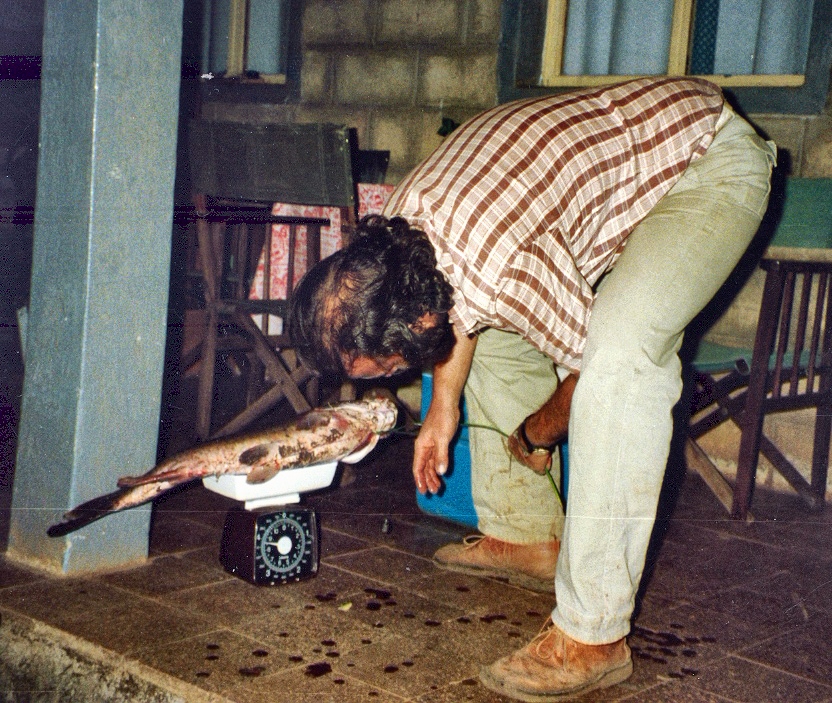
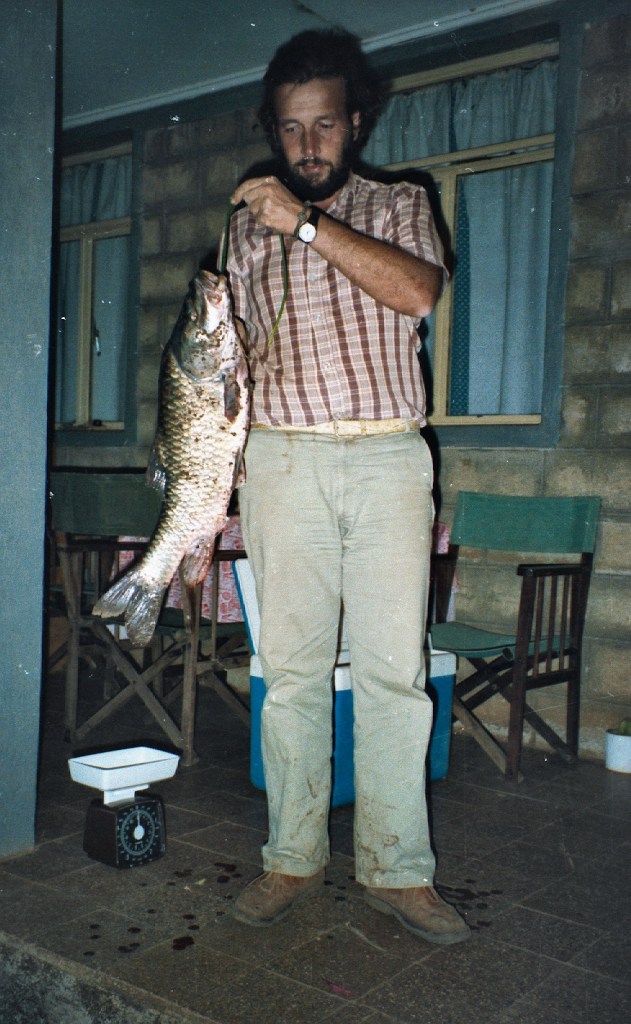
Weighing the fish back home.

It was the only fish we caught that day (and in that place for that matter) but it was enough for us to enjoy the rest of the afternoon, particularly Tilahun that I think had never caught a reasonable sized fish before!

We took it back to Bedele as our companions wished to eat it and I weighed. It was 3.75kg but I am not sure of how it tasted!

The fish.

I believe that we caught a Labeobarbus bynni, a species that can reach 80 cm in length and that inhabits the Nile river system feeding on crustaceans, insects, molluscs and organic debris, including our meat!

House Issues

As soon as our car got sorted out, our attention focussed on making our house more comfortable so we finished organizing the furniture, hanged our pictures and unpacked our books, including the few I had managed to find about Ethiopia as there were not the guides you find today.

Regarding Ethiopian animals, I trusted that my great “Field Guide to the Larger Mammals of Africa” by Dorst and Dandelot would do. On birds, the situation was pretty desperate and I spent a small fortune on a copy of Mackworth-Praed and Grant “Birds of Eastern and North Eastern Africa” and I managed to get Urban’s “A Checklist of the Birds of Ethiopia”. Now I needed to use them!

We had been warned that water and electricity in Bedele were erratic. The situation brought back memories of my early days in Uruguay during which there seemed to be a chronic period of austerity that included shortages of all kinds, including power and water. I still remember my mother discussing the latter with her friends and taking sides between those who preferred the absence of water or lack of electricity!

Regarding the electricity, we stocked up candles and got our camping gas lamp ready. Mabel and I agreed that water was more important, so we decided to store some in our bathroom by means of a number of one hundred litre plastic garbage containers that we filled and kept there for that purpose.

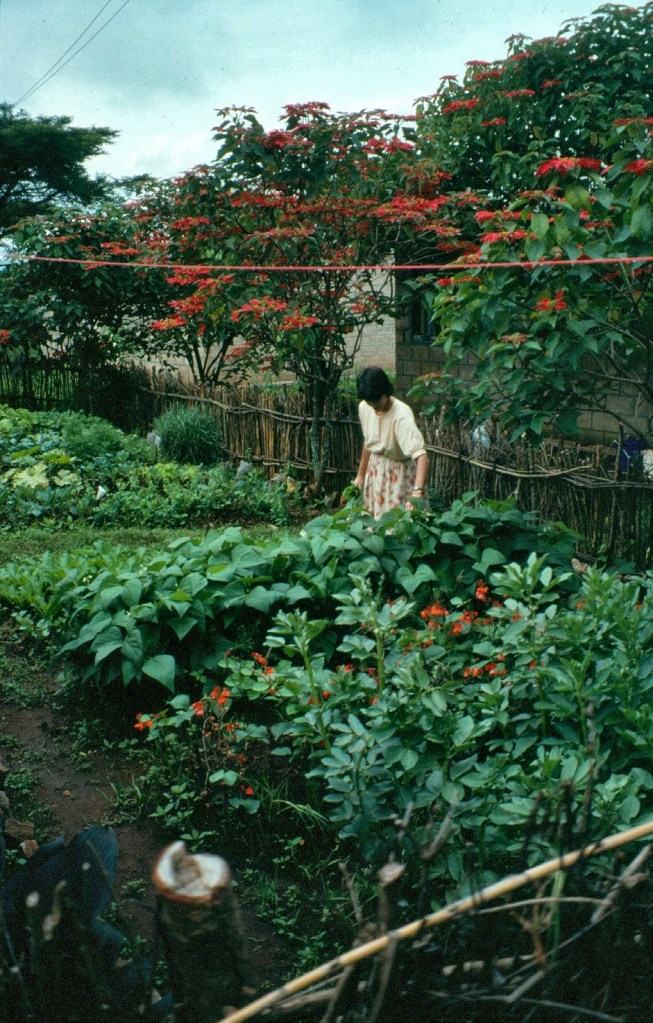
At the same time Mabel started her great vegetable garden and regular yogurt-making thanks to a few sachets of culture received from our friend Ranjini in the UK that, several times, came to our rescue. Yogurt with honey became a house “special” and I still wonder why no such thing is available commercially! We also learnt that green mangoes, very abundant in Bedele, were a great substitute for the impossible to get apples and Mabel excelled in making green mango strudel to the delight of ourselves and invited neighbours and those that dropped by following the amazing smell.

Mabel and her marvelous vegetable garden.

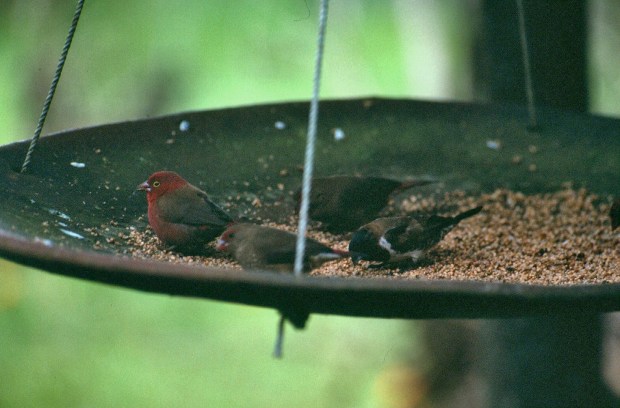
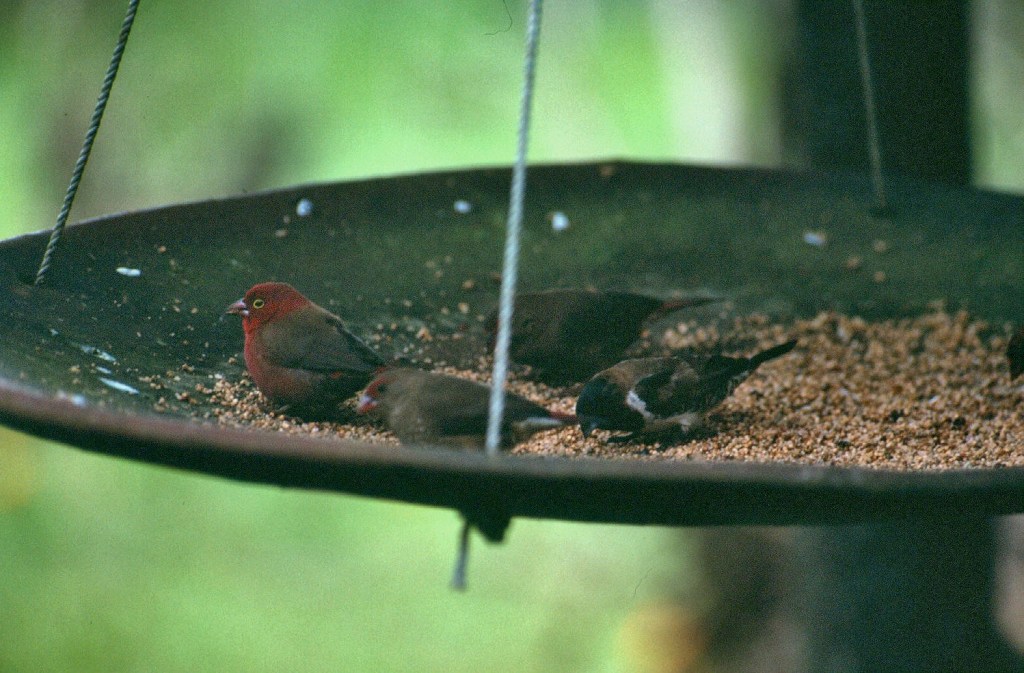
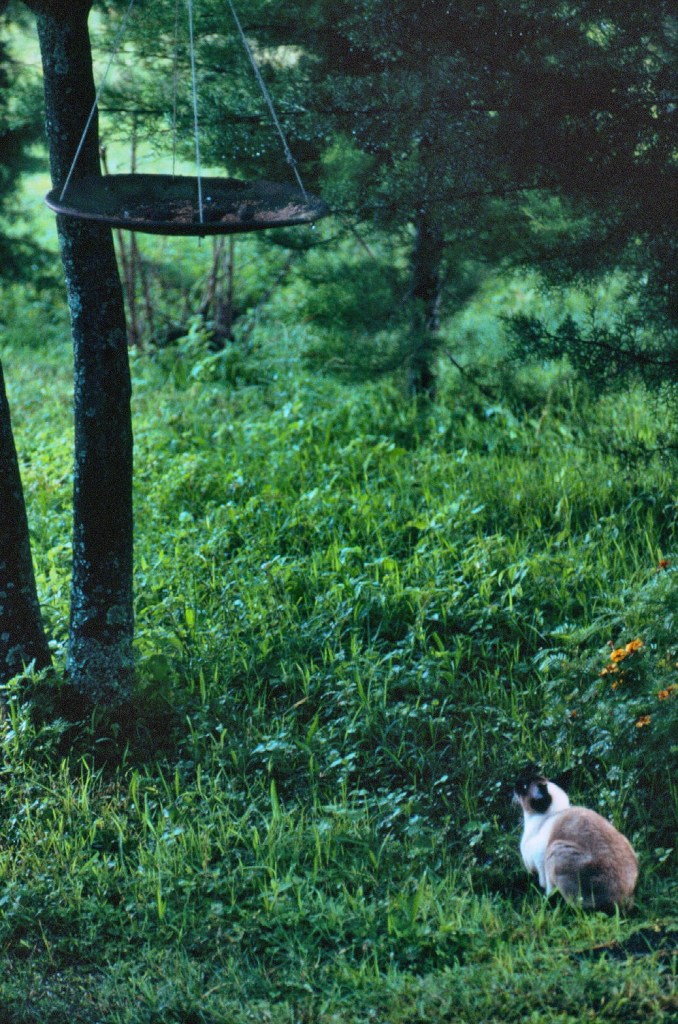
I focussed on the bird life and set up a number of high hanging plates where seeds were always on offer for those birds that wished to visit them. Immediately we got a positive response from the firefinches and waxbills that kept coming despite the anxious looks of our Siamese cat!

The birds did not take long to come.
“I wish I could jump that high”.

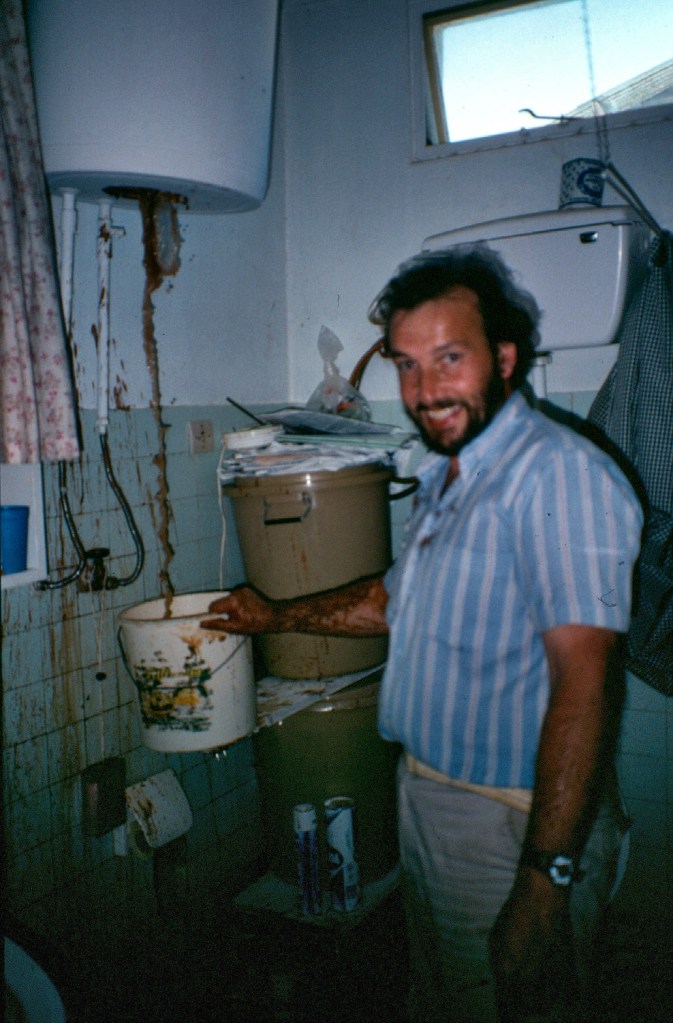
Not all was pleasure though. There came a day when the water heater packed up and, in the absence of a maintenance service in the laboratory, I took it apart and discovered that it was almost full of mud. Through a series of washings that took quite a while, I pushed the mud out and ended up with a functional appliance once again, to the satisfaction of Mabel.

Repairing the water heater. At the back on the left the piled garbage containers filled with water can be seen.

Unfortunately I was less effective with our septic tank. The device kept getting blocked with the same frequency as I needed to write project progress reports! I was nominated the responsible person on account of being a vet and therefore used to some unpleasantness… I soon discovered the meaning of those metal trapdoors around the house. This was not my favourite pastime as it meant to open them up and unblock the pipes for things to move along! With the passing ofthe months, practice made me quite good at it but unfortunately the heavy rainy season did not help.

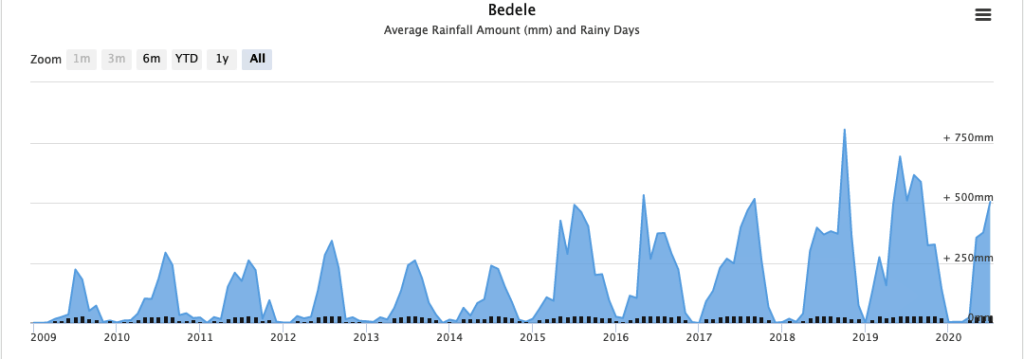
Rains at Bedele. Credit: Data provided by WorldWeatherOnline.com

The onset of the rains would be announced by a gradual accumulation of clouds over a few days and then heavy rain would come and immediately we realized that our concern with water shortages was somehow exaggerated. With about 1.8 metres of yearly rain, water was in great abundance for about six months of the year. This required work on the garden drainage to avoid the water entering the house.

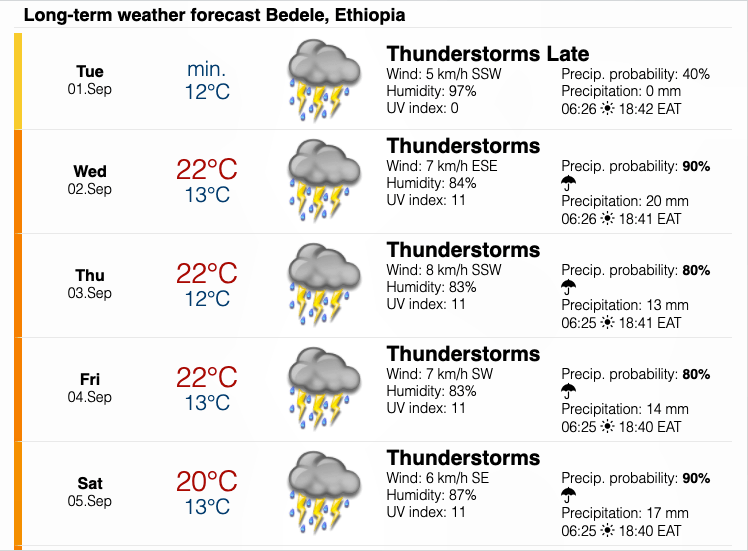
This week weather in Bedele. Screenshot of 1 September 2020 from Weather-Atlas (https://www.weather-atlas.com/en)

The noise of the rain on our tin roof did not let us listen to our music and, when electric storms came, the lightning and thunder that we experienced were the worse we have ever gone through, even when Harare is tough on this too!

Somewhere I had learnt, the probably incorrect fact, that to know where a lightning bolt has landed you started counting when you saw it until you hear the thunder and the number gave you the distance in kilometres from your position. I tried this in Bedele and I could never count more than two! I stopped as it only increased my sense of vulnerability, particularly when I did not see any lightning rods around!

It was in Bedele and the surrounding area that I learnt what car winches were for! The rains would transform our laboratory compound in a quagmire and often we needed 4WD to get out of it and to drive around the town, particularly to reach our butcher as I described.

It was on a rainy evening that the water finally got to us. It did not come through our door or through a leaking roof but from our bathroom. We were sitting reading quietly when we heard a loud noise and then saw a wall of water about 50cm high coming towards us! Taken totally by surprise we had time for nothing except getting our feet wet but, of course, our cats watched the events from the table.

One of our large garbage containers (not really for that use) that had another one on top of it, had cracked. The one on top also fell and knocked the one next to it. The result was that about three hundred litres of water were violently released in a mini tsunami! It took us until 2 am to wipe our house free of water.

After such a shocking incident and seeing the way it would rain, we decided that we no longer needed to store so much water and we made do with only one of the containers and we survived without having to open it until when, before departing we emptied it.

Our new car

As I mentioned in the earlier post, once in Bedele, the news came that our car had arrived at the port of Assab [1] and that I was needed back in Addis to arrange (read pay!) for its transportation to Addis. In addition, I had to meet the costs of the handling by the Ethiopian clearance agency and to deal with its registration.

After a few days we had gone through all bureaucratic processes that were not few but luckily, we had the assistance of the FAO to do it. I recall someone hearing my complaints about the inordinate amount of time the process took that told me to regard myself lucky as, if you were a private individual, you needed clearance from about thirty offices before you could leave the country!

Eventually we got the car and we left Addis after breakfast and drove slowly while I adjusted to it (no great feat!) and proceeded at a moderate speed through our usual way back to Bedele.

After several hours we started to go through a mountainous area before Jimma where the road twisted around with a few sharp bends. It was turning one of these that we met a bus cutting the corner and coming straight at us!

I was climbing the mountain so I could not have been doing more than 50 or 60 kph and I would say that the bus was not going fast either as we met almost on top of the hill. Despite this, it all happened at a rather vertiginous speed!

I slammed on the brakes while aiming towards the mountain wall, trying to avoid a head-on impact. Luckily, the bus driver went towards the steep cliff and crossed the bus in front of us. The result was that we hit it behind the front wheel. Luckily the side caved in and the car got rammed into the bus’ soft belly.

The crash was not too violent, good news as we did not have airbags! Quite angry I left the car and walked towards the bus to recriminate the driver for his recklesness. My anger boosted as we no longer had a new car!

The driver had wasted no time and he was already scrambling down the hill where it soon disappeared ignoring my shouting for him to come back up. He did not wish to face me so I forgot him and tried to solve the situation as fast as possible.

A few passengers were leaving the bus and a small crowd was gathering, luckily, sympathising with me. We decided that it was worthless to do anything about the incident and, while some of the passengers pulled from the twisted bus metal panels, I reversed the car and extricated it from the hole it had made on the side of the bus.

We could now see that our car had suffered from the impact. The front mud guard on my side (right) was bent and re-painted yellow, the colour of the bus! It also had a bent bumper and some broken lights. Not much considering what it could have been.

Once disengaged I thanked the passengers and drove off to avoid the people that were appearing from all over and the crowd that was gathering. Although the car was making weird noises, I drove on and only stopped after a couple of kilometres where we parked at a safe place and proceeded to pull the mud guard so that the tire would no longer rub against it.

After quite an effort we managed to free the wheel on the driver’s side but, despite this, it was clear that it was no longer aligned, and it produced quite a lot of vibration. However, we had no other option but to push on, so we did.

Because we could move rather slowly, we only managed to get to Jimma and there we spent the night in one of the hotels, I believe called the Ethiopia Hotel, belonging to the Government as most hotels were in those days. By the time we got to Jimma we had talked about the incident enough and had already gone through a thorough catharsis and we were no longer too worried about the incident as no one was hurt.

The following morning, after having as good a check on the car as we could and seeing that the tire was still undamaged, we departed for Bedele through the very rough road that, somehow, dissimulated the status of our wheel alignment! We still enjoyed the journey, particularly the spectacular valley of the Didessa river where we stopped at the bridge to enjoy the beautiful scenery and tried to spot the hippos that dwelled there.

We got to Bedele where everybody felt sorry for our now “former” new car and, luckily, I got a mechanic to do a good job straightening the metal bits and improving the wheel movement and alignment while patching up the missing plastic and glass from the lights. Eventually we got back to Addis where we interned the car and got it repaired by a great panel beater that worked overtime for us to get it as good as new again.

One of the few pictures of the car I could find.

We enjoyed the car after this unfortunate start. However -and funnily-, its end was also accidented!

About a month before we were due to depart, I had sold the car to a newly arrived UN employee with the agreement to hand it over just before departure. Ready to depart for Nairobi on a Sunday, I went to see the buyer at the UN headquarters in Addis the Friday before to sign some of the documents required for the transfer and agreed to hand over the car the following day.

Leaving after the meeting I forgot that I had parked very close to one of the parking posts that held a chain to indicate the end of the space allocated for cars. So, I tried to reverse while turning the steering and somehow one of the posts got stuck between the front bumper and the body of the car!

I have no idea of how I managed that, but I was stuck and considering removing the bumper when one of the guards, quite amused, came to assist me. Following his instructions, I moved the car centimetre by centimetre but could not avoid damaging the wing and breaking one of the lights, again!

Aware that were leaving in less than forty eight hours, I drove straight to the panel beater that had done the previous job on the car who, luckily, did a great paint job overnight and I could hand over the car on Saturday afternoon. I excused myself for the broken plastic claiming that it had happened on the journey from Bedele and gave the buyer the money to cover the cost of a new lens.

[1] At the time Assab (now in Eritrea) was still part of Ethiopia.

Bedele, settling in

After our arrival we had a few weeks to adjust to our new work and life as they were both very different from what we were used to. Regarding the work, it was clear that the project personnel were eager to work hard to recover any lost time and I tried to organize the various jobs that were pending.

Luckily, like most educated Ethiopians, everybody in the project spoke English and, as I mentioned earlier, a few also spoke “Cuban”. As my knowledge of Amharic was zero, this was very good for me! I was surprised to hear some words in Amharic that I somehow understood! These were clearly mechanically related: pompa (pipe), formaggio (cheese), kariberēteri (carburetor), pamipi (pump), tubo (hose), pīsiteni (piston), batirī (battery), jaki (jack), moteri (engine), wīnidowisi (winscreen), goma (tire), sipaneri (spanner).

The explanation I was given is that the Italians brought the first motor vehicles to Ethiopia and, as Amharic did not have words for car parts, they adopted them from Italian. I was not a mechanic and, unfortunately, I could not find similarities with the words used in animal health!

To compensate for this handicap, I tried to learn greeting people like the Ethiopians. Just to give you an example, Tena yistilign. (ጤና ይስ ጥልኝ) was roughly “hello” for both, male and female. The reply would depend on your gender, dehna neh? for a male or dehna nesh? for a female. This phrase is then repeated several times while the two people embrace each other. In my experience the number of times the greeting takes place, the voice and back-slapping volumes increased with the affection shown. As you can imagine, my efforts in doing this were pathetic although much better than my attempts at traditional dancing!

Although English was spoken by the educated Ethiopians, farmers spoke their local dialects or languages such as Tigrinya (Tigray Region and parts of Eritrea) and Oromo language (West Ethiopia and parts of Kenya) to name just two of several existing ones. Government personnel and educated people speak Amharic, a Semitic language and the official working language of Ethiopia. Written Amharic was an impossible job for me but could not help being fascinated by the typewriters that would produce such writing!

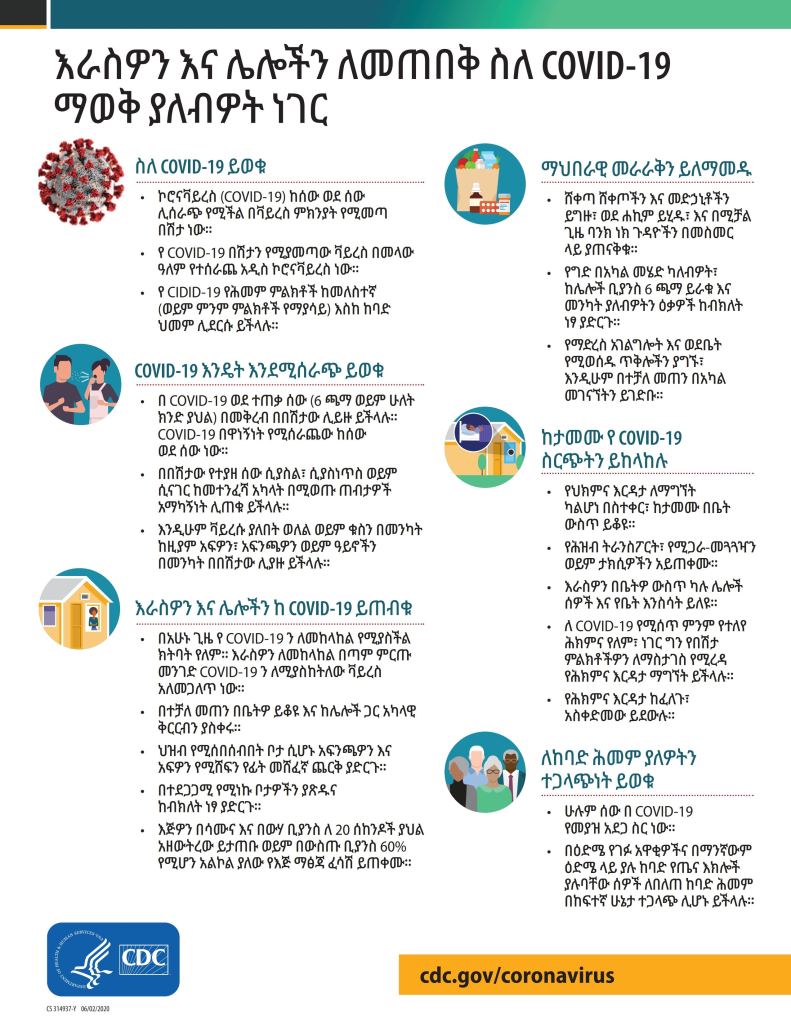
Advert on Covid 19 in Amharic. Credit: US Centers for Disease Control. Public Domain.

We gradually got organized and soon, through contacts with our laboratory colleagues, we employed Woletu, a mature Amhara lady that came to help us with the house chores. Coming from Jimma, she deeply disliked Bedele and the “primitive” people that lived in it! She found a place to stay in Bedele and became a good asset for us and someone we missed on departure.

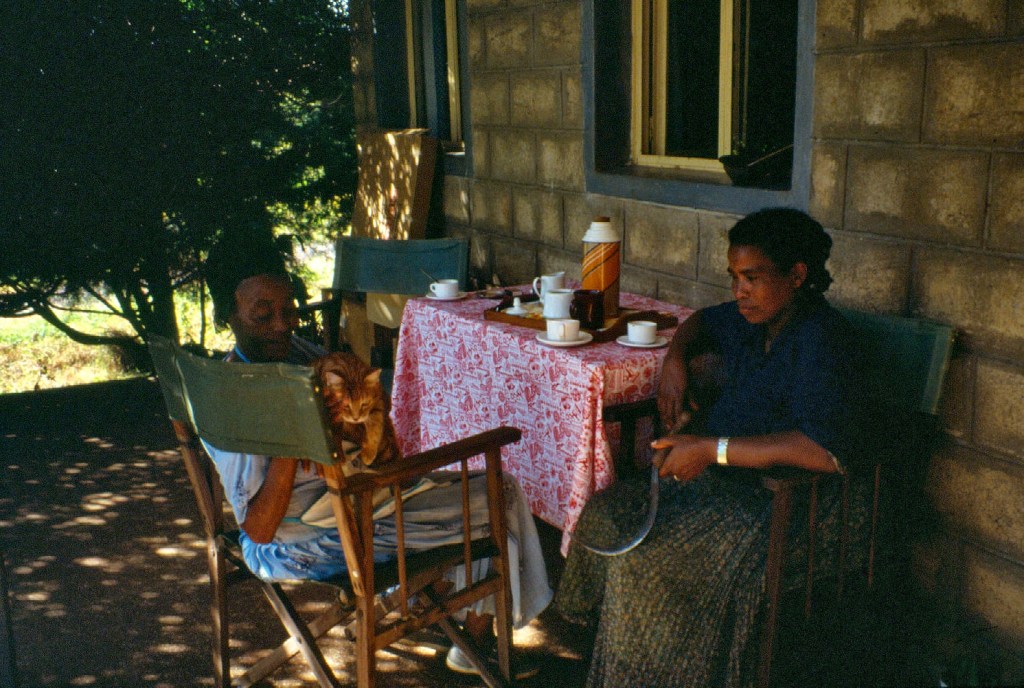
Woletu (left) with tigger and visitor enjoying a cup of tea.

Regarding the food, we realized that we could get honey from a local farmer, a great development, considering where we were. So, we travelled to the farm and were greeted warmly by the seller that, to show this made us sit down and poured honey on a small and concave wooden table. We noted that, apart from the honey, we could see lots of white grubs in it.

We exchanged looks with Mabel and proceeded to eat the honey with our fingers, carefully avoiding the grubs. This surprised the farmer that insisted that we ate them as they were considered a great delicacy. I took one and it tasted very salty, contrasting with the honey’s sweetness. Mabel -being a beekeeper- could not refuse and took them as naturally as possible. the first I took was the only one as I refused them repeatedly, surely offending our host.

Eventually, we moved to a small hut that was the man’s store where we could see a number of bags that I could not help noticing them smeared with what looked like dried blood. He heaved one of them out and gave it to us. It was a goat skin filled with honey, including its legs! So, after paying (I am sure very well), we drove home with our cargo, about 30 kg of honey, more than we could eat for as long as we were in Bedele!

Our shopping was quite dirty as it contained dirt, twigs, dead bees in all stages of development, fragments of wax, lots of goat hairs and chunks of charcoal. The latter no doubt a testimony of the honey extraction method of burning one end of the hollowed trunk (the hive) to get the bees out! We filtered the goat’s contents for days on end. We started with straining it through a sieve with a small mesh to remove the larger “impurities” first and then through a cheese cloth and then, again, through another finer mesh cloth. The result surprised us, it was superb-tasting honey, “certified” by Mabel, the expert!

Although landlines phones existed in Bedele, they did not work so the arrival of a lorry looking for us was indeed a surprise. To our delight, it carried the second shipment of our personal effects.

This was a great improvement to our living conditions as it contained not only furniture and clothing but also some “familiar” food that we bought in Kenya with good forethought. We could now stop camping in the house! Luckily our tailor-made furniture fitted as it was meant to do and we started to live a more comfortable life with armchairs, bookshelves and even my own desk and chairs so that we could return the ones we had borrowed from the laboratory.

We could also stop using the cats’ travel box as our shared bedside table, abandon our camp beds and sleep on a proper mattress, something the cats immediately grasped and started to enjoy.

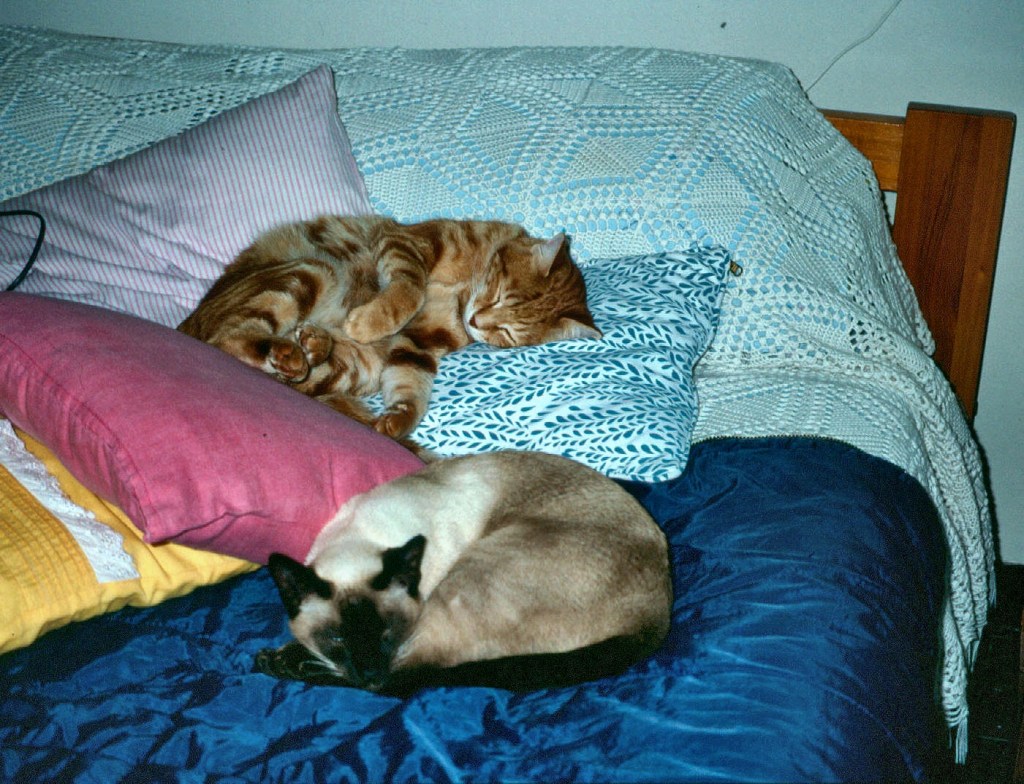
Cats enjoying the new bed.

Although Internet existed at the time, it was non-existent in Ethiopia and even if it would have been there my “advanced” Zenith computer could not have been able to handle it! So, our only source of information from events outside Ethiopia was a short-wave radio where I had all the possible BBC frequencies stored in its memory.

Through the radio we followed world events that included the withdrawal of the Soviet forces from Afghanistan, the melting of the Iron Curtain and the dissolution of the Soviet Union, the election of George W. Bush as President of the US and the blowing-up of the Pan Am Flight 103 over Lockerbie, to name a few.

We soon realized that medical facilities in Bedele were very basic, but we did not worry about that! We did learn of the existence of several Cuban doctors, the closest being in Metu, about 115km away towards the west. Eventually we met the doctors and learnt that all our needs would have been covered although, luckily, we did not need them.

There were no cinema or theatre in Bedele. We attended a crowded theatre function at the Bedele Social Hall. It was in Amharic and, although Solomon kindly translated for us to Spanish, we missed a lot of the meaning so, without a TV, most of our time was spend reading and listening to opera as I already mentioned. The Good Book Guide, a British company that would send a monthly catalogue from where to order books (sadly closed in 2015), was an amazing source of great selected books.

We were now settled in Bedele and it was difficult to travel to other parts of the country except Addis that we visited frequently for many reasons, both personal and working. It was from Addis that we got most of our food, mail (both private and project) and our film needed to be sent to New York by the UNDP pouch for developing!

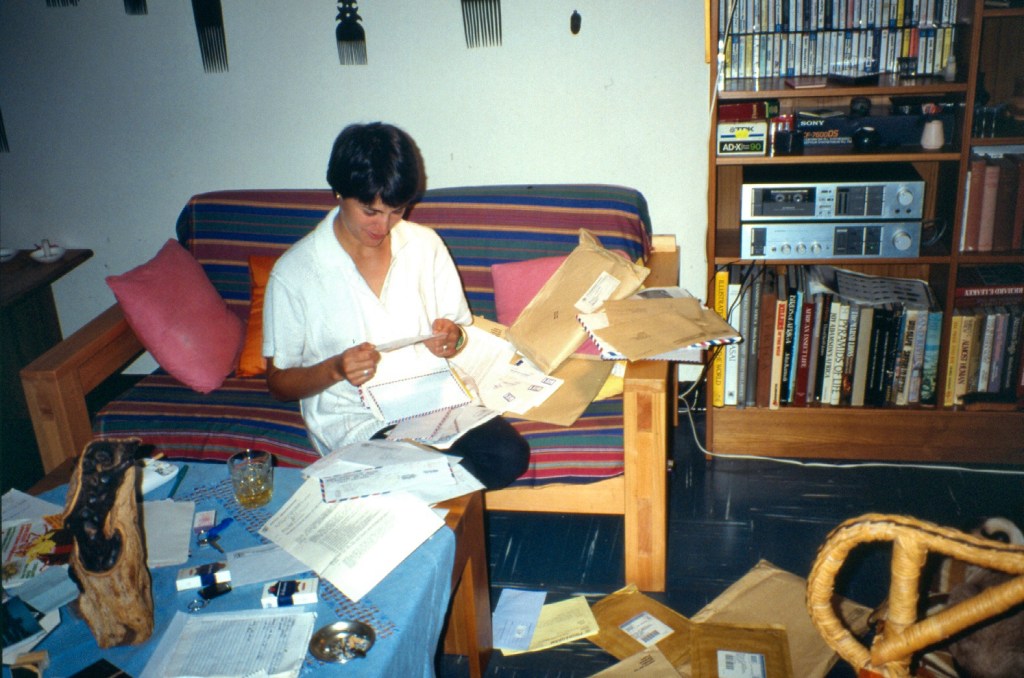
The great time of opening the mail at Bedele!

Project activities allowed us to travel within the three provinces of the project and we could also do day or weekend trips around Bedele and I will be describing some of those in future posts.

Bedele, the work

Although my work was the reason for us to have come to Bedele, I will try not to bore you with descriptions of technical issues that are beyond the scope of this blog. However, some general background information is relevant to place the stories that will follow in context. After all, all anecdotes I will describe took place as spin offs of the project.

FAO had technically supported the building and equipping of the laboratory through earlier projects that, unfortunately, were not able to complete the work as could be seen by a number of large crates at the entrance of the laboratory as well as the parts of an incinerator that were scattered in the field surrounded the buildings.

At the time of my arrival, FAO was still supporting the laboratory implementing two projects with UNDP funding, a tsetse and trypanosomiasis and a tick and tick-borne disease project, ours. Both projects worked towards the control of these parasites and there was good collaboration between us all along. Jan, my Dutch colleague and neighbour headed the tsetse project and he spent most of his time in the bush while I travelled to our field sites but also had work to do at the laboratory.

The tick and tick-borne disease project had a number of veterinarians and technicians that would work with me. Among the vets there were Sileshi (my main counterpart), Solomon and, later Assefa. There were also a number of able and devoted technicians that supported the work that I will not mention as some names escape me now.

It did not take long for surprises to start to pop-up. As in any project hand over, I had a thorough inventory of the project’s equipment. This included a list of the project vehicles, regarded as “hot items” by the FAO and UNDP administrations. In the list there were five vehicles but I only found four in Bedele and I was informed that the provincial Administrator in Jimma has taken possession of one of them for his use.

As this was unacceptable, I planned a visit with the Director of the Bedele Laboratory and my counterpart to meet the Administrator, all of us determined to recover it. Eventually we were given an “audience” by the Governor of the Kaffa province in Jimma to present our case. We were made to wait for a while before the meeting with an Administrator as the Governor was too busy to see us.

To my surprise, things went very smoothly, and in a few minutes, we had the assurances of the car’s return. Unfortunately, it could not be done the same day as the car needed to be serviced but the following week. Of course, I never saw the car again despite repeated assurances that it would be returned a few “next weeks”!

I duly reported its “disappearance” in the project inventory, something that failed to create any queries neither in FAO nor UNDP! We still had four 4WD to do our work and we believed that they would be enough, provided that we managed to get them in good working order. I soon learnt that this was not as straightforward as it sounds as we will see below!

The Ethiopian Government worked on Saturday mornings, something I had not realized until I arrived in Ethiopia the second time. However, to compensate for this extra half a day, there were “political meetings” every Wednesday afternoon. As myself was not expected to participate I cannot say what was discussed there. So it was that on Wednesday after lunch I was alone in the laboratory.

Our project’s working area were the three south-western provinces of the country namely Kaffa, Illubabor and Welega. Apart from capacity building on tick and tick-borne diseases we had two main objectives: (i) to collect and identify tick species from domestic animals from as many locations as possible (tick survey) and (ii) to monthly monitor the number of ticks on groups of cattle (that had been selected and identified by the project) to assess the numbers of the various species of ticks present and get an idea of their seasonal abundance (population dynamics).

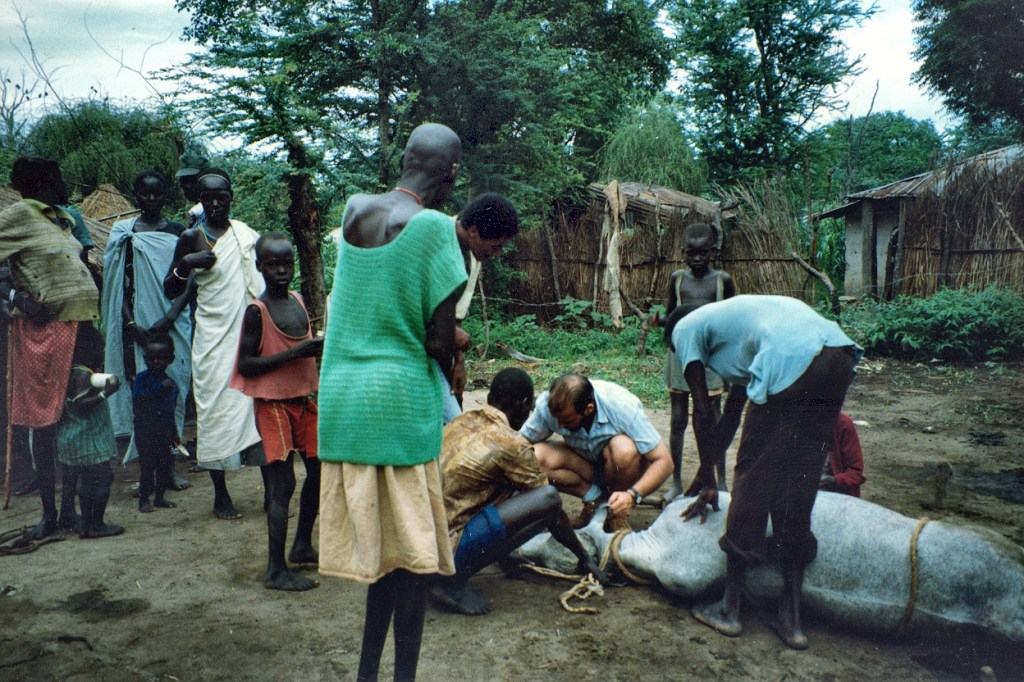
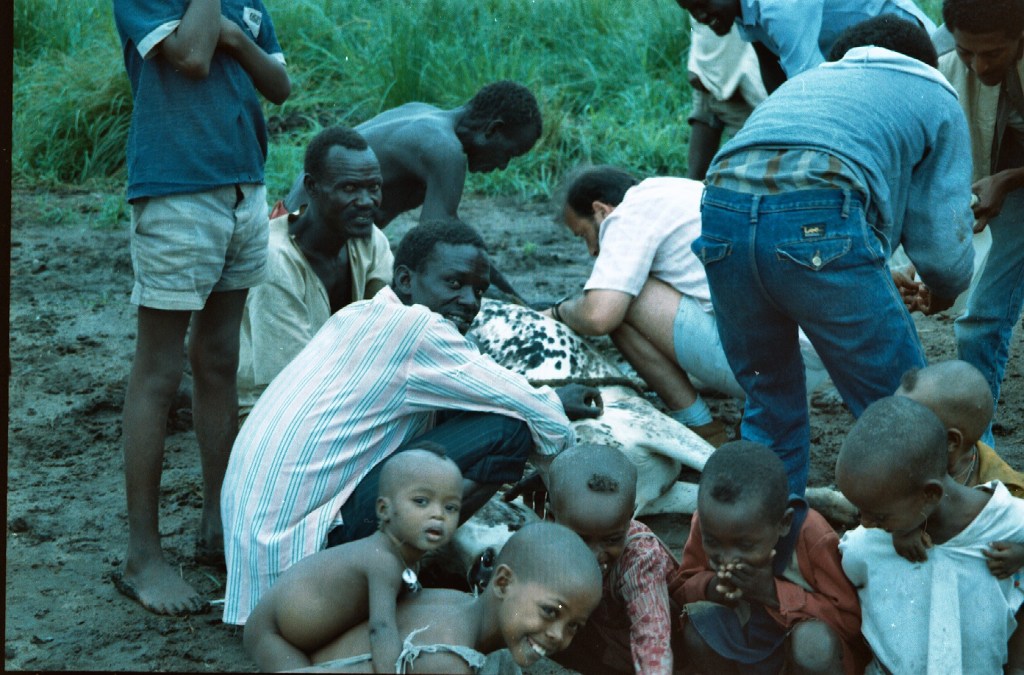
Tick counting.
We were very popular, particularly with the children!
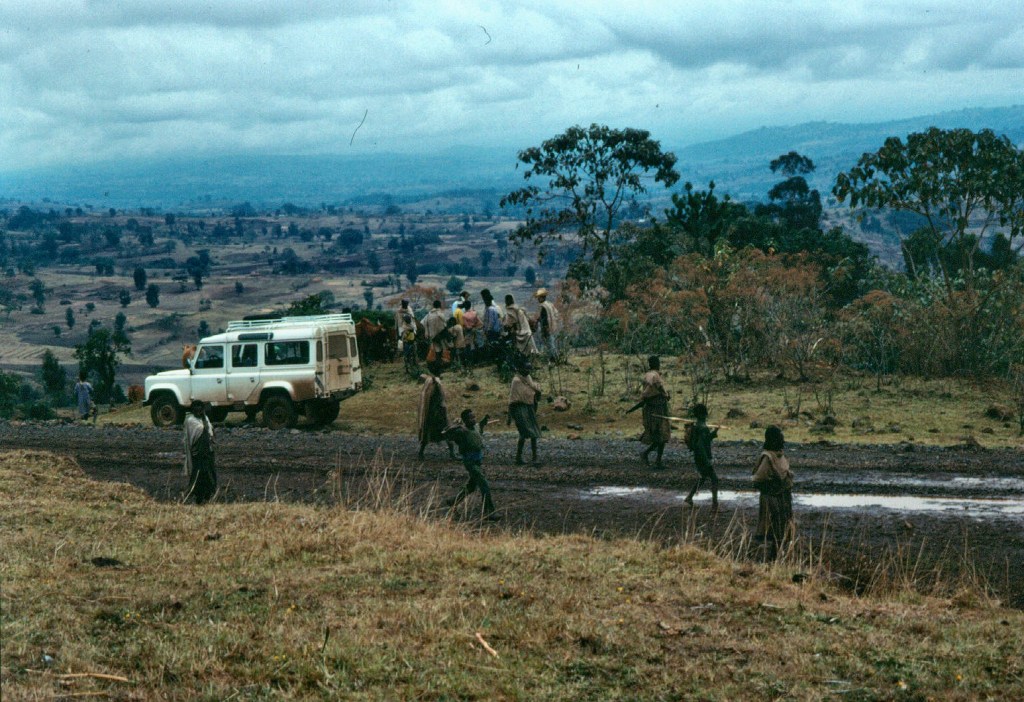
Tick work often took place in wet conditions!

From the start it was clear that the project staff were devoted to the work and they -to my relief- had kept the population dynamics work going and the data collection had been kept as scheduled by my predecessor. This was great news. Unfortunately, the same could not be said about the tick survey that had suffered as it was more difficult to justify getting the needed inputs to carry it out.

A practical training session on tick taxonomy
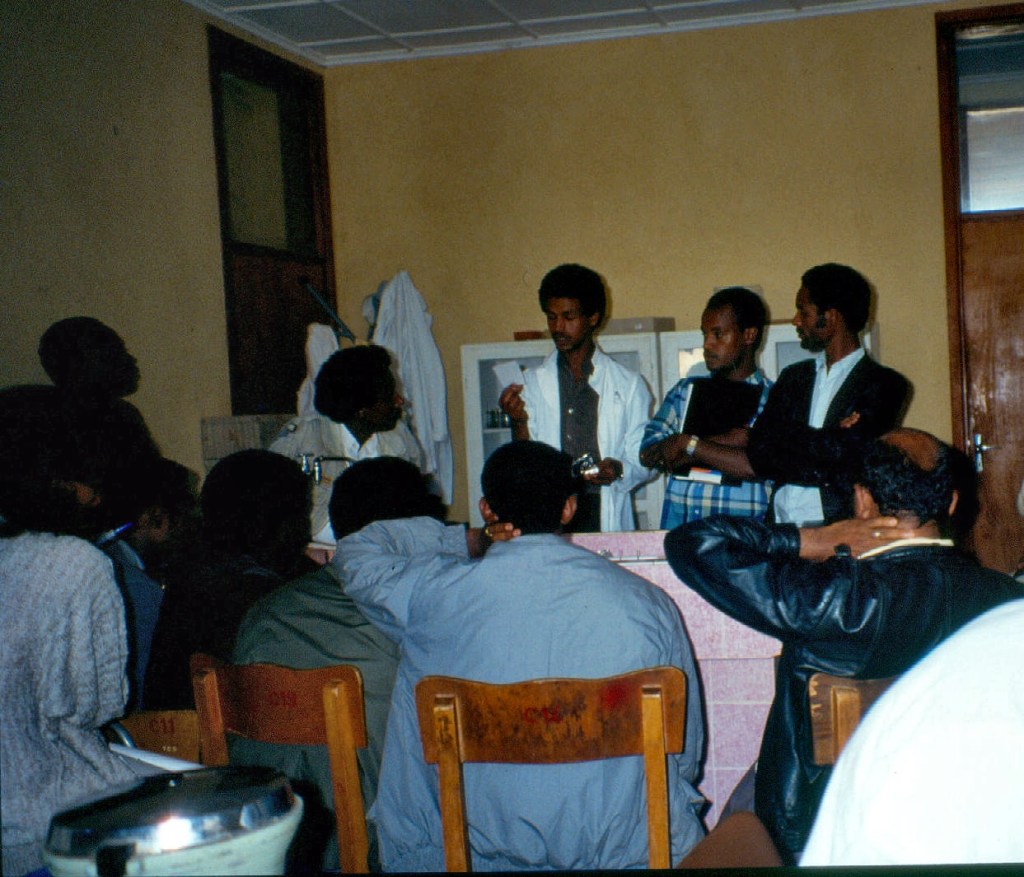
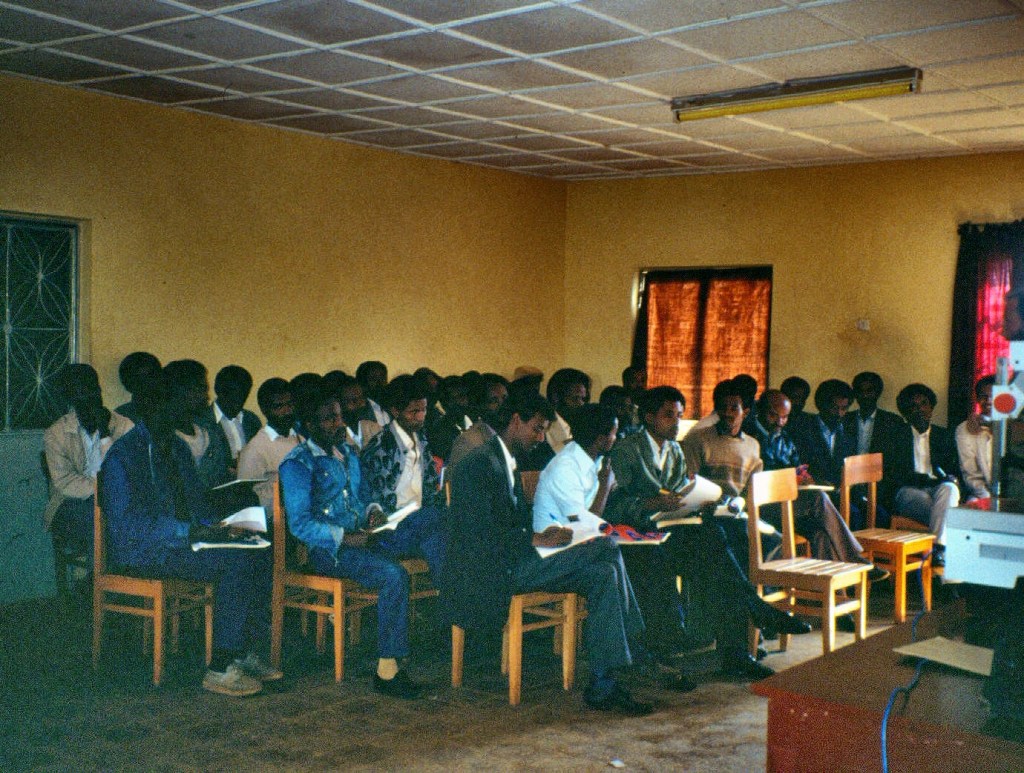
A lecture to animal health personnel from the three provinces.

So, we needed reinforce our tick survey while keeping our monthly observations going as we needed as much data as possible to draw meaningful conclusions. For that we needed fuel to visit the various places and this was one of our major problems as it was severely rationed.

Often, I needed to visit the Bedele Administrator to persuade him to let me have the needed fuel to carry out the work and I remembered feeling “victorious” walking away with a 20 litre coupon of petrol! Luckily, after a few months Total introduced their own petrol coupons and these helped a great deal to get the needed fuel.

For about one year, things run smoothly, and it was time for us to go on home leave as, because of the UN duty station hardship classification, we were entitled to go out of the country once per year. We had a very good break but, on return, I faced a bit of a crisis when I was tersely informed by the laboratory’s administrator that one of our vehicles had been “borrowed” by President Mengistu and his entourage while touring the west of Ethiopia.

While to stop this would have been impossible for anybody, the fact that the car never came back was very worrisome. The situation was indeed delicate as it involved the highest authority of the country and one that had a rather ruthless reputation, so I decided to let it rest for a while. This was a good decision as, eventually we learnt that the car had hit a buffalo and overturned on the way to Gambela and that it had been abandoned but that we were allowed to recover it!

As there were no car workshops in Bedele, to service or repair our cars, we needed to find the car, towed it back to Bedele and then to Addis, a journey of several hundred kilometres. A rescue party was sent, and the car was brought to the laboratory. It was our best Land Cruiser and it looked like a “banana”, rather twisted after it roll. Luckily it could still be towed had been badly damaged, and it had a banana shape although it could still be towed.

We decided to invest some of our meagre project resources to repair it and it was eventually taken to Addis on a lorry and we got it back a couple of months later when I went to collect it and immediately detected that it would never ride as well as before and that it gained a new trait, its inability to stop dust from entering all over the place!

After two years of work we managed to complete the work expected from us both on tick identification and population dynamics. Despite our efforts, UNDP stopped funding projects by implementing agencies like FAO and our effort was not continued despite the need for it that still remained. Luckily, we did manage to get some limited funding from the Danish Government to look at tick-borne diseases but not enough to keep international personnel so we departed after a very interesting spell in Ethiopia that I will go through in the next few posts.

To Bedele, loaded

To get petrol for a journey in a war economy was not just filling up at a petrol station. It required the application for petrol coupons and getting them through a heavy government bureaucratic process as these were treated like golden sovereign coins by the Ministry of Agriculture’s administration.

Once that was achieved, a travel permit was necessary. Personal details were passed to the administration and that took a couple of days to be processed. Finally a small paper written in Amharic with a few stamps and signatures was given to me and we were ready to go.

Before departure, we were warned of a dangerous behaviour of pedestrians in some areas of Ethiopia where people would cross the road in front of your car at full speed apparently for no reason and, apparently, wishing to kill themselves. However, the real motive was the belief that thesepeople were closely followed by some kind of “evil spirit” and by the tight crossing the spirit would get ran over and therefore the person would be cleansed. Another extra precaution to be taken for the journey to the little known.

We loaded our Hilux pick-up and departed early in the morning as I knew that the journey was a long one. The cats in their double travel box were placed on the back seat and it left little space for anything else apart from a few clothes bags and the cool box with our lunch and drinks.

The back was also packed chock-a-block with all the rest of our essentials. These included fridge and cooker as well as food stuff to last us for a month, cutlery and crockery, camp beds, bedding, camping chairs, music centre and other essentials that were required to spend a couple of months until the rest of our belongings arrived. We also took a couple of water jerry cans and, during the journey, made up a list of items we still needed but that we were not sure to find in Bedele.

We selected a Saturday for our journey and realized, too late, that it was a bad choice as Saturdays were market days and there were lots of people moving about, particularly on the road we were using. Although the large crowds thinned somehow as we left Addis, they reappeared whenever we approached some of the populated areas such as Wolkite, Woliso and, further on, Jimma.

The road to Bedele, near Addis.

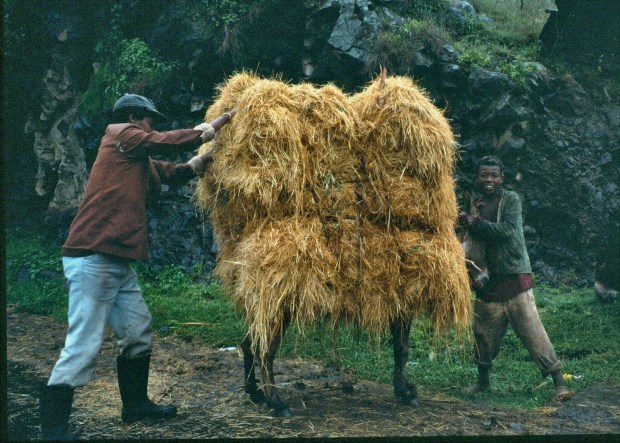
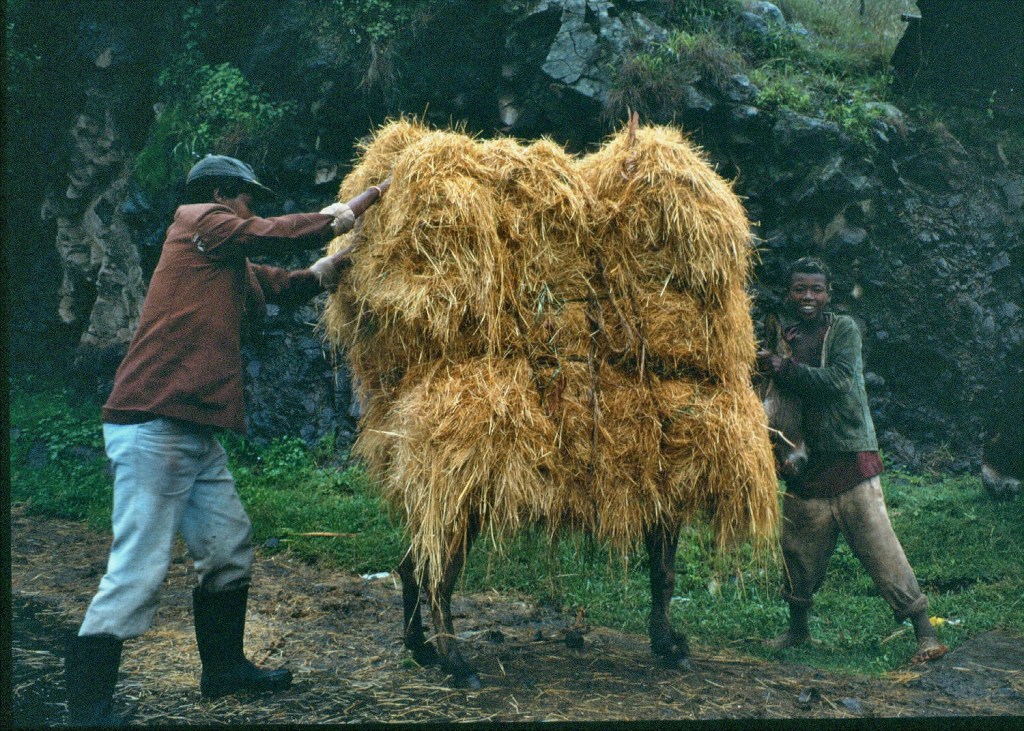
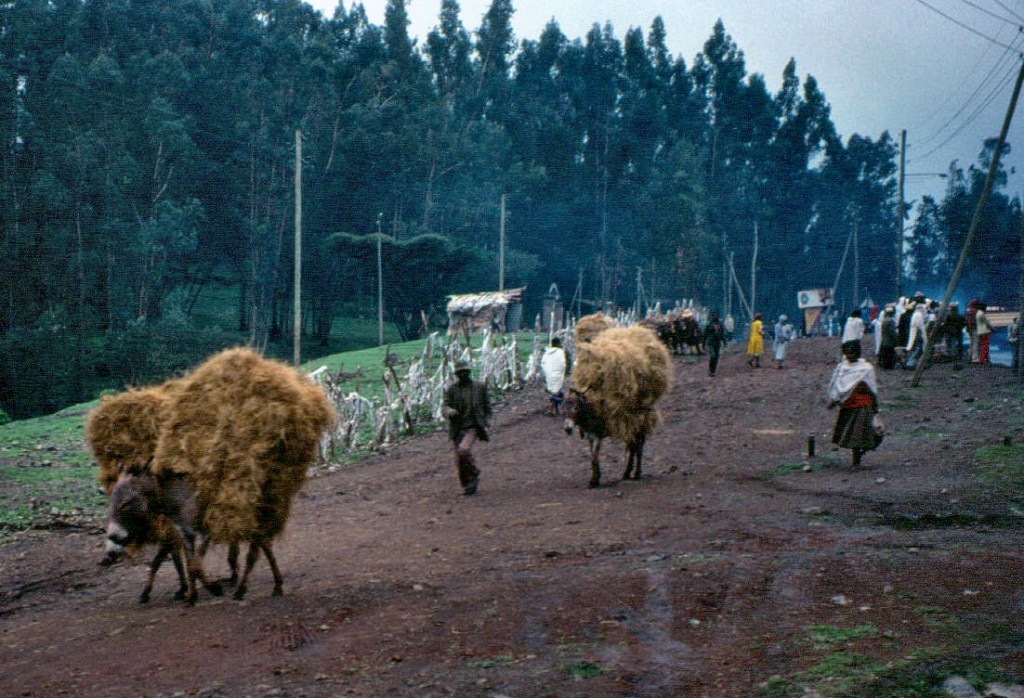
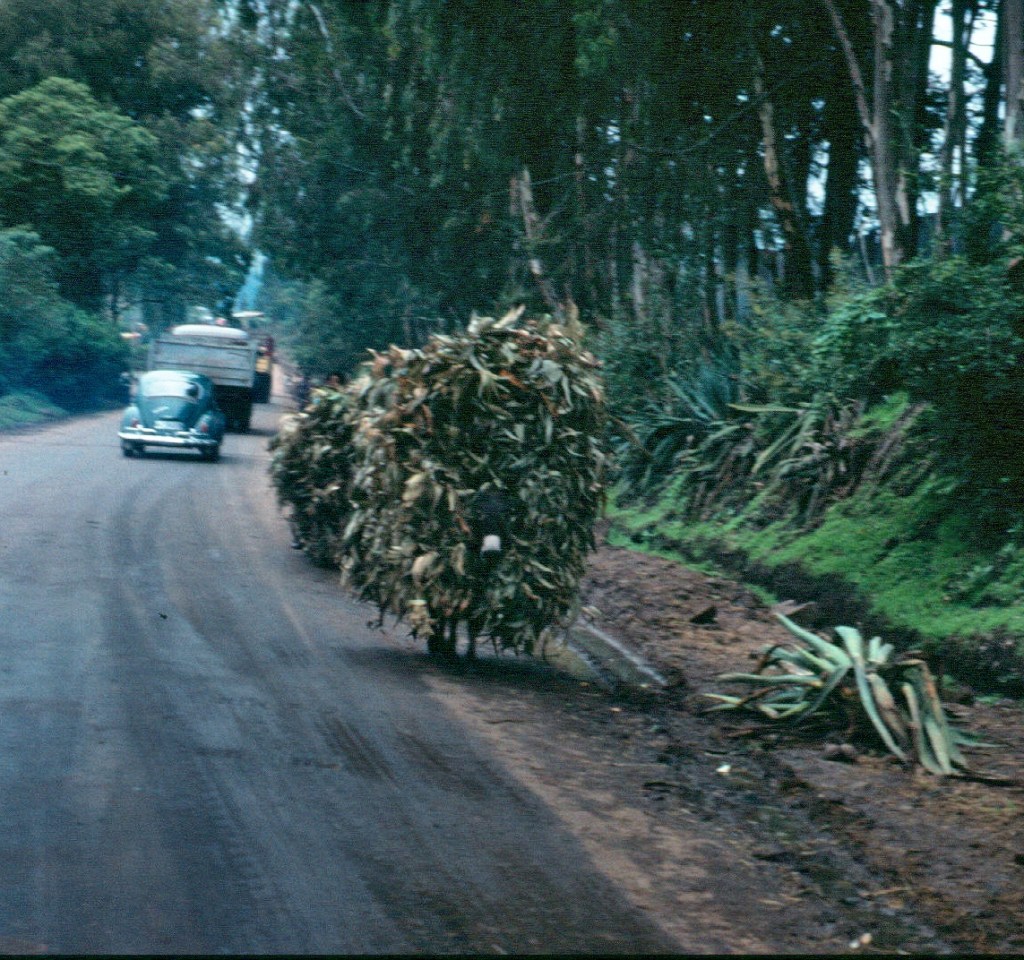
The trip followed the main road west of Addis, a rather busy and new road for us so our progress was slow. This was not helped by the habit of people to walk on the road –as seen in India- and the number of livestock that was free ranging. Of interest were some moving grass mounds that turned out to be donkeys heavily loaded with teff straw and grass to feed the abundant and free ranging livestock. There were many and they did not seem to obey orders very well, forcing us to hoot very frequently and take evasive action.

Loading!
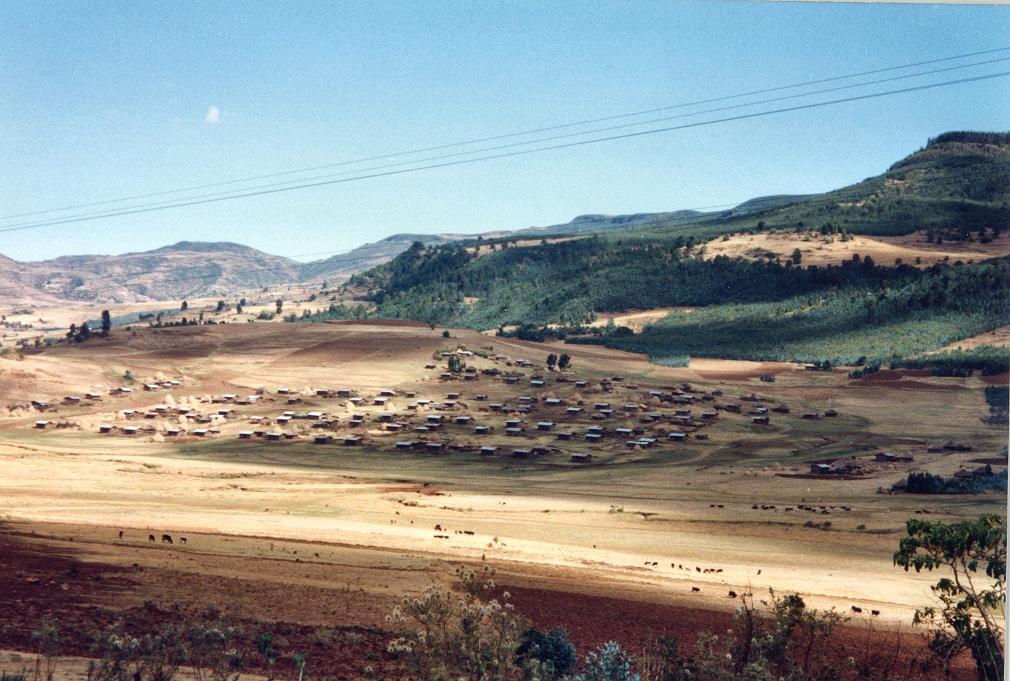
Near Bedele.

The landscape was rather denuded from trees and the fields were being planted with teff (Eragrostis tef) the main crop of Ethiopia from which the injera I described earlier is made of. Farmers were busy planting and lots of them were seen on the fields. Then in a field we saw a circle of about twenty adult people crouching holding hands in a circle. We slowed down and, to our surprise, we witnessed our first and only communal defecation we have ever seen! Whether this is a common occurrence or something rare I cannot say!

The Ethiopian revolution was celebrated with colourful arches spanning the length of the road. These were rather substantial near Addis but they started to diminish in hierarchy as we moved on and, although approaching Jimma they revived, again, from there to Bedele these were almost absent or rather poor efforts that suggested to me that the revolution was not a priority in the interior.

Passing through Wolkite, on the way to Bedele.
Some of the beautiful large houses at Wolkite.

We arrived to Jimma late afternoon and decided to spend the night there at one of the few hotels available, I believe that it was called the Jimma Hotel. It was a rather basic facility but suitable for our needed rest. Dinner had a rather limited menu that consisted of chicken and chips or spaghetti with tomato sauce. We chose the latter, a clear consequence of the years of Italian occupation of parts of Ethiopia. We were the only commensals so the waiters literally fought to serve us and you needed to be careful as they would take away items from your table before you had finished with them!

Unfortunately, the pasta was not memorable but, tired and hungry, we were somehow satisfied and decided to retire early. On arrival to our room, Mabel remembered that she was told that the beds in some of these hotels had more wildlife than the countriside! So, apart from bringing the cats to our rooms, we slept inside our sleeping bags not before she attacked all invisible creepy crawlies with a white insecticide powder from our FAO medical kit that I hoped it was not DDT! In any case, it must have been effective as we slept like logs, hopefully not because of its fumes.

Mabel controlling insects by physical means!

The following morning, after a simple breakfast, we had a tour of Jimma, looking for fuel that was severely rationed. Eventually we arrived at one petrol station that took our Government fuel coupons and we left the asphalt to take the 140 km of the rather rough road to Bedele that would become familiar to us.

We drove for about two hours through farmland and then the landscape became forested and I knew that we were close to Bedele. We crossed true forests of large and ancient flat top acacias (Vachellia abyssinica) and we could see the coffee bushes thriving under their shade. We were arriving to the true origin of the arabica coffee!

After our afternoon arrival we needed to present ourselves to the political authority of Bedele to who we handed over our travel permit. The man examined our paper carefully and, after a while, he declared “your wife is not included in the permit and I need to ‘capture’ her and keep her at the police station”. I reacted strongly explaining that we were coming to live at Bedele and to work for the United Nations. The man seemed unimpressed by my arguments and remained unmoved, clearly full of his own importance!

Becoming rather worried I left Mabel with the political guy and drove to the veterinary laboratory to explain the situation to the Director who was really mortified by the situation and, immediately, came to our rescue. Luckily, after a short discussion (in Amharic), the Director announced that we could go with him and that we would go to the police the following day and inform them of our arrival.

We thanked the political administrator profusely for his understanding and left with the Director who took us to our bungalow and left us to unpack and organize our house before nightfall.

As agreed, the following morning I visited the police station accompanied by the Director and the Administrator of the laboratory. There we met with the political delegate of the previous day. A protracted discussion followed and, eventually, the Director (who was the only person that spoke English) explained to me the outcome.

The meeting had decided that Mabel’s omission from the Travel Permit was a serious mistake but also that we were allowed to stay. I was recommended to make sure in future that we were both included in our travel permits. I agreed wholeheartedly knowing full well that it was an impossible task but I was happy that I could now focus on my work.

To Ethiopia!

As mentioned earlier [1] it was 1987 and we were still enjoying our work and life in Kenya. However, it was becoming evident that our modest savings would never secure our future, so we started looking for better opportunities. Regrettably, we could not find suitable work in Kenya, otherwise we would probably still be residing there today!

In mid 1988 a great opportunity with FAO appeared in Ethiopia at a place called Bedele of which neither we nor most of our friends had ever heard of before. Most but not all. Jim [2] however, had and immediately told me that Bedele was in western Ethiopia and also that it was “out in the sticks”, not a very encouraging start!

Later on I learnt that Andy, a tick expert from Zimbabwe -working in Nairobi- had just been in Ethiopia for a consultancy that included a short visit to Bedele itself. He confirmed that it was far from Addis Ababa and rather remote, but an interesting place where not much work on ticks and tickborne diseases had been done although the need for it was there.

When I asked him about the living conditions, he mentioned that he had stayed at the station where I was going to live -if I accepted the offer- for two years and mentioned that the area was very beautiful. “Do the bungalows have a garden” I asked, “the whole of Ethiopia will be your back garden!” was his reply. That left me rather concerned!

As the need for my services was rather urgent, before accepting the long-term position and while we prepared to leave Kenya, I offered to travel to Bedele to familiarize myself and to supervise the on-going work. I also carried the “Family terms of reference” that included the evaluation of our future accommodation, availability of supplies and other critical issues to survive in a remote place. Regarding the house, I was to draw a plan that, back in Nairobi, would be submitted to an architect friend so that we could take the relevant furniture and appliances.

So it was that I arrived at Bole airport in Addis Ababa on a two-week consultancy mission. The change between Kenya and Ethiopia was very dramatic as I was entering a country where a civil war had been raging from September 1974 when the Marxist Derg removed Emperor Haile Selassie from power and Eritrea had started fighting for its independence.

Bole looked like a military airport being used by civilian flights, mainly Ethiopian Airlines. There was no “yambo” welcome or smiling faces anywhere but armed soldiers with surly faces! I had arrived to my first communist dictatorship led by Mengistu Haile Mariam, a ruthless leader.

Realizing that things would be different I was very happy to be greeted by people from FAO. They took me to the Ghion hotel where I would stay until I traveled to Bedele, a small town in Western Ethiopia where FAO had built a Veterinary Diagnostic Laboratory with a focus on trypanosomiasis and tickborne diseases.

So it was that, after the necessary protocol meetings that took a couple of days, I had the necessary travel permit that would allow me to travel to Bedele. The letter was written in Amharic and I could only hope that it gave the right information about my trip as the only thing that I could understand was my name! However, when I realized that the country’s Chief Veterinary Officer and the Director of the Bedele Laboratory were traveling with me, I relaxed.

We left early in the morning and traveled very slowly in a westerly direction. Getting out of Addis Ababa was indeed a complex operation as there was no clear exit road and people used the tarmac to walk to their destinations with their livestock, sharing the road with the motor vehicles. Our speed increased somehow once we left the city as the people numbers decreased for a while (only to increase near every populated area!). Despite this, almost permanent hooting was required in order to advance.

Driving from Addis Ababa to Bedele on a Sunday required patience!
There is a donkey somewhere under the leaves!

The trip took us through rather barren land dominated by teff fields [3] and the occasional trees, very occasional. The latter were really what remained of them after most of their branches had been chopped for fuel and only a green tuft remained, something I had not seen before.

Teff with yellow meskel flowers (Bidens macroptera or pachyloma?) in the forefront of the picture.

Near Jimma, the capital of the large Kaffa province and about 350 km from Addis Ababa, the landscape became greener and trees became more abundant. That coincided with the end of the tarmac and the start of a consolidated but very rough and dusty road, from where we continued towards Bedele, located in the province of Illubabor. We reached Bedele after a long 140 km journey from Jimma and, by the time we got there, presented our travel credentials for clearance by the local member of the Government and found food and accommodation, we were really tired and we slept soundly!

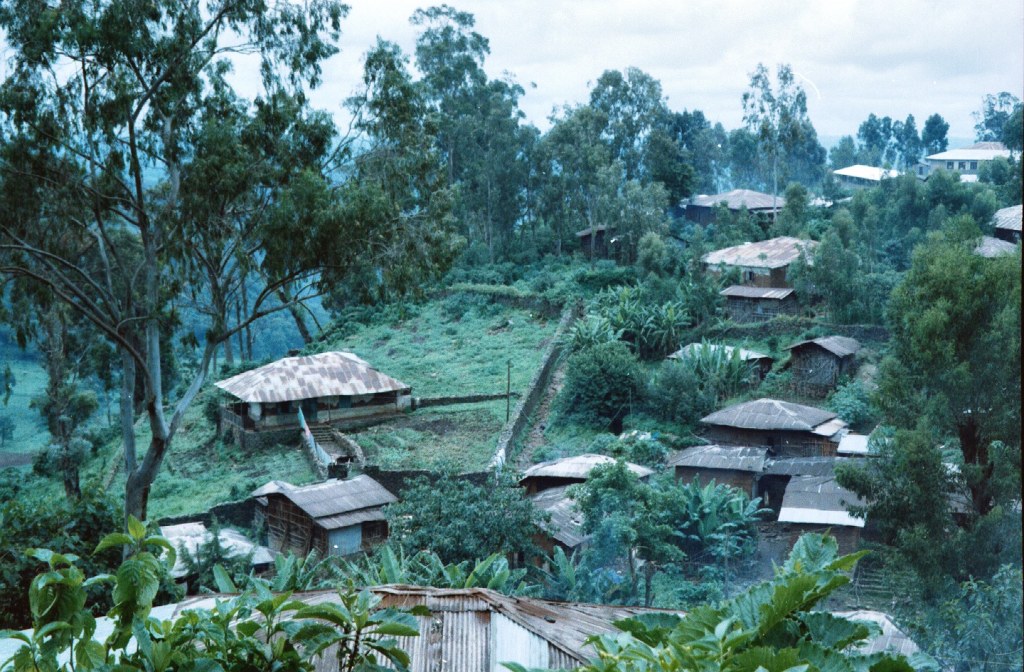
The following morning was cool and sunny and this enabled me to appreciate that Bedele was mainly a one street town set up in a rather well forested area. Bedele, also known and “Buno Bedele” was reputed to be the origin of the coffee and you could easily see the beautiful flat-top acacias with the coffee bushes growing under their shade.

During my visit I learnt that the work was mainly following an already on-going routine that required the collection of ticks from cattle at different locations both to get to know the species and to understand their population dynamics. The study was led by a scientist that had suffered a severe health problem and needed to be evacuated and unfortunately was unable to return.

I realized that I could handle the proposed work and hoped to stimulate other research activities and, hopefully, attract more funding to continue the work beyond the two years planned.

During the visit I met the Ethiopians that would work with me and I was impressed about their dedication as they had kept the work going despite having remained on their own for a few months by now. I accompanied them when they went to their study sites and I realized that Ethiopia was a really special place, difficult but full of new things for me that I judged we would enjoy.

During that time, I also leant that Jan and Janni, a couple from The Netherlands working on trypanosomiasis also lived at the station and we would share our time there although they were on holiday during the time of my visit. Our house was next to theirs and when I saw it I understood fully Andy’s remarks that my garden would be “the whole of Ethiopia”!

Our two-bedroom bungalow, the same as the remaining seven others, had a small kitchen, a sitting area and a toilet that included a shower two bedrooms. I duly measured all rooms and made a floor plan that hoped it would be useful to plan our future house. Supplies, however, looked a more complicated affair. Petrol was rationed and, apart from good coffee, food was available at a basic butchery and the Saturday market. Clearly we needed to prepare for “importing” our foodstuff from Addis Ababa at regular intervals.

Although the work offered both positive and negative aspects, after the visit I judged that the former outweighed the latter and I decided that we should give this new adventure, both professional and personal, a try and our adventures there will be the subject of the following posts.

[1] See: https://bushsnob.com/2015/09/29/harvesting-from-the-effort1/

[2] See: https://bushsnob.com/2019/11/13/pythons-and-social-life/),

[3] Eragrostis tef, native of the Horn of Africa, is a cereal grass with tiny seeds of less than one millimeter of diameter. It is cultivated for its tiny seeds “injera“, a sourdough-risen flatbread is made and also for its straw to feed livestock.