Back to Salta with another interesting creature for you to find.
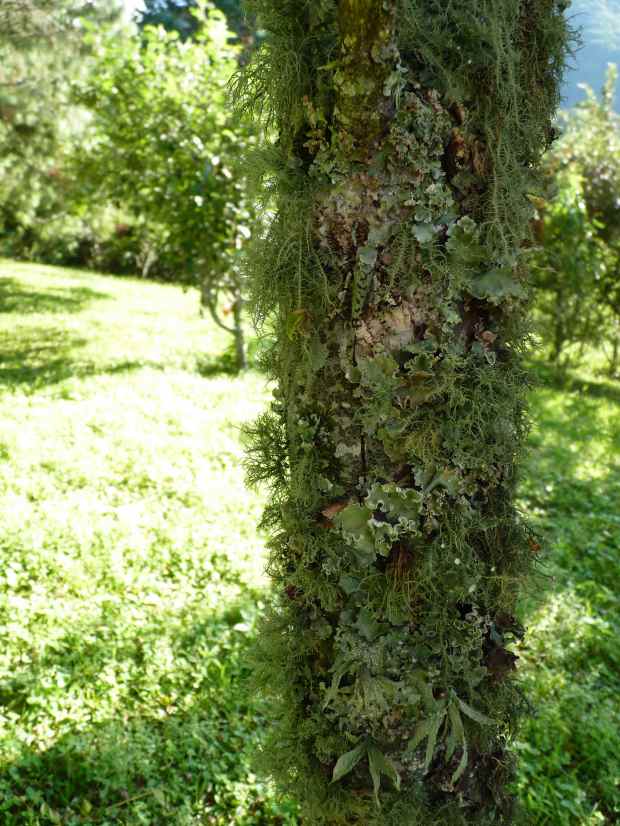
I think this time it was rather easy but it is a lovely insect all the same and worth having a look at it. I call it the “lichenhopper!” Below some more close-ups of the beast.
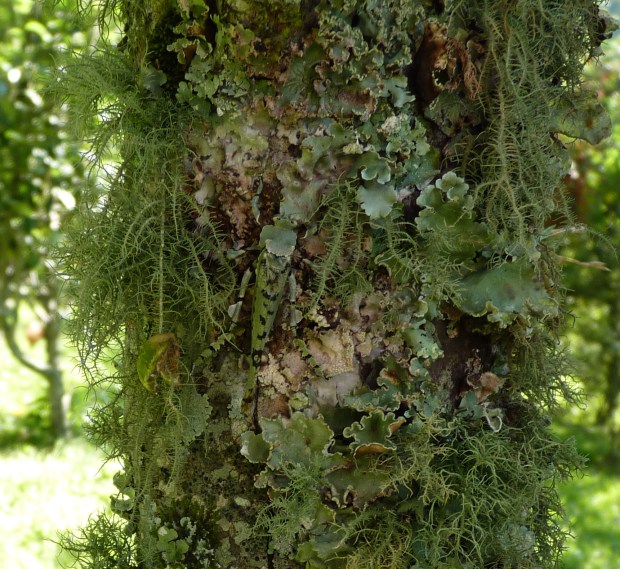
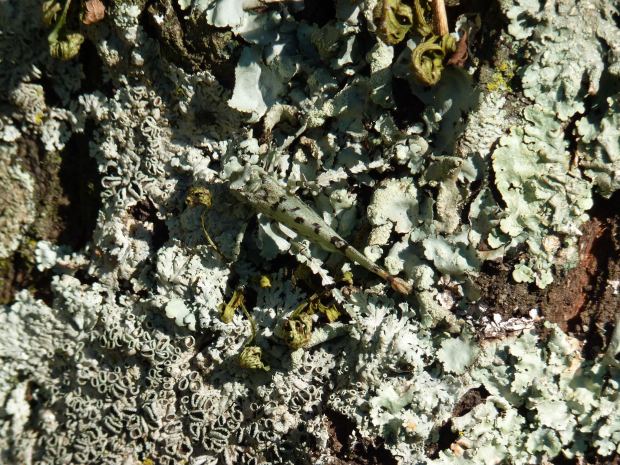
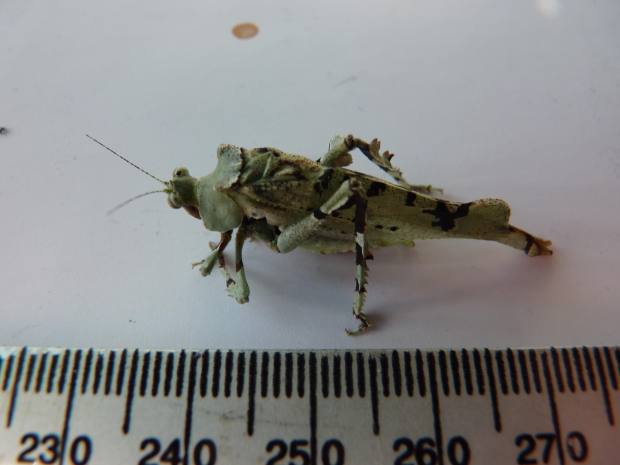
Back to Salta with another interesting creature for you to find.
I think this time it was rather easy but it is a lovely insect all the same and worth having a look at it. I call it the “lichenhopper!” Below some more close-ups of the beast.
The place still exists. It is located a few km outside Harare, on the Bulawayo Road. We do not go there often nowadays. In fact, we have not visited it since we returned to reside in Harare after my retirement in 2013.
However, in the late 90’s we brought our children there a few times. The idea was to familiarize them with the various reptiles they were likely to find in Africa and avoid or at least minimize the “yuck” factor.
I still remember our first visit when we were fortunate to meet George, one of the guides working in the place. He was a small skinny man probably in his late forties. George only had one arm, his left. My recollection is that he had lost it after the bite of a cobra but the rest of the family believes that a crocodile was responsible for the loss. I am sure I am wrong!
The first time he guided us through the reptile collection it left such an impression that, whenever we came back for a visit, we looked for him as our chaperone. It was well worth it. He was not only extremely kind and patient with our children, but had a natural way of putting them in “direct contact” with the various reptiles. With him they handled for the first time varios beasts such as the resident monitor lizard, chameleons and a number of harmless snakes.
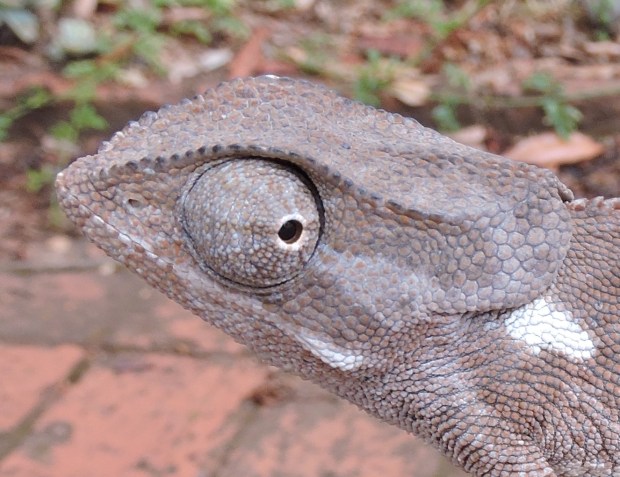
A chameleon from our Harare garden.
What really made the visit to Snakeworld different was George’s guided tour through the successive enclosures that hosted the snake collection. These were a succession of glass windows where the various African snakes were on display. You started from the various non venomous snakes and gradually worked your way through a crescendo in poison severity that reflected on our level of excitement.
The tour started with a quick walk through the harmless beasts. As some of these had already been handled, they attracted mild interest.
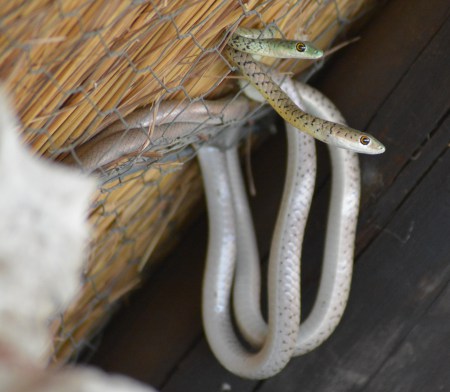
Mating Spotted bushsnakes at Masuma dam, Hwange National park.
The exception were the African pythons, located at the end of the “non-poisonous” wing. Their enclosure was large and populated by a few specimens, one of which was especially large if not very active. The ability of these snakes to kill and swallow prey much larger than themselves by virtue of being able to stretch their jaws was the main comment George made about them.
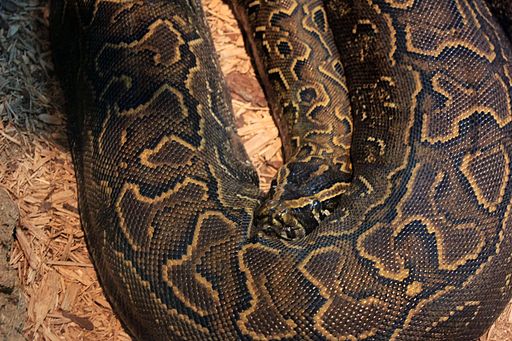
African rock python. Picture By Yinan Chen (www.goodfreephotos.com (gallery, image)) [Public Domain], via Wikimedia Commons.
The first dangerous ones were the boomslangs that only awoke mild interest on the youngsters. Conversely, I found their beautiful bluish-green colour and arboreal habits really fascinating and to see them brought to my memory and incident that happened a few years earlier while camping in Chobe National Park with our very young kids. We were sitting at our camp during lunchtime waiting for the heat to subside when, without warning, a green bundle landed between us with a thump. It was a boomslang that had just caught a lizard and clearly lost its balance! Almost before we could recover from our severe fright the snake re-climbed the tree and it was gone in seconds, only its bluish tinge and typical scales made me guess its identity.
But let’s go back to Snakeworld.
The twig snakes with their great ability to mimic -yes you guessed well- twigs, are always attractive as you can spend a few minutes before spotting them among the branches, even when you know they are there, looking at you!
While waiting for us to find them, George would give information about the biology of the various snakes, their distribution, conservation status and prey. Through him we learnt that Eastern Zimbabwe (the valley of the River Honde) was the place where the most dangerous snakes were likely to be found.
Then we moved to the final part of the exhibit, where George gave facts about each snake species. The latter ended with a statement about their lethality and this was the real “pièce de résistance” of the visit!
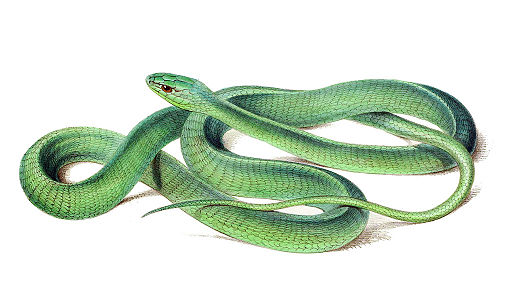
A rather green boomslang. Picture by Day & Haghe [Public domain], via Wikimedia Commons
The gloated-looking puff adders with their excellent camouflage and slow slug-like displacement were striking as I could understand that stepping on one would be the most likely snake accident that could happen, as George confirmed.
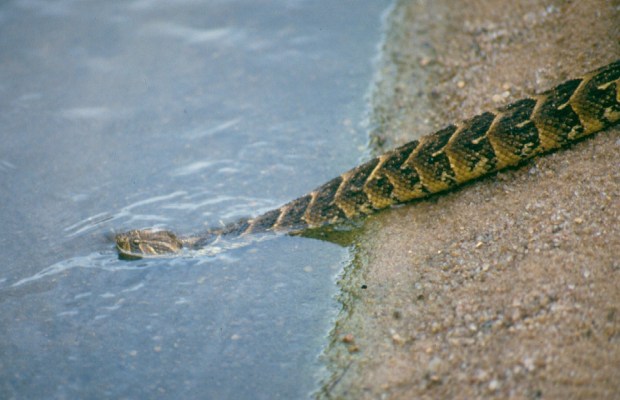
A freshly moulted and slow-moving Puff adder goes for a swim at the Sand River, Maasai Mara, Kenya in the 80’s.
The “cobra parade” started with the most common Egyptian cobra, that would kill you in a couple of days if not treated. We were getting anxious to continue but he would walk a couple of displays on and stop again showing us what looked like water stains inside one of the glass panels. Pointing at some beautiful terracota coloured snakes, he would explain that they would blind you if they would manage to hit your eyes with their spray of venom. I immediately remembered Alan and Joan Root filming spitting cobras in “Two in the Bush” where Joan wearing glasses was the target of a large spitting cobra while Alan filmed the scene! Two in the Bush is a great documentary worth watching!
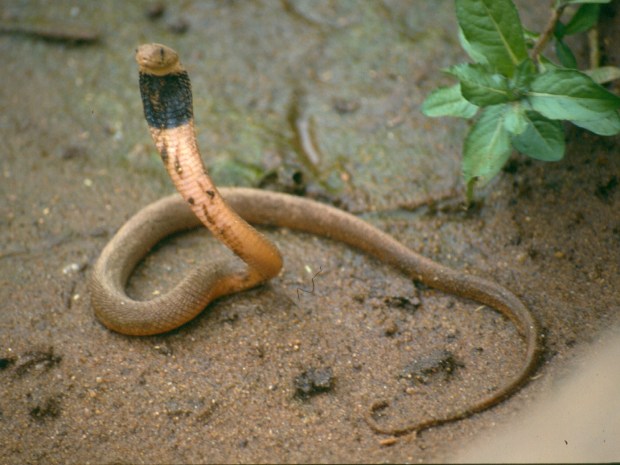
Young Spitting cobra pictured by bushsnob in Bushwhackers Camp, Kenya in the 80’s.
After the cobras it was the turn of the mythical mambas. The beautiful and deadly green mambas were first and they took us aback, honouring their names by sporting the most wonderful and shining pale green colour. George would explain that these were rare in Zimbabwe but rapidly lethal if not treated by the right anti-venom. We were all in awe at their almost “smiley” face that made them look deceivable friendly. “Luckily they live up trees”, George said to calm things down ‘but if beaten, you only last a couple of hours” he concluded.
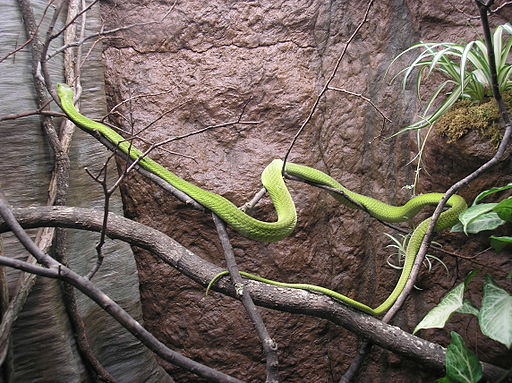
Green mamba. By Picture taken by deror avi on 24th September 2006. (Own work) [Attribution], via Wikimedia Commons.
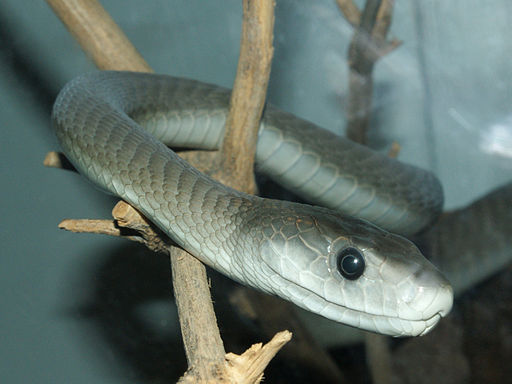
Black mamba. Picture by TimVickers (Own work) [Public domain], via Wikimedia Commons.
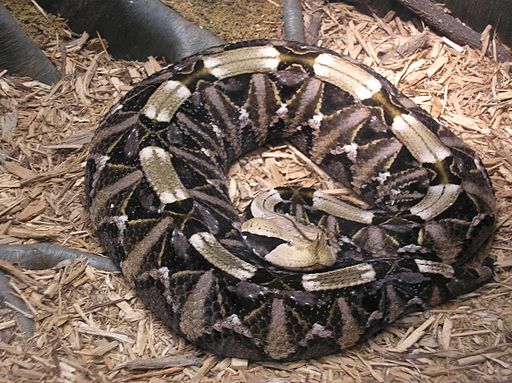
Gaboon viper. Picture taken by deror avi on 24th September 2006. (Own work) [Attribution], via Wikimedia Commons.
![Close up of a Gaboon viper. Picture by No machine-readable author provided. Ltshears assumed (based on copyright claims). [Public domain], via Wikimedia Commons.](https://i0.wp.com/bushsnob.com/wp-content/uploads/2017/03/gaboonviper2.jpg?w=309&h=227&ssl=1 "GaboonViper2")
![Gaboon viper. Picture by No machine-readable author provided. Ltshears assumed (based on copyright claims). [Public domain], via Wikimedia Commons.](https://i0.wp.com/bushsnob.com/wp-content/uploads/2017/03/gaboonviper.jpg?w=303&h=227&ssl=1 "GaboonViper")
Although its colouring seems to be rather obvious, it gives the snake an excellent camouflage on its tropical habitat littered with tree leaves. George, showing it his utmost respect, mentioned that this snake was only found in the Eastern Lowlands but that it was -luckily- rather uncommon. He also mentioned that the one we were looking at had been at Snakeworld for many years and that it was extremely aggressive. Then he added: “we call it two steps”. Although I realized why, our kids immediately asked him the reason. That was what George had been waiting for! “You get bitten by this one and you can only walk two steps, then you die”.
Although I am not able to confirm his statement, the snake was massive and at the time I could imagine that the amount of toxin it could inoculate through a good bite would be very large and rapidly lethal[1]. I can assure you that George’s “two step” statement had an impact on the family and to listen to George saying it again become one of the reasons to return to Snakeworld.
As time goes on we mature things. In our case we have incorporated George’s “step” scale into our own family “bush language” and, in the rare cases we spot a snake, the immediate comment is “was this a two-step one or a ten-step one?” I must admit that we get lots of amusement with what follows.
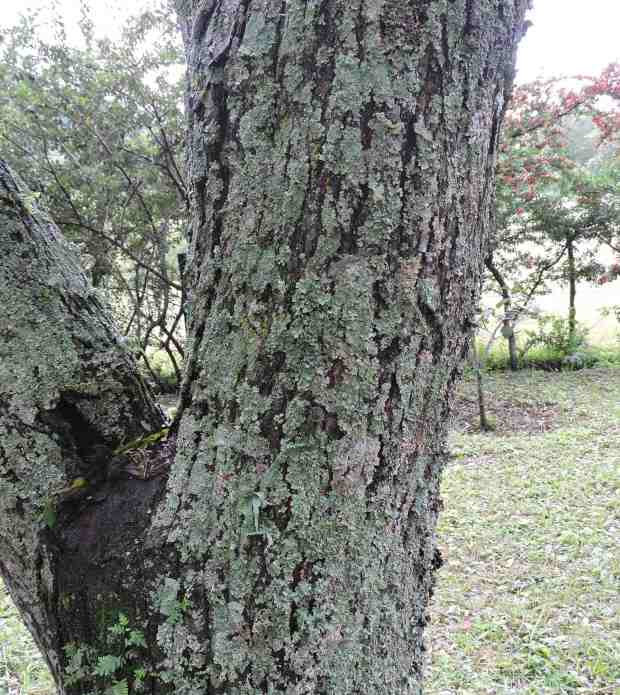
Occasionally at our farm we spot these noisy creatures in the garden. Of course, they are difficult to spot if not to hear!
?
?
?
?
?
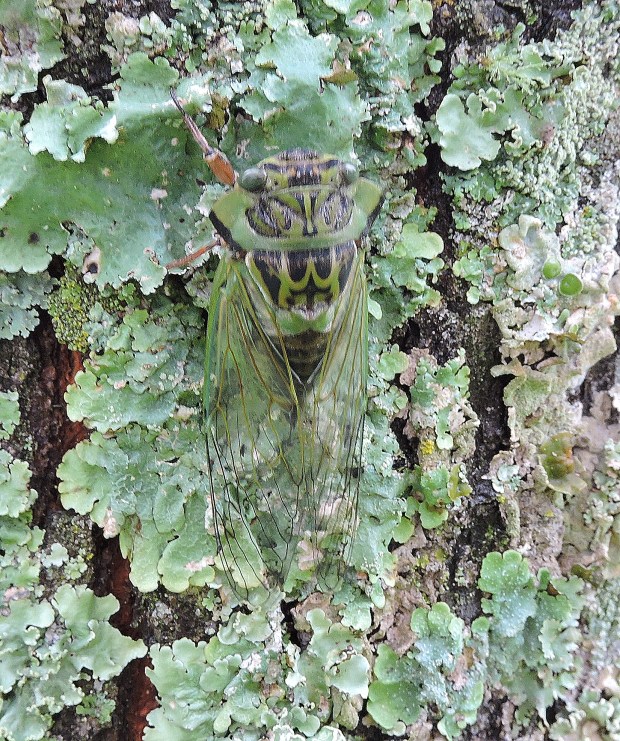
A very loud, large and colourful cicade!
Back to Africa for a while while I develop another story from “Out of Africa”. Poor internet connection and farm work… are attempting against my productivity.
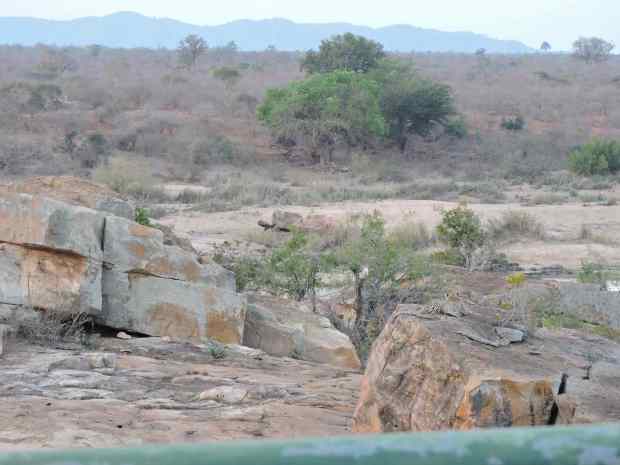
This is not a difficult “Spot the Beast” but I thought it is a nice situation to challenge your power of observation. I would be worried if you cannot find it within the first 10 seconds…
Here it is:
?
?
?
?
?
?
I hope you agree with me that she was not only beautiful but well placed to see what was happening!
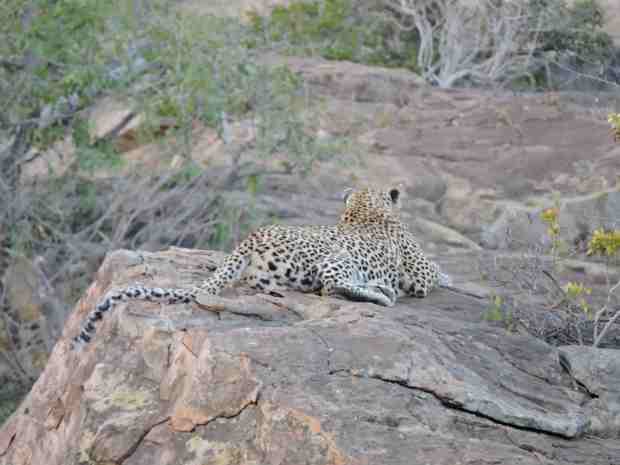
A few more pictures of her:
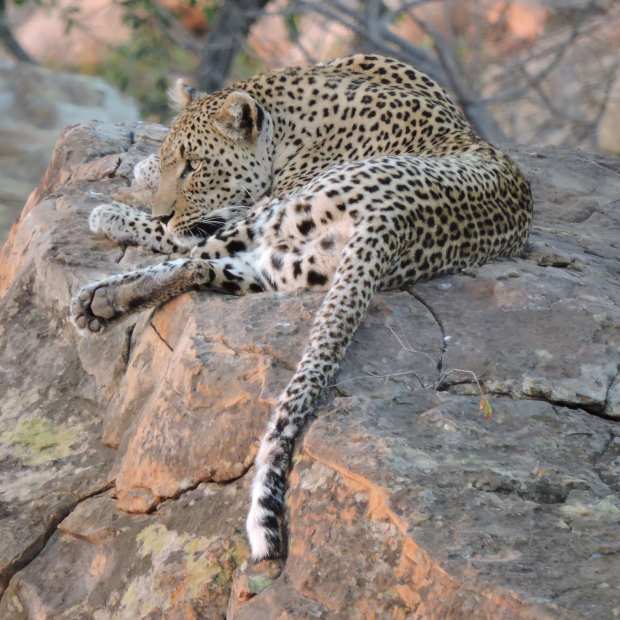
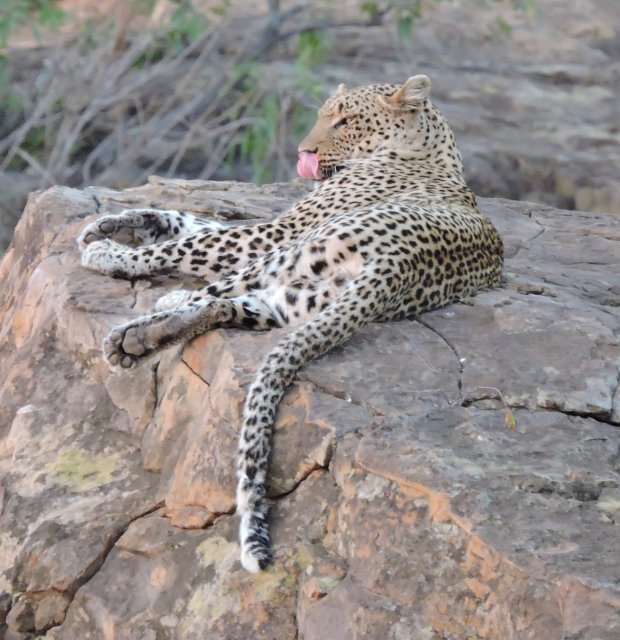
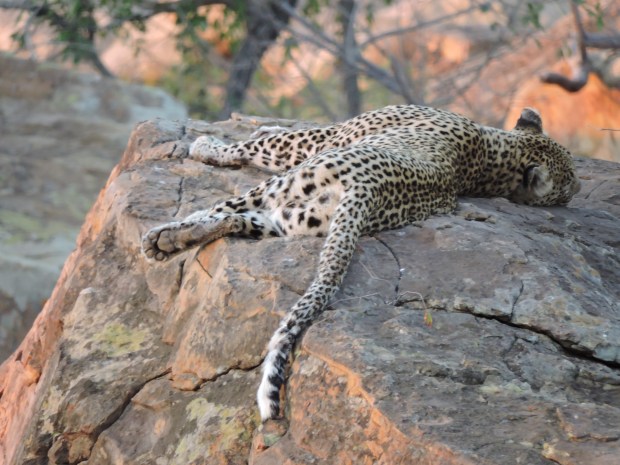
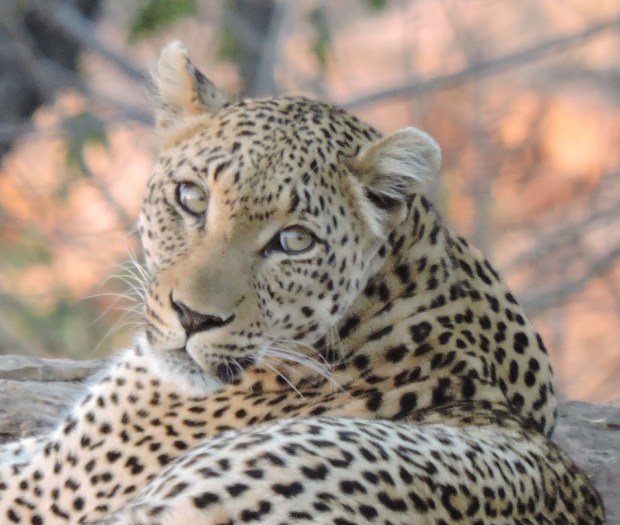
Puma, Puma concolor, are usually quiet and therefore they can live with humans undetected as solitary predators feeding on medium sized and large mammals such as deer and agouti but also on smaller prey such as snakes, hares and rats.
Puma are the most adaptable of all wild cats in the world and inhabit many climates: boreal, tropical, desert and rainforests and they are equally at home in lowlands or mountains. Shy and suspicious of humans they are rarely seen.
Our farm in the Yungas of Salta is home to wild cat (Oncifelis geoffroyi), ocelot (Leopardus pardalis), jaguarundi (Herpailurus yaguarondi) and puma[1]. Luckily, there are still wild areas where these animals can dwell and the agriculture frontier is not yet here so no many incidents with livestock predation occurs.
Although we have never seen a jaguarundi or an ocelot, we have seen a skull of what we believed belongs to the latter.

Ocelot skull.
A few years back the family (while the Bushsnob worked away in Bolivia) bumped on an adult puma that crossed the road in front of them about one km from our farm while driving at night.
As you can imagine, after such a find our farm went up in our estimation, as, at the time the cat was observed, we were not sure about being able to return to Africa.
Aware of our exciting animal neighbours, checking all footprints we see is the norm. Although most of what we see belong to the various domestic dogs that are kept by our neighbours, occasionally we find some that clearly belong to felines, particularly after it rains.
It did rain on the night of 12 to 13 Feb 17 but the morning started sunny so we went for our usual walk to burn a few calories and to get our telephone signal located three km away at a place known as “The Cross” where a wooden cross remembers a past fatal accident.
Returning from the walk I stopped to photograph a butterfly and noted two footprints. They had no sign of nail marks and the larger one was 9 x 7.8 cm (foto). Our first thought was that they could belong to an ocelot. However, when we checked them in our mammal book[2], their size coincided with those of a puma although, as usual, some doubts remain.


Whether they belong to what we suspect or not, it is a great pleasure to be able to walk on a road where you can find such footprints and believe that such animals are around you in the thicket, probably watching your movements!
[1] Moschione, F. N. (2014). Relevamiento de Fauna. Finca El Gallinato, La Caldera, Provincia de Salta. Informe Relevamiento 2013-2014. 55pp.
[2] Emmons, L. H. (1997). Neotropical rainforest mammals: a field guide. 2nd. Edition. 307pp.
This post has been adapted from the Spanish original that appeared in the magazine Muy Interesante. I am grateful to the magazine for publishing the article and those readers interested in it can find it @ http://www.muyinteresante.es/naturaleza/fotos/vida-y-curiosidades-de-los-guepardos
After writing “A chase”[1]. late last year, I did research on cheetahs and found some useful information that I used to prepare “Super moms” and later I realized that I had forgotten that I had written “A chase” earlier! So now, I think that the present post follows it nicely as it offers what I hope is interesting facts on the cheetah, one of the most beautiful animals on this earth.
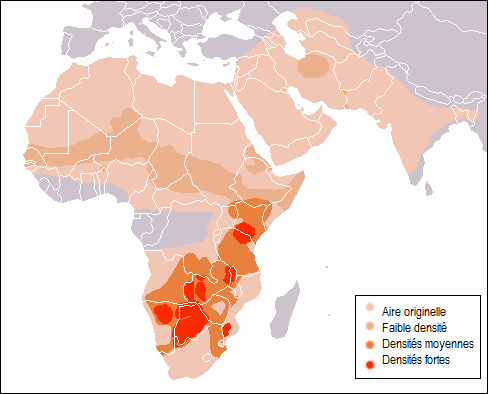
The vast majority of cheetahs (Acinonyx jubatus) live in Southern and Eastern Africa and also in some parts of Iran.
MAP OF CHEETAH DISTRIBUTION
It is one of the great cats although it has unique characteristics that place it in its own genus describing that its claws are semi-retractile unlike other felids that can retract them totally. While the latter use their claws to climb trees and tear flesh, cheetahs’ have a grip function to favour their acceleration, similar to the sprinters’ shoes.
 Young cheetah in the Nairobi National Park, Kenya.
Although its taxonomic location is being reviewed at the moment, its closest relatives are the puma (Puma concolor) and the jaguarundi (Puma yagouaroundi). These three species together form the Puma lineage, one of eight that make up the Felidae family.
Since its discovery in 1775 by von Schreber the population of cheetahs has declined dramatically to the present situation. The International Union for the Conservation of Nature (IUCN) estimates that there are 6,700 adult and young animals distributed in 29 sub-populations and it is classified as a vulnerable species.
The cheetah needs large tracts of land and is currently heavily threatened by the loss of habitat due to the advance of the agricultural and industrial frontier. In addition, unlike the leopard (Panthera pardus) that can adapt to live close to people, the cheetah, a timid animal, is unable to do so.
Its relative docility and tolerance to humans has contributed significantly to its decline. Apart from being hunted as trophies, since the time of ancient Egypt, four thousand years ago, they were captured and kept as pets. This custom is still maintained today as they are displayed as status symbols and used for hunting in several countries. The consequence of this is that these animals have disappeared from much of their habitat.
In addition, these animals are very vulnerable in the wild because of the way they obtain their food. Cheetahs use their great speed to hunt but to be effective they need open spaces and excellent visibility since a false step can mean an injury that may condemn them to hunger since they are too timid to steal prey from other animals.


The hunting of their prey, medium-sized gazelles, begins with their stalking until they reach a distance of between one and three hundred meters. From that moment a real “life race” between hunter and prey starts. After three leaps the cheetah is already about 45kph and during the chase it can reach over 110kph in short stretches. This makes it the fastest mammal on earth as we all learn at school but also one that enjoys an exquisite elegance of movement.
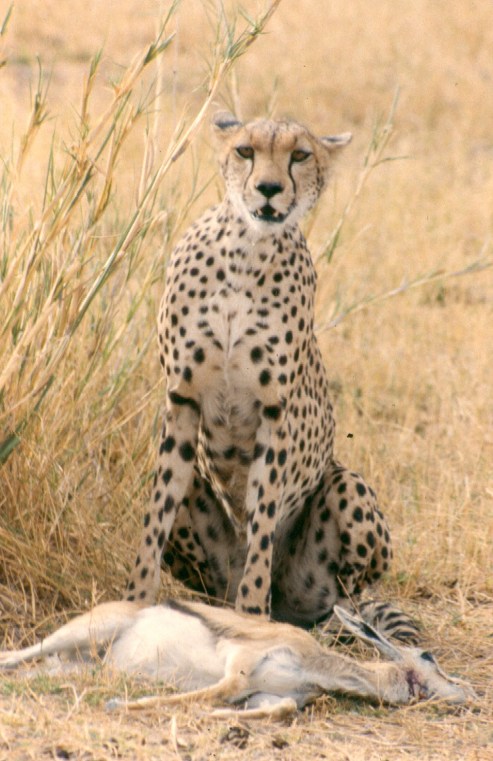
When it reaches the prey it makes it makes it trips it and, after it falls down it chokes it and kills it quite fast. The cheetah, usually exhausted after the chase needs to catch its breath and it only starts feeding after a while that can be as short as five or as long as fifty minutes. At that time it is common for other larger predators to steal its prey. Knowing that this can occur at any time, the cheetah eats fast and much, starting with the muscular hindquarters and it is able to eat up to 10kg of meat from a sitting.
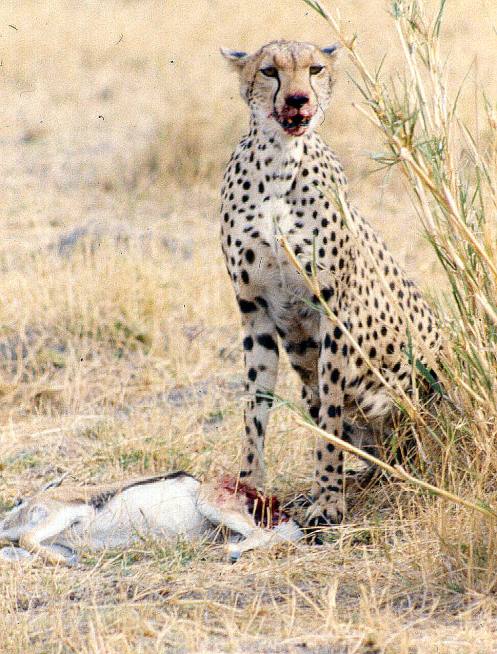
The “public” life of the cheetah not only exposes them to losing their prey because of the interference of irresponsible tourists that, eager to obtain a better picture, interfere with their hunt but they can also lose one to two quarries every ten to stronger predators and, in some places, losses can reach up to fifty percent.
Cheetahs breed throughout the year and females ovulate when they have sexual contact with the male. For this reason their pups may be from different fathers boosting genetic diversity, an important factor in shrinking animal populations.
They gestate for almost three months and between three and five cubs are born, although in rare cases up to eight offspring have been observed. It is easy to imagine that for an animal that relies on speed to eat, being pregnant adds another complication to its life.
Cheetahs, especially females with cubs need to hunt almost daily and they are constantly monitoring their surroundings from a vantage point that can be a termite hill, a tree[2] and even a car!
This behavior not only allows them to detect possible prey but also prevent attacks on their offspring by lions, leopards and hyenas that would not hesitate to kill them. Failure to hunt either due to natural shortages or human interference may also mean that the cubs would starve.
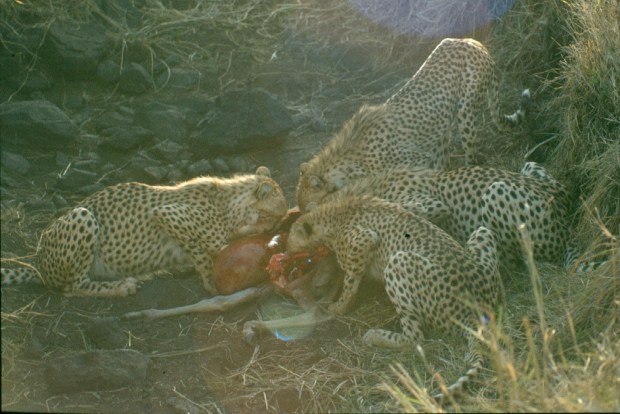
Fortunately for the species, there are females that manage to breed the vast majority of their cubs and these are known as “super mothers.” Some even raise the cubs of other females! These super moms are not only successful hunters who manage to kill prey on a daily basis but that also know how to protect their offspring from predators.
One of these females called “Eleanor” is well known in the Serengeti National Park in Tanzania for having raised 10% of all the cheetahs that today live in the South of that huge park. This finding is one of the important achievements of the Serengeti Cheetah Project, led by researcher Sarah Durant[3].
[1] See: https://bushsnobinafrica.wordpress.com/2017/02/02/a-chase/
[2] For a rather extreme example see: https://bushsnobinafrica.wordpress.com/2014/06/30/tree-cheetahs-2/
[3] For interesting information on the subject see: http://www.tanzaniacarnivores.org/
Although I do not like eating fish, I am what the British fishing community know as a “coarse fisherman” and I have been engaged on this activity all my life, although I do not fish much these days. At the time we were in Kenya I was already returning the fish, unless someone would be interested in eating them. Tobias, Paul’s camp hand, was such a guy and if he was around there was no way that a fish would escape his attentions and invariably it would end up in the sufuria[1]!
Tobias was from the Luo ethnic group that dwells around lake Victoria both in Kenya and Uganda and, naturally, they eat fish in contrast to the Kikuyu and Maasai that very rarely, if ever, consume them. The rare event of a Maasai herdsman fishing with me was described a while ago in this blog[2] although whether he would have eaten the fish or not will never be known!
As only driving with your eyes closed would stop you from seeing animals while traveling through the Maasai Mara area, sometimes, for a change, we decided to just chill out around camp and on occasions, try our hand at fishing in the shadowy Mara River. We were able to do this as, by virtue of being outside the reserve, we enjoyed freedom of movement within the limits of common sense and/or lessons learnt!
In the area we regularly camped there were a couple of nice grassy spots from where we believed that fishing could be attempted. The problem was that we knew that crocodiles were plentiful in the River and there was no doubt that they were lurking anywhere under the muddy waters. We had already seen them in action snatching wildebeest during their river crossings. Clearly in this setting, fishing would be a hazardous sport.
After careful consideration we chose a nice opening in the riverine forest that not only offered a good view of the river but also towards our back, an important consideration in the Maasai Mara as dangerous animals were also around us inland! As there were no trees nearby we could handle our fishing gear without major mishaps. I have the innate ability to get carried away with the fishing and end up “hooking” a few trees! Although there were lots of hippos cruising up and downriver, we did not consider them a major problem.
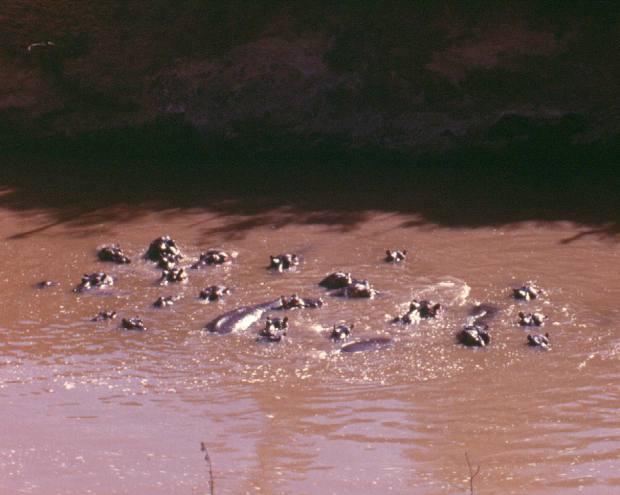
A view of a Mara River hippo pool to show the colour of the water.
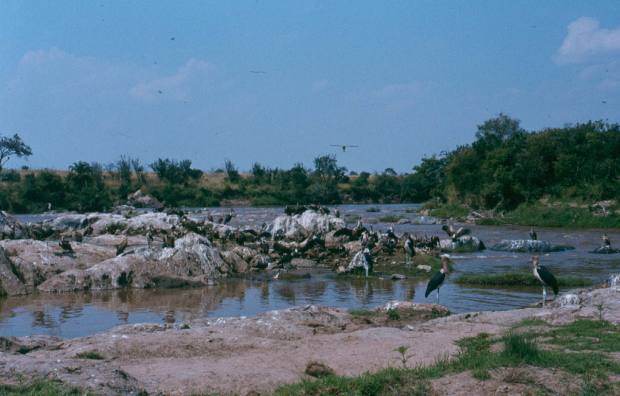
The aftermath of a wildebeest river crossing.
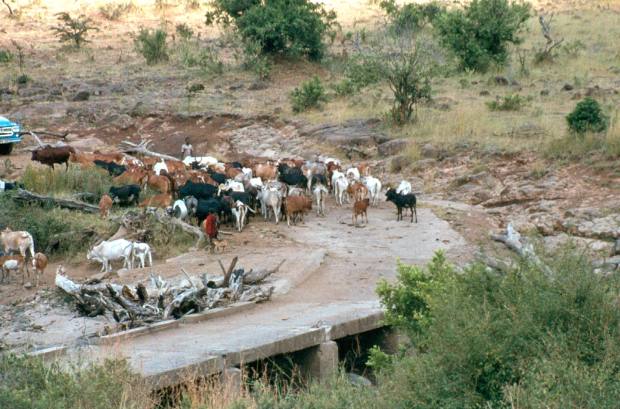
The Mara River bridge on the way to the Transmara. A lorry and us wait for a herd of Maasai cattle to cross.
So, one of the trips to the Transmara coincided with Paul doing some work with wildebeest on malignant catarrh, a viral disease that affected cattle, and we decided to try fishing. I brought fishing gear and cow liver so we were ready to try our luck. Our intended target was the common and ubiquitous African catfish (Clarias gariepinus). Immediately a worldwide event was born as we represented three Continents: Europe (Britain), represented by Paul, Africa (Kenya, Luoland), represented by Tobias while I was the America representative from Uruguay. Similar to the spear throwing competition earlier[3], it was an intercontinental fishing tournament!
The river was at its normal and flowing gently so that was favourable. What was not were the abundance of submerged trees and branches that poised great difficulties to a normal line recovery. The consequence was severe loss of equipment and we were soon running out of hooks and our lines were getting shorter! In addition, I spent lots of time disentangling my line from the trees that seemed to jump towards me every time I would try to get my bait in the water!
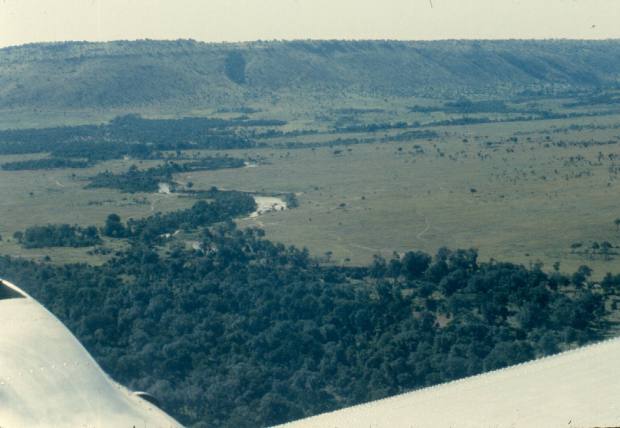
The Mara River from the DC3 when it did regular flights between Nairobi and the Maasai Mara.
A fish bite was invariably followed by frantic efforts to recover the line in an attempt to get it out while avoiding it getting entangled in the various branches and water plants. However, if you were lucky or perhaps unlucky? and hooked a large fish, the task would become much more difficult as the fish would try to escape by getting inside the branches. In addition, there was the “crocodile problem” as the reptilians would be alerted by the fish splashes and immediately come to “investigate” and get our fish so fast recovery was a must to avoid losing our trophies as those lost “en route” to anything such as snags or crocs would not count.
Paul did quite well and caught more than me. However, Tobias was the star and clear winner. He probably knew things we did not, through years of fishing “for the pot” during his early years near lake Victoria. His technique was simple, almost too simple. He chose to use a hand line and threw it very close to the shore. In this way, he avoided a lot of the snagging and did not suffer too badly from line and hooks losses like us wazungu[4]. He will then wait a short while and pull them out, almost unfairly easily!
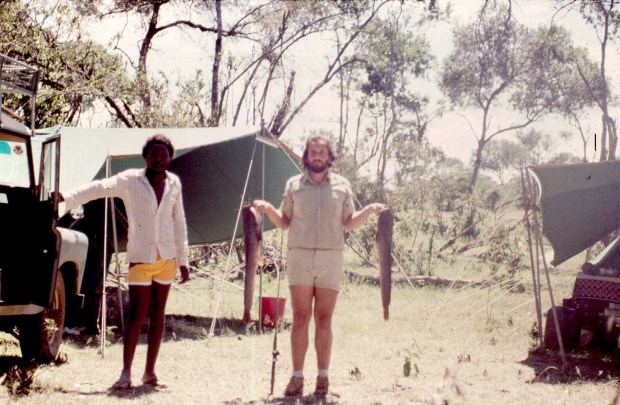
Tobias and the Bushsnob with some of the spoils.
Tobias was delighted, not so much for having won the contest but, much more importantly for him, for having the possibility of feasting on fish for a few days! Although later on we tried the catfish, Paul and I agreed that they tasted like we imagine the Mara River mud would do and, luckily for Tobias, we declined further offerings.
[1] Saucepan in Kiswahili.
[2] See: https://bushsnobinafrica.wordpress.com/2016/12/13/memories-a-fishing-trip/
[3] See: https://bushsnobinafrica.wordpress.com/2015/11/05/javelin-throwing-almost-olympics-games/
[4] In Kiswahili, white man. See: https://en.wikipedia.org/wiki/Mzungu
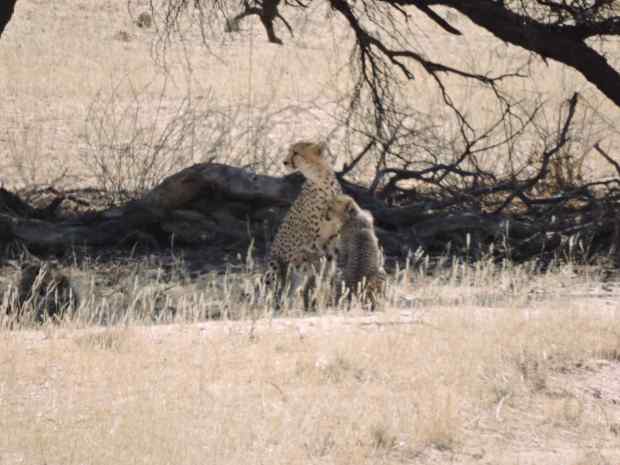
It was driving from the Kalahari Tented Camp on the Auob River bed that we found a cheetah and her four cubs resting under the shade of a tree a long way off, at the edge of the dunes. An impossible find except for a detail: my wife was with me this time and she spotted them! As we had not had a good sighting of cheetah for quite a while, we stayed with them waiting for some action.


We watched them as they moved from the dunes to the actual dry riverbed, the mother always watchful while the cubs were engaged in a never-ending game of chasing and grabbing each other, already graceful and enjoyable to watch.


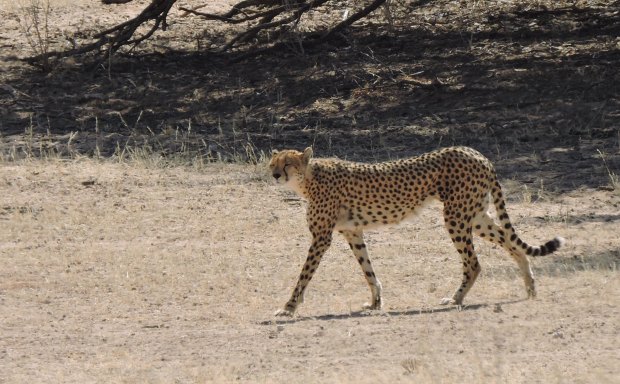


After a while, they got under a large tree and they decided to have a rest. Well the mother rested while the youngsters continued with their shenanigans. It was getting rather hot.
When we were considering a return to the coolness of our bungalow we saw, at about one hundred metres downriver a herd of about fifty springbok. They were slowly walking towards one of the waterholes located perhaps two hundred metres up river. We realized that they would need to walk in front of the cheetah so we abandoned our parting idea.

By the time we looked back to the cats, the mother had already spotted the gazelle and she was already alert while the cubs were flat on the ground. Obviously, their playing had been suspended by mom’s orders!
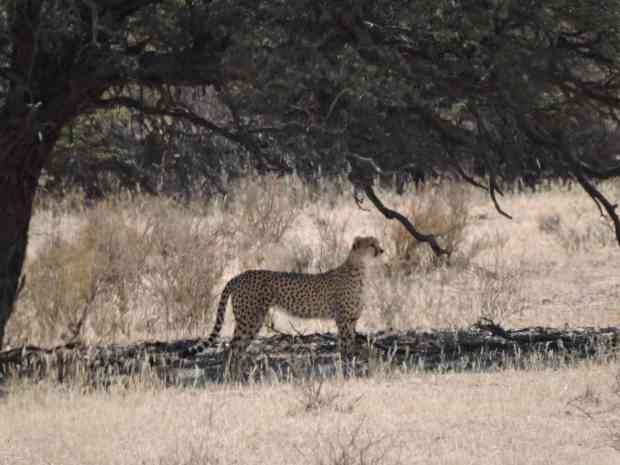
As the springbok got closer we saw the female cheetah crouch and her muscles tense so we knew that an attack was being prepared. The cubs were still invisible! “When is she going to go for them?” I thought while I readied the camera but, most importantly, my eyes to watch what was about to take place.
The springbok were still about fifty metres from the cheetah but, at that point, she started running towards the herd scattering gazelles in all directions. Although she did a beautiful sprint through open ground in front of us, she failed. After a while she walked back towards her waiting cubs that broke their cover to greet her, even when she was “empty-jawed”. I thought that the cheetah charged way too early but, who am I to judge a cheetah charge?
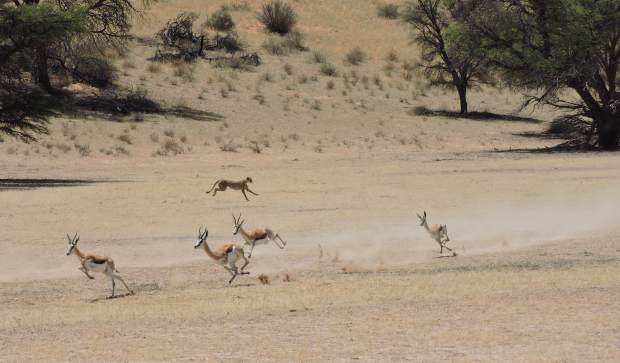

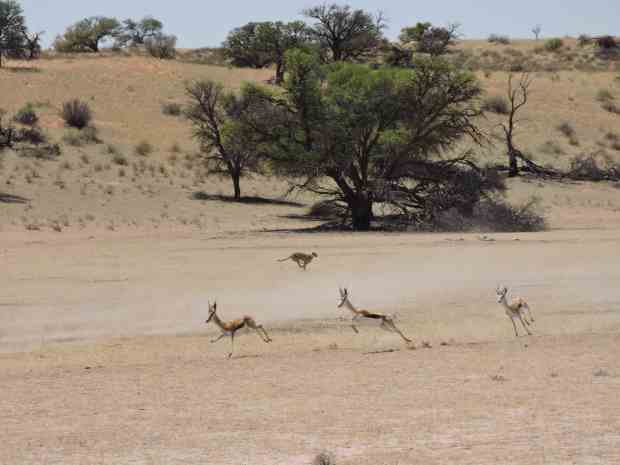


After the dust settled, we saw that the cheetah had split the herd. The lucky ones could continue their disturbed journey towards the water. The unlucky that stayed on the other side stopped for a while and then, reluctantly turned around and slowly retraced their steps. They will need to wait until the cheetah moved off to resume their quest.
The five cheetahs returned to the shade and they were still there when we finally left them after a few fine hours of fine wildlife watching. The following morning, while driving to our next camp, we saw them again, not far off, their black and slender silhouettes against the early morning sky.

Just to keep you entertained while I finish a post on this subject.

Here they are:
Traveling to the warm Kenya coast was an attractive break from working inland in the cooler and often cold highlands. After trying a few options, the preferred choice was to rent a house for a few days at Watamu and, from there, to explore the surrounding area or to enjoy the beach for my wife and practice windsurfing for me. But that is another story.
Our first visit to the coast included staying at a rather hot camp in Diani beach that we did not repeat. During that visit we explored Mombasa and we got lasting impressions of its ocean and coastal area, particularly Fort Jesus and the old Mombasa harbour.


While at the Mombasa harbour, apart from the ubiquitous fishing boats we saw some larger vessels that seemed to be dedicated to cargo activities. It was also the first time that we saw (or learn of) dhows. These, rather elegant vessels anchored some distance away from the shore and surrounded by smaller boats that were busy offloading them during the cooler hours of the day.

The Kenya coast in the 80s.
To add to their rather romantic reputation, we also learnt that these sailing boats, with their main masts pointing forward and lanteen sails, would use the trade winds to commute between Africa and Asia with exotic cargo.
I found pictures of the dhows recently while looking for images to place in my Instagram page. As the photographs were originally taken as slides with a film camera and later on scanned by myself, I was checking them critically to decide on their quality for the intended use. It was during this process that I noted the names of the dhows: Nawalilkher and Tusitiri.
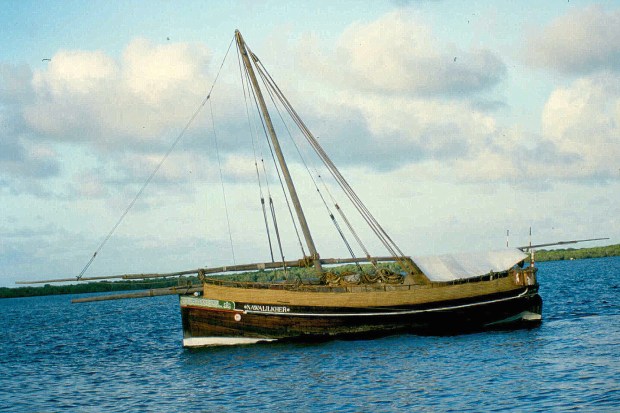
Nawalilkher in the 80s.
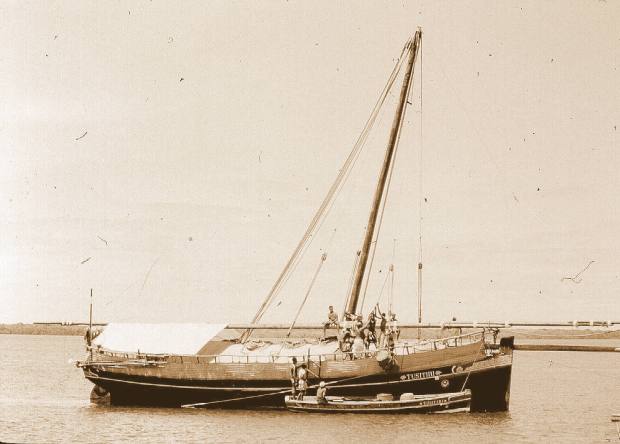
Tusitiri as we saw it in the 80s.
Curious, I Googled the names to see if, by any chance, they were still with us. To my surprise I not only found them but learnt that they seemed to be still in “active service” forty years after I took the pictures and probably quite a few more from the time they were built.
I then contacted the owners and they confirmed that the vessels were the same after looking at my photographs and I got some interesting information.
Nawalilkher is now a floating restaurant with the Tamarind Group and they call it “Nawali” for short. The dhow was refurbished to a five star cruising restaurant now moored at the Mombasa Tamarind jetty. The vessel can accommodate seventy commensals for dinner, leaving room for dancing on the night cruises. It sails everyday except Sunday for both the day and evening cruises. Unfortunately, the company would not let me use their pictures to illustrate this post and referred me to their web site for more information[1].
Tusitiri, nicely restored, is sailing as an exclusive floating lodge along the Indian Ocean coast, owned by the Enasoit Collection[2]. It is believed that it was bought by its present owners around 1995 in Lamu where she was also originally built. I was also assured that the dhow is being treasured by them and is very much loved as I can see by the way it is being kept. It mainly stays within the Lamu archipelago but it has gone as far as Mozambique and she is considered by its owners as “…without doubt the most beautiful dhow on the East African coast”.
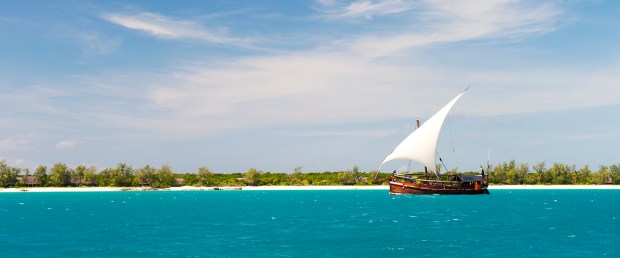
The restored Tusitiri sailing somewhere at the Kenya coast. Picture credit: The Enasoit Collection.
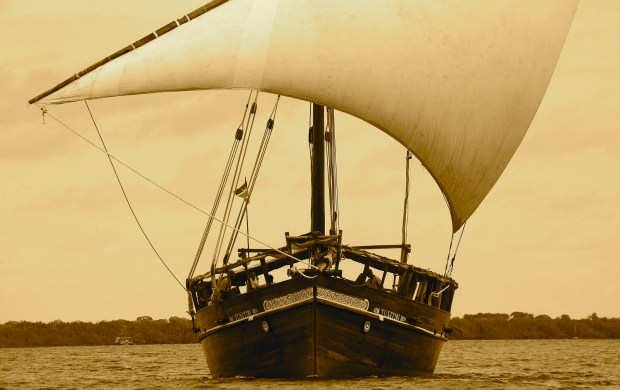
A great picture of the restored Tusitiri. Picture credit: The Enasoit Collection.


I must admit that I am quite pleased to have found the dhows again and clearly it is worthwhile to follow up certain things, as you never know where your search will take you.
[1] See: http://www.tamarind.co.ke/tamarind-dhow/
[2] See: http://www.enasoit.com/
Acknowledgements and credits
John and Lulu Clark, Managers of Tusitiri Dhow, The Enasoit Collection for the information and use of Tusitiri pictures. Pictures of Tusitiri by Robin Moore Photography and/or Stevie Mann Photography.
Akoko Vivian of Dhow & Rest Reservations of The Tamarind Group confirmed the identity of Nawalilkher and assisted me with useful information.
 A Bushsnob out of Africa