camera trap

Night visitors

After two days camping at Kennedy 1 and, as usual, feeling that we should have stayed longer, we travelled to Main Camp to stay for a couple of nights. Main camp has seen some improvements recently and we stayed at some of the refurbished bungalows that were in good condition and very suitable.

Aiming to impress our visitors, as soon as we could, we headed for the Nyamandlovu pan where we always find elephants. Not this time! Although we stayed for a few hours, the pachyderms did not make an appearance. We then moved to Dom pan and drew another blank. We have not experienced the absence of elephants during all of our earlier visits when both pans have always been visited by sizeable numbers.

We do not know the reason for this but possibly the rains were good this year and there was still food and water available to the elephants in other areas of the park.

The second night -our last in Main camp- we had another BBQ of excellent Zimbabwean beef and sausages accompanied by a good Pinotage. It was a lovely night with an almost full moon and, more rested, we decided to set up our camera trap close to our BBQ place to see what its meaty whiff would attract. We were confident to have night visitors as the camp´s perimeter fence offered several “unofficial” entry points!

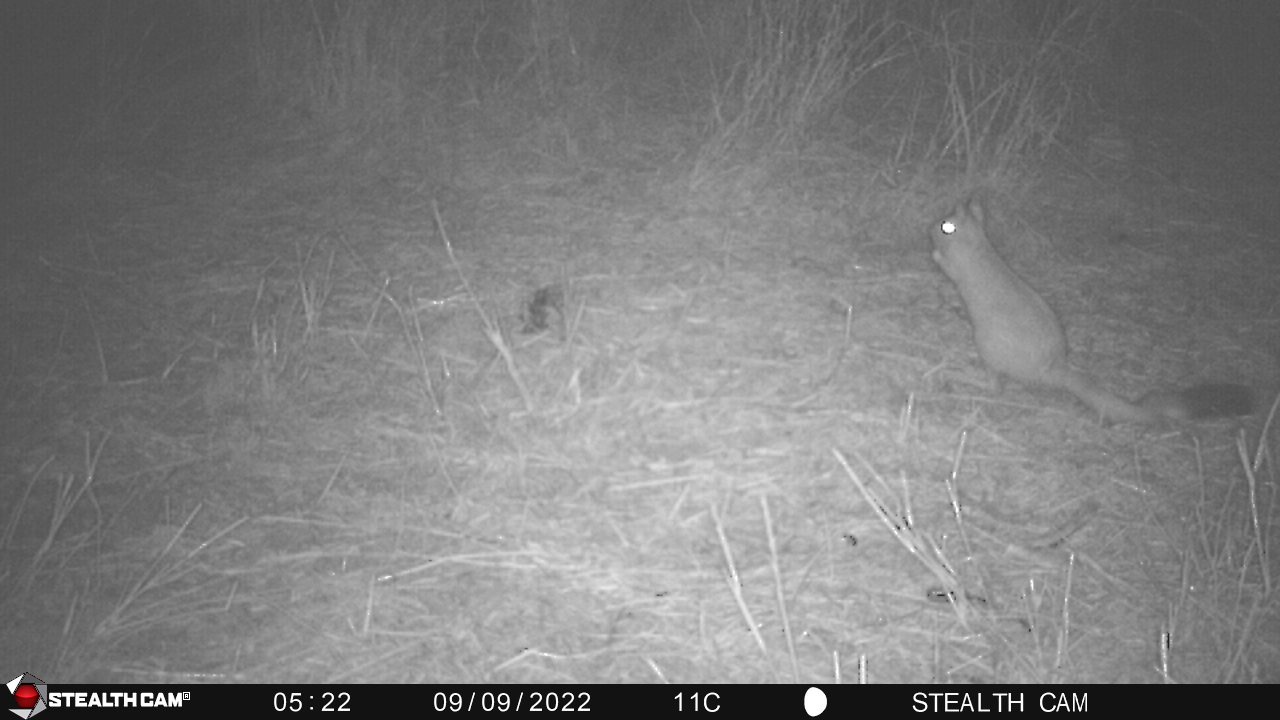
So, we placed the camera approximately thirty metres behind the BBQ grid, about twenty metres from our bungalow and hoped for the best! [1]

The following morning, after collecting our camera, it was time to resume our safari. We left Main Camp early as we needed to travel more than 100 km, the distance that separated us from Robins Camp in the northern part of the park. Although the road started well enough its surface soon turned red and became heavily corrugated. As happens in these cases our vehicles started to shudder badly. Familiar with corrugated roads both here and in South America, we tried all our tricks, but the shaking continued until, near Shumba picnic site, the road became narrower and the going smoother.

We arrived at Robins camp in the afternoon, and we rested until dinner time. In the meantime our son checked the memory card of the camera and decided that it was worthwhile having a game at guessing what animals had visited our BBQ area the night before. So, while having our sundowners, we each chose an animal we guessed that could have been there.

Species chosen were hyena (Mabel and Brenda), jackal (Roberto), African civet (Florencia) and honey badger (myself) [2]. Julio A. and his girlfriend Pat dis not participate as they had selected the pictures.

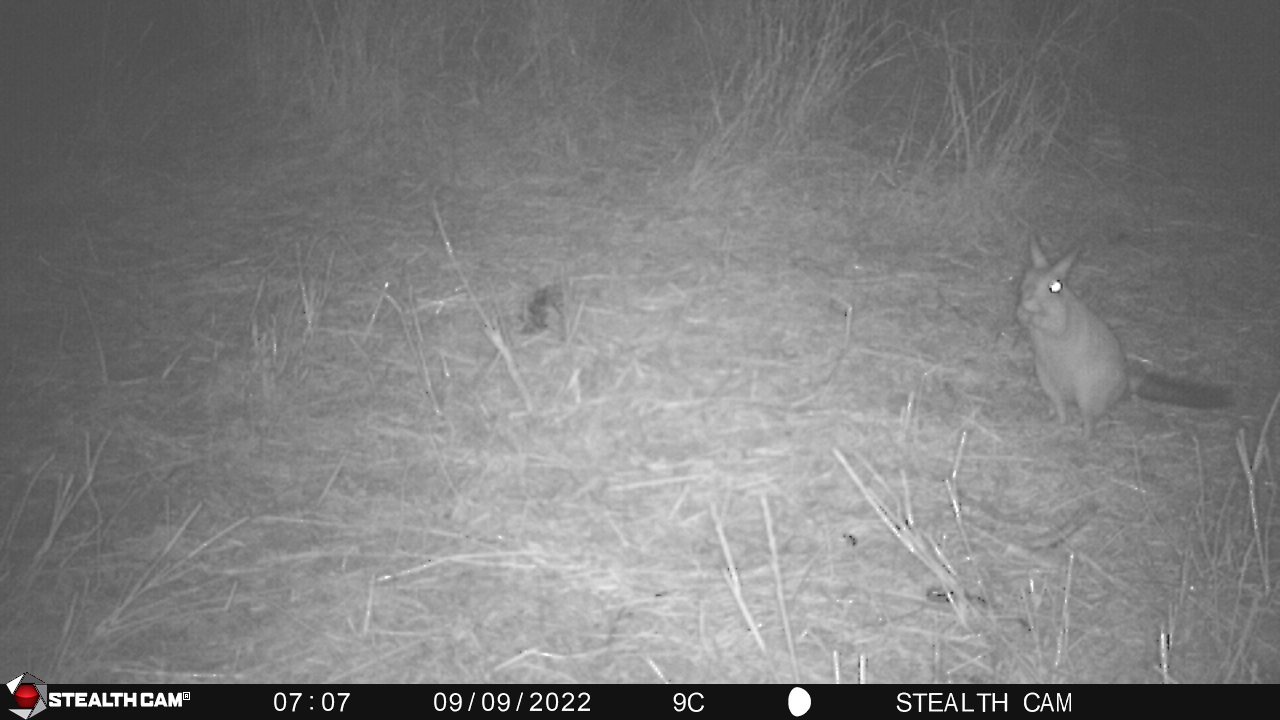
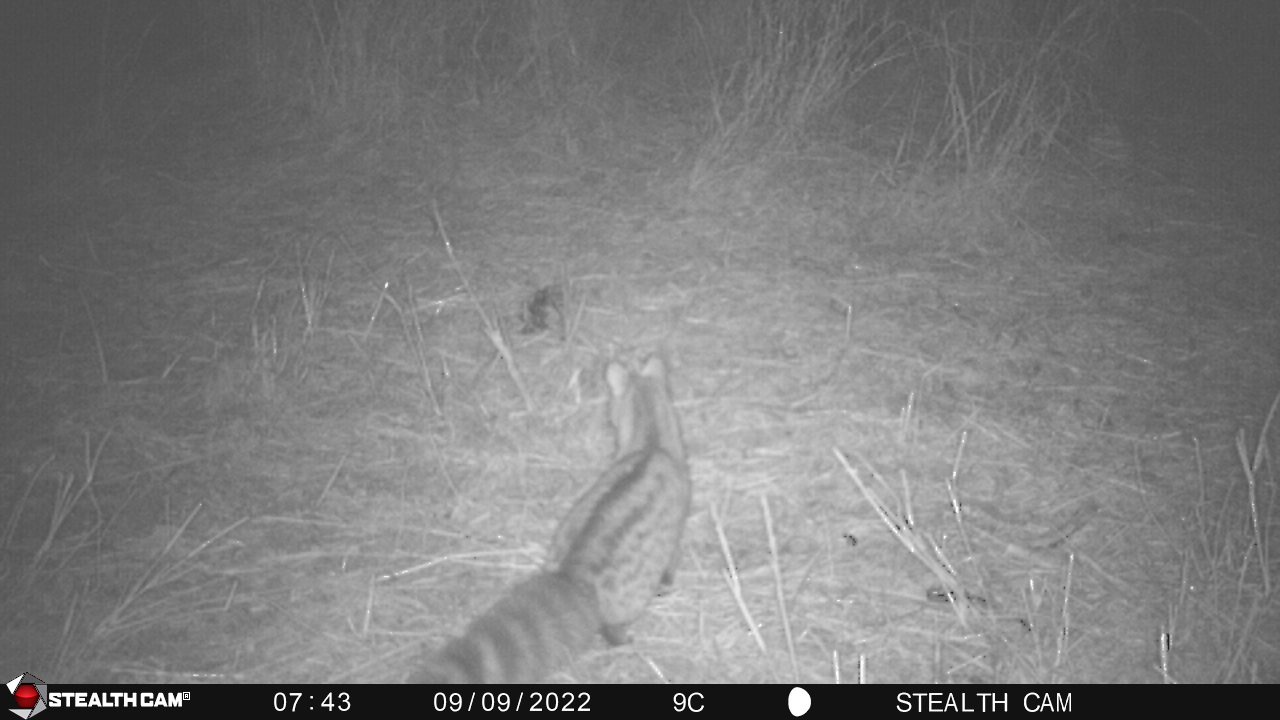
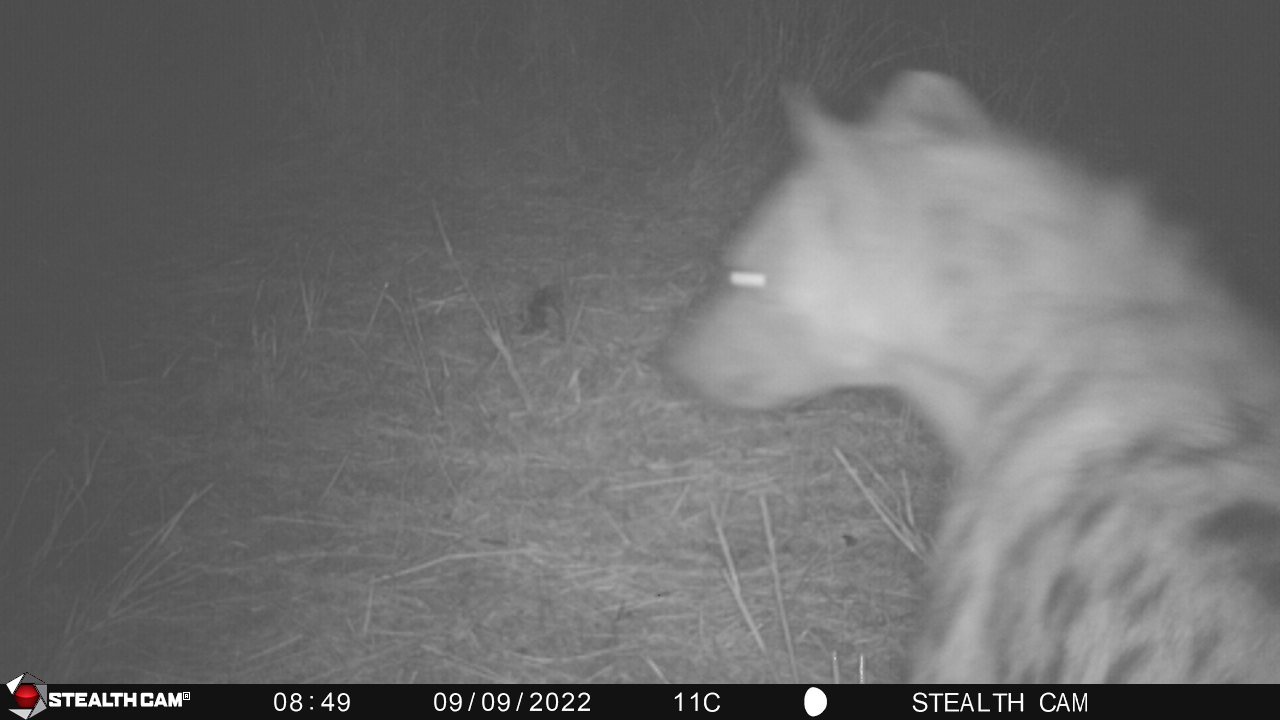
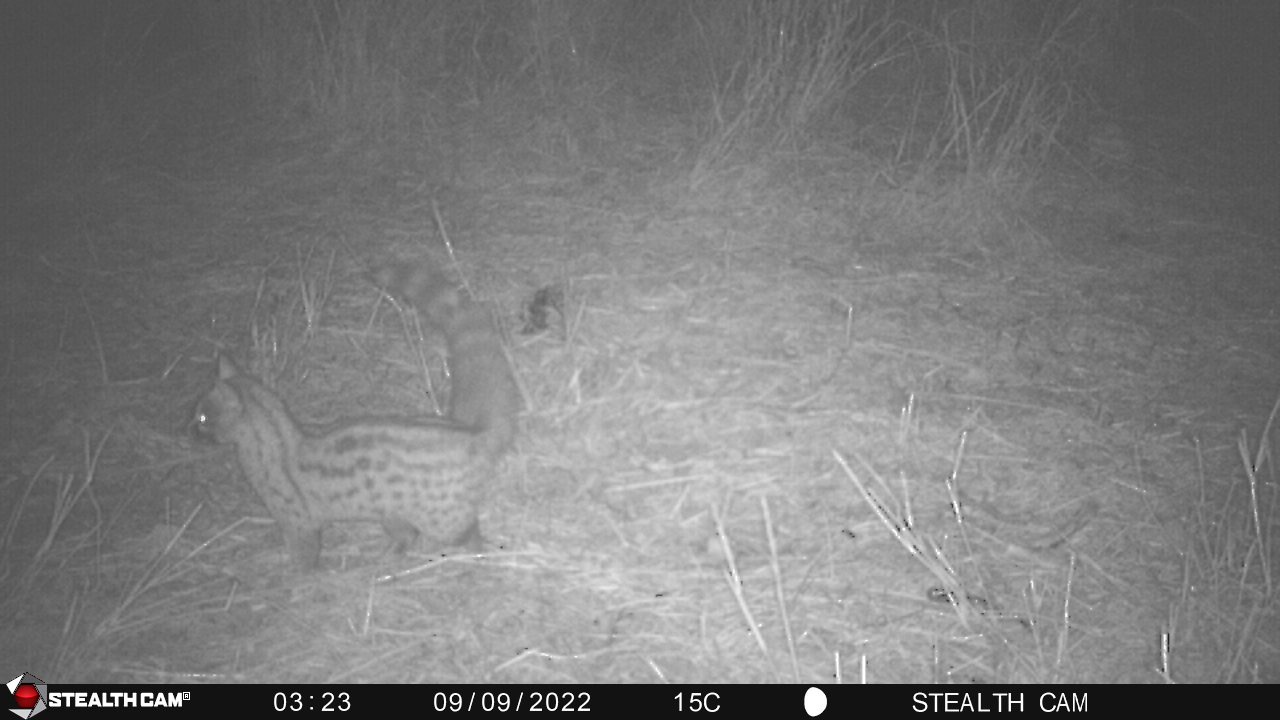
The following are the pictures of the animals that came in order of appearance. Please note that at the time we set the camera its clock was four hours ahead of the real time.
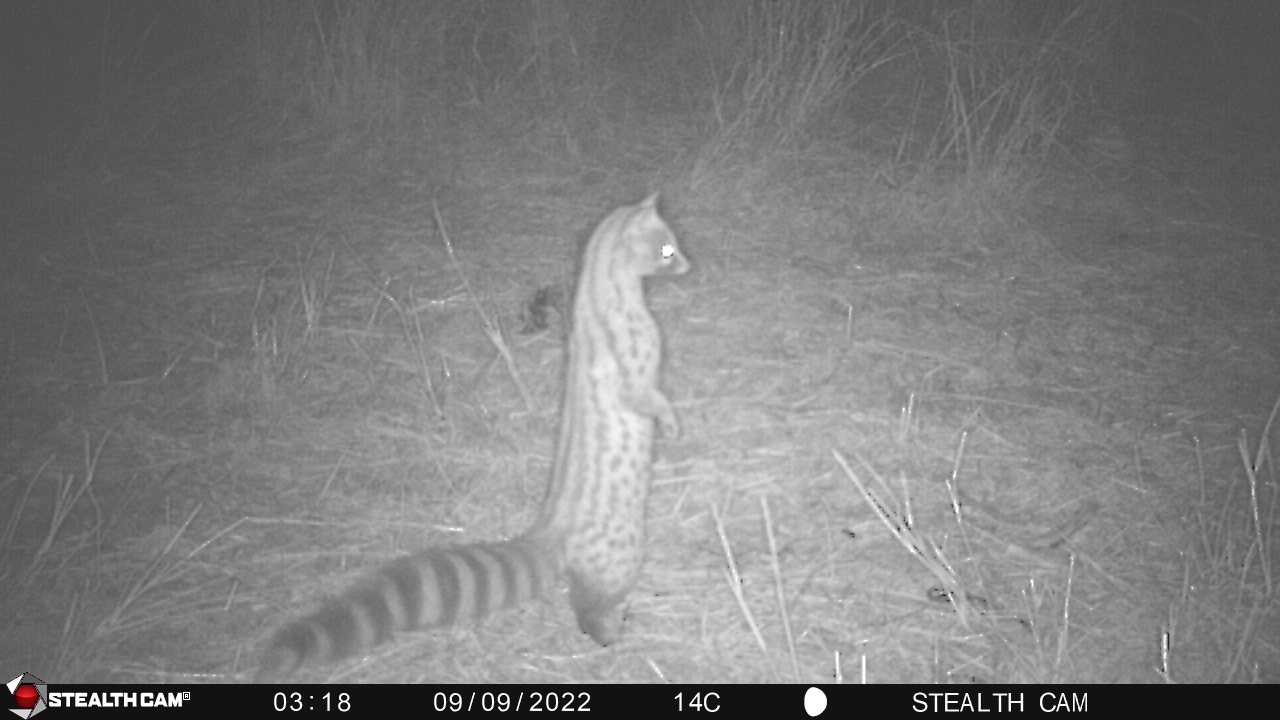
A genet being cautious! (Corrected time 23:18hs.)
The genet was still around ((Corrected time 23:23hs.)
A spring hare. We see these often at Main Camp (Corrected time 01:22hs.)
The spring hare returned (Corrected time 03:07hs.)
A genet again (Corrected time 03:43hs.)
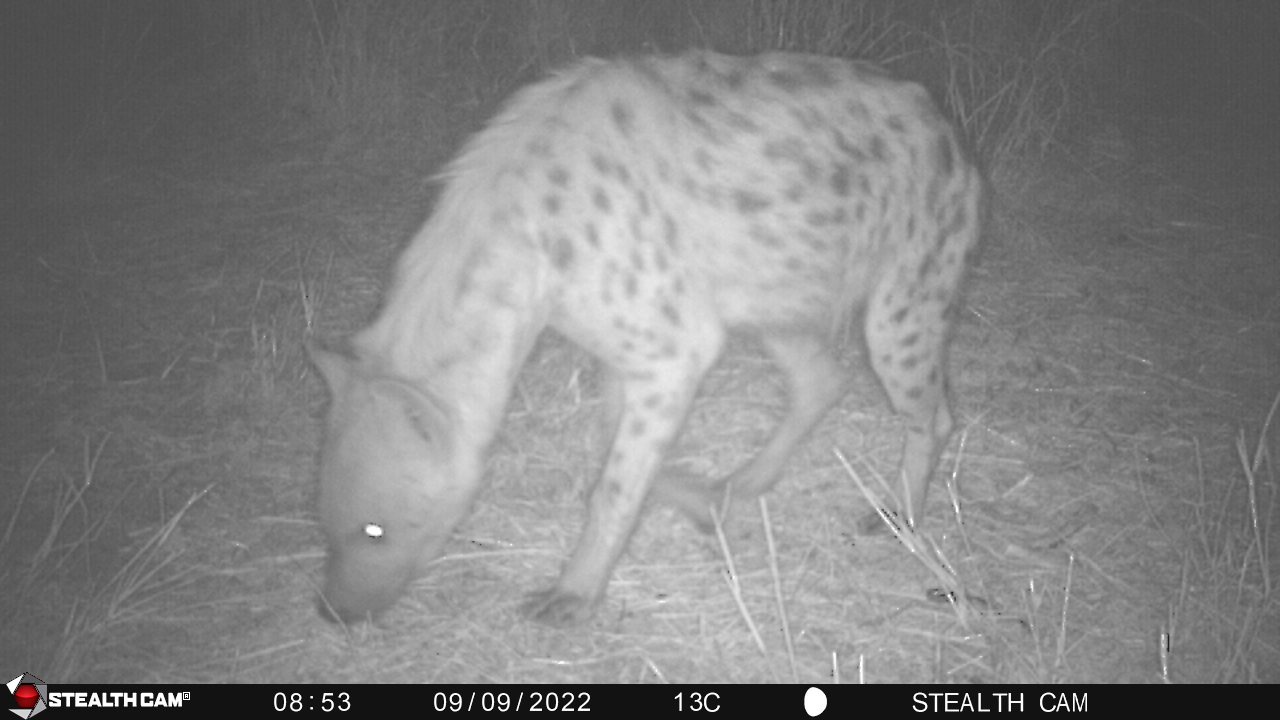
A spotted hyena. We expected the hyenas to come earlier. (Corrected time 04:49hs.)
The hyena stays for a while sniffing around (Corrected time 04:53hs.)
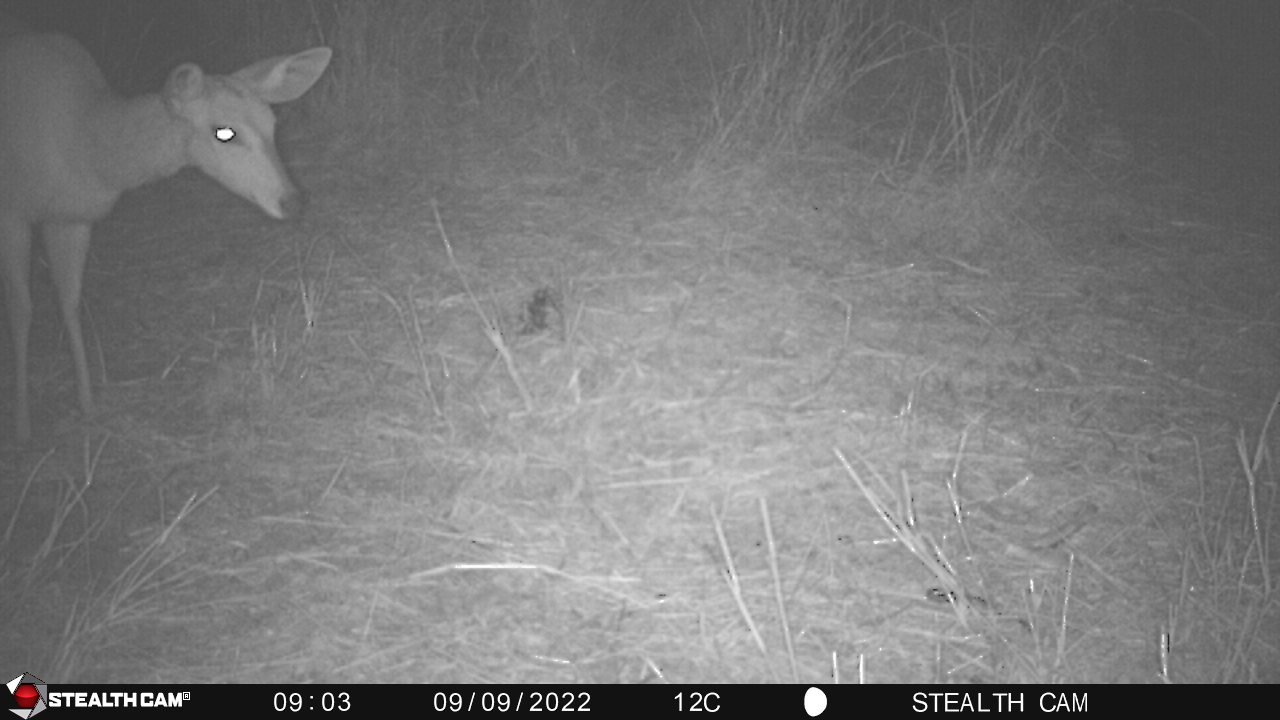
An early impala passes by (Corrected time 05:03hs.)
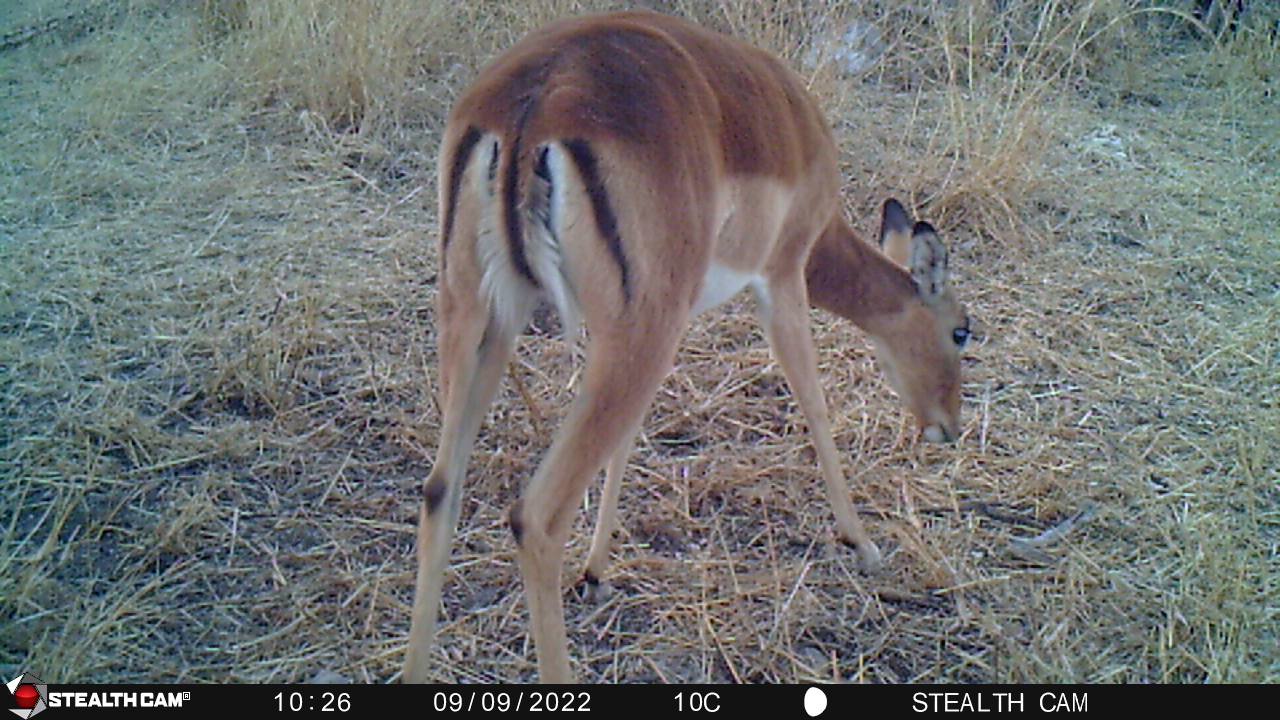
Another impala. This time in colour as it visited during daylight (Corrected time 06:26hs.)

After the picture show´s comments had subsided, our son called our attention again and showed a final picture:
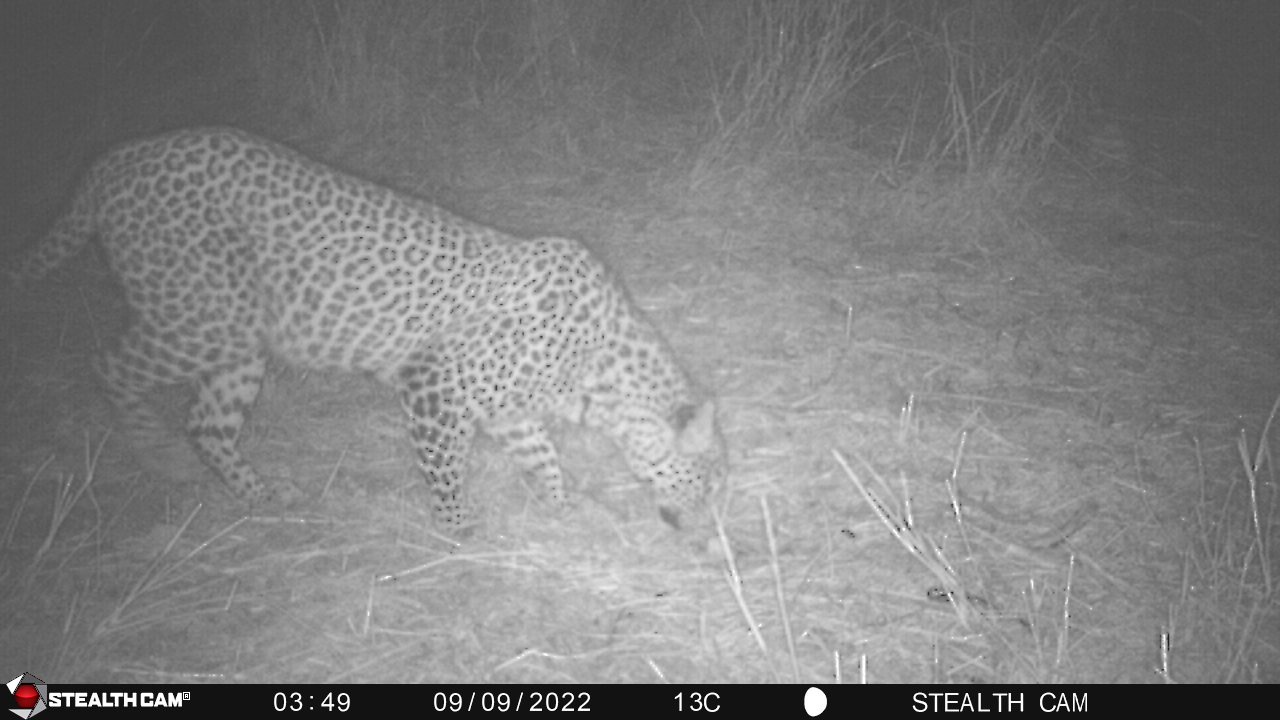
It is probably a female leopard (Corrected time 23:49hs.)

At 23:49 hours a fully grown leopard had paid a visit. It is quite common that leopards inhabit the vicinity of camps, sometimes busy ones. Although it could have been attracted by the BBQ smell it is also possible that it felt the movement of the other animals and came to have a look. Whatever the reason for this visit, it gave room for a lot of comments and it made our visit to Main camp memorable!

[1] I overlooked that the camera clock was 4 hours ahead of the actual time so, I have corrected the times that appear in the pictures.

[2] I had seen honey badgers at camp in an early camera trap experience so I tried to take advantage of this but failed!

Thieves…

We have a few macadamia trees at home that have not yielded very much for luck of water. Last year we had very good rains so we were rewarded with a good harvest and we are busy drying them under the sun so that I can then proceed with the rather time-consuming exercise of opening them.

Macadamia’s shells are extremely hard and, after trying various methods, I have resorted to a vise in the workshop that so far is still working until its thread gives in!

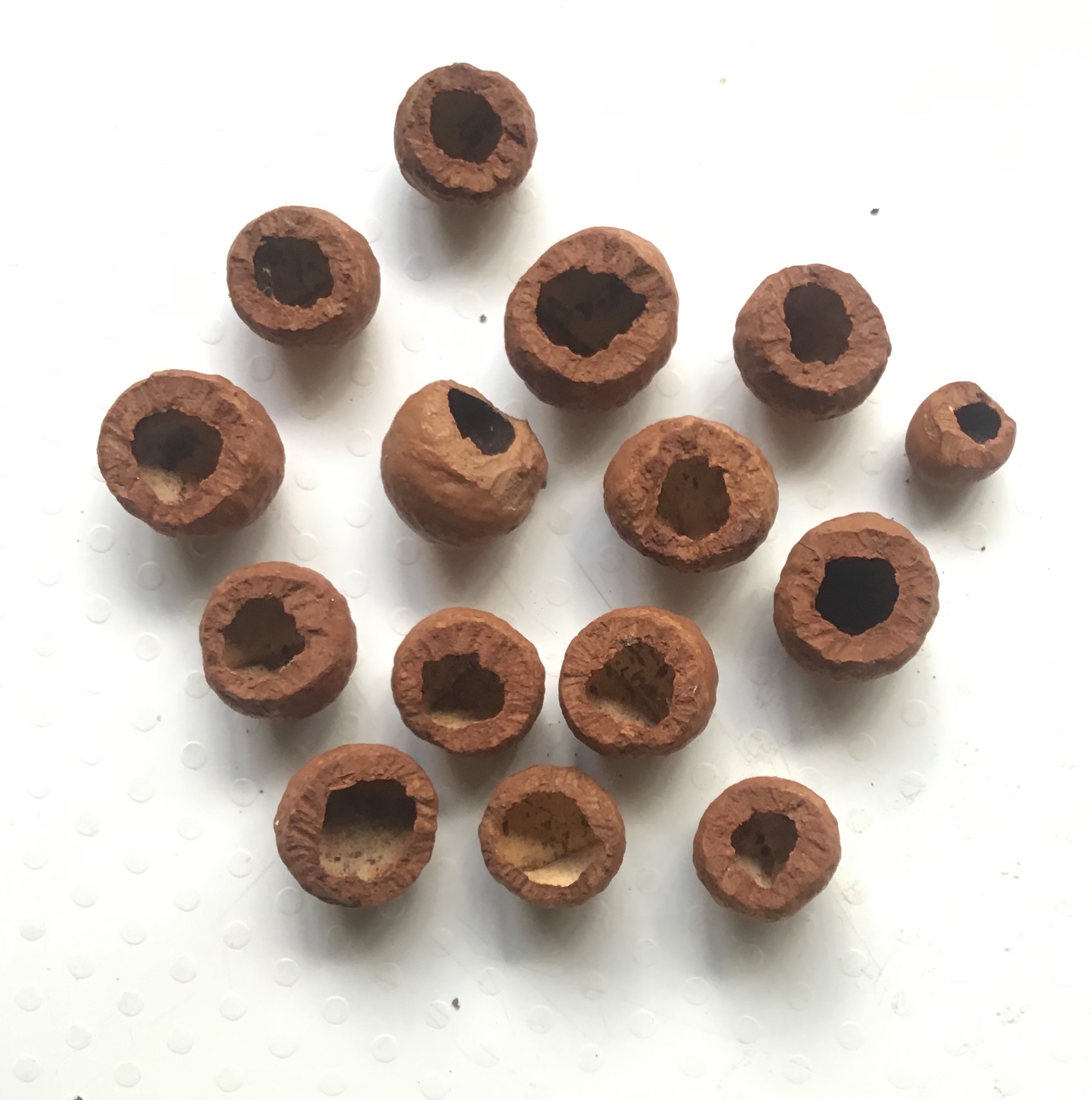
Some time ago we have discovered hollowed out nuts in the garden and we could not believe that an animal could be so powerful as to gnaw such thick and hard shells! Eventually we found lots of empty nuts near a large hole and realized that we had a colony of Southern Giant Pouched Rats (Cricetomys ansorgei) [1].

After a while we stopped seeing them and they disappeared. Apparently they moved off our house one night in a group and entered under the gate of a neighbouring house but I was not a witness to this Pied-piper of Hamelin-like migration!

IMG-4401

The empty shells after the rats ate the tasty inside.

More recently, we noted that the nuts we were drying were being peeled from their green outer cover and taken away whole from the sunning box. We “smelled a rat”!

A search up and down the garden was organized and, eventually, a large hole was discovered at the farther corner of the garden. Suspecting that the giant rats were there I set up a camera trap pointing towards the suspected burrow and this is what I got:

We confirmed our fears as the various videos taken showed one rat at a time either entering or leaving the burrow. As I was curious to see how many there were, I decided to put some food hoping that they would gather to feed. Although I got over 180 ten-second videos, I still failed to get a rat gathering! However, I got a few that prompted me to write this post!

I have selected a few that I find interesting and/or funny. Please note that one is eating a few carrot pieces on the ground while the others are chewing a chunk of (delicious for humans at least) butternut hanging from a bush, the idea being that they would not drag it into their nest!

This giant rats are widely distributed in mainly tropical regions of southern Africa, notably Zimbabwe, Kenya, Tanzania, Zambia, and the Democratic Republic of Congo. I first saw them in Monze, Zambia while driving on the main road and I had difficulties stopping my Zambian workers from jumping from the moving vehicle to catch them as they consider them a delicacy!

Later, also in Zambia, Bruno, a colleague from Belgium, invited me with a surprise roast that happened to be delicious and it was a giant rat -as tasty as a piglet- with baked potatoes (tasting like potatoes!)! Giant rats were very abundant in that area at the time and I am sure contributed to food security of the village where the project was based.

Giant pouched rats are named after their large cheek pouches and they are only distantly related to the true rats. Recent studies place them in the family Nesomyidae and not in the Muridae as they used to be [2].

They are able to produce up to 10 litters of one to five young per annum and they are nocturnal and omnivorous with special taste for palm nuts and, as we have experienced, also for macadamia nuts. Interestingly, they are hind gut fermenters and coprophagous, producing pellets of semi-digested food that are consumed.

They are not only easily tamed as pets but useful for detecting land mines as they have an excellent sense of smell, particularly sniffing TNT while being too light to detonate the mines! But this is not all. They are also being trained to detect tuberculosis by smelling sputum samples. This procedure is faster than the normal diagnostic test and remarkably increases the sample processing. [3]

So a few disappeared nuts ended up producing an interesting story and  I am now positive that we  have a colony of rats (being fed on expensive macadamia nuts) that could potentially be bred to remove mines and improve human lives!

I regret now having eaten one (and liked it!) and I will not do it again!


[1] I am not a rat taxonomist so I base my identification more on distribution and abundance than on their morphology. The other possible species in Zimbabwe would be C. gambianus but the whole pouched rat taxonomy is under review. See: Olayemi, A. et. al. (2012). Taxonomy of the African giant pouched rats (Nesomyidae: Cricetomys): molecular and craniometric evidence support an unexpected high species diversity. Zoological Journal of the Linnean Society 165, 700–719.

[2] https://en.wikipedia.org/wiki/Giant_pouched_rat#cite_note-MetH-1. Seen on 6/12/18.

[3] https://www.apopo.org/en. Seen on 6/12/18.


Garden and gadgets

As I mentioned earlier (see: https://bushsnobinafrica.wordpress.com/2015/06/19/drones-in-the-bush/), we did get an improved drone as soon as prices dropped. Although my son immediately managed to fly it, I am still building my confidence after the earlier mishaps! However, as this contraption almost flies by itself, I believe that with a bit of practice I will soon manage. I will report on “droning” in a future post.

In addition to the drone, I have improved on my camera and bought a Nikon Coolpix P600 with a 60X optical zoom. I chose this (in fact my daughter did…) because it is powerful while being quite light. We are already loaded with binoculars to add more weight! Not being a pro, it is good enough to capture what I see although I have always believed that there is no substitute for your eyes! To this I added a tripod and downloaded an App that enables you to take pictures wirelessly using my smartphone.

Going almost beyond my mental capability I also got a camera trap! Its increasing use worldwide has made these affordable so I decided to get one as well to top up my gadget bag that already contains a number of goodies such as UV torch, normal torches, battery boosters for phones, video camera, night vision googles and binoculars.

They both have been a great success so far.

The very day I got the camera trap -brought from the USA by my son- I set it up in the garden and I have done so for a few nights over the last couple of weeks. Although It is not meant to take high resolution images, its pictures are good enough to identify animals, provided that you point it in the right direction!

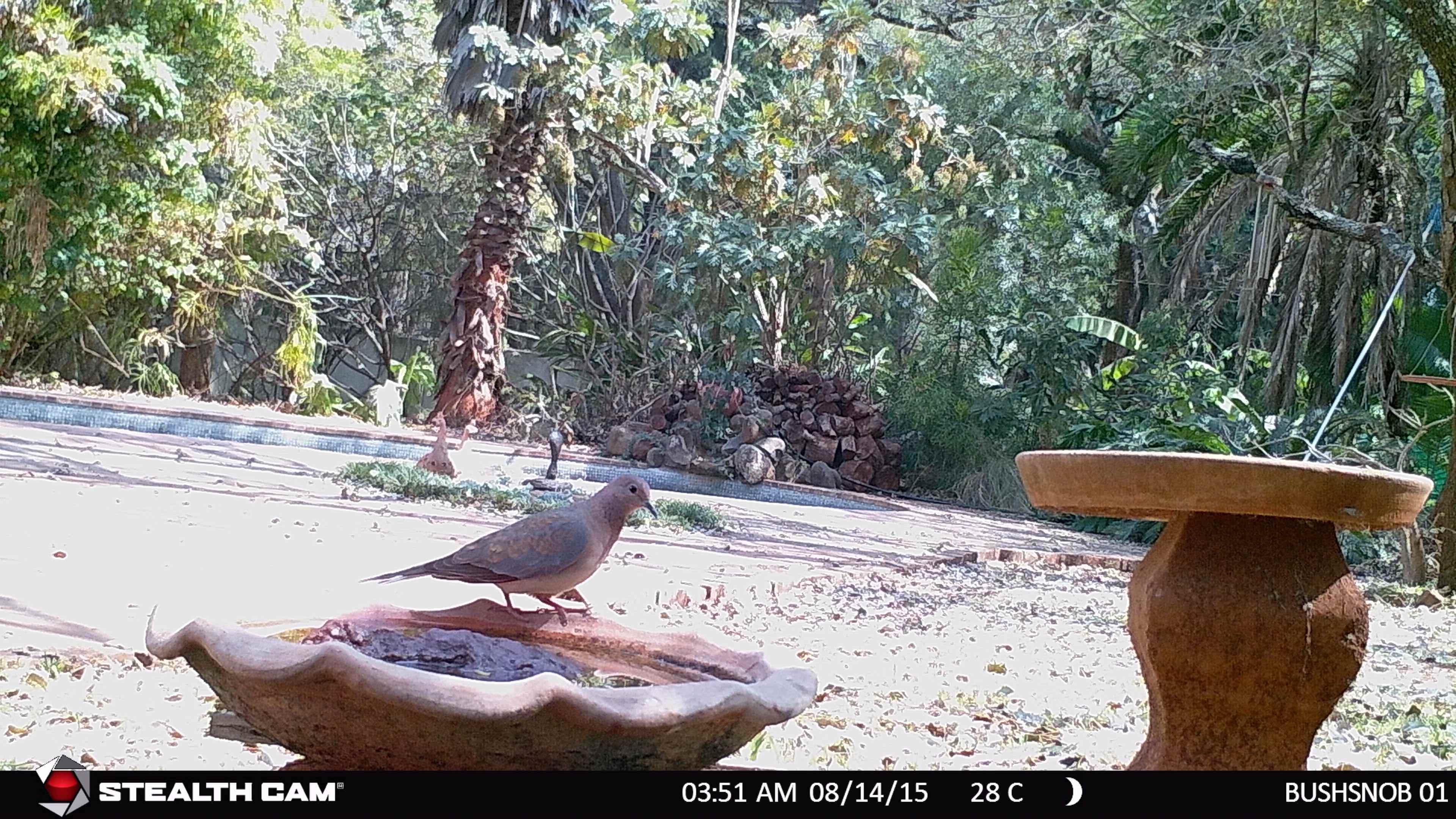
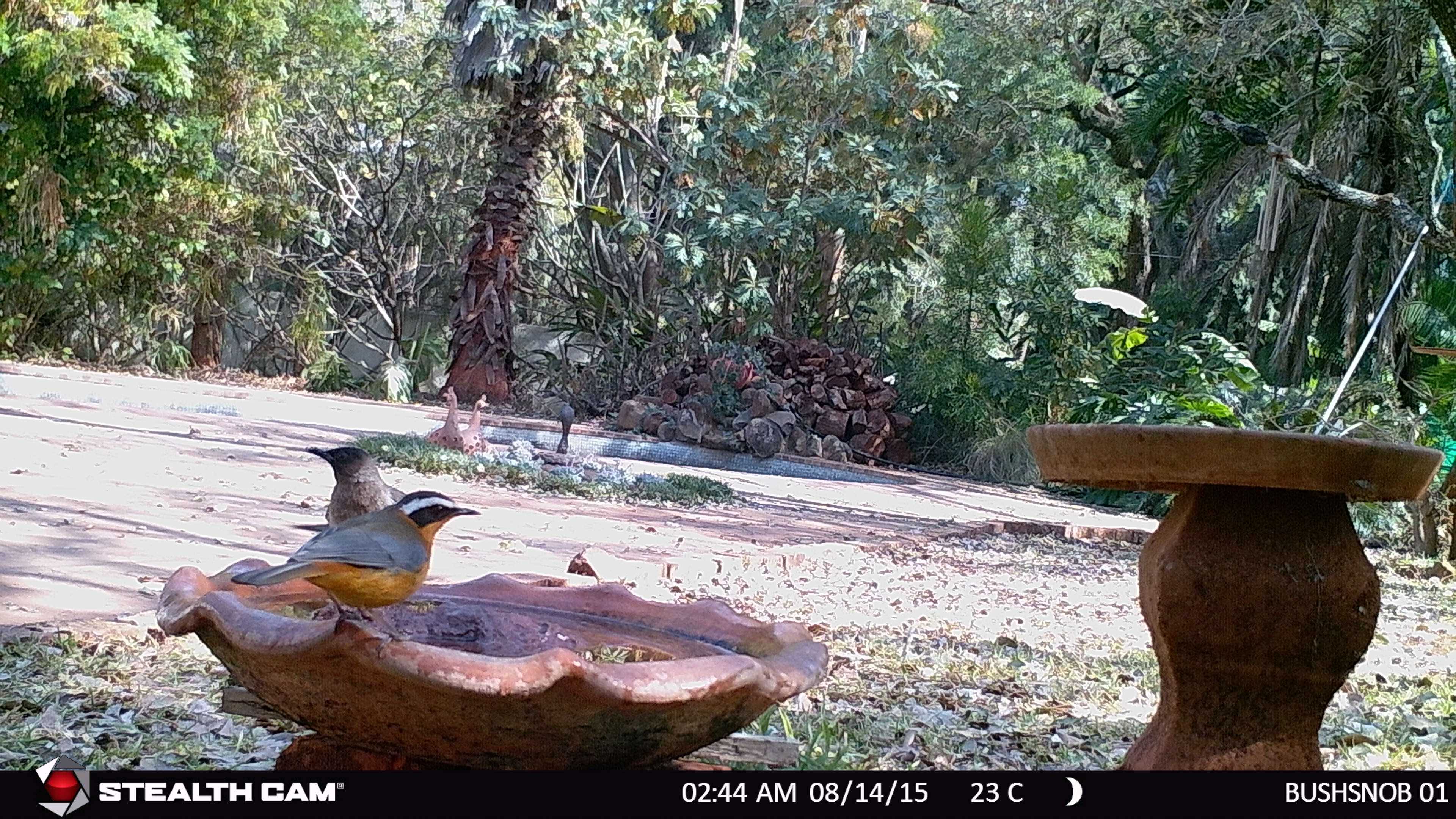
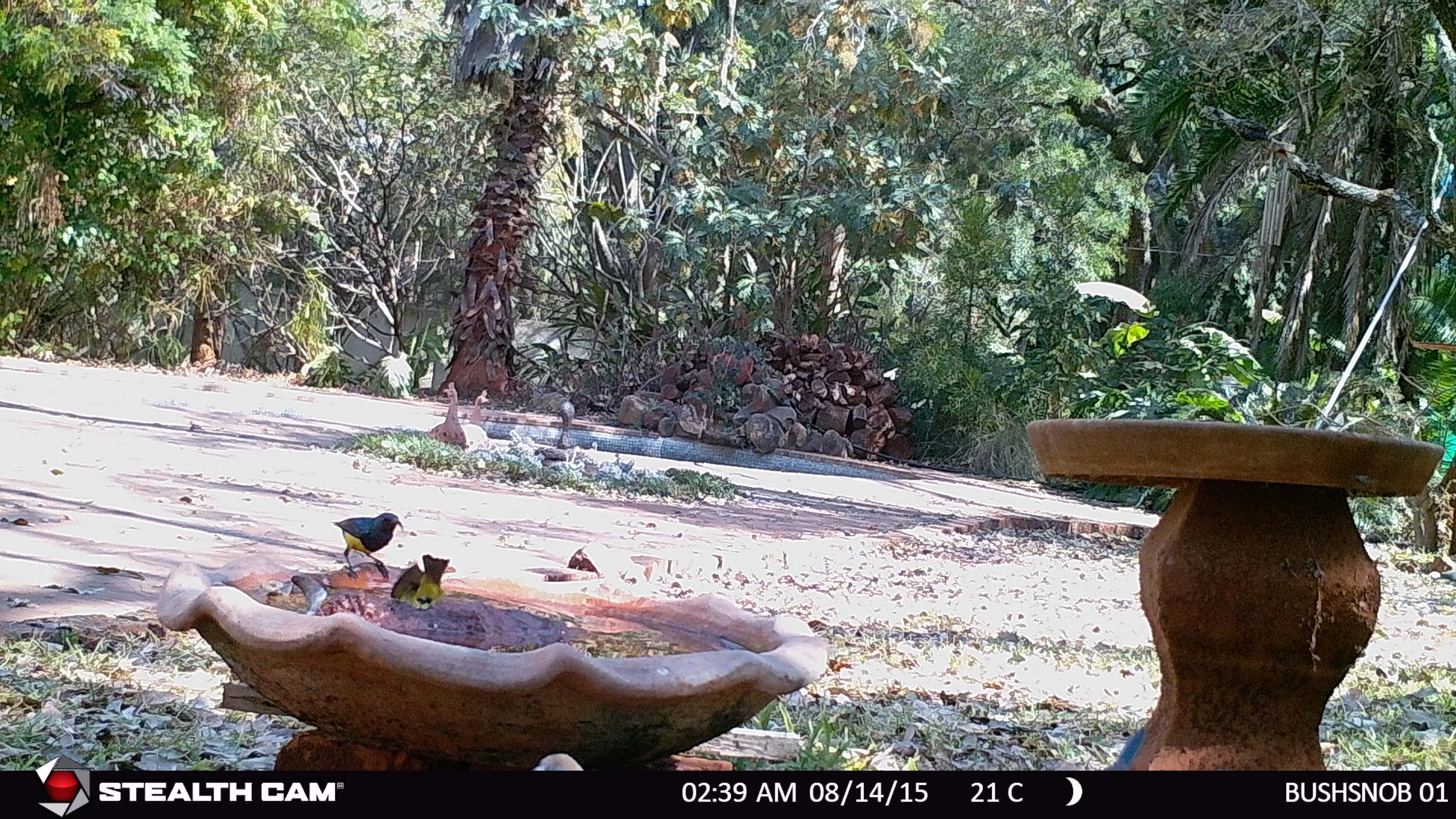
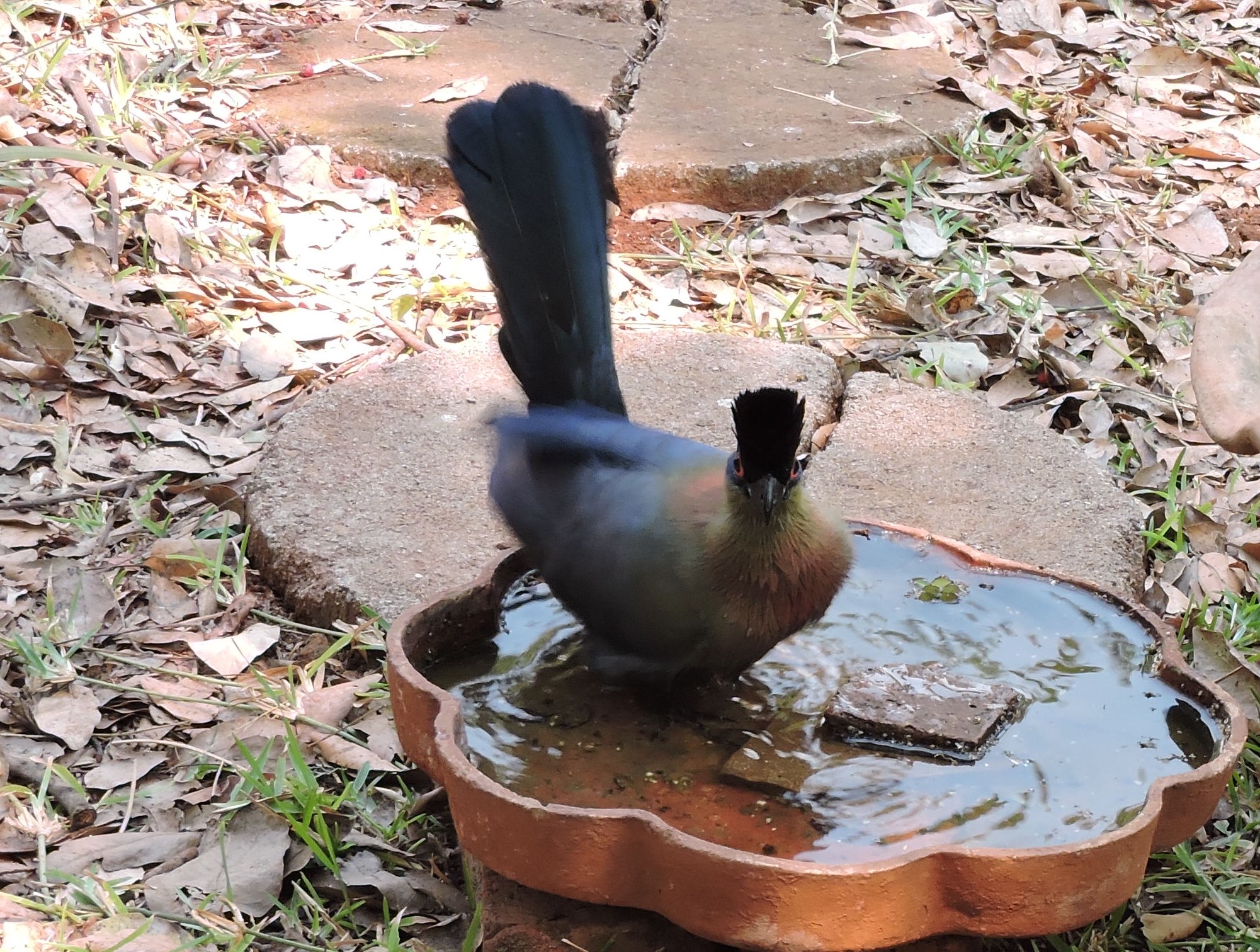
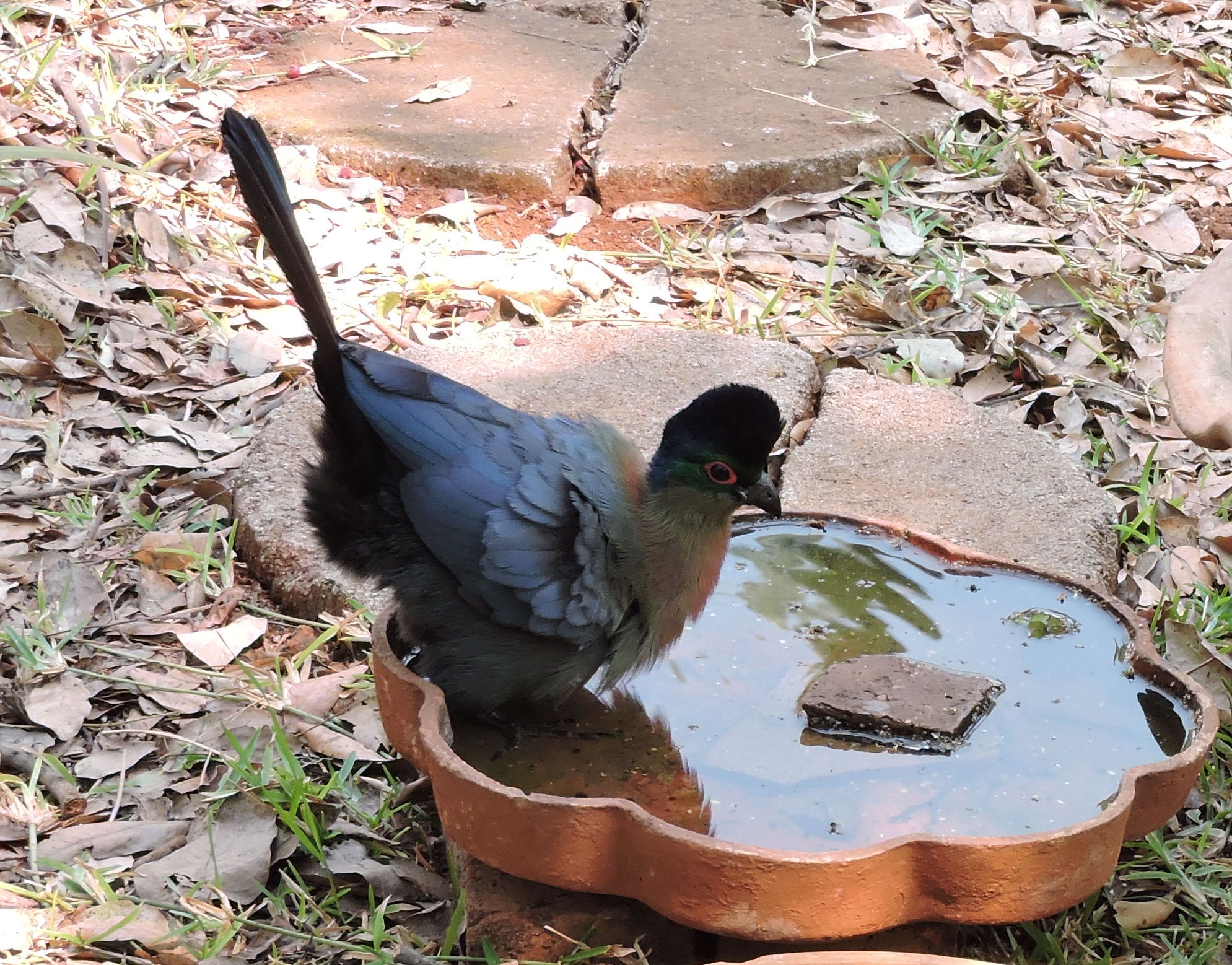
Through the pictures and videos it took during the day I managed to confirm some of the birds visiting our bird bath and feeding table as well as to detect some new ones. So far we had mourning dove, forked-tailed drongo, dark-capped bulbul, kurrichane thrush, white-browed robin chat, yet unidentified weavers and fire finches, blue waxbill, variable sunbird and purple crested lourie. In addition, leaving the camera overnight confirmed the crepuscular habits of both robin chats and drongos.

A laughing dove.

A laughing dove.

A robin chat and bulbuls.

A robin chat and bulbul.

A pair of variable sunbirds.

A pair of variable sunbirds.

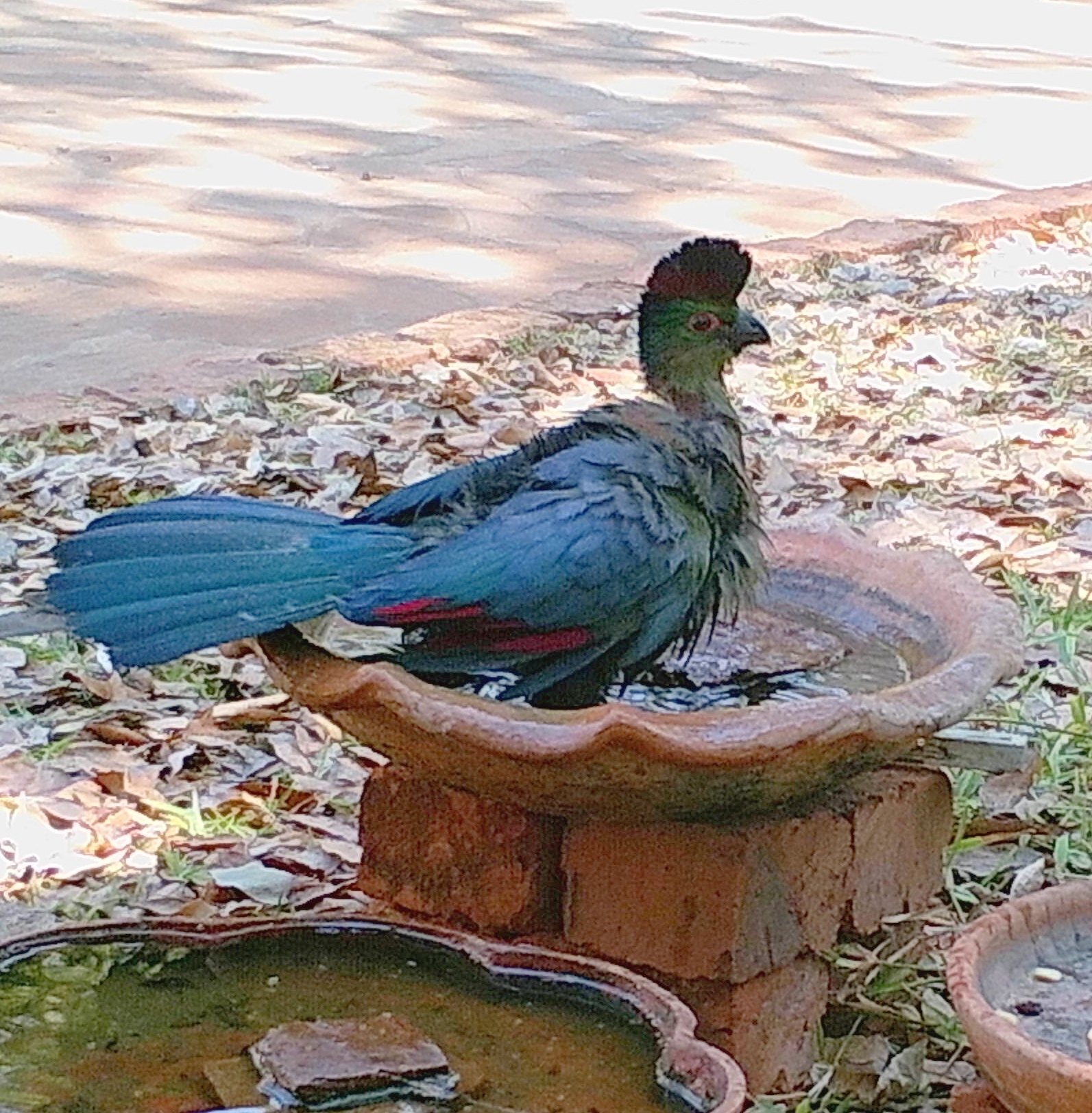
A close-up of a purple-crested lourie.

A close-up of a purple-crested lourie.

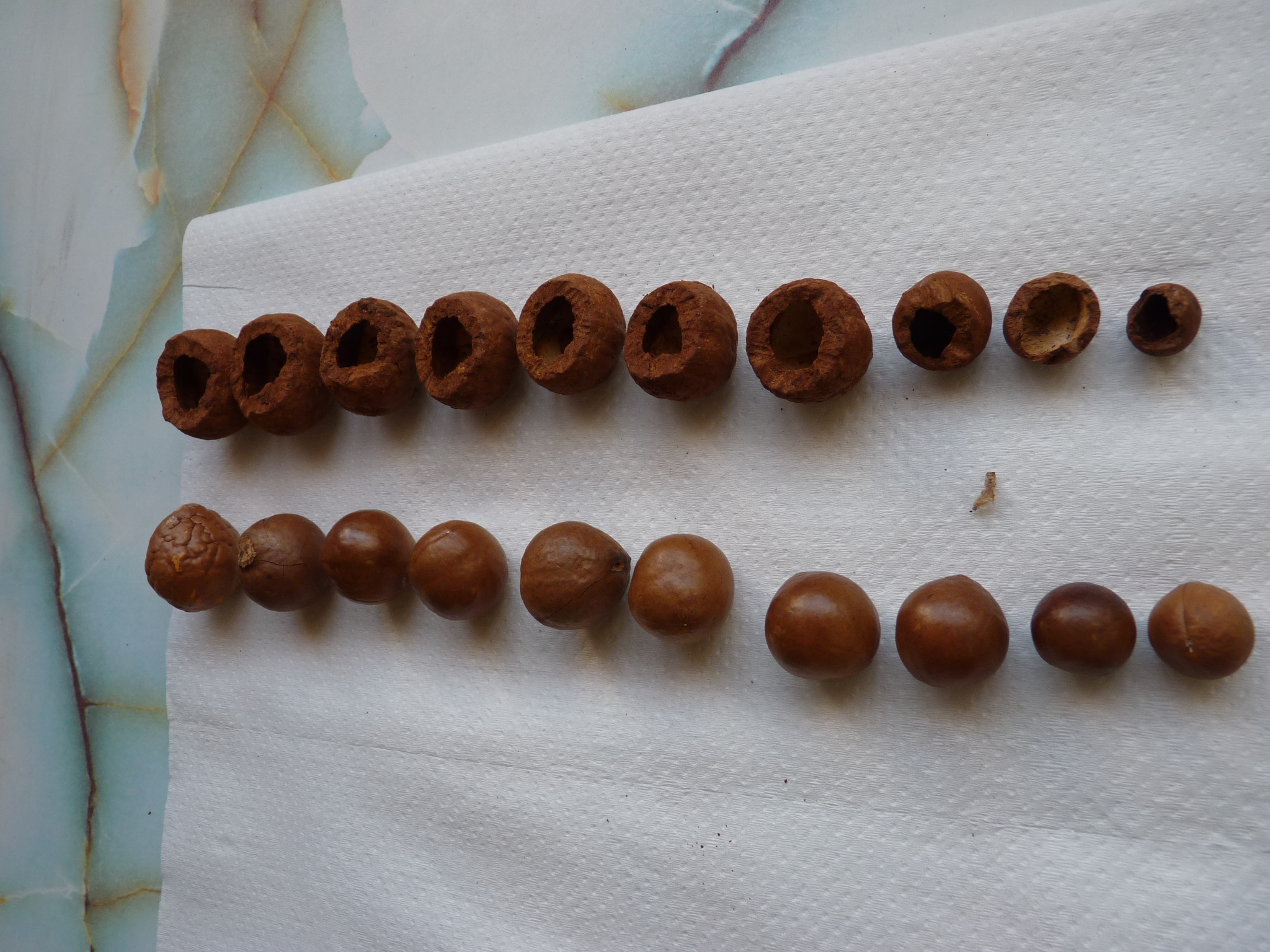
I also did some detective work in connection with the unravelling of a garden mystery: the nocturnal disappearance of the bird seed from the feeding table! I managed to expose the culprits that were no others than the suspected African Giant Pouched Rats (Cricetomys sp. Ansorgei). They were already high on the possible culprit list as we had evidence of their presence through large fresh burrows and macadamia nut shells found in the adjacent areas. If you have tried to crack one of these nuts, it will give you an idea of the gnawing power of these animals!

Macadamia nut husks (top) and whole nuts (bottom) to show the way the rats eat them.

Macadamia nut husks (top) and whole nuts (bottom) to show the way the rats eat them.

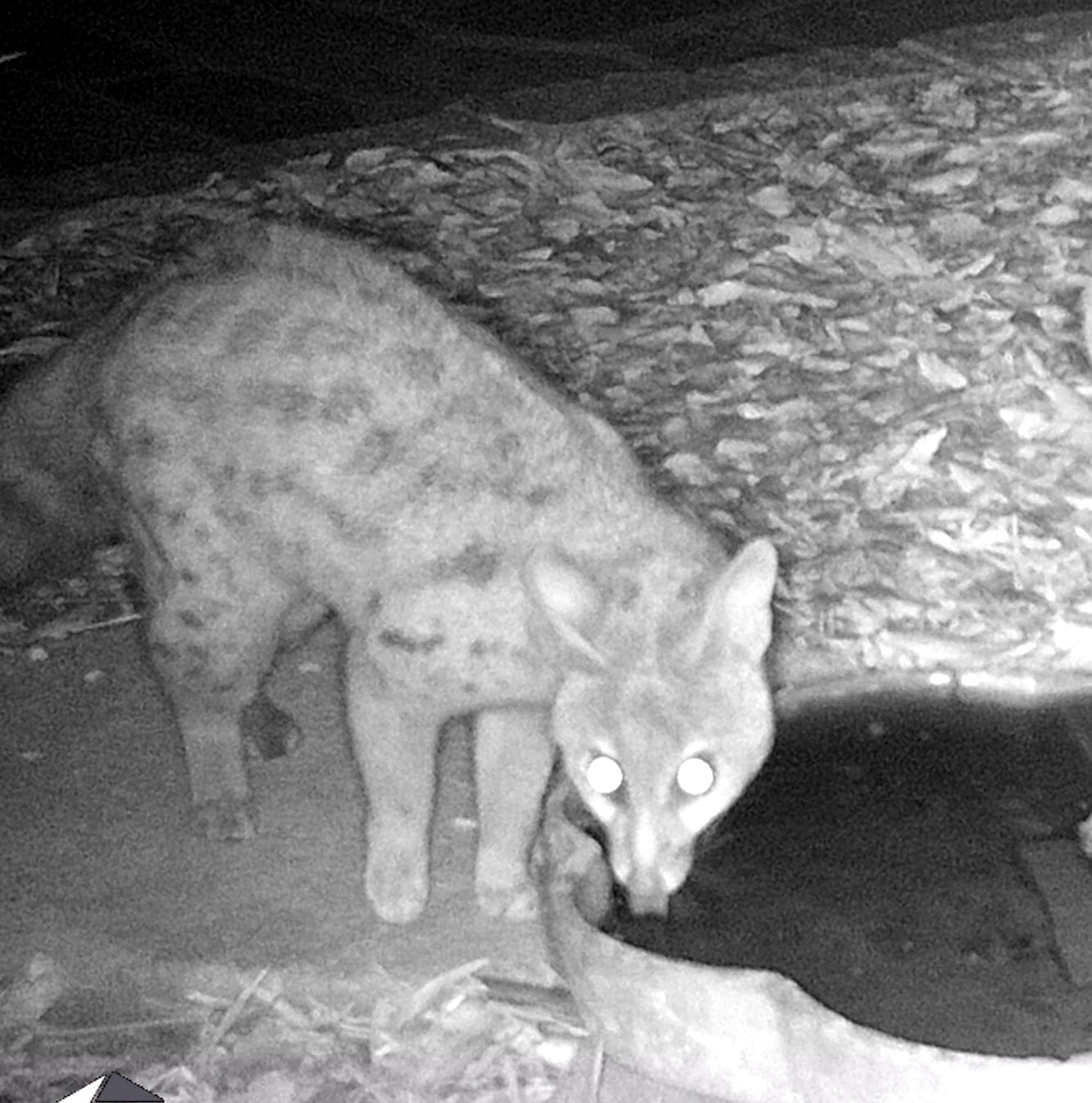
In addition to finding the somehow expected rats, we came across another animal that came as a surprise as Nature will not disappoint you if you look for new things! One of the nights we were after the bird seed-eating culprits an African civet (Civettictis civetta) came by for a drink! Consulting the Internet I learnt that they do move into urban environment and that they also climb on house roofs!

The African civet drinking.

The African civet drinking.

Having detected the birds and animals present in the garden, it was time to use the tripod and remote control on the Nikon camera and attempt to document some of the visitors with a better resolution. This I am doing at the moment and learning.

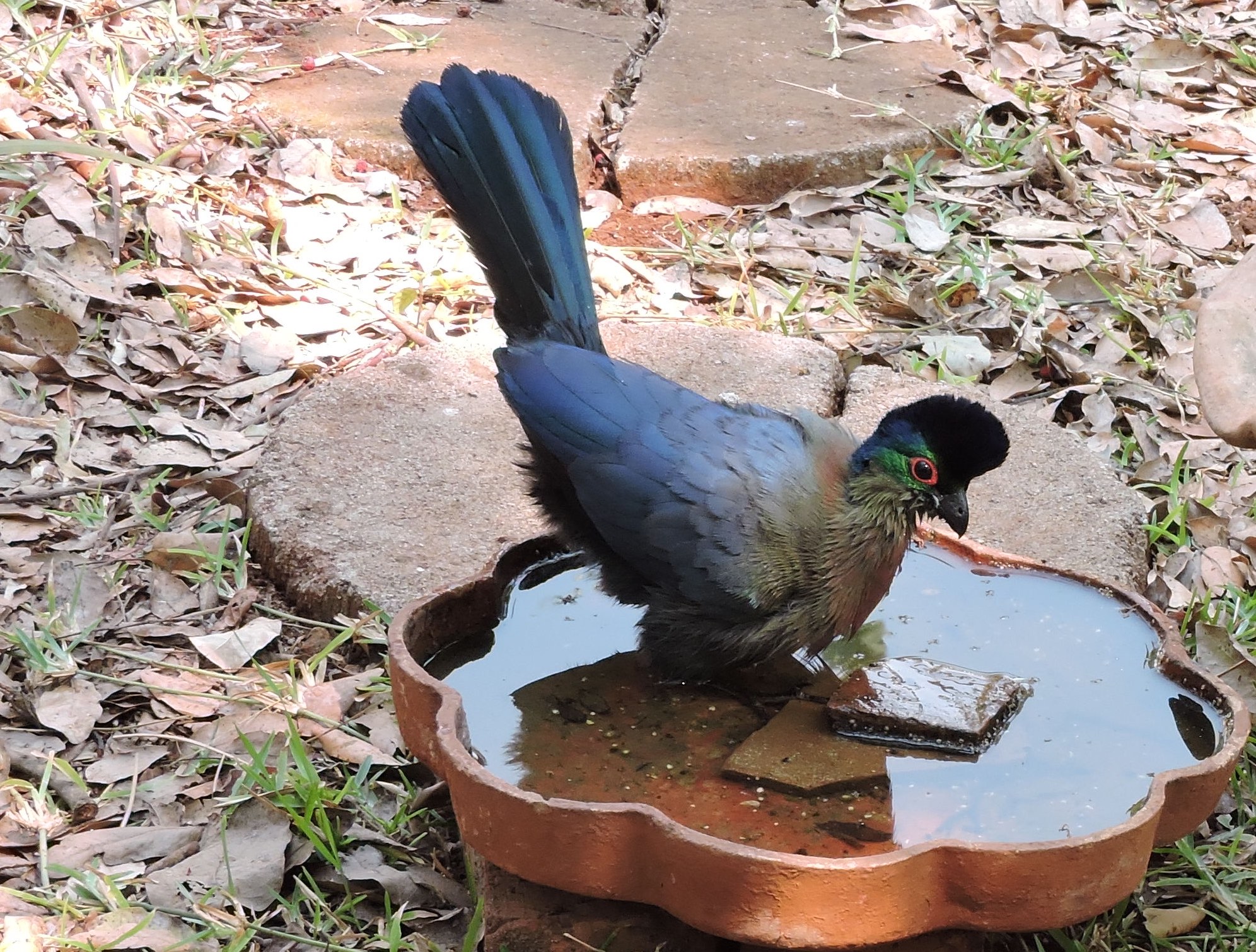
Better pictures of the lourie taken with the Nikon camera and remote control device.

Better pictures of the lourie bathing taken with the Nikon camera and remote control device.

DSCN9334 copy

DSCN9333 copy

DSCN9331 copy

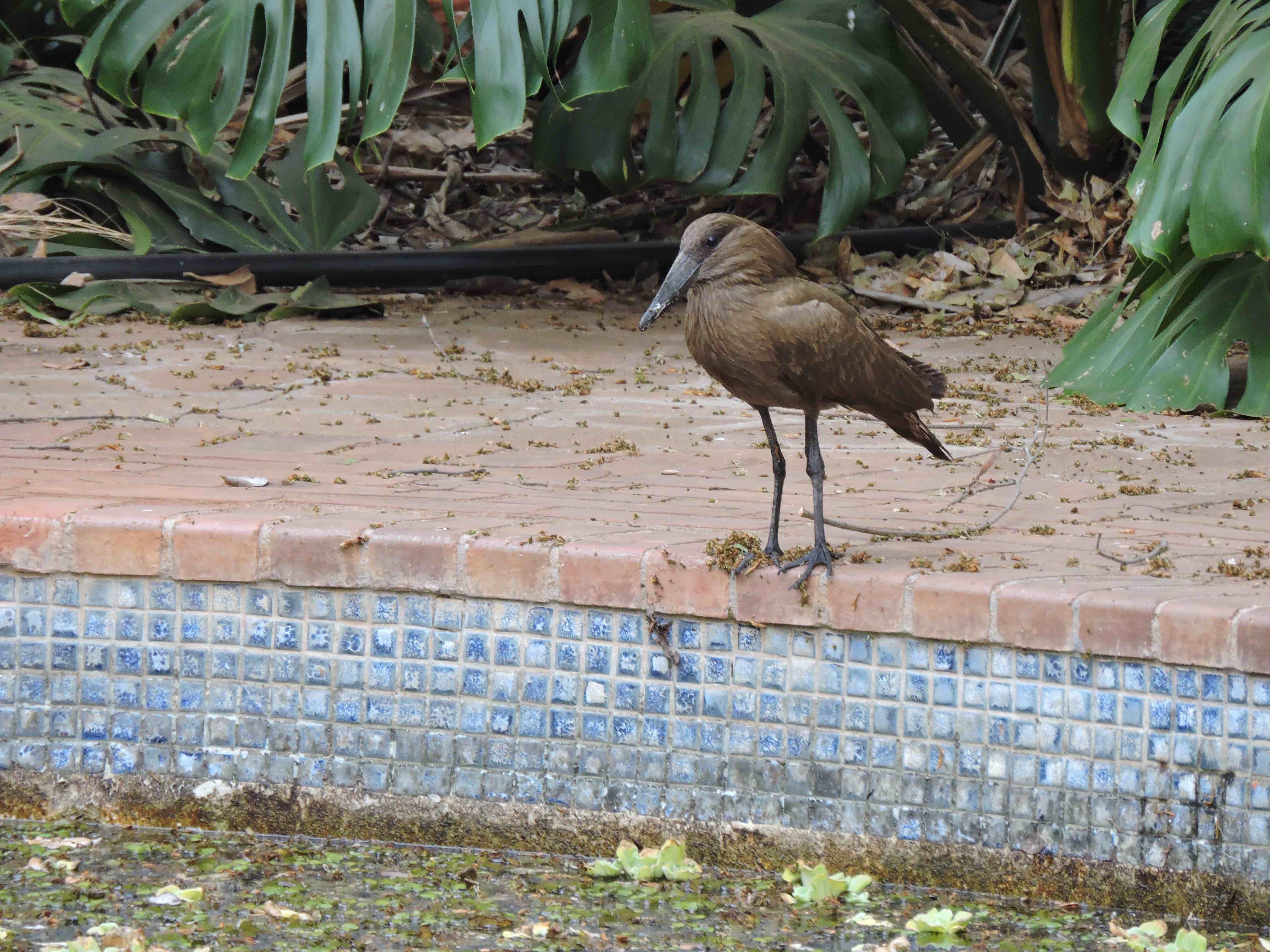
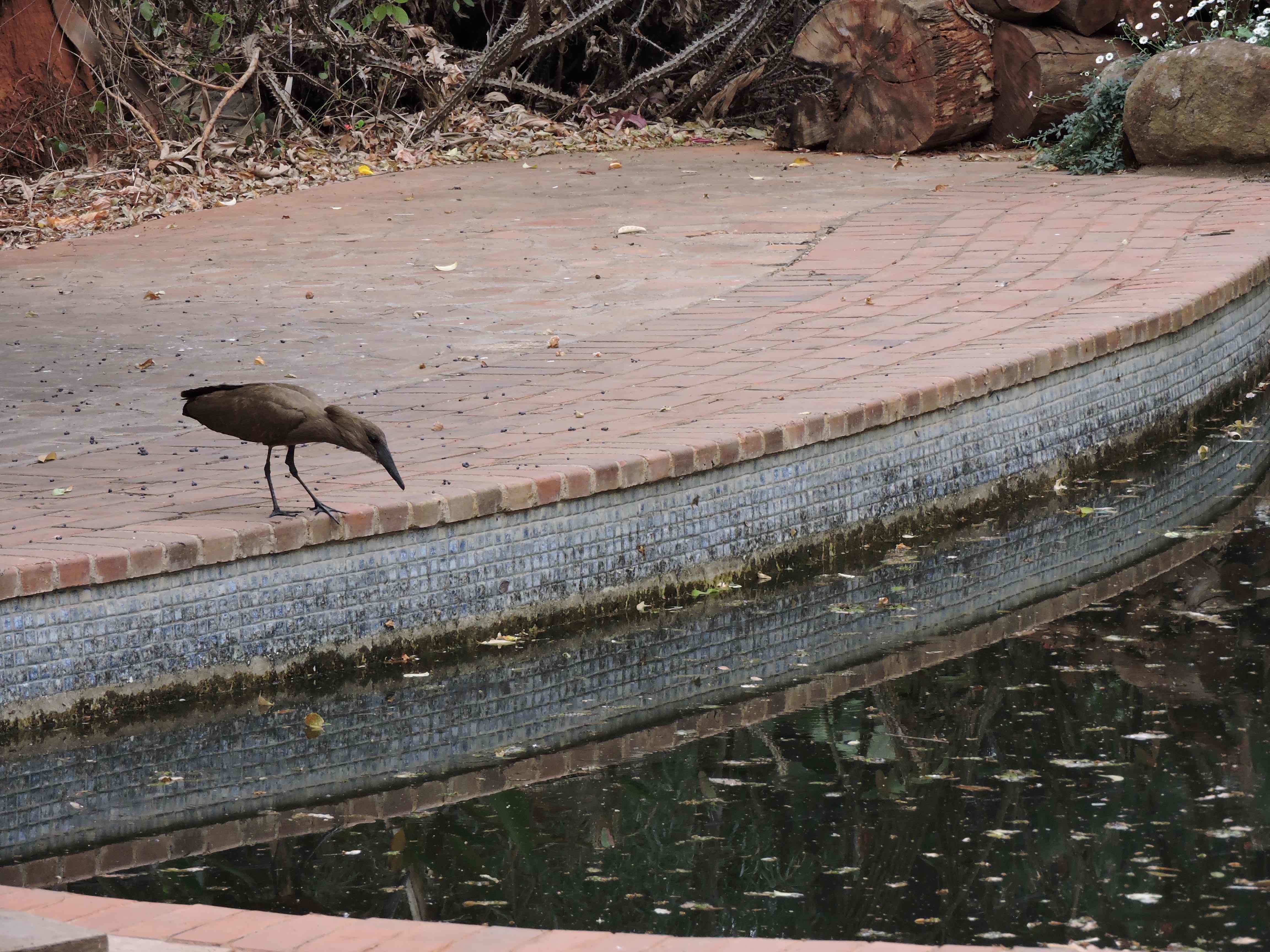
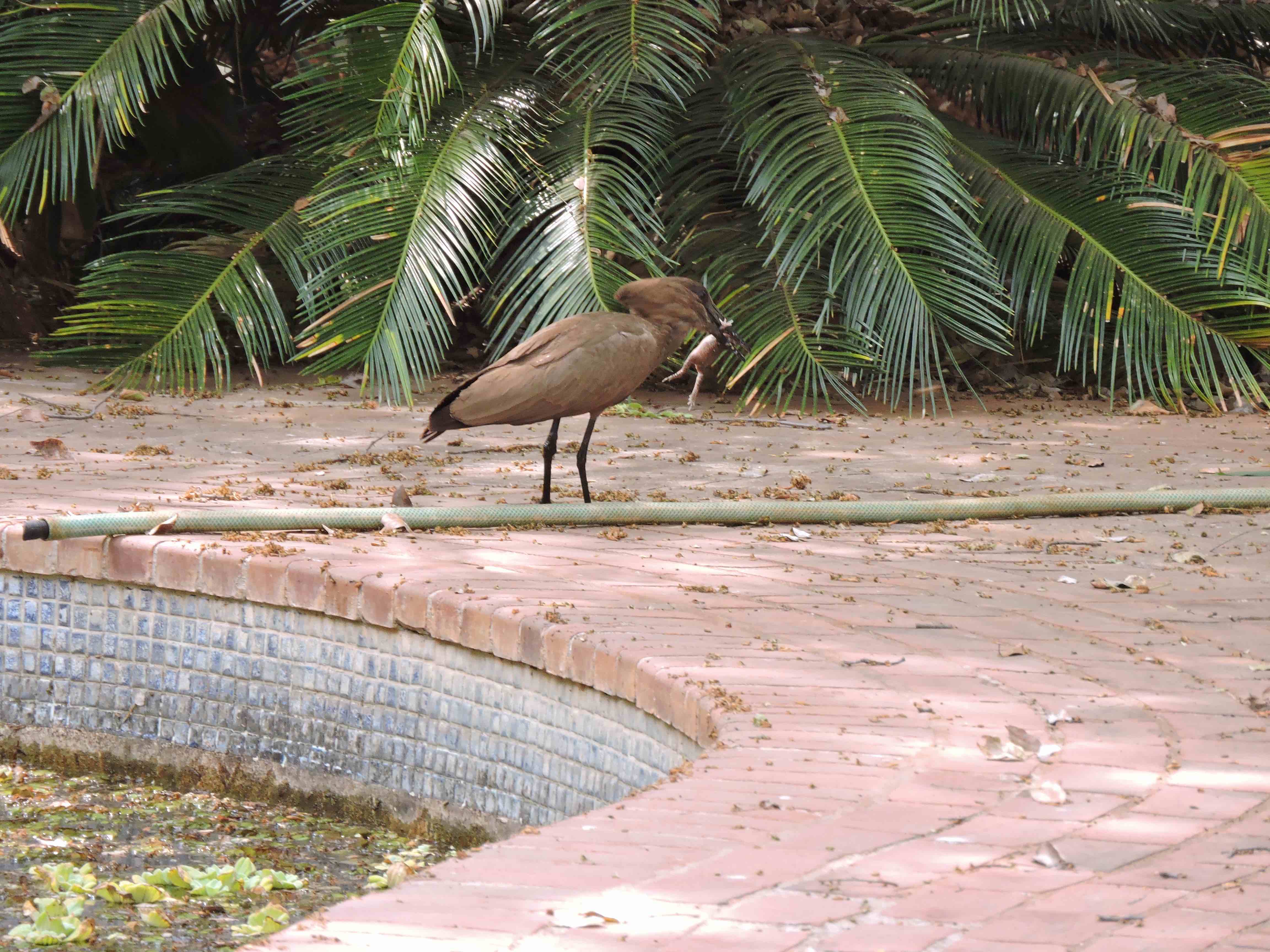
The louries have always been in the garden but always high on the trees. It is only recently that they have decided to come for a dip in the birdbath. The hamerkop comes often to decimate the toad population in our water storage tank (read swimming pool).

The hamerkop taking up position by the pool.

The hamerkop taking up position by the pool.

Stalking toads.

Stalking toads.

Gotcha!

Gotcha!

I need to take advantage of the present dry conditions prevalent in Harare so when the rains come later in the year the animals will disperse.


Note: this post has not been checked by my Editor.


Added on 5 September 2015: Although I identified the night cat-like visitor as an African civet, subsequent Internet search makes me think that it could in fact have been a genet. I am trying to get another picture to clarify the situation.