elephants

Ngweshla cold

“Is it too hot in Africa?” is the question I get asked most often by people in Latin America. They have the image of lush forests and the very hot places of Central and West Africa, white man’s grave. I think they do not believe me when I tell them that Southern Africa can be bitterly cold at times. Frankly, I was also surprised when, on arrival, I found how cold it could get!

Muguga and Nairobi in Kenya and Addis Ababa in Ethiopia were cold, the latter very cold but Lusaka, technically in Southern Africa, was rather warm, sometimes even too warm. It was while living in Lusaka that we organized our first safari to Sinamatella in Hwange National Park in early 1991. We camped there during a weekend of July and it was so cold that we had to ask the game rangers to lend us blankets to outlast the bitterly cold nights. I We were there with our baby daughter and I still remember my wife’s concern of not being able to keep her warm! Survive we did but, clearly, we forgot about it.

In comes Ngweshla Picnic site, located in the Sinamatella area, during July! As we were moving through various camps we took small tents so that we could assemble and disassemble them without too much trouble. I hasten to add also that our new nylon tent was “untested” as we had just bought it for the trip.

It was warm when we set up our camp after arriving at Ngweshla in the late morning. After lunch we went on a game drive to explore the area and, although we planned an earlier return, as usual we got delayed following a hungry-looking hyena on the prowl. The sun was setting by the time we got back to camp and there was a chill in the air already. Stupidly we had forgotten to organize our campfire so we did not bother and planned a quick dinner and an early night instead.
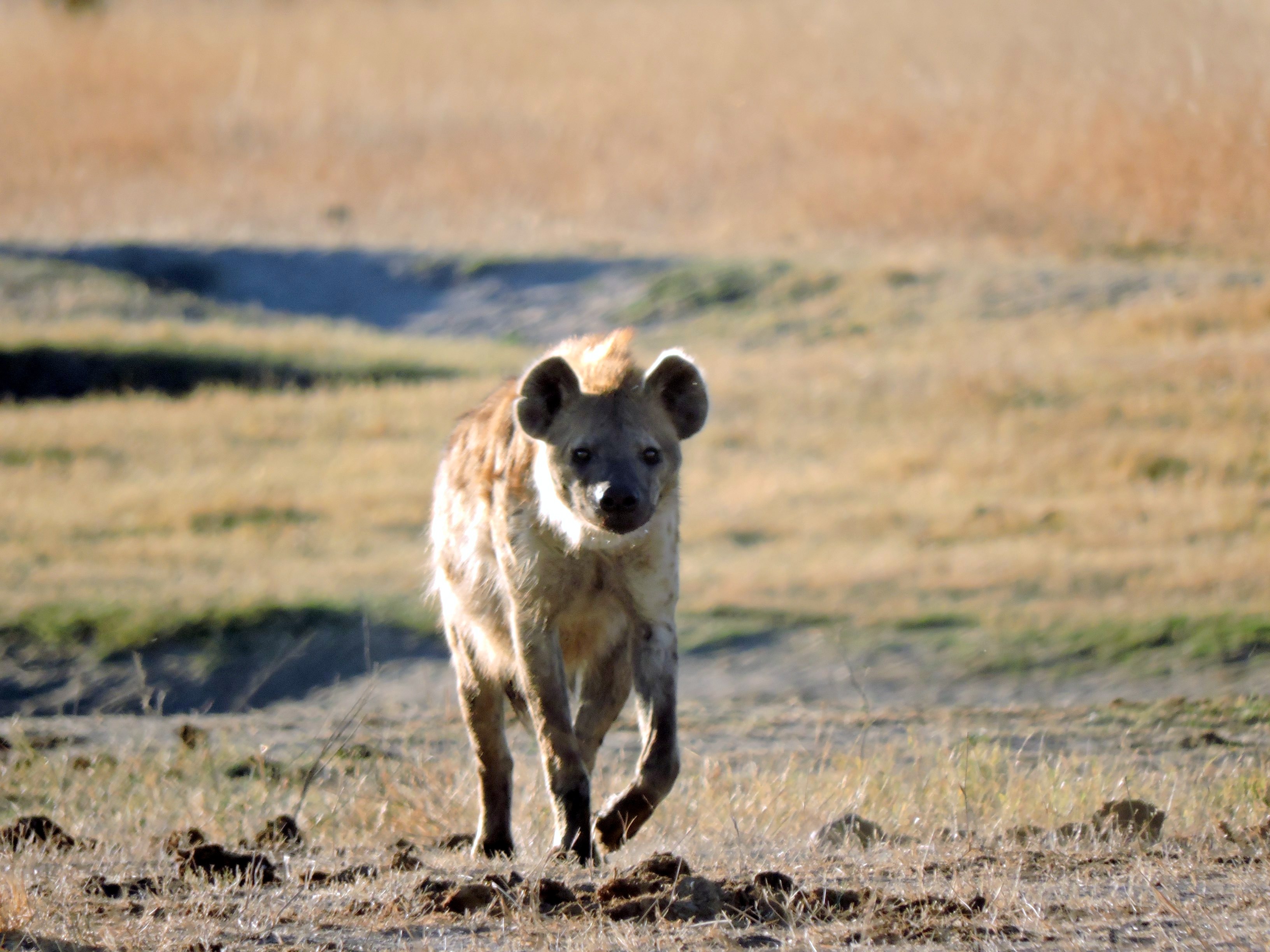
The hyena moving.
The hyena moving.

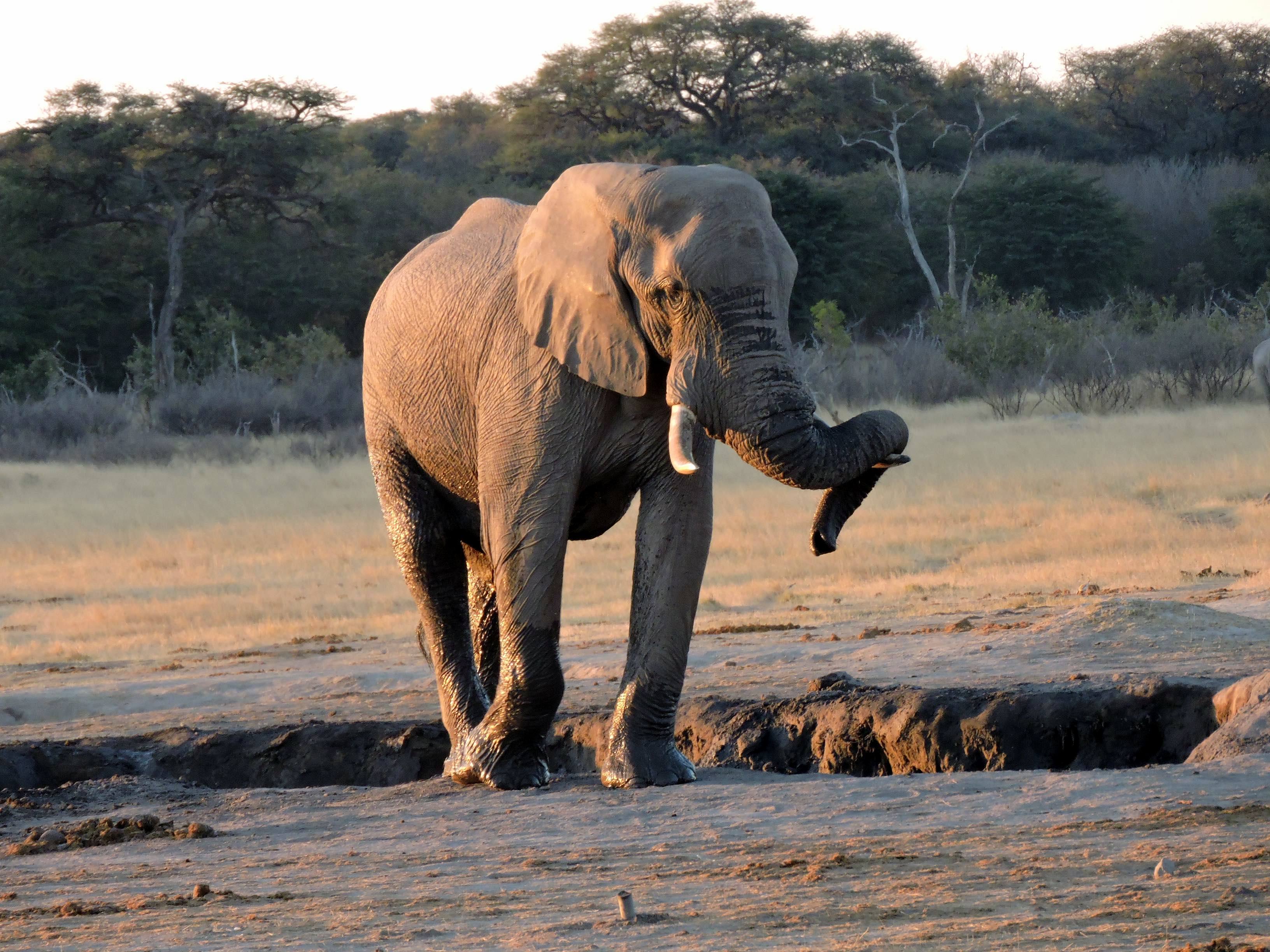
Elephant antiques delayed us...

Elephant antics further delayed us…
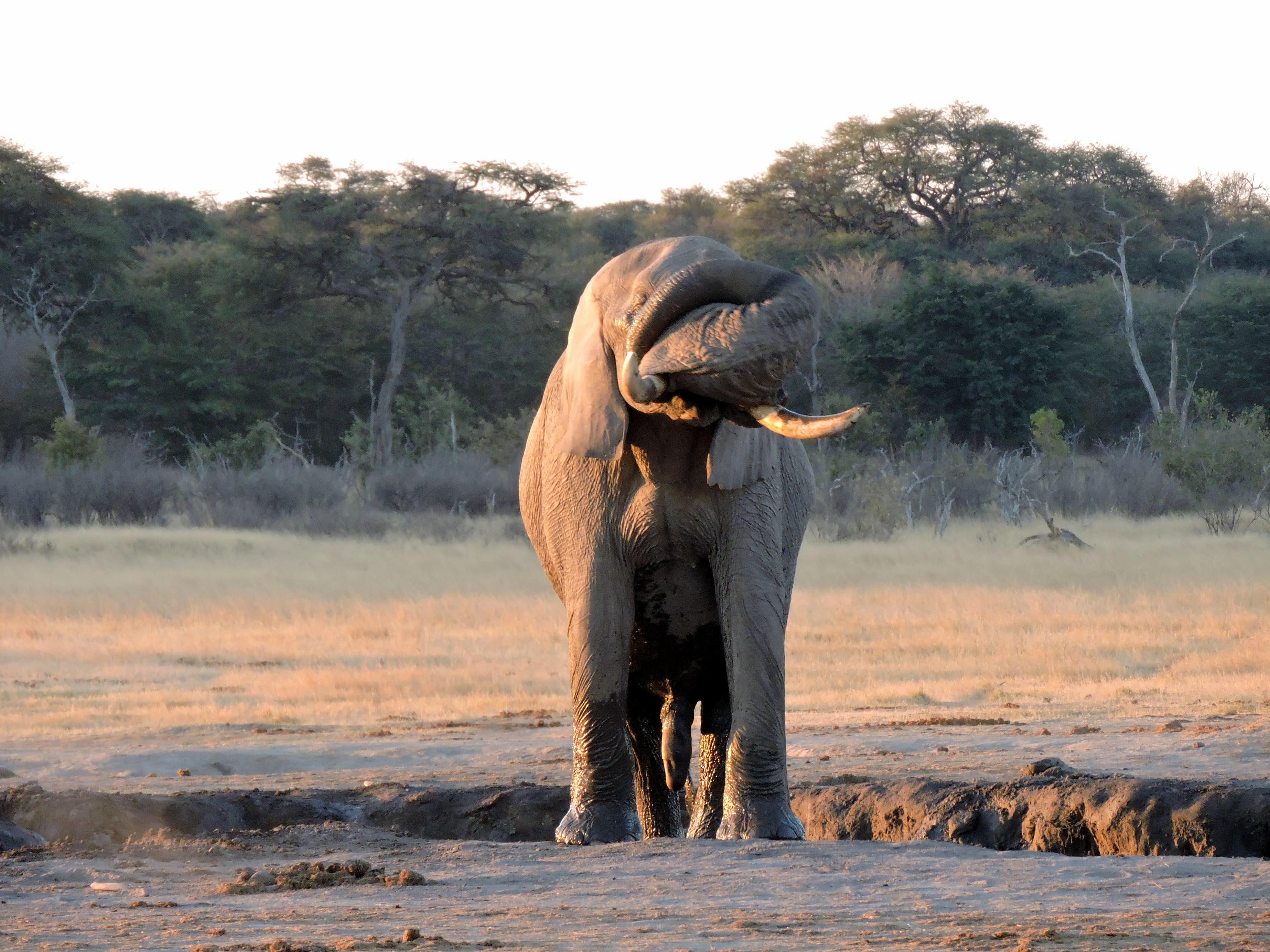
DSCN7680 copy

DSCN7679 copy

DSCN7678 copy

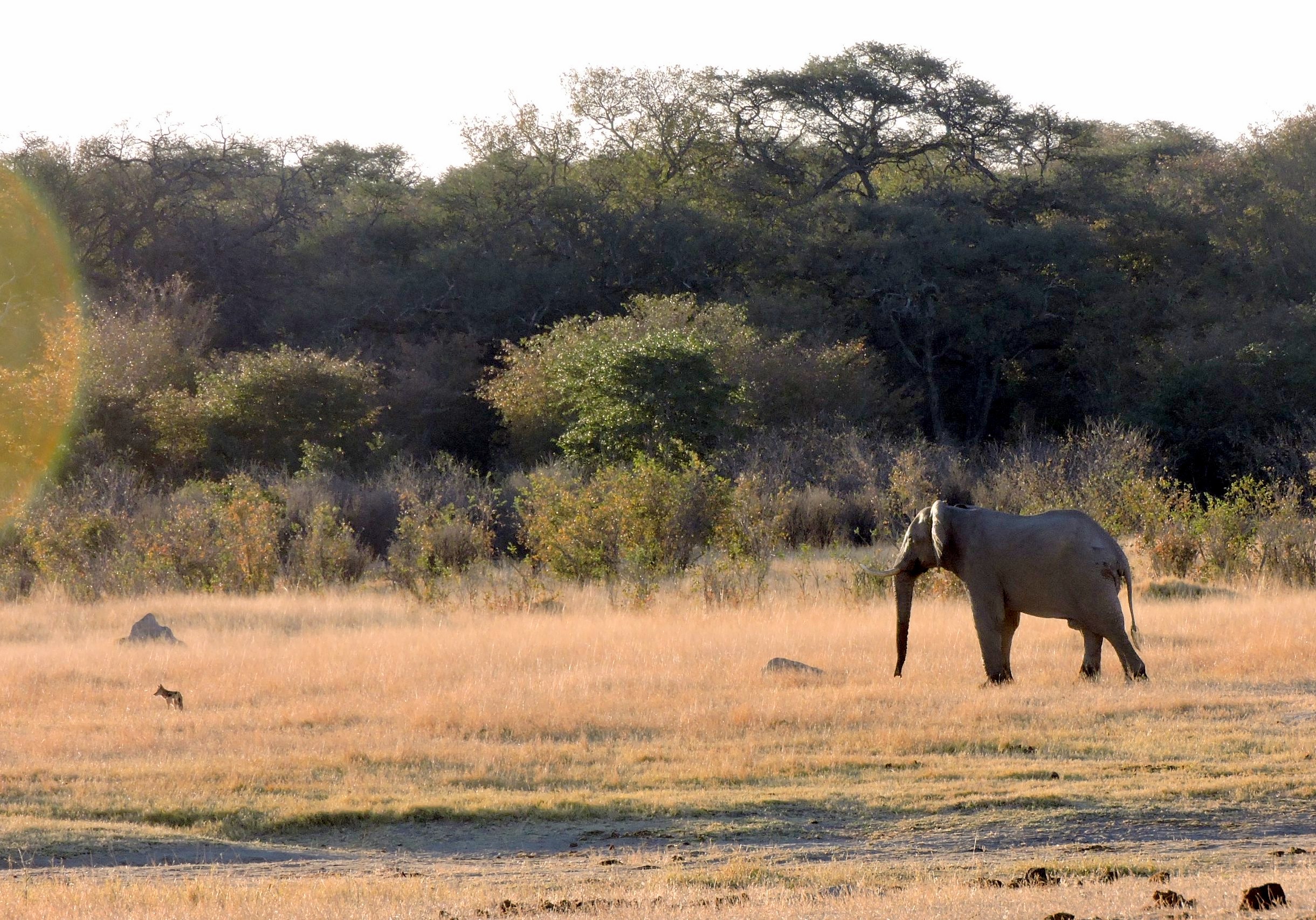
A truly funny stand off!

A truly funny stand off. The jackal looks really tiny!

By the time we had our dinner it was clear that it would be a cold night so we skipped showers and we went to bed early as the tents seemed to be the only warm place at the time. Following the routine I got into my soft pile inner bag and then into the 15°C sleeping bag. I normally sleep in my underwear but, this time, I left my socks on as a special measure! My wife, more cautious, was well covered in her pajamas and even a polar hat!
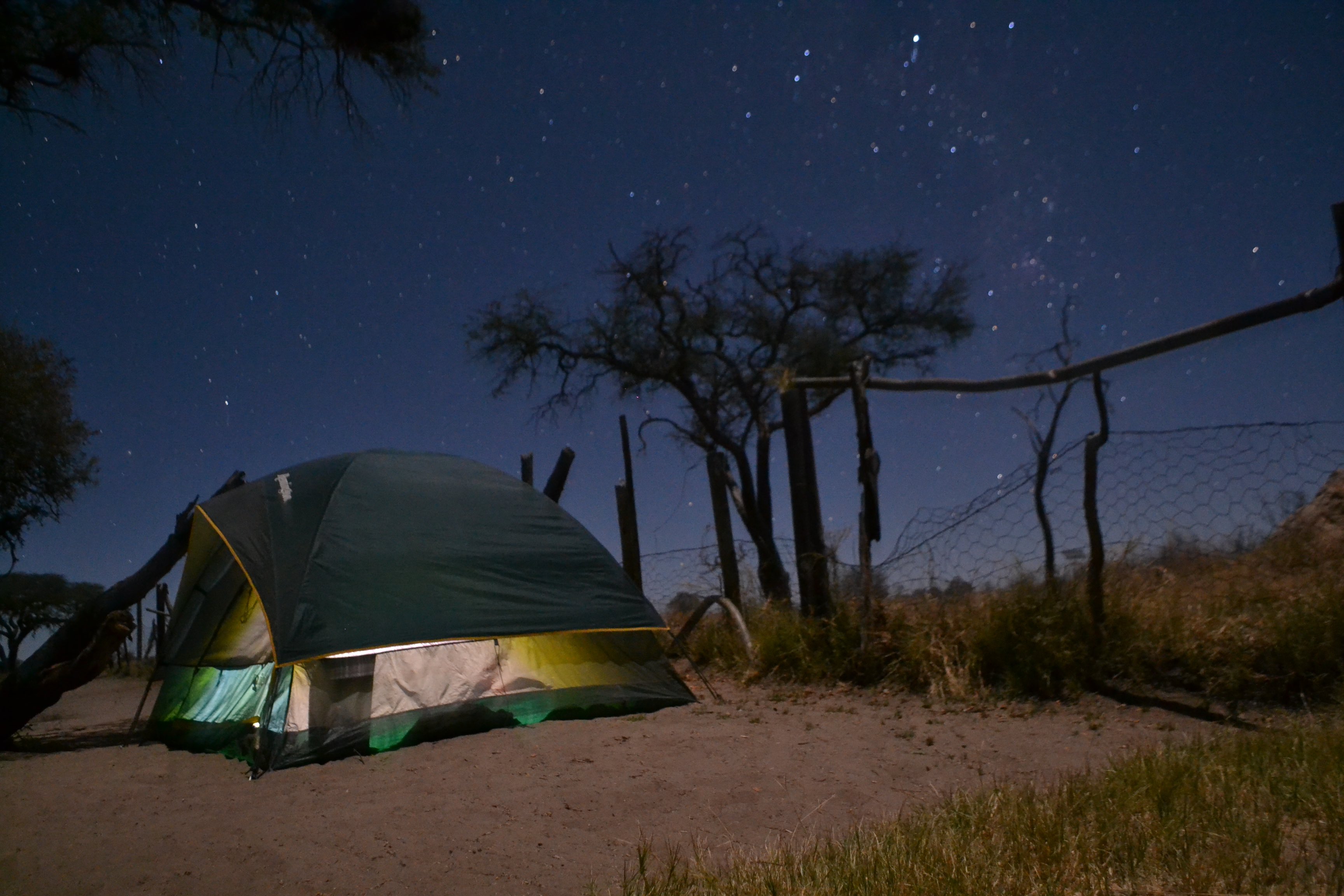
One of our small tents.

One of our small tents.

If there is one thing I am good at it is sleeping even on the floor with a thin mattress! So waking up in the middle of the night came as a surprise. The latter turned into mild panic when I could not feel my legs. I quickly went through the list of conditions that can leave you paralyzed from the waist down and, before I completed it, I realized that I was suffering from leg numbness due to cold or, put into more simple terms, I was frozen from my butt down, mainly at the back of my legs!

“This is ridiculous” I thought and proceeded to adopt a foetal position placing the warmer front of my leg against the cold back of the other in quick succession. This seemed to work at first but, although I regained the feeling in my limbs, they ended up warmer but far from ideal. My butt remained sub-zero. I beat it with my hands and, painfully, it also warmed up albeit slowly. The situation was bad as I was still far from being warm enough to go back to sleep.

While considering my predicament the little warmth I achieved clearly activated other organs apart from my brain and I felt the need to fulfill nature’s call! “This is great”, I thought while holding on and hoping against hope that I would go back to sleep. All this was taking place while listening to my favourite podcast of the “Two Mikes” in TalkSPORT as there is no Internet at Ngweshla. The topic at the time was how, Rod Stewart’s new wife, concerned about the impact of tight jeans on his reproductive gear, forced him to have cold baths to preserve them! I removed the earplugs immediately as this was not the kind of talk that a person in my current condition needed. Bathing in cold-water gave me uncontrollable shakes and this was not conducive to my bladder control!

To avert a wet disaster inside the tent I summed up my courage and left my tepid bags and put a jumper on and then placed my partially mobile lower extremities into my jogging pants. I was ready to face the cold so I proceeded to open the two tent zippers gently so as not to wake my wife up. My mind focused on my bladder control, I forgot to take a torch, a very useful thing when walking around a campsite at night as the moon was long gone!

Luckily my legs responded somehow and I made a mad rush to the toilet. It was evident that the outside temperature was unbelievably low although I was in no condition for estimates! In the dark and with my bladder nearing bursting point, the slippery step prior to entering the toilet was not in my mind. Earlier in life I had suffered the consequences of the lack of grip of my otherwise very comfortable Crocs clogs and this drawback was re-confirmed as soon as I landed on the smooth tiles of the toilet entrance. I am sure that my semi-numb legs contributed to me losing my footing to land on my cold bum. Luckily there was a buffalo skull placed next to the step for decoration and, providentially, it interrupted my mad bum race!

Miraculously I was unharmed and managed to relieve myself in time. The adrenaline burst of the fall had managed somehow to offset the cold I was feeling and I was slightly warmer by the time I re-entered the tent when I heard “hua wash fat nush” coming from the direction of my wife. I asked her to repeat her message as she was speaking through her nose, the only organ she had outside of her “cocoon”. She was keen on knowing what the noise had been and I reassured her that a buffalo had not mauled me but that I had fallen on the skull of one but survived!

After comparing notes on the temperature situation both inside and outside the tent with her and agreeing that it was in fact freezing I re-entered my sleeping bag, this time fully dressed with the addition of a sleeveless jacket wrapped around my bump not only to stop it from re-freezing but also as an added cushion to alleviate its soreness! Fortunately I felt much better all round despite my tender derriere and I managed to go back to sleep.

The following morning there was no early morning game drive and we remained inside the tents until the sun was up and strong. When we surfaced from our tent we met our son sunning himself. He also froze to death in his tent, despite his recently ended five years in Edinburgh.

Do I need to tell you that the next two nights we slept fully dressed and that I took my torch with me when going to the toilet at night?

Moonlit Elephants

As usual, things did not go according to plan! Masuma dam -in Hwange National Park- had changed slightly. A small and shallow bay had been formed to the benefit of the thirsty animals, in particular the impala, who could now drink in relative safety as the crocodiles could not ambush them like last year.

The new drinking place made it safer for animals to drink. Philosophically, the crocodiles decided to sun themselves.

The new drinking place made it safer for animals to drink while the crocodiles wait.

This change in the architecture of the dam meant that the crocodiles (we counted six of them) were almost invariably sunning themselves on the banks of the dam in an apparent forced fast. There is no need to be concerned about them not eating, as they are able to survive long periods without food.

Hippo conversation!

Hippo discussion.

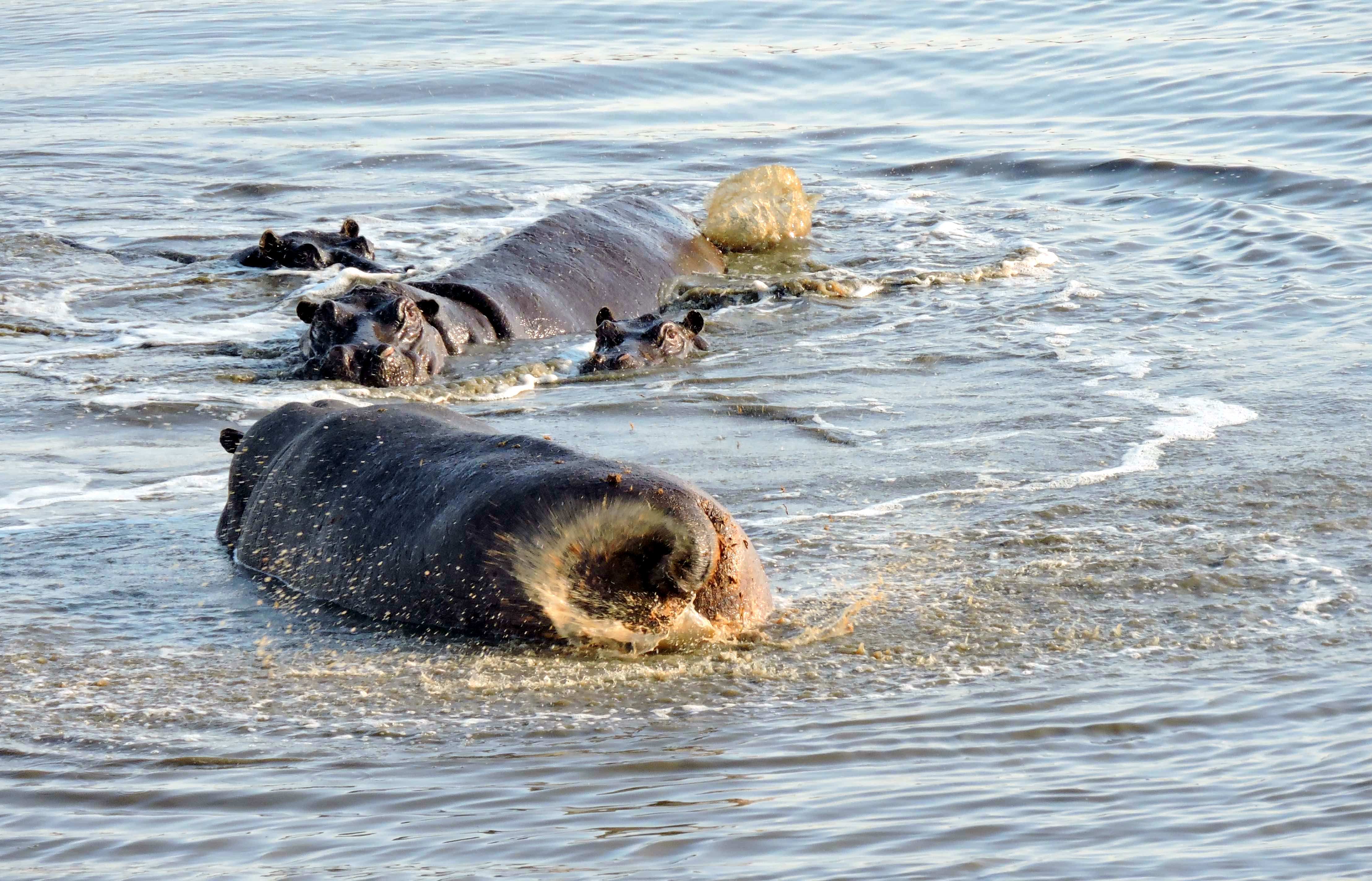
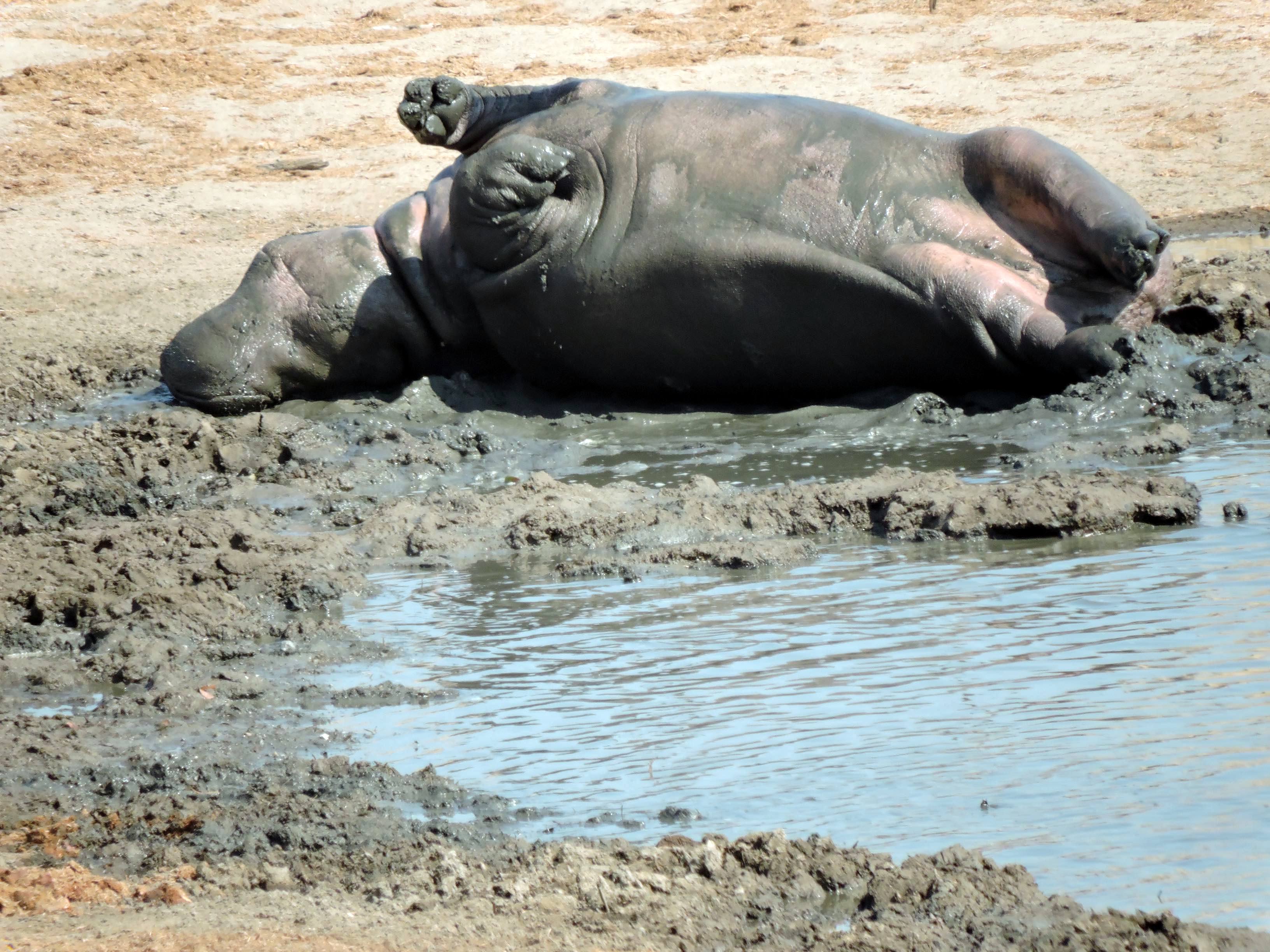
The sixteen hippos were also there. They behaved as one expects hippos to behave: most of the day time spent inside the water coming out for a “service” (sun, the occasional mud wallow and attention from oxpeckers) by lunch time and going out of the dam in the evening to graze. To achieve this they were forced to queue for sometime to squeeze between the drinking elephants! They spent most of their energy chasing each other inside the water snorting loudly and they were quite adept at showing us the end results of their digestion!

Hippos involved in "social" defecating...

Hippos involved in “social” defecation…

We arrived at Masuma at lunchtime. We spotted a few elephants drinking on the opposite side of the dam but no fresh water was being pumped in.

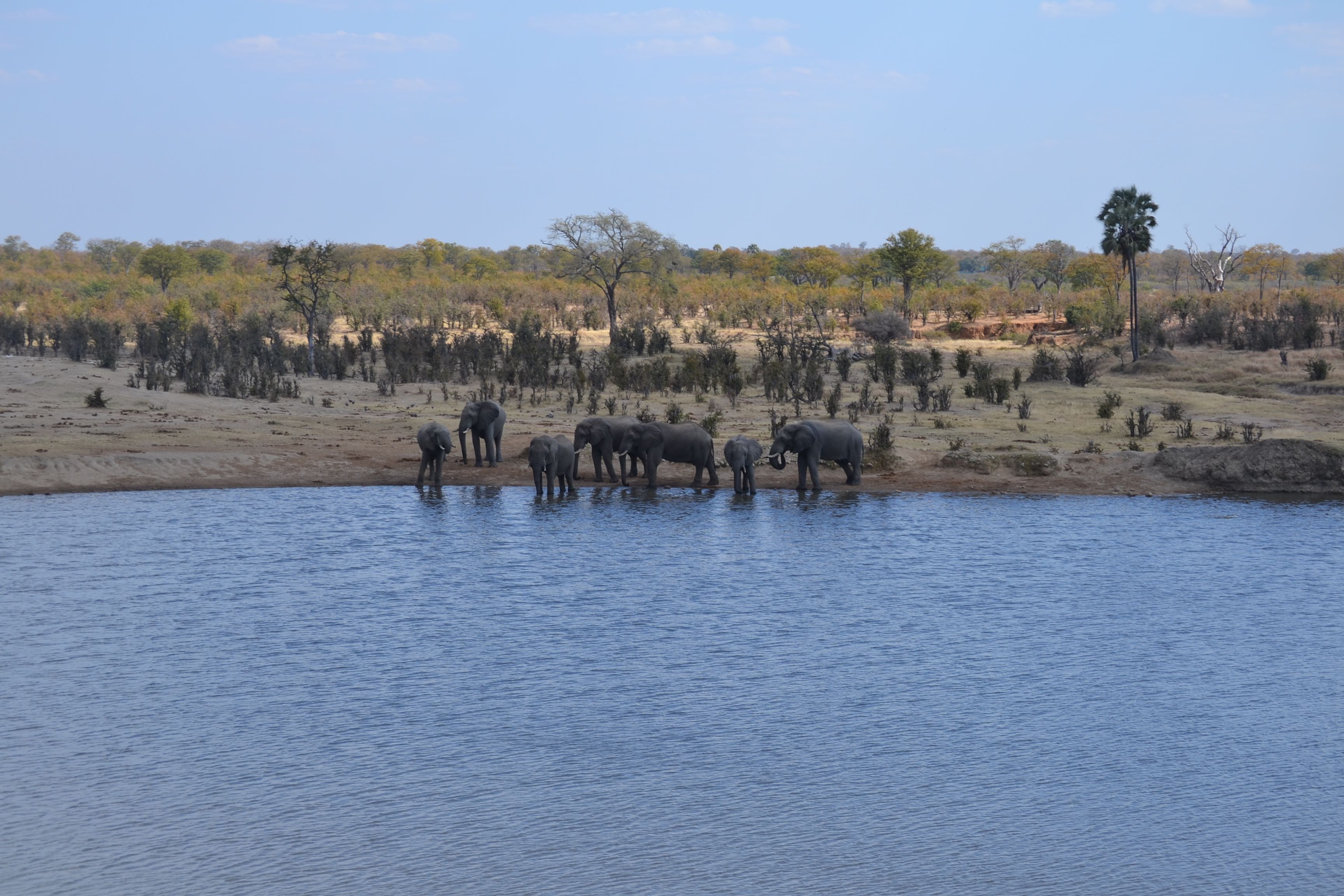
Elephants drinking before the pump was turned on.

The camp attendant anticipated my question telling me that lions were walking around the dam the night before and he did not dare to walk to switch on the pump! Needless to say that I obliged when he asked me for a lift to get there! While driving, keeping an eye for lions without seeing any, I learnt that a donor was providing diesel for the pump. “Once the pump is on the elephants will come” proclaimed the camp attendant after the engine started puffing. He also informed me that a full tank of diesel would operate the pump for twelve hours. “Twelve hours would take us through most of the night”, I thought while I mentally thanked the benefactor and hoped that the camp attendant was correct in his prediction.

All shyness lost when getting close to the water!

All shyness lost when getting close to the water!

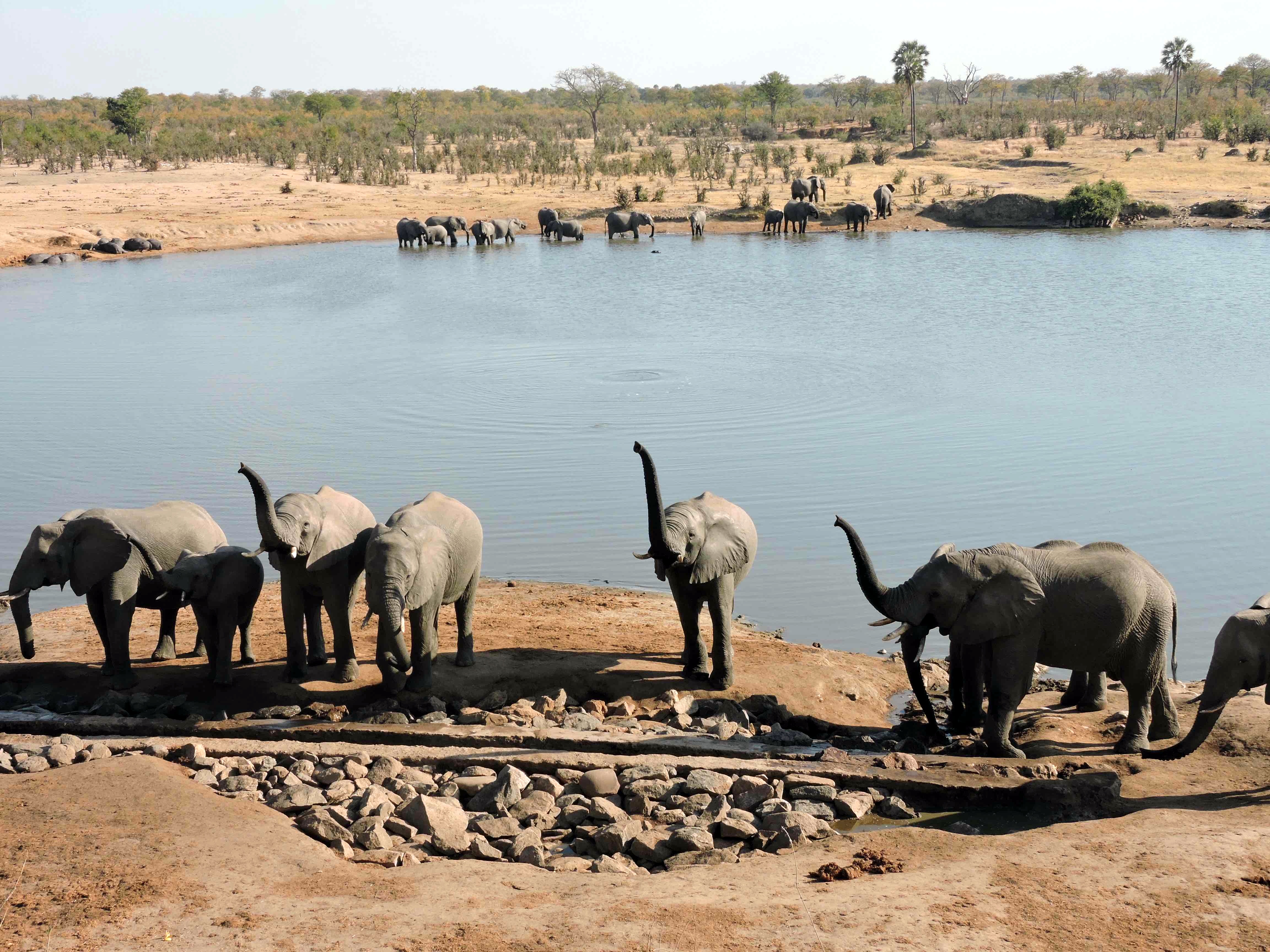
Fortunately, as predicted by the camp attendant, the first elephants started to arrive within an hour of our return! Whether they smelled the fresh water or associated the pump noise with fresh water I could not say but the latter seems the most likely. The fact was that they made a beeline for the pipe producing the fresh water, ignoring the rest of the dam if possible! However, as the place got more and more crowded, the incoming families had to wait until those that had arrived earlier satiated their thirst or enter into the dam and drink less clean water.

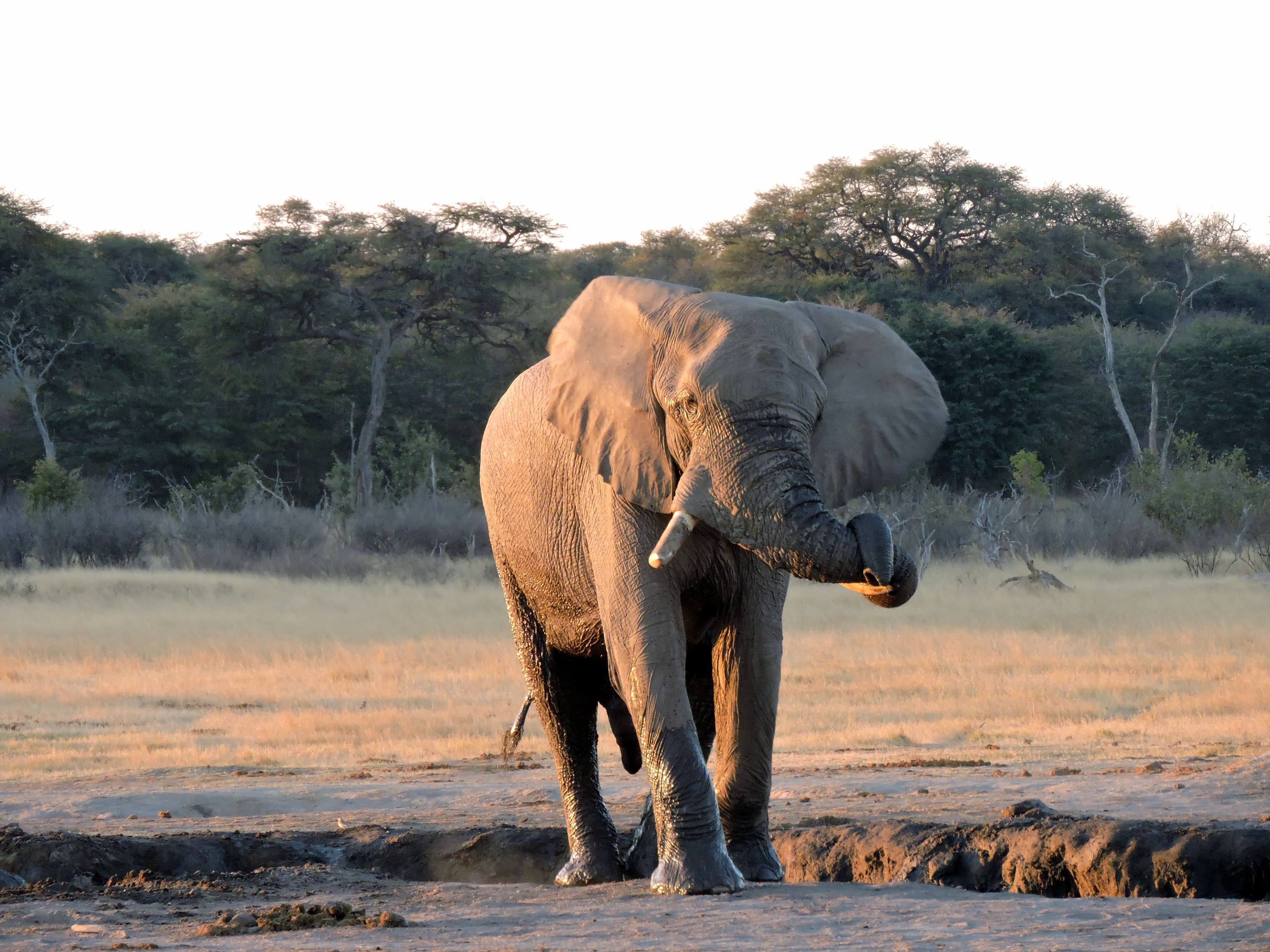
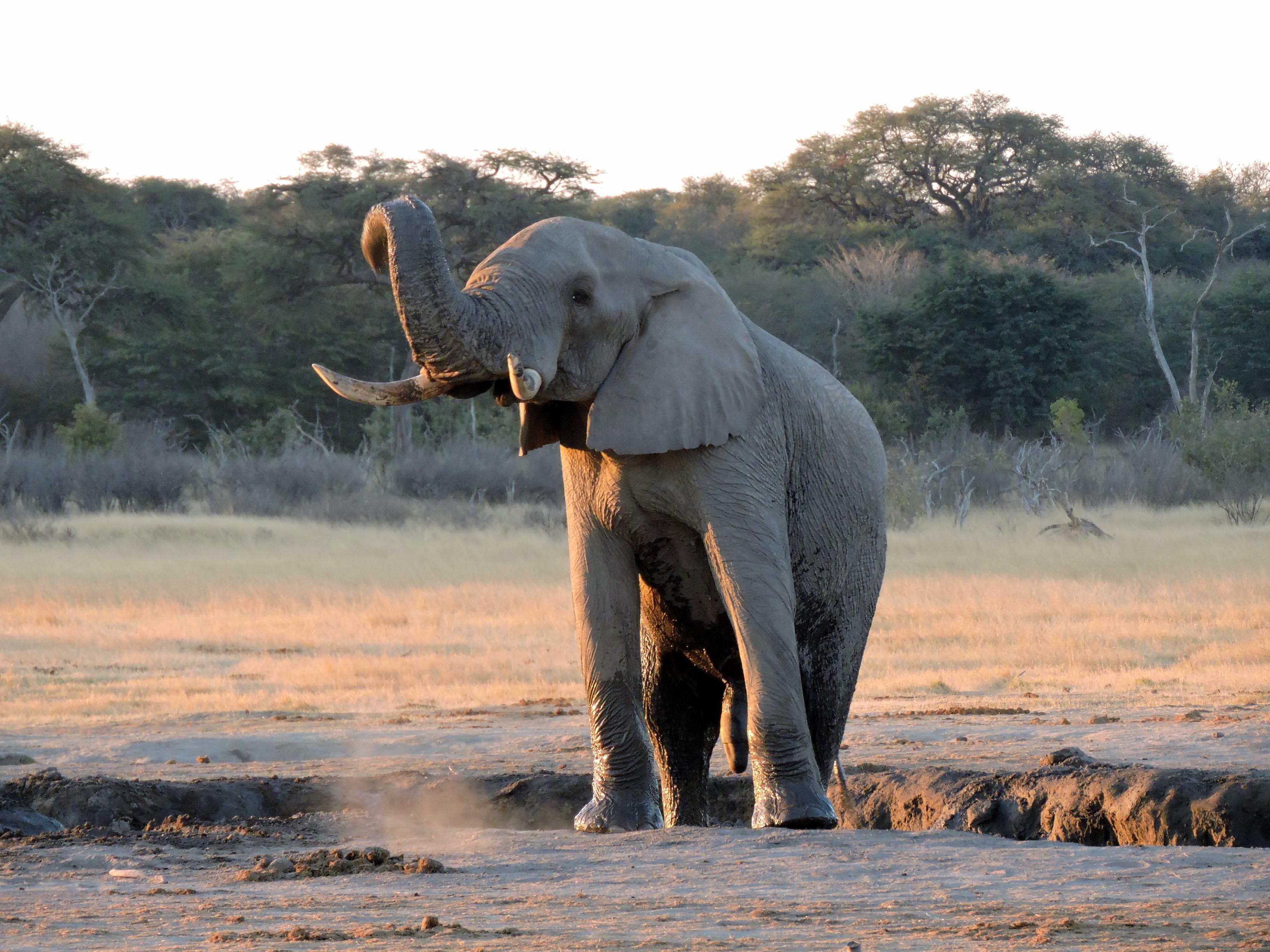
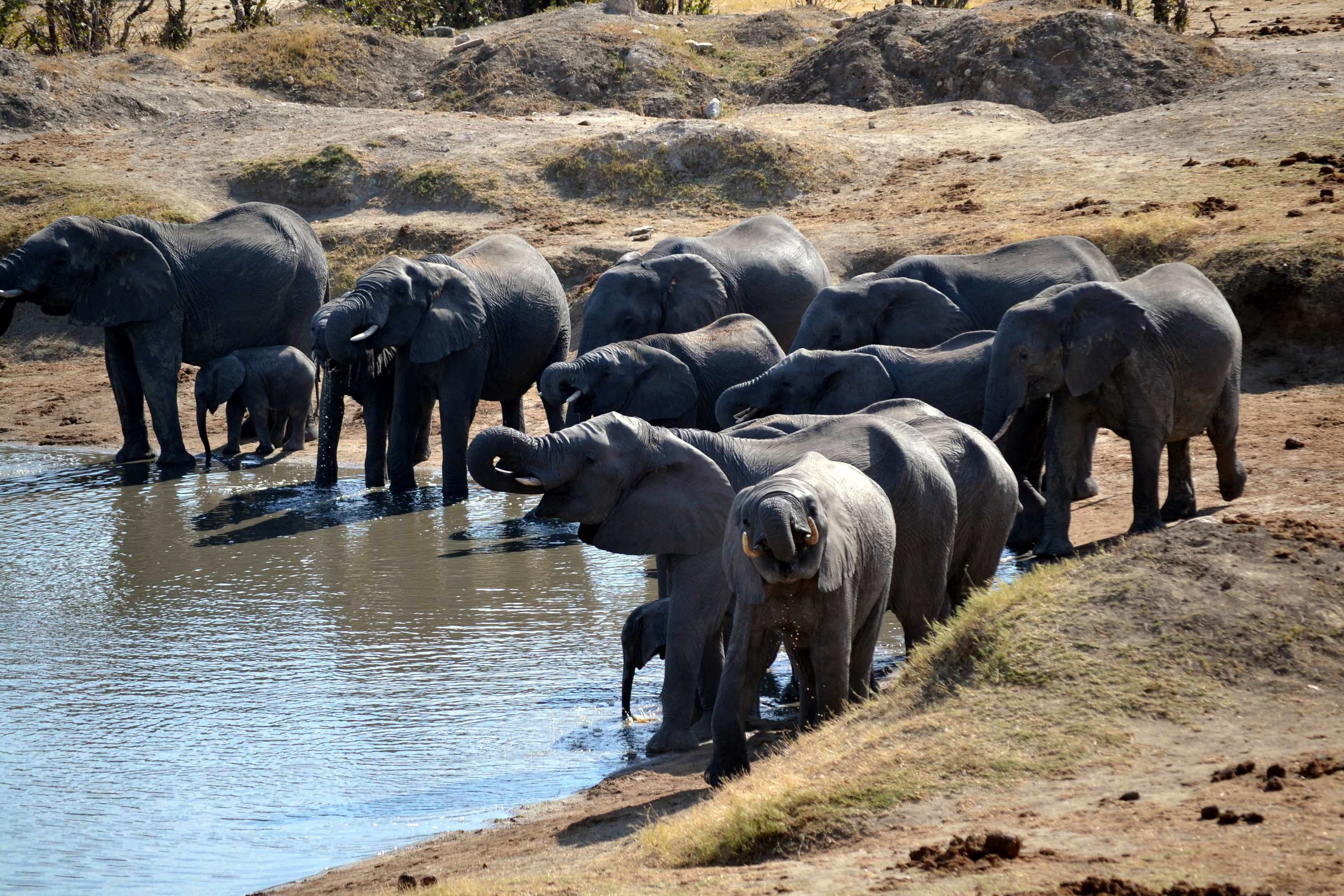
The arrival of the first elephants took place at about 14.00 hours. By then we had already set up camp so we were ready for one of the greatest sights on earth: herds of thirsty elephants coming to drink! Your eyes get tired of gazing towards the confines of the bush that surrounds the dam and you need to stop for your eyes to rest. A few seconds later, when you resume your watch there they are as if they magically appeared in front of your eyes! They come out of the bushes in what appears to be a slow motion walk.

The miracle continues as more come into sight. Their slowness does not last long as, with raised trunks, they sniff the fresh water and their pace gets gradually faster as they approach it. It all ends with them breaking into a run to cover the last few metres, the baggy trousers that are their back legs flapping! Their run ends at the water’s edge where they drink showing their pleasure by shaking the water with their trunks and spilling it all over the place while drinking. Sometimes their run takes them into the water where they not only drink but also proceed to frolic like young humans!

Smelling us!

Smelling us!

Although we are used to seeing large herds of thirsty herbivores coming to a water source, they do so in a rather apathetic way. There is nothing like that when thirsty elephants smell water and I can assure you that their emotions show!

Once in the waterhole, their immediate thirst abated, the animals become quiet while making the best of the available water. They do vie for the best position but they do so rather discretely. Normally the larger animals occupy the best spots. These are bulls that come either singly or in small groups and join the drinking party for a while and then leave the way they came: on their own as normally they only join the female family units when there is one on heat.

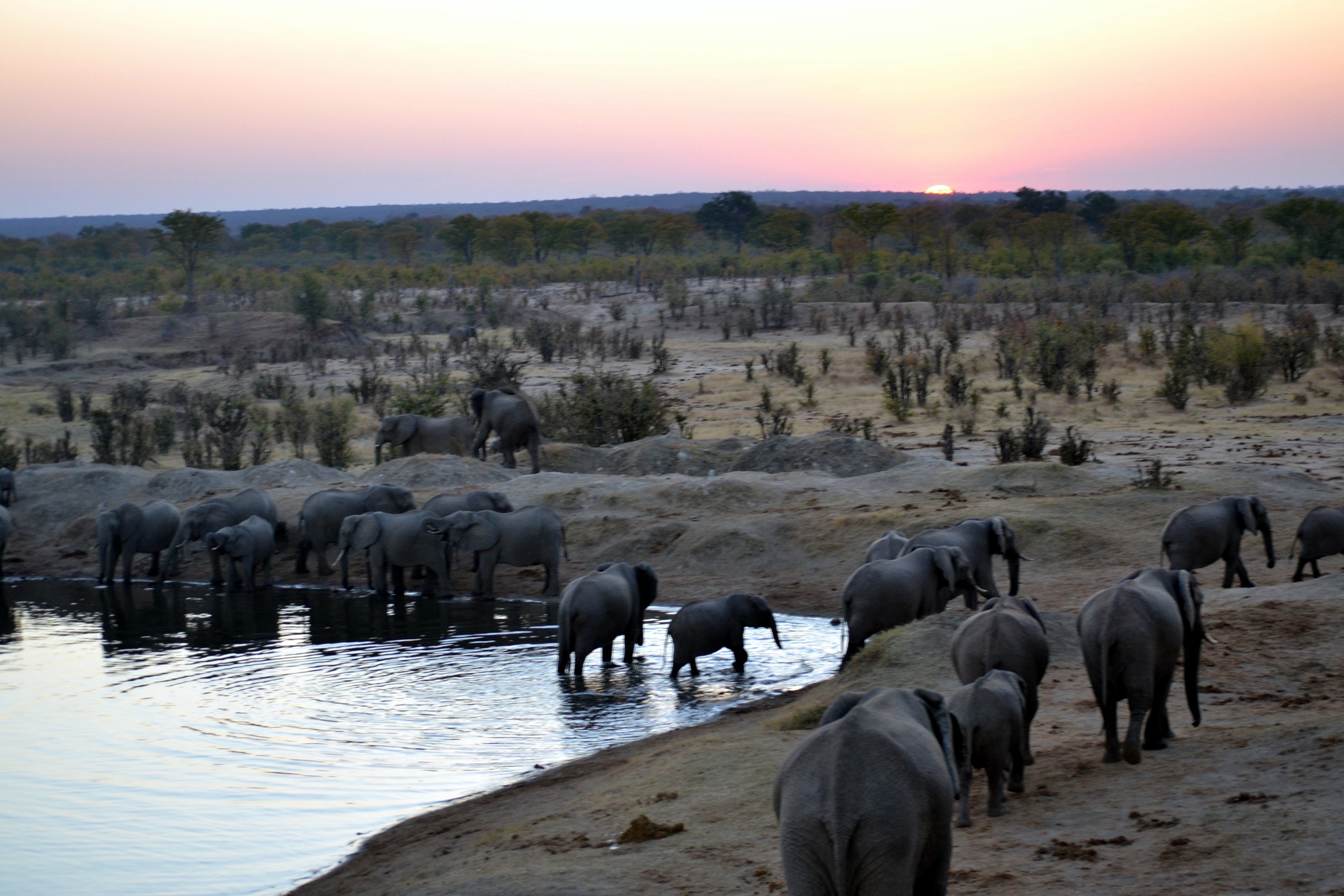
At sunset, the show continued unabated.

At sunset, the show continued unabated.

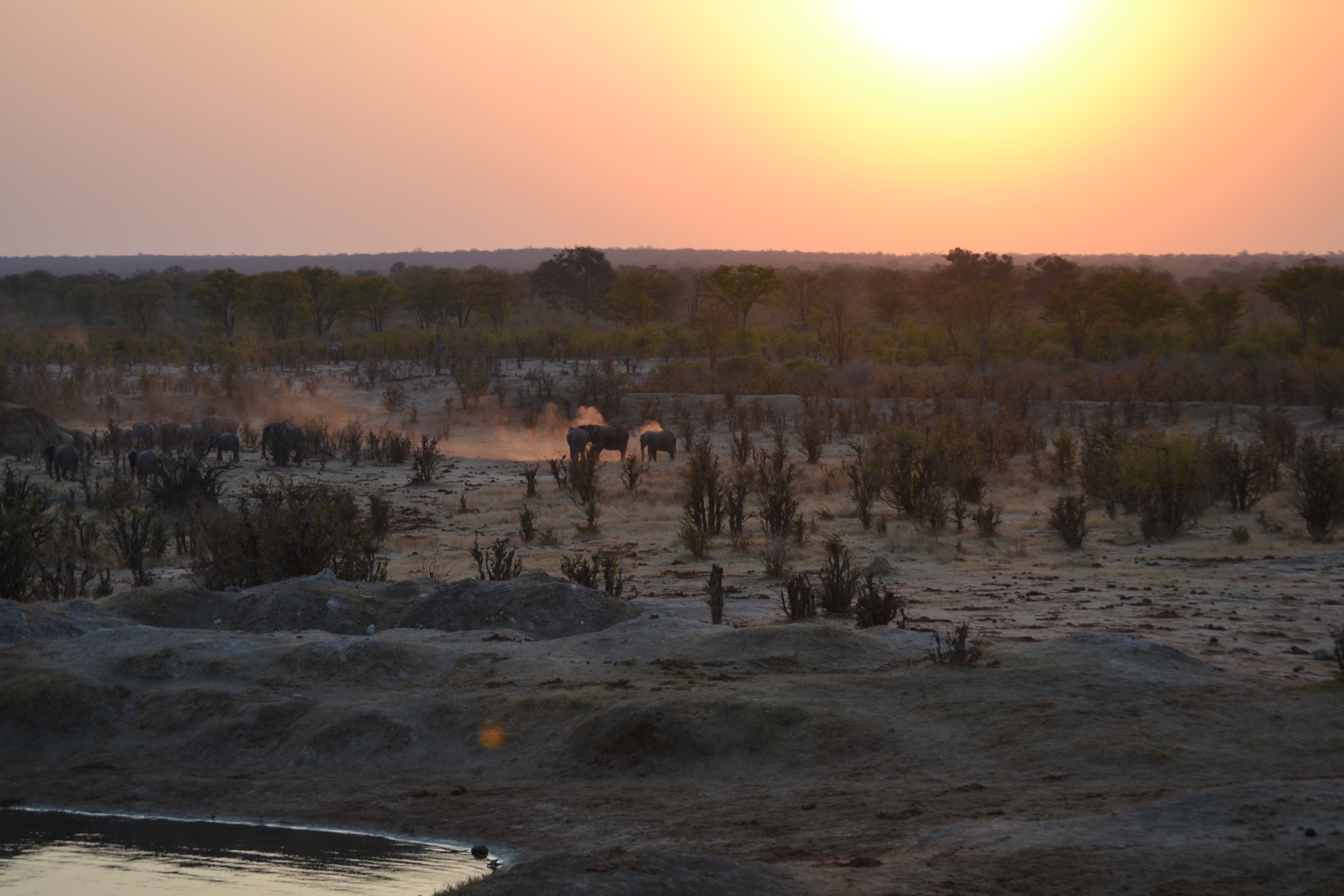
Sunset with elephants dusting themselves.

After bathing it was dusting time to cool off.

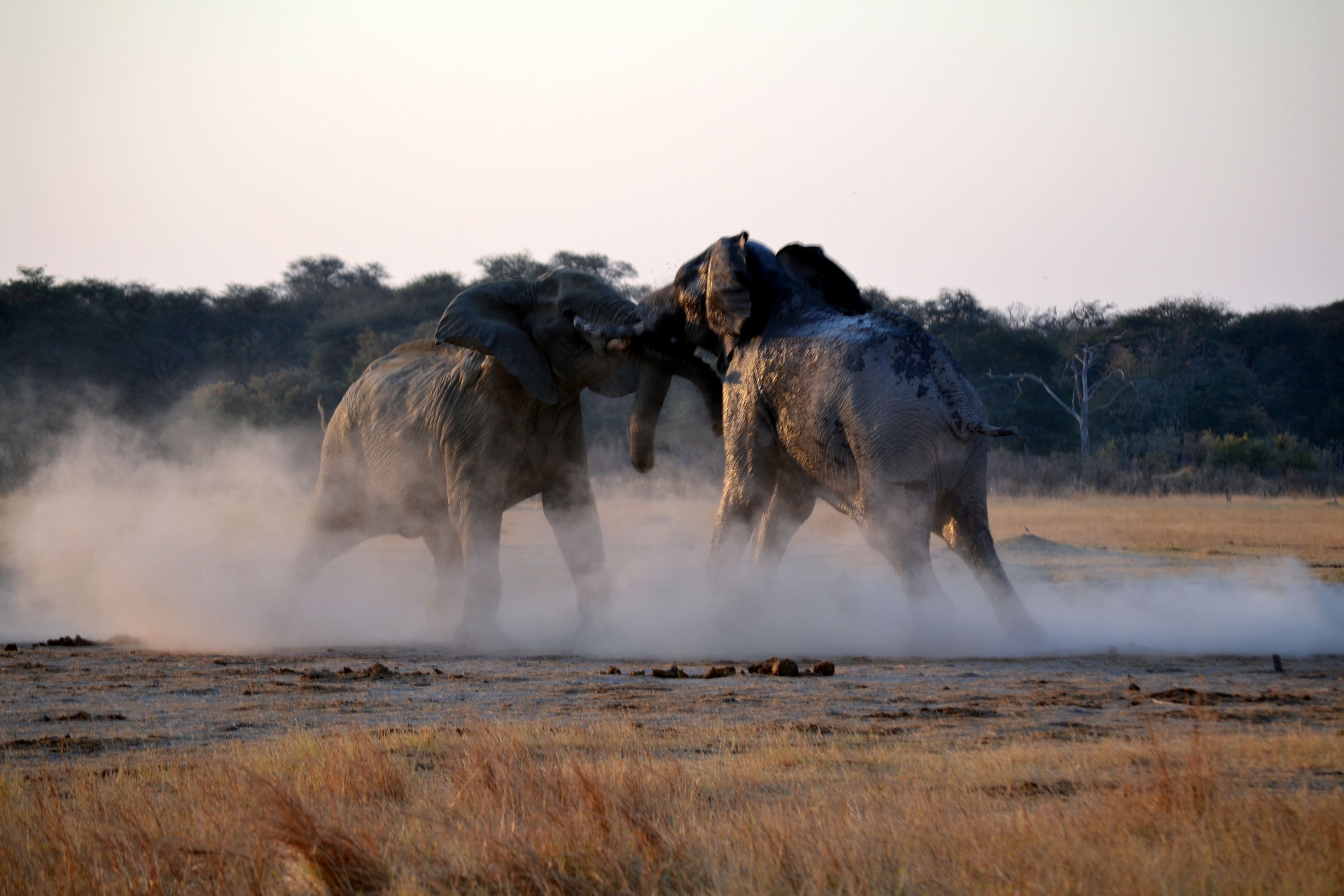
Occasionally youngsters manage to squeeze in between the tusker behemoths and timidly at first but quite boldly later manage to stick their small trunks into the right spot to get a share of the fresh flowing water. Loud squealing indicates when one of them oversteps the mark and is put back in its place with a shove! Adults show each other respect and only rarely do their interactions go beyond posturing. Overt aggression rarely takes place, and on the occasions that is does, it is normally short-lived. After an initial head clash, often quite violent, one of the rivals withdraws tail up and maintains a prudent distance thereafter! We saw this happening a few times at Masuma.

It is usually a rather gently affair.

It is usually a rather gently affair.

On occasions, however, things do go badly as shown by the chunks of ivory found at waterholes. The most extreme outcome I have ever seen is the skull with a hole made by a tusk on display at the Letaba Elephant Hall in the Kruger National Park. Wapiganapo tembo nyasi huumi” in Swahili means “When elephants fight the grass gets hurt”, a very accurate proverb to describe what you see in these situations! We saw quite a serious confrontation at Kennedy 2 dam near Ngweshla but, luckily, one of the bulls gave up before things got out of hand and the dust eventually settled.

Ocasionally things get out of hand.

Ocasionally things get out of hand.

Their great strength is evident.

Their great strength is evident.

DSC_0003 copy 2

DSC_0004 copy 2

Eventually they separated.

Eventually they separate and the “loser” moves off .

The elephant parade at Masuma continued throughout the whole afternoon and well into the evening. They paid no attention to the noisy arrival and departure at dusk of large numbers of banded grouse.

Elephants drinking at sunset.

Elephants drinking at sunset.

We stopped watching them for a while to have dinner but their noise stayed with us, as the herds were a few steps from our elevated camp. With dinner over it was time to go back to observe them again with the fading light. They were clearly wearier and their trunks rose more often to smell us and confirm our presence. Belly rumbling also became more frequent and louder. I was aware that the latter is believed to be a communication method among elephants but I did not know that the rumbling moves from animal to animal in a herd, in order to make sure that it reaches the last individual in the herd. Fascinating stuff!

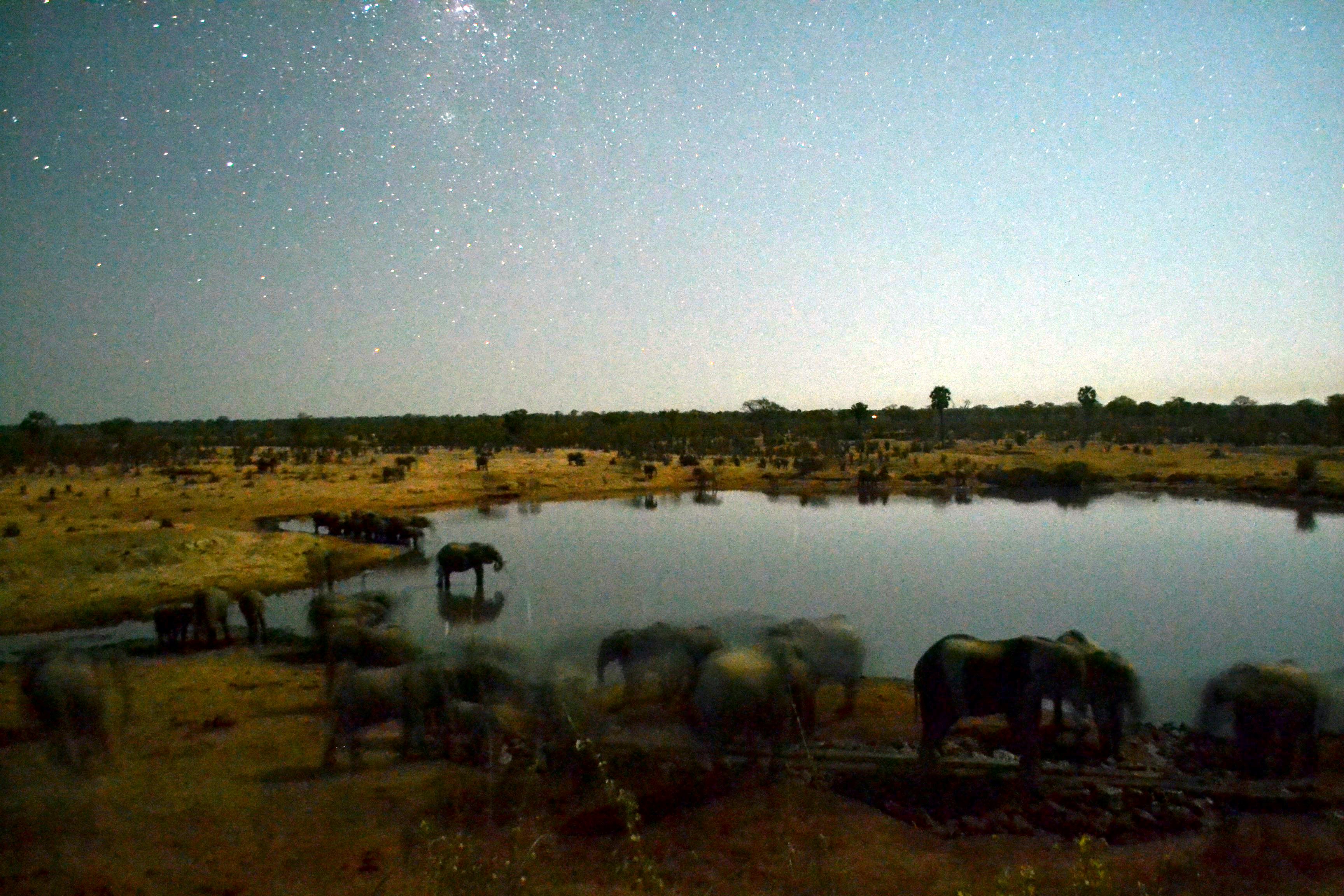
A night picture of the dam with drinking elephants. I applied the Picasa "I am feeling lucky" command to get light into the picture.

A night picture of the dam with drinking elephants. I applied the Picasa “I am feeling lucky” command to get light into the picture. Even the stars can be seen better!

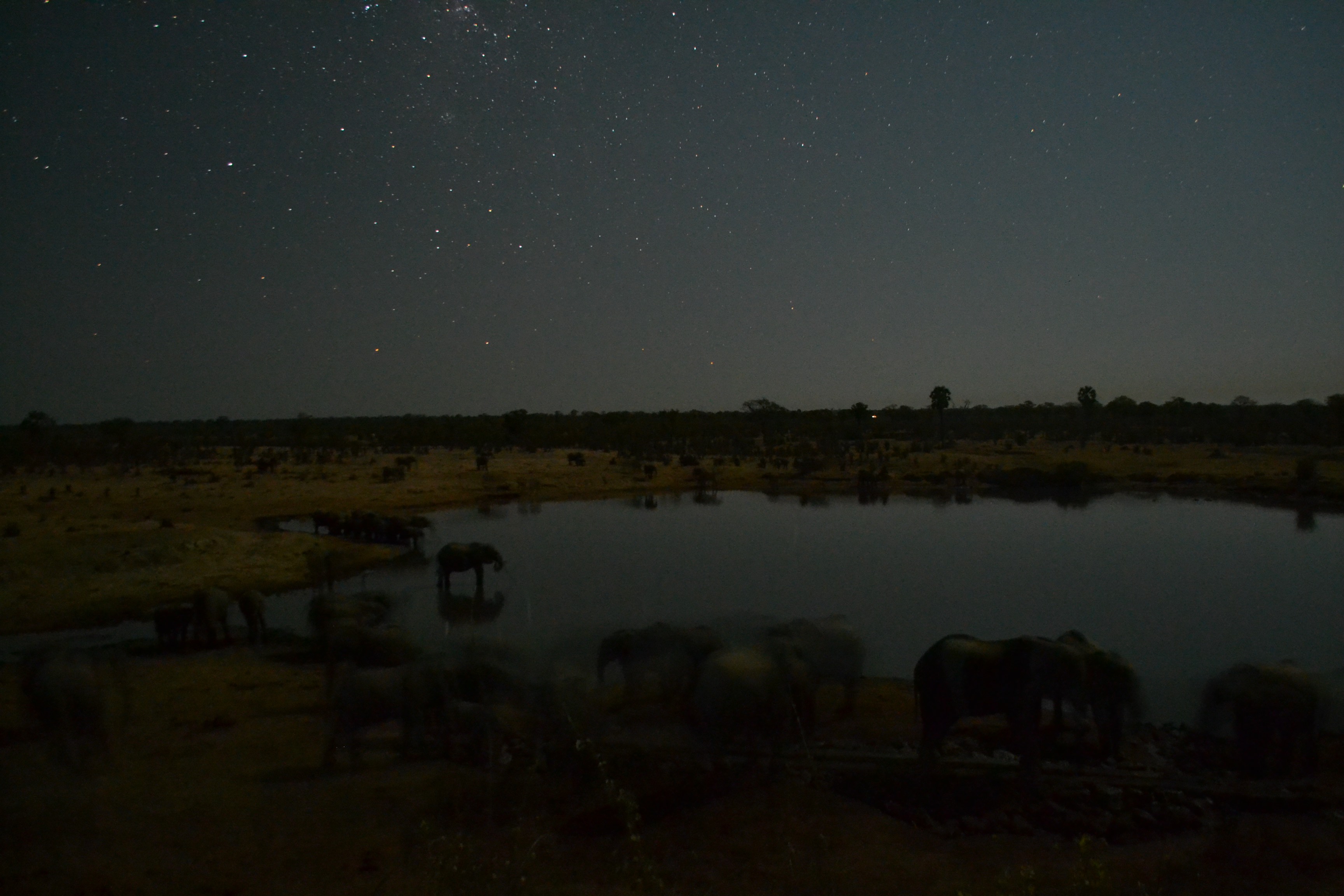
The original picture, above.

The original picture, above.

After a long while we were getting ready to go to bed when the moon started to illuminate the bush across the dam so we decided to wait a while longer. It was well worth it! The moon was almost full and it cast an eerie light over the moving dark grey masses. Absorbed by this rare vision we remained on the watch and for a while forgot our sleep. We stayed with them until they started to move off and only a handful of bulls remained until about 2 am. It is probable that their withdrawal matched the end of the pump’s diesel and their departure brought calm to the dam and we could enjoy a silent African night for a while until the lions started to roar in the distance!

The following morning, apart from the fresh droppings, nothing gave away what we had witnessed a few hours earlier.

Hwange National Park

Last year I reported on our stay at Shumba Picnic site in Hwange National Park in Zimbabwe (see: https://bushsnobinafrica.wordpress.com/2014/10/31/watched-at-shumba/) as well as the observations we made on the struggle we witnessed between crocodiles and hippos for the impala carcasses at Masuma dam (see: https://bushsnobinafrica.wordpress.com/2015/02/22/hippos-from-hell/ and https://bushsnobinafrica.wordpress.com/2015/03/23/hippos-from-hell-the-videos/).

Hippos were not interested in Impala meat this time!

Hippos were not interested in Impala meat this time! (Photo by Julio A. de Castro & Mariana Terra)

(Photo by Julio A. de Castro & Mariana Terra)

(Photo by Julio A. de Castro & Mariana Terra)

After our return from that safari we immediately booked the Masuma dam campsite so that we could stay closer to the action and see if we could observe something additional in the crocodile-hippo saga that caught our interest earlier. We also booked a place in Main Camp as we were sure we would have fun with elephants at Nyamandlovu pan. We knew that the elephants were plentiful there and we could watch them and enjoy their antics!

THis time there were lots of elephants at Masuma dam. (Photo by Julio A. de Castro & Mariana Terra)

This time there were lots of elephants at Masuma dam. (Photo by Julio A. de Castro & Mariana Terra)

We even saw pink elephants... (Photo by Julio A. de Castro & Mariana Terra)

We even saw pink elephants… (Photo by Julio A. de Castro & Mariana Terra)

As part of our “discovery drive” we also camped in the Ngweshla pan campsite as it has a reputation as the best place to camp in Hwange and is a place where predators are often seen because the area surrounding the various pans and water holes found there is quite open, a change from the thick bush of other areas in the park.

The safari took place between 22 and 29 July 2015 and I describe its highlights in four posts:

Fearless bee-eater

Moonlit elephants

Encounter with lions, and

Ngweshla cold.


I hope you will enjoy them.

Skin Disease

End of October is the height of the dry season in Mana Pools. The place really looks like a brown dust bowl the exception being those trees that, anticipating the arrival of the new rains, flower now to be ready to drop their seeds with the onset of the rains presenting the landscape with some colourful blotches.

Very few Apple Ring Acacia still had pods and the experienced elephants that knew the reward of a few strong shakes applied to the trunk, were using this technique and relishing the fruit of the “podfall” they produced!

The scarcity of the Acacia pods is now compensated by the abundance of sausages of the Sausage Trees, now quite grown although probably not so palatable. As a consequence of the general absence of food on the plains, the animals in general and the elephants in particular were seen mainly on the margins of the Zambezi River, feeding on aquatic plants. The Zambezi banks were dotted with elephants and many were feeding and bathing below the banks of the campsite.

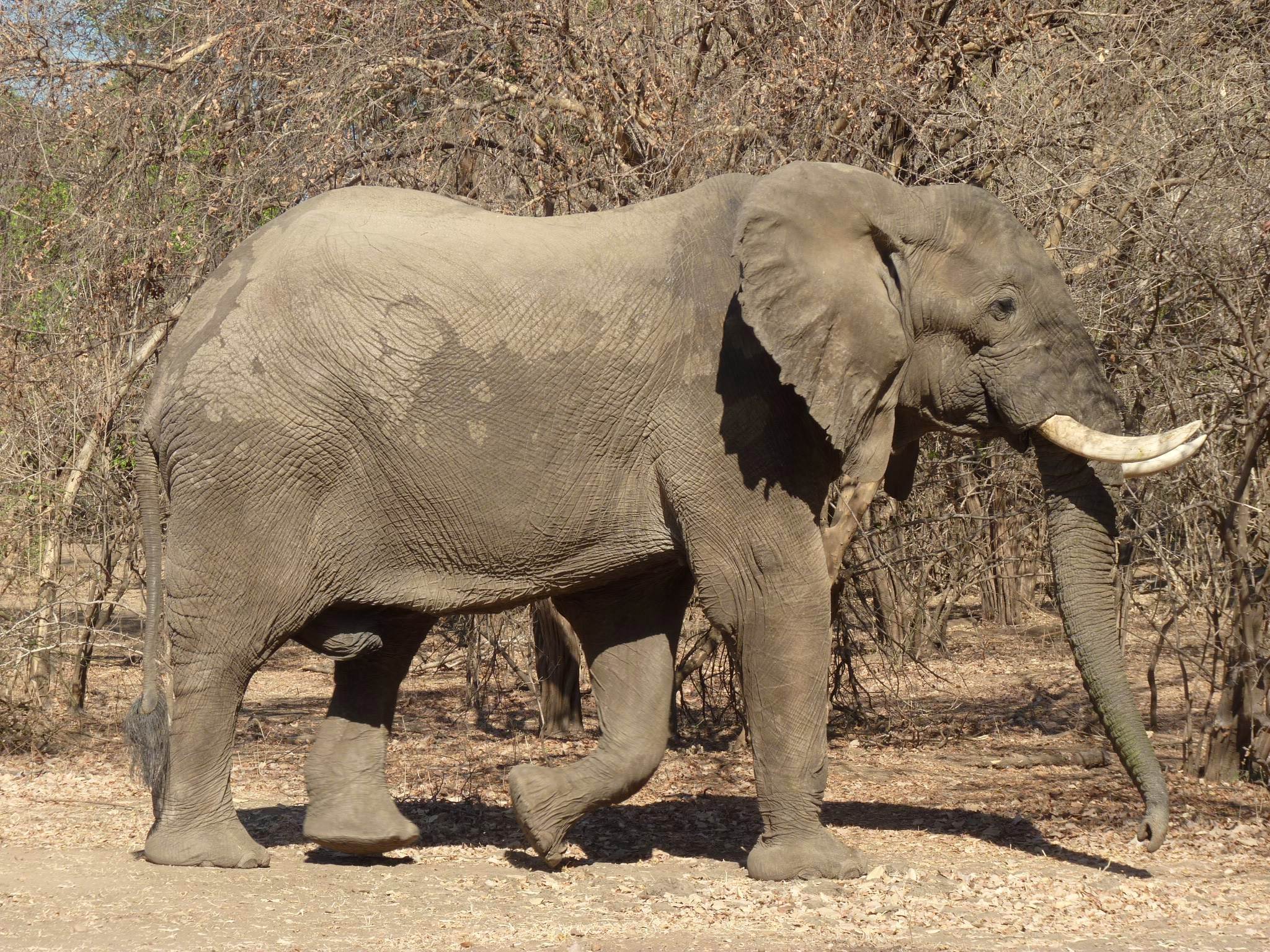
Despite this, although harder to find, some elephants were still inland. We met one of them, a rather large animal with good ivory for Mana Pools. It happened to be using the same road as us and coming in the opposite direction! As we all know, elephants have the right of way! It was a rather large and beautiful bull with good tuskers for Mana Pools.

Mana tusker small

The Tusker coming…

It had a relaxed but sure gait, I imagine that this is the attitude of someone with no threats. He clearly saw us before we did and did not define us as a worthwhile threat so it continued walking as if we did not exist.

We parked politely in the bush by the side of the narrow road, stopped the engine and watched this magnificent animal. It passed very close to us and in so doing we could appreciate its size as well as take some photographs of it.

While on our side we observed, with some preoccupation, that it had a rather large area of its skin at the back and flanks covered with skin blotches that look like some kind of fungal infection. Elephant skin is thick and tough, reaching almost 3 cm on it s back. Additionally, the elephant uses mud and dust to further protect its skin, as it is a very sensitive organ.

Mana tusker skin disease

The suspected skin problem is seen as paler areas on its ears, back, sides and upper hind leg.

Although we had observed this condition before, this is the most extended that we had seen so far. Hopefully the mud baths will help this animal to control it.

Not rain but hail!

Elephants at w:hole prior to rain

Elephants drinking before the storm.

It was mid afternoon on the second day and we decided to visit a nearby pan where we had seen elephants with rather large tusks on our way into Shumba camp in the hopes of finding them again. It was very windy and the sky looked grey but we attributed it to the bush fires that prevail at this time of the year. “Too early to rain” I said but my wife was not convinced. “To me that looks like rain”, she said as we made our way to the pan.

There were a few elephants drinking but no large tuskers to be seen . While watching the animals, the wind picked up and we heard thunder. Clearly, the grey sky was indeed a storm in the making and I was wrong again! Soon, heavy raindrops started to fall. The elephants’ response was to rapidly move off from the water into the nearby bush, with the exception of a couple of bulls that had just arrived for whom the need for water overrode the need to seek shelter from the storm.

low visibility

It was a storm!

Raindrops turned into hail that, after two to three minutes, changed again into water in the form of a heavy downpour which was also short-lived. The two elephants put up with the inclement weather and continued to drink while the chickpea-sized stones bounced off their backs! What a relief from the heat and dust! In addition it released a wonderful wet earth smell that prompted us to open our car windows and enjoy the wetness of what, a few minutes earlier, was scorched earth!

elephants start to hail

elephants under hail

The two bulls drank despite the inclement weather!

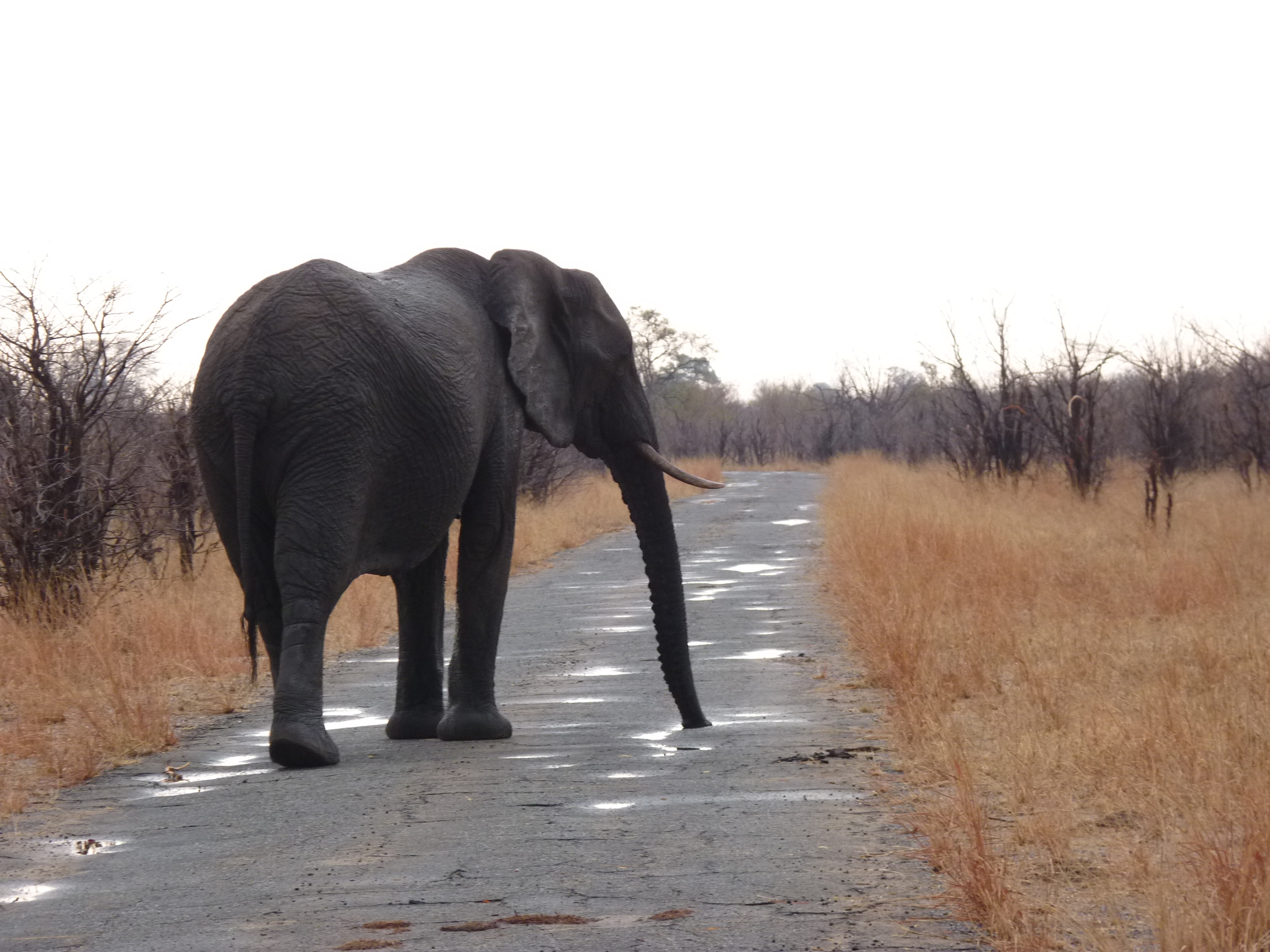
Once their thirst was quenched, the elephants moved off. We tailed them as they took to the road that headed for our camp. One went into the bush and started to feed, while the other continued to walk ahead of us, stopping every few metres to drink from the rain puddles that had formed on the tarmac. It was funny to see how it would effortlessly suck them dry! Clearly it could not resist fresh rainwater!

drinking from the puddles

Enjoying fresh rainwater.

We were still behind the elephant when we saw one rock on the road and farther on another one. The elephant carefully avoided them. The rocks turned out to be Leopard Tortoises coming out of their heatproof refuges to enjoy a dunk and a drink, probably their first since early last year! Watching these animals enjoy the rainwater served as a reminder that, in hostile environments, opportunism is the name of the game!

tortoise at puddle

Smiley…

I thought I saw them smiling but it may have been just the shape of their mouths… Well, at least we smiled and hope that the rains will be good this year!

Kruger National Park Report

Nothing much to report on the journey from Louis Trichardt to the Kruger National Park (Kruger). On arrival at Punda Maria gate, a helicopter flying overhead brought home the reality of Kruger these days when special measures to curb rhino poaching are being taken. Despite this, a few hundreds have been killed this year. Let’s hope that the Park will get on top of the situation. Kruger is the last rhino (both black and white) stronghold left in the world.

Roads are good and we were in Sirheni Bushveld Camp with time to spare. The camp is small with no electricity but this time we knew about it beforehand! After spending a quiet night and enjoying the peace of the place, it was time to continue our trip. We left for Shimuwini Bushveld Camp where we had a great time on a previous trip with friends. There was more water this time so the animals were less concentrated in the riverine area. However, the hippos were still there and the birdlife good as usual.

In the morning we planned to do a drive along the Letaba river near the camp and to continue to a point where the river crosses the road, as it is an open expanse which apart from being beautiful, allows one to see far and spot interesting things. On the way there we could see a number of cars parked on both sides of the road in the distance indicating an interesting find.

When confronted with these situations in the Kruger, the bushsnob has a “car rule” to predict the situation and take appropriate action. It is as follows:


       CAR NUMBER            REASON

ACTION

1 (often parked sideways or in the middle of the road) birdwatcher Check bird being watched
1 (well parked, usually a small saloon or city SUV) first time visitors watching any animal they come across Drive past with eyes closed or looking the other way
2-5 (any type) buffalo, giraffe, zebra, etc. Check as it may be interesting and cars tend to depart after a few minutes
5-10 (any type) elephant, rhino Same as above
<10 (any type) lion kill, leopard Avoid the area by taking any available and legal measure and return at lunchtime or late afternoon
Sizeable queue or large number leopard kill, Parks or Police check point Check with binoculars, if Police present, continue, otherwise as above and return at lunchtime or late afternoon

In this particular instance there were more than 10 vehicles and lion kill “or above” was diagnosed. We joined the queue and, from where we were, we could see a buffalo carcass and at least one lion resting under the bushes. We were keen to see the kill as we knew that to bring a buffalo down normally takes the combined efforts of several lions. We waited patiently for the cars ahead of us to move -maintaining “strict bush etiquette”- but, as there was no movement we decided to move on to the rest of the park which was consequently less crowded!

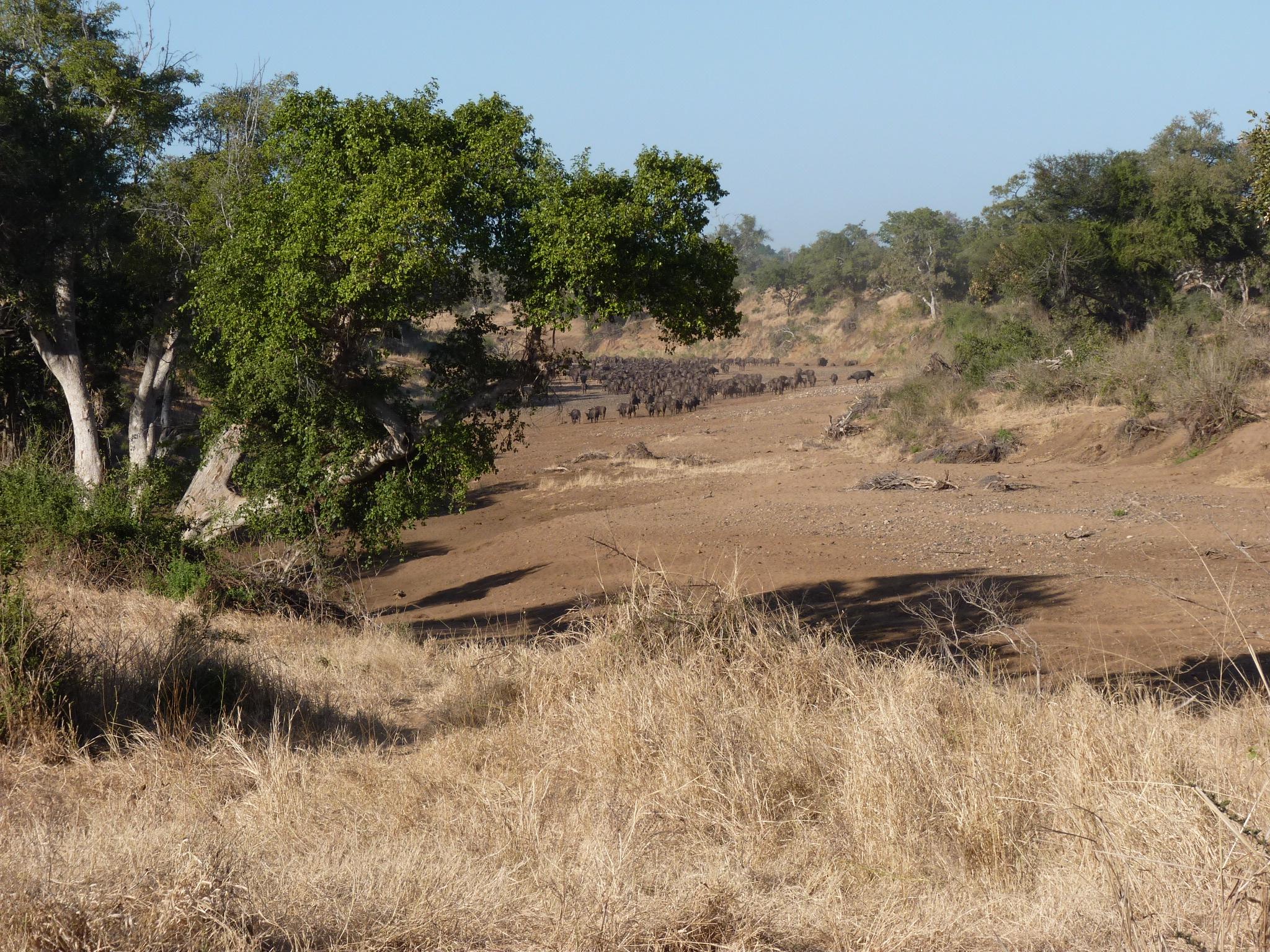
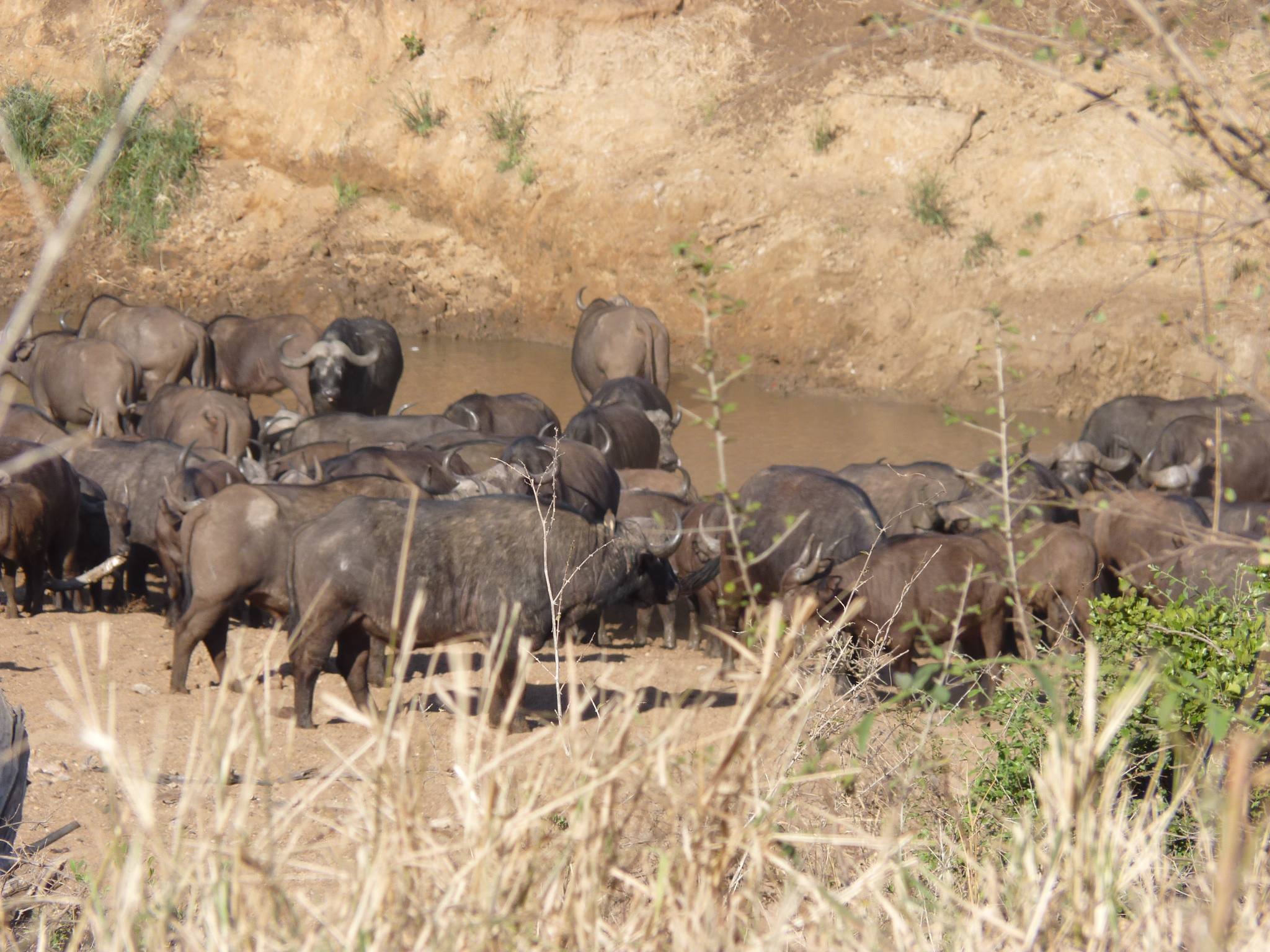
Our idea was rewarded when we came to a Letaba tributary where buffalo were going down to the riverbed. On arrival there may have been one hundred animals but they were still coming down. After about 20 minutes there were what I estimate to have been over one thousand and the number kept increasing for a few minutes. It was one of the largest herds we have seen.

A large herd of buffalo while moving on the river bed.

A large herd of buffalo while moving on the river bed.

Part of the herd while drinking.

Part of the herd while drinking.

Although rather bovine in their behaviour, buffalo transmit a sense of wildness and power that, to me, no other herbivore does. Although I have not yet seen them confronting lions, I have seen them in close proximity while helping a friend to dart them for his research and they were dangerous!

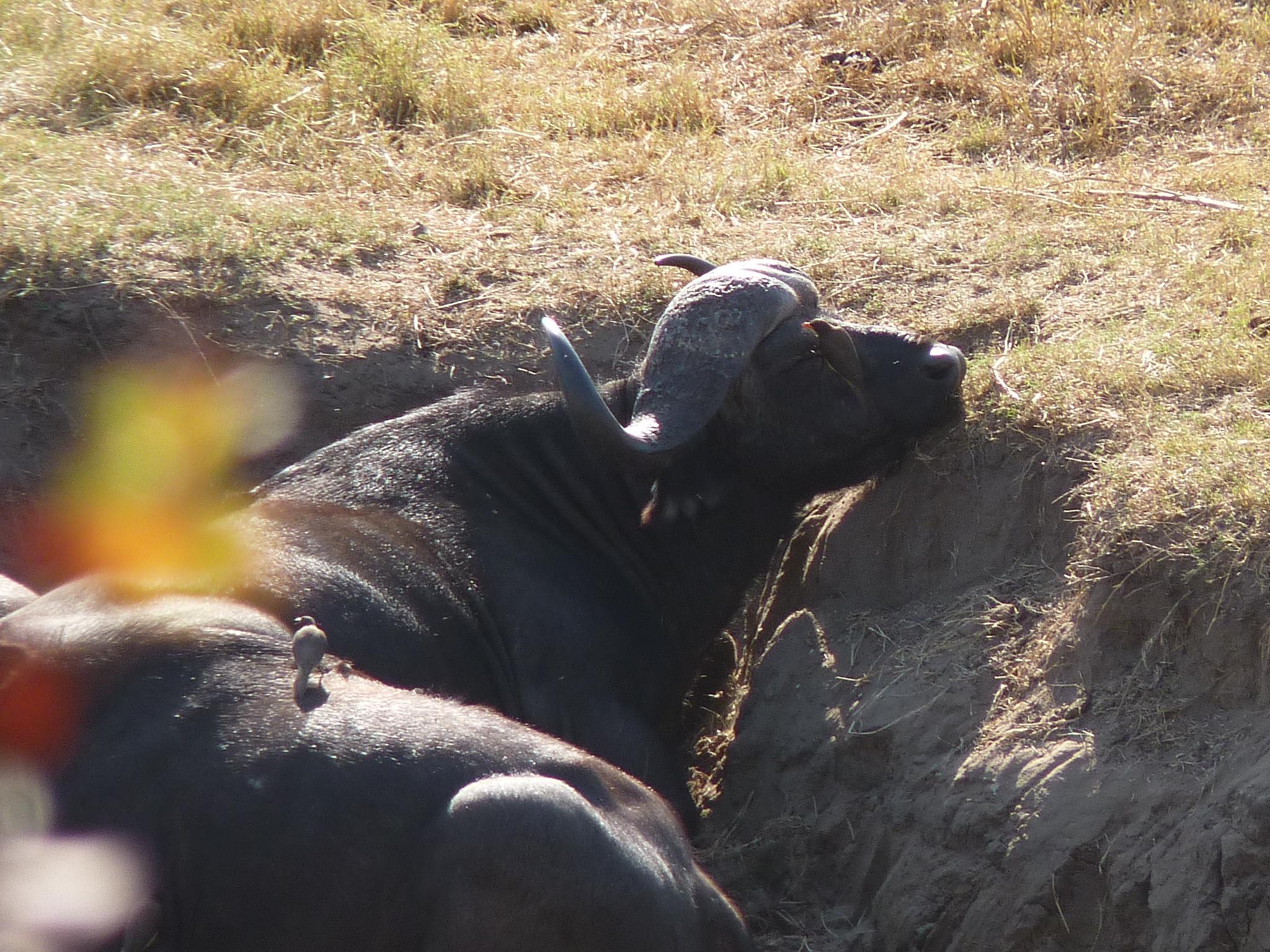
This buffalo was having a comfortable "siesta" while the oxpeckers did their job!

This buffalo was having a comfortable “siesta” while the oxpeckers did their job!

Seeing buffalo always brings back the story of a colleague working on tsetse flies in Kenya. One day he was checking his tsetse traps in the Nguruman escarpment and a lone male suddenly charged him from nowhere, forcing him up a tree to save himself. He was lucky on two accounts: there was a “climbable” tree nearby and the buffalo did not wait for him to fall down in order to trample him to death. It was a hairy moment and what was most interesting was that he said that the rush of adrenalin allowed him to climb and stay up in the tree without problem despite not being the fittest guy in Kenya. What was really tough was getting back down, as the tree was very thorny!

Later in the morning we hoped to see the kill again on our way back to camp but, unbelievably, there were still a lot of cars so we just had a look while driving by and not much had changed. We decided not to bother and try again in the evening as the proximity of our camp would enable us to stay just a bit longer than the others… By the time we were ready to return to the kill the famous tire had totally deflated… Not being part of the Ferrari F1 team, it took us a few laps to change the wheel and we were late! We still left as we estimated we had about 15 min of watching time!

We got to the kill and there were still cars! “Do not worry, none of the cars belong to our camp so they must leave by 17:00 hs to get back in time for the gate closing time of 17:30 hs”. We waited and waited and no one was moving by 17.20 hrs! The usual “these people know something we do not” was pronounced by one of us and we decided to re-check the gate closing times again and it clearly said “July: 17.30 hs” and then we realized that it was 1 August and closing time was now 18:00 hs. By the time we realized this, cars had started to depart and we did get our 20 minutes or so of “only the lions and us” where some observation took place and pictures were taken!

The young lion feeding on the buffalo.

The young lion feeding on the buffalo.

A closer view of the lion feeding.

A closer view of the lion feeding.

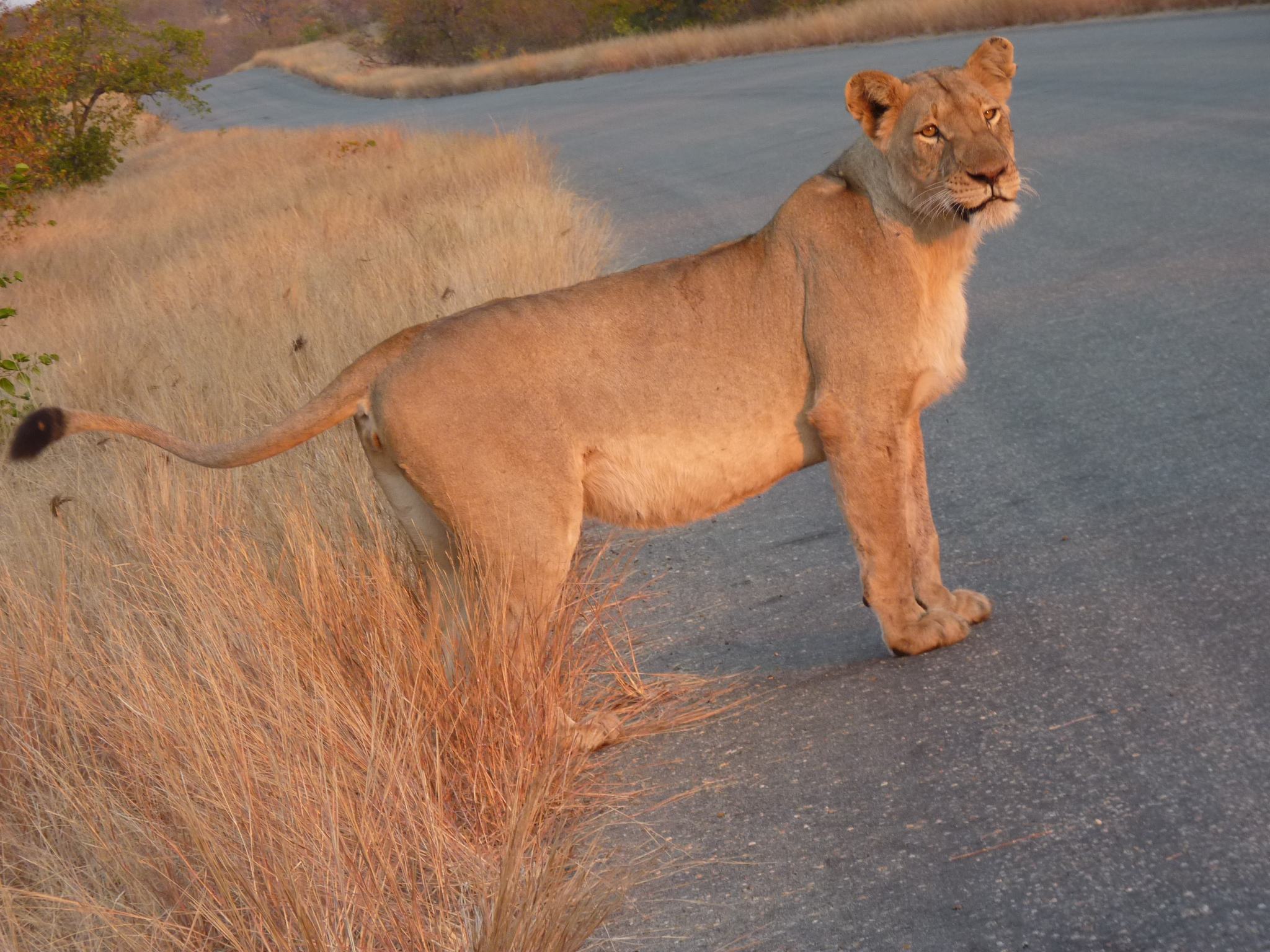
What did we see? The carcass was half eaten and one youngish male was inside it tearing pieces off. Another male was resting under the shade, together with 3 lionesses and 2 cubs. One of the lionesses looked uncomfortable and decided to go for a walk towards the river, surely to drink and soon a second one followed her. A few vultures were waiting patiently up in a nearby tree. And then it was also time for us to abandon the spot to get to our camp in good time.

One of the lionesses with a full belly on her way to the river.

At dusk, one of the lionesses -with a full belly- decided to go to the nearby river for a drink.

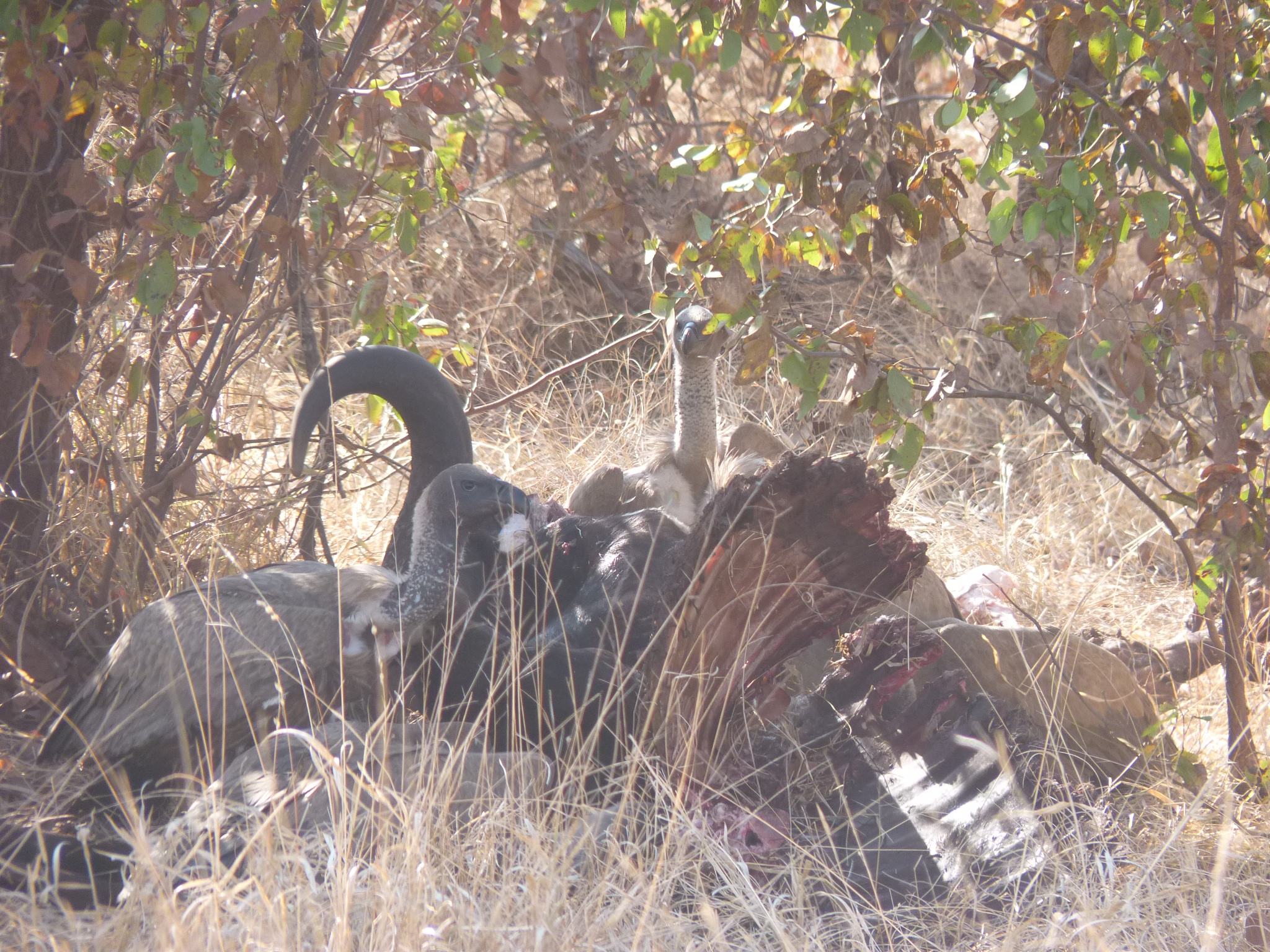
The following morning, en route to Letaba, the only carcass visitors were vultures and no lions were seen. Yes, you guessed right ours was the only car so we parked it sideways blocking the road and watched the birds!

Only the vultures remained the following morning.

Only the vultures remained the following morning.