Italy

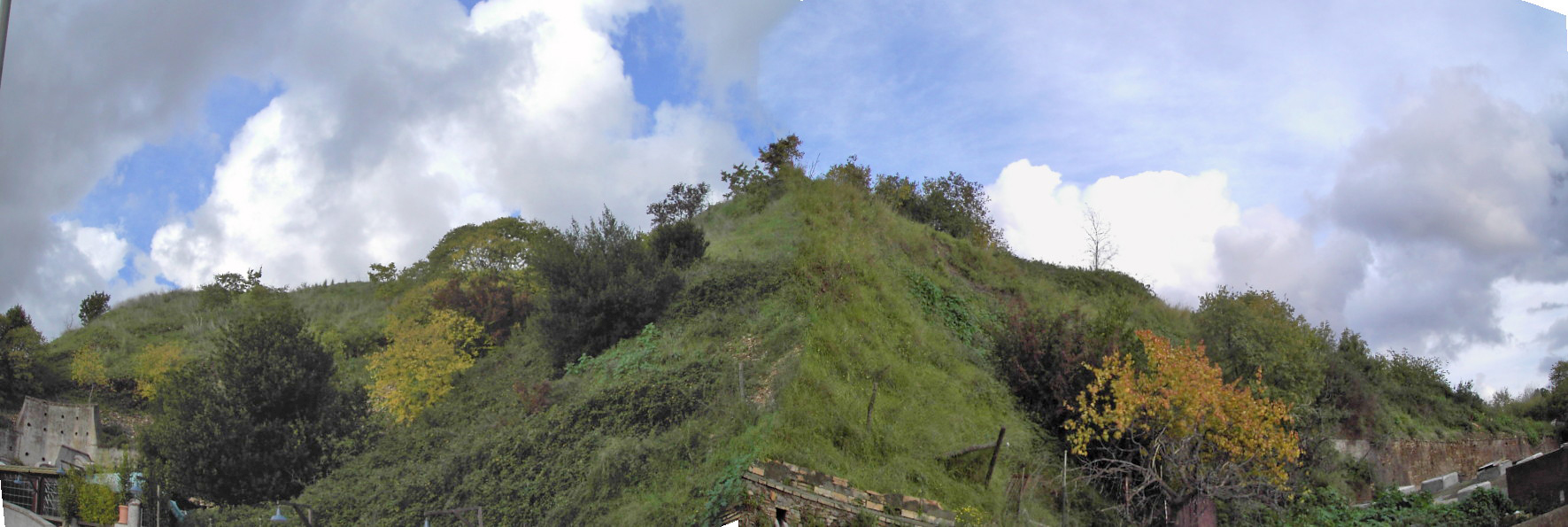
The Testaccio hill in Rome

Testaccio hill. Picture credit: Public Domain, File:Testaccio monte dei cocci 051204-12-13.JPG. Lalupa assumed (based on copyright claims).

Rome is known for countless features, both human made and natural. Among the latter there are the famous Seven Hills namely Aventine, Caelian, Capitoline, Esquiline, Palatine, Quirinal and Viminal, in alphabetical order.

Although there are others such as the Vatican, Pincian, Janiculan and the Sacred Mount, these are not counted among the traditional Seven Hills, being outside the boundaries of ancient Rome.

There is even a man-made hill, the object of this post: the Testaccio.

This peculiar hill is made almost totally of fragments of ancient Roman pottery, nearly all discarded amphorae dating from the time of the Roman Empire. It covers an area of two hectares at its base (one kilometre circumference and 35 metres high). It was built with an estimated 53 million amphorae, and it is located a short distance away from the east bank of the River Tiber.

The amphorae used were mainly of one kind that carried 70 litres of olive oil, and it is estimated that they had contained 6 billion litres! The olive oil that the amphorae carried came from several places, mainly the Guadalquivir region of modern Spain, Tripolitania (Libya) and Byzacena (Tunisia).

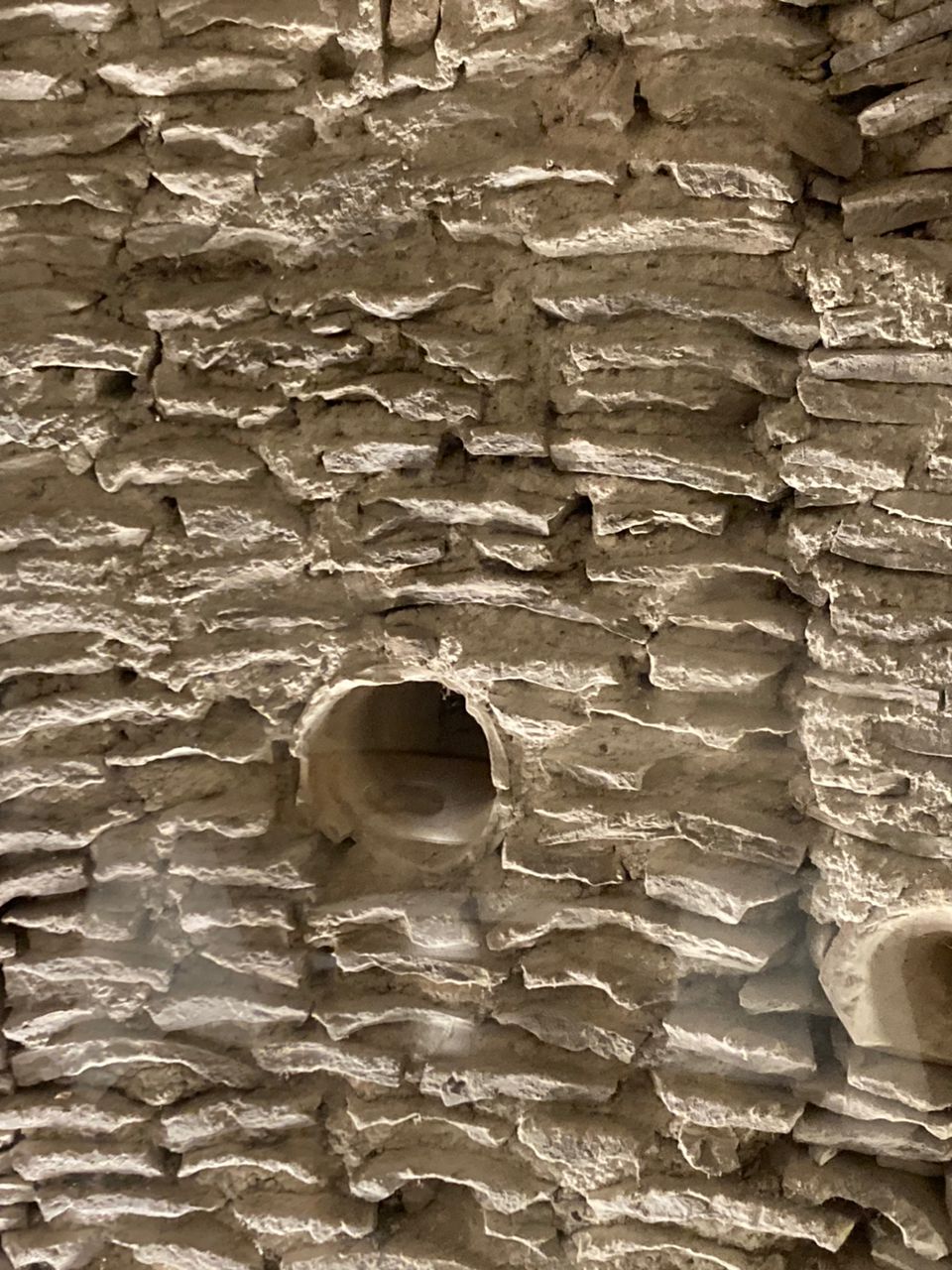
The hill is not the product of haphazardly discarding broken amphorae, but it was purposedly designed as a series of terraces supported by the less damaged amphorae and filled with sherds for stability. The amphorae were probably difficult to recycle or reuse after a while as the oil would have permeated them rendering them useless.

During the Roman Empire Testaccio was an important trade centre where workers building the slaughterhouses in the area settled. Today, the area is known for its good food, and it is one of the places we frequent when in Rome we feel like a good meal.

But it was not the food nor the hill´s architecture that roused our curiosity. Not even the fact that, in 1849, a gun battery was placed there by Garibaldi to defend Rome against the French! It was the surprise we got while walking towards a restaurant on a hot evening when a very cold air stream hit our legs.

We stopped and looked around to identify the air conditioner, doubting that there would be one which there was not, of course. Instead, with the light of our cell phones we found a hole in the earth from where the cold stream of air came from.
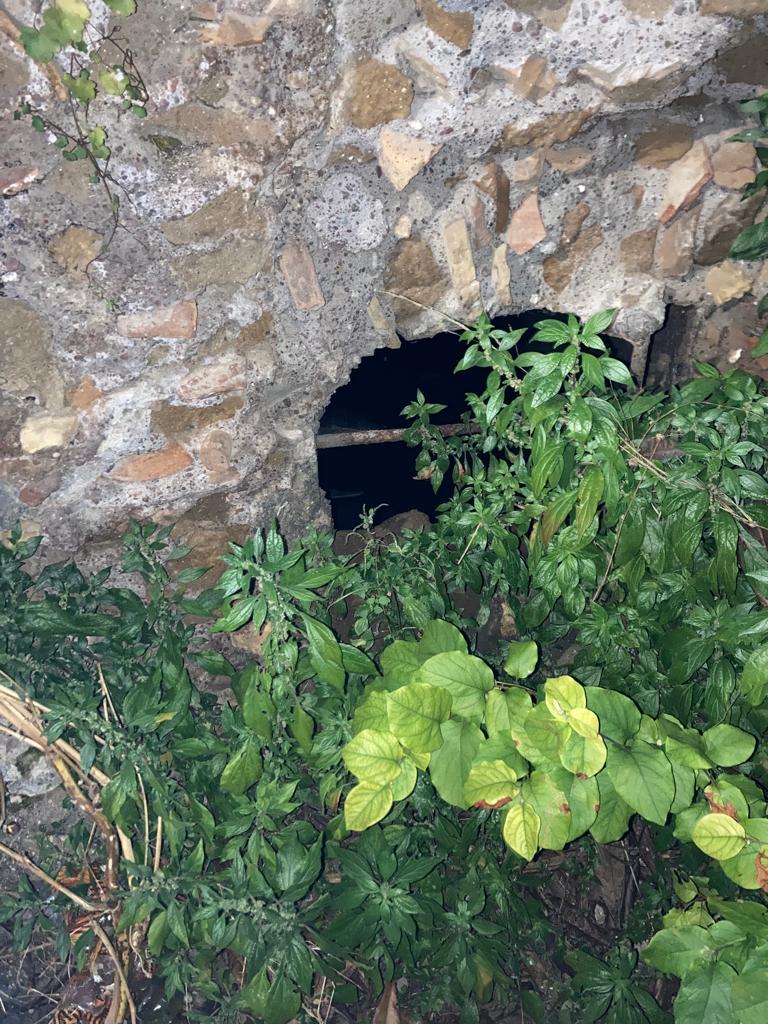
We debated how that could be and thought that there may have been a cold underground water current such as the ones I described earlier that cooled the air (See: https://bushsnob.com/2017/07/16/the-nasoni-of-rome-1/).

The doubt persisted for a whole year until we returned to Testaccio for another meal, this time earlier. Showing the discovery to a friend, we met a kind gentleman staying at the bottom of the hill that offered us to climb it, an offer that we agreed to take up at another time. When we asked him about the cold air blowing from that hole, he invited us to enter a courtyard nearby and there was also a door through which more cold air was blowing and then a window and other places as well.

Then the truth of the situation was revealed and some of its use and probably economic relevance became clear. The hill´s innards were “discovered” to have strong cooling attributes that are believed to be caused by the ventilation produced by its porous structure. This made it ideal for storing wine during the heat of the Roman summer, and caves were excavated for that purpose.

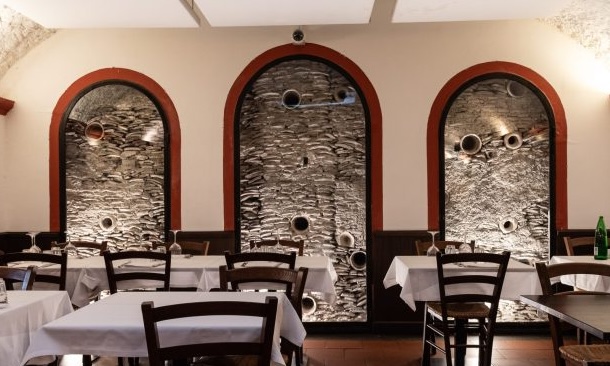
Some restaurants have windows that show the hill structure and probably also serve as coolers for both patrons and probably the wine stored there as well.
What on earth?! (17)

I have used Dalsey, Hillblom and Lynn for many years now and they have been good with one exception that will be at the end of this post. You may be asking yourself what is that company, a question that will be settled when I informed you that it is DHL, the international courier founded in 1969 when these three people finally accepted that there was no hope for improvement in the existing postal services worldwide and, in 1969 started their own mail service!

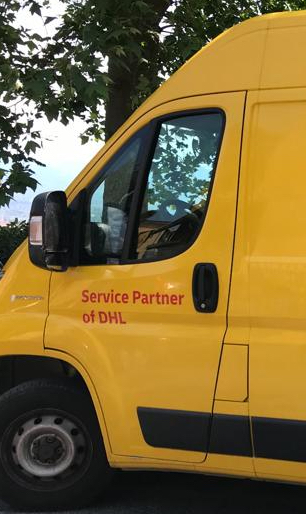
We are now on our usual italian break to see our daughter in Rome and, walking about I saw a van with this written on it:

This would not have been a surprise, except that, when I looked at the remaining of the van I saw that it was in fact a DHL van!

Either the sign on the door is a mistake or I stopped understanding how big companies work!

I was perhaps more perplexed a few years back when working in Rome.

Enjoying watching animals while working in Africa, I decided that it was time I got myself good binoculars. My friend Roger (that sadly passed away a few years back) recommended me a German make that, although very expensive, had, in his experience, an excellent customer support.

It was quite an investment but its optical quality was amazing and I was very pleased with them. However, from one day to the next I found that the vision was no longer crisp and, to my dismay, discovered that one of the eyepieces had an eyelash inside that had just moved to the center of the field! As the unit was sealed from the factory, I immediately phoned the manufacturer.

At first they were incredulous but when I insisted, they accepted to look at them and told me to send it to them immediately. I used DHL and they got to the manufacturers very fast. They gave my binoculars immediate attention and, very apologetically, confirmed the fault. Two days later I got a tracking code to collect then from a DHL office in Rome.

Anxious to get my binoculars back, I was there the following day, unprepared for the surprise waiting for me.

I was informed by the DHL attendant that their van had been robbed and that my parcel was among those that had gone!

I was devastated and immediately phoned the binoculars company that were also shocked. However, they said, there was an insurance and the product would be replaced. When I mentioned that I needed them for a trip abroad in a couple of days, they told me that they would send new binoculars to me immediately and claim the insurance later!

This second time DHL was not robbed and I got new binoculars to take with me during my travel. They have been with me ever since.

What on earth?! (10)

This section of my blog deals with unusual finds, the majority concern with observations from the roads and streets we frequent that are mostly located in Zimbabwe, Argentina, and Italy.

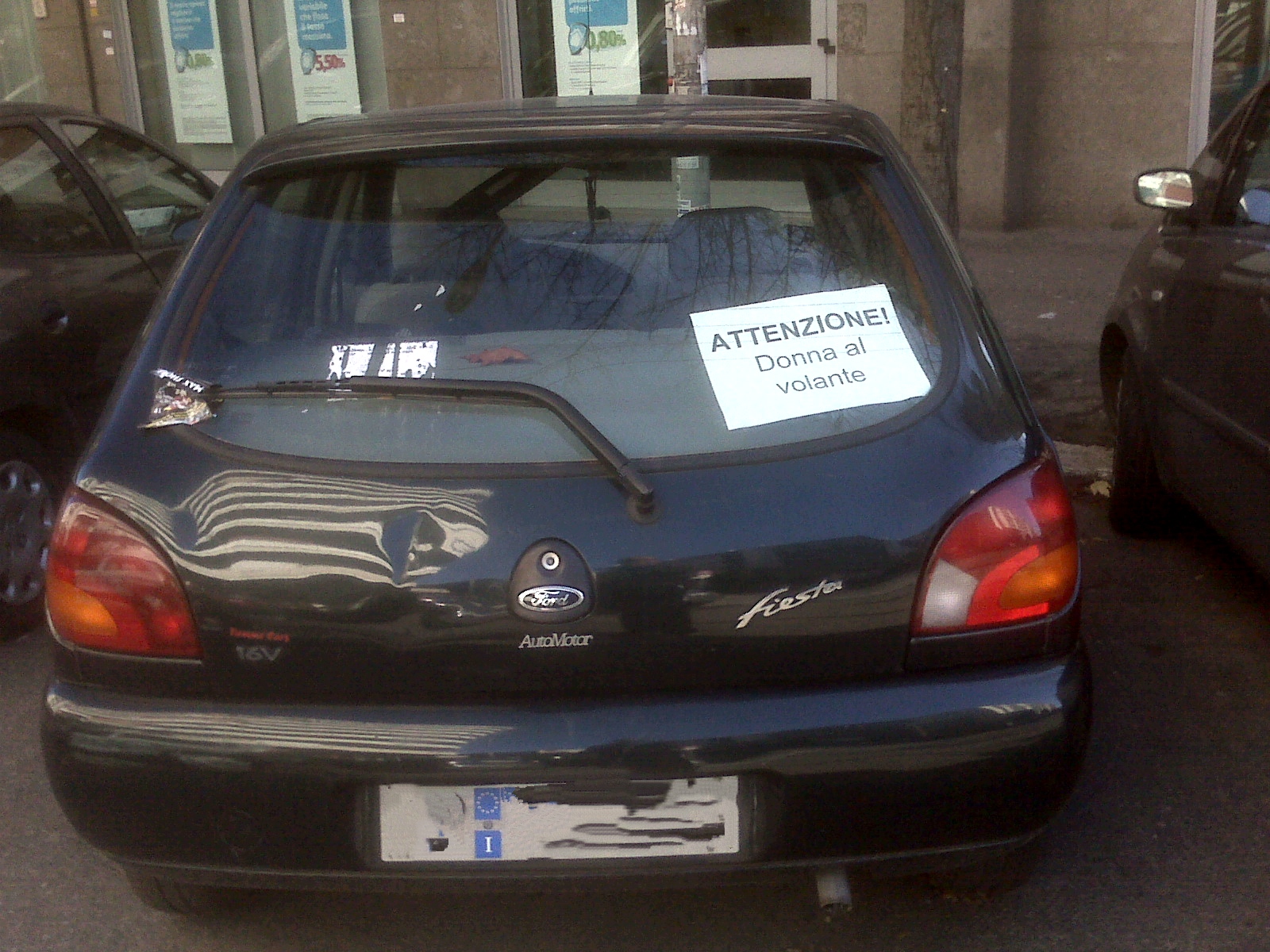
I am well aware when, a long while ago, we were all politically incorrect for today standards. Driving was a man affair and, when there was a careless manoeuvre by a car, expressions like “woman driving!” or “what do you expect from a lady driver” to name two of the polite ones that were proffered!

Time passed and women had demonstrated that they are at least equal to men, and this includes driving a car (probably there are no F1 women champions because they cannot be bothered doing it!).

So, it was quite refreshing to see that nowadays women recognize themselves as drivers and even take advantage of their old “bad reputation” to advertise their presence and, probably, take advantage of it!

I spotted this car with the sign “ATTENTION! Lady driver” in Rome.

I keep thinking if the dent happened before or after the sign was placed!

Time to move

The previous post on Lake Tanganyika was the last dealing with our first spell in Africa that, at the time, we did not know if it was the only one! The field programme I was working on came to a renewal time so it was time to leave Zambia.

As the technical officer in charge of ticks and tickborne diseases at FAO headquarters retired, I was assigned to cover that post in Rome.

From the field I saw this as a wise move in order to take a new, albeit difficult, professional challenge, particularly to follow Paul, one of my main mentors. However, that is life and someone had to do the job. I still remember his words when discussing the move: “remember that it is more important to listen than to talk!”.

So it was that we sold household items and we packed the rest for our stay in Rome that, in principle, would be for three months but that, with hard work and a bit of luck could be extended beyond that time. In restrospective, I was so excited about the move that the thought of my contract stopping after 3 months in Rome did not cross my mind!

Apart from the work aspect, it was also a good time to move to Italy for other reasons: the education of our children (then 3 and 2 years old respectively), . Our kids´education was of prime importance as well as to fulfill Mabel´s wishes to come to Italy, the country of her ancestors!

So, full of enthusiasm, we embarked in this new stage in our lives that I will be referring to in the next few posts.

Spot the beast 57

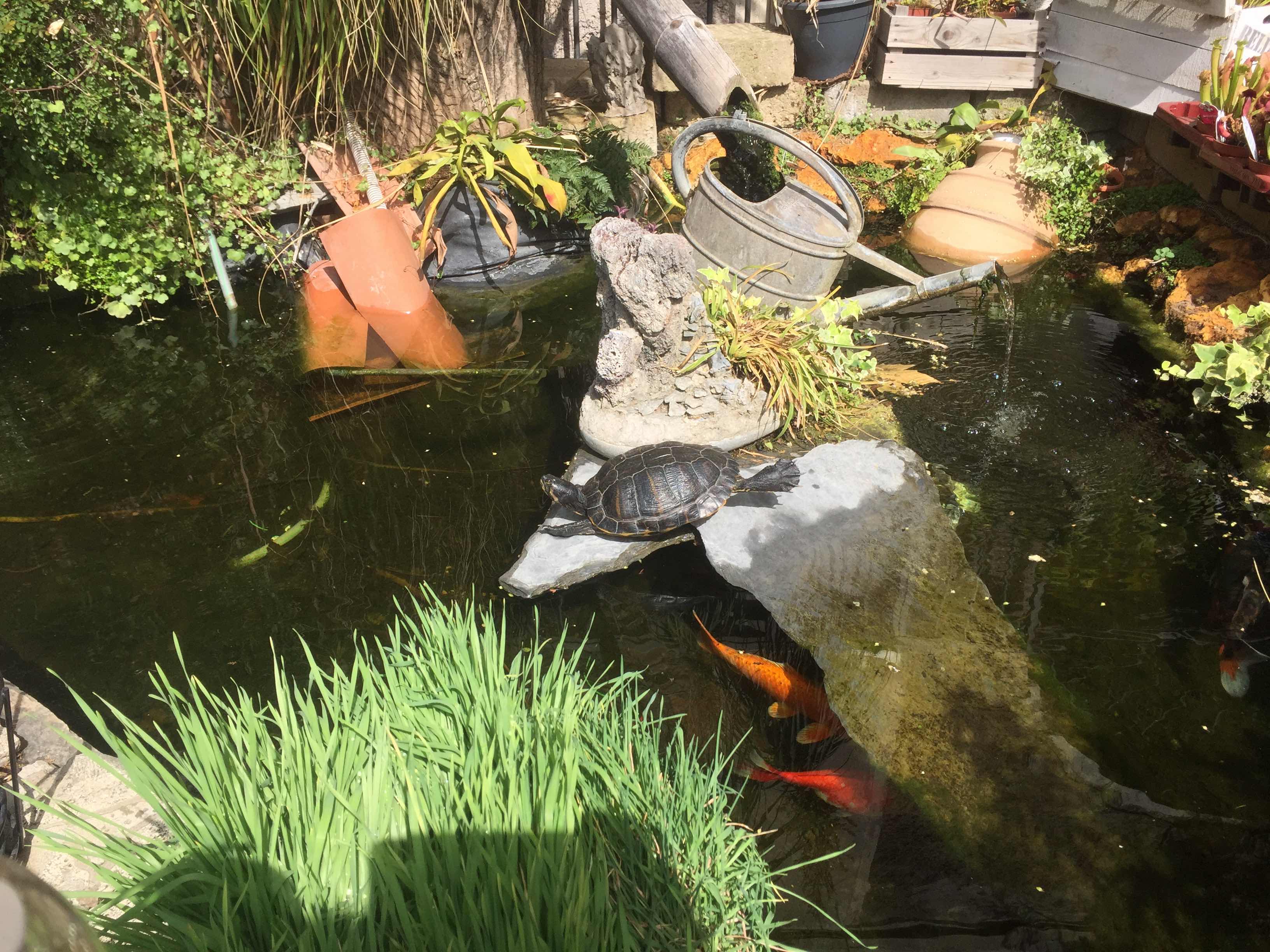
See if you can spot this one. Please, do not look too much if you fail to find it in a few seconds…

IMG_4634 copy

This one is really a different “Spot” as it is quite clear that we have a terrapin in front of us. However, have a good look at it.

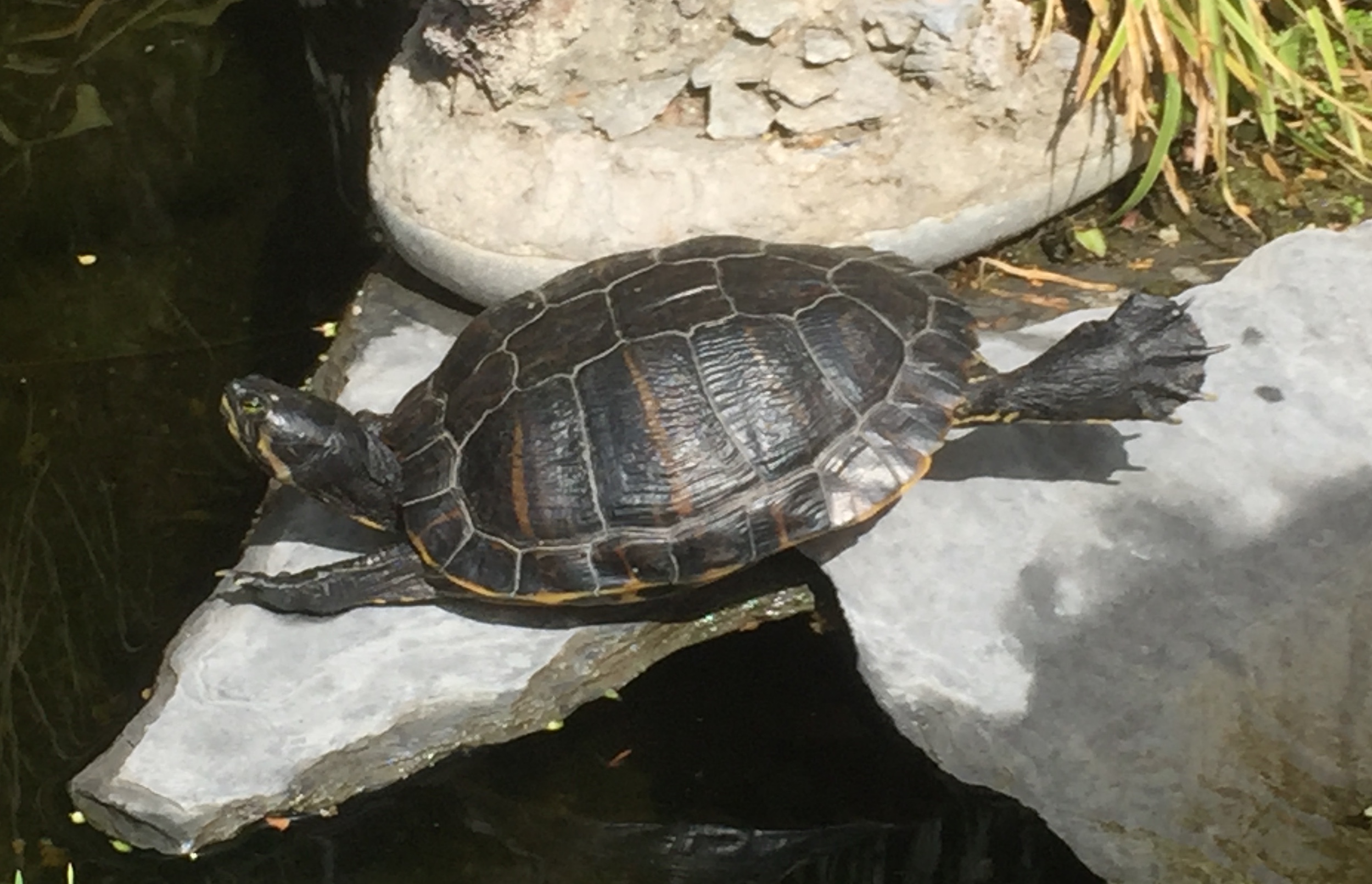
I did not notice anything strange until my son, said “look at the terrapin doing Yoga”!

IMG_4635 copy

It was rather hot in Roma so the beast was sunning one leg at a time at leisure!

Rome – Food processor seller

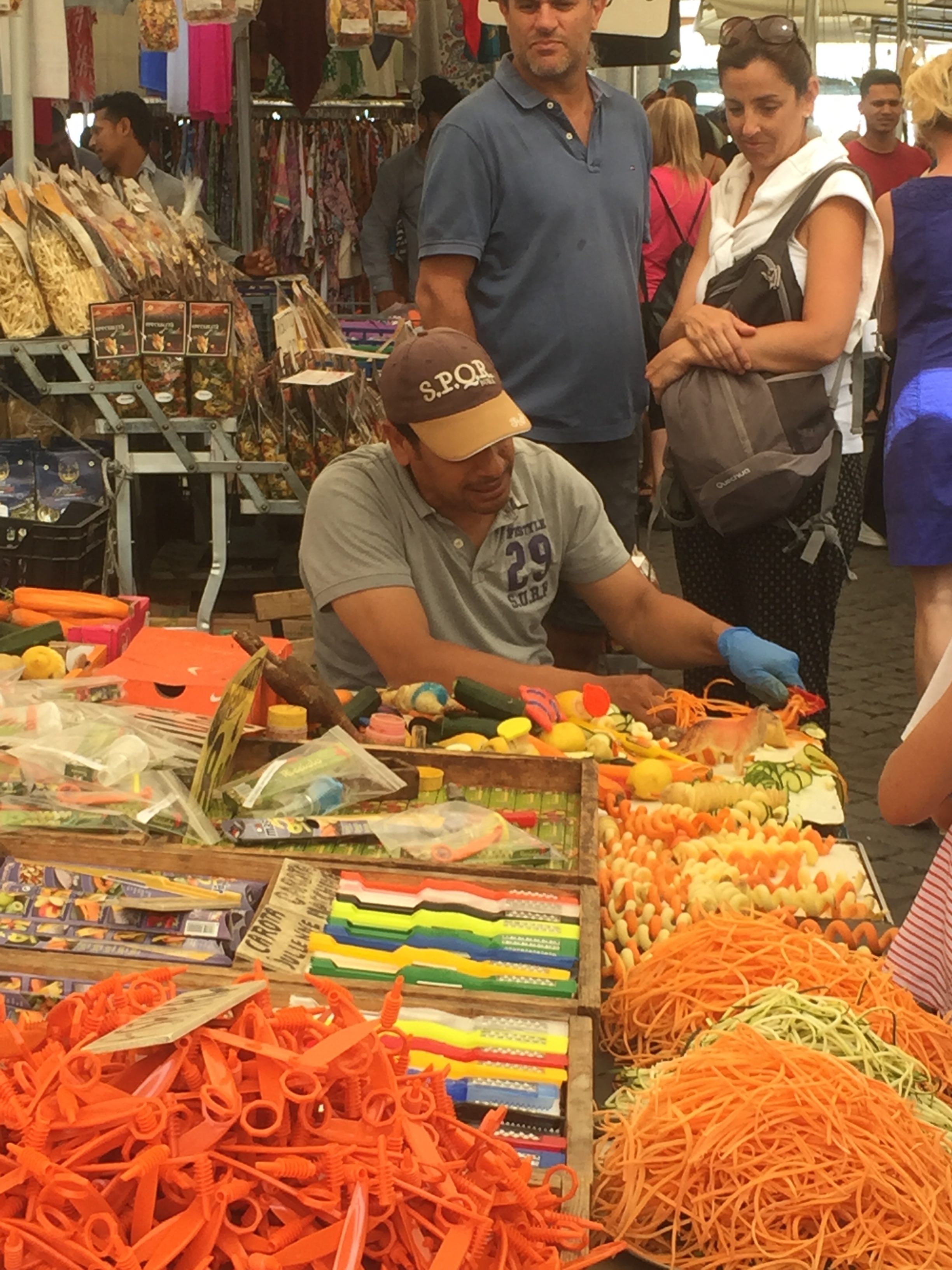
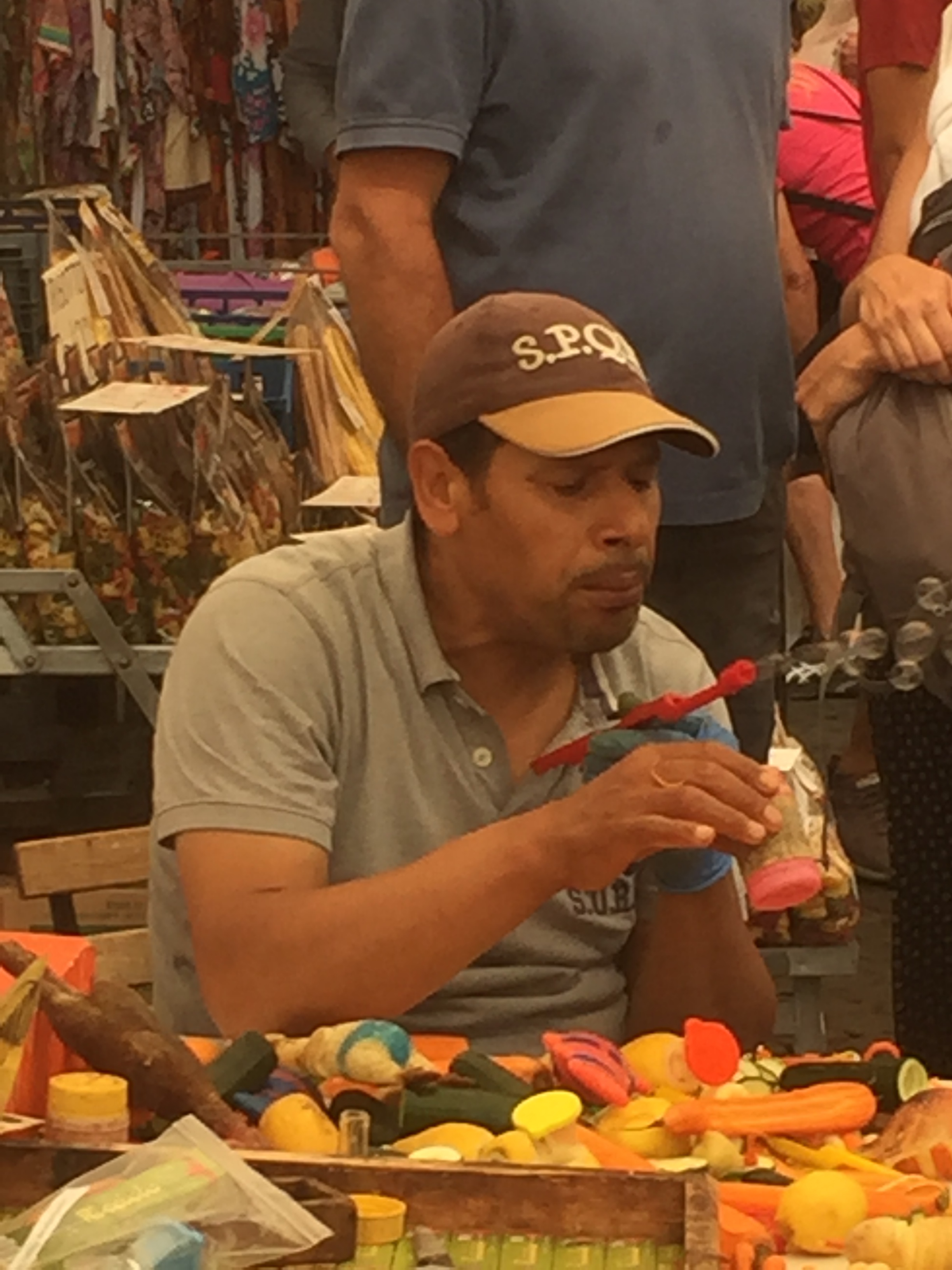
Another character from the streets of Rome and one of the most engaging. He is called Mustafa and spends his time selling gadgets to prepare veggies in an imaginative way. We had heard and then seen him in earlier visits at the Porta Portese flea market. This time he was trading at the Campo di Fiori market. I can assure you that you cannot fail to stop and watch!!!

IMG_3475 copy

Mustafa’s stand.

IMG_3479 copy

Mustafa blowing bubbles to demonstrate the versatility of his ware.

While selling ,Mustafa mentioned that he had over 5 million hits in his video at Youtube so I did not film him but went to Youtube where I found many videos of “Mustafa Patata e Carota” performance.

So, rather than filming him yet again, I decided to embed the video where he speaks English. There is another one in Italian with 2,5 million hits in Youtube! [1]


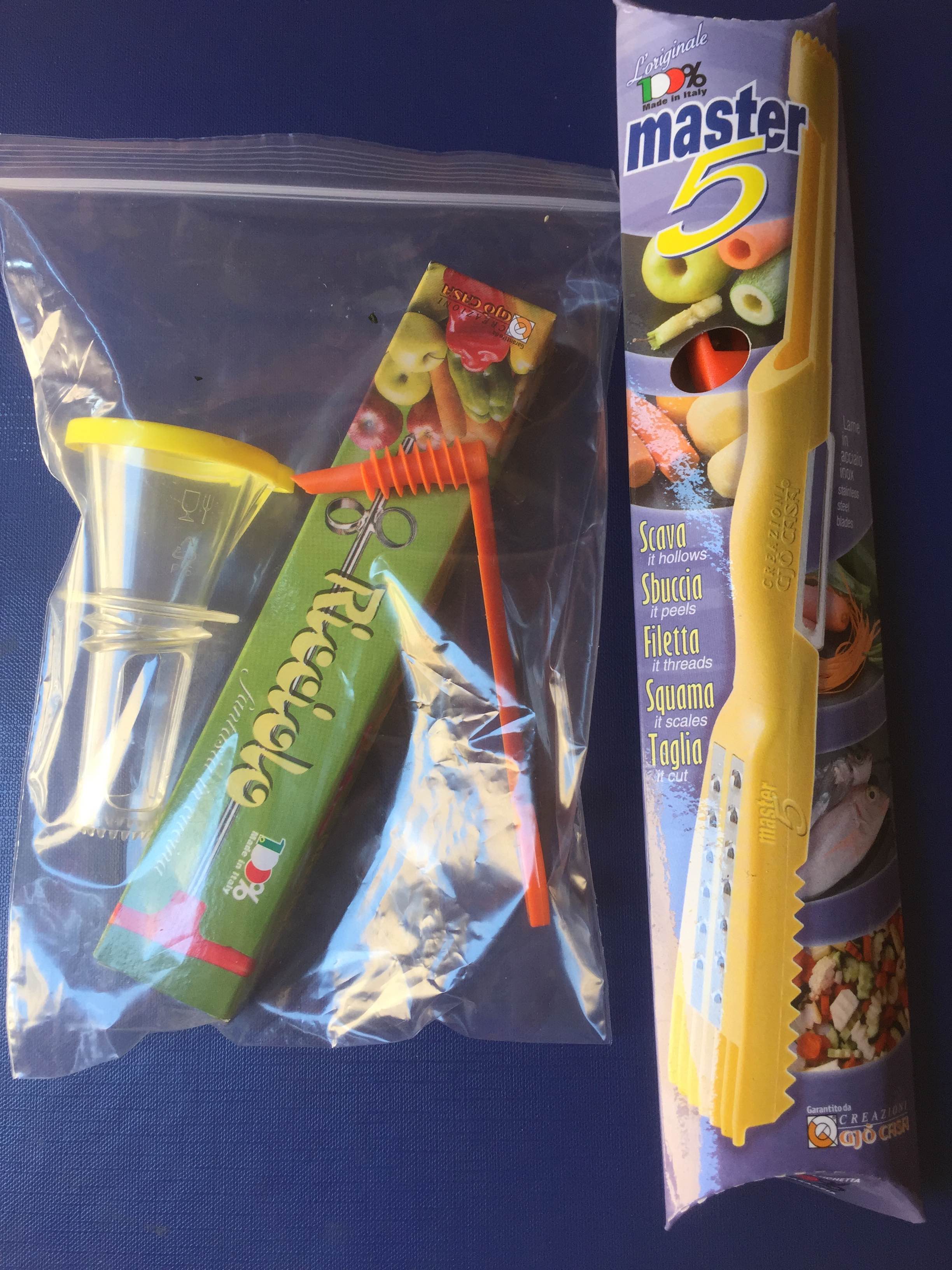
Mustafa was so convincing that we ended up buying his tools without really needing them! I am now practicing and destroying a few veggies but I am getting there…

IMG_3483 copy.jpg


[1] The video in Italian can be seen at https://www.youtube.com/watch?v=KbPBN6kvnCU.


Rome – Gladiators

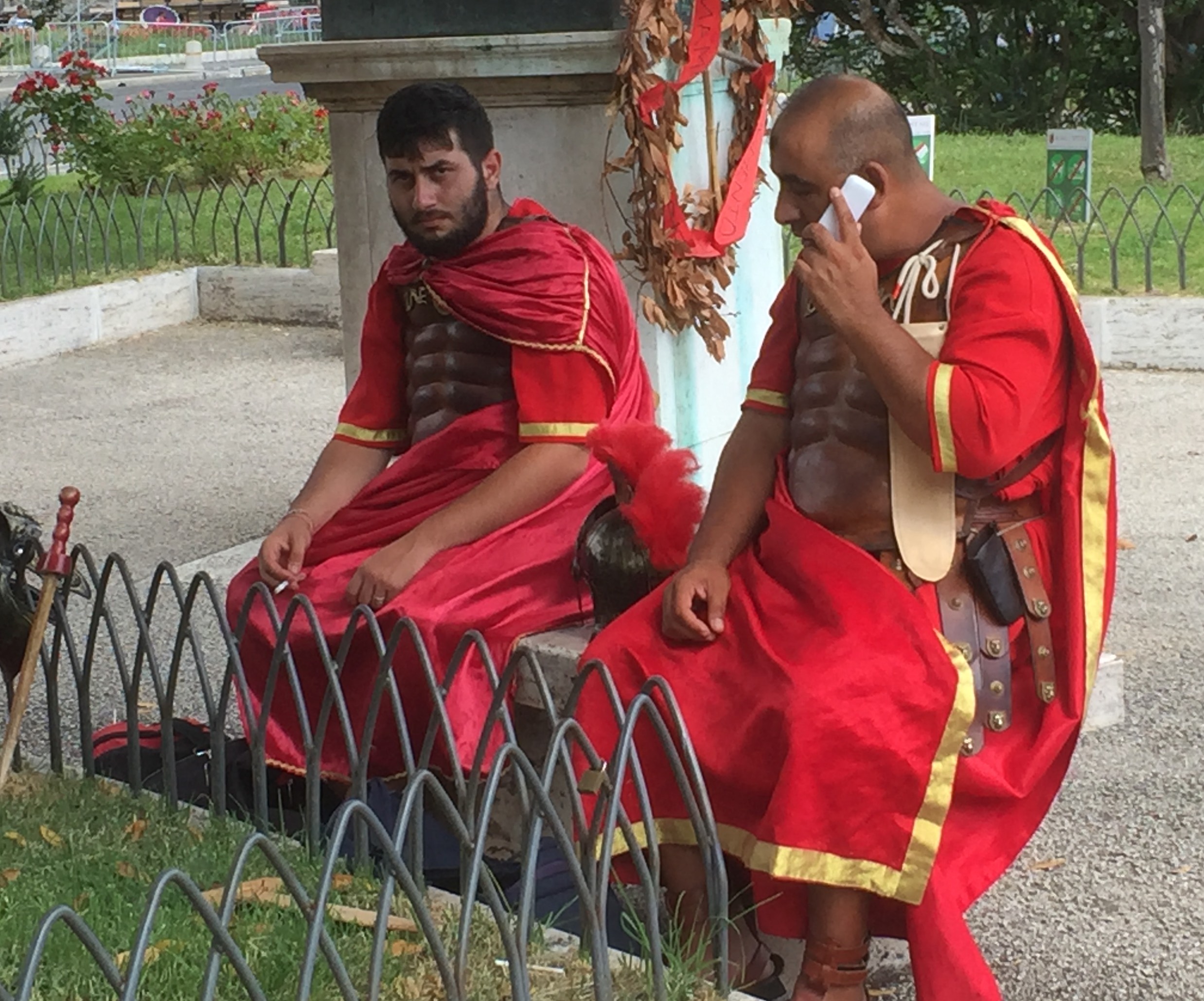
If you know a bit about Rome, you will also know that it is full of surprises. This visit has been no exception and I found this scene during some rains we had yesterday while walking through the historical centre towards our rented flat in the Jewish quarter.

IMG_3474 copy.jpgThese two gladiators took advantage of the rain-break in their fighting to the death activities to catch up with life events and have a puff rather than sharpening their swords! This is something expected of the current Millennial generation but they are clearly beyond that, probably Xennials[1]
Whatever their generation, the sight was really amusing!


[1] The term “Xennials” is a portmanteau blending the names of Generation X and the Millennials to describe individuals born during the Generation X/Millennial cusp years of the late 1970s to the early 1980s. (https://en.wikipedia.org/wiki/Xennials)

The nasoni of Rome [1]

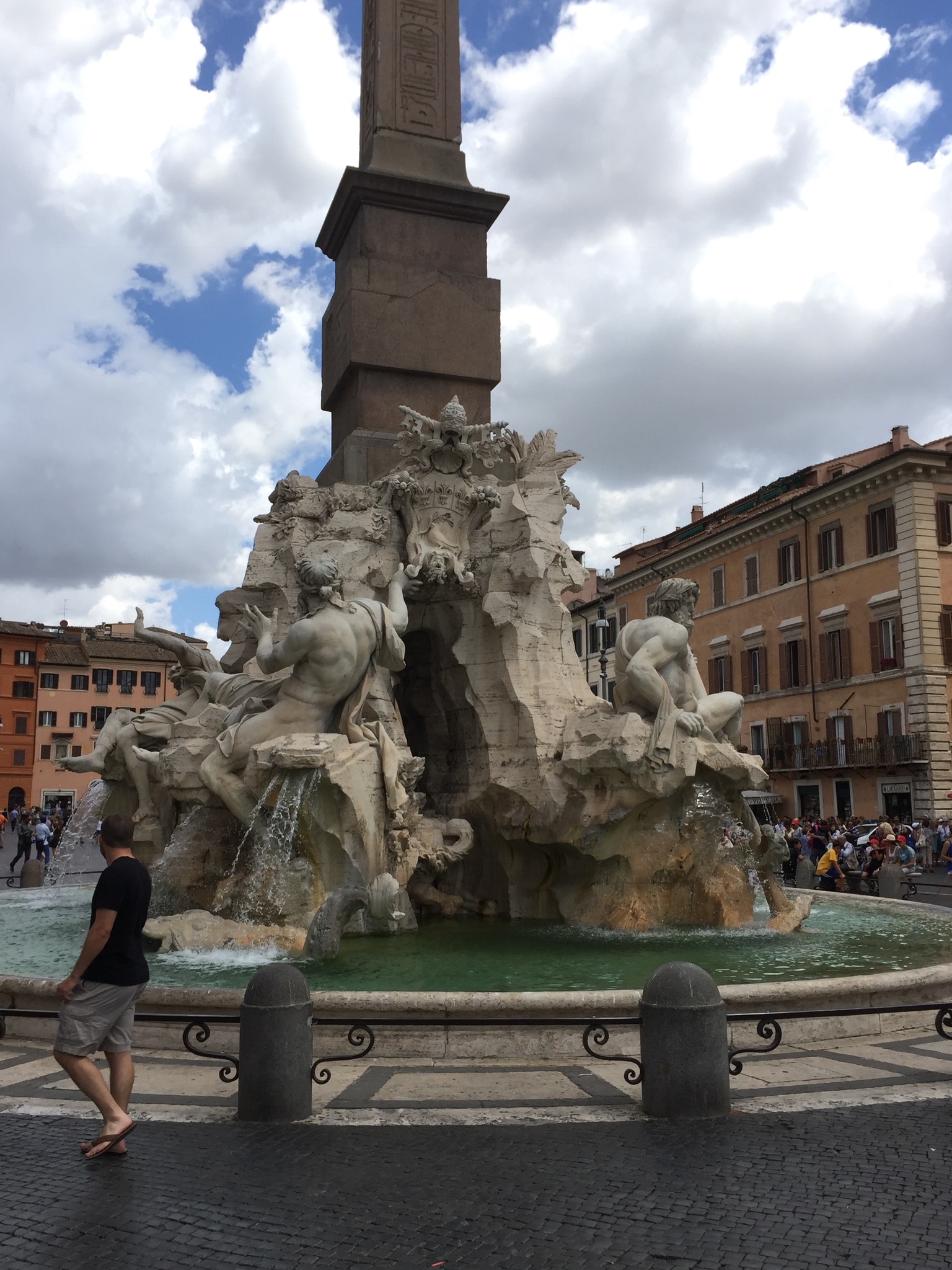
Rome is packed with attractions, some of them world famous and others less so but not less interesting. We have all heard about or visited some of its famous fountains such as the Trevi fountain, Turtle Fountain at Piazza Mattei, Fountain of the Frogs at Piazza Mincio, the big fountain on the Janiculum Hill and the Fountain of the Four Rivers at Piazza Navona to name some of the better known.

IMG_4794

The fountain of the four rivers, Piazza Navona.

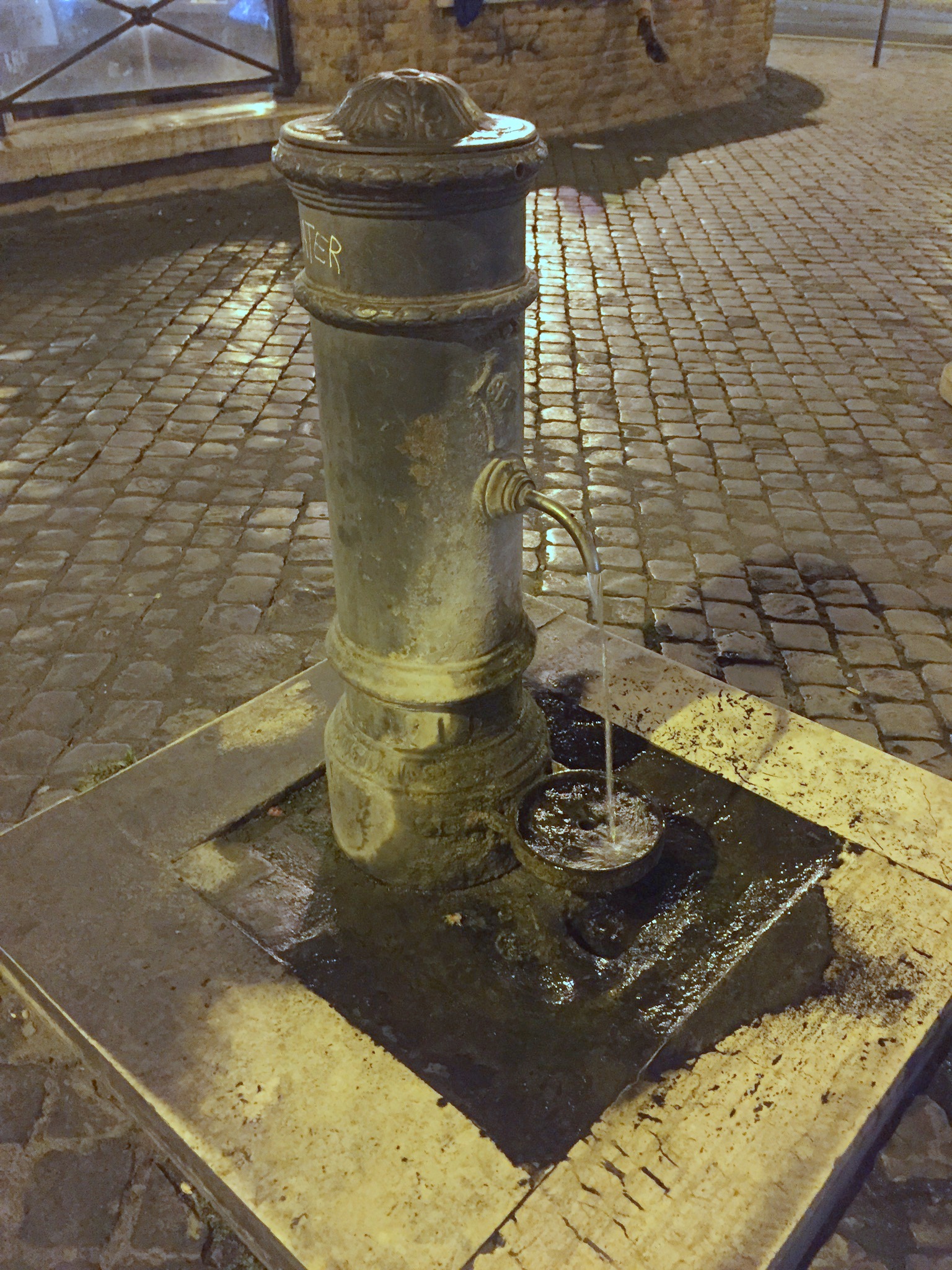
While the above have great cultural and ornamental value there are other water fountains that, although not great looking, serve the purpose of delivering free ice-cold water to the city inhabitants and visitors. These are the small drinking fountains that are found all over Rome supplying water non-stop.

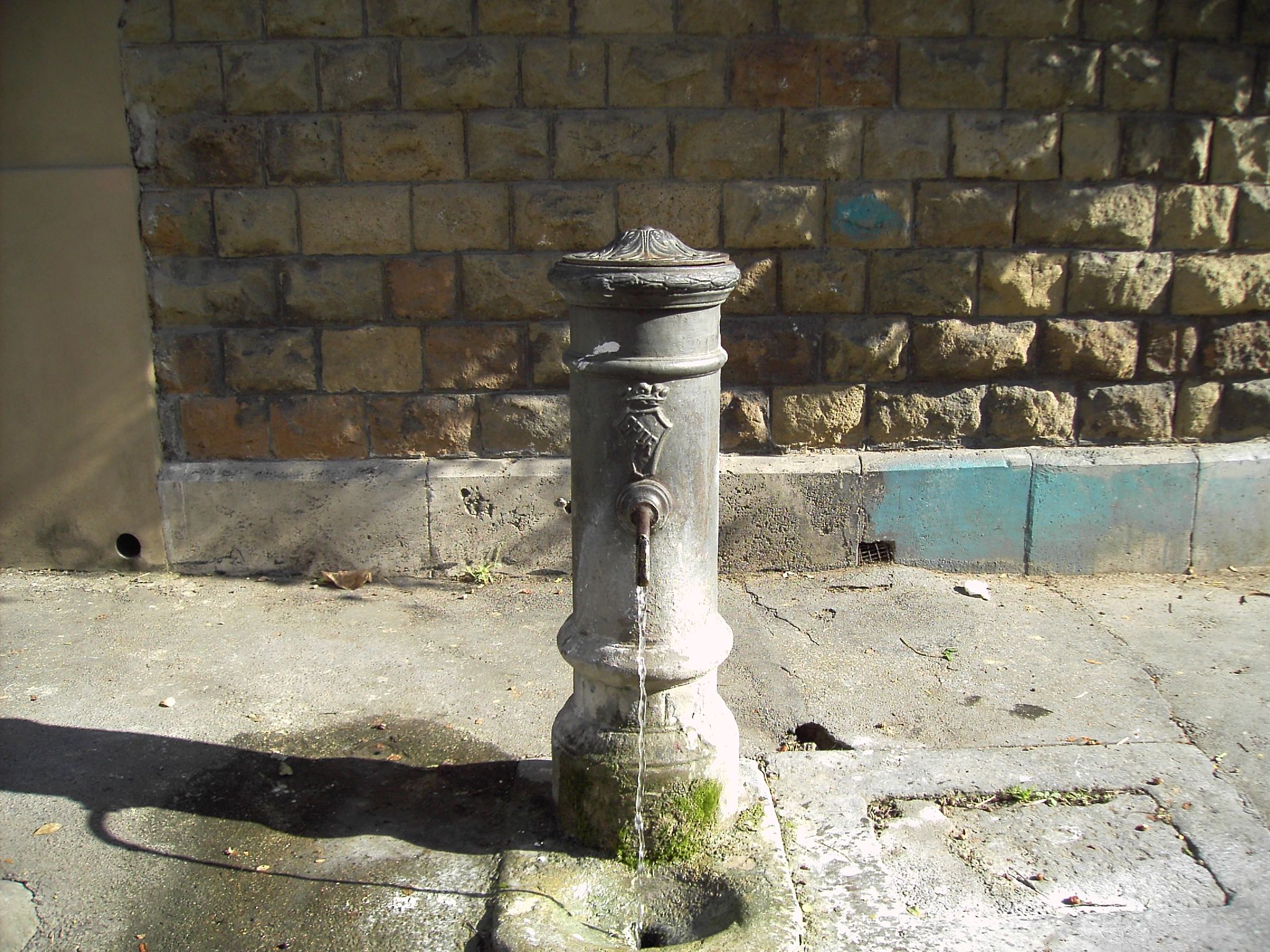
There are 2,500 drinking fountains scattered all over the city, and almost 300 of them are inside the city walls. Although there are a few exceptions, they mainly follow a standardized model known by the locals as nasone/a because of the drinking spout on its side.

FdmNasoneProgetto

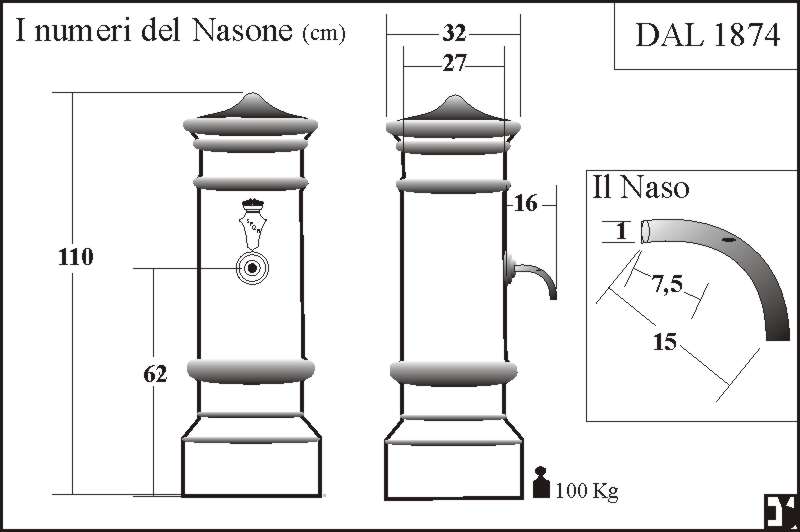
Technical drawing of a drinking fountain. Scheda Tecnica del Nasone Fontanella di Roma. Released into the public domain by its authors via Wikimedia Commons.

These simple but clever contraptions allow the water to run continuously through their “noses” but blocking the end of the spout sends water in an arch that is ideal for drinking as well as for surprising the unaware visitor with a summer splash!

The 100 kg and 100 cm high nasoni are in place from 1874. They are made of cast iron and marked with the ubiquitous S.P.Q.R. that, in Latin, means Senatus Populus Que Romanus (the Senate and the People of Rome), the official city “logo” that also appears in many public buildings.

Most drinking fountains are found near the outdoor markets and plant and flower vendors and it is very common to see their water overflowing buckets and other containers placed under their water stream. The purity of the water is assured by the Azienda Comunale Energia e Ambiente (ACEA) [2] through over 250,000 tests a year [3].

Nasona_a_via_annia_faustina_1 (1)

Picture of nasona by User: Lalupa (Own work) [Public domain], via Wikimedia Commons.

A novelty for us during this visit to Rome was the discovery of the “nasoni maps” put together by various organizations such as the ACEA itself that presents the public with a map of the nasoni in the historical centre of the city and beyond. [4]

IMG_4346

A “special” nasone with a bottom plate that enables pets to drink!

The constant flow of almost ice-cold drinking water the year round in Rome through the nasoni (and even the non-drinking water from the fountains) has always been a mystery for me. Writing this post I learnt that the water comes from the Peschiera reservoir through a 130 km aqueduct that runs deep underground. Although the underground element would be important for the coldness of the water, there should be something else keeping it so cool. I did not find a clear answer until our friend Donatella told me that the water is always moving and therefore it has no time to warm up. I believe that she hit the nail on the head and solved the mystery to my satisfaction!

The 16 million cubic metres of water that flow into the nasoni‘s drains and other fountains everyday are -apparently- recycled for watering gardens, cleaning factories and other non-drinking purposes so it does not go to waste. However, it is an immense volume of water! So, trying to get an idea of the amount that has gone through Rome’s drinking fountains since their establishment in 1874 I did a quick and dirty calculation:

143 years x 2500 nasoni x 16,000,000 litres/day x 365 days = 2,087,800,000,000,000

or two quadrillion, eighty-seven trillion, eight hundred billion litres or 2,088 cubic km of water yielded. Frankly, the result did not tell me much as the volume was impossible for me to grasp! So, as usual in these cases, I looked for a comparison and found that such an amount of water would have almost fill up lake Victoria with its 2,700 cubic km! I am not sure that this assessment is any use to anyone but at least it lays my mind to rest until I start working on the next post!


[1] A man with a big nose. Nasone/nasona are the masculine/feminine nouns and nasoni the plural.

[2] Municipal company for Energy and Environment

[3] https://www.acea.it/

[4] https://www.acea.it/it# or http://www.colosseo.org/nasoni/inasonidiroma.asp


Christina O

Back in Rome after our Sorrento trip we went to stay with our friends Donatella and Carlo at their Appia Antica house, always a great pleasure and one that we always look forward to do. Although back in Rome my mind was still set on finding out what the two vessels anchored at Sorrento were!

IMG_2598 copy

The “mystery vessels” anchored near Sorrento.

I remembered that I had used a ship-tracking web site [1] to follow a cargo ship bringing a car from Japan to Mozambique and I decided to give it a try to see whether it would help me to identify them. Bingo! As soon as I checked for the activity around Sorrento, it was easy to find them as they were the only two stationary vessels at the time. Their names were the Royal Clipper and the Christina O so, I immediately searched the web and this is what I found.

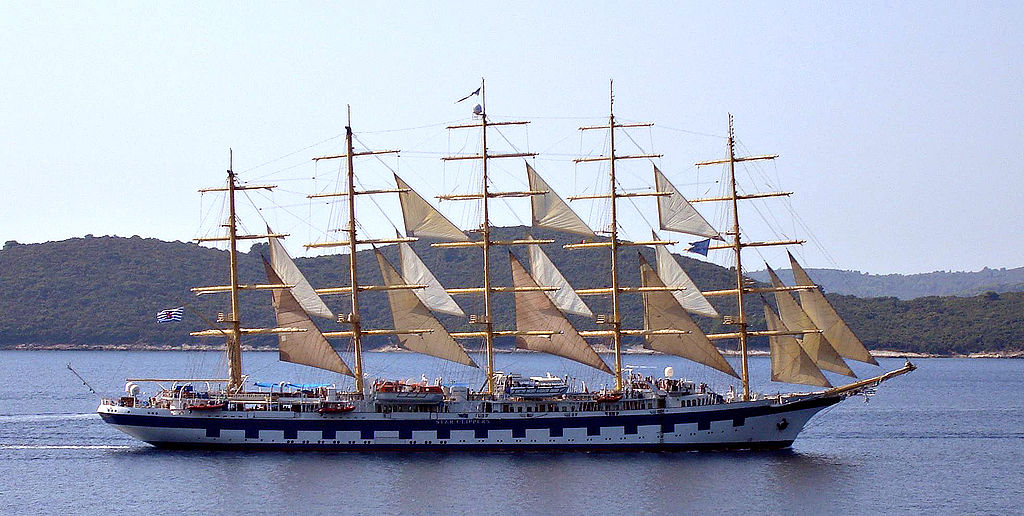
The Royal Clipper is a passenger cruise ship operated by Star Clippers to carry passengers on holiday around the world. In autumn and winter it visits the Caribbean while in spring and summer it sails from Barbados to Lisbon and Rome and then it does Mediterranean itineraries departing from ports including Lisbon, Rome and Athens.

1024px-SV_Royal_Clipper2

Photo by Orlica (Own work) [Public domain or Public domain], via Wikimedia Commons.

The ship is interesting as it has a steel hull and five tall masts in a design that follows that of the Preussen, a famous five-mast German sailing ship built in 1902 and known by sailors at the time as the “Queen of the Queens of the Seas” that unfortunately was lost in 1910 at Crab Bay after a collision. The Royal Clipper is the largest “true sailing ship” built since Preussen and the largest square-rigged ship afloat [2]. It carries over one acre of sails (5202 m2) operated mechanically by a rather small crew for its size!

1024px-SV_Royal_Clipper

Photo credit: by Orlica (Own work) [Public domain or Public domain], via Wikimedia Commons.

The interesting information that I got about the more spectacular of the two ships encouraged me to continue my naval mystery-solving work. What I found for the Christina O was extremely interesting although I must admit that even before checking the web, being from the “baby boomer” generation, I have guessed what yacht it was although not its many features and history.

The Christina O is today a private yacht that once belonged to Aristotle Onassis, the billionaire Greek-Argentinian businessman. It is considered as one of the most legendary yachts afloat with an amazing history, full with high society life, politics and romance. It was aboard this yacht that Ari (as Onassis was known) and Maria Callas, had their colourful and stormy romance that lasted for over ten years.

Embed from Getty Images

Maria Callas still is perhaps the most famous soprano the world enjoyed and she earned the nickname of “La Divina” (the Divine) for her singing style. Her relationship with Ari ended and then he married John Kennedy’s widow Jackie, a long-time friend and their wedding took place onboard of the yacht. Previously, the Christina (the name that Ari gave the yacht) hosted the wedding celebrations when Prince Rainier of Monaco and actress Grace Kelly wed in 1956.

The super yacht was a symbol of great power at the time of Ari’s life It had many important visitors and a few really illustrious ones including, apart from Callas and Jackie, Winston Churchill, Richard Burton, Bette Davis, Greta Garbo, Grace KellyElizabeth Taylor, Marilyn Monroe, Rudolf NureyevFrank Sinatra, and John F. Kennedy!

Embed from Getty Images

Onassis next to the original Christina.

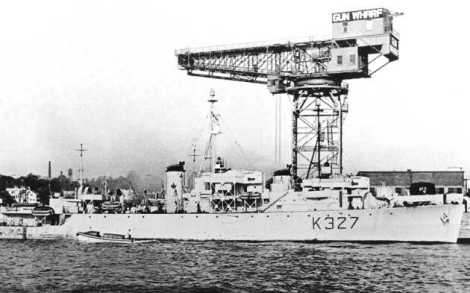
The yacht was originally the HMCS Stormont, a Canadian anti-submarine frigate launched in 1943 that, after serving as a convoy escort during the Battle of the Atlantic and being a support ship at the Normandy landings, was purchased in 1954 at scrap value of US$34,000 by Onassis who subsequently re-named it Christina after his daughter and spent USD 4 million to convert it into probably the most luxurious super yacht of its time!

HMCSStormont

HMCS Stormont: Picture taken by an employee of the Canadaian Government, and greater than 50 years of age [Public domain], via Wikimedia Commons.

After Ari’s death, Christina -his daughter- donated the Christina to the Greek government as a presidential yacht. Then the yacht got its third name: Argo but, regrettably, it was allowed to deteriorate until it was purchased in 1998 by fellow Greek shipping magnate John Papanicolaou who spent USD 50 million to recover it re-naming it Christina O in honor of the by then deceased Christina.

Among other amenities, the Christina O was fitted and still has a master suite (now known as the Onassis suite), eighteen passenger staterooms, and numerous indoor and outdoor living areas, all connected by a spiral staircase. The aft main deck has an outdoor pool with a minotaur-themed mosaic floor that rises at the push of a button to become a dance floor. There is also a helipad on the promenade deck. At 99 metres long she is still among the top 50 largest yachts in the world.

Since Papanicolaou’s death in 2010, Christina O was rented for private charters and cruises and in 2013 was placed for sale at a price between USD 21 and 32 million [4]. Despite all the money invested on the yacht it has not been sold because of its overhead expenses.

In 2005 she was placed for charter with Camper & Nicholsons International, the oldest yacht brokerage company in the world. At present Christina O cruises the Mediterranean during summer, clearly including Sorrento! while in winter the yacht travels to the Caribbean. It costs €560,000 (Approximately USD 592,500) per week plus its expenses.

I am rushing to book it for next year, trusting that I will get sufficient friends to join us on our next visit to the Mediterranean…

Embed from Getty Images


[1] https://www.vesselfinder.com/?imo=5076705

[2] http://www.guinnessworldrecords.com

[3] https://www.yachtcharterfleet.com/luxury-charter-yacht-23156/christina-o.htm

[4] http://www.independent.co.uk/news/world/europe/aristotle-onassiss-yacht-christina-o-put-up-for-sale-8682877.html

If you are still interested on more details on the Christina O, this page is useful: http://www.mychristinao.com/


Sorrento

After our brush with history and ruins, it was time for a bit of hedonism so we headed for the Amalfitan coast and Sorrento in particular. To visit the latter was my idea as I had nice memories of an earlier visit we did in the 90s. It was a slightly more relaxed Bushsnob at the steering wheel but only because of the impeccable navigation of my daughter and the crisis control of both her and my wife!

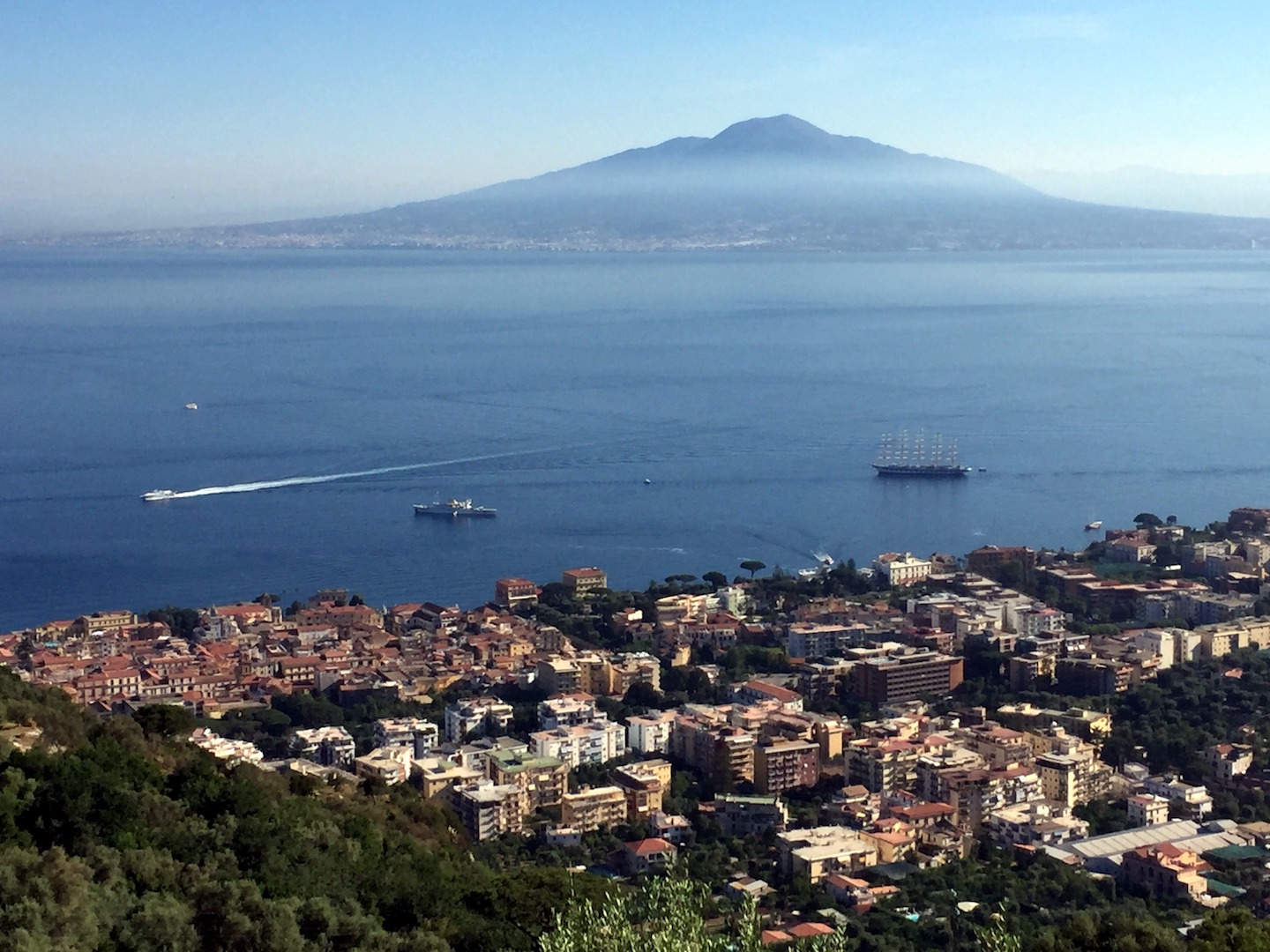
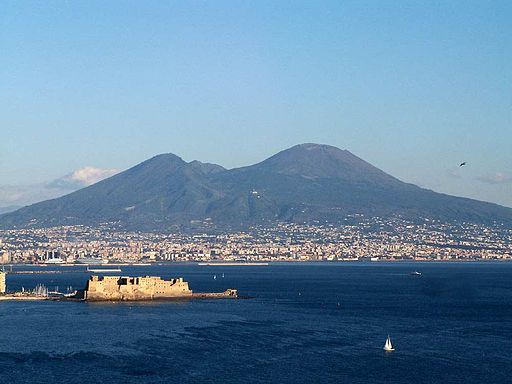
512px-Naplesbay01

The mighty Vesuvius. Picture credit: Jeffmatt at English Wikipedia [Public domain], via Wikimedia Commons.

Eventually we turned off the main road and I drove the final part through a stretch of road only suitable for one Ape[1] at the time, unaware of whether it was a one-way path while praying that no other car or even an Ape would come the other way! After 2 km of suspense and after pruning a few trees, we arrived and I even managed to park the car out of the way under the direction of our host. The road was suitably called Via Nastro Verde (Green Ribbon road) as it was framed by all sort of trees, including the famous Sorrento lemons, the raw material of the not less known Limoncello.

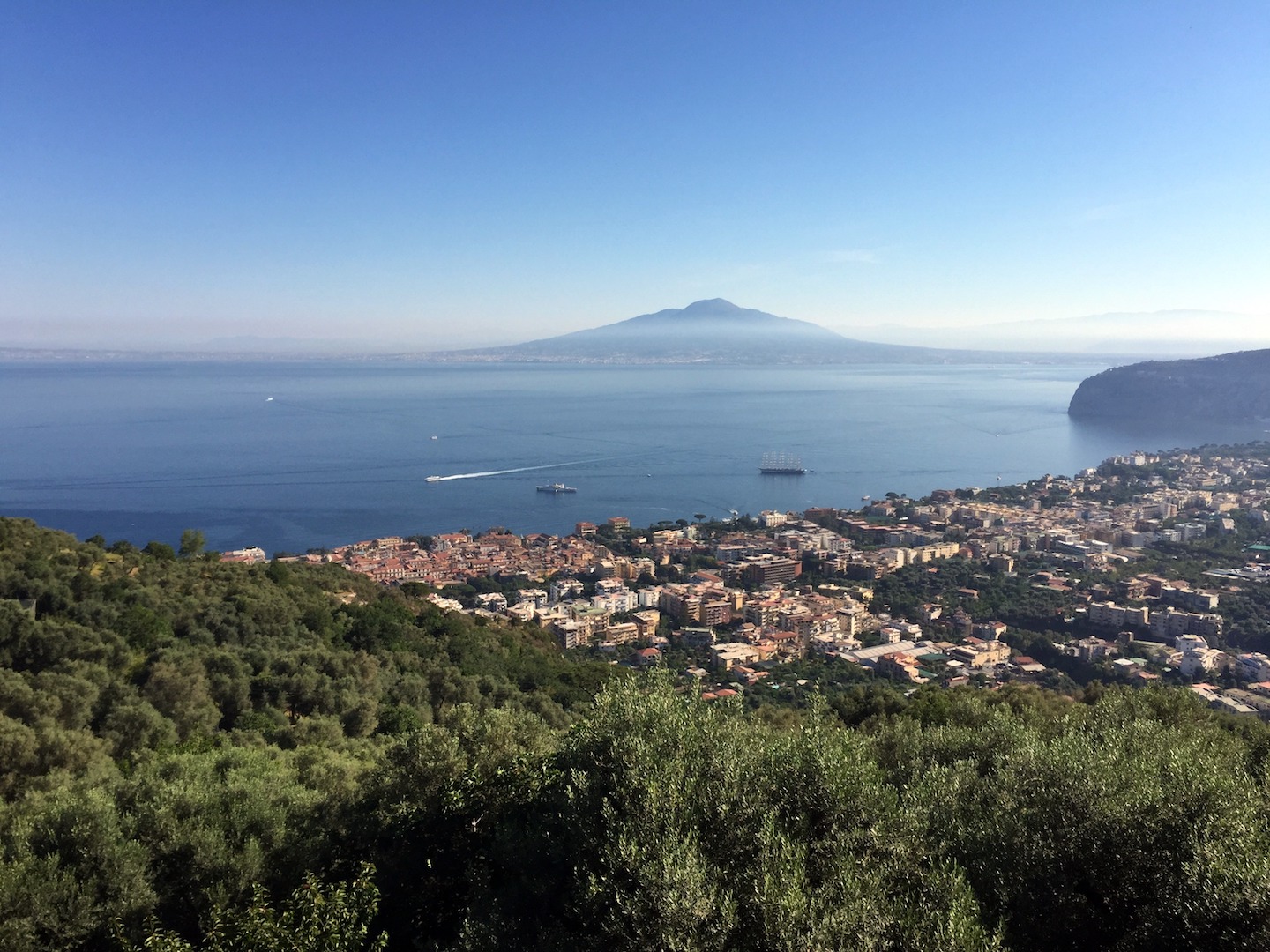
Airbnb described the flat as being located on the hills above Sorrento with an easy access to the town via a path downhill. The place was at a farm and the view of the bay of Naples breathtaking at first and, once you manage to regain your wits, very interesting.

IMG_2597 copy

The view of the Bay of Naples from our window.

Close to lunchtime, after having exhausted the ample supply of hazelnuts and cherries left by our host we judged that our settling in was over and it was time for exploration. The Bushsnob agreed to scratch his siesta and to accompany the other members of the party for a descent to Sorrento, so far a nice sight well below us. We looked for and found the path so we started our descent. Somehow, a friendly brown dog got attached to us and, although we attempted to chase him away, it somehow liked us and stuck to us.

The path was as well signposted as steep as it consisted of 2 km of steps. Although it was tough on the elderly, we managed to negotiate it quite well, guided by our recently acquired guide dog that -insanely in my view- kept running down and and then up the steps all the time, making me feel even more tired. Once we reached town with our knees trembling but still functional, things improved and our eyes could be lifted from the path to look around.

The first thing we noted was that the dog was still with us! Feeling guilty but realizing that trying to chase it away was not an option we decided to put up with its company for the rest of the day if necessary and that if this persisted, we would bring it back to our hilltop whatever our means of transport. The dog meantime was clearly unaware of our plans and, after walking for a couple of blocks, it found his own lowlands relatives or acquaintances and joined them to spend the rest of the Saturday in good company.

Somehow relieved that the dog issue resolved itself, we wandered around the city that, being a Saturday and in summer, was rather crowded and we were surrounded by shoppers at all times. My Sorrento memories already started to crumble during the first couple of hours!

Having tested the way down and found it hard on the knees we firmly decided that going up the hill at night was not an option. We then decided that our return would be by bus so, in mid afternoon, we walked to the station only to find that the last bus to our destination was departing in a couple of hours as it was a weekend. Clearly, we would travel back by taxi as an early dinner was not on the cards.

After spending some time at the central and popular Piazza Tasso and visiting the 14th century Saint Francis church, we decided to explore the Marina Grande to find a place for a seafood dinner by the sea as -wisely- we judged that the closer Marina Piccola from where all ferries operate would not be the right place, somehow.

As usual in Italy, lots of people had similar thoughts to ours with the result that Marina Grande’s restaurants were rather full when by the time we arrived. After having a look at the offer, the fact that Sophia Loren was a patron of the Di Leva Five Sisters restaurant clinched our decision and we took a table next to the beach. Although Sophia was not there at the time (she was clearly unaware of our presence), we were served by one of the sisters who knew her and we even managed to meet another three of the sisters. Both food and service were excellent. Curiously, a later look at Trip Advisor showed that the restaurant only had 2.5 stars and some very rude remarks by mainly foreign customers!

Dinner and ice cream over, a taxi was called and off we went, all the way up the hill to our flat. Of course we did not know that the way back for vehicles was over 20 km so we needed more money to pay for the taxi than for a dinner for three! So the result of the first day at Sorrento was not good and by the time I went to bed I had no hopes for a fun Sunday!

As usual I woke up early and spent a long time watching the sea below us and following the ferries coming and going to destinations such as Naples and Capri. Then I noted a large yacht anchored a few hundred metres from the Marina Piccola. Although I did not have binoculars -for the sake of travelling light- I could see that it was some kind of a luxury yacht such as those that belong to the royal families and I decided that it belonged to one of them.

Sunday was a relaxed day and, as expected, did not offer anything special apart from a “mongrel-less” walk down to town, an early dinner and a bus return for a Euro 1.50 fare! The second day at the city did nothing to improve my sinking feeling that Sorrento is not what I thought it was. Later on, talking to friends we learnt that weekends are not the best time to visit the place so I got somehow more enthusiastic but not enough to return there for a while.

The following morning, the day of our departure, I -again- got carried away with sea contemplation and immediately noted another vessel that had arrived during the night or early morning. It had lots of masts so I decided that it was one of the many tall ships that tour the world that had decided to join us at high-living. It added more interest to the already superb view.

My contemplation was cut short when I realized that it was time for our trip back to Rome as we had a time to return our car. Not all was lost though as in Rome we would spend a couple of weeks in the company of our daughter and good friends although only part-time as they are working.

It was an uneventful return journey, but the view of the Bay of Naples -the highlight of the visit- and the images of the ships anchored at the bay stayed in my mind. I then decided that I would investigate them further but you will need to wait for the next post to find out if my efforts borne fruit…


[1] The Piaggio Ape (bee in Italian), is a three-wheeled light commercial vehicle produced since 1948 by Piaggio and now by Piaggio India. It is a common vehicle used by Italian farmers as it allows them to negotiate very narrow roads.