Kenya

Kenya: the Beginnings[1]

Recovered from my curry dinner and rested I met Matt, my future supervisor. My first impression was that he did not take much notice of his personal appearance. He was tall with stooped shoulders, going bald and had somewhat bowed legs. He wore khaki gray trousers, a long-sleeved shirt, a green cardigan and Clarks shoes (always the same model that he never changed[2] for the years I was with him!) and, at first sight, he seemed friendly and direct but also demanded respect. He spoke with a strong Glaswegian accent that took a while for me to get used to.

We had a cup of coffee and talked for a while and then he invited me for a tour of Nairobi as he said “Julio, we can talk while we see the city and tomorrow I will take you to Muguga House where you will stay for the time being”. I was delighted, as I had no transport. So we spent most of the day together and I got a valuable briefing on important issues for my future. Most importantly, I liked him and I thought then -I believe correctly- that he also liked me in his own way.

Matt had been born in Scotland 58 years earlier and graduated as a veterinarian in Glasgow. After working in Pakistan (he was very proud of his Urdu), in the 60’s he moved to Tororo in Uganda to work on African Animal Trypanosomosis[3]. His important findings on the epidemiology of this deadly disease placed him in a prestigious place in the parasitology world, particularly in the African context.

His success prompted FAO to hire him in Kenya to spearhead a very large programme to develop a protection method against another cattle scourge in East Africa: Theileriosis [East Coast fever (ECF) or Corridor Disease], caused by a blood parasite -somehow similar to Malaria- known as Theileria. Those were the days of the early East African Community composed by Kenya, Tanzania and Uganda. The Brown Ear Tick (Rhipicephalus appendiculatus) is ECF’s vector[4] inoculating cattle (and other wild animals) with the Theileria parasites from its salivary glands, and, most of the time killing the susceptible animal. Some wild animals such as African Buffalo survive the infection and become “carriers” of the parasite, a kind of storage for the disease that can jump again to cattle through the ticks as the latter feed on different hosts.

Theileria schizonts (inside cells with nucleai) and infected erythrocytes.

Theileria schizonts (inside cells with nucleai) and infected erythrocytes.

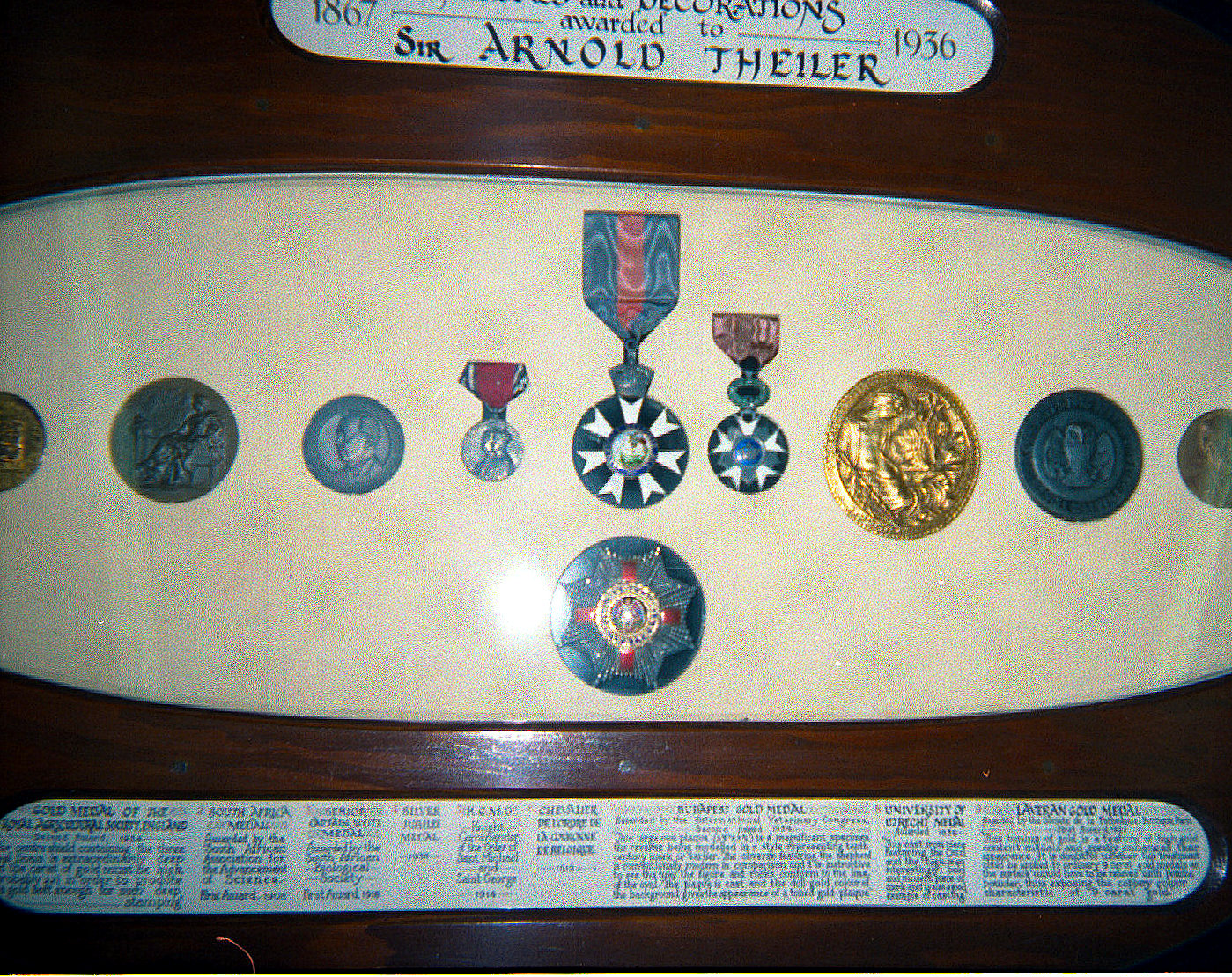
Theiler's condecorations for his outstanding work.

Theiler’s condecorations for his outstanding work.

Clearly, Matt’s main contributions to the programme were to keep a very diverse scientific team working together for years and to achieve its goal. (Later, I learnt that he was a strong leader and heard several stories of rather vehement programme meetings where participants came to blows and chairs flew but I am not able to confirm them).

It was clear that he had managed to successfully “translate” his research in Trypanosomosis to ECF. Success started when the programme managed to reproduce the disease artificially by injecting a known number of ECF infective units extracted from the tick vector[5]. This achievement enabled the programme to develop an efficient system to work with the disease that, after more than ten years of research, culminated in the development of an immunization method: a mix of Theileria types[6] that, when inoculated to an animal together with the right antibiotic (tetracycline), would produce a very mild disease and result in the animal becoming immune practically for life[7].

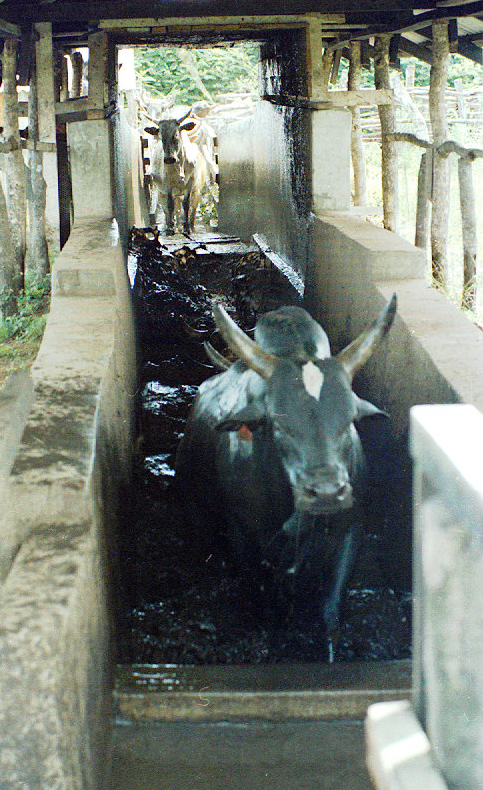
Cattle being dipped with acaricides.

Cattle being dipped with acaricides.

Until the development of this immunization method, the only way to keep cattle in ECF endemic areas was by “cleaning” the animals with insecticide-like chemicals known as acaricides[8] dissolved in water as often as twice a week! In theory, the new immunization method would remove the need for intense acaricide treatment with beneficial effects for both the animals and environment.

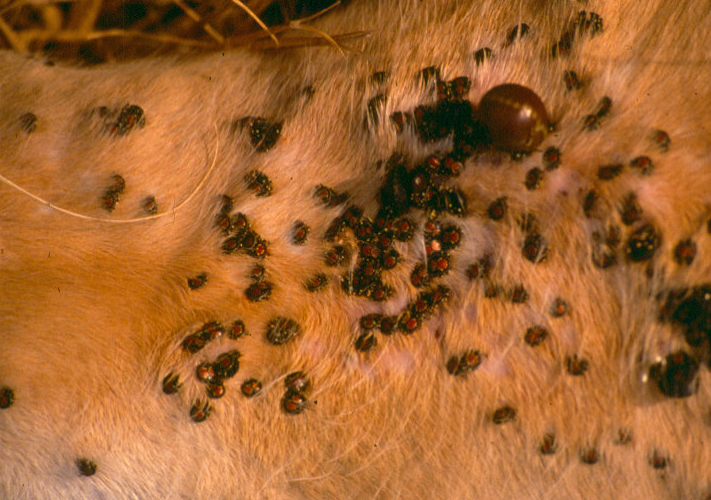
Despite the advances in ECF immunizations, the ticks would still be there and have an impact on the animals as parasites. I was a small cog in this rather complex parasite-vector-host system and my mission was to quantify the effects of the ticks themselves on productivity and their economic impact. I had 30 months to achieve this! Clearly Matt’s over-optimism had permeated the project proposal, as I later discovered was true for most proposals he developed…

Heavy tick infestation, mainly Amblyomma spp.

Heavy tick infestation, mainly Amblyomma spp.

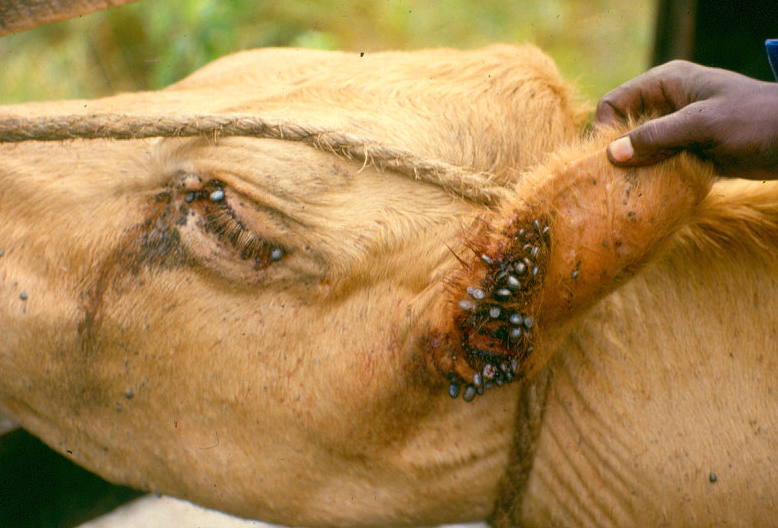
Brown Ear ticks

Brown Ear ticks

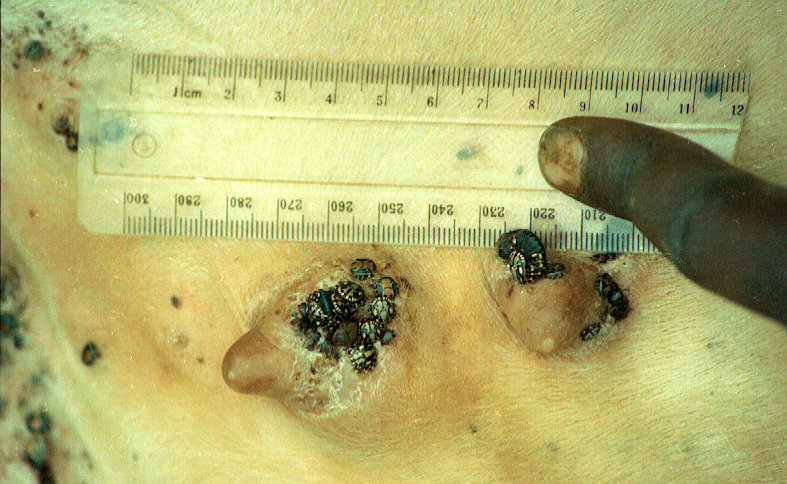
Amblyomma cohaerens (gold) and A. variegatum (orange) tick infestation.

Amblyomma cohaerens (gold) and A. variegatum (orange) tick infestation.

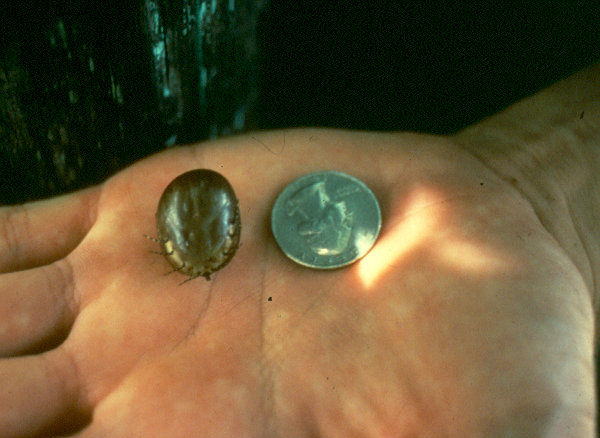
The size of a tick!

The size of a tick!

Matt, at the timenow retired from FAO, was the Director of the Tick Programme ofat the International Centre of Insect Physiology and Ecology (ICIPE). The ICIPE would host me as an FAO Fellow attached to the Tick Programme so he was my direct supervisor. . I was seconded by FAO to the latter, hence his role as my boss. The Tick Programme was working on the ecology of the Brown Ear Tick as well as searching for a “vaccine” against the Brown Ear tick vector. “Julio, we have a laboratory in Muguga and good relations with the veterinarians working on ECF there, so we will succeed”, he said. I listened with interest, accumulating questions and anxieties!

He was very excited with my arrival. I recall him saying “Julio, you are at the right place at the right time” while lighting another Sportsman cigarette (he was a heavy smoker), adding “Most of the important work on theileriosis is taking place in Muguga!”. In fact I was a bit too early but I did not know this yet! He explained that the work of the now finished FAO programme still continued and the immunization method was being laboratory and field-tested in various places in Kenya, mainly Muguga[9] and the International Laboratory for Animal Diseases (ILRAD)[10]. “Julio, the key word is collaboration” Luckily, because of his past work he had lots of connections with people working in ECF in Kenya.

Almost immediately he mentioned Alan as one of his main allies. A Northern Irish parasitologist that as Matt put it: “has green fingers with parasites”. You will work closely with him, as he is the man behind ECF immunization. “He is waiting for you at Muguga!” he said. He added, “Robin, our tick ecologist -on leave now- is also there. He knows everything you need to know on the ticks so you will be OK”. I noted that Muguga would be an important place for me!

We drove around Nairobi and he showed me some of the key spots: the FAO Office near Bishops Road, the ICIPE HQs at Chiromo, ILRAD and the Veterinary Laboratory, both located at Kabete and other useful places in town. He never stopped talking about work! We did not drive to Muguga (about 30 km north of Nairobi). He promised to take me there the following day.

I soon realized that Matt was an “ideas man” and that I was part of one of them! He believed that my fieldwork was possible and had agreed with FAO to host my research. I also learnt that there were a number of knots yet to be untied for me to do my job. The place where I would work was the main bone of contention but Rusinga Island was still top of the options. My preoccupation increased!

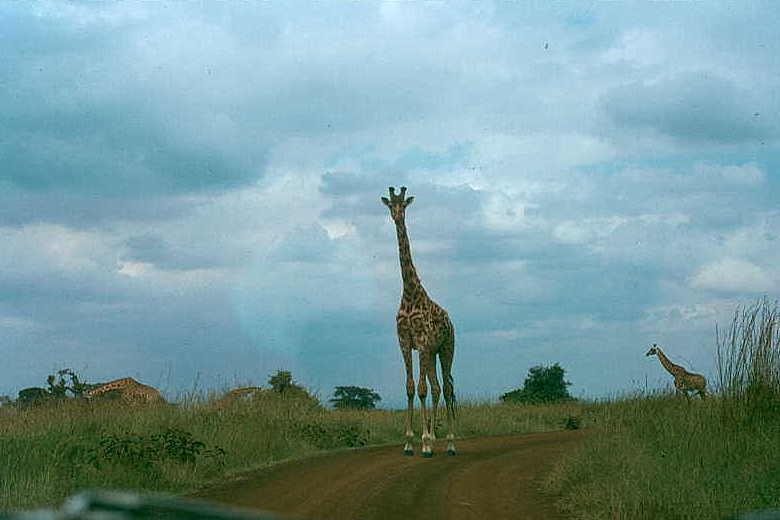
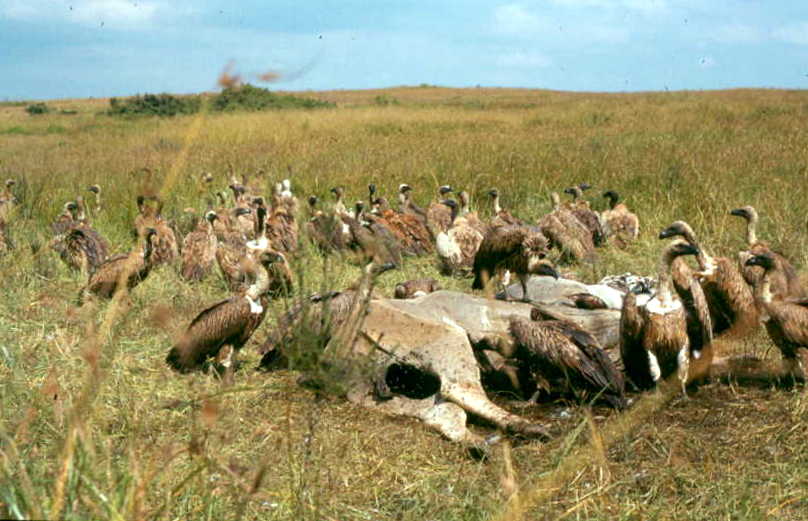
Lunchtime was approaching and Matt proposed to have lunch at the Nairobi National Park. I happily obliged. So, after stopping at a duka[11] to buy samosas[12] and two packs of milk we drove to the Park. We soon got there and we drove almost straight to the Viewing Platform without stopping to watch anything! Matt had seen all or did not care about wildlife! I took some hurried pictures of what I could during the short stoppages he did or from the moving car. It was the first “real” wildlife I had seen! We stopped for a herd of giraffes and drove past vultures at a kill and had our lunch while taking in the view extending into the Athi plains and beyond. It was my first picnic in the bush at a beautiful location! Matt continued talking about work, his enthusiasm unabated!

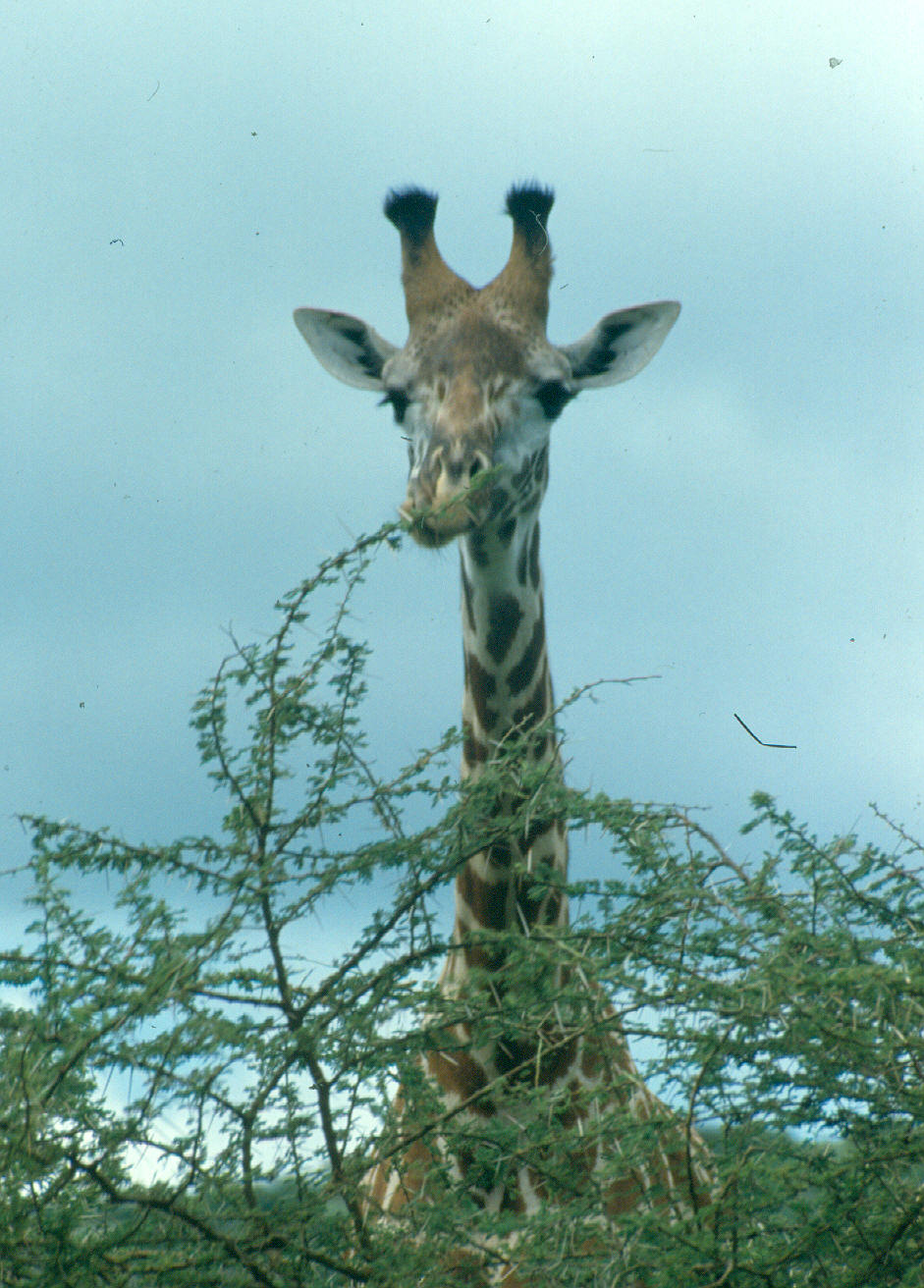
My first giraffe at Nairobi National Park.

My first giraffe at Nairobi National Park.

I took this picture of vultures at a carcass while driving past!

I took this picture of vultures at a carcass while driving past!

Occasionally he would digress to his other passion in life: fly-fishing. He loved it and never missed an opportunity to practice it. He explained that he was building dams at his house in Tigoni -an area North of Nairobi where many British lived- so that he could keep his own trout. “Julio, I can catch them from my verandah” he said while mimicking casting his fly towards the plain! I was also a fisherman but knew little about fly-fishing so I limited myself to polite and rather useless comments! He promised to take me to his house to show me the dams and to introduce me to his family. Clearly aware of my rather useless comments regarding fly-fishing he never invited me to join him!

At the end of the day Matt dropped me off at the hotel and we agreed that the following day he would collect me in the morning and take me to Muguga, my future “home”. I was tired, both physically and mentally. Although I had gained valuable information I had also accumulated many questions that I needed answers to. Being young and rather anxious, I needed to rest, relax and think. I had entered a new world with new places, new people and a different working methodology. I was beginning to realize that my work would come with a few trials. Despite this, I never regretted my choice as I loved the Kenya atmosphere and I was hopeful that things would work out in the end, despite my present doubts.

[1] This post follows “Africa – Arrival”.

[2] He may have several pairs of the same model!

[3] At the time Glasgow Veterinary College was strong in East Africa.

[4] Similar role to the mosquito in malaria.

[5] Until then ECF was only caused by applying live ticks.

[6] Theileria parasites vary in different areas.

[7] This method known as “infection and treatment” is still today the only practical method available to us, despite years of high-powered and costly scientific research.

[8] Ticks are acari. Acaricides are very toxic chemicals.

[9] The Kenya Veterinary Research Institute (KEVRI) of the Kenya Agriculture Research Institute (KARI) was located at Muguga.

[10] Now the International Livestock Research Institute (ILRI).

[11] The local name for a shop that in the “old” days was mostly owned by Indian migrants.

[12] A fried triangular pastry filled with minced meat, mutton or chicken, heavily spiced and chilly-hot.

Locking of horns

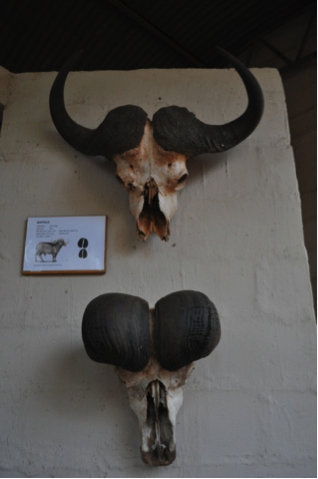
While staying at Mlilwane Wildlife Sanctuary in Swaziland in June 2012, we came across something oddly called a Wildlife “Interpretorium” and Training Centre. It was a nicely set up combination of animal exhibits with good working space for training purposes. I am sure that it is put to good use in educating the youngsters in Swaziland. Two things came to my attention there. The first was a bull buffalo skull of normal size but that has a perfectly developed boss[1] but totally lacking the actual horns (Fig. 1, bottom skull). Its apparent perfect symmetry suggests that it was a freakish genetic mishap and not the result of trauma or wear and tear. I imagine this to be a rare occurrence but that is only speculation. Clearly it was an adult male buffalo but we will never know if this malformation had any impact on its life, particularly regarding its sparring and fights with other bulls with the aim of reproduction.

Fig. 1. A normal buffalo skull above and the malformation below. (© Leonor Fernandez)

A normal buffalo skull above and the malformation below. (Picture: Leonor Fernandez)

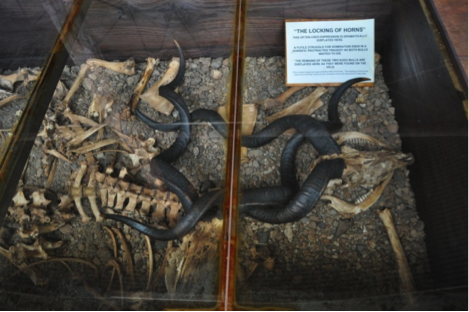
What I do know is that next to this exhibit there was a much more dramatic one showing what can happen when normally developed horns are locked (Fig.2). Clearly the two fully developed kudu bulls were engaged in a serious quarrel when the accident happened. According to the notice that accompanies the two skulls, their horns’ whacking could be heard from the camp for quite a while until it suddenly stopped. Only a couple of days later it became clear of what had taken place when their carcasses were found. Their horns had become inextricably jammed and their heads were twisted in such a way that their bodies, pointing in the same direction became parallel to each other. No one can live long in such a situation and, unable to separate, the stress, fatigue and lack of water rapidly put an end to their lives in what we can only imagine was a rather protracted agony. One can only hope that such magnificent animals had a chance to pass on their genes before this incident took their lives at their prime.

Fig 2. The display showing the locked kudu horns. (© Leonor Fernandez)

The display showing the locked kudu horns. (Picture; Leonor Fernandez)

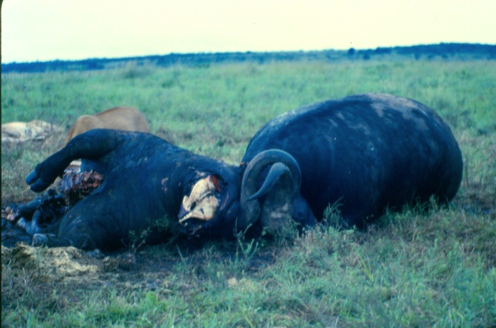
The kudu incident brought to mind a finding we came across in the Nairobi National Park, Kenya in the 80’s.  While on a game drive in that magnificent park, our attention was caught by a couple of lionesses on a small hill and we went there to have a look. From the distance, it was clear that they were feeding on a large animal. At close quarters we could see that they were busy with a buffalo carcass that, when we got closer, became two buffaloes and, like the kudu in Swaziland, they had locked their horns (Fig. 3). In this case, however, they were facing each other.

Fig 3. Buffalo with locked horns in Nairobi National Park. The back of a lioness is visible over the buffalo on the left. (© Julio de Castro)

The buffalo with locked horns in Nairobi National Park. The back of a lioness is visible over the one on the left.

Considering the shape of buffalo horns it is difficult to imagine that they can be locked but these two bulls managed it and ended their lives as a consequence. The knoll where the carcasses lay appeared ploughed, no doubt because of the titanic struggle that took place prior to their deaths. How they died will remain another mystery of nature but I would not be surprised that their violent confrontation attracted the lions and they may have had something to do with its ending.

I am sure that this is one risk that the “hornless” freak displayed at the Wildlife “Interpretorium” and Training Centre of Mlilwane did not face.

[1] An adult bull’s horns are fused at the base and this continuous bone structure is known as the “boss”.


Africa! – Arrival

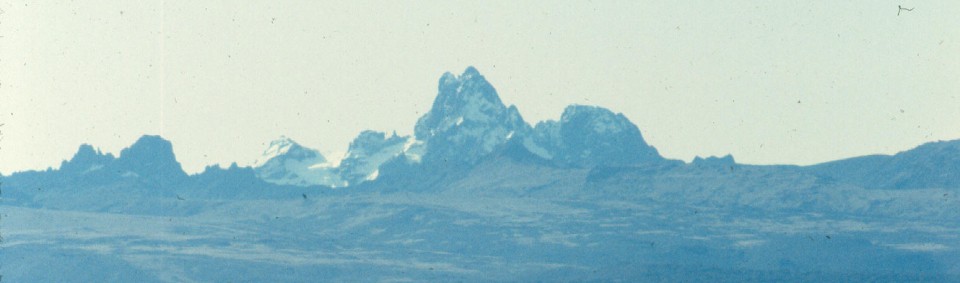
cropped-mt-kenya-way-to-shaba-1.jpg

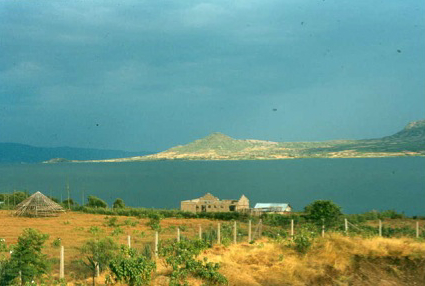
This time I do remember boarding the Boeing 707 of Kenya Airways at Fiumicino airport, as it was like moving into another dimension. All passengers seemed exotic to me and there was an African crew! After dinner I read and re-read all the documents I was given in order to impress the people I would be working with. At dawn, the plane started to lose altitude and I was very excited when I saw an incredible green lake in the desert. The pilot explained that it was Lake Turkana and that we were close to landing in Nairobi.

The first area of Kenya I saw: Lake Turkana. The picture was taken a few years later during a safari there.

The first area of Kenya I saw: Lake Turkana or the “Jade Sea”. The picture was taken a few years later during a safari there.

Then I felt it. It was a light stitch of pain in my lower abdomen. I dismissed it at first as the consequence of lake Turkana´s beauty on my system, but when it repeated itself I knew that not only were the passengers on board colorful and exotic but also the food bacteria belonging to that category. As we had less than an hour until landing, I decided that I was going to manage by focusing my mind on my surroundings. In any case, the pre-landing queue for the plane’s toilet was such that I had no options left.

By the time we landed at Jomo Kenyatta International Airport I only had one thing in my mind: finding a toilet! I learnt that it is called choo in Kiswahili. This was my first and very necessary brush with the language. My obligatory gut-related pause took its time. When I was able to emerge, I was relieved all the passengers were already gone. Although it did not seem like it to me, it had taken quite a while! Luckily there were still immigration officers waiting and I entered Kenya after a careful and thorough examination of my exotic Uruguayan passport. Only my suitcase remained on the conveyor belt.

It was early morning in Nairobi when I left the airport building and started looking for the airport bus, as advised by my FAO colleagues in Rome, who were aware of the need to save my limited fellowship resources and my own meager capital. I looked up and down the front of the airport and found it empty. No FAO reception committee despite the information forwarded about my arrival! Eventually I found a bus and made my way slowly towards it. My suitcase was heavy and my cabin luggage probably heavier and its strap was cutting into my shoulder! Be aware that I packed for a two and a half year journey as I was well aware that I did not have the funds to return to Uruguay until the end of the fellowship.

I entered the empty bus (with my luggage as there was no haul), chose a seat near the front and prepared myself for a long wait. I was feeling good and looking forward to the future. My gut seemed settled by now. In those days there were no cell phones so I could not call anyone and I was on my own. I was about to have a catnap as I lacked sleep when movement between the trees caught my eye. My first impression was that I was dreaming but I was actually seeing the long spotted neck, at the end of which was the head of a giraffe that was busy browsing on a yellow-bark acacia just 10 metres away from the bus. Amazed, I discovered another one and, after my eye got used to it, about fifteen more animals, all sailing slowly across the airport parking area in search of fresh acacia shoots. They were very relaxed and, as the first rays of sunlight bathed their faces, I saw the most beautiful eyelashes ever created.

One of the giraffes browsing at the airport!

One of the giraffes browsing at the airport!

The sputtering and vibration of of the bus’ diesel engine interrupted my giraffe-induced rapture and forced me to focus on holding on. I considered myself very lucky to be the sole passenger on the bus. A choo stop has its advantages I thought… My joy was short-lived. To my surprise, the bus stopped a few blocks from the airport to pick up passengers. “This cannot be”, I thought, “the airport bus goes to the centre of town and it should not pick people up on the road!” Despite my mental opposition, the stops continued at regular intervals and the bus started to fill up. This was clearly no airport bus but a normal city bus, part of the Kenya Bus Services known as KBS buses and I had no idea of its route or destination! Now I also realized why it was so cheap! To put it mildly, I had a minor panic attack! But, as there was nothing I could do, I accepted my fate and waited for the outcome of my wrong choice.

I now need to elaborate on the concept of a full bus. In the countries I had lived in until then, a bus is full and stops picking up passengers when all seats are occupied and standing people are not able to move. Not in Kenya. I witnessed a new definition of bus “fullness”. The bus did not skip a single stop and people kept getting in, first to occupy the seats –I counted four bodies in mine in addition to myself. Throughout the bus, bodies filled all available spaces, maximizing every possible centimeter with unbelievable precision, as if accomplished by professional packers. First I lost physical contact with my luggage and soon afterwards I also lost visual contact. I regretted their likely loss with a sense of emptiness and not a little despair but what could I do? My immediate attention was focused on more vital activities: getting sufficient breathing air to be able to reach the final destination. Luckily, my earlier gut incident was still not showing signs of returning. At least something is going well; I though, while trying to position my nose in an air pocket between a shoulder and a face. I smiled but the face did not! Its eyes were closed in a sound sleep!

The passengers included primary and secondary students, mothers with babies, workers, police and even a Maasai warrior in full regalia trying to avoid impaling passengers with his spear and simi (long double edged knife). Despite the mass of bodies and apparent discomfort, laughter was frequent and this would continue during all the time I spent in Africa. Although I was looked at as an unusual passenger, I did not feel threatened or uncomfortable. Body odour mingled with the smell of baby talc, stale mothers’ milk, fresh fruit and exotic spices.

When I was starting to feel that my choice of bus may have been my last, I felt a slight slackening of bodies after one of the stops and then, gradually, the bus began to expel people and finally stopped at the end of its route. To my amazement, my bags were still there and seemingly intact! All doors opened and out went the few remaining passengers and I remained, like at the start of the journey, on my own. I asked the driver where we were and I seem to recall that he mentioned Eastleigh, a suburb of Nairobi, very far from my destination in the centre of town.

I am not sure what prompted the next act and it remains as another mystery of my lucky life in Africa. The Driver, clearly seeing the desolation showing in my face, asked where I was going. I explained to him that the Serena Hotel in the centre of Nairobi was my ultimate destination. “You are too far from there my friend”, he said. And then added, “this area is not safe as there are too many shiftas!” (rebels, outlaws) to end with a “you do not see wazungu (white people) walking here and there are no taxis either” This left me speechless and I was desperately trying to figure out my next move -clearly quasi suicidal- when the bus doors closed and it moved again

Before I could protest for him to let me leave it, he grinned and said: “I will take you there!” He said it twice as I asked him to repeat it for fear of having misheard him. So I was the sole passenger on a trip that ended when the bus entered the offloading area of the Serena Hotel where the doors were opened and I descended to the amazed look of the concierges! That was a gesture of human solidarity that not only moved me but started to prepare me for what I would find repeatedly in Africa.

He departed with a wave and I entered the Serena. My sense of elation evaporated the moment I learnt the prices of a room and decided that this was not for me and went back to the street. This is not a good or common thing to do when you are carrying the amount of luggage I was, but, as I did not know this then, my saving obsession got the best of me. It was even more unexpected for a mzungu (white person) to walk around carrying bags in the streets of Nairobi.

I began to ask people on the street for a cheap place to sleep that night and, as is normal in most of Africa, someone offered to accompany me to precisely such a place! Needless to say, my idea and the one of my Good Samaritan were quite different! After walking to two possible places, we parted amicably. Luckily, there was another passerby who took me to a hostel nearby that seemed clean so I settled for it, left my bags and went for an afternoon stroll to find my bearings and get my first feel for the place. (Note added on 8/10/14: The hostel was the C.P.K., now the Anglican Church of Kenya Guest House located in Bishop’s Road, off Ngong Road. The Guest House was used to accommodate missionaries from up country missions. See: http://www.ackguesthouses.or.ke/nairobi/index.html).

I returned to the hostel at dusk, very tired and ready for dinner and bed. The day had been long. Dinner was a modest affair served on a communal table. As I was very hungry I helped myself to an abundant helping of the only available dish: a meat stew that did not look too bad and there was also rice to go with it. I am a fast eater and this time I did not wait and got on with the job.

For the first 10 seconds the mouthful of meat behaved like any tough and seriously overcooked piece of Uruguayan beef. After that fleeting evaluation passed, a number of things started to happen, all new to me until then. In what I thought a miracle of chemistry, the half-chewed meat suddenly caught fire in my mouth and, hoping to be unnoticed but trying to smile –an impossible task while suffering third degree burns- I spat it out. “Uhmm very grrood” I muttered while looking for the nearest source of water and wondering about whether my vocal chords were still there. While my mouth and surrounding areas were being cauterized, I felt the hair on my head and neck rise, accompanied by copious sweating of my eyelids, something that hitherto had never taken place! As I had never cried with the outside of my eyes, I was clearly concerned but managed to wipe the sweaty tears and gulped a glass of water in a rush. I could not distract myself from focusing on the status of my already castigated pyloric region and hoped that would withstand this added and novel punishment.

Trying to appear normal and having recovered some of my speech function I muttered another positive comment about the food while I waited for the water to calm things down under the clearly amused look of my African table mates, too polite to laugh openly at my rather comic status. Thankfully, in nature all comes to an end, and to my relief the burning eased and slowly the affected organs started to respond again. I also learnt that I had just experienced my first encounter with a beef curry of the “mild” variety.

I was sure that I had locked my room to go for dinner so I was surprised and concerned when I found it open. “The only thing that I need now is a thief” I thought and walked in prepared to defend my meager possessions. To my surprise, my lamp was on and a man was lying on my bed! Confused but very tired I said good night and went to sleep in another place only to spot, among the clothes of my roommate a white priest collar. It all fell in place as I became aware that my cheap hostel find was a religious place were church personnel posted in the field coming to do business in Nairobi. So it is that, surrounded by sanctity, I had a very good night’s sleep and did not hear anyone else entering the room although it was full when I woke up to face another day. Clearly they were quite angelical in their movement.

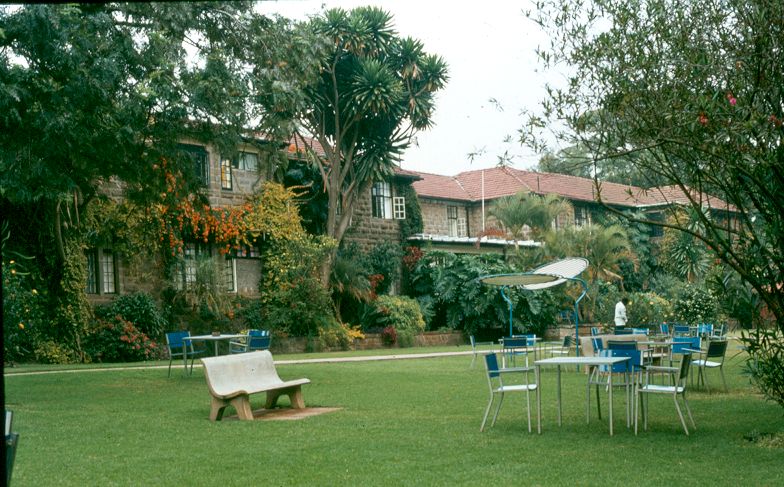
The gardens at the Fairview Hotel.

The gardens at the Fairview Hotel.

The following morning, after a curry-free breakfast and happy to learn that all my body parts had healed, I managed to make contact with the local FAO office. Clearly unaware of my gut-rot related delay in arriving to the lobby, they were very concerned that I did not turn up at the airport and thought that I had missed my flight. They also gave me the address of the Fairview hotel where I should have been and the contacts of my future boss, a Scot with whom I met later the same morning.

But that is the beginning of another story!


Caput Mundi

Foro Romano cropped

Roman Forum.

It was July 1979. I was getting ready to travel to Armidale in Australia to join a team of scientists working on internal parasites of sheep to study for a PhD. My medical clearance, visa application and travel bookings for September were all advanced. I had been in Uruguay for a few months after getting an MSc in animal parasitology at the University of North Wales, UK and the PhD opportunity was the logical next step in my mind. I was very excited and looking forward to the challenge.

That is why the message from the Food and Agriculture Organization of the United Nations (FAO) in Montevideo informing me of the arrival of an urgent Foodagram (FAO telegrams then) addressed to me was a jolt. It was not unexpected, as months back while ending my studies -and still in the UK- I had applied to an FAO Andre Mayer Fellowship to study ticks in Africa. However, it was inopportune!

I returned the call as soon as I could and they confirmed that they were trying to contact me urgently. As there were no faxes or e-mail attachments in those days, we agreed that they could send the -still unopened- telegramme to me by the local bus. I arrived the following day and I read it with some trepidation. It said:

URGENT STOP TO MR. J. DE CASTRO, TEL CARMELO 567, C/O FAO URUGUAY STOP PLEASED TO OFFER AN ANDRE MAYER RESEARCH FELLOWSHIP STOP YOU WILL TRAVEL TO KENYA AND JOIN THE INTERNATIONAL CENTRE FOR INSECT PHYSIOLOGY AND ECOLOGY TO STUDY THE ECONOMIC IMPACT OF TICKS ON CATTLE STOP MORE INFORMATION FOLLOWS BY POUCH STOP URGENTLY REPLY TO MS. IRENE FIELD, FELLOWSHIPS DIVISION STOP KIND REGARDS STOP EDOUARD SAOUMA, FAO DG

After digesting the contents of the telegram and its potential implications, I contacted FAO in Montevideo again and we agreed that we would wait for the information that would come by pouch. It was easier said than done and I immediately started to think on the decision I needed to take as, although Australia was attractive, Africa -being totally exotic- possessed a strong allure.

Some days passed and, in view of the absence of news, I continued with the Australia arrangements, just in case.

A couple of weeks later, however, I got an envelope with the promised information and the written offer that awaited an urgent response. Through the enclosed documents I learnt that Professor Andre Mayer had been Chairman of the FAO Executive Committee in the early days of the organization and left a donation to FAO for young scientists to conduct research projects in relevant development issues. I also learnt that I was going to be based at Rusinga island and joining a team of tick and tick-borne disease experts in Kenya. Images of an Indian Ocean island with palm trees came to mind!

My interest in animals led to me becoming a veterinarian and what little information about the African continent that was available did nothing to discourage my interest. During my childhood my mother -a devout catholic- subscribed to “El Africanito”, a monthly publication from the work of the Catholic Church in Africa. I used to read this every month. Later on, the series “Daktari” with Clarence the cross-eyed lion and the movie “Hatari” with John Wayne were fascinating to me.

Later in life and while already working as a veterinarian, I read a publication on African cattle in the Hoechst Veterinary Blue Book which highlighted the enormous numbers of cattle per veterinarian in Africa as compared with Latin America and other continents. More recently, my appetite had been further wetted by hearing my lecturers in the UK talk of tsetse flies and ticks and related travel tales.

This was my opportunity! However, I was committed to Australia. After a lot of thought and not much sleep I took the bus to Montevideo to find out more from FAO Representative in person. By the time I left his office I had made up my mind and chosen Kenya and, although unaware of it then, our lives would change in a way we could not imagine.

Luckily, the Australians were very pragmatic and they gracefully allowed me to unravel my Australian attachment so that I could accept FAO´s offer. The greatest opposition to the decision came -probably justifiably- from family and friends as it was going against “the norm”. I still remember the reply from an old friend when I told him that I was going to Kenya. “Julio, you are crazy” and then added “You will leave your carcass in Africa!” What reply could I give to what seemed like common sense?

The identity of Rusinga island remained a mystery. The available atlas we checked failed to locate it and it was finally a geography professor who informed me of its location in Lake Victoria, a rather large body of water I had not taken into account until then.

Part of Rusinga Island seen from Mbita Point.

Part of Rusinga Island seen from Mbita Point.

I sent my acceptance and it was agreed that I would travel alone as I needed to pass through Rome for briefing on my way to Nairobi to join the work team. The plan was for my wife to join me later in Nairobi when I already had a clear idea of ​​what it all meant and had gotten my bearings!

I do not remember my departure from Uruguay to Rome, perhaps I was too worried and nervous, or may be my memory fails me now! I do not remember what airline I traveled with or how the trip was. I do recall arriving in Rome and getting to the Lancelot hotel where, by virtue of sharing the dinner table, met other FAO and World Food Programme colleagues that spoke about the wonders of Kenya.

The Trevi Fountain in the 80s. I did throw a coin then and returned!

The Trevi Fountain in the 80s. I did throw a coin then and returned!

I also remember being stunned by Rome’s beauty and being paralyzed in fear of its traffic. The walk to FAO from the Lancelot was memorable as there are a number of monuments nearby such as the Coliseum, the Arch of Titus but also some potentially lethal traffic traps in at least three places. The experience of witnessing a visitor trying to cross the street remains vivid in my mind. Stopping at a red light I noticed a tourist by my side talking to his wife in German. He was obviously agitated seeing that the Italian pedestrians continued to cross the street despite the red light. He waited patiently for the light to change to green and then he stepped onto the pavement. The moment he did so, a car running a red light zoomed past him at very close quarters and he lunged backwards, totally dumbfounded. He was still there, totally lost when I moved on. Welcome to Rome, I thought!

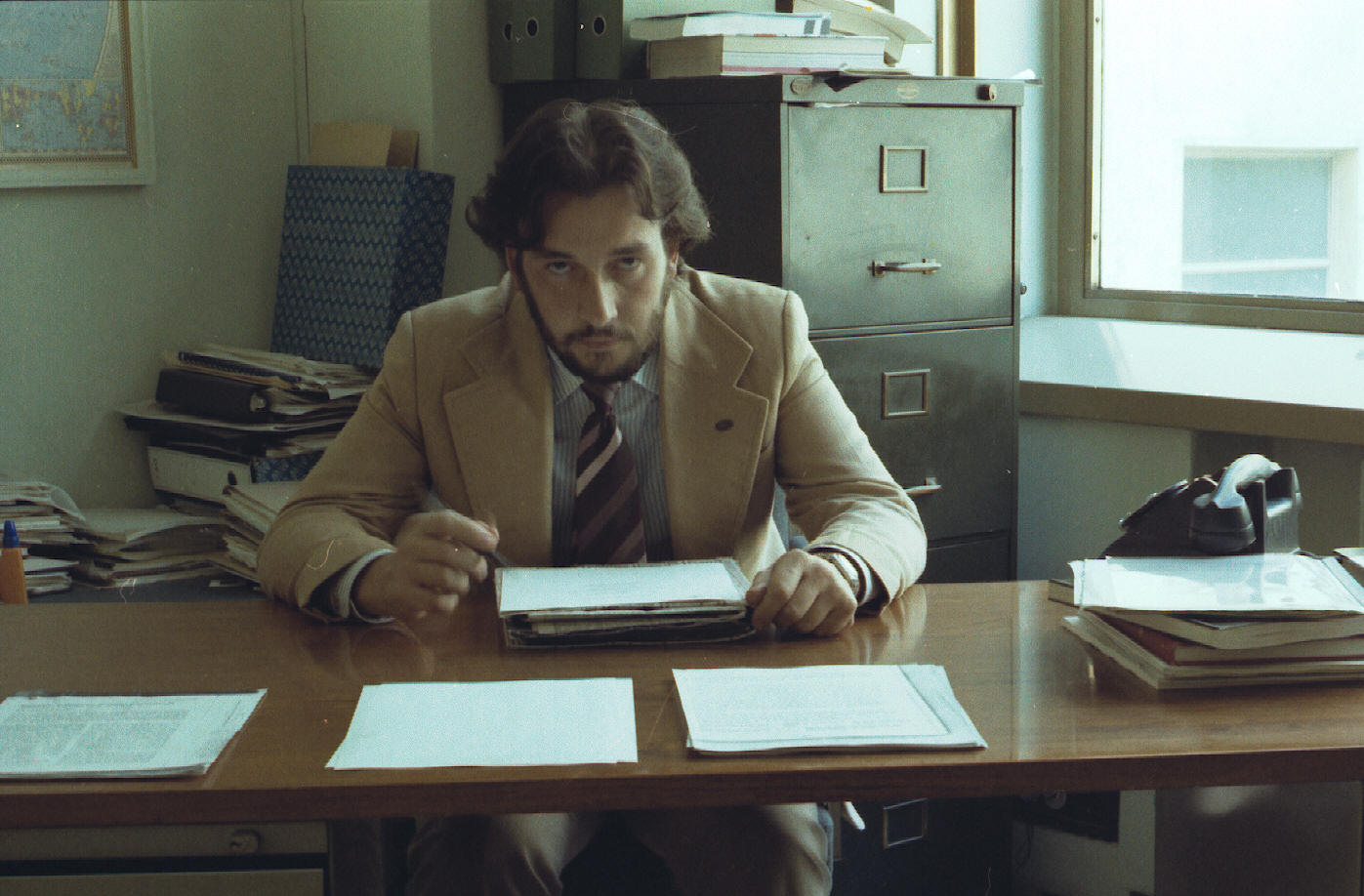
Once inside FAO I had a triumphant feeling and I thought “I am in the world’s cathedral of agricultural knowledge and it is offering me something, well done!” At that time, young and ambitious, I thought I touched the sky with my hands and I even took my picture behind a desk to show my “importance” to family and friends. The people I met and their quality, both human and technical, immediately brought me back to my humble situation of a young person at the very beginning of his career and I focused on my work as it was obvious that I had lots to learn!

jj en FAO cropped and small

At FAO, thinking that I had made it… I was to return to work to this office in the 90s! The telephone had changed by then!

My FAO colleagues prepared me technically but they also gave me lots of well-meaning advice: do not try to do too much, at ICIPE you will have a good boss, everything on ticks and tick-borne diseases is happening in Nairobi now, it is an expensive place but there is an airport bus to town and cheap hotels, be careful with malaria on the coast. These are some of the ones I still remember. After one week, I was ready to travel.

FAO Headquarters from the Palatine Forum.

FAO Headquarters from the Palatine Hill.

Next: AFRICA! – Arrival

Swiss-Uruguayan Easter Safari Rally – Kenya, 16th to 20th April 1987.

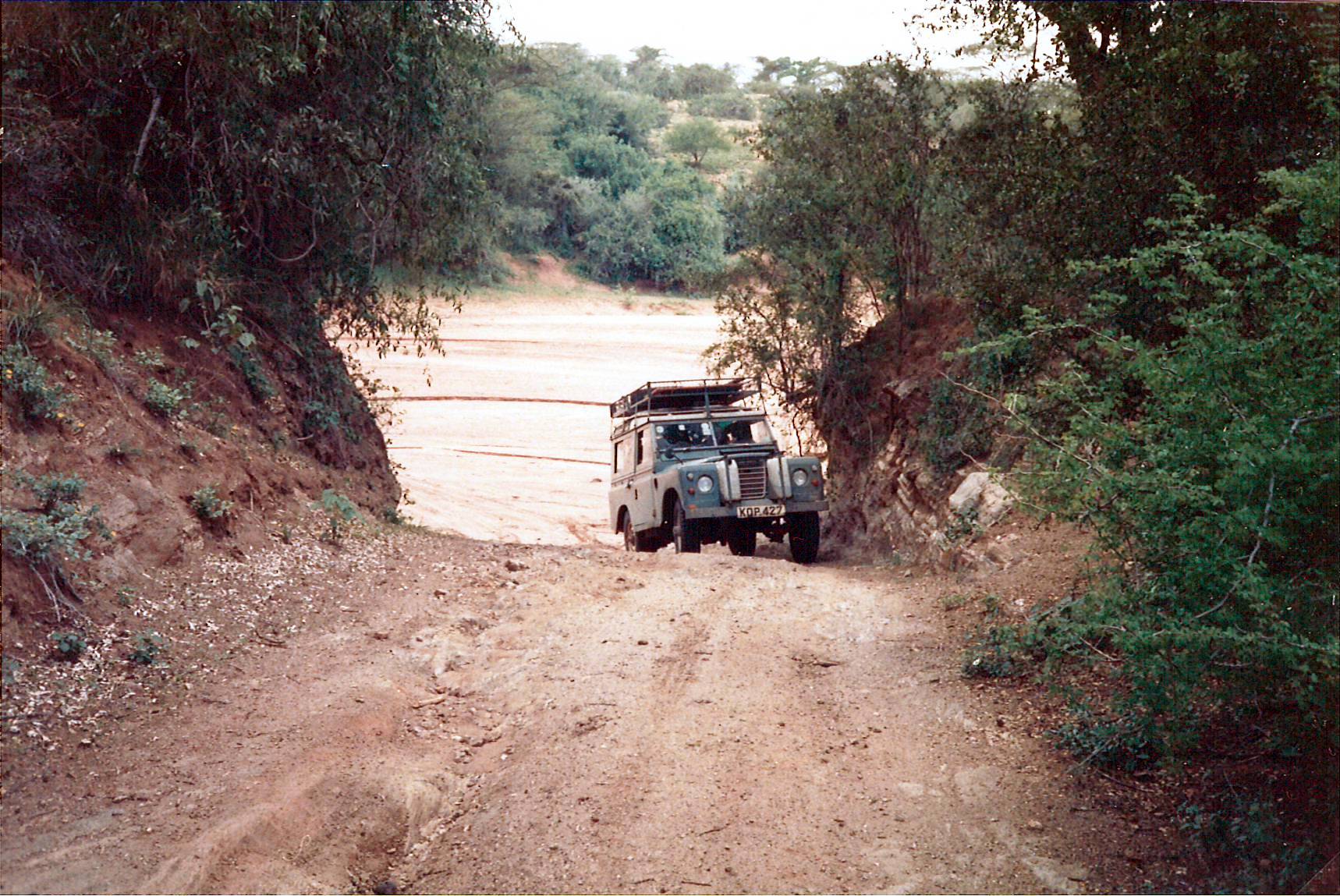
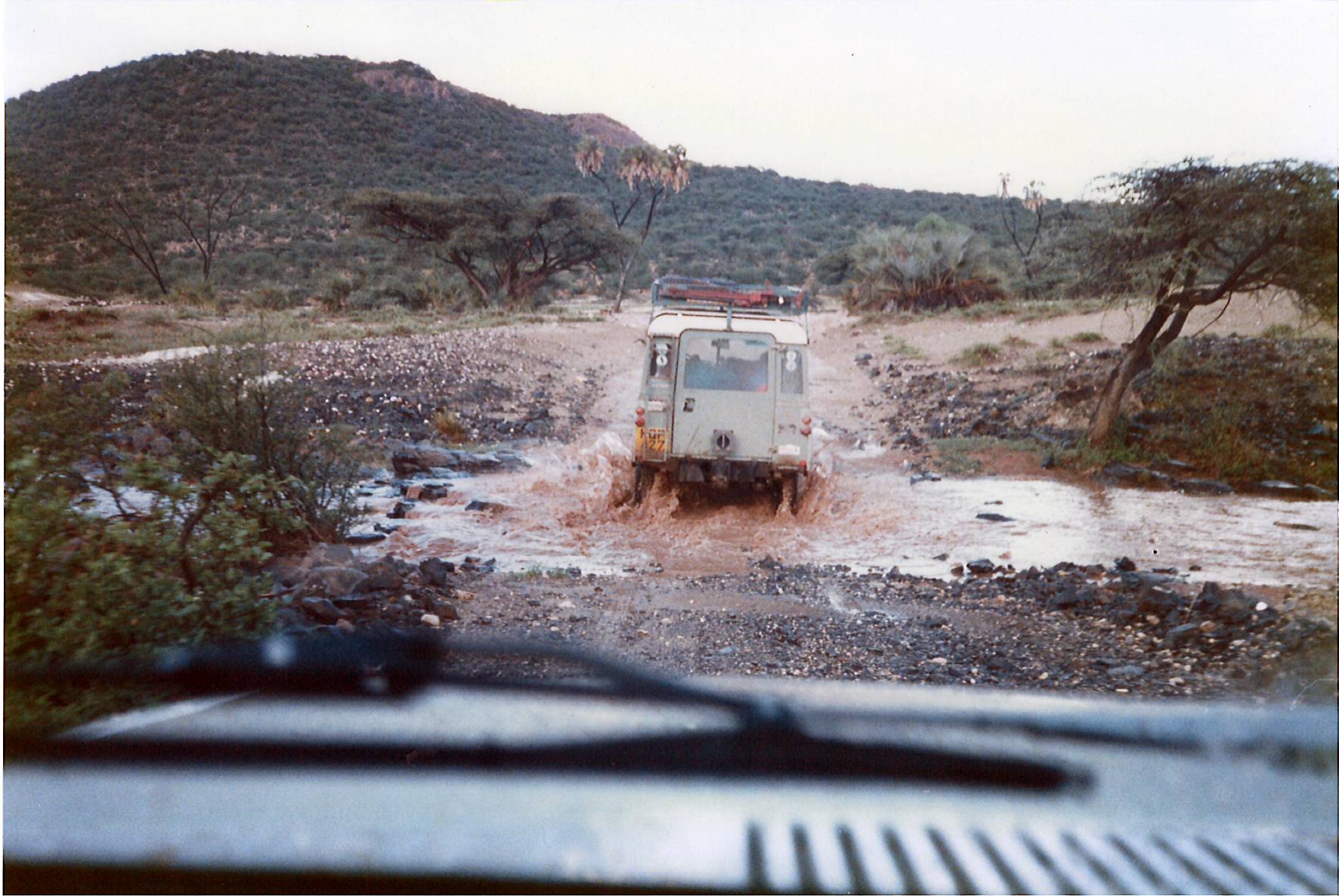
1-Matthews4WD87

Coming out of a riverbed: Have you put the four-wheel drive on?

The rally in a few words…

Programme

  • 16th of April : Nairobi – Meru town
  • 17th of April : Meru town – Shaba National Reserve
  • 18th of April : Shaba National Reserve
  • 19th of April : Shaba National Reserve – Matthews range – Samburu National Reserve
  • 20th of April : Samburu National Reserve – Nairobi

Participants

  • Land Rover – Uruguayan team (4WD[1], the pilot and X-ray[2], wife and co-pilot)
  • Isuzu Trooper – Swiss team (ScoutSpirit[3], pilot and PinkShade[4], partner and co-pilot)

Reporting

  • PinkShade, to serve you (although not very used to that job and not trained in English at all!)

Results

  • Both teams excellent, both “ex-aequo” at every leg, despite major technical and mechanical problems.
  • No real brake down (nervous ones, I mean!), no flat tires and no accidents (Thank God!)
  • Cars and skills were tested through all types of weather, on all kinds of tracks, marshy or dry.

 The rally in detail…

Thursday, 16th of April – Getting in the mood!

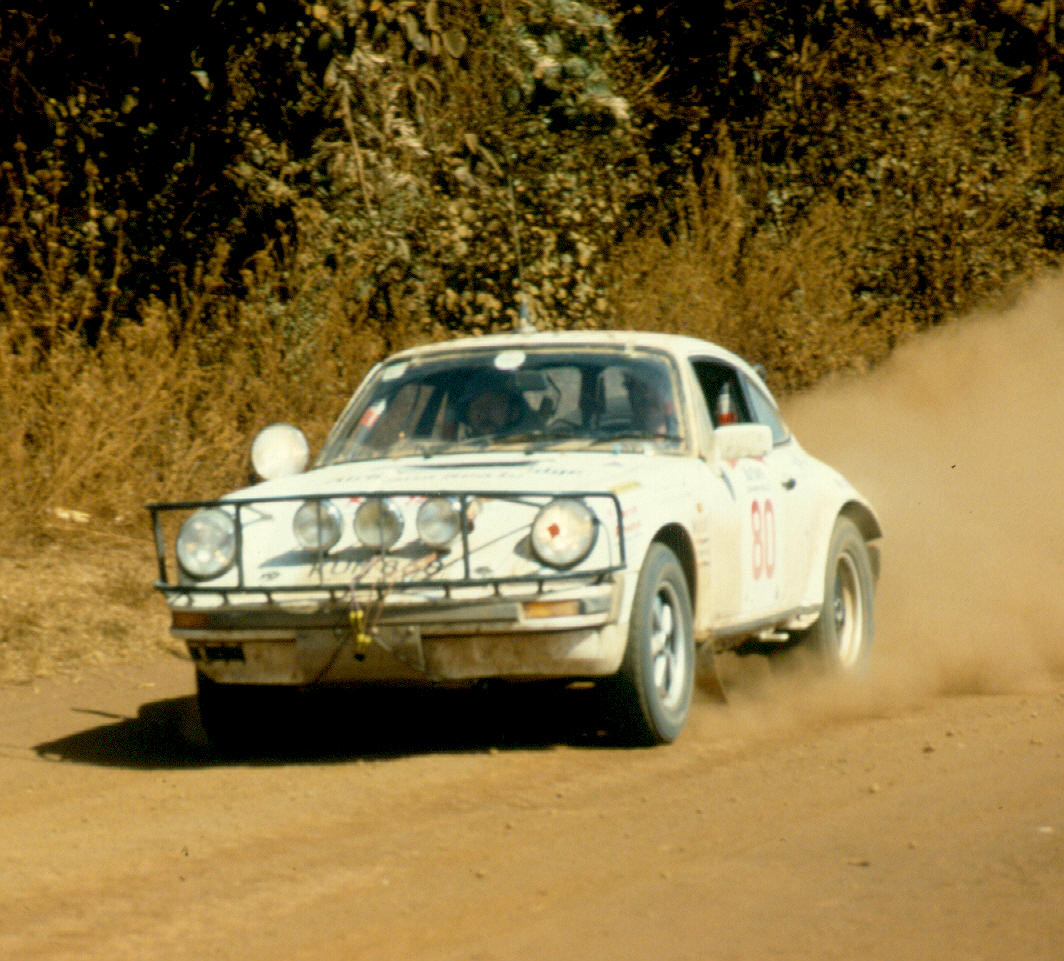
Our departure took place in Nairobi at 2.00 PM roughly. Unexpectedly, everybody from the town was along our way to greet us and enjoy our way through! Our success was huge and tremendously exciting. At around 3.00 PM we met a few cars driven by “amateurs” coming our way at high speed. All the cars were numbered, full of stickers and very noisy. It was a kind of a funny race, which looked like a pale copy of ours. We gave way very politely, full of respect for the beginnerswe thought that they were showing off a bit too much[5]. Anyway, the atmosphere was light and happy: the weather was perfect, hot and sunny. The roads, either tarmac or dirt, were dry. The coffee bushes were all in blossom, which gave a marvellous scent to the air. No better conditions were expected for a very enthusiastic and fair rally.

2-MeruAreaRallyCar

One of the “real” Safari Rally car: It looks more like a rally than like a safari!

We reached the town of Meru without any trouble, but well after dusk. Towards the end of the journey the Land Rover got a bit weak and it just managed to climb up to the “Pig and Whistle”, our stopping place for the first night. Once our luggage was in the cottages, we met at the terrace. But the noise of the Safari Rally going through Meru while we were having a lazy late drink (7.30 PM) made us feel tense! And so we slid to the annoying question: Is the Land Rover all right? Will it be ok tomorrow? The usually optimistic 4WD was dubious and the usually pessimistic ScoutSpirit showed -as usual- calm and detachment! Morality: one’s very deep characteristics can change depending on who or what is the subject of the problem! Later, the meal, excellent but overwhelming, helped us to forget about any possible doubts and the best plan was to ensure a good night to everybody!
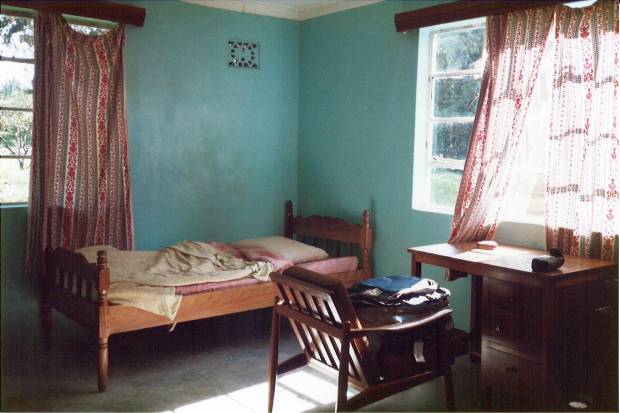
Our quiet room at the Pig & Whistle Hotel in Meru (built around 1930): A good night for a good rally's leg.

Our quiet room at the Pig & Whistle Hotel in Meru (built around 1930): A good night for a good rally’s leg.

Friday, 17th of April – Bivouacking in the bush!

We got up at 8.00 AM, a GORGEOUS[6] sunshine greeting us at the doorstep. Things stayed all right until the end of breakfast. But then, the Land Rover gave us bad news: It was tired, exhausted, no more power and wouldn’t say why. Kindly, the manager of the hotel proposed his mechanic. Good news, the fundi kwa gari[7] (the cars’ specialist = the mechanic!) was trained on Land Rovers. This was our luck in misfortune. The man came and gave his diagnostic: “Burnt cylinder head gasket”, something not nice to hear in that GORGEOUS morning when everything was just starting. It was 10.00 AM and he said that he could repair it for 1.00 PM. Doubtful but hopeful, 4WD and ScoutSpirit went with him and both cars to his garage.

Meanwhile, X-ray and I had a good “seed-collecting-time” while inspecting trees and various plants in the garden: Custard-apple trees, fig-trees, coral-trees, African tulip-trees, a sort of climbing cucumber, frangipani, etc. At 1.30 PM or so, men and cars came back, ready for another brilliant -if somehow delayed- start! We thanked the manager heartily, filled the tanks up and bought the newspapers. We left Meru after a light picnic. It would have been nice to have driven eastwards to Meru National Park, the only place in Kenya at that time which hosted white rhinos (introduced). This is also where Elsa, the very famous lioness raised by Joy Adamson, was buried. But, in view of the mechanical delay, we kept that itinerary for another possible safari and headed to the north, to Shaba National Reserve. By that time, I discovered that we were going to a place we had no map of! The Swiss part of me thought “well, we are really looking for adventure”. I understood later why it was not that adventurous: Shaba is a very small national reserve and there is only one main track through it! I was then ready to follow happily, not that I really had the choice but that I was much relieved not to go to the “outback” without enough training.

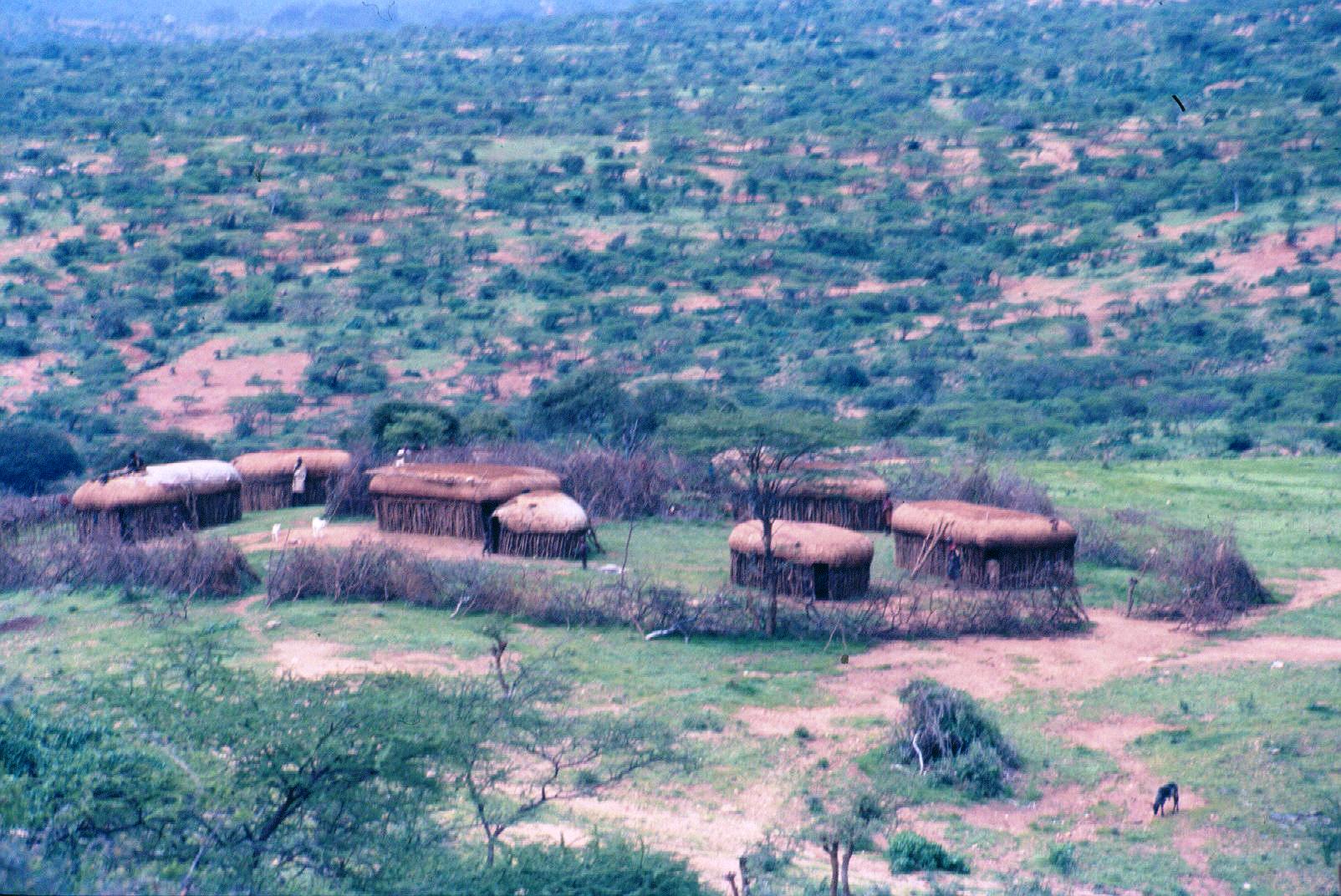
Samburu's manayatta (family settlement with huts and traditional spiny fence): Somewhere on the way to Isiolo.

Samburu’s manayatta (family settlement with huts and traditional spiny fence): Somewhere on the way to Isiolo.

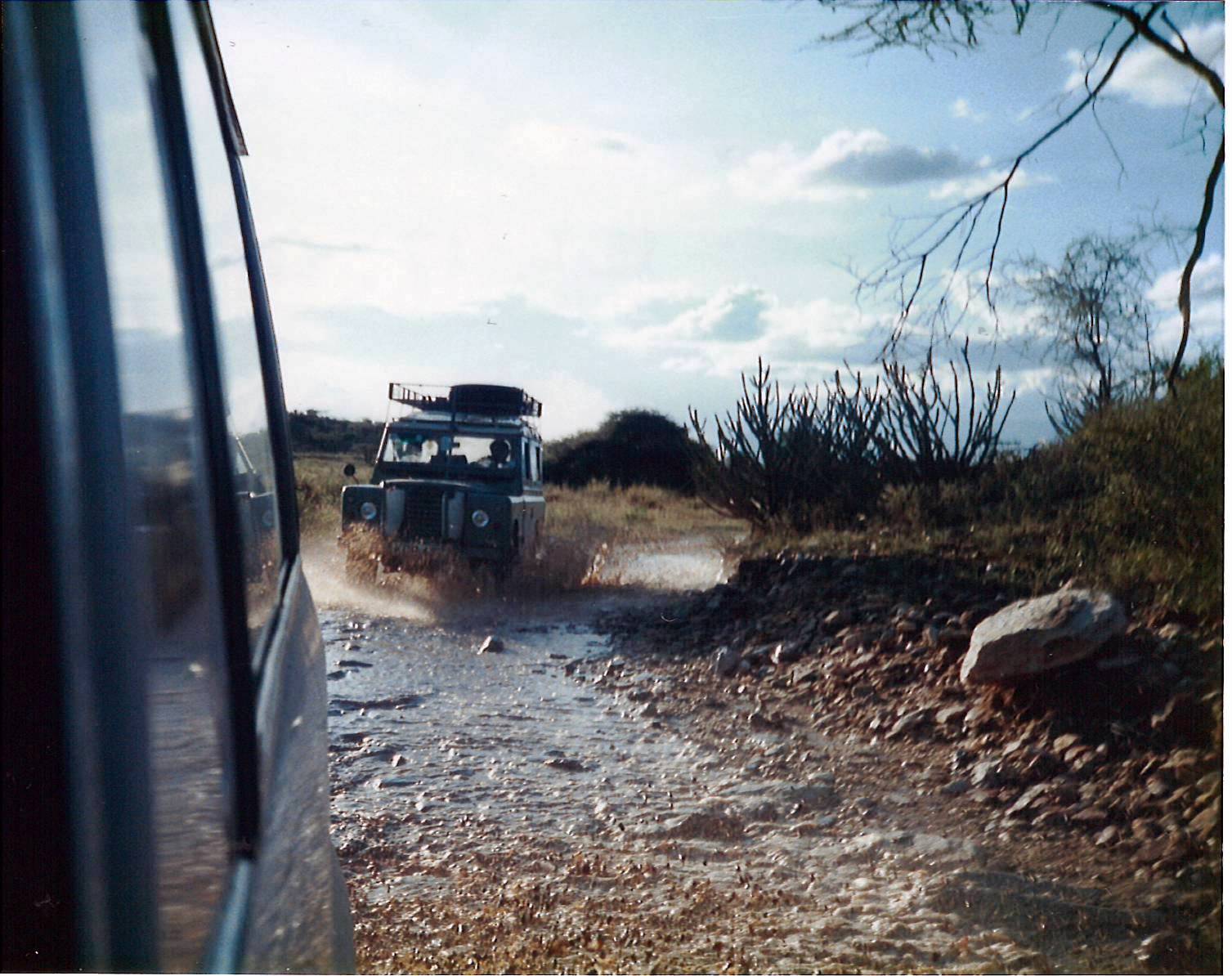
After Isiolo, we passed Samburu National Reserve and Buffalo Springs National Reserve on the left hand-side and turned to the right near a military camp. With Shaba National Reserve, these three national reserves make a well protected area, famous for its “northern dry-country” game, such as reticulated giraffes, Somali ostriches, Grevy zebras, gerenuks, oryx, kudus (both greater and lesser) and so on. From that point on, the semi-desertic landscape appeared and it was truly marvellous, well I would say GORGEOUS! We were -however- driving into temporary rivers because it had just been raining heavily (April is the start of the rainy season in Kenya but heavy rain is not expected in the northern part!). With rays of sunshine on the spurting water, the scenery was “not bad” at all. I had great fun trying to get a picture of the Land Rover surrounded by water, the sun shining through. As it was following ours, I was twisting myself out of the window, trying to stay inside despite the many bumps.
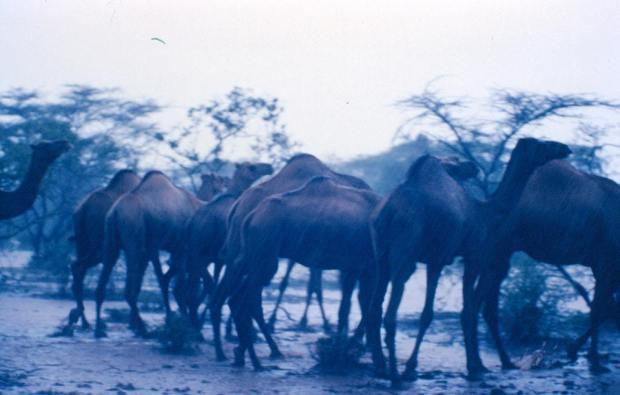
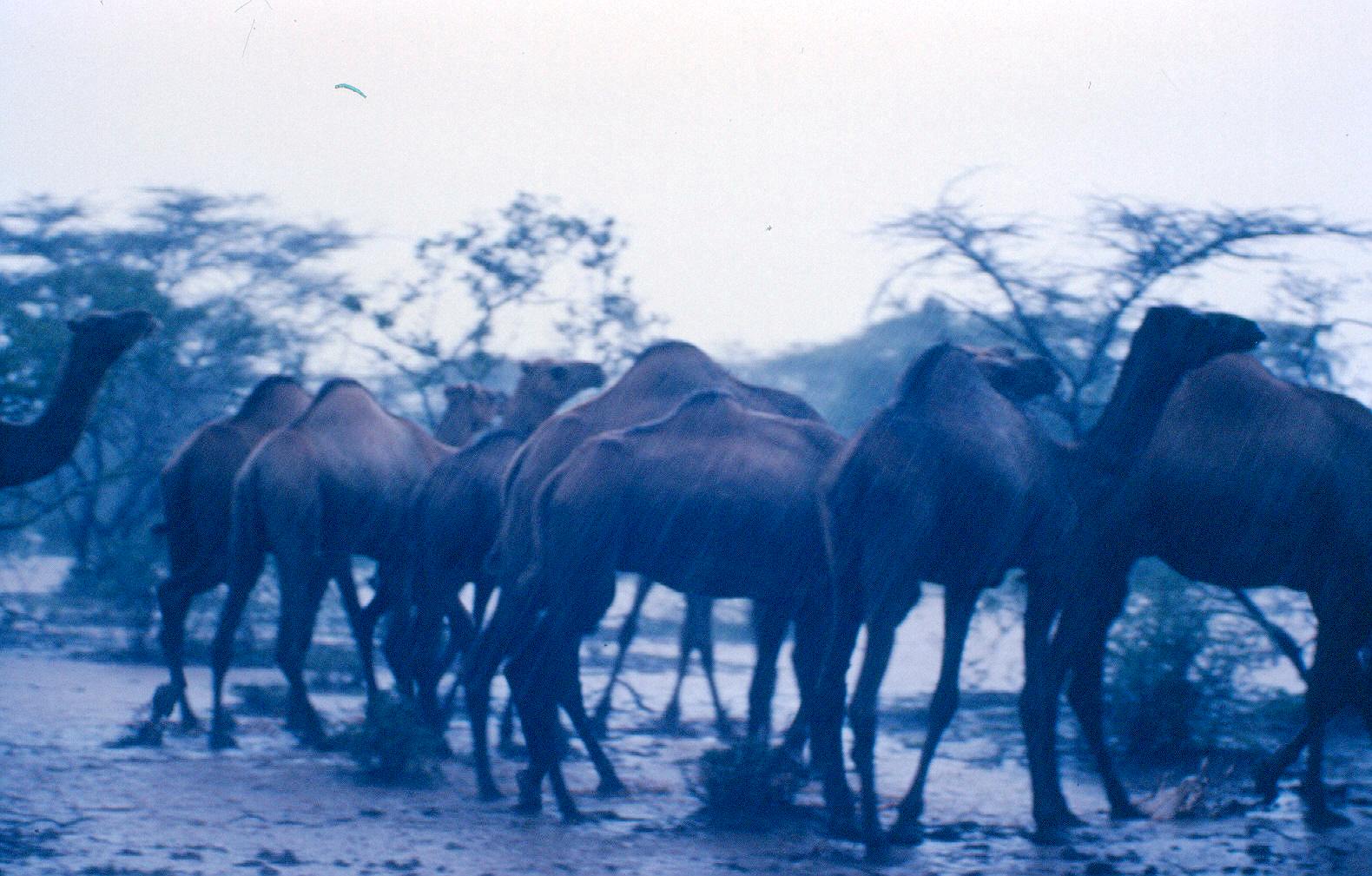
A group of camels: Under the unusual strong shower of that day...

A group of camels: Under the unusual strong shower of that day…
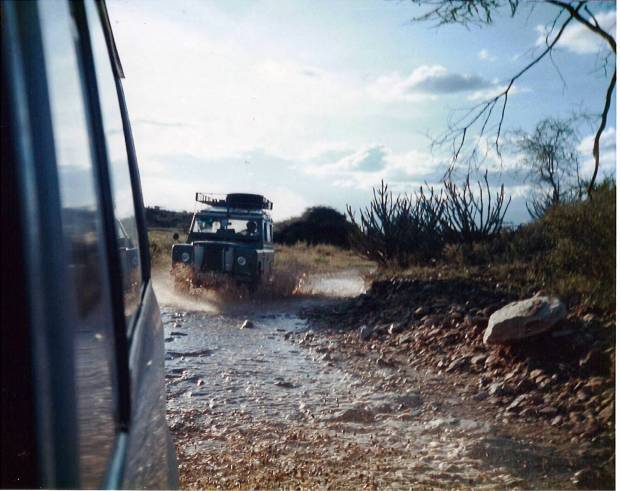
Sparkling water under sunshine: well-tried but the picture doesn't really render the full atmosphere.

Sparkling water under sunshine: well-tried but the picture doesn’t really render the full atmosphere.

We eventually arrived at the gate of Shaba National Reserve. Built in the middle of that totally wild land, at the edge of that national reserve, the office was yellow, I mean completely yellow. Not even a frame or a nail was of another colour! When we got in, we saw that inside, it was yellow too, of course! We found a man waiting as If he was just expecting us to come at that time precisely! Nevertheless, I wonder how many persons he may see in a week, except for his few companions?
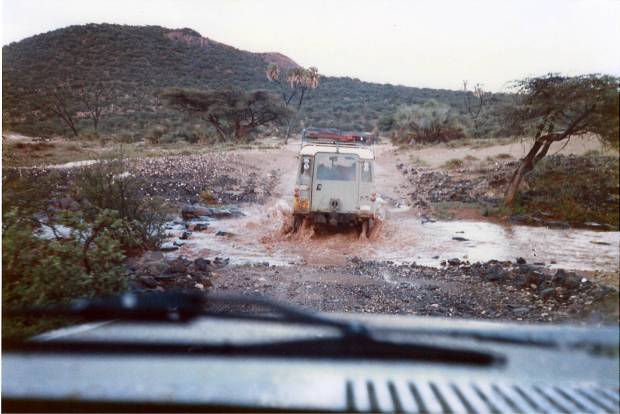
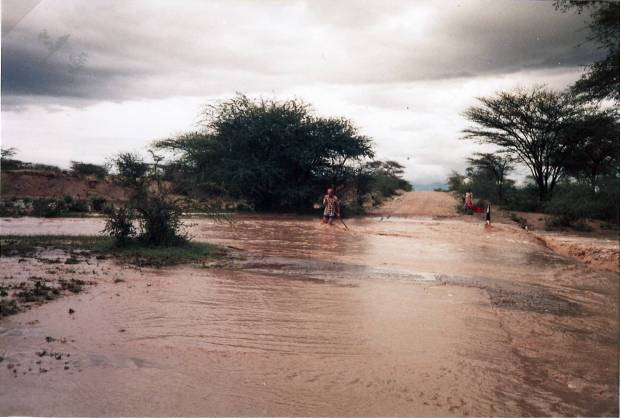
After a heavy rain: The dirt-road is flooded at many places...

After a heavy rain: The dirt-road is flooded at many places…

We first went to visit the “ghost” tented-camp. It was a pathetic sight: Not GORGEOUS! The last drops of rain were dripping from the broken roof into our necks and the bright white toilet was shining in the deep green grass near a tree. But the camp may have been pleasant because it is right above the Ewaso Nyiro river[8] and has got springs and the shelter of big trees[9]. We decided then to go further and to find the other campsite. It was about 6.00 PM, we still had time, but not too much. As nothing like a signboard appeared (If you read the ninth footnote, you already know that without a signboard, there is no way to make sure that you have reached the campsite!), we thought that we had missed it. So we chose our own one in the middle of the bush: just the perfect place, away from animals’ tracks (we were mainly beware of hippos there), flat surface, two big trees, nice stones to hold the grid above the fireplace and water not far away. At the beginning, we didn’t notice the impressive quantity of very aggressive acacia thorns, so we thought that it was like paradise! Yes, if you forgot about the many punctures in your soles, it really was ideal.

The so-called “sleeping-room” was composed of a big tarpaulin and sheltered by a double flysheet, building one wall and the roof. It could sound strange but a car was part of it as we had only three poles to hold the stuff and the Land Rover was the fourth one… an interesting pole I must say. Other advantages of this architectural puzzle were that it supplied light and water and provided some handy space to prepare the meals and store. A few stones, a few logs and we got a big fire going. A few armchairs, a table and drinks and we were well settled. “Shouldn’t we stay two nights in this place? It is so GORGEOUS!” said 4WD and we were already agreeing “Yes, after all this work, it is not worth removing everything and starting again tomorrow… and would we find another spot like this?” First step towards settlement not to say laziness! We voluntarily postponed the decision to the following morning: “Let’s think about it tomorrow. Anyway, we will do as we will wish”.

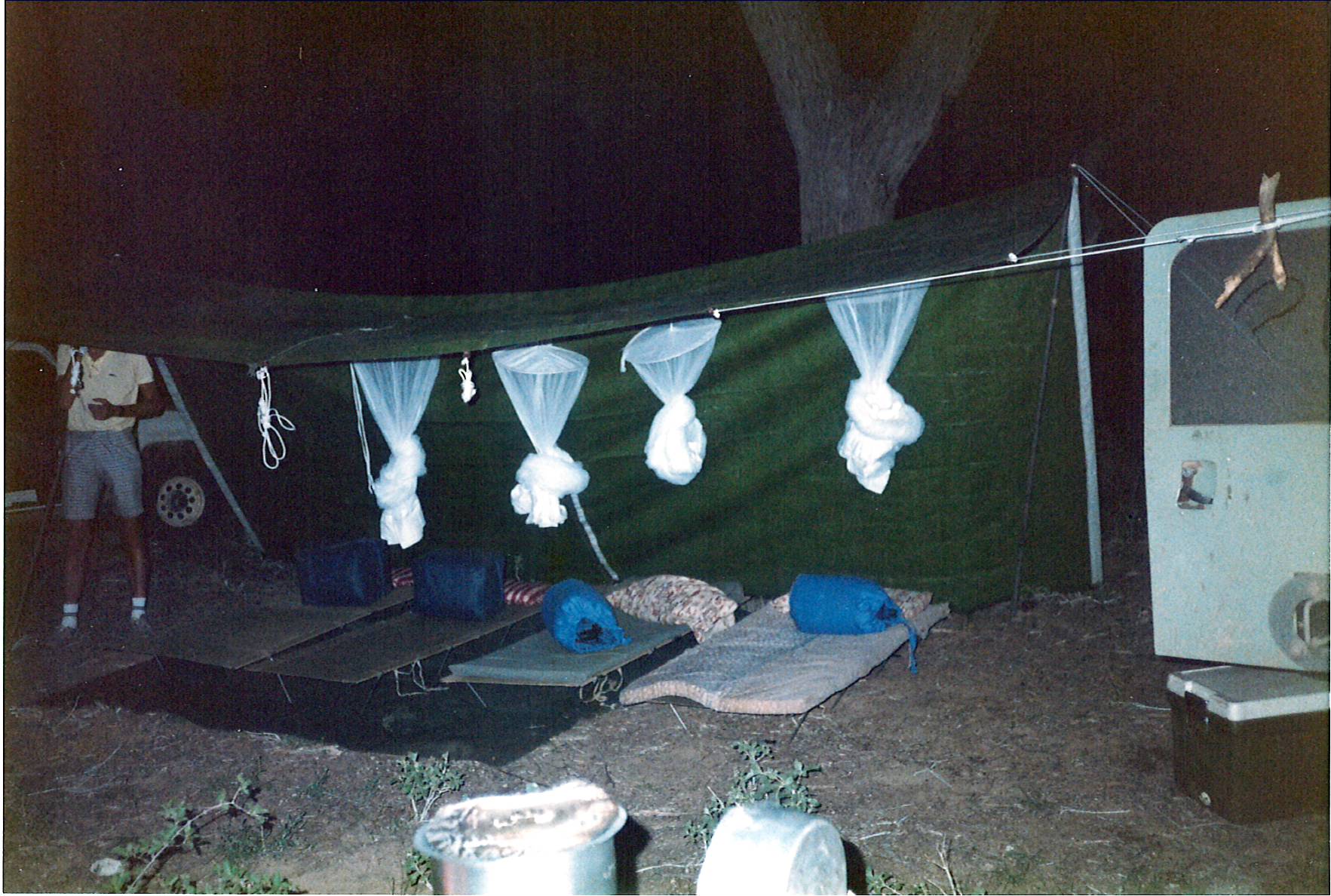
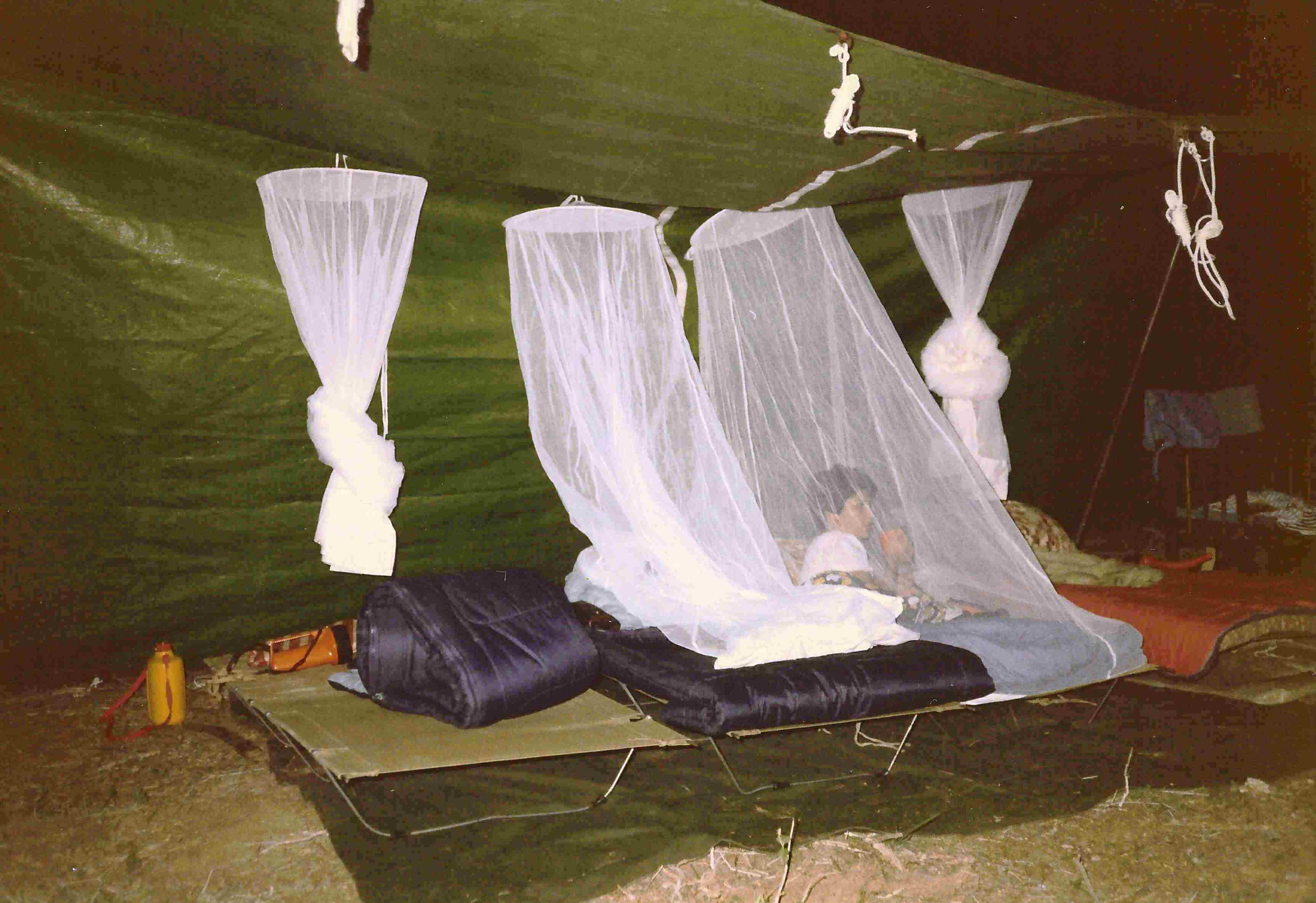
We looked at the bedroom, so attractive with our four camp-beds, mattresses, pillows, sleeping-bags and mosquito-nets! We looked at the fire, its smoke chased by the wind towards the darkness. Happy us! The dinner, one of X-ray’s fantastic stews was bubbling on the fire and her famous “pineapple-pie” was also waiting for us as much as we were waiting for it with the memories of earlier occasions! We were having a good time and we were very much aware of it. A Scops owl called in the distance and we stared at the sky hoping to discover the announced full moon. We argued about the time of the moonrise and it eventually appeared (at 10.00 PM), shortly before we prepared for the night’s sleep. I must add here that the idea of bivouacking was a real excitement to ScoutSpirit and I as we never did it before… Having as unique protection a mosquito-net while you are deep asleep in a game reserve where lions, leopards, cheetahs, elephants, buffalos, hippos and hyenas may be roaring around is quite challenging… it gave a certain chill down our spines!

8-ShabaBivouack87

9-ShabaCampC87

How to sleep in the bush: Bivouacking is nicer but a bit more scary than camping!

What a story to wash ourselves and get into bed! “Primo”: thorns all over the place, so don’t remove your shoes too early… “Secundo”: small instable bed, so keep your balance… “Tertio”: annoying mosquito-net to be wrapped around your mattress, so be patient and methodical… “Quarto”: dudus (pests or rather annoying insects) still coming into your “cell”, so start again from “Tertio”! “Something dreadful happened to me” shouted 4WD while collapsing in his bed, head lower than his feet! As an answer, we all laughed out loudly, getting rid of the tension that we accumulated during the operations. It was good that the well known and rather naughty practice of placing the remains of the meal under the bed of the “beginners” was not carried out. One can imagine the surprise of the “victims” the moment the hyenas tried to snatch the food from under their camp beds! Eventually we fall asleep and the day after…

Saturday, 18th of April – Getting soaked!

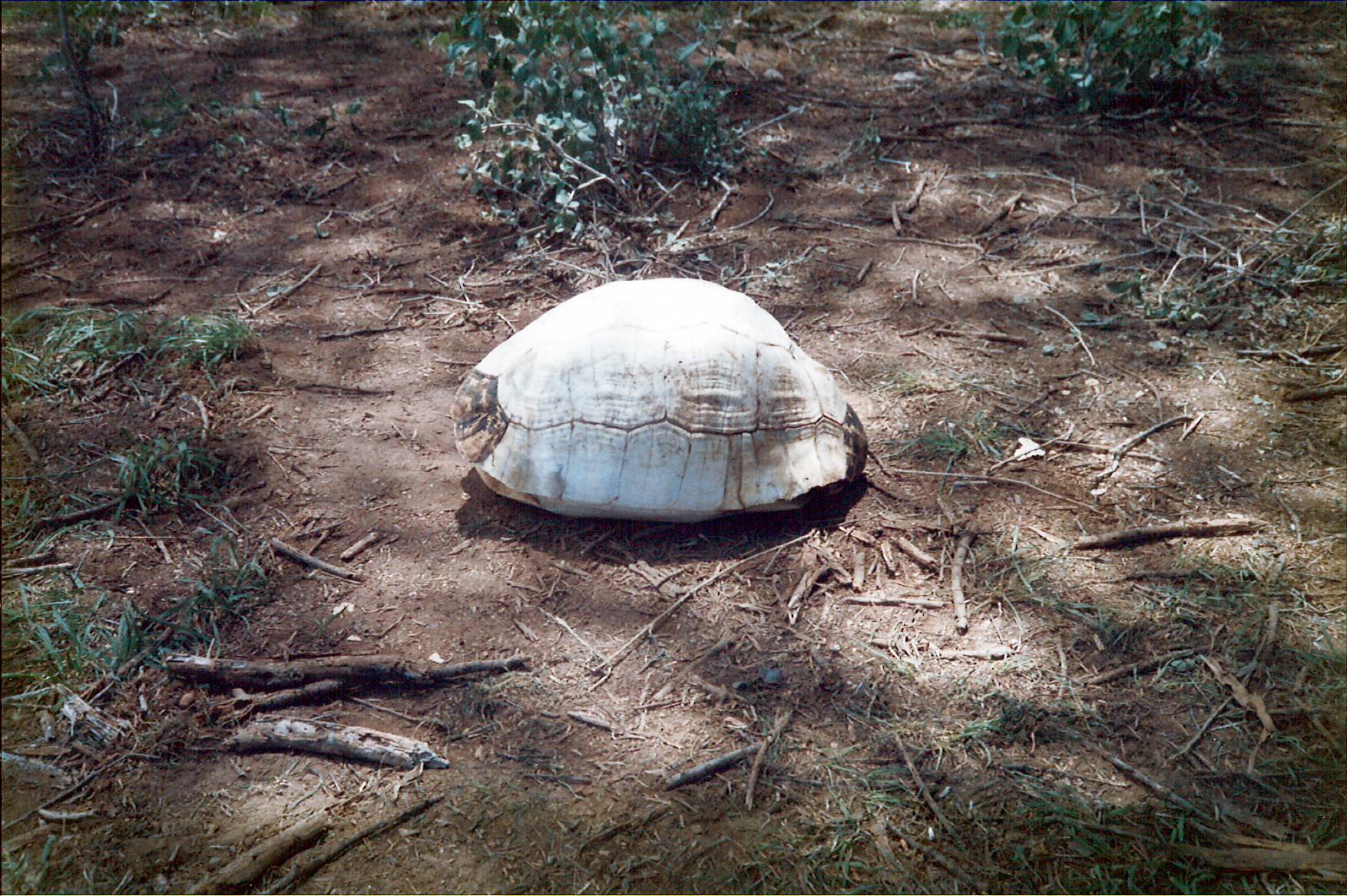
We woke up at 9.00 AM after a GORGEOUS night shared with nature and lit by a bright moonlight. We soon shared a “solid” breakfast before leaving for a game drive. The ladies were installed on the top of the Land Rover. ScoutSpirit was following just behind us with his car. We drove along the river, aiming for Penny’s falls. It was wild and beautiful. On our way, we passed some campsite (occupied!) and a sort of “kopje[10]”. Was this the campsite we aimed for the night before? ScoutSpirit, with whom we had lost sight of for a while, came back with a huge tortoise-shell which he found on the riverbank for us to see it. Soon before we reached the falls we forded a stream. When we looked back, we could see the Trooper diving into this narrow but quite deep stream that drains the marsh and forms the famous waterfalls further down! Fortunately, the car came out easily and we could reach the falls and leave the two vehicles under a big tree, shade being strongly recommended at this time of the day where the temperature can easily reach 40°C.

We had been told that here was where Joy Adamson lived for a period of her life. But there was no more building or sign of any settlement anymore to see around. Not being looked after, it certainly disappeared in the vegetation very quickly[11]. We climbed down a rough and steep slope heading for the Ewaso Nyiro river and discovered the magnificent falls with their dark red but transparent water from the marsh mixing up with the “white coffee” water from the main river: GORGEOUS again! On the sandy shore we had our lunch, roasting ourselves in the sun. After the picnic, 4WD and X-ray went walking a bit further and came on a few crocodiles… we set off for the cars quite rapidly!
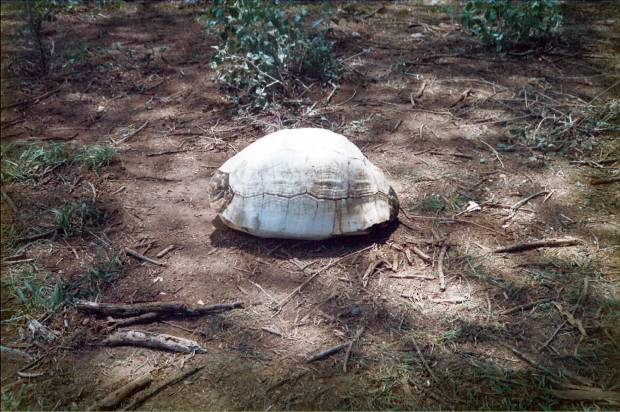
 Measuring about 40 cm length: The famous tortoise-shell that "polluted" part of the safari!

Measuring about 40 cm length: The famous tortoise-shell that “polluted” part of the safari!

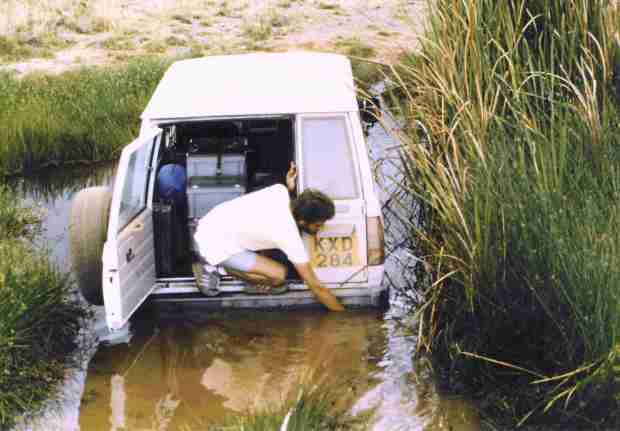
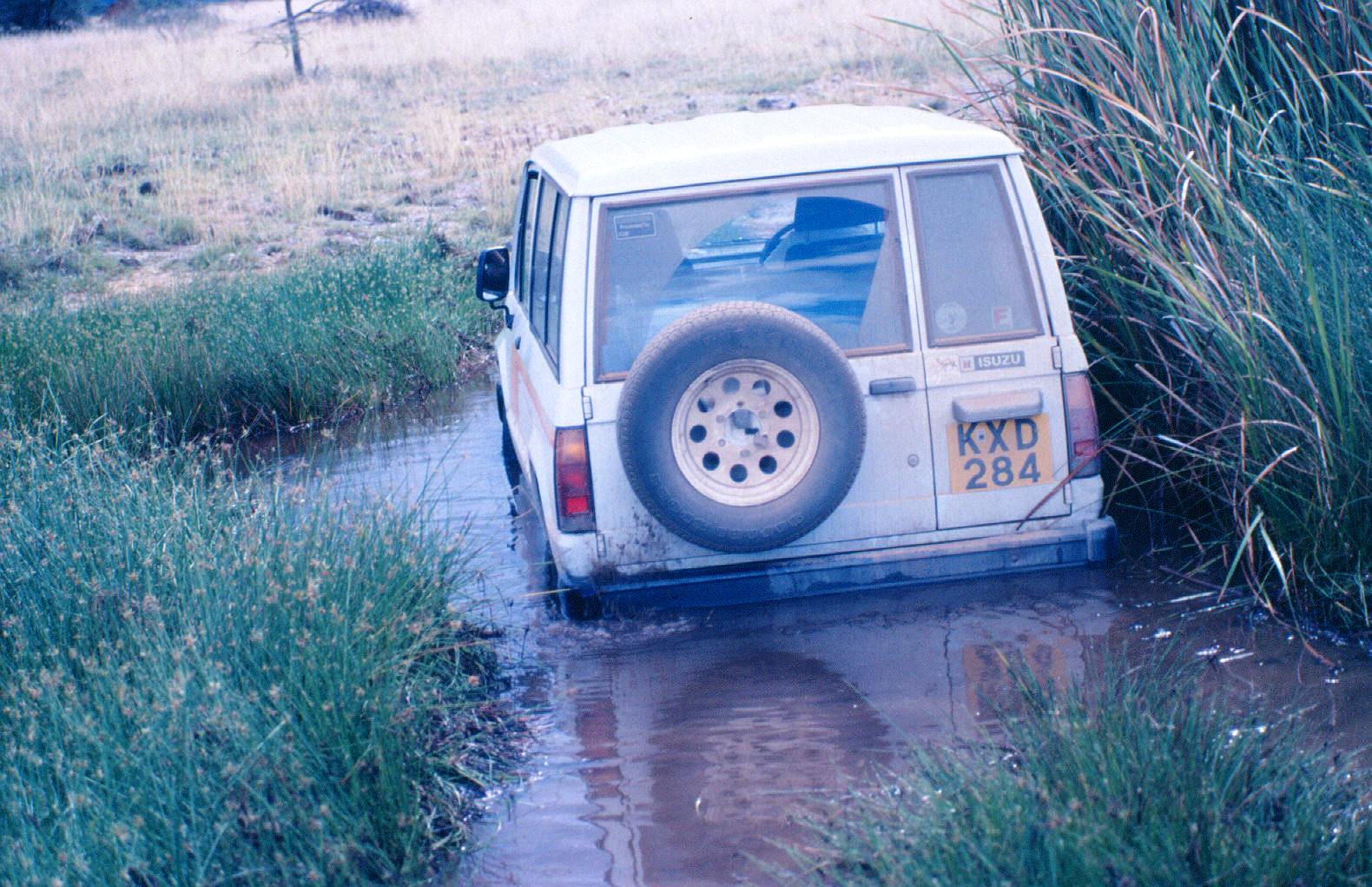
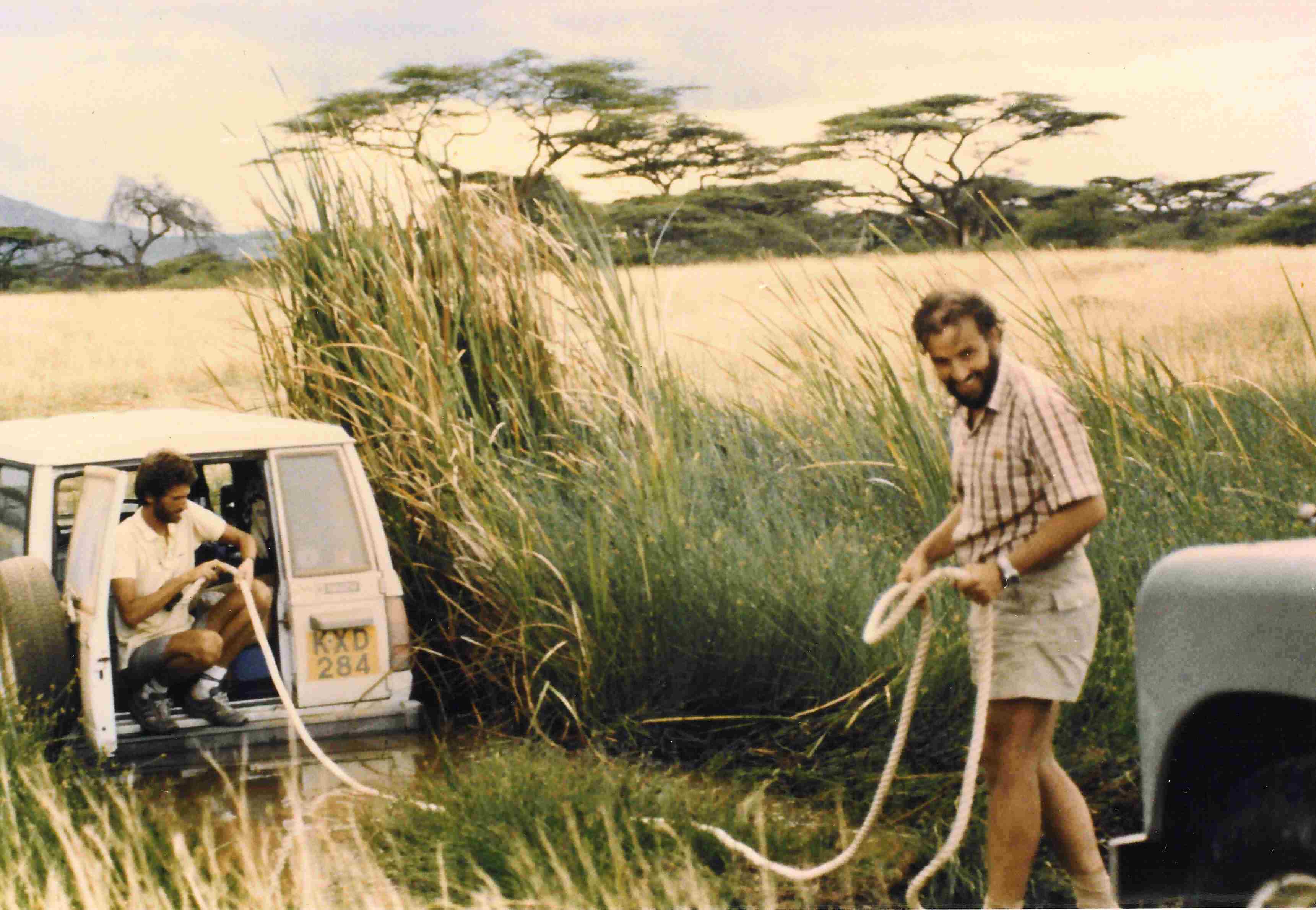
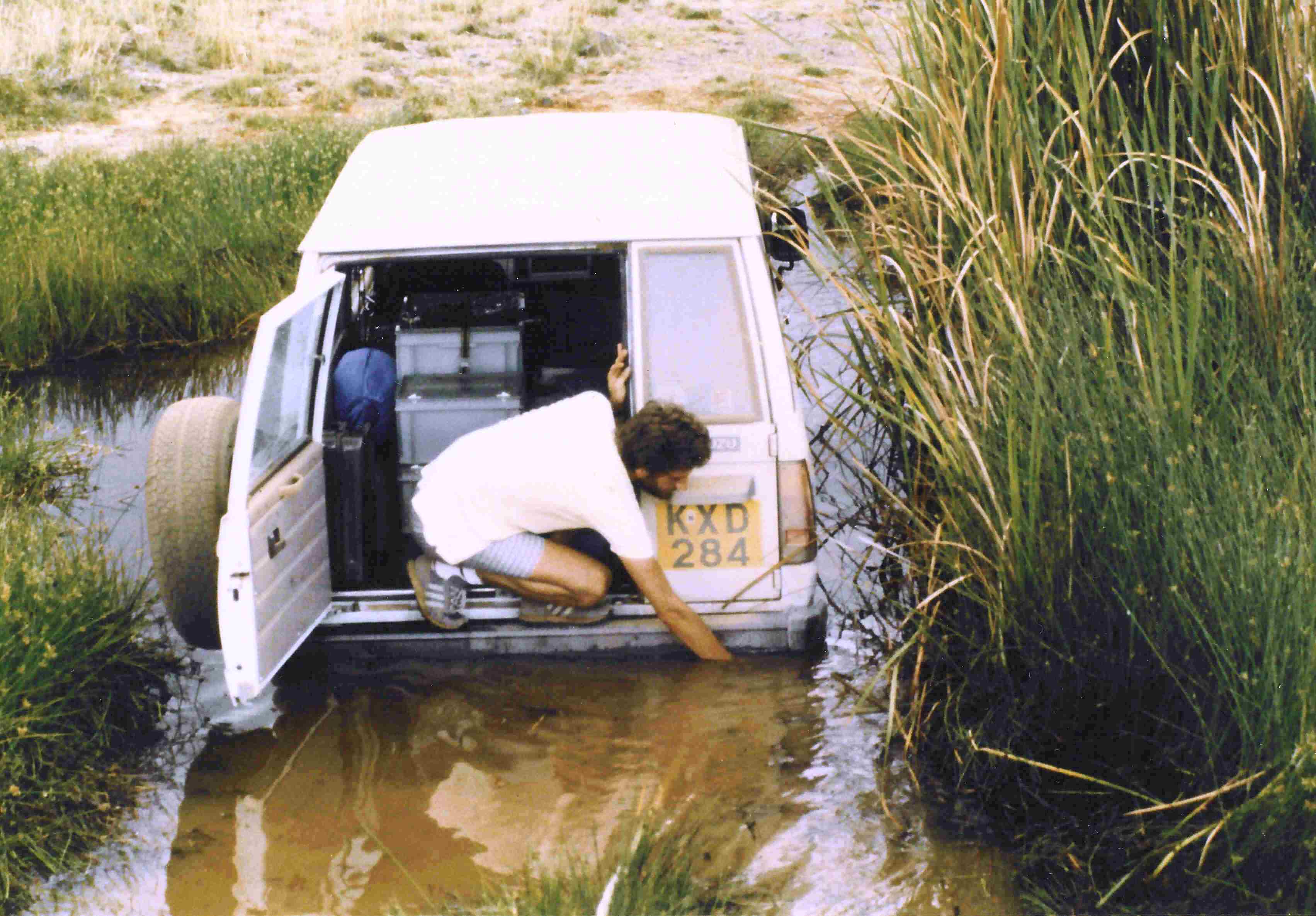
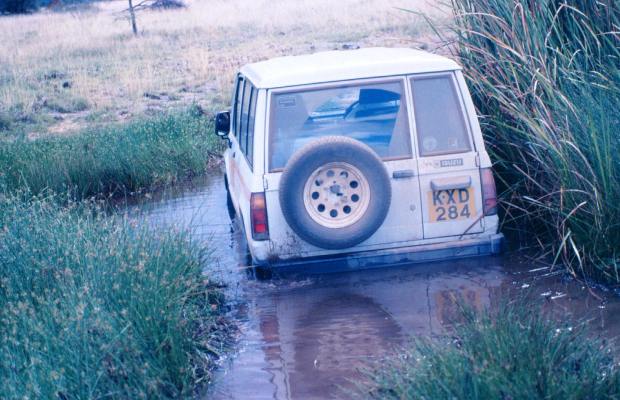
On the way back, the second crossing of the small river became a problem: The Trooper stopped in the middle of it, just in front of us, and the engine failed kabiza (totally… and total bad news!). Anyhow, after a while, we saw ScoutSpirit crawling inside and appearing finally out of the boot-door! Water was about the same level as the doorstep. Hands under water, he attached the towrope and 4WD’s car pulled the Trooper backwards a little bit but not much as the four wheel-drive was not on. At the second attempt the job was done. But the Trooper still refused to start as the engine was soaked. Soon we realized that the floor was flooded too so we started to pick up some drooling things and put them outside to dry under the sun. Then we had to remove the water from the carpets and absorb it as much as possible. To complete the task, we drove back, doors open and full heat on. The “ex-dry” tortoise shell, still with us, got quite wet again. It was stinking like hell![12]
11-ShabaTrooperStuck

12-ShabaTrooperRope87

In the marsh: It is a pleasure to get stuck -and unstuck- with such good adversaries in that rally!

In the marsh: It is a pleasure to get stuck -and unstuck- with such good adversaries in that rally!

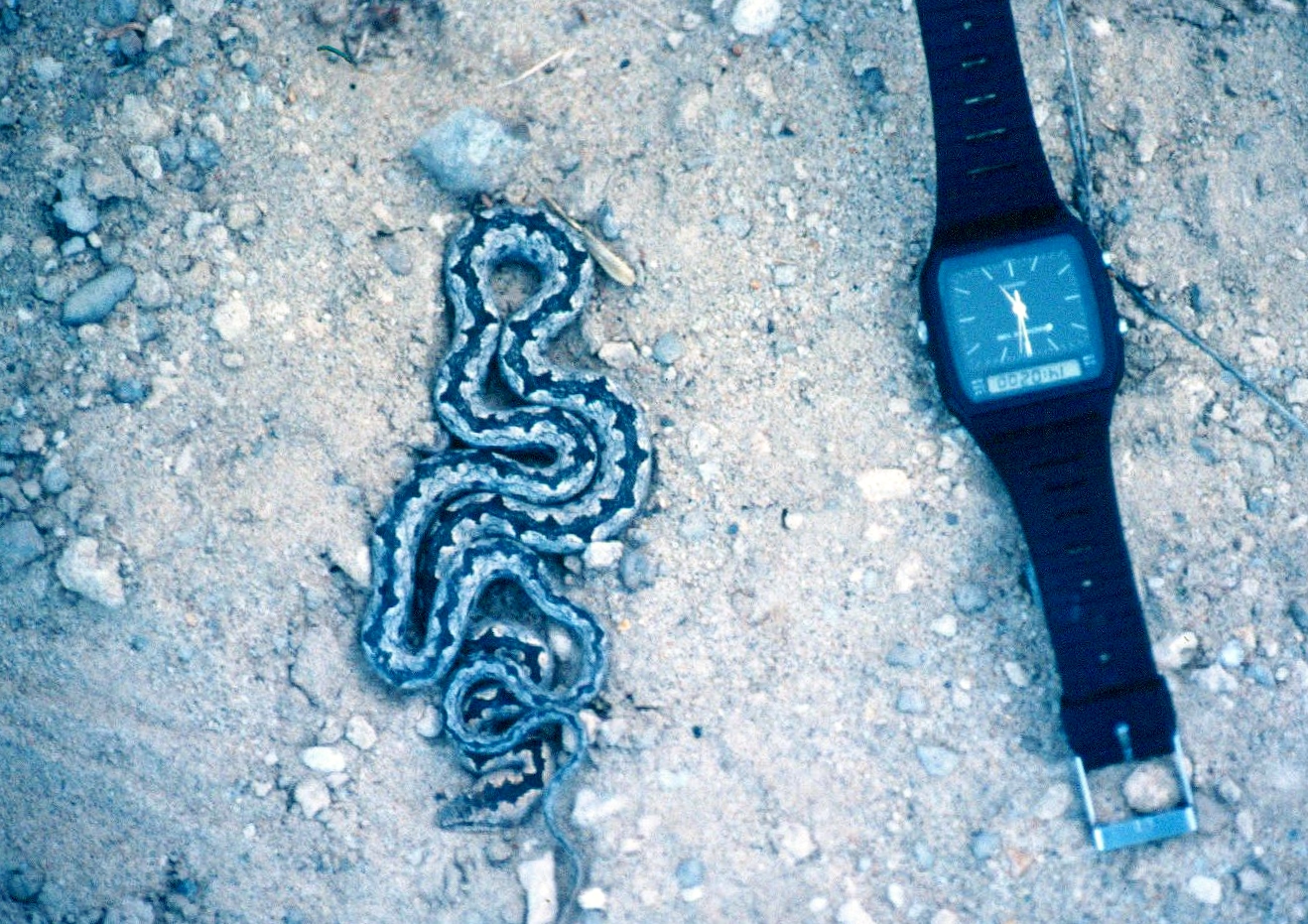
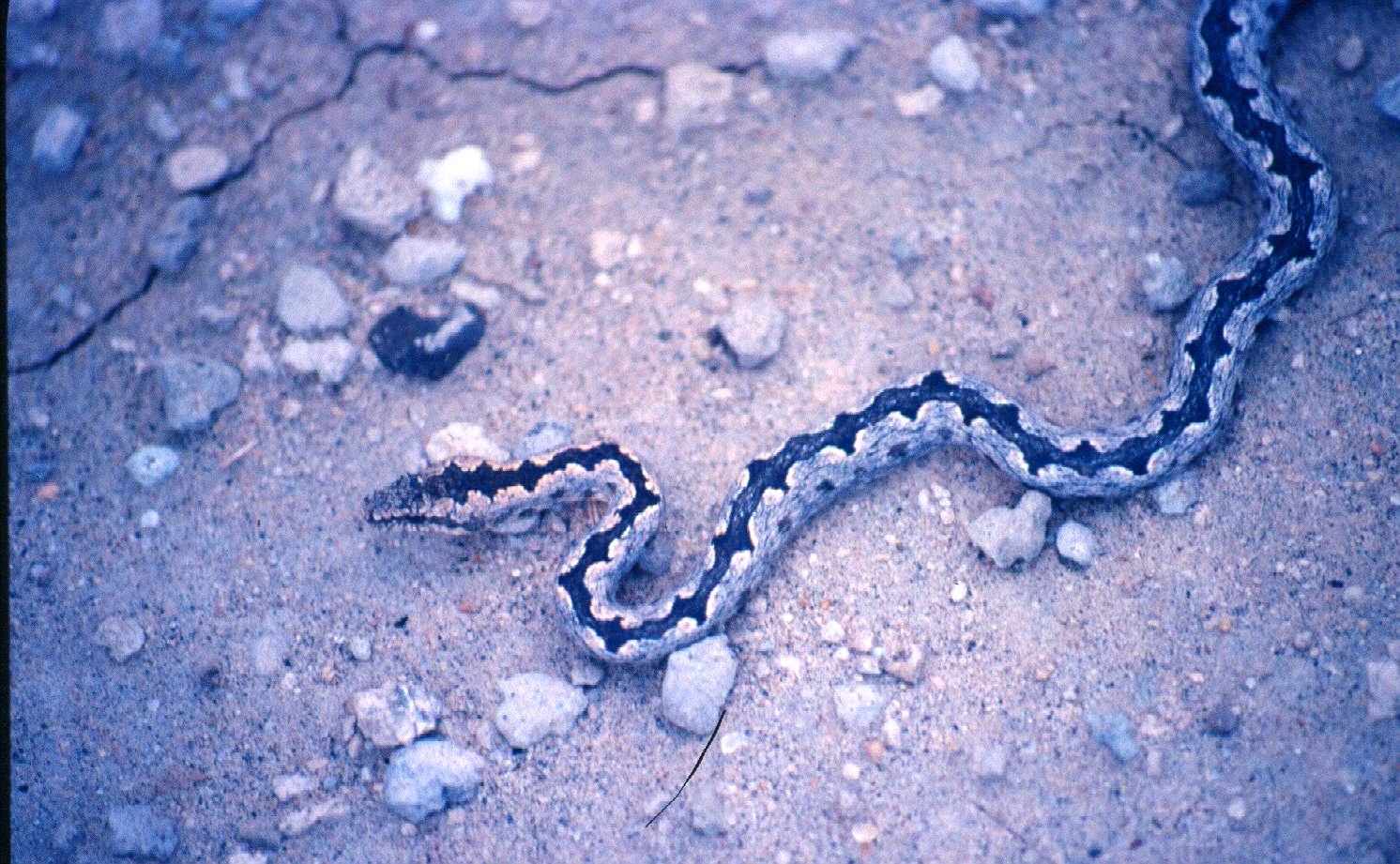
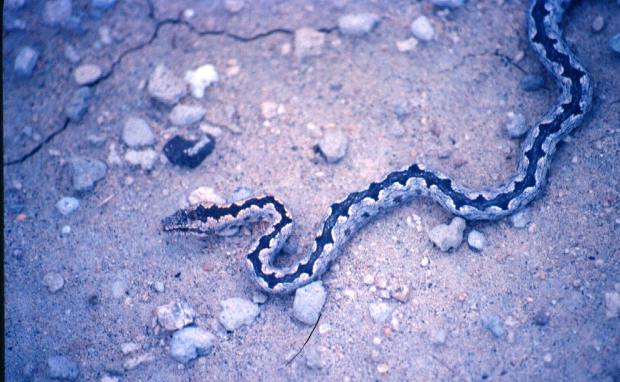
Next event was the episode of the famous snake. It was spotted by us, the ladies sitting on the roof, whose shouting resulted in such sudden braking by our driver that we almost landed on the sand. Of course, we were rather glad to be still on the car’s roof, especially when 4WD took the beast and put it on the bonnet. A kind of panicked interrogation took place in our heads… what was he doing and what If the snake was poisonous? “Would you hold it for me to take a picture?” asked 4WD to his patient wife. We nearly fainted! Eventually, the roles were reversed, 4WD held it and X-ray took the shot. 4WD was very happy holding the snake. Just as we were about to leave the poor thing, ScoutSpirit arrived and we had another episode of the same magnitude! Afterwards, the reptile went under one of our tires and we felt sorry at the risk to squash it. So ScoutSpirit didn’t hesitate to put his bare hand under the tire to chase it away despite our warning screams! By that time we started to understand that the men where teasing us. Silly ones[13]! From then on the atmosphere went a little bit crazy. 4WD got bored to drive alone while we were talking happily on the roof! He then left the pilot’s seat and had a chat with us, nearly standing out of the car but still driving…

14-ShabaBarkSnakeWatch

15-ShabaBarkSnake

The very nice and small bark snake: At first we didn’t know it was supposedly harmless to man!

Then it was “mate time”. Mate is a South American beverage made out of a plant[14] that, once dried and crushed, is mixed with hot water in a calabash (also called mate) and drank through a sieving straw (bombilla). Every time the calabash is emptied by a drinker, it is filled with hot water again and passed to the next person of the group. This is a very social way of drinking that can be compared to our Swiss habit of eating melted cheese in the same pot for the whole table’s company, traditional and collective dish that we call “la fondue”. So you see, travelling with our Uruguayan friends, it was impossible to ignore that fantastic tradition, even on safari… as they also had to discover the famous fondue made with “El Molo” cheddar, dry papaya wine and vodka (all produced in Kenya), cooked on the fire in a famous Kisumu earth pot! But that took place in another safari and would be told about another time.

As we experienced it with great interest, mate is really good, social and somehow “sacred”! So much that we became very talkative for one hour non-stop! As dusk was coming closer, we hurried towards our “home-sweet-home”, still with doors wide open and full heat on for the Trooper to dry up. But we knew that it would take a few days to dry kabiza. We passed again by the beautiful rocks that we called “kopjes” and saw surprisingly no game at all. We came to the camp in the dark and under the rain which had spoiled our things: wet camp-beds, wet armchairs and worst, wet firewood! In spite of that, X-ray managed to light a pretty nice fire after we gathered some minute more-or-less dry twigs under some partly sheltered areas. Thus we could put our things around the fire in order to dry… It was time consuming. I was busy too with my belongings that had been soaked in the marsh-juice, so I kept waving them near the fire, in front of my dear friends who became sea-sick as a consequence!

By the time the meal was ready, everything was dry and we merrily started to eat our curry with poppadums: GORGEOUS for sure! The thought about “tomorrow” came again of course, but we sent it back as easily as the day before… not without bringing a few suppositions! Anyway, we quickly all disappeared under our mosquito nets after a quick wash. The moon came again, just raising at a quarter to 11.00 PM, nearly full, already shrank on one side, ‘cause of time passing by. The fire was special that night: Dry elephant-dung had been used because we thought that they might last longer than wood. So we could admire strange “squarish” pieces, very red, very luminous, with a particular scent, but not unpleasant, that we never had before…
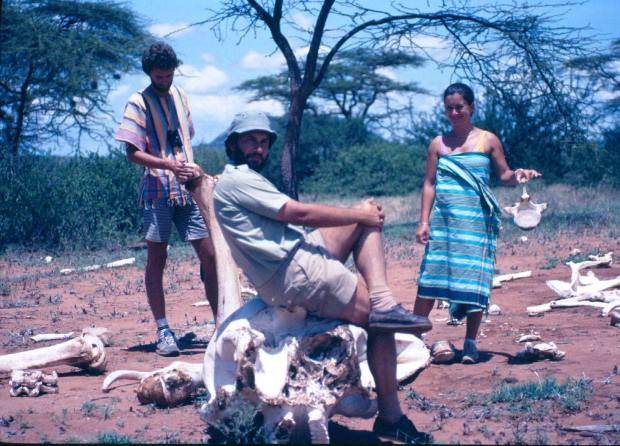
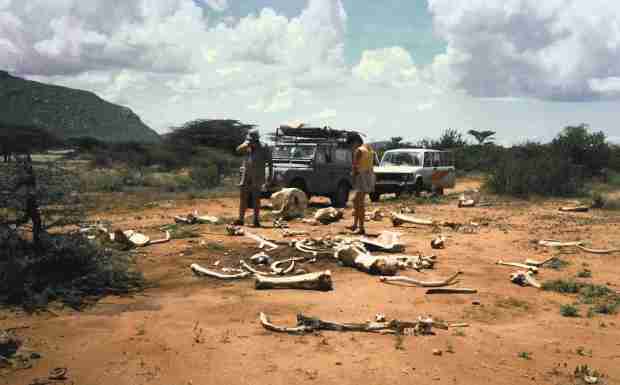
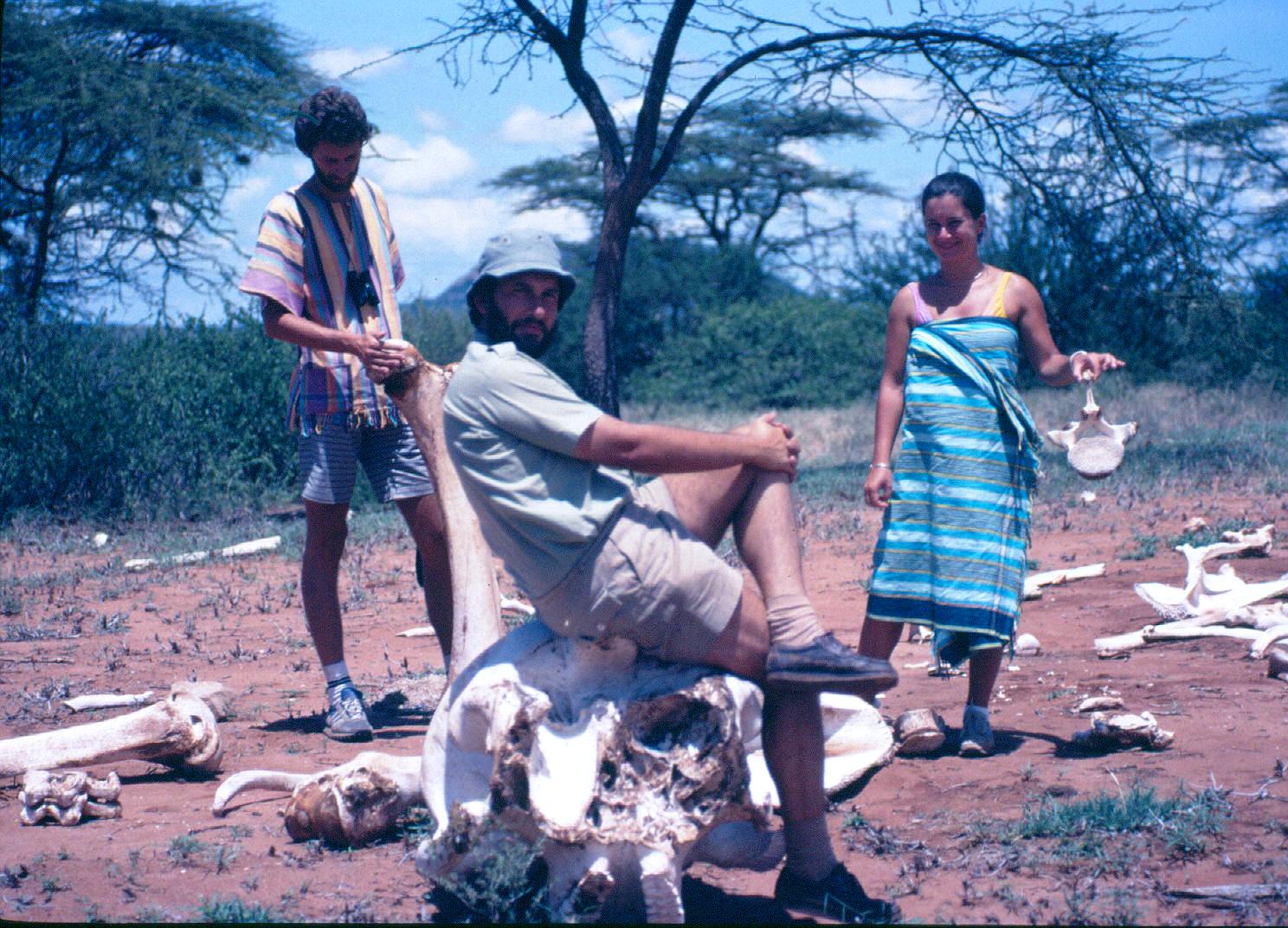
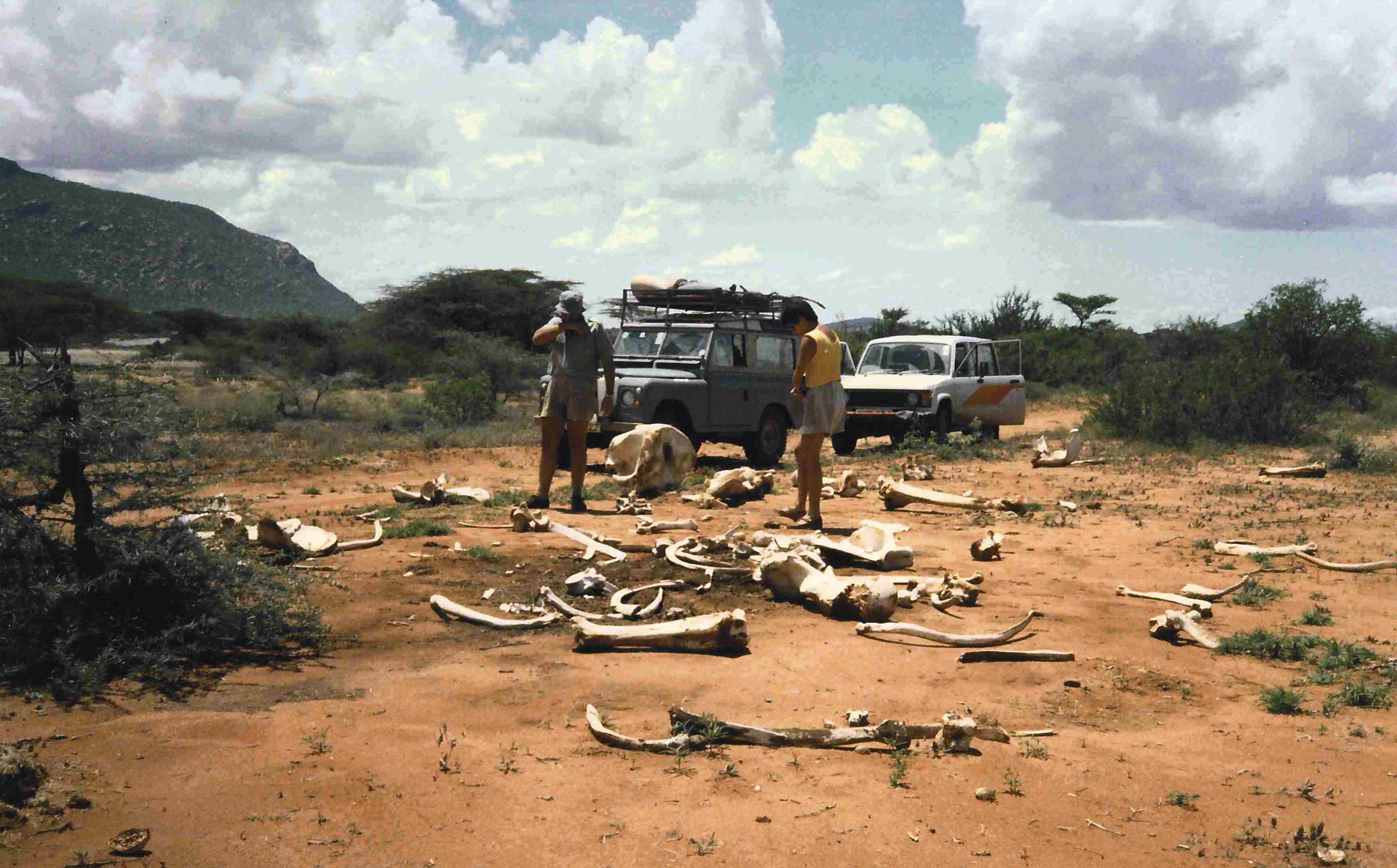
16-ShabaEllieBones

 The elephant skeleton: A vast open cemetery that brings up many reflexions as the tusks were missing...

The elephant skeleton: A vast open cemetery that brings up many reflexions as the tusks were missing…

 Sunday, 19th of April – Heading north shortly!

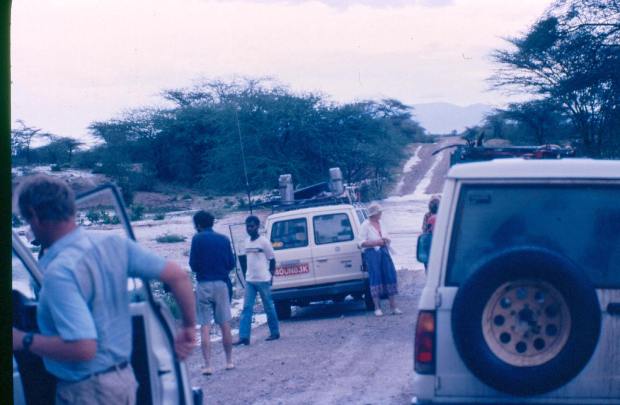
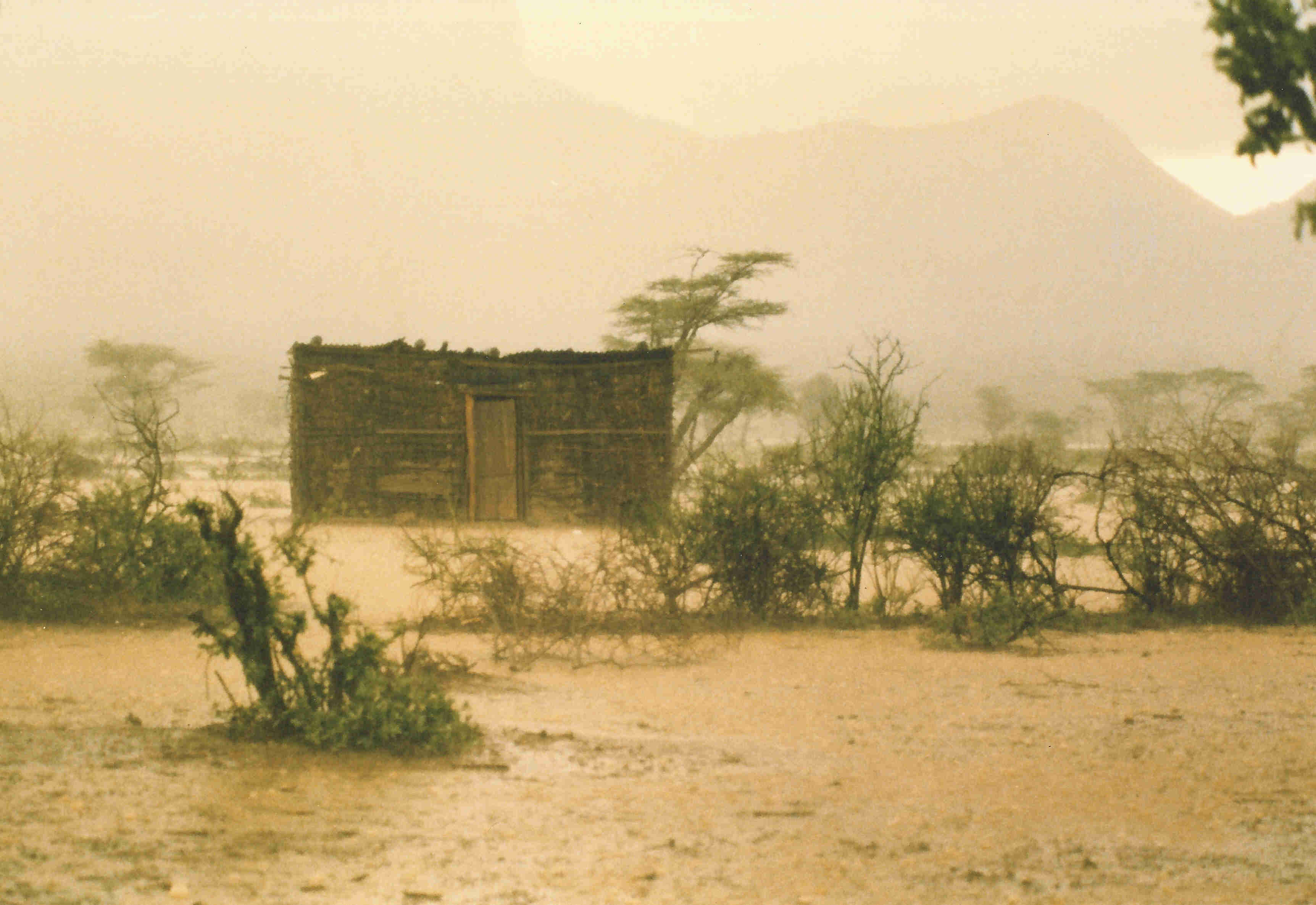
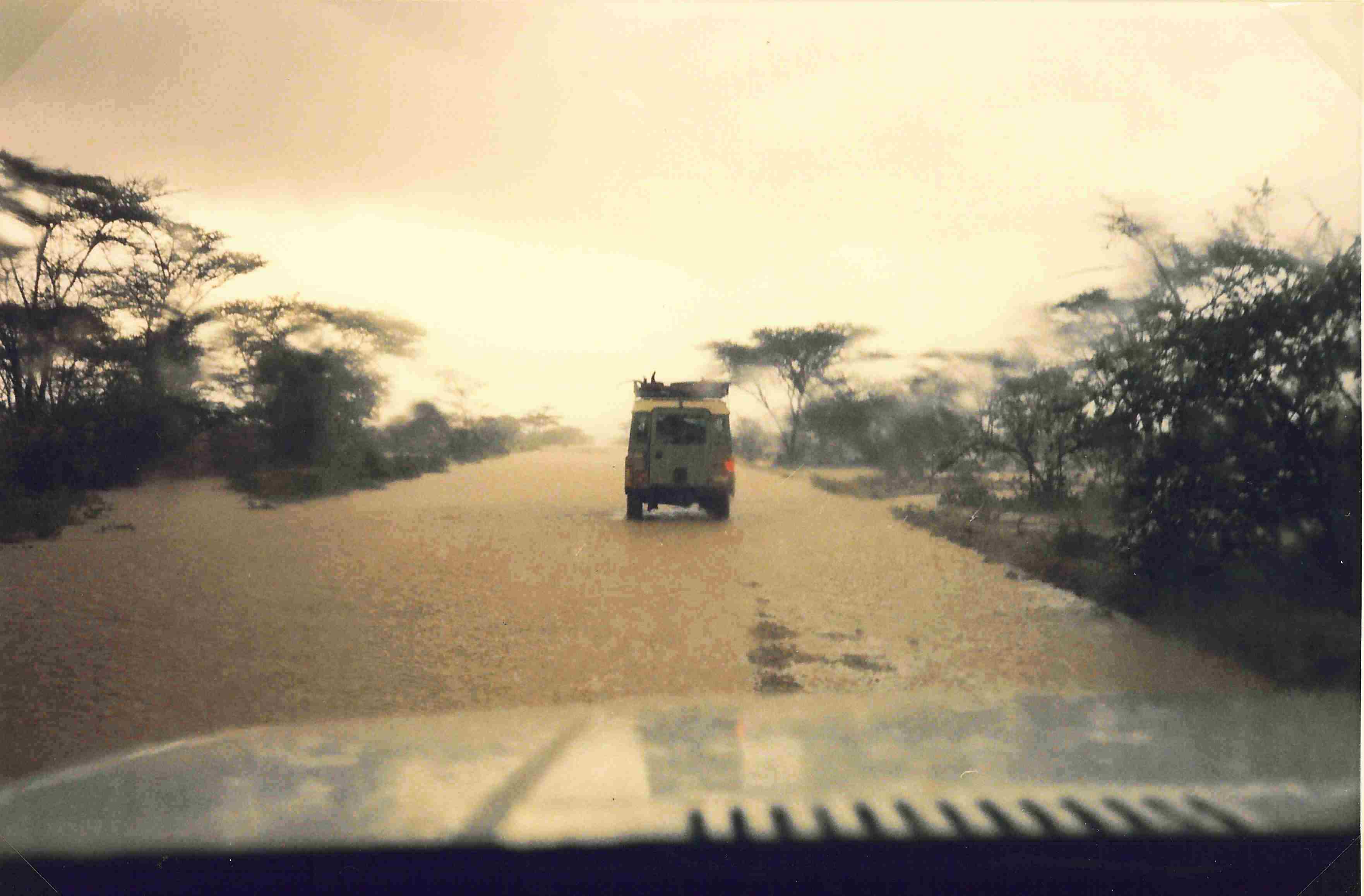
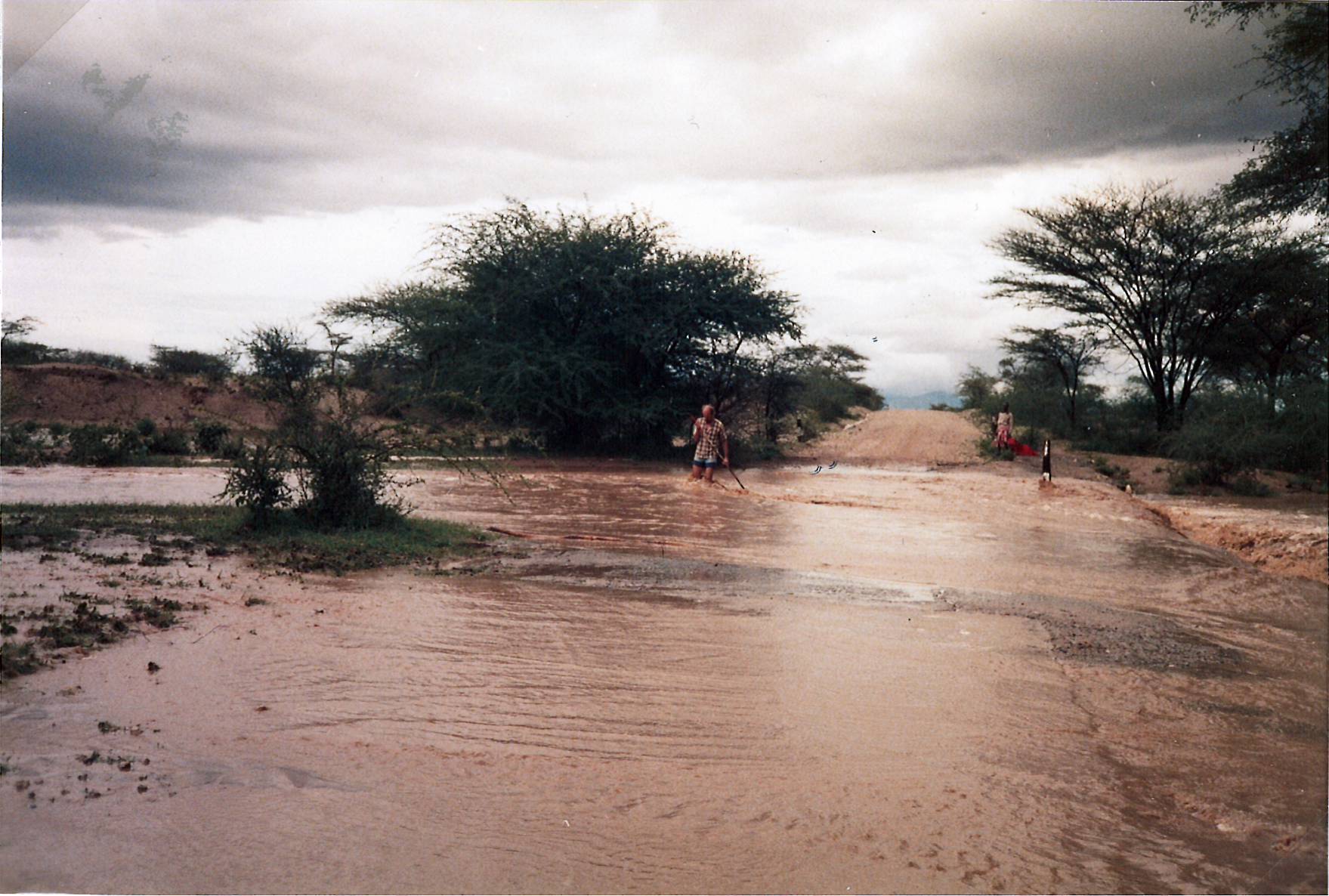
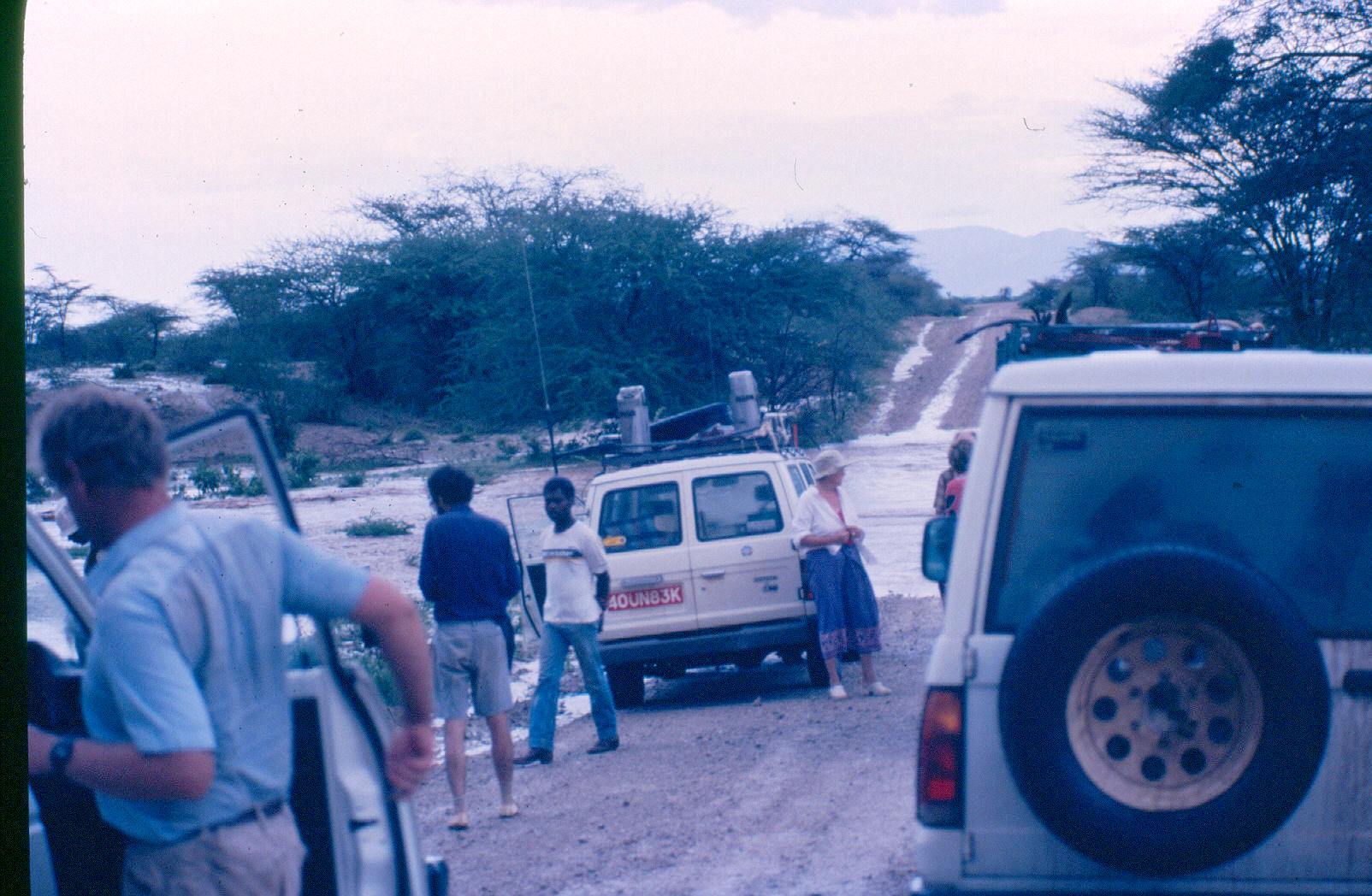
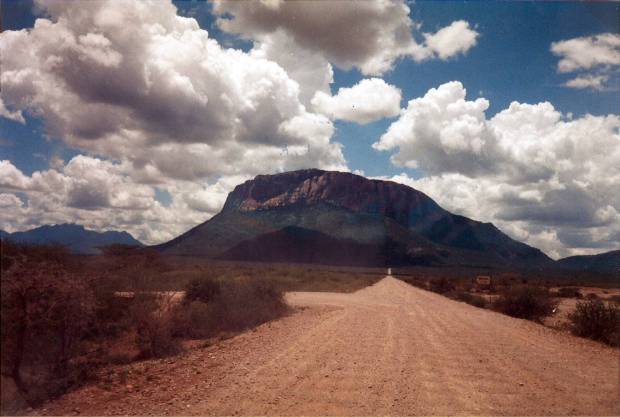
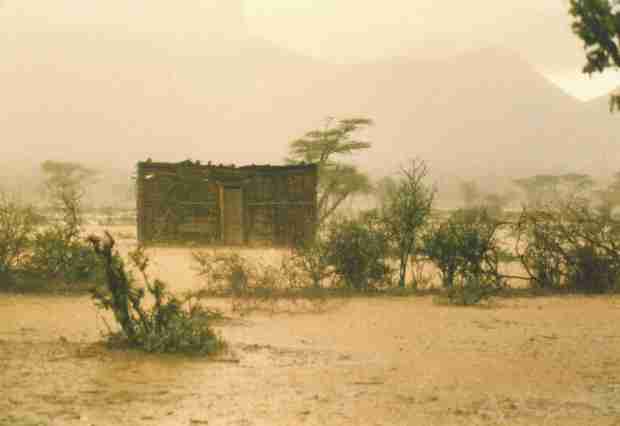
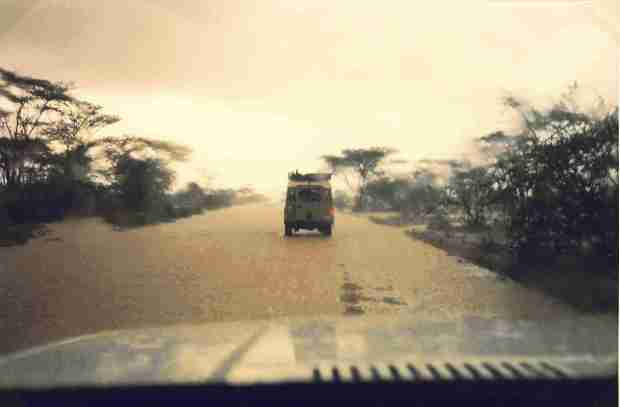
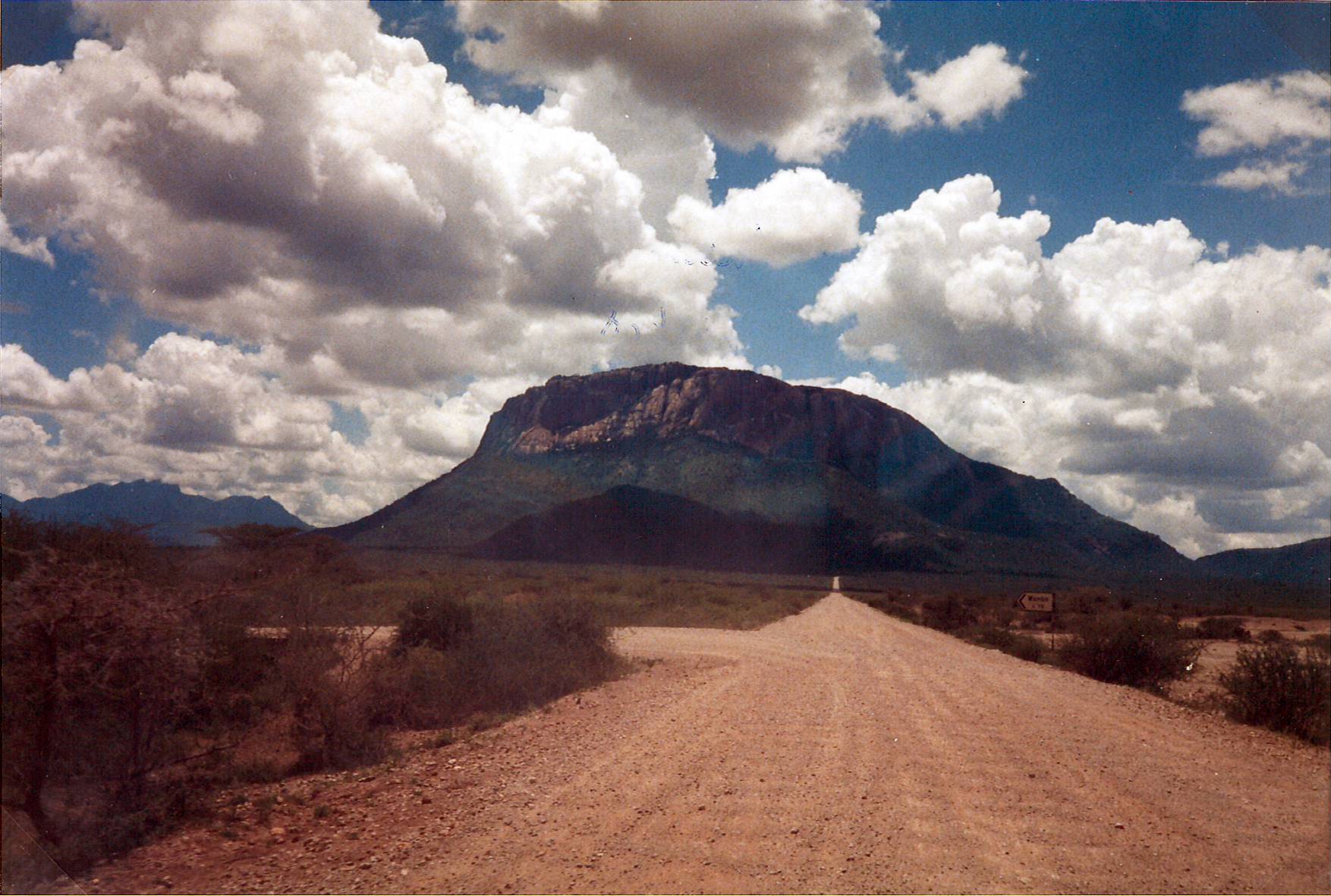
Yes, the idea of using the elephant dung was brilliant. The fire was still hot with quite a few embers and started on easily, earlier on that morning, said ScoutSpirit (I can’t tell as I was fast asleep at that time). After breakfast, the decision was taken to try and reach the Matthews range for the night. So straight away, we entered a big spell of activity till 11.00 AM. A few pictures were taken on our departure: The tortoise-shell that was still around and an elephant skeleton that was lying a bit further along the track. The hide of the latter was still there also, stinking horridly but no need to look for the tusks… poachers’ business! At 12.00 AM, we reached the gate and drove on towards the north. We passed Archers’ Post and, later on, drove straight ahead as we left the road leading to Wamba on the left hand-side. We could admire the very nice alignment of the dirt road towards the big mountains of the Matthews range: a GORGEOUS view although it soon became very clouded! The way began to grow wilder as we had to cross big luggas (dry riverbeds, but don’t ask me where this word comes from) and very rocky and hilly places… but always there was a hut or a shamba (cultivated field or/and dwellings, usually wooden houses) to see nearby. It started to rain cats and dogs thus inflating the rivers very quickly, so we decided to go back south and join Samburu National Reserve by a shortcut rather than to continue for the Matthews. It is well-known that the mountains attract the clouds and means much more rain than on the plains…The roads were too flooded to our taste and mainly too risky for the cars… there was no point to get stuck there for the night!
18-MatthewsView87

Matthews mountains and corrugated iron dirt-road: Above a certain speed, you “fly” and it stops shaking!
19-MatthewsRains87

Very heavy shower: Everything was under water in no time!
20-MatthewsFloods87

21-MatthewsFloods87

22-MatthewsFloods

Flush-flooded roads: Everybody was testing the water’s depth and strength as to know whether to cross or not…

Once in Samburu, quite late in the afternoon, we did a quick game-drive and passed near the lodge, but on the opposite bank of the river, where they put some bait on a tree to attract leopards (although we don’t recommend this way of dealing with wild animals!). At the campsite (this time clearly announced by a board but nothing else revealing it!), everything was wet. But that was better than flooded! It was then time to set up the camp for the last night of that much appreciated Easter long week-end. Thank to the experts, it was done in no time… We were so busy that we forgot easily that the leopard didn’t come to the bait. Our menu, cooked on the fire, included fine spaghettis with a spicy egg and tomato sauce (Mediterranean way), delicious chapatis (Indian flat bread – the dough wouldn’t grow!) with butter, banana cream with plums, biscuits, tea, coffee… not bad as usual.

After that, the ladies talked until 2.00 AM. As the men were trying to have a rest, we decided to stop! In fact we woke them up at that very moment, because closing the bonnet of the Land Rover after disconnecting the light without any noise was impossible. The same happened with the doors. We started to laugh like mad and it was even noisier. We couldn’t stop. Even once in bed, we could hear each other laughing in our pillows. That went on and on for some time… “Oh shit” said 4WD, turning over in his camp-bed, most upset! But this didn’t help us to stop laughing, on the contrary…

Monday, 20th of April – Winning the rally!

Our Swiss-Uruguayan Easter Safari Rally had to be finished on that very day, in Nairobi. So we woke up at 7.30 AM and went quickly for a game-drive, the four of us in the same car, after a cup of tea and a piece of cake. Again, the ladies went on the Land Rover’s roof rack and, Good Lord, were still there at the end despite thorns and baboons menacing to jump on the roof near us! We haven’t seen much during that game-drive: a bunch of crocs, some hornbills and a few other birds, impalas, reticulated giraffes, oryx and baboons. That’s all! Nothing compared to other times in that area, not to speak about a safari in Ngorongoro’s crater or in Maasai Mara’s plains! But we weren’t there for watching animals, were we? Of course, we were there to win that bleedi rally… (just kidding!).

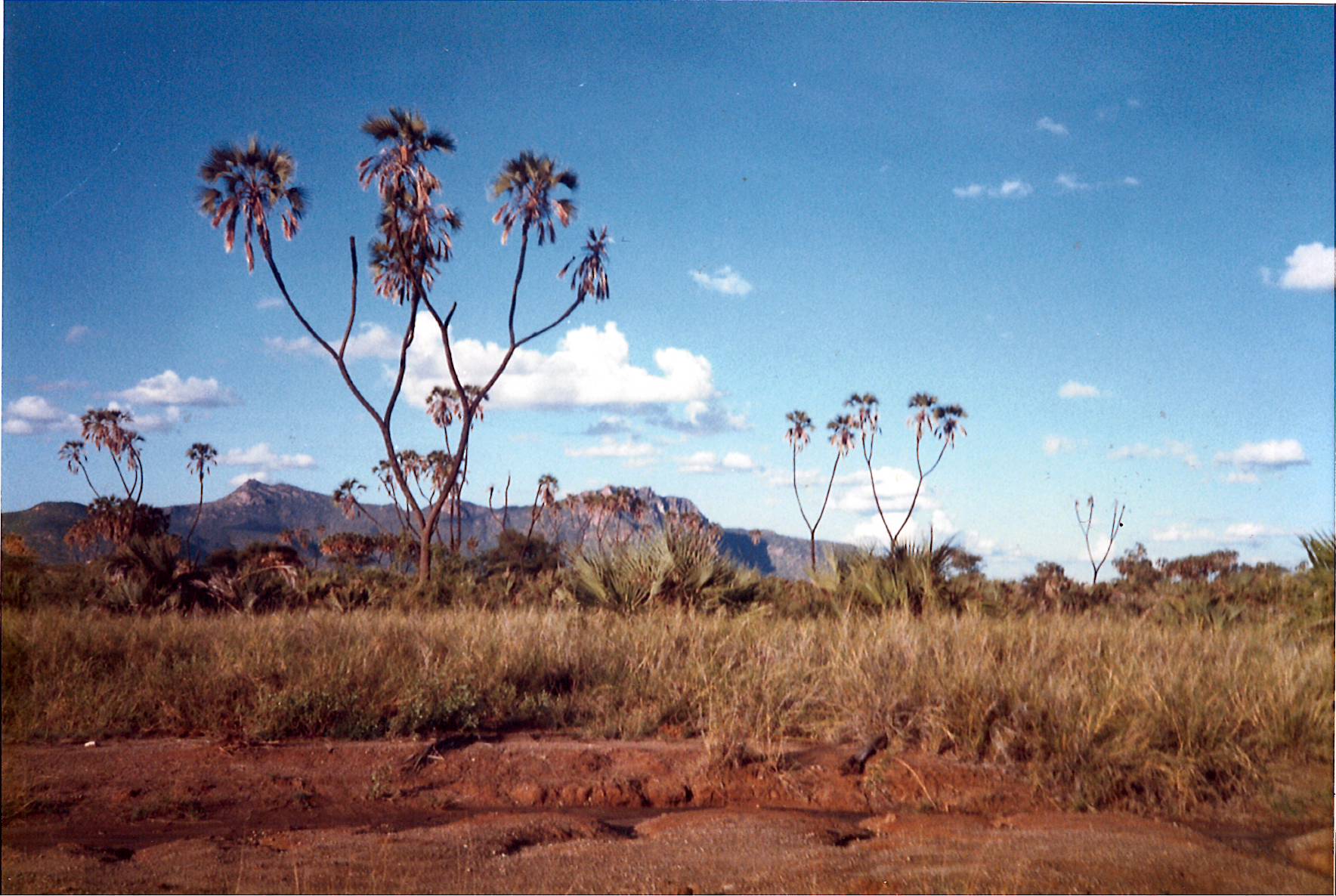
But, not joking anymore, the open view on the wide Ewaso Nyiro river, with its doum palms (Hyphaene thebaica) and acacias (Acacia elatior) was fully GORGEOUS. It looked somehow very exotic, almost like being near the Indian ocean! 4WD told us that, at the right season, the elephants and baboons or even other animals use to come here especially to eat the fermented fruits of the palm… After what they get drunk and you have to be careful not to be on their way! Up the banks, the umbrella thorn (another acacia) and the commiphora trees, also very thorny, are predominant. The latter produces a very nice scented resin (dried sap) which is used to make local incense or myrrh.

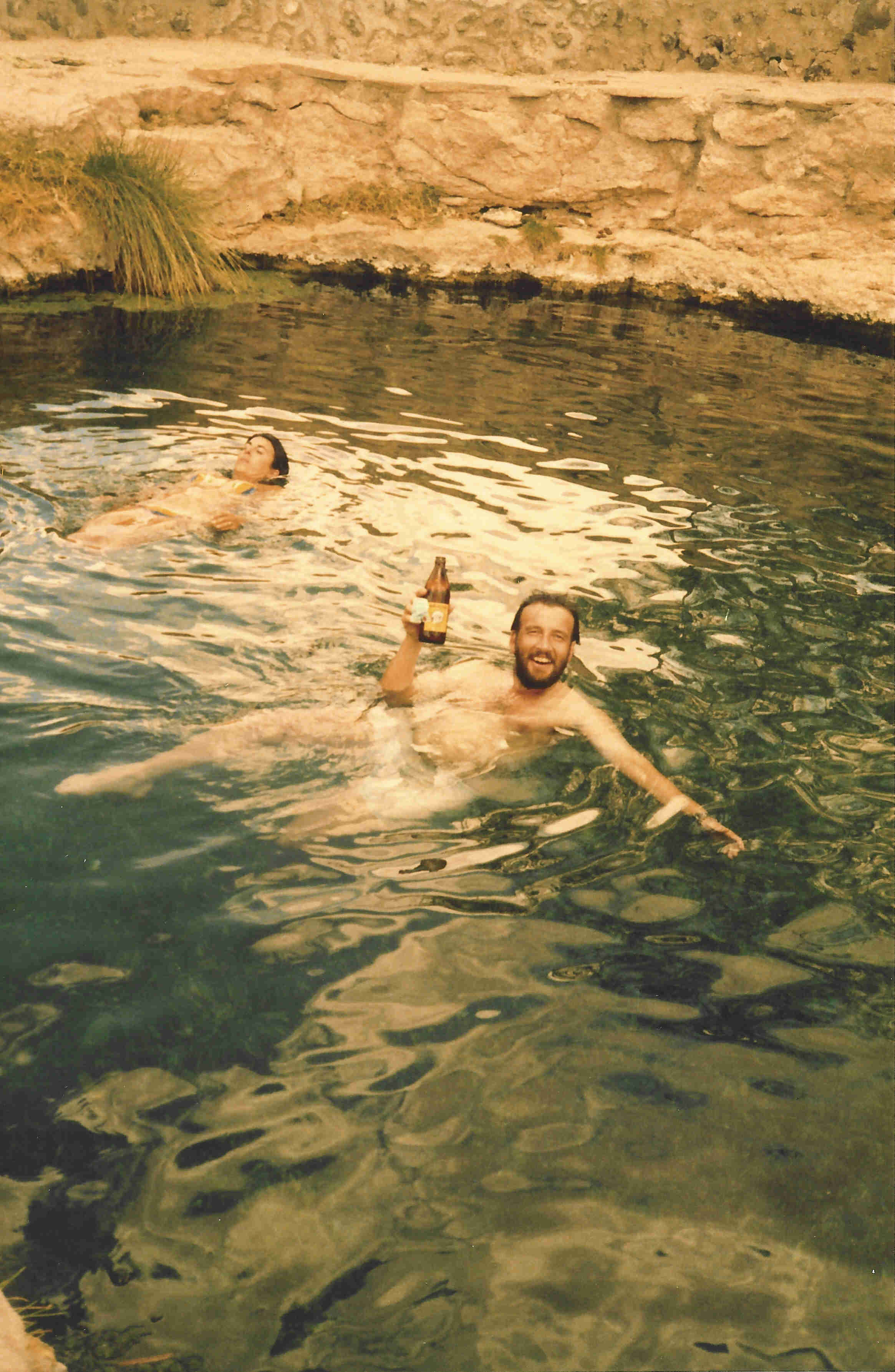
We came back to the campsite at around 11.00 AM and had a nice brunch. Then we packed up quickly (sigh) and went desperately for a swim at the neighbouring Buffalo Springs National Reserve, adjacent to Samburu’s. We found the springs crowded! A huge amount of school children were using the lovely basin where the main spring is collected and protected from the animals by a big circular stonewall. So we went for the “side-springs”, not to swim, which is not possible there, but to collect leeches instead of getting rid of our “miasmas” and accumulated safari dust.
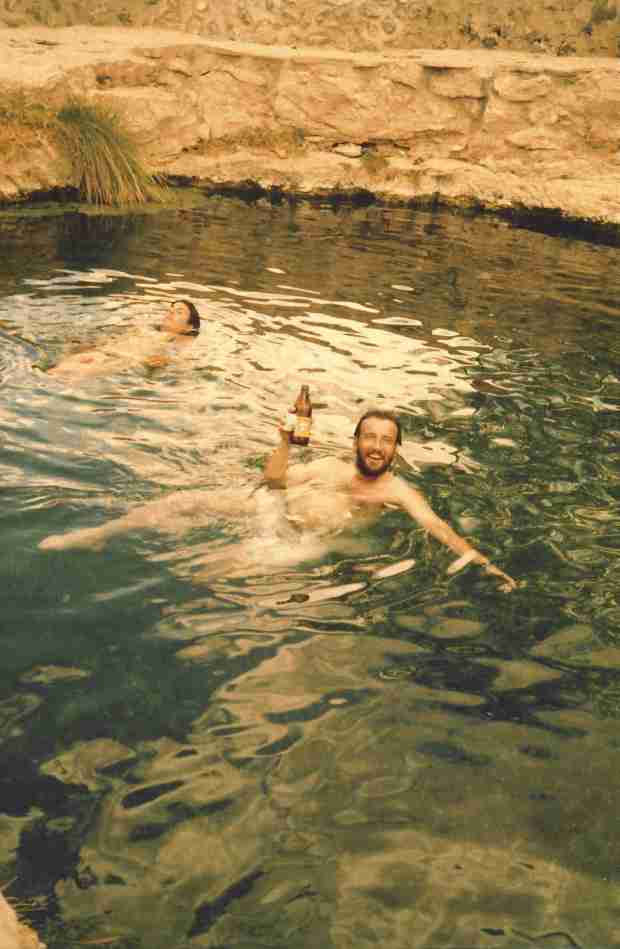
A good swim in spring water (picture taken on a previous safari): That is what we missed on that last day!

A good swim in spring water (picture taken on a previous safari): That is what we missed on that last day!

We quit the spot at 2.00 PM (sigh again). Short after we passed the gate, at only 3.00 PM, the fan belt of the Land Rover jumped out! But the mechanics (4WD and ScoutSpirit), put it right in no time. It is so reassuring to have fundis around! Both cars then headed for Nanyuki and stopped for petrol there. Next stop and arrival in Nairobi was near the “Premier Club”. It was established that both teams were first “ex-aequo”. We congratulated each other heartily and admitted that our drivers were very well trained and the organisation perfect!

So when do we start again?

Landscape around the Ewaso Nyiro, nearby the Shaba campsite: Doum palms and red soil (laterite).

Landscape around the Ewaso Nyiro, nearby the Shaba campsite: Doum palms and red soil (laterite).

 THE END

PinkShade

Footnotes

[1] 4WD (four-wheel drive): as he can make his way through everywhere and possibly through every situation. 4WD is an ancient nickname of the well-known today’s bushsnob!

[2] X-ray: as she has a very accurate view and the ability to spot before anybody any living creature miles around you in the bush!

[3] ScoutSpirit: as he is so calm and well organized that you could always count on him to provide what you did not bring or to have some spare place in his boot to host your things even If very heavily loaded!

[4] PinkShade: as she used to wear particular sunglasses that makes you see everything pinkish and also because she tried very hard to see the positive things although sometimes very anxious in that period of her life!

[5] You may have understood that they were the actual cars of the original African Safari Rally that took place at Easter in Kenya!

[6] You will see that “gorgeous”, pronounced with emphasis and a French/Spanish accent, sounded funny and it was adopted as THE word of this long week-end!

[7] Words in italics are Kiswahili terms that we adopted as we found them more expressive or poetical than ours.

[8] Staying near a river is a guarantee of good game spotting as many animals come to drink or bathe. The Ewaso Nyiro (brown river) is named after its quite dark water.

[9] Although these were the best and nearly sole qualities required for a campsite in almost any national park or reserve in Kenya. Yes, I know, coming from Switzerland where camping places have hot water, showers, washing machines, tumble-dryers, dishwashers, swimming pools, ping-pong tables, cooking places and very technical barbecue devices… it is always astonishing to come to a simple spot near a river and to be told proudly “this is the campsite, Madam” as you cannot tell the difference with the rest of the whole wild area!

[10] After the Afrikaans’ name given to rocky hills appearing like islands in the plains, i. g. in the Serengeti’s savannah. They could have their own ecosystems (plants, animals and interactions amongst them).

[11] Checking on internet nowadays (September 2014), it seems that a monument has been placed since then.

[12] The shell was handed over to the Reserve’s management on exit.

[13] The snake was an Eastern bark snake (Hemirhagerrhis nototaenia), mildly poisonous, unlikely to be harmful to man.

[14] Yerba mate (Ilex paraguariensis) is a cousin of our European holly (Ilex aquifolium), the latter being poisonous!
Chewed snake cropped

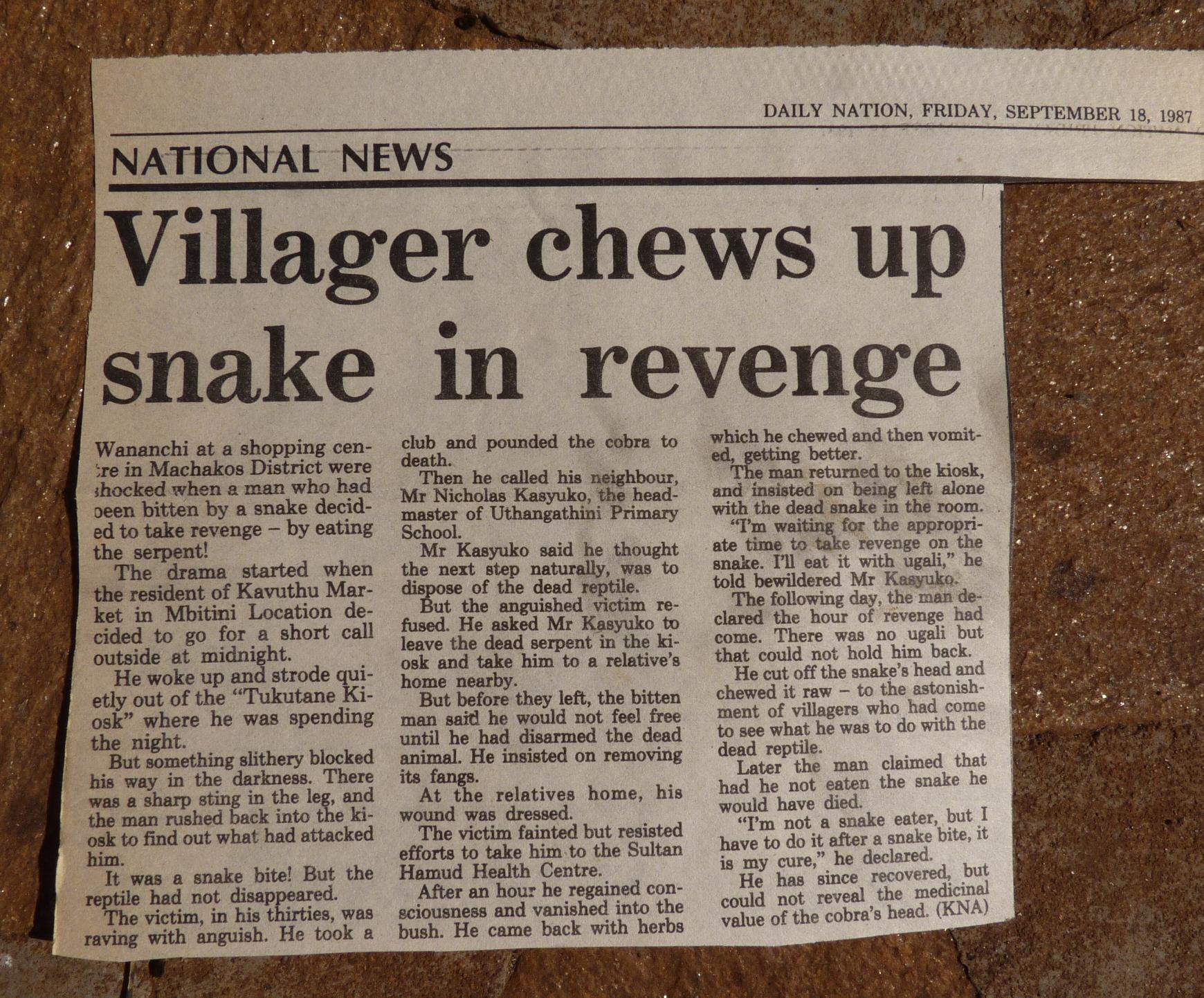
Recently I was identifying a snake for a coming post and the following newspaper cutting from  25 years ago slid out of the snake book. I had totally forgotten it but, clearly, being “snake-related”, I kept it there for future reference! I did not only found the story amusing but I also liked the way the reporter covered!

The text is small but if you click on it you can magnify the picture and read it (even I could do it!).

As a matter of terminology, wananchi in KiSwahili means “citizens or people” and ugali is the cooked stiff white maize porridge (polenta-like), the staple diet in Kenya.

A tame lion: a Kenyan tale

black mane cottars small

A tale told to me by a friend while enjoying a drink at a campfire in the Maasai Mara Game Reserve in Kenya. As lions are among our favourite animals, this short story stuck in my mind. I hope you enjoy it!

I believe that the event took place in the 50s. There was either a farmer or a game warden that resided at a camp in the Athi plains, a few kilometres from Nairobi. Somehow he had acquired a lion cub that he raised to become, as usual, a rather large and potentially dangerous male lion that lived with him and his workers at his camp.

He was well known in Nairobi as he came to get his provisions from the duka (store in KiSwahili), leaving the lion tied up in the back of his truck. This was rather unusual at the time and therefore it attracted some curiosity among shoppers!
For some reason, on this particular occasion he came to Nairobi with a loaded truck and he was forced to leave his lion at camp, together with his camp staff. The jobs he needed to do that day took him longer than he anticipated so he left late and it was dark when he got back to his camp.

It was the norm that his vehicle lights would warn the camp of his imminent arrival and people would be waiting for him to report on the events of the day and help him to unload. The camp was by the river and he could see it from above just before he came down to it. The camp appeared deserted. He slowed down and had a good look, still nothing. “This is odd” he thought and then caught a slight movement with the corner of his eye. A male lion was trotting towards the bush and it was not his!
It was not rare that lions “visited” his camp so he moved on, while keeping an eye on the situation. He regretted leaving his rifle behind! After making sure that there were no more lions in camp by using the car’s headlights, he decided to get out of the car. Being cautious, before he entered the camp, he called his staff but no one replied. After waiting for a while in the dark, he carefully walked to his staff quarters. There was no one there either! He then decided to fetch his hunting gun from his tent.

The tent was zipped up. He unzipped it as gently as possible, and put the light on. He could not believe what he saw! All his workers were there; looking rather frightened and, also with them was the lion, looking equally terrified and shaky!


Green eyes in the wild

cropped-p1090883-eyes-cropped.jpg

My wife has beautiful green eyes and she has always been very careful with them, looking after them all the time. I noticed this and -being myself- could not avoid mentioning this to her early on during our married life as I thought she was exaggerating… She is a very tolerant lady and patiently but firmly explained that her eyes were her most important asset. I did not ask again and made sure that her eye drops were always handy!

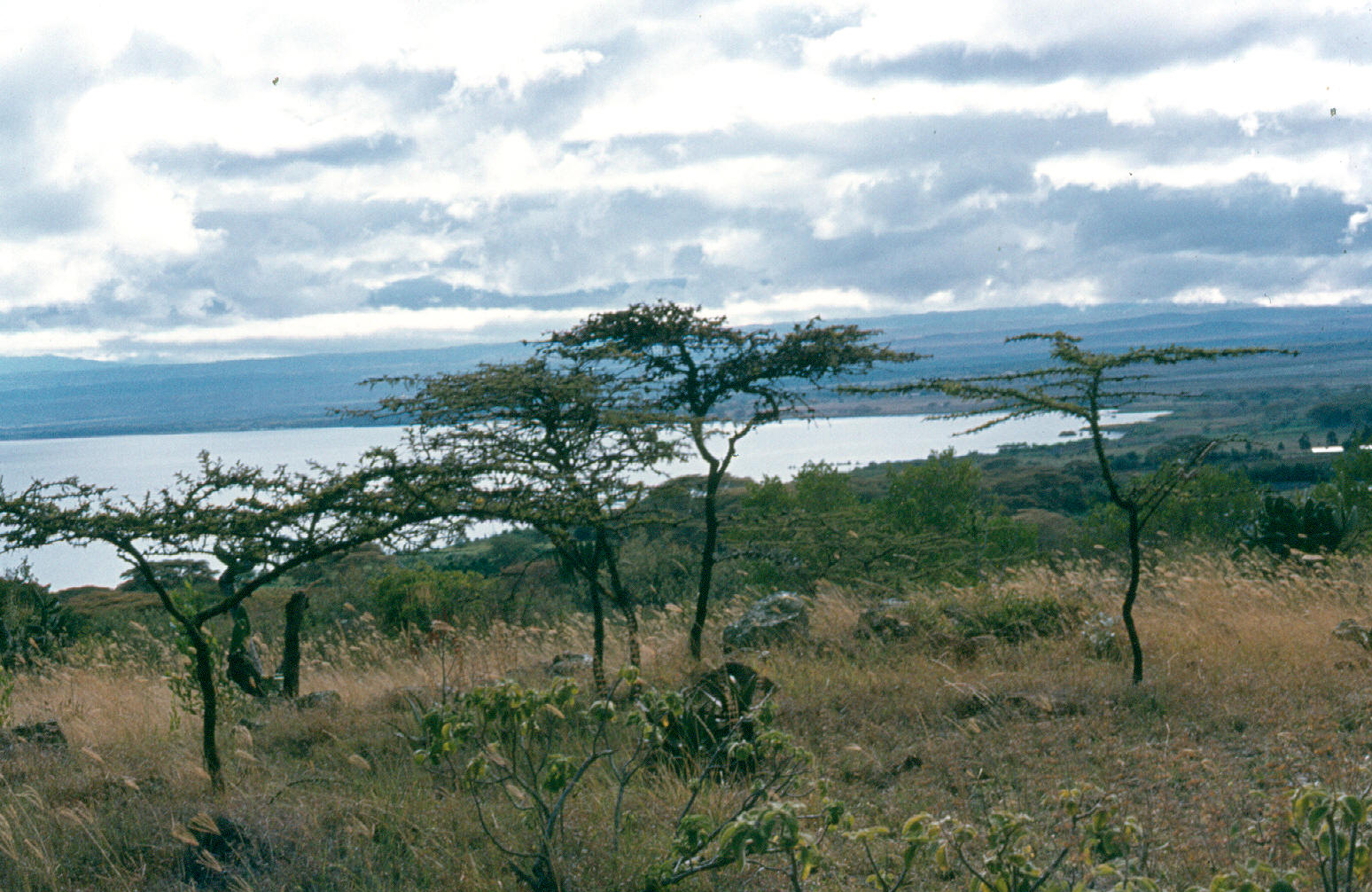
Lake Naivasha in the distance.

Lake Naivasha in the distance.

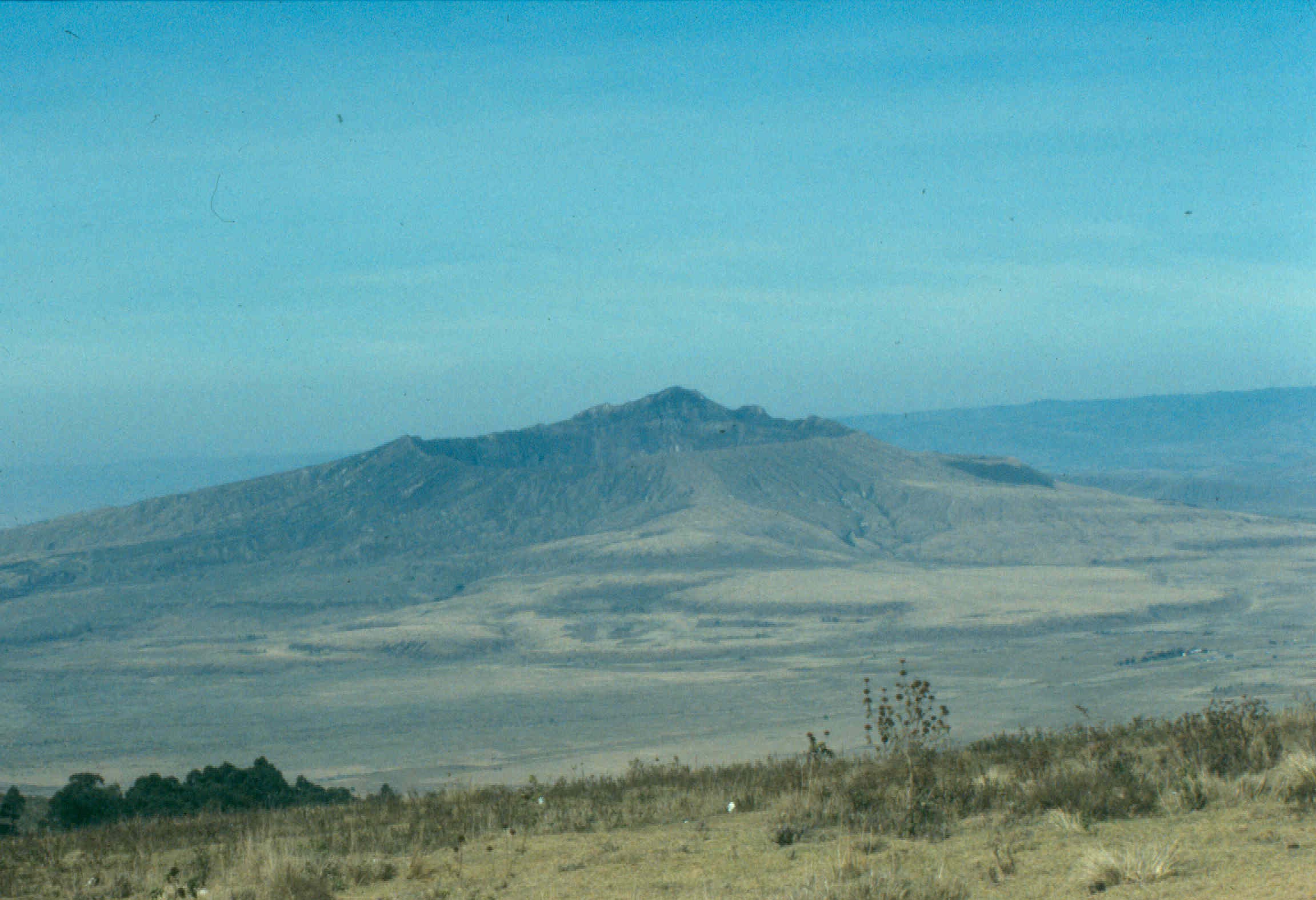
While in Kenya in the eighties, on a Saturday we decided to travel to lake Naivasha to spend the weekend at the lake shore at Fisherman’s camp (http://www.fishermanscamp.com/) on our first outing to the area. It was a beautiful drive down the Kikuyu escarpment, passing by the Longonot volcano and the little church built by the WWII Italian prisoners.

Longonot Volcano.

Longonot Volcano in the Rift valley.

Then, the magnificent Rift Valley came into view, with lake Naivasha glimmering in the far end (see first picture, above). Once at the bottom of the valley, we crossed Naivasha town and then followed the lake shore road for about 20 km to reach the camp. At the time the road crossed mainly private farms and cattle ranches.

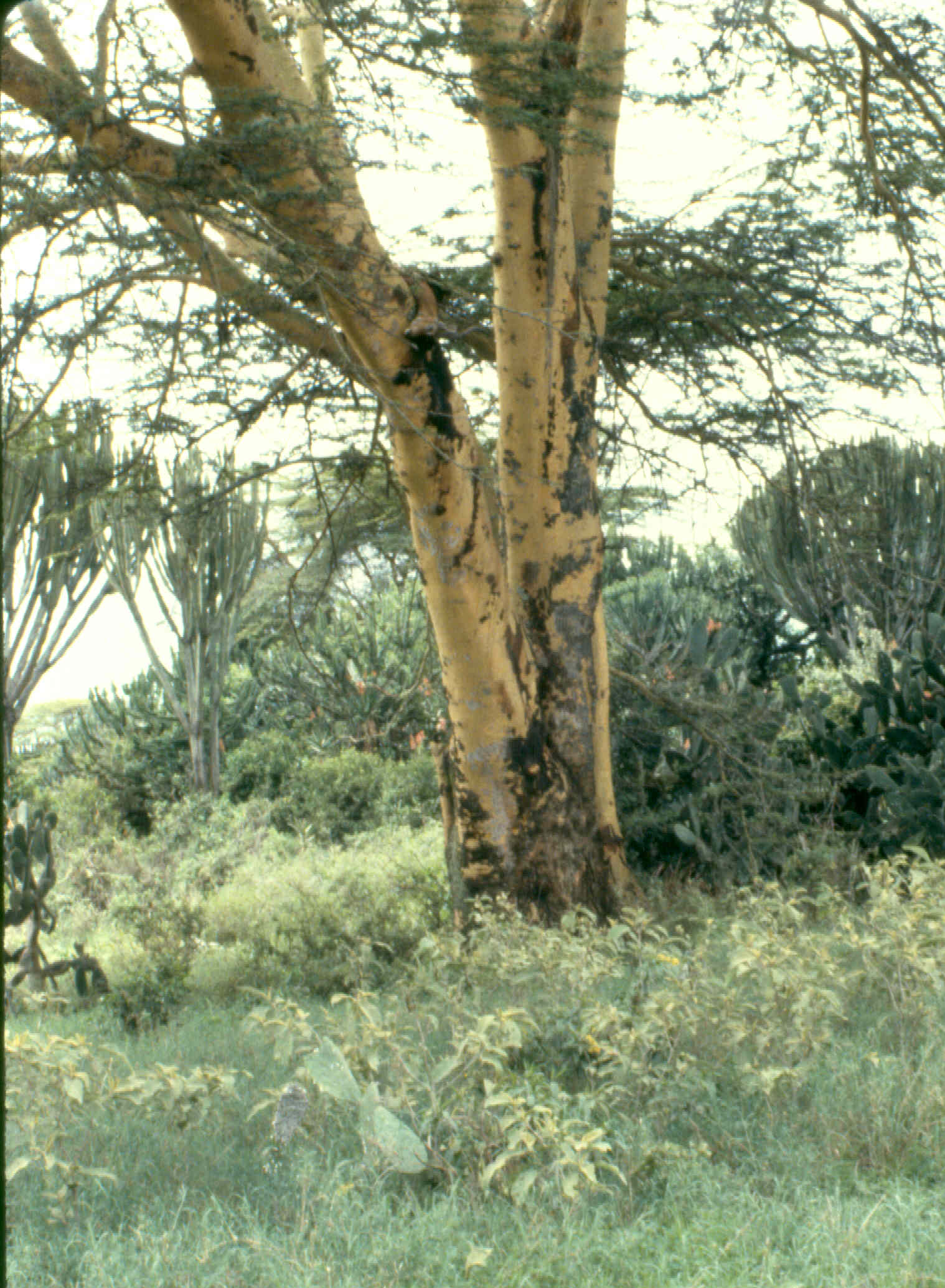
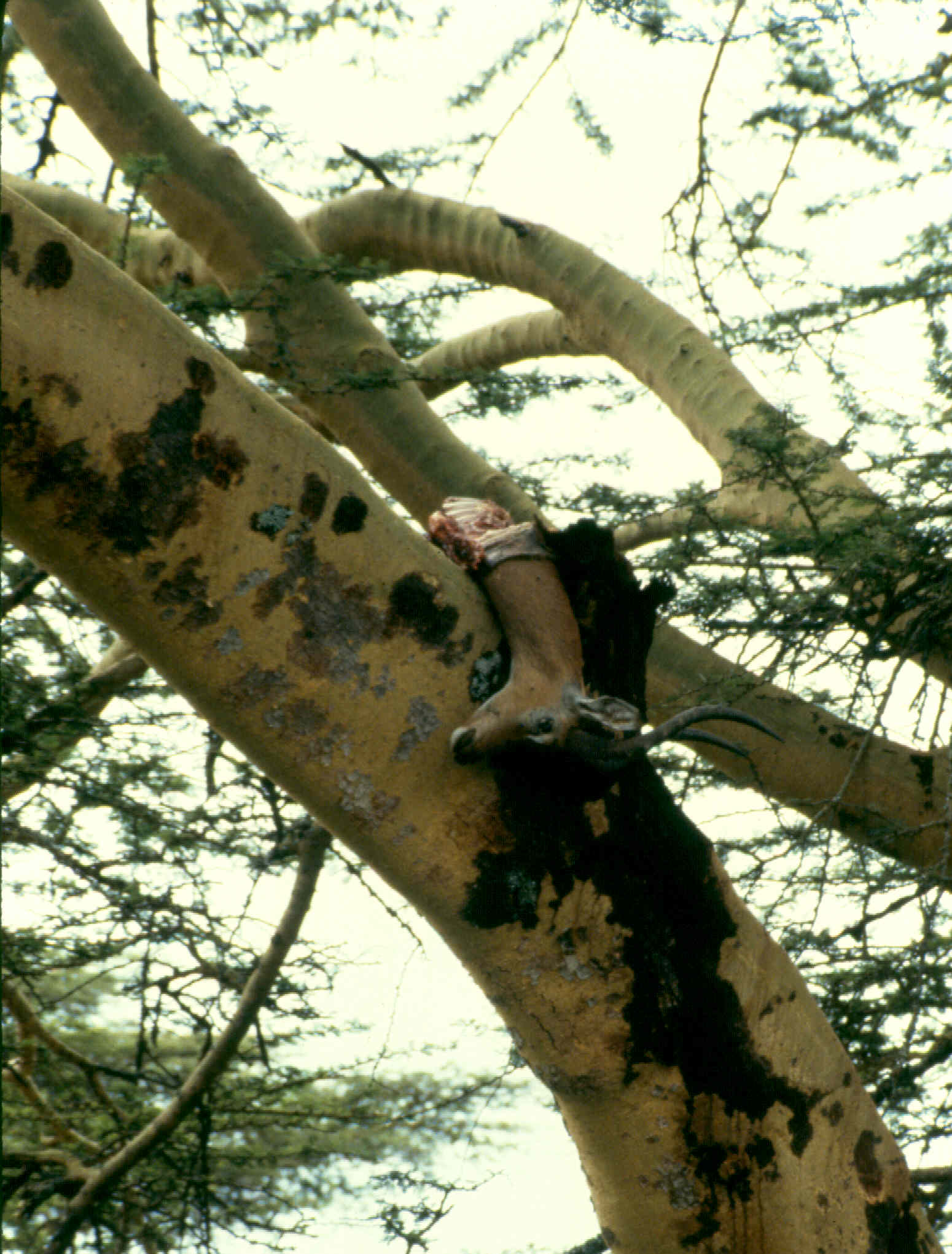
It was mid-morning and I was enjoying the drive in our loyal Volkswagen kombi, taking in the great landscape when I heard: “There was an antelope up a tree!” announced in a rather calm way. I did not react immediately as it was a ridiculous announcement. I was about to ask my wife to pour some more water on her head as it was clearly overheating when she reacted to my indifference with “I am not joking, there is an antelope there!!!” She was pointing at a yellow barked acacia about 100 m from the road, on our right. I stopped the car and looked. I could see the acacia well but that was that. I reversed, still incredulous, until I parked in front of the tree. Following the directions given and with the aid of my 8 x 40 binoculars I managed to identify the head and neck of a male impala placed across a branch.

A view of the tree with its unlikely inhabitant. Please note that this is already a close-up view!

A view of the tree with its unlikely inhabitant. Please note that this is already a close-up view!

The expected “I am glad that you believe me now” followed. My immediate thought was that it was either placed there by a farmer to attract and kill a leopard or by a leopard! Neither were visible nearby as we were alone on the road. As the situation clearly demanded further investigation, we got out of the car and walked to the tree. Although half eaten, the impala was quite fresh and it was probably killed and placed there the night before. The question was solved -at least to our satisfaction- by finding deep claw marks up the tree trunk where the reddish inner part of the trunk was visible where the yellow and velvety bark had been removed!

On closer inspection, the impala was clearly visible.

On closer inspection, the impala was clearly visible.

After taking pictures we proceeded to the camp with great excitement and speculated on the finding. Our holiday break now clearly influenced by the find, we agreed to return to the tree at dusk to see if the impala owner would come back to the kill. We kept our secret and at about 18:00 hours we set off to sit and wait by the tree. We were prepared for a long wait so we took our dinner and drinks with us, parking the car at a secluded place to avoid being too noticeable to passers by. None of the cars or pedestrians that happened to pass by ever saw anything! To my eyes that knew that the kill was there, this now seemed impossible!

Our wait lasted until midnight but to our disappointment, the leopard did not come back. Tired of the wait, bored and sleepy, we returned to the camp. We spent a great Sunday exploring the lake shore until it was time to get back to Nairobi before dark.

The carcass was no longer there when we passed by in mid-afternoon. Further inspection of the tree trunk showed additional paw marks and bits of  fur were also found in the bush nearby.

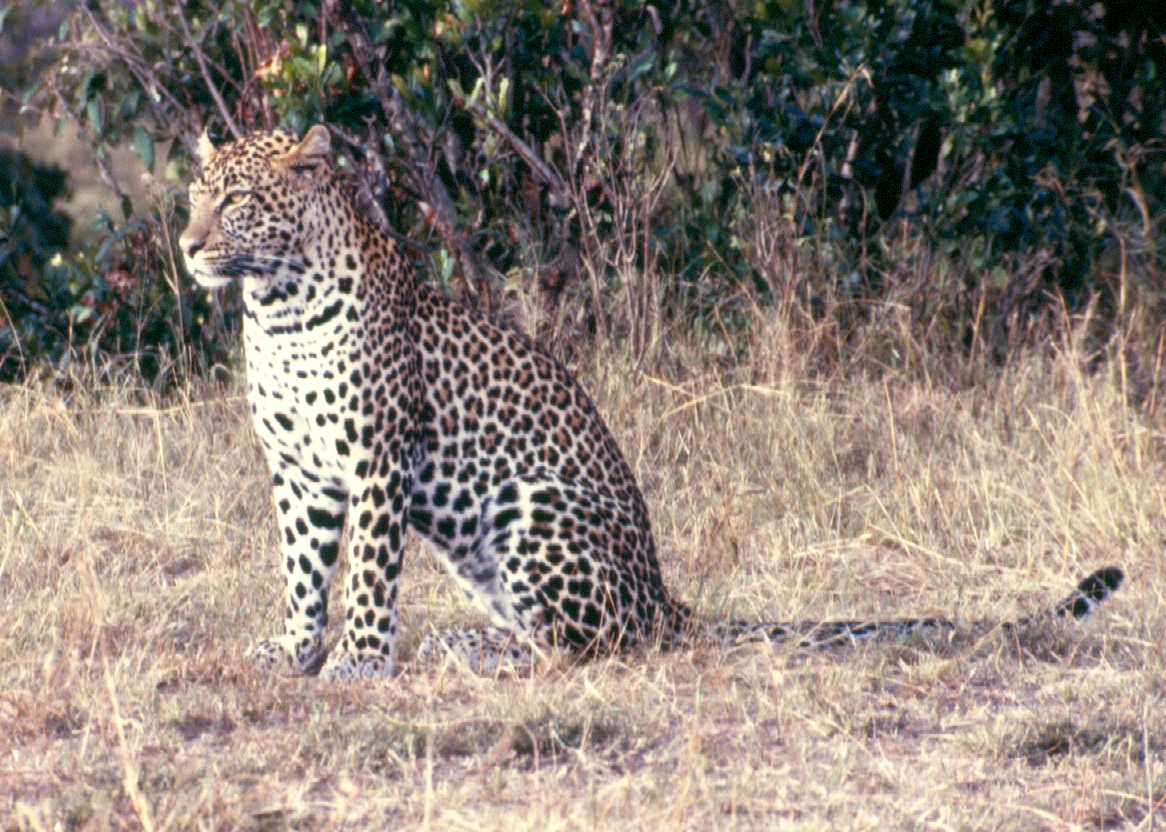
The secretive East African leopard pictured at the Maasai Mara Game Reserve.

The secretive East African leopard pictured at the Maasai Mara Game Reserve.

This was the first demonstration of my wife’s keen eyesight. I have shared safaris and game viewing with lots of people and I can assure you that she rates among the best! If there is an animal on a game drive, she will find it!

(Written on 2 July 2014 and posted on 24 August 2014)