Leopard

Spot the beast 19

Back to Africa for a while while I develop another story from “Out of Africa”. Poor internet connection and farm work… are attempting against my productivity.

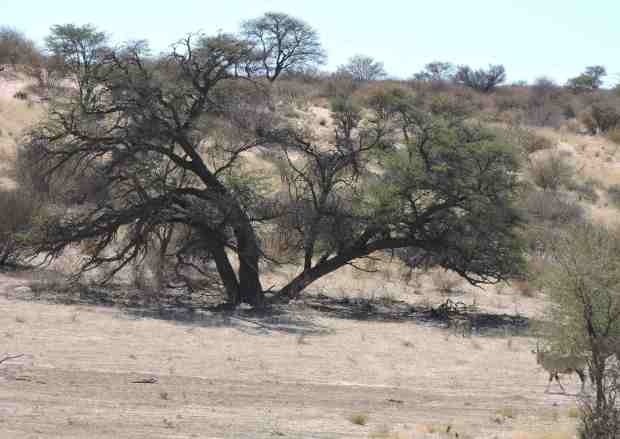
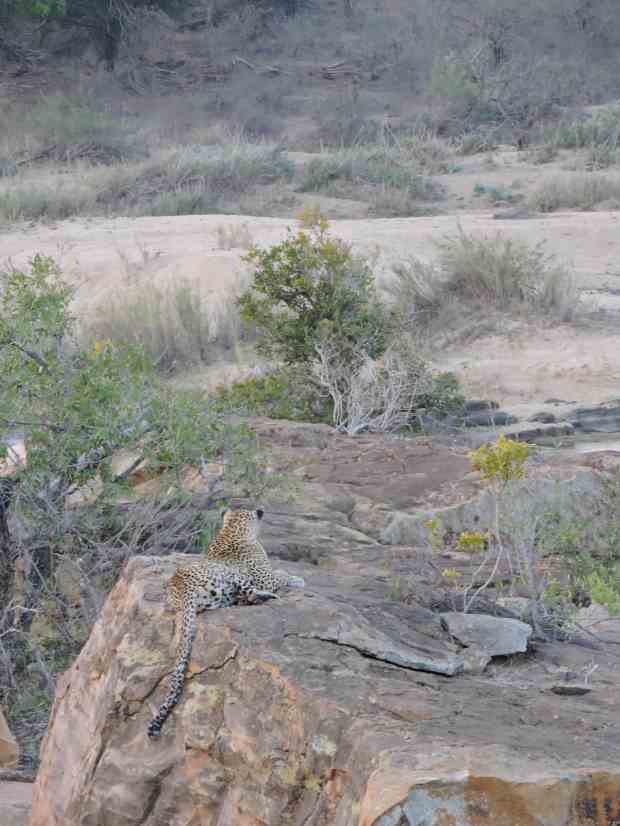
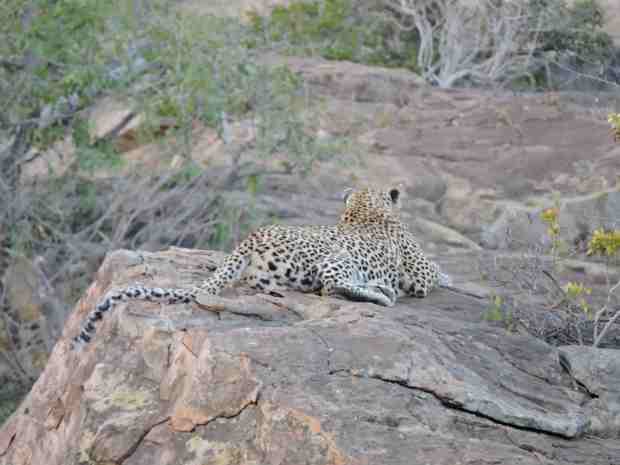
This is not a difficult “Spot the Beast” but I thought it is a nice situation to challenge your power of observation. I would be worried if you cannot find it within the first 10 seconds…

Here it is:

dscn9956-copy
?

?

?

?

?

?

I hope you agree with me that she was not only beautiful but well placed to see what was happening!

dscn9954-copy

A few more pictures of her:

dscn9928-5-57-43-pm-9-25-00-am-copydscn9939-copy

dscn9924-10-09-30-am-3-33-32-pm-3-38-33-pmdscn9903-copy-8-55-16-am-8-58-58-am

The wait

Entering the Kgalagadi Transfrontier Park (KTP) we were given instructions on how to manage the place. Technically, we should drive at a maximum speed of 50 kph and deflate our tyres to 1.5 BAR to better navigate the severe corrugations. We were also advised to wait for the animals at the waterholes rather than drive long distances over this very dry park.

In fact, despite my initial doubt, was useful because of the way the park is. On the South African side, the KTP has two basic roads: one follows the Auob[1] dry river and the other one the Nossob[2] dry river in a North to South fashion.[3] The rivers and the roads that accompany them meet at Twee Rivieren where the main camp of the park is located.

The dry riverbeds were not the expected sand rivers we see elsewhere but rather wide grassy valleys beyond which is the -inaccessible- Kalahari. Water for the animals is provided by waterholes that were sunk by the (Union of) South Africa to provide their troops with water in case South Africa wanted to use the area to invade South West Africa (Namibia). The waterholes are at roughly ten km intervals and most animals congregate around them.

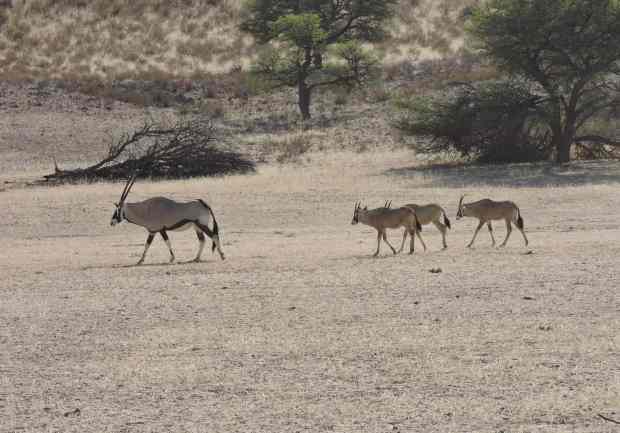
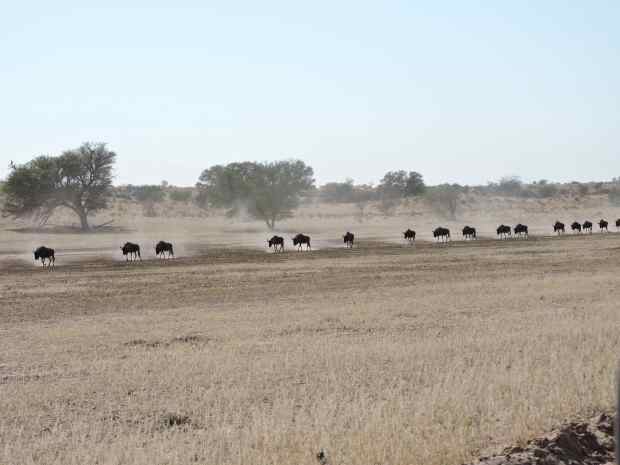
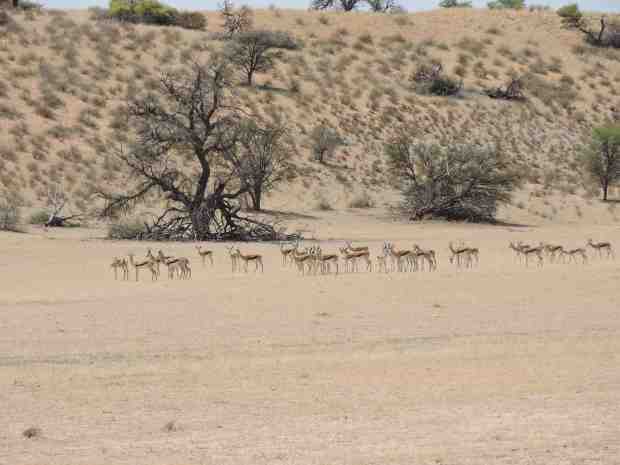
Wherever you stay, you tend to drive a lot over the same stretches of roads to go and come back to camp every day so the recommendation of “sitting and waiting” at waterholes made sense. In some you have a constant parade of herbivores such as gemsbok, wildebeest and springbok as well as large number of birds such as various pigeons, sand grouse, sociable weavers and quelea. Jackals were the main predators we saw.

dscn9895-6-27-18-pm-copy

dscn9902-6-27-18-pm-copy

dscn9967-copy

At other waterholes we waited long spells for something to happen to no avail. After a while of looking at an empty place I got bored and I could not help thinking that surely the animals were at the next hole! After waiting a bit longer, this line of thought became a conviction and my unrest grew to such a point that my wife needed to coerce me to stay using her strongest argument: “I am not cooking tonight”.

After our stay in Nossob camp, on our way to Twee Rivieren, we stopped at yet another empty waterhole. As we had seen nothing in the previous two we had visited, we were looking carefully at the surrounding area as well as to the actual water hole. I was the first to see it and, surprised, said “look, a hyena coming”.

dscn0008-copy

My “hyena”…

My wife looked and, as usual but rather excitedly, she corrected me “it is a leopard” almost at the same time that I realized my error.

dscn0007-copy

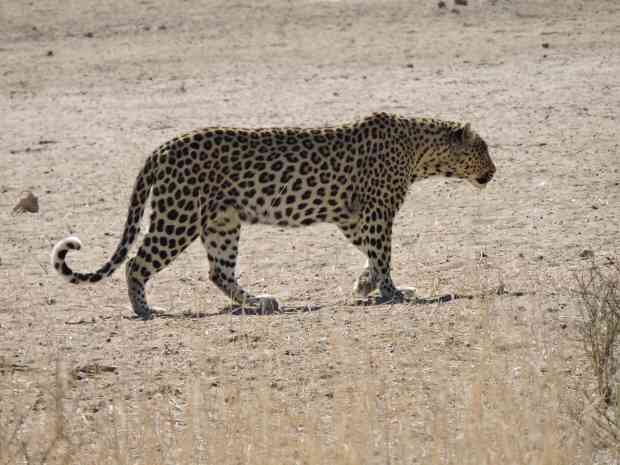
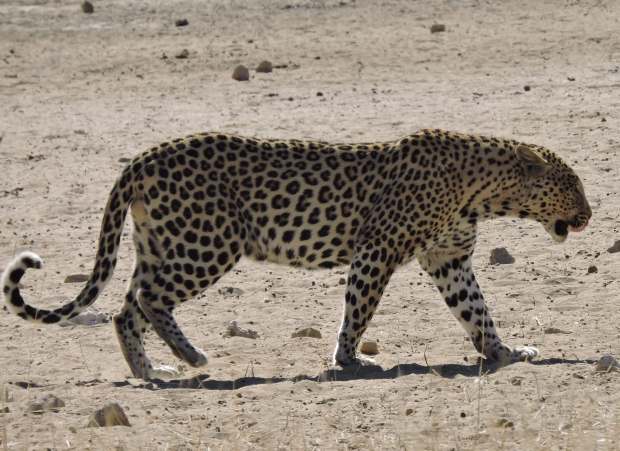
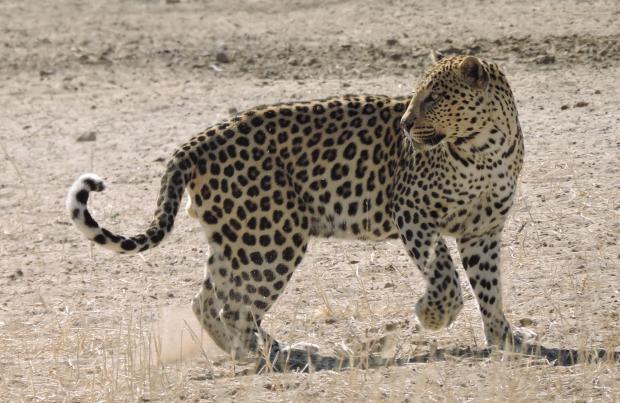
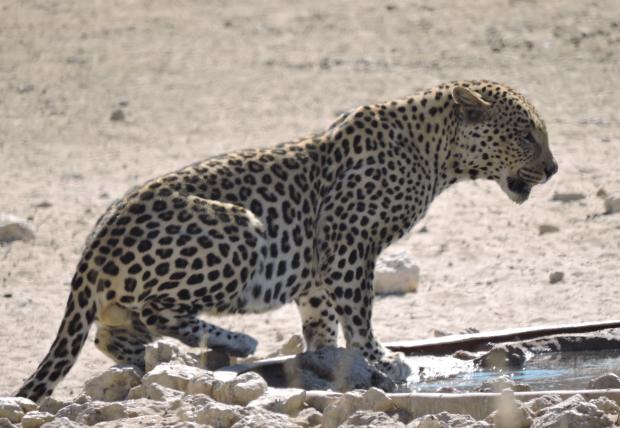
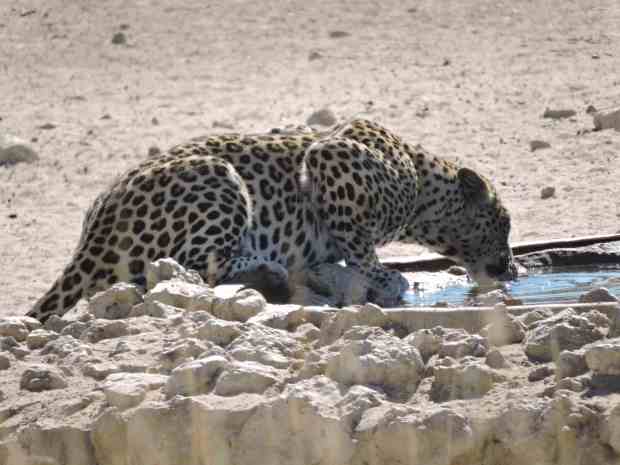
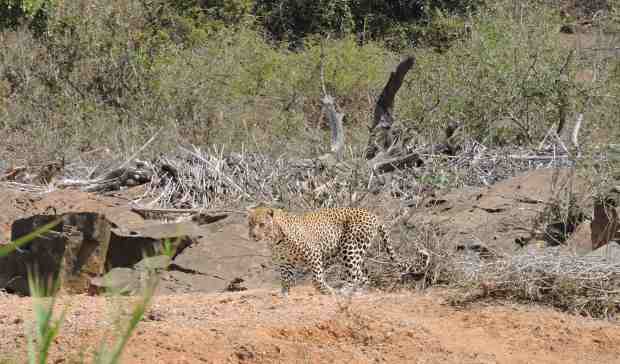
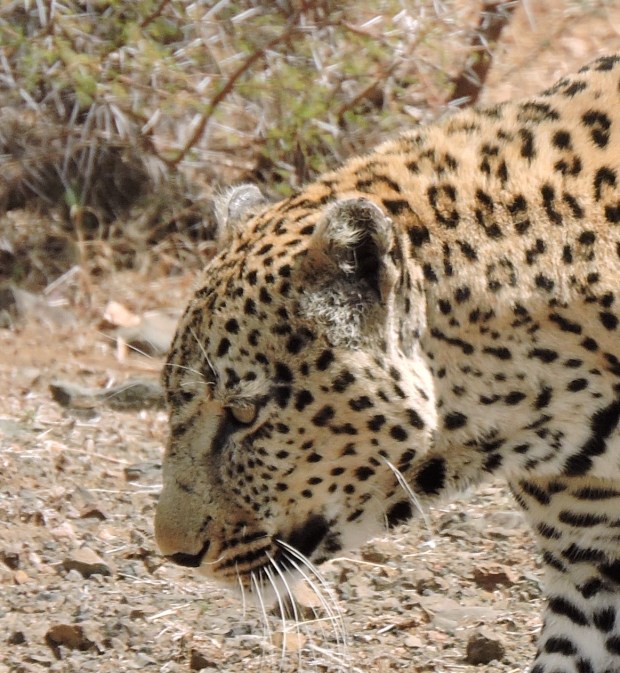
dscn0009-copydscn0004-copydscn9998-copyA leopard it was! A large male, that walked passed us and, arriving at the water it crouched to drink to placate its thirst. After a few minutes it walked off, marking a few key spots as it went slowly up the bushy riverbank. We followed it and saw it on and off as it walked up the dunes until we did not see it anymore.

dscn0011-copy

The leopard withdrawal followed closely by gemsbok.

At that precise time a car arrived to join us. When they asked what we were watching and we told them that a male leopard had just moved off from the water three minutes ago, they were stunned and I did not blame them and I did not dare to show them our pictures either!

The leopard fleeting visit not only helped us to consider the KTP a great place but also further justified the waiting strategy at the waterholes. It also stressed the fact that a few minutes can make a huge difference and there is no amount of planning and organizing that can replace your good luck!


[1] Meaning bitter water.

[2] Meaning dark clay.

[3] The Auob last flowed in 1974 and the Nossob in 1964.

Predators’ Eden

Having stressed the negative consequences of a drought like the one the Kruger National Park is going through in the previous post (3/10/16) it is now the time to mention one of the positive aspects of this situation for the game-spotter.

The lack of grass transformed the thicket into a very dry wooded savannah. In addition, the riverine areas that usually offer some cover to herbivores were now denuded from a lot of the vegetation so there was a lot of visibility. Most animals were near the river as most need to drink regularly so most of the “action” took place there.

Even without the assistance of the existing apps[1] we were able to find lions and leopards in numbers that are usually unthinkable, even for my wife.  11 September 2016 will go down in our bush lore as the day of the cats! In the morning, during a 20 km drive we spotted three different groups of lions, two separate leopards on trees and two walking by the river! We almost did not stop when we found a hyena walking by the road! As if this would not have been enough, after (my) siesta time, we revisited the nearby causeway over the Lower Sabie River to see if anything remained of the zebra being fed on by crocodiles of the day before.[2]

We crossed the bridge but found no trace of the zebra. As usual, there were a few cars on the bridge so we decided to turn around and, after re-crossing the bridge, to do a short drive following the river to enjoy the evening. By the time I had turned the car around all other vehicles had gone and we were on the bridge on our own, a rare occurrence.

As the bridge is narrow, I was paying attention to my driving when, just before ending our crossing, I heard my wife saying, “Look!” A leopard had just appeared out of nowhere on the shore of the river. I switched off the engine and we both grabbed cameras and took the pictures we could as the animal did not stop much and never took notice of our presence while it crossed the bridge just in front of us!

dscn9899-copy

The first picture of the leopard.

It was a large male and its right hind leg was apparently painful as it was limping.

dscn9902-copy

The sighting did not last more than three minutes and, by the time a few vehicles arrived to the bridge (that we were totally blocking), the leopard had moved off and it was hardly visible, although it had been spotted by others! I decided to move on and “share” our find only to realize that the car was dead! Suspecting a disconnected battery terminal I got out of the car to fix it. Although it did not take much time to get the car running again, by the time we moved off, the leopard had already disappeared and I was probably the least popular driver in the park!

Although the 11th was our most productive day, over the next couple of days we continued to find predators. We also continued to have problems with our battery! So, when I needed to get out of the car to fix it next to a group of lions, we decided that it was time to take the car to Skukuza for a long-lasting solution! This we got from one the very helpful camp mechanics that, with the right spanner, tightened the nuts and ended the problem for good.

dscn9920-7-29-26-pm-copy

Luckily the lions were more interested in their romance than in the bushsnob fixing the battery!

Feeling now safer, on the way back to Lower Sabie Camp my wife (who else?), continued to excel and spotted more cats! The first sighting took place after we both noticed a few vultures on the ground by the Lower Sabie River. While I was watching them my wife noted that the cause was a buffalo kill where two magnificent male lions were feeding! Frankly, I would not have seen them.


As road speed limits and gate closing times in the park are very strict, we decided that we needed to start our journey back to arrive to our camp in time. Our planned timely arrival only lasted a few kilometres, until my wife spotted yet another leopard!

dscn9948-copy

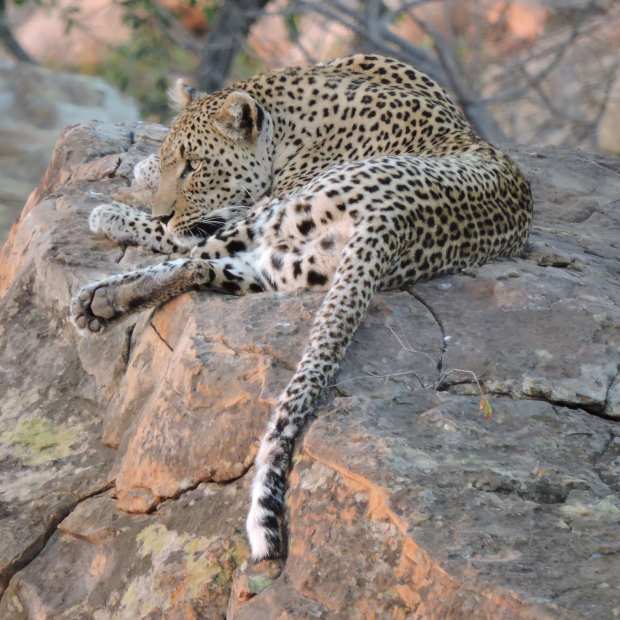
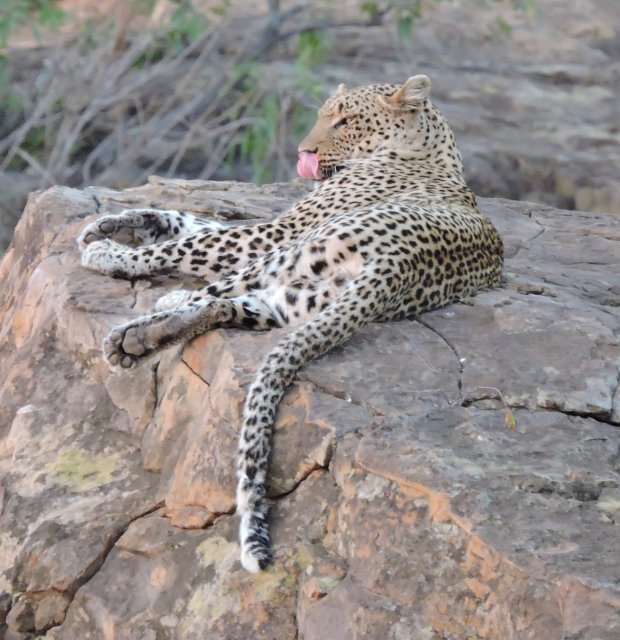
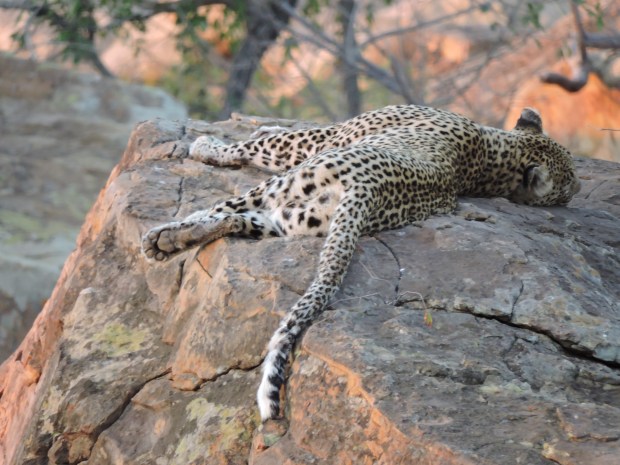
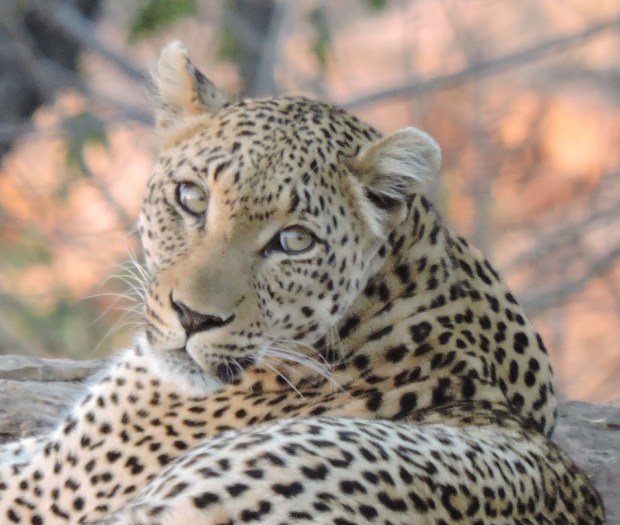
This time it was a female sunning itself on a rocky outcrop overlooking the river. A beautiful sight worth risking a fine from the park as we both agreed. It was beautiful to watch the animal with the evening light and we stayed there until it decided to move off and we lost it.

Aware that we were late, we prepared our usual excuse of engine malfunction (this time it was quite close to the truth!) and returned. Luckily we just managed to squeeze through as the gates were being shut!

That night, staying at one of Lower Sabie’s tents paid off. Despite the rather sad absence of hippo grunts, the elephants were noisily feeding nearby and they were very vocal. Later, several lions started roaring up and down river, their loud calls amplified at night and the chorus continued well into the night. At some stage, a leopard joined in with its own regular grunts ending in an amazing ensemble that we do not recall having heard before. We were late sleeping as did not wish to miss the wild concert!


[1] See the earlier post: https://bushsnobinafrica.wordpress.com/2016/09/30/animal-go/

[2] See: https://bushsnobinafrica.wordpress.com/2016/09/16/hungry-crocodiles/

The unseen painted dog

We arrived at Mana Pools National Park (Mana Pools) at about 15:00 hours after a six hour drive from Harare. Just before the turn off to get into the final stretch of rough dirt road, we stopped at the edge of the escarpment to take in the hazy view of the Zambezi valley below, always a beautiful sight, and one that is full of anticipated adventure. The view was even hazier than usual, as this is the season of bush fires that add a blue tint to the horizon.

The view of the Zambezi valley from the main road.

The view of the Zambezi valley from the main road.

The stop to contemplate the view had to be brief as we still had about two hours of driving to get to the park. As soon as we started the escarpment’s steep descent we came across a queue of lorries parked on both sides of the road. The normal sightings involve slow moving lorries either struggling uphill or burning brakes downhill, so this kind of mass convergence was not normal. We drove through the narrow “lorry tunnel” very slowly, passing around 60 lorries before we came to the reason for the queue. An unfortunate driver had lost control of his truck while going downhill and crashed at full speed against a rocky bend. The accident was recent as the rescue of the occupants’ was taking place as we passed by. This was a stark reminder of the dangers associated with driving.

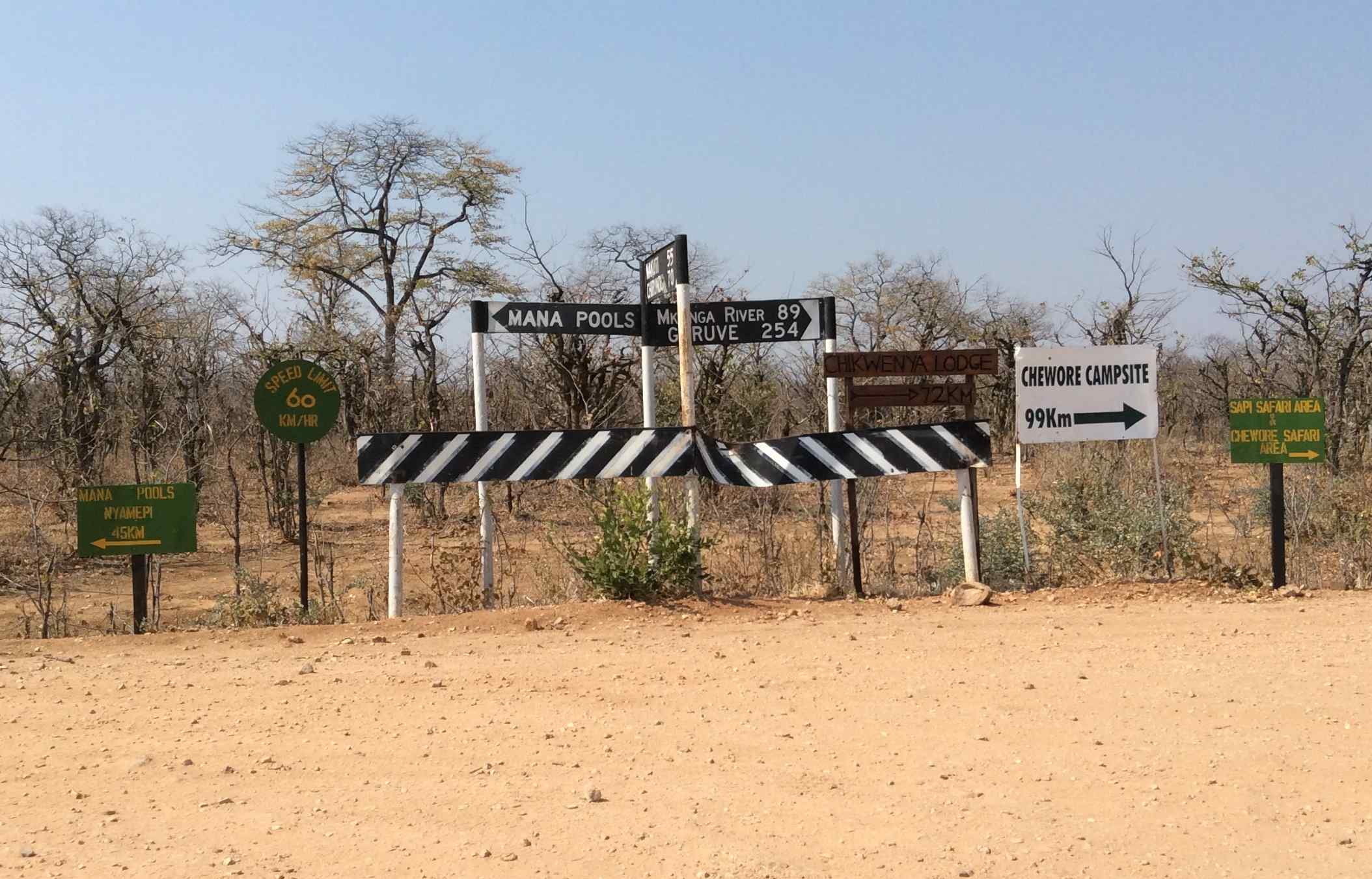
The turn off into the rough road leading to Mana Pools came as a relief after witnessing such a mishap. We drove on and, after 80 km of dirt road; we arrived at Mana Pools, a UNESCO World Heritage site of similar standing to the Great Barrier Reef, the Tower of London or Yellowstone National Park. The recent book “Mana Pools” by Gregg Robinson presents excellent pictures and describes the park in great detail. What more can I say not being a poet but rather a humble veterinarian!
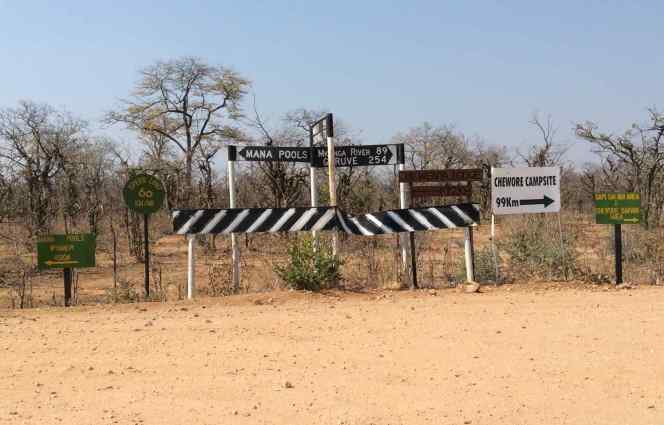
The road to Mana Pools.

The road to Mana Pools.

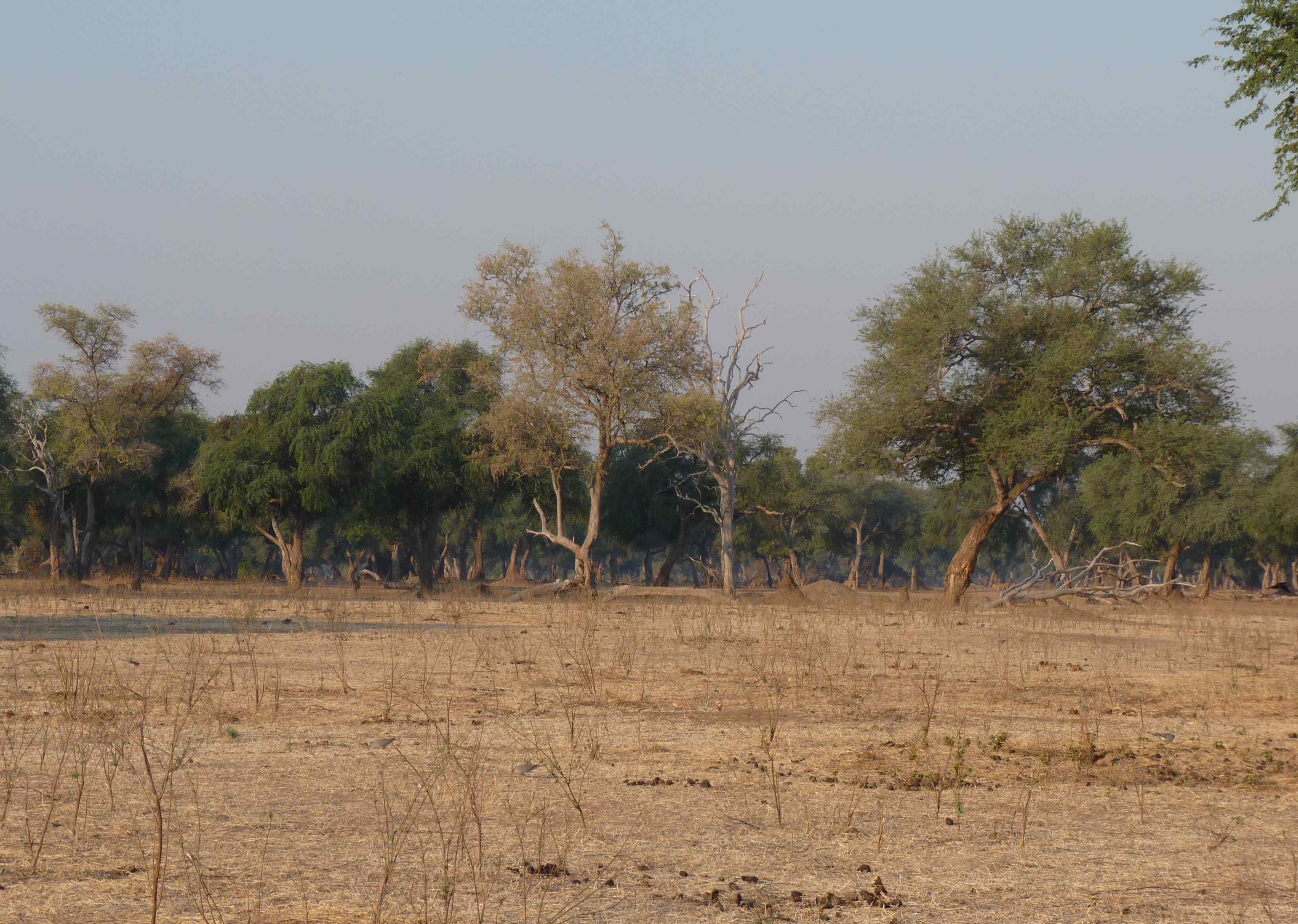
Mana Pools is a place of unique natural beauty. The Zambezi River, with its hilly background, forms its northern border and the area to the South is a flat wooded expanse where earlier river meanderings have left a number of separate pools that give the park its name. This is where game abounds and, because of the nature of their habitat they can be spotted at a distance, similar to the East African parks.
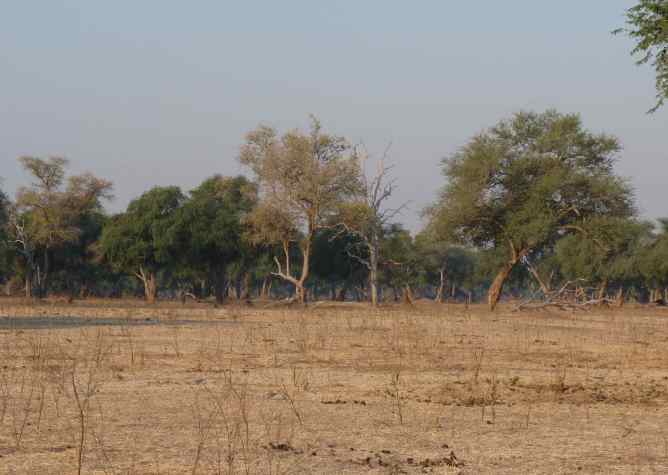
The Mana woodlands in the afternoon.

The Mana Pools woodlands in the afternoon.

In addition to its magnificent and ancient trees and its abundant wildlife, Mana Pools is -I believe- the only national park in Africa where you can leave your car and walk on your own despite there being dangerous animals at large. We know of two prides of lions and a pack of painted dogs that live in the area, not to mention numerous hyenas, several buffalo herds, many elephants, the occasional leopard, crocodiles and hippos, among others.
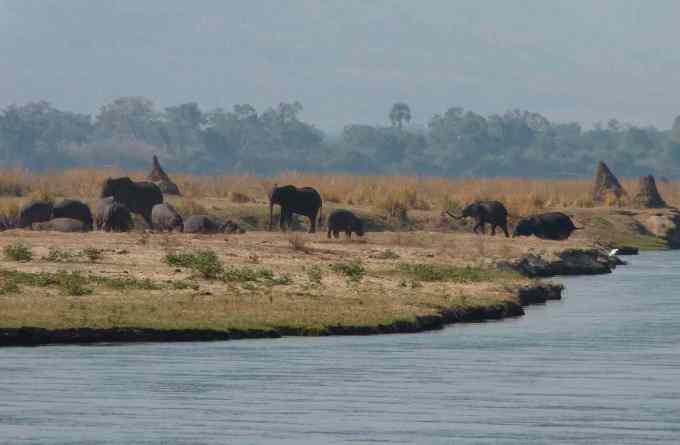
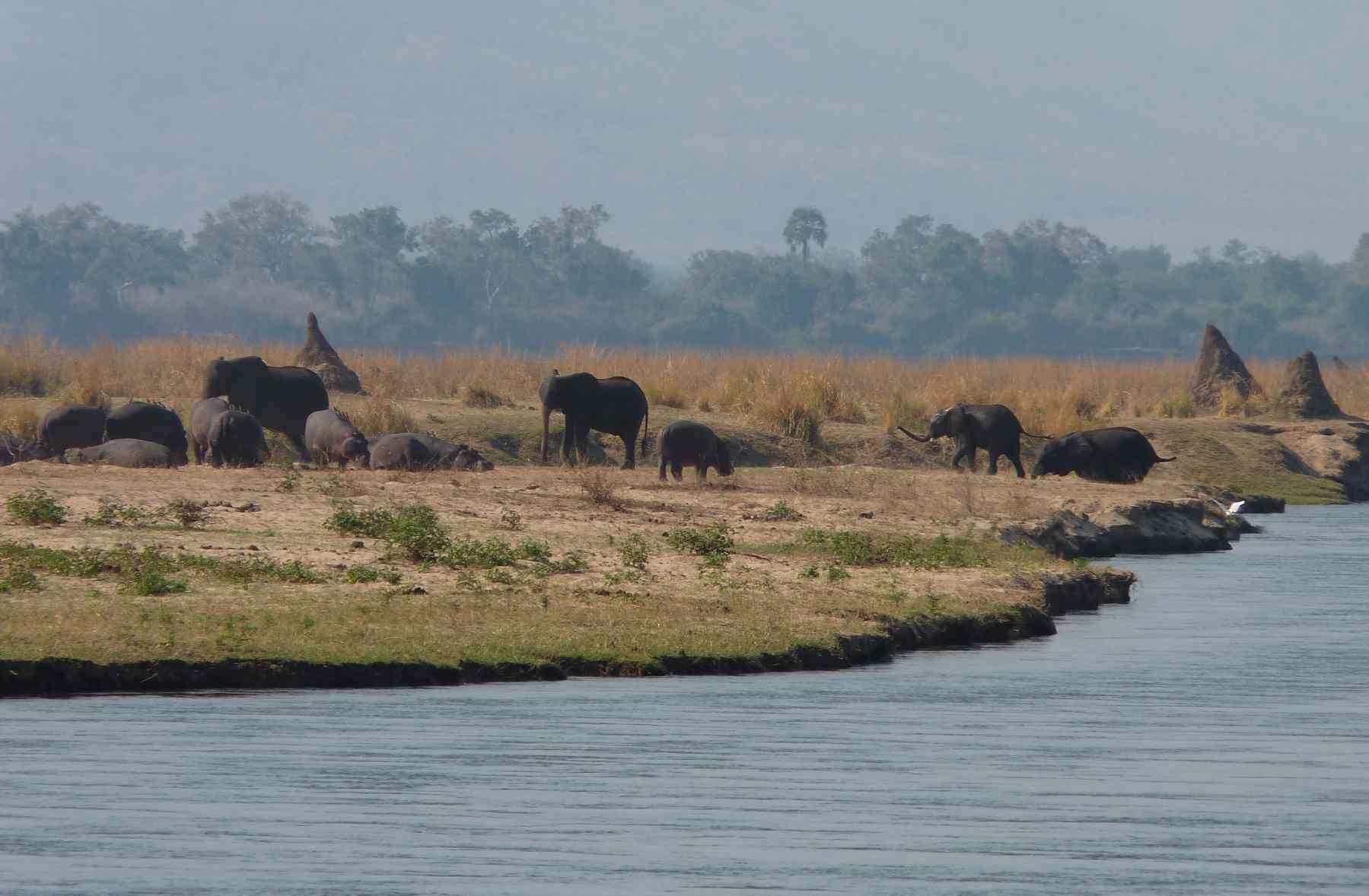
elephants and hippos

Hippos and elephants sharing the grazing area in the banks of the Zambezi River.

You may be surprised at this unusual and seemingly dangerous freedom but it works well due to a combination of animal tolerance and human caution. So, you are able to leave your metal cage and walk around freely! However, we must never forget that the animals we see around us are wild and as such, require the utmost respect and caution from us. Walking away from the protection of your car demands extreme prudence at all times, along with being aware of your surroundings, the direction of the wind, where you place your feet along with being able to read other important signs and, most importantly: to remember where you parked your vehicle!

The beauty of leaving your car.

The beauty of leaving your car.

We found lions on our first day, ten minutes after leaving our lodge! There were two: a young male and an adult female. They were just visible in the bush, near Chisasiko pool. We stopped the car and joined other people already there having their morning coffee while watching the lions, a rather unique experience! The opinions were divided on whether they had or would hunt. To us they looked alert as if looking for prey but it was difficult to guesstimate!
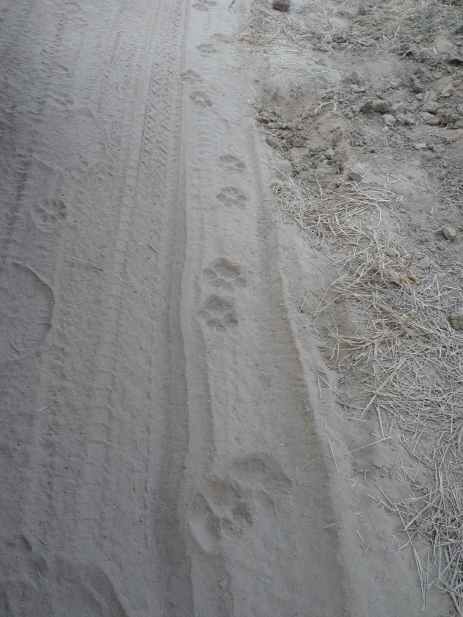
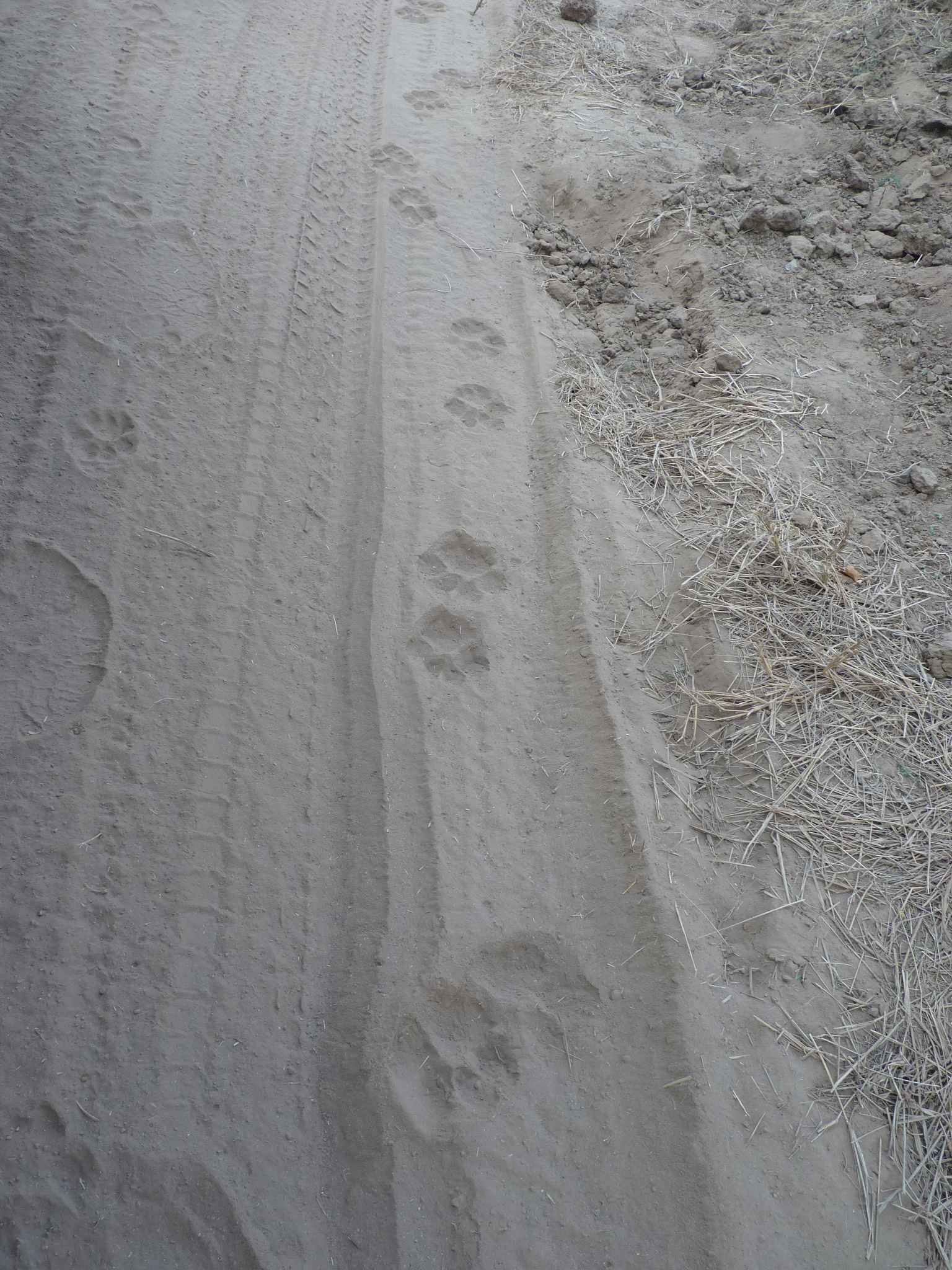
Lion paw marks on the dusty road.

Lion paw marks on the dusty road before they entered the bush.

While the lion conversation was going on, a new vehicle arrived. It was a group of tourists with a professional guide in his late fifties, known to some of the people present. As usual, the excited crowd informed him of the lions’ location. What followed next was as unexpected as it was shocking! He, followed by his unknowing clients and another staff member with a gun, walked straight towards the lions, doing exactly what you must not do! What happened next was as predictable as it was unnecessary: the lions moved off! The group then turned back and left!

The ... pool, where the lions were.

The Chisasiko pool, where the lions were.

“He is after a fat tip from his clients” was my angry and rather loud comment and then I heard my wife’s lapidary “poor man, it is sad that at his age he has to do this to get some extra money!” The latter was followed by another remark from a lady in the group “he left it a bit late!” Anyway, seeing that the situation had been modified by human folly beyond immediate recovery, we pushed on with the idea of coming back later as we knew that, despite the interference, the lions would remain in the area.

However, finding lions only ten minutes into your safari changes the situation as you become somehow “dependent” on what they will do next! Afterwards, while driving you wonder if they are hunting, moving or whether other lions have joined them (which means you could miss something unique!). We also made a mental note of their proximity to our lodge!

During our stay we were rewarded by nice sightings of buffalo, eland, greater kudu, waterbuck and zebra among others. We also saw a trio of fish eagles engaged in a loud territorial dispute and a proud saddle bill stork mother with her two grown offspring, although no male was around.
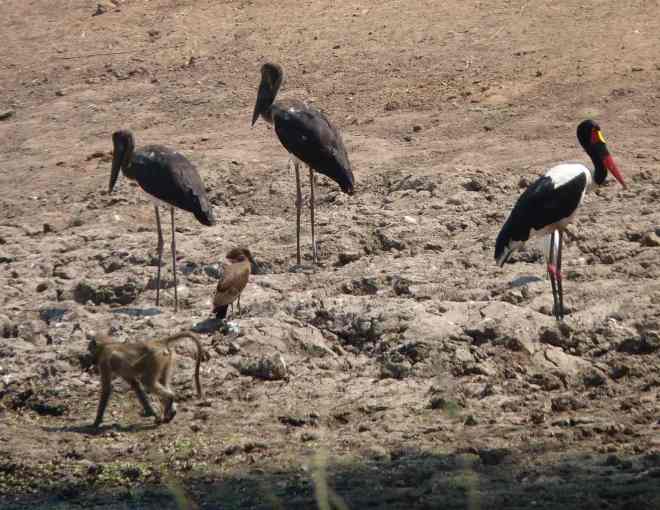
The saddle bill storks.

The two young saddle bill storks (left) and their mother. A hamerkop and a baboon complete the picture.

We did see the lions a few more times in the general area of the Chisasiko pool, but they did not hunt and on the final day they moved off towards the mouth of the Mana river, probably stalking a buffalo herd that resides in that area. We also spotted a pair of Selous mongooses and two side striped jackals (Canis adustus). Our general impression was that the park has a good animal population.

We also attempted to visit a new water hole, recommended by a friend as a good place for a “sundowner”. Equipped with the right ingredients for such occasions, we drove following a path that was clearly a firebreak with the anticipation of reaching a quiet place where animals would come to drink. Unfortunately, after driving about 10 km we came to a wide sand river with very broken and steep banks. There were very recent and deep wheel marks in the sand showing that someone else had tried to find the waterhole and got severely trapped in the deep sand. The story was reinforced by the warm ashes of the campfire they had lit while spending the night by the car! We decided not to risk the crossing!

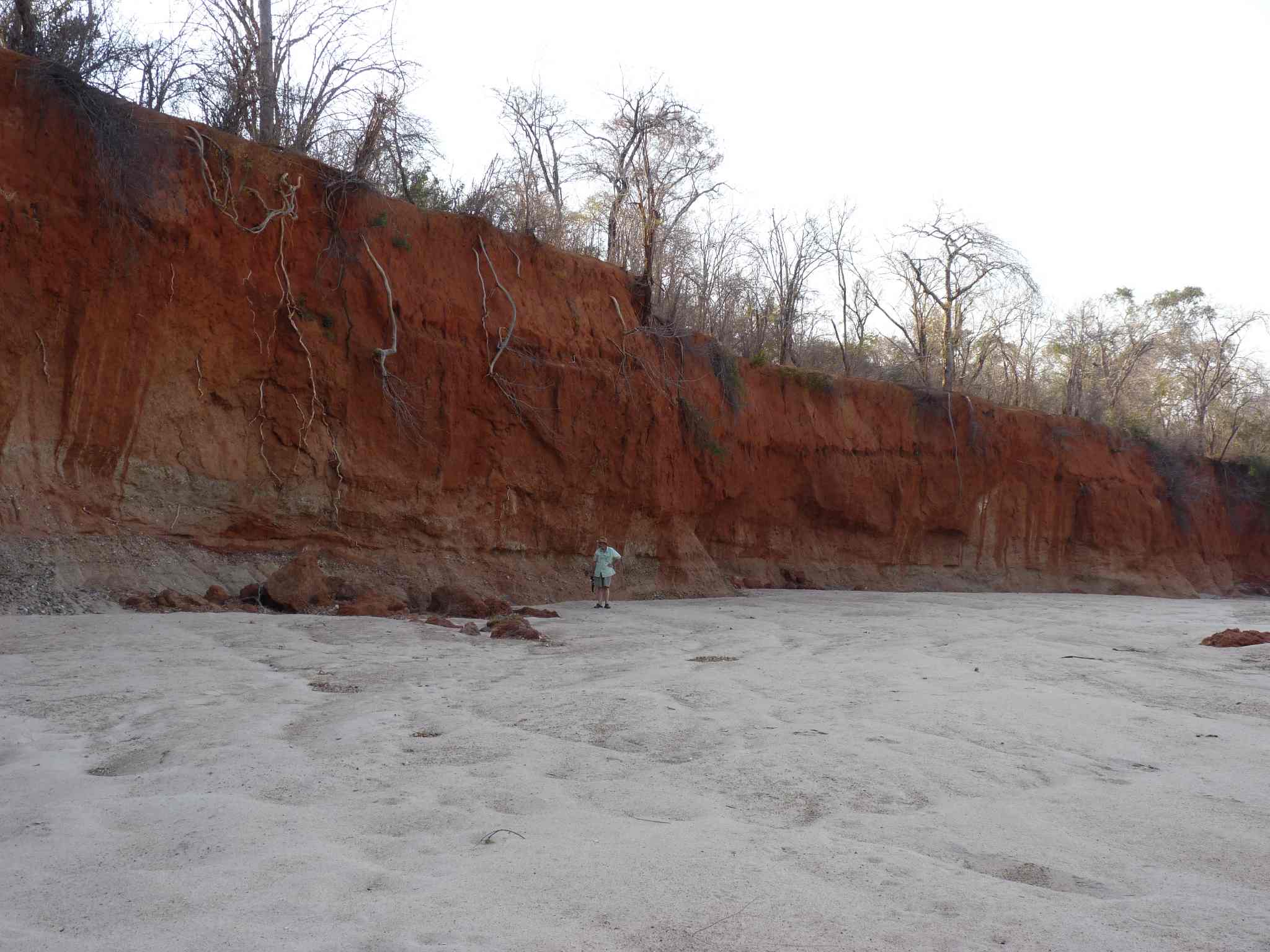
The river was a lovely place to have a drink anyway. We also enjoyed a nice walk on the dry riverbed framed by rather high cliffs made of red soil, where trumpeter hornbills feeding on wild figs could be seen. We will come back next time for another attempt at crossing the river.

Walking by the red cliffs in the sandy river bed.

Walking by the red cliffs in the sandy river

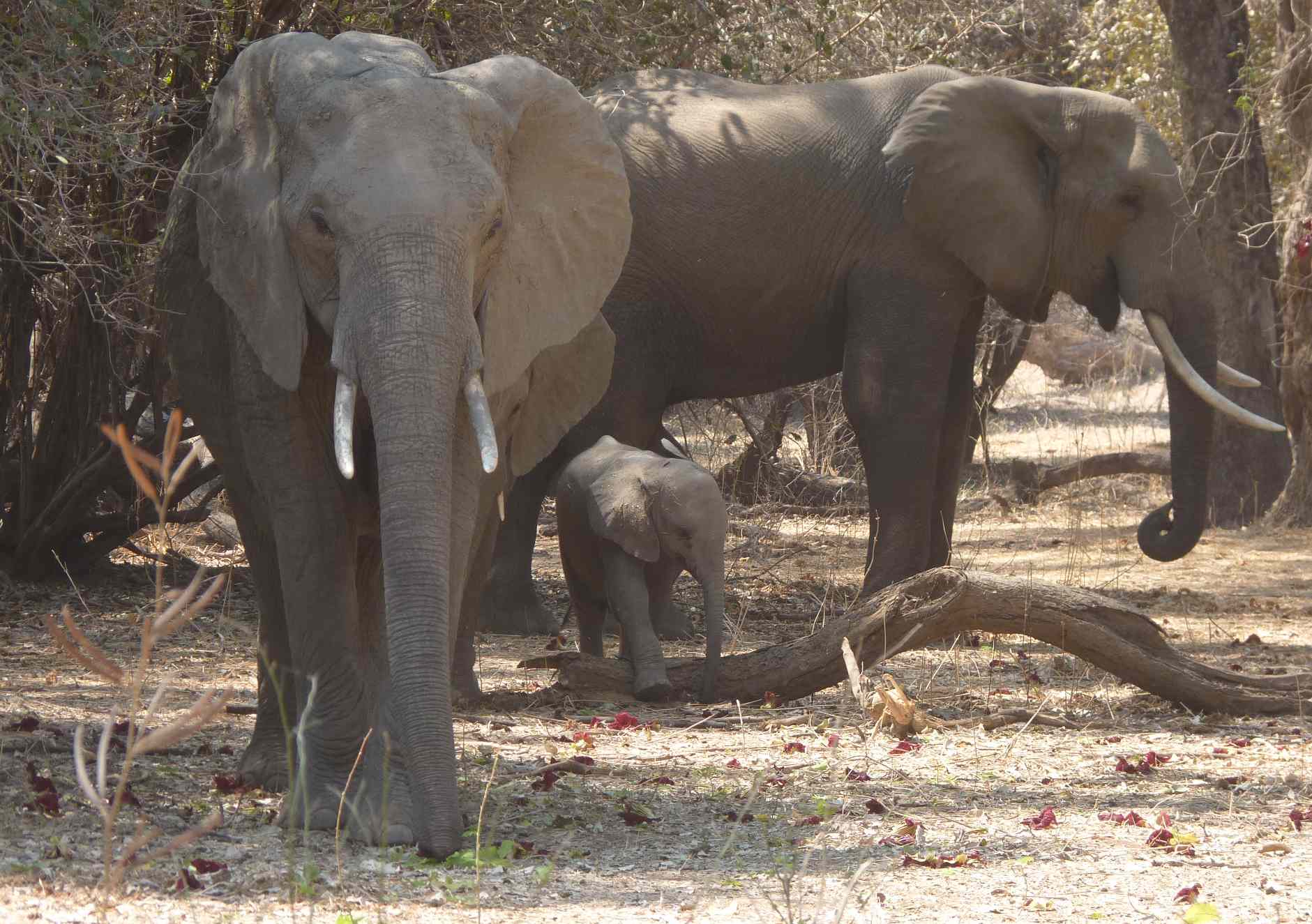
Elephants were numerous throughout the park. Young animals were in abundance. We also saw a number of adult tuskers. The latter do not carry heavy tusks of the type we saw in Kruger and described in my earlier post.

All feed on pods!

A small group with a young one. Note the Apple ring acacia pods on the ground.

Although I will focus on the Mana trees in one of the next accounts, one tree is a major protagonist in Mana: the Apple-ring Acacia (Faidherbia albida). It is the main tree of the Mana riverine plain forest and it produces a spiral shaped pod eaten by most herbivores in the park and it constitutes a valuable source of food in the dry season.

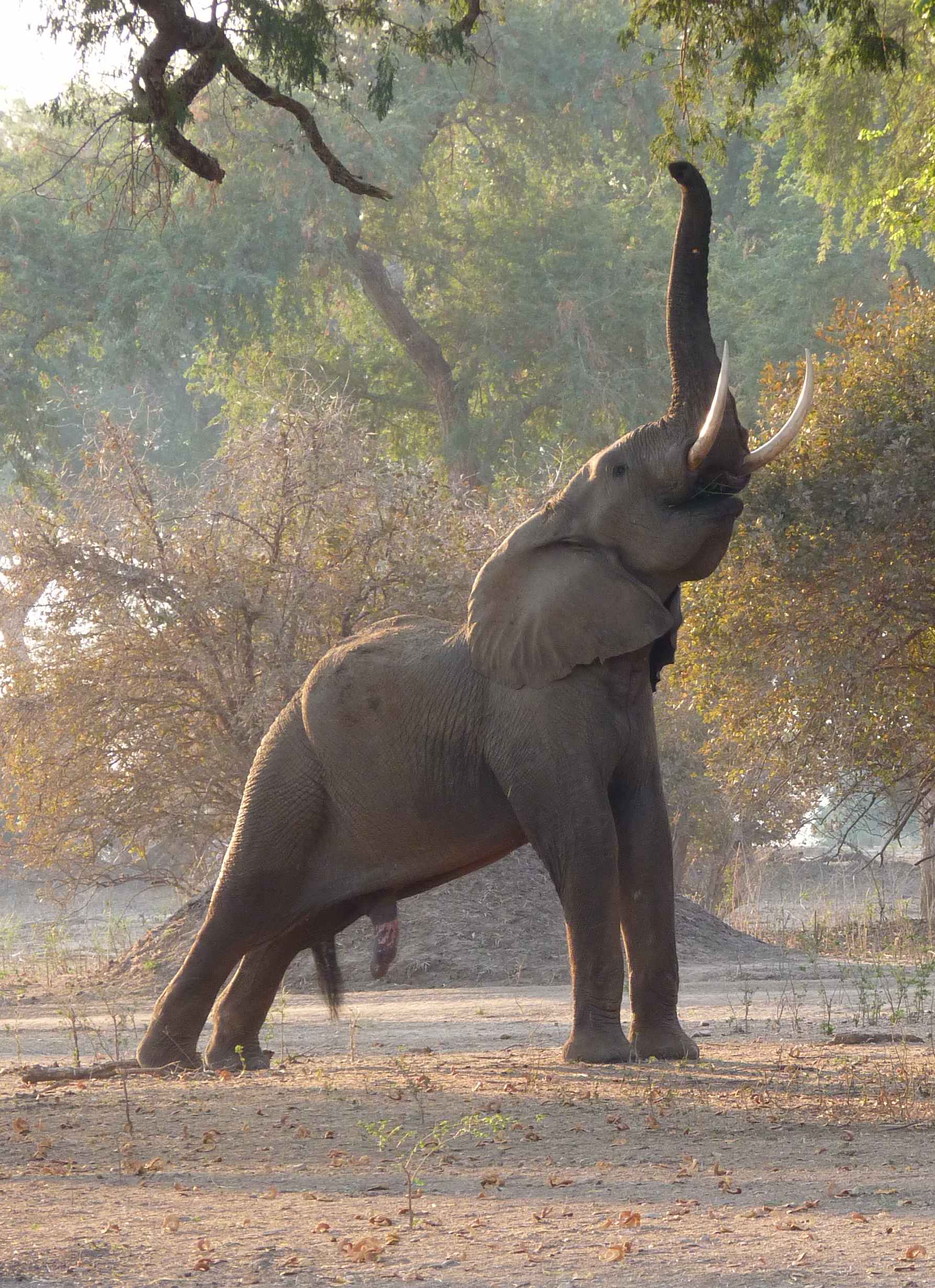
The elephants are very fond of these pods and at this time of the year they can be seen feeding on them all the time, wherever the trees are. To watch this activity is rather engrossing so we stopped often to watch them as they pick them up from the floor using their trunks as vacuum cleaners! However, as usual, the best are difficult to get! The tastier pods are those still high up in the trees!
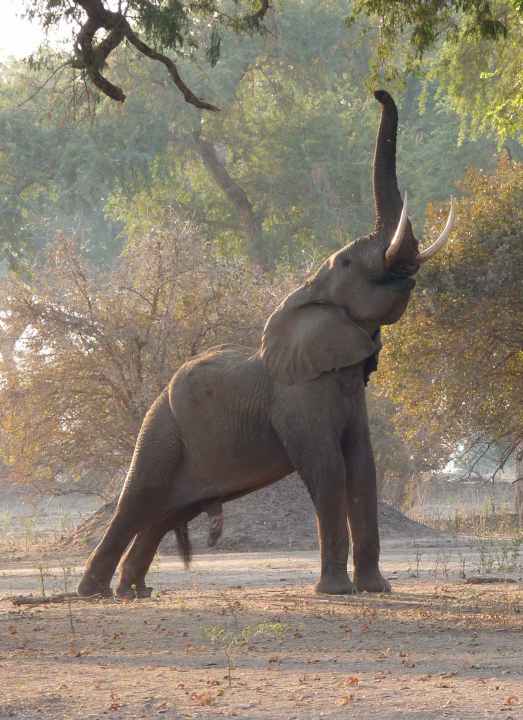
Pod collecting at full stretch.

Pod collecting at full stretch.

Aware of this, elephants will go to great efforts to reach them and, with patience; you may be able to watch them doing it. This was, fortunately, our case as we came across several pod-eaters that stopped at nothing to get these treats!

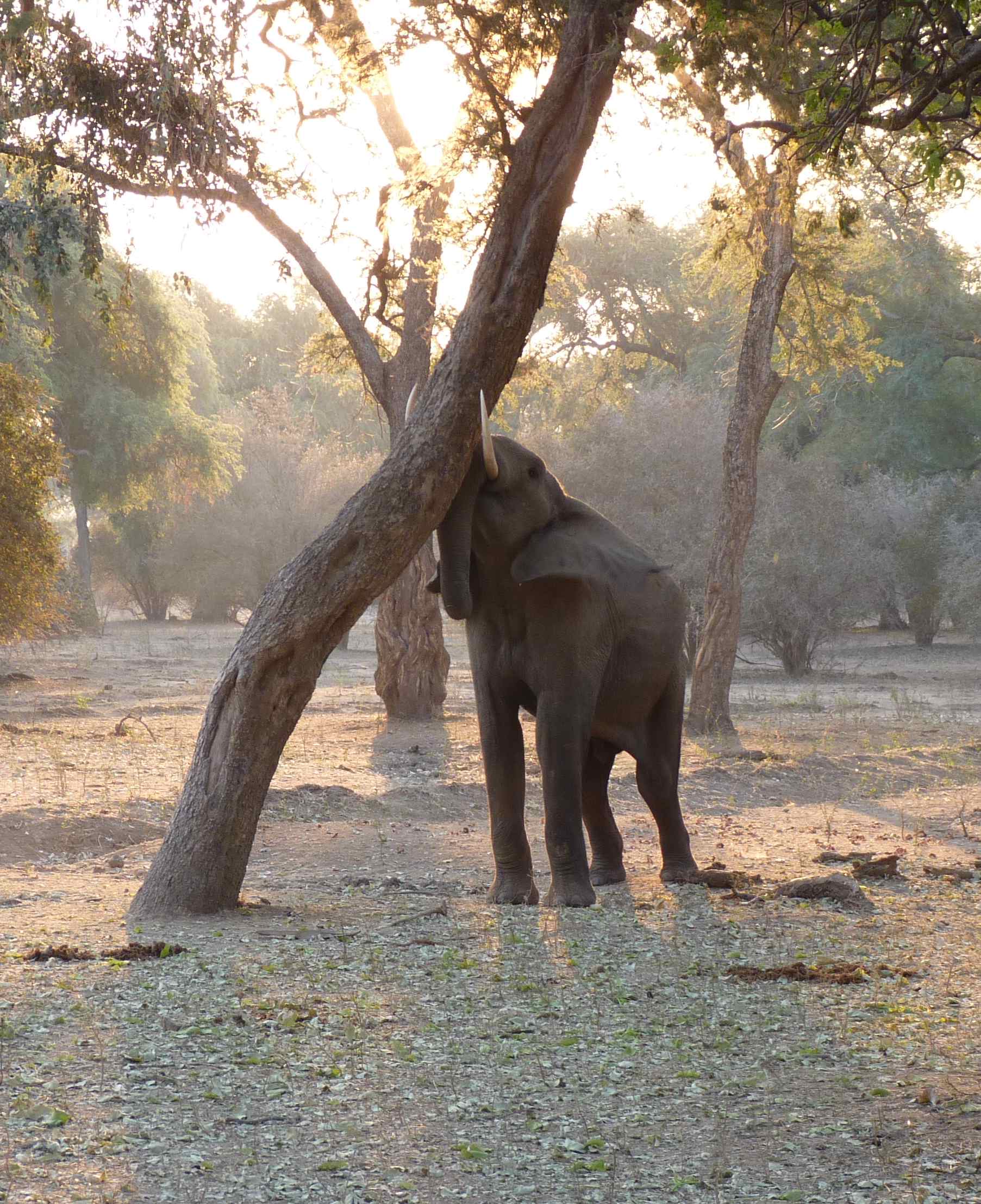
During the second day of our stay we found a particular tusker that “agreed” to put on a show for us. He was dealing with a rather tall tree, so he stretched to the highest possible extent in order to reach the place in a wild circus-like act, and brought down branches full of pods. After finishing them and unable to get any more, he changed tactics by leaning his head against the tree trunk and proceeding to head-butt it vigorously, which provoked a “pod rain” that it subsequently picked up from the floor.
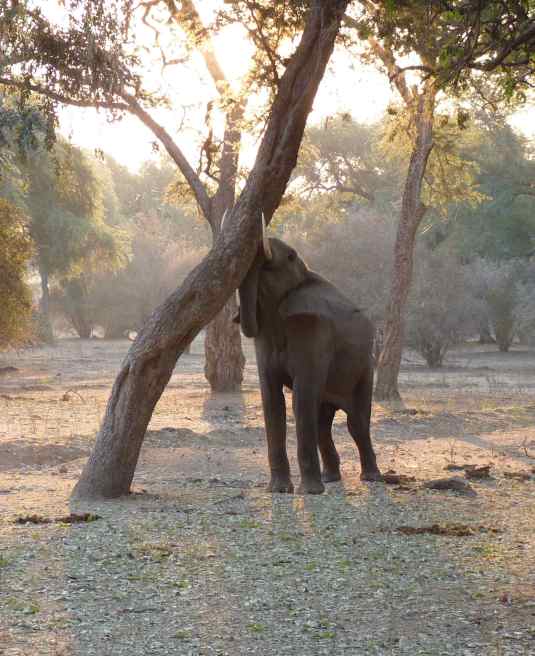
Shaking the tree.

Shaking the tree.

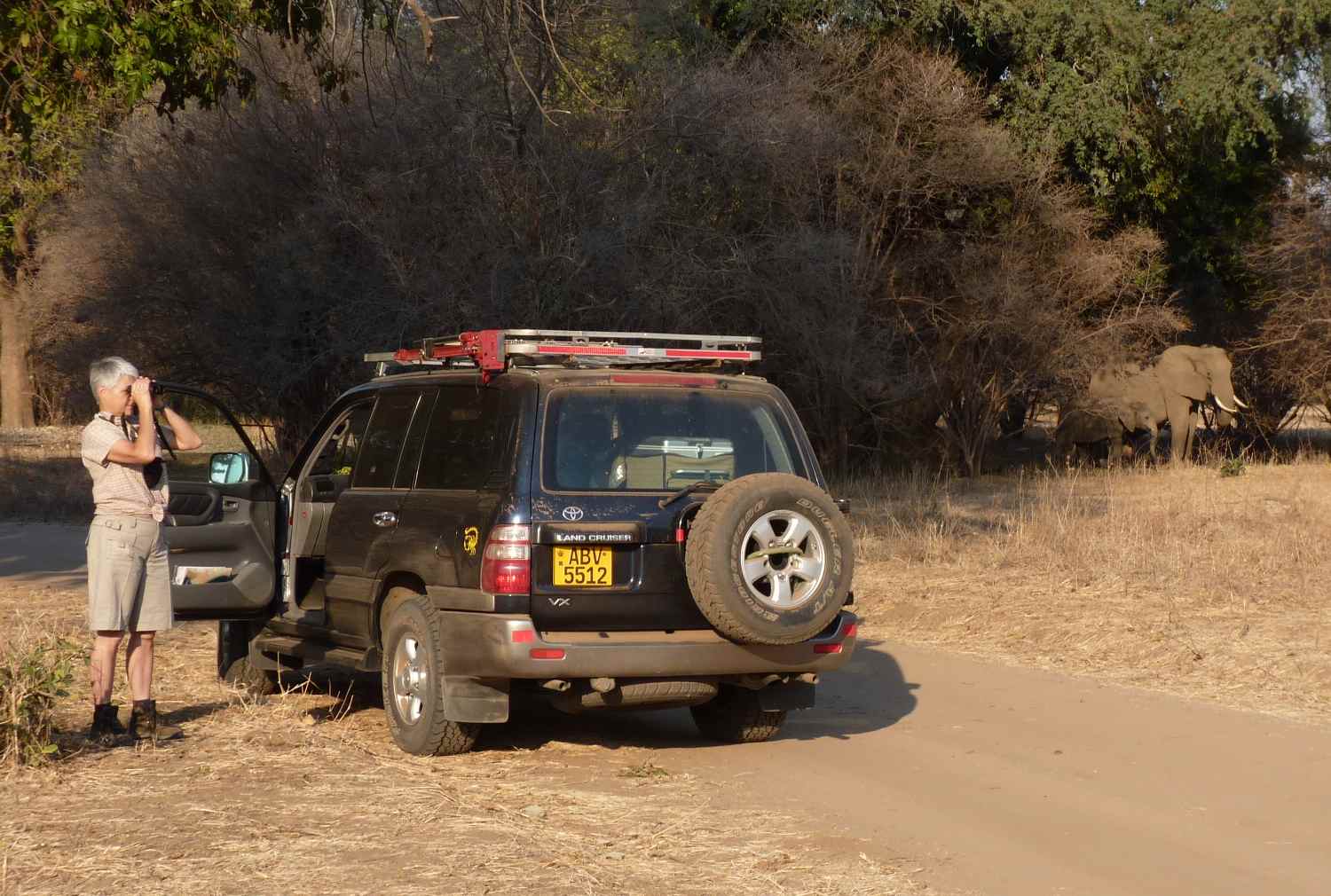
As the tusker moved off in search of other tasty trees we also moved off, still looking for elephants. As we were driving slowly, we were overtaken by another vehicle that, we found parked by the road after a while. We stopped and asked its sole occupant if he had seen the lions. “Not today” he replied, “I have been here for three days and only saw them the first day” he added. We volunteered what we knew about the current lions’ location and asked “Any painted dogs*?” as we knew that these carnivores are often seen in Mana.

We could not believe his reply: “Do you mean other dogs apart from the one that we just saw crossing the road in front of your car?” “Are you serious?, we did not see anything!” my wife’s response came immediately. The reply came: “OK then, apart from the one I saw and you didn’t?” he said, clearly enjoying the moment and with a nice touch of humour. “We did not see it!” we confessed rather sheepishly, as it seemed unbelievable to us that this could have happened. He then added “I see them often as I am part of a painted dog conservation project that works here!”. Our embarrassment was somehow lessened as he had a “trained eye” for dogs!

Talking to him we learnt that the dogs are present in Mana around the “Mucheni” area and that the one he saw (and we didn’t!) was probably a male of a new pair that had just come from the Rukomechi area. We also learnt that the alpha male of the local Mana pack was missing and, although there could be several reasons for his absence, it is possible that it has died. We thanked him for the information but, despite it, we failed to see them during our safari. Our only consolation was that, although we did not see one, it was in the same place at the same time as us!!!

As a last attempt to save face, I tell you that we had seen painted dogs on a previous occasion in Mana Pools. We were on a game drive with my daughter/Editor when we spotted a pack on the road. There were about 16 dogs and they were moving rather fast. Taking advantage of the freedom of Mana Pools we parked the car in a hurry and followed them on foot, together with a group of tourists.  It was very exciting as they caught an impala just before we got to them and they were feeding on it. Regrettably, the scene was interrupted by my loud talking -being a bushsnob- and the weird noise my camera made every time I switch it on! The picture below was taken at that time.
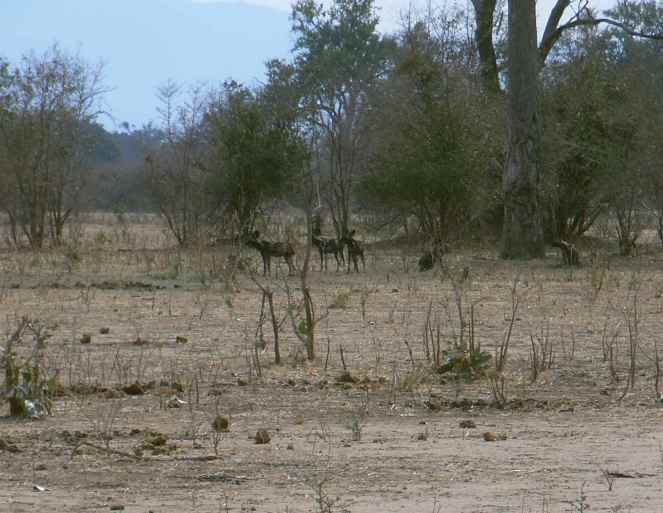
A couple of the wild dogs seen during an earlier visit.

Wild dogs seen during an earlier visit.


* Lycaon pictus is commonly referred to as African wild, cape or hunting dog and African painted dog, among other names. I use "Painted dogs" as this is the name used by the project in Zimbabwe.
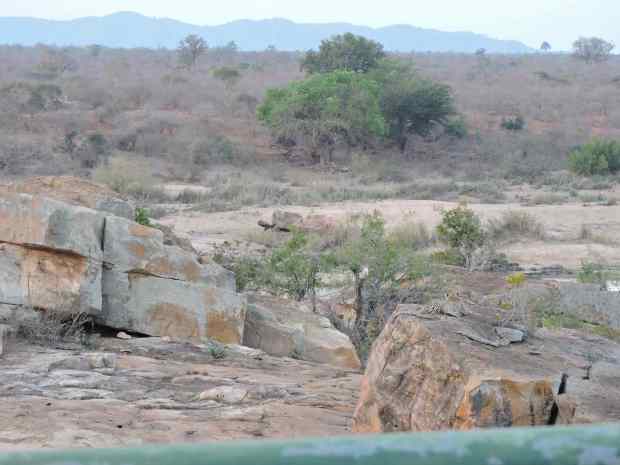
Green eyes in the wild

cropped-p1090883-eyes-cropped.jpg

My wife has beautiful green eyes and she has always been very careful with them, looking after them all the time. I noticed this and -being myself- could not avoid mentioning this to her early on during our married life as I thought she was exaggerating… She is a very tolerant lady and patiently but firmly explained that her eyes were her most important asset. I did not ask again and made sure that her eye drops were always handy!

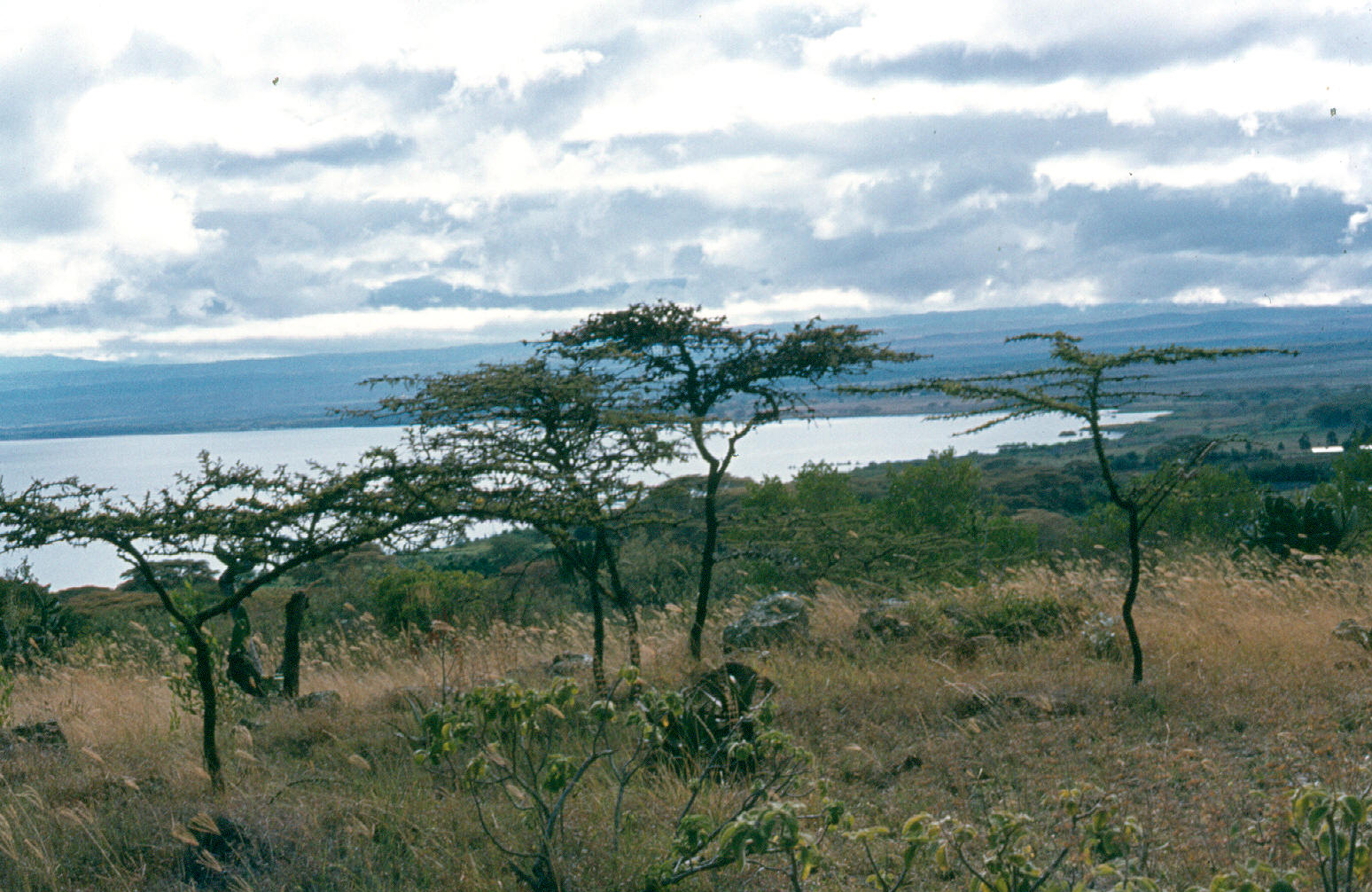
Lake Naivasha in the distance.

Lake Naivasha in the distance.

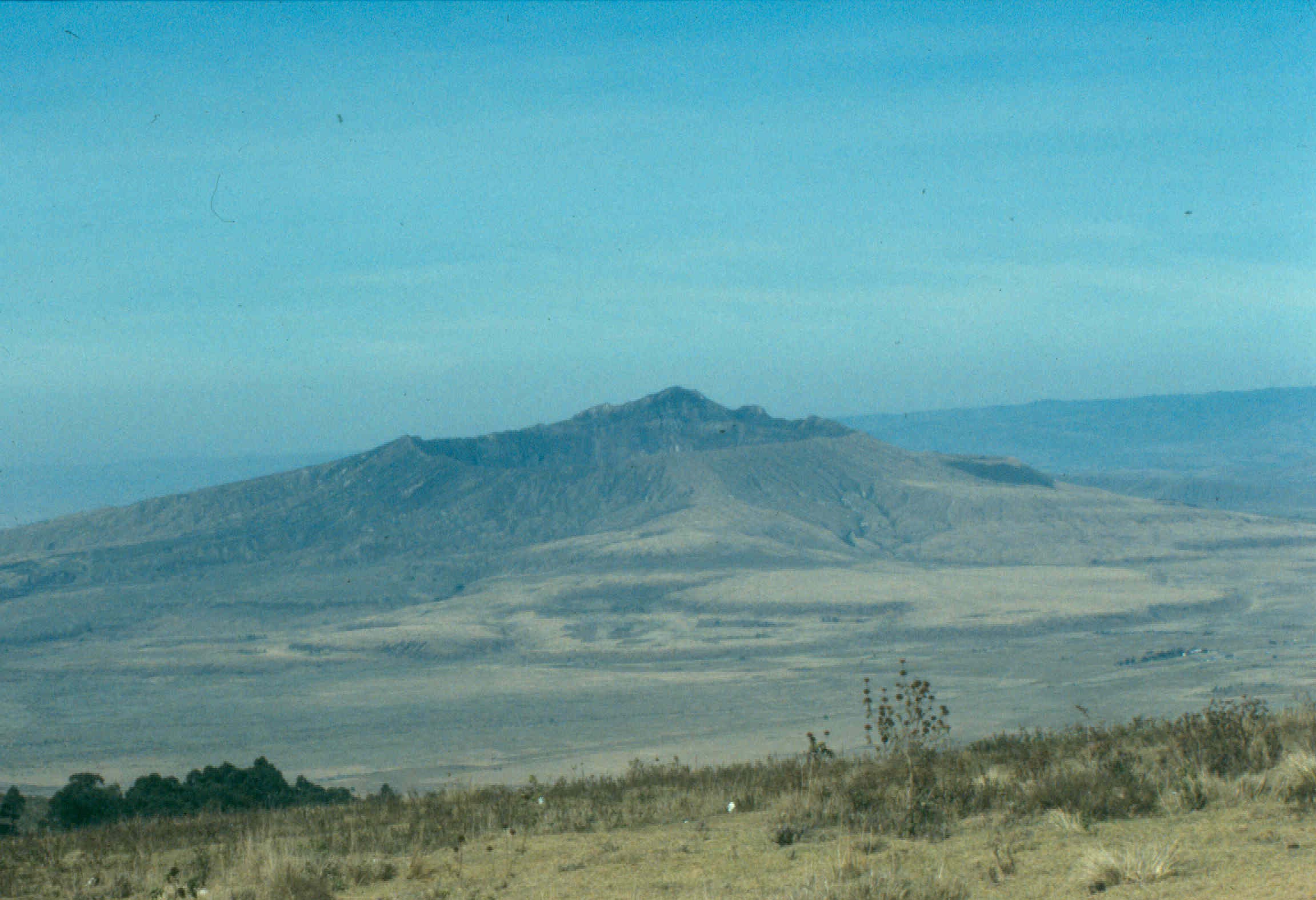
While in Kenya in the eighties, on a Saturday we decided to travel to lake Naivasha to spend the weekend at the lake shore at Fisherman’s camp (http://www.fishermanscamp.com/) on our first outing to the area. It was a beautiful drive down the Kikuyu escarpment, passing by the Longonot volcano and the little church built by the WWII Italian prisoners.

Longonot Volcano.

Longonot Volcano in the Rift valley.

Then, the magnificent Rift Valley came into view, with lake Naivasha glimmering in the far end (see first picture, above). Once at the bottom of the valley, we crossed Naivasha town and then followed the lake shore road for about 20 km to reach the camp. At the time the road crossed mainly private farms and cattle ranches.

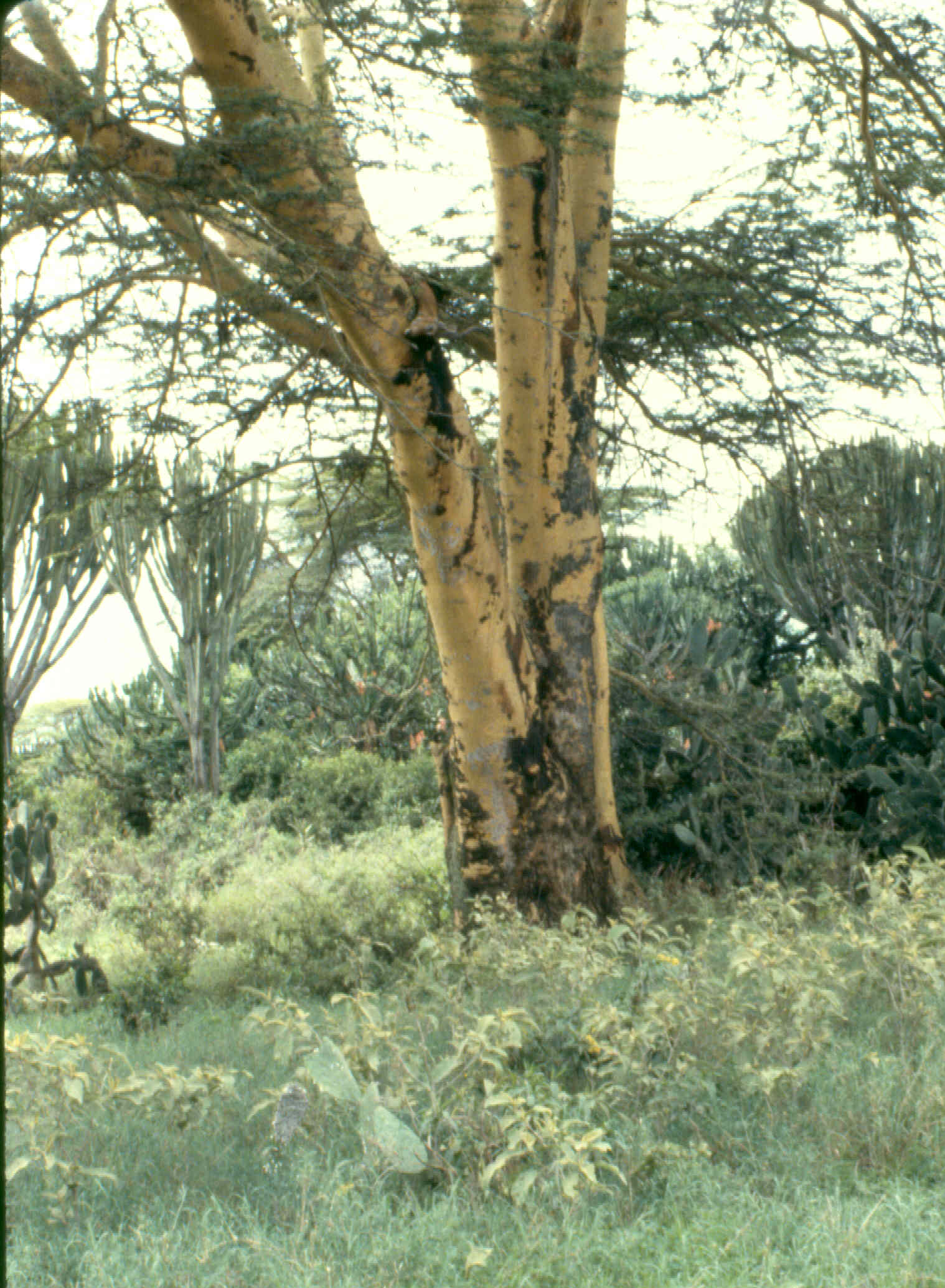
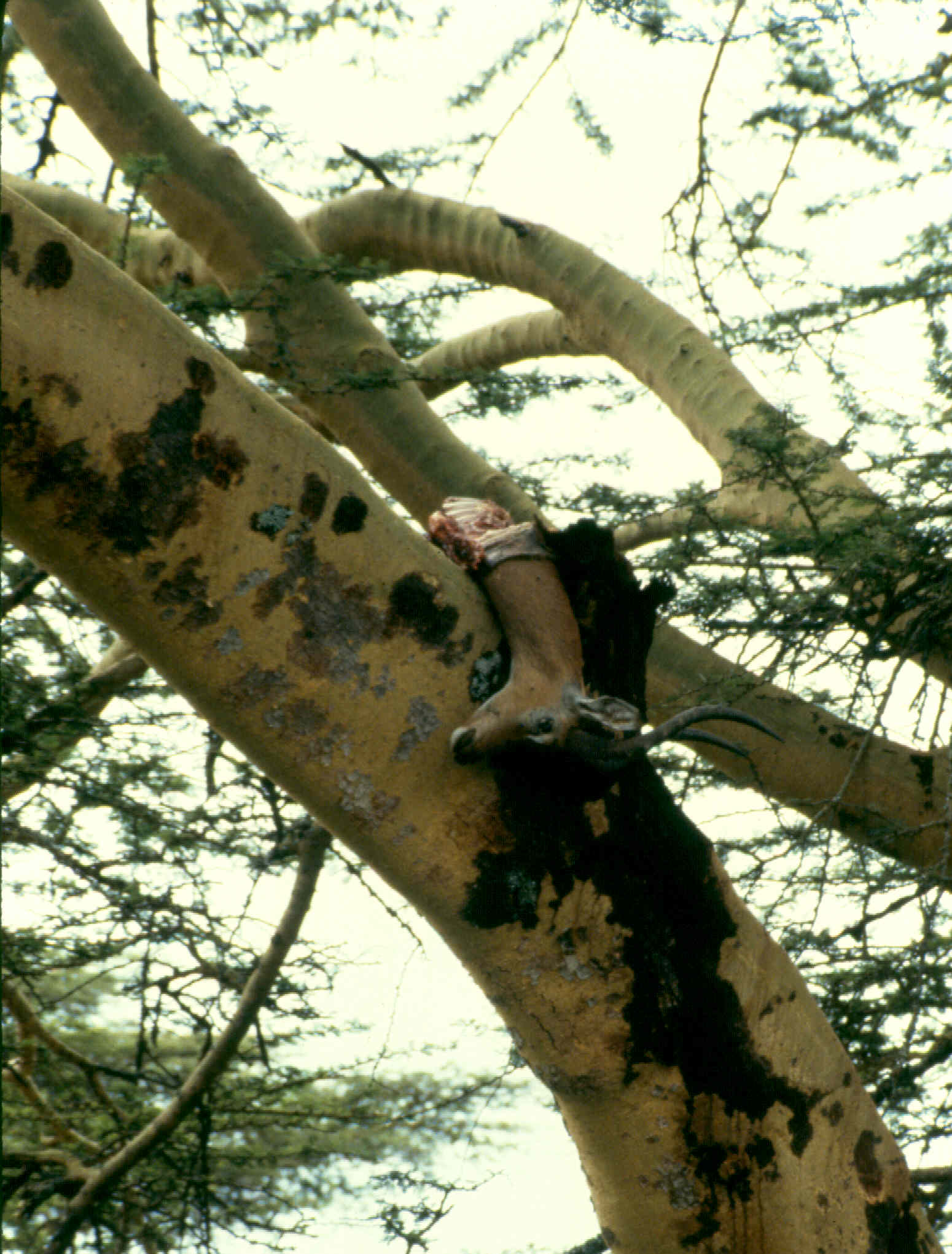
It was mid-morning and I was enjoying the drive in our loyal Volkswagen kombi, taking in the great landscape when I heard: “There was an antelope up a tree!” announced in a rather calm way. I did not react immediately as it was a ridiculous announcement. I was about to ask my wife to pour some more water on her head as it was clearly overheating when she reacted to my indifference with “I am not joking, there is an antelope there!!!” She was pointing at a yellow barked acacia about 100 m from the road, on our right. I stopped the car and looked. I could see the acacia well but that was that. I reversed, still incredulous, until I parked in front of the tree. Following the directions given and with the aid of my 8 x 40 binoculars I managed to identify the head and neck of a male impala placed across a branch.

A view of the tree with its unlikely inhabitant. Please note that this is already a close-up view!

A view of the tree with its unlikely inhabitant. Please note that this is already a close-up view!

The expected “I am glad that you believe me now” followed. My immediate thought was that it was either placed there by a farmer to attract and kill a leopard or by a leopard! Neither were visible nearby as we were alone on the road. As the situation clearly demanded further investigation, we got out of the car and walked to the tree. Although half eaten, the impala was quite fresh and it was probably killed and placed there the night before. The question was solved -at least to our satisfaction- by finding deep claw marks up the tree trunk where the reddish inner part of the trunk was visible where the yellow and velvety bark had been removed!

On closer inspection, the impala was clearly visible.

On closer inspection, the impala was clearly visible.

After taking pictures we proceeded to the camp with great excitement and speculated on the finding. Our holiday break now clearly influenced by the find, we agreed to return to the tree at dusk to see if the impala owner would come back to the kill. We kept our secret and at about 18:00 hours we set off to sit and wait by the tree. We were prepared for a long wait so we took our dinner and drinks with us, parking the car at a secluded place to avoid being too noticeable to passers by. None of the cars or pedestrians that happened to pass by ever saw anything! To my eyes that knew that the kill was there, this now seemed impossible!

Our wait lasted until midnight but to our disappointment, the leopard did not come back. Tired of the wait, bored and sleepy, we returned to the camp. We spent a great Sunday exploring the lake shore until it was time to get back to Nairobi before dark.

The carcass was no longer there when we passed by in mid-afternoon. Further inspection of the tree trunk showed additional paw marks and bits of  fur were also found in the bush nearby.

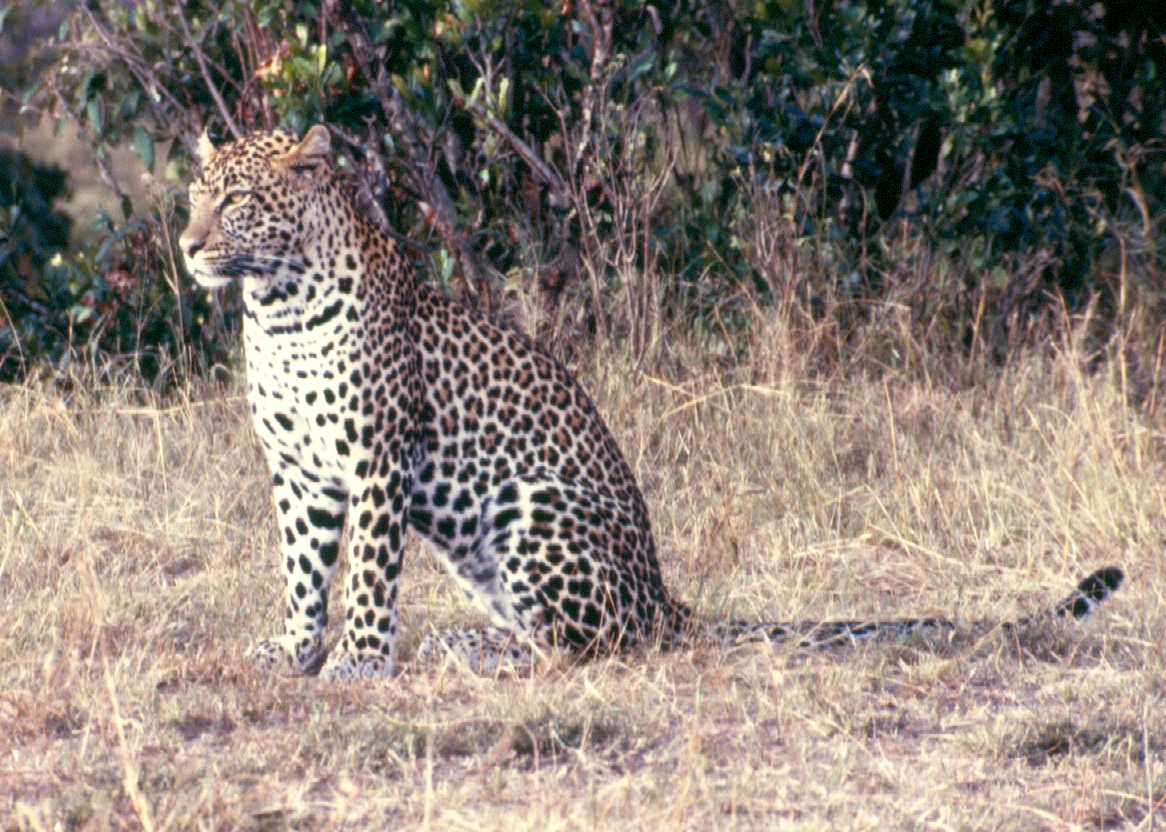
The secretive East African leopard pictured at the Maasai Mara Game Reserve.

The secretive East African leopard pictured at the Maasai Mara Game Reserve.

This was the first demonstration of my wife’s keen eyesight. I have shared safaris and game viewing with lots of people and I can assure you that she rates among the best! If there is an animal on a game drive, she will find it!

(Written on 2 July 2014 and posted on 24 August 2014)