Masuma dam

Fearless bee-eater

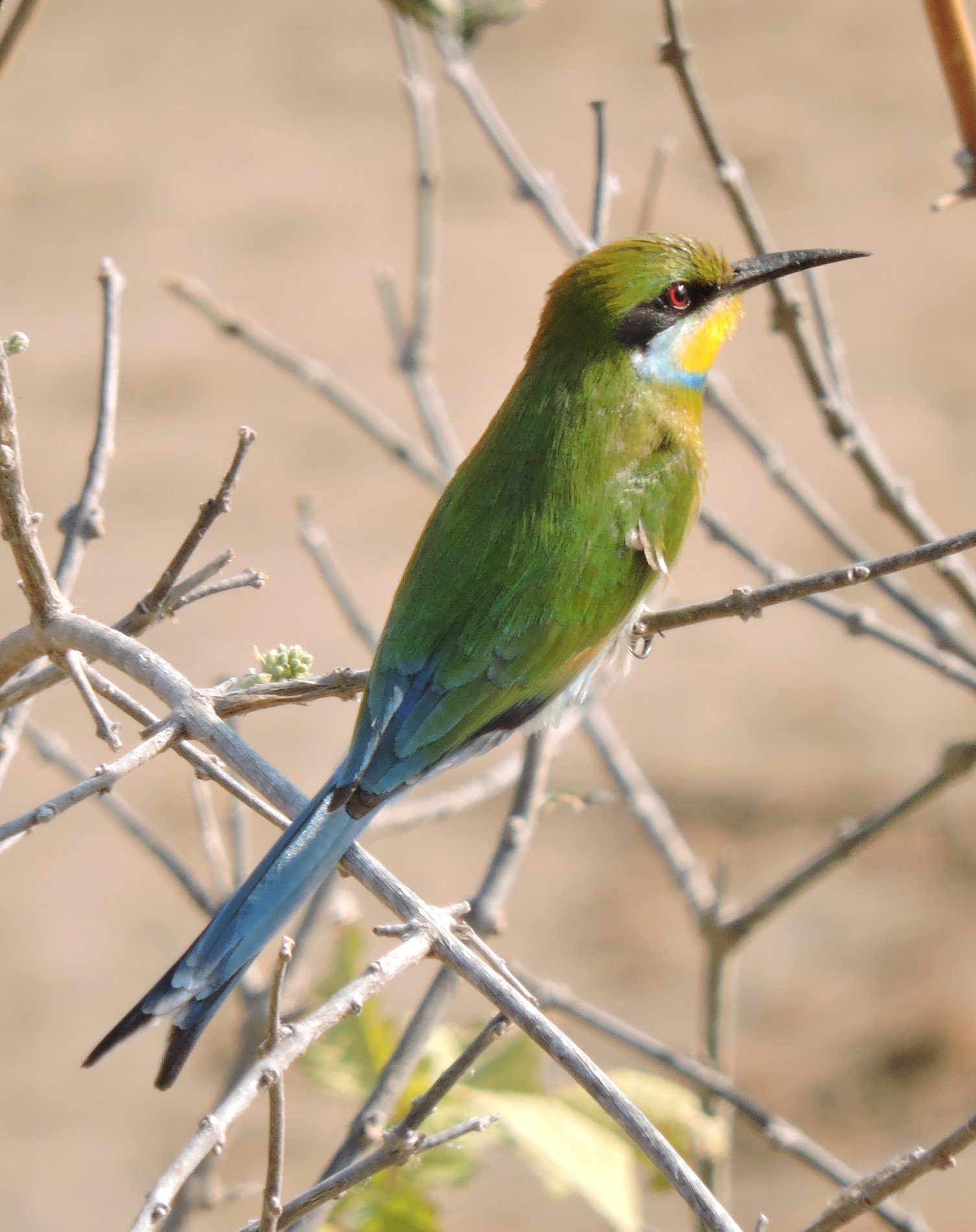
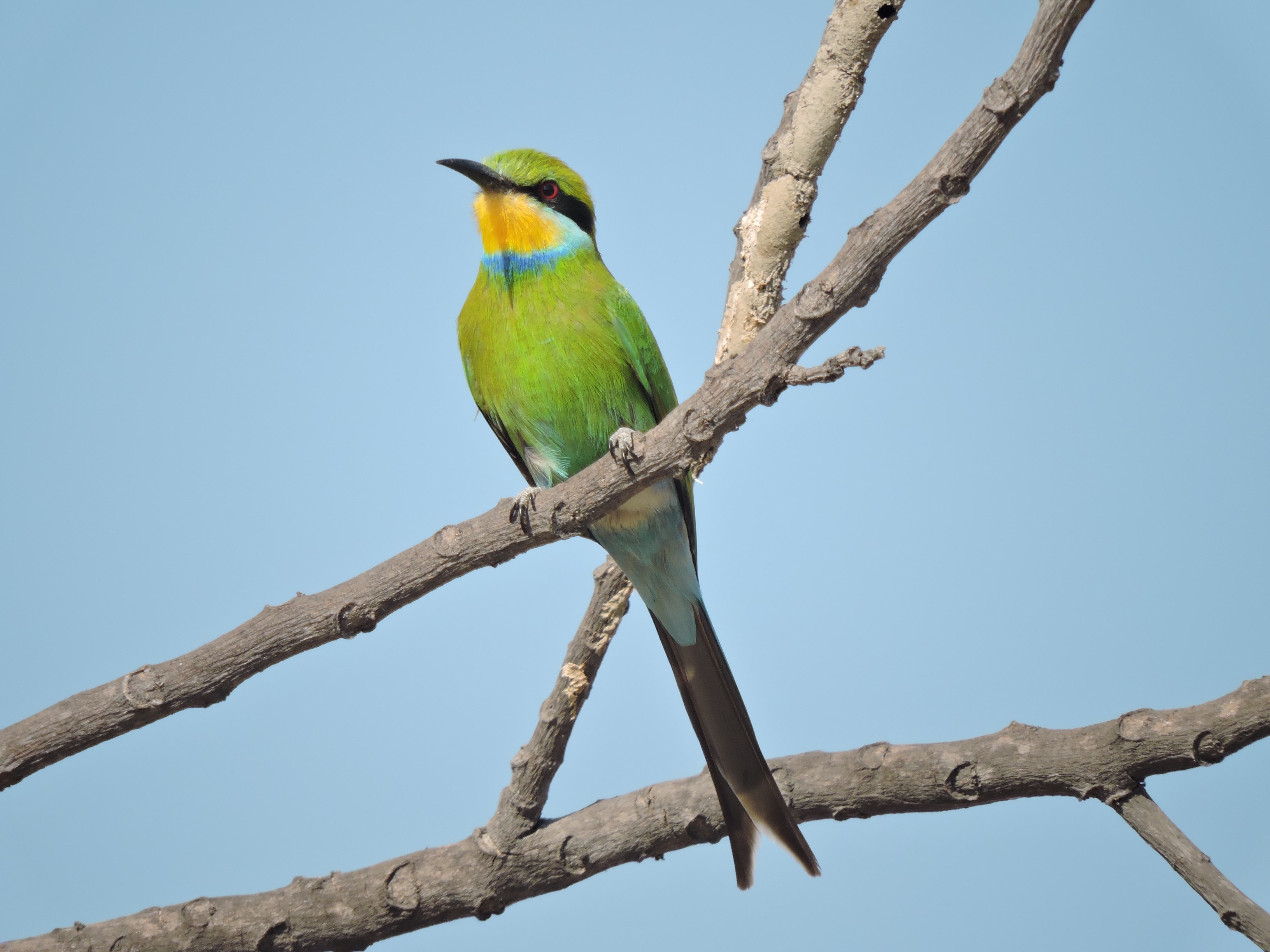
While at Masuma dam, we spent sometime identifying a bee-eater that we had not seen before. Fortunately at least one pair was residing at the dam’s campsite and we had time to have a good look and classify them as swallow-tailed bee-eaters (Merops hirundineus). As my new Roberts VII Multimedia Bird of Southern Africa App says, “The deeply forked blue tail is diagnostic”.

The first picture.

The first picture.

The birds were using two trees from which they would launch themselves in search of prey and come back to the same perch to either try again if they failed or to eat the unfortunate insect if successful. Having watched them for a while we decided that we needed a good picture.

My son is keen on bird watching and wildlife photography so he was given the task of taking “the picture” of the new bee-eater. He approached the birds and took a few shots. Not happy with the results, he tried to get a few steps closer and he got two good shots.

DSCN6573 copy


DSCN6577 copy 2

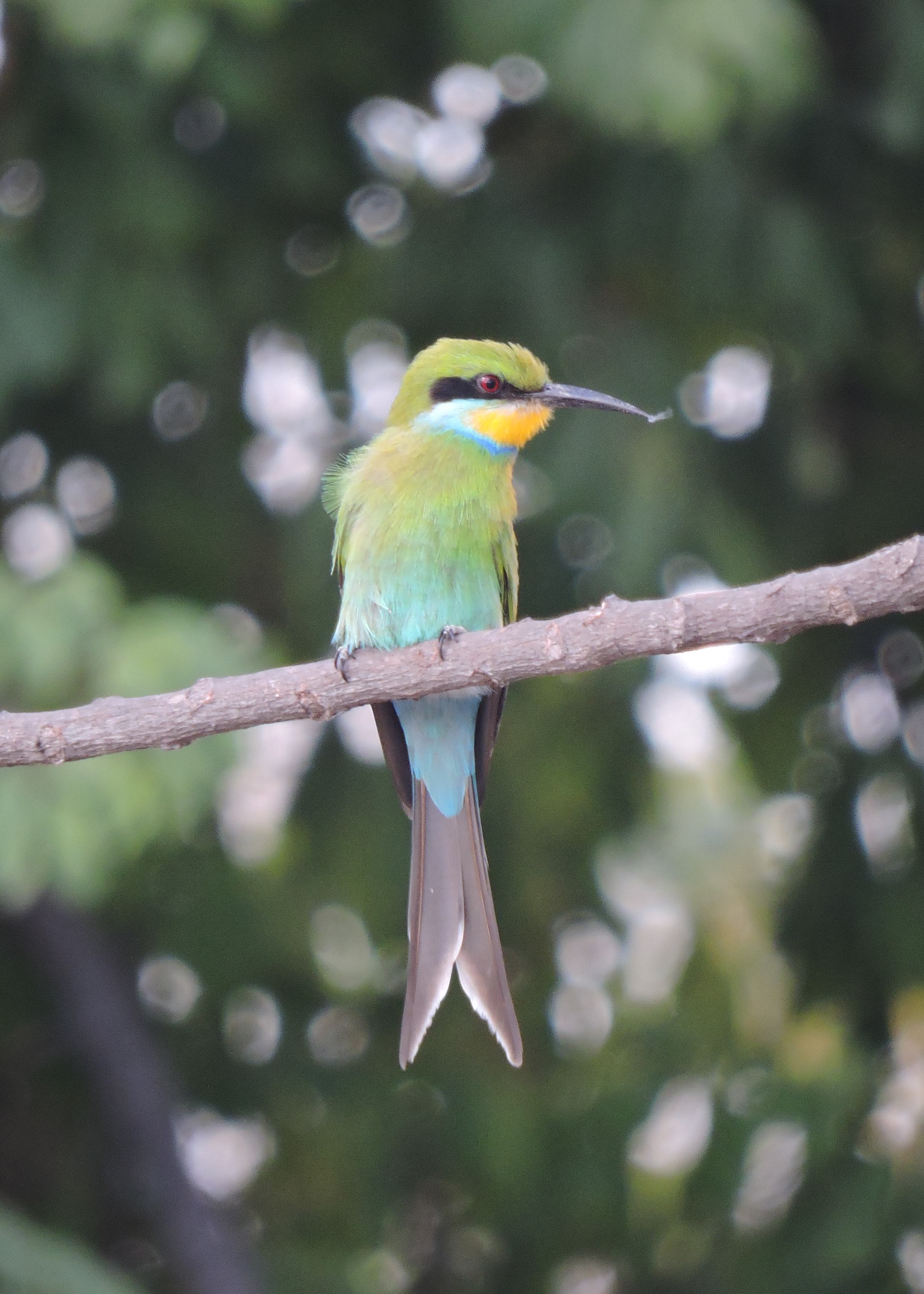
While moving forward still he saw a fly landing on the side of his shorts but he paid no attention to it as his eyes were fixed on the bee-eater. However, when he was about to shoot, the bird disappeared from the viewfinder. Before he could react he felt more than saw a touch on his shorts where the fly was and, to his surprise, he saw the bee-eater flying away with the fly in its beak! Luckily, he reacted fast and took a picture of the fly being eaten by the bird!

The bird with the prey caught on my son's shorts!

The bird with the prey caught on my son’s shorts!

I have seen garden birds coming to feed on people’s hands or even landing on their heads to feed from there but it was a first to see a wild bird being so daring!

Hwange National Park

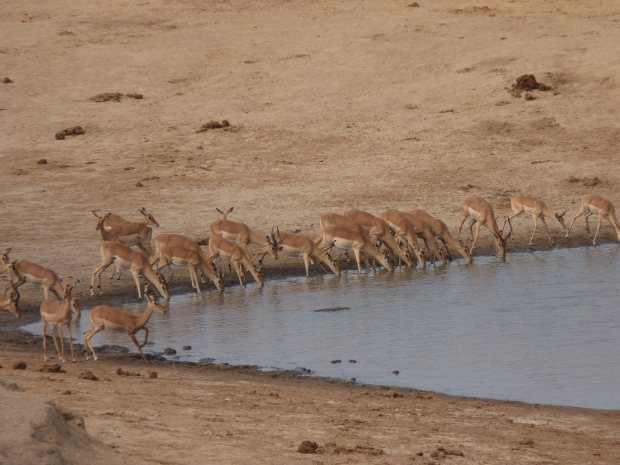
Last year I reported on our stay at Shumba Picnic site in Hwange National Park in Zimbabwe (see: https://bushsnobinafrica.wordpress.com/2014/10/31/watched-at-shumba/) as well as the observations we made on the struggle we witnessed between crocodiles and hippos for the impala carcasses at Masuma dam (see: https://bushsnobinafrica.wordpress.com/2015/02/22/hippos-from-hell/ and https://bushsnobinafrica.wordpress.com/2015/03/23/hippos-from-hell-the-videos/).

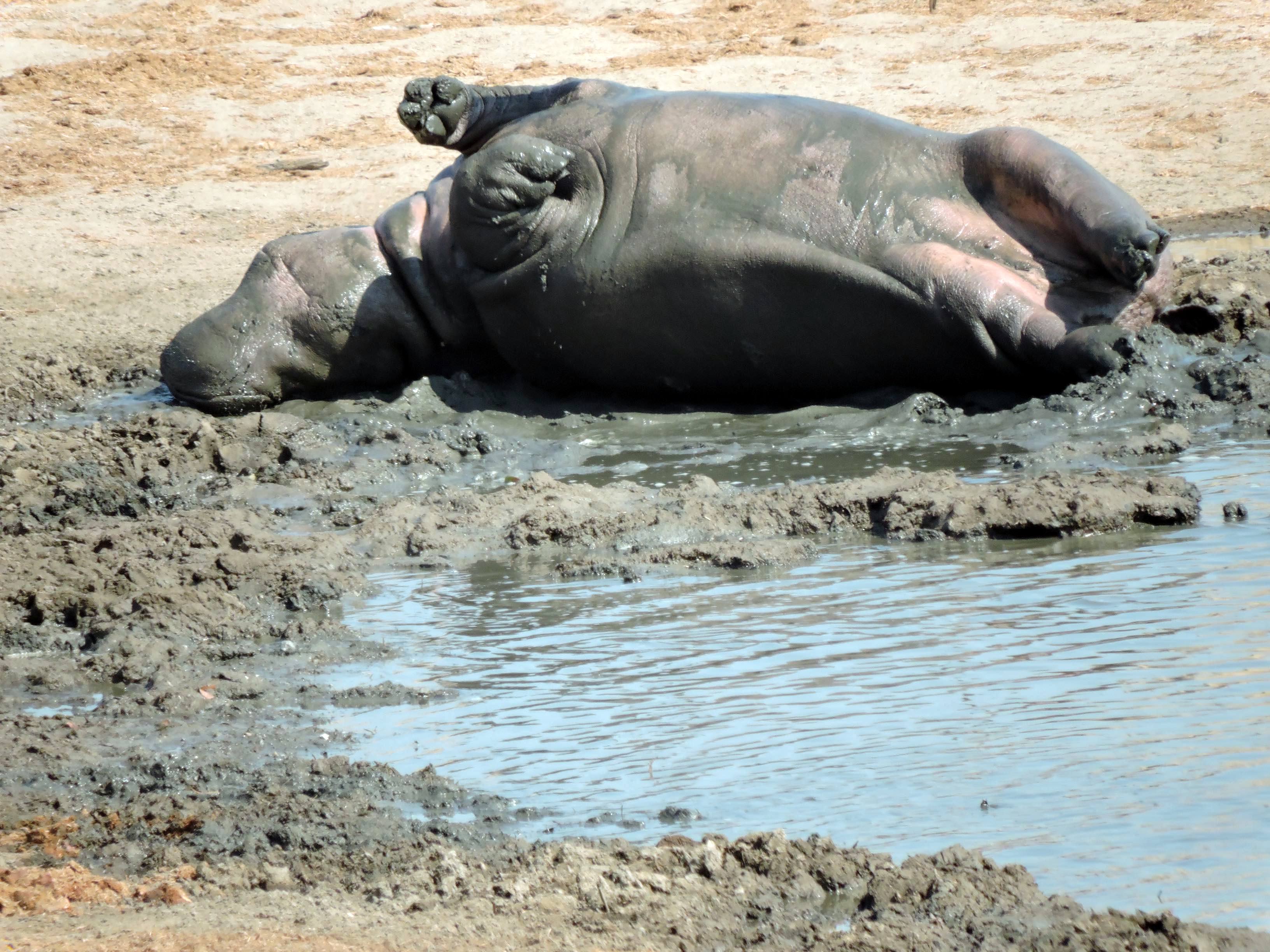
Hippos were not interested in Impala meat this time!

Hippos were not interested in Impala meat this time! (Photo by Julio A. de Castro & Mariana Terra)

(Photo by Julio A. de Castro & Mariana Terra)

(Photo by Julio A. de Castro & Mariana Terra)

After our return from that safari we immediately booked the Masuma dam campsite so that we could stay closer to the action and see if we could observe something additional in the crocodile-hippo saga that caught our interest earlier. We also booked a place in Main Camp as we were sure we would have fun with elephants at Nyamandlovu pan. We knew that the elephants were plentiful there and we could watch them and enjoy their antics!

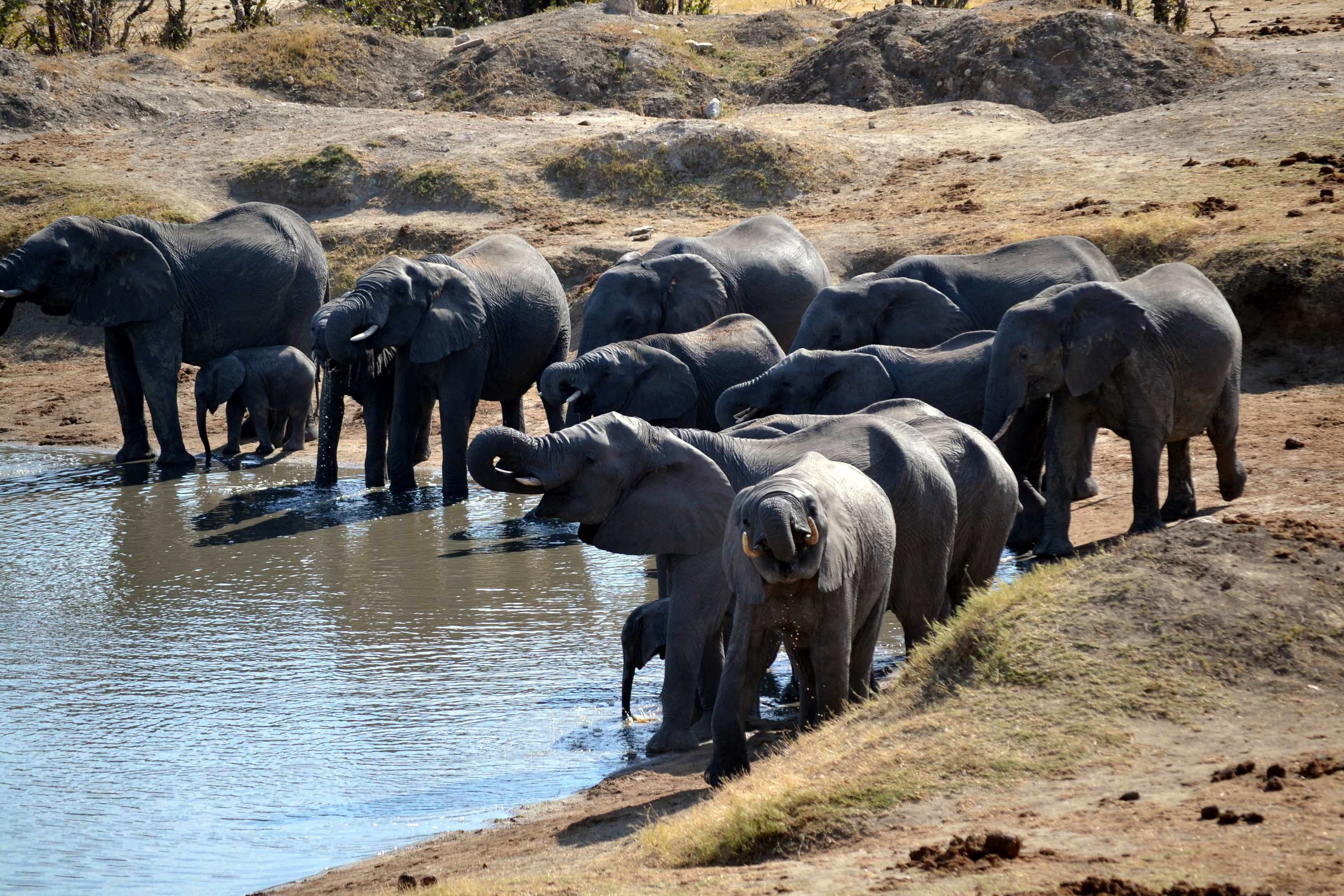
THis time there were lots of elephants at Masuma dam. (Photo by Julio A. de Castro & Mariana Terra)

This time there were lots of elephants at Masuma dam. (Photo by Julio A. de Castro & Mariana Terra)

We even saw pink elephants... (Photo by Julio A. de Castro & Mariana Terra)

We even saw pink elephants… (Photo by Julio A. de Castro & Mariana Terra)

As part of our “discovery drive” we also camped in the Ngweshla pan campsite as it has a reputation as the best place to camp in Hwange and is a place where predators are often seen because the area surrounding the various pans and water holes found there is quite open, a change from the thick bush of other areas in the park.

The safari took place between 22 and 29 July 2015 and I describe its highlights in four posts:

Fearless bee-eater

Moonlit elephants

Encounter with lions, and

Ngweshla cold.


I hope you will enjoy them.

Behind our backs

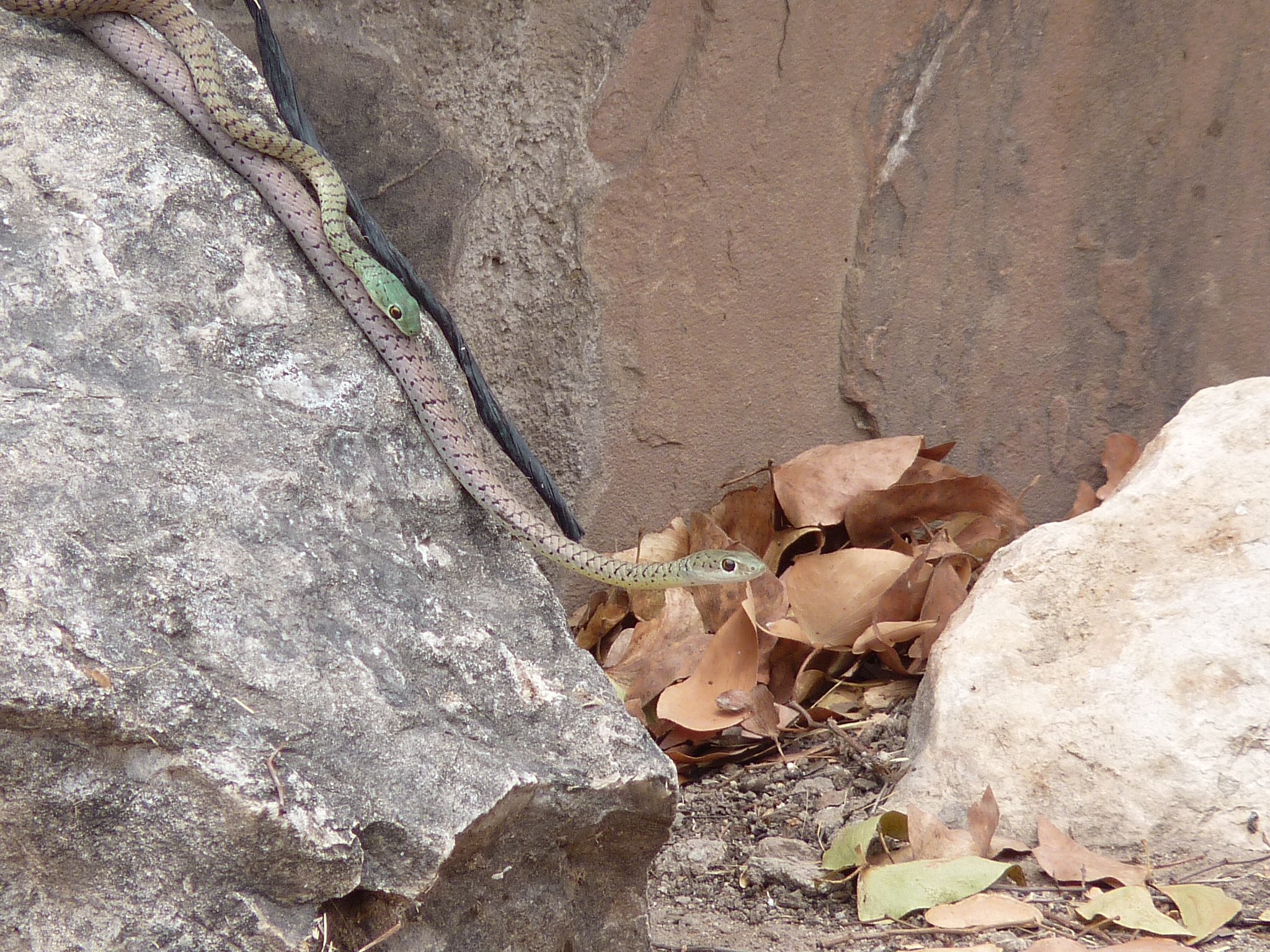
While we were engrossed watching the Crocodiles ambushing the Impalas at Masuma dam, lots of things were taking place around us. On the first day there, a snake was coming down exactly where my wife was sitting at the viewing platform! To say that she does not like snakes is an understatement, so she moved out of the snake’s possible path rather fast! I did not make things better when I identified it as a possible Boomslang!

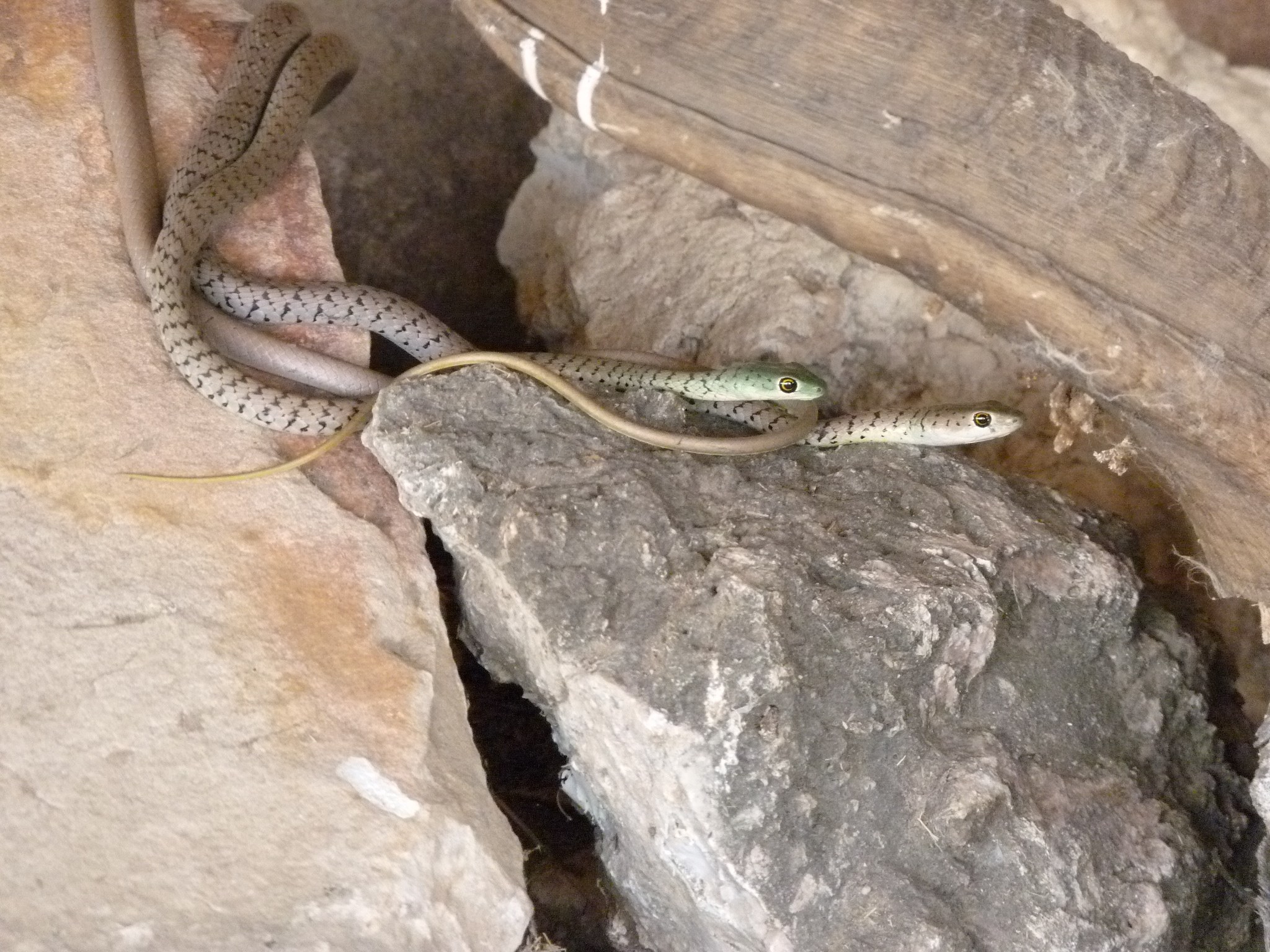
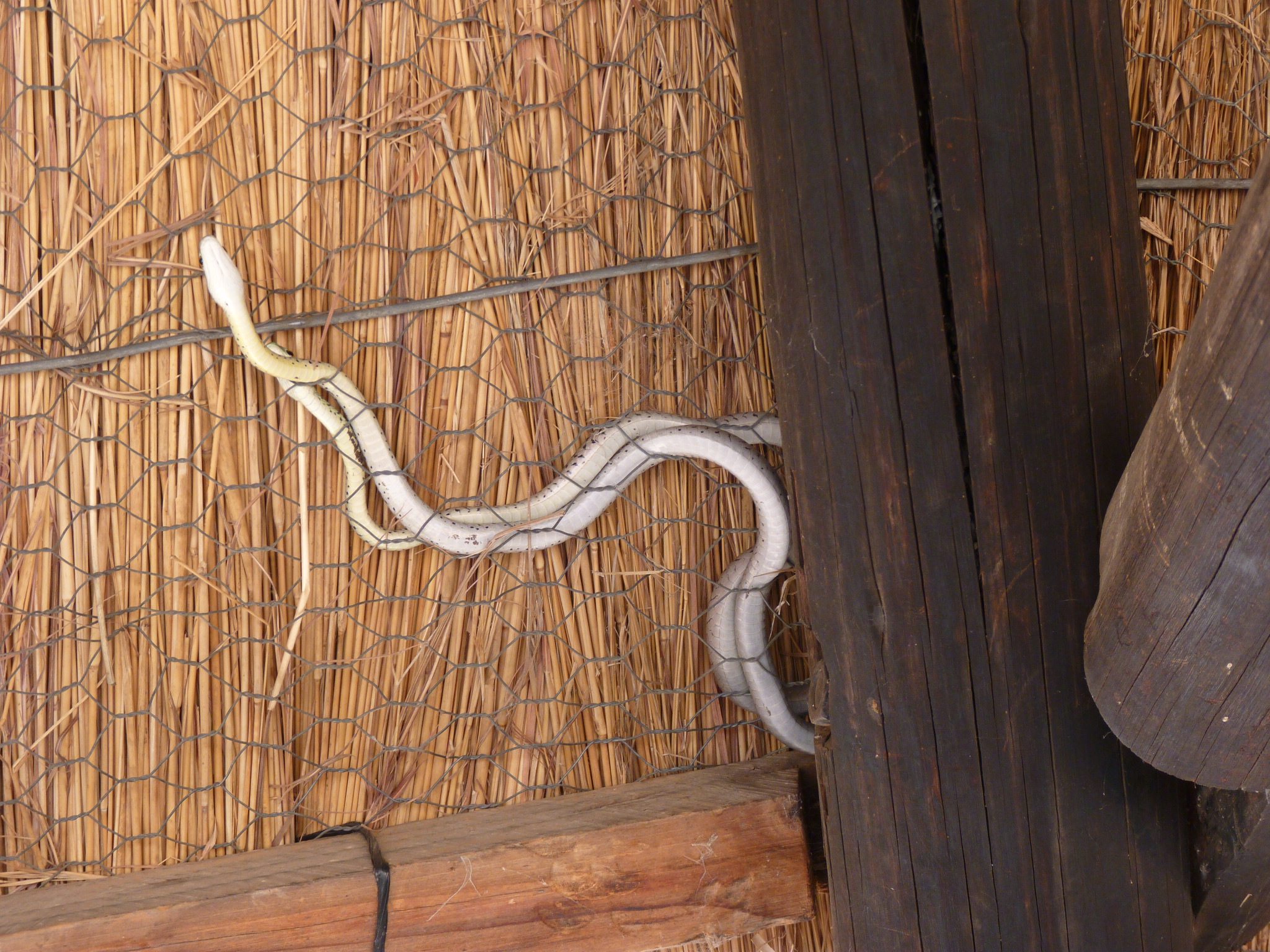
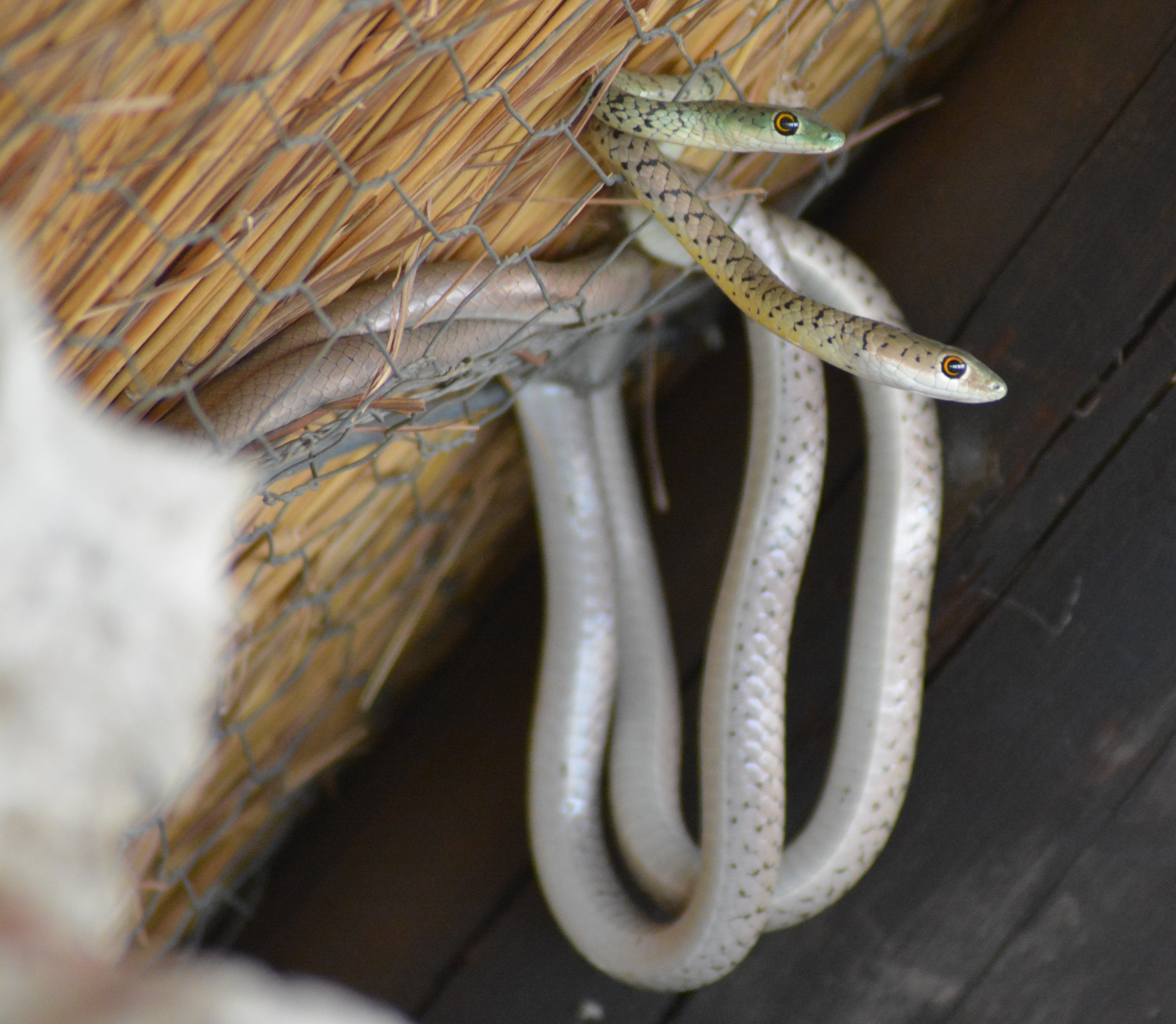
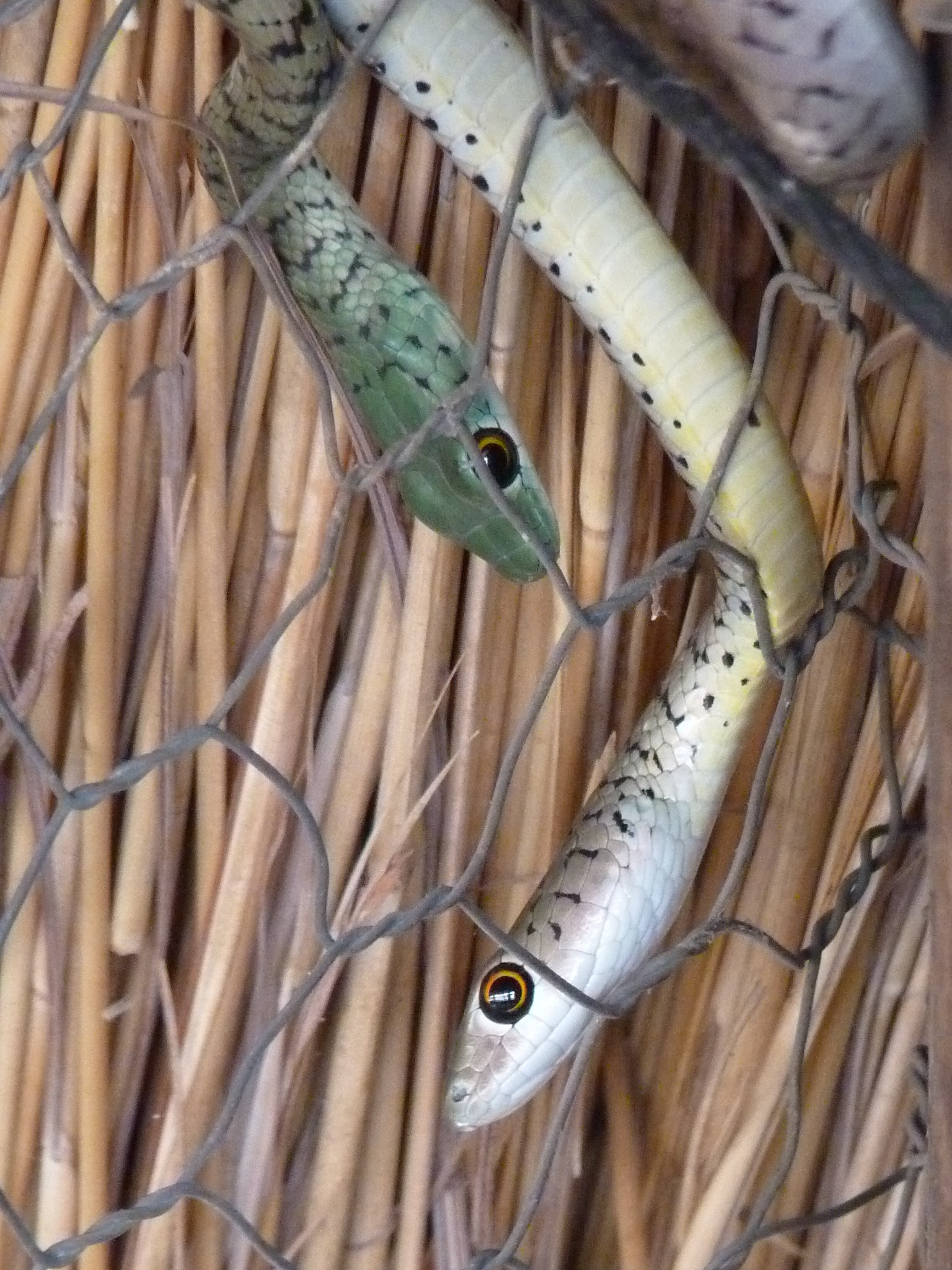
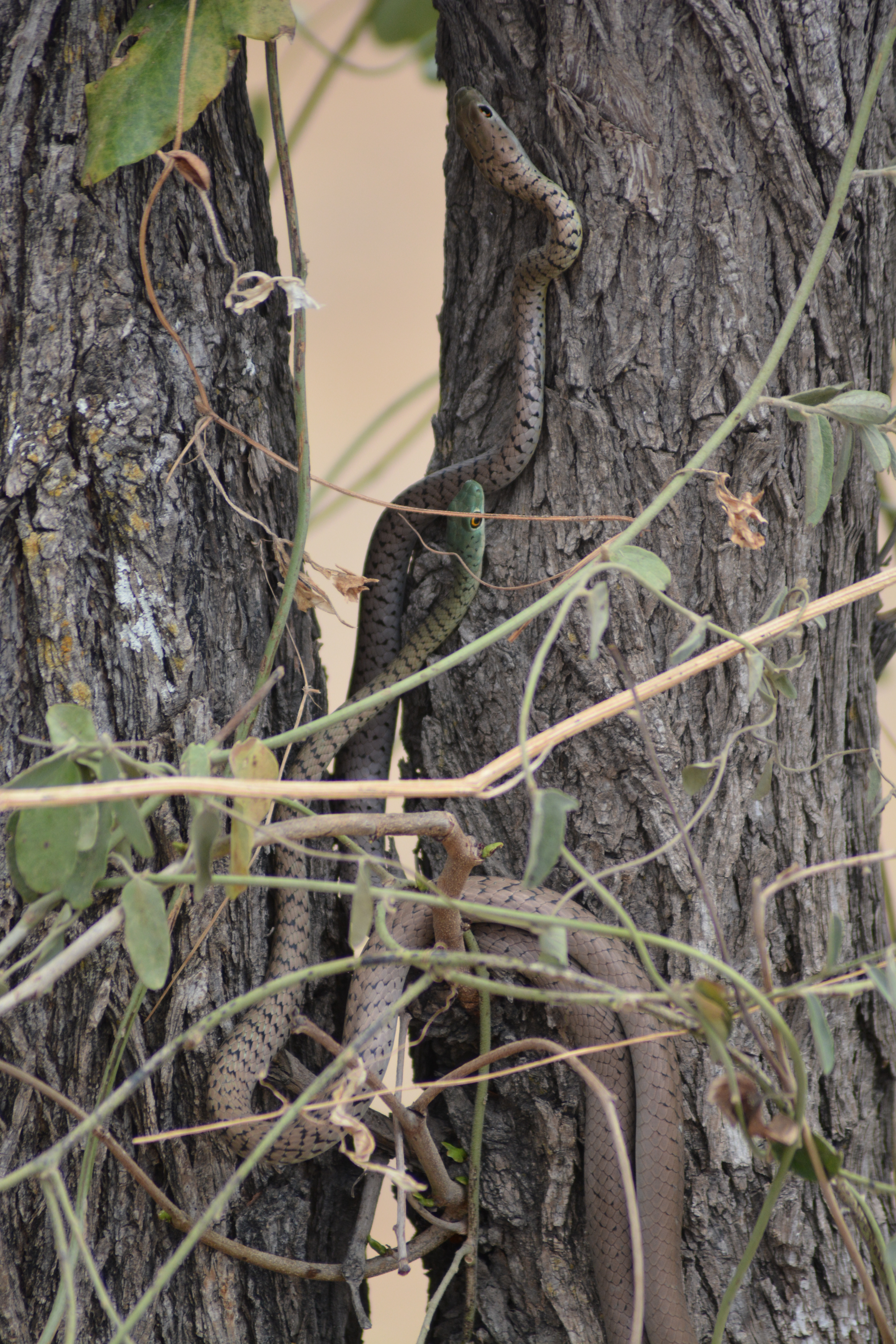
A couple of days later, while focusing on the waters-edge going ons, one of the Picnic Attendants called our attention to another snake act! This time they were two snakes, similar to the one seen before. Their behaviour indicated that they were mating. Basically the process involved the two snakes sliding together throughout the viewing platform as one, the female? moving away while the other one, the male? tried to come into contact with her. Once that was achieved they started to shiver and twist around each other.

First view of snakes outside 2

The snakes moving in.

snakes inside

TOM DSC_1023.1

Picture by Tom Milliken.

The process took about 30 minutes during which they were in command of the viewing platform as the human occupants were always at the opposite end, keeping an eye on their movements. The latter were rather fast and, as we suspected them to be the dangerous Boomslangs, there was no time for jokes while giving them a wide berth. At one stage they were mating at the door and several people were seen to leave the platform through any possible exit in order to get things from their cars or go to the toilet.

close up inside

Eventually their courtship took them outside and they were last seen twisting in a nearby tree.

TOM DSC_1039

They finally moved outside. Picture by Tom Milliken.

If such a thing as “relief post factum” exists, we need not have worried as, with the benefit of time and a good snake guide, they were identified as a pair of the slender Spotted Bush Snakes (Philothamnus semivariegatus). They are a rather common and harmless snake endemic to Africa that feed on lizards, tree frogs and geckos.

In light of this excitement, I promised myself to add an extra kg to our already heavy camping gear and include the snake book in the future!

Crocodiles and Impalas

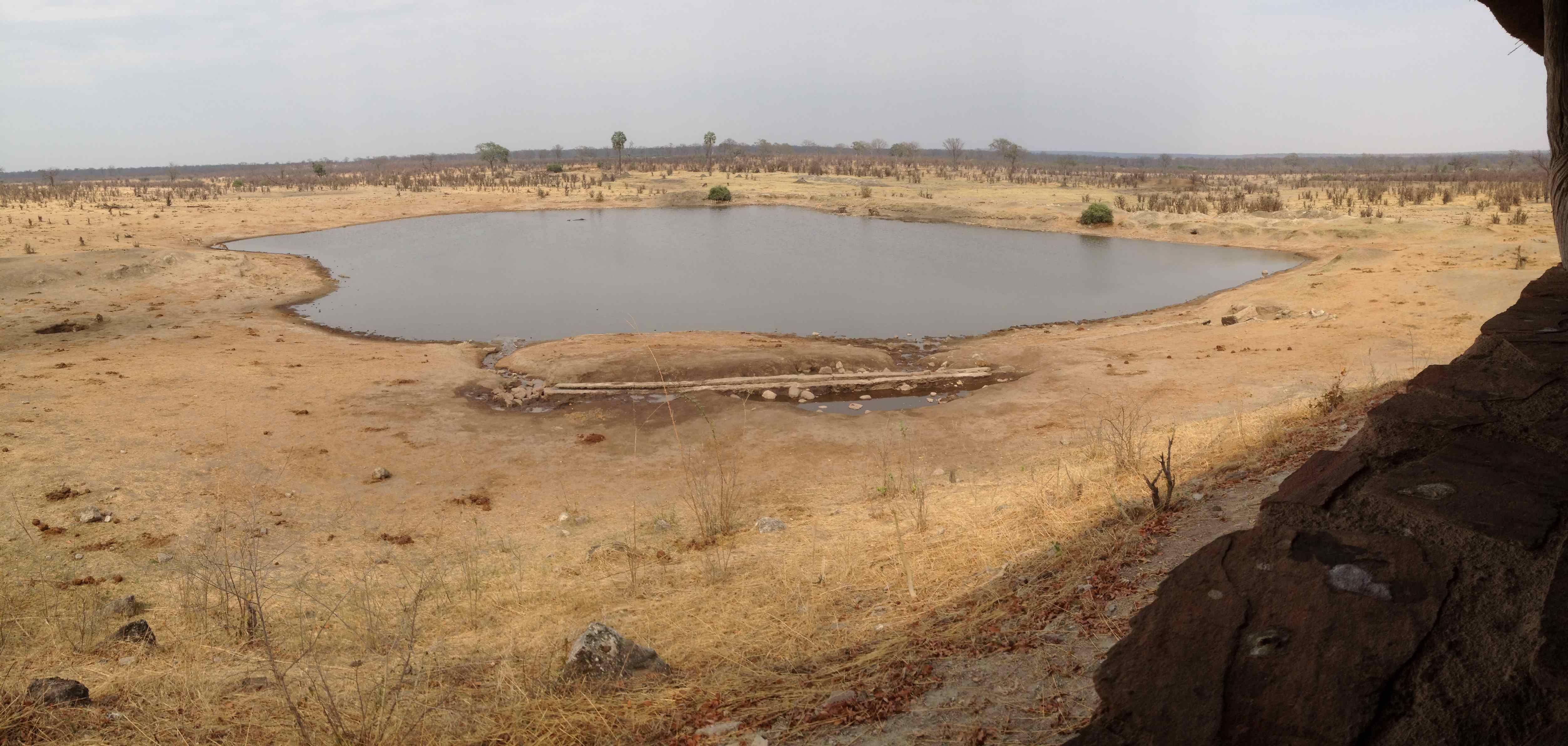
The events described were observed at Masuma Dam in the Hwange National Park. The dam is about 120m by 100m and it has a roughly oval shape. Water is continuously pumped to the dam from a nearby borehole making it an essential water source for the animal population in the surrounding area.
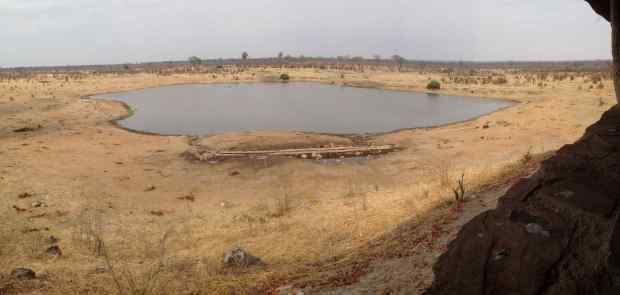
Masuma panorama

The time of the observations -13 to 16 October 2014- correspond to the end of the dry season. Elephants, Greater Kudus, Waterbucks, Impalas, Zebras and Warthogs were regular visitors, together with large flocks of Guinea Fowls and Vultures, to name the most frequent and common. We also counted 16 Hippos and six Crocodiles.

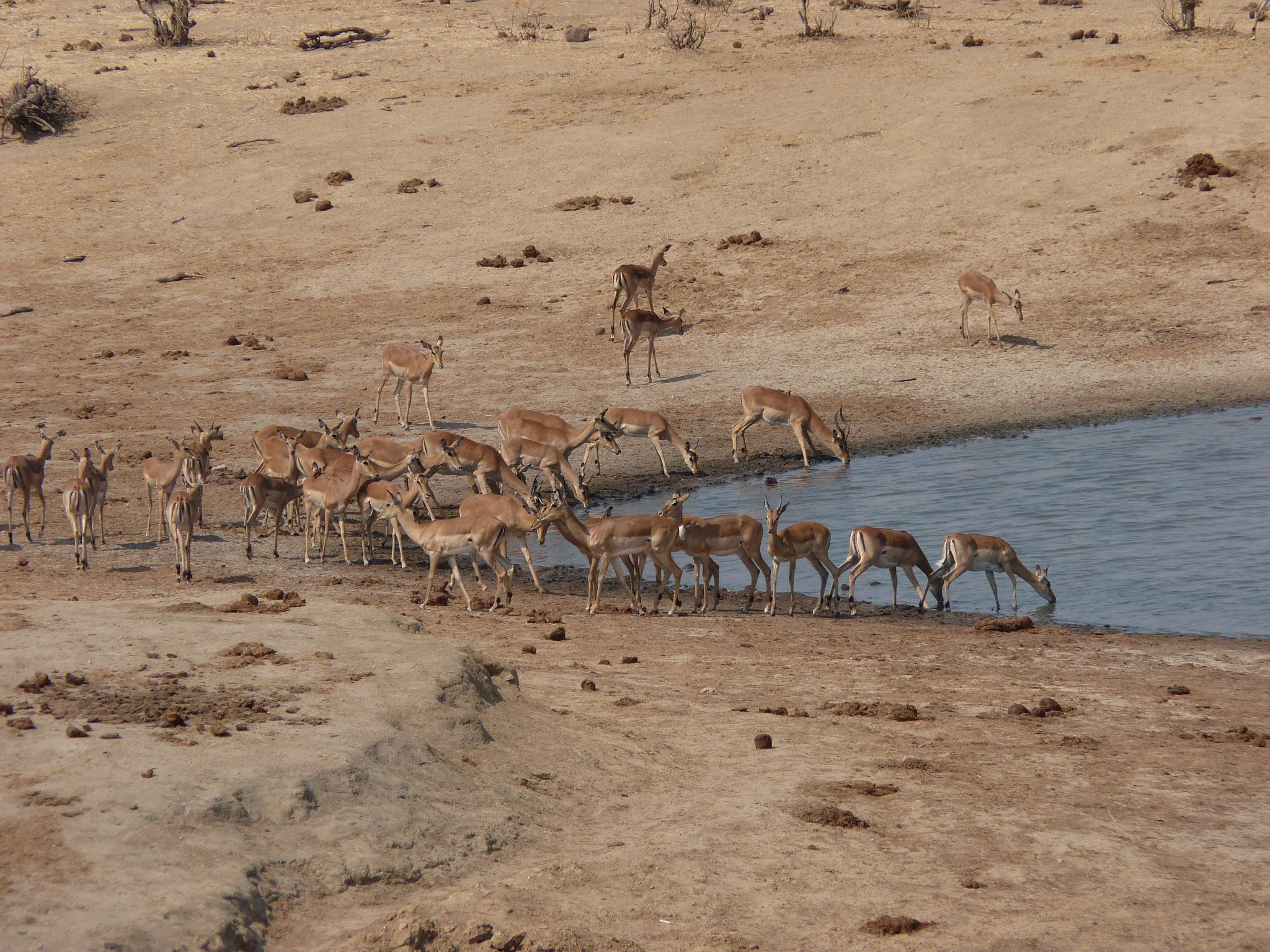
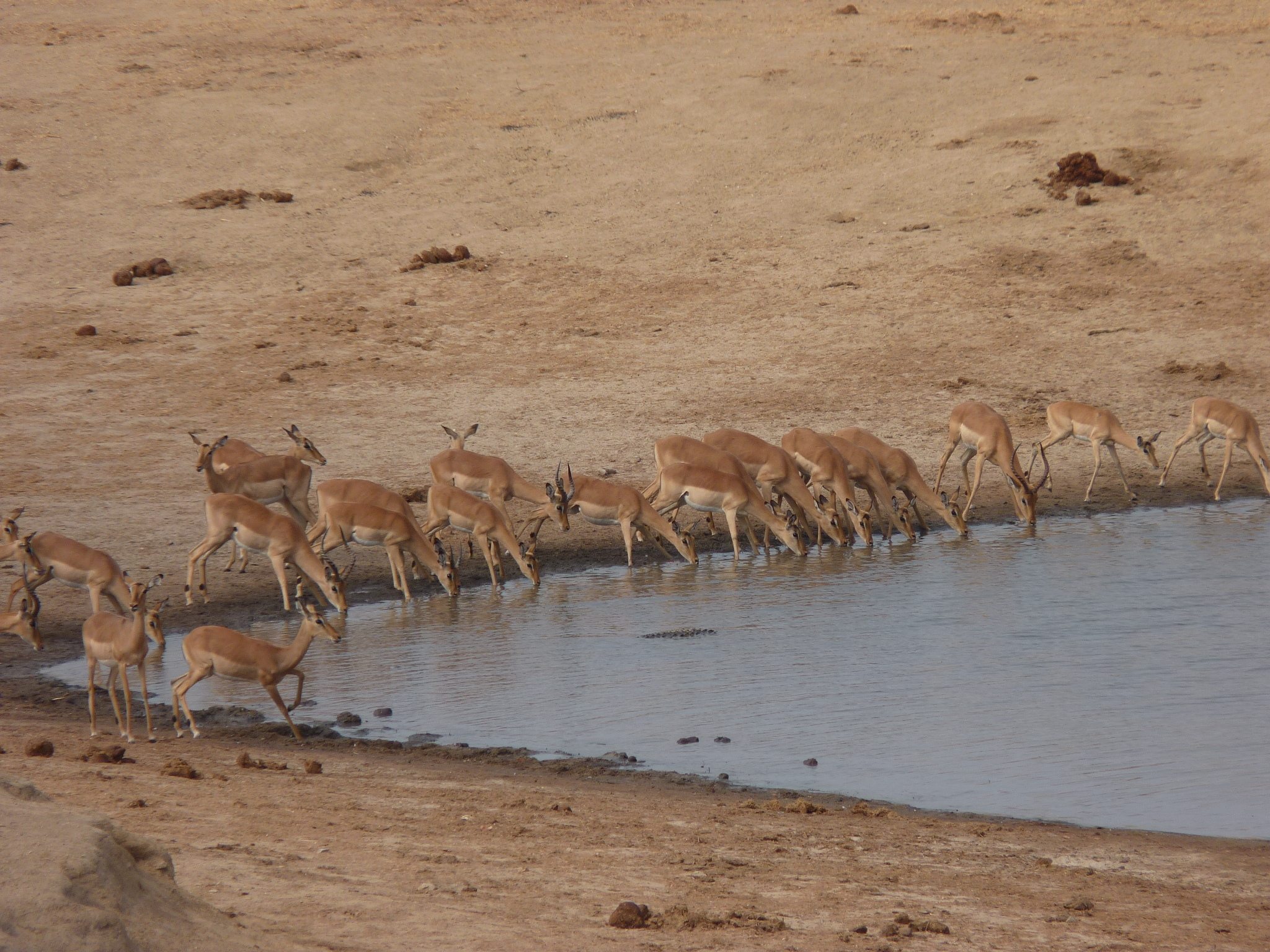
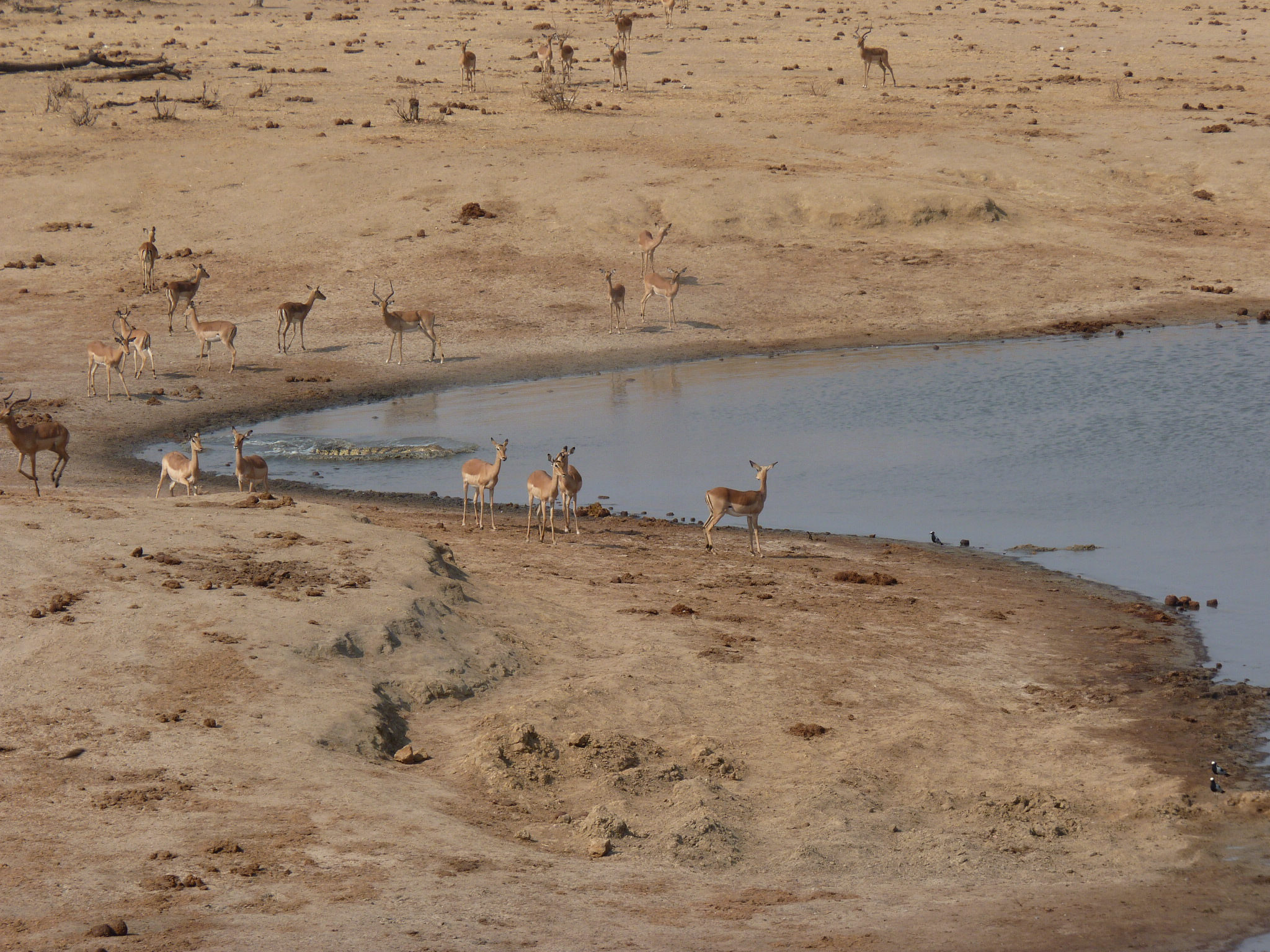
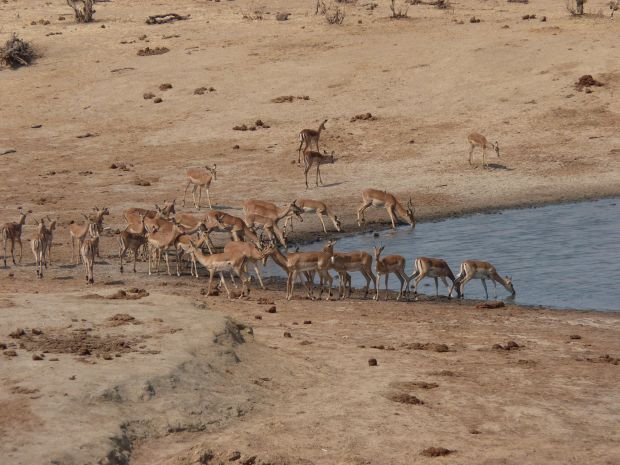
The preferred drinking place was a small bay located towards the Southern part of the dam (seen on the left of the picture above, at the back where some Impalas can also be seen). Most antelopes drank from there, particularly the Impalas that would come throughout the day in herds of various sizes. The figure below shows a typical drinking scene in that bay.
normal impala drinking

A herd of Impalas drinking at the dam.

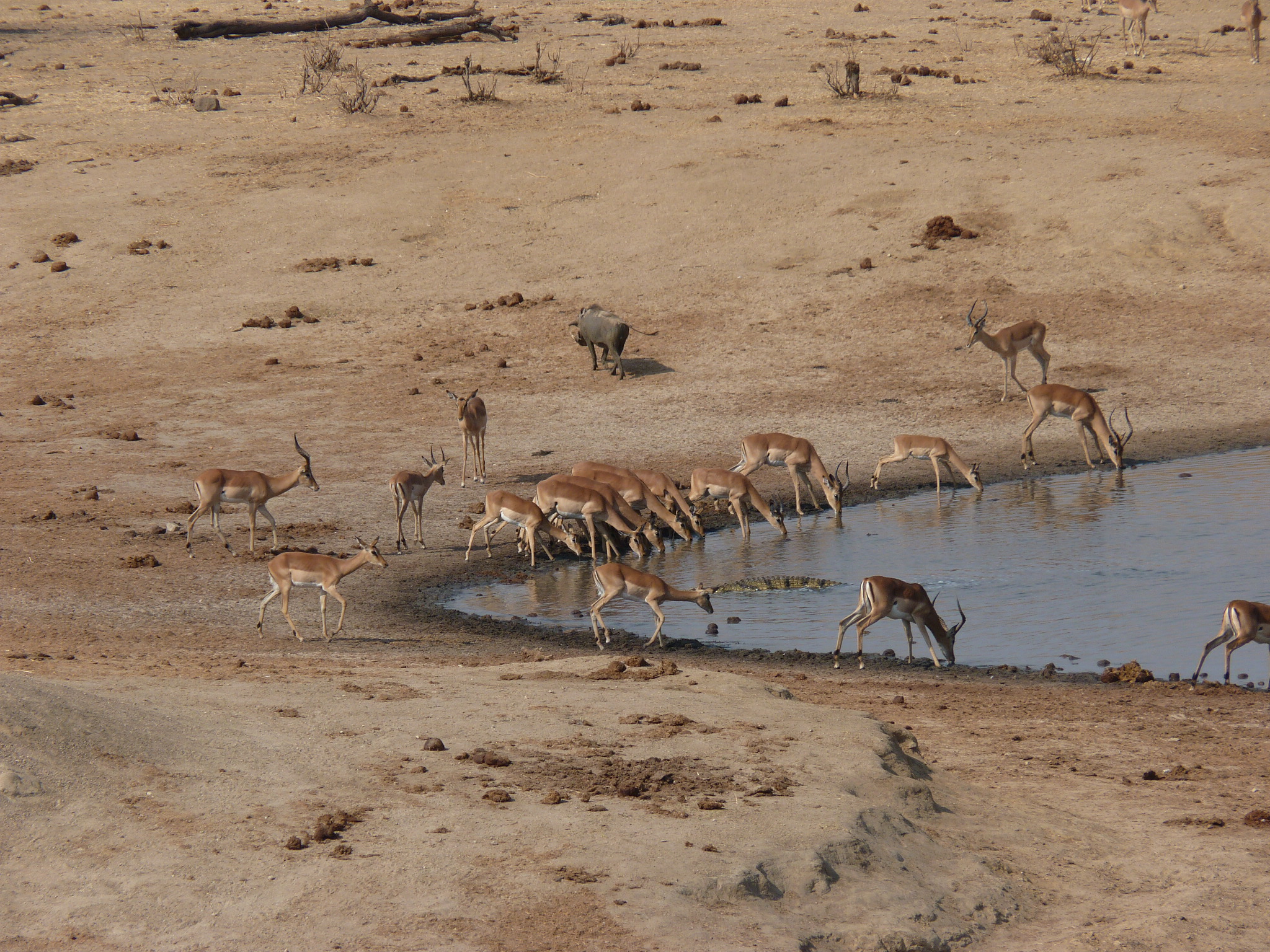
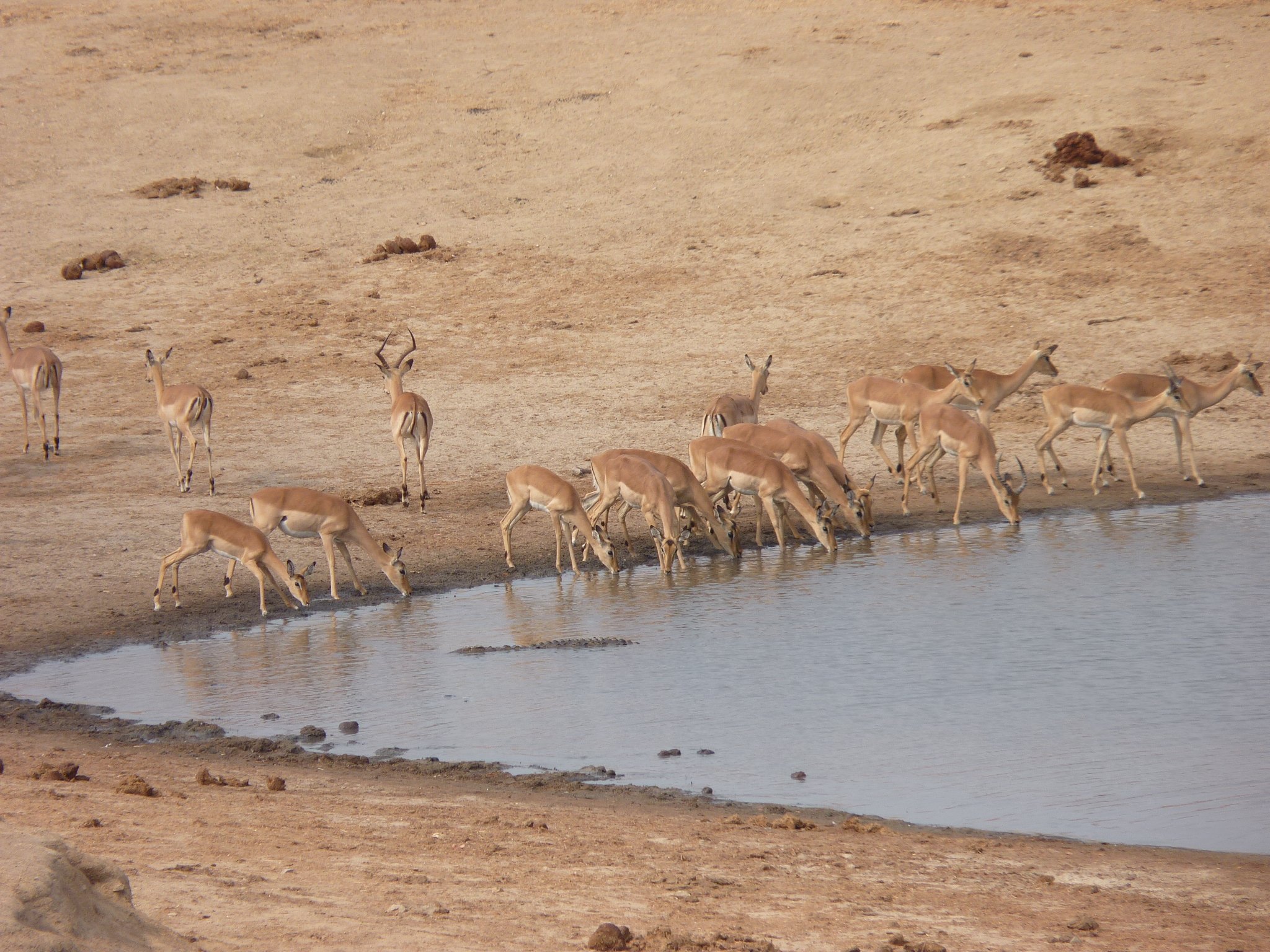
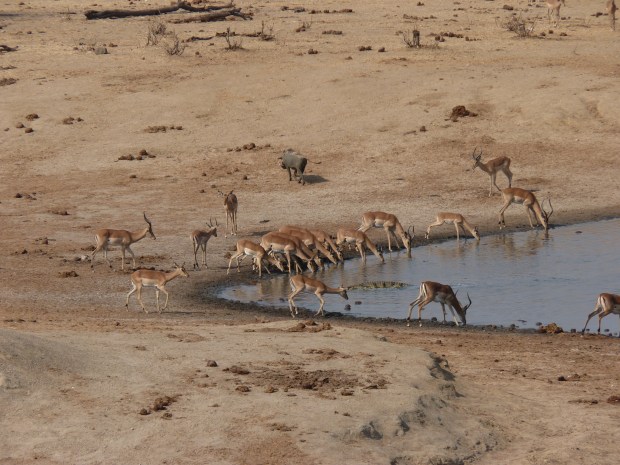
As soon as a herd started to drink, usually one of the Crocodiles would swim towards them. They did so in full view of the antelopes and stopped at about 1 to 1.5 metres from them.
Croc attack 7 (after)

A crocodile slowly approaching the drinking Impalas.

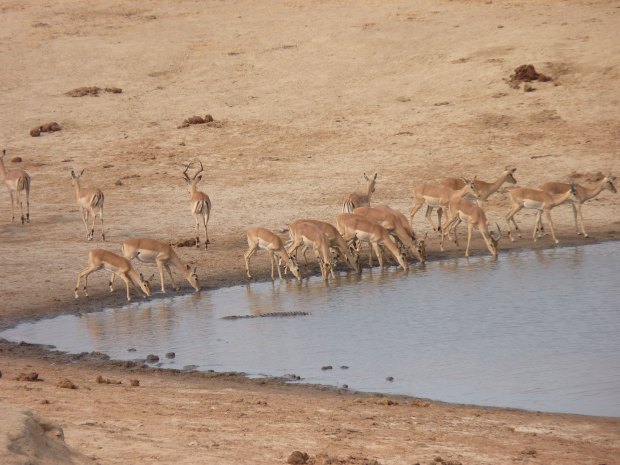
On seeing this the impala would withdraw from the water’s edge for a short time but gradually calm down and return to the water’s edge to resume their drinking. The crocodile would remain immobile for a few minutes and then slowly submerge and, eventually, disappear completely.
croc in position

The Crocodile starts to sink.

croc sinking

The Crocodile is barely visible now and about to disappear.

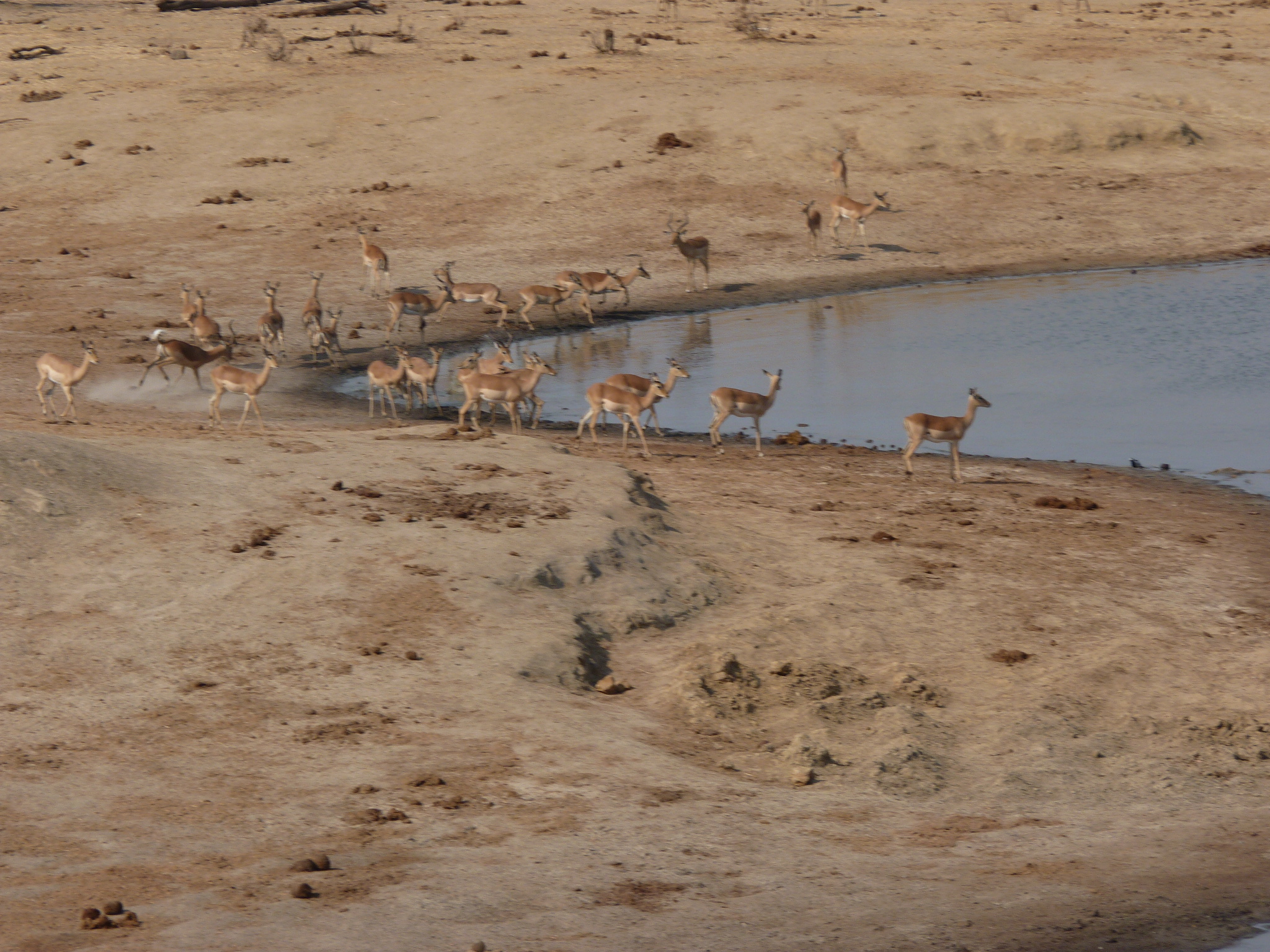
What followed next was really unpredictable. With the Crocodile (we assume that there is only one!) submerged the Impalas would continue to drink, although very fretfully. Most of the time, the Impalas will get their fill and move off without incident. However, approximately two or three times in a morning a sudden swirl in the water will be the only thing that preceded a violent attack by a Crocodile by lounging itself at the Impalas, moving its head sideways while biting in an attempt at catching one.
Croc attack 1

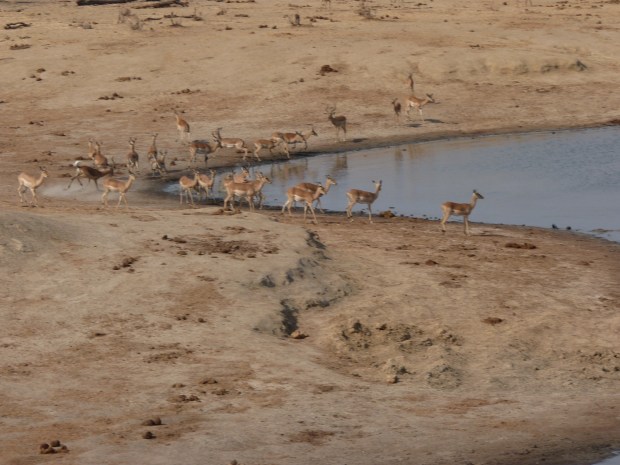
The Impalas’ first reaction at seeing the water starting to move.

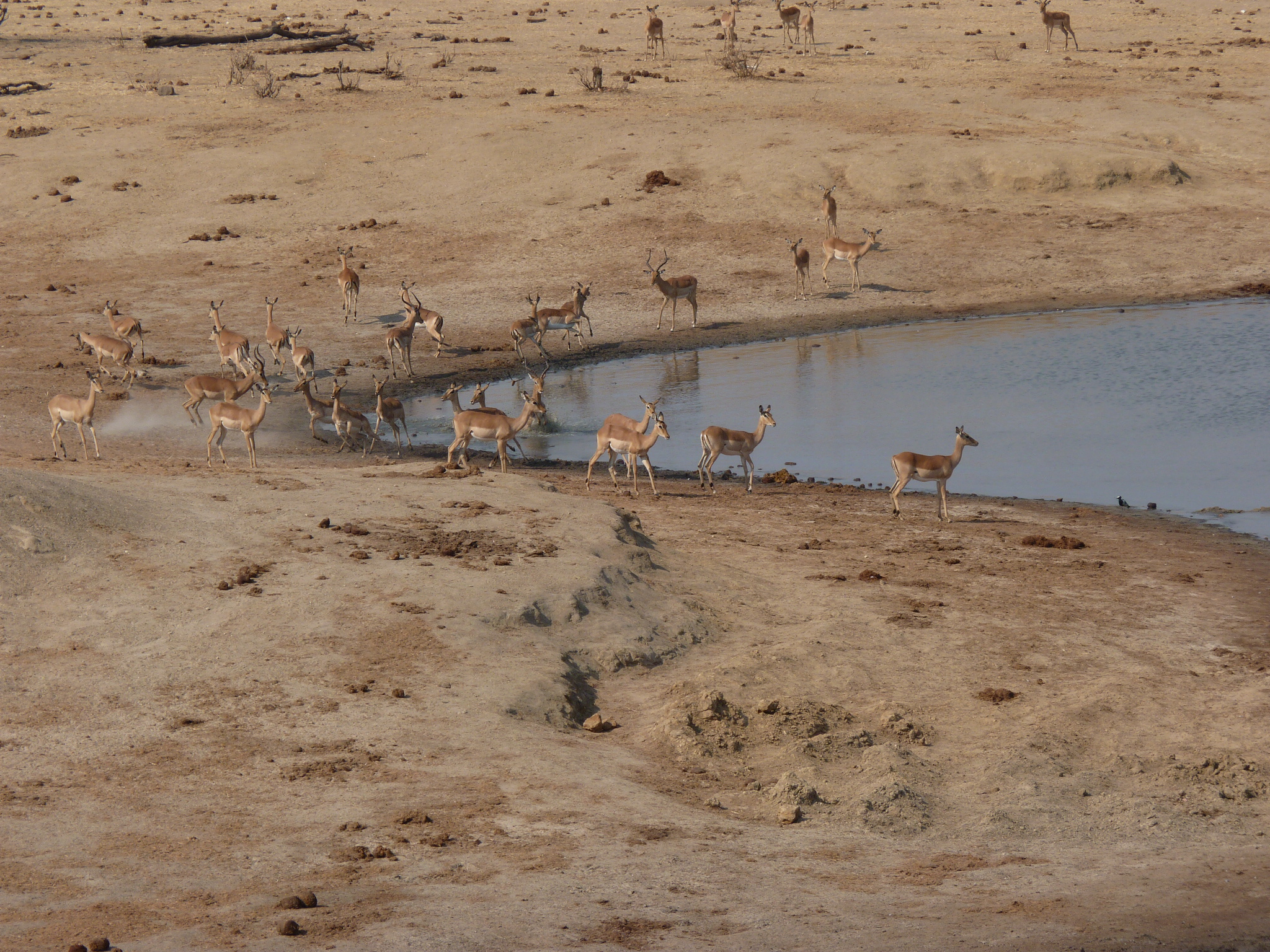
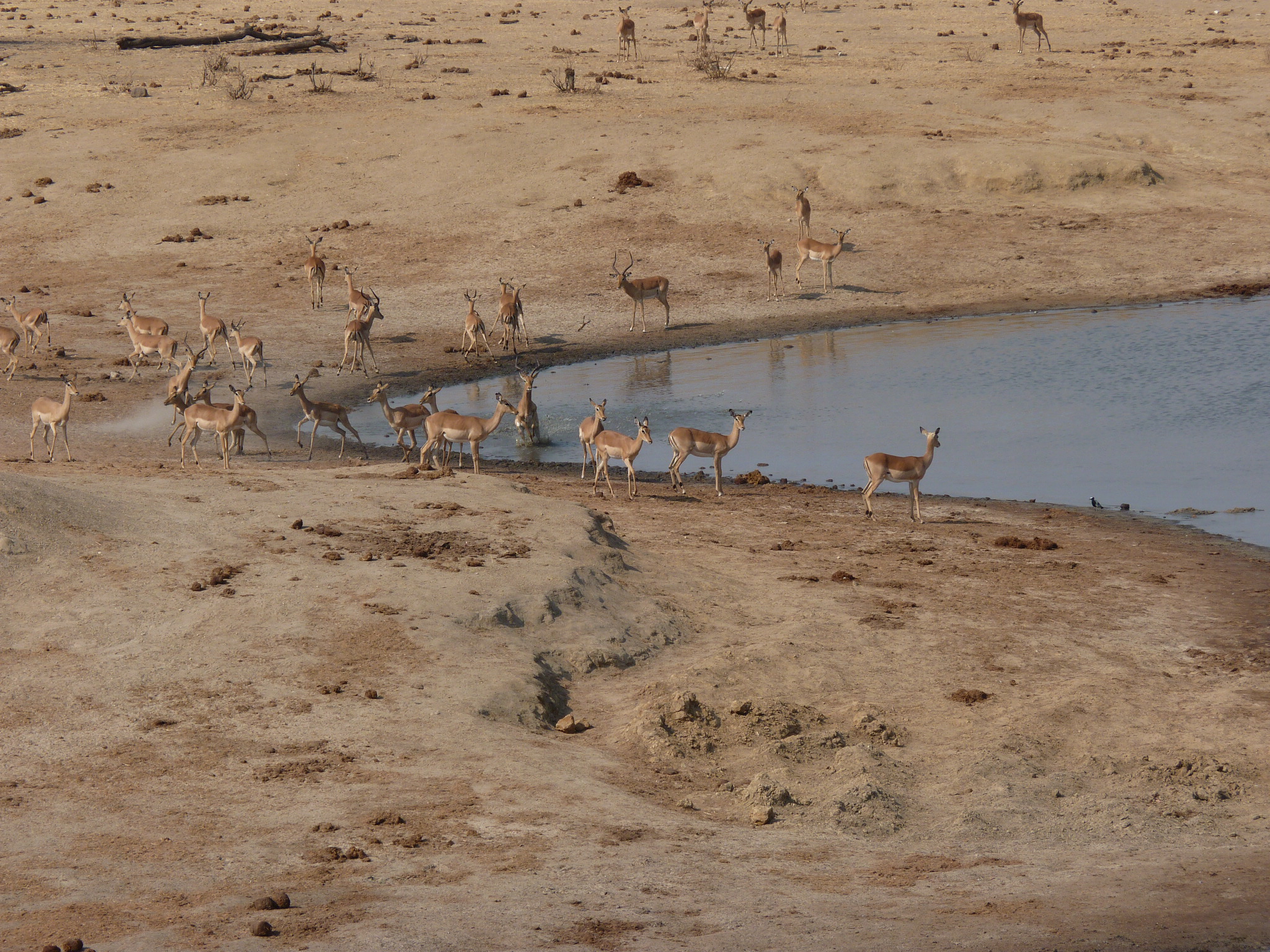
As soon as the impala saw the water movement preceding the attack, they scattered in all directions, including jumping into the water in order to avoid the Crocodile.
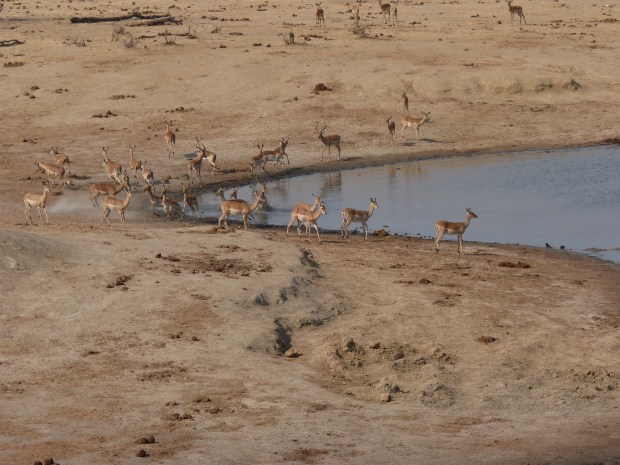
Croc attack 2

The Crocodile attack is taking place, the Impalas scatter in all directions, including into the water becoming very vulnerable.
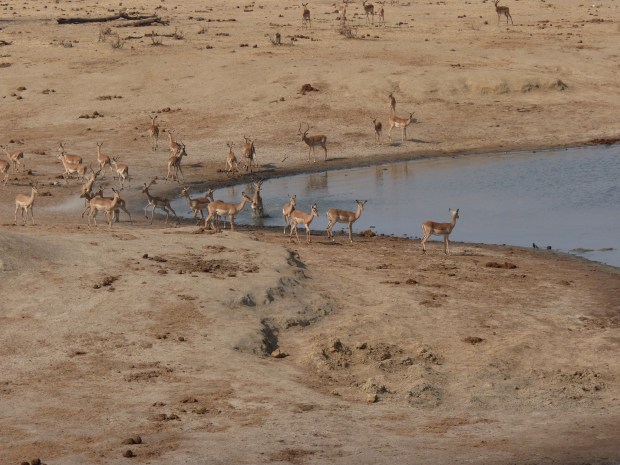
Croc attack 3

The Impalas escaped the attack this time, including the male inside the water.

The most common outcome was that the crocodile(s) failed and went back to the water empty-jawed.

Croc attack 4

The Crocodile returns to the water after the failed attack.

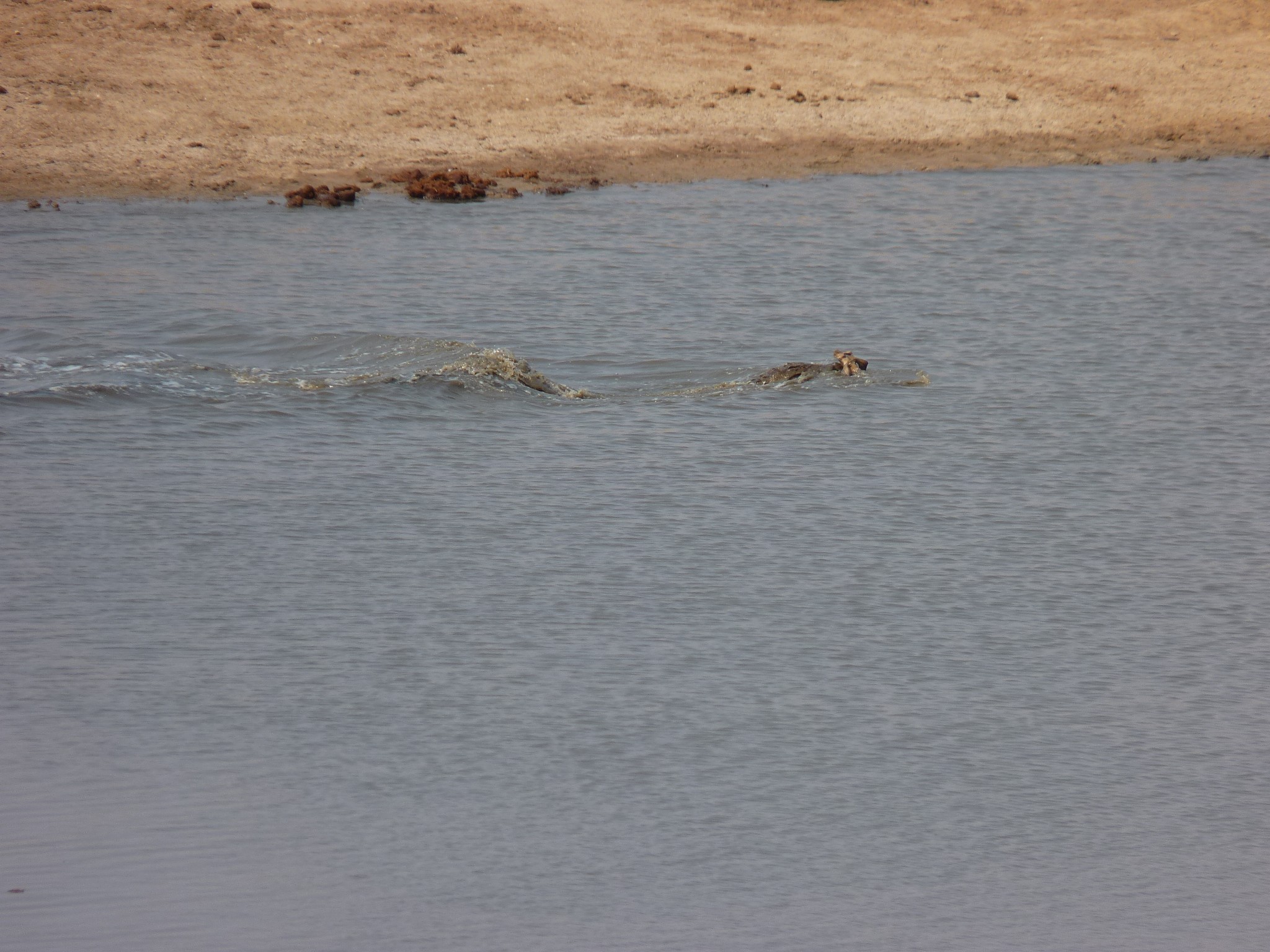
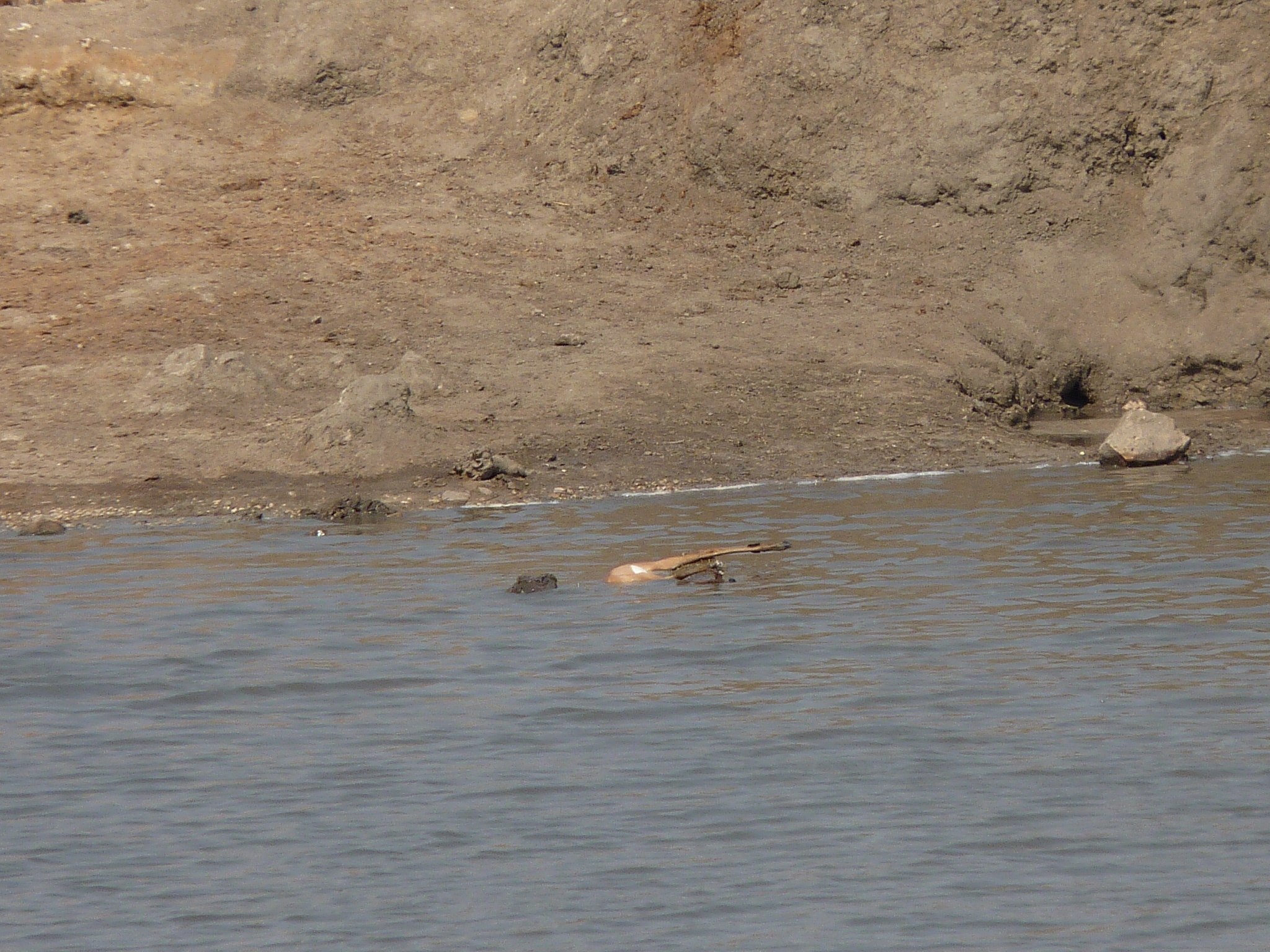
On two occasions, however, animals were caught. We witnessed one kill while the other one took place just before our arrival and saw the Crocodile swimming with the dead antelope. The Impala we saw was a young animal and it was caught from a foreleg. After a short struggle it was quickly drowned.
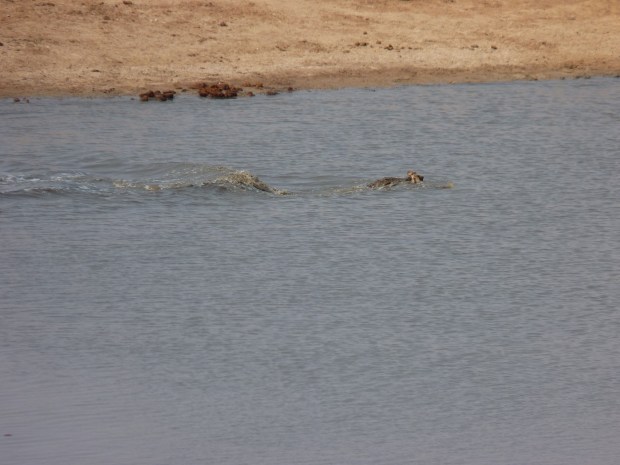
croc carrying impala small

A Crocodile swims away carrying the Impala.
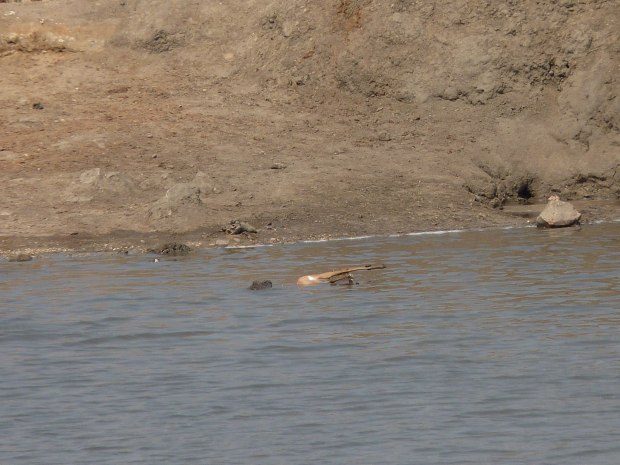
croc with impala

The Crocodile holding the impala after drowning it.

During the time we were at the dam, the Crocodiles caught two Impalas out of eight attacks witnessed.

There was also an extremely interesting follow-up to the kills but for that you will need to wait for a while!!!