Three years back I wrote a post about a really iconic elephant in Mana Pools known as Boswell [1]. At the time I mentioned its ability to reach heights that other elephants (and even giraffes if they would exist in Mana Pools) cannot by stretching and standing on its hind legs. I showed a rather bad set of pictures that I took on an island in the middle of the Zambezi river and regretted that the animal did not “perform” closer to us.
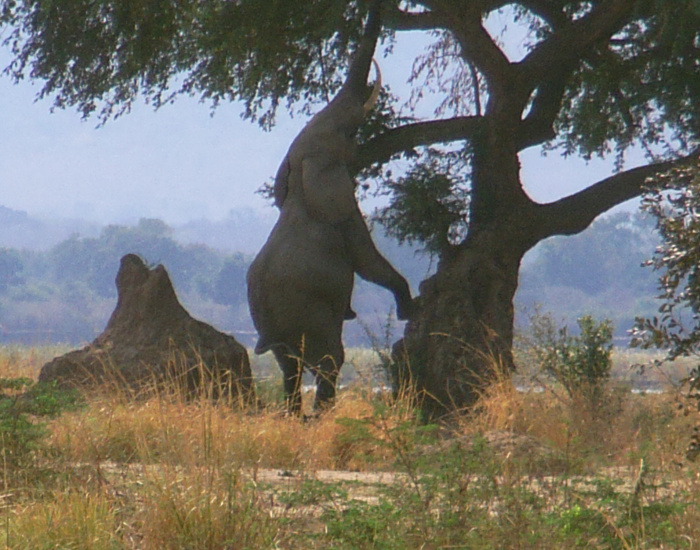
Undoubtedly Boswell is the best known of Mana Pools’ elephants and it one of the classic sights of the park.
My brother Agustín and his wife Gloria had visited us in Zimbabwe in the late 90s and, to our delight, they decided to come back this year. As we had taken them to Hwange National Park and Victoria Falls in their previous visit, we decided this time to visit Mana Pools for game viewing and Kariba to attempt to fish for vundu.
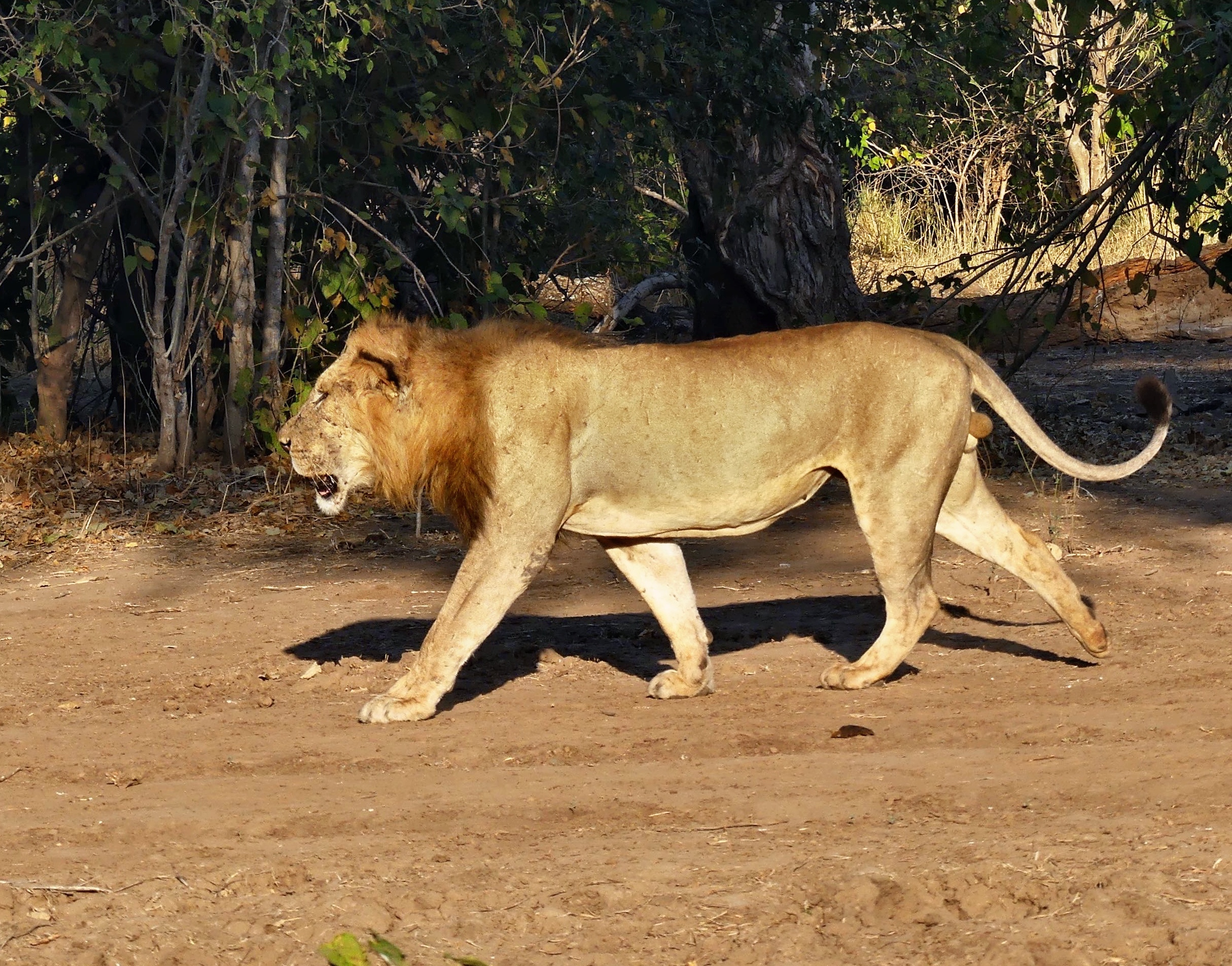
In the previous visit we failed to find any lions at Hwange despite our great efforts so one of the goals at Mana was to find wild lions. Fortunately we achieved this goal and spent sometime watching them. As lions are normally sleeping and these were not the exception, we soon decided to move on and return later to see if they decide to be more active.
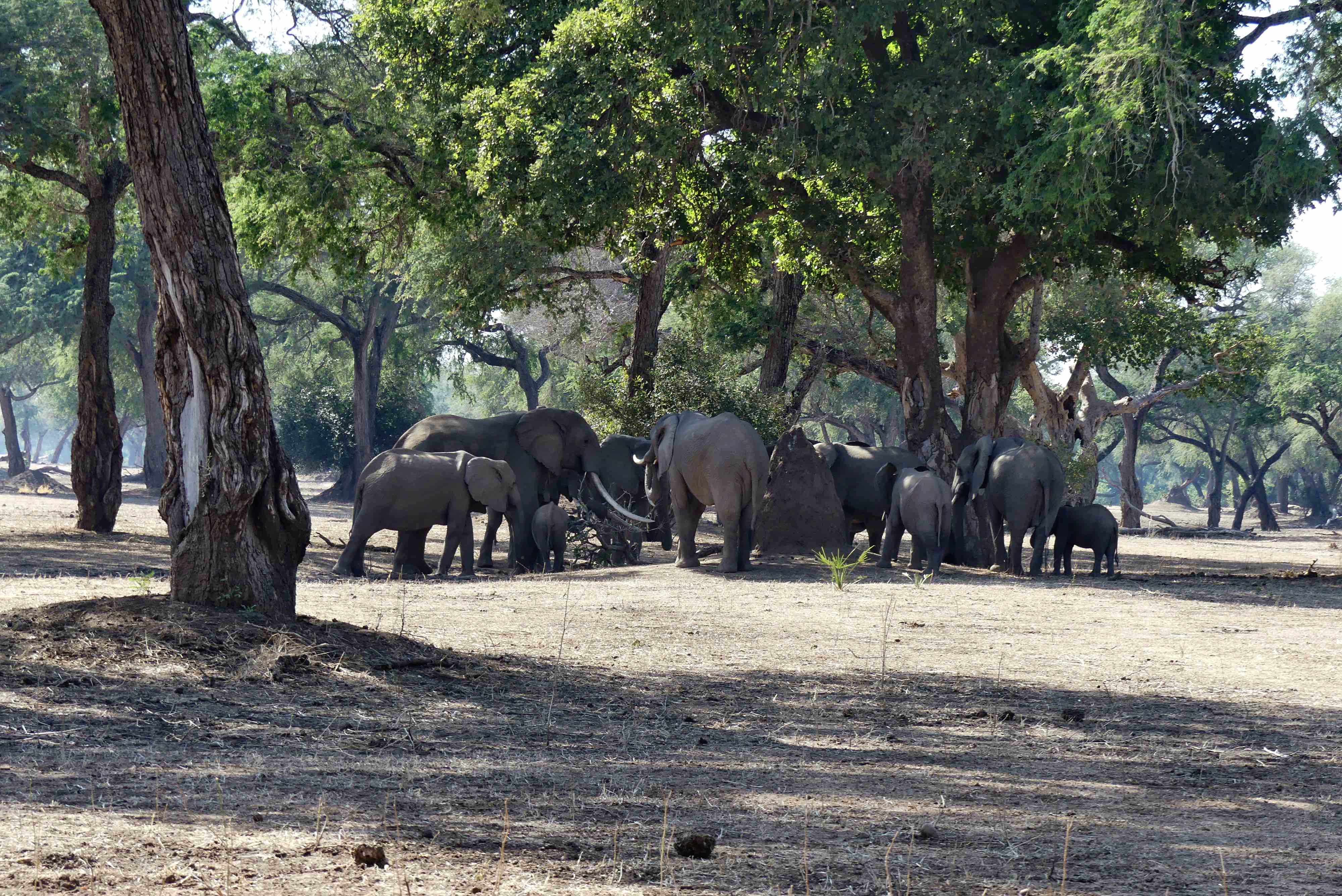
Luckily, after a while in the distance we saw the unmistakable shape of Boswell and we noted that it was slowly walking towards the river and we happened to be on its path. We placed the vehicle in a discrete spot not to interfere and waited for its arrival. Luckily we were alone! Boswell was accompanied by a few more elephants, two adult but younger males, a couple of females with babies and a young male.
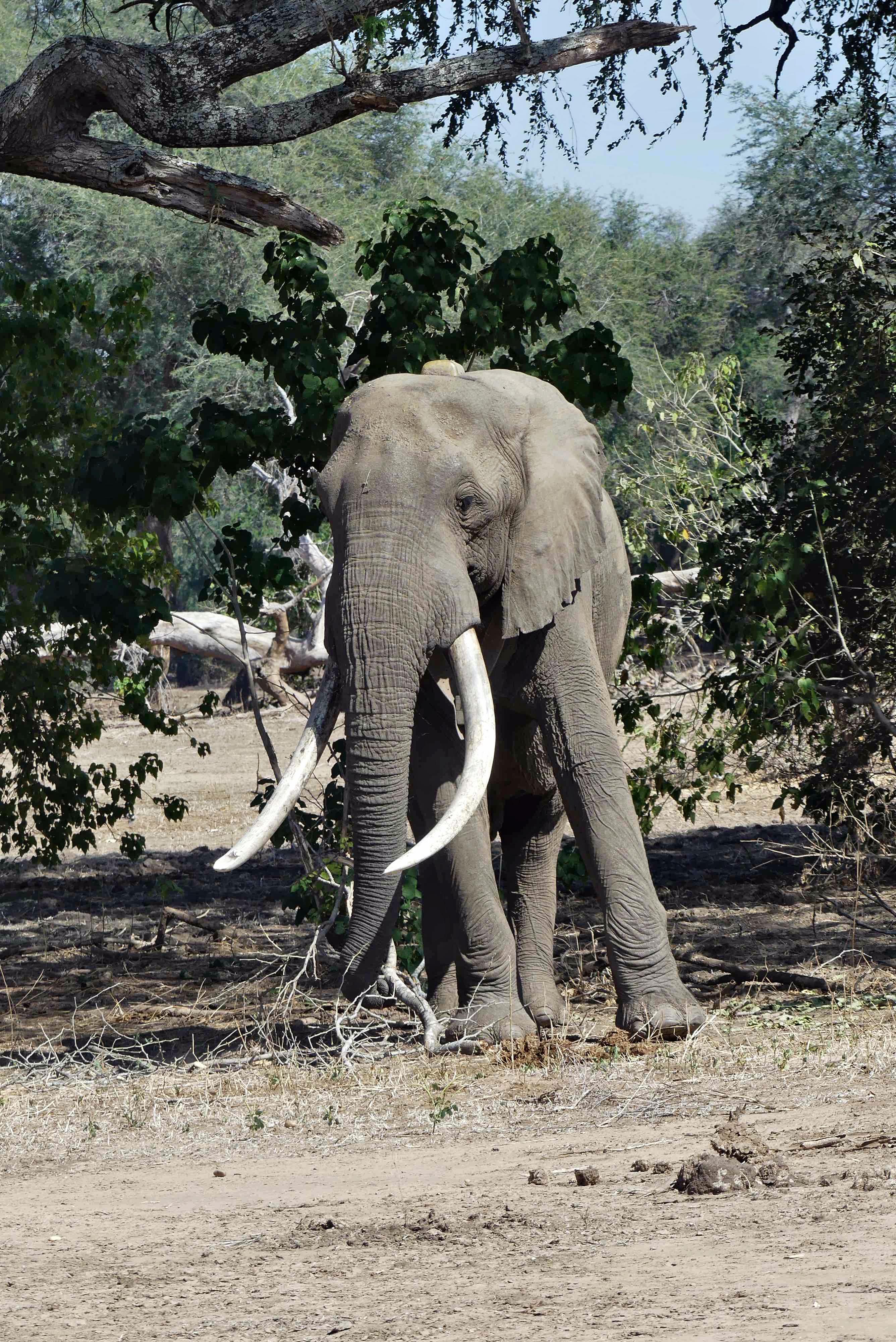
Boswell.
Mana Pools was extremely dry as last year’s rains had largely failed so there was little greenery apart from the large trees. Further, the preferred food for the Mana elephants, the pods of the Apple-ring acacia (Faidherbia albida), we not yet mature so we were curious to see what would Boswell do.
As usual the very relaxed group came really close and when they were under a Sausage tree (Kigelia africana) Boswell started to lift its trunk clearly sizing it up. Clearly satisfied with what it saw it started to stretch, arched its back and it was on its hind legs trying to secure a good grip on a branch! I desperately grabbed the camera and shot while it remained standing. After sometime we heard a mighty crack and down the elephant came with a huge piece of the tree!
This slideshow requires JavaScript.
Boswell starting eating the large branch while keeping the young males away by a combination of aggressive gestures, vocalisations and, with the too daring, pushing and shoving and some trumpeting as well. It did not liked to be disturbed during its meal! Conversely, he did allow the young females some bites and did not mind if the youngster came really close to him to feed, the latter often getting between its legs!
After a while, although there was still greenery left on the branch, it moved on leaving part of its bounty behind and, while it started to find another arboreal victim, the followers got busy finishing the spoils.
The event was repeated a couple of times slightly further from us and trickier to photograph. As the group continued its placid sojourn towards the water we moved off, very pleased with our luck and trying to explain this to our visitors.
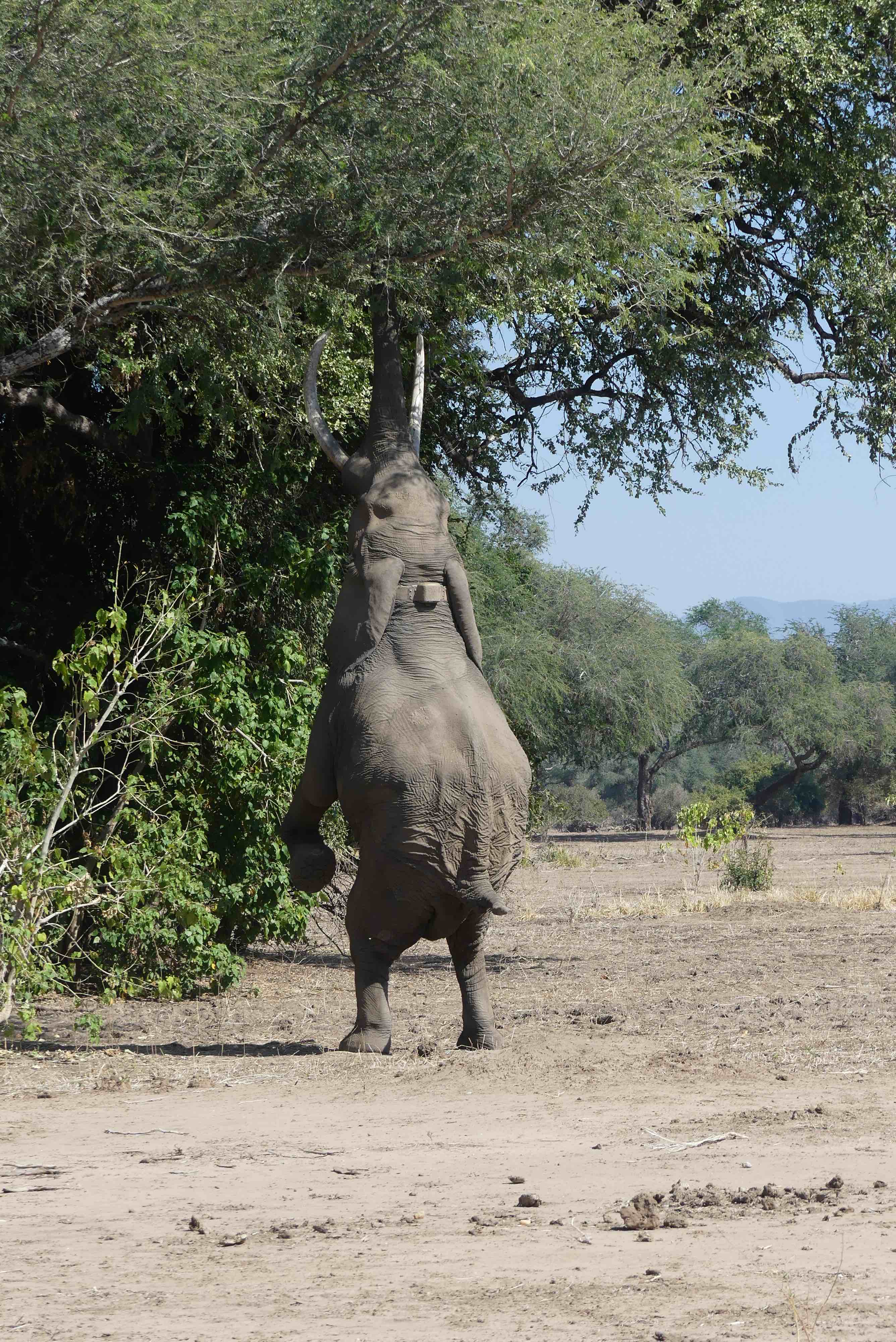
Perhaps we had driven five km when we found another elephant, much smaller, also feeding. We then watched in disbelief when it also stretched and stood only on its hind legs! We made a comment to a safari car that was watching the action with us and the driver told us that this particular elephant was known as Harry! We were really lucky and elephants was the conversation at camp that night, despite the visits by vervets, baboons and hyenas!
The following morning, following the tip of a kind tour driver we found a large group of lions at a dry river bed and, after watching them for a while, we continued our game drive. While commenting on the very few greater kudu that we had seen we spotted an elephant standing on two legs. As we saw it from its back we thought it was Boswell again as we could see a radio collar. In fact it was a much smaller male that clearly knew how to look for the tender leaves of the Mana Pools’ trees!
The final act in this saga was yet to unfold when we were about to end the game drive and go back to camp for a well deserved branch. A dust cloud called our attention and we saw two elephant bulls clearly settling some kind of dispute. After a while we saw that one of the contenders gave up and moved off at a speed.
The “victor” stayed put and after a few minutes it decided to look for some food. It was at that time that we saw it well and the large notch on its left ear identified it as “Big V”, another of Mana’s “specials” that we have seen stretching to bet acacia pods before[2].
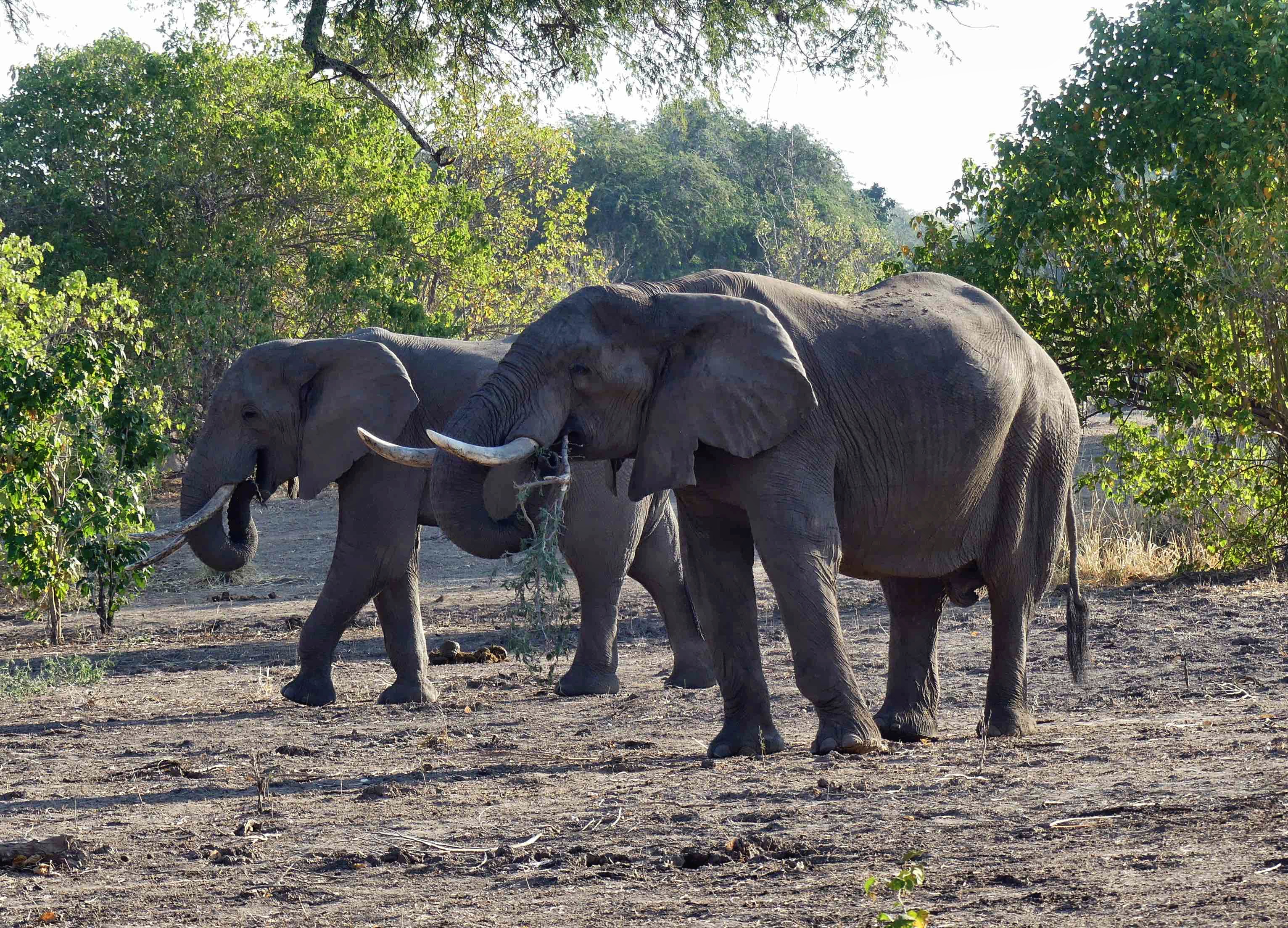
So it was Big V that delivered the final act when it also decided to go for some juicy branch and, lo and behold, before we knew it it was also standing on its hind legs!
We were now really impressed with the Mana Pools elephants and agreed that we have had our quota of elephant stretching while we can happily confirm that Boswell has been able to pass its genes to its heirs that will keep future visitors to Mana Pools amazed at their feeding habits!
[1] See: https://bushsnob.com/2016/08/17/boswell/
[2]: See: https://bushsnob.com/2016/08/31/big-v/



 A Bushsnob out of Africa