Before I describe the events of the title, I wish to explain why I have been absent from the blog. Luckily, it was not a health issue but a literary one.
A few years back, I hatched the idea of writing a historical fiction novel, without realizing what kind of work this implied. In short, the result was that all my spare time was taken by the writing as I needed to get fully immersed in the work to be able to make sense of it! Fortunately, although is not yet completed, the novel is suffciently advanced by now and, while the editor works on the final touches, I have some spare time to get back to my neglected blog. (If I manage to publish the novel I will let you know!)
So, here we go.
As every year at this time, we are spending time in Salta at our small “wildlife” farm. We have had sustained rain for the last week and yesterday there was a break and we went out to explore the surroundings and to assess any damage the rain may have caused to our entrance road,. We also needed to see if the small stream that usually looks harmless but gets quite lively with the rains, had damaged our fording place.
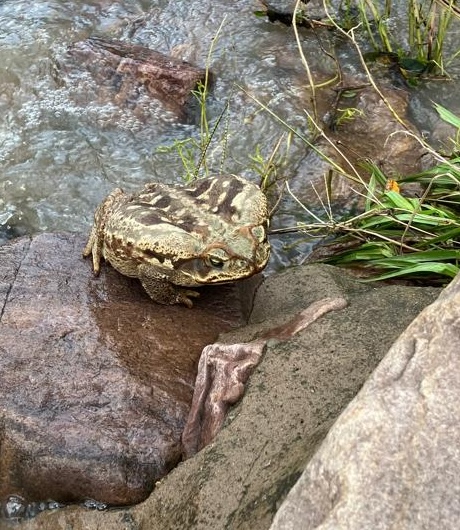
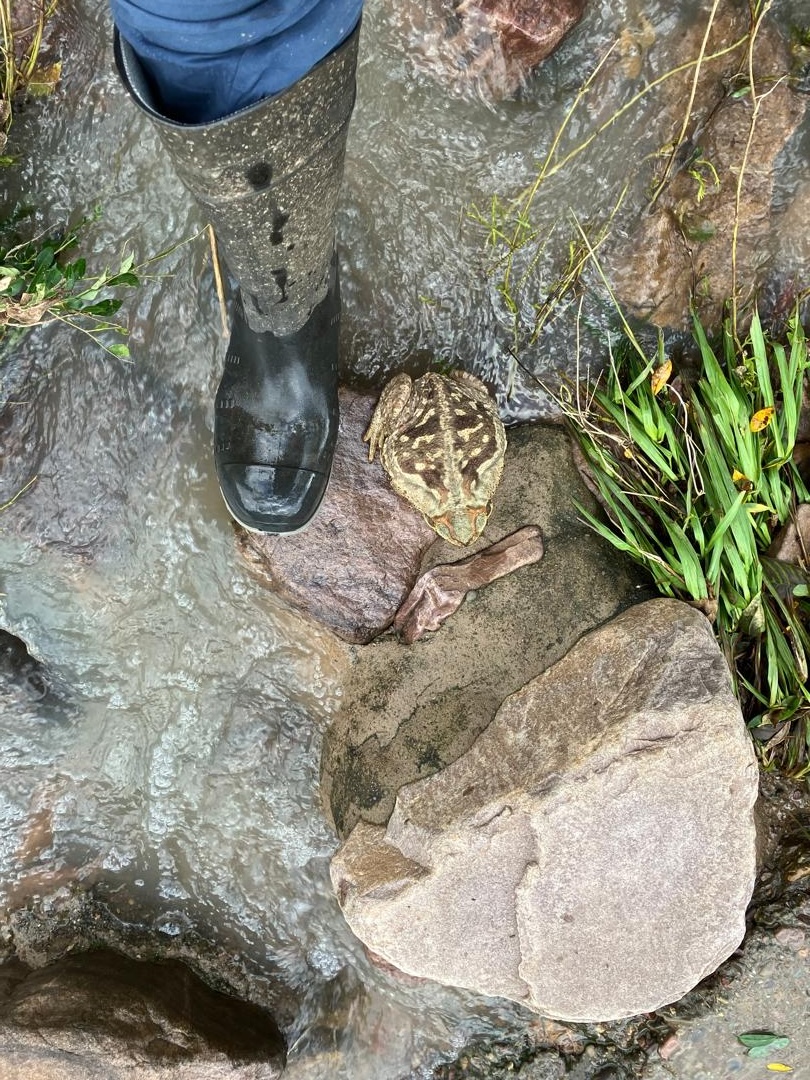
The water was still running quite fast but our road had suffered no damage. While checking it, we came across a sight we do not see very often.
The toad was there for a purpose, probably to get some insects. As soon as we looked another way, it quickly disappeared.
After this distraction, we decided to check our water well as, when there is a lot of rain, the water surges up submerging the pump and ruining it.
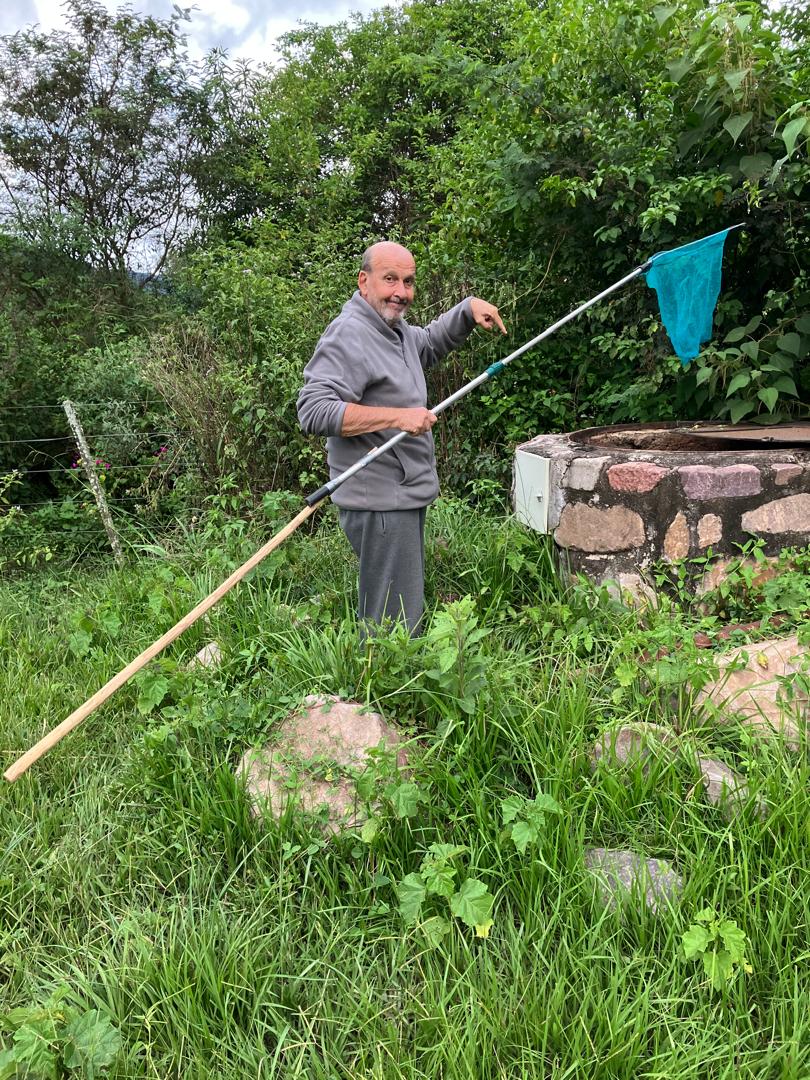
Luckily, the pump was still way above the water but, we found another unexpected event. A small snake, probably a brown “culebra” (Paraphimophis rustica) had fallen in the water and it was swimming around without much chance of claimbing the vertical and smooth wall.
A rescue operation was organized.
After a tricky “fishing” exercise, the snake was finally retrieved and released.
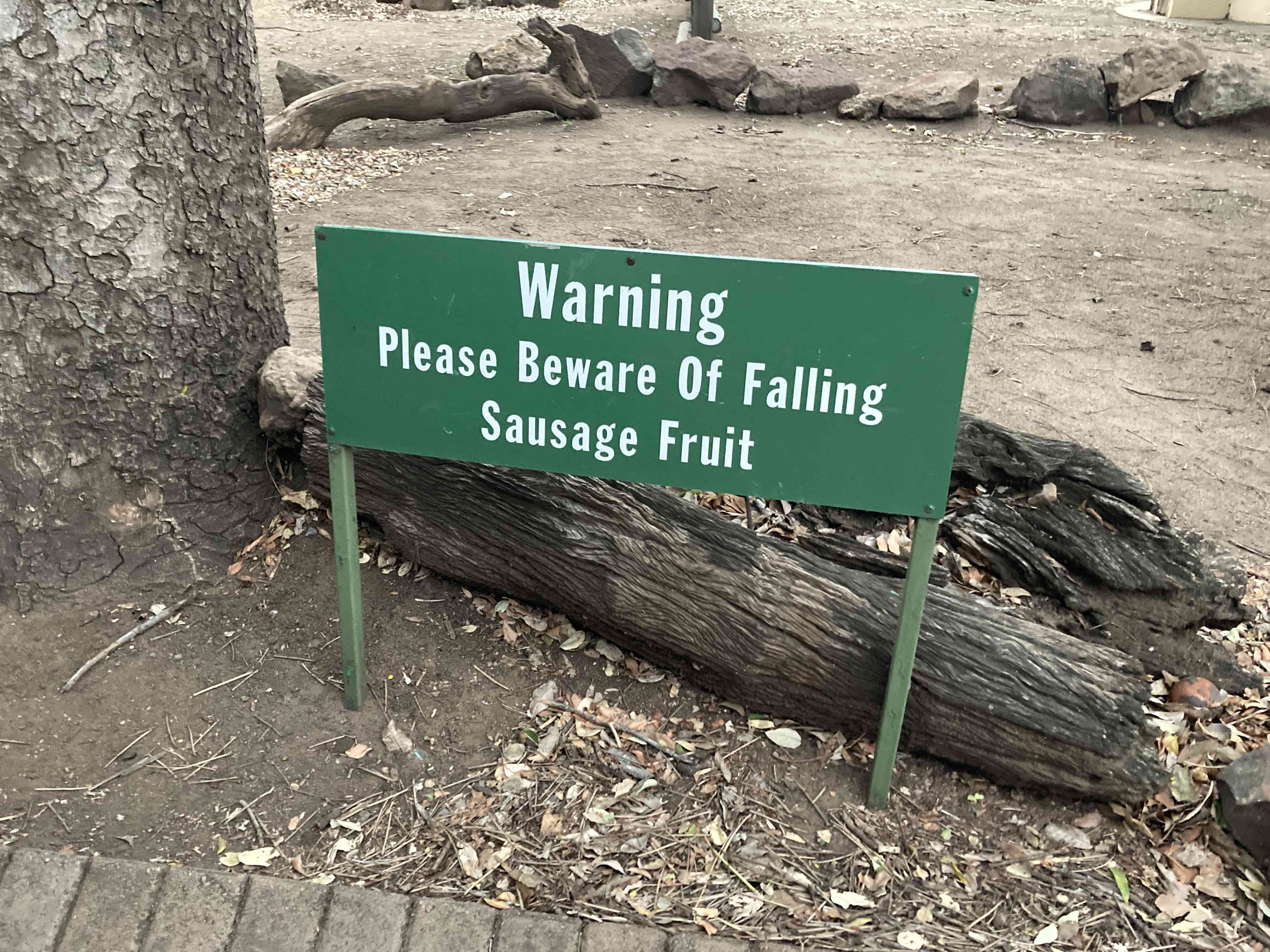
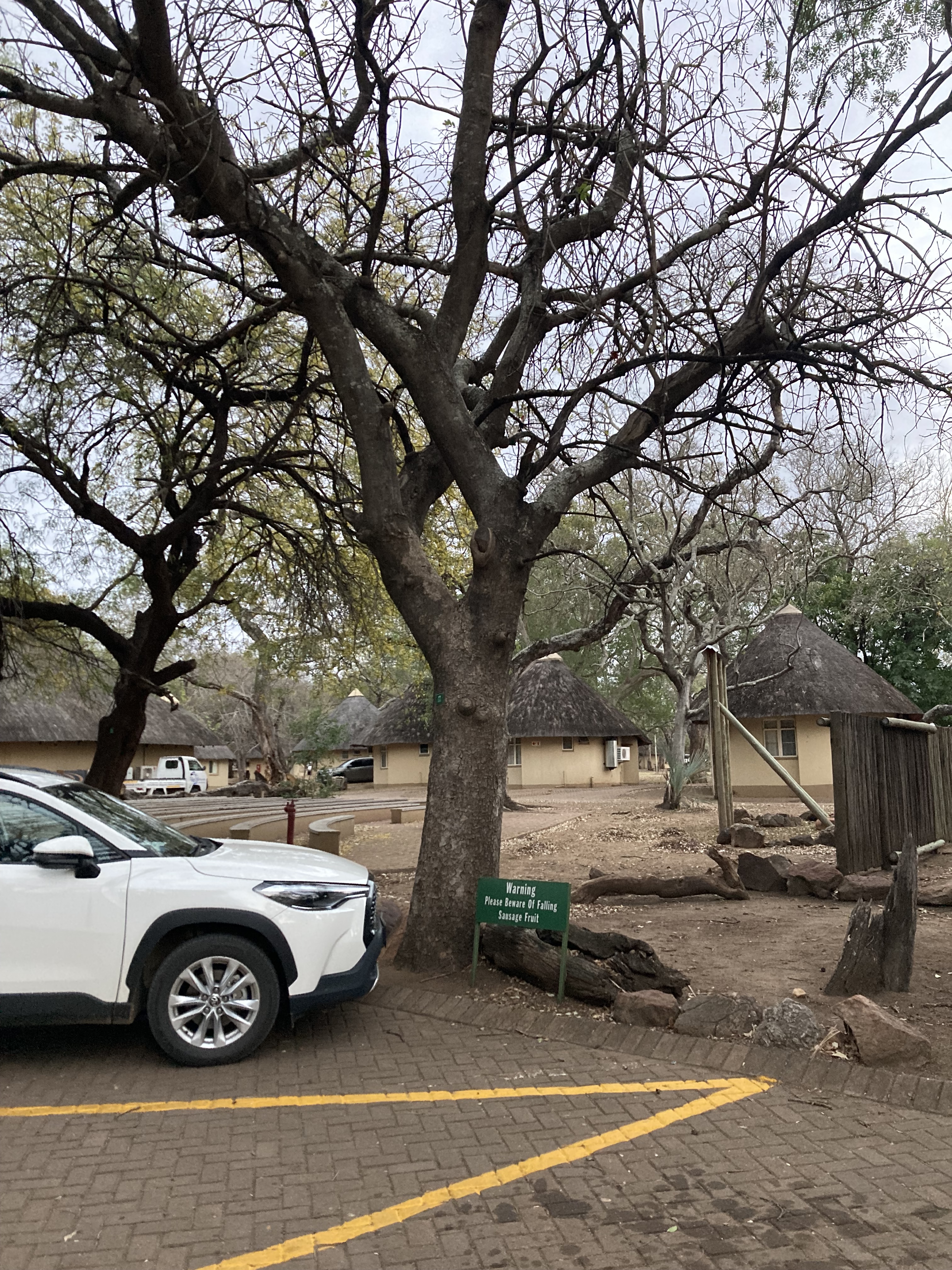
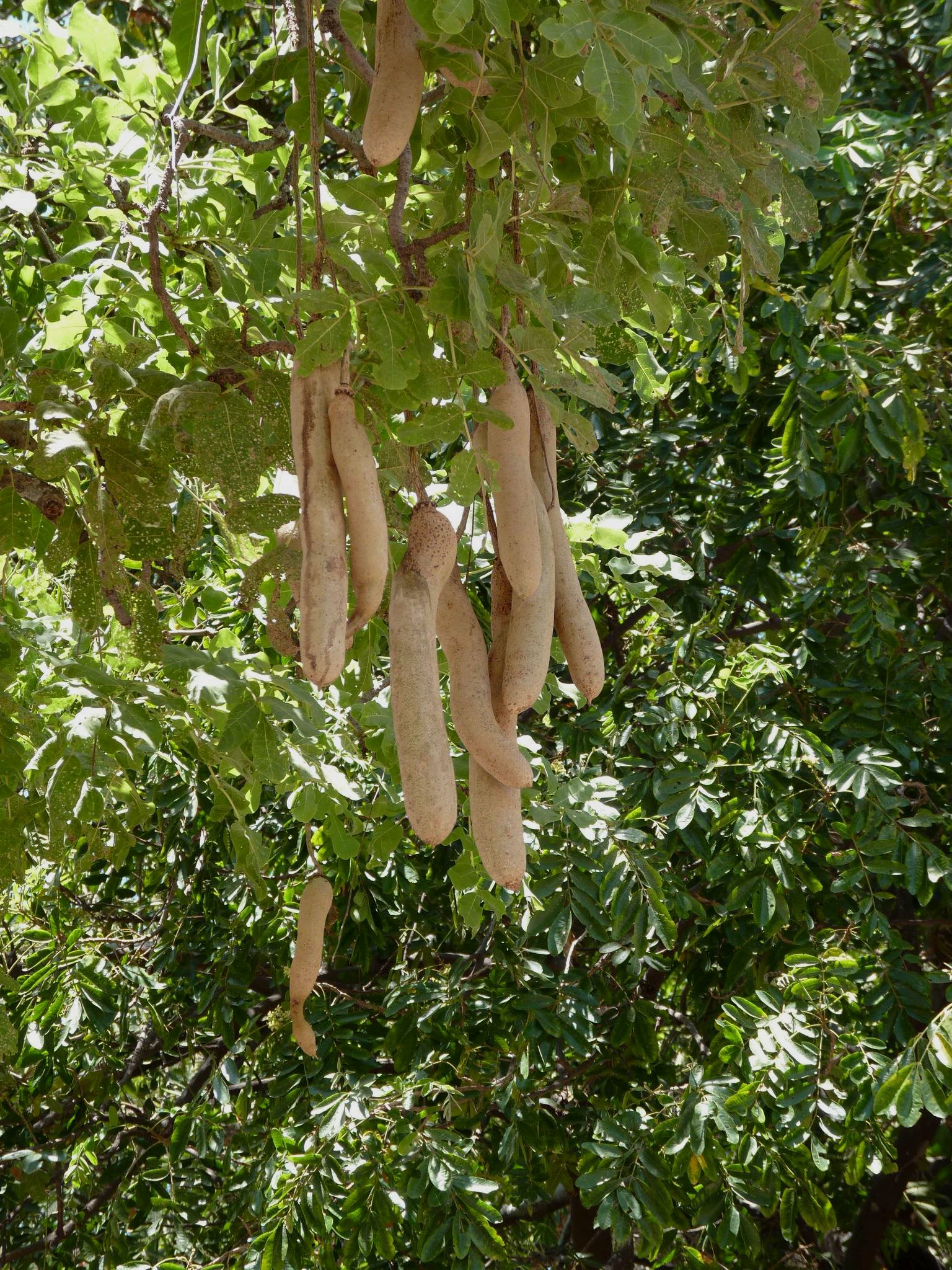
We spotted this sign at Skukuza Camp in the Kruger National Park. One would have thought that, if there was a tree that gives sausages, instead of such a sign there would be one promoting the sale of fried ones or at least a fridge to collect them for later!
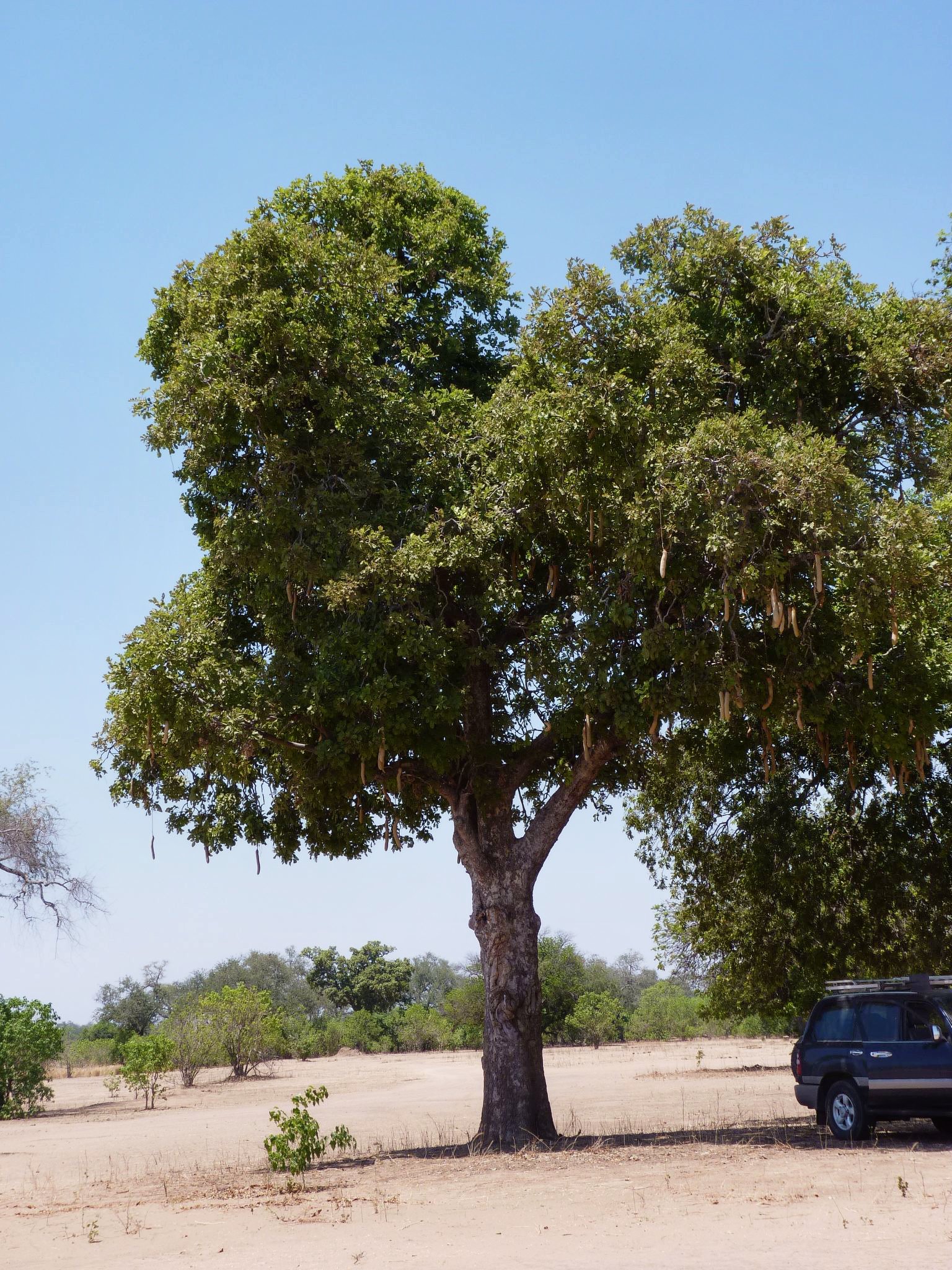
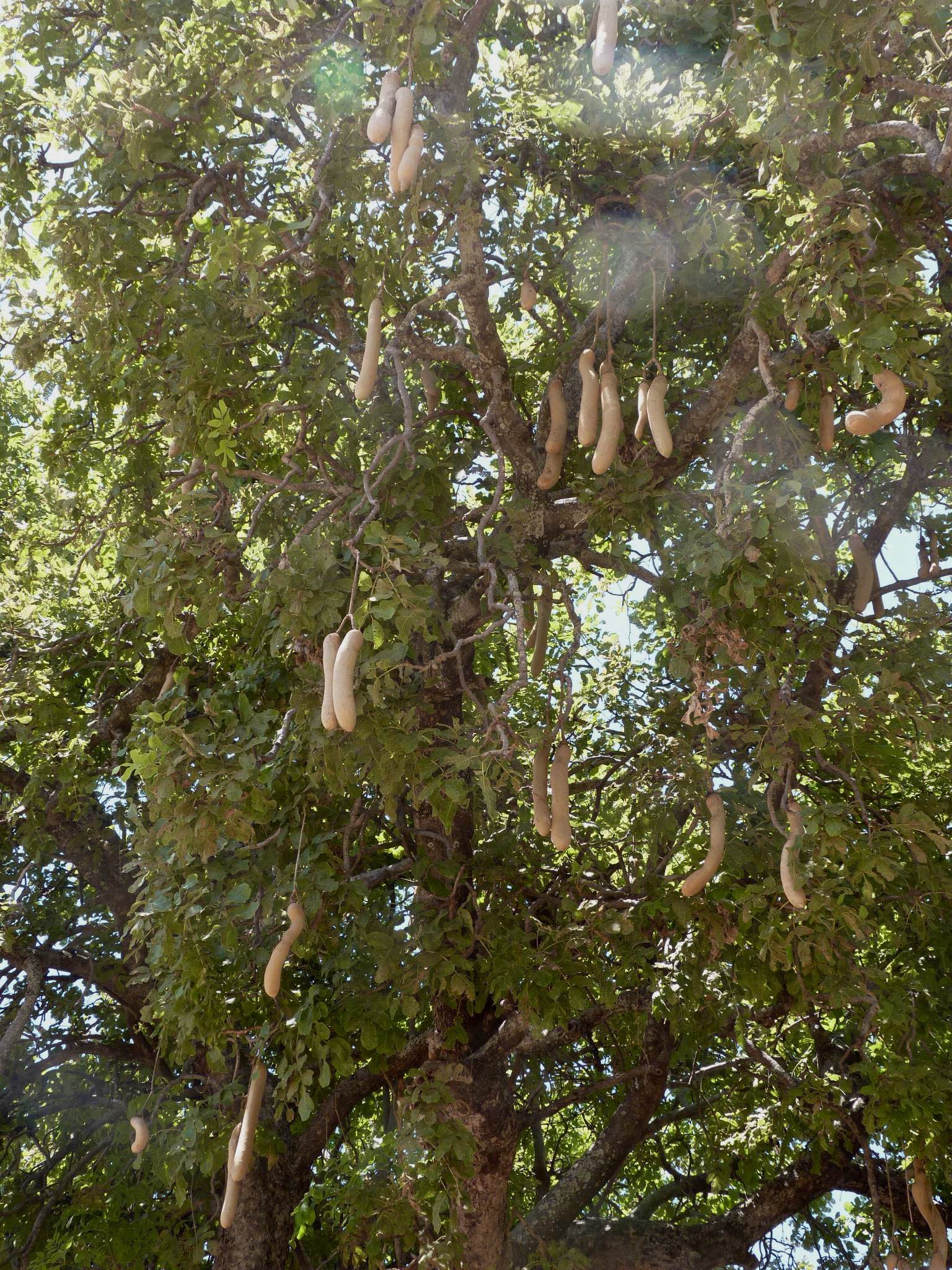
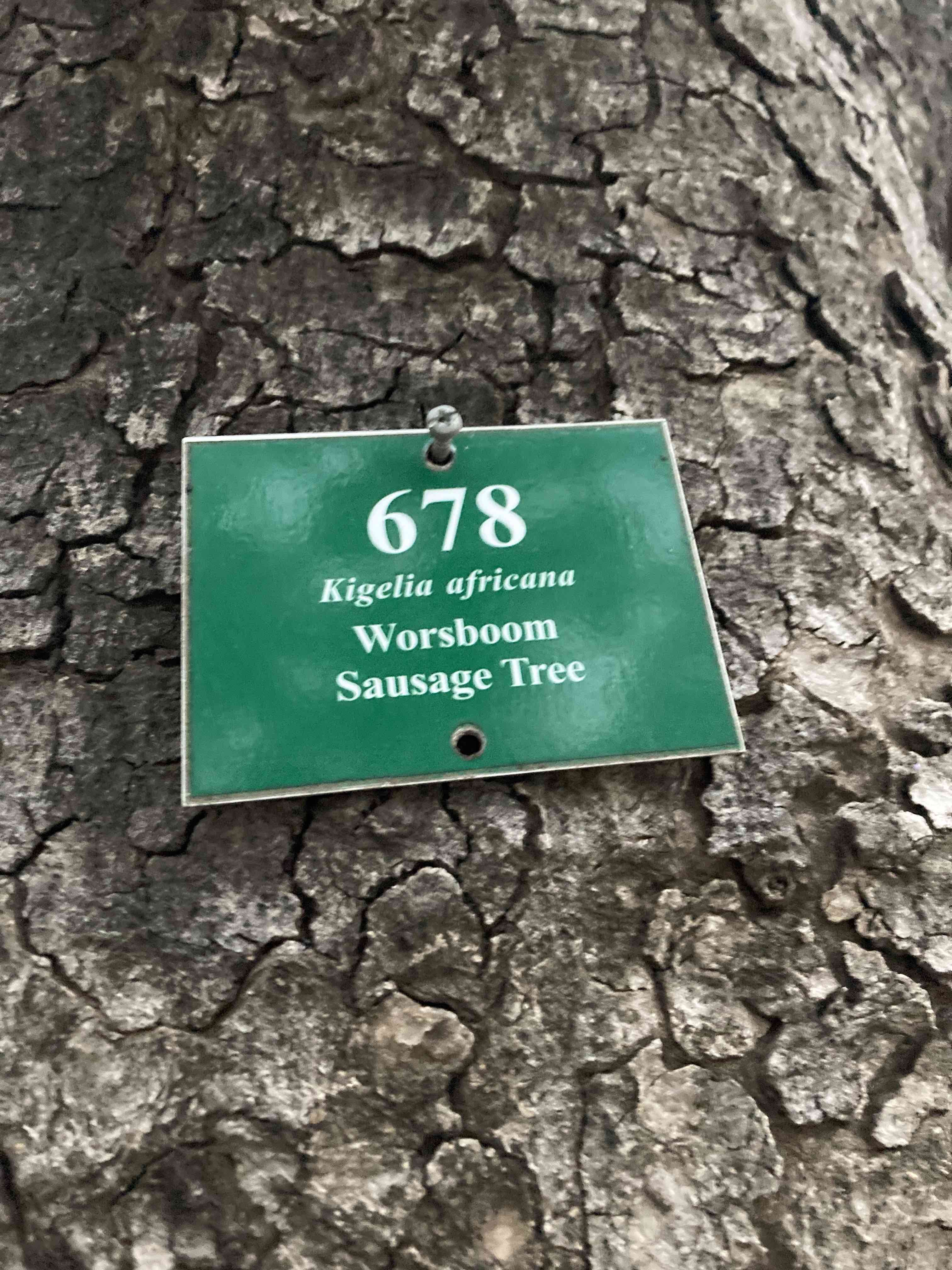
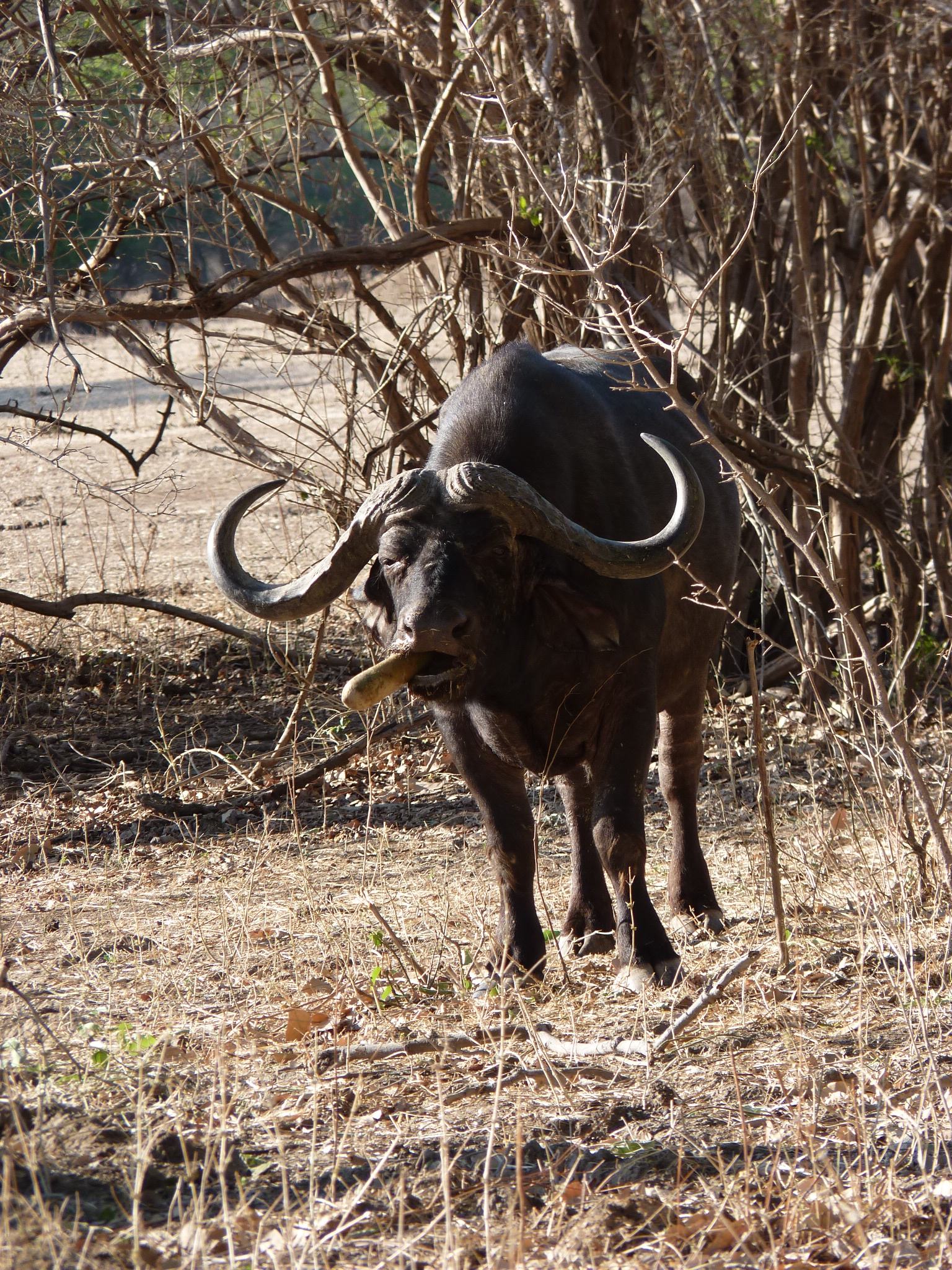
But these are the fruits of the aptly named sausage tree (Kigelia africana), solid fruits that could weigh over 10 kg although more often less than that but that, if they fall on your head, they could give you a headache, perhaps worse than if they fall on the bonnet of your car!
Camping at risk of falling sausages!
The sausages that fall are consumed by a variety of animals, including humans that use them for flavouring “pombe” the local beer in Kenya.
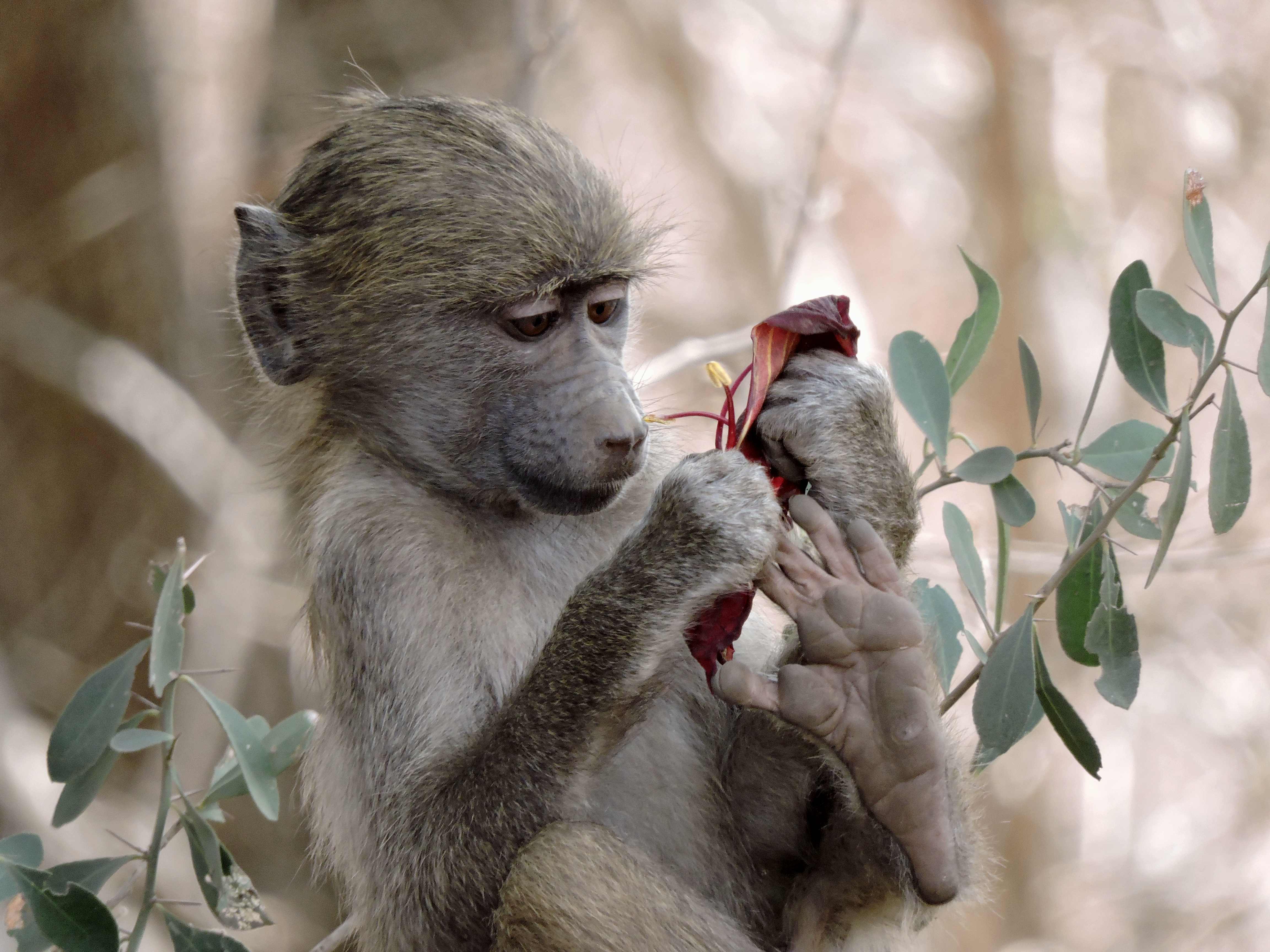
Before that, it produces beautiful scarlet flowers that are not only decorative but also animal food. This young baboon is picking the best sweet bits!
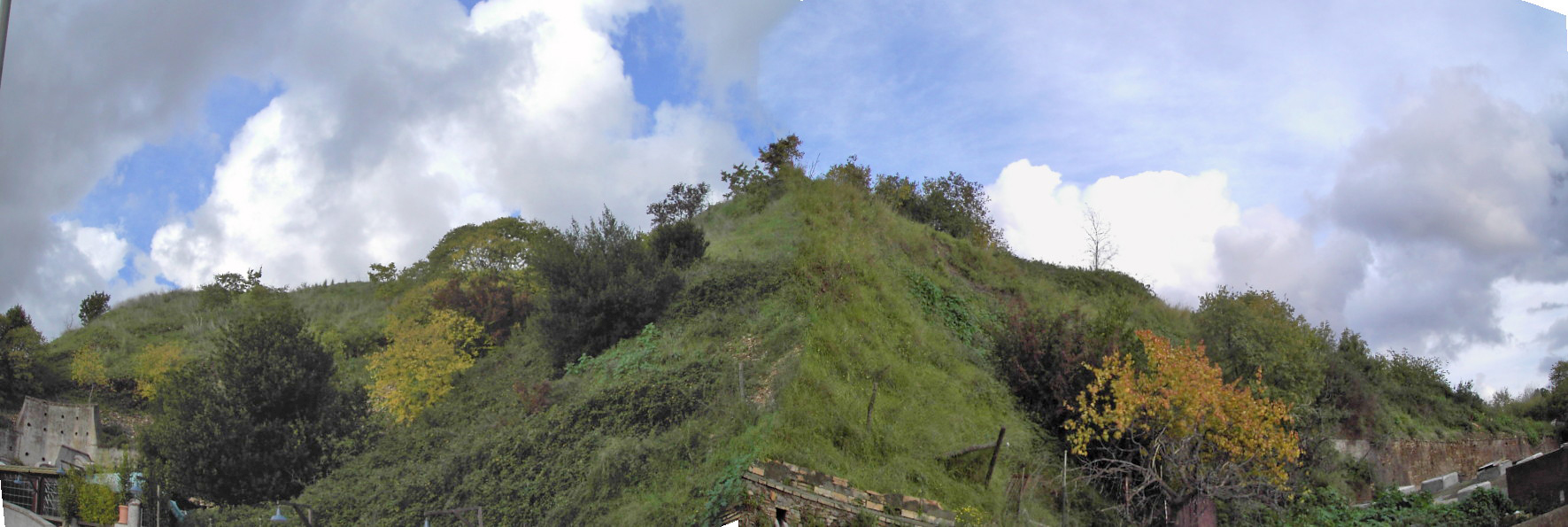
Testaccio hill. Picture credit: Public Domain, File:Testaccio monte dei cocci 051204-12-13.JPG. Lalupa assumed (based on copyright claims).
Rome is known for countless features, both human made and natural. Among the latter there are the famous Seven Hills namely Aventine, Caelian, Capitoline, Esquiline, Palatine, Quirinal and Viminal, in alphabetical order.
Although there are others such as the Vatican, Pincian, Janiculan and the Sacred Mount, these are not counted among the traditional Seven Hills, being outside the boundaries of ancient Rome.
There is even a man-made hill, the object of this post: the Testaccio.
This peculiar hill is made almost totally of fragments of ancient Roman pottery, nearly all discarded amphorae dating from the time of the Roman Empire. It covers an area of two hectares at its base (one kilometre circumference and 35 metres high). It was built with an estimated 53 million amphorae, and it is located a short distance away from the east bank of the River Tiber.
The amphorae used were mainly of one kind that carried 70 litres of olive oil, and it is estimated that they had contained 6 billion litres! The olive oil that the amphorae carried came from several places, mainly the Guadalquivir region of modern Spain, Tripolitania (Libya) and Byzacena (Tunisia).
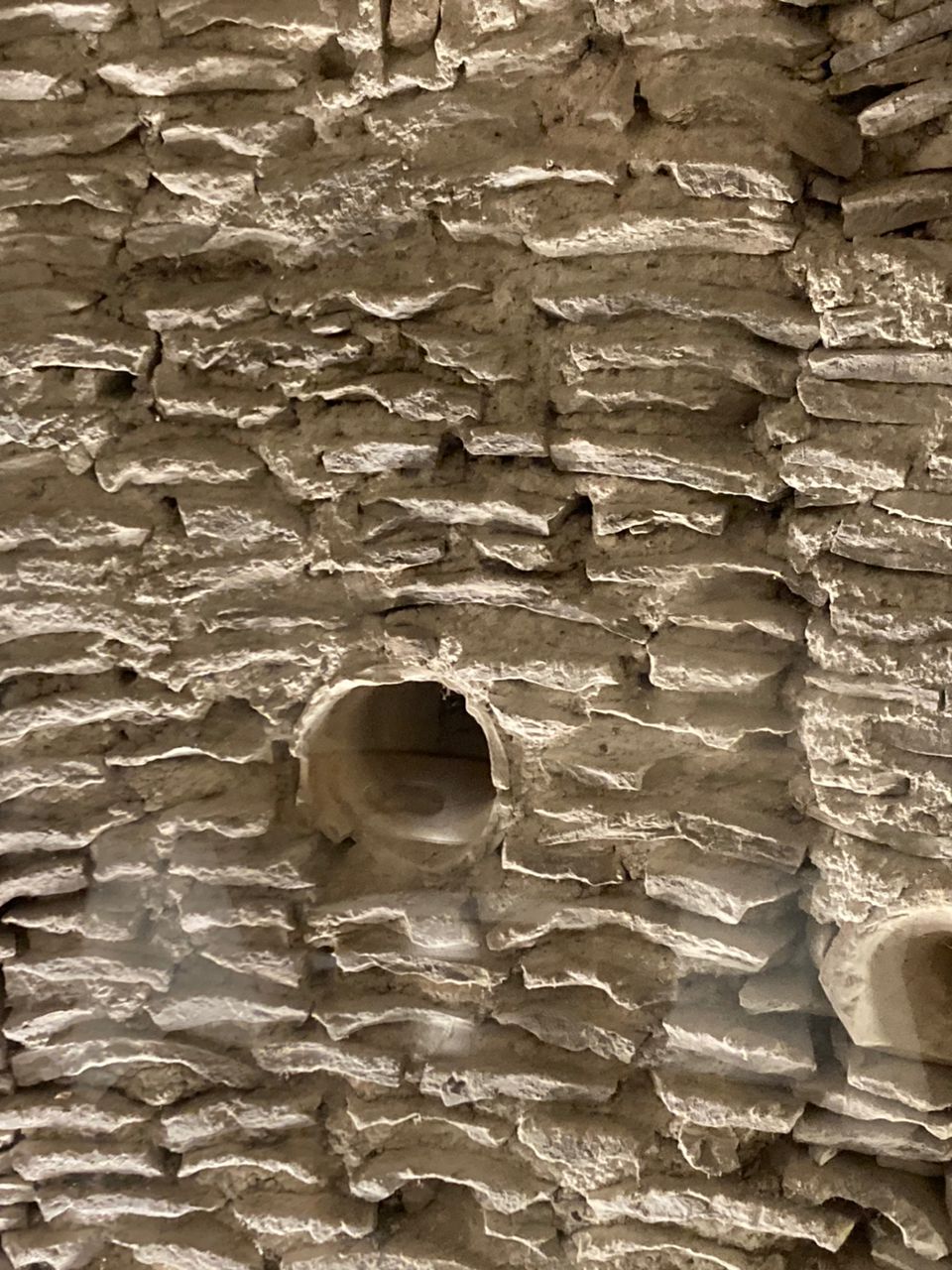
The hill is not the product of haphazardly discarding broken amphorae, but it was purposedly designed as a series of terraces supported by the less damaged amphorae and filled with sherds for stability. The amphorae were probably difficult to recycle or reuse after a while as the oil would have permeated them rendering them useless.
During the Roman Empire Testaccio was an important trade centre where workers building the slaughterhouses in the area settled. Today, the area is known for its good food, and it is one of the places we frequent when in Rome we feel like a good meal.
But it was not the food nor the hill´s architecture that roused our curiosity. Not even the fact that, in 1849, a gun battery was placed there by Garibaldi to defend Rome against the French! It was the surprise we got while walking towards a restaurant on a hot evening when a very cold air stream hit our legs.
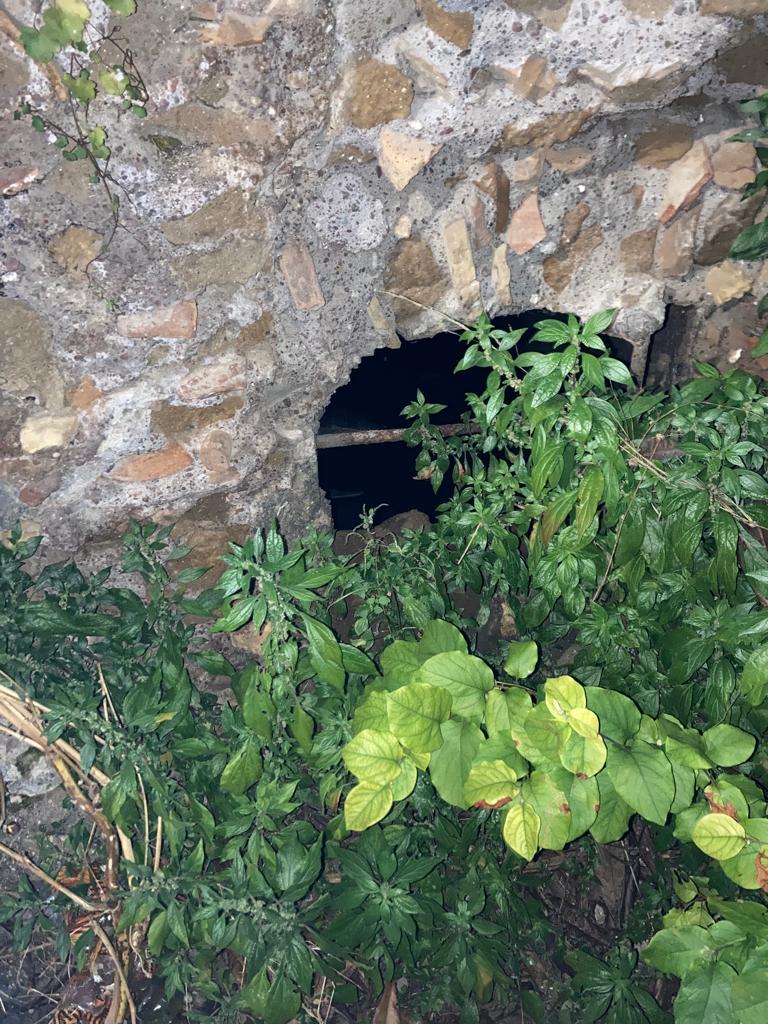
We stopped and looked around to identify the air conditioner, doubting that there would be one which there was not, of course. Instead, with the light of our cell phones we found a hole in the earth from where the cold stream of air came from.
We debated how that could be and thought that there may have been a cold underground water current such as the ones I described earlier that cooled the air (See: https://bushsnob.com/2017/07/16/the-nasoni-of-rome-1/).
The doubt persisted for a whole year until we returned to Testaccio for another meal, this time earlier. Showing the discovery to a friend, we met a kind gentleman staying at the bottom of the hill that offered us to climb it, an offer that we agreed to take up at another time. When we asked him about the cold air blowing from that hole, he invited us to enter a courtyard nearby and there was also a door through which more cold air was blowing and then a window and other places as well.
Then the truth of the situation was revealed and some of its use and probably economic relevance became clear. The hill´s innards were “discovered” to have strong cooling attributes that are believed to be caused by the ventilation produced by its porous structure. This made it ideal for storing wine during the heat of the Roman summer, and caves were excavated for that purpose.
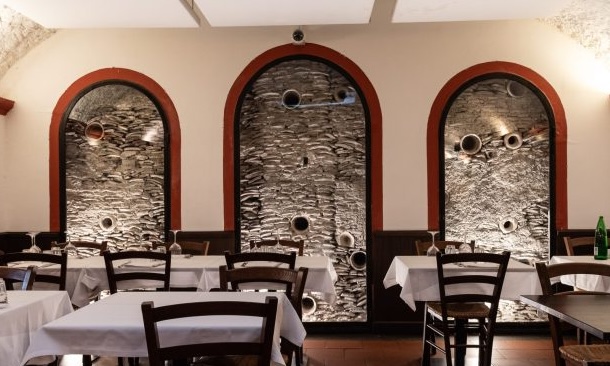
Some restaurants have windows that show the hill structure and probably also serve as coolers for both patrons and probably the wine stored there as well.
I have somehow neglected writing posts as I have resumed writing a novel I had shelved years back. This activity has taken more time than I thought and I am now determined to finish it to resume other writing projects, including the blog.
Despite the above, we still travel to the bush and, a few days back we had the visit of friends and relatives with whom we travelled to our favourite spot in Zimbabwe, Masuma dam in Hwange National Park, where what we saw brought me back to the blog.
It is rather amazing how cold it can get at night in Hwange. We had already experienced this earlier and came prepared. However, I still needed to put on my polar jacket to be able to gain some warmth. In any case, we survived.
The night before our visitors had agreed on an early game drive and I heard them departing the camp at about 06:00hs. I like to get up early so by 06:30hs I was at the viewing platform where I met the two ladies in charge of the camp, doing the daily cleaning before other toursits arrive. The dam was quiet and the sun was starting to warm things up so, seeing the prevailing peace, I decided to go back to the camp (about 50 metres towards the back) to make myself a cup of coffee.
I had just put the water to boil when one of the ladies came running to tell me that “the painted dogs have chased an impala into the dam and a crocodile ate it!”. Cursing my coffee idea and after shouting “wild dogs” to my frozen wife (she came in a flash, happy to leave the cold tent!), I run back to the dam. As expected, I could not see anything apart from the usual pod of about twenty hippos that were still where I had seen them earlier.
It was an upset Bushsnob that my wife found when she appeared. “I cannot believe what I missed” I said, “for a cup of coffee!”. Sensing the mood, she went out of the viewing platform to have a better look as we could still hear the dog calls coming from the nearby hill at the back of the camp!
Then, the amazing thing happened. As if a second take was needed by some nature director, galloping sounds came from the hill behind the camp and another female impala jumped into the dam again and started to swim away from the dogs. I managed to get the camera in video mode and register the last seconds of the impala’s life as well as the amazing sight that it was calm again a few seconds after the event! (please note that it shows a scene that some may find too strong!).
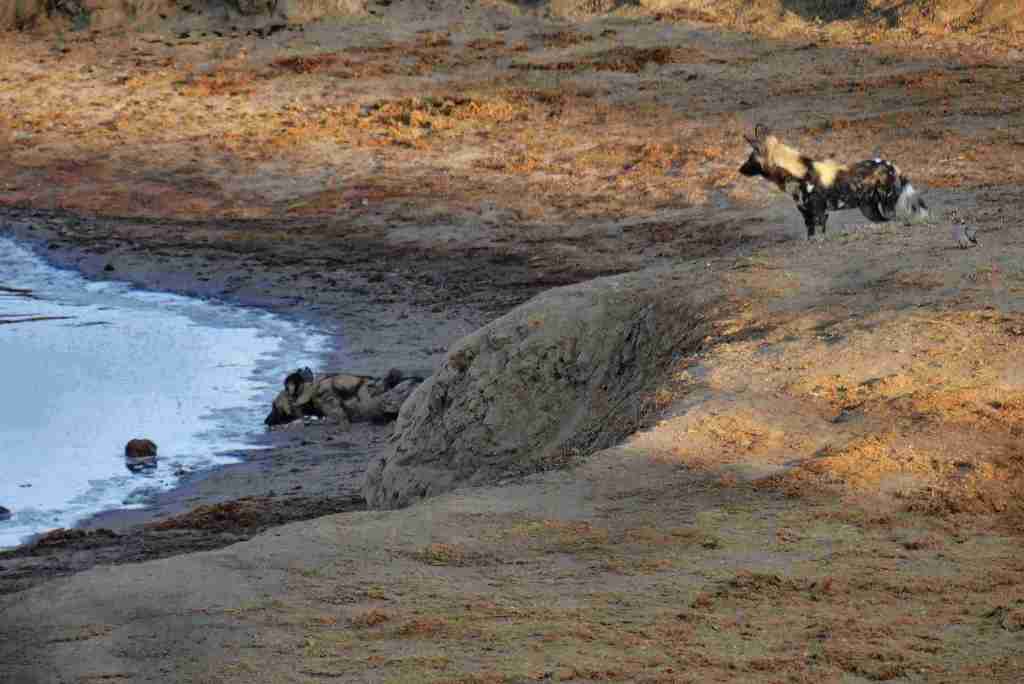
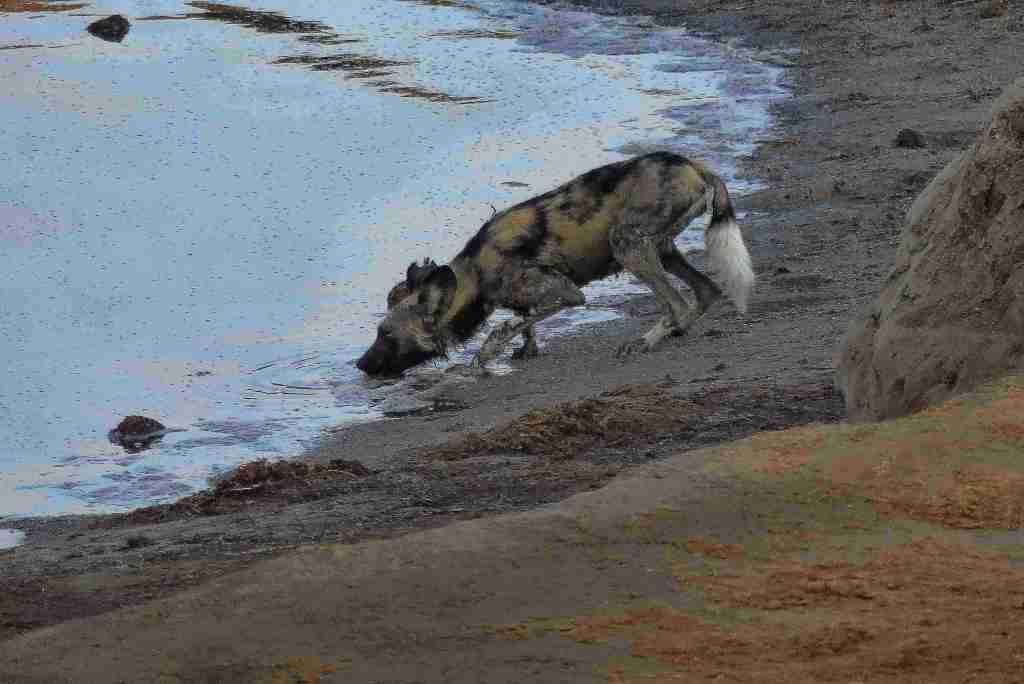
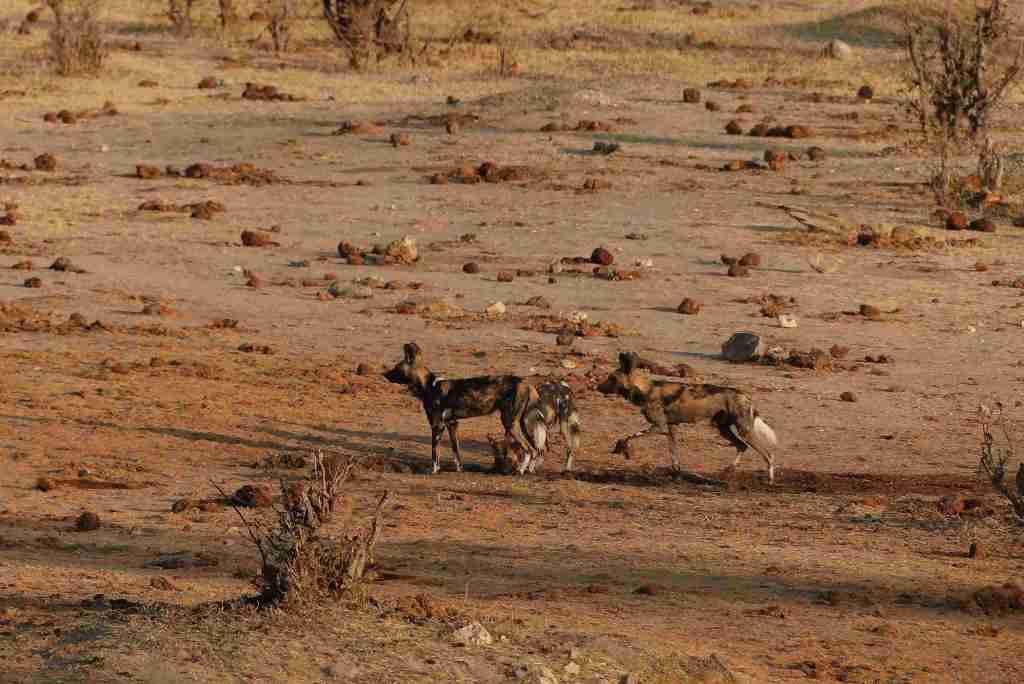
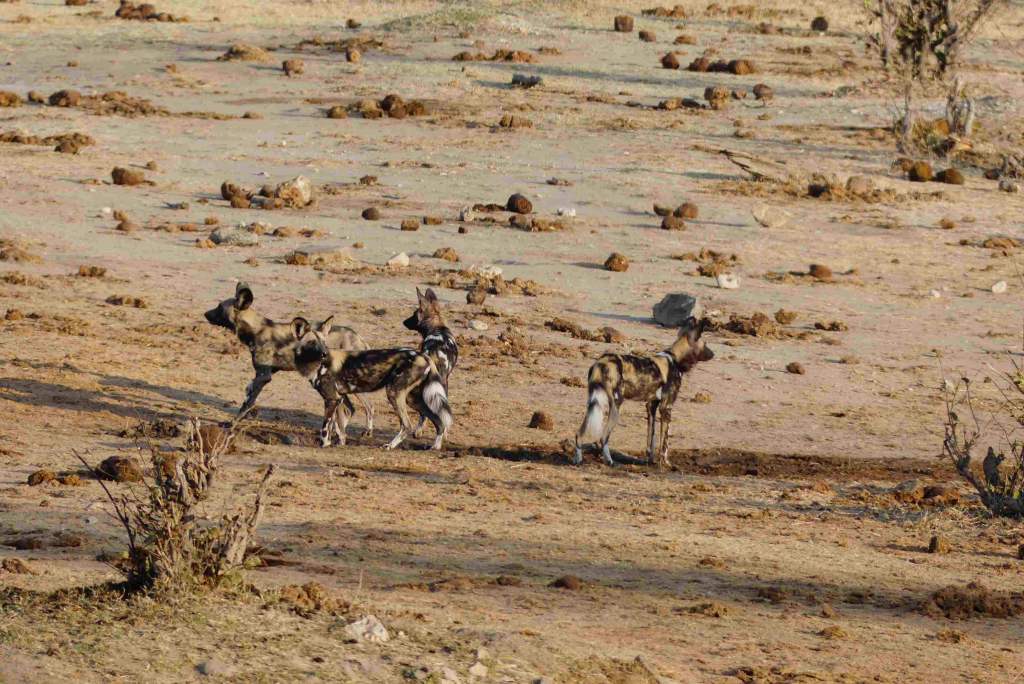
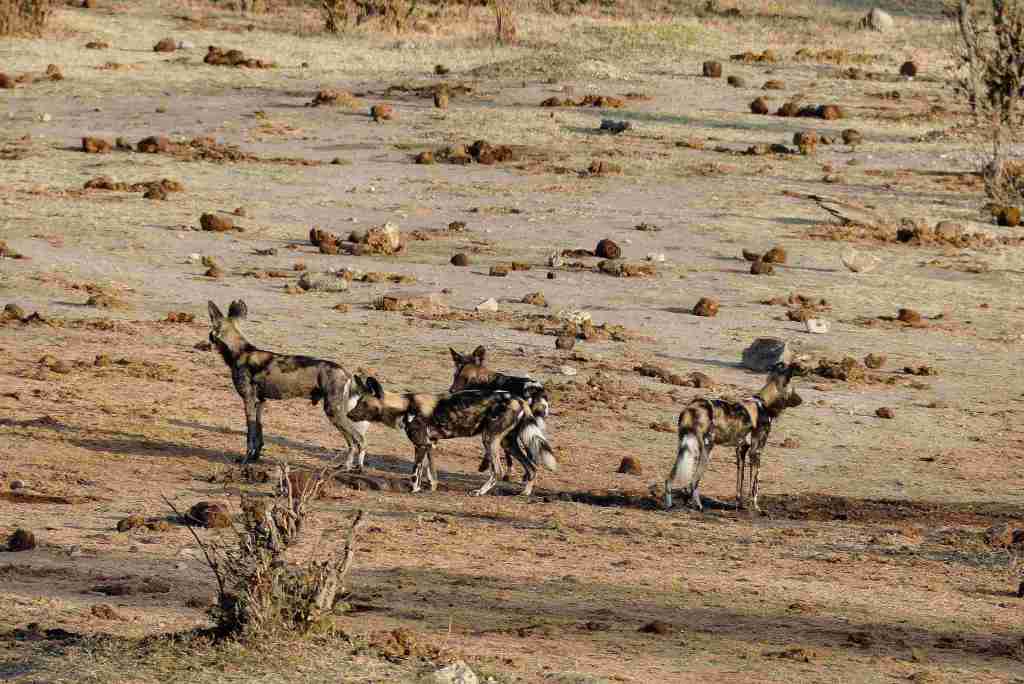
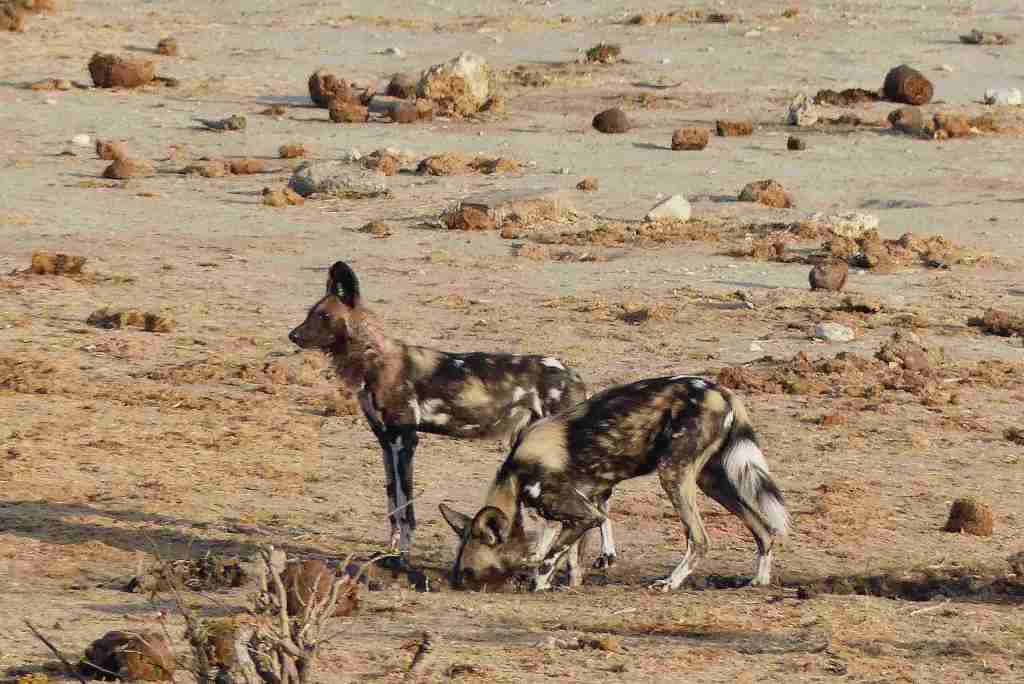
After recording the impala´s demise, I focussed on the disappointed wild dogs (about eight of them) that had worked hard for a meal and twice lost it to crocodiles. They were watching the water and, after some of them drinking, they departed again to find another prey and we did not see them again.
The above sequence shows the dogs after arriving to the dam, contemplating their prey disappearing!
Do I need to add that the early birds that had gone for the game drive and seen the usual herbivores were rather surprised and disappointed when they hear our news on return?
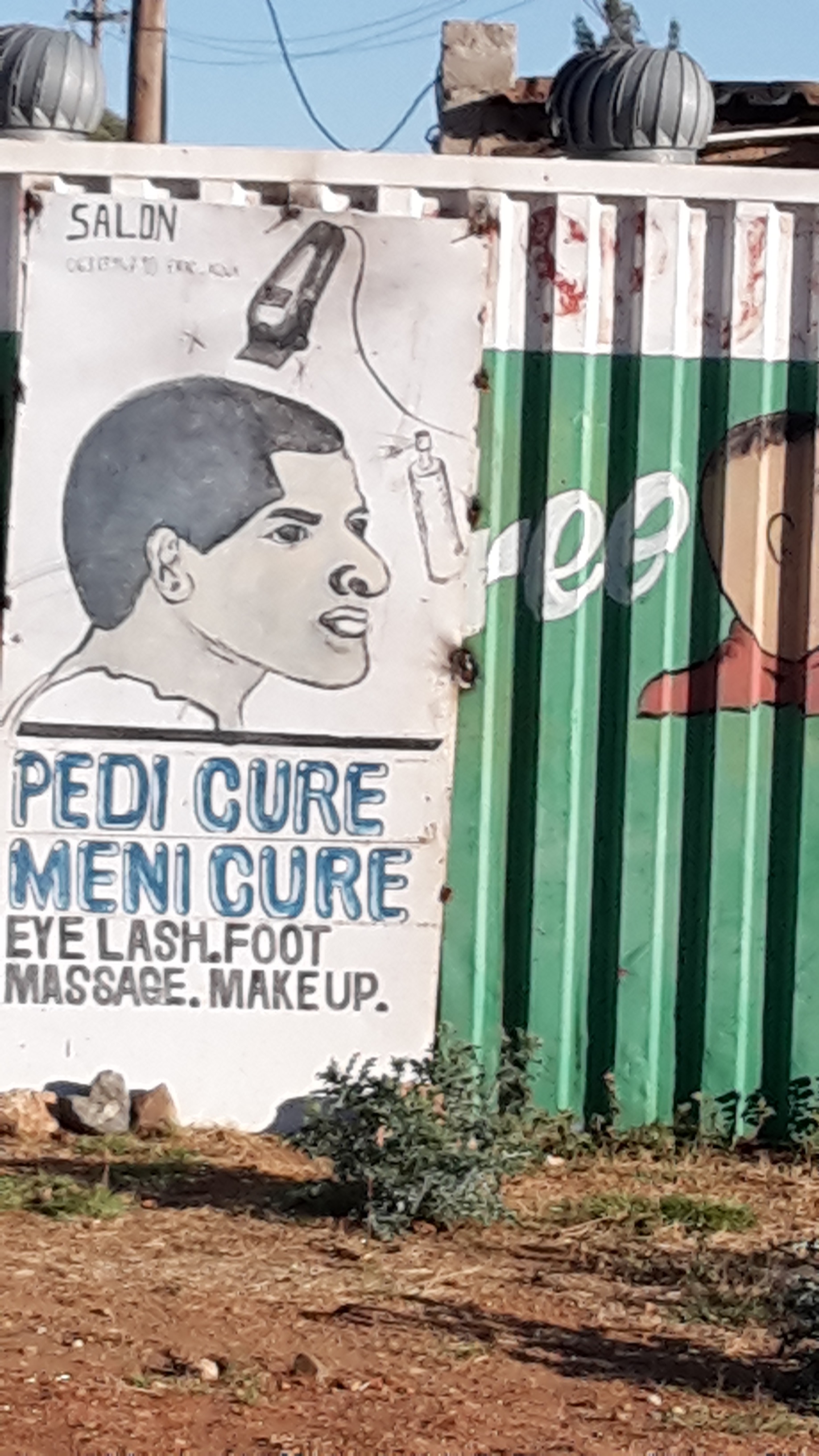
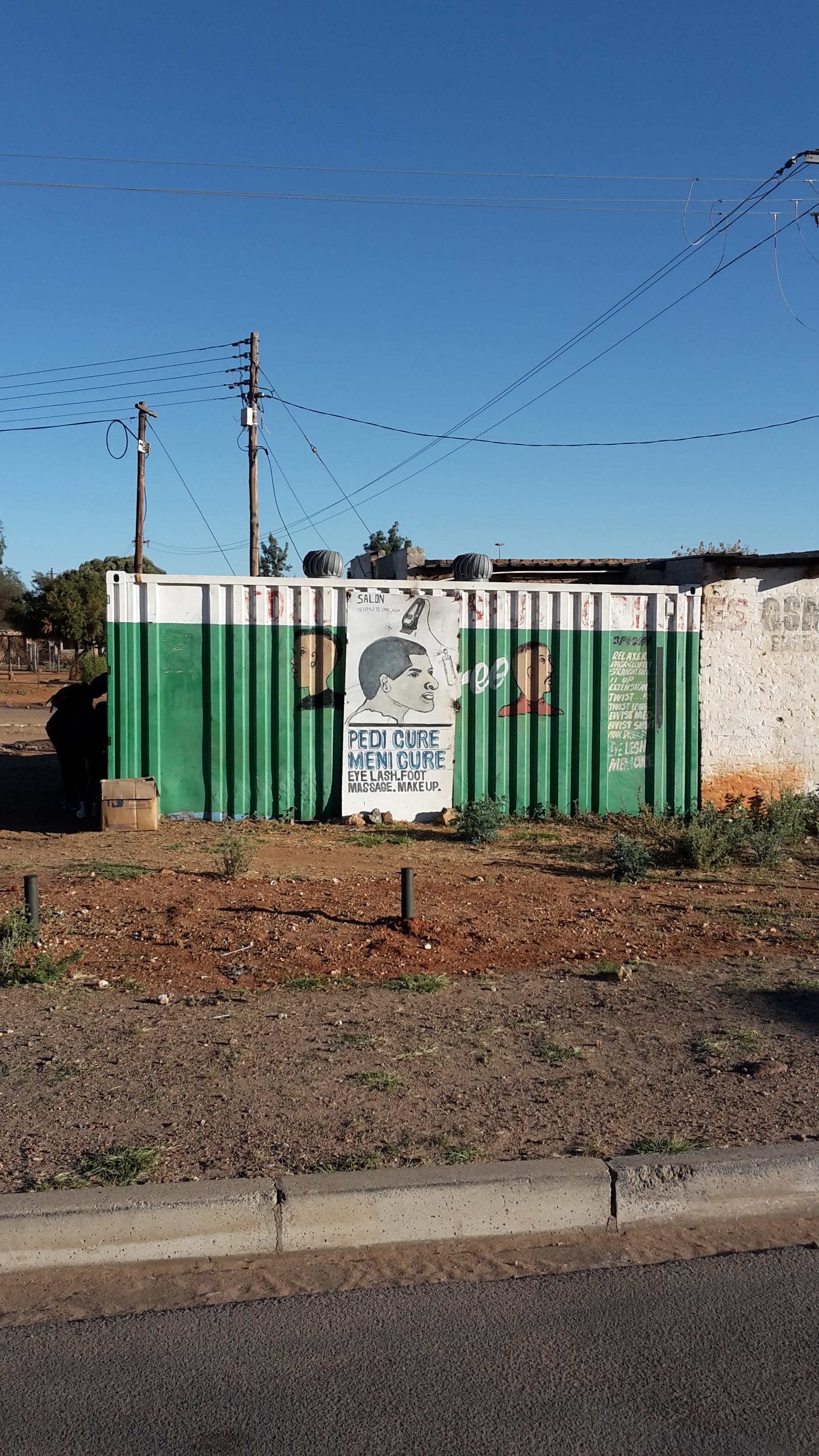
I believe we saw this advert travelling in South Africa. This beauty parlour offered “pedicure” and also “menicure”. At first I thought it was something to do with a cure for men! but then I realized that it meant “manicure”!
It also offered make up, eye lash and foot massage! But that is not all, to the right of the main sign there were other “Special” offers (written in white):
“Relaxer back and lower straight back”, “Straight back”, “straight up back extension”, “Twist back(?)”, “Twist long”, “ewist (twist?) med”and ewist (twist?) short”, “wool dre… (dreadlocks?), “eye lesh” and “men cure”.
You will agree with me that it was a great offer, all packed-up in a shipping container!
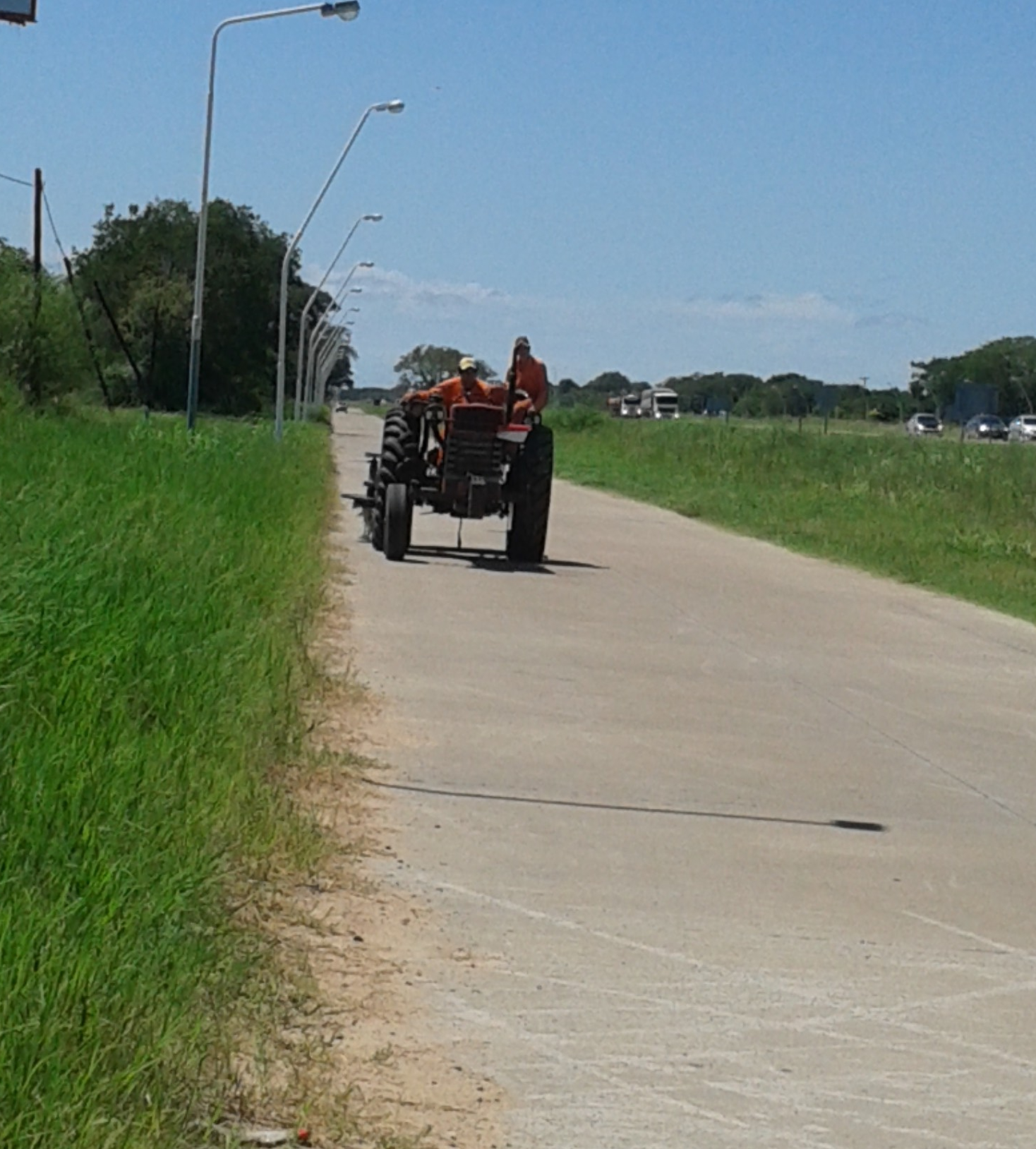
This was seen is the main road between the cities of Corrientes and Resistencia in Argentina. The cities are separated by the magnificent Paraná river and the road connecting the two is truly busy. It was while driving on the motorway that we spotted this oddity. We almost overlooked it but then we spotted something wrong. Can you see it?
It is not easy to see what is wrong! Here is another picture taken when the tractor got closer and with a different angle:
Usually, tractors move on four wheels! However, these gentlemen were driving -rather unconcerned- on three by some miracle of engineering equilibrium!
I am a great believer in sharing activities away from work to strengthen team spirit. I proposed to my project colleagues to take advantage of a special cheap offer of Zambia Airways (ZA) to spend the week of Christmas 1992 at on the shores of Lake Tanganyika in Northern Zambia. I had found out that there was a lodge known as Kasaba Bay that looked like a good place to stay there. I saw it as an excellent opportunity to visit this rather remote part of Zambia while doing some birdwatching, game-viewing, and fishing.
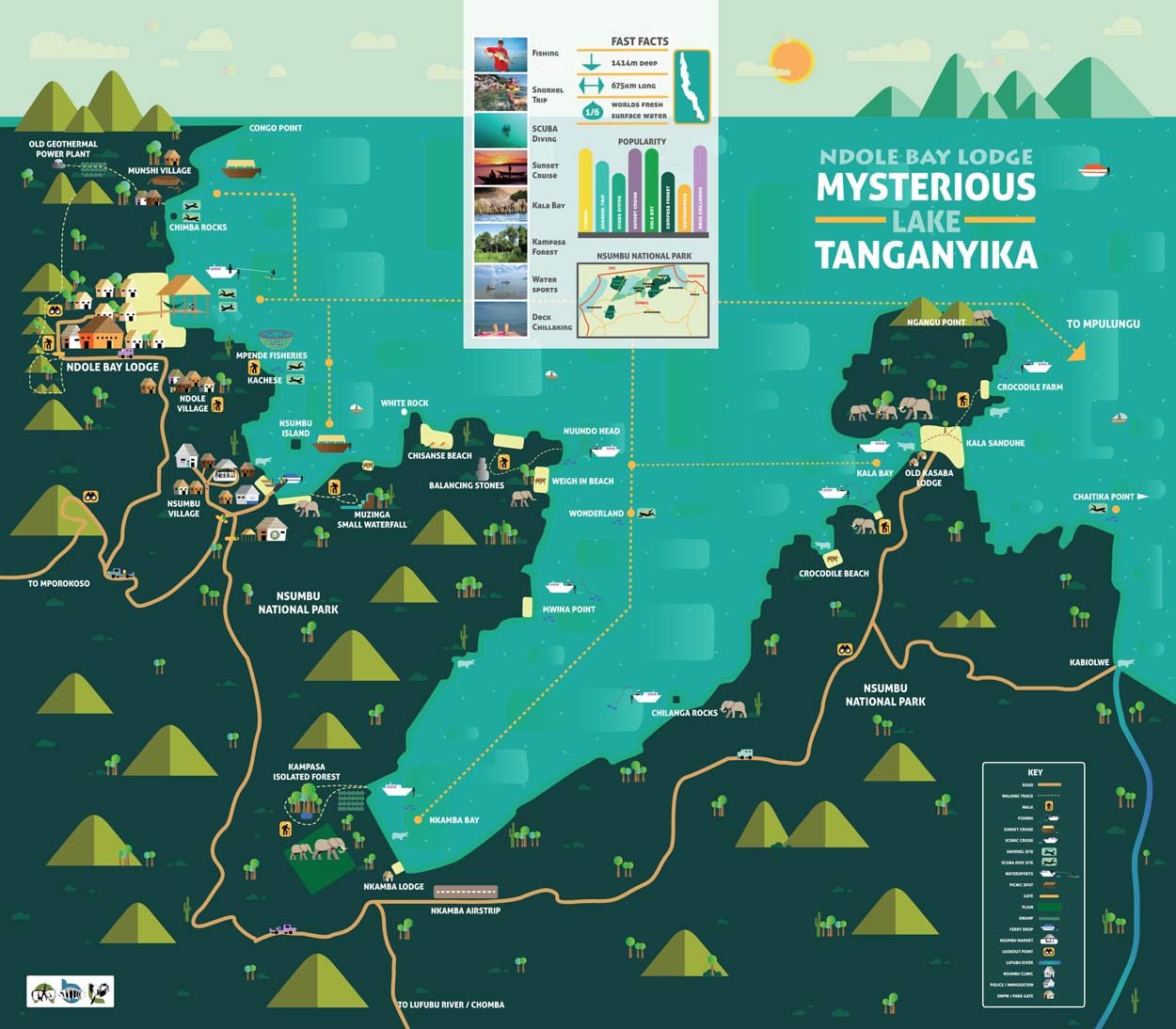
A great map of the area produced by Ndole Bay lodge. Copyright of Ndole Bay lodge (http://www.ndolebaylodge.com/). Kasaba Bay lodge is on the top right while Ndole Bay is on the top left. Nkamba Bay lodge is on the bottom of the map in the large Nkamba bay.
It was decided that a group was to travel by air: Bruno and Dominique with their two girls Fanny and Collette and their babysitter Beauty. I would go with Mabel, our children Flori and Julio and our babysitter Annie. Although Flori and Fanny and Julio and Collette were over two and one years old respectively, they were used to travelling and Zambia was, for all they knew at the time, their country as they were all brought up there.
Although Giuseppe would not join us as he was spending the holidays with his then girlfriend Lieve in Chipata, Anders, after collecting his girlfriend Birgit who was arriving from Copenhagen, would come by road to join us later their rather ambitious trip to Dar es Salaam. In retrospect Giuseppe was probably the wisest…
We booked the Kasaba Bay Lodge for the week, and it was a full ATR 42 (with about 50 passengers) that landed at Kasaba Bay after an uneventful flight of about two hours. The lodge was very close from the runway, so we got there before our plane started its journey back to Lusaka. The place looked promising with its small bungalows very near the lake shore and a rather large swimming pool with a comfortable thatched bar next to it. Although we were technically in the rainy season, the sky was clear, and it was warm, ideal conditions to enjoy swimming and fishing. We were informed that the the prevalence of bilharzia was very low as very few people lived nearby. Things were looking up and we were very happy to be out of Lusaka.
The plane passengers aimed for various destinations and about one half left by cars while a group of about twenty of us were taken to Kasaba Bay lodge where a reception committee was waiting for us. We did not need much imagination that the reception was rather more solemn than usual, and we were somehow surprised at the rather numerous security personnel stationed at the lodge. There was something amiss and this was dispelled soon with the Manager´s announcement.
“Ladies and gentlemen” he started, “welcome to Kasaba Bay lodge. We would like to inform you that His Excellency President Chiluba has honoured us with his presence at the lodge [1]. For this reason, all bookings that are not part of his entourage have been cancelled” That was all he could say before he was rudely interrupted by the waiting crowd, outraged by being “lodgeless”! This of course included us and even the so far polite Japanese visitors that lost their composure!
While the riot was taking place, the Manager tried, fruitlessly, to calm us down. Eventually, realizing that our protestations were futile, we stopped complaining and listened. “Please, do not worry” said a now dishevelled and nervous Manager, “we have made very good alternative arrangements for all of you. You will be taken to another lodge. He then proceeded to inform us that there were two boats ready at the yetty to take us to our new destination and he invited us to move there and wait for instructions.
While we were walking towards the lake, we saw our plane taking off and we realized that we would be at Lake Tanganyika for one week and that we better enjoy it. The ten of us were place in the same boat while the Japanese group and a couple of other foreigners were given the second one.
We were going to a lodge somewhere on the lake shore that I believe was an earlier version of the present Ndole Bay lodge or one sited in that general area. I regret that my memory fails me there.
By now it was near mid-day and the heat was getting intense. The boats were indeed at the jetty but far from ready and under the sun (the nearest trees were around the lodge!). We boarded and accommodated the ladies and our offspring as best as we could under a makeshift shade made of khangas while Bruno and I made sure that all our luggage was loaded on our boat. While this took place, provisions were also being loaded.
We saw rice, bread, cabbages, maize meal, and a couple of cool boxes brought to the boat. While this took place, we established communication with our skipper and learnt that we would navigate about three hours to our destination, that it was only a name to us at the time. The heat was intense, and our children were feeling hot and unhappy, so the situation was getting difficult when loaded was completed and we were ready to go.
But we did not go as we were waiting for chickens and eggs! These did not appear for another fifteen minutes. Once several birds and a few crates arrived, we started our journey and soon we forgot our past experience and got into the contemplation of a beautifully green lake in sharp contrast with the dry mountains that framed it. “Over there is Doctor Congo” joked our skipper referring to the opposite shore, the then Democratic Republic of Congo (DRC). The water was amazingly clean and warm, but we avoided touching it too much just in case.
It was a relief to set off and to dry our sweat with the lake breeze at last. As soon as we moved from the jetty we realized the enormity of this true land-locked sea with an area of 32,900 km² and a maximum length of 673 km. Encased by the Rift valley mountainous range, the dark green colour of the water was an indication of its depth that averages 500m but that can reach down to 1500m, one of the deepest of our planet. Apart from a large population of Crocodiles and Hippos, several fish species are found and the lake is renowned for its more than 250 species of cichlid fish, most of which are endemic.
We were not after cichlids but sport fish, mainly the Nile Perch (Lates niloticus), although we knew that there were other large game fish such as the Tiger fish (Hydrocynus vittatus) and Vundu Catfish (Heterobranchus longifilis). We were also aware of the off chance of catching a real monster, the Goliath Tiger fish (Hydrocynus goliath) that also lurked in the lake’s depths. Although unlikely, we knew that some world records for these species had been set here and came well prepared, just in case we had a chance to challenge them…
I had heard stories at Lusaka of people that had caught Nile Perch at the lake, and we had fished them in Kenya years before at Lake Victoria. Apparently, they would catch large perch by trolling at a considerable depth using a barbie doll as their lure! As my daughter did not agree with me using hers, we settled for the more conventional deep action lures! I chose the largest I had.
It was probably the usual African optimism that led the Manager of the Kasaba Bay lodge to say that the trip to Ndole would last one hour. Perhaps he did not know the place, or he travelled in faster boats. Ours, a long wooden contraption with a rather small engine, took the three hours that the skipper mentioned to get to our destination. By the time we arrived was mid-afternoon and we were low on drinking water and, except for our two younger and still suckling babies, we were all suffering from the heat and sunburns.
We disembarked, luckily before the other boat, and we walked in a single file towards the lodge. This was simple but the rooms were nicely set in the garden among rocks and nice tropical plants. There was also a shaded veranda where food would be served. A couple of good BBQ stands were also there among the boulders in the garden. There was no swimming pool but a nice sandy beach where some rather derelict but still usable straw umbrellas were placed. The lake water was amazingly clean, warm, and calm, very tempting to jump in but we decided that it was best to find our rooms first as there would be time lateer to enjoy beach life!
As we walked Bruno said: “Let’s go quickly to get our rooms before the other people pick the best” so we walked fast and got to the reception first and negotiated for our rooms. Although I am not sure that we achieved much, at least we felt satisfied! We were pleased to note that the rooms had new mosquito nets and that they were quite cool thanks to the straw roofs. So, we had a chance to relax and cool down after quite an eventful day. But the day was not yet over.
At about six in the afternoon Bruno made an appearance. “Let´s go for a beer” he said. We agreed and walked to the bar, a roomy where a barman waited for us. We asked for a couple of Mosi beers (the Zambian beer at the time) but we were informed that there was no beer in the lodge as they had not loaded any on our boats! “Maybe with luck they will bring some tomorrow” he said traying to believe his words. This was a bad start!
We spotted a fridge that was plugged in, but we were not sure that there was electricity or that anything was inside it. In any case we insisted: “So, what can we drink then?” we asked. The rather apologetic barman replied, “there are a few sodas, but they were just offloaded from the boats, and they are hot!” As we were not prepared to suffer hot Cokes, we asked what else could he offer, and the choice was whisky or green powder juice!
We did not feel like a scotch, so we settle for the green juice. This was another error. We were served glasses of room temperature green water, which tasted sweet with a weak apple after taste. It was rather undrinkable, and we baptized it “Green Mamba juice”! and we only drank it that day!
We realized that the bar situation was critical and decided to secure the bottle of whisky, so we went to our room to get money. When we returned, we learnt that our only hope for a decent drink had already been “booked” by the Japanese group. “We are in a bad condition”, Bruno said while we were leaving the bar never to return!
[1] The late Frederick Chiluba, then the leader of the Movement for Democratic Change, had beaten Kenneth Kaunda in the first democratic elections and he had probably decided that he needed a rest after the campaign. (Or maybe he shared my thoughts on team building and chose the same location!).
As I mentioned before, my work in the Transmara in Kenya took me often through Narok when the weather was dry and I could drive through the Maasai Mara Game Reserve, up the Oloololo escarpment and then through the wheat fields and Lolgorien to Intona Ranch.
During the rains, however, the Maasai Mara would become muddy but still passable but the road on top of the Oloololo escarpment would be deep mud first and then there was the infamous soapy red hill where the journey ended -at least for a while- for many!
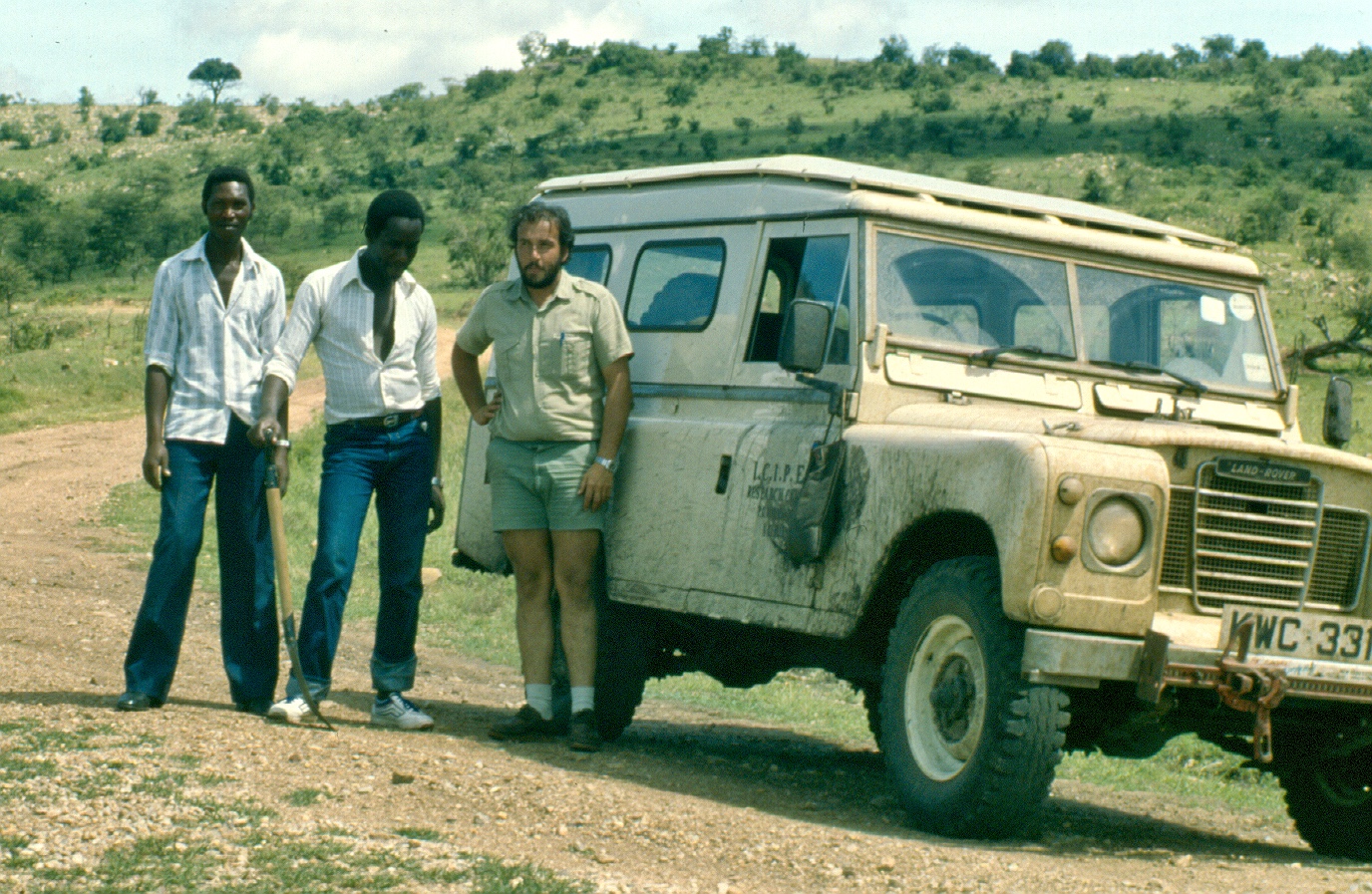
Benson, Joseph and the Bushsnob resting after going through the water-logged Lolgorian road.
Those wet days I would travel through tarmac via Kericho until reaching Kilgoris and from then to Intona through a muddy but shorter route that, usually, we could negotiate, but not always without trouble.
Stuck during one of the few ocassions that I was driven to Intona (with visitors) via Kilgoris.
Narok was a classical “border” town in the sense that it was the last stop before you entered into the “wilderness” beyond. It was in Narok where you re-fueled and bought your last essential supplies for you and your workers. The latter would go for the needed vegetables (read cabbage) as well as meat to last them for the two weeks spell they would spend at the ranch.
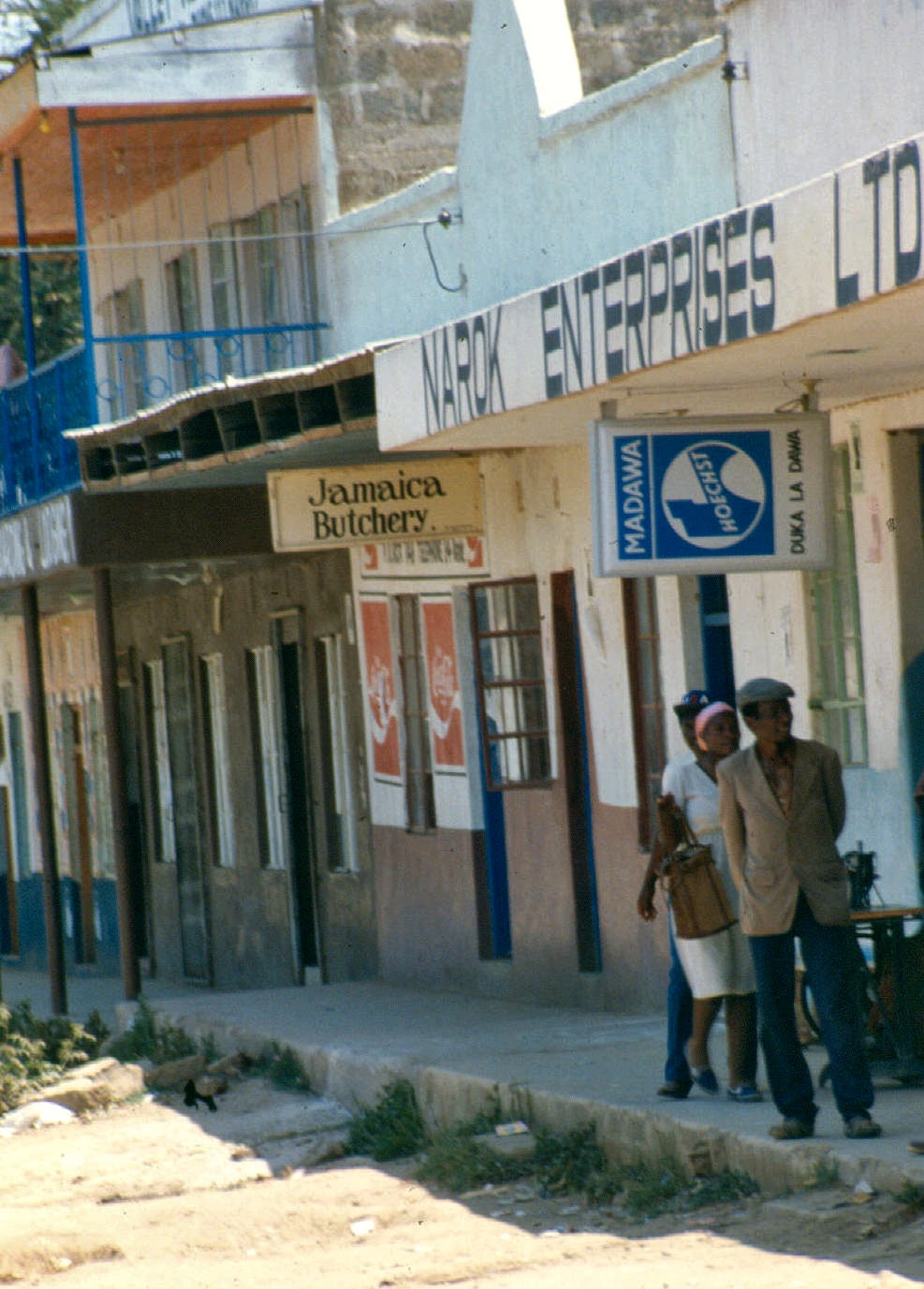
In addition, malaria was feared but they often did not get the chloroquine to protect them from it so we needed to get them from the pharmacy in town that happened to be next door to the butchery named “Jamaica”. Although the chemist was well identified, its neon sign was “interesting”. It read “Madawa” and “Duka la dawa” which mean drugs and pharmacy in Ki-Swahili.
Clearly, there was not enough room for the sign to be placed vertically so an ingenious electrician has placed on its side! Although I never seen it in its full glory during the night, I would have loved to have seen the face of the Hoechst general manager when he/she saw it for the first time. The sign is probably no longer there after all these years neither is Hoechst that is now part of Sanofi-Aventis.
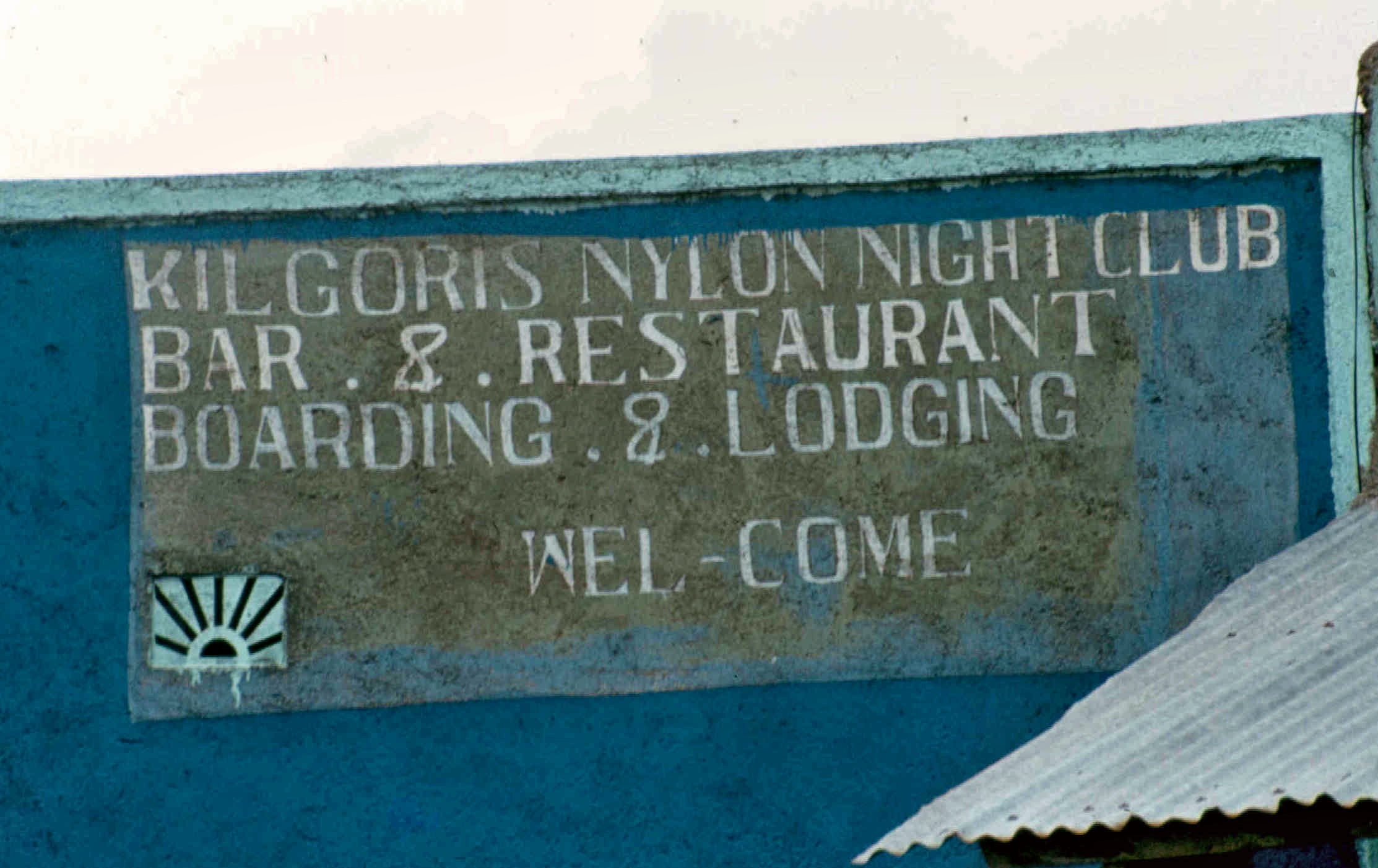
Kilgoris also offered an interesting sign that was the meeting place in the Transmara when, with my boss Matt, I met Alan for my first visit to Intona Ranch [1]. Our rendezvous was the “Kilgoris Nylon Night Club” that, I must confess, I never saw its inside although I would have stayed there in case of breaking down as there were few other offers for accommodation in the place.
Judging by the disproportionate and (to me) unfortunate increase in the number of lodges and camps in the Maasai Mara Game Reserve that went from less than ten in the 80’s to a staggering 118 today [2], this night club is probably now a resort belonging to one of the major international hotel groups. Although the name of a few possible owners come to mind, I leave it there!
This did not happen to me (although it could have done) but to an FAO colleague that spent time in Ethiopia doing consultancy work. I repeat the story as he told it to me a few years later, when I was working in Rome.
The fellow had just completed his work and, as it is customary in Ethiopia, he was given a good farewell party and he was presented with a few gifts. As he was returning to Rome for debriefing, he was also asked to take a few letters and small parcels to Ethiopian relatives living in Italy.
The protagonist of the story also stayed at the Harambe Hotel like us. As it happened to us also, he was given a room that he found smelling too strongly and asked to be moved to another one. After checking a couple of rooms, he picked the best available and decided to go for dinner to be ready to get up early the following morning as getting through the “necessary” procedures at Bole Airport demanded time and lots of patience.
The guy came back to his room after dinner and he had the impression that the smell in the room had increased but he could not be bothered to ask the reception to give him another room so he opened the windows to the chilly Addis air and went to sleep.
The following morning, he took a taxi to the airport, happy to leave the smell behind as it was still strong in the room. The taxi was one of the blue and white Lada cars that were probably imported “en masse” from the then Soviet Union years before. Most of them were in some degree of deterioration. The one he took, apart from a worn upholstery and dirty floor mats, it also smelled bad!
Without any problems he got to the airport and went through all the required moves until, eventually, he could relax and seat at the waiting lounge for a while, until he could feel the same smell again! At first he thought it was still in his nostrils but soon he realized that it was not and that it was coming from somewhere at the lounge. Before he could do much about it the flight was called and he boarded, found his seat and literally passed out until he was woken up for breakfast, a couple of hours from his destination.
The plane landed and, while removing his bag from the overhead compartment he felt a wet patch in it and when he smelled his hand, trying to identify the cause of the spill, he recognized the familiar smell that had followed him throughout his journey. So, as discreetly as he could, he inserted a hand into the bag and soon contacted the wet culprit. It was one of the parcels that had given to him by someone in Bedele!
He disembarked and, as soon as he could, he removed the stinky packet and -to his horror- discovered that it was a chunk of an Ethiopian bovine that had kept him company while making its presence felt all the way through his journey!
He immediately contacted the airport authorities in Rome to hand over the smelly meat to be destroyed. This took quite a while and afterwards, to add insult to injury my friend, a veterinarian, was given an ear full about the dangers of bringing beef into Italy as well as not travelling without checking what you carry with you. The latter, an issue that has become critical nowadays!
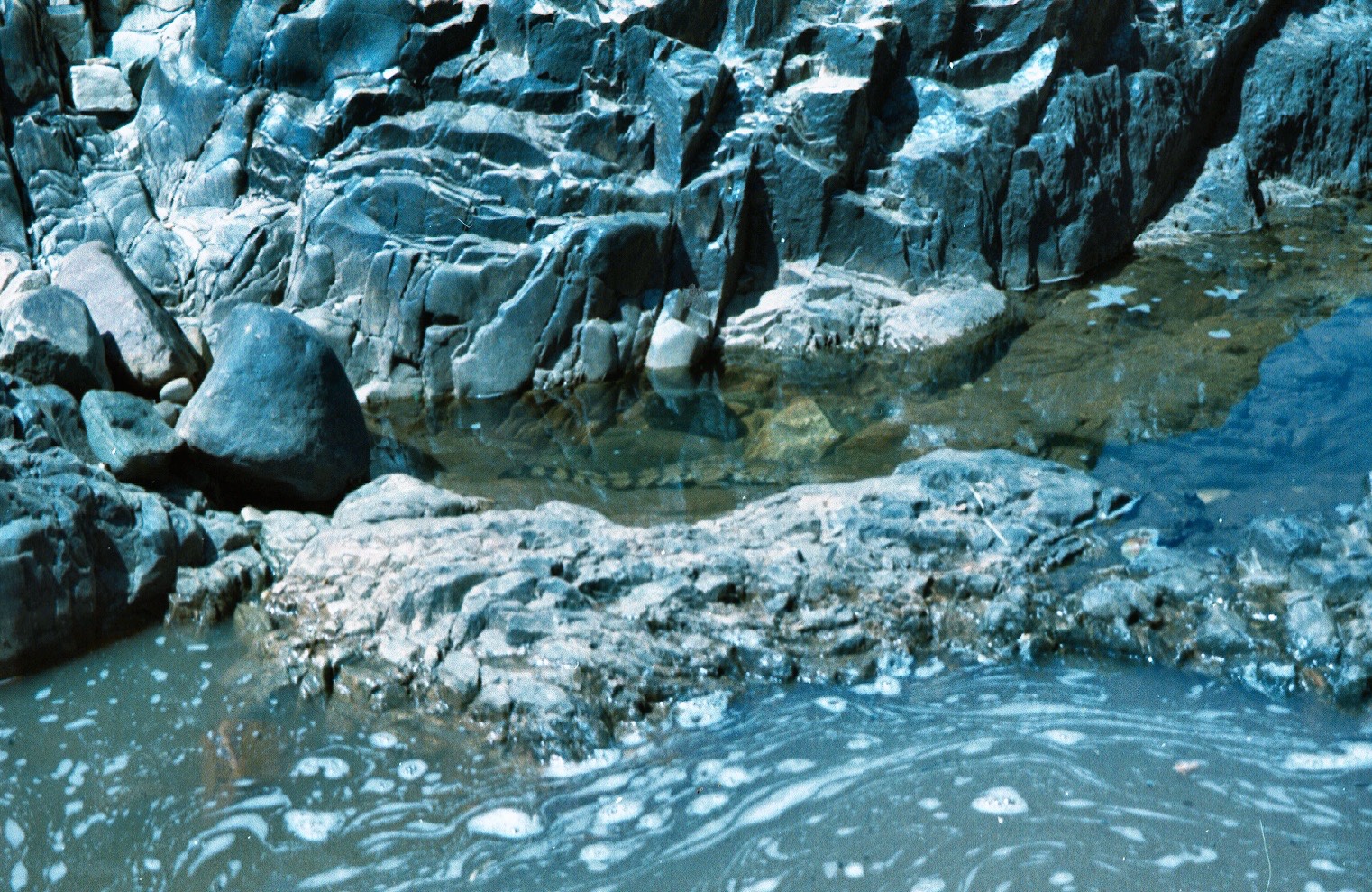
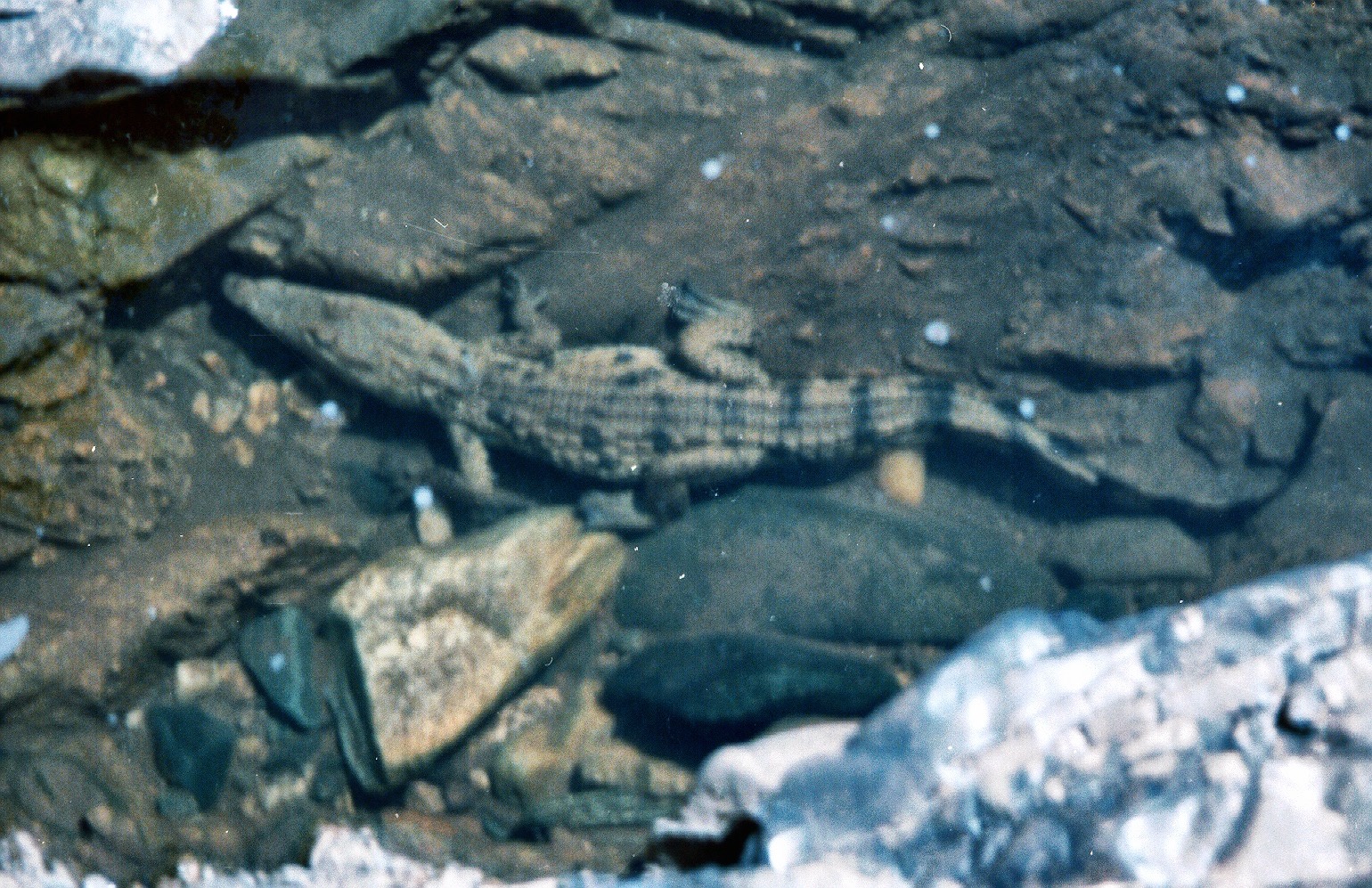
While writing about our Ethiopia days, I found this finding. Let’s see if you can see it. I think it is pretty easy but…
? ? ? ? ? ? ? ? ? ? ? ? ? ?
To take this close-up I needed to climb the rocks that are seen behind the croc in the previous picture as to at a safe distance from the “sleeping” beast. That is the reason why the head is pointing to the opposite side in the second picture.
Recently it has been discovered that, as it had been observed in other animals, crocodiles are able to sleep with one-half of their brain at a time, a phenomenon known as unihemispheric sleep. During this kind of sleep the eye neurologically connected to the ‘awake’ hemisphere remains open while the other eye is closed [1].
I was not able to check the condition of its eyes to tell what was it really doing but, in the light of the research mentioned, to ascertain its status would have demanded a close inspection that I had no intention to do and I am quite happy not to know!



 A Bushsnob out of Africa