Month: September 2020

Humanitarian rats

I was convinced that I had written this post about one year ago when I published the original article in the Spanish magazine Muy Interesante [1]. After a thorough check through my blog I realized that I did not!

Luckily, yesterday Mabel sent me a link of an article published by the BBC mentioning that Magawa was awarded the PDSA Gold Medal [2]. I will explain…

Magawa is a Southern giant pouched rat and the award given to it by the UK charity People’s Dispensary for Sick Animals (PDSA). The medal says “For animal gallantry or devotion to duty”. Of the many animal recipients of the award, Magawa is the first rat.
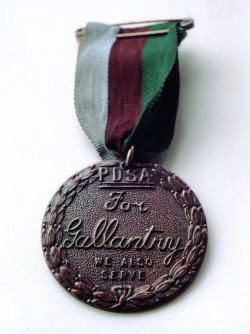
The PDSA medal. Credit: Andrew69. Public domain.

So, prompted by the news, here goes a post based on the above-mentioned article, adjusted to the present time.

WordReference.com defines a phobia as “a continuous irrational fear of something that leads to an overwhelming desire to avoid it”. The word comes from the Greek phobía (fear) as an exaggerated aversion to someone or something. The fear to rats and mice or musophobia (from Greek μῦς “mouse”) is one of the most common ones.

So, you would think that an encounter with a giant rat would lead to a terrible fear attack. However, this is not the case with these large rodents which are actually quite friendly and that I hope will be regarded even in a better light after you read these lines.

Although the taxonomy of the genus Cricetomys to which these African rats belong needs further revision, it is now accepted that there are four species: the Gambian pouched rat (C. gambianus), the Emin pouched rat (C. emini), the Kivu giant pouched rat (C. kivuensis) and the Southern giant pouched rat (C. ansorgei). The latter is the protagonist of this piece.

The Southern giant pouched rats can measure from 25 to 45cm with tails of up to 46cm and weigh up to 2kg. They are only distantly related to the real rats that are found in the Muridae family. Recent molecular studies place the Giant rats in the family Nesomyidae, part of an ancient radiation of African and Malagasy murids. The name “pouched rat” refers to the large pouches in their cheeks where they store food.
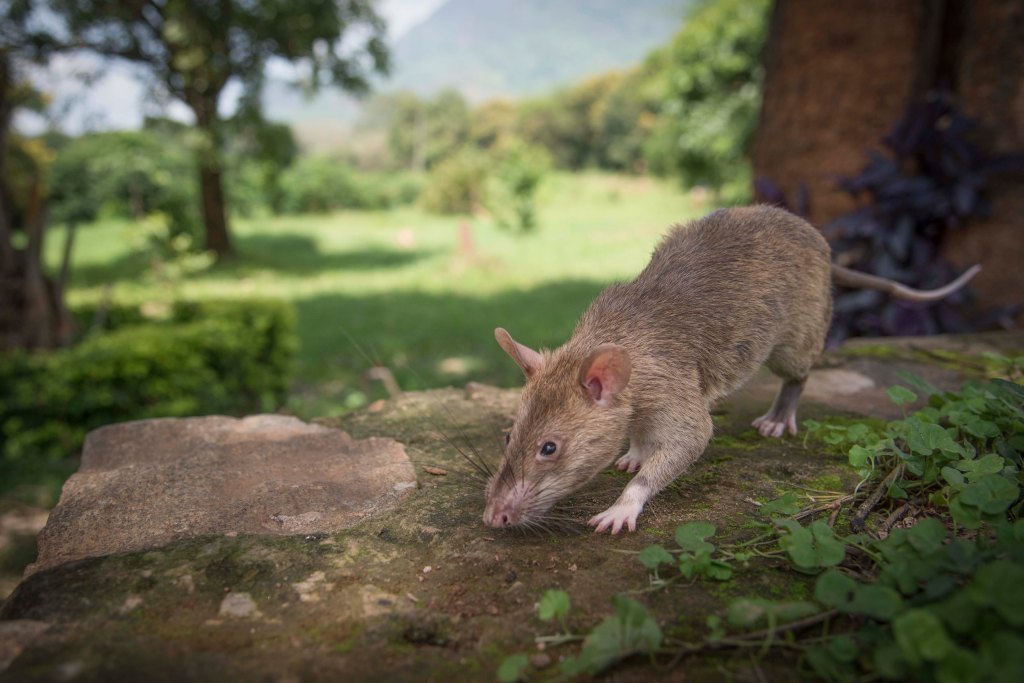
Pic 2. Adult rat. Copyright Caterina Caneva Saccardo/APOPO

These rats are omnivorous and feed on vegetation and small animals, especially insects.  They are very fond of filling their burrows with nuts, particularly palm nuts but also other nuts such as macadamias. Although they cannot apply the 21kg per cm2 needed to break them open, they do chew up their hard shells to devour the delicious and valuable nuts to our annoyance!
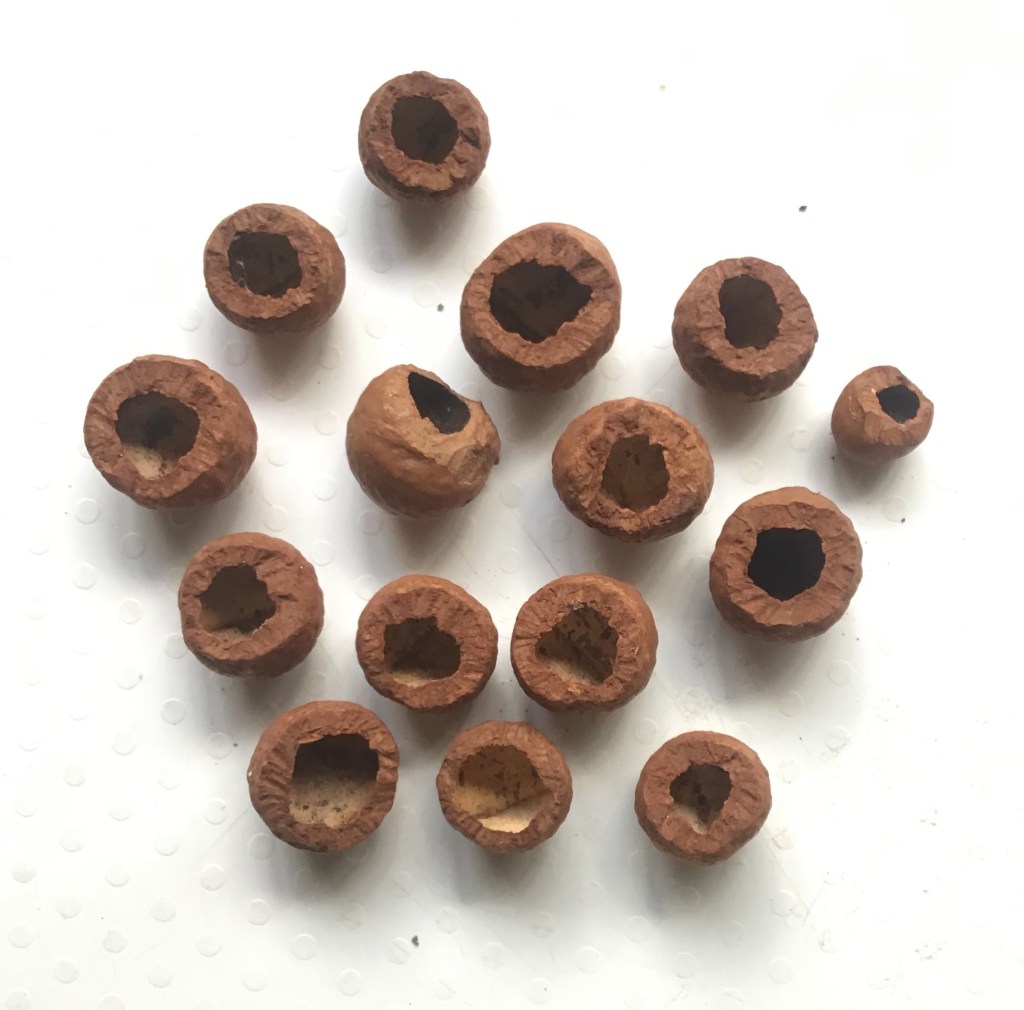
Pic 3. Macadamia nuts gnawed by the rats in Harare. Copyright: Bushsnob.

Like many other rodents such as hamsters, rabbits and guinea pigs, these rats are coprophagous as they ferment food in their distal intestines and produce soft faecal pellets containing still semi-digested food that they eat again to complete their assimilation.

Giant rats are capable of reproducing up to ten times a year with a gestation period of 27 to 36 days. One to five young are born at the same time as they are fed by the eight mammary glands that the females have.
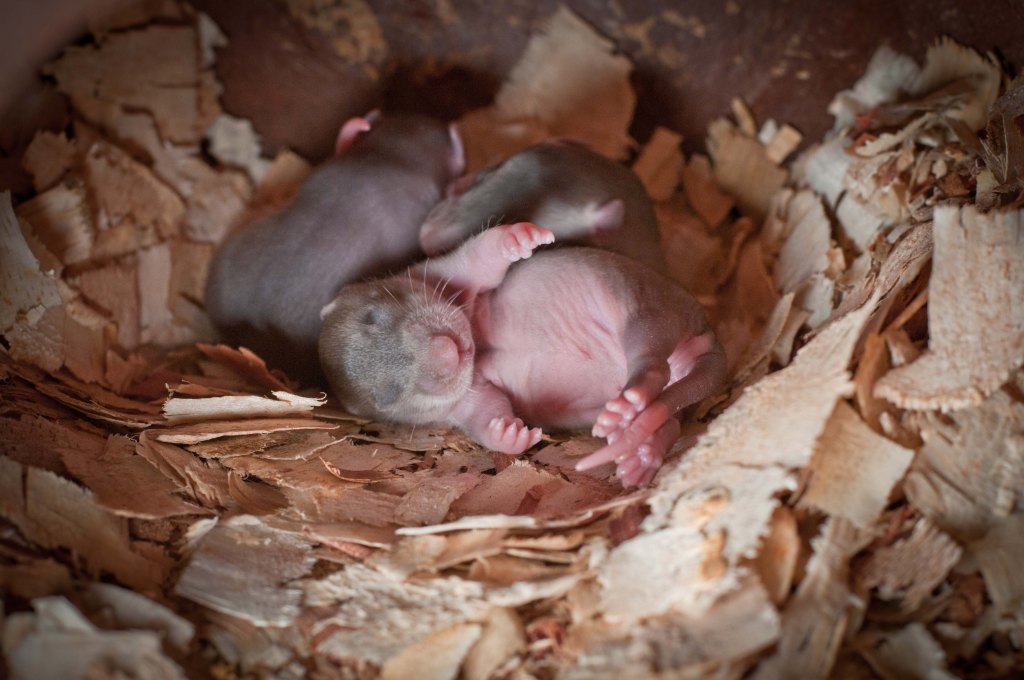
Pic 4. Baby rats. Copyright Caterina Caneva Saccardo/APOPO

Giant rats are predominantly nocturnal [3] and they are an important food source in many parts of Africa where their meat is highly prized. In addition, although it may seem surprising, the giant rats do humanitarian work in several countries around the world!

APOPO [4] is a global, non-profit NGO registered in Belgium that uses Giant southern pouched rats for the removal of anti-personnel mines from past war theatres. To do this, they use the great sense of smell that these animals possess to detect trinitrotoluene (TNT).

APOPO has and is supporting mine clearance in Angola, Mozambique and Cambodia and plans are underway to start supporting Zimbabwe and possibly Colombia with mine clearance.

In order to work reliably, the rats must be trained for an average of nine months at an estimated cost of 6,000 Euros each. At the end of the process they must pass the accreditation tests before being “employed”. Once accredited, they are able to work for 4-5 years before retirement.
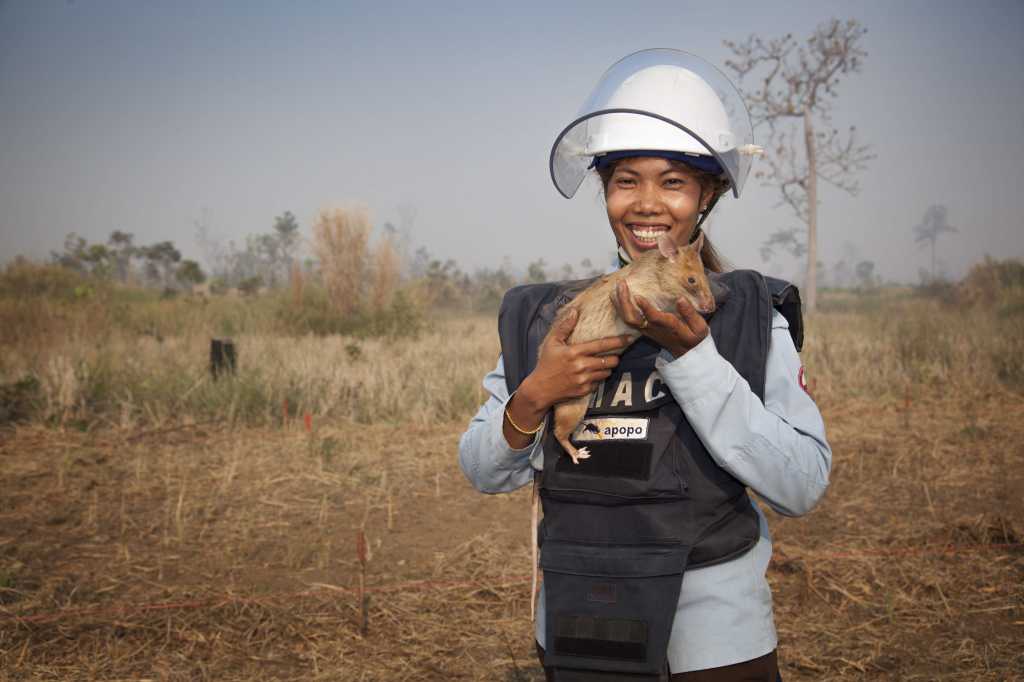
Pic 5. A technician with a giant rat. Copyright Caterina Caneva Saccardo/APOPO

Rats, being relatively light, can walk around in minefields sniffing out mines without the danger of being blown up. Their role is to find them and then have them removed or detonated by personnel specialized in this dangerous activity.
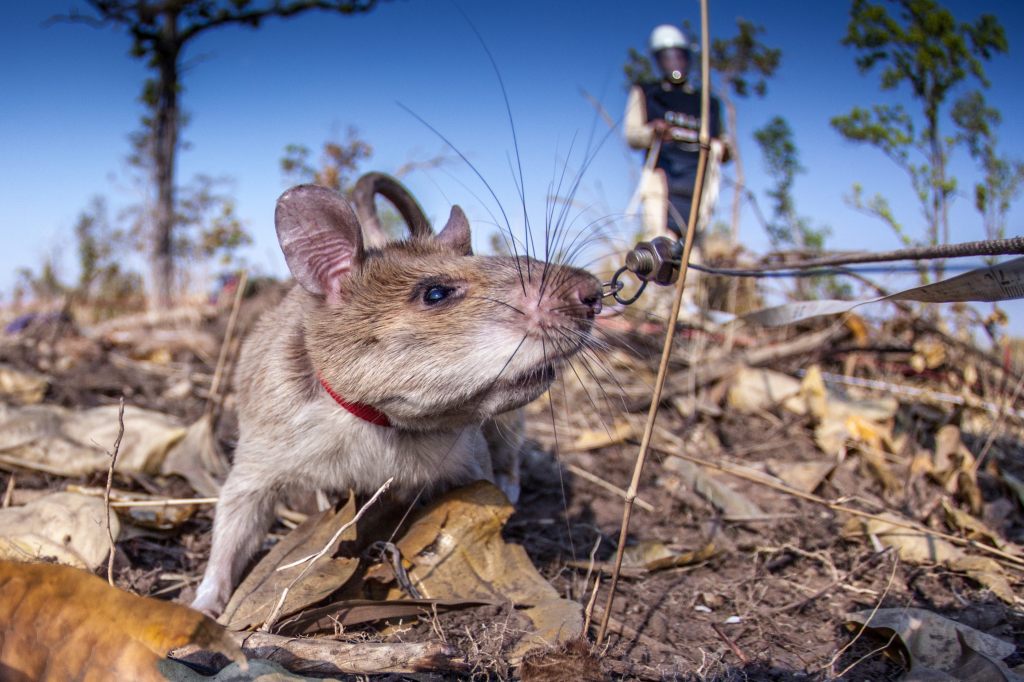
Pic 6. Rat detecting mines. Copyright: Aaron Gekoski, APOPO.

The advantage of using these rats is their ability to detect mines more quickly than traditional methods and without the danger of accidental explosions. A rat can search for mines in an area the size of a tennis court in half an hour. It would take an operator about four days to cover the same area.

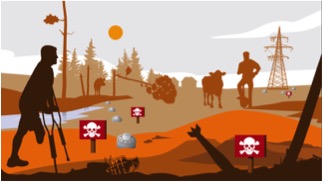
The mine-clearing process
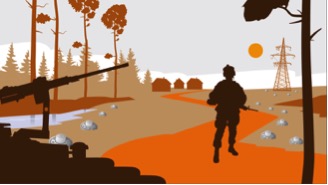
One of the severe consequences of conflicts are the unexploded mines that remainand cause terrible accidents to the population of the area. They stop them returningto their homes and work the land to survive after the conflict.
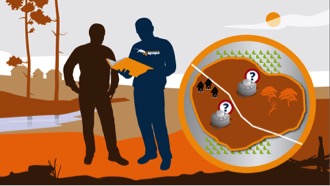
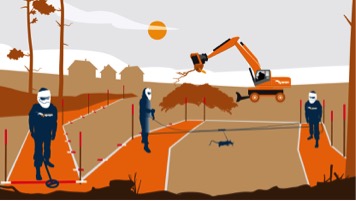
Mine removal starts with planning the work reviewing existing knowledge beforeproceeding with the work. The rats are a component of the process.
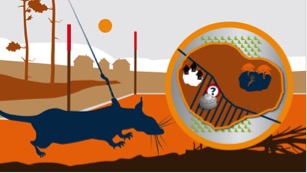
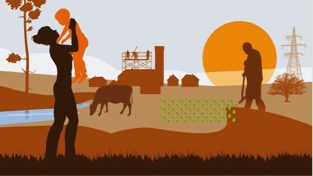
The use of the rats speeds up mine cleaning and allow the inhabitantsto return to their homes in less time than if only the conventional removalmethods would be used. Images by Art work by APOPO, modified by the Bushsnob

As if their support for the important humanitarian work of mine clearance would not be enough, rats are also capable of detecting human tuberculosis and APOPO is working on the diagnosis of the disease together with more than 140 public clinics in Tanzania, Mozambique and Ethiopia.
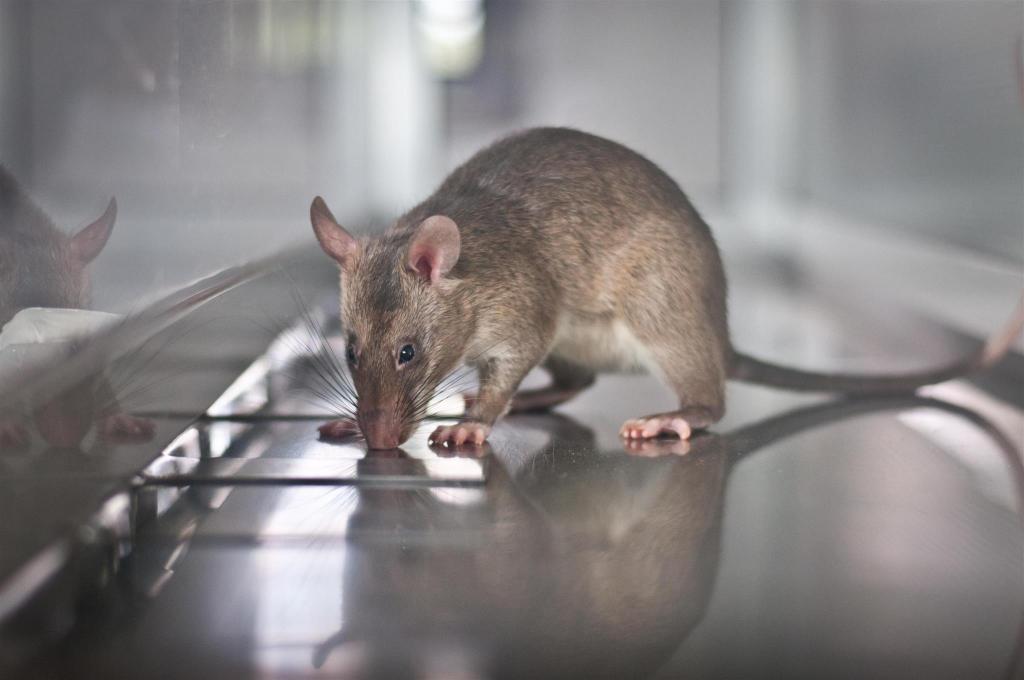
Pic 7. Rat checking samples of human tuberculosis. Copyright Caterina Caneva Saccardo/APOPO

These incredible rodents are capable of finding the disease in sputum samples declared negative by the APOPO’s associated clinics. As part of the existing collaboration APOPO confirms the findings of the rats in its laboratory [5] and then notifies the clinics. A rat can examine one hundred samples in less than twenty minutes, a task that would take a clinic technician four days to complete.

Despite the work done, there are still 60 countries suffering from the threat of mines that constitute a real structural barrier to development and economic growth in post-conflict situations. Thousands of innocent children and adults are injured or killed by mines. Detecting mines is difficult, dangerous, costly and time consuming.

Tuberculosis leads the world in causes of death from infectious diseases and there are ten million new cases per year and about 1.6 million people die from this disease every year.

It is clear then that there is still a long way to go and that rats have a very important role to play so support for organizations such as APOPO is essential.

The fine sense of smell of giant rats can offer other possibilities and APOPO is working on a project to use them to detect pangolin scales and African hardwoods. It can also be thought that rats could be useful in detecting rhinoceros’ horn and ivory as well as drugs and other forbidden substances.

So, back to Magawa the gold medal winner mine-detecting African giant pouched rat. It has sniffed out 39 landmines and 28 unexploded munitions in his career and placed itself in the PDSA “Hall of Fame”.

The award brings to our attention the silent and valuable work that humanitarian organizations are doing in clearing mines, However, we must not forget that new mines are still being produced and will be used and that there are still an estimated six million mines still buried in Cambodia alone!

[1] See: https://www.muyinteresante.es/naturaleza/articulo/ratas-gigantes-para-detectar-minas-antipersona-731567530868

[2] BBC: https://www.bbc.com/news/world-54284952 and https://www.pdsa.org.uk/what-we-do/animal-awards-programme/pdsa-gold-medal/magawa#vid

[3] See: https://bushsnob.com/2018/12/06/thieves/ in this blog.

[4] APOPO stands for Anti-Persoonsmijnen Ontmijnende Product Ontwikkeling.

[5] With tests approved by the World Health Organisation.

Tick hunting

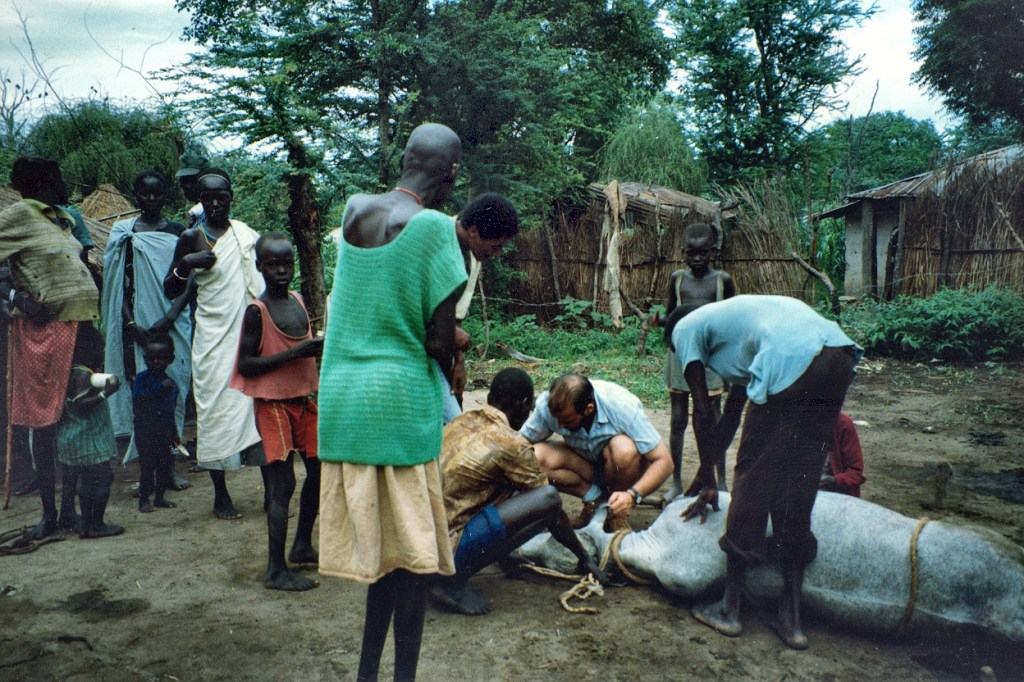
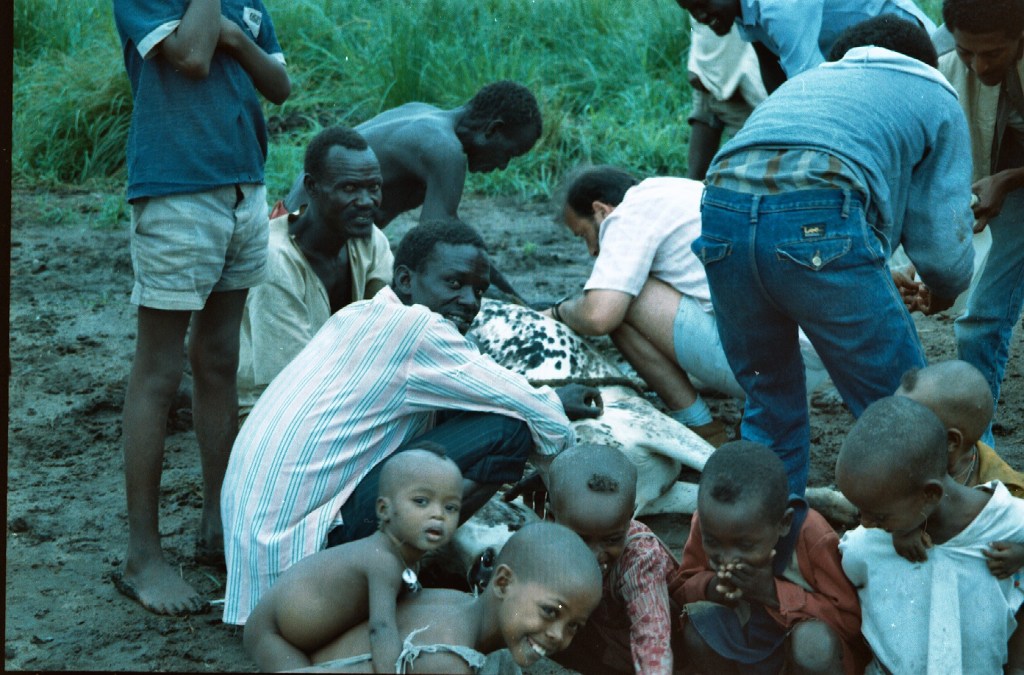
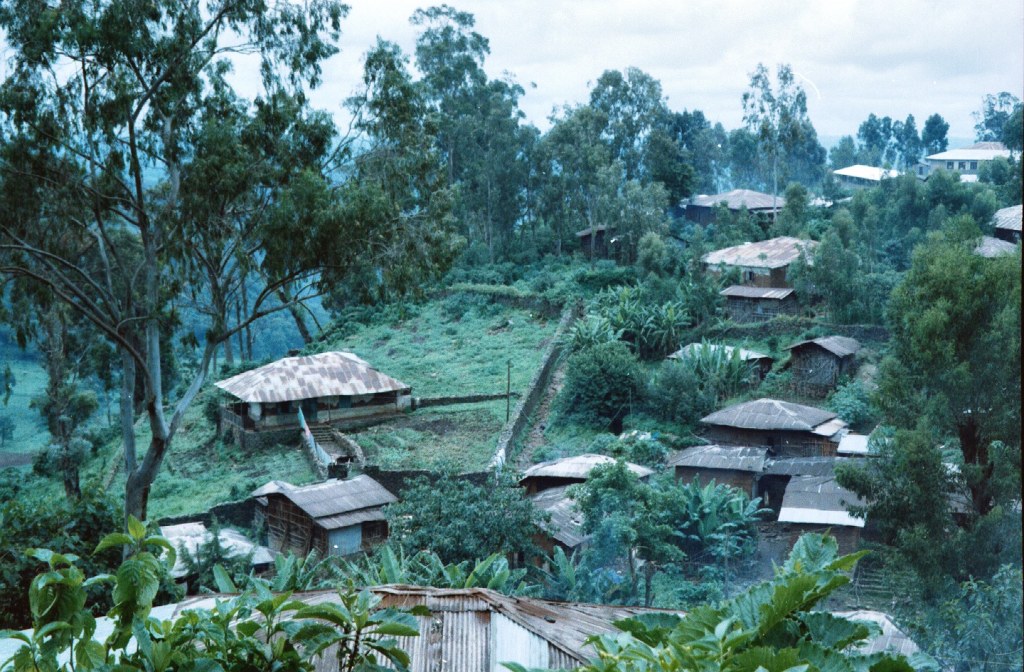
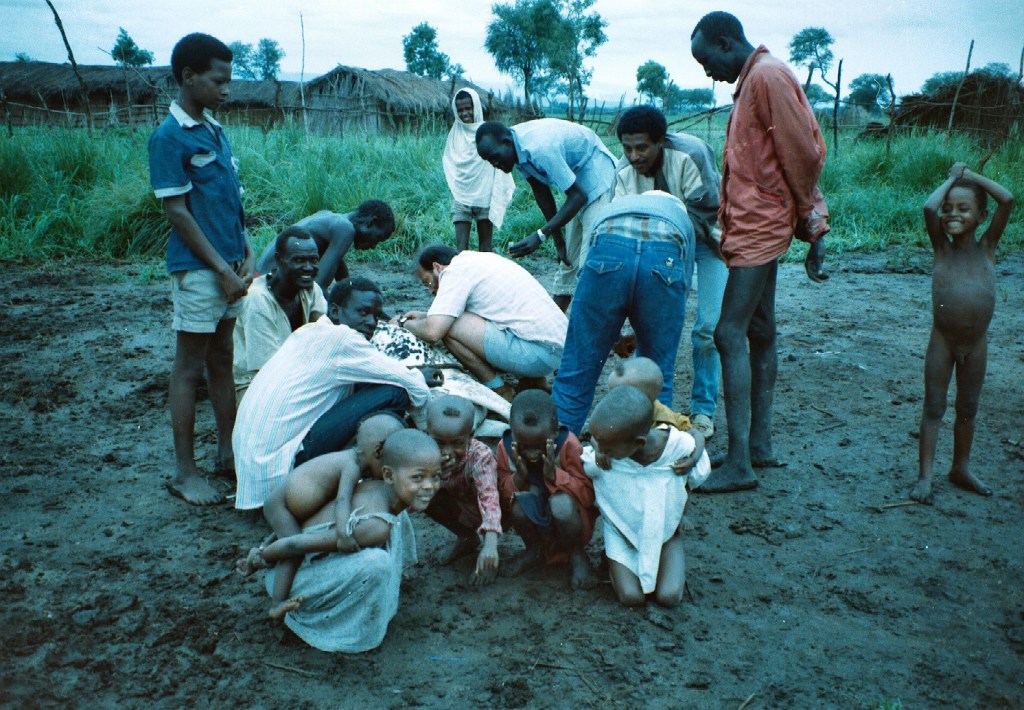
Our tick (and later tick-borne disease) studies took us to different places of south-western Ethiopia “officially”, so we took advantage of these trips to get to know the area we were living. In our selected sites (Arjo, Bedele, Metu, Gambela and Fincha’a) the project had purchased some cattle from the local farmers, and they were keeping them for us to assess tick numbers at monthly intervals.

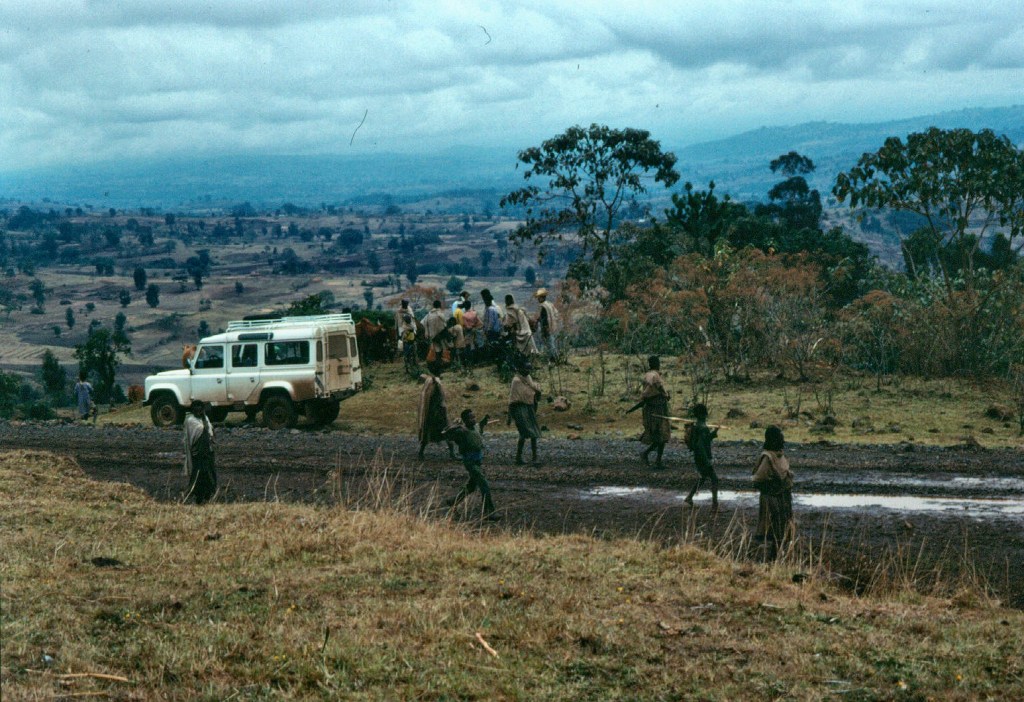
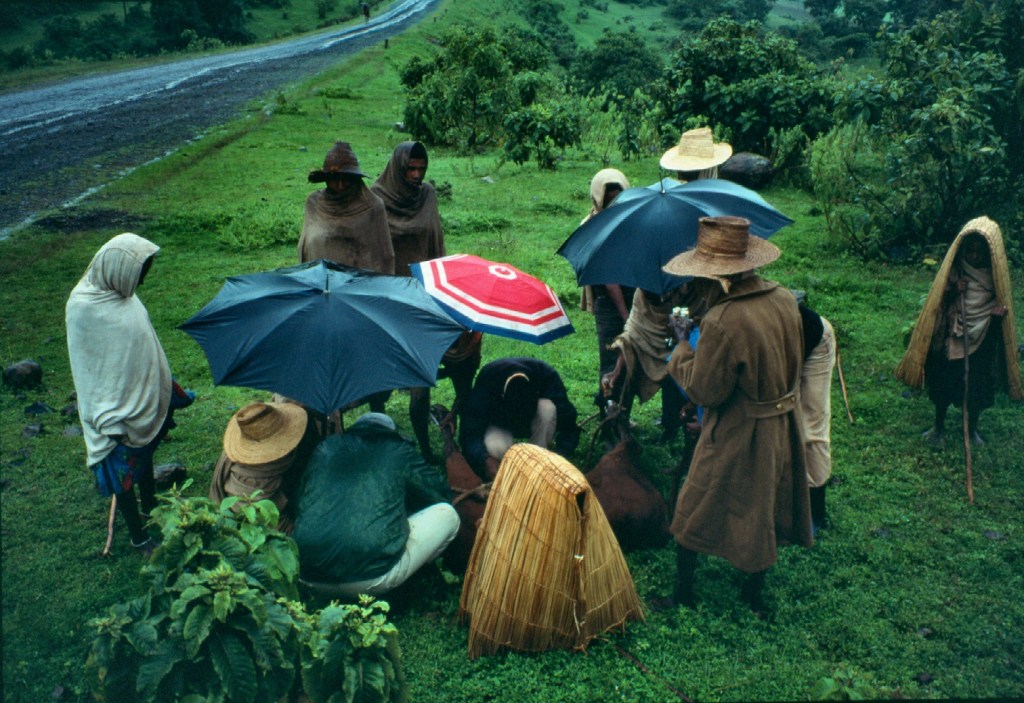
Fincha’a was located 295km north of Bedele, after driving through Arjo. This was a long drive that we did a couple of times. At 2300m Fincha’a was a rather cold and also damp place.

Working at damp Fincha’a.

The latter was probably explained by the existence of a dam that, for a while after its inauguration in 1973, was the largest hydro-electric project in the country. The visit I recall took place during the rains and it rained all the time we were there! This did not help our work nor our potential sightseeing!

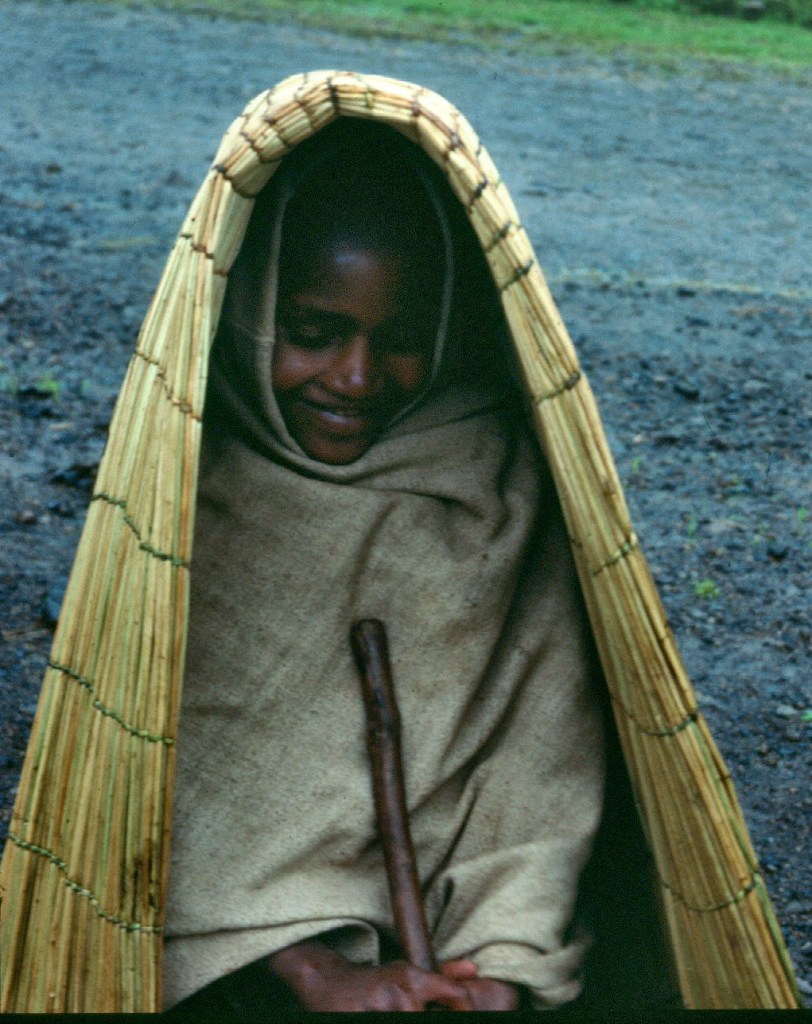
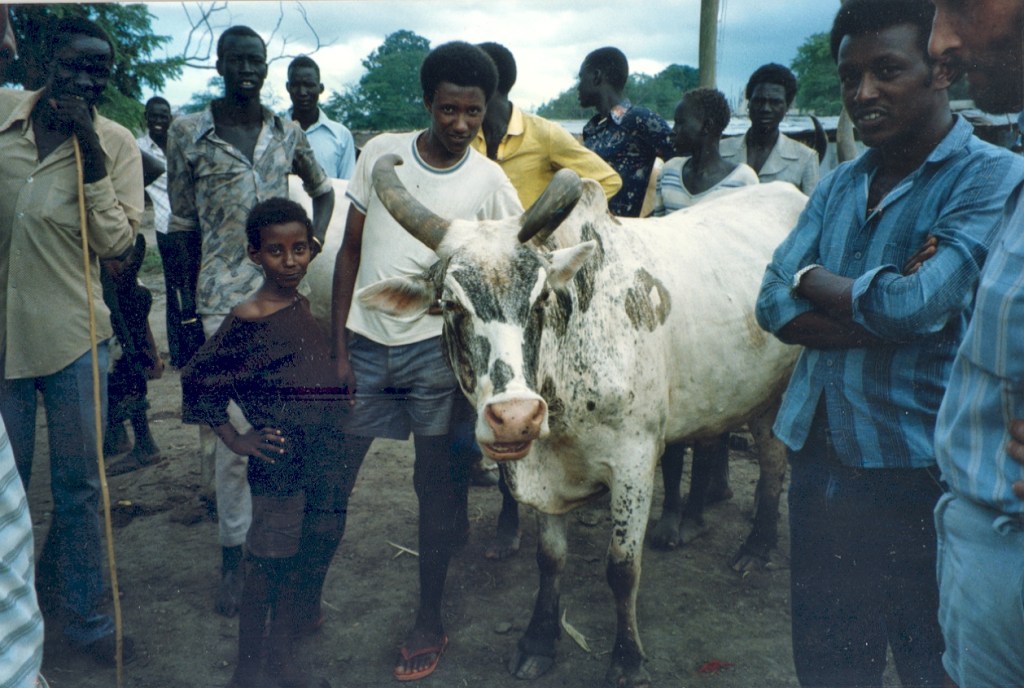
A shy boy under a reed “raincoat”.

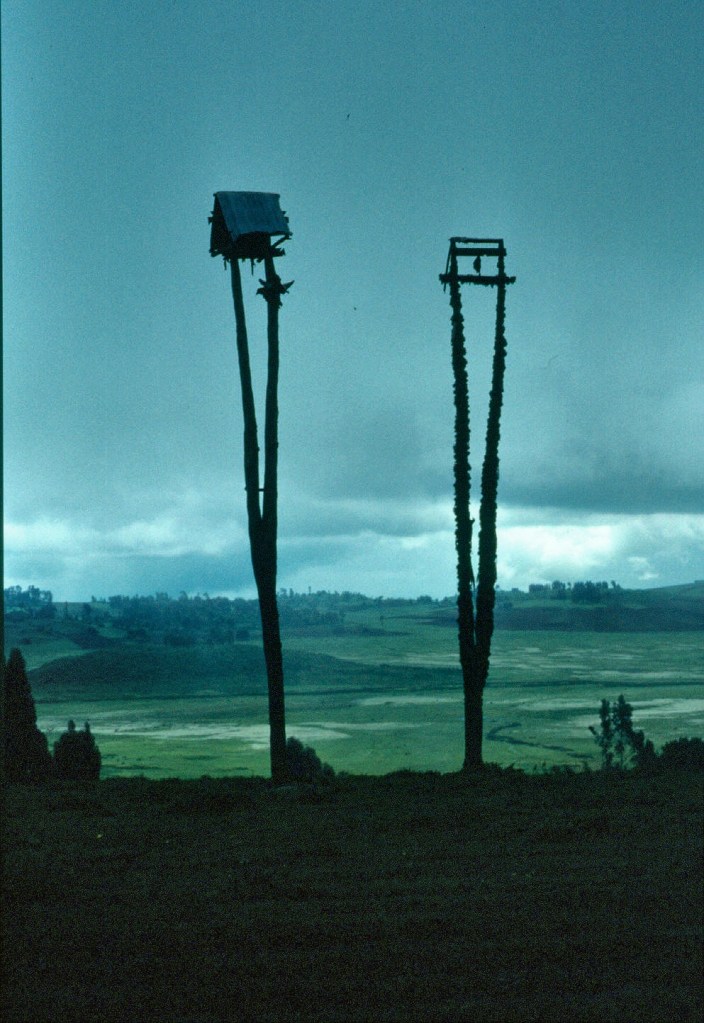
Despite the bad weather, along the road leading to the town we started seeing tall structures built with very long wooden poles and erected by the side of the road. On the top they had a little house and we were very puzzled by them, guessing that they had some religious significance but unsure of their real meaning.

The structures near Fincha’a.

We got to Fincha’a under rain and, while we checked in our rather basic hotel, my colleagues went to arrange for the tick work to be carried out the following day. The hotel was a basic affair to put it mildly with walls that enabled the sounds from the three rooms on each side of us to be heard! However, aware that that was the best hotel (and probably the only one?), we decided to make the best of it.

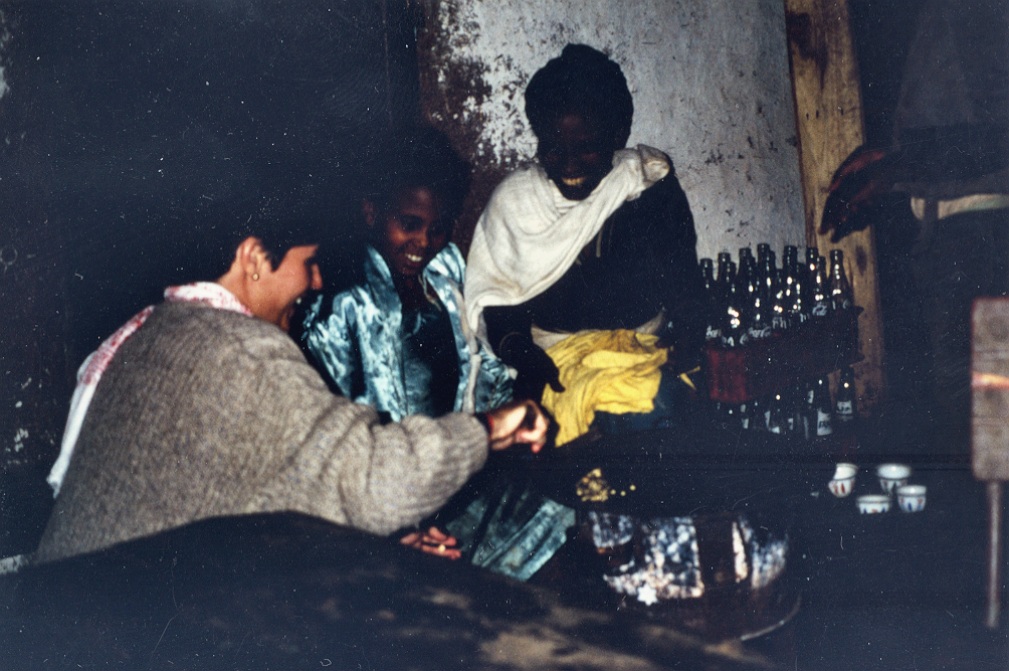
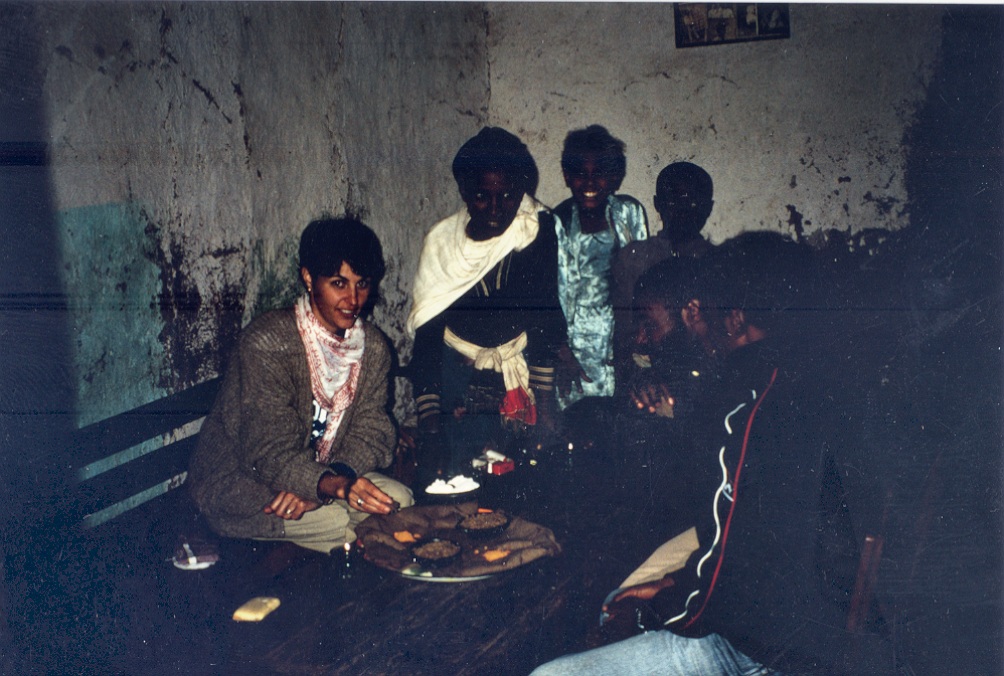
The hotel did not offer dinner so that we had to venture on the street to find an eating place and we ended up at a small restaurant where we were the only customers! Luckily it was a really warm place both because of the welcome we got from the family that owned it and thanks to the cooking that was taking place inside. Soon, after chasing the chickens away from the room, we joined in the kitchen activities and learnt a few things.

Mabel trying their hand at cooking under supervision.
Dinner arrived.
Mabel grinding the coffee after dinner.

Apart from food-related information, the lady informed us that the tall wooden structures we had seen were erected by local hunters that would travel east towards the Nile to hunt and, on return, they would build these “shrines” where the buffalo skulls would be placed on display to show their ability. I haste to add that I have not been able to confirm this information beyond what I was told at Fincha’a.

We ate hot (both temperature and taste) local food and had a reasonable night sleep. The following morning, we did our work under rain (not a very pleasant activity as the water runs down your back…) and we were soon on our way back to Bedele, looking forward to our warm and dry bungalow.

We also often travelled East, following the B50 road that, at the time, I did not know it had a name! After about 115km from Bedele we arrived at Metu where we did not stop until we discovered that there were some Cuban doctors working at the Metu hospital.

Passing through Metu.
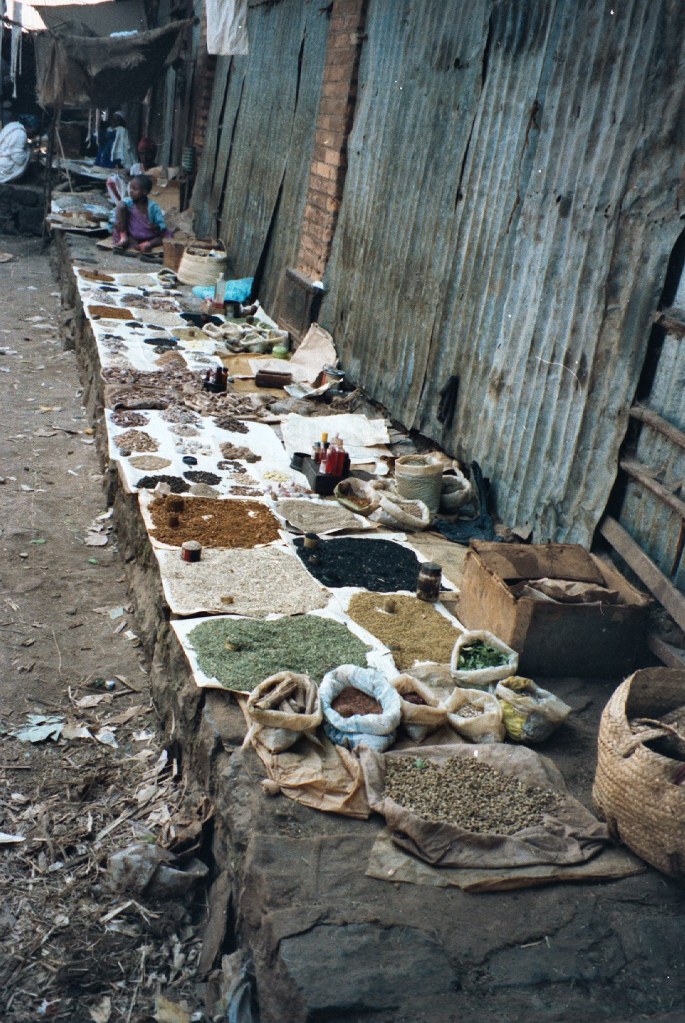
Spices at Metu market.
Assorted goodies.

They were part of the well-known contingent of doctors from the island that are found in many places in Africa, often in areas that no one else wishes to be! We learnt that among them many specialities were covered and this boosted our confidence in case of a health problem as the facilities that existed in Bedele were rather limited. Luckily, we only visited them socially and we did not need their services.

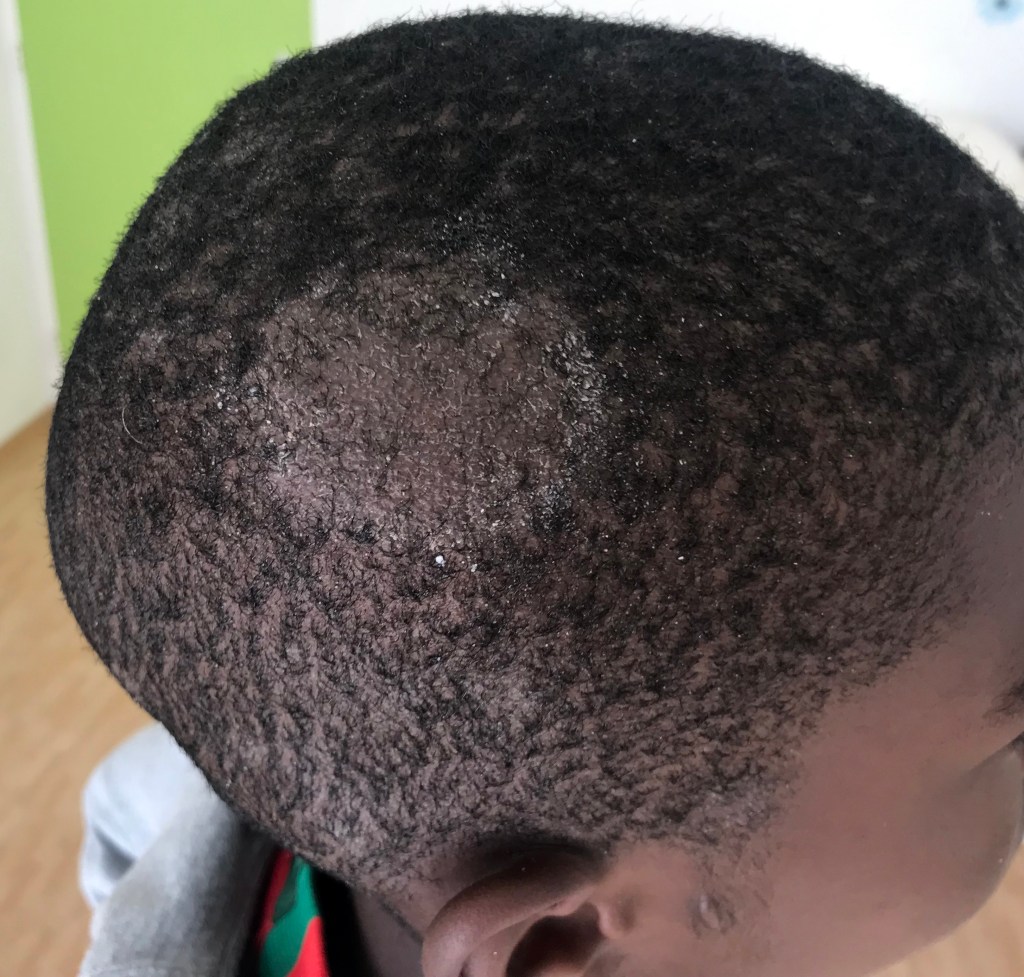
Their presence was clearly justified judging by the number of people suffering from serious diseases that we found on the road. Apart from the blind being led by holding sticks by young relatives, many young boys and girls showed cases of tinea (ringworm) and scabies. These were mostly treated with Gentian violet with the consequence of lots of purple-stained heads around! Goitre was rather common and even severe cases of elephantiasis could also be seen.

Following the road to the south-east we would come to Gore, a larger town that became known as it was the capital of Ethiopia for a short while. It happened during the Italo-Ethiopian war fought between 1935-1937. In 1935, the Italians attacked from their colonies of Eritrea and Somalia without declaring the war. After conquering Aduwa, they seized Aksum [1] and then moved on Addis forcing Emperor Haile Selassie to leave the country (taking the gold of the Ethiopian Central Bank with him!).

Before leaving he ordered that the capital of Ethiopia to be moved to Gore and appointed his cousin Ras Imru Haile Selassie as Prince Regent during his absence. The latter fell back to Gore to reorganise and continue to resist the Italians but his efforts were fruitless and Gore was occupied at the end of 1936. Ras Imru, with his forces trapped between the Italians and the Sudan border surrendered and he was flown to Italy and imprisoned on the Island of Ponza. So that was Gore’s claim to fame although the town did not have much to show for its history.

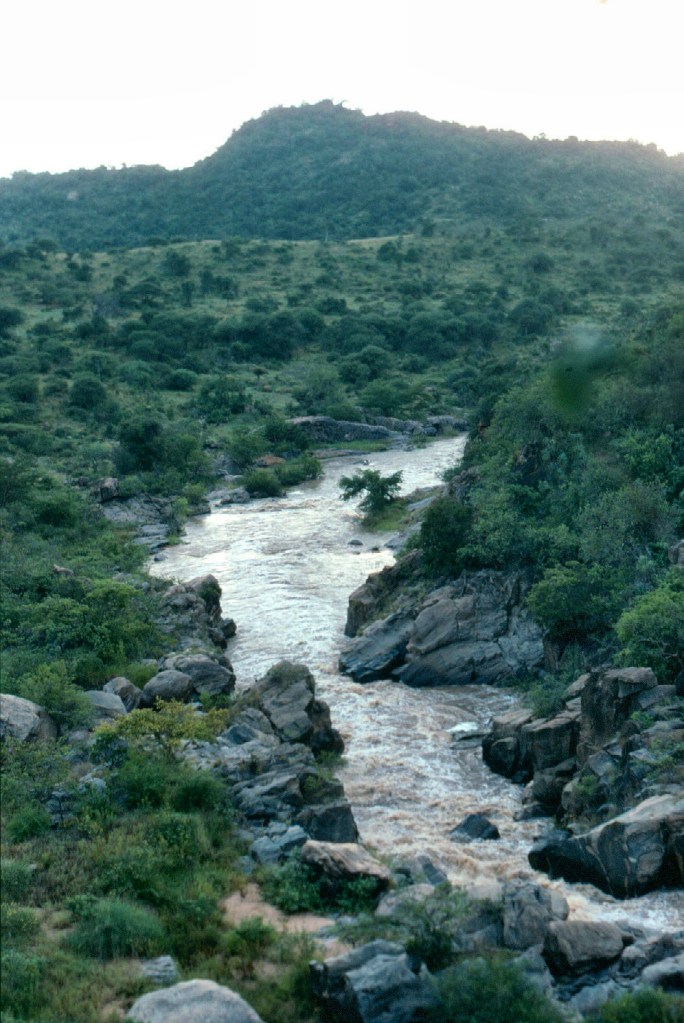
Leaving Gore behind, we would drive another 150km west on a wide, dusty and mostly downhill road full of curves following the course of the Baro river towards the Sudan border. The road offered magnificent scenery where we often stopped to stretch our legs and have a look a the rather clean waters of the river.

The heavy relief lorry traffic aiming for the refugee camps in the border with Sudan did not help our progress. Going towards the refugee camps in the Gambela area loaded, they would come back with the trailers “piggy-backed” on the same tracks, the first time I saw this really clever saving technique.

Eventually, full of dust and rather edgy with the road and its traffic, after crossing a large bridge over the Baro river, we would arrive to the town of Gambela, a completely different seen when compared with where we were coming from as Gambela, at 526m was a tropical area, particularly when arriving from Bedele located at almost four times that height!

The bridge over the Baro river in Gambela. Credit: T U R K A I R O / CC BY (https://creativecommons.org/licenses/by/2.0)

Gambela, located at the confluence of the Baro river and its tributary the Jajjabe was founded because of its location on the Baro river, a tributary of the Nile, which was seen by both the British and Ethiopia as an excellent highway for exporting coffee and other goods from the fertile Ethiopian Highlands to Sudan and Egypt.

Already while crossing the river it was apparent that everything was different but most of all the people that inhabited the area. Although there were some from the highlands, most of them as a result of the ruthless resettlement schemes, this was the territory of the Anuak and the Nuer, people that we had not seen before in the country.

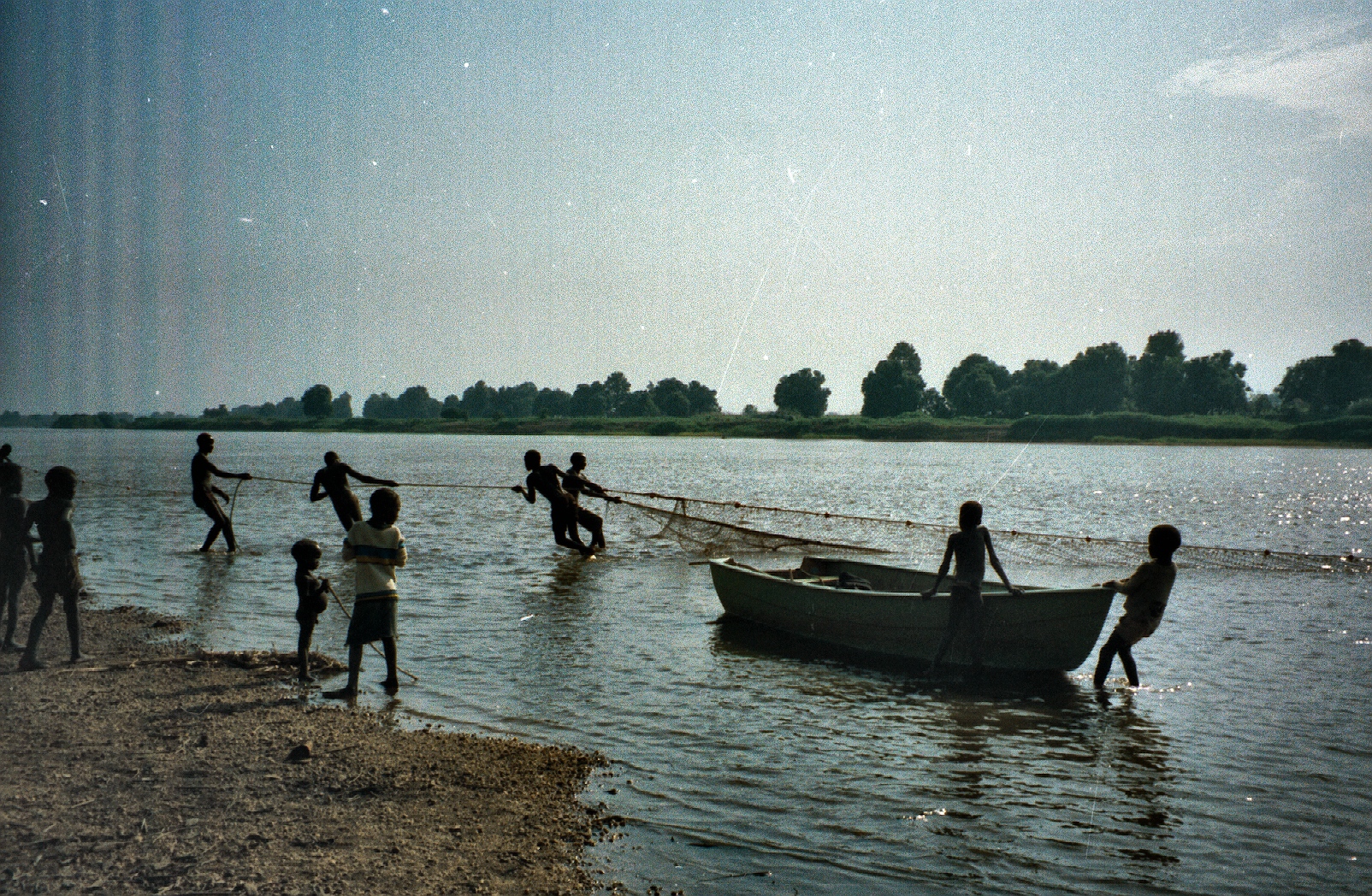
The Anuak belong to the Luo Nilotic ethnic group. They are primarily found in villages situated along the banks and rivers of southeastern South Sudan as well as southwestern Ethiopia, especially the Gambela Region. Group members number between 250,000 and 300,000 people worldwide, many of them following Christianity. The Anuak are an agricultural people, although most families keep some livestock. They are keen on fishing and they set up temporary fishing villages in times of fish abundance.

Anuak fishing in the Baro river.

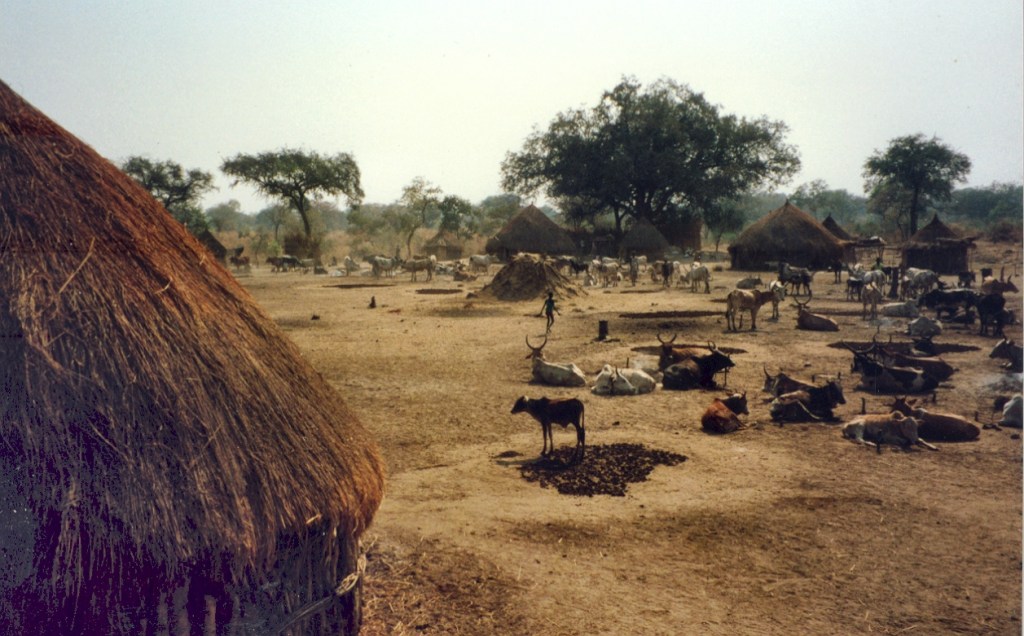
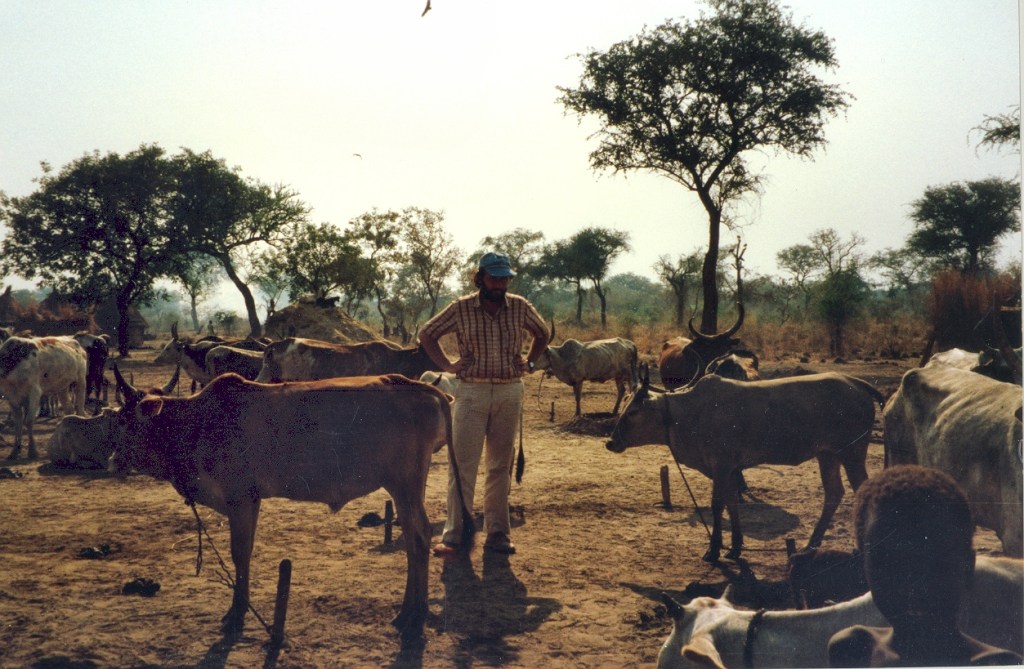
The Nuer are also of Nilotic origin and inhabit a similar area than the Anuak. Their language belongs to the Nilotic language family and they are closely related to the better known Dinka ethnic group. They are pastoralists who herd cattle and the cattle define their way of living.

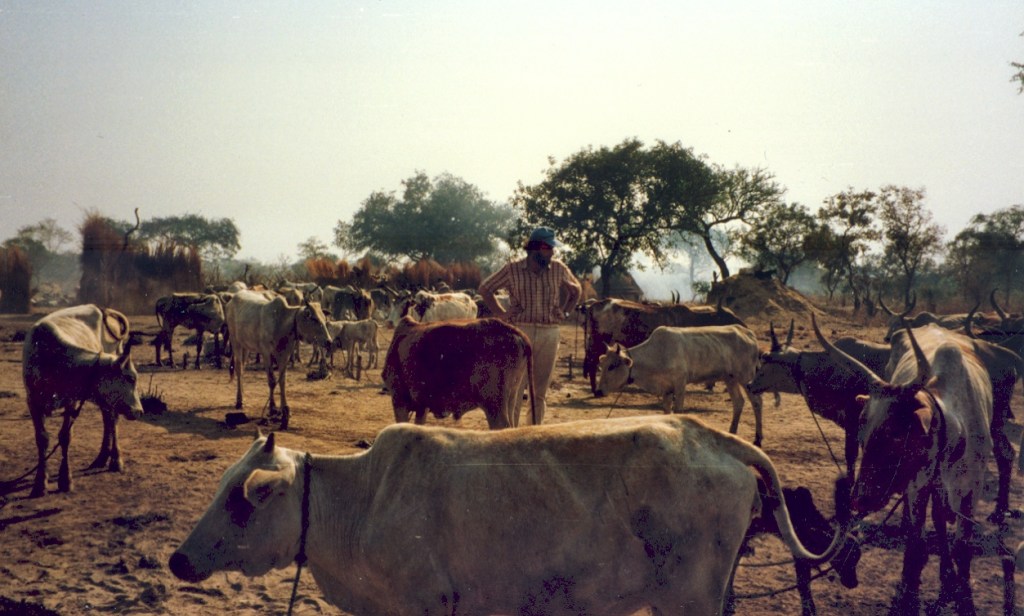
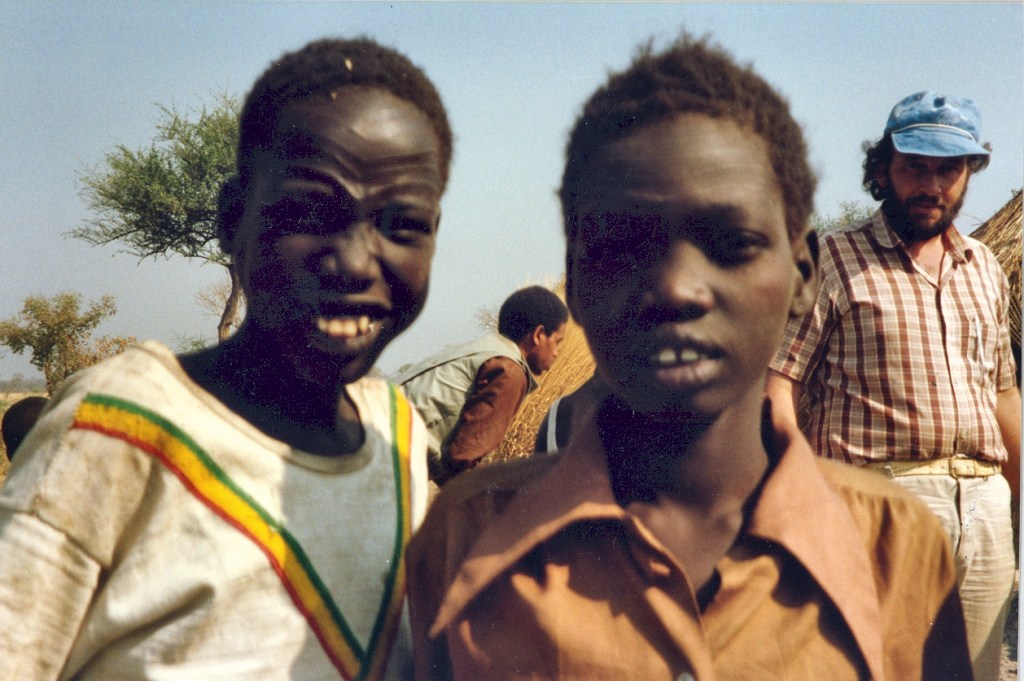
Both races are very tall [2] and we often watched them in amazement playing basketball at night (too hot during the day) in the local open courts in Gambela thinking that they would be sought after by the National Basketball Association (NBA) and not knowing that they had done so. Manute Bol, a Dinka of 2.30m (one of the tallest players in the history of the NBA), had been playing for the Washington Bullets since 1985!

About to start working. The picture shows a rather tall gentleman on the right!

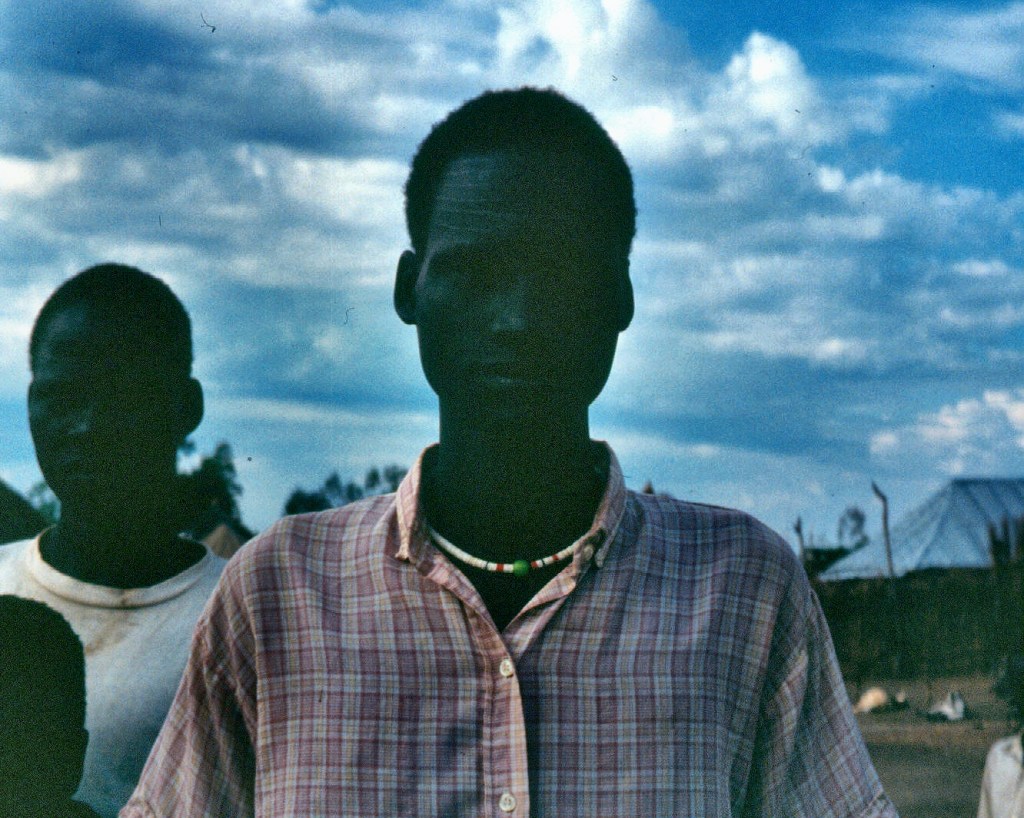
The Nuer receive facial markings (called “gaar”) as part of their initiation into adulthood. These consist of scarification that varies within their subgroups, the most common among men being six parallel horizontal lines cut across the forehead although dotted patterns are also common. The scarifications helped me to distinguish people from the two groups and enabled me to greet them properly in their language, “male” to the Anuak and “derejote” to the Nuer.

I will come back with more experiences from Gambela in future posts.

[1] Italian soldiers found one of the Axum obelisks (stelae) (King Ezana’s) fallen and broken in three sections, one of about fifty obelisks in the city of Axum at the time of the discovery. In 1937, it was taken as war booty and moved to Italy after being cut into five pieces and transported by truck to Massawa from where it was shipped to Naples. It was then taken to Rome, where it was restored and erected in front of the Ministry of Italian Africa (later the headquarters of the FAO) where I saw it (pic is already in Media and I found it looking for Rome). It was eventually returned to Ethiopia in 2005.

[2] See: Chali, D. (1995).  Anthropometric measurements of the Nilotic tribes in a refugee camp. Ethiopian Medical Journal 33: 211-7. Among other things, the study concludes that “…The mean height of Dinka men (176.4 +/- 9 cm) and Nuer men (175.7 +/- 9 cm) were significantly higher than that of Anuak men (171.7 +/- 8 cm) and Shilluk men (172.6 +/- 6.1 cm). This study confirms that the Nilotics in Southern Sudan have slender bodies and are amongst the tallest in the world and may attain greater height if privileged with favourable environmental conditions during early childhood and adolescence, allowing full expression of the genetic material…”

Ethiopian coffee

Coffee, Coffea arabica, comes from Ethiopia and its first records can be found as early as the 9th century in the Oromia region, more exactly in the former Keffa province (1).

Coffee plant drawing. (C)Guy Ackermans 2005. Credit: Franz Eugen Köhler / Public domain

In Bedele, located in the Ilubabor province next door, we were able to see ancient coffee plantations under flat top acacias from where coffee was harvested and sold locally and to stockers that would come to buy and take it to processing plants. To see these bushes covered with white flowers so close to the laboratory invited us to often walk through the plantations to enjoy the view and their amazing scent.

Coffee bushes in Brazil. Credit: FCRebelo / CC BY-SA (http://creativecommons.org/licenses/by-sa/3.0/); https://upload.wikimedia.org/wikipedia/commons/6/68/Coffee_Flowers_Show.jpg

In 2006 it was estimated that Ethiopia produced a substantial amount of coffee (estimated at 260,000 metric tonnes) of which one half was consumed in the country, a lot of coffee! So, as expected, coffee drinking was a daily habit with most Ethiopians and we often drove out of the laboratory for coffee breaks. I must say that my Ethiopian colleagues always insisted in paying the bill! Although Italian-style coffee machines existed at the Bedele coffee shops, the coffee we drank was made following the traditional style.

In Addis we saw the traditional and colourful coffee ceremony being performed for tourists by beautifully dressed and nice-looking ladies seating on loose reeds or grass spread on the floor, often adorned with yellow flowers (probably Meskel flowers –Bidens macroptera– when available) while frankincense smoke rose from a small burner while the coffee was roasted on a larger one and then grounded and boiled. We made a point to return to the hotel to participate more closely in this lovely tradition.

We did not need to do this as, luckily, our good neighbour and friend Wolete (Lete) invited us to her house one afternoon with the purpose of having a cup of coffee! We immediately accepted and we were at her house (about forty metres away) on the dot. As soon as we left our house, we smelled the frankincense that reminded us of the catholic church ceremonies of our Uruguayan childhood, and we followed it to Lete’s house. Frankincense is an aromatic resin obtained from trees of the genus Boswellia.

Frankincense. Credit: snotch / Public domain.

Lete and her husband were waiting for us wearing traditional white garments from Tigray, both looking very handsome. Lete had put on a long dress and she was wearing her massive gold earrings and pendants. They were really pleased and honoured by our coming. On the veranda and inside the house, the floor had been covered with reeds and a small burner was already releasing the frankincense fumes that were quite dense and strongly aromatic.

We sat around on low chairs or on cushions on the floor while Lete, as expected, performed the ceremony. She sat down after we had done so and started to thoroughly wash the green coffee beans that she then dried over the charcoal burner. She then proceeded to roast the beans over the while explaining the procedure to us.

The smell of coffee slowly started to break through the frankincense to create a unique combination until it became the dominant aroma. Lete stood up and walked around the room with the coffee so that we could smell it and apprecite its quality. She then moved the grains to a mortar and started to grind the beans very gently. I could not help noticing that she was using an exploded mortar bomb as a mortar! “How appropriate”, I thought while pointing it to Mabel. “This one comes from the war in the north” she explained, “and it is really useful” said Lete smiling.

A close-up of our host wearing her traditional white dress and gold ornaments.

While the grinding was taking place a coffee pot –known as “jebena”- was put to heat up and the ground up coffee placed inside for boiling. After a while Lete proudly announced that the brew was ready and proceeded to pour the dark brown liquid into small handless cups called “si’ni” placed on a tray. She poured the coffee from some height filling each cup while announcing “this is the first coffee, and we call it “awel”. It was strong and dense and it left a thick deposit behind, similar to the better known Turkish version of coffee.

While we drank the awel Lete refilled the jebena and put it to the boil again. Once we finished, Lete offered the second coffee called “kale’i”, a lighter version, more to our taste. The process was repeated a third time and the “baraka” (to be blessed), the third and thinner brew, was produced.

We had our coffee with sugar and eating popcorn, but it could also be drinking while eating a flat bread called “ambasha” or peanuts.

Luckily, we established good relations with Lete and her husband and we were lucky to be invited a few times to enjoy coffee with them and to admire her performing this ritualized form of drinking coffee that had been developed in the area we were staying, by the south western Ethiopian people, a real treat!

(1) For more info, see http://www.ethiopianspecialtycoffee.com/history.htm

The Didessa river valley

Once we realized that traveling beyond the project area required permits and fuel that was not easily available without almost begging it from the Bedele Administrator, we decided to spend our time exploring the area around Bedele.

The way to Arjo.

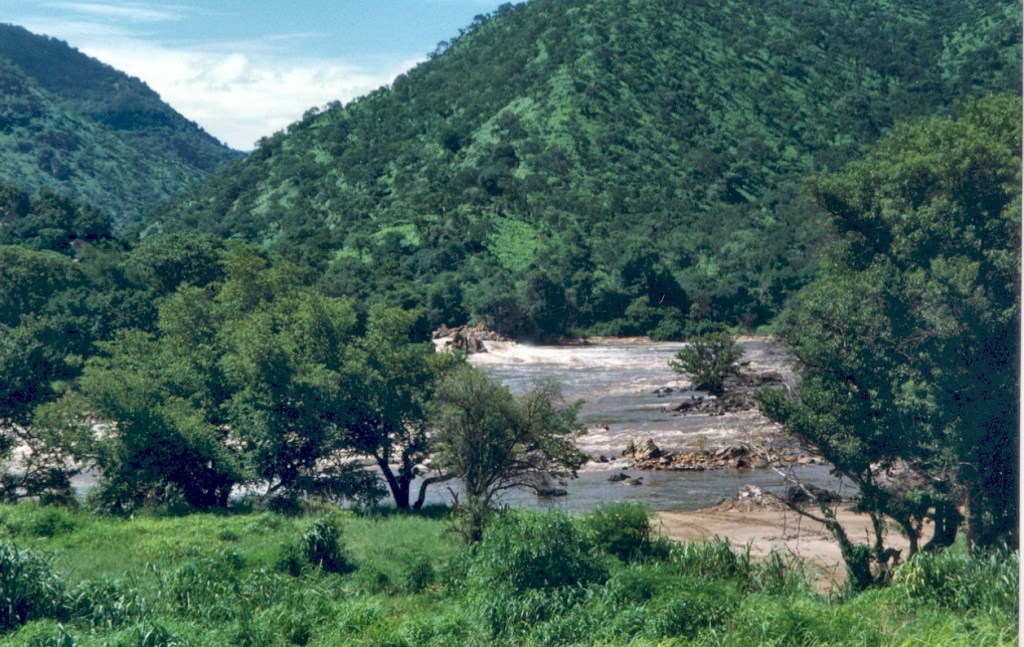
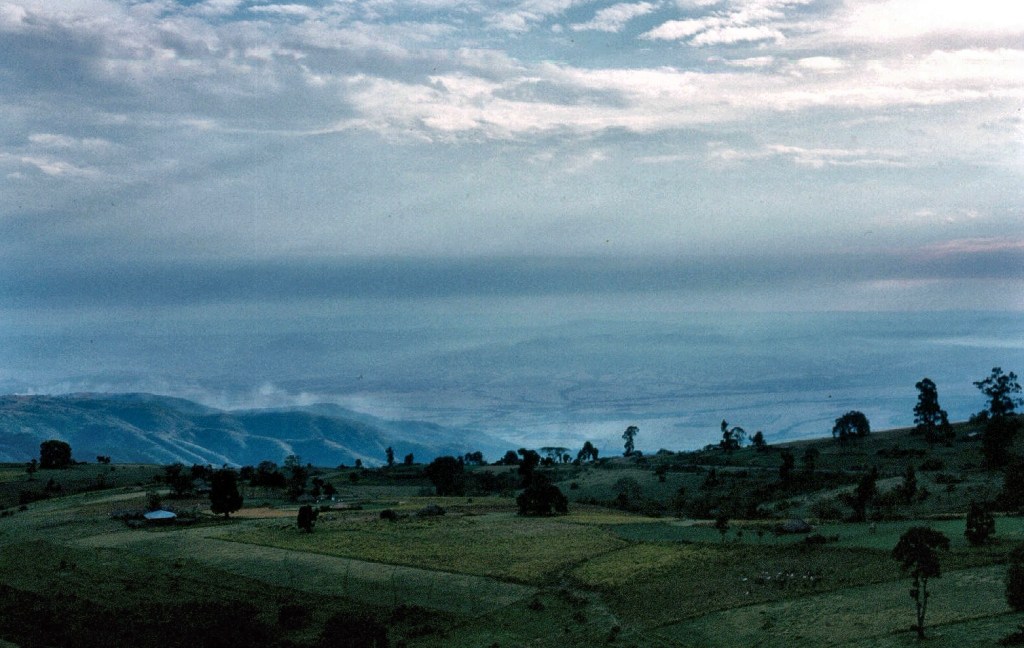
After a few trips we discovered that the road leading to the near town of Arjo crossed the Didessa river and its lovely valley and we chose it as our prime destination for day trips and we spent several Sundays there, birdwatching, walking, fishing or just relaxing with a picnic.

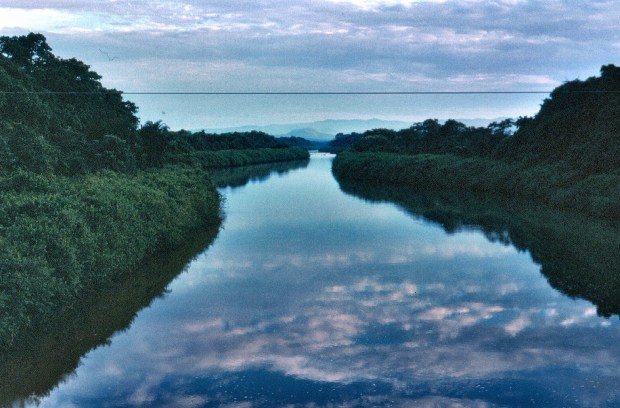
The beautiful Didessa river.

The road to Arjo was one of the roads that crossed the Didessa, the other one being the road between Jimma and Bedele that crossed it again near the town of Agaro. However, this trip was much further, and the road was quite busy.

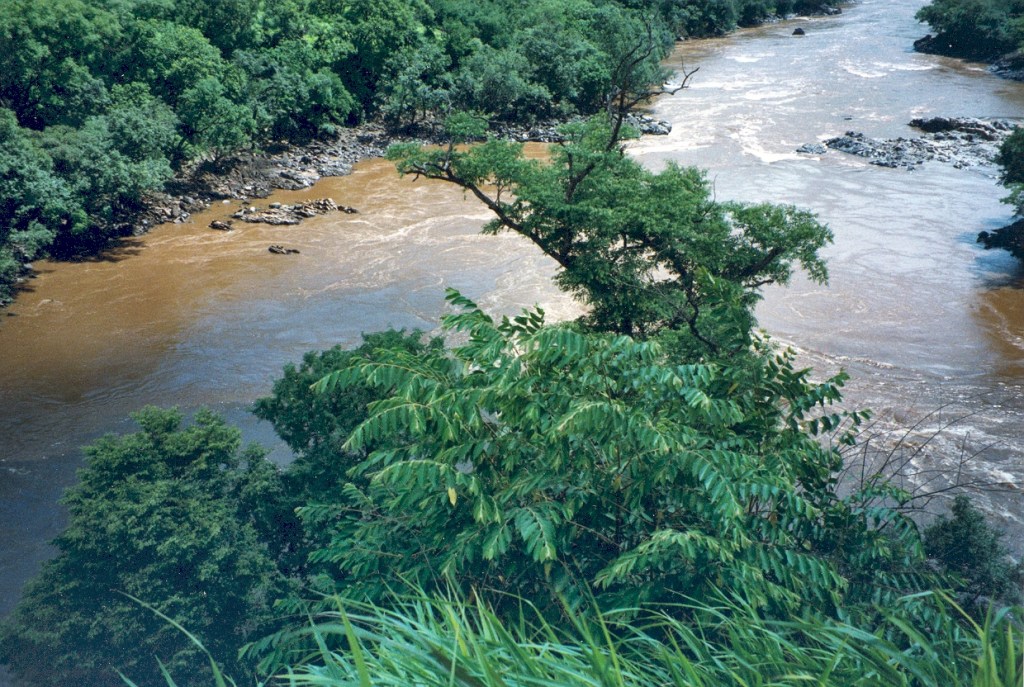
The Didessa river is a tributary of the Abay River. It originates in the mountains of Gomma, flowing towards the northwest to its confluence with the Abay. It drains about 19,630 square kilometres and in the early 1900 it was a favourite place for elephants, attracted by the young shoots of its abundant bamboo forest.

Although there were no elephants left when we were there, the river still had hippos that we used to see often although they clearly did not like to see us, rather wary of humans as they were not protected inside a national park!

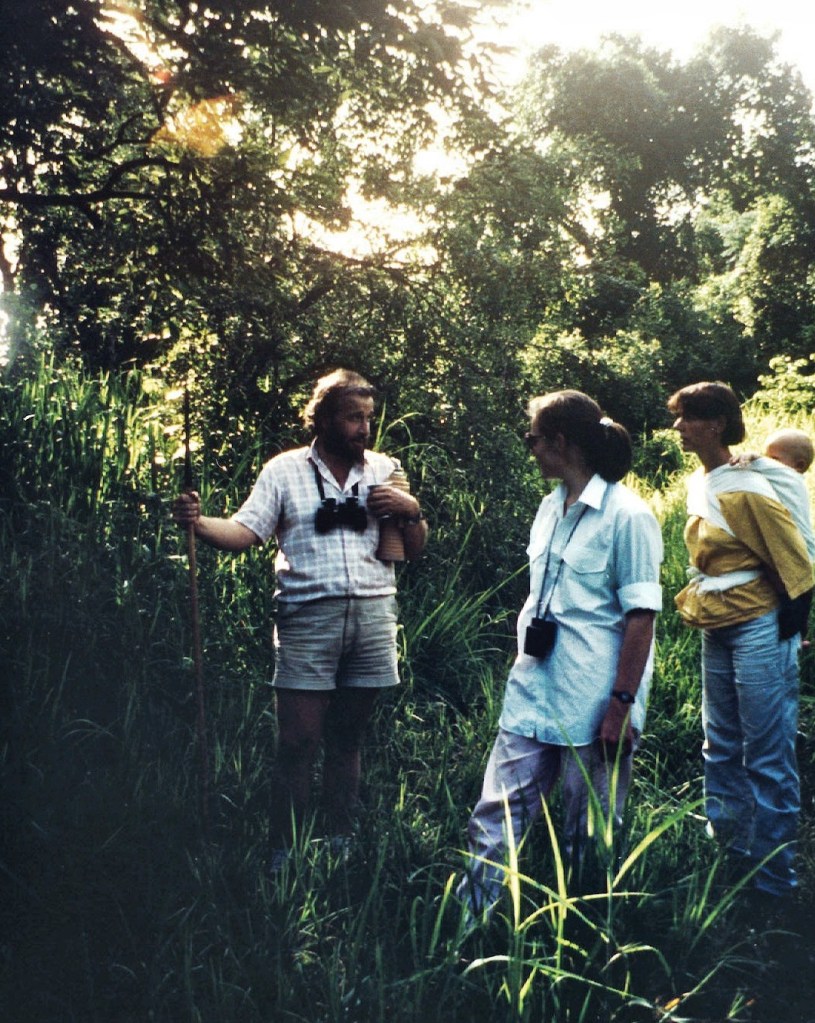
Our initial visit was after the first rainy season that we spent in Bedele and we went for a picnic with Janni and baby Winand (her son). It was a very quiet affair that opened up our appetite to return on a more adventurous approach.

One of our first visits to the Didessa.

We did this soon afterwards and learn a few things.

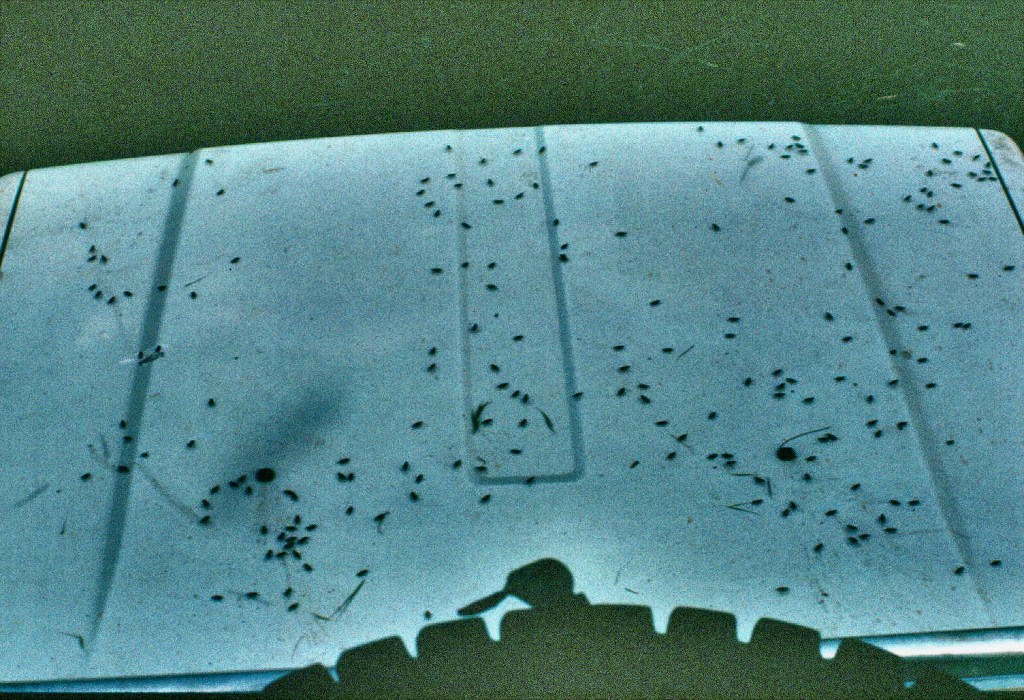
Being adventurous, we decided to enter an unmarked track that seem to follow the river with the hope that we would get closer to it at some stage while we kept an eye for wildlife. While driving we noted that the road was getting softer and that the tsetse flies were becoming more abundant as we advanced.

A close-up of the tsetse flies.

As the road was now a swamp and the tsetse flies were becoming too numerous for comfort, despite the heat we closed the windows while looking for a place to turn around to avoid having to reverse all the way back!

Tsetse flies were quite abundant!

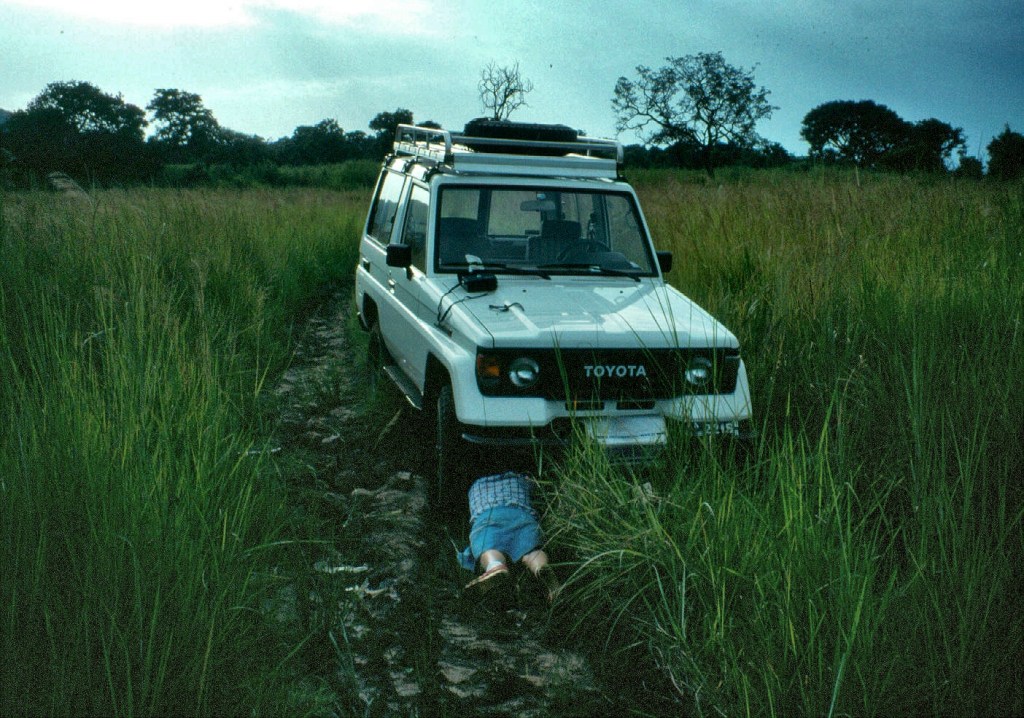
Although we just escaped death by exsanguination by the flies, the road kept worsening and eventually, we could not go forward anymore. We were stuck in wet black cotton soil, a bad medium to get buried in!

Stuck and trying to get out.
The situation getting worse!

After digging a couple of hours and lifting the car to use the spare wheel to at least have one wheel on a firm surface, the car moved, and we managed to reverse fast miraculously keeping to the track as I am a bad driver on reverse gear. Luckily, soon we were on firmer ground and we were able to turn around and depart from this truly mud trap.

Reversing to get out of the mud.

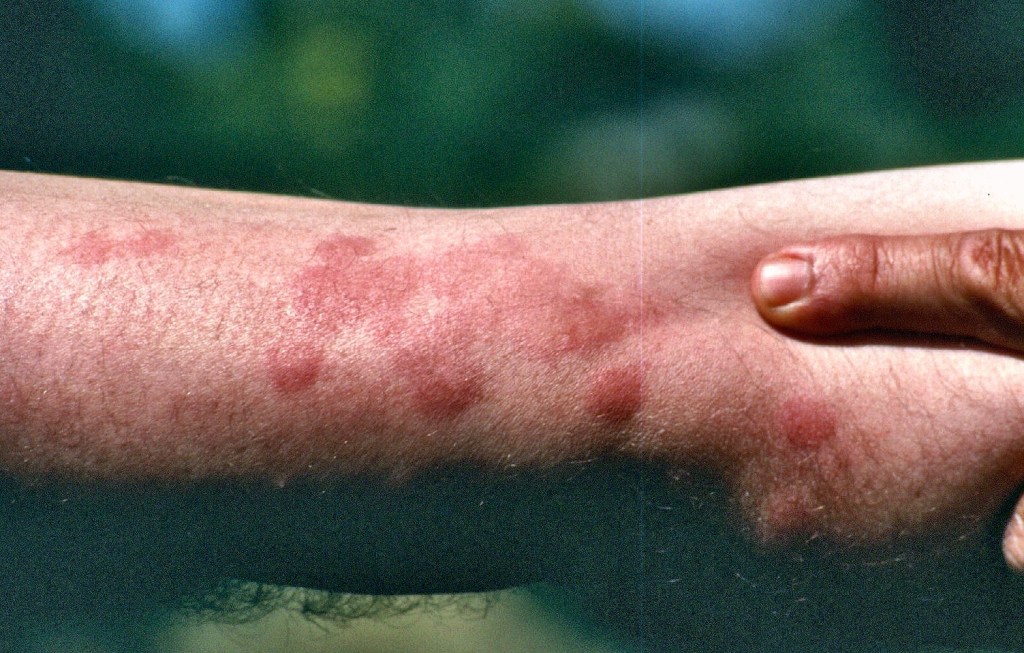
Although we got out of the mud, we did not escape the flies and we were beaten really bad, something that reminded me of a similar situation in the Nguruman mountains of Kenya that I described earlier (see https://bushsnob.com/2019/07/01/the-nguruman-escarpment/).

Tsetse bites were quite bad.
More bites.

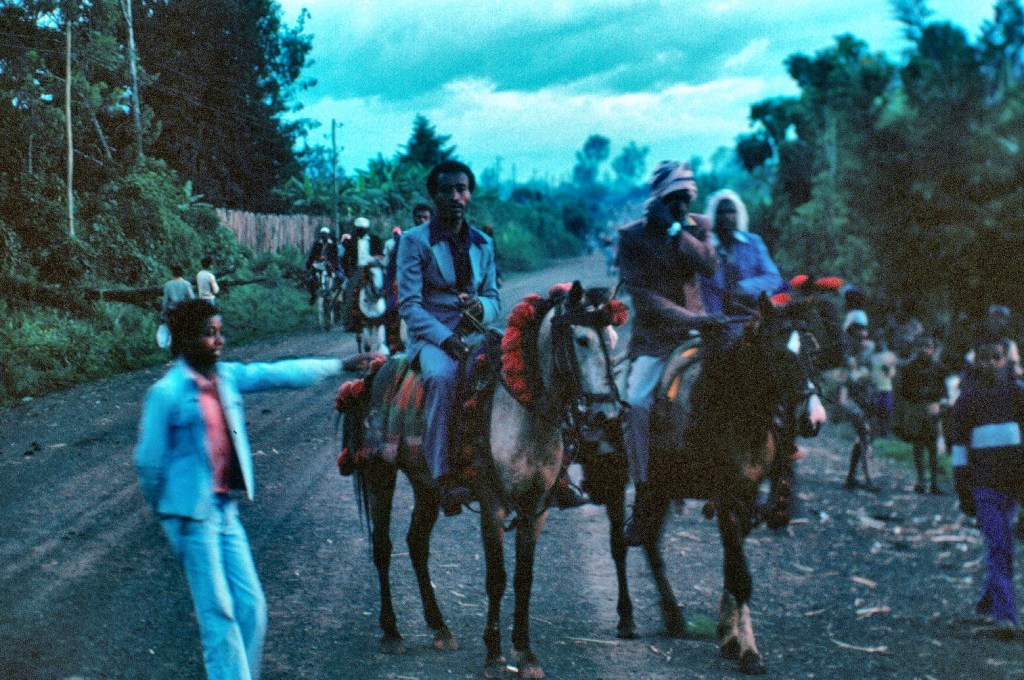
That day we decided that we would stick to the main road that, in any case was wild enough as there was almost no traffic, apart from a few horse riders or the occasional group of people bringing a sick or dead person from the rural area to the Bedele clinic or cemetery, depending on the circumstances. Life for the farmers was very tough!

Riders going to a celebration.
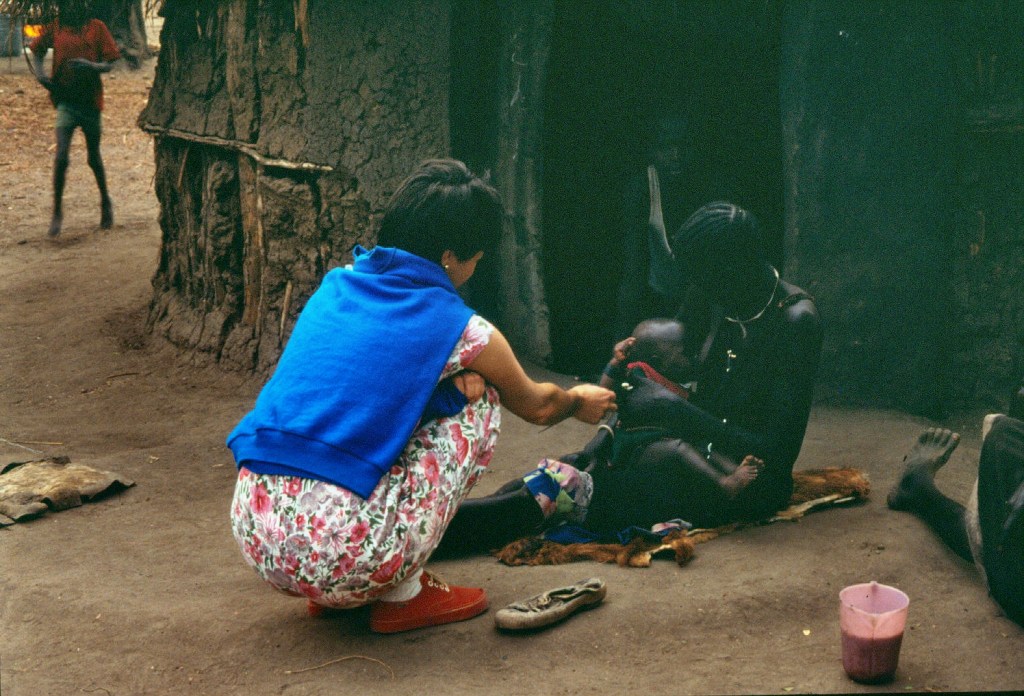
People walking on the Arjo road, probably taking a dead villager for burial.

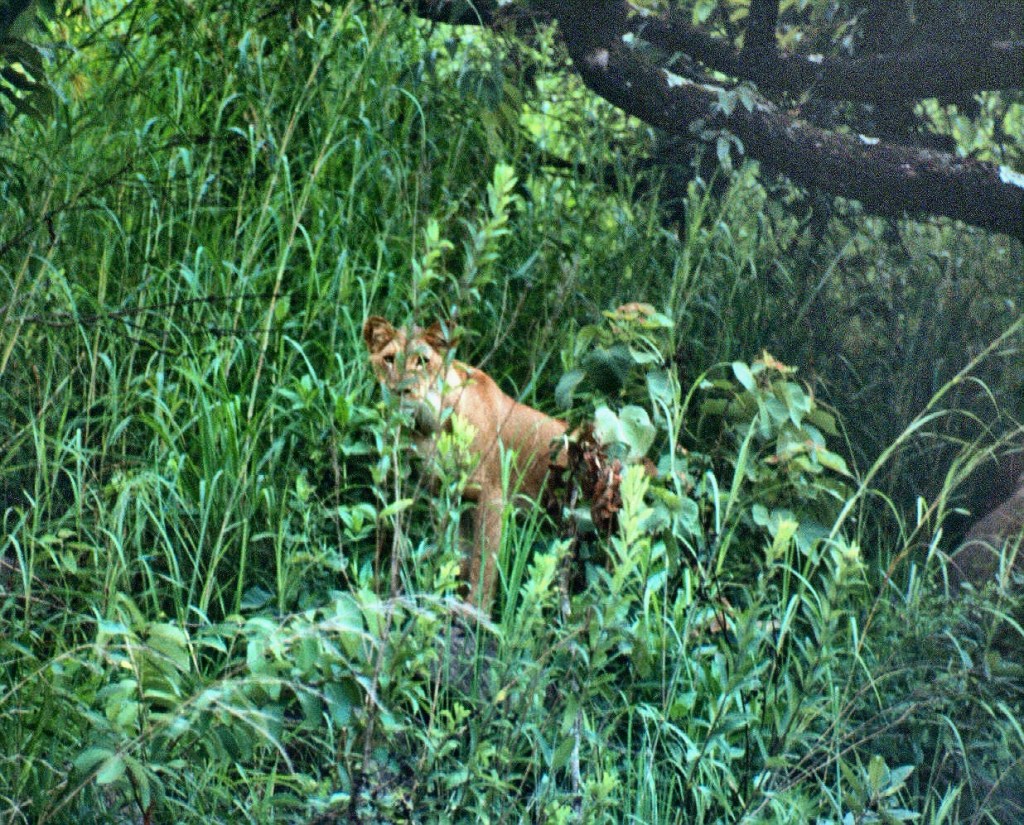
It was on that road that on two occasions we met some of the true “wild” lions we had seen. The first time Mabel spotted a lioness and when we returned to the spot a while later, -very luckily- we found a female and two cubs. We were truly impressed as we did not expect to find them in that area despite the presence of some large tracts of forest. I am sure that there were not many wild lions in that area of Ethiopia at the time!

Some of the forested areas goint to Arjo.
Luckily I managed to photograph a lioness before it disappeared in the thicket.

Arjo was also one of the project’s tick observation sites and we would cross the bridge quite often when going to our tick sites. Every time we crossed it, I made a comment to my Ethiopian colleagues that we should try our hand at fishing one day.

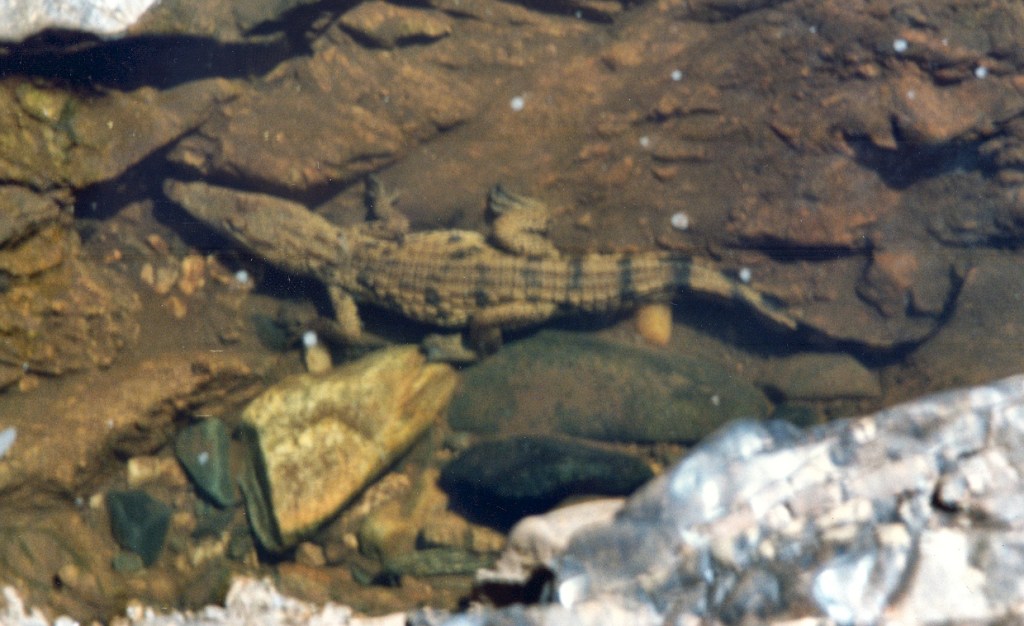
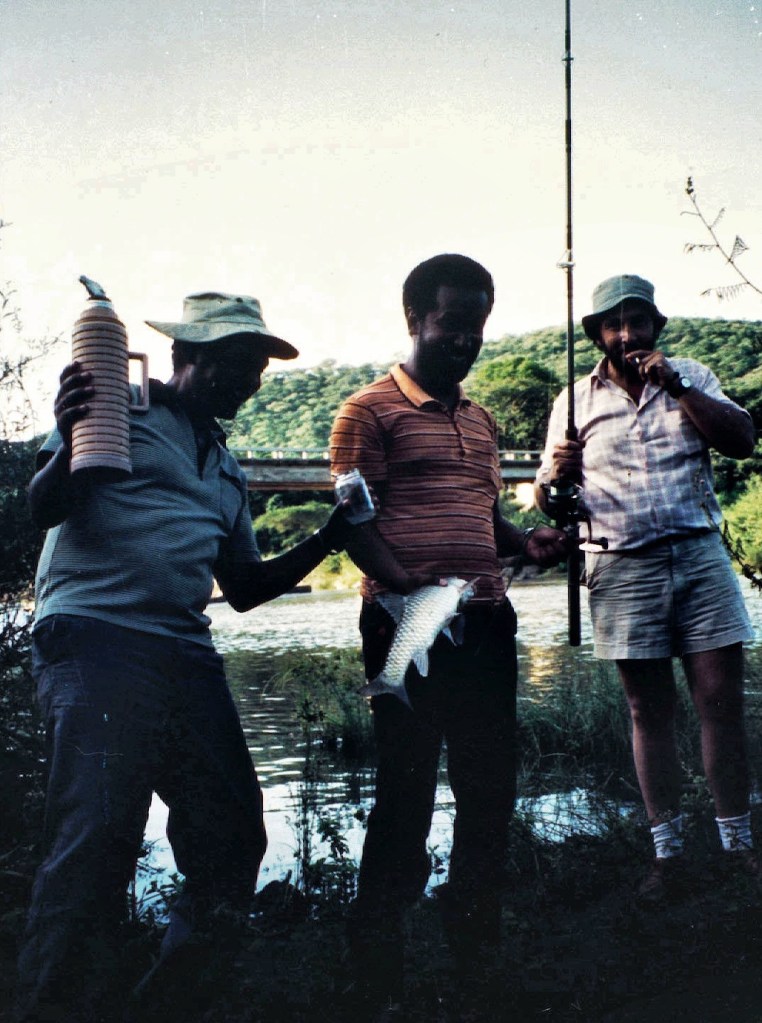
So, the fishing day arrived once the rains were over and the level of the river had gone down to enable us to reach a place below the bridge from where we could throw our lines. I only had beef as bait and that was what we used as I did not know what to expect. I hoped that crocodiles were not abundant!

The fishing expedition included Solomon, both of us and Tilahun, another veterinarian working with the tsetse and trypanosomiasis project. He was probably the most enthusiastic of the group! We casted our chunk of meat down the river and waited while we talked and enjoyed a good picnic. Fish were quiet and fishing was quickly forgotten until one of the reels started to scream and Tilahun got it and, eventually, brought in a reasonable fish.

An excited Tilahun (left), Solomon (holding the fish) and the bushsnob with the rod, celebrating the catch!
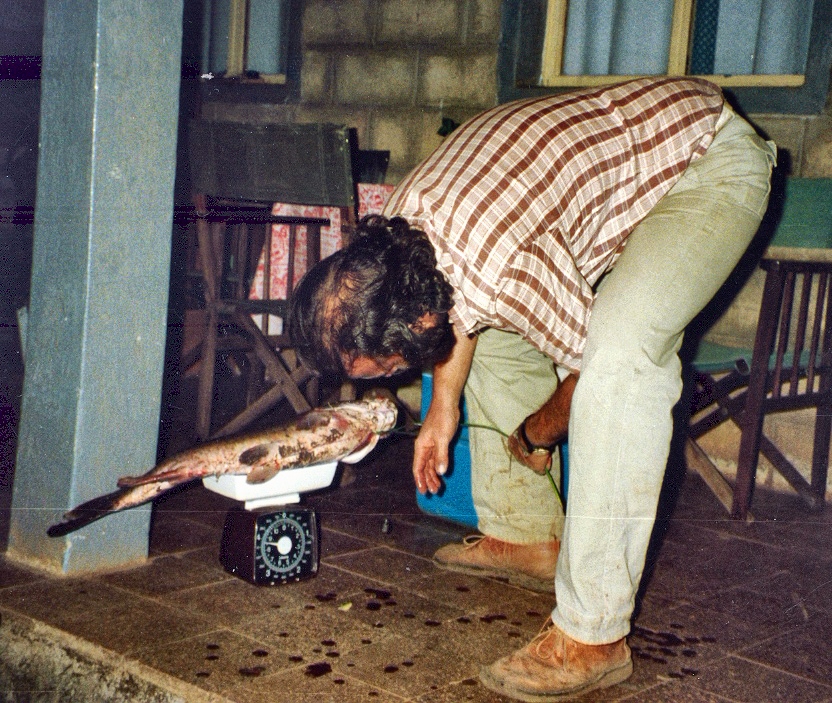
Weighing the fish back home.

It was the only fish we caught that day (and in that place for that matter) but it was enough for us to enjoy the rest of the afternoon, particularly Tilahun that I think had never caught a reasonable sized fish before!

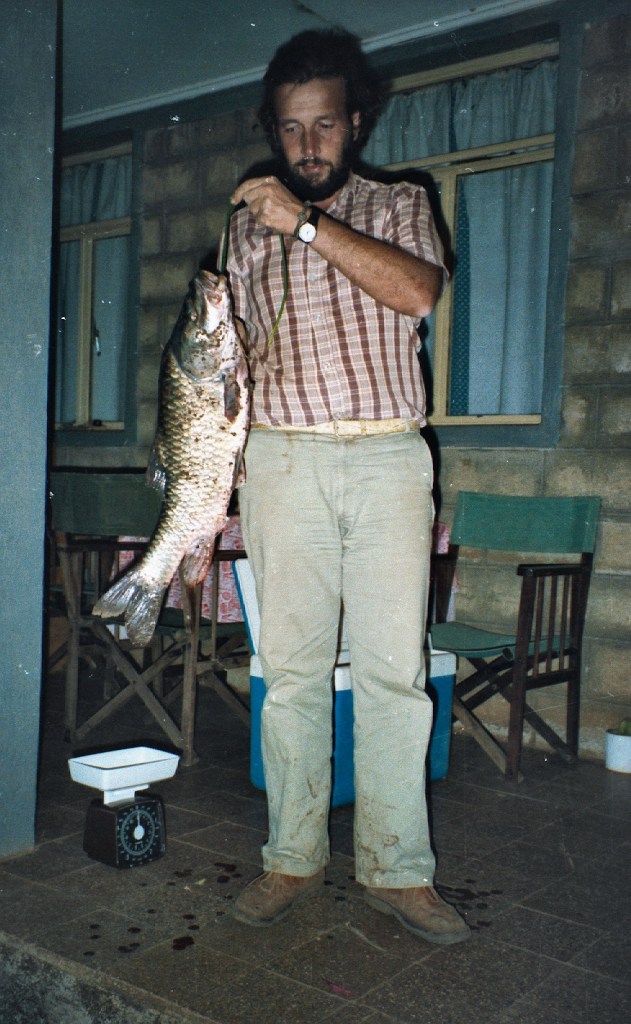
We took it back to Bedele as our companions wished to eat it and I weighed. It was 3.75kg but I am not sure of how it tasted!

The fish.

I believe that we caught a Labeobarbus bynni, a species that can reach 80 cm in length and that inhabits the Nile river system feeding on crustaceans, insects, molluscs and organic debris, including our meat!

House Issues

As soon as our car got sorted out, our attention focussed on making our house more comfortable so we finished organizing the furniture, hanged our pictures and unpacked our books, including the few I had managed to find about Ethiopia as there were not the guides you find today.

Regarding Ethiopian animals, I trusted that my great “Field Guide to the Larger Mammals of Africa” by Dorst and Dandelot would do. On birds, the situation was pretty desperate and I spent a small fortune on a copy of Mackworth-Praed and Grant “Birds of Eastern and North Eastern Africa” and I managed to get Urban’s “A Checklist of the Birds of Ethiopia”. Now I needed to use them!

We had been warned that water and electricity in Bedele were erratic. The situation brought back memories of my early days in Uruguay during which there seemed to be a chronic period of austerity that included shortages of all kinds, including power and water. I still remember my mother discussing the latter with her friends and taking sides between those who preferred the absence of water or lack of electricity!

Regarding the electricity, we stocked up candles and got our camping gas lamp ready. Mabel and I agreed that water was more important, so we decided to store some in our bathroom by means of a number of one hundred litre plastic garbage containers that we filled and kept there for that purpose.

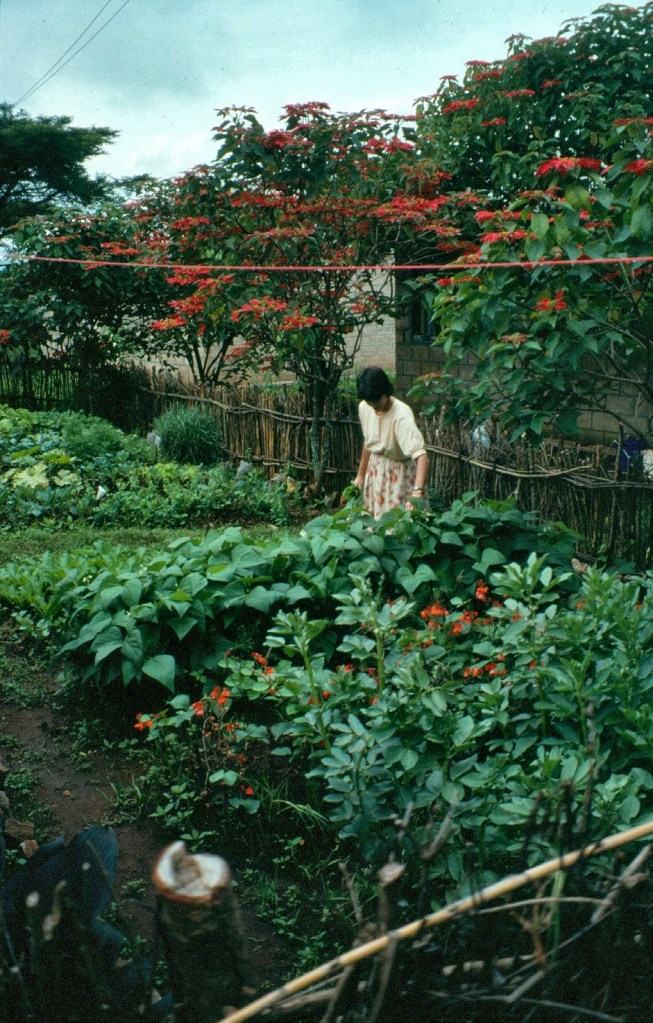
At the same time Mabel started her great vegetable garden and regular yogurt-making thanks to a few sachets of culture received from our friend Ranjini in the UK that, several times, came to our rescue. Yogurt with honey became a house “special” and I still wonder why no such thing is available commercially! We also learnt that green mangoes, very abundant in Bedele, were a great substitute for the impossible to get apples and Mabel excelled in making green mango strudel to the delight of ourselves and invited neighbours and those that dropped by following the amazing smell.

Mabel and her marvelous vegetable garden.

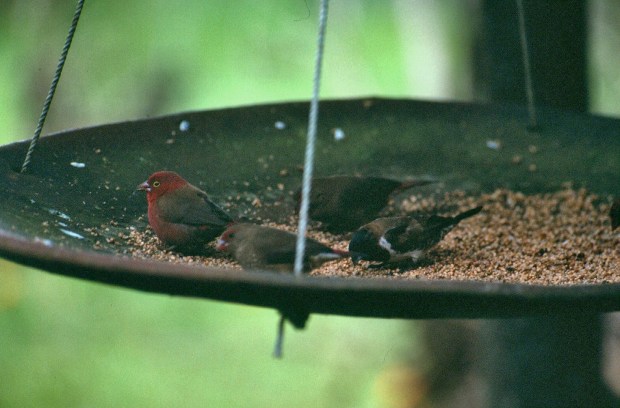
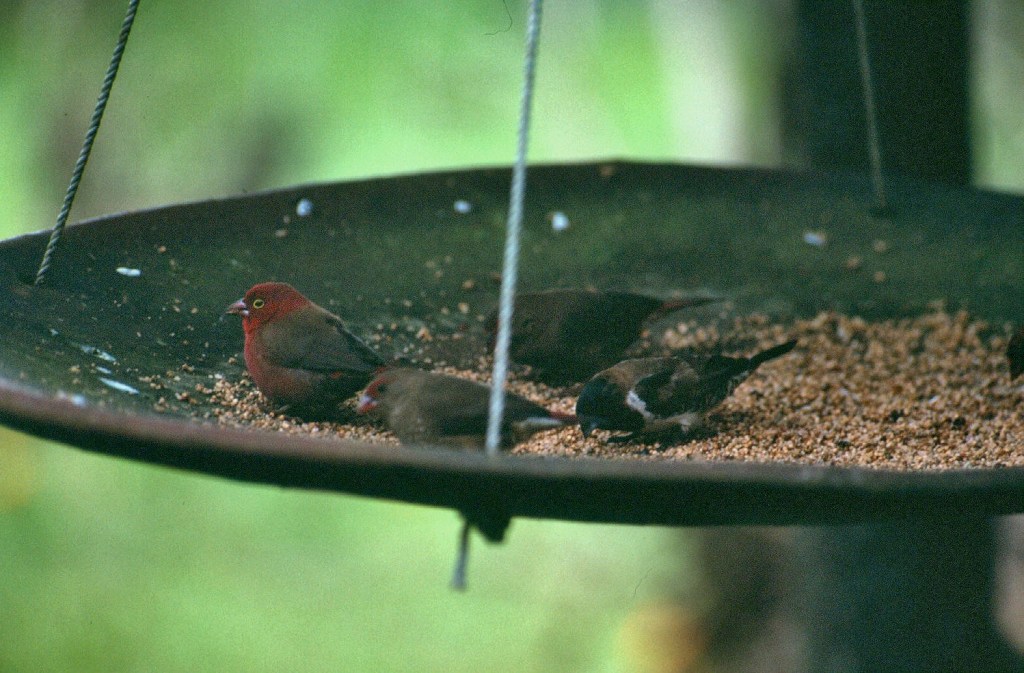
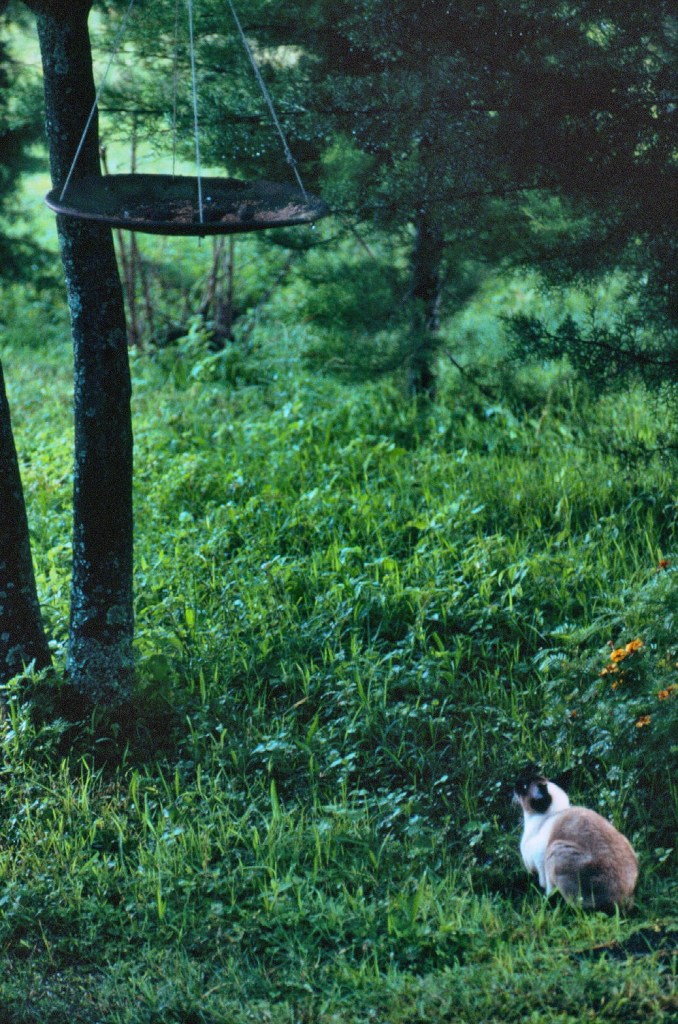
I focussed on the bird life and set up a number of high hanging plates where seeds were always on offer for those birds that wished to visit them. Immediately we got a positive response from the firefinches and waxbills that kept coming despite the anxious looks of our Siamese cat!

The birds did not take long to come.
“I wish I could jump that high”.

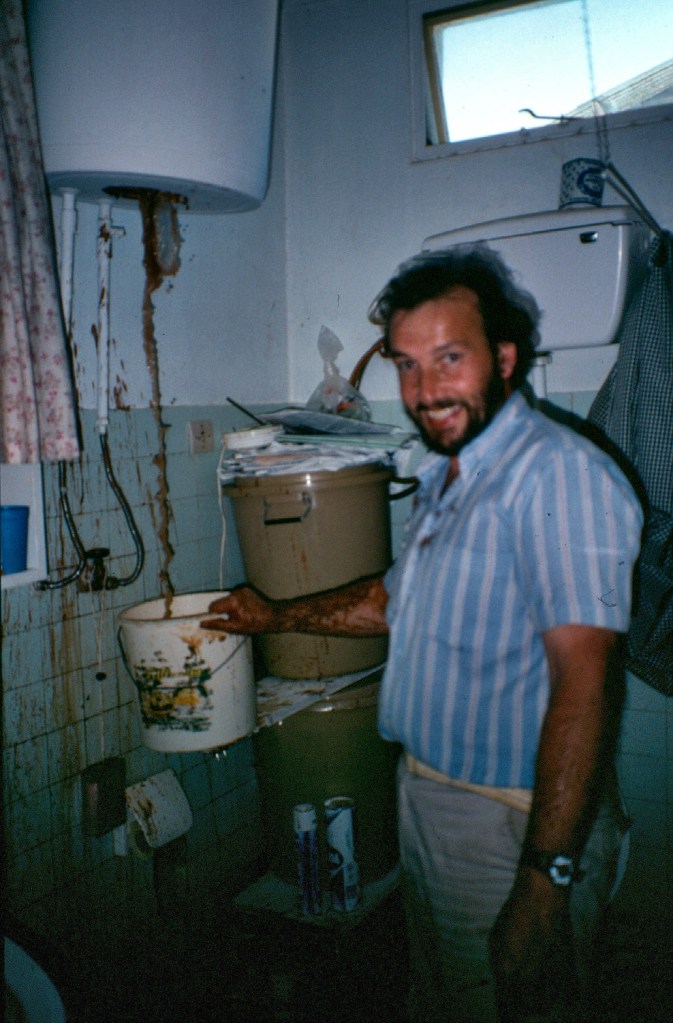
Not all was pleasure though. There came a day when the water heater packed up and, in the absence of a maintenance service in the laboratory, I took it apart and discovered that it was almost full of mud. Through a series of washings that took quite a while, I pushed the mud out and ended up with a functional appliance once again, to the satisfaction of Mabel.

Repairing the water heater. At the back on the left the piled garbage containers filled with water can be seen.

Unfortunately I was less effective with our septic tank. The device kept getting blocked with the same frequency as I needed to write project progress reports! I was nominated the responsible person on account of being a vet and therefore used to some unpleasantness… I soon discovered the meaning of those metal trapdoors around the house. This was not my favourite pastime as it meant to open them up and unblock the pipes for things to move along! With the passing ofthe months, practice made me quite good at it but unfortunately the heavy rainy season did not help.

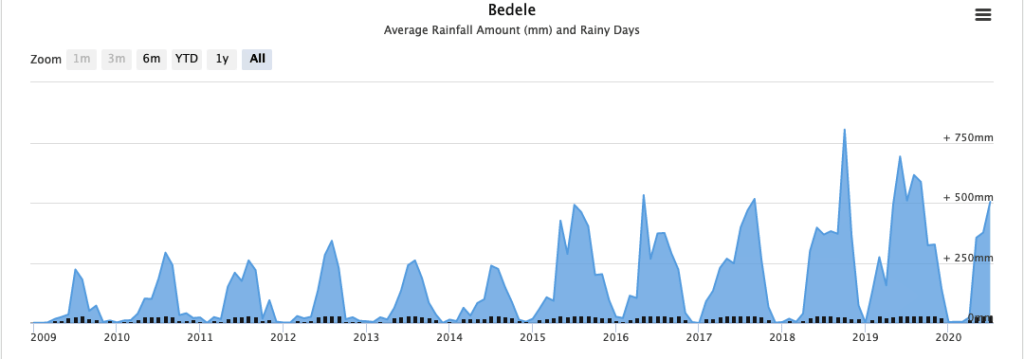
Rains at Bedele. Credit: Data provided by WorldWeatherOnline.com

The onset of the rains would be announced by a gradual accumulation of clouds over a few days and then heavy rain would come and immediately we realized that our concern with water shortages was somehow exaggerated. With about 1.8 metres of yearly rain, water was in great abundance for about six months of the year. This required work on the garden drainage to avoid the water entering the house.

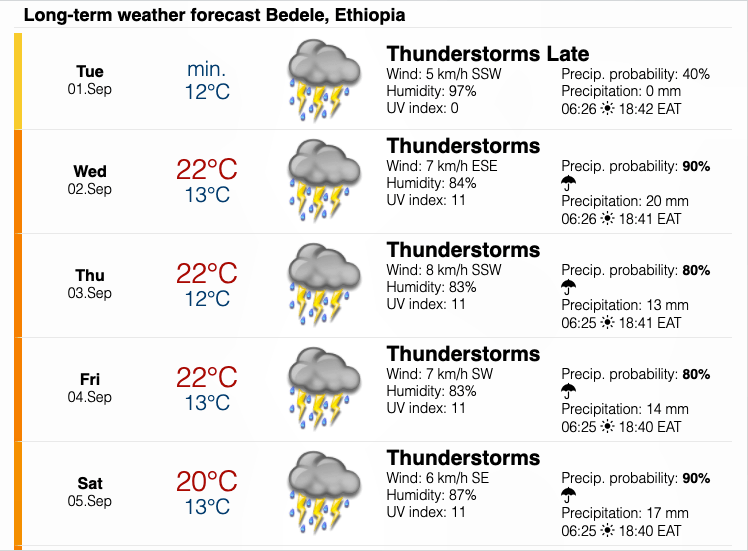
This week weather in Bedele. Screenshot of 1 September 2020 from Weather-Atlas (https://www.weather-atlas.com/en)

The noise of the rain on our tin roof did not let us listen to our music and, when electric storms came, the lightning and thunder that we experienced were the worse we have ever gone through, even when Harare is tough on this too!

Somewhere I had learnt, the probably incorrect fact, that to know where a lightning bolt has landed you started counting when you saw it until you hear the thunder and the number gave you the distance in kilometres from your position. I tried this in Bedele and I could never count more than two! I stopped as it only increased my sense of vulnerability, particularly when I did not see any lightning rods around!
It was in Bedele and the surrounding area that I learnt what car winches were for! The rains would transform our laboratory compound in a quagmire and often we needed 4WD to get out of it and to drive around the town, particularly to reach our butcher as I described.

It was on a rainy evening that the water finally got to us. It did not come through our door or through a leaking roof but from our bathroom. We were sitting reading quietly when we heard a loud noise and then saw a wall of water about 50cm high coming towards us! Taken totally by surprise we had time for nothing except getting our feet wet but, of course, our cats watched the events from the table.

One of our large garbage containers (not really for that use) that had another one on top of it, had cracked. The one on top also fell and knocked the one next to it. The result was that about three hundred litres of water were violently released in a mini tsunami! It took us until 2 am to wipe our house free of water.

After such a shocking incident and seeing the way it would rain, we decided that we no longer needed to store so much water and we made do with only one of the containers and we survived without having to open it until when, before departing we emptied it.

Our new car

As I mentioned in the earlier post, once in Bedele, the news came that our car had arrived at the port of Assab [1] and that I was needed back in Addis to arrange (read pay!) for its transportation to Addis. In addition, I had to meet the costs of the handling by the Ethiopian clearance agency and to deal with its registration.

After a few days we had gone through all bureaucratic processes that were not few but luckily, we had the assistance of the FAO to do it. I recall someone hearing my complaints about the inordinate amount of time the process took that told me to regard myself lucky as, if you were a private individual, you needed clearance from about thirty offices before you could leave the country!

Eventually we got the car and we left Addis after breakfast and drove slowly while I adjusted to it (no great feat!) and proceeded at a moderate speed through our usual way back to Bedele.

After several hours we started to go through a mountainous area before Jimma where the road twisted around with a few sharp bends. It was turning one of these that we met a bus cutting the corner and coming straight at us!

I was climbing the mountain so I could not have been doing more than 50 or 60 kph and I would say that the bus was not going fast either as we met almost on top of the hill. Despite this, it all happened at a rather vertiginous speed!

I slammed on the brakes while aiming towards the mountain wall, trying to avoid a head-on impact. Luckily, the bus driver went towards the steep cliff and crossed the bus in front of us. The result was that we hit it behind the front wheel. Luckily the side caved in and the car got rammed into the bus’ soft belly.

The crash was not too violent, good news as we did not have airbags! Quite angry I left the car and walked towards the bus to recriminate the driver for his recklesness. My anger boosted as we no longer had a new car!

The driver had wasted no time and he was already scrambling down the hill where it soon disappeared ignoring my shouting for him to come back up. He did not wish to face me so I forgot him and tried to solve the situation as fast as possible.

A few passengers were leaving the bus and a small crowd was gathering, luckily, sympathising with me. We decided that it was worthless to do anything about the incident and, while some of the passengers pulled from the twisted bus metal panels, I reversed the car and extricated it from the hole it had made on the side of the bus.

We could now see that our car had suffered from the impact. The front mud guard on my side (right) was bent and re-painted yellow, the colour of the bus! It also had a bent bumper and some broken lights. Not much considering what it could have been.

Once disengaged I thanked the passengers and drove off to avoid the people that were appearing from all over and the crowd that was gathering. Although the car was making weird noises, I drove on and only stopped after a couple of kilometres where we parked at a safe place and proceeded to pull the mud guard so that the tire would no longer rub against it.

After quite an effort we managed to free the wheel on the driver’s side but, despite this, it was clear that it was no longer aligned, and it produced quite a lot of vibration. However, we had no other option but to push on, so we did.

Because we could move rather slowly, we only managed to get to Jimma and there we spent the night in one of the hotels, I believe called the Ethiopia Hotel, belonging to the Government as most hotels were in those days. By the time we got to Jimma we had talked about the incident enough and had already gone through a thorough catharsis and we were no longer too worried about the incident as no one was hurt.

The following morning, after having as good a check on the car as we could and seeing that the tire was still undamaged, we departed for Bedele through the very rough road that, somehow, dissimulated the status of our wheel alignment! We still enjoyed the journey, particularly the spectacular valley of the Didessa river where we stopped at the bridge to enjoy the beautiful scenery and tried to spot the hippos that dwelled there.

We got to Bedele where everybody felt sorry for our now “former” new car and, luckily, I got a mechanic to do a good job straightening the metal bits and improving the wheel movement and alignment while patching up the missing plastic and glass from the lights. Eventually we got back to Addis where we interned the car and got it repaired by a great panel beater that worked overtime for us to get it as good as new again.

One of the few pictures of the car I could find.

We enjoyed the car after this unfortunate start. However -and funnily-, its end was also accidented!

About a month before we were due to depart, I had sold the car to a newly arrived UN employee with the agreement to hand it over just before departure. Ready to depart for Nairobi on a Sunday, I went to see the buyer at the UN headquarters in Addis the Friday before to sign some of the documents required for the transfer and agreed to hand over the car the following day.

Leaving after the meeting I forgot that I had parked very close to one of the parking posts that held a chain to indicate the end of the space allocated for cars. So, I tried to reverse while turning the steering and somehow one of the posts got stuck between the front bumper and the body of the car!

I have no idea of how I managed that, but I was stuck and considering removing the bumper when one of the guards, quite amused, came to assist me. Following his instructions, I moved the car centimetre by centimetre but could not avoid damaging the wing and breaking one of the lights, again!

Aware that were leaving in less than forty eight hours, I drove straight to the panel beater that had done the previous job on the car who, luckily, did a great paint job overnight and I could hand over the car on Saturday afternoon. I excused myself for the broken plastic claiming that it had happened on the journey from Bedele and gave the buyer the money to cover the cost of a new lens.

[1] At the time Assab (now in Eritrea) was still part of Ethiopia.