Bush Pills

Very short comments and observations

Night surprise!

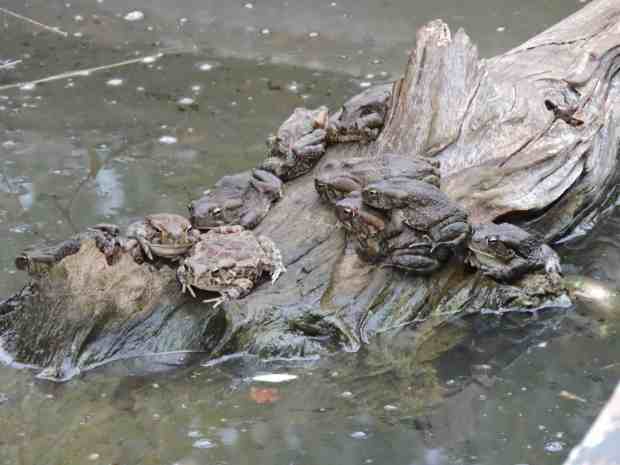
At night, returning to our bungalow at Swimuwini after a hot shower I took a detour to investigate what looked like a small pond. From a distance I shone my torch in the general area and I froze in my tracks. There was a crocodile there!

DSCN0382 copy

Without moving I maintained the light on the reptile’s head -all I could see- and I not only saw it moving but also its eyes shone under the torch’s light! “This is amazing” I thought while watching the beast. I dropped my towel and other shower implements and slowly approached the pond in the dark until I estimated to be close enough to have a good view. Then I switched on my torch again.

To my relief it was a false alarm but a clever ruse nevertheless! Someone had somehow placed a tree trunk semi-submerged in the pond with the intention of making it look like a croc. Whoever he/she was succeeded with me! The movement and shiny eyes were not fiction as the head was a resting place for a bunch of toads [1] that were using the wooden croc as their resting place!


I returned to the bungalow and the following morning I came back to the pond for a better look.

DSCN0368 copy

During the day the trunk was more obvious but less so when the toads were on it adding some greenish colour and movement to it!

DSCN0451 copyDSCN0446 copy

DSCN0459 copy

Luckily it was a wooden croc but it was nice as it offered a good opprtunity to see the toad’s interaction and to take some nice pictures of the batracian colony.


[1] From Wikipedia (https://en.wikipedia.org/wiki/Frog). “The use of the common names “frog” and “toad” has no taxonomic justification. From a classification perspective, all members of the order Anura are frogs, but only members of the family Bufonidae are considered “true toads”. The use of the term “frog” in common names usually refers to species that are aquatic or semi-aquatic and have smooth, moist skins; the term “toad” generally refers to species that are terrestrial with dry, warty skins”.

Spot the beast 21

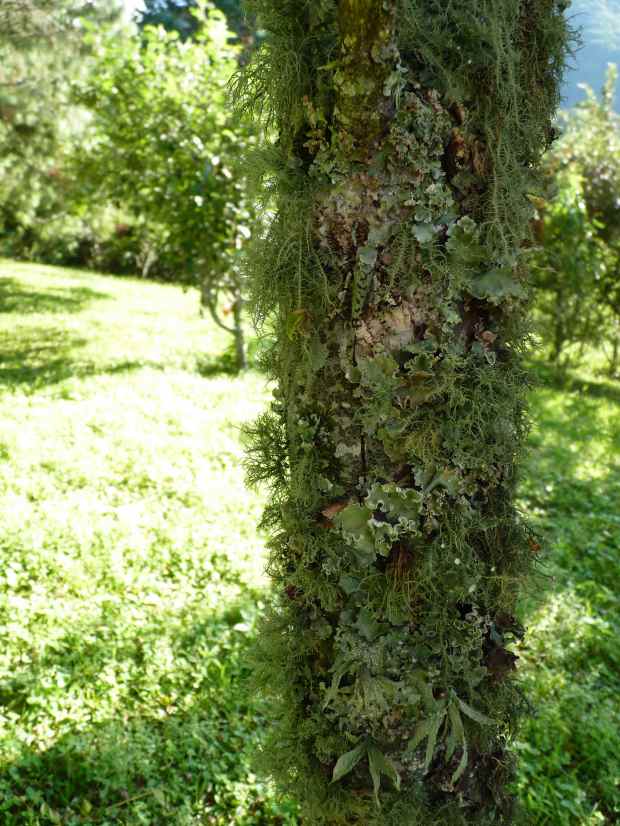
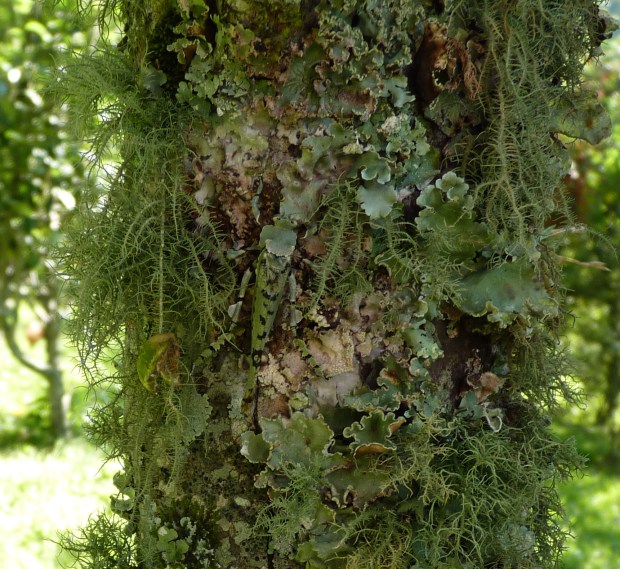
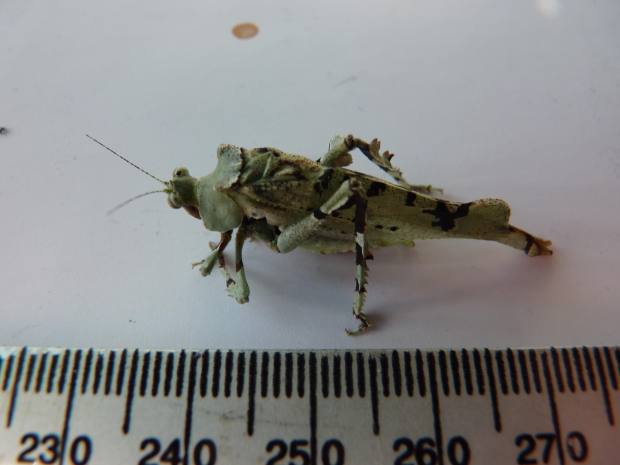
Back to Salta with another interesting creature for you to find.

P1140953 copy 1

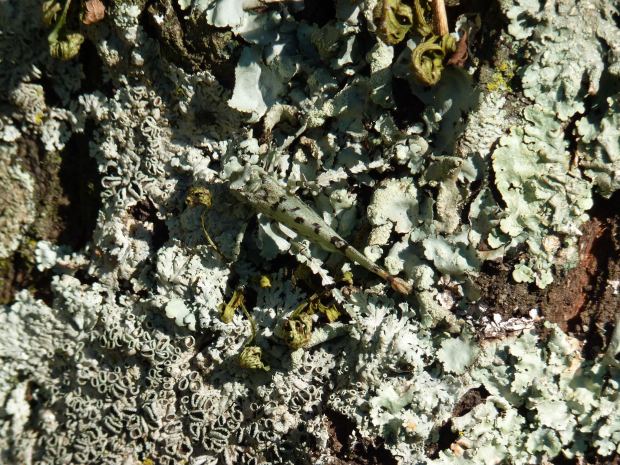
I think this time it was rather easy but it is a lovely insect all the same and worth having a look at it. I call it the “lichenhopper!” Below some more close-ups of the beast.

P1140953 copy

P1140959 copy

P1140946 copy

Spot the beast 19

Back to Africa for a while while I develop another story from “Out of Africa”. Poor internet connection and farm work… are attempting against my productivity.

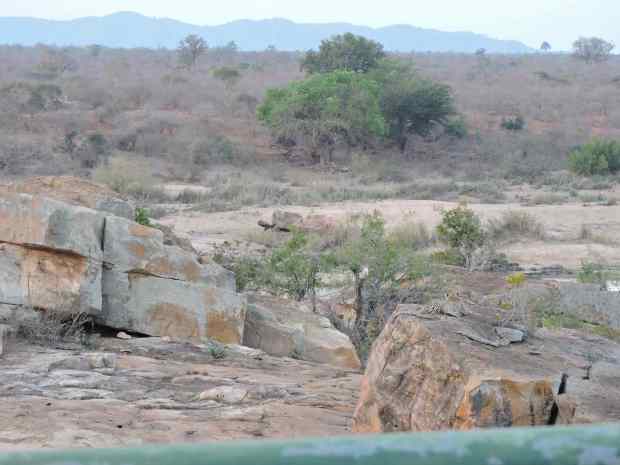
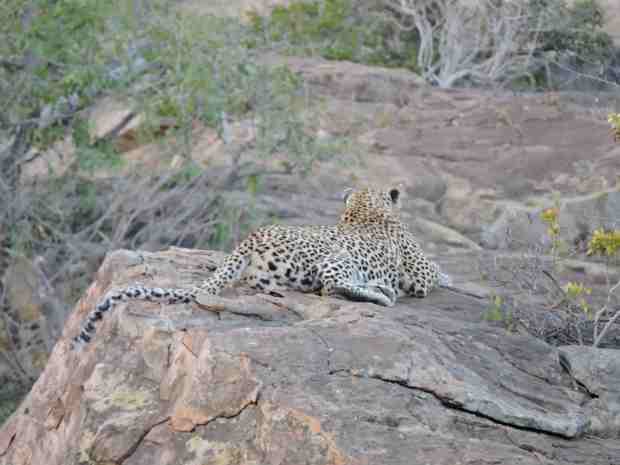
This is not a difficult “Spot the Beast” but I thought it is a nice situation to challenge your power of observation. I would be worried if you cannot find it within the first 10 seconds…

Here it is:

dscn9956-copy
?

?

?

?

?

?

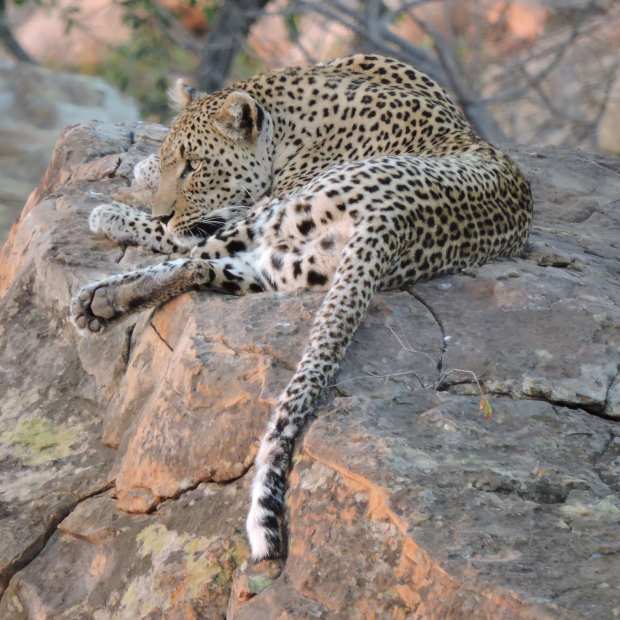
I hope you agree with me that she was not only beautiful but well placed to see what was happening!

dscn9954-copy

A few more pictures of her:

dscn9928-5-57-43-pm-9-25-00-am-copydscn9939-copy

dscn9924-10-09-30-am-3-33-32-pm-3-38-33-pmdscn9903-copy-8-55-16-am-8-58-58-am

Spot the beast 17

As easy as it is beautiful. This “beast” was seen cruising on the grass looking for prey.

DSCN8015 copy.jpgFrankly, I thought it would be easier to spot!

?

?

?

However, here it is the creature for you, a harmless Spotted bush snake (Philothamnus semivariegatus) seen at Hippo Pools Wilderness camp by the Mazowe river in the Umfurudzi Park of Zimbabwe.

dscn8005-9-25-00-am-copy

dscn8018-copy

These snakes are harmless and very beautiful!

Spot the beast 16

The rain offers numerous blogging opportunities on the “spot the beast department”! Here is another one for you to find (Only look at the next picture below if you cannot find it!)

DSCN9914 12.17.44 PM copy

?

?

?

?

?

?

?

?

?

DSCN9912 12.17.44 PM copyIt was difficult but it was spot on in the center of the picture! It had a sad expression also!

It is the flap-necked chameleon (Chamaeleo dilepis) the most common sub-Saharan chameleon.

Of least concern according to the International Union for the Conservation of Nature, I have the impression that their numbers are declining, at least in urban Harare. Some attributed this to the proliferation of security electric fences that, apparently, can kill them.

The flap-necked chameleon lays 10-40 eggs in a hole dug in soil. The latter take an amazing 10–12 months to hatch! A very long time if we compare it with other animals such as the Nile crocodile that takes 90 days! To watch the hatching of the perfectly formed and miniature young is simply amazing.

Luckily, this rainy season we have found a few so the situation may not be as bad or the frequent electricity cuts had yielded some benefits!

Spot the beast 15

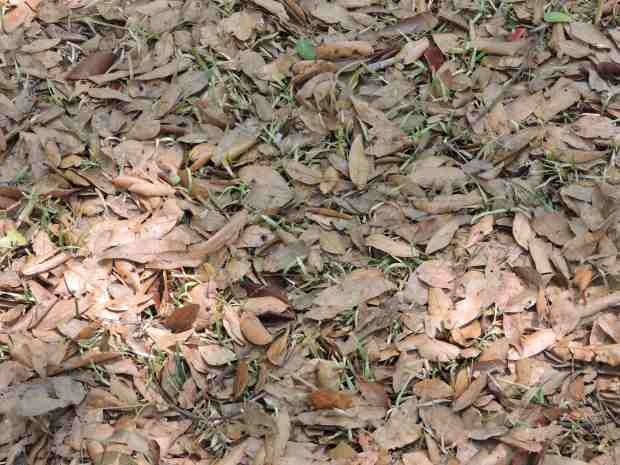
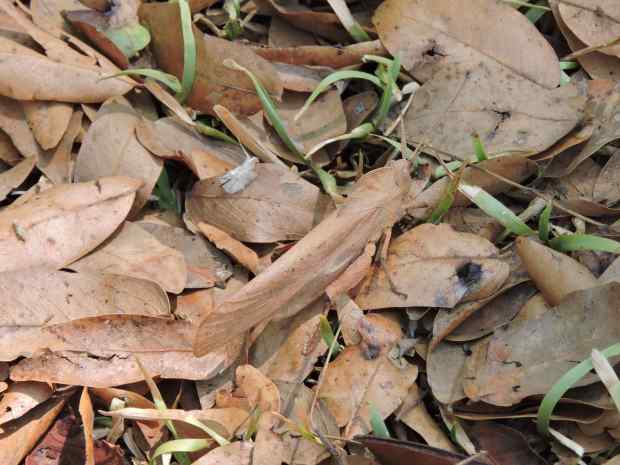
While walking on the dried leaves of the Msasa trees (Brachystegia spiciformis) also known as zebrawood, I came across this “beast”. I spotted it because it moved. Can you see it?

dscn9941-copy

OK. I agree that it was tricky so here you have a larger version.

dscn9942-copy

Mutant moth – Advance

Eight months ago I published a post where I showed a picture of a moth that had the wings of different colour and I speculated that it was a kind of “alien” creature[1].

dscn4120

Then I mentioned that I would follow-up the issue with the “experts” but I am afraid I did not!

However, luckily, searching for information on Southern African moths and butterflies I stumbled upon a site that deals with the kind of anomaly I came across, though in a more colourful butterfly[2]. This gave me the first indication that I was probably dealing with gyandromorphism.

In entomology, a gynandromorph is an insect that contains both male and female features that in butterflies -moths in our case- can be seen physically (in their wings) because of their sexual dimorphism.[3]

This is as far as I has been able to go for the moment but the search continues.


[1] https://bushsnobinafrica.wordpress.com/2016/03/18/mutant-moth/

[2] http://insectdesignsnews.blogspot.com/2010/11/charaxes-cynthia-gyandromorph.html

[3] https://en.wikipedia.org/wiki/Gynandromorphism

Rain!

There is a great song by Lady Blacksmith Mambazo called Rain, rain, beautiful rain[1] that, as many of their songs, I strongly recommend! But it is only when you have two successive extreme dry seasons such as the ones we have gone through in Zimbabwe that you really understand the song!

I already described the seriousness of the drought at the Kruger National Park[2] and things are equally bad further north, in Zimbabwe and Harare where we are.

When we bought our house in the 90’s, we had a good borehole as well as water from the Harare Municipality. Today, the latter is erratic and, as a consequence, over the years many people have sunk boreholes and now there are thousands. As a result, the underground water table is no longer where it was and, probably the deepest end of our own old borehole is 30 meters above the water level! We have dug for water four more times since the original hole dried early in the XXI Century but we have only managed to extract grey stone dust!

Following our failures with various reputed rhabdomantists, in 2013 we decided to change our water management strategy. We gradually moved from water-thirsty plants to succulents and cacti and we buy water from the many suppliers that bring it to your house. Our swimming pool is now a water reservoir -and toad breeding ground- that we fill with the rainfall from the roof of the house (when it rains!) and take showers standing on a basin to collect and use the grey water for watering a few selected plants!

The availability of water is gradually decreasing and many of our plants and trees are no more and others are just surviving from year to year. We have lost pecans, almonds, mulberries and avocados to mention a few. Luckily, we still have a few fruit trees left although their production is near zero. The indigenous trees are still doing well, despite the clear impact of global warming.

But enough of bad news as the rains have just arrived a few days ago, precisely on 10 November. You remember the date now as rain is becoming really critical!

As usual, just before the rains our children’s leopard tortoise “George” (or Georgina?) made an appearance only to disappear again soon afterwards, as usual. In addition, the chameleons materialized out of nowhere, following their own clock, just before the rains. At this time the number of birds increased dramatically as drinking water was really scarce. Miraculously, as soon as the rains came, many species disappeared and we remained with the resident ones that are here the year round.

Another amazing phenomenon is the “greening” speed of the brown grass in our “lawn”! I can assure you that it becomes green in a few hours after the first rain drops. I often think that it is like watching lyophilized grass being reconstituted in front of one’s eyes!

Together with the greenery some interesting insects appear. Among others, the termites immediately start preparing their chimneys and, although they wait before “exploding”, they do so after a couple of days with when they detect that the ground has reached the adequate humidity for them to dig themselves.

The millipedes[3], known locally as tshongololos[4], are the next to make an appearance after spending the dry spell in chambers dug underground. They appear in all sizes, from 2-3 cm to 10-12 cm and are very fond on fruits and cucumber. They live up to seven years in the wild and they need to moult frequently as their calcified exoskeleton does not expand. They have about 270 legs and they carry some specialized mites[5] that clean their bodies.[6]

Apart from the animal life, the rains also create an explosion of colour as the plants and trees suddenly revive. The show starts with the flowering of the exotic jacarandas that turns Harare purple just before the rains. Soon the time of the flamboyant trees come and, the moment the rains start, the frangipanis become really outrageous not only in terms of colour but also by adding their wonderful scent to the garden.

img_3234-copy

If the rains are good, our garden will become so green that it will make you forget the drought until next year when we hope that we will have a “normal” one although these are nowadays the exception!


[1] If you wish to hear it, it is at this link: https://www.youtube.com/watch?v=iUH7PM0-cpI

[2] https://bushsnobinafrica.wordpress.com/2016/10/03/hippo-drama/

[3] Subphylum: Myriapoda; Class: Diplopoda.

[4] It means “steam train” in the local language.

[5] Neomegistus julidicola Trägärdh 1906 (Acari, Mesostigmata)

[6] They are extremely interesting creatures and, if interested, you could read more about them here: http://www.earthlife.net/insects/diplopoda.html

Spot the beast 13

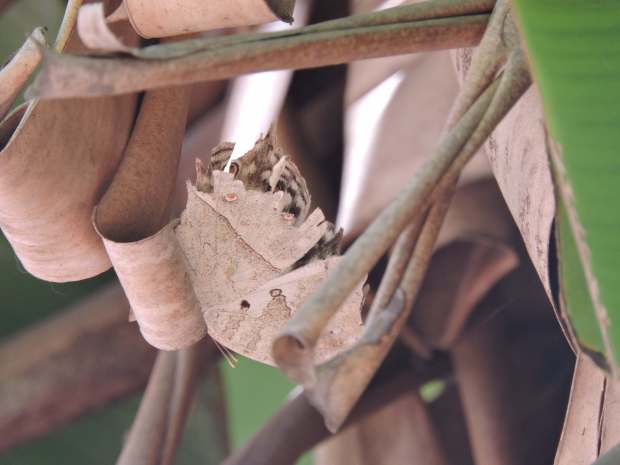
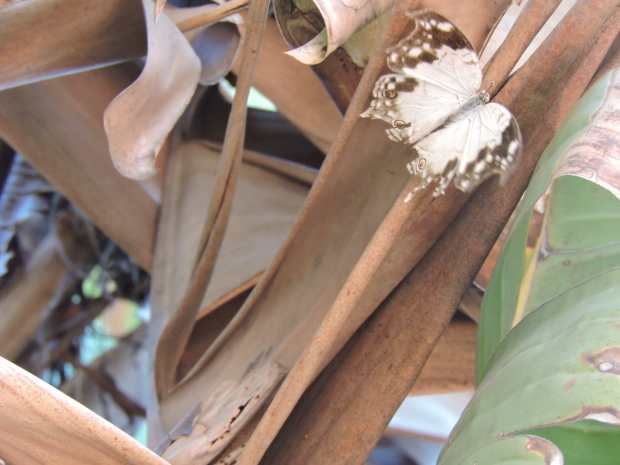
Following on the subject of the earlier post, here you have another cryptic creature for you to find:

dscn9978-copy

It is hard but possible… Below I show it to you.


dscn9976-copy

The fact that its wings were in tatters adds to its camouflage. For obvious reasons it did not open its wings very often so it was tricky to get a good shot. However, this is what I could do:

dscn9981-copy

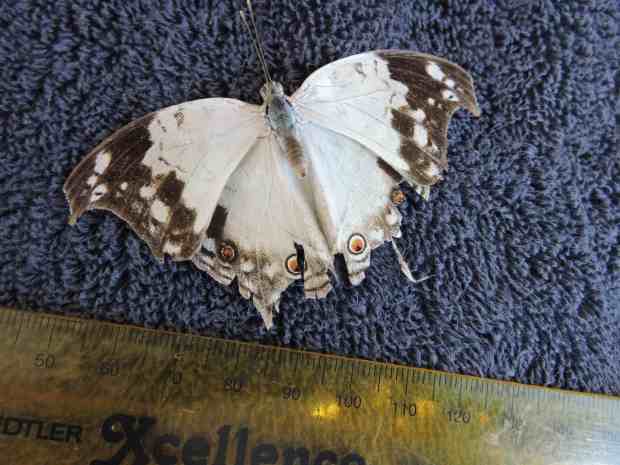
I believe it to be a Clouded mother-of-pearl (Protogoniomorpha anacardi nebulosa).

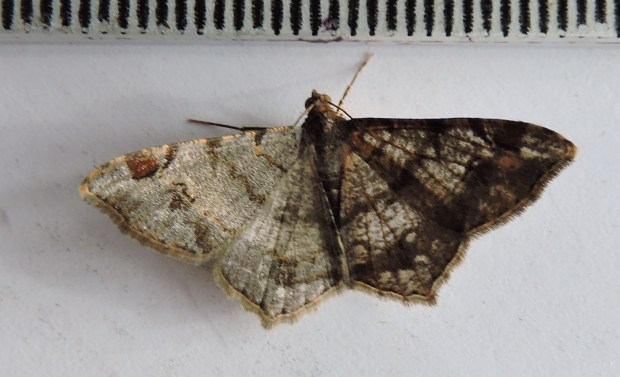
After a few attempts and with patience I caught it and, after having it inside the house for a while, eventually it landed on a towel and it settled down. With the patience I do not have and moving very slowly, I managed to get a better picture with a ruler! Wingspan about 7 cm.

dscn9985-copy

It disappeared soon after.