Bush stories and anecdotes

The heart of the blog, where I present observations, accounts, funny stories, etc.

San paintings

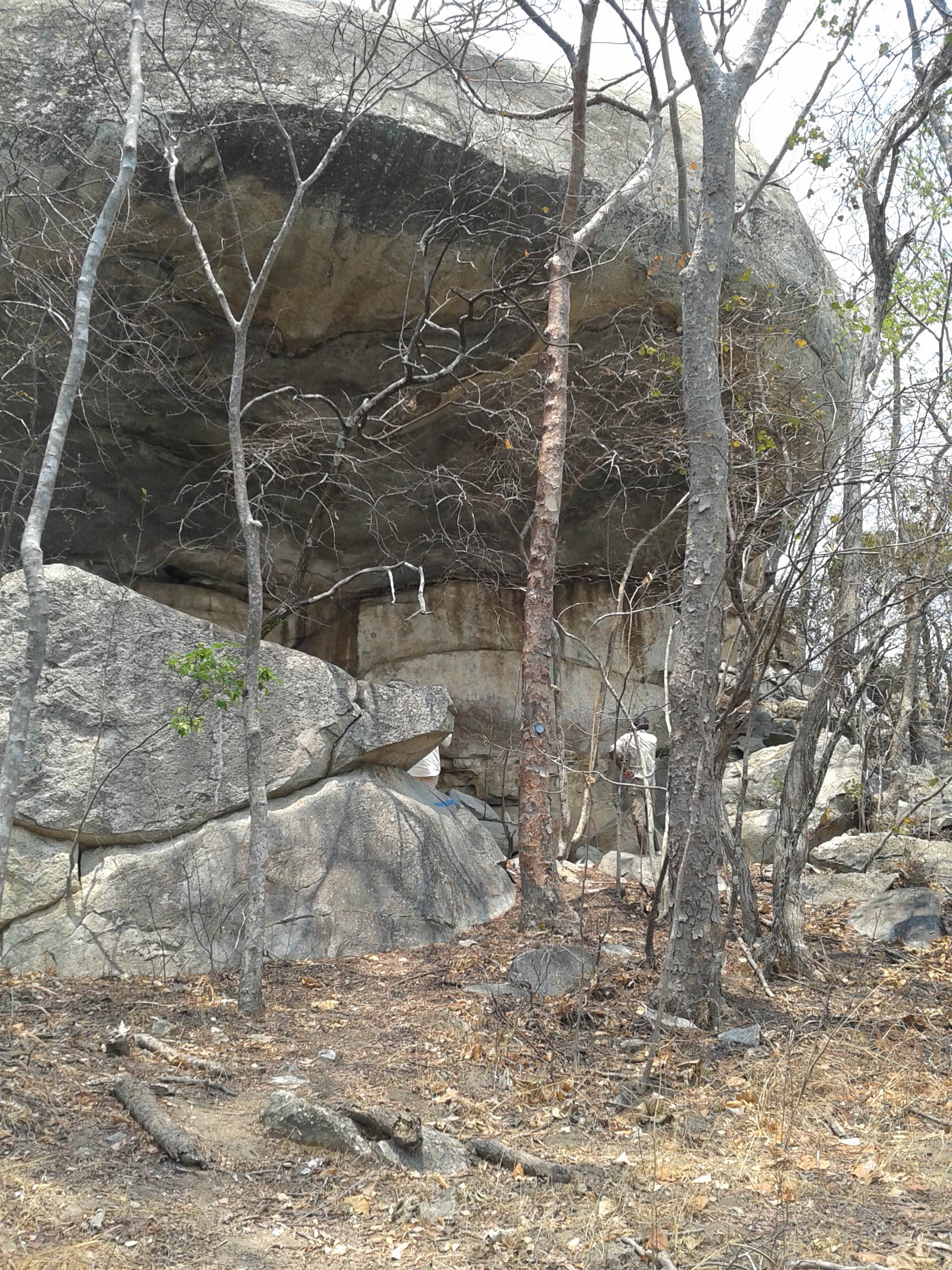
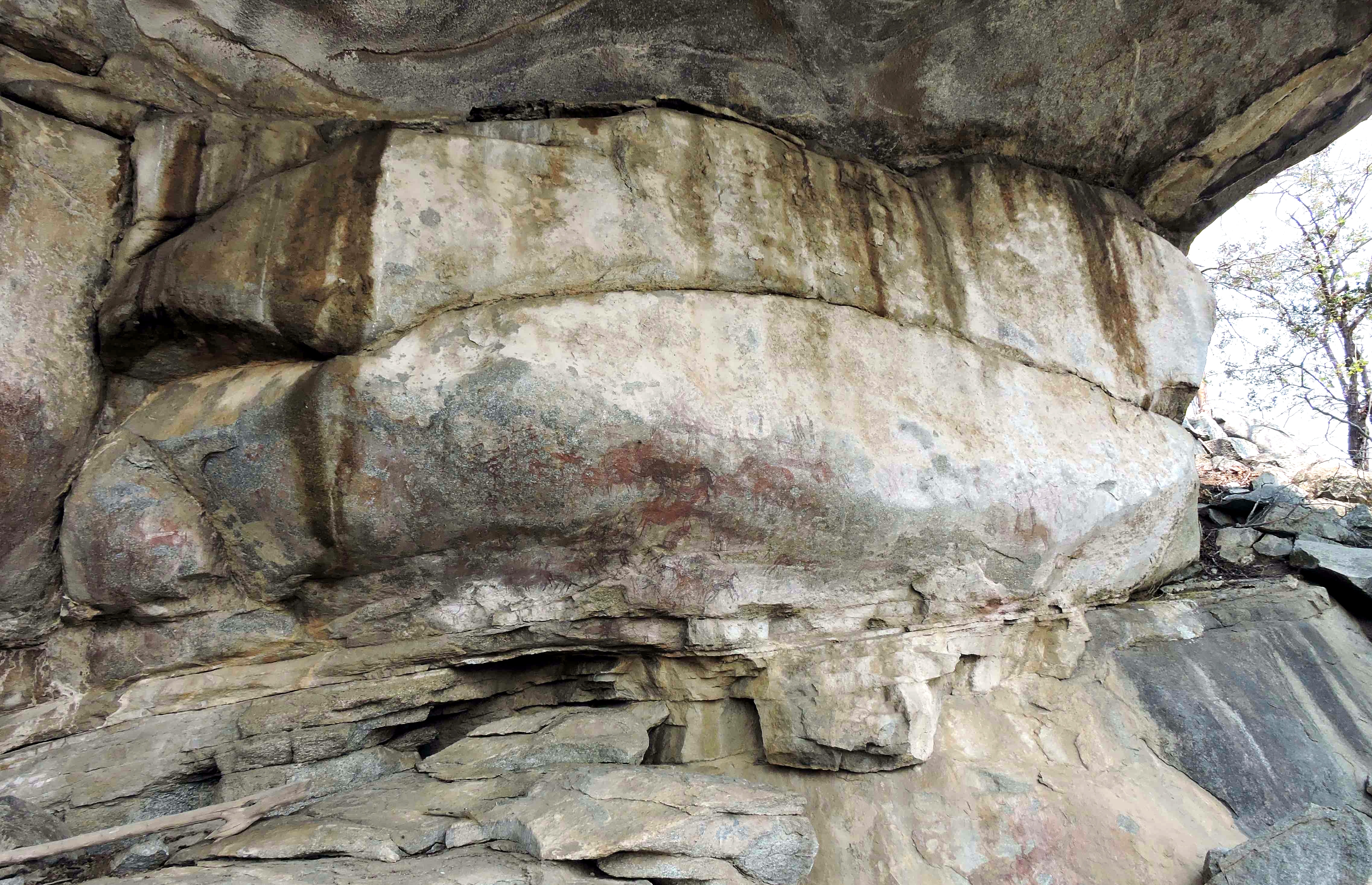
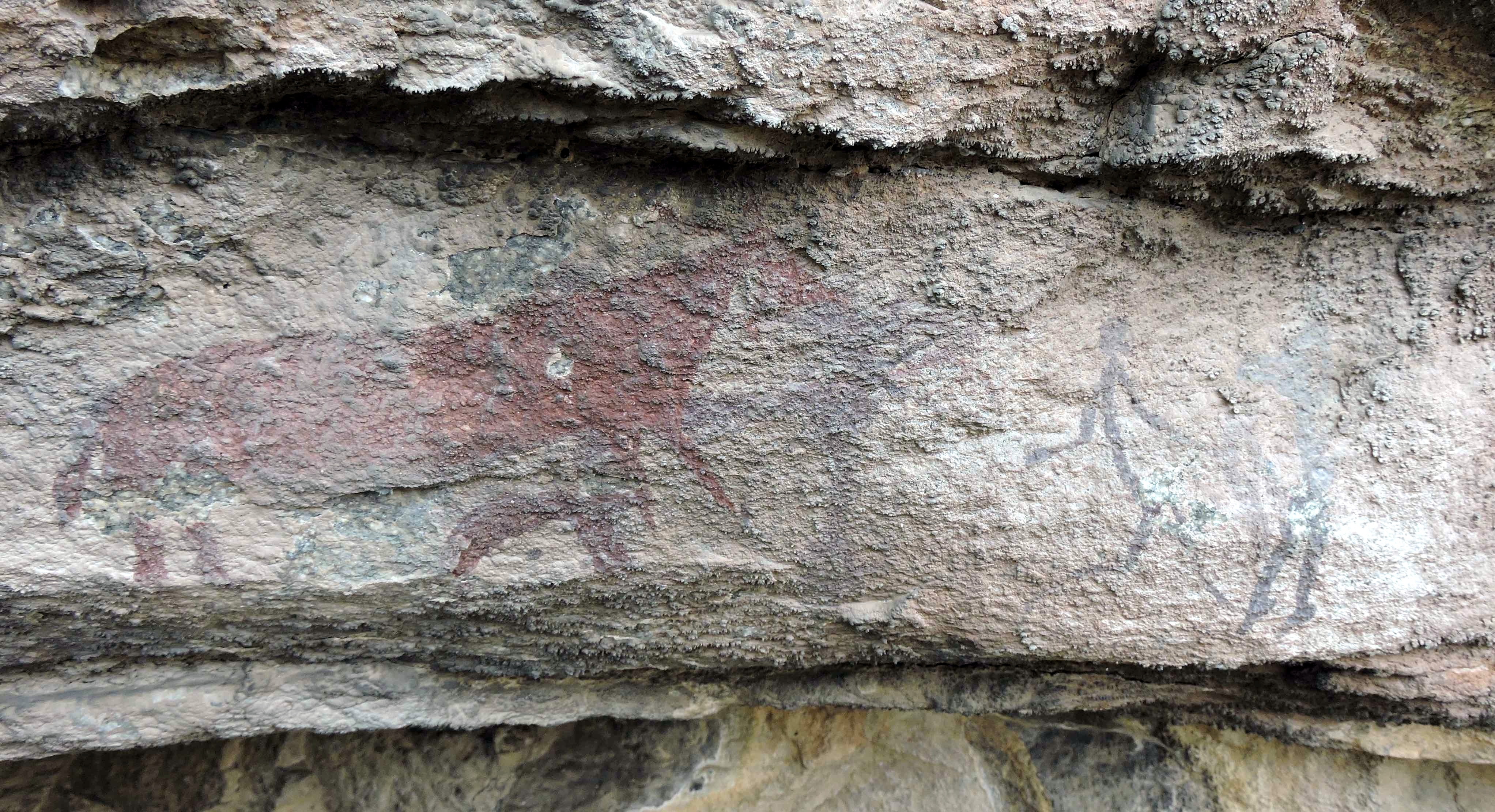
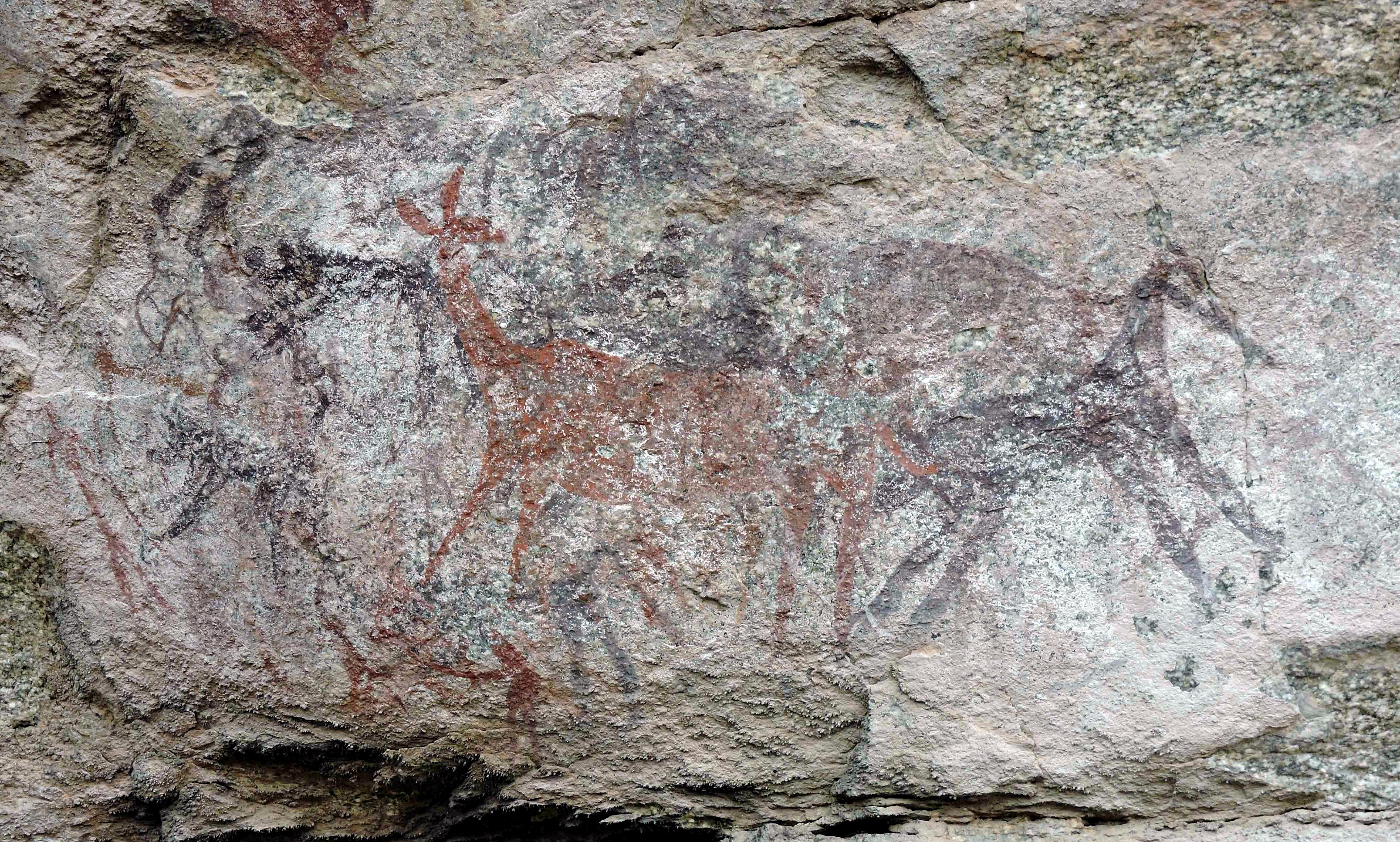
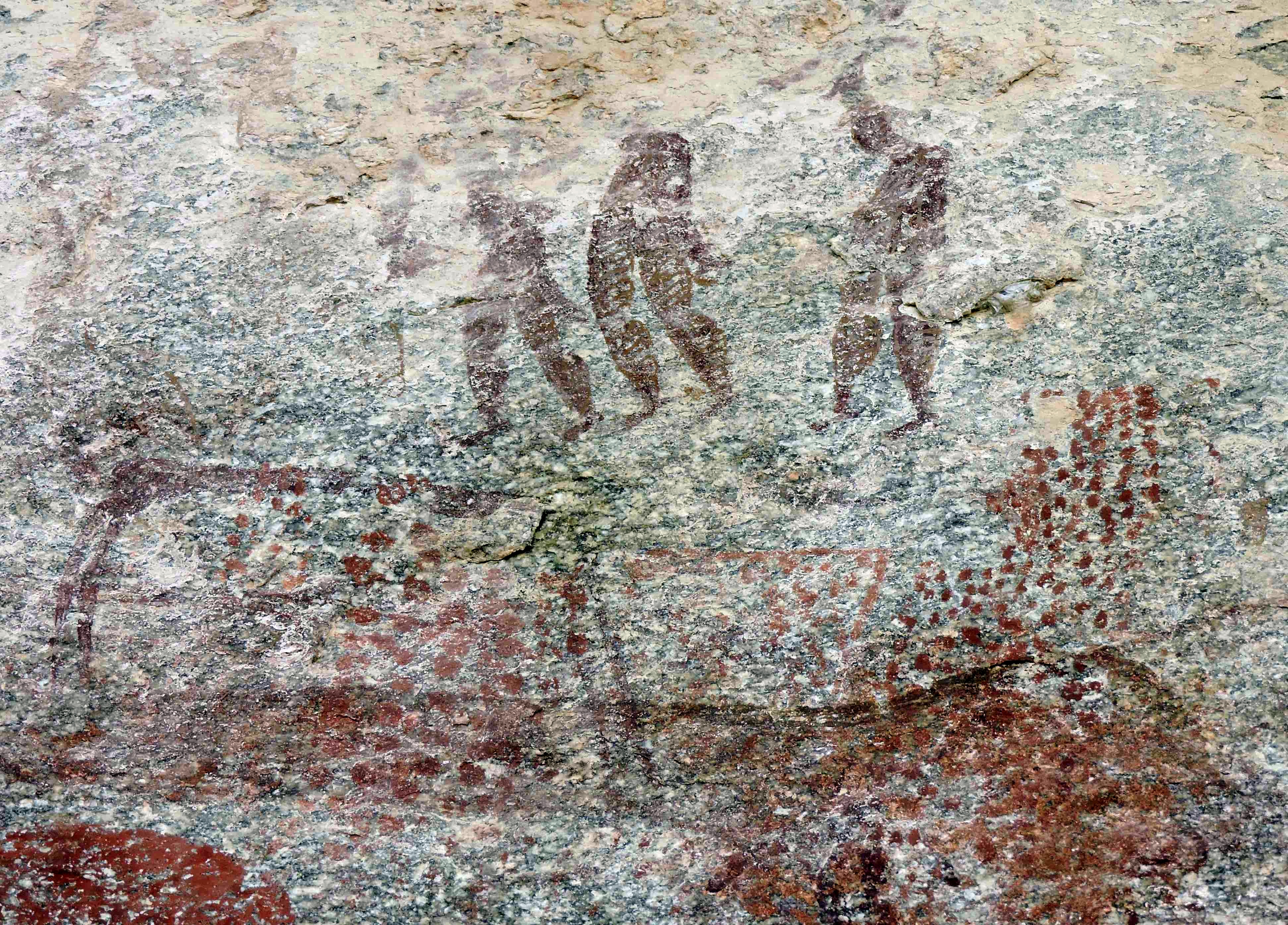
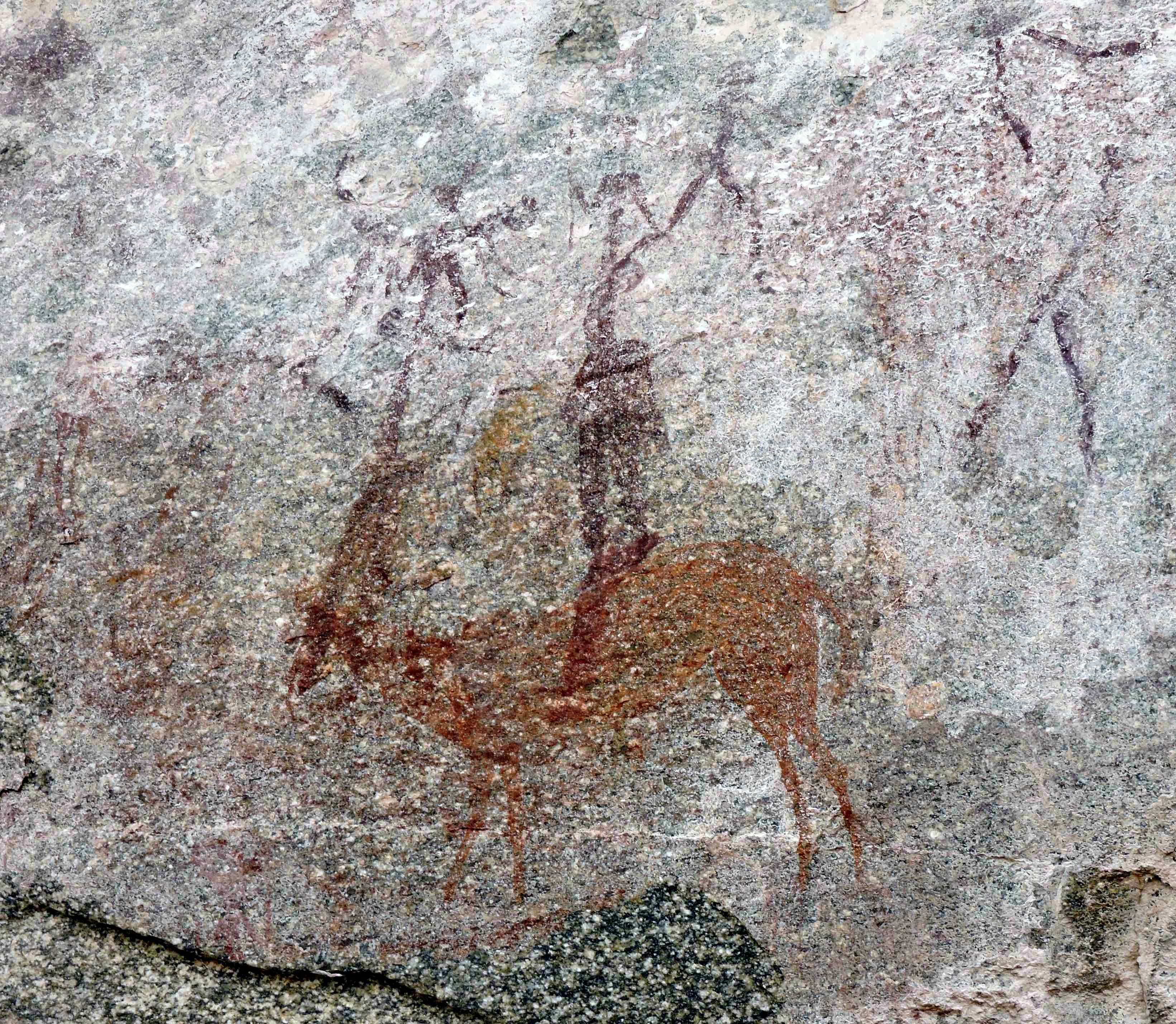
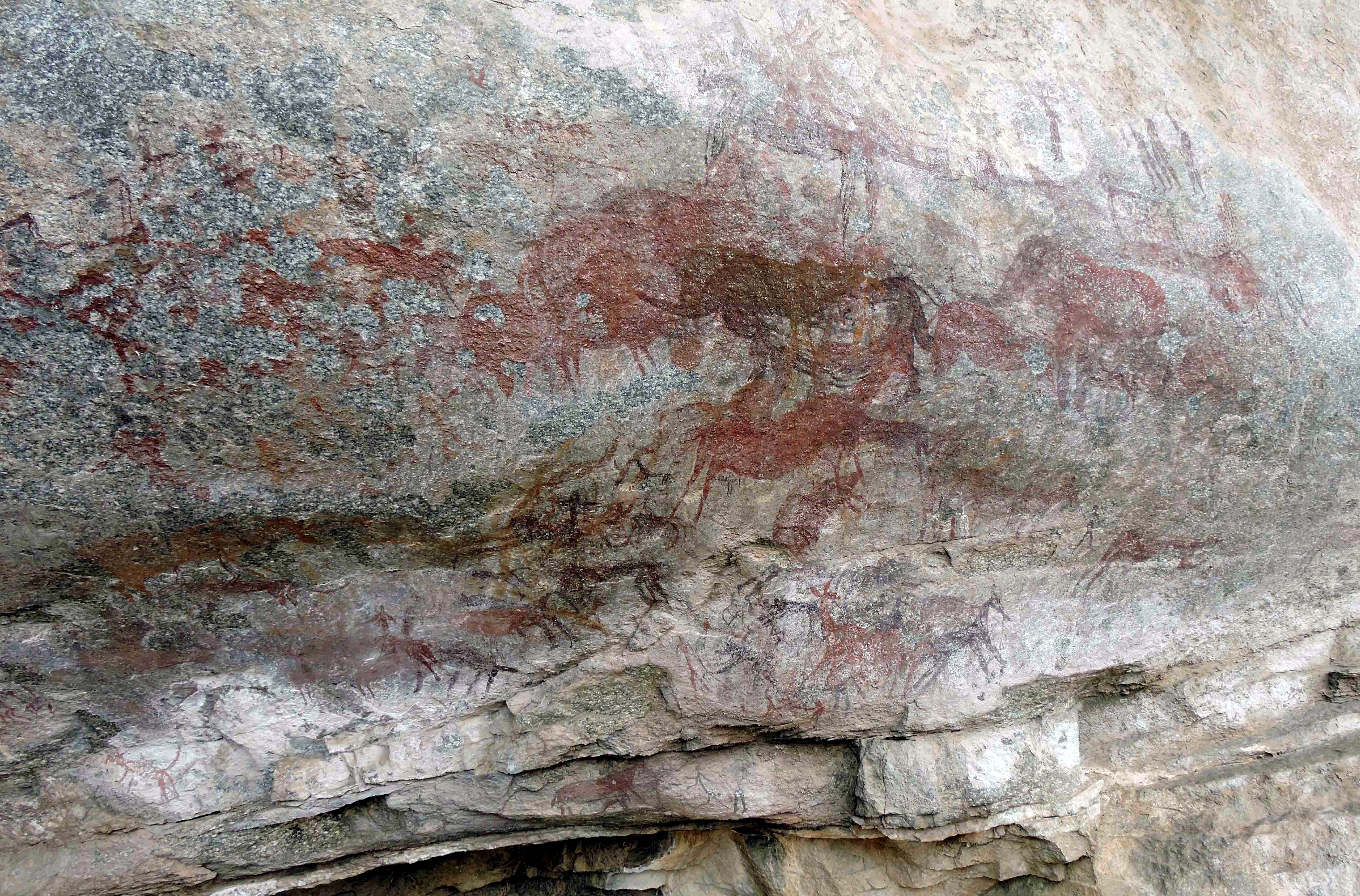
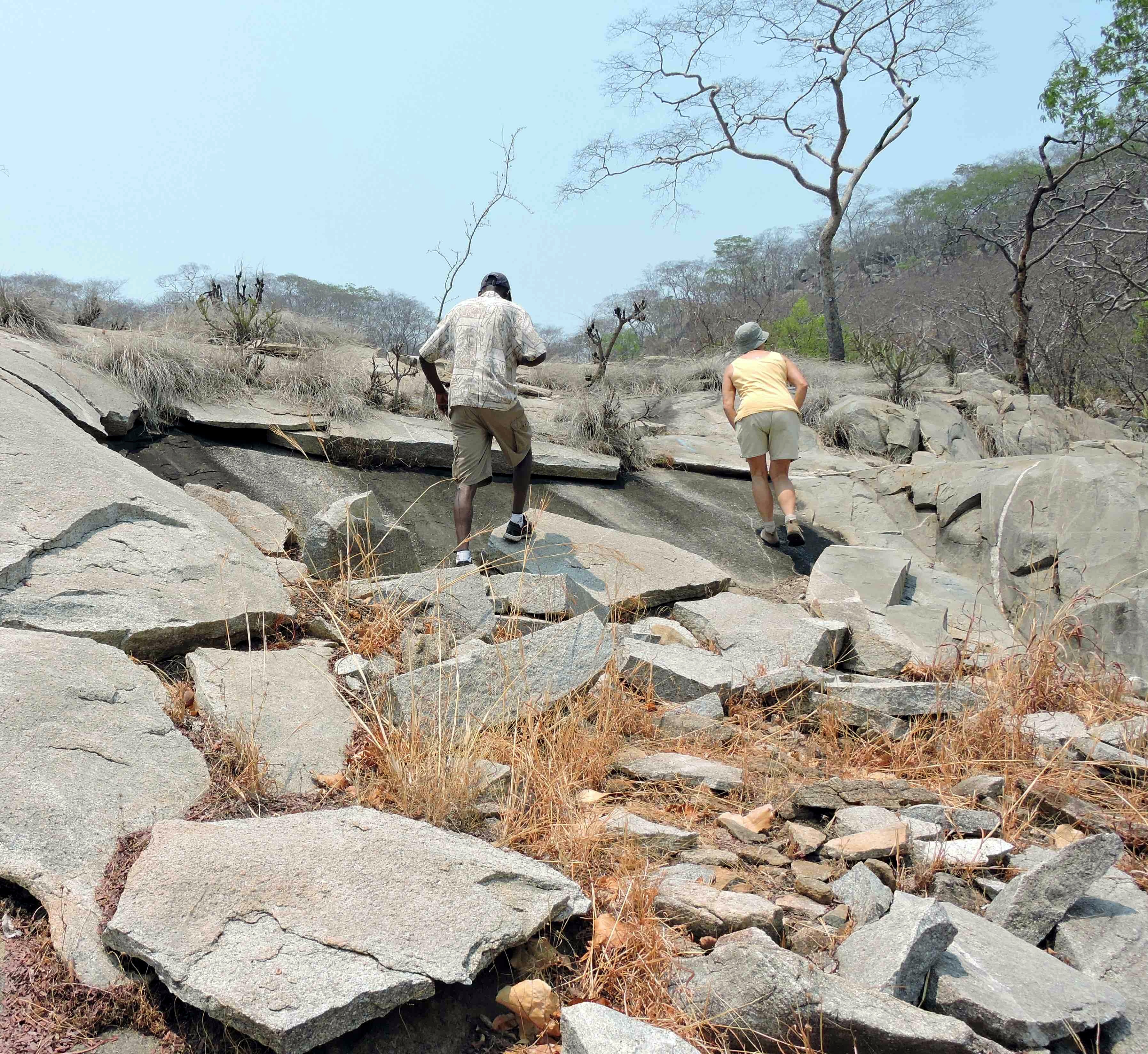
During our visit to Hippo Pools, apart from the eagle nest and baobab, we also visited one of the sites where San paintings had been found some time ago. Although I searched the web for some specialist information on these particular paintings, I failed. However, I present you with a gallery where I insert my comments on what I saw and you may see things in a different way.

The San always chose hard places for their art!

The San always chose hard places for their art!

Finally we spotted the rock ledge.

Finally we spotted the rock ledge.

A close-up of the "canvas".

A close-up of the “canvas”.

DSCN8140 copy

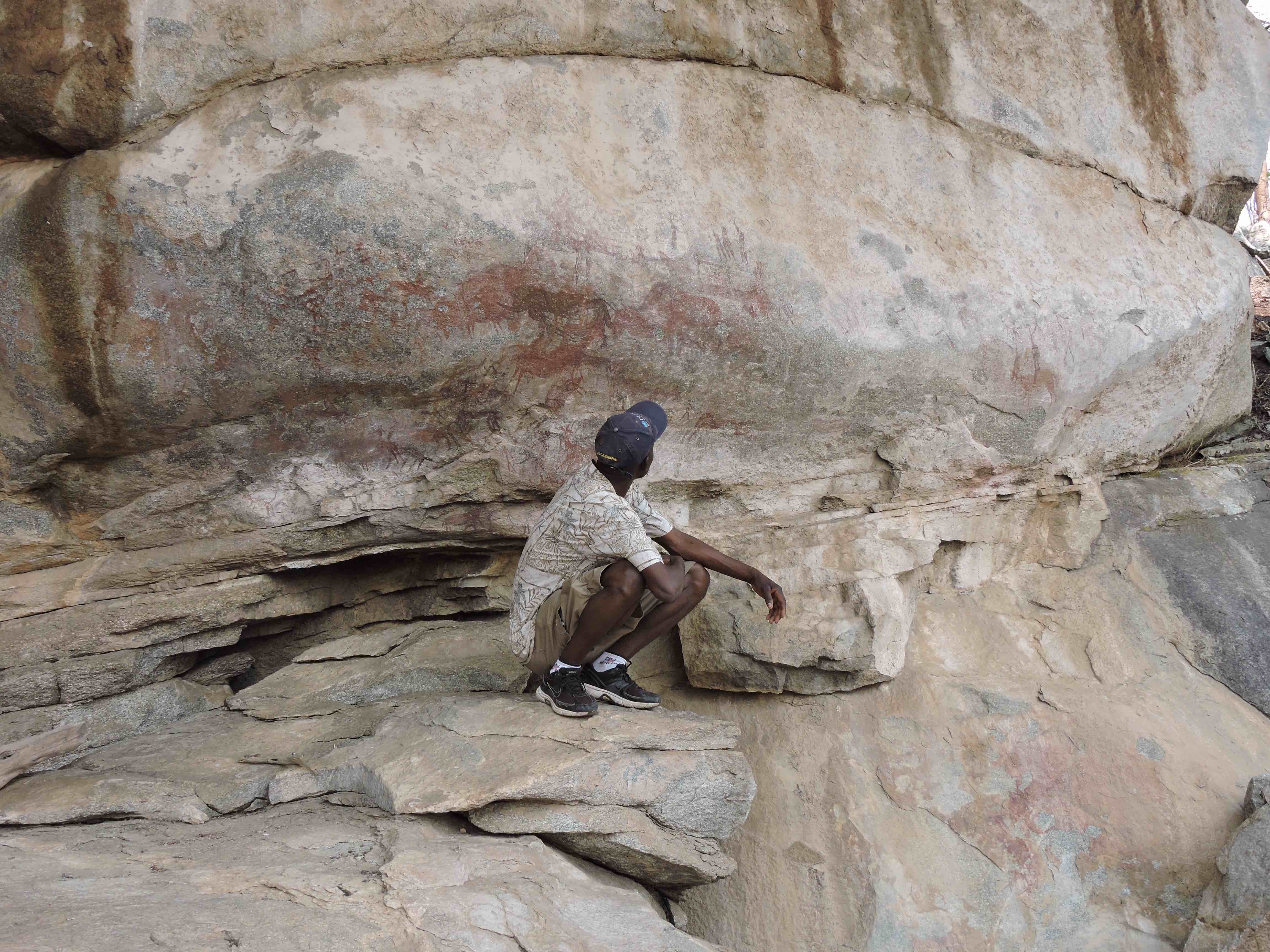
Stephen, our assistant and now safari companion, watches the paintings.

DSCN8139 copy

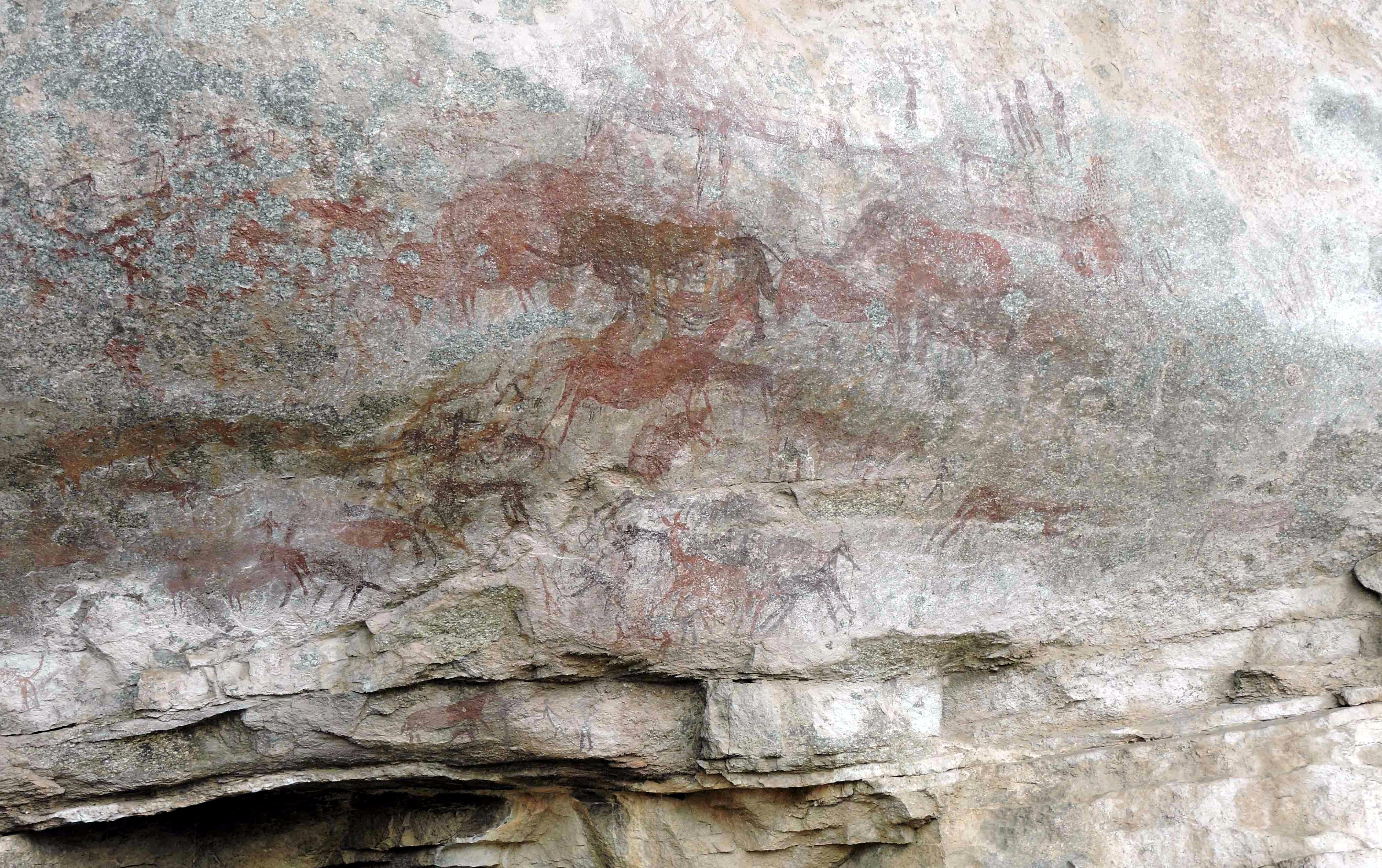
An overall view of the paintings. Unfortunately some damage has taken place.

Eland and hunting party?

Eland and hunting party?

DSCN8147 copy

Antelopes and hunters.

DSCN8149 copy

A view of their camp?

Although it seems that there is a rider on the antelope this is probably the way the painting of the hunters and the animal was done.

Although it seems that there is a rider on the antelope this is probably the way the painting of the hunters and the animal was done.

DSCN8154 copy

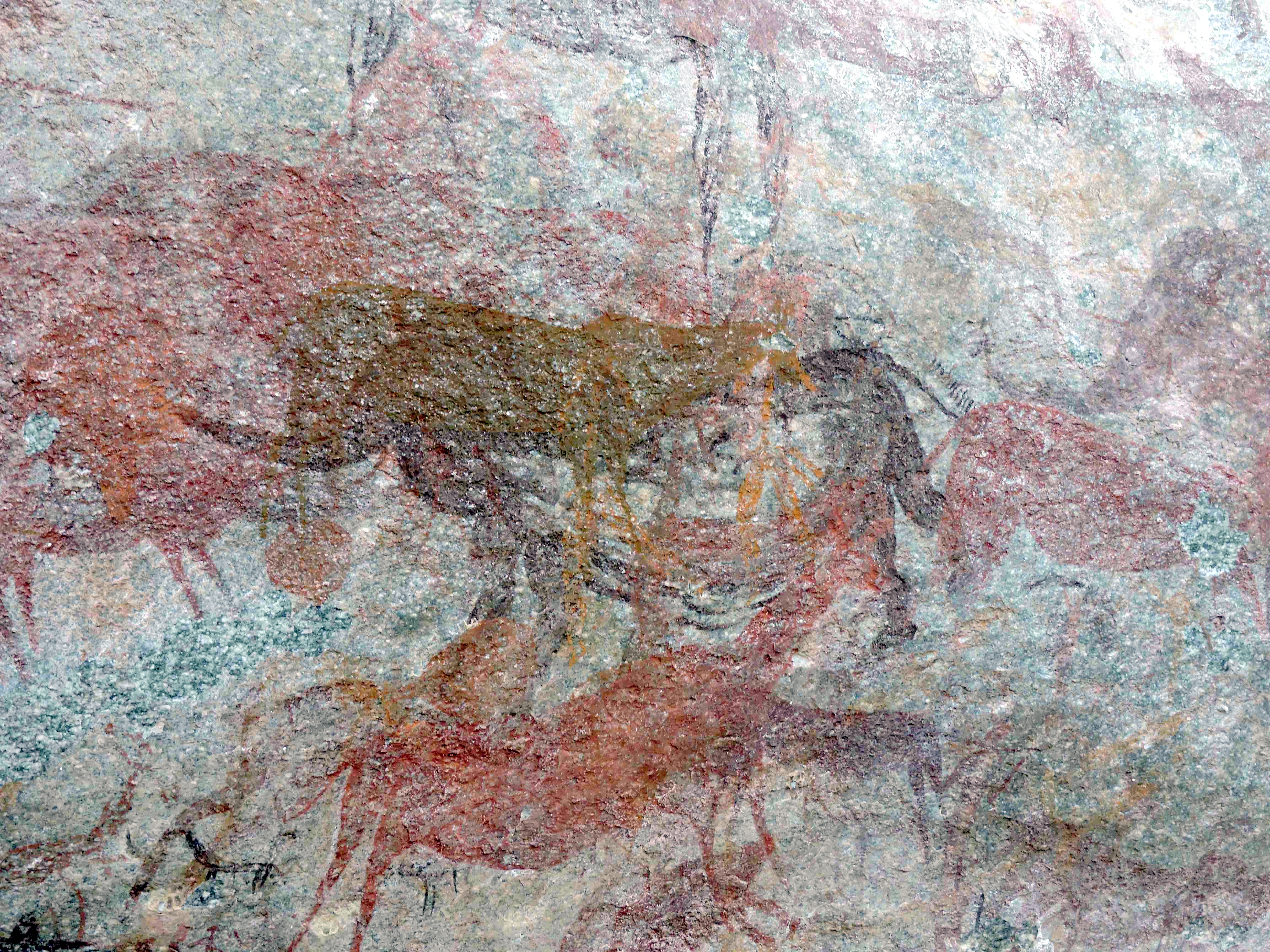
On first look this seem to depict a rhino looking towards the left (ochre colour) and probably an elephant behind (reddish).

DSCN8153 copy

A close-up of the “action”. Although an ochre-coloured rhino could be seen looking left, its horn might be the tail of a lion/leopard(?) that has jumped on an animal with the head looking towards the right?

20151009_111741 copy

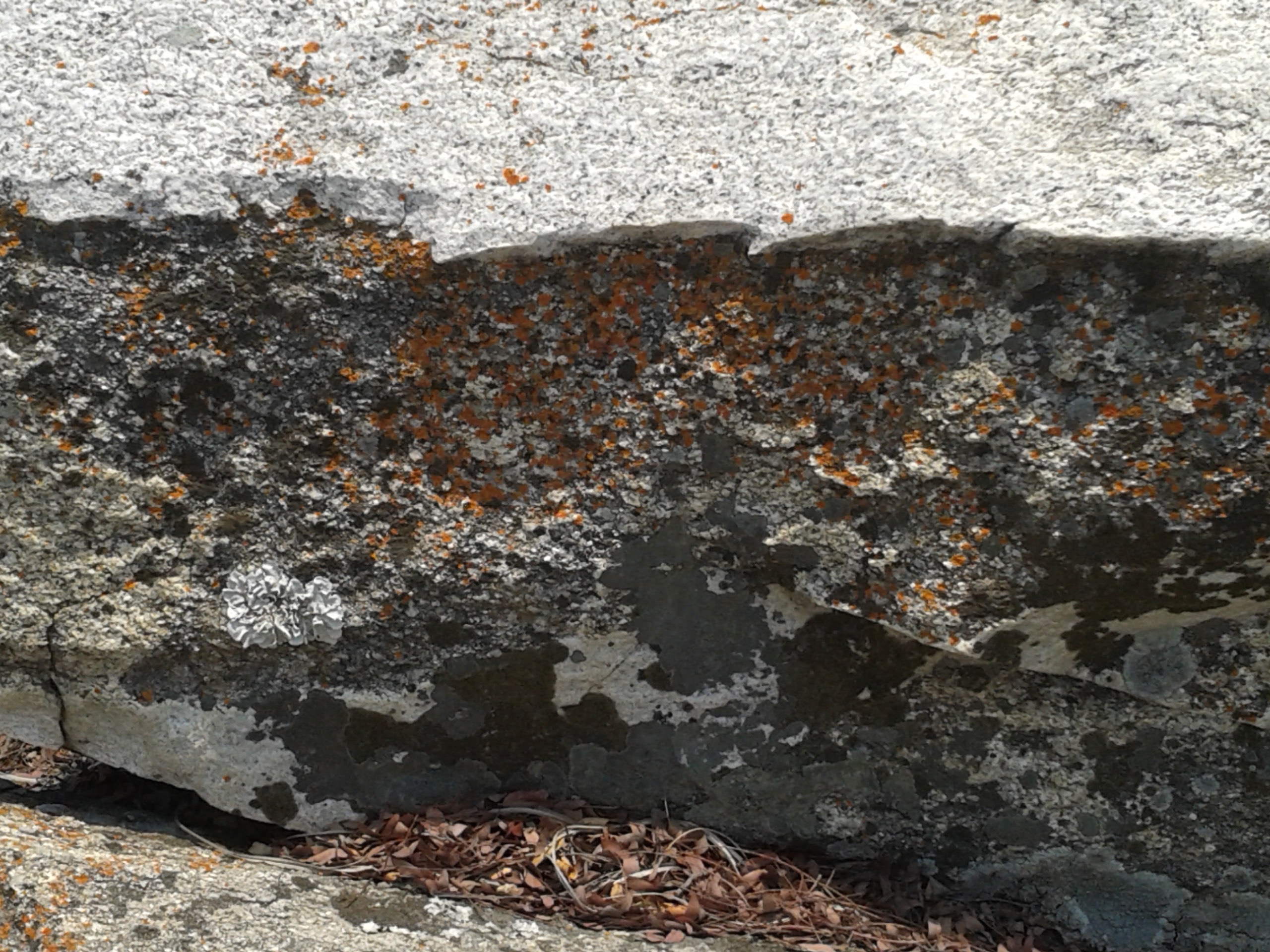
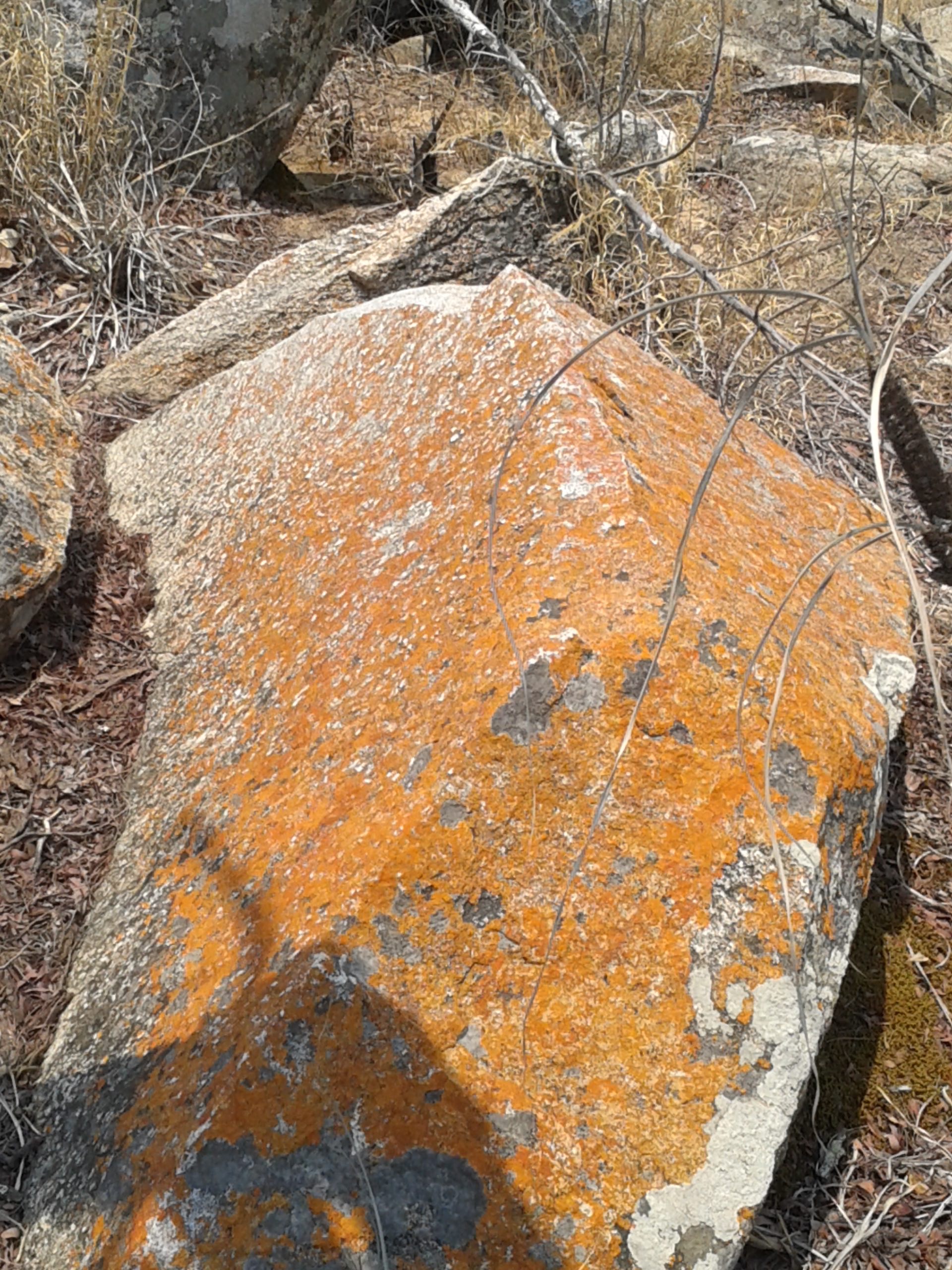
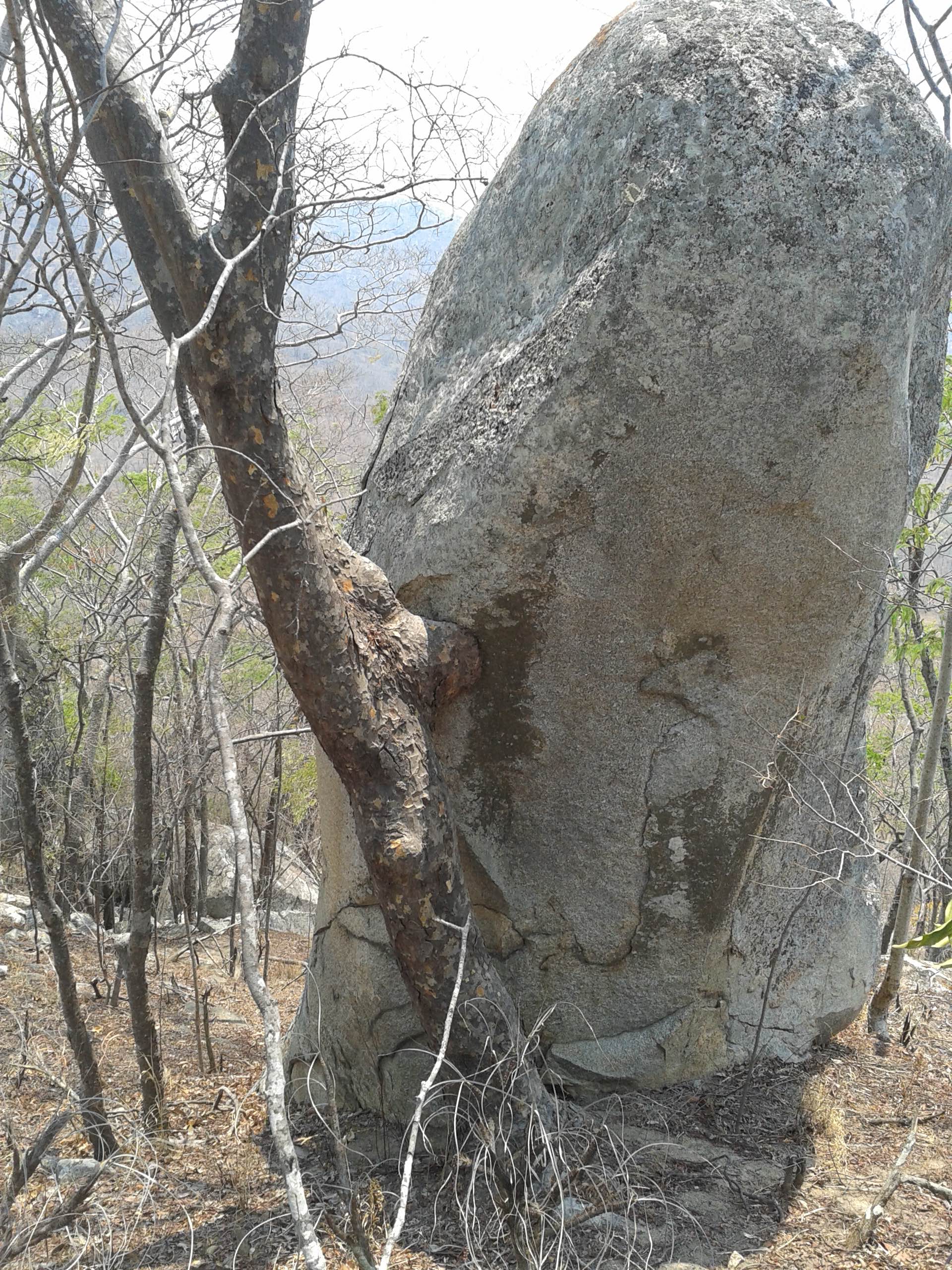
On the way back we found some of Nature’s own art!

20151009_111756 copy

More natural art.

20151009_111426 copy

The rock or the tree? We were not sure what was holding what?

DSCN8167 copy

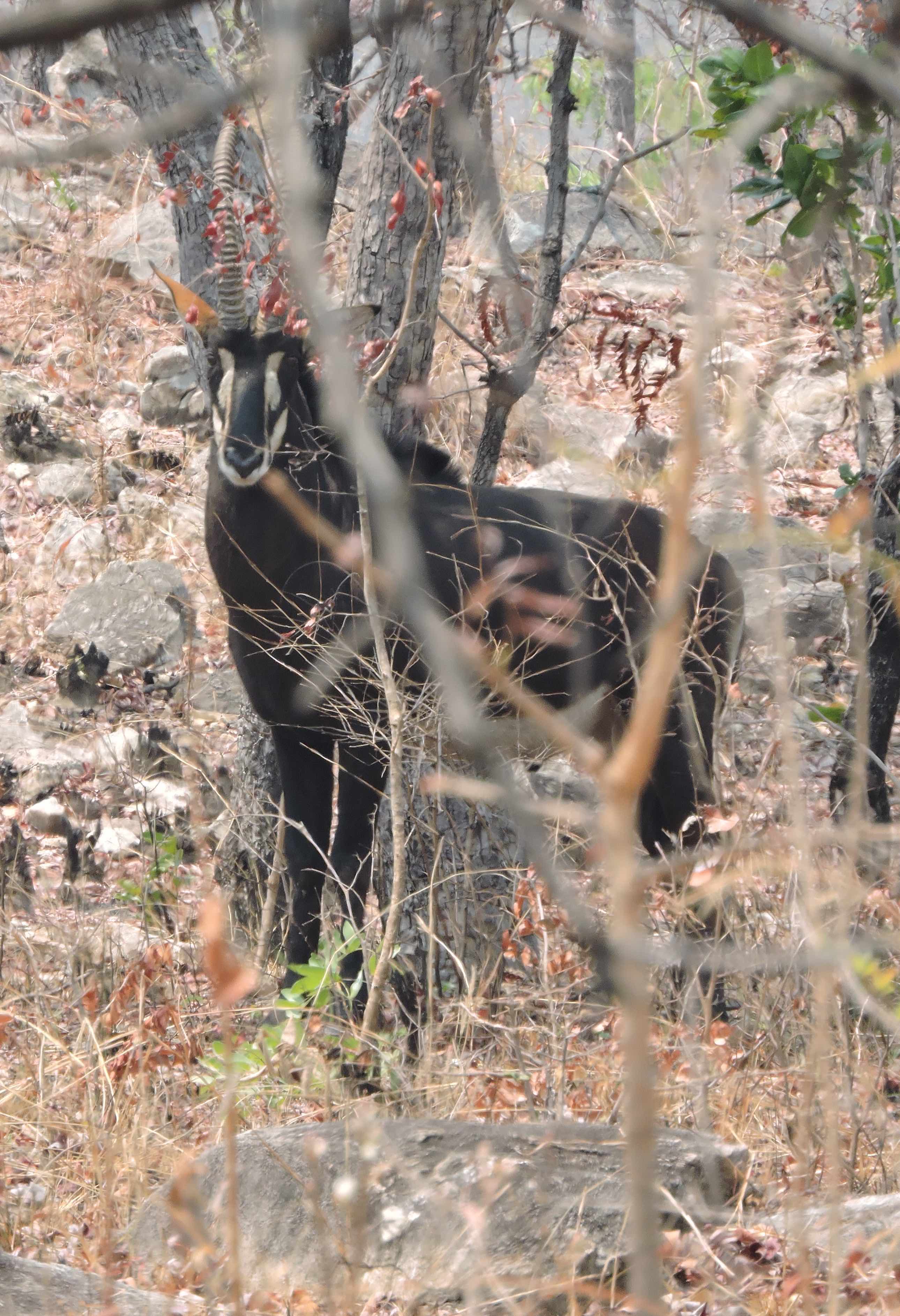
A descendant from those depicted in the paintings watched us all the time from the cover of the bundu.

Hippo Pools, Zimbabwe, October 2015.

The Eagle and the Baobab

Keep reading, this is not a children’s story, despite the title!

I knew this project would be difficult from the beginning as war movies dealing with eagles show a lot of hard work and heavy casualties!

In earlier visits to Hippo Pools Wilderness camp[1] ( and even earlier ones) I learnt that the camp offers a number of attractions for those feeling like trekking. Among these are old ruins, San paintings, several viewpoints a large baobab and various eagle nests. I was aware that both Verreaux’s and Crowned eagles had nested nearby for many years but I had not seen them before.

Aware of this possibility on arrival I enquired about the eagles’ and I was informed that there was also one of an African Hawk Eagle that had a fledgling. I expressed my interest on a walk to the site but later on I was informed -to my regret- that the bird was no longer where it had been seen before. However, before I could feel too bad, I was told that an egg had been spotted at the Crown’s eagle nest and that we could go there instead! I immediately booked a walk for the following morning.

The walking party.

The walking party.

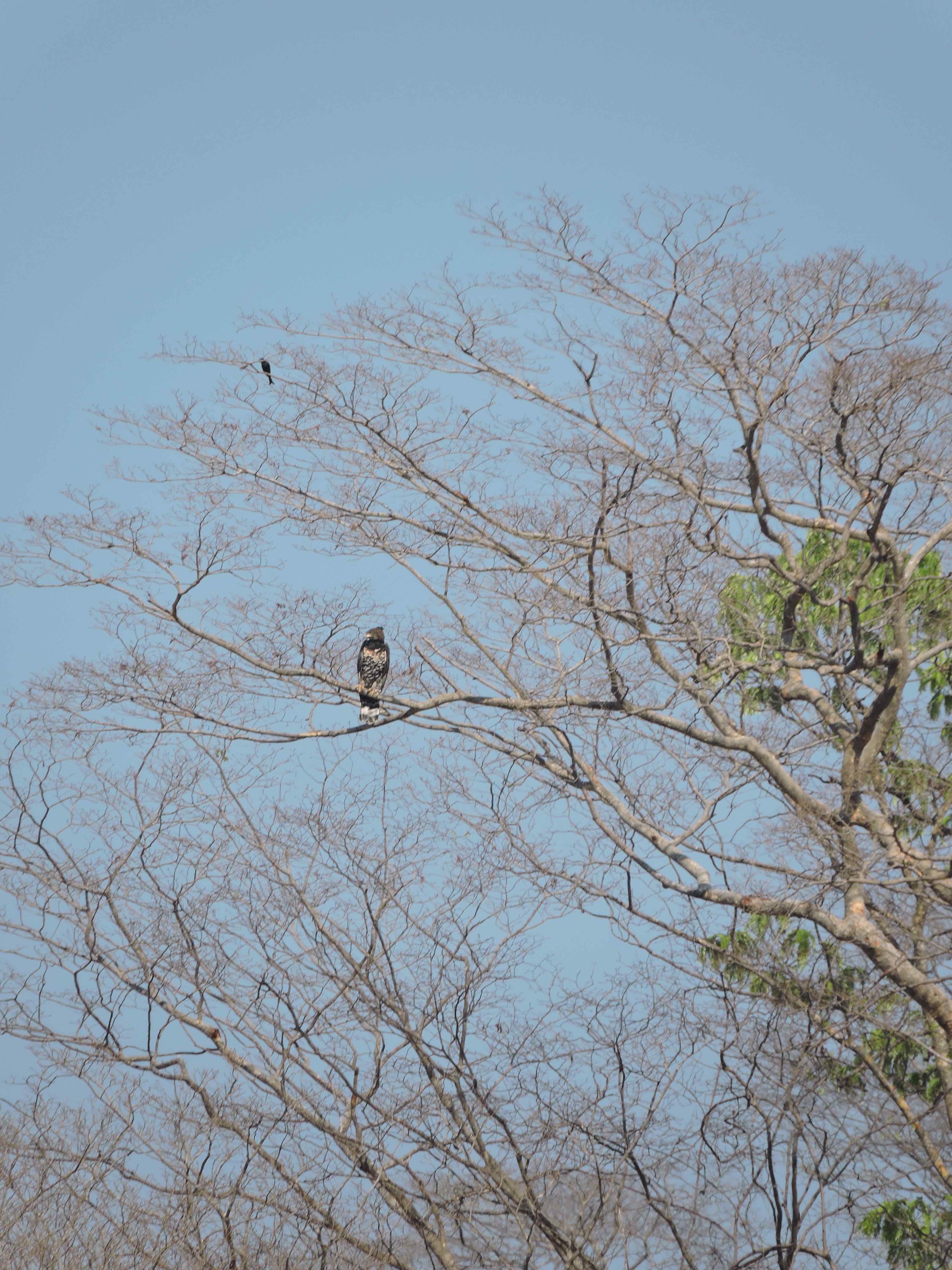
We left about 07:00 hours and walked for about one and one half hours over rather broken terrain and mainly uphill. After going for about an hour we spotted one of the eagles perched a long way away. However, we were advised that the nest was not in that direction but up the hill! It was clearly one of the pair, probably the male eagle scouting for food as these eagles are special in that the male often feeds the female while she incubates.

The first eagle.
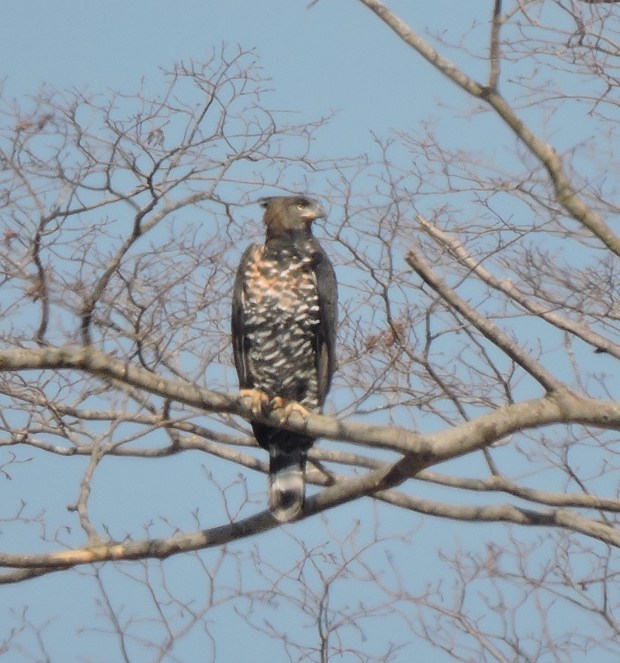
The first eagle.

Close-up of the first eagle.

Close-up of the first eagle.

It should be noted that these eagles are not common and rather secretive and as Roberts VII Multimedia Birds of Southern Africa puts it, “Normally chooses the tallest canopy tree in which to build its large stick platform nest”. Luckily I did not know this while our trek was in progress as I was having additional difficulties with my recently acquired hiking shoes that were destroying my toes!
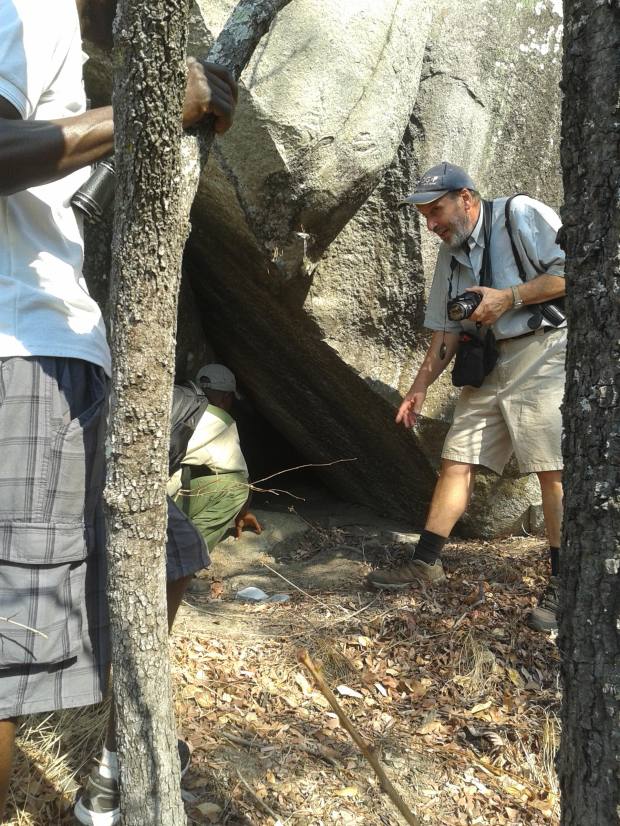
Examining an interesting cave en route to the nest.

Examining an interesting cave en route to the nest.

After another thirty minutes of steep uphill walk, we got to the general area where the nest was. Although I could not yet see it, my companions did and they got excited about what they saw. Eventually I spotted the nest as well as the second eagle perched about one metre above it.

Getting close to the nest meant that our up hill walk changed into a steep climb until we managed to get to a large rock above the nest. From this really great vantage point we could appreciate the situation and observe. We sat down and remained quiet while my toes throbbed, also quietly…
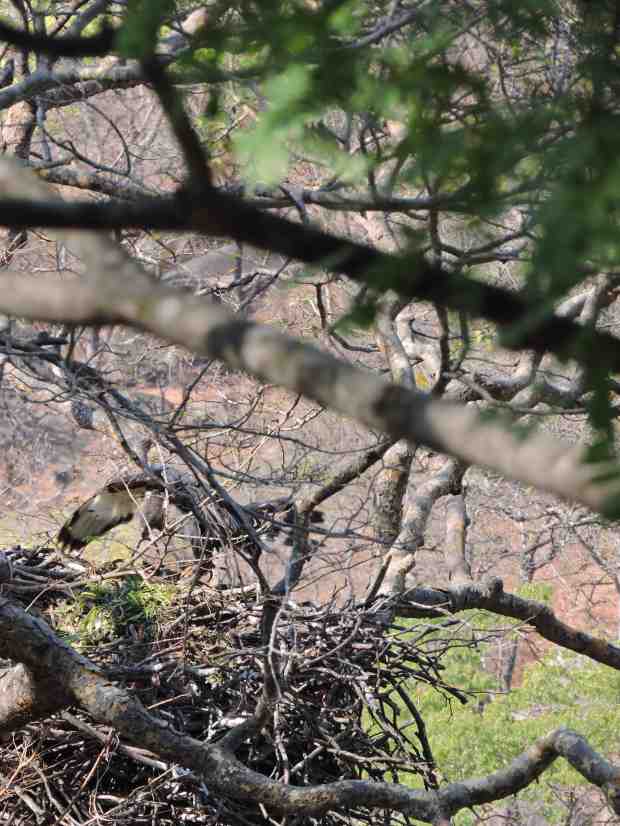
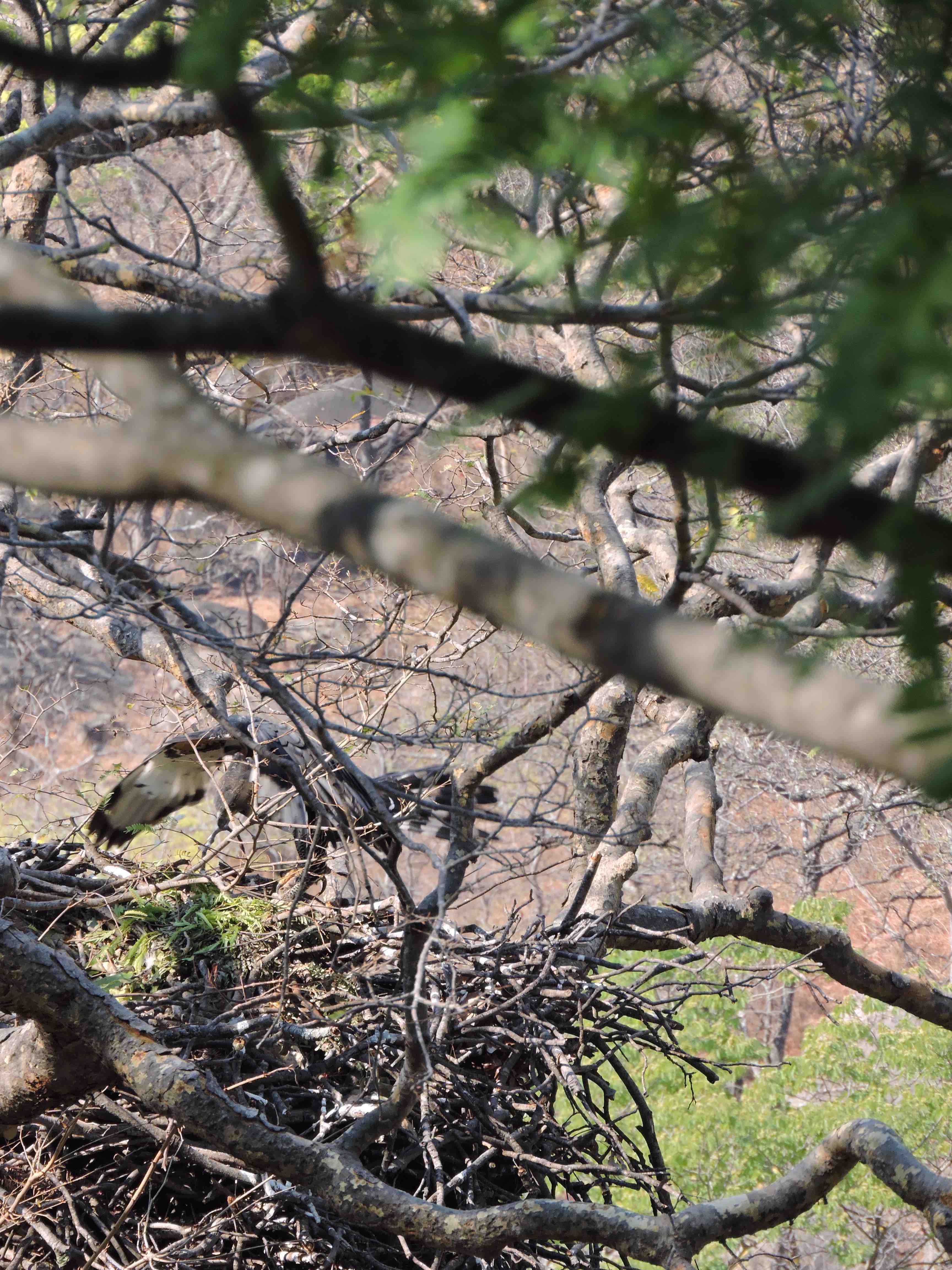
The return of the eagle to the nest and egg moving.

The return of the eagle to the nest and egg moving.

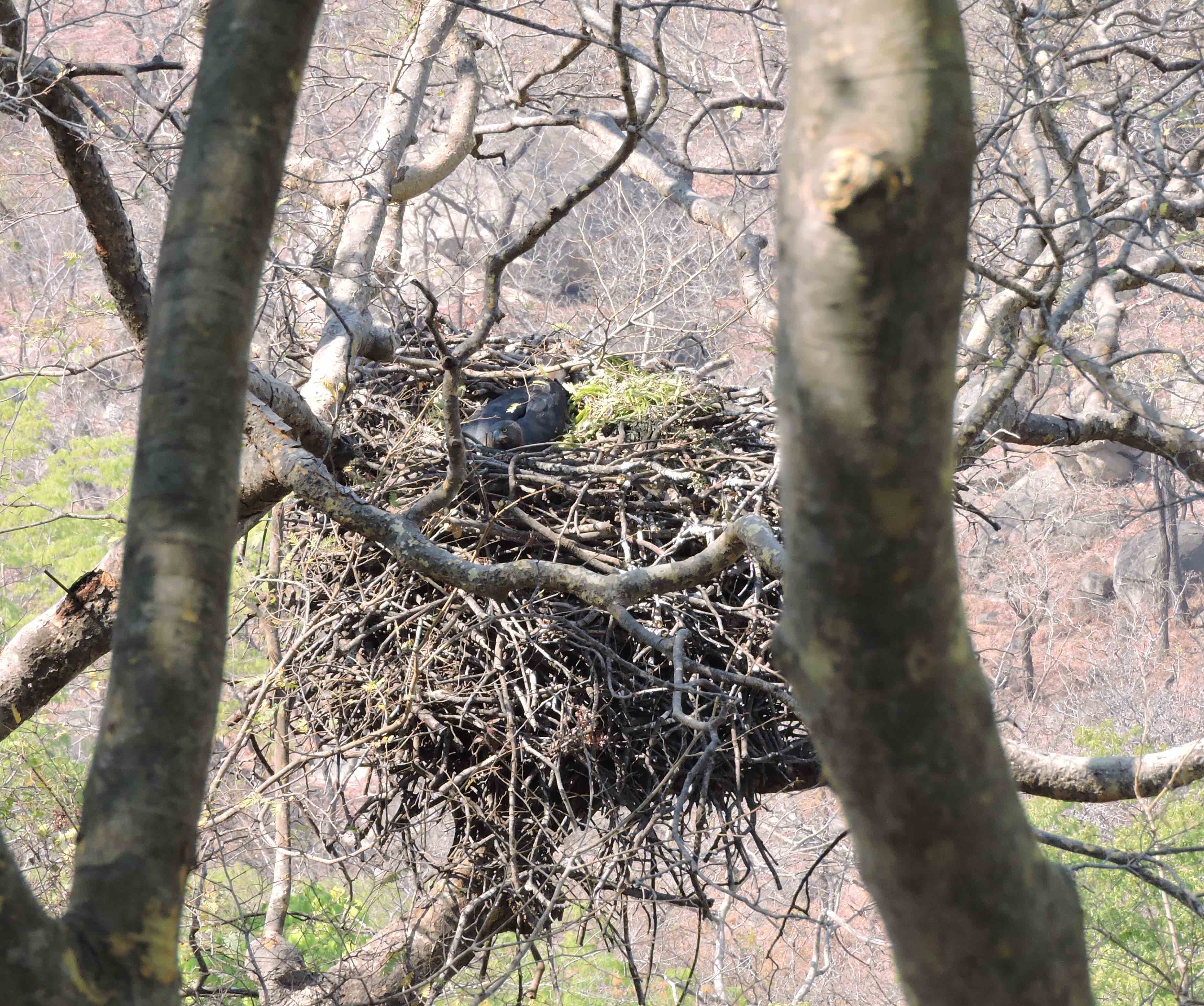
The nest was large, much larger than I had anticipated! Clearly it had been there for a number of years and its occupants had made a good job at building it. It must have been about two metres across and at least one and one half metres deep! This was a large nest for the species as Roberts VII Multimedia mentions an average diametre of 1.5-1.8 m with a height of up to 70 cm but old nests -such as this one- can reach up to two to three metres in diametre and three metres in height as the eagles add new material every year.

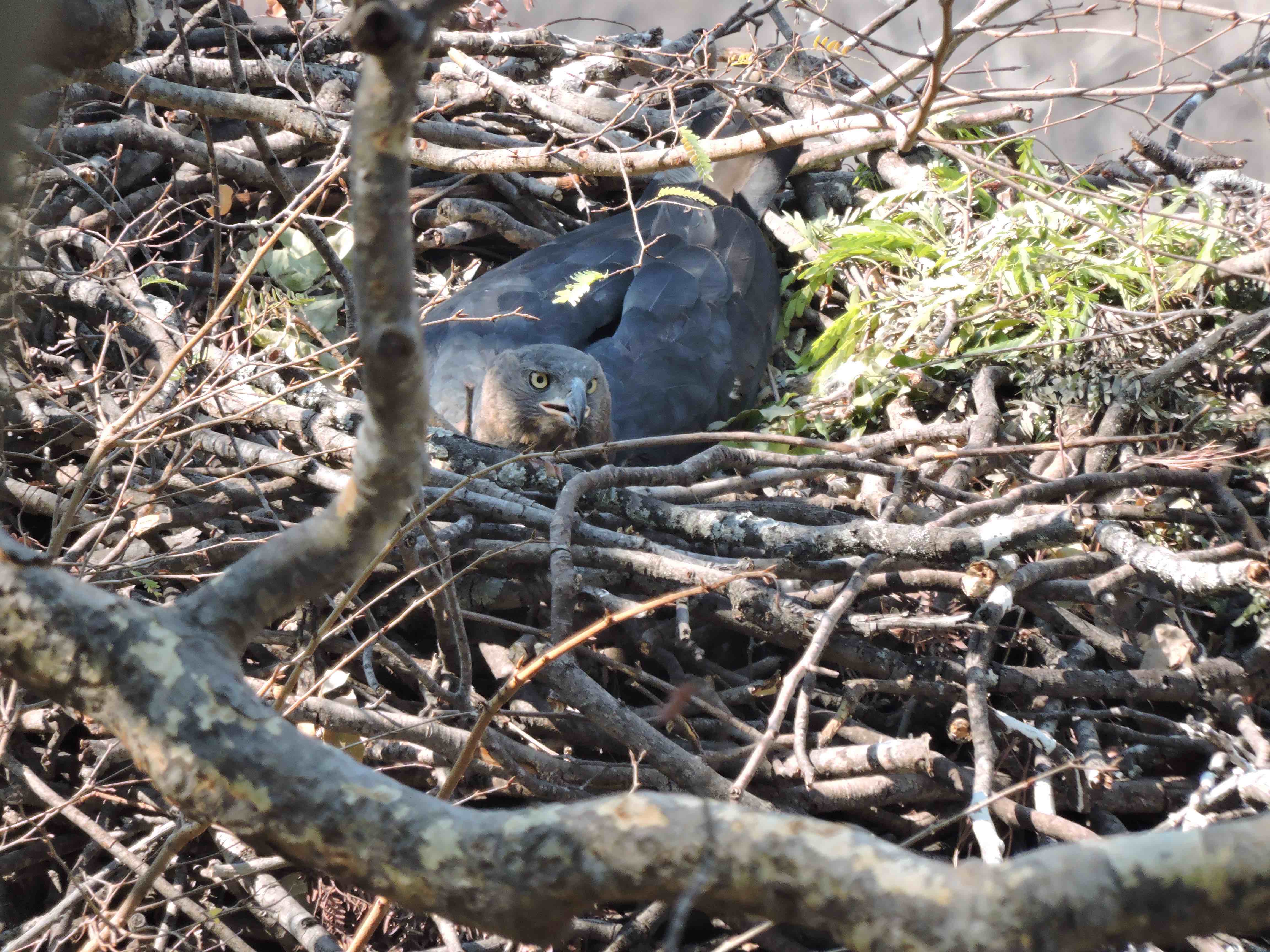
By the time we reached the “watching rock” the eagle was no longer there and we (or rather my companions) could see the egg that, on further observation, turned out to be two! While watching the nest the eagle came back and, after turning the eggs with its beak, literally “sunk” over them and stayed there unmoved by our presence for the rest of the time. Crown eagles are large birds reaching a height of up to 99 cm (tail included) being the fifth longest eagle that exists weighing about 4 kg with a wingspan of 1.50 to 1.80 m, comparatively short for the bird’s bulk. Mainly the female incubates for about 50 days and two eggs laid but normally only one chick goes through as siblicide is the norm. Only after 9-11 weeks the new bird is fully feathered and able to leave nest for nearby branches at 110-115 days. Despite its large size, the bird was truly dwarfed by its nest!
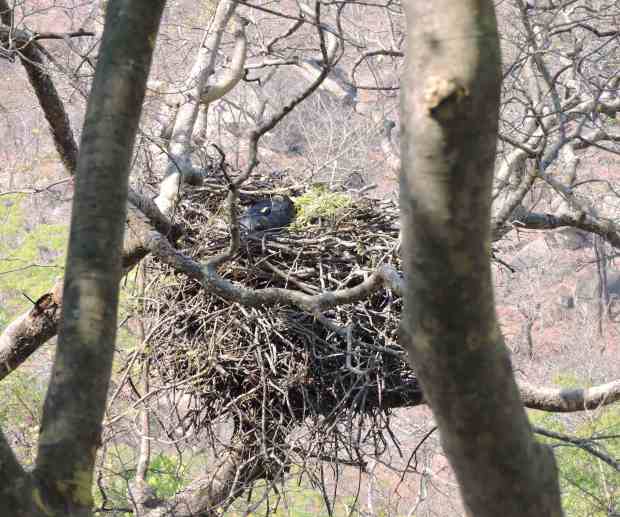
The eagle "sunk" in the nest.

The eagle “sunk” in the nest.

DSCN8074 copy

Over 95 per cent of this eagle’s prey are mammals and they have a reputation for being great fliers and being able to take off vertically inside the forest. I was wrong in thinking that they fed mainly on monkeys, as these mammals are only 7 per cent of its diet. Their usual prey are hyraxes and small/young antelope (65 per cent).

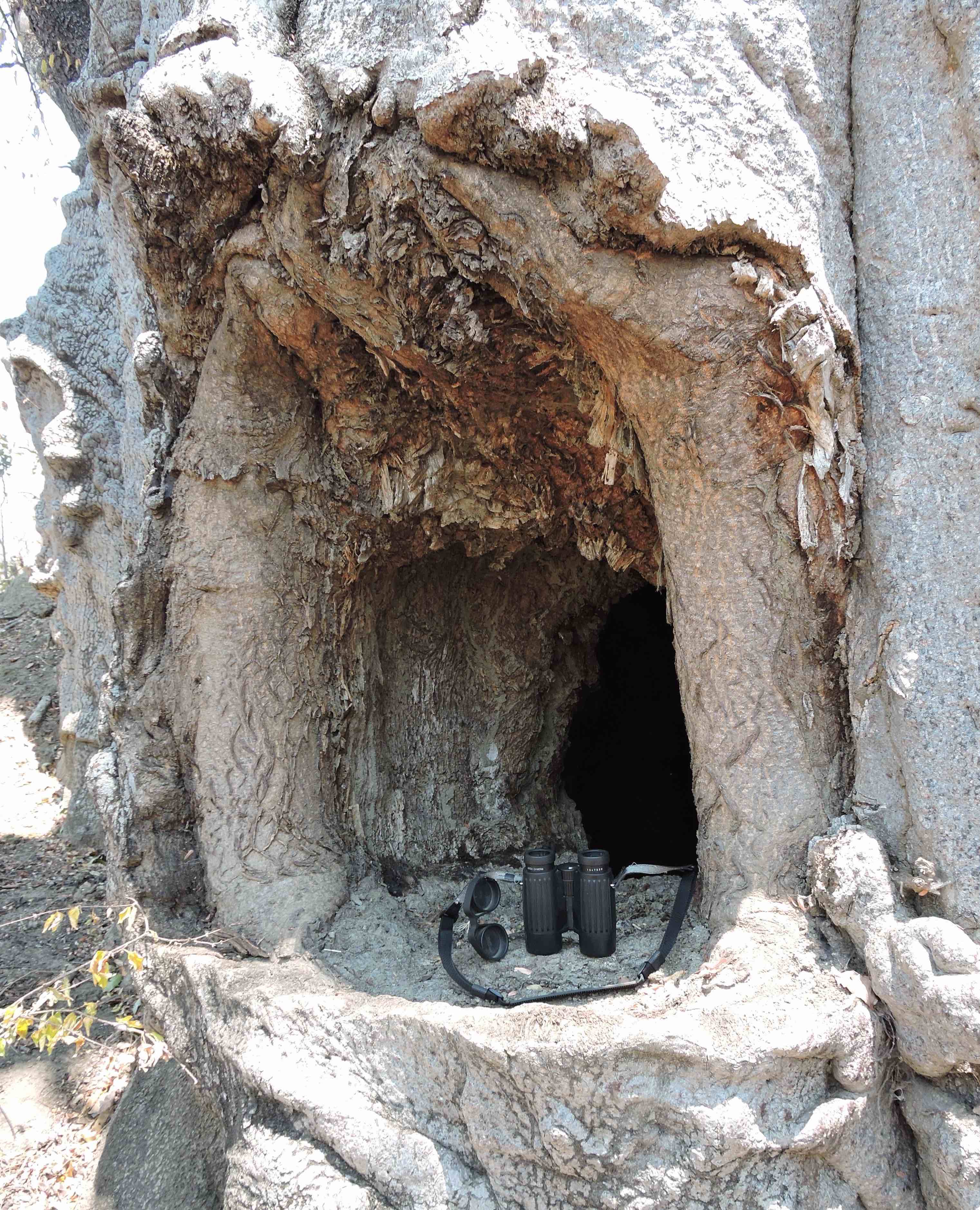
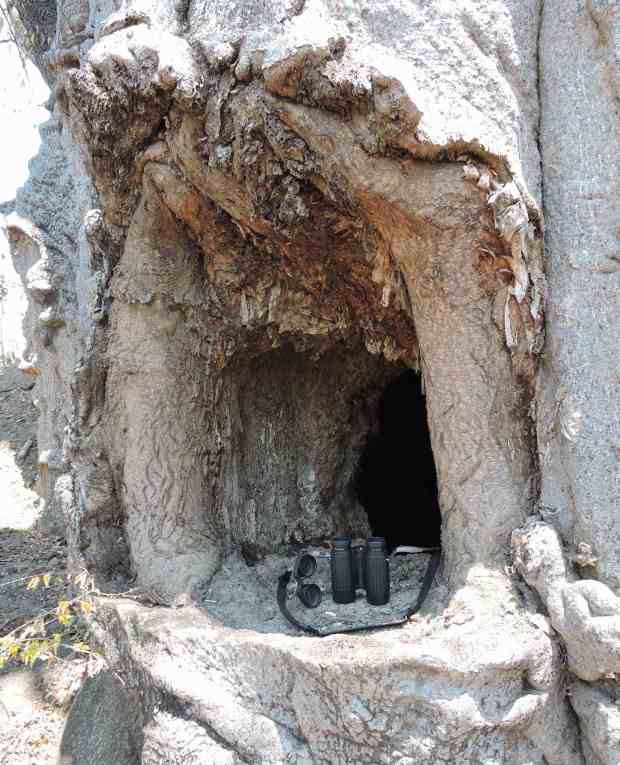
We returned to camp from the eagle’s nest via the baobab tree. I have already spent time on these fantastic trees in a recent post on Chitake so I will not waste too many words. This particular baobab has two main visible features: spikes driven up its trunk and a hole that allows you to see the inside and even enter the tree if you are interested and adventurous. Probably the spikes are there to enable people to collect either tree produce or honey but we could not tell.
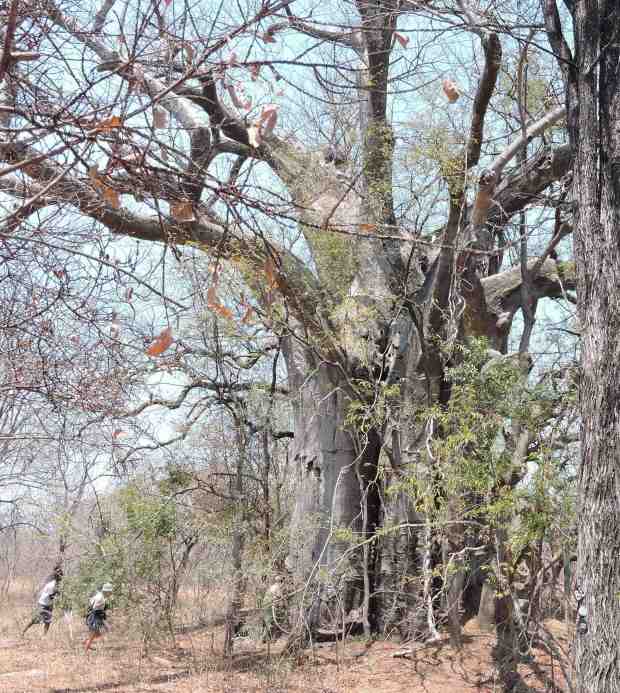
The baobab.
The baobab.

The large hole.

The large hole.

The spikes.

The spikes.

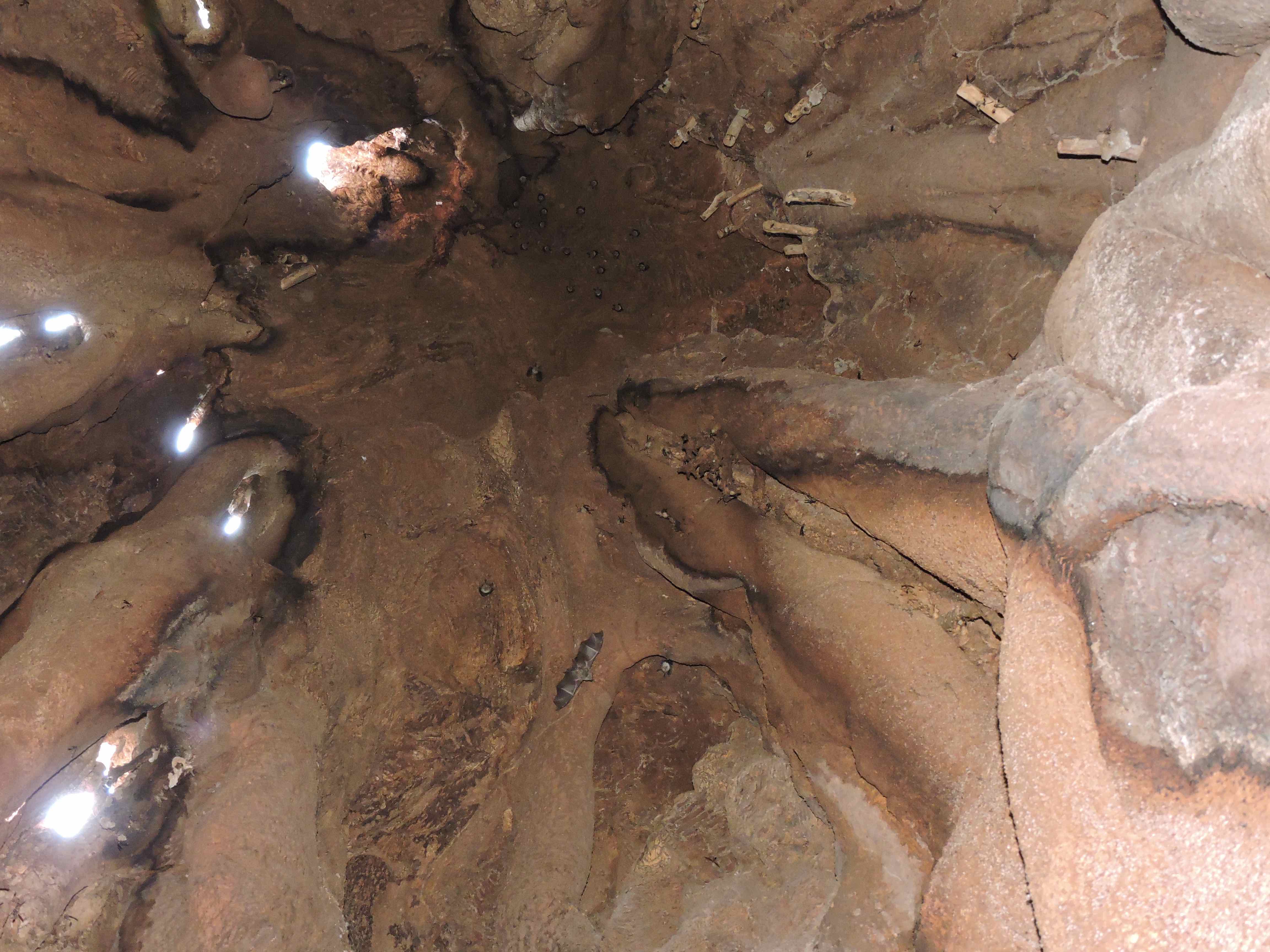
As we did not carry torches while looking for eagle nests during the day, there was not enough light to undertake a proper examination of the tree’s interior. We saw that there were some sun rays that filtered through small gaps on the roof, where the branches had sprouted, indicating that the top of the tree is not sealed tightly (as I thought) but there are gaps in its cortex. The holes were small and the light was not enough for us to see inside so we appealed to the trick of using the camera flash to look inside.
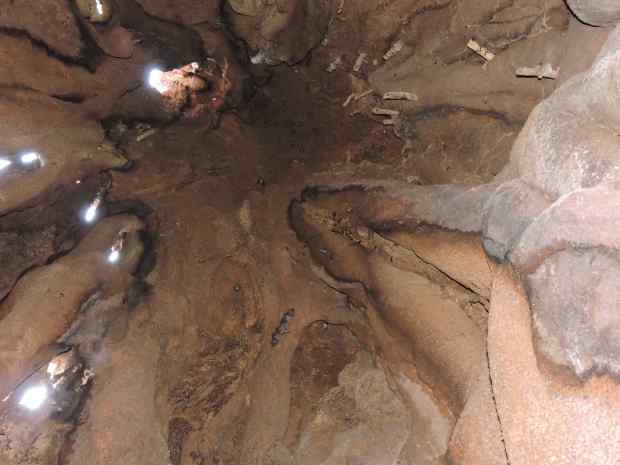
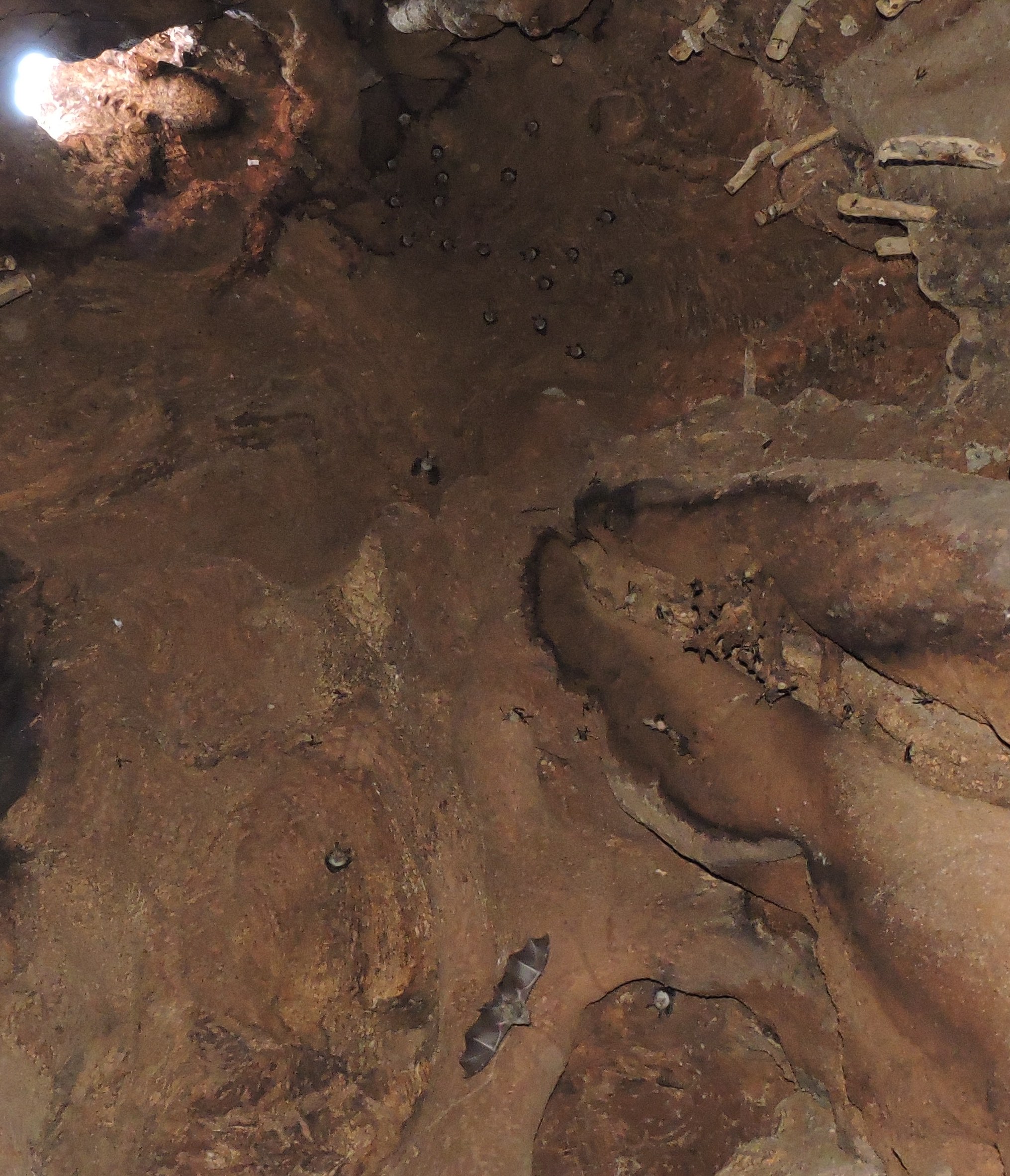
The inside of the tree. The spikes are seen on the right upper corner. The flying bat (centre bottom) and stationary bats (centre top), The small light spots are gaps on the top of the tree.

The inside of the tree. The spikes are seen on the right upper corner. The flying bat (centre bottom) and stationary bats (centre top), The small light spots are gaps on the top of the tree.

We saw that there were also spikes inside the tree! Although we did not detect any animal presence or smell (particularly the pungent bat smell!) inside the trunk, we took some pictures and, later examination of these, we noticed a small dark spot on its pale brown interior. It was a bat caught in flight! Further observation and enlargement of the pictures revealed other bats hanging from the roof, not in bunches but keeping distance from one another.
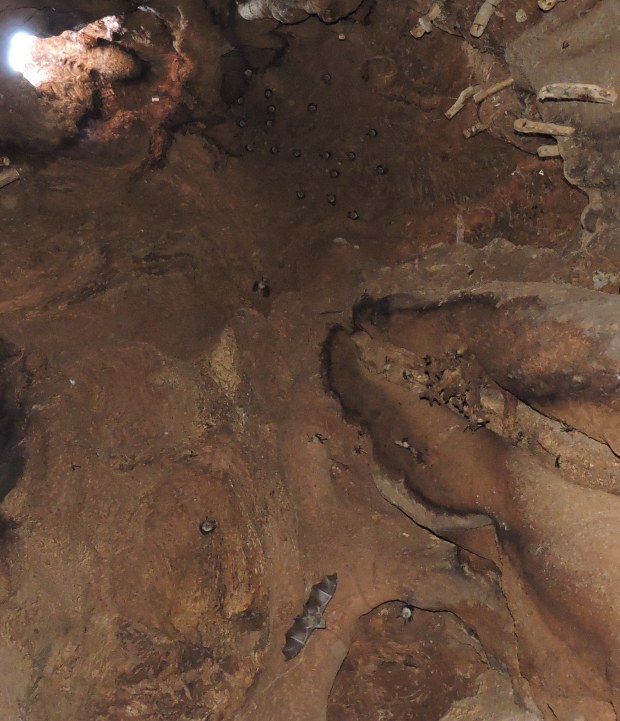
Close-up of the bats.

Close-up of the bats.

By the time we finished our observations of the baobab it was lunchtime and hot so we took walked back to camp, my toes still complaining in silence!

Hippo Pools Camp, Zimbabwe, 8 October 2015.


[1] https://bushsnobinafrica.wordpress.com/2014/08/29/hippo-pools-revisited-2/
Pangolin unseen

If you read this blog you are aware that I have never seen a pangolin in all the years I have been “bush-bashing”. Admittedly I have not actively searched for one but luck has had it that my path has not crossed a pangolin’s (see https://bushsnobinafrica.wordpress.com/2014/07/06/the-year-of-the-pangolin-2/).

My dream encounter nearly took place during our trip to Hippo Pools via the Umfurudzi Park, located about 130 km North of Harare. While paying the entry fees for the park, the ranger informed me that the Police had seized a pangolin at the border with Mozambique with a prize on its head of USD 5,000! The animal was brought to the park for releasing but he did not know when this would take place!

DSCN7974 copy

We drove directly to the park HQs hoping to get there before it was gone. To my disappointment, we arrived too late: it had been released the night before!

The pangolin. Picture by Mukululi Ndlovu.

The pangolin. Picture by Mukululi Ndlovu.

Pangolin release. Picture by Mukululi Ndlovu.

Pangolin release. Picture by Mukululi Ndlovu.

Despite the setback our visit was very useful. It enabled us to have a look at the improvements taking place at the Umfurudzi Park. Initiated a few years ago, this is a joint venture between The Zimbabwe Parks and Wildlife Management Authority and the Pioneer Corporation Africa Ltd., a new idea for Zimbabwe with the purpose of the rehabilitation, conservation and sustainable operation of the Umfurudzi Park. In brief, very comfortable facilities are being built including safari tents, bungalows and a nice swimming pool and boma[1].

Parking area showing the wooded area where the accommodation facilities are.

Parking area showing the woodland where the accommodation facilities are.

One of the comfortable bungalows.

One of the comfortable bungalows.

The common facilities and swimming pool.

The common facilities and swimming pool.

The park is also being re-stocked and animal numbers have increased during the last couple of years. According to the information contained in the park’s map, there are today approximately 13 elephant, 160+ buffalo, 300+ eland, 43 giraffe, 30+ tsessebe, 1 sable, 200+ wildebeest and zebra respectively as well as a good number of other smaller antelope.

While driving to the park’s HQs. we found a herd of about fifty buffalo looking relaxed and being “serviced” by red-billed oxpeckers. They are part of the buffalo population now resident in the park. We saw a few calves in the herd so it is clear that numbers will increase in future.

Buffalo being re-introduced.

Buffalo being re-introduced.

DSCN8203 copy

One of the calves.

One of the calves.

The Umfurudzi park now presents me with an irresistible lure as five other pangolins have also been set free into the park, probably making it the park with the highest number of “known” pangolins!

I will return and find one.

Umfurudzi Park, Zimbabwe, 7 October 2015.


[1] Place for eating.


Picture credits: Mukululi Ndlovu


Showering “al fresco”

As days passed the temperature at Mana Pools continued to rise. The morning of the 19th of September it was already oven hot at 06.00hs so the decision on what to do was easy as the moving car seemed to be the coolest option available. We planned a longish route as we wanted to re-visit a rather remote dry river bed close to the Rukomechi area. When the hot wind started to blow dust on us we knew that it was time to leave the camp!

We skipped breakfast but took all necessities with us to stop and enjoy it on route near the Zambezi as the drive offered a few nice shady spots. We drove until a place known as Vundu[1] point and stopped there to break our fast after a couple of hours of slow driving and enjoying the wilderness.

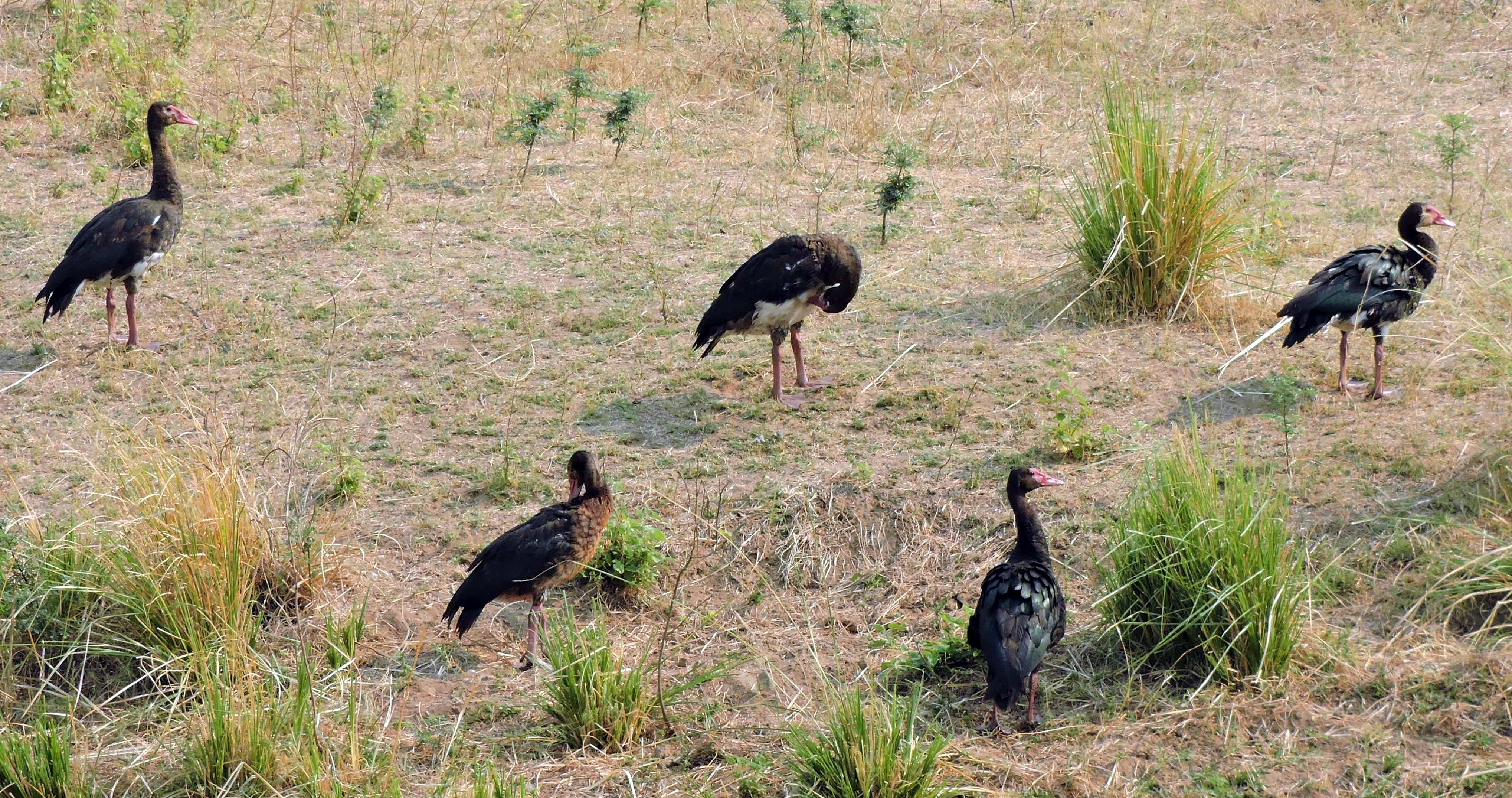
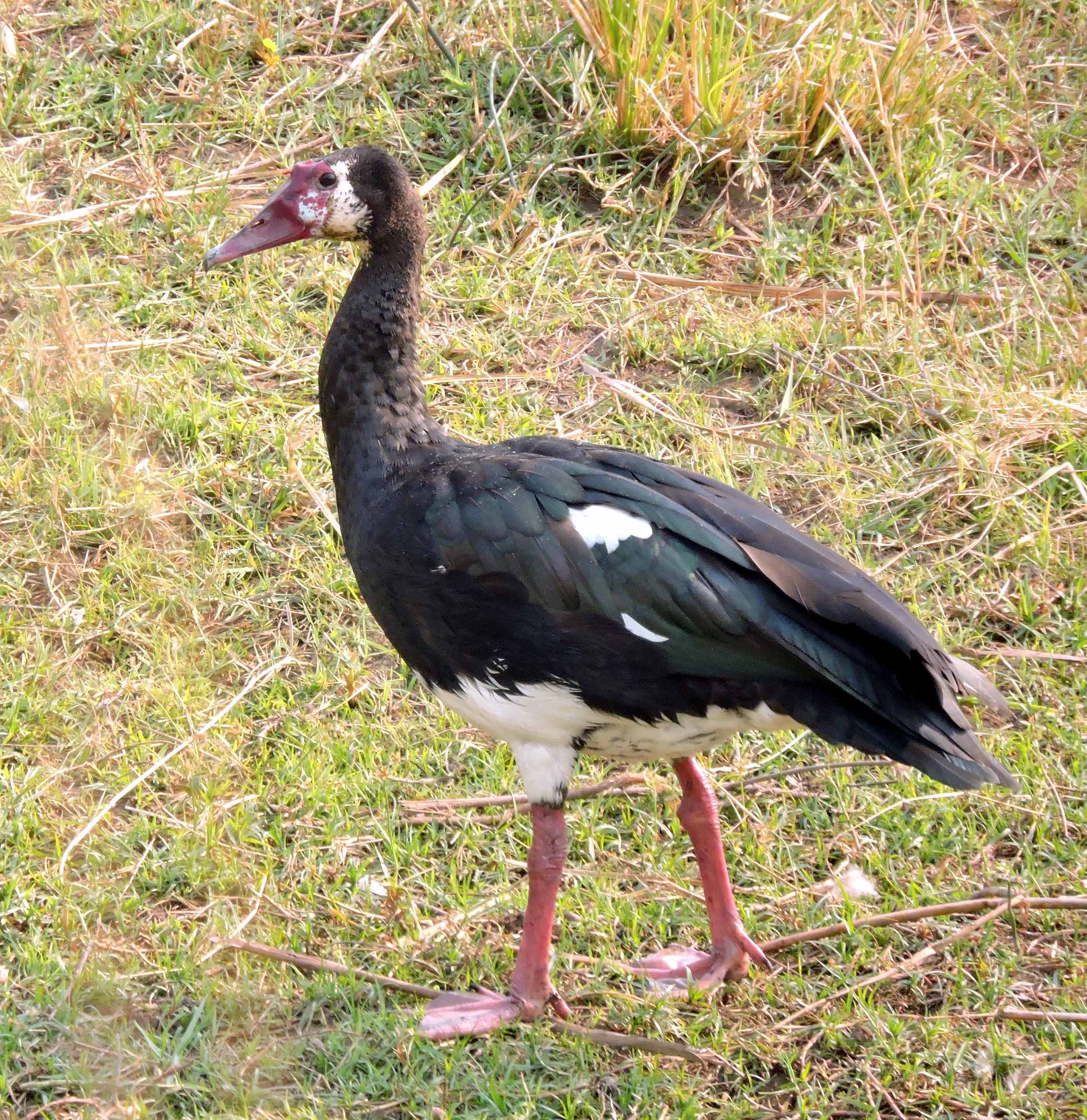
A gaggle of Spur-wing geese (parents and five young adults) were at the riverbank and slowly walked away as soon as we left the car.

Some of the Spurwing geese.

Some of the Spur-wing geese.

One of the adults.

One of the adults.

The heat could be felt despite the thick shade provided by the gigantic sausage trees of the riverine forest but this did not seem to bother a lone and open-mouthed crocodile basking on one of the riverbanks nearby.

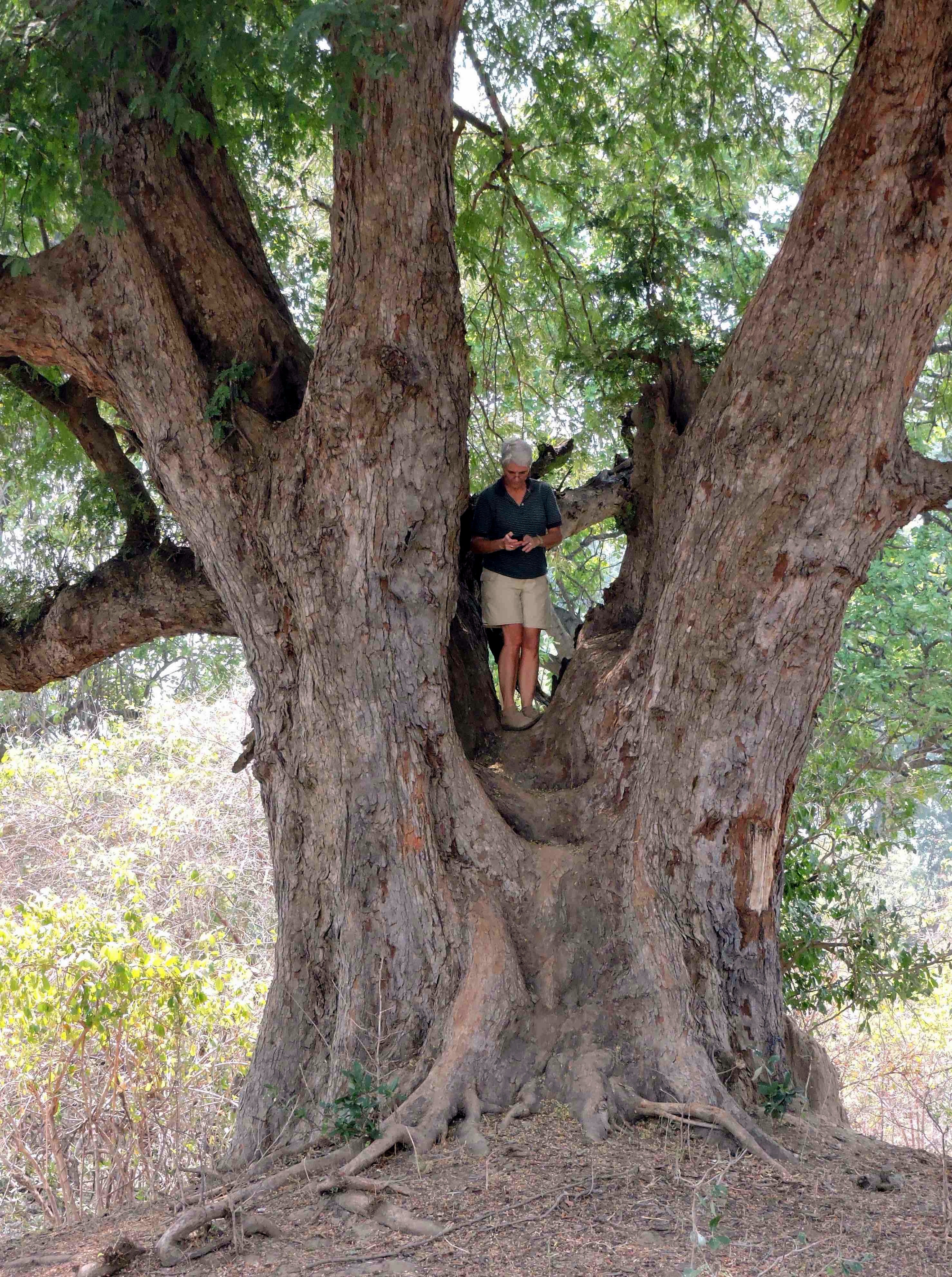
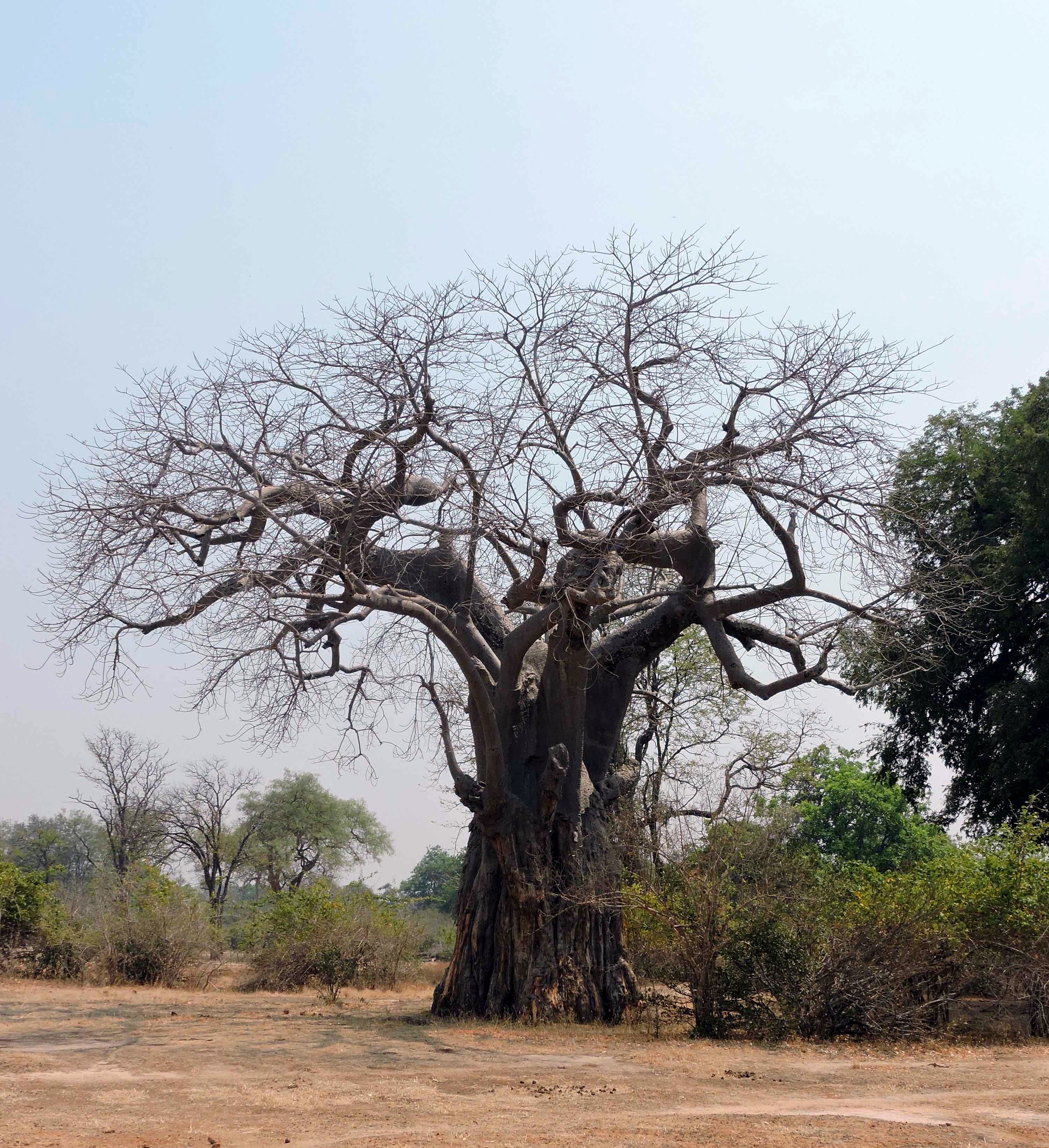
Breakfast over, we moved on reaching the dry Nyakasanga river an hour later. We crossed its sandy bed and drove a while thinking that we would get back to the Zambezi but, as it is often the case, we had misread the map and in fact we were moving away from it! So, after searching for cell signal up a tree (my wife) and taking a few pictures of a baobab tree, it was time to get back to camp for lunch at an oven-like Gwaya camp.

In search of that elusive cellphone signal!

In search of that elusive cellphone signal!

The baobab tree.

The baobab tree.

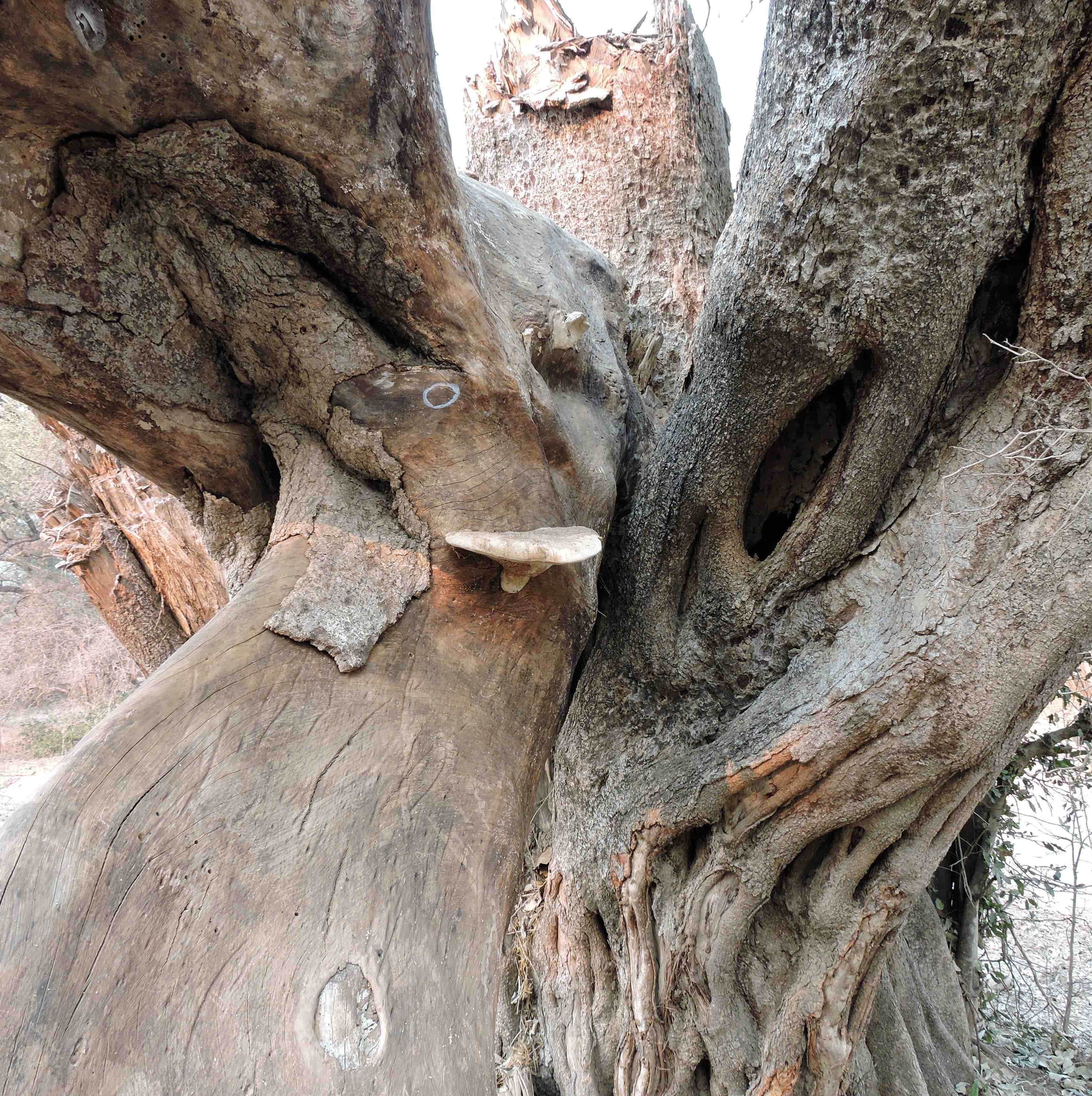
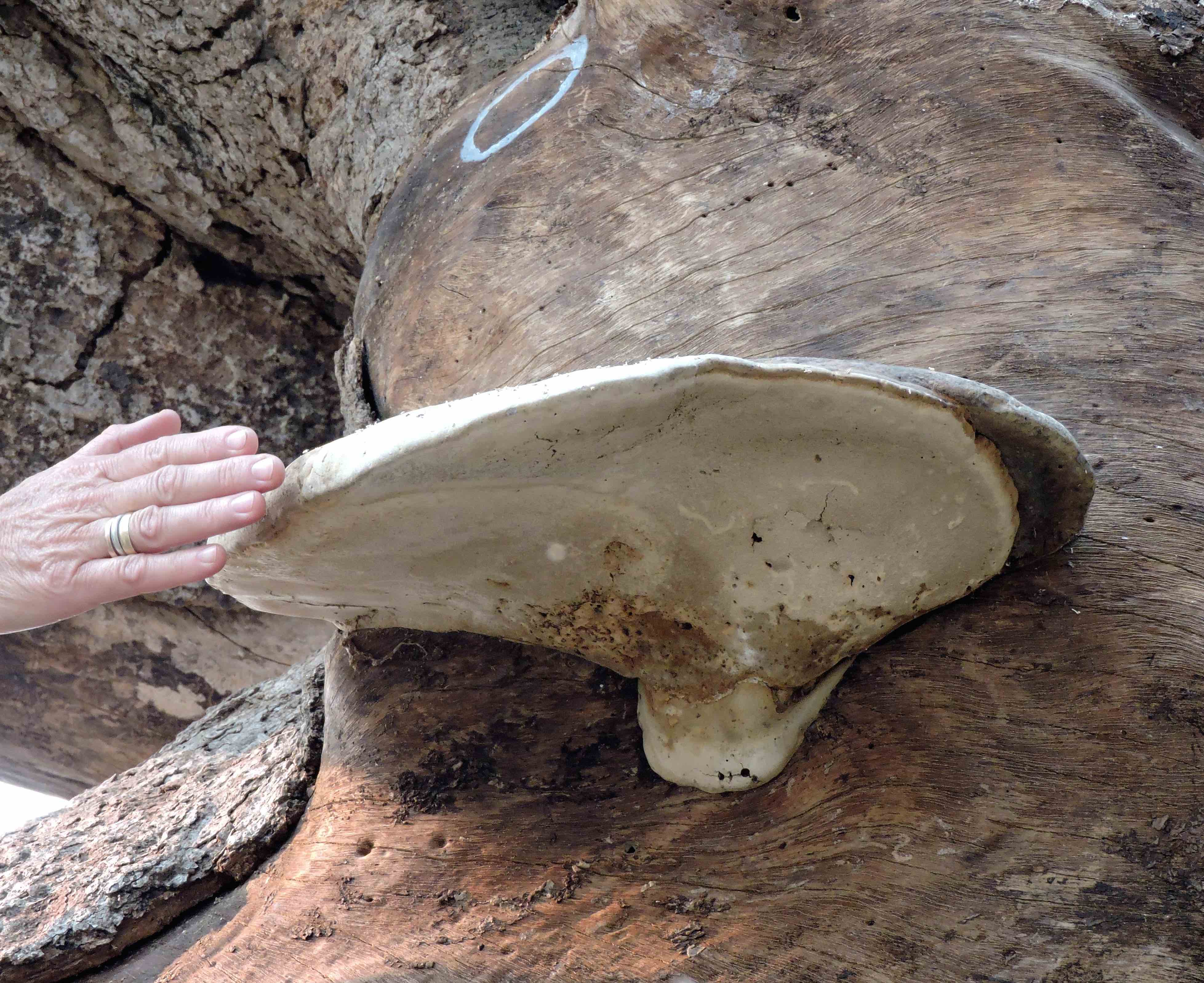
The heat and dust were still waiting for us when we made it back by 13.00hs as we got further delayed examining a rather large fungus we found on a tree trunk!

A large fungus.

Fungus close-up. The bluish circle above is Nature's.

Fungus close-up. The bluish circle above is Nature’s work.

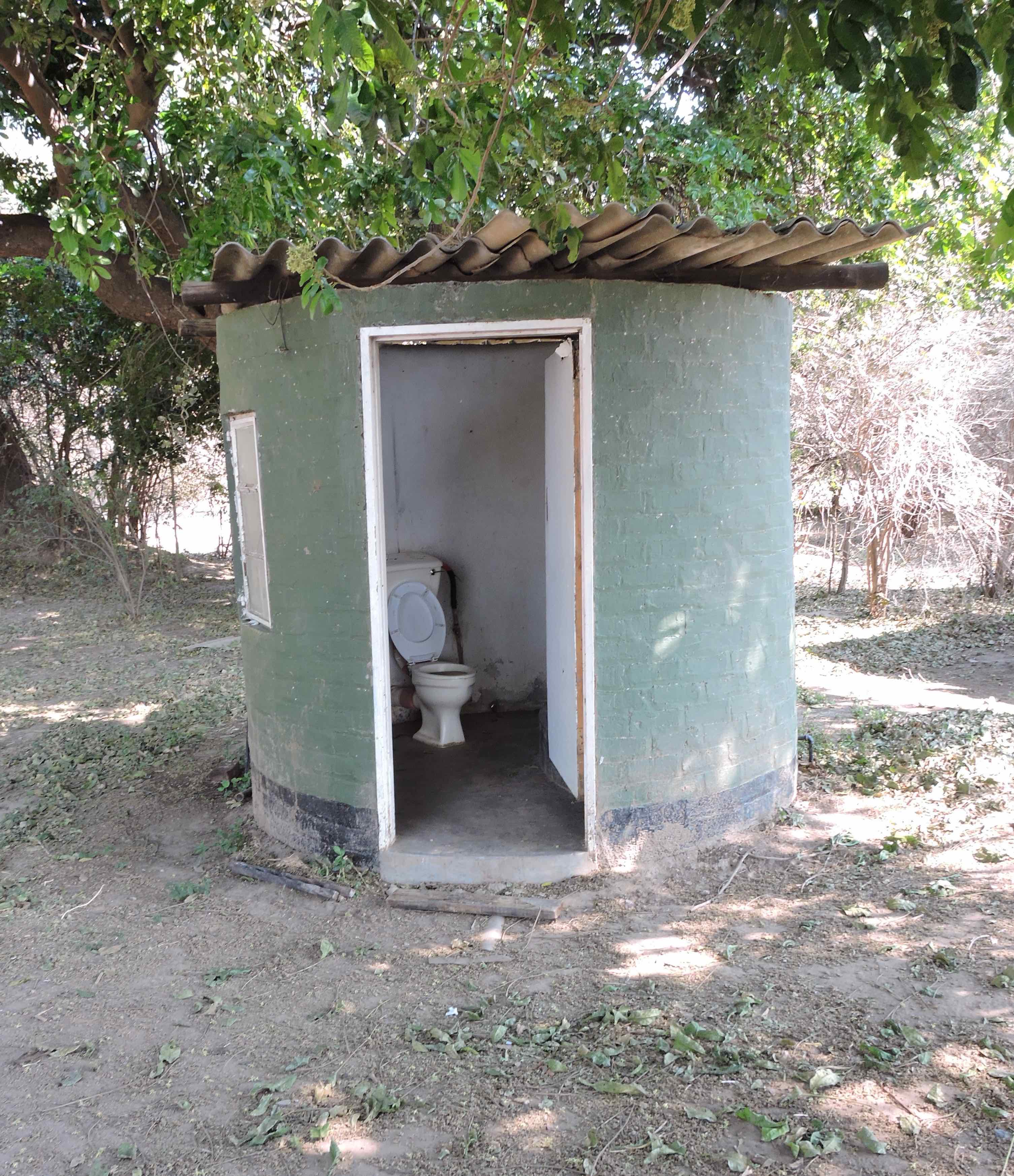
After a very light lunch it was a question of surviving the heat and dust (mainly for my wife!). She decided to have a cold shower at the small toilet/shower cabin and to remain there, away from the heat and dust for the rest of the afternoon, until the temperature dropped. She did not mind sharing the place with its tree frogs occupants. There were at least three of them and one insisted in staying under the WC plastic seat. We removed it everyday for fear of crushing it and placed it on a tree outside but it was back the next day!

My wife's vantage point!

My wife’s vantage point!

As usual, it was siesta time for me, despite the heat and dust. It was quite a feat but I managed a few minutes! The siesta over and feeling heat-hit, I hanged my sun-heated shower (I do not like cold showers!) from a tree behind our tent, open the tap and started to enjoy the refreshing feeling of water being poured over you in the open air.

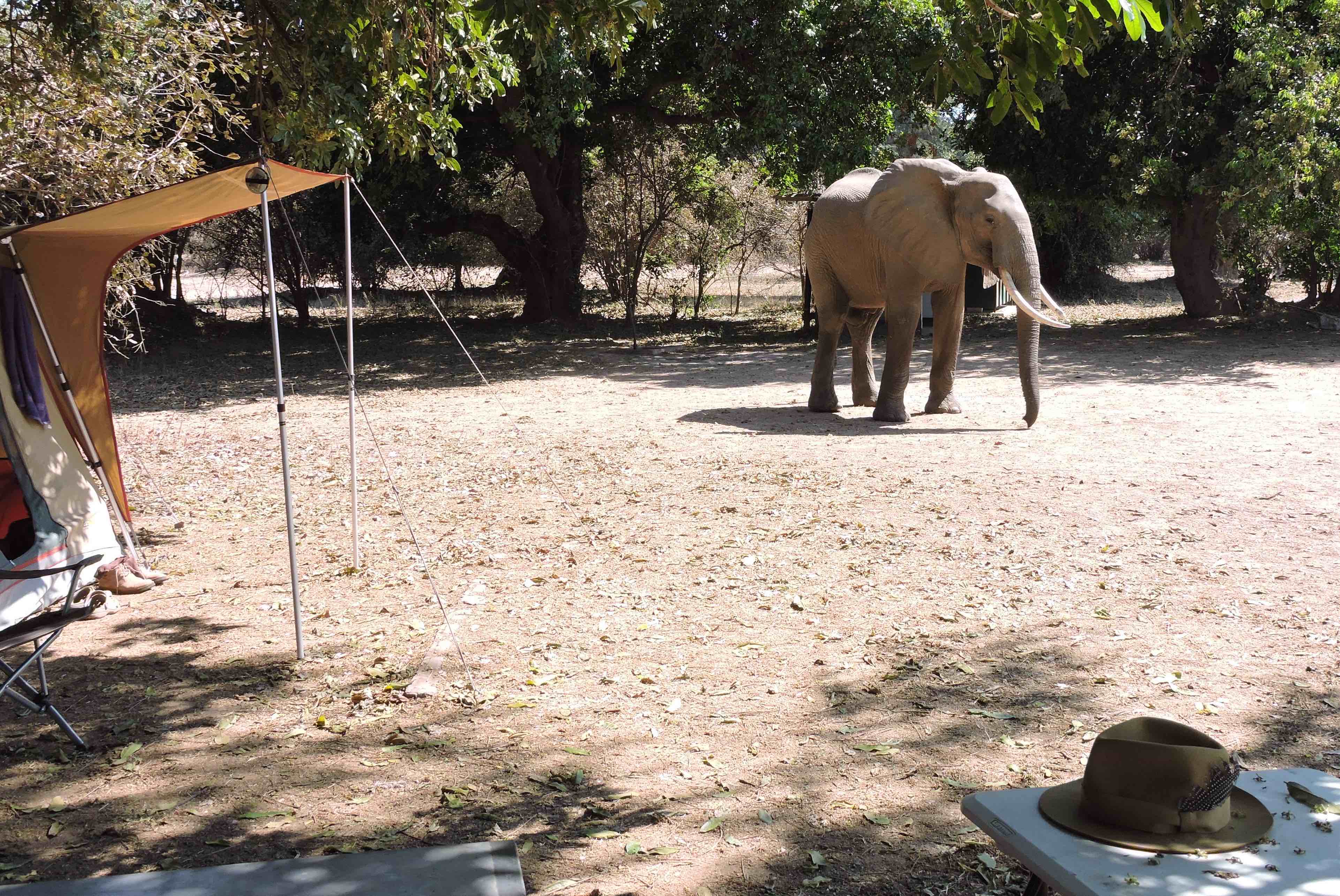
I had showered for a couple of minutes and I was busy soaping myself when I heard my wife calling me, pointing towards the back of the camp. An elephant was walking, apparently, in my direction! As elephants do that all the time at Gwaya, I continued with my shower as I still needed some cleaning to do!

The elephant coming (I forgot to leave my hat on...).

The elephant coming (I forgot to leave my hat on…).

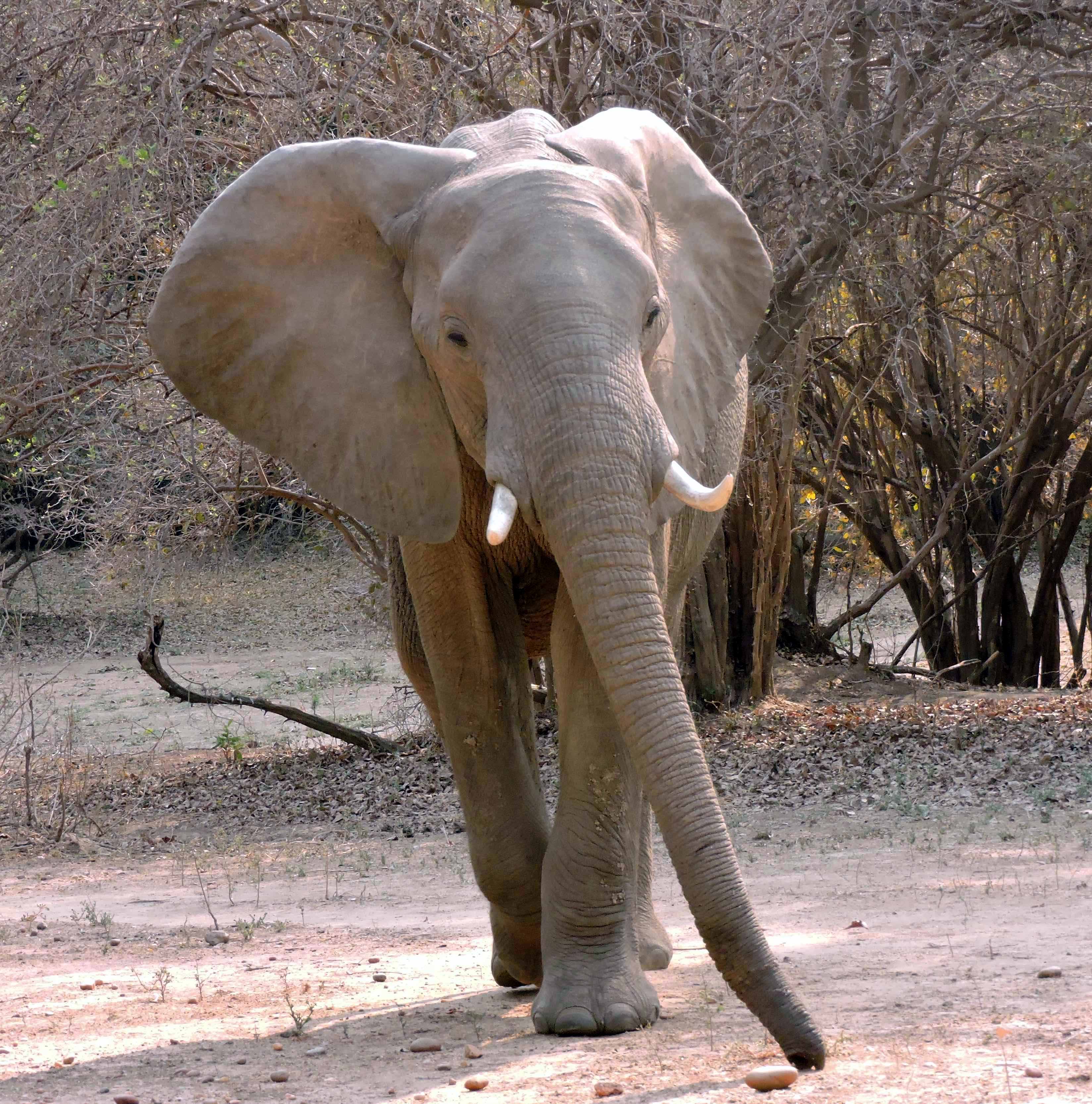
After a minute I looked again and the pachyderm was much closer! It left me in no doubt that I was the object of its curiosity! “I cannot believe this” I thought and, thinking that the soap smell was the lure, I started removing the foam and placed the soap back in its box. “#$@&%*!” I thought, seeing no change in attitude, “the blipping elephant is coming for the shower water having the whole Zambezi behind me!” I closed the tap and remained immobile and soapy[2].

It came quite close...

The elephant came very close. Luckily it stopped a couple of metres away and it had a long look at me. As it was also naked, I did not feel any embarrassment, only moderate panic and an immense wish to survive in order to remove the soap from my body and continue living.

Although I am sure that “the look” it gave me was brief, it felt long. Eventually the elephant slowly moved off as it clearly decided that my “manhood” was -naturally- no challenge to his “elephanthood”! I even thought I heard a jeering noise coming from the curious pachyderm as it walked away! My relief at its withdrawal was short-lived. The water got finished and I had to remove the remaining lather with what I wanted to avoid: cold water!

Needless to say that my wife watched all this and forgot about the heat and dust. So did I!

Gwaya camp, Mana Pools, Zimbabwe, September 2015.


[1] A Vundu (Heterobranchus longifilis) is a catfish reaching up to 150 cm in length and 50 kg of weight.

[2] Although the elephant is shown naked, pictures of the bushsnob “al fresco” are omitted to keep this blog PG.

Elephant overhead (and it was not Dumbo…)

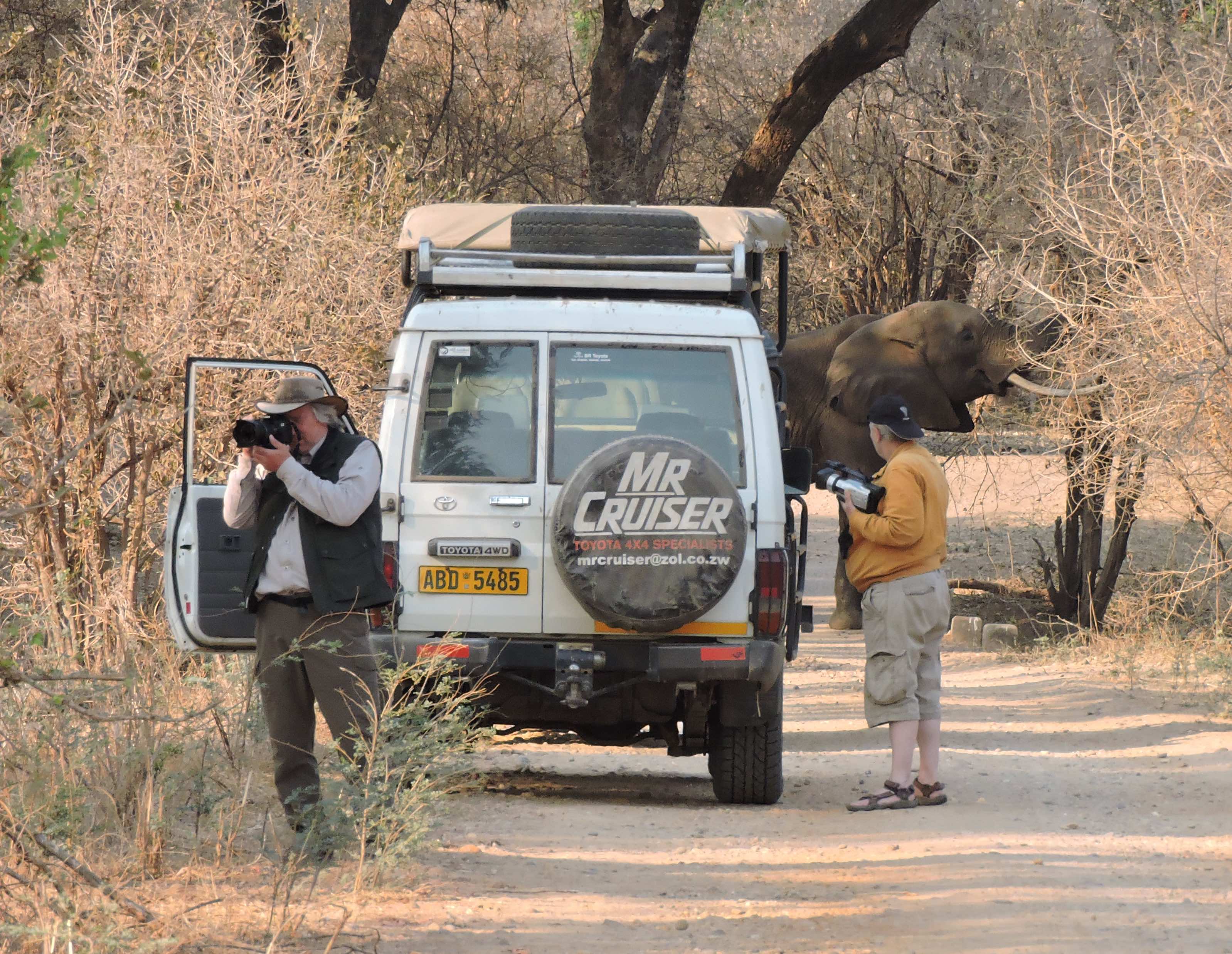
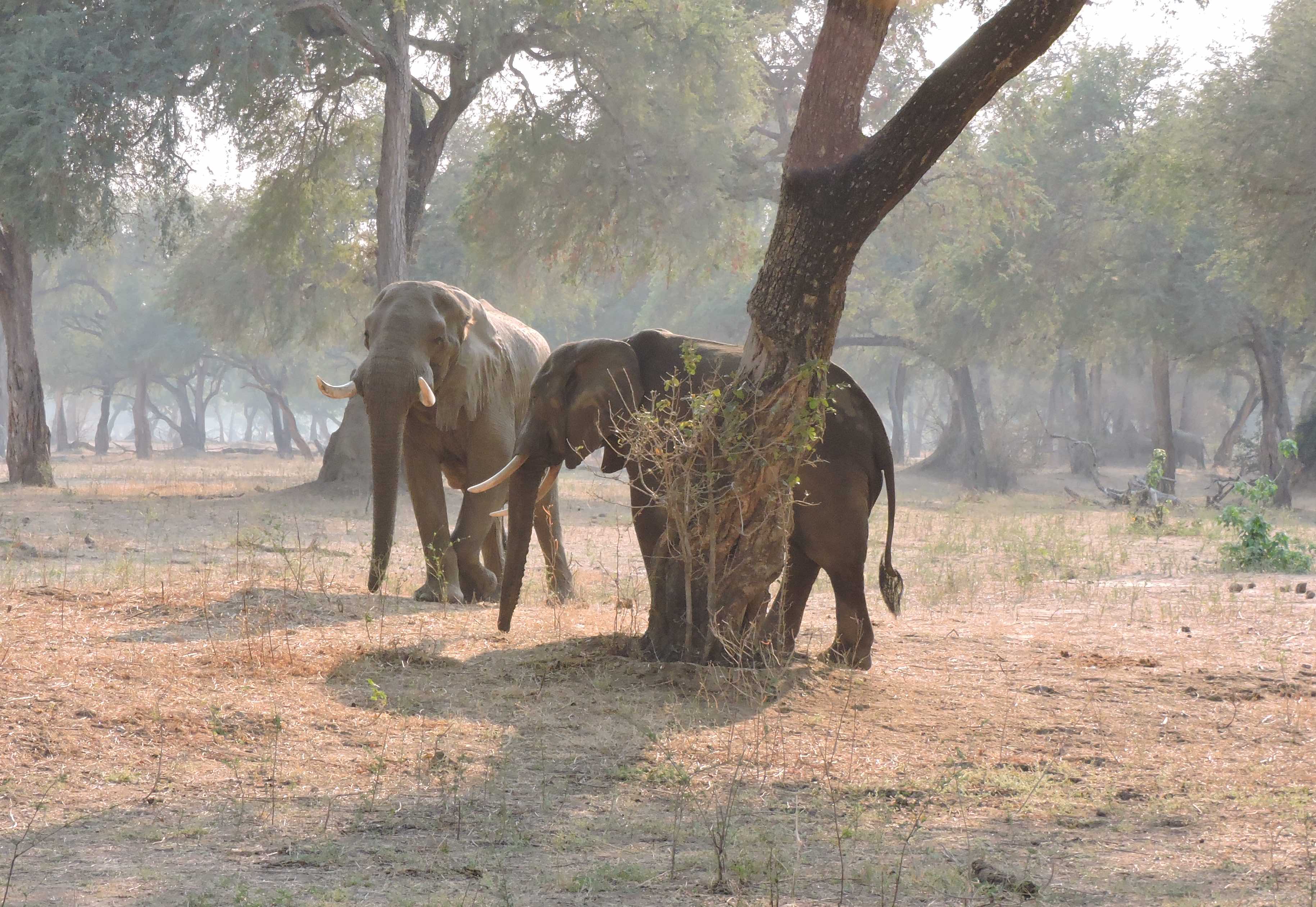
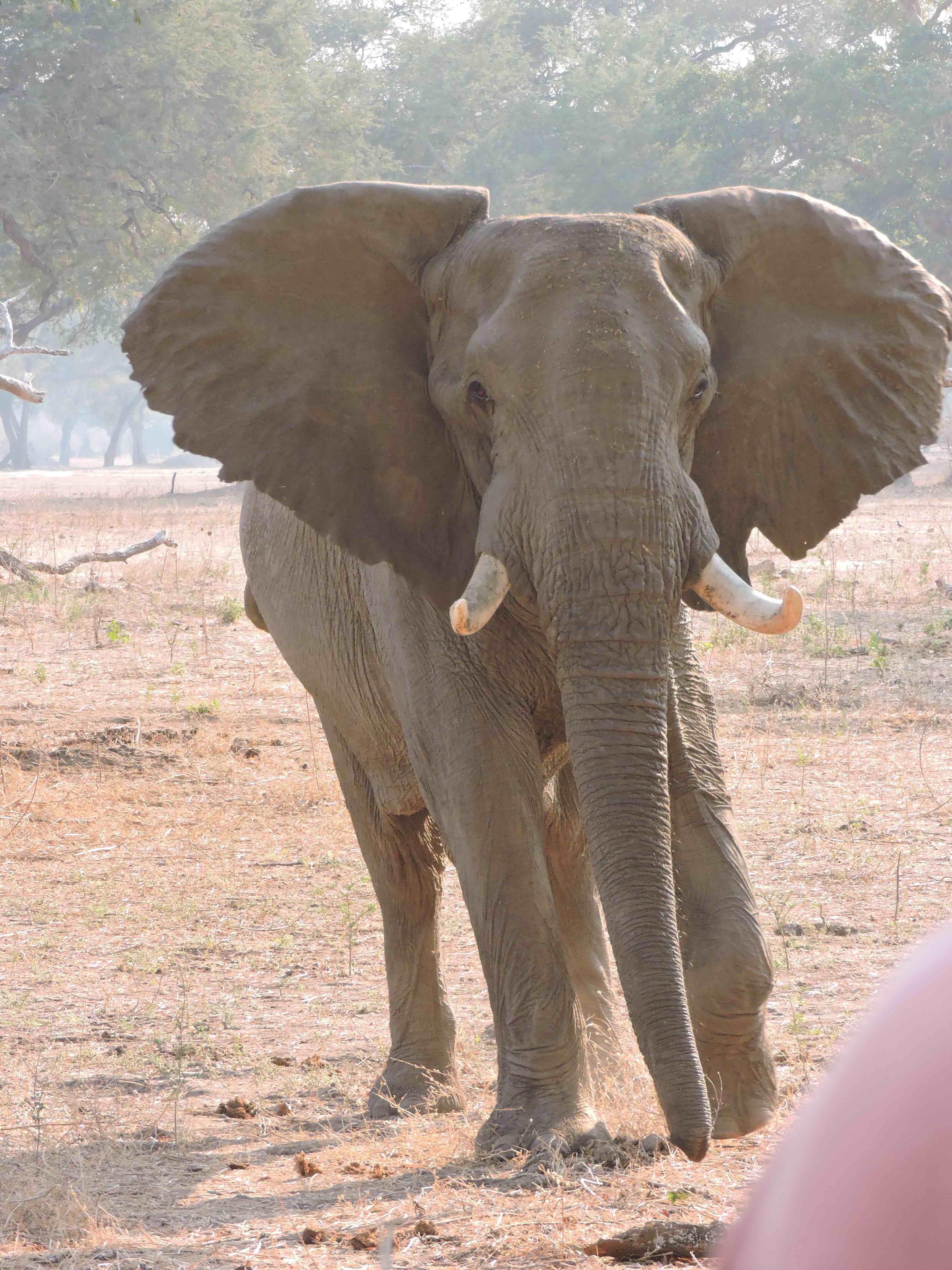
During one of our game drives we came across a couple of cars parked in the woods and we noticed two elephants nearby, a large bull and a younger companion, also known as an “askari”[1]. From close quarters we immediately recognized the large one as “Big V”, a well known and placid bull that a game ranger first pointed it out to us on another visit to the park. His name derives from a large notch shaped as an inverted “V” on the lower edge of its left ear.

The viewing and photographing.

DSCN9998 copy

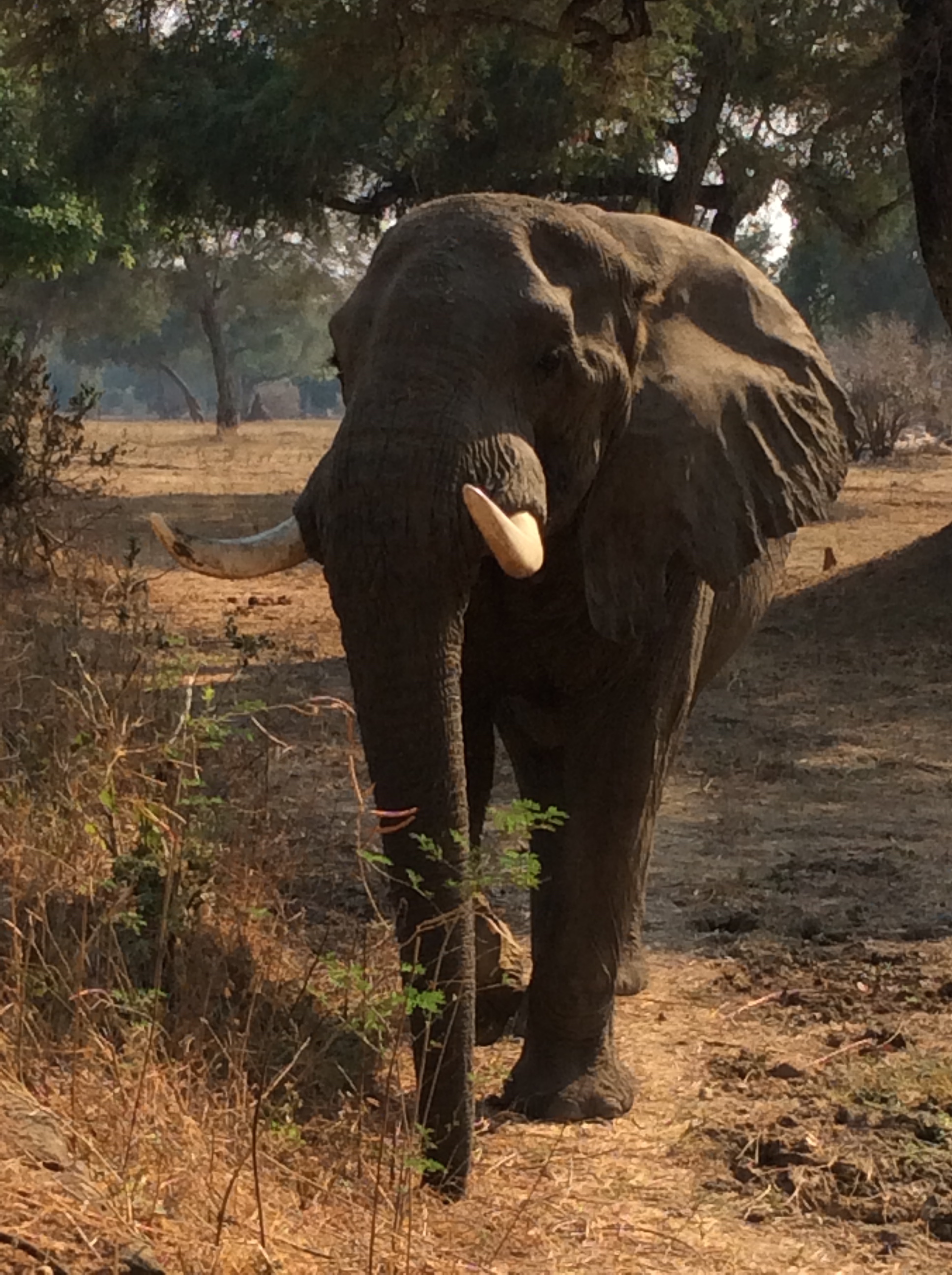
Big V coming.

We approached the animals, parked the car and got out to join the elephant-watching crowd (two people in one car!). Big V was busy chewing through an acacia branch the size of my forearm! “This is ridiculous”, I thought while I watched it in amazement as it crunched it loudly and started to swallow the splinters. While this was taking place, a game-viewing car with only one passenger came and Big V got somehow separated from the askari while we kept watching, trying to make the best of this photo opportunity.

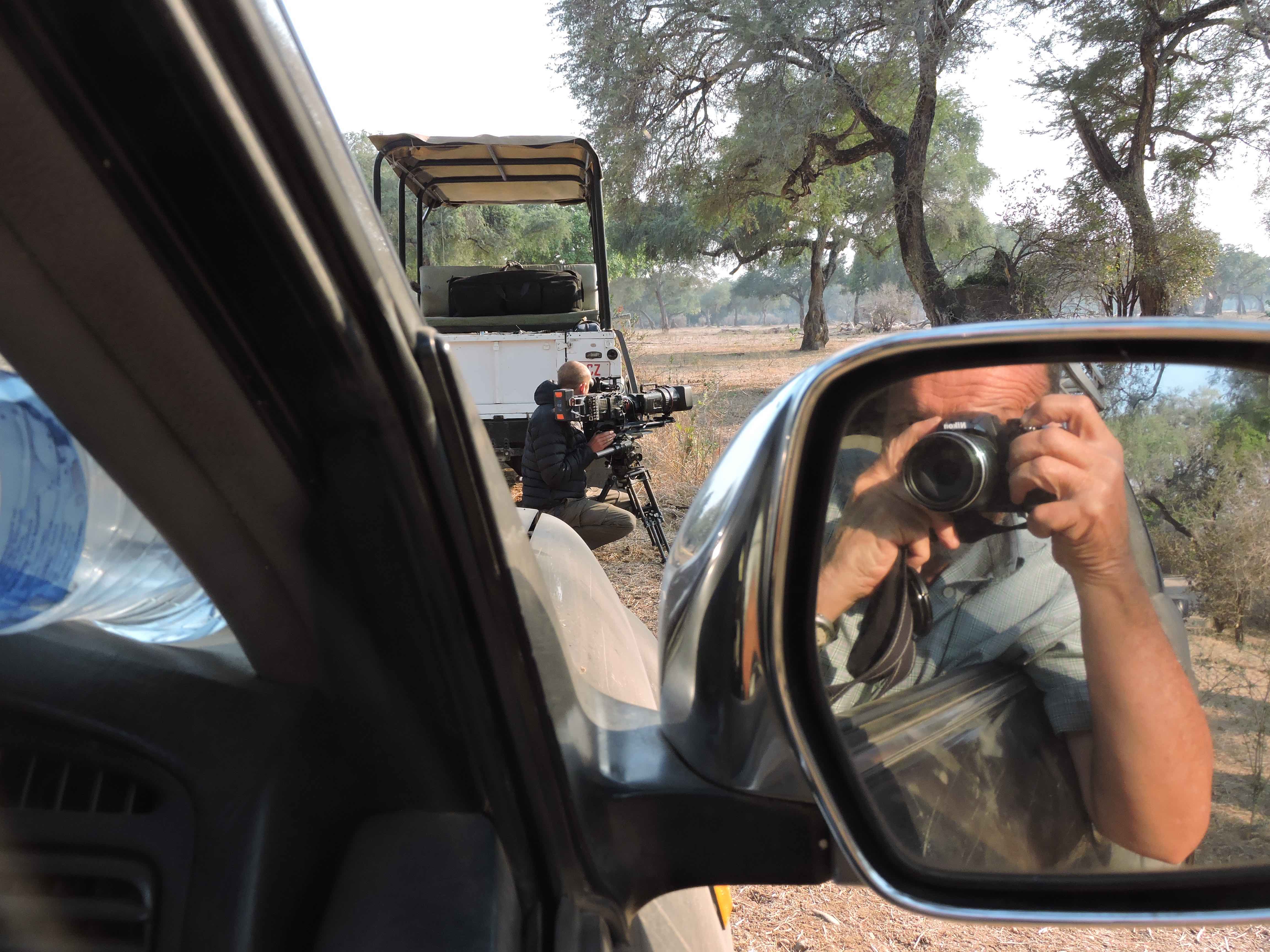
Equipment comparison!

Equipment comparison!

The sole occupant of the newly arrived vehicle clearly thought that this was a good sight and proceeded to offload a humongous filming camera on a tripod. “This is not fair”, I thought as I tried to make do with my comparatively modest Nikon Coolpix! After spending quite a while assembling the equipment, he filmed for about one minute and they were off!

While we continued watching the elephants in awe, another two cars with South African plates arrived, full of people with spectacularly long lenses. They took hundreds of pictures at the elephants and, as soon as they arrived, they also left. I speculated for a while on a better game viewing opportunity and failed to understand where were they rushing! I still need to learn a lot about my fellow humans…

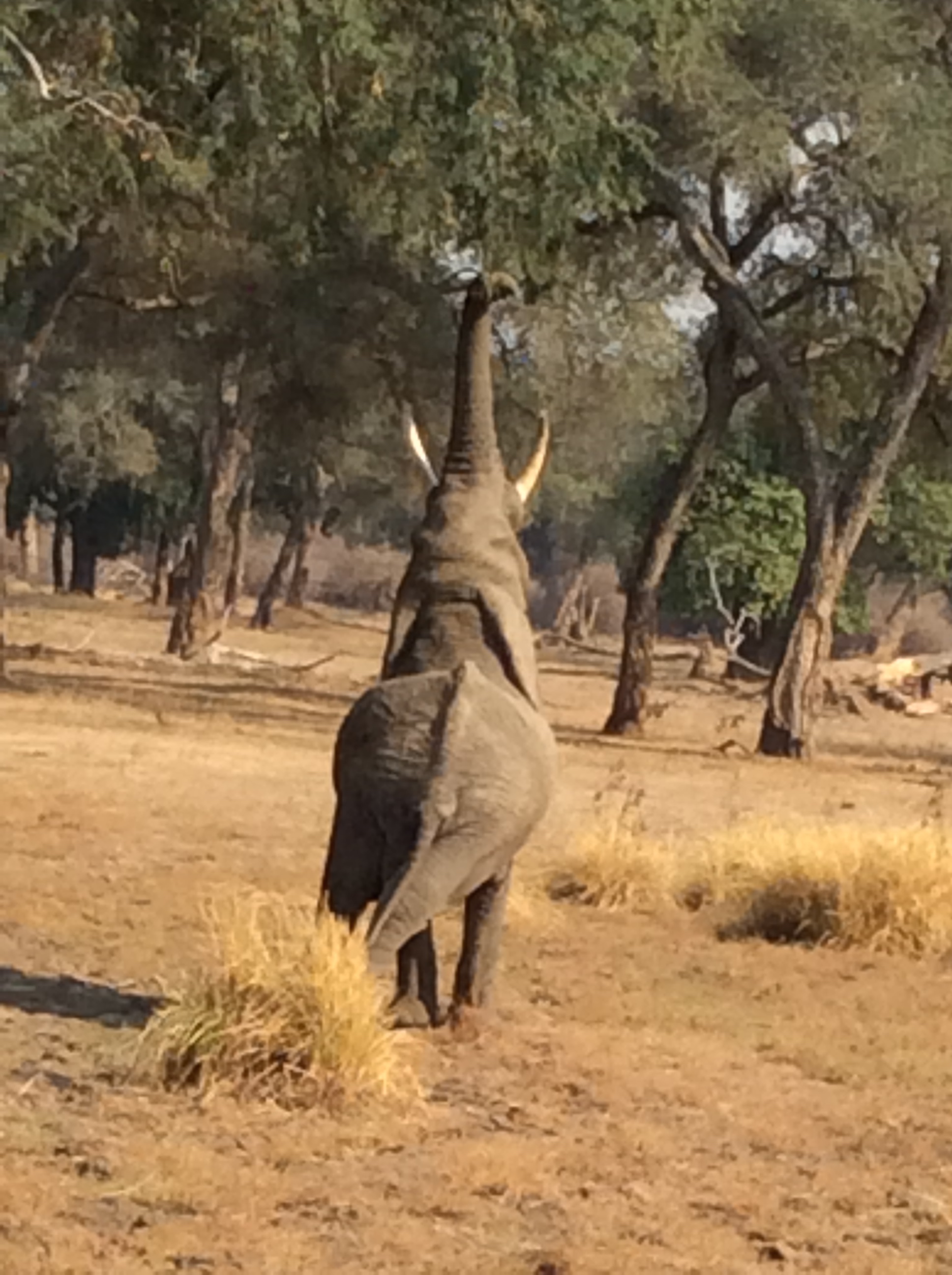
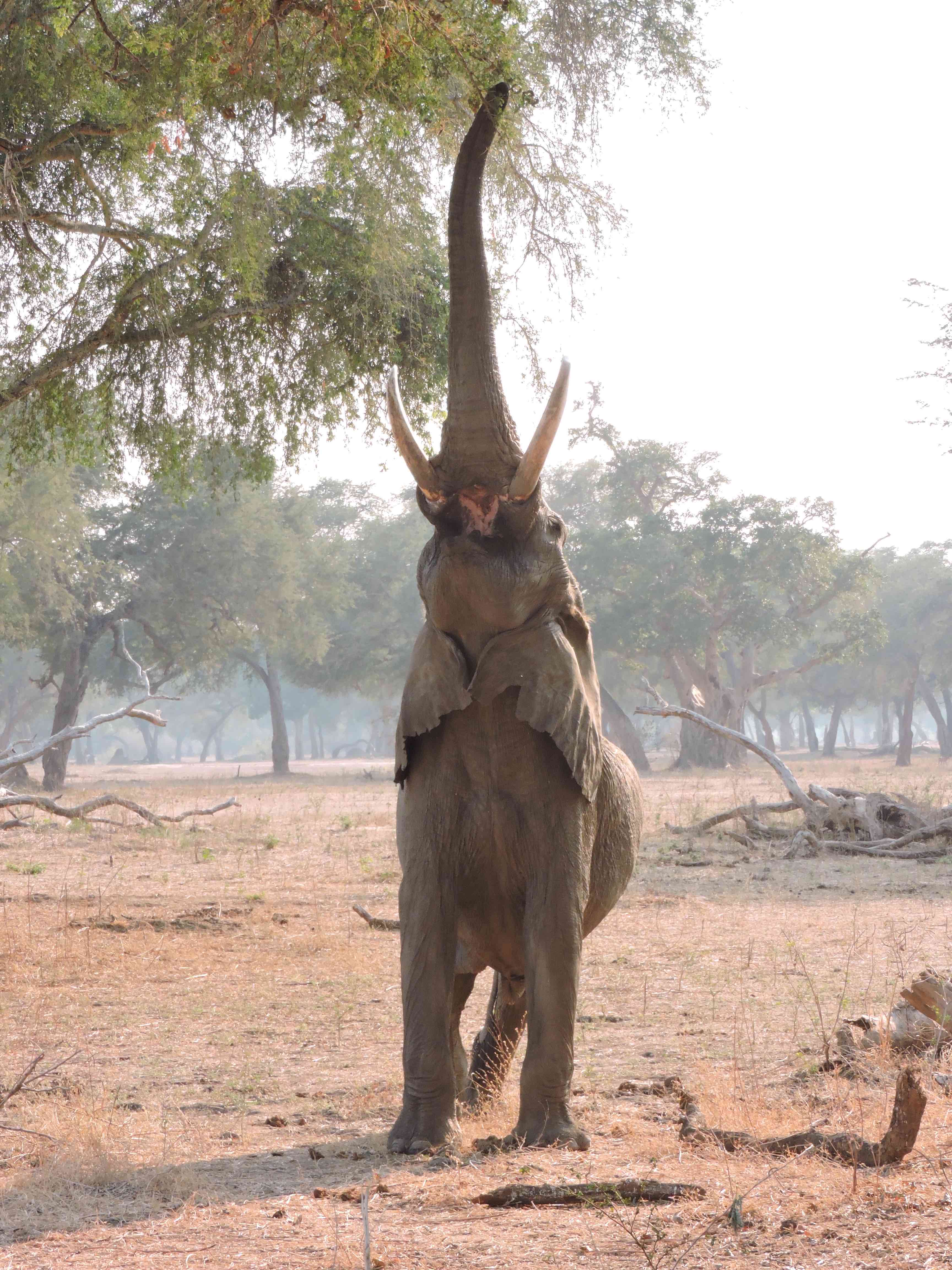
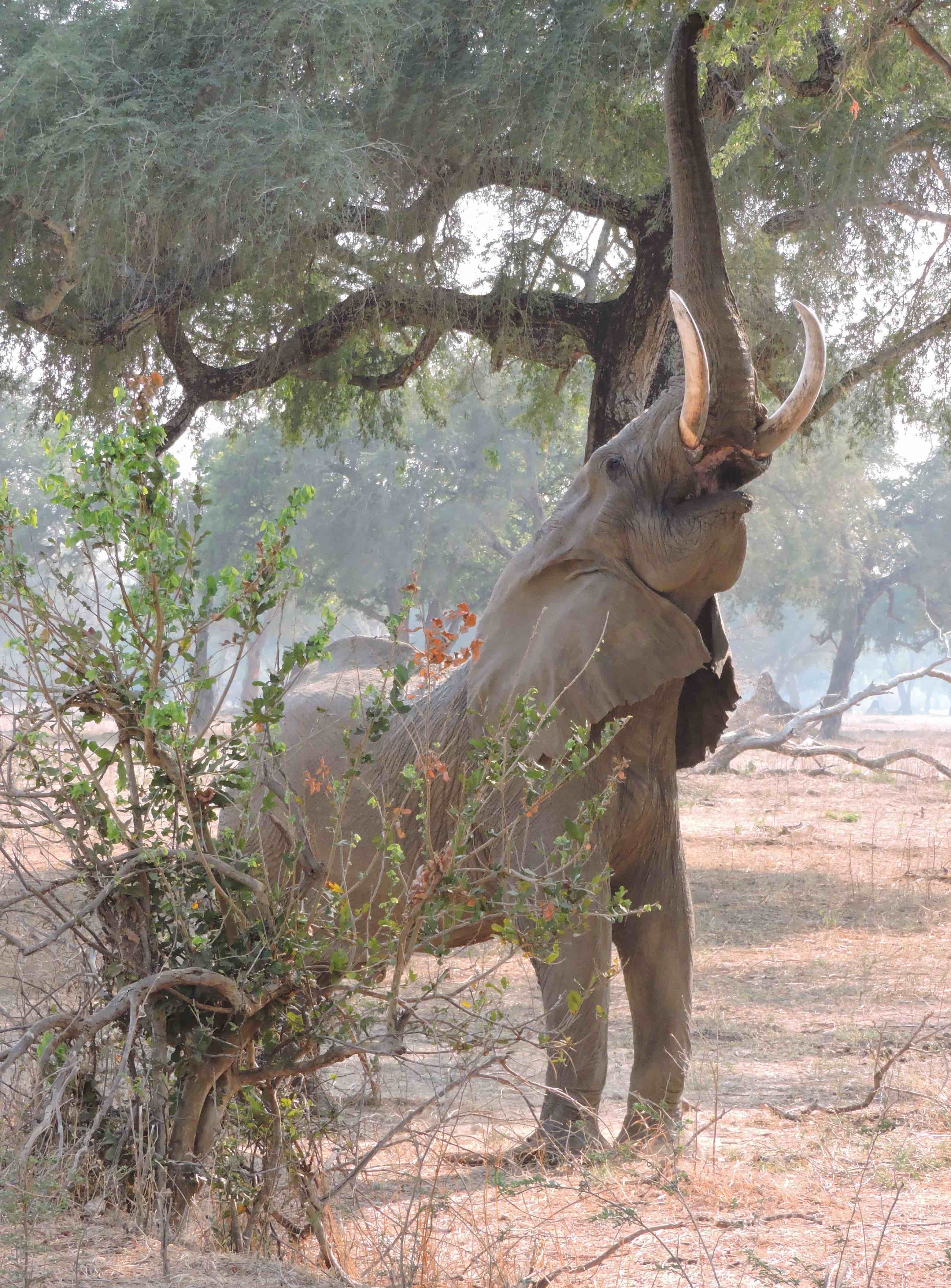
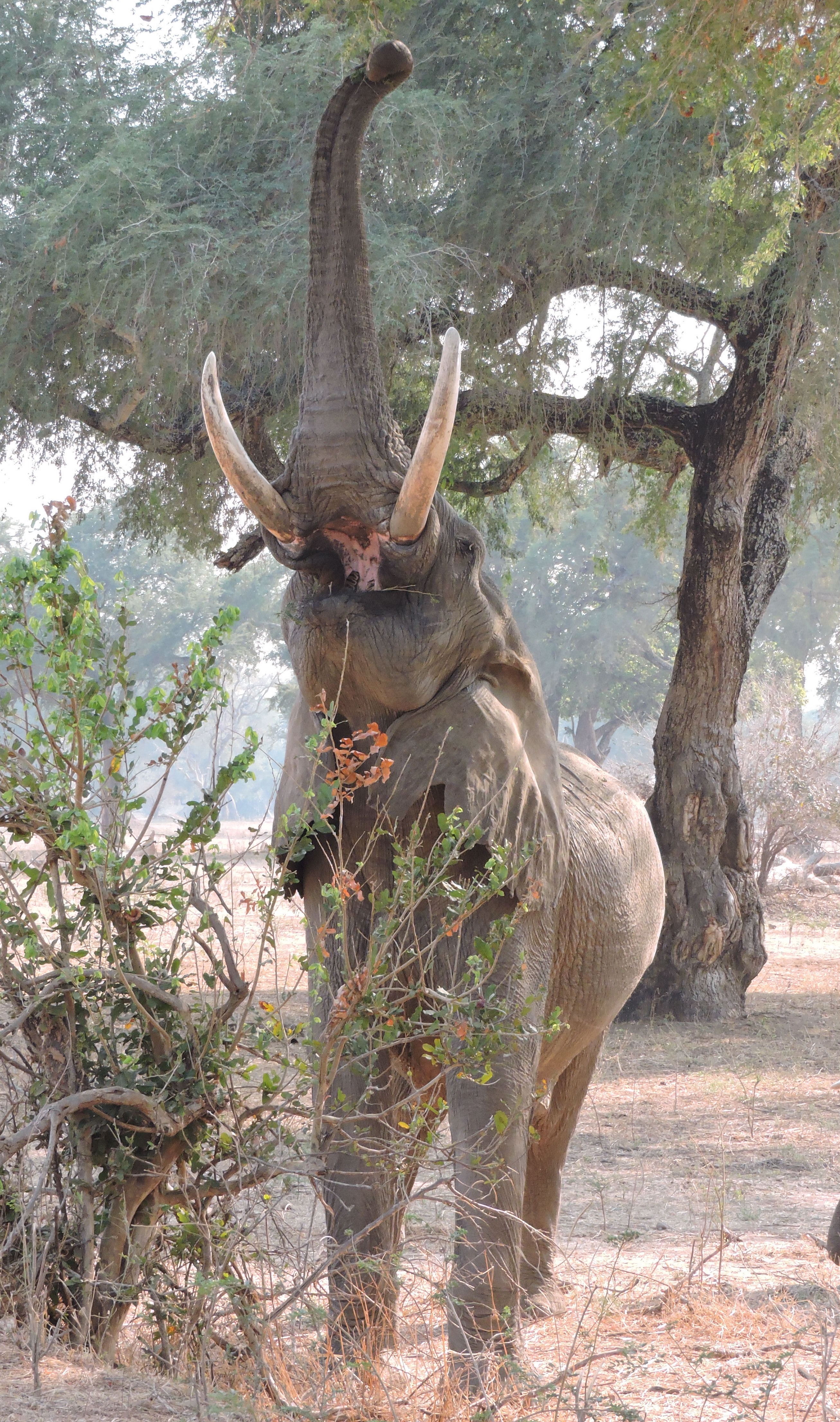
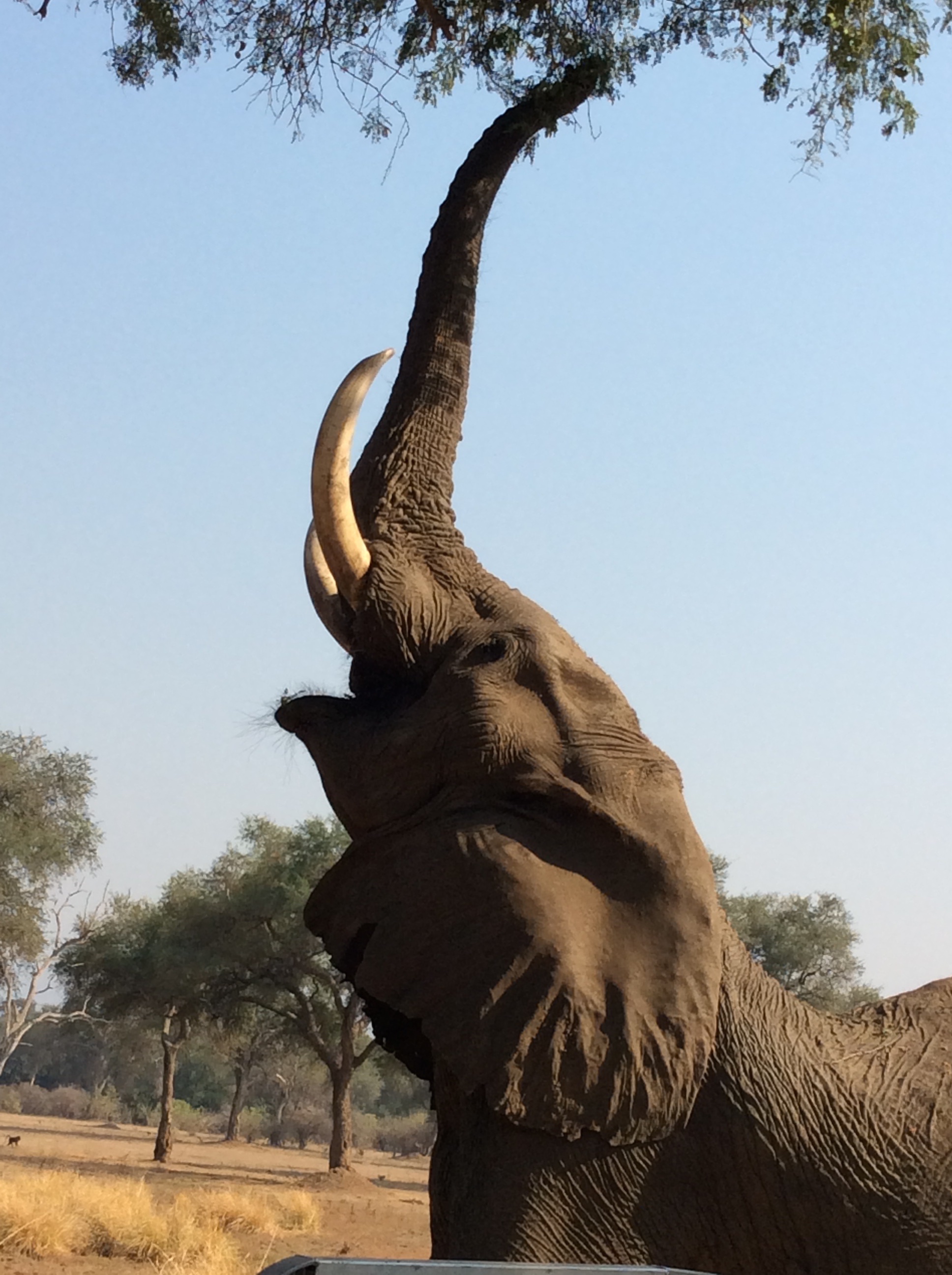
Finally we were alone. We waited as we knew that at this time of the year elephants in Mana Pools feed on the pods of the Apple ring acacia (Acacia albida) and we estimated that this was the intention of Big V as we were in acacia woodland. After a while, with calm restored, he obliged and started stretching to get at the pods, offering us some photo opportunities that are the heart of this post.

IMG_0105_2 copy

DSCN6464 copy

DSCN6501 copy

DSCN6504 copyI have some difficulties taking pictures looking at the camera screen so I use its viewfinder, a hang up from my SLR’s days! On this occasion I was so engrossed taking pictures of Big V at full stretch nearby that when I heard “the other one is coming” from my wife, the askari was almost stepping on my toes!

I was caught “between a car and an elephant” and, although I made myself as thin as possible by contracting my stomach, I could feel its body heat while busy watching his feet to avoid being maimed for life! Luckily the elephant was so focused on feeding that did not even look at me!

IMG_0083_2 copy

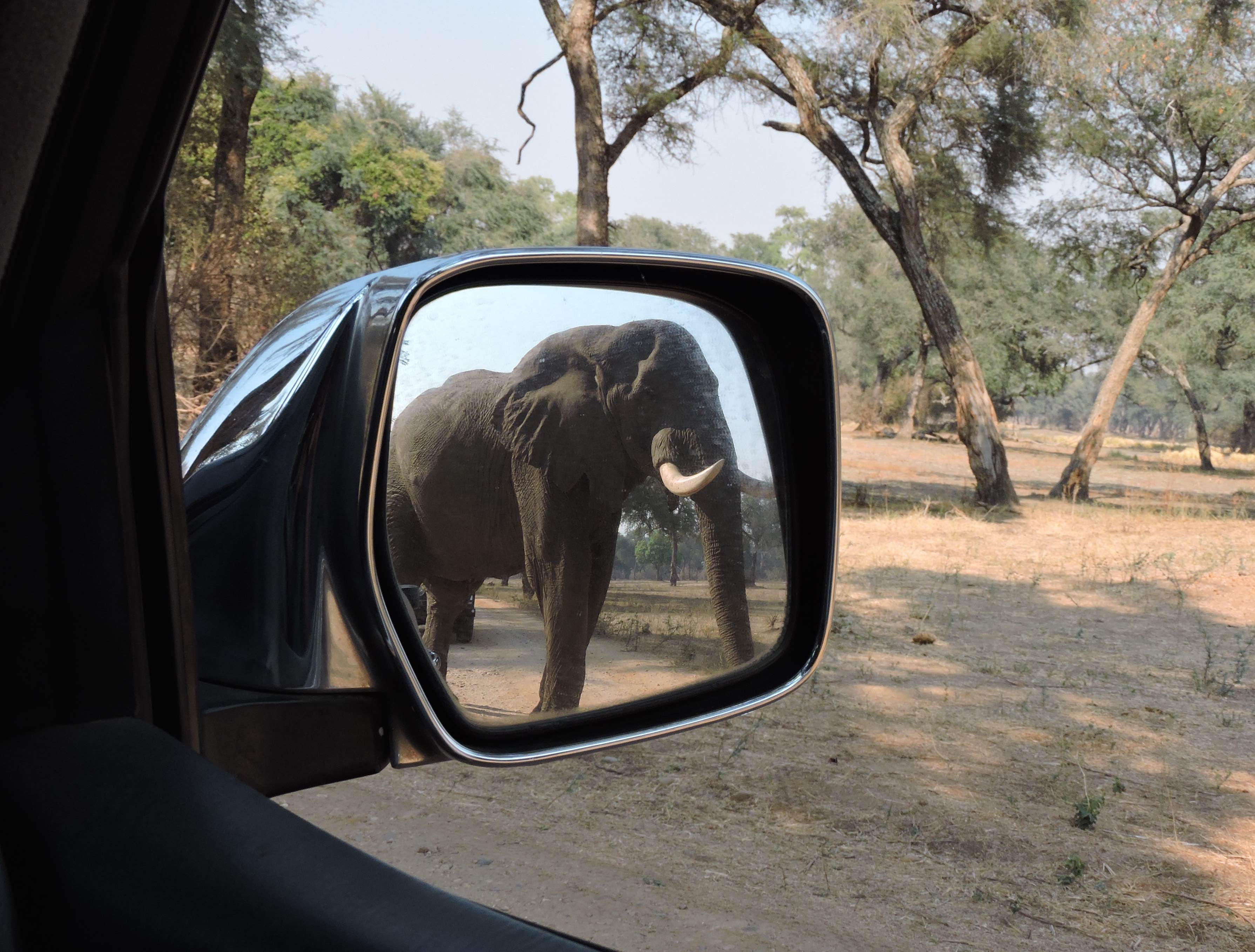
Before my pulse went back to normal I saw Big V coming the same way. I am not good at mathematics (in fact that is one of the reasons I became a vet!) but it was not too difficult to calculate that I have just had a near miss with a smallish bull in that spot and there was a much larger animal coming… I jumped in the car, relieved to be a coward!

The view through the mirror was a warning.

Watching events from the relative security of the car!

My wife meantime had cleverly placed herself on the other side of the car and was watching and taking pictures of my predicament while chuckling seeing me being squeezed…! Once inside the car I felt more secure and continued to shoot as the situation was amazing to miss even in fear!

Big V passed a metre from me and, once by my side its head moved towards me and I could see that he had dry skin as well as every detail of its tusks ivory quality.

My view suddenly got blocked...

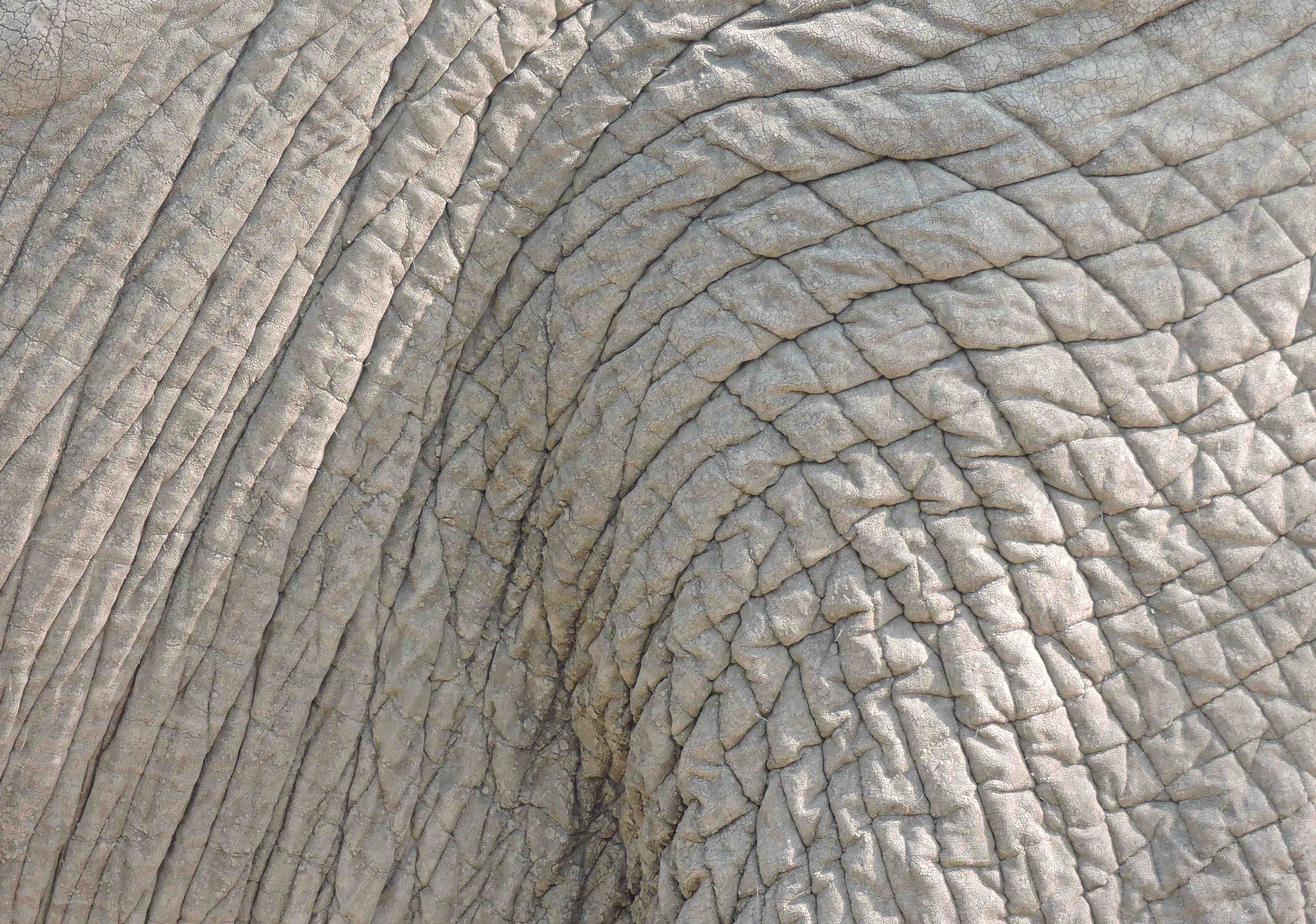
My view suddenly got blocked by Big V’s dry skin!

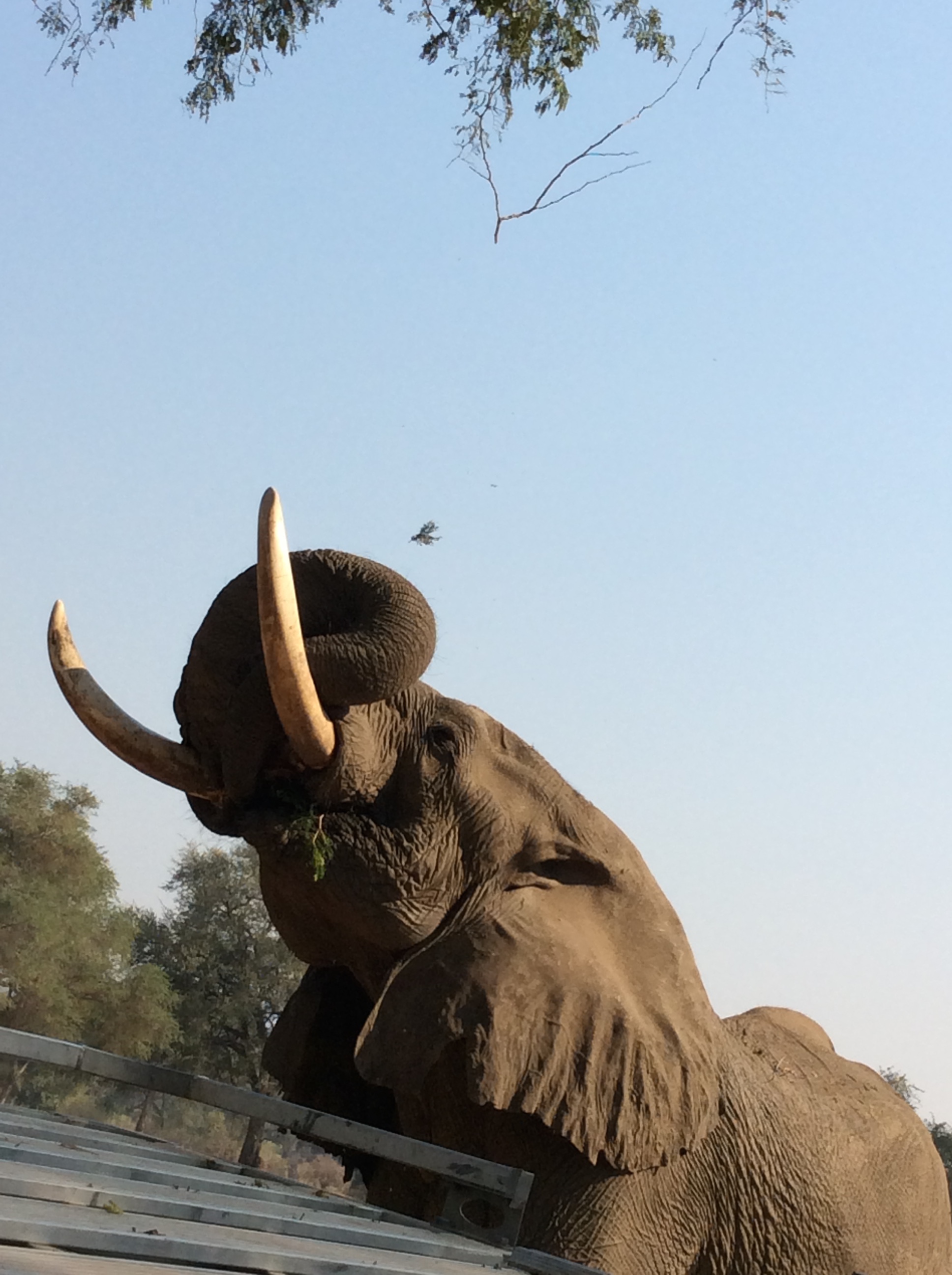
“This is ridiculous” I thought, “what is it doing?” I thought in a kind of resigned panic as I was totally at its mercy! Before I could find an answer his head disappeared from my sight as it stretched over the car to get at a particularly attractive pod!

IMG_0089_2 copy

I prepared for the bang (and how to explain the damage to the insurance company) thinking on the branch or branches that it was going to break and bring over the car! Luckily, it only got small twigs and I only had a “leaf-rain”.

IMG_0085 copy

I am afraid that my fingers did not respond to my mental commands for a while so perhaps my pictures do not reflect proximity too well! It was fortunate that my wife managed to capture the moment, even if between chuckles.

(A brief video taken by my wife showing the situation)

The elephant munched the result of its effort fast and moved on leaving me with the incredible feeling of having been under its shadow and survived, showing how tolerant of people the elephants in Mana Pools are!

A more relaxed bushsnob, posing.

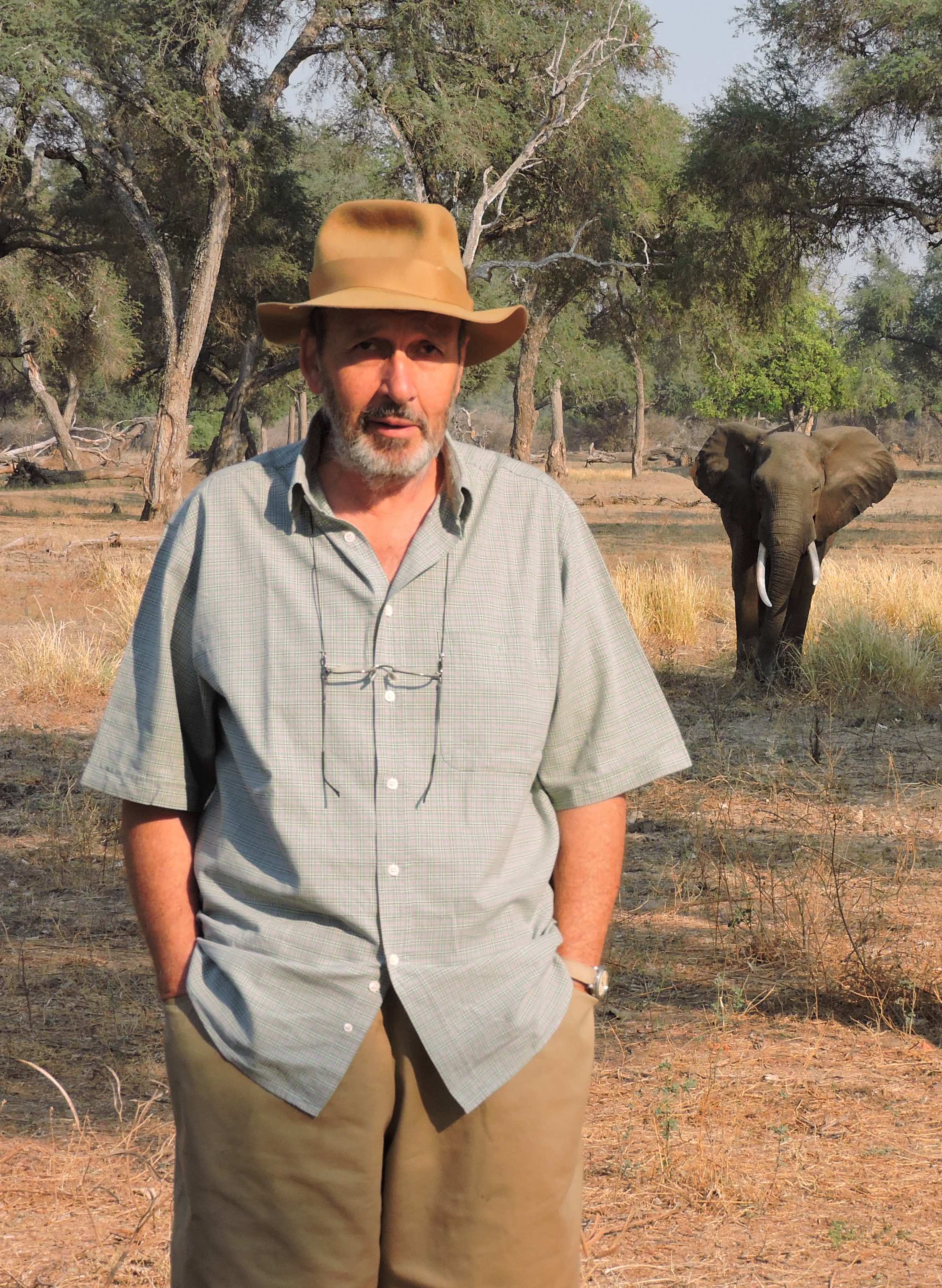
Survived! A more relaxed bushsnob, posing after the event with the askari in the background.


Gwaya camp, Mana Pools, Zimbabwe, September 2015.


[1] One or more younger males often accompany older bull elephants staying away from herds and these are referred to as “askari” a word from Arabic meaning “soldier”.

The three bills

Mana Pools has several oxbow lagoons that occupy the old course the Zambezi carved in the valley a very long time ago. There are four larger pools that give the name Mana (four) in the Shona language. Of the four I can name only name two: Long and Chini. I am still trying to name the others!

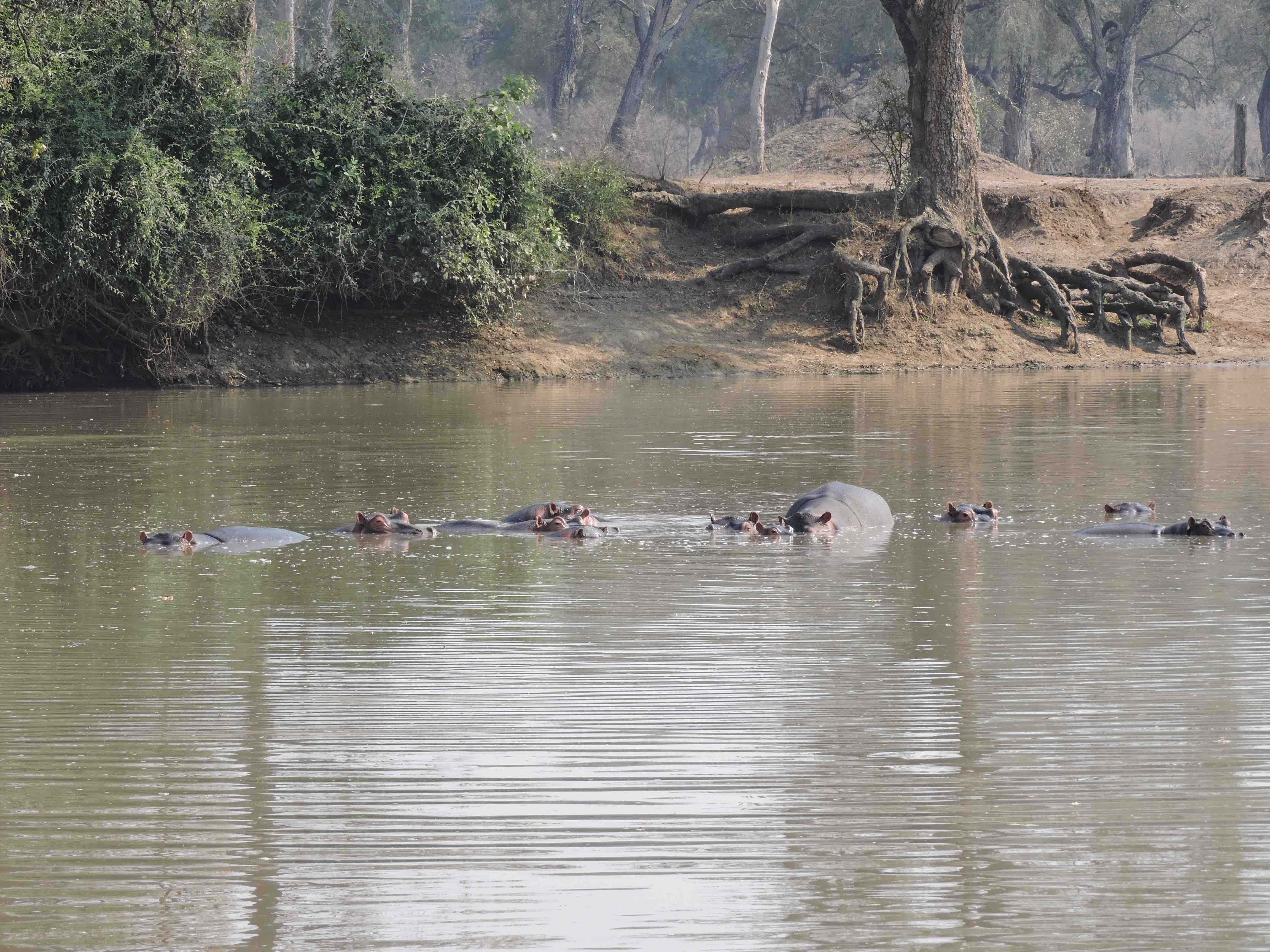
Long pool and hippos.

Long pool and hippos.

Long Pool is perhaps the better known of the four. It is a sizeable body of water where several animals are resident, including a large number of hippos and crocodiles, some of the latter really humongous, often spotted basking on its edge. With the exception of a grey heron that enjoys “hippo surfing”, most water birds are found in the shallows. The species and numbers present clearly depend on the season but Goliath and Grey herons, Hammerkop, and Stilts are normally present.

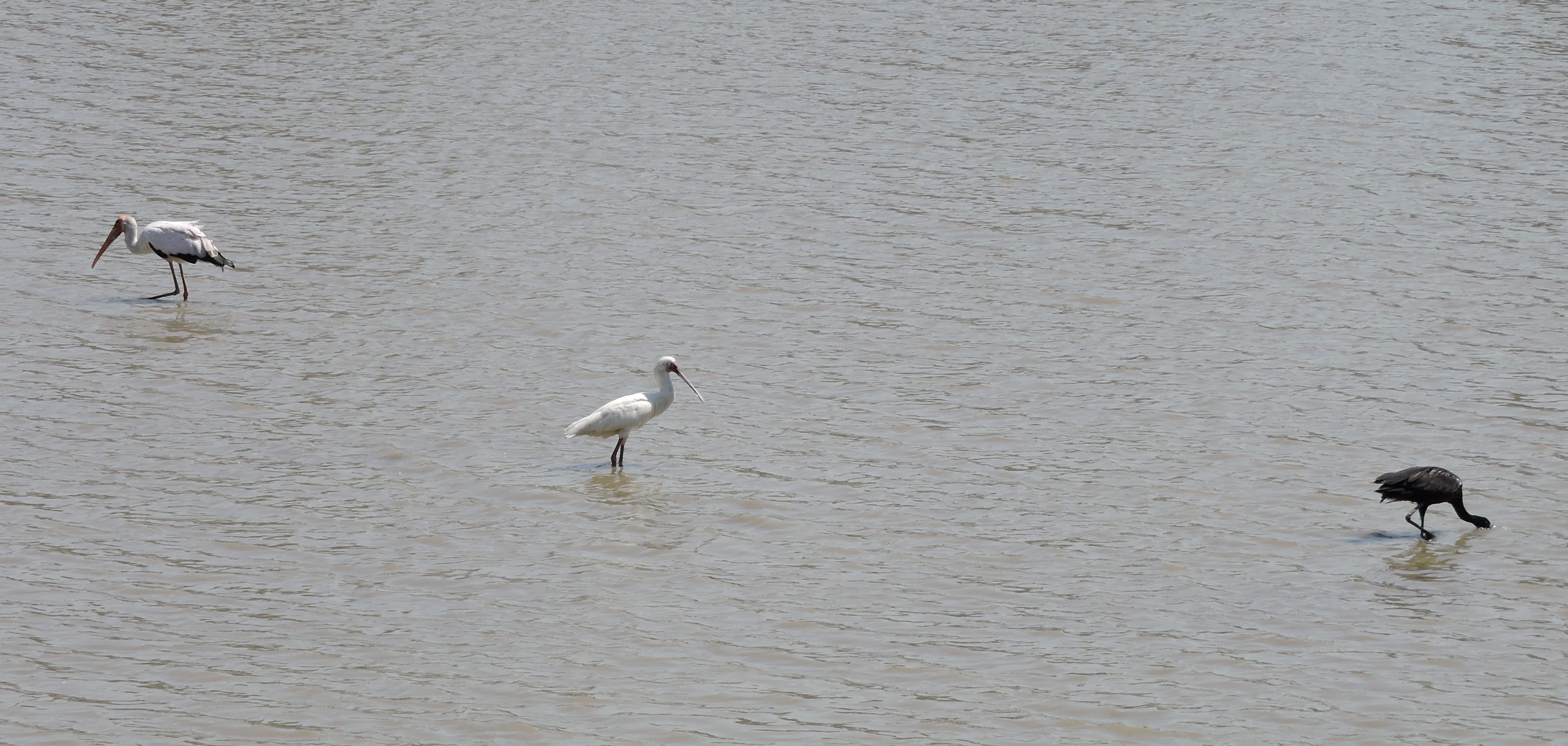
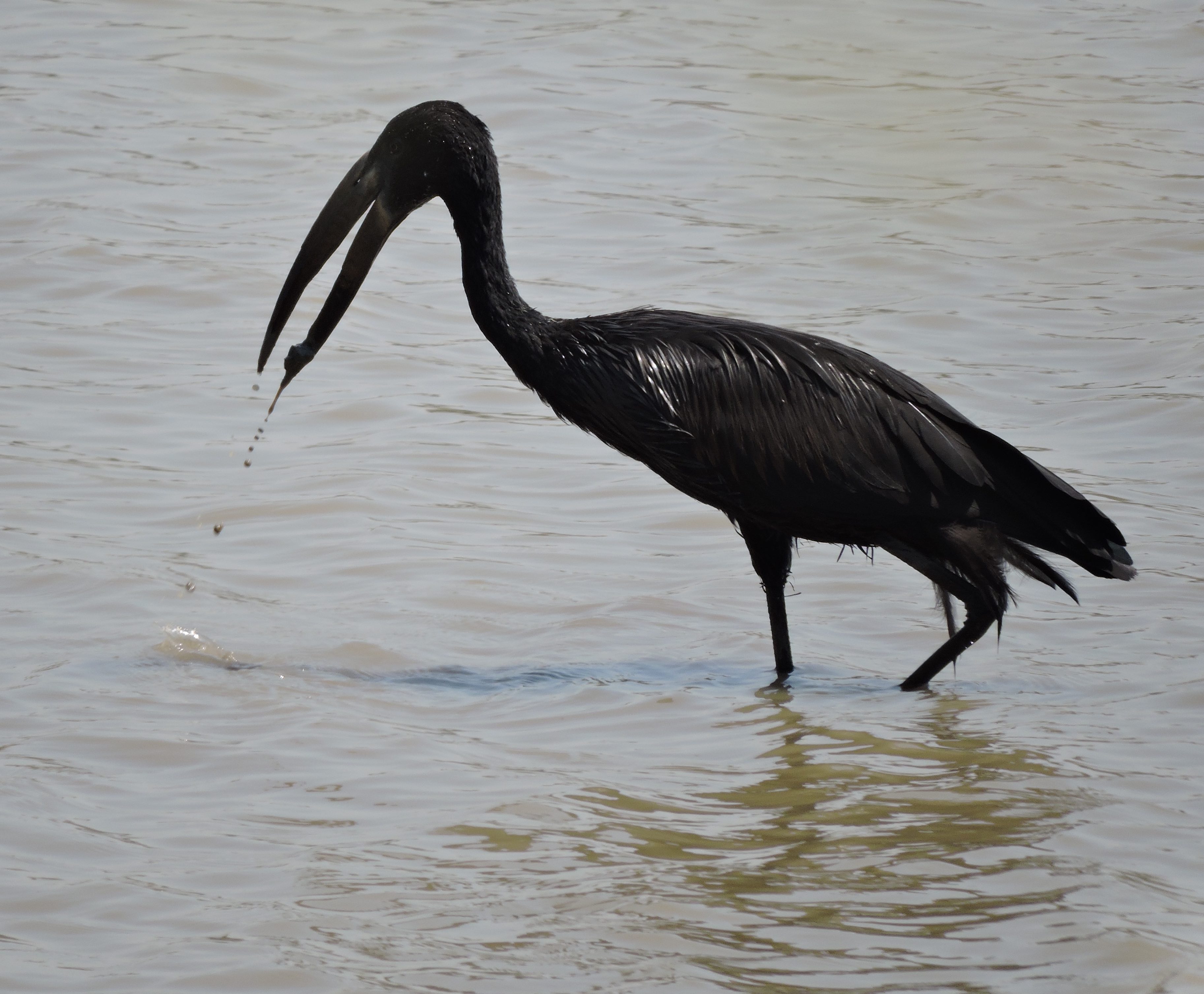
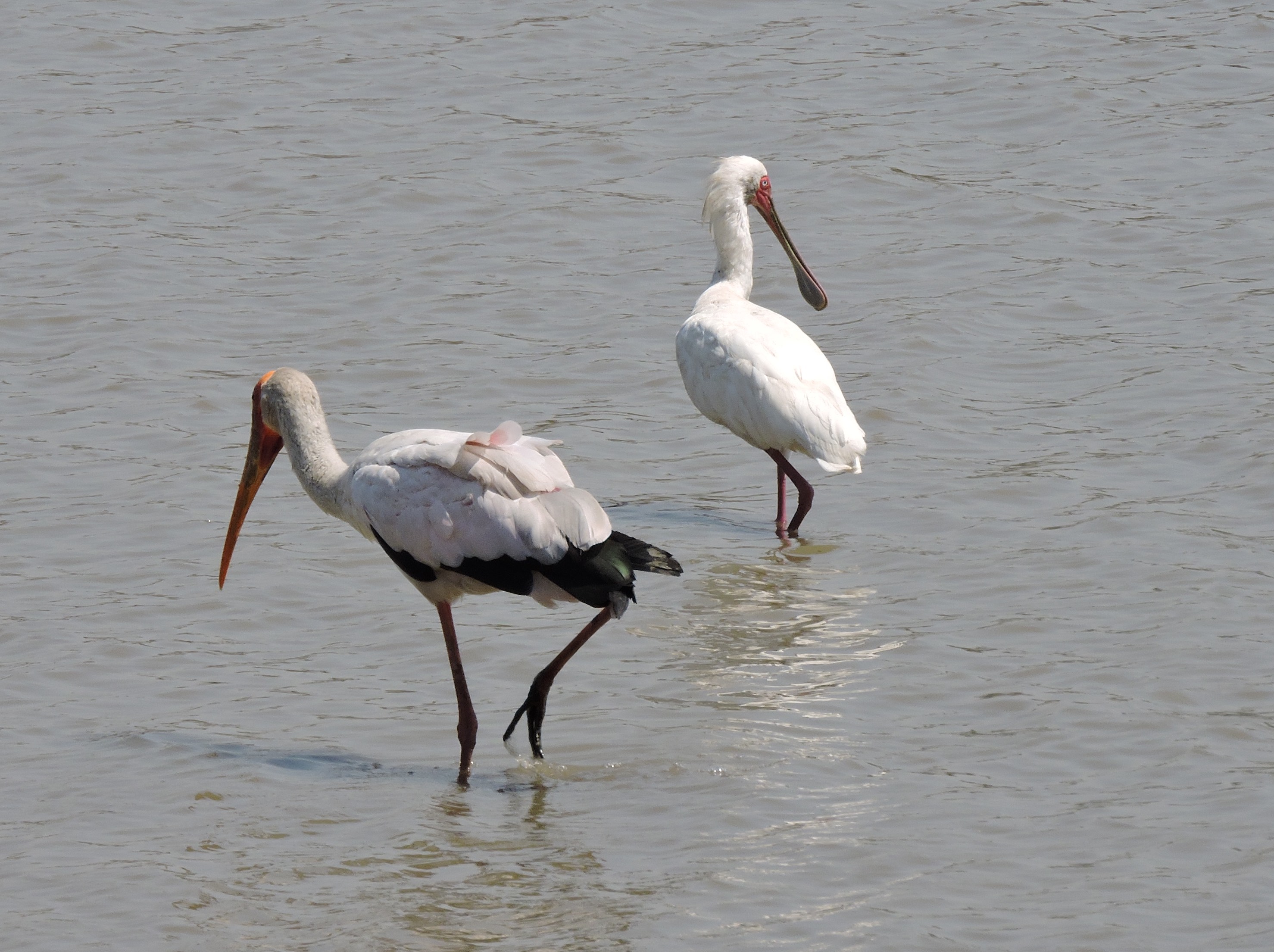
Obviously the bills of the birds are suited to different feeding strategies. On this occasion we found three different ones that actually give the names to the birds: the African Open-billed and Yellow-billed storks and the African spoonbill. They were sharing the same feeding ground at Long pool so we stopped and watched.

The three bills.

The three bills.

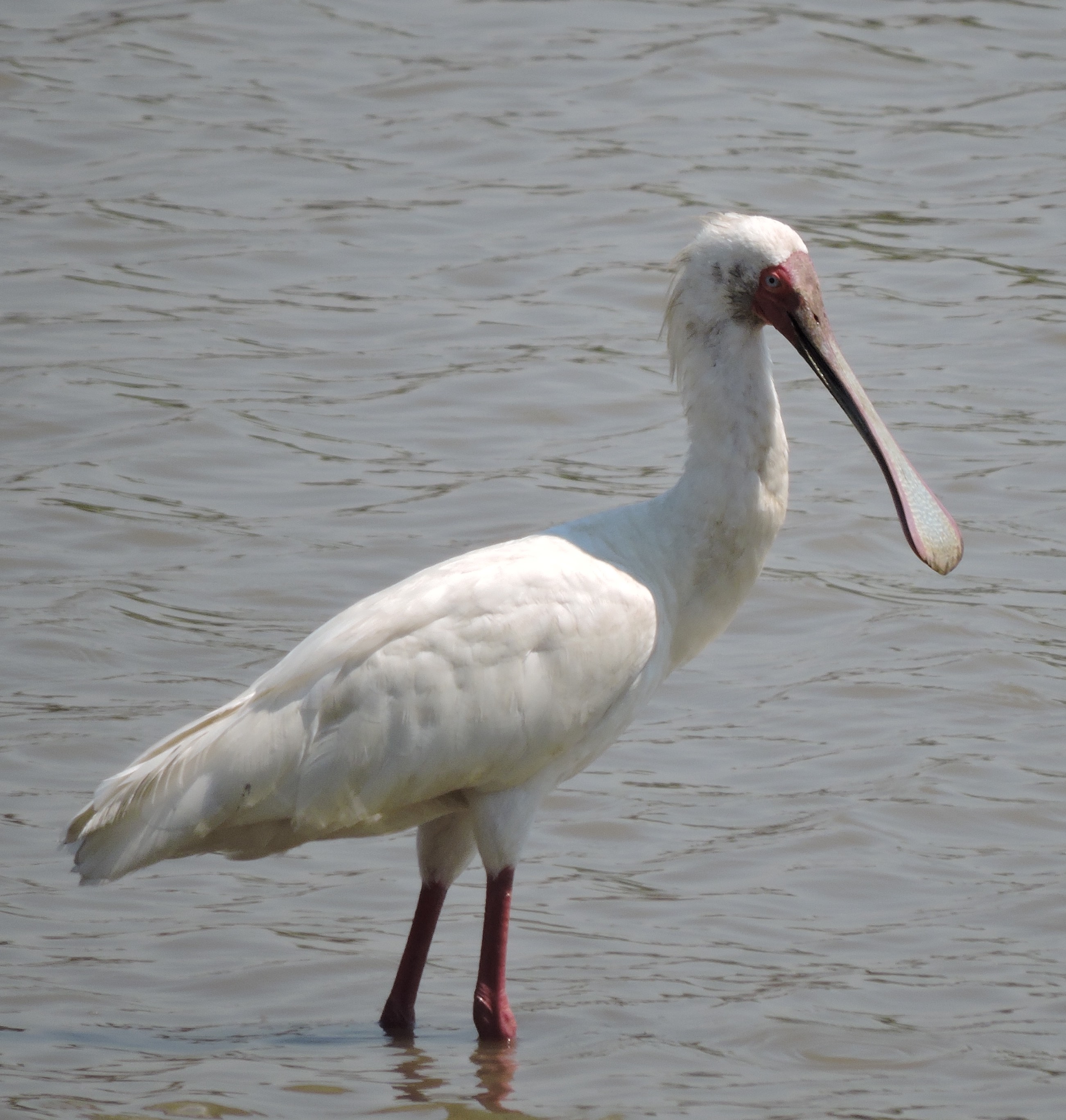
The Spoonbill, the less common of the three, waded through shallow water sweeping from side-to-side with bill open and inside the water. Occasionally it dashed around, chasing fish(?) like an egret does. When something edible was found, the bill snapped shut and the victim was swallowed.

A rare pause in the wadding.

A rare pause in the wadding.

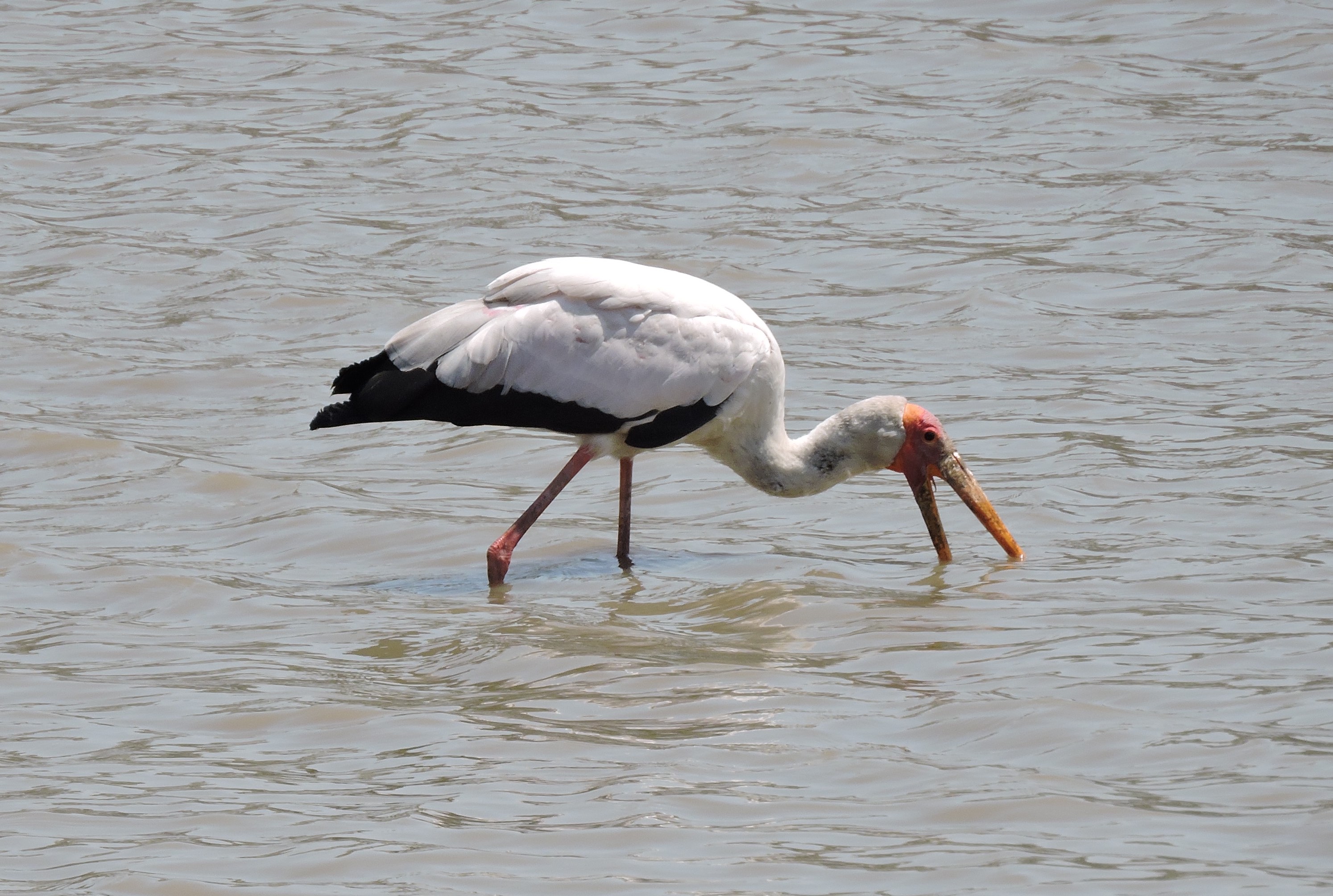
The Yellow-billed stork fed walking slowly with half-submerged and slightly open bill. As the later is very sensitive to contact with potential prey, it also snapped closed when that happened.

Typical African yellow billed stork feeding pose.

Typical African yellow billed stork feeding pose.

While the two bills from the birds above are odd, they make sense from the feeding technique point of view.

It caught something small and muddy!

It caught something small and muddy!

Feeding with your bill open and shut it when catching prey is one thing, feeding with your bill open and keep it open when shutting it is another! “A priori” it seems to be pushing nature’s ingenuity to extremes! However, the African open-bill stork was also wading and catching prey, though a bit muddy!

Further reading indicated that its bill is a highly specialized tool to perform an almost surgical intervention on its main prey: snails. It has several uses, depending on the size and type of snail: it either cracks it (large ones), removes its body by shaking its head or it cuts the snail’s columellar muscle[1] with its sharp tip.

Feeding together.

Feeding together.

Although the three birds feeding paths often crisscrossed, they were respectful of each other as if benefiting from each other’s presence. The say “when the river is dirty the fisherman benefits” is likely to apply here!

Mana Pools, Zimbabwe, September 2015.

[1] The columellar (shell) muscles of gastropods join the foot and other parts of the body with the shell. (Basically, keeping the animal together!)

Upset jumbo

After finding buffalo and lions close to camp, that night we heard lots of loud nocturnal noises, including lions roaring but also other unidentified nocturnal sounds that we allocated to hippo and/or elephants. In the early hours of the morning hyenas also called so our hopes were up and an early morning exploration of the surrounds was in order.

We followed the Zambezi down river, past the buffalo that were now moving towards the river, but we found no trace of predators. After a while we decided to try to contact the world again and went for the cellphone signal spot following our GPS (we had entered the coordinates on a previous visit). We searched fruitlessly for a while until we decided that probably the hot wind was blowing it away! We decided to get back to camp before the heat became more intense.

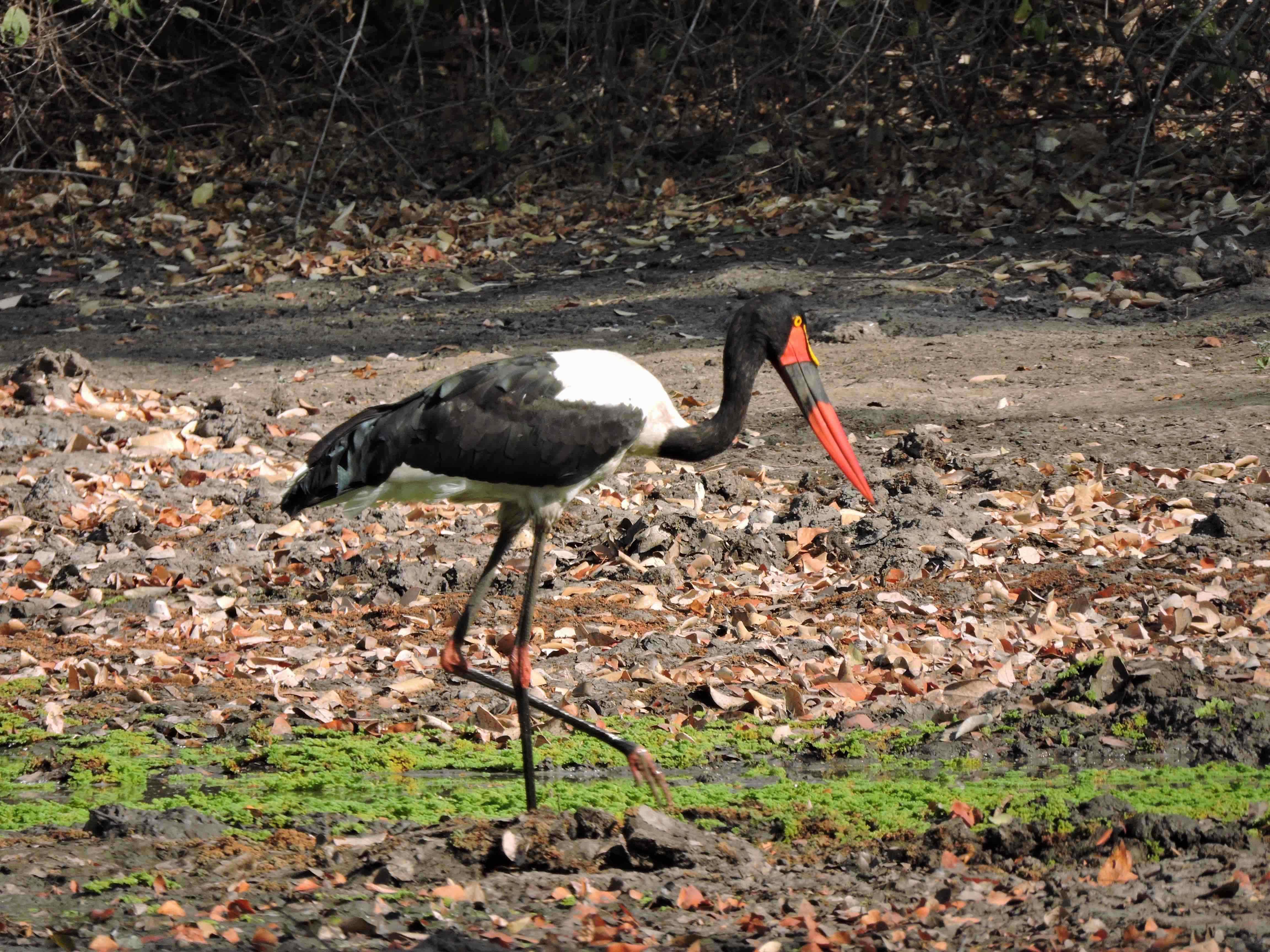
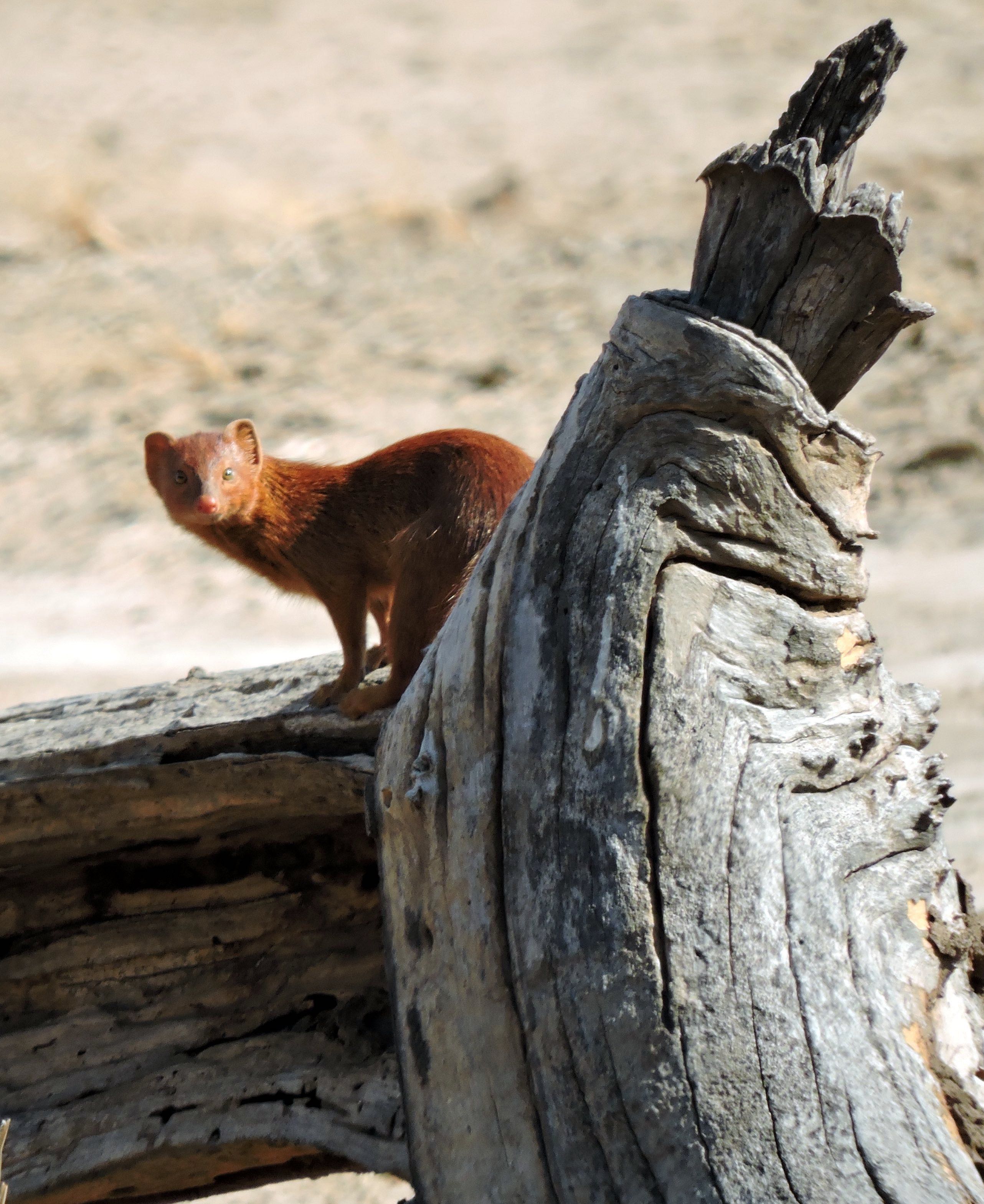
As usual we got delayed. First it was a pool where a very photogenic saddle-bill stork was wadding and then we watched the antics of a slender mongoose looking rather cunning!

DSCN9810 copy 2

DSCN9847 copy 2

We got back to Gwaya camp by lunchtime and it was already quite hot. As usual our elephant bull askari[1] was in attendance, waiting for us while browsing and picking up elephantine delicacies: the acacia pods from the Apple-ring acacias![2] Aware of our noisy arrival it gently moved off while we spent time putting together the mess the baboons make when you leave your camp alone.

The elephant decided to cross the river in search of fresh grass, its usual move. It decided to cross from our camp so I left the baboon-recovery exercise for a while to take a few pictures of the jumbo crossing.

DSCN6566

Unfortunately the shots were not what I thought so I only took a couple and then filmed its arrival to the opposite bank. For some reason it chose the steepest place. It showered and beat the water to get some mud before it climbed on the bank with some degree of difficulty. I stopped filming and went back to set right the baboon damage.

After crossing the narrow channel the elephants, usually, spend the afternoon on a wide grassy plain that exists between the canal and the main body of the river, perhaps 500 m away. I forgot about the elephant as it would only return later at night and be there tomorrow again. However, after about ten minutes from the crossing I herd it trumpeting and running back towards our camp, trunk up and shaking its head rather violently. It crushed back into the canal and started re-crossing it!

The jumbo returning.

The jumbo returning.

I saw it coming so grabbed the camera and placed myself at a good spot to film it coming back across the water. I videoed it while coming but, in my enthusiasm, I forgot that I was quite close from its exit and unexpectedly; he climbed the bank and charged me!

As you can imagine -at my age- I am not too keen to find out if an elephant is charging or mock-charging! Therefore my finger pressed the stop recording button and I withdrew.

The fact that I am writing these lines comfortably seated at home means that it was –luckily- a mock-charge and he stopped after a couple of more steps!

The reasons for its return and bad temper will remain a mystery and a matter of speculation. It could have been an encounter with a bee swarm, common at this time of the year, as elephants do not like them. There was also a bull buffalo nearby that could have irritated the pachyderm? We will never know but I did got my adrenalin rush!

After our interaction the cheeky elephant did not wander off but remain at camp, clearly as a demonstration of his unquestionable dominance over me! During that time we kept an eye on each other and I was careful to avoid having my siesta under his favored acacia, just in case!

A while later -after re-gaining its compusure- I saw it crossing back towards the Zambezi. This time he chose another spot about fifty metres up river and, this time, it did not come back until the following morning.

Gwaya camp, Mana Pools, Zimbabwe, September 2015.


[1] Guard in KiSwahili.

[2] Acacia albida

Camera recovered

As mentioned in the “Besieged” post of 5 October 2015, I had some difficulties retrieving the camera from its strategic location by the Zambezi as walking to do so offered some animal-related challenges!

Eventually, through a flash commando operation -with my wife watching my back!- I managed to get it and below are the results.

STC_0126 copy

STC_0142 copy

STC_0155 copy

STC_0182 copy


A hippo coming out of the river to feed at night.


Another one returning.


Leaving the river in early morning.


Waterbucks returning from drinking.


Besieged

While staying at Gwaya camp I explored its surroundings on foot to find a spot where I could place a camera to record what took place when we were not at camp and also to know which animals moved about at night. This camera is my latest gadget and an excellent source of entertainment!

I chose a spot, about two hundred metres upriver,  where two game paths led to the Zambezi.river. The path seemed well trodden and I believed that animals would come down to drink there as, after negotiating a couple of dried mud steps (carved by wild users!), the river could be accessed in relative safety for a drink.

The following morning I got a few videos that confirmed that animals did use the paths. However, I had placed the camera too close to the passers by and the results did not convince me. I decided to move the camera to another place from where a wider view of the spot could be obtained. I returned to camp very satisfied but cautious as I needed to walk round a group of elephants to get back! These elephants are always there so it was no great deal to avoid them as they are tolerant of humans.

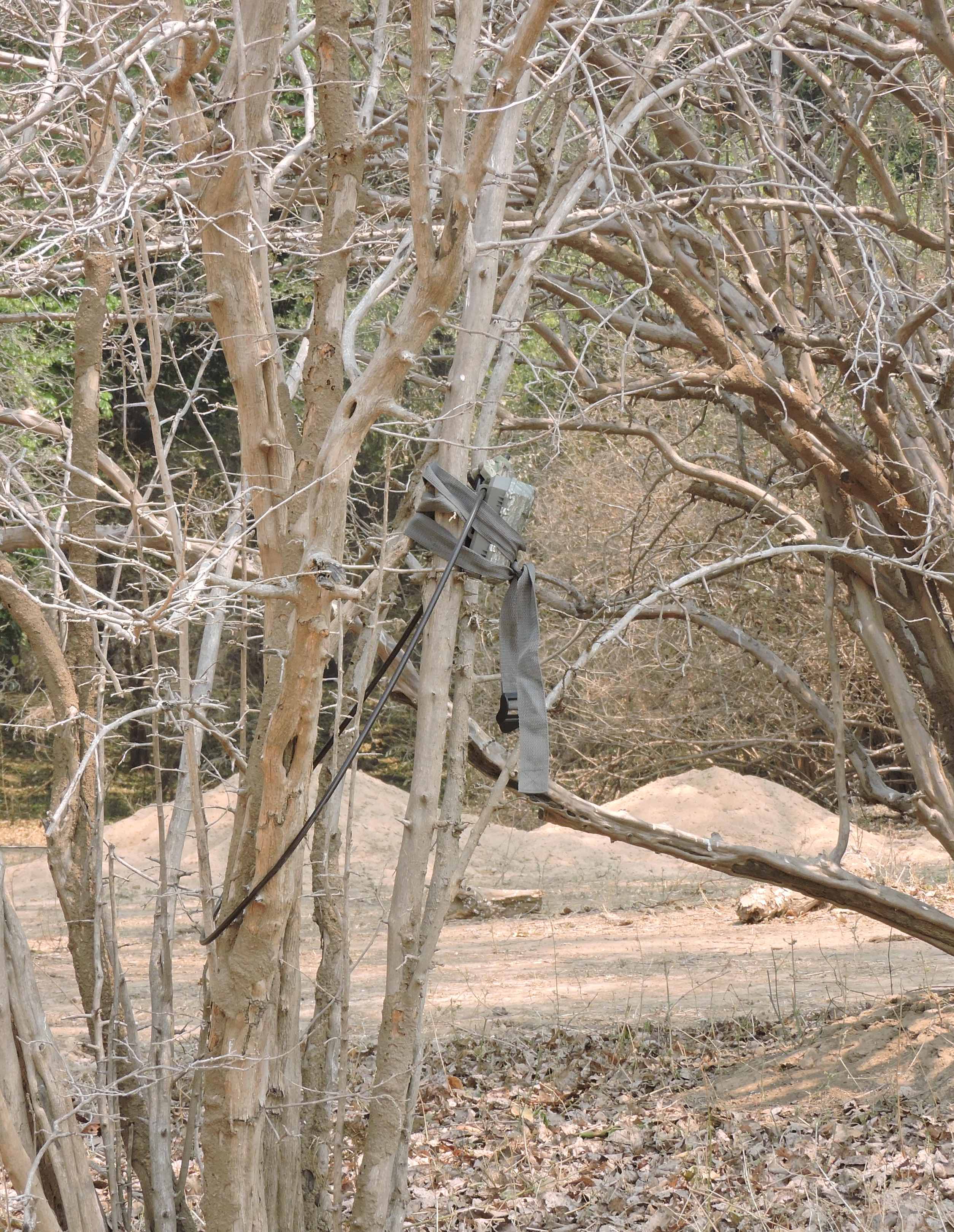
The camera in position.

The camera in position.

DSCN6778 copy

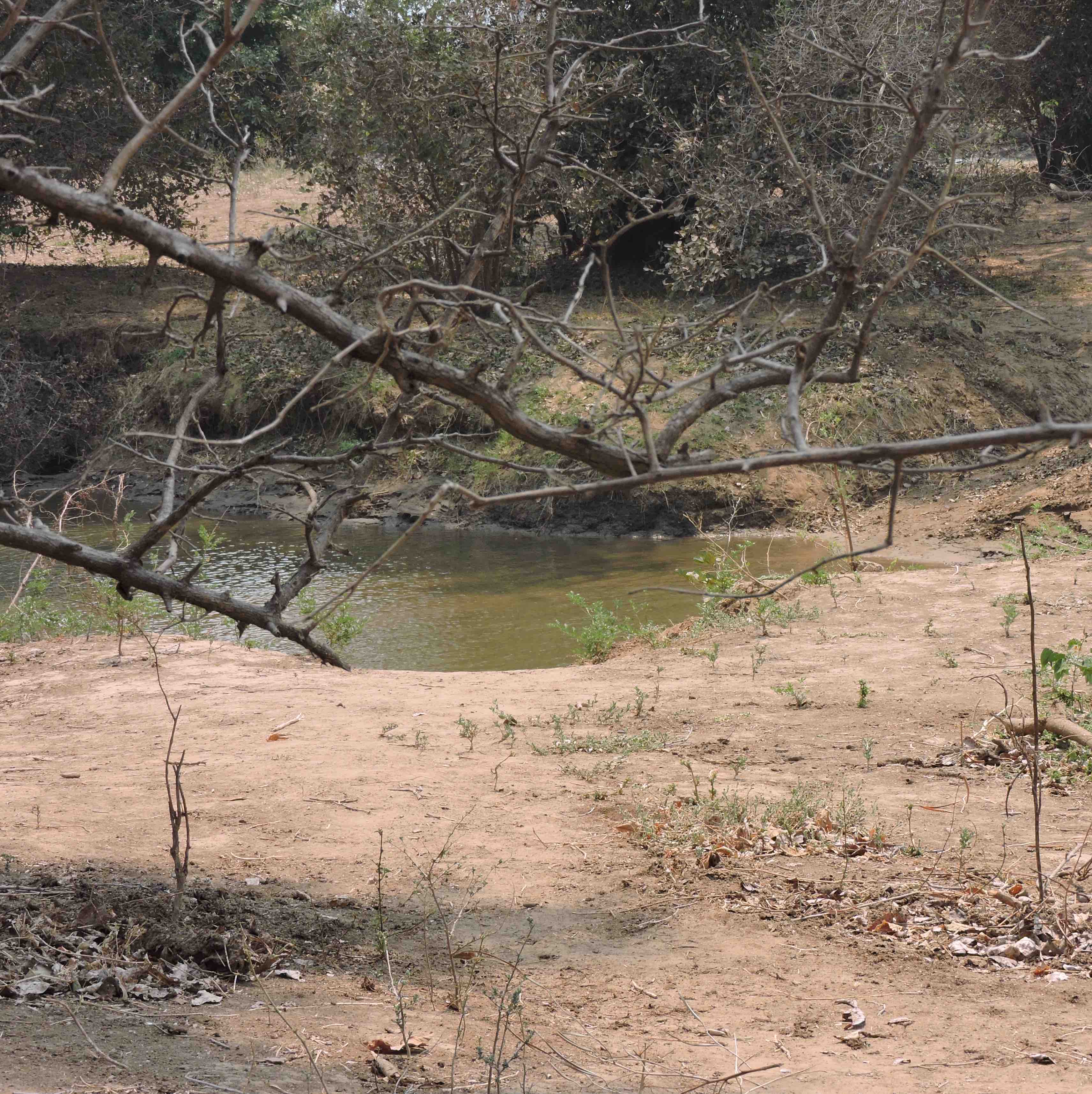
The view from the camera towards the Zambezi.

The plan was to return to the camera the following morning to download the information from the memory card and then decide what to do next.

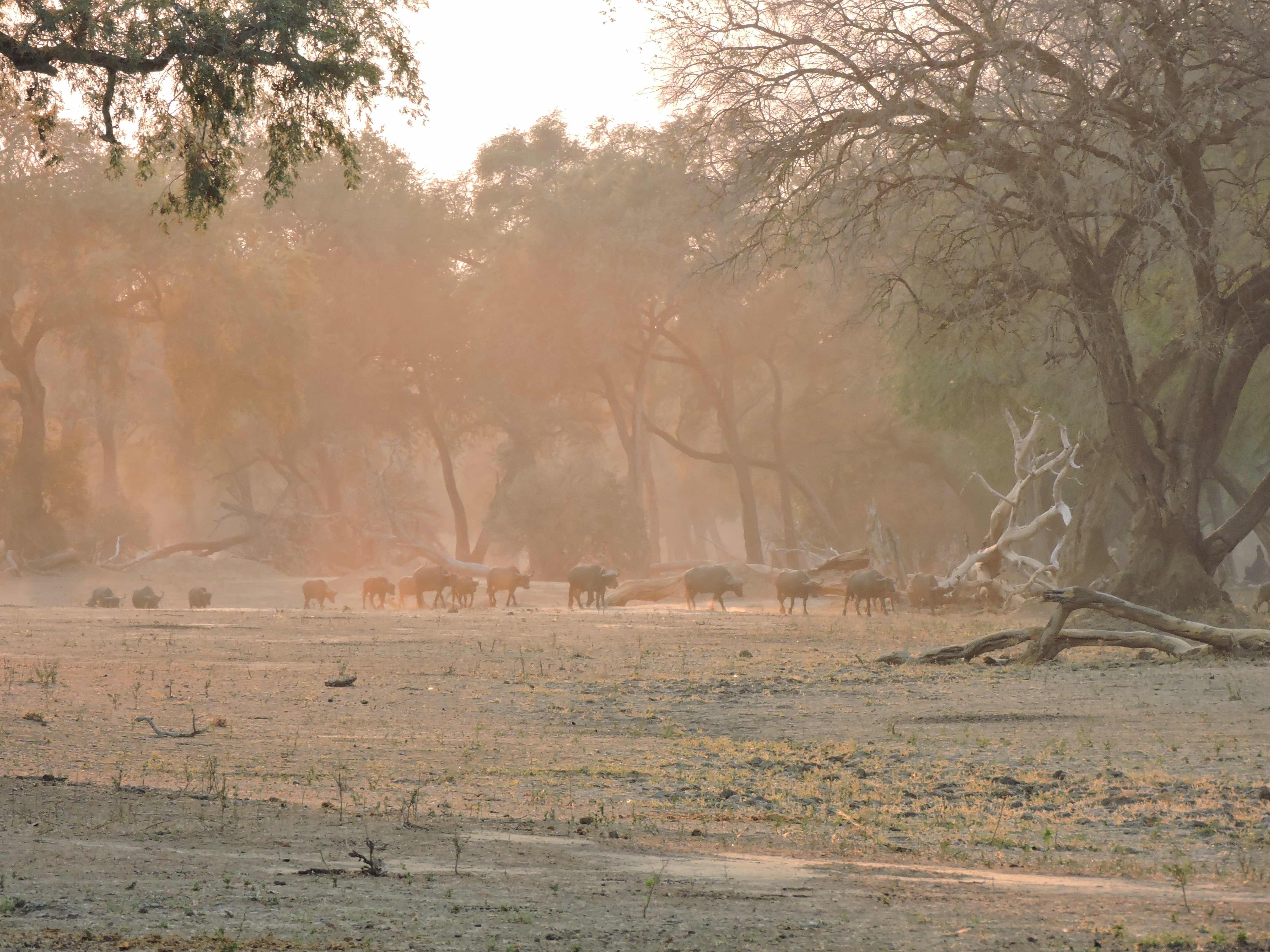
Early next day we spotted a very large herd of buffalo  moving towards the Zambezi about one thousand metres from our camp (as the bird flies). “Mmmm,  retrieving the camera will be tricky!” I thought and it was not difficult to reach the decision of leaving it where it was for the time being!

The buffalo marching towards the Zambezi, a few hundred metres from us.

The buffalo marching towards the Zambezi, a few hundred metres from us.

It was a hot day so, after lunch a siesta was a must! I am not sure if I slept or passed out because of the heat but the result was good as I felt rested and, when the temperature started to decrease, we moved off for a drive, towards the buffalo. We spotted them immediately as soon as we came close to the main road. They were spread out, still in the same area.

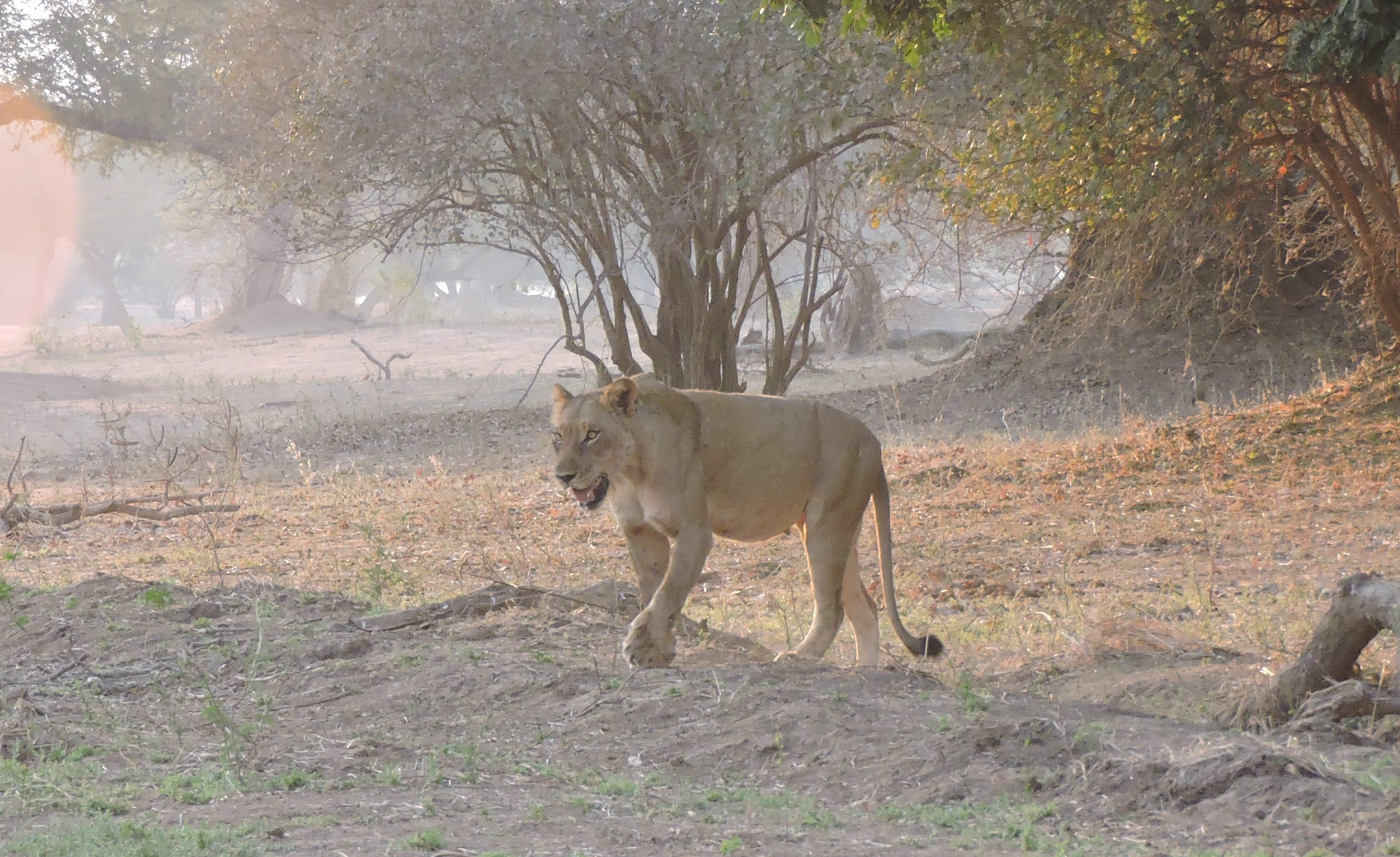
We watched them for a while while making comments like : “if it is true that lions prey on buffalo, now is the time to find large cats”. We then noted a car parked under a tree, watching the buffalo like us. Or so we thought… When, after a while, we overtook them they pointed out to the side of the road. We had just missed a lioness lying one metre from the track! It was an elderly animal -probably sick- and it was panting heavily. We came back to apologize for having driven between the lioness and the other car, and were told that there were more lionesses and cubs in the thicket, about two hundred metres from us! So much for our game spotting skills!!!

After looking intensively at all possible bushes from different angles we did spot the group. They were four lionesses and three cubs. They had clearly fed recently as, particularly the cubs, had greatly dilated bellies! So we now had elephants, buffalo and lions (three of the big five!) around our camp!

Lioness moving back to the thicket after drinking.

Lioness moving back to the thicket after drinking.

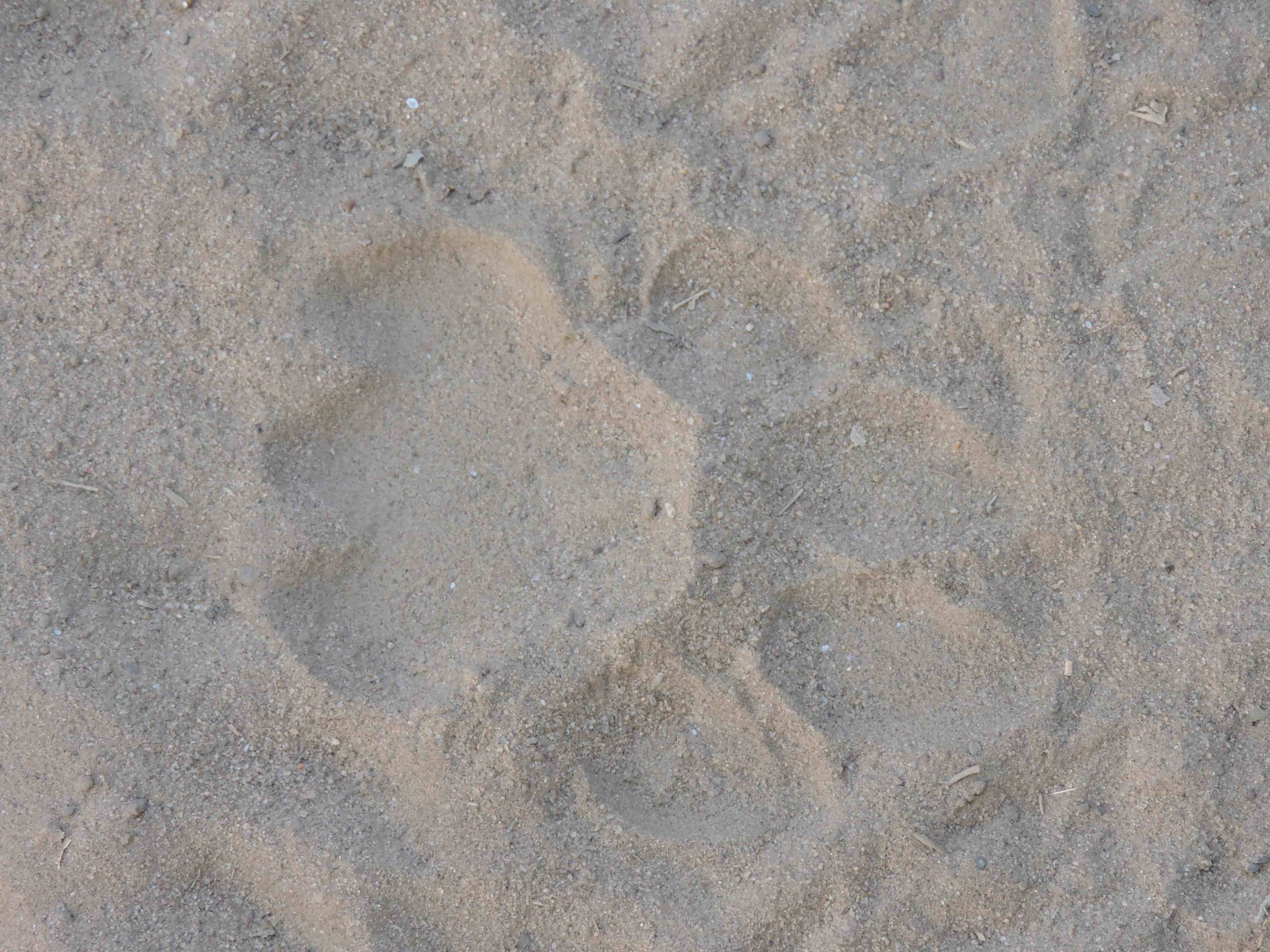
Lion spoor around our camp.

Lion spoor around our camp.

As elephants are very tolerant and the lions had fed, my main concern were the buffalo. The latter had now spread all over the surrounding bush. Clearly the camera would remain in its current location until the animal siege to our camp was finally lifted!

I did eventually managed to retrieve the camera and got some interesting takes that I will present to you in a separate post.

Gwaya Camp, Mana Pools, Zimbabwe. September 2015.

Talking ants

Our first stop during our afternoon game drive from Gwaya after setting up camp came quite soon. In fact, we stopped while we were still in the campsite grounds. I did a kind of emergency stop to the surprise of my companions that were still settling down for the drive. Startled, they looked around but could not see nothing so, I am sure, they waited for one of my jokes as I do have a reputation! After a while I heard “This is one of your jokes right?” coming from Tom, but I was (quite) serious.

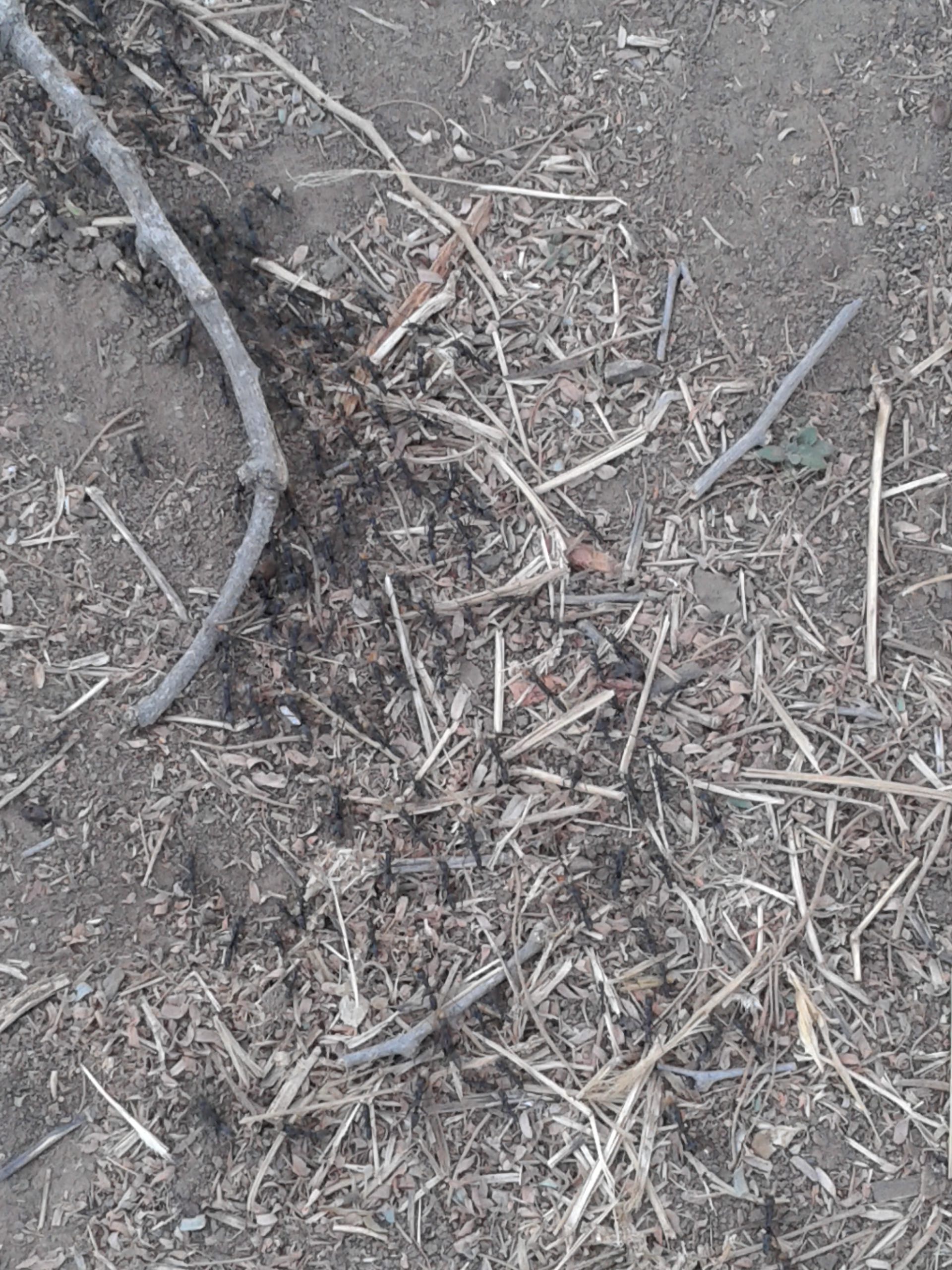
The only picture of the ants, taken by my wife.

The only picture of the ants, taken by my wife.

I had spotted a column of Matabele ants[1] crossing the track. We had seen these ants in action earlier in Zimbabwe while entering termite nests and, after a while, emerging with bundles of termites in their jaws, both workers and soldiers! These are specialized ants as they feed exclusively on termites, leaving their colony “en masse” to search for termite nests where they will all enter and attack the nest carrying their victims back to their colony. They normally raid at dawn and dusk so we were probably seeing an evening raid returning home empty-jawed.

When disturbed these ants emit a high pitch squeaking sound that we have not heard from others such as the safari ants or siafu (Dorylus sp.) of East Africa or the leaf cutting ants we have in South America. For this reason, when the ex President of Uruguay Pepe Mujica mentioned that ants whispered in his ear while spending two years at the bottom of a well during his prison sentence, I had no difficulty in believing his words!

The ones we found were carrying their eggs and young and there were not more than three hundred individuals, organized in a thick column. They were moving like an army and entering a hollow dead tree trunk, probably their nest. At the time of the observation I was reading Conn Iggulden’s Genghis Khan series and their behaviour reminded me to the Mongol raiding tactics!

When we were about to leave them to spend the night in their nest we noticed about twenty ants bringing the rear. At first we thought that these were the old and injured, struggling to keep up. But their behaviour seemed odd! They were not moving slowly or lacked any legs! They were performing an activity that was part of their moving strategy. They were clearly following the trail of the group but they were picking up sticks, leaves and other debris and moving them slightly as if trying to “restore” the path they group had trodden to its original condition!

As this seems far-fetched, perhaps they were just either erasing their earlier pheromone trail or releasing new ones to indicate their presence to other creatures?

Once these “strugglers” reached the hollow trunk, they also got inside to join the others. They were in for a hungry night.

September 2015, Mana Pools, Zimbabwe

[1] Megaponera analis, one of the world’s largest ants are named after the fierce Matabele warriors.