Historical

Episodes of African history connected to wildlife or guides, hunters, explorers

Kenya: Muguga[1]

The last night at the Fairview Hotel was a good one and I enjoyed my breakfast in the garden, where I noticed that birdlife in Nairobi was prolific and that there were not only several bird species but there were also large numbers of them! I did not know their names yet, apart from the ubiquitous sparrows that I knew from Uruguay. I was amazed to see birds so tame, in particular a kind of iridescent blue ones with cinnamon chests[2] that would come to my breakfast table expecting something from me! “Cheeky ones”, I thought.

The access to the Fairview Hotel.

The access to the Fairview Hotel.

It was light by 06:00 hours and dark by 19:00 hours so, unless you covered your ears, it was impossible not to be woken up by the early loud bird chorus. As it is customary, a cup of early morning tea is brought to your room and I had asked for mine for 06:30 hs, had showered and packed my bags before I went down for breakfast to be ready for Matt’s arrival.

A Superb Starling (Lamprotornis superbus).

A Superb Starling (Lamprotornis superbus).

The hotel was good and, thankfully, economical as I did not get any perdiem as a FAO Fellow and my stipend was rather modest. I needed to watch my expenses all the time. Clearly aware of my modest income Matt had booked me at a Government’s Hostel in Muguga, known as Muguga House until more permanent accommodation could be found. Muguga was then about 30-40 minutes drive North of Nairobi, in the direction of the Uganda border.

Packing Matt’s car -a smallish Honda Civic- was trickier than expected. One of my bags filled the boot so I went straight for the back seat, only to be warned by Matt “Wait, this is my portable Office archive” I looked up and only then noted that the back seat and floor were covered with papers and publications. “I need to be in several places so I carry the work with me” said Matt while piling papers on the floor in no particular order!, until my bag fit.

We drove straight to the hostel at Muguga. The place consisted of a central building where the administration and common facilities such as dining room and bar were located and a number of two- and three-room cottages with toilet and bath, scattered throughout ample wooded grounds. Matt had already booked me a cottage so my settling in was smooth. I noticed that several cottages were occupied and wondered who my neighbours would be but I left this for later. I adverted the Manageress of the arrival of my wife in about one month and arranged to pay monthly. I also deposited some advanced money for the use of the bar and I was settled.
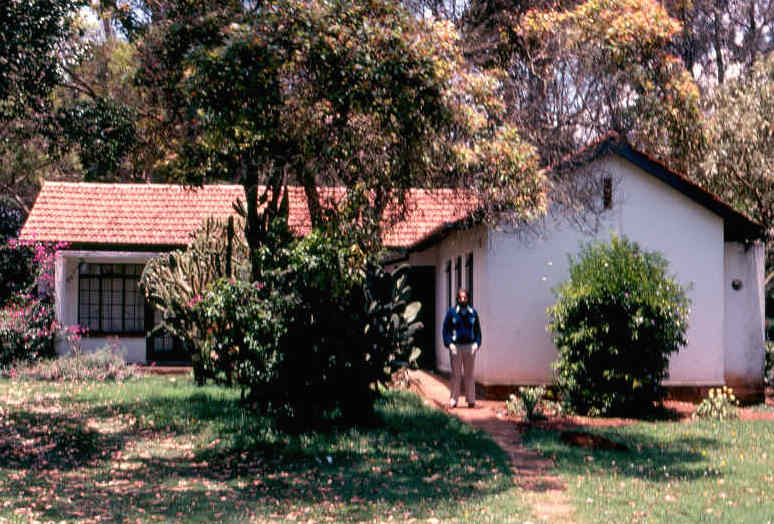
Our bungalow at Muguga House.

Our bungalow at Muguga House.

After Muguga House, we toured the very large grounds of the Kenya Agriculture Research Institute (KARI) where we saw the various establishments based there such as the Kenya Veterinary Research Institute (KEVRI) and the Kenya Trypanosomosis Research Institute (KETRI). Matt pointed out the ICIPE’s “laboratory” at KEVRI. To my eyes it looked like a very small barn but I kept the comments to myself.

We did not find any of our prospective collaborators as most were on leave and others outside the Institute so Matt decided that lunch would be at ILRAD’s restaurant, so we drove back to Kabete, about half way between Muguga and Nairobi. While KARI impressed me as a formerly beautiful place built by colonial Britain and getting slowly worn down by lack of funding and maintenance since Kenya’s independence, ILRAD belonged to another planet! It was a modern and beautifully set campus with manicured lawns and all possible facilities to perform research on livestock diseases. To me it looked like a grand place tailored for high-powered research with several state of the art laboratories and all the necessary equipment that scientific research would need. All of this was nestled in a lovely hilly area where the central manicured lawns and woods were surrounded by grasslands where lovely zebu cattle grazed. “Julio, welcome to ILRAD” said Matt while finding a place to park among the abundant 4WDs and other expensive cars. I could not believe my eyes!

While walking towards the canteen Matt explained that ILRAD was created in 197… to solve two problems Trypanosomosis and Theileriosis. “A difficult job” said Matt and added “I know lots of people here and we will meet a few over lunch”. The restaurant followed the style of a university campus restaurant and it was very busy. The diners were of mixed race and different nationalities. I was amazed, as Ross seemed to know everybody. He walked straight to a large table at a corner and introduced me to the Director General and his Argentinian born wife. I also met many other people that day. The place was a hive of activity and the closest resemblance to a place I had been was the University of East Anglia in the UK while I learnt English prior to my MSc studies in North Wales. It was both stimulating and rather intimidating but, above all, totally unexpected!

After lunch we toured the laboratories and talked to even more researchers about what they were doing until Matt decided that we had done enough and it was time to leave. He invited me to pass by his house in Tigoni, North of Nairobi, for a cup of tea. Matt’s invitations were more decisions than invitations so I was not given a chance to refuse, despite being rather tired by then!

It was a worthy visit as another huge surprise awaited me. His house was a lovely British-style house with a tiled roof and stonewalls, located in beautiful woodlands. A stream ran through the large grounds and this was the source of water for the trout ponds being developed. I could see at least three from the house.

Although she was not informed of our visit[3] his wife gracefully invited us for tea and cake in the lovely garden. Afterwards Matt gave me a guided tour of the trout dams with two of his three young sons. The third one was busy becoming a plane pilot in Nairobi Wilson Airport. It was an impressive development as three dams were being built and there was a lot of activity. Clearly Matt was serious about his trout! Afterwards it was his wife’s turn to show me their flock of African Gray parrots. About eight young parrots were kept in a large enclosure. They were young fledglings when seized as part of an illegal shipment at Jomo Kenyatta Airport. “They were in bad condition when we got them but we were lucky to get them all back to good health” said his wife, proud of her achievement. She also informed me that once fully grown they would be returned to the Kenya Society for the Protection of Animals for distribution.

Matt somehow interrupted the “parrot tour” to bring me back to his verandah as he wished to show me something. I followed him until he stopped facing the dams. “Julio, this has been my dream since I left Scotland” he said and then added “I will catch them from here when I retire and cannot walk anymore” he said, mimicking the fly rod movement from his verandah and laughing heartedly. It was clear that Matt and family enjoyed a very good standard of living that, in my ignorance, I did not expect to find in Africa!

The more I listened to Matt the more I gathered that he was a man with many dreams and ideas both private and professional. While the trout dams being built belonged to the former, the achievement of an immunization method against ECF was clearly part of a realized professional dream. A more recent one was the development of the vaccine against ticks and he talked about it as if it was something really achievable. However, it was clear that his veterinarian’s heart was with ECF work while the tick work -mine included- was more of a necessity for him, despite his infectious enthusiasm.

I continued listening to Matt for the rest of the day and it helped me to get an initial understanding of the persona as well as the worker. It was clear that as someone who got to the top of his working area, he had made himself a few enemies, both black and white. Realizing that I would have to share them I listened carefully. As most people in Kenya at the time, he had a rather colonial view of racial relations! I learnt that he had a long-term rivalry with a Senior Government veterinarian as well as with other British colleagues. He had a clear dislike for one and described his face as looking like “a weasel peering out of a bear’s ass”. I did not really understand what that meant until later!

We drove back to Muguga at the end of the day, still talking and making future plans. We agreed to meet again in a couple of days to carry out a few protocol visits: Government, FAO and ICIPE to start with.

I got back just in time for dinner and to get to know some of my future housemates. There were several Kenyans from up country, Ugandans and the ubiquitous British. I shared the table with some of them. Food was simple (some roasted, boiled or curried meat with rice and occasionally salads), soon to get boring, particularly the boiled cape gooseberries and custard dessert that I eventually learnt would be a lunch and dinner ending feature forever!

More interesting was the after dinner conversation held in the main hall. Most of the guests were long-term and worked in different institutions at KARI. There were mainly agronomists, biologists, foresters and veterinarians and the topics of conversation were Kenyan politics, sports and comments about life in Muguga House. It was entertaining and interesting as well as informative and some of the friends I made there remain friends to this very day!


[1] Follows “Kenya – The Beginnings”.

[2] Later I identified them as Superb Starlings, a common bird in East Africa.

[3] No cell phones then!
Kenya: the Beginnings[1]

Recovered from my curry dinner and rested I met Matt, my future supervisor. My first impression was that he did not take much notice of his personal appearance. He was tall with stooped shoulders, going bald and had somewhat bowed legs. He wore khaki gray trousers, a long-sleeved shirt, a green cardigan and Clarks shoes (always the same model that he never changed[2] for the years I was with him!) and, at first sight, he seemed friendly and direct but also demanded respect. He spoke with a strong Glaswegian accent that took a while for me to get used to.

We had a cup of coffee and talked for a while and then he invited me for a tour of Nairobi as he said “Julio, we can talk while we see the city and tomorrow I will take you to Muguga House where you will stay for the time being”. I was delighted, as I had no transport. So we spent most of the day together and I got a valuable briefing on important issues for my future. Most importantly, I liked him and I thought then -I believe correctly- that he also liked me in his own way.

Matt had been born in Scotland 58 years earlier and graduated as a veterinarian in Glasgow. After working in Pakistan (he was very proud of his Urdu), in the 60’s he moved to Tororo in Uganda to work on African Animal Trypanosomosis[3]. His important findings on the epidemiology of this deadly disease placed him in a prestigious place in the parasitology world, particularly in the African context.

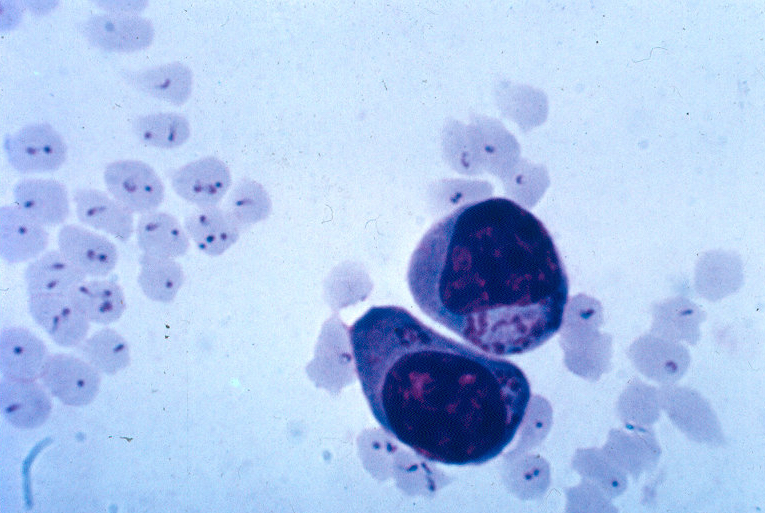
His success prompted FAO to hire him in Kenya to spearhead a very large programme to develop a protection method against another cattle scourge in East Africa: Theileriosis [East Coast fever (ECF) or Corridor Disease], caused by a blood parasite -somehow similar to Malaria- known as Theileria. Those were the days of the early East African Community composed by Kenya, Tanzania and Uganda. The Brown Ear Tick (Rhipicephalus appendiculatus) is ECF’s vector[4] inoculating cattle (and other wild animals) with the Theileria parasites from its salivary glands, and, most of the time killing the susceptible animal. Some wild animals such as African Buffalo survive the infection and become “carriers” of the parasite, a kind of storage for the disease that can jump again to cattle through the ticks as the latter feed on different hosts.

Theileria schizonts (inside cells with nucleai) and infected erythrocytes.

Theileria schizonts (inside cells with nucleai) and infected erythrocytes.

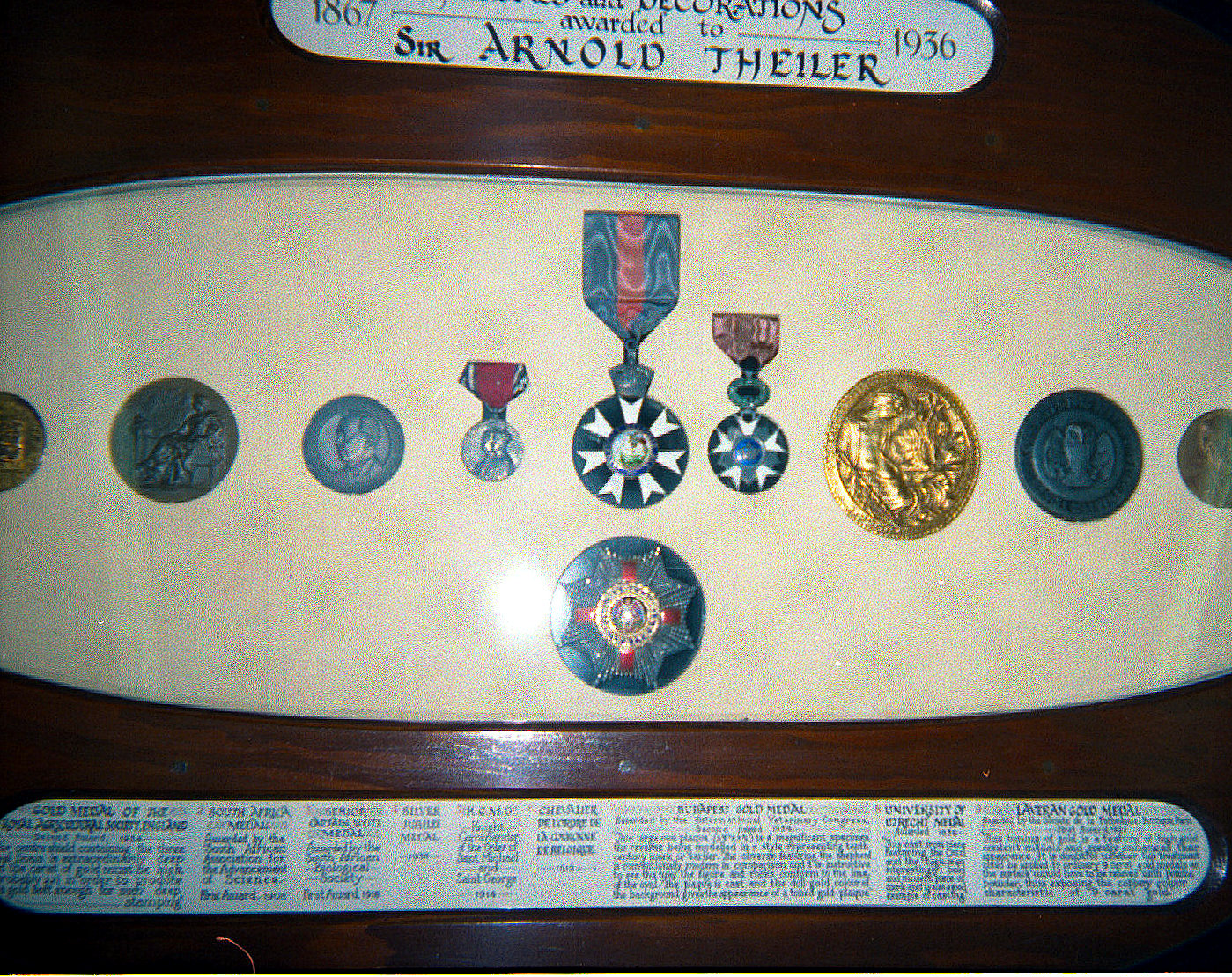
Theiler's condecorations for his outstanding work.

Theiler’s condecorations for his outstanding work.

Clearly, Matt’s main contributions to the programme were to keep a very diverse scientific team working together for years and to achieve its goal. (Later, I learnt that he was a strong leader and heard several stories of rather vehement programme meetings where participants came to blows and chairs flew but I am not able to confirm them).

It was clear that he had managed to successfully “translate” his research in Trypanosomosis to ECF. Success started when the programme managed to reproduce the disease artificially by injecting a known number of ECF infective units extracted from the tick vector[5]. This achievement enabled the programme to develop an efficient system to work with the disease that, after more than ten years of research, culminated in the development of an immunization method: a mix of Theileria types[6] that, when inoculated to an animal together with the right antibiotic (tetracycline), would produce a very mild disease and result in the animal becoming immune practically for life[7].

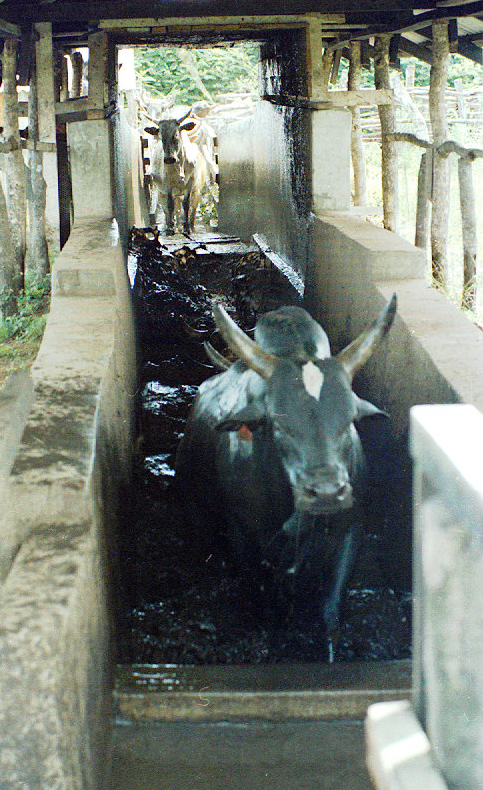
Cattle being dipped with acaricides.

Cattle being dipped with acaricides.

Until the development of this immunization method, the only way to keep cattle in ECF endemic areas was by “cleaning” the animals with insecticide-like chemicals known as acaricides[8] dissolved in water as often as twice a week! In theory, the new immunization method would remove the need for intense acaricide treatment with beneficial effects for both the animals and environment.

Despite the advances in ECF immunizations, the ticks would still be there and have an impact on the animals as parasites. I was a small cog in this rather complex parasite-vector-host system and my mission was to quantify the effects of the ticks themselves on productivity and their economic impact. I had 30 months to achieve this! Clearly Matt’s over-optimism had permeated the project proposal, as I later discovered was true for most proposals he developed…

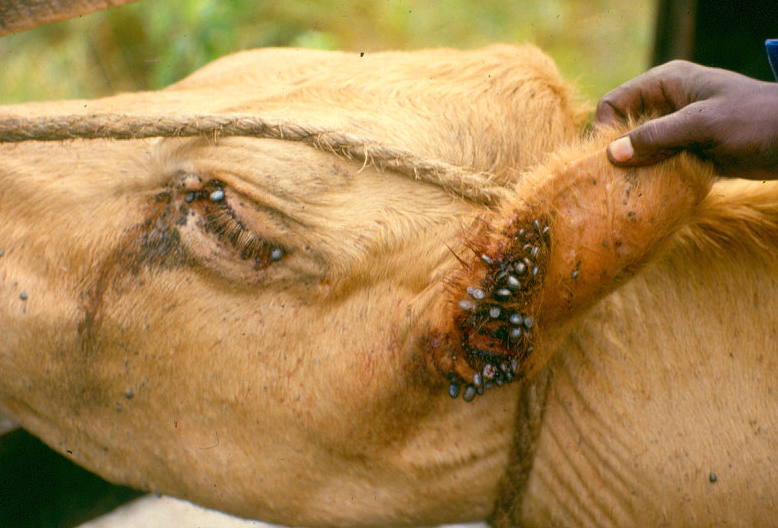
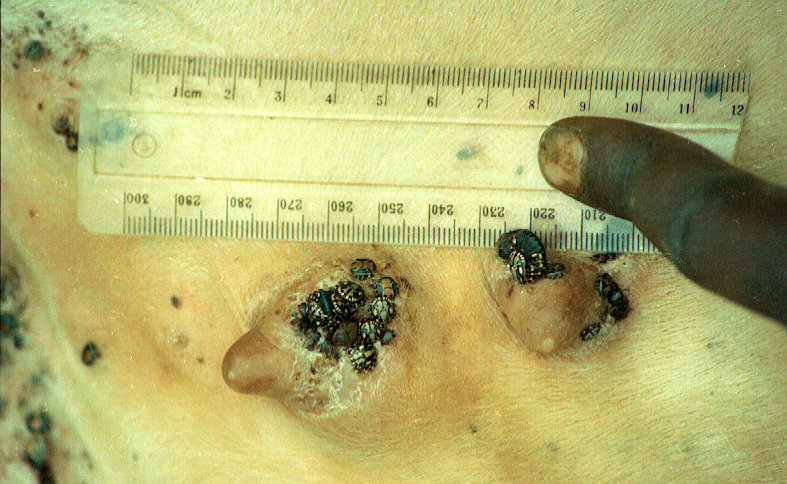
Heavy tick infestation, mainly Amblyomma spp.

Heavy tick infestation, mainly Amblyomma spp.

Brown Ear ticks

Brown Ear ticks

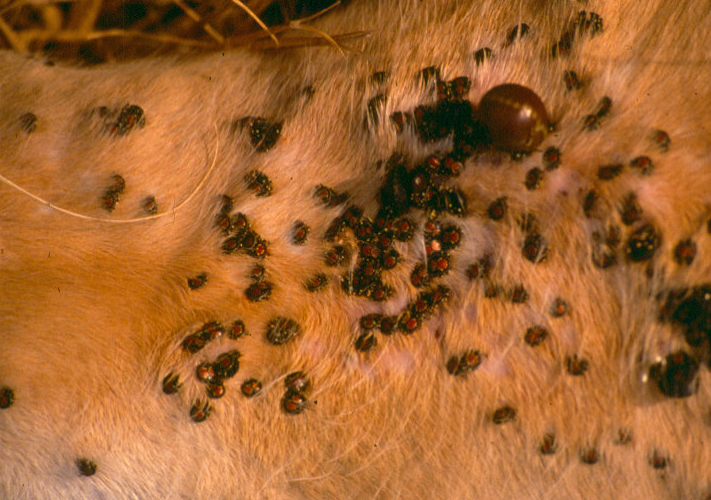
Amblyomma cohaerens (gold) and A. variegatum (orange) tick infestation.

Amblyomma cohaerens (gold) and A. variegatum (orange) tick infestation.

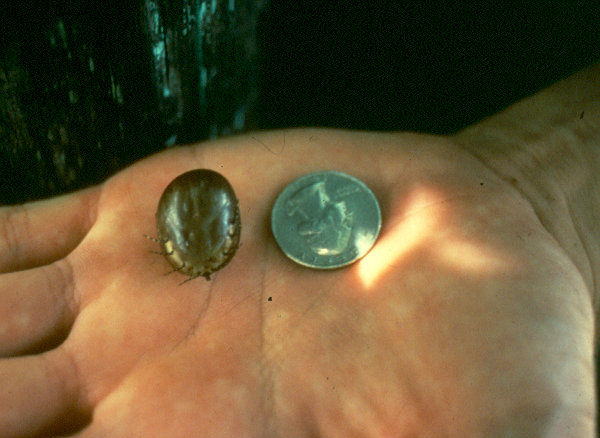
The size of a tick!

The size of a tick!

Matt, at the timenow retired from FAO, was the Director of the Tick Programme ofat the International Centre of Insect Physiology and Ecology (ICIPE). The ICIPE would host me as an FAO Fellow attached to the Tick Programme so he was my direct supervisor. . I was seconded by FAO to the latter, hence his role as my boss. The Tick Programme was working on the ecology of the Brown Ear Tick as well as searching for a “vaccine” against the Brown Ear tick vector. “Julio, we have a laboratory in Muguga and good relations with the veterinarians working on ECF there, so we will succeed”, he said. I listened with interest, accumulating questions and anxieties!

He was very excited with my arrival. I recall him saying “Julio, you are at the right place at the right time” while lighting another Sportsman cigarette (he was a heavy smoker), adding “Most of the important work on theileriosis is taking place in Muguga!”. In fact I was a bit too early but I did not know this yet! He explained that the work of the now finished FAO programme still continued and the immunization method was being laboratory and field-tested in various places in Kenya, mainly Muguga[9] and the International Laboratory for Animal Diseases (ILRAD)[10]. “Julio, the key word is collaboration” Luckily, because of his past work he had lots of connections with people working in ECF in Kenya.

Almost immediately he mentioned Alan as one of his main allies. A Northern Irish parasitologist that as Matt put it: “has green fingers with parasites”. You will work closely with him, as he is the man behind ECF immunization. “He is waiting for you at Muguga!” he said. He added, “Robin, our tick ecologist -on leave now- is also there. He knows everything you need to know on the ticks so you will be OK”. I noted that Muguga would be an important place for me!

We drove around Nairobi and he showed me some of the key spots: the FAO Office near Bishops Road, the ICIPE HQs at Chiromo, ILRAD and the Veterinary Laboratory, both located at Kabete and other useful places in town. He never stopped talking about work! We did not drive to Muguga (about 30 km north of Nairobi). He promised to take me there the following day.

I soon realized that Matt was an “ideas man” and that I was part of one of them! He believed that my fieldwork was possible and had agreed with FAO to host my research. I also learnt that there were a number of knots yet to be untied for me to do my job. The place where I would work was the main bone of contention but Rusinga Island was still top of the options. My preoccupation increased!

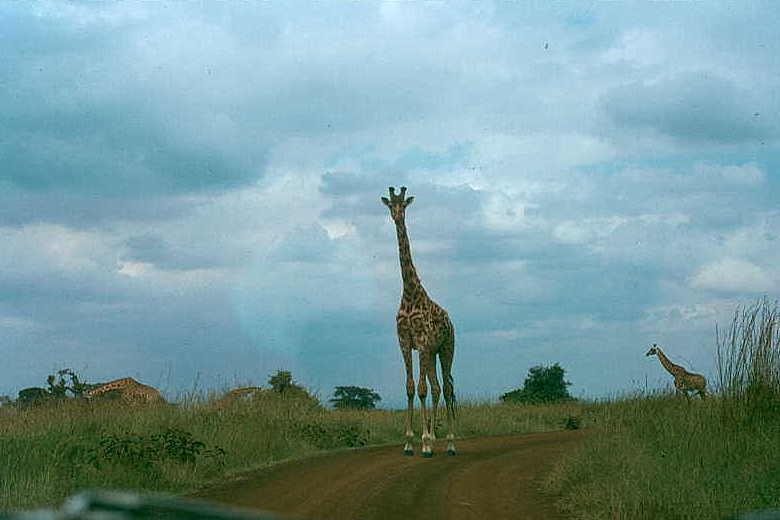
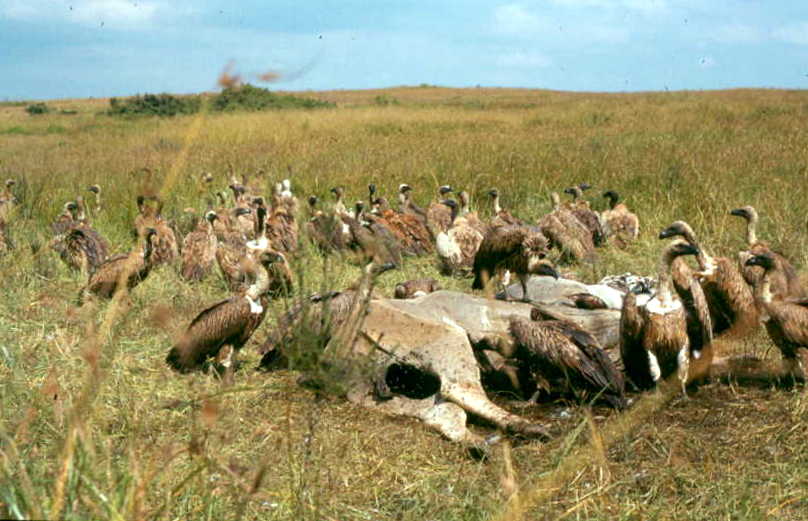
Lunchtime was approaching and Matt proposed to have lunch at the Nairobi National Park. I happily obliged. So, after stopping at a duka[11] to buy samosas[12] and two packs of milk we drove to the Park. We soon got there and we drove almost straight to the Viewing Platform without stopping to watch anything! Matt had seen all or did not care about wildlife! I took some hurried pictures of what I could during the short stoppages he did or from the moving car. It was the first “real” wildlife I had seen! We stopped for a herd of giraffes and drove past vultures at a kill and had our lunch while taking in the view extending into the Athi plains and beyond. It was my first picnic in the bush at a beautiful location! Matt continued talking about work, his enthusiasm unabated!

My first giraffe at Nairobi National Park.

My first giraffe at Nairobi National Park.

I took this picture of vultures at a carcass while driving past!

I took this picture of vultures at a carcass while driving past!

Occasionally he would digress to his other passion in life: fly-fishing. He loved it and never missed an opportunity to practice it. He explained that he was building dams at his house in Tigoni -an area North of Nairobi where many British lived- so that he could keep his own trout. “Julio, I can catch them from my verandah” he said while mimicking casting his fly towards the plain! I was also a fisherman but knew little about fly-fishing so I limited myself to polite and rather useless comments! He promised to take me to his house to show me the dams and to introduce me to his family. Clearly aware of my rather useless comments regarding fly-fishing he never invited me to join him!

At the end of the day Matt dropped me off at the hotel and we agreed that the following day he would collect me in the morning and take me to Muguga, my future “home”. I was tired, both physically and mentally. Although I had gained valuable information I had also accumulated many questions that I needed answers to. Being young and rather anxious, I needed to rest, relax and think. I had entered a new world with new places, new people and a different working methodology. I was beginning to realize that my work would come with a few trials. Despite this, I never regretted my choice as I loved the Kenya atmosphere and I was hopeful that things would work out in the end, despite my present doubts.

[1] This post follows “Africa – Arrival”.

[2] He may have several pairs of the same model!

[3] At the time Glasgow Veterinary College was strong in East Africa.

[4] Similar role to the mosquito in malaria.

[5] Until then ECF was only caused by applying live ticks.

[6] Theileria parasites vary in different areas.

[7] This method known as “infection and treatment” is still today the only practical method available to us, despite years of high-powered and costly scientific research.

[8] Ticks are acari. Acaricides are very toxic chemicals.

[9] The Kenya Veterinary Research Institute (KEVRI) of the Kenya Agriculture Research Institute (KARI) was located at Muguga.

[10] Now the International Livestock Research Institute (ILRI).

[11] The local name for a shop that in the “old” days was mostly owned by Indian migrants.

[12] A fried triangular pastry filled with minced meat, mutton or chicken, heavily spiced and chilly-hot.

Verreaux’s Eagle Owl and Thick-billed Ravens

Looking for pictures of Giant Eagle Owls to illustrate the earlier post I found one I did not remember having! As usual it is bad! It was taken on film in a hurry and later scanned to an electronic file. It shows a raucous confrontation we witnessed while living at Bedele, Ethiopia in 1989. We recorded the event and only recently we published it in SCOPUS

The scan of the original article included explains what happened and it save me from re-writing it! Please note that the publication is reproduced with the kind permission of SCOPUS. (For easier reading, click on the pages and then again).

The only picture I have of the event. It is bad but it shows the action that took place!

Verreaux and ravens page 1 small

Verreaux and ravens page 2 small


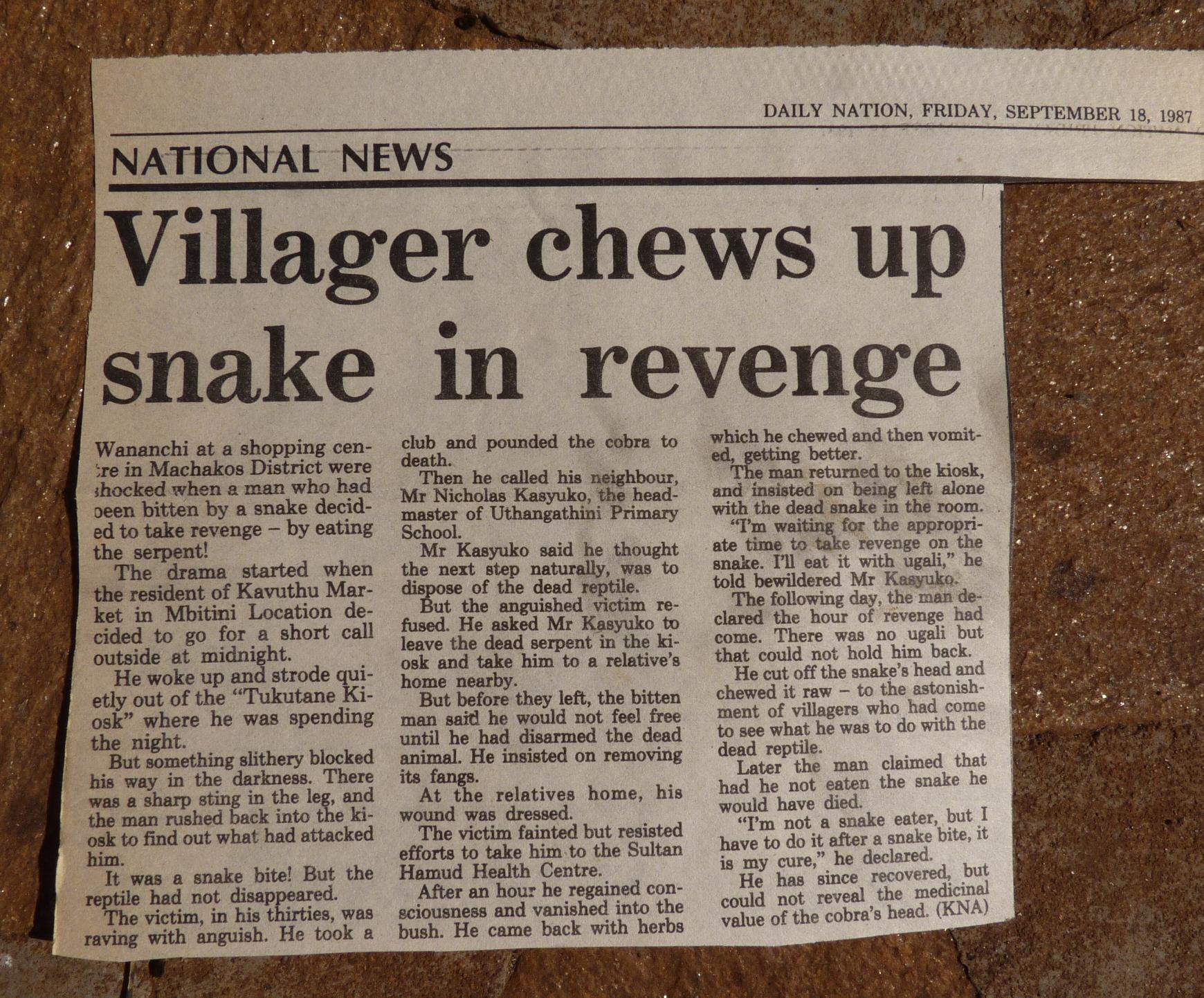
Chewed snake cropped

Recently I was identifying a snake for a coming post and the following newspaper cutting from  25 years ago slid out of the snake book. I had totally forgotten it but, clearly, being “snake-related”, I kept it there for future reference! I did not only found the story amusing but I also liked the way the reporter covered!

The text is small but if you click on it you can magnify the picture and read it (even I could do it!).

As a matter of terminology, wananchi in KiSwahili means “citizens or people” and ugali is the cooked stiff white maize porridge (polenta-like), the staple diet in Kenya.