Safari

One Tusker…

twisted tusker tusk tip small

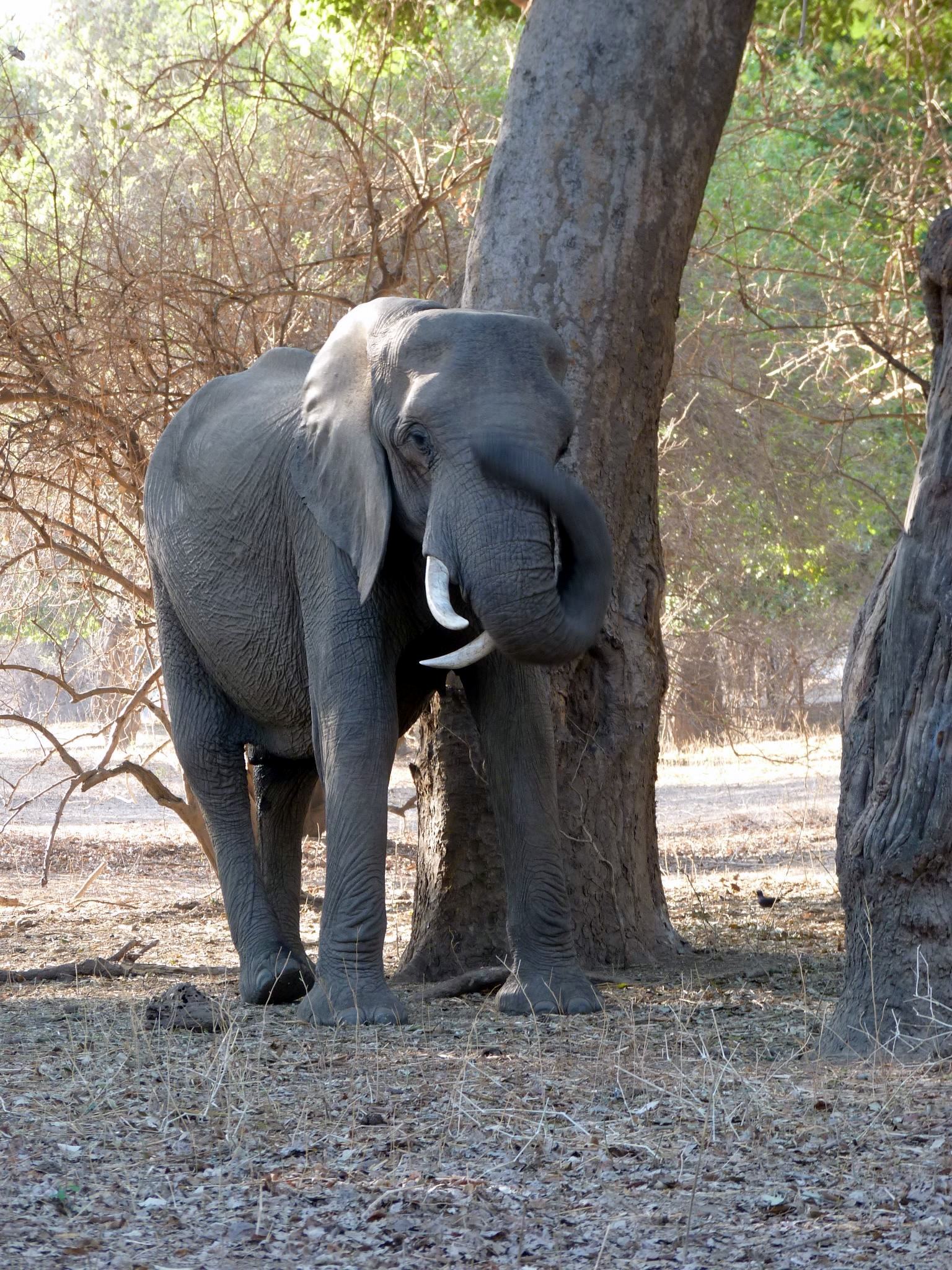
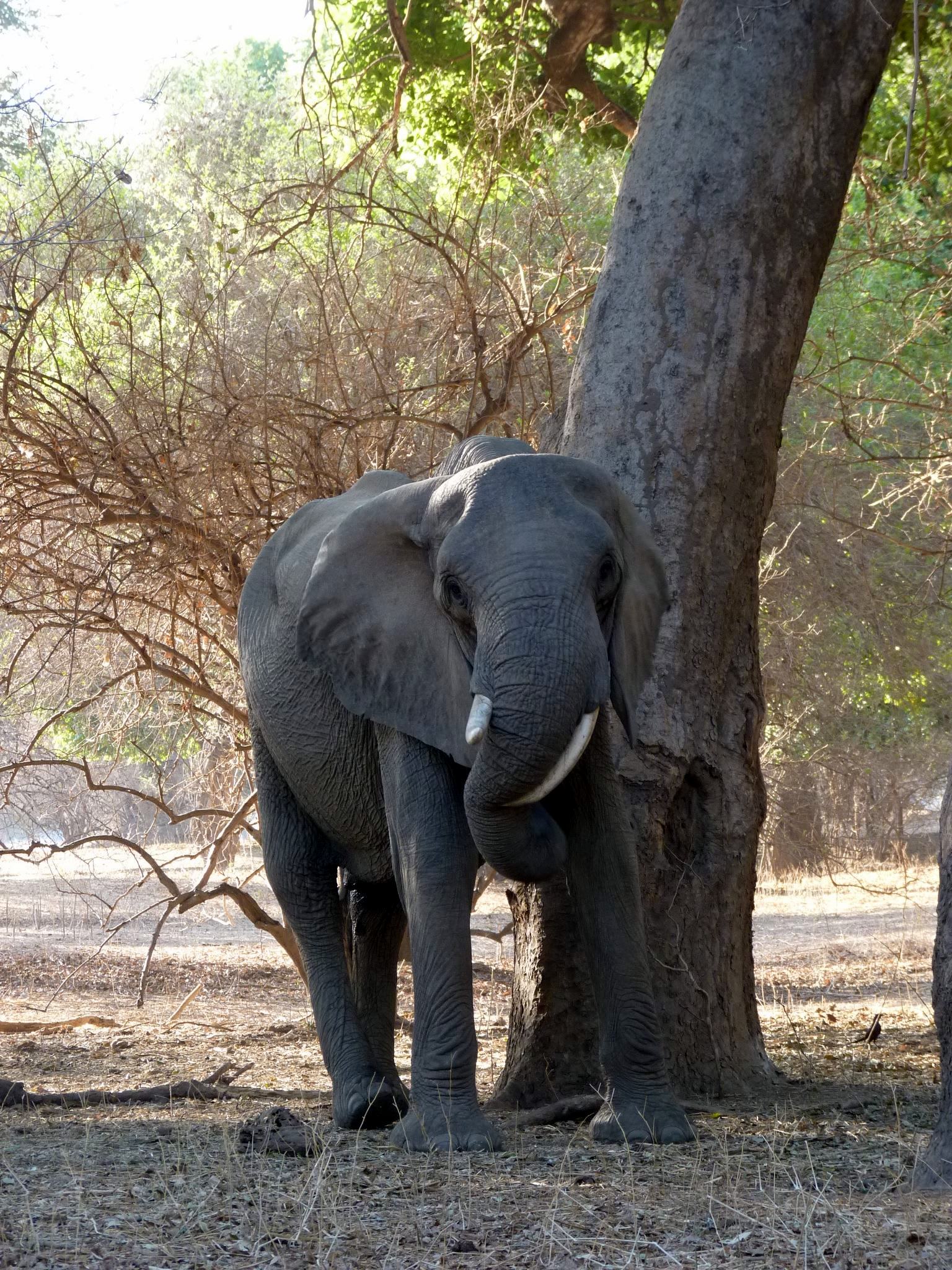
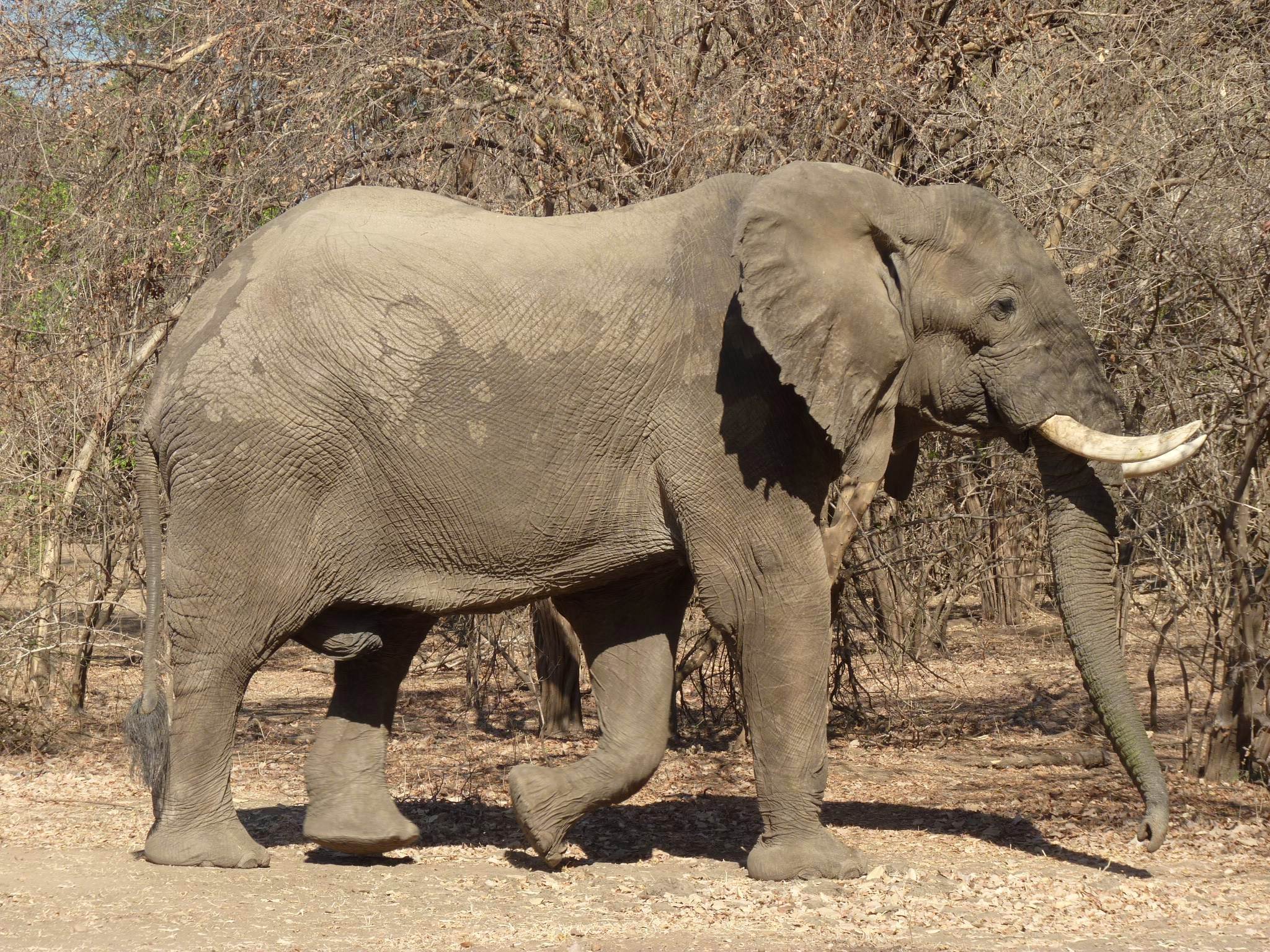
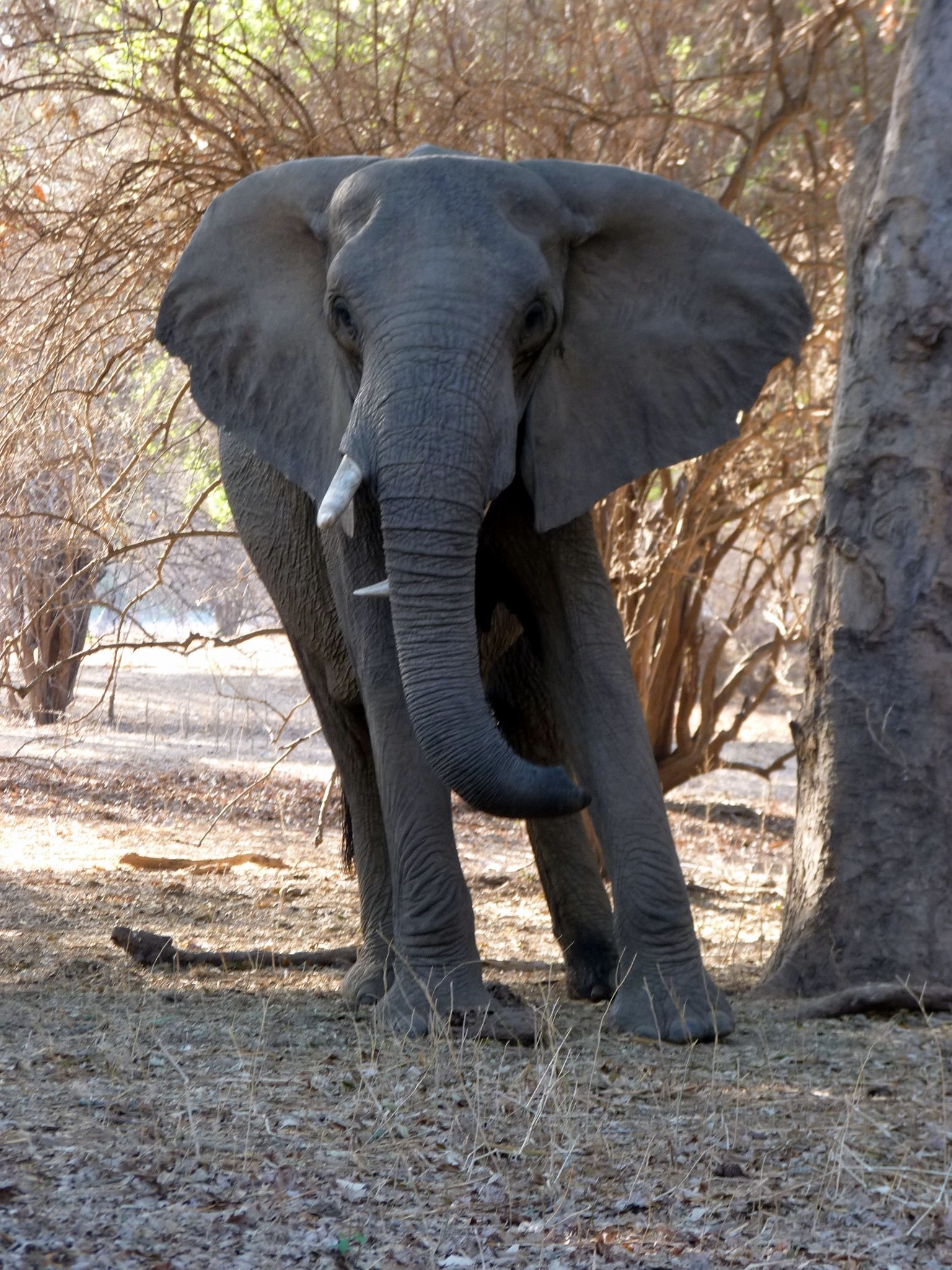
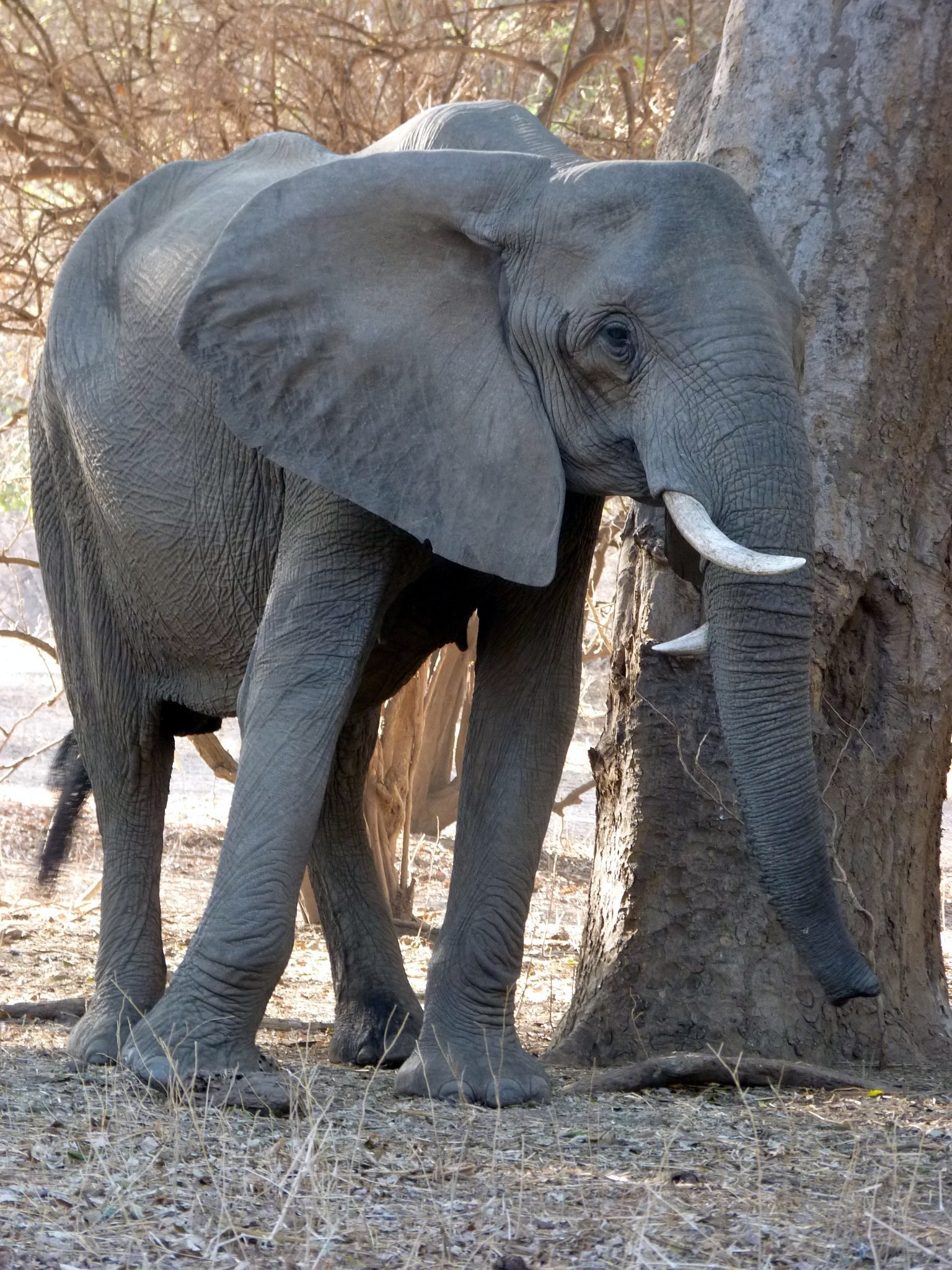
While at Mana Pools National Park we met this elephant. At first we dismissed it as a “one tusker” but when we looked at it from a different angle it immediately became clear that we were wrong!

While its right tusk looked healthy and nicely curved, its left tusk had grown in the wrong direction and it was pointing down and towards the back.

twisted tusker small 1

I have seen pictures and references in the literature of elephants with weird tusk arrangements so this find is not really an unusual one. It is much more rare to find an elephant with three tusks and I recall a hunter (probably Ionides) who tracked a famous three-tusker. More recently, an animal with this same rare characteristic was spotted in Nxai Pan National Park in Botswana by Stuart Arnold (http://www.exploreafrica.net/whats-happening-now/3-tusk-elephant-nxai-pan/).

Twisted tusker small

In our case, what made this animal interesting was its habit of placing its trunk behind its left tusk, giving it a weird look.

Twisted tusker trunk

Based on its size and condition, the bent tusk does not appear to have had a negative impact on its life and it is unlikely that it will affect it in the future. We will keep an eye open for it in our upcoming visits to the Park.

Behind our backs

While we were engrossed watching the Crocodiles ambushing the Impalas at Masuma dam, lots of things were taking place around us. On the first day there, a snake was coming down exactly where my wife was sitting at the viewing platform! To say that she does not like snakes is an understatement, so she moved out of the snake’s possible path rather fast! I did not make things better when I identified it as a possible Boomslang!

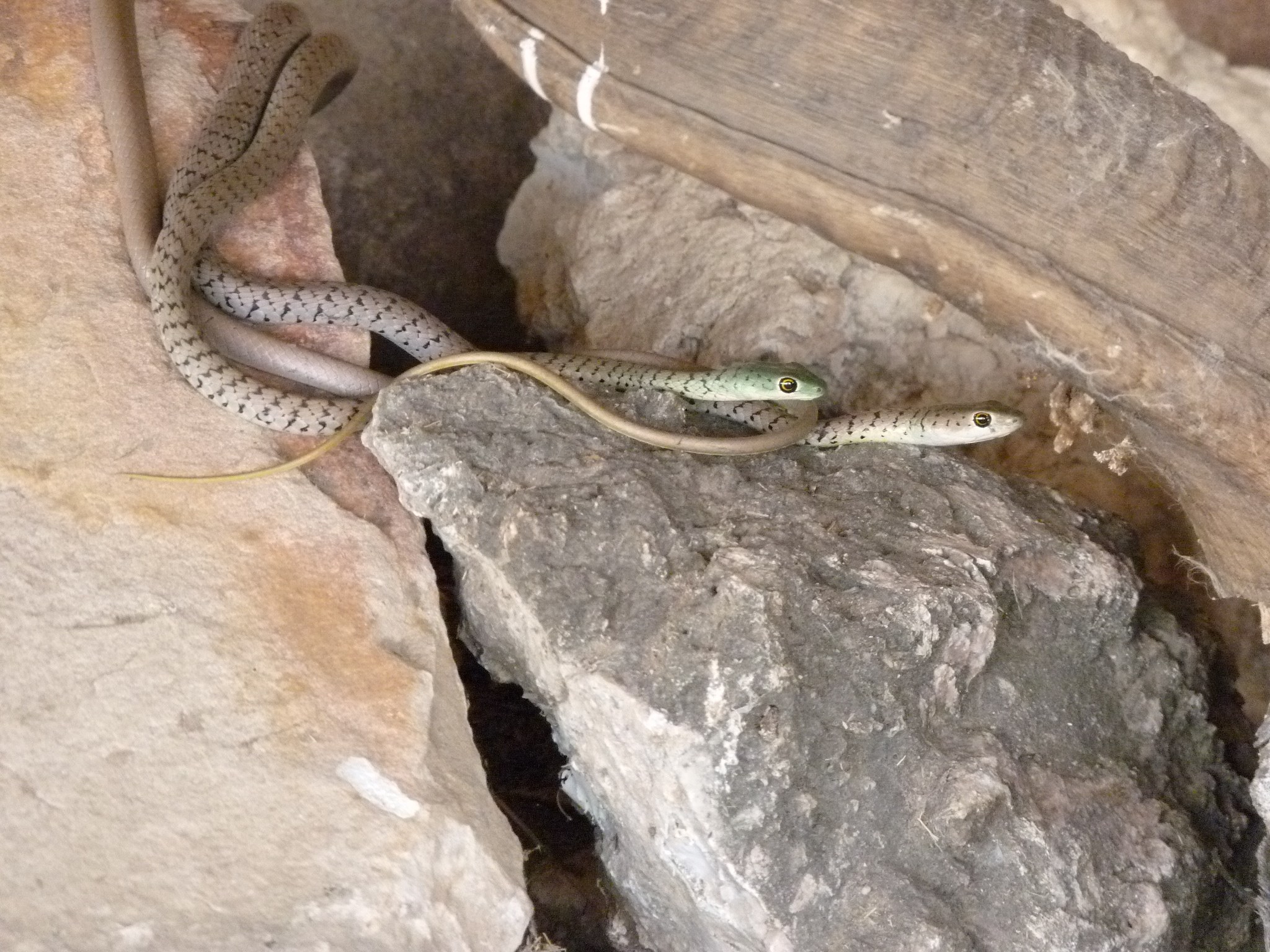
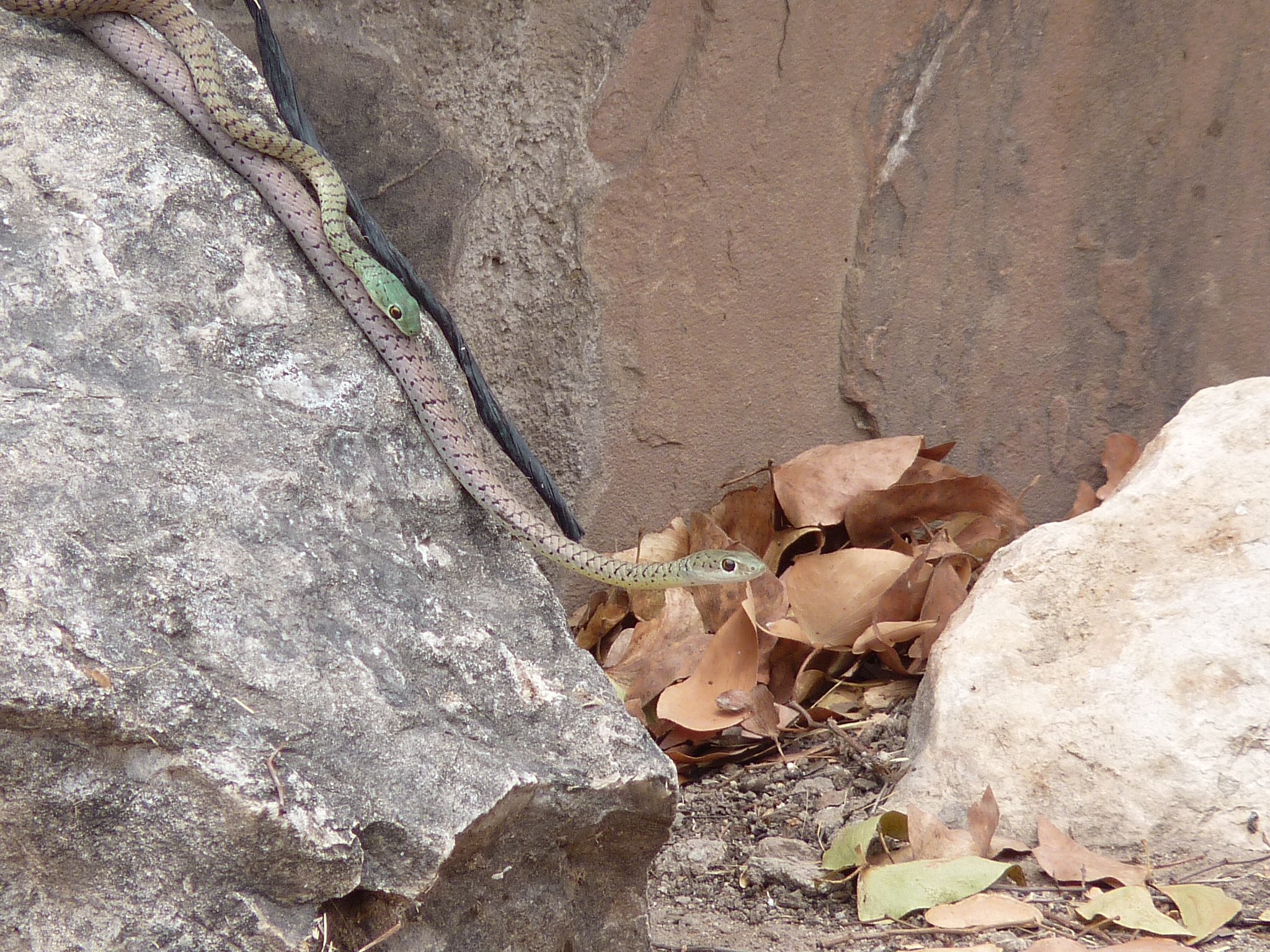
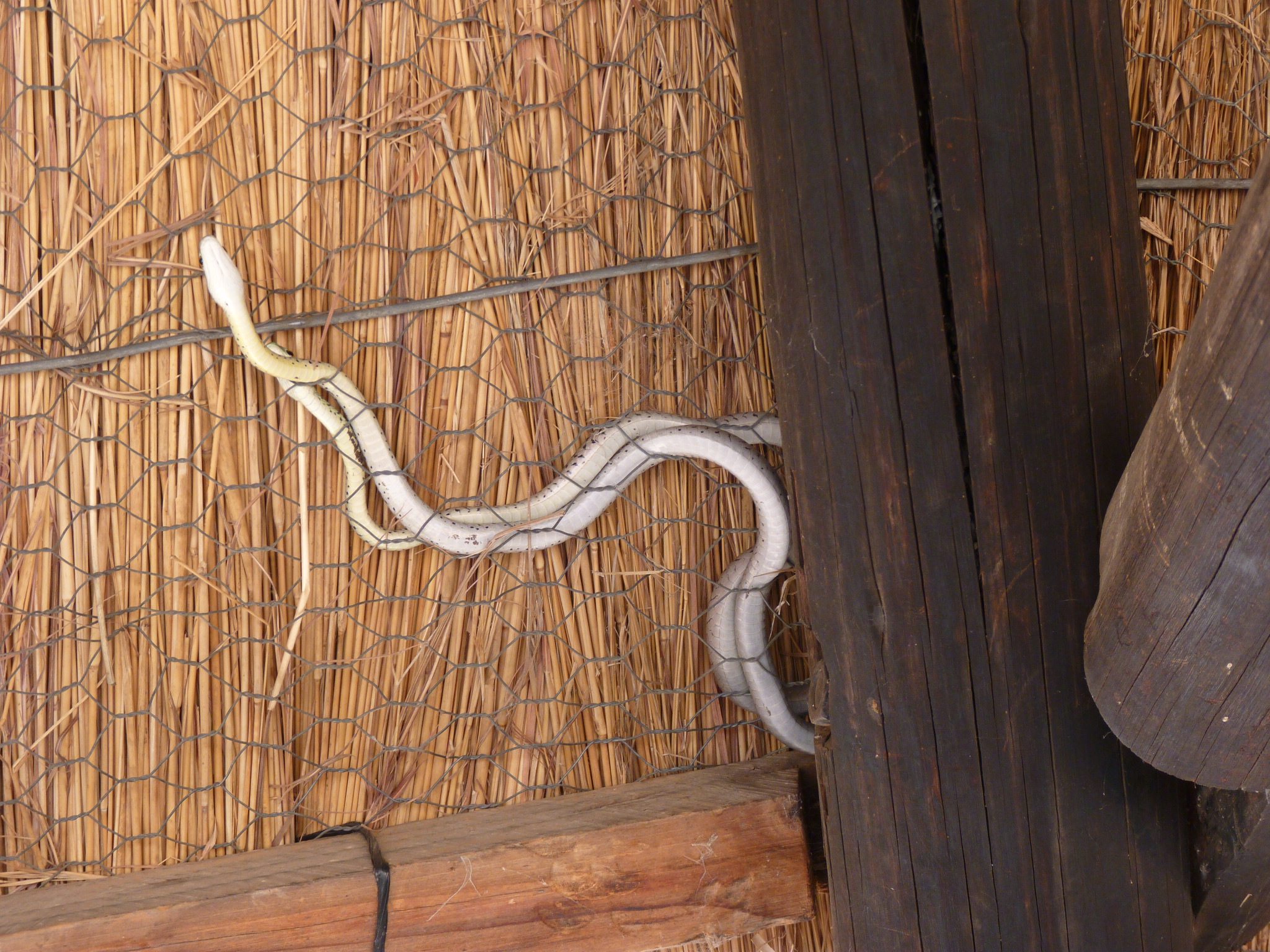
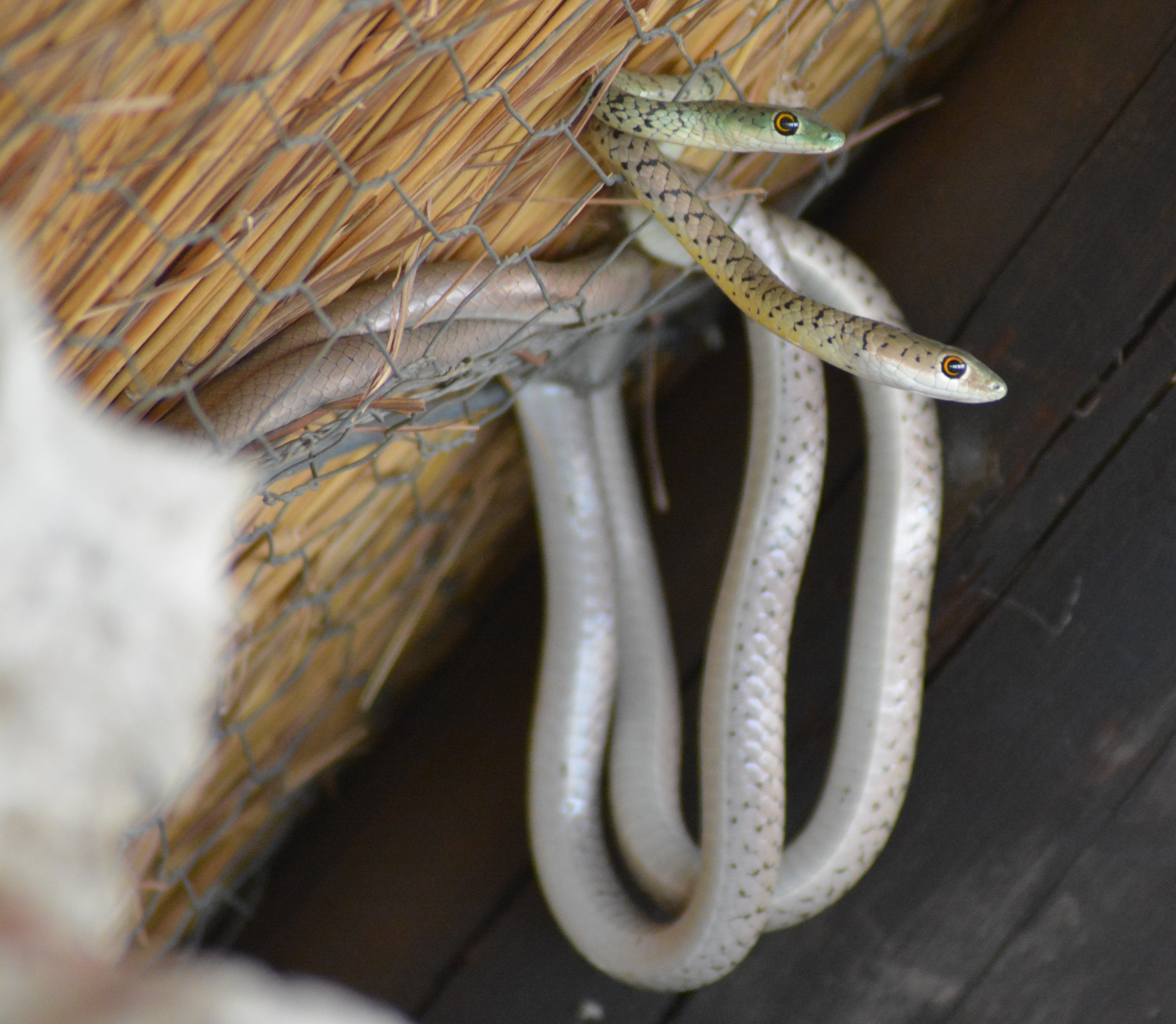
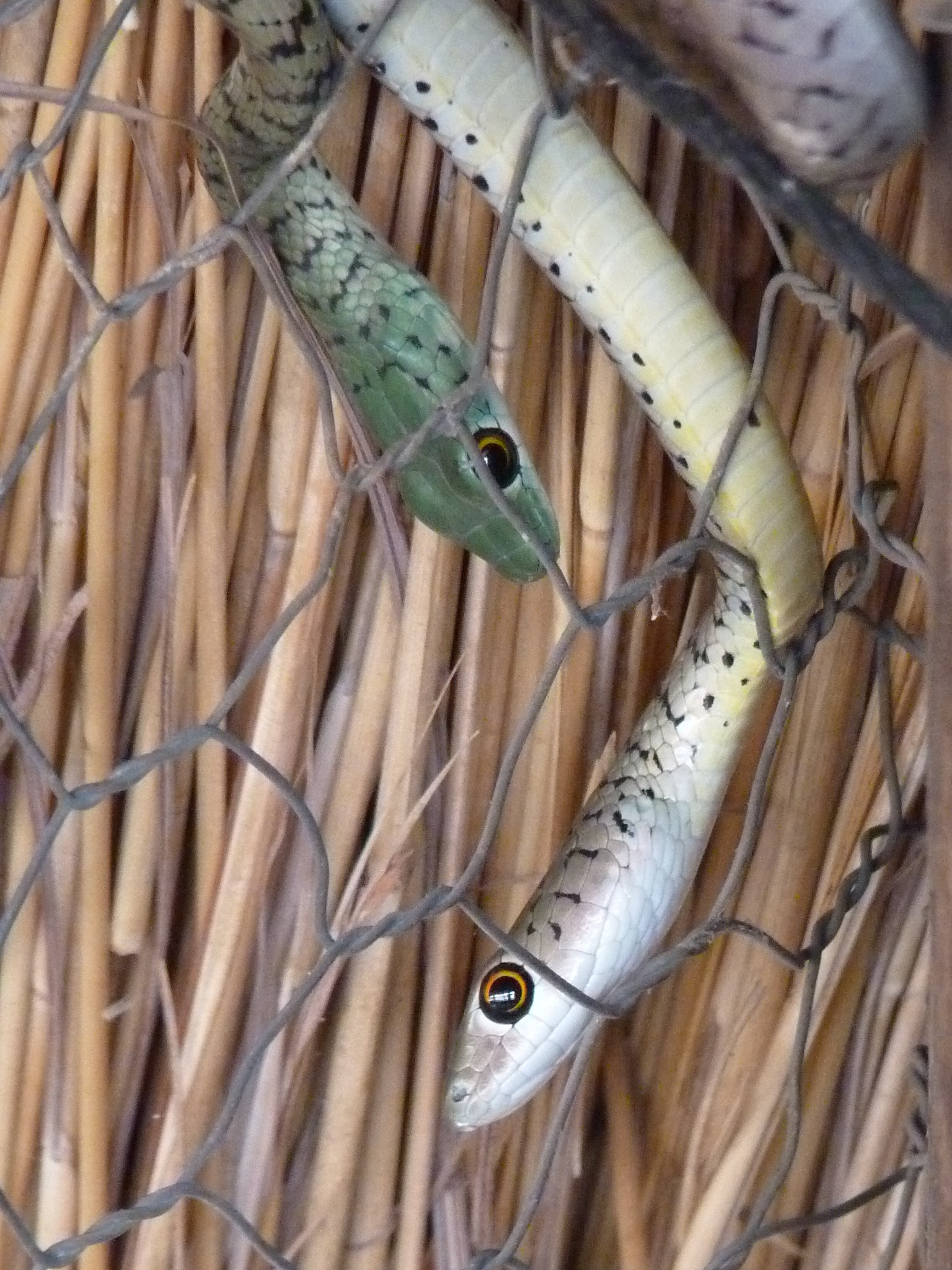
A couple of days later, while focusing on the waters-edge going ons, one of the Picnic Attendants called our attention to another snake act! This time they were two snakes, similar to the one seen before. Their behaviour indicated that they were mating. Basically the process involved the two snakes sliding together throughout the viewing platform as one, the female? moving away while the other one, the male? tried to come into contact with her. Once that was achieved they started to shiver and twist around each other.

First view of snakes outside 2

The snakes moving in.

snakes inside

TOM DSC_1023.1

Picture by Tom Milliken.

The process took about 30 minutes during which they were in command of the viewing platform as the human occupants were always at the opposite end, keeping an eye on their movements. The latter were rather fast and, as we suspected them to be the dangerous Boomslangs, there was no time for jokes while giving them a wide berth. At one stage they were mating at the door and several people were seen to leave the platform through any possible exit in order to get things from their cars or go to the toilet.

close up inside

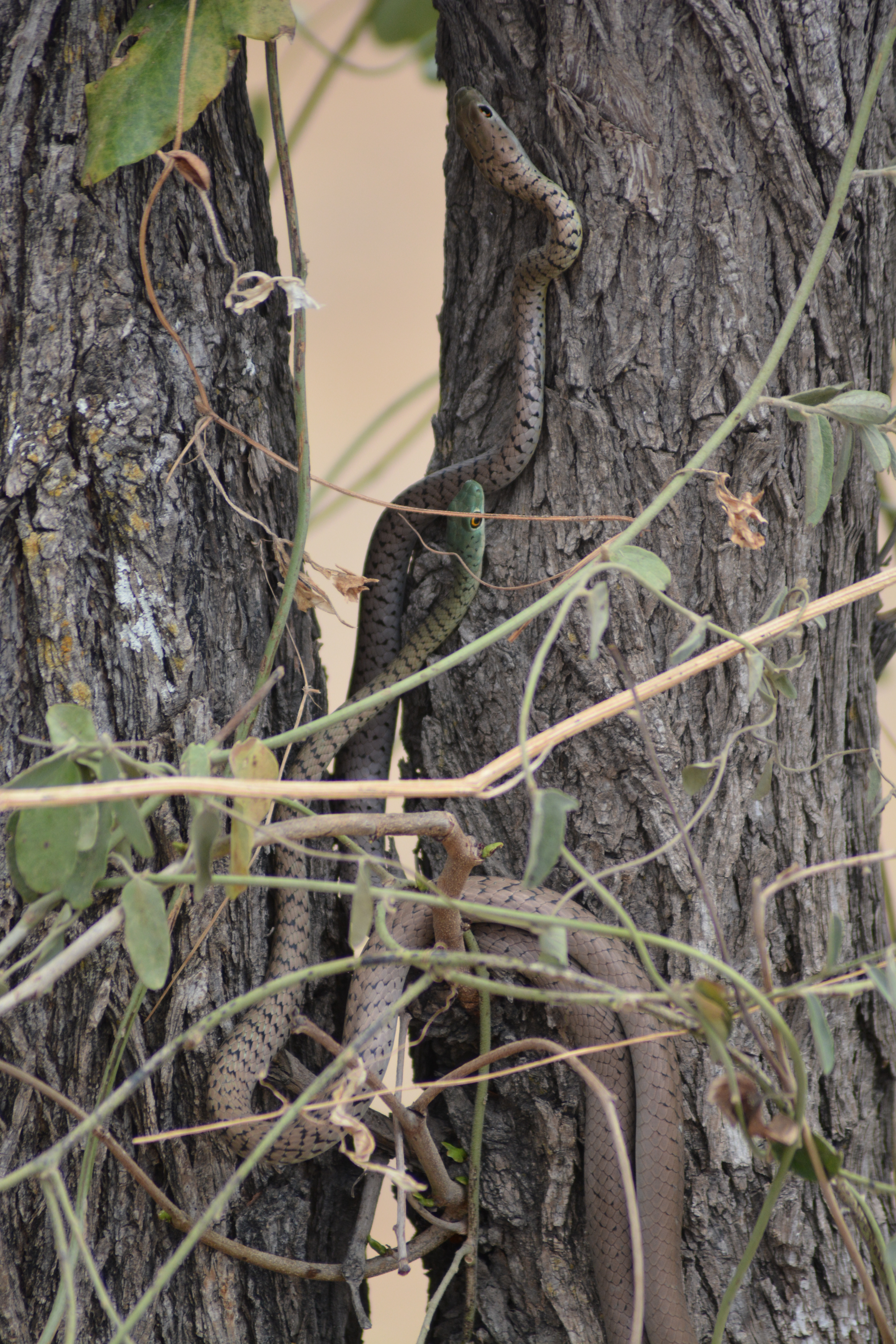
Eventually their courtship took them outside and they were last seen twisting in a nearby tree.

TOM DSC_1039

They finally moved outside. Picture by Tom Milliken.

If such a thing as “relief post factum” exists, we need not have worried as, with the benefit of time and a good snake guide, they were identified as a pair of the slender Spotted Bush Snakes (Philothamnus semivariegatus). They are a rather common and harmless snake endemic to Africa that feed on lizards, tree frogs and geckos.

In light of this excitement, I promised myself to add an extra kg to our already heavy camping gear and include the snake book in the future!

Skin Disease

End of October is the height of the dry season in Mana Pools. The place really looks like a brown dust bowl the exception being those trees that, anticipating the arrival of the new rains, flower now to be ready to drop their seeds with the onset of the rains presenting the landscape with some colourful blotches.

Very few Apple Ring Acacia still had pods and the experienced elephants that knew the reward of a few strong shakes applied to the trunk, were using this technique and relishing the fruit of the “podfall” they produced!

The scarcity of the Acacia pods is now compensated by the abundance of sausages of the Sausage Trees, now quite grown although probably not so palatable. As a consequence of the general absence of food on the plains, the animals in general and the elephants in particular were seen mainly on the margins of the Zambezi River, feeding on aquatic plants. The Zambezi banks were dotted with elephants and many were feeding and bathing below the banks of the campsite.

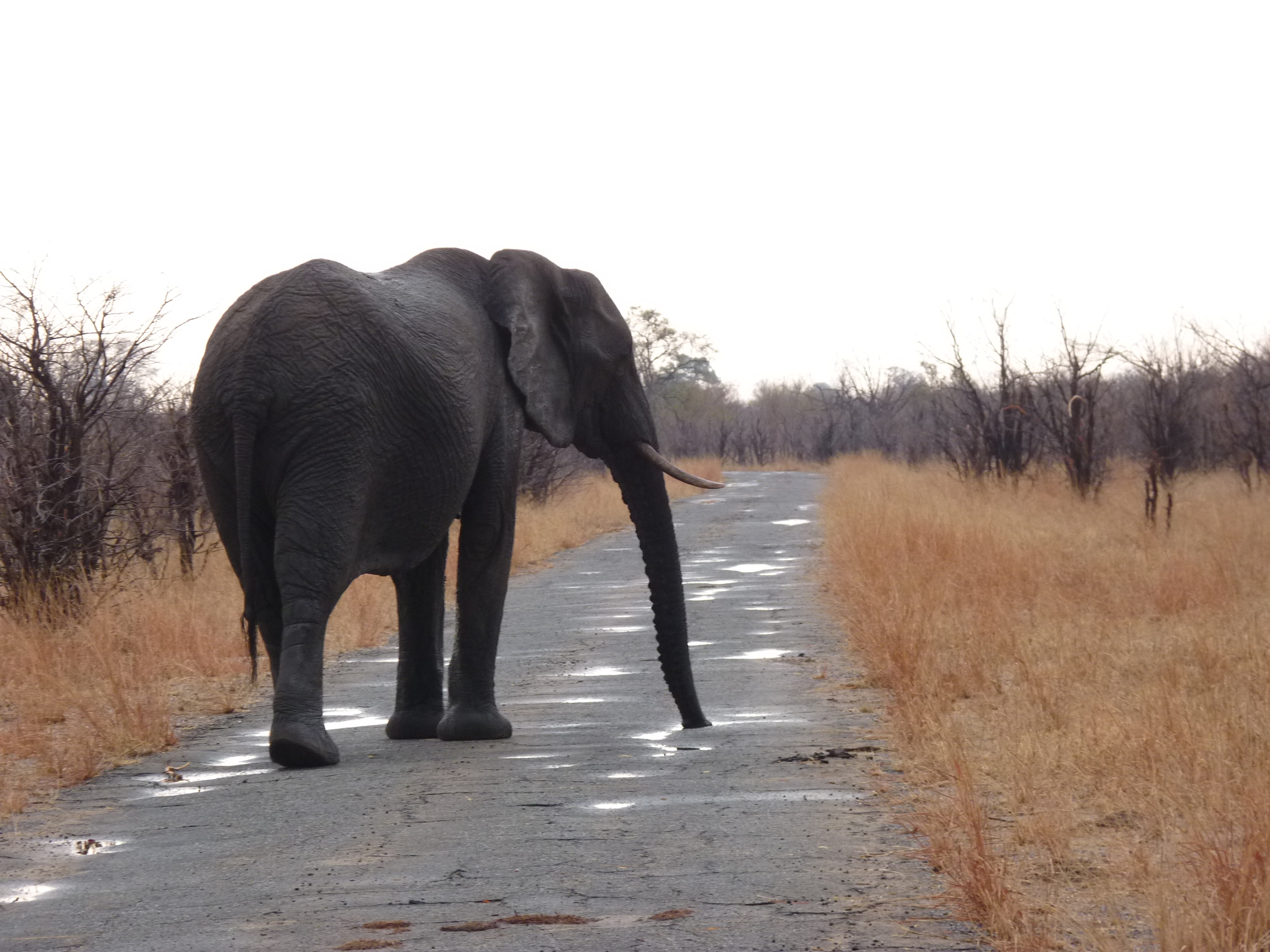
Despite this, although harder to find, some elephants were still inland. We met one of them, a rather large animal with good ivory for Mana Pools. It happened to be using the same road as us and coming in the opposite direction! As we all know, elephants have the right of way! It was a rather large and beautiful bull with good tuskers for Mana Pools.

Mana tusker small

The Tusker coming…

It had a relaxed but sure gait, I imagine that this is the attitude of someone with no threats. He clearly saw us before we did and did not define us as a worthwhile threat so it continued walking as if we did not exist.

We parked politely in the bush by the side of the narrow road, stopped the engine and watched this magnificent animal. It passed very close to us and in so doing we could appreciate its size as well as take some photographs of it.

While on our side we observed, with some preoccupation, that it had a rather large area of its skin at the back and flanks covered with skin blotches that look like some kind of fungal infection. Elephant skin is thick and tough, reaching almost 3 cm on it s back. Additionally, the elephant uses mud and dust to further protect its skin, as it is a very sensitive organ.

Mana tusker skin disease

The suspected skin problem is seen as paler areas on its ears, back, sides and upper hind leg.

Although we had observed this condition before, this is the most extended that we had seen so far. Hopefully the mud baths will help this animal to control it.

Dagga Boy*

buff and cigar 1

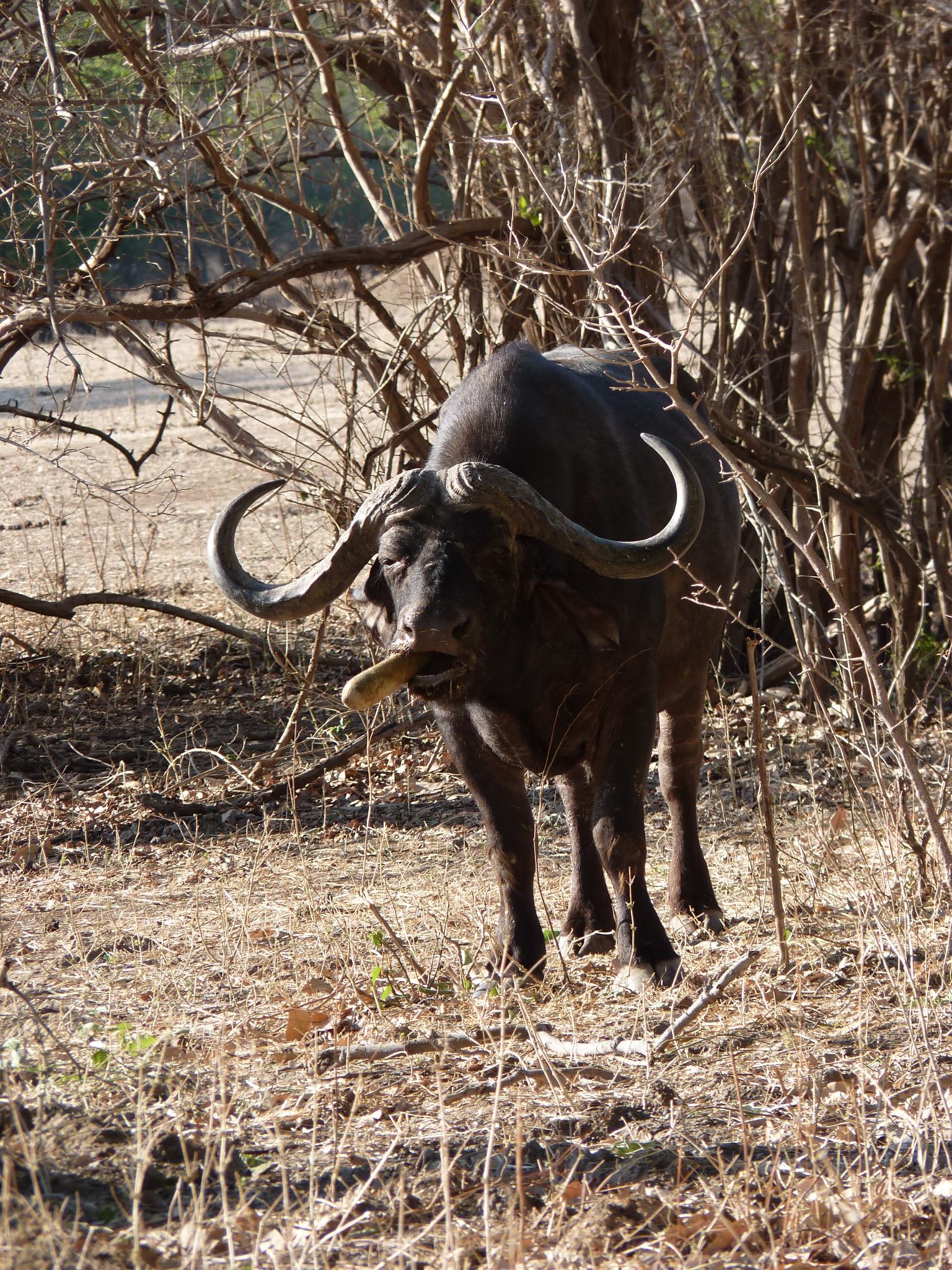
We came across this lone male Buffalo (Syncerus caffer) who seemed to be about to light a large cigar!

buff and sausage

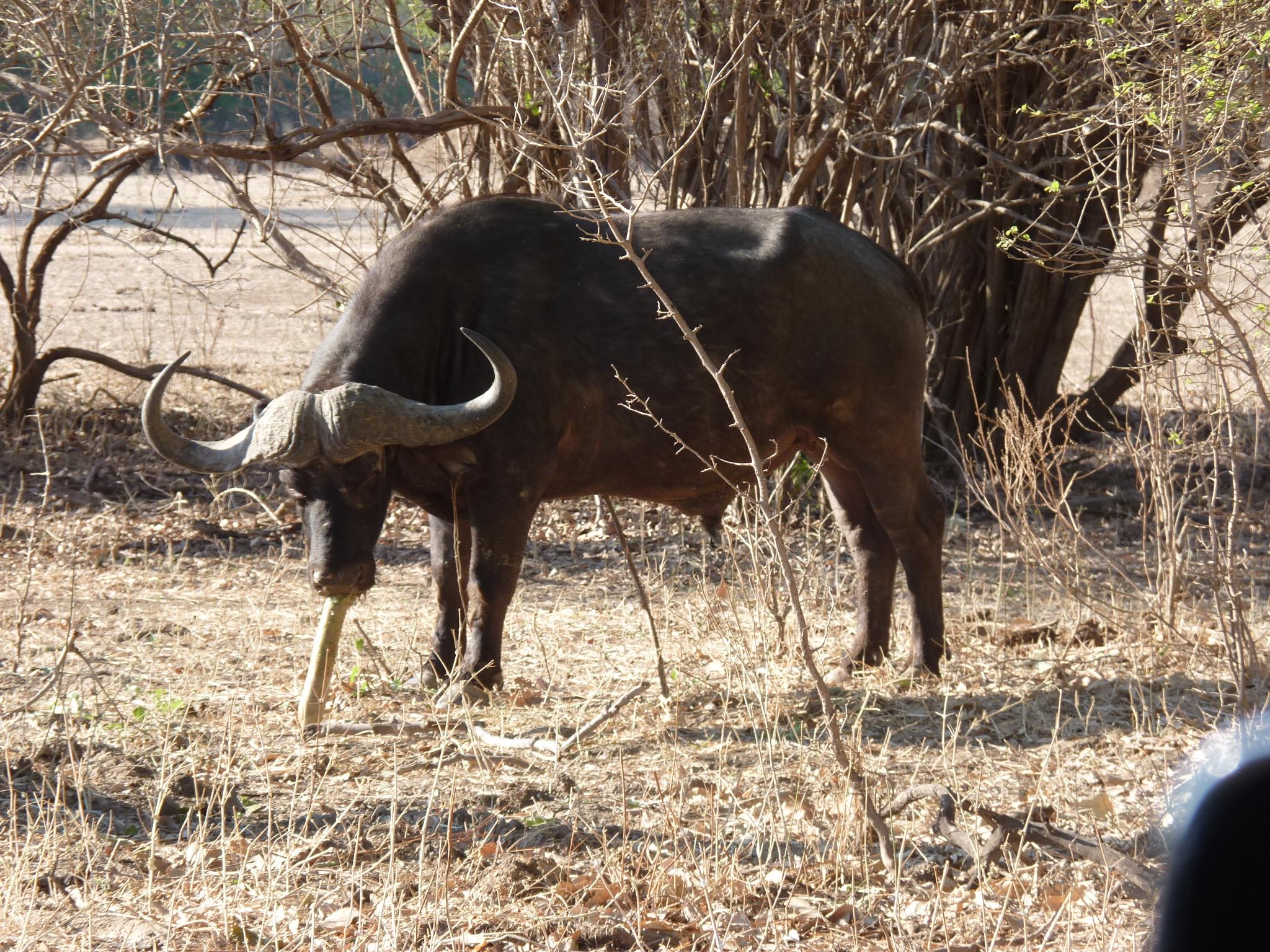
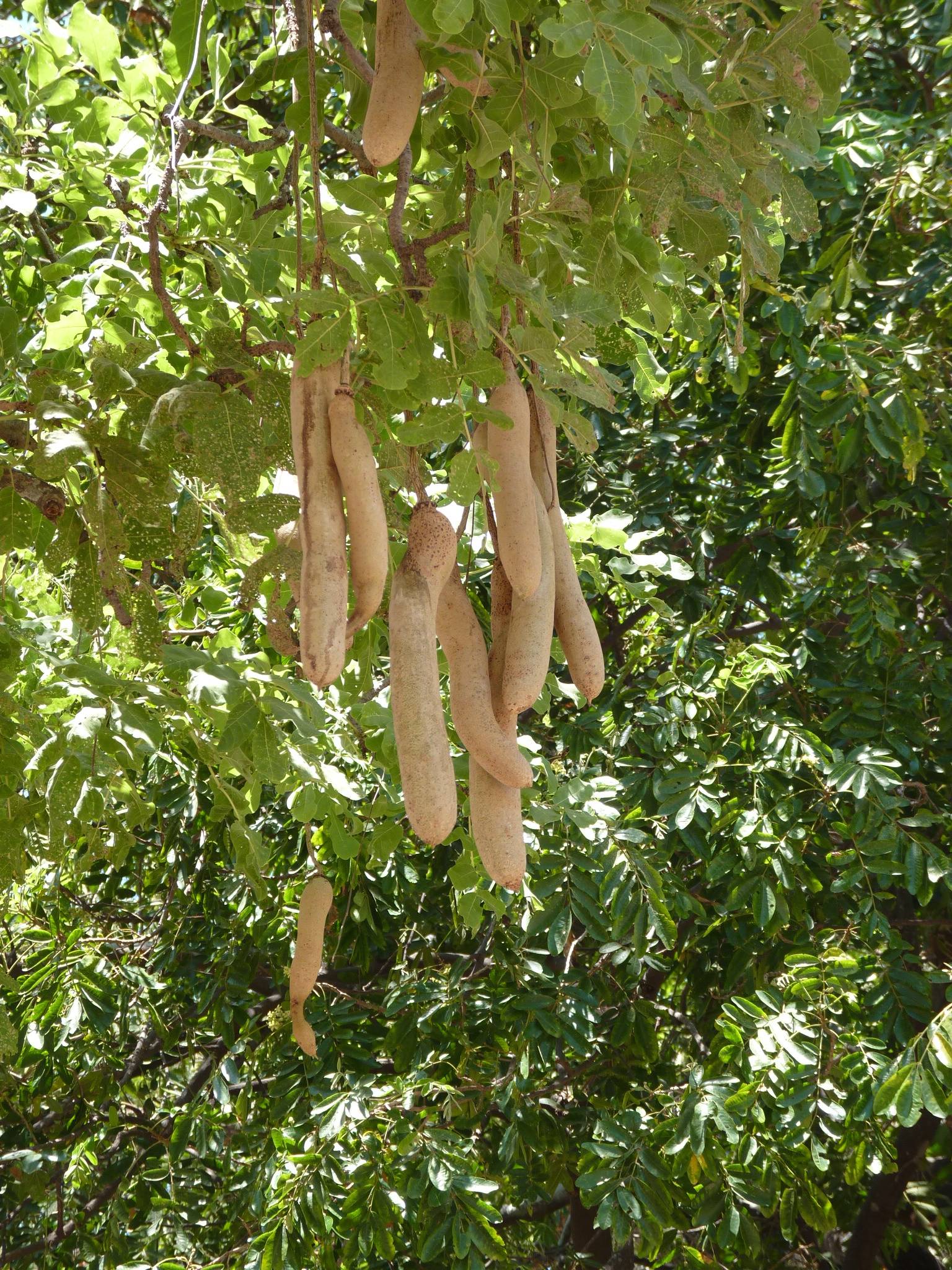
It was in fact working its way through a sausage, the fruit of the aptly named Sausage tree (Kigelia africana). This tree provides game with food during the dry season at Mana Pools National Park.

sausages

The sausages.

buff and sausage 2

Almost done!

Our first encounter with buffalo while camping at Nyamepi Camp site was worrying: four large male buffalo were between the toilets and us! We held our needs in check for as long as we could but the buffalo would not budge so we braved the trip! We need not have worried as they ignored us completely as we walked past. They were totally focused on devouring the flowers of the Sausage tree that they also relish.


* I tried to be clever here! A “Dagga Boy” is an old Buffalo bull that have been kicked out of the herd and spends all day wallowing in mud. “Dagga” means mud in Zulu. In addition, “Dagga” also means Cannabis, hence the play with words.

Not rain but hail!

Elephants at w:hole prior to rain

Elephants drinking before the storm.

It was mid afternoon on the second day and we decided to visit a nearby pan where we had seen elephants with rather large tusks on our way into Shumba camp in the hopes of finding them again. It was very windy and the sky looked grey but we attributed it to the bush fires that prevail at this time of the year. “Too early to rain” I said but my wife was not convinced. “To me that looks like rain”, she said as we made our way to the pan.

There were a few elephants drinking but no large tuskers to be seen . While watching the animals, the wind picked up and we heard thunder. Clearly, the grey sky was indeed a storm in the making and I was wrong again! Soon, heavy raindrops started to fall. The elephants’ response was to rapidly move off from the water into the nearby bush, with the exception of a couple of bulls that had just arrived for whom the need for water overrode the need to seek shelter from the storm.

low visibility

It was a storm!

Raindrops turned into hail that, after two to three minutes, changed again into water in the form of a heavy downpour which was also short-lived. The two elephants put up with the inclement weather and continued to drink while the chickpea-sized stones bounced off their backs! What a relief from the heat and dust! In addition it released a wonderful wet earth smell that prompted us to open our car windows and enjoy the wetness of what, a few minutes earlier, was scorched earth!

elephants start to hail

elephants under hail

The two bulls drank despite the inclement weather!

Once their thirst was quenched, the elephants moved off. We tailed them as they took to the road that headed for our camp. One went into the bush and started to feed, while the other continued to walk ahead of us, stopping every few metres to drink from the rain puddles that had formed on the tarmac. It was funny to see how it would effortlessly suck them dry! Clearly it could not resist fresh rainwater!

drinking from the puddles

Enjoying fresh rainwater.

We were still behind the elephant when we saw one rock on the road and farther on another one. The elephant carefully avoided them. The rocks turned out to be Leopard Tortoises coming out of their heatproof refuges to enjoy a dunk and a drink, probably their first since early last year! Watching these animals enjoy the rainwater served as a reminder that, in hostile environments, opportunism is the name of the game!

tortoise at puddle

Smiley…

I thought I saw them smiling but it may have been just the shape of their mouths… Well, at least we smiled and hope that the rains will be good this year!

Watched at Shumba

In Hwange National Park you are allowed to camp at picnic sites. The understanding is that you can have the place for yourself from 18:00 to 06:00 hours but other tourists can use the facilities during the day. This is not a real problem, as during that time you are outside the camp game watching. This was the case for us during the six nights we spent at the camp from the 11th to the 17th of October 2014.

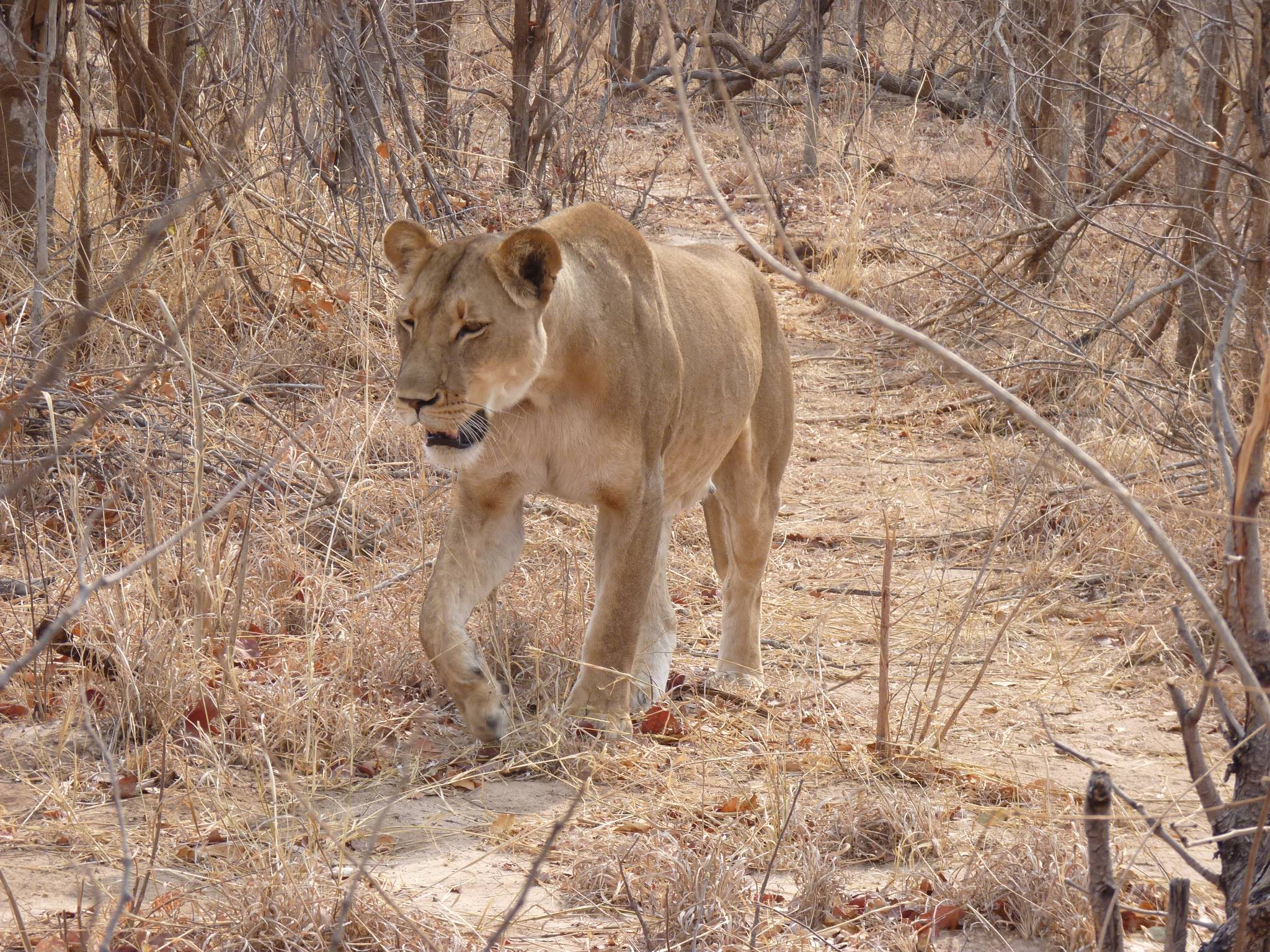
Things started off well! On arrival and about one km from Shumba, we met two lionesses moving through the bush clearly intent on their goal, as they did not even look at us. We watched them for a few minutes before they disappeared. It was a fitting start to our stay at a camp aptly named Shumba (Lion in the Shona language).

lioness small

One of the lionesses spotted near the camp. Note how dry it is!

We had chosen Shumba Picnic site after scouting a number of potential sites during our visit to Hwange last year. It is about half way between Main and Robbins Camps and somewhat removed from the main tourist area and it also had its own dam with permanent water. It was also shady, had good facilities and a Picnic Attendant looking after the place. The constant pump engine noise (located too close to the site) was particularly bad, especially when the wind blew from its direction towards us. However, the availability of water close to the camp attracts many animals and offsets this annoyance. Among the animals seen were elephants, buffalos and zebra, with some elephants browsing very close to us on a daily basis. There is a small viewing platform at the dam from where animals can be watched in relative comfort and safety.

Shumba dam

Shumba viewing platform.

On arrival, through the Picnic attendants, we learnt that the colony of Dwarf mongooses (Helogale parvula) that used to live in the trunk of the large fig tree (Ficus spp.) for a few years had moved away to another burrow nearby, outside the camp. This was disappointing, as I had come prepared for pictures of mongoose life at close quarters!

mongooses small 2013

The Dwarf Mongooses seen in 2013.

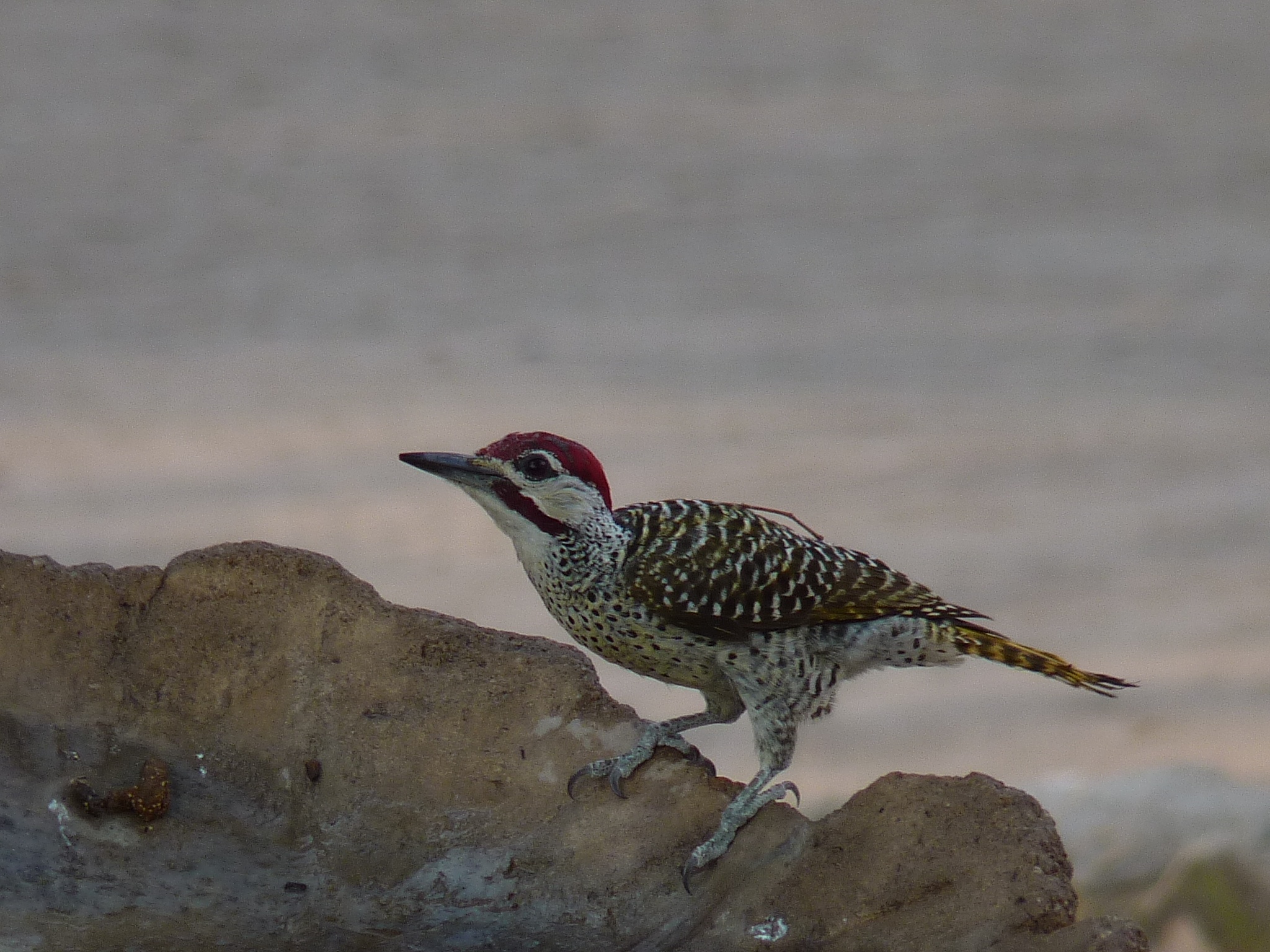
The area was extremely dry and the moment we filled the birdbaths, lots of visitors started to come, making me forget about the Mongoose’s absence. Apart from the ubiquitous starlings and hornbills we had a small flock of Southern Pied Babblers (Turdoides bicolor), a rare bird -near endemic- that I saw for the first time. We also saw Redheaded Weavers (Anaplectes rubriceps) and what I believe to be a Bennet’s Woodpecker (Campethera bennettii), all drinking from the birdbaths.

babbler small

Southern Pied Babbler.

weaver small

Redheaded Weaver (an unidentified Starling on the left)

woodpecker small

Bennet’s Woodpecker

We set up our camp under a large African Ebony tree or Jackalberry (Diospyros mespiliformis), aware that the fence that at some stage protected the campers at the site was no more and all that remained were a few broken wires and posts. However, camping in the open was not new to us, as we did not have fences in Kenya! Apart from the fig and ebony trees, the camp also has Russet Bushwillows (Combretum hereroense) and a couple of Rain Trees (scientific name unknown)[1].

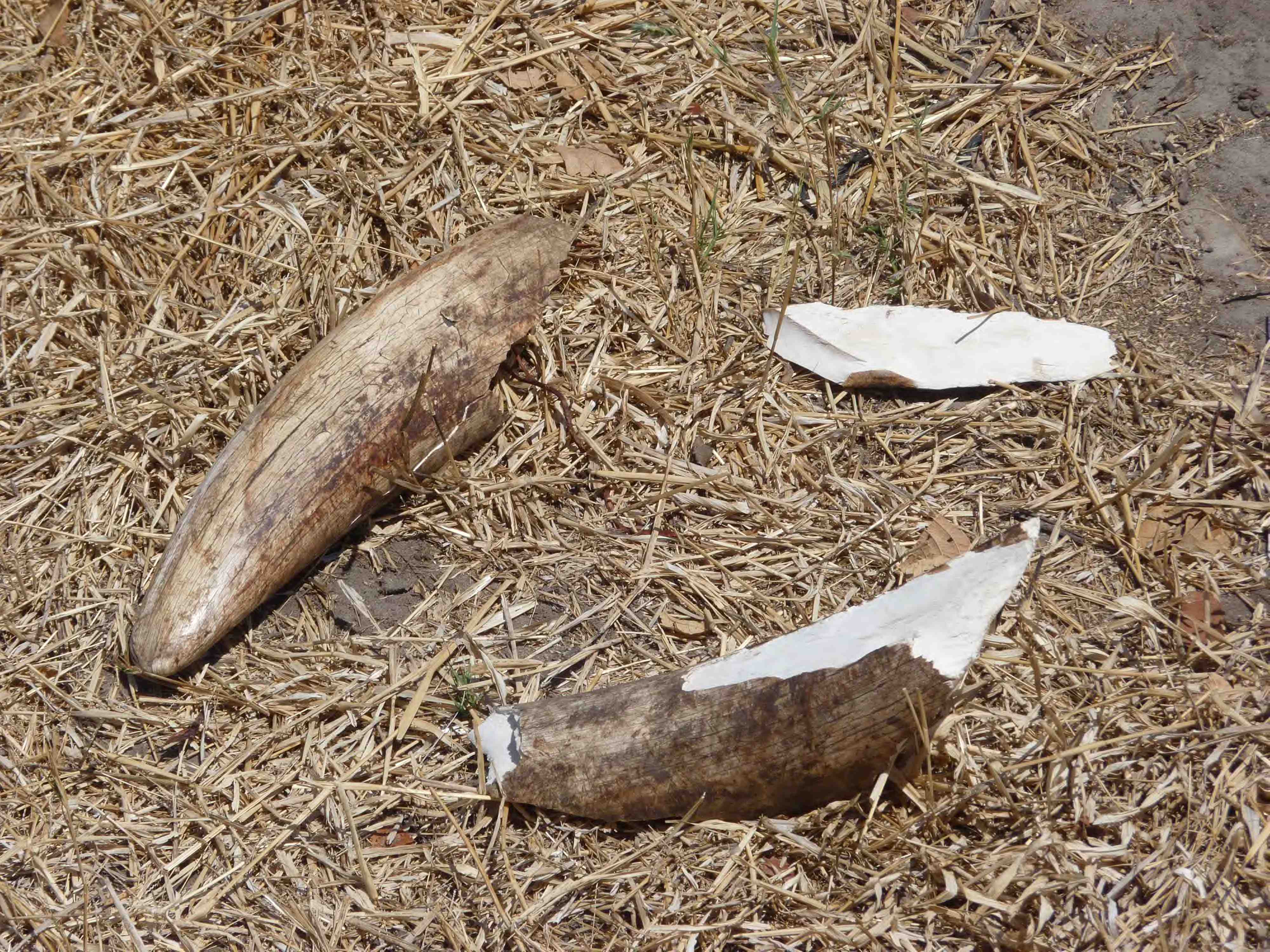
Although the dam at Shumba is almost your “private” dam, the flow of animals takes place mainly after dark, when mainly elephants come to drink. While this makes the nights entertaining from the “bush sounds” point of view, it is not easy to see the animals. believe me when I say that there was a lot of noise as elephant families and lone bulls interacted. Occasionally, elephants would be seen chasing each other and we suspect that some fighting also went on. We have seen evidence of clashes on our earlier visit in the form of chunks of ivory seen by the dam.

broken tusks at Shumba copy

Broken tusks photographed at Shumba in 2013.

For this reason, although we passed by “our” dam at every opportunity, our game searching forays took us to other dams such as Masuma, Deteema and Mandavu where animals can be seen during the day in larger numbers. The latter, a large dam, had a bush luxury if you wish to keep in touch with your offspring: a spot with cellphone signal! It was not under the Jackalberry tree as it is in Sirheni Bush Camp in Kruger National Park but exactly between the metal poles of a gate at the the picnic site!

Cell signal Mandavu

The telephone signal is found at a very precise spot, marked by a holder made of a plastic bottle!

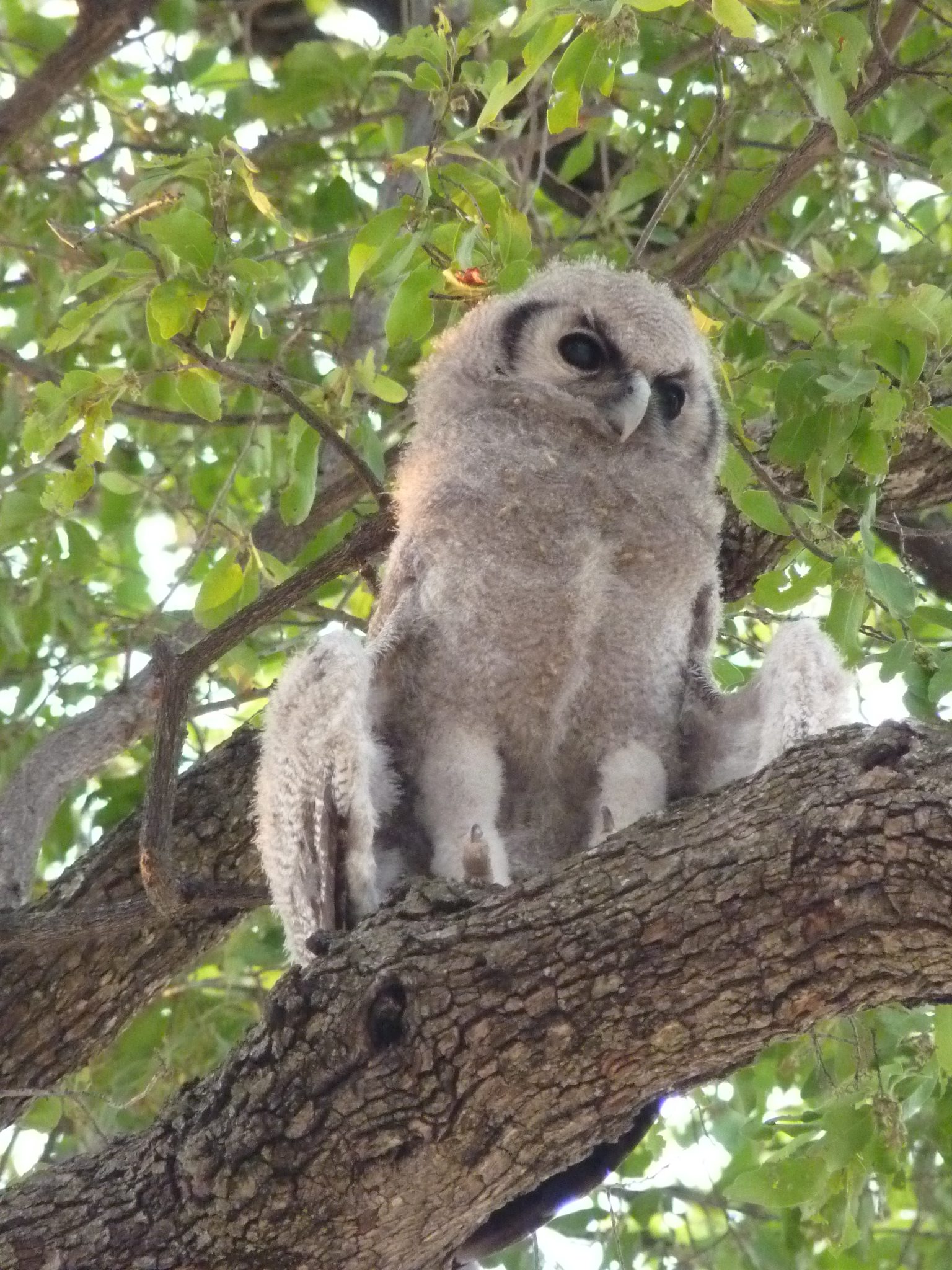
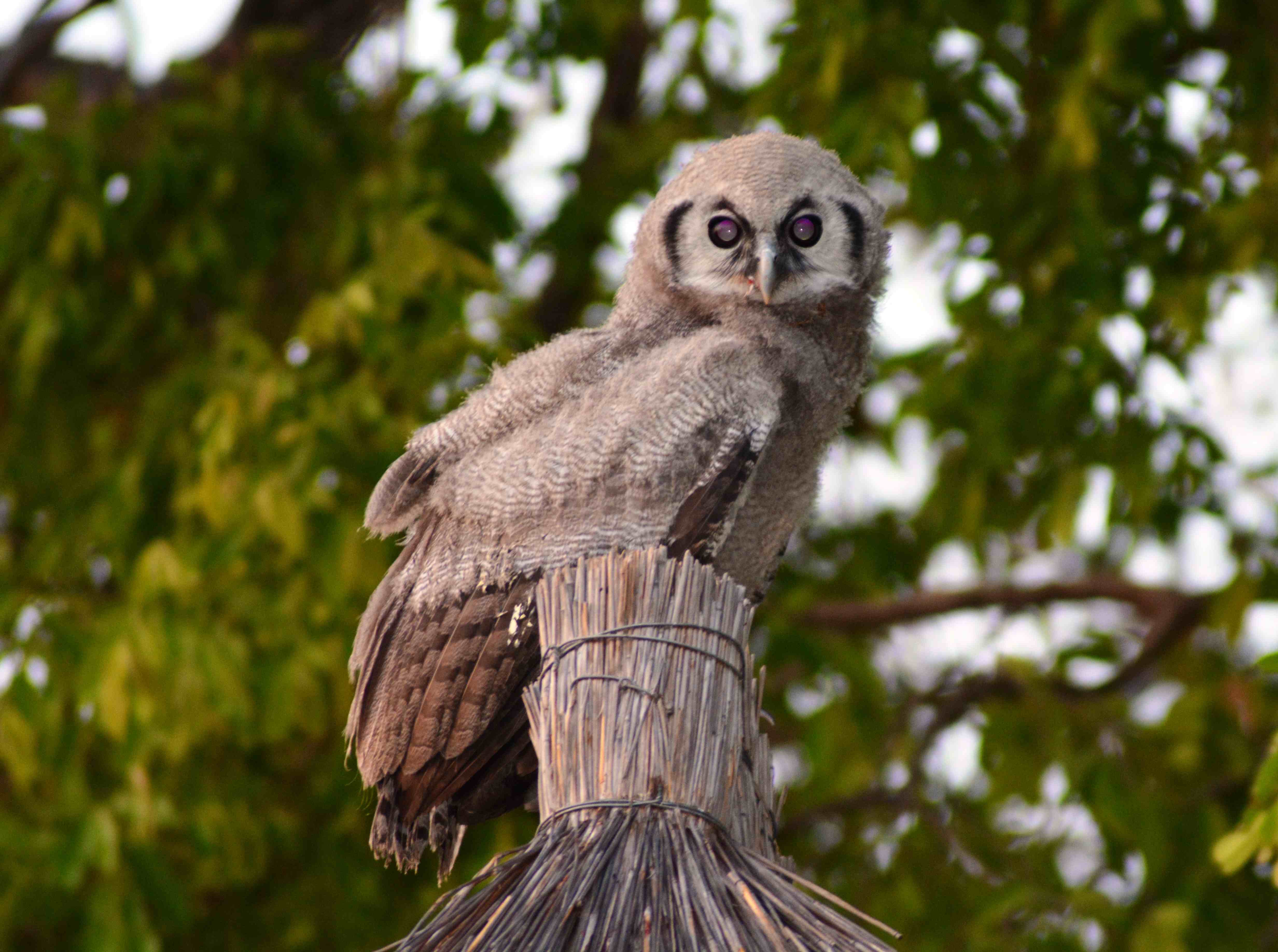
The first evening at Shumba my wife heard a whistle coming from the trees when going towards the kitchen. Subsequent search revealed a large owl perched on a high branch. As we did not wish to blind it with our torches, we refrained -with some difficulty- from trying to identify it further that night. Early the following morning the search for the owl took place and it was found! It was an immature Verreaux or Giant Eagle Owl (Bubo lacteus) that was clearly too young to fly and still confined to the trees in our camp. It was watching us!

enlarged first view small

Our first sight of the owlet.

Although it was already sizeable it still had lots of juvenile soft feathers. In marked contrast, its wings were already very large compared with its body and looked completely feathered by now. It did not move much and when it did, it walked and jumped between various branches or flew very short distances. It did not remain in the same place every day either and showed great interest in what we were doing. Taking good pictures of it was difficult as it was usually high up in the trees and against the light.

owl with wings low small

The youngster was seen to lower its wings. Was it for heat dissipation or to rest them?

The bird was there for the duration of our stay and it would be quiet mostly, whistling on occasion. We did not see it coming down to drink from the birdbaths or show any interest in the other birds. Said birds were not seen mobbing the youngster either.

owl on roof tom small

Perched on top of the kitchen (Photo by Tom Milliken)

Upon further reading I learnt that the female owl lays two eggs and the first one hatching is the one surviving when food is not enough for two owlets. The new birds leave the nests at about two months of age and can fly two weeks after this. They remain rather inactive for three months after that and only start getting their own food after that time, at about five months of age. Probably the owlet we saw was still within the three months of “low profile”.

wings open tom small

Flexing its rather oversized wings! (Photo by Tom Milliken)

The third morning I woke up earlier than normal, at about 0545 hs, and heard deep grunts like “hru, hru-hru-hru, hru, hru-hru” emitted continuously[2]. Thinking that the young owl was calling I went out of the tent to see what was happening and saw an adult owl that soon flew off. I followed it outside the camp but lost it as it flew off. The parents were keeping an eye on our youngster! Later on we found a dead mole rat under a tree, a sign that the adult had brought food to the youngster! The mole rat was not eaten though.

Friends came to stay with us on the fourth day after travelling from Harare to Shumba in one day! They arrived in late afternoon and rather tired so we helped them setting up their tent. This was easy as it is very easy to set it up. However, my sigh of relief was premature when the inflatable mattresses were produced. I felt obliged to offer my help with the hand pump. Hard work followed until; eventually they were had the required pressure. That completed, we spent the rest of the evening chatting and had an early dinner.

Once in our tent, we noticed some night moves in the adjacent tent and some talking as well but we refrained from asking anything until the following morning as things calmed down after a while. Apparently one of the mattresses had suffered from a puncture(s) during an early safari by their children and it had deflated during the night with the result that one of our friends gradually “descended” to floor level and, subsequently, had a literally hard night!

Spotting the young owl perched in a good place for photography made us forget the bad night and improve the spirits. My friend is a good photographer and had just bought a camera with the latest technological advances and took some excellent photographs that he kindly lent to me to illustrate this post. This was despite him not being very familiar with the camera that -as usual with modern gadgets- had a manual the size of the bird book!

scratching by Tom small

A great picture showing its diagnostic pink eyelids. Photo by Tom Milliken.

Two days later, again during early morning, we had another visit by one of the parents that repeated the call described above. It was rather shy and did not stay too long, flying away after a short while. Later on we found what appeared to be a Teal on the ground, based on the plumage of its back. Further identification was difficult, as the head and breast of the bird had been eaten, presumably by the youngster.

By the time we left Shumba a couple of days later, the young owl was starting to fly short distances and at some stage we thought it had gone. However, its whistling gave it away and we found it again, perched above our tent inside the tree’s foliage, probably seeking protection from the heat. We expect that soon the owl will become completely independent from its parents and start its own life. We hope to find its siblings next year!


[1] I do not wish to mislead you to think that I know about trees. Thankfully some forester placed nametags on the tree trunks. Unfortunately the Latin name for the Rain Tree was disfigured.

[2] A good recording can be found at http://www.listentoafrica.com/audio/wildlife-giant-eagle-owl-14092009/


To Hwange!

cropped-rural-buses-overtaking.jpg

There are 430 km from Harare to Bulawayo and 330 km from the there to Hwange National Park. As we had time, we preferred to interrupt our journey at Bulawayo to ensure that we drove safely and experiences less fatigue.

The first part of the journey was uneventful except for several Police roadblocks, speed traps and Toll stations, in addition to the road works that require rather long stoppages as the road is cut in several places. This being said, it is good to see that roads are being maintained.

It was during one of these stops that our attention was drawn to a pick up queuing ahead of us. We could see “things” moving in the open back. At first we took it for some flapping canvas or plastic sheeting, a common occurrence. On second look we realized that there were heads bobbing up and down. The heads’ belonged to a “flock” of red hens being transported to or from a farm!

The pick up’s feathery occupants were clearly bored and bent on having a look around! Look they did and, seeing freedom, they became more agitated and, somehow they managed to loosen the strings that were keeping them tied to the car and once free, it took a very short time before a pioneer gathered its courage and jumped out! The occupants of the pick up were both on their cell phones and did not notice this. It was only when several hens had abandoned the car that the lady occupant -a rather large lady- managed to get out of the car and take in what was happening. There were hens running for freedom in several directions on both sides of the road.

The large lady, clearly not dressed for running after chickens in high heels, a tight dress and large earrings, made a short attempt at getting some back and nearly got run over -together with the hens- by a car coming in the opposite direction! Not keen to begin with, this quickly persuaded her that it was too much work so she quickly gave up the chase, huffing and puffing and proceeded to contemplate the calamity. While this was going on, the driver finished his call and got out of the car to assess the situation. Realizing that it was critical, he recruited some of the road workers who gradually, managed to recover the fugitives that miraculously did not get hit by the passing cars!

When the light turned green we overtook the troubled pick up. Operation “catch that hen” was still going on and the fugitive hens were being captured, tied and deposited unceremoniously back in the car.

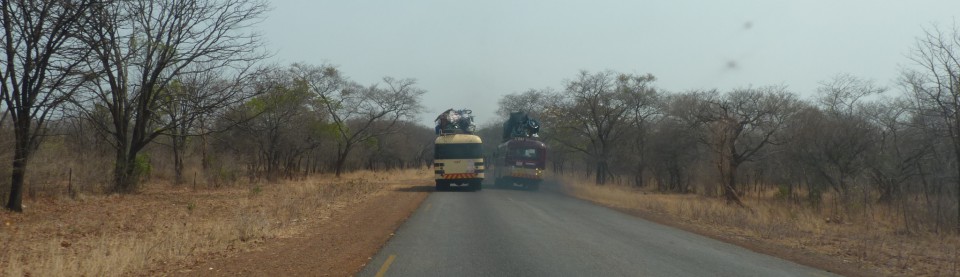
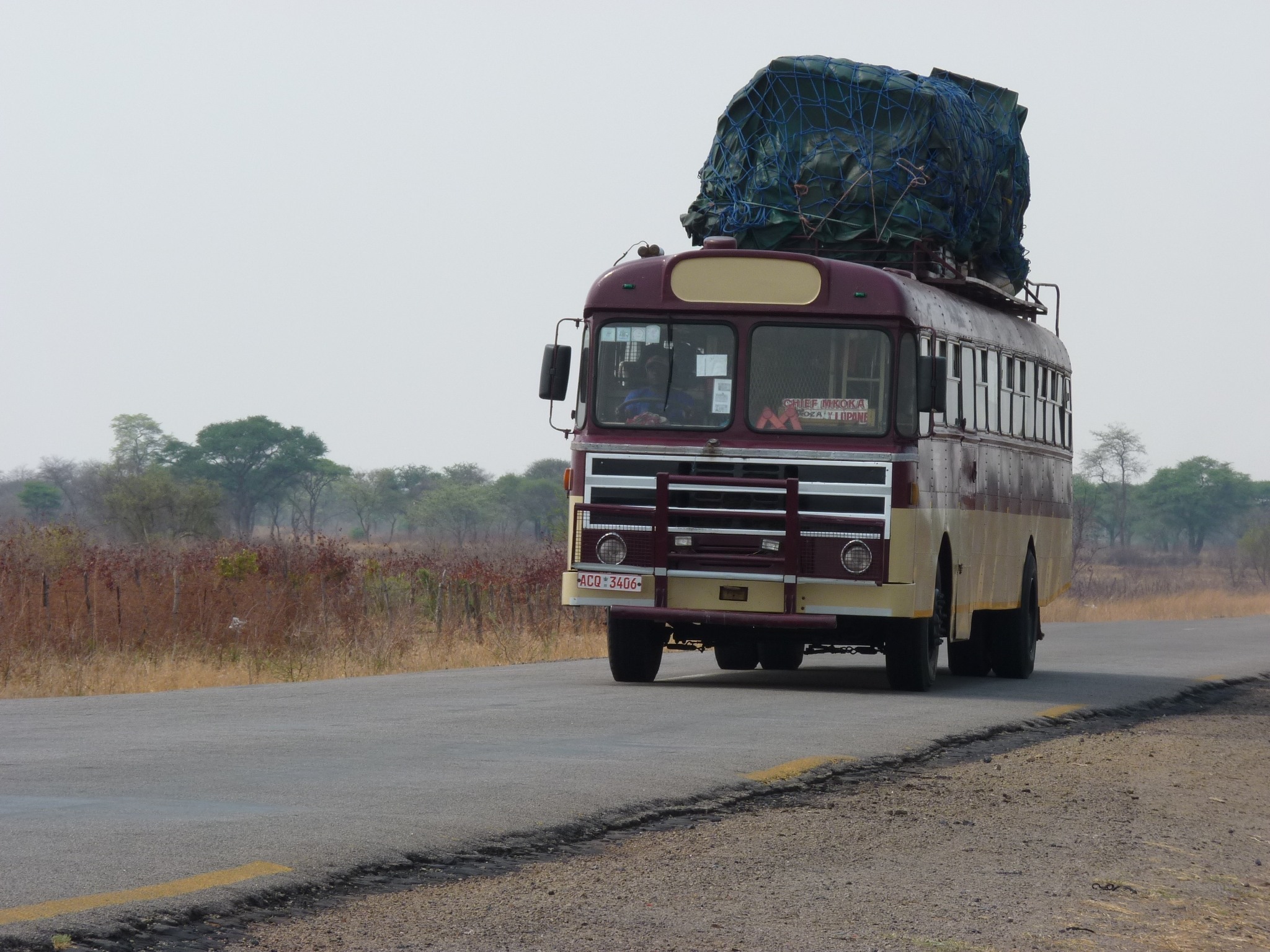
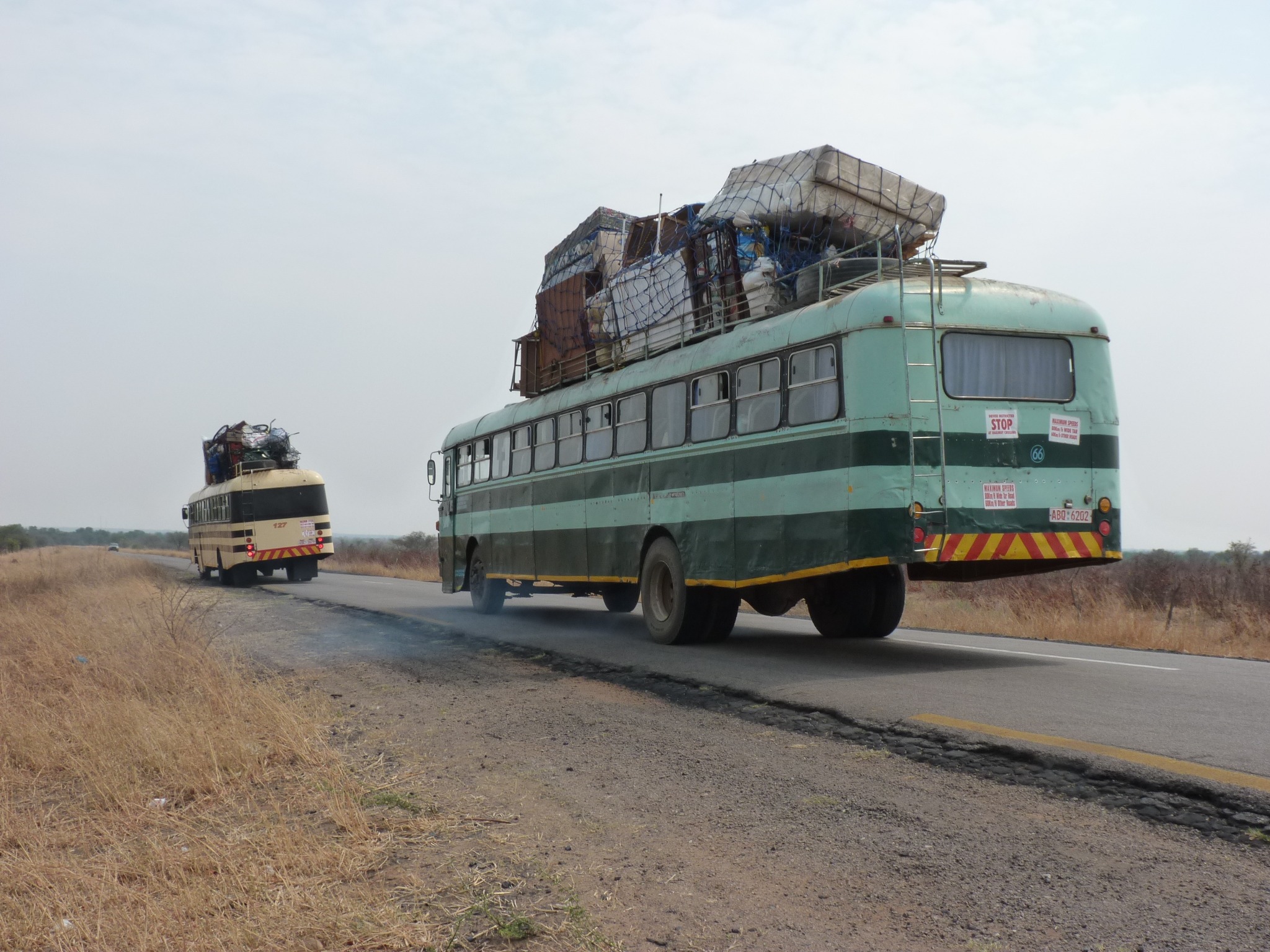
After the night in Bulawayo we resumed our journey. Again the road was not too busy but we came across a number of rural buses, a remarkable feature on Zimbabwe roads.

red bus front small

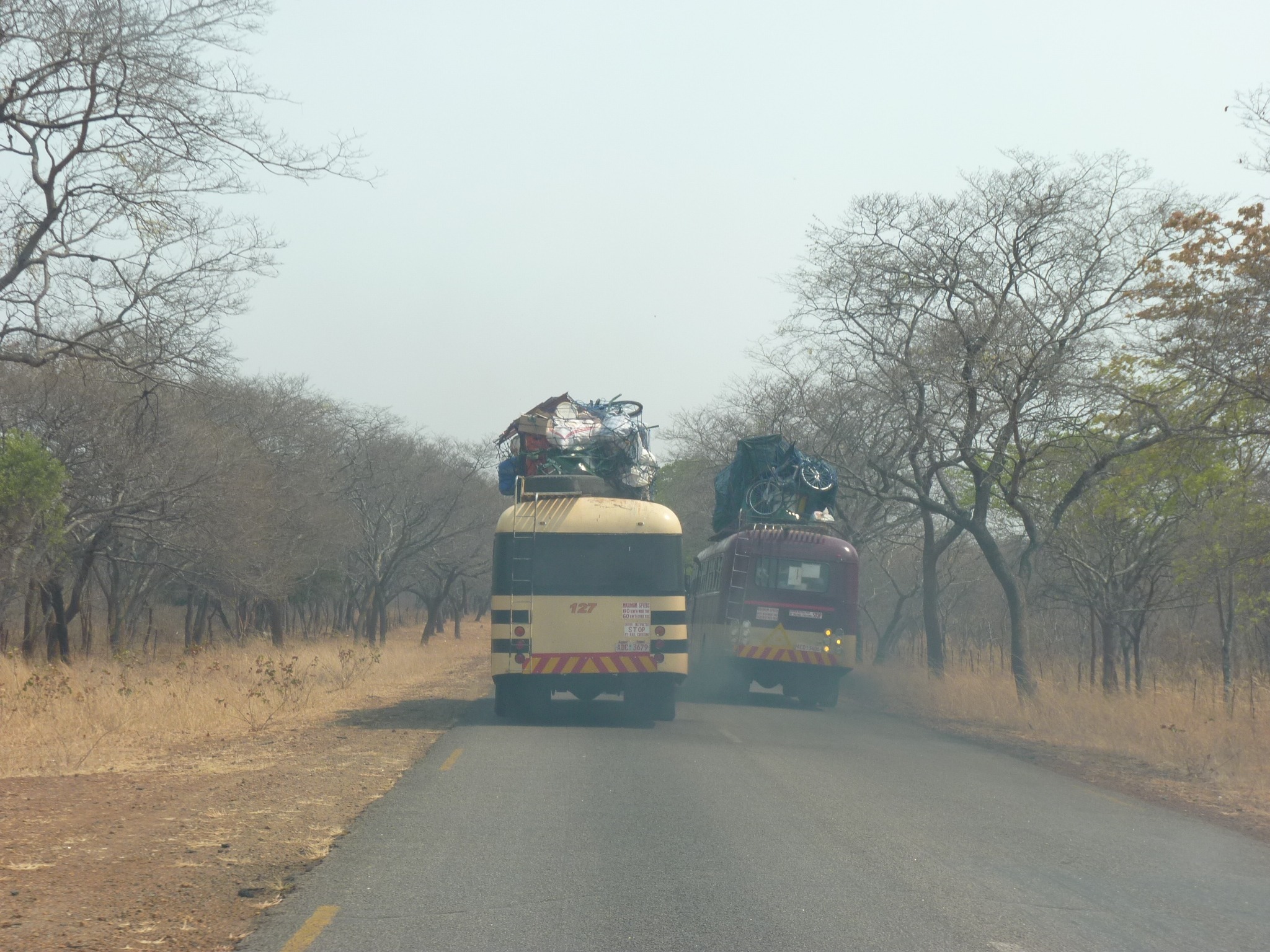
They are all similarly built, following a format that has not changed over many years. Their main signature is their large roof racks, usually heavily and highly loaded with the belongings of people going to the rural areas. They are a very effective means of transportation loyal to the motto “if it works, don’t fix it”. Their drivers deliver a rural courier service as they carry money and other documents of importance that need to change hands between rural families and relatives working in the cities and viceversa.

buses overtaking small

These buses are not fast and their drivers are rather careful so they did not cause any problems, and we were able to admire them as we overtook or crossed them while wandering about their final destination.

2 buses small

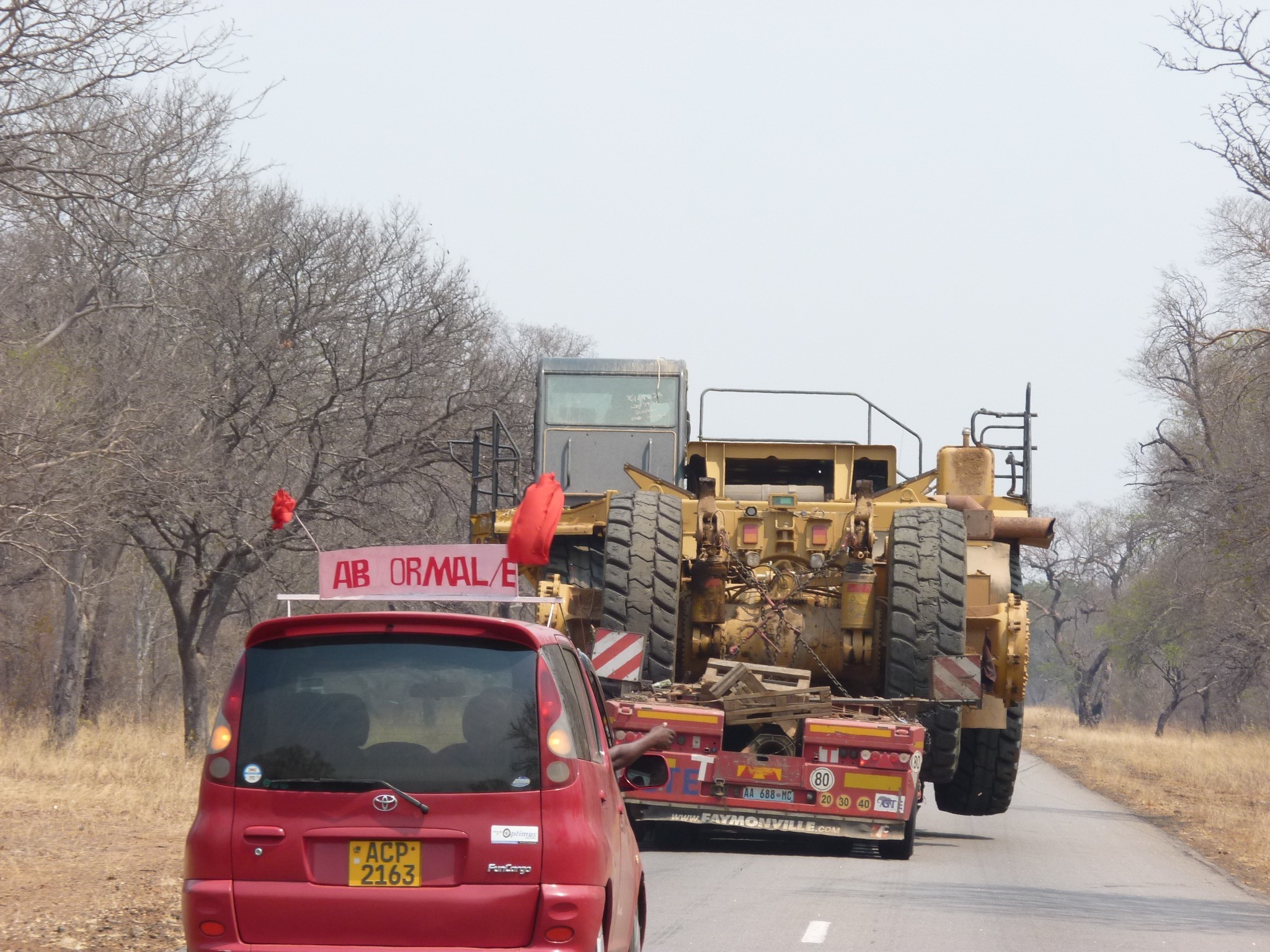
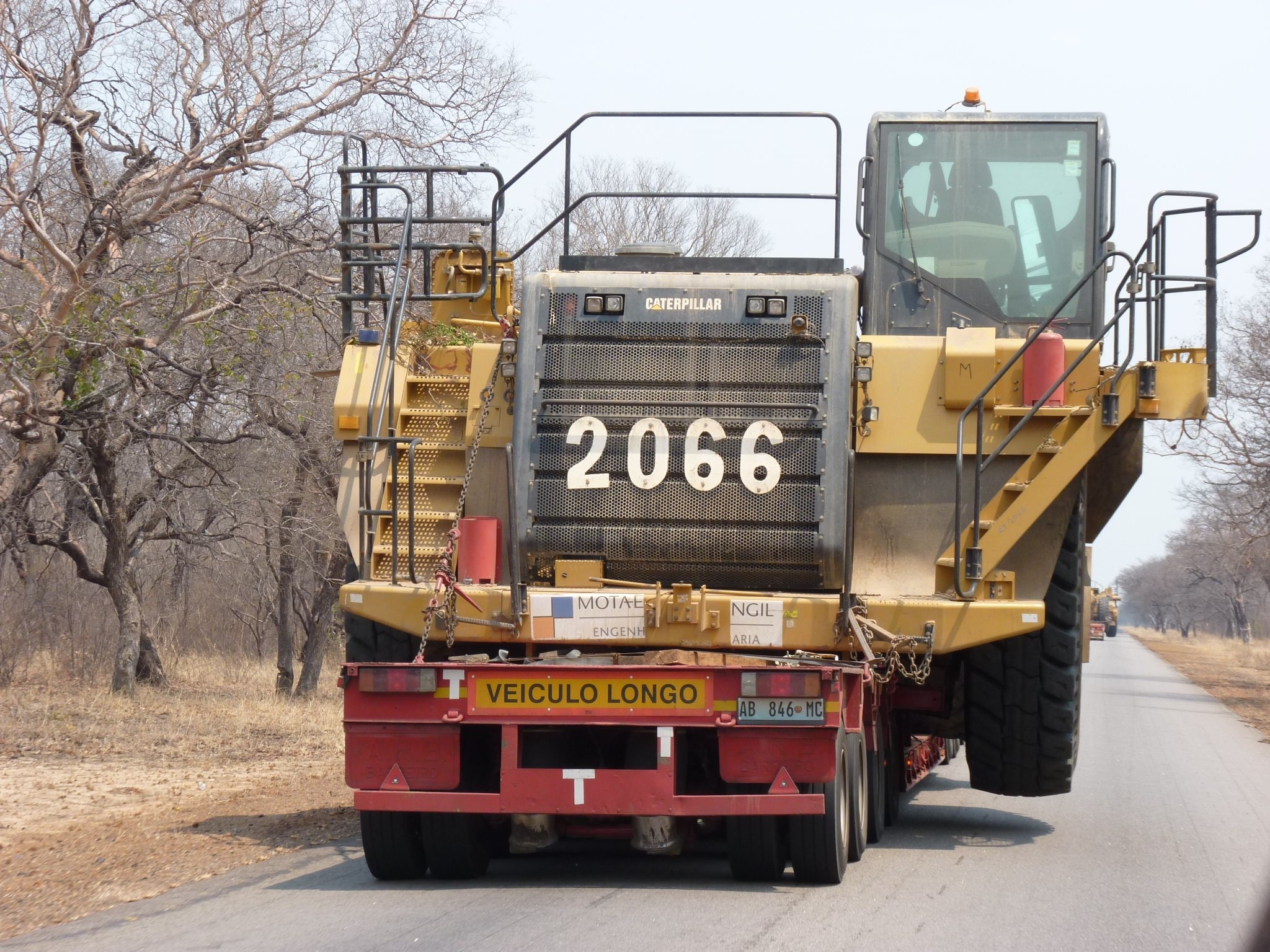
A different -and rather dangerous- find was a convoy of lorries carrying very heavy mining equipment that occupied the entire width of the road, making overtaking a real hazard.

wide mining machine small


wide machine small

We followed the wise course and waited for a break that took a while to come as we crawled behind the convoy. The opportunity presented itself at a toll station as the machines, because of their bulk, needed to take a detour around the station. We drove through and left them behind to continue to our destination at good speed.

Crocodiles and Impalas

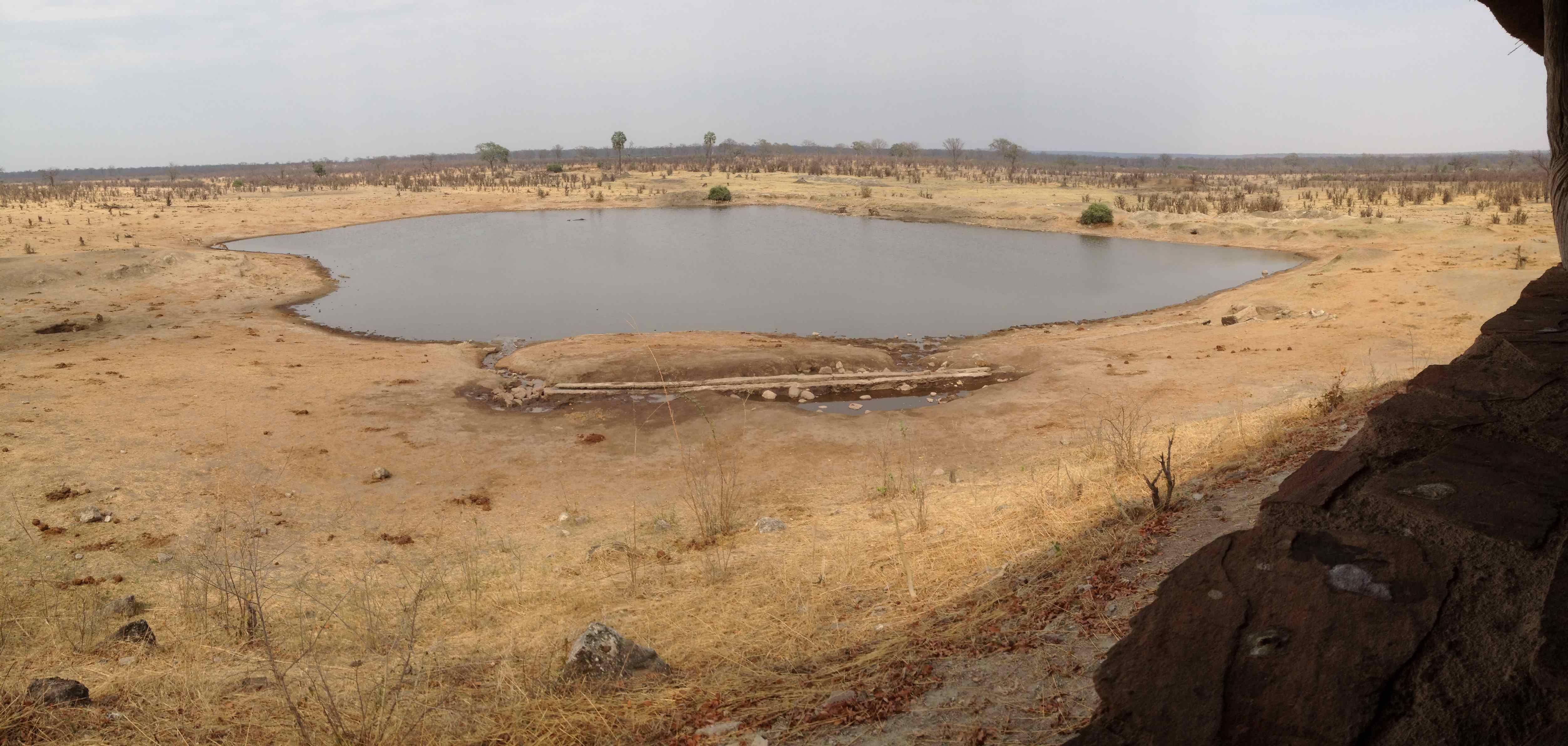
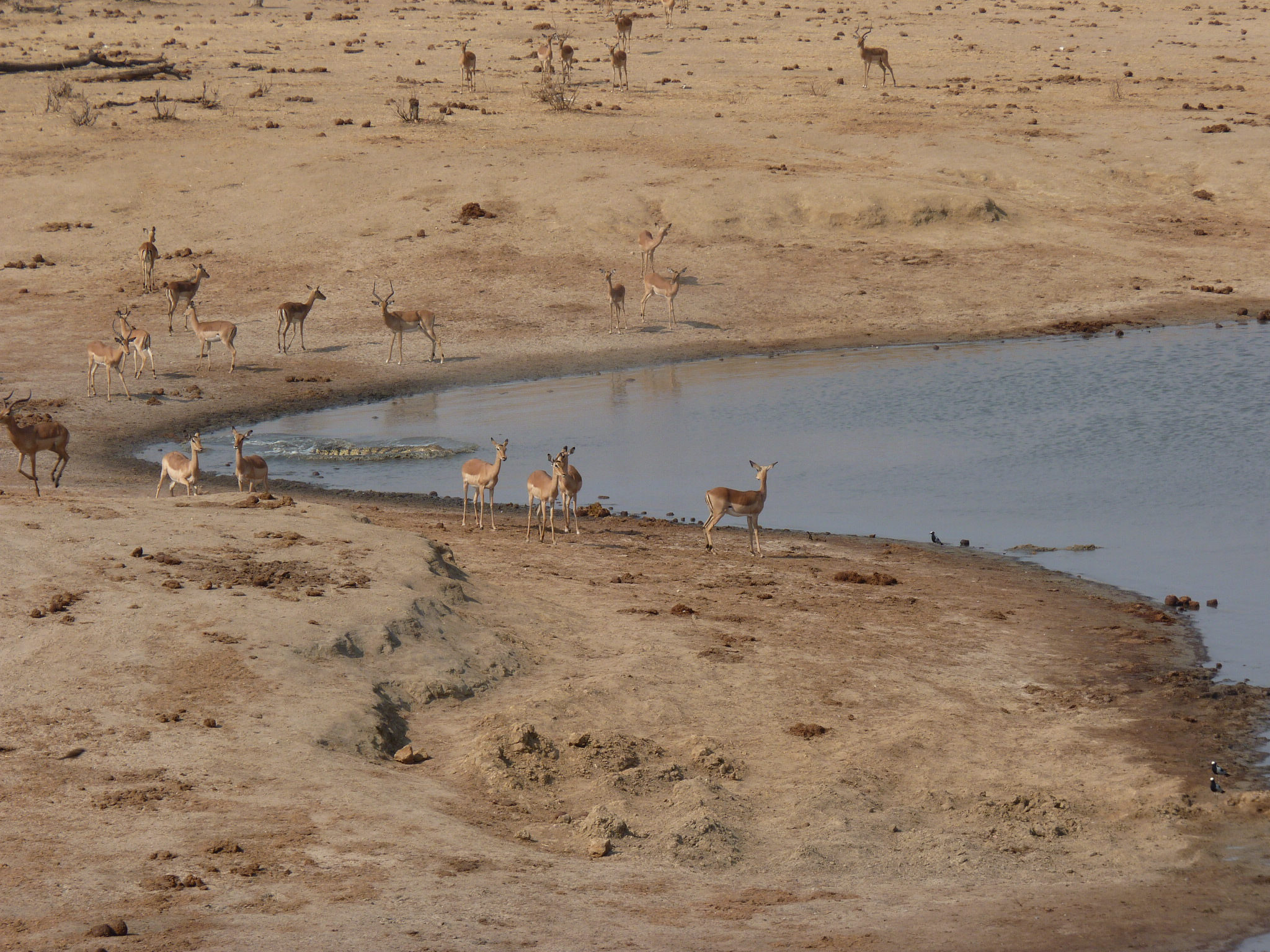
The events described were observed at Masuma Dam in the Hwange National Park. The dam is about 120m by 100m and it has a roughly oval shape. Water is continuously pumped to the dam from a nearby borehole making it an essential water source for the animal population in the surrounding area.

Masuma panorama

The time of the observations -13 to 16 October 2014- correspond to the end of the dry season. Elephants, Greater Kudus, Waterbucks, Impalas, Zebras and Warthogs were regular visitors, together with large flocks of Guinea Fowls and Vultures, to name the most frequent and common. We also counted 16 Hippos and six Crocodiles.

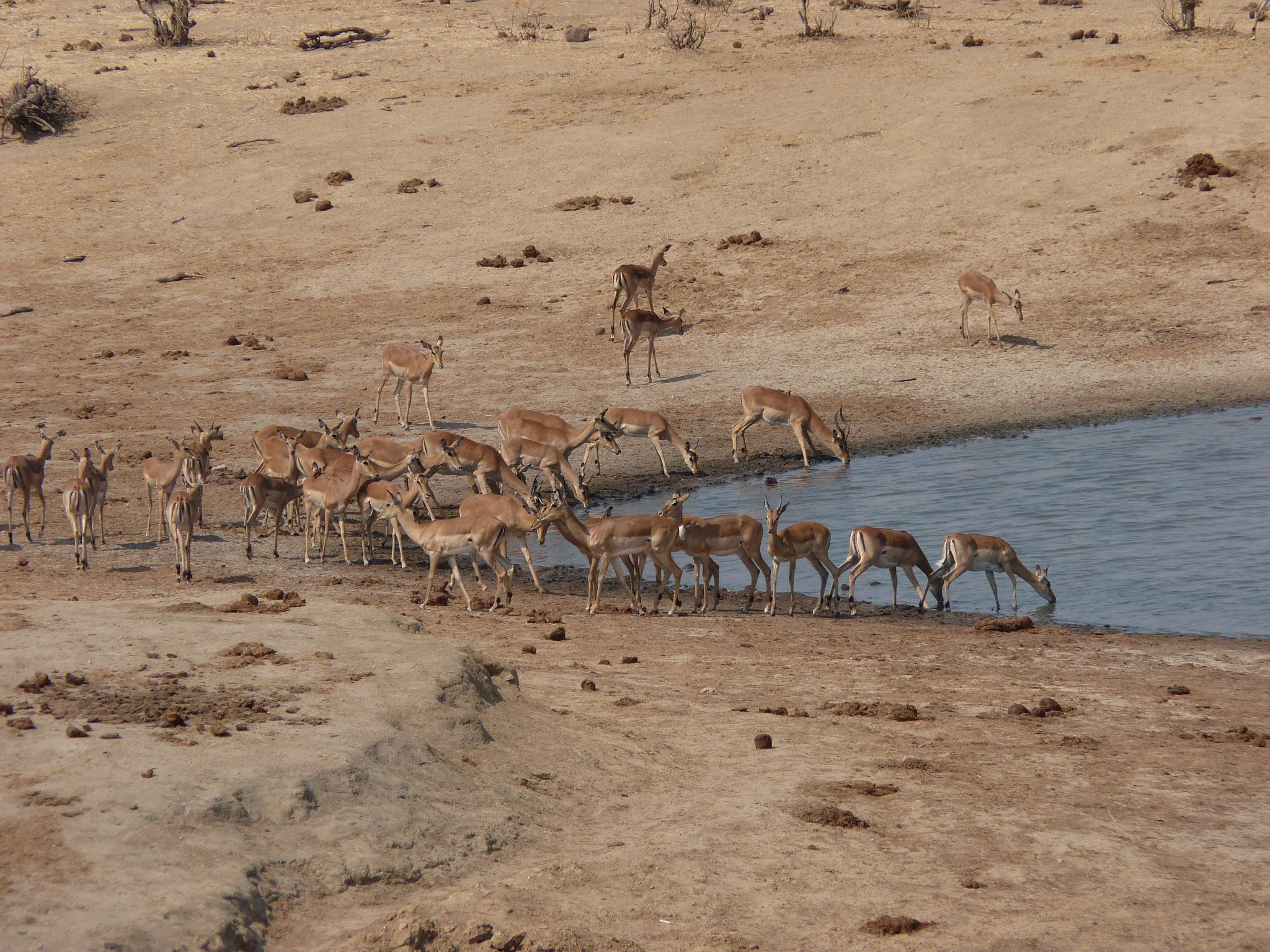
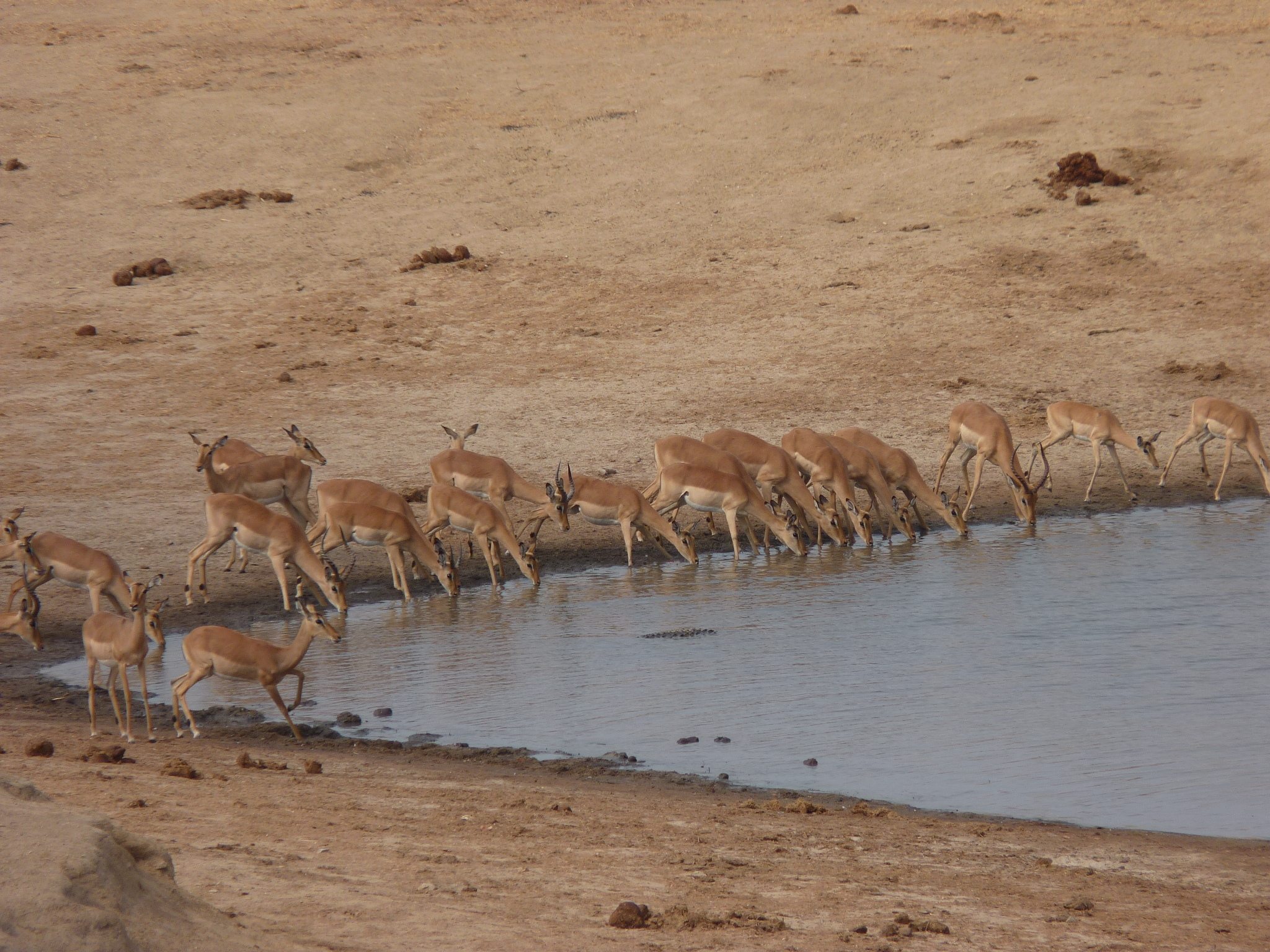
The preferred drinking place was a small bay located towards the Southern part of the dam (seen on the left of the picture above, at the back where some Impalas can also be seen). Most antelopes drank from there, particularly the Impalas that would come throughout the day in herds of various sizes. The figure below shows a typical drinking scene in that bay.

normal impala drinking

A herd of Impalas drinking at the dam.

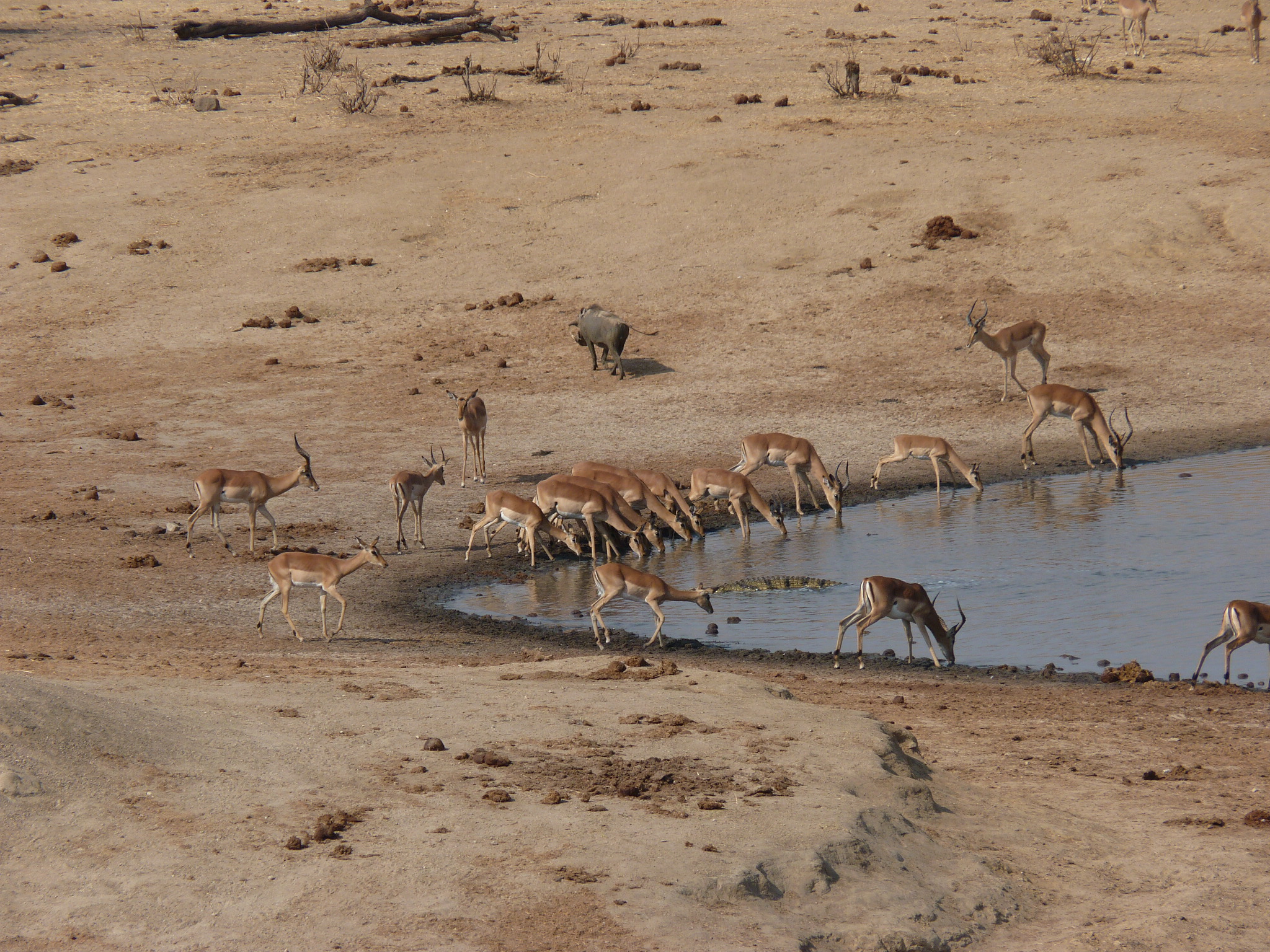
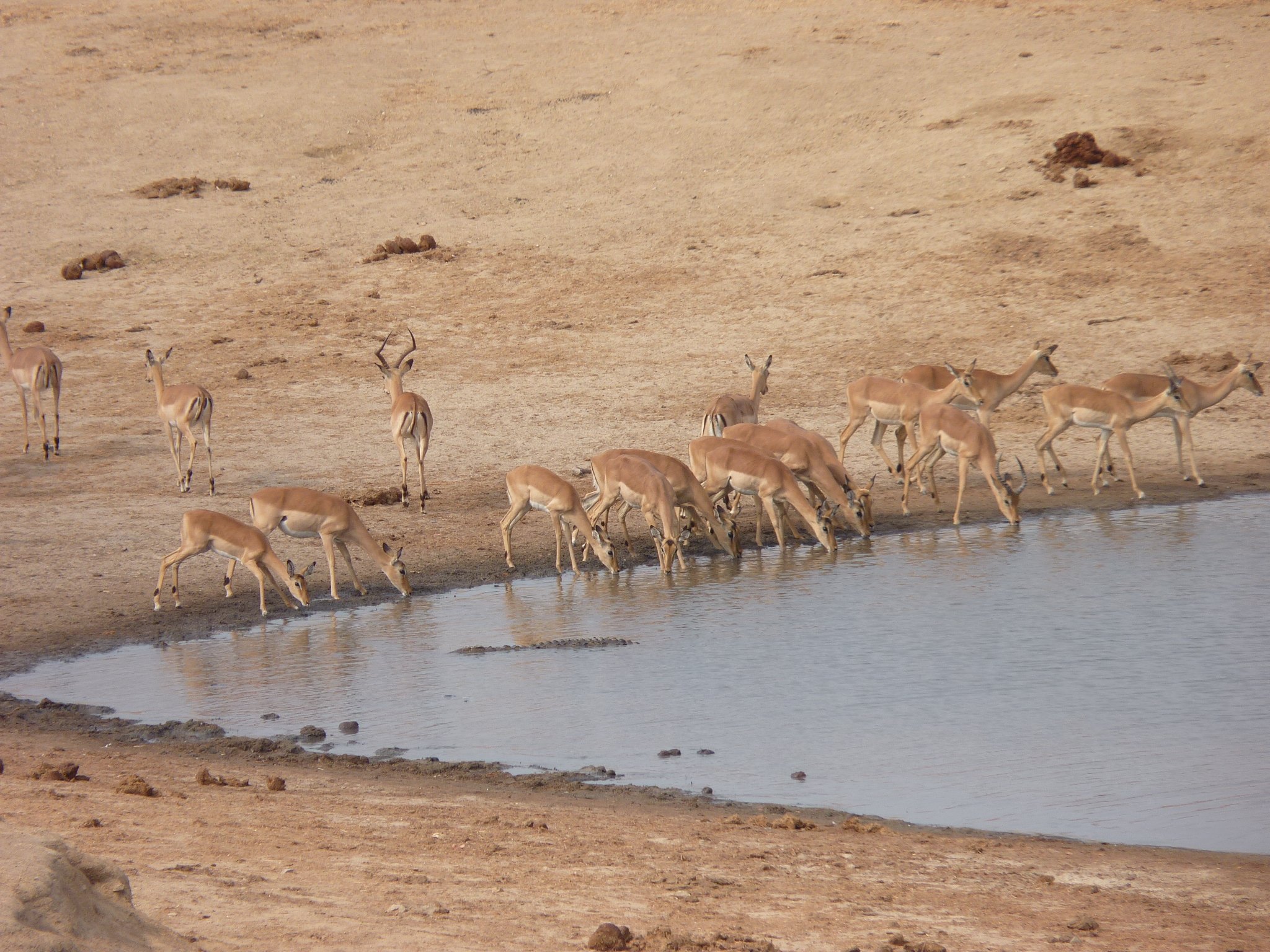
As soon as a herd started to drink, usually one of the Crocodiles would swim towards them. They did so in full view of the antelopes and stopped at about 1 to 1.5 metres from them.

Croc attack 7 (after)

A crocodile slowly approaching the drinking Impalas.

On seeing this the impala would withdraw from the water’s edge for a short time but gradually calm down and return to the water’s edge to resume their drinking. The crocodile would remain immobile for a few minutes and then slowly submerge and, eventually, disappear completely.

croc in position

The Crocodile starts to sink.

croc sinking

The Crocodile is barely visible now and about to disappear.

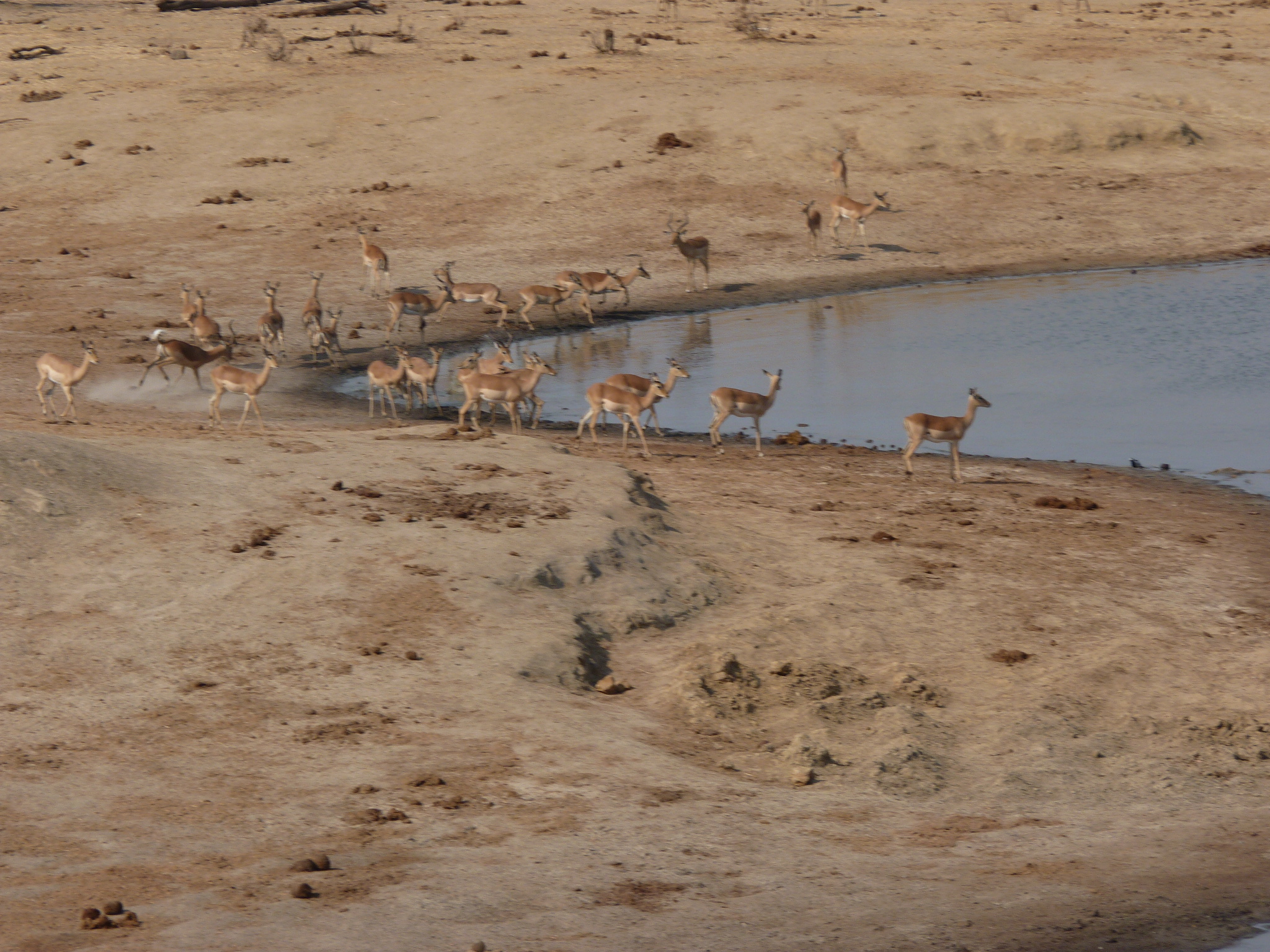
What followed next was really unpredictable. With the Crocodile (we assume that there is only one!) submerged the Impalas would continue to drink, although very fretfully. Most of the time, the Impalas will get their fill and move off without incident. However, approximately two or three times in a morning a sudden swirl in the water will be the only thing that preceded a violent attack by a Crocodile by lounging itself at the Impalas, moving its head sideways while biting in an attempt at catching one.

Croc attack 1

The Impalas’ first reaction at seeing the water starting to move.

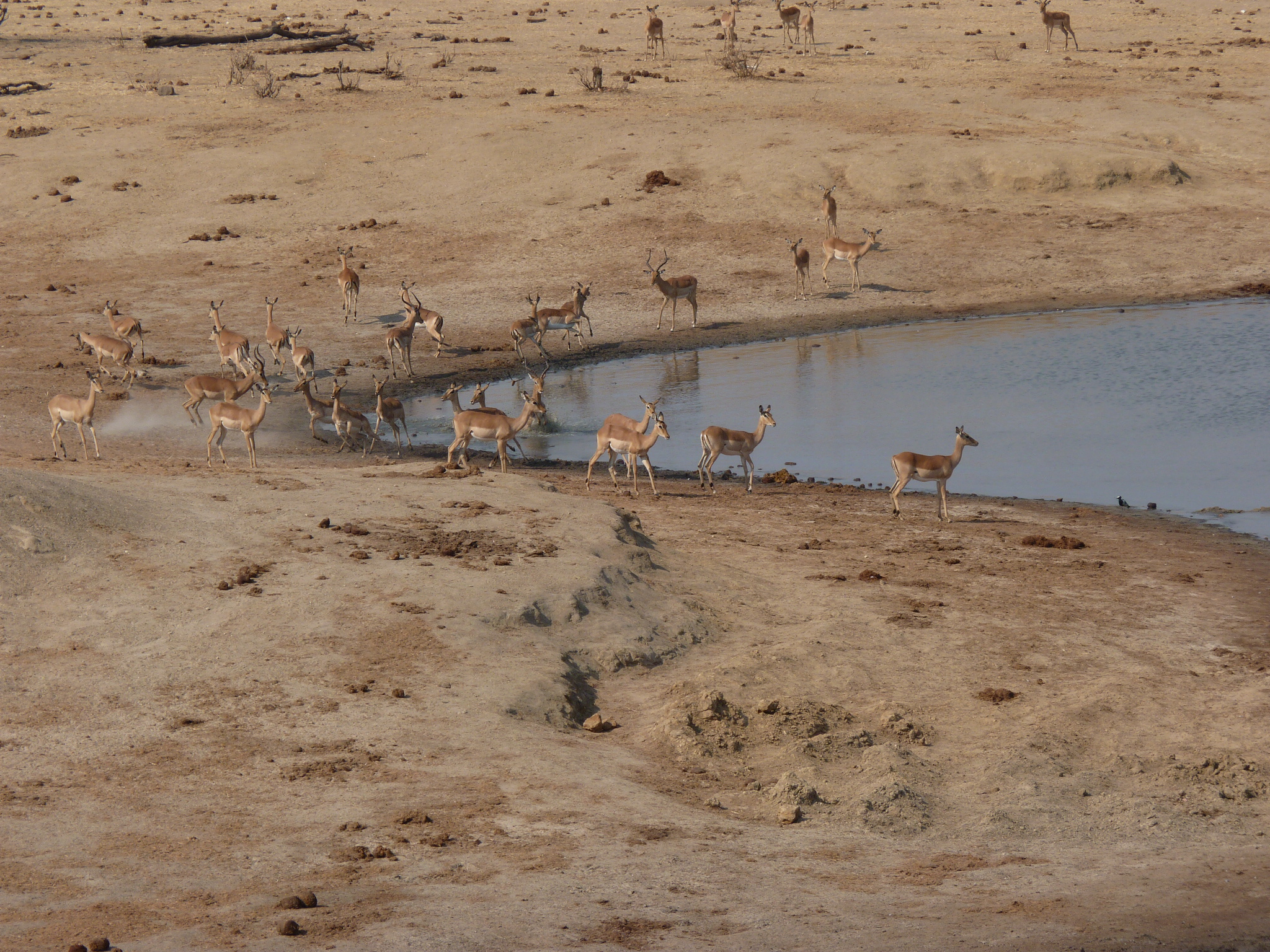
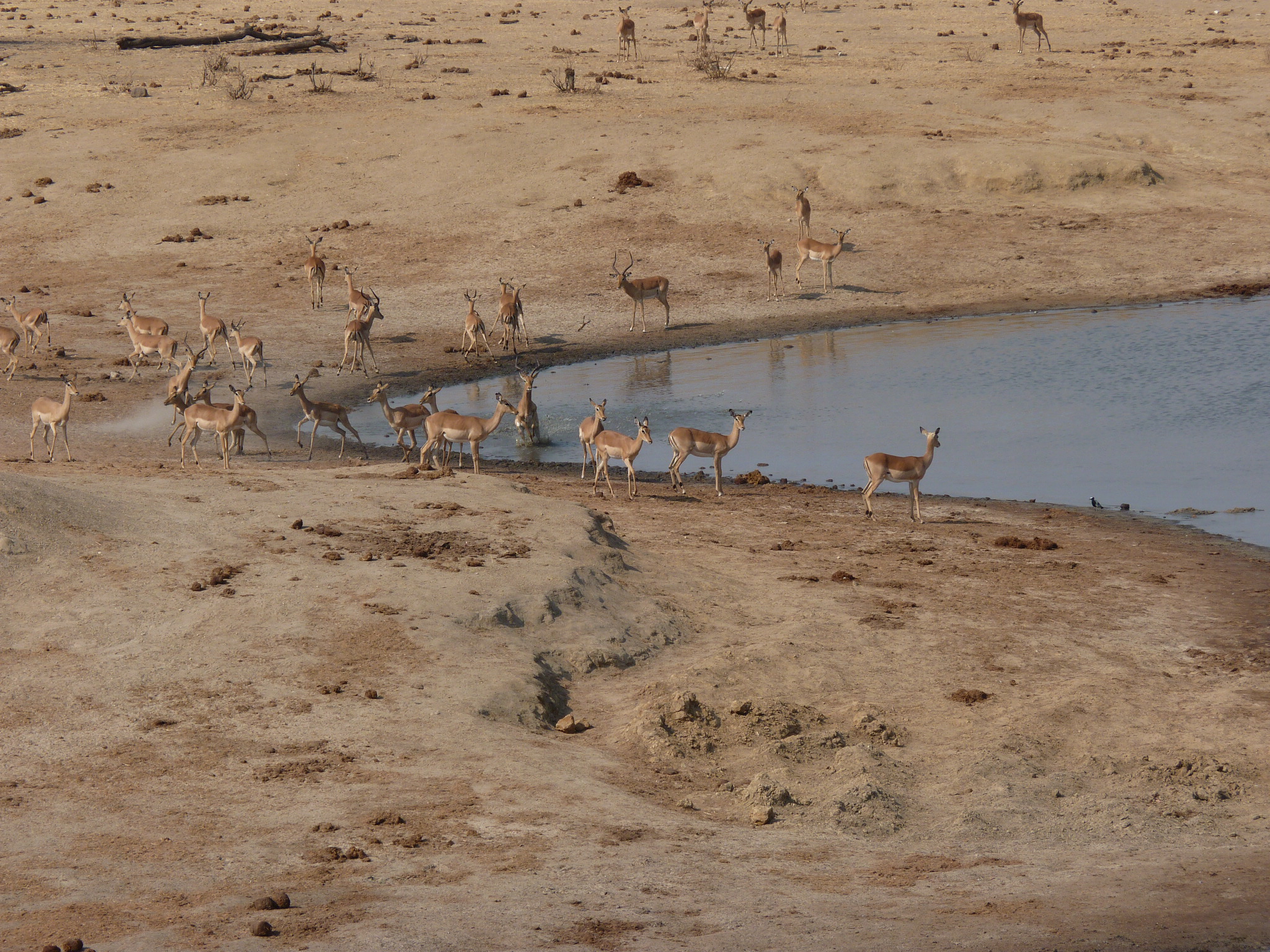
As soon as the impala saw the water movement preceding the attack, they scattered in all directions, including jumping into the water in order to avoid the Crocodile.

Croc attack 2

The Crocodile attack is taking place, the Impalas scatter in all directions, including into the water becoming very vulnerable.

Croc attack 3

The Impalas escaped the attack this time, including the male inside the water.

The most common outcome was that the crocodile(s) failed and went back to the water empty-jawed.

Croc attack 4

The Crocodile returns to the water after the failed attack.

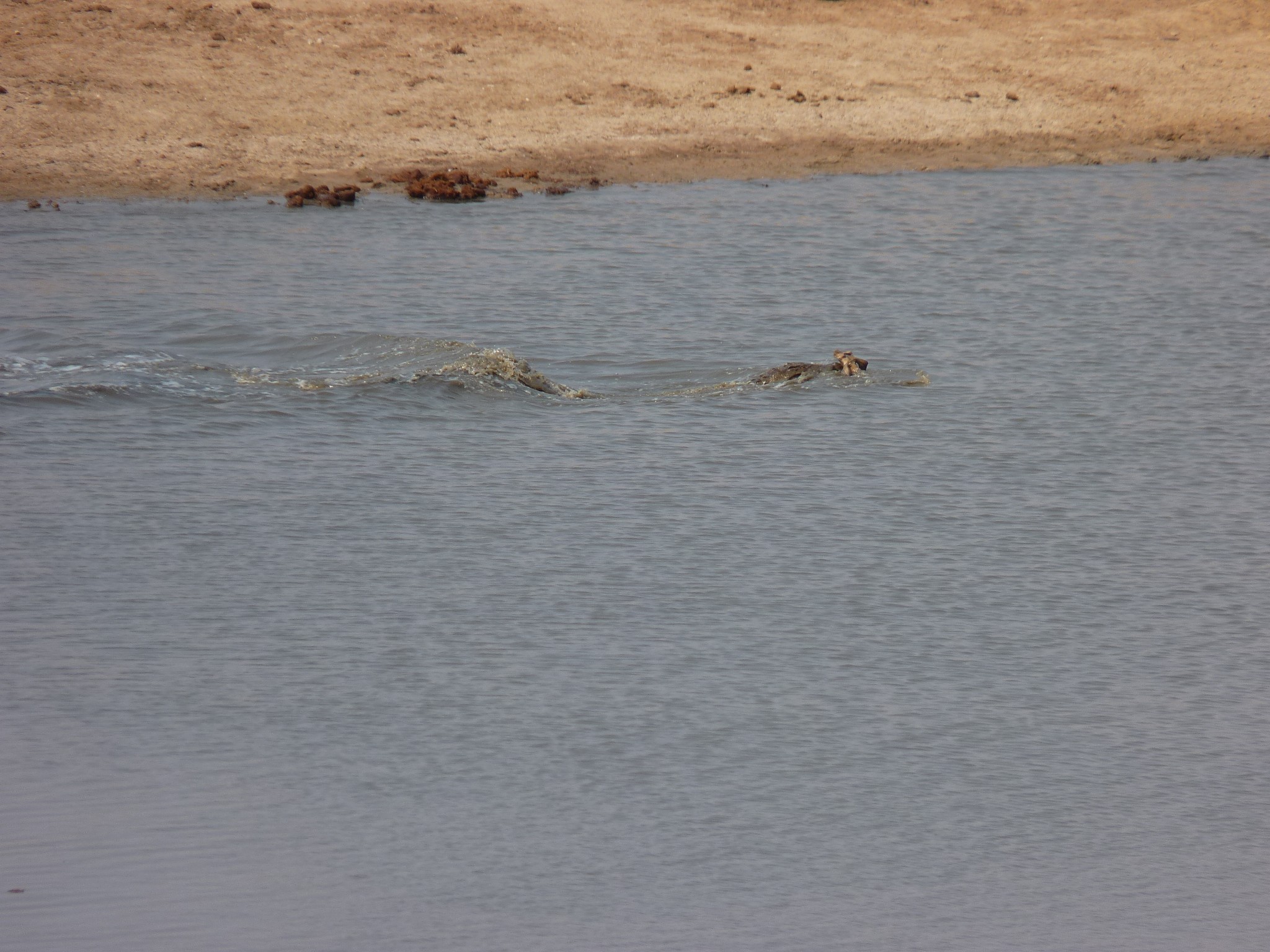
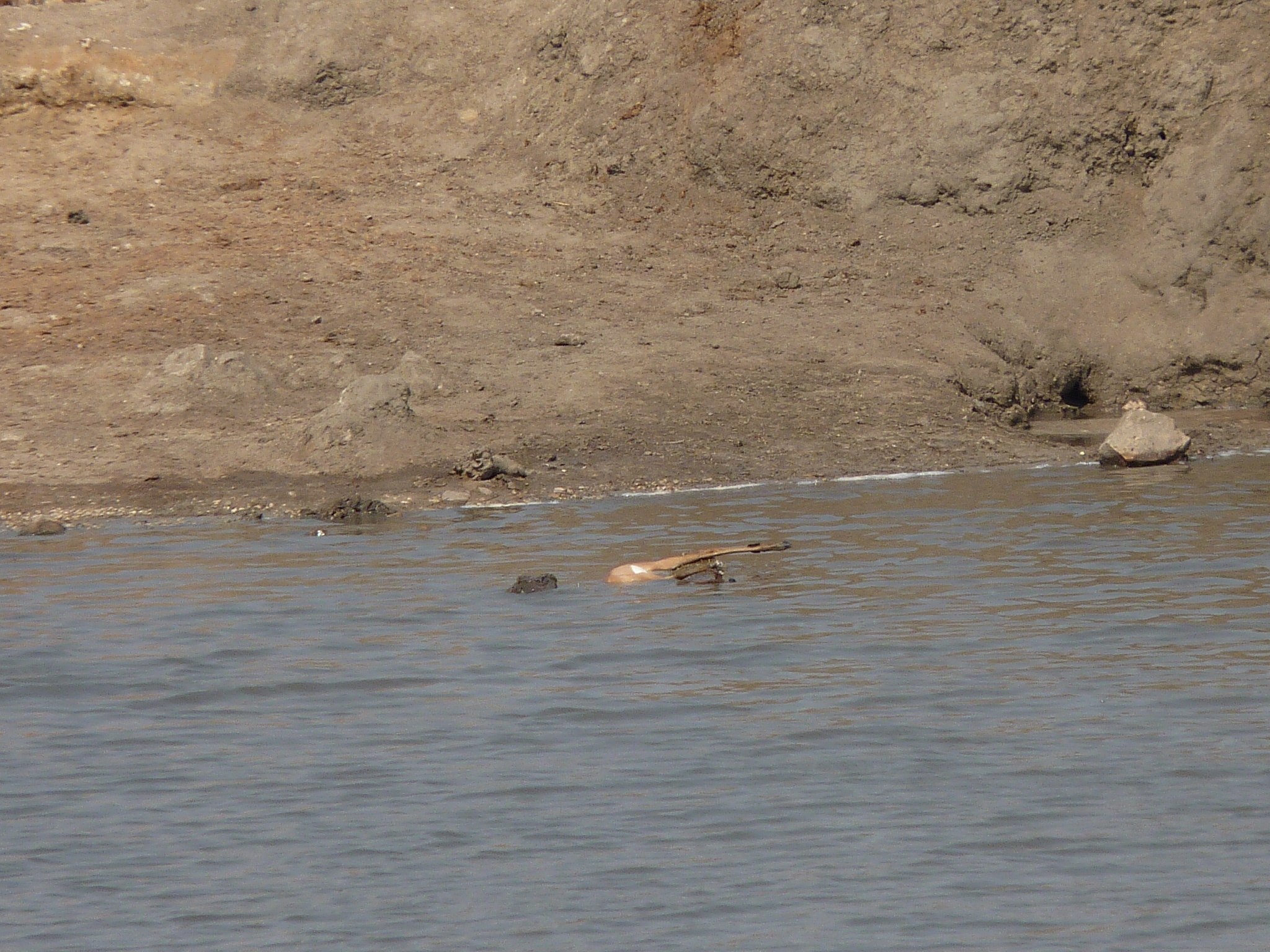
On two occasions, however, animals were caught. We witnessed one kill while the other one took place just before our arrival and saw the Crocodile swimming with the dead antelope. The Impala we saw was a young animal and it was caught from a foreleg. After a short struggle it was quickly drowned.

croc carrying impala small

A Crocodile swims away carrying the Impala.

croc with impala

The Crocodile holding the impala after drowning it.

During the time we were at the dam, the Crocodiles caught two Impalas out of eight attacks witnessed.

There was also an extremely interesting follow-up to the kills but for that you will need to wait for a while!!!


Swiss-Uruguayan Easter Safari Rally – Kenya, 16th to 20th April 1987.

1-Matthews4WD87

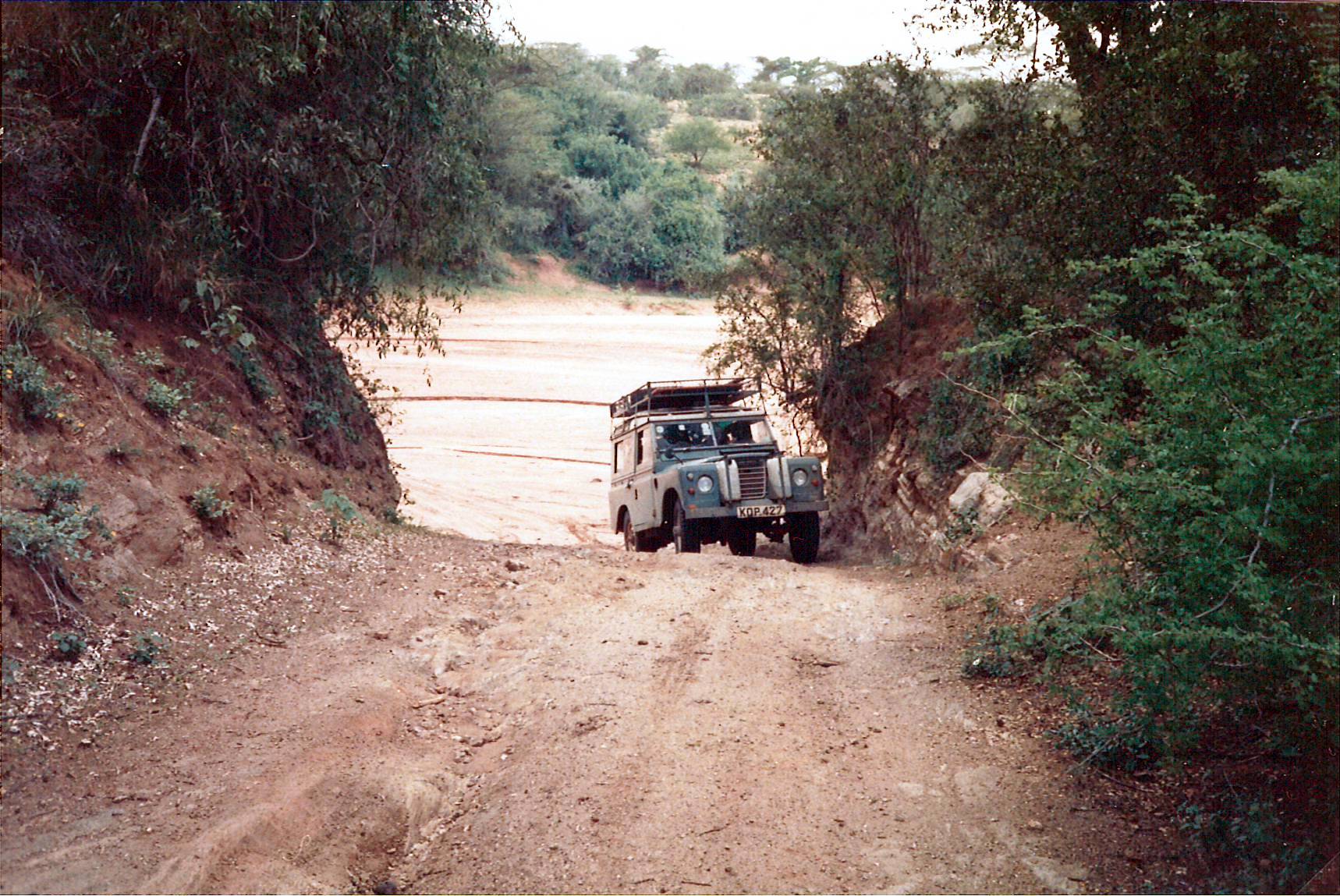
Coming out of a riverbed: Have you put the four-wheel drive on?

The rally in a few words…

Programme

  • 16th of April : Nairobi – Meru town
  • 17th of April : Meru town – Shaba National Reserve
  • 18th of April : Shaba National Reserve
  • 19th of April : Shaba National Reserve – Matthews range – Samburu National Reserve
  • 20th of April : Samburu National Reserve – Nairobi

Participants

  • Land Rover – Uruguayan team (4WD[1], the pilot and X-ray[2], wife and co-pilot)
  • Isuzu Trooper – Swiss team (ScoutSpirit[3], pilot and PinkShade[4], partner and co-pilot)

Reporting

  • PinkShade, to serve you (although not very used to that job and not trained in English at all!)

Results

  • Both teams excellent, both “ex-aequo” at every leg, despite major technical and mechanical problems.
  • No real brake down (nervous ones, I mean!), no flat tires and no accidents (Thank God!)
  • Cars and skills were tested through all types of weather, on all kinds of tracks, marshy or dry.

 The rally in detail…

Thursday, 16th of April – Getting in the mood!

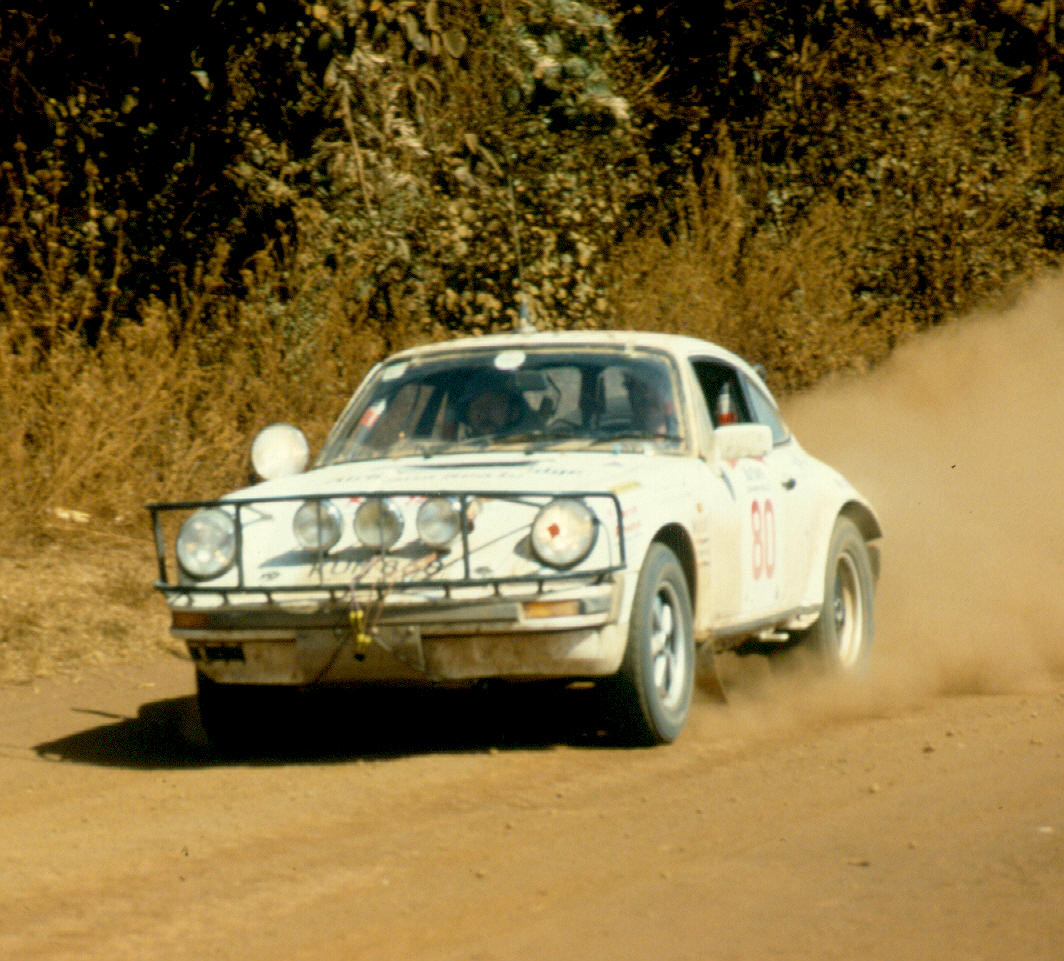
Our departure took place in Nairobi at 2.00 PM roughly. Unexpectedly, everybody from the town was along our way to greet us and enjoy our way through! Our success was huge and tremendously exciting. At around 3.00 PM we met a few cars driven by “amateurs” coming our way at high speed. All the cars were numbered, full of stickers and very noisy. It was a kind of a funny race, which looked like a pale copy of ours. We gave way very politely, full of respect for the beginnerswe thought that they were showing off a bit too much[5]. Anyway, the atmosphere was light and happy: the weather was perfect, hot and sunny. The roads, either tarmac or dirt, were dry. The coffee bushes were all in blossom, which gave a marvellous scent to the air. No better conditions were expected for a very enthusiastic and fair rally.

2-MeruAreaRallyCar

One of the “real” Safari Rally car: It looks more like a rally than like a safari!

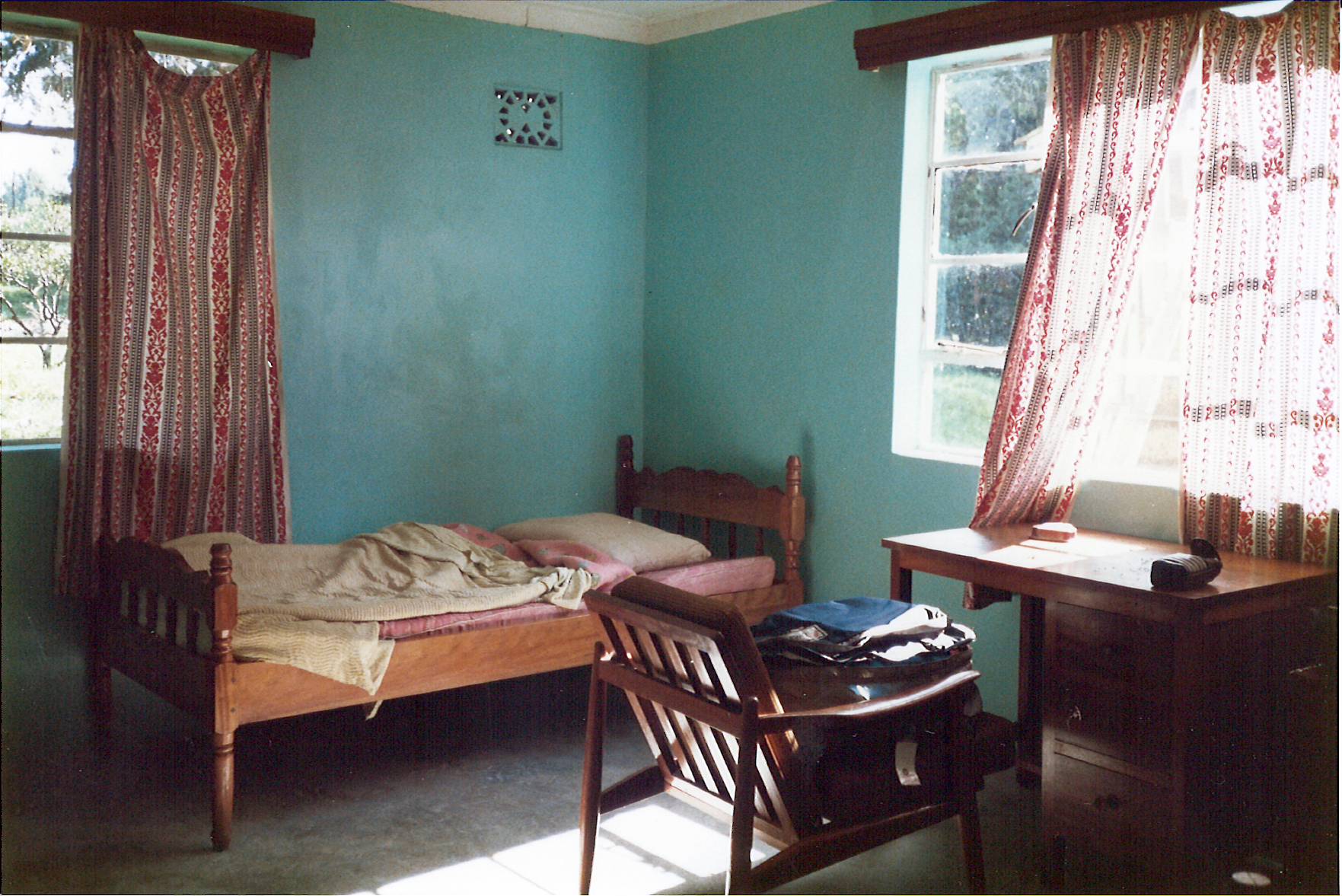
We reached the town of Meru without any trouble, but well after dusk. Towards the end of the journey the Land Rover got a bit weak and it just managed to climb up to the “Pig and Whistle”, our stopping place for the first night. Once our luggage was in the cottages, we met at the terrace. But the noise of the Safari Rally going through Meru while we were having a lazy late drink (7.30 PM) made us feel tense! And so we slid to the annoying question: Is the Land Rover all right? Will it be ok tomorrow? The usually optimistic 4WD was dubious and the usually pessimistic ScoutSpirit showed -as usual- calm and detachment! Morality: one’s very deep characteristics can change depending on who or what is the subject of the problem! Later, the meal, excellent but overwhelming, helped us to forget about any possible doubts and the best plan was to ensure a good night to everybody!
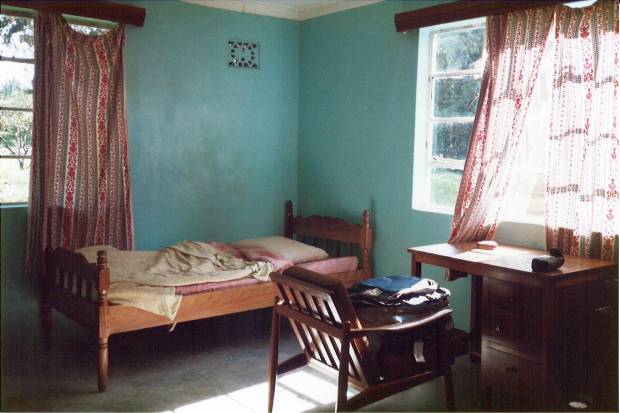
Our quiet room at the Pig & Whistle Hotel in Meru (built around 1930): A good night for a good rally's leg.

Our quiet room at the Pig & Whistle Hotel in Meru (built around 1930): A good night for a good rally’s leg.

Friday, 17th of April – Bivouacking in the bush!

We got up at 8.00 AM, a GORGEOUS[6] sunshine greeting us at the doorstep. Things stayed all right until the end of breakfast. But then, the Land Rover gave us bad news: It was tired, exhausted, no more power and wouldn’t say why. Kindly, the manager of the hotel proposed his mechanic. Good news, the fundi kwa gari[7] (the cars’ specialist = the mechanic!) was trained on Land Rovers. This was our luck in misfortune. The man came and gave his diagnostic: “Burnt cylinder head gasket”, something not nice to hear in that GORGEOUS morning when everything was just starting. It was 10.00 AM and he said that he could repair it for 1.00 PM. Doubtful but hopeful, 4WD and ScoutSpirit went with him and both cars to his garage.

Meanwhile, X-ray and I had a good “seed-collecting-time” while inspecting trees and various plants in the garden: Custard-apple trees, fig-trees, coral-trees, African tulip-trees, a sort of climbing cucumber, frangipani, etc. At 1.30 PM or so, men and cars came back, ready for another brilliant -if somehow delayed- start! We thanked the manager heartily, filled the tanks up and bought the newspapers. We left Meru after a light picnic. It would have been nice to have driven eastwards to Meru National Park, the only place in Kenya at that time which hosted white rhinos (introduced). This is also where Elsa, the very famous lioness raised by Joy Adamson, was buried. But, in view of the mechanical delay, we kept that itinerary for another possible safari and headed to the north, to Shaba National Reserve. By that time, I discovered that we were going to a place we had no map of! The Swiss part of me thought “well, we are really looking for adventure”. I understood later why it was not that adventurous: Shaba is a very small national reserve and there is only one main track through it! I was then ready to follow happily, not that I really had the choice but that I was much relieved not to go to the “outback” without enough training.

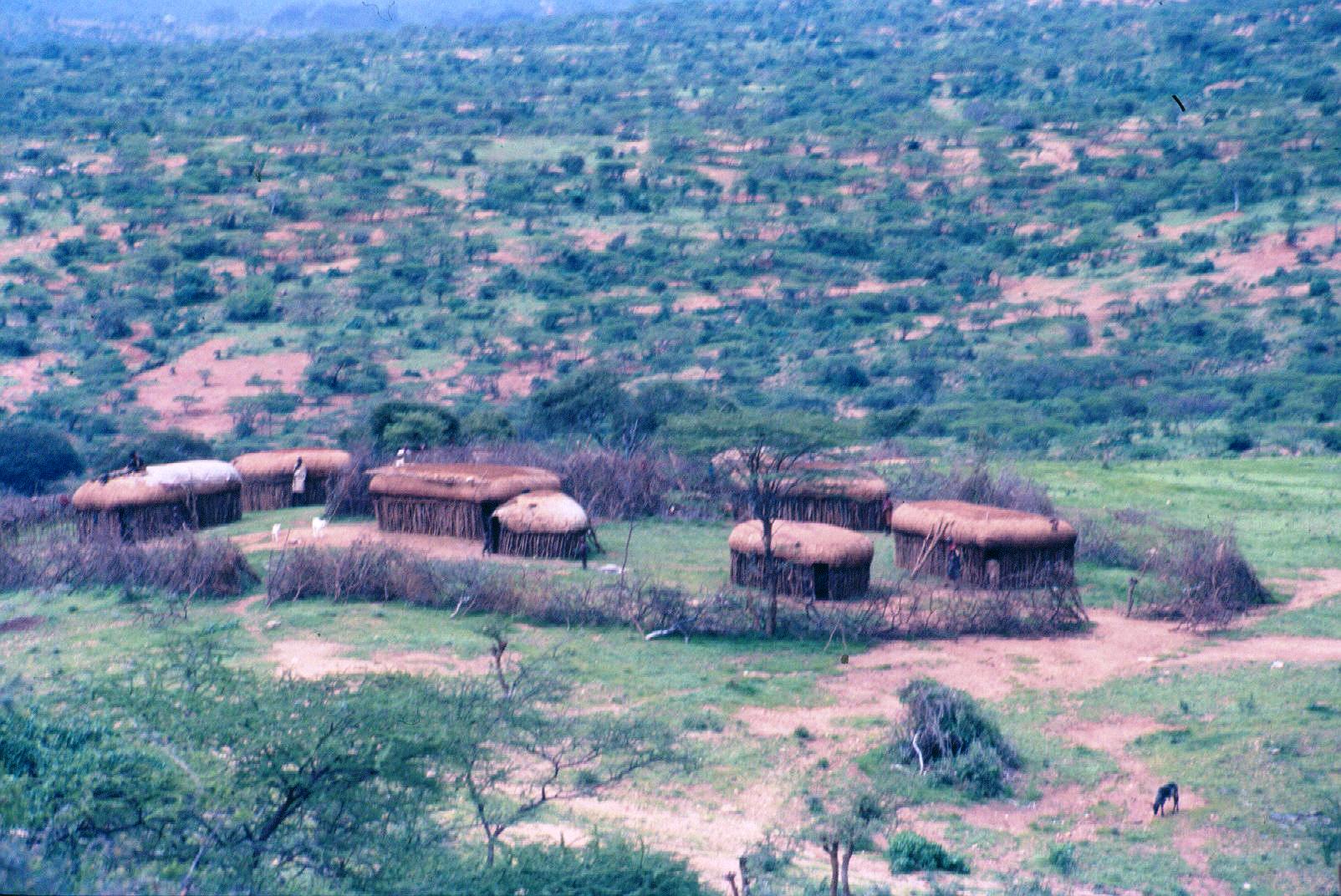
Samburu's manayatta (family settlement with huts and traditional spiny fence): Somewhere on the way to Isiolo.

Samburu’s manayatta (family settlement with huts and traditional spiny fence): Somewhere on the way to Isiolo.

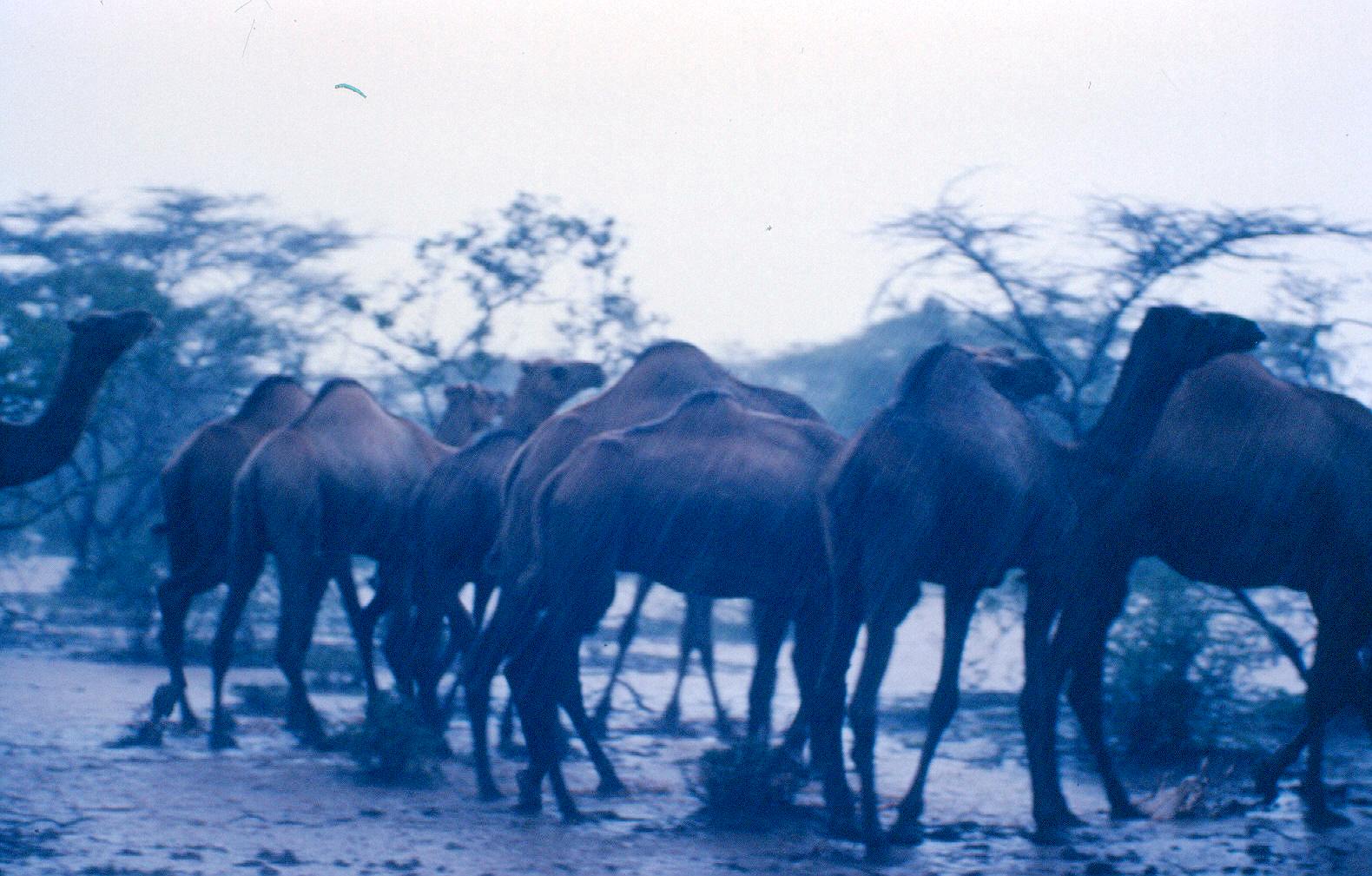
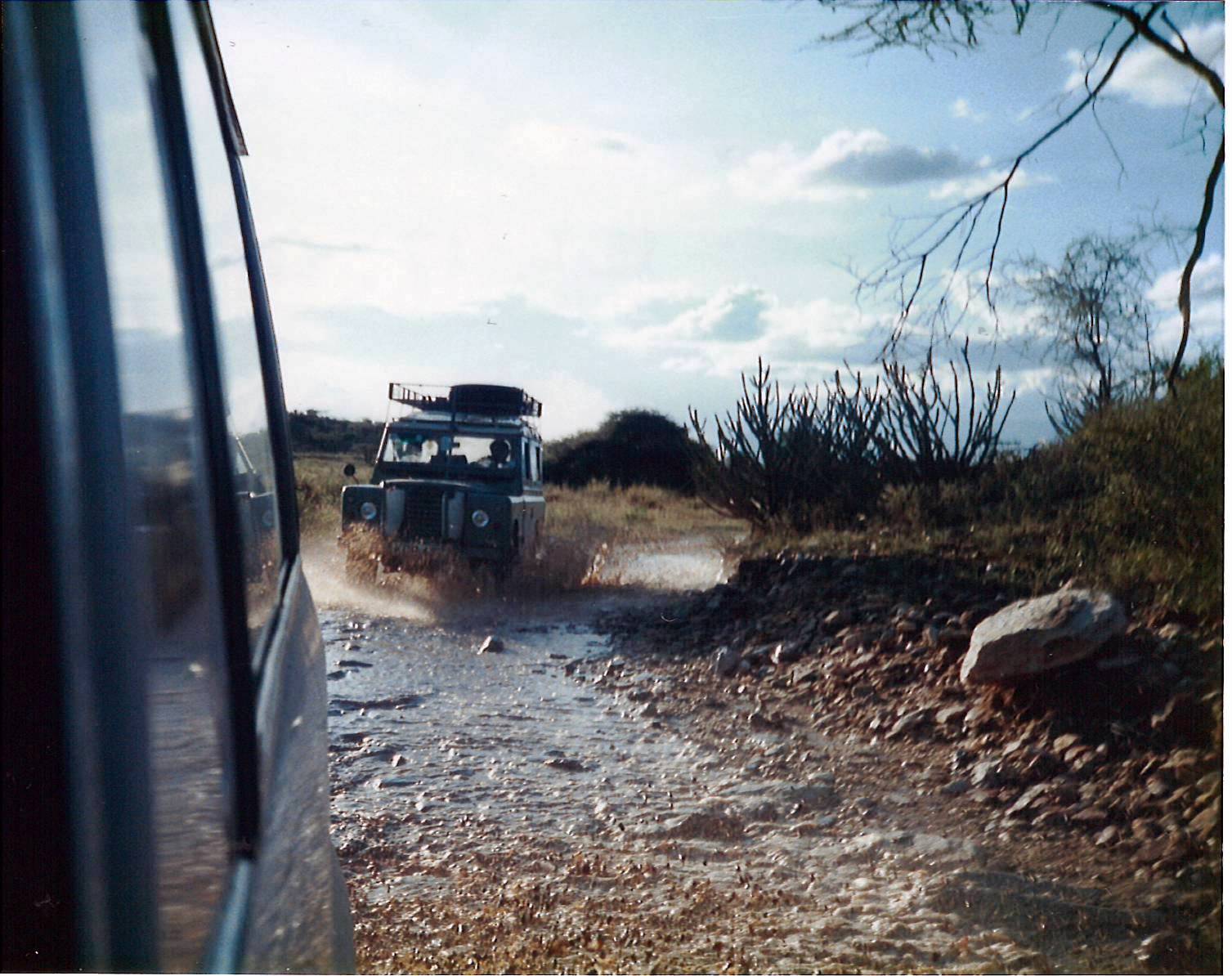
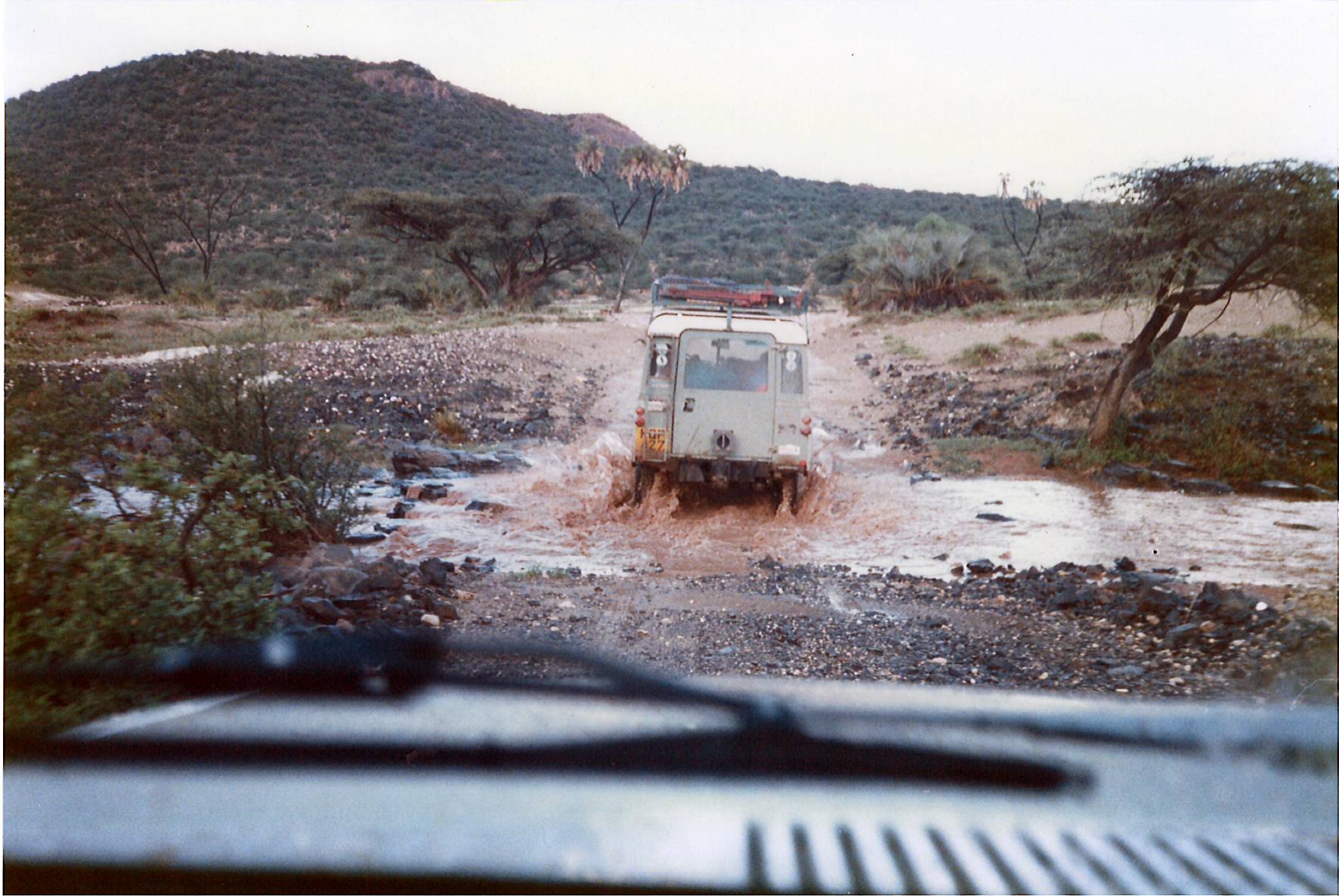
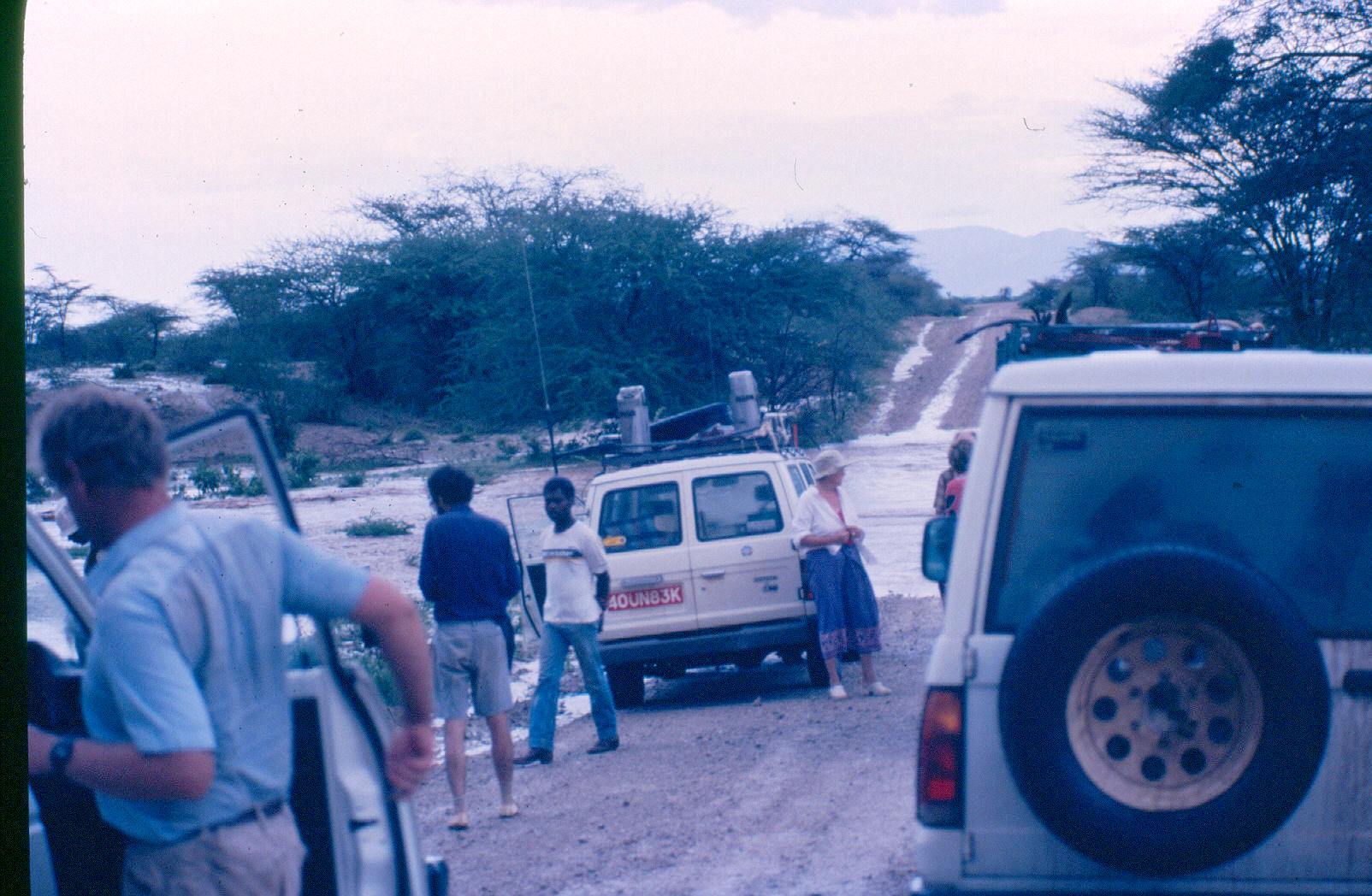
After Isiolo, we passed Samburu National Reserve and Buffalo Springs National Reserve on the left hand-side and turned to the right near a military camp. With Shaba National Reserve, these three national reserves make a well protected area, famous for its “northern dry-country” game, such as reticulated giraffes, Somali ostriches, Grevy zebras, gerenuks, oryx, kudus (both greater and lesser) and so on. From that point on, the semi-desertic landscape appeared and it was truly marvellous, well I would say GORGEOUS! We were -however- driving into temporary rivers because it had just been raining heavily (April is the start of the rainy season in Kenya but heavy rain is not expected in the northern part!). With rays of sunshine on the spurting water, the scenery was “not bad” at all. I had great fun trying to get a picture of the Land Rover surrounded by water, the sun shining through. As it was following ours, I was twisting myself out of the window, trying to stay inside despite the many bumps.
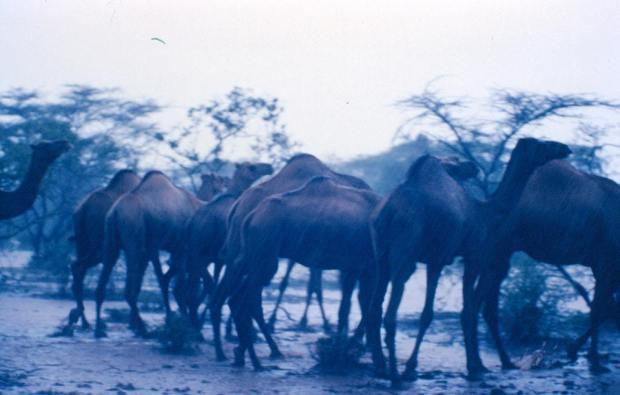
A group of camels: Under the unusual strong shower of that day...

A group of camels: Under the unusual strong shower of that day…
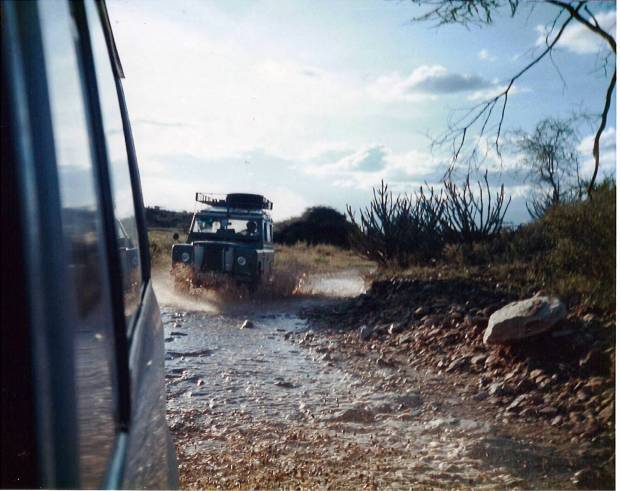
Sparkling water under sunshine: well-tried but the picture doesn't really render the full atmosphere.

Sparkling water under sunshine: well-tried but the picture doesn’t really render the full atmosphere.

We eventually arrived at the gate of Shaba National Reserve. Built in the middle of that totally wild land, at the edge of that national reserve, the office was yellow, I mean completely yellow. Not even a frame or a nail was of another colour! When we got in, we saw that inside, it was yellow too, of course! We found a man waiting as If he was just expecting us to come at that time precisely! Nevertheless, I wonder how many persons he may see in a week, except for his few companions?
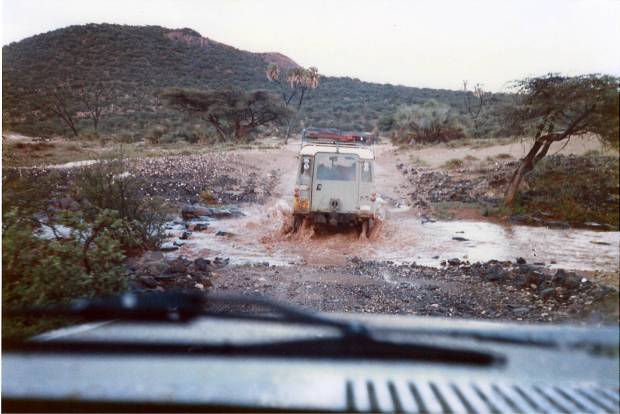
After a heavy rain: The dirt-road is flooded at many places...

After a heavy rain: The dirt-road is flooded at many places…

We first went to visit the “ghost” tented-camp. It was a pathetic sight: Not GORGEOUS! The last drops of rain were dripping from the broken roof into our necks and the bright white toilet was shining in the deep green grass near a tree. But the camp may have been pleasant because it is right above the Ewaso Nyiro river[8] and has got springs and the shelter of big trees[9]. We decided then to go further and to find the other campsite. It was about 6.00 PM, we still had time, but not too much. As nothing like a signboard appeared (If you read the ninth footnote, you already know that without a signboard, there is no way to make sure that you have reached the campsite!), we thought that we had missed it. So we chose our own one in the middle of the bush: just the perfect place, away from animals’ tracks (we were mainly beware of hippos there), flat surface, two big trees, nice stones to hold the grid above the fireplace and water not far away. At the beginning, we didn’t notice the impressive quantity of very aggressive acacia thorns, so we thought that it was like paradise! Yes, if you forgot about the many punctures in your soles, it really was ideal.

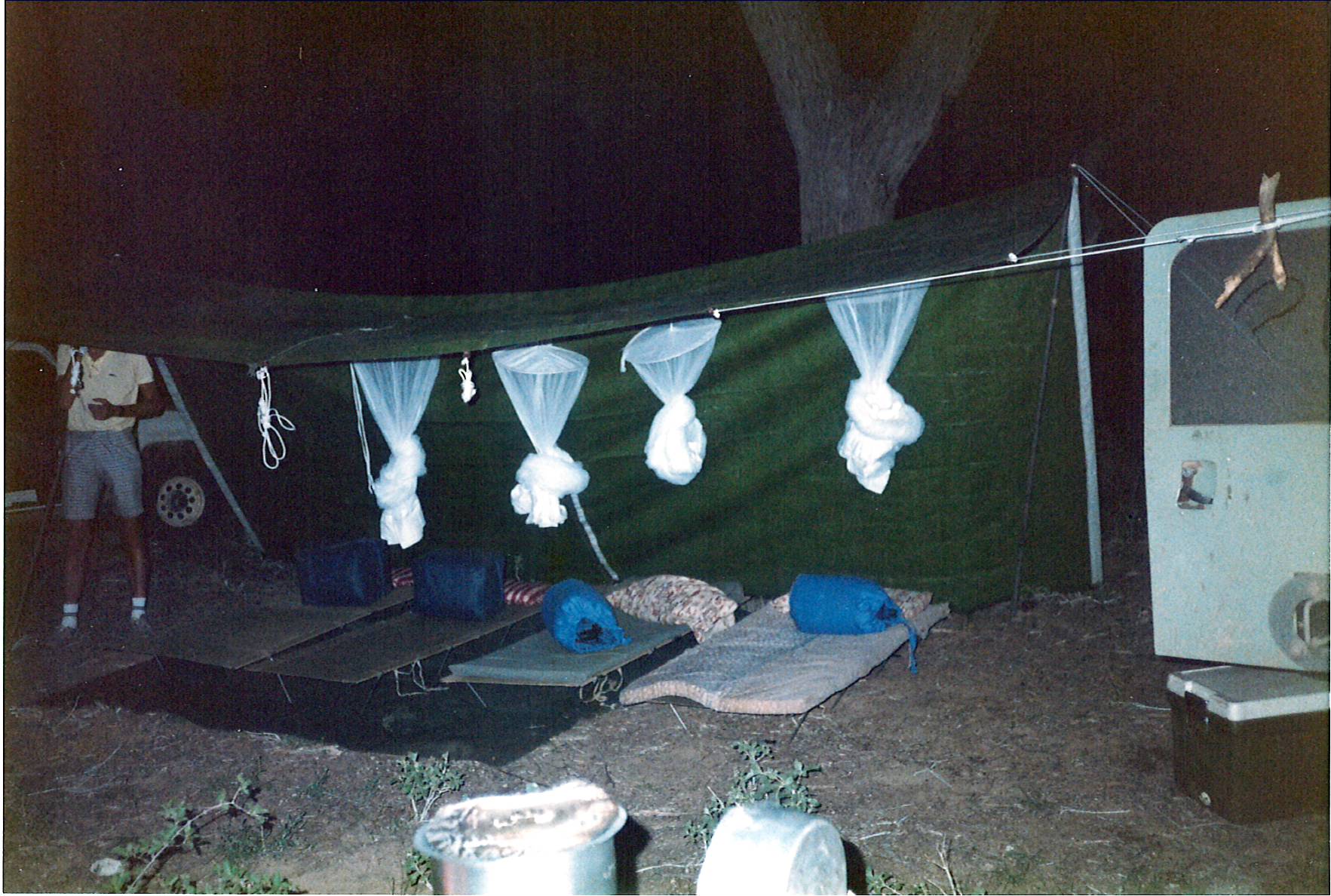
The so-called “sleeping-room” was composed of a big tarpaulin and sheltered by a double flysheet, building one wall and the roof. It could sound strange but a car was part of it as we had only three poles to hold the stuff and the Land Rover was the fourth one… an interesting pole I must say. Other advantages of this architectural puzzle were that it supplied light and water and provided some handy space to prepare the meals and store. A few stones, a few logs and we got a big fire going. A few armchairs, a table and drinks and we were well settled. “Shouldn’t we stay two nights in this place? It is so GORGEOUS!” said 4WD and we were already agreeing “Yes, after all this work, it is not worth removing everything and starting again tomorrow… and would we find another spot like this?” First step towards settlement not to say laziness! We voluntarily postponed the decision to the following morning: “Let’s think about it tomorrow. Anyway, we will do as we will wish”.

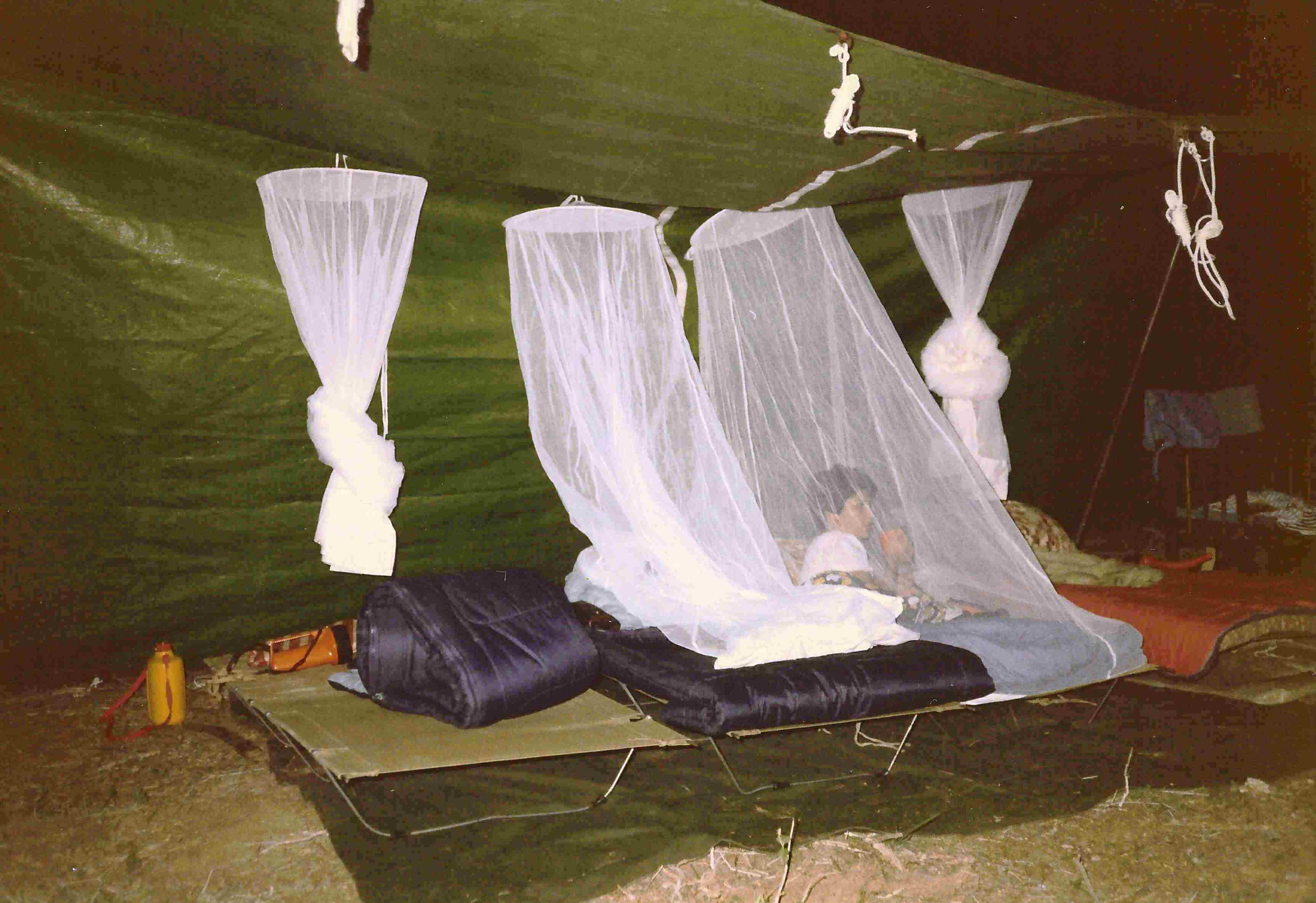
We looked at the bedroom, so attractive with our four camp-beds, mattresses, pillows, sleeping-bags and mosquito-nets! We looked at the fire, its smoke chased by the wind towards the darkness. Happy us! The dinner, one of X-ray’s fantastic stews was bubbling on the fire and her famous “pineapple-pie” was also waiting for us as much as we were waiting for it with the memories of earlier occasions! We were having a good time and we were very much aware of it. A Scops owl called in the distance and we stared at the sky hoping to discover the announced full moon. We argued about the time of the moonrise and it eventually appeared (at 10.00 PM), shortly before we prepared for the night’s sleep. I must add here that the idea of bivouacking was a real excitement to ScoutSpirit and I as we never did it before… Having as unique protection a mosquito-net while you are deep asleep in a game reserve where lions, leopards, cheetahs, elephants, buffalos, hippos and hyenas may be roaring around is quite challenging… it gave a certain chill down our spines!

8-ShabaBivouack87

9-ShabaCampC87

How to sleep in the bush: Bivouacking is nicer but a bit more scary than camping!

What a story to wash ourselves and get into bed! “Primo”: thorns all over the place, so don’t remove your shoes too early… “Secundo”: small instable bed, so keep your balance… “Tertio”: annoying mosquito-net to be wrapped around your mattress, so be patient and methodical… “Quarto”: dudus (pests or rather annoying insects) still coming into your “cell”, so start again from “Tertio”! “Something dreadful happened to me” shouted 4WD while collapsing in his bed, head lower than his feet! As an answer, we all laughed out loudly, getting rid of the tension that we accumulated during the operations. It was good that the well known and rather naughty practice of placing the remains of the meal under the bed of the “beginners” was not carried out. One can imagine the surprise of the “victims” the moment the hyenas tried to snatch the food from under their camp beds! Eventually we fall asleep and the day after…

Saturday, 18th of April – Getting soaked!

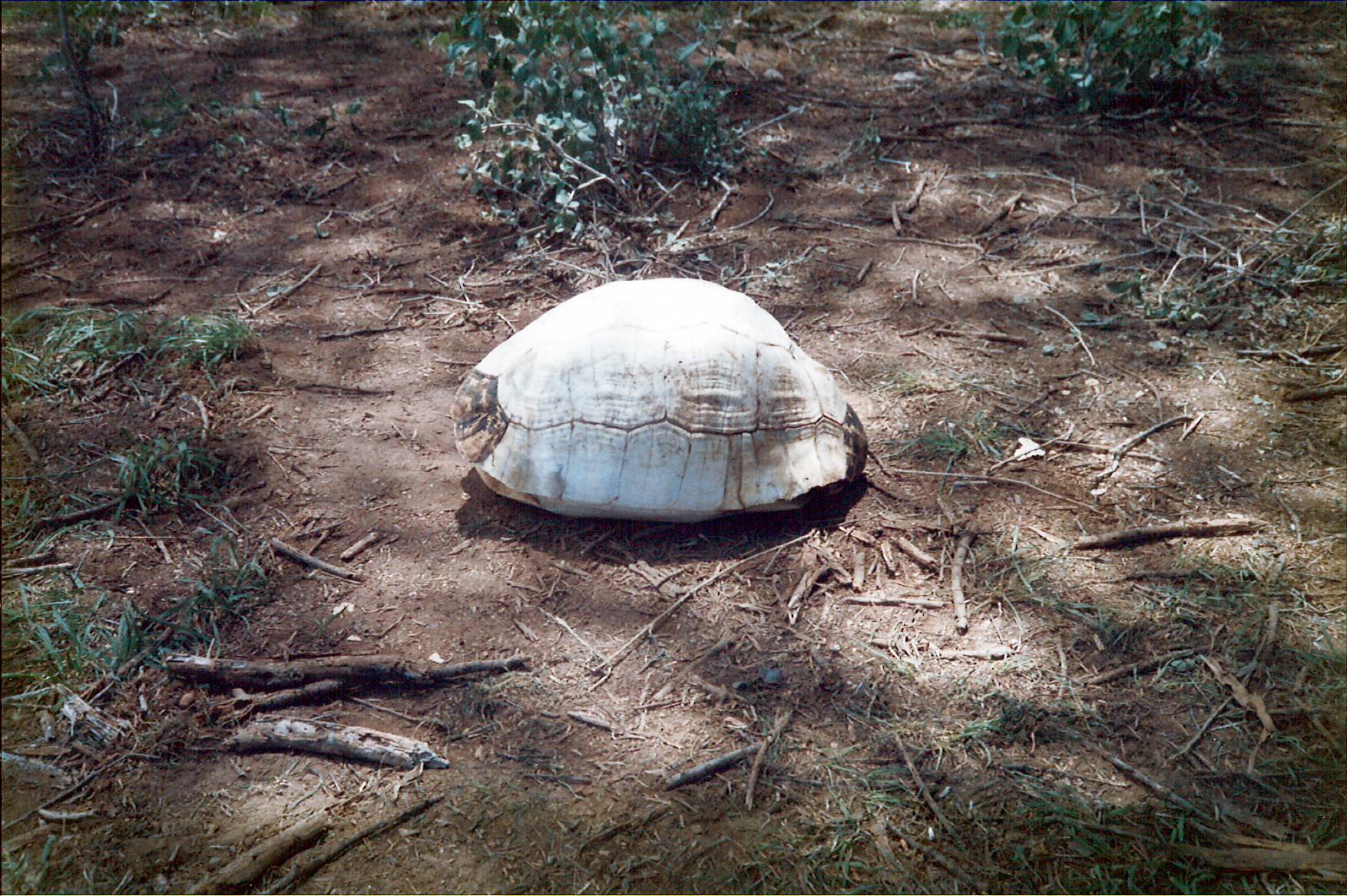
We woke up at 9.00 AM after a GORGEOUS night shared with nature and lit by a bright moonlight. We soon shared a “solid” breakfast before leaving for a game drive. The ladies were installed on the top of the Land Rover. ScoutSpirit was following just behind us with his car. We drove along the river, aiming for Penny’s falls. It was wild and beautiful. On our way, we passed some campsite (occupied!) and a sort of “kopje[10]”. Was this the campsite we aimed for the night before? ScoutSpirit, with whom we had lost sight of for a while, came back with a huge tortoise-shell which he found on the riverbank for us to see it. Soon before we reached the falls we forded a stream. When we looked back, we could see the Trooper diving into this narrow but quite deep stream that drains the marsh and forms the famous waterfalls further down! Fortunately, the car came out easily and we could reach the falls and leave the two vehicles under a big tree, shade being strongly recommended at this time of the day where the temperature can easily reach 40°C.

We had been told that here was where Joy Adamson lived for a period of her life. But there was no more building or sign of any settlement anymore to see around. Not being looked after, it certainly disappeared in the vegetation very quickly[11]. We climbed down a rough and steep slope heading for the Ewaso Nyiro river and discovered the magnificent falls with their dark red but transparent water from the marsh mixing up with the “white coffee” water from the main river: GORGEOUS again! On the sandy shore we had our lunch, roasting ourselves in the sun. After the picnic, 4WD and X-ray went walking a bit further and came on a few crocodiles… we set off for the cars quite rapidly!
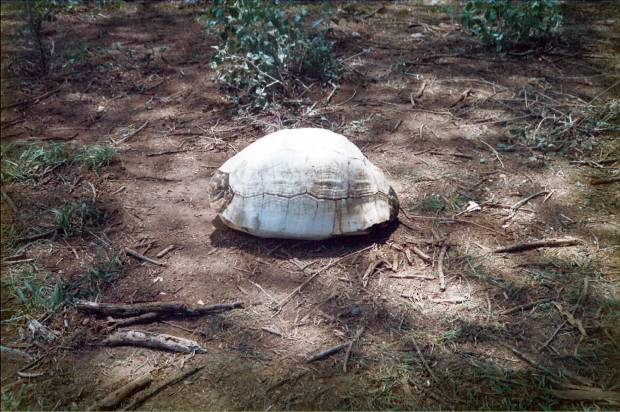
 Measuring about 40 cm length: The famous tortoise-shell that "polluted" part of the safari!

Measuring about 40 cm length: The famous tortoise-shell that “polluted” part of the safari!

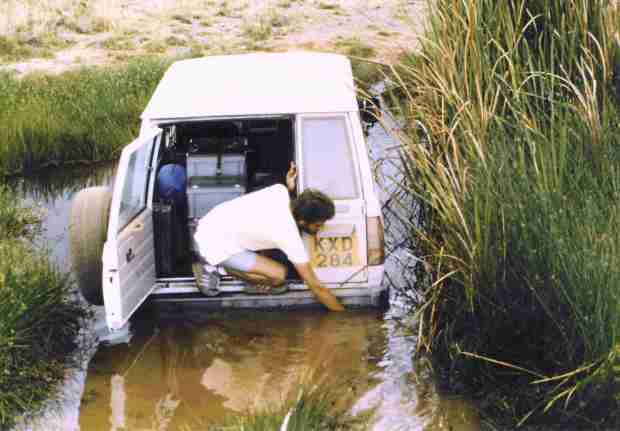
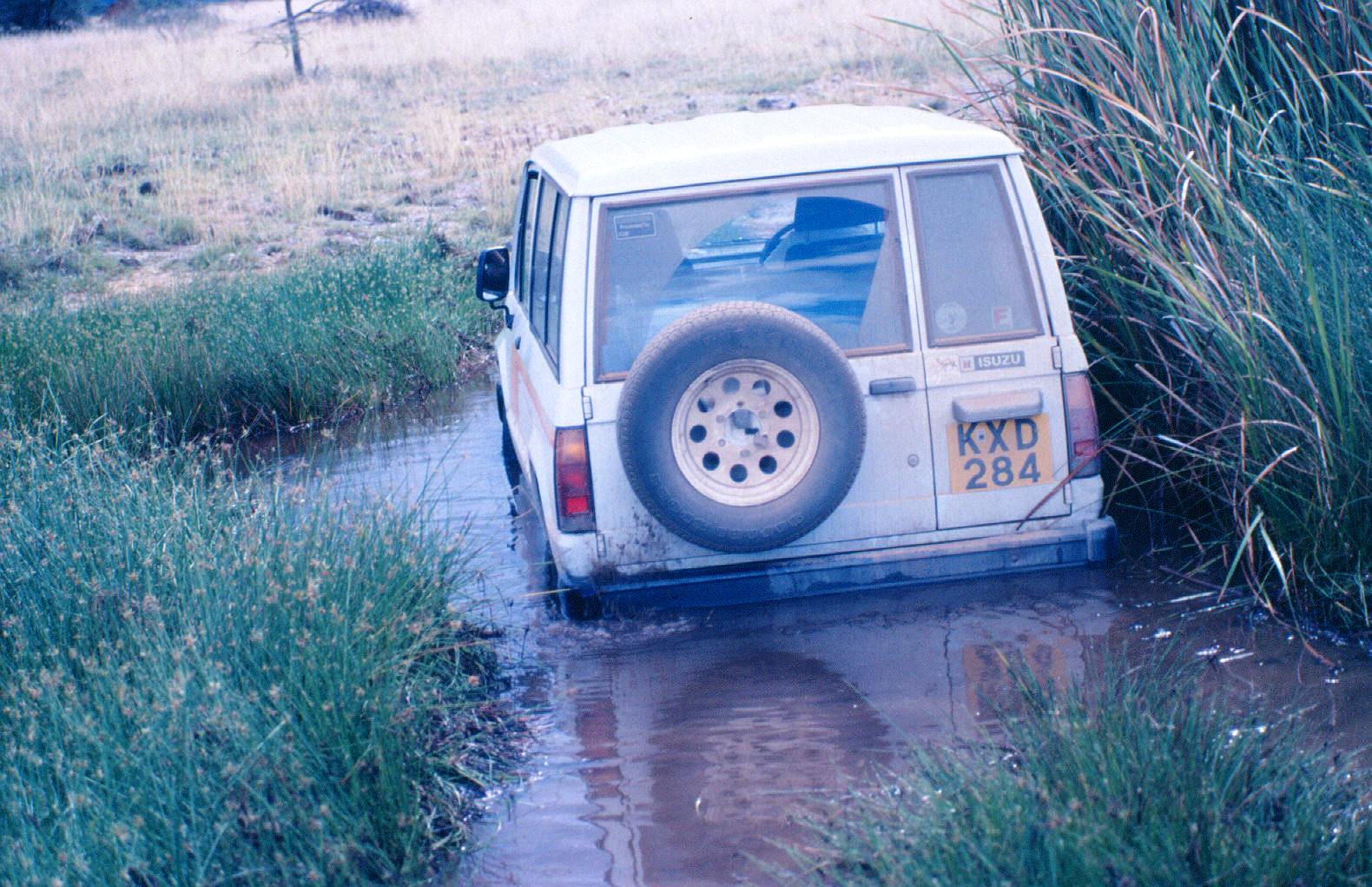
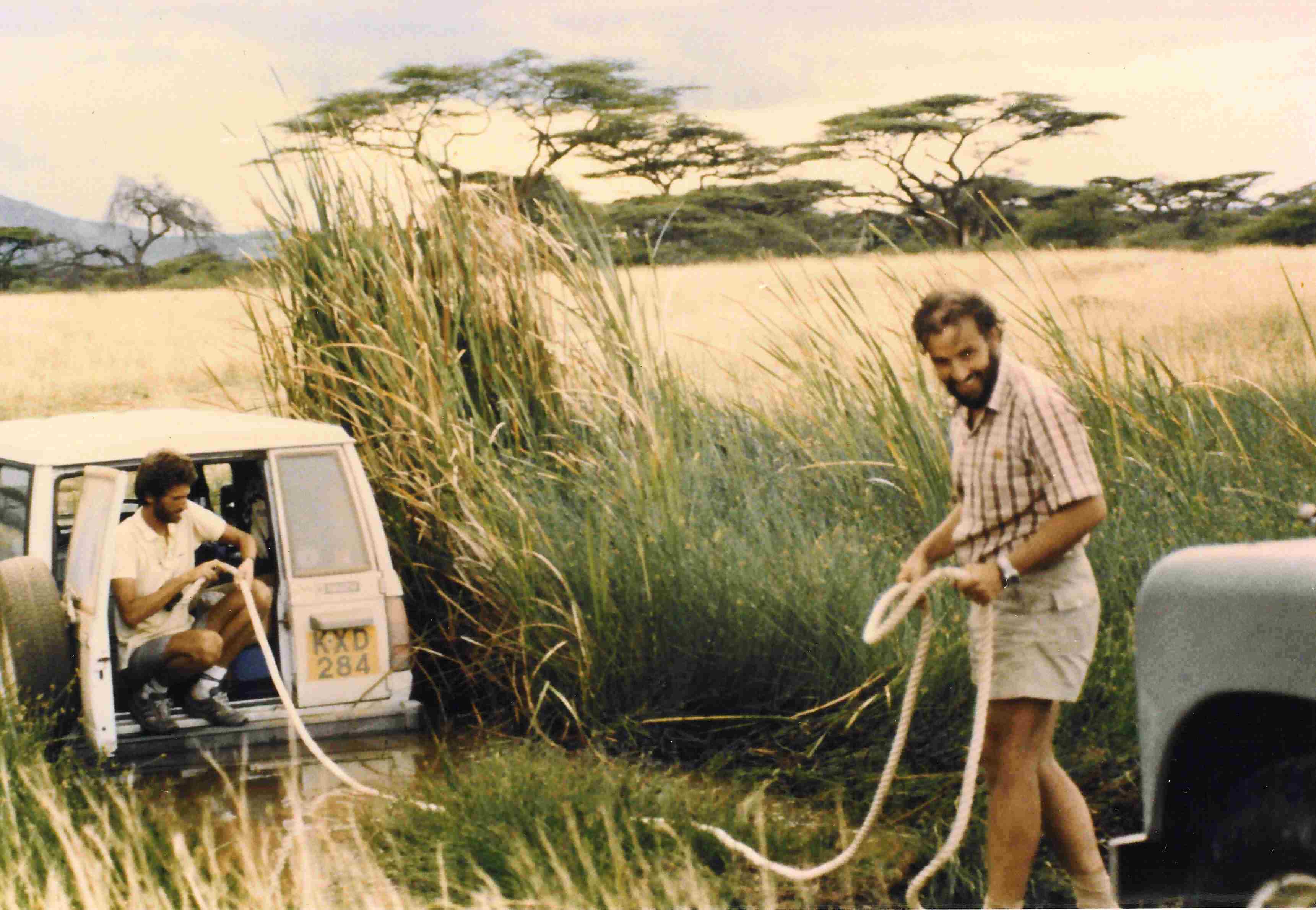
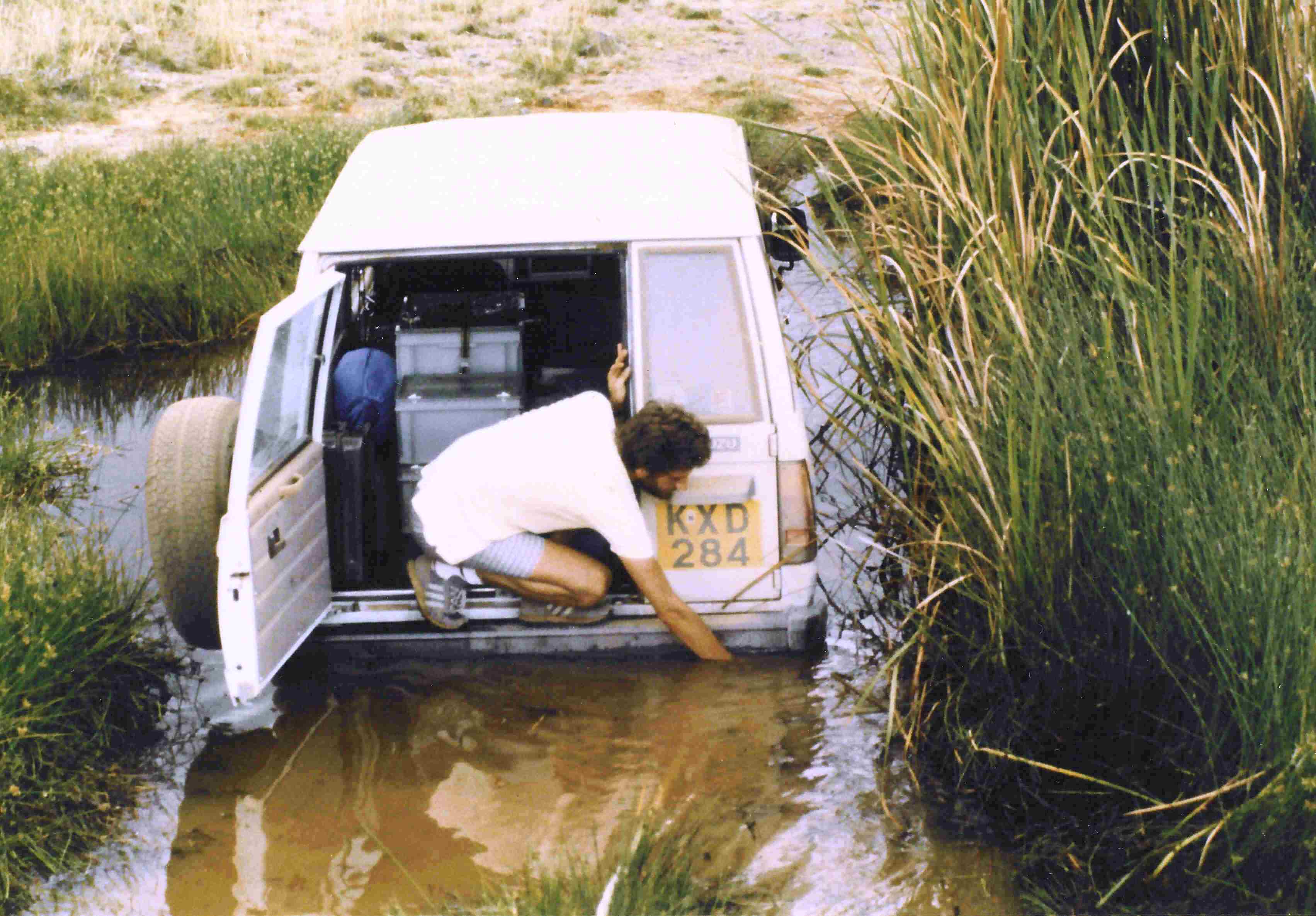
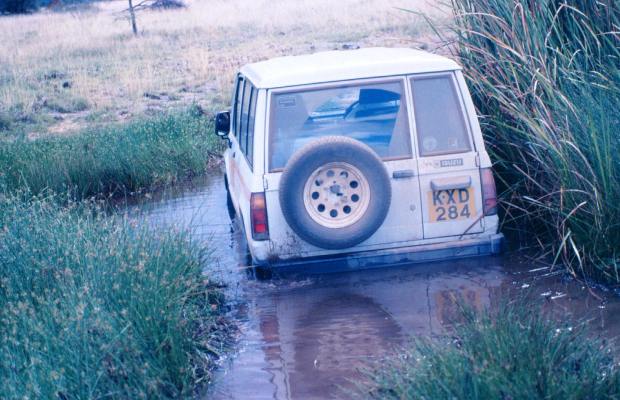
On the way back, the second crossing of the small river became a problem: The Trooper stopped in the middle of it, just in front of us, and the engine failed kabiza (totally… and total bad news!). Anyhow, after a while, we saw ScoutSpirit crawling inside and appearing finally out of the boot-door! Water was about the same level as the doorstep. Hands under water, he attached the towrope and 4WD’s car pulled the Trooper backwards a little bit but not much as the four wheel-drive was not on. At the second attempt the job was done. But the Trooper still refused to start as the engine was soaked. Soon we realized that the floor was flooded too so we started to pick up some drooling things and put them outside to dry under the sun. Then we had to remove the water from the carpets and absorb it as much as possible. To complete the task, we drove back, doors open and full heat on. The “ex-dry” tortoise shell, still with us, got quite wet again. It was stinking like hell![12]
11-ShabaTrooperStuck

12-ShabaTrooperRope87

In the marsh: It is a pleasure to get stuck -and unstuck- with such good adversaries in that rally!

In the marsh: It is a pleasure to get stuck -and unstuck- with such good adversaries in that rally!

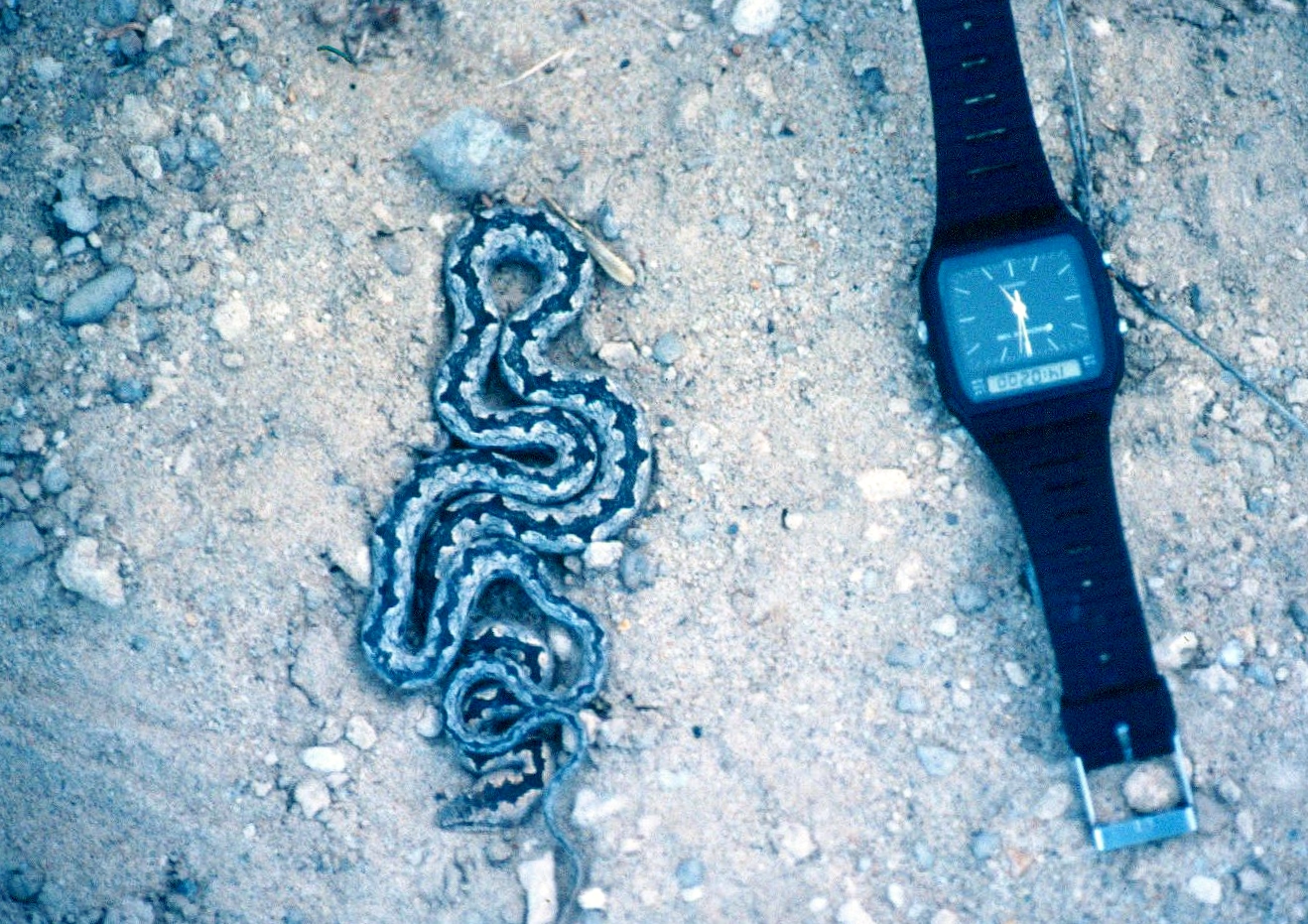
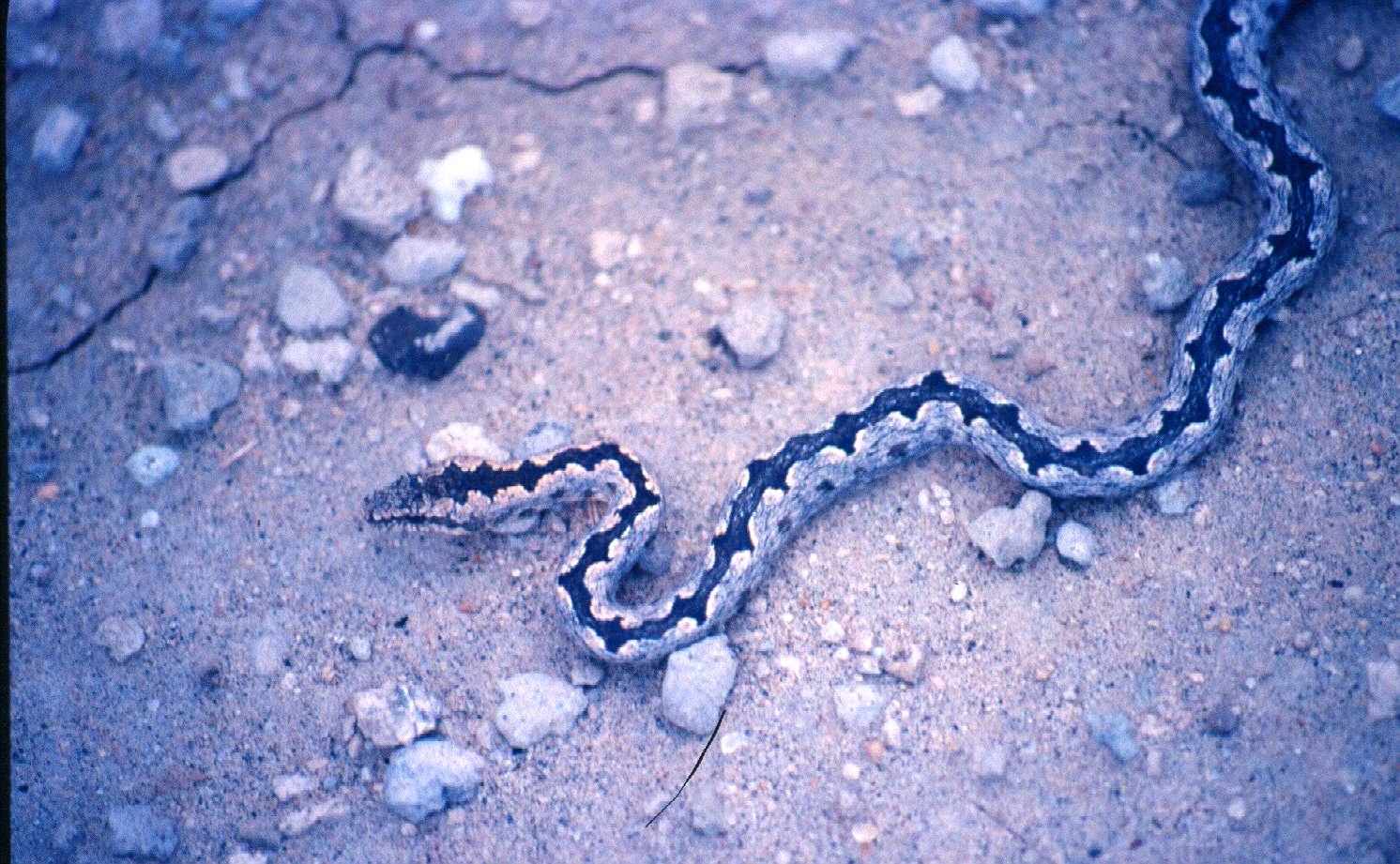
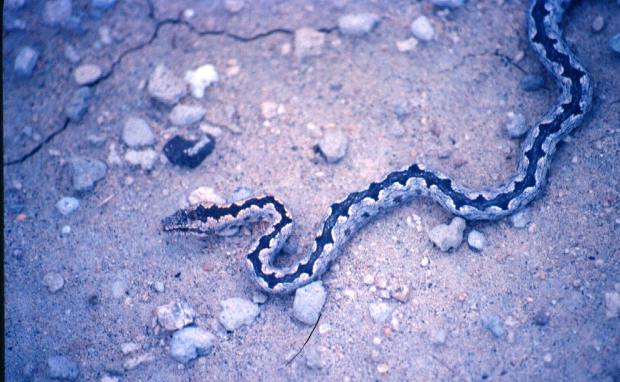
Next event was the episode of the famous snake. It was spotted by us, the ladies sitting on the roof, whose shouting resulted in such sudden braking by our driver that we almost landed on the sand. Of course, we were rather glad to be still on the car’s roof, especially when 4WD took the beast and put it on the bonnet. A kind of panicked interrogation took place in our heads… what was he doing and what If the snake was poisonous? “Would you hold it for me to take a picture?” asked 4WD to his patient wife. We nearly fainted! Eventually, the roles were reversed, 4WD held it and X-ray took the shot. 4WD was very happy holding the snake. Just as we were about to leave the poor thing, ScoutSpirit arrived and we had another episode of the same magnitude! Afterwards, the reptile went under one of our tires and we felt sorry at the risk to squash it. So ScoutSpirit didn’t hesitate to put his bare hand under the tire to chase it away despite our warning screams! By that time we started to understand that the men where teasing us. Silly ones[13]! From then on the atmosphere went a little bit crazy. 4WD got bored to drive alone while we were talking happily on the roof! He then left the pilot’s seat and had a chat with us, nearly standing out of the car but still driving…

14-ShabaBarkSnakeWatch

15-ShabaBarkSnake

The very nice and small bark snake: At first we didn’t know it was supposedly harmless to man!

Then it was “mate time”. Mate is a South American beverage made out of a plant[14] that, once dried and crushed, is mixed with hot water in a calabash (also called mate) and drank through a sieving straw (bombilla). Every time the calabash is emptied by a drinker, it is filled with hot water again and passed to the next person of the group. This is a very social way of drinking that can be compared to our Swiss habit of eating melted cheese in the same pot for the whole table’s company, traditional and collective dish that we call “la fondue”. So you see, travelling with our Uruguayan friends, it was impossible to ignore that fantastic tradition, even on safari… as they also had to discover the famous fondue made with “El Molo” cheddar, dry papaya wine and vodka (all produced in Kenya), cooked on the fire in a famous Kisumu earth pot! But that took place in another safari and would be told about another time.

As we experienced it with great interest, mate is really good, social and somehow “sacred”! So much that we became very talkative for one hour non-stop! As dusk was coming closer, we hurried towards our “home-sweet-home”, still with doors wide open and full heat on for the Trooper to dry up. But we knew that it would take a few days to dry kabiza. We passed again by the beautiful rocks that we called “kopjes” and saw surprisingly no game at all. We came to the camp in the dark and under the rain which had spoiled our things: wet camp-beds, wet armchairs and worst, wet firewood! In spite of that, X-ray managed to light a pretty nice fire after we gathered some minute more-or-less dry twigs under some partly sheltered areas. Thus we could put our things around the fire in order to dry… It was time consuming. I was busy too with my belongings that had been soaked in the marsh-juice, so I kept waving them near the fire, in front of my dear friends who became sea-sick as a consequence!

By the time the meal was ready, everything was dry and we merrily started to eat our curry with poppadums: GORGEOUS for sure! The thought about “tomorrow” came again of course, but we sent it back as easily as the day before… not without bringing a few suppositions! Anyway, we quickly all disappeared under our mosquito nets after a quick wash. The moon came again, just raising at a quarter to 11.00 PM, nearly full, already shrank on one side, ‘cause of time passing by. The fire was special that night: Dry elephant-dung had been used because we thought that they might last longer than wood. So we could admire strange “squarish” pieces, very red, very luminous, with a particular scent, but not unpleasant, that we never had before…
16-ShabaEllieBones

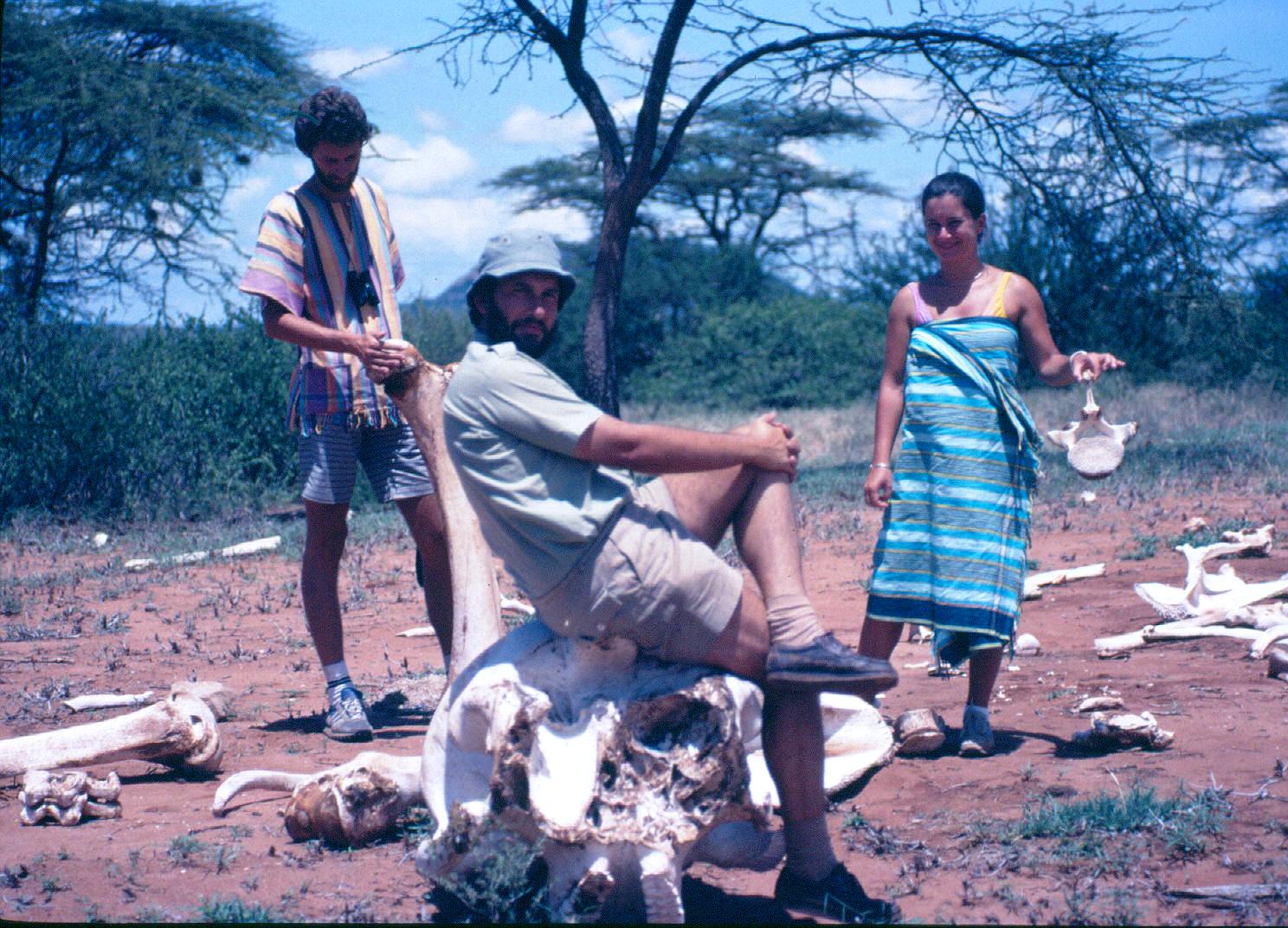
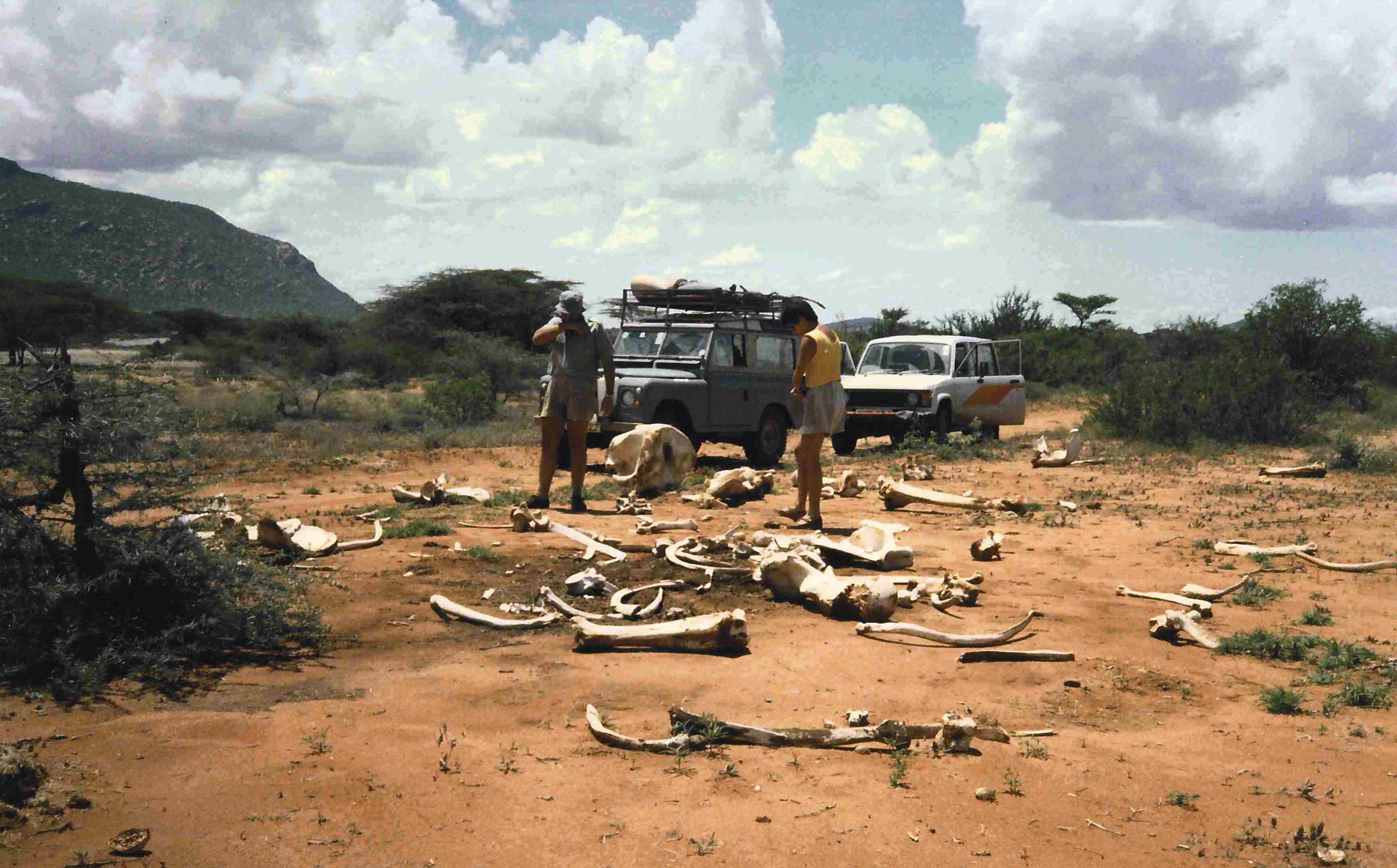
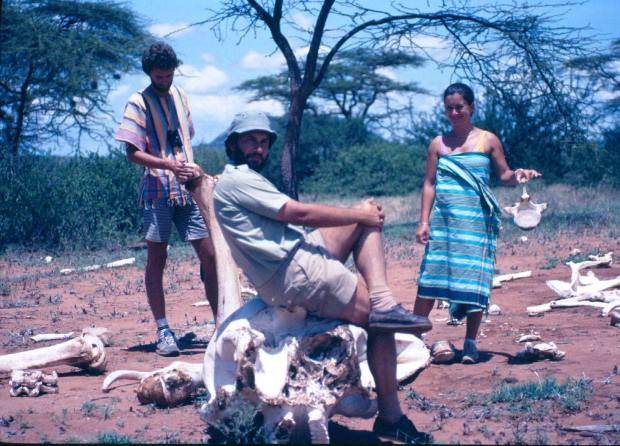
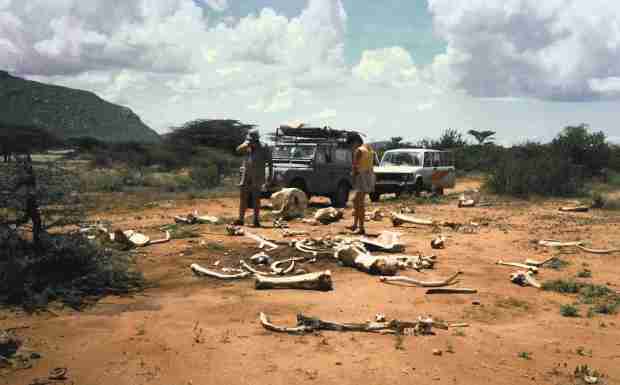
 The elephant skeleton: A vast open cemetery that brings up many reflexions as the tusks were missing...

The elephant skeleton: A vast open cemetery that brings up many reflexions as the tusks were missing…

 Sunday, 19th of April – Heading north shortly!

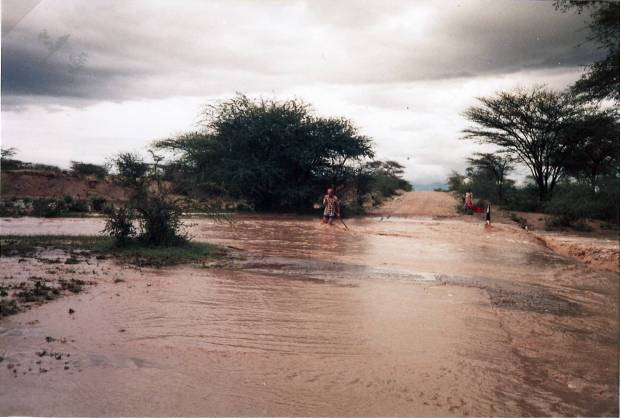
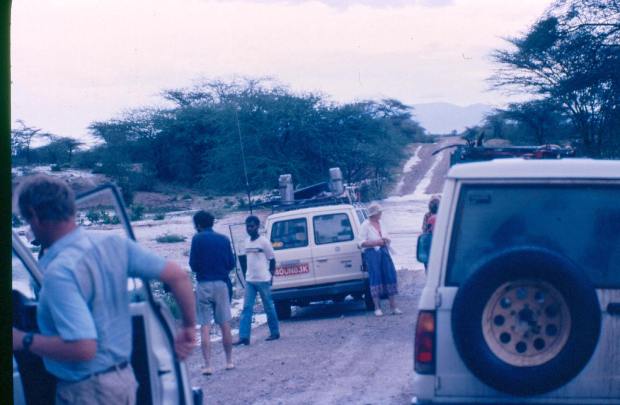
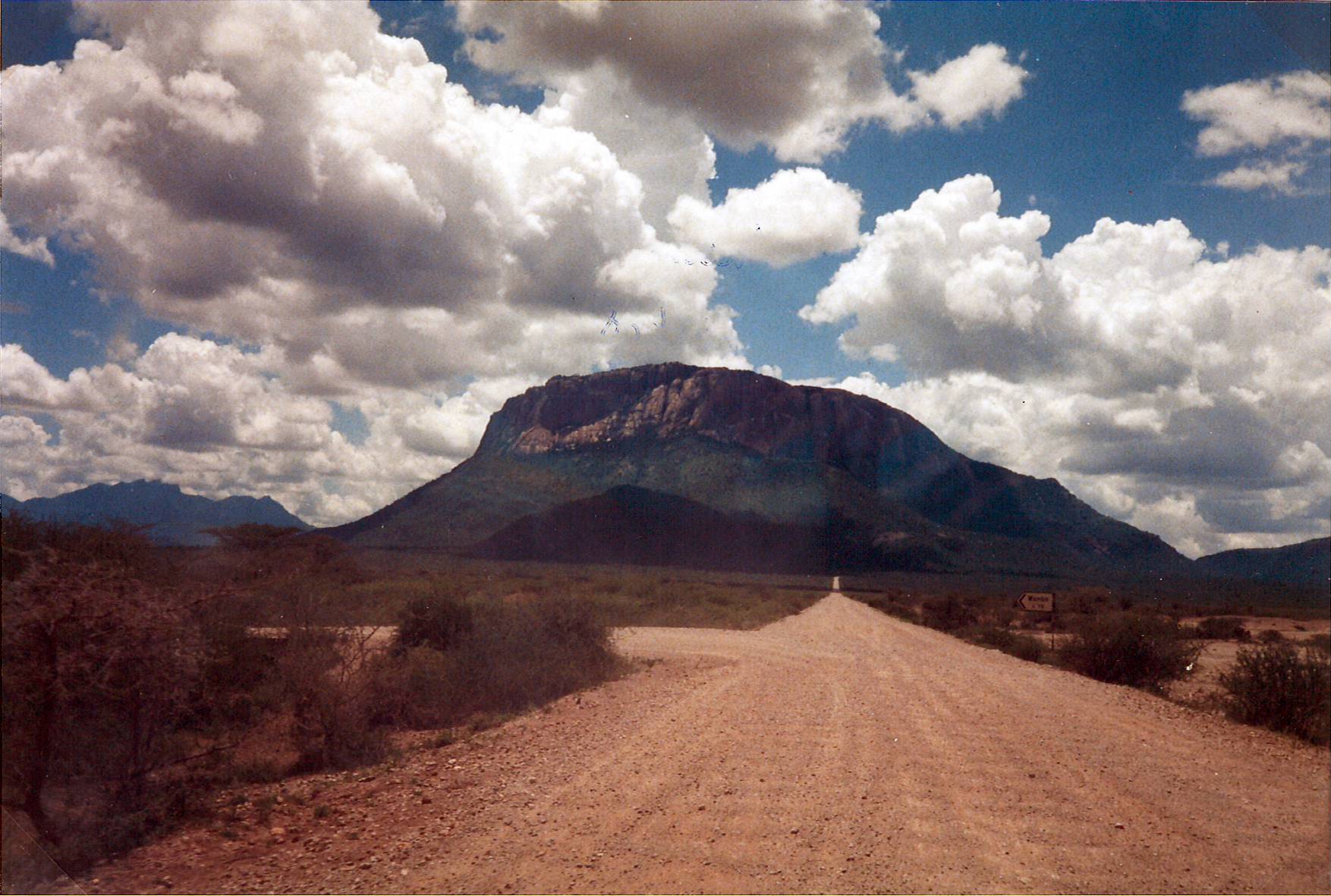
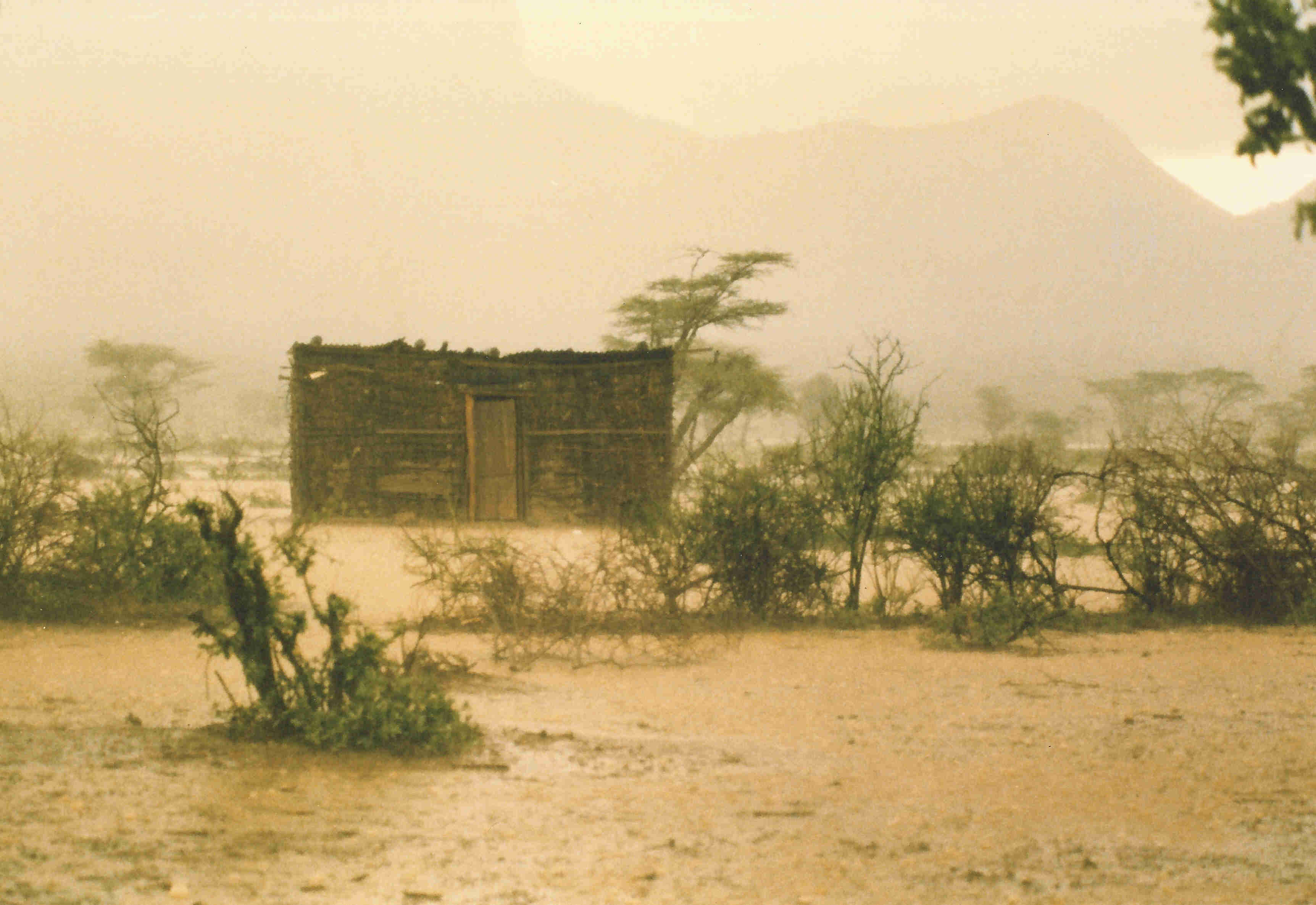
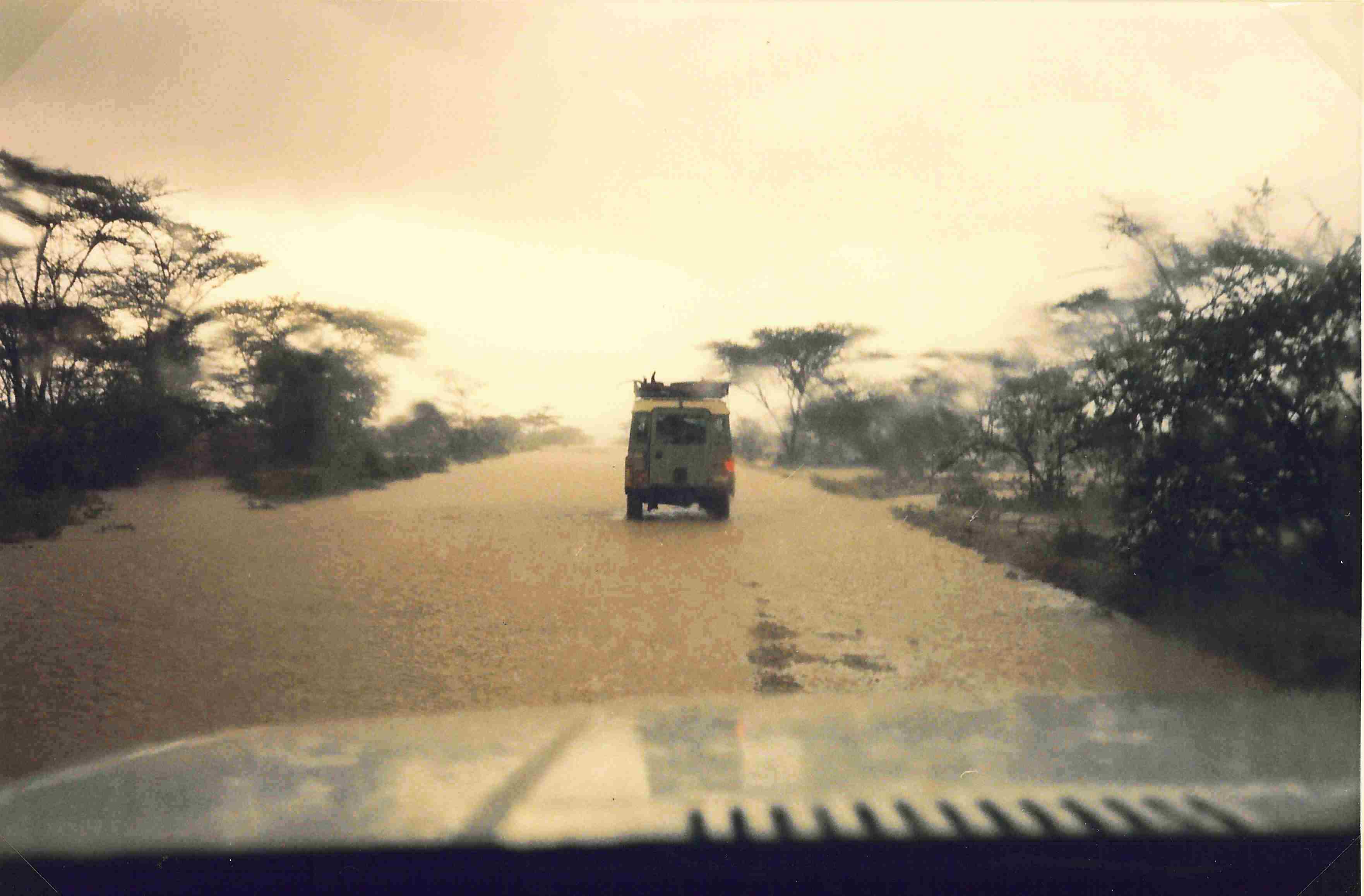
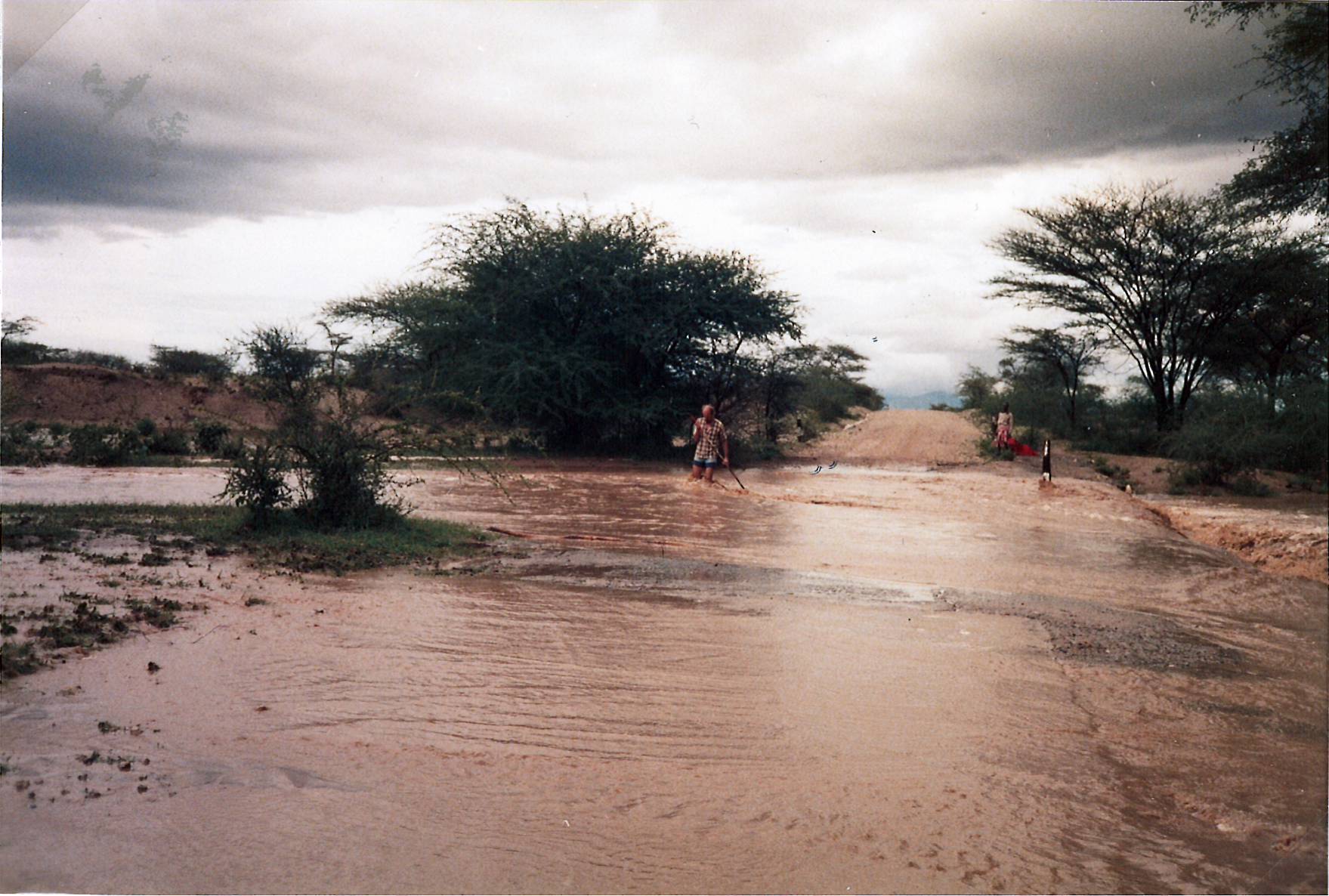
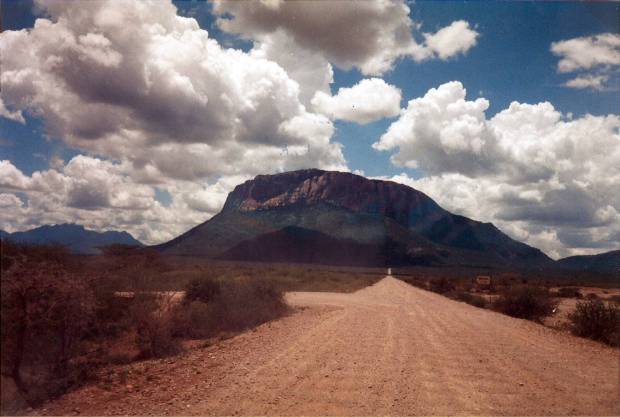
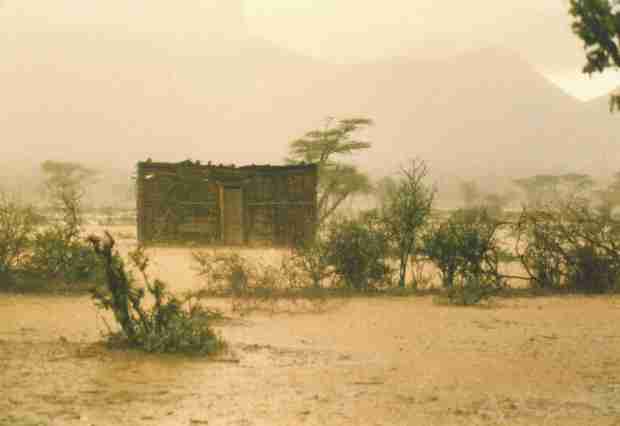
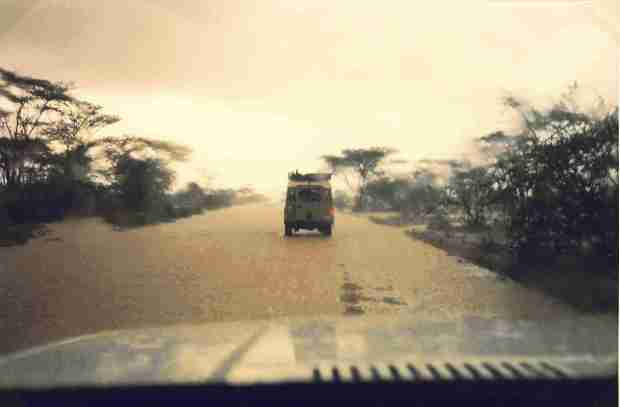
Yes, the idea of using the elephant dung was brilliant. The fire was still hot with quite a few embers and started on easily, earlier on that morning, said ScoutSpirit (I can’t tell as I was fast asleep at that time). After breakfast, the decision was taken to try and reach the Matthews range for the night. So straight away, we entered a big spell of activity till 11.00 AM. A few pictures were taken on our departure: The tortoise-shell that was still around and an elephant skeleton that was lying a bit further along the track. The hide of the latter was still there also, stinking horridly but no need to look for the tusks… poachers’ business! At 12.00 AM, we reached the gate and drove on towards the north. We passed Archers’ Post and, later on, drove straight ahead as we left the road leading to Wamba on the left hand-side. We could admire the very nice alignment of the dirt road towards the big mountains of the Matthews range: a GORGEOUS view although it soon became very clouded! The way began to grow wilder as we had to cross big luggas (dry riverbeds, but don’t ask me where this word comes from) and very rocky and hilly places… but always there was a hut or a shamba (cultivated field or/and dwellings, usually wooden houses) to see nearby. It started to rain cats and dogs thus inflating the rivers very quickly, so we decided to go back south and join Samburu National Reserve by a shortcut rather than to continue for the Matthews. It is well-known that the mountains attract the clouds and means much more rain than on the plains…The roads were too flooded to our taste and mainly too risky for the cars… there was no point to get stuck there for the night!
18-MatthewsView87

Matthews mountains and corrugated iron dirt-road: Above a certain speed, you “fly” and it stops shaking!
19-MatthewsRains87

Very heavy shower: Everything was under water in no time!
20-MatthewsFloods87

21-MatthewsFloods87

22-MatthewsFloods

Flush-flooded roads: Everybody was testing the water’s depth and strength as to know whether to cross or not…

Once in Samburu, quite late in the afternoon, we did a quick game-drive and passed near the lodge, but on the opposite bank of the river, where they put some bait on a tree to attract leopards (although we don’t recommend this way of dealing with wild animals!). At the campsite (this time clearly announced by a board but nothing else revealing it!), everything was wet. But that was better than flooded! It was then time to set up the camp for the last night of that much appreciated Easter long week-end. Thank to the experts, it was done in no time… We were so busy that we forgot easily that the leopard didn’t come to the bait. Our menu, cooked on the fire, included fine spaghettis with a spicy egg and tomato sauce (Mediterranean way), delicious chapatis (Indian flat bread – the dough wouldn’t grow!) with butter, banana cream with plums, biscuits, tea, coffee… not bad as usual.

After that, the ladies talked until 2.00 AM. As the men were trying to have a rest, we decided to stop! In fact we woke them up at that very moment, because closing the bonnet of the Land Rover after disconnecting the light without any noise was impossible. The same happened with the doors. We started to laugh like mad and it was even noisier. We couldn’t stop. Even once in bed, we could hear each other laughing in our pillows. That went on and on for some time… “Oh shit” said 4WD, turning over in his camp-bed, most upset! But this didn’t help us to stop laughing, on the contrary…

Monday, 20th of April – Winning the rally!

Our Swiss-Uruguayan Easter Safari Rally had to be finished on that very day, in Nairobi. So we woke up at 7.30 AM and went quickly for a game-drive, the four of us in the same car, after a cup of tea and a piece of cake. Again, the ladies went on the Land Rover’s roof rack and, Good Lord, were still there at the end despite thorns and baboons menacing to jump on the roof near us! We haven’t seen much during that game-drive: a bunch of crocs, some hornbills and a few other birds, impalas, reticulated giraffes, oryx and baboons. That’s all! Nothing compared to other times in that area, not to speak about a safari in Ngorongoro’s crater or in Maasai Mara’s plains! But we weren’t there for watching animals, were we? Of course, we were there to win that bleedi rally… (just kidding!).

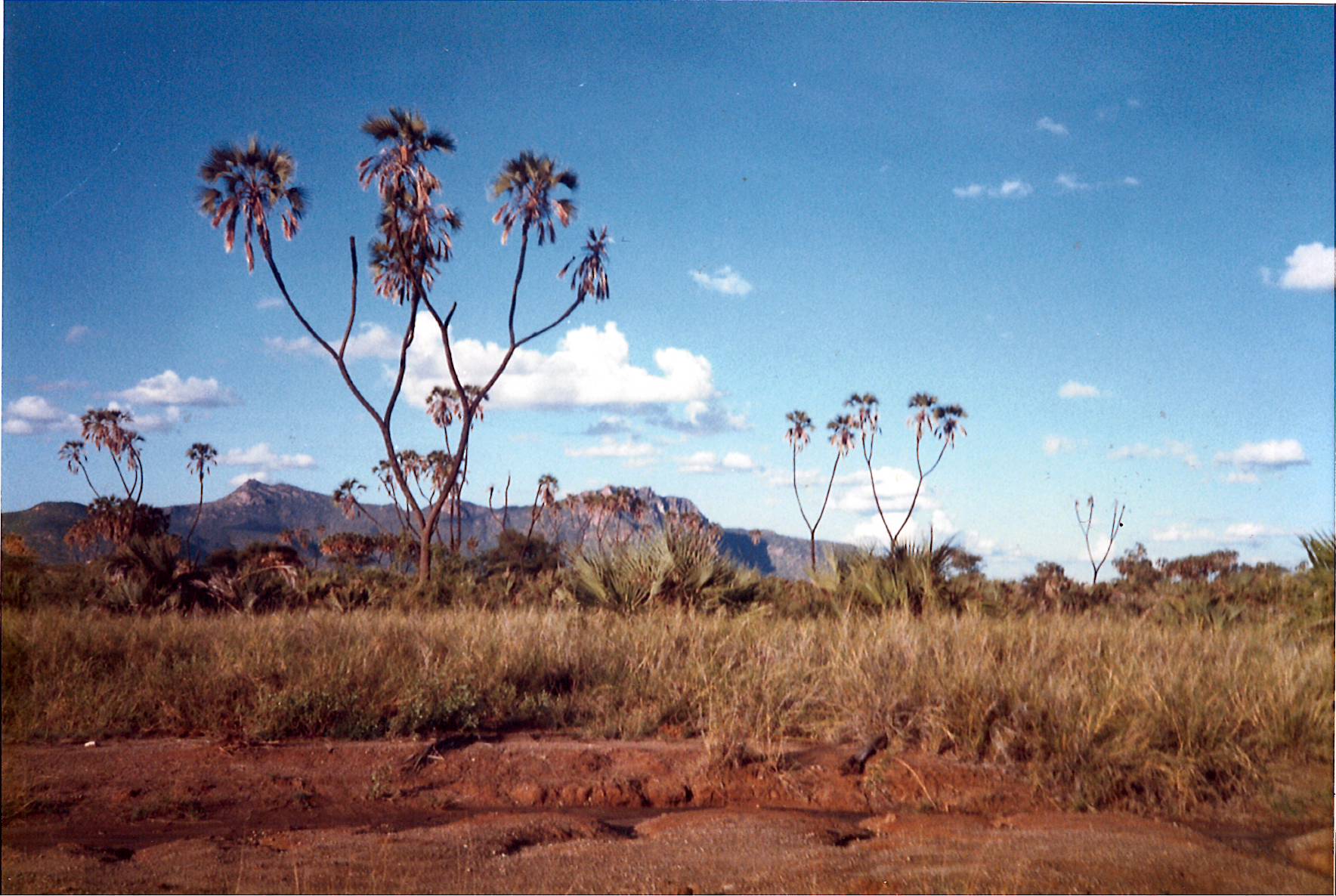
But, not joking anymore, the open view on the wide Ewaso Nyiro river, with its doum palms (Hyphaene thebaica) and acacias (Acacia elatior) was fully GORGEOUS. It looked somehow very exotic, almost like being near the Indian ocean! 4WD told us that, at the right season, the elephants and baboons or even other animals use to come here especially to eat the fermented fruits of the palm… After what they get drunk and you have to be careful not to be on their way! Up the banks, the umbrella thorn (another acacia) and the commiphora trees, also very thorny, are predominant. The latter produces a very nice scented resin (dried sap) which is used to make local incense or myrrh.

We came back to the campsite at around 11.00 AM and had a nice brunch. Then we packed up quickly (sigh) and went desperately for a swim at the neighbouring Buffalo Springs National Reserve, adjacent to Samburu’s. We found the springs crowded! A huge amount of school children were using the lovely basin where the main spring is collected and protected from the animals by a big circular stonewall. So we went for the “side-springs”, not to swim, which is not possible there, but to collect leeches instead of getting rid of our “miasmas” and accumulated safari dust.
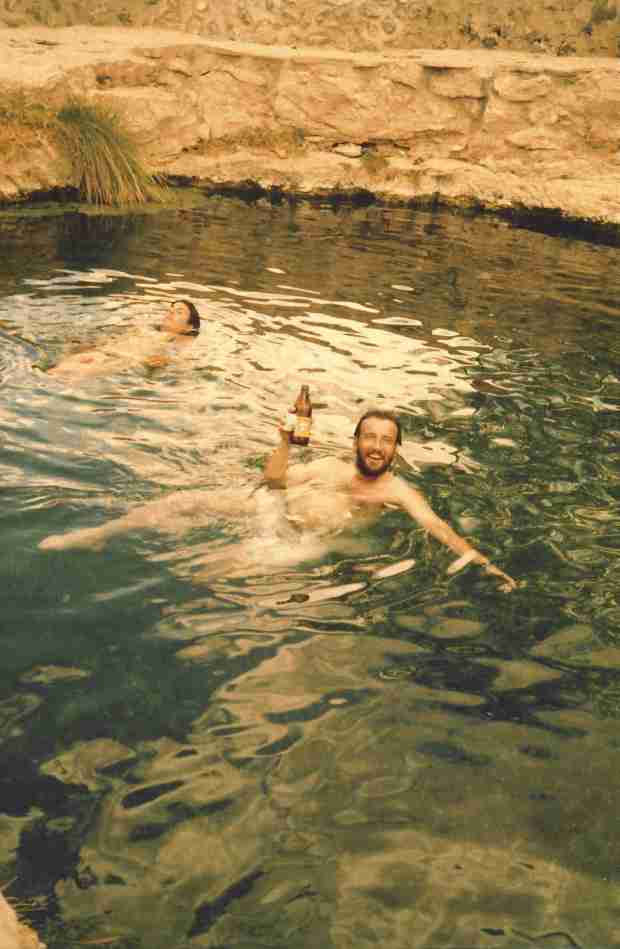
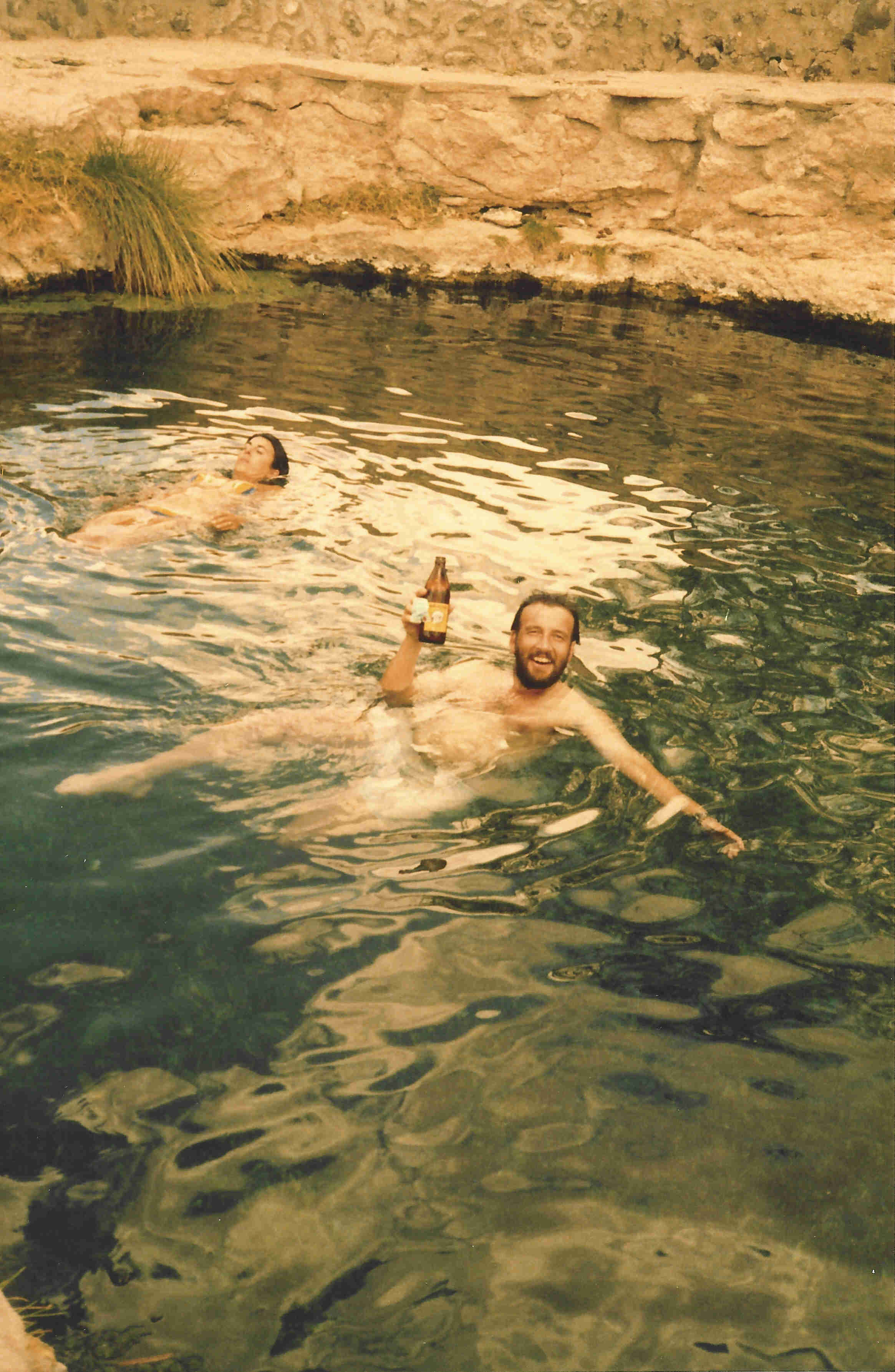
A good swim in spring water (picture taken on a previous safari): That is what we missed on that last day!

A good swim in spring water (picture taken on a previous safari): That is what we missed on that last day!

We quit the spot at 2.00 PM (sigh again). Short after we passed the gate, at only 3.00 PM, the fan belt of the Land Rover jumped out! But the mechanics (4WD and ScoutSpirit), put it right in no time. It is so reassuring to have fundis around! Both cars then headed for Nanyuki and stopped for petrol there. Next stop and arrival in Nairobi was near the “Premier Club”. It was established that both teams were first “ex-aequo”. We congratulated each other heartily and admitted that our drivers were very well trained and the organisation perfect!

So when do we start again?

Landscape around the Ewaso Nyiro, nearby the Shaba campsite: Doum palms and red soil (laterite).

Landscape around the Ewaso Nyiro, nearby the Shaba campsite: Doum palms and red soil (laterite).

 THE END

PinkShade

Footnotes

[1] 4WD (four-wheel drive): as he can make his way through everywhere and possibly through every situation. 4WD is an ancient nickname of the well-known today’s bushsnob!

[2] X-ray: as she has a very accurate view and the ability to spot before anybody any living creature miles around you in the bush!

[3] ScoutSpirit: as he is so calm and well organized that you could always count on him to provide what you did not bring or to have some spare place in his boot to host your things even If very heavily loaded!

[4] PinkShade: as she used to wear particular sunglasses that makes you see everything pinkish and also because she tried very hard to see the positive things although sometimes very anxious in that period of her life!

[5] You may have understood that they were the actual cars of the original African Safari Rally that took place at Easter in Kenya!

[6] You will see that “gorgeous”, pronounced with emphasis and a French/Spanish accent, sounded funny and it was adopted as THE word of this long week-end!

[7] Words in italics are Kiswahili terms that we adopted as we found them more expressive or poetical than ours.

[8] Staying near a river is a guarantee of good game spotting as many animals come to drink or bathe. The Ewaso Nyiro (brown river) is named after its quite dark water.

[9] Although these were the best and nearly sole qualities required for a campsite in almost any national park or reserve in Kenya. Yes, I know, coming from Switzerland where camping places have hot water, showers, washing machines, tumble-dryers, dishwashers, swimming pools, ping-pong tables, cooking places and very technical barbecue devices… it is always astonishing to come to a simple spot near a river and to be told proudly “this is the campsite, Madam” as you cannot tell the difference with the rest of the whole wild area!

[10] After the Afrikaans’ name given to rocky hills appearing like islands in the plains, i. g. in the Serengeti’s savannah. They could have their own ecosystems (plants, animals and interactions amongst them).

[11] Checking on internet nowadays (September 2014), it seems that a monument has been placed since then.

[12] The shell was handed over to the Reserve’s management on exit.

[13] The snake was an Eastern bark snake (Hemirhagerrhis nototaenia), mildly poisonous, unlikely to be harmful to man.

[14] Yerba mate (Ilex paraguariensis) is a cousin of our European holly (Ilex aquifolium), the latter being poisonous!
Waltzing in the wild

cropped-videoclip-marabou-on-land.jpg

At the last minute after leaving Moremi Game Reserve, we decided to spend the night at Magkadigadi Pan National Park. We managed to get a last minute booking at Khumaga camp as we knew that animals -mainly zebra and wildebeest- were migrating through that area at the time. Additionally, we had been there in 1999 and we were curious to see it again as we had good memories of the place, particularly the games drives along the dry Boteti river where we often saw lions as well as a huge crocodile that used to live in a water pool that somehow survived the prevailing drought.

Makgadigadi Bot kumaga camp dry boteti 99 small

A view of the Boteti river in 1999.

Boteti river 2014 2 P1090801 small

A similar view to the above, but in 2014!

We noticed that things would be different when, after going through Khumaga town and just before arriving at the Boteti River, our GPS stewardess announced, “in 300 metres board the ferry”. “This machine is confused again” I said and there was general agreement in the car so we ignored her and continued driving. And then we saw a mighty river with very clean water and, surprise, surprise, a ferry parked at the end of the road, waiting for us! So we apologized to the GPS’ lady and approached the ferry.
While driving towards the water’s edge we remembered hearing, sometime ago, that the water was flowing again in the Boteti (later literature check up mentioned 2012 as the year that this happened). The view was totally different and new to us, suddenly making the idea of coming to Makgadikgadi National Park much more interesting! I am sure it was a great positive change for the wild animals (clearly also for the domestic stock as well!!!) that suffered water shortage for many years and their recovery must be on the way

Khumaga ferry small

Waiting to board the ferry at the “new” Boteti river.

After successfully getting the car on the ferry, under the expert guidance of the ferryman, we crossed the river in 15 minutes and arrived at the gate of the park, located on the other side of the river. We passed through the gate, drove a few km and, after seeing a large herd of zebra clearly returning from their afternoon drink in the river, we arrived at the campsite. The place was the same but now it was on the bank of a normal river, with water flowing and surrounded by green vegetation, a sharp contrast with our memories! It was a bitterly cold evening so we lit a good fire and were in bed early without seeing much!
Makgadigadi Bot safari 1 Khumaga 99 small

Our campsite in 1999.

The following morning, the coldest I remember while on safari, we decided to go for a game drive before departing for Francistown and Harare. This time the drive took us along the now green river banks rather than through its dry bottom and we could not help but express our admiration for nature for having recovered so fast from what earlier resembled a bone-dry place.

The road afforded us the chance to drive closer to the water in some areas and observe its prolific birdlife. We did not see many mammals, as they were probably grazing on the plains. The exception was a beautiful Greater Kudu bull with great horns.

Greater Kudu bull near the Boteti river.

The Greater Kudu bull.

It was during one of these river loops that we saw the marabou storks (Leptoptilos crumeniferus). There were a few hundred adult birds. The first impression was of a group of elegant men in suits with coat-tails at a gentlemen’s club, getting ready for a ball and waiting for the ladies! However, the ladies were already there, dressed like men!

Sand driving P1090802

The “waltzers” from far…

Marabou storks BotetiP1090803 cropped and small 1

They were well dressed… (Picture by Julio A. de Castro)

Marabous 2P1090806 marabou cropped and small 1

The orchestra Director. (Picture by Julio A. de Castro)

Marabou P1090807 cropped and small

Showing off before finding a dancing partner? (Picture by Julio A. de Castro)

We saw a lot of interaction as birds were clearly courting and getting ready to nest. Apart from some birds trying their hand at various acrobatics and showing their superb flying and gliding skills, the more frequent activities were less spectacular. They consisted of offerings of grass to each other, accompanied by short jumps and beak clattering. The latter was a rather noisy activity, considering the size of their beaks!

After a long while observing their antics, a boat full of tourists approached and disturbed the birds, which flew away and landed again at a distance. However, the “magic” had been broken for us and we, unanimously, decided that it was time to get back to Zimbabwe while the bird spectacle was still fresh in our memories.

marabou flying snapshot

A video snapshot of the birds moving off. (Picture by Julio A. de Castro)