Christina O

Back in Rome after our Sorrento trip we went to stay with our friends Donatella and Carlo at their Appia Antica house, always a great pleasure and one that we always look forward to do. Although back in Rome my mind was still set on finding out what the two vessels anchored at Sorrento were!

IMG_2598 copy

The “mystery vessels” anchored near Sorrento.

I remembered that I had used a ship-tracking web site [1] to follow a cargo ship bringing a car from Japan to Mozambique and I decided to give it a try to see whether it would help me to identify them. Bingo! As soon as I checked for the activity around Sorrento, it was easy to find them as they were the only two stationary vessels at the time. Their names were the Royal Clipper and the Christina O so, I immediately searched the web and this is what I found.

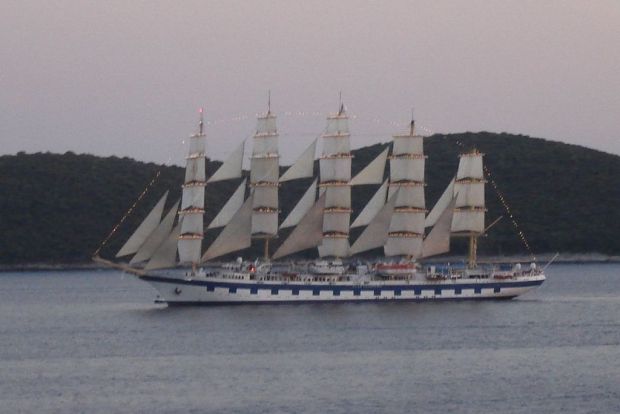
The Royal Clipper is a passenger cruise ship operated by Star Clippers to carry passengers on holiday around the world. In autumn and winter it visits the Caribbean while in spring and summer it sails from Barbados to Lisbon and Rome and then it does Mediterranean itineraries departing from ports including Lisbon, Rome and Athens.

1024px-SV_Royal_Clipper2

Photo by Orlica (Own work) [Public domain or Public domain], via Wikimedia Commons.

The ship is interesting as it has a steel hull and five tall masts in a design that follows that of the Preussen, a famous five-mast German sailing ship built in 1902 and known by sailors at the time as the “Queen of the Queens of the Seas” that unfortunately was lost in 1910 at Crab Bay after a collision. The Royal Clipper is the largest “true sailing ship” built since Preussen and the largest square-rigged ship afloat [2]. It carries over one acre of sails (5202 m2) operated mechanically by a rather small crew for its size!

1024px-SV_Royal_Clipper

Photo credit: by Orlica (Own work) [Public domain or Public domain], via Wikimedia Commons.

The interesting information that I got about the more spectacular of the two ships encouraged me to continue my naval mystery-solving work. What I found for the Christina O was extremely interesting although I must admit that even before checking the web, being from the “baby boomer” generation, I have guessed what yacht it was although not its many features and history.

The Christina O is today a private yacht that once belonged to Aristotle Onassis, the billionaire Greek-Argentinian businessman. It is considered as one of the most legendary yachts afloat with an amazing history, full with high society life, politics and romance. It was aboard this yacht that Ari (as Onassis was known) and Maria Callas, had their colourful and stormy romance that lasted for over ten years.

Embed from Getty Images

Maria Callas still is perhaps the most famous soprano the world enjoyed and she earned the nickname of “La Divina” (the Divine) for her singing style. Her relationship with Ari ended and then he married John Kennedy’s widow Jackie, a long-time friend and their wedding took place onboard of the yacht. Previously, the Christina (the name that Ari gave the yacht) hosted the wedding celebrations when Prince Rainier of Monaco and actress Grace Kelly wed in 1956.

The super yacht was a symbol of great power at the time of Ari’s life It had many important visitors and a few really illustrious ones including, apart from Callas and Jackie, Winston Churchill, Richard Burton, Bette Davis, Greta Garbo, Grace KellyElizabeth Taylor, Marilyn Monroe, Rudolf NureyevFrank Sinatra, and John F. Kennedy!

Embed from Getty Images

Onassis next to the original Christina.

The yacht was originally the HMCS Stormont, a Canadian anti-submarine frigate launched in 1943 that, after serving as a convoy escort during the Battle of the Atlantic and being a support ship at the Normandy landings, was purchased in 1954 at scrap value of US$34,000 by Onassis who subsequently re-named it Christina after his daughter and spent USD 4 million to convert it into probably the most luxurious super yacht of its time!

HMCSStormont

HMCS Stormont: Picture taken by an employee of the Canadaian Government, and greater than 50 years of age [Public domain], via Wikimedia Commons.

After Ari’s death, Christina -his daughter- donated the Christina to the Greek government as a presidential yacht. Then the yacht got its third name: Argo but, regrettably, it was allowed to deteriorate until it was purchased in 1998 by fellow Greek shipping magnate John Papanicolaou who spent USD 50 million to recover it re-naming it Christina O in honor of the by then deceased Christina.

Among other amenities, the Christina O was fitted and still has a master suite (now known as the Onassis suite), eighteen passenger staterooms, and numerous indoor and outdoor living areas, all connected by a spiral staircase. The aft main deck has an outdoor pool with a minotaur-themed mosaic floor that rises at the push of a button to become a dance floor. There is also a helipad on the promenade deck. At 99 metres long she is still among the top 50 largest yachts in the world.

Since Papanicolaou’s death in 2010, Christina O was rented for private charters and cruises and in 2013 was placed for sale at a price between USD 21 and 32 million [4]. Despite all the money invested on the yacht it has not been sold because of its overhead expenses.

In 2005 she was placed for charter with Camper & Nicholsons International, the oldest yacht brokerage company in the world. At present Christina O cruises the Mediterranean during summer, clearly including Sorrento! while in winter the yacht travels to the Caribbean. It costs €560,000 (Approximately USD 592,500) per week plus its expenses.

I am rushing to book it for next year, trusting that I will get sufficient friends to join us on our next visit to the Mediterranean…

Embed from Getty Images


[1] https://www.vesselfinder.com/?imo=5076705

[2] http://www.guinnessworldrecords.com

[3] https://www.yachtcharterfleet.com/luxury-charter-yacht-23156/christina-o.htm

[4] http://www.independent.co.uk/news/world/europe/aristotle-onassiss-yacht-christina-o-put-up-for-sale-8682877.html

If you are still interested on more details on the Christina O, this page is useful: http://www.mychristinao.com/


Sorrento

After our brush with history and ruins, it was time for a bit of hedonism so we headed for the Amalfitan coast and Sorrento in particular. To visit the latter was my idea as I had nice memories of an earlier visit we did in the 90s. It was a slightly more relaxed Bushsnob at the steering wheel but only because of the impeccable navigation of my daughter and the crisis control of both her and my wife!

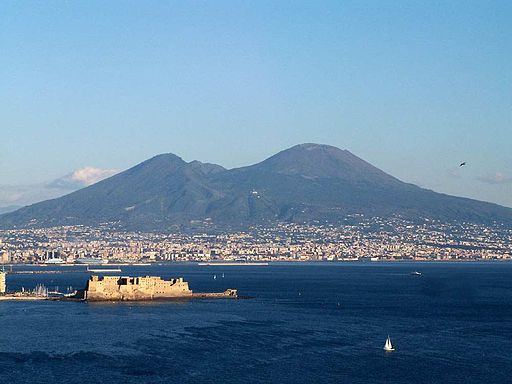
512px-Naplesbay01

The mighty Vesuvius. Picture credit: Jeffmatt at English Wikipedia [Public domain], via Wikimedia Commons.

Eventually we turned off the main road and I drove the final part through a stretch of road only suitable for one Ape[1] at the time, unaware of whether it was a one-way path while praying that no other car or even an Ape would come the other way! After 2 km of suspense and after pruning a few trees, we arrived and I even managed to park the car out of the way under the direction of our host. The road was suitably called Via Nastro Verde (Green Ribbon road) as it was framed by all sort of trees, including the famous Sorrento lemons, the raw material of the not less known Limoncello.

Airbnb described the flat as being located on the hills above Sorrento with an easy access to the town via a path downhill. The place was at a farm and the view of the bay of Naples breathtaking at first and, once you manage to regain your wits, very interesting.

IMG_2597 copy

The view of the Bay of Naples from our window.

Close to lunchtime, after having exhausted the ample supply of hazelnuts and cherries left by our host we judged that our settling in was over and it was time for exploration. The Bushsnob agreed to scratch his siesta and to accompany the other members of the party for a descent to Sorrento, so far a nice sight well below us. We looked for and found the path so we started our descent. Somehow, a friendly brown dog got attached to us and, although we attempted to chase him away, it somehow liked us and stuck to us.

The path was as well signposted as steep as it consisted of 2 km of steps. Although it was tough on the elderly, we managed to negotiate it quite well, guided by our recently acquired guide dog that -insanely in my view- kept running down and and then up the steps all the time, making me feel even more tired. Once we reached town with our knees trembling but still functional, things improved and our eyes could be lifted from the path to look around.

The first thing we noted was that the dog was still with us! Feeling guilty but realizing that trying to chase it away was not an option we decided to put up with its company for the rest of the day if necessary and that if this persisted, we would bring it back to our hilltop whatever our means of transport. The dog meantime was clearly unaware of our plans and, after walking for a couple of blocks, it found his own lowlands relatives or acquaintances and joined them to spend the rest of the Saturday in good company.

Somehow relieved that the dog issue resolved itself, we wandered around the city that, being a Saturday and in summer, was rather crowded and we were surrounded by shoppers at all times. My Sorrento memories already started to crumble during the first couple of hours!

Having tested the way down and found it hard on the knees we firmly decided that going up the hill at night was not an option. We then decided that our return would be by bus so, in mid afternoon, we walked to the station only to find that the last bus to our destination was departing in a couple of hours as it was a weekend. Clearly, we would travel back by taxi as an early dinner was not on the cards.

After spending some time at the central and popular Piazza Tasso and visiting the 14th century Saint Francis church, we decided to explore the Marina Grande to find a place for a seafood dinner by the sea as -wisely- we judged that the closer Marina Piccola from where all ferries operate would not be the right place, somehow.

As usual in Italy, lots of people had similar thoughts to ours with the result that Marina Grande’s restaurants were rather full when by the time we arrived. After having a look at the offer, the fact that Sophia Loren was a patron of the Di Leva Five Sisters restaurant clinched our decision and we took a table next to the beach. Although Sophia was not there at the time (she was clearly unaware of our presence), we were served by one of the sisters who knew her and we even managed to meet another three of the sisters. Both food and service were excellent. Curiously, a later look at Trip Advisor showed that the restaurant only had 2.5 stars and some very rude remarks by mainly foreign customers!

Dinner and ice cream over, a taxi was called and off we went, all the way up the hill to our flat. Of course we did not know that the way back for vehicles was over 20 km so we needed more money to pay for the taxi than for a dinner for three! So the result of the first day at Sorrento was not good and by the time I went to bed I had no hopes for a fun Sunday!

As usual I woke up early and spent a long time watching the sea below us and following the ferries coming and going to destinations such as Naples and Capri. Then I noted a large yacht anchored a few hundred metres from the Marina Piccola. Although I did not have binoculars -for the sake of travelling light- I could see that it was some kind of a luxury yacht such as those that belong to the royal families and I decided that it belonged to one of them.

Sunday was a relaxed day and, as expected, did not offer anything special apart from a “mongrel-less” walk down to town, an early dinner and a bus return for a Euro 1.50 fare! The second day at the city did nothing to improve my sinking feeling that Sorrento is not what I thought it was. Later on, talking to friends we learnt that weekends are not the best time to visit the place so I got somehow more enthusiastic but not enough to return there for a while.

The following morning, the day of our departure, I -again- got carried away with sea contemplation and immediately noted another vessel that had arrived during the night or early morning. It had lots of masts so I decided that it was one of the many tall ships that tour the world that had decided to join us at high-living. It added more interest to the already superb view.

My contemplation was cut short when I realized that it was time for our trip back to Rome as we had a time to return our car. Not all was lost though as in Rome we would spend a couple of weeks in the company of our daughter and good friends although only part-time as they are working.

It was an uneventful return journey, but the view of the Bay of Naples -the highlight of the visit- and the images of the ships anchored at the bay stayed in my mind. I then decided that I would investigate them further but you will need to wait for the next post to find out if my efforts borne fruit…


[1] The Piaggio Ape (bee in Italian), is a three-wheeled light commercial vehicle produced since 1948 by Piaggio and now by Piaggio India. It is a common vehicle used by Italian farmers as it allows them to negotiate very narrow roads.


Spot the beast 25

When my computer crashed earlier this year I was fully aware that this would be a set back that would affect my internet activity. However, I knew that I had a back-up in Zimbabwe, albeit a few thousand miles away! Nevertheless I knew that I had no duplicates of the pictures taken during the first part of the year while in Carmelo and Salta.

Luckily the contents of my hard disk was rescued as I mentioned to you earlier. Unluckily all pictures were placed in one file called “Images” by the file recovery programme used. After searching a few days I found one of the recent pictures and that gave me hope and the needed patience to keep searching. Eventually, thousands of files later, I found most of them, including the ones included in this post that, in my opinion, are worth the time I spent finding them…

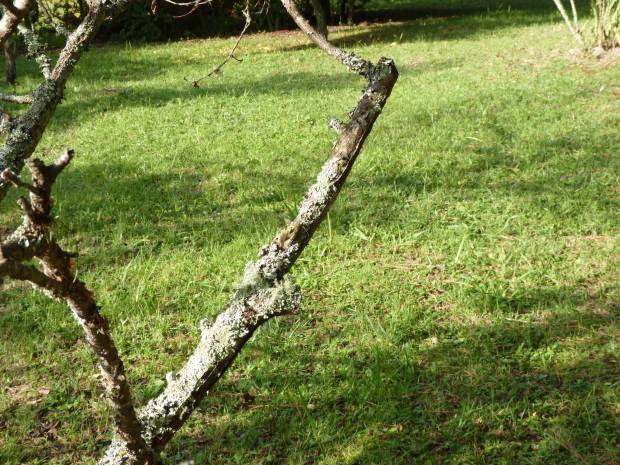
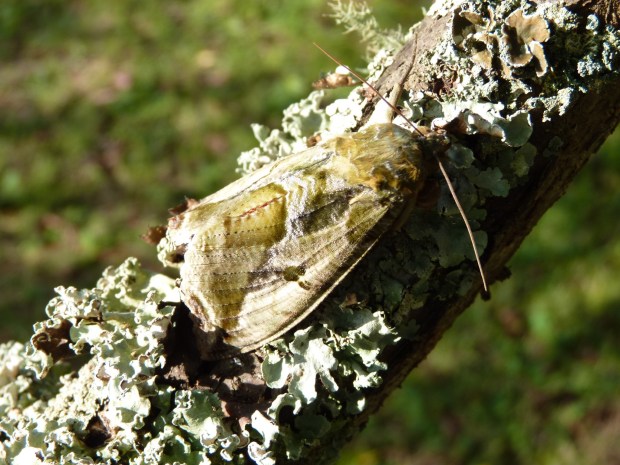
So, without further ado, here is a new beast for you to spot (if you can!!!). I warn you that it is tricky if it does not move (as in the bottom pictures.

P1170130 copy

???

???

???

???

???

???

P1170131 copy

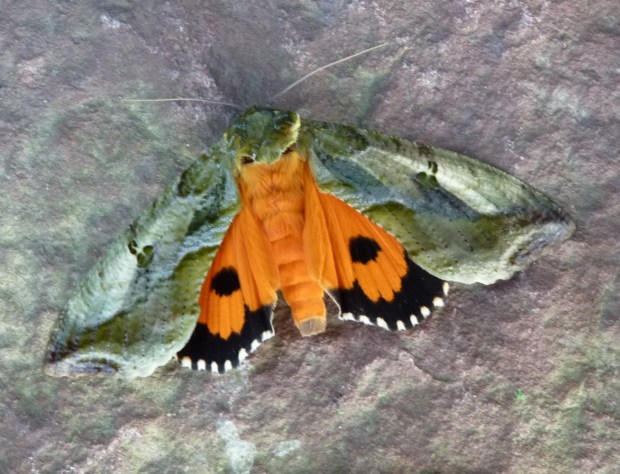
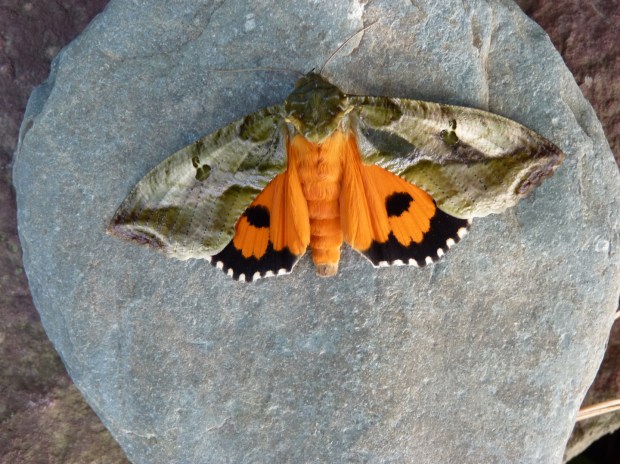
Are you ready for the surprise?


P1170132 copy

P1170128

Its secret revealed, I rate this moth as one of the most striking I have seen so far!

Dry coral revisited

In June 2015 I presented you with a post on some amazing collection of succulents we found in Rome, more precisely at the Istituto Salesiano San Callisto. (1)

Over the years, while staying in Rome, we have been lucky to stay with friends that live at the Appia Antica so, a walk through the Saint Callistus catacombs was an almost daily affair getting to the centre of the city. While so doing, this veritable dry coral garden was there to be admired so I thought I would share a few pictures with you.

Although I noted the absence of a few of the plants I pictured two years back and flowers were not as abundant -probably because of the dry conditions that prevail in Rome- a few others have taken their place and the collection is still beautiful.

This slideshow requires JavaScript.


(1) https://bushsnobinafrica.wordpress.com/2015/06/08/caput-mundi-a-waterless-coral-reef/

Vesuvius

Broad sheets of flame were lighting up many parts of Vesuvius; their light and brightness were the more vivid for the darkness of the night… it was daylight now elsewhere in the world, but there the darkness was darker and thicker than any night.”

Pliny the Younger, 79 AD.


Once you approach Naples it is hard not to notice the Vesuvius now -luckily- a dormant volcano. So we decided to risk an “unexpected” eruption and decided to stay two days at Herculaneum and then two more at Sorrento, the start of the Amalfi coast.

We were comforted about the safety of the area when our landlord at Herculaneum told us -on arrival- that the weather was very beautiful so no eruptions to spoil things would take place! Now relaxed because of this important piece of local knowledge, we decided to explore both excavation sites. Of course, the fact that the eruption was now settled did little to help me to be a relaxed driver!

The Vesuvius erupted on 24 August 79 AD after being dormant for about 800 years. We know the exact date because a Roman called Pliny the Younger. Happened to be there and write about it. We even know that after lunchtime the mountain started to throw ash and stone thousands of metres up into the sky that later, because of the wind, landed on Pompeii and surrounding areas causing severe damage. Herculaneum, meanwhile, was only mildly affected but people started to flee in panic. It is hard to imagine what went on during these terrible hours.

That night, while Pompeii was being destroyed, the first wave of ash and very hot gas, known as a pyroclastic surge (1) hit Herculaneum at over 150kph. The area suffered six more of these phenomena that buried the city, causing little damage to most structures and leaving these and victims almost intact.

The intense heat is believed to have been the cause of death (rather than suffocation as previously thought). The temperature reached at least 250°C and, even at a distance of ten kilometres from the volcano, and this was enough to cause the instant death of all residents, even if they were sheltered within buildings.

After two days it was all over and not only Herculaneum and Pompeii but the whole region was buried under a thick layer of ash, lava and rock.

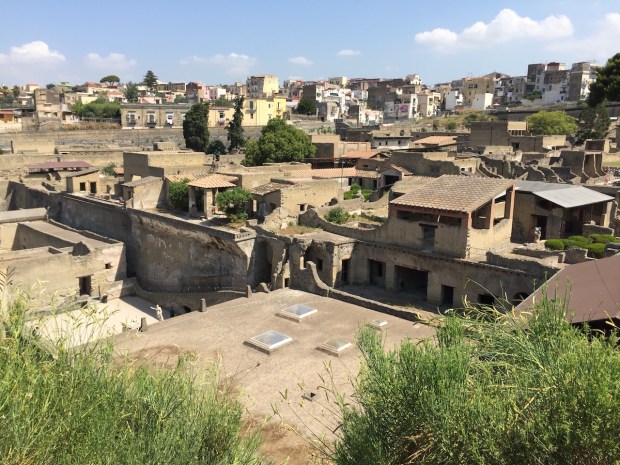
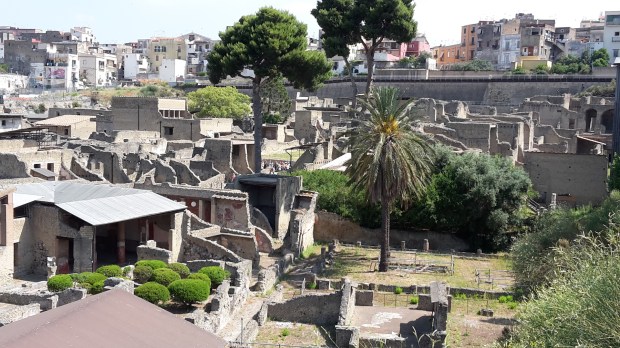
Although we arrived a couple of millennia afterwards, to see what the excavations had revealed. To see Herculaneum from above was breathtaking and really dramatic.

IMG_2478

An overall view of Herculaneum before entering the excavation.

20170609_104402

Another view with the present dwellings in the background to appreciate that the actual Herculaneum village was buried deep and that the remains extend beyond what was excavated.

We spent a day at Herculaneum during which wife and daughter walked it all and saw the various houses, thermal baths, etc. Although I was with them for a while, ruin-watching saturates me after a while. Yes, I openly admit my cultural shortcomings so I soon left them to it and withdrew to a shady spot to read a book hoping for a siesta that did not take place because of tourists’ annoyance, a common problem in popular areas.

IMG_2549

A group of people that got trapped by the eruption near the river.

After a good night rest during which I recharged my archeology batteries, we drove to Pompeii, now the bushsnob a slightly more relaxed driver that, with the help of my co-pilot daughter (also ex ed in chief) managed to navigate the tortuous way to Pompeii in the best style of the rally driving teams!
It was then easy to find our meeting place with our guide. Perhaps influenced by my absence during part of the previous day visit we had decided to have a private guide for a couple of hours to focus on the key areas and then to have the place for ourselves to explore self-guided (or for the bushsnob to indulge in a self-siesta…). It was much more crowded as Pompeii is a much larger and very popular. The decision was a great success and even I managed to last the entire guided course without getting distracted or bored!

20170610_102726

The much larger -and crowded- Pompeii.

IMG_2569

A group of visitors contemplate a mosaic replica!

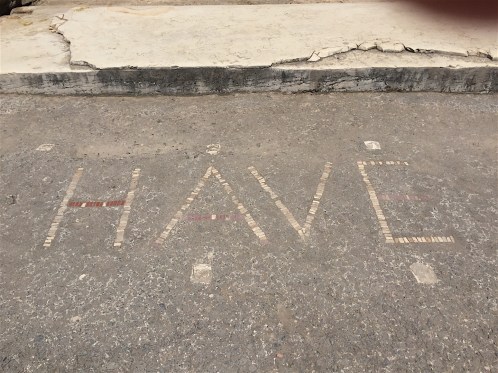
IMG_2571

Not the verb “to have” but HAVE for “HAVE CAESAR”

IMG_2575

Because of the type of volcanic activity, human remains are better preserved and more “dramatic” at Pompeii.

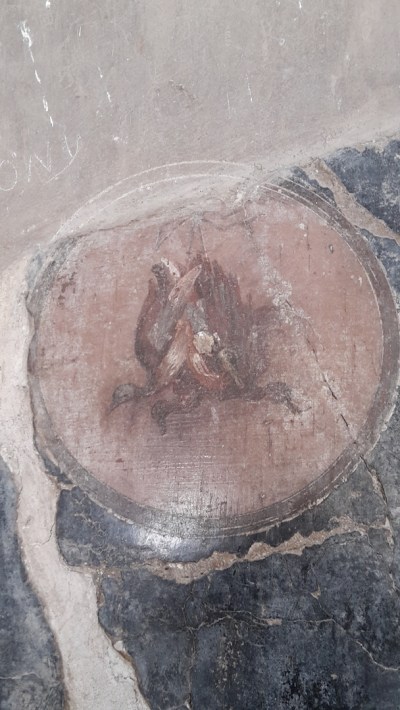
To me the highlights of the two paces were the mosaics and frescoes that are still well preserved in many of the excavated houses and baths. Apart from the famous dog of Pompeii, now protected by a glass encasing, there are numerous other examples of mosaic-rich floors and walls that really called one’s attention. Further, careful watching can turn an apparent oil stain on a wall into a lovely small fresco.

20170609_122204

A second looked of an “oil stain” on a wall reveals a lovely fresco of a bunch of ducks.

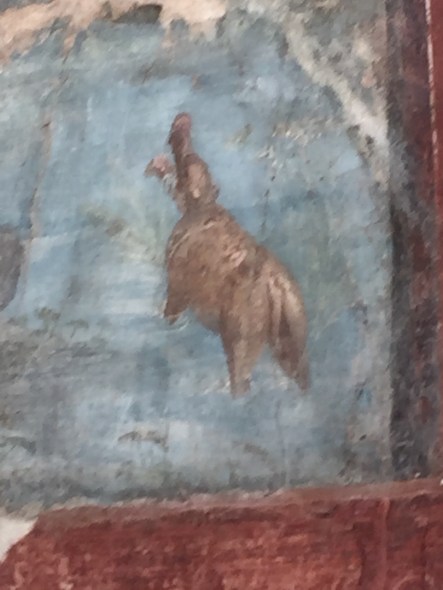
IMG_2553

A fresco depicting what I believe is an angry hippo that reminded me that these animals were known at the time.

Then, our archeology task well completed, it was time to enjoy Sorrento, or so I thought as, somehow, we overlooked the fact that we were getting there during the weekend, a time we later learnt, better to be avoided in this city. But this is the next post.


(1) A pyroclastic surge is a fluidized mass of turbulent gas and rock fragments which is ejected during some volcanic eruptions. It is similar to a pyroclastic flow but it has a lower density or contains a much higher ratio of gas to rock, which makes it more turbulent and allows it to rise over ridges and hills rather than always travel downhill as pyroclastic flows do.

Spot the beast 24

Going through thousands of files, I found recent pictures I took while in Salta that I thought were lost forever. Among these, there are of course a few “beasts” and this one is one of them. Although it is a rather easy one, it may be a good training for the next one to come in a few days.

Here it is:

P1160545 copy

???

???

???

???

???

???


P1160546 copy

Yes, a young grasshopper.

Car rental drama

We took the opportunity of the presence of our offspring in Italy to join them for a break of our retirement routine and visit that wonderful country. Although most of our time was spent with our good friends Donatella and Carlo, we also had time to explore a bit of what the Italians know as “the most beautiful country in the world” not without reason.

So, after considering the various travel options for our Southern Italy outing, the family decided to take the plunge renting a car with the bushsnob as the driver. Although I have enjoyed driving in Italy during our earlier periods in Rome, I was more reluctant to accept the responsibility now. I tried to argue that I had not driven in Italy for over 6 years, that I needed time to re-adjust to the Italian traffic and that it would get worst as you move down South. Even mentioning my advanced age and its accompanying shortcomings failed to make a dent on their resolve.

So, a car was hired and I drove!

We planned to visit Herculaneum (Ercolano) and Pompeii (at the request of wife and daughter) and Sorrento, my favourite place in Italy at my request.

Once driver-designate, I revealed to them that I still had an Avis Preferred card, a relic from my days of work-related flying with British Airways (BA). Avis and BA had an agreement that yielded miles to your membership to the airline’s reward programme. So we went for Avis and, from decision day onwards, aware of my new responsibility, I started to watch the Roman traffic with the consequence that a knot started to develop in my stomach!

We booked a Fiat 500, well in advance. We chose it for being an economical car, but also -very importantly- to be small enough to go through the many narrow and often windy roads found in Italy, not to mention parking!

Finally the 8 June came and we were kindly taken to our car-collecting point at the Via Laurentina -chosen for easy exit from Rome- to collect the vehicle and to start our odyssey or at least that was the way it felt to me. My nerves were barely under control when we arrived to the office. We proceeded to wait for our turn as the lady in charge was dealing with another customer. Walking up and down inside the small office was also a tall and black-bearded man on the cellphone, rather agitated, arguing and gesticulating wildly.

We saw no change after having been there for a while although the attendant had seen us. Suddenly she announced that we were better off going to the bar next door to have a capuccino as she had a foreign customer to finish with as well as another serious problem to solve as the morning had not started well. The bearded man was apparently the serious problem. Slightly taken aback we obliged and took advantage to stay a bit longer wth our friend Donatella for a while longer, always a pleasure.

We estimated 20 minutes as sufficient time to solve the on-going issues and we returned to the office. Despite this, the bearded was still there and we were still ignored! As we waited for the second time, we heard that, despite the bearded man booking the car of his choice well in advance and given Avis clear specifications on the colour, make and model of what he needed, they had offered him another, quite different one!

A few minutes of evesdropping later we obtained more information. The bearded man wanted a white Mercedes coupe and Avis presented him with a grey station wagon. He was indignant and would not accept the swop! I thought he was just being difficult but then we learnt that what he was renting was his wedding car and it became obvious that his future wife was at the other end of the phone and she was not taking another car for her most important day!

After about an hour, finally the bearded man to be married departed with instructions to take the station wagon to another office in the centre of town where someone would replace his station wagon for the right car. Although the story sounded very convincing and the bearded man to be married accepted it, I had doubts on its outcome.

While this exchange went on, the knot in my stomach was worsened by the misgivings that we were facing a difficult morning at Avis Laurentina and also that it was getting rather late! I was not disappointed…

When our turn finally came we produced our booking and needed documents. Very soon we were informed that we would not have the car we booked but another one that luckily, as the seller put it, belonged to a much more expensive class, was larger, more comfortable and as a special favour, it would not cost us more! Instead of our Fiat 500 we she offered a Nissan Juke, something I never heard of until that moment. We tried to explain to the attendant that we had booked the Fiat 500 because of it being smaller, etc. But she would not take any of our reasons and she repeated three times that what she was offering was a better deal, a fact that was beginning to irritate us.

After a while, realizing that it was either the Juke or nothing, we decided to accept the change as it was now getting really late and our friend could not wait for us anymore! So, after a quick inspection we said farewell to Donatella and signed up for the “improved” offer while the lady continued repeating that it was a better deal!

Luckily the drive through Southern Italy went very smoothly and later, when returning the car we learnt that the bearded man to be married did become the bearded man married after all and that, apparently, he got the right car, eventually!

Rude plants

While living in Bolivia, in the early part of this century, someone told me a story of the war when Bolivia lost its exit to the Pacific Ocean to Chile. It was apparently during this conflict that a Bolivian General[1], aware that his chances of winning the war were dimming, tried to cheat the incoming Chilean ground forces by dressing the cactuses present in the area with the uniforms of the Bolivian army, pretending that his men were more numerous than they really were! The ruse failed and we all know that Bolivia is now a landlocked country!

I have had the story in my mind since then and recently, when I tried to confirm it by Google for this post, I failed to find any reference to it! In any case, it is a good way of starting to tell you about one of the most emblematic plants that populate parts of the Andean Puna[2], the Cardones [3]. We had a chance to see many of them during our trip to Cachi (Salta Province) that traversed the Los Cardones National Park.

IMG_3099 1

A view over the Los Cardones National Park. Amazing place!

P1180021 1

A Cardon forest as far as the eye can see.

The park has an area of 65,000 hectares and it was created in 1987, to preserve a sector of Andean biomasses including the Puna, Pre-Puna and related dry forests. It ranges in altitude from 2,700m (Tin-Tin valley) to 5,000m (Malcante hill). Although it only gets an annual rainfall of less than 200mm, its aridity does not stop many plant and animal species to thrive there, too many to mention here but well described elsewhere [4].

Apart from the cardones there are other interesting finds in the area. In the plant world the Jarilla (Larrea divaricata) provides the cardones with needed shelter for them to grow under its protection until reaching suitable size to continue its growth alone.

P1180017 1

A cardon growing under the protection of a Jarilla.

Another amazing plant found at higher altitudes is the haermaphroditic Yareta (Azorella compacta) also known as pasto de piedra [5].This plant is literally a vegetable stone whose leaves develop into an extremely compact and hard mat that reduces heat loss in order to survive. The result is a very rare plant that looks like a giant moss. Of extremely slow growth, some of the specimens in the Puna are estimated to be over 3,000 years old! Unfortunately, because of its slow growth and its traditional harvesting for firewood, it is becoming scarce.

The guanaco (Lama guanicoe) population is not as large as I expected and we only saw three or four groups of these special camelids. Their observed scarcity is apparently the consequence of the competition for food from thousands of feral donkeys (Equus asinus) that once got established there and continue to multiply despite past efforts to control them through culling schemes that will need to be reinstated to give the guanacos a chance to expand. Unfortunately, my pictures of both guanacos and donkeys are still in the deep recesses of my now comatose hard disk!

20170219_140917

Guanacos ahead!

Puma (Felix concolor) are present and they predate on the young of both guanacos and donkeys. Luckily, they are seen with certain regularity and the park is one of the areas where the visitor can, if lucky, spot these beautiful cats.

The dead from both donkeys and guanacos are fed upon a number of scavengers among which the condor (Vultur gryphus) is the most prominent and best known. These veritable flying colossus of about one metre in height have a wingspan of three metres or, to be more graphic, a line of about a dozen school children standing side by side! With such wings they can only be superb flying birds, capable not only to cover great distances but also to reach amazing heights.

P1180181

A condor flying overhead.

I was pleasantly surprised to be able to spot (of course after my wife!) quite a number of condors flying high in the very blue sky. Showing similar skills to African vultures, condors are not easy to spot on the ground as they inhabit and nest in difficult terrain. I am proud to announce, though, that I was able to contribute to our condor observations by spotting a far away nest with a fledgeling! I made sure that my companions noted this but, as usual, my effort was largely ignored.

cropped-p1180023-2.jpg

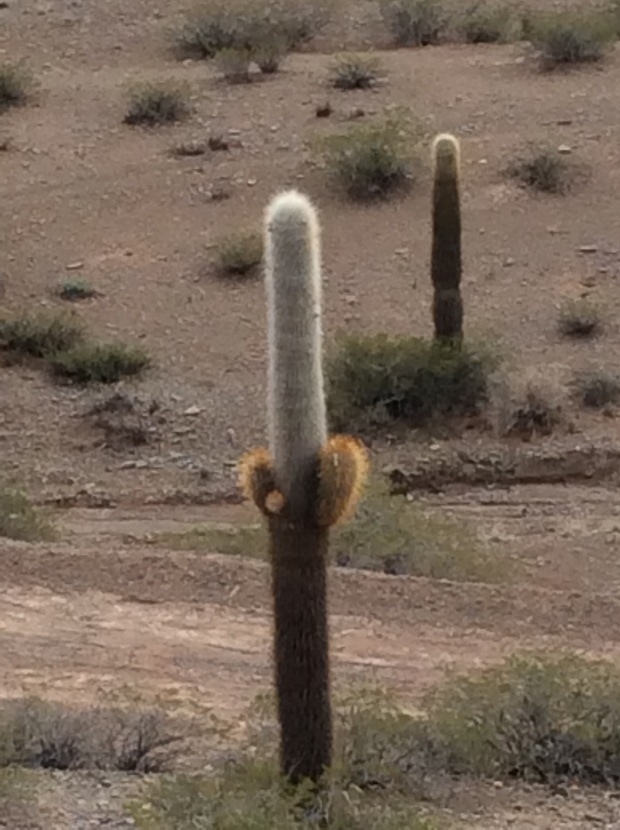
Although mammals and birds are really fascinating, the cardones were the real stars of the show for me. These very thorny plants are everywhere and they can occur singly, in groups or form true forests that reach as far as the eye can see. Although the majority were very rude by showing me their middle finger, some were polite and welcoming. Admittedly the latter were very few! Clearly, nature comes in all shapes and moods!

IMG_3115 1

A rude cardon!

IMG_2953

Exasperated by so much plant rudeness the bushsnob attempts at giving some back…


The cardones start their life under the protection of the Jarilla bush and they produce their first flowers at about fifty years old. These white flowers are known locally as “pasacana” that gives the species name to the plants. The flowers are eaten by animals and people and it is estimated that when the plants reach 3m high they are three hundred years old so some of the ones we spotted must have been much older, probably near one thousand and I never stop from being amazed when watching such creatures that can exist for such a long tie and still look like they would continue being there for another millennium.


[1] I was told that it was President Melgarejo.

[2] Basically a very dry, cold, high and silent area by the Andes mountains.

[3] Spanish for cacti of the species Trichocereus pasacana.

[4] Chebez, J.C. (2012). Noroeste. Guia de las Reservas Naturales de la Argentina. Editorial Albatros. pp. 88-93.

[5] Spanish for stone grass.


Apunado [1]

I am well aware that one of my numerous weaknesses is not being able to handle heights. I am not talking about vertigo here but high altitude and the absence of O2. During our five years spent in the Bolivian highlands we realized that our family has two clear gene lines when it comes to live in high places. While I am pathetic, my wife does not bat an eyelid when it comes to highness.

While there we also had ample time to discern that the genes ruling altitude resistance are passed independently to your offspring. Our son inherited his mother’s altitude resilience while our daughter had the bad fortune of getting, among several of my bad traits, the one of very low altitude tolerance!

We were of course oblivious to this pairing until we arrived to La Paz in 2001. While my wife and son enjoyed a quasi-normal daily life, my daughter and I acquired a greenish skin tinge and felt sick most of the time until we reached a kind of equilibrium at 3,400-3,800 m in La Paz where we spent most of our time. The situation improved remarkably when we discovered that sleeping with a window opened increased the oxygen content of our bedroom although the temperatures decreased dramatically.

However, as soon as our travels took us to higher places such as Potosí at 4,070m our precarious balance got tilted in favour of the altitude and our discomfort would come back. It was enough for us to see the “Cerro Rico [2]” in the distance to start feeling unwell! Conversely and to our great annoyance, wife and son continued with their usual unresponsiveness to altitude!

During our recent trip to the Calchaqui valleys in Salta I had a “reliving” of that experience. We drove from our farm in the Gallinato (1,300m) to Cachi. This meant a climb to areas of higher altitude that crosses a really picturesque area and the road goes through a number of mountain passes and climbs to finally reach the Puna. On the way we passed through the Los Cardones National Park [3] (3,350m) to finally reach Cachi, a nice village in the confluence of the Cachi and Calchaqui rivers, located at 2,300m and framed by mountains, including the “Nevado de Cachi” [4] above 5,000m.

P1180023 (2)

Going through Los Cardones National Park.

P1180067 1

The Nevado de Cachi from the distance.

It was after the 180km drive, and parking the car at the hotel that I felt the start of my predicament and I had difficulties reaching the reception! The headache came without warning, suddenly and, although it was not the worst I had suffered, it was bad enough. Together with a general feeling of malaise comparable to that of a strong cold, it lingered on for the rest of the day and you could not ignore it. The combination was not conducive to enjoying my stay and by dinner time I felt truly dreadful!

P1180120 1

I was already apunado when I arrived at the hotel entrance in Cachi.

It was time to consider the options at my disposal. Remembering old advice from Bolivia I decided to have a light dinner in the shape of a garlic soup (I could refrain from kissing my wife good night for once!). In addition, I discussed my predicament with the locals and they advised me to chew coca leaves -legal in these parts- as this would make me feel much better.

P1180127 1

Coca leaves for chewing.

Of course I knew of coca, having supervised alternative development projects in Bolivia aiming at substituting coca growing for other forest-related activities. I am also aware of the controversy that surrounds the issue of coca and cocaine so I was reluctant at first. However, I had already seen large number of people “coqueando”[5] in Salta so I decided to take the plunge and chewed the dose I was recommended to take: about four leaves! Regrettably, the only clear effect I noticed was that my tongue went to sleep before the rest of my body and I could not detect or see any advantage in the chewing!

Disappointed by the lack of reaction of my organism to the “hoja milenaria”[6] I decided to cut my losses and retire to bed well before my companions. While walking to my room I went through the ABC of altitude sickness control: sleep alone, eat little, walk slowly and drink lots of water. It was then that I realized that the latter was the obvious cause of my trouble as, during the long drive I had –for some reason- not drank the water amount that I normally take.

I reached he room and drank as much water as I could hold. I also took one gramme of paracetamol for the now splitting headache and went to bed. Sleep came immediately and –luckily- the following morning I was as good as new. I returned the remaining coca leaves to the hotel management with thanks and I managed to feel well for the rest of the holiday and explore the attractions of the area in good health while drinking profusely to avoid being apunado again!


[1] In Spanish, someone with altitude sickness.

[2] Rich hill in Spanish. Potosí‘s landmark from where the Spaniards extracted tons of silver, activity that continues today.

[3] The park is named after the cardon cactus, Echinopsis atacamensis.

[4] Snowy mountain of Cachi in Spanish.

[5] Chewing coca leaves.

[6] Millenary leaves in Spanish, another name for coca leaves.

Spot the beast 23

A difficult one this time. I doubt that you will manage it without hard work… Or maybe you see it?

P1170800

???

???

???

???

???

Another amazing beast revealed:

P1170801 - Copy1

Great camouflage of the moth on pine bark! Below are some other pictures of the insect for you to appreciate it better.

P1170798 - Copy

P1170808 - CopyP1170796