Beautiful Beasts

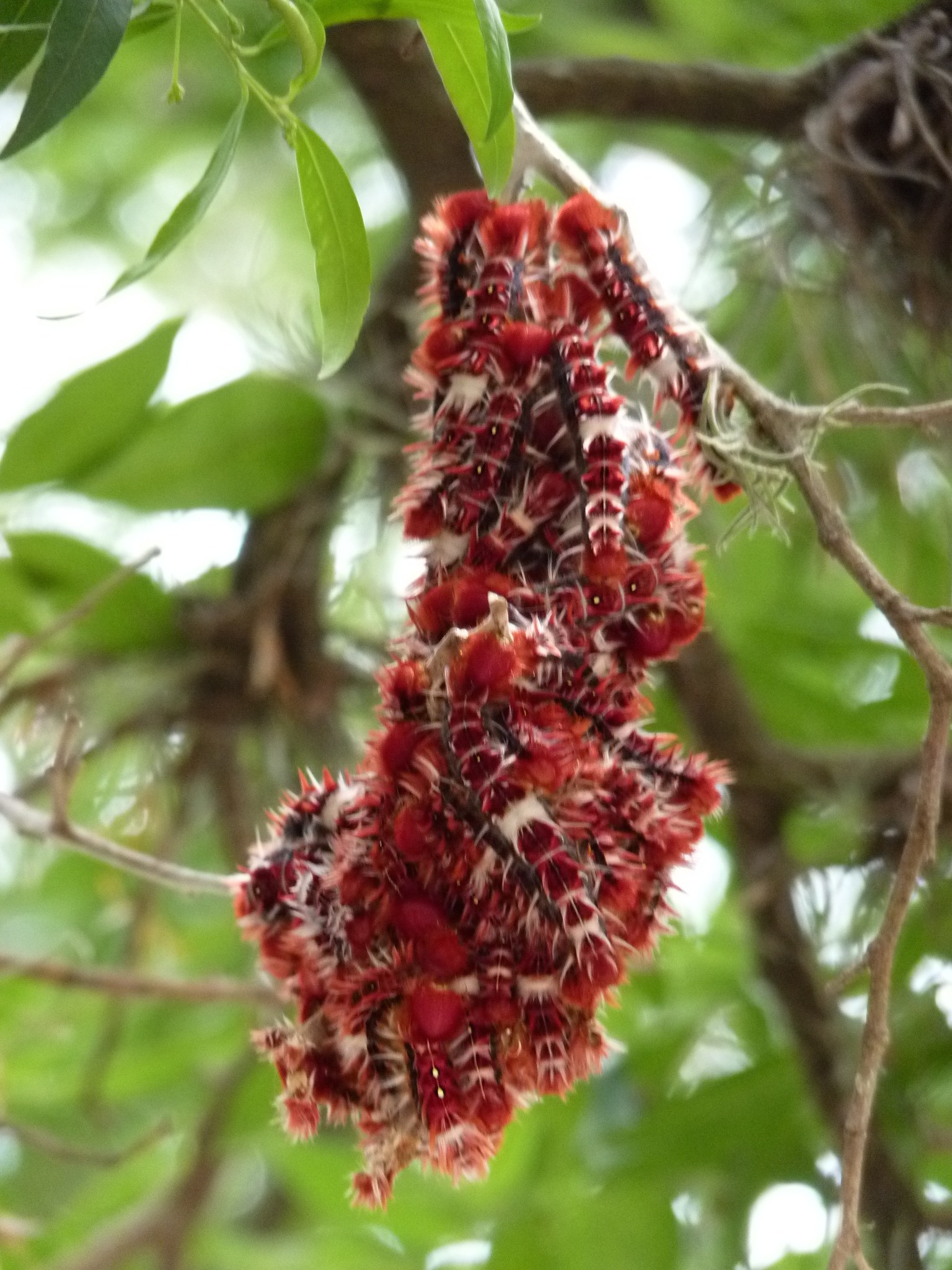
I came across this “flower” while walking in the beach by the river Plate.

cat tree

On closer inspection the real “flower” was revealed!

cat 3

caterpillars 1

They were in fact hairy caterpillars aggregated together in a bunch!

I will find out more about them and let you know.


Note: The caterpillars are Morpho epistrophus, a rather beautiful butterfly!

See:

http://netnature.wordpress.com/2014/02/12/ecologia-de-borboletas-morpho/

http://en.wikipedia.org/wiki/Morpho_epistrophus

https://www.flickr.com/photos/grandma-shirley/6703808411/


Yet they were Royal*

They were forced to jump through rings of fire, to walk across thin wood bridges, to sit on two paws and to run in small circles. They didn’t want to, but they did. They had to survive. So they abode to the rules of their masters and ran in circles, sat on two paws and jumped when they were ordered to.

They lived in perfect misery. Their food was thrown on the floor, where it mixed with their faeces. Drinking water was very often filthy and their manes were knotted, for they were so dirty. A miserable life.

Yet, they were royals, enslaved yes, but still kings and queens.

They were lions kept in captivity in seven or eight circuses working in rural Bolivia, mainly in the tropical lowlands, where the climate is warm and humid. Some of them had been captured in Africa when they were still young, then sold to many owners and eventually found themselves in South America. Others were born in circuses and small zoos but were still of royal blood.

The circuses presented the lions in small towns where laws and regulations could be ignored easily.

In 2009 Animal Defenders International (ADI) surveyed the use of animals in the entertainment industry in Bolivia and found a surprisingly large number of circuses owning a great variety of animals. That finding led the Government to pass a law banning the use of live animals for human entertainment. In 2010, ADI decided to rescue the animals held by circuses. A “covert” operation was then developed with the ultimate aim of rescuing the animals. ADI staff, disguised as clowns, jugglers and cleaning workers infiltrated the circuses to glean the exact number and species of animals kept, and to get photographic evidence.

The ADI, supported by the Government body in charge of biodiversity conservation -the Dirección General de Biodiversidad (DGB)- seized animals from more than seven circuses; the lions were confined in cages. All were in bad condition; they were undernourished, weak, covered by wounds and scars and suffered various diseases. One of them even had deformed bones as a result of chronic malnutrition. Another one had become so aggressive that he lunged against the bars of the cage every time a person approached it. A female that gave birth to three cubs had barely enough milk for all. One was almost unable to endure the trip to Santa Cruz due to its condition. While some owners decided to accept the laws and cede the animals, others refused and resisted. One threatened to stab the ADI and DGB staff.

Following the request of the ADI and DGB, some local workshops built new cages to transport the animals to a temporary refuge. The Bolivian blacksmiths did well on this novel work.

Circus by circus the ADI and DGB seized the lions, sometimes confiscating the cages, others compensating the owners. The lions were transferred to the newly built cages. For some towns, the seizing operations were the most exciting event had happened in many years. In some towns, children gathered for an impromptu farewell. All in all, the ADI and DGB seized 25 lions.

A “lion den” to hold them was organized in Santa Cruz to keep them until their condition improved. The lions travelled more than 800 miles by land, on difficult and dangerous roads to get to their destination. Transportation was carried out with the utmost care, as having an accident with a cargo of lions on winding roads that brush the edge of deep cliffs would have been unwelcome. When the lions came under ADI’s protection, they were dewormed, and given proper food, vitamins, clean water and more space. They were also given good bedding and places to rest but, most important of all, the shows were over. No more jumping, crawling, running and sitting on two paws at their tamer’s orders.

While this was happening, a large, permanent refuge was being built in Denver, Colorado. The lions would go from summer in the tropics to winter in the North. Special lodges had to be built to help the animals grow accustomed to the hostile winter.

Finally, the lions were transferred to cages appropriate for plane travel. The ADI team ensured that while every animal was in one cage, families could be together, animals could see each other and mothers would travel with their cubs. An old DC-130, a veteran from the Viet-Nam war, took off from Santa Cruz and arrived twelve hours later in Denver. There, the ADI team and a number of supporters–including the renowned TV conductor Bob Barker and the CSI star, Jorja Fox, were awaiting their arrival.

The lions were set free in what is now their permanent refuge. They have formed families. Most have recovered from their injuries and illnesses. Far, very far from Africa, they are finally free from the circus and the tamers. They cannot be reintegrated into the wilderness, for they lack the hunting and surviving abilities a lion must have, nor they will be allowed to reproduce, since the population would increase, posing a further problem. However, they will live a much better life.

I wonder if those lions, when the sunset comes, remember their African savannas. Maybe they do, and in their dreams they see themselves hunting, fighting, killing and dying as the royals they once were. After all, they still have blue blood.

Gonzalo Flores (don.gonchi@gmail.com)


This story was told in a film titled “Lion Ark”, directed by Tim Phillips. It was awarded seven awards, including the Mississippi Film Festival’s Best Documentary and the San Diego Film Festival’s Audience Choice Best Documentary. 

Skin Disease

End of October is the height of the dry season in Mana Pools. The place really looks like a brown dust bowl the exception being those trees that, anticipating the arrival of the new rains, flower now to be ready to drop their seeds with the onset of the rains presenting the landscape with some colourful blotches.

Very few Apple Ring Acacia still had pods and the experienced elephants that knew the reward of a few strong shakes applied to the trunk, were using this technique and relishing the fruit of the “podfall” they produced!

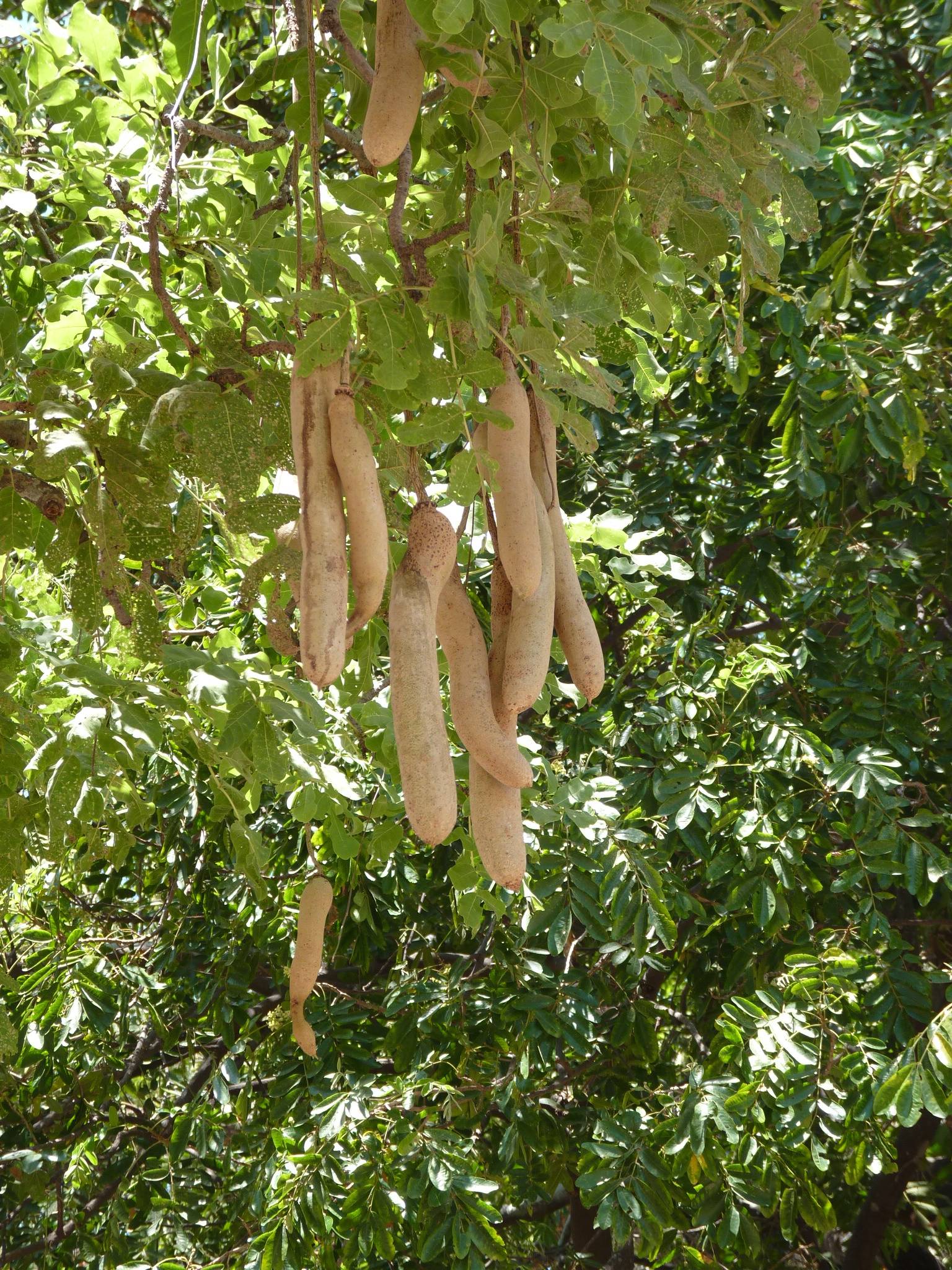
The scarcity of the Acacia pods is now compensated by the abundance of sausages of the Sausage Trees, now quite grown although probably not so palatable. As a consequence of the general absence of food on the plains, the animals in general and the elephants in particular were seen mainly on the margins of the Zambezi River, feeding on aquatic plants. The Zambezi banks were dotted with elephants and many were feeding and bathing below the banks of the campsite.

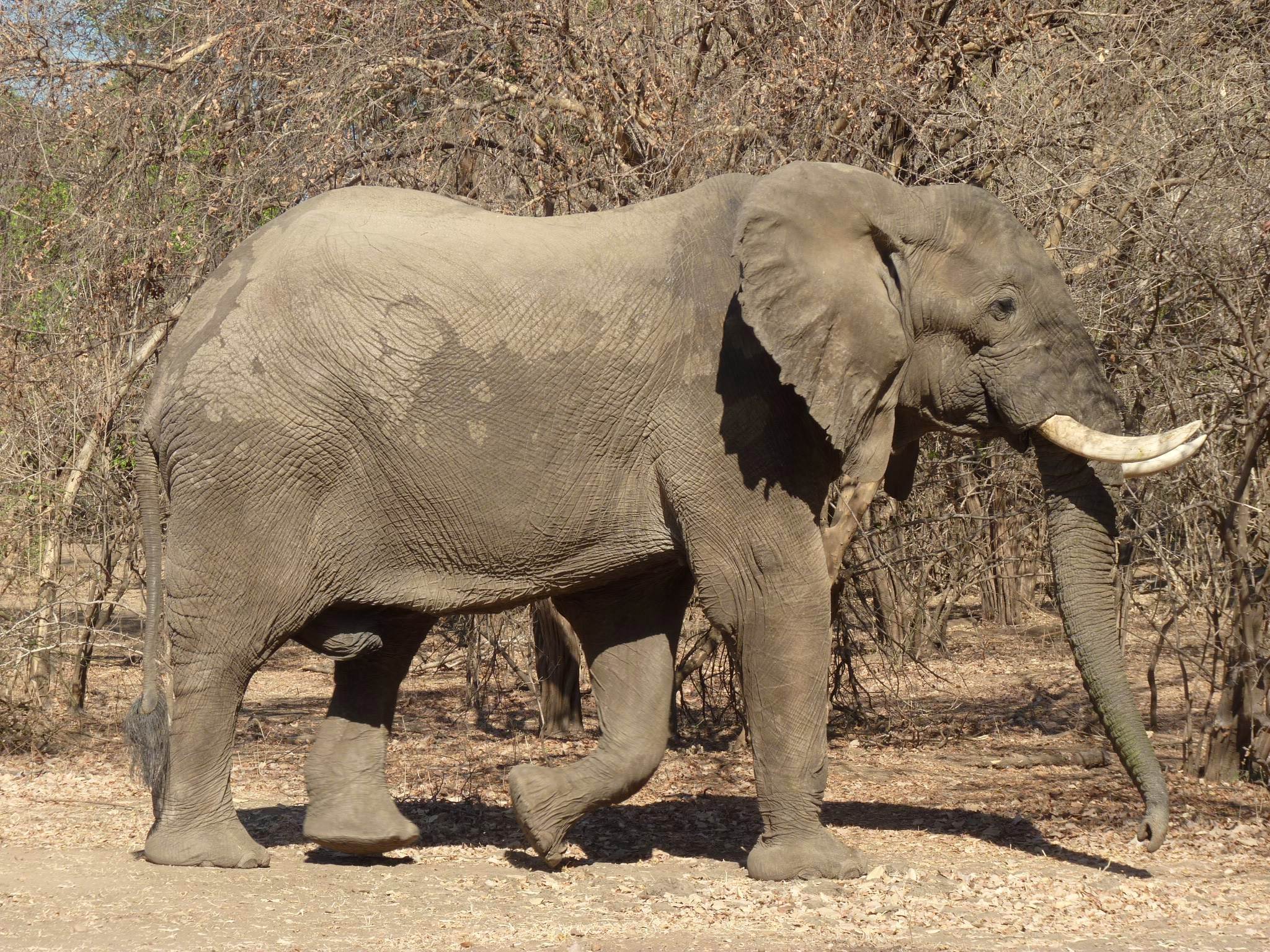
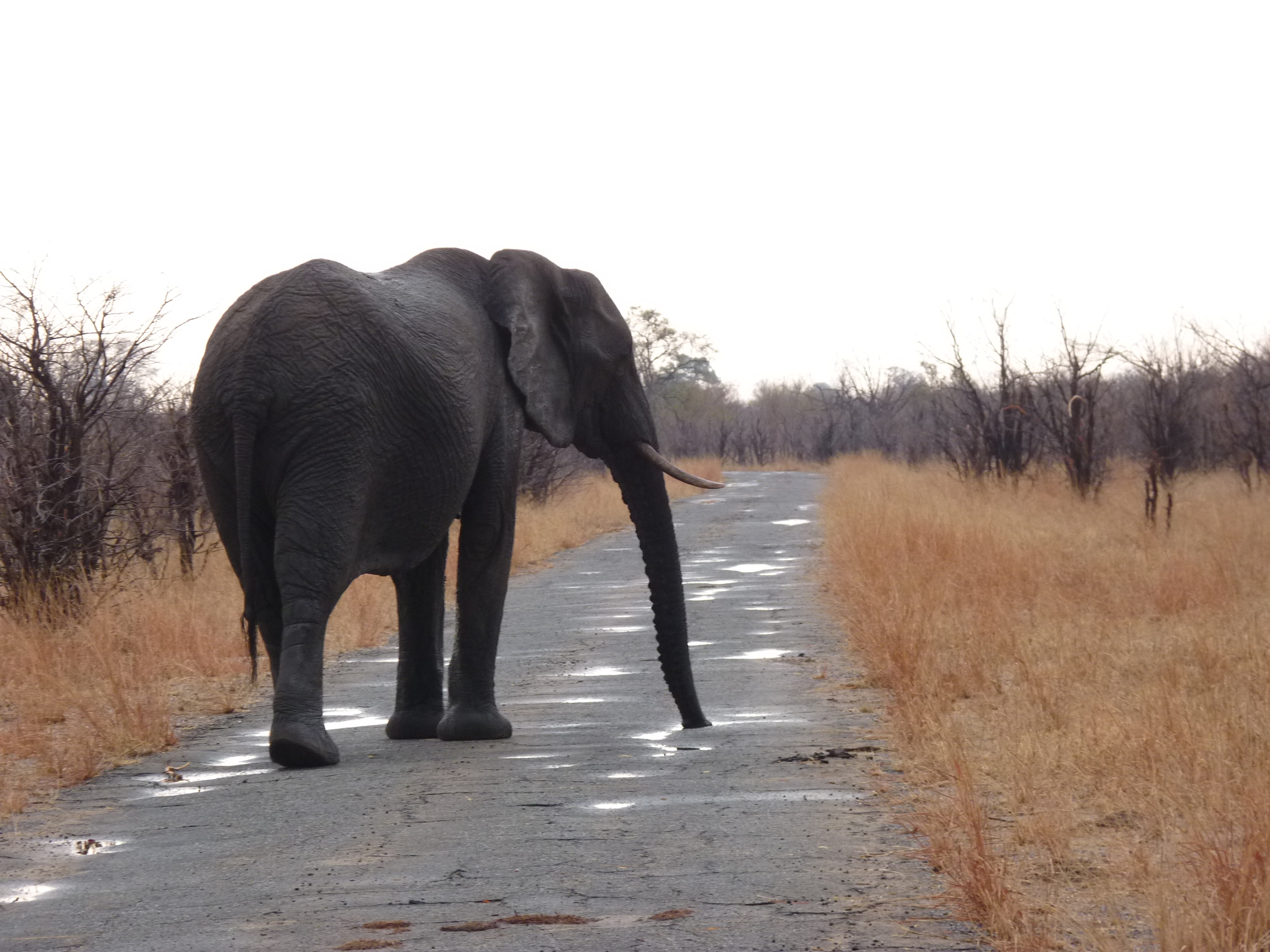
Despite this, although harder to find, some elephants were still inland. We met one of them, a rather large animal with good ivory for Mana Pools. It happened to be using the same road as us and coming in the opposite direction! As we all know, elephants have the right of way! It was a rather large and beautiful bull with good tuskers for Mana Pools.

Mana tusker small

The Tusker coming…

It had a relaxed but sure gait, I imagine that this is the attitude of someone with no threats. He clearly saw us before we did and did not define us as a worthwhile threat so it continued walking as if we did not exist.

We parked politely in the bush by the side of the narrow road, stopped the engine and watched this magnificent animal. It passed very close to us and in so doing we could appreciate its size as well as take some photographs of it.

While on our side we observed, with some preoccupation, that it had a rather large area of its skin at the back and flanks covered with skin blotches that look like some kind of fungal infection. Elephant skin is thick and tough, reaching almost 3 cm on it s back. Additionally, the elephant uses mud and dust to further protect its skin, as it is a very sensitive organ.

Mana tusker skin disease

The suspected skin problem is seen as paler areas on its ears, back, sides and upper hind leg.

Although we had observed this condition before, this is the most extended that we had seen so far. Hopefully the mud baths will help this animal to control it.

Dagga Boy*

buff and cigar 1

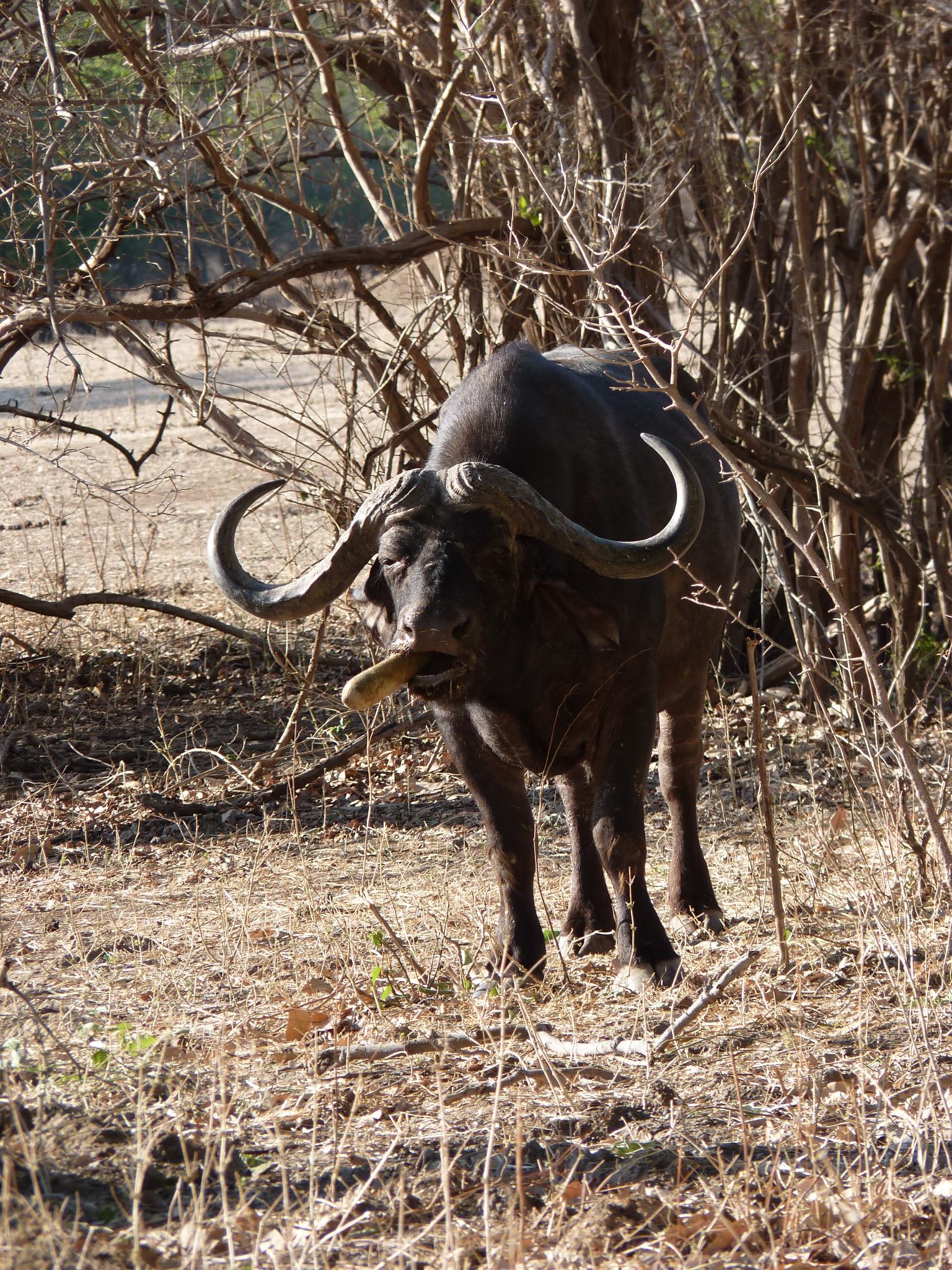
We came across this lone male Buffalo (Syncerus caffer) who seemed to be about to light a large cigar!

buff and sausage

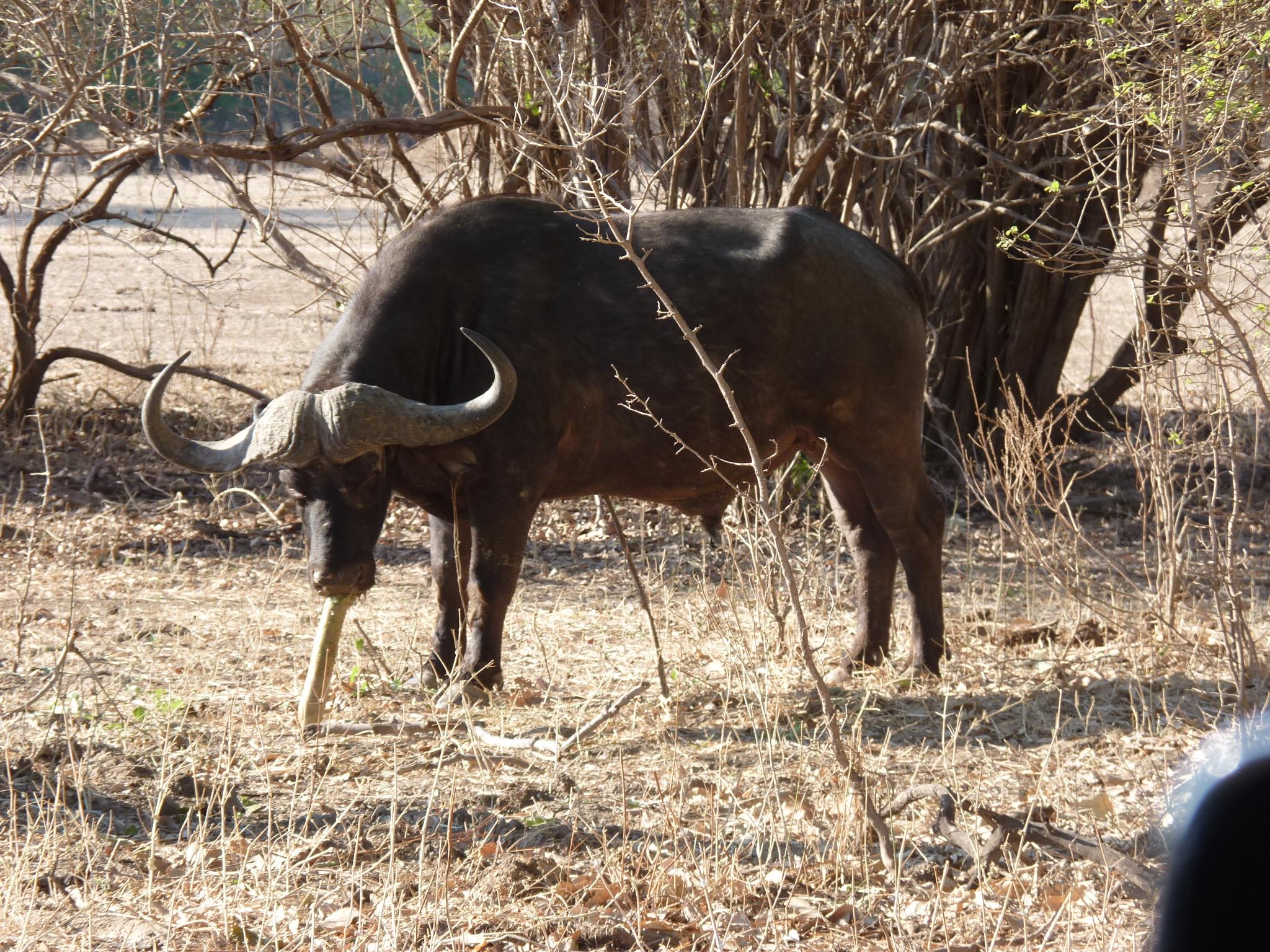
It was in fact working its way through a sausage, the fruit of the aptly named Sausage tree (Kigelia africana). This tree provides game with food during the dry season at Mana Pools National Park.

sausages

The sausages.

buff and sausage 2

Almost done!

Our first encounter with buffalo while camping at Nyamepi Camp site was worrying: four large male buffalo were between the toilets and us! We held our needs in check for as long as we could but the buffalo would not budge so we braved the trip! We need not have worried as they ignored us completely as we walked past. They were totally focused on devouring the flowers of the Sausage tree that they also relish.


* I tried to be clever here! A “Dagga Boy” is an old Buffalo bull that have been kicked out of the herd and spends all day wallowing in mud. “Dagga” means mud in Zulu. In addition, “Dagga” also means Cannabis, hence the play with words.

Shy Beast shown

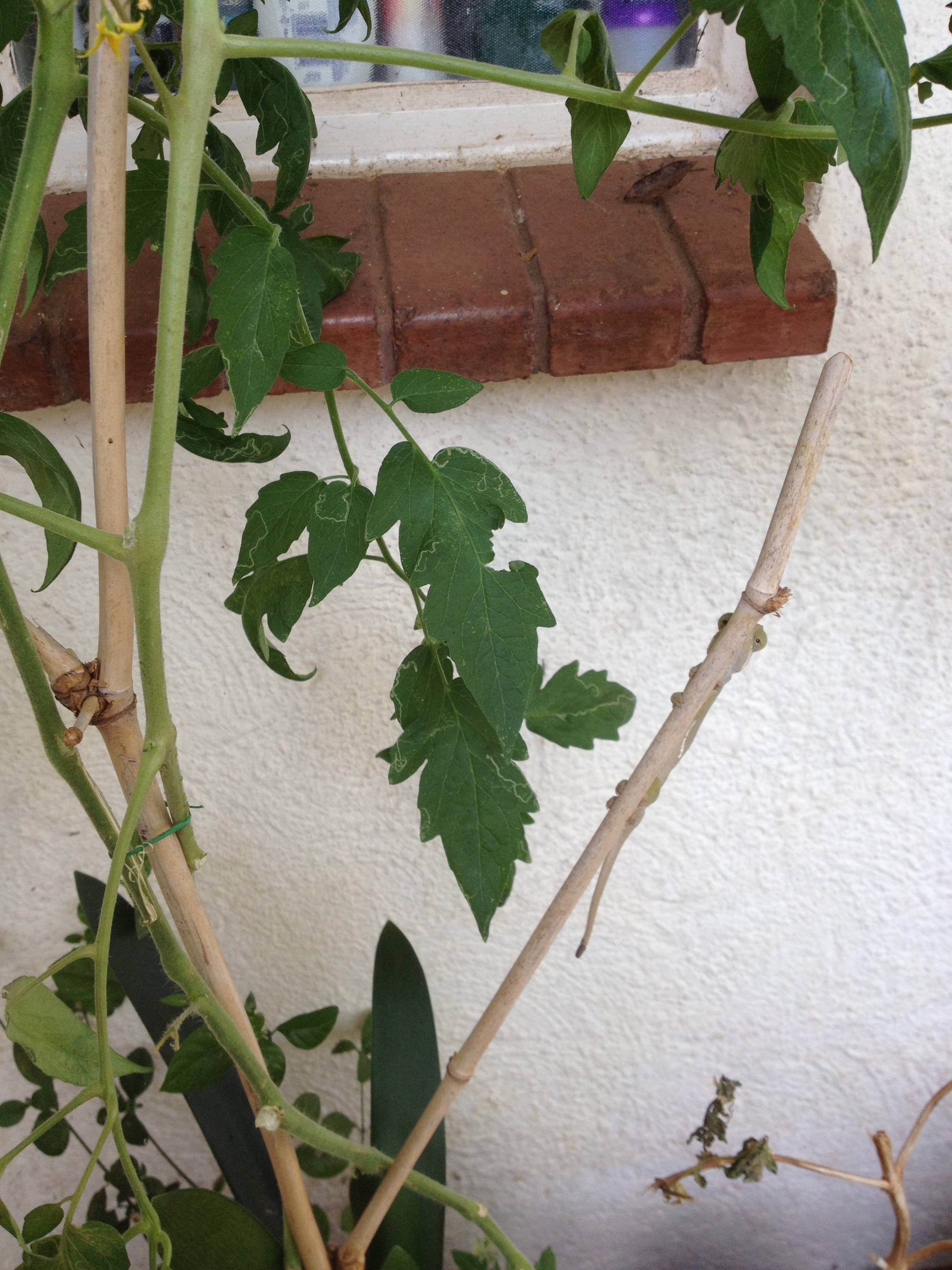
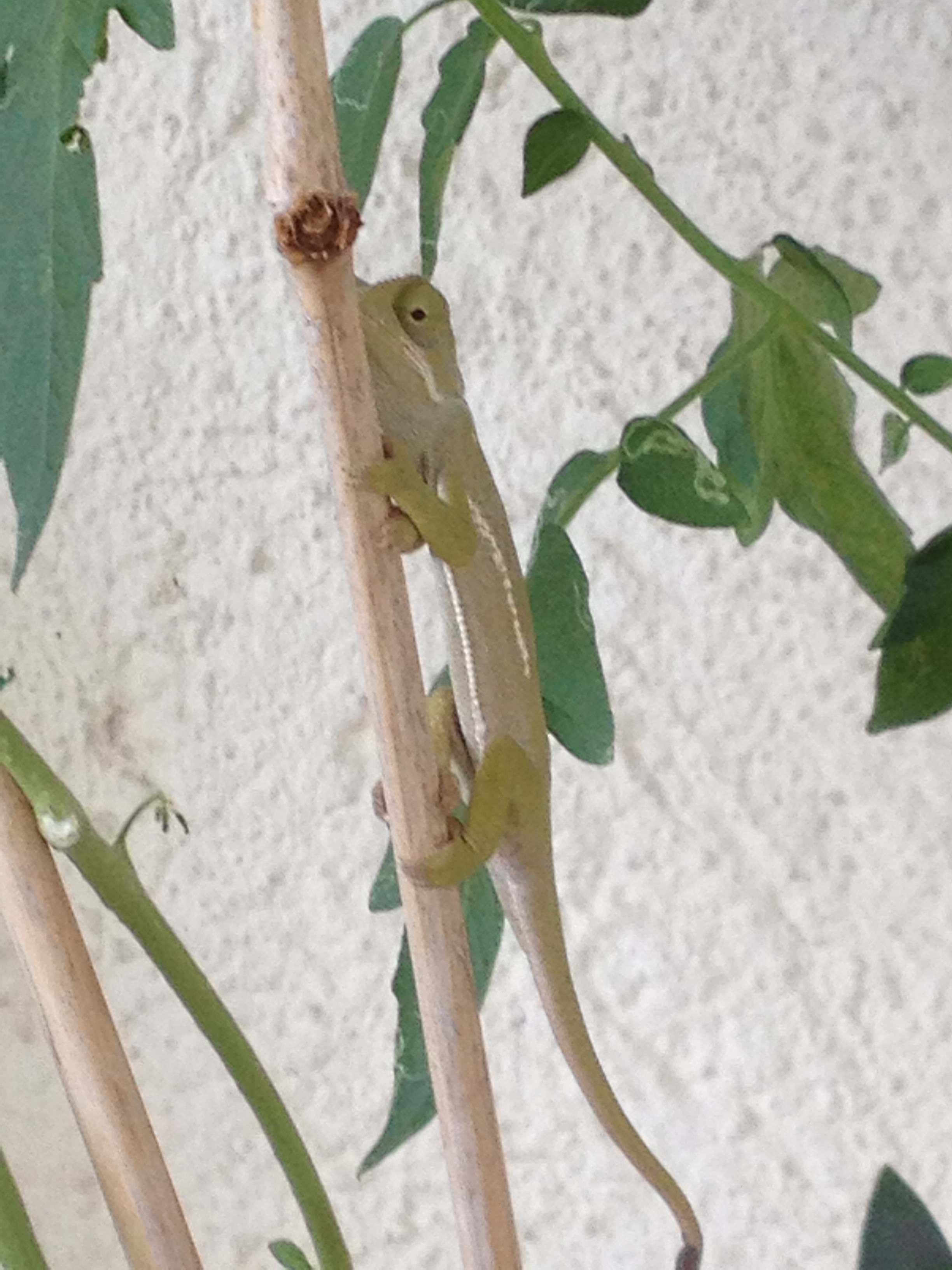
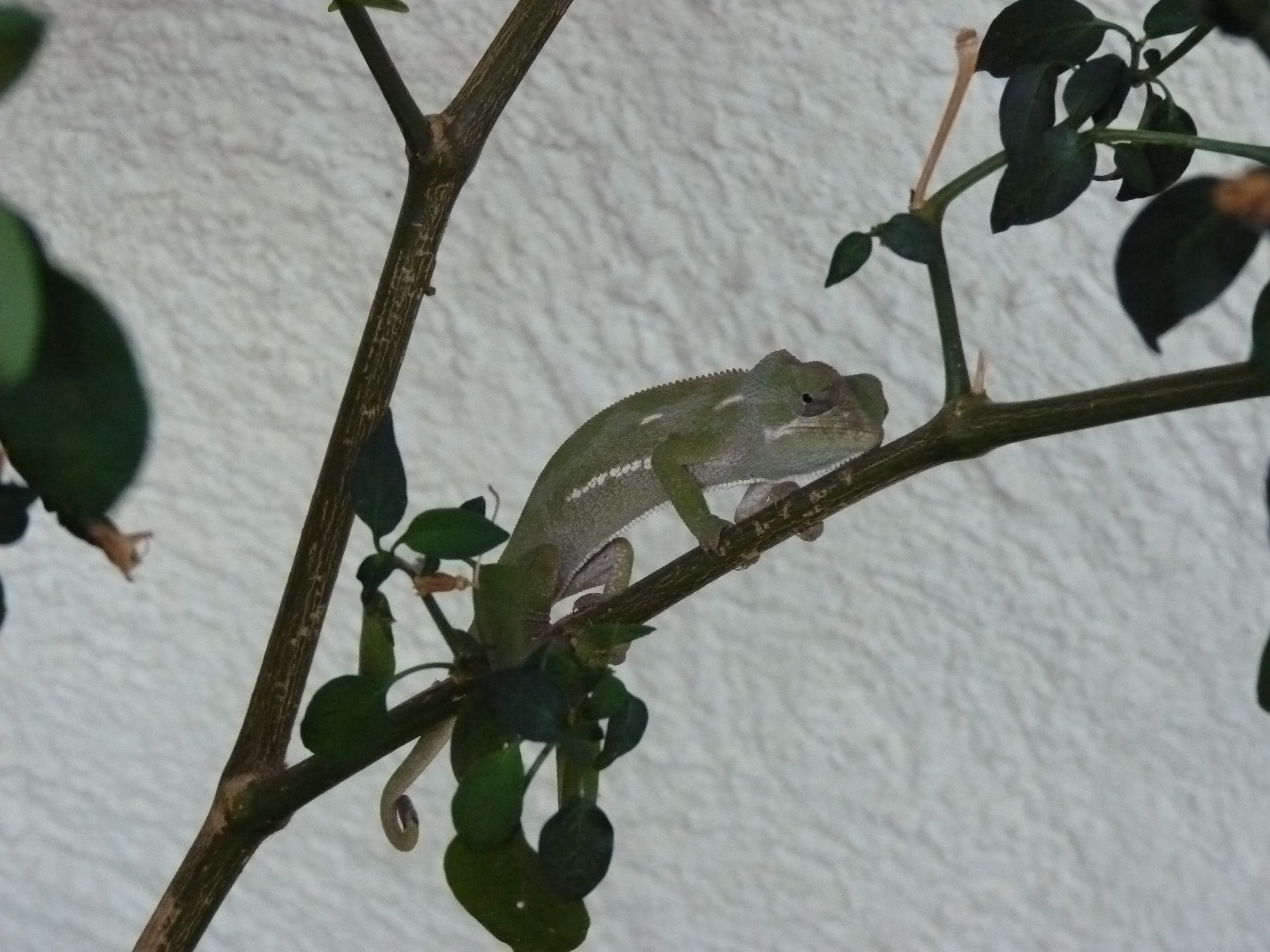
I interrupted -for one day- my flow of Posts on Hwange and Mana Pools National Parks as I found this chameleon in the garden. When I tried to photograph it, it would hide behind the stick. Finally I managed to get some takes that show that it was indeed a chameleon!

The pictures are not “brilliant” but I did not want to disturb it.

I resume the other Posts from tomorrow.

The Bushsnob

chamaleon 3

chameleon 2

chameleon 5

Not rain but hail!

Elephants at w:hole prior to rain

Elephants drinking before the storm.

It was mid afternoon on the second day and we decided to visit a nearby pan where we had seen elephants with rather large tusks on our way into Shumba camp in the hopes of finding them again. It was very windy and the sky looked grey but we attributed it to the bush fires that prevail at this time of the year. “Too early to rain” I said but my wife was not convinced. “To me that looks like rain”, she said as we made our way to the pan.

There were a few elephants drinking but no large tuskers to be seen . While watching the animals, the wind picked up and we heard thunder. Clearly, the grey sky was indeed a storm in the making and I was wrong again! Soon, heavy raindrops started to fall. The elephants’ response was to rapidly move off from the water into the nearby bush, with the exception of a couple of bulls that had just arrived for whom the need for water overrode the need to seek shelter from the storm.

low visibility

It was a storm!

Raindrops turned into hail that, after two to three minutes, changed again into water in the form of a heavy downpour which was also short-lived. The two elephants put up with the inclement weather and continued to drink while the chickpea-sized stones bounced off their backs! What a relief from the heat and dust! In addition it released a wonderful wet earth smell that prompted us to open our car windows and enjoy the wetness of what, a few minutes earlier, was scorched earth!

elephants start to hail

elephants under hail

The two bulls drank despite the inclement weather!

Once their thirst was quenched, the elephants moved off. We tailed them as they took to the road that headed for our camp. One went into the bush and started to feed, while the other continued to walk ahead of us, stopping every few metres to drink from the rain puddles that had formed on the tarmac. It was funny to see how it would effortlessly suck them dry! Clearly it could not resist fresh rainwater!

drinking from the puddles

Enjoying fresh rainwater.

We were still behind the elephant when we saw one rock on the road and farther on another one. The elephant carefully avoided them. The rocks turned out to be Leopard Tortoises coming out of their heatproof refuges to enjoy a dunk and a drink, probably their first since early last year! Watching these animals enjoy the rainwater served as a reminder that, in hostile environments, opportunism is the name of the game!

tortoise at puddle

Smiley…

I thought I saw them smiling but it may have been just the shape of their mouths… Well, at least we smiled and hope that the rains will be good this year!

Road Sign

Eye Clinic

This sign, seen in Bulawayo gave us some food for thought! It could be a good picture for a caption competition…

A friend volunteered: “I hope the Doctor is not long-sighted”.

I leave the rest to your imagination with restrain, please.

BS

Watched at Shumba

In Hwange National Park you are allowed to camp at picnic sites. The understanding is that you can have the place for yourself from 18:00 to 06:00 hours but other tourists can use the facilities during the day. This is not a real problem, as during that time you are outside the camp game watching. This was the case for us during the six nights we spent at the camp from the 11th to the 17th of October 2014.

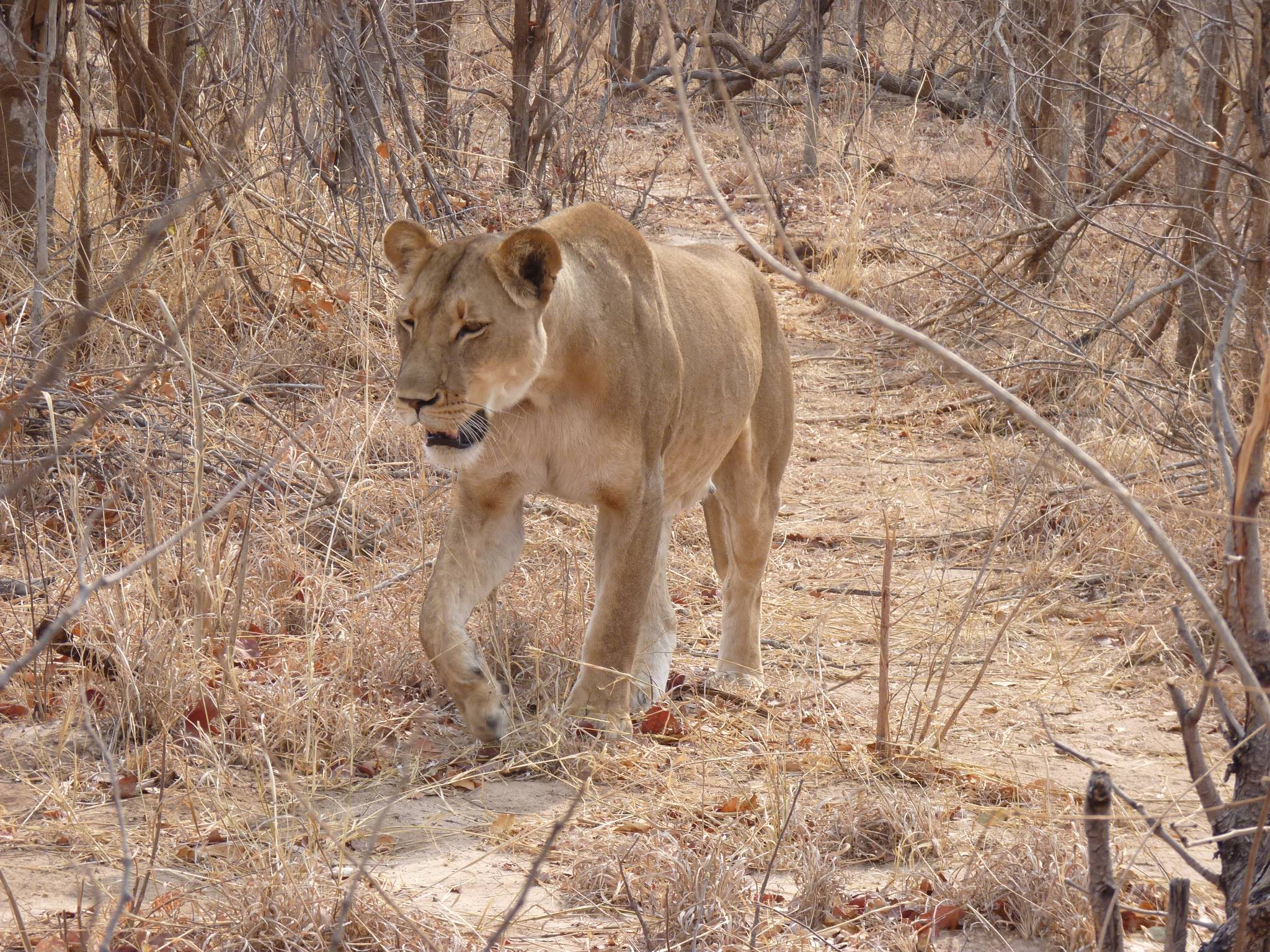
Things started off well! On arrival and about one km from Shumba, we met two lionesses moving through the bush clearly intent on their goal, as they did not even look at us. We watched them for a few minutes before they disappeared. It was a fitting start to our stay at a camp aptly named Shumba (Lion in the Shona language).
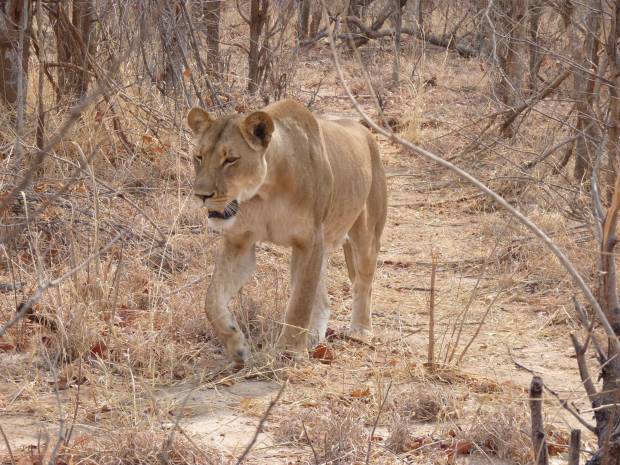
lioness small

One of the lionesses spotted near the camp. Note how dry it is!

We had chosen Shumba Picnic site after scouting a number of potential sites during our visit to Hwange last year. It is about half way between Main and Robbins Camps and somewhat removed from the main tourist area and it also had its own dam with permanent water. It was also shady, had good facilities and a Picnic Attendant looking after the place. The constant pump engine noise (located too close to the site) was particularly bad, especially when the wind blew from its direction towards us. However, the availability of water close to the camp attracts many animals and offsets this annoyance. Among the animals seen were elephants, buffalos and zebra, with some elephants browsing very close to us on a daily basis. There is a small viewing platform at the dam from where animals can be watched in relative comfort and safety.

Shumba dam

Shumba viewing platform.

On arrival, through the Picnic attendants, we learnt that the colony of Dwarf mongooses (Helogale parvula) that used to live in the trunk of the large fig tree (Ficus spp.) for a few years had moved away to another burrow nearby, outside the camp. This was disappointing, as I had come prepared for pictures of mongoose life at close quarters!
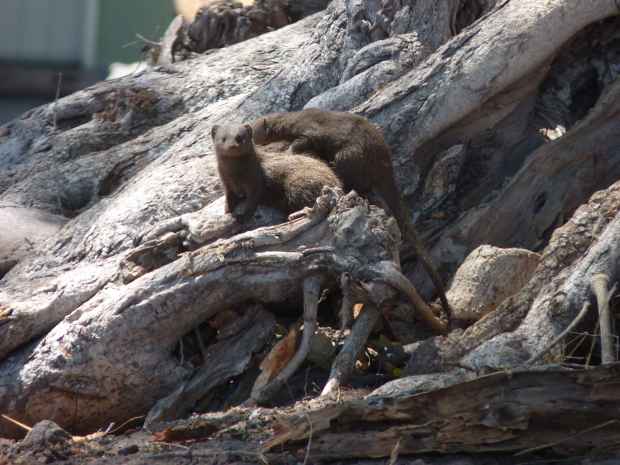
mongooses small 2013

The Dwarf Mongooses seen in 2013.

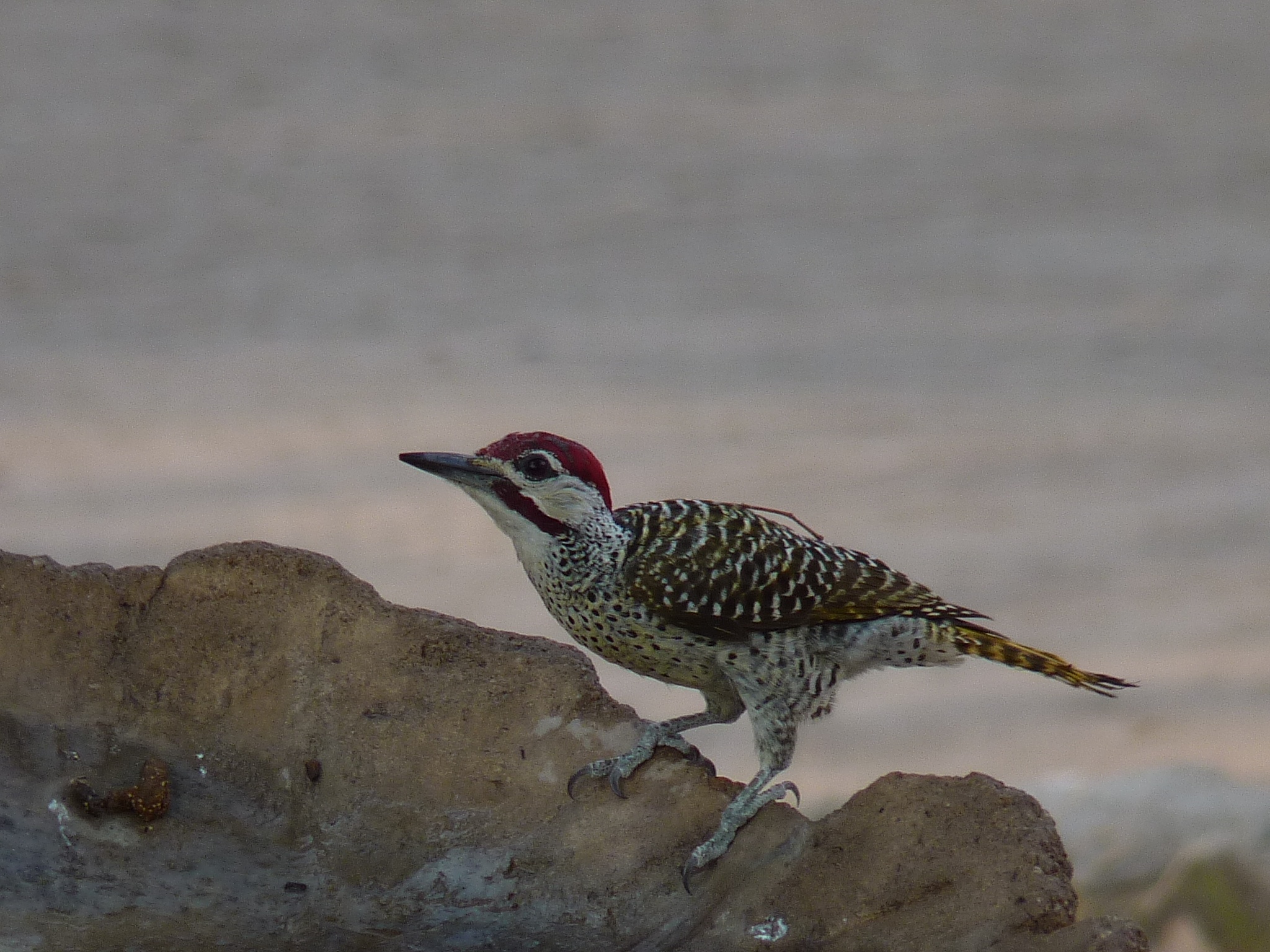
The area was extremely dry and the moment we filled the birdbaths, lots of visitors started to come, making me forget about the Mongoose’s absence. Apart from the ubiquitous starlings and hornbills we had a small flock of Southern Pied Babblers (Turdoides bicolor), a rare bird -near endemic- that I saw for the first time. We also saw Redheaded Weavers (Anaplectes rubriceps) and what I believe to be a Bennet’s Woodpecker (Campethera bennettii), all drinking from the birdbaths.

babbler small

Southern Pied Babbler.

weaver small

Redheaded Weaver (an unidentified Starling on the left)
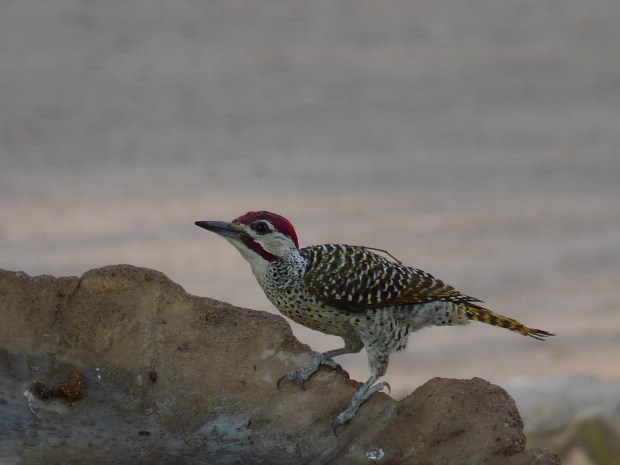
woodpecker small

Bennet’s Woodpecker

We set up our camp under a large African Ebony tree or Jackalberry (Diospyros mespiliformis), aware that the fence that at some stage protected the campers at the site was no more and all that remained were a few broken wires and posts. However, camping in the open was not new to us, as we did not have fences in Kenya! Apart from the fig and ebony trees, the camp also has Russet Bushwillows (Combretum hereroense) and a couple of Rain Trees (scientific name unknown)[1].

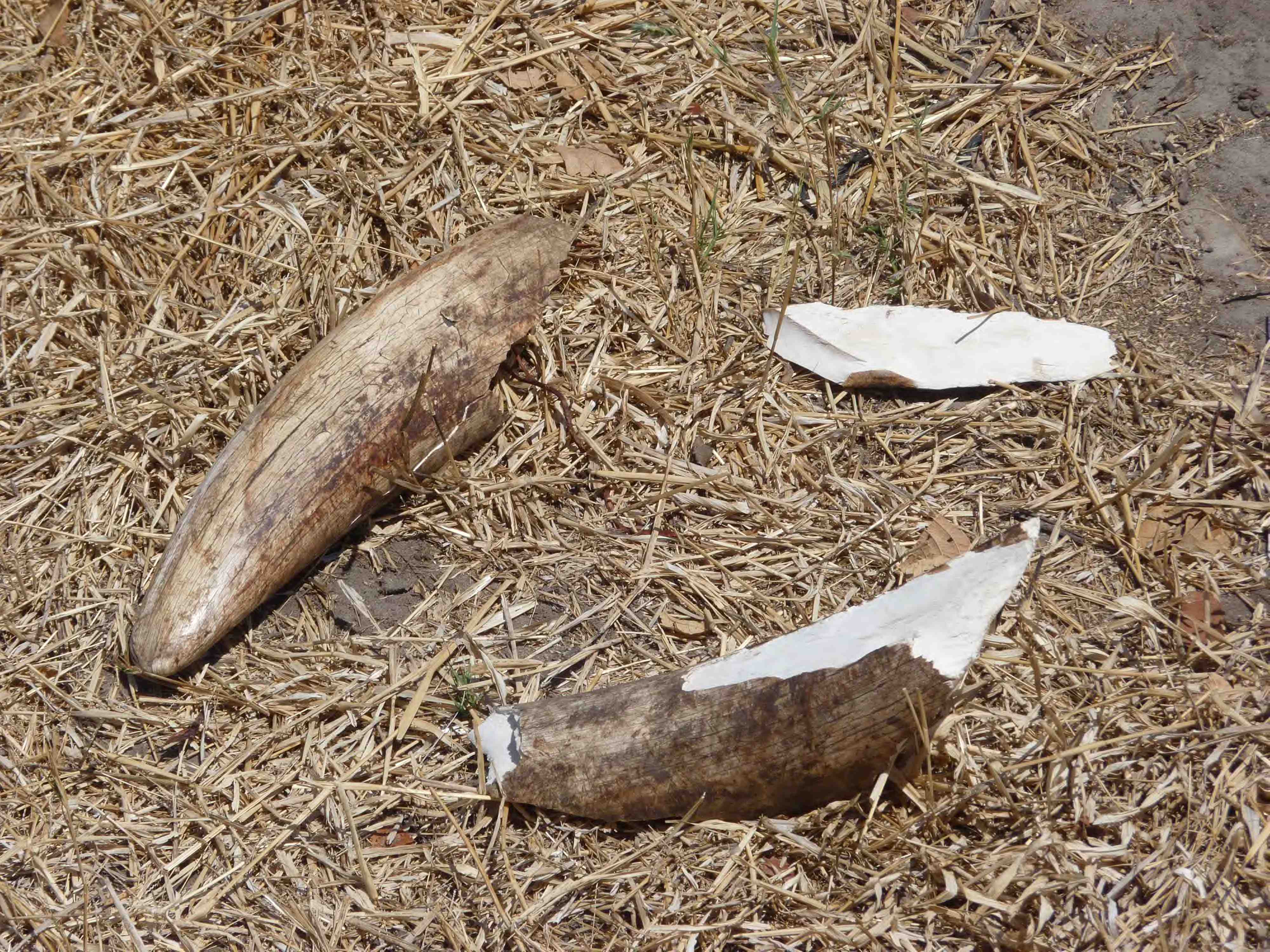
Although the dam at Shumba is almost your “private” dam, the flow of animals takes place mainly after dark, when mainly elephants come to drink. While this makes the nights entertaining from the “bush sounds” point of view, it is not easy to see the animals. believe me when I say that there was a lot of noise as elephant families and lone bulls interacted. Occasionally, elephants would be seen chasing each other and we suspect that some fighting also went on. We have seen evidence of clashes on our earlier visit in the form of chunks of ivory seen by the dam.
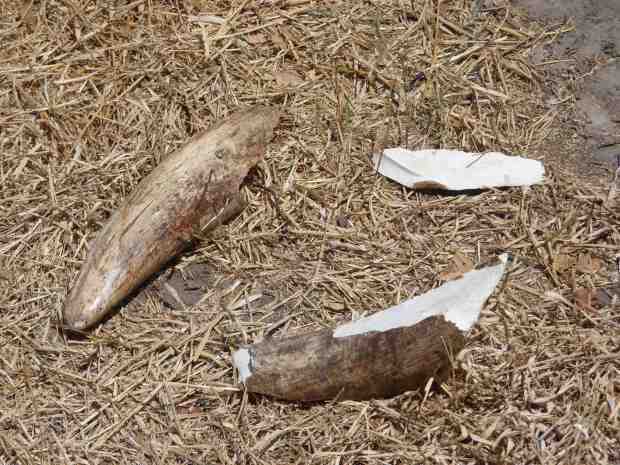
broken tusks at Shumba copy

Broken tusks photographed at Shumba in 2013.

For this reason, although we passed by “our” dam at every opportunity, our game searching forays took us to other dams such as Masuma, Deteema and Mandavu where animals can be seen during the day in larger numbers. The latter, a large dam, had a bush luxury if you wish to keep in touch with your offspring: a spot with cellphone signal! It was not under the Jackalberry tree as it is in Sirheni Bush Camp in Kruger National Park but exactly between the metal poles of a gate at the the picnic site!
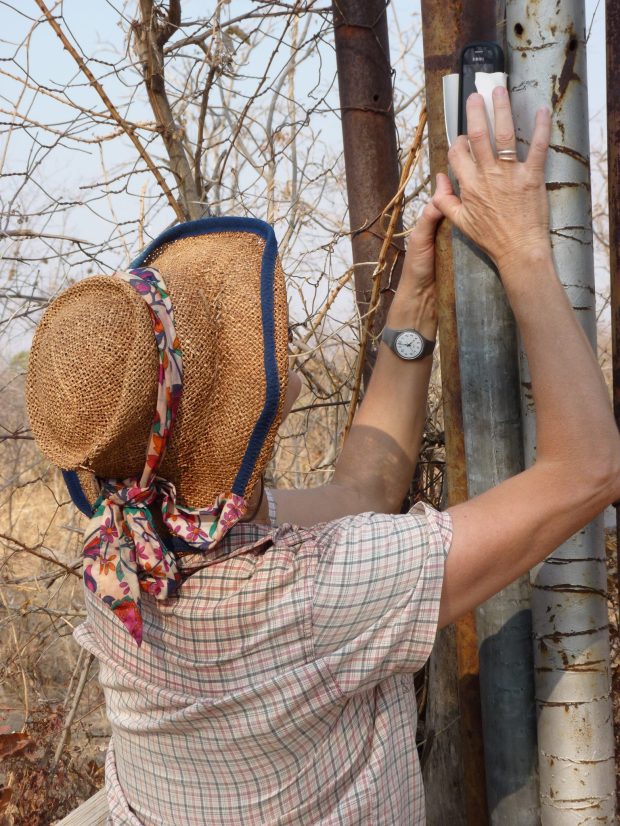
Cell signal Mandavu

The telephone signal is found at a very precise spot, marked by a holder made of a plastic bottle!

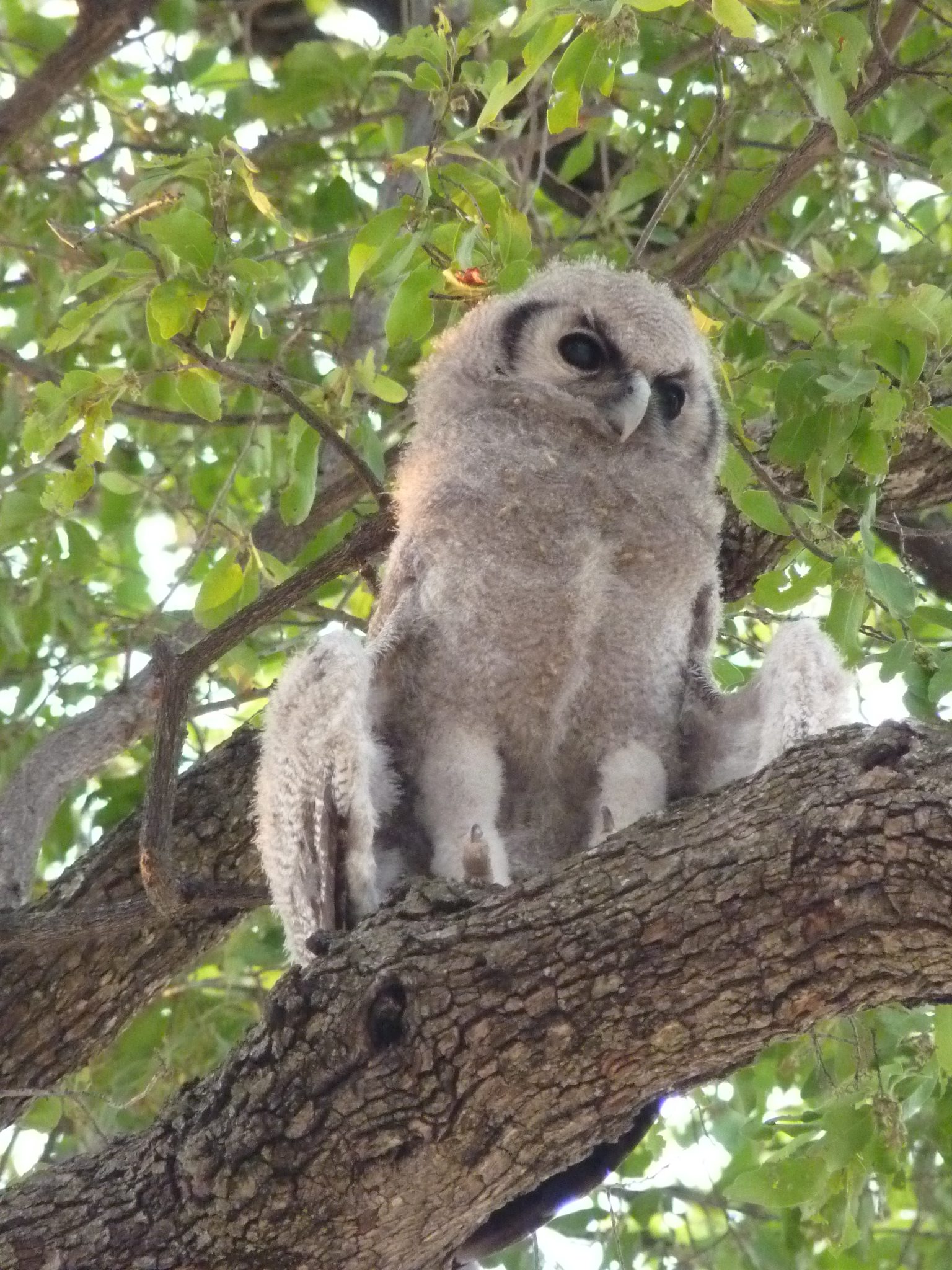
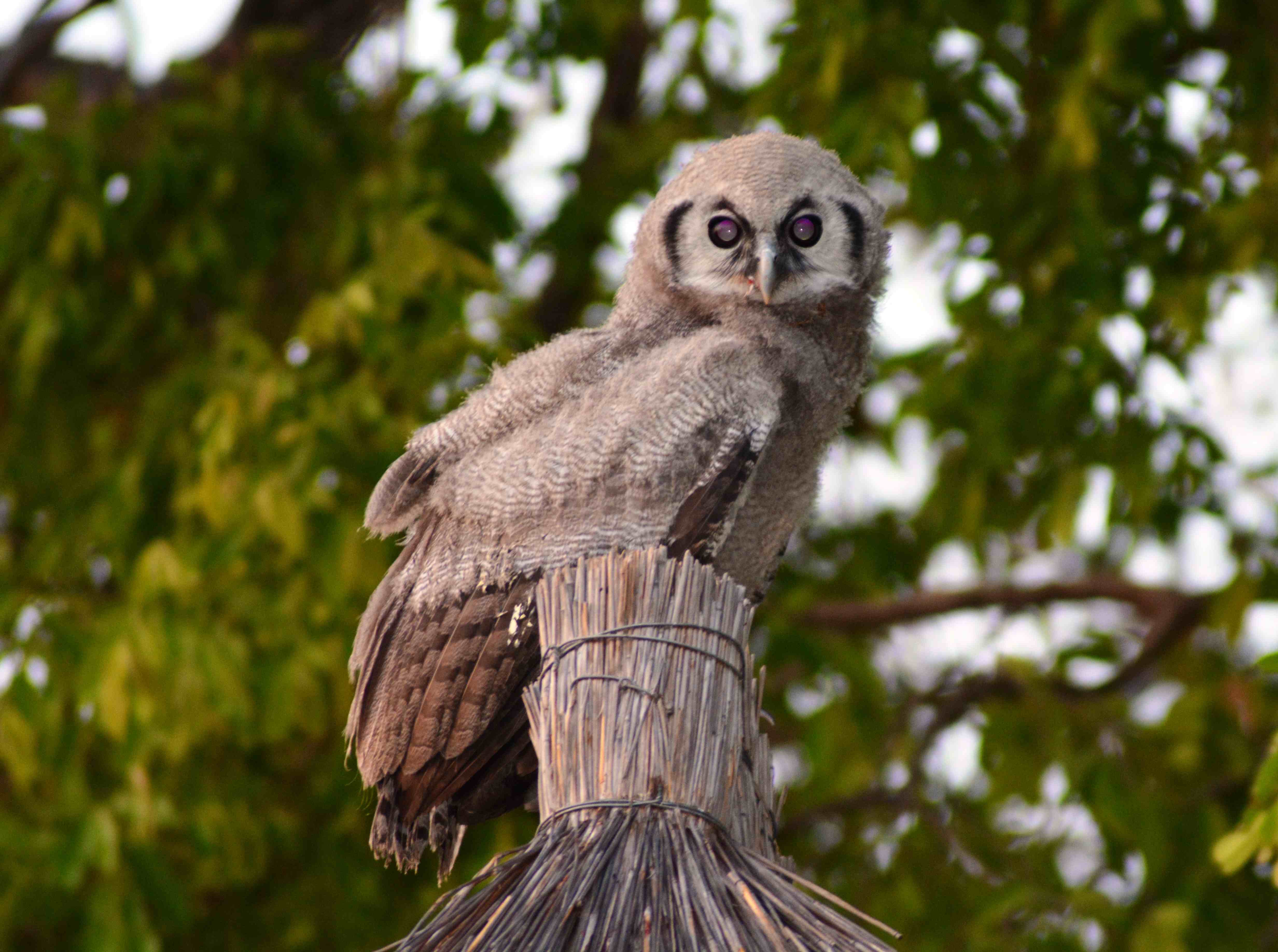
The first evening at Shumba my wife heard a whistle coming from the trees when going towards the kitchen. Subsequent search revealed a large owl perched on a high branch. As we did not wish to blind it with our torches, we refrained -with some difficulty- from trying to identify it further that night. Early the following morning the search for the owl took place and it was found! It was an immature Verreaux or Giant Eagle Owl (Bubo lacteus) that was clearly too young to fly and still confined to the trees in our camp. It was watching us!

enlarged first view small

Our first sight of the owlet.

Although it was already sizeable it still had lots of juvenile soft feathers. In marked contrast, its wings were already very large compared with its body and looked completely feathered by now. It did not move much and when it did, it walked and jumped between various branches or flew very short distances. It did not remain in the same place every day either and showed great interest in what we were doing. Taking good pictures of it was difficult as it was usually high up in the trees and against the light.
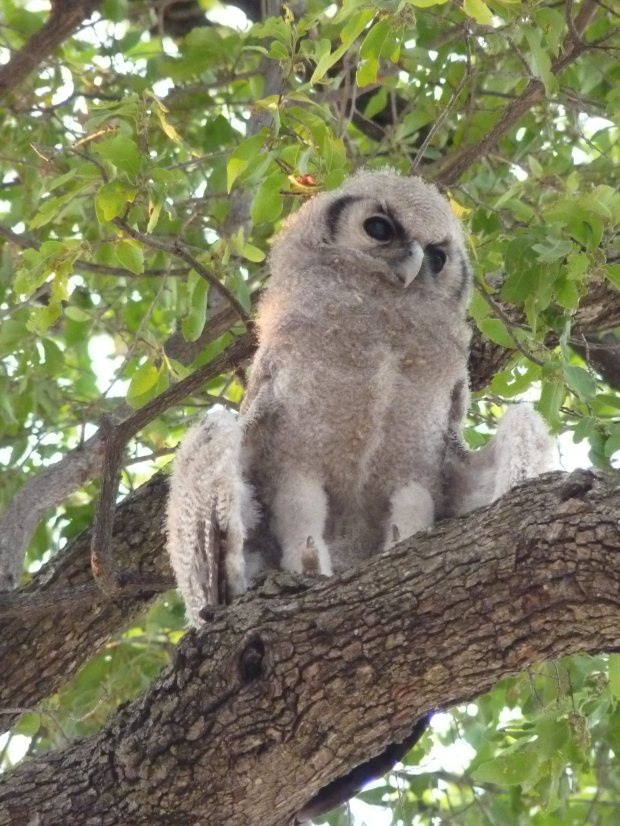
owl with wings low small

The youngster was seen to lower its wings. Was it for heat dissipation or to rest them?

The bird was there for the duration of our stay and it would be quiet mostly, whistling on occasion. We did not see it coming down to drink from the birdbaths or show any interest in the other birds. Said birds were not seen mobbing the youngster either.

owl on roof tom small

Perched on top of the kitchen (Photo by Tom Milliken)

Upon further reading I learnt that the female owl lays two eggs and the first one hatching is the one surviving when food is not enough for two owlets. The new birds leave the nests at about two months of age and can fly two weeks after this. They remain rather inactive for three months after that and only start getting their own food after that time, at about five months of age. Probably the owlet we saw was still within the three months of “low profile”.
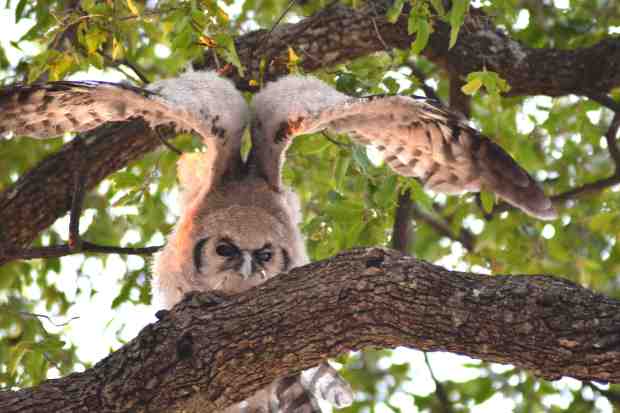
wings open tom small

Flexing its rather oversized wings! (Photo by Tom Milliken)

The third morning I woke up earlier than normal, at about 0545 hs, and heard deep grunts like “hru, hru-hru-hru, hru, hru-hru” emitted continuously[2]. Thinking that the young owl was calling I went out of the tent to see what was happening and saw an adult owl that soon flew off. I followed it outside the camp but lost it as it flew off. The parents were keeping an eye on our youngster! Later on we found a dead mole rat under a tree, a sign that the adult had brought food to the youngster! The mole rat was not eaten though.

Friends came to stay with us on the fourth day after travelling from Harare to Shumba in one day! They arrived in late afternoon and rather tired so we helped them setting up their tent. This was easy as it is very easy to set it up. However, my sigh of relief was premature when the inflatable mattresses were produced. I felt obliged to offer my help with the hand pump. Hard work followed until; eventually they were had the required pressure. That completed, we spent the rest of the evening chatting and had an early dinner.

Once in our tent, we noticed some night moves in the adjacent tent and some talking as well but we refrained from asking anything until the following morning as things calmed down after a while. Apparently one of the mattresses had suffered from a puncture(s) during an early safari by their children and it had deflated during the night with the result that one of our friends gradually “descended” to floor level and, subsequently, had a literally hard night!

Spotting the young owl perched in a good place for photography made us forget the bad night and improve the spirits. My friend is a good photographer and had just bought a camera with the latest technological advances and took some excellent photographs that he kindly lent to me to illustrate this post. This was despite him not being very familiar with the camera that -as usual with modern gadgets- had a manual the size of the bird book!

scratching by Tom small

A great picture showing its diagnostic pink eyelids. Photo by Tom Milliken.

Two days later, again during early morning, we had another visit by one of the parents that repeated the call described above. It was rather shy and did not stay too long, flying away after a short while. Later on we found what appeared to be a Teal on the ground, based on the plumage of its back. Further identification was difficult, as the head and breast of the bird had been eaten, presumably by the youngster.

By the time we left Shumba a couple of days later, the young owl was starting to fly short distances and at some stage we thought it had gone. However, its whistling gave it away and we found it again, perched above our tent inside the tree’s foliage, probably seeking protection from the heat. We expect that soon the owl will become completely independent from its parents and start its own life. We hope to find its siblings next year!


[1] I do not wish to mislead you to think that I know about trees. Thankfully some forester placed nametags on the tree trunks. Unfortunately the Latin name for the Rain Tree was disfigured.

[2] A good recording can be found at http://www.listentoafrica.com/audio/wildlife-giant-eagle-owl-14092009/



To Hwange!

cropped-rural-buses-overtaking.jpg

There are 430 km from Harare to Bulawayo and 330 km from the there to Hwange National Park. As we had time, we preferred to interrupt our journey at Bulawayo to ensure that we drove safely and experiences less fatigue.

The first part of the journey was uneventful except for several Police roadblocks, speed traps and Toll stations, in addition to the road works that require rather long stoppages as the road is cut in several places. This being said, it is good to see that roads are being maintained.

It was during one of these stops that our attention was drawn to a pick up queuing ahead of us. We could see “things” moving in the open back. At first we took it for some flapping canvas or plastic sheeting, a common occurrence. On second look we realized that there were heads bobbing up and down. The heads’ belonged to a “flock” of red hens being transported to or from a farm!

The pick up’s feathery occupants were clearly bored and bent on having a look around! Look they did and, seeing freedom, they became more agitated and, somehow they managed to loosen the strings that were keeping them tied to the car and once free, it took a very short time before a pioneer gathered its courage and jumped out! The occupants of the pick up were both on their cell phones and did not notice this. It was only when several hens had abandoned the car that the lady occupant -a rather large lady- managed to get out of the car and take in what was happening. There were hens running for freedom in several directions on both sides of the road.

The large lady, clearly not dressed for running after chickens in high heels, a tight dress and large earrings, made a short attempt at getting some back and nearly got run over -together with the hens- by a car coming in the opposite direction! Not keen to begin with, this quickly persuaded her that it was too much work so she quickly gave up the chase, huffing and puffing and proceeded to contemplate the calamity. While this was going on, the driver finished his call and got out of the car to assess the situation. Realizing that it was critical, he recruited some of the road workers who gradually, managed to recover the fugitives that miraculously did not get hit by the passing cars!

When the light turned green we overtook the troubled pick up. Operation “catch that hen” was still going on and the fugitive hens were being captured, tied and deposited unceremoniously back in the car.

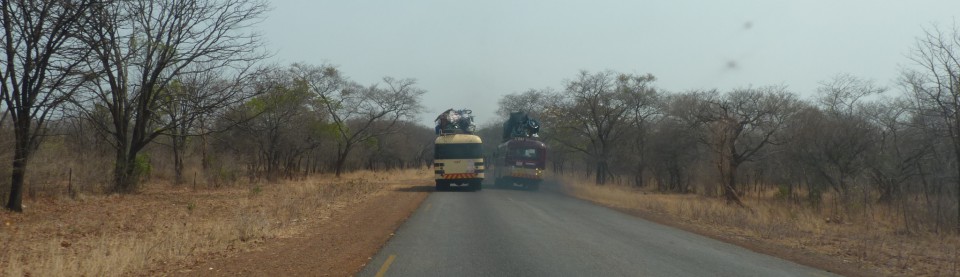
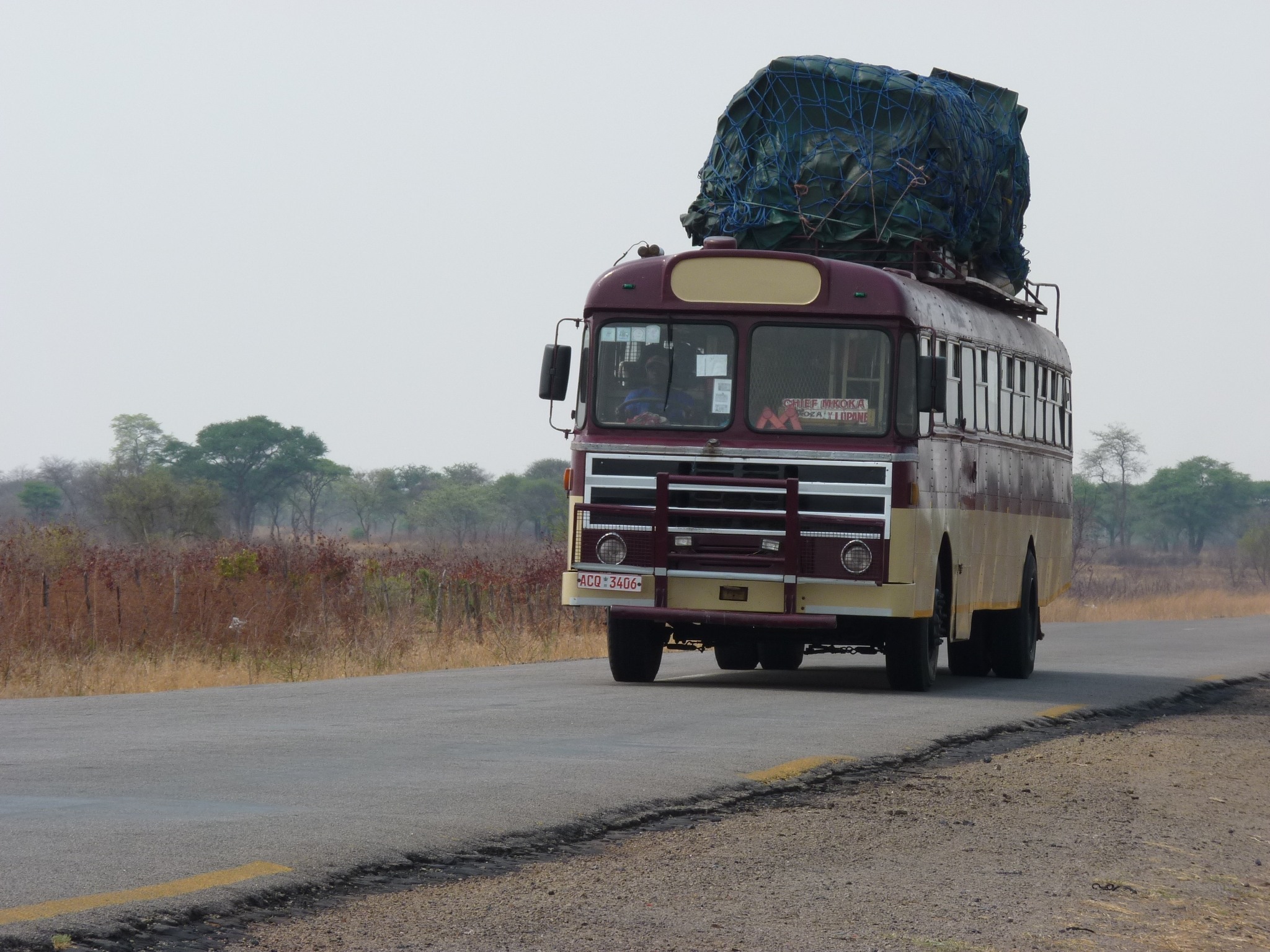
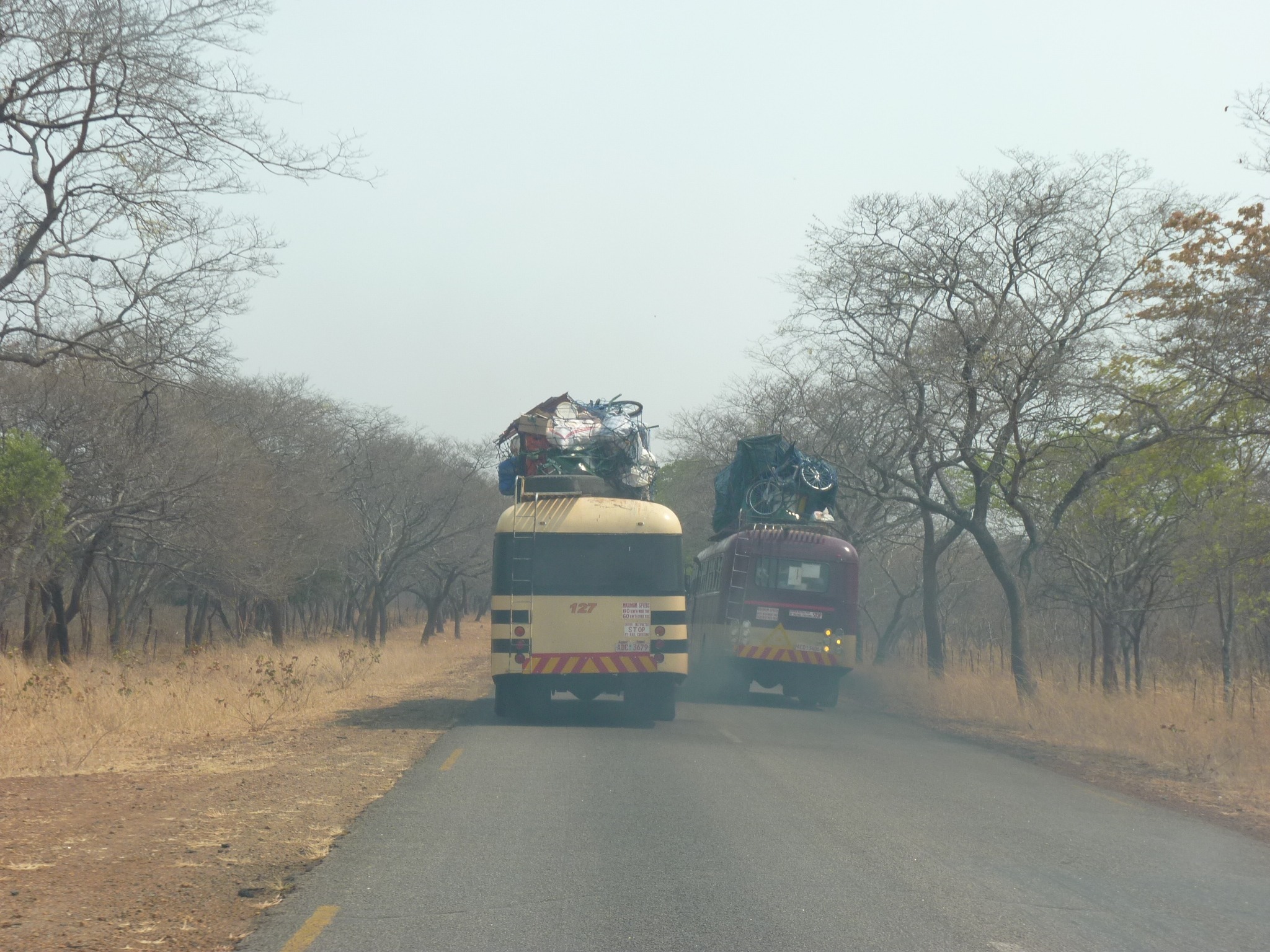
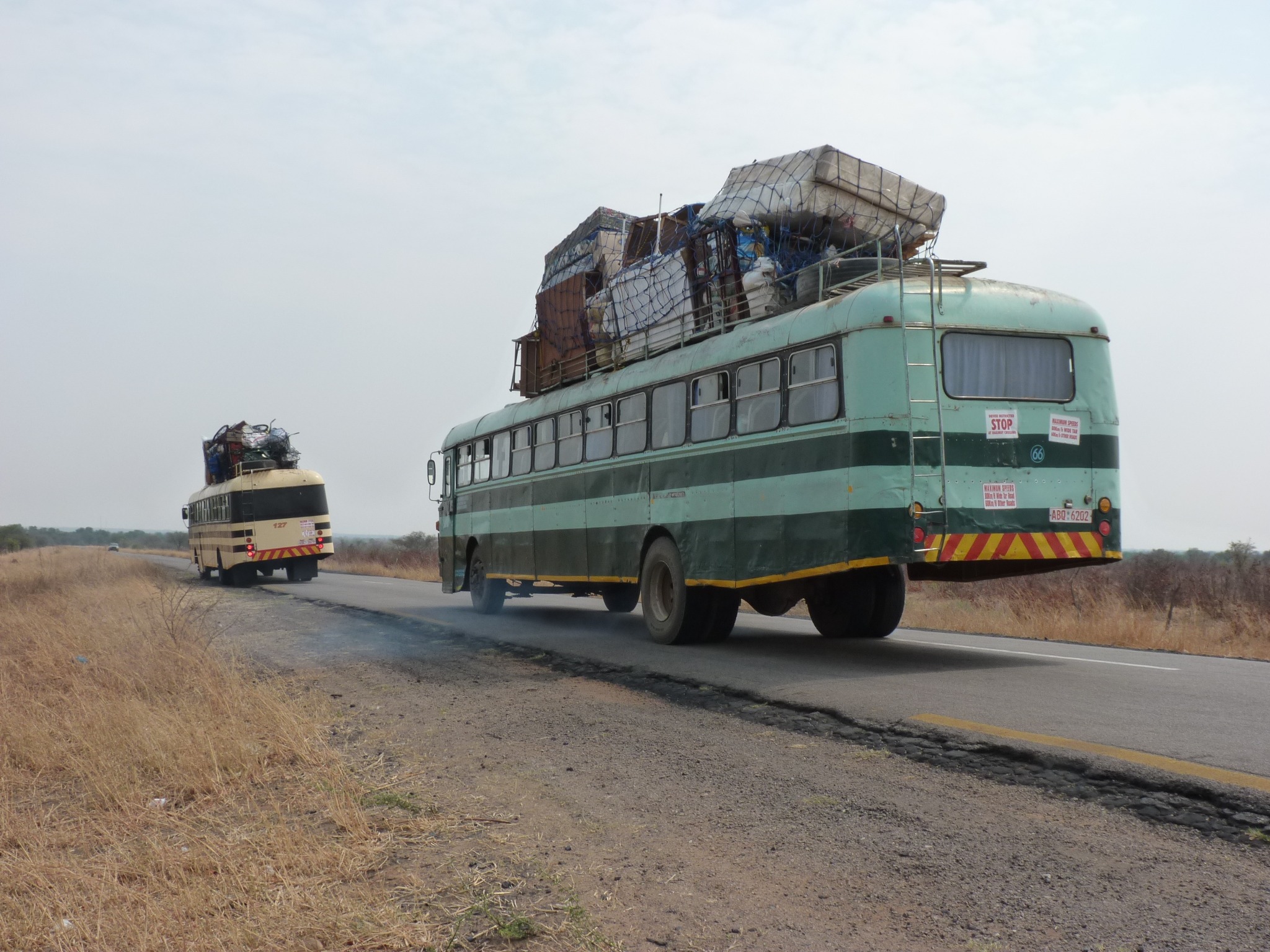
After the night in Bulawayo we resumed our journey. Again the road was not too busy but we came across a number of rural buses, a remarkable feature on Zimbabwe roads.

red bus front small

They are all similarly built, following a format that has not changed over many years. Their main signature is their large roof racks, usually heavily and highly loaded with the belongings of people going to the rural areas. They are a very effective means of transportation loyal to the motto “if it works, don’t fix it”. Their drivers deliver a rural courier service as they carry money and other documents of importance that need to change hands between rural families and relatives working in the cities and viceversa.

buses overtaking small

These buses are not fast and their drivers are rather careful so they did not cause any problems, and we were able to admire them as we overtook or crossed them while wandering about their final destination.

2 buses small

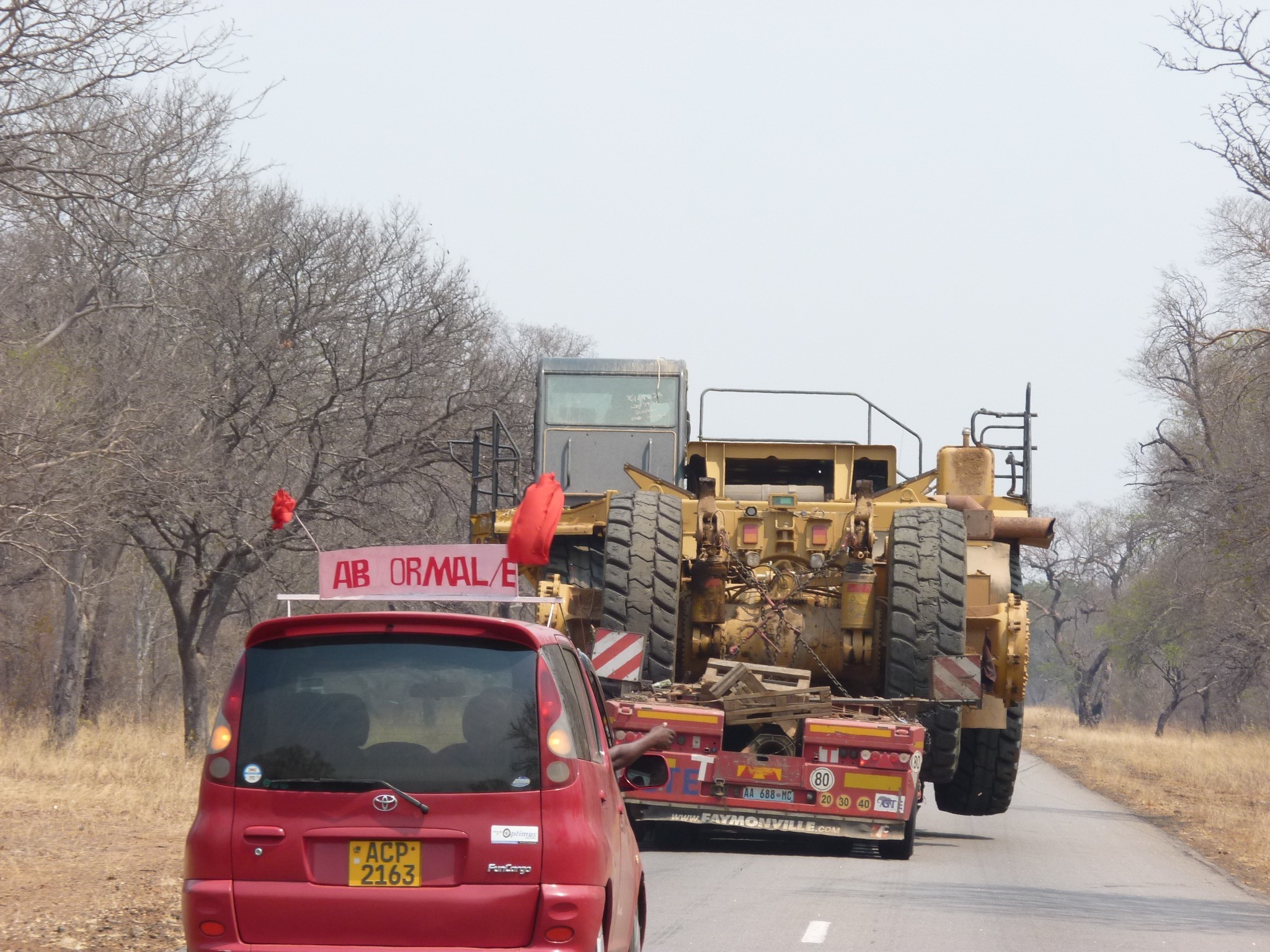
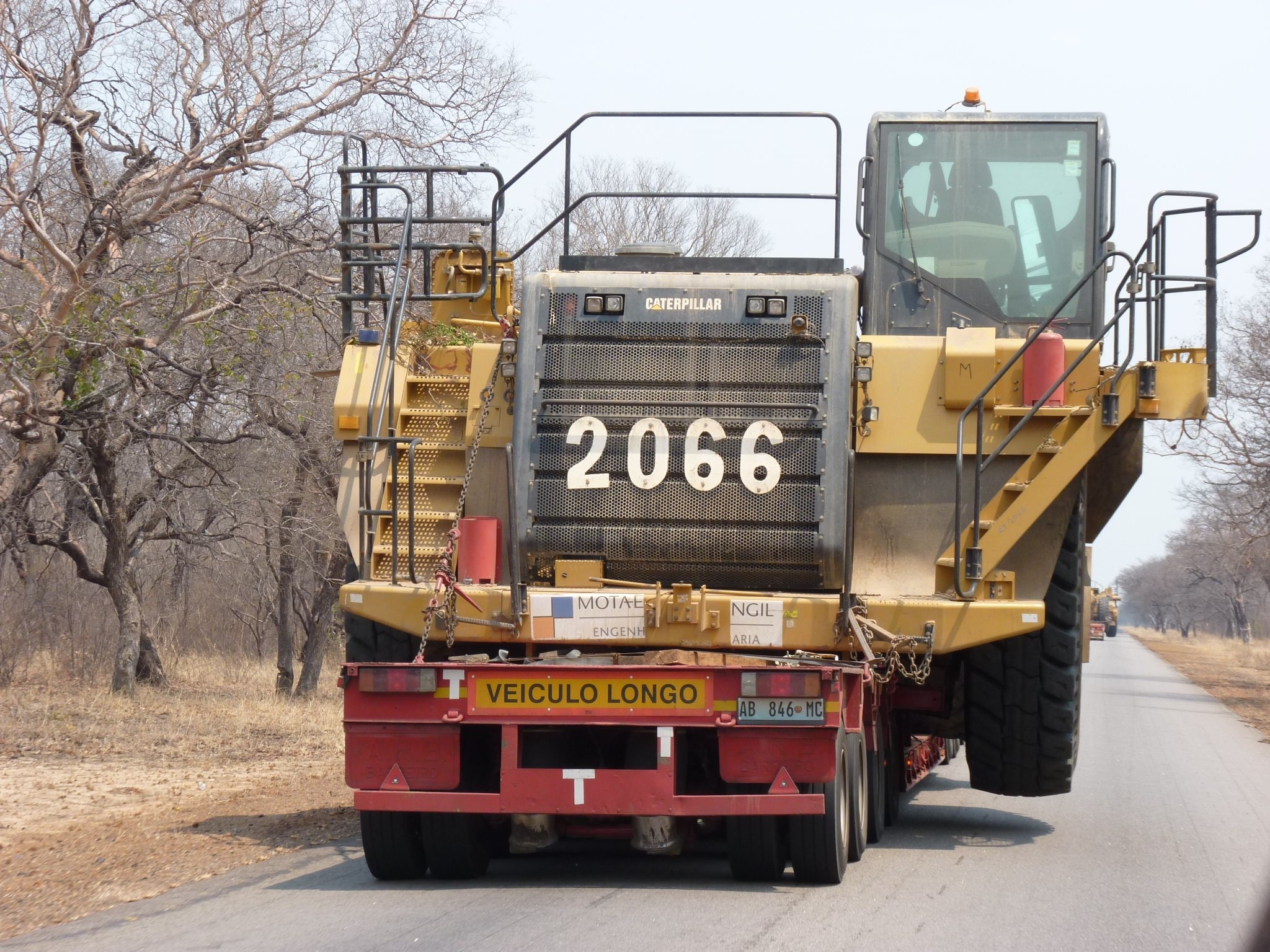
A different -and rather dangerous- find was a convoy of lorries carrying very heavy mining equipment that occupied the entire width of the road, making overtaking a real hazard.

wide mining machine small


wide machine small

We followed the wise course and waited for a break that took a while to come as we crawled behind the convoy. The opportunity presented itself at a toll station as the machines, because of their bulk, needed to take a detour around the station. We drove through and left them behind to continue to our destination at good speed.