Rome

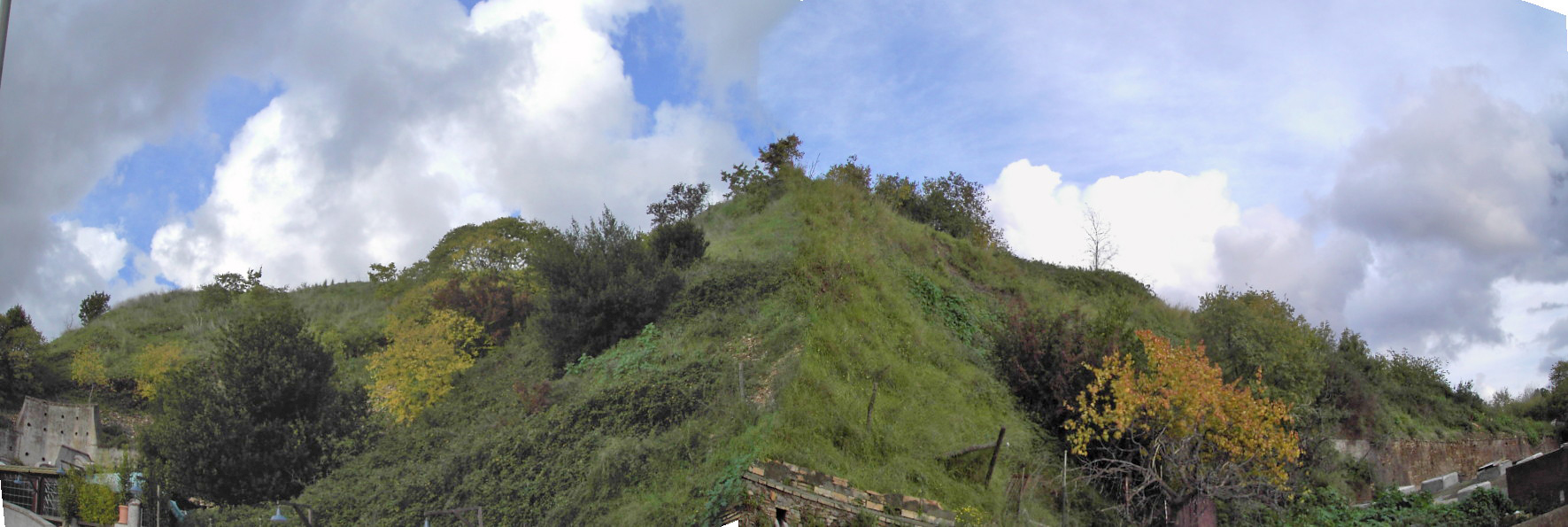
The Testaccio hill in Rome

Testaccio hill. Picture credit: Public Domain, File:Testaccio monte dei cocci 051204-12-13.JPG. Lalupa assumed (based on copyright claims).

Rome is known for countless features, both human made and natural. Among the latter there are the famous Seven Hills namely Aventine, Caelian, Capitoline, Esquiline, Palatine, Quirinal and Viminal, in alphabetical order.

Although there are others such as the Vatican, Pincian, Janiculan and the Sacred Mount, these are not counted among the traditional Seven Hills, being outside the boundaries of ancient Rome.

There is even a man-made hill, the object of this post: the Testaccio.

This peculiar hill is made almost totally of fragments of ancient Roman pottery, nearly all discarded amphorae dating from the time of the Roman Empire. It covers an area of two hectares at its base (one kilometre circumference and 35 metres high). It was built with an estimated 53 million amphorae, and it is located a short distance away from the east bank of the River Tiber.

The amphorae used were mainly of one kind that carried 70 litres of olive oil, and it is estimated that they had contained 6 billion litres! The olive oil that the amphorae carried came from several places, mainly the Guadalquivir region of modern Spain, Tripolitania (Libya) and Byzacena (Tunisia).

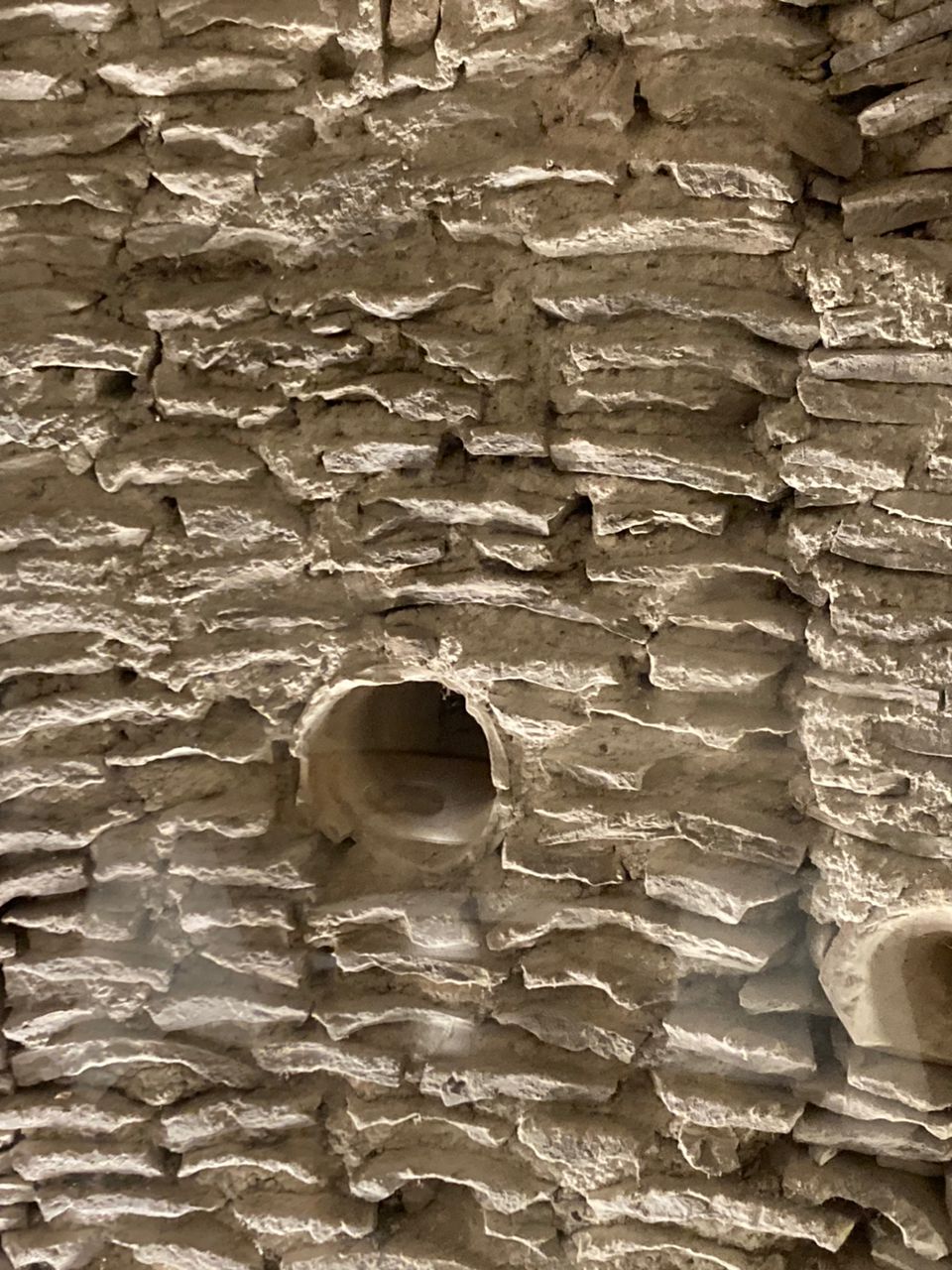
The hill is not the product of haphazardly discarding broken amphorae, but it was purposedly designed as a series of terraces supported by the less damaged amphorae and filled with sherds for stability. The amphorae were probably difficult to recycle or reuse after a while as the oil would have permeated them rendering them useless.

During the Roman Empire Testaccio was an important trade centre where workers building the slaughterhouses in the area settled. Today, the area is known for its good food, and it is one of the places we frequent when in Rome we feel like a good meal.

But it was not the food nor the hill´s architecture that roused our curiosity. Not even the fact that, in 1849, a gun battery was placed there by Garibaldi to defend Rome against the French! It was the surprise we got while walking towards a restaurant on a hot evening when a very cold air stream hit our legs.

We stopped and looked around to identify the air conditioner, doubting that there would be one which there was not, of course. Instead, with the light of our cell phones we found a hole in the earth from where the cold stream of air came from.
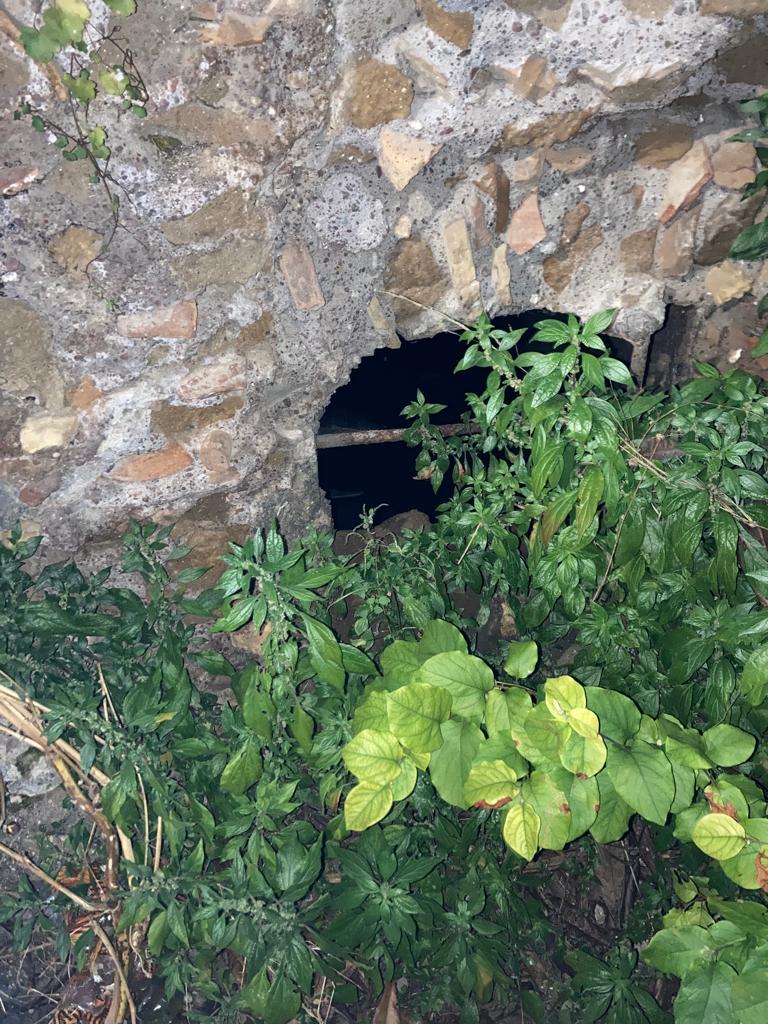
We debated how that could be and thought that there may have been a cold underground water current such as the ones I described earlier that cooled the air (See: https://bushsnob.com/2017/07/16/the-nasoni-of-rome-1/).

The doubt persisted for a whole year until we returned to Testaccio for another meal, this time earlier. Showing the discovery to a friend, we met a kind gentleman staying at the bottom of the hill that offered us to climb it, an offer that we agreed to take up at another time. When we asked him about the cold air blowing from that hole, he invited us to enter a courtyard nearby and there was also a door through which more cold air was blowing and then a window and other places as well.

Then the truth of the situation was revealed and some of its use and probably economic relevance became clear. The hill´s innards were “discovered” to have strong cooling attributes that are believed to be caused by the ventilation produced by its porous structure. This made it ideal for storing wine during the heat of the Roman summer, and caves were excavated for that purpose.

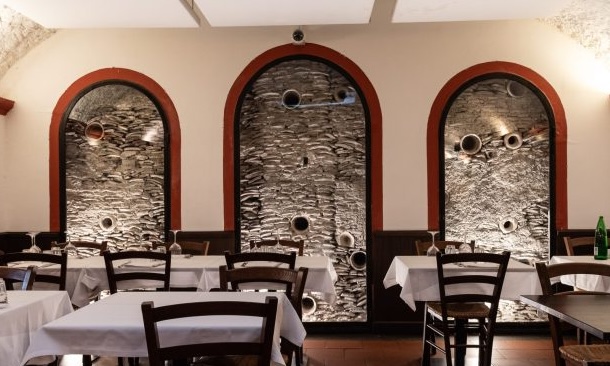
Some restaurants have windows that show the hill structure and probably also serve as coolers for both patrons and probably the wine stored there as well.
What on earth?! (17)

I have used Dalsey, Hillblom and Lynn for many years now and they have been good with one exception that will be at the end of this post. You may be asking yourself what is that company, a question that will be settled when I informed you that it is DHL, the international courier founded in 1969 when these three people finally accepted that there was no hope for improvement in the existing postal services worldwide and, in 1969 started their own mail service!

We are now on our usual italian break to see our daughter in Rome and, walking about I saw a van with this written on it:

This would not have been a surprise, except that, when I looked at the remaining of the van I saw that it was in fact a DHL van!

Either the sign on the door is a mistake or I stopped understanding how big companies work!

I was perhaps more perplexed a few years back when working in Rome.

Enjoying watching animals while working in Africa, I decided that it was time I got myself good binoculars. My friend Roger (that sadly passed away a few years back) recommended me a German make that, although very expensive, had, in his experience, an excellent customer support.

It was quite an investment but its optical quality was amazing and I was very pleased with them. However, from one day to the next I found that the vision was no longer crisp and, to my dismay, discovered that one of the eyepieces had an eyelash inside that had just moved to the center of the field! As the unit was sealed from the factory, I immediately phoned the manufacturer.

At first they were incredulous but when I insisted, they accepted to look at them and told me to send it to them immediately. I used DHL and they got to the manufacturers very fast. They gave my binoculars immediate attention and, very apologetically, confirmed the fault. Two days later I got a tracking code to collect then from a DHL office in Rome.

Anxious to get my binoculars back, I was there the following day, unprepared for the surprise waiting for me.

I was informed by the DHL attendant that their van had been robbed and that my parcel was among those that had gone!

I was devastated and immediately phoned the binoculars company that were also shocked. However, they said, there was an insurance and the product would be replaced. When I mentioned that I needed them for a trip abroad in a couple of days, they told me that they would send new binoculars to me immediately and claim the insurance later!

This second time DHL was not robbed and I got new binoculars to take with me during my travel. They have been with me ever since.

What on earth?! (10)

This section of my blog deals with unusual finds, the majority concern with observations from the roads and streets we frequent that are mostly located in Zimbabwe, Argentina, and Italy.

I am well aware when, a long while ago, we were all politically incorrect for today standards. Driving was a man affair and, when there was a careless manoeuvre by a car, expressions like “woman driving!” or “what do you expect from a lady driver” to name two of the polite ones that were proffered!

Time passed and women had demonstrated that they are at least equal to men, and this includes driving a car (probably there are no F1 women champions because they cannot be bothered doing it!).

So, it was quite refreshing to see that nowadays women recognize themselves as drivers and even take advantage of their old “bad reputation” to advertise their presence and, probably, take advantage of it!

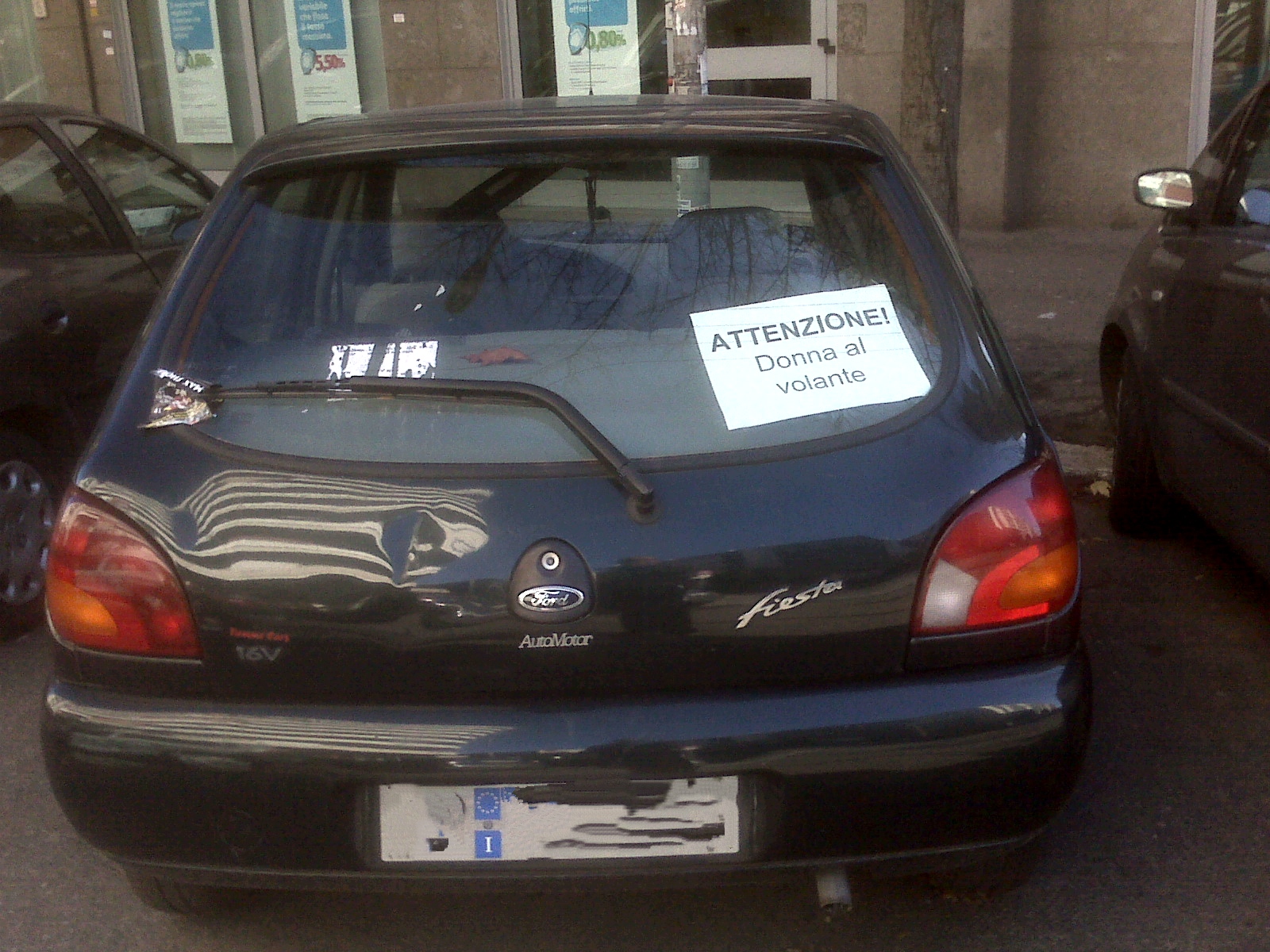
I spotted this car with the sign “ATTENTION! Lady driver” in Rome.

I keep thinking if the dent happened before or after the sign was placed!

Time to move

The previous post on Lake Tanganyika was the last dealing with our first spell in Africa that, at the time, we did not know if it was the only one! The field programme I was working on came to a renewal time so it was time to leave Zambia.

As the technical officer in charge of ticks and tickborne diseases at FAO headquarters retired, I was assigned to cover that post in Rome.

From the field I saw this as a wise move in order to take a new, albeit difficult, professional challenge, particularly to follow Paul, one of my main mentors. However, that is life and someone had to do the job. I still remember his words when discussing the move: “remember that it is more important to listen than to talk!”.

So it was that we sold household items and we packed the rest for our stay in Rome that, in principle, would be for three months but that, with hard work and a bit of luck could be extended beyond that time. In restrospective, I was so excited about the move that the thought of my contract stopping after 3 months in Rome did not cross my mind!

Apart from the work aspect, it was also a good time to move to Italy for other reasons: the education of our children (then 3 and 2 years old respectively), . Our kids´education was of prime importance as well as to fulfill Mabel´s wishes to come to Italy, the country of her ancestors!

So, full of enthusiasm, we embarked in this new stage in our lives that I will be referring to in the next few posts.

Spot the beast 57

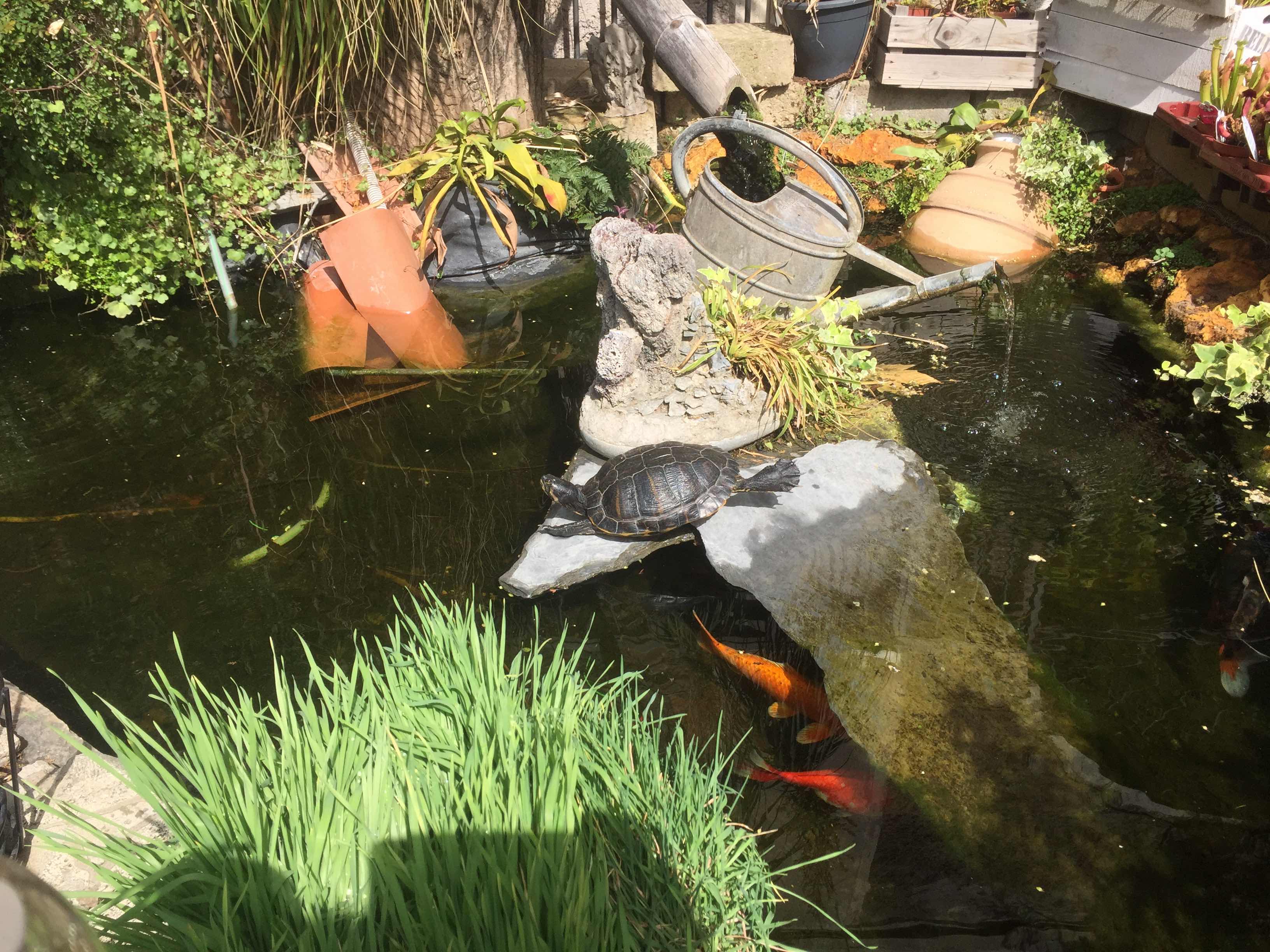
See if you can spot this one. Please, do not look too much if you fail to find it in a few seconds…

IMG_4634 copy

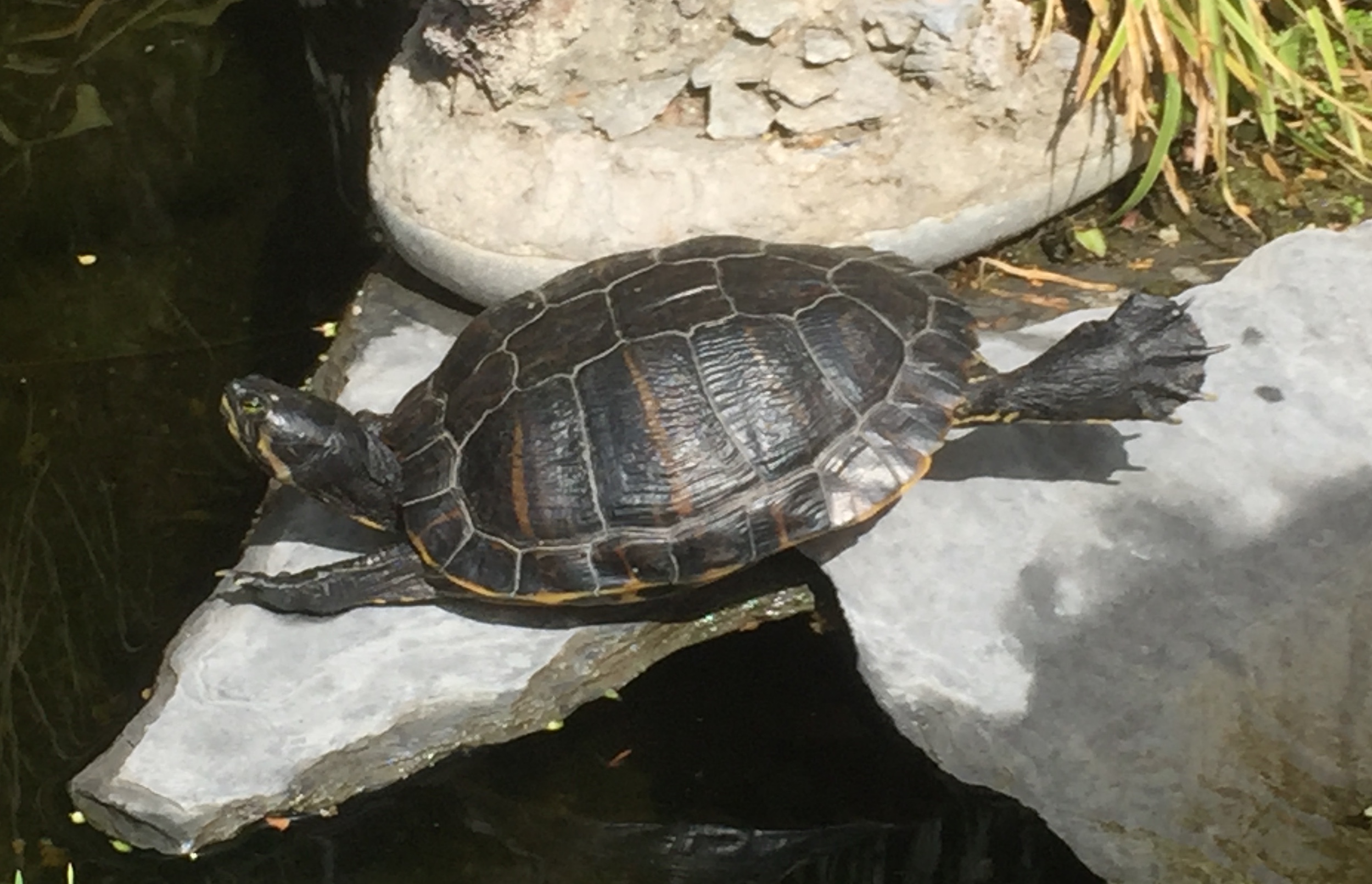
This one is really a different “Spot” as it is quite clear that we have a terrapin in front of us. However, have a good look at it.

I did not notice anything strange until my son, said “look at the terrapin doing Yoga”!

IMG_4635 copy

It was rather hot in Roma so the beast was sunning one leg at a time at leisure!

A rhino in Rome

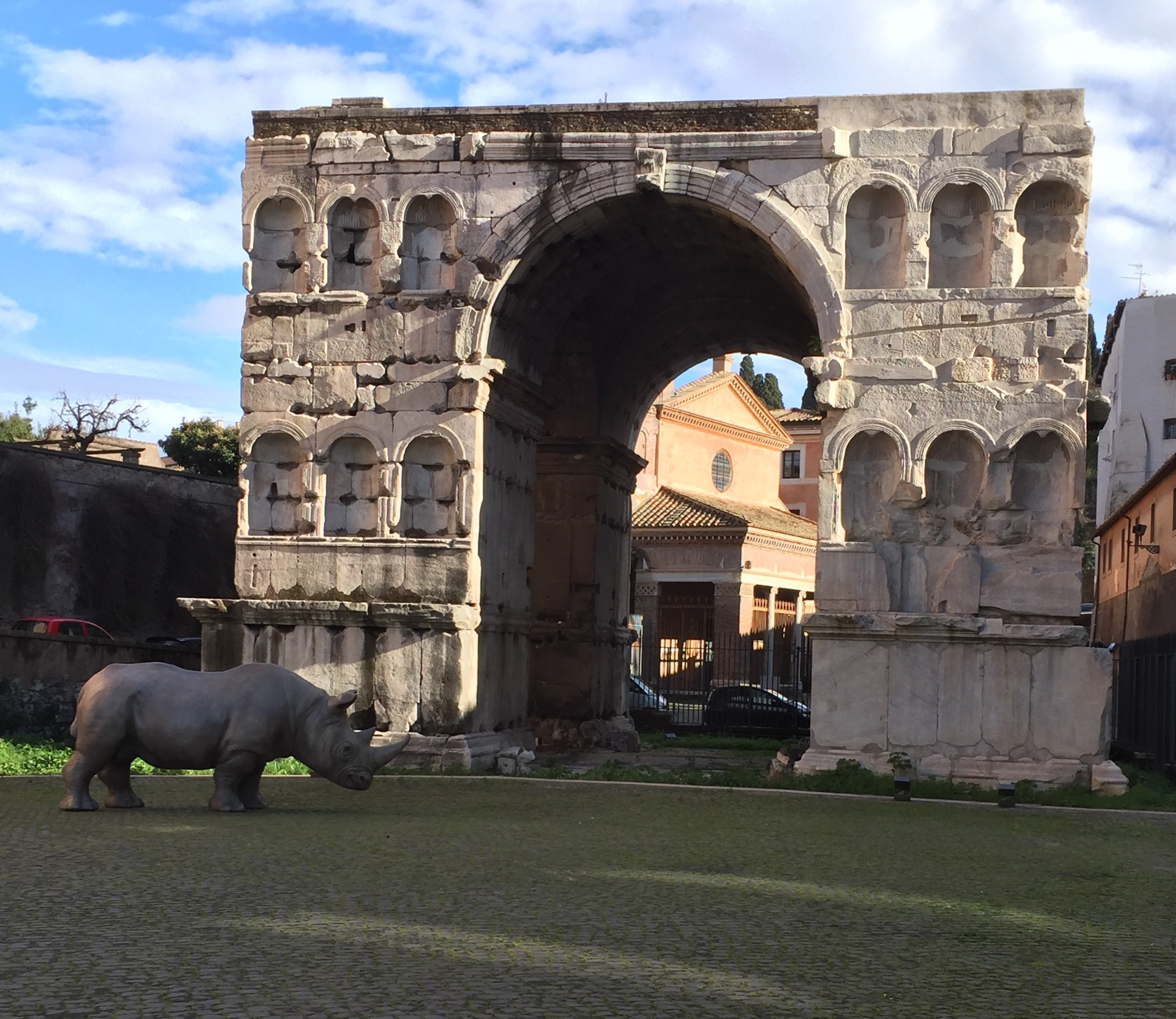
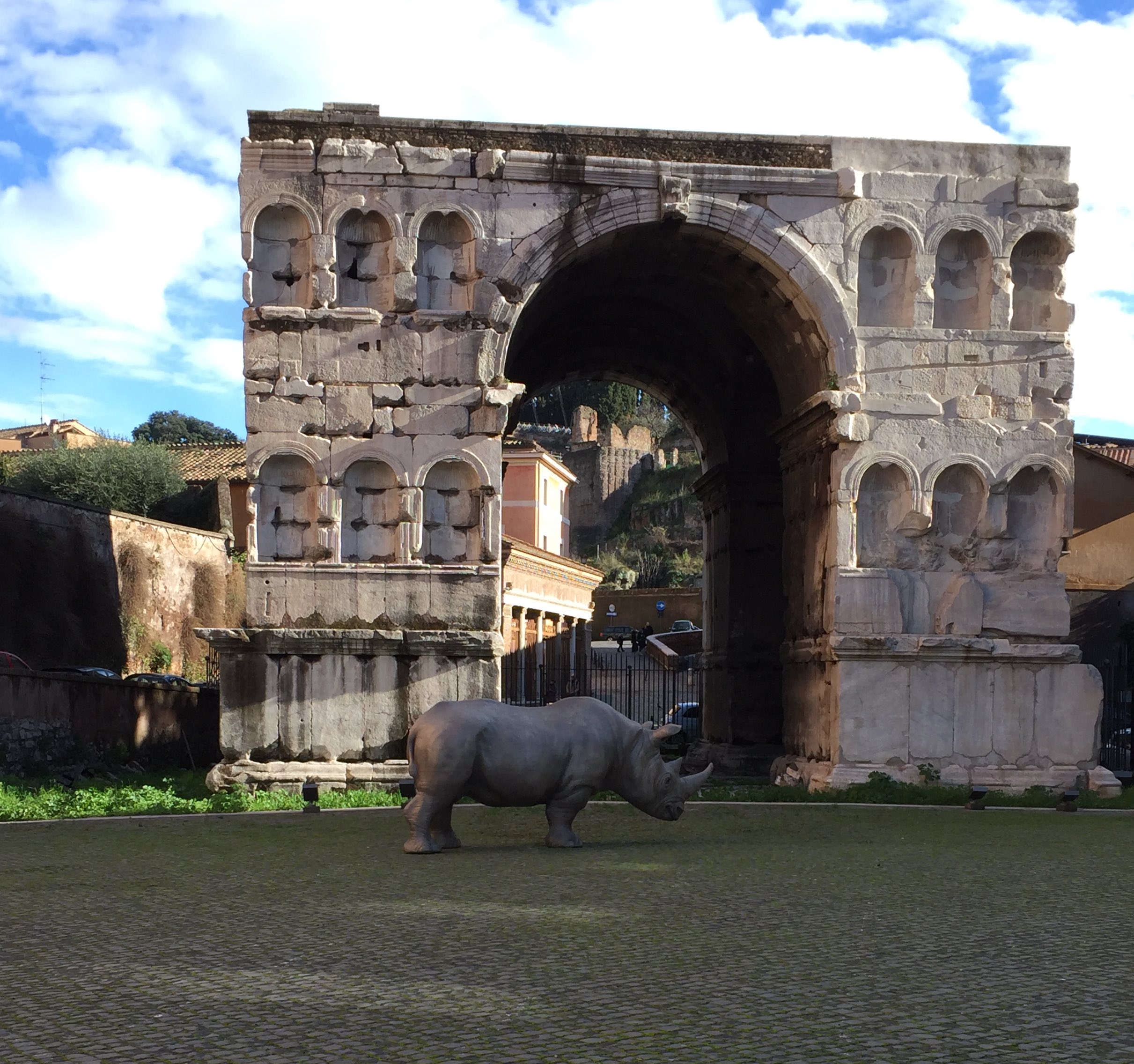
During earlier visits I have seen some of the big five in Rome and I described one of them already [1]. During our brief visit this month we were treated to a nowadays rare sight: an endangered white rhino under the Arc of Janus at the Via del Velabro, very close to the church of Santa María in Cosmedin where the famous Bocca della Veritá (Mouth of Truth) mask is located.

IMG_3955 copy 2

IMG_3956 copyThe Arch of Janus, seen behind the rhino, is the only quadrifrons [2] arch in Rome. This arch has four facades and it was built at an important place and crossroads in antiquity, where the slope of the Palatine Hill (where most Emperors lived) coming from the centre of Rome met an important port on the Tiber River.
Interestingly, the experts say that the structure was built from pieces of other ruins, including the marble slabs that cover it. This construction method has enabled archaeologists to date the structure to the second half of the Fourth century.

Unfortunately, following an explosion that took place in the area in 1993, the arch was fenced and remained inaccessible to the public since then and it also remains unrestored. But now it has a rhino inside the fence…

The white rhino is there as part of a drive by the Fendi Foundation to give this less known area of Rome some visibility through the promotion of art at their Palazzo Rhinoceros nearby [3].

Hopefully, the presence of this very real-looking rhino that somehow surprised me will also promote its conservation!


[1] See: https://bushsnob.com/2018/07/24/roman-elephant/

[2] In Greek “tetrapylon”, and in Latin “quadrifrons”, is a kind of ancient Roman arch of cubic shape, with a gate on each of the four sides. These kind of arches were generally built at crossroads.

[3] See: http://fondazionealdafendi-esperimenti.it/info/ and https://www.forbes.com/sites/liviahengel/2018/12/13/why-alda-fendi-is-giving-back-to-rome-with-new-arts-foundation/ – f4a4b7774d28


Roman elephant

Walking through the various quarters of Rome in summer is a pleasure. Despite its apparent (and real) chaos, Rome has so many facets that every walk reveals new sights. Even old -and apparently commonplace- sights become interesting once we learn more about them.

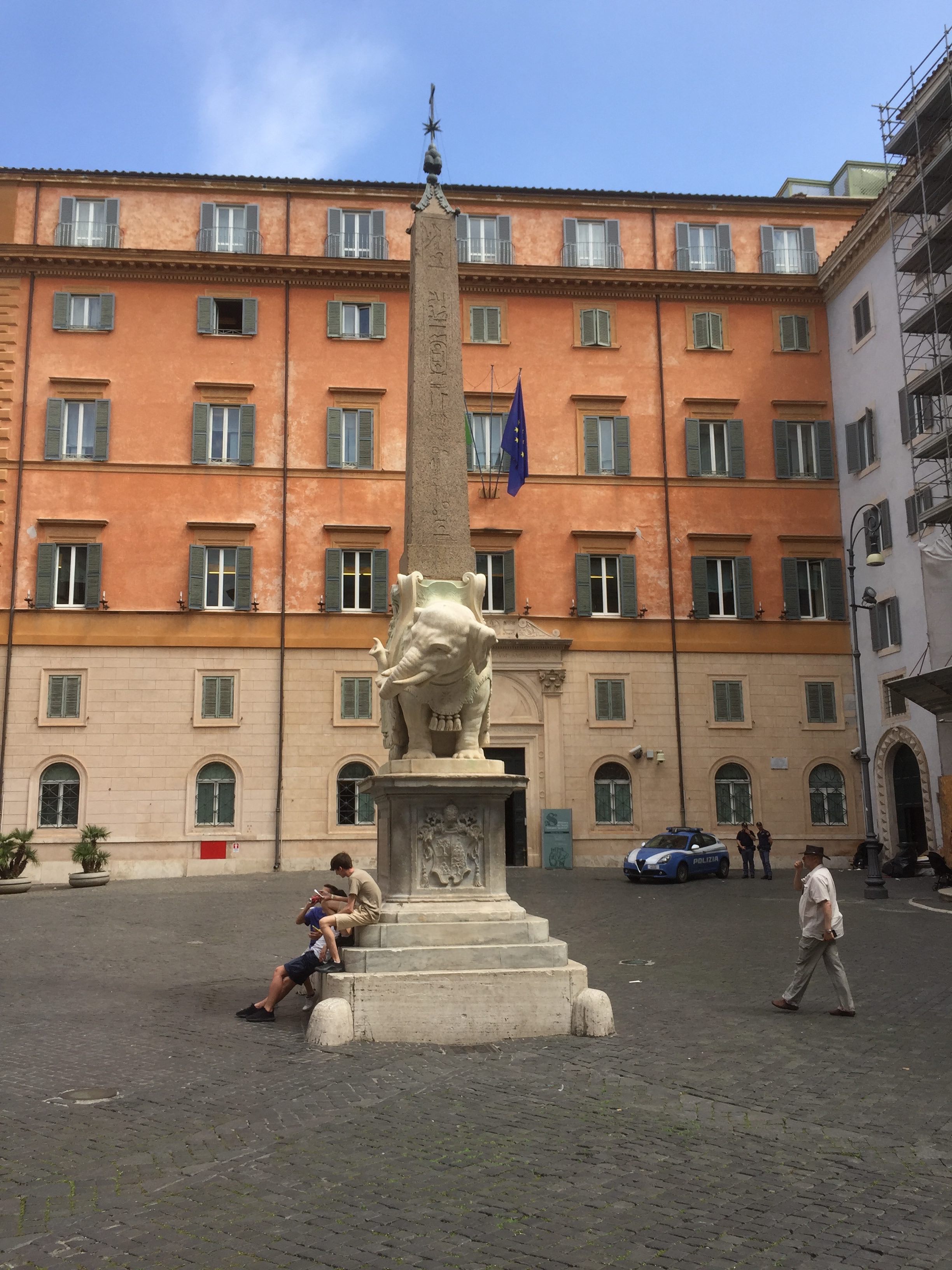
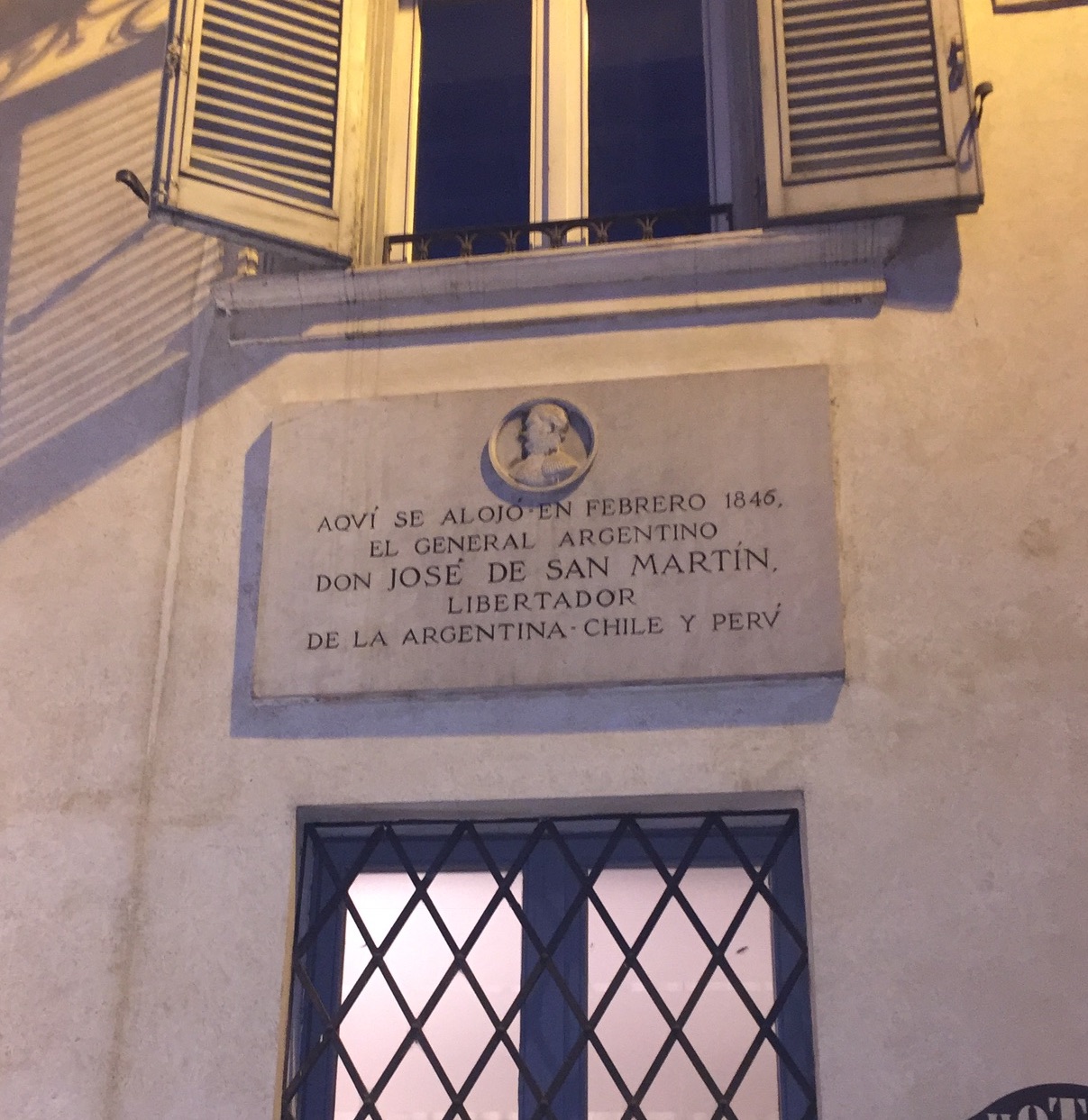
Although I had walked through the Piazza della Minerva in the past, it had been to get to other of Rome’s main attractions such as the Piazza Navona or the Pantheon. I had noticed the obelisk in the centre but my attention somehow was directed to a plaque informing the public that the Argentinian General José de San Martín stayed at the Grand Hotel de la Minerve in 1846, four years before his death in 1850.

IMG_4323 copy

The plaque on San Martín placed on the front of the hotel.

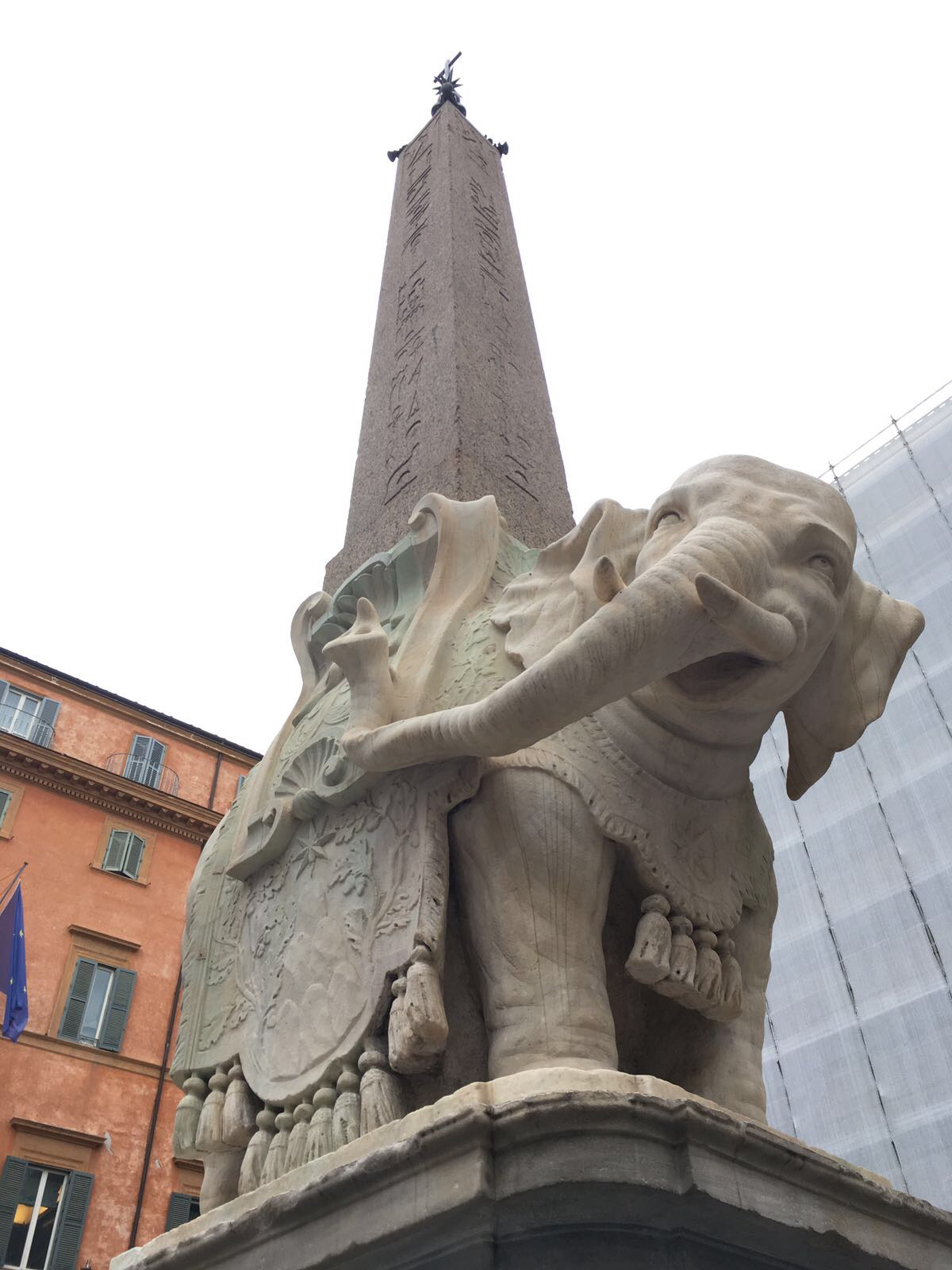
During this visit, my daughter mentioned that, apart from the Fontana delle Tartarughe (Turtle Fountain) -close to her flat- she also enjoyed seeing the small elephant. So one afternoon we walked there and we got to the Piazza delle Minerva again. Not being one of the popular attractions, this small and rather overlooked piazza does not have the crowds and endless tourists’ queues to stick their hands in the Bocca della Veritá or to enter San Peter’s in the Vatican.

So, with time, we had a look at the obelisk. At the time we noted its rather the rather elongated trunk and agreed that it was a rather peculiar sculpture. Further investigation on its origins and development followed and its creation and symbolism is worth describing.

IMG_2839 copy

The rather long trunk of the marble elephant.

The monument consists of two parts, an Egyptian obelisk -unearthed during some excavations carried out before the 17th Century- and the elephant that carries it. The latter is believed to have been the work of Ercole Ferrata, a disciple of the well-known sculptor Gian Lorenzo Bernini [1].

At the time of the unearthing of the Egyptian obelisk, Fabio Chigi (Pope Alexander VII) wanted to build a monument to display it. Father Domenico Paglia proposed the idea of the Obelisk resting over six small hills, as well as a dog in each corner, the dog being a symbol of the Dominican priests, the Order he belonged to. The hills recalled the six hills depicted on the Chigi family crest. By depicting the latter he hoped to convince the Pope. However, to Paglia’s surprise, Alexander rejected his design.

The Pope then asked Bernini for an alternative design. Bernini’s first reaction was to place four seated figures holding the obelisk at each corner of a pedestal. As this was not to Alexander’s liking, he presented another option showing the Obelisk resting on a rock and a later proposal depicted Hercules with his knees semi-bent as he hoists the obelisk upward and recalls Atlantis holding up the world.

Eventually Bernini got the agreement of the Pope with a design of an elephant carrying the Obelisk on its back, inspired by a popular novel of the time called “Hypnerotomachia Poliphili” (“Poliphilo’s The Strife of Love in a Dream” )[2] authored by Francesco Colonna in 1499.

In Bernini’s original drawings, the obelisk’s weight would have fully rested on the legs of the animal. However father Paglia -envious of Bernini receiving the commission and being an architect himself- convinced the Pope that “according to traditional cannons, no weight should rest vertically above an empty space, as it would not be steady nor long lasting” so he strongly recommended that the obelisk should be placed upon a stone block. Bernini was opposed to this modification, especially as he had already proven that he could accomplish such a design in his “Four Rivers Fountain” in Piazza Navona.

Despite Bernini’s opinion, the Pope finally followed Paglia’s advice and decided that a marble cube should be inserted under the elephant. He also had the Latin phrase “These symbols of the science of Egypt, which you see engraved on the obelisk borne by the elephant, the most powerful of all animals, show that a strong mind is needed to support a solid knowledge” inscribed on the base.

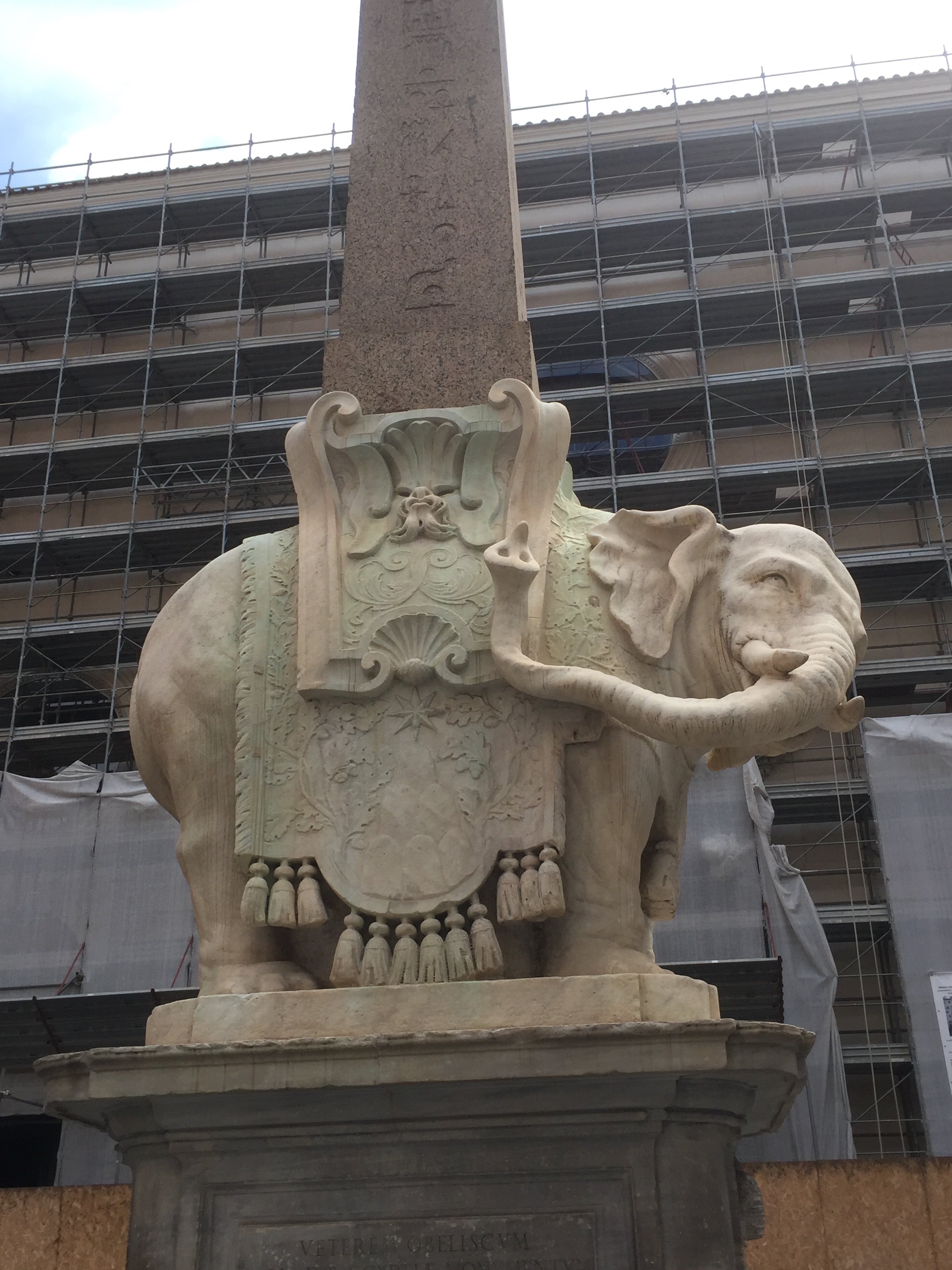
Although Bernini tried to hide the heavy look of the block placed between the elephant’s legs by adding a saddle to the elephant’s back, this was not enough and the elephant acquired a rather heavy appearance that -I am sure to Bernini’s annoyance- originated its nick name of Minerva’s Piggy [3]!

IMG_3502 copy

Despite the addition of the saddle the marble block supporting the obelisk is rather obvious.

The complete work was unveiled in February 1667 and it turned out to be the last commission of Pope Alexander VII as he died a few months later.

There is still a final twist to the story.

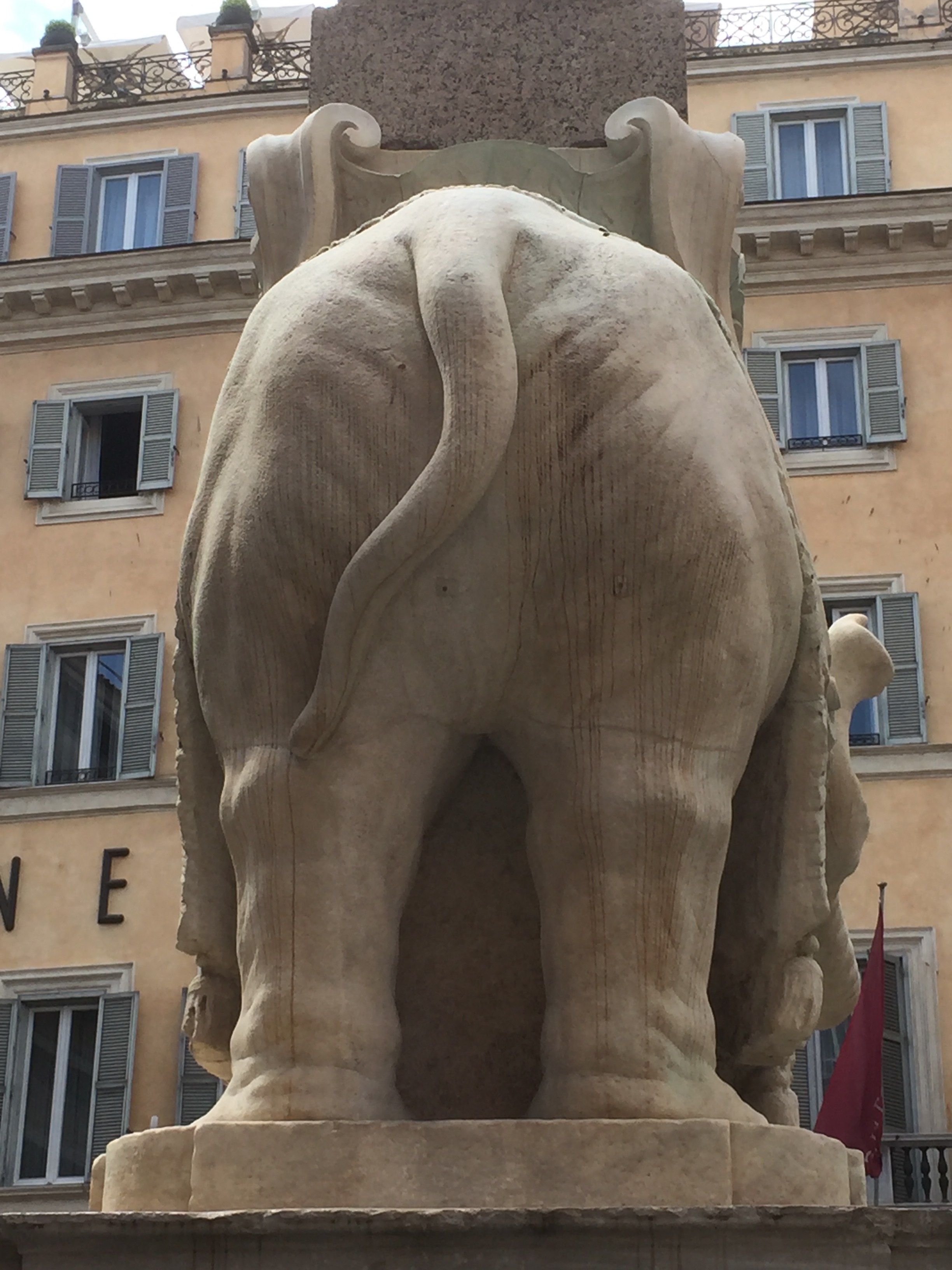
Bernini was able to take his revenge upon Paglia and the Pope by shifting the elephant’s tail slightly to the left and in that way pointing its rear end rather obscenely toward the Dominican Monastery sited in the square!

IMG_3508 copy

The elephant’s rear end.

IMG_3501 copy

The elephant with its rear end pointing towards the Dominican Monastery.


[1] https://en.wikipedia.org/wiki/Gian_Lorenzo_Bernini

[2] https://echoesofegypt.peabody.yale.edu/hieroglyphs/hypnerotomachia-poliphili

[3] Today the sculpture is popularly known as Minerva’s chick as the Roman dialect word for piggy (“procino”) has been replaced by chick (“pulcino”).


Rome – Food processor seller

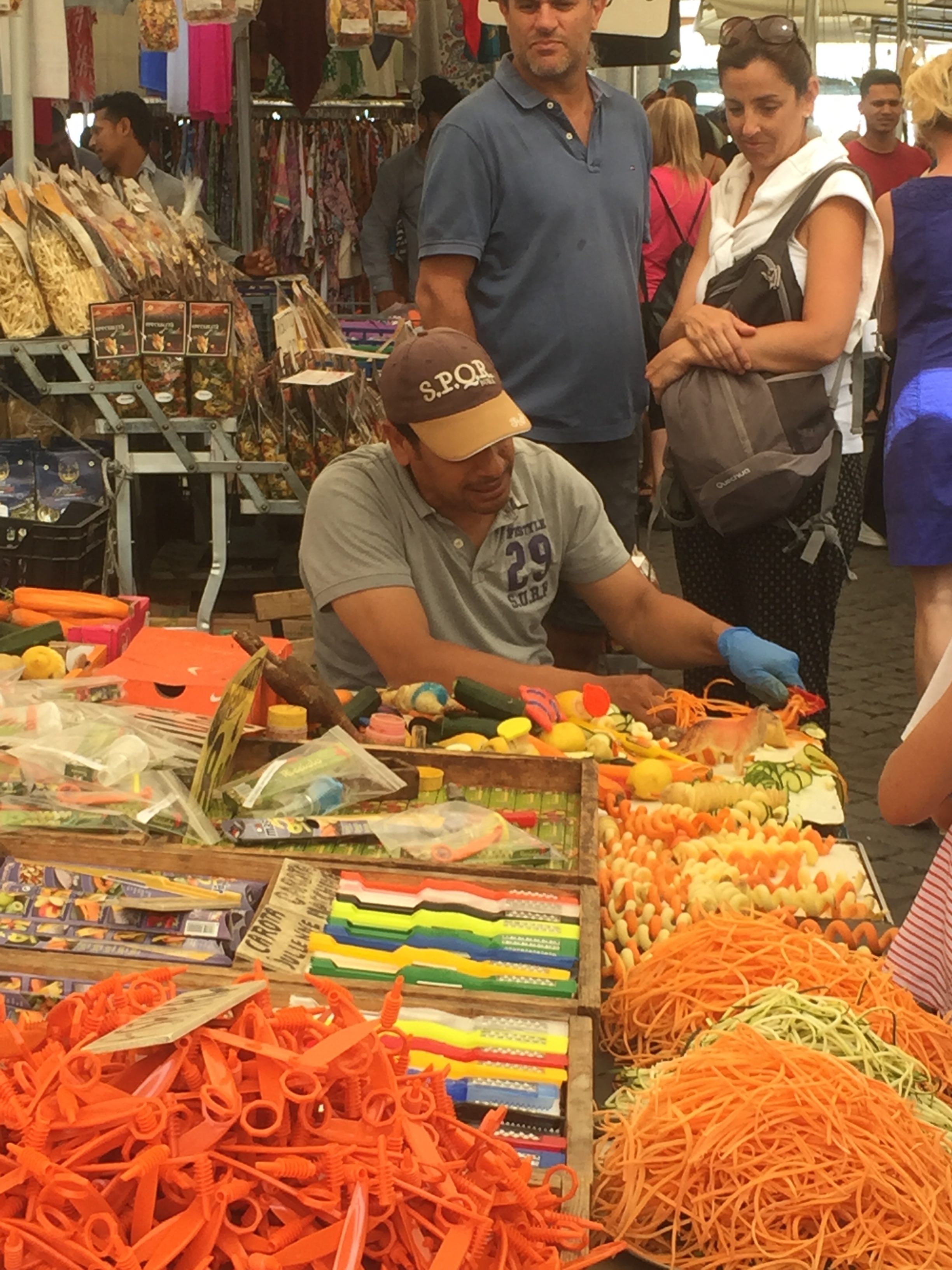
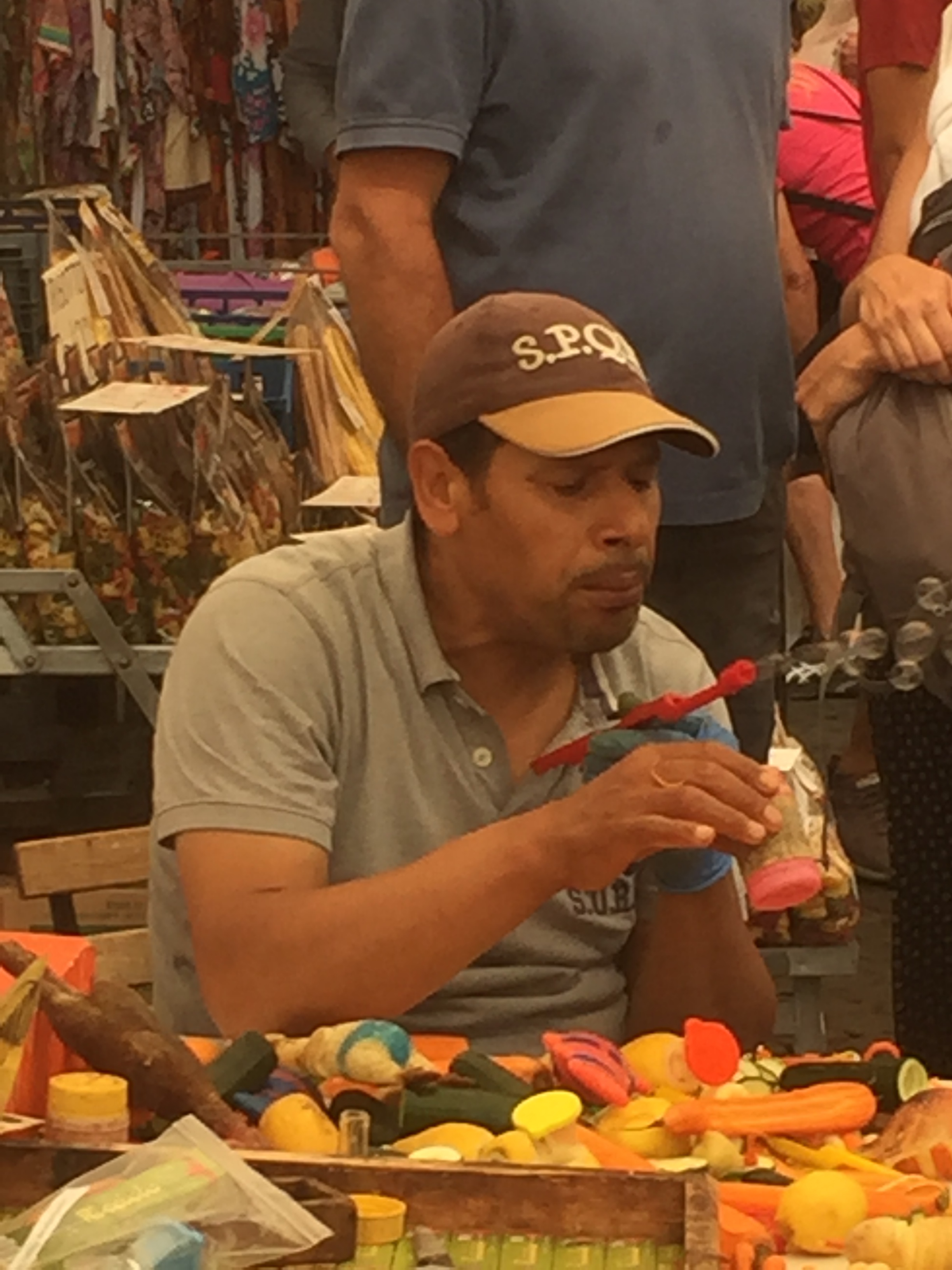
Another character from the streets of Rome and one of the most engaging. He is called Mustafa and spends his time selling gadgets to prepare veggies in an imaginative way. We had heard and then seen him in earlier visits at the Porta Portese flea market. This time he was trading at the Campo di Fiori market. I can assure you that you cannot fail to stop and watch!!!

IMG_3475 copy

Mustafa’s stand.

IMG_3479 copy

Mustafa blowing bubbles to demonstrate the versatility of his ware.

While selling ,Mustafa mentioned that he had over 5 million hits in his video at Youtube so I did not film him but went to Youtube where I found many videos of “Mustafa Patata e Carota” performance.

So, rather than filming him yet again, I decided to embed the video where he speaks English. There is another one in Italian with 2,5 million hits in Youtube! [1]


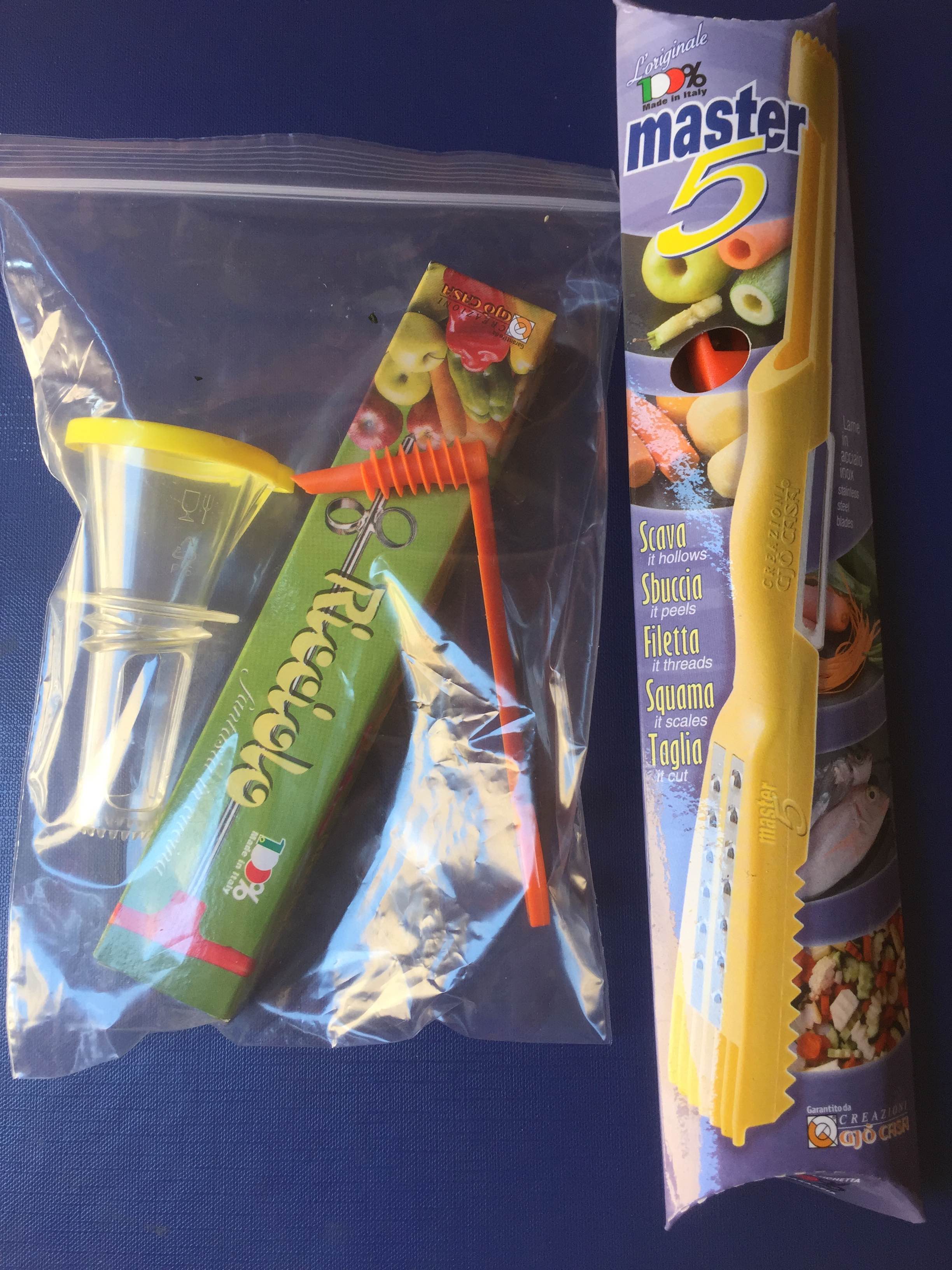
Mustafa was so convincing that we ended up buying his tools without really needing them! I am now practicing and destroying a few veggies but I am getting there…

IMG_3483 copy.jpg


[1] The video in Italian can be seen at https://www.youtube.com/watch?v=KbPBN6kvnCU.


Rome – Gladiators

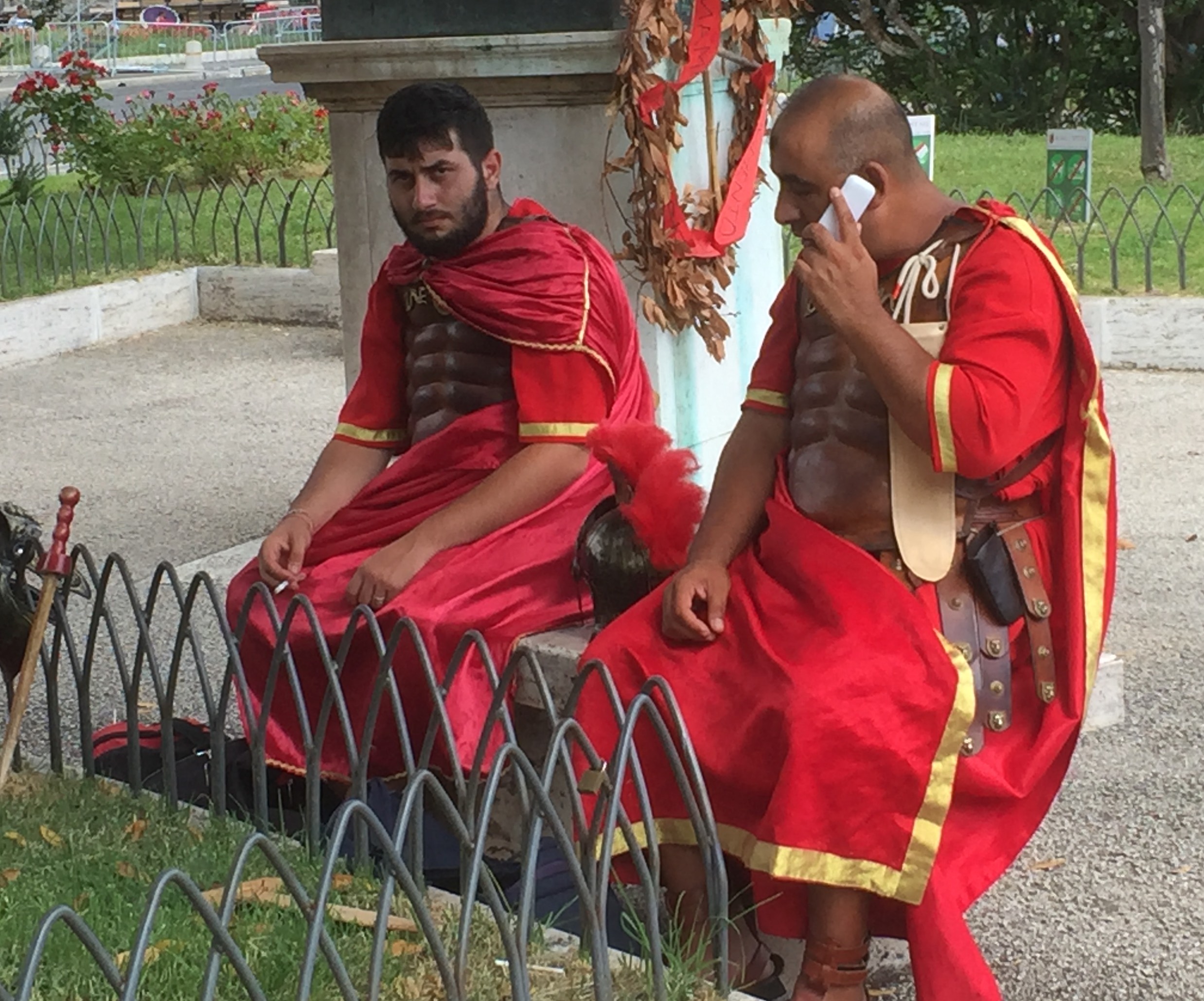
If you know a bit about Rome, you will also know that it is full of surprises. This visit has been no exception and I found this scene during some rains we had yesterday while walking through the historical centre towards our rented flat in the Jewish quarter.

IMG_3474 copy.jpgThese two gladiators took advantage of the rain-break in their fighting to the death activities to catch up with life events and have a puff rather than sharpening their swords! This is something expected of the current Millennial generation but they are clearly beyond that, probably Xennials[1]
Whatever their generation, the sight was really amusing!


[1] The term “Xennials” is a portmanteau blending the names of Generation X and the Millennials to describe individuals born during the Generation X/Millennial cusp years of the late 1970s to the early 1980s. (https://en.wikipedia.org/wiki/Xennials)

The nasoni of Rome [1]

Rome is packed with attractions, some of them world famous and others less so but not less interesting. We have all heard about or visited some of its famous fountains such as the Trevi fountain, Turtle Fountain at Piazza Mattei, Fountain of the Frogs at Piazza Mincio, the big fountain on the Janiculum Hill and the Fountain of the Four Rivers at Piazza Navona to name some of the better known.

IMG_4794

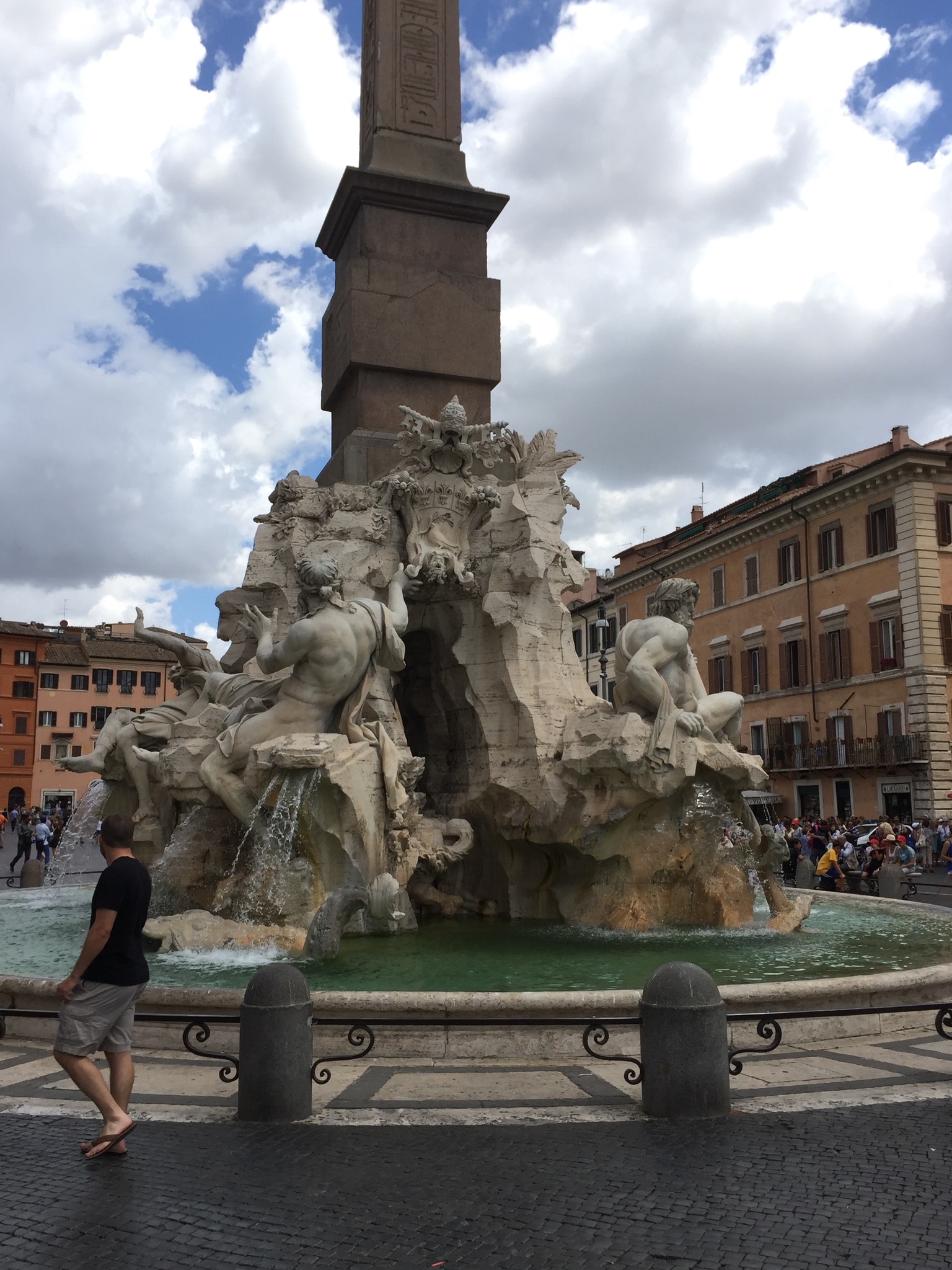
The fountain of the four rivers, Piazza Navona.

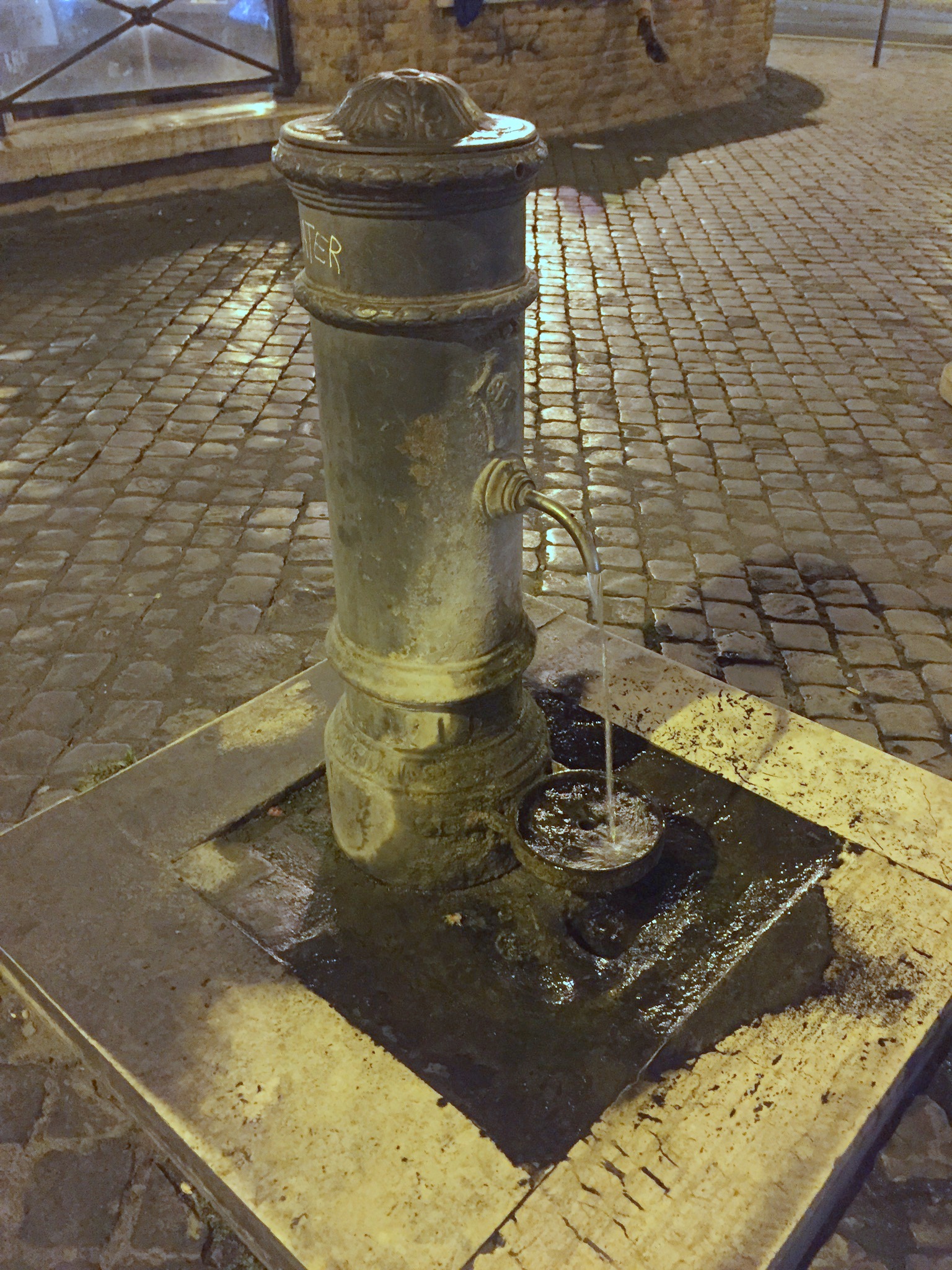
While the above have great cultural and ornamental value there are other water fountains that, although not great looking, serve the purpose of delivering free ice-cold water to the city inhabitants and visitors. These are the small drinking fountains that are found all over Rome supplying water non-stop.

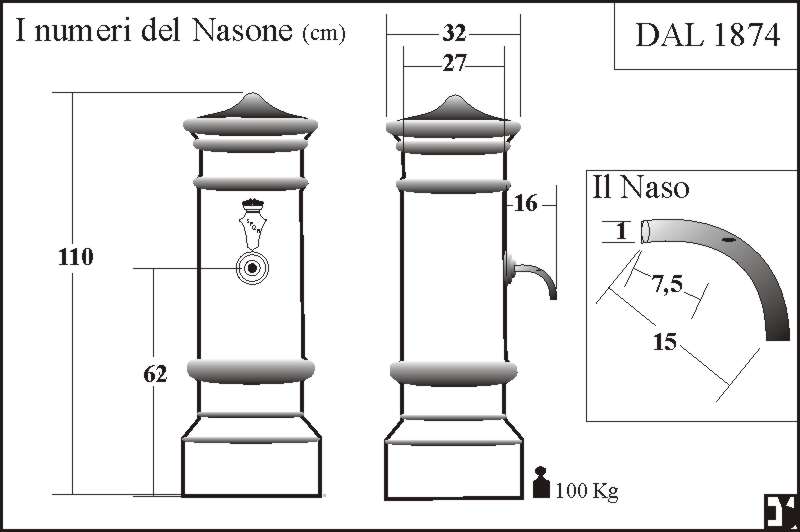
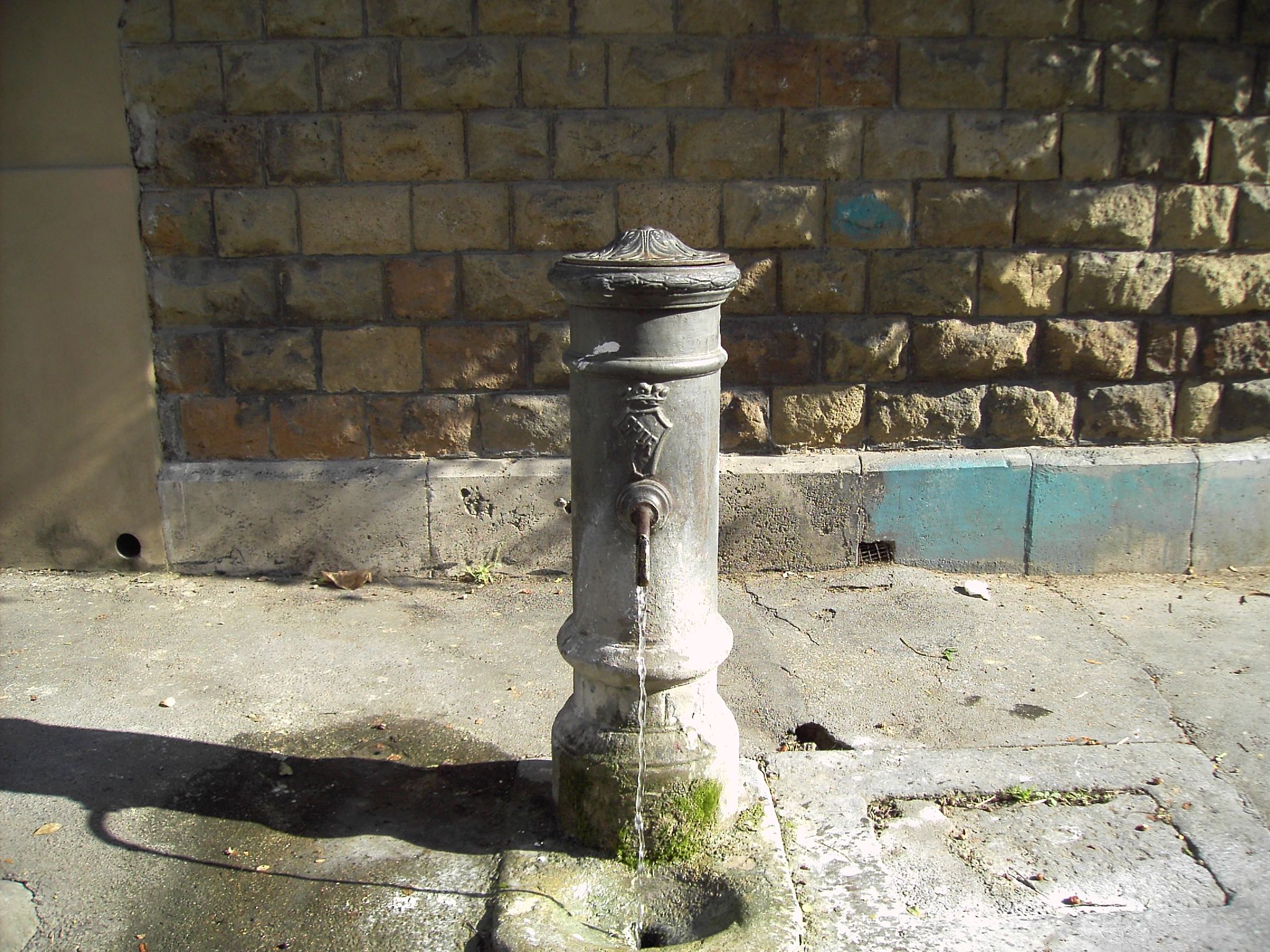
There are 2,500 drinking fountains scattered all over the city, and almost 300 of them are inside the city walls. Although there are a few exceptions, they mainly follow a standardized model known by the locals as nasone/a because of the drinking spout on its side.

FdmNasoneProgetto

Technical drawing of a drinking fountain. Scheda Tecnica del Nasone Fontanella di Roma. Released into the public domain by its authors via Wikimedia Commons.

These simple but clever contraptions allow the water to run continuously through their “noses” but blocking the end of the spout sends water in an arch that is ideal for drinking as well as for surprising the unaware visitor with a summer splash!

The 100 kg and 100 cm high nasoni are in place from 1874. They are made of cast iron and marked with the ubiquitous S.P.Q.R. that, in Latin, means Senatus Populus Que Romanus (the Senate and the People of Rome), the official city “logo” that also appears in many public buildings.

Most drinking fountains are found near the outdoor markets and plant and flower vendors and it is very common to see their water overflowing buckets and other containers placed under their water stream. The purity of the water is assured by the Azienda Comunale Energia e Ambiente (ACEA) [2] through over 250,000 tests a year [3].

Nasona_a_via_annia_faustina_1 (1)

Picture of nasona by User: Lalupa (Own work) [Public domain], via Wikimedia Commons.

A novelty for us during this visit to Rome was the discovery of the “nasoni maps” put together by various organizations such as the ACEA itself that presents the public with a map of the nasoni in the historical centre of the city and beyond. [4]

IMG_4346

A “special” nasone with a bottom plate that enables pets to drink!

The constant flow of almost ice-cold drinking water the year round in Rome through the nasoni (and even the non-drinking water from the fountains) has always been a mystery for me. Writing this post I learnt that the water comes from the Peschiera reservoir through a 130 km aqueduct that runs deep underground. Although the underground element would be important for the coldness of the water, there should be something else keeping it so cool. I did not find a clear answer until our friend Donatella told me that the water is always moving and therefore it has no time to warm up. I believe that she hit the nail on the head and solved the mystery to my satisfaction!

The 16 million cubic metres of water that flow into the nasoni‘s drains and other fountains everyday are -apparently- recycled for watering gardens, cleaning factories and other non-drinking purposes so it does not go to waste. However, it is an immense volume of water! So, trying to get an idea of the amount that has gone through Rome’s drinking fountains since their establishment in 1874 I did a quick and dirty calculation:

143 years x 2500 nasoni x 16,000,000 litres/day x 365 days = 2,087,800,000,000,000

or two quadrillion, eighty-seven trillion, eight hundred billion litres or 2,088 cubic km of water yielded. Frankly, the result did not tell me much as the volume was impossible for me to grasp! So, as usual in these cases, I looked for a comparison and found that such an amount of water would have almost fill up lake Victoria with its 2,700 cubic km! I am not sure that this assessment is any use to anyone but at least it lays my mind to rest until I start working on the next post!


[1] A man with a big nose. Nasone/nasona are the masculine/feminine nouns and nasoni the plural.

[2] Municipal company for Energy and Environment

[3] https://www.acea.it/

[4] https://www.acea.it/it# or http://www.colosseo.org/nasoni/inasonidiroma.asp