In the evening, after returning from a game drive, the traditional endeavor is to have a shower, taking advantage of the excellent facilities that exist in all camps at the Kruger National Park. I, as usual the gentleman, let my wife go first while I kept busy selecting the best pictures to free some valuable memory card space in the always full camera.
That evening at Satara Rest Camp my wife praised the shower quality so, as soon as I was done with the pictures, I hastily took my turn. It was an experience I was not ready for. No amount of tap opening would produce hot water and a cold shower has never been in my agenda, not even in the hottest deserts! Swearing at the new solar power water-heating technology, I aborted the mission and put back my dirty clothes. As usual, my wife overlooked this hazard while -I am sure- suppressing yet another chuckle…
Those who had shared safaris with me would not be fussed about this kind of event taking place. “I have had a good dust shower during the game drive and, after all, animals roll themselves in the dust for a reason!” I was reasoning with myself when my wife called me for dinner. Confronted with her usually outstanding delicacies, I soon forgot about my dusty condition and, after enjoying the meal, my frustration rapidly faded and soon it was time to sleep.
Without thinking clearly, the following morning I went straight into the shower convinced that the (solar!) water heater should have recovered during the night. After a while of running cold water I remembered that the night sun only shines much further North and only at certain times of the year! Hearing my resumed loud protestations my wife intervened and informed me, rather casually, that for some reason in this shower the hot water tap was on the right hand side!
Feeling rather stupid I tried opening the other tap and hot water immediately gushed out and I had a great shower during which I voiced all my conceivable praise for solar water heaters…
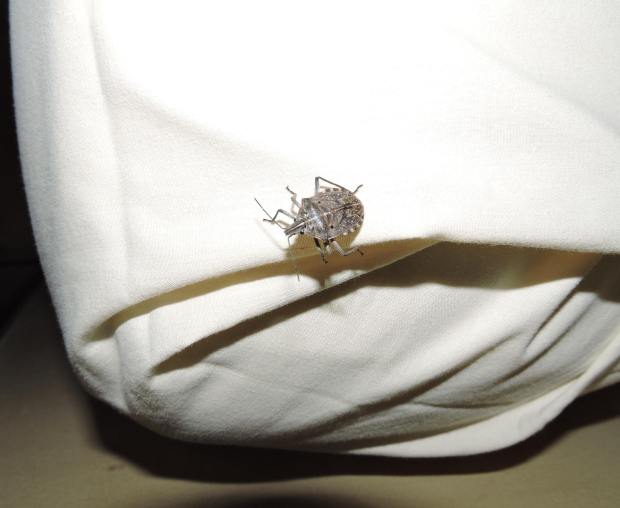
The story, however, does not end there. Before leaving the bed to go into the shower, I smelled something really unpleasant in my bed. Thinking that it was probably the residual effect of my unwashed status, I did not know the truth until I returned to the bedroom to dress up, and spotted a rather large stink bug crawling out of the sheets!
First sighting of the bug.
Although I do not know what took place during the night while I shared my sleep with the invertebrate, the latter was in poor condition and it sadly died a few minutes later! Luckily I managed to record its last living minutes so that I can show them to you.
It was immediately apparent that the beast was suffering.
It expired soon afterwards.
There was no doubt in my mind that overnighting with me in my “showerless” status had taken care of it!
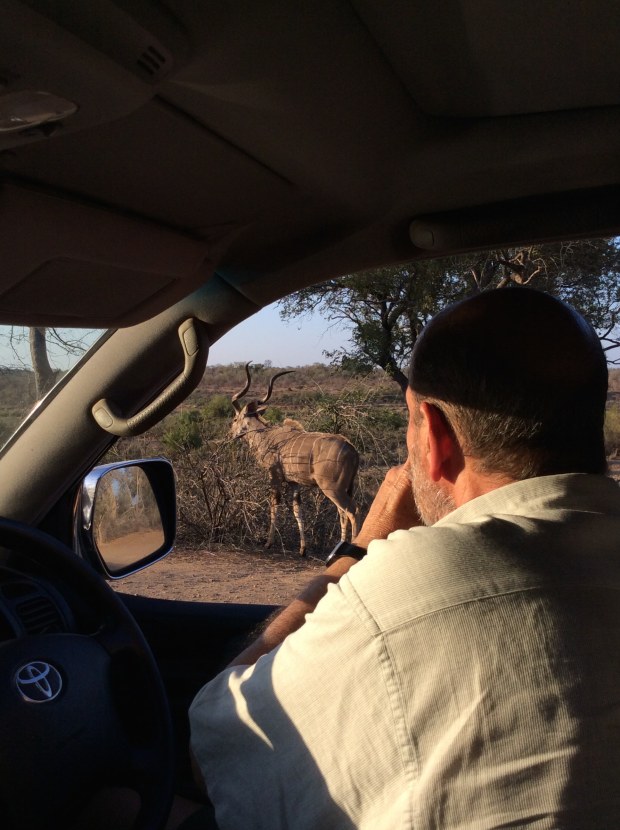
Unfazed by the temporary bug relationship, the bushsnob, sporting at least a clean shirt continued with his activities.
Bush lions are normally tolerant of vehicles, even the open tourist ones. The only aggression we have seen was related to times when mating was taking place and the male normally leaves no doubt about how close you should be! The situation can be different on foot when the utmost care is needed where these cats are concerned to avoid accidents.
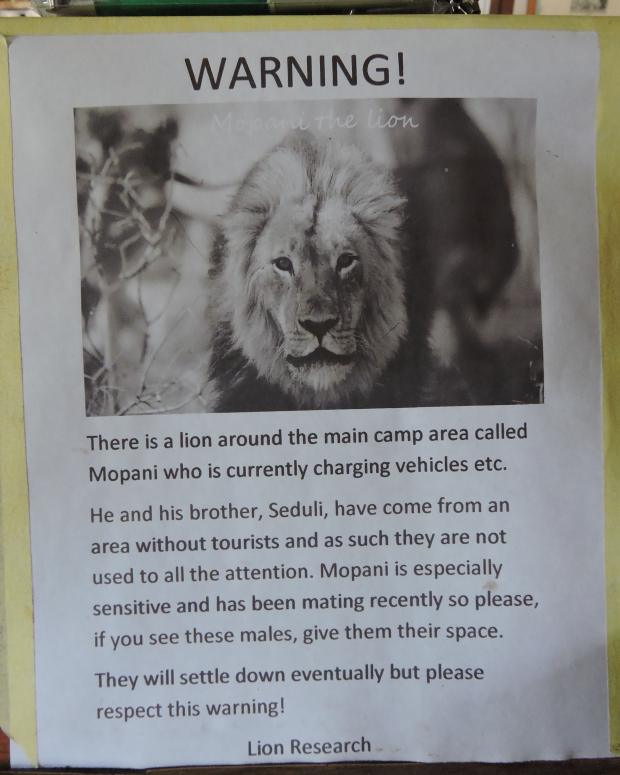
While checking in at Main Camp in Hwange National Park, we were warned of the existence of a new lion: Mopani[1]. The lion, explained a sign placed at the booking desk by the “Lion Project”, came from an area devoid of tourists and it was aggressive, charging vehicles! Siduli, another male, and two females accompanied it. We were also shown a video taken from a tourist vehicle being chased by Mopani and learnt that one of the females was in heat and mating with one of the males. We thought that Mopani’s progeny was assured and planned to keep our distance from him!
The lions had taken residence around the Main Camp area so we were delighted at our luck, as we were sure not to miss them! “Cecil may have gone but in comes Mopani!” was our thought!
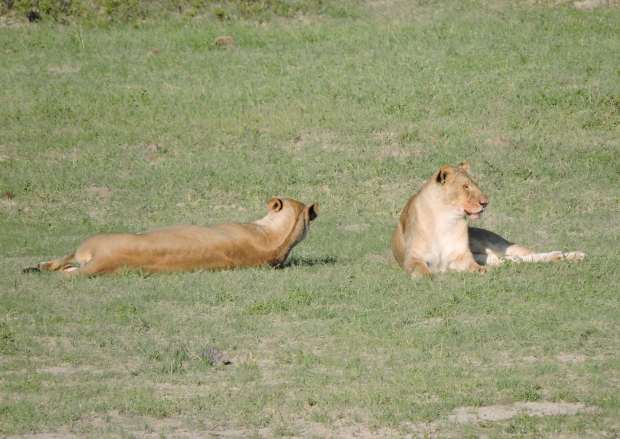
Although recently arrived from a longish trip, the possibility of spotting one of our all time favourite animals made us drop our luggage at the lodge and drive off in search of lions. We found the two females at Dom pan. They were clearly different: a paler one and a darker one. The latter appeared to be the older of the two.
After watching them for a while, a male came out of the bushes and greeted the darker one while the other moved away a short distance. Were we about to witness some mating? Not so as Mopani, who we assumed was the dominant male, only rubbed heads with the female and then moved off in the direction it came from, leaving the female pair alone until the day ended and it was time to get back to our lodge before the mandatory return time of 18:30hs.
We did not need to plan our next day activities as finding the lions again and spending time watching them was the only option! As a friend of mine says, “we slept in a hurry” and we were up before 06.00hs. No need for alarm clocks! We drove straight to Dom pan, as we believed that they would not have gone very far from there. On our way we realized that several migratory bird species were present at Hwange at the time. These were Crowned Cranes, Abdim and Woolly-Necked Storks, African Kites and Amur Falcons to name but a few!
Abdim stork drying its wings.
Crowned crane.
Abdim stork with unfortunate dung beetle!
Wooly-necked stork.
White stork.
We had little time for bird watching as the lions had killed a young elephant at Dom pan during the night and the two lionesses were feeding on it! After this find, most of our activities during the visit centred round Dom pan where we spent a lot of our time. We watched the lionesses feeding and interacting for several hours and I present you with a number of pictures and a video, as these are better than words. We only left them to return to the lodge for lunch and a rest.
When we came back during mid-afternoon, only the paler lioness was by the carcass. A search of the surrounding area revealed two lions laying together a few hundred metres from Dom. They were the mating pair: the darker female and a male that, to our surprise carried a radio collar. As we doubted that Mopani had one, it could only be Siduli. Clearly the lion that acts most ferociously towards cars is not necessarily the dominant when it comes to affairs of the heart! It was then clear that the male we had seen the day before was Siduli and that Mopani was hidden from view somewhere! But where?
Luckily my wife was with us as, if there was someone that could spot it, it would be her. And spot it she did, to our amazement, again! The wild-looking Mopani had been lying low under some bushes, unseen by anyone (except my wife) until then. It remained unobserved by our fellow game-spotters with the exception of another lady that clearly shared my wife’s eyesight. We thought it better that it remained unseen and got used to cars if it is to remain in a tourist area so we did not reveal its whereabouts.
All we saw of Mopani!
Another view of Mopani.
Mopani’s close-up
As Mopani was still not willing to socialize and remained sulking under a bush, we focussed on the others. Mating in lions is a long-lasting affair as the pair remains together and mating takes place often for a few days, while the female is still receptive to the male[2]. This was clearly the case, as they remained “occupied” for the rest of the time we were at Hwange. That left the other lioness guarding the elephant carcass and Mopani hidden from view! After a while it was time to move off.
Some of the birds we found on the way to Nyamandlovu.
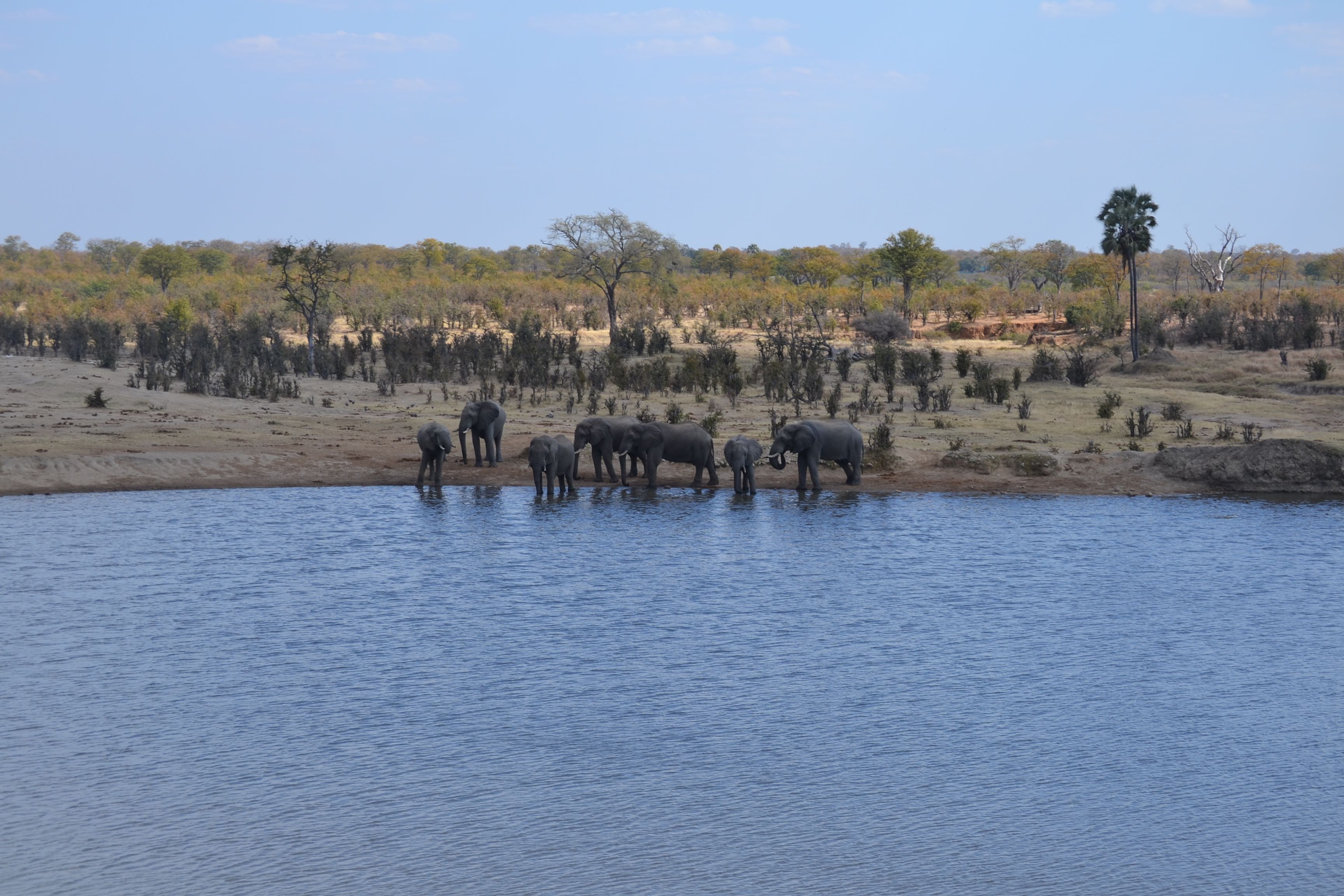
We drove to the Nyamandlovu pan as our daughter is very partial to elephants. Despite the abundance of drinking water all over the area, we were extremely lucky to witness the visit of a herd of about fifty animals that, as usual, appeared suddenly as if the product of a magic tree-to-elephant metamorphosis. The result was about one hour of one of the greatest shows on earth: elephants enjoying life at a water hole! There were about five family groups, each led by a matriarch and composed of its progeny, including some really young and tiny babies that were the centre of our attention.
The elephants not only drank but also entered the water where many were seen frolicking about and playing as only elephants are able to do among wild animals! It seemed to us that the latter were at risk of drowning while entering the water with their huge siblings and that they were under even more danger while swimming among them! Somehow they managed to keep their tiny trunks above the water and their mothers were extremely protective and they were always in close contact and ready to assist them!
The three resident hippos felt very uncomfortable at this sudden disturbance and two moved to the very centre of the pan while the third moved to the shore where it put up brave stance against the elephants, only to return to join the others as it was not at all respected by the excited pachyderms! Again, a picture gallery and videos are better than my limited power of description to let you know what took place.
The elephants’ joyfulness in the water delayed our return so we only drove past Dom pan, catching a glimpse of the lions who unwittingly startled a herd of 30 odd elephants intent on drinking from the pan, who retreated in a cloud of dust as soon as they caught sight of the lionesses. We arrived late at the gate where we were told off by a rather grumpy lady game ranger! The justification for our tardiness did not go far with her, clearly used to all sorts of excuses from people arriving late to camp!
The following morning, as expected, the lion pair continued their courtship, the pale female was still guarding the carcass and about fifty vultures (white-backed, white-headed, hooded and lapped-faced) were waiting on the side-lines for her to leave it. While in waiting, the Lappet-faced vulture was seen having a snack by pulling and cutting the dry tendons and sinews from an older dry elephant carcass that other vultures also shared once it opened up the hard bits!
Mopani, the antisocial, still preferred to remain out of sight! We can only hope that he starts turning into a more car-tolerant lion by accepting their presence as part of his daily life. Who knows, maybe one day he could become Cecil’s successor.
[1] To name wild animals or not to name! This is the question… for which I have no clear answer!
[2] Both leopards and lions have the same mating procedure. They can mate as often as every fifteen minutes for up to five days. This is the consequence of weak sperm and mating-induced ovulation.
As usual, things did not go according to plan! Masuma dam -in Hwange National Park- had changed slightly. A small and shallow bay had been formed to the benefit of the thirsty animals, in particular the impala, who could now drink in relative safety as the crocodiles could not ambush them like last year.
The new drinking place made it safer for animals to drink while the crocodiles wait.
This change in the architecture of the dam meant that the crocodiles (we counted six of them) were almost invariably sunning themselves on the banks of the dam in an apparent forced fast. There is no need to be concerned about them not eating, as they are able to survive long periods without food.
Hippo discussion.
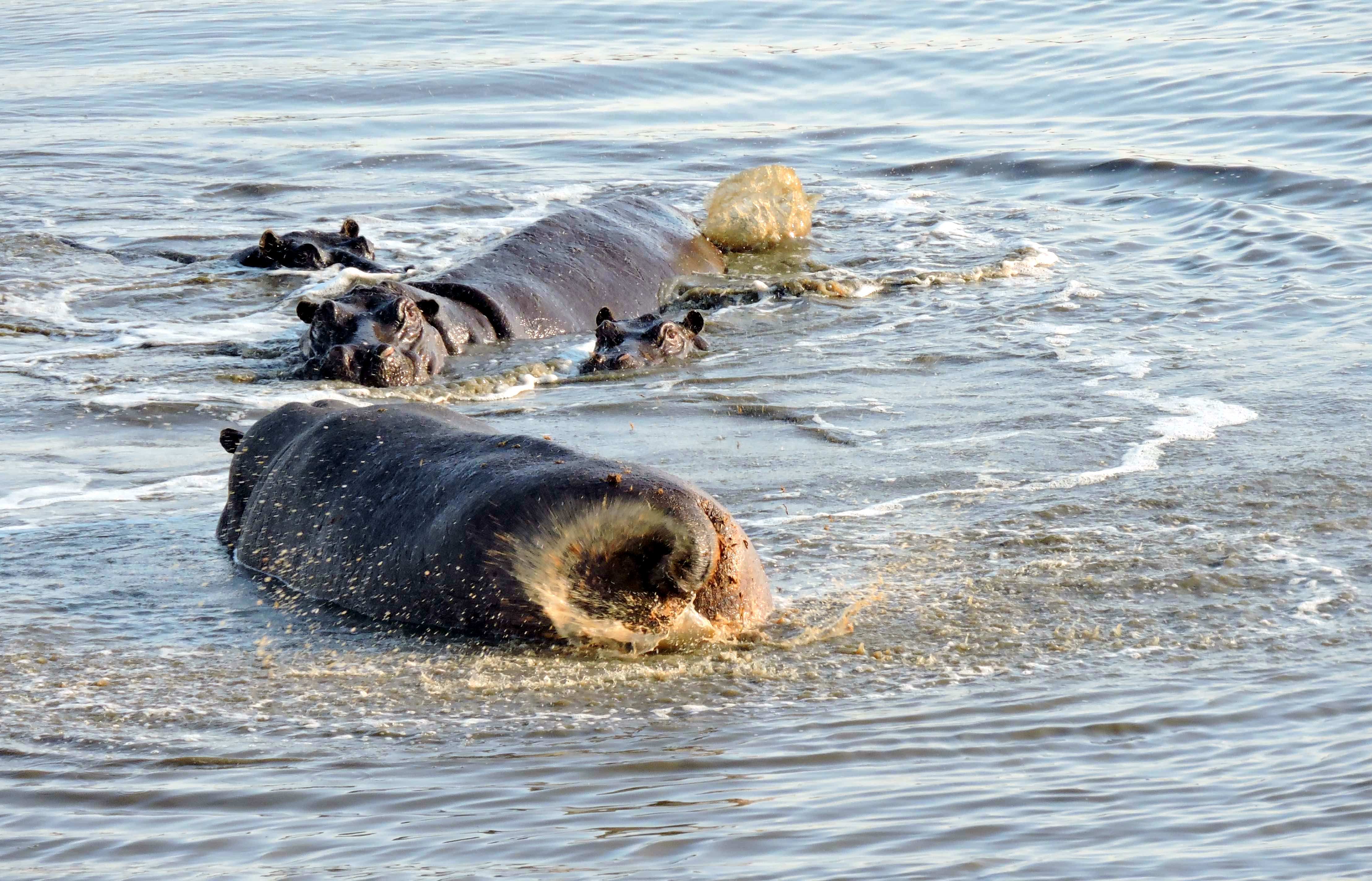
The sixteen hippos were also there. They behaved as one expects hippos to behave: most of the day time spent inside the water coming out for a “service” (sun, the occasional mud wallow and attention from oxpeckers) by lunch time and going out of the dam in the evening to graze. To achieve this they were forced to queue for sometime to squeeze between the drinking elephants! They spent most of their energy chasing each other inside the water snorting loudly and they were quite adept at showing us the end results of their digestion!
Hippos involved in “social” defecation…
We arrived at Masuma at lunchtime. We spotted a few elephants drinking on the opposite side of the dam but no fresh water was being pumped in.
The camp attendant anticipated my question telling me that lions were walking around the dam the night before and he did not dare to walk to switch on the pump! Needless to say that I obliged when he asked me for a lift to get there! While driving, keeping an eye for lions without seeing any, I learnt that a donor was providing diesel for the pump. “Once the pump is on the elephants will come” proclaimed the camp attendant after the engine started puffing. He also informed me that a full tank of diesel would operate the pump for twelve hours. “Twelve hours would take us through most of the night”, I thought while I mentally thanked the benefactor and hoped that the camp attendant was correct in his prediction.
All shyness lost when getting close to the water!
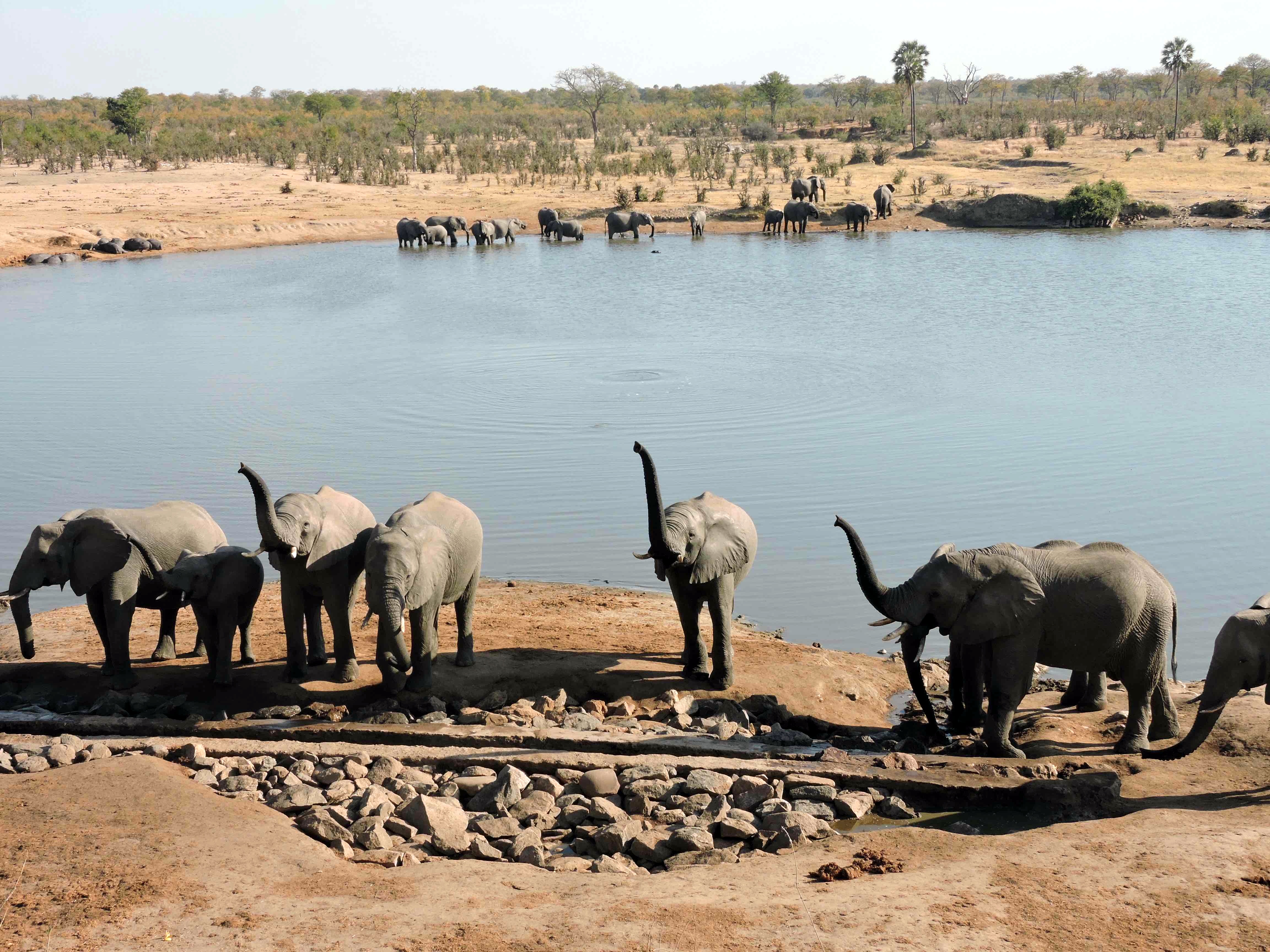
Fortunately, as predicted by the camp attendant, the first elephants started to arrive within an hour of our return! Whether they smelled the fresh water or associated the pump noise with fresh water I could not say but the latter seems the most likely. The fact was that they made a beeline for the pipe producing the fresh water, ignoring the rest of the dam if possible! However, as the place got more and more crowded, the incoming families had to wait until those that had arrived earlier satiated their thirst or enter into the dam and drink less clean water.
The arrival of the first elephants took place at about 14.00 hours. By then we had already set up camp so we were ready for one of the greatest sights on earth: herds of thirsty elephants coming to drink! Your eyes get tired of gazing towards the confines of the bush that surrounds the dam and you need to stop for your eyes to rest. A few seconds later, when you resume your watch there they are as if they magically appeared in front of your eyes! They come out of the bushes in what appears to be a slow motion walk.
The miracle continues as more come into sight. Their slowness does not last long as, with raised trunks, they sniff the fresh water and their pace gets gradually faster as they approach it. It all ends with them breaking into a run to cover the last few metres, the baggy trousers that are their back legs flapping! Their run ends at the water’s edge where they drink showing their pleasure by shaking the water with their trunks and spilling it all over the place while drinking. Sometimes their run takes them into the water where they not only drink but also proceed to frolic like young humans!
Smelling us!
Although we are used to seeing large herds of thirsty herbivores coming to a water source, they do so in a rather apathetic way. There is nothing like that when thirsty elephants smell water and I can assure you that their emotions show!
Once in the waterhole, their immediate thirst abated, the animals become quiet while making the best of the available water. They do vie for the best position but they do so rather discretely. Normally the larger animals occupy the best spots. These are bulls that come either singly or in small groups and join the drinking party for a while and then leave the way they came: on their own as normally they only join the female family units when there is one on heat.
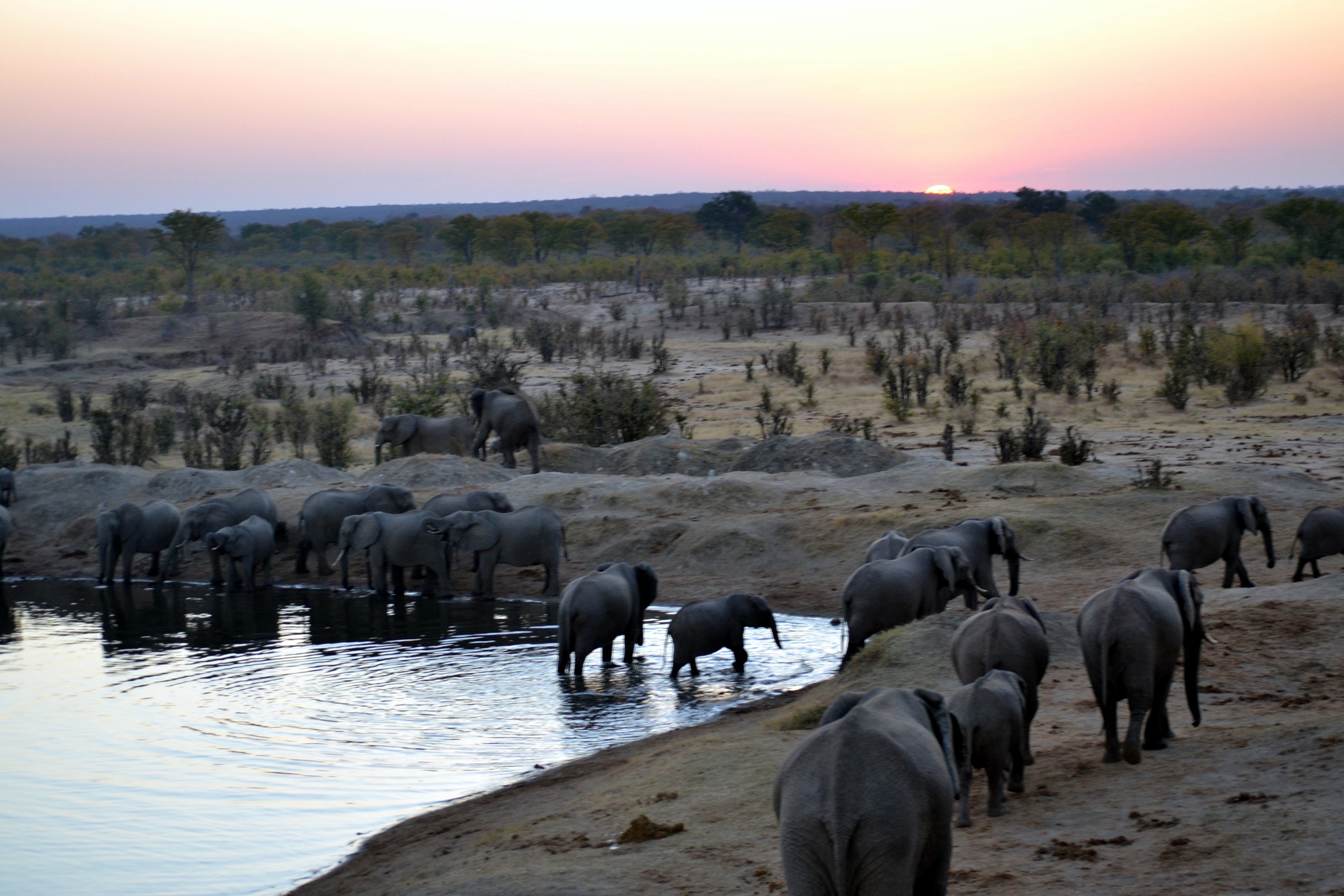
At sunset, the show continued unabated.
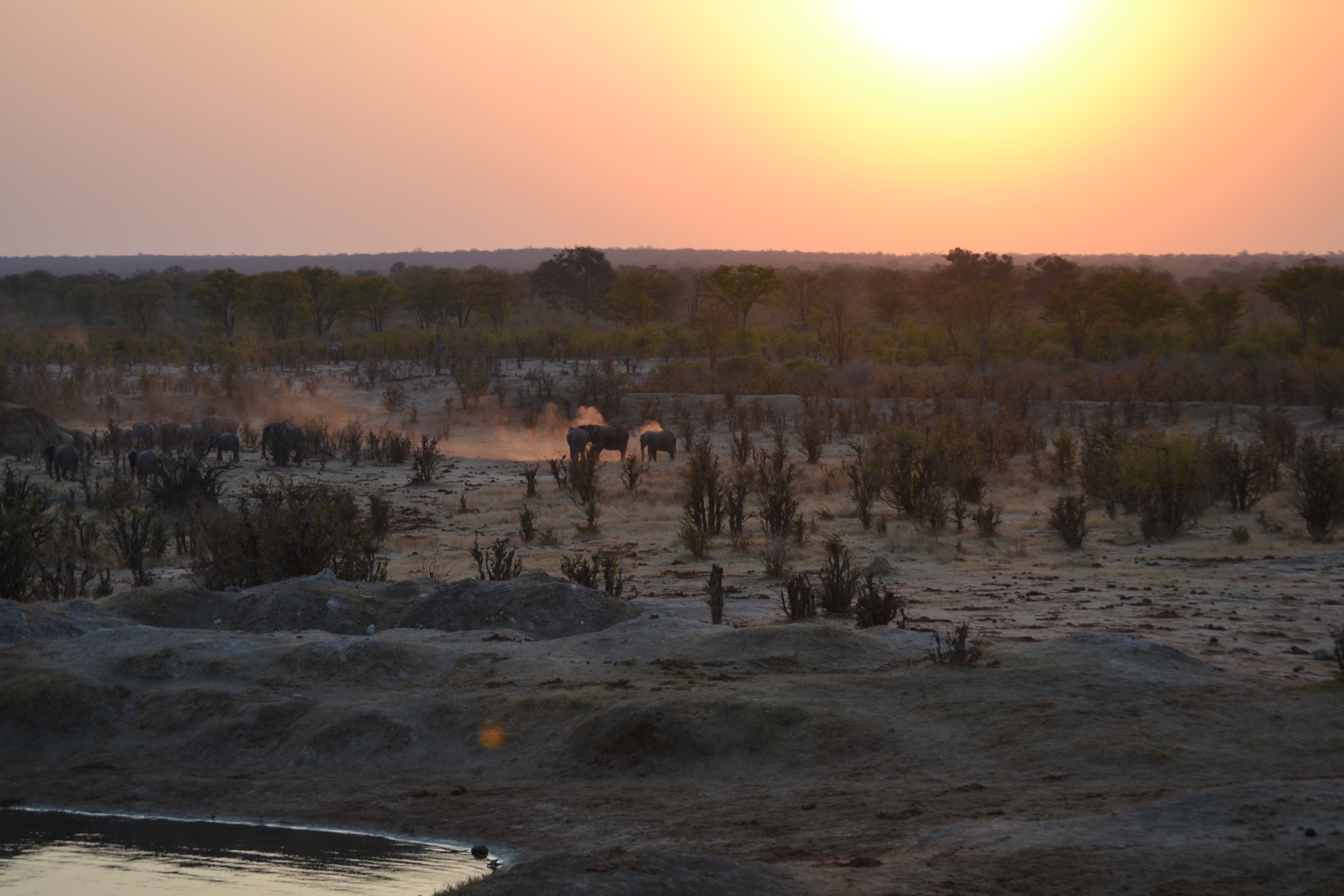
After bathing it was dusting time to cool off.
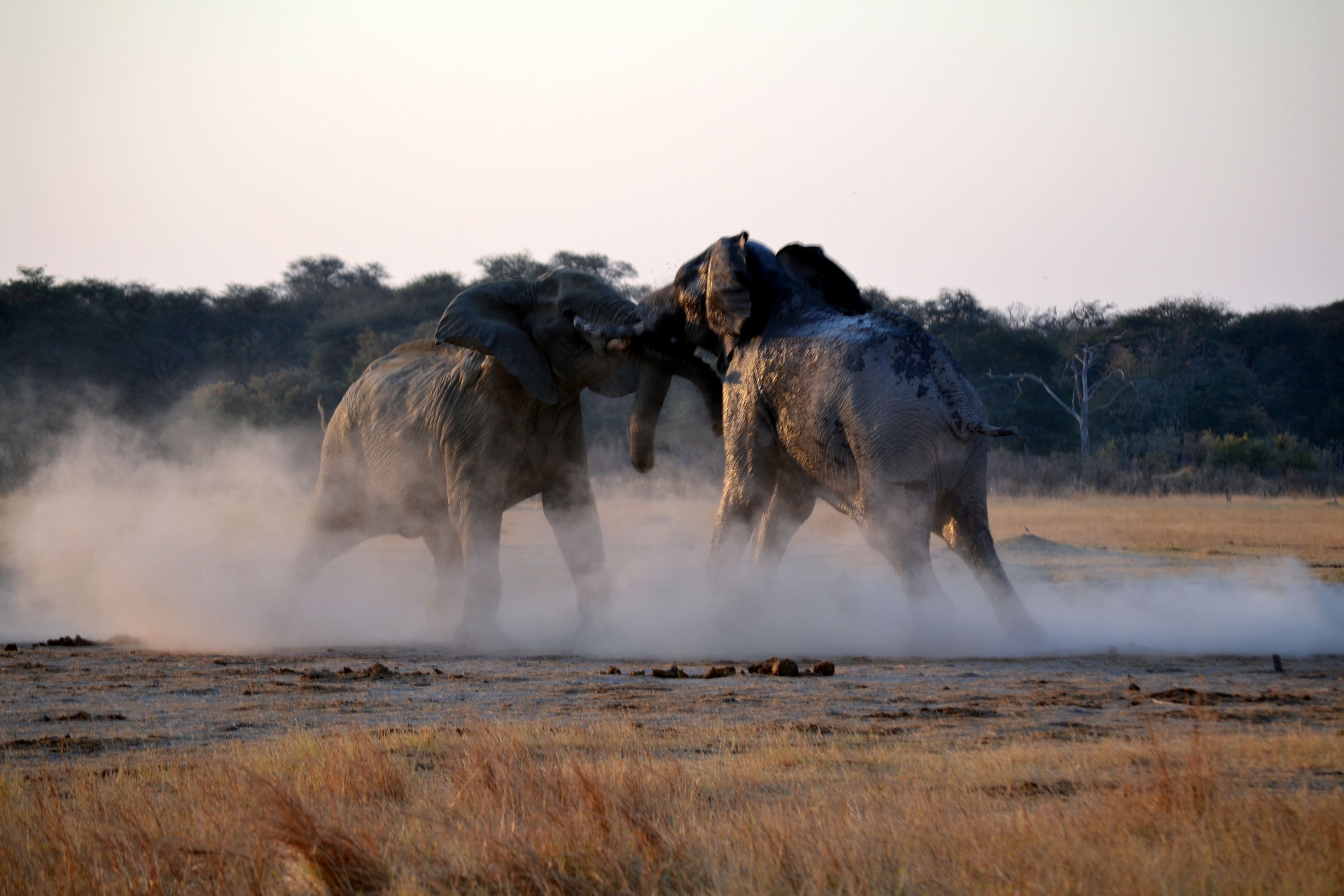
Occasionally youngsters manage to squeeze in between the tusker behemoths and timidly at first but quite boldly later manage to stick their small trunks into the right spot to get a share of the fresh flowing water. Loud squealing indicates when one of them oversteps the mark and is put back in its place with a shove! Adults show each other respect and only rarely do their interactions go beyond posturing. Overt aggression rarely takes place, and on the occasions that is does, it is normally short-lived. After an initial head clash, often quite violent, one of the rivals withdraws tail up and maintains a prudent distance thereafter! We saw this happening a few times at Masuma.
It is usually a rather gently affair.
On occasions, however, things do go badly as shown by the chunks of ivory found at waterholes. The most extreme outcome I have ever seen is the skull with a hole made by a tusk on display at the Letaba Elephant Hall in the Kruger National Park. Wapiganapo tembo nyasi huumi” in Swahili means “When elephants fight the grass gets hurt”, a very accurate proverb to describe what you see in these situations! We saw quite a serious confrontation at Kennedy 2 dam near Ngweshla but, luckily, one of the bulls gave up before things got out of hand and the dust eventually settled.
Ocasionally things get out of hand.
Their great strength is evident.
Eventually they separate and the “loser” moves off .
The elephant parade at Masuma continued throughout the whole afternoon and well into the evening. They paid no attention to the noisy arrival and departure at dusk of large numbers of banded grouse.
Elephants drinking at sunset.
We stopped watching them for a while to have dinner but their noise stayed with us, as the herds were a few steps from our elevated camp. With dinner over it was time to go back to observe them again with the fading light. They were clearly wearier and their trunks rose more often to smell us and confirm our presence. Belly rumbling also became more frequent and louder. I was aware that the latter is believed to be a communication method among elephants but I did not know that the rumbling moves from animal to animal in a herd, in order to make sure that it reaches the last individual in the herd. Fascinating stuff!
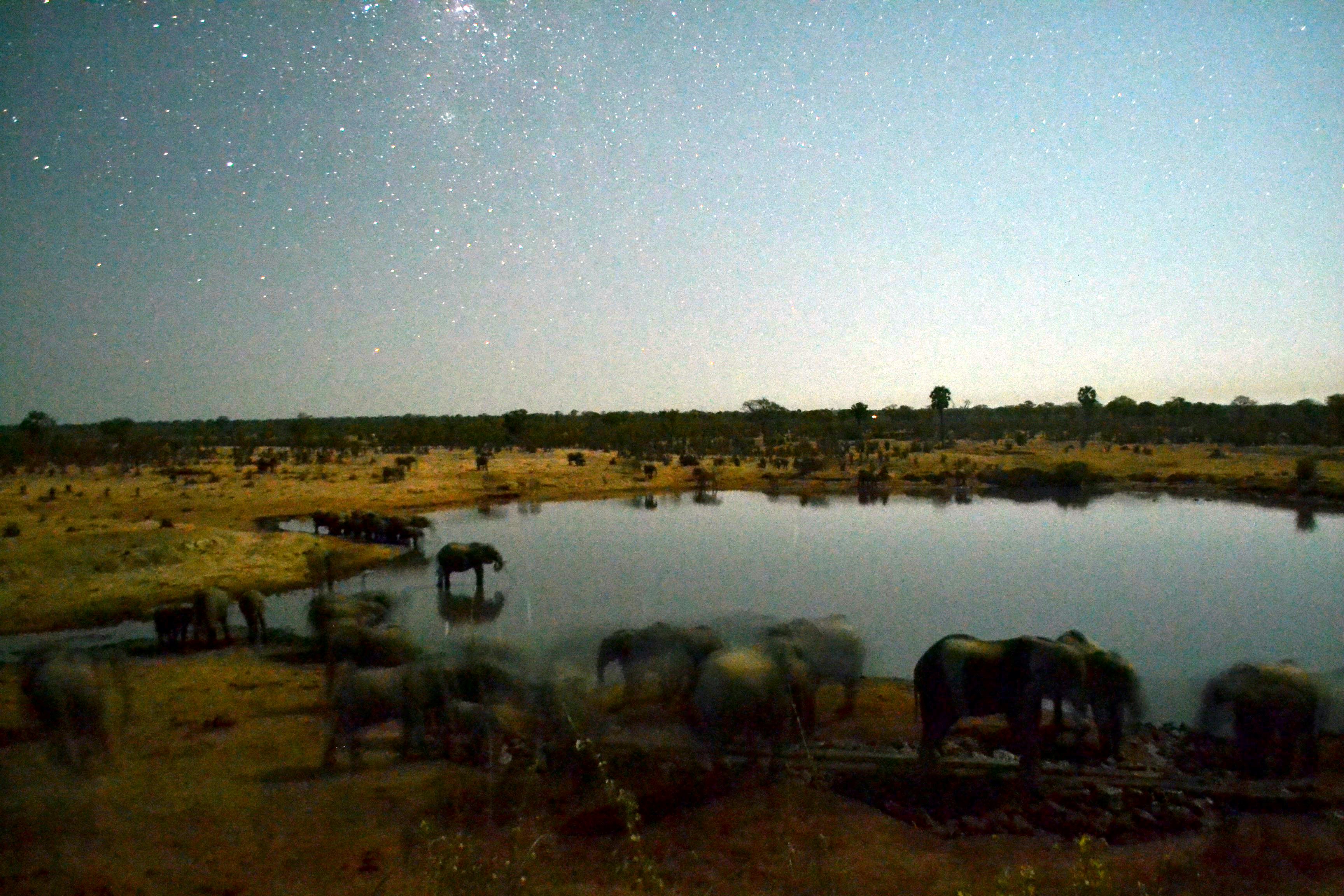
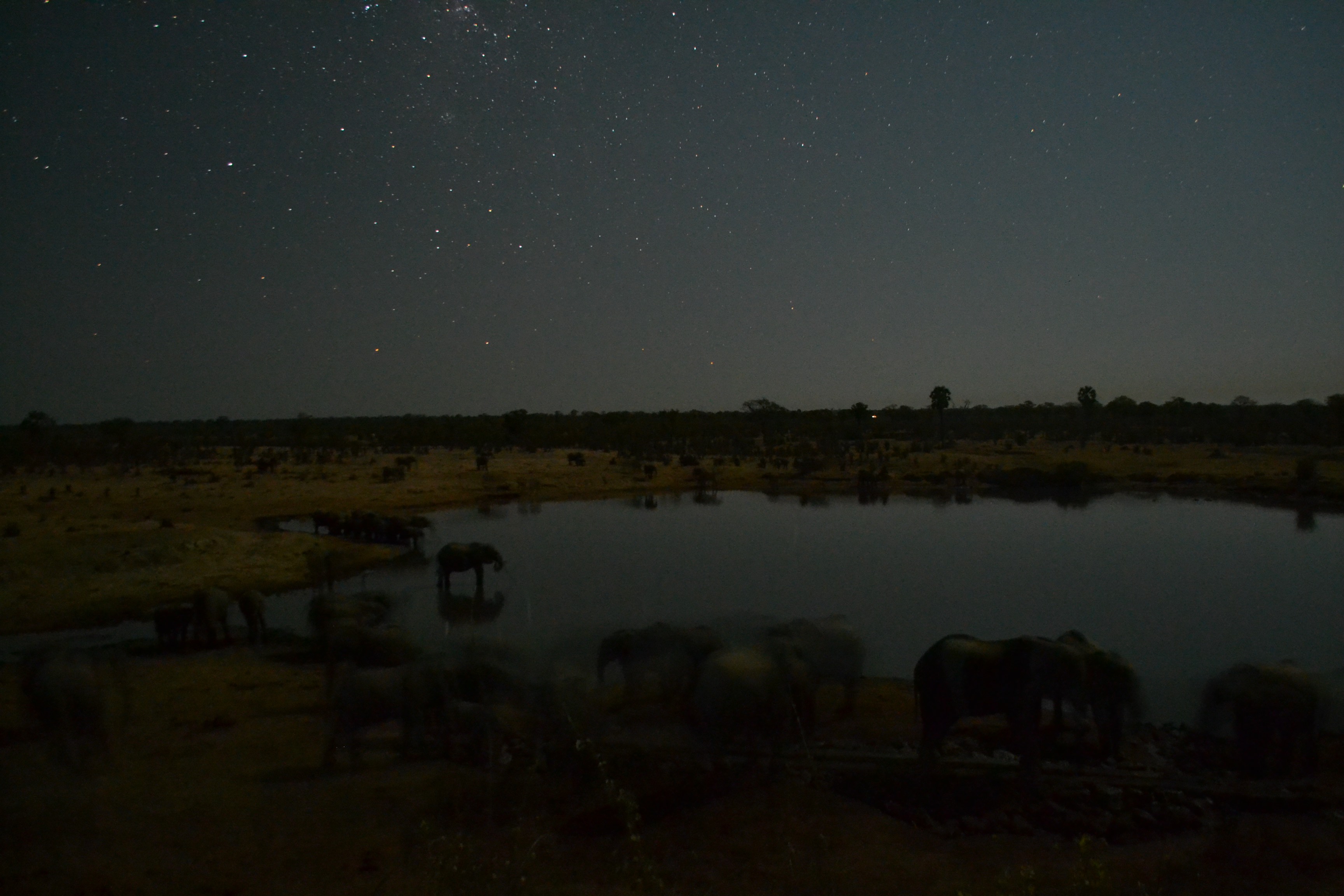
A night picture of the dam with drinking elephants. I applied the Picasa “I am feeling lucky” command to get light into the picture. Even the stars can be seen better!
The original picture, above.
After a long while we were getting ready to go to bed when the moon started to illuminate the bush across the dam so we decided to wait a while longer. It was well worth it! The moon was almost full and it cast an eerie light over the moving dark grey masses. Absorbed by this rare vision we remained on the watch and for a while forgot our sleep. We stayed with them until they started to move off and only a handful of bulls remained until about 2 am. It is probable that their withdrawal matched the end of the pump’s diesel and their departure brought calm to the dam and we could enjoy a silent African night for a while until the lions started to roar in the distance!
The following morning, apart from the fresh droppings, nothing gave away what we had witnessed a few hours earlier.