Author: bushsnob

Spot the beast 40

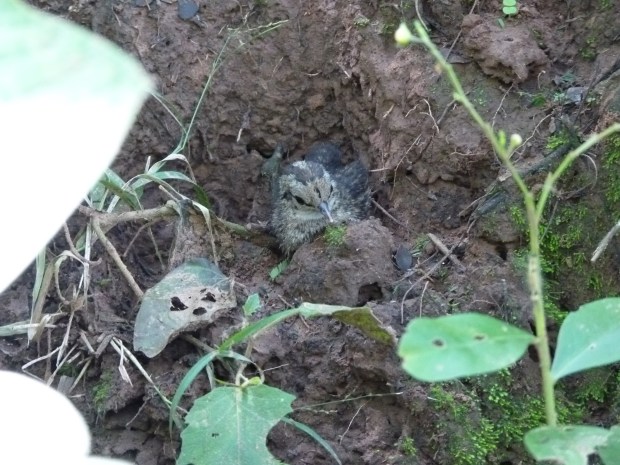
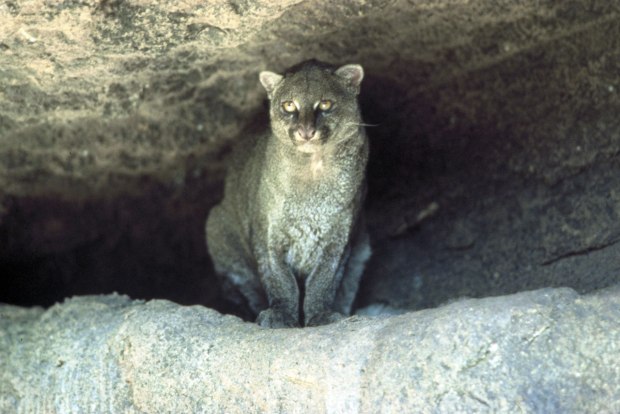
This took place while walking up the hill in Itiyuro in search of the macaws. See my earlier post.

For a change I spotted this little fellow running and then lost it when it stopped. After a while searching it moved again at the time that we were almost about to abandon our search.

I am sure that you will find it.

20180331_121041 copy ?
?
?
?
?
?
?
?
?
?

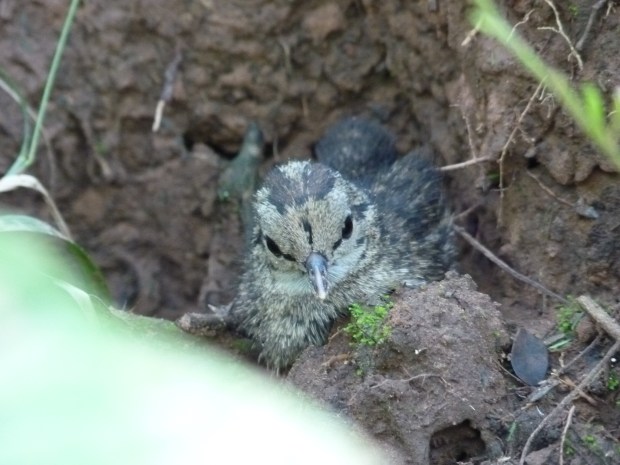
Just in case you did not spot it, I took a couple more pictures as it was really a nice youngster although we could not identify it.

P1180957 copy

P1180960 copy

Safari to Itiyuro

There are 979 bird species in Argentina [1] and 656 (67%) of them are found in Salta Province [2], one of the reasons that prompted us to get our small farm located in the foothills of the Andes mountains.

Although quite familiar with Eastern and Southern African birds, we try to keep up with those present in Salta but it is a rather hard job to remember the vernacular names of the species present. That is why we are lucky to have our own resident ornithologist in the shape of Oscar, the owner of the farm next door!

We often consult him on bird (and other) matters and he does not disappoint us. So, when he and Ágata -his wife- invited us for a trip to the Itiyuro-Tuyunti (Itiyuro) dam to watch some unique birds, we readily accepted although we have not eard of the place before! It was only later that we learnt that the place was actually located about 350km from our farm on the very Northeastern part of Argentina, very close to the border with Bolivia.

The idea was to stay two nights at a Government house close to the dam while accompanying Oscar on his bird census work as well as trying to spot some “specials” of the area such as the Military macaw (Guacamayo verde in Spanish), Ara militaris and the Yellow-collared macaw (Maracana Cuello Dorado), Primolius auricollis among other birds, some of which are not easy to see.

We left our farms at about 08:30hs and travelled North through a mixture of farmland and sub-tropical hills framed by the snow-capped pre-Andes in the distance. The latter showed a rather heavy snow cover despite being quite early in the year and added a great contrast with the heat of the area we were moving through.

After a brief stop at the bridge over the San Francisco river where -from some fishermen- I learnt that some good fishing for dorado, surubí, patí and other species is possible. The San Francisco flows into the Bermejo (some info on the Bermejo) and the fish move upstream.

“We did not catch anything this time. The water is too muddy” they said and then, showing me their arms added “no fish but the marigüis are plentiful”. I felt sorry to see the number of bits they hd suffered and memories of fishing in Bolivia under a similar “challenge” came back. I made a note to come prepared if I ever attempted fishing there!

Before we finally got to Itiyuro we stopped again to buy fruits and veggies at Pichanal as the offer was very tempting and we could do with good avocados, papaws and bananas. I also spotted some special medicinal honey from the local Moro-moro bees and made a note to buy a jar for Nena -a friend in Salta- on the way back.

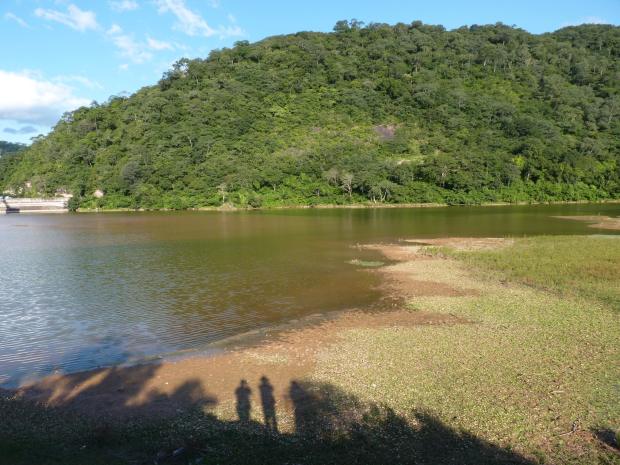
After quite a mission to find the keys for our house, we got to Itiyuro in mid afternoon, a bit later than planned but still in good time to try to watch the macaws’ “fly-over” that Oscar knew takes place after 16:00hs. We were lucky to see a number of Golden-collared macaws flying overhead, returning to their roosting places.
P1180922 copy

The dam.

We were disappointed not to see any of the “specials” of the place, the Military macaws. This bird of about 65cm in length has a red forehead and an overall bluish tinge to its plumage while its face is rosy with black lines like some other of the macaw species. Its distribution in Argentina is stated as “Yungas (a small population North of Salta)” [1] so our willingness to see them increased. “Do not worry” said Oscar, “tomorrow we have a chance of walking towards a special area where -if very lucky- we can see them”
P1190033 copy

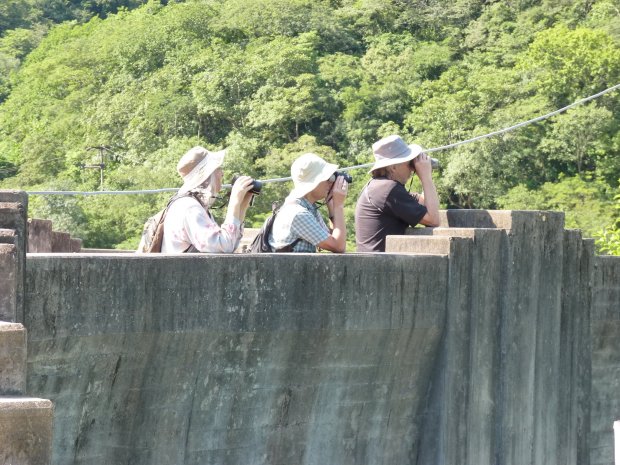
Keeping watch for the macaws.

P1180919 copy

Although we watched a few water birds at the dam, our sights were already set on finding the rare Military macaws. We learnt from Oscar that the “top spot” for the macaws required a 20km walk and he added “the path is wide and we may be able to cross the river with the car so we can save about 2km”. We estimated that our daily walks had kept us fit enough to attempt it. Before going back to our house we drove to the river and realized that crossing with the car was out of the question.

Although the depth could be negotiated and the bottom was quite firm, the access to the road on the opposite bank had been washed away and a 4WD pick-up that had tried to cross was still submerged in the river with water up to its seats! Its occupants were digging while waiting for another car to tow them back. We left knowing that the following day we would have to ford the river on foot and walk the distance.

So, after the customary asado (barbeque) accompanied with roasted sweet potatoes and a bottle of an excellent Cabernet Franc, we prepared our bags for the following day and went to sleep. Apart from binoculars and cameras we needed to pack sufficient water, food and -above all- insect repellent as we remembered our experiences of walking in the Madidi National Park in Bolivia where the marigüis (a Simulid of ths sandfly kind) were worse than the piranhas!

Although we planned an early start we realized that senior citizens required more sleeping time in the tropics so we got somehow delayed by about one hour. Despite this we decided to set off anyway as the walk offered other attractions apart from seeing the macaws and the weather was superb. So, the plan was adjusted accordingly to take in the possible higher temperatures to be suffered and we agreed that if we felt strong we would aim for the “máximo” (top spot), otherwise we could turn around earlier. The top spot we were cheerfully informed by Oscar was worthwhile.

Oscar guided us. He had visited the place a couple of times before and had a GPS with the top spot in its memory. Although the intention is to preserve the area as a protected area in the future, at the time of our walk there were no facilities in place apart from the road opened up sometime ago during the exploration for oil and gas.

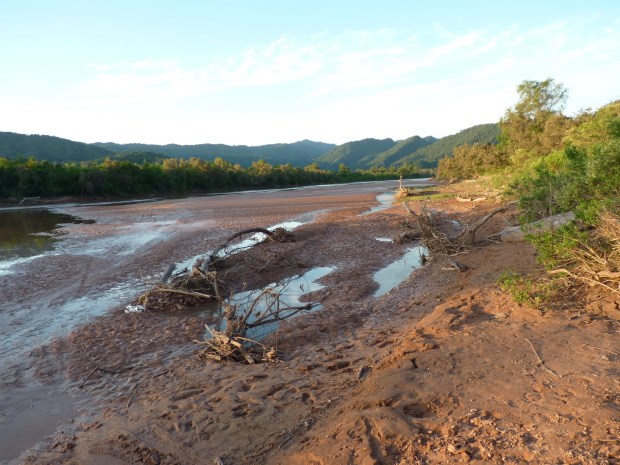
So we walked across the murky river and succeeded as -luckily- the bottom was clean sandy-clay and no yacarés (caimans), stingrays or piranhas lurked under the surface. More importantly for me, the water temperature was rather pleasant…
P1190006 copy

Once across we were treated to a few interesting birds in the riverine forest. The most visible and interesting were a Toco Toucan (Ramphastos toco) and a Blue-crowned Trogon (Trogon curucui), the latter quite similar to Narina’s trogon, found in Africa. As if these two beautiful birds would not be enough, suddenly Oscar pointed to the sky and there, in all its glory, an Andean condor gave as a display of its amazing gliding skills, a beautiful sight considering that we were at a sub-tropical forest.

Not crossing the river in the car was a “blessing in disguise”. A few hundred metres forward we came to some heavy eroded area where the wooden bridge that we would have used with our car had been destroyed by flooding and we would only have been able to make use of our motorized transportation for a few metres after crossing the river!

And then we walked! It was mostly uphill although a few descents to alleviate our legs also appeared. The first stage of about 5km would take us to some human habitation known as “the Post” where we could rest and decide whether to go on or return to base.
P1180968 copy

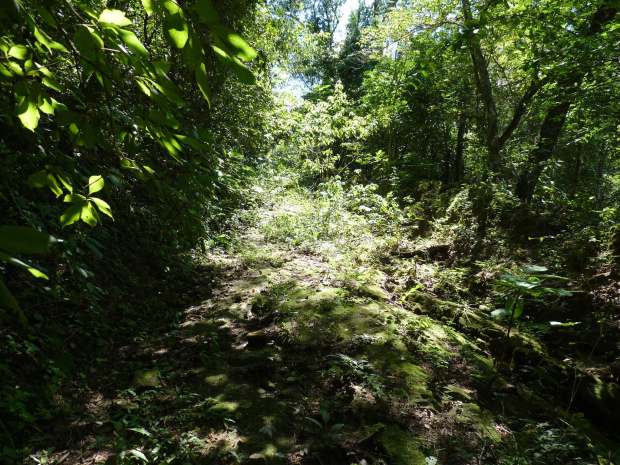
The path to the Post.

While moving through the forest we saw few birds and most were “flashes” of colour across the path as it is usually the case in rather thick cover. Despite this, we observed footprints from peccaries and red brockets as well as a number of interesting insects, flowers and fungi, apart from the magnificent trees and climbing vines that surrounded us. Luckily, our repellent was working and the marigüis were kept in check, at least most of them.
P1180983 copy

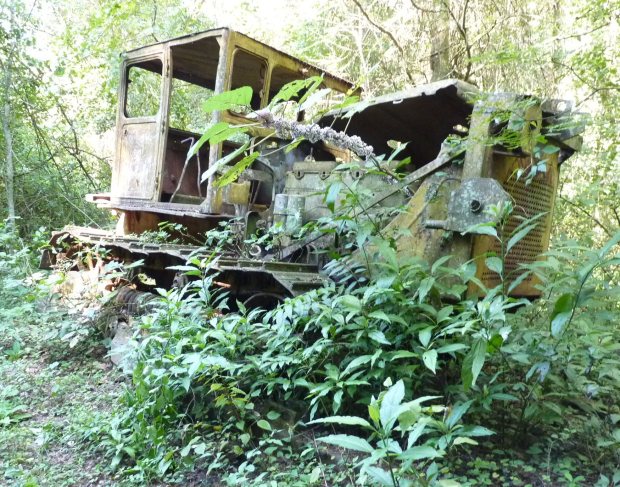
Before arriving to the Post we found an old earthmover resting in the foliage. Judging by its condition it had been in this place for a few years, most likely from the times of the oil and gas prospection that took place during the 1900’s. I had been abandoned after having done its duty of opening the road.
P1180937 copy

I climbed on it to have a look hearing Oscar’s warning about looking our for snakes as these tend to find refuge inside old machines. A quick look did not reveal its make but I could see a rather powerful eight-cylinder engine that, unless some major mechanical work is done to it, will not start again.

Oscar, the conservationist, said “this looks like the revenge of the forest against its destroyer” and he walked on.

After about 90 minutes we arrived to the Post and needed to decide whether we continued to the top spot or took a detour back to our car through another dam known as the “Limoncito” (small lemon) that was quickly re-named “Lemoncello” by the mostly Italian-influenced crowd.

We unanimously decided to continue agreeing that we were already half-way and that we may never had the chance again! So, we calculated that it was 11:30hs and we would need another two to get to the place, an hour to observe the area and possible macaws and then return the 10km at one go! As the latter were mostly downhill, we estimated 3 hours so we would just make it with enough daylight to ford the wide river back. We set 15:00hs as our latest return time and set off again after a welcomed drinking stop.

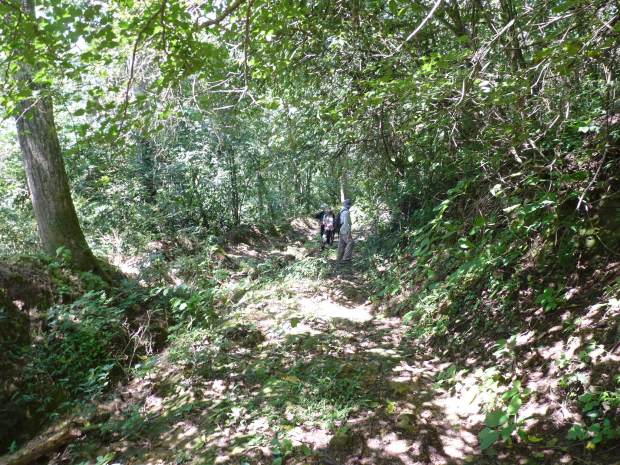
The way beyond the Post was tougher! The going was mainly uphill through a narrow and often muddy path. We climbed for about 5km until Oscar estimated that we needed to leave the path to deviate down a steep ravine in order to find the stony bed of a normally dry stream that would take us to the top spot. To find the right turning was hard as the floods that had taken place after Oscar’s last visit had dramatically changed the landscape. Despite the GPS, he could not find the right path down!
P1180969 copy

After a few fruitless attempts at finding the right path we decided that it was a good time to pause, have lunch and rest a bit. It was a rather forlorn group that sat on tree trunks rest and recharge energies.

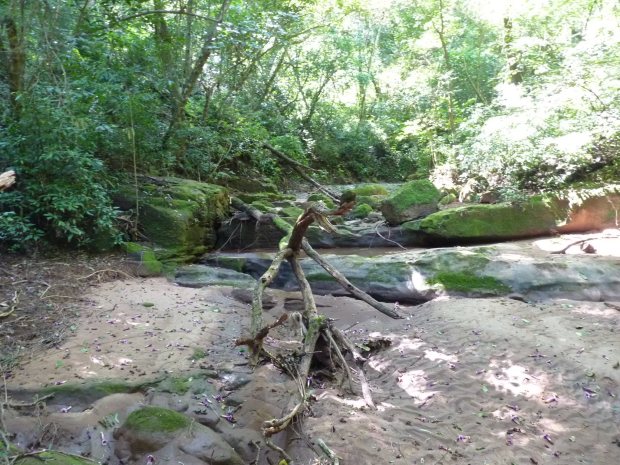
Luckily, the pause had a positive effect as, soon afterwards, Oscar located the begining of the path and we managed to move in the right direction. A large tree had fallen and pulled down the foliage around it, blocking the usual entrance. We climbed down the ravine and followed the stony stream where we negotiated some high stone steps until, about 200m further we could see some light among the trees. We continued our walk towards the light and then we could go no longer and we just looked forward in silence.

The path/stream on which we were walking ended in what clearly during the rains is a spectacular waterfall but that now it was dry and offered a great platform from where to watch the beautiful forested gorge that opened in front of us. We had reached the top spot!
P1180989 copy

The “lost” path re-found.

P1180994 copy

Some of the steep steps we negotiated

Just before we settled down a Peregrine falcon (identified by Oscar) flew across the opening and it was gone at high speed. We sat down facing the gorge and, at the distance, some red cliffs were seen.
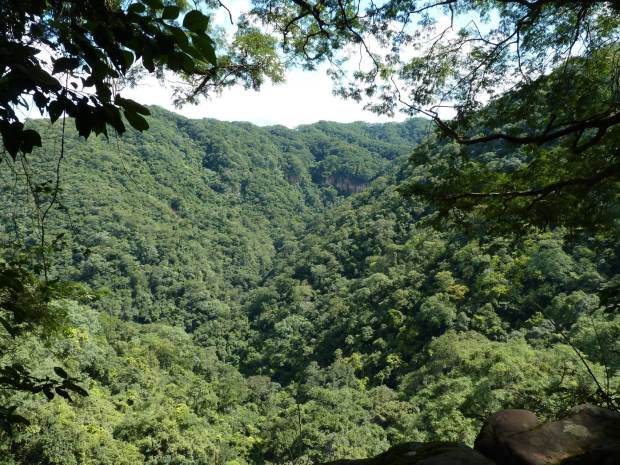
P1180991 copy

The macaw cliffs are seen in the distance.
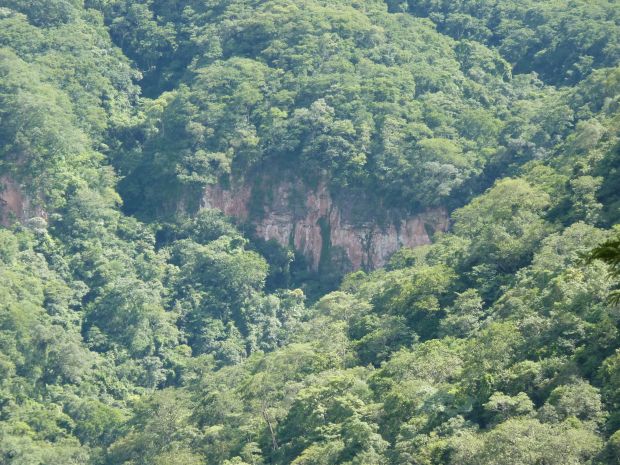
P1180992 copy

The cliffs zoomed in.

Oscar informed us that the macaws liked to come there and they were seen at the cliffs although nesting there was not confirmed. If very lucky, they would get closer. We waited and watched. As the difficulties finding the right place had delayed us, we also delayed our departure to 16:00hs to give us sometime to wait for the macaws and to rest.

The cliffs were a few hundred metres from us so I had not much hope of seeing much as -for the sake of saving weight- I had only small binoculars! A bad choice but one that was too late to regret! We sat in silence and waited. After about 30 minutes we heard the classical loud calls of the macaws and my wife (who else?) spotted four of them flying from the cliffs towards the forest behind. There were about three seconds of birding and I saw nothing!
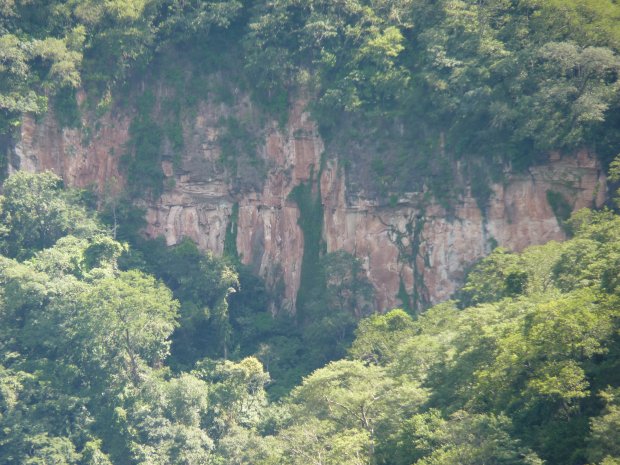
P1180993 copy

The fleeting sighting of the macaws took place here

As our departure time approached and nothing else had happened after the fleeting view, we decided to extend our departure time by another few minutes as we estimated that, as the way back would be mostly downhill and assuming that this would enable to walk faster, we could still make it with some daylight left. Our decision proved to be wise. AGain we hear the loud calls and probably the same 4 birds returned to the cliffs. This time I was better prepared and managed to see them, long-tailed and bluish against the emerald green of the surrounding forest!

After that second sighting (only sighting for me!) it was time to go. The going was downhill indeed and we did walk faster. I also lived up to my reputation of falling in forest paths (particularly when watching macaws!) and I fell in the mud! Luckily there were lots of tender branches that counterbalanced my fall and I survived.

Without any further hitches we managed to get back to the wide river in time and, after a deserved swim in its muddy waters by those members of the party that were well preapred and had swimming trunks (Ágata and Oscar), we were able to get back, thirsty, tired, stung by marigüis and sunburnt but happy to had seen birds that although we hope will endure forever, may not be there for very long.

These are a couple of embedded pictures from Getty images for you to see what we were after and managed to see in the distance!

Embed from Getty Images Embed from Getty Images


[1] Narosky, T. & Matarasso, H. (2010). Checklist Argentina. Aves, Birds. Vazquez Mazzini Eds. 60p.

[2] Moschione, F., Spitznagel, O. & González, M. (2013). Lista de Aves de Salta. Birds Checklist. Gobierno de la Provincia de Salta. Ministerio de Cultura y Turismo. 49p.

Final Note:

Oscar saw or heard 117 species and I managed 63 that I actually saw. Not a bad number for a weekend spent mainly in a forest. Some of the interesting species seen by the bushsnob, apart from the macaws were:

Roseate spoonbill (Espátula Rosada), Platalea ajaja

Swallow-tailed kite (Milano Tijereta), Elanoides forficatus

Real Ornate hawk-eagle (Aguila Crestuda), Spizaetus ornatus

Squirrel cuckoo (Tingazú), Piaya cayana

Crested oropendola (Yapú), Psarocolius decumanus
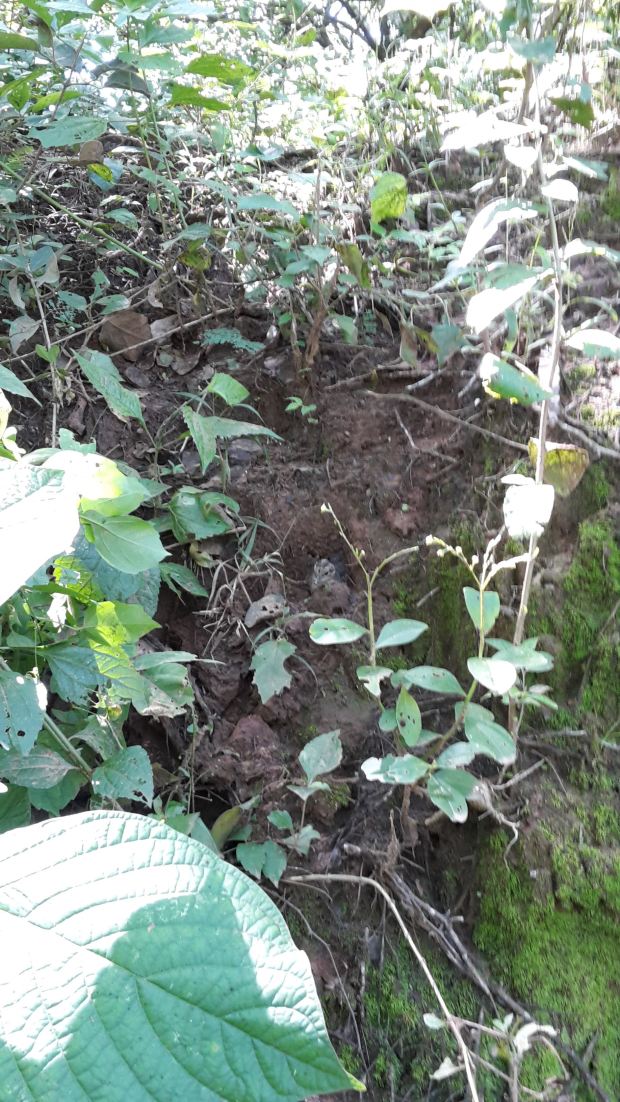


Jaguarundi

A Herpailurus yaguarondi known locally as yaguarundi run in front of our car on the way to the Itiyuro-Yuyunti dam. Although I will soon describe the actual “expedition” that too us to that most northerly part of Argentina, I thought that t”he jaguarundi that crossed the road” offers a good opportunity to focus on this species that I ignored until a couple of years back.

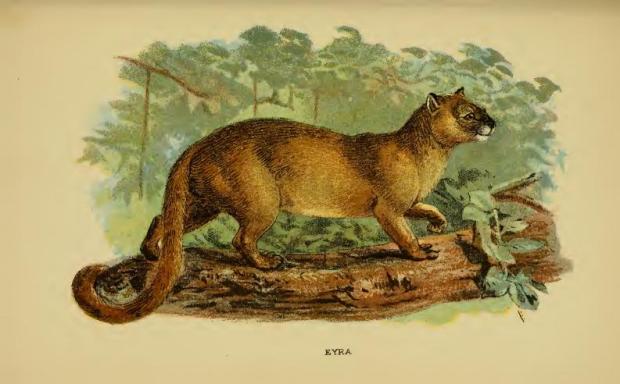
This small cat, also known as eyra is native to southern North America and South America. It is, so far, doing quite well according to the information from the IUCN Red List that gives it the Least Concern status. However, its long-term future only seems assured in the large reserves of the Amazon basin. [1]

The jaguarundi stands low on the ground with a body length of 50-70cm and a rather long tail (30 to 60cm). The ears are short and rounded and the coat varies from blackish to brownish-grey (grey phase) or foxy red to chestnut (red phase) and litters can have individuals of various colours in them.

Jaguarundi-tob-2007-01-09.jpg

Picture credit: Halvorsen, Gary [Public domain], via Wikimedia Commons

Unlike other cats found in the region, jaguarundis are mainly diurnal and therefore more likely to be spotted. Although they can climb trees they spend most of the time on the ground where they hunt for almost any small animal they can catch such as rodents, reptiles and birds. They are, however, able to capture larger prey such as rabbits and opossums and they had seen also feeding on fish.

Mostly solitary their home range is very variable, from a few to almost one hundred square kilometres. Their call is also variable and they can purr, whistle, yap and chatter! They can even chirp like birds!


jaguarundi

Drawing credit: Wyman & Sons Limited – Lloyd’s Natural History: “A hand-book to the Carnivora. Part 1, Cats, civets, and mongoose”[1] by Richard Lydekker.

So, a very little known but not less interesting small cat that has been observed in the area of our farm although we have never seen it. No doubt that after this brief sighting we will keep our eyes open for them.


[1] https://en.wikipedia.org/wiki/Jaguarundi. Consulted on 7 April 2018.


Spot the beast 39

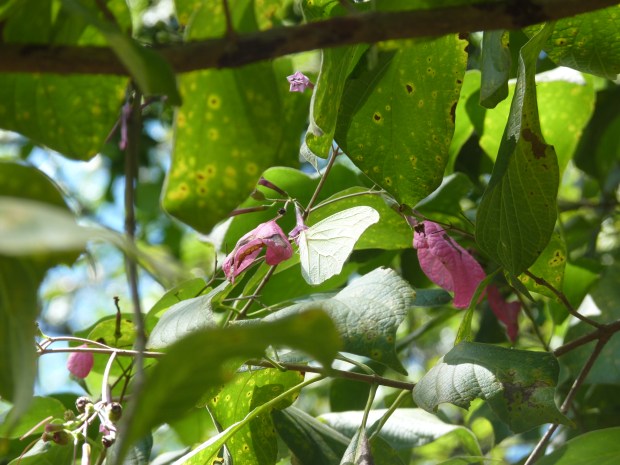
After a quiet spell in South America, enjoying social and rural life, we traveled to the very north-eastern tip of Argentina to a place called Itiyuro-Tuyunti dam, invited by our farm neighbours.

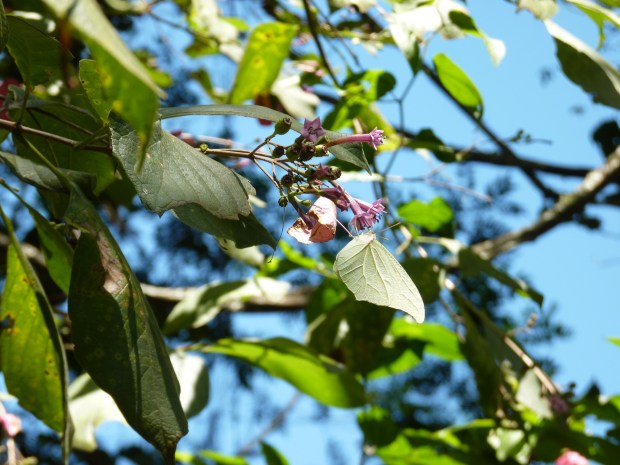
While I write a couple of posts about the trip, I thought interesting to present you with this easy “Spot the beast” to keep you busy…

P1180986 copyP1180988 copyP1180974 copy

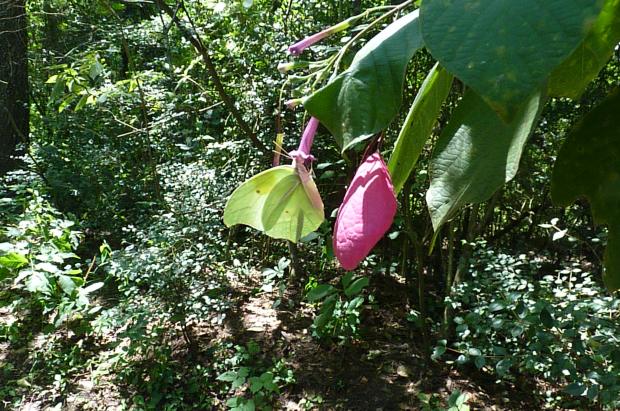
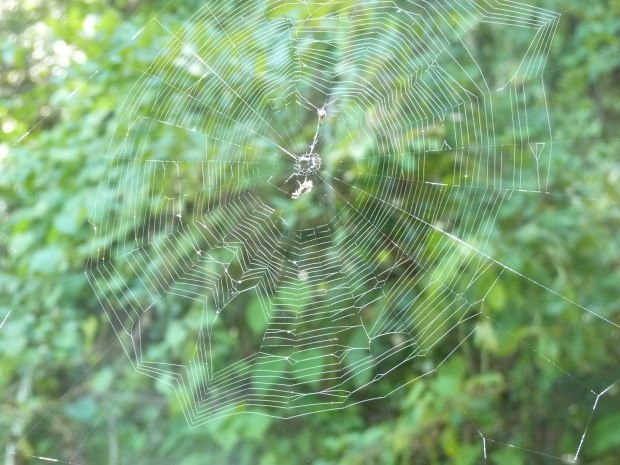
We came across this rather beautiful beast while walking through the subtropical forest and it was often feeding on this particular plant that has these interesting flowers. The butterfly is probably Anteos clorinde or Sulfur spot. While the external part of its wings resembles a green leaf, its interior is white with a yellow spot on its upper part. The internal coloration is mainly seen while flying as it closes its wings when landing.

It is a fairly large butterfly of about 85mm that flies strongly during the times of sunshine over open spaces and forests. It is often observed near wet areas where they congregate to drink and get mineral salts.

Snake attack… [1]

There are two important venomous snakes in the Gallinato area of Salta where our small farm is located: the Cascabel (South American rattlesnake, Crotalus durissus) and the Yarará (crossed pit viper, Bothrops diporus) [2]. The former’s venom is neurotoxic while the latter’s can cause severe tissue damage although, contrary to general belief, it is not often a cause of death. (See: https://en.wikipedia.org/wiki/Bothrops_alternatus).

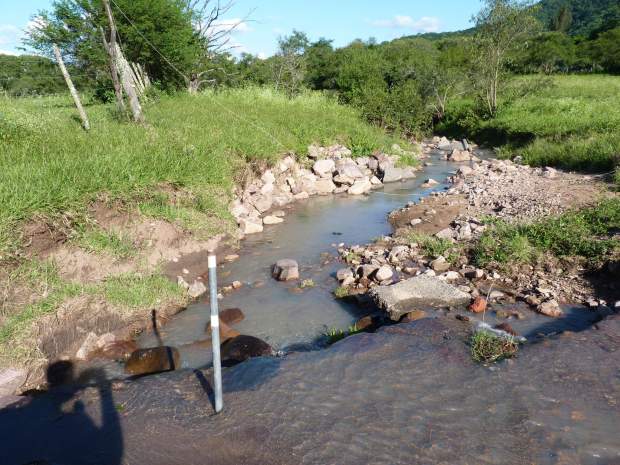
Enoc, a boy of eight was returning from school after lunchtime with his brother Angel and his father Juliano, our caretaker. When fording a small river, the boy either stepped on or near a snake of about 120 cm. The snake reacted angrily and bit him. “I saw the snake going for him and heard him shouting that he had been bitten” Juliano told me later, and then he added “I hit it with a couple of stones but it hid under some large stones. I left it as I thought that taking Enoc to the nearest clinic was more important”.

P1180806 copy

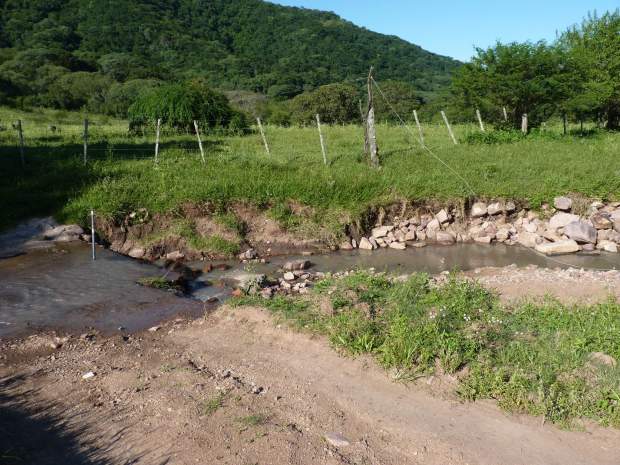
The small river crossing showing the stone at the centre of the picture used to step across. Tee snake was above my shadow.

P1180807 copy

Another view of the crossing.

Juliano, wisely, calmed the boy, ran to his house, got the boy in his car and drove straight away to the public clinic. He was also shrewd enough to stop at the Police post located 5km from our farm to report the accident. In turn the Police radioed the Vaqueros [3] clinic and, by the time of Juliano’s arrival an ambulance and a Doctor were on standby! The boy was taken immediately to the Hospital Público Materno Infantil in Salta city  for treatment.

While this was taking place we were returning from the city of Salta after having dealt with pending administrative issues as well as getting some essential farm supplies. We were near our farm already when we got a recorded message from Juliano telling us of the accident. We immediately turned around and tried to get in touch with him. I was concerned about the availability of anti-snake bite sera at the Vaqueros clinic (I was unaware that Enoc was on his way to the large hospital in Salta!).

We failed to talk to him but we met him at Vaqueros and collected him to follow the ambulance. Bea, Enoc’s mother was already with him and over the phone we learnt that he was stable and -apparently- well. The hospital has an emergency unit to deal with these kinds of problems so I should. Juliano believed that a yarará was the responsible snake but was not sure.

We managed to get into the emergency room (against the rules). Enoc was calm and already they had given him all needed medication for snakebite. I expected to be told to leave the room any minute so I had a quick look. His vital signs were normal (great relief!) Further, a rapid look at his leg revealed that he had been bitten just below the right knee and, apart from some small amount of dried blood I failed to see any fang marks but only a small scratch. Then, as expected, I was told to leave!

The conclusion was that the snake failed to take hold of him, perhaps because of him wearing long sweat pants. The medical personnel were very keen on the identification of the snake so we drove back to the farm to look for the culprit. Unfortunately, we failed to find it and informed the hospital accordingly. We learnt that the boy would be kept under observation for 24 hours but he was stable.

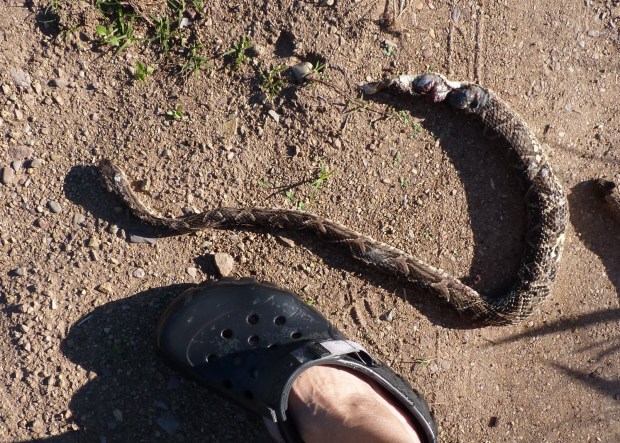
The following day in the afternoon I went again to look for the snake and this time I found it. It had died, probably from Juliano’s stoning and it had been already partly eaten, probably by a fox that had pulled it out of its final resting place and had a “snack_e”.

P1180810 copy

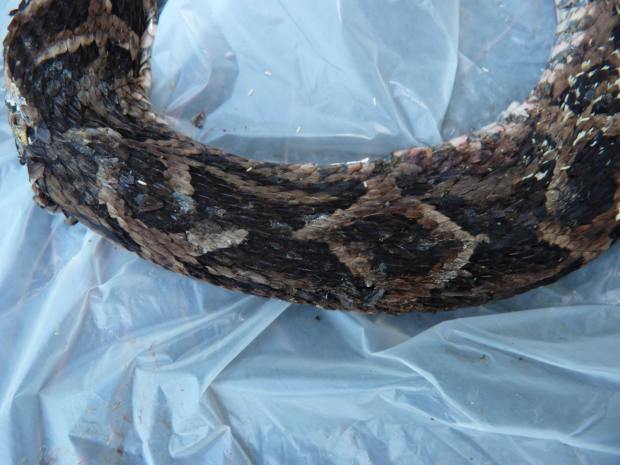
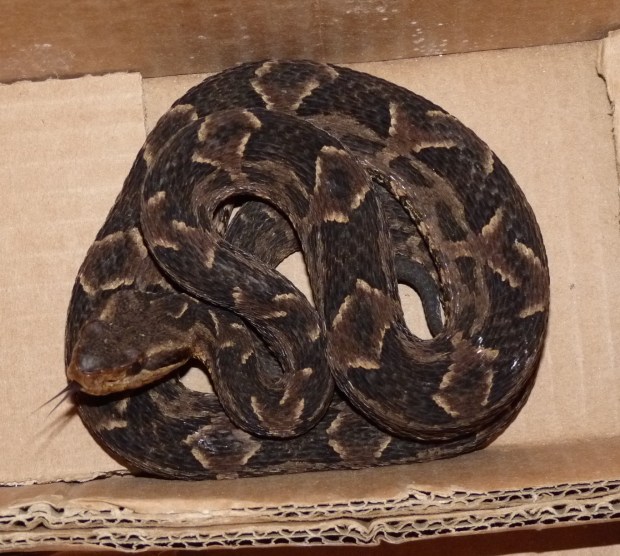
The rear end had been eaten but, the marks were not those of a yarara! It was a rattlesnake!

P1180825 copy

The dead snake markings.

P1150720 copy

The markings of an earlier rattlesnake caught at the farmhouse and later released far away (See: https://bushsnobinafrica.wordpress.com/2016/04/07/rattled/). 

I immediately informed Juliano of this but by then the boy had been discharged from hospital as he continued to be healthy.

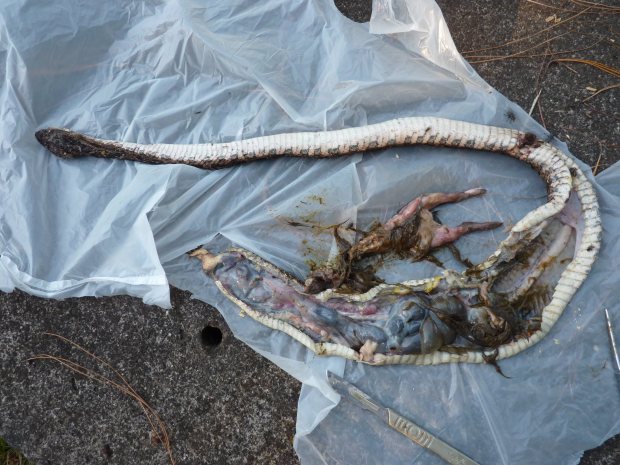
As the snake had a clear bulge, I spent a bit of time doing a post-mortem that revealed that it was busy digesting a large rat that it had caught a couple of days earlier. My conclusion was that it was sunning itself digesting its meal when Enoc stepped on it or too close for comfort and this prompted the snake’s reaction.

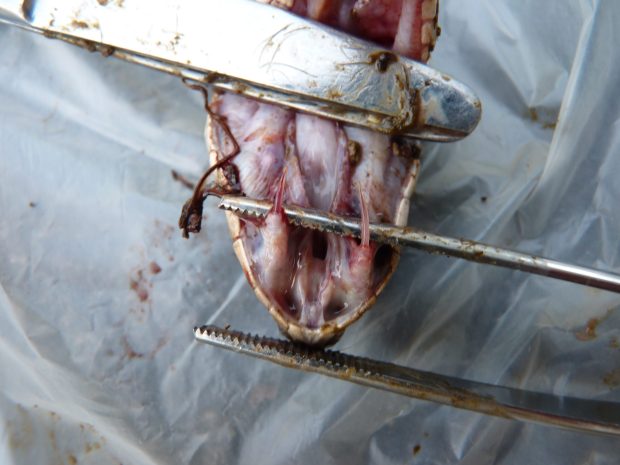
P1180818 copy

The fangs that failed to reach their target!

Luckily the incident ended well but I still I wish to highlight the excellent public health coverage that exists in Salta where after an accident such as this not only there was an ambulance on stand-by to take the patient to the specialized hospital but also that it was immediately given the correct treatment and kept under close medical supervision until the doctors considered that he was out of danger!

Liking snakes but being a coward, I am buying myself a pair of wellingtons that I plan to wear from now on instead of my usual sandals!


[1] This event took place about ten days ago but, because of communication “challenges” I am only able to publish it today.

[2] Moschione, F.N. (2014). Relevamiento de Fauna. Finca El Gallinato, La Caldera, Provincia de Salta. Informe Relevamiento 2013-2014. 55pp.

[3] Vaqueros is the small town located about 10km from the farm on the way to Salta city on the national road No. 9.


Note: for those of you curious to see the stomach contents of the snake, I place the picture below. I warn you that some may not wish to see it and hence I place it here.


P1180815 copy


Snow in the Chaco

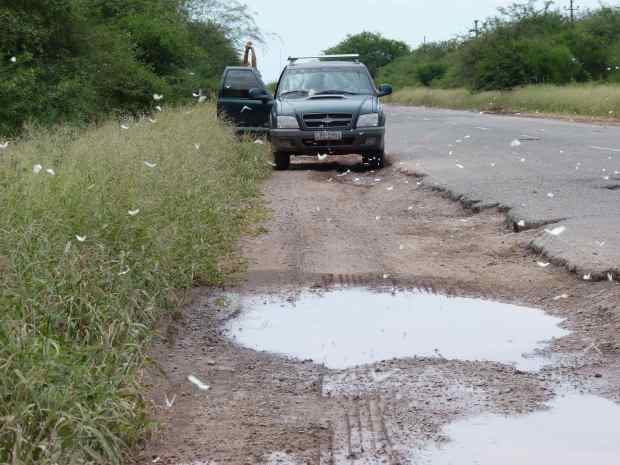
Crossing the Chaco region of Argentina on our way to Salta is rather hot and monotonous as we are dealing with a rather straight road that goes on for a few hundred kilometres across this semi-tropical area of the country.

While driving we were talking about the news and pictures received from our daughter and our friend Lola from Rome where we learnt that snow had fallen a few days back. We agreed that we were lucky to be mostly in warm climates, away from winters most of the time!

We were in the middle of the discussion when we passed an area where, maybe because of the subject we were discussing, it was snowing!

P1180758 copy

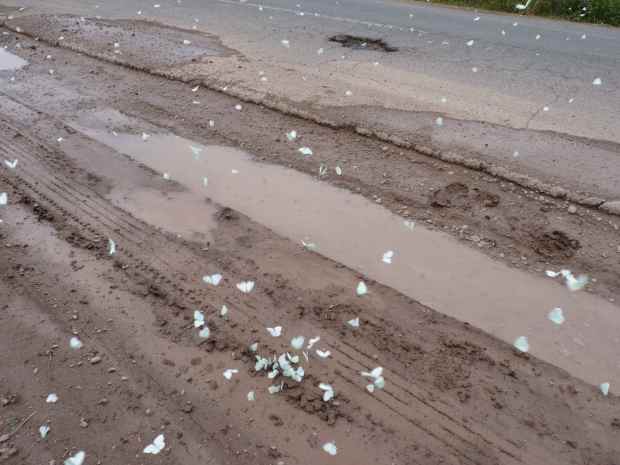
P1180756 copy

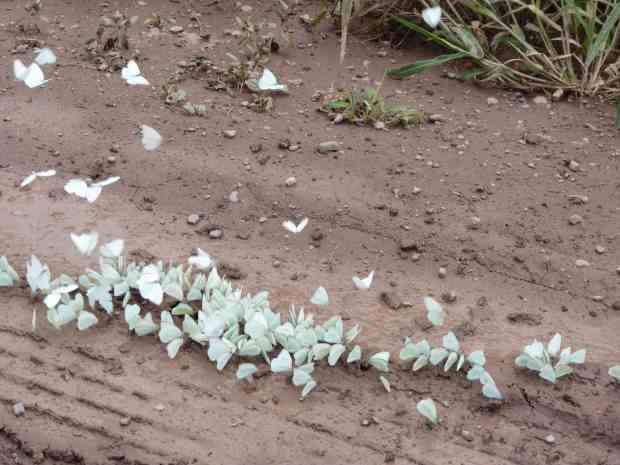
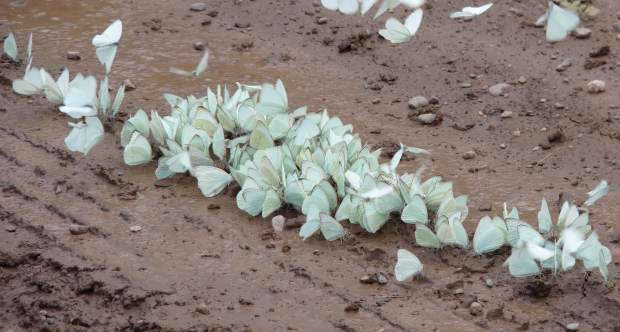
Or so it seemed to us for a few seconds until we realized that we were crossing an area populated by millions of white butterflies known locally as “pilpintos”.


P1180755 copyP1180752 copy

Apparently, these butterflies appear after the rains and live rather short lives and mainly stopped in the rain puddles to recharge water and salts.

We were happy to realize our error and continue on our way to our summer South American hiding spot!


Pink Bogoria

All the Kenya lakes have their own unique characteristics and attractions. To pick one as “the best” is impossible, at least for me. However, lake Bogoria was one of our all time favourites when it came to a short break. You did not go there to find the Big Five but in search of tranquility and to enjoy the views and bird fauna. It was here that I spotted my first and only three-banded courser (Rhinoptilus cinctus).

Credit John Gerrard Keulemans [Public domain], via Wikimedia Commons Three-banded coursor

Three-banded courser. Credit John Gerrard Keulemans [Public domain], via Wikimedia Commons.

It was also a special place for another reason. It was my first camping experience in Kenya. It happened over a weekend with Muguga House colleagues Richard and Phillip. Of the outing I recall that we departed on a Saturday to return the following day. We left rather late as Richard had lots of work to do to keep the tsetse parasitoids in his lab going. A late departure meant that we could not enter the park that day and needed to camp outside the gate.

As I had no tent and only a borrowed camp bed, I slept “al fresco” as it was -I was told- a very arid and dry area. I still recall the thousand of honking flamingoes flying overhead throughout the late afternoon and well into the night.

Luckily I woke up with the first raindrops and before getting soaked -together with my bedding- I managed to enter Richard’s car. After a while I realized that it was going to be a tough night. The location of the hand brake made sleeping across the front seats of a packed Toyota Corolla impossible.

I slept in a seated position and the following day I was very tired and with a few aches. Despite my condition, the few hours we spent there were enough to appreciate the beauty of the place and to remember to come back.

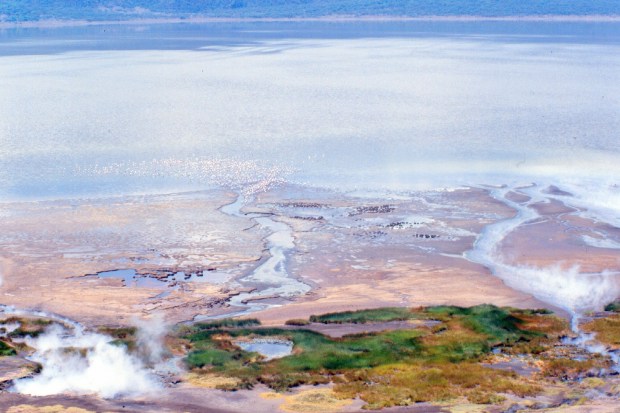
Lake Bogoria is a volcanic lake framed by green-blue hills. Its waters are greenish saline (up to 100 g/L total dissolved salts) and alkaline (pH:10.5). It lies in the Kenyan portion of the Rift Valley, south of Lake Baringo and a little south of the equator. It is a rather shallow body of water that is no deeper than 10m of depth. This rather small lake of 34km long by 3.5km wide has been protected since 1973.

NASA's World Wind program copyright 2010

Lake Bogoria from the space. Credit: NASA’s World Wind program copyright 2010

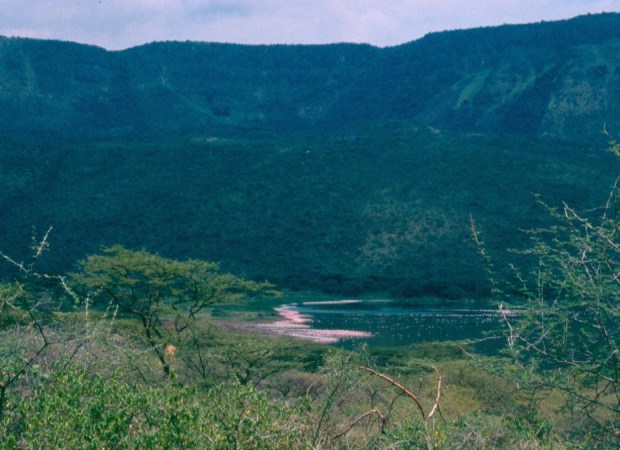
Lake Bogoria’s beauty is already evident at first sight! After climbing one of the several red hills you need to negotiate to get there through the Emsos gate a misty dark green body of water framed by pink startles you at first until you realize that the pink borders are tens of thousands oflesser flamingoes (Phoenicoparrus minor) with a smaller number of greater ones (Phoenicopterus roseus).

Bogoria view from distance 2.tif 5.30.23 PM 5.30.51 PM copy

The first view of Lake Bogoria.

While greater flamingoes feed on invertebrates, mollusks and tiny fish, l and insect lesser flamingoes feed primarily on Spirulina algae which grow only in very alkaline lakes. Although blue-green in colour, the algae contain the photosynthetic pigments that give the birds their pink colour. Their deep bill is specialized for filtering tiny food items.

246 copy

A view from the eastern shore.

Bogoria view from distance 1.tif 1.15.23 PM copy

Moving pink islands.

These birds were part of the largest world population of flamingoes that migrated among several of the Rift Valley lakes such as Natron, Magadi, Nakuru, Elmenteita and Bogoria. For some reason, the latter is one of their preferred stopping places. At the time the flamingoes seemed to commute mainly between Bogoria and Nakuru although their breeding took place mainly on the caustic lake Natron in northern Tanzania.

421

Lesser flamingoes.

A few months after my first safari and following my wife’s arrival lake Bogoria was one of the first places we visited once we got our VW kombi and some camping gear. At first we camped at the Acacia campsite on the southwest shore but soon we realized that either camping at the Loburu hotsprings on the western shore or at the Fig tree campsite in the southeast were nicer alternatives.

Bogoria hotsprings.tif 8.11.45 AM copy

Loburu hotsprings with immature lesser flamingoes in the background.

The southern end of the lake is almost separate from the remaining body of water towards the north but for a small channel in the eastern section. It is in this area that large numbers of flamingoes were often spotted. It was a photographer’s paradise and I still remember a friend’s great idea of taking pictures of the birds in full moon only to arrive at the lake when there was a full eclipse!

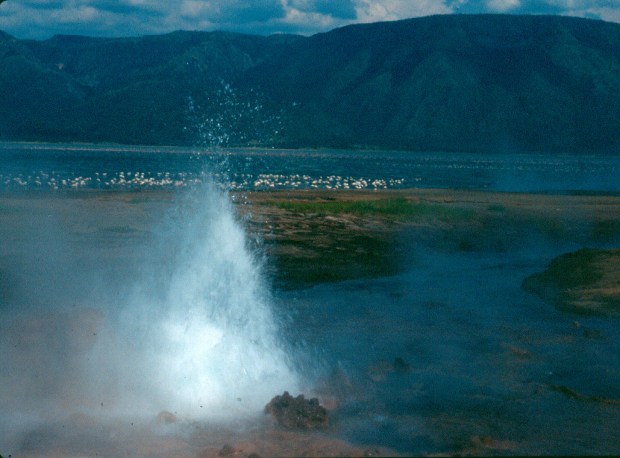
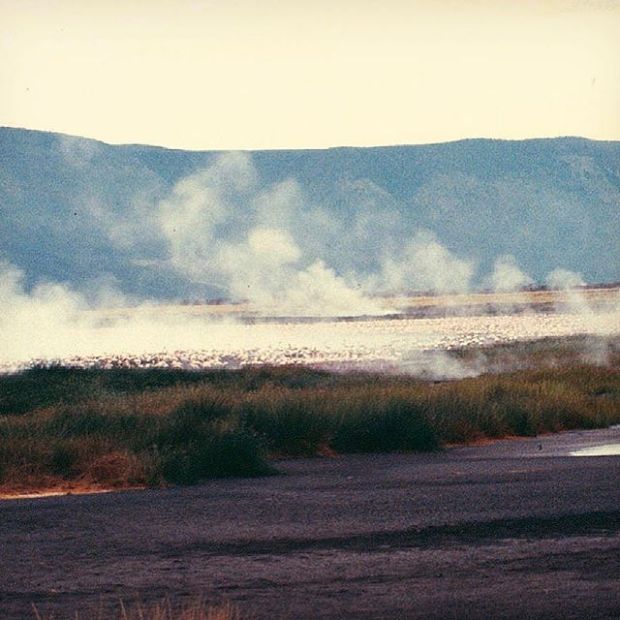
Although staying near the Loburu hot springs added a few extra degrees l to an already high temperature, the various steam jets and hot water rivulets around camp contributed to make it an interesting and misty place. Although walking among the hot springs was hazardous, it was quite an experience and its water greatly facilitated the needed camping dish washing!

230

Hotsprings and flamingoes.

The springs are quite powerful and they create short streams that feed the lake and some had formed cones while others gave raise to small pools, some over two metres deep and very hot as the temperature of the springs varies between 39 and 98.5 °C . Unfortunately, instances of severe burning of campers falling in had occurred by the time we got there!

Our favourite camping ground was the Fig tree camp, a very shady area under a patch of magnificent fig trees that provided the necessary thick shade. The camp was traversed by a clear stream coming down from the Siracho escarpment just above the area. We sometimes drank from it in cases of need as a good friend assured us that it was clean water. It did taste great but a few years later we were in for a surprise: we discovered that higher up in the hills it went through a local village!

We spent many cool nights under the trees but there was one exception that, apart from cool it was “entertaining”. Unknown to us the rather large resident baboon troop had decided to spend the night up the fig trees above us! This had probably happened during earlier stays and it had gone unnoticed. The night in question, at about midnight, all hell broke loose as something seriously scared the baboons, possibly a leopard although we never saw it. We only suffered the consequences.

It seemed that the entire troop was above us! Their fright caused a number of them to violently empty their bowels and bladders. I leave the results of this barrage to your imagination! I will only tell you that the aftermath was a smelly night and lots of washing of our camp, including the car windscreen the following morning! There must have been lots of baboons! After that experience we learnt to sacrifice some shade to avoid a repeat of this situation!

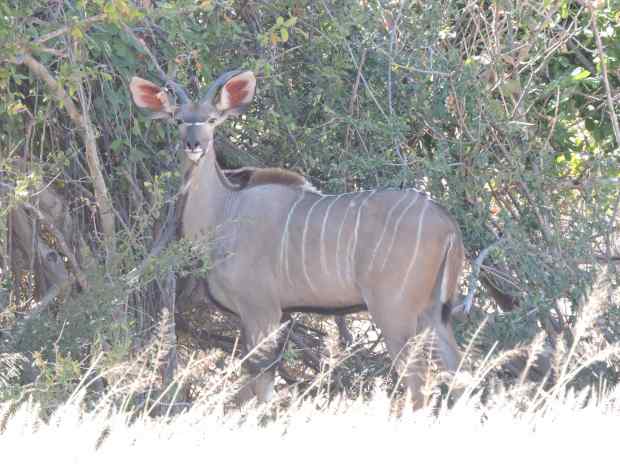
During the earlier visits to lake Bogoria it was still possible to drive all around the lake and we did this a couple of times before the road collapsed. The most memorable of these round the lake tours took place with our friends from Uruguay Nazar and Aurora when we drove north from the Fig tree camp and we could slide the kombi door open to really enjoy the view. The drive was special as it offered great views of greater kudus that used to dwell on the eastern area of the lake where they could browse to their liking.

DSCN9925 6.17.49 PM 6.22.07 PM copy.jpg

Going round the lake would also enable you to see many of the more hidden hot springs as well as the some of the special features such as the Kesubo Swamp to the north. However, the geysers and hot springs along the bank of the lake were, apart from the flamingoes, the most interesting features.

Bogoria view from top of circular rd.tif 1.23.58 PM copy

Kesubo Swamp to the north of the lake.

Unfortunately in recent years the population in the two key east African lakes, Nakuru and Bogoria, have been adversely affected by suspected heavy metal poisoning, while its primary African breeding area in Lake Natron is currently under threat by a proposed soda ash plant. So, despite still being the most numerous species of flamingo, lesser flamingoes are classified as near threatened due to its declining population and the low number of breeding sites, some of which are threatened by human activities.


Spot the beast 38

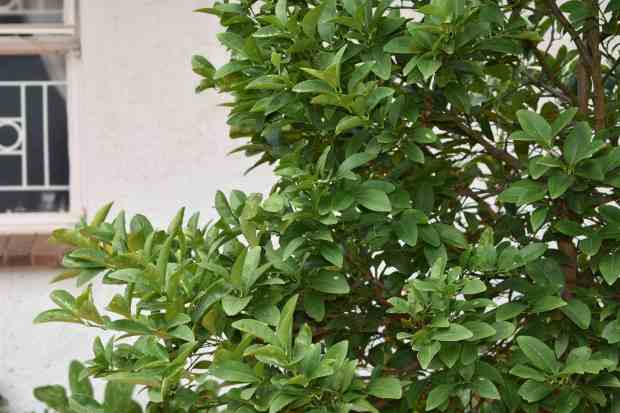
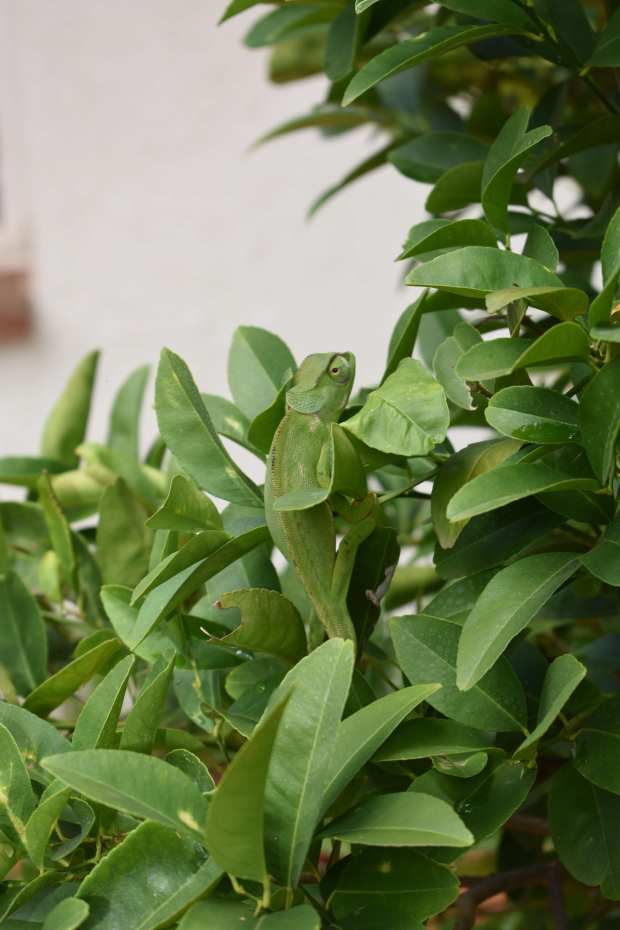
While I settle down for the next few months in our “new” continent of South America and attempt to produce a few interesting posts, I give you this mystery animal for you to find…

DSC_0046 copy

?
?
?
?
?
?
?
?
?
?
?
?
?

DSC_0044 copy

Yes, a nice and healthy chameleon that turned up on the lemon tree in the patio, before they all got busy to reproduce as described in earlier posts from Zimbabwe.

Desperate ingenuity

Have you ever lived in a country with no embassy from your own? And if the whole continent has only three and the nearest is four thousand km away? Then, to ask you if you ever lost your passports in such a situation would probably be too much!

Well, this is what happened to us in Kenya so forgive me from what I needed to do to get out of that rather tight spot!

It was the end of 1983. My FAO fellowship was ending and we were getting ready to travel home to Uruguay -via Rome- after spending the last two years in Kenya as I have described in earlier posts.

We normally kept our passports at a safe place but we needed them to buy our tickets. It was during the second visit to collect our tickets that the worse thing that could have happened did happen: we lost them! It was only at that time that the location of the Uruguayan diplomatic representations became important to us! A couple of phone calls later (no internet then!) the news sunk in:

Johannesburg was the closest hope!

Luckily we had passport copies and our Uruguayan ID cards stored at home and we also had our Kenyan ID cards. While we could stay in Kenya (for a while at least), we could not do this indefinitely and absolutely not to travel on the 9 January 1984 as we had planned!

Although we immediately reported the loss to the Kenya Police, the passports had vanished and it looked like our journey had also gone down the drain as well! Before giving up hope completely, we decided to contact the Embassy of Uruguay in Johannesburg. We thought that in view of our “special” situation and the fact that we still have our original ID documents, a solution could be found.

After a frustrating phone call where I was repeatedly told that they would have had no problem issuing new passports but that we were required to be present in person in the embassy I gave up as they could or would not wish to understand that we were not able to travel from Kenya to South Africa without our passports!

My second hope -FAO- did not last long either as the Representative in Kenya -although very accommodating- could not help either. However, a couple of days later he told me that he could get FAO in Rome to arrange for our “special” entry to Italy [1]. That was some good news, albeit small.

Now we “only” needed to leave Kenya!

I can assure you that desperate situations enhances your imagination to find a solution. No, we did not walk at night all the way to Johannesburg to get our passports. Instead we decided that the most practical option was to tackle the Kenya Immigration authorities for a way out.

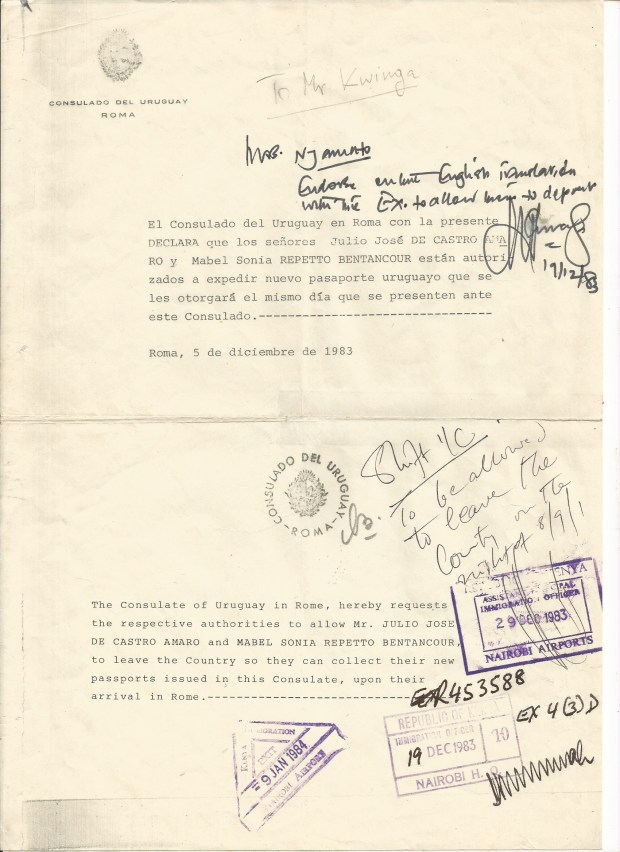
I booked an appointment and, not to go empty-handed, I decided to “prepare” a letter from the Uruguay Consulate in Rome as supporting documentation. I hoped that it would be not only a useful -and hopefully convincing- document but also a paper where stamps could be placed!

So, armed with our passports’ copies, Kenya IDs and the fake letter we ventured in the unknown recesses of the Kenya Immigration Department…

After going through a few offices as can be seen in the picture below, somehow we managed to get the needed clearance to leave the country! Very happy with the achievement but trying to be 100% safe, we found out the name of the officer that was to be at the airport at the time of our departure and we went to the airport to meet him and explain our predicament in person.

Clearly, the fact that we had the authorizations on the letter and also that we were leaving the country helped a lot and he kindly reassured us of our certain departure during his shift.

Kenya passport copy

The original authorization on top (19/12/83) by the boss of the office that instructs his junior to endorse the English translation instructing the responsible for shift 1/C to allow us to leave. We then went to meet the latter on 29/12/83 to get his agreement in person and finally departed on 9/1/84.

Luckily on the departure date Kenya Airways was on time and we managed to depart. The rest is history as we entered Italy, renewed our passports and continued our journey home to Uruguay, returning to Kenya a while later, now as a scientist with the International Centre of Insect Physiology and Ecology.


[1] I never found out the conditions of our entry but we were probably refugees!!!