Author: bushsnob

A lucky strike at the Brilliant Waters

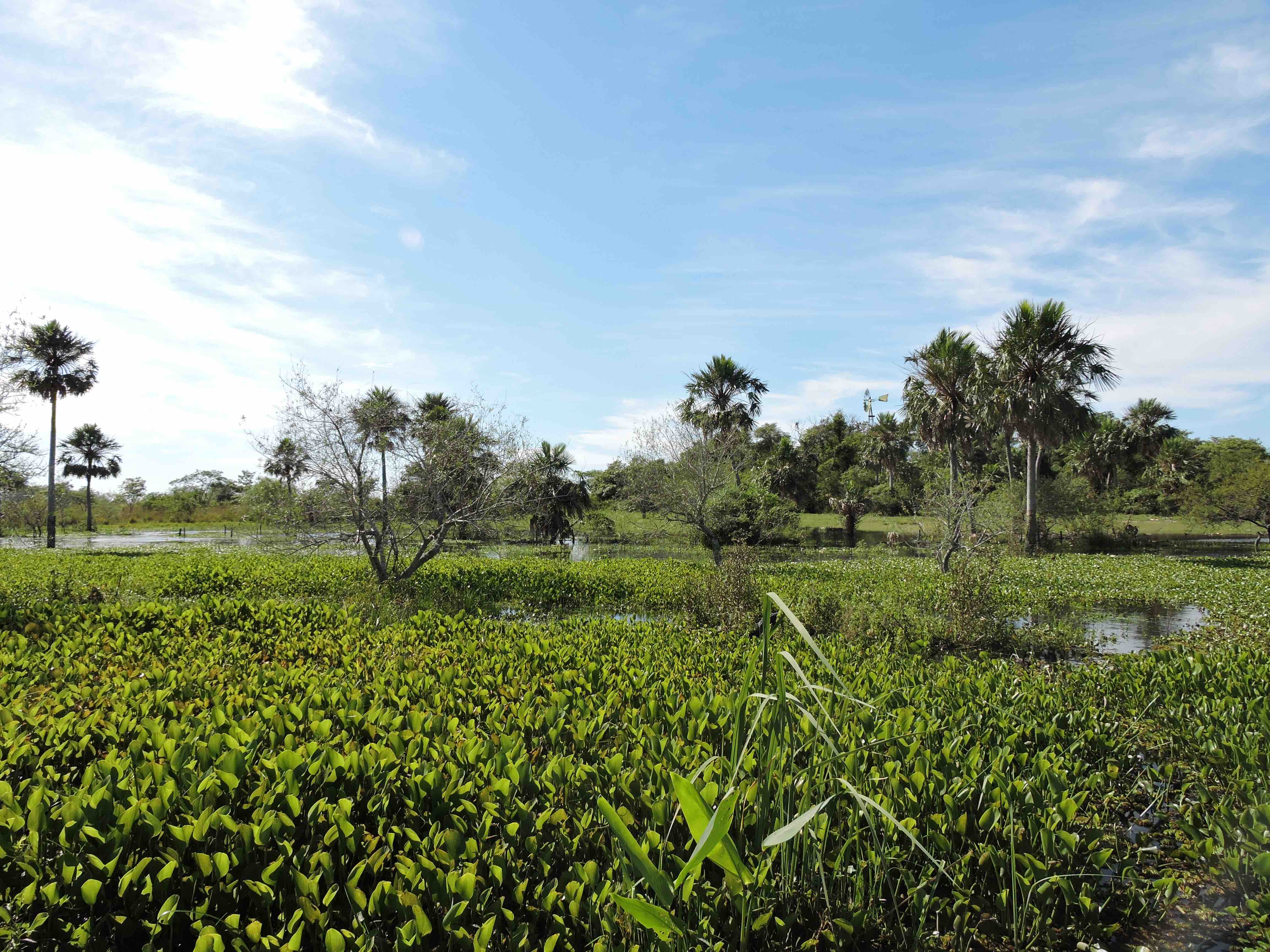
View of swamp

We visited the Esteros de Iberá (Yverá in its original Guaraní denomination)[1] a few years back and the idea of returning stayed with us. Taking advantage of the visit of our children during the 2015 season’s holidays we booked a three-night stay at Rincón del Socorro. I quote from their web site (http://rincondelsocorro.com/):

“Rincón del Socorro has 12.000 hectares and is located in the Iberá Wetlands. It has been historically managed as a cattle ranch until 1999 when it was bought by The Conservation Land Trust (CLT), who now dedicates to care for its environment through a group of biologists and veterinarians who develop different restoration and reintroduction programs of species. As a touristic establishment, we provide to our guests a close understanding to the local ecosystem, appreciating the importance each different natural environments and conservation it has“.

The CLT was created in 1992 by Douglas Tompkins to protect wild lands, primarily in Chile and Argentina. It was blatantly obvious that a large investment has taken place not only in the refurbishment of the ranch but also in the general area of the wetlands. The hostel at Rincón del Socorro is managed by a private concession that employs about 40 people, including the guides. We were very fortunate to get “Mingo” as ours as he proved to be a great companion who patiently explained most of the questions we asked and who had no problems in admitting not knowing an answer on the few occasions that he did not.
RdS view cropped

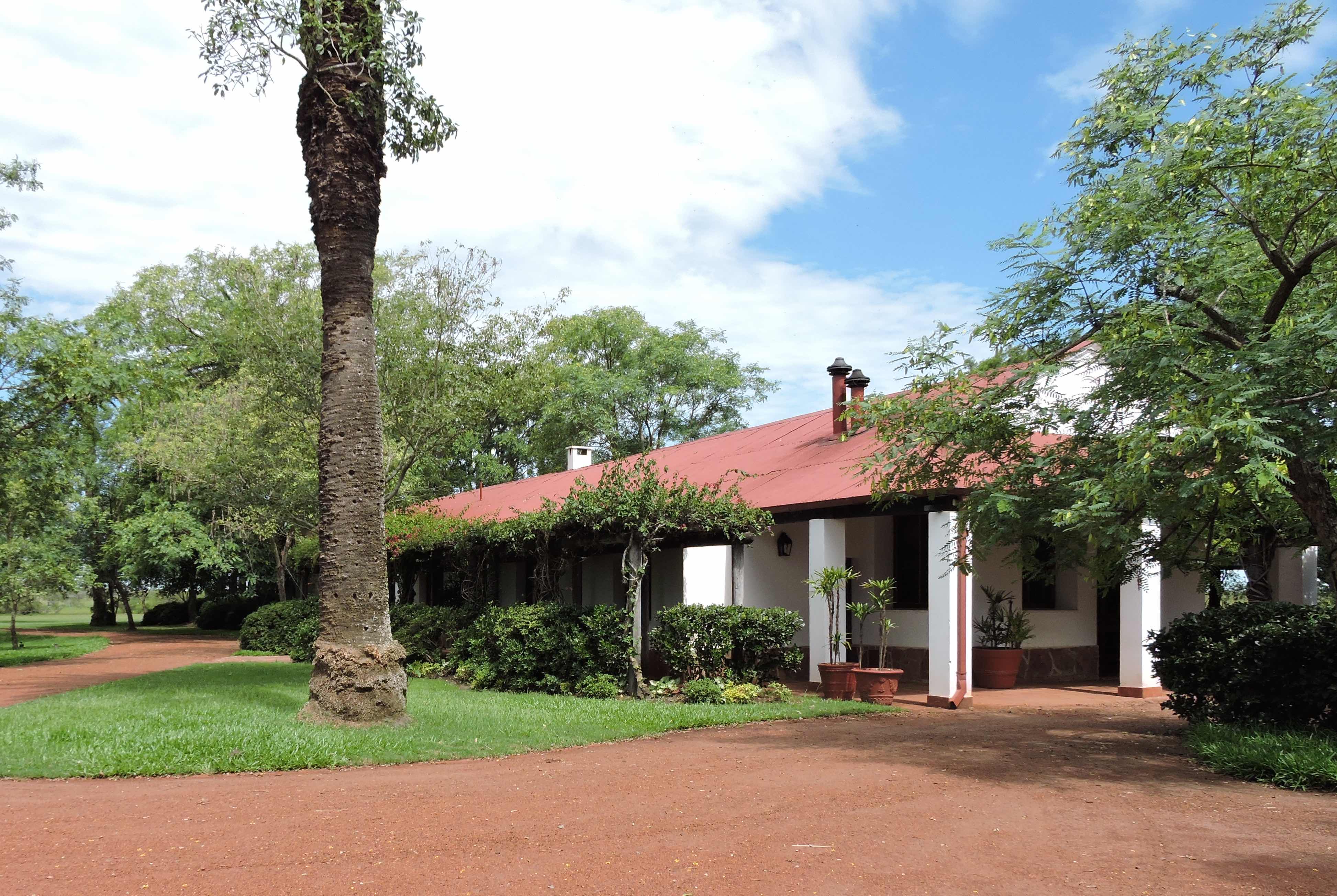
Rincon del Socorro: parking and reception areas.

To reach the place required a long journey of about 750 km from Carmelo, our hometown in Uruguay. Bookings were made about one month before the visit and being this a wet summer I immediately got “cold feet” about the very likely possibility of a rains during our visit planned for 2-5 January. However, there was not much I could do but hope that the usual luck that accompanies us would be with us again.

My concerns were not lessened the day before as 2015 started with heavy rain! A rather desperate last minute check to the weather forecast showed “suns” so hope was somehow maintained. The lucky strike started when getting up very early on the 2nd of January where clear skies greeted us. This magnificent weather stayed with us and we had four beautifully -and even relatively cool- sunny days that enabled us to enjoy the trip to the full and the playing cards and dice we brought with us in case of rain were not remembered. Amazingly, it started raining after we got back to Carmelo and it continued to pour until the 8 January!

During our stay we joined all available activities: animal watching walks and drives, boat trips to lake Iberá as well as a -rather painful to me- horseback ride. All these activities combined allowed us -with the advice of Mingo- to understand the different ecological areas that are found in the wetlands that I will try to briefly describe to you.
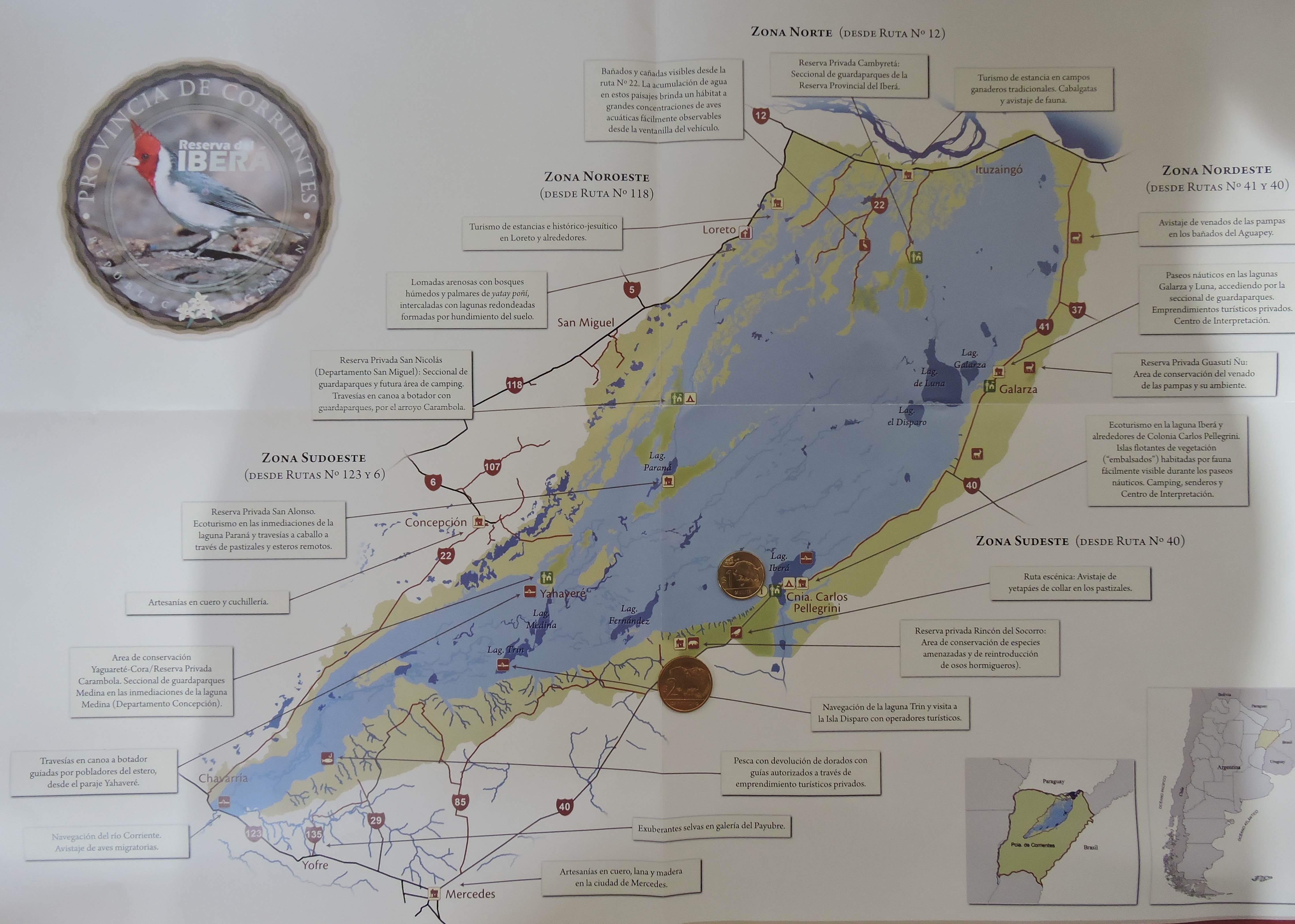
A general view of the Ibera wetlands. Capybara coin: Rincon del Socorro; Armadillo: Ibera lagoon.

A general view of the Ibera wetlands. Capybara coin: Rincon del Socorro; Armadillo: Ibera lagoon.

The Iberá Provincial Reserve is a protected area in the northwest of Corrientes Province, northeastern Argentina. The entire area is in the shape of a funnel, with the conical mouth towards the northeast and the stem pointing towards the southwest, ending in the Corriente River. Established on 15 April 1983, with an area of about 13,000 km2 it contains a mix of habitats that I will briefly describe to put the place in context. More information is available in the web, of course.

The lagoons, up to a depth of five metres, and the floating islands are an important feature. The latter are composed of floating organic material where giant bulrush (Schoenoplectus californicus) (Totora in Spanish) predominates among others such as yellow laurel (Nectandra angustifolia). These islands determine the shape of the open water while the water circulates underneath towards the Corriente River (the funnel’s stem). The latter with its sandy banks maintains a constant and slow flow that will eventually flow into the mighty Paraná River. Its very wet and sandy banks do not allow for the growth of large vegetation.
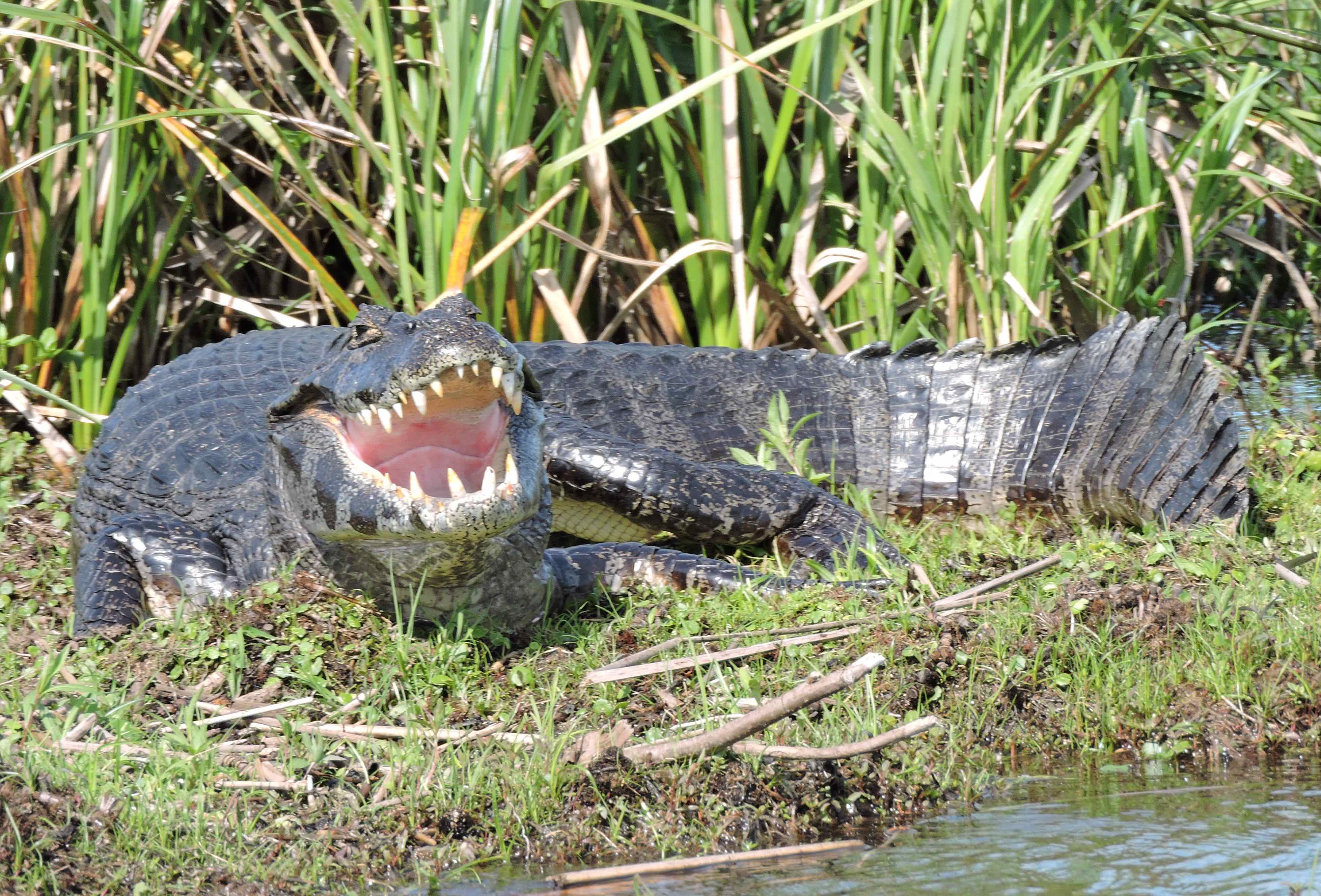
A Yacare (Caiman yacare) on a floating island at the Ibera lagoon. Picture by Julio A. de Castro.

A Yacare (Caiman yacare) on a floating island at the Ibera lagoon. Picture by Julio A. de Castro.

There are large areas of swamps and reeds, particularly towards the northeast where the water has filled depressions and accumulated over time, creating large flooded grasslands and reed beds mainly formed by piripiri (Cyperus giganteus) a kind of papyrus and giant bulrush that rarely dry out. In other areas grass fields made up predominantly of red grass (Andropogon lateralis) predominate and walking on it reveals small depressions filled with water. These micro lagoons enable the development of truly small aquatic systems. Finally, there is another grassland system in the sand hills of North and West Iberá where scattered patches of forest and/or little round blue lagoons interrupt the grasslands known locally as “espartillares”.
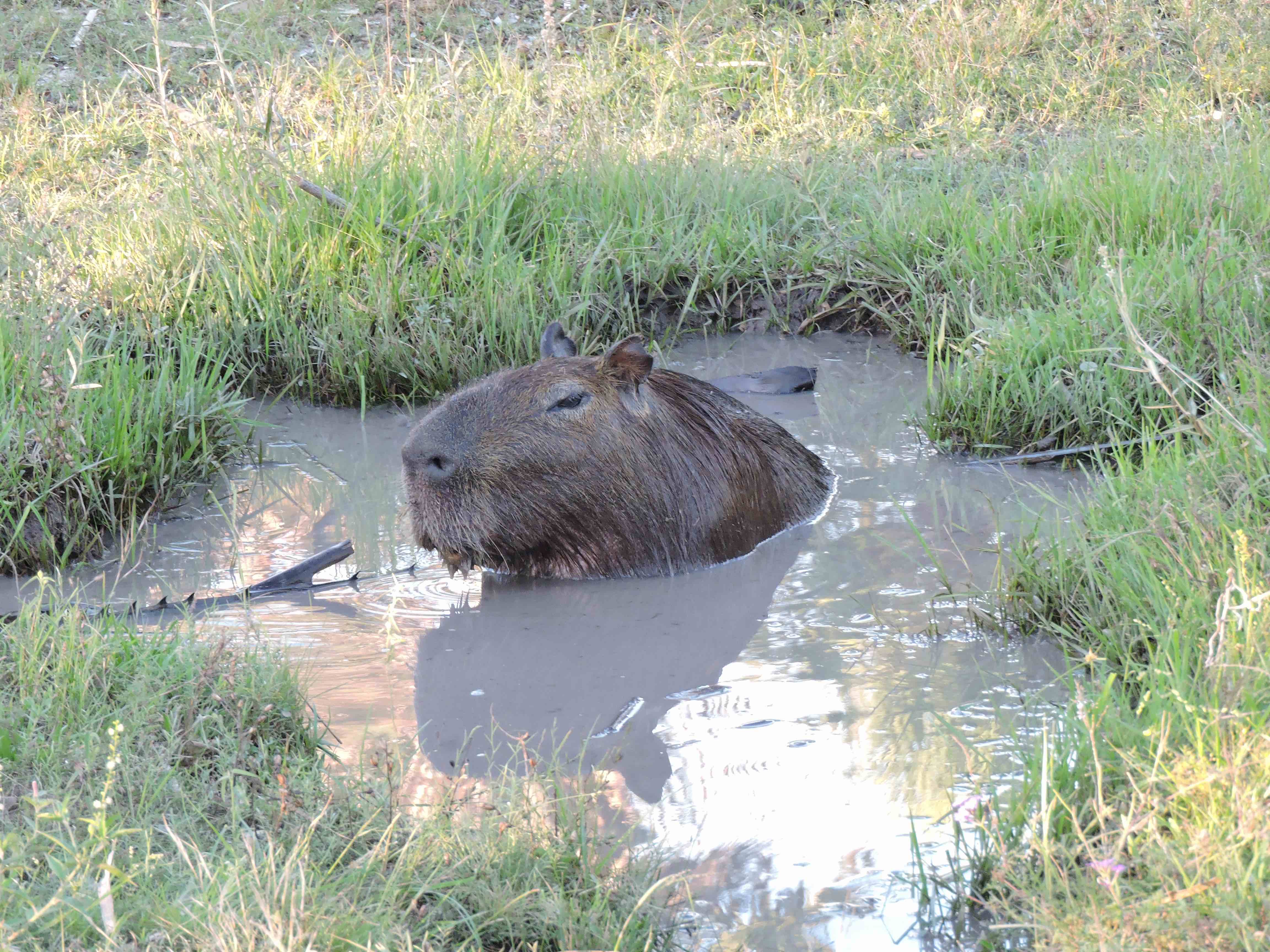
A Capybara in its private bathtub.

A Capybara in its private bathtub. Picture by Julio A. de Castro.

Palms occur in the form of groves of the small Dwarf Yatay Palm (Butia paraguayensis) that grow in the higher parts of the area as well as Caranday Wax Palm (Copernicia alba) that grow in sand and clay. As these palms are water tolerant they can survive floods and form dense forests that occupy areas where most land and aquatic plants do not survive.

There are patches of wet forest that have a limited lifespan as conditions are not ideal for the growth of the common forest trees such as queen palm (Syagrus romanzoffiana), the gum tree (Sebastiania brasiliensis), the ombú tree (Phytolacca dioica), the pacara earpod tree (Enterolobium contortisiliquum), and the lapacho tree (Tabebuia spp.). Drier areas are populated by Ñandubay trees (Prosopis affinis), with their medium height and flattish canopies creating dry forests in the savannah.
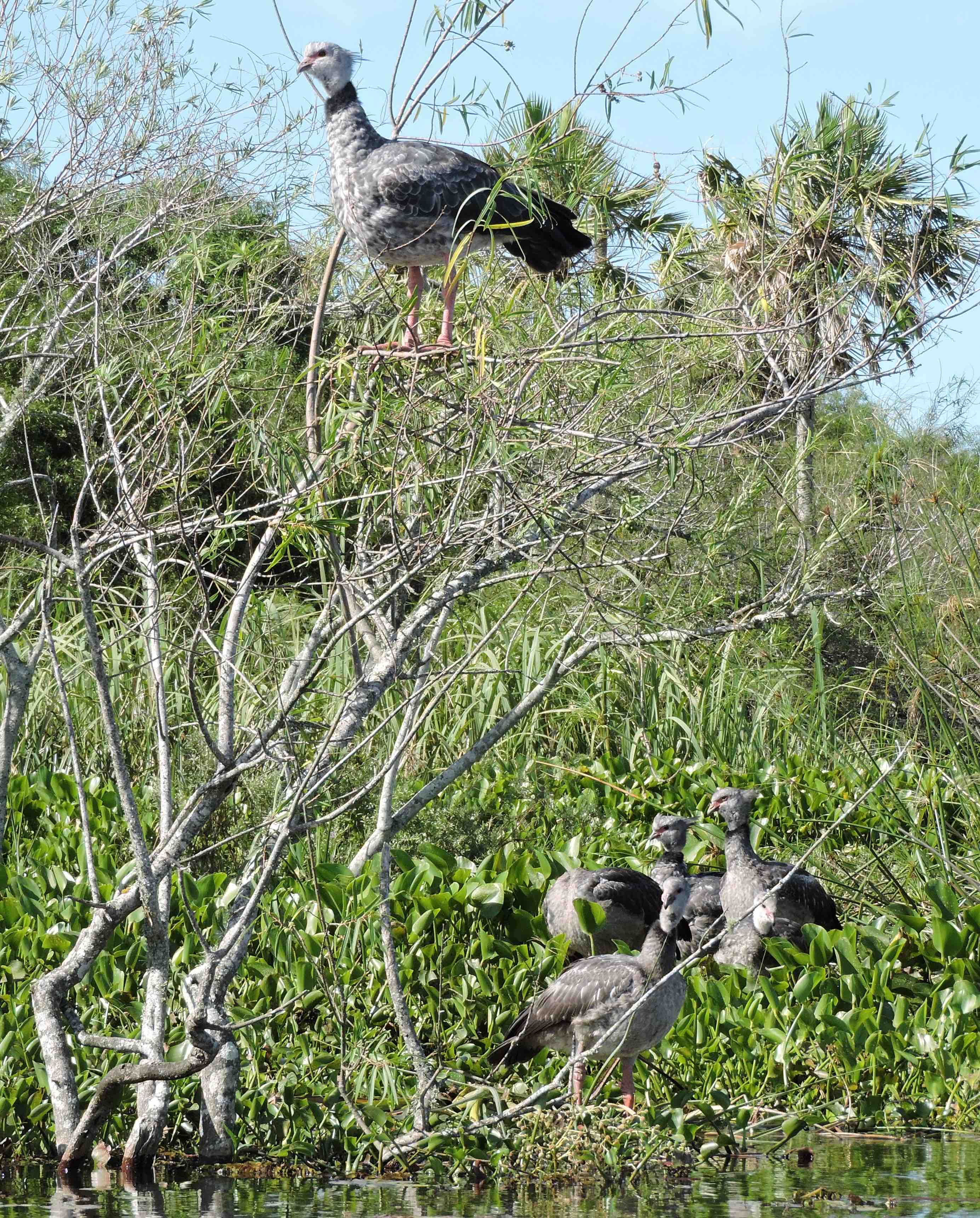
A group of Southern Screamers at the Ibera lagoon. Picture by Julio de Castro.

A group of Southern Screamers at the Ibera lagoon. Picture by Julio A. de Castro.

The place is also an animal paradise with many interesting and rather unique species. Abundant southern screamers (Chauna torquata) were spotted while living up to their names and screaming in alarm at our approach while the rheas (Rhea americana) grazed undisturbed.

Rhea and chicks feeding. Picture by Mariana Terra.

Rhea and chicks feeding. Picture by Mariana Terra.

The estimated number of bird species identified in the wetlands is nearly 400 and therefore there are too many to mention. However, the pair of Jabiru storks (Jabiru mycteria) nesting near the ranch were simply spectacular.

A pair of Jabiru Storks on their nest. Picture by Mariana Terra.
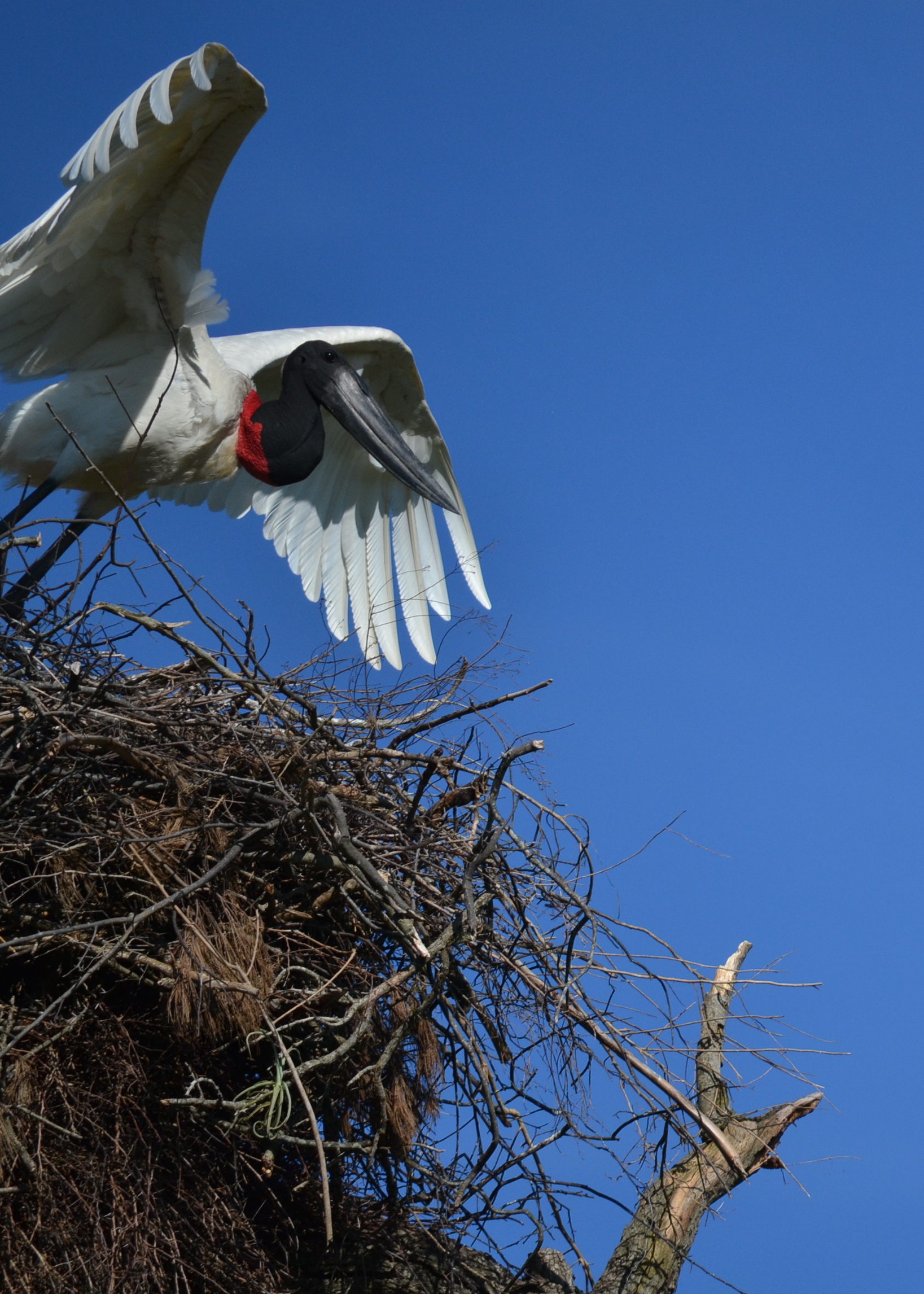
A pair of Jabiru Storks on their nest. Picture by Mariana Terra.

Taking off... Picture by Mariana Terra.

Taking off… Picture by Mariana Terra.
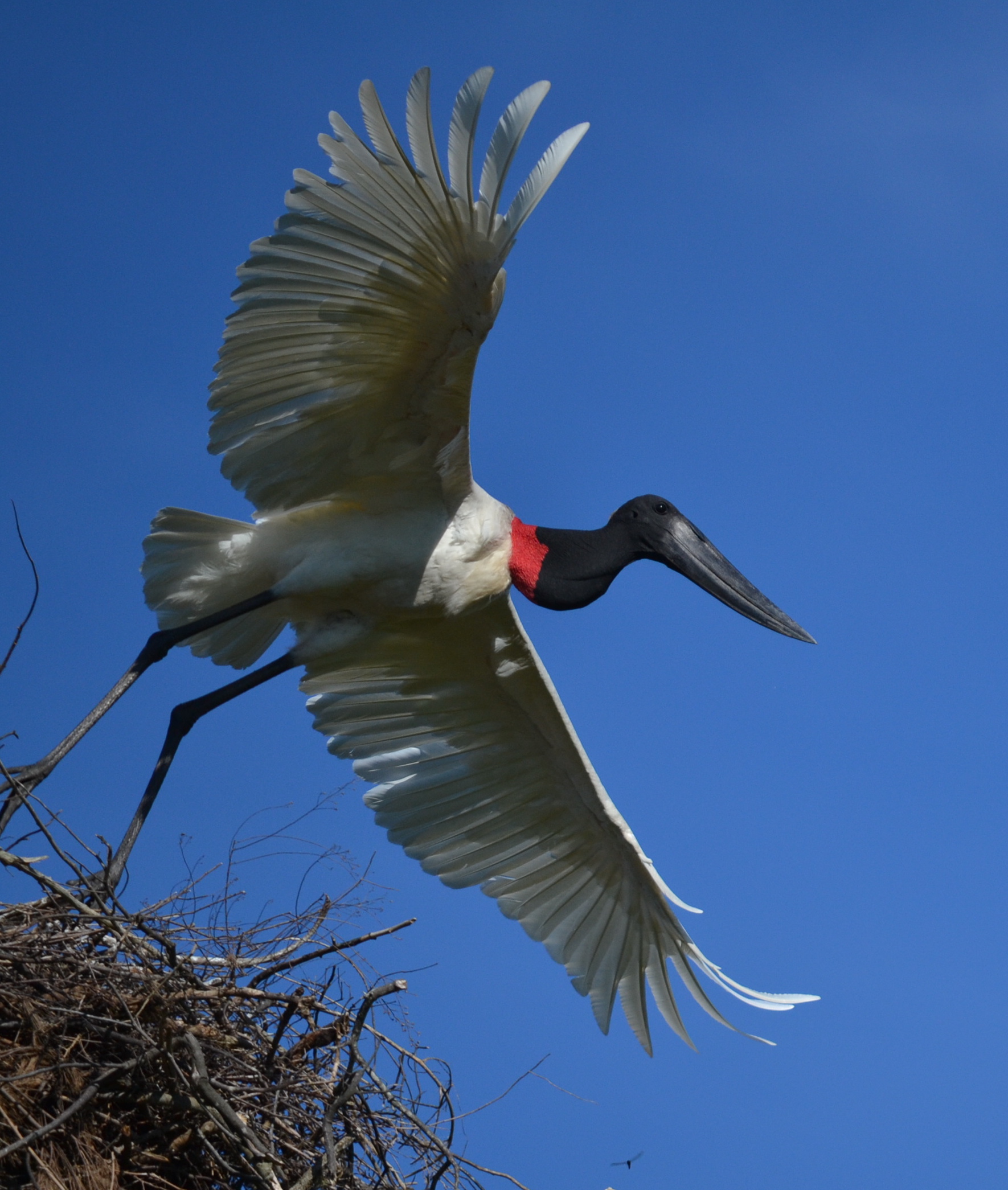
Taking off and in flight. All three pictures by Mariana Terra.

Taking off and in flight (below). Both pictures by Mariana Terra.
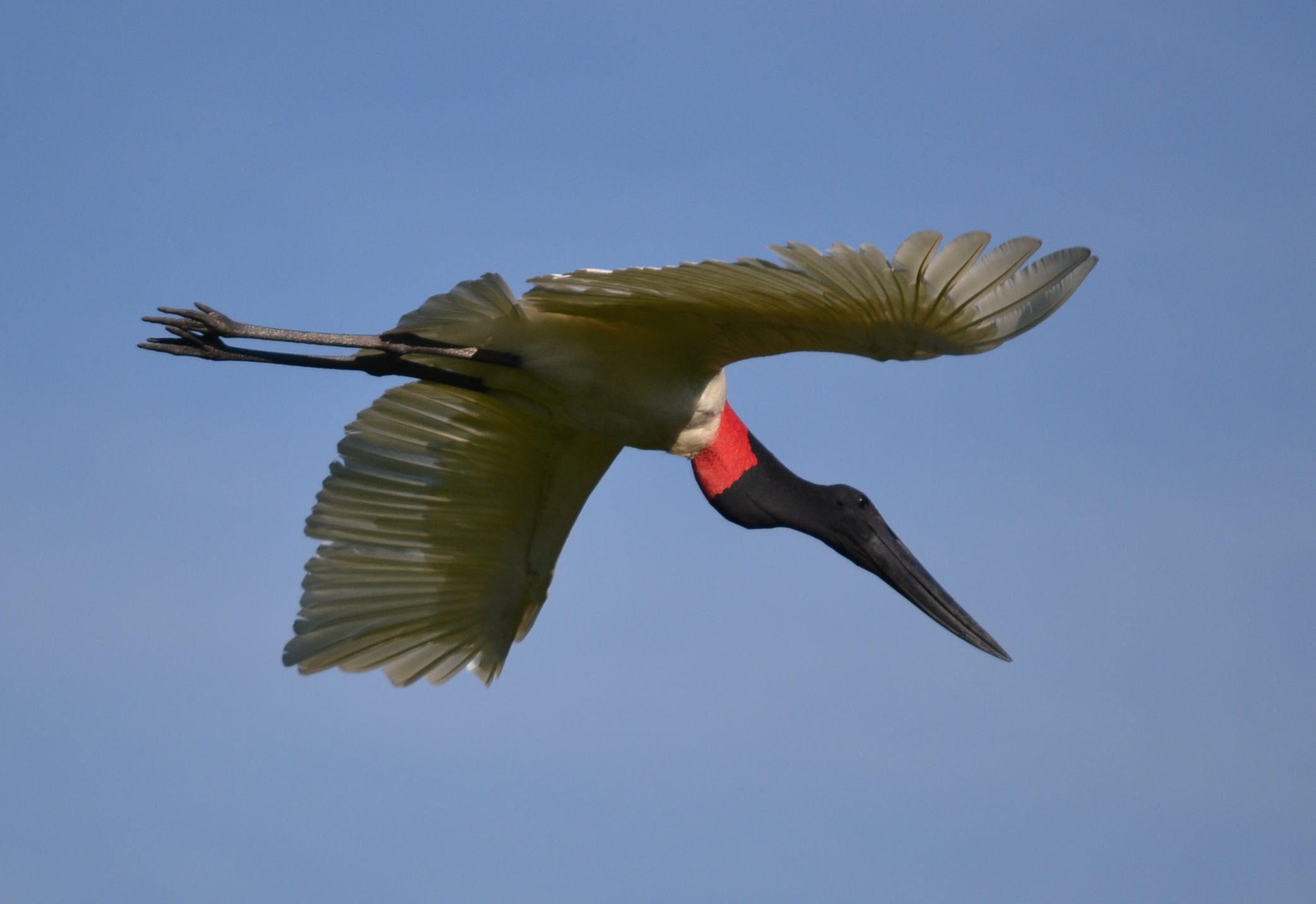
Mariana jabiru flying 2On the other end of the size spectrum (tiny), but not less impressive were the various humming birds as well as the aptly named Strange-tailed Tyrant (Alectrurus risora), spotted too far to capture it on film but that can be seen in: http://www.pbase.com/james_lowen/image/88253519.
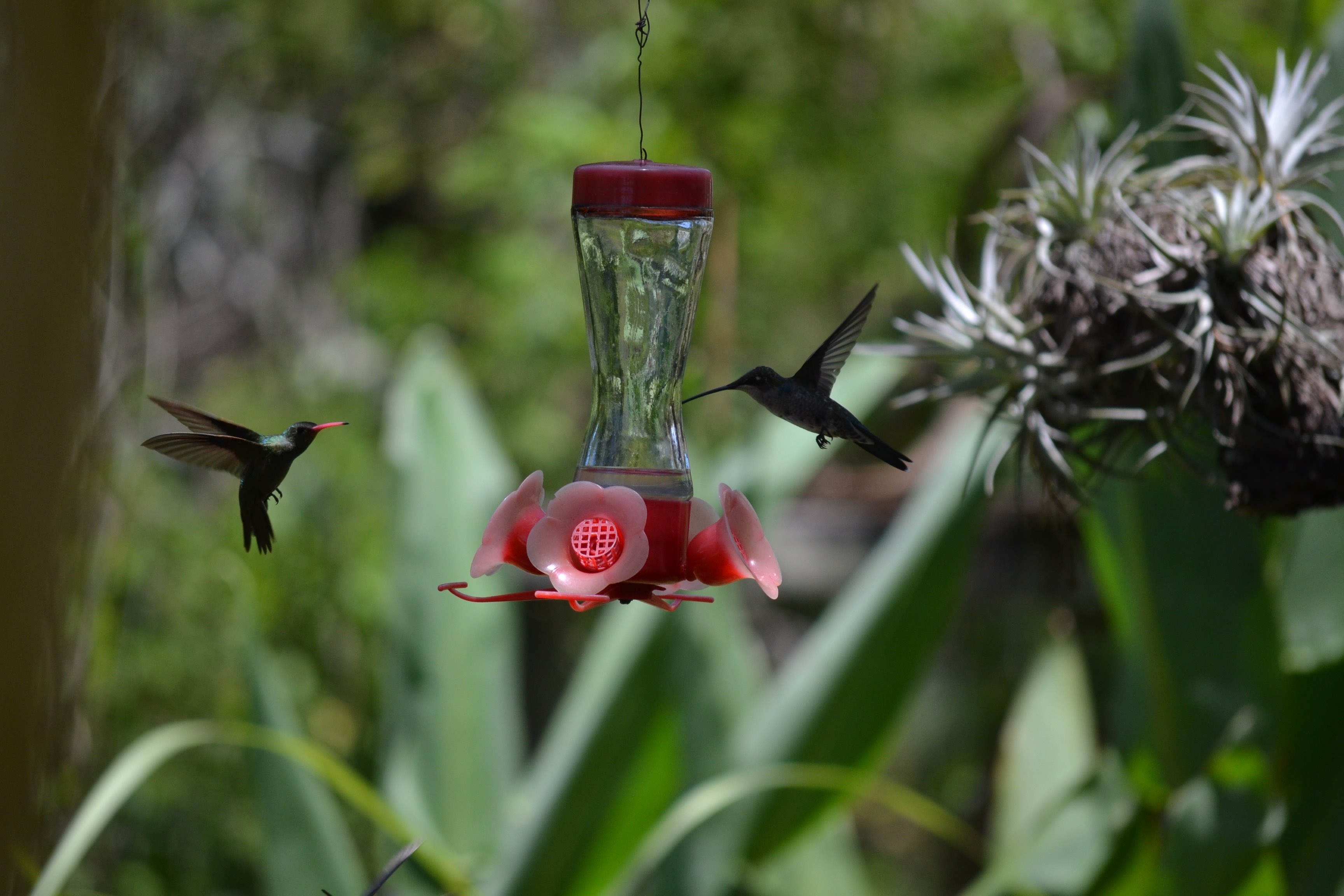
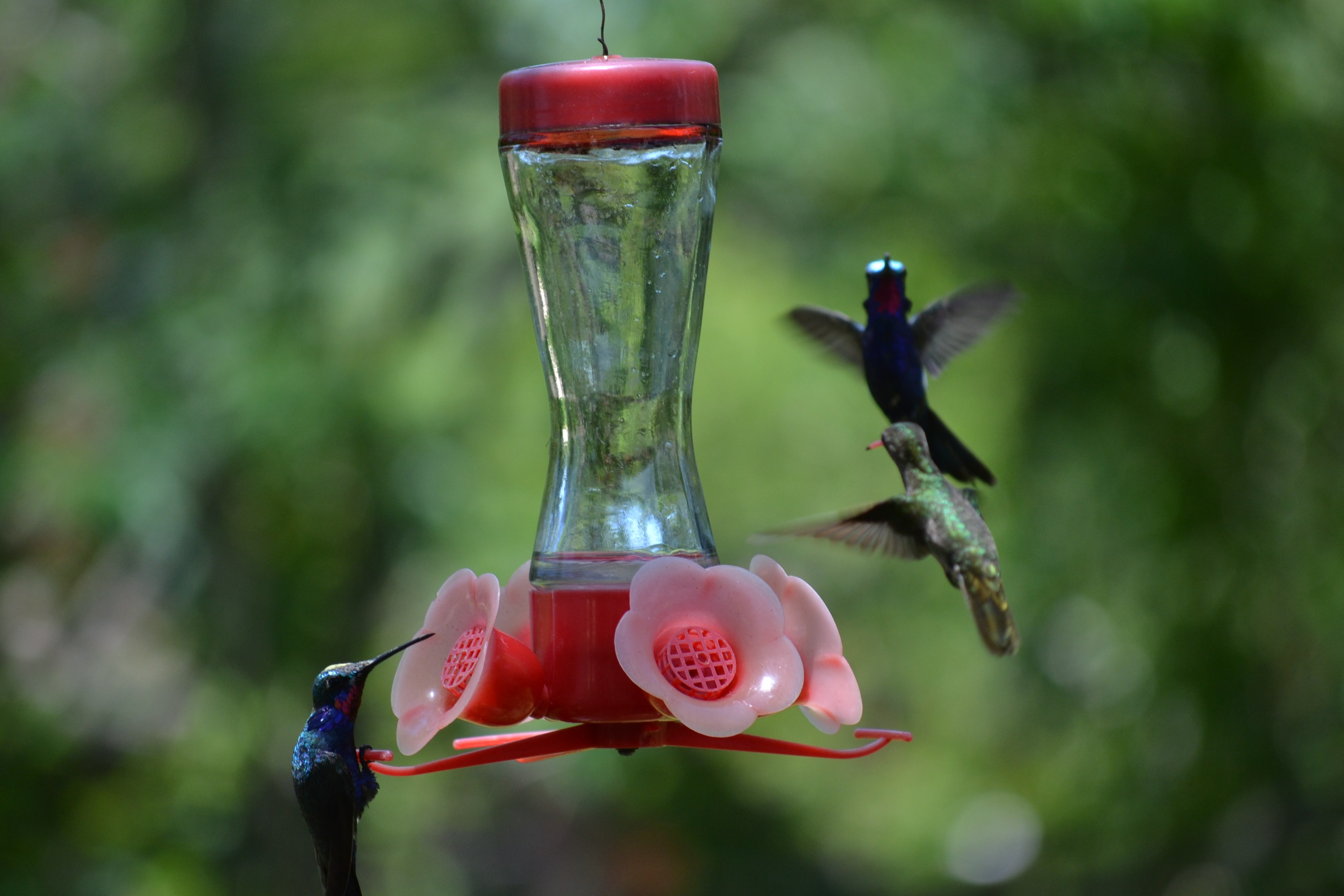
A Glittering-bellied Emerald Hummingbird (left) and probably a female Blue-Tufted Starthroat Hummingbird at a feeder in Colonia Carlos Pellegrini.

A Glittering-bellied Emerald Hummingbird (left) and probably a female Blue-Tufted Starthroat Hummingbird at a feeder in Colonia Carlos Pellegrini.

Close-up of the Glittering-Bellied Hummingbird.
Close-up of the Glittering-Bellied Hummingbird.

A Glittering-bellied Emerald Hummingbird (left) and probably a female Blue-Tufted Starthroat Hummingbird at a feeder in Colonia Carlos Pellegrini.

Blue-Tufted Starthroat Hummingbirds (perched, left and in flight top right) and a Glittering-Bellied Emerald Hummingbird (flying, right). All Hummingbird pictures by Mariana Terra..

The mammals spotted were mostly rodents. Capybaras (Hydrochoerus hydrochaeris) being very abundant both in the swamps as well as in the small lakes we visited. It was interesting to notice that while the latter were rather brown in colour, the ones inhabiting the swamps and grasslands had a reddish tinge as if henna would have been applied to them.
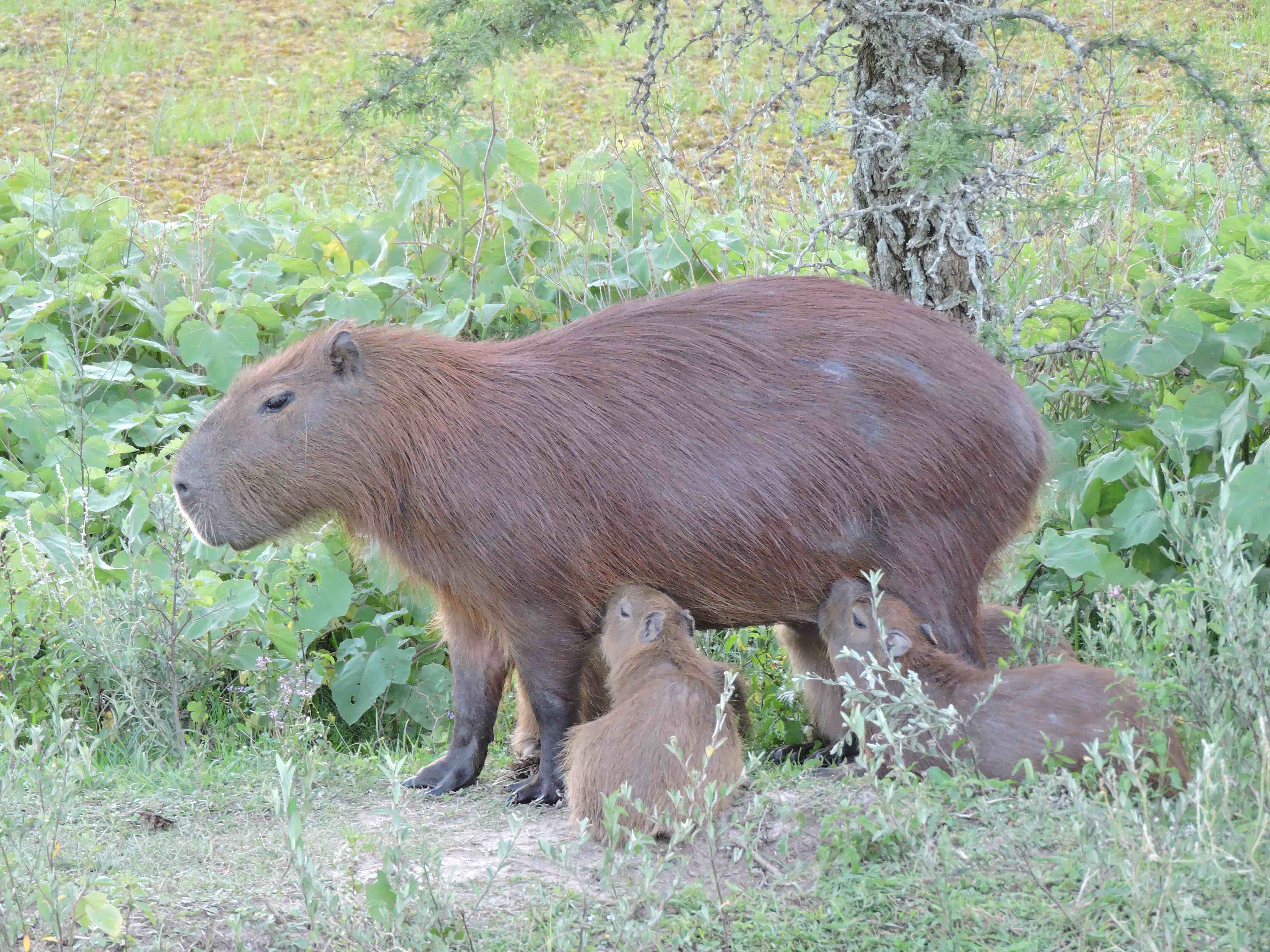
Female Capybara feeding her babies.

Female Capybara feeding her babies. Picture by Julio A. de Castro.

Plains Vizcacha (Lagostomus maximus) were also present in numbers, mainly grazing around their burrows and it was very entertaining to see them carrying various objects to their burrows. They are the largest of the Genus and they build elaborate burrows that house successive colonies for generations.
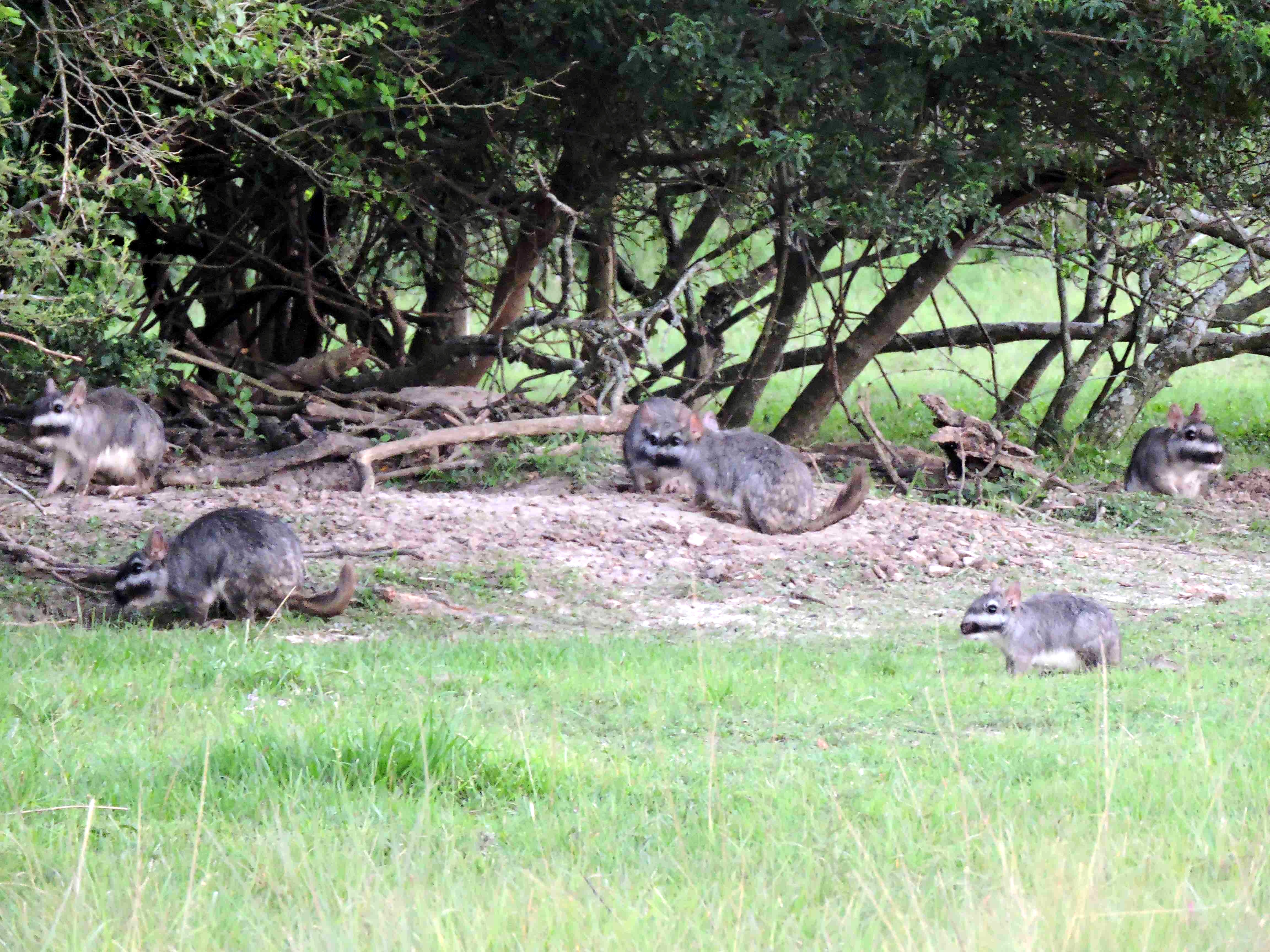
A family of Plains Vizcacha out in the evening.

A family of Plains Vizcacha out in the evening.

Grey (Lycalopex gymnocercus) and Crab Eating foxes (Cerdocyon thous) were seen daily and three Hog-nosed Skunks (Conepatus chinga), a mother and two babies, were seen daily at the ranch’s park, stamping their forelegs in warning when we got too close, failing to get good pictures as they appeared only at dusk. We also saw a family of Black Howler Monkeys (Alouatta caraya) but did not see the rare Maned Wolf (Chrysocyon brachyurus) or the re-introduced Giant Anteater (Mymecophaga tridactyla). However, our disappointment was somehow lessened by enjoying the sight of a Screaming Hairy Armadillo (Chaetophractus vellerosus) standing in its burrow and three Nine-banded Armadillo (Dasypus novemcinctus) walking in the meadows.
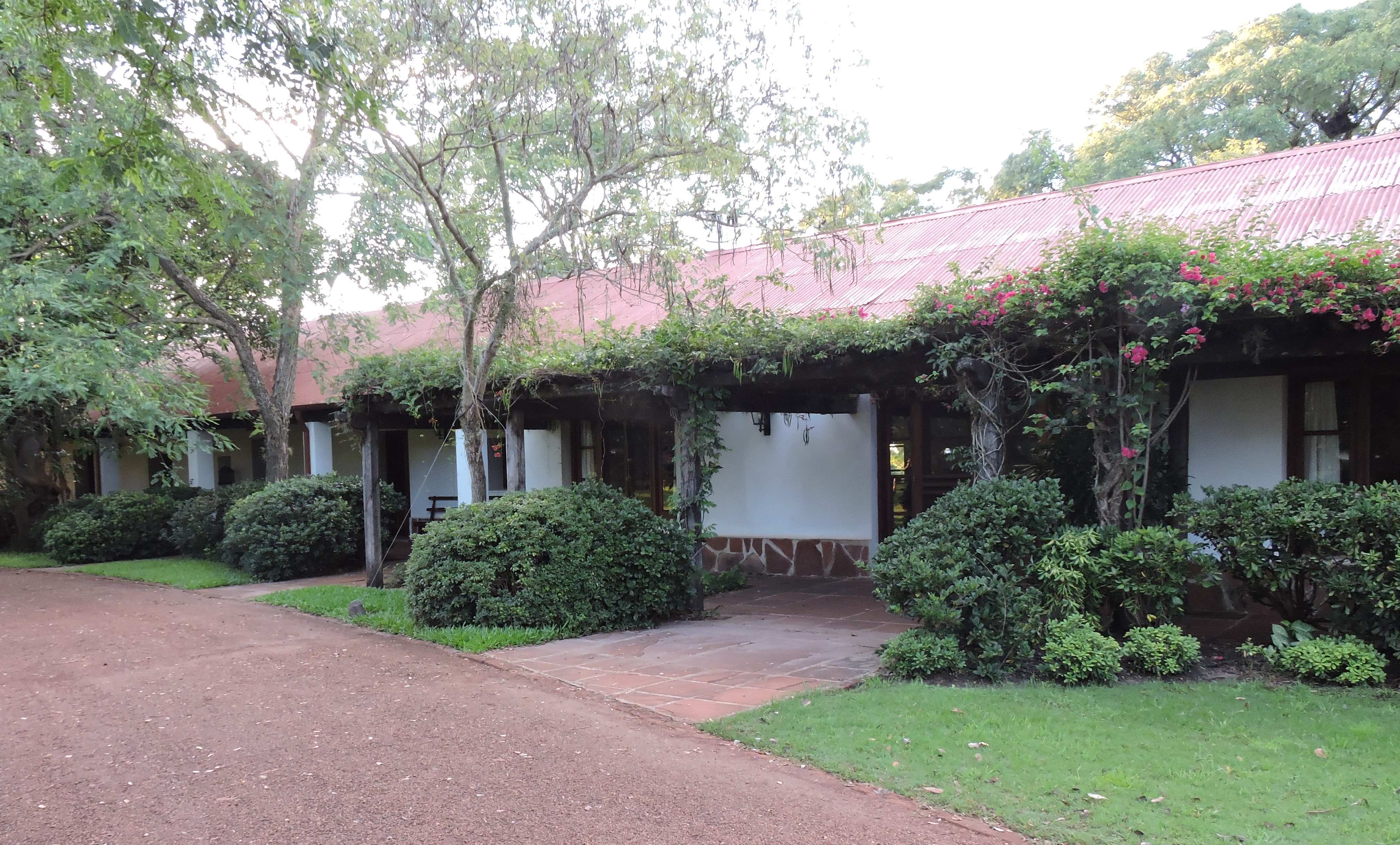
Rincon del Socorro: guest accommodation area.

Rincon del Socorro: guest accommodation area.

We were accommodated at the refurbished ranch facilities. The rooms were very comfortable and they were up to the high standards we have enjoyed. All activities and meals were included in the price. The latter were good and the service did not make us wait. We were all very satisfied except for our son who in his early twenties, who during dinner on the first day got small portions of food and only his British education kept him from making the remarks I would have made being in his place! He also stoically tolerated our jokes. He was pleased at breakfast as it was a buffet and he could serve himself the portion size he wanted!

The respite given by the good breakfast ended at lunch where he received the smallest portions again! After that, anticipation regarding his portion size for dinner grew as the day went on and, yes, we were not disappointed as he again got the smaller portion. This made us all laugh loud to the surprise of the other guests and waitresses who did not understand the reason for such a mirth! As the situation repeated itself at all meals, it soon became an expected event and we did not laugh anymore but felt sorry for our son and even contributed from our portions to enlarge his! Well, his mother did anyway…

Finally, during our last dinner it was the time for us to get the surprise as he was somehow rewarded when he was presented with the largest -by far- cheesecake portion of all. He did not leave one crumb as he ate it with a smile in his face!

[1] Iberá means Brilliant Waters.
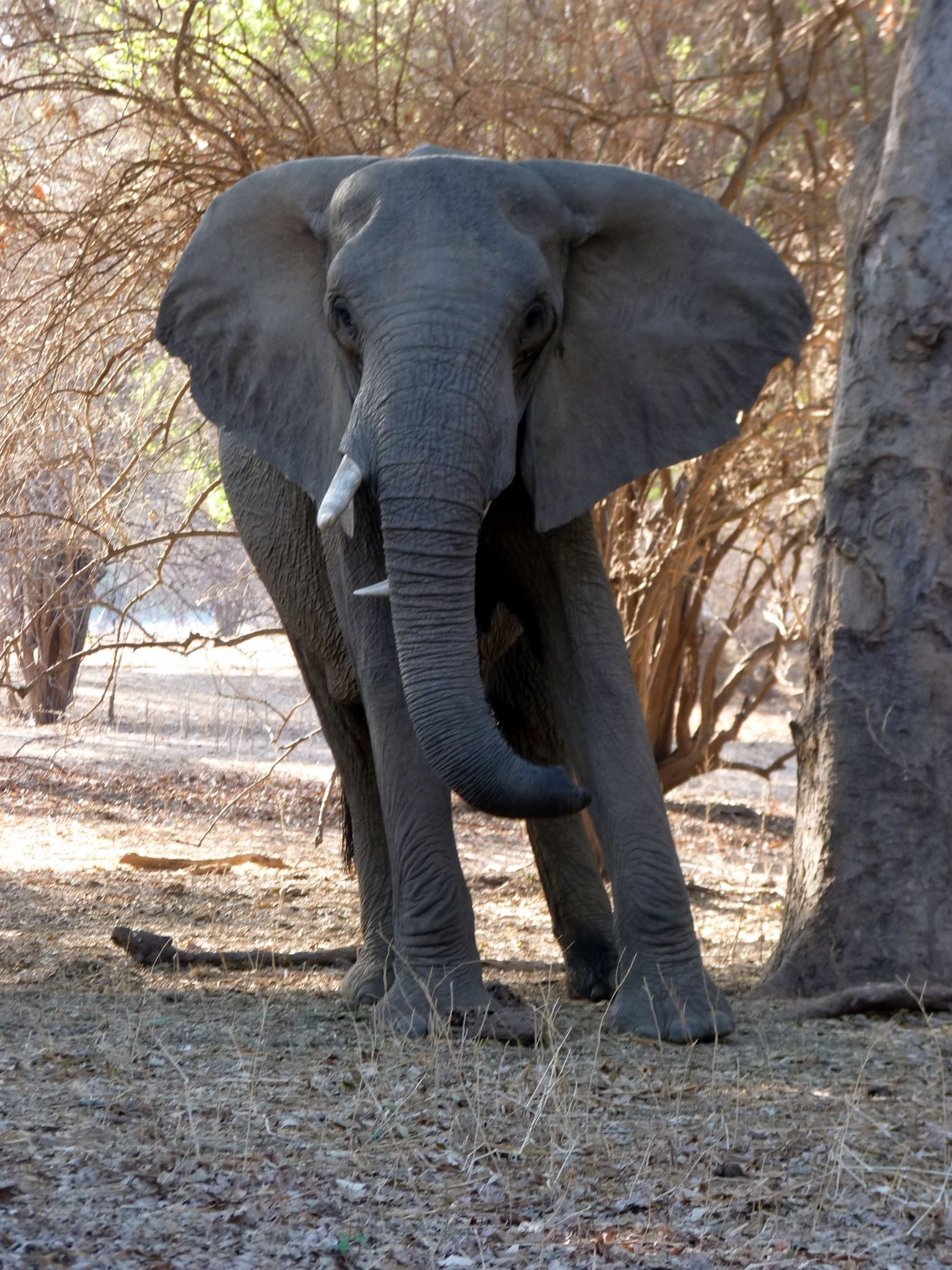
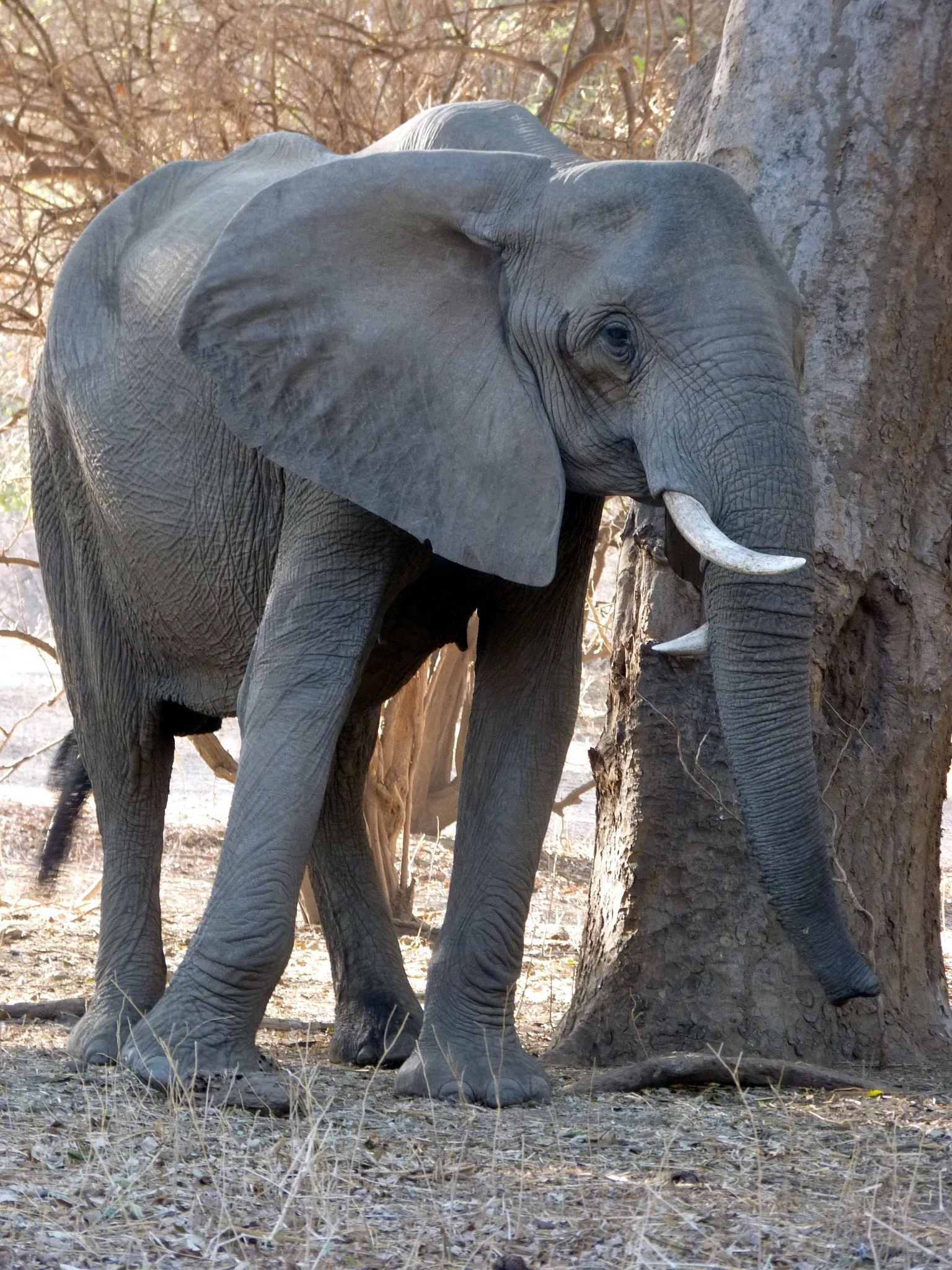
One Tusker…

twisted tusker tusk tip small

While at Mana Pools National Park we met this elephant. At first we dismissed it as a “one tusker” but when we looked at it from a different angle it immediately became clear that we were wrong!

While its right tusk looked healthy and nicely curved, its left tusk had grown in the wrong direction and it was pointing down and towards the back.

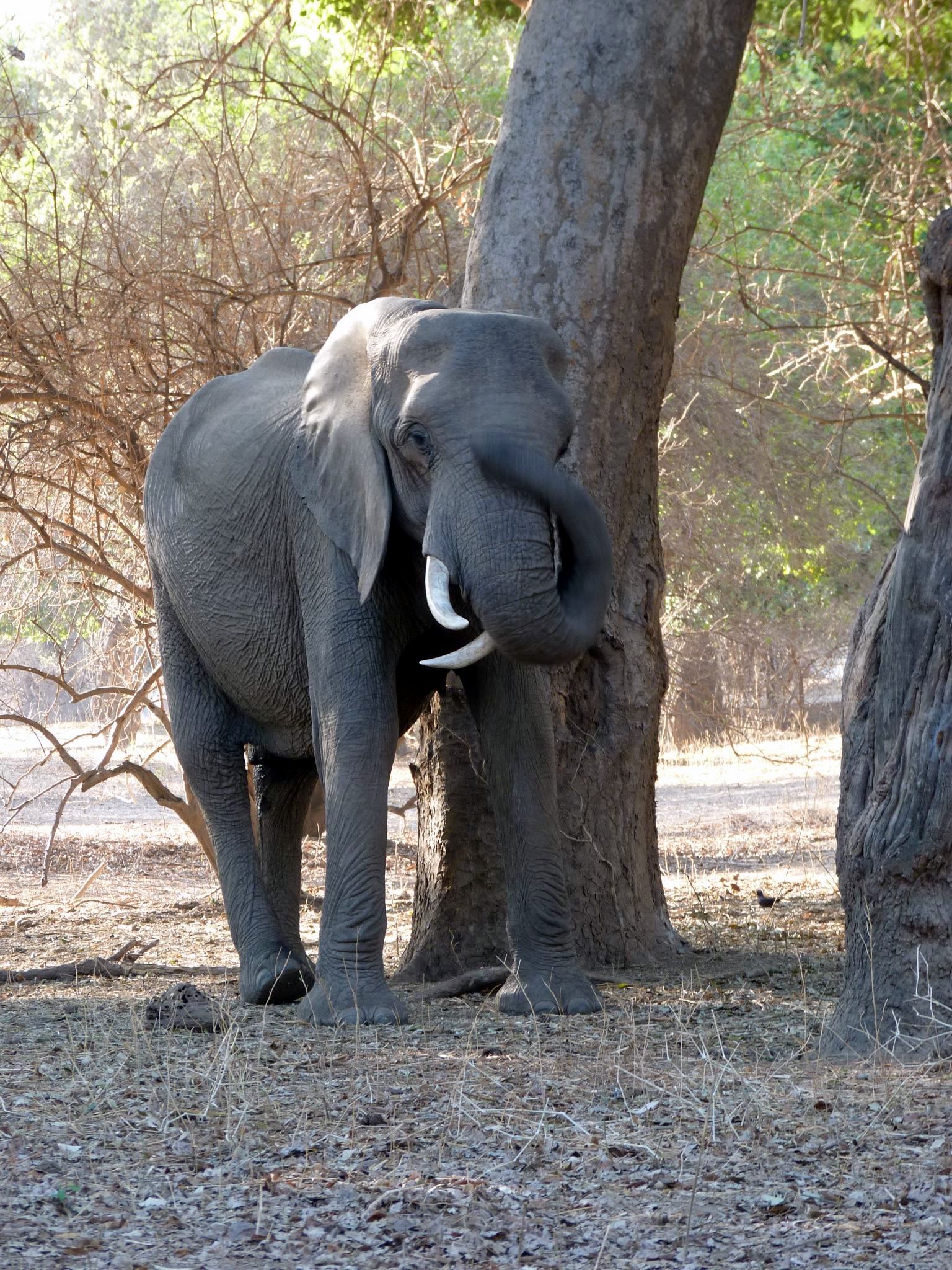
twisted tusker small 1

I have seen pictures and references in the literature of elephants with weird tusk arrangements so this find is not really an unusual one. It is much more rare to find an elephant with three tusks and I recall a hunter (probably Ionides) who tracked a famous three-tusker. More recently, an animal with this same rare characteristic was spotted in Nxai Pan National Park in Botswana by Stuart Arnold (http://www.exploreafrica.net/whats-happening-now/3-tusk-elephant-nxai-pan/).

Twisted tusker small

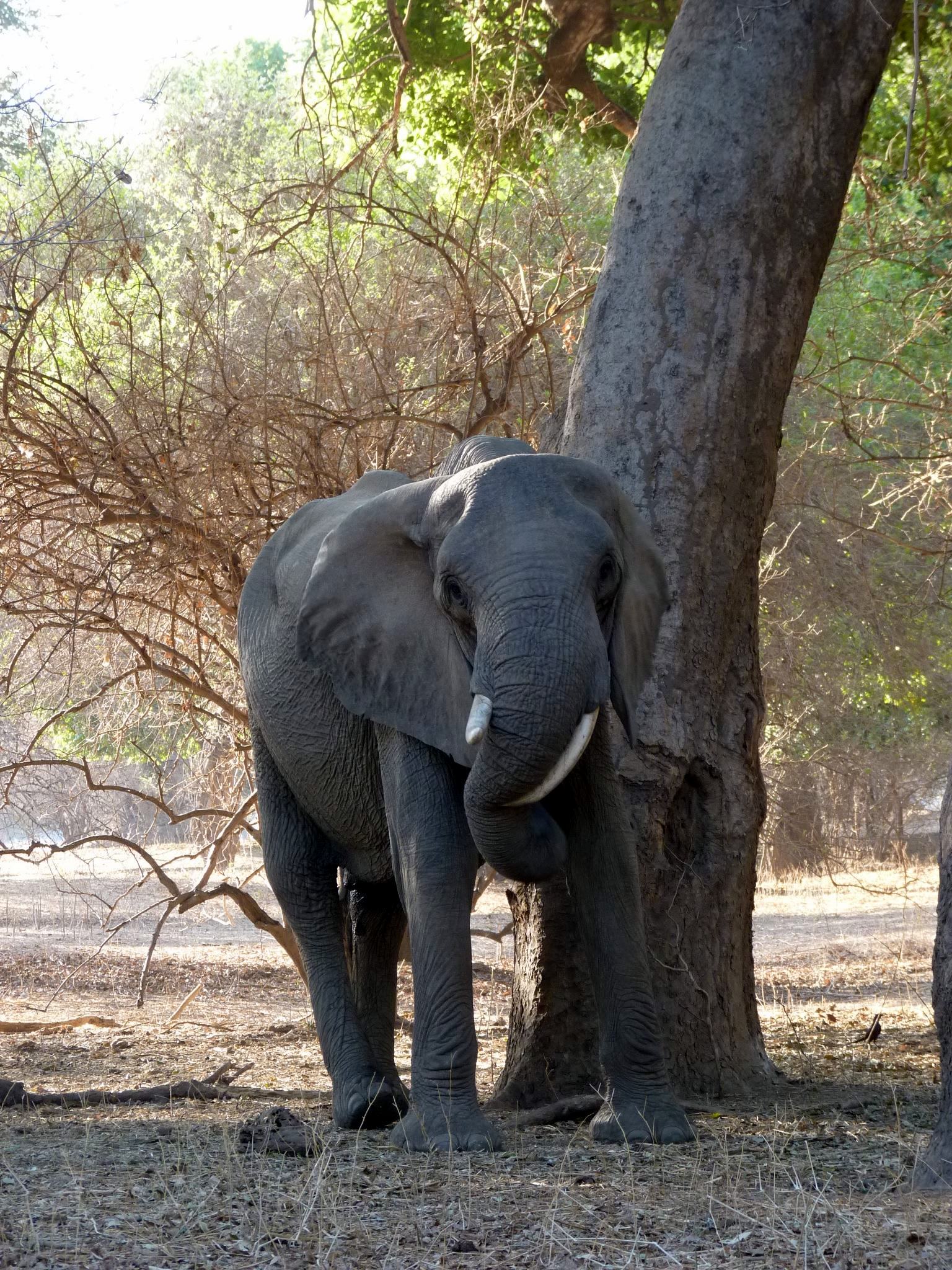
In our case, what made this animal interesting was its habit of placing its trunk behind its left tusk, giving it a weird look.

Twisted tusker trunk

Based on its size and condition, the bent tusk does not appear to have had a negative impact on its life and it is unlikely that it will affect it in the future. We will keep an eye open for it in our upcoming visits to the Park.

African Videos – Elephants 1

As today is a holiday and I imagine you can do with some entertainment, I decided to post a few videos about elephants. Please put up with my usual lack of photographic/filming skills and enjoy the moment!


1. What I call the Babalala Tusker for lack of another more appropriate name until it is -eventually- named by the Kruger National Park authorities.


2. I believe this to be a magnificent view of elephants at a waterhole in Hwange National Park in October 2013. This sight really hooked me on the pachyderms (with help from family and friends…)


3. Another view of elephants drinking at a smaller waterhole.


4. Elephants are the only animals that show “emotions” when approaching the water! Just watch…


At the foothills of the Andes

A view of the Andes with a  Vicuña in attendance.

A view of the Andes with a Vicuña in attendance.

In 2001 I got transferred from Harare to La Paz in Bolivia, a rather dramatic move but the organization needed my experience and fluency in Spanish. At the time, the departure meant -sadly then- a high possibility of not returning to Africa, something that was not in our plans. It was a difficult move, made slightly more bearable at the time by the obvious bonus of our children learning Spanish. As it turned out, our time there was far better than what we expected.

Sowing in an Andean valley near Potosí, Bolivia.

Sowing in an Andean valley near Potosí, Bolivia.

While in Bolivia[1] we spent our holidays travelling around the country when we could but we also took the opportunity to visit parts of Brazil, Chile, Peru and Argentina. Most of this travel was done by road. Apart from Chile -closer from La Paz- Argentina was the most visited, particularly the Parana River where we mainly fished for Dorado (Salminus maxillosus) and Surubi Manchado (Pseudoplatystoma coruscans[2]), two great game fish. While we would stay in the Corrientes city surrounds, we also visited other well-known fishing spots such as Paso de la Patria, Ita Ibate and Itatí. I will cover this experience in another post.

A Llama looks on.

A Llama looks on.

The trip from La Paz to Corrientes took us through several interesting places. The first stop was the city of Oruro, well-known years back as the stronghold of Simón Iturri Patiño, who aside from Evo Morales today, was perhaps the most famous Bolivian. For years, Patiño dominated the world tin production and became known as the “Tin King”. Part of his large fortune is now in the Patiño Foundation that is very active in Bolivia with development work. Oruro is also regionally and internationally known for its indigenous Carnival celebrations[3], not to be confused with the more famous Brazilian one.

A member of the "Diablada" (Devils) dancers.

A member of the “Diablada” (Devils) dancers.

Another group of dancers.

Another group of dancers known as “Morenos”.

One of the several bands that accompany the various groups.

One of the many bands that accompany the various groups.

About 400 km further on we found Potosí. The first time we drove there the road was very rough and, to make matters even worse, the asphalt was being laid down. Potosí is where most of the silver of the Spanish conquistadores was mined and where their gold and silver coins were minted. The “Cerro Rico” (Rich Hill) is still producing silver, although considerably less than in the times of the conquest, now led by individuals. The hill is reputed to have shrunk over time due to the intensive mining that took place. Sadly, it has -and is still- swallowing many lives and it is a true “mass grave”. Mining is normally a tough activity anywhere. If to this we add that the activity is performed at an altitude of 4,000 m, with minimal or no security measures and rather rudimentary tools, we begin to get the picture and the thought takes your breath away, if you still have any to spare when entering a mine![4]

Potosí from the road to Tupiza and Argentina.

Potosí from the road to Tupiza and Argentina.

The sun is everything in the highlands and the large difference in temperature between sunny and shaded areas needs to be taken into account. You soon get used to walking on the sunny side of the road to avoid the cold and the large differences in rent between adjacent houses -that tempt the unsuspecting- are very often attributed to the differences in sun exposure!

Spending the night at Potosí’s altitude is in itself a challenge, with subzero temperatures at very high altitude and a rather weak sun. As if this wasn’t enough, hotels tend to keep their central heating at full throttle and the warm and stuffy air hits you the moment you walk in.

Interestingly, our family was divided regarding “altitude tolerance”. While my wife and son were almost indifferent, my daughter and I felt like fish out of water! This meant that we had two rooms: the tough guys and the sissies… I cannot account for the fate of the tough guys in the room next door but as far as my daughter and I were concerned, we did suffer the lack of air. You are probably thinking, the obvious thing would be to open the windows to let fresh air in, and I completely agree! This was attempted and soon we had frost on the beds, so rudimentary survival required that we close them and look at each other in resignation while the green tinge of our skin increased! Eventually the night would be over.

On occasions, in search of oxygen, we deviated to Sucre for the night. This is the administrative capital of Bolivia, a beautiful colonial city of white buildings with tile roofs, hosting a number of museums and churches worth a visit. In addition, some of the best hats are made in Sucre. Although that meant an extra 200 km, it was worth the drive as the sissies felt much more comfortable here.

A church at dusk in Sucre.

A church at dusk in Sucre.

Beyond Potosi and Sucre we travelled via Tupiza, to Villazón where we would cross to La Quiaca in Argentina. On the way we passed close to places where Ernesto “Che” Guevara started his ill-fated attempt at a revolution and eventually terminal revolutionary attempt in Bolivia. We also visited the area where Butch Cassidy and the Sundance Kid met their nemesis at the hands of the Bolivian Army that seemed to have been rather active during those days.

The trip through Bolivia was rather epic as the roads were rough and dusty and most of the trip was at high altitude and very tiring. I recall four punctures on one of these journeys and an almost complete absence of road signs that meant getting lost on the dusty roads! Matters were not improved by our 10 year old son’s “Is there still a lot to go?” question after 10 minutes of our departure from La Paz, rephrased slightly and repeated as time went on… I vividly recall one arrival at the Villazón border post while Mass was being celebrated at the border crossing point and all traffic in both directions needed to wait for about an hour until all believers were satisfied and we were allowed to proceed!

A welcome pause on the way to Tupiza, Bolivia.

Dust was not in short supply on the way to Tupiza, Bolivia.

Clearance of road blocks demanded patience.

Clearance of road blocks demanded patience.

The road we were...

The road we just covered…

Leaving the border town of La Quiaca and entering Argentina was a big and welcome change. The roads were perfect and, on the first bend in the road there were more road signs than we had seen so far in Bolivia! The added bonus of petrol stations with shops was irresistible for our children. I am grateful for the child locks that prevented them from jumping out in order to enjoy their favourite drinks and snacks!

Continuing our journey after La Quiaca we would enter Jujuy Province, pass by its homonymous capital city and finally get to Salta, the capital of the Province of the same name. This was the first place where the blood oxygen levels of the sissies were finally restored and a really good night’s sleep could be had without dreams of frenziedly swimming through water towards the surface only to drown in the process, waking up with a serious tachycardia and covered in cold sweat (consequence of the anoxia!)

At this stage 800km of driving still remained to reach Corrientes. This took us through the Chaco region on an almost totally straight road across places with exotic and even threatening names such as, Pampa del Infierno, Canal de Dios, Monte Quemado, Quitilipi and Pampa de los Guanacos. On one of the journeys I needed to make a pit stop as something I had eaten did not sit well with me. When I came back to the car I made a joke to the kids of having knocked out a lot of guanacos as a consequence of my act! This has endured all these years and is still the topic of conversation and laughter in the family!

Eventually we would arrive to Resistencia, the capital of the Chaco Province and after the final 20 km, that included crossing the mighty Paraná River, arrive to the city of Corrientes, Capital of the Corrientes Province, and our fishing destination. Fishing in the Paraná was excellent and will be addressed in future posts. Unfortunately Corrientes can be extremely hot so we never considered it as a place we would be happy to live in.

During the first journey, we spent one night in Salta before continuing our journey. During the next trip we luckily found a very nice hotel, the Selva Montana in a suburb of Salta called San Lorenzo, the summer destination of the patrician families from Salta. Gradually Salta moved from a one-night stop into a destination where we could enjoy several activities, together with great food and wine! As it happens, the place grew on us to the point of making it a “home” as we were not sure would be able to return to Africa.

The farm from the opposite hill.

Our farm as seen from the opposite hill.

As the weather was very pleasant and the place very beautiful[5] the thought of settling there grew and we decided to explore the area with the aim of acquiring a plot of land where we could eventually build a house. We looked at several options until finally we settled for what we have today: a small farm at a place called “El Gallinato” located about 20km north of the capital city of Salta. The farm is located in a region known as “the Yungas” which is in fact a transition area towards the Andes Mountains, at an altitude of about 1200m and an important area for the biodiversity of the region.

Its cloud forest is host to some remarkable tree species, some of which have been sadly cut as they have fine wood. However, there are still beautiful trees and some regrowth is taking place. Indigenous Walnut trees (Juglans australis), Tipas (Tipuana tipu) and Ceibo (Erythrina crista-galli) are among the species found in the area. There are almost two hundred bird species including special ones such as Hummingbirds, Toucans, Guans, Jays and Seriemas to name but a few. Condors are sometimes seen flying overhead.

A cactus flower.

A cactus flower.

There are also several interesting mammals including Wild cats, Foxes, Ocelots, etc. However, the climax in terms of mammal sightings for us was the lucky spotting of a Puma (Felix concolor) or Mountain Lion that crossed the road in front of our car and stopped to watch the occupants! Finally, insect life is prolific and butterflies and moths are simply amazing!

Through this short account you are now aware of some of the motives that convinced us to secure this rather out-of-the-way piece of land in the foothills of the Andes that will be the subject of future posts.

NOTES:

[1] We spent five good years there that will be dealt with in separate posts.

[2] The Surubí Atigrado (Pseudoplatystoma fasciatum) also occurs but is less frequent in the area.

[3] I had the privilege of being invited to watch it while working there and it is a totally unique event.

[4] A well known tourist attraction is a visit to a mine.

[5] It is known as “Salta la Linda”, Salta the Beautiful.

Stranded in the Zambezi

Zambezi river

This story was told to me by a fishing guide at Kanyemba, a great place for tiger fishing on the Zambezi, Zimbabwe. I was assured that it is a true story.

A number of tour operators organize canoe (kayak-type) trips downriver in the Zambezi. They usually start in the Chirundu area and end at Mana Pools National Park or thereabouts.

A group of European tourists were doing one of these trips. This was a party of six, including a very experienced guide and hunter that knew the area very well and who was a frequent visitor to these waters.

The party was progressing slowly between the river banks when suddenly a hippo attacked them and sunk their boats. Luckily, not only did the culprit depart soon after the damage was done, but the tourists capsized in shallow water (chest level) and managed to hold onto some oars!

Fearing a return of the attacker and fearing attracting crocodiles’ attention, the guide instructed the tourists to stay put in the shallow bank while he swam to the Zambian shore to look for help. He knew the farmers on the other side. He calculated that he would return a couple of hours later with a boat to pick them up. Before he left, he strongly recommended that they stay put and use the oars as their defense in case of hippos or crocodiles.

He started wading the river and then swimming. He was very fit and made progress rapidly towards the other shore. However, the river is wide at parts and, about half way, the horrified tourists saw a crocodile swimming towards him and, although they shouted and waved arms and oars, the guide did not hear them and the inevitable happened. The crocodile attacked and took the guide by his right arm. A struggle ensued and, luckily, the guide broke free and managed to reach the shore, injured and having lost a considerable amount of blood.

The guide, now severely weakened by blood loss, was clearly in trouble! Although aware of his lucky escape from the crocodile, he realized that he would not be able to move very far from the river’s shore and there were many dangerous animals in that area, particularly the feared buffalo but also lion and hyena. Before his strength waned he found the best possible place and sat down leaning against a tree trunk. He was no longer bleeding but he could not move, as he was very weak.

Before he fainted he realized that he was in trouble. After a while -he did not know how long- he came to and heard an animal approaching. As it was almost night-time, he did not see at first what it was but there was little he could do anyway so he prepared for the worst. He strained his eyes and managed to see a large shape approaching and he knew that it was a buffalo and that he was a goner. The buffalo was coming straight towards him so he closed his eyes and waited. Nothing happened! Nevertheless, he could smell and hear the buffalo breathing very close. He slowly opened his eyes and his heart missed a beat. The buffalo was lying a couple of metres away from him!

He passed out again and he woke up with the first light. The buffalo was gone and, for a moment he thought that it was a dream. However, the flattened grass confirmed that the animal had been there! His arm was not bleeding and he had regained some strength so he decided to walk to the nearest farm to seek help. He did not make it but was luckily found, unconscious again, by one of the farm workers on patrol.

Our battered guide was immediately taken to the farm. He was in a terrible state so the farmer decided to evacuate him to South Africa for emergency medical attention. As there was no time to waste, an ambulance plane was called and within a couple of hours the farmer and the injured guide were on their way to Johannesburg.

As is the case during a medical evacuation, the doctors started treating the guide as soon as he was on board and in about an hour he regained consciousness. The caretakers realized that he was trying to speak and, attributing this to the fever caused by the infected wounds, told him to relax as he was out of danger and in good hands now. The guide, however, became increasingly agitated until, gathering all his strength managed to say “tourists, Zambezi” “You are not in the Zambezi anymore, you are on a plane to South Africa” came the reply from the doctor.

Eventually he got the message across and managed to describe what had taken place and told them that his clients were still in the Zambezi! Panic ensued and frantic messages from the pilot to Lusaka airport were recieved before the plane’s landing in South Africa.

Eventually the news was relayed back to the farm and a search and rescue party was dispatched with the result that a few hours later the survivors were found, still in the same spot, with the water up to their waists, hanging on to their oars, unharmed and overjoyed to have been found.

The guide recovered from his injuries and continued working for a few more years. Sadly, he died while trying to finish-off a wounded buffalo.

Spot the Beast 6 (Easy but beautiful!)

Spot the beast 6 no light

I know, this one is not too hard to spot…

As I am short of time, below I place all the pictures I took trying to show it as it is.

Spot the beast light on 1

lights in the dark

Light on dark

holding the beast


Whole insect cropped

Head

It is a “Headlight Elater” (Pyrophorus noctilicus) of about 3.5 cm in length, a species of the “Click beetle” family that numbers over 9 thousand species worldwide!

It is locally known here as “Tucu-tucu” If upside down they snap a spine on the prosternum onto a corresponding notch on the mesosternum (very academic of me!), producing a violent “click” that makes the beetle jump in the air until it rights itself and is able to move off.


Spot the Beast 5


Spot the beast 5

The Bushsnob is back in action, at least for two posts! I am not sure when I will be able to post again so I will do the “Beast 5 Revealed” below.

At the moment we are 1600 km north from the river Plate, at our small farm in Salta, Argentina from where I will post a few interesting entries (I hope) for you to enjoy.

On Plane Travel

As announced, the Bushsnob has moved continent (if not hemisphere) and is now in Latin America, more precisely in Uruguay. This feels like an achievement considering the rather grueling plane trip endured to get here. Nothing wrong with the flying itself but a lot to be desired on the issue of room on board!

I was taught at school -and confirmed later through various reliable sources- that slaves were packed and transported in ships in the most atrocious of conditions and I fully support the end of the slave trade.* I do believe in racial equality but surely that does not mean that to show it, individuals of all races should be packed tightly together on a plane!

The amount of personal space available on board is so small that it is becoming almost inexistent! The real issue, however, is where does this stop? I am sure that engineers are currently busy trying to find ways of packing more passengers per cubic metre! Are profits so small that stuffing 20 more passengers makes such a difference? Or is it greed?

Whatever the reason, it seems that human air transportation is moving towards modern slavery so perhaps “Ecoslave” could be an appropriate name for the lowest air travel variety? It brings in the “Eco” for ecology and economy as well as the egalitarian tight human packaging.

I am aware that plane configuration varies between airlines and that my comment may not apply to all. However, there seem to be some general rules: (i) the further south you travel, the poorer the service and, (ii) the larger the plane, the less individual space available. Although our flight to Africa last April was acceptable on a smaller Airbus A330, the return on a much larger A340 was very uncomfortable.

Trapped in a narrow seat made of materials with sharp ends, you are completely dependent of the passenger in front of you. The moment he/she decides to recline the seat (as is their right as a flyer) this will not only change the angle of your video screen but also spill whatever plastic food and drink you had been given! In addition, gone are the 2 cm of knee room you cherished to keep the blood in your ageing arteries from clotting and the normal leg ageing process accelerates for the hours you have to endure the trip.

As if restraint by folding seat would not be enough, your plastic table also aids in keeping you clasped-in until the remains of your meal are withdrawn. As a rule, turbulence starts at the time when drinks and food are served, so clasped-in time can be rather long (sometimes as long as the time your food takes to be digested!).. I sometimes believe that pilots have a “Turb” knob that they turn with relish to keep passengers from moving too much!

After the turbulence subsides, you eat your meal and, while waiting for freedom from the clinching table to arrive in the form of the withdrawal of your tray, a fleeting thought that says “toilet” appears in your pressurized brain. While still waiting for your corset to be removed, this thought becomes a more urgent “TOILET” until your stewardess, aware of your agonic look, finally removes your tray. She does this with the same smile that she would have when telling you to remove your shoes before using the slide in a sea landing!

What comes next is a challenge to your physical and mental strength. You need a toilet but your legs are numb so a waiting period accompanied by vigorous massage to re-establish blood circulation is required. Once you regain the feeling in your legs it is time for the next step: the exit from your seat. To achieve it, you move sideways keeping your legs on the floor and your torso behind the seat in front of you, avoiding hitting your head against the bottom of the overhead luggage compartment and also to annoy the occupant in front of you. A contortionist act worthy of Houdini!

Once in the passageway you try to walk naturally towards your target while counting the minutes you can still hold on! Your innards freeze when you see the queue and this actually helps you wait, at least for a short while. Then, to distract your mind from your urges, you look around. What you see if the final blow to your already impoverished situation: while your plane section (seats 41 to 60) is packed chock a block, passengers in the other ones are comfortably sleeping across three seats! You swear at the stupidity of being clever while choosing your seat and promise yourself -knowing that you will never dare to do it- that next time you will go to the airport and get your seat allocated there.

Your angry thoughts are briskly interrupted as the toilet door opens and it is your turn! The relief that follows is so great that -like I am told happens during childbirth- all is forgotten afterwards and you face the return to your clamp with renewed enthusiasm. After all, you only have another eight hours to go!


* Disclaimer: I am in no way making light of the slave trade or the circumstances endured by slaves, but rather over dramatising an event that I experienced (in true Bushsnob fashion!)