Bush stories and anecdotes

The heart of the blog, where I present observations, accounts, funny stories, etc.

Vundu!

Tiger fishing is one of the top sports in Southern and Central Africa and Zimbabwe is no exception. We had fished for tiger several times before not only in Zimbabwe but also in Lake Turkana and Tanganyika. Luckily I had caught a few good specimens that we always returned to the water. But, if size matters to you and you wish to display your catch, there is no need to kill your fish as fibre glass models exist that would fit your fish if you take a couple of quick measurements in addition to its weight!

Apart from tiger fishing, many people visit Kariba in search of bream (Tilapia spp.) but relatively few are after vundu (Heterobranchus longifilis). Excluding bull sharks, the vundu is the largest freshwater fish in southern Africa, reaching up to 1.5m in length and 55 kg in weight, quite a large fish for my coarse fishing standards! Interestingly, vundu only live below the Victoria Falls as none have been caught above the falls [1].

My wife’s dentist is one of the few fishermen I have heard of that “specializes” in vundu fishing and the re-telling of the fishing prowess of the dentist (30 to 40kg vundu caught!) had an influence on me when deciding this trip.

So, aware of the family’s love for nature, our daughter’s keenness for the sea, our son’s need for resting as well as my desire to fish for vundu, in mid 2017 we booked a trip in Lake Kariba. Unfortunately our son was not able to join us because of work and a couple of invited friends also declined our offer because of pressing domestic commitments. When it looked that we would be just three on a now rather outsized houseboat, Clara, a friend of Flori (our daughter and part-time Ed.) decided to join us all the way from cold Stockholm, her first trip to Africa, almost straight to the bush (and, after the experience, perhaps the last?).

Our final destination was the Ume river, quite far from Kariba town, the place where houseboats leave from. We were told that to reach those far off places you required a minimum of six nights in the lake. After a long search comparing prices and comfort we had booked a rather spacious houseboat known as O B Joyful. We agreed on a self-catering basis so it was our responsibility to organize all food and drinks to last for the week as well as all needed items regarding fishing.

DSCN1301 copy

The moored house boat.

With a crew of four (Godfrey, the Captain, Warren the cook, Pilot the sub-Captain and Silas, the handyman) we sailed from 2 to 8 of January. They were really first class and pampered us thoroughly.

DSCN1293 copy

Plotting the trip’s course.

20180108_081444 copy

From left to right: Silas, Pilot, Godfrey, Warren and the Bushsnob.

Although we had visited Kariba several times before, it is easy to forget its size and the incredible beauty of its blue water, green islands and grassy flood plains framed by the spectacular and distant hills, a hazy blue in the distance. The abundant birdlife, numerous hippos -both in and out of the water- and the usual elephants complete the general picture. Abundant fish eagles were a constant sight and their wild calls are missed now! In addition, we also watched a couple of fishing ospreys.

DSCN1343 copy

Lake Kariba at Elephant point.

DSCN1295 copy

Kariba sunset.

At night you are immersed in a different world with a star-full sky where with patience you can detect a number of known constellations while listening to the noises of the night, particularly owls, frogs and toads with the occasional lion call and hyena whooping [2].

DSCN1304 copy

We also went of game watching trips.

Luckily Godfrey was keen on fishing and helped us all the way, not only getting us to potentially good vundu spots but also on the bream fishing as well. His patience with worms and fish netting was really remarkable! Luckily, fishing bream became a great entertainment for the whole group while waiting for the vundu to strike and we also had some frequent visitors to keep us busy…


20180105_180236 copy

The surprises of fishing in Kariba!

DSCN1367 copy FC

Flori and elephant returning.

Although we knew that the Ume river was as far as we would go, the rest of the itinerary was open as we decided that we could chose where to spend our time. In addition, there was a factor we did not plan for: the weather! Storms are feared in Kariba and the fact that it was the rainy season added some uncertainty to our planned itinerary. Luckily, although the first two nights were stormy, the weather cleared and we were able to move at will.

DSCN1306 copy

Storm looming. Luckily it did not come our way.

Briefly and for reference, our first night was spent at Changachirere and fishing only produced a few bream. The place was clearly used to spend the first night at the lake by most houseboats so we were about eight boats. Luckily there was still ample space to moor. Following Godfrey’s advice the following morning we sailed towards Elephant point, five hours away. It was a good decision as clouds were gathering but we got there in good time and anchored at a safe spot. The boat was secured not only by tying it to some of the dead trees but also to some sizeable iron spikes that were laboriously hammered into the stony ground for about one metre!

DSCN1403

The houseboat moored at Elephant point.

Safely tied we organized ourselves for the next morning fishing. While Godfrey went to bait an area with the aid of a cattle-licking block (a new gadget for me!), we watched the hippos grazing out of the water and the elephants in the distance.

The next morning we were up early and headed for our baited spot but, well before arrival, we noticed that a rather large boat was fishing at our spot as they had also baited it and had arrived there earlier than us. Crestfallen, we moved off to another spot near our houseboat where there was no baiting but it was a deep channel that offered good possibilities. Godfrey was correct.
As soon as I finished casting my “vundu rods”, I hooked a tiger fish that I managed to land after a few nice jumps and a good fight. It was not large but fun and, as soon as I casted again, another one took the bait and it was also landed, luckily.

Too much -unprecedented- success prompted me to share my luck with Flori as she is a very keen fisherwoman. It only took a few minutes until one of the reels started buzzing and she landed a nice African Sharptooth catfish (Clarias gariepinus).

Things did not end there! As soon as she re-casted, the run that followed was “serious” and we all knew that she was into a good fish. After about ten minutes of reeling in, runs and more reeling in, she finally landed a nice vundu, the first one the family ever caught! As we had forgotten the fish scale, we estimated it to weigh about 12kg or more!

We were thrilled but we were also aware of the time and we needed to stop fishing to be able to sail our way to the Ume river.

Although we were quite close from the Ume, because of its size, our boat needed deep water. This meant that we needed to get back out on the main lake, turn and then enter the mouth of the Ume. Unfortunately, the weather was cloudy and windy so we had a wavy lake. It all went reasonably well going out but, the turning was tricky and we had a few serious shake-ups before we changed direction towards the Ume where we arrived five hours later.

We entered the Ume until we found a good bay where we could moor. The area was no longer open floodplains but hilly with bush and forest that would reach almost to the shore of the lake making game-spotting very difficult. Fishing was also a futile exercise and we unanimously decided that the next day we would spend it back at Elephant Point where not only our fishing had been good but we could also enjoy the landscape and its dwellers.

The following morning we left early and, with better weather now, we got to Elephant point faster and moored near the spot we had been before. Next morning we were fishing again and this time we had some party members going for bream “for the pot” while I was still attempting to catch the elusive vundu. Luckily, after about an hour of watching my companions pulling bream in I had the first strike and, after some work, brought in a vundu that weighed 9kg as this time we had the scale with us. I was moderately impressed…

Fortunately, an hour later I had another run and hooked another fish that gave me a lot of work to bring close to the boat. Eventually I managed to bring it and, while still in the water, we could see that it was a nice size. Suddenly I saw another fish coming towards it and I thought it was its friend! “That is interesting” I thought but Godfrey brought me down to reality when he identified as a crocodile having a look at “my” fish!

Luckily, the croc -smaller than the fish- only came up and then it was gone without damaging the fish and I could recover it whole! The vundu “busted” our balance that would only go to 25 lbs so I assume it to have been about 15kg and I was much more pleased with the achievement this time. Still, it was a far cry from the dentist’s 40kg ones!

All in all, my vundu “thirst” was by now somehow satiated and it was better that way as those were the only two that decided to offer themselves to my rods during the days remaining! I did have a few more bites and runs but missed whatever these were.

Although we did not get more vundu, we still had great fun catching bream and watching birds and mammals all the time. In addition, life on the boat was extremely pleasant and we had a good rest (those who needed) as well as lots of entertainment. Time passed really fast and we needed to return back to Kariba.

It was a great trip that left me still wanting as I realized not only the beauty of the area but also that there are still plenty of vundu lurking in Kariba’s depths and we are already thinking on ways to get them the next time.


[1] See http://www.karibahouseboatsafaris.com/vundu-catfish/

[2] We found the iPad app SkyView Lite a useful aid to identify the various celestial objects.


Seriously cute!

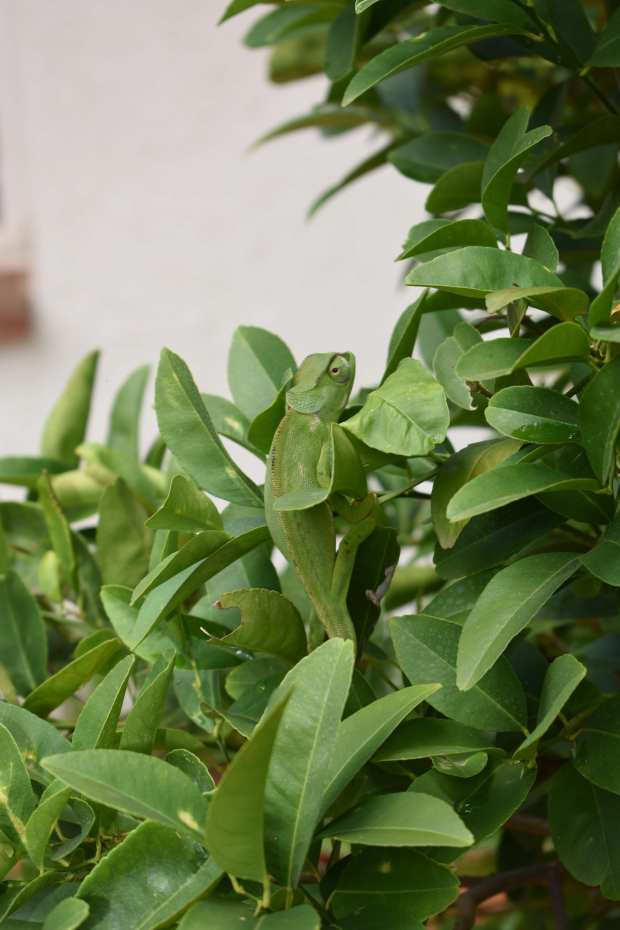
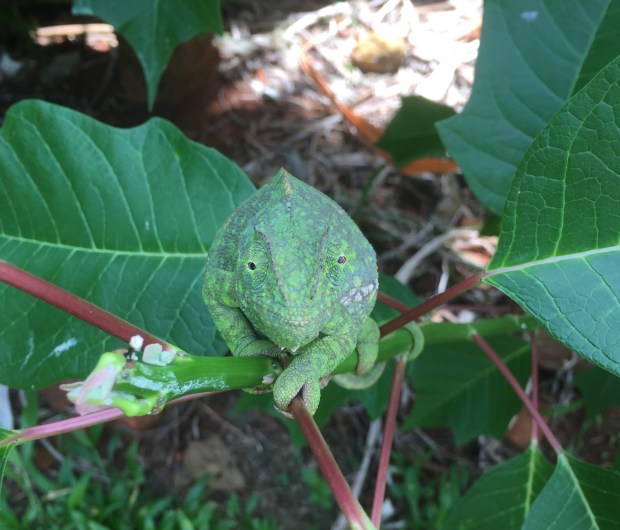
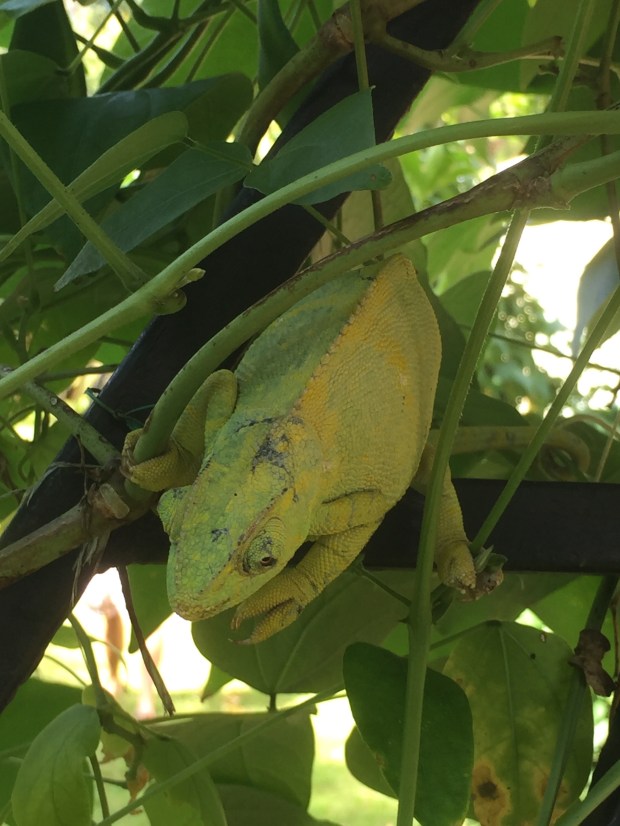
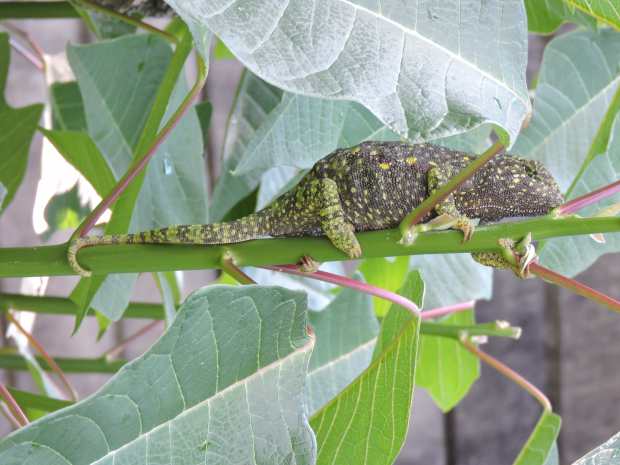
If you like chameleons like us, there are few things nicer than the start of the warm season when they become active and appear in the garden. They are incredible animals.

20151207_105244 6.57.45 PM copy

They are not only able to change their colour to adjust to their surroundings but also to independently change the colour of each side of their bodies in a feat I find amazing but that I only observed once and could not photograph.

Apart from that, I am also fascinated by their ability to move their eyes in all directions, another of their special talents.

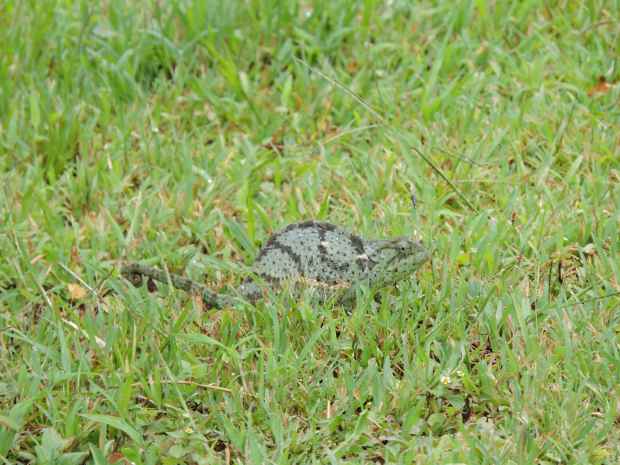
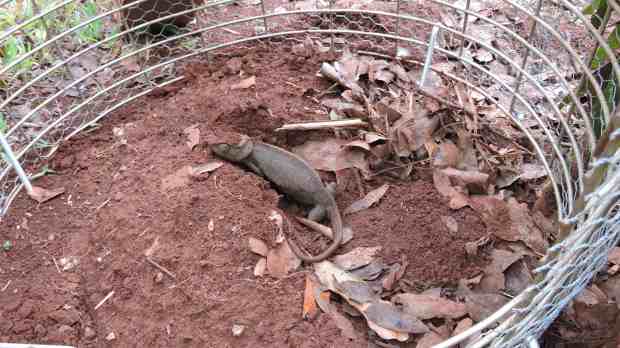
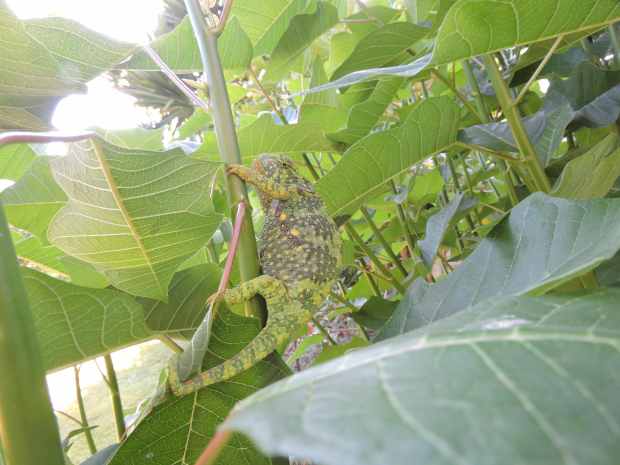
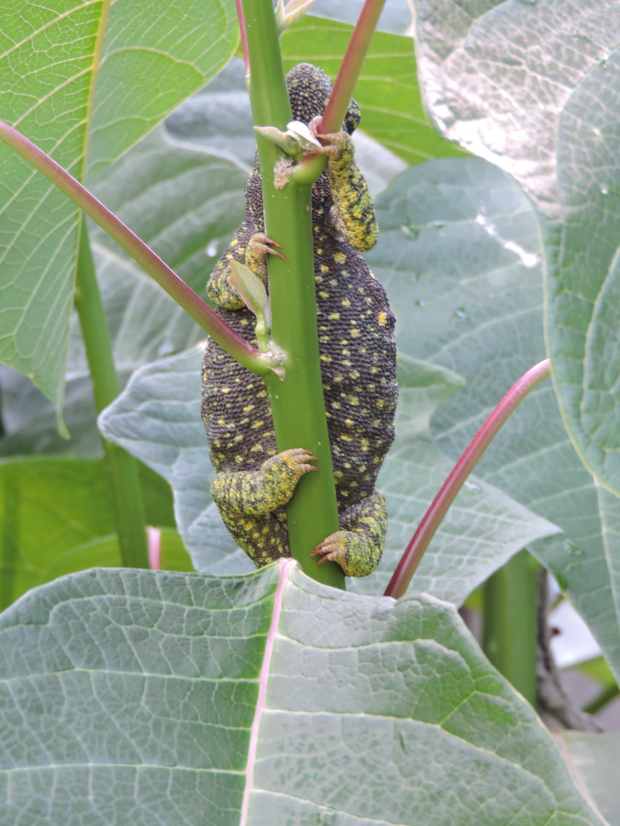
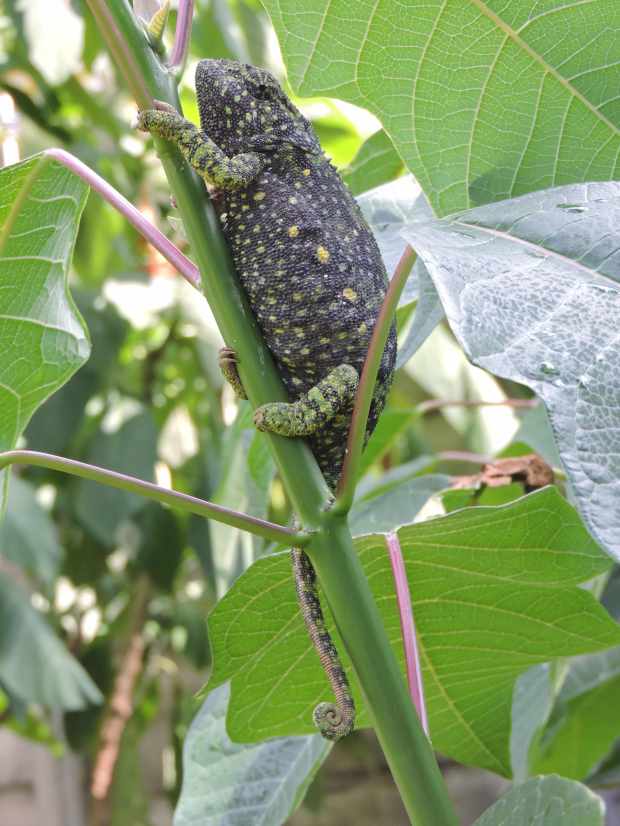
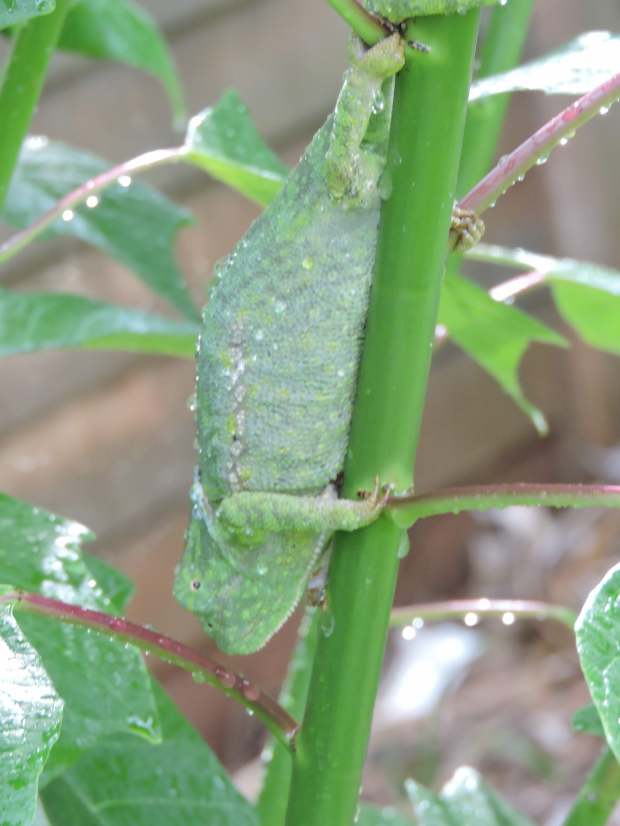
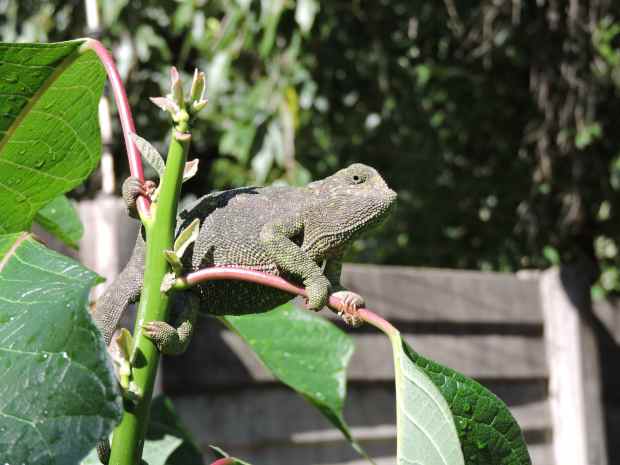
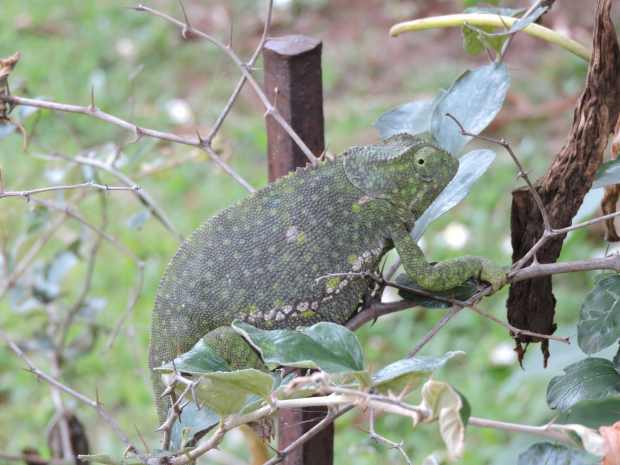
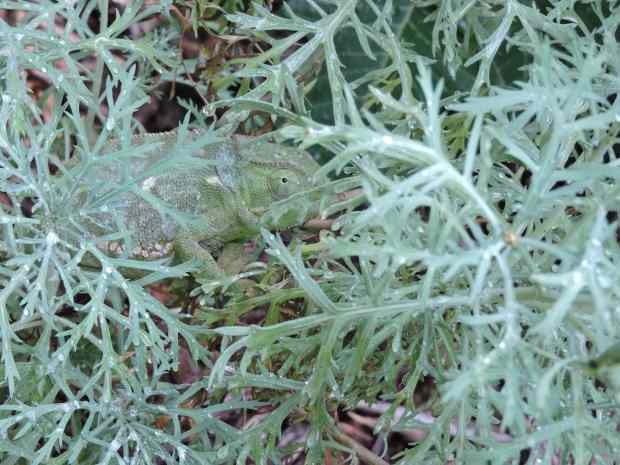
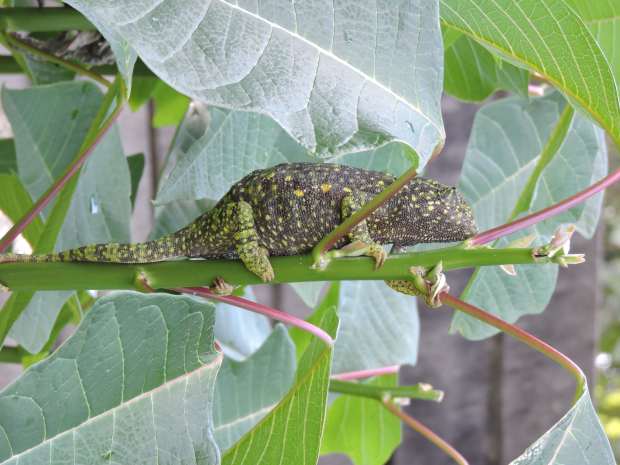
However, you have seen nothing until you find a baby chameleon and yesterday Stephen (our caretaker) find not one but two of them!

The gestation period of the flap-necked chameleons (Chamaeleo dilepis) lasts about 30 days and the female bury the eggs that would hatch only nine months later, quite a long period for such a small animal!

But I do not delay you anymore and present you with a few pictures of our find.

20180110_165518 copy20180110_165516 copy20180110_165509 copy20180110_165457 copy

We released them immediately after taking these pictures to avoid them getting too stressed and we hope to see them as grown-ups next year!

Camping dangerously

Over the last few days I described our experiences at the Kgalagadi Transfrontier Park when we visited the area this October. Although I still have one post pending as it will probably be published somewhere else, I have one more, perhaps the last, story about this trip.

As I told you earlier we camped at the Lesholoago pan campsite during the 18 and 19 October 2017 and there was great fun both days. It is always exciting to camp in non-fenced areas and Mabuasehube strongly reminded us of our “wilder” camping days in Kenya and some of the more recent camping experiences in Zimbabwe (Mana Pools and Hwange). There is nothing that compares to a night under canvas in the proximity of wild animals.

20171019_173800 copy

Lola and mongooses.
I always think of a safari as a visit to an area that gives you a snapshot of it and then you go away. However, the animals that tolerated you remain there and life goes on! At Lesholoago we entered the territory of a few mammals including Ground Squirrels and Yellow Mongooses. At first I thought we were responsible for the two species mixing and expected some confrontation. As this did not take place, I realized that they coexisted, respecting each other.
Although the squirrels kept their distance, the Yellow mongooses would be moving about camp apparently oblivious to our presence. They would dart in and out and feed on any scraps they found but never showed any inclination of raiding our food supplies or trying to steal from our plates the way other creatures do. In the evenings we saw the arrival of Black-backed Jackals that watched us from a distance.

20171020_054731 copy.jpg

The bushsnob getting to know the jackal…

Things started to get interesting after we had showered in the evening of the 18th. My wife was the last to shower and soon after twilight gave way to darkness, as there was no moon to speak of. At that stage Lola -who had a knack for spotting action- pointed out some eyes just behind the shower area that also happened to be behind their car-tent. A rather cursory look (by me) revealed that the eyes belonged to one of the visiting jackals so I dismissed it and headed back to my evening duties that, at the time, were rather complex: sitting down, talking and having a glass of wine!

However, before I reached my chair I heard a loud and alarming shout unquestionably originating from Lola: ” Fraaaannnnkkk, look, there is a leopard just here!” She was pointing to the area where I had made the diagnosis of “jackal eyes, do not worry” a few seconds earlier! Although I imagine that Frank went to Lola’s rescue, I reacted sluggishly (no, it was not the wine) and I was the only one that did not see the cat! However, I did recover fast by getting into the car to follow it.

As I drove towards the area, the leopard’s derriere was seen wobbling away for a few seconds before disappearing into the thicket where we lost sight of it. Although we drove around the area where it had disappeared, we failed to get another sighting. Clearly it just had to crouch to become invisible. We continued our exploration and drove to the pan’s water hole, located about a km away on the other “shore’ of the pan. Although we saw lots of Springhares and Bat-eared Foxes, the leopard was not at the water. To compensate, we had a very nice view of a Barn owl at the water’s edge.

Back at camp later, the unexpected leopard visit gave us a topic of conversation (not that we needed another one!) that lasted well after dinner and delayed our usual early night. We could not ascertain why the animal decided to come within a few metres of us, as normally leopards are very secretive and reserved [1]. We went to bed later than usual, still thinking about our amazing encounter and hoping that the animal had walked in front of our camera trap so that we could have proof of its presence.

The first thing we did the following morning -even before breakfast- was to follow the “leopard walk” to check its pawmarks in the sand and to retrieve the card from the camera trap to check for images. Success was partial. We did find the footprints but also realized that my camera placement had been -to put it mildly- rather inadequate. The leopard had walked too near the camera that only managed to register its over-exposed silhouette in the first camera burst, followed by a flash of light in the second. The latter was of us in the car looking for it. Luckily, this second burst had one shot where the leopard’s spots can be “spotted”, albeit poorly.

STC_0121STC_0124

The following day, inspired by our night visitor, we decided to spend the morning driving around in search of game, focusing on the various pans in the neighbourhood. We did not find large predators but enjoyed the time spent at the water holes, mainly bird watching.

We came back to camp in late morning and as soon as we arrived another visitor arrived, this time a human! It was a German camper that came to -curiously- ask for a glass of water! Although we offered him more of our precious resource, he only took one glass while asking us whether we had seen lions as -according to him- they were coming our way. We exchanged some information on the area and soon he was gone after telling us that he would be at Camp 1, just on the other shore of the pan, close to the watering hole.

Some discussion ensued about the reason for his visit as some of us -me included- thought that there was an “ulterior motive”! [2] As it was rather hot after lunch, my usually solitary siesta this time featured the company of most of the others. It was a good strategic move to wait for the day to cool of.

After the rest, I decided to improve the placement of the camera in case of a very unlikely second leopard visit! This time I convinced myself that I had done a good job. I was now free to spend time watching the constant stream of small birds to the water. Soon however, the Yellow mongooses started to behave differently and attracted my attention.

They were all standing on their hind legs and looking fixedly at a point near our toilet while uttering their calls. My first thought was that someone was using the toilet but soon I realized that something more serious was happening as they persisted and became increasingly agitated, so I decided to have a look. For a while I saw nothing and then I realized that something was moving in the tall dry grass. I realized that it was a young adult lion and I shouted “Lion!” to alert the group.

DSC_0039 copy

First pictures of the lion.

DSC_0038 copy

It was looking at us from behind our toilet and finally I understood the reason behind the small windows placed lower down on the toilet walls. They are there to allow you to see what is outside before you come out!

My wife immediately came to have a look and joined me taking pictures and keeping a watch on the cat. It was soon clear that, although it had us “covered” we were not its target but rather the water hole at the other end of the pan. At no time did it attempt to come our way and only gave us a couple of cursory looks before showing its derriere and continue its walk towards the pan.

DSC_0041 copy

Clearly I was also affected by the general excitement!

DSC_0049 copy

The improved version!

While these events unfolded, Lola and Frank went AWOL. Suddenly from the corner of my eye I caught movement behind us and I saw them. Lola was inside the car and Frank was standing on the ladder leading to their roof tent. Although they claimed that they were searching for their cameras to immortalize the lion visit, I believe that they were actually moving away from the lion exercising great prudence and speed! [3]

DSC_0062 copy

DSC_0059 copy

Lola and Frank going AWOL?

The lion passed by us a few metres away and walked on towards the pan escorted at a distance by a solitary Black-backed jackal that was clearly hoping for a kill to enjoy the spoils. We followed the lion’s trajectory from the camp while it crossed the pan. We then drove towards the water hole and watched it drinking. It drank for a long time and it was dark by the time it filled its belly. It then walked in the direction of Camp 1 where our German camping acquaintance was very excited to see it and ready with his various spotlights.

DSC_0070 copy 2

Lion with jackal escort.

We decided to leave him to enjoy the cat’s visit as it was time to go back to our camp and have dinner. Our return was further delayed by another unexpected find. A yellowish lump at the water hole became a crouching caracal drinking! For us this was a great find as a caracal in the wild is a rare sight. We watched this beautiful and elusive cat for a few minutes until, its thirst satiated, it moved off and went into the darkness. It was an unforgettable sight and we almost forgot all about the lion!

DSC_0127 copy

Despite the excitement and the long post-dinner talk, we slept soundly. The following morning I collected the camera trap but, as we were leaving, I had no time to look at it until later. However, the location of the lion’s pawmarks gave me confidence that I had caught the lion on camera.

It was only later in Harare that I had sufficient time to examine the camera trap pictures and I was happy to see that it had registered the lion.

STC_0169STC_0171

What I did not expect was that we had also caught the lion on camera when it returned late during the night while we were sleeping! Of course we did not hear it at all and Lola and Frank will only know that this happened when they read these lines (if they do!).

STC_0184


[1] Later I saw a leopard “exploring” another campsite so these visits may not be as rare as initially thought? See: https://www.youtube.com/watch?v=6zZZFHc0YmU

[2] We believe that he wished to find out for how long we would be staying at Campsite No. 2 as he was in Campsite No. 1 and preferred ours!

[3] In the absence of any pictures of the event taking by neither Lola nor Frank, I am still unconvinced!


Spot the beast 34 (ID)

Regarding the post on the moth I published yesterday (Spot the moth 34) , I am now able to name it as the Mealy hawkmoth (Platysphinx piabilis). This moth feeds on plants of the Fabaceae family such as Peawood (Craibia zimmermanni), Giant Umzimbeet (Millettia sutherlandii), Cork bush (Mundulea sericea) and Pterocarpus spp. 

My thanks go to Mr. Roy Goff that helped with the identification. Roy manages a great moth identification site: http://www.africanmoths.com/index.html that I find a great help.

Here is another picture of the moth for you to enjoy.

DSCN1284 copy


Reference

http://www.africanmoths.com/pages/SPHINGIIDAE/SMERINTHIINAE/platysphinx%20piabilis.html

Spot the beast 34

Today, while walking in the garden (in fact I was assisting Stephen, our caretaker, to unblock some drain pipes) I came across this beast. As I thought it had potential, I placed it among some of the leves where I found it. Here it is:

DSCN1279 copy

Another view:

DSCN1263 copy

?
?
?
?
?
?
?
?
?
?
?
?
?

And here it is. Quite a beautiful hawkmoth (I believe)!

DSCN1264 copy

DSCN1274 copyDSCN1287 copy

Spot the beast 33

Now, this one is really tricky… We spotted around Shingwedzi Camp in the Kruger National Park last October. See if you can spot it…

20171009_123421 2 copy

?
?
?
?
?
?
?
?
?
?
?
?

A better view may help?
DSC_0197 copy

DSC_0200 copy 2


OK. I reveal it below:


DSC_0198 copy

It was a different pot the beast!

I imagine that the terrapin had been buried somewhere safe and moist waiting for the rains and we found it moments after it re-emergence while crossing the road to get to the river.

And then, after the photo opportunity, it just continued on its way.

DSC_0196 copy 4

Smart cats

Before we even got to Twee Rivieren in the Kgalagadi Transfrontier Park last October, for some reason, Lola and Frank had convinced their Spanish friends that we were good at spotting lions! Although my wife is good at spotting any game -including lions if they are around- I was somehow taken aback by being attributed such a fame that generated baseless expectations… maybe I oversold myself…

So, when we arrived at Twee Rivieren there were anticipations and I was overwhelmed by the responsibility that had landed on my shoulders…

Luckily for me, it was the visitors themselves that found the lions. Well, at least they overheard the whereabouts of the lions! So, all we needed to do was to follow our visitors’ advice to find them and in this way avoid a sure embarrassment!

The lions in question (two males) were, of all places, about one hundred metres outside the camp gates and, according to our night safari guide, these pair come to this area every few weeks so we were fortunate to see them.

The predators were near the camp’s waterhole where they had killed a gemsbok a few days back so we set off to find them as soon as we had an opportunity.

It was not hard to find them as, in addition to the gemsbok that we did not see, the night before they had also killed a wildebeest and the latest kill was rather obvious!

DSC_0074 copy

The kill happened very near the camp. Behind is Twin rivers staff accommodation on the Botswana side of the park.

Apparently, the cunning cats have learnt to use the strong camp fence in their favour by cornering their prey against it. Clearly this had happened in this instance as the victim was still somehow entangled in the fence where first one and soon both were seen feeding.

Death at the water

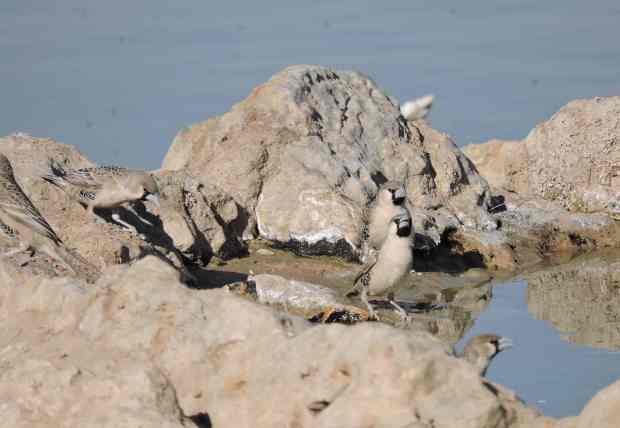
Perhaps the most salient feature of the Kgalagadi are the humongous number of birds visiting the different water points throughout the area. At the various camps in the Mabuasehube area the situation repeated itself. Flocks of birds would come to drink constantly to the various water points.

2151 copy

The scramble for water! Picture by Frank Rijnders.

The bird parade included from the largest of the vultures, the Lappet-faced (Nubian) to the small violet-eared waxbills, true living jewels .

DSC_0453 copy 2

Lappet-faced vultures at a water hole.

2122 copy

Violet-eared waxbills. Picture by Frank Rijnders.

Apart from photography, this situation offered a great opportunity for the various predators to get an easy meal. We saw several potential bird predators at the water holes, from snakes to jackals but the most interesting were the birds of prey.

These came in all sizes: various eagles (Tawny, Bateleur), Pale chanting and Gabar Goshawks, Red-necked Falcons and Greater Kestrels to name what we saw during this trip.

2850 copy.jpg

A magnificent Bateleur eagle and picture by Frank Rijnders.

The methodology of the feathered hunters was similar at the various places. The raptors would perch nearby and every so often swoop down on their potential prey. It seemed a rather easy procedure in view of the numbers. That was also the impression I had when last year I watched the Tawny eagles dove-catching that I described in https://bushsnobinafrica.wordpress.com/2016/11/30/easy-pickings/. My belief was further strengthened by a lightening speed attack by a Red-necked falcon that caught one of the sparrow weavers from under our noses and took us completely by surprise!

At Monamodi we had time[1] to observe a Gabar Goshawk (slightly larger than a dove) attempting to catch its lunch. We noted the raptor after observing that every few minutes the drinking doves would get startled and the flock would literally “explode” in different directions only to return a couple of minutes later.

DSC_0303 copy

The scared doves take off.

After a few of these scares, we noted that a Gabar goshawk was perched next to the water and that the scares coincided with its lunges at the drinking birds!

DSC_0308 copy

We were somehow doubtful that the goshawk would be after the doves as they seemed too large for it However, it seemed that way until we realized that there were a few smaller birds drinking together with the doves. We observed several failed attacks and I even managed to register the “goshawk among the pigeons”! However, a painstakingly checking all pictures and video, I failed to register the bird actually catching anything. The pictures below show the goshawk during one of its swoops that, after going through the mass of flying birds, end up by it landing back at the starting point.

So, either catching lunch for the Gabar goshawk is is not as easy as it seemed or I was not good registering what was happening! The latter is probably nearer to the truth as I am sure the bird would not be there otherwise as I am sure that, unlike for me, time is important for it!


[1] In Africa it is said that  “When God made mankind, He gave the white people the watch, but he gave the black people the time!” Luckily, I have both now!

Kgalagadi Transfrontier Park – General

2017 was going to be devoted to exploring Namibia, a place we thoroughly enjoyed when we were there in 1991 and two years ago when we visited the Caprivi strip. However, it all changed when our friends Lola and Frank invited us to join them on a safari to the Kgalagadi. This was not to be similar to our last year visit but it would include a visit to the Mabuasehube area, a rather wild and remote area on the Botswana side of the Park.

DSC_0001 copy

The “usual” Kgalagadi Transfrontier Park is on the left of the map. Please note the Mabuasehube area is on the right. (Map from Kgalagadi Transfrontier Park, SOuth African National Parks).

Excited, we accepted the invitation without much consideration as it was a unique opportunity to visit a remote area of the Kalahari desert that requires two vehicles because of the remoteness of the area.

The proposal was to meet at Upington in South Africa and from then to travel to Twee Rivieren on the South African side and from there to a string of campsites in the Mabuasehube area in Botswana.

Such a trip required a bit more planning than usual. An internet search gave conflicting reports on the availability of water at the various camps so we decided that we needed to carry all the necessary water for the six nights. In addition we needed fuel and as usual “glamping” requires good chairs, tent and other items but of foremost importance is to carry the best ingredients for cooking!

Although we agreed to get the water in South Africa, we were already quite loaded when we left Zimbabwe! We spent a few days in the Kruger National Park we eventually met up as planned on 12 October at Upington when fresh food was procured and the water jerry cans filled. The idea was to travel to Twee Rivieren the following day, spend two nights there and then proceed to the Botswana area.

I must confess that at the time of the offer we were about to visit Mana Pools and Jecha Point (see https://bushsnobinafrica.wordpress.com/2017/10/27/nebbiolo-wine/ and https://bushsnobinafrica.wordpress.com/2017/10/31/wild-elephants/) with our son. I agreed to the idea without checking the map and thinking that traveling would be at our current “retirees” pace. It was only a few days before the event that I realized that it was all well until we reached Twee Rivieren! From then on a true marathon waited for us! We needed to traverse 150km or 4.5 hrs to Nossob and then another 170km through the unknown to get to our destination: Bosobogolo campsite!

Keeping my misgivings to myself we luckily met our friends as planned. Lola and Frank were not alone. A group of six friends from the Canary Islands had come to join us at the Kgalagadi. They were great fun, luckily. From there they would continue on to Namibia while we would embark on our journey. So it was a four-car convoy that left Upington and, after 265km, we got to Twee Rivieren where, luckily, we managed to swop our camping booking for a stay at one of the comfortable bungalows.

Apart from meeting some clever lions near the camp (I will tell you about them in the next short post) and an unfortunate incident as a result of drinking the water from Twee Rivieren that kept us near the loo for an extra day all went as planned! This mishap forced us to stay an extra day and, as Twee Rivieren was full, we camped in Fortunately we managed to get an extra night at the Botswana Twin Rivers campsite as the South African side was totally full! It seems that the Kgalagadi is in fashion at the moment!

Twin Rivers was quite comfortable and, apart from an interesting night visitor that we did not hear, our extra night was uneventful.

STC_0063

The brown hyena inspecting our camp at Twin Rivers. Clearly by 22:17hs we must have been sleeping soundly as it did sniffed our tent!

So, with a day delay we were ready to go!

After the dusty road that took us more than the expected time, we reached Nossob just before lunchtime. We stretched our legs for a while and, after refueling, we set off towards Bosobogolo.

20171016_113625 copy

After refueling at Nossob camp. Still in South Africa.

Although for us this was uncharted territory, Lola and Frank knew the way as they had visited the area a few years back. As expected, the road was a red sandy track that can only be traveled by a 4WD. This was not your Sunday outing to the sandy beach in Maputo! The road was not only sandy but also very corrugated. The situation brought to mind a signpost I had seen sometime ago [1].

dentures sign

Taken from http://www.gpsa.co.za. If this is copyright material, please feel free to contact the writer for credit or removal.

It really felt like that and, after about 60km Frank stopped and -wisely- suggested that we deflate our tires. After that, our travel became more comfortable. After 107 km the Matopi campsites came as a relief for a stop and a cuppa. In it we were introduced to the residing yellow-billed hornbill crowd defined as “spooky” by Lola (but that I liked!). As soon as we arrived the birds started to appear and soon we did have a flock of them watching us and, I am sure, waiting for some morsels or water as the area is, needless to say, extremely dry.

Motopi spooky DSC_0187 copy.jpg

After that welcome stop the last 90 km were long and rough through a rather empty landscape where we only rarely saw gemsbok and springbok as well as the occasional hornbill and, for some reason, two spotted eagle owls. The road twisted and turned, the sand got deeper at places but, gathering speed was enough to negotiate it.

So, after another couple of hours and several sand dunes and pans later we got to Bosobogolo. Frank had booked camp No 1 which was more or less the same as camp No 2! Both had a few things in common: an A frame, a long drop and no water! The latter became obvious when, after arrival, I visited the bushes for a “short call”. A few birds immediately came to investigate the source of the water noise and the birds immediately surrounded me! We did offer them clean water from then on.

DSC_0190 copy

Bosobogolo welcoming committee. Expecting food and water of course!

Luckily we had enough time to set up camp. On the issues of tents we differ with Lola and Frank. While they prefer a roof tent, we, used to our Kenya camping days, stick to the more conventional ground tent and camp set up. We still have failed to convince each other about changing but enjoy each other’s company!

Bosobogolo was rather uneventful and we were rather tired. Luckily food was soon ready thanks to Frank’s organizational skills and we were in bed early. He managed to produce an Indonesian dish known as bami goreng that raised the stakes for our cooking. The next morning, rested, we explored the area and continued to our next campsite: Monamodi pan.

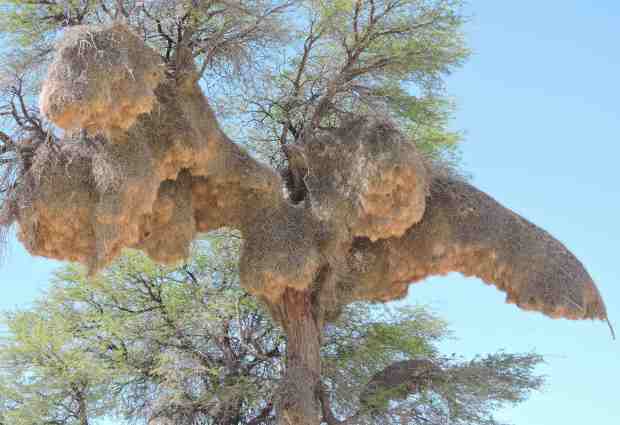
At Monamodi we were visited by yellow mongoose (Cynictis penicillata), Cape ground squirrels (Xerus inauris) and lots of birds, including Southern Grey-headed Sparrows (Passer diffusus) although Cape Sparrows (Passer melanurus), Violet-eared Waxbills (Uraeginthus granatinus) and Sociable weavers (Philetairus socius) were also present. Half a dozen Southern Yellow-billed hornbills did also come. We spent the final two nights at Lesholoago pan and had a great time. I will describe some of our experiences at both Monamodi and Lesholoago in future posts.

As it is usually the case, time passed very fast and we needed to leave this wonderful area. We departed through the Mabuasehube gate towards McCarthy’s Rest border post. The road was still sandy and corrugated and eventually we got to the border. Now, that was my kind of a border crossing: only the four of us so it was probably the fastest ever! Once in South Africa we headed back to the Kgalagadi as we wished to visit the Kalahari Trails to spend three nights relaxing and watching the meerkats.

We said goodbye to our safari companions at the Concordia junction and then we drove on through a route known as the “Heart of the Kalahari” to a small town called Van Zyslrus, 129km further on. The town was small and clearly people had made an effort to decorate it. We found fuel and a shop that offered some food and drinks.

DSC_0002 copy

Map from “Roaring Kalahari Route” (2009). McCarthy’s Rest is on top of the picture.

This slideshow requires JavaScript.

The shop was what we imagine old shops were (we knew them as “dukas” inEast Africa). It not only sold the usual groceries but it had its own bakery where various breads were being kneaded and baked in full view of the customers! The latter were queuing waiting for their special breads ordered in advance as well as discussing with the very busy master baker on their new orders! The shop also run the town’s post office and, I am sure, it offered other services that we were not aware of.

Our shopping and unique experience at Van Zyslrus over, we went on through Askham to finally reach the Kalahari Trails where we met up again with its owner Anne who is an expert on mongooses, having done extensive research and publications on the dwarf mongoose in Kenya and on the yellow mongoose at the Kgalagadi. While doing this work she acquired land at about 30 km from Twee Rivieren where she runs Kalahari Trails. The meerkat sanctuary is located near her house and there you can get in real close contact with these lovely animals.

We had three restful days at KT where we recovered well and enjoyed Anne’s company and also the meerkats. Time flew and we were again on 5he road, this time to reunite with Lola and Frank in Johannesburg where we took our car for a thoroughly deserved major service after a rather grueling trip.

I leave you with a collection of pictures that show different aspects of the trip.

This slideshow requires JavaScript.


Spot the beast 31

Very close to the Shingwedzi Rest Camp in the Kruger National Park we found this interesting beast. I think it is a nice challenge…

DSC_0027 copy?
?
?
?
?
?
?
?
?
?
?
?

Here there are a couple of pictures that reveal the mystery in case you did not.

DSC_0028 copy 2

DSC_0032 copy

I am not sure if the monitor lizard “beast” lives in the tree hole or whether it was raiding  a nest in search of prey.

It was clearly enjoying watching the cars going by!