Out of Africa

Puma?

Puma, Puma concolor, are usually quiet and therefore they can live with humans undetected as solitary predators feeding on medium sized and large mammals such as deer and agouti but also on smaller prey such as snakes, hares and rats.

Puma are the most adaptable of all wild cats in the world and inhabit many climates: boreal, tropical, desert and rainforests and they are equally at home in lowlands or mountains. Shy and suspicious of humans they are rarely seen.

Our farm in the Yungas of Salta is home to wild cat (Oncifelis geoffroyi), ocelot (Leopardus pardalis), jaguarundi (Herpailurus yaguarondi) and puma[1]. Luckily, there are still wild areas where these animals can dwell and the agriculture frontier is not yet here so no many incidents with livestock predation occurs.

Although we have never seen a jaguarundi or an ocelot, we have seen a skull of what we believed belongs to the latter.

20150217_102012-copy

Ocelot skull.

A few years back the family (while the Bushsnob worked away in Bolivia) bumped on an adult puma that crossed the road in front of them about one km from our farm while driving at night.

As you can imagine, after such a find our farm went up in our estimation, as, at the time the cat was observed, we were not sure about being able to return to Africa.

Aware of our exciting animal neighbours, checking all footprints we see is the norm. Although most of what we see belong to the various domestic dogs that are kept by our neighbours, occasionally we find some that clearly belong to felines, particularly after it rains.

It did rain on the night of 12 to 13 Feb 17 but the morning started sunny so we went for our usual walk to burn a few calories and to get our telephone signal located three km away at a place known as “The Cross” where a wooden cross remembers a past fatal accident.

Returning from the walk I stopped to photograph a butterfly and noted two footprints. They had no sign of nail marks and the larger one was 9 x 7.8 cm (foto). Our first thought was that they could belong to an ocelot. However, when we checked them in our mammal book[2], their size coincided with those of a puma although, as usual, some doubts remain.

Whether they belong to what we suspect or not, it is a great pleasure to be able to walk on a road where you can find such footprints and believe that such animals are around you in the thicket, probably watching your movements!


[1] Moschione, F. N. (2014). Relevamiento de Fauna. Finca El Gallinato, La Caldera, Provincia de Salta. Informe Relevamiento 2013-2014. 55pp.

[2] Emmons, L. H. (1997). Neotropical rainforest mammals: a field guide. 2nd. Edition. 307pp.

Duck tenderness

The distance between Carmelo in Uruguay and Salta in Argentina is about 1800 km by road so we usually divided the trip in three legs of roughly 600km each as to avoid driving too much in a day. The first stop is usually Curuzú Cuatiá in the province of Corrientes that we reach after crossing the border and a rather monotonous drive.

The second day takes us through a nice area known as the Iberá wetlands where bird life makes the trip very entertaining and interesting. Our second stop is found about 200 km towards the north-west, after crossing the mighty Paraná River in Presidencia Roque Sanz Peña, the second largest city of the Chaco Province. The main attraction of the city are its thermal waters but it also has a rather hidden treasure: a zoo of native animals. As the latter are difficult to see in the wild, the zoo helps preparing the observer for real life!

During one of the stop-overs we needed to kill time for a hotel room to be ready so we decided to defy the intense heat and spend some time at the zoo! We only learnt on arrival that mosquitoes were also on display and in large numbers! Luckily we had a strong repellent[1] otherwise the tour would have been abandoned!

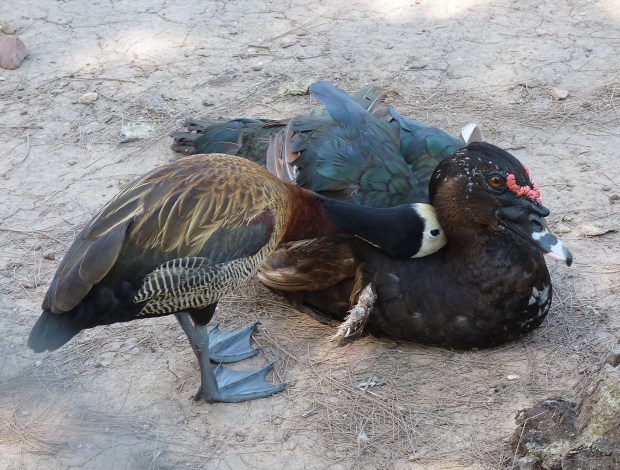
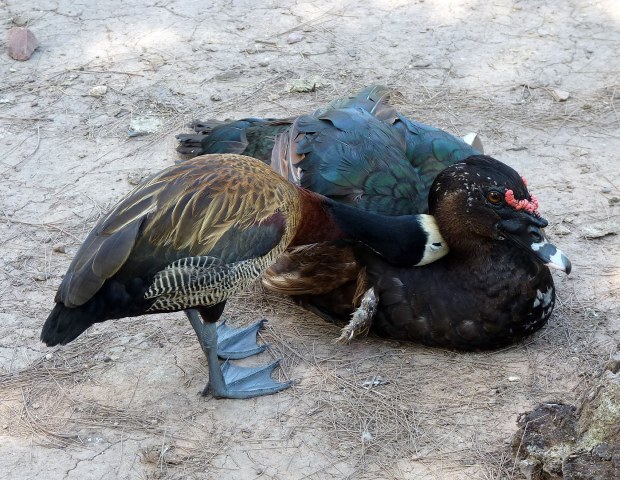
Towards the end of the visit we walked passed a pond that was home to several duck species including domestic ducks. While watching the pond, we saw a few wild ducks known as sirirí cariblanco or white-faced whistling duck (Dendrocygna viduata), one of the handful of species that occurs both in South America and Africa, just like us! While making a comment about its world distribution we noticed one that had a “relationship” with a domestic duck.

As this was unusual, we watched as the whistling duck approached the much larger “friend” and placed its beak and part of its head behind the neck of the larger duck!

20160216_160638-001-copy

The careful approach.

20160216_160650-001-copy

Getting in place.

p1130380-001-copy-2

Smugly in place.

At first we thought that it was looking for something there but it just kept its head there without moving for the whole time we were there and it was still in that position when we left them! The domestic duck, clearly used to this “treatment” did not move and accepted the wild duck indifferently!

p1130381-001-copy

Closing the eyes!


[1] Repellents in South America can make the difference between misery and enjoyment and you need strong stuff to survive the various biting insects that wait for you there!

Animals on the runway

On 16 August 2016, the El Sauce International airport in the top beach resort of Punta del Este, Uruguay stopped functioning for a few hours. The stoppage was not caused by a strike of air controllers, airline crews or baggage handlers. Although cold for going to the beach, the weather was clear and the visibility was excellent.

Taking advantage of the nice day a dairy cow had squeezed through a breach in the airport’s perimeter fence and decided to have a different grass variety for lunch. Her feeding activity near the 01-26 runway was immediately detected by the control tower that initiated the relevant emergency protocol.

This resulted in the closure of the airport. Messages for flight cancellations/delays were sent to all airports from where flights to El Sauce airport would depart. Aerolíneas Argentinas flight AR 2346 departing for Buenos Aires was also cancelled and the passengers travelled by taxi and airline bus to Montevideo for a rescheduled flight. Meanwhile, oblivious to the chaos it created, the cow continued grazing happily!

Part of the emergency protocol included the capture of the intruder and, although Army personnel were quickly mobilized, they were not immediately successful and at some stage the tension escalated when the cow disappeared from sight! Eventually the cow, belonging to the Army’s herd located at the nearby military base, was captured and returned to its lair. The all clear was given and the airport was reopened[1].

Luckily this did not take place at a busy airport and the disturbance did not cost as much as when a family of monitor lizards, jackals and raptors entered the New Delhi international airport’s secondary runway and remained there for one hour before being evicted by an animal rescue team. The incident forced the closure of the airport and approximately 100 flights were delayed at a cost of several USD million[2].

I can just imagine passenger losing connections in other airports and trying to get compensation mentioning that monitor lizards delayed their flights!

Obviously, when flying to tourist destinations in Africa, wild animals on the runway are an expected occurrence. The pilots, almost invariably, do a first low fly over to scare intruders and only land the aircraft when they see that the landing strip is clear, at least for the time. It is common to see the animals coming back to graze on the runway a few minutes after the disturbance is over!

Bush “airports” do not close due to stray animals on the runway, the latter are part of its “personnel”!


[1] http://www.elpais.com.uy/informacion/vaca-le-complico-dia-aeropuerto-laguna-sauce.html and http://www.lanacion.com.ar/1928651-una-vaca-paralizo-las-actividades-del-aeropuerto-de-punta-del-este

[2] http://www.atimes.com/atimes/South_Asia/JF21Df03.html

Horse Power

That there are horses in South America should not be a surprise to anyone. These beasts were introduced by the Spaniards in the 1600’s and they have been adjusting to their new environment and multiplying ever since while becoming invaluable in many agriculture-related tasks.

P1120986 copy.jpg

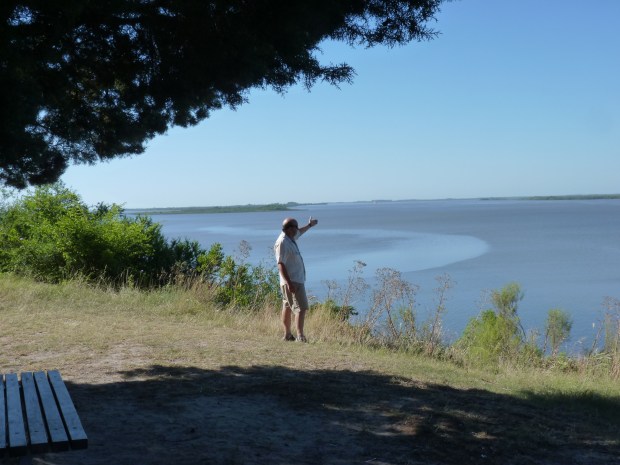
The bushsnob pointing towards Carmelo at the origin of the River Plate in Punta Gorda.

Carmelo is located in the South-West of Uruguay, just downriver from the joining of the rivers Paraná and Uruguay, the start of the river Plate, “discovered” in the 1500’s. This is the place I was born and I am a proud member of this small town, full of character and characters. Carmelo is the only city in Uruguay founded by our national hero: José Artigas, a man far too advanced for his time.

It is here that a well-known barber, after having won the small local lottery, closed the shop and went home to rest. Before leaving, he placed a sign on the door that read: “CLOSED DUE TO EXCESS OF CASH”.

Carmelo was two hundred years old on 12 February 2016 and I happened to be there to enjoy the celebrations. I was an adolescent fifty years ago when its one hundred and fifty years were commemorated and I still keep some memories from that time.

I recall that we had an excellent home delivery system for many services, mainly food items but other services as well. The fishermen (no fisherwomen then) would carry their catch hanging from stick tripods and shout “Pescadooooor!”[1] while walking through the many streets of the town, selling their catch to the housewives that would wait for the calls to come out of their houses and argue the price for, usually, half a fish. There were also knife sharpeners, pot welders and kerosene-stove fixers doing their rounds either on foot or on bicycles.

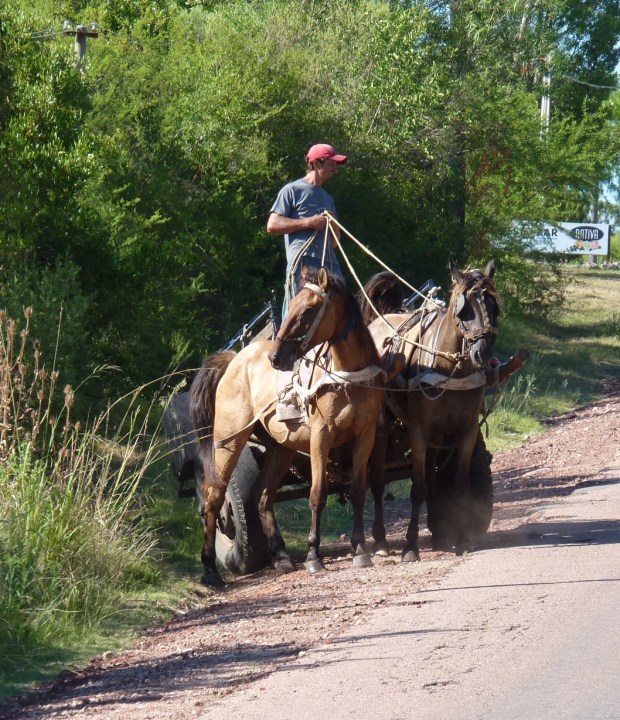
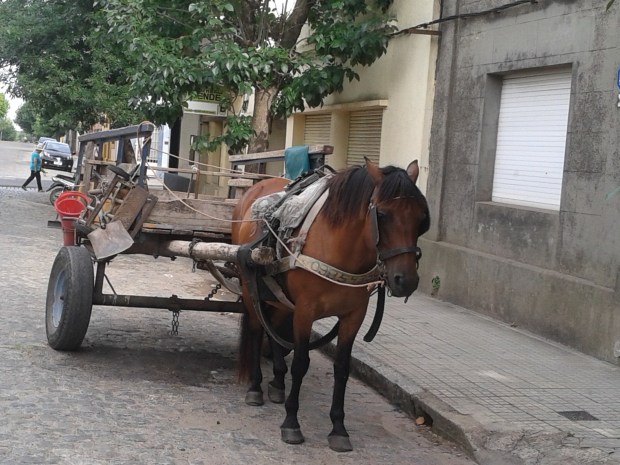
There were also lots of horse carts. They came in various models: open or closed, with rubber or wooden wheels each delivering their goods: fruits and vegetables, meat, bread, firewood and milk. In particular I recall the time my mother got extremely upset when she found a small fish in the milk that was rather enthusiastically watered down from a small stream by the milkman! There were also carts to collect your refuse and those unwanted objects from your home.

Fifty years have passed and the horse carts are still here, together with the odd knife sharpener still playing its tuneful whistle up and down the musical scale to announce its arrival! They all contribute to build Uruguay’s reputation as the greenest country in South America[2].

In light of the above, I was not surprised when I read an article[3] found by my wife describing the vegetable sellers of Baltimore in the USA. Although they look more “upmarket” ours also have a few notable features worth mentioning!

Today, horse carts (from one to three horse power!) ride through the streets of Carmelo offering a variety of home-delivery services. Over the years they have incorporated notable improvements: better brakes and more asphalt-friendly rubber wheels, the accompanying dogs are better trained: they now trot under the carts rather than after them! Other notable advance is the displaying on the carts of cellular phone and even e-mail addresses where they can be called!

P1130013 copy

A 1-HP model used for bread delivery.

P1120989 copy

A more rugged 2-HP version.

Apart from those selling fruits and vegetables and the bakers, there are also others that can bring you firewood or building materials as well as removing unwanted items from your home such as rubble and rubbish. There is even a category that I would call “Man With a Cart”, able to perform tailor-made tasks for the customer.

20160130_102009 copy

The tool of the “Man With a Cart” Note the cellphone No. on the horse’s harness!

One, belonging to someone that went to primary school with me, is usually parked a few paces away from home waiting for customers. I spent some time watching it. The first thing I noted was that the horse was in good nick and “parked” unrestrained! It carried orange traffic cones to demarcate its working space as well as a spade and a luggage-carrier on one side and gardening tools on the other. In addition it had its own feed bucket for the horse and canvas and tying ropes to secure its potential cargo.

It seems that, although the Baltimore horse and buggy fruit sellers seem to be gradually going out of business, those in Carmelo are only adapting to the changing times and they will probably still be here in fifty years time.

While I can easily see drones taking over the fruit delivery in Baltimore (and the rest of the USA!) I predict that Amazon will sub-contract their goods delivery to our greener -if slower- horse powered Man with a Cart if it wishes to keep its act “green” in Uruguay.


[1] “Fishermaaaan!”

[2] http://www.theguardian.com/environment/2015/dec/03/uruguay-makes-dramatic-shift-to-nearly-95-clean-energy

[3] http://www.greatbigstory.com/stories/the-last-generation-of-baltimore-s-street-sellers

Four in one

From our first visits to our farm in Salta it became apparent that its insect wealth was enormous. In particular, as you have read here, butterflies and moths really rule. The latter in particular are very varied and abundant. Being attracted by the light makes them easy to capture, observe, photograph and, eventually, release. In the early morning the trick is to be there before the insectivorous birds that do not care for beauty but taste!

I have described and published posts mainly on butterflies for two main reasons: they are colourful and photogenic but also better known in the area. Moths are difficult and, although I have taken pictures of a few hundred specimens, I am still waiting for their identification as the group’s taxonomy does not seem to be well known. The consequence of this is that most of the time I do not know what I am looking at in a taxonomical way. I then need to resort to my own classification by colour, shape and size that produces specimens such as “mottled brown medium size”, “barred brown with delta wings” or “large and smooth hawk moth”, etc.

A couple of days ago I came across one specimen that, although I have seen before, it is infrequent but rather attractive. Looking at it from its dorsal part, I could see a figure on its back that looked like a face (with Ray-Ban seafarer glasses?) or a cat face.

My wife saw a butterfly and, in December 2014 when I first saw it, I described as a moth “white with skull on back” It was like a psychological test I undertook in my childhood where you are asked to describe what you saw!

Later, looking at the pictures, there were more creatures to come out!

A dorsal view of its head showed a monkey face (agreed by my wife this time although the discussion centered on whether it was a baby Colobus or a Vervet!).

The final surprise was when we looked at it from the front. I saw a clear dog’s face while my wife saw a rabbit head!

Amazed by the various beasts we saw, we almost forgot that we were looking at a simple moth. However, it was one of Nature’s specials depicting three different creatures, apart from itself, a feat that I believe is difficult to match!

A tough owl…

Burrowing owls (Athene cunicularia) used to be very common in Uruguay in the past and I remember, about 50 years back, seeing them perched on fence posts at frequent intervals. Regrettably, the advent of generalized use of pesticides meant that they almost disappeared and they are now relatively rare.

We were happy to find that in the Yungas of Salta, where our small farm is located, they are quite common, particularly in an area devoid of tree cover a short distance beyond our farm where we watch them from time to time. Luckily pesticide use here is still rare!

It was during one of these visits that we found the group composed of probably two adults (placed at both ends) and two babies showing only their heads, ready to disappear down their burrow in case of emergency.

P1150264 copy

I was busy taking the first set of pictures when the adult on the left started to run towards me. I was quite impressed by its threatening behaviour as -I thought- it takes courage to attempt to scare off a large ape! It bobbed its head repeatedly, a normal behaviour of these birds and a couple of times it actually appeared to dig and scratch the soil with its beak. After a while it ran back to join the rest of its family and stood again where it was earlier.

P1150240


P1150237 copy

P1150244

After a while we left them to enjoy their owl family life and we returned to our log fire at home. Much later, while checking the pictures taken that day, I realized that in fact the owl was not threatening me but that it was after prey! I had missed the details in vivo but these were apparent when I looked at the various pictures.

The owl had spotted a large beetle half way from me and it rushed to get it (rather than to scare me off!), caught it, tried it and spat it out, as it must have tasted bad! I can only assume that he discarded it, as I believe that eating it would have taken some effort! Although I fear for the beetle after the rough treatment received, these insects are quite common around here and I do not believe that its absence will be noted…


Wet blogging!

Probably, through earlier posts I gave you the impression that living at the foot of the Andes is a dream. While this is true to a very large extent, it also has climatic and technological shortcomings that need to be accepted to enjoy it.

The climate is dry and cool in winter with most days being sunny and warm in the middle of the day when it is possible to be outside wearing a short-sleeved shirt. At that time some frost does take place at night, responsible for our failures with our tree and plant growing efforts but otherwise life is great at that time. Unfortunately, we visit Salta in summer and autumn!

The summer is hotter and rather humid. The rain in some areas reaches up to 2,500 mm (2.5 metres!) and cloud forests are the predominant kind of vegetation around us. For a cloud forest to be such the clouds must meet the trees and we are in the middle of this get-together as our farm ranges in altitude roughly from 1,300 to 1,900 metres. As these meetings take place rather often, sunshine is not the most common phenomenon around here now!

As a consequence of this heavy precipitation the area gets waterlogged and the water must drain somehow towards the larger water bodies, in our case the Mojotoro River in the gorge below. As gradients are marked, water runs wild and swells up fast. Sometimes this surprises you as it may rain higher up in the hills and you get the water rush but not the rain.

The entrance to our small-holding crosses a small watercourse that in winter is just a small dry ditch. The fun takes place in summer when, once the rains arrive, it again becomes a stream. This adds a touch of beauty to the farm until we have heavy rains! When this happens, the normally peaceful stream “comes out of the bottle” and transforms itself into a torrent that we can only watch while waiting for it to subside. This normally takes a few hours during which our lack of communication is wide-ranging.

20160224_133413 copy

For a few hours we are either in or out!

This brings me to the technological issues. The high hills surrounding us interfere with the telephone and Internet signals at the best of times. Well, there is a cell phone signal 3 km away on the access road and, of late, a basic Internet signal across the road, at the door of the public primary school. While the lack of communications makes the place a true nirvana to read and write, it has a negative impact on blogging and “Instagramming” productivity that, at this time, tends to be rather infrequent as you have probably noted by now…

IMG-20160325-WA0005 copy

The bushsnob taking advantage of the public internet to reach the world.

On the bright side, a recent study in the farm next door[1] detected the existence of 152 species of butterflies (Hesperioidea y Papilionoidea), 14 spp. of amphibians, 23 spp. of reptiles, 216 spp. of birds and 28 spp. of native mammals.

Believe me, it is worth getting your feet wet to be able to reach our communication “hot spots” when you can watch new creatures daily while reaching them!

20160225_094352 copy

One of the frequent photographic interruptions getting to the cell phone signal.


[1] Moschione, F.N. (2014). Relevamiento de Fauna. Finca El Gallinato, La Caldera, Provincia de Salta. Informe Relevamiento 2013-2014, julio de 2014. Proyecto de Conservación de Bosque Nativo. 55p.


Fire! A hot reflection

Sometime back I “reported” on a fire we witnessed at Rome. Again, on the subject of fire, the 1 July 2015 was the hottest July day on record in the UK -so far- with a maximum temperature of 36.7°C![1] We happened to be in Edinburgh at the time, departing to Newcastle by train. Why Newcastle? you would rightly ask. Because of the beauty of buying cheap plane tickets on line! There was a substantial diference flying from Newcastle to Paris than from Edinburgh. Paris was our stopover on our way to Johannesburg and eventually Harare.

Most people were feeling hot and bothered that day. We were quite comfortable with the first summer day we had encountered since our arrival in Scotland a few days earlier. I even managed to remove my thin polartec jumper and go about in a shirt for a couple of hours, until the sun got weaker and I needed it back again!

We arrived at Edinburgh Waverley Train station in mid morning, clearly too early for our 13:10 train to Newcastle. As we travel loaded with suitcases, we prefer to wait than to rush! Surrounded by lots of red-faced and sweaty people we found a quiet corner and prepared for the longish wait. I walked the station up and down to familiarize myself with its platforms, particularly ours. After that we talked -mostly about our son’s graduation, the suitability of our plane seats and our eagerness to arrive to Harare as soon as possible- until the time come to walk to platform 11, the right place according to the information board. Despite carrying large suitcases and hand luggage for our flight, our progress was good and we got there in good time.

The train arrived on time and people disembarked so we waited politely until the intructions to board came. We did not take two steps towards our coach before we got stunned rather than heard a really overwhelmingly loud siren followed by the announcement that there was an emergency and that the station needed to be immediately evacuated. I suddenly understood the sinking heart feeling! I had a last longing look at our train, the vanishing link with Harare, and started walking with our luggage uphill towards the exit. We were part of a multitude moving in a very orderly fashion with no apparent panic.

While walking my brain tried to come to grips with the situation. Missing the train meant missing all the flights for reasons not related to any of the airlines involved so they were under no obligation of putting us on a other flight! Even if they agreed to do this, would the right flights be available? I recalled the difficulties I have had earlier to get better seats for our long journeys, even at a cost and I new then that it was going to be expensive and difficult and asking for a refund did not event come to mind at the time!

While pondering on the vulnerability of present day plane travel, with every step towards the exit my desperation augmented as I could see no easy way out of it! Then, luckily and as fast as the crisis started, it ended! Railway employees came running to inform us that those passengers leaving within the next 30 minutes were allowed to turn back and board their respective trains as soon as possible as the alert had been cancelled!

Probably the intense heat triggered some fire alarm that brought about the evacuation order that, on further checking, was lifted. This was the fastest turn around I remember doing with heavy suitcases and I am sure that we went down towards the train at record speed although, unlike the temperature, no one recorded our movement! Luckily our train was still there and we did a boarding worth of a good pirate!

This post would have ended here except that four days later, on the 5 July there was another scare of a fire at Edinburgh Waverley that mobilized three fire engines to control it. This time the scare was caused by the passing of the Tornado steam locomotive[2] through the station![3] It seems that Edinburgh Waverley is rather jittery when it comes to fires so I made a mental note to avoid it in future.


[1] See: http://www.bbc.com/news/uk-england-33324881

[2] See: https://en.wikipedia.org/wiki/LNER_Peppercorn_Class_A1_60163_Tornado

[3] See: http://www.edinburghnews.scotsman.com/news/transport/fire-at-waverley-turns-out-to-be-steam-train-1-3822129

The growing problem of obesity

While in Edinburgh, one of the first things that we observed was that there seemed to be more overweight people now than when we lived here in the late 70s! While this is perhaps not a strictly valid comparison, further Internet search indicated that our observation was true[1]. But, we also noted that obesity is also affecting other creatures…

Although I never quite believed her, a good British friend had warned me about this problem before. Her mother and friends fed the birds in their gardens, particularly in winter as, apparently, natural bird food was short at that time. The result of this -she mantioned laughing- was that most birds in her mother’s garden were very fat! This condition affected the pigeons in particular but, according to her, even the little robins looked like meatballs! Until the visit to Edinburgh I thought she was exaggerating, but now I have seen the situation with my own eyes!

A heavy Wood pigeon searching.

A heavy Wood pigeon searching.

The pigeons in Edinburgh are unquestionably fat! I refer here to the Wood pigeons (Columba palumbus) reported by the BBC in 2015 as the most common bird in the UK.[2] Although the young of the species are expected to be fat on account of the crop milk they are fed by their parents, I was not prepared to find the adults fat as well to the point that some had difficulties on taking off, resembling well-fed vultures after spending a good night at a carcass![3]

Spotted!

Spotted!

Processing...

Processing…

What are you looking at?

What are you looking at?

The confirmation that the problem exists mad me ponder about possible solutions as the situation seems to be unfair on the birds. As usual, increasing public awareness came to mind first, perhaps because of my United Nations experience. This could be tried and people could be explained that birds could be fed but with moderations. The chances of success of such an initiative when they themselves are gaining weight did not seem too good. We are all aware of the apparent slow success of the anti-smoking drive! I decided that it should be tried as a long-term measure that would reduce obesity in future wood pigeon generations.

For the current portly population the problem is more difficult to solve. To expect people to stop feeding them overnight is out of the question. Attempts at them losing weight through natural pigeon methods such as flying would be difficult and it would probably result in their extinction!

I thought and looked harder and although I saw a lot of new developments in Edinburgh such as a pub that promised to look after the husband while the wife works and a teahouse where you can -for a fee- stroke cats while having your cappa tea, I did not come across any breakthroughs that could be used. Pigeon gyms or sliming bird food were not there!

A non suitable revolutionary offer...

A non suitable revolutionary offer…

Maybe a combined routine of feeding them low cholesterol food combined with Pilates to build upper body strength and jogging to reinforce their landing gear may work until they re-gain their ability to take off and land rather than hop about around people looking for food morsels.

However, judging by the predicted situation in humans, I do not expect these measures to be very successful and fear for the future of the wood pigeon that is why I post a few pictures so that they can be remember, even at their present plump condition!


[1] http://www.theguardian.com/society/2015/may/05/obesity-crisis-projections-uk-2030-men-women and http://www.nhs.uk/livewell/loseweight/pages/statistics-and-causes-of-the-obesity-epidemic-in-the-uk.aspx

[2] http://news.bbc.co.uk/2/hi/uk/4646685.stm

[3] The issue is -of course- well known and documented, mainly in a humorous fashion. See: http://www.londonpigeons.co.uk/ and http://www.thestudentroom.co.uk/showthread.php?t=2669897 and http://www.dailymail.co.uk/news/article-339636/A-pig-pigeon.html

Secret plans in Scotland

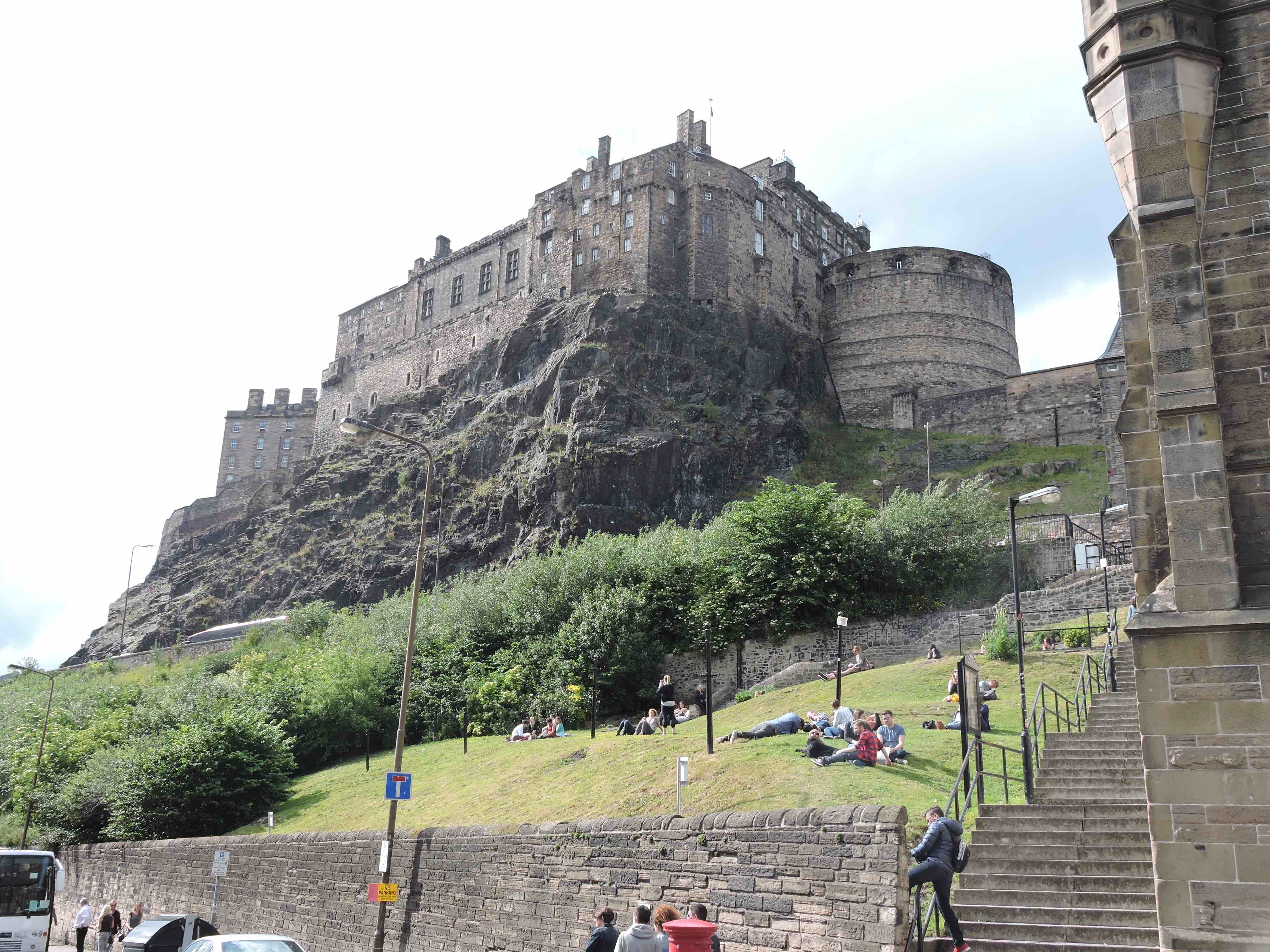
It was a rather short visit to attend our son’s graduation with a MEng in Chemical Engineering with Environmental Engineering at the University of Edinburgh as mentioned in the earlier post. Despite my severe reservations on the weather, Edinburgh is actually a nice city, dominated by its central feature: the Edinburgh Castle. We were fortunate to rent a flat very close to it that offered great diurnal and nocturnal views of the impressive building.

Edinburgh's castle, unmissable!

Edinburgh’s castle, unmissable!

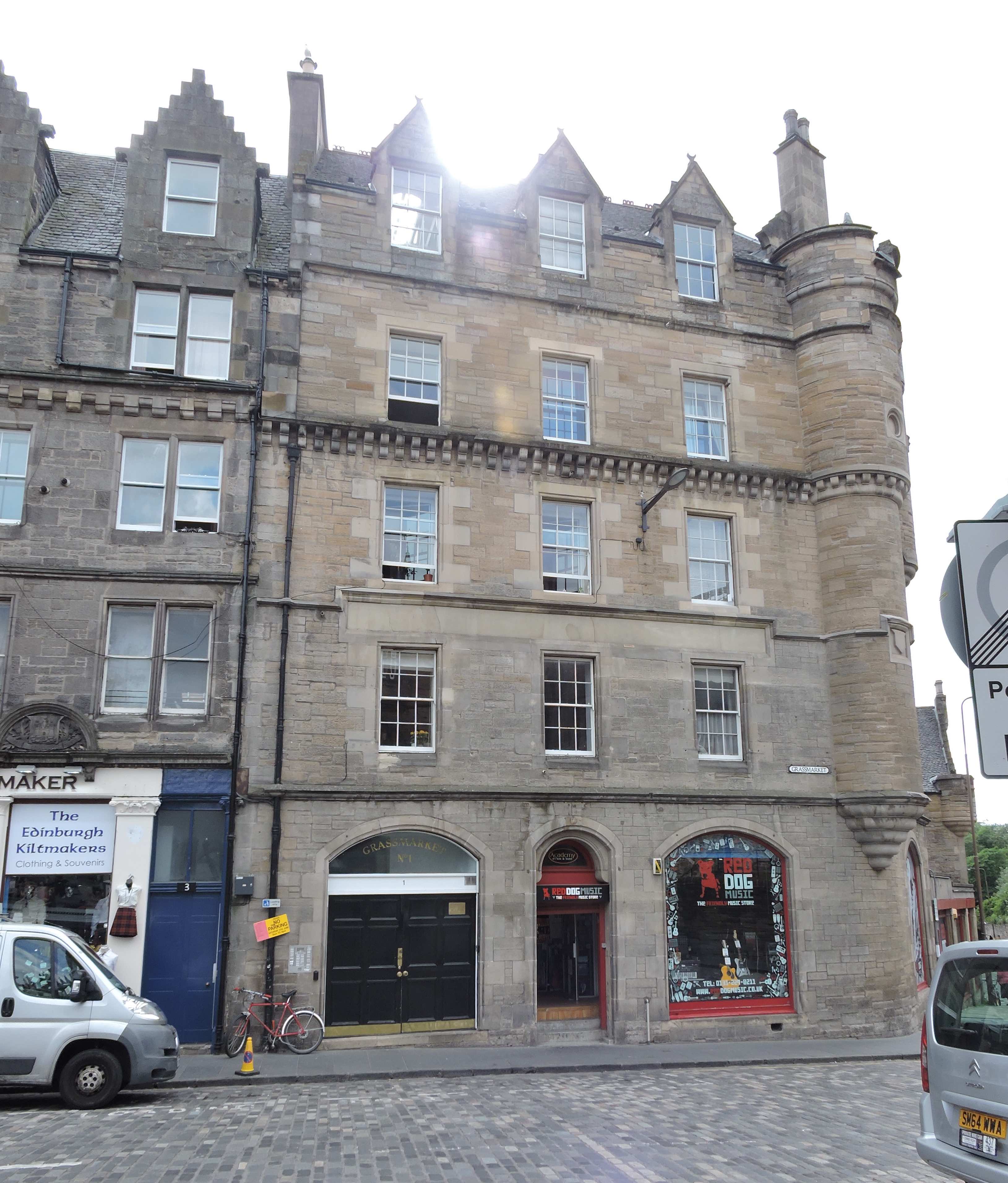
Our flat building at Grassmarket.

Our flat building at Grassmarket.

The main event of the visit (for the rest of the family anyway), the graduation, was enjoyable for proud parents and attending friends. Once the celebrations and all university-related matters (packing personal effects, returning accommodation to University and tying of other lose ends) were concluded, it was time for the family to do some sightseeing and shopping in Edinburgh itself.

The Bushsnob however had different plans. The main reason for my visit to Scotland was not actually my son’s graduation but rather the prospect of searching for two of the world’s most famous mythical creatures: the haggis and Nessie. Unfortunately, due to a combination of economic constraints and a lack of kilts in the Bushsnob’s size, it was not possible to mount a proper expedition to search for both these creatures. As a result some compromises had to be made…

For the haggis, against my will, I had to settle for tasting it rather than finding it. This took place in a local pub and, frankly, it failed to impress!

For Nessie, a trip to Loch Ness in a rented car appeared to be our best option as at the time we began organizing the expedition the only day available for the activity was in fact the next day! Predictably, we failed to rent a car because although both proposed drivers, my son and I, had valid driving licenses, the latter was considered too old and the former too young! This issue with age resulted in substantially higher rental costs that we (read my family) could not justify.

This was a severe blow to the expedition’s hopes and it seemed that our only -very slim- chance was to try and find an organized tour to the Loch at the last minute. Despite our skepticism –which was shared by the agent attempting to find us a tour- we found four places in one leaving early the following morning! We booked our places and the expedition was back on! I was very excited as I thought I was sure to catch a glimpse of Nessie, given my usual luck with rare animals…

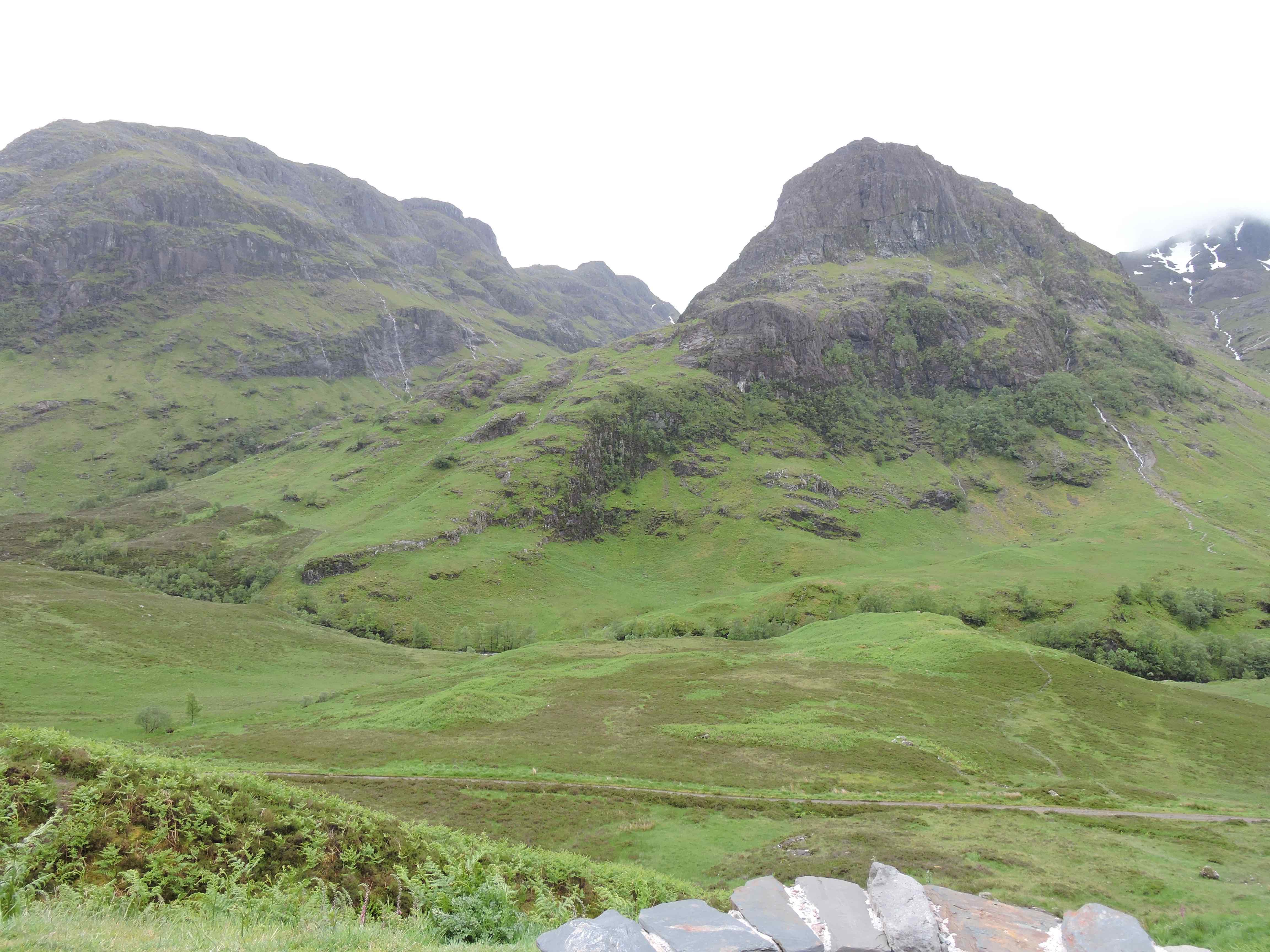
The trip took us through the evergreen and rather wet Scottish highlands although we were lucky that it only rained while in the bus! “A good omen”, I thought hoping that the good luck would last until the end of the tour.

The Highlands on the way to Loch Ness.

The Highlands on the way to Loch Ness.

After about six hours of travelling which included stopping at various landmarks (i.e. distractions) we arrived at our destination: Loch Ness. Lunch was waiting for us there in the shape of various types of sandwiches and pies ordered in advance by our entertaining and knowledgeable driver.

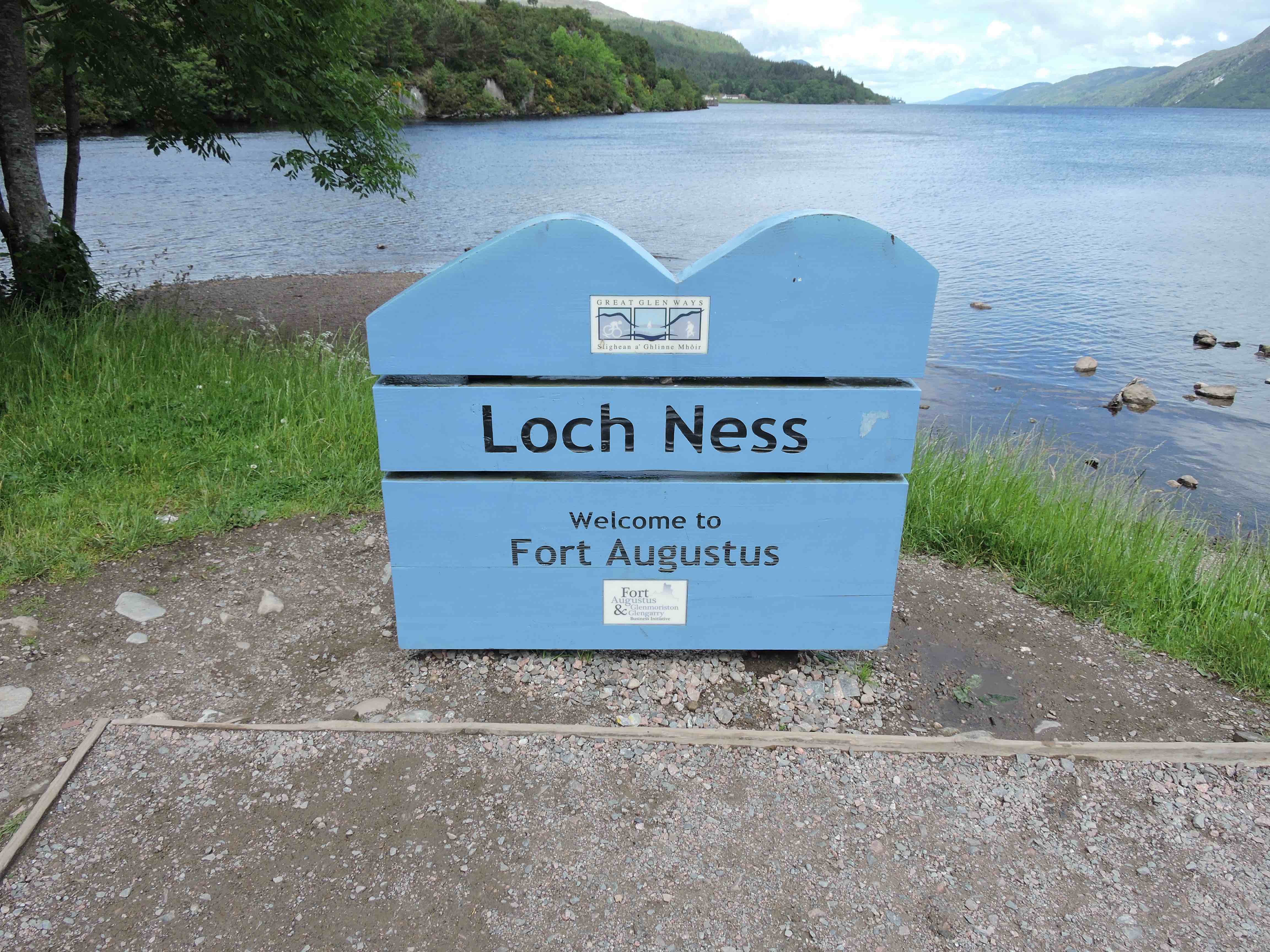
Openly displaying my anxiety I was on my feet before the bus had even stopped and even forgot my lunch as I hurriedly walked towards the lakeshore. I expected a cold and uninhabited place where, with enough attention, Nessie could be spotted hiding in plain sight. What I was met with however was totally unexpected: there was a town with several petrol stations and souvenir shops and the lake was nowhere to be seen! That is unless it was the pathetic narrow cove with several yachts and sailing boats moored in it that we had driven over with the bus? It was. I decided that lunch was a good idea after all, my deep disappointment clear for all to see.

First view of Loch Ness. Not what I expected!

First view of Loch Ness. Not what I expected!

Loch Ness. People oblivious to the monster lurking in its depths!

Loch Ness. People oblivious to the monster lurking in its depths!

Luckily over lunch my thoughts readjusted to reality and gradually my enthusiasm grew again. I fantasized that Nessie might enjoy a visit to the cove to have a look at human development. Surely I would be able to catch of glimpse of it then? I decided to give it a go despite the odds and walked a couple of hundred meters deeper into the cove carefully watching the water’s surface. I saw nothing apart from a few American ladies taking a dip in the loch that not even I could pretend looked like “Nessies”…

False alarm...

False alarm…

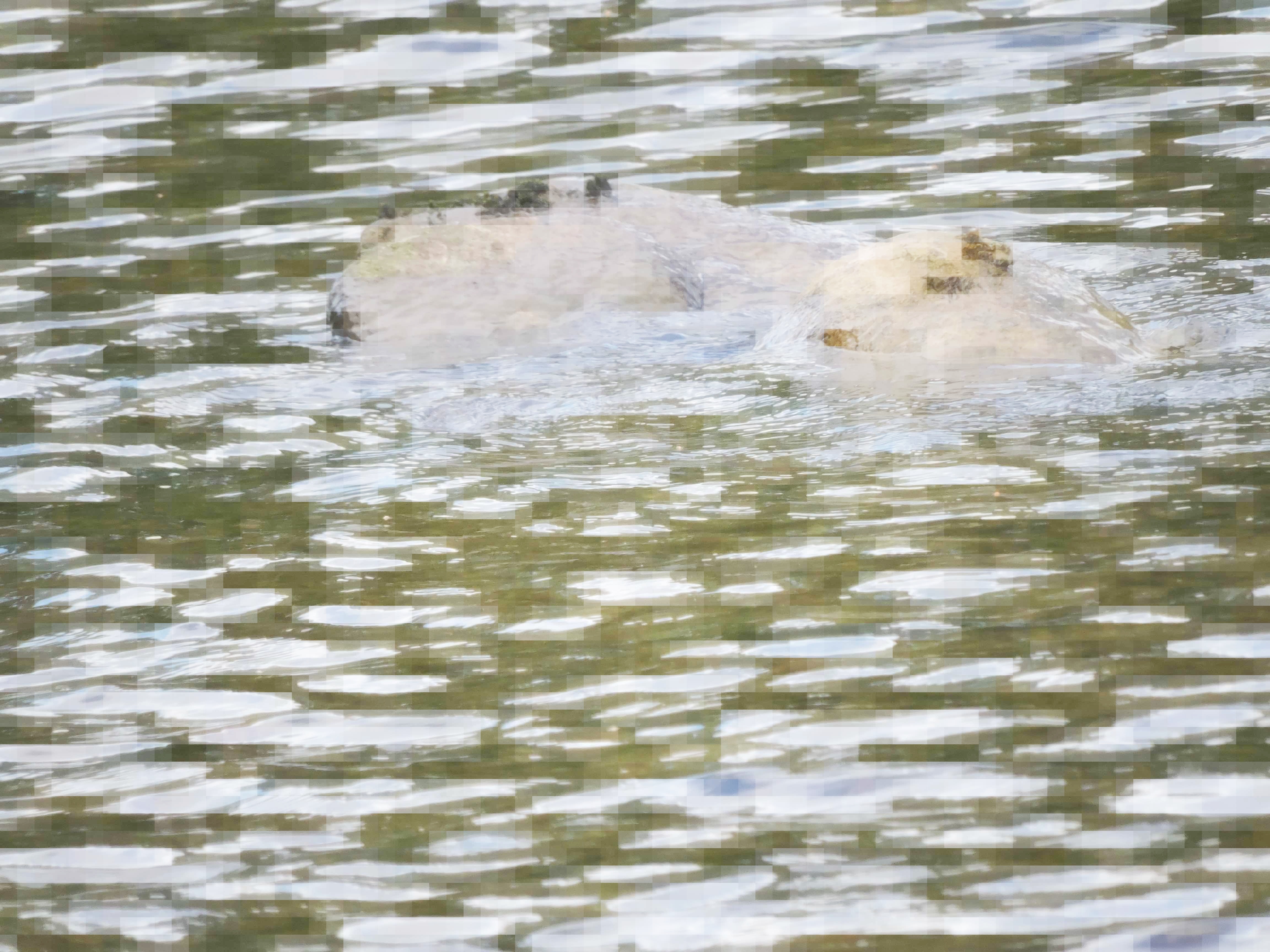
Just as I was about to give up on Nessie for a second time, I turned a corner and I saw her! She showed briefly above the waves created by one of the sightseeing launches that were ferrying tourists around the loch. The tourists on board were of course too busy having lunch and completely missed the mythical beast in the wake of their boat. Luckily, however, the Bushsnob had his camera handy and was able to take-two rather poor quality-pictures that will no doubt be enough for all of you, given my general trustworthiness and reputability.

The confirmation that Nessie exists.

The sharp confirmation that Nessie exists.

In addition, I also present to you Nessie’s passport photograph as a reference for you if you ever visit Loch Ness and do not have the Bushsnob’s luck!

Nessie.

Nessie.