Just in case you did not find the hidden insects, here I give you a blown up version of the pictures for you to find them with ease!

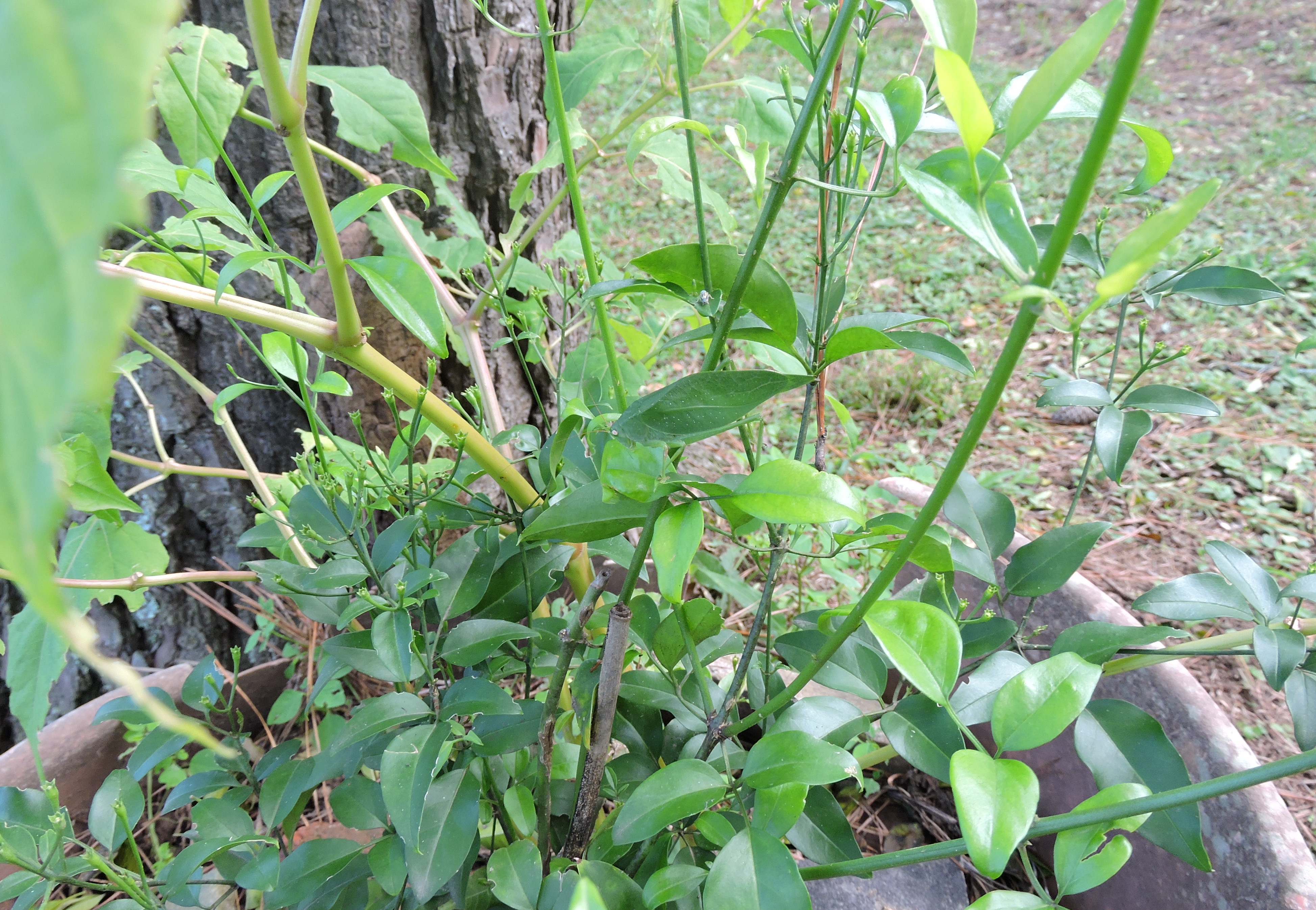


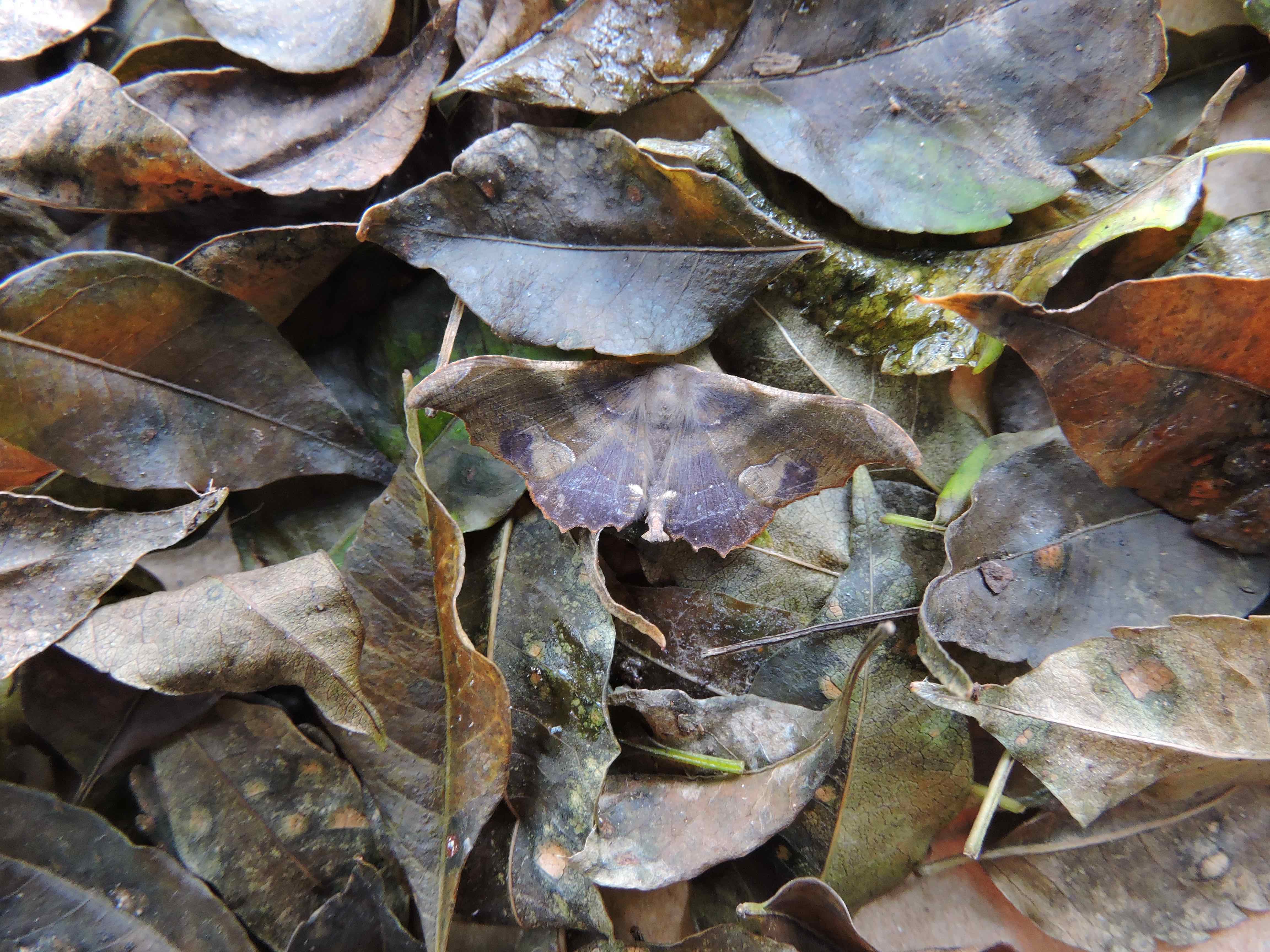
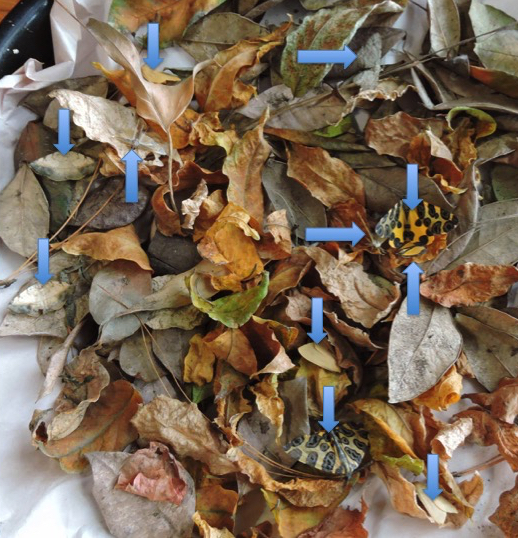
Just in case you did not find the hidden insects, here I give you a blown up version of the pictures for you to find them with ease!
As I mentioned earlier butterflies and moths are a prominent feature at our farm in Salta. As we are going through a long wet spell, I have taken the time to take pictures of some of the examples of camouflage that I have observed.
Rather than extending this over a few posts as I had done in the past, I decided to collect a few pictures for you to see five real finds that illustrate how Nature designed some of its creations to aid them in their survival. Have a look!
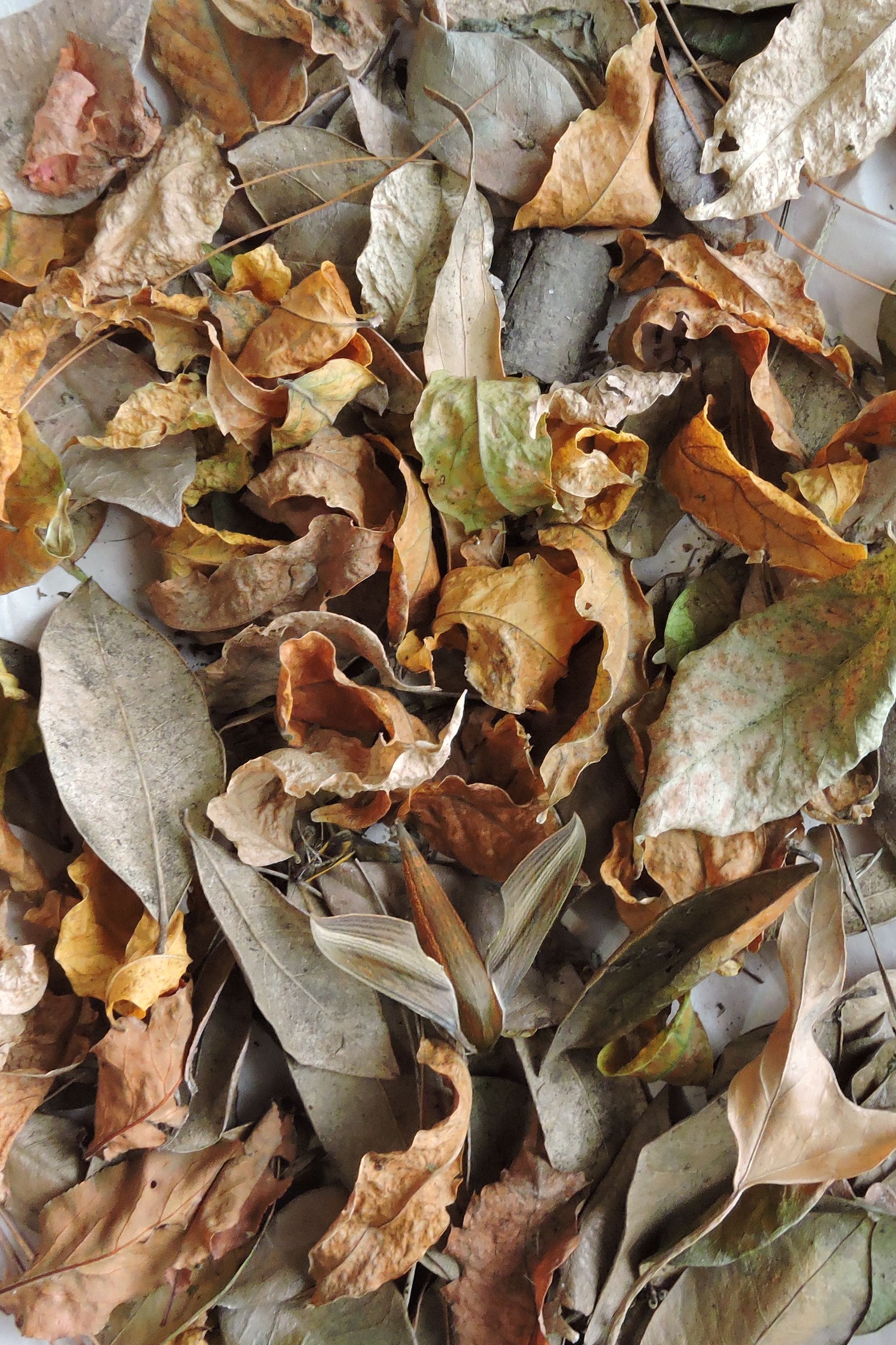
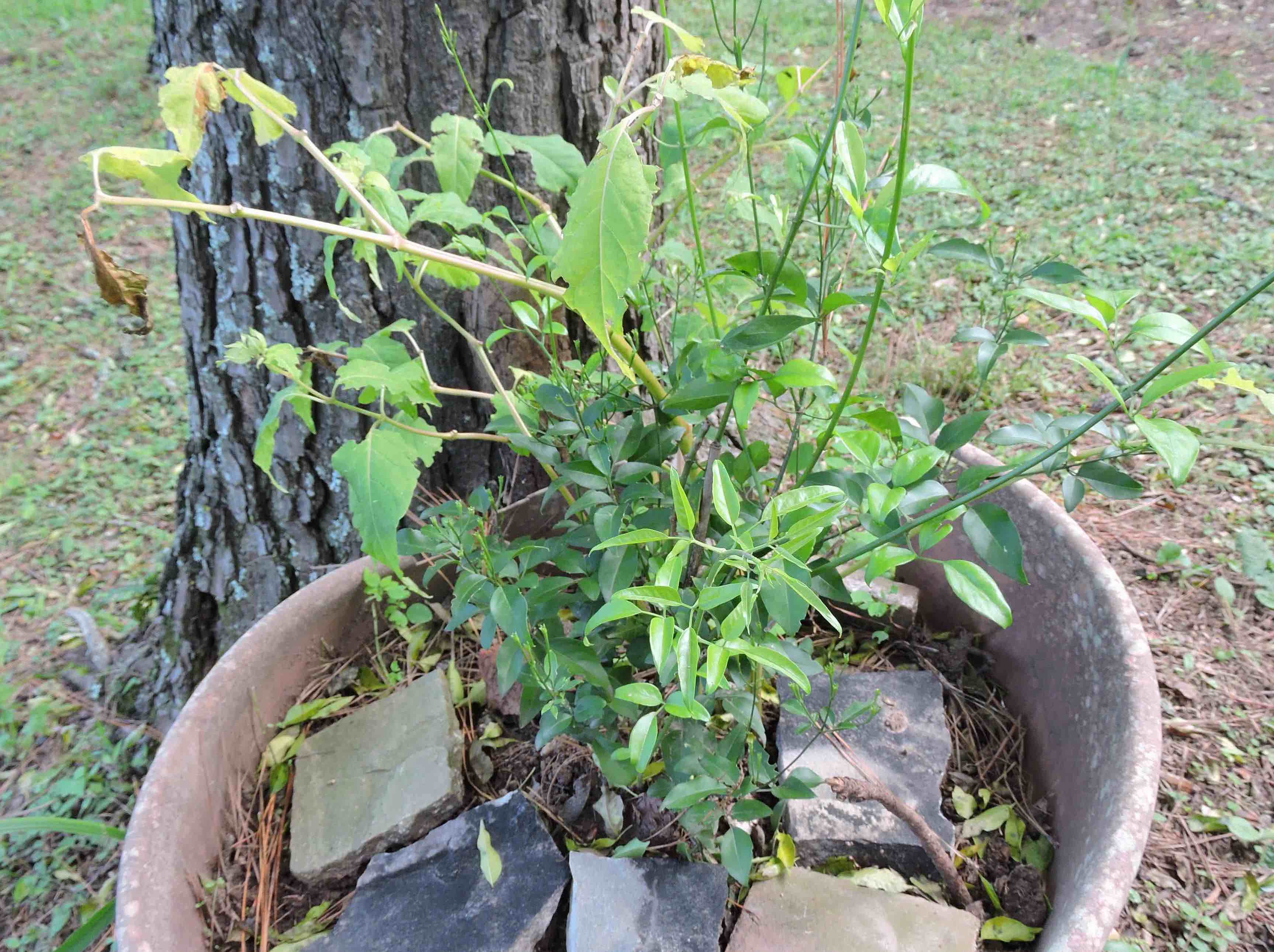
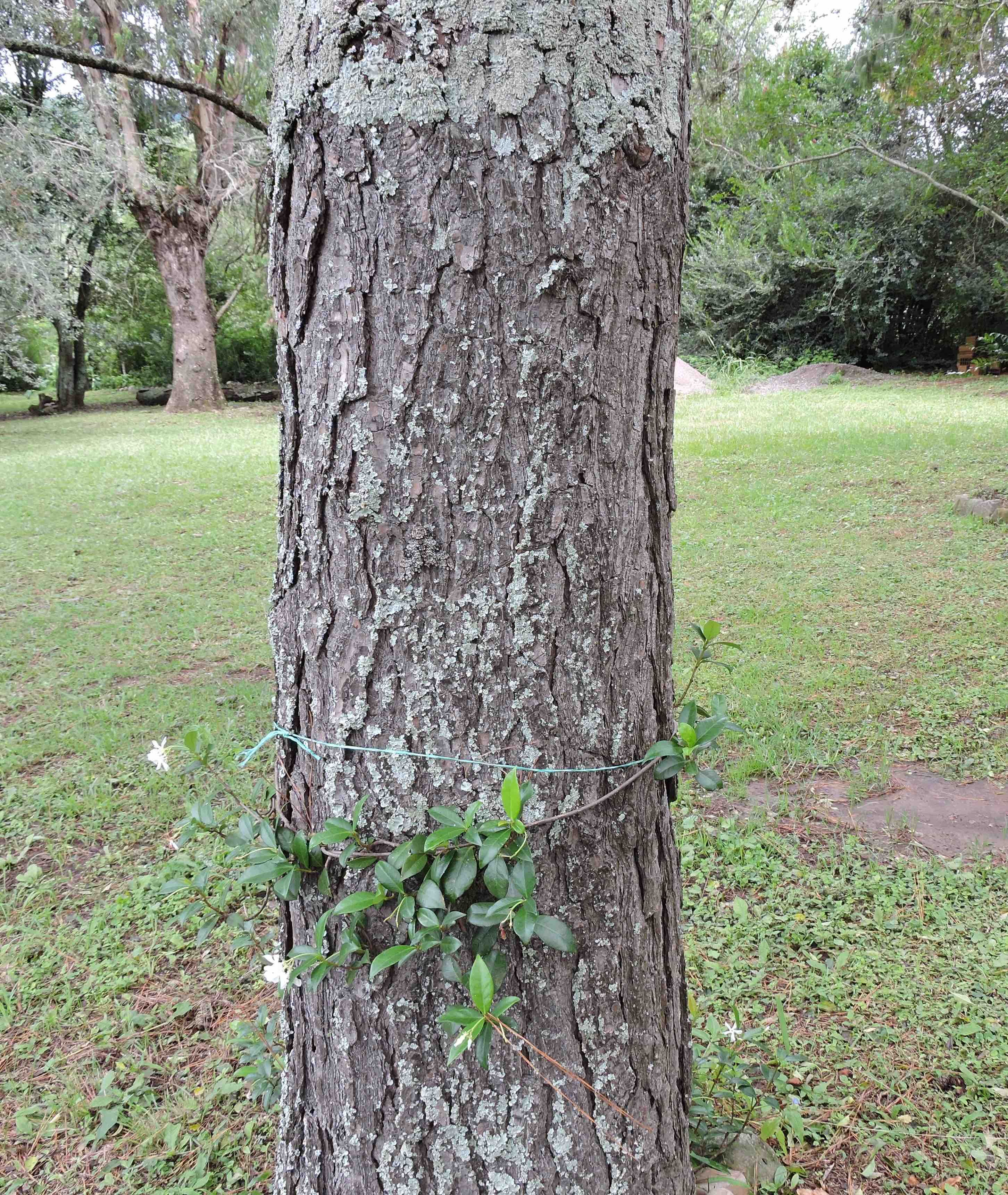
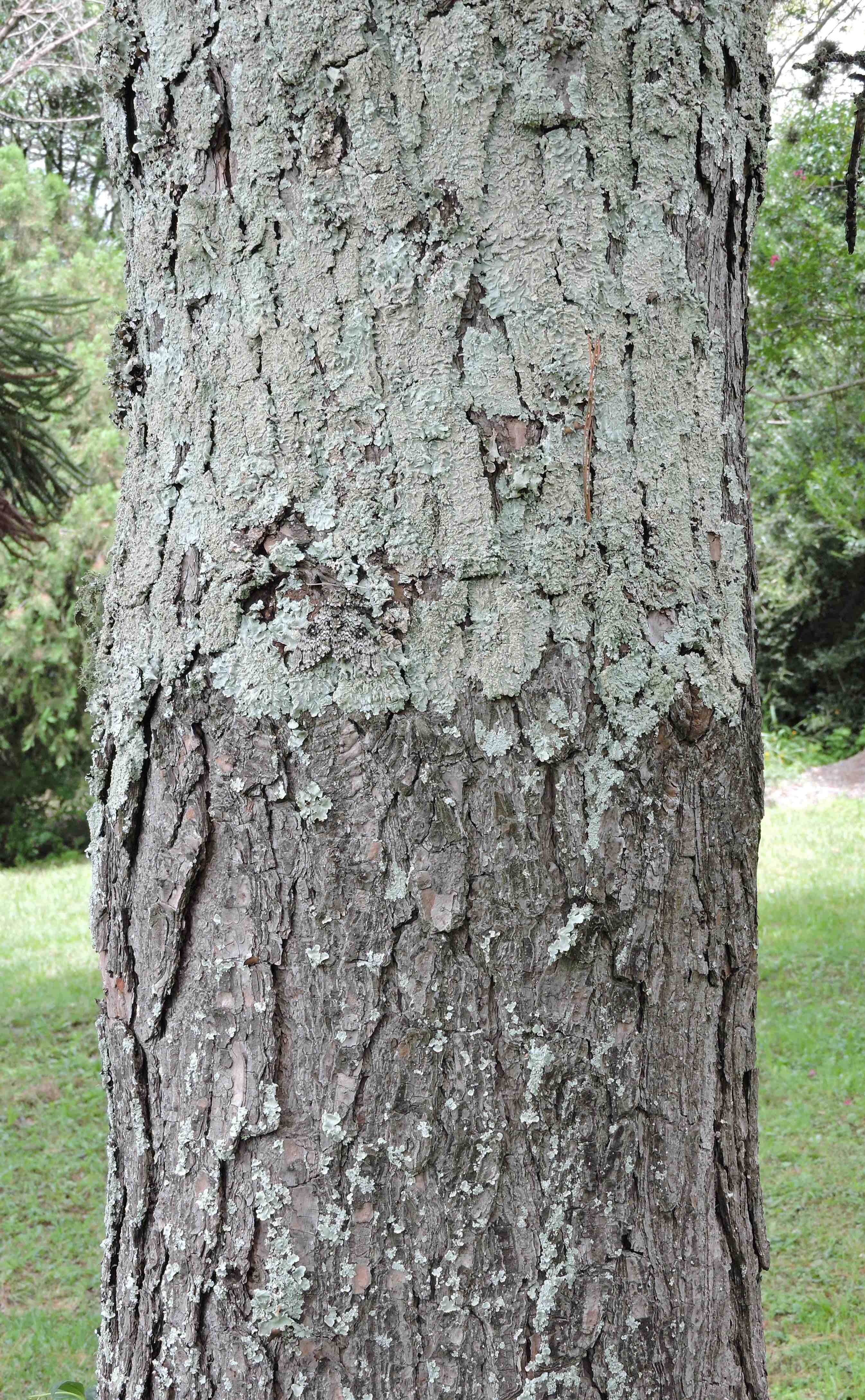

Several moths and butterflies come to our verandah light at night and I am taking pictures of them for a possible checklist. A number of them mimic leaves or tree bark. I then hatched the idea of collecting dry leaves from the garden and release a number of live moths on them hoping that they would stay on the leaves. Well, I can assure you that it was not easy!
However, after a few trials and frustrations I managed to get one shot for you to “admire” and spot the moths. To help you finding them I can tell you that there are more than one but less than fifteen![1]

I will reveal all creatures in the next post, hopefully this Saturday…
[1] I am learning to insert arrows to point them out.
The last night at the Fairview Hotel was a good one and I enjoyed my breakfast in the garden, where I noticed that birdlife in Nairobi was prolific and that there were not only several bird species but there were also large numbers of them! I did not know their names yet, apart from the ubiquitous sparrows that I knew from Uruguay. I was amazed to see birds so tame, in particular a kind of iridescent blue ones with cinnamon chests[2] that would come to my breakfast table expecting something from me! “Cheeky ones”, I thought.

The access to the Fairview Hotel.
It was light by 06:00 hours and dark by 19:00 hours so, unless you covered your ears, it was impossible not to be woken up by the early loud bird chorus. As it is customary, a cup of early morning tea is brought to your room and I had asked for mine for 06:30 hs, had showered and packed my bags before I went down for breakfast to be ready for Matt’s arrival.

A Superb Starling (Lamprotornis superbus).
The hotel was good and, thankfully, economical as I did not get any perdiem as a FAO Fellow and my stipend was rather modest. I needed to watch my expenses all the time. Clearly aware of my modest income Matt had booked me at a Government’s Hostel in Muguga, known as Muguga House until more permanent accommodation could be found. Muguga was then about 30-40 minutes drive North of Nairobi, in the direction of the Uganda border.
Packing Matt’s car -a smallish Honda Civic- was trickier than expected. One of my bags filled the boot so I went straight for the back seat, only to be warned by Matt “Wait, this is my portable Office archive” I looked up and only then noted that the back seat and floor were covered with papers and publications. “I need to be in several places so I carry the work with me” said Matt while piling papers on the floor in no particular order!, until my bag fit.
We drove straight to the hostel at Muguga. The place consisted of a central building where the administration and common facilities such as dining room and bar were located and a number of two- and three-room cottages with toilet and bath, scattered throughout ample wooded grounds. Matt had already booked me a cottage so my settling in was smooth. I noticed that several cottages were occupied and wondered who my neighbours would be but I left this for later. I adverted the Manageress of the arrival of my wife in about one month and arranged to pay monthly. I also deposited some advanced money for the use of the bar and I was settled.
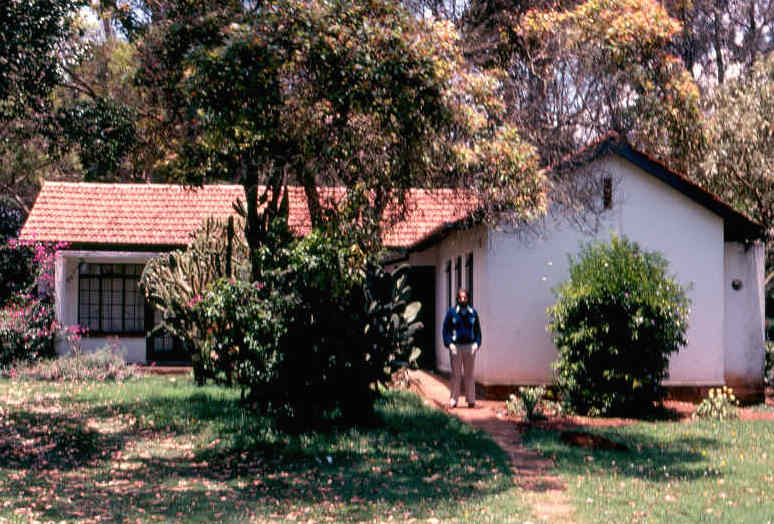
Our bungalow at Muguga House.
After Muguga House, we toured the very large grounds of the Kenya Agriculture Research Institute (KARI) where we saw the various establishments based there such as the Kenya Veterinary Research Institute (KEVRI) and the Kenya Trypanosomosis Research Institute (KETRI). Matt pointed out the ICIPE’s “laboratory” at KEVRI. To my eyes it looked like a very small barn but I kept the comments to myself.
We did not find any of our prospective collaborators as most were on leave and others outside the Institute so Matt decided that lunch would be at ILRAD’s restaurant, so we drove back to Kabete, about half way between Muguga and Nairobi. While KARI impressed me as a formerly beautiful place built by colonial Britain and getting slowly worn down by lack of funding and maintenance since Kenya’s independence, ILRAD belonged to another planet! It was a modern and beautifully set campus with manicured lawns and all possible facilities to perform research on livestock diseases. To me it looked like a grand place tailored for high-powered research with several state of the art laboratories and all the necessary equipment that scientific research would need. All of this was nestled in a lovely hilly area where the central manicured lawns and woods were surrounded by grasslands where lovely zebu cattle grazed. “Julio, welcome to ILRAD” said Matt while finding a place to park among the abundant 4WDs and other expensive cars. I could not believe my eyes!
While walking towards the canteen Matt explained that ILRAD was created in 197… to solve two problems Trypanosomosis and Theileriosis. “A difficult job” said Matt and added “I know lots of people here and we will meet a few over lunch”. The restaurant followed the style of a university campus restaurant and it was very busy. The diners were of mixed race and different nationalities. I was amazed, as Ross seemed to know everybody. He walked straight to a large table at a corner and introduced me to the Director General and his Argentinian born wife. I also met many other people that day. The place was a hive of activity and the closest resemblance to a place I had been was the University of East Anglia in the UK while I learnt English prior to my MSc studies in North Wales. It was both stimulating and rather intimidating but, above all, totally unexpected!
After lunch we toured the laboratories and talked to even more researchers about what they were doing until Matt decided that we had done enough and it was time to leave. He invited me to pass by his house in Tigoni, North of Nairobi, for a cup of tea. Matt’s invitations were more decisions than invitations so I was not given a chance to refuse, despite being rather tired by then!
It was a worthy visit as another huge surprise awaited me. His house was a lovely British-style house with a tiled roof and stonewalls, located in beautiful woodlands. A stream ran through the large grounds and this was the source of water for the trout ponds being developed. I could see at least three from the house.
Although she was not informed of our visit[3] his wife gracefully invited us for tea and cake in the lovely garden. Afterwards Matt gave me a guided tour of the trout dams with two of his three young sons. The third one was busy becoming a plane pilot in Nairobi Wilson Airport. It was an impressive development as three dams were being built and there was a lot of activity. Clearly Matt was serious about his trout! Afterwards it was his wife’s turn to show me their flock of African Gray parrots. About eight young parrots were kept in a large enclosure. They were young fledglings when seized as part of an illegal shipment at Jomo Kenyatta Airport. “They were in bad condition when we got them but we were lucky to get them all back to good health” said his wife, proud of her achievement. She also informed me that once fully grown they would be returned to the Kenya Society for the Protection of Animals for distribution.
Matt somehow interrupted the “parrot tour” to bring me back to his verandah as he wished to show me something. I followed him until he stopped facing the dams. “Julio, this has been my dream since I left Scotland” he said and then added “I will catch them from here when I retire and cannot walk anymore” he said, mimicking the fly rod movement from his verandah and laughing heartedly. It was clear that Matt and family enjoyed a very good standard of living that, in my ignorance, I did not expect to find in Africa!
The more I listened to Matt the more I gathered that he was a man with many dreams and ideas both private and professional. While the trout dams being built belonged to the former, the achievement of an immunization method against ECF was clearly part of a realized professional dream. A more recent one was the development of the vaccine against ticks and he talked about it as if it was something really achievable. However, it was clear that his veterinarian’s heart was with ECF work while the tick work -mine included- was more of a necessity for him, despite his infectious enthusiasm.
I continued listening to Matt for the rest of the day and it helped me to get an initial understanding of the persona as well as the worker. It was clear that as someone who got to the top of his working area, he had made himself a few enemies, both black and white. Realizing that I would have to share them I listened carefully. As most people in Kenya at the time, he had a rather colonial view of racial relations! I learnt that he had a long-term rivalry with a Senior Government veterinarian as well as with other British colleagues. He had a clear dislike for one and described his face as looking like “a weasel peering out of a bear’s ass”. I did not really understand what that meant until later!
We drove back to Muguga at the end of the day, still talking and making future plans. We agreed to meet again in a couple of days to carry out a few protocol visits: Government, FAO and ICIPE to start with.
I got back just in time for dinner and to get to know some of my future housemates. There were several Kenyans from up country, Ugandans and the ubiquitous British. I shared the table with some of them. Food was simple (some roasted, boiled or curried meat with rice and occasionally salads), soon to get boring, particularly the boiled cape gooseberries and custard dessert that I eventually learnt would be a lunch and dinner ending feature forever!
More interesting was the after dinner conversation held in the main hall. Most of the guests were long-term and worked in different institutions at KARI. There were mainly agronomists, biologists, foresters and veterinarians and the topics of conversation were Kenyan politics, sports and comments about life in Muguga House. It was entertaining and interesting as well as informative and some of the friends I made there remain friends to this very day!
[1] Follows “Kenya – The Beginnings”.
[2] Later I identified them as Superb Starlings, a common bird in East Africa.
[3] No cell phones then!
Recovered from my curry dinner and rested I met Matt, my future supervisor. My first impression was that he did not take much notice of his personal appearance. He was tall with stooped shoulders, going bald and had somewhat bowed legs. He wore khaki gray trousers, a long-sleeved shirt, a green cardigan and Clarks shoes (always the same model that he never changed[2] for the years I was with him!) and, at first sight, he seemed friendly and direct but also demanded respect. He spoke with a strong Glaswegian accent that took a while for me to get used to.
We had a cup of coffee and talked for a while and then he invited me for a tour of Nairobi as he said “Julio, we can talk while we see the city and tomorrow I will take you to Muguga House where you will stay for the time being”. I was delighted, as I had no transport. So we spent most of the day together and I got a valuable briefing on important issues for my future. Most importantly, I liked him and I thought then -I believe correctly- that he also liked me in his own way.
Matt had been born in Scotland 58 years earlier and graduated as a veterinarian in Glasgow. After working in Pakistan (he was very proud of his Urdu), in the 60’s he moved to Tororo in Uganda to work on African Animal Trypanosomosis[3]. His important findings on the epidemiology of this deadly disease placed him in a prestigious place in the parasitology world, particularly in the African context.
His success prompted FAO to hire him in Kenya to spearhead a very large programme to develop a protection method against another cattle scourge in East Africa: Theileriosis [East Coast fever (ECF) or Corridor Disease], caused by a blood parasite -somehow similar to Malaria- known as Theileria. Those were the days of the early East African Community composed by Kenya, Tanzania and Uganda. The Brown Ear Tick (Rhipicephalus appendiculatus) is ECF’s vector[4] inoculating cattle (and other wild animals) with the Theileria parasites from its salivary glands, and, most of the time killing the susceptible animal. Some wild animals such as African Buffalo survive the infection and become “carriers” of the parasite, a kind of storage for the disease that can jump again to cattle through the ticks as the latter feed on different hosts.
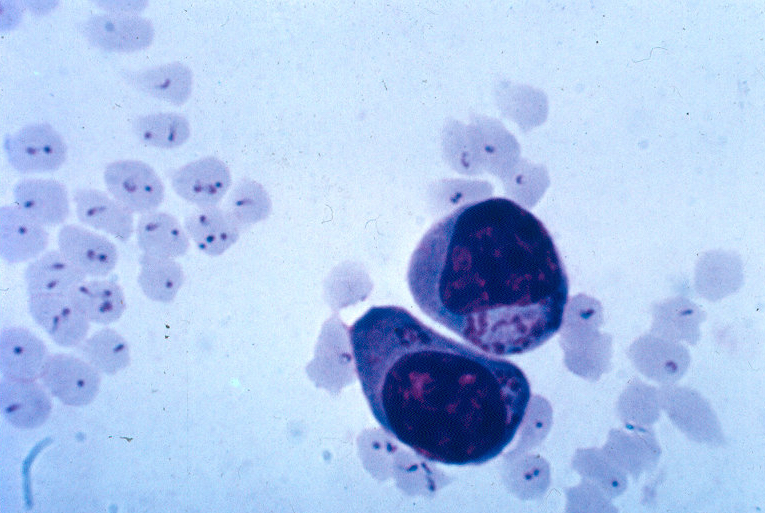
Theileria schizonts (inside cells with nucleai) and infected erythrocytes.
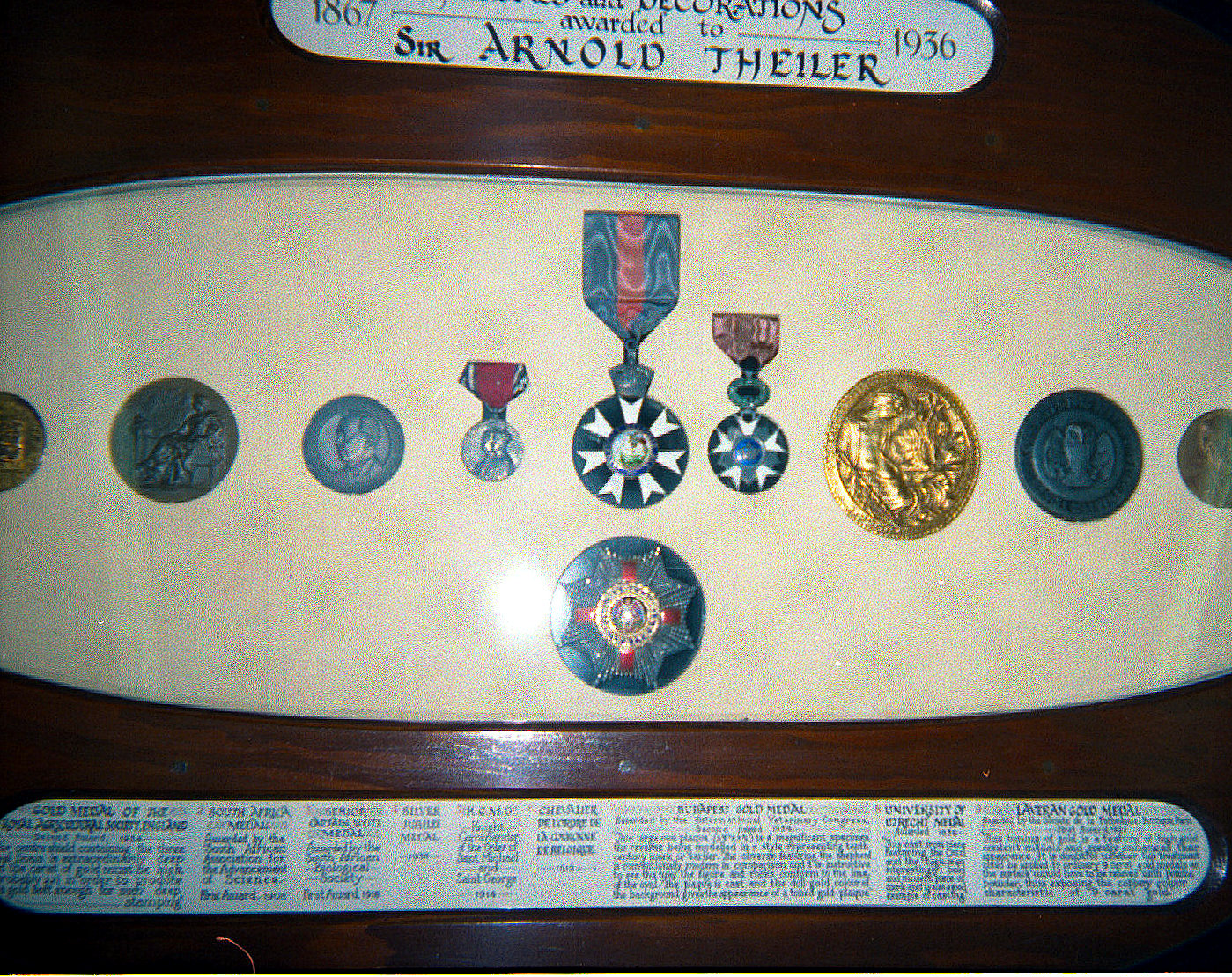
Theiler’s condecorations for his outstanding work.
Clearly, Matt’s main contributions to the programme were to keep a very diverse scientific team working together for years and to achieve its goal. (Later, I learnt that he was a strong leader and heard several stories of rather vehement programme meetings where participants came to blows and chairs flew but I am not able to confirm them).
It was clear that he had managed to successfully “translate” his research in Trypanosomosis to ECF. Success started when the programme managed to reproduce the disease artificially by injecting a known number of ECF infective units extracted from the tick vector[5]. This achievement enabled the programme to develop an efficient system to work with the disease that, after more than ten years of research, culminated in the development of an immunization method: a mix of Theileria types[6] that, when inoculated to an animal together with the right antibiotic (tetracycline), would produce a very mild disease and result in the animal becoming immune practically for life[7].
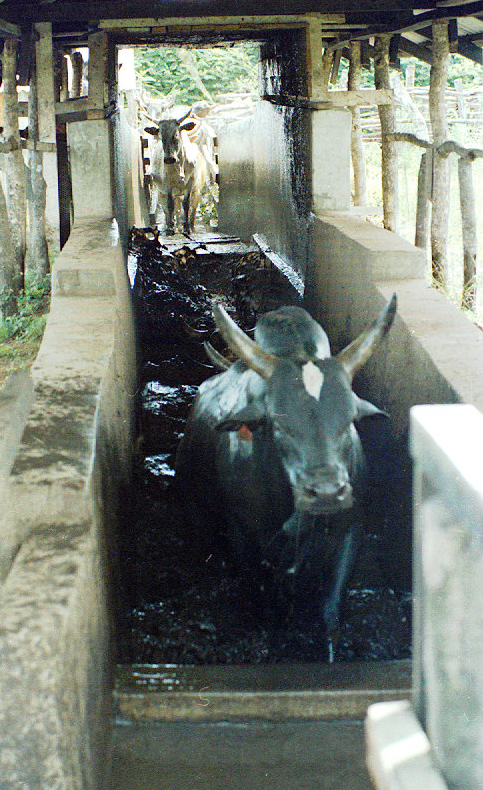
Cattle being dipped with acaricides.
Until the development of this immunization method, the only way to keep cattle in ECF endemic areas was by “cleaning” the animals with insecticide-like chemicals known as acaricides[8] dissolved in water as often as twice a week! In theory, the new immunization method would remove the need for intense acaricide treatment with beneficial effects for both the animals and environment.
Despite the advances in ECF immunizations, the ticks would still be there and have an impact on the animals as parasites. I was a small cog in this rather complex parasite-vector-host system and my mission was to quantify the effects of the ticks themselves on productivity and their economic impact. I had 30 months to achieve this! Clearly Matt’s over-optimism had permeated the project proposal, as I later discovered was true for most proposals he developed…
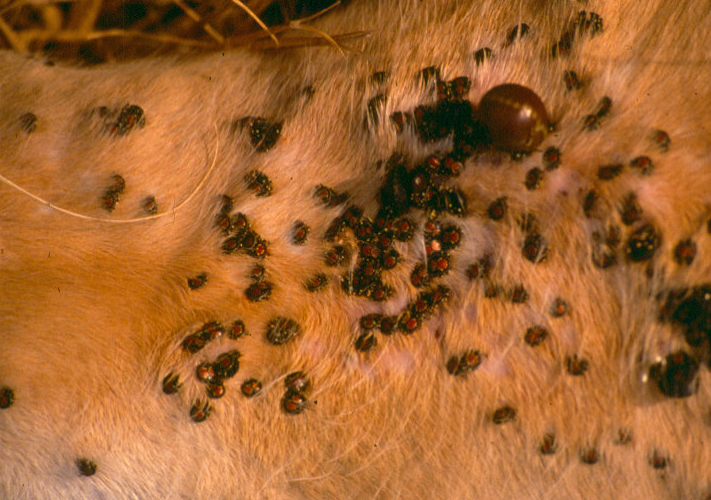
Heavy tick infestation, mainly Amblyomma spp.
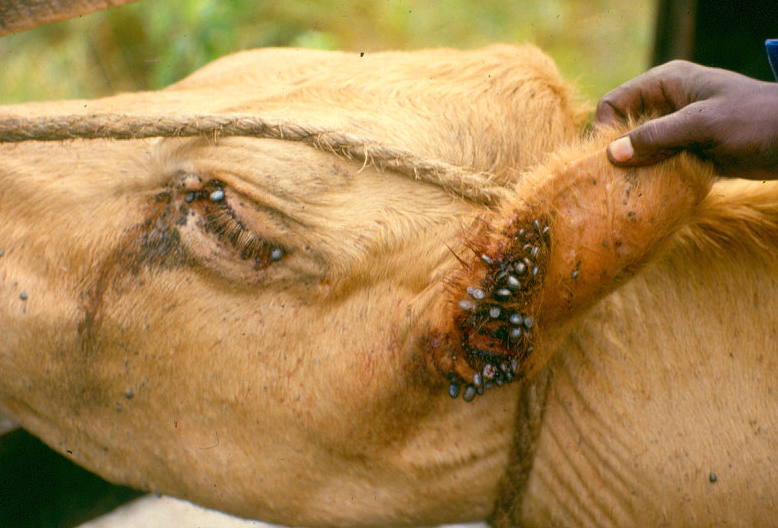
Brown Ear ticks
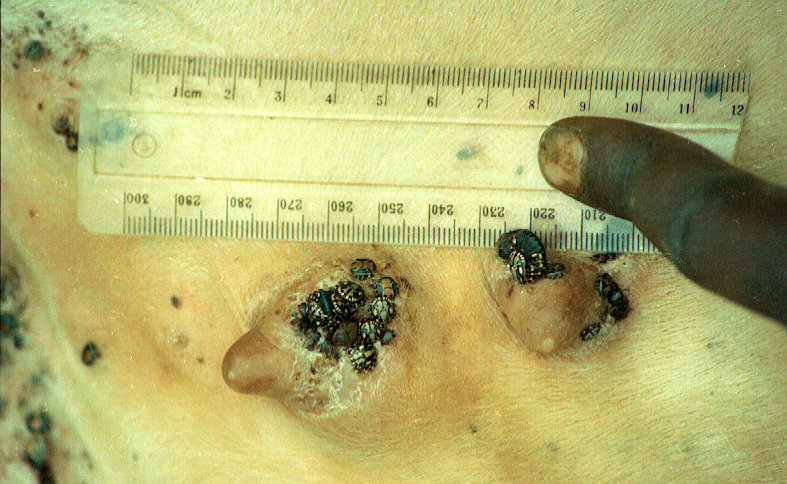
Amblyomma cohaerens (gold) and A. variegatum (orange) tick infestation.
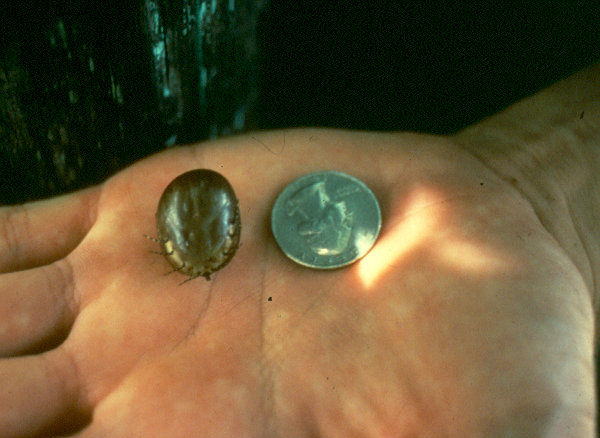
The size of a tick!
Matt, at the timenow retired from FAO, was the Director of the Tick Programme ofat the International Centre of Insect Physiology and Ecology (ICIPE). The ICIPE would host me as an FAO Fellow attached to the Tick Programme so he was my direct supervisor. . I was seconded by FAO to the latter, hence his role as my boss. The Tick Programme was working on the ecology of the Brown Ear Tick as well as searching for a “vaccine” against the Brown Ear tick vector. “Julio, we have a laboratory in Muguga and good relations with the veterinarians working on ECF there, so we will succeed”, he said. I listened with interest, accumulating questions and anxieties!
He was very excited with my arrival. I recall him saying “Julio, you are at the right place at the right time” while lighting another Sportsman cigarette (he was a heavy smoker), adding “Most of the important work on theileriosis is taking place in Muguga!”. In fact I was a bit too early but I did not know this yet! He explained that the work of the now finished FAO programme still continued and the immunization method was being laboratory and field-tested in various places in Kenya, mainly Muguga[9] and the International Laboratory for Animal Diseases (ILRAD)[10]. “Julio, the key word is collaboration” Luckily, because of his past work he had lots of connections with people working in ECF in Kenya.
Almost immediately he mentioned Alan as one of his main allies. A Northern Irish parasitologist that as Matt put it: “has green fingers with parasites”. You will work closely with him, as he is the man behind ECF immunization. “He is waiting for you at Muguga!” he said. He added, “Robin, our tick ecologist -on leave now- is also there. He knows everything you need to know on the ticks so you will be OK”. I noted that Muguga would be an important place for me!
We drove around Nairobi and he showed me some of the key spots: the FAO Office near Bishops Road, the ICIPE HQs at Chiromo, ILRAD and the Veterinary Laboratory, both located at Kabete and other useful places in town. He never stopped talking about work! We did not drive to Muguga (about 30 km north of Nairobi). He promised to take me there the following day.
I soon realized that Matt was an “ideas man” and that I was part of one of them! He believed that my fieldwork was possible and had agreed with FAO to host my research. I also learnt that there were a number of knots yet to be untied for me to do my job. The place where I would work was the main bone of contention but Rusinga Island was still top of the options. My preoccupation increased!
Lunchtime was approaching and Matt proposed to have lunch at the Nairobi National Park. I happily obliged. So, after stopping at a duka[11] to buy samosas[12] and two packs of milk we drove to the Park. We soon got there and we drove almost straight to the Viewing Platform without stopping to watch anything! Matt had seen all or did not care about wildlife! I took some hurried pictures of what I could during the short stoppages he did or from the moving car. It was the first “real” wildlife I had seen! We stopped for a herd of giraffes and drove past vultures at a kill and had our lunch while taking in the view extending into the Athi plains and beyond. It was my first picnic in the bush at a beautiful location! Matt continued talking about work, his enthusiasm unabated!
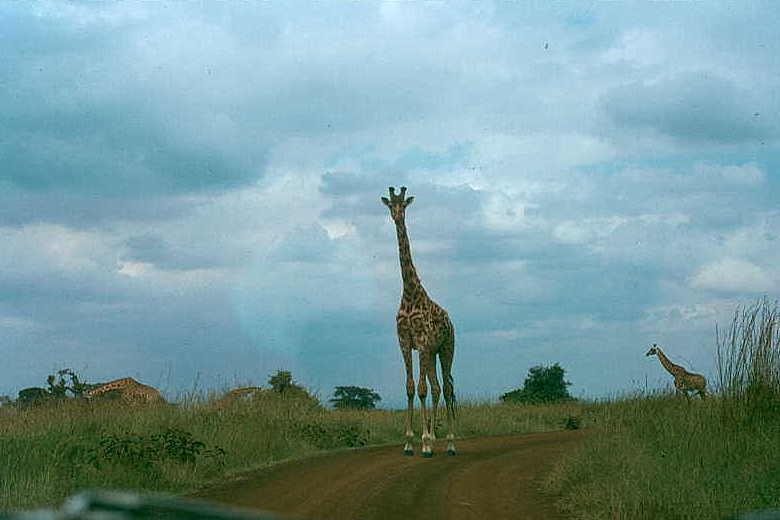
My first giraffe at Nairobi National Park.
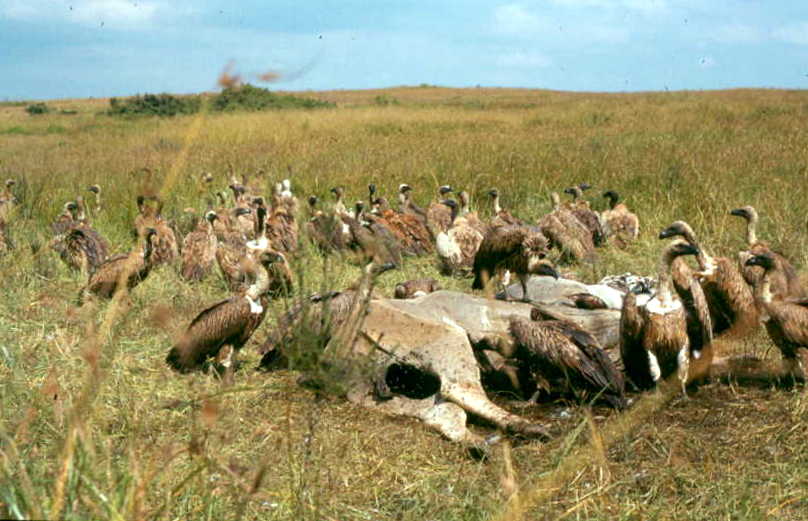
I took this picture of vultures at a carcass while driving past!
Occasionally he would digress to his other passion in life: fly-fishing. He loved it and never missed an opportunity to practice it. He explained that he was building dams at his house in Tigoni -an area North of Nairobi where many British lived- so that he could keep his own trout. “Julio, I can catch them from my verandah” he said while mimicking casting his fly towards the plain! I was also a fisherman but knew little about fly-fishing so I limited myself to polite and rather useless comments! He promised to take me to his house to show me the dams and to introduce me to his family. Clearly aware of my rather useless comments regarding fly-fishing he never invited me to join him!
At the end of the day Matt dropped me off at the hotel and we agreed that the following day he would collect me in the morning and take me to Muguga, my future “home”. I was tired, both physically and mentally. Although I had gained valuable information I had also accumulated many questions that I needed answers to. Being young and rather anxious, I needed to rest, relax and think. I had entered a new world with new places, new people and a different working methodology. I was beginning to realize that my work would come with a few trials. Despite this, I never regretted my choice as I loved the Kenya atmosphere and I was hopeful that things would work out in the end, despite my present doubts.
[1] This post follows “Africa – Arrival”.
[2] He may have several pairs of the same model!
[3] At the time Glasgow Veterinary College was strong in East Africa.
[4] Similar role to the mosquito in malaria.
[5] Until then ECF was only caused by applying live ticks.
[6] Theileria parasites vary in different areas.
[7] This method known as “infection and treatment” is still today the only practical method available to us, despite years of high-powered and costly scientific research.
[8] Ticks are acari. Acaricides are very toxic chemicals.
[9] The Kenya Veterinary Research Institute (KEVRI) of the Kenya Agriculture Research Institute (KARI) was located at Muguga.
[10] Now the International Livestock Research Institute (ILRI).
[11] The local name for a shop that in the “old” days was mostly owned by Indian migrants.
[12] A fried triangular pastry filled with minced meat, mutton or chicken, heavily spiced and chilly-hot.
Ingredients:
A gas-operated water heater
Low shower curtain and thick rod
Washing machine outlet inside the bath (with stone)
Donkey-skin towel
The list of ingredients alone should give you an idea of the setting. However, I will elaborate a bit further so that you can get an idea of the predicament I was in. The rains this year in El Gallinato, Salta, Argentina have been abundant so there is plenty of water in our borehole, a welcome change from previous years. The end result of this is that “abundant” and or frequent showers are possible if you so wish. This is not our case as we are programmed to save water but the possibility is there.
Getting ready for the dentist appointment, I decided to shower, as smelling foul would surely increase dentist’s aggressiveness above my perceived Mengele’s level. So I went for it.
To have a shower with a gas water heater requires opening the tap so that the flow of water triggers a flow of gas that gets lit by the pilot lamp and hot water comes out the other end. For the system to operate, the water has to have pressure and the gas cylinder gas! Both were estimated OK and I went for it, after opening the tap for the water to reach the right temperature.
Regrettably, the shower curtain to enter the bathtub where the shower is located is lower than me so “bang” went my bold cranium and, although severe, I managed to keep my balance and the hot water relieved my pain so that I could proceed with the cleanup. After finishing the operation to my satisfaction – though probably not my family’s – I decided to close the tap and leave, this time minding the wooden bar to avoid further brain damage.
I aligned my agile physique to avoid the bar and, again, unlucky I stepped on the stone weighing down the outlet pipe of the washing machine, which is also located in the bathtub. The pipe spluttered all over the place the first time the machine was used and I attached a rather large stone to it, to hold it and the shower curtain down. This time I lost my balance and went into the start of a headlong and inelegant fall that I managed to control by holding onto-and ripping off- the shower curtain. Thankfully the rod that hit me earlier withstood my weight and somehow I survived this second attempt on my life!
Remembering that I am retired and should look after my health, I paused, took a deep breath and I promise you I did not curse… I recovered and looked forward to a good drying and rub down with a dry towel. The final disappointment was waiting for me in the shape of a well known and hated towel known as the “donkey hide”, an ass-coloured cloth that I hate as it has the unbelievable property of only moving the water around your body without absorbing any water or drying it! So, after pushing the water down my body and into the floor drain with the assistance of the donkey hide, I ended up -still wet- sunning myself naked in the garden in an attempt to get dry, under the midday sun, with a bump on my head and checking to make sure that my ankle was OK.
Farm showering for you!
When I saw jewels flying I thought that hypoxia had accentuated my natural brain decay. Even under these circumstances I was quite surprised!
It all happened while practicing the “walking to keep fit” arrangement that my wife and I performed daily, weather permitting. Of course you have already guessed that they were butterflies and that unlike García Marquez in his masterpiece One Hundred Years of Solitude, I failed to convey the proper message. For this reason, this post is mainly about the photographs I took of what was flying around during a few days walking in and around our farm at the Andes foothills[1].
The first one that caught our attention was the Crimson-banded Black (Biblis hyperia nectanabis), very mobile and tricky to capture. These are the best I got:
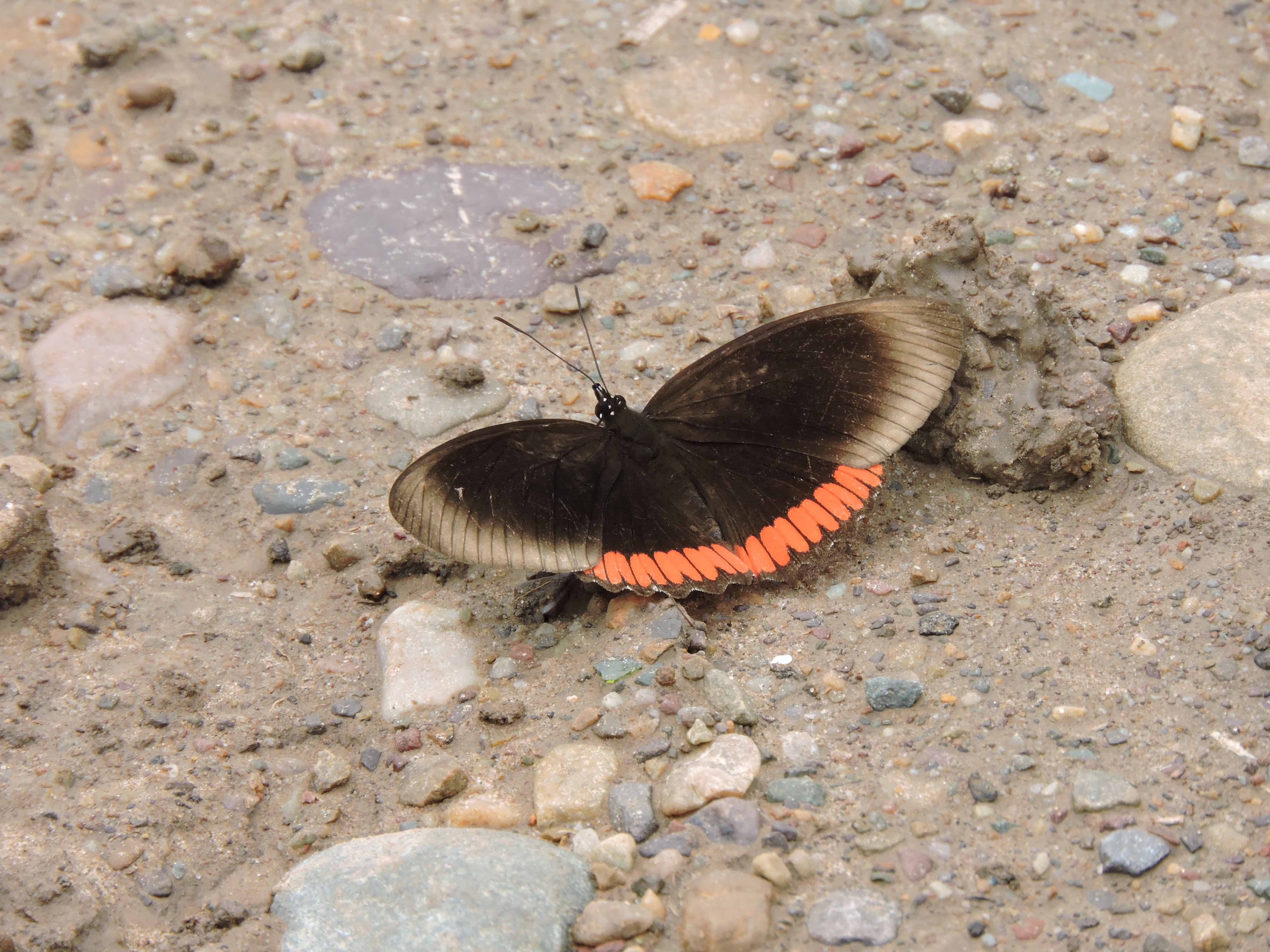
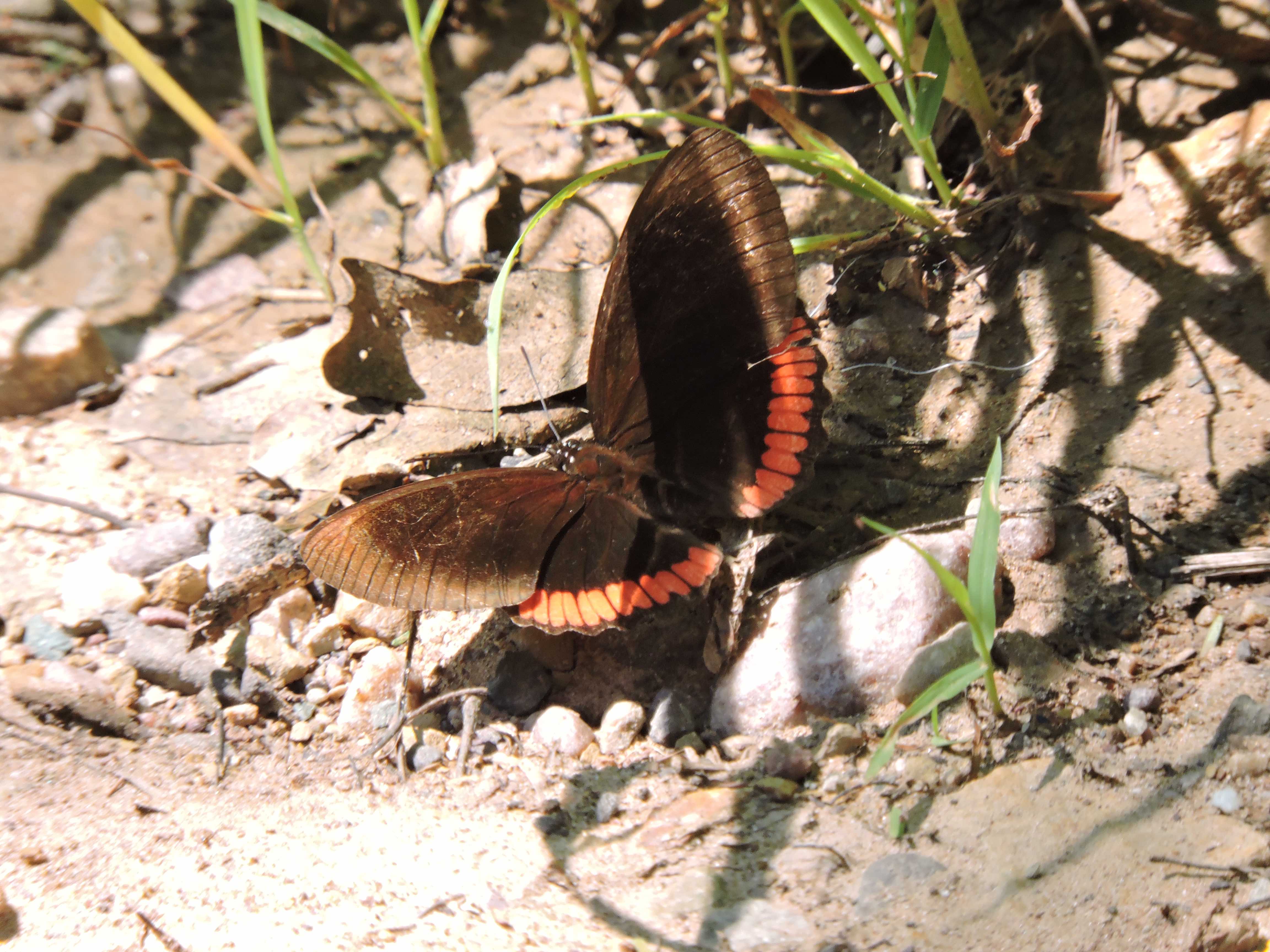
We could also not fail to notice a few others that, with their fair share of beauty, immediately attracted our attention. These are shown below:
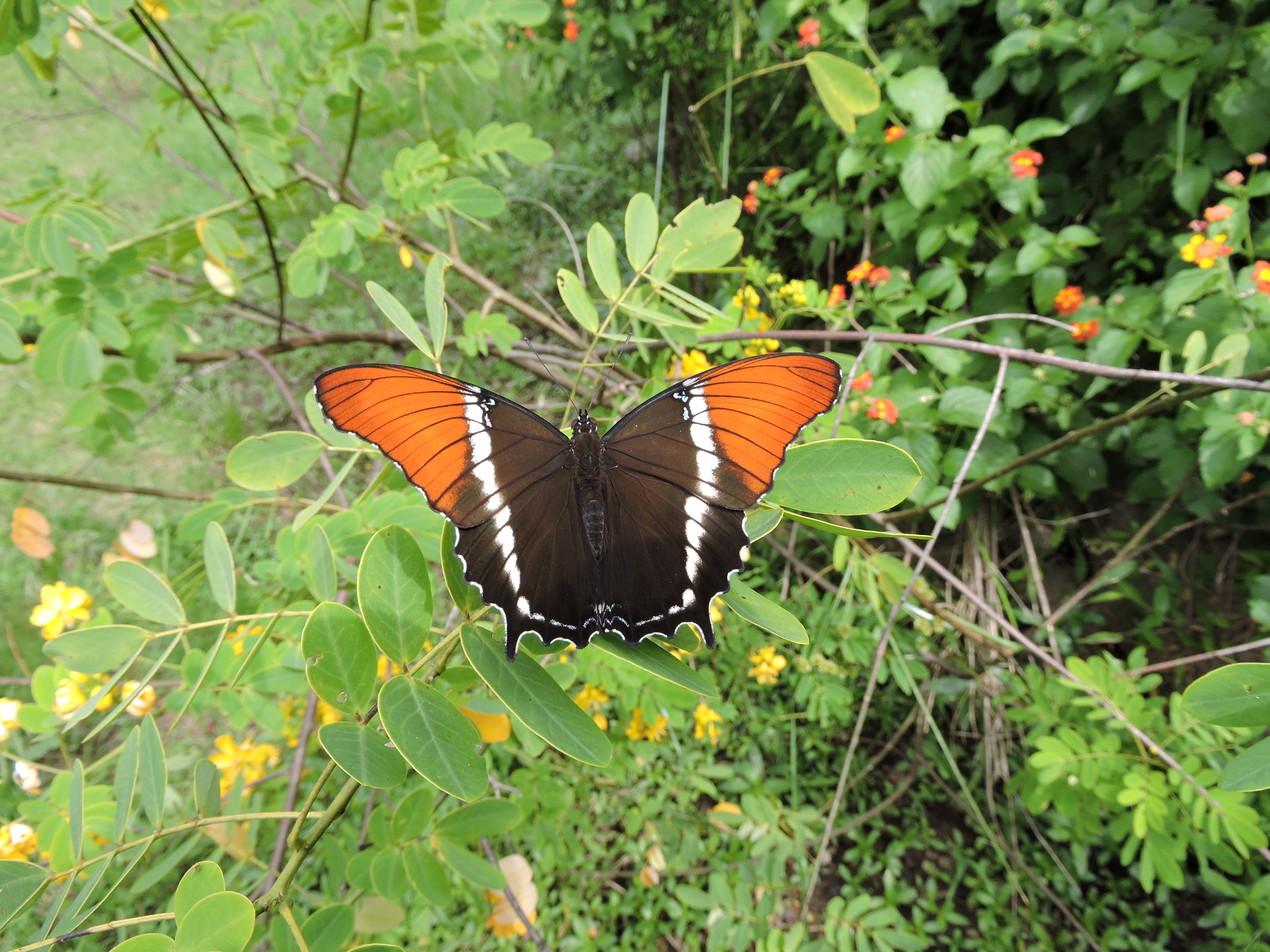
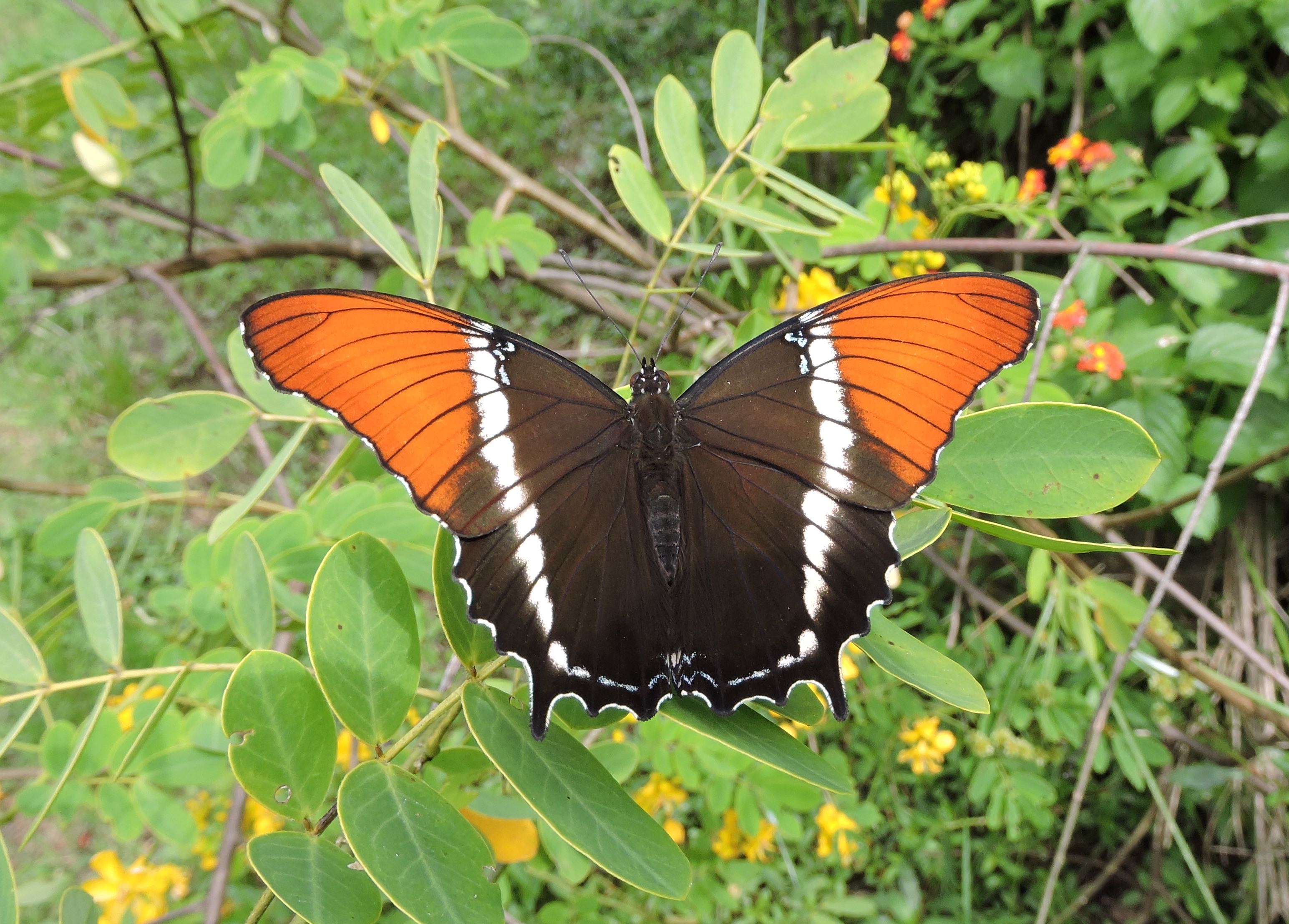
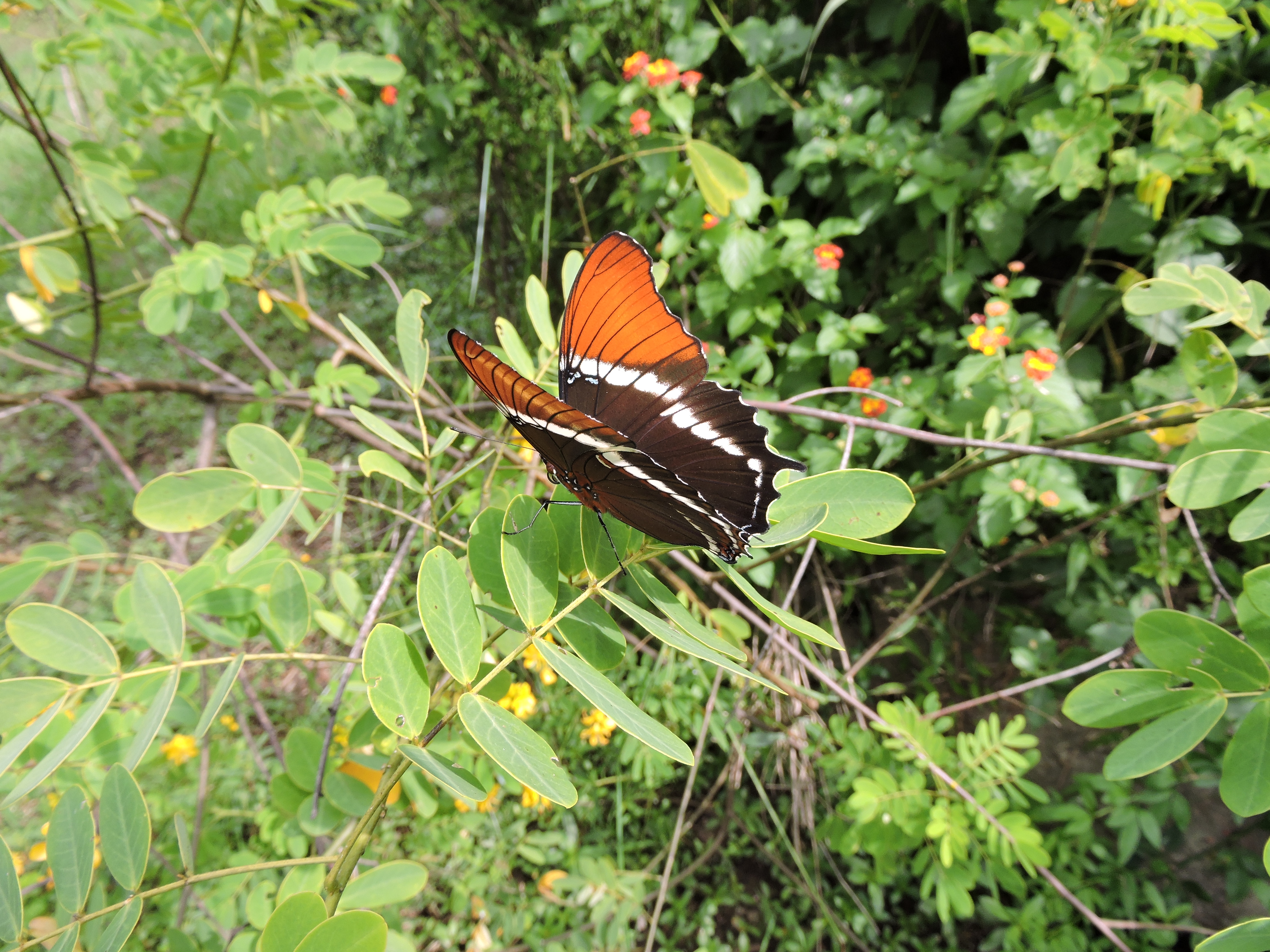
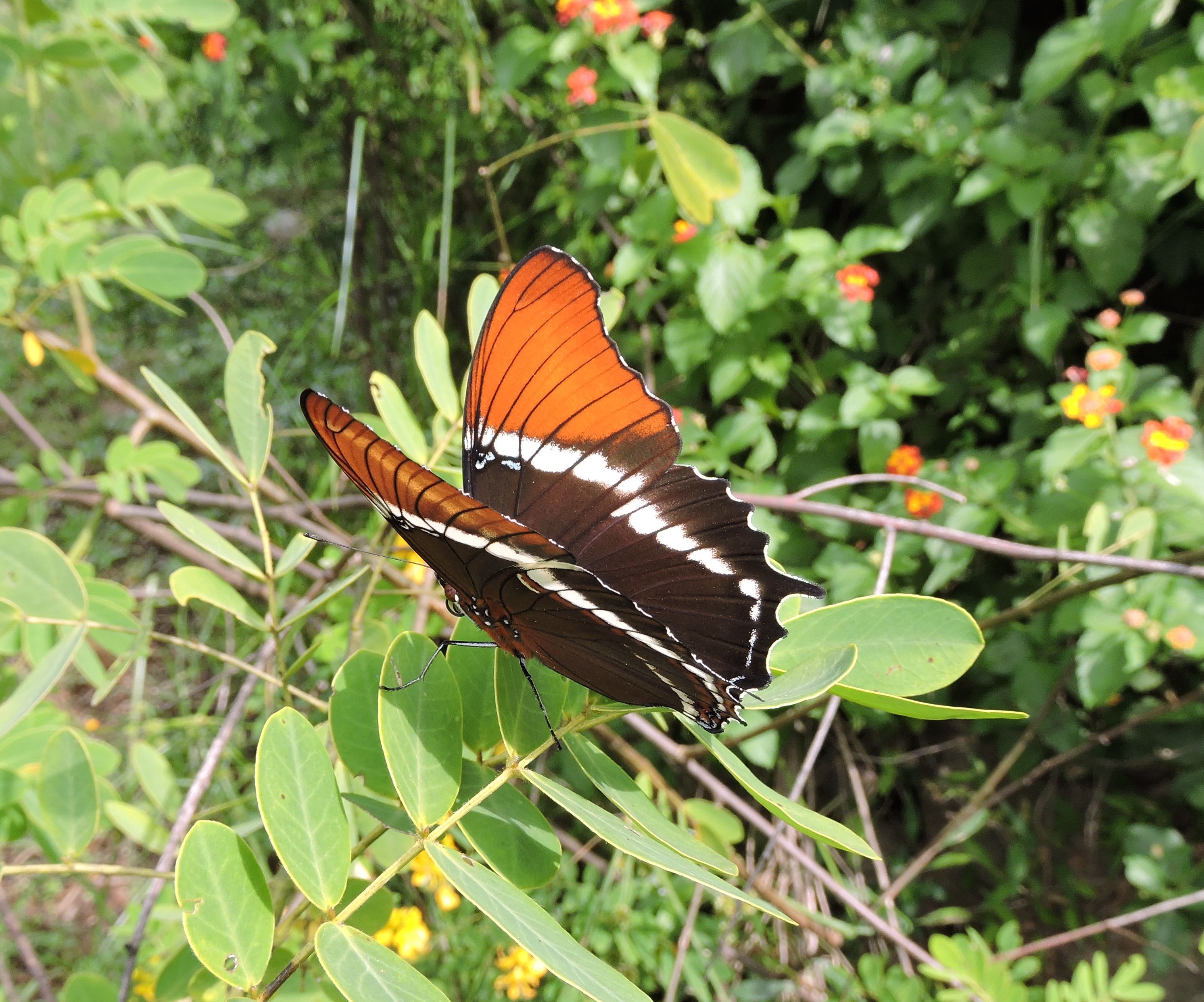
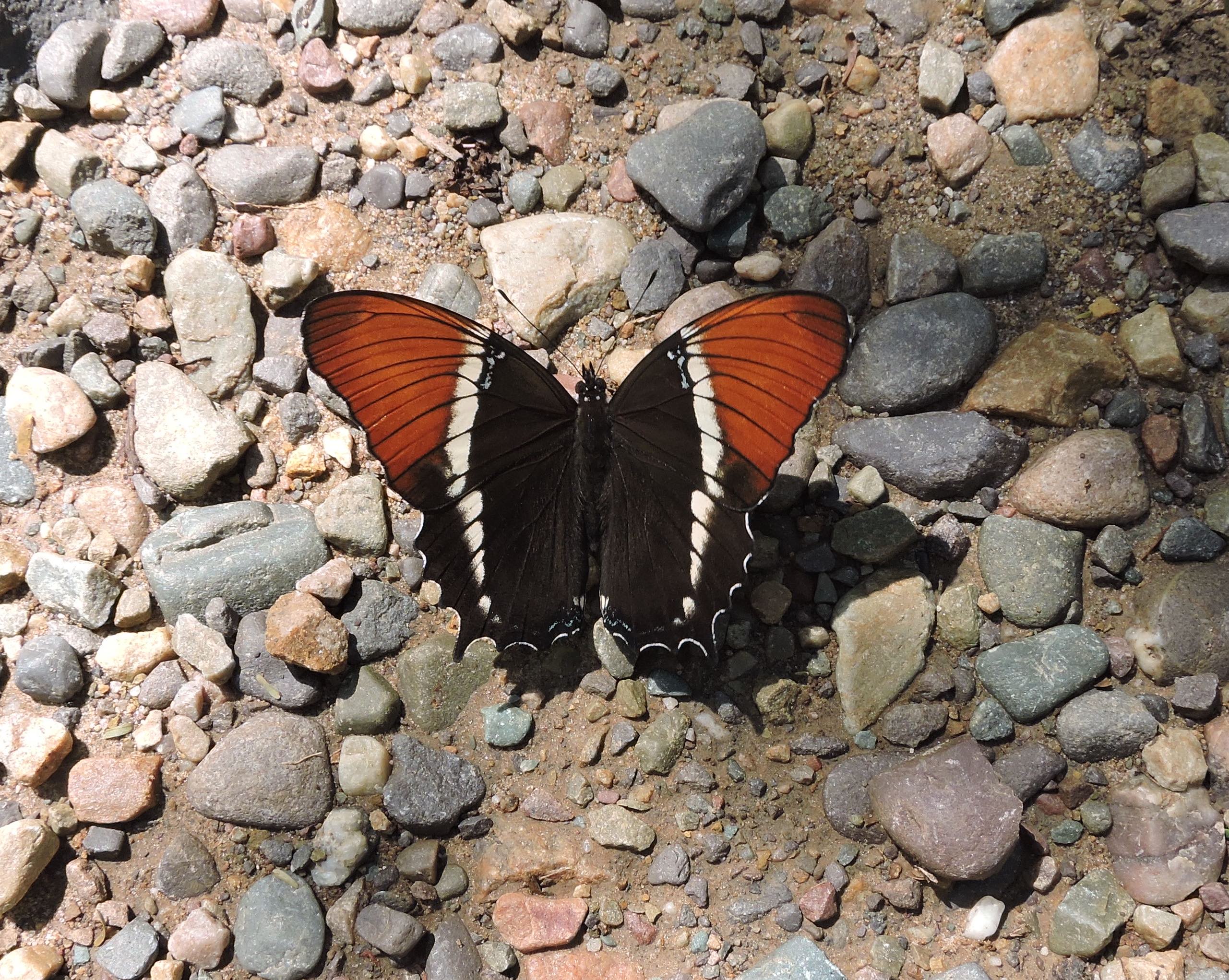
Five pictures of Dark Malachite (Siproeta epaphus epaphus)
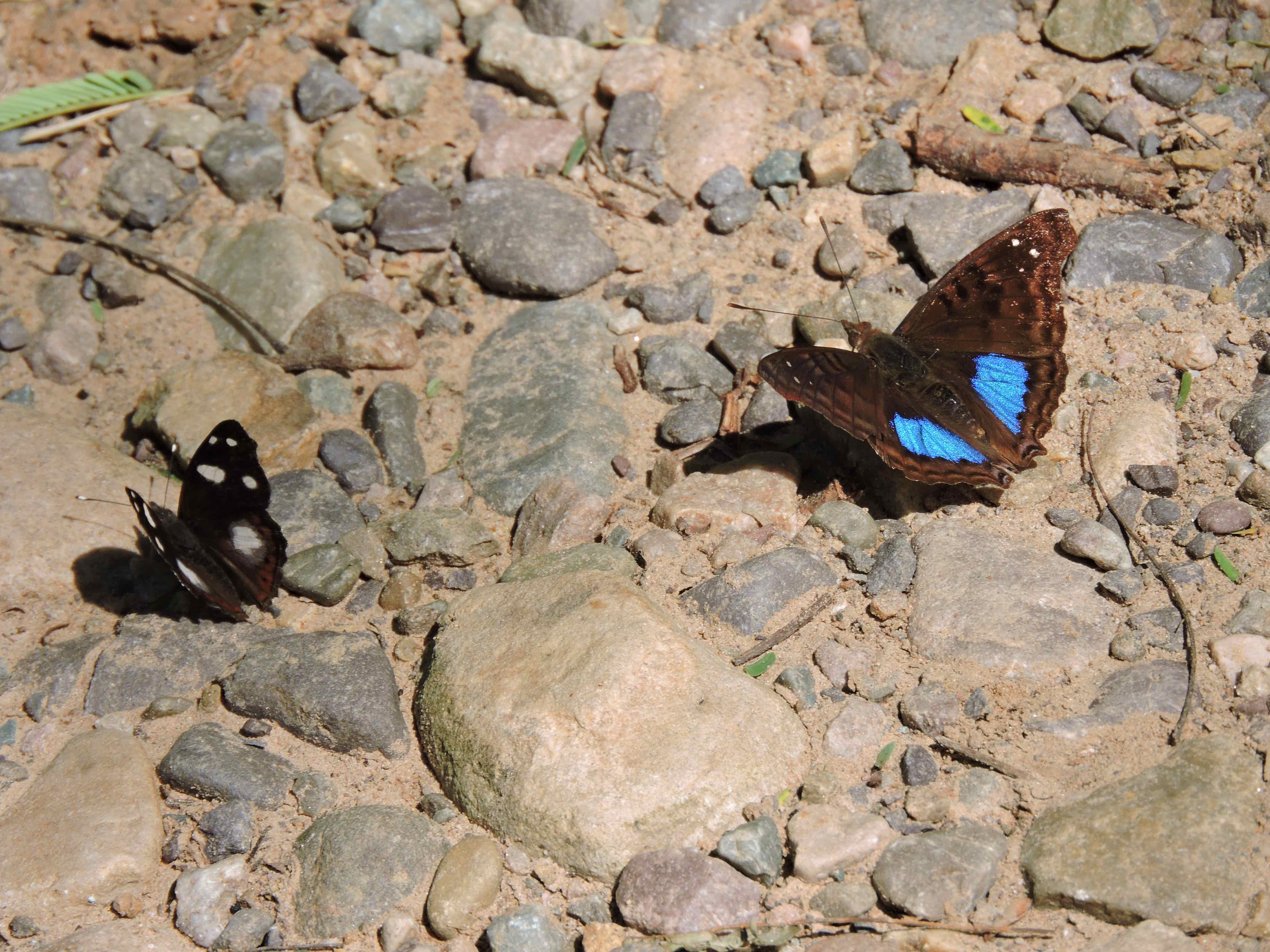
Yungueña Sapphire (Doxocopa cyane burmeisteri) on the right and Hooked Small (no Latin name)
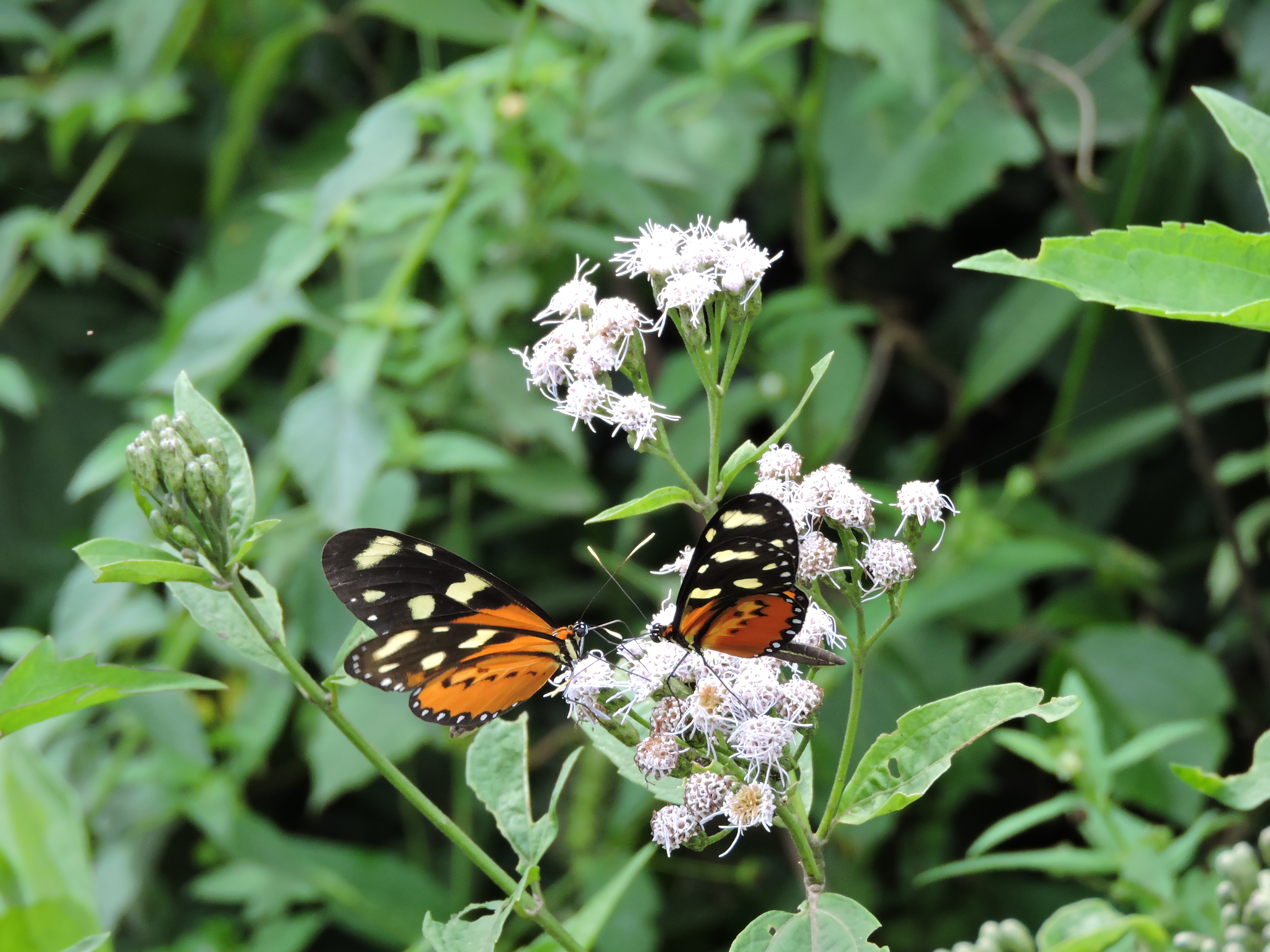
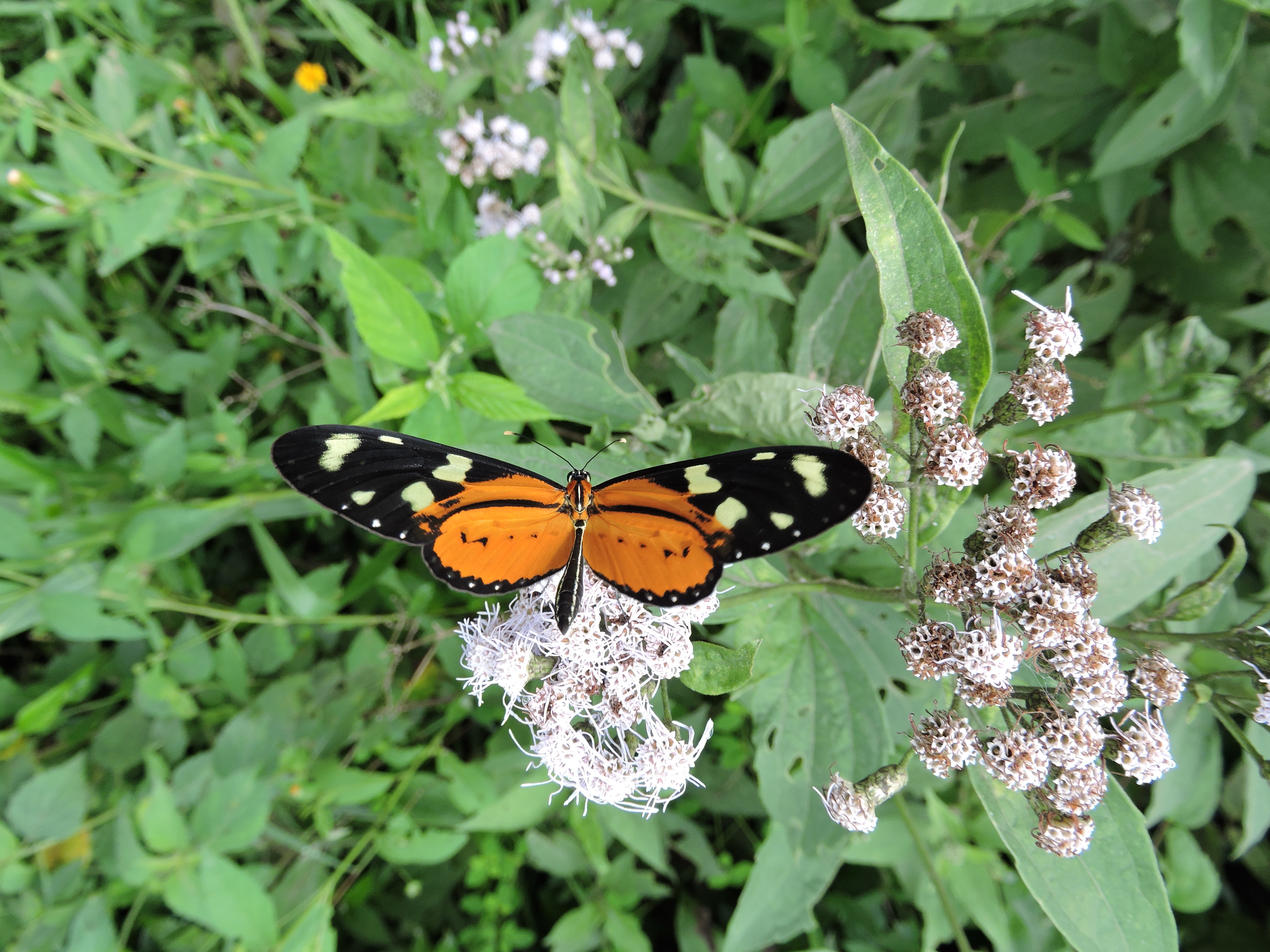
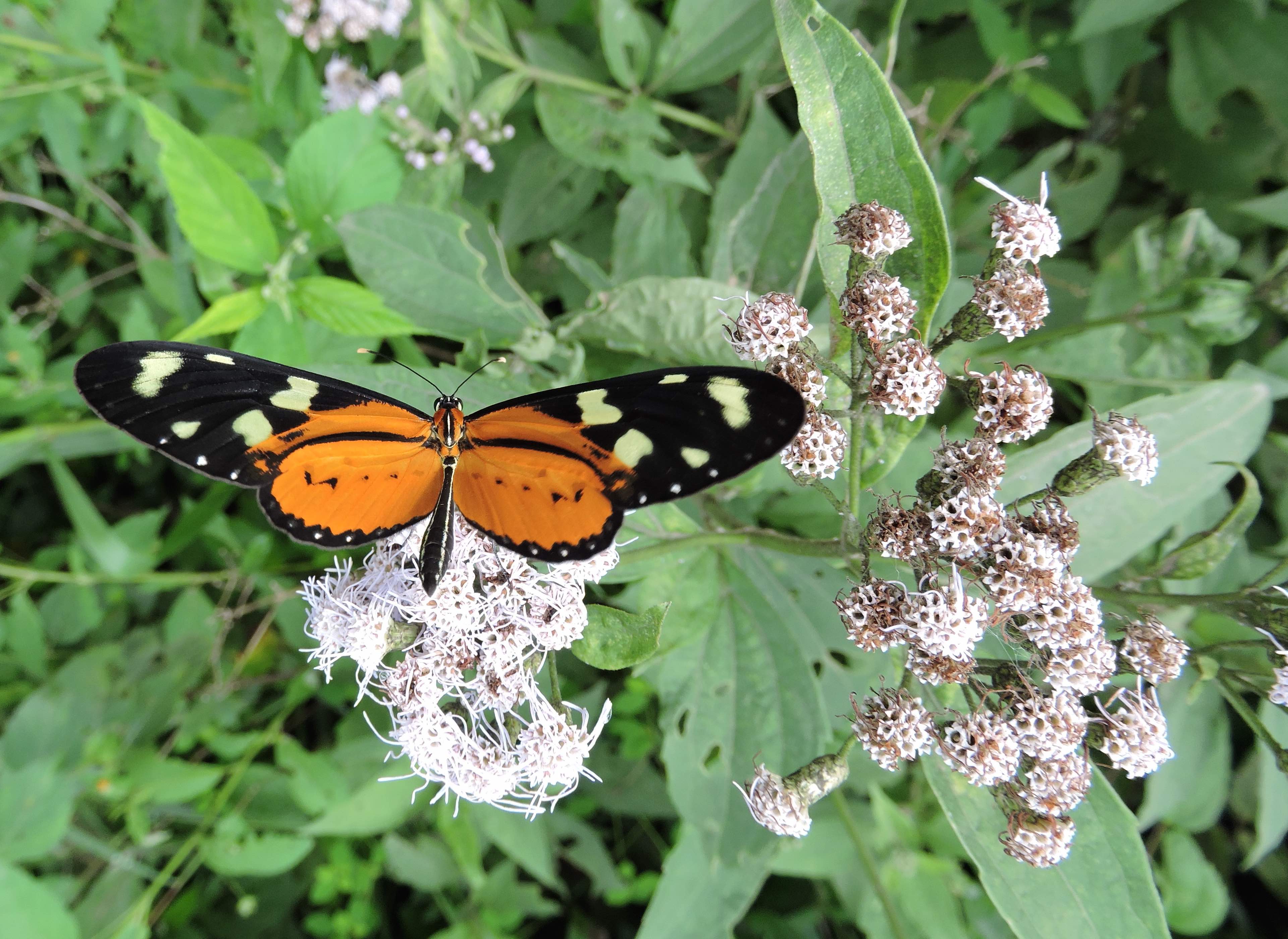
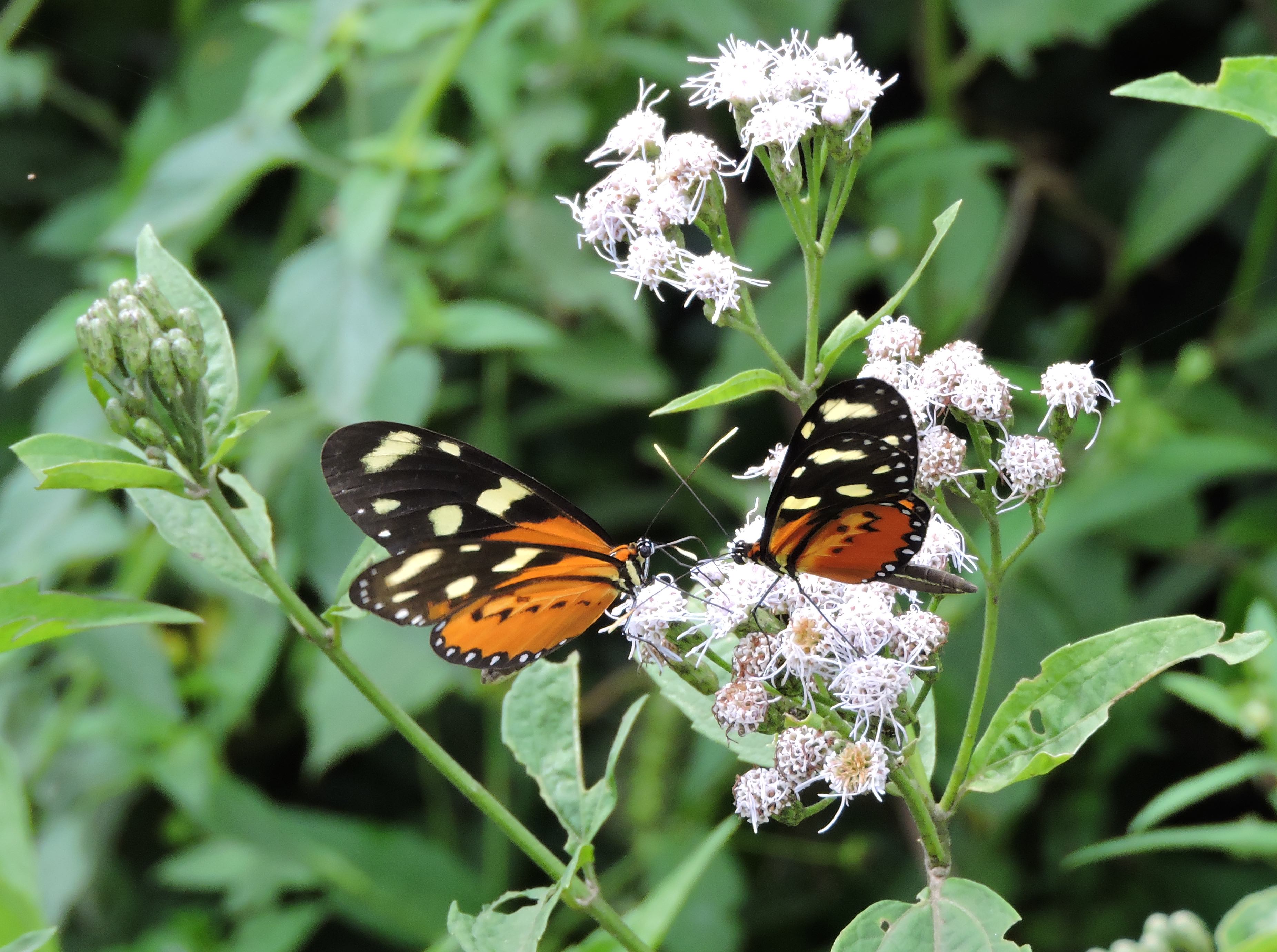
Fuegian (Mechanitis lysimnia elisa)
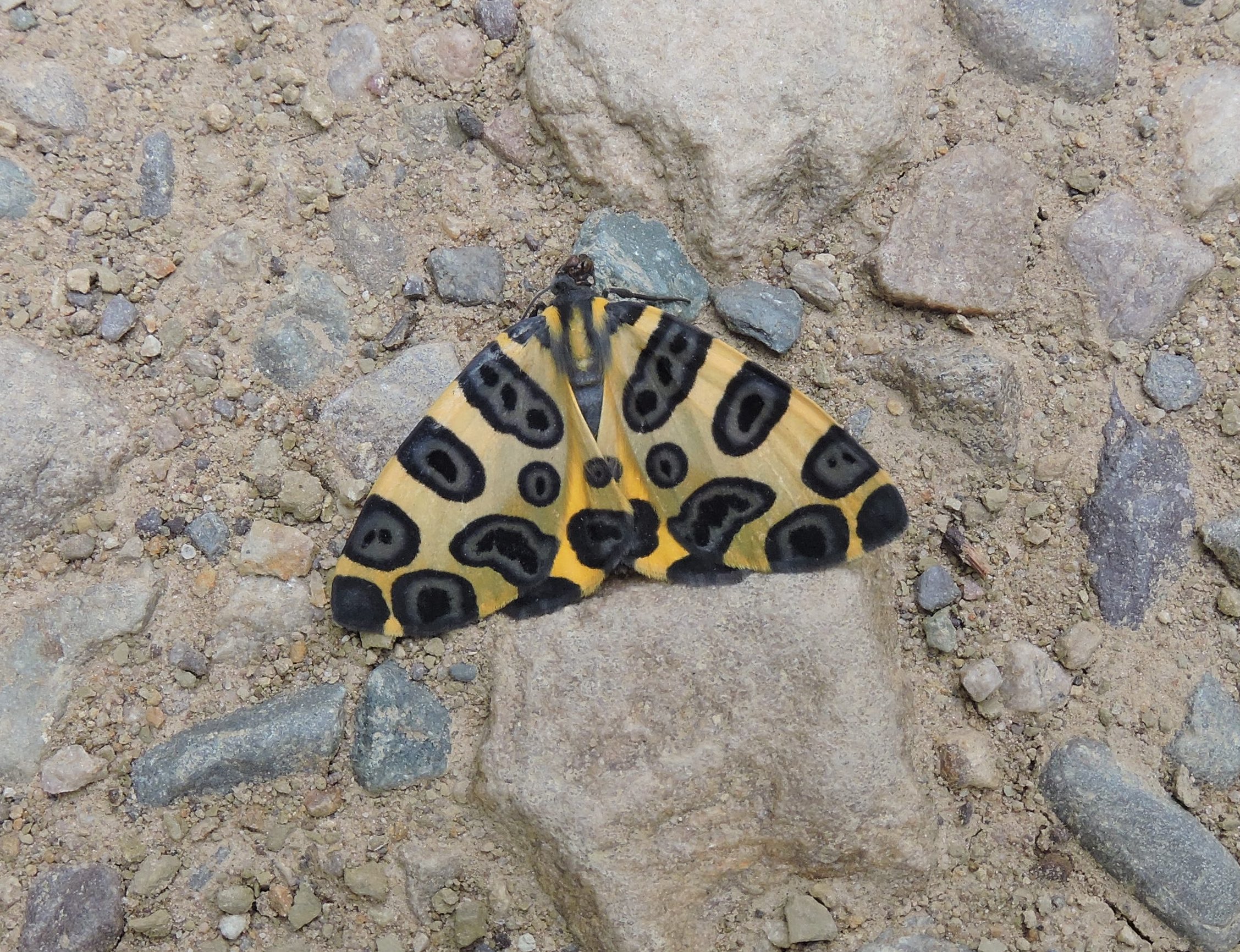
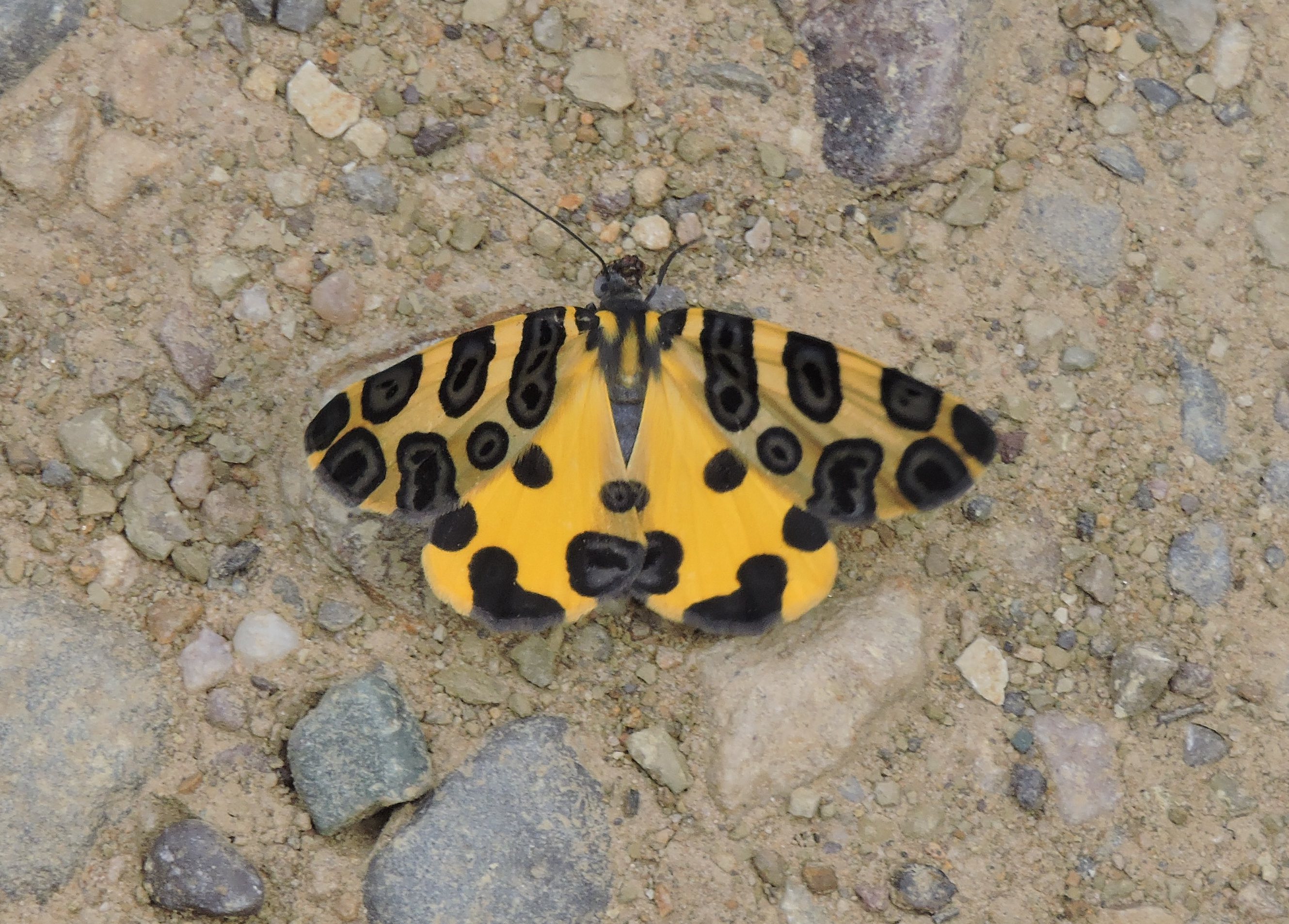
Once the most obvious (and larger) species were noticed, a number of others were noted such as a large number of very small black and yellow ones lying flat on wet areas. Closer inspection revealed two similar types occurring together as well as a rather delicately ornate orange one, also sharing the wetter and shady areas.
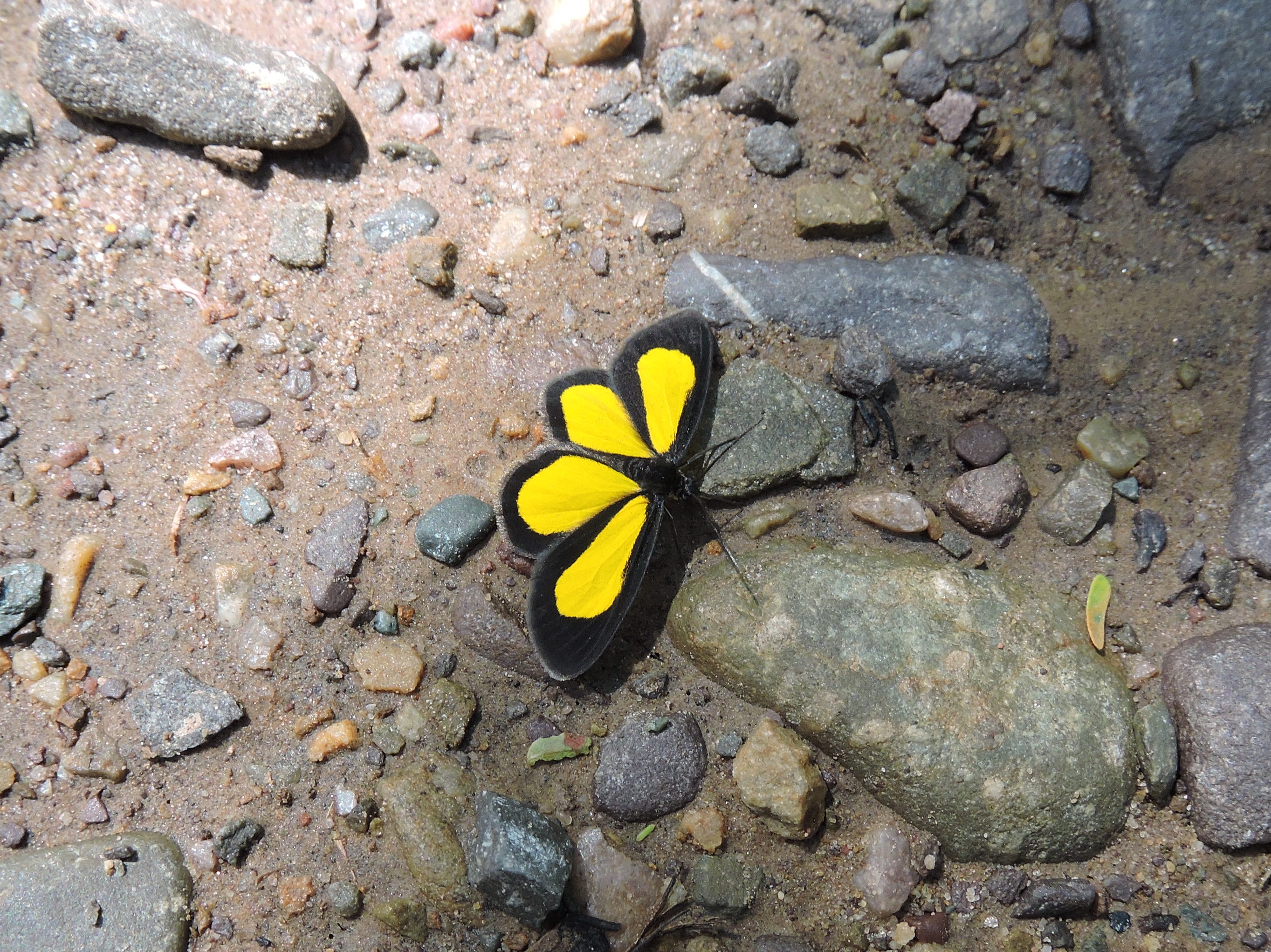
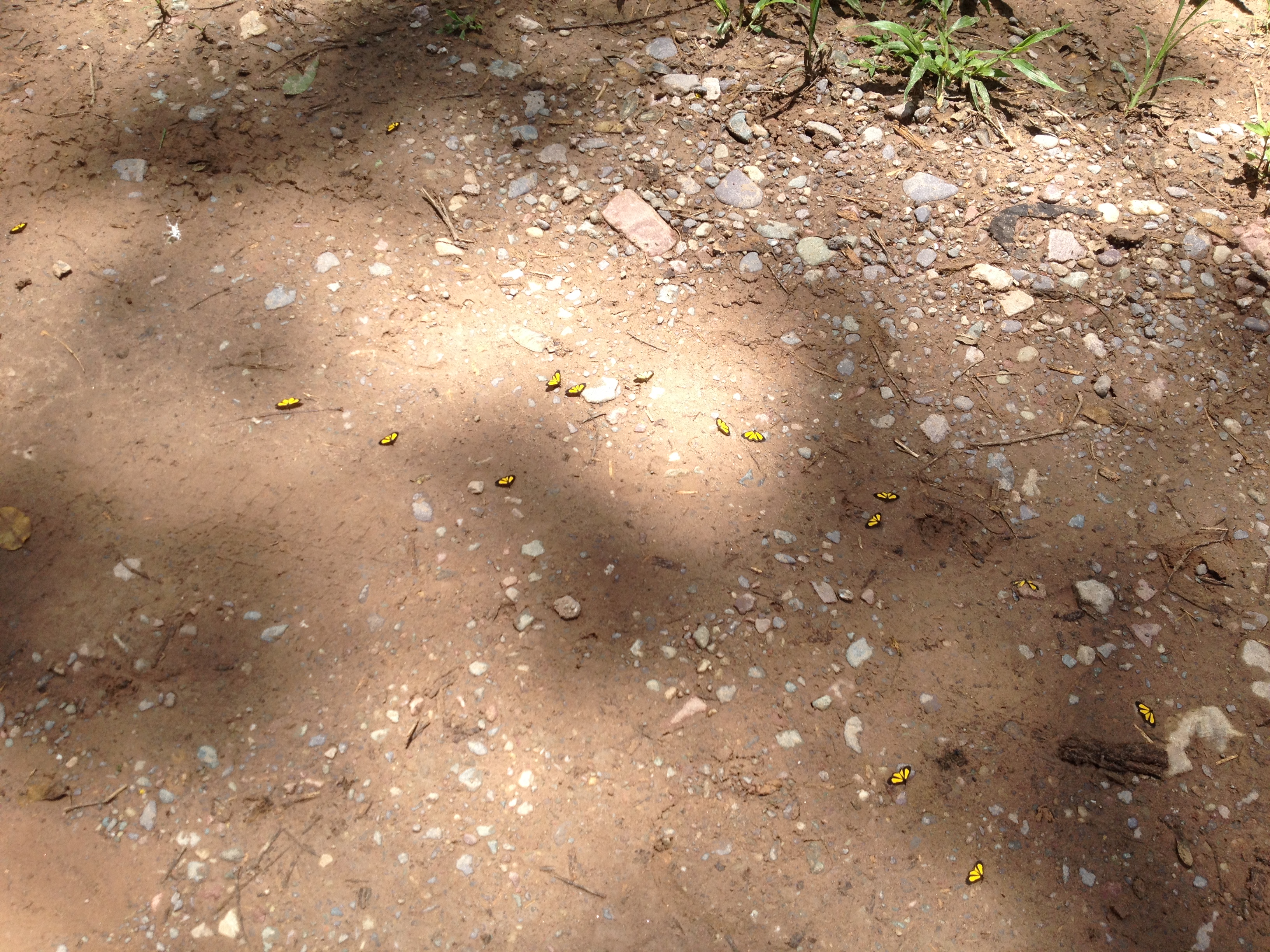
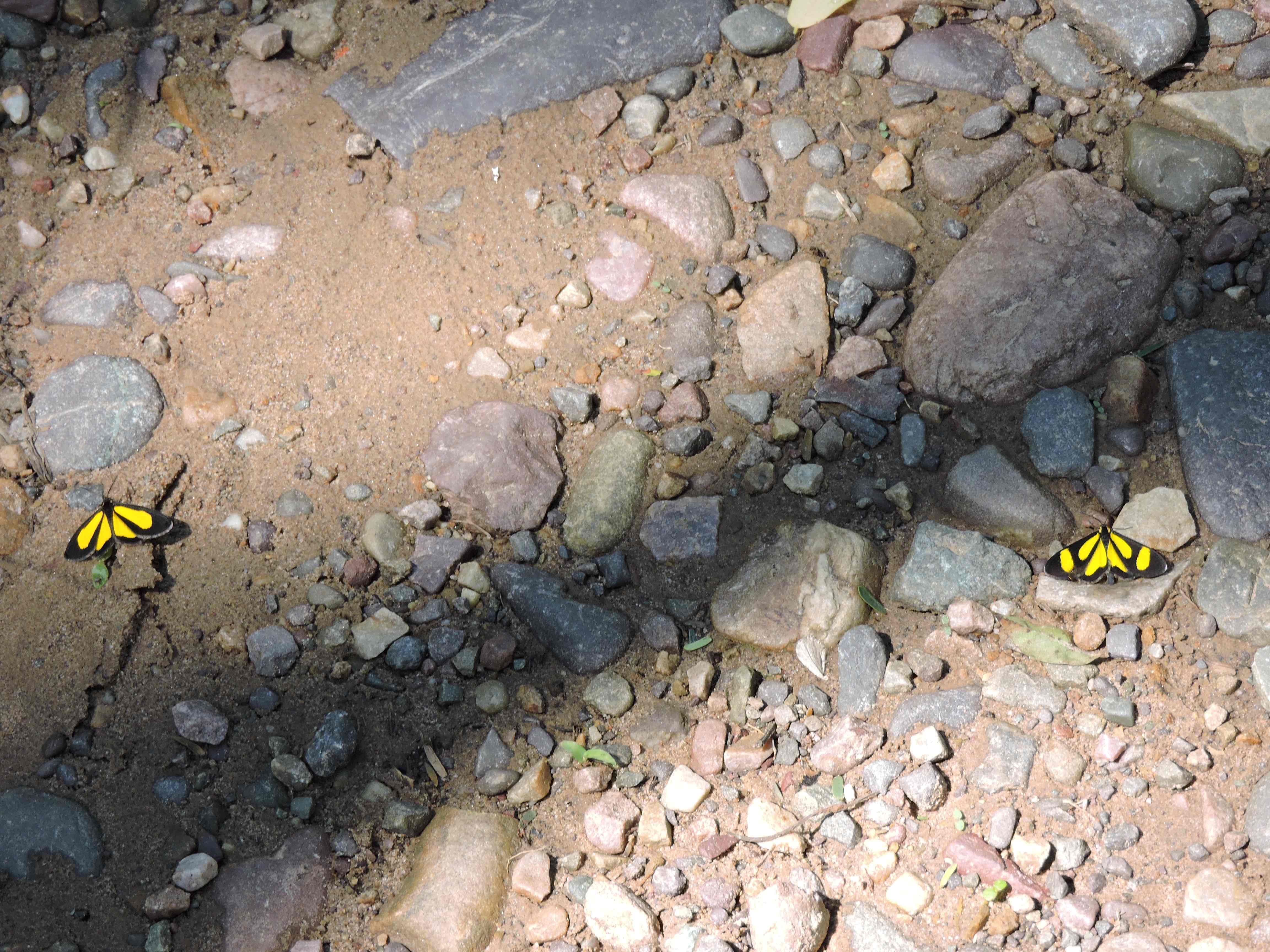
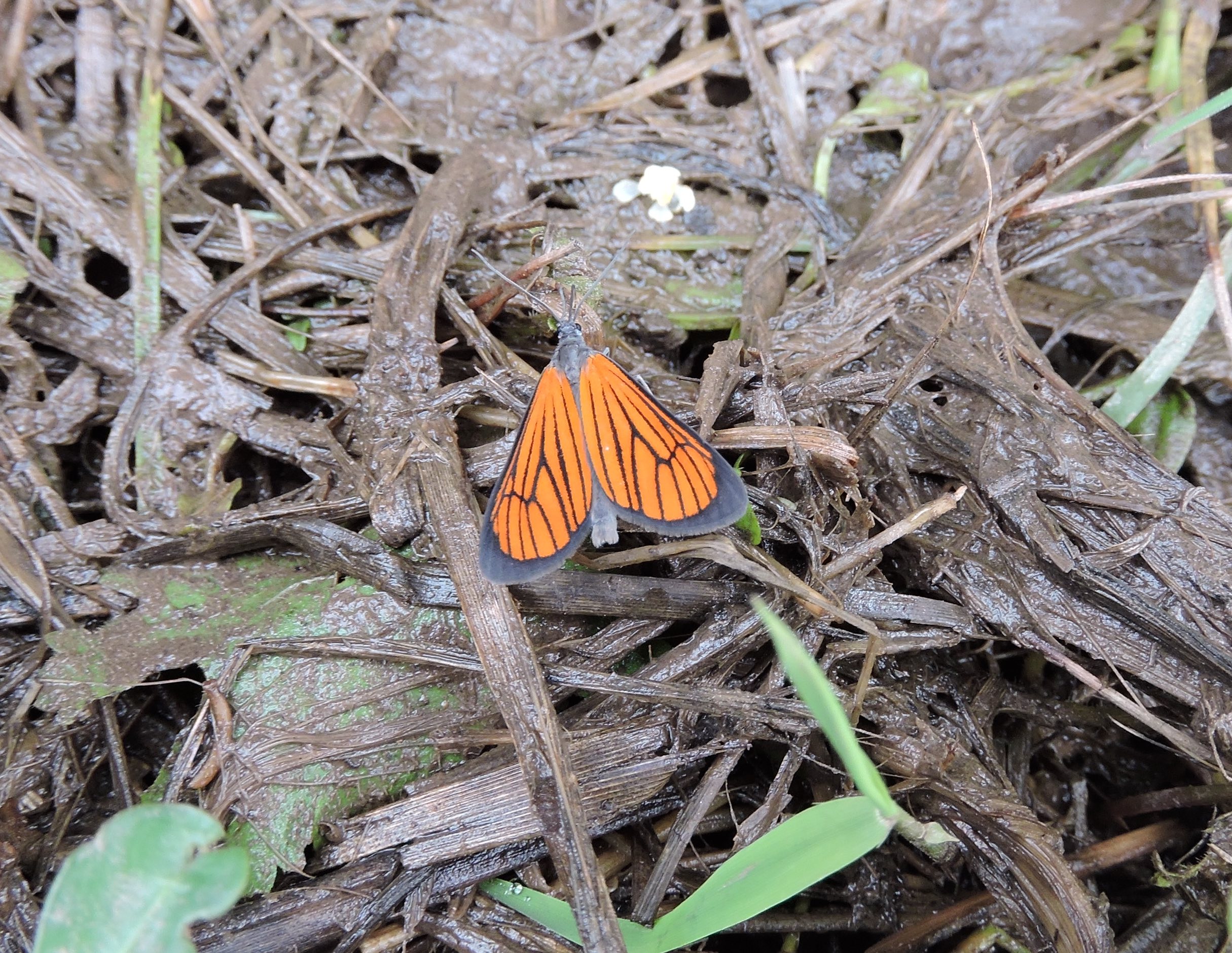
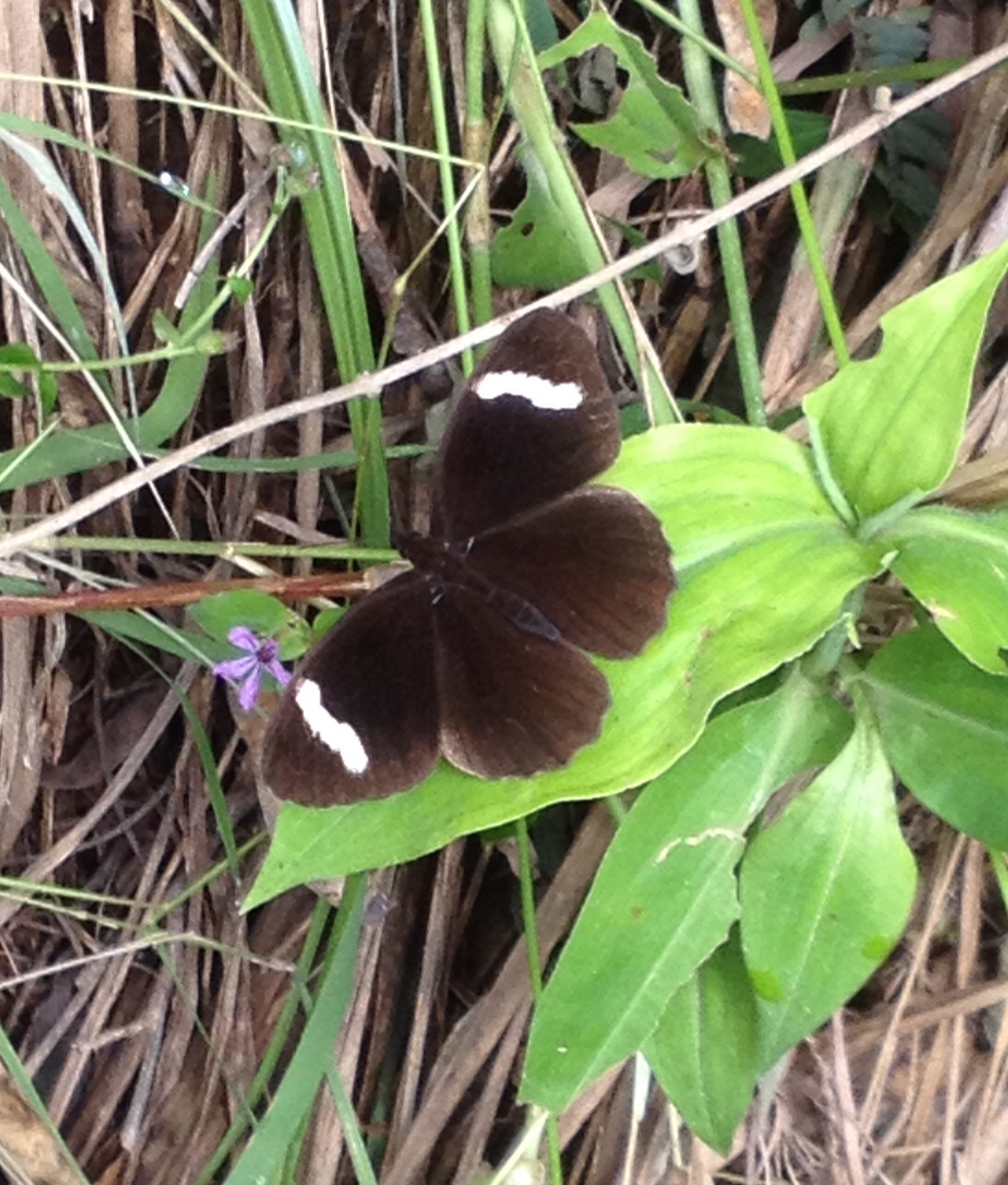
Several other species were noted. The following ones are the most colourful, although as the video below also shows, there are large number of others that we had not had time to photograph at this point. Regarding their identification, what I know about them is included in the caption of the pictures.
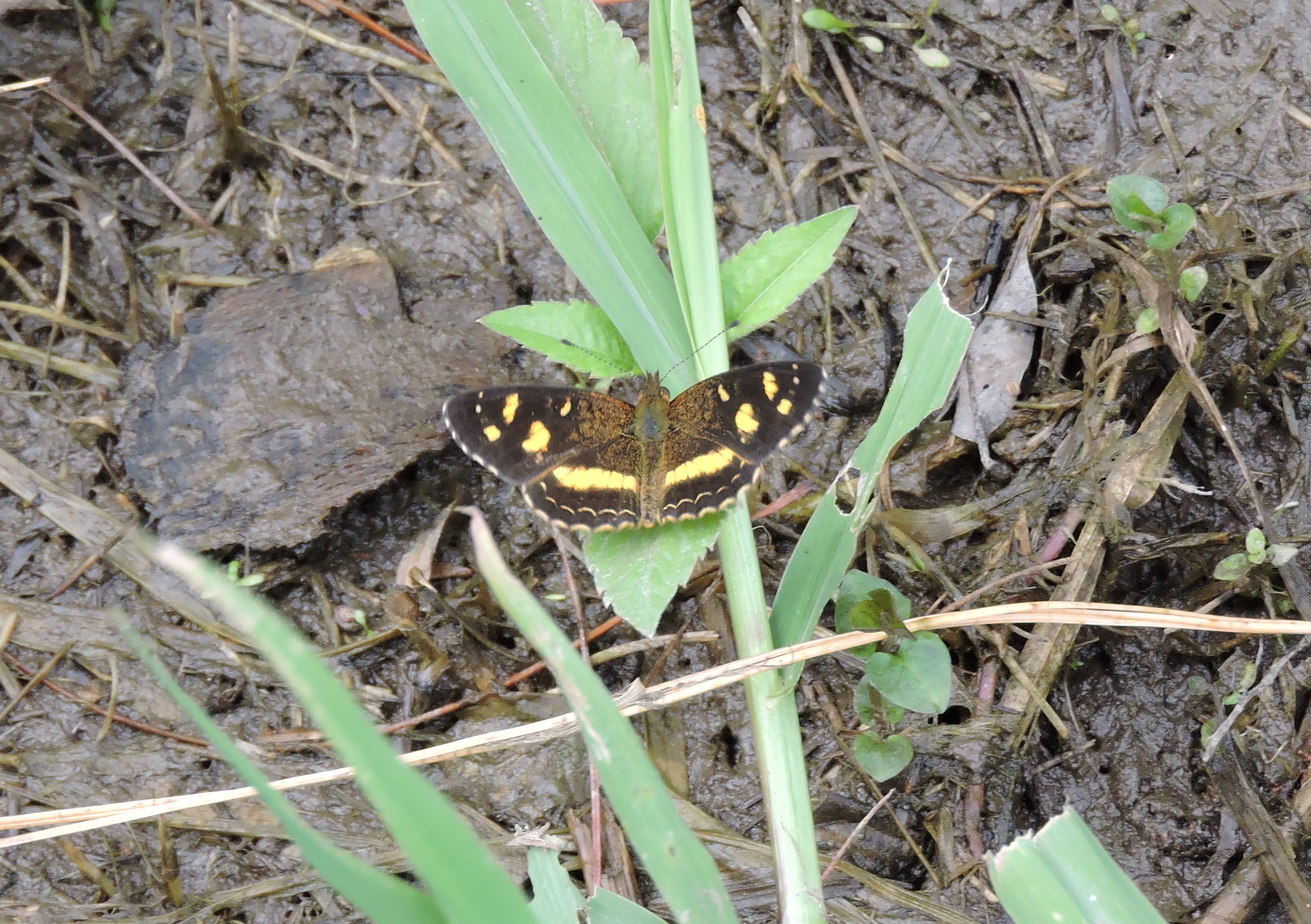
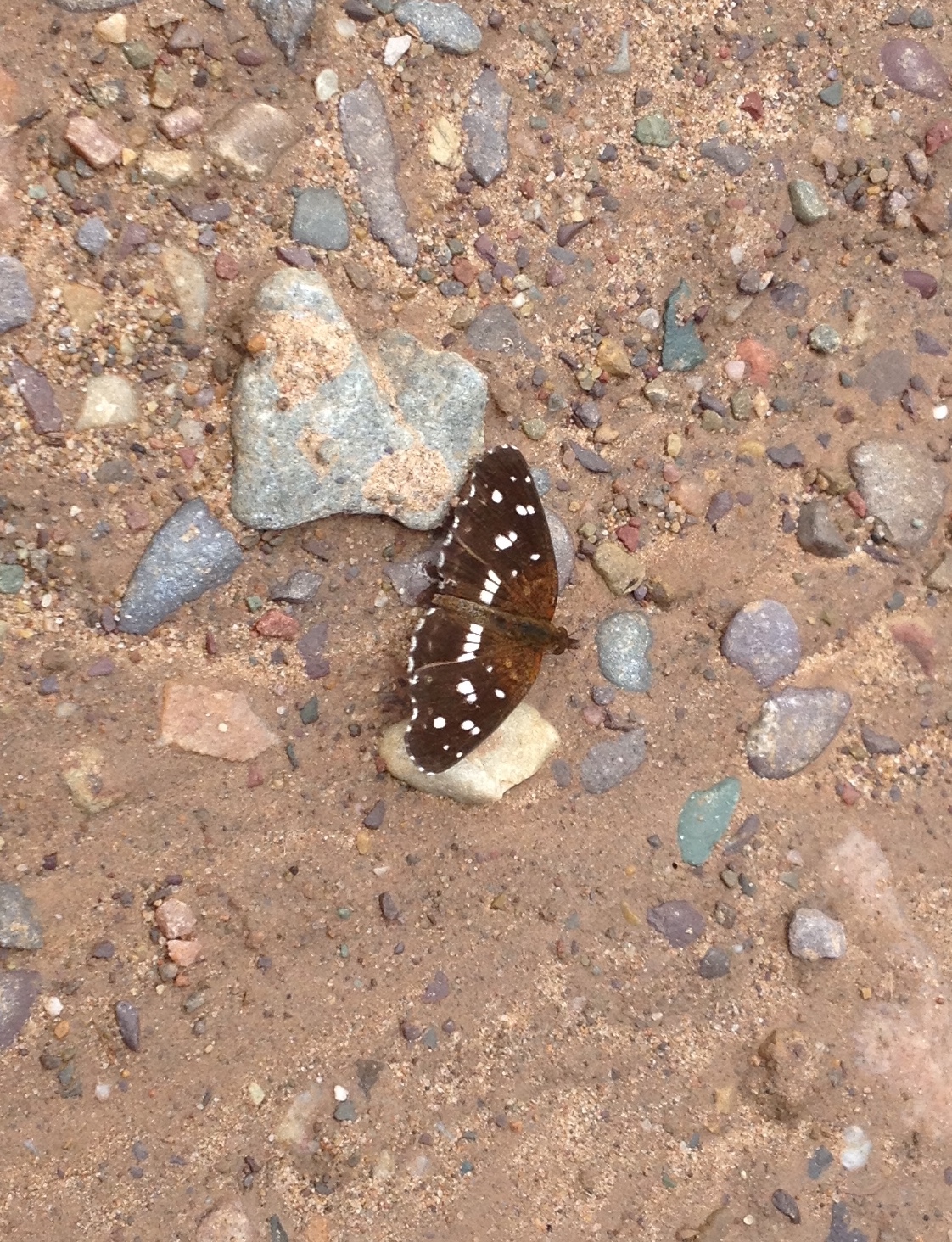
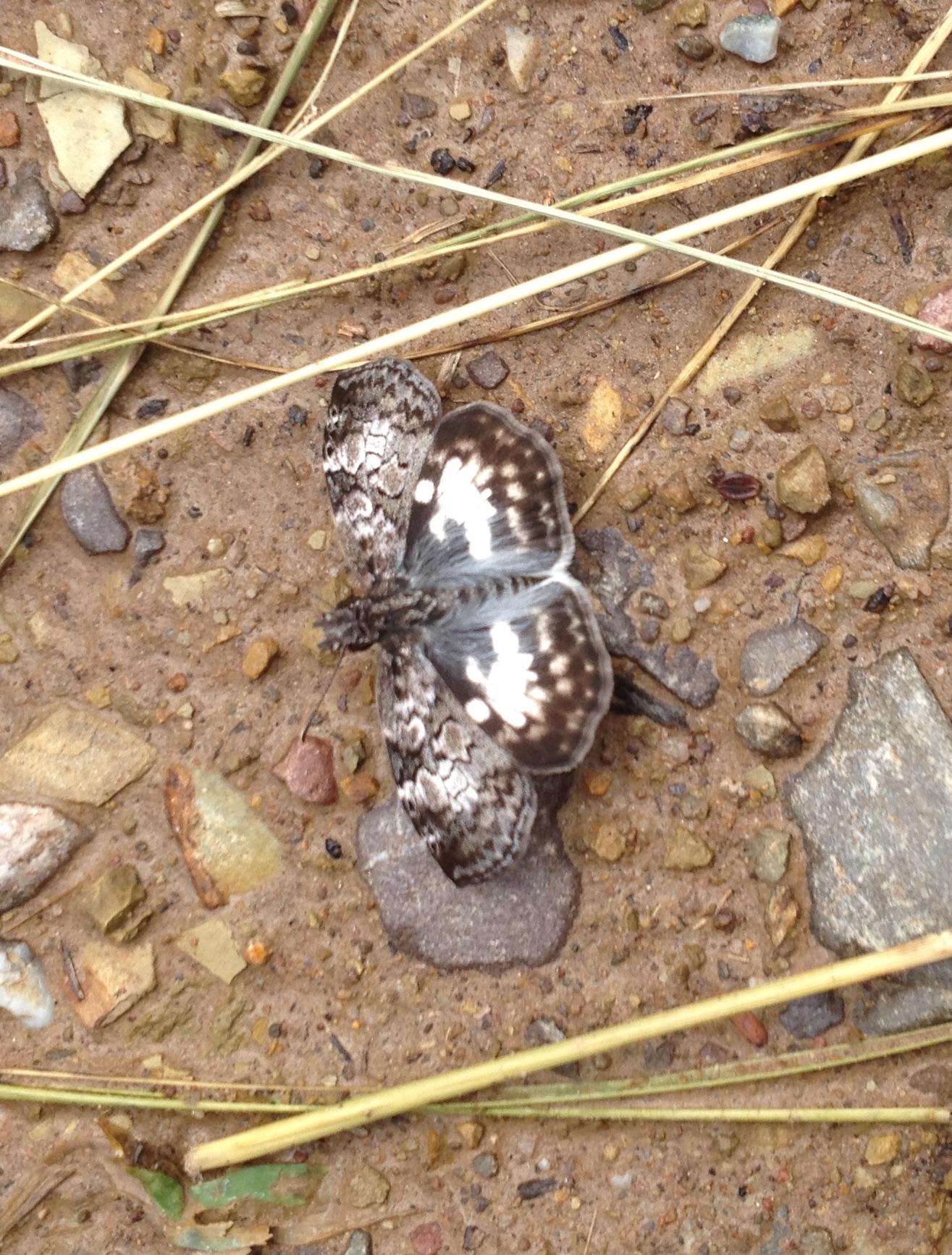
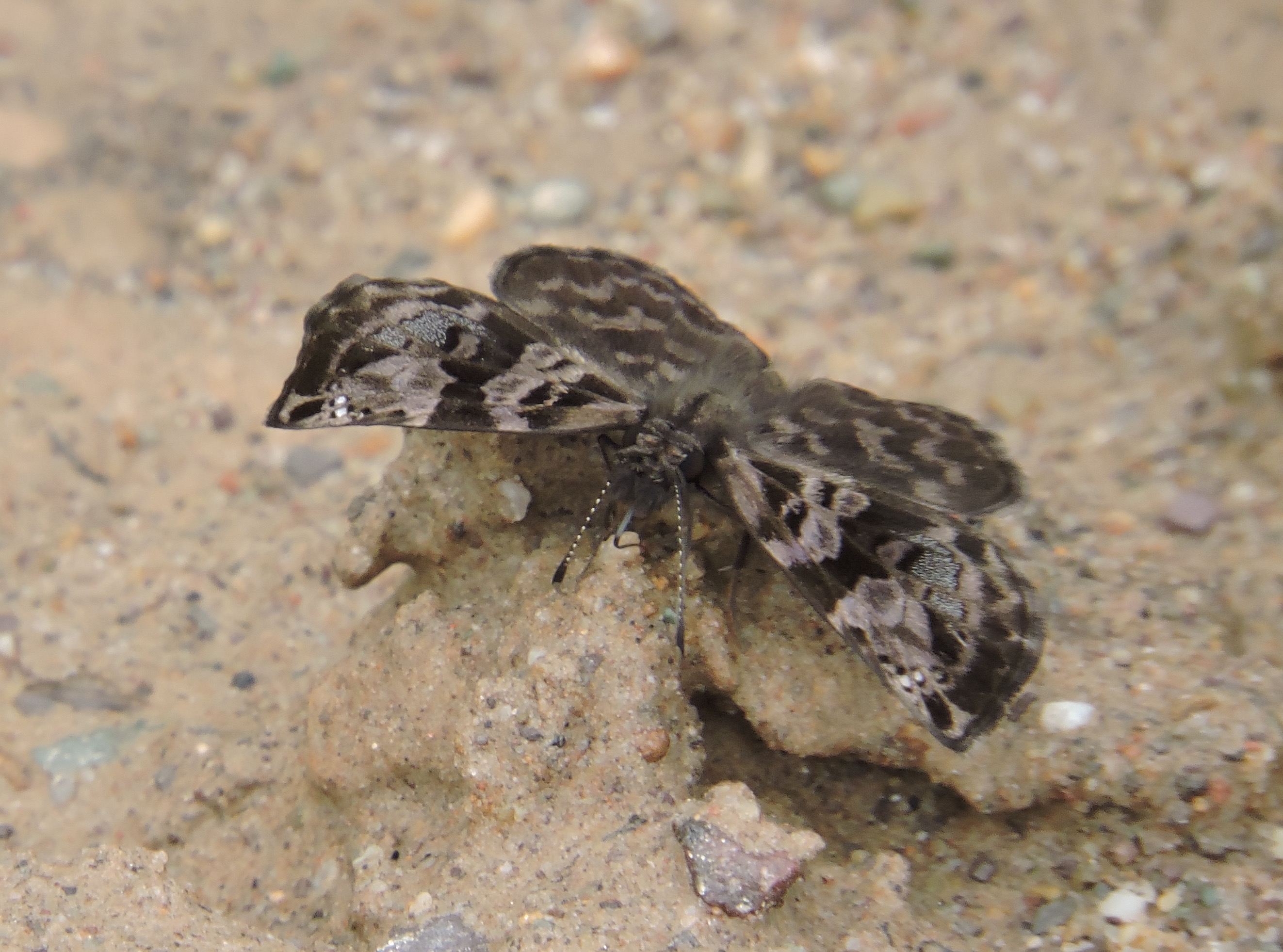
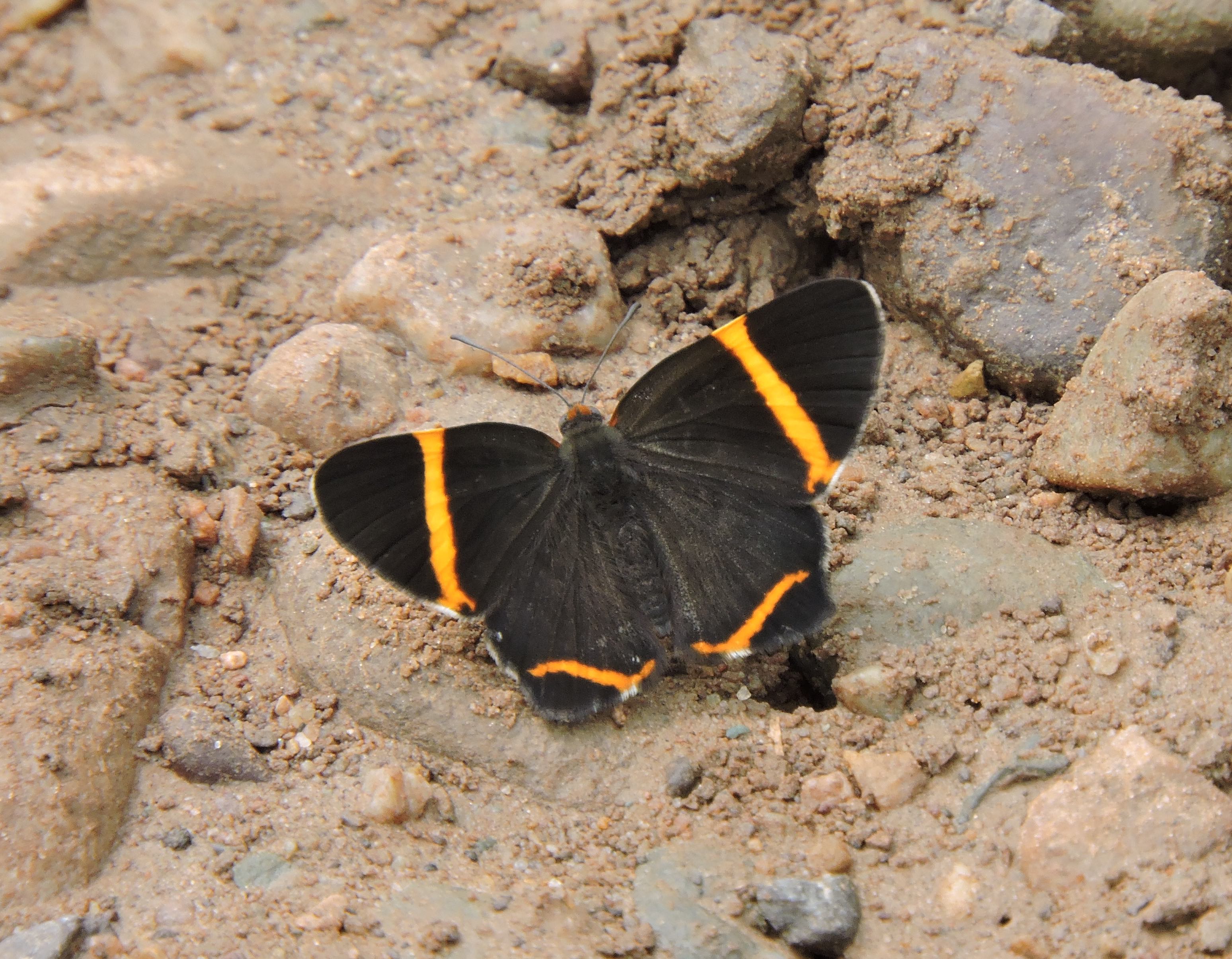
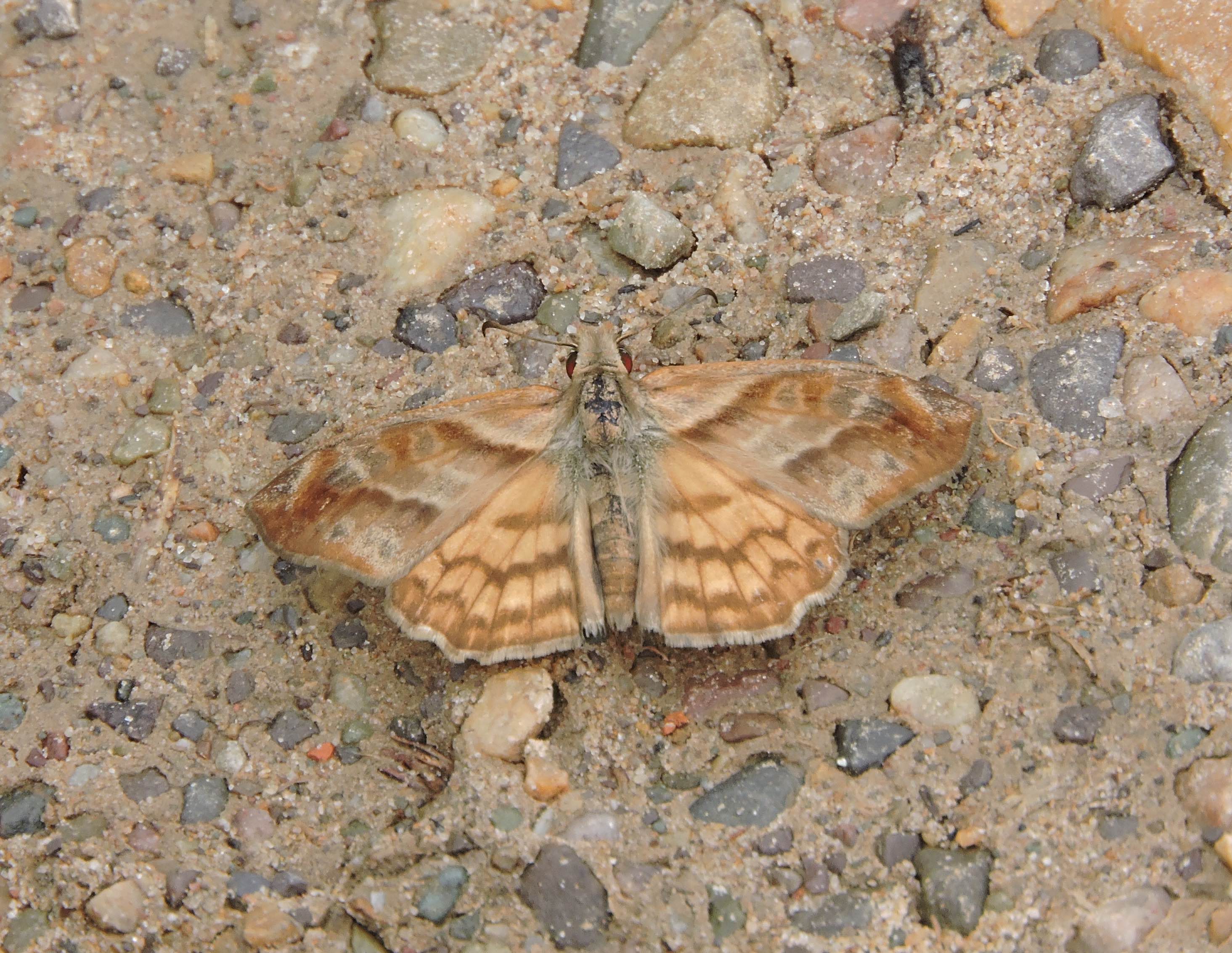
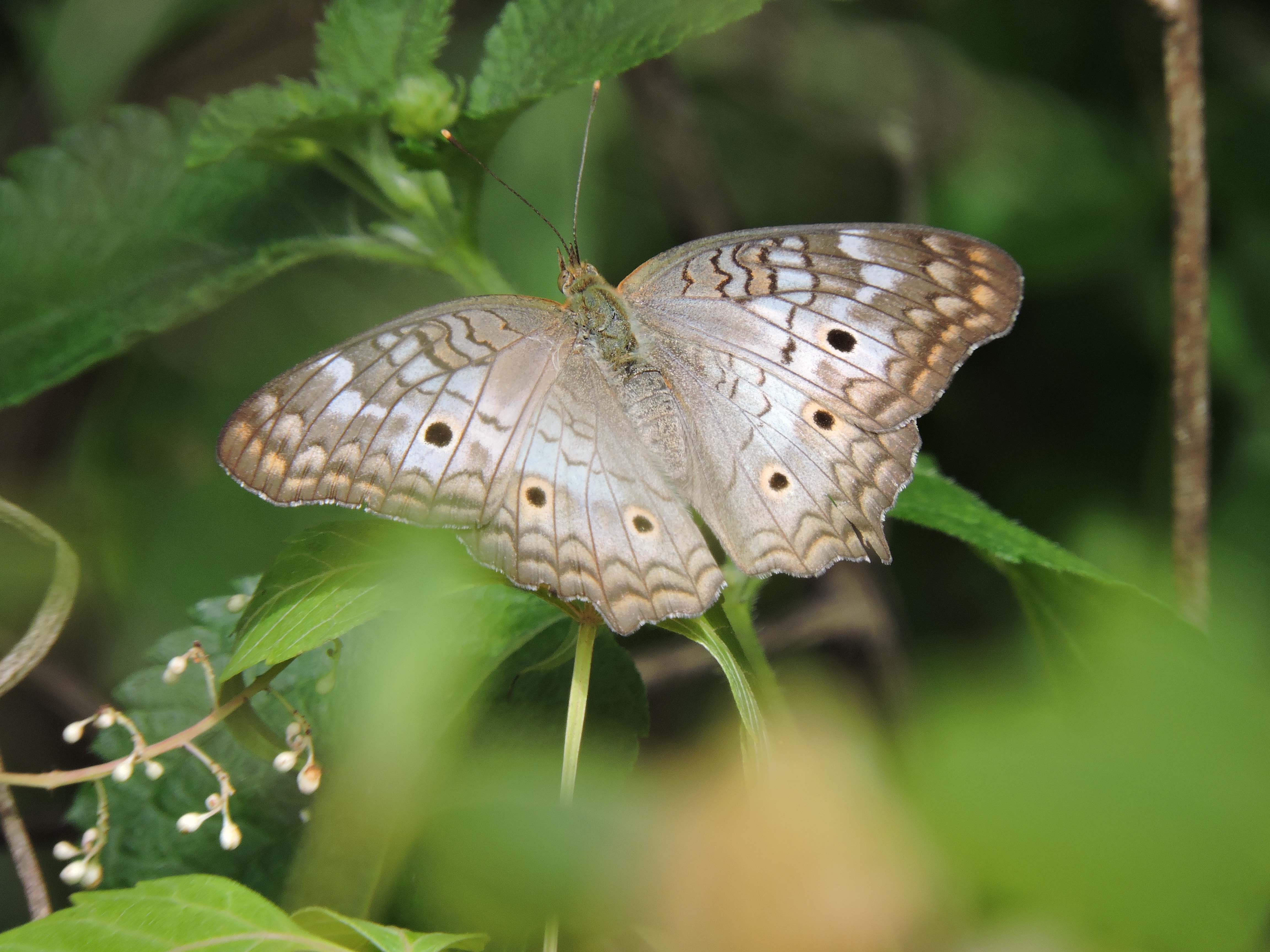
After a few days of rambling along our roads, we thought we had seen most of what was on offer and we were just checking for the odd one that had escaped our attention so far, mainly small ones. Wrong again! After a rainy night, sunshine greeted us the following morning. Clearly the conditions for butterfly (and other insect) activity were optimal and they were out in numbers. Close to the start of our walk we found fresh faeces, probably from a pig (regrets to the fainthearted but this is nature’s “reality show”) that had a mixed population feeding on them. But what really caught our attention was a rather large and hitherto new winged creature, with iridescent blue wings with red markings.
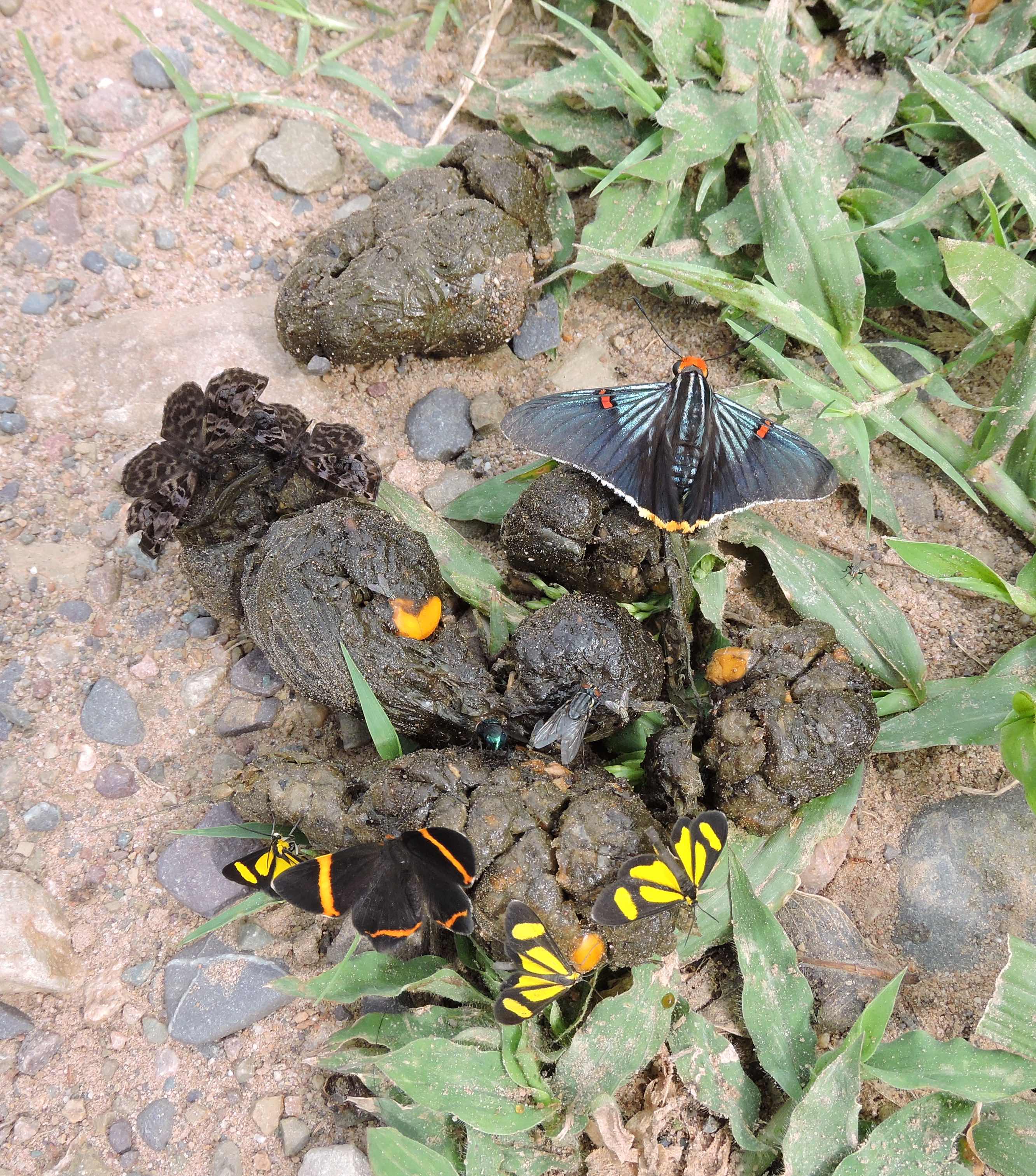
Various insects attracted by faeces. The obvious iridescent blue butterfly/fly called our attention.
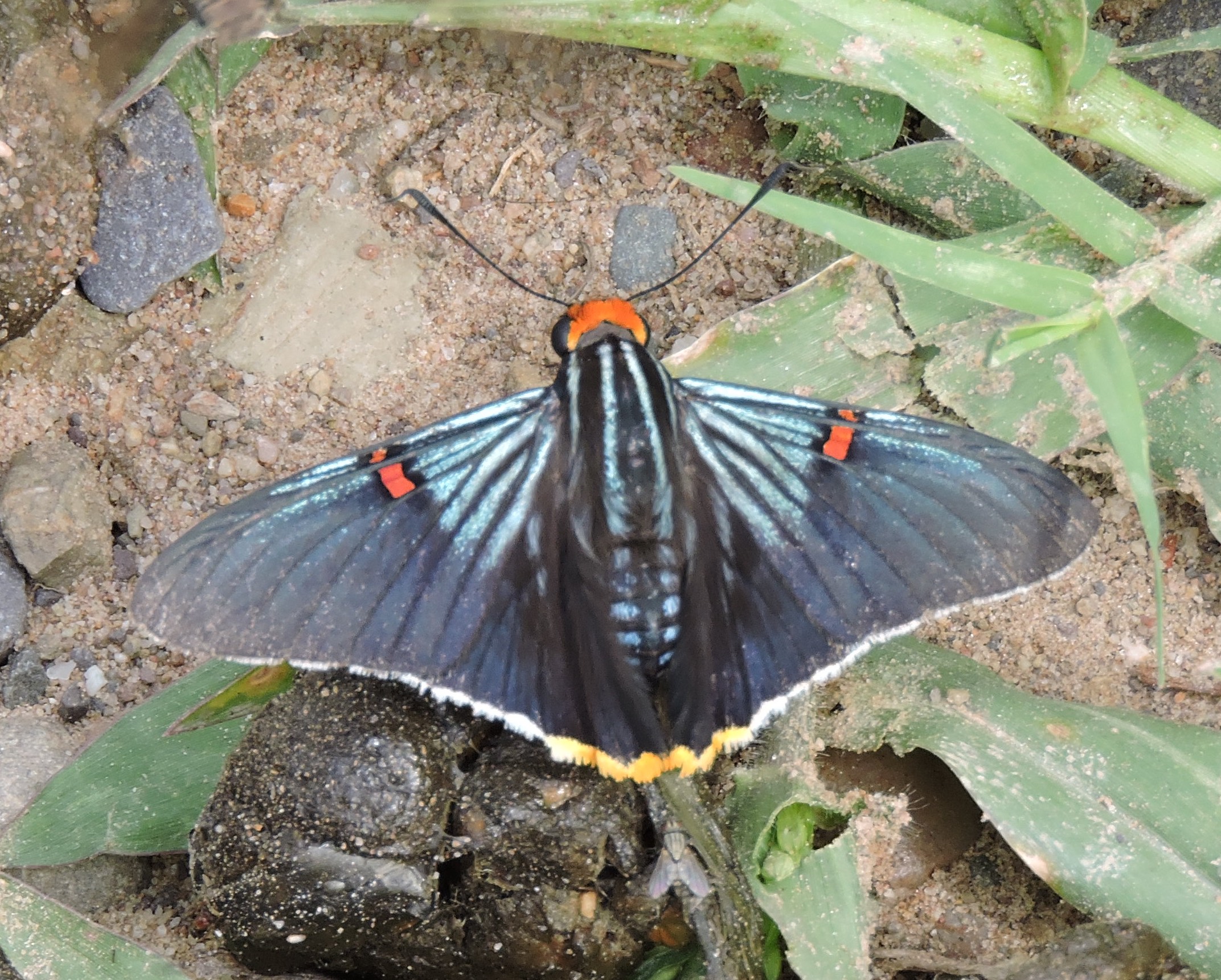
A close-up of the butterfly/fly.
Although at first sight we mistook it for a butterfly, its direct flight and red bulgy eyes made us suspect that it is probably more related to flies than butterflies. Further investigation on this weird and beautiful creature is on its way and it will be reported.
In the meantime, in the rare moments of calm between more research, blog writing and farm chores, I am reading García Marquez to see if I can find the precise words for the next post as butterflies and moths are still being found!
[1] I regret to inform the readers that I am only able to identify a handful of them as there is no available guide and no Internet access. I will follow up when possible and complete the information later.
There is nothing unusual about a police roadblock in Africa. I have dealt with many in different countries and in different situations. Luckily I never got fined or needed to bribe my way through. The occasion I have been closest to a fine was driving between Muguga and Nairobi in the early 80s. I was caught in double radar trick. This is a simple, crafty and frequently practiced manoeuvre that involves placing two speed traps separated by a few km. You pass one and then, thinking that you escaped, you speed away only to be caught by the real thing a few km further on. On that occasion the policeman had even written the fine but I still managed to get off the hook, I do not know how or why he let me go! A colleague in Kenya said I manage to say the right words in most situations, and my own family fully agrees! I do not know!
In 2010 I went to Arusha for a meeting to discuss a cattle vaccine that was very successful among the Maasai of Tanzania. The meeting over we had the Saturday free as I was flying out on the Sunday. So, we decided to go for a drive to enjoy the countryside, to visit some Maasai manyattas where my veterinary friends needed to do routine check-ups at and end with a visit to the snake park, nothing too exotic.
We left in Beppe and Lieve’s ancient but still serviceable Nissan Patrol with Lieve driving and Beppe as our navigator. I was in the back seat, chatting away with them, trying to catch up on several years of news. After a few km driving towards Moshi we came to a police road block. “Nothing unusual” I thought and my companions agreed, remarking: “They are always here”. There were several cars queuing and also quite a few police officers in sight.
After queuing for a few more minutes, a polite police officer approached and he explained that they were performing a roadworthiness inspection on vehicles “today we are looking at fire extinguishers” he declared. The exchange of looks and a few familiar Italian words in the front seat indicated to me that we may not be within the expected roadworthy condition. After all, the car was quite old and I have never come across anyone who checks their fire extinguisher at regular intervals. It is just there, normally at the feet of the passenger. Well, in our case it was not even there!
Calmly we all argued with the policeman that this was not a very useful check-up, that we were vets in a great hurry to deliver a calf and other plausible excuses that we could think of at the time. No results. The police stood his ground and continued to demand to see our fire extinguisher. Calmly, Beppe got out of the car and walked slowly to the back. Lieve and I waited; we could only talk to each other in English so we remained silent. Noise of objects being shifted around came from the back and, after a while we could here Beppe’s “ecco!” (Italian for “I found it”) and we relaxed a bit. Beppe closed the back doors and walked with the extinguisher towards the police, smiling. “Here it is, bwana” and then added “it is a bit old but still good”. What an optimistic remark! It was a rusty cylinder, once red, with arather defaced label, consequence of many years of dust rubbing against the car tools and the jack. We all nodded our approval and waited for the outcome.
The policeman, unmoved, had a look at the piece of rust and declared that it was totally unsuitable and, worse still, that we could not drive the car until we acquired a new one that followed the Tanzania road specifications that we clearly ignored. There was apparently no “fine and go” involved but a prohibition of movement on the spot! We pleaded in various ways to no avail and then got rather frustrated with the situation and asked what the solution was, fearing the possible bribe. “You can buy a new one” he announced. “But where?” we said in a pathetic choir and added, “there is no shop/petrol station here”. “You can buy one from me now” he said. We looked at each other and could not help a chuckle but kept our straight faces as much as we could. We asked the cost and tried to bargain but it was not possible so we asked him to bring it while we collected the money.
Beppe was still outside, holding our rusted tool while the policeman walked towards the sentry box, and opened the door. We could not believe our eyes: the box was full to the brim with extinguishers!. He picked one and came back to offer it to Beppe. The latter, in a last ditch attempt of avoiding buying the item at an inflated price proceeded to compare the kind of fires that each could put out in what I thought was a probably unfruitful but clever and brave attempt, nonetheless. It was clear that he had hatched the plan while we waited for the policeman and had spent a great deal of time reading the damaged label. He held both in his hands and explained that both could put off petrol, plastic and electric fires but that ours could also stamp out fabric fires! Beppe grasped the opportunity and declared “Mine is better than yours as it can control more kinds of fires”
For the first time the policeman showed hesitance and Beppe seized his chance: “no need to buy an inferior product” he declared with aplomb and conviction. The policeman recovered fast and suggested that we checked the functioning of our rotten tool. Beppe removed the safety pin and pressed the trigger. Nothing happened. He tried again and, again, he got nothing. A third attempt that involved violent shaking of the extinguisher and hard pressing produced about 3 cm of a substance resembling yellow toothpaste! Without saying another word, Beppe threw the rusted cylinder into the nearest ditch, collected our money, counted it, paid, got the new cylinder, gave the policeman a handshake and quietly got in the car. “Let’s go” was the only thing he said. We went and, for a long while none of us had anything to say and then we all burst out laughing.
We moved on with a new extinguisher towards an enjoyable day together.
In an earlier post I described how Crocodiles[1] were stalking and catching Impala at Masuma dam[2]. What I did not mention yet was what happened next. You will not regret reading on!
Masuma Dam is located in the Hwange National Park (18°43’52.20″S 26°16’47.82″E). The observations described here took place on 13/10/14 from 10.00 to 12.00 hours and on the 15/10/14 from 09.00 to 12.00 hours. The dam is about 120 by 100 metres and it has a roughly oval shape with the viewing platform located on one of the longer parts of the oval.
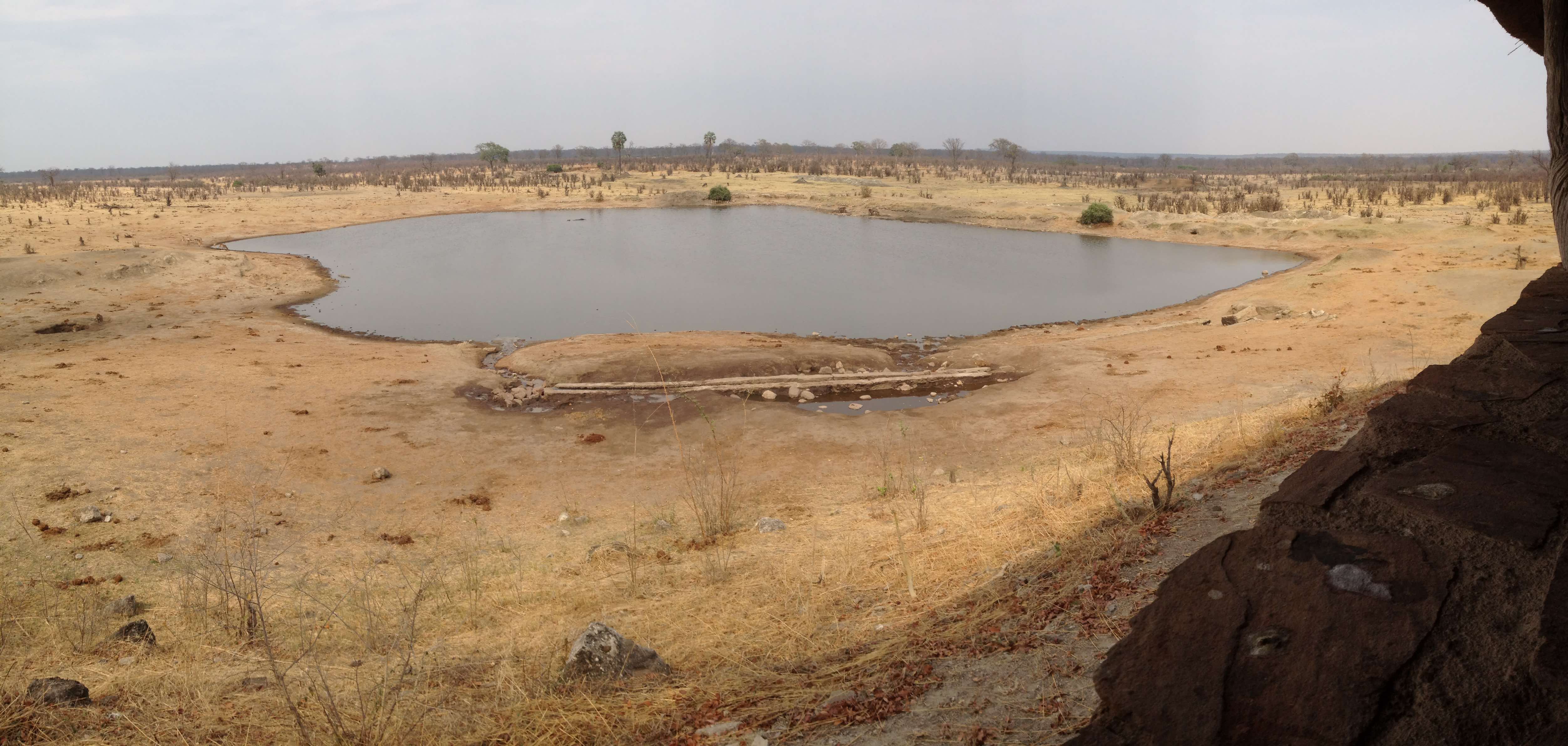
A “panorama” view of Masuma Dam.
The time of the observations correspond to the end of the dry season. At this time of year many animals come regularly to drink at the dam. Apart from elephants, Greater Kudu, Waterbuck, Impala, Zebra and Warthogs were seen everyday. We also saw large flocks of guinea fowl, various doves, vultures, kites, buntings, starlings, among others. At the time there were sixteen resident Hippos, both adults and young animals as well as at least six mature Crocodiles.
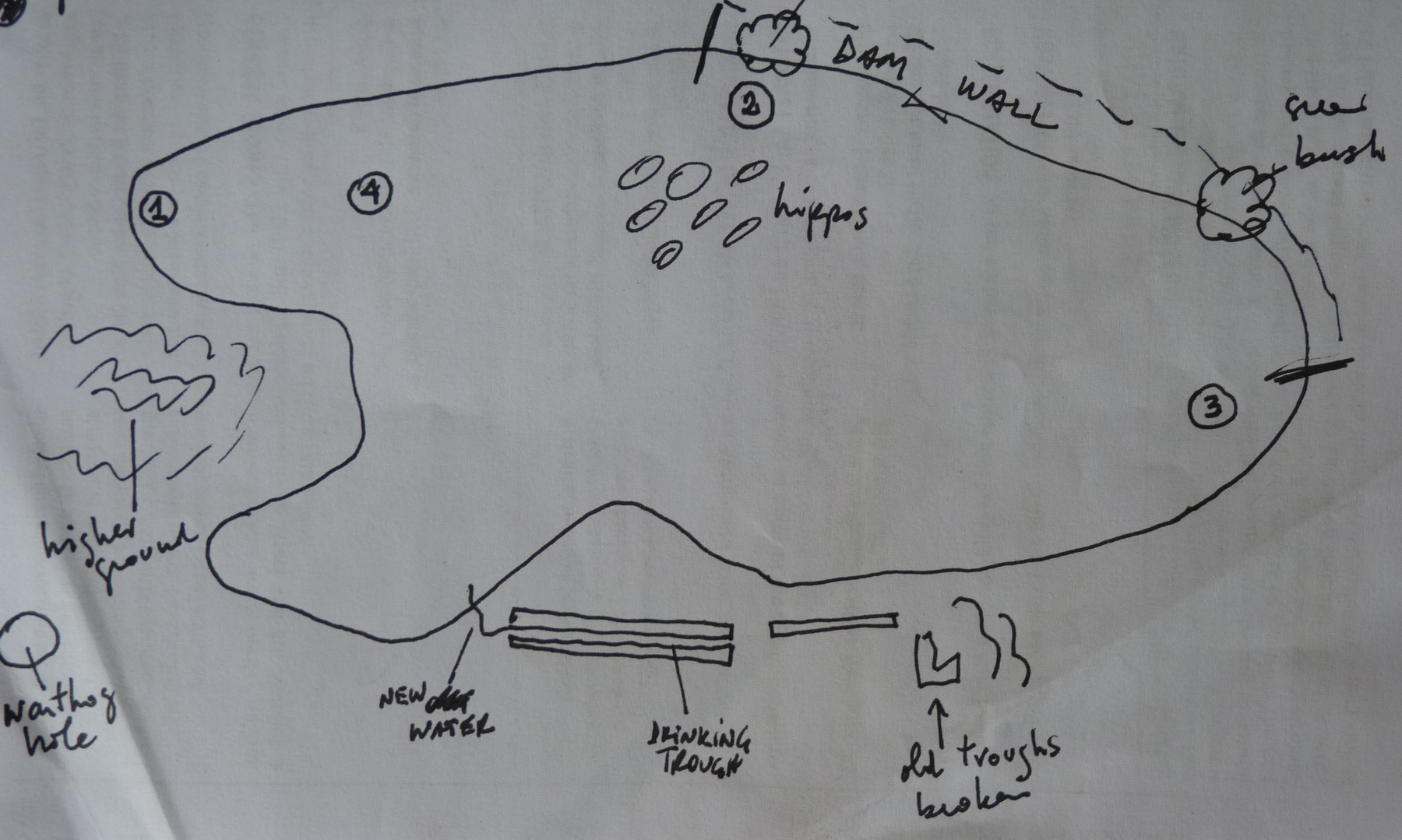
Map of Masuma Dam showing the various places mentioned in the text.
Impala herds drank mainly in the morning, mostly at Point 1 in the drawing. Aware of this daily event, Crocodiles were observed to ambush the Impala by positioning themselves across the small bay where the antelopes drank. Usually one of the Crocodiles would approach the Impalas in full view up to 1 to 1.5 metres from them. This created noticeable nervousness on the part of the Impala but they would gradually calm down and drink. The Crocodiles would remain immobile for a few minutes and then slowly sink and completely disappear. Most of the time, the Impala continued to drink and moved off and the reptiles remained quietly submerged.

A Crocodile attack at the Impala drinking area.
About two or three times in a morning, the hidden Crocodiles lunged towards the Impala. As soon as the swirl that precedes the attack was noted, the Impala scattered in all directions (including into the water!). The most common outcome was that the Crocodiles failed and went back to the water empty-jawed. On one occasion a young animal was caught from its leg and, after a short struggle, it was drowned. This happened only once out of 8-9 attacks we witnessed.
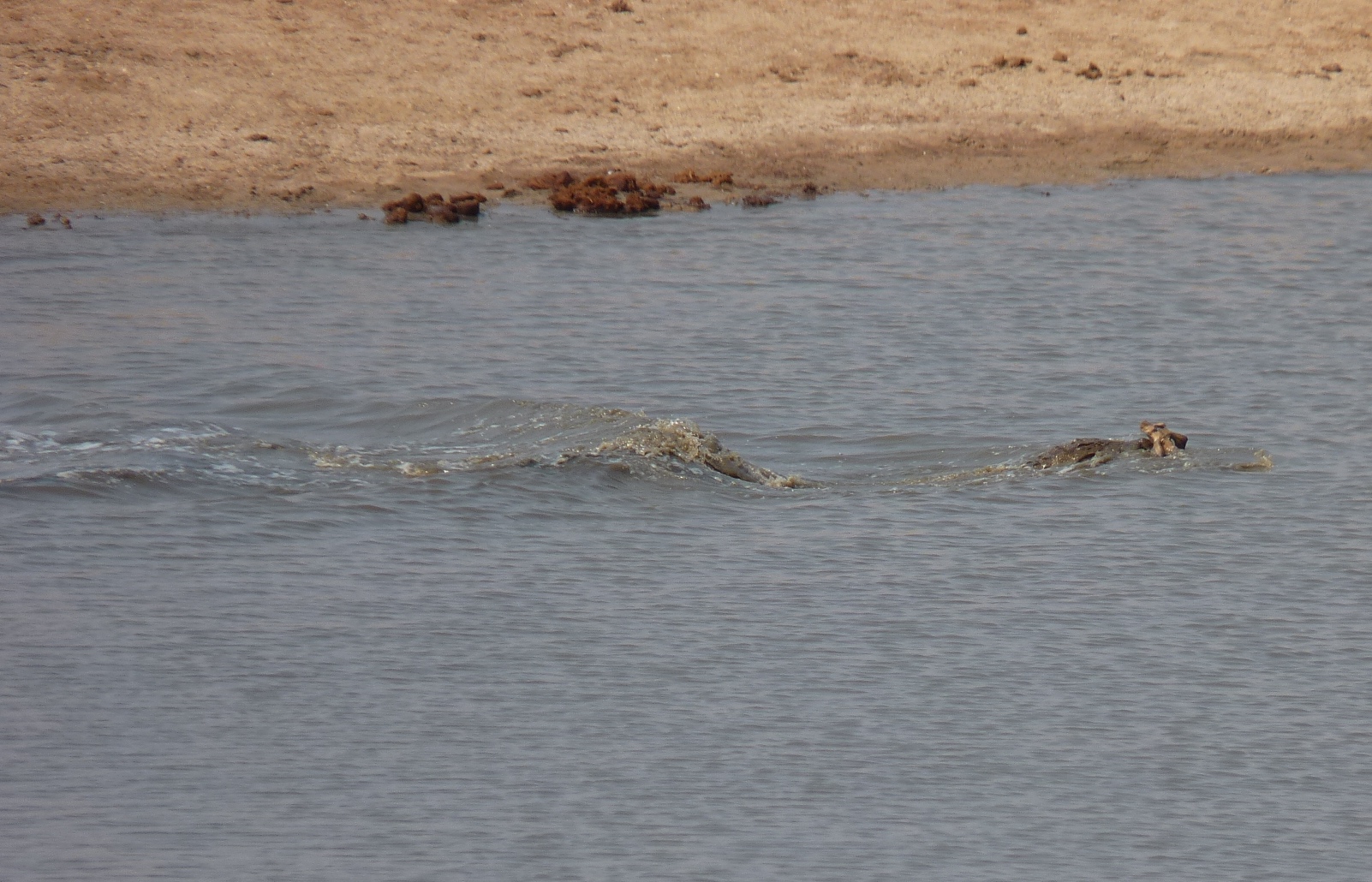
The Crocodile swims away with the freshly caught Impala just before it was chased by the Hippos for the first time.
While the struggle between the Crocodile and the Impala was taking place, two Hippos approached the area and were seen chasing the Crocodile. The latter submerged and took off while the Hippos lost interest and we speculated on their noble “rescue” attempt.
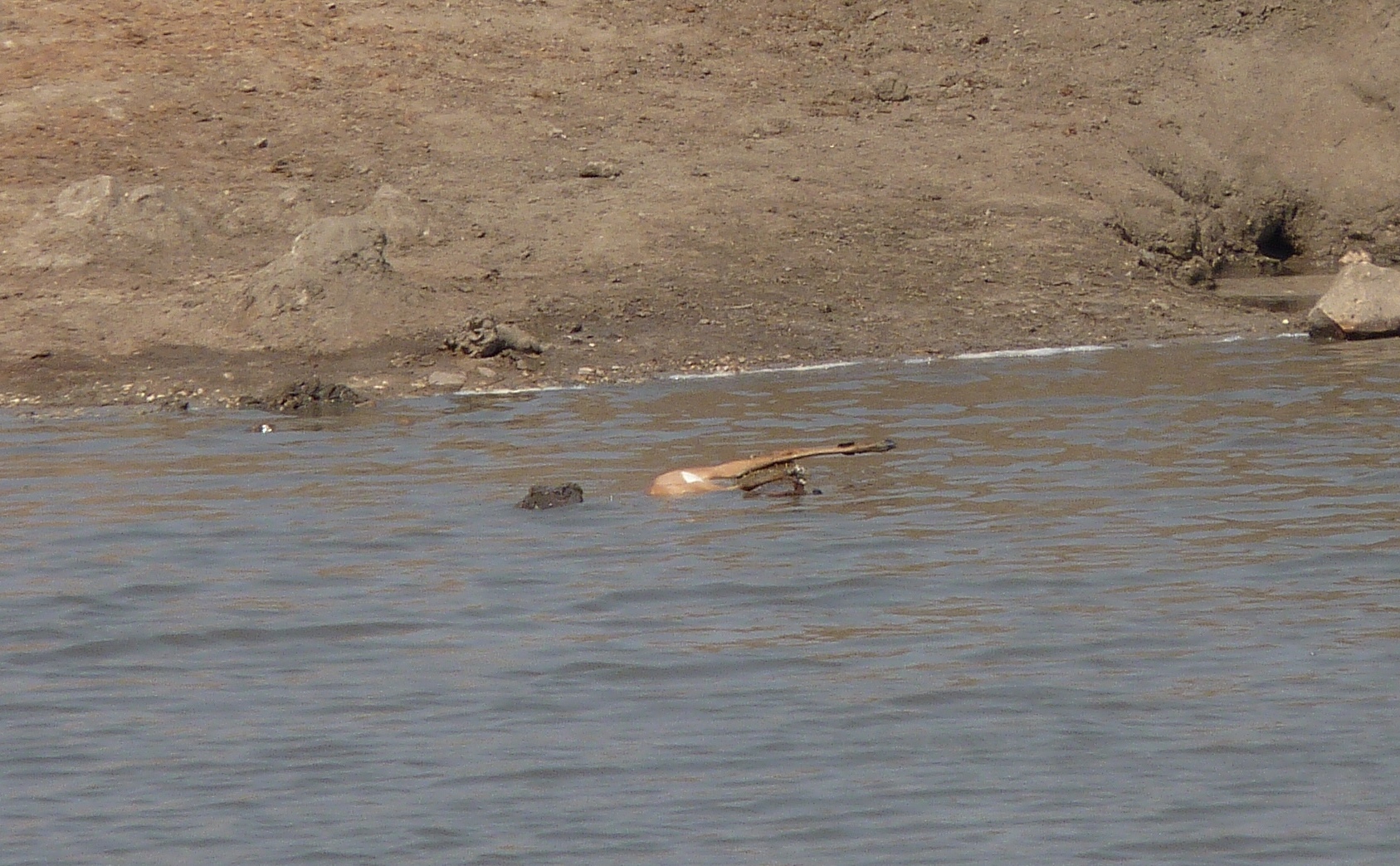
The Crocodile with the Impala at Point 2.
Ten minutes later the white belly and legs of the Impala came to the surface at Point 2 and caught our attention. A Crocodile held the dead antelope and others came to feed on it. This, again, prompted a swift response from the Hippos, who came back and confronted them quite aggressively.
Insert pics 5 and 6

The Hippos “rescue” attempt at Point 2.
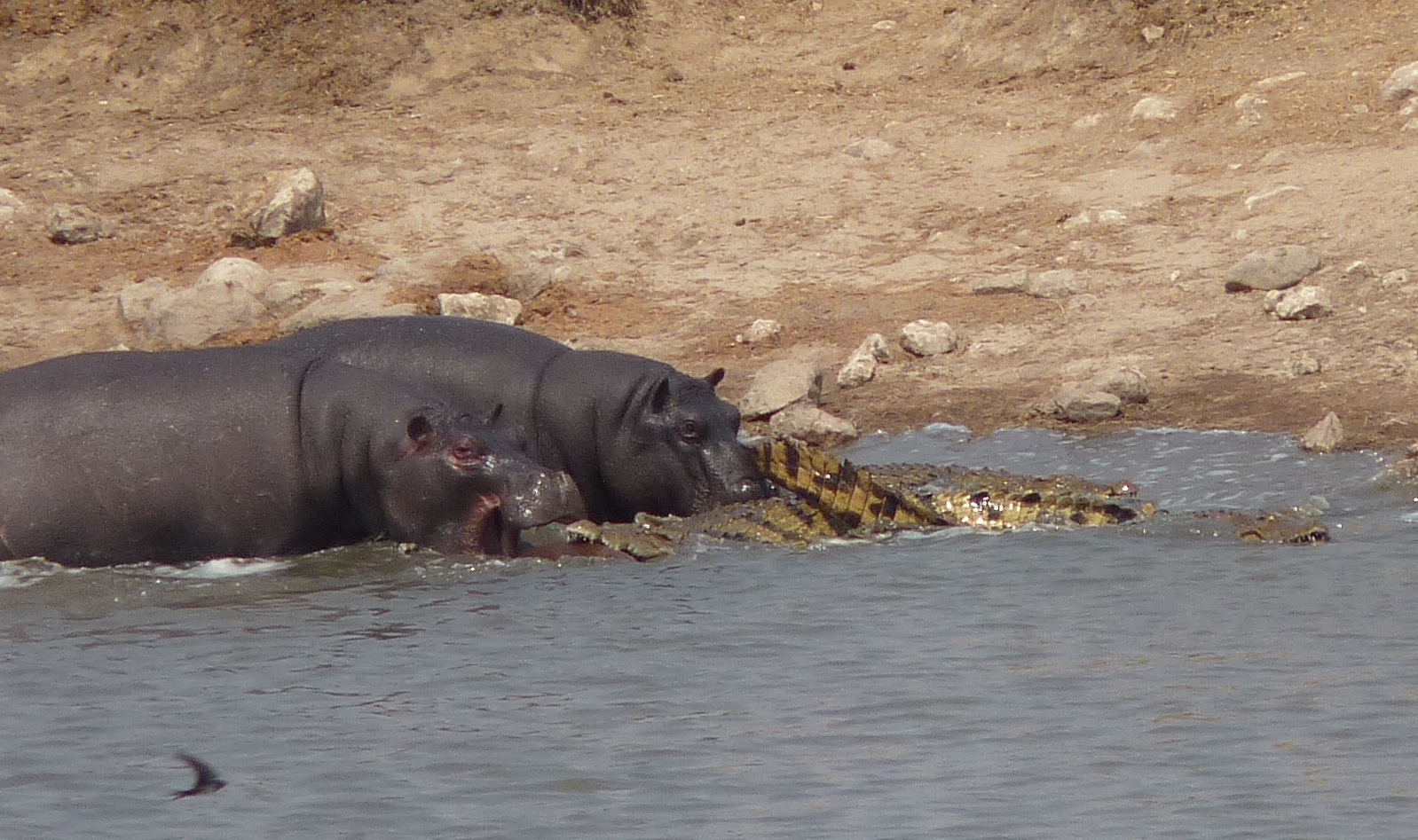
Another view of the Hippos’ “rescue” attempt at Point 2.
The subsequent struggle involved a Hippo pulling from a leg while the Crocodile pulled from another part of the animal. As the Hippo did not have a good grip on the leg (its teeth and mouth do not facilitate tug of wars), the Crocodile retained the Impala and, again, swam off with the carcass (or part of it as we could not see if it was split or broken up) towards Point 3 in the drawing.
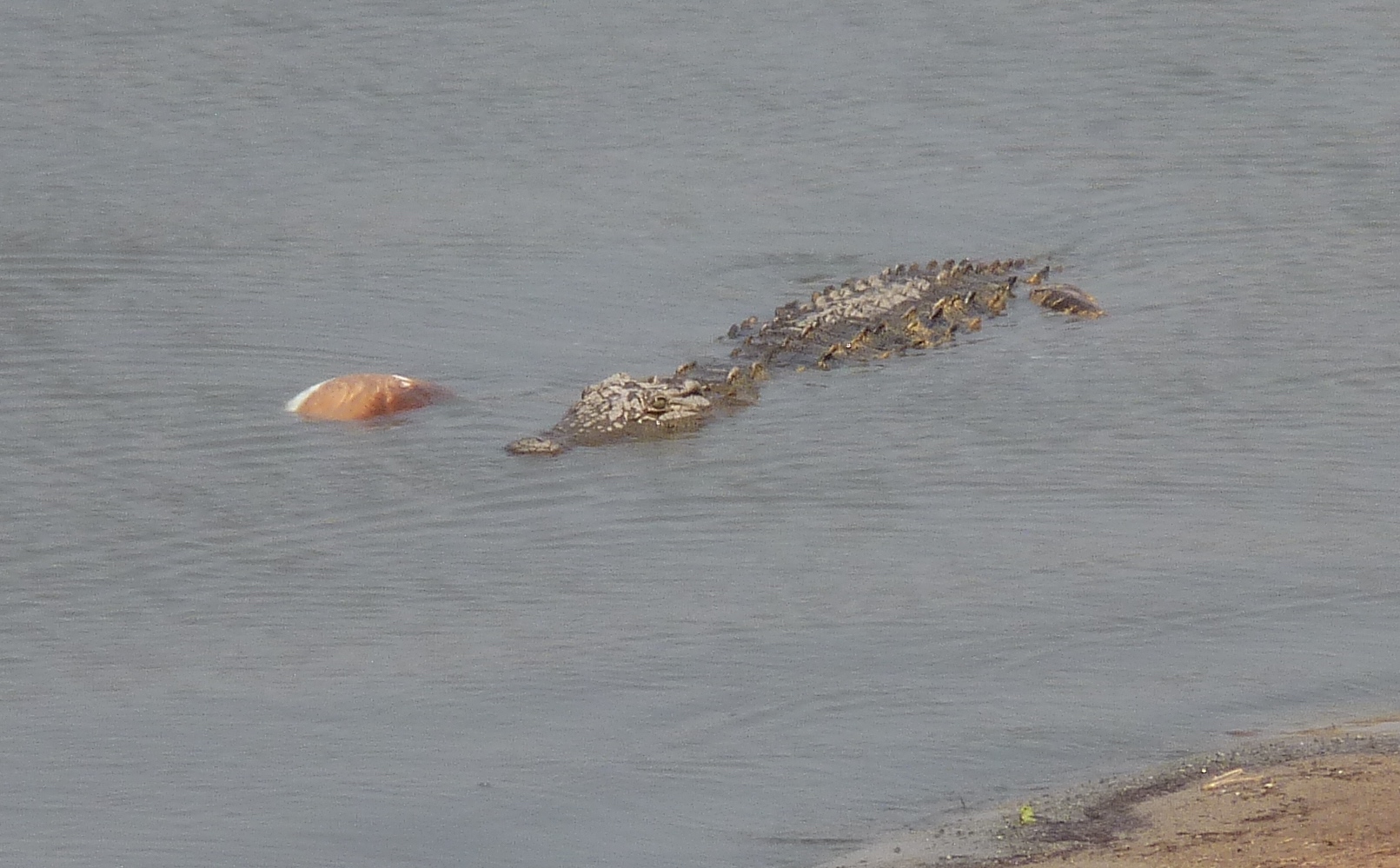
The Crocodile avoided the Hippos at Point 2 and moves to Point 3.
The crocodile stayed at Point 3 for about 30 minutes with the Impala (or a large part of it) in its mouth until another Crocodile came and started to pull and tear at the carcass. In about a minute, a hitherto unseen/submerged Hippo[3] burst into the middle of the tug forcing the Crocodiles to scamper again.

A Hippo moves towards the Crocodile at Point 3.
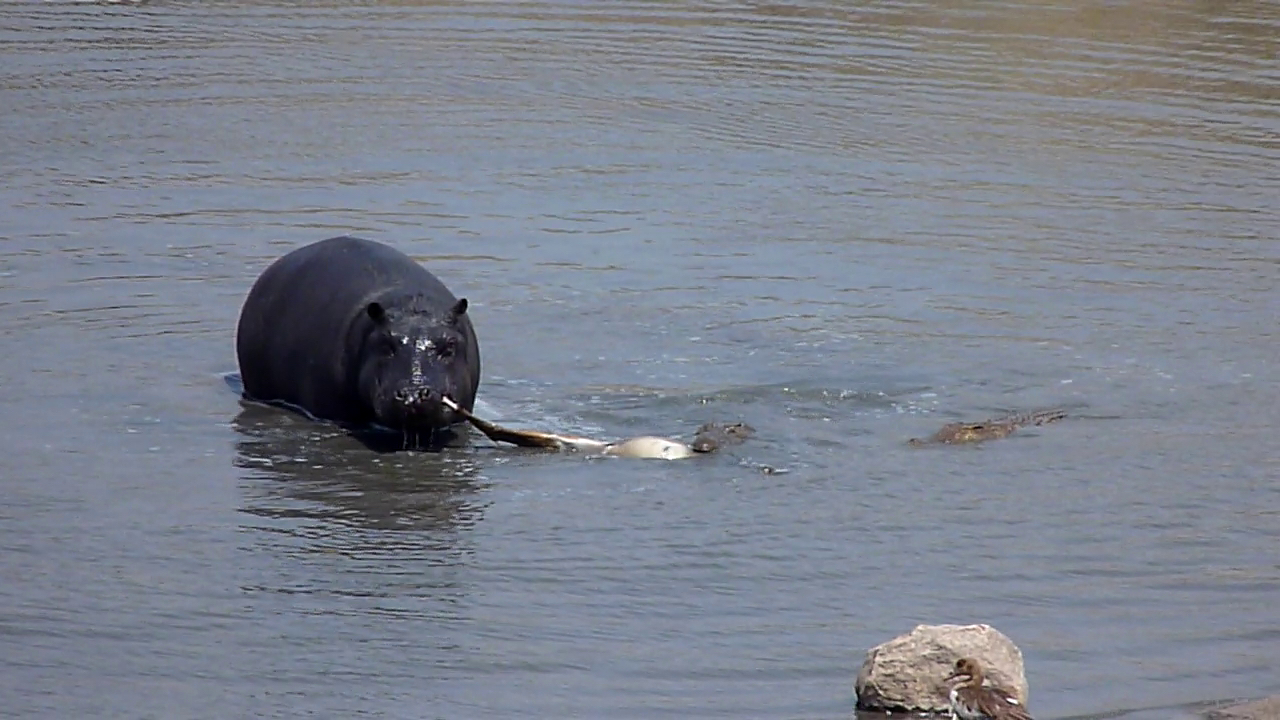
The Hippo tug of war with the Crocodile!
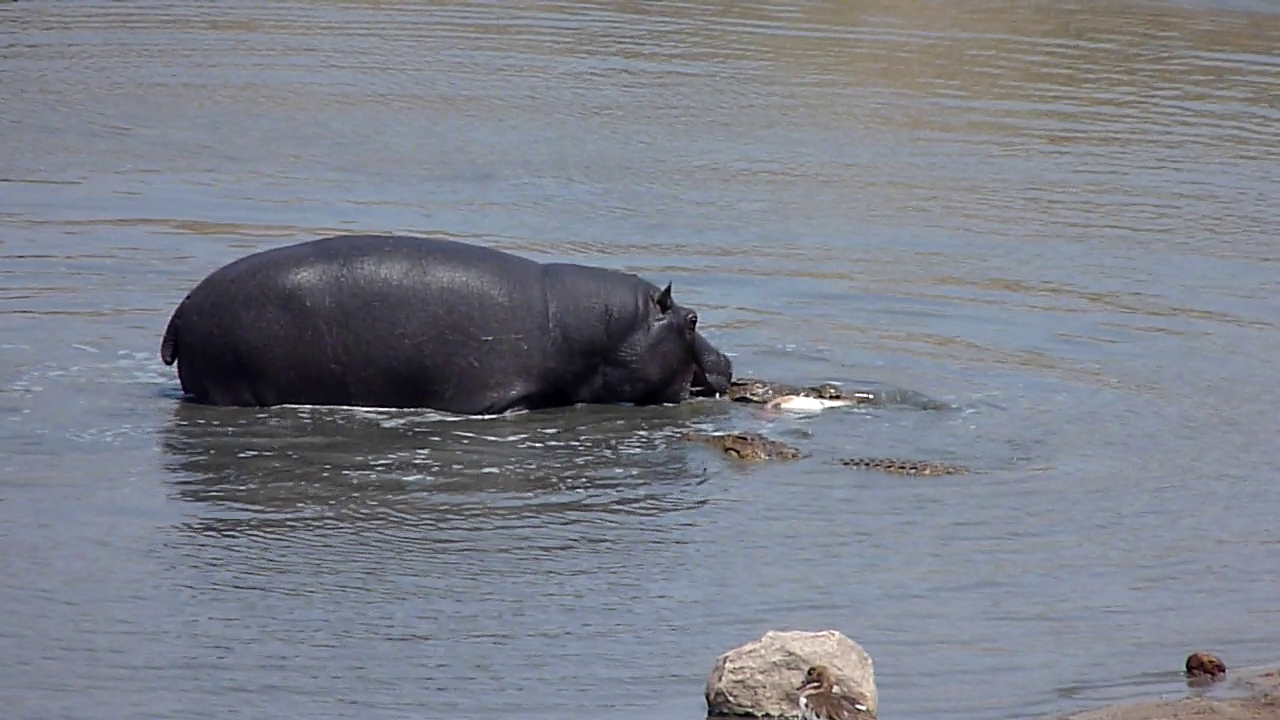
The Hippo tries to bite the Crocodile.
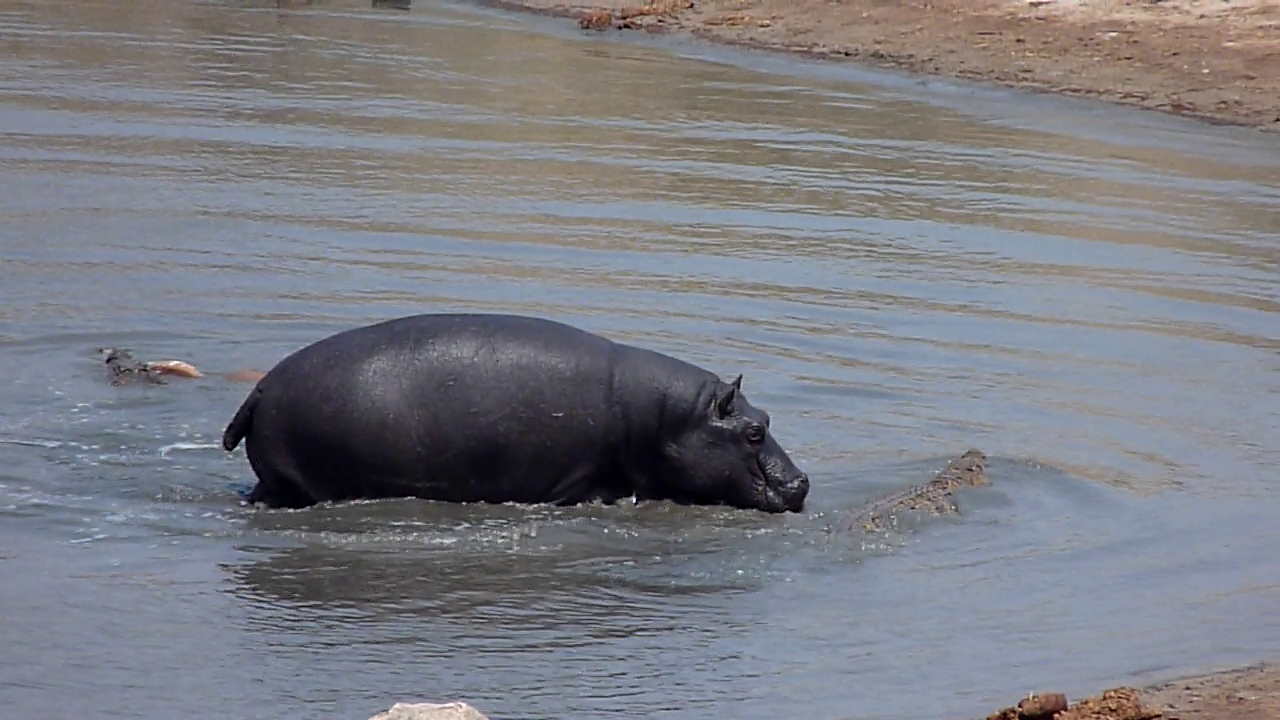
The Hippo chases a Crocodile while the other one escapes with the Impala towards Point 2.

The Hippo keeps chasing the Crocodile while the other one swims away.
While the Hippo chased one Crocodile the other one, still holding the carcass, swam back to Point 2 where it remained for another 10-15 minutes when, once more, its companions arrived and started to tear at the carcass.

The Crocodile are attacked again after arriving at Point 2.
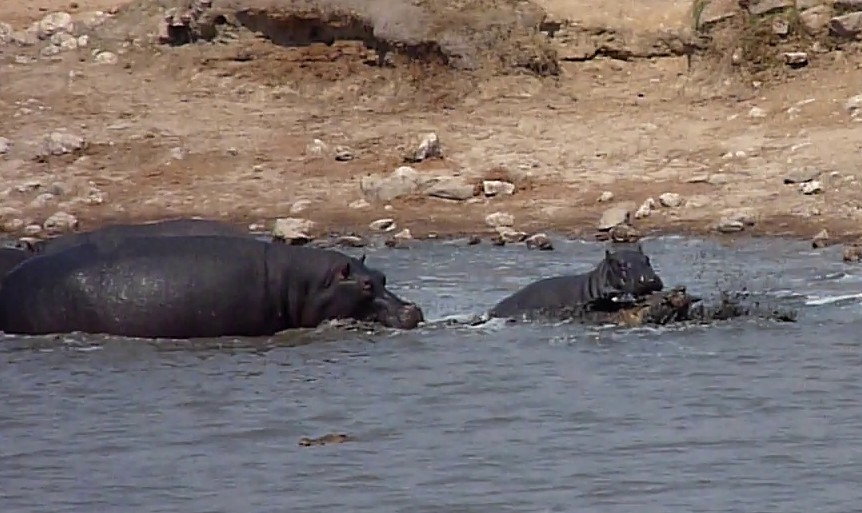
Another view of the struggle for the Impala at Point 2.

Another view of the Hippo vs. Crocodile struggle for the Impala at Point 2.
The Hippos came again and were seen clearly attacking the Crocodiles and even biting them.
One large Hippo bit the head of a Crocodile, who swiftly moved away to avoid severe consequences while other Hippos were also seen biting crocodiles on different parts of their bodies. In the commotion we lost sight of the
Calm was reinstated at the dam for about 20 minutes. The next thing we noticed was a great commotion at Point 4 where the Hippos began to congregate. They were clearly competing for something and eventually several were seen apparently “mouthing” the Impala. On closer observation they were actually chewing and apparently swallowing while bone-cracking noises were heard.
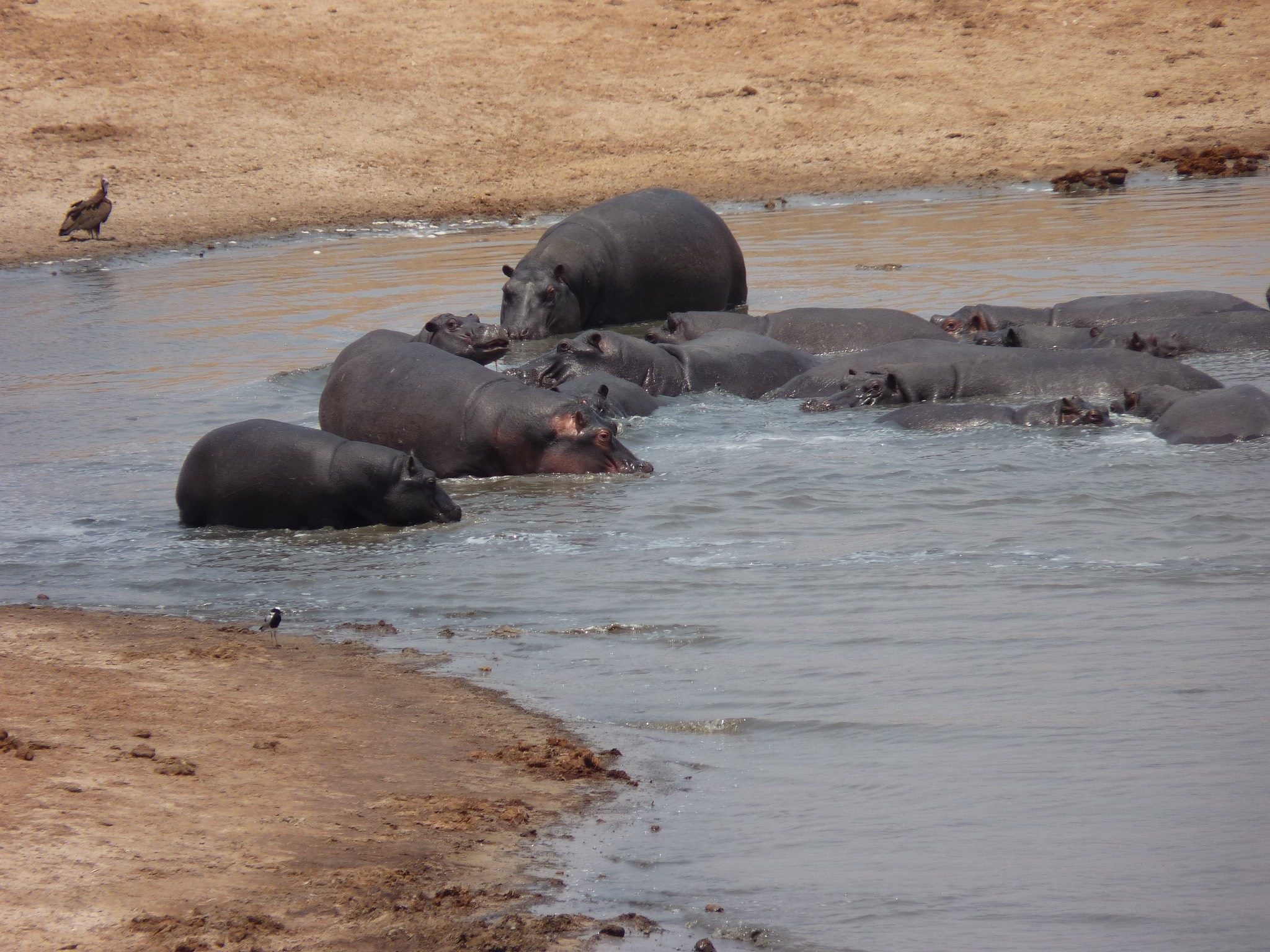
After snatching the Impala from the Crocodiles at Point 2, they congregate to feed on the Impala carcass.
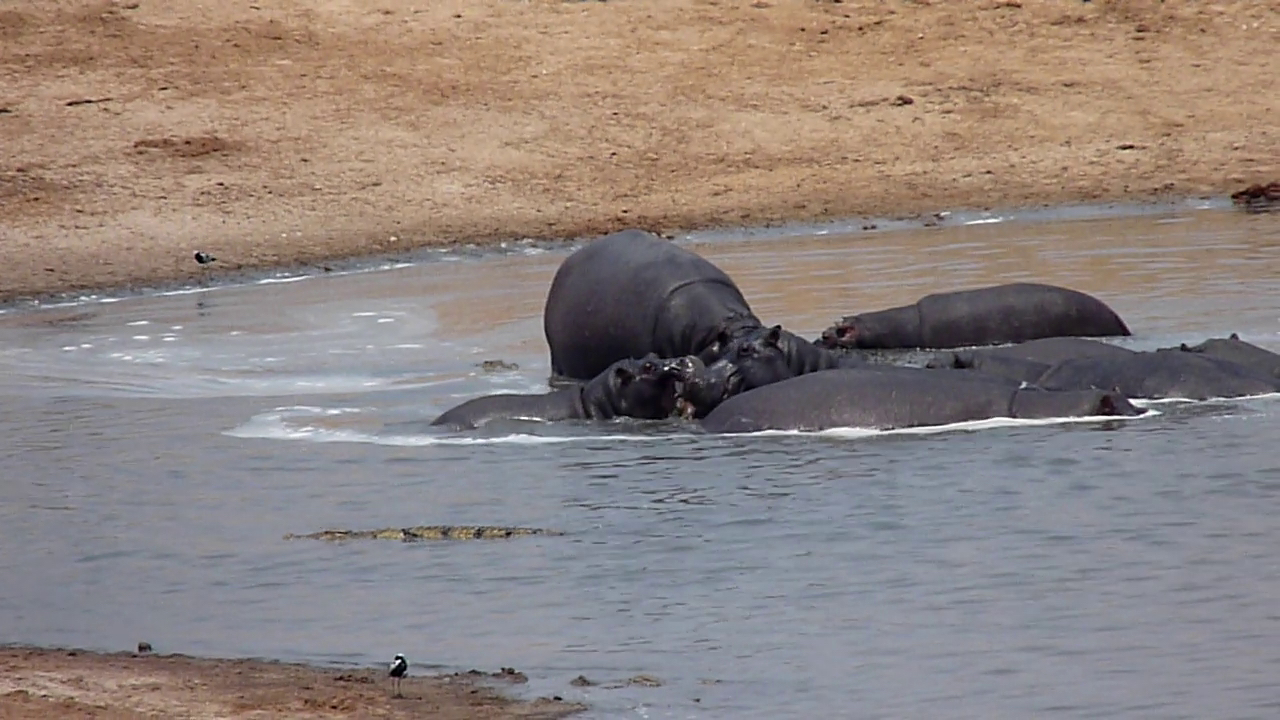
Another view of the final stages of the Hippo feeding frenzy.
Unbelievably to us, at the time of these observations, the Hippos were eating the Impala! After it was consumed the Hippos went back to their normal place and peace returned. The moment they lost the carcass, the Crocodiles did not try to recover it.
Confinement in the dam was the best possible explanation I could think at the time for such aberrant behaviour. The event appeared so unusual that, on arrival in Harare, I went straight to the computer to check the Internet. Not surprisingly, I found earlier references of similar incidents and the first report of carnivore behaviour in Hippos came from Masuma Dam![1]
As, very recently the BBC and National Geographic have both published articles on hippo cannibalism[2] I put together these observations to contribute to our general knowledge. I have also contacted Mr. Dudley and we are collaborating on the subject that may result in further work being published in the scientific literature.
[1] It was not easy to see the number of Crocodiles or Hippos involved in the various incidents described.
[2] https://bushsnobinafrica.wordpress.com/2014/10/27/crocodiles-and-impalas/
[3] I was excitedly filming the scene!
[4] Dudley, J.P. 1996. Record of carnivory, scavenging and predation for Hippopotamus amphibius in Hwange National Park, Zimbabwe. Mammalia 60 (3): 486-490.
[5] http://news.nationalgeographic.com/news/2015/01/150123-hippos-cannibalism-animals-food-science/?utm_source=Facebook&utm_medium=Social&utm_content=link_fb20150125news-hippos&utm_campaign=Content&sf7093531=1
and
http://www.bbc.com/earth/story/20150116-the-diet-secrets-of-hippos-herbivore-or-cannibal
An article by Kamal Paul in the Sunday Times of the 20th of November 2011 describes his experience on board a Comtel Air plane from Amritsar in India to Birmingham. The plane landed in Austria for a stopover. Once on the ground the passengers were informed that, in order to take off again, they needed to pay Euro 23,800 for the fuel and landing tax. He was then requested by a stewardess to collect the money from the fellow 179 passengers so that they could take off again and get to their destination. This account reinforces the authenticity of a story I heard in the early 90s about the fate of a Zambia Airways DC 10 on a flight from Lusaka to London.
Lusaka in the 90’s was a place of lots of socializing and we were frequently invited for lunch on Sundays. The weather was very suitable for outdoor activities so it was a highly enjoyable time.
During these gatherings I heard many stories. One, told by the pilot himself stuck in my mind until today. George, I believe his name was when we met him, was a retired commercial pilot. He started bush flying and gradually built a career until he became a pilot for Zambia Airways. At that time ZA was the flag airline of the country and, I believe, it was Government-owned.
To compete in the international routes with the likes of UTA and British Airways, ZA leased three McDonnell Douglas DC10’s that did the route to New York, London and other European and Asian destinations. George was one of the pilots that flew this aircraft. The flights were successful as they offered good prices, most likely subsidized by the Government. The situation was not sustainable and the inevitable happened: ZA ceased operating in 1995 and several of its planes were impounded at several airports where the company had debts.
George told us about an experience he had during one of the many times he flew to London in the early nineties, just before the company closed down. He was flying a DC10 with its full passenger capacity as was normal on these flights. As is routine, at some prudent distance he established contact with the control tower of the London airport (probably Gatwick at that time, I do not recall). He informed the airport of the coordinates of the flight and eventually requested permission to land.
To his shock, the control tower refused to let him land as the company had a large accumulated landing fees debt. Apparently the management of the company had been warned about the situation and the consequences that they would face if attempting to land there. Although very upset with ZA, there was no time for recrimination as a fast solution was necessary.
He pleaded with the tower and explained that he had a full plane and that, although the fuel would be sufficient to divert to another airport, he did not have the necessary authorization to do so. He waited for a reply with bated breath!
Eventually the control tower asked him if he had a credit card, as they could allow him to land by charging the landing fees to his card. Aware that it would take him months to recover the money, he realized that he had no option but to agree and eventually managed to land as planned.
Luckily for him, he was reimbursed before the company ceased to operate!
During my earlier post on fishing (A Fishing Expedition) I mentioned the hairy moments we spent during our short trip up the inundated Paraguay River. While writing it I recalled the experience I am writing now, as it also is related to floods and what they may bring to our latitude in Uruguay.
The River Plate Estuary is the outlet into the Atlantic Ocean of the River Plate basin that drains water from over four million square kilometres of land in Argentina, Brazil, Bolivia, Paraguay and Uruguay. The start of the River Plate is the meeting of the Paraná and Uruguay Rivers at a place known as Punta Gorda (“Fat Point”), a few kilometres down river from Nueva Palmira, which is today a very important deep water harbour. The Paraná and the Uruguay Rivers, before meeting in Punta Gorda, collect a number of important tributaries aside from the Paraguay River such as Pilcomayo, Bermejo, Salado, Iguazú, Mocoretá, Gualeguaychú, Negro and Samborombón Rivers to name a few.
Perhaps once a year, floods take place and a lot of debris comes down the River Plate as a consequence of heavy rains that fall in areas where some of the smaller rivers mentioned are located. Brown, muddy water points towards the Paraguay River while a brick red colouring to the Bermejo River. Floods bring huge water hyacinth islands drifting past at high speed and, during severe flooding, it is not strange to see colossal trees floating past as well. Not surprisingly then, animals are also seen populating them and I have heard stories of monkeys holding on for dear life. Sometimes the animals land here. I remember a pair of Anacondas seen by a friend at Punta Gorda last year! I also remember the famous 1959 floods when dried exotic insects and small animals such as snakes and mice could be seen stuck on the walls, indicating the how high the water reached on the walls of flooded houses.
In order to tell you about the real event that a member of my family lived through, we need to go back in time to the end of the 19th Century. My father, who was one of the nephews of the main protagonist, called Manuel, told the tale. His family lived in Nueva Palmira at the time in a Spanish style house composed of several rooms around a central patio that opened behind to the backyard where fruit trees and poultry were kept. The only toilet of the house was located there. A large Ombú (Phytolacca dioica) provided abundant shade in the main central patio. It was there where the family congregated in summer to drink mate and entertain visitors. As the household was located in the centre of the town’s social hustle and bustle, it was not strange for several characters to pay a visit. Among these were business people, politicians and the town’s Priest, as the family also belonged to the Catholic Church.
The time of the event was April and the town was undergoing one of its periodic floods, although I have no further details of its severity. It was a cool autumn evening and the family was congregated indoors, in the large kitchen. The daughters were probably doing crochet or embroidery and the adults, drinking mate, gossiping or talking about the events of the day. It was before dinner and probably a “Puchero”[1] was being cooked. The arrival of the Priest was expected and, after the formal greetings, he went in to see the grandmother and to take her weekly Confession. Voices were lowered and the conversation switched to more formal issues. His task completed, the Priest returned to the kitchen and he was, as usual, invited for dinner that, as usual, he declined. He did politely accept the offer to drink a few mates before leaving though.
After a while, probably as a consequence of mate drinking, the Priest excused himself and went to the toilet. Although it was dark outside, he knew the place and, with the help of the ubiquitous oil lamp he got there. After about 20 minutes of the Priest’s absence, one of the daughters made a comment about his delay but they decided to wait a bit longer before checking on him “to avoid embarrassment” as the mother put it. A few more minutes passed and then suddenly they heard strange sounds outside. Manuel stood up and rushed to investigate.
Once outdoors he heard moaning. Nothing prepared him for what he saw next as it was as unexpected as it was shocking. The priest was leaning against one of the patio wooden columns, holding it and as pale as a ghost. He was the source of the cries Manuel had heard. Manuel ran towards him and just managed to reach him before he fell. He heard a soft “Tigre!” before his companion went limp and almost fell despite Manuel’s hold. He felt the unmistakable slippery and sticky blood on the Priest’s back while the word the priest had uttered sunk in! They were in grave danger in the dark so he made a supreme effort and rushed with the Priest towards the door that he kicked open to enter. He dropped the apparently lifeless Priest inside the house, shouted for the door to be closed as soon as he managed to enter and while cleaning his hands on his trousers he rushed to fetch his gun.
His arrival in the kitchen with the bloody and inert Priest created great confusion. The girls froze in horror but his wife immediately reacted and, together with the house staff, they placed the Priest on the large dinner table. It was clear that he was badly mauled, particularly on his back. While Manuel fetched his gun, his wife, staff and daughters, started to remove the Priest’s cassock to be able to stem the bleeding and clean the wounds. Although the Doctor lived a few houses away, there was no chance of going out to fetch him while the thing responsible for such an attack was still at large!
Armed with his Mauser rifle, Manuel went out. He forbade the ladies to leave until he returned. Before he went, the Priest came to and let them know that he had been attacked while leaving the long drop by a “Tigre”[2]. This was confirmed by the severity and depth of the claw marks. He was lucky that it did not bite his neck and kill him. The Jaguar was probably stalking the chickens at the time the unlucky Priest’s nature call brought him out!
Either Manuel was brave or he did not think much when he left the house to gain his vantage position up the large tree. He knew the tree so he chose a good spot and waited. Not long after, the first light helped him and he saw the unmistakable silhouette of the jaguar, still near the log drop. Although the light was not yet ideal, afraid of the animal running away, he took aim and shot. The Jaguar fell and, without waiting he shot it twice again. He waited for a few minutes and, seeing that the cat did not move, decided that it was safe to climb down. The cat, a young adult, had found its demise thousands of kilometres away from its home range.
Once the outcome of the hunt became known, the Doctor was fetched and with him came the whole town, which had been woken up by the loud shots, wanting to find out what had happened! The animal was skinned and his head was displayed at the History Museum in Montevideo for many years where I saw it while visiting the place with my father in the late 1960s. It took a while for the Priest to recover from his infected wounds but he survived.
[1] A traditional dish made up of boiled vegetables and tubers with pieces of mouton or beef.
[2] The name Tigre was given to the Jaguar (Panthera onca) by the Spanish Conquistadores as they found it similar to the Asiatic Tiger. The name has stuck in large parts of its area of distribution.
 A Bushsnob out of Africa