Kenya: Friends and foes[1]

After the initial rather intensive contact with Matt, a time of waiting followed while settling down at Muguga House. I saw Matt less often as he was busy running the Tick Programme. It was time for waiting, he had said earlier, as possible collaborators needed to return from their home leave when the European summer ended.

I was still busy! My attention was fully dedicated to my wife’s arrival as this offered some logistical issues both locally but also en route. The local issues were easier: obtaining a more comfortable bungalow at Muguga House and persuading a colleague to provide us with night transportation to and from the airport as her arrival was late at night. The issue of her Visa was a serious concern, though. For some reason better known to the intricate recesses of international diplomacy, Uruguayans get a Visa at the airport in both Kenya and South Africa, a rather convenient procedure. All very well then. Not so: my wife needed an overnight stopover in Johannesburg and needed a Visa for South Africa.

Flight connections were not as frequent as today. Nothing wrong with that you may think. However, I had learnt while in Kenya that, because of South Africa’s apartheid being in full swing at the time (1981), passengers arriving in Kenya with their passports stamped by the “racist regime” would be denied entrance and sent back! This was part of the blockade being imposed by all African countries to South Africa at the time.

I could expect no assistance from the Embassy of Uruguay in Kenya as there wasn’t one![2] There were only three Uruguayan embassies in Africa: Egypt, Nigeria and South Africa. Aware of that there was no South African High Commission in Kenya I decided to first see the airline and then, if all else failed, to call the Uruguayan Embassy in South Africa seeking help. Cellphones did not exist and landlines between Muguga and Nairobi did not work very well so the best thing to do was to go to Nairobi to meet the airline, Varig at the time.

As her arrival was imminent I decided to travel to Nairobi the following day using public transport, no doubt encouraged by the experience I had on arrival[3]. The trip consisted in finding a way from Muguga to the main road and then another one to Nairobi, both ways.

The trip started well as I was lucky to find transport straightaway and got to the main road in good time. I joined a crowd of waiting passengers and, soon enough, a matatu[4] was waved down. It was a VW minibus, the brand that at the time dominated the minibus world in Kenya.

My hopes of a good ride in the front evaporated fast as this was apparently reserved for women and friends and currently overflowing. With moderate pushing and shuffling I entered, after paying the tout the necessary fare. “Not too bad” I thought while finding a seat in the back. “At least I will learn the dynamics of public transportation”. I also thought that the trip would have been fast as the bus was pretty full -by my standards- already. Nothing could have been more wrong! People needed to get out but many more got in until there were over twenty people in the back (I cannot say how many there were in the front seat as visibility was severely impaired!). Amazingly, we still accommodated a few more before we reached the Post Office stop at Nairobi city centre.

I literally popped out of the jam-packed bus and walked to the Varig office, almost on a “high” due to the sudden increase in oxygen levels, despite Nairobi’s high altitude! I hasten to add that, despite the large number of people and the scarcity of water in the rural areas, there was no more human body smell in the bus than in any minibus or lift in my country or the UK for that matter!

The Varig representative, fortunately, was not at all concerned by my predicament. “All you need to do is to ask your wife to get her Visa on a separate paper” she said. And she added, “She gets that paper stamped, makes sure that her passport is clean when she presents it to Immigration here”. Those were the tricks of countries under UN sanctions! The rather fast resolution of the Visa issue left me with time in my hands so I decided to look for Matt at ICIPE and I was lucky to get a most welcome return ride all the way to Muguga with him. He was rather surprised that I was so grateful and, after explaining the reasons, luckily he agreed to approach FAO in Nairobi to get me a vehicle. A rather good outcome from the matatu ride!

My wife’s travel went without hitches and I soon had her with me at Muguga House. Her arrival coincided with the return of most of the potential collaborators and I had the chance to meet some of them as well as do a lot of reading about tick and tick-borne diseases, working at the KARI library, an excellent source of historical research documents on the subject. I prepared a new work plan everyday, only to abandon it as my knowledge augmented!

Over the following days Matt took me for a round of official meetings to meet several people relevant to my future stay in Kenya. We had a rather difficult and cold meeting with the Government Veterinary Department and I could detect negative vibrations. In the end I was given the green light. Matt did not enjoy the meeting and he was rather short-tempered for the rest of the day. I, conversely, was happy that I was in Kenya to stay!

We also met the FAO Representative to update him on my plans as well as to plead for transport. Luckily, his response was positive and he asked the Administrator to identify a suitable vehicle for my use. This produced a VW Kombi, redundant from an earlier project, that was allocated to me for private as well as official use! An added advantage was that it had one of the most coveted items: a red -diplomatic- plate, a road opener. So we were finally mobile. The new car was ideal for us. Although it did not have 4WD, it had the necessary road clearance to take us all over Kenya.

Returning from a muddy Maasai Mara Game Reserve in the VW Kombi.

Returning from a muddy Maasai Mara Game Reserve in the VW Kombi.

At Muguga we met the Director of KEVRI, a highly qualified, very friendly and smooth Kenyan that was very welcoming. He was the Chairman of one of the two most popular soccer teams of Kenya and very involved with soccer in the country. We connected immediately when he learnt that I was coming from a country with such a good soccer pedigree and, although we talked about my future work and how collaboration could be strengthened, the main topic of our first meeting was soccer! Among the issues we covered was the possibility of me getting a Latin American coach for his team! This was the beginning of a friendly relationship through which I got very good support at work and also shared a few soccer matches with him.

The final of the “obligatory” meetings was with the Director of ICIPE. He was a highly educated and suave Kenyan Professor that was difficult to meet as he was constantly in meetings, running the Centre and meeting Donors and partners. He was pleased to see me and gave me valuable directions on what my situation as a Fellow within ICIPE would be and, of course, directed me to his Deputy for further issues. During the meeting he was very clear that I was awaited at Rusinga Island as ICIPE’s new research station at Mbita Point needed scientists settling down there. After the meeting was over, I learnt from Matt that the Director’s home area was precisely Western Kenya and that was the reason for his keenness for me to get there. Apparently the die was cast!

After these meetings I saw Matt less frequently for a while. Luckily Robin, the ICIPE ecologist, returned and I started going to the ICIPE laboratory at Muguga to be with him and learn. He was a very kind man, graduated in Oxford, who never refused to answer my questions and be of help. I was really lucky to find him and with him I learnt most of what I know about ticks and their ecology!

I had been in Kenya for about two months by now and I still did not know about what I would be doing so, concerned, I decided to ask Matt what was happening. The opportunity presented itself when he came to Muguga for a meeting. I managed to get a moment alone with him and asked him about the situation. Matt’s reply left me cold: “Julio, if you are not happy with the situation you tell me now and we cancel all arrangements and you go back to Uruguay and nothing happens”. I was shocked and worried but perhaps I had insisted a trifle too much or perhaps he was having a bad day as his mood sometimes seemed to swing. However, as the FAO Fellowship was all I had, I replied that I trusted him and would wait. I said: “Matt, the idea is not to leave but to let you know that I am worried for the delays”, I answered. “I understand your problem but this is Kenya and things work differently and at a slower pace. This should be clear to you from the start, otherwise you will not be able to work here” he said, in a way that was meant to close this uncomfortable encounter. I got his message and began my adjustment process to Kenya, Africa and to Matt’s ways and moods!

A few days later Matt came to see me at Muguga. He was in a jovial disposition. “Julio, Alan is back and we are meeting him now” he said. The meeting was timely and good. Alan was aware of my arrival and very keen to work with me as he saw the collaboration as very promising. The various work options were discussed and it also transpired that Matt had been under great pressure from the Government regarding my work as the latter had different ideas[5]. There had also been some administrative difficulties between FAO and ICIPE regarding the administration of the Fellowship’s funds. However, it had all been solved by now and we were, apparently, ready to go.

Matt was as idealistic as Alan was practical so they were a good combination: ideas and execution. I liked Alan from the start. During the meeting it was agreed that I would do some work at Muguga itself as well as field work. We would therefore visit Mbita Point and Rusinga Island with Matt. On the way back to Nairobi, we would take the opportunity to visit the ranch in the Transmara where Alan had his research on immunization. Finally, the return would be across the Maasai Mara Game Reserve, an added bonus.

It was agreed that, after that visit we would be in a better situation to take a decision on my future research work. In a way they kicked the ball forward! Nevertheless, I was happy to see movement at last. We agreed to leave as soon as possible.

[1] Follows “Kenya: Muguga”

[2] A complication that affected our lives and I will refer to in a future post.

[3] See “Africa – Arrival” in this blog.

[4] In Swahili, passenger minibuses or closed pick-ups.

[5] A couple of years later I learnt that the Kenyan Government had their own candidate for the FAO Fellowship that I got and my appointment did not go down well.
Hippos from Hell: the videos

After posting “Hippos from Hell” I have now managed to upload all the videos that I took while the events narrated took place.

The videos follow the sequence of events narrated in the post with a short explanation of what you see in them.

Here they are:

A crocodile in full view can be seen approaching the drinking impala! It positions itself at its vantage point and then it disappears from the surface. The ambush is set and all that remains is to wait for new impalas to come or for the ones there to forget about it!

After catching an impala, the crocodile(s) resurfaced at point 2. The hippos moved in to wrestle the impala from them but failed. A crocodile is seen slipping through towards point 3.

After avoiding the hippos at point 2, the crocodiles regrouped at point 3 and started to go at the carcass. Almost immediately hippos came to the area of the commotion to try and get the impala. The hippo somehow chases the wrong crocodile and misses the one with the carcass that slips away, back to point 2.

A pair of male kudu watched on while the crocodile takes the impala back to point 2.

This video show the hippo going for the antelope at point 2. After this incident the hippo stole the carcass from the crocodiles at some point (not filmed) and this becomes apparent when the whole hippo community of about 16 animals is seen eating the impala!!! These videos complement the pictures of the Hippos from Hell post.

A similar situation was observed the following day when another impala was taken by the crocodiles.

While the crocodile and hippo drama was unfolding, this warthog was busy mud bathing and looking after his “mudtub”!!!

Nature does not stop…

Although the authors interpret the videos below as hippo attempts at “saving” other animals, I believe that they were, again, trying to snatch them from the crocodiles. Watch and judge!

Beware: they are strong!

https://www.youtube.com/watch?v=USfCieXuQrs

https://www.youtube.com/watch?v=zBbMmkMapj8

Wet butterflies?

Most of the time we have been “rained in” at our farm in Salta with only the occasional sunny spell, reminiscent of our time in Bedele, Ethiopia or worse, the UK! Well not as bad as the latter… The longest sunny spell lasted twelve hours but the normal sun appearances were a couple of hours long!

Butterflies were totally absent during the rainy spells and, as soon as the sunshine appeared, they were out in full force almost magically! Watching this event a few times the question of the title came: where are they when it rains? One theory was that they hatched with the sunshine but it was discarded, as they were too fast to respond! The idea of sheltering themselves against the rain gained strength but where?

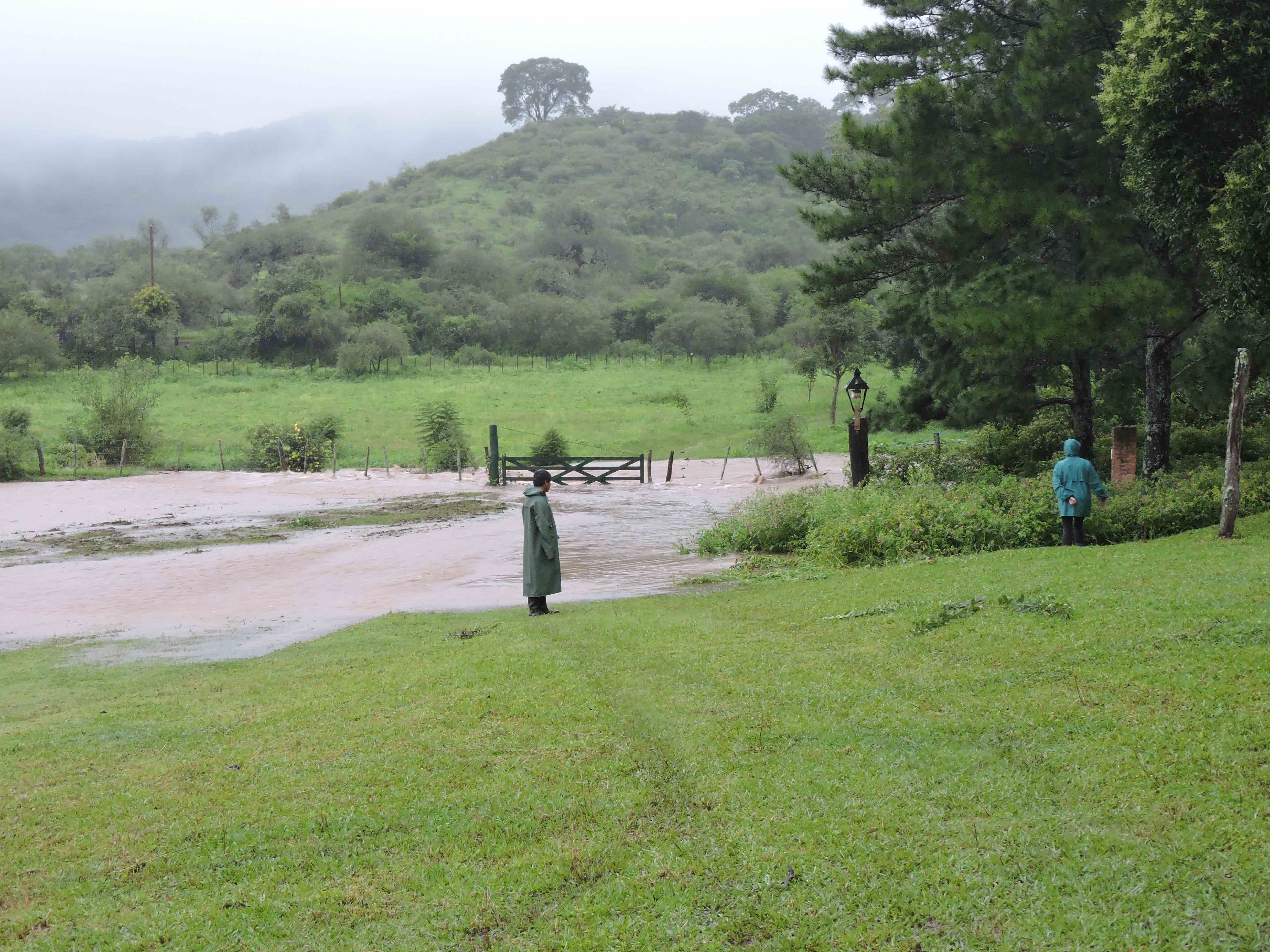
As often happens, an answer came out of a spin off from another observation. The rain was so much that our river flooded, stopping us from leaving the farm.

Inspecting the flooded farm.

Inspecting the flooded farm.

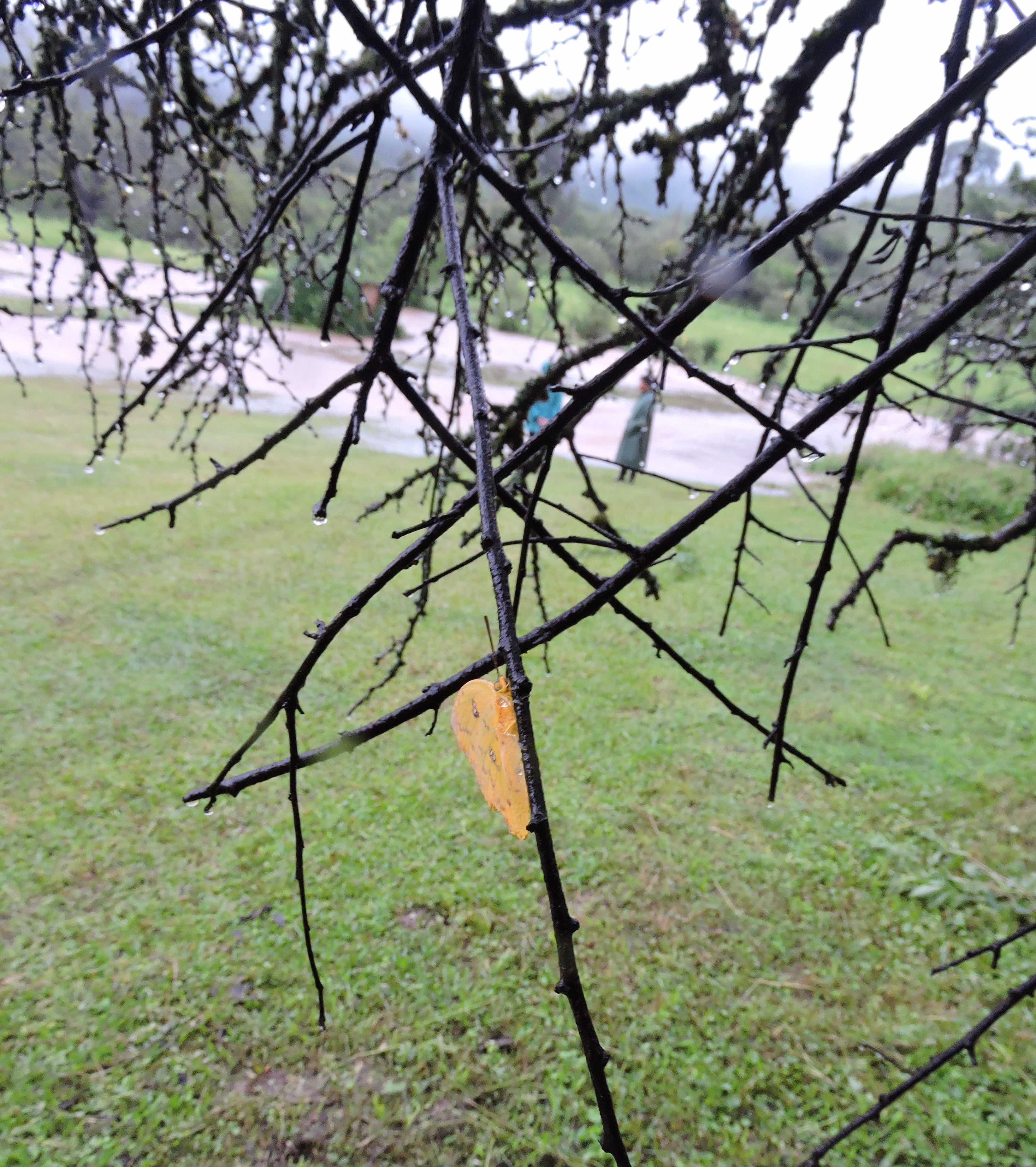
While taking stock of the situation under the rain, I could not fail to see a large orange spot in a tree. Closer inspection revealed a large butterfly hanging upside down. On closer inspection I noted that it had aligned its body to the branch above it and it was perfectly protected from the raindrops.

The butterfly perfectly aligned under the thin branch.

The butterfly perfectly aligned under the thin branch.

Unfortunately my camera would refuse to focus on the insect, as there were raindrops and small branches interfering with its electronic “brain”. Unfortunately it moved off before I could take a better shot.

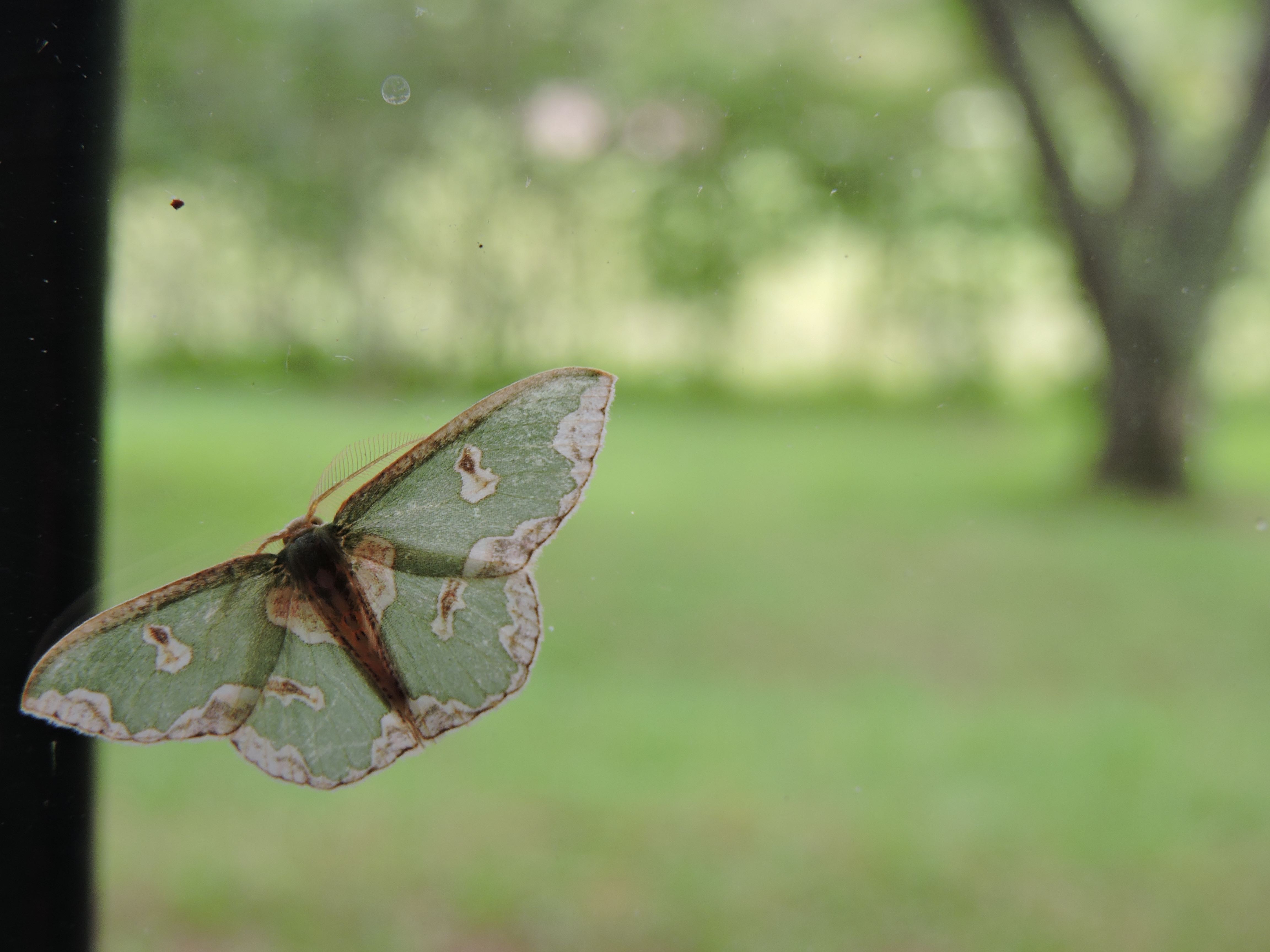
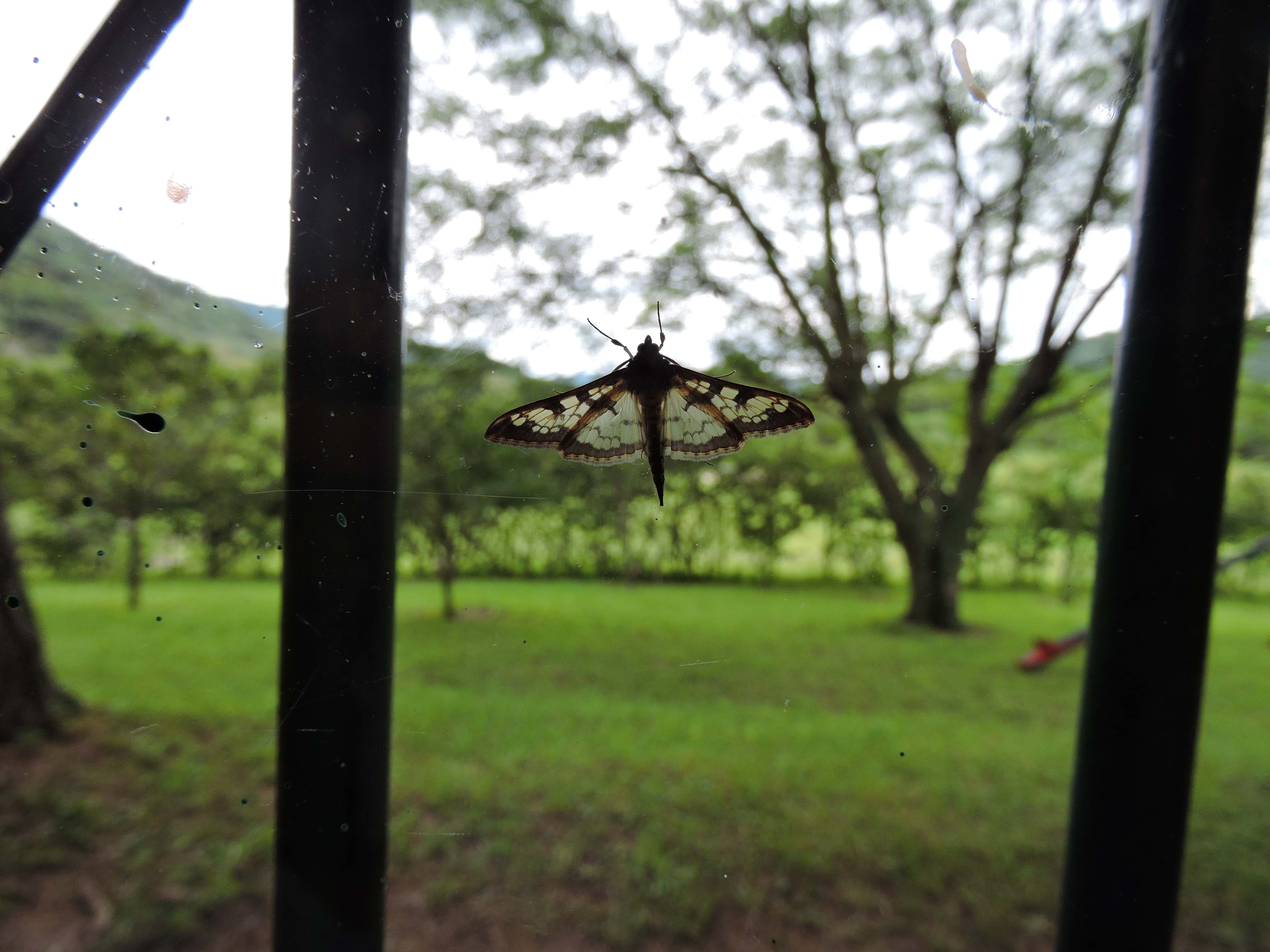
Although you may think that this was a clever ruse from the yellow butterfly, it was really nothing compared with the two shown below that found shelter inside our house!

Safer inside the house and looking out.

Safer inside the house and looking out.

Another clever moth!

Another clever moth!

Camouflage

As I mentioned earlier butterflies and moths are a prominent feature at our farm in Salta. As we are going through a long wet spell, I have taken the time to take pictures of some of the examples of camouflage that I have observed.

Rather than extending this over a few posts as I had done in the past, I decided to collect a few pictures for you to see five real finds that illustrate how Nature designed some of its creations to aid them in their survival. Have a look!

slick moth on leaves cropped

Grasshopper from far

Moth on bark cropped and small

DSCN4289 copy

Moth on Paradise leaves

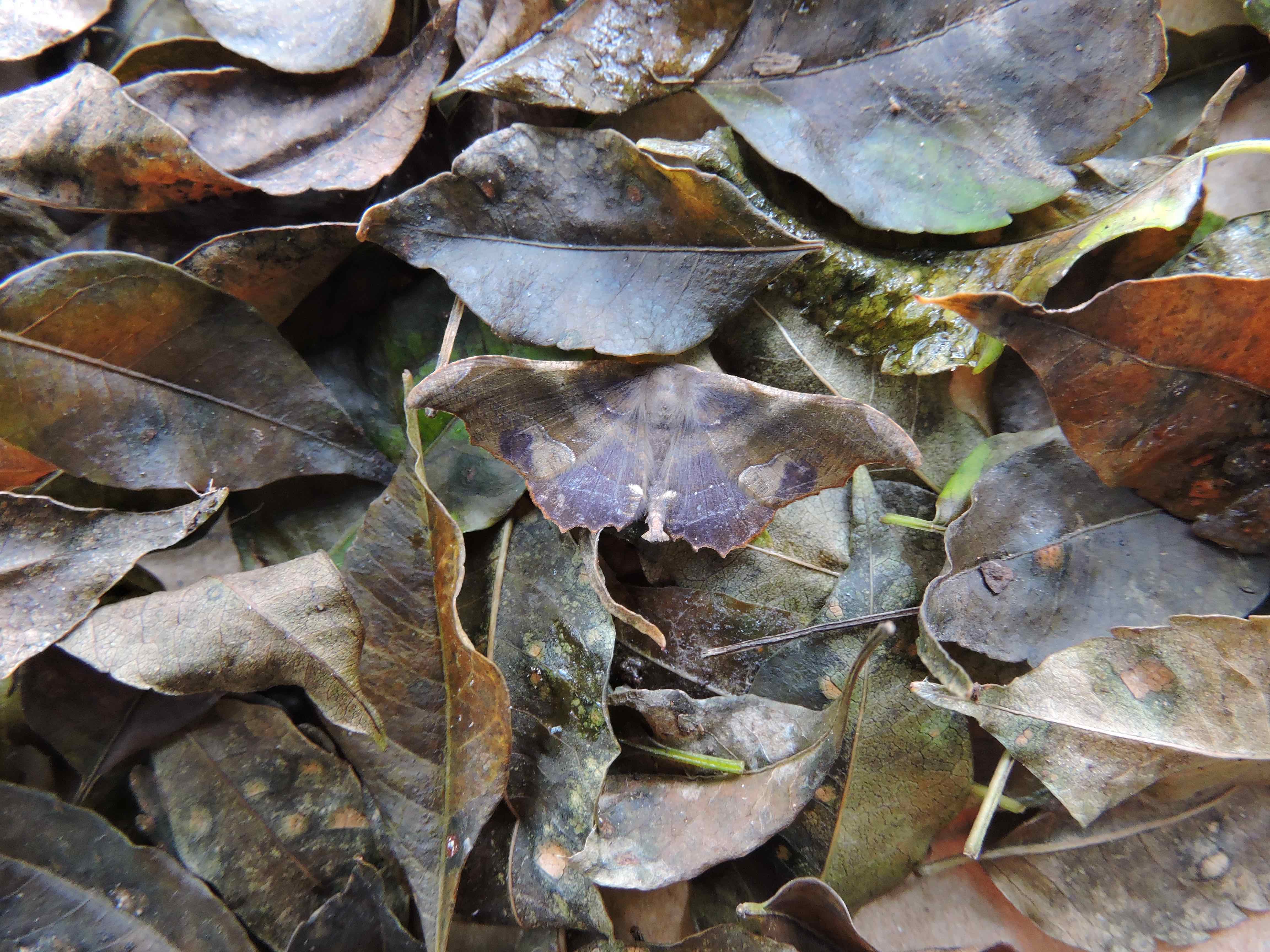
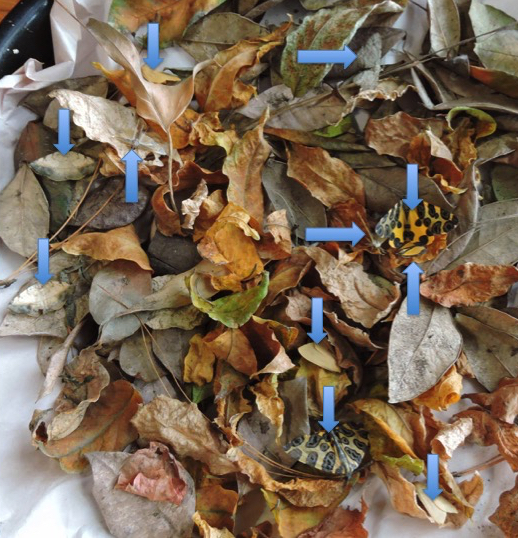
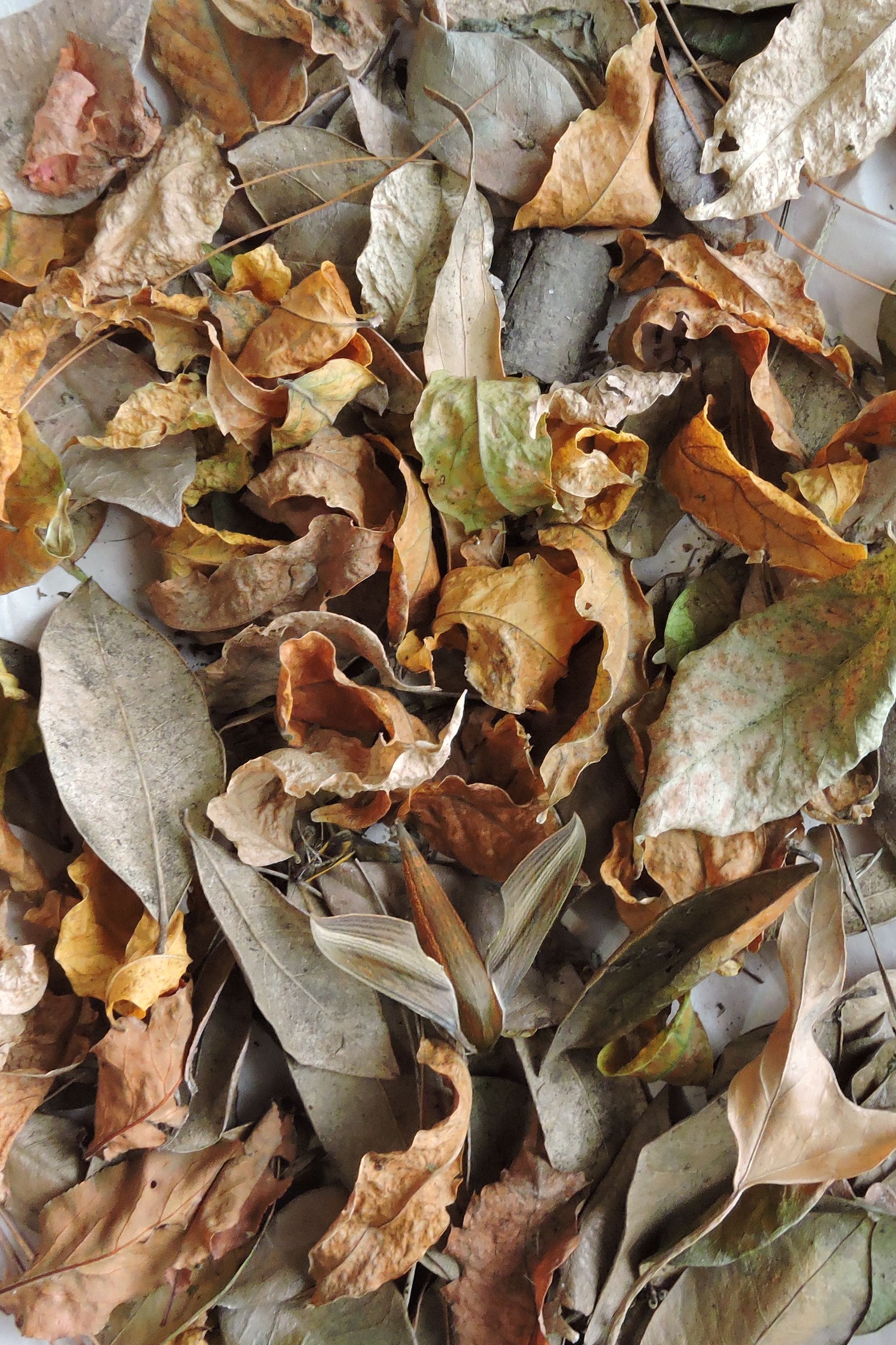
Several moths and butterflies come to our verandah light at night and I am taking pictures of them for a possible checklist. A number of them mimic leaves or tree bark. I then hatched the idea of collecting dry leaves from the garden and release a number of live moths on them hoping that they would stay on the leaves. Well, I can assure you that it was not easy!

However, after a few trials and frustrations I managed to get one shot for you to “admire” and spot the moths. To help you finding them I can tell you that there are more than one but less than fifteen![1]

Moths on leaves

I will reveal all creatures in the next post, hopefully this Saturday…

[1] I am learning to insert arrows to point them out.

Kenya: Muguga[1]

The last night at the Fairview Hotel was a good one and I enjoyed my breakfast in the garden, where I noticed that birdlife in Nairobi was prolific and that there were not only several bird species but there were also large numbers of them! I did not know their names yet, apart from the ubiquitous sparrows that I knew from Uruguay. I was amazed to see birds so tame, in particular a kind of iridescent blue ones with cinnamon chests[2] that would come to my breakfast table expecting something from me! “Cheeky ones”, I thought.

The access to the Fairview Hotel.

The access to the Fairview Hotel.

It was light by 06:00 hours and dark by 19:00 hours so, unless you covered your ears, it was impossible not to be woken up by the early loud bird chorus. As it is customary, a cup of early morning tea is brought to your room and I had asked for mine for 06:30 hs, had showered and packed my bags before I went down for breakfast to be ready for Matt’s arrival.

A Superb Starling (Lamprotornis superbus).

A Superb Starling (Lamprotornis superbus).

The hotel was good and, thankfully, economical as I did not get any perdiem as a FAO Fellow and my stipend was rather modest. I needed to watch my expenses all the time. Clearly aware of my modest income Matt had booked me at a Government’s Hostel in Muguga, known as Muguga House until more permanent accommodation could be found. Muguga was then about 30-40 minutes drive North of Nairobi, in the direction of the Uganda border.

Packing Matt’s car -a smallish Honda Civic- was trickier than expected. One of my bags filled the boot so I went straight for the back seat, only to be warned by Matt “Wait, this is my portable Office archive” I looked up and only then noted that the back seat and floor were covered with papers and publications. “I need to be in several places so I carry the work with me” said Matt while piling papers on the floor in no particular order!, until my bag fit.

We drove straight to the hostel at Muguga. The place consisted of a central building where the administration and common facilities such as dining room and bar were located and a number of two- and three-room cottages with toilet and bath, scattered throughout ample wooded grounds. Matt had already booked me a cottage so my settling in was smooth. I noticed that several cottages were occupied and wondered who my neighbours would be but I left this for later. I adverted the Manageress of the arrival of my wife in about one month and arranged to pay monthly. I also deposited some advanced money for the use of the bar and I was settled.

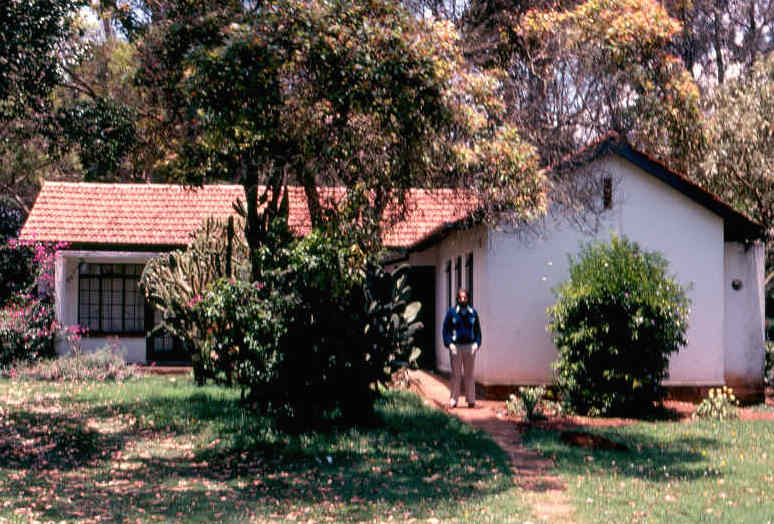
Our bungalow at Muguga House.

Our bungalow at Muguga House.

After Muguga House, we toured the very large grounds of the Kenya Agriculture Research Institute (KARI) where we saw the various establishments based there such as the Kenya Veterinary Research Institute (KEVRI) and the Kenya Trypanosomosis Research Institute (KETRI). Matt pointed out the ICIPE’s “laboratory” at KEVRI. To my eyes it looked like a very small barn but I kept the comments to myself.

We did not find any of our prospective collaborators as most were on leave and others outside the Institute so Matt decided that lunch would be at ILRAD’s restaurant, so we drove back to Kabete, about half way between Muguga and Nairobi. While KARI impressed me as a formerly beautiful place built by colonial Britain and getting slowly worn down by lack of funding and maintenance since Kenya’s independence, ILRAD belonged to another planet! It was a modern and beautifully set campus with manicured lawns and all possible facilities to perform research on livestock diseases. To me it looked like a grand place tailored for high-powered research with several state of the art laboratories and all the necessary equipment that scientific research would need. All of this was nestled in a lovely hilly area where the central manicured lawns and woods were surrounded by grasslands where lovely zebu cattle grazed. “Julio, welcome to ILRAD” said Matt while finding a place to park among the abundant 4WDs and other expensive cars. I could not believe my eyes!

While walking towards the canteen Matt explained that ILRAD was created in 197… to solve two problems Trypanosomosis and Theileriosis. “A difficult job” said Matt and added “I know lots of people here and we will meet a few over lunch”. The restaurant followed the style of a university campus restaurant and it was very busy. The diners were of mixed race and different nationalities. I was amazed, as Ross seemed to know everybody. He walked straight to a large table at a corner and introduced me to the Director General and his Argentinian born wife. I also met many other people that day. The place was a hive of activity and the closest resemblance to a place I had been was the University of East Anglia in the UK while I learnt English prior to my MSc studies in North Wales. It was both stimulating and rather intimidating but, above all, totally unexpected!

After lunch we toured the laboratories and talked to even more researchers about what they were doing until Matt decided that we had done enough and it was time to leave. He invited me to pass by his house in Tigoni, North of Nairobi, for a cup of tea. Matt’s invitations were more decisions than invitations so I was not given a chance to refuse, despite being rather tired by then!

It was a worthy visit as another huge surprise awaited me. His house was a lovely British-style house with a tiled roof and stonewalls, located in beautiful woodlands. A stream ran through the large grounds and this was the source of water for the trout ponds being developed. I could see at least three from the house.

Although she was not informed of our visit[3] his wife gracefully invited us for tea and cake in the lovely garden. Afterwards Matt gave me a guided tour of the trout dams with two of his three young sons. The third one was busy becoming a plane pilot in Nairobi Wilson Airport. It was an impressive development as three dams were being built and there was a lot of activity. Clearly Matt was serious about his trout! Afterwards it was his wife’s turn to show me their flock of African Gray parrots. About eight young parrots were kept in a large enclosure. They were young fledglings when seized as part of an illegal shipment at Jomo Kenyatta Airport. “They were in bad condition when we got them but we were lucky to get them all back to good health” said his wife, proud of her achievement. She also informed me that once fully grown they would be returned to the Kenya Society for the Protection of Animals for distribution.

Matt somehow interrupted the “parrot tour” to bring me back to his verandah as he wished to show me something. I followed him until he stopped facing the dams. “Julio, this has been my dream since I left Scotland” he said and then added “I will catch them from here when I retire and cannot walk anymore” he said, mimicking the fly rod movement from his verandah and laughing heartedly. It was clear that Matt and family enjoyed a very good standard of living that, in my ignorance, I did not expect to find in Africa!

The more I listened to Matt the more I gathered that he was a man with many dreams and ideas both private and professional. While the trout dams being built belonged to the former, the achievement of an immunization method against ECF was clearly part of a realized professional dream. A more recent one was the development of the vaccine against ticks and he talked about it as if it was something really achievable. However, it was clear that his veterinarian’s heart was with ECF work while the tick work -mine included- was more of a necessity for him, despite his infectious enthusiasm.

I continued listening to Matt for the rest of the day and it helped me to get an initial understanding of the persona as well as the worker. It was clear that as someone who got to the top of his working area, he had made himself a few enemies, both black and white. Realizing that I would have to share them I listened carefully. As most people in Kenya at the time, he had a rather colonial view of racial relations! I learnt that he had a long-term rivalry with a Senior Government veterinarian as well as with other British colleagues. He had a clear dislike for one and described his face as looking like “a weasel peering out of a bear’s ass”. I did not really understand what that meant until later!

We drove back to Muguga at the end of the day, still talking and making future plans. We agreed to meet again in a couple of days to carry out a few protocol visits: Government, FAO and ICIPE to start with.

I got back just in time for dinner and to get to know some of my future housemates. There were several Kenyans from up country, Ugandans and the ubiquitous British. I shared the table with some of them. Food was simple (some roasted, boiled or curried meat with rice and occasionally salads), soon to get boring, particularly the boiled cape gooseberries and custard dessert that I eventually learnt would be a lunch and dinner ending feature forever!

More interesting was the after dinner conversation held in the main hall. Most of the guests were long-term and worked in different institutions at KARI. There were mainly agronomists, biologists, foresters and veterinarians and the topics of conversation were Kenyan politics, sports and comments about life in Muguga House. It was entertaining and interesting as well as informative and some of the friends I made there remain friends to this very day!
 

[1] Follows “Kenya – The Beginnings”.

[2] Later I identified them as Superb Starlings, a common bird in East Africa.

[3] No cell phones then!

Kenya: the Beginnings[1]

Recovered from my curry dinner and rested I met Matt, my future supervisor. My first impression was that he did not take much notice of his personal appearance. He was tall with stooped shoulders, going bald and had somewhat bowed legs. He wore khaki gray trousers, a long-sleeved shirt, a green cardigan and Clarks shoes (always the same model that he never changed[2] for the years I was with him!) and, at first sight, he seemed friendly and direct but also demanded respect. He spoke with a strong Glaswegian accent that took a while for me to get used to.

We had a cup of coffee and talked for a while and then he invited me for a tour of Nairobi as he said “Julio, we can talk while we see the city and tomorrow I will take you to Muguga House where you will stay for the time being”. I was delighted, as I had no transport. So we spent most of the day together and I got a valuable briefing on important issues for my future. Most importantly, I liked him and I thought then -I believe correctly- that he also liked me in his own way.

Matt had been born in Scotland 58 years earlier and graduated as a veterinarian in Glasgow. After working in Pakistan (he was very proud of his Urdu), in the 60’s he moved to Tororo in Uganda to work on African Animal Trypanosomosis[3]. His important findings on the epidemiology of this deadly disease placed him in a prestigious place in the parasitology world, particularly in the African context.

His success prompted FAO to hire him in Kenya to spearhead a very large programme to develop a protection method against another cattle scourge in East Africa: Theileriosis [East Coast fever (ECF) or Corridor Disease], caused by a blood parasite -somehow similar to Malaria- known as Theileria. Those were the days of the early East African Community composed by Kenya, Tanzania and Uganda. The Brown Ear Tick (Rhipicephalus appendiculatus) is ECF’s vector[4] inoculating cattle (and other wild animals) with the Theileria parasites from its salivary glands, and, most of the time killing the susceptible animal. Some wild animals such as African Buffalo survive the infection and become “carriers” of the parasite, a kind of storage for the disease that can jump again to cattle through the ticks as the latter feed on different hosts.
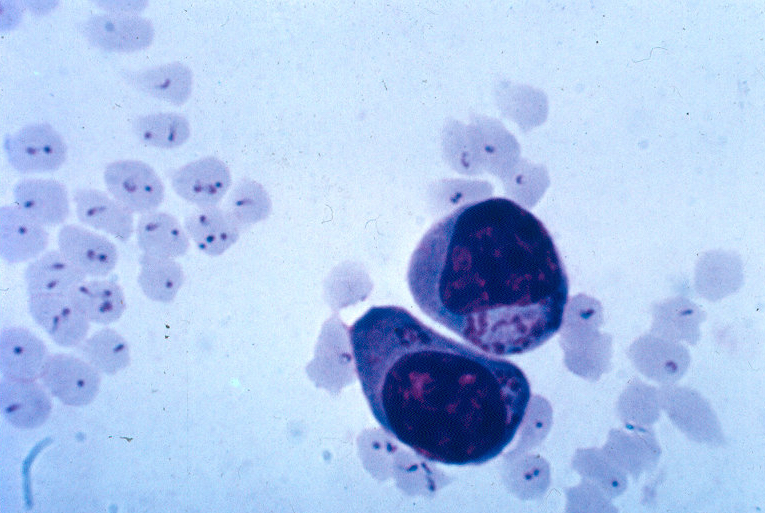
Theileria schizonts (inside cells with nucleai) and infected erythrocytes.

Theileria schizonts (inside cells with nucleai) and infected erythrocytes.

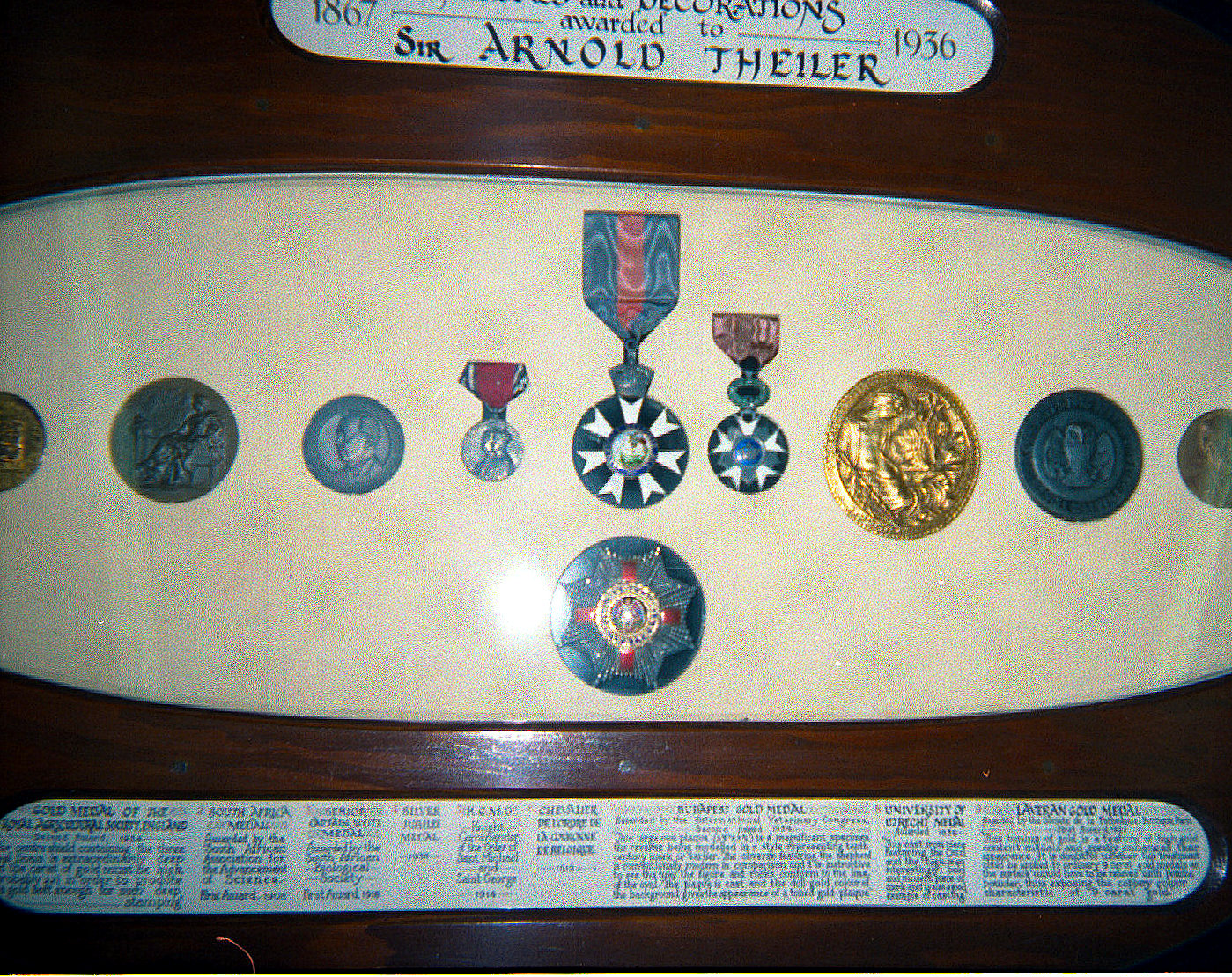
Theiler's condecorations for his outstanding work.

Theiler’s condecorations for his outstanding work.

Clearly, Matt’s main contributions to the programme were to keep a very diverse scientific team working together for years and to achieve its goal. (Later, I learnt that he was a strong leader and heard several stories of rather vehement programme meetings where participants came to blows and chairs flew but I am not able to confirm them).

It was clear that he had managed to successfully “translate” his research in Trypanosomosis to ECF. Success started when the programme managed to reproduce the disease artificially by injecting a known number of ECF infective units extracted from the tick vector[5]. This achievement enabled the programme to develop an efficient system to work with the disease that, after more than ten years of research, culminated in the development of an immunization method: a mix of Theileria types[6] that, when inoculated to an animal together with the right antibiotic (tetracycline), would produce a very mild disease and result in the animal becoming immune practically for life[7].

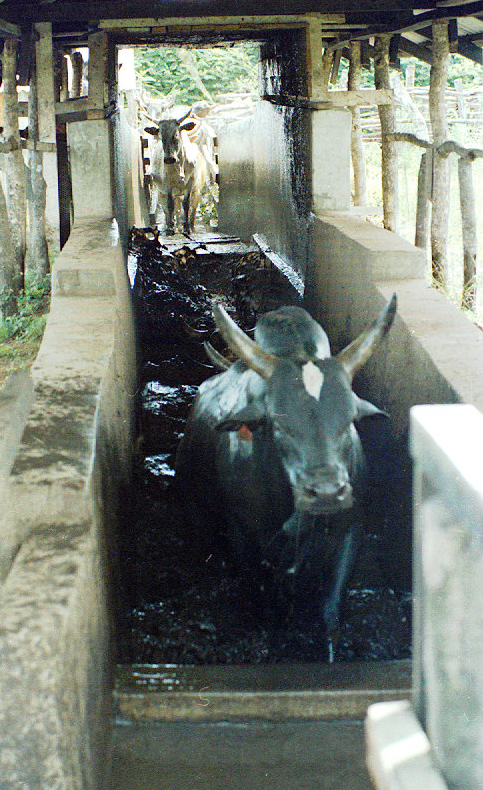
Cattle being dipped with acaricides.

Cattle being dipped with acaricides.

Until the development of this immunization method, the only way to keep cattle in ECF endemic areas was by “cleaning” the animals with insecticide-like chemicals known as acaricides[8] dissolved in water as often as twice a week! In theory, the new immunization method would remove the need for intense acaricide treatment with beneficial effects for both the animals and environment.

Despite the advances in ECF immunizations, the ticks would still be there and have an impact on the animals as parasites. I was a small cog in this rather complex parasite-vector-host system and my mission was to quantify the effects of the ticks themselves on productivity and their economic impact. I had 30 months to achieve this! Clearly Matt’s over-optimism had permeated the project proposal, as I later discovered was true for most proposals he developed…

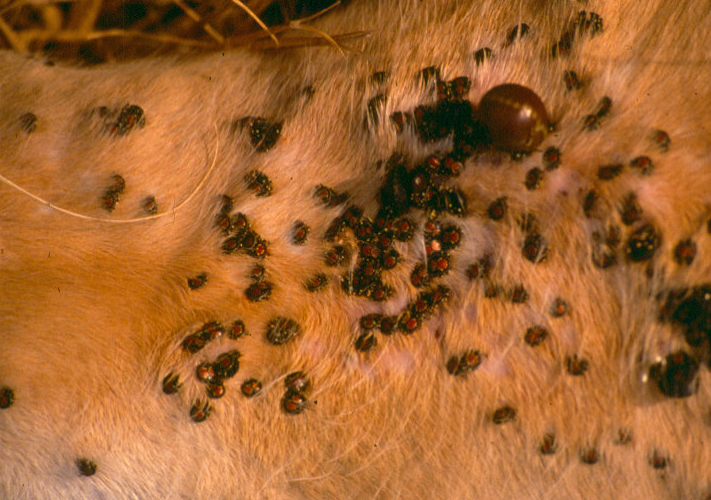
Heavy tick infestation, mainly Amblyomma spp.

Heavy tick infestation, mainly Amblyomma spp.

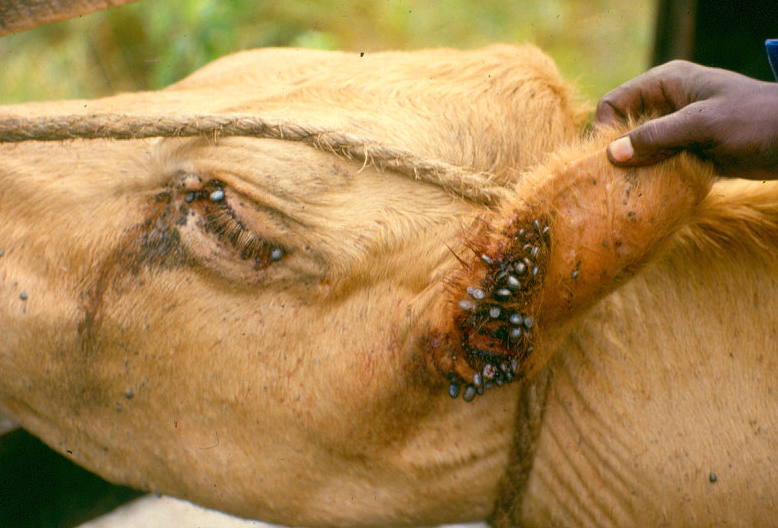
Brown Ear ticks

Brown Ear ticks

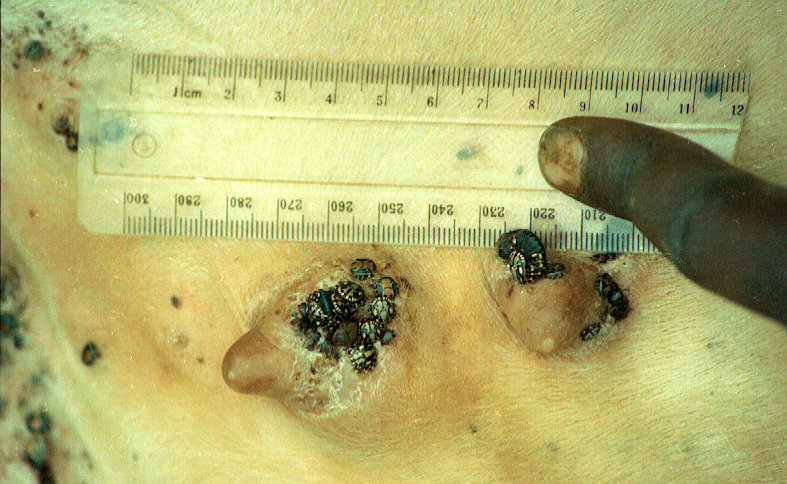
Amblyomma cohaerens (gold) and A. variegatum (orange) tick infestation.

Amblyomma cohaerens (gold) and A. variegatum (orange) tick infestation.

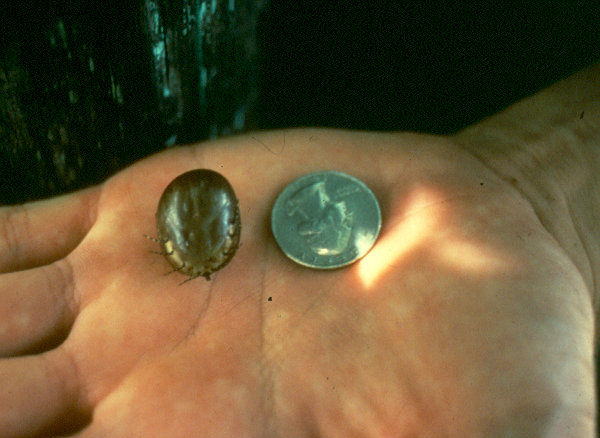
The size of a tick!

The size of a tick!

Matt, at the timenow retired from FAO, was the Director of the Tick Programme ofat the International Centre of Insect Physiology and Ecology (ICIPE). The ICIPE would host me as an FAO Fellow attached to the Tick Programme so he was my direct supervisor. . I was seconded by FAO to the latter, hence his role as my boss. The Tick Programme was working on the ecology of the Brown Ear Tick as well as searching for a “vaccine” against the Brown Ear tick vector. “Julio, we have a laboratory in Muguga and good relations with the veterinarians working on ECF there, so we will succeed”, he said. I listened with interest, accumulating questions and anxieties!

He was very excited with my arrival. I recall him saying “Julio, you are at the right place at the right time” while lighting another Sportsman cigarette (he was a heavy smoker), adding “Most of the important work on theileriosis is taking place in Muguga!”. In fact I was a bit too early but I did not know this yet! He explained that the work of the now finished FAO programme still continued and the immunization method was being laboratory and field-tested in various places in Kenya, mainly Muguga[9] and the International Laboratory for Animal Diseases (ILRAD)[10]. “Julio, the key word is collaboration” Luckily, because of his past work he had lots of connections with people working in ECF in Kenya.

Almost immediately he mentioned Alan as one of his main allies. A Northern Irish parasitologist that as Matt put it: “has green fingers with parasites”. You will work closely with him, as he is the man behind ECF immunization. “He is waiting for you at Muguga!” he said. He added, “Robin, our tick ecologist -on leave now- is also there. He knows everything you need to know on the ticks so you will be OK”. I noted that Muguga would be an important place for me!

We drove around Nairobi and he showed me some of the key spots: the FAO Office near Bishops Road, the ICIPE HQs at Chiromo, ILRAD and the Veterinary Laboratory, both located at Kabete and other useful places in town. He never stopped talking about work! We did not drive to Muguga (about 30 km north of Nairobi). He promised to take me there the following day.

I soon realized that Matt was an “ideas man” and that I was part of one of them! He believed that my fieldwork was possible and had agreed with FAO to host my research. I also learnt that there were a number of knots yet to be untied for me to do my job. The place where I would work was the main bone of contention but Rusinga Island was still top of the options. My preoccupation increased!

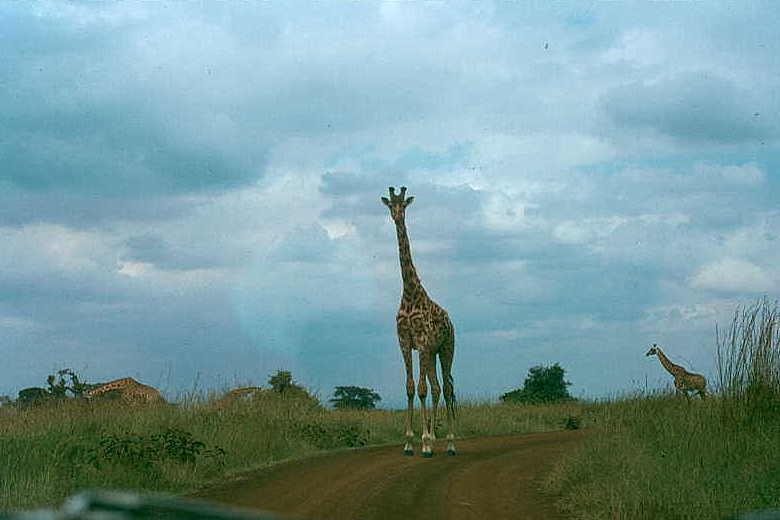
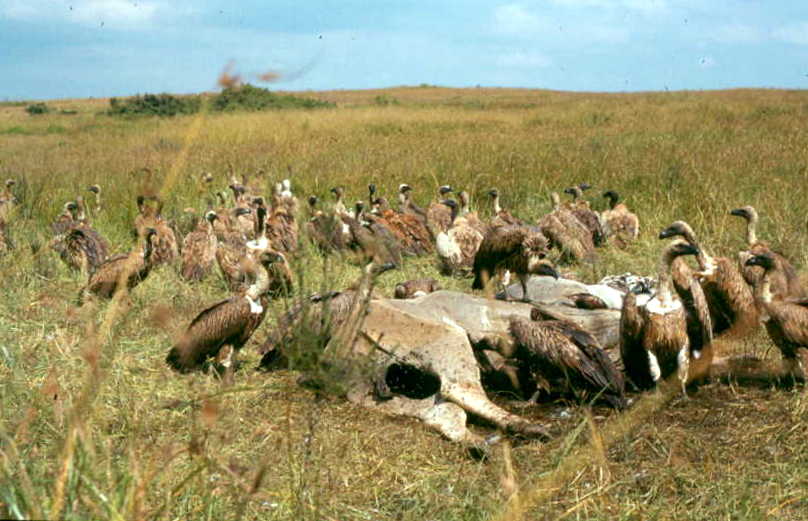
Lunchtime was approaching and Matt proposed to have lunch at the Nairobi National Park. I happily obliged. So, after stopping at a duka[11] to buy samosas[12] and two packs of milk we drove to the Park. We soon got there and we drove almost straight to the Viewing Platform without stopping to watch anything! Matt had seen all or did not care about wildlife! I took some hurried pictures of what I could during the short stoppages he did or from the moving car. It was the first “real” wildlife I had seen! We stopped for a herd of giraffes and drove past vultures at a kill and had our lunch while taking in the view extending into the Athi plains and beyond. It was my first picnic in the bush at a beautiful location! Matt continued talking about work, his enthusiasm unabated!

My first giraffe at Nairobi National Park.

My first giraffe at Nairobi National Park.

I took this picture of vultures at a carcass while driving past!

I took this picture of vultures at a carcass while driving past!

Occasionally he would digress to his other passion in life: fly-fishing. He loved it and never missed an opportunity to practice it. He explained that he was building dams at his house in Tigoni -an area North of Nairobi where many British lived- so that he could keep his own trout. “Julio, I can catch them from my verandah” he said while mimicking casting his fly towards the plain! I was also a fisherman but knew little about fly-fishing so I limited myself to polite and rather useless comments! He promised to take me to his house to show me the dams and to introduce me to his family. Clearly aware of my rather useless comments regarding fly-fishing he never invited me to join him!

At the end of the day Matt dropped me off at the hotel and we agreed that the following day he would collect me in the morning and take me to Muguga, my future “home”. I was tired, both physically and mentally. Although I had gained valuable information I had also accumulated many questions that I needed answers to. Being young and rather anxious, I needed to rest, relax and think. I had entered a new world with new places, new people and a different working methodology. I was beginning to realize that my work would come with a few trials. Despite this, I never regretted my choice as I loved the Kenya atmosphere and I was hopeful that things would work out in the end, despite my present doubts.

[1] This post follows “Africa – Arrival”.

[2] He may have several pairs of the same model!

[3] At the time Glasgow Veterinary College was strong in East Africa.

[4] Similar role to the mosquito in malaria.

[5] Until then ECF was only caused by applying live ticks.

[6] Theileria parasites vary in different areas.

[7] This method known as “infection and treatment” is still today the only practical method available to us, despite years of high-powered and costly scientific research.

[8] Ticks are acari. Acaricides are very toxic chemicals.

[9] The Kenya Veterinary Research Institute (KEVRI) of the Kenya Agriculture Research Institute (KARI) was located at Muguga.

[10] Now the International Livestock Research Institute (ILRI).

[11] The local name for a shop that in the “old” days was mostly owned by Indian migrants.

[12] A fried triangular pastry filled with minced meat, mutton or chicken, heavily spiced and chilly-hot.

Steeplechase shower

Ingredients:

A gas-operated water heater

Low shower curtain and thick rod

Washing machine outlet inside the bath (with stone)

Donkey-skin towel

The list of ingredients alone should give you an idea of the setting. However, I will elaborate a bit further so that you can get an idea of the predicament I was in. The rains this year in El Gallinato, Salta, Argentina have been abundant so there is plenty of water in our borehole, a welcome change from previous years. The end result of this is that “abundant” and or frequent showers are possible if you so wish. This is not our case as we are programmed to save water but the possibility is there.

Getting ready for the dentist appointment, I decided to shower, as smelling foul would surely increase dentist’s aggressiveness above my perceived Mengele’s level. So I went for it.

To have a shower with a gas water heater requires opening the tap so that the flow of water triggers a flow of gas that gets lit by the pilot lamp and hot water comes out the other end. For the system to operate, the water has to have pressure and the gas cylinder gas! Both were estimated OK and I went for it, after opening the tap for the water to reach the right temperature.

Regrettably, the shower curtain to enter the bathtub where the shower is located is lower than me so “bang” went my bold cranium and, although severe, I managed to keep my balance and the hot water relieved my pain so that I could proceed with the cleanup. After finishing the operation to my satisfaction – though probably not my family’s – I decided to close the tap and leave, this time minding the wooden bar to avoid further brain damage.

I aligned my agile physique to avoid the bar and, again, unlucky I stepped on the stone weighing down the outlet pipe of the washing machine, which is also located in the bathtub. The pipe spluttered all over the place the first time the machine was used and I attached a rather large stone to it, to hold it and the shower curtain down. This time I lost my balance and went into the start of a headlong and inelegant fall that I managed to control by holding onto-and ripping off- the shower curtain. Thankfully the rod that hit me earlier withstood my weight and somehow I survived this second attempt on my life!

Remembering that I am retired and should look after my health, I paused, took a deep breath and I promise you I did not curse… I recovered and looked forward to a good drying and rub down with a dry towel. The final disappointment was waiting for me in the shape of a well known and hated towel known as the “donkey hide”, an ass-coloured cloth that I hate as it has the unbelievable property of only moving the water around your body without absorbing any water or drying it! So, after pushing the water down my body and into the floor drain with the assistance of the donkey hide, I ended up -still wet- sunning myself naked in the garden in an attempt to get dry, under the midday sun, with a bump on my head and checking to make sure that my ankle was OK.

Farm showering for you!

Flying Gems

When I saw jewels flying I thought that hypoxia had accentuated my natural brain decay. Even under these circumstances I was quite surprised!

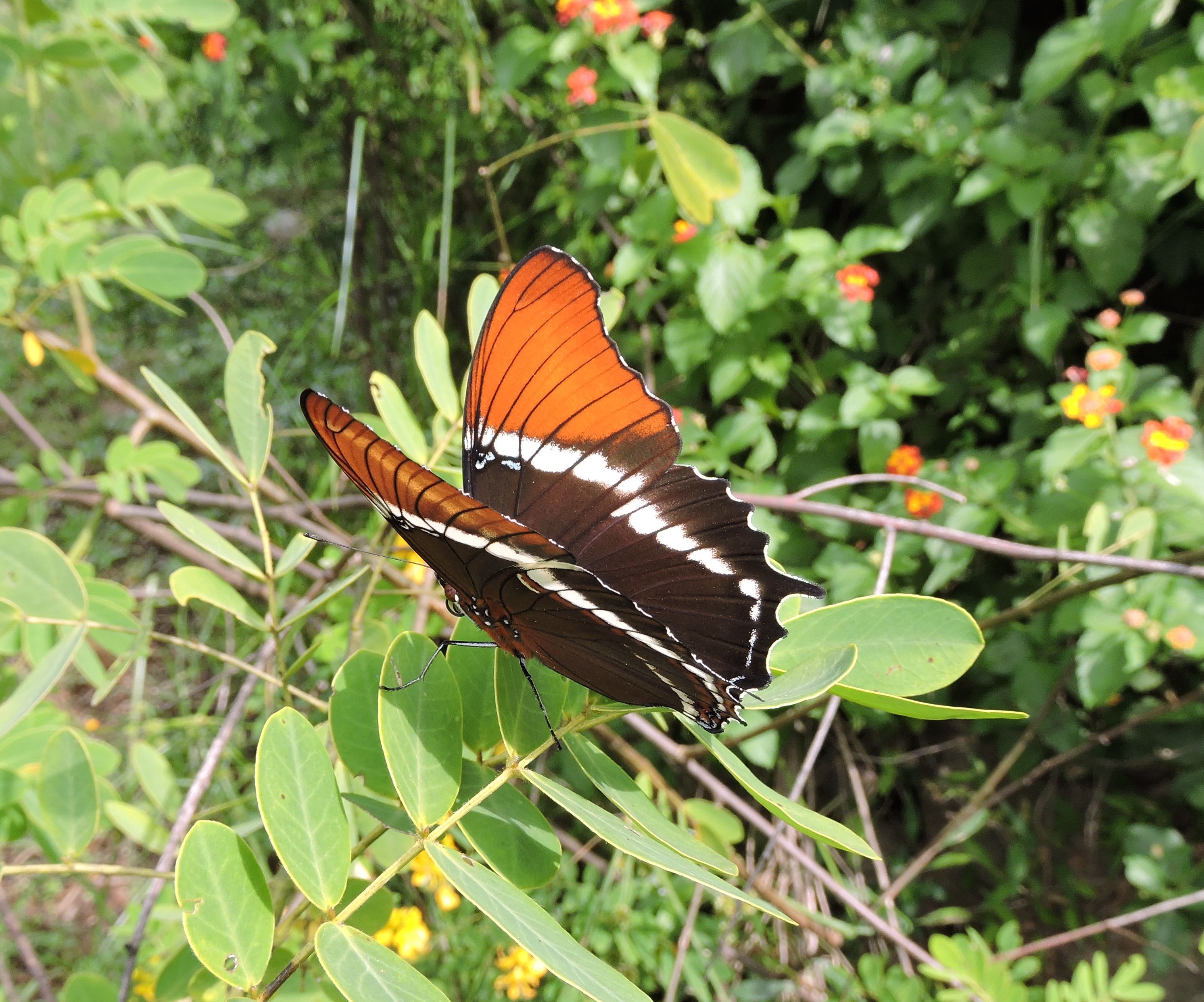
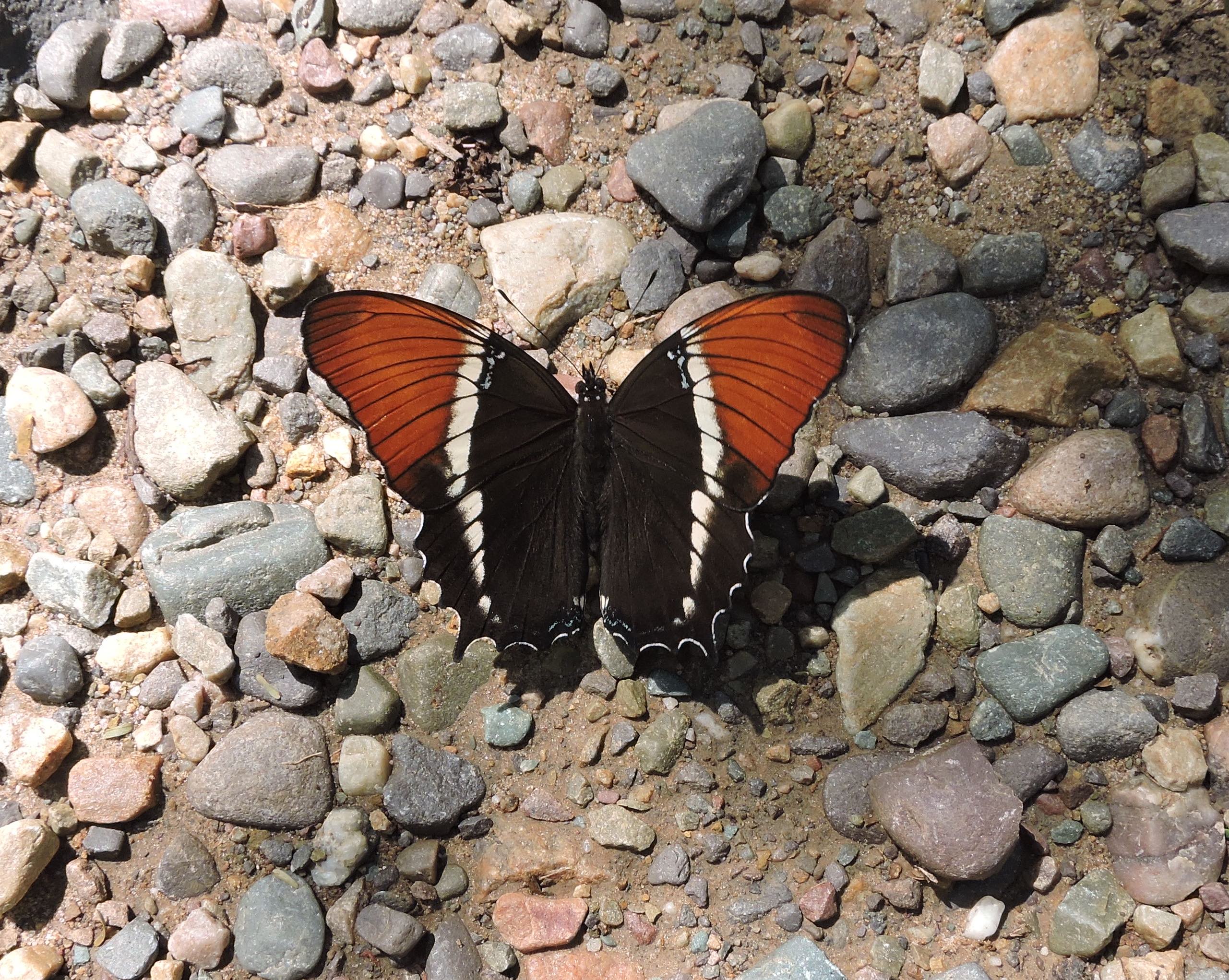
It all happened while practicing the “walking to keep fit” arrangement that my wife and I performed daily, weather permitting. Of course you have already guessed that they were butterflies and that unlike García Marquez in his masterpiece One Hundred Years of Solitude, I failed to convey the proper message. For this reason, this post is mainly about the photographs I took of what was flying around during a few days walking in and around our farm at the Andes foothills[1].

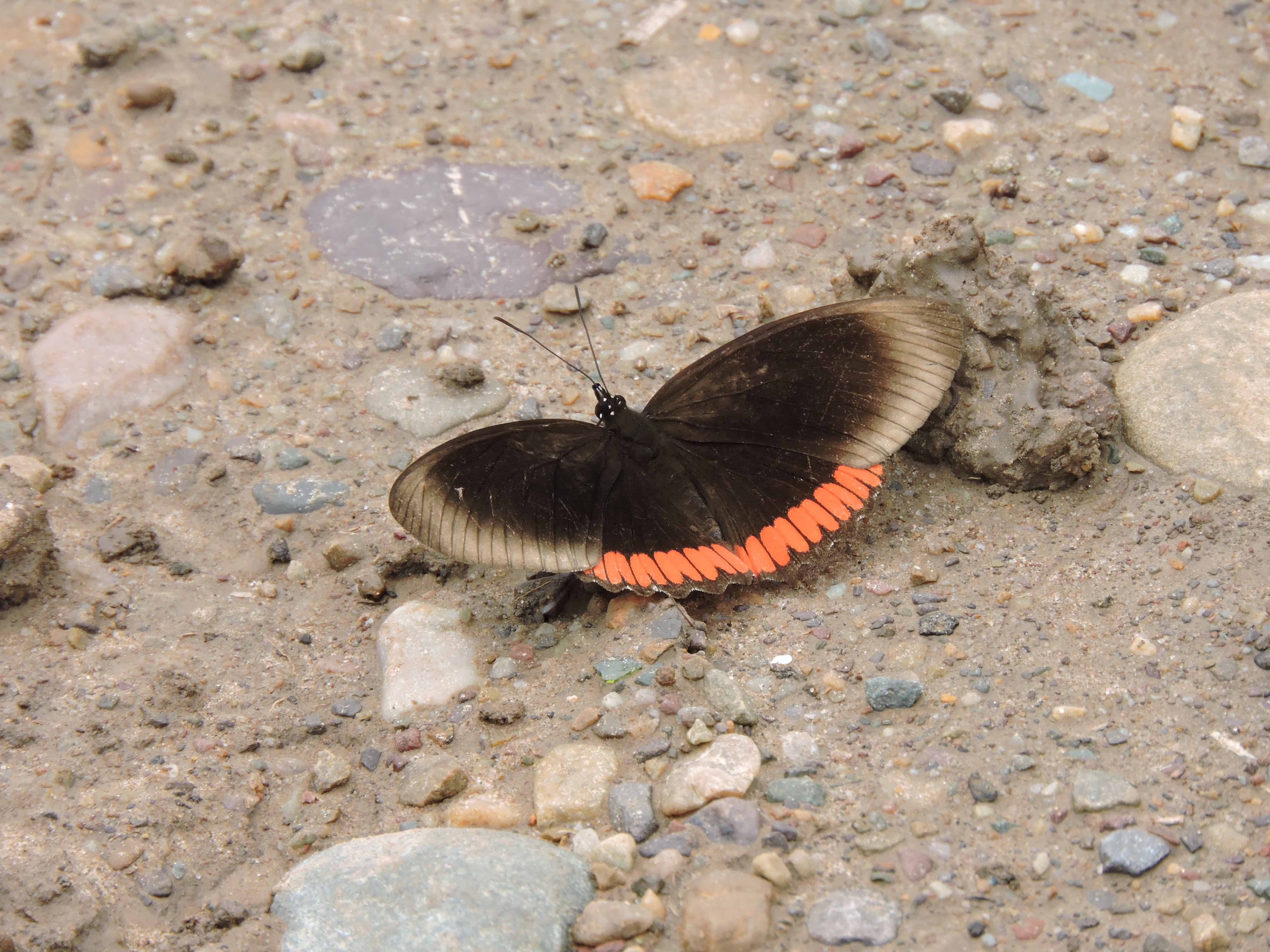
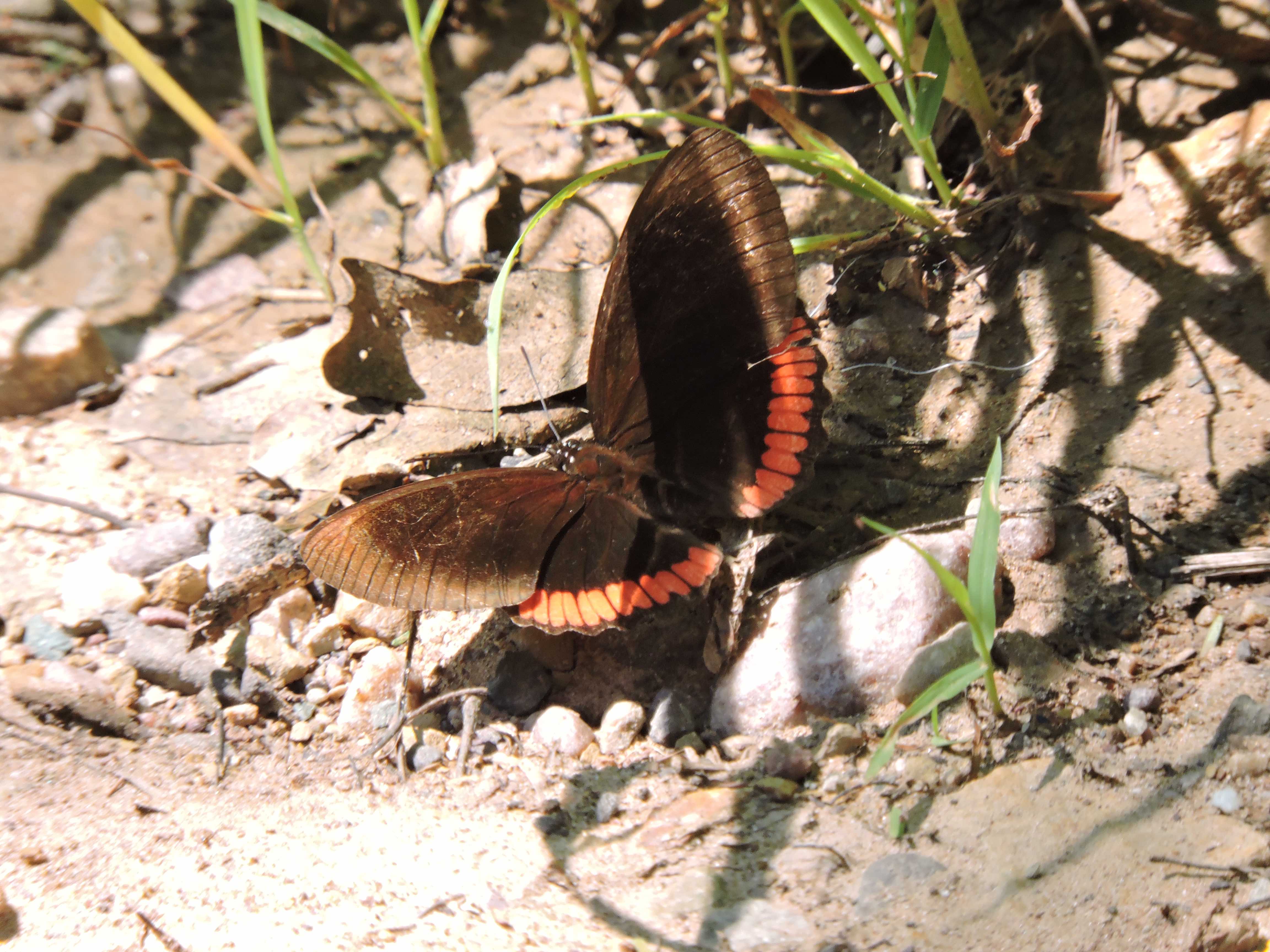
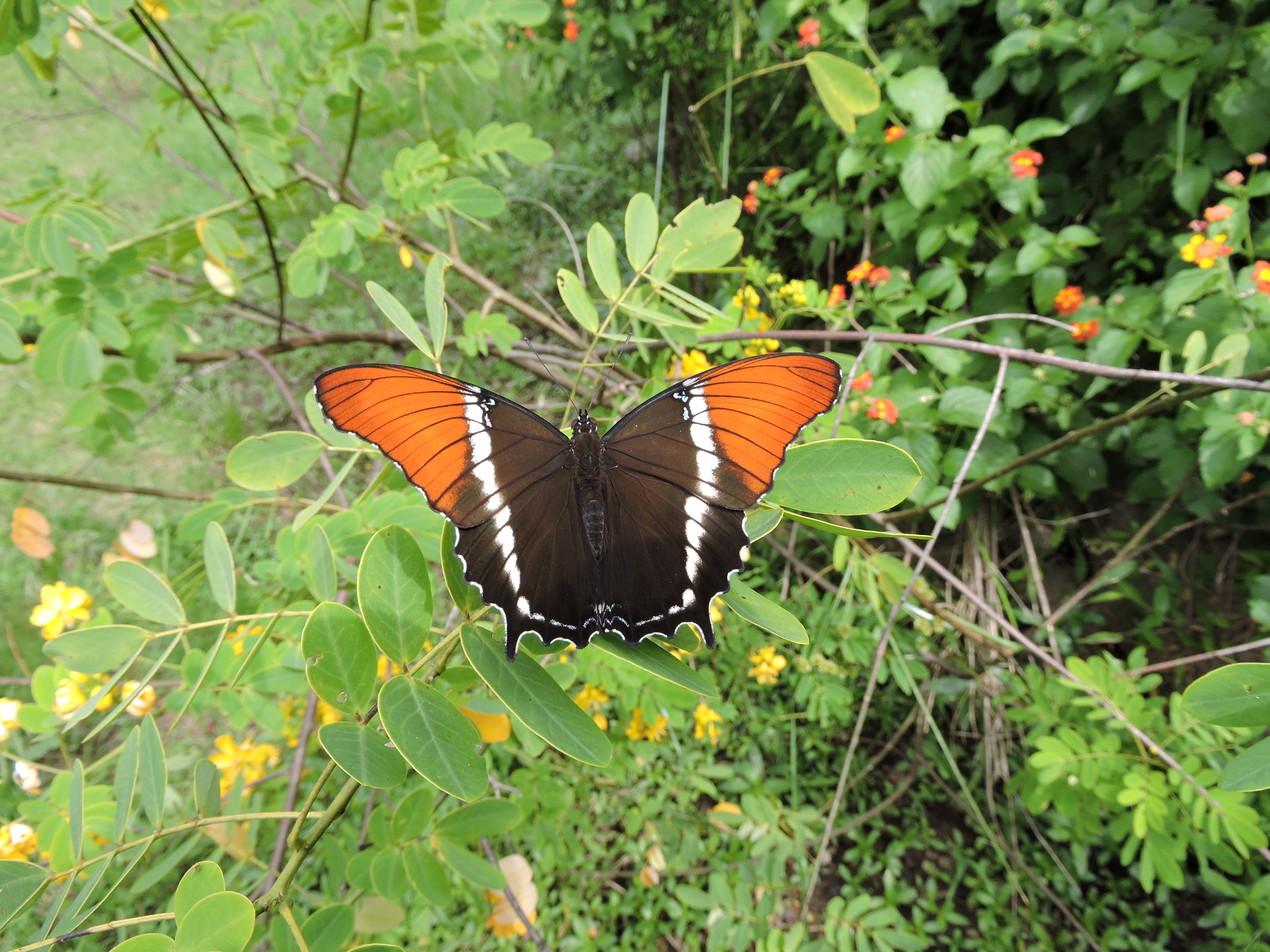
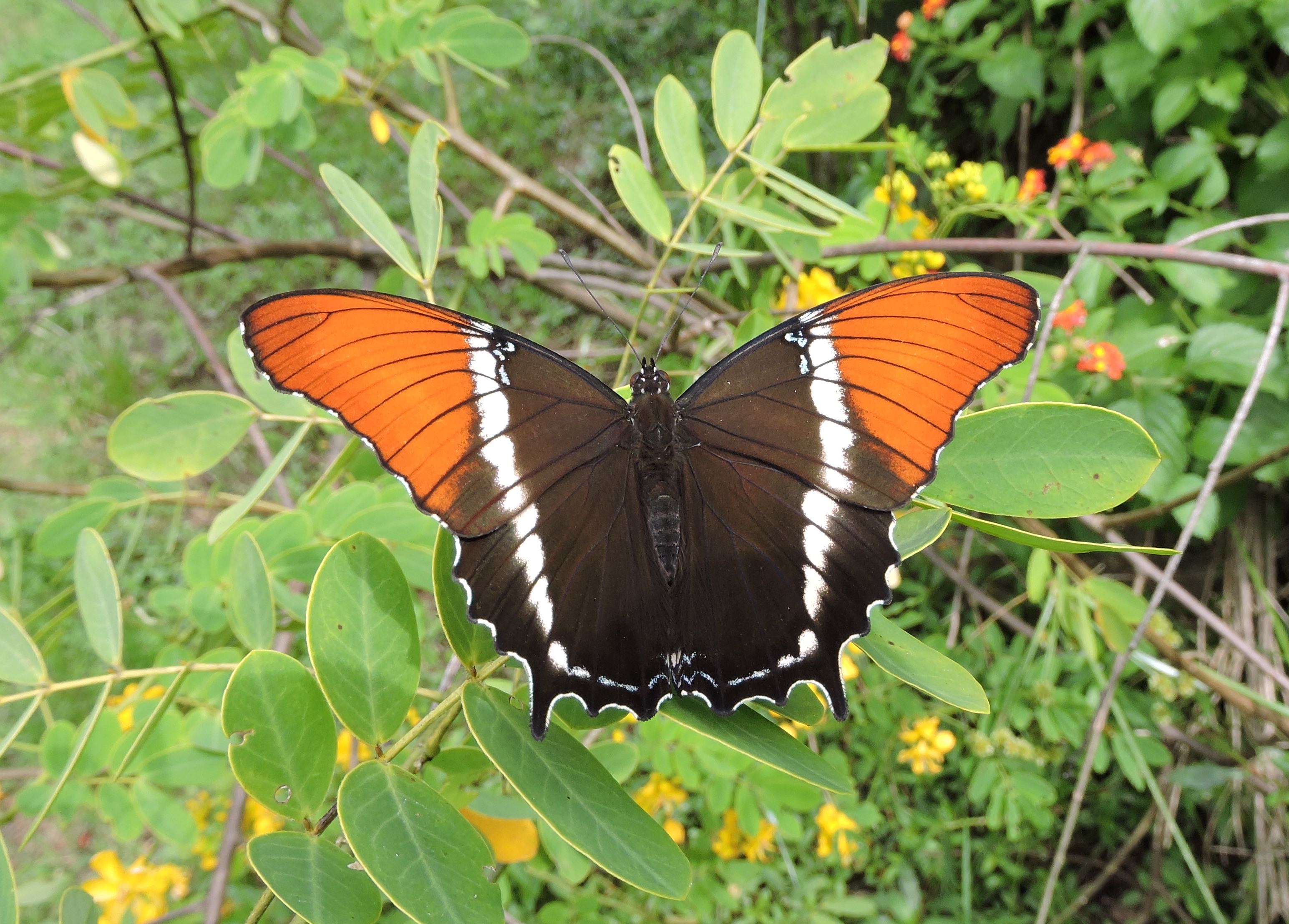
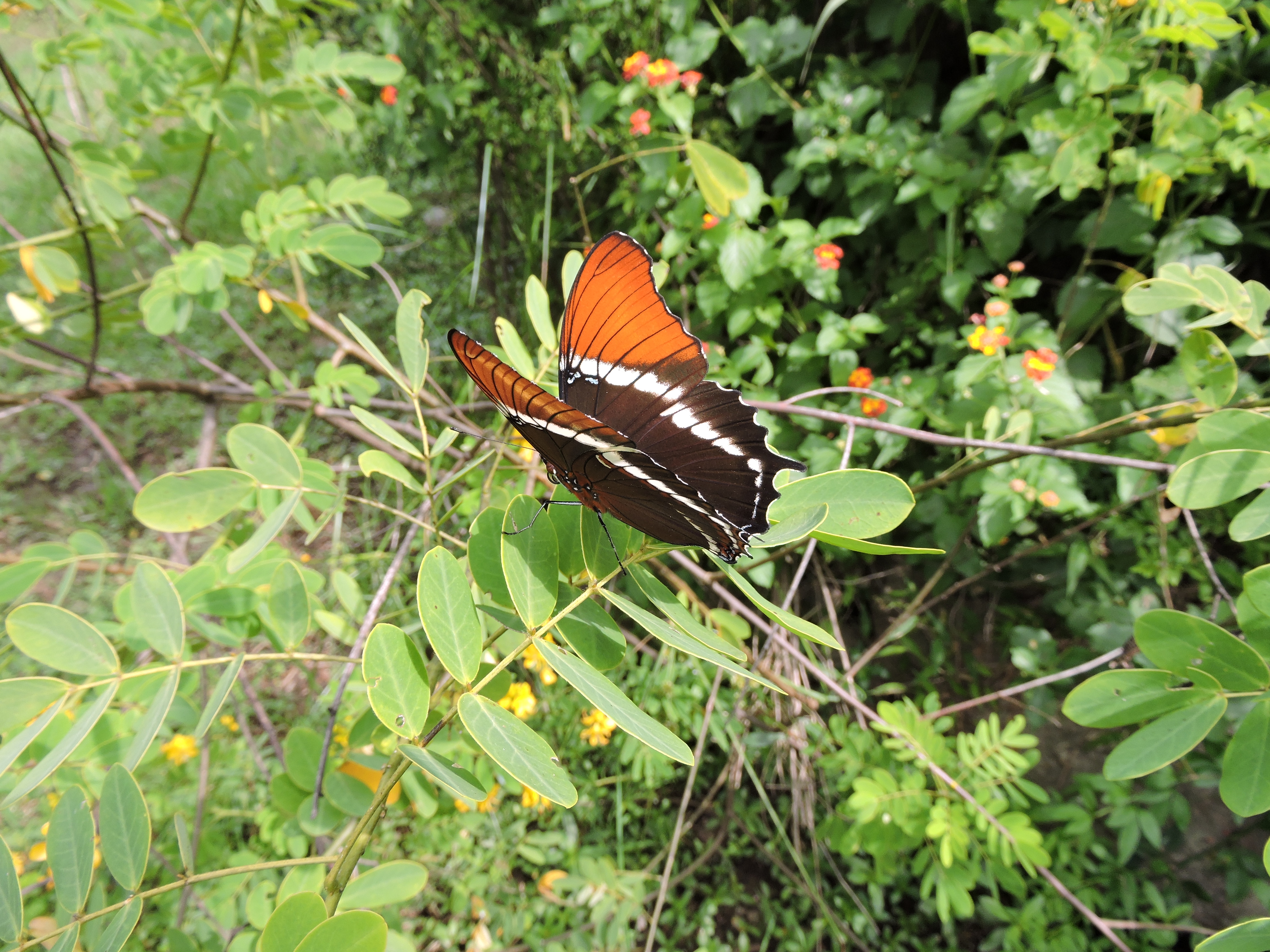
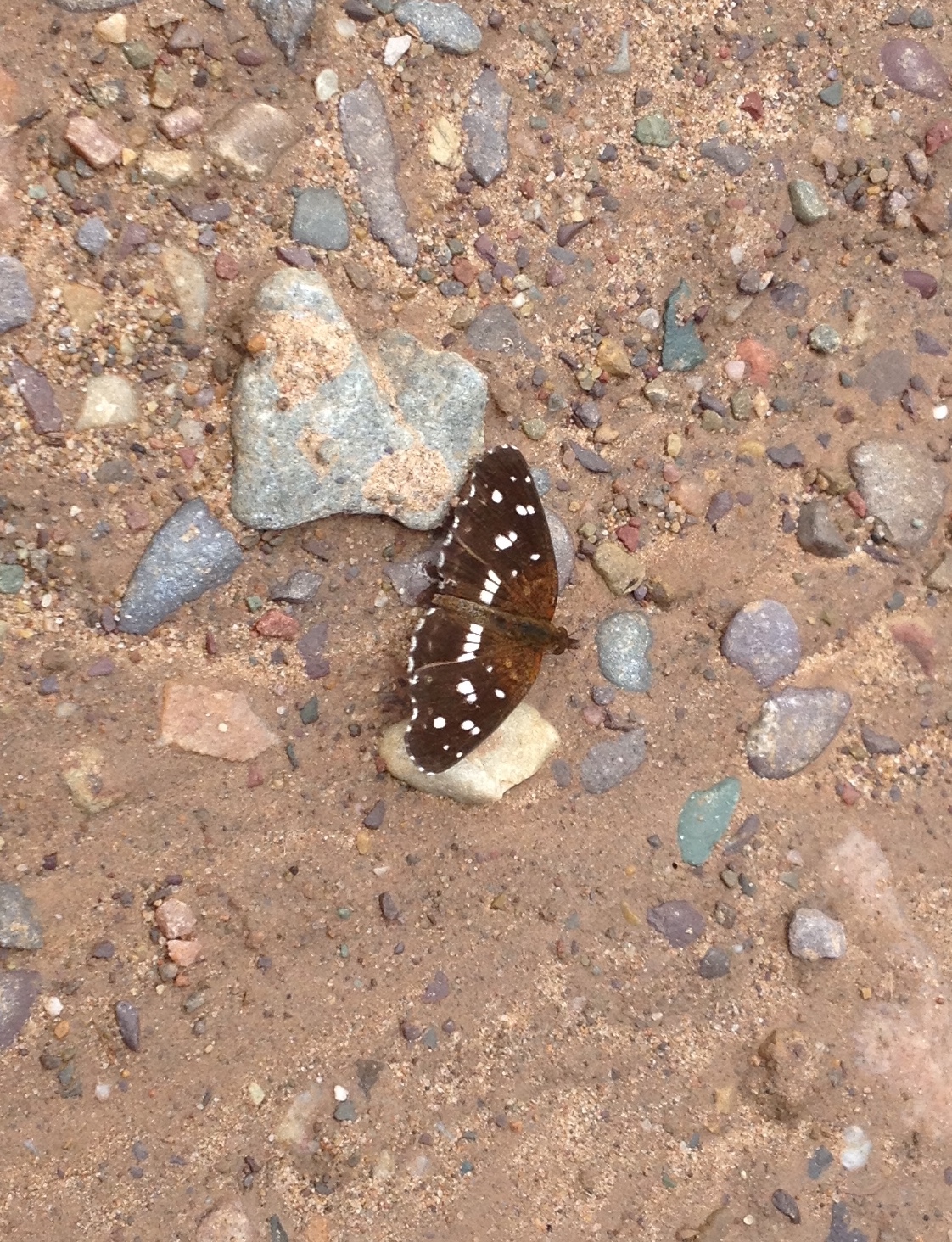
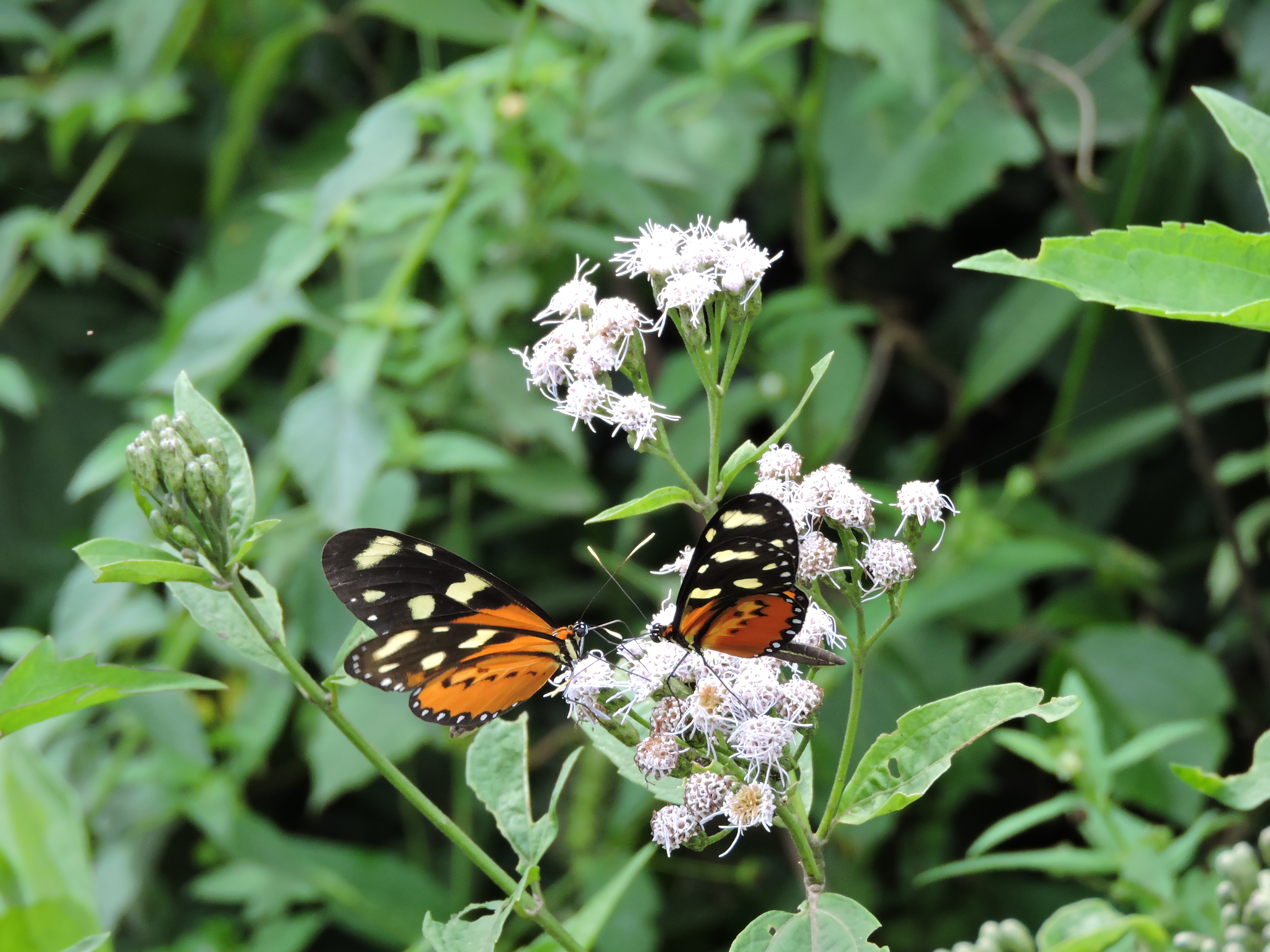
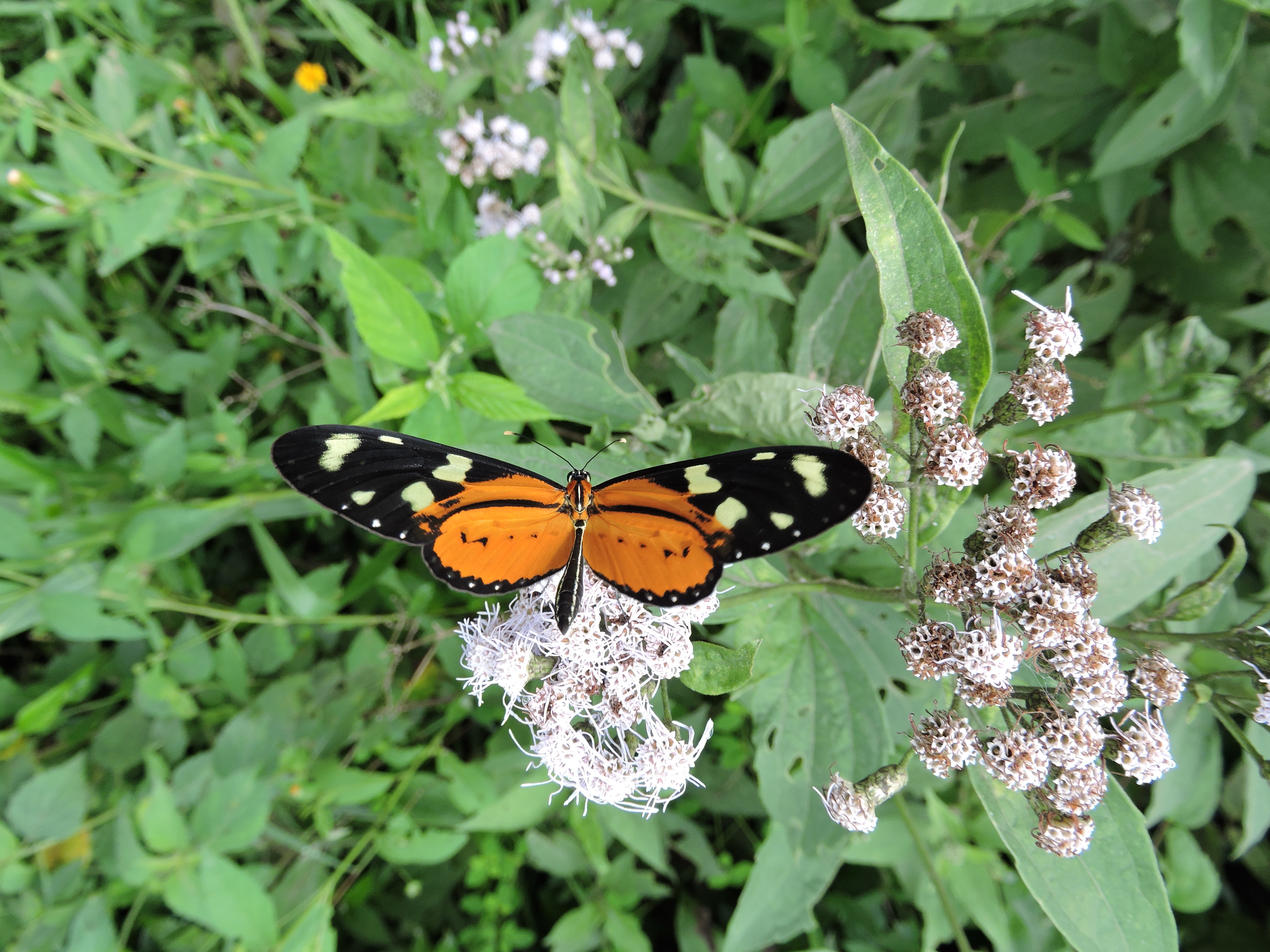
The first one that caught our attention was the Crimson-banded Black (Biblis hyperia nectanabis), very mobile and tricky to capture. These are the best I got:

Crimson black 2 small

Crimson black 1 small

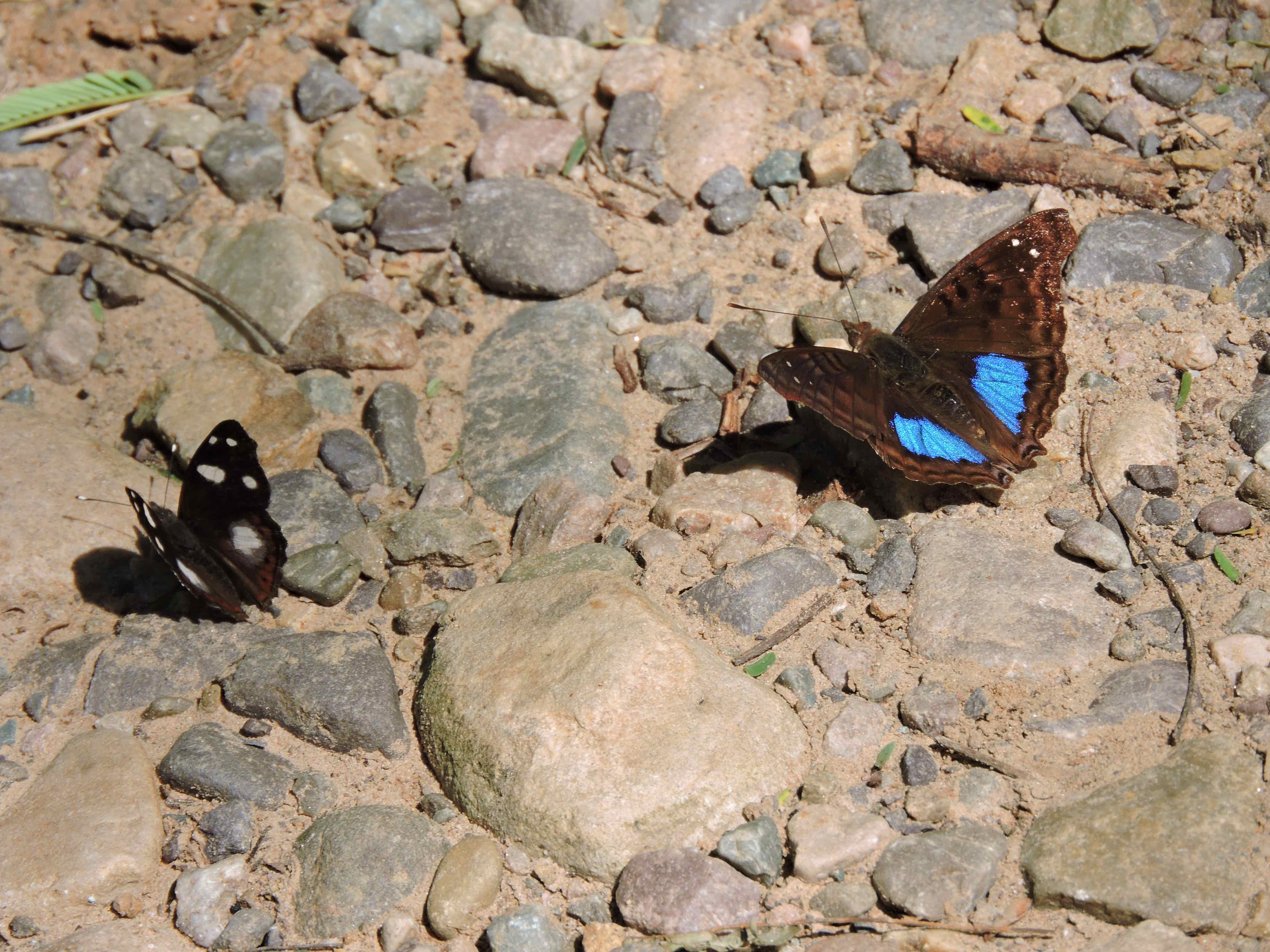
We could also not fail to notice a few others that, with their fair share of beauty, immediately attracted our attention. These are shown below:

Dark Malachite 3 Dark Malachite 3 crop Dark Malachite 2 Dark Malachite 2 crop Dark Malachite 1 crop

Five pictures of Dark Malachite (Siproeta epaphus epaphus)

Yunguena Sapphire and hooked small

Yungueña Sapphire (Doxocopa cyane burmeisteri) on the right and Hooked Small (no Latin name)

Fuegan Fuegan open Fuegan open crop Fuegan -2- crop

Fuegian (Mechanitis lysimnia elisa)

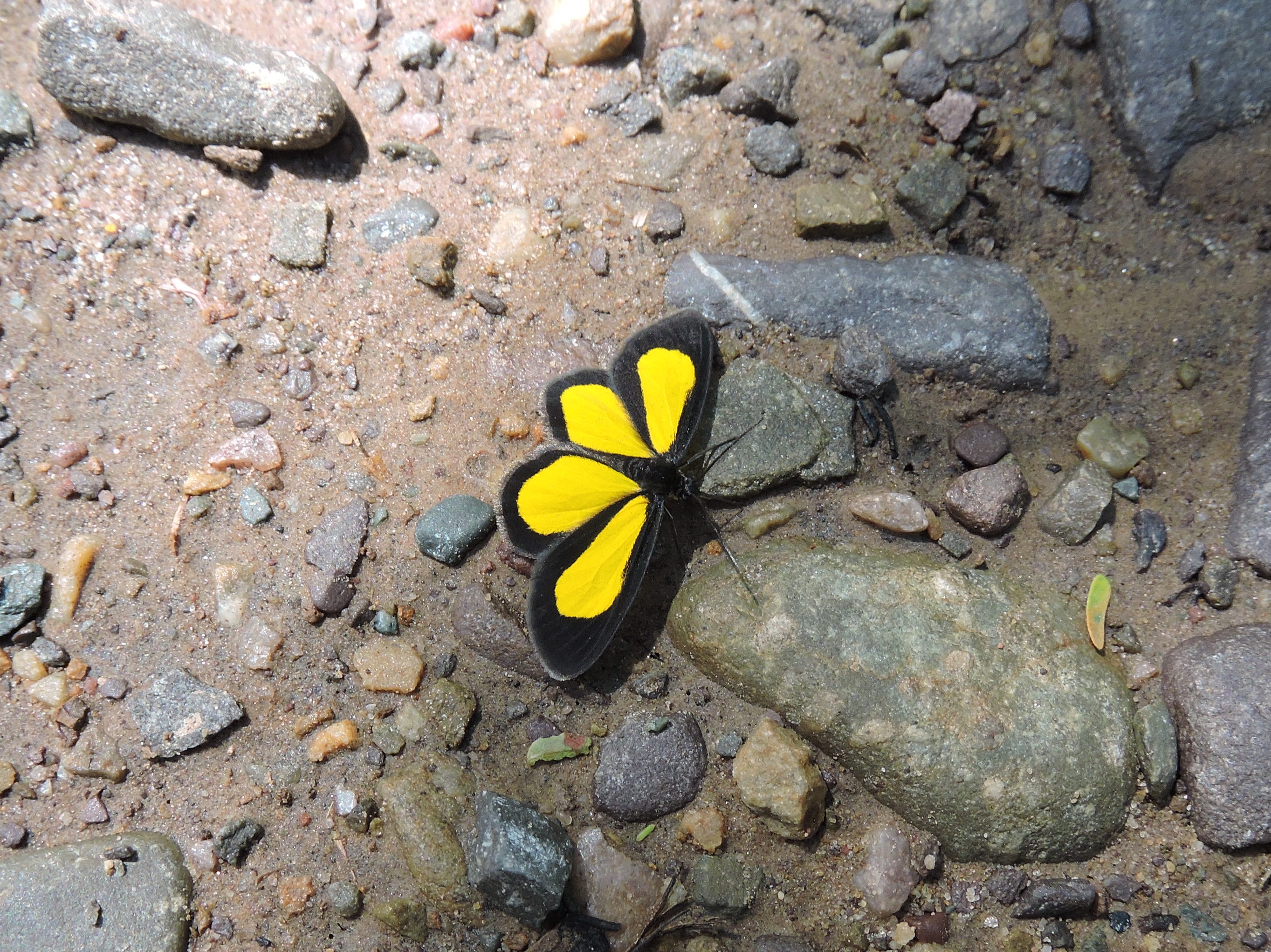
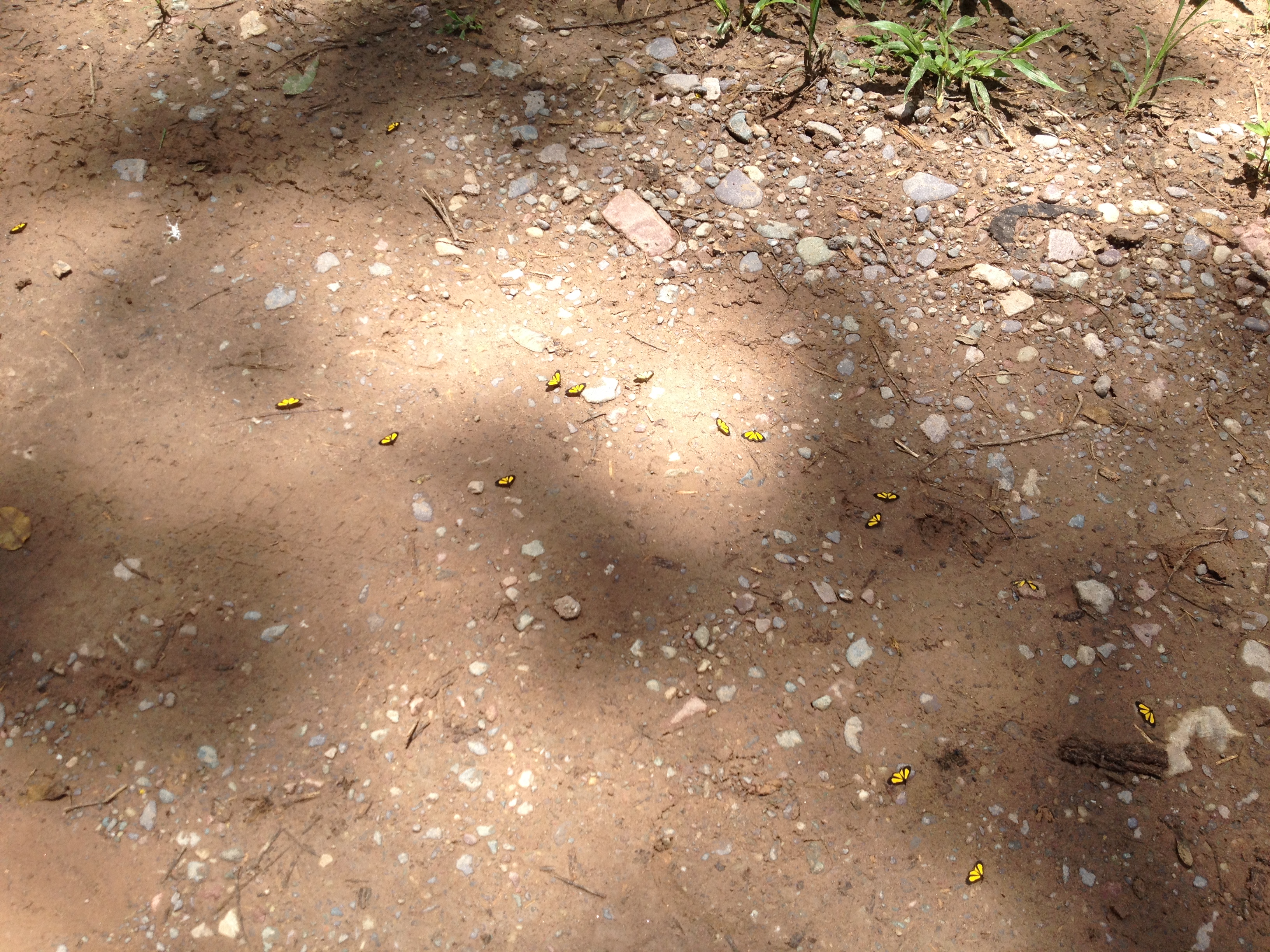
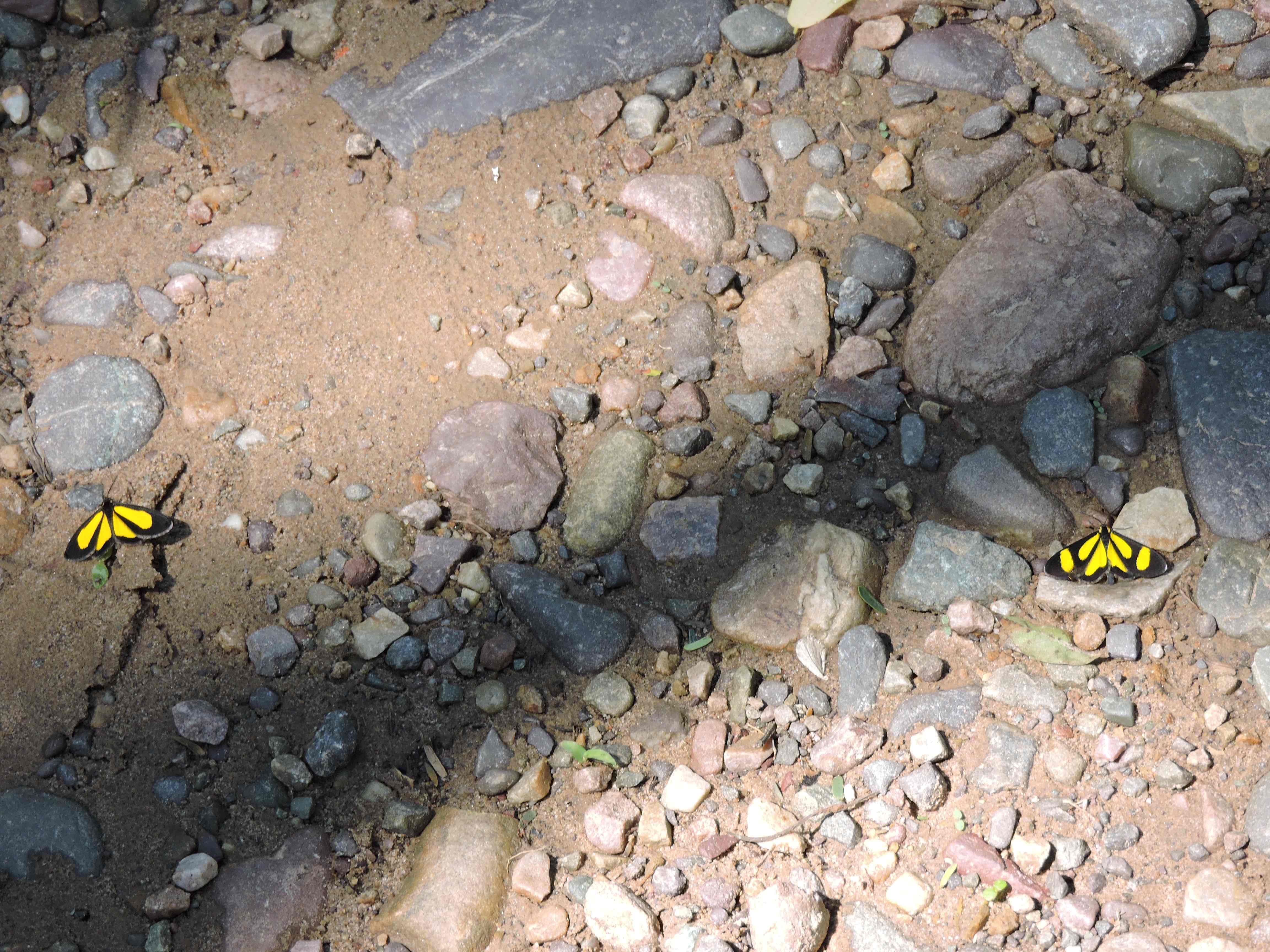
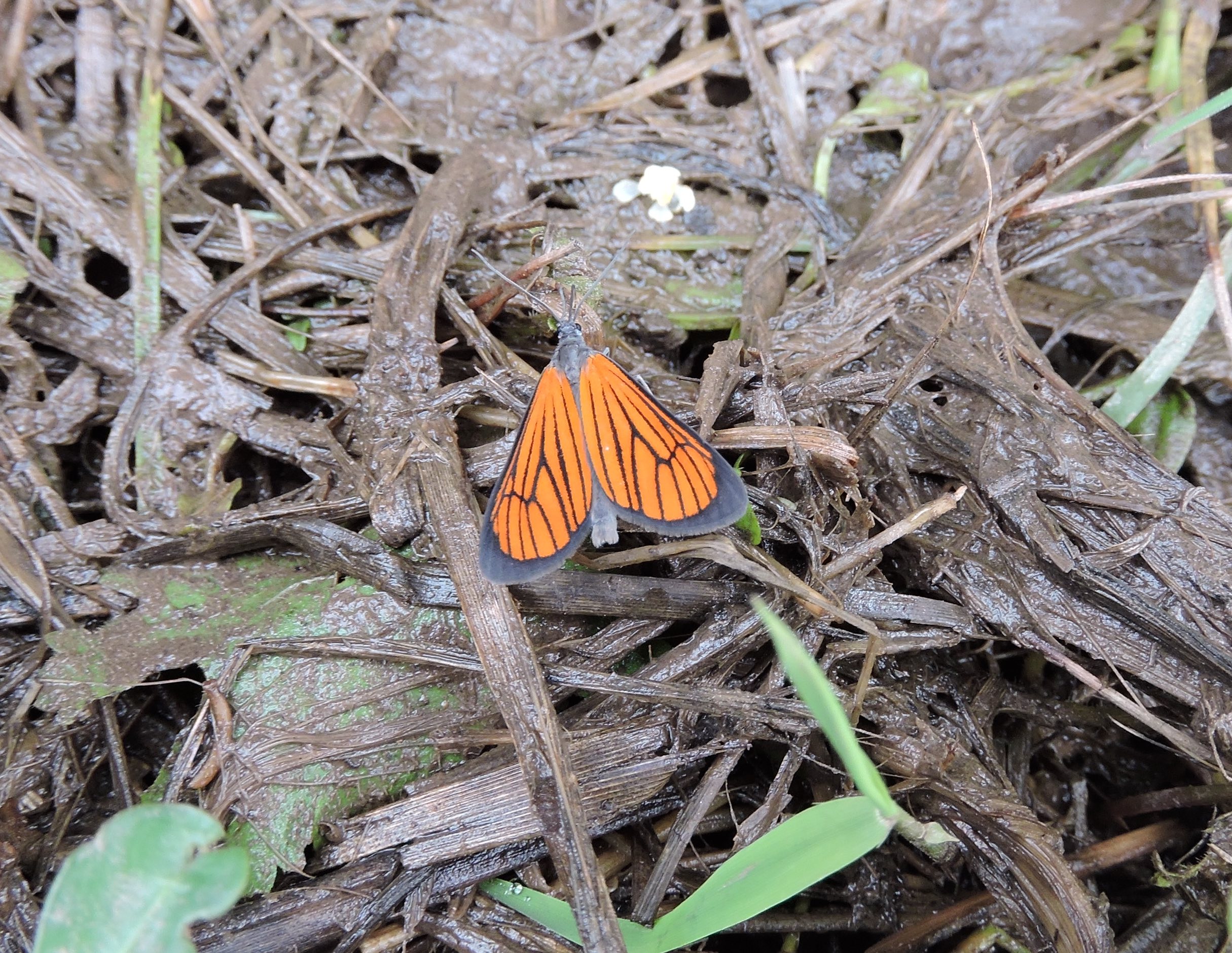
Once the most obvious (and larger) species were noticed, a number of others were noted such as a large number of very small black and yellow ones lying flat on wet areas. Closer inspection revealed two similar types occurring together as well as a rather delicately ornate orange one, also sharing the wetter and shady areas.

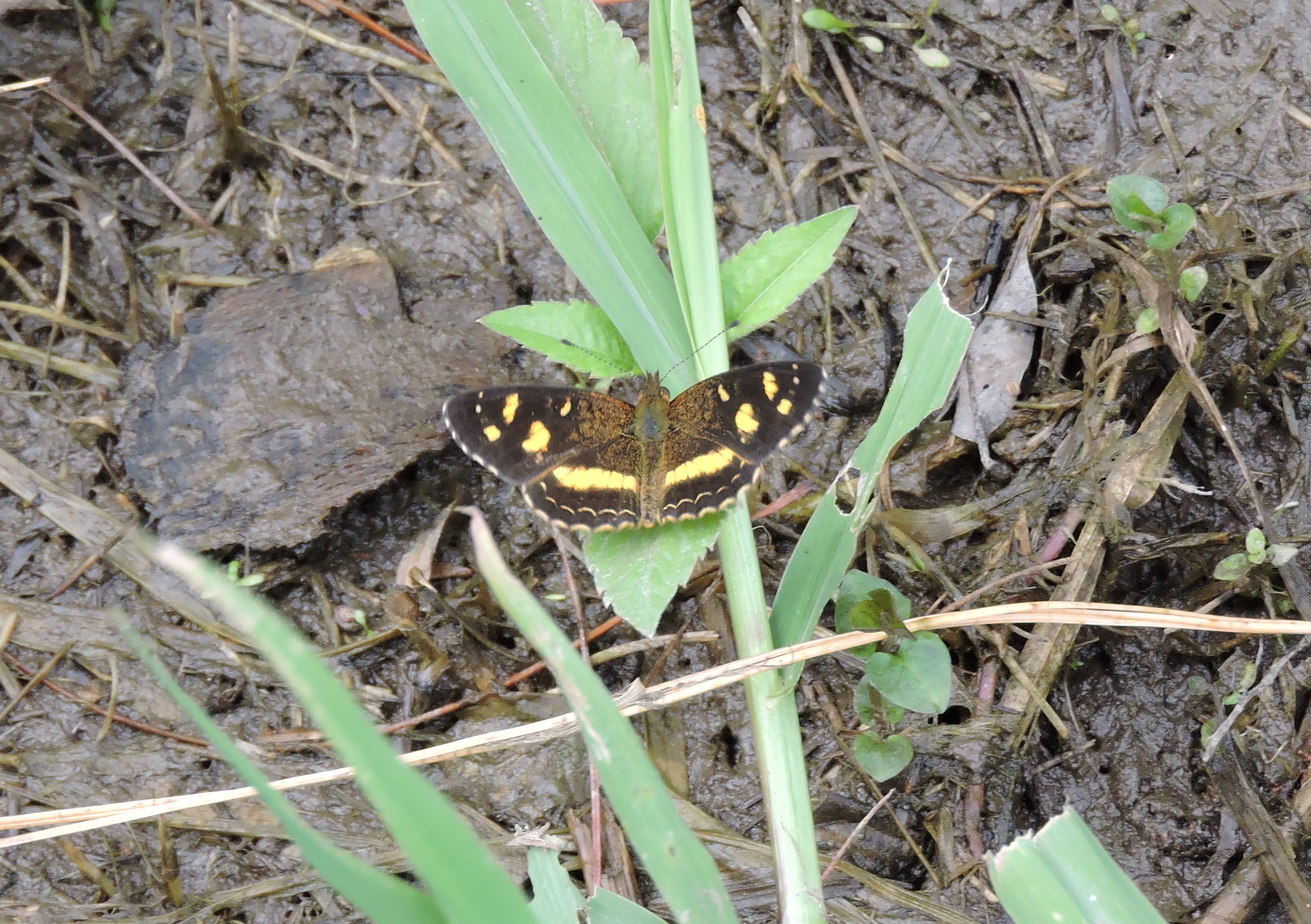
Black and yellow unknown cropped Black and yellow group Black and yellow different from each other small Orange small unknown crop

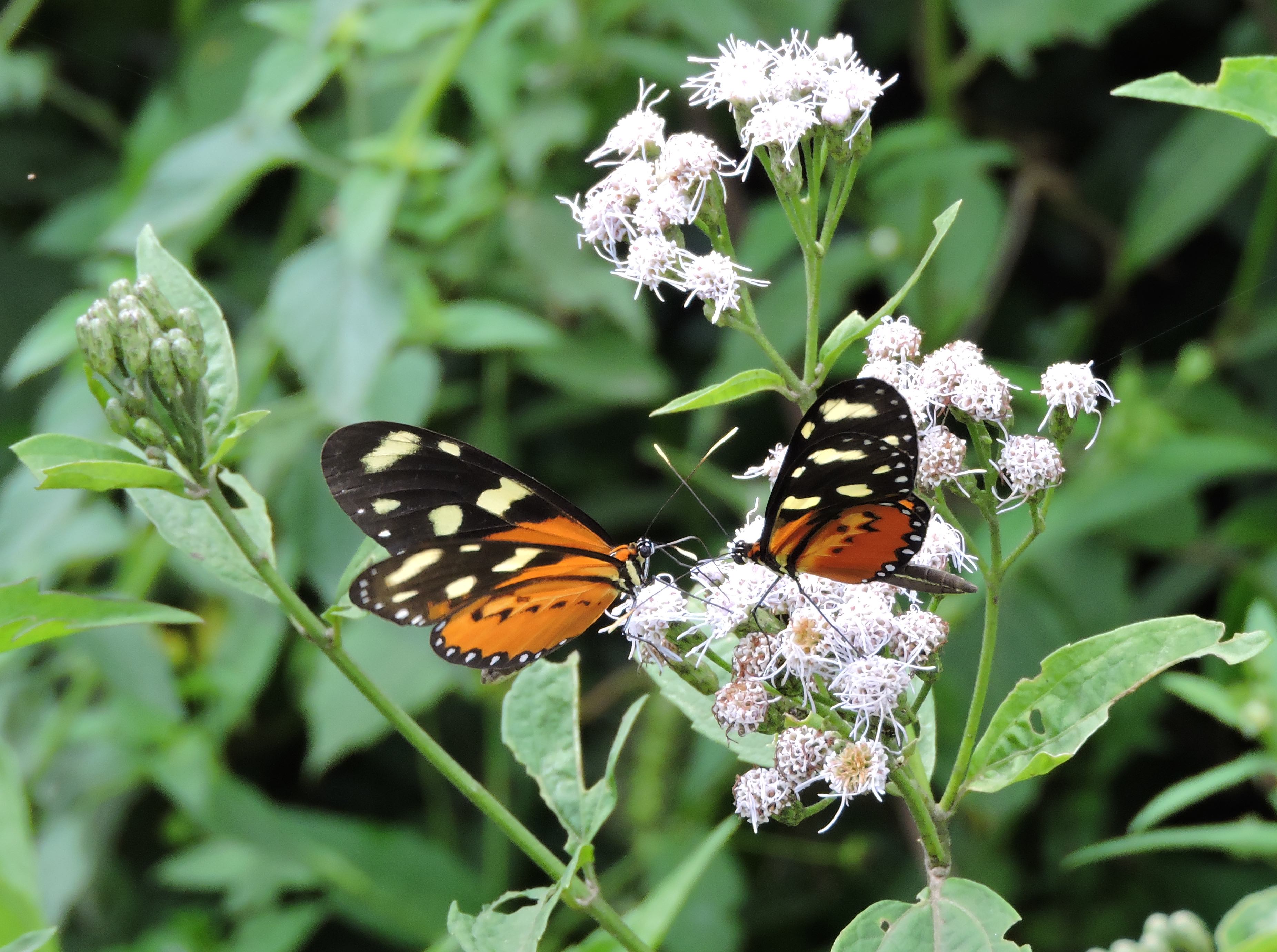
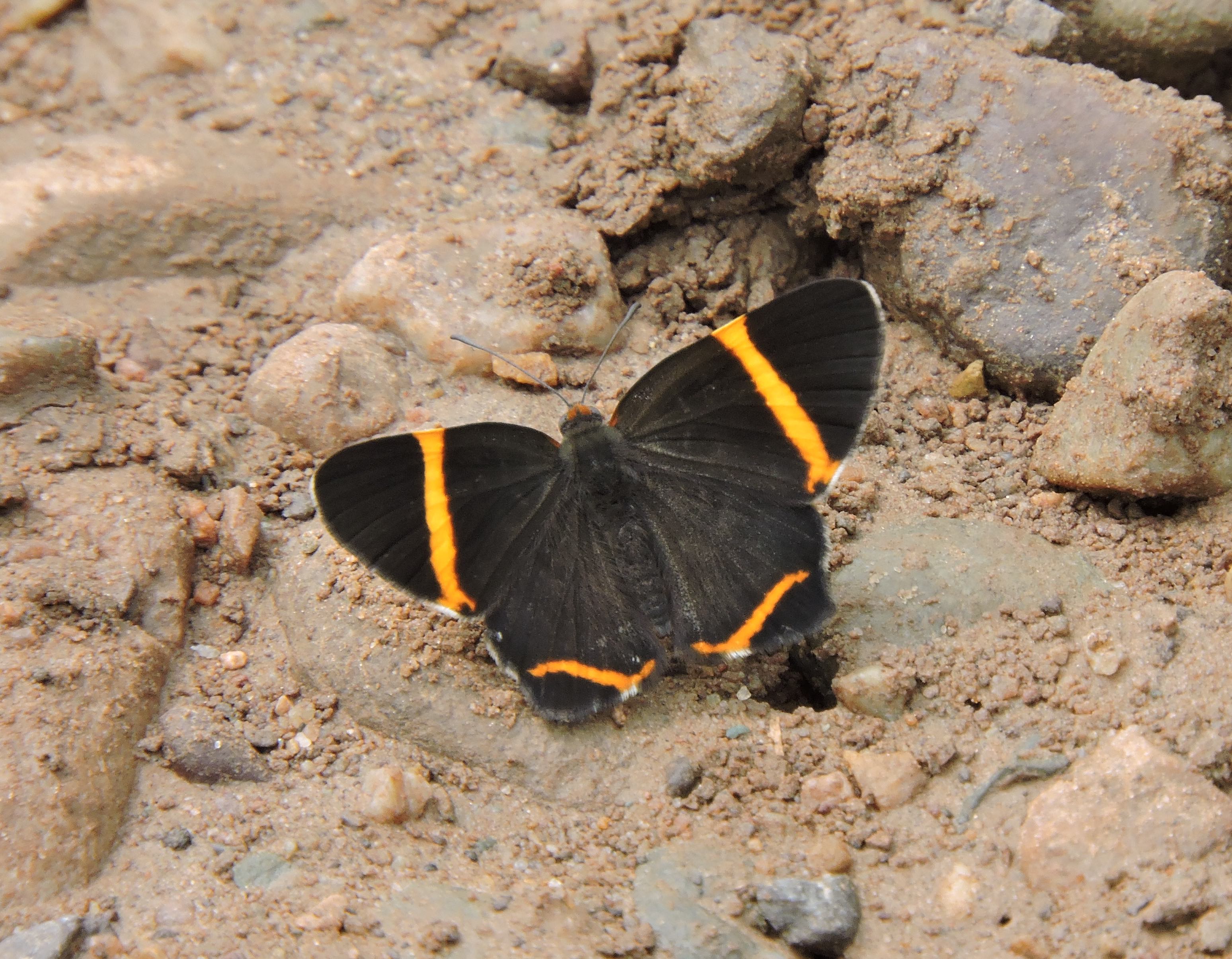
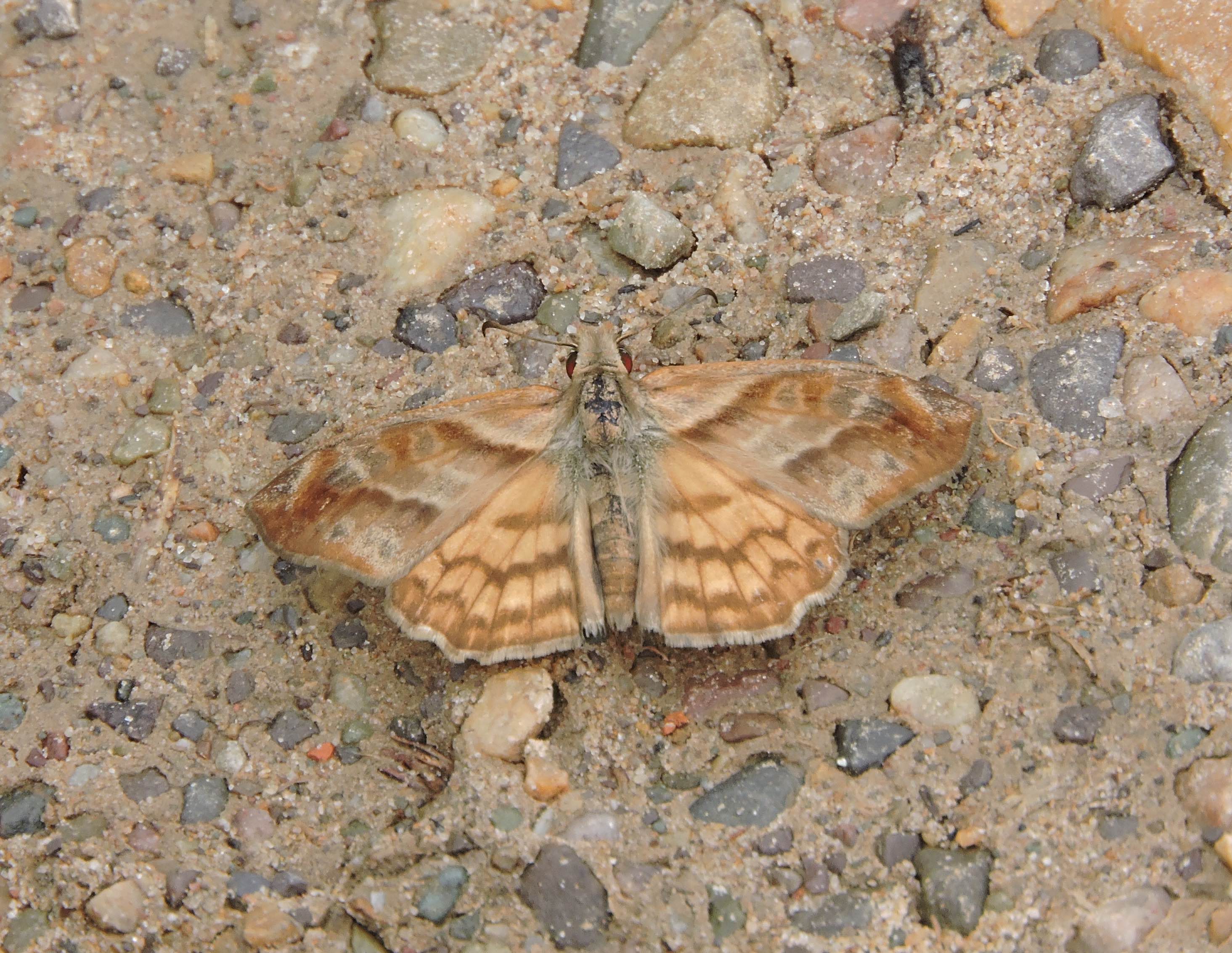
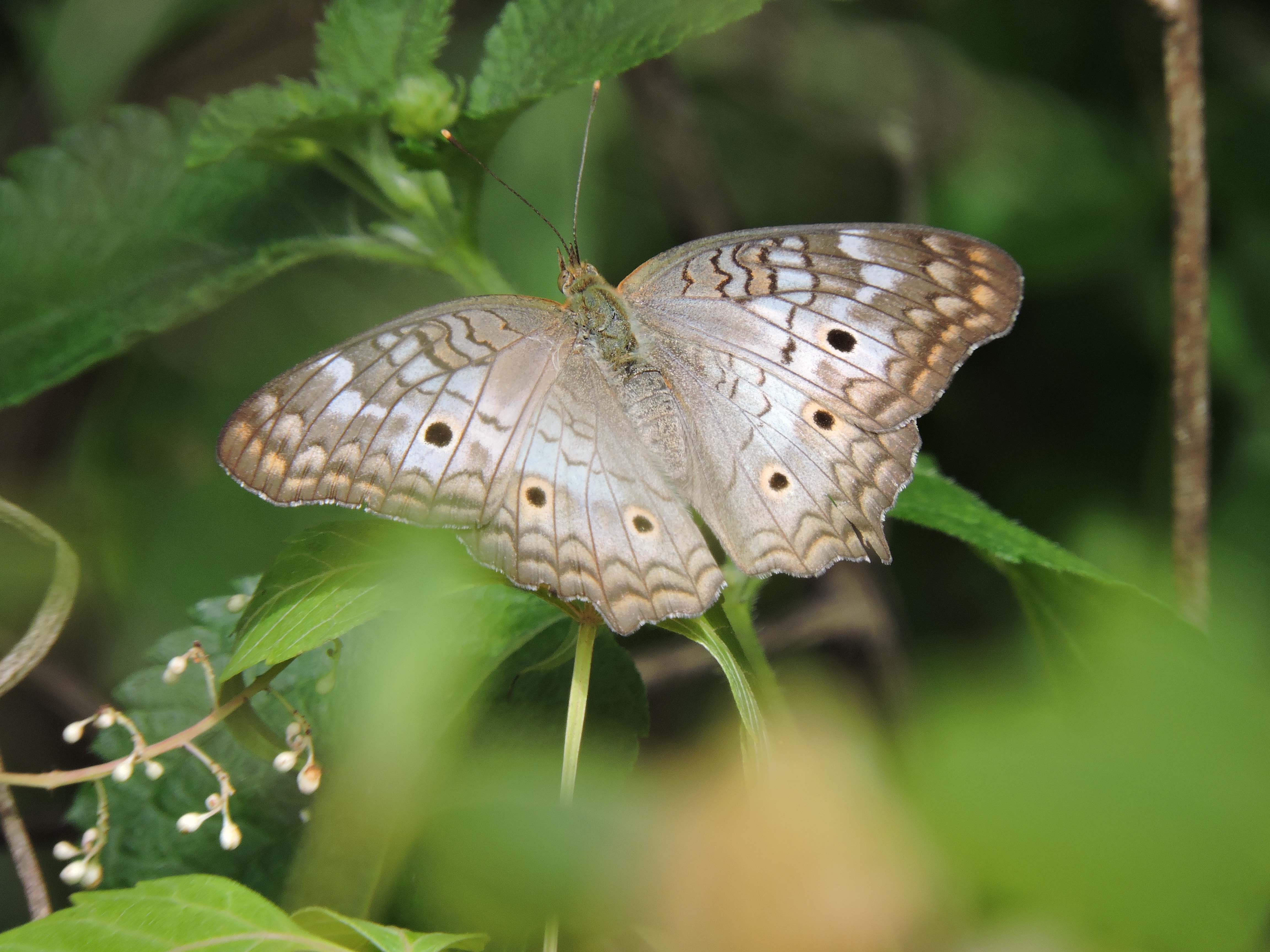
Several other species were noted. The following ones are the most colourful, although as the video below also shows, there are large number of others that we had not had time to photograph at this point. Regarding their identification, what I know about them is included in the caption of the pictures.

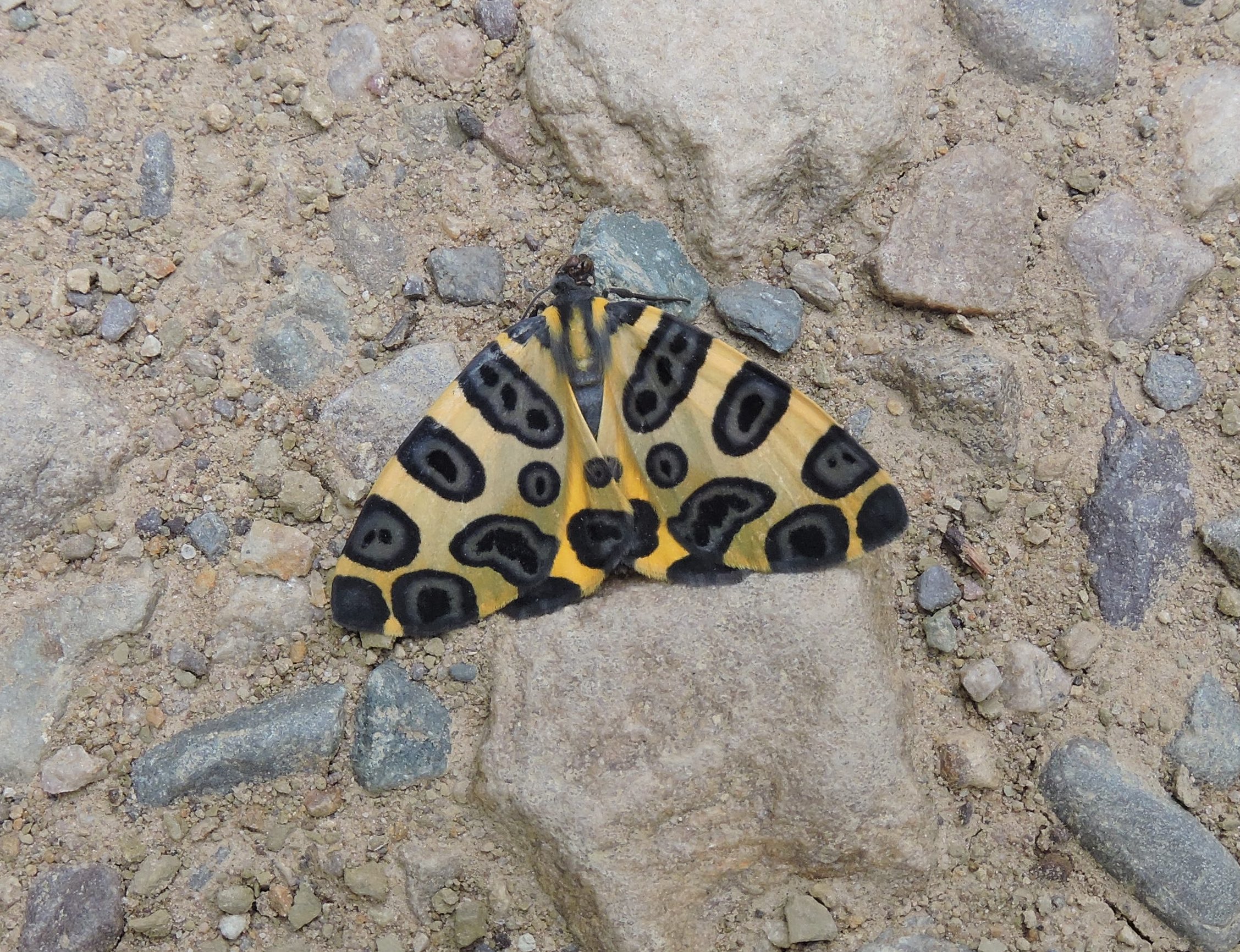
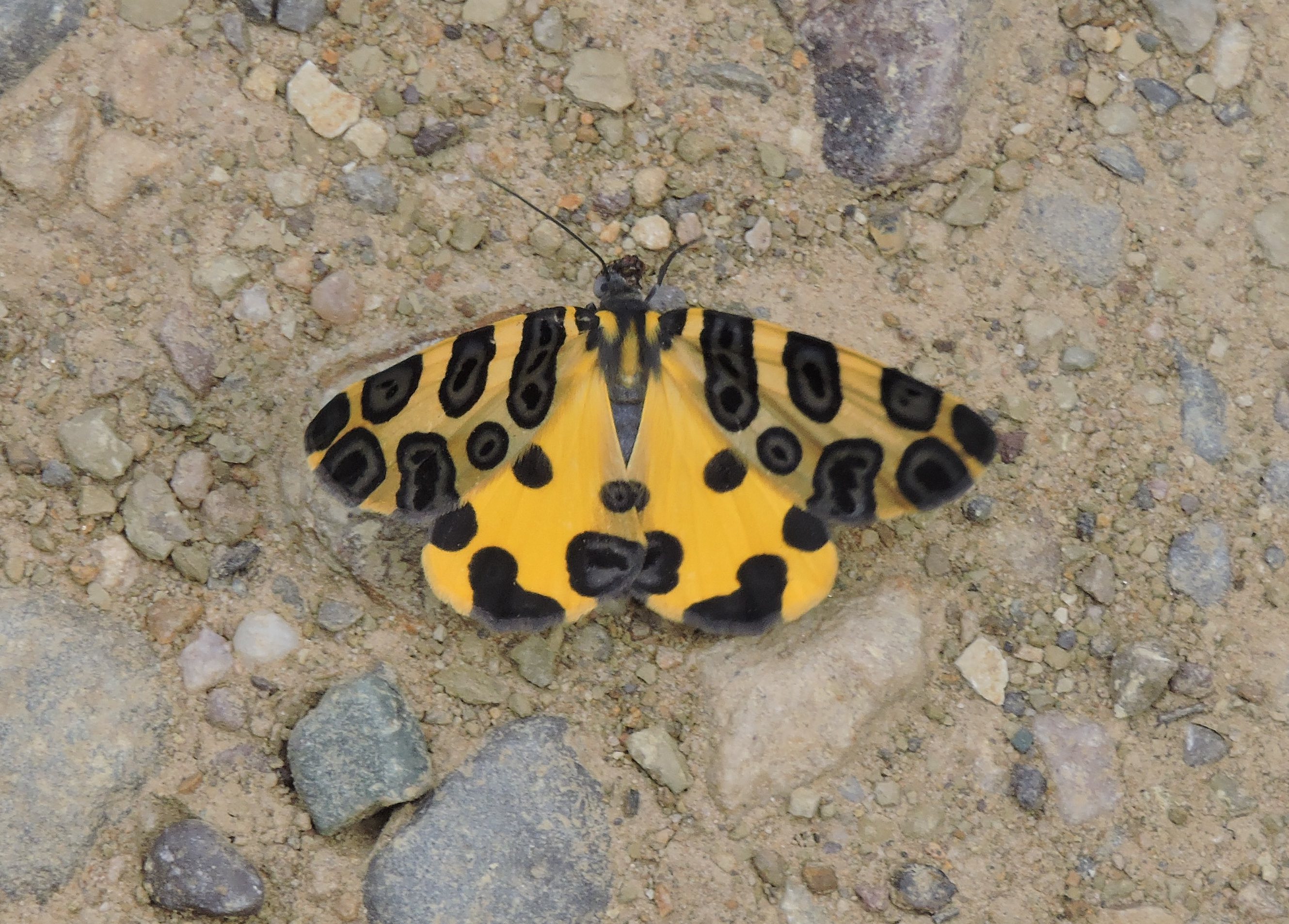
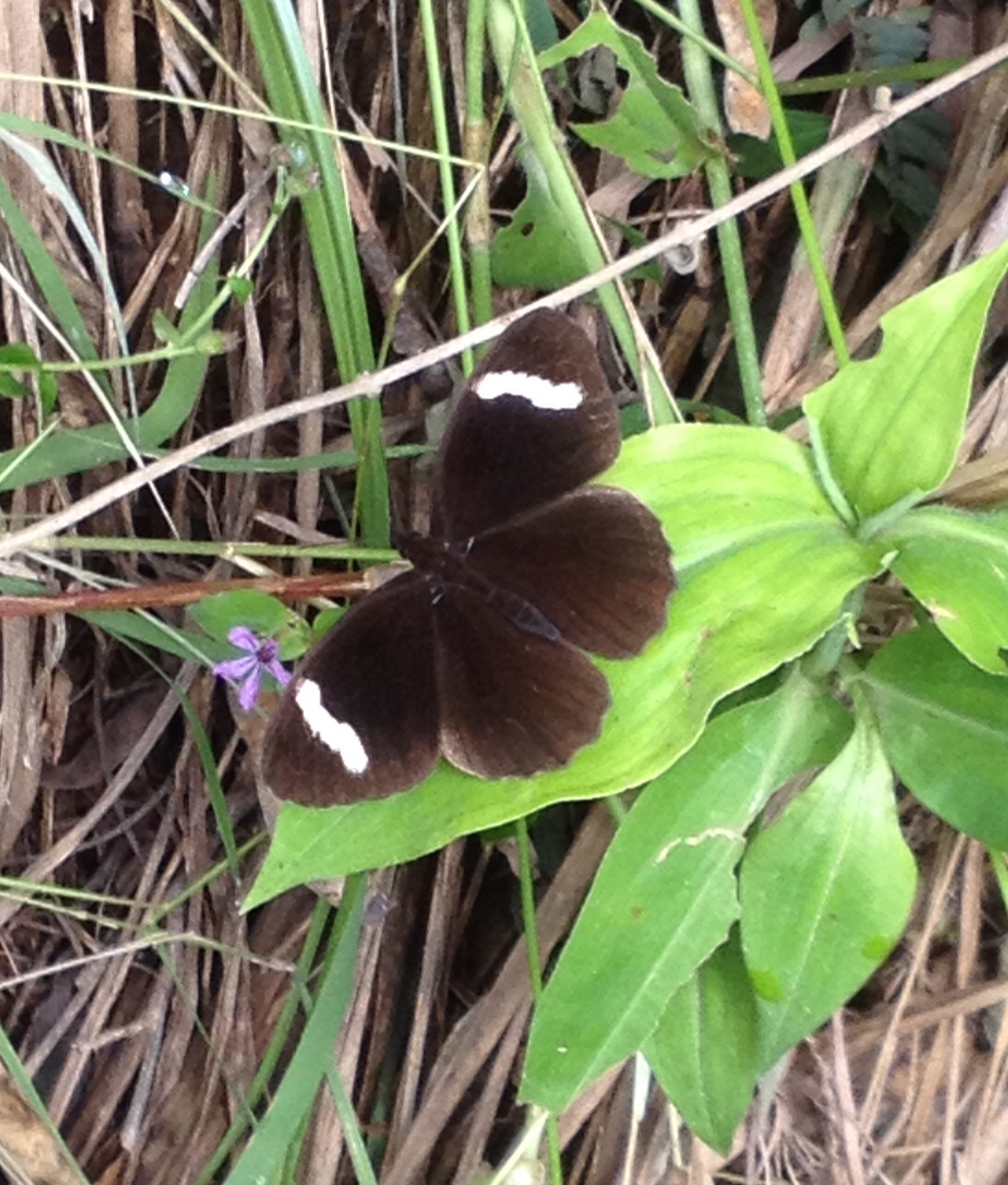
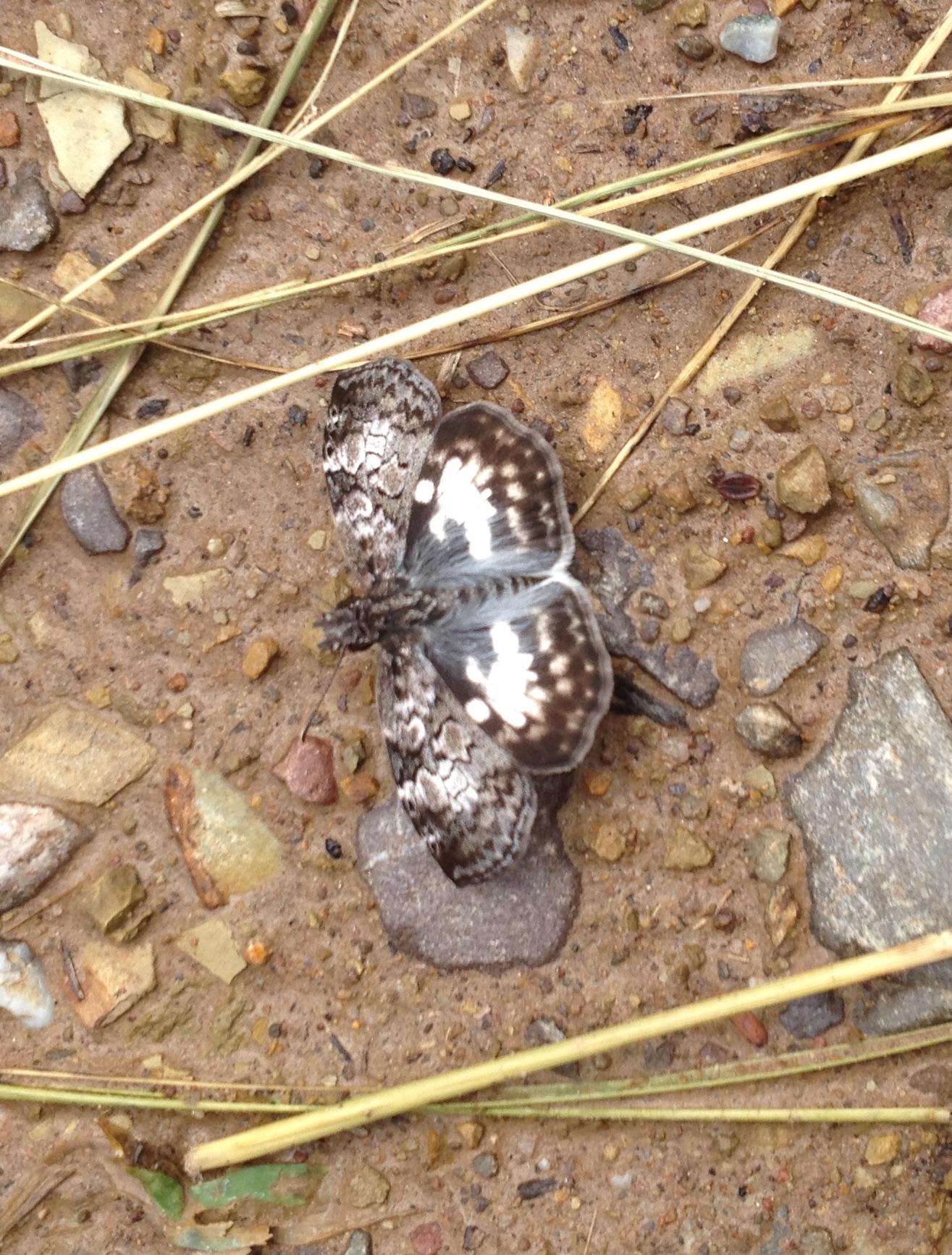
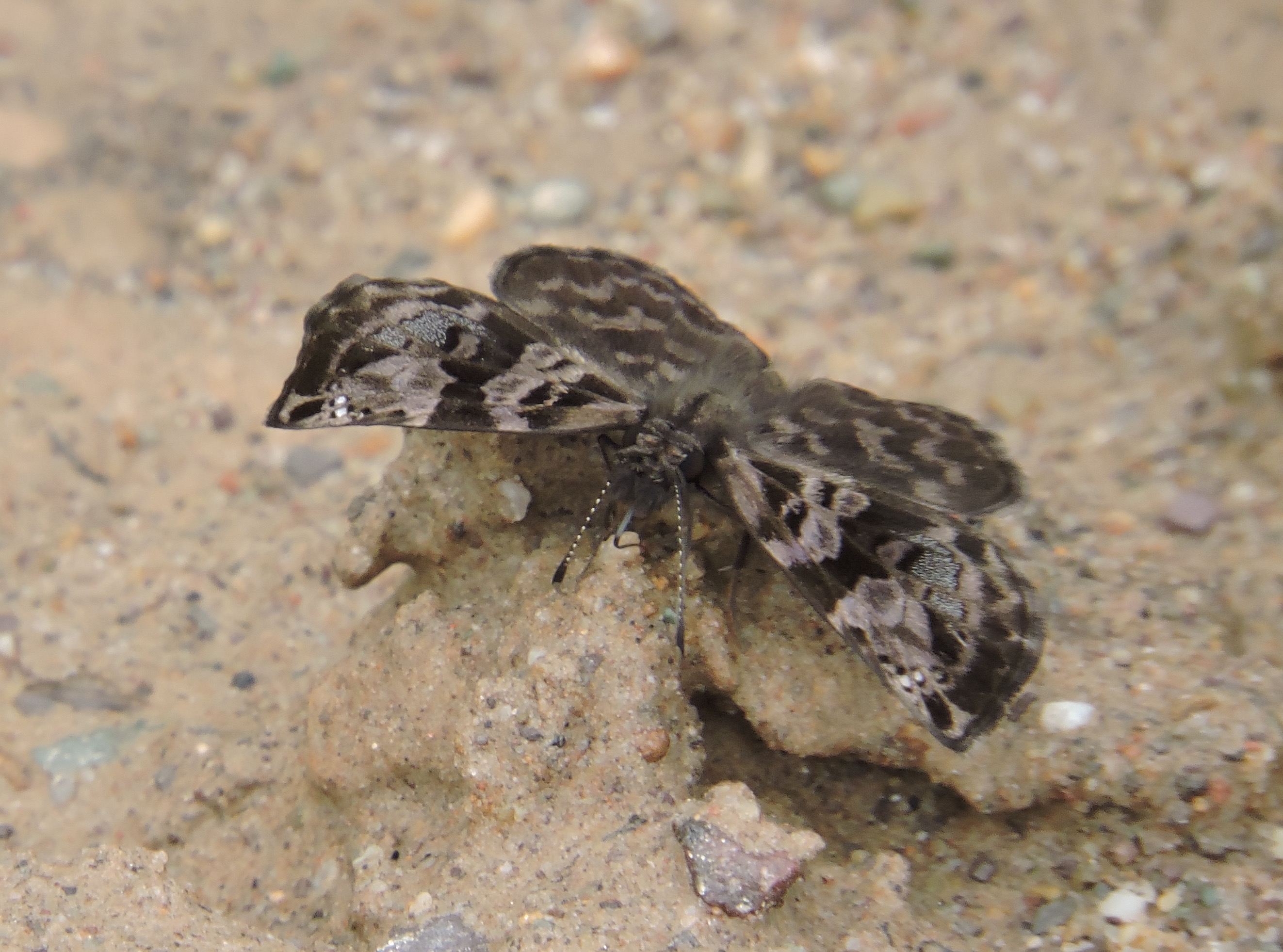
Leopard 1 crop Leopard 2 crop Dark brown and white small Catula other Catula brown crop Brown and white crop Black wing folder crop Black and orange cropped Beige cropped Ashgray

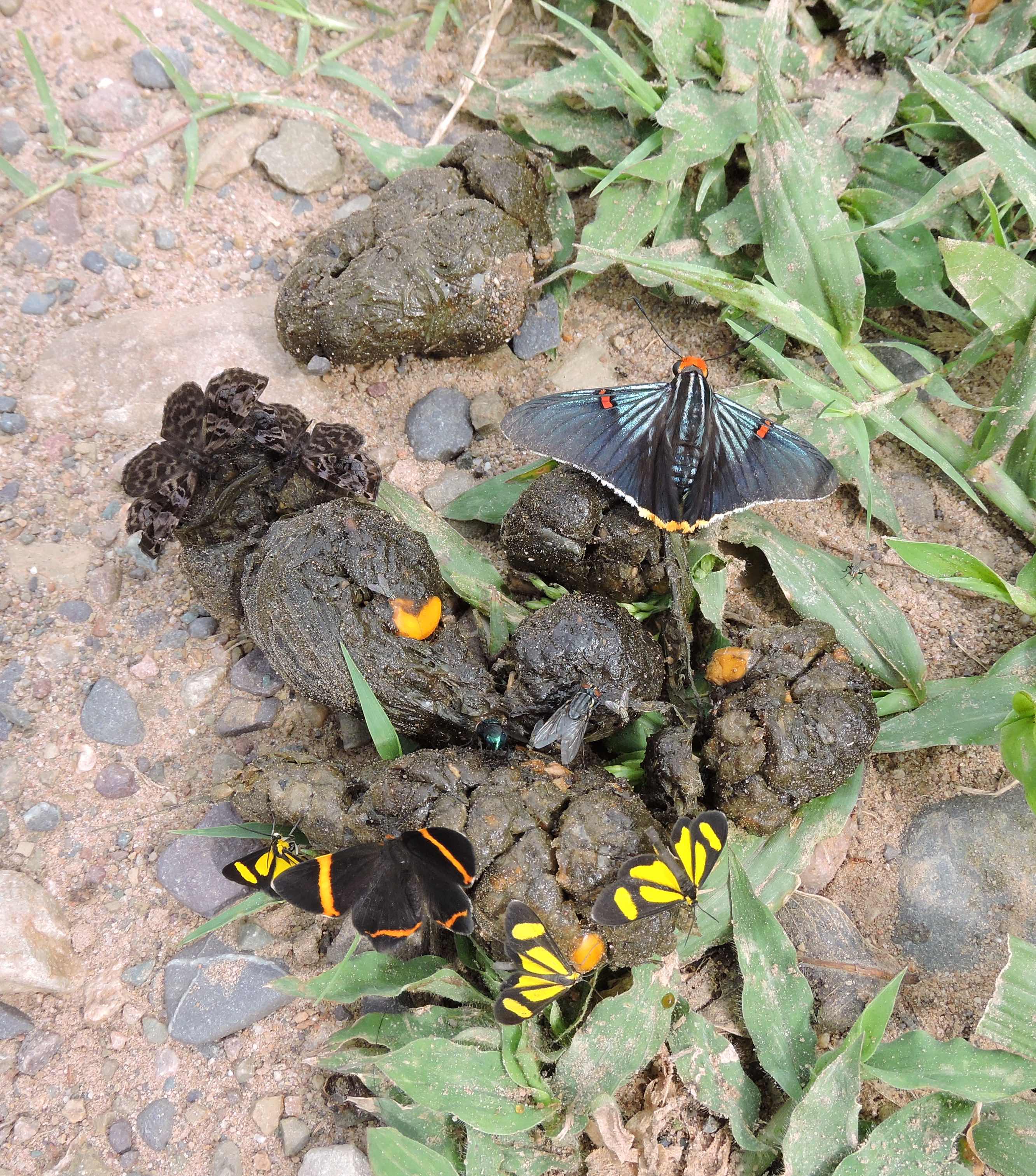
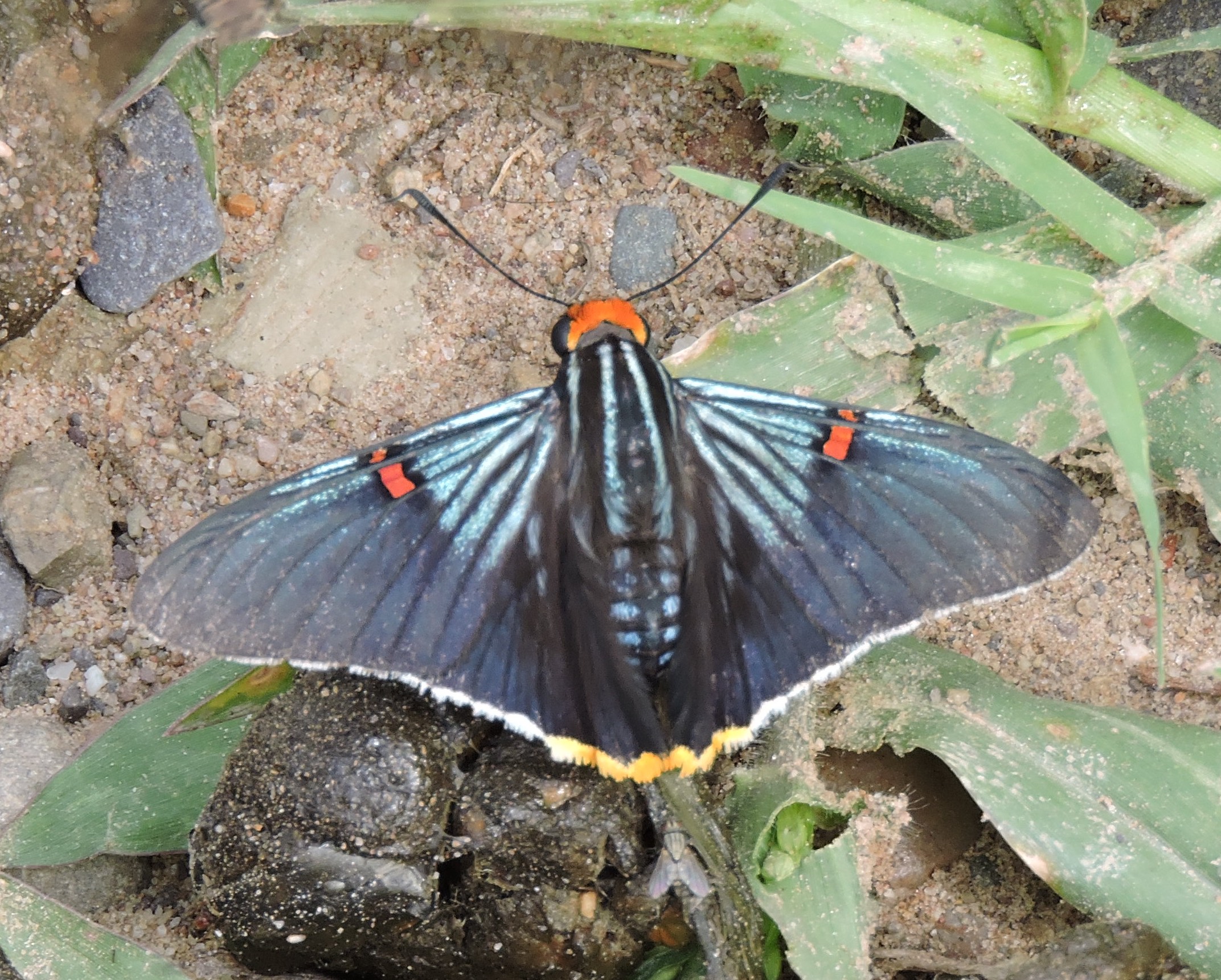
After a few days of rambling along our roads, we thought we had seen most of what was on offer and we were just checking for the odd one that had escaped our attention so far, mainly small ones. Wrong again! After a rainy night, sunshine greeted us the following morning. Clearly the conditions for butterfly (and other insect) activity were optimal and they were out in numbers. Close to the start of our walk we found fresh faeces, probably from a pig (regrets to the fainthearted but this is nature’s “reality show”) that had a mixed population feeding on them. But what really caught our attention was a rather large and hitherto new winged creature, with iridescent blue wings with red markings.

Various insects attracted by faeces. The obvious iridescent blue butterfly/fly called our attention.

Various insects attracted by faeces. The obvious iridescent blue butterfly/fly called our attention.

A close-up of the butterfly/fly.

A close-up of the butterfly/fly.

Although at first sight we mistook it for a butterfly, its direct flight and red bulgy eyes made us suspect that it is probably more related to flies than butterflies. Further investigation on this weird and beautiful creature is on its way and it will be reported.

In the meantime, in the rare moments of calm between more research, blog writing and farm chores, I am reading García Marquez to see if I can find the precise words for the next post as butterflies and moths are still being found!

[1] I regret to inform the readers that I am only able to identify a handful of them as there is no available guide and no Internet access. I will follow up when possible and complete the information later.

Police Road Block (Tanzania)

There is nothing unusual about a police roadblock in Africa. I have dealt with many in different countries and in different situations. Luckily I never got fined or needed to bribe my way through. The occasion I have been closest to a fine was driving between Muguga and Nairobi in the early 80s. I was caught in double radar trick. This is a simple, crafty and frequently practiced manoeuvre that involves placing two speed traps separated by a few km. You pass one and then, thinking that you escaped, you speed away only to be caught by the real thing a few km further on. On that occasion the policeman had even written the fine but I still managed to get off the hook, I do not know how or why he let me go! A colleague in Kenya said I manage to say the right words in most situations, and my own family fully agrees! I do not know!

In 2010 I went to Arusha for a meeting to discuss a cattle vaccine that was very successful among the Maasai of Tanzania. The meeting over we had the Saturday free as I was flying out on the Sunday. So, we decided to go for a drive to enjoy the countryside, to visit some Maasai manyattas where my veterinary friends needed to do routine check-ups at and end with a visit to the snake park, nothing too exotic.

We left in Beppe and Lieve’s ancient but still serviceable Nissan Patrol with Lieve driving and Beppe as our navigator. I was in the back seat, chatting away with them, trying to catch up on several years of news. After a few km driving towards Moshi we came to a police road block. “Nothing unusual” I thought and my companions agreed, remarking: “They are always here”. There were several cars queuing and also quite a few police officers in sight.

After queuing for a few more minutes, a polite police officer approached and he explained that they were performing a roadworthiness inspection on vehicles “today we are looking at fire extinguishers” he declared. The exchange of looks and a few familiar Italian words in the front seat indicated to me that we may not be within the expected roadworthy condition. After all, the car was quite old and I have never come across anyone who checks their fire extinguisher at regular intervals. It is just there, normally at the feet of the passenger. Well, in our case it was not even there!

Calmly we all argued with the policeman that this was not a very useful check-up, that we were vets in a great hurry to deliver a calf and other plausible excuses that we could think of at the time. No results. The police stood his ground and continued to demand to see our fire extinguisher. Calmly, Beppe got out of the car and walked slowly to the back. Lieve and I waited; we could only talk to each other in English so we remained silent. Noise of objects being shifted around came from the back and, after a while we could here Beppe’s “ecco!” (Italian for “I found it”) and we relaxed a bit. Beppe closed the back doors and walked with the extinguisher towards the police, smiling. “Here it is, bwana” and then added “it is a bit old but still good”. What an optimistic remark! It was a rusty cylinder, once red, with arather defaced label, consequence of many years of dust rubbing against the car tools and the jack. We all nodded our approval and waited for the outcome.

The policeman, unmoved, had a look at the piece of rust and declared that it was totally unsuitable and, worse still, that we could not drive the car until we acquired a new one that followed the Tanzania road specifications that we clearly ignored. There was apparently no “fine and go” involved but a prohibition of movement on the spot! We pleaded in various ways to no avail and then got rather frustrated with the situation and asked what the solution was, fearing the possible bribe. “You can buy a new one” he announced. “But where?” we said in a pathetic choir and added, “there is no shop/petrol station here”. “You can buy one from me now” he said. We looked at each other and could not help a chuckle but kept our straight faces as much as we could. We asked the cost and tried to bargain but it was not possible so we asked him to bring it while we collected the money.

Beppe was still outside, holding our rusted tool while the policeman walked towards the sentry box, and opened the door. We could not believe our eyes: the box was full to the brim with extinguishers!. He picked one and came back to offer it to Beppe. The latter, in a last ditch attempt of avoiding buying the item at an inflated price proceeded to compare the kind of fires that each could put out in what I thought was a probably unfruitful but clever and brave attempt, nonetheless. It was clear that he had hatched the plan while we waited for the policeman and had spent a great deal of time reading the damaged label. He held both in his hands and explained that both could put off petrol, plastic and electric fires but that ours could also stamp out fabric fires! Beppe grasped the opportunity and declared “Mine is better than yours as it can control more kinds of fires”

For the first time the policeman showed hesitance and Beppe seized his chance: “no need to buy an inferior product” he declared with aplomb and conviction. The policeman recovered fast and suggested that we checked the functioning of our rotten tool. Beppe removed the safety pin and pressed the trigger. Nothing happened. He tried again and, again, he got nothing. A third attempt that involved violent shaking of the extinguisher and hard pressing produced about 3 cm of a substance resembling yellow toothpaste! Without saying another word, Beppe threw the rusted cylinder into the nearest ditch, collected our money, counted it, paid, got the new cylinder, gave the policeman a handshake and quietly got in the car. “Let’s go” was the only thing he said. We went and, for a long while none of us had anything to say and then we all burst out laughing.

We moved on with a new extinguisher towards an enjoyable day together.