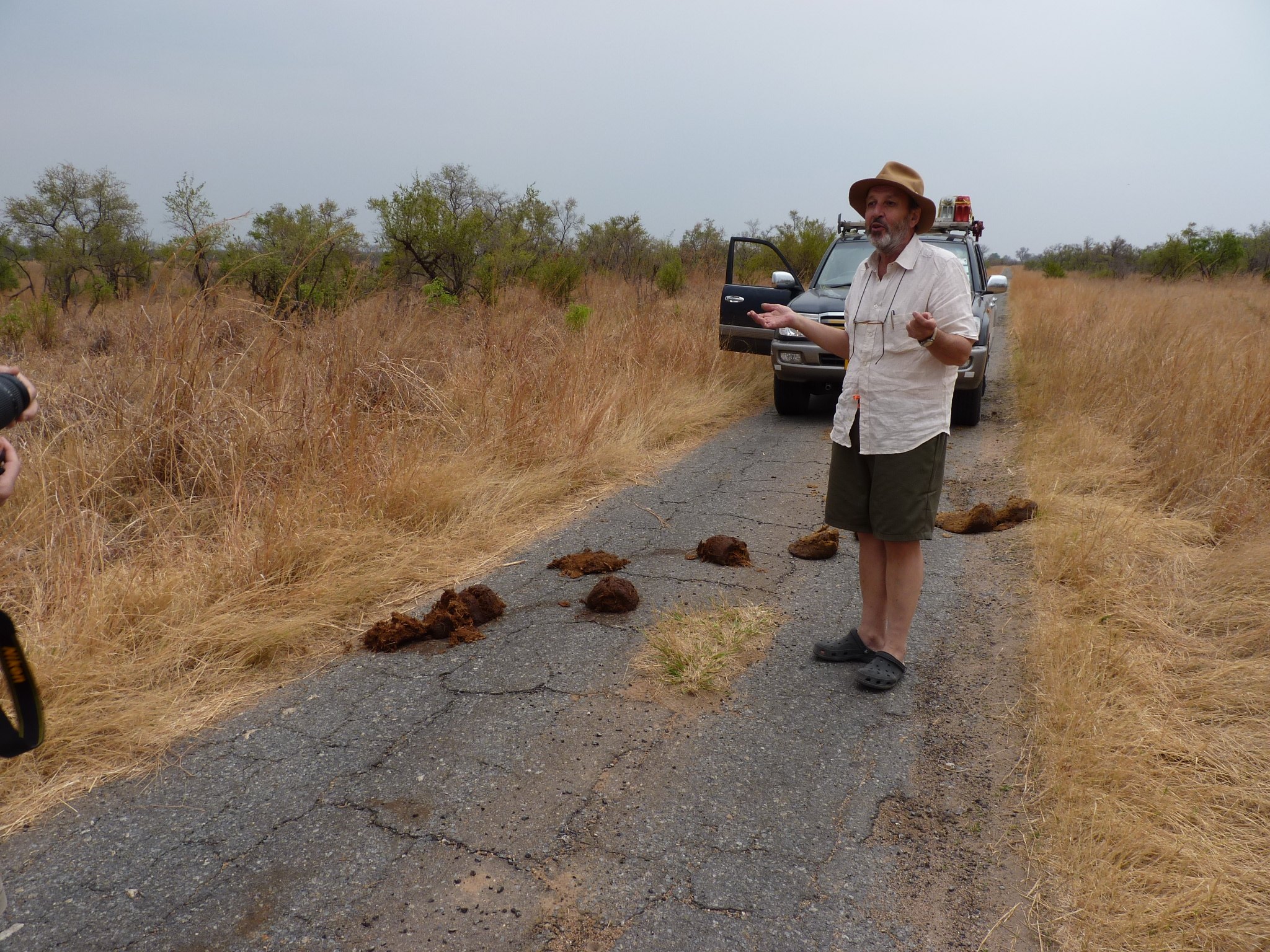
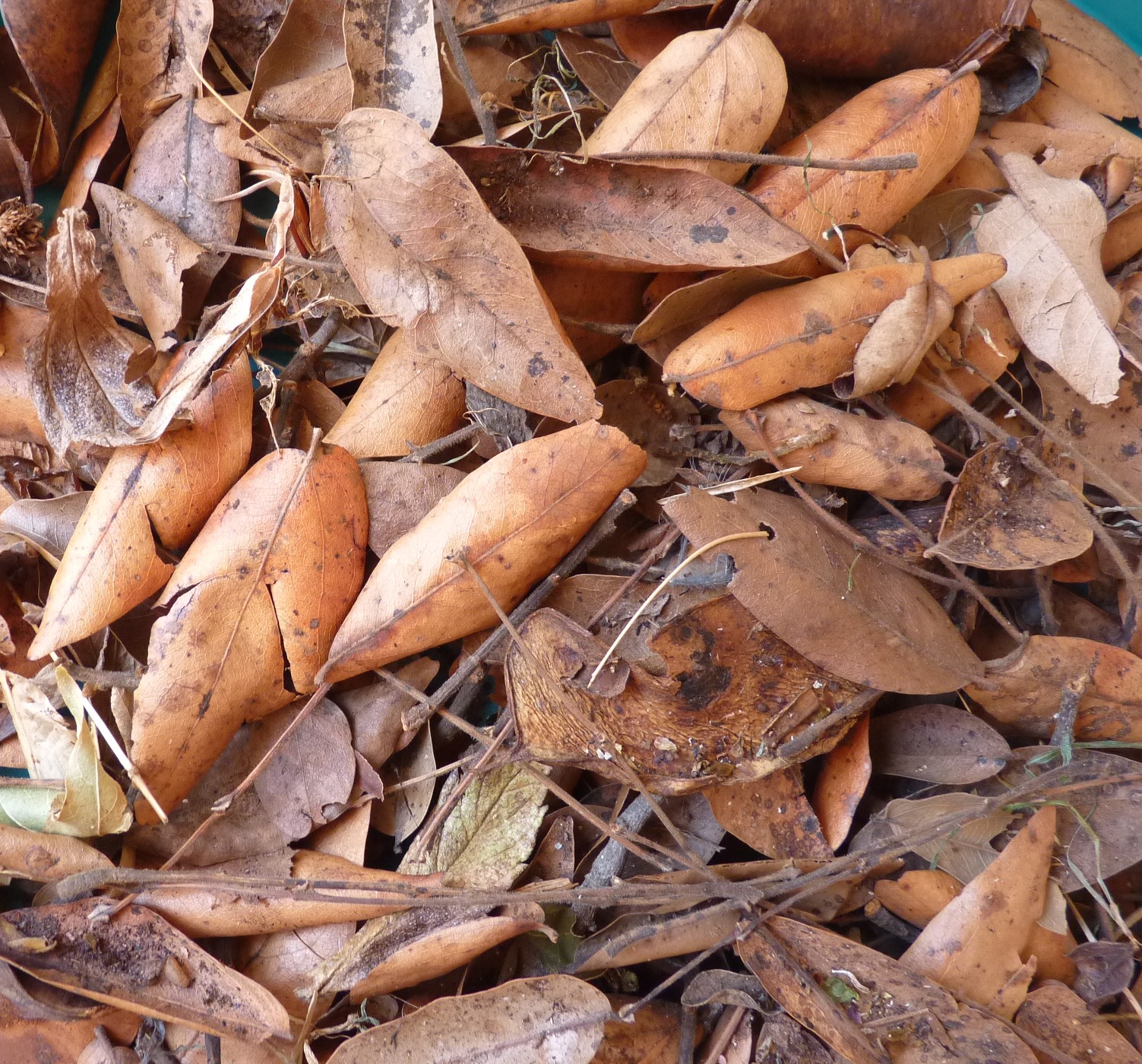
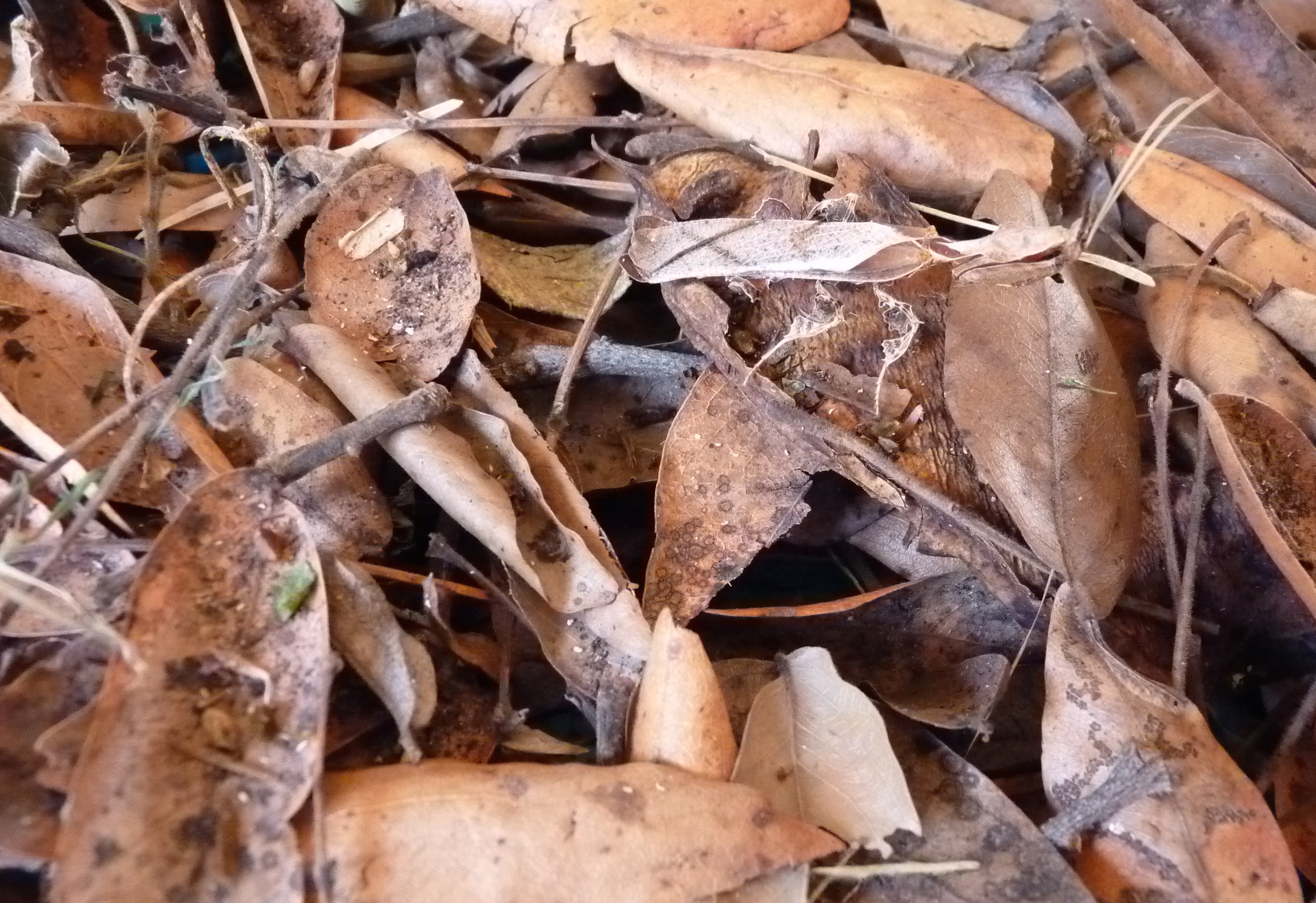
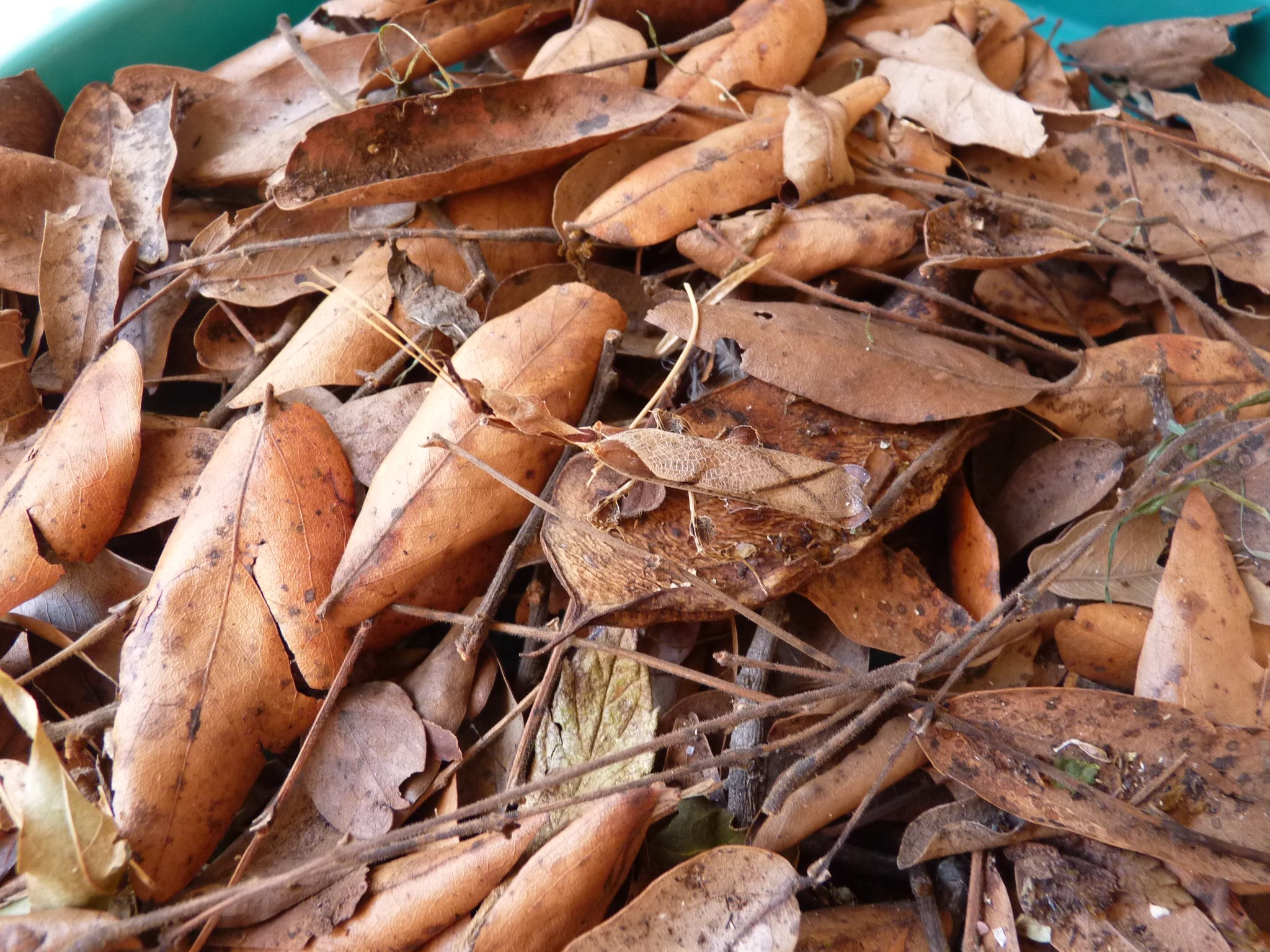
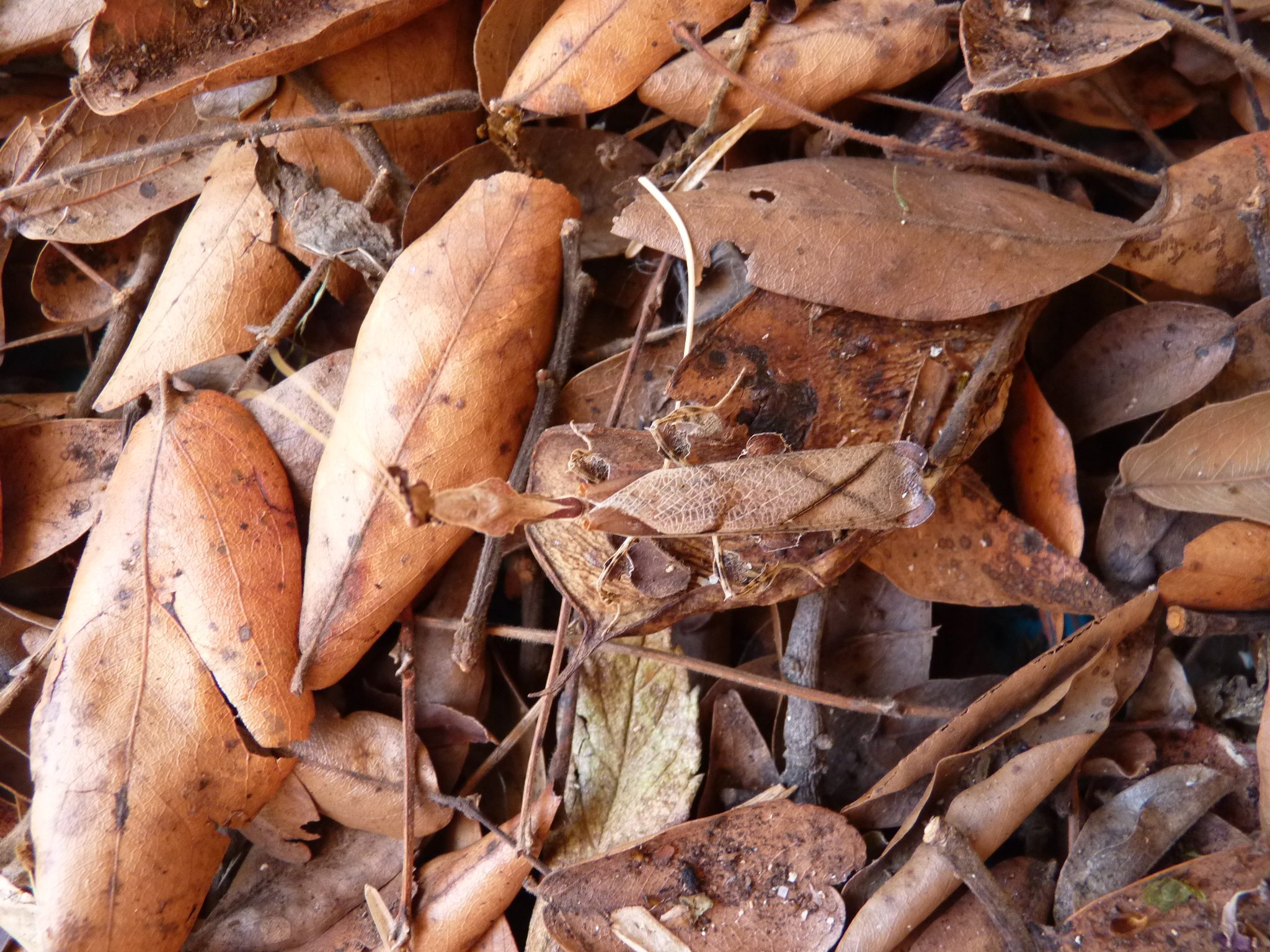
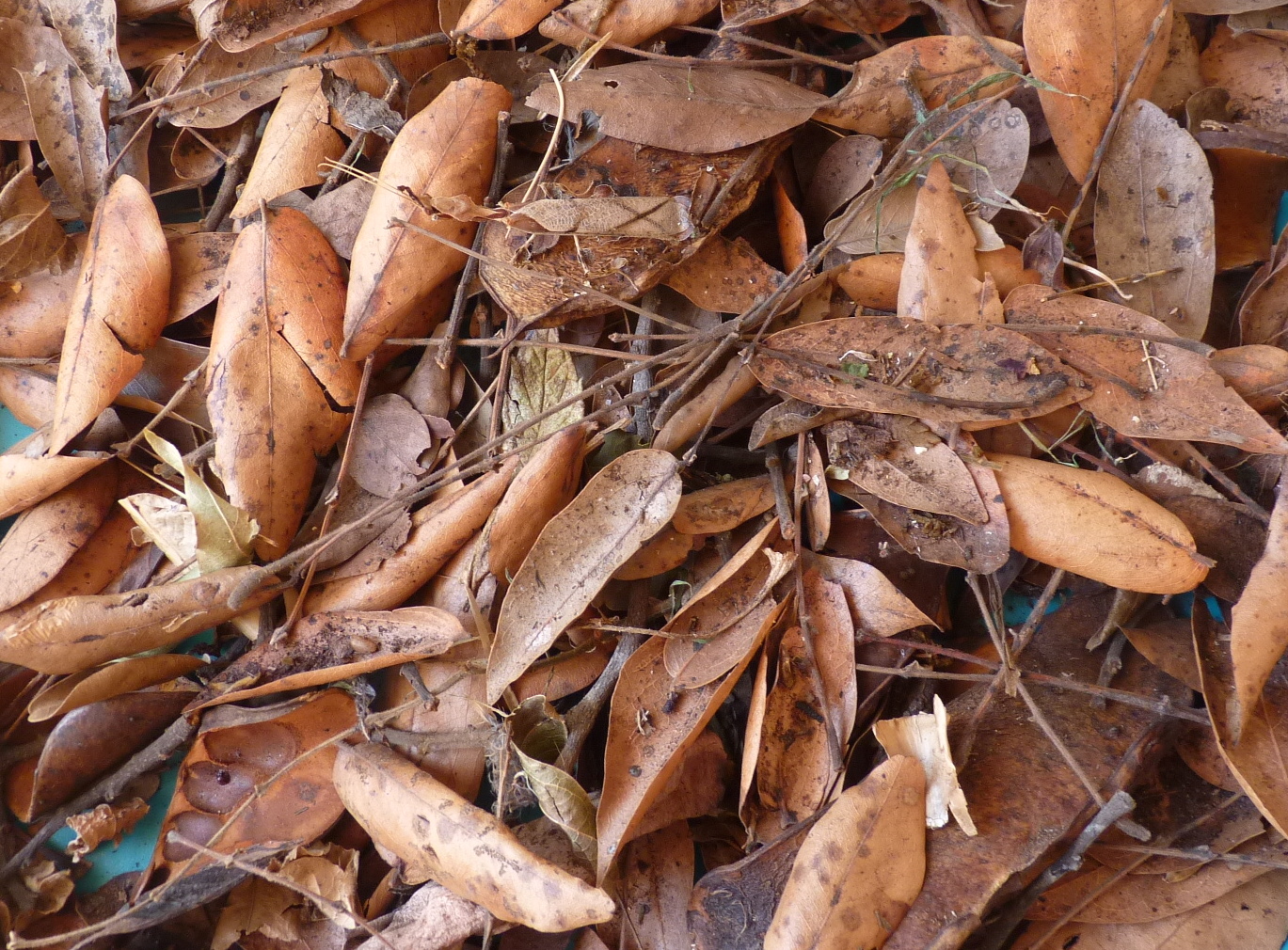
Spot the Beast 5


Spot the beast 5

The Bushsnob is back in action, at least for two posts! I am not sure when I will be able to post again so I will do the “Beast 5 Revealed” below.

At the moment we are 1600 km north from the river Plate, at our small farm in Salta, Argentina from where I will post a few interesting entries (I hope) for you to enjoy.

On Plane Travel

As announced, the Bushsnob has moved continent (if not hemisphere) and is now in Latin America, more precisely in Uruguay. This feels like an achievement considering the rather grueling plane trip endured to get here. Nothing wrong with the flying itself but a lot to be desired on the issue of room on board!

I was taught at school -and confirmed later through various reliable sources- that slaves were packed and transported in ships in the most atrocious of conditions and I fully support the end of the slave trade.* I do believe in racial equality but surely that does not mean that to show it, individuals of all races should be packed tightly together on a plane!

The amount of personal space available on board is so small that it is becoming almost inexistent! The real issue, however, is where does this stop? I am sure that engineers are currently busy trying to find ways of packing more passengers per cubic metre! Are profits so small that stuffing 20 more passengers makes such a difference? Or is it greed?

Whatever the reason, it seems that human air transportation is moving towards modern slavery so perhaps “Ecoslave” could be an appropriate name for the lowest air travel variety? It brings in the “Eco” for ecology and economy as well as the egalitarian tight human packaging.

I am aware that plane configuration varies between airlines and that my comment may not apply to all. However, there seem to be some general rules: (i) the further south you travel, the poorer the service and, (ii) the larger the plane, the less individual space available. Although our flight to Africa last April was acceptable on a smaller Airbus A330, the return on a much larger A340 was very uncomfortable.

Trapped in a narrow seat made of materials with sharp ends, you are completely dependent of the passenger in front of you. The moment he/she decides to recline the seat (as is their right as a flyer) this will not only change the angle of your video screen but also spill whatever plastic food and drink you had been given! In addition, gone are the 2 cm of knee room you cherished to keep the blood in your ageing arteries from clotting and the normal leg ageing process accelerates for the hours you have to endure the trip.

As if restraint by folding seat would not be enough, your plastic table also aids in keeping you clasped-in until the remains of your meal are withdrawn. As a rule, turbulence starts at the time when drinks and food are served, so clasped-in time can be rather long (sometimes as long as the time your food takes to be digested!).. I sometimes believe that pilots have a “Turb” knob that they turn with relish to keep passengers from moving too much!

After the turbulence subsides, you eat your meal and, while waiting for freedom from the clinching table to arrive in the form of the withdrawal of your tray, a fleeting thought that says “toilet” appears in your pressurized brain. While still waiting for your corset to be removed, this thought becomes a more urgent “TOILET” until your stewardess, aware of your agonic look, finally removes your tray. She does this with the same smile that she would have when telling you to remove your shoes before using the slide in a sea landing!

What comes next is a challenge to your physical and mental strength. You need a toilet but your legs are numb so a waiting period accompanied by vigorous massage to re-establish blood circulation is required. Once you regain the feeling in your legs it is time for the next step: the exit from your seat. To achieve it, you move sideways keeping your legs on the floor and your torso behind the seat in front of you, avoiding hitting your head against the bottom of the overhead luggage compartment and also to annoy the occupant in front of you. A contortionist act worthy of Houdini!

Once in the passageway you try to walk naturally towards your target while counting the minutes you can still hold on! Your innards freeze when you see the queue and this actually helps you wait, at least for a short while. Then, to distract your mind from your urges, you look around. What you see if the final blow to your already impoverished situation: while your plane section (seats 41 to 60) is packed chock a block, passengers in the other ones are comfortably sleeping across three seats! You swear at the stupidity of being clever while choosing your seat and promise yourself -knowing that you will never dare to do it- that next time you will go to the airport and get your seat allocated there.

Your angry thoughts are briskly interrupted as the toilet door opens and it is your turn! The relief that follows is so great that -like I am told happens during childbirth- all is forgotten afterwards and you face the return to your clamp with renewed enthusiasm. After all, you only have another eight hours to go!


* Disclaimer: I am in no way making light of the slave trade or the circumstances endured by slaves, but rather over dramatising an event that I experienced (in true Bushsnob fashion!)

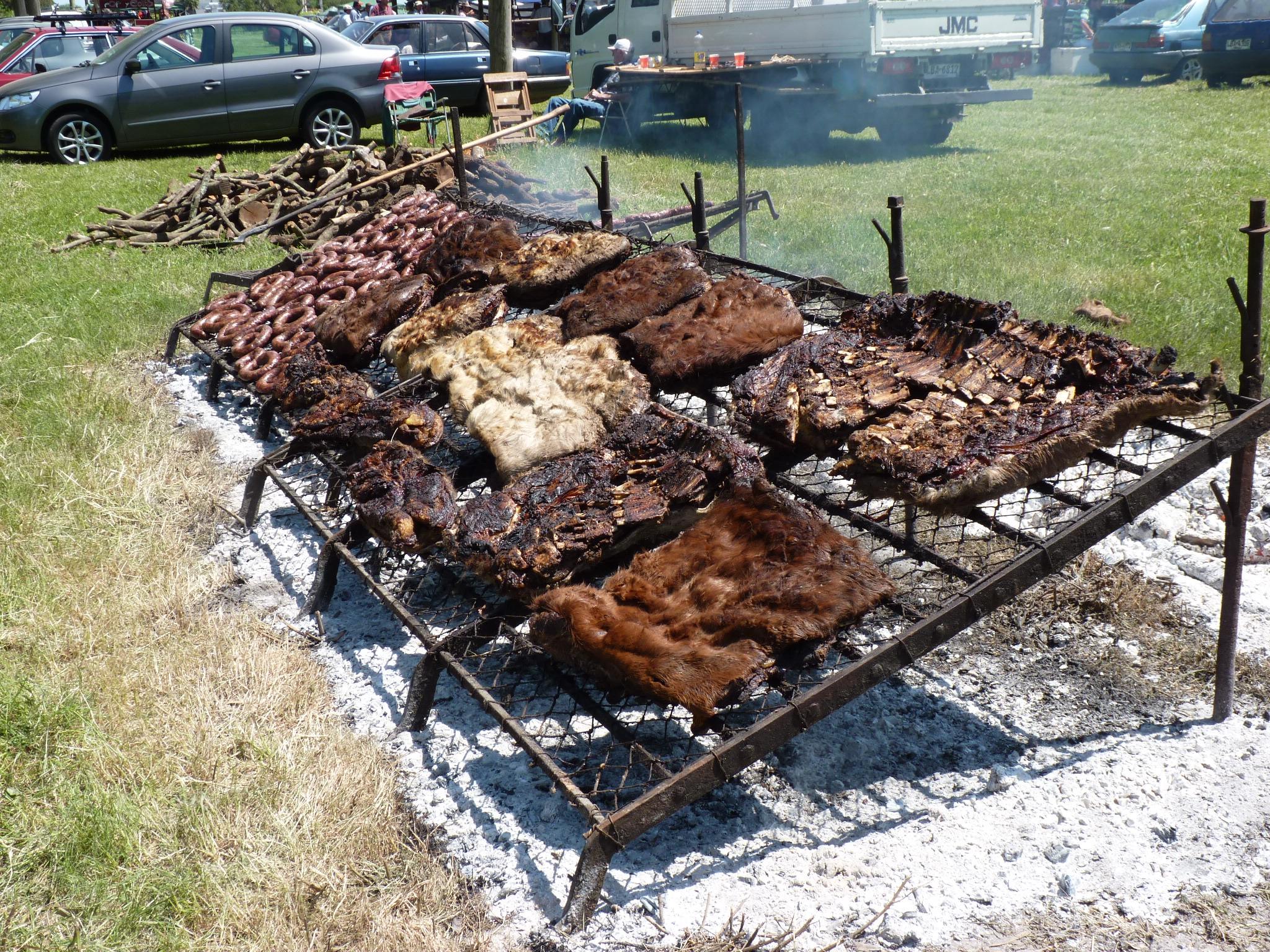
Asado con Cuero*

asado pelo al fuego

In the final stage of cooking the hair is against the fire.

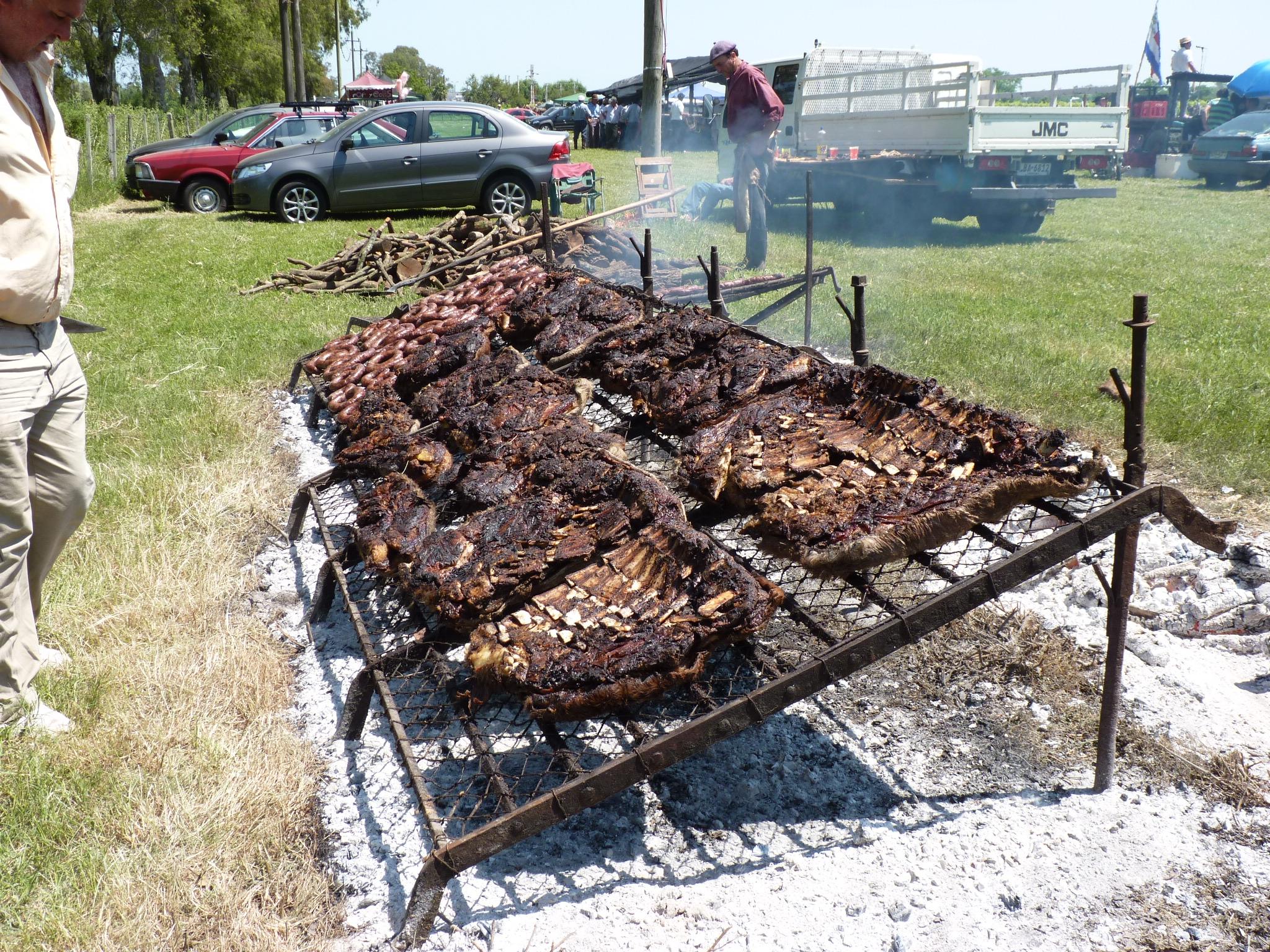
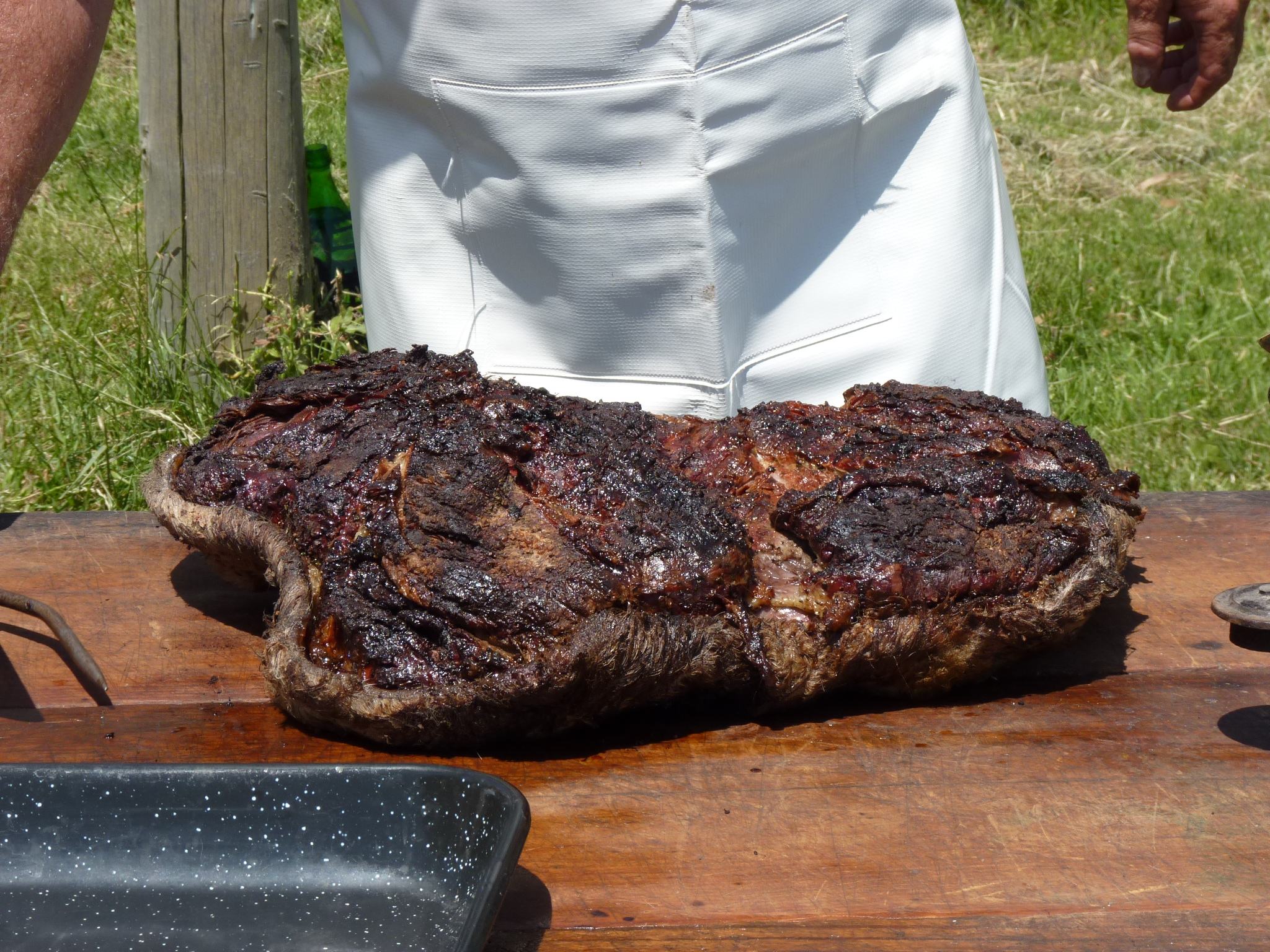
There is no doubt that Uruguay is a country of beef-eaters with a consumption of 70 lbs per person per year. Beef is eaten in different ways but nothing matches the Asado con Cuero, a traditional gastronomic specialty of the region.

asado con cuero y chorizos

Some pieces are with the hair up or down according to how ready they are.

After its slaughter the animal is cut in large pieces and most large bones removed but not the hide (including the hair) and it is left to mature overnight. Very early in the morning (about 3 to 4 am) a large fire is prepared to get sufficient cinders to cook the meat.

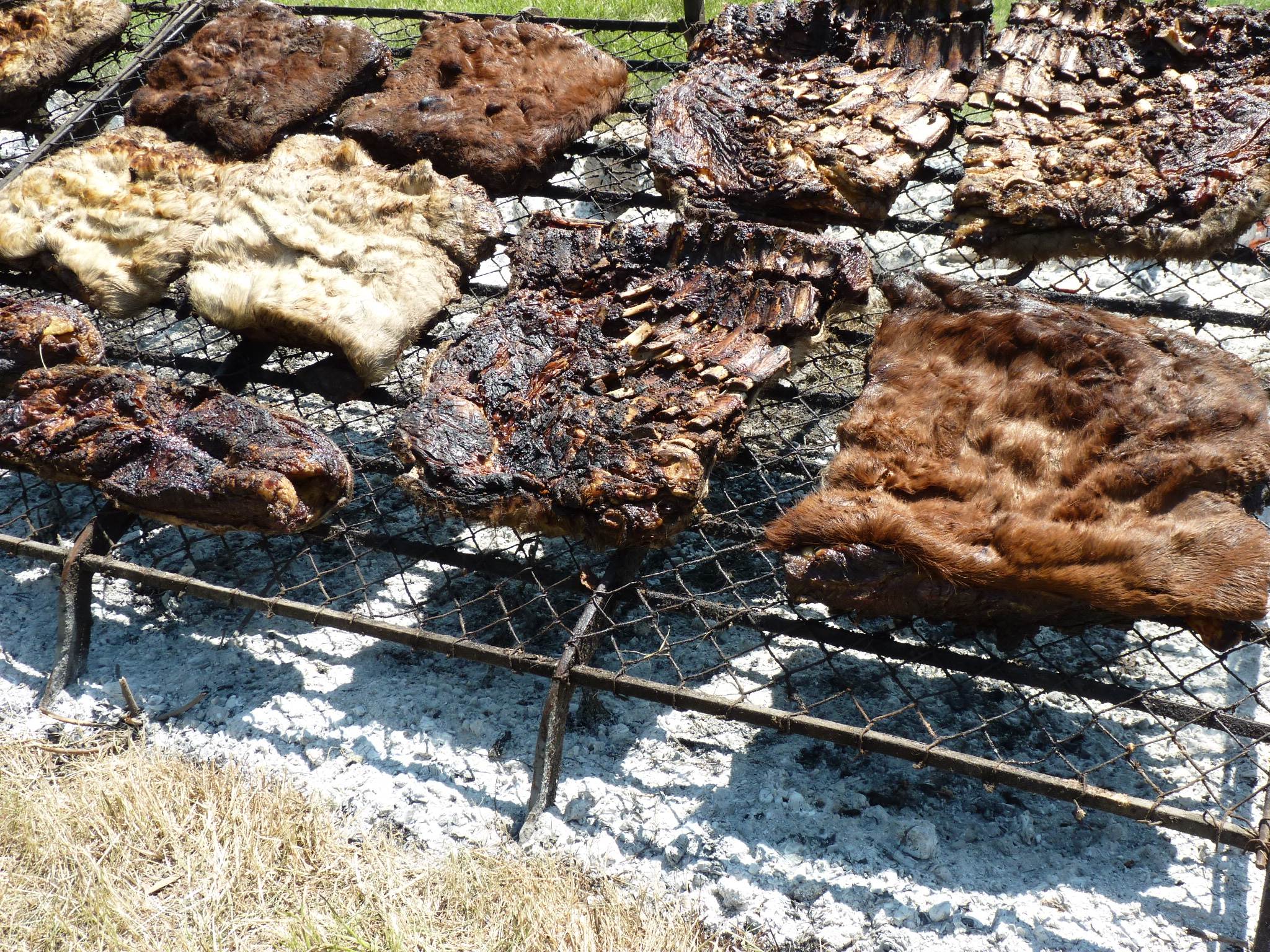
asado con cuero close up

A close up of the barbecue.

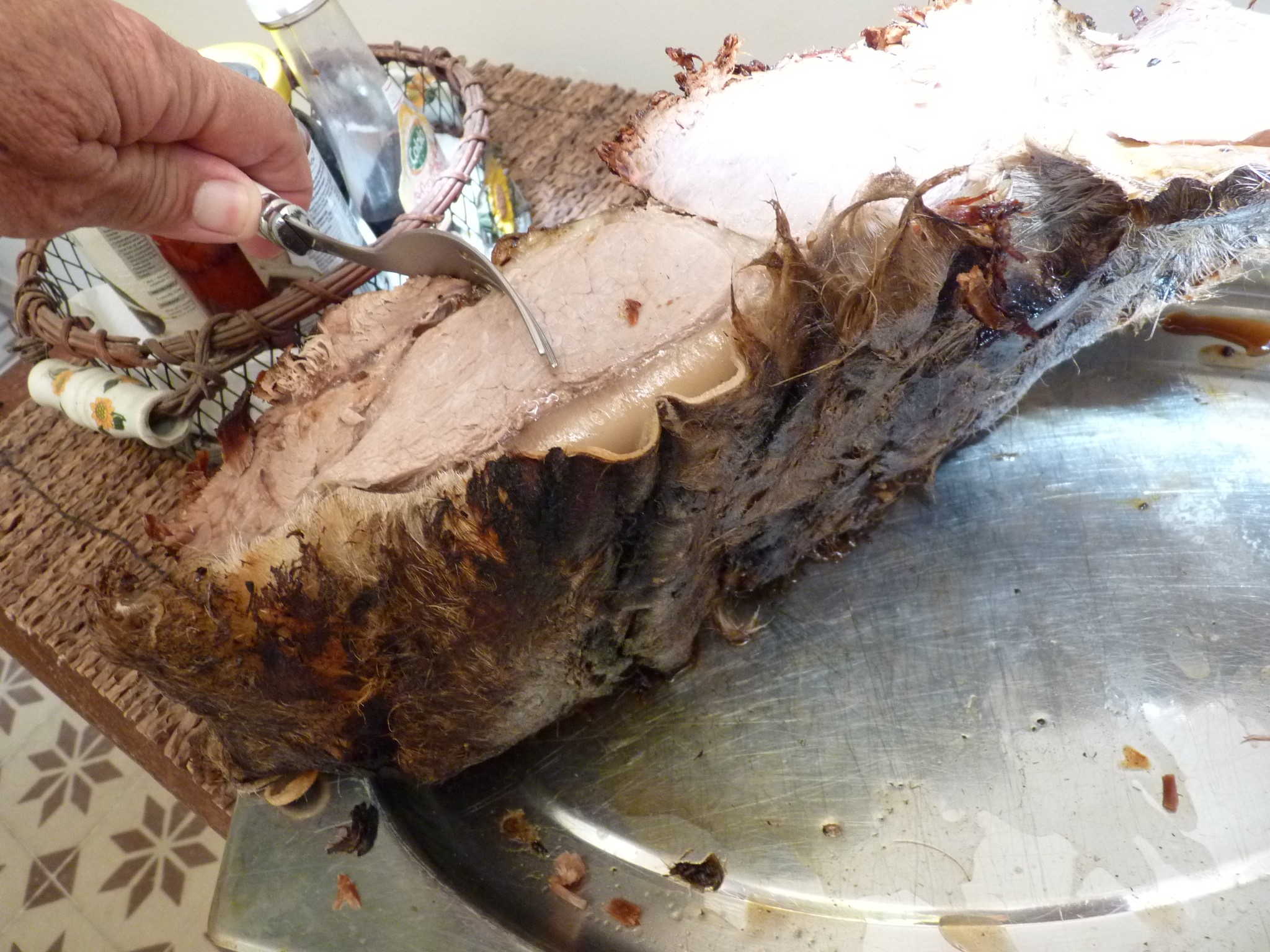
Once the fire achieves the right temperature the beef chunks are placed on the cinders in large grids, with the hide facing upwards. In this way the juices and fat are kept by the hide and contribute to cook the meat that gets more tender and tasty in the process. After about 8-9 hours of very slow cooking the pieces can be turned with the hair against the fire to finish the process, depending on the cook. To cook the beef with this technique is highly regarded and even considered a culinary art!

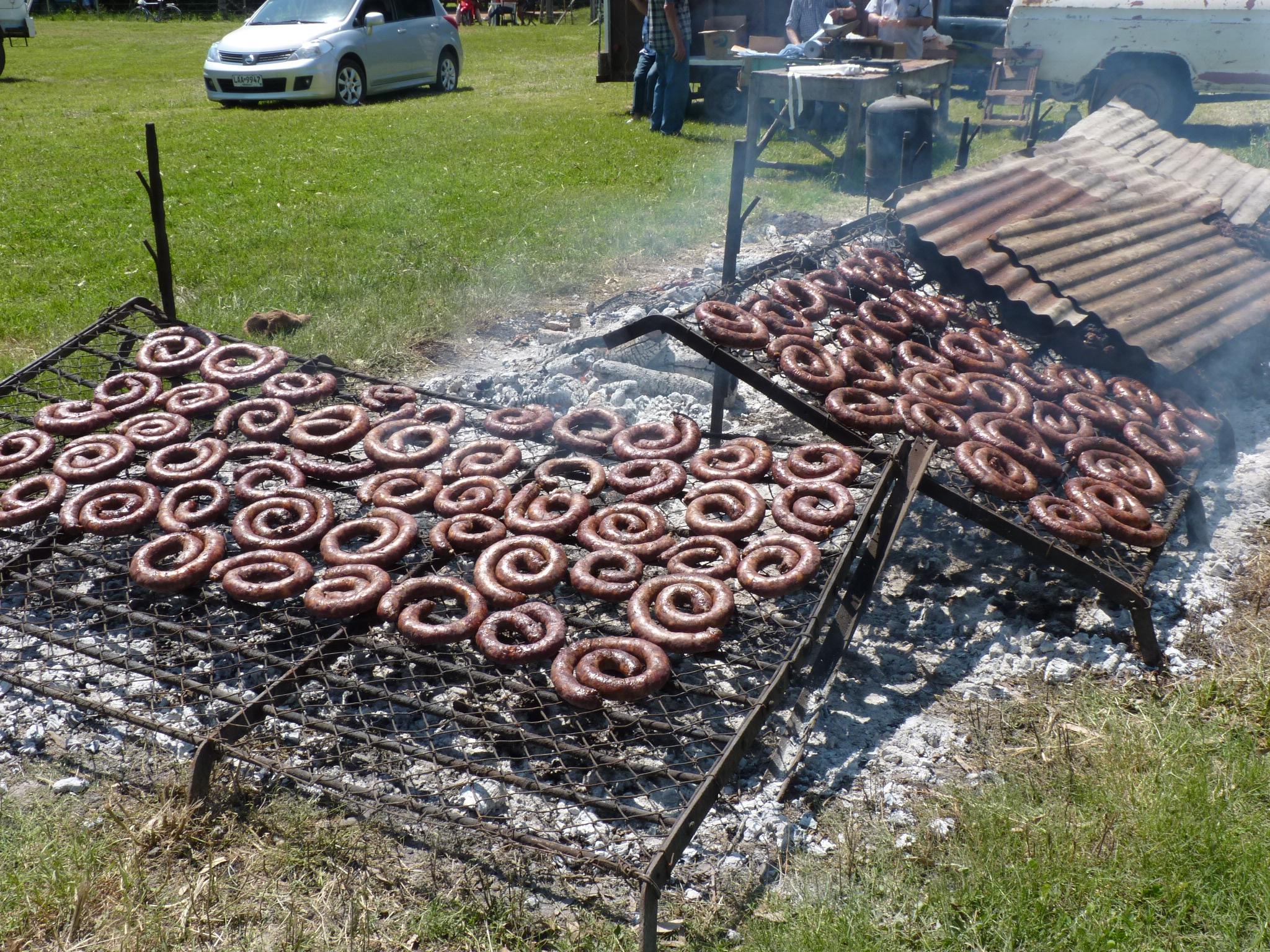
chorizos

A choice of sausages is also available…

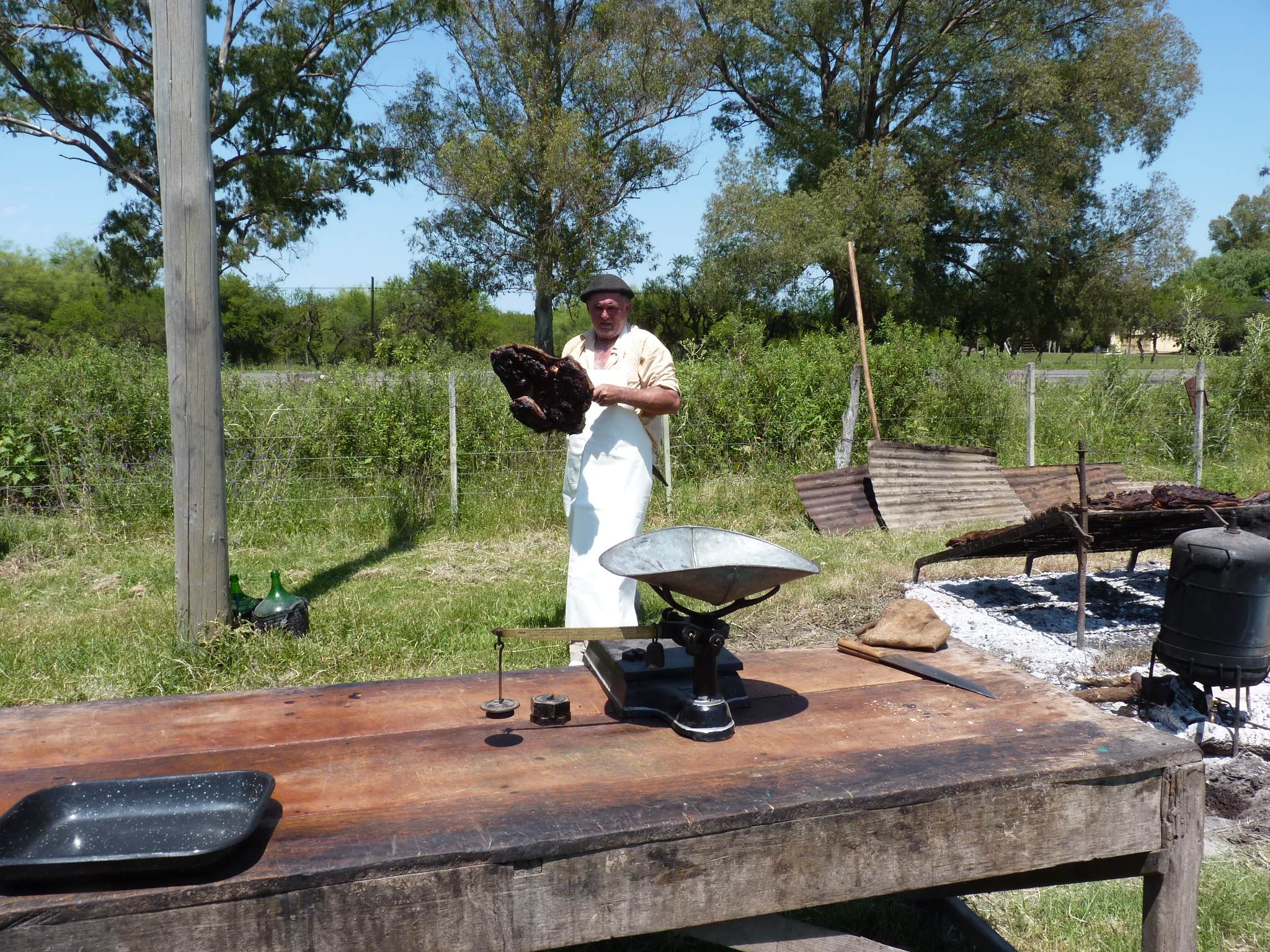
first cut

Serving starts.

first cut 2

Time to chose…

piece cut

The end result: first class beef on the hide.

chorizos y asado gral view

Multitasking the Uruguayan way!

Its origin is attributed to the indigenous people that inhabited this land long ago. They became not only great riders with the introduction of the horse but also took advantage of the newly arrived cattle. It seems that they used to cook the beef in this way as it enabled them to roll the meat up inside the hide and run away on horseback if discovered cooking a stolen animal.


* Spanish for Barbecue with hide.

Beast 4 – Details

This Mantis is a member of the “Flower Mantids” group as most of them mimic flowers.

This one however mimics dead leaves. It is about 4.4 cm long and it is a male of the species.

It is defined as a “Superb mimic of dead leaves, remaining motionless while waiting for prey to come within grasp. May make swaying movements to mimic wind blown vegetation” The latter it did!

Scientific name: Phyllocrania paradoxa

mantis cropped 2

mantis cropped

mantis 2

mantis 1


Almost a zebra…

potranca

I must confess that at (very) first sight it looked like a baby zebra by the river Plate! Perhaps I am conditioned to African wildlife or maybe it was the jet lag…

Anyway, as soon as I could establish contact the beast confirmed that, in fact, it was a filly.

JC and potranca 2

I tried to explain it that she was confusing and of a rather weird colour but I am not sure that she understood me as she just looked at me and listened quietly!

JC and potranca 1

You would agree with me that it is a weird example of a horse coat!

Behind our backs

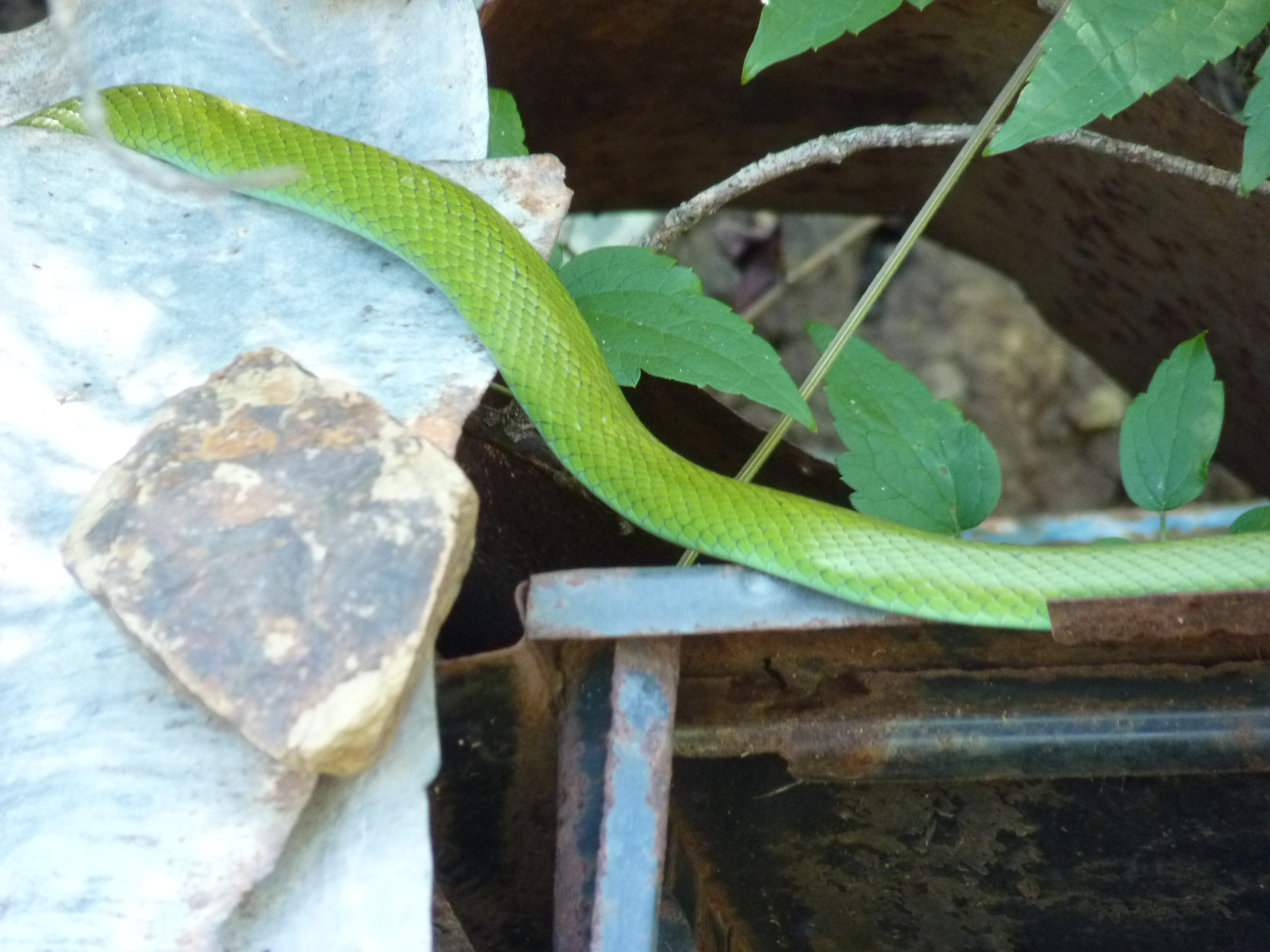
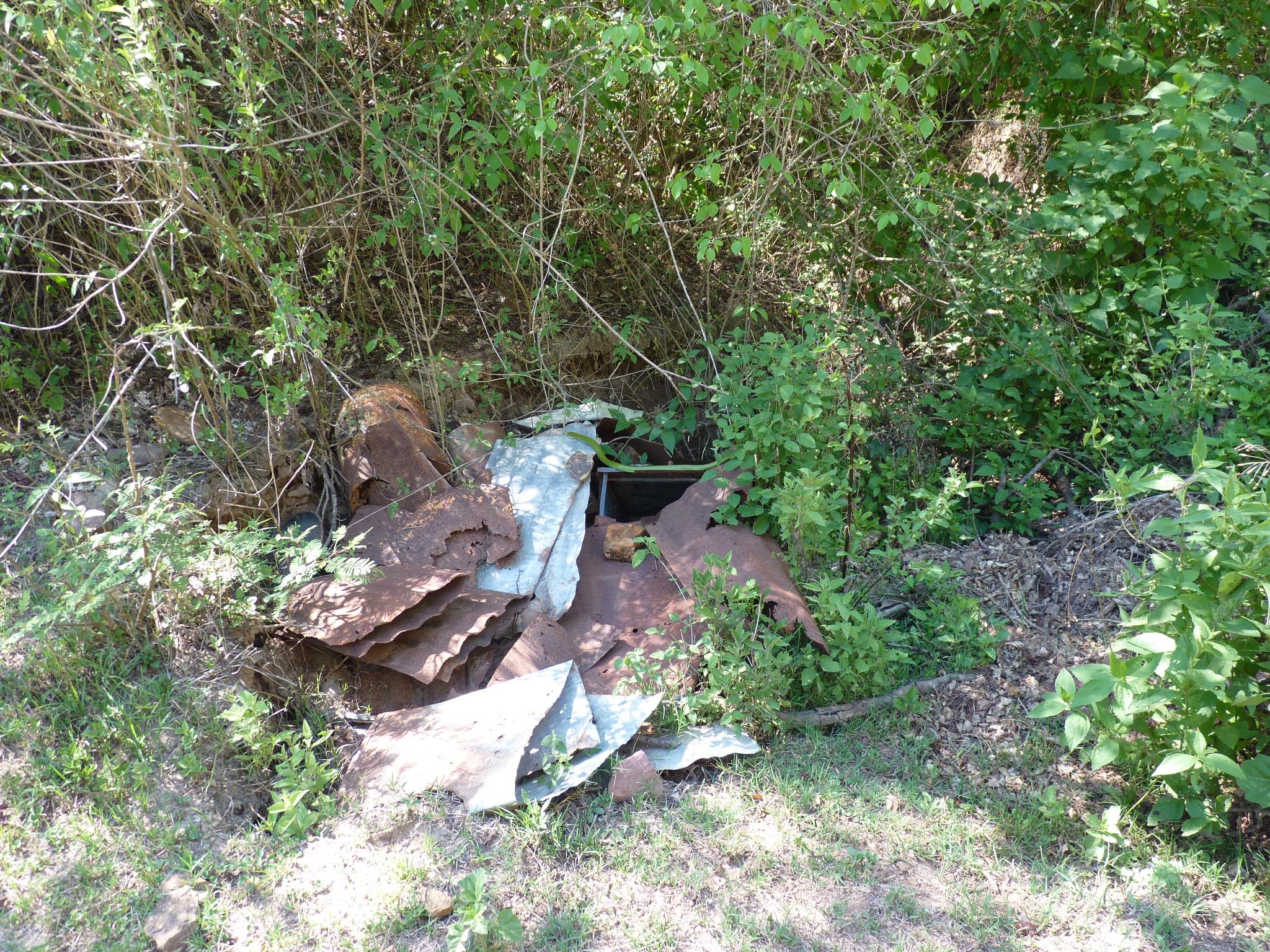
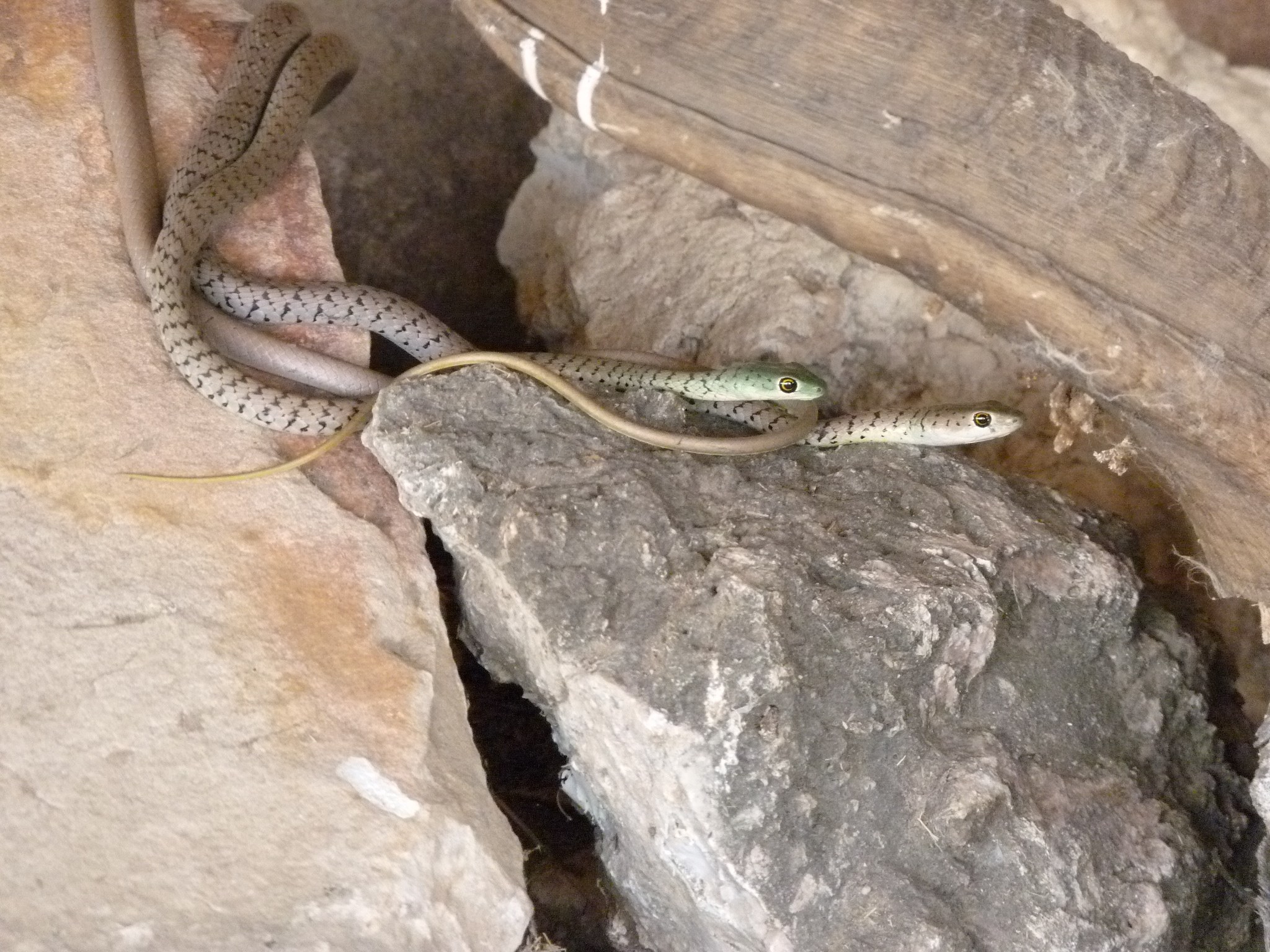
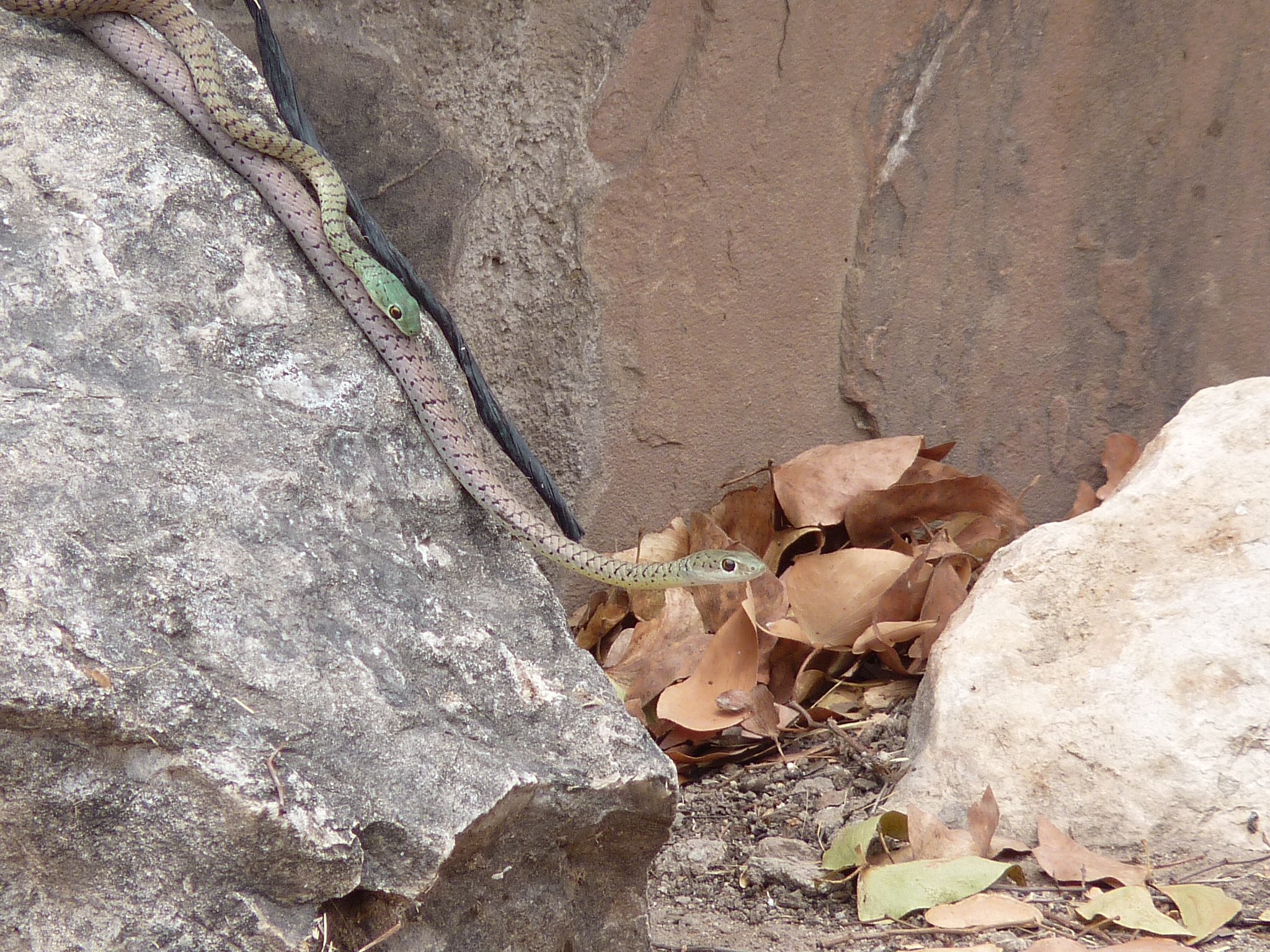
While we were engrossed watching the Crocodiles ambushing the Impalas at Masuma dam, lots of things were taking place around us. On the first day there, a snake was coming down exactly where my wife was sitting at the viewing platform! To say that she does not like snakes is an understatement, so she moved out of the snake’s possible path rather fast! I did not make things better when I identified it as a possible Boomslang!

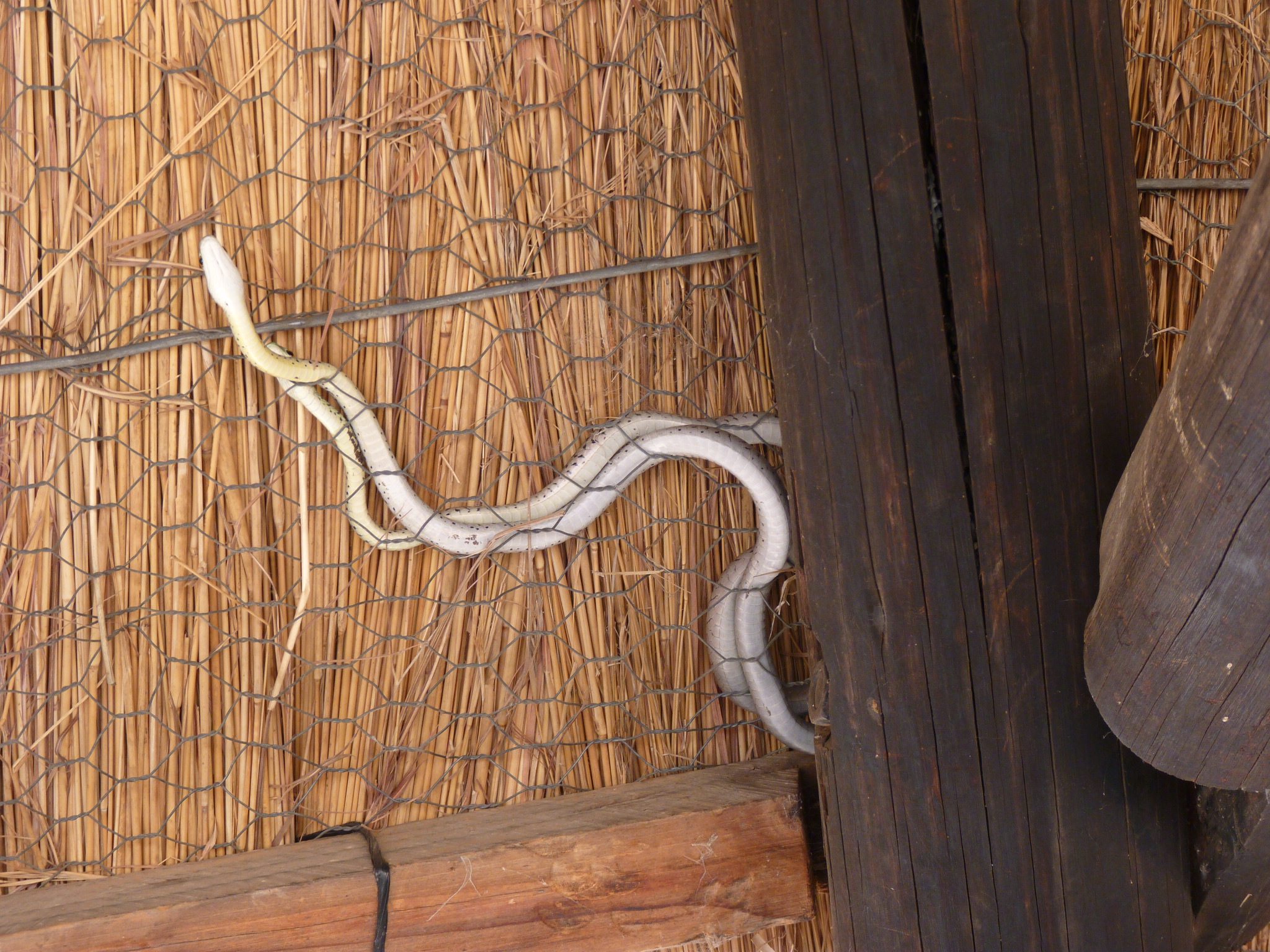
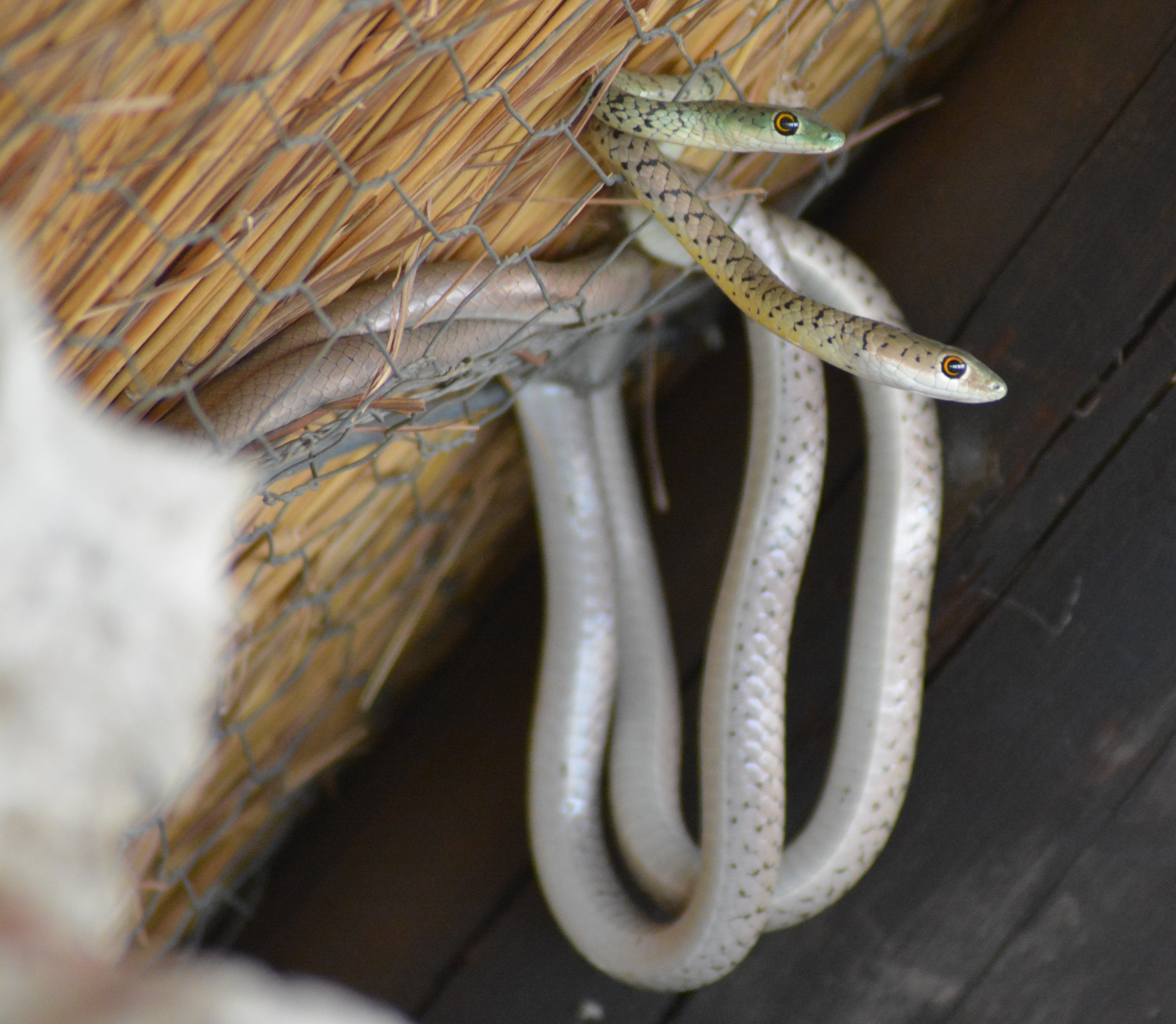
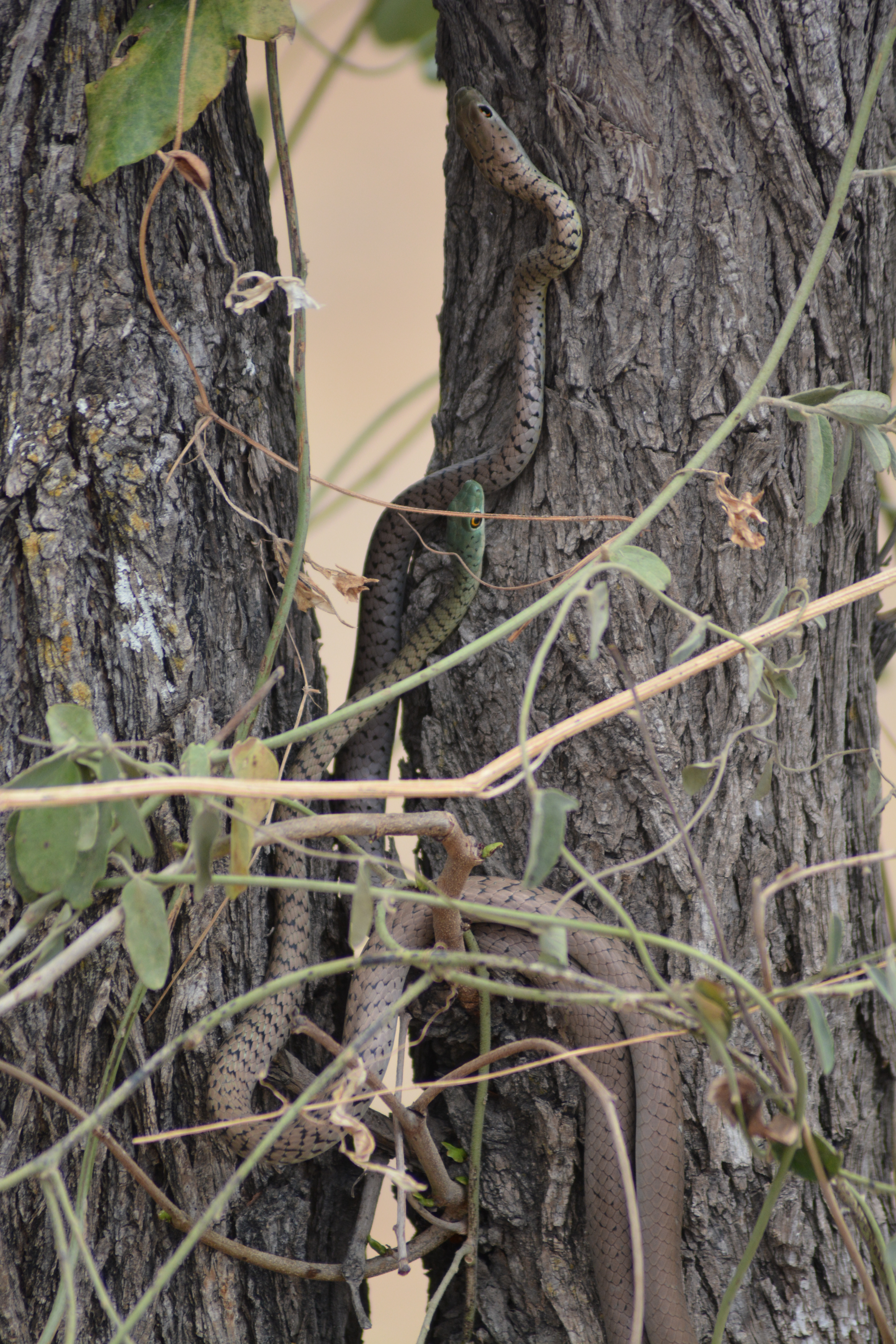
A couple of days later, while focusing on the waters-edge going ons, one of the Picnic Attendants called our attention to another snake act! This time they were two snakes, similar to the one seen before. Their behaviour indicated that they were mating. Basically the process involved the two snakes sliding together throughout the viewing platform as one, the female? moving away while the other one, the male? tried to come into contact with her. Once that was achieved they started to shiver and twist around each other.

First view of snakes outside 2

The snakes moving in.

snakes inside

TOM DSC_1023.1

Picture by Tom Milliken.

The process took about 30 minutes during which they were in command of the viewing platform as the human occupants were always at the opposite end, keeping an eye on their movements. The latter were rather fast and, as we suspected them to be the dangerous Boomslangs, there was no time for jokes while giving them a wide berth. At one stage they were mating at the door and several people were seen to leave the platform through any possible exit in order to get things from their cars or go to the toilet.

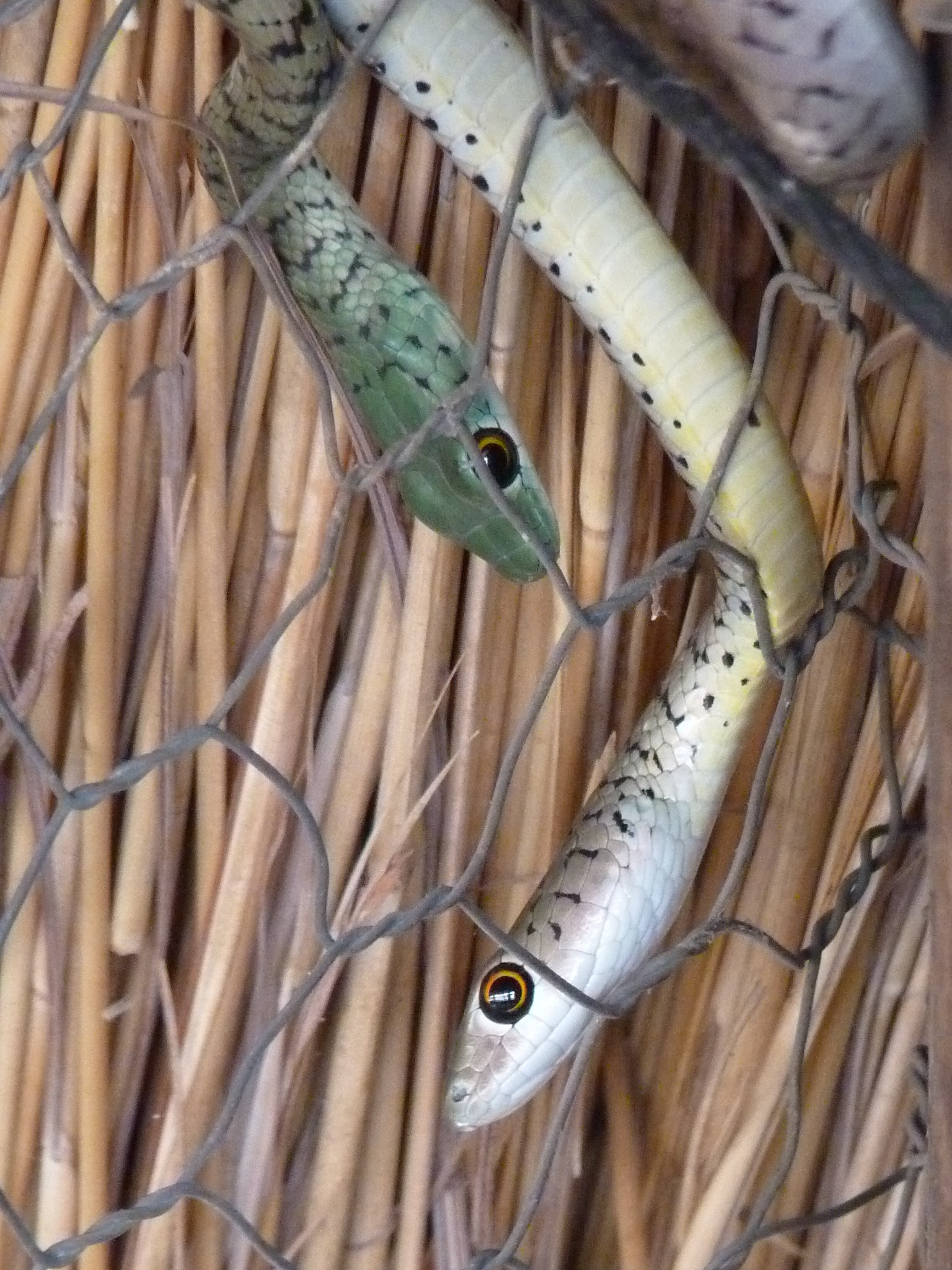
close up inside

Eventually their courtship took them outside and they were last seen twisting in a nearby tree.

TOM DSC_1039

They finally moved outside. Picture by Tom Milliken.

If such a thing as “relief post factum” exists, we need not have worried as, with the benefit of time and a good snake guide, they were identified as a pair of the slender Spotted Bush Snakes (Philothamnus semivariegatus). They are a rather common and harmless snake endemic to Africa that feed on lizards, tree frogs and geckos.

In light of this excitement, I promised myself to add an extra kg to our already heavy camping gear and include the snake book in the future!

Beautiful Beasts

I came across this “flower” while walking in the beach by the river Plate.

cat tree

On closer inspection the real “flower” was revealed!

cat 3

caterpillars 1

They were in fact hairy caterpillars aggregated together in a bunch!

I will find out more about them and let you know.


Note: The caterpillars are Morpho epistrophus, a rather beautiful butterfly!

See:

http://netnature.wordpress.com/2014/02/12/ecologia-de-borboletas-morpho/

http://en.wikipedia.org/wiki/Morpho_epistrophus

https://www.flickr.com/photos/grandma-shirley/6703808411/


Yet they were Royal*

They were forced to jump through rings of fire, to walk across thin wood bridges, to sit on two paws and to run in small circles. They didn’t want to, but they did. They had to survive. So they abode to the rules of their masters and ran in circles, sat on two paws and jumped when they were ordered to.

They lived in perfect misery. Their food was thrown on the floor, where it mixed with their faeces. Drinking water was very often filthy and their manes were knotted, for they were so dirty. A miserable life.

Yet, they were royals, enslaved yes, but still kings and queens.

They were lions kept in captivity in seven or eight circuses working in rural Bolivia, mainly in the tropical lowlands, where the climate is warm and humid. Some of them had been captured in Africa when they were still young, then sold to many owners and eventually found themselves in South America. Others were born in circuses and small zoos but were still of royal blood.

The circuses presented the lions in small towns where laws and regulations could be ignored easily.

In 2009 Animal Defenders International (ADI) surveyed the use of animals in the entertainment industry in Bolivia and found a surprisingly large number of circuses owning a great variety of animals. That finding led the Government to pass a law banning the use of live animals for human entertainment. In 2010, ADI decided to rescue the animals held by circuses. A “covert” operation was then developed with the ultimate aim of rescuing the animals. ADI staff, disguised as clowns, jugglers and cleaning workers infiltrated the circuses to glean the exact number and species of animals kept, and to get photographic evidence.

The ADI, supported by the Government body in charge of biodiversity conservation -the Dirección General de Biodiversidad (DGB)- seized animals from more than seven circuses; the lions were confined in cages. All were in bad condition; they were undernourished, weak, covered by wounds and scars and suffered various diseases. One of them even had deformed bones as a result of chronic malnutrition. Another one had become so aggressive that he lunged against the bars of the cage every time a person approached it. A female that gave birth to three cubs had barely enough milk for all. One was almost unable to endure the trip to Santa Cruz due to its condition. While some owners decided to accept the laws and cede the animals, others refused and resisted. One threatened to stab the ADI and DGB staff.

Following the request of the ADI and DGB, some local workshops built new cages to transport the animals to a temporary refuge. The Bolivian blacksmiths did well on this novel work.

Circus by circus the ADI and DGB seized the lions, sometimes confiscating the cages, others compensating the owners. The lions were transferred to the newly built cages. For some towns, the seizing operations were the most exciting event had happened in many years. In some towns, children gathered for an impromptu farewell. All in all, the ADI and DGB seized 25 lions.

A “lion den” to hold them was organized in Santa Cruz to keep them until their condition improved. The lions travelled more than 800 miles by land, on difficult and dangerous roads to get to their destination. Transportation was carried out with the utmost care, as having an accident with a cargo of lions on winding roads that brush the edge of deep cliffs would have been unwelcome. When the lions came under ADI’s protection, they were dewormed, and given proper food, vitamins, clean water and more space. They were also given good bedding and places to rest but, most important of all, the shows were over. No more jumping, crawling, running and sitting on two paws at their tamer’s orders.

While this was happening, a large, permanent refuge was being built in Denver, Colorado. The lions would go from summer in the tropics to winter in the North. Special lodges had to be built to help the animals grow accustomed to the hostile winter.

Finally, the lions were transferred to cages appropriate for plane travel. The ADI team ensured that while every animal was in one cage, families could be together, animals could see each other and mothers would travel with their cubs. An old DC-130, a veteran from the Viet-Nam war, took off from Santa Cruz and arrived twelve hours later in Denver. There, the ADI team and a number of supporters–including the renowned TV conductor Bob Barker and the CSI star, Jorja Fox, were awaiting their arrival.

The lions were set free in what is now their permanent refuge. They have formed families. Most have recovered from their injuries and illnesses. Far, very far from Africa, they are finally free from the circus and the tamers. They cannot be reintegrated into the wilderness, for they lack the hunting and surviving abilities a lion must have, nor they will be allowed to reproduce, since the population would increase, posing a further problem. However, they will live a much better life.

I wonder if those lions, when the sunset comes, remember their African savannas. Maybe they do, and in their dreams they see themselves hunting, fighting, killing and dying as the royals they once were. After all, they still have blue blood.

Gonzalo Flores (don.gonchi@gmail.com)


This story was told in a film titled “Lion Ark”, directed by Tim Phillips. It was awarded seven awards, including the Mississippi Film Festival’s Best Documentary and the San Diego Film Festival’s Audience Choice Best Documentary.